Geopolitical risks in the Middle East are declining. China kept interest rates at lows

By JustMarkets

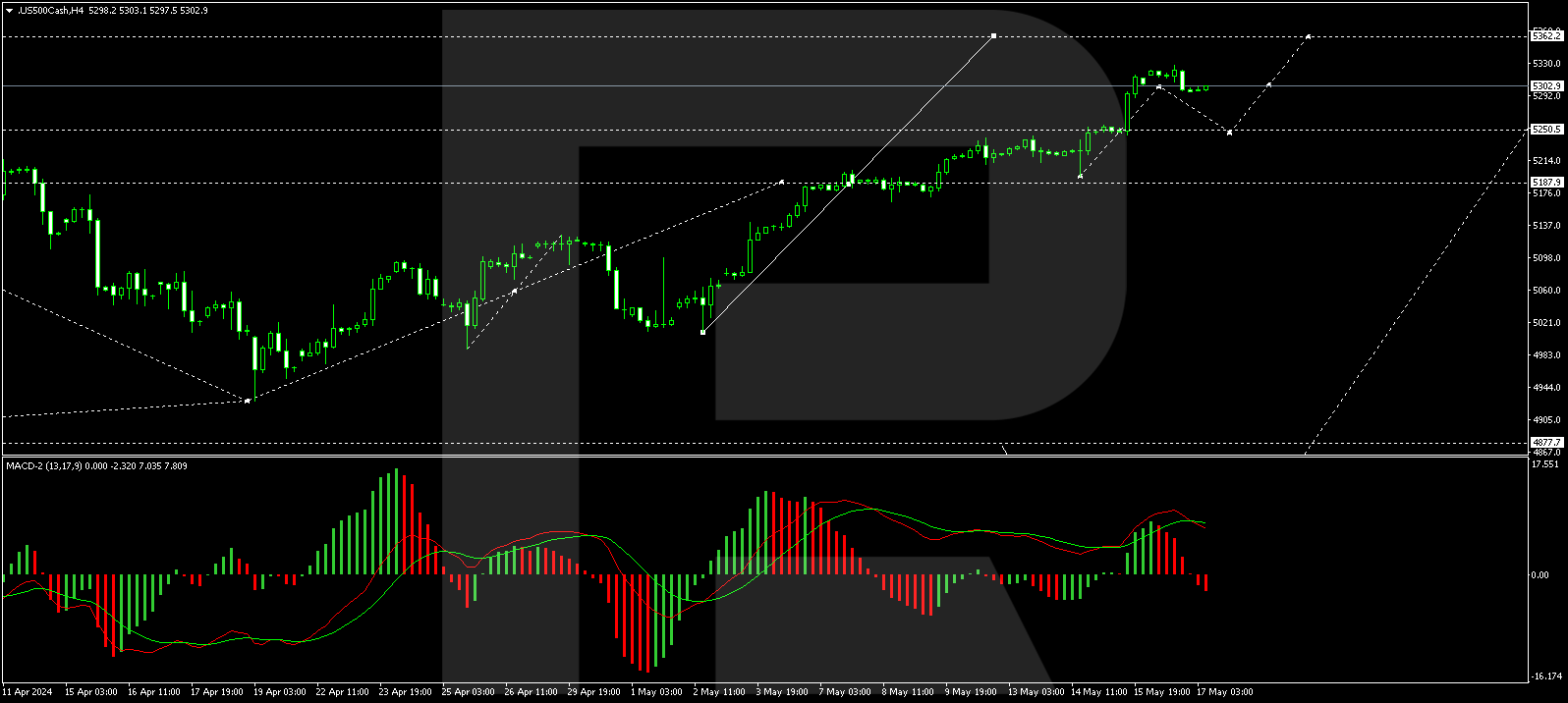
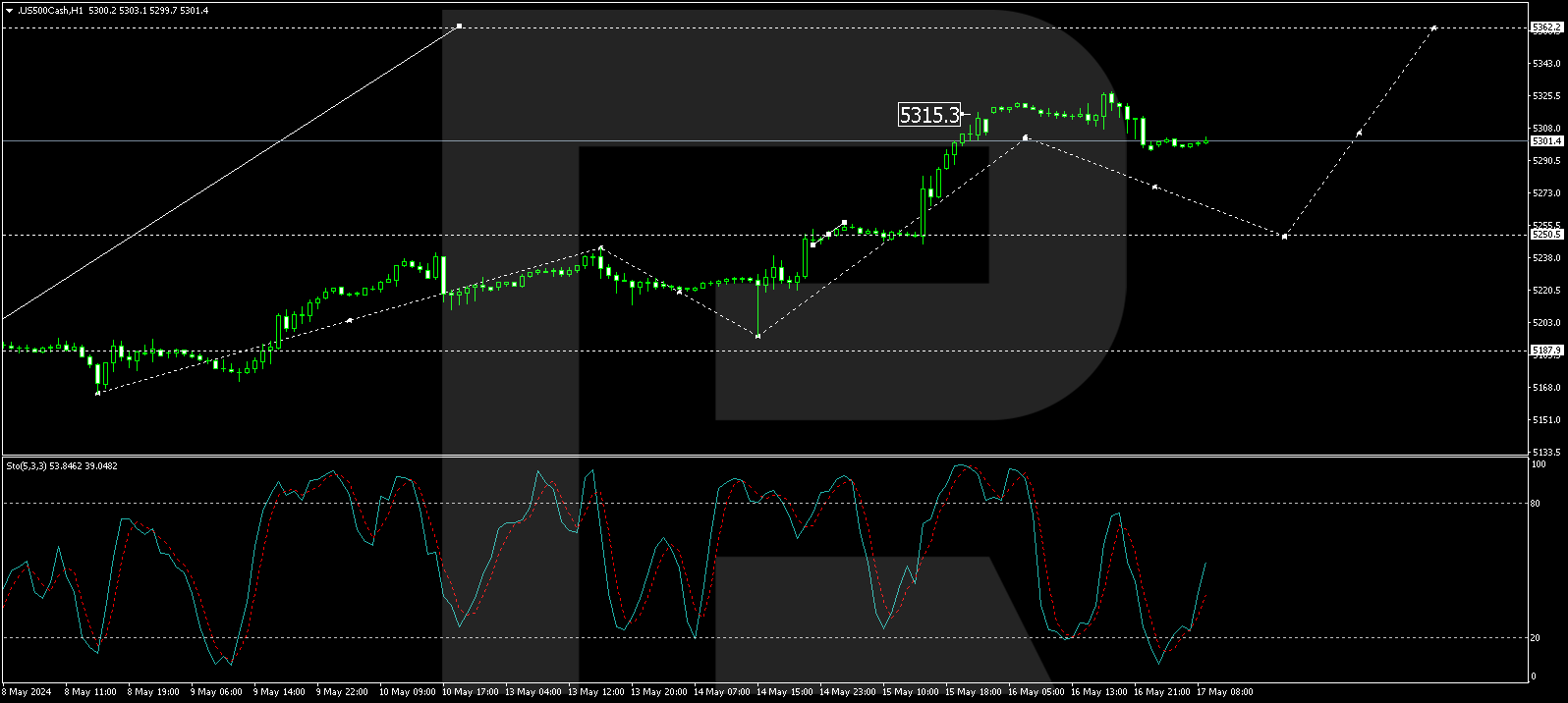
On Friday, the Dow Jones (US30) Index gained 0.56% (for the week -0.23%), while the S&P 500 (US500) Index fell by 0.88% (for the week -3.54%). The NASDAQ Technology Index (US100) closed negative 2.05% (for the week -6.11%). The S&P 500 (US500) fell to a one-month low, and the NASDAQ (US100) fell to a 2-month low. Weak corporate news and rising geopolitical risks weighed on stocks.

The latest escalation in the Israeli-Iranian conflict (an Israeli drone attack on Isfahan in Iran) caused risk assets to fall sharply across all markets. But Iran later said it had “no immediate plans” to retaliate, hoping to pull both sides back from the brink of full-scale conflict. That helped cushion the decline somewhat at last week’s indices close.

On Friday, Chicago Fed President Goolsbee’s hawkish comments supported the dollar when he said that inflation progress has stalled in 2024. It makes sense to wait and get more clarity before cutting interest rates. So, markets now expect the Central Bank to hold rates steady until September and to make no more than one rate cut this year. That’s an optimistic scenario for the US dollar.

Netflix (NFLX) shares fell more than 8% after the company projected second-quarter revenue below consensus. Demand concerns are weighing on chip stocks after Taiwan Semiconductor Manufacturing Co (TSM), the world’s largest maker of advanced chips, lowered its expectations for semiconductor market growth this year to 2024.

The House of Representatives quickly approved $95 billion in foreign aid for Ukraine, Israel, and other US allies in a rare Saturday session as Democrats and Republicans united after months of stiff resistance from the right over renewed US support to repel a full-scale invasion by Russia.

Recent volatility in the Mexican peso (MXN) caused by rising tensions in the Middle East is no cause for concern over inflation, the governor of the Bank of Mexico (Banxico) said, amid expectations that the central bank will continue to be cautious in its upcoming monetary policy decision. The Mexican peso, considered by many to be a proxy for risk assets, fell the hardest on reports of rising tensions between Israel and Iran, though it later recovered most of that fall. The peso has been the best-performing primary currency over the past 12 months.

Equity markets in Europe were mostly down on Friday. Germany’s DAX (DE40) was down 0.56% (for the week -1.12%), France’s CAC 40 (FR40) closed down 0.01% (for the week -0.36%), Spain’s IBEX 35 (ES35) lost 0.33% (for the week +0.57%), and the UK’s FTSE 100 (UK100) closed positive 0.24% (for the week -1.25%).

On Friday, ECB Governing Council spokesman Simkus said that the Eurozone can afford a less tight monetary policy and that the ECB’s three rate cuts this year align with the baseline. Thus, the European Central Bank intends to change its economic policy stance and cut interest rates soon. According to most ECB voting officials, the likely start date is the next meeting in June.

WTI crude futures fell to $81.5 a barrel on Monday, falling to four-week lows amid easing geopolitical concerns in the Middle East. Iran downplayed apparent Israeli strikes on its territory last week and said it had no plans to retaliate. Nevertheless, investors continued to watch the region. Iran is the third-largest producer in OPEC, and it exports most of its oil to China and other countries outside the US financial system.

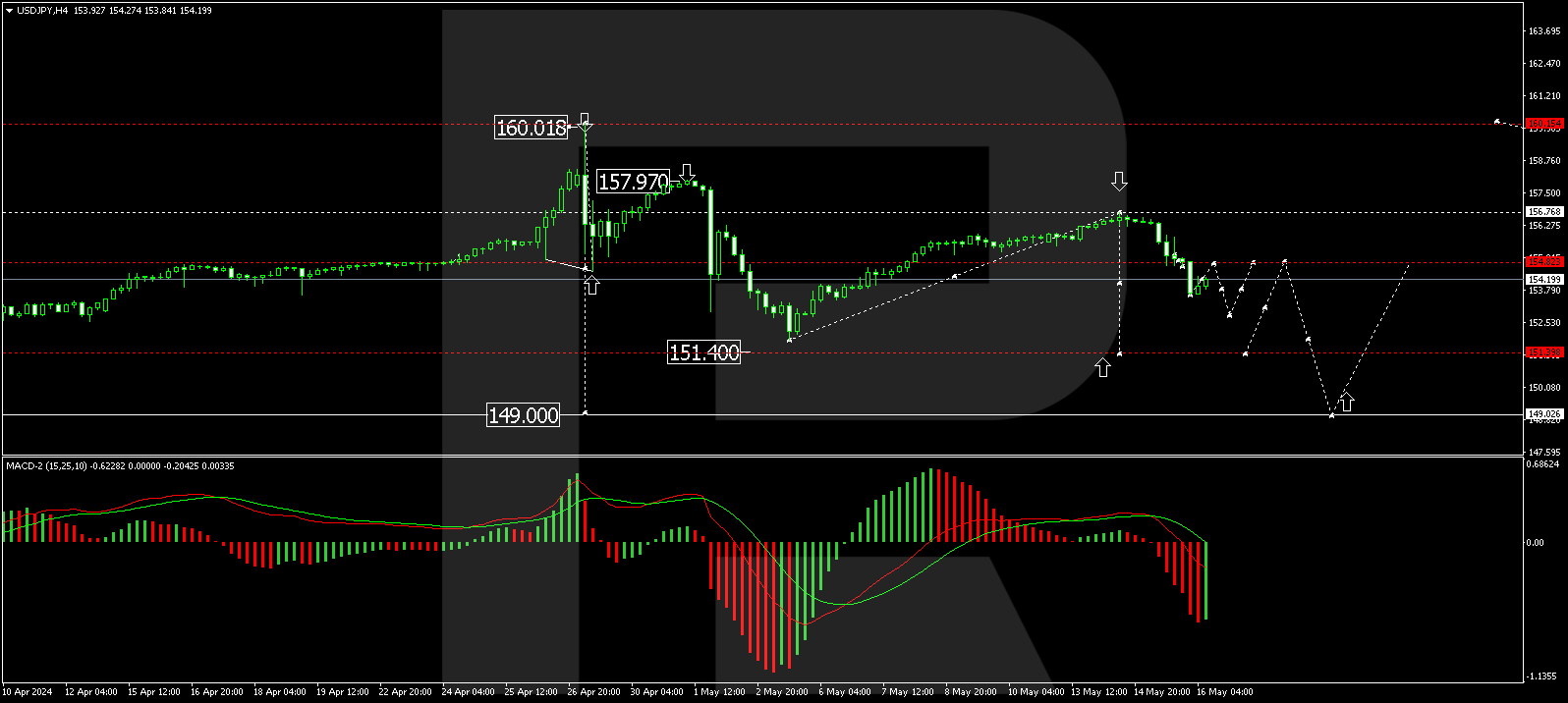
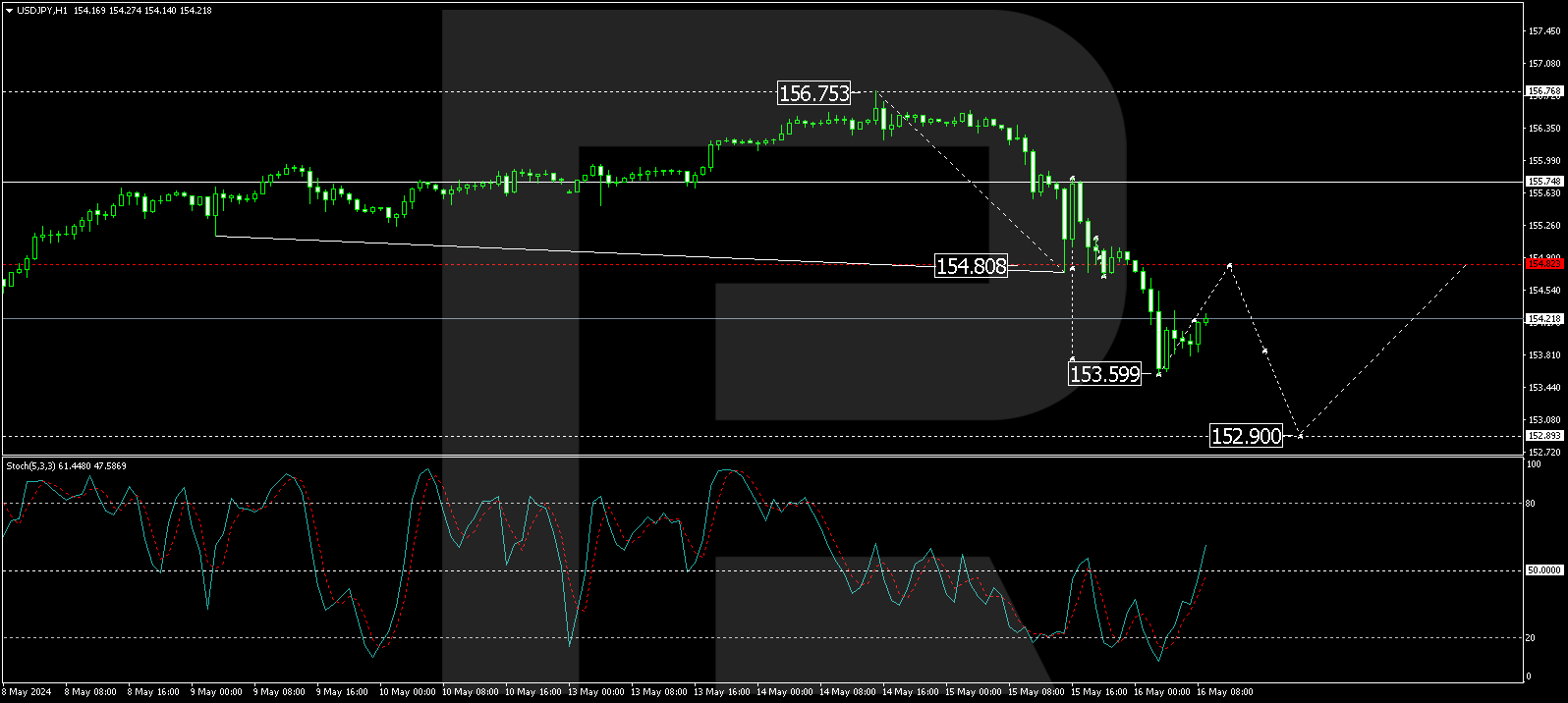
Asian markets were mostly up last week. Japan’s Nikkei 225 (JP225) fell by 5.09%, China’s FTSE China A50 (CHA50) was little changed in price for the week, Hong Kong’s Hang Seng (HK50) fell 1.60%, and Australia’s ASX 200 (AU200) was negative 2.84%.

In China, the central bank kept the one-year and five-year lending rates at 3.45% and 3.95%, respectively, amid stronger-than-expected first-quarter GDP data and efforts to stabilize the yuan. On the other hand, both rates are at historic lows, reflecting the government’s concerted efforts to stimulate economic growth amid challenges in the real estate sector and persistent deflationary pressures. Investors now await the Bank of Japan’s policy decision later this week.

In Australia, markets are betting that the central bank will start cutting rates later this year. Investors digested data that the country’s unemployment rate rose to 3.8% in March from 3.7% in February, confirming a dovish view on the country’s monetary policy. Investors now await Australia’s first-quarter and March inflation data this week for more clarity on the policy path.

S&P 500 (US500) 4,967.23 −43.89 (−0.88%)

Dow Jones (US30) 37,986.40 +211.02 (+0.56%)

DAX (DE40) 17,737.36 −100.04 (−0.56%)

FTSE 100 (UK100) 7,895.85 +18.80 (+0.24%)

USD Index 106.12 −0.03 (−0.03%)

Important events today:
  • – China PBoC Loan Prime Rate (m/m) at 04:15 (GMT+3);
  • – Eurozone ECB President Lagarde Speaks at 18:30 (GMT+3).

By JustMarkets


This article reflects a personal opinion and should not be interpreted as an investment advice, and/or offer, and/or a persistent request for carrying out financial transactions, and/or a guarantee, and/or a forecast of future events.

Brent crude dips to four-week low amid easing geopolitical tensions

By RoboForex Analytical Department

Brent crude oil prices fell to a four-week low of 86.50 USD on Monday, influenced by several contributing factors. The primary cause of the decline was a reduction in geopolitical tensions as Iran’s rhetoric toward Israel showed signs of de-escalation. This change is significant given that Iran is the third-largest OPEC oil producer, with substantial exports to China and other countries, making stability in the region crucial for global oil markets.

On the demand side, US crude oil inventories rose 2.7 million barrels for the week, nearly double what was anticipated. This unexpected increase has put additional pressure on oil prices.

Furthermore, global economic uncertainties and concerns that the Federal Reserve may maintain elevated interest rates for an extended period also impact the outlook for oil demand. Heightened interest rates tend to strengthen the US dollar, making oil, priced in dollars, more expensive for holders of other currencies. However, the current stability of the US dollar is providing some support, preventing even steeper declines in oil prices.

Technical analysis of Brent

On the H4 chart, Brent established a consolidation range at around 87.87. The downward breakout from this range initiated a correction wave to 84.48. After reaching this target, the market may see a rebound towards 92.00, potentially continuing towards 95.00. This bullish scenario is supported by the MACD indicator, currently below zero, suggesting that the lows may soon be updated.

The H1 chart shows that Brent is forming the fifth correction structure towards 84.48. Once this level is reached, there may be potential for a rebound to 87.87 (testing from below). A successful breakout from this range upward could lead to further growth towards 90.50, with a possible continuation to 92.00. The Stochastic oscillator, currently below 20, indicates readiness to initiate a new growth structure towards higher levels, supporting the possibility of an upward trend resuming after the correction.

Disclaimer

Any forecasts contained herein are based on the author’s particular opinion. This analysis may not be treated as trading advice. RoboForex bears no responsibility for trading results based on trading recommendations and reviews contained herein.

Trade Of The Week: Are Ethereum ETF’s coming?

By ForexTime 

  • Bitcoin halving done and dusted
  • Ethereum in focus ahead of SEC decision
  • ETH ↓ 20% from 2024 peak
  • Prices trending higher on D1 chart
  • Key levels at 100 day SMA, $3255 and 50-day SMA

Bitcoin’s halving event is done and dusted! Marking a landmark moment in the world of digital assets.

This shifts our focus towards Ethereum which could be rocked by the Securities and Exchange Commission’s (SEC) looming decision to vote on Ethereum spot ETF applications.

The world’s second-largest cryptocurrency has shed over 20% from the 2024 high, though still up 40% year-to-date.

Fun fact: Ethereum hit an all-time high of $4866.4 in November 2021.

The lowdown 

One of the key forces supporting Ethereum in Q1 was growing anticipation over a green light from the SEC on May 23rd following the spot Bitcoin ETF approval in January.

Fast-forward to today, confidence has significantly declined over the SEC approving the ETF applications.

The bigger picture 

Just like we have seen with Bitcoin ETFs, the approval of an Ethereum ETF would increase exposure to the cryptocurrency.

It will provide easier and greater access to the world’s second-largest digital currency without having to own it – representing potential inflows of new investors.

Where we are now

Much has changed since the start of 2024 with the lack of engagement between the SEC and applicants sapping confidence over the possibility of an approval on May 23rd.

On top of this, recent news about the SEC investigating companies associated with the Ethereum Foundation adds another layer of uncertainty ahead of the decision.

A bright spot 

Hong Kong regulators have recently approved Bitcoin and Ethereum ETFs, marking another positive step towards mainstream acceptance.

Such a development could spark acceptance from other regulators in Asia and across the world.

What does this all mean?

In a nutshell, Ethereum prices could turn volatile over the next few weeks as the SEC decision looms.

Where there is volatility, this presents potential trading opportunities.

How to take advantage of this

There are 2 potential outcomes to the SEC’s spot ETF decision on May 23rd.

    1) SEC rejects all Ethereum ETF applications.

This seems to be the expected outcome for markets with the approval seen later in the year or even 2025. Nevertheless, the initial disappointment could hit Ethereum prices – capping upside gains from other forces.

    2) SEC approves Ethereum ETF applications.

This decision may catch markets by surprise, triggering an aggressive appreciation in Ethereum prices due to the prospects of fresh inflows from retail and institutional investors.

What about the technicals?

The technicals paint a mixed picture on the daily charts. Although Ethereum is respecting a bearish channel, support can be found at $2855 and the 100-day Simple Moving Average.

  • A solid breakout and daily close above $3255 may open a path toward the 50-day SMA at $3475 and $3724.
  • Should prices slip back below the 100-day SMA at $3063.8, this could open a path back towards $2855. A solid bearish move under $2855, could fuel a further selloff towards the 200-day SMA.


Forex-Time-LogoArticle by ForexTime

ForexTime Ltd (FXTM) is an award winning international online forex broker regulated by CySEC 185/12 www.forextime.com

Speculators strongly boosting US Dollar bets vs Major Currencies

By InvestMacro

Here are the latest charts and statistics for the Commitment of Traders (COT) data published by the Commodities Futures Trading Commission (CFTC).

The latest COT data is updated through Tuesday April 16th and shows a quick view of how large market participants (for-profit speculators and commercial traders) were positioned in the futures markets. All currency positions are in direct relation to the US dollar where, for example, a bet for the euro is a bet that the euro will rise versus the dollar while a bet against the euro will be a bet that the euro will decline versus the dollar.

Weekly Speculator Changes led by Brazilian Real & New Zealand Dollar

The COT currency market speculator bets were lower this week as just three out of the eleven currency markets we cover had higher positioning while the other eight markets had lower speculator contracts.

Leading the gains for the currency markets was the Brazilian Real (3,517 contracts) with the New Zealand Dollar (1,821 contracts) and the US Dollar Index (213 contracts) also showing positive weeks.

The currencies seeing declines in speculator bets on the week were the Canadian Dollar (-29,430 contracts), the EuroFX (-20,499 contracts), the British Pound (-19,633 contracts), the Mexican Peso (-11,960 contracts), the Australian Dollar (-8,742 contracts), the Swiss Franc (-4,448 contracts), the Japanese Yen (-3,468 contracts) and with Bitcoin (-210 contracts) also registering lower bets on the week.

Speculators strongly boosting US Dollar bets vs Major Currencies

Highlighting the COT currency’s data this week is the overall strength being shown in the speculator’s positioning for the US dollar.

The way the futures markets work for currencies is that every bet for or against a currency is also a bet for against the US dollar. Right now, most of the major currencies are strongly on the defensive in their exchange rates and, especially, in their speculator positions versus the US dollar, underlining the strength of the sentiment for the US currency.

Here are current highlights of the major currencies weakness (US dollar strength):

First up, the Australian dollar (AUD) speculator position is currently over -100,000 contracts for the fourth time out of the last 5 weeks. The all-time record low was reached just last month on March 19th at a total of -107,538 contracts.

The British pound sterling (GBP) contracts have now fallen for four out of the last 5 weeks with the contract level currently at its lowest point since November.

The euro (EUR) currency contracts have decreased in four of the last five weeks as well. The current level is barely positive (+12,224 contracts), falling rapidly (started the year over +100,000 contracts) and now at the lowest level since 2022.

The Japanese yen (JPY) contracts continued to fall this week and have dropped in 13 out of the last 14 weeks. At a total of -165,619 contracts, the current position is at a new lowest standing since 2007.

The Swiss franc (CHF) position has been falling sharply as well. The speculative position for the franc has now declined for 11 consecutive weeks and is at the lowest level since 2019 at -36,212 contracts.

Finally, the Canadian dollar (CAD) has fallen for eight consecutive weeks with a drop this week of -29,430 contracts. The total decrease over just the last 8 weeks has amounted to approximately -82,000 contracts and has brought the current speculative level to the lowest point since 2017.

Helping to keep the US dollar strong is the fading expectations of multiple rate cuts from the Federal Reserve. Inflation levels continue to persist in a growing US economy, putting a dent into this year’s rate cut narrative and giving the USD an interest-rate differential boost against it’s major currency counterparts.

The exchange rates of the major currencies are also in a current short-term downtrend vs the USD. The AUD, NZD, GBP, EUR and CHF exchange rates all have dipped this week to the lowest levels since October or November in the latest spot trading data. The JPY, meanwhile, is currently trading at the lowest levels in 34-years.


Currencies Net Speculators Leaderboard

Legend: Weekly Speculators Change | Speculators Current Net Position | Speculators Strength Score compared to last 3-Years (0-100 range)


Strength Scores led by Mexican Peso & Bitcoin

COT Strength Scores (a normalized measure of Speculator positions over a 3-Year range, from 0 to 100 where above 80 is Extreme-Bullish and below 20 is Extreme-Bearish) showed that the Mexican Peso (94 percent) and the Bitcoin (61 percent) lead the currency markets this week. The British Pound (59 percent) comes in as the next highest in the weekly strength scores.

On the downside, the Canadian Dollar (0 percent), the Swiss Franc (0 percent), the Japanese Yen (0 percent), the US Dollar Index (3 percent) and the Australian Dollar (6 percent) come in at the lowest strength levels currently and are all in Extreme-Bearish territory (below 20 percent).

Strength Statistics:
US Dollar Index (2.9 percent) vs US Dollar Index previous week (2.5 percent)
EuroFX (25.5 percent) vs EuroFX previous week (34.2 percent)
British Pound Sterling (59.0 percent) vs British Pound Sterling previous week (72.0 percent)
Japanese Yen (0.0 percent) vs Japanese Yen previous week (2.4 percent)
Swiss Franc (0.0 percent) vs Swiss Franc previous week (8.9 percent)
Canadian Dollar (0.0 percent) vs Canadian Dollar previous week (22.4 percent)
Australian Dollar (5.8 percent) vs Australian Dollar previous week (13.7 percent)
New Zealand Dollar (27.1 percent) vs New Zealand Dollar previous week (21.9 percent)
Mexican Peso (94.1 percent) vs Mexican Peso previous week (100.0 percent)
Brazilian Real (35.4 percent) vs Brazilian Real previous week (30.8 percent)
Bitcoin (60.9 percent) vs Bitcoin previous week (64.1 percent)


Bitcoin & Mexican Peso top the 6-Week Strength Trends

COT Strength Score Trends (or move index, calculates the 6-week changes in strength scores) showed that Bitcoin (15 percent) and the Mexican Peso (10 percent) lead the past six weeks trends for the currencies and are the only markets with positive trends at the moment.

The New Zealand Dollar (-54 percent) leads the downside trend scores currently with the Canadian Dollar (-48 percent), Swiss Franc (-37 percent) and the British Pound (-33 percent) following next with lower trend scores.

Strength Trend Statistics:
US Dollar Index (-8.5 percent) vs US Dollar Index previous week (-6.8 percent)
EuroFX (-23.0 percent) vs EuroFX previous week (-12.8 percent)
British Pound Sterling (-33.0 percent) vs British Pound Sterling previous week (-12.0 percent)
Japanese Yen (-32.1 percent) vs Japanese Yen previous week (-20.2 percent)
Swiss Franc (-37.5 percent) vs Swiss Franc previous week (-39.8 percent)
Canadian Dollar (-47.9 percent) vs Canadian Dollar previous week (-39.5 percent)
Australian Dollar (-14.8 percent) vs Australian Dollar previous week (-11.9 percent)
New Zealand Dollar (-53.8 percent) vs New Zealand Dollar previous week (-67.0 percent)
Mexican Peso (10.4 percent) vs Mexican Peso previous week (22.5 percent)
Brazilian Real (-9.6 percent) vs Brazilian Real previous week (-26.2 percent)
Bitcoin (14.9 percent) vs Bitcoin previous week (27.3 percent)


Individual COT Forex Markets:

US Dollar Index Futures:

US Dollar Index Forex Futures COT ChartThe US Dollar Index large speculator standing this week resulted in a net position of -929 contracts in the data reported through Tuesday. This was a weekly gain of 213 contracts from the previous week which had a total of -1,142 net contracts.

This week’s current strength score (the trader positioning range over the past three years, measured from 0 to 100) shows the speculators are currently Bearish-Extreme with a score of 2.9 percent. The commercials are Bullish-Extreme with a score of 97.9 percent and the small traders (not shown in chart) are Bearish with a score of 37.2 percent.

Price Trend-Following Model: Strong Uptrend

Our weekly trend-following model classifies the current market price position as: Strong Uptrend. The current action for the model is considered to be: New Buy – Long Position.

US DOLLAR INDEX StatisticsSPECULATORSCOMMERCIALSSMALL TRADERS
– Percent of Open Interest Longs:67.918.210.4
– Percent of Open Interest Shorts:70.021.25.4
– Net Position:-929-1,3092,238
– Gross Longs:29,9118,0404,596
– Gross Shorts:30,8409,3492,358
– Long to Short Ratio:1.0 to 10.9 to 11.9 to 1
NET POSITION TREND:
– Strength Index Score (3 Year Range Pct):2.997.937.2
– Strength Index Reading (3 Year Range):Bearish-ExtremeBullish-ExtremeBearish
NET POSITION MOVEMENT INDEX:
– 6-Week Change in Strength Index:-8.55.615.9


Euro Currency Futures:

Euro Currency Futures COT ChartThe Euro Currency large speculator standing this week resulted in a net position of 12,224 contracts in the data reported through Tuesday. This was a weekly decrease of -20,499 contracts from the previous week which had a total of 32,723 net contracts.

This week’s current strength score (the trader positioning range over the past three years, measured from 0 to 100) shows the speculators are currently Bearish with a score of 25.5 percent. The commercials are Bullish with a score of 78.5 percent and the small traders (not shown in chart) are Bearish-Extreme with a score of 5.2 percent.

Price Trend-Following Model: Strong Downtrend

Our weekly trend-following model classifies the current market price position as: Strong Downtrend. The current action for the model is considered to be: Hold – Maintain Short Position.

EURO Currency StatisticsSPECULATORSCOMMERCIALSSMALL TRADERS
– Percent of Open Interest Longs:27.260.111.2
– Percent of Open Interest Shorts:25.364.48.7
– Net Position:12,224-28,65416,430
– Gross Longs:178,912395,97973,794
– Gross Shorts:166,688424,63357,364
– Long to Short Ratio:1.1 to 10.9 to 11.3 to 1
NET POSITION TREND:
– Strength Index Score (3 Year Range Pct):25.578.55.2
– Strength Index Reading (3 Year Range):BearishBullishBearish-Extreme
NET POSITION MOVEMENT INDEX:
– 6-Week Change in Strength Index:-23.025.5-22.4


British Pound Sterling Futures:

British Pound Sterling Futures COT ChartThe British Pound Sterling large speculator standing this week resulted in a net position of 8,619 contracts in the data reported through Tuesday. This was a weekly decline of -19,633 contracts from the previous week which had a total of 28,252 net contracts.

This week’s current strength score (the trader positioning range over the past three years, measured from 0 to 100) shows the speculators are currently Bullish with a score of 59.0 percent. The commercials are Bearish with a score of 47.3 percent and the small traders (not shown in chart) are Bearish with a score of 35.3 percent.

Price Trend-Following Model: Strong Downtrend

Our weekly trend-following model classifies the current market price position as: Strong Downtrend. The current action for the model is considered to be: Hold – Maintain Short Position.

BRITISH POUND StatisticsSPECULATORSCOMMERCIALSSMALL TRADERS
– Percent of Open Interest Longs:31.356.69.5
– Percent of Open Interest Shorts:27.555.414.5
– Net Position:8,6192,972-11,591
– Gross Longs:71,800129,95721,721
– Gross Shorts:63,181126,98533,312
– Long to Short Ratio:1.1 to 11.0 to 10.7 to 1
NET POSITION TREND:
– Strength Index Score (3 Year Range Pct):59.047.335.3
– Strength Index Reading (3 Year Range):BullishBearishBearish
NET POSITION MOVEMENT INDEX:
– 6-Week Change in Strength Index:-33.037.6-34.0


Japanese Yen Futures:

Japanese Yen Forex Futures COT ChartThe Japanese Yen large speculator standing this week resulted in a net position of -165,619 contracts in the data reported through Tuesday. This was a weekly reduction of -3,468 contracts from the previous week which had a total of -162,151 net contracts.

This week’s current strength score (the trader positioning range over the past three years, measured from 0 to 100) shows the speculators are currently Bearish-Extreme with a score of 0.0 percent. The commercials are Bullish-Extreme with a score of 100.0 percent and the small traders (not shown in chart) are Bullish with a score of 75.9 percent.

Price Trend-Following Model: Strong Downtrend

Our weekly trend-following model classifies the current market price position as: Strong Downtrend. The current action for the model is considered to be: Hold – Maintain Short Position.

JAPANESE YEN StatisticsSPECULATORSCOMMERCIALSSMALL TRADERS
– Percent of Open Interest Longs:14.969.713.7
– Percent of Open Interest Shorts:65.019.014.3
– Net Position:-165,619167,742-2,123
– Gross Longs:49,463230,64245,373
– Gross Shorts:215,08262,90047,496
– Long to Short Ratio:0.2 to 13.7 to 11.0 to 1
NET POSITION TREND:
– Strength Index Score (3 Year Range Pct):0.0100.075.9
– Strength Index Reading (3 Year Range):Bearish-ExtremeBullish-ExtremeBullish
NET POSITION MOVEMENT INDEX:
– 6-Week Change in Strength Index:-32.136.0-23.4


Swiss Franc Futures:

Swiss Franc Forex Futures COT ChartThe Swiss Franc large speculator standing this week resulted in a net position of -36,212 contracts in the data reported through Tuesday. This was a weekly decline of -4,448 contracts from the previous week which had a total of -31,764 net contracts.

This week’s current strength score (the trader positioning range over the past three years, measured from 0 to 100) shows the speculators are currently Bearish-Extreme with a score of 0.0 percent. The commercials are Bullish-Extreme with a score of 100.0 percent and the small traders (not shown in chart) are Bearish-Extreme with a score of 1.1 percent.

Price Trend-Following Model: Strong Downtrend

Our weekly trend-following model classifies the current market price position as: Strong Downtrend. The current action for the model is considered to be: Hold – Maintain Short Position.

SWISS FRANC StatisticsSPECULATORSCOMMERCIALSSMALL TRADERS
– Percent of Open Interest Longs:15.774.310.0
– Percent of Open Interest Shorts:54.417.627.9
– Net Position:-36,21252,956-16,744
– Gross Longs:14,65069,4129,349
– Gross Shorts:50,86216,45626,093
– Long to Short Ratio:0.3 to 14.2 to 10.4 to 1
NET POSITION TREND:
– Strength Index Score (3 Year Range Pct):0.0100.01.1
– Strength Index Reading (3 Year Range):Bearish-ExtremeBullish-ExtremeBearish-Extreme
NET POSITION MOVEMENT INDEX:
– 6-Week Change in Strength Index:-37.538.8-23.3


Canadian Dollar Futures:

Canadian Dollar Forex Futures COT ChartThe Canadian Dollar large speculator standing this week resulted in a net position of -82,815 contracts in the data reported through Tuesday. This was a weekly fall of -29,430 contracts from the previous week which had a total of -53,385 net contracts.

This week’s current strength score (the trader positioning range over the past three years, measured from 0 to 100) shows the speculators are currently Bearish-Extreme with a score of 0.0 percent. The commercials are Bullish-Extreme with a score of 100.0 percent and the small traders (not shown in chart) are Bearish-Extreme with a score of 3.4 percent.

Price Trend-Following Model: Strong Downtrend

Our weekly trend-following model classifies the current market price position as: Strong Downtrend. The current action for the model is considered to be: Hold – Maintain Short Position.

CANADIAN DOLLAR StatisticsSPECULATORSCOMMERCIALSSMALL TRADERS
– Percent of Open Interest Longs:15.670.211.6
– Percent of Open Interest Shorts:50.531.715.3
– Net Position:-82,81591,572-8,757
– Gross Longs:37,067166,83427,645
– Gross Shorts:119,88275,26236,402
– Long to Short Ratio:0.3 to 12.2 to 10.8 to 1
NET POSITION TREND:
– Strength Index Score (3 Year Range Pct):0.0100.03.4
– Strength Index Reading (3 Year Range):Bearish-ExtremeBullish-ExtremeBearish-Extreme
NET POSITION MOVEMENT INDEX:
– 6-Week Change in Strength Index:-47.939.1-11.2


Australian Dollar Futures:

Australian Dollar Forex Futures COT ChartThe Australian Dollar large speculator standing this week resulted in a net position of -101,083 contracts in the data reported through Tuesday. This was a weekly lowering of -8,742 contracts from the previous week which had a total of -92,341 net contracts.

This week’s current strength score (the trader positioning range over the past three years, measured from 0 to 100) shows the speculators are currently Bearish-Extreme with a score of 5.8 percent. The commercials are Bullish-Extreme with a score of 99.1 percent and the small traders (not shown in chart) are Bearish-Extreme with a score of 15.7 percent.

Price Trend-Following Model: Strong Downtrend

Our weekly trend-following model classifies the current market price position as: Strong Downtrend. The current action for the model is considered to be: Hold – Maintain Short Position.

AUSTRALIAN DOLLAR StatisticsSPECULATORSCOMMERCIALSSMALL TRADERS
– Percent of Open Interest Longs:18.072.17.7
– Percent of Open Interest Shorts:61.122.614.2
– Net Position:-101,083116,344-15,261
– Gross Longs:42,365169,33418,142
– Gross Shorts:143,44852,99033,403
– Long to Short Ratio:0.3 to 13.2 to 10.5 to 1
NET POSITION TREND:
– Strength Index Score (3 Year Range Pct):5.899.115.7
– Strength Index Reading (3 Year Range):Bearish-ExtremeBullish-ExtremeBearish-Extreme
NET POSITION MOVEMENT INDEX:
– 6-Week Change in Strength Index:-14.814.9-10.7


New Zealand Dollar Futures:

New Zealand Dollar Forex Futures COT ChartThe New Zealand Dollar large speculator standing this week resulted in a net position of -11,726 contracts in the data reported through Tuesday. This was a weekly lift of 1,821 contracts from the previous week which had a total of -13,547 net contracts.

This week’s current strength score (the trader positioning range over the past three years, measured from 0 to 100) shows the speculators are currently Bearish with a score of 27.1 percent. The commercials are Bullish with a score of 76.2 percent and the small traders (not shown in chart) are Bearish-Extreme with a score of 17.5 percent.

Price Trend-Following Model: Strong Downtrend

Our weekly trend-following model classifies the current market price position as: Strong Downtrend. The current action for the model is considered to be: Hold – Maintain Short Position.

NEW ZEALAND DOLLAR StatisticsSPECULATORSCOMMERCIALSSMALL TRADERS
– Percent of Open Interest Longs:28.765.55.2
– Percent of Open Interest Shorts:47.342.49.7
– Net Position:-11,72614,570-2,844
– Gross Longs:18,01941,1953,272
– Gross Shorts:29,74526,6256,116
– Long to Short Ratio:0.6 to 11.5 to 10.5 to 1
NET POSITION TREND:
– Strength Index Score (3 Year Range Pct):27.176.217.5
– Strength Index Reading (3 Year Range):BearishBullishBearish-Extreme
NET POSITION MOVEMENT INDEX:
– 6-Week Change in Strength Index:-53.854.6-43.9


Mexican Peso Futures:

Mexican Peso Futures COT ChartThe Mexican Peso large speculator standing this week resulted in a net position of 127,731 contracts in the data reported through Tuesday. This was a weekly decline of -11,960 contracts from the previous week which had a total of 139,691 net contracts.

This week’s current strength score (the trader positioning range over the past three years, measured from 0 to 100) shows the speculators are currently Bullish-Extreme with a score of 94.1 percent. The commercials are Bearish-Extreme with a score of 5.9 percent and the small traders (not shown in chart) are Bearish with a score of 39.2 percent.

Price Trend-Following Model: Weak Uptrend

Our weekly trend-following model classifies the current market price position as: Weak Uptrend. The current action for the model is considered to be: Hold – Maintain Long Position.

MEXICAN PESO StatisticsSPECULATORSCOMMERCIALSSMALL TRADERS
– Percent of Open Interest Longs:60.336.72.6
– Percent of Open Interest Shorts:15.782.81.0
– Net Position:127,731-132,1194,388
– Gross Longs:172,573105,0287,388
– Gross Shorts:44,842237,1473,000
– Long to Short Ratio:3.8 to 10.4 to 12.5 to 1
NET POSITION TREND:
– Strength Index Score (3 Year Range Pct):94.15.939.2
– Strength Index Reading (3 Year Range):Bullish-ExtremeBearish-ExtremeBearish
NET POSITION MOVEMENT INDEX:
– 6-Week Change in Strength Index:10.4-9.3-11.1


Brazilian Real Futures:

Brazil Real Futures COT ChartThe Brazilian Real large speculator standing this week resulted in a net position of 901 contracts in the data reported through Tuesday. This was a weekly increase of 3,517 contracts from the previous week which had a total of -2,616 net contracts.

This week’s current strength score (the trader positioning range over the past three years, measured from 0 to 100) shows the speculators are currently Bearish with a score of 35.4 percent. The commercials are Bullish with a score of 65.3 percent and the small traders (not shown in chart) are Bearish with a score of 41.0 percent.

Price Trend-Following Model: Strong Downtrend

Our weekly trend-following model classifies the current market price position as: Strong Downtrend. The current action for the model is considered to be: Hold – Maintain Short Position.

BRAZIL REAL StatisticsSPECULATORSCOMMERCIALSSMALL TRADERS
– Percent of Open Interest Longs:60.730.94.7
– Percent of Open Interest Shorts:59.233.63.5
– Net Position:901-1,605704
– Gross Longs:35,81218,2032,752
– Gross Shorts:34,91119,8082,048
– Long to Short Ratio:1.0 to 10.9 to 11.3 to 1
NET POSITION TREND:
– Strength Index Score (3 Year Range Pct):35.465.341.0
– Strength Index Reading (3 Year Range):BearishBullishBearish
NET POSITION MOVEMENT INDEX:
– 6-Week Change in Strength Index:-9.612.2-20.3


Bitcoin Futures:

Bitcoin Crypto Futures COT ChartThe Bitcoin large speculator standing this week resulted in a net position of -363 contracts in the data reported through Tuesday. This was a weekly fall of -210 contracts from the previous week which had a total of -153 net contracts.

This week’s current strength score (the trader positioning range over the past three years, measured from 0 to 100) shows the speculators are currently Bullish with a score of 60.9 percent. The commercials are Bullish with a score of 56.7 percent and the small traders (not shown in chart) are Bearish with a score of 28.3 percent.

Price Trend-Following Model: Uptrend

Our weekly trend-following model classifies the current market price position as: Uptrend. The current action for the model is considered to be: Hold – Maintain Long Position.

BITCOIN StatisticsSPECULATORSCOMMERCIALSSMALL TRADERS
– Percent of Open Interest Longs:75.75.15.2
– Percent of Open Interest Shorts:76.96.22.9
– Net Position:-363-313676
– Gross Longs:22,3391,5131,532
– Gross Shorts:22,7021,826856
– Long to Short Ratio:1.0 to 10.8 to 11.8 to 1
NET POSITION TREND:
– Strength Index Score (3 Year Range Pct):60.956.728.3
– Strength Index Reading (3 Year Range):BullishBullishBearish
NET POSITION MOVEMENT INDEX:
– 6-Week Change in Strength Index:14.9-19.7-4.9


Article By InvestMacroReceive our weekly COT Newsletter

*COT Report: The COT data, released weekly to the public each Friday, is updated through the most recent Tuesday (data is 3 days old) and shows a quick view of how large speculators or non-commercials (for-profit traders) were positioned in the futures markets.

The CFTC categorizes trader positions according to commercial hedgers (traders who use futures contracts for hedging as part of the business), non-commercials (large traders who speculate to realize trading profits) and nonreportable traders (usually small traders/speculators) as well as their open interest (contracts open in the market at time of reporting). See CFTC criteria here.

Speculator Extremes: Silver, Coffee & Mexican Peso lead COT Positions

By InvestMacro 

The latest update for the weekly Commitment of Traders (COT) report was released by the Commodity Futures Trading Commission (CFTC) on Friday for data ending on April 16th 2024.

This weekly Extreme Positions report highlights the Most Bullish and Most Bearish Positions for the speculator category. Extreme positioning in these markets can foreshadow strong moves in the underlying market.

To signify an extreme position, we use the Strength Index (also known as the COT Index) of each instrument, a common method of measuring COT data. The Strength Index is simply a comparison of current trader positions against the range of positions over the previous 3 years. We use over 80 percent as extremely bullish and under 20 percent as extremely bearish. (Compare Strength Index scores across all markets in the data table or cot leaders table)


Here Are This Week’s Most Bullish Speculator Positions:

Silver


The Silver speculator position comes in as the most bullish extreme standing this week. The Silver speculator level is currently at a 100.0 percent score of its 3-year range.

The six-week trend for the percent strength score totaled 37.9 this week. The overall net speculator position was a total of 53,359 net contracts this week with a small gain of 147 contract in the weekly speculator bets.


Speculators or Non-Commercials Notes:

Speculators, classified as non-commercial traders by the CFTC, are made up of large commodity funds, hedge funds and other significant for-profit participants. The Specs are generally regarded as trend-followers in their behavior towards price action – net speculator bets and prices tend to go in the same directions. These traders often look to buy when prices are rising and sell when prices are falling. To illustrate this point, many times speculator contracts can be found at their most extremes (bullish or bearish) when prices are also close to their highest or lowest levels.

These extreme levels can be dangerous for the large speculators as the trade is most crowded, there is less trading ammunition still sitting on the sidelines to push the trend further and prices have moved a significant distance. When the trend becomes exhausted, some speculators take profits while others look to also exit positions when prices fail to continue in the same direction. This process usually plays out over many months to years and can ultimately create a reverse effect where prices start to fall and speculators start a process of selling when prices are falling.


Coffee


The Coffee speculator position comes next in the extreme standings this week. The Coffee speculator level is now at a 100.0 percent score of its 3-year range.

The six-week trend for the percent strength score was 22.0 this week. The speculator position registered 76,071 net contracts this week with a weekly rise of 2,508 contracts in speculator bets.


Mexican Peso


The Mexican Peso speculator position comes in third this week in the extreme standings. The Mexican Peso speculator level resides at a 94.1 percent score of its 3-year range.

The six-week trend for the speculator strength score came in at 10.4 this week. The overall speculator position was 127,731 net contracts this week with a decrease by -11,960 contracts in the weekly speculator bets.


Copper


The Copper speculator position comes up number four in the extreme standings this week. The Copper speculator level is at a 93.1 percent score of its 3-year range.

The six-week trend for the speculator strength score totaled a change of 59.1 this week. The overall speculator position was 47,569 net contracts this week with an increase by 4,875 contracts in the speculator bets.


Bloomberg Commodity Index


The Bloomberg Commodity Index speculator position rounds out the top five in this week’s bullish extreme standings. The Bloomberg Commodity Index speculator level sits at a 91.2 percent score of its 3-year range. The six-week trend for the speculator strength score was 20.3 this week.

The speculator position was -3,413 net contracts this week with a rise by 277 contracts in the weekly speculator bets.


This Week’s Most Bearish Speculator Positions:

Japanese Yen


The Japanese Yen speculator position comes in as the most bearish extreme standing this week. The Japanese Yen speculator level is at a 0.0 percent score of its 3-year range.

The six-week trend for the speculator strength score was -32.1 this week. The overall speculator position was -165,619 net contracts this week with a shortfall of -3,468 contracts in the speculator bets.


Canadian Dollar


The Canadian Dollar speculator position comes in next for the most bearish extreme standing on the week. The Canadian Dollar speculator level is at a 0.0 percent score of its 3-year range.

The six-week trend for the speculator strength score was -47.9 this week. The speculator position was -82,815 net contracts this week with a sharp drop by -29,430 contracts in the weekly speculator bets.


Swiss Franc


The Swiss Franc speculator position comes in as third most bearish extreme standing of the week. The Swiss Franc speculator level resides at a 0.0 percent score of its 3-year range.

The six-week trend for the speculator strength score was -37.5 this week. The overall speculator position was -36,212 net contracts this week with a decline by -4,448 contracts in the speculator bets.


US Dollar Index


The US Dollar Index speculator position comes in as this week’s fourth most bearish extreme standing. The US Dollar Index speculator level is at a 2.9 percent score of its 3-year range.

The six-week trend for the speculator strength score was -8.5 this week. The speculator position was -929 net contracts this week with a small gain of 213 contracts in the weekly speculator bets.


Soybeans


Finally, the Soybeans speculator position comes in as the fifth most bearish extreme standing for this week. The Soybeans speculator level is at a 5.7 percent score of its 3-year range.

The six-week trend for the speculator strength score was 5.7 this week. The speculator position was -171,893 net contracts this week with a drop by -13,416 contracts in the weekly speculator bets.


Article By InvestMacroReceive our weekly COT Newsletter

*COT Report: The COT data, released weekly to the public each Friday, is updated through the most recent Tuesday (data is 3 days old) and shows a quick view of how large speculators or non-commercials (for-profit traders) were positioned in the futures markets.

The CFTC categorizes trader positions according to commercial hedgers (traders who use futures contracts for hedging as part of the business), non-commercials (large traders who speculate to realize trading profits) and nonreportable traders (usually small traders/speculators) as well as their open interest (contracts open in the market at time of reporting). See CFTC criteria here.

COT Metals Charts: Speculator bets led by Copper & Silver

By InvestMacro

Here are the latest charts and statistics for the Commitment of Traders (COT) data published by the Commodities Futures Trading Commission (CFTC).

The latest COT data is updated through Tuesday April 16th and shows a quick view of how large traders (for-profit speculators and commercial entities) were positioned in the futures markets.

Weekly Speculator Changes led by Copper

The COT metals markets speculator bets were lower this week as just two out of the six metals markets we cover had higher positioning while the other four markets had lower speculator contracts.

Leading the gains for the metals was Copper  with a gain by 4,875 contracts followed by Silver with a small gain of 147 contracts for the week.

The markets with declines in speculator bets for the week were Steel (-1,459 contracts), Platinum (-766 contracts), Gold (-496 contracts) and with Palladium (-268 contracts) also registering lower bets on the week.


Metals Net Speculators Leaderboard

Legend: Weekly Speculators Change | Speculators Current Net Position | Speculators Strength Score compared to last 3-Years (0-100 range)


Strength Scores led by Silver & Copper

COT Strength Scores (a normalized measure of Speculator positions over a 3-Year range, from 0 to 100 where above 80 is Extreme-Bullish and below 20 is Extreme-Bearish) showed that Silver (100 percent), Copper (93 percent) and Steel (86 percent) led the metals markets this week. Gold (67 percent) and Platinum (67 percent) come in as the next highest in the weekly strength scores and above the mid-point level of 50 percent (over the past 3-years).

On the downside, Palladium (27 percent) comes in at the lowest strength level currently.

Strength Statistics:
Gold (67.4 percent) vs Gold previous week (67.6 percent)
Silver (100.0 percent) vs Silver previous week (99.8 percent)
Copper (93.1 percent) vs Copper previous week (87.6 percent)
Platinum (66.7 percent) vs Platinum previous week (68.8 percent)
Palladium (27.0 percent) vs Palladium previous week (28.6 percent)
Steel (85.9 percent) vs Palladium previous week (91.5 percent)


Platinum & Copper top the 6-Week Strength Trends

COT Strength Score Trends (or move index, calculates the 6-week changes in strength scores) showed that Platinum (60 percent) and Copper (59 percent) lead the past six weeks trends for metals with strong trend score increases.

Steel (-4 percent) leads the downside trend scores currently and is the only market with lower 6-week trend scores.

Move Statistics:
Gold (4.8 percent) vs Gold previous week (27.3 percent)
Silver (37.9 percent) vs Silver previous week (58.5 percent)
Copper (59.1 percent) vs Copper previous week (49.5 percent)
Platinum (60.4 percent) vs Platinum previous week (41.1 percent)
Palladium (21.5 percent) vs Palladium previous week (21.4 percent)
Steel (-4.0 percent) vs Steel previous week (6.3 percent)


Individual Markets:

Gold Comex Futures:

Gold Futures COT ChartThe Gold Comex Futures large speculator standing this week resulted in a net position of 201,923 contracts in the data reported through Tuesday. This was a weekly lowering of -496 contracts from the previous week which had a total of 202,419 net contracts.

This week’s current strength score (the trader positioning range over the past three years, measured from 0 to 100) shows the speculators are currently Bullish with a score of 67.4 percent. The commercials are Bearish with a score of 34.4 percent and the small traders (not shown in chart) are Bearish with a score of 41.1 percent.

Price Trend-Following Model: Strong Uptrend

Our weekly trend-following model classifies the current market price position as: Strong Uptrend. The current action for the model is considered to be: Hold – Maintain Long Position.

Gold Futures StatisticsSPECULATORSCOMMERCIALSSMALL TRADERS
– Percent of Open Interest Longs:53.925.79.7
– Percent of Open Interest Shorts:14.968.75.7
– Net Position:201,923-222,75820,835
– Gross Longs:278,777132,68450,245
– Gross Shorts:76,854355,44229,410
– Long to Short Ratio:3.6 to 10.4 to 11.7 to 1
NET POSITION TREND:
– Strength Index Score (3 Year Range Pct):67.434.441.1
– Strength Index Reading (3 Year Range):BullishBearishBearish
NET POSITION MOVEMENT INDEX:
– 6-Week Change in Strength Index:4.8-6.517.1


Silver Comex Futures:

Silver Futures COT ChartThe Silver Comex Futures large speculator standing this week resulted in a net position of 53,359 contracts in the data reported through Tuesday. This was a weekly rise of 147 contracts from the previous week which had a total of 53,212 net contracts.

This week’s current strength score (the trader positioning range over the past three years, measured from 0 to 100) shows the speculators are currently Bullish-Extreme with a score of 100.0 percent. The commercials are Bearish-Extreme with a score of 0.4 percent and the small traders (not shown in chart) are Bullish-Extreme with a score of 81.5 percent.

Price Trend-Following Model: Strong Uptrend

Our weekly trend-following model classifies the current market price position as: Strong Uptrend. The current action for the model is considered to be: Hold – Maintain Long Position.

Silver Futures StatisticsSPECULATORSCOMMERCIALSSMALL TRADERS
– Percent of Open Interest Longs:46.926.418.6
– Percent of Open Interest Shorts:16.568.56.8
– Net Position:53,359-74,02820,669
– Gross Longs:82,41546,44232,658
– Gross Shorts:29,056120,47011,989
– Long to Short Ratio:2.8 to 10.4 to 12.7 to 1
NET POSITION TREND:
– Strength Index Score (3 Year Range Pct):100.00.481.5
– Strength Index Reading (3 Year Range):Bullish-ExtremeBearish-ExtremeBullish-Extreme
NET POSITION MOVEMENT INDEX:
– 6-Week Change in Strength Index:37.9-36.522.2


Copper Grade #1 Futures:

Copper Futures COT ChartThe Copper Grade #1 Futures large speculator standing this week resulted in a net position of 47,569 contracts in the data reported through Tuesday. This was a weekly increase of 4,875 contracts from the previous week which had a total of 42,694 net contracts.

This week’s current strength score (the trader positioning range over the past three years, measured from 0 to 100) shows the speculators are currently Bullish-Extreme with a score of 93.1 percent. The commercials are Bearish-Extreme with a score of 7.8 percent and the small traders (not shown in chart) are Bullish with a score of 72.2 percent.

Price Trend-Following Model: Strong Uptrend

Our weekly trend-following model classifies the current market price position as: Strong Uptrend. The current action for the model is considered to be: Hold – Maintain Long Position.

Copper Futures StatisticsSPECULATORSCOMMERCIALSSMALL TRADERS
– Percent of Open Interest Longs:48.323.27.8
– Percent of Open Interest Shorts:32.442.04.9
– Net Position:47,569-56,0868,517
– Gross Longs:144,59069,56023,259
– Gross Shorts:97,021125,64614,742
– Long to Short Ratio:1.5 to 10.6 to 11.6 to 1
NET POSITION TREND:
– Strength Index Score (3 Year Range Pct):93.17.872.2
– Strength Index Reading (3 Year Range):Bullish-ExtremeBearish-ExtremeBullish
NET POSITION MOVEMENT INDEX:
– 6-Week Change in Strength Index:59.1-60.037.2


Platinum Futures:

Platinum Futures COT ChartThe Platinum Futures large speculator standing this week resulted in a net position of 18,241 contracts in the data reported through Tuesday. This was a weekly decline of -766 contracts from the previous week which had a total of 19,007 net contracts.

This week’s current strength score (the trader positioning range over the past three years, measured from 0 to 100) shows the speculators are currently Bullish with a score of 66.7 percent. The commercials are Bearish with a score of 34.6 percent and the small traders (not shown in chart) are Bearish with a score of 40.0 percent.

Price Trend-Following Model: Weak Downtrend

Our weekly trend-following model classifies the current market price position as: Weak Downtrend. The current action for the model is considered to be: Hold – Maintain Short Position.

Platinum Futures StatisticsSPECULATORSCOMMERCIALSSMALL TRADERS
– Percent of Open Interest Longs:64.118.910.9
– Percent of Open Interest Shorts:41.847.84.3
– Net Position:18,241-23,6145,373
– Gross Longs:52,43015,4948,927
– Gross Shorts:34,18939,1083,554
– Long to Short Ratio:1.5 to 10.4 to 12.5 to 1
NET POSITION TREND:
– Strength Index Score (3 Year Range Pct):66.734.640.0
– Strength Index Reading (3 Year Range):BullishBearishBearish
NET POSITION MOVEMENT INDEX:
– 6-Week Change in Strength Index:60.4-49.7-30.0


Palladium Futures:

Palladium Futures COT ChartThe Palladium Futures large speculator standing this week resulted in a net position of -9,034 contracts in the data reported through Tuesday. This was a weekly fall of -268 contracts from the previous week which had a total of -8,766 net contracts.

This week’s current strength score (the trader positioning range over the past three years, measured from 0 to 100) shows the speculators are currently Bearish with a score of 27.0 percent. The commercials are Bullish with a score of 76.2 percent and the small traders (not shown in chart) are Bearish with a score of 42.3 percent.

Price Trend-Following Model: Weak Downtrend

Our weekly trend-following model classifies the current market price position as: Weak Downtrend. The current action for the model is considered to be: Hold – Maintain Short Position.

Palladium Futures StatisticsSPECULATORSCOMMERCIALSSMALL TRADERS
– Percent of Open Interest Longs:26.056.47.7
– Percent of Open Interest Shorts:69.313.17.6
– Net Position:-9,0349,02410
– Gross Longs:5,41411,7591,599
– Gross Shorts:14,4482,7351,589
– Long to Short Ratio:0.4 to 14.3 to 11.0 to 1
NET POSITION TREND:
– Strength Index Score (3 Year Range Pct):27.076.242.3
– Strength Index Reading (3 Year Range):BearishBullishBearish
NET POSITION MOVEMENT INDEX:
– 6-Week Change in Strength Index:21.5-21.1-0.1


Steel Futures Futures:

Steel Futures COT ChartThe Steel Futures large speculator standing this week resulted in a net position of -2,730 contracts in the data reported through Tuesday. This was a weekly fall of -1,459 contracts from the previous week which had a total of -1,271 net contracts.

This week’s current strength score (the trader positioning range over the past three years, measured from 0 to 100) shows the speculators are currently Bullish-Extreme with a score of 85.9 percent. The commercials are Bearish-Extreme with a score of 14.8 percent and the small traders (not shown in chart) are Bearish with a score of 39.5 percent.

Price Trend-Following Model: Downtrend

Our weekly trend-following model classifies the current market price position as: Downtrend. The current action for the model is considered to be: Hold – Maintain Short Position.

Steel Futures StatisticsSPECULATORSCOMMERCIALSSMALL TRADERS
– Percent of Open Interest Longs:12.182.31.4
– Percent of Open Interest Shorts:22.672.01.2
– Net Position:-2,7302,66565
– Gross Longs:3,11921,291364
– Gross Shorts:5,84918,626299
– Long to Short Ratio:0.5 to 11.1 to 11.2 to 1
NET POSITION TREND:
– Strength Index Score (3 Year Range Pct):85.914.839.5
– Strength Index Reading (3 Year Range):Bullish-ExtremeBearish-ExtremeBearish
NET POSITION MOVEMENT INDEX:
– 6-Week Change in Strength Index:-4.03.610.5


Article By InvestMacroReceive our weekly COT Newsletter

*COT Report: The COT data, released weekly to the public each Friday, is updated through the most recent Tuesday (data is 3 days old) and shows a quick view of how large speculators or non-commercials (for-profit traders) were positioned in the futures markets.

The CFTC categorizes trader positions according to commercial hedgers (traders who use futures contracts for hedging as part of the business), non-commercials (large traders who speculate to realize trading profits) and nonreportable traders (usually small traders/speculators) as well as their open interest (contracts open in the market at time of reporting). See CFTC criteria here.

COT Bonds Charts: Speculator bets led by 10-Year Bonds & Fed Funds

By InvestMacro

Here are the latest charts and statistics for the Commitment of Traders (COT) reports data published by the Commodities Futures Trading Commission (CFTC).

The latest COT data is updated through Tuesday April 16th and shows a quick view of how large traders (for-profit speculators and commercial hedgers) were positioned in the futures markets.

Weekly Speculator Changes led by 10-Year Bonds & Fed Funds

The COT bond market speculator bets were overall higher this week as five out of the eight bond markets we cover had higher positioning while the other three markets had lower speculator contracts.

Leading the gains for the bond markets was the 10-Year Bonds with a jump by 144,846 contracts followed by the Fed Funds (89,424 contracts), the US Treasury Bonds (59,426 contracts), the 5-Year Bonds (45,198 contracts) and with the Ultra Treasury Bonds (1,055 contracts) also having a positive week.

The bond markets with declines in speculator bets for the week were the SOFR 3-Months (-335,904 contracts), the Ultra 10-Year Bonds (-54,176 contracts) and the 2-Year Bonds (-13 contracts).


Bonds Net Speculators Leaderboard

Legend: Weekly Speculators Change | Speculators Current Net Position | Speculators Strength Score compared to last 3-Years (0-100 range)


Strength Scores led by Fed Funds & US Treasury Bonds

COT Strength Scores (a normalized measure of Speculator positions over a 3-Year range, from 0 to 100 where above 80 is Extreme-Bullish and below 20 is Extreme-Bearish) showed that the Fed Funds (81 percent) and the US Treasury Bonds (78 percent) lead the bond markets this week. The Ultra Treasury Bonds (67 percent) comes in as the next highest in the weekly strength scores.

On the downside, the Ultra 10-Year Bonds (13 percent) and the 5-Year Bonds (18 percent) come in at the lowest strength level currently and are both in Extreme-Bearish territory (below 20 percent). The next lowest strength score was the 2-Year Bonds at 34 percent.

Strength Statistics:
Fed Funds (81.1 percent) vs Fed Funds previous week (62.0 percent)
2-Year Bond (33.9 percent) vs 2-Year Bond previous week (33.9 percent)
5-Year Bond (17.5 percent) vs 5-Year Bond previous week (14.7 percent)
10-Year Bond (49.3 percent) vs 10-Year Bond previous week (35.7 percent)
Ultra 10-Year Bond (13.1 percent) vs Ultra 10-Year Bond previous week (24.1 percent)
US Treasury Bond (78.0 percent) vs US Treasury Bond previous week (57.3 percent)
Ultra US Treasury Bond (67.3 percent) vs Ultra US Treasury Bond previous week (66.9 percent)
SOFR 3-Months (53.7 percent) vs SOFR 3-Months previous week (71.0 percent)


Fed Funds & 10-Year Bonds top the 6-Week Strength Trends

COT Strength Score Trends (or move index, calculates the 6-week changes in strength scores) showed that the Fed Funds (52 percent) and the 10-Year Bonds (33 percent) lead the past six weeks trends for bonds. The US Treasury Bonds (15 percent) is the next highest positive movers in the latest trends data.

The SOFR 3-Months (-12 percent) and the Ultra 10-Year Bonds (-6 percent) lead the downside trend scores currently.

Strength Trend Statistics:
Fed Funds (52.2 percent) vs Fed Funds previous week (40.7 percent)
2-Year Bond (3.4 percent) vs 2-Year Bond previous week (-0.2 percent)
5-Year Bond (6.2 percent) vs 5-Year Bond previous week (-2.8 percent)
10-Year Bond (32.8 percent) vs 10-Year Bond previous week (14.8 percent)
Ultra 10-Year Bond (-5.7 percent) vs Ultra 10-Year Bond previous week (6.2 percent)
US Treasury Bond (14.7 percent) vs US Treasury Bond previous week (-21.3 percent)
Ultra US Treasury Bond (11.2 percent) vs Ultra US Treasury Bond previous week (10.0 percent)
SOFR 3-Months (-12.5 percent) vs SOFR 3-Months previous week (-8.6 percent)


Secured Overnight Financing Rate (3-Month) Futures:

SOFR 3-Months Bonds Futures COT ChartThe Secured Overnight Financing Rate (3-Month) large speculator standing this week was a net position of -127,967 contracts in the data reported through Tuesday. This was a weekly lowering of -335,904 contracts from the previous week which had a total of 207,937 net contracts.

This week’s current strength score (the trader positioning range over the past three years, measured from 0 to 100) shows the speculators are currently Bullish with a score of 53.7 percent. The commercials are Bearish with a score of 46.4 percent and the small traders (not shown in chart) are Bullish-Extreme with a score of 86.0 percent.

Price Trend-Following Model: Weak Uptrend

Our weekly trend-following model classifies the current market price position as: Weak Uptrend. The current action for the model is considered to be: Hold – Maintain Long Position.

SOFR 3-Months StatisticsSPECULATORSCOMMERCIALSSMALL TRADERS
– Percent of Open Interest Longs:14.757.40.3
– Percent of Open Interest Shorts:15.956.10.4
– Net Position:-127,967131,343-3,376
– Gross Longs:1,485,6645,819,24432,257
– Gross Shorts:1,613,6315,687,90135,633
– Long to Short Ratio:0.9 to 11.0 to 10.9 to 1
NET POSITION TREND:
– Strength Index Score (3 Year Range Pct):53.746.486.0
– Strength Index Reading (3 Year Range):BullishBearishBullish-Extreme
NET POSITION MOVEMENT INDEX:
– 6-Week Change in Strength Index:-12.512.31.9


30-Day Federal Funds Futures:

Federal Funds 30-Day Bonds Futures COT ChartThe 30-Day Federal Funds large speculator standing this week was a net position of 58,728 contracts in the data reported through Tuesday. This was a weekly increase of 89,424 contracts from the previous week which had a total of -30,696 net contracts.

This week’s current strength score (the trader positioning range over the past three years, measured from 0 to 100) shows the speculators are currently Bullish-Extreme with a score of 81.1 percent. The commercials are Bearish-Extreme with a score of 16.5 percent and the small traders (not shown in chart) are Bullish-Extreme with a score of 97.6 percent.

Price Trend-Following Model: Downtrend

Our weekly trend-following model classifies the current market price position as: Downtrend. The current action for the model is considered to be: Hold – Maintain Short Position.

30-Day Federal Funds StatisticsSPECULATORSCOMMERCIALSSMALL TRADERS
– Percent of Open Interest Longs:21.462.62.4
– Percent of Open Interest Shorts:18.266.02.2
– Net Position:58,728-62,1003,372
– Gross Longs:397,3561,164,53243,727
– Gross Shorts:338,6281,226,63240,355
– Long to Short Ratio:1.2 to 10.9 to 11.1 to 1
NET POSITION TREND:
– Strength Index Score (3 Year Range Pct):81.116.597.6
– Strength Index Reading (3 Year Range):Bullish-ExtremeBearish-ExtremeBullish-Extreme
NET POSITION MOVEMENT INDEX:
– 6-Week Change in Strength Index:52.2-52.32.7


2-Year Treasury Note Futures:

2-Year Treasury Bonds Futures COT ChartThe 2-Year Treasury Note large speculator standing this week was a net position of -946,303 contracts in the data reported through Tuesday. This was a weekly reduction of -13 contracts from the previous week which had a total of -946,290 net contracts.

This week’s current strength score (the trader positioning range over the past three years, measured from 0 to 100) shows the speculators are currently Bearish with a score of 33.9 percent. The commercials are Bullish with a score of 62.4 percent and the small traders (not shown in chart) are Bullish-Extreme with a score of 93.7 percent.

Price Trend-Following Model: Strong Downtrend

Our weekly trend-following model classifies the current market price position as: Strong Downtrend. The current action for the model is considered to be: Hold – Maintain Short Position.

2-Year Treasury Note StatisticsSPECULATORSCOMMERCIALSSMALL TRADERS
– Percent of Open Interest Longs:12.679.36.6
– Percent of Open Interest Shorts:36.458.83.3
– Net Position:-946,303815,457130,846
– Gross Longs:503,8273,161,777263,544
– Gross Shorts:1,450,1302,346,320132,698
– Long to Short Ratio:0.3 to 11.3 to 12.0 to 1
NET POSITION TREND:
– Strength Index Score (3 Year Range Pct):33.962.493.7
– Strength Index Reading (3 Year Range):BearishBullishBullish-Extreme
NET POSITION MOVEMENT INDEX:
– 6-Week Change in Strength Index:3.4-5.16.6


5-Year Treasury Note Futures:

5-Year Treasury Bonds Futures COT ChartThe 5-Year Treasury Note large speculator standing this week was a net position of -1,194,222 contracts in the data reported through Tuesday. This was a weekly gain of 45,198 contracts from the previous week which had a total of -1,239,420 net contracts.

This week’s current strength score (the trader positioning range over the past three years, measured from 0 to 100) shows the speculators are currently Bearish-Extreme with a score of 17.5 percent. The commercials are Bullish with a score of 79.8 percent and the small traders (not shown in chart) are Bullish-Extreme with a score of 88.6 percent.

Price Trend-Following Model: Strong Downtrend

Our weekly trend-following model classifies the current market price position as: Strong Downtrend. The current action for the model is considered to be: Hold – Maintain Short Position.

5-Year Treasury Note StatisticsSPECULATORSCOMMERCIALSSMALL TRADERS
– Percent of Open Interest Longs:7.783.17.2
– Percent of Open Interest Shorts:27.565.35.2
– Net Position:-1,194,2221,072,513121,709
– Gross Longs:461,6145,000,703431,620
– Gross Shorts:1,655,8363,928,190309,911
– Long to Short Ratio:0.3 to 11.3 to 11.4 to 1
NET POSITION TREND:
– Strength Index Score (3 Year Range Pct):17.579.888.6
– Strength Index Reading (3 Year Range):Bearish-ExtremeBullishBullish-Extreme
NET POSITION MOVEMENT INDEX:
– 6-Week Change in Strength Index:6.2-8.42.3


10-Year Treasury Note Futures:

10-Year Treasury Notes Bonds Futures COT ChartThe 10-Year Treasury Note large speculator standing this week was a net position of -362,039 contracts in the data reported through Tuesday. This was a weekly rise of 144,846 contracts from the previous week which had a total of -506,885 net contracts.

This week’s current strength score (the trader positioning range over the past three years, measured from 0 to 100) shows the speculators are currently Bearish with a score of 49.3 percent. The commercials are Bearish with a score of 39.8 percent and the small traders (not shown in chart) are Bullish with a score of 76.1 percent.

Price Trend-Following Model: Strong Downtrend

Our weekly trend-following model classifies the current market price position as: Strong Downtrend. The current action for the model is considered to be: Hold – Maintain Short Position.

10-Year Treasury Note StatisticsSPECULATORSCOMMERCIALSSMALL TRADERS
– Percent of Open Interest Longs:12.075.99.2
– Percent of Open Interest Shorts:20.268.09.0
– Net Position:-362,039350,00612,033
– Gross Longs:533,6043,365,808410,016
– Gross Shorts:895,6433,015,802397,983
– Long to Short Ratio:0.6 to 11.1 to 11.0 to 1
NET POSITION TREND:
– Strength Index Score (3 Year Range Pct):49.339.876.1
– Strength Index Reading (3 Year Range):BearishBearishBullish
NET POSITION MOVEMENT INDEX:
– 6-Week Change in Strength Index:32.8-40.8-6.6


Ultra 10-Year Notes Futures:

Ultra 10-Year Treasury Notes Bonds Futures COT ChartThe Ultra 10-Year Notes large speculator standing this week was a net position of -213,599 contracts in the data reported through Tuesday. This was a weekly lowering of -54,176 contracts from the previous week which had a total of -159,423 net contracts.

This week’s current strength score (the trader positioning range over the past three years, measured from 0 to 100) shows the speculators are currently Bearish-Extreme with a score of 13.1 percent. The commercials are Bullish-Extreme with a score of 86.5 percent and the small traders (not shown in chart) are Bullish with a score of 69.1 percent.

Price Trend-Following Model: Weak Uptrend

Our weekly trend-following model classifies the current market price position as: Weak Uptrend. The current action for the model is considered to be: Hold – Maintain Long Position.

Ultra 10-Year Notes StatisticsSPECULATORSCOMMERCIALSSMALL TRADERS
– Percent of Open Interest Longs:13.075.410.2
– Percent of Open Interest Shorts:23.361.313.8
– Net Position:-213,599289,264-75,665
– Gross Longs:267,2021,553,846209,827
– Gross Shorts:480,8011,264,582285,492
– Long to Short Ratio:0.6 to 11.2 to 10.7 to 1
NET POSITION TREND:
– Strength Index Score (3 Year Range Pct):13.186.569.1
– Strength Index Reading (3 Year Range):Bearish-ExtremeBullish-ExtremeBullish
NET POSITION MOVEMENT INDEX:
– 6-Week Change in Strength Index:-5.77.7-1.9


US Treasury Bonds Futures:

US Year Treasury Notes Long Bonds Futures COT ChartThe US Treasury Bonds large speculator standing this week was a net position of -15,764 contracts in the data reported through Tuesday. This was a weekly increase of 59,426 contracts from the previous week which had a total of -75,190 net contracts.

This week’s current strength score (the trader positioning range over the past three years, measured from 0 to 100) shows the speculators are currently Bullish with a score of 78.0 percent. The commercials are Bearish-Extreme with a score of 4.9 percent and the small traders (not shown in chart) are Bullish with a score of 77.8 percent.

Price Trend-Following Model: Strong Downtrend

Our weekly trend-following model classifies the current market price position as: Strong Downtrend. The current action for the model is considered to be: Hold – Maintain Short Position.

US Treasury Bonds StatisticsSPECULATORSCOMMERCIALSSMALL TRADERS
– Percent of Open Interest Longs:16.769.712.7
– Percent of Open Interest Shorts:17.771.310.1
– Net Position:-15,764-24,59440,358
– Gross Longs:257,6651,077,192195,936
– Gross Shorts:273,4291,101,786155,578
– Long to Short Ratio:0.9 to 11.0 to 11.3 to 1
NET POSITION TREND:
– Strength Index Score (3 Year Range Pct):78.04.977.8
– Strength Index Reading (3 Year Range):BullishBearish-ExtremeBullish
NET POSITION MOVEMENT INDEX:
– 6-Week Change in Strength Index:14.7-9.6-13.5


Ultra US Treasury Bonds Futures:

Ultra US Year Treasury Notes Long Bonds Futures COT ChartThe Ultra US Treasury Bonds large speculator standing this week was a net position of -294,800 contracts in the data reported through Tuesday. This was a weekly gain of 1,055 contracts from the previous week which had a total of -295,855 net contracts.

This week’s current strength score (the trader positioning range over the past three years, measured from 0 to 100) shows the speculators are currently Bullish with a score of 67.3 percent. The commercials are Bearish with a score of 39.7 percent and the small traders (not shown in chart) are Bearish with a score of 38.8 percent.

Price Trend-Following Model: Strong Downtrend

Our weekly trend-following model classifies the current market price position as: Strong Downtrend. The current action for the model is considered to be: Hold – Maintain Short Position.

Ultra US Treasury Bonds StatisticsSPECULATORSCOMMERCIALSSMALL TRADERS
– Percent of Open Interest Longs:8.680.310.9
– Percent of Open Interest Shorts:26.962.110.8
– Net Position:-294,800293,0801,720
– Gross Longs:138,6611,291,687175,118
– Gross Shorts:433,461998,607173,398
– Long to Short Ratio:0.3 to 11.3 to 11.0 to 1
NET POSITION TREND:
– Strength Index Score (3 Year Range Pct):67.339.738.8
– Strength Index Reading (3 Year Range):BullishBearishBearish
NET POSITION MOVEMENT INDEX:
– 6-Week Change in Strength Index:11.2-8.1-10.2


Article By InvestMacroReceive our weekly COT Newsletter

*COT Report: The COT data, released weekly to the public each Friday, is updated through the most recent Tuesday (data is 3 days old) and shows a quick view of how large speculators or non-commercials (for-profit traders) were positioned in the futures markets.

The CFTC categorizes trader positions according to commercial hedgers (traders who use futures contracts for hedging as part of the business), non-commercials (large traders who speculate to realize trading profits) and nonreportable traders (usually small traders/speculators) as well as their open interest (contracts open in the market at time of reporting). See CFTC criteria here.

COT Stock Market Charts: Speculator bets led by S&P500-Mini

By InvestMacro

Here are the latest charts and statistics for the Commitment of Traders (COT) data published by the Commodities Futures Trading Commission (CFTC).

The latest COT data is updated through Tuesday April 16th and shows a quick view of how large traders (for-profit speculators and commercial entities) were positioned in the futures markets.

Weekly Speculator Changes led by S&P500-Mini

The COT stock markets speculator bets were higher this week as five out of the seven stock markets we cover had higher positioning while the other two markets had lower speculator contracts.

Leading the gains for the stock markets was the S&P500-Mini with a huge jump by 137,028 contracts followed by the VIX (8,848 contracts), the MSCI EAFE-Mini (4,472 contracts), the Nikkei 225 (1,062 contracts) and with the Nasdaq-Mini (986 contracts) rounding out the positive weeks.

The markets with the declines in speculator bets this week were the Russell 2000 Mini (-10,835 contracts) and the DowJones-Mini (-3,282 contracts) also seeing lower spec bets for the week.


Net Speculators Leaderboard

Legend: Weekly Speculators Change | Speculators Current Net Position | Speculators Strength Score compared to last 3-Years (0-100 range)


Strength Scores led by VIX & DowJones-Mini

COT Strength Scores (a normalized measure of Speculator positions over a 3-Year range, from 0 to 100 where above 80 is Extreme-Bullish and below 20 is Extreme-Bearish) showed that the VIX (91 percent) and the DowJones-Mini (83 percent) led the stock markets this week. The S&P500-Mini (76 percent) and the Nikkei 225 (73 percent) come in as the next highest in the weekly strength scores.

On the downside, the Nasdaq-Mini (52 percent) is at the lowest strength level currently out of the stock markets.

Strength Statistics:
VIX (90.8 percent) vs VIX previous week (81.2 percent)
S&P500-Mini (75.8 percent) vs S&P500-Mini previous week (55.4 percent)
DowJones-Mini (82.5 percent) vs DowJones-Mini previous week (87.9 percent)
Nasdaq-Mini (52.4 percent) vs Nasdaq-Mini previous week (50.8 percent)
Russell2000-Mini (57.8 percent) vs Russell2000-Mini previous week (65.5 percent)
Nikkei USD (72.9 percent) vs Nikkei USD previous week (63.8 percent)
EAFE-Mini (60.6 percent) vs EAFE-Mini previous week (56.0 percent)


S&P500-Mini tops the 6-Week Strength Trends

COT Strength Score Trends (or move index, calculates the 6-week changes in strength scores) showed that the S&P500-Mini (42 percent) leads the past six weeks trends for the stock markets. The Nikkei 225 (28 percent), the VIX (25 percent) and the Nasdaq-Mini (12 percent) are the next highest positive movers in the latest trends data.

The Russell-Mini (-11 percent) leads the downside trend scores currently with the DowJones-Mini (-2 percent) coming in as the next market with lower trend scores.

Strength Trend Statistics:
VIX (25.4 percent) vs VIX previous week (10.2 percent)
S&P500-Mini (41.5 percent) vs S&P500-Mini previous week (24.1 percent)
DowJones-Mini (-1.5 percent) vs DowJones-Mini previous week (-2.0 percent)
Nasdaq-Mini (12.2 percent) vs Nasdaq-Mini previous week (-4.2 percent)
Russell2000-Mini (-11.1 percent) vs Russell2000-Mini previous week (-6.7 percent)
Nikkei USD (28.5 percent) vs Nikkei USD previous week (28.8 percent)
EAFE-Mini (8.9 percent) vs EAFE-Mini previous week (6.8 percent)


Individual Stock Market Charts:

VIX Volatility Futures:

VIX Volatility Futures COT ChartThe VIX Volatility large speculator standing this week came in at a net position of -22,474 contracts in the data reported through Tuesday. This was a weekly increase of 8,848 contracts from the previous week which had a total of -31,322 net contracts.

This week’s current strength score (the trader positioning range over the past three years, measured from 0 to 100) shows the speculators are currently Bullish-Extreme with a score of 90.8 percent. The commercials are Bearish-Extreme with a score of 8.1 percent and the small traders (not shown in chart) are Bullish with a score of 77.9 percent.

Price Trend-Following Model: Strong Uptrend

Our weekly trend-following model classifies the current market price position as: Strong Uptrend. The current action for the model is considered to be: Hold – Maintain Long Position.

VIX Volatility Futures StatisticsSPECULATORSCOMMERCIALSSMALL TRADERS
– Percent of Open Interest Longs:24.542.26.7
– Percent of Open Interest Shorts:30.235.57.6
– Net Position:-22,47426,113-3,639
– Gross Longs:95,276164,26525,933
– Gross Shorts:117,750138,15229,572
– Long to Short Ratio:0.8 to 11.2 to 10.9 to 1
NET POSITION TREND:
– Strength Index Score (3 Year Range Pct):90.88.177.9
– Strength Index Reading (3 Year Range):Bullish-ExtremeBearish-ExtremeBullish
NET POSITION MOVEMENT INDEX:
– 6-Week Change in Strength Index:25.4-25.2-2.9


S&P500 Mini Futures:

SP500 Mini Futures COT ChartThe S&P500 Mini large speculator standing this week came in at a net position of 74,114 contracts in the data reported through Tuesday. This was a weekly lift of 137,028 contracts from the previous week which had a total of -62,914 net contracts.

This week’s current strength score (the trader positioning range over the past three years, measured from 0 to 100) shows the speculators are currently Bullish with a score of 75.8 percent. The commercials are Bearish-Extreme with a score of 14.2 percent and the small traders (not shown in chart) are Bullish-Extreme with a score of 81.7 percent.

Price Trend-Following Model: Uptrend

Our weekly trend-following model classifies the current market price position as: Uptrend. The current action for the model is considered to be: Hold – Maintain Long Position.

S&P500 Mini Futures StatisticsSPECULATORSCOMMERCIALSSMALL TRADERS
– Percent of Open Interest Longs:16.667.013.6
– Percent of Open Interest Shorts:13.175.88.3
– Net Position:74,114-186,343112,229
– Gross Longs:348,5671,406,577286,323
– Gross Shorts:274,4531,592,920174,094
– Long to Short Ratio:1.3 to 10.9 to 11.6 to 1
NET POSITION TREND:
– Strength Index Score (3 Year Range Pct):75.814.281.7
– Strength Index Reading (3 Year Range):BullishBearish-ExtremeBullish-Extreme
NET POSITION MOVEMENT INDEX:
– 6-Week Change in Strength Index:41.5-42.411.3


Dow Jones Mini Futures:

Dow Jones Mini Futures COT ChartThe Dow Jones Mini large speculator standing this week came in at a net position of 13,679 contracts in the data reported through Tuesday. This was a weekly lowering of -3,282 contracts from the previous week which had a total of 16,961 net contracts.

This week’s current strength score (the trader positioning range over the past three years, measured from 0 to 100) shows the speculators are currently Bullish-Extreme with a score of 82.5 percent. The commercials are Bearish-Extreme with a score of 14.4 percent and the small traders (not shown in chart) are Bullish with a score of 57.4 percent.

Price Trend-Following Model: Weak Uptrend

Our weekly trend-following model classifies the current market price position as: Weak Uptrend. The current action for the model is considered to be: Hold – Maintain Long Position.

Dow Jones Mini Futures StatisticsSPECULATORSCOMMERCIALSSMALL TRADERS
– Percent of Open Interest Longs:25.356.315.4
– Percent of Open Interest Shorts:10.773.912.4
– Net Position:13,679-16,4592,780
– Gross Longs:23,70552,69814,410
– Gross Shorts:10,02669,15711,630
– Long to Short Ratio:2.4 to 10.8 to 11.2 to 1
NET POSITION TREND:
– Strength Index Score (3 Year Range Pct):82.514.457.4
– Strength Index Reading (3 Year Range):Bullish-ExtremeBearish-ExtremeBullish
NET POSITION MOVEMENT INDEX:
– 6-Week Change in Strength Index:-1.51.30.2


Nasdaq Mini Futures:

Nasdaq Mini Futures COT ChartThe Nasdaq Mini large speculator standing this week came in at a net position of 8,529 contracts in the data reported through Tuesday. This was a weekly gain of 986 contracts from the previous week which had a total of 7,543 net contracts.

This week’s current strength score (the trader positioning range over the past three years, measured from 0 to 100) shows the speculators are currently Bullish with a score of 52.4 percent. The commercials are Bearish with a score of 32.9 percent and the small traders (not shown in chart) are Bullish-Extreme with a score of 99.6 percent.

Price Trend-Following Model: Weak Uptrend

Our weekly trend-following model classifies the current market price position as: Weak Uptrend. The current action for the model is considered to be: Hold – Maintain Long Position.

Nasdaq Mini Futures StatisticsSPECULATORSCOMMERCIALSSMALL TRADERS
– Percent of Open Interest Longs:25.955.216.8
– Percent of Open Interest Shorts:22.562.213.1
– Net Position:8,529-17,8949,365
– Gross Longs:66,139141,08042,958
– Gross Shorts:57,610158,97433,593
– Long to Short Ratio:1.1 to 10.9 to 11.3 to 1
NET POSITION TREND:
– Strength Index Score (3 Year Range Pct):52.432.999.6
– Strength Index Reading (3 Year Range):BullishBearishBullish-Extreme
NET POSITION MOVEMENT INDEX:
– 6-Week Change in Strength Index:12.2-8.5-0.4


Russell 2000 Mini Futures:

Russell 2000 Mini Futures COT ChartThe Russell 2000 Mini large speculator standing this week came in at a net position of -38,450 contracts in the data reported through Tuesday. This was a weekly decline of -10,835 contracts from the previous week which had a total of -27,615 net contracts.

This week’s current strength score (the trader positioning range over the past three years, measured from 0 to 100) shows the speculators are currently Bullish with a score of 57.8 percent. The commercials are Bearish with a score of 42.3 percent and the small traders (not shown in chart) are Bearish with a score of 43.7 percent.

Price Trend-Following Model: Weak Uptrend

Our weekly trend-following model classifies the current market price position as: Weak Uptrend. The current action for the model is considered to be: Hold – Maintain Long Position.

Russell 2000 Mini Futures StatisticsSPECULATORSCOMMERCIALSSMALL TRADERS
– Percent of Open Interest Longs:15.077.95.7
– Percent of Open Interest Shorts:23.070.84.8
– Net Position:-38,45034,0784,372
– Gross Longs:72,012374,75827,578
– Gross Shorts:110,462340,68023,206
– Long to Short Ratio:0.7 to 11.1 to 11.2 to 1
NET POSITION TREND:
– Strength Index Score (3 Year Range Pct):57.842.343.7
– Strength Index Reading (3 Year Range):BullishBearishBearish
NET POSITION MOVEMENT INDEX:
– 6-Week Change in Strength Index:-11.114.0-20.9


Nikkei Stock Average (USD) Futures:

Nikkei Stock Average (USD) Futures COT ChartThe Nikkei Stock Average (USD) large speculator standing this week came in at a net position of -856 contracts in the data reported through Tuesday. This was a weekly boost of 1,062 contracts from the previous week which had a total of -1,918 net contracts.

This week’s current strength score (the trader positioning range over the past three years, measured from 0 to 100) shows the speculators are currently Bullish with a score of 72.9 percent. The commercials are Bearish with a score of 25.7 percent and the small traders (not shown in chart) are Bullish with a score of 62.0 percent.

Price Trend-Following Model: Weak Uptrend

Our weekly trend-following model classifies the current market price position as: Weak Uptrend. The current action for the model is considered to be: Hold – Maintain Long Position.

Nikkei Stock Average Futures StatisticsSPECULATORSCOMMERCIALSSMALL TRADERS
– Percent of Open Interest Longs:7.767.524.8
– Percent of Open Interest Shorts:12.971.615.5
– Net Position:-856-6781,534
– Gross Longs:1,26111,0774,076
– Gross Shorts:2,11711,7552,542
– Long to Short Ratio:0.6 to 10.9 to 11.6 to 1
NET POSITION TREND:
– Strength Index Score (3 Year Range Pct):72.925.762.0
– Strength Index Reading (3 Year Range):BullishBearishBullish
NET POSITION MOVEMENT INDEX:
– 6-Week Change in Strength Index:28.5-19.7-6.0


MSCI EAFE Mini Futures:

MSCI EAFE Mini Futures COT ChartThe MSCI EAFE Mini large speculator standing this week came in at a net position of -5,632 contracts in the data reported through Tuesday. This was a weekly rise of 4,472 contracts from the previous week which had a total of -10,104 net contracts.

This week’s current strength score (the trader positioning range over the past three years, measured from 0 to 100) shows the speculators are currently Bullish with a score of 60.6 percent. The commercials are Bearish with a score of 37.2 percent and the small traders (not shown in chart) are Bearish with a score of 44.6 percent.

Price Trend-Following Model: Weak Uptrend

Our weekly trend-following model classifies the current market price position as: Weak Uptrend. The current action for the model is considered to be: Hold – Maintain Long Position.

MSCI EAFE Mini Futures StatisticsSPECULATORSCOMMERCIALSSMALL TRADERS
– Percent of Open Interest Longs:7.389.62.6
– Percent of Open Interest Shorts:8.689.61.3
– Net Position:-5,6321075,525
– Gross Longs:30,948379,67311,200
– Gross Shorts:36,580379,5665,675
– Long to Short Ratio:0.8 to 11.0 to 12.0 to 1
NET POSITION TREND:
– Strength Index Score (3 Year Range Pct):60.637.244.6
– Strength Index Reading (3 Year Range):BullishBearishBearish
NET POSITION MOVEMENT INDEX:
– 6-Week Change in Strength Index:8.9-8.1-3.3


Article By InvestMacroReceive our weekly COT Newsletter

*COT Report: The COT data, released weekly to the public each Friday, is updated through the most recent Tuesday (data is 3 days old) and shows a quick view of how large speculators or non-commercials (for-profit traders) were positioned in the futures markets.

The CFTC categorizes trader positions according to commercial hedgers (traders who use futures contracts for hedging as part of the business), non-commercials (large traders who speculate to realize trading profits) and nonreportable traders (usually small traders/speculators) as well as their open interest (contracts open in the market at time of reporting). See CFTC criteria here.

COT Soft Commodities Charts: Speculator bets led by Soybean Meal & Lean Hogs

By InvestMacro

Here are the latest charts and statistics for the Commitment of Traders (COT) reports data published by the Commodities Futures Trading Commission (CFTC).

The latest COT data is updated through Tuesday April 16th and shows a quick view of how large traders (for-profit speculators and commercial entities) were positioned in the futures markets.

Weekly Speculator Changes led by Soybean Meal & Lean Hogs

The COT soft commodities markets speculator bets were overall lower this week as just three out of the eleven softs markets we cover had higher positioning while the other eight markets had lower speculator contracts.

Leading the gains for the softs markets was Soybean Meal (9,230 contracts) with Lean Hogs (4,276 contracts) and Coffee (2,508 contracts) also seeing positive weeks.

The markets with the declines in speculator bets this week were Sugar (-43,130 contracts), Soybean Oil (-23,914 contracts), Cotton (-20,347 contracts), Corn (-14,666 contracts), Soybeans (-13,416 contracts), Wheat (-10,500 contracts), Live Cattle (-5,960 contracts) and with Cocoa (-1,073 contracts) also registering lower bets on the week.


Soft Commodities Net Speculators Leaderboard

Legend: Weekly Speculators Change | Speculators Current Net Position | Speculators Strength Score compared to last 3-Years (0-100 range)


Strength Scores led by Coffee & Lean Hogs

COT Strength Scores (a normalized measure of Speculator positions over a 3-Year range, from 0 to 100 where above 80 is Extreme-Bullish and below 20 is Extreme-Bearish) showed that Coffee (100 percent) and Lean Hogs (76 percent) lead the softs markets this week.

On the downside, Soybeans (6 percent), Corn (8 percent), Soybean Oil (9 percent) and Sugar (13 percent) come in at the lowest strength levels currently and are all in Extreme-Bearish territory (below 20 percent).

Strength Statistics:
Corn (7.6 percent) vs Corn previous week (9.5 percent)
Sugar (13.2 percent) vs Sugar previous week (28.8 percent)
Coffee (100.0 percent) vs Coffee previous week (97.6 percent)
Soybeans (5.7 percent) vs Soybeans previous week (8.7 percent)
Soybean Oil (9.2 percent) vs Soybean Oil previous week (24.5 percent)
Soybean Meal (22.1 percent) vs Soybean Meal previous week (18.4 percent)
Live Cattle (25.3 percent) vs Live Cattle previous week (31.7 percent)
Lean Hogs (76.1 percent) vs Lean Hogs previous week (72.6 percent)
Cotton (48.1 percent) vs Cotton previous week (63.4 percent)
Cocoa (44.5 percent) vs Cocoa previous week (45.6 percent)
Wheat (23.8 percent) vs Wheat previous week (31.1 percent)


Coffee & Soybean Meal top the 6-Week Strength Trends

COT Strength Score Trends (or move index, calculates the 6-week changes in strength scores) showed that Coffee (22 percent) and Soybean Meal (19 percent) lead the past six weeks trends for soft commodities. Lean Hogs (19 percent), Soybean Oil (9 percent) and Soybeans (6 percent) are the next highest positive movers in the latest trends data.

Cotton (-37 percent) leads the downside trend scores currently with Live Cattle (-28 percent), Wheat (-13 percent) and Cocoa (-10 percent) following next with lower trend scores.

Strength Trend Statistics:
Corn (3.2 percent) vs Corn previous week (5.3 percent)
Sugar (-7.0 percent) vs Sugar previous week (0.9 percent)
Coffee (22.0 percent) vs Coffee previous week (21.3 percent)
Soybeans (5.7 percent) vs Soybeans previous week (7.3 percent)
Soybean Oil (9.2 percent) vs Soybean Oil previous week (18.2 percent)
Soybean Meal (19.1 percent) vs Soybean Meal previous week (18.4 percent)
Live Cattle (-27.9 percent) vs Live Cattle previous week (-18.4 percent)
Lean Hogs (18.6 percent) vs Lean Hogs previous week (18.8 percent)
Cotton (-36.7 percent) vs Cotton previous week (-22.3 percent)
Cocoa (-9.7 percent) vs Cocoa previous week (-6.4 percent)
Wheat (-12.6 percent) vs Wheat previous week (-10.7 percent)


Individual Soft Commodities Markets:

CORN Futures:

CORN Futures COT ChartThe CORN large speculator standing this week came in at a net position of -204,857 contracts in the data reported through Tuesday. This was a weekly fall of -14,666 contracts from the previous week which had a total of -190,191 net contracts.

This week’s current strength score (the trader positioning range over the past three years, measured from 0 to 100) shows the speculators are currently Bearish-Extreme with a score of 7.6 percent. The commercials are Bullish-Extreme with a score of 91.2 percent and the small traders (not shown in chart) are Bullish-Extreme with a score of 95.2 percent.

Price Trend-Following Model: Downtrend

Our weekly trend-following model classifies the current market price position as: Downtrend. The current action for the model is considered to be: Hold – Maintain Short Position.

CORN Futures StatisticsSPECULATORSCOMMERCIALSSMALL TRADERS
– Percent of Open Interest Longs:18.345.310.3
– Percent of Open Interest Shorts:31.831.210.9
– Net Position:-204,857214,170-9,313
– Gross Longs:278,571688,963157,042
– Gross Shorts:483,428474,793166,355
– Long to Short Ratio:0.6 to 11.5 to 10.9 to 1
NET POSITION TREND:
– Strength Index Score (3 Year Range Pct):7.691.295.2
– Strength Index Reading (3 Year Range):Bearish-ExtremeBullish-ExtremeBullish-Extreme
NET POSITION MOVEMENT INDEX:
– 6-Week Change in Strength Index:3.2-3.3-1.0


SUGAR Futures:

SUGAR Futures COT ChartThe SUGAR large speculator standing this week came in at a net position of 62,564 contracts in the data reported through Tuesday. This was a weekly decrease of -43,130 contracts from the previous week which had a total of 105,694 net contracts.

This week’s current strength score (the trader positioning range over the past three years, measured from 0 to 100) shows the speculators are currently Bearish-Extreme with a score of 13.2 percent. The commercials are Bullish-Extreme with a score of 94.0 percent and the small traders (not shown in chart) are Bearish-Extreme with a score of 0.0 percent.

Price Trend-Following Model: Strong Downtrend

Our weekly trend-following model classifies the current market price position as: Strong Downtrend. The current action for the model is considered to be: Hold – Maintain Short Position.

SUGAR Futures StatisticsSPECULATORSCOMMERCIALSSMALL TRADERS
– Percent of Open Interest Longs:22.955.38.7
– Percent of Open Interest Shorts:15.261.510.2
– Net Position:62,564-50,279-12,285
– Gross Longs:186,059448,73270,228
– Gross Shorts:123,495499,01182,513
– Long to Short Ratio:1.5 to 10.9 to 10.9 to 1
NET POSITION TREND:
– Strength Index Score (3 Year Range Pct):13.294.00.0
– Strength Index Reading (3 Year Range):Bearish-ExtremeBullish-ExtremeBearish-Extreme
NET POSITION MOVEMENT INDEX:
– 6-Week Change in Strength Index:-7.09.3-14.2


COFFEE Futures:

COFFEE Futures COT ChartThe COFFEE large speculator standing this week came in at a net position of 76,071 contracts in the data reported through Tuesday. This was a weekly gain of 2,508 contracts from the previous week which had a total of 73,563 net contracts.

This week’s current strength score (the trader positioning range over the past three years, measured from 0 to 100) shows the speculators are currently Bullish-Extreme with a score of 100.0 percent. The commercials are Bearish-Extreme with a score of 0.0 percent and the small traders (not shown in chart) are Bullish with a score of 51.5 percent.

Price Trend-Following Model: Strong Uptrend

Our weekly trend-following model classifies the current market price position as: Strong Uptrend. The current action for the model is considered to be: Hold – Maintain Long Position.

COFFEE Futures StatisticsSPECULATORSCOMMERCIALSSMALL TRADERS
– Percent of Open Interest Longs:40.535.63.7
– Percent of Open Interest Shorts:9.168.12.5
– Net Position:76,071-78,8352,764
– Gross Longs:98,29286,5828,934
– Gross Shorts:22,221165,4176,170
– Long to Short Ratio:4.4 to 10.5 to 11.4 to 1
NET POSITION TREND:
– Strength Index Score (3 Year Range Pct):100.00.051.5
– Strength Index Reading (3 Year Range):Bullish-ExtremeBearish-ExtremeBullish
NET POSITION MOVEMENT INDEX:
– 6-Week Change in Strength Index:22.0-22.811.9


SOYBEANS Futures:

SOYBEANS Futures COT ChartThe SOYBEANS large speculator standing this week came in at a net position of -171,893 contracts in the data reported through Tuesday. This was a weekly fall of -13,416 contracts from the previous week which had a total of -158,477 net contracts.

This week’s current strength score (the trader positioning range over the past three years, measured from 0 to 100) shows the speculators are currently Bearish-Extreme with a score of 5.7 percent. The commercials are Bullish-Extreme with a score of 94.0 percent and the small traders (not shown in chart) are Bullish-Extreme with a score of 86.2 percent.

Price Trend-Following Model: Downtrend

Our weekly trend-following model classifies the current market price position as: Downtrend. The current action for the model is considered to be: Hold – Maintain Short Position.

SOYBEANS Futures StatisticsSPECULATORSCOMMERCIALSSMALL TRADERS
– Percent of Open Interest Longs:10.958.06.6
– Percent of Open Interest Shorts:30.737.37.5
– Net Position:-171,893179,718-7,825
– Gross Longs:94,418503,03256,980
– Gross Shorts:266,311323,31464,805
– Long to Short Ratio:0.4 to 11.6 to 10.9 to 1
NET POSITION TREND:
– Strength Index Score (3 Year Range Pct):5.794.086.2
– Strength Index Reading (3 Year Range):Bearish-ExtremeBullish-ExtremeBullish-Extreme
NET POSITION MOVEMENT INDEX:
– 6-Week Change in Strength Index:5.7-6.05.4


SOYBEAN OIL Futures:

SOYBEAN OIL Futures COT ChartThe SOYBEAN OIL large speculator standing this week came in at a net position of -34,546 contracts in the data reported through Tuesday. This was a weekly lowering of -23,914 contracts from the previous week which had a total of -10,632 net contracts.

This week’s current strength score (the trader positioning range over the past three years, measured from 0 to 100) shows the speculators are currently Bearish-Extreme with a score of 9.2 percent. The commercials are Bullish-Extreme with a score of 91.0 percent and the small traders (not shown in chart) are Bearish-Extreme with a score of 18.8 percent.

Price Trend-Following Model: Strong Downtrend

Our weekly trend-following model classifies the current market price position as: Strong Downtrend. The current action for the model is considered to be: Hold – Maintain Short Position.

SOYBEAN OIL Futures StatisticsSPECULATORSCOMMERCIALSSMALL TRADERS
– Percent of Open Interest Longs:19.450.24.9
– Percent of Open Interest Shorts:25.244.74.7
– Net Position:-34,54633,3271,219
– Gross Longs:116,442300,90329,257
– Gross Shorts:150,988267,57628,038
– Long to Short Ratio:0.8 to 11.1 to 11.0 to 1
NET POSITION TREND:
– Strength Index Score (3 Year Range Pct):9.291.018.8
– Strength Index Reading (3 Year Range):Bearish-ExtremeBullish-ExtremeBearish-Extreme
NET POSITION MOVEMENT INDEX:
– 6-Week Change in Strength Index:9.2-9.06.5


SOYBEAN MEAL Futures:

SOYBEAN MEAL Futures COT ChartThe SOYBEAN MEAL large speculator standing this week came in at a net position of -12,832 contracts in the data reported through Tuesday. This was a weekly rise of 9,230 contracts from the previous week which had a total of -22,062 net contracts.

This week’s current strength score (the trader positioning range over the past three years, measured from 0 to 100) shows the speculators are currently Bearish with a score of 22.1 percent. The commercials are Bullish with a score of 76.8 percent and the small traders (not shown in chart) are Bearish with a score of 23.9 percent.

Price Trend-Following Model: Downtrend

Our weekly trend-following model classifies the current market price position as: Downtrend. The current action for the model is considered to be: Hold – Maintain Short Position.

SOYBEAN MEAL Futures StatisticsSPECULATORSCOMMERCIALSSMALL TRADERS
– Percent of Open Interest Longs:21.847.810.0
– Percent of Open Interest Shorts:24.648.36.8
– Net Position:-12,832-2,35215,184
– Gross Longs:102,248223,84346,819
– Gross Shorts:115,080226,19531,635
– Long to Short Ratio:0.9 to 11.0 to 11.5 to 1
NET POSITION TREND:
– Strength Index Score (3 Year Range Pct):22.176.823.9
– Strength Index Reading (3 Year Range):BearishBullishBearish
NET POSITION MOVEMENT INDEX:
– 6-Week Change in Strength Index:19.1-19.17.0


LIVE CATTLE Futures:

LIVE CATTLE Futures COT ChartThe LIVE CATTLE large speculator standing this week came in at a net position of 43,011 contracts in the data reported through Tuesday. This was a weekly fall of -5,960 contracts from the previous week which had a total of 48,971 net contracts.

This week’s current strength score (the trader positioning range over the past three years, measured from 0 to 100) shows the speculators are currently Bearish with a score of 25.3 percent. The commercials are Bullish with a score of 78.7 percent and the small traders (not shown in chart) are Bullish with a score of 52.2 percent.

Price Trend-Following Model: Uptrend

Our weekly trend-following model classifies the current market price position as: Uptrend. The current action for the model is considered to be: Hold – Maintain Long Position.

LIVE CATTLE Futures StatisticsSPECULATORSCOMMERCIALSSMALL TRADERS
– Percent of Open Interest Longs:35.037.49.9
– Percent of Open Interest Shorts:19.250.612.4
– Net Position:43,011-35,975-7,036
– Gross Longs:95,527102,06226,945
– Gross Shorts:52,516138,03733,981
– Long to Short Ratio:1.8 to 10.7 to 10.8 to 1
NET POSITION TREND:
– Strength Index Score (3 Year Range Pct):25.378.752.2
– Strength Index Reading (3 Year Range):BearishBullishBullish
NET POSITION MOVEMENT INDEX:
– 6-Week Change in Strength Index:-27.934.3-11.8


LEAN HOGS Futures:

LEAN HOGS Futures COT ChartThe LEAN HOGS large speculator standing this week came in at a net position of 56,491 contracts in the data reported through Tuesday. This was a weekly boost of 4,276 contracts from the previous week which had a total of 52,215 net contracts.

This week’s current strength score (the trader positioning range over the past three years, measured from 0 to 100) shows the speculators are currently Bullish with a score of 76.1 percent. The commercials are Bearish with a score of 24.2 percent and the small traders (not shown in chart) are Bullish with a score of 50.9 percent.

Price Trend-Following Model: Strong Uptrend

Our weekly trend-following model classifies the current market price position as: Strong Uptrend. The current action for the model is considered to be: Hold – Maintain Long Position.

LEAN HOGS Futures StatisticsSPECULATORSCOMMERCIALSSMALL TRADERS
– Percent of Open Interest Longs:40.332.78.2
– Percent of Open Interest Shorts:21.449.210.6
– Net Position:56,491-49,252-7,239
– Gross Longs:120,48597,81824,451
– Gross Shorts:63,994147,07031,690
– Long to Short Ratio:1.9 to 10.7 to 10.8 to 1
NET POSITION TREND:
– Strength Index Score (3 Year Range Pct):76.124.250.9
– Strength Index Reading (3 Year Range):BullishBearishBullish
NET POSITION MOVEMENT INDEX:
– 6-Week Change in Strength Index:18.6-18.7-9.2


COTTON Futures:

COTTON Futures COT ChartThe COTTON large speculator standing this week came in at a net position of 52,329 contracts in the data reported through Tuesday. This was a weekly reduction of -20,347 contracts from the previous week which had a total of 72,676 net contracts.

This week’s current strength score (the trader positioning range over the past three years, measured from 0 to 100) shows the speculators are currently Bearish with a score of 48.1 percent. The commercials are Bullish with a score of 52.4 percent and the small traders (not shown in chart) are Bearish with a score of 37.9 percent.

Price Trend-Following Model: Weak Uptrend

Our weekly trend-following model classifies the current market price position as: Weak Uptrend. The current action for the model is considered to be: Hold – Maintain Long Position.

COTTON Futures StatisticsSPECULATORSCOMMERCIALSSMALL TRADERS
– Percent of Open Interest Longs:40.838.07.1
– Percent of Open Interest Shorts:15.165.45.4
– Net Position:52,329-55,9433,614
– Gross Longs:83,15177,26914,522
– Gross Shorts:30,822133,21210,908
– Long to Short Ratio:2.7 to 10.6 to 11.3 to 1
NET POSITION TREND:
– Strength Index Score (3 Year Range Pct):48.152.437.9
– Strength Index Reading (3 Year Range):BearishBullishBearish
NET POSITION MOVEMENT INDEX:
– 6-Week Change in Strength Index:-36.736.6-31.7


COCOA Futures:

COCOA Futures COT ChartThe COCOA large speculator standing this week came in at a net position of 33,835 contracts in the data reported through Tuesday. This was a weekly decline of -1,073 contracts from the previous week which had a total of 34,908 net contracts.

This week’s current strength score (the trader positioning range over the past three years, measured from 0 to 100) shows the speculators are currently Bearish with a score of 44.5 percent. The commercials are Bullish with a score of 51.4 percent and the small traders (not shown in chart) are Bullish with a score of 68.9 percent.

Price Trend-Following Model: Strong Uptrend

Our weekly trend-following model classifies the current market price position as: Strong Uptrend. The current action for the model is considered to be: Hold – Maintain Long Position.

COCOA Futures StatisticsSPECULATORSCOMMERCIALSSMALL TRADERS
– Percent of Open Interest Longs:34.733.78.3
– Percent of Open Interest Shorts:13.559.14.1
– Net Position:33,835-40,4946,659
– Gross Longs:55,31053,72513,258
– Gross Shorts:21,47594,2196,599
– Long to Short Ratio:2.6 to 10.6 to 12.0 to 1
NET POSITION TREND:
– Strength Index Score (3 Year Range Pct):44.551.468.9
– Strength Index Reading (3 Year Range):BearishBullishBullish
NET POSITION MOVEMENT INDEX:
– 6-Week Change in Strength Index:-9.77.814.8


WHEAT Futures:

WHEAT Futures COT ChartThe WHEAT large speculator standing this week came in at a net position of -62,897 contracts in the data reported through Tuesday. This was a weekly decrease of -10,500 contracts from the previous week which had a total of -52,397 net contracts.

This week’s current strength score (the trader positioning range over the past three years, measured from 0 to 100) shows the speculators are currently Bearish with a score of 23.8 percent. The commercials are Bullish with a score of 72.5 percent and the small traders (not shown in chart) are Bullish with a score of 71.8 percent.

Price Trend-Following Model: Strong Downtrend

Our weekly trend-following model classifies the current market price position as: Strong Downtrend. The current action for the model is considered to be: Hold – Maintain Short Position.

WHEAT Futures StatisticsSPECULATORSCOMMERCIALSSMALL TRADERS
– Percent of Open Interest Longs:30.436.08.1
– Percent of Open Interest Shorts:46.420.37.8
– Net Position:-62,89761,5861,311
– Gross Longs:118,774141,02731,794
– Gross Shorts:181,67179,44130,483
– Long to Short Ratio:0.7 to 11.8 to 11.0 to 1
NET POSITION TREND:
– Strength Index Score (3 Year Range Pct):23.872.571.8
– Strength Index Reading (3 Year Range):BearishBullishBullish
NET POSITION MOVEMENT INDEX:
– 6-Week Change in Strength Index:-12.610.716.0


Article By InvestMacroReceive our weekly COT Newsletter

*COT Report: The COT data, released weekly to the public each Friday, is updated through the most recent Tuesday (data is 3 days old) and shows a quick view of how large speculators or non-commercials (for-profit traders) were positioned in the futures markets.

The CFTC categorizes trader positions according to commercial hedgers (traders who use futures contracts for hedging as part of the business), non-commercials (large traders who speculate to realize trading profits) and nonreportable traders (usually small traders/speculators) as well as their open interest (contracts open in the market at time of reporting). See CFTC criteria here.

3 Signs of Developing U.S. Economic Slowdown

“Credit standards are tightening, thereby freezing out borrowers”

By Elliott Wave International

Recent headlines about the U.S. economy are rosy:

  • US economic growth for last quarter is revised up slightly to a healthy 3.4% annual rate (AP News, March 28)
  • US economy continues to shine with help from consumers, labor market (Reuters, March 28)

It’s all well and good to announce positive economic news. Yet, consumers of such news may not be getting the full story.

In other words, there’s plenty of less-than-positive economic developments, and I’ll point out just three which portend a possible economic contraction.

The first one has been well-advertised: the developing commercial real estate crisis. In a nutshell, office building owners face higher interest rates as their loans mature. This could set off a wave of defaults. Indeed, there’s already been a dramatic rise in the number of U.S. commercial property foreclosures in the past four years.

Another sign of a developing economic slowdown has to do with consumers. If you live in the U.S., quite a few of your neighbors — or at least residents of your community — are tapped out.

Here’s a chart from the March Elliott Wave Financial Forecast, a monthly publication which covers major U.S. financial markets:

Credit Card Holders Are Strapped Too

As you can see, credit card delinquencies have been rising since 2022. Indeed, credit card arrears are higher than they’ve been since the wake of the Great Recession in 2007-2009.

And speaking of the Great Recession, sub-prime car loan delinquencies are even higher than they were then.

The March Elliott Wave Financial Forecast elaborates with this chart and commentary:

Subprime Car Loan Delinquency on the Rise

Car loan delinquencies are higher than at any time in the data’s history, which goes back to 1996. … Credit standards are tightening, thereby freezing out borrowers. … Access to auto credit is the lowest in nearly four years.

Also keep in mind that the economy follows the stock market.

If the stock market goes into a correction — or worse — expect the economy to weaken. History shows that there’s usually a few months lag time between the action of the stock market and economy.

Elliott wave analysis can help you get a handle on the stock market’s trend.

If you’re unfamiliar with the Elliott wave method, read Frost & Prechter’s Wall Street classic, Elliott Wave Principle: Key to Market Behavior. Here’s a quote from the book:

All waves are of a specific degree. Yet it may be impossible to identify precisely the degree of developing waves, particularly subwaves at the start of a new wave. Degree is not based upon specific price or time lengths but upon form, which is a function of both price and time. Fortunately, the precise degree is usually irrelevant to successful forecasting since it is relative degree that matters most. To know a major advance is due is more important than its precise name. Later events always clarify degree.

Get more insights into the Wave Principle by reading the entire online version of the book.

Learn more by following this link: Elliott Wave Principle: Key to Market Behavior — get instant access.

This article was syndicated by Elliott Wave International and was originally published under the headline 3 Signs of Developing U.S. Economic Slowdown. EWI is the world’s largest market forecasting firm. Its staff of full-time analysts led by Chartered Market Technician Robert Prechter provides 24-hour-a-day market analysis to institutional and private investors around the world.