AUD/USD climbs as RBA maintains firm stance on interest rates

By RoboForex Analytical Department 

The Australian dollar (AUD) is witnessing a rise against the US dollar (USD) for the second consecutive day, reaching 0.6629. This upward movement is bolstered by the Reserve Bank of Australia’s (RBA) current policy stance. RBA Governor Michelle Bullock emphasized today that discussions on interest rate cuts are premature despite some easing in inflationary pressures.

Inflation, according to Governor Bullock, remains uncomfortably high, with expectations for it to settle within the target range of 2-3% only towards the end of next year. This viewpoint underpinned the RBA’s decision last week to maintain the official cash rate at 4.35%, marking the sixth consecutive hold. The RBA cites ongoing economic stability and persistent inflation risks as key reasons for their cautious approach.

This stance starkly contrasts with other major central banks, including the Reserve Bank of New Zealand (RBNZ), which have been more open to adjusting rates. However, the RBA’s consistent and factual communication strategy has minimized speculative market reactions, contributing to a more stable forex forecast for the AUD.

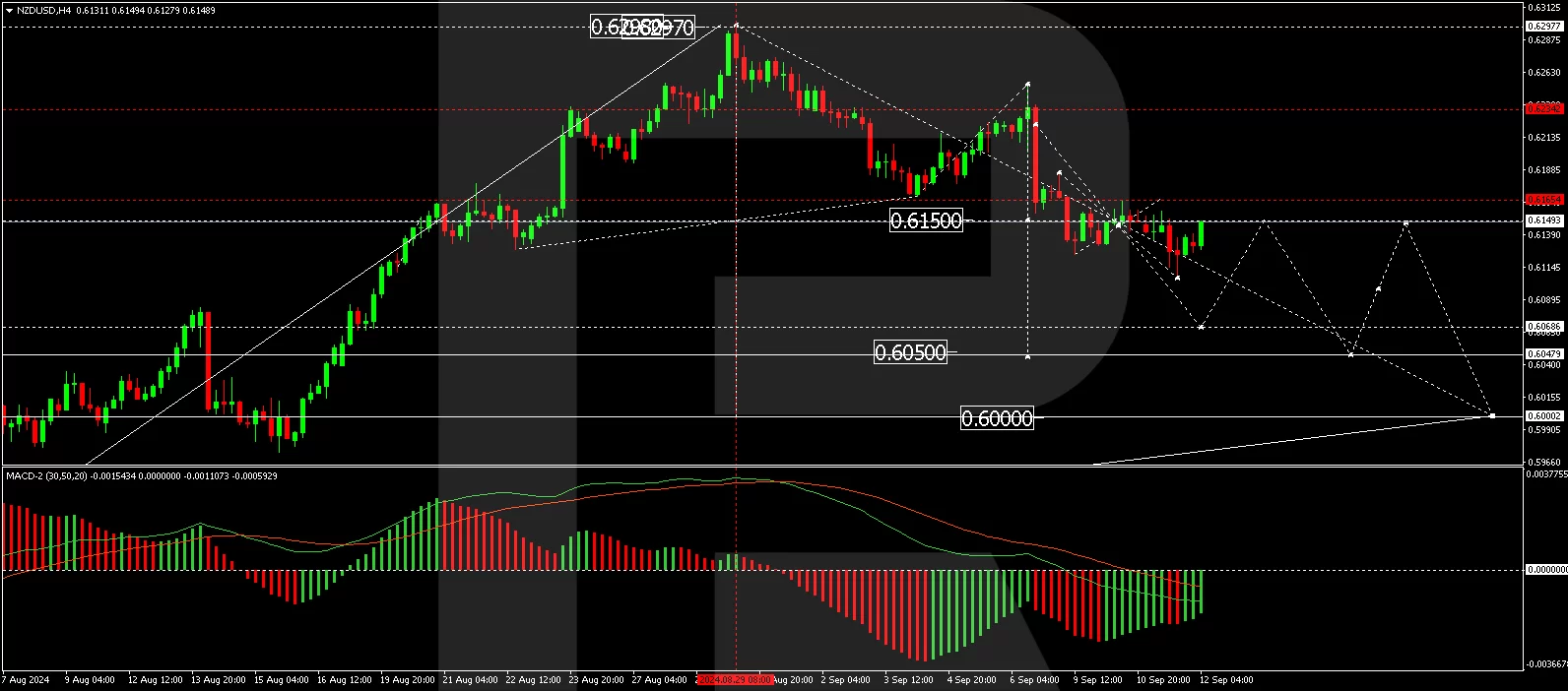
Technical analysis of AUD/USD

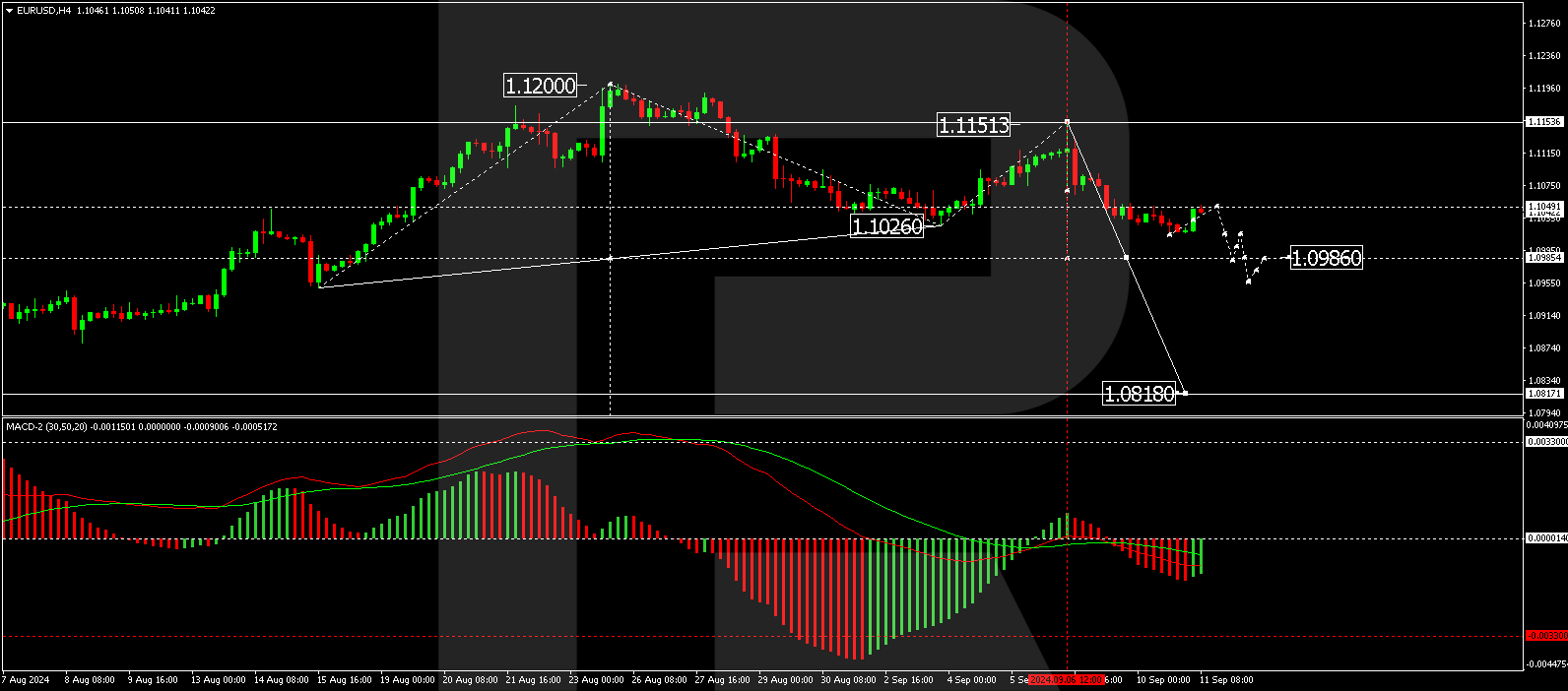
The AUD/USD pair has reached a peak at 0.6640 and is now showing signs of consolidating below this level. Should the pair break downwards from this consolidation, a decline to 0.6450 could be anticipated. Following this potential drop, a rebound to 0.6545 for a retest from below might occur before a further descent towards 0.6200. This bearish outlook is supported by the MACD indicator, which shows the signal line retreating from highs and gearing towards a downturn.

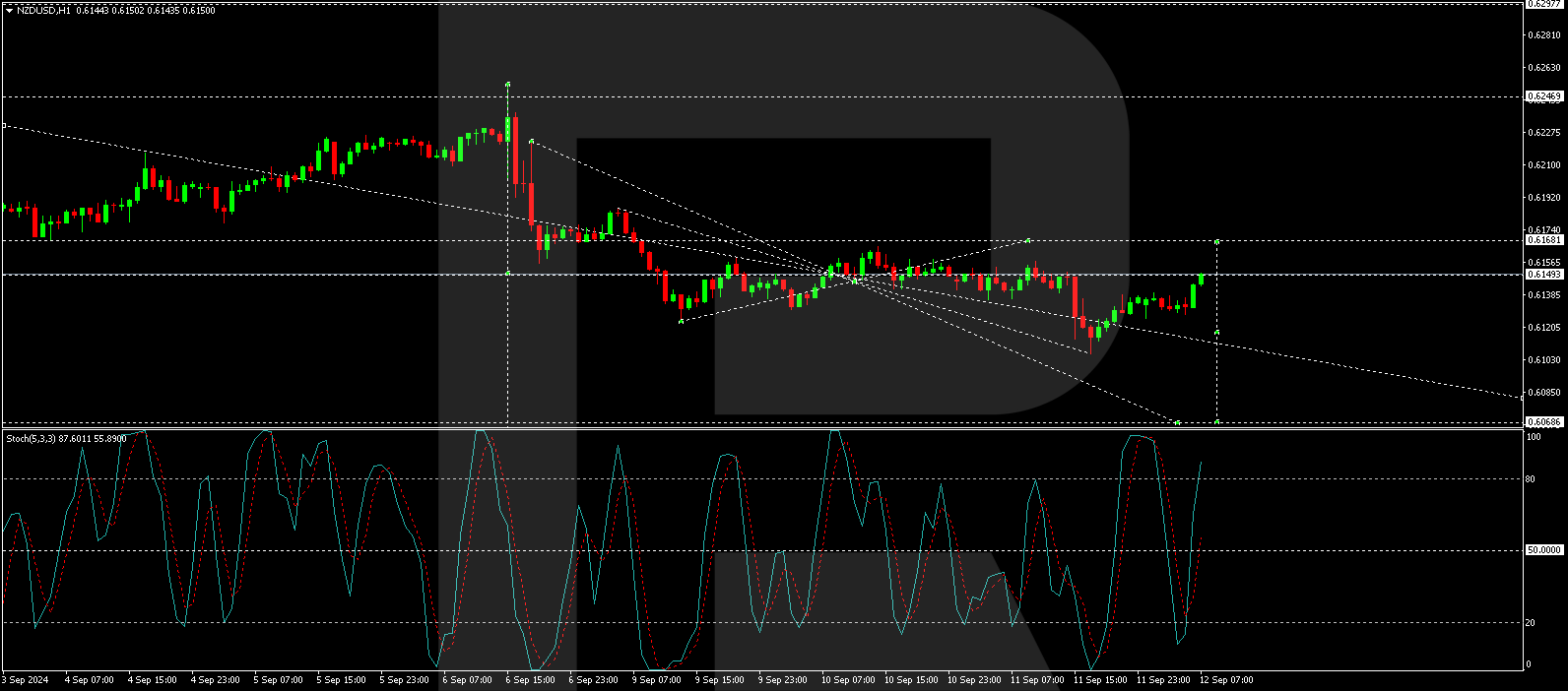
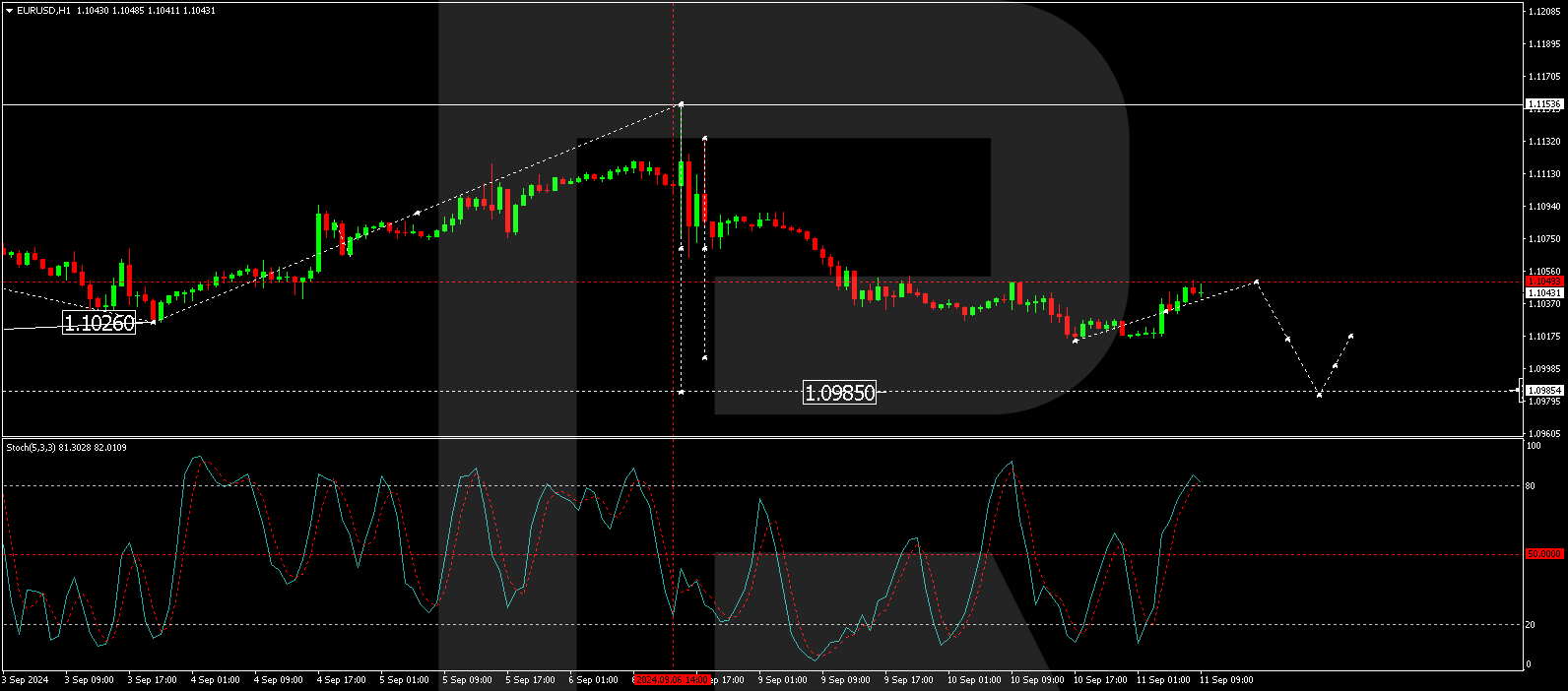
On the hourly chart, after a decline to 0.6555, the AUD/USD pair corrected upwards to 0.6628. A consolidation below this level is expected, which could lead to a new downward wave aiming for 0.6540. This bearish prediction aligns with the Stochastic oscillator readings, where the signal line is poised to move from above 80 downwards to 20, indicating potential selling pressure ahead.


Disclaimer

Any forecasts contained herein are based on the author’s particular opinion. This analysis may not be treated as trading advice. RoboForex bears no responsibility for trading results based on trading recommendations and reviews contained herein.

Speculators flip Japanese Yen bets into 1st bullish position since March 2021

By InvestMacro

Here are the latest charts and statistics for the Commitment of Traders (COT) data published by the Commodities Futures Trading Commission (CFTC).

The latest COT data is updated through Tuesday August 13th and shows a quick view of how large market participants (for-profit speculators and commercial traders) were positioned in the futures markets. All currency positions are in direct relation to the US dollar where, for example, a bet for the euro is a bet that the euro will rise versus the dollar while a bet against the euro will be a bet that the euro will decline versus the dollar.

Weekly Speculator Changes led by Swiss Franc & Japanese Yen

The COT currency market speculator bets were slightly overall higher this week as six out of the eleven currency markets we cover had higher positioning while the other five markets had lower speculator contracts.

Leading the gains for the currency markets was the Japanese Yen (34,458 contracts) with the US Dollar Index (2,400 contracts), the Canadian Dollar (2,021 contracts), the New Zealand Dollar (1,127 contracts), the Brazilian Real (1,041 contracts) and the Swiss Franc (409 contracts) also seeing positive weeks.

The currencies seeing declines in speculator bets on the week were the British Pound (-26,587 contracts), the Mexican Peso (-15,242 contracts), the EuroFX (-6,597 contracts), the Australian Dollar (-2,417 contracts) and with Bitcoin (-143 contracts) also registering lower bets on the week.

Speculators flip Japanese Yen bets into 1st bullish position since March 2021

Highlighting the COT currency’s data this week is sharp increase in bullish bets for the Japanese yen speculators. Large speculators followed up last week’s surge in buying of yen contracts with another strong weekly gain by +34,458 net contracts this week. Last week’s jump by +62,105 contracts was the third largest weekly gain on record (following +69,020 contracts on March 1st 2011 and the highest weekly change of +77,690 contracts on October 31st 2006).

Overall, speculators have now boosted yen positions for six consecutive weeks for a 6-week total increase of +207,327 contracts that has brought the positioning from -184,223 contracts on July 2nd to this week’s +23,104 contract level.

This is the first weekly bullish position following 178 consecutive weeks of bearish levels that dated back to March 9th of 2021. The 178-week streak of consecutive bearish positions marks the highest all-time streak – illustrating the depth of bearish sentiment the yen has experienced over the past few years.

The yen exchange rate versus the US dollar has now improved by almost 9 percent from the low-point reached in July, according to this week’s closing prices. The July low (USDJPY level of 161.95) was also the weakest level for the yen against the dollar since 1986. The USDJPY closed out the week at 147.54.


Currencies Net Speculators Leaderboard

Legend: Weekly Speculators Change | Speculators Current Net Position | Speculators Strength Score compared to last 3-Years (0-100 range)


Strength Scores led by Japanese Yen & Bitcoin

COT Strength Scores (a normalized measure of Speculator positions over a 3-Year range, from 0 to 100 where above 80 is Extreme-Bullish and below 20 is Extreme-Bearish) showed that the Japanese Yen (100 percent) and Bitcoin (72 percent) lead the currency markets this week. The British Pound (58 percent), Mexican Peso (56 percent) and the Australian Dollar (55 percent) come in as the next highest in the weekly strength scores.

On the downside, the Brazilian Real (1 percent), the Canadian Dollar (7 percent) and the New Zealand Dollar (11 percent) come in at the lowest strength levels currently and are in Extreme-Bearish territory (below 20 percent). The next lowest strength score is the EuroFX (32 percent).

Strength Statistics:
US Dollar Index (43.6 percent) vs US Dollar Index previous week (38.4 percent)
EuroFX (31.8 percent) vs EuroFX previous week (34.6 percent)
British Pound Sterling (57.6 percent) vs British Pound Sterling previous week (69.5 percent)
Japanese Yen (100.0 percent) vs Japanese Yen previous week (83.4 percent)
Swiss Franc (52.2 percent) vs Swiss Franc previous week (51.4 percent)
Canadian Dollar (7.5 percent) vs Canadian Dollar previous week (6.6 percent)
Australian Dollar (54.7 percent) vs Australian Dollar previous week (56.8 percent)
New Zealand Dollar (10.9 percent) vs New Zealand Dollar previous week (8.7 percent)
Mexican Peso (56.0 percent) vs Mexican Peso previous week (63.5 percent)
Brazilian Real (1.0 percent) vs Brazilian Real previous week (0.0 percent)
Bitcoin (72.4 percent) vs Bitcoin previous week (74.5 percent)


Japanese Yen & Swiss Franc top the 6-Week Strength Trends

COT Strength Score Trends (or move index, calculates the 6-week changes in strength scores) showed that the Japanese Yen (100 percent) and the Swiss Franc (40 percent) lead the past six weeks trends for the currencies. Bitcoin (20 percent), the EuroFX (16 percent) and the US Dollar Index (4 percent) are the next highest positive movers in the latest trends data.

The New Zealand Dollar (-89 percent) leads the downside trend scores currently with the Canadian Dollar (-27 percent), the Australian Dollar (-23 percent) and the Brazilian Real (-12 percent) following next with lower trend scores.

Strength Trend Statistics:
US Dollar Index (4.2 percent) vs US Dollar Index previous week (-3.0 percent)
EuroFX (15.5 percent) vs EuroFX previous week (17.9 percent)
British Pound Sterling (-6.4 percent) vs British Pound Sterling previous week (13.6 percent)
Japanese Yen (100.0 percent) vs Japanese Yen previous week (78.4 percent)
Swiss Franc (40.4 percent) vs Swiss Franc previous week (24.1 percent)
Canadian Dollar (-26.6 percent) vs Canadian Dollar previous week (-26.5 percent)
Australian Dollar (-22.6 percent) vs Australian Dollar previous week (-13.9 percent)
New Zealand Dollar (-89.1 percent) vs New Zealand Dollar previous week (-83.4 percent)
Mexican Peso (-6.6 percent) vs Mexican Peso previous week (3.7 percent)
Brazilian Real (-12.1 percent) vs Brazilian Real previous week (-30.9 percent)
Bitcoin (19.7 percent) vs Bitcoin previous week (17.5 percent)


Individual COT Forex Markets:

US Dollar Index Futures:

US Dollar Index Forex Futures COT ChartThe US Dollar Index large speculator standing this week totaled a net position of 18,536 contracts in the data reported through Tuesday. This was a weekly boost of 2,400 contracts from the previous week which had a total of 16,136 net contracts.

This week’s current strength score (the trader positioning range over the past three years, measured from 0 to 100) shows the speculators are currently Bearish with a score of 43.6 percent. The commercials are Bullish with a score of 64.5 percent and the small traders (not shown in chart) are Bearish-Extreme with a score of 0.0 percent.

Price Trend-Following Model: Weak Uptrend

Our weekly trend-following model classifies the current market price position as: Weak Uptrend. The current action for the model is considered to be: Hold – Maintain Long Position.

US DOLLAR INDEX StatisticsSPECULATORSCOMMERCIALSSMALL TRADERS
– Percent of Open Interest Longs:74.518.04.9
– Percent of Open Interest Shorts:33.555.88.0
– Net Position:18,536-17,120-1,416
– Gross Longs:33,6868,1382,194
– Gross Shorts:15,15025,2583,610
– Long to Short Ratio:2.2 to 10.3 to 10.6 to 1
NET POSITION TREND:
– Strength Index Score (3 Year Range Pct):43.664.50.0
– Strength Index Reading (3 Year Range):BearishBullishBearish-Extreme
NET POSITION MOVEMENT INDEX:
– 6-Week Change in Strength Index:4.23.0-37.5


Euro Currency Futures:

Euro Currency Futures COT ChartThe Euro Currency large speculator standing this week totaled a net position of 26,983 contracts in the data reported through Tuesday. This was a weekly decrease of -6,597 contracts from the previous week which had a total of 33,580 net contracts.

This week’s current strength score (the trader positioning range over the past three years, measured from 0 to 100) shows the speculators are currently Bearish with a score of 31.8 percent. The commercials are Bullish with a score of 69.0 percent and the small traders (not shown in chart) are Bearish with a score of 31.6 percent.

Price Trend-Following Model: Strong Uptrend

Our weekly trend-following model classifies the current market price position as: Strong Uptrend. The current action for the model is considered to be: Hold – Maintain Long Position.

EURO Currency StatisticsSPECULATORSCOMMERCIALSSMALL TRADERS
– Percent of Open Interest Longs:27.357.311.6
– Percent of Open Interest Shorts:23.365.47.6
– Net Position:26,983-54,02727,044
– Gross Longs:182,212382,39477,589
– Gross Shorts:155,229436,42150,545
– Long to Short Ratio:1.2 to 10.9 to 11.5 to 1
NET POSITION TREND:
– Strength Index Score (3 Year Range Pct):31.869.031.6
– Strength Index Reading (3 Year Range):BearishBullishBearish
NET POSITION MOVEMENT INDEX:
– 6-Week Change in Strength Index:15.5-15.510.9


British Pound Sterling Futures:

British Pound Sterling Futures COT ChartThe British Pound Sterling large speculator standing this week totaled a net position of 47,812 contracts in the data reported through Tuesday. This was a weekly decline of -26,587 contracts from the previous week which had a total of 74,399 net contracts.

This week’s current strength score (the trader positioning range over the past three years, measured from 0 to 100) shows the speculators are currently Bullish with a score of 57.6 percent. The commercials are Bearish with a score of 38.2 percent and the small traders (not shown in chart) are Bullish-Extreme with a score of 84.3 percent.

Price Trend-Following Model: Strong Uptrend

Our weekly trend-following model classifies the current market price position as: Strong Uptrend. The current action for the model is considered to be: Hold – Maintain Long Position.

BRITISH POUND StatisticsSPECULATORSCOMMERCIALSSMALL TRADERS
– Percent of Open Interest Longs:49.927.817.7
– Percent of Open Interest Shorts:26.756.212.6
– Net Position:47,812-58,34010,528
– Gross Longs:102,60357,13436,458
– Gross Shorts:54,791115,47425,930
– Long to Short Ratio:1.9 to 10.5 to 11.4 to 1
NET POSITION TREND:
– Strength Index Score (3 Year Range Pct):57.638.284.3
– Strength Index Reading (3 Year Range):BullishBearishBullish-Extreme
NET POSITION MOVEMENT INDEX:
– 6-Week Change in Strength Index:-6.42.715.8


Japanese Yen Futures:

Japanese Yen Forex Futures COT ChartThe Japanese Yen large speculator standing this week totaled a net position of 23,104 contracts in the data reported through Tuesday. This was a weekly gain of 34,458 contracts from the previous week which had a total of -11,354 net contracts.

This week’s current strength score (the trader positioning range over the past three years, measured from 0 to 100) shows the speculators are currently Bullish-Extreme with a score of 100.0 percent. The commercials are Bearish-Extreme with a score of 0.0 percent and the small traders (not shown in chart) are Bullish-Extreme with a score of 83.9 percent.

Price Trend-Following Model: Strong Uptrend

Our weekly trend-following model classifies the current market price position as: Strong Uptrend. The current action for the model is considered to be: New Buy – Long Position.

JAPANESE YEN StatisticsSPECULATORSCOMMERCIALSSMALL TRADERS
– Percent of Open Interest Longs:27.660.310.5
– Percent of Open Interest Shorts:20.367.710.4
– Net Position:23,104-23,527423
– Gross Longs:87,101190,06433,201
– Gross Shorts:63,997213,59132,778
– Long to Short Ratio:1.4 to 10.9 to 11.0 to 1
NET POSITION TREND:
– Strength Index Score (3 Year Range Pct):100.00.083.9
– Strength Index Reading (3 Year Range):Bullish-ExtremeBearish-ExtremeBullish-Extreme
NET POSITION MOVEMENT INDEX:
– 6-Week Change in Strength Index:100.0-100.033.7


Swiss Franc Futures:

Swiss Franc Forex Futures COT ChartThe Swiss Franc large speculator standing this week totaled a net position of -21,664 contracts in the data reported through Tuesday. This was a weekly boost of 409 contracts from the previous week which had a total of -22,073 net contracts.

This week’s current strength score (the trader positioning range over the past three years, measured from 0 to 100) shows the speculators are currently Bullish with a score of 52.2 percent. The commercials are Bearish with a score of 42.4 percent and the small traders (not shown in chart) are Bullish with a score of 56.1 percent.

Price Trend-Following Model: Strong Uptrend

Our weekly trend-following model classifies the current market price position as: Strong Uptrend. The current action for the model is considered to be: Hold – Maintain Long Position.

SWISS FRANC StatisticsSPECULATORSCOMMERCIALSSMALL TRADERS
– Percent of Open Interest Longs:13.967.018.5
– Percent of Open Interest Shorts:46.926.925.6
– Net Position:-21,66426,308-4,644
– Gross Longs:9,15544,02612,177
– Gross Shorts:30,81917,71816,821
– Long to Short Ratio:0.3 to 12.5 to 10.7 to 1
NET POSITION TREND:
– Strength Index Score (3 Year Range Pct):52.242.456.1
– Strength Index Reading (3 Year Range):BullishBearishBullish
NET POSITION MOVEMENT INDEX:
– 6-Week Change in Strength Index:40.4-49.137.9


Canadian Dollar Futures:

Canadian Dollar Forex Futures COT ChartThe Canadian Dollar large speculator standing this week totaled a net position of -179,611 contracts in the data reported through Tuesday. This was a weekly rise of 2,021 contracts from the previous week which had a total of -181,632 net contracts.

This week’s current strength score (the trader positioning range over the past three years, measured from 0 to 100) shows the speculators are currently Bearish-Extreme with a score of 7.5 percent. The commercials are Bullish-Extreme with a score of 90.6 percent and the small traders (not shown in chart) are Bearish with a score of 26.8 percent.

Price Trend-Following Model: Weak Downtrend

Our weekly trend-following model classifies the current market price position as: Weak Downtrend. The current action for the model is considered to be: Hold – Maintain Short Position.

CANADIAN DOLLAR StatisticsSPECULATORSCOMMERCIALSSMALL TRADERS
– Percent of Open Interest Longs:6.482.19.6
– Percent of Open Interest Shorts:62.026.110.1
– Net Position:-179,611180,958-1,347
– Gross Longs:20,668265,25431,163
– Gross Shorts:200,27984,29632,510
– Long to Short Ratio:0.1 to 13.1 to 11.0 to 1
NET POSITION TREND:
– Strength Index Score (3 Year Range Pct):7.590.626.8
– Strength Index Reading (3 Year Range):Bearish-ExtremeBullish-ExtremeBearish
NET POSITION MOVEMENT INDEX:
– 6-Week Change in Strength Index:-26.623.28.3


Australian Dollar Futures:

Australian Dollar Forex Futures COT ChartThe Australian Dollar large speculator standing this week totaled a net position of -42,616 contracts in the data reported through Tuesday. This was a weekly reduction of -2,417 contracts from the previous week which had a total of -40,199 net contracts.

This week’s current strength score (the trader positioning range over the past three years, measured from 0 to 100) shows the speculators are currently Bullish with a score of 54.7 percent. The commercials are Bullish with a score of 52.5 percent and the small traders (not shown in chart) are Bearish with a score of 40.9 percent.

Price Trend-Following Model: Uptrend

Our weekly trend-following model classifies the current market price position as: Uptrend. The current action for the model is considered to be: Hold – Maintain Long Position.

AUSTRALIAN DOLLAR StatisticsSPECULATORSCOMMERCIALSSMALL TRADERS
– Percent of Open Interest Longs:34.550.013.1
– Percent of Open Interest Shorts:57.224.216.2
– Net Position:-42,61648,481-5,865
– Gross Longs:65,02894,08424,636
– Gross Shorts:107,64445,60330,501
– Long to Short Ratio:0.6 to 12.1 to 10.8 to 1
NET POSITION TREND:
– Strength Index Score (3 Year Range Pct):54.752.540.9
– Strength Index Reading (3 Year Range):BullishBullishBearish
NET POSITION MOVEMENT INDEX:
– 6-Week Change in Strength Index:-22.625.6-27.2


New Zealand Dollar Futures:

New Zealand Dollar Forex Futures COT ChartThe New Zealand Dollar large speculator standing this week totaled a net position of -15,624 contracts in the data reported through Tuesday. This was a weekly advance of 1,127 contracts from the previous week which had a total of -16,751 net contracts.

This week’s current strength score (the trader positioning range over the past three years, measured from 0 to 100) shows the speculators are currently Bearish-Extreme with a score of 10.9 percent. The commercials are Bullish-Extreme with a score of 86.3 percent and the small traders (not shown in chart) are Bearish with a score of 42.0 percent.

Price Trend-Following Model: Uptrend

Our weekly trend-following model classifies the current market price position as: Uptrend. The current action for the model is considered to be: Hold – Maintain Long Position.

NEW ZEALAND DOLLAR StatisticsSPECULATORSCOMMERCIALSSMALL TRADERS
– Percent of Open Interest Longs:25.667.56.4
– Percent of Open Interest Shorts:49.142.38.1
– Net Position:-15,62416,811-1,187
– Gross Longs:17,05044,9734,240
– Gross Shorts:32,67428,1625,427
– Long to Short Ratio:0.5 to 11.6 to 10.8 to 1
NET POSITION TREND:
– Strength Index Score (3 Year Range Pct):10.986.342.0
– Strength Index Reading (3 Year Range):Bearish-ExtremeBullish-ExtremeBearish
NET POSITION MOVEMENT INDEX:
– 6-Week Change in Strength Index:-89.186.3-11.6


Mexican Peso Futures:

Mexican Peso Futures COT ChartThe Mexican Peso large speculator standing this week totaled a net position of 50,094 contracts in the data reported through Tuesday. This was a weekly decline of -15,242 contracts from the previous week which had a total of 65,336 net contracts.

This week’s current strength score (the trader positioning range over the past three years, measured from 0 to 100) shows the speculators are currently Bullish with a score of 56.0 percent. The commercials are Bearish with a score of 45.7 percent and the small traders (not shown in chart) are Bearish-Extreme with a score of 2.3 percent.

Price Trend-Following Model: Downtrend

Our weekly trend-following model classifies the current market price position as: Downtrend. The current action for the model is considered to be: Hold – Maintain Short Position.

MEXICAN PESO StatisticsSPECULATORSCOMMERCIALSSMALL TRADERS
– Percent of Open Interest Longs:44.451.72.1
– Percent of Open Interest Shorts:17.478.02.8
– Net Position:50,094-48,708-1,386
– Gross Longs:82,18895,6203,845
– Gross Shorts:32,094144,3285,231
– Long to Short Ratio:2.6 to 10.7 to 10.7 to 1
NET POSITION TREND:
– Strength Index Score (3 Year Range Pct):56.045.72.3
– Strength Index Reading (3 Year Range):BullishBearishBearish-Extreme
NET POSITION MOVEMENT INDEX:
– 6-Week Change in Strength Index:-6.67.9-19.8


Brazilian Real Futures:

Brazil Real Futures COT ChartThe Brazilian Real large speculator standing this week totaled a net position of -53,842 contracts in the data reported through Tuesday. This was a weekly lift of 1,041 contracts from the previous week which had a total of -54,883 net contracts.

This week’s current strength score (the trader positioning range over the past three years, measured from 0 to 100) shows the speculators are currently Bearish-Extreme with a score of 1.0 percent. The commercials are Bullish-Extreme with a score of 100.0 percent and the small traders (not shown in chart) are Bearish with a score of 30.9 percent.

Price Trend-Following Model: Downtrend

Our weekly trend-following model classifies the current market price position as: Downtrend. The current action for the model is considered to be: Hold – Maintain Short Position.

BRAZIL REAL StatisticsSPECULATORSCOMMERCIALSSMALL TRADERS
– Percent of Open Interest Longs:22.475.02.5
– Percent of Open Interest Shorts:87.010.03.0
– Net Position:-53,84254,218-376
– Gross Longs:18,70062,5922,117
– Gross Shorts:72,5428,3742,493
– Long to Short Ratio:0.3 to 17.5 to 10.8 to 1
NET POSITION TREND:
– Strength Index Score (3 Year Range Pct):1.0100.030.9
– Strength Index Reading (3 Year Range):Bearish-ExtremeBullish-ExtremeBearish
NET POSITION MOVEMENT INDEX:
– 6-Week Change in Strength Index:-12.111.90.3


Bitcoin Futures:

Bitcoin Crypto Futures COT ChartThe Bitcoin large speculator standing this week totaled a net position of 395 contracts in the data reported through Tuesday. This was a weekly reduction of -143 contracts from the previous week which had a total of 538 net contracts.

This week’s current strength score (the trader positioning range over the past three years, measured from 0 to 100) shows the speculators are currently Bullish with a score of 72.4 percent. The commercials are Bearish with a score of 47.5 percent and the small traders (not shown in chart) are Bearish-Extreme with a score of 19.3 percent.

Price Trend-Following Model: Strong Downtrend

Our weekly trend-following model classifies the current market price position as: Strong Downtrend. The current action for the model is considered to be: Hold – Maintain Short Position.

BITCOIN StatisticsSPECULATORSCOMMERCIALSSMALL TRADERS
– Percent of Open Interest Longs:86.52.34.1
– Percent of Open Interest Shorts:85.14.73.1
– Net Position:395-676281
– Gross Longs:24,1216441,148
– Gross Shorts:23,7261,320867
– Long to Short Ratio:1.0 to 10.5 to 11.3 to 1
NET POSITION TREND:
– Strength Index Score (3 Year Range Pct):72.447.519.3
– Strength Index Reading (3 Year Range):BullishBearishBearish-Extreme
NET POSITION MOVEMENT INDEX:
– 6-Week Change in Strength Index:19.7-30.2-2.7


Article By InvestMacroReceive our weekly COT Newsletter

*COT Report: The COT data, released weekly to the public each Friday, is updated through the most recent Tuesday (data is 3 days old) and shows a quick view of how large speculators or non-commercials (for-profit traders) were positioned in the futures markets.

The CFTC categorizes trader positions according to commercial hedgers (traders who use futures contracts for hedging as part of the business), non-commercials (large traders who speculate to realize trading profits) and nonreportable traders (usually small traders/speculators) as well as their open interest (contracts open in the market at time of reporting). See CFTC criteria here.

Speculator Extremes: Yen, VIX, 5-Year & Cotton lead Bullish & Bearish Positions

By InvestMacro

The latest update for the weekly Commitment of Traders (COT) report was released by the Commodity Futures Trading Commission (CFTC) on Friday for data ending on August 13th.

This weekly Extreme Positions report highlights the Most Bullish and Most Bearish Positions for the speculator category. Extreme positioning in these markets can foreshadow strong moves in the underlying market.

To signify an extreme position, we use the Strength Index (also known as the COT Index) of each instrument, a common method of measuring COT data. The Strength Index is simply a comparison of current trader positions against the range of positions over the previous 3 years. We use over 80 percent as extremely bullish and under 20 percent as extremely bearish. (Compare Strength Index scores across all markets in the data table or cot leaders table)


Here Are This Week’s Most Bullish Speculator Positions:

Japanese Yen


The Japanese Yen speculator position comes in as the most bullish extreme standing this week. The Japanese Yen speculator level is currently at a 100.0 percent score of its 3-year range.

The six-week trend for the percent strength score totaled 100.0 this week. The overall net speculator position was a total of 23,104 net contracts this week with a strong gain of 34,458 contract in the weekly speculator bets.


Speculators or Non-Commercials Notes:

Speculators, classified as non-commercial traders by the CFTC, are made up of large commodity funds, hedge funds and other significant for-profit participants. The Specs are generally regarded as trend-followers in their behavior towards price action – net speculator bets and prices tend to go in the same directions. These traders often look to buy when prices are rising and sell when prices are falling. To illustrate this point, many times speculator contracts can be found at their most extremes (bullish or bearish) when prices are also close to their highest or lowest levels.

These extreme levels can be dangerous for the large speculators as the trade is most crowded, there is less trading ammunition still sitting on the sidelines to push the trend further and prices have moved a significant distance. When the trend becomes exhausted, some speculators take profits while others look to also exit positions when prices fail to continue in the same direction. This process usually plays out over many months to years and can ultimately create a reverse effect where prices start to fall and speculators start a process of selling when prices are falling.


VIX


The VIX speculator position comes next in the extreme standings this week. The VIX speculator level is now at a 93.2 percent score of its 3-year range.

The six-week trend for the percent strength score was 35.9 this week. The speculator position registered -20,262 net contracts this week with a weekly boost of 23,283 contracts in speculator bets.


Gold


The Gold speculator position comes in third this week in the extreme standings. The Gold speculator level resides at a 92.4 percent score of its 3-year range.

The six-week trend for the speculator strength score came in at 11.0 this week. The overall speculator position was 267,264 net contracts this week with a rise by 28,515 contracts in the weekly speculator bets.


3-Month Secured Overnight Financing Rate


The 3-Month Secured Overnight Financing Rate speculator position comes up number four in the extreme standings this week. The 3-Month Secured Overnight Financing Rate speculator level is at a 83.3 percent score of its 3-year range.

The six-week trend for the speculator strength score totaled a change of 36.5 this week. The overall speculator position was 445,064 net contracts this week with a jump of 77,916 contracts in the speculator bets.


Coffee


The Coffee speculator position rounds out the top five in this week’s bullish extreme standings. The Coffee speculator level sits at a 83.3 percent score of its 3-year range. The six-week trend for the speculator strength score was -8.6 this week.

The speculator position was 58,940 net contracts this week with a small dip of -267 contracts in the weekly speculator bets.


This Week’s Most Bearish Speculator Positions:

5-Year Bond


The 5-Year Bond speculator position comes in as the most bearish extreme standing this week. The 5-Year Bond speculator level is at a 0.0 percent score of its 3-year range.

The six-week trend for the speculator strength score was -8.8 this week. The overall speculator position was -1,695,072 net contracts this week with a decline of -6,996 contracts in the speculator bets.


Cotton


The Cotton speculator position comes in next for the most bearish extreme standing on the week. The Cotton speculator level is at a 0.1 percent score of its 3-year range.

The six-week trend for the speculator strength score was -14.9 this week. The speculator position was -41,670 net contracts this week with an edge higher by 238 contracts in the weekly speculator bets.


Brazil Real


The Brazil Real speculator position comes in as third most bearish extreme standing of the week. The Brazil Real speculator level resides at a 1.0 percent score of its 3-year range.

The six-week trend for the speculator strength score was -12.1 this week. The overall speculator position was -53,842 net contracts this week with a rise of 1,041 contracts in the speculator bets.


10-Year Note


The 10-Year Note speculator position comes in as this week’s fourth most bearish extreme standing. The 10-Year Note speculator level is at a 2.7 percent score of its 3-year range.

The six-week trend for the speculator strength score was -48.1 this week. The speculator position was -860,243 net contracts this week with a drop by -84,035 contracts in the weekly speculator bets.


Gasoline


Finally, the Gasoline speculator position comes in as the fifth most bearish extreme standing for this week. The Gasoline speculator level is at a 4.8 percent score of its 3-year range.

The six-week trend for the speculator strength score was -34.2 this week. The speculator position was 15,028 net contracts this week with an increase by 3,441 contracts in the weekly speculator bets.


Article By InvestMacroReceive our weekly COT Newsletter

*COT Report: The COT data, released weekly to the public each Friday, is updated through the most recent Tuesday (data is 3 days old) and shows a quick view of how large speculators or non-commercials (for-profit traders) were positioned in the futures markets.

The CFTC categorizes trader positions according to commercial hedgers (traders who use futures contracts for hedging as part of the business), non-commercials (large traders who speculate to realize trading profits) and nonreportable traders (usually small traders/speculators) as well as their open interest (contracts open in the market at time of reporting). See CFTC criteria here.

COT Metals Charts: Speculator Bets led by Gold & Platinum

By InvestMacro

Here are the latest charts and statistics for the Commitment of Traders (COT) data published by the Commodities Futures Trading Commission (CFTC).

The latest COT data is updated through Tuesday August 13th and shows a quick view of how large traders (for-profit speculators and commercial entities) were positioned in the futures markets.

Weekly Speculator Changes led by Gold & Platinum

The COT metals markets speculator bets were mixed this week as three out of the six metals markets we cover had higher positioning while the other three markets had lower speculator contracts.

Leading the gains for the metals was Gold (28,515 contracts) with Platinum (1,648 contracts) and Palladium (1,020 contracts) also recording positive weeks.

The markets with declines in speculator bets for the week were Copper (-3,801 contracts), Silver (-3,792 contracts) and with Steel (-23 contracts) also seeing lower bets on the week.


Metals Net Speculators Leaderboard

Legend: Weekly Speculators Change | Speculators Current Net Position | Speculators Strength Score compared to last 3-Years (0-100 range)


Strength Scores led by Gold & Silver

COT Strength Scores (a normalized measure of Speculator positions over a 3-Year range, from 0 to 100 where above 80 is Extreme-Bullish and below 20 is Extreme-Bearish) showed that Gold (92 percent) and Silver (79 percent) lead the metals markets this week. Steel (74 percent) comes in as the next highest in the weekly strength scores.

On the downside, Palladium (12 percent) comes in at the lowest strength level currently and is in Extreme-Bearish territory (below 20 percent). The next lowest strength score was Copper (48 percent).

Strength Statistics:
Gold (92.4 percent) vs Gold previous week (80.1 percent)
Silver (78.6 percent) vs Silver previous week (83.8 percent)
Copper (48.0 percent) vs Copper previous week (51.5 percent)
Platinum (49.9 percent) vs Platinum previous week (45.5 percent)
Palladium (12.3 percent) vs Palladium previous week (4.9 percent)
Steel (73.7 percent) vs Palladium previous week (73.8 percent)


Gold & Steel top the 6-Week Strength Trends

COT Strength Score Trends (or move index, calculates the 6-week changes in strength scores) showed that Gold (11 percent) leads the past six weeks trends for metals and is the only positive mover in the latest trends data this week.

Platinum (-32 percent) and Copper (-31 percent) lead the downside trend scores currently with Silver (-14 percent) as the next market with lower trend scores.

Move Statistics:
Gold (11.0 percent) vs Gold previous week (-3.2 percent)
Silver (-14.3 percent) vs Silver previous week (-9.3 percent)
Copper (-31.1 percent) vs Copper previous week (-28.4 percent)
Platinum (-32.1 percent) vs Platinum previous week (-27.5 percent)
Palladium (-11.2 percent) vs Palladium previous week (-2.5 percent)
Steel (-0.6 percent) vs Steel previous week (0.2 percent)


Individual Markets:

Gold Comex Futures:

Gold Futures COT ChartThe Gold Comex Futures large speculator standing this week equaled a net position of 267,264 contracts in the data reported through Tuesday. This was a weekly rise of 28,515 contracts from the previous week which had a total of 238,749 net contracts.

This week’s current strength score (the trader positioning range over the past three years, measured from 0 to 100) shows the speculators are currently Bullish-Extreme with a score of 92.4 percent. The commercials are Bearish-Extreme with a score of 6.8 percent and the small traders (not shown in chart) are Bullish with a score of 62.0 percent.

Price Trend-Following Model: Strong Uptrend

Our weekly trend-following model classifies the current market price position as: Strong Uptrend. The current action for the model is considered to be: Hold – Maintain Long Position.

Gold Futures StatisticsSPECULATORSCOMMERCIALSSMALL TRADERS
– Percent of Open Interest Longs:65.017.510.0
– Percent of Open Interest Shorts:12.275.35.0
– Net Position:267,264-292,50225,238
– Gross Longs:328,76988,31350,388
– Gross Shorts:61,505380,81525,150
– Long to Short Ratio:5.3 to 10.2 to 12.0 to 1
NET POSITION TREND:
– Strength Index Score (3 Year Range Pct):92.46.862.0
– Strength Index Reading (3 Year Range):Bullish-ExtremeBearish-ExtremeBullish
NET POSITION MOVEMENT INDEX:
– 6-Week Change in Strength Index:11.0-11.27.1


Silver Comex Futures:

Silver Futures COT ChartThe Silver Comex Futures large speculator standing this week equaled a net position of 45,289 contracts in the data reported through Tuesday. This was a weekly lowering of -3,792 contracts from the previous week which had a total of 49,081 net contracts.

This week’s current strength score (the trader positioning range over the past three years, measured from 0 to 100) shows the speculators are currently Bullish with a score of 78.6 percent. The commercials are Bearish with a score of 20.1 percent and the small traders (not shown in chart) are Bullish with a score of 74.7 percent.

Price Trend-Following Model: Weak Uptrend

Our weekly trend-following model classifies the current market price position as: Weak Uptrend. The current action for the model is considered to be: Hold – Maintain Long Position.

Silver Futures StatisticsSPECULATORSCOMMERCIALSSMALL TRADERS
– Percent of Open Interest Longs:41.625.821.6
– Percent of Open Interest Shorts:10.970.97.1
– Net Position:45,289-66,77621,487
– Gross Longs:61,45838,07931,934
– Gross Shorts:16,169104,85510,447
– Long to Short Ratio:3.8 to 10.4 to 13.1 to 1
NET POSITION TREND:
– Strength Index Score (3 Year Range Pct):78.620.174.7
– Strength Index Reading (3 Year Range):BullishBearishBullish
NET POSITION MOVEMENT INDEX:
– 6-Week Change in Strength Index:-14.314.7-12.8


Copper Grade #1 Futures:

Copper Futures COT ChartThe Copper Grade #1 Futures large speculator standing this week equaled a net position of 15,797 contracts in the data reported through Tuesday. This was a weekly fall of -3,801 contracts from the previous week which had a total of 19,598 net contracts.

This week’s current strength score (the trader positioning range over the past three years, measured from 0 to 100) shows the speculators are currently Bearish with a score of 48.0 percent. The commercials are Bearish with a score of 49.4 percent and the small traders (not shown in chart) are Bullish with a score of 69.8 percent.

Price Trend-Following Model: Strong Downtrend

Our weekly trend-following model classifies the current market price position as: Strong Downtrend. The current action for the model is considered to be: Hold – Maintain Short Position.

Copper Futures StatisticsSPECULATORSCOMMERCIALSSMALL TRADERS
– Percent of Open Interest Longs:37.431.79.1
– Percent of Open Interest Shorts:30.642.35.3
– Net Position:15,797-24,4038,606
– Gross Longs:86,01372,86020,861
– Gross Shorts:70,21697,26312,255
– Long to Short Ratio:1.2 to 10.7 to 11.7 to 1
NET POSITION TREND:
– Strength Index Score (3 Year Range Pct):48.049.469.8
– Strength Index Reading (3 Year Range):BearishBearishBullish
NET POSITION MOVEMENT INDEX:
– 6-Week Change in Strength Index:-31.132.5-26.0


Platinum Futures:

Platinum Futures COT ChartThe Platinum Futures large speculator standing this week equaled a net position of 11,939 contracts in the data reported through Tuesday. This was a weekly increase of 1,648 contracts from the previous week which had a total of 10,291 net contracts.

This week’s current strength score (the trader positioning range over the past three years, measured from 0 to 100) shows the speculators are currently Bearish with a score of 49.9 percent. The commercials are Bearish with a score of 42.0 percent and the small traders (not shown in chart) are Bullish with a score of 76.9 percent.

Price Trend-Following Model: Weak Uptrend

Our weekly trend-following model classifies the current market price position as: Weak Uptrend. The current action for the model is considered to be: Hold – Maintain Long Position.

Platinum Futures StatisticsSPECULATORSCOMMERCIALSSMALL TRADERS
– Percent of Open Interest Longs:56.723.012.3
– Percent of Open Interest Shorts:42.145.84.1
– Net Position:11,939-18,6106,671
– Gross Longs:46,28718,76910,015
– Gross Shorts:34,34837,3793,344
– Long to Short Ratio:1.3 to 10.5 to 13.0 to 1
NET POSITION TREND:
– Strength Index Score (3 Year Range Pct):49.942.076.9
– Strength Index Reading (3 Year Range):BearishBearishBullish
NET POSITION MOVEMENT INDEX:
– 6-Week Change in Strength Index:-32.130.411.0


Palladium Futures:

Palladium Futures COT ChartThe Palladium Futures large speculator standing this week equaled a net position of -12,224 contracts in the data reported through Tuesday. This was a weekly gain of 1,020 contracts from the previous week which had a total of -13,244 net contracts.

This week’s current strength score (the trader positioning range over the past three years, measured from 0 to 100) shows the speculators are currently Bearish-Extreme with a score of 12.3 percent. The commercials are Bullish-Extreme with a score of 87.3 percent and the small traders (not shown in chart) are Bullish with a score of 59.9 percent.

Price Trend-Following Model: Downtrend

Our weekly trend-following model classifies the current market price position as: Downtrend. The current action for the model is considered to be: Hold – Maintain Short Position.

Palladium Futures StatisticsSPECULATORSCOMMERCIALSSMALL TRADERS
– Percent of Open Interest Longs:30.248.07.6
– Percent of Open Interest Shorts:71.98.15.7
– Net Position:-12,22411,676548
– Gross Longs:8,84314,0592,216
– Gross Shorts:21,0672,3831,668
– Long to Short Ratio:0.4 to 15.9 to 11.3 to 1
NET POSITION TREND:
– Strength Index Score (3 Year Range Pct):12.387.359.9
– Strength Index Reading (3 Year Range):Bearish-ExtremeBullish-ExtremeBullish
NET POSITION MOVEMENT INDEX:
– 6-Week Change in Strength Index:-11.27.523.2


Steel Futures Futures:

Steel Futures COT ChartThe Steel Futures large speculator standing this week equaled a net position of -5,921 contracts in the data reported through Tuesday. This was a weekly fall of -23 contracts from the previous week which had a total of -5,898 net contracts.

This week’s current strength score (the trader positioning range over the past three years, measured from 0 to 100) shows the speculators are currently Bullish with a score of 73.7 percent. The commercials are Bearish with a score of 27.4 percent and the small traders (not shown in chart) are Bearish with a score of 25.2 percent.

Price Trend-Following Model: Downtrend

Our weekly trend-following model classifies the current market price position as: Downtrend. The current action for the model is considered to be: Hold – Maintain Short Position.

Steel Futures StatisticsSPECULATORSCOMMERCIALSSMALL TRADERS
– Percent of Open Interest Longs:9.979.50.8
– Percent of Open Interest Shorts:37.551.61.2
– Net Position:-5,9215,987-66
– Gross Longs:2,12317,057181
– Gross Shorts:8,04411,070247
– Long to Short Ratio:0.3 to 11.5 to 10.7 to 1
NET POSITION TREND:
– Strength Index Score (3 Year Range Pct):73.727.425.2
– Strength Index Reading (3 Year Range):BullishBearishBearish
NET POSITION MOVEMENT INDEX:
– 6-Week Change in Strength Index:-0.60.46.1


Article By InvestMacroReceive our weekly COT Newsletter

*COT Report: The COT data, released weekly to the public each Friday, is updated through the most recent Tuesday (data is 3 days old) and shows a quick view of how large speculators or non-commercials (for-profit traders) were positioned in the futures markets.

The CFTC categorizes trader positions according to commercial hedgers (traders who use futures contracts for hedging as part of the business), non-commercials (large traders who speculate to realize trading profits) and nonreportable traders (usually small traders/speculators) as well as their open interest (contracts open in the market at time of reporting). See CFTC criteria here.

COT Bonds Charts: Speculator Bets led by SOFR 3-Months & US Treasury Bonds

By InvestMacro

Here are the latest charts and statistics for the Commitment of Traders (COT) reports data published by the Commodities Futures Trading Commission (CFTC).

The latest COT data is updated through Tuesday August 13th and shows a quick view of how large traders (for-profit speculators and commercial hedgers) were positioned in the futures markets.

Weekly Speculator Changes led by SOFR 3-Months & US Treasury Bonds

The COT bond market speculator bets were overall higher this week as five out of the eight bond markets we cover had higher positioning while the other three markets had lower speculator contracts.

Leading the gains for the bond markets was the SOFR 3-Months (77,916 contracts) with the US Treasury Bonds (31,525 contracts), the Ultra Treasury Bonds (27,529 contracts), the Ultra 10-Year Bonds (13,624 contracts) and the the 2-Year Bonds (605 contracts) also having positive weeks.

The bond markets with declines in speculator bets for the week were the 10-Year Bonds (-84,035 contracts), the 5-Year Bonds (-6,996 contracts) and with the Fed Funds (-10,447 contracts) also seeing lower bets on the week.


Bonds Net Speculators Leaderboard

Legend: Weekly Speculators Change | Speculators Current Net Position | Speculators Strength Score compared to last 3-Years (0-100 range)


Strength Scores led by SOFR 3-Months & US Treasury Bonds

COT Strength Scores (a normalized measure of Speculator positions over a 3-Year range, from 0 to 100 where above 80 is Extreme-Bullish and below 20 is Extreme-Bearish) showed that the SOFR 3-Months (83 percent) and the US Treasury Bonds (74 percent) lead the bond markets this week. The Ultra Treasury Bonds (53 percent) comes in as the next highest in the weekly strength scores.

On the downside, the 5-Year Bonds (0 percent) and the 10-Year Bonds (3 percent) come in at the lowest strength level currently and are in Extreme-Bearish territory (below 20 percent). The next lowest strength scores were the 2-Year Bonds (24 percent) and the Ultra 10-Year Bonds (27 percent).

Strength Statistics:
Fed Funds (46.2 percent) vs Fed Funds previous week (48.5 percent)
2-Year Bond (23.8 percent) vs 2-Year Bond previous week (23.7 percent)
5-Year Bond (0.0 percent) vs 5-Year Bond previous week (0.4 percent)
10-Year Bond (2.7 percent) vs 10-Year Bond previous week (10.6 percent)
Ultra 10-Year Bond (26.5 percent) vs Ultra 10-Year Bond previous week (23.7 percent)
US Treasury Bond (74.3 percent) vs US Treasury Bond previous week (63.3 percent)
Ultra US Treasury Bond (53.0 percent) vs Ultra US Treasury Bond previous week (39.4 percent)
SOFR 3-Months (83.3 percent) vs SOFR 3-Months previous week (79.2 percent)


SOFR 3-Months & Ultra Treasury Bonds top the 6-Week Strength Trends

COT Strength Score Trends (or move index, calculates the 6-week changes in strength scores) showed that the SOFR 3-Months (36 percent) and the Ultra Treasury Bonds (22 percent) lead the past six weeks trends for bonds. The Fed Funds (16 percent) are the next highest positive movers in the latest trends data.

The 10-Year Bonds (-48 percent) and the 5-Year Bonds (-9 percent) lead the downside trend scores currently with the US Treasury Bonds (-2 percent) following next with lower trend scores.

Strength Trend Statistics:
Fed Funds (15.5 percent) vs Fed Funds previous week (13.4 percent)
2-Year Bond (7.4 percent) vs 2-Year Bond previous week (10.0 percent)
5-Year Bond (-8.8 percent) vs 5-Year Bond previous week (-11.3 percent)
10-Year Bond (-48.1 percent) vs 10-Year Bond previous week (-42.6 percent)
Ultra 10-Year Bond (0.3 percent) vs Ultra 10-Year Bond previous week (-2.2 percent)
US Treasury Bond (-1.6 percent) vs US Treasury Bond previous week (-2.4 percent)
Ultra US Treasury Bond (21.8 percent) vs Ultra US Treasury Bond previous week (-4.1 percent)
SOFR 3-Months (36.5 percent) vs SOFR 3-Months previous week (29.1 percent)


Secured Overnight Financing Rate (3-Month) Futures:

SOFR 3-Months Bonds Futures COT ChartThe Secured Overnight Financing Rate (3-Month) large speculator standing this week equaled a net position of 445,064 contracts in the data reported through Tuesday. This was a weekly advance of 77,916 contracts from the previous week which had a total of 367,148 net contracts.

This week’s current strength score (the trader positioning range over the past three years, measured from 0 to 100) shows the speculators are currently Bullish-Extreme with a score of 83.3 percent. The commercials are Bearish-Extreme with a score of 16.5 percent and the small traders (not shown in chart) are Bullish-Extreme with a score of 88.7 percent.

Price Trend-Following Model: Weak Uptrend

Our weekly trend-following model classifies the current market price position as: Weak Uptrend. The current action for the model is considered to be: Hold – Maintain Long Position.

SOFR 3-Months StatisticsSPECULATORSCOMMERCIALSSMALL TRADERS
– Percent of Open Interest Longs:17.555.10.4
– Percent of Open Interest Shorts:13.359.20.4
– Net Position:445,064-446,6201,556
– Gross Longs:1,861,2525,869,85440,261
– Gross Shorts:1,416,1886,316,47438,705
– Long to Short Ratio:1.3 to 10.9 to 11.0 to 1
NET POSITION TREND:
– Strength Index Score (3 Year Range Pct):83.316.588.7
– Strength Index Reading (3 Year Range):Bullish-ExtremeBearish-ExtremeBullish-Extreme
NET POSITION MOVEMENT INDEX:
– 6-Week Change in Strength Index:36.5-36.93.3


30-Day Federal Funds Futures:

Federal Funds 30-Day Bonds Futures COT ChartThe 30-Day Federal Funds large speculator standing this week equaled a net position of -91,291 contracts in the data reported through Tuesday. This was a weekly fall of -10,447 contracts from the previous week which had a total of -80,844 net contracts.

This week’s current strength score (the trader positioning range over the past three years, measured from 0 to 100) shows the speculators are currently Bearish with a score of 46.2 percent. The commercials are Bullish with a score of 52.6 percent and the small traders (not shown in chart) are Bullish with a score of 66.2 percent.

Price Trend-Following Model: Downtrend

Our weekly trend-following model classifies the current market price position as: Downtrend. The current action for the model is considered to be: Hold – Maintain Short Position.

30-Day Federal Funds StatisticsSPECULATORSCOMMERCIALSSMALL TRADERS
– Percent of Open Interest Longs:11.272.11.7
– Percent of Open Interest Shorts:16.766.02.3
– Net Position:-91,291101,606-10,315
– Gross Longs:188,0691,208,29128,895
– Gross Shorts:279,3601,106,68539,210
– Long to Short Ratio:0.7 to 11.1 to 10.7 to 1
NET POSITION TREND:
– Strength Index Score (3 Year Range Pct):46.252.666.2
– Strength Index Reading (3 Year Range):BearishBullishBullish
NET POSITION MOVEMENT INDEX:
– 6-Week Change in Strength Index:15.5-12.4-21.9


2-Year Treasury Note Futures:

2-Year Treasury Bonds Futures COT ChartThe 2-Year Treasury Note large speculator standing this week equaled a net position of -1,104,606 contracts in the data reported through Tuesday. This was a weekly gain of 605 contracts from the previous week which had a total of -1,105,211 net contracts.

This week’s current strength score (the trader positioning range over the past three years, measured from 0 to 100) shows the speculators are currently Bearish with a score of 23.8 percent. The commercials are Bullish with a score of 68.2 percent and the small traders (not shown in chart) are Bullish-Extreme with a score of 100.0 percent.

Price Trend-Following Model: Strong Uptrend

Our weekly trend-following model classifies the current market price position as: Strong Uptrend. The current action for the model is considered to be: Hold – Maintain Long Position.

2-Year Treasury Note StatisticsSPECULATORSCOMMERCIALSSMALL TRADERS
– Percent of Open Interest Longs:15.975.96.9
– Percent of Open Interest Shorts:40.755.62.4
– Net Position:-1,104,606901,536203,070
– Gross Longs:708,8923,382,762309,592
– Gross Shorts:1,813,4982,481,226106,522
– Long to Short Ratio:0.4 to 11.4 to 12.9 to 1
NET POSITION TREND:
– Strength Index Score (3 Year Range Pct):23.868.2100.0
– Strength Index Reading (3 Year Range):BearishBullishBullish-Extreme
NET POSITION MOVEMENT INDEX:
– 6-Week Change in Strength Index:7.4-12.918.7


5-Year Treasury Note Futures:

5-Year Treasury Bonds Futures COT ChartThe 5-Year Treasury Note large speculator standing this week equaled a net position of -1,695,072 contracts in the data reported through Tuesday. This was a weekly decrease of -6,996 contracts from the previous week which had a total of -1,688,076 net contracts.

This week’s current strength score (the trader positioning range over the past three years, measured from 0 to 100) shows the speculators are currently Bearish-Extreme with a score of 0.0 percent. The commercials are Bullish-Extreme with a score of 100.0 percent and the small traders (not shown in chart) are Bullish-Extreme with a score of 99.3 percent.

Price Trend-Following Model: Strong Uptrend

Our weekly trend-following model classifies the current market price position as: Strong Uptrend. The current action for the model is considered to be: Hold – Maintain Long Position.

5-Year Treasury Note StatisticsSPECULATORSCOMMERCIALSSMALL TRADERS
– Percent of Open Interest Longs:8.882.67.1
– Percent of Open Interest Shorts:33.761.33.5
– Net Position:-1,695,0721,447,942247,130
– Gross Longs:599,5075,622,352485,484
– Gross Shorts:2,294,5794,174,410238,354
– Long to Short Ratio:0.3 to 11.3 to 12.0 to 1
NET POSITION TREND:
– Strength Index Score (3 Year Range Pct):0.0100.099.3
– Strength Index Reading (3 Year Range):Bearish-ExtremeBullish-ExtremeBullish-Extreme
NET POSITION MOVEMENT INDEX:
– 6-Week Change in Strength Index:-8.83.719.3


10-Year Treasury Note Futures:

10-Year Treasury Notes Bonds Futures COT ChartThe 10-Year Treasury Note large speculator standing this week equaled a net position of -860,243 contracts in the data reported through Tuesday. This was a weekly reduction of -84,035 contracts from the previous week which had a total of -776,208 net contracts.

This week’s current strength score (the trader positioning range over the past three years, measured from 0 to 100) shows the speculators are currently Bearish-Extreme with a score of 2.7 percent. The commercials are Bullish-Extreme with a score of 85.3 percent and the small traders (not shown in chart) are Bullish-Extreme with a score of 100.0 percent.

Price Trend-Following Model: Strong Uptrend

Our weekly trend-following model classifies the current market price position as: Strong Uptrend. The current action for the model is considered to be: Hold – Maintain Long Position.

10-Year Treasury Note StatisticsSPECULATORSCOMMERCIALSSMALL TRADERS
– Percent of Open Interest Longs:9.178.89.6
– Percent of Open Interest Shorts:26.264.56.7
– Net Position:-860,243715,466144,777
– Gross Longs:458,1213,960,745481,134
– Gross Shorts:1,318,3643,245,279336,357
– Long to Short Ratio:0.3 to 11.2 to 11.4 to 1
NET POSITION TREND:
– Strength Index Score (3 Year Range Pct):2.785.3100.0
– Strength Index Reading (3 Year Range):Bearish-ExtremeBullish-ExtremeBullish-Extreme
NET POSITION MOVEMENT INDEX:
– 6-Week Change in Strength Index:-48.155.722.3


Ultra 10-Year Notes Futures:

Ultra 10-Year Treasury Notes Bonds Futures COT ChartThe Ultra 10-Year Notes large speculator standing this week equaled a net position of -150,633 contracts in the data reported through Tuesday. This was a weekly advance of 13,624 contracts from the previous week which had a total of -164,257 net contracts.

This week’s current strength score (the trader positioning range over the past three years, measured from 0 to 100) shows the speculators are currently Bearish with a score of 26.5 percent. The commercials are Bullish with a score of 55.3 percent and the small traders (not shown in chart) are Bullish-Extreme with a score of 92.2 percent.

Price Trend-Following Model: Weak Uptrend

Our weekly trend-following model classifies the current market price position as: Weak Uptrend. The current action for the model is considered to be: Hold – Maintain Long Position.

Ultra 10-Year Notes StatisticsSPECULATORSCOMMERCIALSSMALL TRADERS
– Percent of Open Interest Longs:12.376.310.2
– Percent of Open Interest Shorts:19.267.711.8
– Net Position:-150,633184,945-34,312
– Gross Longs:266,9381,656,652221,951
– Gross Shorts:417,5711,471,707256,263
– Long to Short Ratio:0.6 to 11.1 to 10.9 to 1
NET POSITION TREND:
– Strength Index Score (3 Year Range Pct):26.555.392.2
– Strength Index Reading (3 Year Range):BearishBullishBullish-Extreme
NET POSITION MOVEMENT INDEX:
– 6-Week Change in Strength Index:0.3-2.85.2


US Treasury Bonds Futures:

US Year Treasury Notes Long Bonds Futures COT ChartThe US Treasury Bonds large speculator standing this week equaled a net position of -26,330 contracts in the data reported through Tuesday. This was a weekly rise of 31,525 contracts from the previous week which had a total of -57,855 net contracts.

This week’s current strength score (the trader positioning range over the past three years, measured from 0 to 100) shows the speculators are currently Bullish with a score of 74.3 percent. The commercials are Bearish-Extreme with a score of 1.8 percent and the small traders (not shown in chart) are Bullish-Extreme with a score of 100.0 percent.

Price Trend-Following Model: Strong Uptrend

Our weekly trend-following model classifies the current market price position as: Strong Uptrend. The current action for the model is considered to be: Hold – Maintain Long Position.

US Treasury Bonds StatisticsSPECULATORSCOMMERCIALSSMALL TRADERS
– Percent of Open Interest Longs:20.164.013.5
– Percent of Open Interest Shorts:21.668.37.7
– Net Position:-26,330-73,703100,033
– Gross Longs:347,9971,110,611234,318
– Gross Shorts:374,3271,184,314134,285
– Long to Short Ratio:0.9 to 10.9 to 11.7 to 1
NET POSITION TREND:
– Strength Index Score (3 Year Range Pct):74.31.8100.0
– Strength Index Reading (3 Year Range):BullishBearish-ExtremeBullish-Extreme
NET POSITION MOVEMENT INDEX:
– 6-Week Change in Strength Index:-1.6-14.235.6


Ultra US Treasury Bonds Futures:

Ultra US Year Treasury Notes Long Bonds Futures COT ChartThe Ultra US Treasury Bonds large speculator standing this week equaled a net position of -349,133 contracts in the data reported through Tuesday. This was a weekly gain of 27,529 contracts from the previous week which had a total of -376,662 net contracts.

This week’s current strength score (the trader positioning range over the past three years, measured from 0 to 100) shows the speculators are currently Bullish with a score of 53.0 percent. The commercials are Bearish with a score of 49.0 percent and the small traders (not shown in chart) are Bullish with a score of 53.0 percent.

Price Trend-Following Model: Strong Uptrend

Our weekly trend-following model classifies the current market price position as: Strong Uptrend. The current action for the model is considered to be: Hold – Maintain Long Position.

Ultra US Treasury Bonds StatisticsSPECULATORSCOMMERCIALSSMALL TRADERS
– Percent of Open Interest Longs:9.277.410.7
– Percent of Open Interest Shorts:29.858.68.9
– Net Position:-349,133318,83830,295
– Gross Longs:156,8131,314,725182,390
– Gross Shorts:505,946995,887152,095
– Long to Short Ratio:0.3 to 11.3 to 11.2 to 1
NET POSITION TREND:
– Strength Index Score (3 Year Range Pct):53.049.053.0
– Strength Index Reading (3 Year Range):BullishBearishBullish
NET POSITION MOVEMENT INDEX:
– 6-Week Change in Strength Index:21.8-36.329.5


Article By InvestMacroReceive our weekly COT Newsletter

*COT Report: The COT data, released weekly to the public each Friday, is updated through the most recent Tuesday (data is 3 days old) and shows a quick view of how large speculators or non-commercials (for-profit traders) were positioned in the futures markets.

The CFTC categorizes trader positions according to commercial hedgers (traders who use futures contracts for hedging as part of the business), non-commercials (large traders who speculate to realize trading profits) and nonreportable traders (usually small traders/speculators) as well as their open interest (contracts open in the market at time of reporting). See CFTC criteria here.

COT Soft Commodities Charts: Speculator Bets led by Sugar & Wheat

By InvestMacro

Here are the latest charts and statistics for the Commitment of Traders (COT) reports data published by the Commodities Futures Trading Commission (CFTC).

The latest COT data is updated through Tuesday August 13th and shows a quick view of how large traders (for-profit speculators and commercial entities) were positioned in the futures markets.

Weekly Speculator Changes led by Sugar & Wheat

The COT soft commodities markets speculator bets were lower this week as three out of the eleven softs markets we cover had higher positioning while the other eight markets had lower speculator contracts.

Leading the gains for the softs markets was Sugar (8,747 contracts) with Wheat (1,480 contracts) and Cotton (238 contracts) also having positive weeks.

The markets with the declines in speculator bets this week were Soybean Meal (-33,676 contracts), Live Cattle (-9,035 contracts), Soybeans (-6,595 contracts), Lean Hogs (-4,998 contracts), Corn (-2,036 contracts), Cocoa (-829 contracts), Coffee (-267 contracts) and with Soybean Oil (-197 contracts) also registering lower bets on the week.


Soft Commodities Net Speculators Leaderboard

Legend: Weekly Speculators Change | Speculators Current Net Position | Speculators Strength Score compared to last 3-Years (0-100 range)


Strength Scores led by Coffee

COT Strength Scores (a normalized measure of Speculator positions over a 3-Year range, from 0 to 100 where above 80 is Extreme-Bullish and below 20 is Extreme-Bearish) showed that Coffee (83 percent) leads the softs markets this week and is the only market above 50 percent.

On the downside, Cotton (0 percent), Soybeans (7 percent), Lean Hogs (9 percent), Sugar (13 percent), Soybean Oil (14 percent), Corn (14 percent) and Live Cattle (18.0 percent) come in at the lowest strength levels currently and are in Extreme-Bearish territory (below 20 percent).

Strength Statistics:
Corn (14.3 percent) vs Corn previous week (14.5 percent)
Sugar (12.7 percent) vs Sugar previous week (9.8 percent)
Coffee (83.3 percent) vs Coffee previous week (83.6 percent)
Soybeans (7.4 percent) vs Soybeans previous week (9.0 percent)
Soybean Oil (14.4 percent) vs Soybean Oil previous week (14.5 percent)
Soybean Meal (31.3 percent) vs Soybean Meal previous week (45.1 percent)
Live Cattle (18.0 percent) vs Live Cattle previous week (27.8 percent)
Lean Hogs (8.6 percent) vs Lean Hogs previous week (13.0 percent)
Cotton (0.1 percent) vs Cotton previous week (0.0 percent)
Cocoa (40.8 percent) vs Cocoa previous week (41.7 percent)
Wheat (42.0 percent) vs Wheat previous week (41.0 percent)


Corn & Lean Hogs top the 6-Week Strength Trends

COT Strength Score Trends (or move index, calculates the 6-week changes in strength scores) showed that Corn (10 percent) and Lean Hogs (2 percent) lead the past six weeks trends for soft commodities.

Soybean Meal (-28 percent) leads the downside trend scores currently with Live Cattle (-16 percent), Cotton (-15 percent) and Soybean Oil (-10 percent) following next with lower trend scores.

Strength Trend Statistics:
Corn (9.5 percent) vs Corn previous week (2.3 percent)
Sugar (-10.0 percent) vs Sugar previous week (-3.8 percent)
Coffee (-8.6 percent) vs Coffee previous week (-11.2 percent)
Soybeans (-10.3 percent) vs Soybeans previous week (-11.3 percent)
Soybean Oil (-10.2 percent) vs Soybean Oil previous week (14.5 percent)
Soybean Meal (-27.6 percent) vs Soybean Meal previous week (-19.2 percent)
Live Cattle (-15.5 percent) vs Live Cattle previous week (-3.7 percent)
Lean Hogs (2.2 percent) vs Lean Hogs previous week (4.4 percent)
Cotton (-14.9 percent) vs Cotton previous week (-11.0 percent)
Cocoa (0.1 percent) vs Cocoa previous week (1.8 percent)
Wheat (-0.2 percent) vs Wheat previous week (3.0 percent)


Individual Soft Commodities Markets:

CORN Futures:

CORN Futures COT ChartThe CORN large speculator standing this week resulted in a net position of -154,005 contracts in the data reported through Tuesday. This was a weekly fall of -2,036 contracts from the previous week which had a total of -151,969 net contracts.

This week’s current strength score (the trader positioning range over the past three years, measured from 0 to 100) shows the speculators are currently Bearish-Extreme with a score of 14.3 percent. The commercials are Bullish-Extreme with a score of 86.1 percent and the small traders (not shown in chart) are Bullish with a score of 75.6 percent.

Price Trend-Following Model: Strong Downtrend

Our weekly trend-following model classifies the current market price position as: Strong Downtrend. The current action for the model is considered to be: Hold – Maintain Short Position.

CORN Futures StatisticsSPECULATORSCOMMERCIALSSMALL TRADERS
– Percent of Open Interest Longs:20.843.89.3
– Percent of Open Interest Shorts:30.632.510.8
– Net Position:-154,005178,071-24,066
– Gross Longs:328,996690,965146,234
– Gross Shorts:483,001512,894170,300
– Long to Short Ratio:0.7 to 11.3 to 10.9 to 1
NET POSITION TREND:
– Strength Index Score (3 Year Range Pct):14.386.175.6
– Strength Index Reading (3 Year Range):Bearish-ExtremeBullish-ExtremeBullish
NET POSITION MOVEMENT INDEX:
– 6-Week Change in Strength Index:9.5-7.7-22.6


SUGAR Futures:

SUGAR Futures COT ChartThe SUGAR large speculator standing this week resulted in a net position of 34,562 contracts in the data reported through Tuesday. This was a weekly gain of 8,747 contracts from the previous week which had a total of 25,815 net contracts.

This week’s current strength score (the trader positioning range over the past three years, measured from 0 to 100) shows the speculators are currently Bearish-Extreme with a score of 12.7 percent. The commercials are Bullish-Extreme with a score of 87.5 percent and the small traders (not shown in chart) are Bearish-Extreme with a score of 17.6 percent.

Price Trend-Following Model: Downtrend

Our weekly trend-following model classifies the current market price position as: Downtrend. The current action for the model is considered to be: Hold – Maintain Short Position.

SUGAR Futures StatisticsSPECULATORSCOMMERCIALSSMALL TRADERS
– Percent of Open Interest Longs:23.454.07.5
– Percent of Open Interest Shorts:19.158.17.7
– Net Position:34,562-33,023-1,539
– Gross Longs:188,878436,15060,828
– Gross Shorts:154,316469,17362,367
– Long to Short Ratio:1.2 to 10.9 to 11.0 to 1
NET POSITION TREND:
– Strength Index Score (3 Year Range Pct):12.787.517.6
– Strength Index Reading (3 Year Range):Bearish-ExtremeBullish-ExtremeBearish-Extreme
NET POSITION MOVEMENT INDEX:
– 6-Week Change in Strength Index:-10.012.9-21.3


COFFEE Futures:

COFFEE Futures COT ChartThe COFFEE large speculator standing this week resulted in a net position of 58,940 contracts in the data reported through Tuesday. This was a weekly fall of -267 contracts from the previous week which had a total of 59,207 net contracts.

This week’s current strength score (the trader positioning range over the past three years, measured from 0 to 100) shows the speculators are currently Bullish-Extreme with a score of 83.3 percent. The commercials are Bearish-Extreme with a score of 16.1 percent and the small traders (not shown in chart) are Bullish with a score of 68.0 percent.

Price Trend-Following Model: Strong Uptrend

Our weekly trend-following model classifies the current market price position as: Strong Uptrend. The current action for the model is considered to be: Hold – Maintain Long Position.

COFFEE Futures StatisticsSPECULATORSCOMMERCIALSSMALL TRADERS
– Percent of Open Interest Longs:37.344.04.2
– Percent of Open Interest Shorts:7.175.92.5
– Net Position:58,940-62,2783,338
– Gross Longs:72,86685,8358,160
– Gross Shorts:13,926148,1134,822
– Long to Short Ratio:5.2 to 10.6 to 11.7 to 1
NET POSITION TREND:
– Strength Index Score (3 Year Range Pct):83.316.168.0
– Strength Index Reading (3 Year Range):Bullish-ExtremeBearish-ExtremeBullish
NET POSITION MOVEMENT INDEX:
– 6-Week Change in Strength Index:-8.68.17.5


SOYBEANS Futures:

SOYBEANS Futures COT ChartThe SOYBEANS large speculator standing this week resulted in a net position of -165,723 contracts in the data reported through Tuesday. This was a weekly reduction of -6,595 contracts from the previous week which had a total of -159,128 net contracts.

This week’s current strength score (the trader positioning range over the past three years, measured from 0 to 100) shows the speculators are currently Bearish-Extreme with a score of 7.4 percent. The commercials are Bullish-Extreme with a score of 93.5 percent and the small traders (not shown in chart) are Bullish with a score of 72.1 percent.

Price Trend-Following Model: Strong Downtrend

Our weekly trend-following model classifies the current market price position as: Strong Downtrend. The current action for the model is considered to be: Hold – Maintain Short Position.

SOYBEANS Futures StatisticsSPECULATORSCOMMERCIALSSMALL TRADERS
– Percent of Open Interest Longs:14.660.55.1
– Percent of Open Interest Shorts:35.138.17.0
– Net Position:-165,723181,179-15,456
– Gross Longs:118,322489,82941,443
– Gross Shorts:284,045308,65056,899
– Long to Short Ratio:0.4 to 11.6 to 10.7 to 1
NET POSITION TREND:
– Strength Index Score (3 Year Range Pct):7.493.572.1
– Strength Index Reading (3 Year Range):Bearish-ExtremeBullish-ExtremeBullish
NET POSITION MOVEMENT INDEX:
– 6-Week Change in Strength Index:-10.312.7-20.5


SOYBEAN OIL Futures:

SOYBEAN OIL Futures COT ChartThe SOYBEAN OIL large speculator standing this week resulted in a net position of -49,363 contracts in the data reported through Tuesday. This was a weekly fall of -197 contracts from the previous week which had a total of -49,166 net contracts.

This week’s current strength score (the trader positioning range over the past three years, measured from 0 to 100) shows the speculators are currently Bearish-Extreme with a score of 14.4 percent. The commercials are Bullish-Extreme with a score of 86.3 percent and the small traders (not shown in chart) are Bearish with a score of 21.7 percent.

Price Trend-Following Model: Strong Downtrend

Our weekly trend-following model classifies the current market price position as: Strong Downtrend. The current action for the model is considered to be: Hold – Maintain Short Position.

SOYBEAN OIL Futures StatisticsSPECULATORSCOMMERCIALSSMALL TRADERS
– Percent of Open Interest Longs:21.953.75.1
– Percent of Open Interest Shorts:30.745.34.8
– Net Position:-49,36347,4071,956
– Gross Longs:122,456300,92428,595
– Gross Shorts:171,819253,51726,639
– Long to Short Ratio:0.7 to 11.2 to 11.1 to 1
NET POSITION TREND:
– Strength Index Score (3 Year Range Pct):14.486.321.7
– Strength Index Reading (3 Year Range):Bearish-ExtremeBullish-ExtremeBearish
NET POSITION MOVEMENT INDEX:
– 6-Week Change in Strength Index:-10.210.1-7.3


SOYBEAN MEAL Futures:

SOYBEAN MEAL Futures COT ChartThe SOYBEAN MEAL large speculator standing this week resulted in a net position of 9,415 contracts in the data reported through Tuesday. This was a weekly reduction of -33,676 contracts from the previous week which had a total of 43,091 net contracts.

This week’s current strength score (the trader positioning range over the past three years, measured from 0 to 100) shows the speculators are currently Bearish with a score of 31.3 percent. The commercials are Bullish with a score of 66.7 percent and the small traders (not shown in chart) are Bearish with a score of 37.9 percent.

Price Trend-Following Model: Strong Downtrend

Our weekly trend-following model classifies the current market price position as: Strong Downtrend. The current action for the model is considered to be: New Sell – Short Position.

SOYBEAN MEAL Futures StatisticsSPECULATORSCOMMERCIALSSMALL TRADERS
– Percent of Open Interest Longs:21.046.89.5
– Percent of Open Interest Shorts:19.252.16.0
– Net Position:9,415-27,70618,291
– Gross Longs:110,758246,53849,884
– Gross Shorts:101,343274,24431,593
– Long to Short Ratio:1.1 to 10.9 to 11.6 to 1
NET POSITION TREND:
– Strength Index Score (3 Year Range Pct):31.366.737.9
– Strength Index Reading (3 Year Range):BearishBullishBearish
NET POSITION MOVEMENT INDEX:
– 6-Week Change in Strength Index:-27.626.24.7


LIVE CATTLE Futures:

LIVE CATTLE Futures COT ChartThe LIVE CATTLE large speculator standing this week resulted in a net position of 36,237 contracts in the data reported through Tuesday. This was a weekly lowering of -9,035 contracts from the previous week which had a total of 45,272 net contracts.

This week’s current strength score (the trader positioning range over the past three years, measured from 0 to 100) shows the speculators are currently Bearish-Extreme with a score of 18.0 percent. The commercials are Bullish-Extreme with a score of 93.0 percent and the small traders (not shown in chart) are Bearish with a score of 26.0 percent.

Price Trend-Following Model: Uptrend

Our weekly trend-following model classifies the current market price position as: Uptrend. The current action for the model is considered to be: Hold – Maintain Long Position.

LIVE CATTLE Futures StatisticsSPECULATORSCOMMERCIALSSMALL TRADERS
– Percent of Open Interest Longs:34.835.49.9
– Percent of Open Interest Shorts:22.243.914.1
– Net Position:36,237-24,267-11,970
– Gross Longs:99,758101,33428,459
– Gross Shorts:63,521125,60140,429
– Long to Short Ratio:1.6 to 10.8 to 10.7 to 1
NET POSITION TREND:
– Strength Index Score (3 Year Range Pct):18.093.026.0
– Strength Index Reading (3 Year Range):Bearish-ExtremeBullish-ExtremeBearish
NET POSITION MOVEMENT INDEX:
– 6-Week Change in Strength Index:-15.522.5-21.5


LEAN HOGS Futures:

LEAN HOGS Futures COT ChartThe LEAN HOGS large speculator standing this week resulted in a net position of -26,488 contracts in the data reported through Tuesday. This was a weekly reduction of -4,998 contracts from the previous week which had a total of -21,490 net contracts.

This week’s current strength score (the trader positioning range over the past three years, measured from 0 to 100) shows the speculators are currently Bearish-Extreme with a score of 8.6 percent. The commercials are Bullish-Extreme with a score of 95.0 percent and the small traders (not shown in chart) are Bullish with a score of 69.0 percent.

Price Trend-Following Model: Strong Downtrend

Our weekly trend-following model classifies the current market price position as: Strong Downtrend. The current action for the model is considered to be: New Sell – Short Position.

LEAN HOGS Futures StatisticsSPECULATORSCOMMERCIALSSMALL TRADERS
– Percent of Open Interest Longs:35.039.16.5
– Percent of Open Interest Shorts:46.026.87.8
– Net Position:-26,48829,684-3,196
– Gross Longs:84,57094,47015,656
– Gross Shorts:111,05864,78618,852
– Long to Short Ratio:0.8 to 11.5 to 10.8 to 1
NET POSITION TREND:
– Strength Index Score (3 Year Range Pct):8.695.069.0
– Strength Index Reading (3 Year Range):Bearish-ExtremeBullish-ExtremeBullish
NET POSITION MOVEMENT INDEX:
– 6-Week Change in Strength Index:2.2-1.2-6.2


COTTON Futures:

COTTON Futures COT ChartThe COTTON large speculator standing this week resulted in a net position of -41,670 contracts in the data reported through Tuesday. This was a weekly gain of 238 contracts from the previous week which had a total of -41,908 net contracts.

This week’s current strength score (the trader positioning range over the past three years, measured from 0 to 100) shows the speculators are currently Bearish-Extreme with a score of 0.1 percent. The commercials are Bullish-Extreme with a score of 98.8 percent and the small traders (not shown in chart) are Bearish-Extreme with a score of 12.7 percent.

Price Trend-Following Model: Downtrend

Our weekly trend-following model classifies the current market price position as: Downtrend. The current action for the model is considered to be: Hold – Maintain Short Position.

COTTON Futures StatisticsSPECULATORSCOMMERCIALSSMALL TRADERS
– Percent of Open Interest Longs:26.149.46.2
– Percent of Open Interest Shorts:44.430.86.4
– Net Position:-41,67042,276-606
– Gross Longs:59,448112,56314,072
– Gross Shorts:101,11870,28714,678
– Long to Short Ratio:0.6 to 11.6 to 11.0 to 1
NET POSITION TREND:
– Strength Index Score (3 Year Range Pct):0.198.812.7
– Strength Index Reading (3 Year Range):Bearish-ExtremeBullish-ExtremeBearish-Extreme
NET POSITION MOVEMENT INDEX:
– 6-Week Change in Strength Index:-14.912.512.7


COCOA Futures:

COCOA Futures COT ChartThe COCOA large speculator standing this week resulted in a net position of 30,268 contracts in the data reported through Tuesday. This was a weekly lowering of -829 contracts from the previous week which had a total of 31,097 net contracts.

This week’s current strength score (the trader positioning range over the past three years, measured from 0 to 100) shows the speculators are currently Bearish with a score of 40.8 percent. The commercials are Bullish with a score of 56.2 percent and the small traders (not shown in chart) are Bullish with a score of 58.8 percent.

Price Trend-Following Model: Downtrend

Our weekly trend-following model classifies the current market price position as: Downtrend. The current action for the model is considered to be: Hold – Maintain Short Position.

COCOA Futures StatisticsSPECULATORSCOMMERCIALSSMALL TRADERS
– Percent of Open Interest Longs:37.833.68.2
– Percent of Open Interest Shorts:15.460.14.1
– Net Position:30,268-35,7385,470
– Gross Longs:51,01845,33311,037
– Gross Shorts:20,75081,0715,567
– Long to Short Ratio:2.5 to 10.6 to 12.0 to 1
NET POSITION TREND:
– Strength Index Score (3 Year Range Pct):40.856.258.8
– Strength Index Reading (3 Year Range):BearishBullishBullish
NET POSITION MOVEMENT INDEX:
– 6-Week Change in Strength Index:0.10.9-8.1


WHEAT Futures:

WHEAT Futures COT ChartThe WHEAT large speculator standing this week resulted in a net position of -38,905 contracts in the data reported through Tuesday. This was a weekly increase of 1,480 contracts from the previous week which had a total of -40,385 net contracts.

This week’s current strength score (the trader positioning range over the past three years, measured from 0 to 100) shows the speculators are currently Bearish with a score of 42.0 percent. The commercials are Bullish with a score of 58.1 percent and the small traders (not shown in chart) are Bearish with a score of 39.2 percent.

Price Trend-Following Model: Strong Downtrend

Our weekly trend-following model classifies the current market price position as: Strong Downtrend. The current action for the model is considered to be: Hold – Maintain Short Position.

WHEAT Futures StatisticsSPECULATORSCOMMERCIALSSMALL TRADERS
– Percent of Open Interest Longs:31.236.87.8
– Percent of Open Interest Shorts:40.926.08.9
– Net Position:-38,90543,517-4,612
– Gross Longs:125,365147,93731,254
– Gross Shorts:164,270104,42035,866
– Long to Short Ratio:0.8 to 11.4 to 10.9 to 1
NET POSITION TREND:
– Strength Index Score (3 Year Range Pct):42.058.139.2
– Strength Index Reading (3 Year Range):BearishBullishBearish
NET POSITION MOVEMENT INDEX:
– 6-Week Change in Strength Index:-0.2-0.33.1


Article By InvestMacroReceive our weekly COT Newsletter

*COT Report: The COT data, released weekly to the public each Friday, is updated through the most recent Tuesday (data is 3 days old) and shows a quick view of how large speculators or non-commercials (for-profit traders) were positioned in the futures markets.

The CFTC categorizes trader positions according to commercial hedgers (traders who use futures contracts for hedging as part of the business), non-commercials (large traders who speculate to realize trading profits) and nonreportable traders (usually small traders/speculators) as well as their open interest (contracts open in the market at time of reporting). See CFTC criteria here.

COT Stock Market Charts: Speculator Bets led by VIX

By InvestMacro

Here are the latest charts and statistics for the Commitment of Traders (COT) data published by the Commodities Futures Trading Commission (CFTC).

The latest COT data is updated through Tuesday August 13th and shows a quick view of how large traders (for-profit speculators and commercial entities) were positioned in the futures markets.

Weekly Speculator Changes led by VIX

The COT stock markets speculator bets were lower this week as just two out of the seven stock markets we cover had higher positioning while the other five markets had lower speculator contracts.

Leading the gains for the stock markets was the VIX (23,283 contracts) with the Nikkei 225 (1,652 contracts) also showing a positive week.

The markets with the declines in speculator bets this week were the S&P500-Mini (-57,441 contracts), the MSCI EAFE-Mini (-16,647 contracts), the Russell-Mini (-10,661 contracts), the DowJones-Mini (-6,132 contracts) and with the Nasdaq-Mini (-4,127 contracts) also registering lower bets on the week.


Stock Market Net Speculators Leaderboard

Legend: Weekly Speculators Change | Speculators Current Net Position | Speculators Strength Score compared to last 3-Years (0-100 range)


Strength Scores led by VIX & Nikkei 225

COT Strength Scores (a normalized measure of Speculator positions over a 3-Year range, from 0 to 100 where above 80 is Extreme-Bullish and below 20 is Extreme-Bearish) showed that the VIX (93 percent) and the Nikkei 225 (80 percent) lead the stock markets this week. The Russell-Mini (76 percent) and the DowJones-Mini (62 percent) come in as the next highest in the weekly strength scores.

On the downside, the MSCI EAFE-Mini (27 percent) comes in at the lowest strength level currently.

Strength Statistics:
VIX (93.2 percent) vs VIX previous week (68.0 percent)
S&P500-Mini (61.2 percent) vs S&P500-Mini previous week (69.8 percent)
DowJones-Mini (62.3 percent) vs DowJones-Mini previous week (72.3 percent)
Nasdaq-Mini (52.3 percent) vs Nasdaq-Mini previous week (58.7 percent)
Russell2000-Mini (75.7 percent) vs Russell2000-Mini previous week (83.3 percent)
Nikkei USD (79.5 percent) vs Nikkei USD previous week (65.4 percent)
EAFE-Mini (27.0 percent) vs EAFE-Mini previous week (44.2 percent)


Russell-Mini & Nikkei 225 top the 6-Week Strength Trends

COT Strength Score Trends (or move index, calculates the 6-week changes in strength scores) showed that the Russell-Mini (44 percent) leads the past six weeks trends for the stock markets. The Nikkei 225 (37 percent) and the VIX (36 percent) are the next highest positive movers in the latest trends data.

The MSCI EAFE-Mini (-9 percent) and the DowJones-Mini (-9 percent) lead the downside trend scores currently.

Strength Trend Statistics:
VIX (35.9 percent) vs VIX previous week (18.9 percent)
S&P500-Mini (-1.7 percent) vs S&P500-Mini previous week (14.8 percent)
DowJones-Mini (-8.9 percent) vs DowJones-Mini previous week (12.8 percent)
Nasdaq-Mini (-3.6 percent) vs Nasdaq-Mini previous week (8.1 percent)
Russell2000-Mini (44.1 percent) vs Russell2000-Mini previous week (33.6 percent)
Nikkei USD (36.6 percent) vs Nikkei USD previous week (27.1 percent)
EAFE-Mini (-9.1 percent) vs EAFE-Mini previous week (3.5 percent)


Individual Stock Market Charts:

VIX Volatility Futures:

VIX Volatility Futures COT ChartThe VIX Volatility large speculator standing this week reached a net position of -20,262 contracts in the data reported through Tuesday. This was a weekly lift of 23,283 contracts from the previous week which had a total of -43,545 net contracts.

This week’s current strength score (the trader positioning range over the past three years, measured from 0 to 100) shows the speculators are currently Bullish-Extreme with a score of 93.2 percent. The commercials are Bearish-Extreme with a score of 0.0 percent and the small traders (not shown in chart) are Bullish-Extreme with a score of 100.0 percent.

Price Trend-Following Model: Uptrend

Our weekly trend-following model classifies the current market price position as: Uptrend. The current action for the model is considered to be: Hold – Maintain Long Position.

VIX Volatility Futures StatisticsSPECULATORSCOMMERCIALSSMALL TRADERS
– Percent of Open Interest Longs:23.945.66.7
– Percent of Open Interest Shorts:28.941.06.2
– Net Position:-20,26218,4161,846
– Gross Longs:95,786182,83726,785
– Gross Shorts:116,048164,42124,939
– Long to Short Ratio:0.8 to 11.1 to 11.1 to 1
NET POSITION TREND:
– Strength Index Score (3 Year Range Pct):93.20.0100.0
– Strength Index Reading (3 Year Range):Bullish-ExtremeBearish-ExtremeBullish-Extreme
NET POSITION MOVEMENT INDEX:
– 6-Week Change in Strength Index:35.9-40.919.8


S&P500 Mini Futures:

SP500 Mini Futures COT ChartThe S&P500 Mini large speculator standing this week reached a net position of -23,451 contracts in the data reported through Tuesday. This was a weekly decline of -57,441 contracts from the previous week which had a total of 33,990 net contracts.

This week’s current strength score (the trader positioning range over the past three years, measured from 0 to 100) shows the speculators are currently Bullish with a score of 61.2 percent. The commercials are Bearish with a score of 33.3 percent and the small traders (not shown in chart) are Bullish with a score of 66.7 percent.

Price Trend-Following Model: Strong Uptrend

Our weekly trend-following model classifies the current market price position as: Strong Uptrend. The current action for the model is considered to be: Hold – Maintain Long Position.

S&P500 Mini Futures StatisticsSPECULATORSCOMMERCIALSSMALL TRADERS
– Percent of Open Interest Longs:14.170.912.3
– Percent of Open Interest Shorts:15.273.28.9
– Net Position:-23,451-47,51870,969
– Gross Longs:285,9871,441,253250,900
– Gross Shorts:309,4381,488,771179,931
– Long to Short Ratio:0.9 to 11.0 to 11.4 to 1
NET POSITION TREND:
– Strength Index Score (3 Year Range Pct):61.233.366.7
– Strength Index Reading (3 Year Range):BullishBearishBullish
NET POSITION MOVEMENT INDEX:
– 6-Week Change in Strength Index:-1.77.0-15.7


Dow Jones Mini Futures:

Dow Jones Mini Futures COT ChartThe Dow Jones Mini large speculator standing this week reached a net position of 1,237 contracts in the data reported through Tuesday. This was a weekly reduction of -6,132 contracts from the previous week which had a total of 7,369 net contracts.

This week’s current strength score (the trader positioning range over the past three years, measured from 0 to 100) shows the speculators are currently Bullish with a score of 62.3 percent. The commercials are Bearish with a score of 32.7 percent and the small traders (not shown in chart) are Bullish with a score of 60.7 percent.

Price Trend-Following Model: Strong Uptrend

Our weekly trend-following model classifies the current market price position as: Strong Uptrend. The current action for the model is considered to be: Hold – Maintain Long Position.

Dow Jones Mini Futures StatisticsSPECULATORSCOMMERCIALSSMALL TRADERS
– Percent of Open Interest Longs:22.059.616.5
– Percent of Open Interest Shorts:20.564.213.4
– Net Position:1,237-3,7842,547
– Gross Longs:18,01248,79413,516
– Gross Shorts:16,77552,57810,969
– Long to Short Ratio:1.1 to 10.9 to 11.2 to 1
NET POSITION TREND:
– Strength Index Score (3 Year Range Pct):62.332.760.7
– Strength Index Reading (3 Year Range):BullishBearishBullish
NET POSITION MOVEMENT INDEX:
– 6-Week Change in Strength Index:-8.97.71.0


Nasdaq Mini Futures:

Nasdaq Mini Futures COT ChartThe Nasdaq Mini large speculator standing this week reached a net position of 8,484 contracts in the data reported through Tuesday. This was a weekly decline of -4,127 contracts from the previous week which had a total of 12,611 net contracts.

This week’s current strength score (the trader positioning range over the past three years, measured from 0 to 100) shows the speculators are currently Bullish with a score of 52.3 percent. The commercials are Bearish with a score of 29.2 percent and the small traders (not shown in chart) are Bullish with a score of 78.8 percent.

Price Trend-Following Model: Uptrend

Our weekly trend-following model classifies the current market price position as: Uptrend. The current action for the model is considered to be: Hold – Maintain Long Position.

Nasdaq Mini Futures StatisticsSPECULATORSCOMMERCIALSSMALL TRADERS
– Percent of Open Interest Longs:20.160.916.7
– Percent of Open Interest Shorts:16.669.611.5
– Net Position:8,484-21,22112,737
– Gross Longs:49,051148,52440,833
– Gross Shorts:40,567169,74528,096
– Long to Short Ratio:1.2 to 10.9 to 11.5 to 1
NET POSITION TREND:
– Strength Index Score (3 Year Range Pct):52.329.278.8
– Strength Index Reading (3 Year Range):BullishBearishBullish
NET POSITION MOVEMENT INDEX:
– 6-Week Change in Strength Index:-3.6-0.04.4


Russell 2000 Mini Futures:

Russell 2000 Mini Futures COT ChartThe Russell 2000 Mini large speculator standing this week reached a net position of -13,256 contracts in the data reported through Tuesday. This was a weekly decrease of -10,661 contracts from the previous week which had a total of -2,595 net contracts.

This week’s current strength score (the trader positioning range over the past three years, measured from 0 to 100) shows the speculators are currently Bullish with a score of 75.7 percent. The commercials are Bearish with a score of 23.4 percent and the small traders (not shown in chart) are Bullish with a score of 58.2 percent.

Price Trend-Following Model: Strong Uptrend

Our weekly trend-following model classifies the current market price position as: Strong Uptrend. The current action for the model is considered to be: Hold – Maintain Long Position.

Russell 2000 Mini Futures StatisticsSPECULATORSCOMMERCIALSSMALL TRADERS
– Percent of Open Interest Longs:15.476.37.0
– Percent of Open Interest Shorts:18.575.25.0
– Net Position:-13,2564,5808,676
– Gross Longs:65,225323,85529,794
– Gross Shorts:78,481319,27521,118
– Long to Short Ratio:0.8 to 11.0 to 11.4 to 1
NET POSITION TREND:
– Strength Index Score (3 Year Range Pct):75.723.458.2
– Strength Index Reading (3 Year Range):BullishBearishBullish
NET POSITION MOVEMENT INDEX:
– 6-Week Change in Strength Index:44.1-40.00.7


Nikkei Stock Average (USD) Futures:

Nikkei Stock Average (USD) Futures COT ChartThe Nikkei Stock Average (USD) large speculator standing this week reached a net position of -75 contracts in the data reported through Tuesday. This was a weekly boost of 1,652 contracts from the previous week which had a total of -1,727 net contracts.

This week’s current strength score (the trader positioning range over the past three years, measured from 0 to 100) shows the speculators are currently Bullish with a score of 79.5 percent. The commercials are Bearish with a score of 28.0 percent and the small traders (not shown in chart) are Bearish with a score of 40.3 percent.

Price Trend-Following Model: Weak Downtrend

Our weekly trend-following model classifies the current market price position as: Weak Downtrend. The current action for the model is considered to be: Hold – Maintain Short Position.

Nikkei Stock Average Futures StatisticsSPECULATORSCOMMERCIALSSMALL TRADERS
– Percent of Open Interest Longs:17.960.921.2
– Percent of Open Interest Shorts:18.559.222.3
– Net Position:-75223-148
– Gross Longs:2,4058,1792,846
– Gross Shorts:2,4807,9562,994
– Long to Short Ratio:1.0 to 11.0 to 11.0 to 1
NET POSITION TREND:
– Strength Index Score (3 Year Range Pct):79.528.040.3
– Strength Index Reading (3 Year Range):BullishBearishBearish
NET POSITION MOVEMENT INDEX:
– 6-Week Change in Strength Index:36.6-21.8-22.4


MSCI EAFE Mini Futures:

MSCI EAFE Mini Futures COT ChartThe MSCI EAFE Mini large speculator standing this week reached a net position of -38,102 contracts in the data reported through Tuesday. This was a weekly lowering of -16,647 contracts from the previous week which had a total of -21,455 net contracts.

This week’s current strength score (the trader positioning range over the past three years, measured from 0 to 100) shows the speculators are currently Bearish with a score of 27.0 percent. The commercials are Bullish with a score of 70.0 percent and the small traders (not shown in chart) are Bearish with a score of 45.9 percent.

Price Trend-Following Model: Strong Uptrend

Our weekly trend-following model classifies the current market price position as: Strong Uptrend. The current action for the model is considered to be: New Buy – Long Position.

MSCI EAFE Mini Futures StatisticsSPECULATORSCOMMERCIALSSMALL TRADERS
– Percent of Open Interest Longs:6.390.62.8
– Percent of Open Interest Shorts:15.482.91.5
– Net Position:-38,10232,3015,801
– Gross Longs:26,554379,04211,882
– Gross Shorts:64,656346,7416,081
– Long to Short Ratio:0.4 to 11.1 to 12.0 to 1
NET POSITION TREND:
– Strength Index Score (3 Year Range Pct):27.070.045.9
– Strength Index Reading (3 Year Range):BearishBullishBearish
NET POSITION MOVEMENT INDEX:
– 6-Week Change in Strength Index:-9.18.62.0


Article By InvestMacroReceive our weekly COT Newsletter

*COT Report: The COT data, released weekly to the public each Friday, is updated through the most recent Tuesday (data is 3 days old) and shows a quick view of how large speculators or non-commercials (for-profit traders) were positioned in the futures markets.

The CFTC categorizes trader positions according to commercial hedgers (traders who use futures contracts for hedging as part of the business), non-commercials (large traders who speculate to realize trading profits) and nonreportable traders (usually small traders/speculators) as well as their open interest (contracts open in the market at time of reporting). See CFTC criteria here.

International students will offer a big boost to the US economy this back-to-school season

By Barnet Sherman, Boston University 

Of the millions of young adults heading off to college this fall, many will be international students. If trends continue, about 1 million students from around the world will come to the U.S. to pursue higher education this year.

These young scholars make a big economic impact. Altogether, they pump more than US$40 billion into the U.S. economy and support over 368,000 jobs. That’s not just paying professors and buying textbooks – it includes everything from renting apartments to late-night DoorDash and Grubhub deliveries. And it’s near a record high.

In fact, higher education is the 10th-leading export of the United States, according to the U.S. Bureau of Economic Analysis – except the export is really an import, of students from around the world.

Think of it this way: If you went to Paris to see the Olympics this year, the Olympics was the export that brought you – the tourist, or, in economic terms, the import – to France. In the complex world of economic balance of trade accounting, international students are the tourists visiting U.S. campuses.

Only economists could think that studying and taking exams is somehow a vacation.

While China, India and South Korea send the most students to the U.S., young people come from around the globe to pursue degrees here. Last year, they represented some 221 nations and territories, including three students from the independent island nation of Tuvalu.

A boon to local economies

In any of the 50 largest American cities, you’ll find at least one college or university with international students on campus. For these communities, global learners offer a most welcome financial aid package.

Consider Boston. With its pantheon of venerable institutions – including Boston University, where I teach multinational finance and trade – the region boasts over 50 colleges and universities. Boston’s economic gains from the more than 60,000 international students at these schools are huge: some $2.7 billion.

Or look at Greater Philadelphia. The region’s higher education institutions rank fifth nationwide in attracting students from around the world. From the perennially top-drawing University of Pennsylvania — itself ranked in the top 25 for international students — or the more specialized Curtis Institute of Music, together they can expect to host nearly 17,000 international students in fall 2024.

Prestigious private schools are a draw, but hands down the biggest pull for international students are state universities and colleges. Of the nation’s top schools enrolling these students last year, 32 were state colleges and universities, attracting over 240,000 students in total.

In the top three of those public institutions alone — Arizona State University, the University of Illinois Urbana-Champaign and the University of California, Berkeley — international students contributed nearly $1.6 billion, supporting close to 16,900 jobs. Expand that to the top 10 — the University of California system takes four of those spots — and the numbers pop up to $4.5 billion and 47,900 jobs.

Bringing the world to Mankato

But it’s not just the geographically sprawling University of California and other large state systems. Mankato, Minnesota, hosts a Minnesota State University campus; in the 2022 academic year, some 1,700 international students called this small city, 80 miles from Minneapolis, their home away from home.

Those students brought an infusion of $44.9 million into that community, supporting around 190 jobs. There are dozens of similar campuses in cities and towns like Mankato across the country. It adds up quickly.

In addition to private and public universities, community colleges also attract thousands of international students. Although their international enrollment has fallen off in recent years, community colleges still attracted just shy of 53,600 international students in 2023, with China, Vietnam and Japan leading the list.

Generating some $1.5 billion and supporting 6,620 jobs, they have a major economic impact – particularly in Texas, California and Florida, where the majority of these students come to learn.

One thing’s for sure: Whether they’re attending small-town community colleges or Ivies in big cities, international students have a “high degree” of economic impact.The Conversation

About the Author:

Barnet Sherman, Professor, Multinational Finance and Trade, Boston University

This article is republished from The Conversation under a Creative Commons license. Read the original article.

Offshore wind farms connected by an underwater power grid for transmission could revolutionize how the East Coast gets its electricity

By Tyler Hansen, Dartmouth College; Abraham Silverman, Johns Hopkins University; Elizabeth J. Wilson, Dartmouth College, and Erin Baker, UMass Amherst 

Offshore winds have the potential to supply coastlines with massive, consistent flows of clean electricity. One study estimates wind farms just offshore could meet 11 times the projected global electricity demand in 2040.

In the U.S., the East Coast is an ideal location to capture this power, but there’s a problem: getting electricity from ocean wind farms to the cities and towns that need it.

While everyone wants reliable electricity in their homes and businesses, few support the construction of the transmission lines necessary to get it there. This has always been a problem, both in the U.S. and internationally, but it is becoming an even bigger challenge as countries speed toward net-zero carbon energy systems that will use more electricity.

The U.S. Department of Energy and 10 states in the Northeast States Collaborative on Interregional Transmission are working on a potentially transformative solution: plans for an offshore electric power grid.

Two illustrations show a line of wind farms, the first with each one individually connected to land and the second with all connected to a transmission backbone with only two connections to land.
How an offshore transmission backbone could reduce the number of transmission lines and land crossings.
Illustrations by Billy Roberts, NREL

At the core of this grid would be backbone transmission lines off the East Coast, from North Carolina to Maine, where dozens of offshore wind projects are already in the pipeline.

The plans envision it supporting at least 85 gigawatts of offshore wind power by 2050 – close to the U.S. goal of 110 GW of installed wind power by mid-century, enough to power 40 million homes and up from 0.2 GW today. The Northeast States Collaborative formalized their goals in July 2024 through a multistate memorandum of understanding.

Emerging research from the Department of Energy, the research company Brattle and other groups suggests that an offshore electric power grid could mitigate key challenges to building new transmission lines on land and reduce the costs of offshore wind power.

Cutting costs would be welcome news – offshore wind project costs rose as much as 50% from 2021 to 2023. While some of the underlying causes have subsided, such as inflation and global supply chain disruptions, interest rates remain high, and the industry is still trying to find its footing in the U.S.

What is an offshore electric power grid?

Today’s offshore wind projects use a point-to-point, or radial design, where each offshore wind farm is individually connected to the onshore grid.

This method works if a region has only a few projects, but it quickly becomes more expensive due to the cabling and other infrastructure. Its lines are also disruptive to communities and marine life. And it requires more costly onshore grid upgrades.

Coordinated offshore transmission can avoid many of those costs with what the Department of Energy calls “meshed” or “backbone” designs.

Rather than individual connections to land, many offshore wind farms would be connected to a shared transmission line, which would connect to the onshore grid through strategically placed “points of interconnection.” This way, electricity produced by an offshore wind farm would be transmitted to where it is most needed, up and down the East Coast.

A map shows lease areas, from South Carolina to Massachusetts.
Several areas along the Atlantic continental shelf have been leased for wind power development.
U.S. Department of the Interior, 2024

Even better, electricity generated onshore could also be transmitted through these shared lines to move energy to where it is needed. This could improve the resilience of power grids and reduce the need for new transmission lines over land, which have been notoriously difficult to gain approval for, especially on the East Coast.

Coordinated offshore transmission was part of early U.S. discussions on offshore wind planning and development. In the late 2000s when Google and partners first proposed the Atlantic Wind Connection, an offshore transmission project, the benefits in both offshore renewables and the entire energy system were intriguing. At the time, the U.S. had just one utility-scale offshore wind project in the pipeline, and it ultimately failed.

Today, the U.S. has 53 GW of offshore wind projects being planned or developed. As energy researchers, we believe coordinated offshore transmission is important for the industry to succeed at scale.

Offshore grid could save money, reduce impacts

By enabling power from offshore wind farms and onshore electricity generators to travel to more places, coordinated transmission can enhance grid reliability and enable electricity to get to where it is most needed. This reduces the need for more expensive and often more polluting power plants.

A 2024 report from the National Renewable Energy Lab found the benefits of a coordinated design are nearly three times higher than the costs when compared with a standard point-to-point design.

Studies from Europe, the U.K. and Brattle have pointed to additional benefits, including reducing planet-warming carbon emissions, cutting the number of beach crossings by a third and reducing the miles of transmission cables needed by 35% to 60%.

Three maps show how a backbone design connects systems all along the coast and requires fewer wind farm-to-land connections.
Three transmission designs show the difference between intraregional systems with several land connections and interregional and backbone designs. These three were investigated by the National Renewable Energy Lab in the Atlantic Offshore Wind Transmission Study.
Illustrations by Billy Roberts, NREL

In the U.S., offshore transmission lines would be almost entirely in federal waters, potentially avoiding many of the conflicts associated with onshore projects, though it would still face challenges.

Challenges and next steps

Building an offshore grid will require some important changes.

First is changing government incentives. The federal investment tax credit for offshore wind, which covers at least 30% of the upfront capital cost of a project, does not currently help pay for coordinated transmission designs.

Second, planning needs to take everyone’s concerns into account from the beginning. While the overall benefits of coordinated transmission designs outweigh overall costs, who receives the benefits and who bears the costs matters. For example, more expensive power generators could earn less, and some communities feel threatened by offshore development.

Third, greater coordination will be needed among everyone involved to dispatch power to and from the regional grids. The Federal Energy Regulatory Commission’s recent Order 1920, requiring power providers to plan for future needs, may serve as a blueprint, but it does not apply to interregional projects, such as an offshore transmission backbone connecting over a dozen states across three regions.

A pier with cranes and huge wind turbine blades, seen from the water
Several New England states are seeing economic growth from the offshore wind industry. Here, blades are prepared for shipping at a pier in New London, Conn.
Elizabeth J. Wilson, CC BY-ND

The U.S. reached an important milestone in March 2024 with the completion of South Fork Wind, the country’s first utility-scale wind farm, bringing U.S. offshore wind power capacity to nearly 200 megawatts. Eight more projects are under construction or approved for construction. Once built, they would bring installed capacity to over 13 gigawatts, roughly the same as three dozen coal-fired power plants.

An offshore transmission backbone could support offshore wind development and the East Coast’s energy needs for generations to come.

This article was updated July 31, 2024, to clarify that the states formalized the memorandum of understanding.The Conversation

About the Authors:

Tyler Hansen, Research Associate in Environmental Studies, Dartmouth College; Abraham Silverman, Research Scholar, Ralph O’Connor Sustainable Energy Institute, Johns Hopkins University; Elizabeth J. Wilson, Professor of Environmental Studies, Dartmouth College, and Erin Baker, Professor of Industrial Engineering Applied to Energy Policy, UMass Amherst

This article is republished from The Conversation under a Creative Commons license. Read the original article.

What is mpox? A microbiologist explains what’s known about this smallpox cousin

By Rodney E. Rohde, Texas State University 

On Aug. 14, 2024, the World Health Organization declared mpox a public health emergency of international concern. There have been over 15,600 cases and over 530 deaths reported in the Democratic Republic of the Congo and neighboring countries in Africa. The disease had previously caused a global outbreak from 2022 to 2023.

Mpox – previously called monkeypox – isn’t a new disease. The first confirmed human case was in 1970, when the virus was isolated from a child suspected of having smallpox in the Democratic Republic of Congo (DRC). Though usually mild, mpox can still potentially cause severe illness. Health officials are concerned that more cases will arise with increased travel.

I’m a researcher who has worked in public health and medical laboratories for over three decades, especially in the realm of diseases with animal origins. What exactly is happening in the current outbreak, and what does history tell us about mpox?

A cousin of smallpox

Mpox is caused by the monkeypox virus, which belongs to a subset of the Poxviridae family of viruses called Orthopoxvirus. This subset includes the smallpox, vaccinia and cowpox viruses. While an animal reservoir for monkeypox virus is unknown, African rodents are suspected to play a part in transmission. The monkeypox virus has only been isolated twice from an animal in nature. Diagnostic testing for mpox is currently only available at Laboratory Response Network labs in the U.S. and globally.

The name “monkeypox” comes from the first documented cases of the illness in animals in 1958, when two outbreaks occurred in monkeys kept for research. However, the virus did not jump from monkeys to humans, nor are monkeys major carriers of the disease.

Electron microscope view of monkeypox virus, showing oval-shaped, mature virus particles and spherical, immature virions
The virus that causes mpox belongs to the Poxviridae family of viruses, which includes smallpox.
CDC/ Cynthia S. Goldsmith

Epidemiology

Since the first reported human case, mpox has been found in several other central and western African countries, with the majority of infections in the DRC. Cases outside of Africa have been linked to international travel or imported animals, including in the U.S. and elsewhere.

The first reported cases of mpox in the U.S. was in 2003, from an outbreak in Texas linked to a shipment of animals from Ghana. There were also travel-associated cases in July and November 2021 in Maryland. The outbreak of mpox that began May 2022 is ongoing.

Because mpox is closely related to smallpox, the smallpox vaccine can provide protection against infection from both viruses. Since smallpox was officially eradicated, however, routine smallpox vaccinations for the U.S. general population were stopped in 1972. Because of this, mpox has been appearing increasingly in unvaccinated people.

Transmission

The virus can be transmitted through contact with an infected person or animal or contaminated surfaces. Typically, the virus enters the body through broken skin, inhalation or the mucous membranes in the eyes, nose or mouth. Researchers believe that human-to-human transmission is mostly through inhalation of large respiratory droplets rather than direct contact with bodily fluids or indirect contact through clothes.

Health officials are worried that the virus may currently be spreading undetected through community transmission, possibly through a new mechanism or route. Where and how infections are occurring are still under investigation.

Signs and symptoms

After the virus enters the body, it starts to replicate and spread through the body via the bloodstream. Symptoms usually don’t appear until one to two weeks after infection.

Mpox produces smallpox-like skin lesions, but symptoms are usually milder than those of smallpox. Flu-like symptoms are common initially, ranging from fever and headache to shortness of breath. One to 10 days later, a rash can appear on the extremities, head or torso that eventually turns into blisters filled with pus. Overall, symptoms usually last two to four weeks, while skin lesions usually scab over in 14 to 21 days.

While mpox is rare and usually nonfatal, one version of the disease kills around 10% of infected people. The form of the virus currently circulating is thought to be milder, with a fatality rate of less than 1%.

Vaccines and treatments

Treatment for mpox is primarily focused on relieving symptoms. According to the Centers for Disease Control and Prevention, no treatments are available to cure mpox infection.

Because smallpox is closely related to mpox, the smallpox vaccine can protect against both diseases.

Evidence suggests that the smallpox vaccine can help prevent mpox infections and decrease the severity of the symptoms. One vaccine known as Imvamune or Imvanex is licensed in the U.S. to prevent mpox and smallpox.

Vaccination after exposure to the virus may also help decrease chances of severe illness. The CDC currently recommends smallpox vaccination only in people who have been or are likely to be exposed to mpox. Immunocompromised people are at high risk.

This is an updated version of an article originally published on May 20, 2022.The Conversation

About the Author:

Rodney E. Rohde, Regents’ Professor & Chair, Medical Laboratory Science, Texas State University

This article is republished from The Conversation under a Creative Commons license. Read the original article.