Archive for Financial News – Page 273

The Analytical Overview of the Main Currency Pairs on 2022.10.21

By JustMarkets

The EUR/USD currency pair

Technical indicators of the currency pair:
  • Prev Open: 0.9770
  • Prev Close: 0.9784
  • % chg. over the last day: +0.14 %

Philadelphia Fed President Patrick Harker said Thursday that the central bank has not yet ended its cycle of raising interest rates amid very high inflation, adding that the Central Bank will likely only pause the tightening process next year. Analysts believe that until the difference between US Federal Reserve and ECB interest rates begins to narrow, it is premature to look for a reversal in the euro.

Trading recommendations
  • Support levels: 0.9767, 0.9752, 0.9701
  • Resistance levels: 0.9848, 0.9961, 1.0058, 1.0111, 1.0162, 1.0230

From the technical point of view, the trend on the EUR/USD currency pair on the hourly time frame is bullish. But the price is trading below the moving averages. Indicator MACD has become negative, and the buyers’ pressure is weakening, but active sellers are not observed. Buy trades should be considered from the support level of 0.9752, but with additional confirmation in the form of reverse initiative. Sells may be considered from the resistance level of 0.9848, but also with confirmation.

Alternative scenario: if the price breaks down through the support level of 0.9666 and fixes below it, the downtrend will likely resume.

EUR/USD
News feed for 2022.10.21:
  • – Eurozone EU Leaders Summit (m/m) at 13:00 (GMT+3);
  • – US FOMC Member Williams Speaks (m/m) at 16:10 (GMT+3).

The GBP/USD currency pair

Technical indicators of the currency pair:
  • Prev Open: 1.1211
  • Prev Close: 1.1229
  • % chg. over the last day: +0.16 %

Unexpected events took place in the UK. Liz Truss announced her resignation as Prime Minister after just 45 days in office, the shortest term ever. Truss faced calls to leave because of the disastrous effects of her mini-budget. The prime minister’s departure provoked a struggle among conservative lawmakers to find a successor. Because of the uncertainty, investors are now advised to avoid speculating about the British pound.

Trading recommendations
  • Support levels: 1.1186, 1.1093, 1.0915, 1.0817
  • Resistance levels: 1.1311, 1.1367, 1.1478, 1.1693, 1.1816, 1.1901

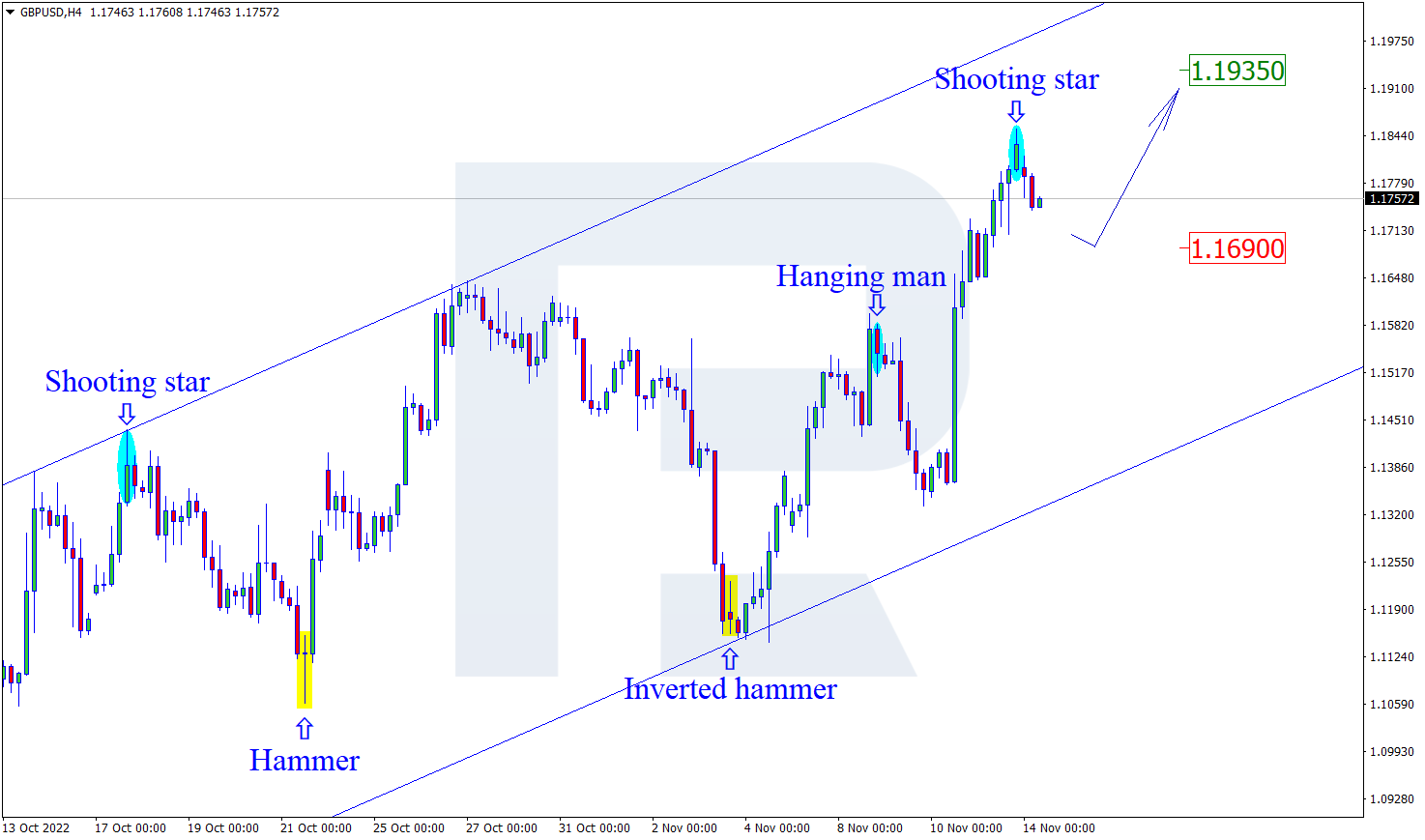
From the technical point of view, the GBP/USD currency pair trend on the hourly time frame is bullish. But the price is trading below the moving averages. The MACD indicator has become negative, indicating a weakness of the buyers. Under such market conditions, buy trades can be considered from the support level of 1.1186, but better after confirmation. It is better to look for sell trades on the intraday time frames, and the nearest resistance level is 1.1311.

Alternative scenario: if the price breaks down of the 1.1094 support level and fixes below it, the downtrend will likely resume.

GBP/USD
News feed for 2022.10.21:
  • – UK Retail Sales (m/m) at 09:00 (GMT+3).

The USD/JPY currency pair

Technical indicators of the currency pair:
  • Prev Open: 149.87
  • Prev Close: 150.12
  • % chg. over the last day: +0.17 %

On Thursday, the yen broke above the key psychological level of 150 to the dollar for the first time since 1990, despite repeated threats by Japanese policymakers to intervene to eliminate excessive volatility in the currency market. The dollar/yen pair’s break above the key level increases pressure on Tokyo to re-enter the foreign exchange market to curb the national currency’s inevitable decline. Especially given that Japan’s consumer inflation has reached a 31-year high.

Trading recommendations
  • Support levels: 149.47, 147.67, 146.44, 145.93, 144.91, 144.16, 143.00
  • Resistance levels: 150.00

From the technical point of view, the medium-term trend on the currency pair USD/JPY is bullish. The price is trading above the moving levels. The price is trading above the moving average lines. The MACD indicator is in the positive zone, the buyer’s pressure remains, but the divergence is increasing, which indicates a soon corrective movement. Under such market conditions, buy trades can be searched for on intraday time frames from the support level of 149.47, but with confirmation. Sell deals can be searched from the resistance level of 150.00, but only with additional confirmation in the form of a reverse initiative or a false breakout.

Alternative scenario: If the price fixes below 147.67, the downtrend will likely resume.

USD/JPY
News feed for 2022.10.21:
  • – Japan National Consumer Price Index (m/m) at 02:30 (GMT+3).

The USD/CAD currency pair

Technical indicators of the currency pair:
  • Prev Open: : 1.3759
  • Prev Close: 1.3766
  • % chg. over the last day: +0.05 %

Economists expect the Bank of Canada to continue its aggressive campaign to raise rates after higher-than-expected inflation data. Bank of Montreal’s chief economist expects 75 basis points (bps) increase next week. The move will raise the overnight rate to 4%. In addition, he predicts a 25 basis point hike in December. The deputy chief economist at CIBC also predicts a 0.75% rate hike.

Trading recommendations
  • Support levels: 1.3677, 1.3619, 1.3583, 1.3535, 1.3454
  • Resistance levels: 1.3786, 1.3855, 1.3968

From the point of view of technical analysis, the trend on the USD/CAD currency pair is bullish. The price is trading at the level of moving averages. The MACD indicator has become inactive, forming a wide sideways. Under such market conditions, buy trades should be considered on the lower time frames from the support level of 1.3677 but better after confirmation. For selling, it is better to consider the resistance level of 1.3786, but only after an additional confirmation in the form of a reverse initiative.

Alternative scenario: if the price breaks down and consolidates below the support level of 1.3677, the downtrend will likely resume.

USD/CAD
News feed for 2022.10.21:
  • – Canada Retail Sales (m/m) at 15:30 (GMT+3).

By JustMarkets


This article reflects a personal opinion and should not be interpreted as an investment advice, and/or offer, and/or a persistent request for carrying out financial transactions, and/or a guarantee, and/or a forecast of future events.

Expert Says, ‘Shell Should Have a Higher Valuation’

Source: Ron Struthers  (10/20/22) 

More and more North American natural gas will end up as LNG to Europe in the coming years. Soon we will compete on price. Expert Ron Struthers believes Royal Dutch Shell Plc. offers a compelling valuation compared to its peers and will benefit from this market transition.

Do as I do, not what I say! We had a prime example of this on Wednesday from President Biden, as he told oil and gas companies that they should not buy back shares or pay dividends but instead spend the money on exploration.

But what did he do?

U.S. Oil and Gas

He canceled the Keystone XL Pipeline on his first day of office, and then he halted all leasing and permits for oil and gas exploration on federal lands. In May of this year, he canceled three offshore oil and gas leases, and as of now, they have not leased one acre of land to drill.

J.t this past July, Biden proposed a policy to end all tax incentives to oil and gas companies. Would you think this gives no confidence for oil and gas companies to explore?

Of course, they have curtailed exploration, and most are focused on shareholder returns, and oil and gas production has declined, and all the inventories of oil, gas, gasoline, diesel and heating fuel, etc., are at multi-year lows.

Electricity prices along the Atlantic coast of the United States are set to increase 50-60% year-on-year as gas supplies become squeezed to meet winter heating and generation needs. New England on-peak power prices have averaged slightly below US$80/MWh in September, forward electricity prices for December 2022 have been trending well above US$200/MWh recently.

The operator of New England’s power grid has already warned of potential blackouts in the winter in case of a severe cold spell. Before Biden took office, the U.S. was producing more oil than it was using and more than the Russians or the Middle East. oil and gas companies are the favorite whipping boys of politicians anytime prices rise.

Meanwhile, today we hear the Biden administration is granting US$2.8 billion to companies to expand electric-vehicle battery production. This will do nothing to ease the current energy crisis.

Gas Shortage

Last week we saw the first decent increase in gas storage that lifted the level off the bottom of the five-year average.

This will not help curtail high prices this winter, as the next two charts show rising demand.

You can see from these charts that gas for electrical production is above the five-year average, and exports of LNG are at record levels, taking advantage of the higher European prices.

More and more gas will be diverted to higher prices leading to higher prices and possible shortages in North America. Getting data in Canada is very hard, and what is there is out of date. Ontario provides quarterly reports, but these have not even published the Q4 2021 report yet.

The U.S. has now become the largest exporter of LNG and is now importing about 15% of gas production as LNG, mostly to Europe. What is important is that approved LNG projects will ramp this up to over 50% of U.S. production.

I do know Ontario is scrambling for more natural gas for electrical generation.

Alberta recently had pipeline problems that should have increased storage. The only decent report is from Stats Canada, but they are months behind.

They have just reported July storage numbers, and it is not looking good — well below 2020 and 2021 levels.

• July 2022 15,840,398 cubic meters (15,840,398cm)
• July 2021 18,610,093cm
• July 2020 21,075,478cm
• July 2019 17,514,295cm

We have the most incompetent leadership in Canada, the U.S., and Europe like never before. Turfing the PMs in the UK is becoming a habit, as Truss resigned today. You can count on governments to make this energy crisis far worse.
You often see in the news about Canada’s potential or capacity to export LNG. This is just nonsense or fake news; Canada has zero export capacity for LNG.
The first to come on line will be TC Energy Corp.’s  (TRP:NYSE) pipeline, as shown in my report on them, and that will not be until 2025.

Royal Dutch Shell Plc. (SHEL:NYSE) leads a consortium actually building the LNG plant processing TC Energy gas.

Statista has provided some excellent graphics that will help you understand the dire straits that Europe is in this winter.

Almost all these countries are dependent on fossil fuels.

The Nord Stream

The Nord Stream 2 was completed since this 2021 graphic but does not matter anyway, as it was blown up along with Nord Stream 1. What is coming from Ukraine is questionable, as the Russian invasion has started to target energy infrastructure.

I expect this is part of a plan before a Russian offensive this winter. There is no solution for this winter; Europe won’t have enough energy. Germany will probably have to shut down industry and plunge into a deep recession and deep freeze, along with some other European countries.

The U.S. has now become the largest exporter of LNG and is now importing about 15% of gas production as LNG, mostly to Europe. What is important is that approved LNG projects will ramp this up to over 50% of U.S. production.

The gas will go to the highest bidder, so as time passes, the U.S. and Canada will compete with Europe for natural gas. Nobody knows how long this war will last and what damage to energy infrastructure will result.

Remember that most troops killed in war are either transporting energy or guarding it. This war will be no different other than there being a lot more gas and nuclear energy facilities compared to past wars.

And most likely, politicians will screw things up with their plans for the transition to green energy. In another desperate move ahead of the U.S. mid-term elections, Biden is releasing another 15 million barrels from the SPR.

This will be the last because, after the mid-term elections, there will be a gridlocked government. The Republicans will win the House and maybe the Senate too, but even if they win both, Biden can veto any legislation, and it goes back to the House and Senate but must get a 2/3 majority vote.

That will not happen. However, markets love a government that can do nothing, and this may be a reason that extends this bear rally if and when one starts.

I believe it is a perfect time with the politically driven correction in oil and gas and the producers to buy one of the blue-chip integrated oil companies that will benefit from tighter energy markets and more LNG exports. Royal Dutch Shell Plc. (SHEL:NYSE) has been in my Millennium Index before.

We sold it in 2014 for an 81% profit plus dividends because I believed oil was heading down significantly, and indeed it dropped from the $100 area to $50 and lower.

Now is a good time to add Shell to the Millennium Index.

Shell Plc.

Royal Dutch Shell Plc. (SHEL:NYSE) is probably the best-known brand in the world, serving 32 million customers per day and 84 million loyal members. They have about 46,000 locations (more than Mcdonald’s) in 80 markets.

Their goal by 2025 is to have 40 million customers and 55,000 locations. They currently have over 105,000 EV charge points and plan to grow this to over 500,000 in 2025. I expect the Shell brand will remain at the top for a long time.

Shell pays dividends in U.S. dollars, and the last quarterly dividend was US$0.25 per share, and since each ADR represents two ordinary shares, the quarterly dividend on the ADR was US$0.50. Based on a US$2.00 dividend per year and the current ADR share price, that is a yield of 3.8%.

I like Shell at this time because of its superior and well-known brand, and at current prices, the stock is valued better than its peers like Exxon, Chevron, and BP, for example.

Before Covid-19 hit, they were paying a US$0.47 dividend, and it dropped to the US$0.17 level in 2020 and early 2021.

I expect Shell will get back to the US$0.47 level in the next couple of years. Shell has a growing portfolio in LNG as well as renewable projects coming on stream from now to 2024.

Production in the North Sea

They are bringing their Jackdaw Field into production in the North Sea, which can produce more than 6% of the UK’s gas production in the coming years. Shell is also going ahead with the Crux Field in Australia, which will provide gas for their floating LNG facility.

Pursuing LNG Canada, Shell has a 40% leading interest in building out the facility in Kitimat, B.C. Kitimat was chosen as the ideal location for the facility due to the easy access to abundant, low-cost natural gas from Alberta/British Columbia’s vast resources.

The location also benefits from a relatively short shipping distance to north Asia, one of the fastest-growing gas markets in the world. The shipping route is approximately 50% shorter than from the US Gulf of Mexico and avoids the Panama Canal. =

The project has strong support from the local community, including indigenous First Nations, as well as from the local government. TC Energy will supply the gas.

Recent performance has been strong, as shown below, and Shell is delivering stronger cash flow from operations than its peers. Shell should have a higher valuation, not a lower one.

A large part of Shell’s LNG is a traded portfolio using other’s assets. Their renewable segment is doing well, with the input cost to electrical price spread quite large at this time. This looks to continue for some time, and we will probably see the spread widen with even higher electricity prices.

Shell’s chemical division is significant, contributing almost 20% of the earnings in Q2. Chemicals are cyclical. and their division has seen a weaker performance. Shell says now at a bottom of the cycle based on the chemicals they are in.

More important is that their Pennsylvania plant starts production of polyethylene this year, which is currently a high-margin plastic product, so this will greatly improve their Chemical Division.

Shell’s oil and gas production has declined some in the last several years, but the quality of their portfolio of assets has improved considerably, and they are now a lot more profitable on a little less production.

Comparing Q2 2022 to Q2 2013 in it’s presentation, when oil prices were about the same, Shell produced +65% adjusted earnings in Q2 2022 compared to Q2 2013 and three times the cash flow and doubled shareholder distributions.

Recent performance has been strong, as shown below, and Shell is delivering stronger cash flow from operations than its peers. Shell should have a higher valuation, not a lower one.

Shell has a US$6 billion share buyback underway in Q3, something similar will continue in Q4.

Basically, Shell looks at the share valuation to determine the mix of dividends and stock buyback. The US$7.2 billion payout in Q2 to investors was a record. The dividend is very stable, and buybacks will help increase the dividend.

Conclusion

I like Shell at this time because of its superior and well-known brand, and at current prices, the stock is valued better than its peers like Exxon, Chevron, and BP, for example.

Marketwatch reports its PE ratio without extraordinary items at 8.6, and the stock is trading right around book value. They have a US$6 billion share buyback and are on a path of increasing cash flow and dividends.


P/E w/o extraordinary          Book Value

Exxon            11.35                          1.54

BP                 12.1                            1.16

Chevron          14.42                          1.63

Shell               8.6                            0.98


Shell is well positioned for a growing LNG market, and it is continuing to high-grade its portfolio by divesting in lower margin assets. While most of the major integrated oil and gas companies are trading at highs on the chart, you can buy Shell at a good price after a bit of a correction.

It looks like the stock could break to the upside out of wedge pattern. There is resistance between US$54 and US$56, so we need a clear break above US$56 to confirm a new bullish move.

Support is between US$48 and US$50.

We can buy the stock now and get almost a 4% and growing dividend while we wait for capital appreciation.

Speculators could try the Call Options. I like the January 2023 $45 Call for around US$8.30.

It is US$7 in the money, so the premium is only US$1.30. A US$10 move in the stock would give you more than a double, but you won’t get the dividends with the options.

Struthers Stock Report Disclaimers: 

All forecasts and recommendations are based on opinion. Markets change direction with consensus beliefs, which may change at any time and without notice. The author/publisher of this publication has taken every precaution to provide the most accurate information possible. The information & data were obtained from sources believed to be reliable, but because the information & data source are beyond the author’s control, no representation or guarantee is made that it is complete or accurate.

The reader accepts information on the condition that errors or omissions shall not be made the basis for any claim, demand or cause for action. Because of the ever-changing nature of information & statistics the author/publisher strongly encourages the reader to communicate directly with the company and/or with their personal investment adviser to obtain up to date information.

Past results are not necessarily indicative of future results. Any statements non-factual in nature constitute only current opinions, which are subject to change. The author/publisher may or may not have a position in the securities and/or options relating thereto, & may make purchases and/or sales of these securities relating thereto from time to time in the open market or otherwise. Neither the information, nor opinions expressed, shall be construed as a solicitation to buy or sell any stock, futures or options contract mentioned herein. The author/publisher of this letter is not a qualified financial adviser & is not acting as such in this publication.

Disclosures: 

Charts provided by the author.

1) Ron Struthers: I, or members of my immediate household or family, own shares of the following companies mentioned in this article: None. I personally am, or members of my immediate household or family are, paid by the following companies mentioned in this article: None. My company currently has a financial relationship with the following companies mentioned in this article: None. I determined which companies would be included in this article based on my research and understanding of the sector.

2) The following companies mentioned in this article are billboard sponsors of Streetwise Reports: None. Click here for important disclosures about sponsor fees. The information provided above is for informational purposes only and is not a recommendation to buy or sell any security.

3) Statements and opinions expressed are the opinions of the author and not of Streetwise Reports or its officers. The author is wholly responsible for the validity of the statements. The author was not paid by Streetwise Reports for this article. Streetwise Reports was not paid by the author to publish or syndicate this article. Streetwise Reports requires contributing authors to disclose any shareholdings in, or economic relationships with, companies that they write about. Streetwise Reports relies upon the authors to accurately provide this information and Streetwise Reports has no means of verifying its accuracy.

4) This article does not constitute investment advice. Each reader is encouraged to consult with his or her individual financial professional and any action a reader takes as a result of information presented here is his or her own responsibility. By opening this page, each reader accepts and agrees to Streetwise Reports’ terms of use and full legal disclaimer. This article is not a solicitation for investment. Streetwise Reports does not render general or specific investment advice and the information on Streetwise Reports should not be considered a recommendation to buy or sell any security. Streetwise Reports does not endorse or recommend the business, products, services, or securities of any company mentioned on Streetwise Reports.

5) From time to time, Streetwise Reports LLC and its directors, officers, employees, or members of their families, as well as persons interviewed for articles and interviews on the site, may have a long or short position in the securities mentioned. Directors, officers, employees, or members of their immediate families are prohibited from making purchases and/or sales of those securities in the open market or otherwise from the time of the decision to publish an article until three business days after the publication of the article. The foregoing prohibition does not apply to articles that in substance only restate previously published company releases.

Liz Truss resigned as prime minister of Great Britain. Inflation in Japan is at an 8-year-high.

By JustMarkets

The US indices were down on Thursday as rising Treasury yields hit 14-year highs, negatively impacting investor sentiment, even though the bulk of quarterly results still indicated that corporate earnings were posting better than expected. As the stock market closed yesterday, the Dow Jones Index (US30) decreased by 0.30%, and the S&P 500 Index (US500) fell by 0.80%. The NASDAQ Technology Index (US100) lost 0.61%.

Citing a “disappointing lack of progress in curbing inflation,” Philadelphia Federal Reserve President Patrick Harker said yesterday that he expects interest rates to be “well above 4% by the end of the year.” Also, Harker doesn’t expect rates to fall next year.

Shares of Tesla fell more than 7% after mixed third-quarter results, although experts remain optimistic about the electric-car maker. Shares of Snap fell by 26% due to slow revenue growth in the third quarter.

Stock markets in Europe mostly rose yesterday. Germany’s DAX (DE30) increased by 0.20%, France’s CAC 40 (FR40) gained 0.76%, Spain’s IBEX 35 (ES35) jumped by 0.80%, Britain’s FTSE 100 (UK100) closed up by 0.27% on Thursday.

Unexpected events took place in the UK. Liz Truss announced her resignation as prime minister after just 45 days in office, the shortest term ever. Truss faced calls to leave because of the disastrous effects of her mini-budget. The prime minister’s departure provoked a struggle among conservative lawmakers to find a successor. Because of the uncertainty, investors are now advised to avoid speculating on any British assets.

Oil prices were little changed during Thursday’s trading session, as concerns over inflation dragging down oil demand were contradicted by the news that China is considering reducing the quarantine period for visitors to 7 days from 10 days. This is seen as a positive indicator of demand in the market, as China is the largest oil importer. But investors should not forget that, on the other hand, the looming European Union ban on Russian oil and oil products, as well as production cuts by the Organization of Petroleum Exporting Countries and its allies, known as OPEC+, are supporting prices.

The US is exploring new sanctions against Russia and Iran because of their military and technical cooperation. White House National Security Council Coordinator John Kirby also said that the US confirms the presence of Iranian military personnel in the occupied territories of Ukraine to help Russia.

Asian stock indices were mostly down yesterday. Japan’s Nikkei 225 (JP225) decreased by 0.92%, Hong Kong’s Hang Seng (HK50) fell by 1.40%, while Australia’s S&P/ASX 200 (AU200) was down by 1.02%.

The Japanese yen hit a 32-year low versus the dollar after data showed that Japanese consumer price inflation in September was 3% y/y, the highest in 8 years. The data points to increased pressure on the world’s third-largest economy in the coming months and will also create obstacles for the Bank of Japan, which is struggling to maintain its adaptive stance. Analysts expect that the government may intervene in the currency again.

S&P 500 (F) (US500) 3,665.78 −29.38 (−0.80%)

Dow Jones (US30) 30,333.59 −90.22 (−0.30%)

DAX (DE40) 12,767.41 +26.00 (+0.20%)

FTSE 100 (UK100) 6,943.91 +18.92 (+0.27%)

USD Index 112.90 0.0 (0.0%)

Important events for today:
  • – Japan National Consumer Price Index (m/m) at 02:30 (GMT+3);
  • – UK Retail Sales (m/m) at 09:00 (GMT+3);
  • – Eurozone EU Leaders Summit (m/m) at 13:00 (GMT+3);
  • – Canada Retail Sales (m/m) at 15:30 (GMT+3);
  • – US FOMC Member Williams Speaks (m/m) at 16:10 (GMT+3).

By JustMarkets


This article reflects a personal opinion and should not be interpreted as an investment advice, and/or offer, and/or a persistent request for carrying out financial transactions, and/or a guarantee, and/or a forecast of future events.

Week Ahead: Will ECB Hawks Trigger EURUSD Breakout?

By ForexTime 

The week ahead promises to be incredibly eventful for financial markets thanks to a potent cocktail of corporate earnings, central bank meetings, and key economic reports.

In the United States, earnings season kicks into higher gear with tech heavyweights under the spotlight while some central banks are expected to continue their fierce battle against inflation. Investors will also receive the US government’s first estimate of Q3 growth which could provide fresh insight into the health of the economy as the Fed continues super-sized rate hikes to tame rising prices. With so much going on and the economic calendar packed with key economic releases, volatility could be name of the game.

However, our focus will be directed on the European Central Bank meeting on Thursday which could inject fresh life into the EURUSD. Before we discuss what to expect from the central bank, here are the scheduled economic data releases/events in the coming week:

Monday, 24 October 

  • EUR: S&P Global manufacturing PMI
  • GBP: S&P Global manufacturing PMI
  • USD: S&P Global manufacturing PMI

Tuesday, 25 October

  • EUR: Germany IFO business climate
  • GBP: BOE Chief Economist Huw Pill’s speech
  • USD: US Conference Board consumer confidence

Wednesday, 26 October

  • AUD: Australia inflation
  • CAD: Bank of Canada rate decision
  • USD: US new home sales
  • Oil: EIA crude inventory report

Thursday, 27 October

  • CNH: China Industrial profits
  • GBP: BOE Deputy Governor Sam Wood’s speech
  • ECB: European Central Bank rate decision
  • USD: Q3 GDP, Initial jobless claims

Friday, 28 October

  • NZD: Consumer confidence
  • EUR: Germany inflation & GDP, Eurozone economic & consumer confidence
  • JPY: Bank of Japan rate decision, Tokyo CPI, unemployment
  • USD: US PCE Deflator, University of Michigan consumer sentiment

The ECB is widely expected to launch another monetary policy bazooka when it meets on Thursday 27th October in a move to contain inflation which is well above the 2% target.

Eurozone inflation is at its highest rate since the measurement began in 1991 at 9.9% thanks to soaring energy prices and disruptions in supply chains due to ongoing geopolitical tensions. Given how inflation remains at such elevated levels, traders are projecting a 90% probability of a 75bp rate hike in November and a 56% probability of another jumbo-sized hike in December.

Putting rates aside, much attention will be directed toward any discussion on quantitative tightening (QT) and new terms for the targeted longer-term refinancing operations (TLTRO). Given the uncertain outlook of the Eurozone economy, geopolitical tensions, and recession risks, it may be too early to consider QT. Besides, Christine Lagarde has repeatedly stated that interest rates would first have to be brought to their normal or neutral levels before this is rolled out.

Should the central bank raise rates as expected and strike a hawkish tone that opens the doors to further aggressive hikes, this could pump euro bulls with renewed strength. Such an outcome may push the EURUSD above the 0.9900 resistance with parity acting as the first level of interest.

Alternatively, if the ECB surprises markets with a smaller rate hike and expresses concern over the outlook for the Eurozone, this could hit rate hike bets beyond November – weakening the euro and encouraging a move below 0.9700 on the EURUSD.

Keep an eye on USD

Although our focus falls on the ECB meeting in the week ahead, we will still pay attention to other key economic reports and events across the globe. In the United States, corporate earnings should keep investors occupied while the preliminary US Q3 GDP figures and the latest consumer confidence could spark dollar volatility. It may be wise to watch out for the PCE Deflator which is the Fed’s preferred measure of inflation. If the dollar can draw renewed strength from encouraging economic data and Fed hike bets, this could clash with euro bulls – resulting in more volatility.

Talking technicals, the Dollar Index (DXY) is currently trading within a symmetric wedge formation on the H4 timeframe. A breakout higher or lower could be on the horizon but this could need a fresh fundamental spark. The key levels of interest can be found at 113.80 and 111.70.


Forex-Time-LogoArticle by ForexTime

ForexTime Ltd (FXTM) is an award winning international online forex broker regulated by CySEC 185/12 www.forextime.com

The Euro has retreated after all. Overview for 20.10.2022

Article By RoboForex.com

The main currency pair was slightly below previous levels by Thursday. The current quote in EURUSD is 0.9770. There was no particularly “minor” news on the ground. But investors were sensitive to the global “mood” and started to walk away from the risks.

US statistics released the day before were mixed. The number of building permits for new homes in September rose to 1.56 million from 1.54 million, whereas a decrease to 1.52 million was expected. At the same time the number of new home orders in September “fell” to 1.44 million from the previous 1.57 million. The picture is as follows: the volume of permits is considerable, but it is not a given that households will go straight to the building itself. This is due to the “acceleration” of inflation, including in the building materials segment.

Interestingly, European inflation did adjust to 9.9% y/y in September rather than 10.0% as originally calculated. The core CPI remained stable at around 4.8% y/y.

The focus today will be on the weekly unemployment claims in the US. The figure could have remained around 229,000, which is neutral for EURUSD. Also worth watching is the secondary home sales data for September – the indicator could have fallen to 4.69 million, which once again confirms the weakness in consumer demand.

Article By RoboForex.com

Attention!
Forecasts presented in this section only reflect the author’s private opinion and should not be considered as guidance for trading. RoboForex LP bears no responsibility for trading results based on trading recommendations described in these analytical reviews.

The Yen is even weaker. Overview for 20.10.2022

Article By RoboForex.com

The Japanese yen paired with the US dollar has fallen to another low in more than 30 years. The current quote in the USDJPY is 149.94. The devaluation of the yen is “in full swing” and this is now really scaring the monetary authorities in Japan. The situation is clearly spiralling out of control.

This morning the Central Bank announced its readiness to urgently purchase USD 667 million worth of government bonds in order to stabilise the debt market. The decision was probably taken after the yield on 10-year government bonds rose to 0.225%, which exceeded BoE targets.

The Japanese Prime Minister estimates that the economy is facing external risks and realising the consequences of foreign developments. The Japanese authorities are now preparing a stimulus package for the economic system and are likely to decide on the level of spending.

Earlier, the monetary watchdogs had carried out a massive 2.84 trillion yen currency intervention. But these measures had only a short-term effect.

Article By RoboForex.com

Attention!
Forecasts presented in this section only reflect the author’s private opinion and should not be considered as guidance for trading. RoboForex LP bears no responsibility for trading results based on trading recommendations described in these analytical reviews.

The Analytical Overview of the Main Currency Pairs on 2022.10.20

By JustMarkets

The EUR/USD currency pair

Technical indicators of the currency pair:
  • Prev Open: 0.9850
  • Prev Close: 0.9771
  • % chg. over the last day: -0.81 %

The annual inflation rate in the Eurozone increased to 9.9% in September 2022, up from 9.1% in August. Core inflation, which excludes food and energy prices, rose to 4.8% from 4.3%. According to a report released by Eurostat, inflation remains high in almost all categories. Amid this jump in consumer prices, ECB representative Vasle indicated yesterday that the central bank should raise interest rates by 75 basis points at its next two meetings.

Trading recommendations
  • Support levels: 0.9752, 0.9701
  • Resistance levels: 0.9848, 0.9961, 1.0058, 1.0111, 1.0162, 1.0230

From the technical point of view, the trend on the EUR/USD currency pair on the hourly time frame is bullish. But the price is trading below the moving averages. Indicator MACD has become negative, and the buyers’ pressure is weakening, but active sellers are not observed too. Buy trades should be considered from the support level of 0.9752, but with additional confirmation in the form of reverse initiative. Sell deals may be considered from the resistance level of 0.9848, but also with confirmation.

Alternative scenario: if the price breaks down through the support level of 0.9666 and fixes below it, the downtrend will likely resume.

EUR/USD
News feed for 2022.10.20:
  • – Germany Producer Price Index (m/m) at 09:00 (GMT+3);
  • – Eurozone EU Leaders Summit (m/m) at 13:00 (GMT+3);
  • – US Initial Jobless Claims (w/w) at 15:30 (GMT+3);
  • – US Philadelphia Fed Manufacturing Index (m/m) at 15:30 (GMT+3);
  • – US Existing Home Sales (m/m) at 17:00 (GMT+3).

The GBP/USD currency pair

Technical indicators of the currency pair:
  • Prev Open: 1.1306
  • Prev Close: 1.1213
  • % chg. over the last day: -0.83 %

The UK Consumer Price Index rose from 9.9% to 10.1% year-over-year, slightly above expectations of 10%. Annual core inflation increased from 6.3% to 6.5%. Now that there is some clarity on the new mini-budget, benefits, and taxes, and the inflation rate is known, the next step is up to the Bank of England. Analysts are predicting a significant rate hike (0.75-1%) at the next meeting on November 3. Investors expect the pound to remain under pressure amid rising inflation and recession in the UK.

Trading recommendations
  • Support levels: 1.1186, 1.1093, 1.0915, 1.0817
  • Resistance levels: 1.1311, 1.1367, 1.1478, 1.1693, 1.1816, 1.1901

From the technical point of view, the GBP/USD currency pair trend on the hourly time frame is bullish. But the price is trading below the moving averages. The MACD indicator has become negative, indicating a weakness of the buyers. Under such market conditions, buy trades can be considered from the support level of 1.1186, but better after confirmation. It is better to look for sell trades on the intraday time frames, and the nearest resistance level is 1.1311.

Alternative scenario: if the price breaks down of the 1.1094 support level and fixes below it, the downtrend will likely resume.

GBP/USD
There is no news feed for today.

The USD/JPY currency pair

Technical indicators of the currency pair:
  • Prev Open: 149.23
  • Prev Close: 149.90
  • % chg. over the last day: +0.45 %

Traders expect the Japanese Finance Ministry and the Central Bank to enter the market again as the currency pair is approaching the key psychological barrier at 150. Analysts believe that if the price passes the 150 level, it will accelerate the quotes’ growth. Yesterday, Prime Minister of Japan Fumio Kishida said that the government could not tolerate the sudden one-sided and excessive movements in the currency market. The possibility of a new intervention is increasing, but previous attempts to stop the growth were unsuccessful. Perhaps investors are in for a surprise monetary policy “reversal” from the Bank of Japan. Still, so far, such a scenario seems unlikely, as Bank of Japan leaders on Wednesday stressed the need to maintain the ultra-soft monetary policy in order to protect the economy from possible risks. Credit Suisse analysts are confident that the yen could weaken well above the 150 level if Japan’s central bank maintains its monetary policy at its October 27-28 meeting.

Trading recommendations
  • Support levels: 149.48, 147.67, 146.44, 145.93, 144.91, 144.16, 143.00
  • Resistance levels: 150.00

From the technical point of view, the medium-term trend on the currency pair USD/JPY is bullish. The price is trading above the moving levels. The price is trading above the moving average levels. The MACD indicator is in the positive zone, the buyer’s pressure remains, but the divergence is increasing, which indicates a soon corrective movement. Under such market conditions, buy trades can be searched for on intraday time frames from the support level of 149.48, but with confirmation. Sell deals can be searched from the resistance level of 150.00, but only with additional confirmation in the form of a reverse initiative or a false breakout.

Alternative scenario: If the price fixes below 147.67, the downtrend will likely resume.

USD/JPY
There is no news feed for today.

The USD/CAD currency pair

Technical indicators of the currency pair:
  • Prev Open: 1.3738
  • Prev Close: 1.3763
  • % chg. over the last day: +0.18 %

Canada’s annual inflation for the month of September was 6.9% year-over-year (August: 7.0%), indicating a third consecutive decline in overall inflation. Core inflation, which excludes energy and food prices, was up from 5.8% to 6.0% year-over-year. Analysts believe the jump in core inflation reinforces the likelihood that the Bank of Canada will raise interest rates another 75 basis points next week and remain on an aggressive path for a while longer.

Trading recommendations
  • Support levels: 1.3732, 1.3619, 1.3583, 1.3535, 1.3454
  • Resistance levels: 1.3795, 1.3855, 1.3968

From the point of view of technical analysis, the trend on the USD/CAD currency pair is bullish. The price is trading at the level of moving averages. The MACD indicator has become inactive, forming a wide sideways. Under such market conditions, buy trades should be considered on the lower time frames from the support level of 1.3732, but after confirmation, as the level has already been tested. For sell deals, it is best to consider the resistance level of 1.3855, but only after additional confirmation in the form of a reverse initiative.

Alternative scenario: if the price breaks down and consolidates below the support level of 1.3677, the downtrend will likely resume.

USD/CAD
There is no news feed for today.

By JustMarkets


This article reflects a personal opinion and should not be interpreted as an investment advice, and/or offer, and/or a persistent request for carrying out financial transactions, and/or a guarantee, and/or a forecast of future events.

Stock indices decline amid rising government bond yields

By JustMarkets

“The Beige Book” showed a slowing US economy, declining consumer sentiment, and slowing demand. Real estate market data showed a decline in new home construction in the US, and the real estate market is likely to continue its downward trend amid rising interest rates.

Fed spokesman Kashkari said yesterday that the Fed would raise interest rates as long as core inflation (excluding food and fuel prices) begins to cool.

US stock indices fell yesterday as Treasury yields rose. Quarterly reports, which were mostly better than expected, did not help the indices either. At the close of trading yesterday, Dow Jones (US30) decreased by 0.33%, S&P 500 (US500) lost 0.67%. The NASDAQ Technology Index (US100) was down by 0.85%.

“Despite persistent underlying inflation pressures, the Fed will continue tightening at a faster pace than originally anticipated,” Morgan Stanley said in a note predicting that the Fed will raise rates by 75 basis points in November, 50 basis points in December, and 25 basis points in January.

On the other hand, the US midterm elections on November 8 are just three weeks away. Analysts believe the stock market will show optimism by that date, and oil prices will decline. Otherwise, with a recession looming, confidence in the current government might fall even more.

Equity markets in Europe were mostly down yesterday. German DAX (DE30) fell by 0.19%, French CAC 40 (FR40) was 0.43% lower, Spanish IBEX 35 (ES35) decreased by 0.36%, British FTSE 100 (UK100) closed by 0.17% lower on Wednesday.

The annual inflation rate in the Eurozone rose to 9.9% in September 2022, up from 9.1% in August. Core inflation, which excludes food and energy prices, increased to 4.8% from 4.3%. The lowest annual rates were registered in France (6.2%), Malta (7.4%), and Finland (8.4%). The highest annual rates were registered in Estonia (24.1%), Lithuania (22.5%), and Latvia (22.0%). According to a report released by Eurostat, inflation remains high in almost all categories. Amid this jump in consumer prices, ECB spokesman Vasle indicated yesterday that the Central Bank should raise the interest rate by 75 basis points at the next two meetings.

EU countries are planning to impose sanctions against Iran for supplying military drones to Russia, which the latter is using in the war against Ukraine.

The US Department of Energy will sell another 15 million barrels of oil from the US strategic reserve and plans to resume oil purchases to replenish its strategic oil reserve at an oil price of less than $70. The administration sees the need to ramp up US oil production, with a peak in 2023. But oil bears hoping for a new price drop on this news have failed, as weekly crude and fuel inventories have fallen significantly over the past week.

Asian stock indexes were trading yesterday without a single trend. Japan’s Nikkei 225 (JP225) gained 0.37% yesterday, Hong Kong’s Hang Seng (HK50) lost 2.38%, and Australia’s S&P/ASX 200 (AU200) added 0.31%.

Japan’s imports rose for the fifth straight month in September, reaching an all-time high, as the falling yen exacerbated already high fuel import costs, fueling fears of cost inflation. Import growth outpaced export growth, leading to a 2 trillion yen ($13.3 billion) trade deficit and extending the deficit to 14 months, adding downward pressure on the Japanese currency.

The NBK’s benchmark lending rate remained at 3.65%, but China indefinitely postponed the release of other key trade and economic growth data this week. President Xi Jinping also said China has no plans to soften its strict zero COVID policy, which has caused severe economic turmoil in the country this year. Deteriorating economic trends in China have undermined attitudes toward most Asian markets, given the country’s role as a major trading partner in the region.

S&P 500 (F) (US500) 3,695.16 −24.82 (−0.67%)

Dow Jones (US30) 30,423.81 −99.99 (−0.33%)

DAX (DE40) 12,741.41 −24.20 (−0.19%)

FTSE 100 (UK100) 6,924.99 −11.75 (−0.17%)

USD Index 112.90 +0.77 (+0.69%)

Important events for today:
  • – US FOMC Member Bullard Speaks at 01:30 (GMT+3).
  • – Australia Unemployment Rate (m/m) at 03:30 (GMT+3);
  • – China PBoC Loan Prime Rate (m/m) at 04:15 (GMT+3);
  • – Germany Producer Price Index (m/m) at 09:00 (GMT+3);
  • – Eurozone EU Leaders Summit (m/m) at 13:00 (GMT+3);
  • – US Initial Jobless Claims (w/w) at 15:30 (GMT+3);
  • – US Philadelphia Fed Manufacturing Index (m/m) at 15:30 (GMT+3);
  • – US Existing Home Sales (m/m) at 17:00 (GMT+3);
  • – US Natural Gas Storage (w/w) at 17:30 (GMT+3).

By JustMarkets


This article reflects a personal opinion and should not be interpreted as an investment advice, and/or offer, and/or a persistent request for carrying out financial transactions, and/or a guarantee, and/or a forecast of future events.

Global warming puts Arabica coffee at risk, and we’re barrelling towards a crucial threshold

By Jarrod Kath, University of Southern Queensland and Scott Power, University of Southern Queensland 

Coffee may be a major casualty of a hotter planet. Even if currently declared commitments to reduce emissions are met, our new research suggests coffee production will still rapidly decline in countries accounting for 75% of the world’s Arabica coffee supply.

Arabica coffee (Coffea arabica) is one of two main plant species we harvest coffee beans from. The plant evolved in the high-altitude tropics of Ethiopia, and is hypersensitive to changes in the climate.

Our research shows there are global warming thresholds beyond which Arabica coffee production plummets. This isn’t just bad news for coffee lovers – coffee is a multi-billion dollar industry supporting millions of farmers, most in developing countries.

If we manage to keep global warming below 2℃ this century, then producers responsible for most global Arabica supply will have more time to adapt. If we don’t, we could see crashes in Arabica productivity, interruptions to supply, and price hikes on our daily cup.

Jason Betz/Unsplash, CC BY

Where our coffee comes from

Most of our Arabica is grown in the tropics, throughout Latin America, Central and East Africa and parts of Asia. Brazil, Colombia and Ethiopia are the world’s top three producers of Arabica, and the crop has crucial social and economic importance elsewhere, too.

Millions of farmers, mostly in the developing world, depend on productive Arabica for their livelihood. If coffee productivity declines, the economic consequences for farmers, some of which do not earn a living income as it is, are dire.

Arabica coffee is typically most productive in cool high elevation tropical areas with a local annual temperature of 18-23℃.
Higher temperatures and drier conditions invariably lead to declines in yield.

Last year, for example, one of the worst droughts in Brazil’s history saw coffee production there drop by around one-third, with global coffee prices spiking as a result.

What we found

Previous research has focused on how changes in temperature and rainfall affect coffee yields. While important, temperature and rainfall aren’t the best indicators of global Arabica coffee productivity. Instead, we found that it’s more effective to measure how dry and hot the air is, which we can do using “Vapour Pressure Deficit”.

Vapour pressure deficit tells us how much water gets sucked out of a plant. Think of when you walk outside on a hot, dry day and your lips dry and crack – the moisture is being sucked out of you because outside, the vapour pressure deficit is high. It’s the same for plants.

We built scientific models based on climate data that was linked to decades of coffee productivity data across the most important Arabica producing countries. We found once vapour pressure deficit gets to a critical point, then Arabica coffee yields fall sharply.

Coffee crops have crucial social and economic importance.
Yanapi Senaud/Unsplash, CC BY

This critical point, we found, is 0.82 kilopascals (a unit of pressure, calculated from temperature and humidity). After this point, Arabica yields start falling fast – a loss of around 400 kilograms per hectare, which is 50% lower than the long-term global average.

Vapour pressure deficit thresholds have already been exceeded in Kenya, Mexico and Tanzania.

Unabated global warming will see the world’s coffee producing powerhouses at risk. If global warming temperatures increase from 2℃ to 3℃, then
Peru, Honduras, Venezuela, Ethiopia, Nicaragua, Colombia and Brazil –
together accounting for 81% of global supply – are much more likely to pass the vapour pressure deficit threshold.

What can we do about it?

While there are ways farmers and the coffee industry can adapt, the viability of applying these on a global scale is highly uncertain.

For example, irrigating coffee crops could be an option, but this costs money – money many coffee farmers in developing countries don’t have. What’s more, it may not always be effective as high vapour pressure deficits can still inflict damage, even in well-watered conditions.

Another option could be switching to other coffee species. But again, this is fraught. For example, robusta coffee (Coffea canephora) – the other main species of production coffee – is also sensitive to temperature rises. Others, such as Coffea stenophylla and Coffea liberica could be tested, but their production viability at large scales under climate change is unknown.

There is only so much adapting we can do. Our research provides further impetus, if we needed any, to cut net global greenhouse gas emissions.

Limiting global warming in accordance with the Paris Agreement is our best option to ensure we can all keep enjoying coffee. More importantly, keeping global warming below 2℃ is the best way to ensure the millions of vulnerable farmers who grow coffee globally have a livelihood that supports them and their families well into the future.The Conversation

About the Author:

Jarrod Kath, Senior Lecturer in Ecology and Conservation, University of Southern Queensland and Scott Power, Director, Centre for Applied Climate Sciences, University of Southern Queensland

This article is republished from The Conversation under a Creative Commons license. Read the original article.

The cryptocurrency market digest (BTC, APTOS). Overview for 19.10.2022

Article By RoboForex.com

BTC did not rise following the stock market and even declined. The flagship cryptocurrency is holding around 19,157 USD on Wednesday. BTC’s correlation with the S&P 500 and Nasdaq indices has momentarily weakened. This is due to a lack of liquidity on the floor, as well as the formation of bearish signals on time frames below the daily. Cryptocurrency exchanges still have no “ideas” of their own.

Technically, the area of 18,000-19,000 USD is still being held back by the sellers. However, it is no longer certain that the next bearish attack will hold. The faster the market advances to 20,500 USD and starts storming the resistance at 21,500 USD, the better the chances are for the continuation of the rally.

Energy consumption on the BTC network has increased over the year

The BTC Mining Council (BMC) presented statistics for Q3 2022, which show a 41% increase in BTC network energy consumption over the past 12 months. Data from more than 50 cryptocurrency miners was used to compile the report. Interestingly, mining all existing crypto-assets consumes approximately 0.16% of the world’s electricity production.

APTOS token “soars into the sky”

The APTOS token appreciated after Binance opened trading with the coin. The starting price was 1 USDT, rising to 100 USDT in the first minutes of trading.

Article By RoboForex.com

Attention!
Forecasts presented in this section only reflect the author’s private opinion and should not be considered as guidance for trading. RoboForex LP bears no responsibility for trading results based on trading recommendations described in these analytical reviews.