Archive for Financial News – Page 274

Corporate earnings push stock indices higher

By JustMarkets

The US indices rose on Tuesday as better-than-expected quarterly results continued to support stock sentiment for a second straight day, although Apple’s decline from session highs held back gains. At yesterday’s stock market close, the Dow Jones Index (US30) increased by 1.12%, and the S&P 500 Index (US500) added 1.14%. NASDAQ Technology Index (US100) gained 0.77%.

Apple ordered its suppliers to cut production of its iPhone 14 family of products by 6 million units after an expected surge in demand failed to materialize. Salesforce shares increased by 4% on reports that investor Starboard Value has acquired a “significant” stake in the software maker. Netflix stock rose more than 14% after the release of its third-quarter earnings report, which showed strong earnings estimates, while the number of subscriptions also exceeded expectations.

Today, companies such as Tesla (TSLA), Procter&Gamble (PG), and IBM (IBM) will report.

According to Coalition Greenwich, the world’s largest banks will earn a total of $8.3 billion on loan trading this year, the lowest since 2012.

According to the National Association of Home Builders (NAHB), builder confidence in the US market fell by 8 points to 38 in October, half of what it was six months ago. This is the lowest confidence reading since August 2012, excluding the 2020 pandemic. High mortgage rates approaching 7% have significantly dampened demand, especially among would-be home buyers. With expectations of continued interest rate hikes due to Federal Reserve actions, construction is projected to decline further in 2023.

Equity markets in Europe mostly rose yesterday. Germany’s DAX (DE30) gained 0.92%, France’s CAC 40 (FR40) added 0.44%, Spain’s IBEX 35 (ES35) increased by 0.72%, Britain’s FTSE 100 (UK100) closed Tuesday in plus by 0.24%.

The International Monetary Fund said the UK government’s “U-turn” on tax cuts would help deal with rising inflation. The IMF is trying to stabilize the global economy, and one of its main roles is to act as an early economic warning system.

Oil prices fell on Tuesday amid fears of increased supply in the US coupled with slower economic growth and lower fuel demand in China. China, the world’s largest importer of crude oil, indefinitely postponed the release of economic indicators originally scheduled for release on Tuesday, indicating to the market that fuel demand in the region has declined significantly. Oil prices were also pressured by reports that the US government will continue to release crude oil from reserves.

The United Arab Emirates believes OPEC+ made the right choice when it agreed to cut production, and the unanimous decision had nothing to do with politics. Kuwait’s foreign ministry on Tuesday also supported the UAE and Saudi Arabia’s position on the cuts, saying in a statement that the collective decision had a “purely economic basis.” But the US believes otherwise and points out that the cuts will increase Russia’s foreign revenues and reduce the effectiveness of sanctions imposed over its invasion of Ukraine.

Asian stock indices rose yesterday. Japan’s Nikkei 225 (JP225) gained 1.42%, Hong Kong’s Hang Seng (HK50) added 1.82%, and Australia’s S&P/ASX 200 (AU200) was up by 1.72%.

S&P 500 (F) (US500) 3,719.98 +42.03 (+1.14%)

Dow Jones (US30) 30,523.80 +337.98 (+1.12%)

DAX (DE40) 12,765.61 +116.58 (+0.92%)

FTSE 100 (UK100) 6,936.74 +16.50 (+0.24%)

USD Index 111.99 -0.05 (-0.05%)

Important events for today:
  • – UK Consumer Price Index (m/m) at 09:00 (GMT+3);
  • – Eurozone Consumer Price Index (m/m) at 12:00 (GMT+3);
  • – Canada Consumer Price Index (m/m) at 15:30 (GMT+3);
  • – US Building Permits (m/m) at 15:30 (GMT+3);
  • – US Crude Oil Reserves (w/w) at 17:30 (GMT+3).

By JustMarkets


This article reflects a personal opinion and should not be interpreted as an investment advice, and/or offer, and/or a persistent request for carrying out financial transactions, and/or a guarantee, and/or a forecast of future events.

How the costs of disasters like Hurricane Ian are calculated – and why it takes so long to add them up

By Adam Rose, University of Southern California 

The U.S. experienced 15 disasters in the first nine months of 2022 that each caused at least US$1 billion in damage. Hurricane Ian is taking the largest toll of these disasters by far – but the extent of the damage could take years to calculate with any precision.

The Conversation U.S. asked Adam Rose, a senior research fellow at the Center for Risk and Economic Analysis of Threats and Emergencies at the University of Southern California, to explain how experts make these estimates and what could be done to make disasters less costly.

What did Ian cost?

Preliminary property damage estimates for Ian so far range from $42 billion to as much as $258 billion, with some landing in the middle.

If the higher end of the estimates proves more accurate, that alone would make Ian the costliest natural disaster in U.S. history.

However, property damage is only one aspect of disaster costs.

Another, which is often neglected, is business interruption – the decrease in economic activity measured either in terms of lost revenue or a combination of lost wages and profits.

Business interruption begins when the disaster strikes and continues until the economy has recovered. In this case, it is likely to take several years, as happened after Katrina wreaked destruction on Louisiana, Alabama and Mississippi in 2005.

Of course, these costs do not count lives lost or human misery, such as the number of people left without power or clean water.

Who makes these estimates and how are they made?

The earliest estimates of a disaster’s cost are often made within a few days, but they subsequently get refined as more data becomes available.

Insurance companies and insurance trade associations typically make the first estimates, which focus on property damage. Insurers base these estimates on losses covered by insurance and then extrapolate those calculations to also include losses related to noninsured property.

These initial estimates often omit damaged infrastructure, such as roads, bridges and utilities. One way that analysts can also estimate those losses is by studying and refining data collected by satellites and reconnaissance airplanes through a process called “Earth observation.”

Property damage can readily be translated into initial estimates of direct losses of economic activity, including the effects on employment and gross domestic product, using the Federal Emergency Management Agency’s loss estimation tool. The tool, known as Hazus, combines data related to wind speed, flood height and the size of the region affected. However, an accurate estimate of total losses must consider three more factors.

The first pertains to the multiplier effects that reverberate through supply chains. For example, earthquakes in Taiwan have in the past damaged semiconductor factories, disrupting the production of electronics in the U.S. and elsewhere.

The second is how quickly and efficiently businesses get back on their feet after a disaster by relying on strategies such as relocating or consuming less water and power. Disaster recovery experts refer to this way of reducing the risks associated with a disaster’s aftermath as “resilience.”

The third has to do with what happens to people who live in disaster zones. If they flee the area on their own or after being forced to do so by government evacuation orders, the local economy loses its labor base and demand for goods and services in the area declines.

I led a team that developed software that quickly makes these estimates – the Economic Consequence Analysis Tool. Known as E-CAT, it can provide almost immediate estimates of losses from hurricane-related flooding and other disasters once some basic information on the initial size of the disaster and rough estimates of the extent of resilience and behavioral responses become available. It can be used by non-experts and requires much less data than the government’s Hazus system.

Precise estimates of the cost of a given disaster can only be determined after a careful case study, which takes months or years to complete. That is why there’s no reliable estimate yet for Ian.

Who bears the greatest costs of damage from big disasters?

A National Academies of Science, Engineering and Medicine committee on which I served issued a report noting that low-income people and communities of color bear a disproportionate amount of disaster losses.

They are more prone to live in floodplains where property values are lower, are less able to afford to build homes that can withstand water and wind damage, and have less access to credit for rebuilding. They also have less political power in the overall decision-making process to prevent and cope with disasters.

Hurricanes, as well as sea-level rise, represent some exceptions to this pattern. Very wealthy people with beachfront property are disproportionately affected by hurricanes, and many of the homes that collapse into the ocean belong to the rich.

Can massive losses from hurricanes be avoided?

At this point, preventing losses from hurricanes is probably impossible, as it would require turning back the clock 50 years.

The U.S. would have benefited from better land-use planning in the mid-20th century. And it would have also helped if Americans had started decades ago to take action to mitigate climate change in the first place by reducing greenhouse gas emissions and slowing the pace of deforestation.

What could make future disasters less costly?

Natural disasters occur due to a combination of physical events, like hurricanes and earthquakes, and the vulnerability of homes, businesses and all the structures people rely on. Storms are getting stronger and human settlement systems are expanding, thereby increasing their vulnerability.

More people are moving closer to the coastlines as others who lost homes in disasters are rebuilding in floodplains – perpetuating losses.

In 2005, I led a report to Congress known as the Natural Hazard Mitigation Saves study, for which our team examined 10 years of FEMA Hazard Mitigation Assistance Grants. This money flows to state and local governments, Indian tribal organizations and nonprofits for projects designed to rebuild and lower the risk of future property damage and business interruption losses after a presidential disaster declaration.

We found that one of the most effective tactics to reduce disaster losses was to buy out properties from homeowners residing in flood-prone areas to eliminate the need to help them rebuild again and again.The Conversation

About the Author:

Adam Rose, Professor of Public Policy, University of Southern California

This article is republished from The Conversation under a Creative Commons license. Read the original article.

Opportunity for Investors Found in Psychedelics Space

Source: Patrick R. Trucchio  (9/27/22)

Treatment of alcohol use disorder with psychedelics plus therapy is effective, according to existing data, and the potential global market is large, noted an H.C. Wainwright & Co. report.

Awakn Life Sciences Corp. (AWKN:NEO; AWKNF:OTCQB) and Cybin Inc. (CYBN:NYSE American; CYBN:NEO) are best positioned to capitalize on the “robust potential of psychedelics in alcohol use disorder (AUD),” an estimated $20 billion-plus global market, purported H.C. Wainwright & Co. analyst Patrick Trucchio in a September 22, 2022 research note.

“With a potential addressable patient population in Western markets that exceeds 30 million people and with 10% or less of these patients in active treatment, the unmet medical need and opportunity for innovative approaches to treatment is very high,” Trucchio wrote. “As such, we believe the potential for psychedelics with therapy to ameliorate AUD could represent a significant opportunity for drug sponsors, which is highly underappreciated by investors.”

Two Leaders in the Space To Consider

Trucchio discussed Canada-based Awakn and Cybin, the two publicly traded biopharma companies that have announced AUD as a target indication. He noted both companies are worth an estimated $10 per share, “implying robust upside from current levels.”

One of them, Awakn, is pursuing ketamine, an NMDA receptor antagonist, plus psychotherapy in a variety of addiction disorders as well as MDMA plus therapy for AUD.

Over 32 weeks of observation, AUD patients treated with psilocybin plus therapy experienced “robust decreases in [their] percentage of heavy drinking days over and above those produced by active placebo and psychotherapy.”


The company’s lead clinical program, Project Kestrel, is supported by the Phase 2 trial in which KARE, or ketamine in the reduction of alcoholic relapse, and psychotherapy were administered to 96 patients with severe AUD. In this trial, patients achieved, on average, 86% abstinence at six months post-treatment compared to 2% pre-trial and 25% with the current standard of care.

Next for the program is a Phase 3 trial in the United Kingdom (U.K.), 66% of the costs of which the U.K.’s National Institute for Health and Care agreed to cover. Up to 280 AUD patients will be enrolled, treated, and followed for six to 12 months.

“The study is expected to be the largest ketamine-assisted therapy clinical trial and the only psychedelic Phase 3 trial receiving government funding,” Trucchio noted.

The clinical data supporting the use of psychedelics-assisted therapy in treating AUD and the size of the global AUD market bode well for Awakn and Cybin, which are pursuing the opportunity, and for investors in these companies that currently offer upside.

Awakn is also pursuing the use of MDMA plus therapy in AUD. The biopharma will explore a data licensing agreement with the U.S.-based Multidisciplinary Association for Psychedelic Studies, or MAPS, to support Awakn’s Phase 2b and planned Phase 3 studies evaluating MDMA-assisted therapy for AUD in Europe.

The second company in the space Trucchio highlighted, Cybin, is currently evaluating deuterated psilocybin, CYB003, as a treatment for major depressive disorder. The biopharma is expected to expand this program into AUD if the Phase 1/2a study, now underway, shows the compound to be safe, well-tolerated, and efficacious. Phase 1 data are due out by year-end, Phase 2a data by mid-2023.

Data Support Use of Psychedelics in Treating AUD

Trucchio pointed out the results of three robustly conducted trials that individually evaluated ketamine (Awakn’s Project Kestrel), MDMA (Imperial College London’s Bristol Imperial MDMA in Alcoholism, or BIMA, study), and psilocybin (study by Bogenschutz, Ross, Bhatt, et al.) showed a benefit in AUD patients.

“What is consistent in the data is that when administered in the proper set and setting with psychotherapy, psychoactive substances appear to ameliorate the cravings associated with AUD and thus, provide the potential for a significant reduction in heavy drinking days and even abstinence, both of which are approvable regulatory endpoints in the U.S. and Europe,” Trucchio wrote.

Results of the Bogenschutz et al. study were just published in JAMA’s Aug. 24, 2022 issue. The trial showed that over 32 weeks of observation, AUD patients treated with psilocybin plus therapy experienced “robust decreases in [their] percentage of heavy drinking days over and above those produced by active placebo and psychotherapy.”

The clinical data supporting the use of psychedelics-assisted therapy in treating AUD and the size of the global AUD market bode well for Awakn and Cybin, which are pursuing the opportunity, and for investors in these companies that currently offer upside.


Disclosures:
1) Doresa Banning wrote this article for Streetwise Reports LLC and provides services to Streetwise Reports as an independent contractor. She or members of her household own securities of the following companies mentioned in the article: None. She or members of her household are paid by the following companies mentioned in this article: None.

2) The following companies mentioned in this article are billboard sponsors of Streetwise Reports: Awakn Life Sciences Corp. Click here for important disclosures about sponsor fees. The information provided above is for informational purposes only and is not a recommendation to buy or sell any security. As of the date of this article, an affiliate of Streetwise Reports has a consulting relationship with: Awakn Life Sciences Corp. Please click here for more information.

3) Comments and opinions expressed are those of the specific experts and not of Streetwise Reports or its officers. The information provided above is for informational purposes only and is not a recommendation to buy or sell any security.

4) The article does not constitute investment advice. Each reader is encouraged to consult with his or her individual financial professional and any action a reader takes as a result of information presented here is his or her own responsibility. By opening this page, each reader accepts and agrees to Streetwise Reports’ terms of use and full legal  disclaimer. This article is not a solicitation for investment. Streetwise Reports does not render general or specific investment advice and the information on Streetwise Reports should not be considered a recommendation to buy or sell any security. Streetwise Reports does not endorse or recommend the business, products, services or securities of any company mentioned on Streetwise Reports.

5) From time to time, Streetwise Reports LLC and its directors, officers, employees or members of their families, as well as persons interviewed for articles and interviews on the site, may have a long or short position in securities mentioned. Directors, officers, employees or members of their immediate families are prohibited from making purchases and/or sales of those securities in the open market or otherwise from the time of the decision to publish an article until three business days after the publication of the article. The foregoing prohibition does not apply to articles that in substance only restate previously published company releases. As of the date of this article, officers and/or employees of Streetwise Reports LLC (including members of their household) own securities of Awakn Life Sciences Corp., a company mentioned in this article.

6) This article does not constitute medical advice. Officers, employees and contributors to Streetwise Reports are not licensed medical professionals. Readers should always contact their healthcare professionals for medical advice.

Disclosures For H.C.Wainwright & Co., Awakn Life Sciences Corp a.nd Cybin Inc.,  September 22, 2022

H.C. Wainwright & Co, LLC (the “Firm”) is a member of FINRA and SIPC and a registered U.S. Broker-Dealer.

I, Patrick R. Trucchio, CFA , certify that 1) all of the views expressed in this report accurately reflect my personal views about any and all subject securities or issuers discussed; and 2) no part of my compensation was, is, or will be directly or indirectly related to the specific recommendation or views expressed in this research report; and 3) neither myself nor any members of my household is an officer, director or advisory board member of these companies.

The research analyst principally responsible for preparation of the report does not receive compensation that is based upon any specific investment banking services or transaction but is compensated based on factors including total revenue and profitability of the Firm, a substantial portion of which is derived from investment banking services. Important disclosures and charts can be found on our disclaimer website: https://hcwco.bluematrix.com/sellside/ Disclosures.action

The securities of the company discussed in this report may be unsuitable for investors depending on their specific investment objectives and financial position. Past performance is no guarantee of future results. This report is offered for informational purposes only, and does not constitute an offer or solicitation to buy or sell any securities discussed herein in any jurisdiction where such would be prohibited. This research report is not intended to provide tax advice or to be used to provide tax advice to any person. Electronic versions of H.C. Wainwright & Co., LLC research reports are made available to all clients simultaneously.

No part of this report may be reproduced in any form without the expressed permission of H.C. Wainwright & Co., LLC. Additional information available upon request.

H.C. Wainwright & Co., LLC does not provide individually tailored investment advice in research reports. This research report is not intended to provide personal investment advice and it does not take into account the specific investment objectives, financial situation and the particular needs of any specific person. Investors should seek financial advice regarding the appropriateness of investing in financial instruments and implementing investment strategies discussed or recommended in this research report.

H.C. Wainwright & Co., LLC’s and its affiliates’ salespeople, traders, and other professionals may provide oral or written market commentary or trading strategies that reflect opinions that are contrary to the opinions expressed in this research report. H.C. Wainwright & Co., LLC and its affiliates, officers, directors, and employees, excluding its analysts, will from time to time have long or short positions in, act as principal in, and buy or sell, the securities or derivatives (including options and warrants) thereof of covered companies referred to in this research report.

The information contained herein is based on sources which we believe to be reliable but is not guaranteed by us as being accurate and does not purport to be a complete statement or summary of the available data on the company, industry or security discussed in the report. All opinions and estimates included in this report constitute the analyst’s judgment as of the date of this report and are subject to change without notice.

Securities and other financial instruments discussed in this research report: may lose value; are not insured by the Federal Deposit Insurance Corporation; and are subject to investment risks, including possible loss of the principal amount invested.

Getting to ‘net-zero’ emissions: How energy leaders envision countering climate change in the future

By Seth Blumsack, Penn State and Lara B. Fowler, Penn State 

With the federal government promising over US$360 billion in clean energy incentives under the Inflation Reduction Act, energy companies are already lining up investments. It’s a huge opportunity, and analysts project that it could help slash U.S. greenhouse gas emissions by about 40% within the decade.

But in conversations with energy industry leaders in recent months, we have heard that financial incentives alone aren’t enough to meet the nation’s goal of reaching net-zero emissions by 2050.

In the view of some energy sector leaders, reaching net zero emissions will require more pressure from regulators and investors and accepting technologies that aren’t usually thought of as the best solutions to the climate crisis.

‘Net-zero,’ with natural gas

In spring 2022, we facilitated a series of conversations at Penn State University around energy and climate with leaders at several major energy companies – including Shell USA, and electric utilities American Electric Power and Xcel Energy – as well as with leaders at the Department of Energy and other public-sector agencies.

We asked them about the technologies they see the U.S. leaning on to develop an energy system with zero net greenhouse gases by 2050.

Their answers provide some insight into how energy companies are thinking about a net-zero future that will require extraordinary changes in how the world produces and manages energy.

We heard a lot of agreement among energy leaders that getting to net-zero emissions is not a matter of finding some future magic bullet. They point out that many effective technologies are available to reduce emissions and to capture those emissions that can’t be avoided. What is not an option, in their view, is to leave existing technologies in the rearview mirror.

They expect natural gas in particular to play a large, and possibly growing, role in the U.S. energy sector for many years to come.

What’s behind this view, energy leaders say, is their deep degree of skepticism that renewable energy technologies alone can meet the nation’s future energy demands at a reasonable cost.

Costs for wind and solar power and for energy storage have declined rapidly in recent years. But dependence on these technologies has some grid operators worried that they can’t count on the wind blowing or sun shining at the right time – especially as more electric vehicles and other new users connect to the power grid.

Energy companies are rightly nervous about energy grid failures – no one wants a repeat of the outages in Texas in the winter of 2021. But some energy companies, even those with lofty climate goals, also profit handsomely from traditional energy technologies and have extensive investments in fossil fuels. Some have resisted clean energy mandates.

In the view of many of these energy companies, a net-zero energy transition is not necessarily a renewable energy transition.

Instead, they see a net-zero energy transition requiring massive deployment of other technologies, including advanced nuclear power and carbon capture and sequestration technologies that capture carbon dioxide, either before it’s released or from the air, and then store it in nature or pump it underground. So far, however, attempts to deploy some of these technologies at scale have been plagued with high costs, public opposition and serious questions about their environmental impacts.

Think globally, act regionally

Another key takeaway from our roundtable discussions with energy leaders is that how clean energy is deployed and what net-zero looks like will vary by region.

What sells in Appalachia, with its natural-resource-driven economy and manufacturing base, may not sell or even be effective in other regions. Heavy industries like steel require tremendous heat as well as chemical reactions that electricity just can’t replace. The economic displacement from abandoning coal and natural gas production in these regions raises questions about who bears the burden and who benefits from shifting sources of energy.

Opportunities also vary by region. Waste from Appalachian mines could boost domestic supplies of materials critical to a cleaner energy grid. Some coastal regions, on the other hand, could drive decarbonization efforts with offshore wind power.

At a regional scale, industry leaders said, it can be easier to identify shared goals. The Midcontinent Independent System Operator, known as MISO, which manages the power grid in the upper Midwest and parts of the South, is a good example.

U.S. map showing MISO and other power grid operators.
Among the major power grid operators, MISO has a broad, varied territory, which also extends into Canada, which can make management decisions more difficult.
Federal Energy Regulatory Commission

When its coverage area was predominantly in the upper Midwest, MISO could bring regional parties together with a shared vision of more opportunities for wind energy development and higher electric reliability. It was able to produce an effective multistate power grid plan to integrate renewables.

However, as utilities from more far-flung (and less windy) states joined MISO, they challenged these initiatives as not bringing benefits to their local grids. The challenges were not successful but have raised questions about how widely costs and benefits can be shared.

Waiting for the right kind of pressure

Energy leaders also said that companies are not enthusiastic about taking on risks that low-carbon energy projects will increase costs or degrade grid reliability without some kind of financial or regulatory pressure.

For example, tax credits for electric vehicles are great, but powering these vehicles could require a lot more zero-carbon electricity, not to mention a major national transmission grid upgrade to move that clean electricity around.

That could be fixed with “smart charging” – technologies that can charge vehicles during times of surplus electricity or even use electric cars to supply some of the grid’s needs on hot days. However, state utility regulators often dissuade companies from investing in power grid upgrades to meet these needs out of fear that customers will wind up footing large bills or technologies will not work as promised.

Energy companies do not yet seem to be feeling major pressure from investors to move away from fossil fuels, either.

For all the talk about environmental, social and governance concerns that industry leaders need to prioritize – known as ESG – we heard during the roundtable that investors are not moving much money out of energy companies whose responses to ESG concerns are not satisfactory. With little pressure from investors, energy companies themselves have few good reasons to take risks on clean energy or to push for changes in regulations.

Leadership needed

These conversations reinforced the need for more leadership on climate issues from lawmakers, regulators, energy companies and shareholders.

If the energy industry is stuck because of antiquated regulations, then we believe it’s up to the public and forward-looking leaders in business and government and investors to push for change.The Conversation

About the Author:

Seth Blumsack, Professor of Energy and Environmental Economics and International Affairs, Penn State and Lara B. Fowler, Interim Chief Sustainability Officer, Penn State; Interim Director, Penn State Sustainability Institute; Profess of Teaching, Penn State Law, Penn State

This article is republished from The Conversation under a Creative Commons license. Read the original article.

Forex Technical Analysis & Forecast 18.10.2022

Article By RoboForex.com

EURUSD, “Euro vs US Dollar”

EURUSD has formed a consolidation range around 0.9790 and continues to correct to 0.9873. After this level has been reached, the downside link to the level of 0.9790 is not excluded (test from above). Next, consider the likelihood of another upside structure to 0.9950.

EURUSD
Risk Warning: the result of previous trading operations do not guarantee the same results in the future

GBPUSD, “Great Britain Pound vs US Dollar”

GBPUSD has formed a consolidation range around the level of 1.1330 and with the exit upwards it suggests to consider the probability of continuation of correction to the level of 1.1513. After working out of this level, we expect a decline to the level of 1.1330. Further growth to the level of 1.1730.

GBPUSD
Risk Warning: the result of previous trading operations do not guarantee the same results in the future

USDJPY, “US Dollar vs Japanese Yen”

USDJPY has worked off the upside structure to 149.07. The market is currently forming a consolidation range below this level. On the way up, there will be upside potential to 149.40. On the way down, there is downside potential to 148.40.

USDJPY
Risk Warning: the result of previous trading operations do not guarantee the same results in the future

USDCHF, “US Dollar vs Swiss Franc”

USDCHF rebounded to 0.9921. A continuation of the correction to 0.9900 is not excluded. Further, the growth to the level 1.0121 is expected. The target is local.

USDCHF
Risk Warning: the result of previous trading operations do not guarantee the same results in the future

AUDUSD, “Australian Dollar vs US Dollar”

AUDUSD has formed a consolidation range around the 0.6288 level. With an upside exit, the potential for continued correction to the 0.6383 level is open. The target is local.

AUDUSD
Risk Warning: the result of previous trading operations do not guarantee the same results in the future

BRENT

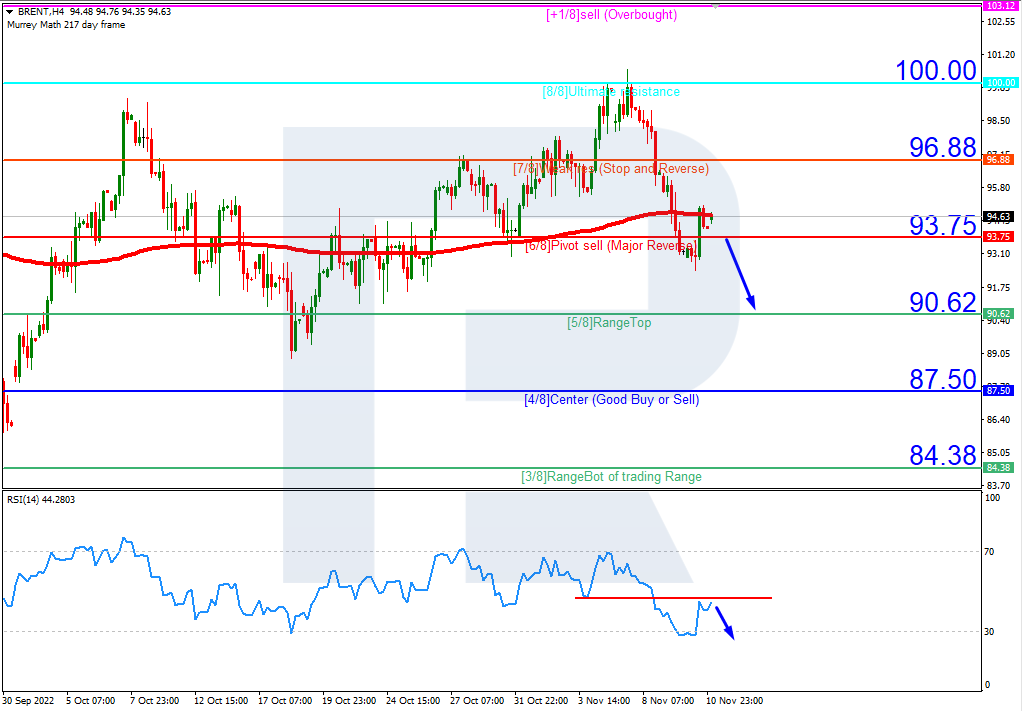
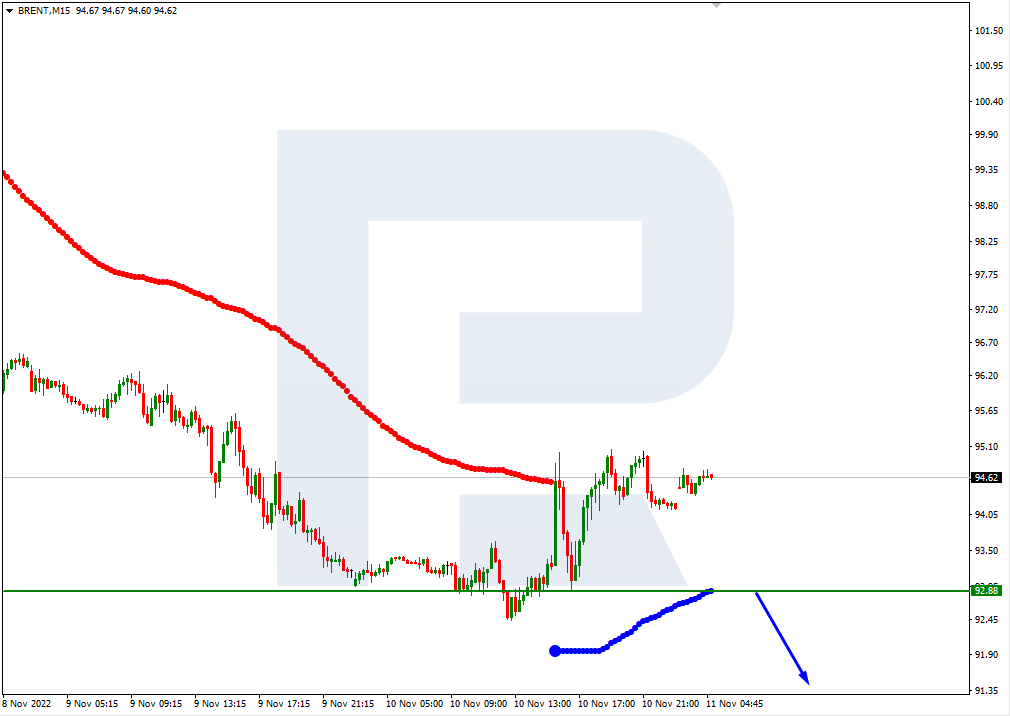
Brent continues to develop a consolidation range around the 93.36 level. Today we expect a growth link to the 95.70 level. After working out of this level, consider the probability of decrease to the level of 93.36. Further growth to the level of 100.20. The target is the first one.

BRENT
Risk Warning: the result of previous trading operations do not guarantee the same results in the future

XAUUSD, “Gold vs US Dollar”

Gold is forming an upside pattern towards 1664.90. We expect consolidation range development around this level and with the exit up we will consider continuation of the growth wave to the level of 1683.40. The arget is local.

GOLD
Risk Warning: the result of previous trading operations do not guarantee the same results in the future

S&P 500

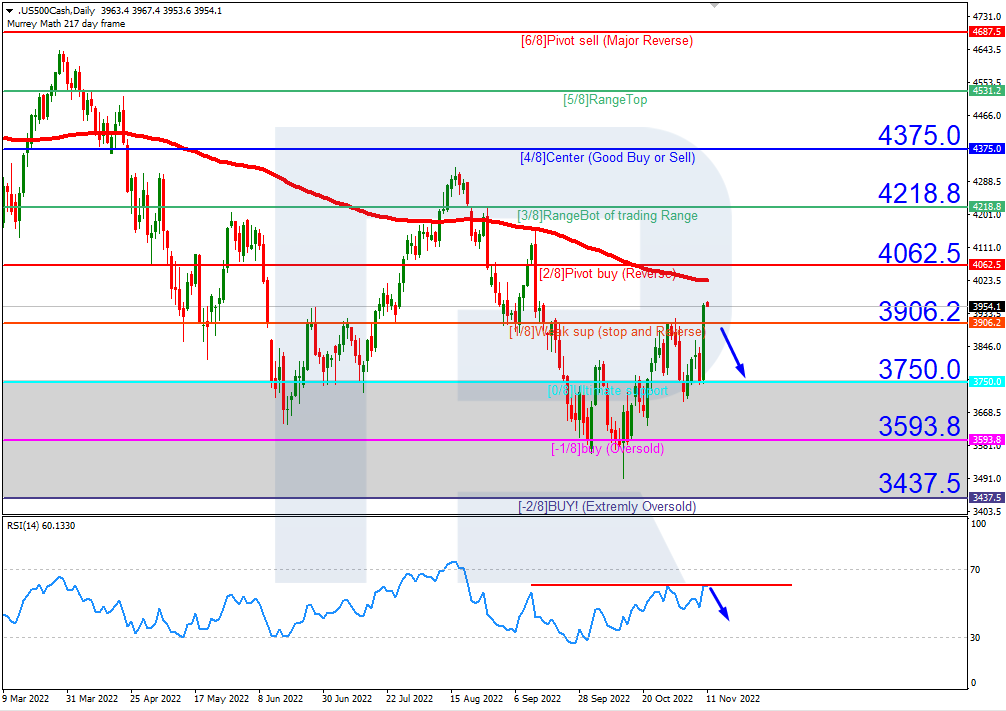
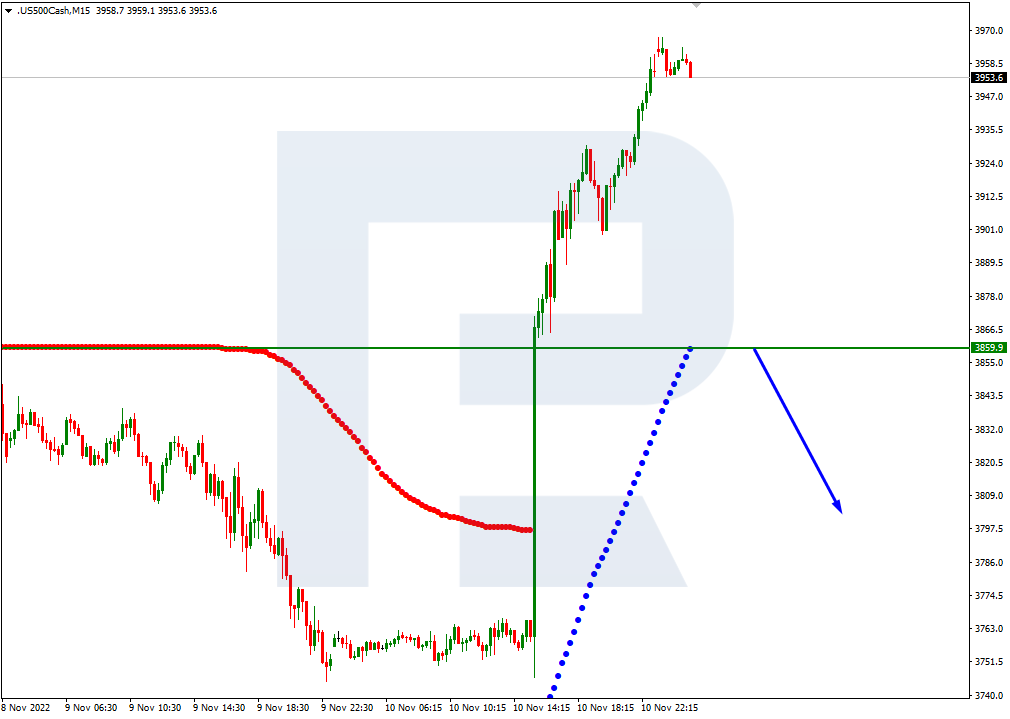
The S&P index worked its way up to 3739.0. Today we expect consolidation range formation around this level. With an upside entry, upside potential will open up to 3896.3 with the prospect of a continuation of the trend towards 3983.3.

S&P 500
Risk Warning: the result of previous trading operations do not guarantee the same results in the future

Article By RoboForex.com

Attention!
Forecasts presented in this section only reflect the author’s private opinion and should not be considered as guidance for trading. RoboForex LP bears no responsibility for trading results based on trading recommendations described in these analytical reviews.

Third-Party Firm Rates Hydrogen Boiler Nearly 100% Efficient

Source: Streetwise Reports  (10/17/22)

Jericho Energy Ventures is working to bring its zero-emission hydrogen boilers to companies for commercial heating, hot water, and industrial steam.

An independent third-party firm has rated Jericho Energy Ventures Inc.’s (JEV:TSX.V; JROOF:OTCMKTS) zero-emissions hydrogen boiler technology as nearly 100% fuel efficient.

The company’s Dynamic Combustion Chamber™ boiler was tested by Process Engineering Associates LLC.

“All off-gas samples taken during the test did not detect hydrogen in the sample,” said Chris Muntean, a senior process engineer with Process Engineering Associates. “This data suggests that the burners are combusting the vast majority (or all) of the H2 (hydrogen) gas being supplied to the boiler. Based on these performance results, little to no fuel is left unburned.”

As technical analyst Clive Maund wrote for Streetwise Reports, hydrogen “is a fuel of the future.”

As companies shift toward greener energy sources and look to lower their carbon footprint, Jericho hopes its boiler technology will be there for commercial heating, hot water, and industrial steam boilers.

Hydrogen Technologies, a fully owned subsidiary of Jericho, has patented its method for burning hydrogen and oxygen in a vacuum chamber to create high-temperature water and steam with no greenhouse gases or other pollutants.

The only by-product is water, which is recycled. It’s meant to replace existing boilers that burn coal, natural gas, diesel, or fuel oil.

“Our system is more efficient than traditional steam systems,” Jericho Executive Officer Brian Williamson told Streetwise Reports. “They did a whole battery of tests on our system and validated that it is, in fact, 95% cost-efficient, which is  . . .  20% plus more efficient than anything else that’s out there in the market in conventional fossil fuels. There’s also 100% hydrogen burn in the system, meaning that there’s no waste.”

The Catalyst

The test backs up Jericho’s own research on the technology, and the company hopes to use the data to attract investors and customers.

Hydrogen Technologies held a demo week at the end of September in Modesto, Calif., for possible commercial and industrial clients. The company said it was so successful it plans to hold another demo week November 14-18.

The U.S. Department of Energy said the hydrogen market “is in its infancy” but that it has the “potential for near-zero greenhouse gas emissions.”

“Hydrogen generates electrical power in a fuel cell, emitting only water vapor and warm air,” the agency wrote. “It holds promise for growth in both the stationary and transportation energy sectors.”

The element is abundant in our environment and the most abundant element in the universe. It’s stored in water, hydrocarbons (such as methane), and other organic matter.

As technical analyst Clive Maund wrote for Streetwise Reports, hydrogen “is a fuel of the future.”

‘Quite a Few’ Companies Interested

Last summer, Jericho announced it was joining with Australia’s LINE Hydrogen Pty Ltd. to bring the boilers to that country. The companies are creating a distribution “hub” that will allow a constant supply of hydrogen fuel.

Jericho said additional industrial partners will be announced in the coming months, and the first DCC™ boiler is expected to be installed in Tasmania, Australia, in 2023.

Williamson said Jericho has “quite a few” companies that have already expressed interest in the boiler system. Jericho said it will target everything from large industrial plants to schools and hopes to create other duplicate hubs in other places in the world, like the United States, Canada, and Europe.

Each boiler removes the equivalent carbon dioxide of 2,500 cars a year (or about 4,400 tons of carbon dioxide), according to the company.

Jericho was once an oil and gas business. It still has interests in those sectors and has been using money from rising fossil fuel prices to help fund its push toward hydrogen.

The company began transitioning to green energy in June 2020. In January 2021, it announced the acquisition of Hydrogen Technologies. Also, last year, it announced a collaboration with Rémy Cointreau’s Bruichladdich Distillery in Scotland to install a boiler to run its stills that produce Scotch and artisanal gin.

Other green investments include in H2U Technologies Inc., which is developing an electrocatalyst discovery process for electrolyzer and fuel cell applications, and Supercritical Solutions Ltd., which is developing a new class of water electrolyzer that will allow low-cost hydrogen production. Jericho led the seed series funding round for SuperCritical and was joined by Chris Sacca’s Lowercarbon Capital as a co-investor.

Ownership and Share Structure

Top shareholders include Michael L. Graves Inter Vivos Trust with 16.43% or 37.13 million shares, McKenna & Associates LLC with 10.78% or 24.36 million shares, the CEO Williamson with 0.87% or 1.97 million shares, company Director Allen Wilson with 0.87% or 1.97 million shares, and Nicholas W. Baxter with 0.5% or 1.14 million shares.

Jericho has a market cap of CA$81.38 million with 226 million shares outstanding, 158.3 million of them free-floating. It trades in a 52-week range of CA$0.84 and CA$0.31.

Disclosures:
1) Steve Sobek wrote this article for Streetwise Reports LLC. He or members of his household own securities of the following companies mentioned in the article: None. He or members of his household are paid by the following companies mentioned in this article: None.

2) The following companies mentioned in this article are billboard sponsors of Streetwise Reports: Jericho Energy Ventures. Click here for important disclosures about sponsor fees. The information provided above is for informational purposes only and is not a recommendation to buy or sell any security.

3) The article does not constitute investment advice. Each reader is encouraged to consult with his or her individual financial professional and any action a reader takes as a result of information presented here is his or her own responsibility. By opening this page, each reader accepts and agrees to Streetwise Reports’ terms of use and full legal disclaimer. This article is not a solicitation for investment. Streetwise Reports does not render general or specific investment advice and the information on Streetwise Reports should not be considered a recommendation to buy or sell any security. Streetwise Reports does not endorse or recommend the business, products, services or securities of any company mentioned on Streetwise Reports.

4) From time to time, Streetwise Reports LLC and its directors, officers, employees or members of their families, as well as persons interviewed for articles and interviews on the site, may have a long or short position in securities mentioned. Directors, officers, employees or members of their immediate families are prohibited from making purchases and/or sales of those securities in the open market or otherwise from the time of the decision to publish an article until three business days after the publication of the article. The foregoing prohibition does not apply to articles that in substance only restate previously published company releases. As of the date of this article, officers and/or employees of Streetwise Reports LLC (including members of their household) own securities of Jericho Energy Ventures, a company mentioned in this article.

How many Amazon packages get delivered each year?

By Anne Goodchild, University of Washington and Rishi Verma, University of Washington

Curious Kids is a series for children of all ages. If you have a question you’d like an expert to answer, send it to [email protected].


How many Amazon packages get delivered each year? – Aya K., age 9, Illinois


It’s incredibly convenient to buy something online, right from your computer or phone. Whether it’s a high-end telescope or a resupply of toothpaste, the goods appear right at your doorstep. This kind of shopping is called “e-commerce” and it’s becoming more popular each year. In the U.S., it has grown from a mere 7% of retail purchases in 2012 to 19.6% of retail and US$791.7 billion in sales in 2020.

Amazon’s growing reach

For Amazon, the biggest player in e-commerce, this means delivering lots of packages. In 2021 the company shipped an estimated 7.7 billion packages globally, based on its nearly $470 billion in sales.

If each of these packages were a 1-foot square box and they were stacked on top of one another, the pile would be six times higher than the distance from the Earth to the Moon. Laid end to end, they would wrap around the Earth 62 times.

Back in the early 2010s, most things bought from Amazon.com were shipped using a third-party carrier like FedEx or UPS. In 2014, however, Amazon began delivering packages itself with a service called “Fulfilled by Amazon.” That’s when those signature blue delivery vans started appearing on local streets.

Since then, Amazon’s logistics arm has grown from relying entirely on other carriers to shipping 22% of all packages in the U.S. in 2021. This is greater than FedEx’s 19% market share and within striking distance of UPS’s 24%. Amazon’s multichannel fulfillment service allows other websites to use its warehousing and shipping services. So your order from Etsy or eBay could also be packed and shipped by Amazon.

Amazon came to dominate online shopping by offering free two-day shipping to Amazon Prime members.

The supply chain

To handle that many packages, shipping companies need an extensive network of manufacturers, vehicles and warehouses that can coordinate together. This is called the supply chain. If you’ve ever used a tracking number to follow a package, you’ve seen it in action.

People who make decisions about where to send vehicles and how to route packages are constantly trying to keep costs down while still getting packages to customers on time. The supply chain can do this very effectively, but it also has downsides.

More delivery vehicles on the road produce more greenhouse gas emissions that contribute to climate change, along with pollutants like nitrogen oxides and particulate matter that are hazardous to breathe. Traffic congestion is also a major concern in cities as delivery drivers try to find parking on busy streets.

Urban freight solutions

Are there ways to balance the increasing number of deliveries while making freight safe, sustainable and fast? At the University of Washington’s Supply Chain Transportation and Logistics Center, we work with companies like Amazon and UPS and others in the shipping, transportation and real estate sectors to answer questions like this. Here are some solutions for what we and our colleagues call the “last mile” – the last leg of a package’s long journey to your doorstep.

– Electrification: Transitioning from gasoline and diesel vehicles to fleets of electric or other zero-emission vehicles reduces pollution from delivery trucks. Tax credits and local policies, such as creating so-called green loading zones and zero-emission zones for clean vehicles, create incentives for companies to make the switch.

– Common carrier lockers: Buildings can install lockers at central locations, such as busy transit stops, so that drivers can drop off packages without going all the way to your doorstep. When you’re ready to pick up your items, you just stop by at a time that’s convenient for you. This reduces both delivery truck mileage and the risk of packages being stolen off of porches.

– Cargo bicycles: Companies can take the delivery truck out of the equation and use electric cargo bicycles to drop off smaller packages. In addition to being zero-emission, cargo bicycles are relatively inexpensive and easy to park, and they provide a healthier alternative for delivery workers.

To learn more about supply chains and delivery logistics, check with your town or city’s transportation department to see if they are testing or already have goods delivery programs or policies, like those in New York and Seattle. And the next time you order something for delivery, consider your options for receiving it, such as walking or biking to a package locker or pickup point, or consolidating your items into a single delivery.

Package delivery can be both convenient and sustainable if companies keep evolving their supply chains, and everyone thinks about how they want delivery to work in their neighborhoods.


Hello, curious kids! Do you have a question you’d like an expert to answer? Ask an adult to send your question to [email protected]. Please tell us your name, age and the city where you live.

And since curiosity has no age limit – adults, let us know what you’re wondering, too. We won’t be able to answer every question, but we will do our best.The Conversation

About the Author:

Anne Goodchild, Professor of Civil and Environmental Engineering and Director, Supply Chain Transportation and Logistics Center, University of Washington and Rishi Verma, PhD Student in Industrial Engineering and Research Assistant, Urban Freight Lab, University of Washington

This article is republished from The Conversation under a Creative Commons license. Read the original article.


The Australian dollar is trying to rise. Overview for 18.10.2022

Article By RoboForex.com

The Australian dollar remains in a weak position against the US dollar, although it is trying to bounce back. The current quote in the AUDUSD is 0.6308. Relations with China are coming to the fore for Australia. The Prime Minister said today that Australia should cooperate with China wherever possible.

China has cancelled its planned block of macrostatistics for publication today. Amongst the reports were the GDP figures for the third quarter of 2022. The economy was supposed to have risen by only 3.5% y/y. For the PRC this is too low. The Australian exchange rate might have reacted negatively to the weak statistics.

According to one of the RBA’s assistant governors, we should expect further rate hikes from the regulator in the coming months. That said, the position is that the RBA will be able to achieve the same interest rate hikes as the major central banks at the expense of fewer steps.

As previously reported, the timing and pace of rate increases will be determined on the basis of incoming data, primarily the characteristics of household spending, wage developments, the state of the world economy and so on. One of the key policy objectives of the RBA is now to bring inflation back to the target level.

Article By RoboForex.com

Attention!
Forecasts presented in this section only reflect the author’s private opinion and should not be considered as guidance for trading. RoboForex LP bears no responsibility for trading results based on trading recommendations described in these analytical reviews.

The Analytical Overview of the Main Currency Pairs on 2022.10.18

By JustMarkets

The EUR/USD currency pair

Technical indicators of the currency pair:
  • Prev Open: 0.9720
  • Prev Close: 0.9832
  • % chg. over the last day: +1.15 %

Joachim Nagel, the ECB representative and president of Deutsche Bundesbank, said in his speech that inflation in the Eurozone is peaking, and in 2023 the inflation rate will probably decline gradually. However, a lot will depend on energy prices, and if oil and gas prices go back up, it could trigger a new wave of inflation in the Eurozone. Nagel also added that further rate hikes should be expected at the next ECB policy meetings.

Trading recommendations
  • Support levels: 0.9752, 0.9701.
  • Resistance levels: 0.9856, 0.9961, 1.0058, 1.0111, 1.0162, 1.0230.

From the technical point of view, the trend on the EUR/USD currency pair on the hourly time frame is bullish. The price is trading above the moving averages. The MACD indicator is positive again, and the pressure on buyers remains. Buy trades should be considered from the support level of 0.9752, but with additional confirmation in the form of reverse initiative. Sell deals may be considered from the resistance level of 0.9856, but only with confirmation.

Alternative scenario: if the price breaks down through the support level of 0.9666 and fixes below it, the downtrend will likely resume.

EUR/USD
News feed for 2022.10.18:
  • – German ZEW Economic Sentiment (m/m) at 12:00 (GMT+3);
  • – Eurozone ZEW Economic Sentiment (m/m) at 12:00 (GMT+3);
  • – US Industrial Production (m/m) at 16:15 (GMT+3).

The GBP/USD currency pair

Technical indicators of the currency pair:
  • Prev Open: 1.1229
  • Prev Close: 1.1347
  • % chg. over the last day: -1.41 %

The British pound rebounded moderately yesterday after the repeal of the tax measures. New British Chancellor Jeremy Hunt canceled most of the unfunded tax cuts in the new mini-budget. The failed mini-budget of Hunt’s predecessor, Kwasi Kwarteng, shook the market and caused the pound to fall to an all-time low against the US dollar. The Treasury Department issued a statement explaining that the rejection of the tax measures would raise £32 billion. The head of research, Quilter Cheviot, argues that the move restored confidence in the British government. In addition, the mini-budget change should allow the Bank of England (BoE) to raise interest rates without being too aggressive.

Trading recommendations
  • Support levels: 1.1307, 1.1186, 1.1093, 1.0915, 1.0817
  • Resistance levels: 1.1381, 1.1478, 1.1693, 1.1816, 1.1901

From the technical point of view, the trend on the GBP/USD currency pair on the hourly time frame is bullish. The price is trading above the moving averages. The MACD indicator is in the positive zone, but there is a divergence, which indicates the weakness of the buyers. Under such market conditions, buy trades can be considered from the support level of 1.1307, but better after confirmation. Sell trades are better to look for on the intraday time frames, and the nearest resistance levels are 1.1381 and 1.1478.

Alternative scenario: if the price breaks down of the 1.1094 support level and fixes below it, the downtrend will likely resume.

GBP/USD
There is no news feed for today.

The USD/JPY currency pair

Technical indicators of the currency pair:
  • Prev Open: 148.57
  • Prev Close: 149.02
  • % chg. over the last day: +0.30 %

The Japanese yen fell to a 32-year low against the US dollar. The Bank of Japan (BoJ) reiterated its efforts to ease monetary policy, and Governor Haruhiko Kuroda promised to keep interest rates ultra-low to support the fragile economy. The divergent policy between the US Fed and the Bank of Japan “pushes” USD/JPY quotes up. Still, investors should not rule out new currency interventions by the Ministry of Finance of Japan, as discontent among the population is growing due to the depreciation of the national exchange rate. Japan’s Chief Cabinet Secretary Matsuno said he would take appropriate measures to deal with excessive currency movements.

Trading recommendations
  • Support levels: 147.67, 146.21, 145.93, 144.91, 144.16, 143.00, 140.60, 139.61
  • Resistance levels: 149.02, 150.00

From the technical point of view, the medium-term trend on the currency pair USD/JPY is bullish. The price is trading above the moving levels. The MACD indicator is in the positive zone, and the buyers’ pressure remains. Under such market conditions, buy trades can be searched for on intraday time frames from the support level of 147.67, but with confirmation. Sell deals can be searched from the resistance level of 149.02 or 150.00, but only with additional confirmation in the form of a reverse initiative.

Alternative scenario: If the price fixes below 145.95, the downtrend will likely resume.

USD/JPY
There is no news feed for today.

The USD/CAD currency pair

Technical indicators of the currency pair:
  • Prev Open: 1.3870
  • Prev Close: 1.3714
  • % chg. over the last day: -1.14 %

Consumer confidence in Canada has fallen to a record low, raising the possibility of a recession. The index hit 44.4 last week, a level it has only surpassed twice at the height of the Covid-19 pandemic in 2020 and during the global financial crisis in 2008. The worsening sentiment calls into question the ability of Canadian consumer spending to continue to drive the country’s economic growth. Many economists have already begun forecasting a moderate contraction next year with the likelihood of an even bigger downturn. 77% of Canadian firms expect inflation above 3% over the next two years.

Trading recommendations
  • Support levels: 1.3677, 1.3619, 1.3583, 1.3535, 1.3454
  • Resistance levels: 1.3795, 1.3858, 1.3968

From the point of view of technical analysis, the trend on the USD/CAD currency pair is bullish. But the price is trading below the moving lines. The MACD indicator is negative, but there is a divergence. Under such market conditions, buy trades should be considered on the lower time frames from the support level of 1.3677, but after confirmation in the form of an impulse initiative. For sell deals, it is better to consider the resistance level of 1.3795, but only after an additional confirmation in the form of a reverse initiative.

Alternative scenario: if the price breaks down and consolidates below the support level of 1.3677, the downtrend will likely resume.

USD/CAD
There is no news feed for today.

By JustMarkets


This article reflects a personal opinion and should not be interpreted as an investment advice, and/or offer, and/or a persistent request for carrying out financial transactions, and/or a guarantee, and/or a forecast of future events.


Inflation in New Zealand updates records. Stock markets rise on expectations of good quarterly results

By JustMarkets

The US stock market increased on Monday. Quarterly reports from Wall Street’s biggest banks mostly exceeded analysts’ expectations, which gave investors a positive outlook. Bank of America continued the trend of upbeat quarterly results from other Wall Street banks after reporting better-than-expected results for the third quarter. As the stock market closed yesterday, the Dow Jones Index (US30) added 1.86%, and the S&P 500 Index (US500) increased by 2.65%. Technology Index NASDAQ (US100) gained 3.65% on Monday.

Equity markets in Europe were mostly up yesterday. German DAX (DE30) gained 1.70%, French CAC 40 (FR40) added 1.83%, Spanish IBEX 35 (ES35) jumped by 2.37%, British FTSE 100 (UK100) closed up by 0.90% on Monday.

Joachim Nagel, ECB representative and President of Deutsche Bundesbank, indicated in his speech that inflation in the Eurozone is approaching its peak and is likely to decline gradually in 2023. Nagel also added that the monetary policy stance in the euro area remains adaptive at the current stage. This means that the ECB continues to stimulate the economy and, therefore, inflation. Obviously, the ECB should withdraw this stimulus. And if that is not enough to bring the medium-term price outlook in line with the 2% target, the ECB will have to move policy into restrictive territory. Therefore, investors should expect further rate hikes at the next ECB policy meetings.

According to analysts from the Financial Times, the Bank of England is likely to postpone the sale of billions of pounds worth of government bonds in an attempt to encourage greater stability in securities markets after the failure of the British “mini-budget.”

Russia continues to launch missile strikes against critical infrastructure in Ukraine. According to military experts, the terrorist country wants to destroy much of the energy infrastructure ahead of winter. The Russian command is already openly fighting against civilians.

WTI and Brent each lost 7% last week after rising 13% the previous two weeks. Oil was declining despite OPEC+ plans to cut oil production by 2 million BPD. Analysts believe the decline is due to new restrictions in China, the largest importer of crude oil, which will reduce demand. But the medium-term outlook for oil remains upward.

Asian markets traded flat yesterday. Japan’s Nikkei 225 (JP225) decreased by 1.16%, Hong Kong’s Hang Seng (HK50) added 0.15%, and Australia’s S&P/ASX 200 (AU200) decreased by 1.40%.

Industrial production in Japan rose by 3.4% in August compared to 0.8% in July. This was also higher than the market estimate of 2.7% and represented the third consecutive month of growth. On an annualized basis, industrial production increased to 5.8% in August, up from a 2% decline the previous month.

On Monday, China’s Central Bank extended its medium-term loans’ maturity, leaving its key interest rate unchanged for a second month, signaling that its monetary policy remains soft.

China decided to postpone its GDP report until after the Party Congress. Experts believe China is deliberately delaying its GDP data because of bad numbers.

The New Zealand dollar rose after better-than-expected inflation data pushed up expectations of further interest rate hikes. The consumer price level increased from 1.7% to 2.2% y/y in the last quarter. The OCR is now expected to peak at 5%.

S&P 500 (F) (US500) 3,677.95 +94.88 (+2.65%)

Dow Jones (US30) 30,185.82 +550.99 (+1.86%)

DAX (DE40) 12,649.03 +211.22 (+1.70%)

FTSE 100 (UK100) 6,920.24 +61.45 (+0.90%)

USD Index 112.13 -1.18 (-1.04%)

Important events for today:
  • – New Zealand Consumer Price Index at 00:45 (GMT+3);
  • – Australia RBA Meeting Minutes at 03:30 (GMT+3);
  • – China GDP (q/q) at 05:00 (GMT+3);
  • – China Industrial Production (m/m) at 05:00 (GMT+3);
  • – China Unemployment Rate (m/m) at 05:00 (GMT+3);
  • – German ZEW Economic Sentiment (m/m) at 12:00 (GMT+3);
  • – Eurozone ZEW Economic Sentiment (m/m) at 12:00 (GMT+3);
  • – US Industrial Production (m/m) at 16:15 (GMT+3).

By JustMarkets


This article reflects a personal opinion and should not be interpreted as an investment advice, and/or offer, and/or a persistent request for carrying out financial transactions, and/or a guarantee, and/or a forecast of future events.