As the billionaires gather at Davos, it’s worth examining what’s become of their dreams

By John Quiggin, The University of Queensland 

Gathering for their annual World Economic Forum at Davos in Switzerland this week, the world’s business and political elite will be digesting some unpleasant reading courtesy of the aid agency Oxfam International.

Oxfam’s annual report on global inequality released this morning shows the wealth of the world’s five richest billionaires has more than doubled since the start of the decade, while 60% of humanity has grown poorer.

Among the findings of the report entitled Inequality Inc are that

  • billionaires own US$3 trillion more than they did three years ago, meaning their wealth has grown at three times the rate of inflation
  • even in Australia, the wealth of billionaires has climbed 70%
  • five billion other people can’t afford what they could three years ago.

Progress in Africa, which seemed promising for much of this century, has stalled since COVID.

And large parts of the populations in wealthy countries, feeling left behind, have been lured by the appeal of rightwing populism – ironically, largely promoted by billionaires and their advocates.

Dreams of Davos past

This isn’t how things were supposed to turn out.

In its glory days in the 1990s, the Davos forum was the driving force promoting the idea of stakeholder capitalism in which corporations controlled by shareholders were supposed to advance the interests of everyone who had a stake in their activities: workers, consumers, communities and the environment.

The Forum still promotes the idea on its website.

Back then, as communism collapsed, everything seemed possible.

Pundits like Thomas Friedman spoke of a golden straitjacket in which universal prosperity could be achieved if only the world embraced liberal capitalism, overseen by an electronic herd of fund managers making investment decisions.

With appropriately-constrained policies, governments could ensure a rising economic tide lifted all boats.

In the UK and the US the so-called Third Way policies of Tony Blair and Bill Clinton were seen as delivering capitalism with a human face.

Three decades on, that vision is looking increasingly threadbare.
From the left, there is increasing pressure for radical alternatives; from the right, there is increasing pushback against the Forum’s brand of “woke capitalism”.

Financial managers remain as powerful as ever, but in the aftermath of the global financial crisis and multiple exposures of criminal wrongdoing by their firms, there is less and less faith in their beneficence and collective wisdom.

Billionaires are becoming the problem

Billionaires were not important enough to be seen as a major problem back in the early 1990s. In 1991, as communism collapsed, Forbes Magazine assessed the total wealth of the world’s five richest people at less than $US70 billion.

And the most prominent billionaires at the time were relatively appealing figures like Bill Gates and Warren Buffett.

But since then, while US prices have doubled, the wealth of the top five has climbed tenfold. And they have become less interested in the idea that others should benefit from the system that has benefited them.

A case in point is Jeff Bezos who is number three on the rich list with net wealth of US$114 billion and runs Amazon whose brutal working conditions and anti-union stance are detailed in the Oxfam report.

Another is Elon Musk, number two on the rich list with US$180 billion, who could once have been seen as merely eccentric, but his recent embrace of neo-Nazis goes further.

And, appropriately for what Oxfam calls the gilded age of division, another is the very richest man in the world, Bernard Arnault, whose family owns luxury goods brands including Louis Vuitton and Sephora.

Arnault embodies the resurgence of what Thomas Piketty has called patrimonial society.

He took over the management of his father’s business and intends to pass his business on to his sons.

All have benefited from what is sometimes called neoliberalism: the mix of ideas including privatisation, financial deregulation and tax cuts that was meant to deliver stakeholder capitalism.

What neoliberalism has given us instead is greater division – something the billionaires gathered at Davos ought to consider this week as they reminisce about forums past.

A reasonable set of fresh ideas would be that put forward by Oxfam: direct government intervention to reduce inequality including but not limited to reasserting the roles of governments as regulators and service providers abdicated on the advice of gatherings such as the one in Davos.The Conversation

About the Author:

John Quiggin, Professor, School of Economics, The University of Queensland

This article is republished from The Conversation under a Creative Commons license. Read the original article.
 

Falling probabilities of interest rate cuts in the spring are weighing on stock indices

By JustMarkets

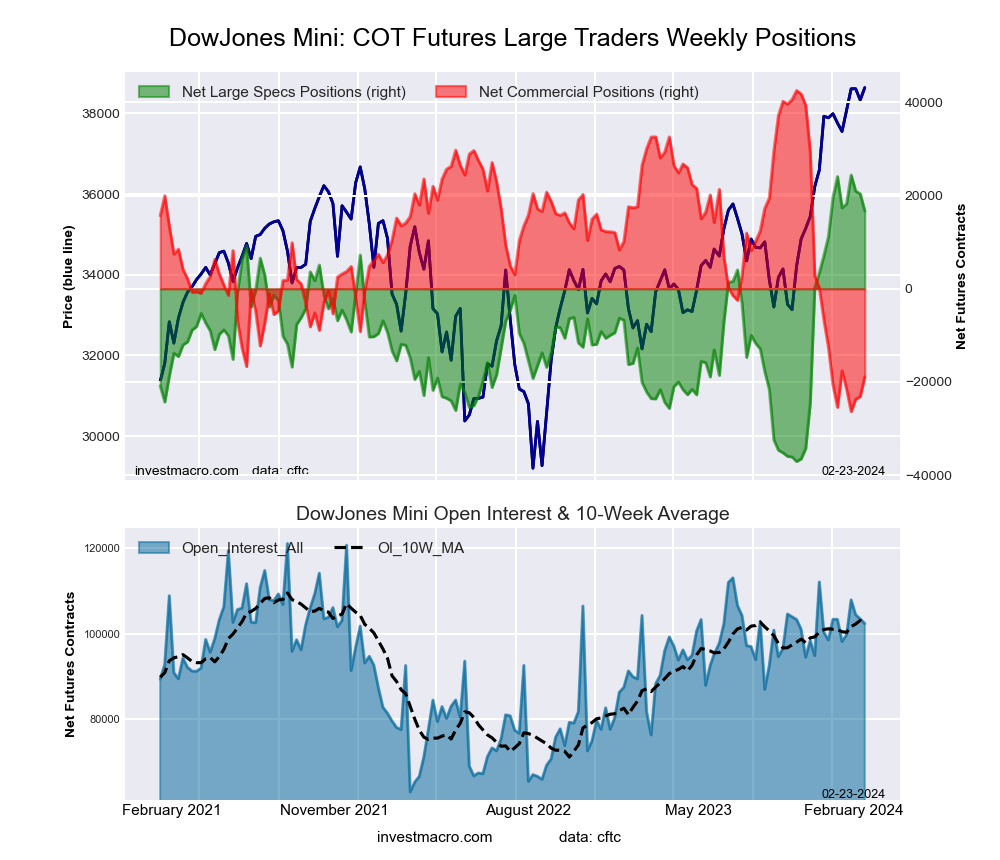
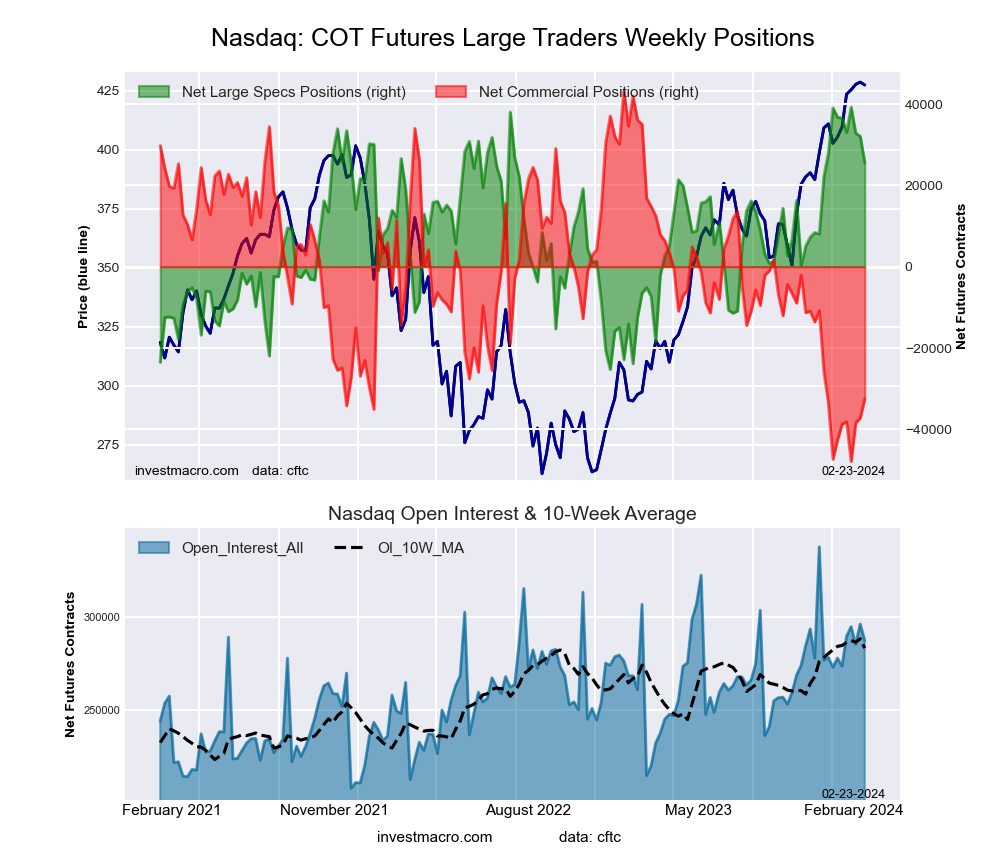
As of Wednesday’s stock market close, the Dow Jones Index (US30) lost 0.25% and fell to a one-month low, while the S&P 500 Index (US500) was down by 0.56% yesterday. The NASDAQ Technology Index (US100) closed negative by 0.59%.

Economic news from the US on Wednesday was hawkish for Fed policy and bullish for the US dollar, which pressured the indices. Retail sales for December rose by 0.6% m/m, beating expectations of 0.4% m/m. Manufacturing production for December rose by 0.1% m/m, stronger than expectations of no change. The Fed’s Beige Book also supported the dollar as it stated that most Fed districts reported little or no change in economic activity, and overall, their firms’ expectations for future growth remain positive.

PayPal Holdings (PYPL) closed higher by more than 2%, leading the Nasdaq 100 higher after CEO Criss said the company would now focus on profitability and prioritize growth as he sought to “get the business right.” Boeing (BA) is up by more than 1% and led the Dow Jones Industrials stocks higher after the FAA completed its first 40 inspections of Boeing’s 737-9 Max airplanes and found no problems.

Equity markets in Europe were mostly down yesterday. Germany’s DAX (DE40) fell by 0.84%, France’s CAC 40 (FR40) lost 1.07%, Spain’s IBEX 35 (ES35) declined by 1.26% on Wednesday, and the UK’s FTSE 100 (UK100) closed negative by 1.48%. Geopolitical tensions in the Middle East are rising (Red Sea attacks), and markets are beginning to cool expectations for interest rate cuts in 2024, robbing risky equity markets of some bullish support.

ECB President Lagarde said yesterday that policymakers need more evidence before they can be confident that consumer prices are under control. Lagarde also indicated that the ECB’s first-rate cut is likely to come in the summer, not in the spring as economists had expected. Knot, a spokesman for the ECB’s governing council, said yesterday that markets are getting ahead of themselves and the ECB needs to see a turnaround in wages before the Bank will consider an interest rate cut.

The UK Consumer Price Index unexpectedly rose to 4.0% y/y in December from 3.9% y/y in November, beating expectations of 3.8% y/y. The core CPI for December was unchanged from November at 5.1% y/y, exceeding expectations of 4.9% y/y. The core and core inflation measures delivered an upward surprise, but temporary price pressures are unlikely to have an impact on the Bank of England as a more detailed report showed that the high inflation reading for December did not indicate an overall rise in the prices of the components that make up the core index, indicating continued progress in bringing inflation down to 2%.

Yesterday, Shell announced the cessation of all shipping through the Red Sea in response to recent Houthi attacks on marine vessels. Houthi rebels continue to attack ships in the Red Sea off the coast of Yemen. Geopolitical tensions in the region will contribute to higher energy prices, as well as inflation in general, as carriers are forced to divert ships through Africa, increasing transportation and insurance costs, which will ultimately lead to higher commodity prices for the end consumer.

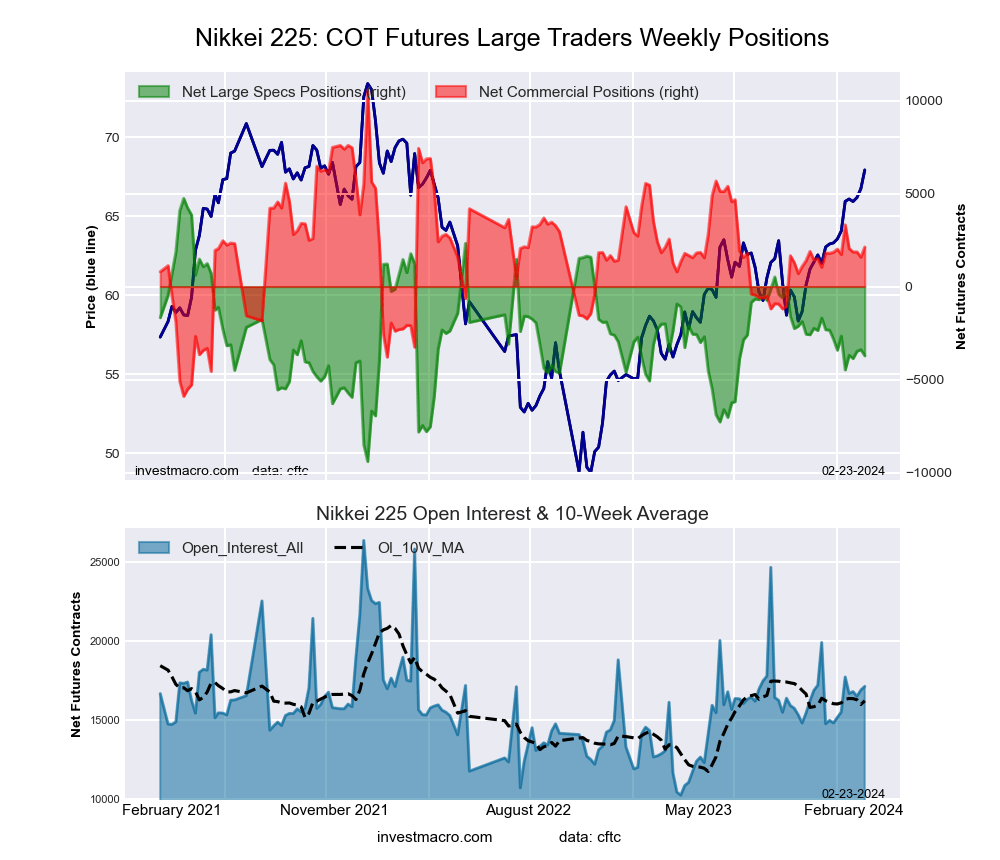
Asian markets were predominantly down yesterday. Japan’s Nikkei 225 (JP225) was down by 0.40%, China’s FTSE China A50 (CHA50) lost 2.34% on Wednesday, Hong Kong’s Hang Seng (HK50) decreased by 3.71% on the day, and Australia’s ASX 200 (AU200) was negative by 0.29% on Wednesday.

Australia’s labor market contracted slightly in December. Total employment fell by 65,100, weaker than expectations of a 17,600 increase and largely reversing the 61,500 increase seen in the previous month. The participation rate (the percentage of the working-age population in the labor force or looking for work) fell to 66.8% from a record high of 67.2% in the previous month. Despite this, the unemployment rate remained unchanged at 3.9%, its lowest level in 50 years. The Reserve Bank of Australia (RBA) predicts a possible cooling in the labor sector but has no plans to cut rates anytime soon. The RBA is almost 100% likely to keep rates unchanged at its February meeting.

ANZ economists are leaning towards the Reserve Bank of New Zealand (RBNZ) starting to cut the official money rate in August. Consecutive 25 basis point rate cuts are expected starting in August, bringing the rate down to 3.5% (from 5.5%) within 12 months. ANZ’s current forecasts are for inflation to return to the target range of 1% to 3% by the September quarter and for unemployment to pass the 5% mark and continue to rise.

S&P 500 (US500) 4,739.21 −26.77 (−0.56%)

Dow Jones (US30) 37,266.67 −94.45 (−0.25%)

DAX (DE40) 16,431.69 −139.99 (−0.84%)

FTSE 100 (UK100) 7,446.29 −112.05 (−1.48%)

USD Index 103.38 +0.02 (+0.02%)

News feed for 2024.01.18:
  • – Australia Unemployment Rate (m/m) at 02:30 (GMT+2);
  • – Japan Industrial Production (m/m) at 06:30 (GMT+2);
  • – World Economic Forum Annual Meetings at 10:00 (GMT+2);
  • – Switzerland SNB Chairman Jordan Speaks at 12:30 (GMT+2);
  • – Eurozone ECB Monetary Policy Meeting Accounts at 14:30 (GMT+2);
  • – US Building Permits (m/m) at 15:30 (GMT+2);
  • – US Initial Jobless Claims (w/w) at 15:30 (GMT+2);
  • – US Philadelphia Fed Manufacturing Index (m/m) at 15:30 (GMT+2);
  • – Eurozone ECB President Lagarde Speaks at 17:15 (GMT+2);
  • – US Natural Gas Storage (w/w) at 17:30 (GMT+2);
  • – US Crude Oil Reserves (w/w) at 18:00 (GMT+2);
  • – US FOMC Member Bostic Speaks at 18:30 (GMT+2).

By JustMarkets


This article reflects a personal opinion and should not be interpreted as an investment advice, and/or offer, and/or a persistent request for carrying out financial transactions, and/or a guarantee, and/or a forecast of future events.

Crude: Symmetrical triangle nears apex

By ForexTime 

  • Crude coils within triangle pattern
  • Prices below 50-day EMA
  • Incoming EIA could trigger volatility
  • Prices may test upper bound of triangle pattern 
  • Key levels of interest at $74.35 & $70.83

Crude oil is bound within a symmetrical triangle pattern which began on November 30th, 2023.

However, it may be set for a breakout as prices coil towards the apex of the technical pattern.

Over the past few days, oil prices have been choppy despite escalating geopolitical tensions in the Middle East. The global commodity is trading around $72.82 as of writing and could see fresh volatility due to the incoming Energy Information Administration (EIA) report today.

It is worth noting that the American Petroleum Institute (API) reported a small increase in crude inventories on Wednesday. A similar report from the EIA that shows a buildup may inspire crude bears, (those looking to see crude oil prices decline).

Furthermore, the International Energy Agency (IEA) is also scheduled to publish its monthly market snapshot which could also contribute to the expected increase in volatility.

Worthy of note is that breakouts can be in any direction, with statistics slightly favoring an upward breakout in this scenario.

According to Thomas Bulkowski, in his famous book, “The Encyclopedia of Chart Patterns”, upward breakouts of a symmetrical pattern in a downtrend,

· ranks 13 out of 20 similar patterns.

· has a breakeven failure rate of 23%

· has a 36% percentage chance of meeting its price target.

Yesterday, January 17th saw a hammer on the daily time frame bounce off the upper sloping trendline of the pattern (which has acted as support since December 13th, 2023)

Crude prices on the daily timeframe may be on its way to test this coil pattern’s downward-sloping trendline (resistance zone).

This resistance area coincides with the 50-day Exponential moving average at $74.35.

A breakout to the upside will mean crude prices have to close above this confluence (of the 50-day EMA and the downward-sloping trend line).

In the event of a breakout, the following resistance levels may be tested.

· $76.05: The 100 Fibonacci Retracement level

· $78.89: A significant price area

· $81.27: The 161.8 golden mean Fibonacci level.

The Fibonacci retracement levels are taken from December 13th low at $67.67 to December 26th high at $76.05.

Continuous weakening demand and a failure to appropriately price in new geopolitical tensions in the Middle East may see crude prices break through the following price levels as it aims for lows below $67.67 (its most recent low posted on December 13th)

· $70.83: The upward-sloping line of the symmetrical pattern (which coincides with the 38.2 Fibonacci retracement level)

· $69.60: The 23.6 Fibonacci retracement level


Forex-Time-LogoArticle by ForexTime

ForexTime Ltd (FXTM) is an award winning international online forex broker regulated by CySEC 185/12 www.forextime.com

Economic data on China fell short of forecasts. In the Eurozone, there is a decline in inflation expectations

By JustMarkets

As of Tuesday’s stock market close, the Dow Jones Index (US30) was down by 0.62% and fell to a one-month low, while the S&P 500 Index (US500) fell by 0.37% yesterday. The NASDAQ Technology Index (US100) closed negative by 0.19%.

Fed Chief Waller’s hawkish comments on Tuesday supported the dollar and pressured the indices after he said that when the Fed starts to cut interest rates, it should be methodical and cautious, and there is no reason to move as quickly and cut rates as precipitously as in the past.

Economic news from the US on Tuesday was negative for the indices as well after the January Empire Index of overall business conditions in the manufacturing sector unexpectedly fell by 29.2 to a 3-year low of negative 43.7, weaker than expectations of a rise to negative 5.0.

Boeing (BA) shares fell more than 6% yesterday, topping the list of losers in the S&P500 (US500) and NASDAQ (US100) after Wells Fargo Securities downgraded the stock to neutral from upgraded, citing an increased risk that growing scrutiny of the company’s manufacturing quality will affect production or delivery rates. Morgan Stanley (MS) shares fell more than 4% yesterday after the bank reported fourth-quarter sales and trading revenue of $2.20 billion, below consensus of $2.26 billion. Apple (AAPL) is down more than 1% after the company cut prices on the iPhone 15 and other products in China in an attempt to spur weak demand for new models. Shares of Nvidia (NVDA) are up more than 3% after KeyBanc Capital Markets raised its price target on the company’s stock from $650 to $740.

Equity markets in Europe were mostly down yesterday. Germany’s DAX (DE40) fell by 0.30%, France’s CAC 40 (FR40) lost 0.18%, Spain’s IBEX 35 (ES35) decreased by 0.82% on Tuesday, and the UK’s FTSE 100 (UK100) closed negative 0.48%.

The economic growth expectations index from Germany’s ZEW survey for January unexpectedly rose by 2.4 to an 11-month high of 15.2, stronger than expectations for a decline to 11.7. ECB 1-year Eurozone inflation expectations fell to 3.2% from 4.0% in October, the lowest in 21 months. 3-year inflation expectations fell to a 22-month low of 2.2% from 2.5% in October, better than expectations of 2.4%. The decline in Eurozone inflation expectations is dovish for ECB policy. Swaps estimate the odds of a 25 bps ECB rate cut to 2% at the next meeting on January 25 and 25% at the March 7 meeting. Yesterday, there were also speeches from several ECB officials. ECB Governing Council representative Simkus said he was optimistic about an ECB rate cut this year but much less optimistic than the markets about a rate cut in March or April. His colleague Centeno noted that the inflationary trajectory in the Eurozone is good and that Eurozone GDP still looks rather stagnant in the first quarter. ECB Governing Council representative Villeroy de Gallo indicated that the question of the ECB cutting interest rates this year is premature as the ECB is likely to be more patient.

Brent crude rose slightly on Tuesday, while WTI fell as investors saw fundamentals weakening in the US, but ongoing naval and air conflicts in the Red Sea heightened fears that tankers would have to reroute to avoid the area, increasing costs and delivery times.

Asian markets were predominantly down yesterday. Japan’s Nikkei 225 (JP225) retreated from highs and decreased by 0.79%, China’s FTSE China A50 (CHA50) was up by 0.62% on Tuesday, Hong Kong’s Hang Seng (HK50) lost 2.16% on the day, and Australia’s ASX 200 (AU200) was negative 1.09% on Tuesday.

China’s economy grew to 5.2% in the fourth quarter, surpassing Beijing’s target of 5% for 2023. But much of that growth was driven by a lower base compared to 2022. Other data showed that Asia’s largest economy is still struggling to regain growth (output rose from 6.6% to 6.8% y/y, retail sales fell sharply from 10.1% to 7.3% y/y, the unemployment rate rose from 5.0% to 5.1% y/y) after the lull of the COVID period amid continued pressure from weak consumer spending, sluggish private investment and the ongoing real estate crisis.

Soft Japan PPI data released earlier this week indicated that the BOJ is under little pressure to tighten policy, a view that is expected to be confirmed by CPI data due out this Friday.

S&P 500 (US500) 4,783.83 +3.59 (+0.08%)

Dow Jones (US30) 37,592.98 −118.04 (−0.31%)

DAX (DE40)  16,704.56 +157.53 (+0.95%)

FTSE 100 (UK100) 7,624.93 +48.34 (+0.64%)

USD Index  102.44 +0.15 (+0.15%)

News feed for 2024.01.17:
  • – World Economic Forum Annual Meetings at 10:00 (GMT+2);
  • – Eurozone Industrial Production (m/m) at 12:00 (GMT+2);
  • – Eurozone Trade Balance (m/m) at 12:00 (GMT+2);
  • – Canada Business Outlook Survey at 17:30 (GMT+2).

By JustMarkets


This article reflects a personal opinion and should not be interpreted as an investment advice, and/or offer, and/or a persistent request for carrying out financial transactions, and/or a guarantee, and/or a forecast of future events.

Mid-Week Technical Outlook: NQ100_m wobbles above support

By ForexTime 

  • NQ100_m wobble above support
  • Prices trapped within range
  • Weekly RSI near overbought levels
  • Incoming US data could trigger breakout
  • Key levels of interest at 16900 & 16630

After swinging within a range on the daily charts, the NQ100_m could be preparing for a breakout.

The first half of January was a rollercoaster ride for the index thanks to fundamental forces. A string of stronger-than-expected US economic data cooled Fed cut bets, impacting the tech filled NQ100_m index.

Prices are currently trapped within a narrow range near all-time highs, with bulls and bears waiting for a fresh directional catalyst. A significant move could be around the corner, especially when factoring in the incoming US data this week which could influence the NQ100_m which is filled with tech stocks.

Starting on the weekly charts, the NQ100_m is respecting an ascending weekly channel while prices are trading above the 50, 100 and 200-week SMA. However, the Relative Strength Index is hovering near 70, indicating that prices could be heavily overbought. In addition, potential resistance may be found at 17,000 just above the current all-time high.

We see a similar bullish picture on the monthly charts as prices create higher highs and higher lows. The MACD is also trading above zero. It will be worth keeping an eye on how prices behave at the 16995 all-time high. Support can be found around 14,200 – near the most recent higher low.


Placing our attention back to the daily timeframe, it may be wise to keep a close eye on how prices react to support at 16630 and resistance at 16900.

  • A strong breakdown and daily close below 16,630 could see a decline towards the 50-day SMA at 16,250

  • Should prices push above 16,900, this may open the doors back to the all-time high at 16,995 and beyond.


Forex-Time-LogoArticle by ForexTime

ForexTime Ltd (FXTM) is an award winning international online forex broker regulated by CySEC 185/12 www.forextime.com

Data brokers know everything about you – what FTC case against ad tech giant Kochava reveals

By Anne Toomey McKenna, University of Richmond 

Kochava, the self-proclaimed industry leader in mobile app data analytics, is locked in a legal battle with the Federal Trade Commission in a case that could lead to big changes in the global data marketplace and in Congress’ approach to artificial intelligence and data privacy.

The stakes are high because Kochava’s secretive data acquisition and AI-aided analytics practices are commonplace in the global location data market. In addition to numerous lesser-known data brokers, the mobile data market includes larger players like Foursquare and data market exchanges like Amazon’s AWS Data Exchange. The FTC’s recently unsealed amended complaint against Kochava makes clear that there’s truth to what Kochava advertises: it can provide data for “Any Channel, Any Device, Any Audience,” and buyers can “Measure Everything with Kochava.”

Separately, the FTC is touting a settlement it just reached with data broker Outlogic, in what it calls the “first-ever ban on the use and sale of sensitive location data.” Outlogic has to destroy the location data it has and is barred from collecting or using such information to determine who comes and goes from sensitive locations, like health care centers, homeless and domestic abuse shelters, and religious places.

According to the FTC and proposed class-action lawsuits against Kochava on behalf of adults and children, the company secretly collects, without notice or consent, and otherwise obtains vast amounts of consumer location and personal data. It then analyzes that data using AI, which allows it to predict and influence consumer behavior in an impressively varied and alarmingly invasive number of ways, and serves it up for sale.

Kochava has denied the FTC’s allegations.

The FTC says Kochava sells a “360-degree perspective” on individuals and advertises it can “connect precise geolocation data with email, demographics, devices, households, and channels.” In other words, Kochava takes location data, aggregates it with other data and links it to consumer identities. The data it sells reveals precise information about a person, such as visits to hospitals, “reproductive health clinics, places of worship, homeless and domestic violence shelters, and addiction recovery facilities.” Moreover, by selling such detailed data about people, the FTC says “Kochava is enabling others to identify individuals and exposing them to threats of stigma, stalking, discrimination, job loss, and even physical violence.”

I’m a lawyer and law professor practicing, teaching and researching about AI, data privacy and evidence. These complaints underscore for me that U.S. law has not kept pace with regulation of commercially available data or governance of AI.

Most data privacy regulations in the U.S. were conceived in the pre-generative AI era, and there is no overarching federal law that addresses AI-driven data processing. There are Congressional efforts to regulate the use of AI in decision making, like hiring and sentencing. There are also efforts to provide public transparency around AI’s use. But Congress has yet to pass legislation.

The Federal Trade Commission’s suit against Kochava is set against a backdrop of minimal regulation of data brokers.

What litigation documents reveal

According to the FTC, Kochava secretly collects and then sells its “Kochava Collective” data, which includes precise geolocation data, comprehensive profiles of individual consumers, consumers’ mobile app use details and Kochava’s “audience segments.”

The FTC says Kochava’s audience segments can be based on “behaviors” and sensitive information such as gender identity, political and religious affiliation, race, visits to hospitals and abortion clinics, and people’s medical information, like menstruation and ovulation, and even cancer treatments. By selecting certain audience segments, Kochava customers can identify and target extremely specific groups. For example, this could include people who gender identify as “other,” or all the pregnant females who are African American and Muslim. The FTC says selected audience segments can be narrowed to a specific geographical area or, conceivably, even down to a specific building.

By identify, the FTC explains that Kochava customers are able to obtain the name, home address, email address, economic status and stability, and much more data about people within selected groups. This data is purchased by organizations like advertisers, insurers and political campaigns that seek to narrowly classify and target people. The FTC also says it can be purchased by people who want to harm others.

How Kochava acquires such sensitive data

The FTC says Kochava acquires consumer data in two ways: through Kochava’s software development kits that it provides to app developers, and directly from other data brokers. The FTC says those Kochava-supplied software development kits are installed in over 10,000 apps globally. Kochava’s kits, embedded with Kochava’s coding, collect hordes of data and send it back to Kochava without the consumer being told or consenting to the data collection.

Another lawsuit against Kochava in California alleges similar charges of surreptitious data collection and analysis, and that Kochava sells customized data feeds based on extremely sensitive and private information precisely tailored to its clients’ needs.

The data broker marketplace has been tracking you for years, thanks to mobile phones and web browser cookies.

AI pierces your privacy

The FTC’s complaint also illustrates how advancing AI tools are enabling a new phase in data analysis. Generative AI’s ability to process vast amounts of data is reshaping what can be done with and learned from mobile data in ways that invade privacy. This includes inferring and disclosing sensitive or otherwise legally protected information, like medical records and images.

AI provides the ability both to know and predict just about anything about individuals and groups, even very sensitive behavior. It also makes it possible to manipulate individual and group behavior, inducing decisions in favor of the specific users of the AI tool.

This type of “AI coordinated manipulation” can supplant your decision-making ability without your knowledge.

Privacy in the balance

The FTC enforces laws against unfair and deceptive business practices, and it informed Kochava in 2022 that the company was in violation. Both sides have had some wins and losses in the ongoing case. Senior U.S. District Judge B. Lynn Winmill, who is overseeing the case, dismissed the FTC’s first complaint and required more facts from the FTC. The commission filed an amended complaint that provided much more specific allegations.

Winmill has not yet ruled on another Kochava motion to dismiss the FTC’s case, but as of a Jan. 3, 2024 filing in the case, the parties are proceeding with discovery. A 2025 trial date is expected, but the date has not yet been set.

For now, companies, privacy advocates and policymakers are likely keeping an eye on this case. Its outcome, combined with proposed legislation and the FTC’s focus on generative AI, data and privacy, could spell big changes for how companies acquire data, the ways that AI tools can be used to analyze data, and what data can lawfully be used in machine- and human-based data analytics.

About the Author:The Conversation

Anne Toomey McKenna, Visiting Professor of Law, University of Richmond

This article is republished from The Conversation under a Creative Commons license. Read the original article.

The focus today is on Canadian inflation data. There is a deterioration in economic indicators in Europe

By JustMarkets

The US stock market did not trade yesterday due to the bank holiday.

Bank of Canada, business and consumer surveys showed that the economy has suffered from the Bank’s aggressive rate hike campaign, reinforcing the view that the tightening cycle is likely over and setting the stage for policymakers to start considering rate cuts as early as the first half of this year. Canada will release inflation data today. Economists forecast core inflation to remain at 2.8% in annualized terms, while overall inflation is forecast to jump from 3.1% to 3.4% y/y. However, the Bank of Canada prefers to focus more on median values. The median CPI is expected to fall from 3.4% to 3.3% y/y. Lower inflation will put pressure on the Canadian currency, but a lot will also depend on oil prices, as CAD is a commodity currency, and higher oil prices tend to strengthen the Canadian currency.

Equity markets in Europe were mostly down on Monday. Germany’s DAX (DE40) fell by 0.49%, France’s CAC 40 (FR40) lost 0.72% yesterday, Spain’s IBEX 35 (ES35) decreased by 0.18%, and the UK’s FTSE 100 (UK100) closed negative by 0.39%.

EU manufacturing output continued to fall in November on both a monthly and annualized basis. EU manufacturing output fell by 6.3% year-on-year in November 2022, the seventh consecutive year-on-year decline. As in the EU as a whole, November was the weakest month for German industrial production since September 2021. Germany’s annualized price-adjusted GDP in 2023 was 0.3% lower than the previous year as Germany’s overall economic development slowed in 2023.

With most central bank governors agreeing that interest rates have probably peaked, the world is entering a period where markets will be watching to see which of the major banks will be the first to cut rates. Interest rate expectations now suggest around 6-7 cuts for the dollar and euro, while expectations for sterling have risen significantly and now predict around 5-6 cuts in 2024.

The Middle East is critical to global oil supplies, with major producers, including Saudi Arabia, Iraq, and the UAE, relying on transportation routes, including the strategic Bab el-Mandeb Strait near Yemen. About 4.8 million barrels of crude oil and petroleum products pass through this narrow strait daily. That’s why Yemen’s attacks on shipping in the region have led to a response from the US and allies. Yesterday, the US Consulate in Erbil in northern Iraq was heavily damaged in an attack by ballistic missiles and drones fired by Iran. Thus, the degree of war in the region is starting to be prohibitive and could escalate into a serious armed conflict between Yemen and Iran vs. the US and its allies.

Asian markets were mostly down yesterday. Japan’s Nikkei 225 (JP225) continues to break records, up by 0.91%, China’s FTSE China A50 (CHA50) was down by 0.08% on Monday, Hong Kong’s Hang Seng (HK50) decreased by 0.17% on the day, and Australia’s ASX 200 (AU200) was negative by 0.03%.

The latest Chinese data suggests the economy is starting 2024 on shaky legs: persistent deflationary pressures and a modest rebound in exports are unlikely to turn around weak domestic activity quickly. December bank lending was also weak. China’s economic outlook in 2024 will be shaped by the outlook for the real estate sector. The government’s goal is to reduce the oversupply that has built up in the sector in recent years and bring supply in line with real demand. The People’s Bank of China (PBoC) has pledged to step up policy support for the economy this year and help prices recover. However, the PBoC faces a dilemma as more credit is directed toward productive forces than consumption, which could increase deflationary pressures and reduce the effectiveness of monetary policy tools.

A former Bank of Japan (BoJ) executive believes the BoJ is likely to be encouraged by better results from annual wage talks, which will pave the way for an end to negative interest rates this spring. That’s one of the main reasons most BoJ watchers predict the Central Bank will wait until April before raising rates for the first time since 2007. However, recent economic data showed persistent weakness in Japan’s producer price index inflation, indicating additional pressure on the BOJ to continue its ultra-soft stance.

The Australian and New Zealand dollars hit one-month lows on Tuesday, breaking through key support levels as risk appetite eased and domestic data reinforced signs that interest rates in Australia have peaked.

S&P 500 (US500) 4,783.83 0 (0%)

Dow Jones (US30) 37,592.98 0 (0%)

DAX (DE40)  16,622.22 −82.34 (−0.49%)

FTSE 100 (UK100) 7,594.91 −30.02 (−0.39%)

USD Index  102.59 +0.19 (+0.18%)

News feed for 2024.01.16:
  • – UK Average Earnings Index (m/m) at 09:00 (GMT+2);
  • – UK Claimant Count Change (m/m) at 09:00 (GMT+2);
  • – UK Unemployment Rate (m/m) at 09:00 (GMT+2);
  • – German Consumer Price Index (m/m) at 09:00 (GMT+2);
  • – World Economic Forum Annual Meetings at 10:00 (GMT+2);
  • – German ZEW Economic Sentiment (m/m) at 12:00 (GMT+2);
  • – Eurozone ZEW Economic Sentiment (m/m) at 12:00 (GMT+2);
  • – Canada Consumer Price Index (m/m) at 15:30 (GMT+2);
  • – US NY Empire State Manufacturing Index (m/m) at 15:30 (GMT+2);
  • – UK BoE Gov Bailey Speaks at 17:00 (GMT+2);
  • – US FOMC Member Waller Speaks at 18:00 (GMT+2).

By JustMarkets


This article reflects a personal opinion and should not be interpreted as an investment advice, and/or offer, and/or a persistent request for carrying out financial transactions, and/or a guarantee, and/or a forecast of future events.

NatGas bullish opportunity on horizon

By ForexTime

  • NatGas busy with correction wave in uptrend
  • Weekly support may trigger long opportunity
  • Prices trading above 100 EMA on H4 chart
  • 3 potential bullish targets identified  
  • Bullish scenario invalidated below 2.729

US natural gas prices have been at the receiving end of sustained bullish momentum for some time now.

The commodity jumped last Friday as cold weather across the United States boosted the demand outlook for heating.

After a final push last week, a fresh resistance level was reached but not breached. At the resistance level a correction wave started, and this might have enough momentum to reach a previous weekly support level. If the level is reached and holds, a long opportunity might ensue.

A look at the 4-hour time frame will produce more understanding.

The 4-hour chart is busy with a down trend as the daily trend correction wave plays out. The 4-hour 100 Exponential Moving Average (EMA) as well as the Moving Average Convergence Divergence (MACD) are still in bullish mode and the 100 EMA confirms the possible support level around 2.874 as indicated by the weekly support level.

If the price reaches the 2.874 level then a long opportunity becomes possible.

Attaching a modified Fibonacci tool to the trigger level at 2.987 and dragging it to the below daily support level at 2.729, three possible targets can be established:

  • The first target is possible at 3.146 (Target 1).

  • The second price target is likely at 3.374 (Target 2).

  • The third and last price target is feasible at 3.554 (Target 4) if buyers are able to press through the next weekly resistance level at 3.460.

If the price at 2.729 is broken, this scenario is no longer applicable.


Forex-Time-LogoArticle by ForexTime

ForexTime Ltd (FXTM) is an award winning international online forex broker regulated by CySEC 185/12 www.forextime.com

Curious Kids: how much money is there in the world?

By Renaud Foucart, Lancaster University 

How much money is there in the world? – Tsubamé, aged ten, London

If we want to add up how much money there is in the world, a good place to start would be counting all the notes and coins out there – in people’s wallets and money boxes and in cash machines.

Let’s start with pounds. There is about £84 billion (or 84,000,000,000) of British money out there in coins and notes. There’s also US$2,236 billion in US money, €1,578 billion in the money of the European Union and ¥9,616 billion in Chinese money – plus money in many other currencies.

As money is not the same in every country, summing up all the coins and notes in the world means that you need to measure how much a US dollar, an Indian rupee, or a Chinese yuan is worth in Great British pounds. If this is done with the latest available data, then added up, you will find a total of £6,113 billion.


Curious Kids is a series by The Conversation that gives children the chance to have their questions about the world answered by experts. If you have a question you’d like an expert to answer, send it to [email protected] and make sure you include the asker’s first name, age and town or city. We won’t be able to answer every question, but we’ll do our very best.


This amount could change very quickly and is probably already outdated at the moment you read this article.

This is partly because countries print more money all the time. But it’s also because the exchange rate – how much a British pound, say, is worth in another currency, like US dollars – is not always the same. Today, £1 is worth around US$1.30 – one dollar and 30 cents in US money. Ten years ago, it was much more: one dollar and 70 cents.

How many US dollars you get for a pound depends on how much people want to use British money. That’s why when some people decide to create their own money, such as cryptocurrencies like bitcoin, they spend so much time trying to convince others to use it.

But counting coins and notes does not tell us everything about how much money there is in the world. For instance, people have money in their bank accounts that do not correspond to any specific coin. In the UK, around 96% of money exists only in electronic form. When you include that, the total is not £84 billion but £2,223 billion. If you add up again the figures available for the entire world – money in coins and notes, plus electronic money in bank accounts – you get roughly £46,557 billion.

Wealth – but not money

What’s more, many things that are worth a lot are not money itself. Very rich people keep only a little part of their fortune in cash. They prefer to also own things like businesses that are likely to make them even richer.

Perhaps a better way to count how much money there is in the world is to look at the value of the things we buy and sell. That is a tricky thing to do, because you don’t want to double count anything. If farmers sell the milk of their cows to a cheese maker, who then sells cheese to a shop, which sells it to people, all the value – the milk, the cheese and the people selling it, is contained in what you pay at the shop: the final sale.

When you sum up all these final sales, you will find that last year, in the entire world, there was around £79,437 billion worth of value created.

But there are also a lot of things that have value and are not exchanged. If you own a bag of diamonds and keep it in your bedroom, you are rich. But this is not money. And you are not exchanging it either. So it does not count in any of the numbers I have given you so far.

And sometimes, things that have value cannot easily be turned into money. Imagine that you own a beautiful forest, with a nice clean river to swim in during the summer, and some very rare birds and old trees. And underneath that forest, there is a lot of oil.

By owning this forest, you are very wealthy. Like the diamonds in your bedroom, owning the land and the forest and the oil makes you rich. But once you decide to turn your wealth into a lot of money, you will need to destroy the forest: cut down the trees for wood to sell, and drill into the earth to get the oil out.

People might have enjoyed spending time with friends walking in the forest, or paddling in the rivers. This has value, and it is lost when the forest is gone. And the wealth you held by owning the forest is gone too.

If we want the money we use to still be worth something in the future, we sometimes need to restrain from destroying what we own to get cash today.The Conversation

About the Author:

Renaud Foucart, Senior Lecturer in Economics, Lancaster University Management School, Lancaster University

This article is republished from The Conversation under a Creative Commons license. Read the original article.

Brent Crude Oil Experiences Upward Trend

By RoboForex Analytical Department

Brent prices have been rising for three consecutive days as of this Monday. The price of a Brent barrel has climbed to 79.00 USD, and there are underlying reasons for this surge.

The focal point of attention is the unfolding events in the Red Sea, where the situation is challenging. This holds significant importance for the crude oil market as numerous tankers with energy carriers pass through these waters. Any disruptions in transportation accessibility could potentially impact the crude oil supply. The market incorporates this concern into its quotes. While some tankers have already altered their routes, others continue passing through the Red Sea.

The Libyan factor also supports oil bulls. Protests in the country might lead to a shutdown of two additional oil and gas organisations. Earlier, operations were halted at the Sharara field, causing the market to lose approximately 300 thousand barrels of crude oil daily.

Meanwhile, various drivers exert pressure on the market. Increasing crude oil production among non-OPEC+ members, including the US, is one such factor. Additionally, there is uncertainty in Chinese crude oil demand.

Brent technical analysis

On the H4 Brent chart, a growth wave structure is emerging towards 82.15. Once this level is reached, a correction link to 79.30 is expected, followed by a rise to 83.43. This is a local target. Technically, this scenario is confirmed by the MACD: its signal line is above zero, strictly pointing upwards.

On the H1 Brent chart, a consolidation range is developing around 79.35. A growth structure to 81.45 is expected, followed by a correction to 79.40 and a rise to 82.15. This is a local target. Technically, this scenario is confirmed by the Stochastic oscillator, with its signal line above 50, aiming strictly upwards to 80.


Disclaimer

Any forecasts contained herein are based on the author’s particular opinion. This analysis may not be treated as trading advice. RoboForex bears no responsibility for trading results based on trading recommendations and reviews contained herein.