COT Soft Commodities Charts: Speculator Positions led by Corn & Soybeans

By InvestMacro

Here are the latest charts and statistics for the Commitment of Traders (COT) reports data published by the Commodities Futures Trading Commission (CFTC).

The latest COT data is updated through Tuesday March 19th and shows a quick view of how large traders (for-profit speculators and commercial entities) were positioned in the futures markets.

Weekly Speculator Changes led by Corn & Soybeans

The COT soft commodities markets speculator bets were higher this week as seven out of the eleven softs markets we cover had higher positioning while the other four markets had lower speculator contracts.

Leading the gains for the softs markets was Corn (13,517 contracts) with Soybeans (12,760 contracts), Soybean Oil (12,316 contracts), Soybean Meal (11,182 contracts), Sugar (6,360 contracts), Lean Hogs (1,606 contracts) and Live Cattle (925 contracts) also recording positive weeks.

The markets with the declines in speculator bets this week were Coffee (-6,266 contracts), Cotton (-5,881 contracts), Wheat (-2,291 contracts) and Cocoa (-190 contracts) with lower bets on the week.


Soft Commodities Net Speculators Leaderboard

Legend: Weekly Speculators Change | Speculators Current Net Position | Speculators Strength Score compared to last 3-Years (0-100 range)


Strength Scores led by Coffee & Cotton

COT Strength Scores (a normalized measure of Speculator positions over a 3-Year range, from 0 to 100 where above 80 is Extreme-Bullish and below 20 is Extreme-Bearish) showed that Coffee (79 percent) and Cotton (78 percent) lead the softs markets this week. Live Cattle (58 percent), Lean Hogs (57 percent) and Cocoa (56 percent) come in as the next highest in the weekly strength scores.

On the downside, Soybeans (7 percent) and Soybean Meal (9 percent) come in at the lowest strength levels currently and are in Extreme-Bearish territory (below 20 percent). The next lowest strength scores are the Corn (11 percent) and the Soybean Oil (18 percent).

Strength Statistics:
Corn (11.2 percent) vs Corn previous week (9.5 percent)
Sugar (23.6 percent) vs Sugar previous week (21.3 percent)
Coffee (78.9 percent) vs Coffee previous week (85.3 percent)
Soybeans (6.6 percent) vs Soybeans previous week (3.8 percent)
Soybean Oil (18.4 percent) vs Soybean Oil previous week (10.5 percent)
Soybean Meal (8.7 percent) vs Soybean Meal previous week (4.1 percent)
Live Cattle (58.5 percent) vs Live Cattle previous week (57.5 percent)
Lean Hogs (57.3 percent) vs Lean Hogs previous week (56.0 percent)
Cotton (77.7 percent) vs Cotton previous week (82.1 percent)
Cocoa (56.5 percent) vs Cocoa previous week (56.7 percent)
Wheat (28.6 percent) vs Wheat previous week (30.2 percent)


Live Cattle & Lean Hogs top the 6-Week Strength Trends

COT Strength Score Trends (or move index, calculates the 6-week changes in strength scores) showed that Live Cattle (27 percent) and Lean Hogs (27 percent) lead the past six weeks trends for soft commodities. Cotton (24 percent), Soybean Oil (9 percent) and Corn (7 percent) are the next highest positive movers in the latest trends data.

Cocoa (-13 percent) leads the downside trend scores currently with Wheat (-12 percent), Soybean Meal (-5 percent) and Coffee (-5 percent) following next with lower trend scores.

Strength Trend Statistics:
Corn (6.7 percent) vs Corn previous week (4.4 percent)
Sugar (3.9 percent) vs Sugar previous week (4.1 percent)
Coffee (-4.9 percent) vs Coffee previous week (0.3 percent)
Soybeans (-1.5 percent) vs Soybeans previous week (-8.9 percent)
Soybean Oil (9.2 percent) vs Soybean Oil previous week (3.5 percent)
Soybean Meal (-4.8 percent) vs Soybean Meal previous week (-9.4 percent)
Live Cattle (26.6 percent) vs Live Cattle previous week (38.4 percent)
Lean Hogs (27.5 percent) vs Lean Hogs previous week (34.4 percent)
Cotton (23.9 percent) vs Cotton previous week (41.6 percent)
Cocoa (-12.8 percent) vs Cocoa previous week (-26.4 percent)
Wheat (-12.3 percent) vs Wheat previous week (-12.0 percent)


Individual Soft Commodities Markets:

CORN Futures:

CORN Futures COT ChartThe CORN large speculator standing this week resulted in a net position of -175,513 contracts in the data reported through Tuesday. This was a weekly advance of 13,517 contracts from the previous week which had a total of -189,030 net contracts.

This week’s current strength score (the trader positioning range over the past three years, measured from 0 to 100) shows the speculators are currently Bearish-Extreme with a score of 11.2 percent. The commercials are Bullish-Extreme with a score of 87.3 percent and the small traders (not shown in chart) are Bullish-Extreme with a score of 100.0 percent.

Price Trend-Following Model: Downtrend

Our weekly trend-following model classifies the current market price position as: Downtrend. The current action for the model is considered to be: Hold – Maintain Short Position.

CORN Futures StatisticsSPECULATORSCOMMERCIALSSMALL TRADERS
– Percent of Open Interest Longs:18.843.610.0
– Percent of Open Interest Shorts:30.031.910.5
– Net Position:-175,513183,490-7,977
– Gross Longs:294,129683,677156,429
– Gross Shorts:469,642500,187164,406
– Long to Short Ratio:0.6 to 11.4 to 11.0 to 1
NET POSITION TREND:
– Strength Index Score (3 Year Range Pct):11.287.3100.0
– Strength Index Reading (3 Year Range):Bearish-ExtremeBullish-ExtremeBullish-Extreme
NET POSITION MOVEMENT INDEX:
– 6-Week Change in Strength Index:6.7-7.89.0


SUGAR Futures:

SUGAR Futures COT ChartThe SUGAR large speculator standing this week resulted in a net position of 91,323 contracts in the data reported through Tuesday. This was a weekly lift of 6,360 contracts from the previous week which had a total of 84,963 net contracts.

This week’s current strength score (the trader positioning range over the past three years, measured from 0 to 100) shows the speculators are currently Bearish with a score of 23.6 percent. The commercials are Bullish with a score of 79.4 percent and the small traders (not shown in chart) are Bearish-Extreme with a score of 11.9 percent.

Price Trend-Following Model: Downtrend

Our weekly trend-following model classifies the current market price position as: Downtrend. The current action for the model is considered to be: Hold – Maintain Short Position.

SUGAR Futures StatisticsSPECULATORSCOMMERCIALSSMALL TRADERS
– Percent of Open Interest Longs:21.552.78.3
– Percent of Open Interest Shorts:10.564.47.5
– Net Position:91,323-97,8736,550
– Gross Longs:179,189439,45669,342
– Gross Shorts:87,866537,32962,792
– Long to Short Ratio:2.0 to 10.8 to 11.1 to 1
NET POSITION TREND:
– Strength Index Score (3 Year Range Pct):23.679.411.9
– Strength Index Reading (3 Year Range):BearishBullishBearish-Extreme
NET POSITION MOVEMENT INDEX:
– 6-Week Change in Strength Index:3.90.7-19.6


COFFEE Futures:

COFFEE Futures COT ChartThe COFFEE large speculator standing this week resulted in a net position of 50,165 contracts in the data reported through Tuesday. This was a weekly decrease of -6,266 contracts from the previous week which had a total of 56,431 net contracts.

This week’s current strength score (the trader positioning range over the past three years, measured from 0 to 100) shows the speculators are currently Bullish with a score of 78.9 percent. The commercials are Bearish with a score of 24.7 percent and the small traders (not shown in chart) are Bearish with a score of 32.4 percent.

Price Trend-Following Model: Weak Uptrend

Our weekly trend-following model classifies the current market price position as: Weak Uptrend. The current action for the model is considered to be: Hold – Maintain Long Position.

COFFEE Futures StatisticsSPECULATORSCOMMERCIALSSMALL TRADERS
– Percent of Open Interest Longs:33.839.83.6
– Percent of Open Interest Shorts:10.863.33.0
– Net Position:50,165-51,5231,358
– Gross Longs:73,78986,9137,862
– Gross Shorts:23,624138,4366,504
– Long to Short Ratio:3.1 to 10.6 to 11.2 to 1
NET POSITION TREND:
– Strength Index Score (3 Year Range Pct):78.924.732.4
– Strength Index Reading (3 Year Range):BullishBearishBearish
NET POSITION MOVEMENT INDEX:
– 6-Week Change in Strength Index:-4.94.9-1.1


SOYBEANS Futures:

SOYBEANS Futures COT ChartThe SOYBEANS large speculator standing this week resulted in a net position of -167,653 contracts in the data reported through Tuesday. This was a weekly advance of 12,760 contracts from the previous week which had a total of -180,413 net contracts.

This week’s current strength score (the trader positioning range over the past three years, measured from 0 to 100) shows the speculators are currently Bearish-Extreme with a score of 6.6 percent. The commercials are Bullish-Extreme with a score of 94.2 percent and the small traders (not shown in chart) are Bullish with a score of 73.2 percent.

Price Trend-Following Model: Downtrend

Our weekly trend-following model classifies the current market price position as: Downtrend. The current action for the model is considered to be: Hold – Maintain Short Position.

SOYBEANS Futures StatisticsSPECULATORSCOMMERCIALSSMALL TRADERS
– Percent of Open Interest Longs:12.661.46.7
– Percent of Open Interest Shorts:34.338.08.4
– Net Position:-167,653180,816-13,163
– Gross Longs:97,583474,98852,094
– Gross Shorts:265,236294,17265,257
– Long to Short Ratio:0.4 to 11.6 to 10.8 to 1
NET POSITION TREND:
– Strength Index Score (3 Year Range Pct):6.694.273.2
– Strength Index Reading (3 Year Range):Bearish-ExtremeBullish-ExtremeBullish
NET POSITION MOVEMENT INDEX:
– 6-Week Change in Strength Index:-1.52.0-5.0


SOYBEAN OIL Futures:

SOYBEAN OIL Futures COT ChartThe SOYBEAN OIL large speculator standing this week resulted in a net position of -20,206 contracts in the data reported through Tuesday. This was a weekly advance of 12,316 contracts from the previous week which had a total of -32,522 net contracts.

This week’s current strength score (the trader positioning range over the past three years, measured from 0 to 100) shows the speculators are currently Bearish-Extreme with a score of 18.4 percent. The commercials are Bullish-Extreme with a score of 81.4 percent and the small traders (not shown in chart) are Bearish with a score of 28.9 percent.

Price Trend-Following Model: Weak Downtrend

Our weekly trend-following model classifies the current market price position as: Weak Downtrend. The current action for the model is considered to be: Hold – Maintain Short Position.

SOYBEAN OIL Futures StatisticsSPECULATORSCOMMERCIALSSMALL TRADERS
– Percent of Open Interest Longs:19.246.65.0
– Percent of Open Interest Shorts:22.843.74.3
– Net Position:-20,20616,3873,819
– Gross Longs:108,981264,14628,339
– Gross Shorts:129,187247,75924,520
– Long to Short Ratio:0.8 to 11.1 to 11.2 to 1
NET POSITION TREND:
– Strength Index Score (3 Year Range Pct):18.481.428.9
– Strength Index Reading (3 Year Range):Bearish-ExtremeBullish-ExtremeBearish
NET POSITION MOVEMENT INDEX:
– 6-Week Change in Strength Index:9.2-9.37.7


SOYBEAN MEAL Futures:

SOYBEAN MEAL Futures COT ChartThe SOYBEAN MEAL large speculator standing this week resulted in a net position of -45,705 contracts in the data reported through Tuesday. This was a weekly increase of 11,182 contracts from the previous week which had a total of -56,887 net contracts.

This week’s current strength score (the trader positioning range over the past three years, measured from 0 to 100) shows the speculators are currently Bearish-Extreme with a score of 8.7 percent. The commercials are Bullish-Extreme with a score of 89.8 percent and the small traders (not shown in chart) are Bearish with a score of 24.6 percent.

Price Trend-Following Model: Downtrend

Our weekly trend-following model classifies the current market price position as: Downtrend. The current action for the model is considered to be: Hold – Maintain Short Position.

SOYBEAN MEAL Futures StatisticsSPECULATORSCOMMERCIALSSMALL TRADERS
– Percent of Open Interest Longs:19.248.89.8
– Percent of Open Interest Shorts:28.942.46.5
– Net Position:-45,70530,37815,327
– Gross Longs:90,991230,59146,201
– Gross Shorts:136,696200,21330,874
– Long to Short Ratio:0.7 to 11.2 to 11.5 to 1
NET POSITION TREND:
– Strength Index Score (3 Year Range Pct):8.789.824.6
– Strength Index Reading (3 Year Range):Bearish-ExtremeBullish-ExtremeBearish
NET POSITION MOVEMENT INDEX:
– 6-Week Change in Strength Index:-4.85.7-11.7


LIVE CATTLE Futures:

LIVE CATTLE Futures COT ChartThe LIVE CATTLE large speculator standing this week resulted in a net position of 73,770 contracts in the data reported through Tuesday. This was a weekly rise of 925 contracts from the previous week which had a total of 72,845 net contracts.

This week’s current strength score (the trader positioning range over the past three years, measured from 0 to 100) shows the speculators are currently Bullish with a score of 58.5 percent. The commercials are Bearish with a score of 42.4 percent and the small traders (not shown in chart) are Bearish with a score of 47.1 percent.

Price Trend-Following Model: Strong Uptrend

Our weekly trend-following model classifies the current market price position as: Strong Uptrend. The current action for the model is considered to be: Hold – Maintain Long Position.

LIVE CATTLE Futures StatisticsSPECULATORSCOMMERCIALSSMALL TRADERS
– Percent of Open Interest Longs:39.031.99.8
– Percent of Open Interest Shorts:16.052.512.3
– Net Position:73,770-65,773-7,997
– Gross Longs:124,765102,08131,407
– Gross Shorts:50,995167,85439,404
– Long to Short Ratio:2.4 to 10.6 to 10.8 to 1
NET POSITION TREND:
– Strength Index Score (3 Year Range Pct):58.542.447.1
– Strength Index Reading (3 Year Range):BullishBearishBearish
NET POSITION MOVEMENT INDEX:
– 6-Week Change in Strength Index:26.6-26.6-15.0


LEAN HOGS Futures:

LEAN HOGS Futures COT ChartThe LEAN HOGS large speculator standing this week resulted in a net position of 33,622 contracts in the data reported through Tuesday. This was a weekly increase of 1,606 contracts from the previous week which had a total of 32,016 net contracts.

This week’s current strength score (the trader positioning range over the past three years, measured from 0 to 100) shows the speculators are currently Bullish with a score of 57.3 percent. The commercials are Bearish with a score of 44.0 percent and the small traders (not shown in chart) are Bullish with a score of 63.2 percent.

Price Trend-Following Model: Uptrend

Our weekly trend-following model classifies the current market price position as: Uptrend. The current action for the model is considered to be: Hold – Maintain Long Position.

LEAN HOGS Futures StatisticsSPECULATORSCOMMERCIALSSMALL TRADERS
– Percent of Open Interest Longs:35.136.88.2
– Percent of Open Interest Shorts:22.347.99.9
– Net Position:33,622-29,122-4,500
– Gross Longs:92,55697,26721,740
– Gross Shorts:58,934126,38926,240
– Long to Short Ratio:1.6 to 10.8 to 10.8 to 1
NET POSITION TREND:
– Strength Index Score (3 Year Range Pct):57.344.063.2
– Strength Index Reading (3 Year Range):BullishBearishBullish
NET POSITION MOVEMENT INDEX:
– 6-Week Change in Strength Index:27.5-31.28.9


COTTON Futures:

COTTON Futures COT ChartThe COTTON large speculator standing this week resulted in a net position of 91,632 contracts in the data reported through Tuesday. This was a weekly fall of -5,881 contracts from the previous week which had a total of 97,513 net contracts.

This week’s current strength score (the trader positioning range over the past three years, measured from 0 to 100) shows the speculators are currently Bullish with a score of 77.7 percent. The commercials are Bearish with a score of 22.1 percent and the small traders (not shown in chart) are Bullish with a score of 70.5 percent.

Price Trend-Following Model: Uptrend

Our weekly trend-following model classifies the current market price position as: Uptrend. The current action for the model is considered to be: Hold – Maintain Long Position.

COTTON Futures StatisticsSPECULATORSCOMMERCIALSSMALL TRADERS
– Percent of Open Interest Longs:45.733.56.6
– Percent of Open Interest Shorts:12.669.93.4
– Net Position:91,632-100,6218,989
– Gross Longs:126,33592,56818,265
– Gross Shorts:34,703193,1899,276
– Long to Short Ratio:3.6 to 10.5 to 12.0 to 1
NET POSITION TREND:
– Strength Index Score (3 Year Range Pct):77.722.170.5
– Strength Index Reading (3 Year Range):BullishBearishBullish
NET POSITION MOVEMENT INDEX:
– 6-Week Change in Strength Index:23.9-23.214.6


COCOA Futures:

COCOA Futures COT ChartThe COCOA large speculator standing this week resulted in a net position of 45,582 contracts in the data reported through Tuesday. This was a weekly reduction of -190 contracts from the previous week which had a total of 45,772 net contracts.

This week’s current strength score (the trader positioning range over the past three years, measured from 0 to 100) shows the speculators are currently Bullish with a score of 56.5 percent. The commercials are Bearish with a score of 40.6 percent and the small traders (not shown in chart) are Bullish with a score of 60.7 percent.

Price Trend-Following Model: Strong Uptrend

Our weekly trend-following model classifies the current market price position as: Strong Uptrend. The current action for the model is considered to be: Hold – Maintain Long Position.

COCOA Futures StatisticsSPECULATORSCOMMERCIALSSMALL TRADERS
– Percent of Open Interest Longs:35.330.56.5
– Percent of Open Interest Shorts:13.355.23.8
– Net Position:45,582-51,2825,700
– Gross Longs:73,18863,09313,493
– Gross Shorts:27,606114,3757,793
– Long to Short Ratio:2.7 to 10.6 to 11.7 to 1
NET POSITION TREND:
– Strength Index Score (3 Year Range Pct):56.540.660.7
– Strength Index Reading (3 Year Range):BullishBearishBullish
NET POSITION MOVEMENT INDEX:
– 6-Week Change in Strength Index:-12.812.14.1


WHEAT Futures:

WHEAT Futures COT ChartThe WHEAT large speculator standing this week resulted in a net position of -56,060 contracts in the data reported through Tuesday. This was a weekly fall of -2,291 contracts from the previous week which had a total of -53,769 net contracts.

This week’s current strength score (the trader positioning range over the past three years, measured from 0 to 100) shows the speculators are currently Bearish with a score of 28.6 percent. The commercials are Bullish with a score of 69.8 percent and the small traders (not shown in chart) are Bullish with a score of 58.1 percent.

Price Trend-Following Model: Strong Downtrend

Our weekly trend-following model classifies the current market price position as: Strong Downtrend. The current action for the model is considered to be: Hold – Maintain Short Position.

WHEAT Futures StatisticsSPECULATORSCOMMERCIALSSMALL TRADERS
– Percent of Open Interest Longs:29.336.08.0
– Percent of Open Interest Shorts:43.121.88.4
– Net Position:-56,06057,895-1,835
– Gross Longs:119,628146,95132,432
– Gross Shorts:175,68889,05634,267
– Long to Short Ratio:0.7 to 11.7 to 10.9 to 1
NET POSITION TREND:
– Strength Index Score (3 Year Range Pct):28.669.858.1
– Strength Index Reading (3 Year Range):BearishBullishBullish
NET POSITION MOVEMENT INDEX:
– 6-Week Change in Strength Index:-12.310.913.3


Article By InvestMacroReceive our weekly COT Newsletter

*COT Report: The COT data, released weekly to the public each Friday, is updated through the most recent Tuesday (data is 3 days old) and shows a quick view of how large speculators or non-commercials (for-profit traders) were positioned in the futures markets.

The CFTC categorizes trader positions according to commercial hedgers (traders who use futures contracts for hedging as part of the business), non-commercials (large traders who speculate to realize trading profits) and nonreportable traders (usually small traders/speculators) as well as their open interest (contracts open in the market at time of reporting). See CFTC criteria here.

COT Stock Market Charts: Speculator Bets led by S&P 500 & EAFE

By InvestMacro

Here are the latest charts and statistics for the Commitment of Traders (COT) data published by the Commodities Futures Trading Commission (CFTC).

The latest COT data is updated through Tuesday March 19th and shows a quick view of how large traders (for-profit speculators and commercial entities) were positioned in the futures markets.

Weekly Speculator Changes led by SP500 & EAFE

The COT stock markets speculator bets were higher this week as all seven out of the seven stock markets we cover had higher positioning.

Leading the gains for the stock markets was the S&P500-Mini (45,658 contracts) with the MSCI EAFE-Mini (13,261 contracts), the Nasdaq-Mini (9,765 contracts), the DowJones-Mini (6,774 contracts), the VIX (4,316 contracts), the Russell-Mini (5,610 contracts) and the Nikkei 225 (1,171 contracts) also having positive weeks.


Stock Market Net Speculators Leaderboard

Legend: Weekly Speculators Change | Speculators Current Net Position | Speculators Strength Score compared to last 3-Years (0-100 range)


Strength Scores led by DowJones-Mini & Russell-Mini

COT Strength Scores (a normalized measure of Speculator positions over a 3-Year range, from 0 to 100 where above 80 is Extreme-Bullish and below 20 is Extreme-Bearish) showed that the DowJones-Mini (97 percent) and the Russell-Mini (76 percent) lead the stock markets this week. The VIX (67 percent) and Nikkei 225 Yen (61 percent) come in as the next highest in the weekly strength scores.

On the downside, the S&P500-Mini (36 percent) comes in at the lowest strength level currently.

Strength Statistics:
VIX (66.6 percent) vs VIX previous week (62.0 percent)
S&P500-Mini (35.8 percent) vs S&P500-Mini previous week (29.0 percent)
DowJones-Mini (96.8 percent) vs DowJones-Mini previous week (85.8 percent)
Nasdaq-Mini (56.5 percent) vs Nasdaq-Mini previous week (41.3 percent)
Russell2000-Mini (75.5 percent) vs Russell2000-Mini previous week (71.5 percent)
Nikkei USD (56.4 percent) vs Nikkei USD previous week (48.2 percent)
EAFE-Mini (58.5 percent) vs EAFE-Mini previous week (44.7 percent)


MSCI EAFE-Mini & Nikkei 225 top the 6-Week Strength Trends

COT Strength Score Trends (or move index, calculates the 6-week changes in strength scores) showed that the MSCI EAFE-Mini (23 percent) leads the past six weeks trends for the stock markets. The Nikkei 225 (15 percent), the S&P500-Mini (6 percent) and the VIX (5 percent) are the next highest positive movers in the latest trends data.

The Nasdaq-Mini (-34 percent) leads the downside trend scores currently.

Strength Trend Statistics:
VIX (4.5 percent) vs VIX previous week (5.9 percent)
S&P500-Mini (5.8 percent) vs S&P500-Mini previous week (-2.1 percent)
DowJones-Mini (2.4 percent) vs DowJones-Mini previous week (-14.2 percent)
Nasdaq-Mini (-33.7 percent) vs Nasdaq-Mini previous week (-58.7 percent)
Russell2000-Mini (4.6 percent) vs Russell2000-Mini previous week (-6.1 percent)
Nikkei USD (14.6 percent) vs Nikkei USD previous week (9.0 percent)
EAFE-Mini (23.4 percent) vs EAFE-Mini previous week (8.9 percent)


Individual Stock Market Charts:

VIX Volatility Futures:

VIX Volatility Futures COT ChartThe VIX Volatility large speculator standing this week resulted in a net position of -44,790 contracts in the data reported through Tuesday. This was a weekly increase of 4,316 contracts from the previous week which had a total of -49,106 net contracts.

This week’s current strength score (the trader positioning range over the past three years, measured from 0 to 100) shows the speculators are currently Bullish with a score of 66.6 percent. The commercials are Bearish with a score of 33.0 percent and the small traders (not shown in chart) are Bullish with a score of 76.8 percent.

Price Trend-Following Model: Weak Uptrend

Our weekly trend-following model classifies the current market price position as: Weak Uptrend. The current action for the model is considered to be: New Buy – Long Position.

VIX Volatility Futures StatisticsSPECULATORSCOMMERCIALSSMALL TRADERS
– Percent of Open Interest Longs:17.947.77.3
– Percent of Open Interest Shorts:29.834.88.3
– Net Position:-44,79048,644-3,854
– Gross Longs:67,646179,88727,545
– Gross Shorts:112,436131,24331,399
– Long to Short Ratio:0.6 to 11.4 to 10.9 to 1
NET POSITION TREND:
– Strength Index Score (3 Year Range Pct):66.633.076.8
– Strength Index Reading (3 Year Range):BullishBearishBullish
NET POSITION MOVEMENT INDEX:
– 6-Week Change in Strength Index:4.5-4.91.5


S&P500 Mini Futures:

SP500 Mini Futures COT ChartThe S&P500 Mini large speculator standing this week resulted in a net position of -194,169 contracts in the data reported through Tuesday. This was a weekly rise of 45,658 contracts from the previous week which had a total of -239,827 net contracts.

This week’s current strength score (the trader positioning range over the past three years, measured from 0 to 100) shows the speculators are currently Bearish with a score of 35.8 percent. The commercials are Bullish with a score of 55.1 percent and the small traders (not shown in chart) are Bullish with a score of 70.5 percent.

Price Trend-Following Model: Strong Uptrend

Our weekly trend-following model classifies the current market price position as: Strong Uptrend. The current action for the model is considered to be: Hold – Maintain Long Position.

S&P500 Mini Futures StatisticsSPECULATORSCOMMERCIALSSMALL TRADERS
– Percent of Open Interest Longs:12.373.512.5
– Percent of Open Interest Shorts:21.668.28.5
– Net Position:-194,169110,10184,068
– Gross Longs:258,1691,539,140261,988
– Gross Shorts:452,3381,429,039177,920
– Long to Short Ratio:0.6 to 11.1 to 11.5 to 1
NET POSITION TREND:
– Strength Index Score (3 Year Range Pct):35.855.170.5
– Strength Index Reading (3 Year Range):BearishBullishBullish
NET POSITION MOVEMENT INDEX:
– 6-Week Change in Strength Index:5.8-7.15.1


Dow Jones Mini Futures:

Dow Jones Mini Futures COT ChartThe Dow Jones Mini large speculator standing this week resulted in a net position of 22,445 contracts in the data reported through Tuesday. This was a weekly increase of 6,774 contracts from the previous week which had a total of 15,671 net contracts.

This week’s current strength score (the trader positioning range over the past three years, measured from 0 to 100) shows the speculators are currently Bullish-Extreme with a score of 96.8 percent. The commercials are Bearish-Extreme with a score of 2.5 percent and the small traders (not shown in chart) are Bullish with a score of 54.6 percent.

Price Trend-Following Model: Strong Uptrend

Our weekly trend-following model classifies the current market price position as: Strong Uptrend. The current action for the model is considered to be: Hold – Maintain Long Position.

Dow Jones Mini Futures StatisticsSPECULATORSCOMMERCIALSSMALL TRADERS
– Percent of Open Interest Longs:38.045.214.9
– Percent of Open Interest Shorts:14.171.412.6
– Net Position:22,445-24,6322,187
– Gross Longs:35,68842,38513,967
– Gross Shorts:13,24367,01711,780
– Long to Short Ratio:2.7 to 10.6 to 11.2 to 1
NET POSITION TREND:
– Strength Index Score (3 Year Range Pct):96.82.554.6
– Strength Index Reading (3 Year Range):Bullish-ExtremeBearish-ExtremeBullish
NET POSITION MOVEMENT INDEX:
– 6-Week Change in Strength Index:2.4-1.3-2.6


Nasdaq Mini Futures:

Nasdaq Mini Futures COT ChartThe Nasdaq Mini large speculator standing this week resulted in a net position of 11,160 contracts in the data reported through Tuesday. This was a weekly advance of 9,765 contracts from the previous week which had a total of 1,395 net contracts.

This week’s current strength score (the trader positioning range over the past three years, measured from 0 to 100) shows the speculators are currently Bullish with a score of 56.5 percent. The commercials are Bearish with a score of 33.3 percent and the small traders (not shown in chart) are Bullish-Extreme with a score of 91.7 percent.

Price Trend-Following Model: Uptrend

Our weekly trend-following model classifies the current market price position as: Uptrend. The current action for the model is considered to be: Hold – Maintain Long Position.

Nasdaq Mini Futures StatisticsSPECULATORSCOMMERCIALSSMALL TRADERS
– Percent of Open Interest Longs:27.355.515.7
– Percent of Open Interest Shorts:22.862.513.2
– Net Position:11,160-17,5266,366
– Gross Longs:68,217138,89739,354
– Gross Shorts:57,057156,42332,988
– Long to Short Ratio:1.2 to 10.9 to 11.2 to 1
NET POSITION TREND:
– Strength Index Score (3 Year Range Pct):56.533.391.7
– Strength Index Reading (3 Year Range):BullishBearishBullish-Extreme
NET POSITION MOVEMENT INDEX:
– 6-Week Change in Strength Index:-33.722.92.1


Russell 2000 Mini Futures:

Russell 2000 Mini Futures COT ChartThe Russell 2000 Mini large speculator standing this week resulted in a net position of -13,484 contracts in the data reported through Tuesday. This was a weekly rise of 5,610 contracts from the previous week which had a total of -19,094 net contracts.

This week’s current strength score (the trader positioning range over the past three years, measured from 0 to 100) shows the speculators are currently Bullish with a score of 75.5 percent. The commercials are Bearish with a score of 23.9 percent and the small traders (not shown in chart) are Bullish with a score of 56.6 percent.

Price Trend-Following Model: Uptrend

Our weekly trend-following model classifies the current market price position as: Uptrend. The current action for the model is considered to be: Hold – Maintain Long Position.

Russell 2000 Mini Futures StatisticsSPECULATORSCOMMERCIALSSMALL TRADERS
– Percent of Open Interest Longs:14.778.66.0
– Percent of Open Interest Shorts:17.577.54.3
– Net Position:-13,4845,2738,211
– Gross Longs:69,077370,39628,373
– Gross Shorts:82,561365,12320,162
– Long to Short Ratio:0.8 to 11.0 to 11.4 to 1
NET POSITION TREND:
– Strength Index Score (3 Year Range Pct):75.523.956.6
– Strength Index Reading (3 Year Range):BullishBearishBullish
NET POSITION MOVEMENT INDEX:
– 6-Week Change in Strength Index:4.6-2.1-11.0


Nikkei Stock Average (USD) Futures:

Nikkei Stock Average (USD) Futures COT ChartThe Nikkei Stock Average (USD) large speculator standing this week resulted in a net position of -1,421 contracts in the data reported through Tuesday. This was a weekly rise of 1,171 contracts from the previous week which had a total of -2,592 net contracts.

This week’s current strength score (the trader positioning range over the past three years, measured from 0 to 100) shows the speculators are currently Bullish with a score of 56.4 percent. The commercials are Bearish with a score of 34.0 percent and the small traders (not shown in chart) are Bullish with a score of 65.3 percent.

Price Trend-Following Model: Strong Uptrend

Our weekly trend-following model classifies the current market price position as: Strong Uptrend. The current action for the model is considered to be: Hold – Maintain Long Position.

Nikkei Stock Average Futures StatisticsSPECULATORSCOMMERCIALSSMALL TRADERS
– Percent of Open Interest Longs:8.066.525.5
– Percent of Open Interest Shorts:16.268.315.5
– Net Position:-1,421-3131,734
– Gross Longs:1,38611,4924,413
– Gross Shorts:2,80711,8052,679
– Long to Short Ratio:0.5 to 11.0 to 11.6 to 1
NET POSITION TREND:
– Strength Index Score (3 Year Range Pct):56.434.065.3
– Strength Index Reading (3 Year Range):BullishBearishBullish
NET POSITION MOVEMENT INDEX:
– 6-Week Change in Strength Index:14.6-13.21.9


MSCI EAFE Mini Futures:

MSCI EAFE Mini Futures COT ChartThe MSCI EAFE Mini large speculator standing this week resulted in a net position of -7,682 contracts in the data reported through Tuesday. This was a weekly lift of 13,261 contracts from the previous week which had a total of -20,943 net contracts.

This week’s current strength score (the trader positioning range over the past three years, measured from 0 to 100) shows the speculators are currently Bullish with a score of 58.5 percent. The commercials are Bearish with a score of 38.5 percent and the small traders (not shown in chart) are Bearish with a score of 48.5 percent.

Price Trend-Following Model: Strong Uptrend

Our weekly trend-following model classifies the current market price position as: Strong Uptrend. The current action for the model is considered to be: Hold – Maintain Long Position.

MSCI EAFE Mini Futures StatisticsSPECULATORSCOMMERCIALSSMALL TRADERS
– Percent of Open Interest Longs:8.788.62.4
– Percent of Open Interest Shorts:10.488.30.9
– Net Position:-7,6821,3696,313
– Gross Longs:38,124390,36910,384
– Gross Shorts:45,806389,0004,071
– Long to Short Ratio:0.8 to 11.0 to 12.6 to 1
NET POSITION TREND:
– Strength Index Score (3 Year Range Pct):58.538.548.5
– Strength Index Reading (3 Year Range):BullishBearishBearish
NET POSITION MOVEMENT INDEX:
– 6-Week Change in Strength Index:23.4-24.87.6


Article By InvestMacroReceive our weekly COT Newsletter

*COT Report: The COT data, released weekly to the public each Friday, is updated through the most recent Tuesday (data is 3 days old) and shows a quick view of how large speculators or non-commercials (for-profit traders) were positioned in the futures markets.

The CFTC categorizes trader positions according to commercial hedgers (traders who use futures contracts for hedging as part of the business), non-commercials (large traders who speculate to realize trading profits) and nonreportable traders (usually small traders/speculators) as well as their open interest (contracts open in the market at time of reporting). See CFTC criteria here.

Speculator Extremes: Peso, Silver, Aussie & Franc lead Bullish & Bearish Positions

By InvestMacro

The latest update for the weekly Commitment of Traders (COT) report was released by the Commodity Futures Trading Commission (CFTC) on Friday for data ending on March 19th.

This weekly Extreme Positions report highlights the Most Bullish and Most Bearish Positions for the speculator category. Extreme positioning in these markets can foreshadow strong moves in the underlying market.

To signify an extreme position, we use the Strength Index (also known as the COT Index) of each instrument, a common method of measuring COT data. The Strength Index is simply a comparison of current trader positions against the range of positions over the previous 3 years. We use over 80 percent as extremely bullish and under 20 percent as extremely bearish. (Compare Strength Index scores across all markets in the data table or cot leaders table)


Here Are This Week’s Most Bullish Speculator Positions:

Mexican Peso


The Mexican Peso speculator position comes in as the most bullish extreme standing this week. The Mexican Peso speculator level is currently at a 100.0 percent score of its 3-year range.

The six-week trend for the percent strength score totaled 21.7 this week. The overall net speculator position was a total of 128,670 net contracts this week with a boost of 24,378 contract in the weekly speculator bets.


Speculators or Non-Commercials Notes:

Speculators, classified as non-commercial traders by the CFTC, are made up of large commodity funds, hedge funds and other significant for-profit participants. The Specs are generally regarded as trend-followers in their behavior towards price action – net speculator bets and prices tend to go in the same directions. These traders often look to buy when prices are rising and sell when prices are falling. To illustrate this point, many times speculator contracts can be found at their most extremes (bullish or bearish) when prices are also close to their highest or lowest levels.

These extreme levels can be dangerous for the large speculators as the trade is most crowded, there is less trading ammunition still sitting on the sidelines to push the trend further and prices have moved a significant distance. When the trend becomes exhausted, some speculators take profits while others look to also exit positions when prices fail to continue in the same direction. This process usually plays out over many months to years and can ultimately create a reverse effect where prices start to fall and speculators start a process of selling when prices are falling.


Silver


The Silver speculator position comes next in the extreme standings this week. The Silver speculator level is now at a 99.4 percent score of its 3-year range.

The six-week trend for the percent strength score was 54.2 this week. The speculator position registered 52,435 net contracts this week with a weekly gain of 11,457 contracts in speculator bets.


DowJones Mini


The DowJones Mini speculator position comes in third this week in the extreme standings. The DowJones Mini speculator level resides at a 96.8 percent score of its 3-year range.

The six-week trend for the speculator strength score came in at 2.4 this week. The overall speculator position was 22,445 net contracts this week with a jump of 6,774 contracts in the weekly speculator bets.


British Pound


The British Pound speculator position comes up number four in the extreme standings this week. The British Pound speculator level is at a 88.6 percent score of its 3-year range.

The six-week trend for the speculator strength score totaled a change of 12.4 this week. The overall speculator position was 53,200 net contracts this week with a drop of -17,251 contracts in the speculator bets.


Gasoline


The Gasoline speculator position rounds out the top five in this week’s bullish extreme standings. The Gasoline speculator level sits at a 87.2 percent score of its 3-year range. The six-week trend for the speculator strength score was 11.0 this week.

The speculator position was 70,008 net contracts this week with an increase of 10,470 contracts in the weekly speculator bets.


This Week’s Most Bearish Speculator Positions:

Australian Dollar


The Australian Dollar speculator position comes in as the most bearish extreme standing this week. The Australian Dollar speculator level is at a 0.0 percent score of its 3-year range.

The six-week trend for the speculator strength score was -29.8 this week. The overall speculator position was -107,538 net contracts this week with a drop of -16,698 contracts in the speculator bets.


Swiss Franc


The Swiss Franc speculator position comes in next for the most bearish extreme standing on the week. The Swiss Franc speculator level is at a 0.4 percent score of its 3-year range.

The six-week trend for the speculator strength score was -43.7 this week. The speculator position was -20,500 net contracts this week with a decrease of -2,630 contracts in the weekly speculator bets.


US Dollar Index


The US Dollar Index speculator position comes in as third most bearish extreme standing of the week. The US Dollar Index speculator level resides at a 6.3 percent score of its 3-year range.

The six-week trend for the speculator strength score was -1.8 this week. The overall speculator position was 679 net contracts this week with a decline of -5,507 contracts in the speculator bets.


Soybeans


The Soybeans speculator position comes in as this week’s fourth most bearish extreme standing. The Soybeans speculator level is at a 6.6 percent score of its 3-year range.

The six-week trend for the speculator strength score was -1.5 this week. The speculator position was -167,653 net contracts this week with a rise of 12,760 contracts in the weekly speculator bets.


Soybean Meal


Finally, the Soybean Meal speculator position comes in as the fifth most bearish extreme standing for this week. The Soybean Meal speculator level is at a 8.7 percent score of its 3-year range.

The six-week trend for the speculator strength score was -4.8 this week. The speculator position was -45,705 net contracts this week with a gain of 11,182 contracts in the weekly speculator bets.


Article By InvestMacroReceive our weekly COT Newsletter

*COT Report: The COT data, released weekly to the public each Friday, is updated through the most recent Tuesday (data is 3 days old) and shows a quick view of how large speculators or non-commercials (for-profit traders) were positioned in the futures markets.

The CFTC categorizes trader positions according to commercial hedgers (traders who use futures contracts for hedging as part of the business), non-commercials (large traders who speculate to realize trading profits) and nonreportable traders (usually small traders/speculators) as well as their open interest (contracts open in the market at time of reporting). See CFTC criteria here.

COT Metals Charts: Speculator Bets led by Copper & Silver

By InvestMacro

Here are the latest charts and statistics for the Commitment of Traders (COT) data published by the Commodities Futures Trading Commission (CFTC).

The latest COT data is updated through Tuesday March 19th and shows a quick view of how large traders (for-profit speculators and commercial entities) were positioned in the futures markets.

Weekly Speculator Bets led by Copper & Silver

The COT metals markets speculator bets were mixed this week as three out of the six metals markets we cover had higher positioning while two markets had lower speculator contracts and one market had no change in weekly contracts.

Leading the gains for the metals was Copper (26,498 contracts) with Silver (11,457 contracts) and Palladium (562 contracts) also experiencing positive contract weeks.

The market leading the declines in speculator bets was Platinum (-1,139 contracts) with Steel (-289 contracts) also showing lower bets on the week.

Gold (0 contracts) saw a very rare unchanged position for the week, according to the CFTC data.


Metals Net Speculators Leaderboard

Legend: Weekly Speculators Change | Speculators Current Net Position | Speculators Strength Score compared to last 3-Years (0-100 range)


Strength Scores led by Silver & Steel

COT Strength Scores (a normalized measure of Speculator positions over a 3-Year range, from 0 to 100 where above 80 is Extreme-Bullish and below 20 is Extreme-Bearish) showed that Silver (99 percent) and Steel (87 percent) lead the metals markets this week. Copper (76 percent) comes in as the next highest in the weekly strength scores.

On the downside, Palladium (21 percent) and Platinum (33 percent) come in at the lowest strength levels currently.

Strength Statistics:
Gold (67.3 percent) vs Gold previous week (67.3 percent)
Silver (99.4 percent) vs Silver previous week (81.9 percent)
Copper (75.6 percent) vs Copper previous week (46.0 percent)
Platinum (33.0 percent) vs Platinum previous week (35.9 percent)
Palladium (21.0 percent) vs Palladium previous week (17.7 percent)
Steel (86.7 percent) vs Palladium previous week (87.8 percent)


Silver & Copper top the 6-Week Strength Trends

COT Strength Score Trends (or move index, calculates the 6-week changes in strength scores) showed that Silver (54 percent) and Copper (51 percent) lead the past six weeks trends for metals.

Platinum (-8 percent) leads the downside trend scores currently with Steel (-4 percent) as the next market with lower trend scores.

Move Statistics:
Gold (17.9 percent) vs Gold previous week (24.2 percent)
Silver (54.2 percent) vs Silver previous week (29.8 percent)
Copper (51.0 percent) vs Copper previous week (15.7 percent)
Platinum (-8.2 percent) vs Platinum previous week (-10.5 percent)
Palladium (5.9 percent) vs Palladium previous week (0.7 percent)
Steel (-3.5 percent) vs Steel previous week (-0.2 percent)


Individual Markets:

Gold Comex Futures:

Gold Futures COT ChartThe Gold Comex Futures large speculator standing this week came in at a net position of 201,602 contracts in the data reported through Tuesday. This was a weekly fall of 0 contracts from the previous week which had a total of 201,602 net contracts.

This week’s current strength score (the trader positioning range over the past three years, measured from 0 to 100) shows the speculators are currently Bullish with a score of 67.3 percent. The commercials are Bearish with a score of 36.5 percent and the small traders (not shown in chart) are Bearish with a score of 25.3 percent.

Price Trend-Following Model: Strong Uptrend

Our weekly trend-following model classifies the current market price position as: Strong Uptrend. The current action for the model is considered to be: Hold – Maintain Long Position.

Gold Futures StatisticsSPECULATORSCOMMERCIALSSMALL TRADERS
– Percent of Open Interest Longs:52.125.89.2
– Percent of Open Interest Shorts:14.466.56.2
– Net Position:201,602-217,53015,928
– Gross Longs:278,732138,10249,131
– Gross Shorts:77,130355,63233,203
– Long to Short Ratio:3.6 to 10.4 to 11.5 to 1
NET POSITION TREND:
– Strength Index Score (3 Year Range Pct):67.336.525.3
– Strength Index Reading (3 Year Range):BullishBearishBearish
NET POSITION MOVEMENT INDEX:
– 6-Week Change in Strength Index:17.9-15.2-8.3


Silver Comex Futures:

Silver Futures COT ChartThe Silver Comex Futures large speculator standing this week came in at a net position of 52,435 contracts in the data reported through Tuesday. This was a weekly rise of 11,457 contracts from the previous week which had a total of 40,978 net contracts.

This week’s current strength score (the trader positioning range over the past three years, measured from 0 to 100) shows the speculators are currently Bullish-Extreme with a score of 99.4 percent. The commercials are Bearish-Extreme with a score of 13.0 percent and the small traders (not shown in chart) are Bearish with a score of 30.7 percent.

Price Trend-Following Model: Strong Uptrend

Our weekly trend-following model classifies the current market price position as: Strong Uptrend. The current action for the model is considered to be: Hold – Maintain Long Position.

Silver Futures StatisticsSPECULATORSCOMMERCIALSSMALL TRADERS
– Percent of Open Interest Longs:50.726.017.5
– Percent of Open Interest Shorts:16.567.810.0
– Net Position:52,435-64,01711,582
– Gross Longs:77,63239,87626,859
– Gross Shorts:25,197103,89315,277
– Long to Short Ratio:3.1 to 10.4 to 11.8 to 1
NET POSITION TREND:
– Strength Index Score (3 Year Range Pct):99.413.030.7
– Strength Index Reading (3 Year Range):Bullish-ExtremeBearish-ExtremeBearish
NET POSITION MOVEMENT INDEX:
– 6-Week Change in Strength Index:54.2-38.4-28.1


Copper Grade #1 Futures:

Copper Futures COT ChartThe Copper Grade #1 Futures large speculator standing this week came in at a net position of 31,925 contracts in the data reported through Tuesday. This was a weekly rise of 26,498 contracts from the previous week which had a total of 5,427 net contracts.

This week’s current strength score (the trader positioning range over the past three years, measured from 0 to 100) shows the speculators are currently Bullish with a score of 75.6 percent. The commercials are Bearish with a score of 24.7 percent and the small traders (not shown in chart) are Bullish with a score of 66.3 percent.

Price Trend-Following Model: Strong Uptrend

Our weekly trend-following model classifies the current market price position as: Strong Uptrend. The current action for the model is considered to be: Hold – Maintain Long Position.

Copper Futures StatisticsSPECULATORSCOMMERCIALSSMALL TRADERS
– Percent of Open Interest Longs:46.126.78.1
– Percent of Open Interest Shorts:34.341.35.3
– Net Position:31,925-39,5027,577
– Gross Longs:124,31671,93421,878
– Gross Shorts:92,391111,43614,301
– Long to Short Ratio:1.3 to 10.6 to 11.5 to 1
NET POSITION TREND:
– Strength Index Score (3 Year Range Pct):75.624.766.3
– Strength Index Reading (3 Year Range):BullishBearishBullish
NET POSITION MOVEMENT INDEX:
– 6-Week Change in Strength Index:51.0-51.430.0


Platinum Futures:

Platinum Futures COT ChartThe Platinum Futures large speculator standing this week came in at a net position of 6,280 contracts in the data reported through Tuesday. This was a weekly decrease of -1,139 contracts from the previous week which had a total of 7,419 net contracts.

This week’s current strength score (the trader positioning range over the past three years, measured from 0 to 100) shows the speculators are currently Bearish with a score of 33.0 percent. The commercials are Bullish with a score of 63.2 percent and the small traders (not shown in chart) are Bullish with a score of 59.0 percent.

Price Trend-Following Model: Strong Downtrend

Our weekly trend-following model classifies the current market price position as: Strong Downtrend. The current action for the model is considered to be: Hold – Maintain Short Position.

Platinum Futures StatisticsSPECULATORSCOMMERCIALSSMALL TRADERS
– Percent of Open Interest Longs:49.423.712.7
– Percent of Open Interest Shorts:42.138.94.8
– Net Position:6,280-13,0786,798
– Gross Longs:42,54020,41310,934
– Gross Shorts:36,26033,4914,136
– Long to Short Ratio:1.2 to 10.6 to 12.6 to 1
NET POSITION TREND:
– Strength Index Score (3 Year Range Pct):33.063.259.0
– Strength Index Reading (3 Year Range):BearishBullishBullish
NET POSITION MOVEMENT INDEX:
– 6-Week Change in Strength Index:-8.26.08.0


Palladium Futures:

Palladium Futures COT ChartThe Palladium Futures large speculator standing this week came in at a net position of -10,019 contracts in the data reported through Tuesday. This was a weekly increase of 562 contracts from the previous week which had a total of -10,581 net contracts.

This week’s current strength score (the trader positioning range over the past three years, measured from 0 to 100) shows the speculators are currently Bearish with a score of 21.0 percent. The commercials are Bullish-Extreme with a score of 83.4 percent and the small traders (not shown in chart) are Bearish with a score of 28.8 percent.

Price Trend-Following Model: Downtrend

Our weekly trend-following model classifies the current market price position as: Downtrend. The current action for the model is considered to be: Hold – Maintain Short Position.

Palladium Futures StatisticsSPECULATORSCOMMERCIALSSMALL TRADERS
– Percent of Open Interest Longs:22.963.57.9
– Percent of Open Interest Shorts:74.610.69.0
– Net Position:-10,01910,234-215
– Gross Longs:4,42712,2921,528
– Gross Shorts:14,4462,0581,743
– Long to Short Ratio:0.3 to 16.0 to 10.9 to 1
NET POSITION TREND:
– Strength Index Score (3 Year Range Pct):21.083.428.8
– Strength Index Reading (3 Year Range):BearishBullish-ExtremeBearish
NET POSITION MOVEMENT INDEX:
– 6-Week Change in Strength Index:5.9-3.8-20.3


Steel Futures Futures:

Steel Futures COT ChartThe Steel Futures large speculator standing this week came in at a net position of -2,526 contracts in the data reported through Tuesday. This was a weekly decline of -289 contracts from the previous week which had a total of -2,237 net contracts.

This week’s current strength score (the trader positioning range over the past three years, measured from 0 to 100) shows the speculators are currently Bullish-Extreme with a score of 86.7 percent. The commercials are Bearish-Extreme with a score of 13.8 percent and the small traders (not shown in chart) are Bearish with a score of 44.3 percent.

Price Trend-Following Model: Strong Downtrend

Our weekly trend-following model classifies the current market price position as: Strong Downtrend. The current action for the model is considered to be: Hold – Maintain Short Position.

Steel Futures StatisticsSPECULATORSCOMMERCIALSSMALL TRADERS
– Percent of Open Interest Longs:9.183.71.3
– Percent of Open Interest Shorts:19.274.10.9
– Net Position:-2,5262,417109
– Gross Longs:2,29321,012323
– Gross Shorts:4,81918,595214
– Long to Short Ratio:0.5 to 11.1 to 11.5 to 1
NET POSITION TREND:
– Strength Index Score (3 Year Range Pct):86.713.844.3
– Strength Index Reading (3 Year Range):Bullish-ExtremeBearish-ExtremeBearish
NET POSITION MOVEMENT INDEX:
– 6-Week Change in Strength Index:-3.53.8-6.2


Article By InvestMacroReceive our weekly COT Newsletter

*COT Report: The COT data, released weekly to the public each Friday, is updated through the most recent Tuesday (data is 3 days old) and shows a quick view of how large speculators or non-commercials (for-profit traders) were positioned in the futures markets.

The CFTC categorizes trader positions according to commercial hedgers (traders who use futures contracts for hedging as part of the business), non-commercials (large traders who speculate to realize trading profits) and nonreportable traders (usually small traders/speculators) as well as their open interest (contracts open in the market at time of reporting). See CFTC criteria here.

The Swiss National Bank unexpectedly cut the interest rate. Oil declines amid attempts to de-escalate the conflict in the Middle East

By JustMarkets

At Thursday’s close of the stock exchange, the Dow Jones Index (US30) rose by 0.68%. The S&P 500 Index (US500) was up 0.32%. The NASDAQ Technology Index (US100) closed positive 0.20%. Stocks continued Wednesday’s rally on Thursday, with all three major US indices hitting new all-time highs. Stocks rose amid forecasts for a Fed rate cut this year after the FOMC maintained its projections for a 75 bps interest rate cut this year on Wednesday. Stock indices also found support amid stronger-than-expected US economic reports suggesting the US economy is resilient, bolstering prospects for a soft landing for the economy.

US weekly jobless claims unexpectedly fell from 2,000 to 210,000, indicating a strengthening labor market compared to expectations of a rise to 213,000. S&P Manufacturing PMI for March rose by 0.3 to a 2-year high of 52.5, stronger than expectations for a decline to 51.8. US home sales for February unexpectedly rose 9.5% to 4.38 million, stronger than expected for a decrease to 3.95 million.

Broadcom (AVGO) shares are up more than 5% after Cowen upgraded the stock to Outperform with a $1,500 price target. Apple’s (AAPL) stock price fell more than 4% and topped the list of losers on the Dow Jones Industrials after the US Department of Justice and 16 attorneys general sued the company, accusing it of violating antitrust laws.

Equity markets in Europe rose steadily yesterday. Germany’s DAX (DE40) added 0.91%, France’s CAC 40 (FR40) gained 0.22%, Spain’s IBEX 35 (ES35) rose by 1.07%, and the UK’s FTSE 100 (UK100) closed positive 1.88%.

The Bank of England (BOE) voted 8:1 to keep the official bank rate at 5.25%, with BOE Governor Bailey stating that the bank “has not yet reached the point where we can cut interest rates.” GfK’s UK consumer confidence indicator unexpectedly came in at 21 in March 2024, unchanged from February and missing market expectations for a slight improvement to 19 as the cost of living crisis and broader economic uncertainty continue to dampen sentiment.

The Swiss franc fell sharply against the dollar and other currencies following the Swiss National Bank’s (SNB) decision to cut interest rates by 25 basis points (bps) to 1.50% at its March meeting on Thursday. The SNB decided to cut interest rates in response to a significant decline in inflation and growth over the past year. The SNB expects inflation to average 1.9% in 2024. Inflation is currently well below this forecast at 1.2%.

WTI crude futures fell to around $80.5 a barrel on Friday, declining for the third consecutive session, as the possibility of a ceasefire in Gaza that could ease supply concerns weighed on oil prices. The US is ready to bring a draft UN resolution calling for an immediate and sustained ceasefire in Gaza to a Security Council vote on Friday. The US Secretary of State Anthony Blinken also said Thursday that he believes peace talks in Qatar can succeed.

Asian markets were predominantly rising yesterday. Japan’s Nikkei 225 (JP225) rose by 2.03%, China’s FTSE China A50 (CHA50) gained 0.51% on Thursday, Hong Kong’s Hang Seng (HK50) added 1.93% on the day, and Australia’s ASX 200 (AU200) was positive 1.12%.

The offshore yuan weakened to 7.25 per dollar, falling to its lowest level in four months on bets that China will further ease policy to support the economy. A senior central bank official recently said the People’s Bank of China (PBoC) has room to further reduce banks’ reserve requirement ratios and other policy tools. Investors await data on manufacturing and services activity in China in the coming weeks to gauge the health of the world’s second-largest economy.

The New Zealand dollar slid to US $0.60, falling to its lowest level in four months, as the US dollar rebounded amid growing expectations that US interest rates could remain elevated for longer even as they begin to fall in other major economies. There were also hopes that the RBNZ may cut the official money rate sooner than forecast as the economy is in a technical recession following an unexpected contraction in Q4 GDP.

S&P 500 (US500) 5,241.53 +16.91 (+0.32%)

Dow Jones (US30) 39,781.37 +269.24 (+0.68%)

DAX (DE40) 18,179.25 +164.12 (+0.91%)

FTSE 100 (UK100) 7,882.55 +145.17 (+1.88%)

USD Index 104.01 +0.57 (+0.55%)

Important events today:
  • – Japan National Core CPI (m/m) at 01:30 (GMT+2);
  • – UK Retail Sales (m/m) at 09:00 (GMT+2);
  • – German Ifo Business Climate Index (m/m) at 11:00 (GMT+2);
  • – Canada Retail Sales (m/m) at 14:30 (GMT+2);
  • – US Fed Chair Powell Speaks at 15:00 (GMT+2);
  • – US FOMC Member Bostic Speaks at 22:00 (GMT+2).

By JustMarkets


This article reflects a personal opinion and should not be interpreted as an investment advice, and/or offer, and/or a persistent request for carrying out financial transactions, and/or a guarantee, and/or a forecast of future events.

Week Ahead: EURAUD on breakout watch…

By ForexTime 

  • EURAUD waits for directional spark
  • Prices rangebound on M1 chart
  • Incoming data could rock minor currency pair
  • Technical indicators favour bulls
  • Bloomberg model: 77% chance EURAUD – (1.64508 – 1.67710)

Were you able to catch your breath after such an intense trading week?

Well, at least the final week of March seems lighter in comparison with US and UK markets closed for Good Friday:

Monday, 25th March  

  • JPY: BoJ January meeting minutes
  • USD: Atlanta Fed President Raphael Bostic speech

Tuesday, 26th March

  • AUD: Australia consumer confidence
  • USD: US Conference Board consumer confidence

Wednesday, 27th March

  • CN50:China industrial production, Big China banks report earnings
  • AUD: Australia monthly CPI
  • EUR: Eurozone economic confidence, consumer confidence

Thursday, 28th March

  • AUD: Australia retail sales
  • EUR: Germany unemployment
  • NZD: New Zealand business confidence
  • GBP: UK Q4 GDP revision
  • USD: US University of Michigan consumer sentiment, GDP, initial jobless claims

Friday, 29th March

  • US and UK markets closed for Good Friday
  • JPY: Japan unemployment, Tokyo CPI, industrial production, retail sales
  • USD: US February PCE report

Nevertheless, traders may still be presented with fresh opportunities across the board due to key data from major economies.

Our attention lands on the EURAUD which remains trapped within a wide range on the monthly timeframe. Key monthly resistance can be found at 1.6800 and support at 1.6150.

Note: The EURAUD has failed to secure a monthly close above or below this range since March 2023.

It is a similar picture on the weekly charts as prices trade within a tighter range with weekly support at 1.6450 and resistance at 1.6650.

Note: The EURAUD is up roughly 2.5% since the start of 2024.

After bouncing within a weekly range for the past 10 weeks, could a major breakout be on the horizon? Watch out for these 3 factors:

  1. Key AU data

Now that the Reserve Bank of Australia (RBA) has moved to a more neutral stance on rates, much attention will be directed towards data which could provide clues on the central bank’s next move.

Australia’s consumer confidence, monthly inflation figures and retail sales may provide insight into the health of the economy while also impacting interest rate expectations.

Traders are currently pricing in a 37% probability of a 25-basis point RBA cut by June, with this jumping to 88% by August.

  • EURAUD is likely to rise if overall AU economic data reinforces the case for lower interest rates and weaken the AUD as a result.
  • Should economic data exceed market forecasts, this may hit bets around the RBA cutting rates – pulling the EURAUD lower as the AUD appreciates.


  1. Top EU data

In Europe, it’s all about the latest Eurozone economic and consumer confidence which could impact sentiment towards the European economy and ECB rate cut expectations. Germany – Europe’s largest economy will also be in focus as it publishes its latest unemployment figures.

Traders are currently pricing in an 88% probability of a 25-basis point ECB cut by June, with this a move fully priced in by July.

Note: It has been roughly two weeks since the ECB decided to leave interest rates unchanged in March.

  • The EUR could depreciate if overall data from the EU support the argument around lower interest rates in 2024, dragging the EURAUD lower as a result.
  • A positive set of economic figures from Europe could push back ECB cut rates, supporting the EURAUD as the EUR strengthens.


  1. Technical forces

It remains a choppy affair for the EURAUD on the daily charts with prices trading within a 200 pip range. Although prices are trading above the 50, 100 and 200-day SMA, there seems to be a tough tug of war between bulls and bears.

  • A solid breakout and daily close above 1.6500 may open the doors towards 1.6740 and 1.6800, respectively.
  • Should prices slip back below the 200-day SMA, this could trigger a selloff towards 1.6450.

Bloomberg’s FX model points to a 77% chance that EURAUD will trade within the 1.64508 – 1.67710 range over the next week.


Forex-Time-LogoArticle by ForexTime

ForexTime Ltd (FXTM) is an award winning international online forex broker regulated by CySEC 185/12 www.forextime.com

GBP/USD Faces Sharp Decline Amid BoE’s Monetary Policy Stance

By RoboForex Analytical Department

As of Friday, the GBP/USD pair hovered around 1.2642, following a substantial decline. The Bank of England (BoE) has yet to find reasons to lower the interest rate, indicating intentions to maintain high rates for an extended period to support the necessary inflation level in the country. The BoE’s monetary policy remains restrictive.

In its latest meeting, the Bank of England kept the interest rate steady at 5.25% annually, unchanged from previous sessions.

The BoE’s primary inflation target is 2%. Official forecasts suggest that the Consumer Price Index in the UK will likely reach this target by Q2 2024, with no immediate changes in monetary attitudes anticipated.

The market was “disappointed” that the BoE did not introduce any new policies, given that key central banks worldwide have started (at least verbally) to move towards tightening monetary conditions. The BoE remains an outlier, sticking to a conservative “wait-and-see” approach.

The BoE will likely continue with its current strategy. It will wait to see the outcomes of interest rate hikes by the US Federal Reserve and the European Central Bank (ECB) and observe currency reactions before considering any steps towards tightening based on the inflation trend.

Technical analysis of GBP/USD

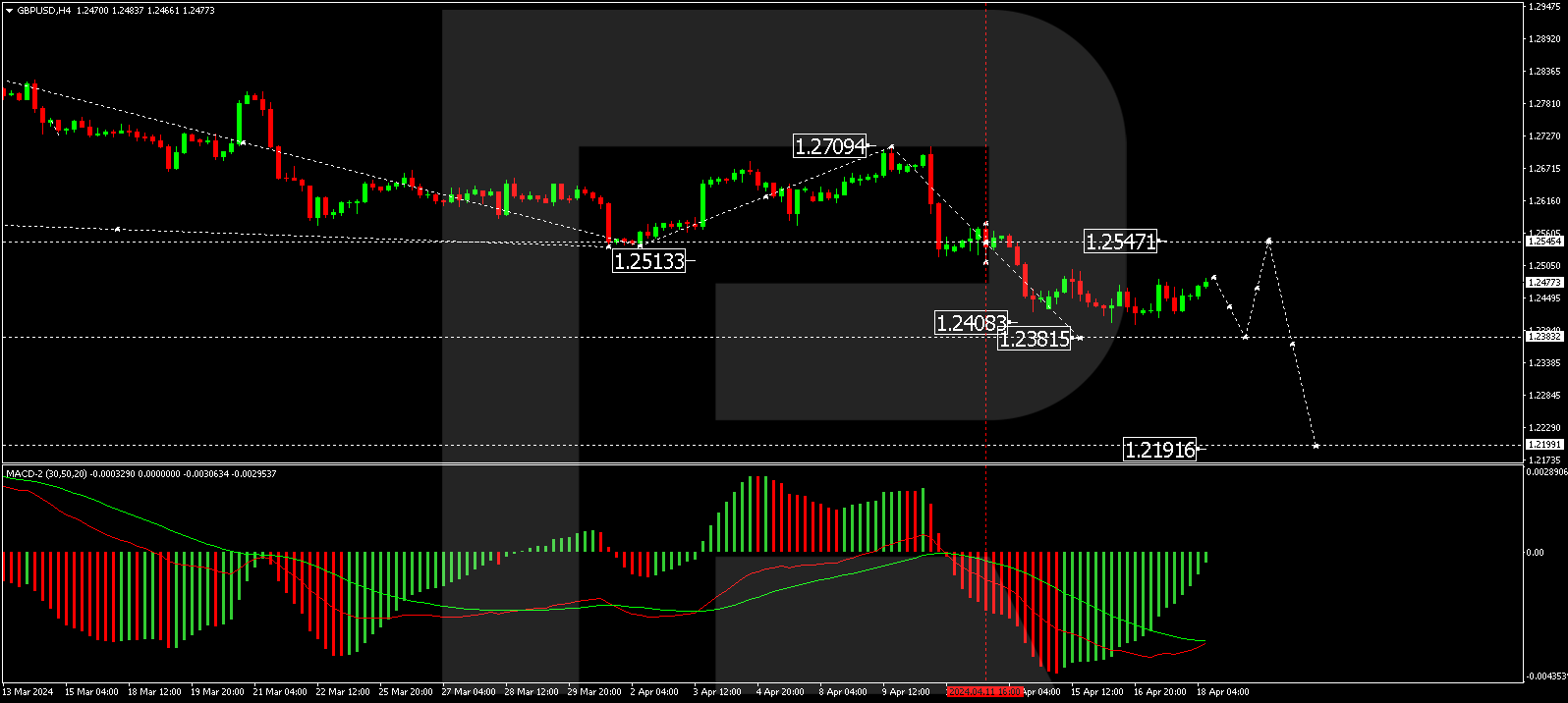
The H4 chart of GBP/USD is developing the fifth wave of decline towards the level of 1.2594. After that, a potential correction to 1.2742 is considered, with a continued downward trend expected. The MACD oscillator supports this scenario, with its signal line below zero and continuing downward towards new lows.

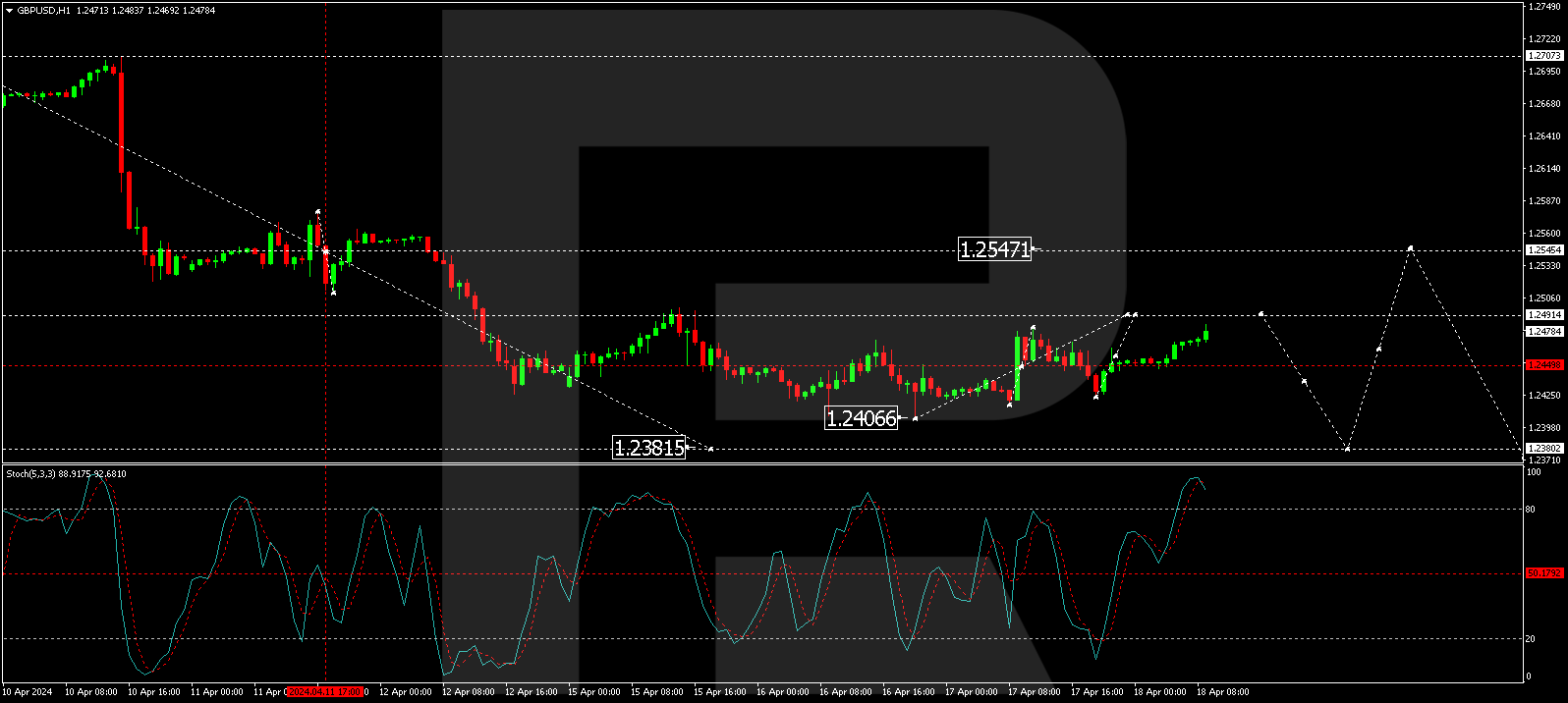
On the H1 chart, a declining wave structure towards 1.2615 is forming. After reaching this level, a potential rise to 1.2698 could occur, followed by a decline to 1.2594. The Stochastic oscillator confirms this scenario, with its signal line below 20 and sharply directed downwards.

Disclaimer

Any forecasts contained herein are based on the author’s particular opinion. This analysis may not be treated as trading advice. RoboForex bears no responsibility for trading results based on trading recommendations and reviews contained herein.

The US Federal Reserve expectedly kept rates unchanged. New Zealand remains in a technical recession.

By JustMarkets

As of Wednesday’s stock market close, the Dow Jones Index (US30) was up 1.03%. The S&P 500 Index (US500) added 0.89%. The NASDAQ Technology Index (US100) closed positive 1.25%. The US stocks closed at record highs on Wednesday after the US Federal Reserve left its outlook for interest rate cuts unchanged.

The FOMC left the federal funds rate unchanged at a 23-year high of 5.5% for the fifth consecutive meeting in March 2024, matching market expectations. Policymakers added that they did not believe it would be appropriate to reduce the target range until there is confidence that inflation is moving steadily toward 2%. The median expectations of FOMC members suggest 75 basis points of rate cuts this year. The dot plot also points to three rate cuts in 2025, one fewer than in December, despite a slight upward revision to PCE inflation. However, the sharp upward revision to US GDP forecasts continued to support US equities, reflecting this year’s rally away from the Fed’s restrictive policies. The FOMC also said it will continue to shrink its monthly balance sheet by $95 billion. Fed Chair Powell said it is appropriate to begin easing “at some point this year” and that recent inflation data indicate the Fed was correct to wait before cutting interest rates.

The Bank of Canada’s Board of Governors expects a possible rate cut in 2024 if economic trends match forecasts, but internal disagreements over timing and inflation risks remain. BoC Governor Tiff Macklem remains cautious about an immediate rate adjustment due to concerns about core inflation. The bank forecasts weak growth in the first quarter to gradually pick up to 1% by the end of the year, while inflation is expected to hover around 3% in the first half of 2024, then fall to 2.5% in the second half and eventually return to the 2% target by 2025.

Equity markets in Europe traded flat on Wednesday. Germany’s DAX (DE40) added 0.15%, France’s CAC 40 (FR40) fell by 0.48% yesterday, Spain’s IBEX 35 (ES35) rose by 0.48%, and the UK’s FTSE 100 (UK100) closed negative 0.01%.

ECB President Christine Lagarde joined other European policymakers in calling June a likely month to start discussing ECB rate cuts. However, she cautioned that the ECB would not commit to a predetermined number of rate cuts as the decision depends on incoming data.

WTI crude oil prices fell about 2% to $81 a barrel on Wednesday, moving away from four-month highs reached on Tuesday. Investors locked in some gains after strong oil prices. Meanwhile, EIA data showed that US crude inventories unexpectedly fell by 1.95 million, the largest in two months, as refiners continued to ramp up activity.

The US natural gas (XNG) prices fell below $1.7 per MMBtu, near their lowest monthly level, amid pessimistic demand and high domestic supply. The Freeport LNG export plant in Texas announced that two of its three liquefaction lines will be taken offline before May, delaying a period of low capacity at a key plant. These developments will prevent the US from exporting additional natural gas through the LNG plant, reducing the supply of the commodity for domestic consumption.

Asian markets were predominantly up yesterday. Japan’s Nikkei 225 (JP225) was not trading yesterday, China’s FTSE China A50 (CHA50) was up 0.04% on Wednesday, Hong Kong’s Hang Seng (HK50) added 0.08% on the day, and Australia’s ASX 200 (AU200) was positive 0.10%.

Economists say the Bank of Japan (BoJ) may raise rates amid an improving economic outlook in the coming months. In addition, Japan’s Finance Minister Suzuki said that the government is monitoring currency movements with a “great sense of urgency” after the yen broke through the 151 per dollar mark. In other words, the government is not ruling out currency intervention to support the exchange rate.

New Zealand’s economy contracted 0.3% in the December quarter of 2023 from a year earlier, after contracting 0.6% in the prior period, falling short of market estimates of 0.1% growth. New Zealand’s technical recession persists. Markets have raised expectations of a rate cut by the Reserve Bank of New Zealand (RBNZ), and there is now a 55% chance of such a move in July. A quarter-point cut in the RBNZ rate is also fully forecast for August.

The Australian dollar rose to $0.66, hitting its highest level in a week, helped by stronger-than-expected employment data from the country. The latest data showed that Australian employment rose by 116,500 in February, well above market forecasts that expected a 40,000 increase. The unemployment rate also fell to a five-month low of 3.7% last month, better than market expectations of 4%.

S&P 500 (US500) 5,224.62 +46.11 (+0.89%)

Dow Jones (US30) 39,512.13 +401.37 (+1.03%)

DAX (DE40) 18,015.13 +27.64 (+0.15%)

FTSE 100 (UK100) 7,737.38 −0.92 (−0.01%)

USD Index 103.39 −0.04 (−0.04%)

Important events today:
  • – Australia Manufacturing PMI (m/m) at 00:00 (GMT+2);
  • – Australia Services PMI (m/m) at 00:00 (GMT+2);
  • – Japan Trade Balance (m/m) at 01:50 (GMT+2);
  • – Australia Unemployment Rate (m/m) at 02:30 (GMT+2);
  • – Japan Manufacturing PMI (m/m) at 02:30 (GMT+2);
  • – Japan Services PMI (m/m) at 02:30 (GMT+2);
  • – Hong Kong Inflation Rate (m/m) at 10:30 (GMT+2);
  • – Switzerland SNB Interest Rate Decision at 10:30 (GMT+2);
  • – Switzerland SNB Monetary Policy Assessment at 10:30 (GMT+2);
  • – German Manufacturing PMI (m/m) at 10:30 (GMT+2);
  • – German Services PMI (m/m) at 10:30 (GMT+2);
  • – Switzerland SNB Press Conference at 11:00 (GMT+2);
  • – Norway Interest Rate Decision at 11:00 (GMT+2);
  • – Eurozone Manufacturing PMI (m/m) at 11:00 (GMT+2);
  • – Eurozone Services PMI (m/m) at 11:00 (GMT+2);
  • – UK Manufacturing PMI (m/m) at 11:30 (GMT+2);
  • – UK Services PMI (m/m) at 11:30 (GMT+2);
  • – UK BoE Interest Rate Decision at 14:00 (GMT+2);
  • – UK BoE MPC Meeting Minutes at 14:00 (GMT+2);
  • – US Initial Jobless Claims (w/w) at 14:30 (GMT+2);
  • – US Manufacturing PMI (m/m) at 15:45 (GMT+2);
  • – US Services PMI (m/m) at 15:45 (GMT+2);
  • – US Existing Home Sales (m/m) at 16:00 (GMT+2);
  • – US Natural Gas Storage (w/w) at 16:30 (GMT+2);
  • – New Zealand Trade Balance (q/q) at 23:45 (GMT+2).

By JustMarkets


This article reflects a personal opinion and should not be interpreted as an investment advice, and/or offer, and/or a persistent request for carrying out financial transactions, and/or a guarantee, and/or a forecast of future events.

EUR/USD Plunges Following Fed’s Decision on Interest Rate Cuts

By RoboForex Analytical Department

The EUR/USD pair soared to a weekly high of 1.0933 on Thursday following the Federal Reserve System’s announcement of three interest rate cuts planned for 2024. These adjustments will reduce borrowing costs by 75 basis points.

The interest rate remains at 5.5% annually, its highest in 23 years, and has been unchanged for five consecutive meetings.

Federal Reserve Chair Jerome Powell noted that the regulator plans to reduce the rate this year, likely achieving a 75-basis point reduction over three stages by the end of 2024.

The Fed also continues its balance sheet contraction plan, not reinvesting proceeds from matured bonds and having no plans to sell bonds from its portfolio.

The Fed’s outlook was relatively optimistic this time, expecting the American economy to grow by 2.1% quarter-on-quarter in Q1 2024. Although the Consumer Price Index is decreasing, it is still high, and the employment market is strong due to new job creation.

The Fed’s inflation target remains at 2%, with risks to expectations seen as balanced.

EUR/USD technical analysis

Influenced by the news, the H4 EUR/USD chart found support at 1.0836, leading to a correction. Today, the price is anticipated to reach 1.0944, followed by a subsequent downward movement targeting 1.0818. The MACD indicator supports this scenario, with its signal line below zero, indicating further declines to new lows.

On the H1 EUR/USD chart, a corrective growth structure towards 1.0940 has formed. After reaching this level, a decline to 1.0888 is possible, followed by a potential rise to 1.0944. Then, a new downward wave to 1.0818, the first target, may begin. The Stochastic oscillator, with its signal line below 50, indicates a continuation of the decline towards 20.


Disclaimer

Any forecasts contained herein are based on the author’s particular opinion. This analysis may not be treated as trading advice. RoboForex bears no responsibility for trading results based on trading recommendations and reviews contained herein.

Japanese Yen (USD/JPY) Hits Four-Month Low

By RoboForex Analytical Department

The USD/JPY pair surged to a four-month high as investors recalibrated their expectations for the Bank of Japan’s future actions. The consensus is now that the BoJ’s monetary policy will remain accommodative, even with the shift away from negative interest rates.

On Tuesday, the Bank of Japan announced its first interest rate hike in 17 years, indicating its expectation to observe favorable fiscal conditions for some time. However, the yen remains under pressure due to the significant interest rate differential between Japan and the United States.

Japan’s negative interest rate period extended over eight years. The recent decision marks a historic move following a prolonged phase of quantitative monetary easing.

The market generally believes that the Bank of Japan’s transition to a stable monetary policy is far from complete. This perspective is supported by the BoJ’s “soft” statements and the subsequent reaction of the JPY.

The yen plunged by 1% against the US dollar immediately following the BoJ’s decision and continues to weaken. The upward trend in the USD/JPY pair began in early January 2024 and has remained strong.

USD/JPY technical analysis

The H4 USD/JPY chart shows a consolidation range formed around the 149.13 level. With an upward breakout, the pair continues to develop a growth wave towards 151.77. A correction phase to 150.00 could follow, then a rise to 152.60. The MACD oscillator supports this scenario, with its signal line strictly pointing upwards and aiming for new highs.

On the H1 USD/JPY chart, a narrow consolidation range has developed around the 150.40 level. Exiting upwards from this range, the growth wave continues towards 151.78. After reaching this level, a potential correction back to 150.40 (testing from above) is considered, followed by a new growth structure towards 152.60. The Stochastic oscillator corroborates this scenario, with its signal line above the 80 mark and preparing to drop to 50.


Disclaimer

Any forecasts contained herein are based on the author’s particular opinion. This analysis may not be treated as trading advice. RoboForex bears no responsibility for trading results based on trading recommendations and reviews contained herein.