Brent Crude Oil stabilises around 81.50 USD amid demand optimism

By RoboForex Analytical Department

Brent crude oil is holding steady at 81.50 USD per barrel on Tuesday, following a significant surge of over 2.5% the previous day. The price increase was driven by optimistic market expectations about fuel demand this coming summer and news that the US government is seizing the opportunity to replenish its strategic oil reserves at relatively low prices, with a particular focus on oil priced around 79 USD per barrel.

As the US Federal Reserve meeting commences today, market caution is expected. The recent robust employment data for May from the US suggests that the Fed might maintain a tight monetary policy longer than anticipated. This potential shift in policy could dampen US economic growth prospects and impact energy demand, making the Fed’s forthcoming statements highly significant for the oil market.

Additionally, market participants eagerly await the release of the American Petroleum Institute (API) report on crude oil and petroleum product inventories today and the Department of Energy’s similar report on Wednesday. These data releases, along with the monthly market reports from the Energy Information Administration (EIA), OPEC, and the International Energy Agency (IEA) later in the week, could further influence oil price dynamics.

Brent technical analysis

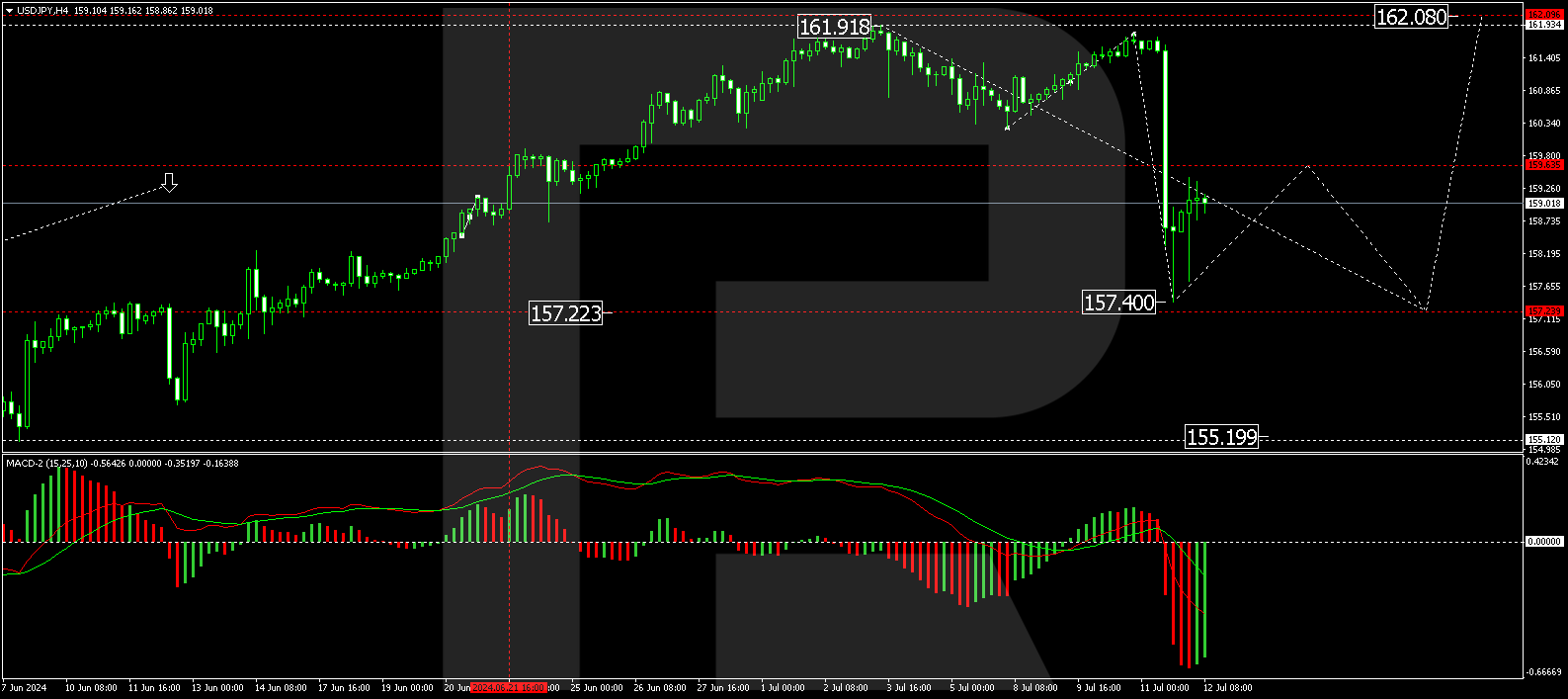
On the H4 chart, Brent has completed the initial wave of growth to 81.79. Currently, a consolidation range is expected to form below this level. Should there be a downward breakout, a correction towards 79.30 could occur, followed by a potential new wave of growth aiming for 83.30. Breaking this level could open the pathway to 87.50, the local target of the upward trend. The MACD indicator supports this bullish scenario, with its signal line below zero but directed sharply upwards.

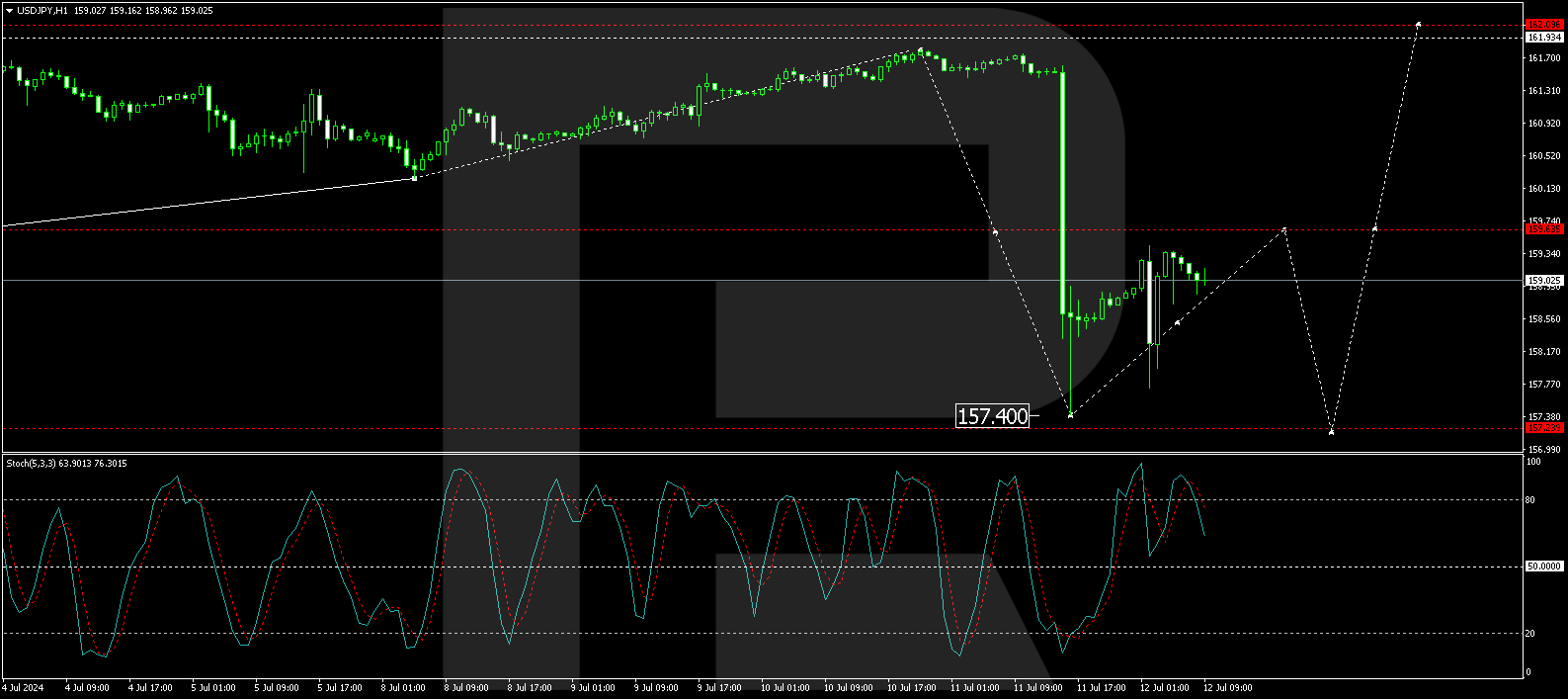
On the H1 chart, after reaching 81.79, Brent is forming a consolidation range beneath this level. A downward exit could initiate a decline to 80.50, and further breaking this level could extend the correction to 79.30. Upon reaching this level, an upward movement to 81.80 is anticipated, potentially leading to further growth towards 83.30. This scenario is technically supported by the Stochastic oscillator, indicating a potential upward movement, as its signal line is currently poised at 20.

Market outlook

As investors navigate a week packed with significant data releases and central bank meetings, Brent crude prices will likely exhibit volatility. The outcome of the US Federal Reserve’s deliberations will be particularly pivotal, given its potential implications for economic activity and energy demand. Additionally, inventory data and global market reports from major energy agencies will provide further clues about supply and demand trends, which could either support the current price levels or drive further adjustments.


Disclaimer

Any forecasts contained herein are based on the author’s particular opinion. This analysis may not be treated as trading advice. RoboForex bears no responsibility for trading results based on trading recommendations and reviews contained herein.

The warming ocean is leaving coastal economies in hot water

By Charles Colgan, Middlebury Institute of International Studies 

Ocean-related tourism and recreation supports more than 320,000 jobs and US$13.5 billion in goods and services in Florida. But a swim in the ocean became much less attractive in the summer of 2023, when the water temperatures off Miami reached as high as 101 degrees Fahrenheit (37.8 Celsius).

The future of some jobs and businesses across the ocean economy have also become less secure as the ocean warms and damage from storms, sea-level rise and marine heat waves increases.

Ocean temperatures have been heating up over the past century, and hitting record highs for much of the past year, driven primarily by the rise in greenhouse gas emissions from burning fossil fuels. Scientists estimate that more than 90% of the excess heat produced by human activities has been taken up by the ocean.

That warming, hidden for years in data of interest only to oceanographers, is now having profound consequences for coastal economies around the world.

Understanding the role of the ocean in the economy is something I have been working on for more than 40 years, currently at the Center for the Blue Economy of the Middlebury Institute of International Studies. Mostly, I study the positive contributions of the ocean, but this has begun to change, sometimes dramatically. Climate change has made the ocean a threat to the economy in multiple ways.

The dangers of sea-level rise

One of the big threats to economies from ocean warming is sea-level rise. As water warms, it expands. Along with meltwater from glaciers and ice sheets, thermal expansion of the water has increased flooding in low-lying coastal areas and put the future of island nations at risk.

In the U.S., rising sea levels will soon overwhelm Isle de Jean Charles in Louisiana and Tangier Island in Chesapeake Bay.

Flooding at high tide, even on sunny days, is becoming increasingly common in places such as Miami Beach; Annapolis, Maryland; Norfolk, Virginia; and San Francisco. High-tide flooding has more than doubled since 2000 and is on track to triple by 2050 along the country’s coasts.

Maps show temperatures and sea level rise, with the fastest ris along the Gulf and Atlantic coasts, and lower rates on the Pacific.
Satellite and tide gauge data show sea-level change from 1993 to 2020.
National Climate Assessment 2023

Rising sea levels also push salt water into freshwater aquifers, from which water is drawn to support agriculture. The strawberry crop in coastal California is already being affected.

These effects are still small and highly localized. Much larger effects come with storms enhanced by sea level.

Higher sea level can worsen storm damage

Warmer ocean water fuels tropical storms. It’s one reason forecasters are warning of a busy 2024 hurricane season.

Tropical storms pick up moisture over warm water and transfer it to cooler areas. The warmer the water, the faster the storm can form, the quicker it can intensify and the longer it can last, resulting in destructive storms and heavy downpours that can flood cities even far from the coasts.

When these storms now come in on top of already higher sea levels, the waves and storm surge can dramatically increase coastal flooding.

What Hurricane Hugo’s flooding would look like in Charleston, S.C., with today’s higher sea levels.

Tropical cyclones caused more than $1.3 trillion in damage in the U.S. from 1980 to 2023, with an average cost of $22.8 billion per storm. Much of that cost has been absorbed by federal taxpayers.

It is not just tropical storms. Maine saw what can happen when a winter storm in January 2024 generated tides 5 feet above normal that filled coastal streets with seawater.

What does that mean for the economy?

The possible future economic damages from sea-level rise are not known because the pace and extent of rising sea levels are unknown.

One estimate puts the costs from sea-level rise and storm surge alone at over $990 billion this century, with adaptation measures able to reduce this by only $100 billion. These estimates include direct property damage and damage to infrastructure such as transportation, water systems and ports. Not included are impacts on agriculture from saltwater intrusion into aquifers that support agriculture.

Marine heat waves leave fisheries in trouble

Rising ocean temperatures are also affecting marine life through extreme events, known as marine heat waves, and more gradual long-term shifts in temperature.

In spring 2024, one third of the global ocean was experiencing heat waves. Corals are struggling through their fourth global bleaching event on record as warm ocean temperatures cause them to expel the algae that live in their shells and give the corals color and provide food. While corals sometimes recover from bleaching, about half of the world’s coral reefs have died since 1950, and their future beyond the middle of this century is bleak.

A school of fish with yellow tails swim over a reef in July 2023.
Healthy coral reefs serve as fish nurseries and habitat. These schoolmaster snappers were spotted on Davey Crocker Reef near Islamorada in the Florida Keys.
Jstuby/wikimedia, CC BY

Losing coral reefs is about more than their beauty. Coral reefs serve as nurseries and feeding grounds for thousands of species of fish. By NOAA’s estimate, about half of all federally managed fisheries, including snapper and grouper, rely on reefs at some point in their life cycle.

Warmer waters cause fish to migrate to cooler areas. This is particularly notable with species that like cold water, such as lobsters, which have been steadily migrating north to flee warming seas. Once-robust lobstering in southern New England has declined significantly.

Map shows how the average locations of lobster, red hake and black sea bass changed over 45 year, 1974-2019. Smaller charts show each moving
How three fish and shellfish species migrated between 1974 and 2019 off the U.S. Atlantic Coast. Dots shows the annual average location.
NOAA

In the Gulf of Alaska, rising temperatures almost wiped out the snow crabs, and a $270 million fishery had to be completely closed for two years. A major heat wave off the Pacific coast extended over several years in the 2010s and disrupted fishing from Alaska to Oregon.

This won’t turn around soon

The accumulated ocean heat and greenhouse gases in the atmosphere will continue to affect ocean temperatures for centuries, even if countries cut their greenhouse gas emissions to net zero by 2050 as hoped. So, while ocean temperatures fluctuate year to year, the overall trend is likely to continue upward for at least a century.

There is no cold-water tap that we can simply turn on to quickly return ocean temperatures to “normal,” so communities will have to adapt while the entire planet works to slow greenhouse gas emissions to protect ocean economies for the future.The Conversation

About the Author:

Charles Colgan, Director of Research for the Center for the Blue Economy, Middlebury Institute of International Studies

This article is republished from The Conversation under a Creative Commons license. Read the original article.

Euro falls to four-week low: politicians to blame

By RoboForex Analytical Department

EUR/USD plummeted below 1.0800 and is currently hovering around 1.0796 on Monday morning. This development came amid heightened political tensions in France. President Emmanuel Macron called for early elections on Sunday in the wake of his party’s crushing defeat and Marine Le Pen’s party’s resounding victory in the European Parliament elections. The far-right, which secured twice as many votes as its closest competitors, has won and now has significant influence in France. The defeat of the country’s pro-presidential forces has profoundly impacted the euro’s position.

Furthermore, the euro was also under pressure from the US dollar ahead of this week’s Federal Reserve meeting. Robust employment statistics in the US for May had already led the market to lower its expectations of a Fed interest rate cut.

Last week, the European Central Bank lowered its interest rate for the first time in five years. However, it is adopting an overly cautious stance on further rate cuts. In its comments, the ECB acknowledged the continued price pressures and projected that inflation will exceed targets this year and next. The regulator is refraining from making any specific commitments on a clear rate trajectory, indicating that all future ECB actions will have to be based on incoming statistics one way or another.

Technical analysis of EUR/USD

On the H4 chart of EUR/USD, the market completed the correction at 1.0901 and started the development of a new wave of decline. The downward impulse to the level of 1.0835 is fulfilled at the moment. A consolidation range around this level was formed, and the structure of the wave to 1.0747 was worked out with a downward exit. Today, we will consider the probability of a decline to 1.0735. After working off this level, the growth link to 1.0785 (test from below) is possible, with a further decline to 1.0672, representing the local target. Technically, this scenario is confirmed by the MACD indicator, whose signal line is below zero and is directed strictly downwards.

On the H1 EUR/USD chart, the market continues to develop a structure of decline to 1.0734. After working off this level, a correction to 1.0785 is possible. Further, we will consider the probability of a decline to 1.0672, the first target of the downward trend. Technically, this scenario is confirmed by the Stochastic oscillator, whose signal line is under the level of 20. We expect the beginning of growth to the level of 50.


Disclaimer

Any forecasts contained herein are based on the author’s particular opinion. This analysis may not be treated as trading advice. RoboForex bears no responsibility for trading results based on trading recommendations and reviews contained herein.

Trade of the Week: EURGBP bears ready pounce?

By ForexTime

  • Euro ↓ on political jitters
  • EURGBP hits 22-month low  
  • UK Jobs report & EU data in focus
  • Technical level –  0.8500
  • Bloomberg FX model – 80% – EURGBP – (0.84065 – 0.85327)

Euro bears are back in action thanks to political uncertainty linked to the European Parliament elections.

The second most traded currency in the world is down against most of its major counterparts as of writing.

But our attention falls on the EURGBP which gapped to its lowest level since August 2022 at Monday’s Asian open!

The lowdown…

The euro seems to be gripped by political jitters in Europe.

Over the weekend, French President Emmanual Macron dissolved parliament and called for snap elections by the end of this month after his big defeat by the far right. Given how far-right parties have made big gains in the EU elections, this development has raised questions about Parliament’s ability to form the majorities needed to drive policy.

Looking beyond politics, here are 3 factors that could move the EURGBP this week:

    1) UK data dump

In the United Kingdom, the latest jobs data and industrial production figures could influence expectations about when the Bank of England will cut rates.

  • Tuesday 11th June: UK May jobless claims, April unemployment rate
  • Wednesday 12th June:  UK Industrial & manufacturing production

Traders are currently pricing in a 64% probability of a 25-basis point cut by September with a move fully priced in by November.

  • Should overall data from the UK exceed market forecasts, this could push back BoE rate cut bets – dragging the EURGBP lower.
  • Weaker-than-expected data may fuel BoE rate cut expectations that send the EURGBP higher.

Golden nugget: Over the past year, the UK jobs report has triggered upside moves of as much as 0.25% or declines of 0.23% in a 6-hour window post-release.


    2) EU data

Last week, the European Central Bank (ECB) cut interest rates for the first time since 2019.

The central bank clarified that a “data-dependent” approach will be adopted when considering future policy moves. This could increase the euro’s sensitivity to economic data, especially if it impacts ECB cut bets.

It may be worth keeping a tab on the Germany CPI (final) and Eurozone industrial production figures this week.

Traders are currently pricing in a 57% probability of a 25-basis point cut in September with this jumping to 77% by October.

  • The EURGBP could close the gap if data from Europe prints above market forecasts.
  • Should overall data disappoint, the EURGBP could extend losses as ECB cut bets rise.


    3) Technical forces

The EURGBP is under pressure on the daily charts with prices trading below the 50, 100, and 200-day SMA. However, the Relative Strength Index (RSI) has hit 30 – signalling that prices are oversold.

  • Sustained weakness below 0.8500 may encourage a decline towards 0.8400.
  • Should prices push back above 0.8500, this may open a path towards 0.8530.

Bloomberg’s FX model points to an 80% chance that EURGBP will trade within the 0.84065 – 0.85327 range over the next one-week period.


Forex-Time-LogoArticle by ForexTime

ForexTime Ltd (FXTM) is an award winning international online forex broker regulated by CySEC 185/12 www.forextime.com

Traders further lowered their expectations for a Fed interest rate cut this year

By JustMarkets

At Tuesday’s close, the Dow Jones Index (US30) decreased by 1.06% and fell to a 3-week low. The S&P 500 index (US500) was down 1.06%. The NASDAQ Technology Index (US100) closed negative 0.58%. Stocks declined amid rising bond yields driven by hawkish remarks from Fed officials. On Wednesday, Atlanta Fed President Bostic said that the path to 2% inflation is not guaranteed and that the scope for price increases is still significant. This came from recent comments from Minneapolis FRB President Kashkari, who said the US Central Bank should hold off on cutting rates until inflation improves significantly. Markets are pricing in a 25 bps chance of a rate cut to 0% at the June 12 FOMC meeting and 10% at the next meeting on July 31.

The Richmond Fed’s May survey of the US manufacturing outlook rose 7 to a 7-month high, beating expectations of no change at negative 7. The Fed’s Beige Book was neutral for stocks, showing that the US economy has grown at a “slight to moderate” pace in most regions since early April. Employment grew at a modest pace, with eight of twelve counties reporting “slight to moderate job growth,” and prices rose at a “moderate pace,” with business officials noting that consumers are resisting additional price increases.

Equity markets in Europe mostly fell yesterday. Germany’s DAX (DE40) fell by 1.10%, France’s CAC 40 (FR40) closed down 1.52%, Spain’s IBEX 35 (ES35) lost 1.16%, and the UK’s FTSE 100 (UK100) closed negative 0.86%.

The German GfK Consumer Confidence Index for June rose by 3.1 to a 2-year high of negative 20.9, which was stronger than expectations of negative 22.5. May German CPI (EU harmonized) rose to 2.8% y/y, beating expectations of 2.7% y/y and the largest increase in 4 months. ECB Governing Council spokesman Kazaks said the ECB should not go on “autopilot” when cutting interest rates after the expected rate cut next week.

WTI crude oil prices held near $79 a barrel on Thursday after losing nearly 1% in the previous session, weakened by growing expectations that borrowing costs could remain high for longer, dampening the demand outlook. Commodities and other risk assets sold off on Wednesday, and bond yields rose as traders bet that the US Federal Reserve may delay the start of its easing cycle or even decide not to cut rates at all this year. Today, the EIA will release last week’s crude oil inventories report. A decline of 1.6m barrels is expected, which may support oil prices.

Asian markets were mostly rising on Monday. Japan’s Nikkei 225 (JP225) was down 0.77%, China’s FTSE China A50 (CHA50) added 0.20%, Hong Kong’s Hang Seng (HK50) was down 1.83% for the day, and Australia’s ASX 200 (AU200) was negative 1.30%. In Asia, investors are awaiting the release of China’s PMI data for May on Friday to gauge the state of the world’s second-largest economy. On Wednesday, Chinese stocks rose after the IMF raised its growth prognoses to 5% from 4.6% this year thanks to strong first-quarter data and supportive policy measures.

The Australian dollar slid to $0.66, hitting its lowest level in two weeks, amid pressure from a strong US dollar and Treasury yields. Investors await the US PCE Price Index report later this week. Risk-sensitive currencies also followed broad declines in commodity prices and other risk assets.

S&P 500 (US500) 5,266.95 −39.09 (−0.74%)

Dow Jones (US30) 38,441.54 −411.32 (−1.06%)

DAX (DE40) 18,473.29 −204.58 (−1.10%)

FTSE 100 (UK100) 8,183.07 −71.11 (−0.86%)

USD Index 105.14 +0.52 (+0.50%)

Important events today:
  • – US FOMC Member Bostic Speaks at 02:00 (GMT+3);
  • – Switzerland GDP (q/q) at 10:00 (GMT+3);
  • – Switzerland KOF Leading Indicators (m/m) at 10:00 (GMT+3);
  • – Eurozone Unemployment Rate (m/m) at 12:00 (GMT+3);
  • – US Initial Jobless Claims (w/w) at 15:30 (GMT+3);
  • – US GDP (q/q) at 15:30 (GMT+3);
  • – US Pending Home Sales (m/m) at 17:00 (GMT+3);
  • – US Natural Gas Storage (w/w) at 17:30 (GMT+3);
  • – US Crude Oil Reserves (w/w) at 18:00 (GMT+3);
  • – US FOMC Member Williams Speaks at 19:05 (GMT+3).

By JustMarkets


This article reflects a personal opinion and should not be interpreted as an investment advice, and/or offer, and/or a persistent request for carrying out financial transactions, and/or a guarantee, and/or a forecast of future events.

Currency Speculators drop Swiss Franc bets to lowest since 2018

By InvestMacro

Here are the latest charts and statistics for the Commitment of Traders (COT) data published by the Commodities Futures Trading Commission (CFTC).

The latest COT data is updated through Tuesday June 4th and shows a quick view of how large market participants (for-profit speculators and commercial traders) were positioned in the futures markets. All currency positions are in direct relation to the US dollar where, for example, a bet for the euro is a bet that the euro will rise versus the dollar while a bet against the euro will be a bet that the euro will decline versus the dollar.

Weekly Speculator Changes led by Japanese Yen & New Zealand Dollar

The COT currency market speculator bets were higher this week as seven out of the eleven currency markets we cover had higher positioning while the other four markets had lower speculator contracts.

Leading the gains for the currency markets was the Japanese Yen (23,938 contracts) with the British Pound (17,808 contracts), the Brazilian Real (17,722 contracts), the EuroFX (10,298 contracts),  the New Zealand Dollar (5,159 contracts), the Mexican Peso (3,752 contracts) and the US Dollar Index (713 contracts) also having positive weeks.

The currencies seeing declines in speculator bets on the week were the Canadian Dollar (-5,054 contracts), the Swiss Franc (-1,397 contracts), the Australian Dollar (-1,387 contracts) and with Bitcoin (-363 contracts) also seeing lower bets on the week.

Currency Speculators drop Swiss Franc bets to lowest since 2018

Swiss franc speculator bets fell for a second consecutive week this week and dropped to an overall standing at -45,763 contracts. This is the seventh straight week that the speculator position has now exceeded -40,000 contracts.

The current -45,763 contract position marks the lowest level for CHF bets since August 14th of 2018 (a span of 303 weeks) and the currency is currently tied as the most bearish extreme market of all the futures instruments we cover. The franc speculator position has now been consecutively in bearish territory for 143 weeks, dating back to September 7th of 2021 when the last bullish position was seen.

The Swiss franc exchange rate versus the US dollar has also been lower in 2024 following a strong run higher last year. The Swiss currency, in 2023, hit its highest level versus the USD since 2015 with a decade-high exchange rate above the 1.2000 threshold. Since then, however, the CHF has been heavily under pressure due to a strong dollar and combined with a surprise interest rate cut by the Swiss National Bank (SNB) in March. The franc has fallen by approximately 7 percent versus the dollar this year so far. The Swiss currency could remain under pressure for the time being as the SNB interest rate remains comparatively low at just 1.50 percent and Swiss inflation continues to be moderate with a 1.4 percent annual rate seen in May 2024.


Currencies Net Speculators Leaderboard

Legend: Weekly Speculators Change | Speculators Current Net Position | Speculators Strength Score compared to last 3-Years (0-100 range)


Strength Scores led by Mexican Peso & British Pound

COT Strength Scores (a normalized measure of Speculator positions over a 3-Year range, from 0 to 100 where above 80 is Extreme-Bullish and below 20 is Extreme-Bearish) showed that the Mexican Peso (93 percent), the British Pound (82 percent) and the New Zealand Dollar (81 percent) led the currency markets this week. The Australian Dollar (63 percent) and Bitcoin (50 percent) come in as the next highest in the weekly strength scores.

On the downside, the Canadian Dollar (0 percent), the Swiss Franc (0 percent) and the US Dollar Index (15 percent) come in at the lowest strength levels currently and are in Extreme-Bearish territory (below 20 percent). The next lowest strength score was the Brazilian Real (22 percent).

Strength Statistics:
US Dollar Index (15.2 percent) vs US Dollar Index previous week (13.7 percent)
EuroFX (49.2 percent) vs EuroFX previous week (44.8 percent)
British Pound Sterling (81.9 percent) vs British Pound Sterling previous week (70.1 percent)
Japanese Yen (29.9 percent) vs Japanese Yen previous week (14.9 percent)
Swiss Franc (0.0 percent) vs Swiss Franc previous week (2.4 percent)
Canadian Dollar (0.0 percent) vs Canadian Dollar previous week (3.7 percent)
Australian Dollar (62.5 percent) vs Australian Dollar previous week (64.1 percent)
New Zealand Dollar (80.8 percent) vs New Zealand Dollar previous week (66.2 percent)
Mexican Peso (92.6 percent) vs Mexican Peso previous week (90.8 percent)
Brazilian Real (21.9 percent) vs Brazilian Real previous week (1.9 percent)
Bitcoin (49.6 percent) vs Bitcoin previous week (55.0 percent)


New Zealand Dollar & Australian Dollar top the 6-Week Strength Trends

COT Strength Score Trends (or move index, calculates the 6-week changes in strength scores) showed that the New Zealand Dollar (55 percent), the Australian Dollar (50 percent) and the British Pound (46 percent) lead the past six weeks trends for the currencies. The EuroFX (33 percent) and the Japanese Yen (30 percent) are the next highest positive movers in the latest trends data.

The Brazilian Real (-22 percent) leads the downside trend scores currently with Bitcoin (-17 percent), the Canadian Dollar (-11 percent) and the Swiss Franc (-5 percent) following next with lower trend scores.

Strength Trend Statistics:
US Dollar Index (10.8 percent) vs US Dollar Index previous week (10.8 percent)
EuroFX (33.2 percent) vs EuroFX previous week (19.3 percent)
British Pound Sterling (46.0 percent) vs British Pound Sterling previous week (11.1 percent)
Japanese Yen (29.9 percent) vs Japanese Yen previous week (6.0 percent)
Swiss Franc (-5.4 percent) vs Swiss Franc previous week (-13.7 percent)
Canadian Dollar (-11.1 percent) vs Canadian Dollar previous week (-2.7 percent)
Australian Dollar (49.9 percent) vs Australian Dollar previous week (56.9 percent)
New Zealand Dollar (54.6 percent) vs New Zealand Dollar previous week (39.1 percent)
Mexican Peso (0.5 percent) vs Mexican Peso previous week (-3.3 percent)
Brazilian Real (-22.3 percent) vs Brazilian Real previous week (-42.2 percent)
Bitcoin (-16.8 percent) vs Bitcoin previous week (-5.9 percent)


Individual COT Forex Markets:

US Dollar Index Futures:

US Dollar Index Forex Futures COT ChartThe US Dollar Index large speculator standing this week was a net position of 4,887 contracts in the data reported through Tuesday. This was a weekly increase of 713 contracts from the previous week which had a total of 4,174 net contracts.

This week’s current strength score (the trader positioning range over the past three years, measured from 0 to 100) shows the speculators are currently Bearish-Extreme with a score of 15.2 percent. The commercials are Bullish-Extreme with a score of 87.6 percent and the small traders (not shown in chart) are Bearish with a score of 26.3 percent.

Price Trend-Following Model: Uptrend

Our weekly trend-following model classifies the current market price position as: Uptrend. The current action for the model is considered to be: Hold – Maintain Long Position.

US DOLLAR INDEX StatisticsSPECULATORSCOMMERCIALSSMALL TRADERS
– Percent of Open Interest Longs:69.415.19.3
– Percent of Open Interest Shorts:56.731.16.0
– Net Position:4,887-6,1841,297
– Gross Longs:26,8035,8453,598
– Gross Shorts:21,91612,0292,301
– Long to Short Ratio:1.2 to 10.5 to 11.6 to 1
NET POSITION TREND:
– Strength Index Score (3 Year Range Pct):15.287.626.3
– Strength Index Reading (3 Year Range):Bearish-ExtremeBullish-ExtremeBearish
NET POSITION MOVEMENT INDEX:
– 6-Week Change in Strength Index:10.8-8.6-12.1


Euro Currency Futures:

Euro Currency Futures COT ChartThe Euro Currency large speculator standing this week was a net position of 67,870 contracts in the data reported through Tuesday. This was a weekly increase of 10,298 contracts from the previous week which had a total of 57,572 net contracts.

This week’s current strength score (the trader positioning range over the past three years, measured from 0 to 100) shows the speculators are currently Bearish with a score of 49.2 percent. The commercials are Bullish with a score of 52.2 percent and the small traders (not shown in chart) are Bearish with a score of 35.0 percent.

Price Trend-Following Model: Downtrend

Our weekly trend-following model classifies the current market price position as: Downtrend. The current action for the model is considered to be: Hold – Maintain Short Position.

EURO Currency StatisticsSPECULATORSCOMMERCIALSSMALL TRADERS
– Percent of Open Interest Longs:28.157.111.9
– Percent of Open Interest Shorts:18.071.87.3
– Net Position:67,870-98,78630,916
– Gross Longs:188,957383,42379,709
– Gross Shorts:121,087482,20948,793
– Long to Short Ratio:1.6 to 10.8 to 11.6 to 1
NET POSITION TREND:
– Strength Index Score (3 Year Range Pct):49.252.235.0
– Strength Index Reading (3 Year Range):BearishBullishBearish
NET POSITION MOVEMENT INDEX:
– 6-Week Change in Strength Index:33.2-35.030.9


British Pound Sterling Futures:

British Pound Sterling Futures COT ChartThe British Pound Sterling large speculator standing this week was a net position of 43,210 contracts in the data reported through Tuesday. This was a weekly increase of 17,808 contracts from the previous week which had a total of 25,402 net contracts.

This week’s current strength score (the trader positioning range over the past three years, measured from 0 to 100) shows the speculators are currently Bullish-Extreme with a score of 81.9 percent. The commercials are Bearish-Extreme with a score of 18.4 percent and the small traders (not shown in chart) are Bullish with a score of 73.9 percent.

Price Trend-Following Model: Weak Downtrend

Our weekly trend-following model classifies the current market price position as: Weak Downtrend. The current action for the model is considered to be: Hold – Maintain Short Position.

BRITISH POUND StatisticsSPECULATORSCOMMERCIALSSMALL TRADERS
– Percent of Open Interest Longs:38.142.112.7
– Percent of Open Interest Shorts:22.060.310.6
– Net Position:43,210-48,7785,568
– Gross Longs:102,118112,71734,034
– Gross Shorts:58,908161,49528,466
– Long to Short Ratio:1.7 to 10.7 to 11.2 to 1
NET POSITION TREND:
– Strength Index Score (3 Year Range Pct):81.918.473.9
– Strength Index Reading (3 Year Range):Bullish-ExtremeBearish-ExtremeBullish
NET POSITION MOVEMENT INDEX:
– 6-Week Change in Strength Index:46.0-50.242.4


Japanese Yen Futures:

Japanese Yen Forex Futures COT ChartThe Japanese Yen large speculator standing this week was a net position of -132,101 contracts in the data reported through Tuesday. This was a weekly gain of 23,938 contracts from the previous week which had a total of -156,039 net contracts.

This week’s current strength score (the trader positioning range over the past three years, measured from 0 to 100) shows the speculators are currently Bearish with a score of 29.9 percent. The commercials are Bullish with a score of 69.6 percent and the small traders (not shown in chart) are Bullish-Extreme with a score of 89.5 percent.

Price Trend-Following Model: Downtrend

Our weekly trend-following model classifies the current market price position as: Downtrend. The current action for the model is considered to be: Hold – Maintain Short Position.

JAPANESE YEN StatisticsSPECULATORSCOMMERCIALSSMALL TRADERS
– Percent of Open Interest Longs:13.367.614.7
– Percent of Open Interest Shorts:56.924.713.9
– Net Position:-132,101129,8952,206
– Gross Longs:40,427204,83044,416
– Gross Shorts:172,52874,93542,210
– Long to Short Ratio:0.2 to 12.7 to 11.1 to 1
NET POSITION TREND:
– Strength Index Score (3 Year Range Pct):29.969.689.5
– Strength Index Reading (3 Year Range):BearishBullishBullish-Extreme
NET POSITION MOVEMENT INDEX:
– 6-Week Change in Strength Index:29.9-30.44.5


Swiss Franc Futures:

Swiss Franc Forex Futures COT ChartThe Swiss Franc large speculator standing this week was a net position of -45,763 contracts in the data reported through Tuesday. This was a weekly lowering of -1,397 contracts from the previous week which had a total of -44,366 net contracts.

This week’s current strength score (the trader positioning range over the past three years, measured from 0 to 100) shows the speculators are currently Bearish-Extreme with a score of 0.0 percent. The commercials are Bullish-Extreme with a score of 97.8 percent and the small traders (not shown in chart) are Bearish with a score of 27.0 percent.

Price Trend-Following Model: Downtrend

Our weekly trend-following model classifies the current market price position as: Downtrend. The current action for the model is considered to be: Hold – Maintain Short Position.

SWISS FRANC StatisticsSPECULATORSCOMMERCIALSSMALL TRADERS
– Percent of Open Interest Longs:7.878.511.8
– Percent of Open Interest Shorts:54.221.023.0
– Net Position:-45,76356,817-11,054
– Gross Longs:7,75177,53411,667
– Gross Shorts:53,51420,71722,721
– Long to Short Ratio:0.1 to 13.7 to 10.5 to 1
NET POSITION TREND:
– Strength Index Score (3 Year Range Pct):0.097.827.0
– Strength Index Reading (3 Year Range):Bearish-ExtremeBullish-ExtremeBearish
NET POSITION MOVEMENT INDEX:
– 6-Week Change in Strength Index:-5.40.712.3


Canadian Dollar Futures:

Canadian Dollar Forex Futures COT ChartThe Canadian Dollar large speculator standing this week was a net position of -91,639 contracts in the data reported through Tuesday. This was a weekly decrease of -5,054 contracts from the previous week which had a total of -86,585 net contracts.

This week’s current strength score (the trader positioning range over the past three years, measured from 0 to 100) shows the speculators are currently Bearish-Extreme with a score of 0.0 percent. The commercials are Bullish-Extreme with a score of 100.0 percent and the small traders (not shown in chart) are Bearish-Extreme with a score of 5.1 percent.

Price Trend-Following Model: Strong Downtrend

Our weekly trend-following model classifies the current market price position as: Strong Downtrend. The current action for the model is considered to be: Hold – Maintain Short Position.

CANADIAN DOLLAR StatisticsSPECULATORSCOMMERCIALSSMALL TRADERS
– Percent of Open Interest Longs:14.172.810.4
– Percent of Open Interest Shorts:48.535.213.5
– Net Position:-91,63999,904-8,265
– Gross Longs:37,360193,44927,528
– Gross Shorts:128,99993,54535,793
– Long to Short Ratio:0.3 to 12.1 to 10.8 to 1
NET POSITION TREND:
– Strength Index Score (3 Year Range Pct):0.0100.05.1
– Strength Index Reading (3 Year Range):Bearish-ExtremeBullish-ExtremeBearish-Extreme
NET POSITION MOVEMENT INDEX:
– 6-Week Change in Strength Index:-11.18.9-0.6


Australian Dollar Futures:

Australian Dollar Forex Futures COT ChartThe Australian Dollar large speculator standing this week was a net position of -51,303 contracts in the data reported through Tuesday. This was a weekly decrease of -1,387 contracts from the previous week which had a total of -49,916 net contracts.

This week’s current strength score (the trader positioning range over the past three years, measured from 0 to 100) shows the speculators are currently Bullish with a score of 62.5 percent. The commercials are Bearish with a score of 34.1 percent and the small traders (not shown in chart) are Bullish with a score of 70.6 percent.

Price Trend-Following Model: Uptrend

Our weekly trend-following model classifies the current market price position as: Uptrend. The current action for the model is considered to be: Hold – Maintain Long Position.

AUSTRALIAN DOLLAR StatisticsSPECULATORSCOMMERCIALSSMALL TRADERS
– Percent of Open Interest Longs:25.958.613.5
– Percent of Open Interest Shorts:51.535.111.3
– Net Position:-51,30346,9234,380
– Gross Longs:51,661117,00026,878
– Gross Shorts:102,96470,07722,498
– Long to Short Ratio:0.5 to 11.7 to 11.2 to 1
NET POSITION TREND:
– Strength Index Score (3 Year Range Pct):62.534.170.6
– Strength Index Reading (3 Year Range):BullishBearishBullish
NET POSITION MOVEMENT INDEX:
– 6-Week Change in Strength Index:49.9-63.462.7


New Zealand Dollar Futures:

New Zealand Dollar Forex Futures COT ChartThe New Zealand Dollar large speculator standing this week was a net position of 7,205 contracts in the data reported through Tuesday. This was a weekly gain of 5,159 contracts from the previous week which had a total of 2,046 net contracts.

This week’s current strength score (the trader positioning range over the past three years, measured from 0 to 100) shows the speculators are currently Bullish-Extreme with a score of 80.8 percent. The commercials are Bearish with a score of 21.9 percent and the small traders (not shown in chart) are Bullish with a score of 64.8 percent.

Price Trend-Following Model: Weak Downtrend

Our weekly trend-following model classifies the current market price position as: Weak Downtrend. The current action for the model is considered to be: Hold – Maintain Short Position.

NEW ZEALAND DOLLAR StatisticsSPECULATORSCOMMERCIALSSMALL TRADERS
– Percent of Open Interest Longs:54.434.87.4
– Percent of Open Interest Shorts:41.248.86.6
– Net Position:7,205-7,663458
– Gross Longs:29,79119,0654,058
– Gross Shorts:22,58626,7283,600
– Long to Short Ratio:1.3 to 10.7 to 11.1 to 1
NET POSITION TREND:
– Strength Index Score (3 Year Range Pct):80.821.964.8
– Strength Index Reading (3 Year Range):Bullish-ExtremeBearishBullish
NET POSITION MOVEMENT INDEX:
– 6-Week Change in Strength Index:54.6-53.939.1


Mexican Peso Futures:

Mexican Peso Futures COT ChartThe Mexican Peso large speculator standing this week was a net position of 124,671 contracts in the data reported through Tuesday. This was a weekly rise of 3,752 contracts from the previous week which had a total of 120,919 net contracts.

This week’s current strength score (the trader positioning range over the past three years, measured from 0 to 100) shows the speculators are currently Bullish-Extreme with a score of 92.6 percent. The commercials are Bearish-Extreme with a score of 8.1 percent and the small traders (not shown in chart) are Bearish with a score of 28.6 percent.

Price Trend-Following Model: Strong Downtrend

Our weekly trend-following model classifies the current market price position as: Strong Downtrend. The current action for the model is considered to be: New Sell – Short Position.

MEXICAN PESO StatisticsSPECULATORSCOMMERCIALSSMALL TRADERS
– Percent of Open Interest Longs:58.137.62.2
– Percent of Open Interest Shorts:11.185.71.2
– Net Position:124,671-127,4102,739
– Gross Longs:153,94399,5525,875
– Gross Shorts:29,272226,9623,136
– Long to Short Ratio:5.3 to 10.4 to 11.9 to 1
NET POSITION TREND:
– Strength Index Score (3 Year Range Pct):92.68.128.6
– Strength Index Reading (3 Year Range):Bullish-ExtremeBearish-ExtremeBearish
NET POSITION MOVEMENT INDEX:
– 6-Week Change in Strength Index:0.50.5-12.7


Brazilian Real Futures:

Brazil Real Futures COT ChartThe Brazilian Real large speculator standing this week was a net position of -18,860 contracts in the data reported through Tuesday. This was a weekly boost of 17,722 contracts from the previous week which had a total of -36,582 net contracts.

This week’s current strength score (the trader positioning range over the past three years, measured from 0 to 100) shows the speculators are currently Bearish with a score of 21.9 percent. The commercials are Bullish-Extreme with a score of 80.0 percent and the small traders (not shown in chart) are Bearish with a score of 22.7 percent.

Price Trend-Following Model: Strong Downtrend

Our weekly trend-following model classifies the current market price position as: Strong Downtrend. The current action for the model is considered to be: Hold – Maintain Short Position.

BRAZIL REAL StatisticsSPECULATORSCOMMERCIALSSMALL TRADERS
– Percent of Open Interest Longs:49.347.12.7
– Percent of Open Interest Shorts:78.216.34.7
– Net Position:-18,86020,125-1,265
– Gross Longs:32,23130,7681,785
– Gross Shorts:51,09110,6433,050
– Long to Short Ratio:0.6 to 12.9 to 10.6 to 1
NET POSITION TREND:
– Strength Index Score (3 Year Range Pct):21.980.022.7
– Strength Index Reading (3 Year Range):BearishBullish-ExtremeBearish
NET POSITION MOVEMENT INDEX:
– 6-Week Change in Strength Index:-22.322.8-8.0


Bitcoin Futures:

Bitcoin Crypto Futures COT ChartThe Bitcoin large speculator standing this week was a net position of -1,119 contracts in the data reported through Tuesday. This was a weekly lowering of -363 contracts from the previous week which had a total of -756 net contracts.

This week’s current strength score (the trader positioning range over the past three years, measured from 0 to 100) shows the speculators are currently Bearish with a score of 49.6 percent. The commercials are Bullish with a score of 74.0 percent and the small traders (not shown in chart) are Bearish with a score of 30.1 percent.

Price Trend-Following Model: Uptrend

Our weekly trend-following model classifies the current market price position as: Uptrend. The current action for the model is considered to be: Hold – Maintain Long Position.

BITCOIN StatisticsSPECULATORSCOMMERCIALSSMALL TRADERS
– Percent of Open Interest Longs:78.74.75.2
– Percent of Open Interest Shorts:82.33.62.7
– Net Position:-1,119366753
– Gross Longs:24,4701,4721,601
– Gross Shorts:25,5891,106848
– Long to Short Ratio:1.0 to 11.3 to 11.9 to 1
NET POSITION TREND:
– Strength Index Score (3 Year Range Pct):49.674.030.1
– Strength Index Reading (3 Year Range):BearishBullishBearish
NET POSITION MOVEMENT INDEX:
– 6-Week Change in Strength Index:-16.826.02.2


Article By InvestMacroReceive our weekly COT Newsletter

*COT Report: The COT data, released weekly to the public each Friday, is updated through the most recent Tuesday (data is 3 days old) and shows a quick view of how large speculators or non-commercials (for-profit traders) were positioned in the futures markets.

The CFTC categorizes trader positions according to commercial hedgers (traders who use futures contracts for hedging as part of the business), non-commercials (large traders who speculate to realize trading profits) and nonreportable traders (usually small traders/speculators) as well as their open interest (contracts open in the market at time of reporting). See CFTC criteria here.

COT Metals Charts: Speculator Bets led lower by Platinum & Copper

By InvestMacro

Here are the latest charts and statistics for the Commitment of Traders (COT) data published by the Commodities Futures Trading Commission (CFTC).

The latest COT data is updated through Tuesday June 4th and shows a quick view of how large traders (for-profit speculators and commercial entities) were positioned in the futures markets.

Weekly Speculator Bets led lower by Platinum & Copper

The COT metals markets speculator bets were lower this week as just two out of the six metals markets we cover had higher positioning while the other four markets had lower speculator contracts.

Leading the gains for the metals was Gold (717 contracts) with Steel (441 contracts) also showing a positive week.

The markets with declines in speculator bets for the week were Platinum (-5,001 contracts), Copper (-4,395 contracts), Palladium (-1,593 contracts) and with Silver (-780 contracts) also registering lower bets on the week.


Metals Net Speculators Leaderboard

Legend: Weekly Speculators Change | Speculators Current Net Position | Speculators Strength Score compared to last 3-Years (0-100 range)


Strength Scores led by Silver & Copper

COT Strength Scores (a normalized measure of Speculator positions over a 3-Year range, from 0 to 100 where above 80 is Extreme-Bullish and below 20 is Extreme-Bearish) showed that Silver (96 percent) and Copper (90 percent) lead the metals markets this week. Gold (83 percent), Steel (82 percent) and Platinum (78 percent) come in as the next highest in the weekly strength scores.

On the downside, Palladium (5 percent) comes in at the lowest strength level currently and is in Extreme-Bearish territory (below 20 percent).

Strength Statistics:
Gold (83.3 percent) vs Gold previous week (83.0 percent)
Silver (95.5 percent) vs Silver previous week (96.6 percent)
Copper (90.2 percent) vs Copper previous week (94.3 percent)
Platinum (78.3 percent) vs Platinum previous week (91.6 percent)
Palladium (5.3 percent) vs Palladium previous week (15.3 percent)
Steel (81.5 percent) vs Palladium previous week (79.8 percent)


Platinum & Gold top the 6-Week Strength Trends

COT Strength Score Trends (or move index, calculates the 6-week changes in strength scores) showed that Platinum (40 percent) and Gold (15 percent) lead the past six weeks trends for metals.

Palladium (-22 percent) leads the downside trend scores currently with Silver (-4 percent) as the next market with lower trend scores.

Move Statistics:
Gold (15.5 percent) vs Gold previous week (15.6 percent)
Silver (-4.1 percent) vs Silver previous week (5.3 percent)
Copper (2.5 percent) vs Copper previous week (16.7 percent)
Platinum (40.3 percent) vs Platinum previous week (24.9 percent)
Palladium (-22.1 percent) vs Palladium previous week (-12.9 percent)
Steel (-0.3 percent) vs Steel previous week (-6.1 percent)


Individual Markets:

Gold Comex Futures:

Gold Futures COT ChartThe Gold Comex Futures large speculator standing this week equaled a net position of 237,302 contracts in the data reported through Tuesday. This was a weekly rise of 717 contracts from the previous week which had a total of 236,585 net contracts.

This week’s current strength score (the trader positioning range over the past three years, measured from 0 to 100) shows the speculators are currently Bullish-Extreme with a score of 83.3 percent. The commercials are Bearish-Extreme with a score of 16.8 percent and the small traders (not shown in chart) are Bullish with a score of 66.1 percent.

Price Trend-Following Model: Uptrend

Our weekly trend-following model classifies the current market price position as: Uptrend. The current action for the model is considered to be: Hold – Maintain Long Position.

Gold Futures StatisticsSPECULATORSCOMMERCIALSSMALL TRADERS
– Percent of Open Interest Longs:63.618.611.1
– Percent of Open Interest Shorts:10.678.14.7
– Net Position:237,302-265,93128,629
– Gross Longs:284,56683,41849,807
– Gross Shorts:47,264349,34921,178
– Long to Short Ratio:6.0 to 10.2 to 12.4 to 1
NET POSITION TREND:
– Strength Index Score (3 Year Range Pct):83.316.866.1
– Strength Index Reading (3 Year Range):Bullish-ExtremeBearish-ExtremeBullish
NET POSITION MOVEMENT INDEX:
– 6-Week Change in Strength Index:15.5-16.014.9


Silver Comex Futures:

Silver Futures COT ChartThe Silver Comex Futures large speculator standing this week equaled a net position of 56,403 contracts in the data reported through Tuesday. This was a weekly decrease of -780 contracts from the previous week which had a total of 57,183 net contracts.

This week’s current strength score (the trader positioning range over the past three years, measured from 0 to 100) shows the speculators are currently Bullish-Extreme with a score of 95.5 percent. The commercials are Bearish-Extreme with a score of 1.8 percent and the small traders (not shown in chart) are Bullish-Extreme with a score of 100.0 percent.

Price Trend-Following Model: Uptrend

Our weekly trend-following model classifies the current market price position as: Uptrend. The current action for the model is considered to be: Hold – Maintain Long Position.

Silver Futures StatisticsSPECULATORSCOMMERCIALSSMALL TRADERS
– Percent of Open Interest Longs:49.323.019.9
– Percent of Open Interest Shorts:17.968.35.9
– Net Position:56,403-81,52025,117
– Gross Longs:88,60441,28035,798
– Gross Shorts:32,201122,80010,681
– Long to Short Ratio:2.8 to 10.3 to 13.4 to 1
NET POSITION TREND:
– Strength Index Score (3 Year Range Pct):95.51.8100.0
– Strength Index Reading (3 Year Range):Bullish-ExtremeBearish-ExtremeBullish-Extreme
NET POSITION MOVEMENT INDEX:
– 6-Week Change in Strength Index:-4.1-4.737.1


Copper Grade #1 Futures:

Copper Futures COT ChartThe Copper Grade #1 Futures large speculator standing this week equaled a net position of 61,127 contracts in the data reported through Tuesday. This was a weekly decrease of -4,395 contracts from the previous week which had a total of 65,522 net contracts.

This week’s current strength score (the trader positioning range over the past three years, measured from 0 to 100) shows the speculators are currently Bullish-Extreme with a score of 90.2 percent. The commercials are Bearish-Extreme with a score of 6.0 percent and the small traders (not shown in chart) are Bullish-Extreme with a score of 100.0 percent.

Price Trend-Following Model: Uptrend

Our weekly trend-following model classifies the current market price position as: Uptrend. The current action for the model is considered to be: Hold – Maintain Long Position.

Copper Futures StatisticsSPECULATORSCOMMERCIALSSMALL TRADERS
– Percent of Open Interest Longs:50.327.98.4
– Percent of Open Interest Shorts:28.854.33.6
– Net Position:61,127-74,71513,588
– Gross Longs:142,71279,24923,922
– Gross Shorts:81,585153,96410,334
– Long to Short Ratio:1.7 to 10.5 to 12.3 to 1
NET POSITION TREND:
– Strength Index Score (3 Year Range Pct):90.26.0100.0
– Strength Index Reading (3 Year Range):Bullish-ExtremeBearish-ExtremeBullish-Extreme
NET POSITION MOVEMENT INDEX:
– 6-Week Change in Strength Index:2.5-7.335.0


Platinum Futures:

Platinum Futures COT ChartThe Platinum Futures large speculator standing this week equaled a net position of 22,566 contracts in the data reported through Tuesday. This was a weekly lowering of -5,001 contracts from the previous week which had a total of 27,567 net contracts.

This week’s current strength score (the trader positioning range over the past three years, measured from 0 to 100) shows the speculators are currently Bullish with a score of 78.3 percent. The commercials are Bearish-Extreme with a score of 16.6 percent and the small traders (not shown in chart) are Bullish with a score of 50.1 percent.

Price Trend-Following Model: Uptrend

Our weekly trend-following model classifies the current market price position as: Uptrend. The current action for the model is considered to be: Hold – Maintain Long Position.

Platinum Futures StatisticsSPECULATORSCOMMERCIALSSMALL TRADERS
– Percent of Open Interest Longs:58.620.09.9
– Percent of Open Interest Shorts:35.149.24.1
– Net Position:22,566-28,1235,557
– Gross Longs:56,38919,2509,537
– Gross Shorts:33,82347,3733,980
– Long to Short Ratio:1.7 to 10.4 to 12.4 to 1
NET POSITION TREND:
– Strength Index Score (3 Year Range Pct):78.316.650.1
– Strength Index Reading (3 Year Range):BullishBearish-ExtremeBullish
NET POSITION MOVEMENT INDEX:
– 6-Week Change in Strength Index:40.3-35.5-27.9


Palladium Futures:

Palladium Futures COT ChartThe Palladium Futures large speculator standing this week equaled a net position of -12,672 contracts in the data reported through Tuesday. This was a weekly lowering of -1,593 contracts from the previous week which had a total of -11,079 net contracts.

This week’s current strength score (the trader positioning range over the past three years, measured from 0 to 100) shows the speculators are currently Bearish-Extreme with a score of 5.3 percent. The commercials are Bullish-Extreme with a score of 94.8 percent and the small traders (not shown in chart) are Bullish with a score of 70.7 percent.

Price Trend-Following Model: Weak Uptrend

Our weekly trend-following model classifies the current market price position as: Weak Uptrend. The current action for the model is considered to be: Hold – Maintain Long Position.

Palladium Futures StatisticsSPECULATORSCOMMERCIALSSMALL TRADERS
– Percent of Open Interest Longs:29.556.99.1
– Percent of Open Interest Shorts:80.37.97.2
– Net Position:-12,67212,189483
– Gross Longs:7,34214,1652,266
– Gross Shorts:20,0141,9761,783
– Long to Short Ratio:0.4 to 17.2 to 11.3 to 1
NET POSITION TREND:
– Strength Index Score (3 Year Range Pct):5.394.870.7
– Strength Index Reading (3 Year Range):Bearish-ExtremeBullish-ExtremeBullish
NET POSITION MOVEMENT INDEX:
– 6-Week Change in Strength Index:-22.118.430.8


Steel Futures Futures:

Steel Futures COT ChartThe Steel Futures large speculator standing this week equaled a net position of -3,888 contracts in the data reported through Tuesday. This was a weekly advance of 441 contracts from the previous week which had a total of -4,329 net contracts.

This week’s current strength score (the trader positioning range over the past three years, measured from 0 to 100) shows the speculators are currently Bullish-Extreme with a score of 81.5 percent. The commercials are Bearish-Extreme with a score of 19.6 percent and the small traders (not shown in chart) are Bearish with a score of 28.7 percent.

Price Trend-Following Model: Downtrend

Our weekly trend-following model classifies the current market price position as: Downtrend. The current action for the model is considered to be: Hold – Maintain Short Position.

Steel Futures StatisticsSPECULATORSCOMMERCIALSSMALL TRADERS
– Percent of Open Interest Longs:17.477.41.3
– Percent of Open Interest Shorts:33.860.81.4
– Net Position:-3,8883,922-34
– Gross Longs:4,11118,328303
– Gross Shorts:7,99914,406337
– Long to Short Ratio:0.5 to 11.3 to 10.9 to 1
NET POSITION TREND:
– Strength Index Score (3 Year Range Pct):81.519.628.7
– Strength Index Reading (3 Year Range):Bullish-ExtremeBearish-ExtremeBearish
NET POSITION MOVEMENT INDEX:
– 6-Week Change in Strength Index:-0.30.6-8.1


Article By InvestMacroReceive our weekly COT Newsletter

*COT Report: The COT data, released weekly to the public each Friday, is updated through the most recent Tuesday (data is 3 days old) and shows a quick view of how large speculators or non-commercials (for-profit traders) were positioned in the futures markets.

The CFTC categorizes trader positions according to commercial hedgers (traders who use futures contracts for hedging as part of the business), non-commercials (large traders who speculate to realize trading profits) and nonreportable traders (usually small traders/speculators) as well as their open interest (contracts open in the market at time of reporting). See CFTC criteria here.

COT Bonds Charts: Speculator Bets led lower by 5-Year Bonds

By InvestMacro

Here are the latest charts and statistics for the Commitment of Traders (COT) reports data published by the Commodities Futures Trading Commission (CFTC).

The latest COT data is updated through Tuesday June 4th and shows a quick view of how large traders (for-profit speculators and commercial hedgers) were positioned in the futures markets.

Weekly Speculator Bets led lower by 5-Year Bonds

The COT bond market speculator bets were lower this week as only one out of the eight bond markets we cover had higher positioning while the other seven markets had lower speculator contracts.

Leading the gains for the bond markets was the Ultra 10-Year Bonds with an increase by 33,731 contracts for the week.

The bond markets with declines in speculator bets for the week were the 5-Year Bonds (-195,920 contracts), the SOFR 3-Months (-77,320 contracts), Fed Funds (-77,263 contracts), the 10-Year Bonds (-66,580 contracts), the US Treasury Bonds (-59,326 contracts), the 2-Year Bonds (-55,603 contracts) and the Ultra Treasury Bonds (-12,463 contracts) also registering lower bets on the week.


Bonds Net Speculators Leaderboard

Legend: Weekly Speculators Change | Speculators Current Net Position | Speculators Strength Score compared to last 3-Years (0-100 range)


Strength Scores led by US Treasury Bonds & Fed Funds

COT Strength Scores (a normalized measure of Speculator positions over a 3-Year range, from 0 to 100 where above 80 is Extreme-Bullish and below 20 is Extreme-Bearish) showed that the US Treasury Bonds (78 percent) and the Fed Funds (64 percent) lead the bond markets this week. The Ultra Treasury Bonds (52 percent) comes in as the next highest in the weekly strength scores.

On the downside, the 5-Year Bonds (0 percent) and the Ultra 10-Year Bonds (16 percent) come in at the lowest strength level currently and are in Extreme-Bearish territory (below 20 percent). The next lowest strength scores were the 2-Year Bonds (28 percent) and the SOFR 3-Months (31 percent).

Strength Statistics:
Fed Funds (63.8 percent) vs Fed Funds previous week (81.3 percent)
2-Year Bond (28.2 percent) vs 2-Year Bond previous week (31.7 percent)
5-Year Bond (0.0 percent) vs 5-Year Bond previous week (11.7 percent)
10-Year Bond (40.6 percent) vs 10-Year Bond previous week (46.8 percent)
Ultra 10-Year Bond (16.4 percent) vs Ultra 10-Year Bond previous week (9.6 percent)
US Treasury Bond (78.1 percent) vs US Treasury Bond previous week (98.8 percent)
Ultra US Treasury Bond (52.4 percent) vs Ultra US Treasury Bond previous week (57.6 percent)
SOFR 3-Months (31.1 percent) vs SOFR 3-Months previous week (35.1 percent)


Ultra 10-Year Bonds & US Treasury Bonds top the 6-Week Strength Trends

COT Strength Score Trends (or move index, calculates the 6-week changes in strength scores) showed that the Ultra 10-Year Bonds (9 percent) and the US Treasury Bonds (2 percent) lead the past six weeks trends and are the only positive movers for bonds.

The 5-Year Bonds (-29 percent), the SOFR 3-Months (-17 percent) and the Fed Funds (-16 percent) lead the downside trend scores currently with the Ultra Treasury Bonds (-13 percent) following next with lower trend scores.

Strength Trend Statistics:
Fed Funds (-16.3 percent) vs Fed Funds previous week (1.3 percent)
2-Year Bond (-3.5 percent) vs 2-Year Bond previous week (-2.1 percent)
5-Year Bond (-28.9 percent) vs 5-Year Bond previous week (-11.0 percent)
10-Year Bond (-9.4 percent) vs 10-Year Bond previous week (-2.4 percent)
Ultra 10-Year Bond (8.6 percent) vs Ultra 10-Year Bond previous week (-3.5 percent)
US Treasury Bond (2.0 percent) vs US Treasury Bond previous week (20.8 percent)
Ultra US Treasury Bond (-13.3 percent) vs Ultra US Treasury Bond previous week (-9.7 percent)
SOFR 3-Months (-17.2 percent) vs SOFR 3-Months previous week (-18.6 percent)


Secured Overnight Financing Rate (3-Month) Futures:

SOFR 3-Months Bonds Futures COT ChartThe Secured Overnight Financing Rate (3-Month) large speculator standing this week was a net position of -564,728 contracts in the data reported through Tuesday. This was a weekly fall of -77,320 contracts from the previous week which had a total of -487,408 net contracts.

This week’s current strength score (the trader positioning range over the past three years, measured from 0 to 100) shows the speculators are currently Bearish with a score of 31.1 percent. The commercials are Bullish with a score of 69.0 percent and the small traders (not shown in chart) are Bullish-Extreme with a score of 86.2 percent.

Price Trend-Following Model: Weak Uptrend

Our weekly trend-following model classifies the current market price position as: Weak Uptrend. The current action for the model is considered to be: Hold – Maintain Long Position.

SOFR 3-Months StatisticsSPECULATORSCOMMERCIALSSMALL TRADERS
– Percent of Open Interest Longs:12.960.90.3
– Percent of Open Interest Shorts:18.255.60.4
– Net Position:-564,728567,744-3,016
– Gross Longs:1,375,6806,478,97834,529
– Gross Shorts:1,940,4085,911,23437,545
– Long to Short Ratio:0.7 to 11.1 to 10.9 to 1
NET POSITION TREND:
– Strength Index Score (3 Year Range Pct):31.169.086.2
– Strength Index Reading (3 Year Range):BearishBullishBullish-Extreme
NET POSITION MOVEMENT INDEX:
– 6-Week Change in Strength Index:-17.217.10.9


30-Day Federal Funds Futures:

Federal Funds 30-Day Bonds Futures COT ChartThe 30-Day Federal Funds large speculator standing this week was a net position of -12,980 contracts in the data reported through Tuesday. This was a weekly reduction of -77,263 contracts from the previous week which had a total of 64,283 net contracts.

This week’s current strength score (the trader positioning range over the past three years, measured from 0 to 100) shows the speculators are currently Bullish with a score of 63.8 percent. The commercials are Bearish with a score of 33.2 percent and the small traders (not shown in chart) are Bullish-Extreme with a score of 92.1 percent.

Price Trend-Following Model: Downtrend

Our weekly trend-following model classifies the current market price position as: Downtrend. The current action for the model is considered to be: Hold – Maintain Short Position.

30-Day Federal Funds StatisticsSPECULATORSCOMMERCIALSSMALL TRADERS
– Percent of Open Interest Longs:14.263.52.5
– Percent of Open Interest Shorts:15.162.62.5
– Net Position:-12,98012,406574
– Gross Longs:196,856880,75134,967
– Gross Shorts:209,836868,34534,393
– Long to Short Ratio:0.9 to 11.0 to 11.0 to 1
NET POSITION TREND:
– Strength Index Score (3 Year Range Pct):63.833.292.1
– Strength Index Reading (3 Year Range):BullishBearishBullish-Extreme
NET POSITION MOVEMENT INDEX:
– 6-Week Change in Strength Index:-16.315.24.8


2-Year Treasury Note Futures:

2-Year Treasury Bonds Futures COT ChartThe 2-Year Treasury Note large speculator standing this week was a net position of -1,035,422 contracts in the data reported through Tuesday. This was a weekly decline of -55,603 contracts from the previous week which had a total of -979,819 net contracts.

This week’s current strength score (the trader positioning range over the past three years, measured from 0 to 100) shows the speculators are currently Bearish with a score of 28.2 percent. The commercials are Bullish with a score of 68.2 percent and the small traders (not shown in chart) are Bullish-Extreme with a score of 94.9 percent.

Price Trend-Following Model: Downtrend

Our weekly trend-following model classifies the current market price position as: Downtrend. The current action for the model is considered to be: Hold – Maintain Short Position.

2-Year Treasury Note StatisticsSPECULATORSCOMMERCIALSSMALL TRADERS
– Percent of Open Interest Longs:13.478.07.0
– Percent of Open Interest Shorts:40.454.73.4
– Net Position:-1,035,422895,943139,479
– Gross Longs:516,3642,997,360268,526
– Gross Shorts:1,551,7862,101,417129,047
– Long to Short Ratio:0.3 to 11.4 to 12.1 to 1
NET POSITION TREND:
– Strength Index Score (3 Year Range Pct):28.268.294.9
– Strength Index Reading (3 Year Range):BearishBullishBullish-Extreme
NET POSITION MOVEMENT INDEX:
– 6-Week Change in Strength Index:-3.52.95.3


5-Year Treasury Note Futures:

5-Year Treasury Bonds Futures COT ChartThe 5-Year Treasury Note large speculator standing this week was a net position of -1,573,037 contracts in the data reported through Tuesday. This was a weekly decrease of -195,920 contracts from the previous week which had a total of -1,377,117 net contracts.

This week’s current strength score (the trader positioning range over the past three years, measured from 0 to 100) shows the speculators are currently Bearish-Extreme with a score of 0.0 percent. The commercials are Bullish-Extreme with a score of 100.0 percent and the small traders (not shown in chart) are Bullish-Extreme with a score of 91.1 percent.

Price Trend-Following Model: Downtrend

Our weekly trend-following model classifies the current market price position as: Downtrend. The current action for the model is considered to be: Hold – Maintain Short Position.

5-Year Treasury Note StatisticsSPECULATORSCOMMERCIALSSMALL TRADERS
– Percent of Open Interest Longs:6.285.06.8
– Percent of Open Interest Shorts:31.461.94.7
– Net Position:-1,573,0371,439,949133,088
– Gross Longs:389,1175,308,600427,677
– Gross Shorts:1,962,1543,868,651294,589
– Long to Short Ratio:0.2 to 11.4 to 11.5 to 1
NET POSITION TREND:
– Strength Index Score (3 Year Range Pct):0.0100.091.1
– Strength Index Reading (3 Year Range):Bearish-ExtremeBullish-ExtremeBullish-Extreme
NET POSITION MOVEMENT INDEX:
– 6-Week Change in Strength Index:-28.933.42.9


10-Year Treasury Note Futures:

10-Year Treasury Notes Bonds Futures COT ChartThe 10-Year Treasury Note large speculator standing this week was a net position of -454,755 contracts in the data reported through Tuesday. This was a weekly fall of -66,580 contracts from the previous week which had a total of -388,175 net contracts.

This week’s current strength score (the trader positioning range over the past three years, measured from 0 to 100) shows the speculators are currently Bearish with a score of 40.6 percent. The commercials are Bullish with a score of 51.8 percent and the small traders (not shown in chart) are Bullish with a score of 75.9 percent.

Price Trend-Following Model: Downtrend

Our weekly trend-following model classifies the current market price position as: Downtrend. The current action for the model is considered to be: Hold – Maintain Short Position.

10-Year Treasury Note StatisticsSPECULATORSCOMMERCIALSSMALL TRADERS
– Percent of Open Interest Longs:10.177.49.2
– Percent of Open Interest Shorts:20.467.39.0
– Net Position:-454,755443,65511,100
– Gross Longs:447,2133,415,649406,545
– Gross Shorts:901,9682,971,994395,445
– Long to Short Ratio:0.5 to 11.1 to 11.0 to 1
NET POSITION TREND:
– Strength Index Score (3 Year Range Pct):40.651.875.9
– Strength Index Reading (3 Year Range):BearishBullishBullish
NET POSITION MOVEMENT INDEX:
– 6-Week Change in Strength Index:-9.411.03.1


Ultra 10-Year Notes Futures:

Ultra 10-Year Treasury Notes Bonds Futures COT ChartThe Ultra 10-Year Notes large speculator standing this week was a net position of -197,034 contracts in the data reported through Tuesday. This was a weekly boost of 33,731 contracts from the previous week which had a total of -230,765 net contracts.

This week’s current strength score (the trader positioning range over the past three years, measured from 0 to 100) shows the speculators are currently Bearish-Extreme with a score of 16.4 percent. The commercials are Bullish-Extreme with a score of 80.2 percent and the small traders (not shown in chart) are Bullish with a score of 71.5 percent.

Price Trend-Following Model: Weak Uptrend

Our weekly trend-following model classifies the current market price position as: Weak Uptrend. The current action for the model is considered to be: Hold – Maintain Long Position.

Ultra 10-Year Notes StatisticsSPECULATORSCOMMERCIALSSMALL TRADERS
– Percent of Open Interest Longs:11.577.09.7
– Percent of Open Interest Shorts:21.263.813.2
– Net Position:-197,034268,521-71,487
– Gross Longs:233,5401,560,564196,579
– Gross Shorts:430,5741,292,043268,066
– Long to Short Ratio:0.5 to 11.2 to 10.7 to 1
NET POSITION TREND:
– Strength Index Score (3 Year Range Pct):16.480.271.5
– Strength Index Reading (3 Year Range):Bearish-ExtremeBullish-ExtremeBullish
NET POSITION MOVEMENT INDEX:
– 6-Week Change in Strength Index:8.6-12.14.2


US Treasury Bonds Futures:

US Year Treasury Notes Long Bonds Futures COT ChartThe US Treasury Bonds large speculator standing this week was a net position of -15,490 contracts in the data reported through Tuesday. This was a weekly decline of -59,326 contracts from the previous week which had a total of 43,836 net contracts.

This week’s current strength score (the trader positioning range over the past three years, measured from 0 to 100) shows the speculators are currently Bullish with a score of 78.1 percent. The commercials are Bearish-Extreme with a score of 14.7 percent and the small traders (not shown in chart) are Bullish-Extreme with a score of 82.4 percent.

Price Trend-Following Model: Downtrend

Our weekly trend-following model classifies the current market price position as: Downtrend. The current action for the model is considered to be: Hold – Maintain Short Position.

US Treasury Bonds StatisticsSPECULATORSCOMMERCIALSSMALL TRADERS
– Percent of Open Interest Longs:17.568.512.7
– Percent of Open Interest Shorts:18.570.79.6
– Net Position:-15,490-36,25951,749
– Gross Longs:288,0781,126,050209,030
– Gross Shorts:303,5681,162,309157,281
– Long to Short Ratio:0.9 to 11.0 to 11.3 to 1
NET POSITION TREND:
– Strength Index Score (3 Year Range Pct):78.114.782.4
– Strength Index Reading (3 Year Range):BullishBearish-ExtremeBullish-Extreme
NET POSITION MOVEMENT INDEX:
– 6-Week Change in Strength Index:2.0-7.615.0


Ultra US Treasury Bonds Futures:

Ultra US Year Treasury Notes Long Bonds Futures COT ChartThe Ultra US Treasury Bonds large speculator standing this week was a net position of -330,531 contracts in the data reported through Tuesday. This was a weekly decrease of -12,463 contracts from the previous week which had a total of -318,068 net contracts.

This week’s current strength score (the trader positioning range over the past three years, measured from 0 to 100) shows the speculators are currently Bullish with a score of 52.4 percent. The commercials are Bullish with a score of 55.8 percent and the small traders (not shown in chart) are Bearish with a score of 22.2 percent.

Price Trend-Following Model: Weak Downtrend

Our weekly trend-following model classifies the current market price position as: Weak Downtrend. The current action for the model is considered to be: Hold – Maintain Short Position.

Ultra US Treasury Bonds StatisticsSPECULATORSCOMMERCIALSSMALL TRADERS
– Percent of Open Interest Longs:8.678.710.5
– Percent of Open Interest Shorts:27.959.810.1
– Net Position:-330,531325,0135,518
– Gross Longs:147,7821,351,715179,644
– Gross Shorts:478,3131,026,702174,126
– Long to Short Ratio:0.3 to 11.3 to 11.0 to 1
NET POSITION TREND:
– Strength Index Score (3 Year Range Pct):52.455.822.2
– Strength Index Reading (3 Year Range):BullishBullishBearish
NET POSITION MOVEMENT INDEX:
– 6-Week Change in Strength Index:-13.311.412.1


Article By InvestMacroReceive our weekly COT Newsletter

*COT Report: The COT data, released weekly to the public each Friday, is updated through the most recent Tuesday (data is 3 days old) and shows a quick view of how large speculators or non-commercials (for-profit traders) were positioned in the futures markets.

The CFTC categorizes trader positions according to commercial hedgers (traders who use futures contracts for hedging as part of the business), non-commercials (large traders who speculate to realize trading profits) and nonreportable traders (usually small traders/speculators) as well as their open interest (contracts open in the market at time of reporting). See CFTC criteria here.

COT Soft Commodities Charts: Speculator bets led by Coffee & Cocoa

By InvestMacro

Here are the latest charts and statistics for the Commitment of Traders (COT) reports data published by the Commodities Futures Trading Commission (CFTC).

The latest COT data is updated through Tuesday June 4th and shows a quick view of how large traders (for-profit speculators and commercial entities) were positioned in the futures markets.

Weekly Speculator Changes led by Coffee & Cocoa

The COT soft commodities markets speculator bets were lower overall this week as just two out of the eleven softs markets we cover had higher positioning while the other nine markets had lower speculator contracts.

Leading the gains for the softs markets was Coffee (4,616 contracts) with Cocoa (1,075 contracts) as the only other market showing a positive week.

The markets with the declines in speculator bets this week were Corn (-68,301 contracts), Soybeans (-26,081 contracts), Soybean Meal (-17,113 contracts), Cotton (-14,369 contracts), Sugar (-9,145 contracts), Soybean Oil (-8,321 contracts), Lean Hogs (-8,116 contracts), Live Cattle (-6,722 contracts) and with Wheat (-3,728 contracts) also registering lower bets on the week.


Soft Commodities Net Speculators Leaderboard

Legend: Weekly Speculators Change | Speculators Current Net Position | Speculators Strength Score compared to last 3-Years (0-100 range)


Strength Scores led by Coffee

COT Strength Scores (a normalized measure of Speculator positions over a 3-Year range, from 0 to 100 where above 80 is Extreme-Bullish and below 20 is Extreme-Bearish) showed that Coffee (92 percent) leads the softs markets this week. Soybean Meal (67 percent) and Wheat (55 percent) come in as the next highest in the weekly strength scores.

On the downside, Sugar (0 percent), Cotton (4 percent), Soybean Oil (12 percent) and Corn (19 percent) come in at the lowest strength levels currently and are in Extreme-Bearish territory (below 20 percent).

Strength Statistics:
Corn (18.6 percent) vs Corn previous week (27.3 percent)
Sugar (0.0 percent) vs Sugar previous week (3.0 percent)
Coffee (91.8 percent) vs Coffee previous week (87.3 percent)
Soybeans (34.3 percent) vs Soybeans previous week (40.4 percent)
Soybean Oil (12.2 percent) vs Soybean Oil previous week (17.2 percent)
Soybean Meal (67.4 percent) vs Soybean Meal previous week (74.4 percent)
Live Cattle (37.3 percent) vs Live Cattle previous week (44.6 percent)
Lean Hogs (34.2 percent) vs Lean Hogs previous week (40.9 percent)
Cotton (3.7 percent) vs Cotton previous week (14.5 percent)
Cocoa (44.3 percent) vs Cocoa previous week (43.2 percent)
Wheat (54.9 percent) vs Wheat previous week (57.5 percent)


Soybean Meal & Soybeans top the 6-Week Strength Trends

COT Strength Score Trends (or move index, calculates the 6-week changes in strength scores) showed that Soybean Meal (34 percent) and Soybeans (24 percent) lead the past six weeks trends for soft commodities. Wheat (18 percent), Live Cattle (7 percent) and Corn (5 percent) are the next highest positive movers in the latest trends data.

Lean Hogs (-42 percent) leads the downside trend scores currently with Cotton (-27 percent), Sugar (-16 percent) and Coffee (-4 percent) following next with lower trend scores.

Strength Trend Statistics:
Corn (5.1 percent) vs Corn previous week (19.5 percent)
Sugar (-16.0 percent) vs Sugar previous week (-18.8 percent)
Coffee (-4.1 percent) vs Coffee previous week (-12.7 percent)
Soybeans (24.2 percent) vs Soybeans previous week (34.5 percent)
Soybean Oil (-3.2 percent) vs Soybean Oil previous week (3.8 percent)
Soybean Meal (34.0 percent) vs Soybean Meal previous week (52.2 percent)
Live Cattle (7.1 percent) vs Live Cattle previous week (19.2 percent)
Lean Hogs (-42.0 percent) vs Lean Hogs previous week (-35.2 percent)
Cotton (-26.8 percent) vs Cotton previous week (-33.6 percent)
Cocoa (4.1 percent) vs Cocoa previous week (-1.3 percent)
Wheat (17.5 percent) vs Wheat previous week (33.7 percent)


Individual Soft Commodities Markets:

CORN Futures:

CORN Futures COT ChartThe CORN large speculator standing this week resulted in a net position of -119,933 contracts in the data reported through Tuesday. This was a weekly lowering of -68,301 contracts from the previous week which had a total of -51,632 net contracts.

This week’s current strength score (the trader positioning range over the past three years, measured from 0 to 100) shows the speculators are currently Bearish-Extreme with a score of 18.6 percent. The commercials are Bullish-Extreme with a score of 83.1 percent and the small traders (not shown in chart) are Bullish with a score of 60.7 percent.

Price Trend-Following Model: Weak Uptrend

Our weekly trend-following model classifies the current market price position as: Weak Uptrend. The current action for the model is considered to be: Hold – Maintain Long Position.

CORN Futures StatisticsSPECULATORSCOMMERCIALSSMALL TRADERS
– Percent of Open Interest Longs:20.742.98.8
– Percent of Open Interest Shorts:28.133.510.9
– Net Position:-119,933155,249-35,316
– Gross Longs:339,144702,466143,787
– Gross Shorts:459,077547,217179,103
– Long to Short Ratio:0.7 to 11.3 to 10.8 to 1
NET POSITION TREND:
– Strength Index Score (3 Year Range Pct):18.683.160.7
– Strength Index Reading (3 Year Range):Bearish-ExtremeBullish-ExtremeBullish
NET POSITION MOVEMENT INDEX:
– 6-Week Change in Strength Index:5.1-2.3-30.6


SUGAR Futures:

SUGAR Futures COT ChartThe SUGAR large speculator standing this week resulted in a net position of -4,040 contracts in the data reported through Tuesday. This was a weekly fall of -9,145 contracts from the previous week which had a total of 5,105 net contracts.

This week’s current strength score (the trader positioning range over the past three years, measured from 0 to 100) shows the speculators are currently Bearish-Extreme with a score of 0.0 percent. The commercials are Bullish-Extreme with a score of 100.0 percent and the small traders (not shown in chart) are Bearish-Extreme with a score of 8.8 percent.

Price Trend-Following Model: Downtrend

Our weekly trend-following model classifies the current market price position as: Downtrend. The current action for the model is considered to be: Hold – Maintain Short Position.

SUGAR Futures StatisticsSPECULATORSCOMMERCIALSSMALL TRADERS
– Percent of Open Interest Longs:22.053.27.8
– Percent of Open Interest Shorts:22.451.88.8
– Net Position:-4,04012,341-8,301
– Gross Longs:193,811469,22169,222
– Gross Shorts:197,851456,88077,523
– Long to Short Ratio:1.0 to 11.0 to 10.9 to 1
NET POSITION TREND:
– Strength Index Score (3 Year Range Pct):0.0100.08.8
– Strength Index Reading (3 Year Range):Bearish-ExtremeBullish-ExtremeBearish-Extreme
NET POSITION MOVEMENT INDEX:
– 6-Week Change in Strength Index:-16.013.9-3.1


COFFEE Futures:

COFFEE Futures COT ChartThe COFFEE large speculator standing this week resulted in a net position of 67,649 contracts in the data reported through Tuesday. This was a weekly advance of 4,616 contracts from the previous week which had a total of 63,033 net contracts.

This week’s current strength score (the trader positioning range over the past three years, measured from 0 to 100) shows the speculators are currently Bullish-Extreme with a score of 91.8 percent. The commercials are Bearish-Extreme with a score of 8.3 percent and the small traders (not shown in chart) are Bullish with a score of 55.0 percent.

Price Trend-Following Model: Strong Uptrend

Our weekly trend-following model classifies the current market price position as: Strong Uptrend. The current action for the model is considered to be: Hold – Maintain Long Position.

COFFEE Futures StatisticsSPECULATORSCOMMERCIALSSMALL TRADERS
– Percent of Open Interest Longs:33.935.43.6
– Percent of Open Interest Shorts:6.963.42.6
– Net Position:67,649-70,2852,636
– Gross Longs:84,94888,7599,069
– Gross Shorts:17,299159,0446,433
– Long to Short Ratio:4.9 to 10.6 to 11.4 to 1
NET POSITION TREND:
– Strength Index Score (3 Year Range Pct):91.88.355.0
– Strength Index Reading (3 Year Range):Bullish-ExtremeBearish-ExtremeBullish
NET POSITION MOVEMENT INDEX:
– 6-Week Change in Strength Index:-4.14.8-9.9


SOYBEANS Futures:

SOYBEANS Futures COT ChartThe SOYBEANS large speculator standing this week resulted in a net position of -51,989 contracts in the data reported through Tuesday. This was a weekly fall of -26,081 contracts from the previous week which had a total of -25,908 net contracts.

This week’s current strength score (the trader positioning range over the past three years, measured from 0 to 100) shows the speculators are currently Bearish with a score of 34.3 percent. The commercials are Bullish with a score of 66.3 percent and the small traders (not shown in chart) are Bullish with a score of 62.1 percent.

Price Trend-Following Model: Weak Uptrend

Our weekly trend-following model classifies the current market price position as: Weak Uptrend. The current action for the model is considered to be: Hold – Maintain Long Position.

SOYBEANS Futures StatisticsSPECULATORSCOMMERCIALSSMALL TRADERS
– Percent of Open Interest Longs:15.357.36.1
– Percent of Open Interest Shorts:21.548.88.4
– Net Position:-51,98971,292-19,303
– Gross Longs:128,076479,27051,219
– Gross Shorts:180,065407,97870,522
– Long to Short Ratio:0.7 to 11.2 to 10.7 to 1
NET POSITION TREND:
– Strength Index Score (3 Year Range Pct):34.366.362.1
– Strength Index Reading (3 Year Range):BearishBullishBullish
NET POSITION MOVEMENT INDEX:
– 6-Week Change in Strength Index:24.2-21.8-37.9


SOYBEAN OIL Futures:

SOYBEAN OIL Futures COT ChartThe SOYBEAN OIL large speculator standing this week resulted in a net position of -36,585 contracts in the data reported through Tuesday. This was a weekly fall of -8,321 contracts from the previous week which had a total of -28,264 net contracts.

This week’s current strength score (the trader positioning range over the past three years, measured from 0 to 100) shows the speculators are currently Bearish-Extreme with a score of 12.2 percent. The commercials are Bullish-Extreme with a score of 87.6 percent and the small traders (not shown in chart) are Bearish with a score of 29.2 percent.

Price Trend-Following Model: Strong Downtrend

Our weekly trend-following model classifies the current market price position as: Strong Downtrend. The current action for the model is considered to be: Hold – Maintain Short Position.

SOYBEAN OIL Futures StatisticsSPECULATORSCOMMERCIALSSMALL TRADERS
– Percent of Open Interest Longs:20.154.25.5
– Percent of Open Interest Shorts:26.548.54.9
– Net Position:-36,58532,6833,902
– Gross Longs:114,518309,54831,673
– Gross Shorts:151,103276,86527,771
– Long to Short Ratio:0.8 to 11.1 to 11.1 to 1
NET POSITION TREND:
– Strength Index Score (3 Year Range Pct):12.287.629.2
– Strength Index Reading (3 Year Range):Bearish-ExtremeBullish-ExtremeBearish
NET POSITION MOVEMENT INDEX:
– 6-Week Change in Strength Index:-3.20.913.8


SOYBEAN MEAL Futures:

SOYBEAN MEAL Futures COT ChartThe SOYBEAN MEAL large speculator standing this week resulted in a net position of 97,408 contracts in the data reported through Tuesday. This was a weekly decrease of -17,113 contracts from the previous week which had a total of 114,521 net contracts.

This week’s current strength score (the trader positioning range over the past three years, measured from 0 to 100) shows the speculators are currently Bullish with a score of 67.4 percent. The commercials are Bearish with a score of 31.2 percent and the small traders (not shown in chart) are Bearish with a score of 45.3 percent.

Price Trend-Following Model: Strong Uptrend

Our weekly trend-following model classifies the current market price position as: Strong Uptrend. The current action for the model is considered to be: Hold – Maintain Long Position.

SOYBEAN MEAL Futures StatisticsSPECULATORSCOMMERCIALSSMALL TRADERS
– Percent of Open Interest Longs:31.939.29.9
– Percent of Open Interest Shorts:11.563.85.7
– Net Position:97,408-117,32819,920
– Gross Longs:151,919186,34447,039
– Gross Shorts:54,511303,67227,119
– Long to Short Ratio:2.8 to 10.6 to 11.7 to 1
NET POSITION TREND:
– Strength Index Score (3 Year Range Pct):67.431.245.3
– Strength Index Reading (3 Year Range):BullishBearishBearish
NET POSITION MOVEMENT INDEX:
– 6-Week Change in Strength Index:34.0-34.012.6


LIVE CATTLE Futures:

LIVE CATTLE Futures COT ChartThe LIVE CATTLE large speculator standing this week resulted in a net position of 54,133 contracts in the data reported through Tuesday. This was a weekly decline of -6,722 contracts from the previous week which had a total of 60,855 net contracts.

This week’s current strength score (the trader positioning range over the past three years, measured from 0 to 100) shows the speculators are currently Bearish with a score of 37.3 percent. The commercials are Bullish with a score of 66.6 percent and the small traders (not shown in chart) are Bearish with a score of 45.8 percent.

Price Trend-Following Model: Downtrend

Our weekly trend-following model classifies the current market price position as: Downtrend. The current action for the model is considered to be: New Sell – Short Position.

LIVE CATTLE Futures StatisticsSPECULATORSCOMMERCIALSSMALL TRADERS
– Percent of Open Interest Longs:39.933.69.9
– Percent of Open Interest Shorts:21.249.512.7
– Net Position:54,133-45,886-8,247
– Gross Longs:115,31497,04628,476
– Gross Shorts:61,181142,93236,723
– Long to Short Ratio:1.9 to 10.7 to 10.8 to 1
NET POSITION TREND:
– Strength Index Score (3 Year Range Pct):37.366.645.8
– Strength Index Reading (3 Year Range):BearishBullishBearish
NET POSITION MOVEMENT INDEX:
– 6-Week Change in Strength Index:7.1-7.4-2.9


LEAN HOGS Futures:

LEAN HOGS Futures COT ChartThe LEAN HOGS large speculator standing this week resulted in a net position of 5,546 contracts in the data reported through Tuesday. This was a weekly reduction of -8,116 contracts from the previous week which had a total of 13,662 net contracts.

This week’s current strength score (the trader positioning range over the past three years, measured from 0 to 100) shows the speculators are currently Bearish with a score of 34.2 percent. The commercials are Bullish with a score of 66.2 percent and the small traders (not shown in chart) are Bullish with a score of 71.3 percent.

Price Trend-Following Model: Uptrend

Our weekly trend-following model classifies the current market price position as: Uptrend. The current action for the model is considered to be: Hold – Maintain Long Position.

LEAN HOGS Futures StatisticsSPECULATORSCOMMERCIALSSMALL TRADERS
– Percent of Open Interest Longs:28.839.17.9
– Percent of Open Interest Shorts:26.840.18.9
– Net Position:5,546-2,865-2,681
– Gross Longs:80,913109,68322,185
– Gross Shorts:75,367112,54824,866
– Long to Short Ratio:1.1 to 11.0 to 10.9 to 1
NET POSITION TREND:
– Strength Index Score (3 Year Range Pct):34.266.271.3
– Strength Index Reading (3 Year Range):BearishBullishBullish
NET POSITION MOVEMENT INDEX:
– 6-Week Change in Strength Index:-42.040.229.7


COTTON Futures:

COTTON Futures COT ChartThe COTTON large speculator standing this week resulted in a net position of -6,691 contracts in the data reported through Tuesday. This was a weekly fall of -14,369 contracts from the previous week which had a total of 7,678 net contracts.

This week’s current strength score (the trader positioning range over the past three years, measured from 0 to 100) shows the speculators are currently Bearish-Extreme with a score of 3.7 percent. The commercials are Bullish-Extreme with a score of 95.6 percent and the small traders (not shown in chart) are Bearish-Extreme with a score of 9.6 percent.

Price Trend-Following Model: Strong Downtrend

Our weekly trend-following model classifies the current market price position as: Strong Downtrend. The current action for the model is considered to be: Hold – Maintain Short Position.

COTTON Futures StatisticsSPECULATORSCOMMERCIALSSMALL TRADERS
– Percent of Open Interest Longs:29.146.45.5
– Percent of Open Interest Shorts:32.043.06.0
– Net Position:-6,6917,750-1,059
– Gross Longs:67,396107,33512,729
– Gross Shorts:74,08799,58513,788
– Long to Short Ratio:0.9 to 11.1 to 10.9 to 1
NET POSITION TREND:
– Strength Index Score (3 Year Range Pct):3.795.69.6
– Strength Index Reading (3 Year Range):Bearish-ExtremeBullish-ExtremeBearish-Extreme
NET POSITION MOVEMENT INDEX:
– 6-Week Change in Strength Index:-26.826.3-19.9


COCOA Futures:

COCOA Futures COT ChartThe COCOA large speculator standing this week resulted in a net position of 33,645 contracts in the data reported through Tuesday. This was a weekly lift of 1,075 contracts from the previous week which had a total of 32,570 net contracts.

This week’s current strength score (the trader positioning range over the past three years, measured from 0 to 100) shows the speculators are currently Bearish with a score of 44.3 percent. The commercials are Bullish with a score of 51.1 percent and the small traders (not shown in chart) are Bullish with a score of 73.1 percent.

Price Trend-Following Model: Uptrend

Our weekly trend-following model classifies the current market price position as: Uptrend. The current action for the model is considered to be: Hold – Maintain Long Position.

COCOA Futures StatisticsSPECULATORSCOMMERCIALSSMALL TRADERS
– Percent of Open Interest Longs:31.234.48.0
– Percent of Open Interest Shorts:9.660.63.4
– Net Position:33,645-40,7997,154
– Gross Longs:48,64353,70412,460
– Gross Shorts:14,99894,5035,306
– Long to Short Ratio:3.2 to 10.6 to 12.3 to 1
NET POSITION TREND:
– Strength Index Score (3 Year Range Pct):44.351.173.1
– Strength Index Reading (3 Year Range):BearishBullishBullish
NET POSITION MOVEMENT INDEX:
– 6-Week Change in Strength Index:4.1-5.411.3


WHEAT Futures:

WHEAT Futures COT ChartThe WHEAT large speculator standing this week resulted in a net position of -18,121 contracts in the data reported through Tuesday. This was a weekly fall of -3,728 contracts from the previous week which had a total of -14,393 net contracts.

This week’s current strength score (the trader positioning range over the past three years, measured from 0 to 100) shows the speculators are currently Bullish with a score of 54.9 percent. The commercials are Bearish with a score of 45.7 percent and the small traders (not shown in chart) are Bearish with a score of 33.9 percent.

Price Trend-Following Model: Strong Uptrend

Our weekly trend-following model classifies the current market price position as: Strong Uptrend. The current action for the model is considered to be: Hold – Maintain Long Position.

WHEAT Futures StatisticsSPECULATORSCOMMERCIALSSMALL TRADERS
– Percent of Open Interest Longs:28.137.77.5
– Percent of Open Interest Shorts:32.231.89.2
– Net Position:-18,12125,545-7,424
– Gross Longs:121,898163,90432,453
– Gross Shorts:140,019138,35939,877
– Long to Short Ratio:0.9 to 11.2 to 10.8 to 1
NET POSITION TREND:
– Strength Index Score (3 Year Range Pct):54.945.733.9
– Strength Index Reading (3 Year Range):BullishBearishBearish
NET POSITION MOVEMENT INDEX:
– 6-Week Change in Strength Index:17.5-14.6-24.2


Article By InvestMacroReceive our weekly COT Newsletter

*COT Report: The COT data, released weekly to the public each Friday, is updated through the most recent Tuesday (data is 3 days old) and shows a quick view of how large speculators or non-commercials (for-profit traders) were positioned in the futures markets.

The CFTC categorizes trader positions according to commercial hedgers (traders who use futures contracts for hedging as part of the business), non-commercials (large traders who speculate to realize trading profits) and nonreportable traders (usually small traders/speculators) as well as their open interest (contracts open in the market at time of reporting). See CFTC criteria here.

COT Stock Market Charts: Speculator bets led by MSCI EAFE & Nasdaq

By InvestMacro

Here are the latest charts and statistics for the Commitment of Traders (COT) data published by the Commodities Futures Trading Commission (CFTC).

The latest COT data is updated through Tuesday June 4th and shows a quick view of how large traders (for-profit speculators and commercial entities) were positioned in the futures markets.

Weekly Speculator Changes led by MSCI EAFE & Nasdaq

The COT stock markets speculator bets were higher this week as four out of the seven stock markets we cover had higher positioning while the other three markets had lower speculator contracts.

Leading the gains for the stock markets was with the MSCI EAFE-Mini (13,955 contracts), the Nasdaq-Mini (5,723 contracts), the VIX (1,469 contracts) and the Nikkei 225 (73 contracts) also showing positive weeks.

The markets with the declines in speculator bets this week were the S&P500-Mini (-62,792 contracts), the DowJones-Mini (-4,858 contracts) and with the Russell-Mini (-510 contracts) also registering lower bets on the week.


Stock Market Net Speculators Leaderboard

Legend: Weekly Speculators Change | Speculators Current Net Position | Speculators Strength Score compared to last 3-Years (0-100 range)


Strength Scores led by DowJones-Mini & VIX

COT Strength Scores (a normalized measure of Speculator positions over a 3-Year range, from 0 to 100 where above 80 is Extreme-Bullish and below 20 is Extreme-Bearish) showed that the DowJones-Mini (74 percent) and the VIX (70 percent) lead the stock markets this week. The Nikkei 225 (67 percent) comes in as the next highest in the weekly strength scores.

On the downside, the Nasdaq-Mini (42 percent) comes in at the lowest strength level currently.

Strength Statistics:
VIX (70.4 percent) vs VIX previous week (68.9 percent)
S&P500-Mini (55.0 percent) vs S&P500-Mini previous week (64.4 percent)
DowJones-Mini (73.8 percent) vs DowJones-Mini previous week (81.7 percent)
Nasdaq-Mini (42.3 percent) vs Nasdaq-Mini previous week (33.4 percent)
Russell2000-Mini (60.7 percent) vs Russell2000-Mini previous week (61.1 percent)
Nikkei USD (66.8 percent) vs Nikkei USD previous week (66.2 percent)
EAFE-Mini (55.6 percent) vs EAFE-Mini previous week (41.2 percent)


DowJones-Mini & Russell-Mini top the 6-Week Strength Trends

COT Strength Score Trends (or move index, calculates the 6-week changes in strength scores) showed that the DowJones-Mini (2 percent) and the Russell-Mini (1 percent) lead the past six weeks and are the only positive movers in the latest trends data.

The VIX (-25 percent) leads the downside trend scores currently with the S&P500-Mini (-20 percent) coming in as the next market with the lowest trend score.

Strength Trend Statistics:
VIX (-25.2 percent) vs VIX previous week (-21.9 percent)
S&P500-Mini (-19.8 percent) vs S&P500-Mini previous week (-11.4 percent)
DowJones-Mini (2.3 percent) vs DowJones-Mini previous week (-0.9 percent)
Nasdaq-Mini (-6.4 percent) vs Nasdaq-Mini previous week (-19.0 percent)
Russell2000-Mini (1.2 percent) vs Russell2000-Mini previous week (3.3 percent)
Nikkei USD (-1.5 percent) vs Nikkei USD previous week (-6.7 percent)
EAFE-Mini (-7.0 percent) vs EAFE-Mini previous week (-19.4 percent)


Individual Stock Market Charts:

VIX Volatility Futures:

VIX Volatility Futures COT ChartThe VIX Volatility large speculator standing this week resulted in a net position of -41,275 contracts in the data reported through Tuesday. This was a weekly boost of 1,469 contracts from the previous week which had a total of -42,744 net contracts.

This week’s current strength score (the trader positioning range over the past three years, measured from 0 to 100) shows the speculators are currently Bullish with a score of 70.4 percent. The commercials are Bearish with a score of 25.6 percent and the small traders (not shown in chart) are Bullish-Extreme with a score of 89.8 percent.

Price Trend-Following Model: Strong Downtrend

Our weekly trend-following model classifies the current market price position as: Strong Downtrend. The current action for the model is considered to be: New Sell – Short Position.

VIX Volatility Futures StatisticsSPECULATORSCOMMERCIALSSMALL TRADERS
– Percent of Open Interest Longs:22.839.67.2
– Percent of Open Interest Shorts:32.629.67.4
– Net Position:-41,27541,985-710
– Gross Longs:95,865166,55530,228
– Gross Shorts:137,140124,57030,938
– Long to Short Ratio:0.7 to 11.3 to 11.0 to 1
NET POSITION TREND:
– Strength Index Score (3 Year Range Pct):70.425.689.8
– Strength Index Reading (3 Year Range):BullishBearishBullish-Extreme
NET POSITION MOVEMENT INDEX:
– 6-Week Change in Strength Index:-25.220.423.5


S&P500 Mini Futures:

SP500 Mini Futures COT ChartThe S&P500 Mini large speculator standing this week resulted in a net position of -65,000 contracts in the data reported through Tuesday. This was a weekly decline of -62,792 contracts from the previous week which had a total of -2,208 net contracts.

This week’s current strength score (the trader positioning range over the past three years, measured from 0 to 100) shows the speculators are currently Bullish with a score of 55.0 percent. The commercials are Bearish with a score of 33.4 percent and the small traders (not shown in chart) are Bullish-Extreme with a score of 81.6 percent.

Price Trend-Following Model: Strong Uptrend

Our weekly trend-following model classifies the current market price position as: Strong Uptrend. The current action for the model is considered to be: Hold – Maintain Long Position.

S&P500 Mini Futures StatisticsSPECULATORSCOMMERCIALSSMALL TRADERS
– Percent of Open Interest Longs:12.371.013.3
– Percent of Open Interest Shorts:15.373.28.1
– Net Position:-65,000-47,092112,092
– Gross Longs:265,4331,534,557287,673
– Gross Shorts:330,4331,581,649175,581
– Long to Short Ratio:0.8 to 11.0 to 11.6 to 1
NET POSITION TREND:
– Strength Index Score (3 Year Range Pct):55.033.481.6
– Strength Index Reading (3 Year Range):BullishBearishBullish-Extreme
NET POSITION MOVEMENT INDEX:
– 6-Week Change in Strength Index:-19.819.7-4.0


Dow Jones Mini Futures:

Dow Jones Mini Futures COT ChartThe Dow Jones Mini large speculator standing this week resulted in a net position of 8,286 contracts in the data reported through Tuesday. This was a weekly fall of -4,858 contracts from the previous week which had a total of 13,144 net contracts.

This week’s current strength score (the trader positioning range over the past three years, measured from 0 to 100) shows the speculators are currently Bullish with a score of 73.8 percent. The commercials are Bearish with a score of 23.4 percent and the small traders (not shown in chart) are Bullish with a score of 53.2 percent.

Price Trend-Following Model: Weak Uptrend

Our weekly trend-following model classifies the current market price position as: Weak Uptrend. The current action for the model is considered to be: Hold – Maintain Long Position.

Dow Jones Mini Futures StatisticsSPECULATORSCOMMERCIALSSMALL TRADERS
– Percent of Open Interest Longs:20.958.314.2
– Percent of Open Interest Shorts:12.668.512.3
– Net Position:8,286-10,1951,909
– Gross Longs:21,00858,70914,251
– Gross Shorts:12,72268,90412,342
– Long to Short Ratio:1.7 to 10.9 to 11.2 to 1
NET POSITION TREND:
– Strength Index Score (3 Year Range Pct):73.823.453.2
– Strength Index Reading (3 Year Range):BullishBearishBullish
NET POSITION MOVEMENT INDEX:
– 6-Week Change in Strength Index:2.3-3.65.0


Nasdaq Mini Futures:

Nasdaq Mini Futures COT ChartThe Nasdaq Mini large speculator standing this week resulted in a net position of 1,997 contracts in the data reported through Tuesday. This was a weekly lift of 5,723 contracts from the previous week which had a total of -3,726 net contracts.

This week’s current strength score (the trader positioning range over the past three years, measured from 0 to 100) shows the speculators are currently Bearish with a score of 42.3 percent. The commercials are Bearish with a score of 38.2 percent and the small traders (not shown in chart) are Bullish-Extreme with a score of 96.8 percent.

Price Trend-Following Model: Strong Uptrend

Our weekly trend-following model classifies the current market price position as: Strong Uptrend. The current action for the model is considered to be: Hold – Maintain Long Position.

Nasdaq Mini Futures StatisticsSPECULATORSCOMMERCIALSSMALL TRADERS
– Percent of Open Interest Longs:24.456.417.6
– Percent of Open Interest Shorts:23.661.713.1
– Net Position:1,997-13,02711,030
– Gross Longs:60,252139,14243,392
– Gross Shorts:58,255152,16932,362
– Long to Short Ratio:1.0 to 10.9 to 11.3 to 1
NET POSITION TREND:
– Strength Index Score (3 Year Range Pct):42.338.296.8
– Strength Index Reading (3 Year Range):BearishBearishBullish-Extreme
NET POSITION MOVEMENT INDEX:
– 6-Week Change in Strength Index:-6.46.0-3.2


Russell 2000 Mini Futures:

Russell 2000 Mini Futures COT ChartThe Russell 2000 Mini large speculator standing this week resulted in a net position of -34,355 contracts in the data reported through Tuesday. This was a weekly reduction of -510 contracts from the previous week which had a total of -33,845 net contracts.

This week’s current strength score (the trader positioning range over the past three years, measured from 0 to 100) shows the speculators are currently Bullish with a score of 60.7 percent. The commercials are Bearish with a score of 36.8 percent and the small traders (not shown in chart) are Bullish with a score of 58.9 percent.

Price Trend-Following Model: Weak Uptrend

Our weekly trend-following model classifies the current market price position as: Weak Uptrend. The current action for the model is considered to be: Hold – Maintain Long Position.

Russell 2000 Mini Futures StatisticsSPECULATORSCOMMERCIALSSMALL TRADERS
– Percent of Open Interest Longs:18.372.96.4
– Percent of Open Interest Shorts:25.767.54.5
– Net Position:-34,35525,4698,886
– Gross Longs:86,068342,25329,881
– Gross Shorts:120,423316,78420,995
– Long to Short Ratio:0.7 to 11.1 to 11.4 to 1
NET POSITION TREND:
– Strength Index Score (3 Year Range Pct):60.736.858.9
– Strength Index Reading (3 Year Range):BullishBearishBullish
NET POSITION MOVEMENT INDEX:
– 6-Week Change in Strength Index:1.2-3.09.9


Nikkei Stock Average (USD) Futures:

Nikkei Stock Average (USD) Futures COT ChartThe Nikkei Stock Average (USD) large speculator standing this week resulted in a net position of -1,563 contracts in the data reported through Tuesday. This was a weekly rise of 73 contracts from the previous week which had a total of -1,636 net contracts.

This week’s current strength score (the trader positioning range over the past three years, measured from 0 to 100) shows the speculators are currently Bullish with a score of 66.8 percent. The commercials are Bearish with a score of 25.6 percent and the small traders (not shown in chart) are Bullish with a score of 65.6 percent.

Price Trend-Following Model: Uptrend

Our weekly trend-following model classifies the current market price position as: Uptrend. The current action for the model is considered to be: Hold – Maintain Long Position.

Nikkei Stock Average Futures StatisticsSPECULATORSCOMMERCIALSSMALL TRADERS
– Percent of Open Interest Longs:10.063.823.9
– Percent of Open Interest Shorts:20.064.613.1
– Net Position:-1,563-1281,691
– Gross Longs:1,5699,9963,740
– Gross Shorts:3,13210,1242,049
– Long to Short Ratio:0.5 to 11.0 to 11.8 to 1
NET POSITION TREND:
– Strength Index Score (3 Year Range Pct):66.825.665.6
– Strength Index Reading (3 Year Range):BullishBearishBullish
NET POSITION MOVEMENT INDEX:
– 6-Week Change in Strength Index:-1.5-1.05.3


MSCI EAFE Mini Futures:

MSCI EAFE Mini Futures COT ChartThe MSCI EAFE Mini large speculator standing this week resulted in a net position of -10,414 contracts in the data reported through Tuesday. This was a weekly boost of 13,955 contracts from the previous week which had a total of -24,369 net contracts.

This week’s current strength score (the trader positioning range over the past three years, measured from 0 to 100) shows the speculators are currently Bullish with a score of 55.6 percent. The commercials are Bearish with a score of 41.0 percent and the small traders (not shown in chart) are Bearish with a score of 49.8 percent.

Price Trend-Following Model: Uptrend

Our weekly trend-following model classifies the current market price position as: Uptrend. The current action for the model is considered to be: Hold – Maintain Long Position.

MSCI EAFE Mini Futures StatisticsSPECULATORSCOMMERCIALSSMALL TRADERS
– Percent of Open Interest Longs:7.289.42.9
– Percent of Open Interest Shorts:9.788.41.3
– Net Position:-10,4143,8286,586
– Gross Longs:29,922369,75811,866
– Gross Shorts:40,336365,9305,280
– Long to Short Ratio:0.7 to 11.0 to 12.2 to 1
NET POSITION TREND:
– Strength Index Score (3 Year Range Pct):55.641.049.8
– Strength Index Reading (3 Year Range):BullishBearishBearish
NET POSITION MOVEMENT INDEX:
– 6-Week Change in Strength Index:-7.05.76.0


Article By InvestMacroReceive our weekly COT Newsletter

*COT Report: The COT data, released weekly to the public each Friday, is updated through the most recent Tuesday (data is 3 days old) and shows a quick view of how large speculators or non-commercials (for-profit traders) were positioned in the futures markets.

The CFTC categorizes trader positions according to commercial hedgers (traders who use futures contracts for hedging as part of the business), non-commercials (large traders who speculate to realize trading profits) and nonreportable traders (usually small traders/speculators) as well as their open interest (contracts open in the market at time of reporting). See CFTC criteria here.