Speculators push US Dollar Index & Japanese Yen bullish bets higher

By InvestMacro

Here are the latest charts and statistics for the Commitment of Traders (COT) data published by the Commodities Futures Trading Commission (CFTC).

The latest COT data is updated through Tuesday February 18th and shows a quick view of how large market participants (for-profit speculators and commercial traders) were positioned in the futures markets. All currency positions are in direct relation to the US dollar where, for example, a bet for the euro is a bet that the euro will rise versus the dollar while a bet against the euro will be a bet that the euro will decline versus the dollar.

Weekly Speculator Changes led by the Euro, Australian & Canadian Dollars

The COT currency market speculator bets were higher this week as seven out of the eleven currency markets we cover had higher positioning while three markets had lower speculator contracts and one market saw no change.

Leading the gains for the currency markets was the EuroFX (13,005 contracts) with the Australian Dollar (8,862 contracts), the Canadian Dollar (6,191 contracts), the Japanese Yen (5,954 contracts), the British Pound (2,589 contracts), the US Dollar Index (1,472 contracts) and the Swiss Franc (386 contracts) also showing positive weeks.

The currencies seeing declines in speculator bets on the week were the New Zealand Dollar (-2,827 contracts), the Mexican Peso (-1,177 contracts) and with the Brazilian Real (-140 contracts) also registering lower bets on the week.

In an extremely rare occurrence this week (that likely will be updated later), Bitcoin (0 contracts) saw no change in its futures contracts for the speculator positioning.

Large Currency Speculators push US Dollar Index & Japanese Yen bullish bets higher

Highlighting the COT data for the week was a rebound in some of the most bearish currency speculator positions (EUR, CAD & AUD) while the Japanese yen and the US Dollar Index speculators pushed their bets higher.

Here is a Quick Currency Roundup:

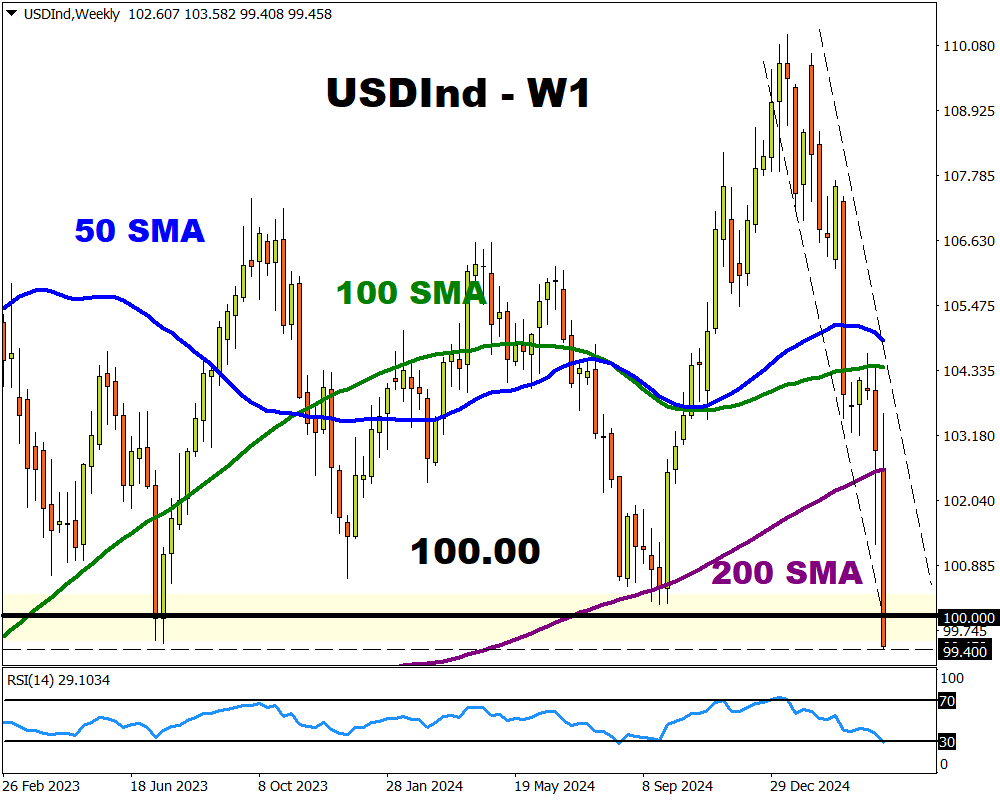
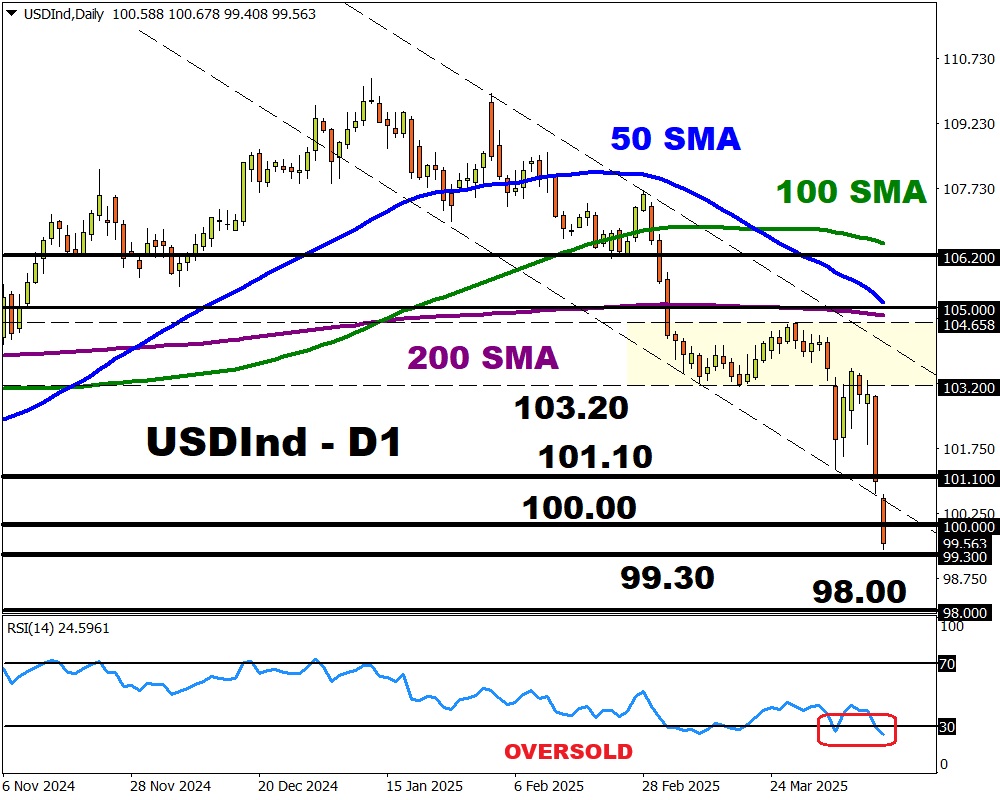
The US Dollar Index positioning rose once again this week and gained for the third week in a row. The USD Index bets has now risen in nine out of the past ten weeks and the current bullish position has grown to the highest level since September. Despite the positioning gains, the US Dollar Index futures price (DX) has actually dipped for the past three straight weeks. The DX closed the week at the 106.52 level and after the recent bullish momentum hit a roadblock around the 109.00-110.00 resistance level numerous times over the past month. Currently, the DX sits at support that used to be resistance in the recent past at 106.50.

The Euro speculator bets jumped this week by over +13,000 contracts after falling in three out of the past four weeks. The current speculator level sits at -51,420 contracts which is in extreme bearish territory compared to the past three years of positioning. The Euro exchange rate versus the USD has been trading at the lowest levels since 2022 when the EURUSD exchange went below parity for the first time in decades. The EURUSD recently bounced off support levels at 1.0250 but remains in a downtrend that has seen the Euro fall approximately 9 percent vs the USD since September.

The Japanese yen speculator positioning gained once again this week for the fifth straight week. The current speculator level leads all the currencies in net bullish positions at +60,569 contracts and has jumped by +89,980 contracts in just the past five weeks (going from -14,673 contracts five weeks ago to this week over +60k contracts). The turnaround in sentiment has also been felt in the yen exchange rate versus the US Dollar which has risen in five out of the past six weeks. The USDJPY currency pair closed below 150.00 this week for the first time since October which is a gain for the yen by over 6 percent since the beginning of the year.

The Australian dollar speculators boosted their bets by over +8,000 contracts this week to bring the total spec standing to -56,723 contracts. The AUD speculator standing has had a sharply bearish end to 2024 and start to this year as the spec level has fallen by -88,499 contracts since the beginning of December. The AUD positions have declined in nine out of the past twelve weeks but have rebounded in each of the past two weeks. The Australian currency recently dipped to the 0.6098 exchange level vs the USD which marked the lowest exchange rate since 2020. The AUDUSD currency pair closed the week at the 0.6355 exchange rate which is off the recent lows but remains in a downtrend currently.

The Canadian dollar speculative position improved again this week and rose for a second straight week. The CAD positioning has been extremely bearish and above the -100,000 contract level for nineteen straight weeks and overall, the CAD position has been in bearish territory for eighty-one consecutive weeks. Despite this extreme bearishness, the speculator positions have actually been positive in seven out of the past nine weeks. The Canadian dollar exchange rate versus the US Dollar dipped modestly this week but had gained in the previous two weeks. The CAD futures price had recently fallen to the lowest level in over 20 years under the 0.6800 threshold but managed to bounce off long-term support around 0.6820-0.6875. This level has proved to be a strong turnaround level in both 2016 and 2020 and time will only tell if this turns out to be a similar case.


Currencies Net Speculators Leaderboard

Legend: Weekly Speculators Change | Speculators Current Net Position | Speculators Strength Score compared to last 3-Years (0-100 range)


Strength Scores led by Japanese Yen & Brazilian Real

COT Strength Scores (a normalized measure of Speculator positions over a 3-Year range, from 0 to 100 where above 80 is Extreme-Bullish and below 20 is Extreme-Bearish) showed that the Japanese Yen (98 percent) and the Brazilian Real (53 percent) lead the currency markets this week.

On the downside, the New Zealand Dollar (3 percent) and the EuroFX (9 percent) come in at the lowest strength levels currently and are in Extreme-Bearish territory (below 20 percent). The next lowest strength scores are the Canadian Dollar (23 percent) and the Swiss Franc (23 percent).

3-Year Strength Statistics:
US Dollar Index (41.4 percent) vs US Dollar Index previous week (38.4 percent)
EuroFX (9.2 percent) vs EuroFX previous week (4.2 percent)
British Pound Sterling (35.9 percent) vs British Pound Sterling previous week (34.7 percent)
Japanese Yen (97.8 percent) vs Japanese Yen previous week (95.4 percent)
Swiss Franc (23.2 percent) vs Swiss Franc previous week (22.4 percent)
Canadian Dollar (23.1 percent) vs Canadian Dollar previous week (20.4 percent)
Australian Dollar (36.0 percent) vs Australian Dollar previous week (29.8 percent)
New Zealand Dollar (2.9 percent) vs New Zealand Dollar previous week (6.2 percent)
Mexican Peso (36.2 percent) vs Mexican Peso previous week (36.8 percent)
Brazilian Real (53.0 percent) vs Brazilian Real previous week (53.1 percent)
Bitcoin (43.3 percent) vs Bitcoin previous week (43.3 percent)


Japanese Yen & Brazilian Real top the 6-Week Strength Trends

COT Strength Score Trends (or move index, calculates the 6-week changes in strength scores) showed that the Japanese Yen (32 percent) and the Brazilian Real (32 percent) lead the past six weeks trends for the currencies. The US Dollar Index (17 percent), the Canadian Dollar (15 percent) and the Australian Dollar (12 percent) are the next highest positive movers in the 3-Year trends data.

Bitcoin (-34 percent) leads the downside trend scores currently with the British Pound (-7 percent) and the Swiss Franc (-1 percent) following next with lower trend scores.

3-Year Strength Trends:
US Dollar Index (16.8 percent) vs US Dollar Index previous week (17.5 percent)
EuroFX (4.8 percent) vs EuroFX previous week (2.0 percent)
British Pound Sterling (-6.8 percent) vs British Pound Sterling previous week (-10.8 percent)
Japanese Yen (32.3 percent) vs Japanese Yen previous week (25.2 percent)
Swiss Franc (-1.0 percent) vs Swiss Franc previous week (-12.0 percent)
Canadian Dollar (15.2 percent) vs Canadian Dollar previous week (11.1 percent)
Australian Dollar (11.9 percent) vs Australian Dollar previous week (4.1 percent)
New Zealand Dollar (2.9 percent) vs New Zealand Dollar previous week (-1.2 percent)
Mexican Peso (1.2 percent) vs Mexican Peso previous week (-2.5 percent)
Brazilian Real (32.2 percent) vs Brazilian Real previous week (25.3 percent)
Bitcoin (-34.0 percent) vs Bitcoin previous week (-1.0 percent)


Individual COT Forex Markets:

US Dollar Index Futures:

US Dollar Index Forex Futures COT ChartThe US Dollar Index large speculator standing this week reached a net position of 16,768 contracts in the data reported through Tuesday. This was a weekly gain of 1,472 contracts from the previous week which had a total of 15,296 net contracts.

This week’s current strength score (the trader positioning range over the past three years, measured from 0 to 100) shows the speculators are currently Bearish with a score of 41.4 percent. The commercials are Bullish with a score of 60.5 percent and the small traders (not shown in chart) are Bearish with a score of 29.2 percent.

Price Trend-Following Model: Weak Uptrend

Our weekly trend-following model classifies the current market price position as: Weak Uptrend.

US DOLLAR INDEX StatisticsSPECULATORSCOMMERCIALSSMALL TRADERS
– Percent of Open Interest Longs:69.518.98.2
– Percent of Open Interest Shorts:25.963.37.5
– Net Position:16,768-17,057289
– Gross Longs:26,7297,2753,161
– Gross Shorts:9,96124,3322,872
– Long to Short Ratio:2.7 to 10.3 to 11.1 to 1
NET POSITION TREND:
– Strength Index Score (3 Year Range Pct):41.460.529.2
– Strength Index Reading (3 Year Range):BearishBullishBearish
NET POSITION MOVEMENT INDEX:
– 6-Week Change in Strength Index:16.8-13.6-14.2


Euro Currency Futures:

Euro Currency Futures COT ChartThe Euro Currency large speculator standing this week reached a net position of -51,420 contracts in the data reported through Tuesday. This was a weekly increase of 13,005 contracts from the previous week which had a total of -64,425 net contracts.

This week’s current strength score (the trader positioning range over the past three years, measured from 0 to 100) shows the speculators are currently Bearish-Extreme with a score of 9.2 percent. The commercials are Bullish-Extreme with a score of 90.1 percent and the small traders (not shown in chart) are Bearish with a score of 29.3 percent.

Price Trend-Following Model: Downtrend

Our weekly trend-following model classifies the current market price position as: Downtrend.

EURO Currency StatisticsSPECULATORSCOMMERCIALSSMALL TRADERS
– Percent of Open Interest Longs:26.756.611.9
– Percent of Open Interest Shorts:34.852.57.9
– Net Position:-51,42026,19525,225
– Gross Longs:170,320361,23975,697
– Gross Shorts:221,740335,04450,472
– Long to Short Ratio:0.8 to 11.1 to 11.5 to 1
NET POSITION TREND:
– Strength Index Score (3 Year Range Pct):9.290.129.3
– Strength Index Reading (3 Year Range):Bearish-ExtremeBullish-ExtremeBearish
NET POSITION MOVEMENT INDEX:
– 6-Week Change in Strength Index:4.8-6.413.6


British Pound Sterling Futures:

British Pound Sterling Futures COT ChartThe British Pound Sterling large speculator standing this week reached a net position of -579 contracts in the data reported through Tuesday. This was a weekly gain of 2,589 contracts from the previous week which had a total of -3,168 net contracts.

This week’s current strength score (the trader positioning range over the past three years, measured from 0 to 100) shows the speculators are currently Bearish with a score of 35.9 percent. The commercials are Bullish with a score of 65.7 percent and the small traders (not shown in chart) are Bearish with a score of 40.7 percent.

Price Trend-Following Model: Downtrend

Our weekly trend-following model classifies the current market price position as: Downtrend.

BRITISH POUND StatisticsSPECULATORSCOMMERCIALSSMALL TRADERS
– Percent of Open Interest Longs:36.249.211.9
– Percent of Open Interest Shorts:36.543.916.9
– Net Position:-57910,797-10,218
– Gross Longs:73,564100,00124,129
– Gross Shorts:74,14389,20434,347
– Long to Short Ratio:1.0 to 11.1 to 10.7 to 1
NET POSITION TREND:
– Strength Index Score (3 Year Range Pct):35.965.740.7
– Strength Index Reading (3 Year Range):BearishBullishBearish
NET POSITION MOVEMENT INDEX:
– 6-Week Change in Strength Index:-6.86.6-3.0


Japanese Yen Futures:

Japanese Yen Forex Futures COT ChartThe Japanese Yen large speculator standing this week reached a net position of 60,569 contracts in the data reported through Tuesday. This was a weekly rise of 5,954 contracts from the previous week which had a total of 54,615 net contracts.

This week’s current strength score (the trader positioning range over the past three years, measured from 0 to 100) shows the speculators are currently Bullish-Extreme with a score of 97.8 percent. The commercials are Bearish-Extreme with a score of 2.7 percent and the small traders (not shown in chart) are Bullish-Extreme with a score of 87.0 percent.

Price Trend-Following Model: Weak Downtrend

Our weekly trend-following model classifies the current market price position as: Weak Downtrend.

JAPANESE YEN StatisticsSPECULATORSCOMMERCIALSSMALL TRADERS
– Percent of Open Interest Longs:52.529.915.6
– Percent of Open Interest Shorts:30.954.812.2
– Net Position:60,569-70,1939,624
– Gross Longs:147,56684,00143,985
– Gross Shorts:86,997154,19434,361
– Long to Short Ratio:1.7 to 10.5 to 11.3 to 1
NET POSITION TREND:
– Strength Index Score (3 Year Range Pct):97.82.787.0
– Strength Index Reading (3 Year Range):Bullish-ExtremeBearish-ExtremeBullish-Extreme
NET POSITION MOVEMENT INDEX:
– 6-Week Change in Strength Index:32.3-33.323.5


Swiss Franc Futures:

Swiss Franc Forex Futures COT ChartThe Swiss Franc large speculator standing this week reached a net position of -38,359 contracts in the data reported through Tuesday. This was a weekly rise of 386 contracts from the previous week which had a total of -38,745 net contracts.

This week’s current strength score (the trader positioning range over the past three years, measured from 0 to 100) shows the speculators are currently Bearish with a score of 23.2 percent. The commercials are Bullish-Extreme with a score of 83.4 percent and the small traders (not shown in chart) are Bearish with a score of 23.0 percent.

Price Trend-Following Model: Downtrend

Our weekly trend-following model classifies the current market price position as: Downtrend.

SWISS FRANC StatisticsSPECULATORSCOMMERCIALSSMALL TRADERS
– Percent of Open Interest Longs:7.283.79.0
– Percent of Open Interest Shorts:46.431.122.4
– Net Position:-38,35951,505-13,146
– Gross Longs:7,04781,9218,807
– Gross Shorts:45,40630,41621,953
– Long to Short Ratio:0.2 to 12.7 to 10.4 to 1
NET POSITION TREND:
– Strength Index Score (3 Year Range Pct):23.283.423.0
– Strength Index Reading (3 Year Range):BearishBullish-ExtremeBearish
NET POSITION MOVEMENT INDEX:
– 6-Week Change in Strength Index:-1.0-4.814.5


Canadian Dollar Futures:

Canadian Dollar Forex Futures COT ChartThe Canadian Dollar large speculator standing this week reached a net position of -144,643 contracts in the data reported through Tuesday. This was a weekly rise of 6,191 contracts from the previous week which had a total of -150,834 net contracts.

This week’s current strength score (the trader positioning range over the past three years, measured from 0 to 100) shows the speculators are currently Bearish with a score of 23.1 percent. The commercials are Bullish with a score of 78.4 percent and the small traders (not shown in chart) are Bearish with a score of 22.6 percent.

Price Trend-Following Model: Downtrend

Our weekly trend-following model classifies the current market price position as: Downtrend.

CANADIAN DOLLAR StatisticsSPECULATORSCOMMERCIALSSMALL TRADERS
– Percent of Open Interest Longs:6.682.48.2
– Percent of Open Interest Shorts:51.335.610.3
– Net Position:-144,643151,212-6,569
– Gross Longs:21,276266,23326,645
– Gross Shorts:165,919115,02133,214
– Long to Short Ratio:0.1 to 12.3 to 10.8 to 1
NET POSITION TREND:
– Strength Index Score (3 Year Range Pct):23.178.422.6
– Strength Index Reading (3 Year Range):BearishBullishBearish
NET POSITION MOVEMENT INDEX:
– 6-Week Change in Strength Index:15.2-17.018.8


Australian Dollar Futures:

Australian Dollar Forex Futures COT ChartThe Australian Dollar large speculator standing this week reached a net position of -56,723 contracts in the data reported through Tuesday. This was a weekly advance of 8,862 contracts from the previous week which had a total of -65,585 net contracts.

This week’s current strength score (the trader positioning range over the past three years, measured from 0 to 100) shows the speculators are currently Bearish with a score of 36.0 percent. The commercials are Bullish with a score of 65.9 percent and the small traders (not shown in chart) are Bearish with a score of 39.5 percent.

Price Trend-Following Model: Downtrend

Our weekly trend-following model classifies the current market price position as: Downtrend.

AUSTRALIAN DOLLAR StatisticsSPECULATORSCOMMERCIALSSMALL TRADERS
– Percent of Open Interest Longs:24.758.013.6
– Percent of Open Interest Shorts:54.626.215.5
– Net Position:-56,72360,353-3,630
– Gross Longs:46,918110,01025,863
– Gross Shorts:103,64149,65729,493
– Long to Short Ratio:0.5 to 12.2 to 10.9 to 1
NET POSITION TREND:
– Strength Index Score (3 Year Range Pct):36.065.939.5
– Strength Index Reading (3 Year Range):BearishBullishBearish
NET POSITION MOVEMENT INDEX:
– 6-Week Change in Strength Index:11.9-13.515.7


New Zealand Dollar Futures:

New Zealand Dollar Forex Futures COT ChartThe New Zealand Dollar large speculator standing this week reached a net position of -52,163 contracts in the data reported through Tuesday. This was a weekly fall of -2,827 contracts from the previous week which had a total of -49,336 net contracts.

This week’s current strength score (the trader positioning range over the past three years, measured from 0 to 100) shows the speculators are currently Bearish-Extreme with a score of 2.9 percent. The commercials are Bullish-Extreme with a score of 96.3 percent and the small traders (not shown in chart) are Bearish with a score of 32.2 percent.

Price Trend-Following Model: Downtrend

Our weekly trend-following model classifies the current market price position as: Downtrend.

NEW ZEALAND DOLLAR StatisticsSPECULATORSCOMMERCIALSSMALL TRADERS
– Percent of Open Interest Longs:14.680.44.2
– Percent of Open Interest Shorts:73.020.26.0
– Net Position:-52,16353,832-1,669
– Gross Longs:13,04871,8873,718
– Gross Shorts:65,21118,0555,387
– Long to Short Ratio:0.2 to 14.0 to 10.7 to 1
NET POSITION TREND:
– Strength Index Score (3 Year Range Pct):2.996.332.2
– Strength Index Reading (3 Year Range):Bearish-ExtremeBullish-ExtremeBearish
NET POSITION MOVEMENT INDEX:
– 6-Week Change in Strength Index:2.9-3.710.2


Mexican Peso Futures:

Mexican Peso Futures COT ChartThe Mexican Peso large speculator standing this week reached a net position of 14,673 contracts in the data reported through Tuesday. This was a weekly reduction of -1,177 contracts from the previous week which had a total of 15,850 net contracts.

This week’s current strength score (the trader positioning range over the past three years, measured from 0 to 100) shows the speculators are currently Bearish with a score of 36.2 percent. The commercials are Bullish with a score of 67.6 percent and the small traders (not shown in chart) are Bearish-Extreme with a score of 12.5 percent.

Price Trend-Following Model: Downtrend

Our weekly trend-following model classifies the current market price position as: Downtrend.

MEXICAN PESO StatisticsSPECULATORSCOMMERCIALSSMALL TRADERS
– Percent of Open Interest Longs:42.652.72.5
– Percent of Open Interest Shorts:32.861.23.7
– Net Position:14,673-12,824-1,849
– Gross Longs:63,85278,8513,749
– Gross Shorts:49,17991,6755,598
– Long to Short Ratio:1.3 to 10.9 to 10.7 to 1
NET POSITION TREND:
– Strength Index Score (3 Year Range Pct):36.267.612.5
– Strength Index Reading (3 Year Range):BearishBullishBearish-Extreme
NET POSITION MOVEMENT INDEX:
– 6-Week Change in Strength Index:1.2-1.2-0.0


Brazilian Real Futures:

Brazil Real Futures COT ChartThe Brazilian Real large speculator standing this week reached a net position of 940 contracts in the data reported through Tuesday. This was a weekly decline of -140 contracts from the previous week which had a total of 1,080 net contracts.

This week’s current strength score (the trader positioning range over the past three years, measured from 0 to 100) shows the speculators are currently Bullish with a score of 53.0 percent. The commercials are Bearish with a score of 47.2 percent and the small traders (not shown in chart) are Bearish with a score of 28.1 percent.

Price Trend-Following Model: Weak Downtrend

Our weekly trend-following model classifies the current market price position as: Weak Downtrend.

BRAZIL REAL StatisticsSPECULATORSCOMMERCIALSSMALL TRADERS
– Percent of Open Interest Longs:59.531.04.0
– Percent of Open Interest Shorts:58.433.62.5
– Net Position:940-2,2161,276
– Gross Longs:50,76326,4713,444
– Gross Shorts:49,82328,6872,168
– Long to Short Ratio:1.0 to 10.9 to 11.6 to 1
NET POSITION TREND:
– Strength Index Score (3 Year Range Pct):53.047.228.1
– Strength Index Reading (3 Year Range):BullishBearishBearish
NET POSITION MOVEMENT INDEX:
– 6-Week Change in Strength Index:32.2-33.812.2


Bitcoin Futures:

Bitcoin Crypto Futures COT ChartThe Bitcoin large speculator standing this week reached a net position of -367 contracts in the data reported through Tuesday. This was a weekly fall of 0 contracts from the previous week which had a total of -367 net contracts.

This week’s current strength score (the trader positioning range over the past three years, measured from 0 to 100) shows the speculators are currently Bearish with a score of 43.3 percent. The commercials are Bullish with a score of 66.9 percent and the small traders (not shown in chart) are Bearish with a score of 27.0 percent.

Price Trend-Following Model: Uptrend

Our weekly trend-following model classifies the current market price position as: Uptrend.

BITCOIN StatisticsSPECULATORSCOMMERCIALSSMALL TRADERS
– Percent of Open Interest Longs:80.95.04.5
– Percent of Open Interest Shorts:82.04.53.8
– Net Position:-367141226
– Gross Longs:27,3671,6801,519
– Gross Shorts:27,7341,5391,293
– Long to Short Ratio:1.0 to 11.1 to 11.2 to 1
NET POSITION TREND:
– Strength Index Score (3 Year Range Pct):43.366.927.0
– Strength Index Reading (3 Year Range):BearishBullishBearish
NET POSITION MOVEMENT INDEX:
– 6-Week Change in Strength Index:-34.038.60.6


Article By InvestMacroReceive our weekly COT Newsletter

*COT Report: The COT data, released weekly to the public each Friday, is updated through the most recent Tuesday (data is 3 days old) and shows a quick view of how large speculators or non-commercials (for-profit traders) were positioned in the futures markets.

The CFTC categorizes trader positions according to commercial hedgers (traders who use futures contracts for hedging as part of the business), non-commercials (large traders who speculate to realize trading profits) and nonreportable traders (usually small traders/speculators) as well as their open interest (contracts open in the market at time of reporting). See CFTC criteria here.

COT Speculator Extremes: Steel & US Treasury Bonds lead Bullish Positions

By InvestMacro

The latest update for the weekly Commitment of Traders (COT) report was released by the Commodity Futures Trading Commission (CFTC) on Friday for data ending on February 18th.

This weekly Extreme Positions report highlights the Most Bullish and Most Bearish Positions for the speculator category. Extreme positioning in these markets can foreshadow strong moves in the underlying market.

To signify an extreme position, we use the Strength Index (also known as the COT Index) of each instrument, a common method of measuring COT data. The Strength Index is simply a comparison of current trader positions against the range of positions over the previous 3 years. We use over 80 percent as extremely bullish and under 20 percent as extremely bearish. (Compare Strength Index scores across all markets in the data table or cot leaders table)


Here Are This Week’s Most Bullish Speculator Positions:

Steel


The Steel speculator position comes in as the most bullish extreme standing this week. The Steel speculator level is currently at a 100.0 percent score of its 3-year range.

The six-week trend for the percent strength score totaled 35.1 this week. The overall net speculator position was a total of 5,090 net contracts this week with a gain of 2,235 contract in the weekly speculator bets.


Speculators or Non-Commercials Notes:

Speculators, classified as non-commercial traders by the CFTC, are made up of large commodity funds, hedge funds and other significant for-profit participants. The Specs are generally regarded as trend-followers in their behavior towards price action – net speculator bets and prices tend to go in the same directions. These traders often look to buy when prices are rising and sell when prices are falling. To illustrate this point, many times speculator contracts can be found at their most extremes (bullish or bearish) when prices are also close to their highest or lowest levels.

These extreme levels can be dangerous for the large speculators as the trade is most crowded, there is less trading ammunition still sitting on the sidelines to push the trend further and prices have moved a significant distance. When the trend becomes exhausted, some speculators take profits while others look to also exit positions when prices fail to continue in the same direction. This process usually plays out over many months to years and can ultimately create a reverse effect where prices start to fall and speculators start a process of selling when prices are falling.


US Treasury Bond


The US Treasury Bond speculator position comes next and tied for the most bullish lead in the extreme standings this week. The US Treasury Bond speculator level is now at a 100.0 percent score of its 3-year range.

The six-week trend for the percent strength score was 22.5 this week. The speculator position registered 47,781 net contracts this week with a weekly rise by 3,780 contracts in speculator bets.


Japanese Yen


The Japanese Yen speculator position comes in next this week in the extreme standings as the yen sentiment has turned around positively. The Japanese Yen speculator level resides at a 97.8 percent score of its 3-year range.

The six-week trend for the speculator strength score came in at 32.3 this week. The overall speculator position was 60,569 net contracts this week with an increase by 5,954 contracts in the weekly speculator bets.


Corn


The Corn speculator position comes up number four in the extreme standings this week as Corn’s sentiment has also turned around sharply in the past months. The Corn speculator level is currently at a 93.6 percent score of its 3-year range.

The six-week trend for the speculator strength score totaled a change of 19.0 this week. The overall speculator position was 468,724 net contracts this week with a jump by 43,955 contracts in the speculator bets.


Lean Hogs


The Lean Hogs speculator position rounds out the top five in this week’s bullish extreme standings. The Lean Hogs speculator level sits at a 90.3 percent score of its 3-year range. The six-week trend for the speculator strength score was 6.3 this week.

The speculator position was 80,857 net contracts this week with an advance by 7,637 contracts in the weekly speculator bets.


This Week’s Most Bearish Speculator Positions:

New Zealand Dollar


The New Zealand Dollar speculator position comes in as the most bearish extreme standing this week. The New Zealand Dollar speculator level is at a 2.9 percent score of its 3-year range.

The six-week trend for the speculator strength score was also 2.9 this week. The overall speculator position was -52,163 net contracts this week with a decline of -2,827 contracts in the speculator bets.


Sugar


The Sugar speculator position comes in next for the most bearish extreme standing on the week. The Sugar speculator level is at a 4.0 percent score of its 3-year range.

The six-week trend for the speculator strength score was -22.6 this week. The speculator position was -20,707 net contracts this week with a rise of 5,819 contracts in the weekly speculator bets.


Cotton


The Cotton speculator position comes in as third most bearish extreme standing of the week. The Cotton speculator level resides at a 8.9 percent score of its 3-year range.

The six-week trend for the speculator strength score was -3.3 this week. The overall speculator position was -37,068 net contracts this week with an increase by 5,497 contracts in the speculator bets.


Euro


The Euro speculator position comes in as this week’s fourth most bearish extreme standing. The Euro speculator level is at a 9.2 percent score of its 3-year range.

The six-week trend for the speculator strength score was 4.8 this week. The speculator position was -51,420 net contracts this week with a gain of 13,005 contracts in the weekly speculator bets.


5-Year Bond


Finally, the 5-Year Bond speculator position comes in as the fifth most bearish extreme standing for this week. The 5-Year Bond speculator level is at a 13.1 percent score of its 3-year range.

The six-week trend for the speculator strength score was 3.4 this week. The speculator position was -1,737,533 net contracts this week with a rise by 124,202 contracts in the weekly speculator bets.


Article By InvestMacroReceive our weekly COT Newsletter

*COT Report: The COT data, released weekly to the public each Friday, is updated through the most recent Tuesday (data is 3 days old) and shows a quick view of how large speculators or non-commercials (for-profit traders) were positioned in the futures markets.

The CFTC categorizes trader positions according to commercial hedgers (traders who use futures contracts for hedging as part of the business), non-commercials (large traders who speculate to realize trading profits) and nonreportable traders (usually small traders/speculators) as well as their open interest (contracts open in the market at time of reporting). See CFTC criteria here.


COT Metals Charts: Speculator Bets led by Copper, Silver & Steel

By InvestMacro

Here are the latest charts and statistics for the Commitment of Traders (COT) data published by the Commodities Futures Trading Commission (CFTC).

The latest COT data is updated through Tuesday February 18th and shows a quick view of how large traders (for-profit speculators and commercial entities) were positioned in the futures markets.

Weekly Speculator Changes led by Copper, Silver & Steel

The COT metals markets speculator bets were higher this week as four out of the six metals markets we cover had higher positioning while the other two markets had lower speculator contracts.

Leading the gains for the metals was Copper (5,475 contracts) with Silver (4,744 contracts), Steel (4,618 contracts) and Palladium (943 contracts) also showing positive weeks.

The two markets with declines in speculator bets for the week were Gold (-15,830 contracts) and with Platinum (-2,193 contracts) also having lower bets on the week.


Metals Net Speculators Leaderboard

Legend: Weekly Speculators Change | Speculators Current Net Position | Speculators Strength Score compared to last 3-Years (0-100 range)


Strength Scores led by Steel & Silver

COT Strength Scores (a normalized measure of Speculator positions over a 3-Year range, from 0 to 100 where above 80 is Extreme-Bullish and below 20 is Extreme-Bearish) showed that Steel (90 percent) and Silver (85 percent) lead the metals markets this week. Gold (82 percent) comes in as the next highest in the weekly strength scores.

On the downside, Palladium (61 percent) comes in at the lowest strength level currently but is over the 50-percent or the midpoint level for the past 3-years.

Strength Statistics:
Gold (82.3 percent) vs Gold previous week (88.3 percent)
Silver (85.0 percent) vs Silver previous week (79.0 percent)
Copper (52.7 percent) vs Copper previous week (47.6 percent)
Platinum (71.6 percent) vs Platinum previous week (76.8 percent)
Palladium (60.7 percent) vs Palladium previous week (53.8 percent)
Steel (89.8 percent) vs Palladium previous week (68.7 percent)


Palladium & Steel top the 6-Week Strength Trends

COT Strength Score Trends (or move index, calculates the 6-week changes in strength scores) showed that Palladium (26 percent) and Steel (25 percent) lead the past six weeks trends for metals.

There were no markets this week with negative trend scores.

Move Statistics:
Gold (5.2 percent) vs Gold previous week (14.1 percent)
Silver (17.1 percent) vs Silver previous week (14.9 percent)
Copper (18.8 percent) vs Copper previous week (12.7 percent)
Platinum (13.5 percent) vs Platinum previous week (47.5 percent)
Palladium (25.5 percent) vs Palladium previous week (15.4 percent)
Steel (24.8 percent) vs Steel previous week (12.8 percent)


Individual Markets:

Gold Comex Futures:

Gold Futures COT ChartThe Gold Comex Futures large speculator standing this week totaled a net position of 268,674 contracts in the data reported through Tuesday. This was a weekly fall of -15,830 contracts from the previous week which had a total of 284,504 net contracts.

This week’s current strength score (the trader positioning range over the past three years, measured from 0 to 100) shows the speculators are currently Bullish-Extreme with a score of 82.3 percent. The commercials are Bearish-Extreme with a score of 15.7 percent and the small traders (not shown in chart) are Bullish with a score of 69.8 percent.

Price Trend-Following Model: Strong Uptrend

Our weekly trend-following model classifies the current market price position as: Strong Uptrend.

Gold Futures StatisticsSPECULATORSCOMMERCIALSSMALL TRADERS
– Percent of Open Interest Longs:64.013.99.7
– Percent of Open Interest Shorts:12.570.54.5
– Net Position:268,674-296,07127,397
– Gross Longs:334,04372,39350,882
– Gross Shorts:65,369368,46423,485
– Long to Short Ratio:5.1 to 10.2 to 12.2 to 1
NET POSITION TREND:
– Strength Index Score (3 Year Range Pct):82.315.769.8
– Strength Index Reading (3 Year Range):Bullish-ExtremeBearish-ExtremeBullish
NET POSITION MOVEMENT INDEX:
– 6-Week Change in Strength Index:5.2-6.313.2


Silver Comex Futures:

Silver Futures COT ChartThe Silver Comex Futures large speculator standing this week totaled a net position of 54,454 contracts in the data reported through Tuesday. This was a weekly boost of 4,744 contracts from the previous week which had a total of 49,710 net contracts.

This week’s current strength score (the trader positioning range over the past three years, measured from 0 to 100) shows the speculators are currently Bullish-Extreme with a score of 85.0 percent. The commercials are Bearish-Extreme with a score of 14.8 percent and the small traders (not shown in chart) are Bullish with a score of 55.4 percent.

Price Trend-Following Model: Uptrend

Our weekly trend-following model classifies the current market price position as: Uptrend.

Silver Futures StatisticsSPECULATORSCOMMERCIALSSMALL TRADERS
– Percent of Open Interest Longs:49.920.718.3
– Percent of Open Interest Shorts:17.863.08.0
– Net Position:54,454-71,96017,506
– Gross Longs:84,81435,23731,187
– Gross Shorts:30,360107,19713,681
– Long to Short Ratio:2.8 to 10.3 to 12.3 to 1
NET POSITION TREND:
– Strength Index Score (3 Year Range Pct):85.014.855.4
– Strength Index Reading (3 Year Range):Bullish-ExtremeBearish-ExtremeBullish
NET POSITION MOVEMENT INDEX:
– 6-Week Change in Strength Index:17.1-17.511.1


Copper Grade #1 Futures:

Copper Futures COT ChartThe Copper Grade #1 Futures large speculator standing this week totaled a net position of 20,896 contracts in the data reported through Tuesday. This was a weekly increase of 5,475 contracts from the previous week which had a total of 15,421 net contracts.

This week’s current strength score (the trader positioning range over the past three years, measured from 0 to 100) shows the speculators are currently Bullish with a score of 52.7 percent. The commercials are Bearish with a score of 49.0 percent and the small traders (not shown in chart) are Bearish with a score of 41.6 percent.

Price Trend-Following Model: Strong Uptrend

Our weekly trend-following model classifies the current market price position as: Strong Uptrend.

Copper Futures StatisticsSPECULATORSCOMMERCIALSSMALL TRADERS
– Percent of Open Interest Longs:42.630.87.3
– Percent of Open Interest Shorts:34.141.05.7
– Net Position:20,896-24,8423,946
– Gross Longs:104,03275,16917,858
– Gross Shorts:83,136100,01113,912
– Long to Short Ratio:1.3 to 10.8 to 11.3 to 1
NET POSITION TREND:
– Strength Index Score (3 Year Range Pct):52.749.041.6
– Strength Index Reading (3 Year Range):BullishBearishBearish
NET POSITION MOVEMENT INDEX:
– 6-Week Change in Strength Index:18.8-16.3-7.2


Platinum Futures:

Platinum Futures COT ChartThe Platinum Futures large speculator standing this week totaled a net position of 23,537 contracts in the data reported through Tuesday. This was a weekly reduction of -2,193 contracts from the previous week which had a total of 25,730 net contracts.

This week’s current strength score (the trader positioning range over the past three years, measured from 0 to 100) shows the speculators are currently Bullish with a score of 71.6 percent. The commercials are Bearish with a score of 30.9 percent and the small traders (not shown in chart) are Bearish with a score of 27.5 percent.

Price Trend-Following Model: Weak Downtrend

Our weekly trend-following model classifies the current market price position as: Weak Downtrend.

Platinum Futures StatisticsSPECULATORSCOMMERCIALSSMALL TRADERS
– Percent of Open Interest Longs:66.616.110.6
– Percent of Open Interest Shorts:40.047.45.9
– Net Position:23,537-27,6584,121
– Gross Longs:58,82914,2089,361
– Gross Shorts:35,29241,8665,240
– Long to Short Ratio:1.7 to 10.3 to 11.8 to 1
NET POSITION TREND:
– Strength Index Score (3 Year Range Pct):71.630.927.5
– Strength Index Reading (3 Year Range):BullishBearishBearish
NET POSITION MOVEMENT INDEX:
– 6-Week Change in Strength Index:13.5-12.4-2.4


Palladium Futures:

Palladium Futures COT ChartThe Palladium Futures large speculator standing this week totaled a net position of -5,631 contracts in the data reported through Tuesday. This was a weekly advance of 943 contracts from the previous week which had a total of -6,574 net contracts.

This week’s current strength score (the trader positioning range over the past three years, measured from 0 to 100) shows the speculators are currently Bullish with a score of 60.7 percent. The commercials are Bearish with a score of 37.2 percent and the small traders (not shown in chart) are Bullish-Extreme with a score of 80.5 percent.

Price Trend-Following Model: Downtrend

Our weekly trend-following model classifies the current market price position as: Downtrend.

Palladium Futures StatisticsSPECULATORSCOMMERCIALSSMALL TRADERS
– Percent of Open Interest Longs:34.639.011.5
– Percent of Open Interest Shorts:62.316.16.7
– Net Position:-5,6314,658973
– Gross Longs:7,0217,9222,330
– Gross Shorts:12,6523,2641,357
– Long to Short Ratio:0.6 to 12.4 to 11.7 to 1
NET POSITION TREND:
– Strength Index Score (3 Year Range Pct):60.737.280.5
– Strength Index Reading (3 Year Range):BullishBearishBullish-Extreme
NET POSITION MOVEMENT INDEX:
– 6-Week Change in Strength Index:25.5-24.5-1.9


Steel Futures Futures:

Steel Futures COT ChartThe Steel Futures large speculator standing this week totaled a net position of 2,855 contracts in the data reported through Tuesday. This was a weekly rise of 4,618 contracts from the previous week which had a total of -1,763 net contracts.

This week’s current strength score (the trader positioning range over the past three years, measured from 0 to 100) shows the speculators are currently Bullish-Extreme with a score of 89.8 percent. The commercials are Bearish-Extreme with a score of 10.5 percent and the small traders (not shown in chart) are Bullish with a score of 52.0 percent.

Price Trend-Following Model: Strong Uptrend

Our weekly trend-following model classifies the current market price position as: Strong Uptrend.

Steel Futures StatisticsSPECULATORSCOMMERCIALSSMALL TRADERS
– Percent of Open Interest Longs:30.758.71.1
– Percent of Open Interest Shorts:21.668.30.5
– Net Position:2,855-3,034179
– Gross Longs:9,63018,379348
– Gross Shorts:6,77521,413169
– Long to Short Ratio:1.4 to 10.9 to 12.1 to 1
NET POSITION TREND:
– Strength Index Score (3 Year Range Pct):89.810.552.0
– Strength Index Reading (3 Year Range):Bullish-ExtremeBearish-ExtremeBullish
NET POSITION MOVEMENT INDEX:
– 6-Week Change in Strength Index:24.8-25.719.9


Article By InvestMacroReceive our weekly COT Newsletter

*COT Report: The COT data, released weekly to the public each Friday, is updated through the most recent Tuesday (data is 3 days old) and shows a quick view of how large speculators or non-commercials (for-profit traders) were positioned in the futures markets.

The CFTC categorizes trader positions according to commercial hedgers (traders who use futures contracts for hedging as part of the business), non-commercials (large traders who speculate to realize trading profits) and nonreportable traders (usually small traders/speculators) as well as their open interest (contracts open in the market at time of reporting). See CFTC criteria here.

COT Bonds Charts: Weekly Speculator Bets led by 5-Year Bonds & Fed Funds

By InvestMacro

Here are the latest charts and statistics for the Commitment of Traders (COT) reports data published by the Commodities Futures Trading Commission (CFTC).

The latest COT data is updated through Tuesday February 18th and shows a quick view of how large traders (for-profit speculators and commercial hedgers) were positioned in the futures markets.

Weekly Speculator Changes led by 5-Year Bonds & Fed Funds

The COT bond market speculator bets were higher this week as seven out of the nine bond markets we cover had higher positioning while the other two markets had lower speculator contracts.

Leading the gains for the bond markets was the 5-Year Bonds (124,202 contracts) with the Fed Funds (73,169 contracts), the 10-Year Bonds (41,507 contracts), the SOFR 3-Months (10,481 contracts), the 2-Year Bonds (9,093 contracts), the SOFR 1-Month (7,490 contracts) and the US Treasury Bonds (3,780 contracts) also showing positive weeks.

The bond markets with declines in speculator bets for the week were the Ultra Treasury Bonds (-6,301 contracts) and with the Ultra 10-Year Bonds (-5,859 contracts) also registering lower bets on the week.


Bonds Net Speculators Leaderboard

Legend: Weekly Speculators Change | Speculators Current Net Position | Speculators Strength Score compared to last 3-Years (0-100 range)


Strength Scores led by US Treasury Bonds & Ultra Treasury Bonds

COT Strength Scores (a normalized measure of Speculator positions over a 3-Year range, from 0 to 100 where above 80 is Extreme-Bullish and below 20 is Extreme-Bearish) showed that the US Treasury Bonds (100 percent) and the Ultra Treasury Bonds (83 percent) lead the bond markets this week. The SOFR 1-Month (81 percent) comes in as the next highest in the weekly strength scores.

On the downside, the 2-Year Bonds (13 percent) and the 5-Year Bond (13 percent) come in at the lowest strength level currently and are in Extreme-Bearish territory (below 20 percent).

Strength Statistics:
Fed Funds (28.0 percent) vs Fed Funds previous week (14.4 percent)
2-Year Bond (13.4 percent) vs 2-Year Bond previous week (12.8 percent)
5-Year Bond (13.1 percent) vs 5-Year Bond previous week (6.5 percent)
10-Year Bond (41.1 percent) vs 10-Year Bond previous week (37.1 percent)
Ultra 10-Year Bond (65.7 percent) vs Ultra 10-Year Bond previous week (67.7 percent)
US Treasury Bond (100.0 percent) vs US Treasury Bond previous week (98.7 percent)
Ultra US Treasury Bond (82.7 percent) vs Ultra US Treasury Bond previous week (81.3 percent)
SOFR 1-Month (81.1 percent) vs SOFR 1-Month previous week (79.2 percent)
SOFR 3-Months (22.0 percent) vs SOFR 3-Months previous week (21.4 percent)


US Treasury Bonds & SOFR 1-Month top the 6-Week Strength Trends

COT Strength Score Trends (or move index, calculates the 6-week changes in strength scores) showed that the US Treasury Bonds (22 percent) and the SOFR 1-Month (19 percent) lead the past six weeks trends for bonds. The Ultra 10-Year Bonds (15 percent) and are the next highest positive movers in the latest trends data.

The SOFR 3-Months (-16 percent), the 2-Year Bonds (-7 percent) and 10-Year Bonds (-4 percent) leads the downside trend scores currently.

Strength Trend Statistics:
Fed Funds (4.2 percent) vs Fed Funds previous week (-26.5 percent)
2-Year Bond (-6.6 percent) vs 2-Year Bond previous week (-1.8 percent)
5-Year Bond (3.4 percent) vs 5-Year Bond previous week (-2.2 percent)
10-Year Bond (-3.5 percent) vs 10-Year Bond previous week (-9.2 percent)
Ultra 10-Year Bond (14.8 percent) vs Ultra 10-Year Bond previous week (26.7 percent)
US Treasury Bond (22.5 percent) vs US Treasury Bond previous week (27.4 percent)
Ultra US Treasury Bond (-0.5 percent) vs Ultra US Treasury Bond previous week (-15.0 percent)
SOFR 1-Month (19.0 percent) vs SOFR 1-Month previous week (29.6 percent)
SOFR 3-Months (-15.5 percent) vs SOFR 3-Months previous week (-18.5 percent)


30-Day Federal Funds Futures:

Federal Funds 30-Day Bonds Futures COT ChartThe 30-Day Federal Funds large speculator standing this week totaled a net position of -144,305 contracts in the data reported through Tuesday. This was a weekly advance of 73,169 contracts from the previous week which had a total of -217,474 net contracts.

This week’s current strength score (the trader positioning range over the past three years, measured from 0 to 100) shows the speculators are currently Bearish with a score of 28.0 percent. The commercials are Bullish with a score of 63.1 percent and the small traders (not shown in chart) are Bullish-Extreme with a score of 100.0 percent.

Price Trend-Following Model: Downtrend

Our weekly trend-following model classifies the current market price position as: Downtrend. The current action for the model is considered to be: Hold – Maintain Short Position.

30-Day Federal Funds StatisticsSPECULATORSCOMMERCIALSSMALL TRADERS
– Percent of Open Interest Longs:12.166.63.3
– Percent of Open Interest Shorts:20.160.21.7
– Net Position:-144,305115,67728,628
– Gross Longs:216,6041,194,52958,796
– Gross Shorts:360,9091,078,85230,168
– Long to Short Ratio:0.6 to 11.1 to 11.9 to 1
NET POSITION TREND:
– Strength Index Score (3 Year Range Pct):28.063.1100.0
– Strength Index Reading (3 Year Range):BearishBullishBullish-Extreme
NET POSITION MOVEMENT INDEX:
– 6-Week Change in Strength Index:4.2-8.733.0


Secured Overnight Financing Rate (3-Month) Futures:

SOFR 3-Months Bonds Futures COT ChartThe Secured Overnight Financing Rate (3-Month) large speculator standing this week totaled a net position of -741,428 contracts in the data reported through Tuesday. This was a weekly rise of 10,481 contracts from the previous week which had a total of -751,909 net contracts.

This week’s current strength score (the trader positioning range over the past three years, measured from 0 to 100) shows the speculators are currently Bearish with a score of 22.0 percent. The commercials are Bullish with a score of 77.4 percent and the small traders (not shown in chart) are Bullish-Extreme with a score of 93.4 percent.

Price Trend-Following Model: Weak Uptrend

Our weekly trend-following model classifies the current market price position as: Weak Uptrend. The current action for the model is considered to be: Hold – Maintain Long Position.

SOFR 3-Months StatisticsSPECULATORSCOMMERCIALSSMALL TRADERS
– Percent of Open Interest Longs:13.262.90.4
– Percent of Open Interest Shorts:20.355.90.3
– Net Position:-741,428731,38410,044
– Gross Longs:1,379,4946,555,79338,925
– Gross Shorts:2,120,9225,824,40928,881
– Long to Short Ratio:0.7 to 11.1 to 11.3 to 1
NET POSITION TREND:
– Strength Index Score (3 Year Range Pct):22.077.493.4
– Strength Index Reading (3 Year Range):BearishBullishBullish-Extreme
NET POSITION MOVEMENT INDEX:
– 6-Week Change in Strength Index:-15.515.7-1.6


Individual Bond Markets:

Secured Overnight Financing Rate (1-Month) Futures:

SOFR 1-Month Bonds Futures COT ChartThe Secured Overnight Financing Rate (1-Month) large speculator standing this week totaled a net position of 51,077 contracts in the data reported through Tuesday. This was a weekly boost of 7,490 contracts from the previous week which had a total of 43,587 net contracts.

This week’s current strength score (the trader positioning range over the past three years, measured from 0 to 100) shows the speculators are currently Bullish-Extreme with a score of 81.1 percent. The commercials are Bearish with a score of 26.9 percent and the small traders (not shown in chart) are Bearish-Extreme with a score of 0.0 percent.

Price Trend-Following Model: Uptrend

Our weekly trend-following model classifies the current market price position as: Uptrend.

SOFR 1-Month StatisticsSPECULATORSCOMMERCIALSSMALL TRADERS
– Percent of Open Interest Longs:24.259.40.2
– Percent of Open Interest Shorts:20.760.72.4
– Net Position:51,077-18,806-32,271
– Gross Longs:352,869866,6163,103
– Gross Shorts:301,792885,42235,374
– Long to Short Ratio:1.2 to 11.0 to 10.1 to 1
NET POSITION TREND:
– Strength Index Score (3 Year Range Pct):81.126.90.0
– Strength Index Reading (3 Year Range):Bullish-ExtremeBearishBearish-Extreme
NET POSITION MOVEMENT INDEX:
– 6-Week Change in Strength Index:19.0-11.1-84.7


2-Year Treasury Note Futures:

2-Year Treasury Bonds Futures COT ChartThe 2-Year Treasury Note large speculator standing this week totaled a net position of -1,289,519 contracts in the data reported through Tuesday. This was a weekly gain of 9,093 contracts from the previous week which had a total of -1,298,612 net contracts.

This week’s current strength score (the trader positioning range over the past three years, measured from 0 to 100) shows the speculators are currently Bearish-Extreme with a score of 13.4 percent. The commercials are Bullish-Extreme with a score of 87.6 percent and the small traders (not shown in chart) are Bullish with a score of 70.6 percent.

Price Trend-Following Model: Weak Downtrend

Our weekly trend-following model classifies the current market price position as: Weak Downtrend.

2-Year Treasury Note StatisticsSPECULATORSCOMMERCIALSSMALL TRADERS
– Percent of Open Interest Longs:12.276.55.9
– Percent of Open Interest Shorts:43.248.23.3
– Net Position:-1,289,5191,180,540108,979
– Gross Longs:509,3833,187,914244,396
– Gross Shorts:1,798,9022,007,374135,417
– Long to Short Ratio:0.3 to 11.6 to 11.8 to 1
NET POSITION TREND:
– Strength Index Score (3 Year Range Pct):13.487.670.6
– Strength Index Reading (3 Year Range):Bearish-ExtremeBullish-ExtremeBullish
NET POSITION MOVEMENT INDEX:
– 6-Week Change in Strength Index:-6.610.4-10.4


5-Year Treasury Note Futures:

5-Year Treasury Bonds Futures COT ChartThe 5-Year Treasury Note large speculator standing this week totaled a net position of -1,737,533 contracts in the data reported through Tuesday. This was a weekly advance of 124,202 contracts from the previous week which had a total of -1,861,735 net contracts.

This week’s current strength score (the trader positioning range over the past three years, measured from 0 to 100) shows the speculators are currently Bearish-Extreme with a score of 13.1 percent. The commercials are Bullish-Extreme with a score of 85.5 percent and the small traders (not shown in chart) are Bullish with a score of 71.3 percent.

Price Trend-Following Model: Weak Downtrend

Our weekly trend-following model classifies the current market price position as: Weak Downtrend.

5-Year Treasury Note StatisticsSPECULATORSCOMMERCIALSSMALL TRADERS
– Percent of Open Interest Longs:5.979.26.2
– Percent of Open Interest Shorts:30.855.84.7
– Net Position:-1,737,5331,633,016104,517
– Gross Longs:412,9135,533,519433,254
– Gross Shorts:2,150,4463,900,503328,737
– Long to Short Ratio:0.2 to 11.4 to 11.3 to 1
NET POSITION TREND:
– Strength Index Score (3 Year Range Pct):13.185.571.3
– Strength Index Reading (3 Year Range):Bearish-ExtremeBullish-ExtremeBullish
NET POSITION MOVEMENT INDEX:
– 6-Week Change in Strength Index:3.4-3.4-2.0


10-Year Treasury Note Futures:

10-Year Treasury Notes Bonds Futures COT ChartThe 10-Year Treasury Note large speculator standing this week totaled a net position of -709,527 contracts in the data reported through Tuesday. This was a weekly gain of 41,507 contracts from the previous week which had a total of -751,034 net contracts.

This week’s current strength score (the trader positioning range over the past three years, measured from 0 to 100) shows the speculators are currently Bearish with a score of 41.1 percent. The commercials are Bullish with a score of 60.6 percent and the small traders (not shown in chart) are Bullish with a score of 68.9 percent.

Price Trend-Following Model: Weak Downtrend

Our weekly trend-following model classifies the current market price position as: Weak Downtrend.

10-Year Treasury Note StatisticsSPECULATORSCOMMERCIALSSMALL TRADERS
– Percent of Open Interest Longs:13.970.18.1
– Percent of Open Interest Shorts:27.457.37.4
– Net Position:-709,527668,09641,431
– Gross Longs:727,9343,672,440426,916
– Gross Shorts:1,437,4613,004,344385,485
– Long to Short Ratio:0.5 to 11.2 to 11.1 to 1
NET POSITION TREND:
– Strength Index Score (3 Year Range Pct):41.160.668.9
– Strength Index Reading (3 Year Range):BearishBullishBullish
NET POSITION MOVEMENT INDEX:
– 6-Week Change in Strength Index:-3.58.2-7.9


Ultra 10-Year Notes Futures:

Ultra 10-Year Treasury Notes Bonds Futures COT ChartThe Ultra 10-Year Notes large speculator standing this week totaled a net position of -91,433 contracts in the data reported through Tuesday. This was a weekly lowering of -5,859 contracts from the previous week which had a total of -85,574 net contracts.

This week’s current strength score (the trader positioning range over the past three years, measured from 0 to 100) shows the speculators are currently Bullish with a score of 65.7 percent. The commercials are Bearish with a score of 21.6 percent and the small traders (not shown in chart) are Bullish with a score of 70.3 percent.

Price Trend-Following Model: Weak Uptrend

Our weekly trend-following model classifies the current market price position as: Weak Uptrend. The current action for the model is considered to be: Hold – Maintain Long Position.

Ultra 10-Year Notes StatisticsSPECULATORSCOMMERCIALSSMALL TRADERS
– Percent of Open Interest Longs:14.772.89.4
– Percent of Open Interest Shorts:18.566.411.9
– Net Position:-91,433150,480-59,047
– Gross Longs:346,0911,717,063222,552
– Gross Shorts:437,5241,566,583281,599
– Long to Short Ratio:0.8 to 11.1 to 10.8 to 1
NET POSITION TREND:
– Strength Index Score (3 Year Range Pct):65.721.670.3
– Strength Index Reading (3 Year Range):BullishBearishBullish
NET POSITION MOVEMENT INDEX:
– 6-Week Change in Strength Index:14.8-5.4-22.0


US Treasury Bonds Futures:

US Year Treasury Notes Long Bonds Futures COT ChartThe US Treasury Bonds large speculator standing this week totaled a net position of 47,781 contracts in the data reported through Tuesday. This was a weekly rise of 3,780 contracts from the previous week which had a total of 44,001 net contracts.

This week’s current strength score (the trader positioning range over the past three years, measured from 0 to 100) shows the speculators are currently Bullish-Extreme with a score of 100.0 percent. The commercials are Bearish-Extreme with a score of 0.3 percent and the small traders (not shown in chart) are Bullish with a score of 67.2 percent.

Price Trend-Following Model: Downtrend

Our weekly trend-following model classifies the current market price position as: Downtrend.

US Treasury Bonds StatisticsSPECULATORSCOMMERCIALSSMALL TRADERS
– Percent of Open Interest Longs:23.563.710.3
– Percent of Open Interest Shorts:21.269.46.9
– Net Position:47,781-118,53870,757
– Gross Longs:485,2701,311,974211,937
– Gross Shorts:437,4891,430,512141,180
– Long to Short Ratio:1.1 to 10.9 to 11.5 to 1
NET POSITION TREND:
– Strength Index Score (3 Year Range Pct):100.00.367.2
– Strength Index Reading (3 Year Range):Bullish-ExtremeBearish-ExtremeBullish
NET POSITION MOVEMENT INDEX:
– 6-Week Change in Strength Index:22.5-23.69.0


Ultra US Treasury Bonds Futures:

Ultra US Year Treasury Notes Long Bonds Futures COT ChartThe Ultra US Treasury Bonds large speculator standing this week totaled a net position of -246,242 contracts in the data reported through Tuesday. This was a weekly decrease of -6,301 contracts from the previous week which had a total of -239,941 net contracts.

This week’s current strength score (the trader positioning range over the past three years, measured from 0 to 100) shows the speculators are currently Bullish-Extreme with a score of 82.7 percent. The commercials are Bearish-Extreme with a score of 11.9 percent and the small traders (not shown in chart) are Bearish with a score of 44.3 percent.

Price Trend-Following Model: Downtrend

Our weekly trend-following model classifies the current market price position as: Downtrend.

Ultra US Treasury Bonds StatisticsSPECULATORSCOMMERCIALSSMALL TRADERS
– Percent of Open Interest Longs:8.580.810.0
– Percent of Open Interest Shorts:21.868.88.6
– Net Position:-239,941214,84325,098
– Gross Longs:152,0291,450,800179,900
– Gross Shorts:391,9701,235,957154,802
– Long to Short Ratio:0.4 to 11.2 to 11.2 to 1
NET POSITION TREND:
– Strength Index Score (3 Year Range Pct):82.711.944.3
– Strength Index Reading (3 Year Range):Bullish-ExtremeBearish-ExtremeBearish
NET POSITION MOVEMENT INDEX:
– 6-Week Change in Strength Index:-0.5-14.043.9


Article By InvestMacroReceive our weekly COT Newsletter

*COT Report: The COT data, released weekly to the public each Friday, is updated through the most recent Tuesday (data is 3 days old) and shows a quick view of how large speculators or non-commercials (for-profit traders) were positioned in the futures markets.

The CFTC categorizes trader positions according to commercial hedgers (traders who use futures contracts for hedging as part of the business), non-commercials (large traders who speculate to realize trading profits) and nonreportable traders (usually small traders/speculators) as well as their open interest (contracts open in the market at time of reporting). See CFTC criteria here.

COT Soft Commodities Charts: Weekly Speculator Bets led by Corn & Wheat

By InvestMacro

Here are the latest charts and statistics for the Commitment of Traders (COT) reports data published by the Commodities Futures Trading Commission (CFTC).

The latest COT data is updated through Tuesday February 18th and shows a quick view of how large traders (for-profit speculators and commercial entities) were positioned in the futures markets.

Weekly Speculator Changes led by Corn & Wheat

The COT soft commodities markets speculator bets were slightly higher this week as six out of the eleven softs markets we cover had higher positioning while the other five markets had lower speculator contracts.

Leading the gains for the softs markets was Corn (43,955 contracts) with Wheat (11,414 contracts), Cotton (8,202 contracts), Sugar (5,819 contracts), Lean Hogs (3,775 contracts) and Soybean Oil (1,573 contracts) also showing positive weeks.

The markets with the declines in speculator bets this week were Soybean Meal (-13,276 contracts), Soybeans (-12,423 contracts), Cocoa (-8,571 contracts), Coffee (-8,181 contracts) and with Live Cattle (-3,015 contracts) also having lower bets on the week.


Soft Commodities Net Speculators Leaderboard

Legend: Weekly Speculators Change | Speculators Current Net Position | Speculators Strength Score compared to last 3-Years (0-100 range)


Strength Scores led by Corn & Live Cattle

COT Strength Scores (a normalized measure of Speculator positions over a 3-Year range, from 0 to 100 where above 80 is Extreme-Bullish and below 20 is Extreme-Bearish) showed that Corn (94 percent) and Live Cattle (90 percent) lead the softs markets this week. Coffee (88 percent), Lean Hogs (84 percent) and Soybean Oil (72 percent) come in as the next highest in the weekly strength scores.

On the downside, Sugar (4 percent) and Cotton (5 percent) come in at the lowest strength levels currently and are in Extreme-Bearish territory (below 20 percent). The next lowest strength scores are the Soybean Meal (22 percent) and the Wheat (33 percent).

Strength Statistics:
Corn (93.6 percent) vs Corn previous week (88.0 percent)
Sugar (4.0 percent) vs Sugar previous week (2.1 percent)
Coffee (87.6 percent) vs Coffee previous week (95.5 percent)
Soybeans (46.0 percent) vs Soybeans previous week (49.0 percent)
Soybean Oil (71.7 percent) vs Soybean Oil previous week (70.8 percent)
Soybean Meal (21.7 percent) vs Soybean Meal previous week (27.1 percent)
Live Cattle (90.5 percent) vs Live Cattle previous week (93.4 percent)
Lean Hogs (84.4 percent) vs Lean Hogs previous week (81.5 percent)
Cotton (5.4 percent) vs Cotton previous week (0.0 percent)
Cocoa (37.3 percent) vs Cocoa previous week (46.1 percent)
Wheat (32.7 percent) vs Wheat previous week (23.7 percent)


Soybean Oil & Corn top the 6-Week Strength Trends

COT Strength Score Trends (or move index, calculates the 6-week changes in strength scores) showed that Soybean Oil (27 percent) and Corn (19 percent) lead the past six weeks trends for soft commodities. Wheat (16 percent), Soybeans (11 percent) and Live Cattle (9 percent) are the next highest positive movers in the latest trends data.

Sugar (-23 percent) leads the downside trend scores currently with Cocoa (-10 percent), Cotton (-5 percent) and Lean Hogs (-4 percent) following next with lower trend scores.

Strength Trend Statistics:
Corn (19.0 percent) vs Corn previous week (17.1 percent)
Sugar (-22.6 percent) vs Sugar previous week (-22.9 percent)
Coffee (0.9 percent) vs Coffee previous week (7.5 percent)
Soybeans (10.7 percent) vs Soybeans previous week (18.4 percent)
Soybean Oil (27.0 percent) vs Soybean Oil previous week (20.7 percent)
Soybean Meal (3.4 percent) vs Soybean Meal previous week (18.9 percent)
Live Cattle (9.1 percent) vs Live Cattle previous week (13.0 percent)
Lean Hogs (-4.4 percent) vs Lean Hogs previous week (-13.8 percent)
Cotton (-5.2 percent) vs Cotton previous week (-12.4 percent)
Cocoa (-9.9 percent) vs Cocoa previous week (-1.2 percent)
Wheat (16.3 percent) vs Wheat previous week (15.8 percent)


Individual Soft Commodities Markets:

CORN Futures:

CORN Futures COT ChartThe CORN large speculator standing this week totaled a net position of 468,724 contracts in the data reported through Tuesday. This was a weekly increase of 43,955 contracts from the previous week which had a total of 424,769 net contracts.

This week’s current strength score (the trader positioning range over the past three years, measured from 0 to 100) shows the speculators are currently Bullish-Extreme with a score of 93.6 percent. The commercials are Bearish-Extreme with a score of 12.4 percent and the small traders (not shown in chart) are Bearish-Extreme with a score of 0.0 percent.

Price Trend-Following Model: Strong Uptrend

Our weekly trend-following model classifies the current market price position as: Strong Uptrend.

CORN Futures StatisticsSPECULATORSCOMMERCIALSSMALL TRADERS
– Percent of Open Interest Longs:30.339.05.8
– Percent of Open Interest Shorts:7.757.210.2
– Net Position:468,724-377,274-91,450
– Gross Longs:627,494807,094120,055
– Gross Shorts:158,7701,184,368211,505
– Long to Short Ratio:4.0 to 10.7 to 10.6 to 1
NET POSITION TREND:
– Strength Index Score (3 Year Range Pct):93.612.40.0
– Strength Index Reading (3 Year Range):Bullish-ExtremeBearish-ExtremeBearish-Extreme
NET POSITION MOVEMENT INDEX:
– 6-Week Change in Strength Index:19.0-16.2-31.5


SUGAR Futures:

SUGAR Futures COT ChartThe SUGAR large speculator standing this week totaled a net position of -20,707 contracts in the data reported through Tuesday. This was a weekly rise of 5,819 contracts from the previous week which had a total of -26,526 net contracts.

This week’s current strength score (the trader positioning range over the past three years, measured from 0 to 100) shows the speculators are currently Bearish-Extreme with a score of 4.0 percent. The commercials are Bullish-Extreme with a score of 93.8 percent and the small traders (not shown in chart) are Bearish with a score of 30.8 percent.

Price Trend-Following Model: Weak Downtrend

Our weekly trend-following model classifies the current market price position as: Weak Downtrend.

SUGAR Futures StatisticsSPECULATORSCOMMERCIALSSMALL TRADERS
– Percent of Open Interest Longs:20.854.57.5
– Percent of Open Interest Shorts:22.953.36.7
– Net Position:-20,70712,0568,651
– Gross Longs:205,612538,44174,611
– Gross Shorts:226,319526,38565,960
– Long to Short Ratio:0.9 to 11.0 to 11.1 to 1
NET POSITION TREND:
– Strength Index Score (3 Year Range Pct):4.093.830.8
– Strength Index Reading (3 Year Range):Bearish-ExtremeBullish-ExtremeBearish
NET POSITION MOVEMENT INDEX:
– 6-Week Change in Strength Index:-22.617.86.0


COFFEE Futures:

COFFEE Futures COT ChartThe COFFEE large speculator standing this week totaled a net position of 63,697 contracts in the data reported through Tuesday. This was a weekly decrease of -8,181 contracts from the previous week which had a total of 71,878 net contracts.

This week’s current strength score (the trader positioning range over the past three years, measured from 0 to 100) shows the speculators are currently Bullish-Extreme with a score of 87.6 percent. The commercials are Bearish-Extreme with a score of 12.9 percent and the small traders (not shown in chart) are Bullish with a score of 75.4 percent.

Price Trend-Following Model: Strong Uptrend

Our weekly trend-following model classifies the current market price position as: Strong Uptrend.

COFFEE Futures StatisticsSPECULATORSCOMMERCIALSSMALL TRADERS
– Percent of Open Interest Longs:40.737.05.3
– Percent of Open Interest Shorts:7.671.93.5
– Net Position:63,697-67,1693,472
– Gross Longs:78,31071,13010,259
– Gross Shorts:14,613138,2996,787
– Long to Short Ratio:5.4 to 10.5 to 11.5 to 1
NET POSITION TREND:
– Strength Index Score (3 Year Range Pct):87.612.975.4
– Strength Index Reading (3 Year Range):Bullish-ExtremeBearish-ExtremeBullish
NET POSITION MOVEMENT INDEX:
– 6-Week Change in Strength Index:0.9-1.815.5


SOYBEANS Futures:

SOYBEANS Futures COT ChartThe SOYBEANS large speculator standing this week totaled a net position of -5,642 contracts in the data reported through Tuesday. This was a weekly lowering of -12,423 contracts from the previous week which had a total of 6,781 net contracts.

This week’s current strength score (the trader positioning range over the past three years, measured from 0 to 100) shows the speculators are currently Bearish with a score of 46.0 percent. The commercials are Bullish with a score of 57.7 percent and the small traders (not shown in chart) are Bearish with a score of 29.1 percent.

Price Trend-Following Model: Strong Uptrend

Our weekly trend-following model classifies the current market price position as: Strong Uptrend.

SOYBEANS Futures StatisticsSPECULATORSCOMMERCIALSSMALL TRADERS
– Percent of Open Interest Longs:18.555.44.9
– Percent of Open Interest Shorts:19.151.28.4
– Net Position:-5,64237,594-31,952
– Gross Longs:166,913499,90943,943
– Gross Shorts:172,555462,31575,895
– Long to Short Ratio:1.0 to 11.1 to 10.6 to 1
NET POSITION TREND:
– Strength Index Score (3 Year Range Pct):46.057.729.1
– Strength Index Reading (3 Year Range):BearishBullishBearish
NET POSITION MOVEMENT INDEX:
– 6-Week Change in Strength Index:10.7-9.4-17.5


SOYBEAN OIL Futures:

SOYBEAN OIL Futures COT ChartThe SOYBEAN OIL large speculator standing this week totaled a net position of 55,168 contracts in the data reported through Tuesday. This was a weekly rise of 1,573 contracts from the previous week which had a total of 53,595 net contracts.

This week’s current strength score (the trader positioning range over the past three years, measured from 0 to 100) shows the speculators are currently Bullish with a score of 71.7 percent. The commercials are Bearish with a score of 30.7 percent and the small traders (not shown in chart) are Bullish with a score of 52.8 percent.

Price Trend-Following Model: Strong Uptrend

Our weekly trend-following model classifies the current market price position as: Strong Uptrend.

SOYBEAN OIL Futures StatisticsSPECULATORSCOMMERCIALSSMALL TRADERS
– Percent of Open Interest Longs:22.155.46.3
– Percent of Open Interest Shorts:12.467.04.5
– Net Position:55,168-65,1539,985
– Gross Longs:124,887312,91435,495
– Gross Shorts:69,719378,06725,510
– Long to Short Ratio:1.8 to 10.8 to 11.4 to 1
NET POSITION TREND:
– Strength Index Score (3 Year Range Pct):71.730.752.8
– Strength Index Reading (3 Year Range):BullishBearishBullish
NET POSITION MOVEMENT INDEX:
– 6-Week Change in Strength Index:27.0-28.632.8


SOYBEAN MEAL Futures:

SOYBEAN MEAL Futures COT ChartThe SOYBEAN MEAL large speculator standing this week totaled a net position of -13,967 contracts in the data reported through Tuesday. This was a weekly decrease of -13,276 contracts from the previous week which had a total of -691 net contracts.

This week’s current strength score (the trader positioning range over the past three years, measured from 0 to 100) shows the speculators are currently Bearish with a score of 21.7 percent. The commercials are Bullish with a score of 76.0 percent and the small traders (not shown in chart) are Bearish with a score of 38.3 percent.

Price Trend-Following Model: Downtrend

Our weekly trend-following model classifies the current market price position as: Downtrend.

SOYBEAN MEAL Futures StatisticsSPECULATORSCOMMERCIALSSMALL TRADERS
– Percent of Open Interest Longs:17.450.38.9
– Percent of Open Interest Shorts:19.851.05.7
– Net Position:-13,967-4,40818,375
– Gross Longs:102,087294,10951,912
– Gross Shorts:116,054298,51733,537
– Long to Short Ratio:0.9 to 11.0 to 11.5 to 1
NET POSITION TREND:
– Strength Index Score (3 Year Range Pct):21.776.038.3
– Strength Index Reading (3 Year Range):BearishBullishBearish
NET POSITION MOVEMENT INDEX:
– 6-Week Change in Strength Index:3.4-2.5-9.6


LIVE CATTLE Futures:

LIVE CATTLE Futures COT ChartThe LIVE CATTLE large speculator standing this week totaled a net position of 113,424 contracts in the data reported through Tuesday. This was a weekly decrease of -3,015 contracts from the previous week which had a total of 116,439 net contracts.

This week’s current strength score (the trader positioning range over the past three years, measured from 0 to 100) shows the speculators are currently Bullish-Extreme with a score of 90.5 percent. The commercials are Bearish-Extreme with a score of 14.8 percent and the small traders (not shown in chart) are Bearish-Extreme with a score of 9.3 percent.

Price Trend-Following Model: Uptrend

Our weekly trend-following model classifies the current market price position as: Uptrend.

LIVE CATTLE Futures StatisticsSPECULATORSCOMMERCIALSSMALL TRADERS
– Percent of Open Interest Longs:48.929.57.2
– Percent of Open Interest Shorts:18.153.514.1
– Net Position:113,424-88,275-25,149
– Gross Longs:179,879108,59526,597
– Gross Shorts:66,455196,87051,746
– Long to Short Ratio:2.7 to 10.6 to 10.5 to 1
NET POSITION TREND:
– Strength Index Score (3 Year Range Pct):90.514.89.3
– Strength Index Reading (3 Year Range):Bullish-ExtremeBearish-ExtremeBearish-Extreme
NET POSITION MOVEMENT INDEX:
– 6-Week Change in Strength Index:9.1-9.5-5.5


LEAN HOGS Futures:

LEAN HOGS Futures COT ChartThe LEAN HOGS large speculator standing this week totaled a net position of 73,220 contracts in the data reported through Tuesday. This was a weekly boost of 3,775 contracts from the previous week which had a total of 69,445 net contracts.

This week’s current strength score (the trader positioning range over the past three years, measured from 0 to 100) shows the speculators are currently Bullish-Extreme with a score of 84.4 percent. The commercials are Bearish-Extreme with a score of 13.0 percent and the small traders (not shown in chart) are Bearish with a score of 43.9 percent.

Price Trend-Following Model: Strong Uptrend

Our weekly trend-following model classifies the current market price position as: Strong Uptrend.

LEAN HOGS Futures StatisticsSPECULATORSCOMMERCIALSSMALL TRADERS
– Percent of Open Interest Longs:43.332.07.6
– Percent of Open Interest Shorts:20.253.49.4
– Net Position:73,220-67,641-5,579
– Gross Longs:137,087101,13724,044
– Gross Shorts:63,867168,77829,623
– Long to Short Ratio:2.1 to 10.6 to 10.8 to 1
NET POSITION TREND:
– Strength Index Score (3 Year Range Pct):84.413.043.9
– Strength Index Reading (3 Year Range):Bullish-ExtremeBearish-ExtremeBearish
NET POSITION MOVEMENT INDEX:
– 6-Week Change in Strength Index:-4.40.829.2


COTTON Futures:

COTTON Futures COT ChartThe COTTON large speculator standing this week totaled a net position of -42,565 contracts in the data reported through Tuesday. This was a weekly boost of 8,202 contracts from the previous week which had a total of -50,767 net contracts.

This week’s current strength score (the trader positioning range over the past three years, measured from 0 to 100) shows the speculators are currently Bearish-Extreme with a score of 5.4 percent. The commercials are Bullish-Extreme with a score of 93.8 percent and the small traders (not shown in chart) are Bearish with a score of 36.9 percent.

Price Trend-Following Model: Downtrend

Our weekly trend-following model classifies the current market price position as: Downtrend.

COTTON Futures StatisticsSPECULATORSCOMMERCIALSSMALL TRADERS
– Percent of Open Interest Longs:23.950.05.7
– Percent of Open Interest Shorts:38.736.34.6
– Net Position:-42,56539,2383,327
– Gross Longs:68,832143,74516,498
– Gross Shorts:111,397104,50713,171
– Long to Short Ratio:0.6 to 11.4 to 11.3 to 1
NET POSITION TREND:
– Strength Index Score (3 Year Range Pct):5.493.836.9
– Strength Index Reading (3 Year Range):Bearish-ExtremeBullish-ExtremeBearish
NET POSITION MOVEMENT INDEX:
– 6-Week Change in Strength Index:-5.22.920.2


COCOA Futures:

COCOA Futures COT ChartThe COCOA large speculator standing this week totaled a net position of 26,819 contracts in the data reported through Tuesday. This was a weekly lowering of -8,571 contracts from the previous week which had a total of 35,390 net contracts.

This week’s current strength score (the trader positioning range over the past three years, measured from 0 to 100) shows the speculators are currently Bearish with a score of 37.3 percent. The commercials are Bullish with a score of 60.1 percent and the small traders (not shown in chart) are Bullish with a score of 65.3 percent.

Price Trend-Following Model: Weak Uptrend

Our weekly trend-following model classifies the current market price position as: Weak Uptrend.

COCOA Futures StatisticsSPECULATORSCOMMERCIALSSMALL TRADERS
– Percent of Open Interest Longs:33.840.09.3
– Percent of Open Interest Shorts:11.767.34.1
– Net Position:26,819-33,0516,232
– Gross Longs:40,94748,36911,236
– Gross Shorts:14,12881,4205,004
– Long to Short Ratio:2.9 to 10.6 to 12.2 to 1
NET POSITION TREND:
– Strength Index Score (3 Year Range Pct):37.360.165.3
– Strength Index Reading (3 Year Range):BearishBullishBullish
NET POSITION MOVEMENT INDEX:
– 6-Week Change in Strength Index:-9.99.63.0


WHEAT Futures:

WHEAT Futures COT ChartThe WHEAT large speculator standing this week totaled a net position of -55,941 contracts in the data reported through Tuesday. This was a weekly rise of 11,414 contracts from the previous week which had a total of -67,355 net contracts.

This week’s current strength score (the trader positioning range over the past three years, measured from 0 to 100) shows the speculators are currently Bearish with a score of 32.7 percent. The commercials are Bullish with a score of 64.4 percent and the small traders (not shown in chart) are Bullish with a score of 65.7 percent.

Price Trend-Following Model: Weak Downtrend

Our weekly trend-following model classifies the current market price position as: Weak Downtrend.

WHEAT Futures StatisticsSPECULATORSCOMMERCIALSSMALL TRADERS
– Percent of Open Interest Longs:29.534.18.0
– Percent of Open Interest Shorts:41.921.97.7
– Net Position:-55,94154,2811,660
– Gross Longs:132,148152,70935,998
– Gross Shorts:188,08998,42834,338
– Long to Short Ratio:0.7 to 11.6 to 11.0 to 1
NET POSITION TREND:
– Strength Index Score (3 Year Range Pct):32.764.465.7
– Strength Index Reading (3 Year Range):BearishBullishBullish
NET POSITION MOVEMENT INDEX:
– 6-Week Change in Strength Index:16.3-16.3-1.0


Article By InvestMacroReceive our weekly COT Newsletter

*COT Report: The COT data, released weekly to the public each Friday, is updated through the most recent Tuesday (data is 3 days old) and shows a quick view of how large speculators or non-commercials (for-profit traders) were positioned in the futures markets.

The CFTC categorizes trader positions according to commercial hedgers (traders who use futures contracts for hedging as part of the business), non-commercials (large traders who speculate to realize trading profits) and nonreportable traders (usually small traders/speculators) as well as their open interest (contracts open in the market at time of reporting). See CFTC criteria here.

COT Stock Market Charts: Speculator Bets led by Russell-Mini & VIX

By InvestMacro

Here are the latest charts and statistics for the Commitment of Traders (COT) data published by the Commodities Futures Trading Commission (CFTC).

The latest COT data is updated through Tuesday February 18th and shows a quick view of how large traders (for-profit speculators and commercial entities) were positioned in the futures markets.

Weekly Speculator Changes led by Russell-Mini & VIX

The COT stock markets speculator bets were slightly higher this week as four out of the seven stock markets we cover had higher positioning while the other three markets had lower speculator contracts.

Leading the gains for the stock markets was the Russell-Mini (2,658 contracts) with the VIX (1,330 contracts), the DowJones-Mini (1,156 contracts) and the Nikkei 225 (381 contracts) also recording positive weeks.

The markets with the declines in speculator bets this week were the S&P500-Mini (-22,857 contracts), the MSCI EAFE-Mini (-6,064 contracts) and with the Nasdaq-Mini (-3,608 contracts) also seeing lower bets on the week.


Stock Market Net Speculators Leaderboard

Legend: Weekly Speculators Change | Speculators Current Net Position | Speculators Strength Score compared to last 3-Years (0-100 range)


Strength Scores led by MSCI EAFE-Mini & S&P500-Mini

COT Strength Scores (a normalized measure of Speculator positions over a 3-Year range, from 0 to 100 where above 80 is Extreme-Bullish and below 20 is Extreme-Bearish) showed that the MSCI EAFE-Mini (73 percent) and the S&P500-Mini (66 percent) lead the stock markets this week. The Nikkei 225 (65 percent) and the DowJones-Mini (65 percent) come in as the next highest in the weekly strength scores.

On the downside, the VIX (44 percent) comes in at the lowest strength level currently.

Strength Statistics:
VIX (44.1 percent) vs VIX previous week (42.9 percent)
S&P500-Mini (66.2 percent) vs S&P500-Mini previous week (70.1 percent)
DowJones-Mini (65.0 percent) vs DowJones-Mini previous week (63.1 percent)
Nasdaq-Mini (54.4 percent) vs Nasdaq-Mini previous week (60.0 percent)
Russell2000-Mini (61.6 percent) vs Russell2000-Mini previous week (59.8 percent)
Nikkei USD (64.6 percent) vs Nikkei USD previous week (61.3 percent)
EAFE-Mini (73.0 percent) vs EAFE-Mini previous week (80.8 percent)


MSCI EAFE-Mini tops the 6-Week Strength Trends

COT Strength Score Trends (or move index, calculates the 6-week changes in strength scores) showed that the MSCI EAFE-Mini (25 percent) leads the past six weeks trends for the stock markets. The Nikkei 225 (14 percent) and the S&P500-Mini (4 percent) are the next highest positive movers in the latest trends data.

The VIX (-24 percent) leads the downside trend scores currently with the Russell-Mini (-18 percent) coming in as the next market with lower trend scores.

Strength Trend Statistics:
VIX (-24.1 percent) vs VIX previous week (-25.5 percent)
S&P500-Mini (3.7 percent) vs S&P500-Mini previous week (6.7 percent)
DowJones-Mini (-2.9 percent) vs DowJones-Mini previous week (-6.9 percent)
Nasdaq-Mini (-13.9 percent) vs Nasdaq-Mini previous week (-16.2 percent)
Russell2000-Mini (-18.2 percent) vs Russell2000-Mini previous week (-20.7 percent)
Nikkei USD (13.8 percent) vs Nikkei USD previous week (16.7 percent)
EAFE-Mini (24.5 percent) vs EAFE-Mini previous week (33.9 percent)


Individual Stock Market Charts:

VIX Volatility Futures:

VIX Volatility Futures COT ChartThe VIX Volatility large speculator standing this week recorded a net position of -57,665 contracts in the data reported through Tuesday. This was a weekly advance of 1,330 contracts from the previous week which had a total of -58,995 net contracts.

This week’s current strength score (the trader positioning range over the past three years, measured from 0 to 100) shows the speculators are currently Bearish with a score of 44.1 percent. The commercials are Bullish with a score of 55.3 percent and the small traders (not shown in chart) are Bullish-Extreme with a score of 86.4 percent.

Price Trend-Following Model: Downtrend

Our weekly trend-following model classifies the current market price position as: Downtrend.

VIX Volatility Futures StatisticsSPECULATORSCOMMERCIALSSMALL TRADERS
– Percent of Open Interest Longs:21.649.47.3
– Percent of Open Interest Shorts:36.035.56.7
– Net Position:-57,66555,6172,048
– Gross Longs:86,047197,33428,989
– Gross Shorts:143,712141,71726,941
– Long to Short Ratio:0.6 to 11.4 to 11.1 to 1
NET POSITION TREND:
– Strength Index Score (3 Year Range Pct):44.155.386.4
– Strength Index Reading (3 Year Range):BearishBullishBullish-Extreme
NET POSITION MOVEMENT INDEX:
– 6-Week Change in Strength Index:-24.117.923.0


S&P500 Mini Futures:

SP500 Mini Futures COT ChartThe S&P500 Mini large speculator standing this week recorded a net position of -39,966 contracts in the data reported through Tuesday. This was a weekly lowering of -22,857 contracts from the previous week which had a total of -17,109 net contracts.

This week’s current strength score (the trader positioning range over the past three years, measured from 0 to 100) shows the speculators are currently Bullish with a score of 66.2 percent. The commercials are Bearish with a score of 21.1 percent and the small traders (not shown in chart) are Bullish-Extreme with a score of 89.6 percent.

Price Trend-Following Model: Uptrend

Our weekly trend-following model classifies the current market price position as: Uptrend.

S&P500 Mini Futures StatisticsSPECULATORSCOMMERCIALSSMALL TRADERS
– Percent of Open Interest Longs:14.869.613.3
– Percent of Open Interest Shorts:16.673.97.0
– Net Position:-39,966-91,985131,951
– Gross Longs:313,1051,475,997281,293
– Gross Shorts:353,0711,567,982149,342
– Long to Short Ratio:0.9 to 10.9 to 11.9 to 1
NET POSITION TREND:
– Strength Index Score (3 Year Range Pct):66.221.189.6
– Strength Index Reading (3 Year Range):BullishBearishBullish-Extreme
NET POSITION MOVEMENT INDEX:
– 6-Week Change in Strength Index:3.7-5.25.0


Dow Jones Mini Futures:

Dow Jones Mini Futures COT ChartThe Dow Jones Mini large speculator standing this week recorded a net position of 2,877 contracts in the data reported through Tuesday. This was a weekly advance of 1,156 contracts from the previous week which had a total of 1,721 net contracts.

This week’s current strength score (the trader positioning range over the past three years, measured from 0 to 100) shows the speculators are currently Bullish with a score of 65.0 percent. The commercials are Bearish with a score of 27.7 percent and the small traders (not shown in chart) are Bullish-Extreme with a score of 80.1 percent.

Price Trend-Following Model: Strong Uptrend

Our weekly trend-following model classifies the current market price position as: Strong Uptrend.

Dow Jones Mini Futures StatisticsSPECULATORSCOMMERCIALSSMALL TRADERS
– Percent of Open Interest Longs:17.461.018.4
– Percent of Open Interest Shorts:13.970.013.0
– Net Position:2,877-7,2704,393
– Gross Longs:14,17949,67614,949
– Gross Shorts:11,30256,94610,556
– Long to Short Ratio:1.3 to 10.9 to 11.4 to 1
NET POSITION TREND:
– Strength Index Score (3 Year Range Pct):65.027.780.1
– Strength Index Reading (3 Year Range):BullishBearishBullish-Extreme
NET POSITION MOVEMENT INDEX:
– 6-Week Change in Strength Index:-2.95.9-13.7


Nasdaq Mini Futures:

Nasdaq Mini Futures COT ChartThe Nasdaq Mini large speculator standing this week recorded a net position of 9,828 contracts in the data reported through Tuesday. This was a weekly decline of -3,608 contracts from the previous week which had a total of 13,436 net contracts.

This week’s current strength score (the trader positioning range over the past three years, measured from 0 to 100) shows the speculators are currently Bullish with a score of 54.4 percent. The commercials are Bearish with a score of 35.5 percent and the small traders (not shown in chart) are Bullish with a score of 67.8 percent.

Price Trend-Following Model: Uptrend

Our weekly trend-following model classifies the current market price position as: Uptrend.

Nasdaq Mini Futures StatisticsSPECULATORSCOMMERCIALSSMALL TRADERS
– Percent of Open Interest Longs:30.354.613.4
– Percent of Open Interest Shorts:26.960.411.0
– Net Position:9,828-16,7596,931
– Gross Longs:87,917158,26338,847
– Gross Shorts:78,089175,02231,916
– Long to Short Ratio:1.1 to 10.9 to 11.2 to 1
NET POSITION TREND:
– Strength Index Score (3 Year Range Pct):54.435.567.8
– Strength Index Reading (3 Year Range):BullishBearishBullish
NET POSITION MOVEMENT INDEX:
– 6-Week Change in Strength Index:-13.918.2-15.3


Russell 2000 Mini Futures:

Russell 2000 Mini Futures COT ChartThe Russell 2000 Mini large speculator standing this week recorded a net position of -29,806 contracts in the data reported through Tuesday. This was a weekly gain of 2,658 contracts from the previous week which had a total of -32,464 net contracts.

This week’s current strength score (the trader positioning range over the past three years, measured from 0 to 100) shows the speculators are currently Bullish with a score of 61.6 percent. The commercials are Bearish with a score of 33.4 percent and the small traders (not shown in chart) are Bullish with a score of 65.1 percent.

Price Trend-Following Model: Strong Downtrend

Our weekly trend-following model classifies the current market price position as: Strong Downtrend.

Russell 2000 Mini Futures StatisticsSPECULATORSCOMMERCIALSSMALL TRADERS
– Percent of Open Interest Longs:10.277.38.1
– Percent of Open Interest Shorts:17.473.64.6
– Net Position:-29,80615,39714,409
– Gross Longs:42,482322,19033,687
– Gross Shorts:72,288306,79319,278
– Long to Short Ratio:0.6 to 11.1 to 11.7 to 1
NET POSITION TREND:
– Strength Index Score (3 Year Range Pct):61.633.465.1
– Strength Index Reading (3 Year Range):BullishBearishBullish
NET POSITION MOVEMENT INDEX:
– 6-Week Change in Strength Index:-18.219.4-14.3


Nikkei Stock Average (USD) Futures:

Nikkei Stock Average (USD) Futures COT ChartThe Nikkei Stock Average (USD) large speculator standing this week recorded a net position of -1,831 contracts in the data reported through Tuesday. This was a weekly rise of 381 contracts from the previous week which had a total of -2,212 net contracts.

This week’s current strength score (the trader positioning range over the past three years, measured from 0 to 100) shows the speculators are currently Bullish with a score of 64.6 percent. The commercials are Bearish with a score of 38.9 percent and the small traders (not shown in chart) are Bearish with a score of 44.0 percent.

Price Trend-Following Model: Weak Downtrend

Our weekly trend-following model classifies the current market price position as: Weak Downtrend.

Nikkei Stock Average Futures StatisticsSPECULATORSCOMMERCIALSSMALL TRADERS
– Percent of Open Interest Longs:8.171.820.1
– Percent of Open Interest Shorts:24.256.119.7
– Net Position:-1,8311,78843
– Gross Longs:9238,1682,280
– Gross Shorts:2,7546,3802,237
– Long to Short Ratio:0.3 to 11.3 to 11.0 to 1
NET POSITION TREND:
– Strength Index Score (3 Year Range Pct):64.638.944.0
– Strength Index Reading (3 Year Range):BullishBearishBearish
NET POSITION MOVEMENT INDEX:
– 6-Week Change in Strength Index:13.8-8.7-7.1


MSCI EAFE Mini Futures:

MSCI EAFE Mini Futures COT ChartThe MSCI EAFE Mini large speculator standing this week recorded a net position of -7,856 contracts in the data reported through Tuesday. This was a weekly decrease of -6,064 contracts from the previous week which had a total of -1,792 net contracts.

This week’s current strength score (the trader positioning range over the past three years, measured from 0 to 100) shows the speculators are currently Bullish with a score of 73.0 percent. The commercials are Bearish with a score of 30.4 percent and the small traders (not shown in chart) are Bearish with a score of 39.0 percent.

Price Trend-Following Model: Uptrend

Our weekly trend-following model classifies the current market price position as: Uptrend.

MSCI EAFE Mini Futures StatisticsSPECULATORSCOMMERCIALSSMALL TRADERS
– Percent of Open Interest Longs:12.384.92.5
– Percent of Open Interest Shorts:14.184.11.5
– Net Position:-7,8563,4564,400
– Gross Longs:54,691376,90111,099
– Gross Shorts:62,547373,4456,699
– Long to Short Ratio:0.9 to 11.0 to 11.7 to 1
NET POSITION TREND:
– Strength Index Score (3 Year Range Pct):73.030.439.0
– Strength Index Reading (3 Year Range):BullishBearishBearish
NET POSITION MOVEMENT INDEX:
– 6-Week Change in Strength Index:24.5-26.415.4


Article By InvestMacroReceive our weekly COT Newsletter

*COT Report: The COT data, released weekly to the public each Friday, is updated through the most recent Tuesday (data is 3 days old) and shows a quick view of how large speculators or non-commercials (for-profit traders) were positioned in the futures markets.

The CFTC categorizes trader positions according to commercial hedgers (traders who use futures contracts for hedging as part of the business), non-commercials (large traders who speculate to realize trading profits) and nonreportable traders (usually small traders/speculators) as well as their open interest (contracts open in the market at time of reporting). See CFTC criteria here.

A fiscal crisis is looming for many US cities

By John Rennie Short, University of Maryland, Baltimore County 

Five years after the start of the COVID-19 pandemic, many U.S. cities are still adjusting to a new normal, with more people working remotely and less economic activity in city centers. Other factors, such as underfunded pension plans for municipal employees, are pushing many city budgets into the red.

Urban fiscal struggles are not new, but historically they have mainly affected U.S. cities that are small, poor or saddled with incompetent managers. Today, however, even large cities, including Chicago, Houston and San Francisco, are under serious financial stress.

This is a looming nationwide threat, driven by factors that include climate change, declining downtown activity, loss of federal funds and large pension and retirement commitments.

Spending cuts abound in many U.S. cities as inflation lingers and pandemic-era stimulus dries up.

Why cities struggle

Many U.S. cities have faced fiscal crises over the past century, for diverse reasons. Most commonly, stress occurs after an economic downturn or sharp fall in tax revenues.

Florida municipalities began to default in 1926 after the collapse of a land boom. Municipal defaults were common across the nation in the 1930s during the Great Depression: As unemployment rose, relief burdens swelled and tax collections dwindled.

In 1934 Congress amended the U.S. bankruptcy code to allow municipalities to file formally for bankruptcy. Subsequently, 27 states enacted laws that authorized cities to become debtors and seek bankruptcy protection.

Declaring bankruptcy was not a cure-all. It allowed cities to refinance debt or stretch out payment schedules, but it also could lead to higher taxes and fees for residents, and lower pay and benefits for city employees. And it could stigmatize a city for many years afterward.

In the 1960s and 1970s, many urban residents and businesses left cities for adjoining suburbs. Many cities, including New York, Cleveland and Philadelphia, found it difficult to repay debts as their tax bases shrank.

A tabloid newspaper with a photo of President Gerald Ford and the headline 'Ford to City: Drop Dead'
The New York Daily News, Oct. 30, 1975, after U.S. President Gerald Ford ruled out providing federal aid to save the city from bankruptcy. Several months later, Ford signed legislation authorizing federal loans.
Edward Stojakovic/Flickr, CC BY

In the wake of the 2008-2009 housing market collapse, cities including Detroit, San Bernardino, California, and Stockton, California, filed for bankruptcy. Other cities faced similar difficulties but were located in states that did not allow municipalities to declare bankruptcy.

Even large, affluent jurisdictions could go off the financial rails. For example, Orange County, California, went bankrupt in 2002 after its treasurer, Robert Citron, pursued a risky investment strategy of complex leveraging deals, losing some $1.65 billion in taxpayer funds.

Today, cities face a convergence of rising costs and decreasing revenues in many places. As I see it, the urban fiscal crisis is now a pervasive national challenge.

Climate-driven disasters

Climate change and its attendant increase in major disasters are putting financial pressure on municipalities across the country.

Events like wildfires and flooding have twofold effects on city finances. First, money has to be spent on rebuilding damaged infrastructure, such as roads, water lines and public buildings. Second, after the disaster, cities may either act on their own or be required under state or federal law to make expensive investments in preparation for the next storm or wildfire.

In Houston, for example, court rulings after multiple years of severe flooding are forcing the city to spend $100 million on street repairs and drainage by mid-2025. This requirement will expand the deficit in Houston’s annual budget to $330 million.

In Massachusetts, towns on Cape Cod are spending millions of dollars to switch from septic systems to public sewer lines and upgrade wastewater treatment plants. Population growth has sharply increased water pollution on the Cape, and climate change is promoting blooms of toxic algae that feed on nutrients in wastewater.

Increasing uncertainty about the total costs of mitigating and adapting to climate change will inevitably lead rating agencies to downgrade municipal credit ratings. This raises cities’ costs to borrow money for climate-related projects like protecting shorelines and improving wastewater treatment.

Underfunded pensions

Cities also spend a lot of money on employees, and many large cities are struggling to fund pensions and health benefits for their workforces. As municipal retirees live longer and require more health care, the costs are mounting.

For example, Chicago currently faces a budget deficit of nearly $1 billion, which stems partly from underfunded retirement benefits for nearly 30,000 public employees. The city has $35 billion in unfunded pension liabilities and almost $2 billion in unfunded retiree health benefits. Chicago’s teachers are owed $14 billion in unfunded benefits.

Policy studies have shown for years that politicians tend to underfund retirement and pension benefits for public employees. This approach offloads the real cost of providing police, fire protection and education onto future taxpayers.

Struggling downtowns and less federal support

Cities aren’t just facing rising costs – they’re also losing revenues. In many U.S. cities, retail and commercial office economies are declining. Developers have overbuilt commercial properties, creating an excess supply. More unleased properties will mean lower tax revenues.

At the same time, pandemic-related federal aid that cushioned municipal finances from 2020 through 2024 is dwindling.

State and local governments received $150 billion through the 2020 Coronavirus Aid, Relief, and Economic Security (CARES) Act and an additional $130 billion through the 2021 American Rescue Plan Act. Now, however, this federal largesse – which some cities used to fill mounting fiscal cracks – is at an end.

In my view, President Donald Trump’s administration is highly unlikely to bail out urban areas – especially more liberal cities like Detroit, Philadelphia and San Francisco. Trump has portrayed large cities governed by Democrats in the darkest terms – for example, calling Baltimore a “rodent-infested mess” and Washington, D.C., a “dirty, crime-ridden death trap.” I expect that Trump’s animus against big cities, which was a staple of his 2024 campaign, could become a hallmark of his second term.

Detroit officials respond to disparaging remarks about the city by Donald Trump during a campaign speech in Detroit, Oct. 10, 2024.

Resistance to new taxes

Cities can generate revenue from taxes on sales, businesses, property and utilities. However, increasing municipal taxes – particularly property taxes – can be very difficult.

In 1978, California adopted Proposition 13 – a ballot measure that limited property tax increases to the rate of inflation or 2% per year, whichever is lower. This high-profile campaign created a widespread narrative that property taxes were out of control and made it very hard for local officials to support property tax increases.

Thanks to caps like Prop 13, a persistent public view that taxes are too high and political resistance, property taxes have tended to lag behind inflation in many parts of the country.

The crunch

Taking these factors together, I see a fiscal crunch coming for U.S. cities. Small cities with low budgets are particularly vulnerable. But so are larger, more affluent cities, such as San Francisco with its collapsing downtown office market, or Houston, New York and Miami, which face growing costs from climate change.

One city manager who runs an affluent municipality in the Pacific Northwest told me that in these difficult circumstances, politicians need to be more frank and open with their constituents and explain convincingly and compellingly how and why taxpayer money is being spent.

Efforts to balance city budgets are opportunities to build consensus with the public about what municipalities can do, and at what cost. The coming months will show whether politicians and city residents are ready for these hard conversations.The Conversation

About the Author:

John Rennie Short, Professor Emeritus of Public Policy, University of Maryland, Baltimore County

This article is republished from The Conversation under a Creative Commons license. Read the original article.

Investors value corporate tax responsibility – at least when the company is based somewhere with a lot of inequality, research shows

By Erica Neuman, University of Dayton and Curtis Farnsel, University of Dayton 

When corporations based in areas of above-average income inequality pay more taxes, it’s not just the public that appreciates it – investors do, too. That’s the key finding of our recent research published in the journal Accounting and the Public Interest.

Our finding challenges traditional economic theory holding that investors see corporate taxes as a transfer of wealth from shareholders to the state. That would suggest investors value only strategies that minimize taxes. The reality isn’t so simple.

As accounting professors at the University of Dayton, we study the intersection of corporate taxes and corporate social responsibility. We wanted to better understand how corporate taxes affect firm value and stock prices, and whether that relationship changes if a company is headquartered in an area with high income inequality.

So we looked at financial data from over 1,500 firms over a 10-year period between 2011 and 2019, as well as the income inequality in the metro areas where they’re headquartered. For the latter point, we used the Gini coefficient, a measure of income distribution in a given place. This is a particularly useful context for looking at corporate taxes, since one of the key functions of taxation is to counter inequality.

We found that there’s a negative relationship between corporate taxes and firm value for companies headquartered in areas of average inequality. In other words, paying more corporate taxes lowers firm value. That’s in line with previous research and traditional economic theory.

However, we found that when local income inequality rises above the average, the relationship between corporate taxes and firm value flips. This flip suggests that some companies actually receive a financial benefit from paying corporate taxes.

Why? We found that these companies enjoy a reputational benefit for being socially responsible taxpayers. Indeed, our results were driven by businesses that are are otherwise widely viewed as good corporate citizens. For those companies, paying taxes represents one of many socially responsible behaviors.

Why it matters

Our research offers evidence that investors view corporate taxes positively when they’re consistent with other socially responsible behaviors. Given that corporations have a fiduciary duty to their shareholders, this finding suggests that corporate taxes can play a role in a company’s corporate social responsibility, or CSR, efforts.

Our findings also align with a 2023 KPMG survey of more than 300 chief tax officers that found more than half said they cared more about looking like good corporate citizens than reducing their tax burdens.

An extensive body of research has shown that companies’ investments in CSR activities aren’t just selfless – they’re linked with improved operational and financial outcomes. There’s evidence that businesses that prioritize CSR are better able to attract quality employees; have improved corporate reputations; and are more profitable as judged by return on assets, return on equity and return on sales.

While work on tax responsibility has lagged behind other CSR research, evidence is mounting that paying corporate taxes has positive effects. Much of this research indicates that companies that aggressively minimize tax payments and gain a reputation as “tax avoiders” face harm to their reputation – and therefore, the bottom line.

Our study dovetails this research and identifies a specific context in which investors view corporate taxes favorably. At a time of tax reform both globally and in the U.S., and as lawmakers and pundits continue to call for greater tax transparency, companies should be aware of the role of corporate tax responsibility in their overall CSR portfolio.

What’s next

Corporate tax responsibility is complex and not yet well defined. Our current research examines other circumstances that lead investors to value corporate taxes, which will help companies to quantify the value of including taxes in their CSR portfolios.

The Research Brief is a short take about interesting academic work.The Conversation

About the Author:

Erica Neuman, Assistant Professor of Accounting, University of Dayton and Curtis Farnsel, Assistant Professor of Accounting, University of Dayton

This article is republished from The Conversation under a Creative Commons license. Read the original article.


Hong Kong Index reached the maximum for 19 weeks. European indices are declining amid weak corporate reports

By JustMarkets

The Dow Jones Index (US30) fell by 1.01% on Thursday. The S&P 500 Index (US500) was down 0.43%. The Nasdaq Technology Index (US100) fell by 0.48%. Despite beating earnings expectations, Walmart’s cautious outlook for fiscal year 2026 caused the company’s stock to fall 6.5%, pulling down other retailers such as Target (-2%) and Costco (-2.6%). Investor sentiment deteriorated further when Palantir’s shares fell 5.3% amid reports of impending Pentagon budget cuts and a new divestment plan by its CEO.

Banxico minutes signaled cautious easing amid global uncertainty. The minutes revealed that several board representatives expected a 50bp rate cut at the March 27 meeting if disinflation continues, signaling a potential acceleration in the easing cycle.

Equity markets in Europe were mostly falling on Thursday. Germany’s DAX (DE40) was down 0.53%, France’s CAC 40 (FR40) closed up 0.15%, Spain’s IBEX 35 (ES35) added 0.29%, and the UK’s FTSE 100 (UK100) closed negative 0.57%. European stocks closed mostly lower on Thursday amid mixed corporate earnings data, while markets continued to assess the impact of potential trade barriers from the US and increased defense spending from EU members. Airbus lost 2.3% after reporting pessimistic results and saying it may have to postpone deliveries to the US to focus on other customers if the US government continues to impose tariffs. At the same time, Mercedes Benz reported a 40% drop in sales of its automotive division in 2024. On the other hand, Schneider Electric jumped 3% after it posted record sales and earnings in 2024 and also provided strong expectations for 2025.

WTI crude oil prices rose to $73 a barrel on Thursday on the back of a weaker dollar and continued risks of supply cuts. OPEC+ delegates said they may postpone supply increases, citing concerns over market volatility as cartel members have previously failed to cut production to target levels. On the other hand, the latest EIA data showed that US crude inventories rose by 4.6 million barrels in the second week of February, exceeding market expectations for a 3 million barrel increase, and marking the fourth consecutive increase in inventories.

Asian markets were mostly down on Thursday. Japan’s Nikkei 225 (JP225) decreased by 1.24%, China’s FTSE China A50 (CHA50) was down 0.10%, Hong Kong’s Hang Seng (HK50) lost 1.60% and Australia’s ASX 200 (AU200) was negative 1.15%. Alibaba’s stock price rose more than 9% to a 3-year high after the company reported its strongest revenue growth in more than a year. The Hang Seng Index hit its highest in 19 weeks on Friday, kicking off its sixth consecutive week of gains and marking its longest winning streak in nearly a year, up about 2% thus far. Enthusiasm for China’s artificial intelligence sector, especially after the emergence of DeepSeek, continues to boost sentiment. Meanwhile, Beijing this week encouraged foreign companies to invest in the Chinese stock market, expecting foreign capital to encourage long-term investment.

The Australian dollar rose to around $0.64 on Friday, hitting its highest level in ten weeks, as strong economic data bolstered expectations of a more gradual easing cycle from the Reserve Bank of Australia. The data showed that private sector growth in Australia continued for the fifth consecutive month in February, with both manufacturing and services sectors maintaining positive momentum.

The offshore yuan slid to 7.24 per dollar despite the People’s Bank of China pledging to support the currency amid mounting pressure from a strengthening US dollar. In an attempt to stabilize the yuan, the PBOC has pledged to increase cross-border use of the currency and expand the offshore yuan market.

Malaysia’s annual inflation rate in January 2025 stood at 1.7%, unchanged for the second consecutive month and in line with market estimates. The rate remains the lowest in the past eleven months. Core consumer prices, excluding volatile fresh food and administrative expenses, rose by 1.8% y/y in January after rising 1.6% in December. On a month-on-month basis, consumer prices rose by 0.1%, maintaining the same pace as in December.

S&P 500 (US500) 6,117.52 −26.63 (−0.43%)

Dow Jones (US30) 44,176.65 −450.94 (−1.01%)

DAX (DE40) 22,314.65 −118.98 (−0.53%)

FTSE 100 (UK100) 8,662.97 −49.56 (−0.57%)

USD Index 106.38 −0.79 (−0.74%)

News feed for: 2025.02.21

  • Australia Manufacturing PMI (m/m) at 00:00 (GMT+2);
  • Australia Services PMI (m/m) at 00:00 (GMT+2);
  • Japan National Core CPI (m/m) at 01:30 (GMT+2);
  • Japan Manufacturing PMI (m/m) at 02:30 (GMT+2);
  • Japan Services PMI (m/m) at 02:30 (GMT+2);
  • UK Retail Sales (m/m) at 09:00 (GMT+2);
  • German Manufacturing PMI (m/m) at 10:30 (GMT+2);
  • German Services PMI (m/m) at 10:30 (GMT+2);
  • Eurozone Manufacturing PMI (m/m) at 11:00 (GMT+2);
  • Eurozone Services PMI (m/m) at 11:00 (GMT+2);
  • UK Manufacturing PMI (m/m) at 11:30 (GMT+2);
  • UK Services PMI (m/m) at 11:30 (GMT+2);
  • Canada Retail Sales (m/m) at 15:30 (GMT+2);
  • US Manufacturing PMI (m/m) at 16:45 (GMT+2);
  • US Services PMI (m/m) at 16:45 (GMT+2);
  • US Existing Home Sales (m/m) at 17:00 (GMT+2);
  • Canada BOC Gov Macklem Speaks at 19:30 (GMT+2).

By JustMarkets


This article reflects a personal opinion and should not be interpreted as an investment advice, and/or offer, and/or a persistent request for carrying out financial transactions, and/or a guarantee, and/or a forecast of future events.

EUR/USD poised to renew two-month highs as buying momentum builds

By RoboForex Analytical Department 

The EUR/USD pair is hovering around 1.0503, extending its rally since midweek. The major currency pair has climbed to a two-month high, with market sentiment favouring further gains.

Key drivers behind EUR/USD’s rise

A decline in US Treasury bond yields has weighed on the US dollar, following a series of weaker-than-expected US economic reports and dovish remarks from Federal Reserve officials.

Austan Goolsbee, President of the Federal Reserve Bank of Chicago, stated that he does not expect the Core Personal Consumption Expenditures (PCE) index to be as concerning as the recent Consumer Price Index (CPI) data. As a key inflation measure for the Federal Reserve, the Core PCE significantly influences monetary policy expectations.

Meanwhile, St. Louis Fed President Alberto Musalem warned of stagflation risks and the potential challenges in setting future policy.

The latest US jobless claims data further raised concerns, showing an increase to 219,000 from the previous 213,000, exceeding the forecast of 214,000.

In the eurozone, the euro could see further upside if the German election outcome triggers additional short-covering in EUR/USD.

Technical analysis of EUR/USD

On the H4 chart, EUR/USD has completed a growth wave to 1.0470, forming a consolidation range around this level. The market has since broken higher, paving the way for further gains towards 1.0544. A correction towards 1.0385 may follow after reaching this level. The MACD indicator supports this scenario, with its signal line above zero and pointing upwards, indicating continued bullish momentum.

On the H1 chart, the pair executed a growth wave to 1.0470, followed by a narrow consolidation range around this level. The likelihood of an upward breakout towards 1.0520 remains high. After reaching this level, a correction to 1.0470 could occur before the growth wave resumes towards 1.0544. The Stochastic oscillator confirms this outlook, with its signal line above 80 and trending towards 20, suggesting a possible pullback before further gains.


Conclusion

EUR/USD remains in an uptrend, supported by weakening US Treasury yields and a cautious Fed outlook. If bullish momentum continues, the pair may extend gains towards 1.0544. However, a corrective move could follow before further upside. The outcome of the German election could also influence short-term price action, potentially driving additional volatility.


Disclaimer

Any forecasts contained herein are based on the author’s particular opinion. This analysis may not be treated as trading advice. RoboForex bears no responsibility for trading results based on trading recommendations and reviews contained herein.