Archive for Opinions – Page 87

Copper Speculator bets slide to 32-week low as prices touch lowest since November

By InvestMacro

Here are the latest charts and statistics for the Commitment of Traders (COT) data published by the Commodities Futures Trading Commission (CFTC).

The latest COT data is updated through Tuesday May 9th and shows a quick view of how large traders (for-profit speculators and commercial entities) were positioned in the futures markets.

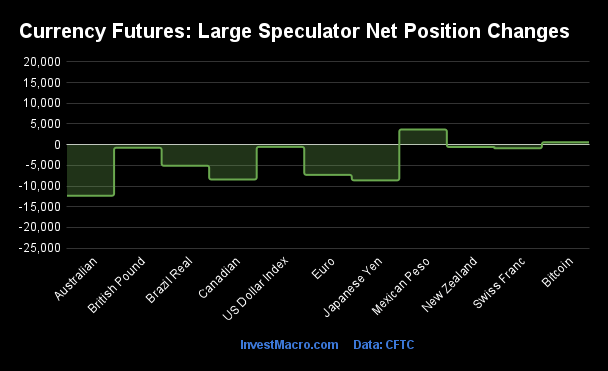
Weekly Speculator Changes led by Platinum & Palladium

The COT metals markets speculator bets were higher this week as four out of the six metals markets we cover had higher positioning while the other two markets had lower speculator contracts.

Leading the gains for the metals was Platinum (1,397 contracts) with Palladium (797 contracts), Silver (408 contracts) and Gold (247 contracts) also recording positive weeks.

The markets with declines in speculator bets for the week were Copper (-3,123 contracts) and Steel (-314 contracts).

Copper bets slide to 32-week low as prices touch lowest since November

Highlighting the COT metals data this week is the recent bearishness for the Copper speculative positions. The large speculator position in Copper futures decreased for the third straight week this week and has now dropped in five out of the past six weeks. The slide in Copper bets has taken the current net contracts standing down to a total of -24,865 contracts. This marks the most bearish level for speculators in the past 32-weeks, dating back to last September 27th.

Overall, the Copper speculator position has now been in a bearish level for eleven out of the past thirteen weeks.

Denting the sentiment for the red metal has been the weaker than expected data out of China (including imports & inflation), which is the largest importer of Copper in the world.

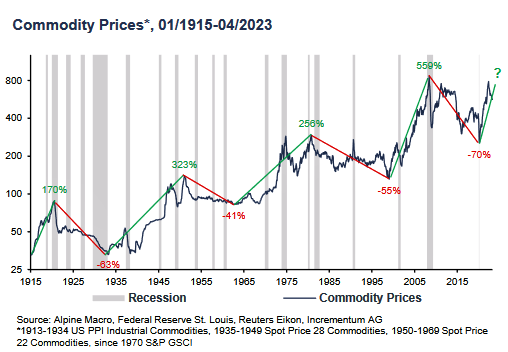
The Copper front-month futures price (US Comex futures) has been on downtrend since hitting a most recent high of $4.25 per pound in January. This week saw the price fall for a fourth straight week and close at approximately 3.73 per pound while also touching the lowest price since November. Overall, the Copper price is down about 25 percent from the post-2020 high of $4.6255 per pound that was reached in March of 2022.


Data Snapshot of Commodity Market Traders | Columns Legend
May-09-2023OIOI-IndexSpec-NetSpec-IndexCom-NetCOM-IndexSmalls-NetSmalls-Index
Gold518,95145195,81463-222,5153826,70147
Silver145,4453232,36064-46,1903813,83043
Copper194,24338-24,865619,732905,13351
Palladium13,295100-5,647135,96587-31823
Platinum74,1258628,08480-32,484264,40027


Strength Scores led by Platinum & Silver

COT Strength Scores (a normalized measure of Speculator positions over a 3-Year range, from 0 to 100 where above 80 is Extreme-Bullish and below 20 is Extreme-Bearish) showed that Platinum (80 percent) and Silver (64 percent) lead the metals markets this week. Steel (62 percent) comes in as the next highest in the weekly strength scores.

On the downside, Palladium (13 percent) comes in at the lowest strength level currently and is in Extreme-Bearish territory (below 20 percent).

Strength Statistics:
Gold (63.3 percent) vs Gold previous week (63.1 percent)
Silver (64.4 percent) vs Silver previous week (63.8 percent)
Copper (6.2 percent) vs Copper previous week (9.0 percent)
Platinum (80.4 percent) vs Platinum previous week (77.2 percent)
Palladium (13.4 percent) vs Palladium previous week (6.0 percent)
Steel (61.9 percent) vs Palladium previous week (62.8 percent)


Platinum & Silver top the 6-Week Strength Trends

COT Strength Score Trends (or move index, calculates the 6-week changes in strength scores) showed that Platinum (41 percent) and Silver (27 percent) lead the past six weeks trends for metals.

Copper (-21 percent) leads the downside trend scores currently.

Move Statistics:
Gold (6.2 percent) vs Gold previous week (16.3 percent)
Silver (27.1 percent) vs Silver previous week (40.7 percent)
Copper (-20.9 percent) vs Copper previous week (-8.4 percent)
Platinum (40.9 percent) vs Platinum previous week (39.6 percent)
Palladium (10.3 percent) vs Palladium previous week (5.3 percent)
Steel (3.9 percent) vs Steel previous week (3.4 percent)


Individual Markets:

Gold Comex Futures:

Gold Futures COT ChartThe Gold Comex Futures large speculator standing this week resulted in a net position of 195,814 contracts in the data reported through Tuesday. This was a weekly advance of 247 contracts from the previous week which had a total of 195,567 net contracts.

This week’s current strength score (the trader positioning range over the past three years, measured from 0 to 100) shows the speculators are currently Bullish with a score of 63.3 percent. The commercials are Bearish with a score of 38.0 percent and the small traders (not shown in chart) are Bearish with a score of 46.9 percent.

Gold Futures StatisticsSPECULATORSCOMMERCIALSSMALL TRADERS
– Percent of Open Interest Longs:51.325.210.0
– Percent of Open Interest Shorts:13.668.14.9
– Net Position:195,814-222,51526,701
– Gross Longs:266,472130,98552,012
– Gross Shorts:70,658353,50025,311
– Long to Short Ratio:3.8 to 10.4 to 12.1 to 1
NET POSITION TREND:
– Strength Index Score (3 Year Range Pct):63.338.046.9
– Strength Index Reading (3 Year Range):BullishBearishBearish
NET POSITION MOVEMENT INDEX:
– 6-Week Change in Strength Index:6.2-8.117.1


Silver Comex Futures:

Silver Futures COT ChartThe Silver Comex Futures large speculator standing this week resulted in a net position of 32,360 contracts in the data reported through Tuesday. This was a weekly advance of 408 contracts from the previous week which had a total of 31,952 net contracts.

This week’s current strength score (the trader positioning range over the past three years, measured from 0 to 100) shows the speculators are currently Bullish with a score of 64.4 percent. The commercials are Bearish with a score of 37.9 percent and the small traders (not shown in chart) are Bearish with a score of 43.3 percent.

Silver Futures StatisticsSPECULATORSCOMMERCIALSSMALL TRADERS
– Percent of Open Interest Longs:47.628.617.5
– Percent of Open Interest Shorts:25.360.48.0
– Net Position:32,360-46,19013,830
– Gross Longs:69,16641,63625,474
– Gross Shorts:36,80687,82611,644
– Long to Short Ratio:1.9 to 10.5 to 12.2 to 1
NET POSITION TREND:
– Strength Index Score (3 Year Range Pct):64.437.943.3
– Strength Index Reading (3 Year Range):BullishBearishBearish
NET POSITION MOVEMENT INDEX:
– 6-Week Change in Strength Index:27.1-29.429.8


Copper Grade #1 Futures:

Copper Futures COT ChartThe Copper Grade #1 Futures large speculator standing this week resulted in a net position of -24,865 contracts in the data reported through Tuesday. This was a weekly decrease of -3,123 contracts from the previous week which had a total of -21,742 net contracts.

This week’s current strength score (the trader positioning range over the past three years, measured from 0 to 100) shows the speculators are currently Bearish-Extreme with a score of 6.2 percent. The commercials are Bullish-Extreme with a score of 90.2 percent and the small traders (not shown in chart) are Bullish with a score of 50.9 percent.

Copper Futures StatisticsSPECULATORSCOMMERCIALSSMALL TRADERS
– Percent of Open Interest Longs:28.448.09.4
– Percent of Open Interest Shorts:41.237.86.8
– Net Position:-24,86519,7325,133
– Gross Longs:55,13193,21118,255
– Gross Shorts:79,99673,47913,122
– Long to Short Ratio:0.7 to 11.3 to 11.4 to 1
NET POSITION TREND:
– Strength Index Score (3 Year Range Pct):6.290.250.9
– Strength Index Reading (3 Year Range):Bearish-ExtremeBullish-ExtremeBullish
NET POSITION MOVEMENT INDEX:
– 6-Week Change in Strength Index:-20.920.9-8.4


Platinum Futures:

Platinum Futures COT ChartThe Platinum Futures large speculator standing this week resulted in a net position of 28,084 contracts in the data reported through Tuesday. This was a weekly gain of 1,397 contracts from the previous week which had a total of 26,687 net contracts.

This week’s current strength score (the trader positioning range over the past three years, measured from 0 to 100) shows the speculators are currently Bullish-Extreme with a score of 80.4 percent. The commercials are Bearish with a score of 26.3 percent and the small traders (not shown in chart) are Bearish with a score of 27.1 percent.

Platinum Futures StatisticsSPECULATORSCOMMERCIALSSMALL TRADERS
– Percent of Open Interest Longs:56.327.510.2
– Percent of Open Interest Shorts:18.471.44.2
– Net Position:28,084-32,4844,400
– Gross Longs:41,71220,4087,535
– Gross Shorts:13,62852,8923,135
– Long to Short Ratio:3.1 to 10.4 to 12.4 to 1
NET POSITION TREND:
– Strength Index Score (3 Year Range Pct):80.426.327.1
– Strength Index Reading (3 Year Range):Bullish-ExtremeBearishBearish
NET POSITION MOVEMENT INDEX:
– 6-Week Change in Strength Index:40.9-36.6-0.1


Palladium Futures:

Palladium Futures COT ChartThe Palladium Futures large speculator standing this week resulted in a net position of -5,647 contracts in the data reported through Tuesday. This was a weekly lift of 797 contracts from the previous week which had a total of -6,444 net contracts.

This week’s current strength score (the trader positioning range over the past three years, measured from 0 to 100) shows the speculators are currently Bearish-Extreme with a score of 13.4 percent. The commercials are Bullish-Extreme with a score of 87.2 percent and the small traders (not shown in chart) are Bearish with a score of 22.6 percent.

Palladium Futures StatisticsSPECULATORSCOMMERCIALSSMALL TRADERS
– Percent of Open Interest Longs:13.062.29.1
– Percent of Open Interest Shorts:55.517.311.5
– Net Position:-5,6475,965-318
– Gross Longs:1,7338,2691,211
– Gross Shorts:7,3802,3041,529
– Long to Short Ratio:0.2 to 13.6 to 10.8 to 1
NET POSITION TREND:
– Strength Index Score (3 Year Range Pct):13.487.222.6
– Strength Index Reading (3 Year Range):Bearish-ExtremeBullish-ExtremeBearish
NET POSITION MOVEMENT INDEX:
– 6-Week Change in Strength Index:10.3-10.36.7


Steel Futures Futures:

Steel Futures COT ChartThe Steel Futures large speculator standing this week resulted in a net position of -3,896 contracts in the data reported through Tuesday. This was a weekly decline of -314 contracts from the previous week which had a total of -3,582 net contracts.

This week’s current strength score (the trader positioning range over the past three years, measured from 0 to 100) shows the speculators are currently Bullish with a score of 61.9 percent. The commercials are Bearish with a score of 38.4 percent and the small traders (not shown in chart) are Bearish-Extreme with a score of 15.9 percent.

Steel Futures StatisticsSPECULATORSCOMMERCIALSSMALL TRADERS
– Percent of Open Interest Longs:12.277.10.8
– Percent of Open Interest Shorts:27.361.90.9
– Net Position:-3,8963,922-26
– Gross Longs:3,16119,929214
– Gross Shorts:7,05716,007240
– Long to Short Ratio:0.4 to 11.2 to 10.9 to 1
NET POSITION TREND:
– Strength Index Score (3 Year Range Pct):61.938.415.9
– Strength Index Reading (3 Year Range):BullishBearishBearish-Extreme
NET POSITION MOVEMENT INDEX:
– 6-Week Change in Strength Index:3.9-2.9-45.4


Article By InvestMacroReceive our weekly COT Newsletter

*COT Report: The COT data, released weekly to the public each Friday, is updated through the most recent Tuesday (data is 3 days old) and shows a quick view of how large speculators or non-commercials (for-profit traders) were positioned in the futures markets.

The CFTC categorizes trader positions according to commercial hedgers (traders who use futures contracts for hedging as part of the business), non-commercials (large traders who speculate to realize trading profits) and nonreportable traders (usually small traders/speculators) as well as their open interest (contracts open in the market at time of reporting). See CFTC criteria here.

COT Speculator Extremes: Peso, 2-Year, 5-Year & SP500 lead weekly Bullish & Bearish Positions

By InvestMacro

The latest update for the weekly Commitment of Traders (COT) report was released by the Commodity Futures Trading Commission (CFTC) on Friday for data ending on May 9th.

This weekly Extreme Positions report highlights the Most Bullish and Most Bearish Positions for the speculator category. Extreme positioning in these markets can foreshadow strong moves in the underlying market.

To signify an extreme position, we use the Strength Index (also known as the COT Index) of each instrument, a common method of measuring COT data. The Strength Index is simply a comparison of current trader positions against the range of positions over the previous 3 years. We use over 80 percent as extremely bullish and under 20 percent as extremely bearish. (Compare Strength Index scores across all markets in the data table or cot leaders table)


Speculators or Non-Commercials Notes:

Speculators, classified as non-commercial traders by the CFTC, are made up of large commodity funds, hedge funds and other significant for-profit participants. The Specs are generally regarded as trend-followers in their behavior towards price action – net speculator bets and prices tend to go in the same directions. These traders often look to buy when prices are rising and sell when prices are falling. To illustrate this point, many times speculator contracts can be found at their most extremes (bullish or bearish) when prices are also close to their highest or lowest levels.

These extreme levels can be dangerous for the large speculators as the trade is most crowded, there is less trading ammunition still sitting on the sidelines to push the trend further and prices have moved a significant distance. When the trend becomes exhausted, some speculators take profits while others look to also exit positions when prices fail to continue in the same direction. This process usually plays out over many months to years and can ultimately create a reverse effect where prices start to fall and speculators start a process of selling when prices are falling.


Here Are This Week’s Most Bullish Speculator Positions:

Mexican Peso


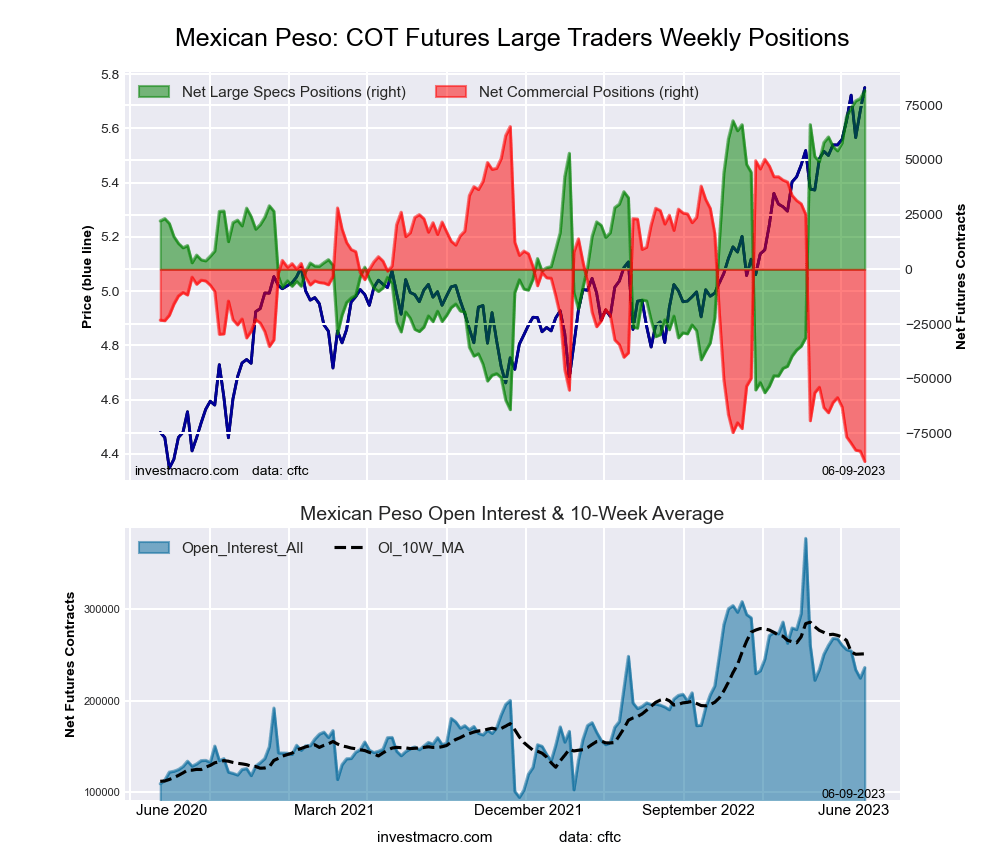
The Mexican Peso speculator position comes in as the most bullish extreme standing this week. The Mexican Peso speculator level is currently at a 100.0 percent score of its 3-year range.

The six-week trend for the percent strength score totaled 15.5 this week. The overall net speculator position was a total of 70,032 net contracts this week with a boost of 12,322 contract in the weekly speculator bets.


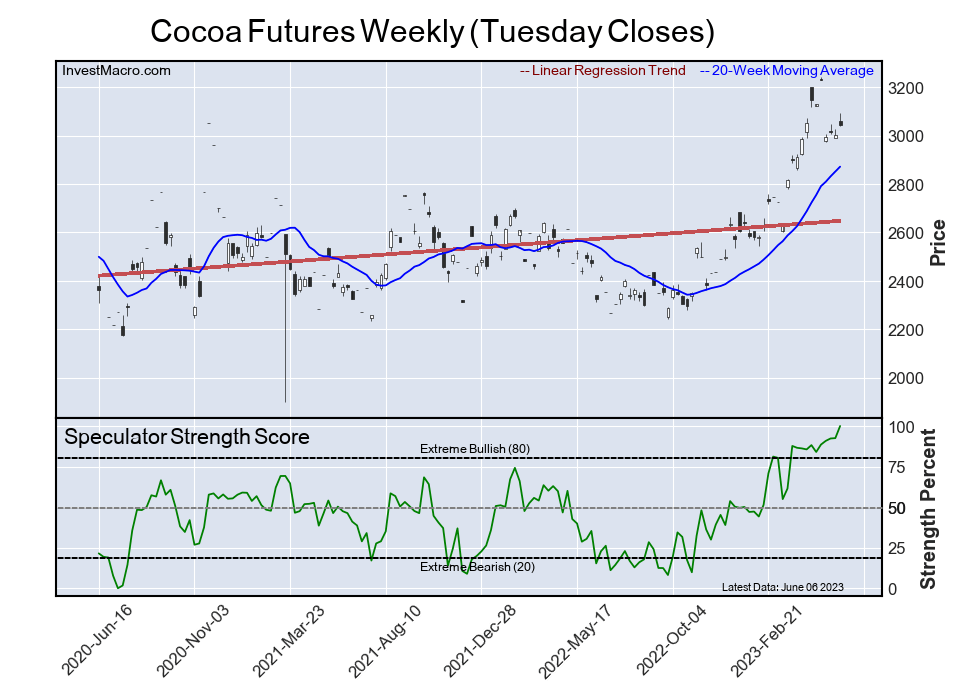
Cocoa Futures

The Cocoa Futures speculator position comes next in the extreme standings this week. The Cocoa Futures speculator level is now at a 100.0 percent score of its 3-year range.

The six-week trend for the percent strength score was 1.0 this week. The speculator position registered 62,029 net contracts this week with a weekly rise of 4,078 contracts in speculator bets.


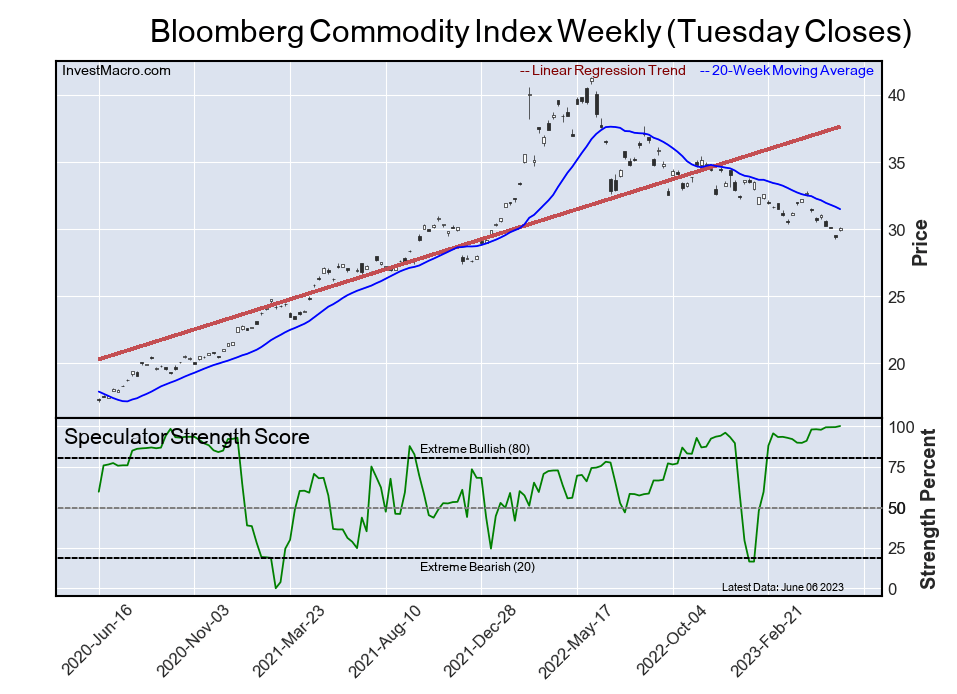
Bloomberg Commodity Index


The Bloomberg Commodity Index speculator position comes in third this week in the extreme standings. The Bloomberg Commodity Index speculator level resides at a 99.4 percent score of its 3-year range.

The six-week trend for the speculator strength score came in at 5.9 this week. The overall speculator position was -2,101 net contracts this week with a change of -82 contracts in the weekly speculator bets.


Sugar


The Sugar speculator position comes up number four in the extreme standings this week. The Sugar speculator level is at a 88.7 percent score of its 3-year range.

The six-week trend for the speculator strength score totaled a change of 19.0 this week. The overall speculator position was 276,610 net contracts this week with a gain of 9,263 contracts in the speculator bets.


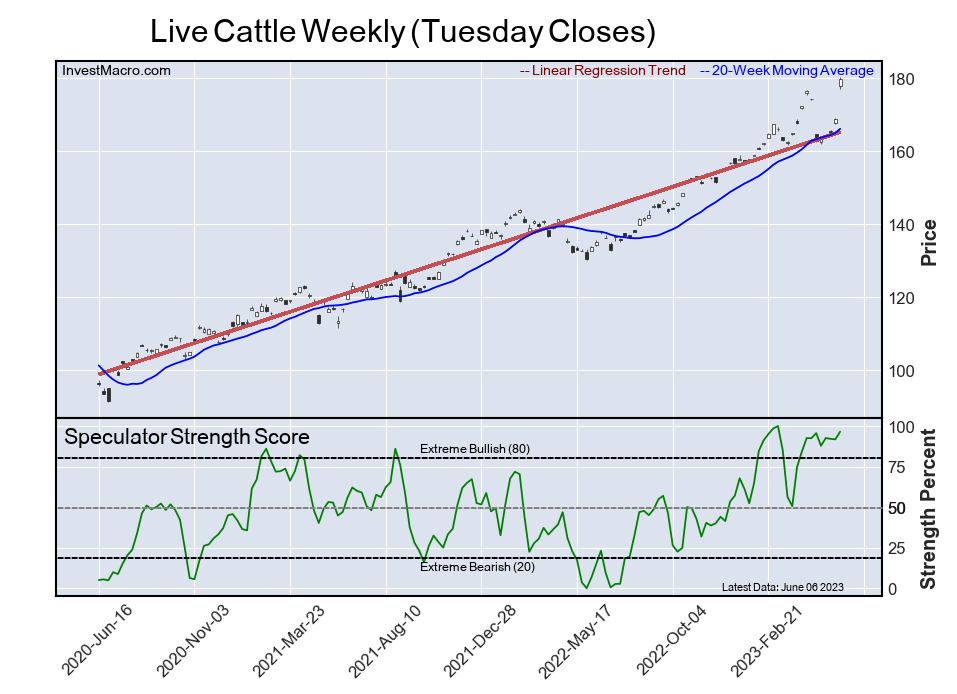
Live Cattle

The Live Cattle speculator position rounds out the top five in this week’s bullish extreme standings. The Live Cattle speculator level sits at a 87.8 percent score of its 3-year range. The six-week trend for the speculator strength score was 37.2 this week.

The speculator position was 97,837 net contracts this week with a decline of -6,949 contracts in the weekly speculator bets.


This Week’s Most Bearish Speculator Positions:

5-Year Bond


The 5-Year Bond speculator position comes in as the most bearish extreme standing this week. The 5-Year speculator level is at a 0.0 percent score of its 3-year range.

The six-week trend for the speculator strength score was -22.7 this week. The overall speculator position was -910,642 net contracts this week with a edge lower by -412 contracts in the speculator bets.


S&P500 Mini

The S&P500 Mini speculator position comes in next for the most bearish extreme standing on the week. The S&P500 speculator level is at a 0.0 percent score of its 3-year range.

The six-week trend for the speculator strength score was -24.7 this week. The speculator position was -376,023 net contracts this week with a drop of -20,612 contracts in the weekly speculator bets.


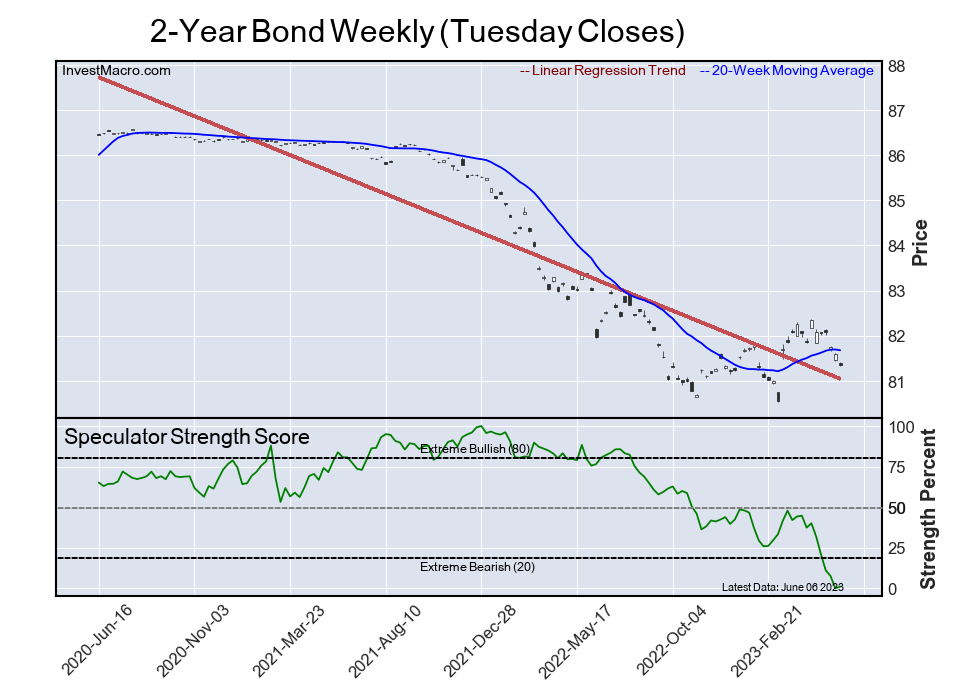
2-Year Bond


The 2-Year Bond speculator position comes in as third most bearish extreme standing of the week. The 2-Year Note speculator level resides at a 0.0 percent score of its 3-year range.

The six-week trend for the speculator strength score was -26.8 this week. The overall speculator position was -749,885 net contracts this week with a sharp decline of -116,409 contracts in the speculator bets.


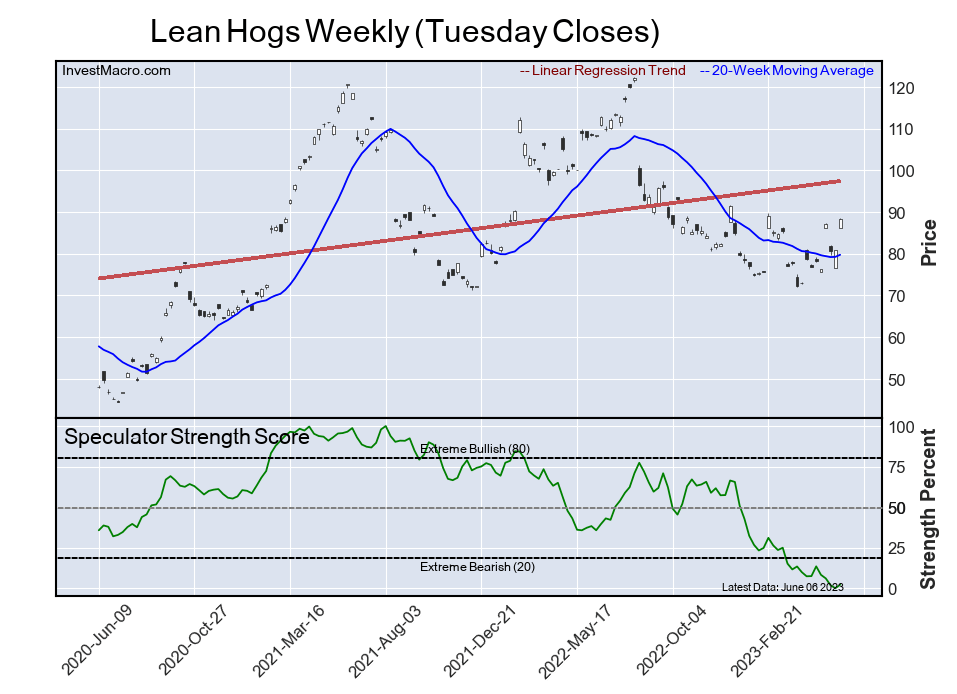
Lean Hogs

The Lean Hogs speculator position comes in as this week’s fourth most bearish extreme standing. The Lean Hogs speculator level is at a 1.0 percent score of its 3-year range.

The six-week trend for the speculator strength score was -3.6 this week. The speculator position was -26,075 net contracts this week with a decrease of -6,381 contracts in the weekly speculator bets.


Ultra 10-Year U.S. T-Note


Finally, the Ultra 10-Year U.S. T-Note speculator position comes in as the fifth most bearish extreme standing for this week. The Ultra 10-Year speculator level is at a 1.4 percent score of its 3-year range.

The six-week trend for the speculator strength score was -12.2 this week. The speculator position was -211,598 net contracts this week with a change of 6,690 contracts in the weekly speculator bets.


Article By InvestMacroReceive our weekly COT Newsletter

*COT Report: The COT data, released weekly to the public each Friday, is updated through the most recent Tuesday (data is 3 days old) and shows a quick view of how large speculators or non-commercials (for-profit traders) were positioned in the futures markets.

The CFTC categorizes trader positions according to commercial hedgers (traders who use futures contracts for hedging as part of the business), non-commercials (large traders who speculate to realize trading profits) and nonreportable traders (usually small traders/speculators) as well as their open interest (contracts open in the market at time of reporting). See CFTC criteria here.

Bonds Speculators drop 2-Year & 5-Year bets to record lows

By InvestMacro

Here are the latest charts and statistics for the Commitment of Traders (COT) reports data published by the Commodities Futures Trading Commission (CFTC).

The latest COT data is updated through Tuesday May 9th and shows a quick view of how large traders (for-profit speculators and commercial hedgers) were positioned in the futures markets.

Weekly Speculator Changes led by SOFR 3-Months & 10-Year Bonds

The COT bond market speculator bets were higher this week as five out of the nine bond markets we cover had higher positioning while the other four markets had lower speculator contracts.

Leading the gains for the bond markets was the SOFR 3-Months (172,071 contracts) with the 10-Year Bonds (17,449 contracts), the US Treasury Bonds (16,285 contracts), the Ultra 10-Year Bonds (6,690 contracts) and the Eurodollar (257 contracts) also showing positive weeks.

The bond markets with declines in speculator bets for the week were the 2-Year Bonds (-116,409 contracts), the Fed Funds (-35,180 contracts), the 5-Year Bonds (-412 contracts) and the Ultra Treasury Bonds (-1,713 contracts) also seeing lower bets on the week.

Speculators drop 2-Year and 5-Year Bonds bets to record lows

Highlighting the COT bonds data is this week’s record bearish speculator positioning in both the 2-Year and the 5-Year bonds.

The large speculators in the 2-Year bonds sharply added to their bearish bets for a second straight week this week and for the third time in the past four weeks. Speculators have now added a total of -253,044 contracts to the bearish position over the past four weeks alone. This weakness in sentiment has pushed the overall bearish standing to the highest level on record at a total of -749,885 contracts, according to CFTC data that goes back to 1990. This record bearish position surpassed the previous one that was recently registered on February 14th at a total of -696,686 contracts.

The 5-Year Bond speculator positions have also dropped their bets to a record low position this week and have done so for three straight weeks in succession. The 5-Year speculators have added a whopping -353,430 contracts to their net positions over the past eight weeks. This week’s record bearish position is at a total of -910,642 contracts which is the all-time low dating back to 1988, according to the CFTC.

Despite these all-time lows in both the 2-Year and 5-Years positions, their respective futures prices have not followed lower. The 2-Year futures price closed this week at 103.05 and is almost 2 percent higher than the low that was reached in early March at 101.09. Meanwhile, the 5-Year futures price closed at 110.01 this week and is approximately 4.35 percent higher than the low that was hit in October at 105.14. Overall in the longer view, the 5-Year price is down by approximately 13 percent from the highs of 2021 while the 2-Year prices are down by about 6.5 percent from 2021.

The outlook for both of these bonds will depend very much on the path forward for the benchmark interest rate controlled by the US Federal Reserve and how the economy evolves. The latest forecast for the next Fed meeting shows a high likelihood of an interest rate pause (almost 85 percent per the CME Fed tool). This pause would be a positive for bond prices while if an economic recession does take place, bond prices would likely be a place for safe haven investments. A recession could also prompt a Fed interest rate cut (bond price positive). However, further upside in inflation and followed by more Fed hikes would be a negative for bonds. The US debt ceiling is also an outlier risk event coming up that needs to be kept in mind as well.


Data Snapshot of Bond Market Traders | Columns Legend
May-09-2023OIOI-IndexSpec-NetSpec-IndexCom-NetCOM-IndexSmalls-NetSmalls-Index
Eurodollar632,2420-55,1107358,41423-3,30499
FedFunds1,502,28147-75,31730104,07073-28,75335
2-Year3,007,292100-749,8850681,29110068,59489
Long T-Bond1,189,41454-73,129612,3551170,774100
10-Year4,510,018100-731,6982641,5959090,103100
5-Year5,086,319100-910,6420872,3029938,34092


Strength Scores led by Eurodollar & US Treasury Bonds

COT Strength Scores (a normalized measure of Speculator positions over a 3-Year range, from 0 to 100 where above 80 is Extreme-Bullish and below 20 is Extreme-Bearish) showed that the Eurodollar (73 percent) and the US Treasury Bonds (61 percent) lead the bond markets this week. The SOFR 3-Months (58 percent) comes in as the next highest in the weekly strength scores.

On the downside, the 5-Year Bonds (0 percent), the 2-Year Bonds (0 percent), the Ultra 10-Year Bonds (1 percent), the 10-Year Bonds (2 percent) and the Ultra US Treasury Bond (18.5 percent) come in at the lowest strength levels currently and are all in Extreme-Bearish territory (below 20 percent).

Strength Statistics:
Fed Funds (30.3 percent) vs Fed Funds previous week (34.7 percent)
2-Year Bond (0.0 percent) vs 2-Year Bond previous week (13.9 percent)
5-Year Bond (0.0 percent) vs 5-Year Bond previous week (0.0 percent)
10-Year Bond (1.9 percent) vs 10-Year Bond previous week (0.0 percent)
Ultra 10-Year Bond (1.4 percent) vs Ultra 10-Year Bond previous week (0.0 percent)
US Treasury Bond (60.8 percent) vs US Treasury Bond previous week (55.5 percent)
Ultra US Treasury Bond (18.5 percent) vs Ultra US Treasury Bond previous week (19.2 percent)
Eurodollar (72.6 percent) vs Eurodollar previous week (72.6 percent)
SOFR 3-Months (57.8 percent) vs SOFR 3-Months previous week (43.9 percent)


Eurodollar & Fed Funds top the 6-Week Strength Trends

COT Strength Score Trends (or move index, calculates the 6-week changes in strength scores) showed that the Eurodollar (15 percent) and the Fed Funds (12 percent) lead the past six weeks trends for bonds. The Ultra Treasury Bonds (9 percent) and the US Treasury Bond (6 percent) are the next positive movers in the latest trends data.

The SOFR 3-Months (-33 percent) and the 10-Year Bonds (-28 percent) lead the downside trend scores currently with the 2-Year Bonds (-27 percent) and the 5-Year Bonds (-23 percent) following next with lower trend scores.

Strength Trend Statistics:
Fed Funds (11.5 percent) vs Fed Funds previous week (-1.9 percent)
2-Year Bond (-26.8 percent) vs 2-Year Bond previous week (-20.2 percent)
5-Year Bond (-22.7 percent) vs 5-Year Bond previous week (-27.7 percent)
10-Year Bond (-28.0 percent) vs 10-Year Bond previous week (-19.1 percent)
Ultra 10-Year Bond (-12.2 percent) vs Ultra 10-Year Bond previous week (-12.2 percent)
US Treasury Bond (5.9 percent) vs US Treasury Bond previous week (3.3 percent)
Ultra US Treasury Bond (9.0 percent) vs Ultra US Treasury Bond previous week (19.2 percent)
Eurodollar (14.7 percent) vs Eurodollar previous week (14.9 percent)
SOFR 3-Months (-32.9 percent) vs SOFR 3-Months previous week (-43.9 percent)


Individual Bond Markets:

3-Month Eurodollars Futures:

Eurodollar Bonds Futures COT ChartThe 3-Month Eurodollars large speculator standing this week resulted in a net position of -55,110 contracts in the data reported through Tuesday. This was a weekly advance of 257 contracts from the previous week which had a total of -55,367 net contracts.

This week’s current strength score (the trader positioning range over the past three years, measured from 0 to 100) shows the speculators are currently Bullish with a score of 72.6 percent. The commercials are Bearish with a score of 23.1 percent and the small traders (not shown in chart) are Bullish-Extreme with a score of 98.5 percent.

3-Month Eurodollars StatisticsSPECULATORSCOMMERCIALSSMALL TRADERS
– Percent of Open Interest Longs:24.963.210.5
– Percent of Open Interest Shorts:33.653.911.1
– Net Position:-55,11058,414-3,304
– Gross Longs:157,203399,29766,638
– Gross Shorts:212,313340,88369,942
– Long to Short Ratio:0.7 to 11.2 to 11.0 to 1
NET POSITION TREND:
– Strength Index Score (3 Year Range Pct):72.623.198.5
– Strength Index Reading (3 Year Range):BullishBearishBullish-Extreme
NET POSITION MOVEMENT INDEX:
– 6-Week Change in Strength Index:14.7-18.038.2


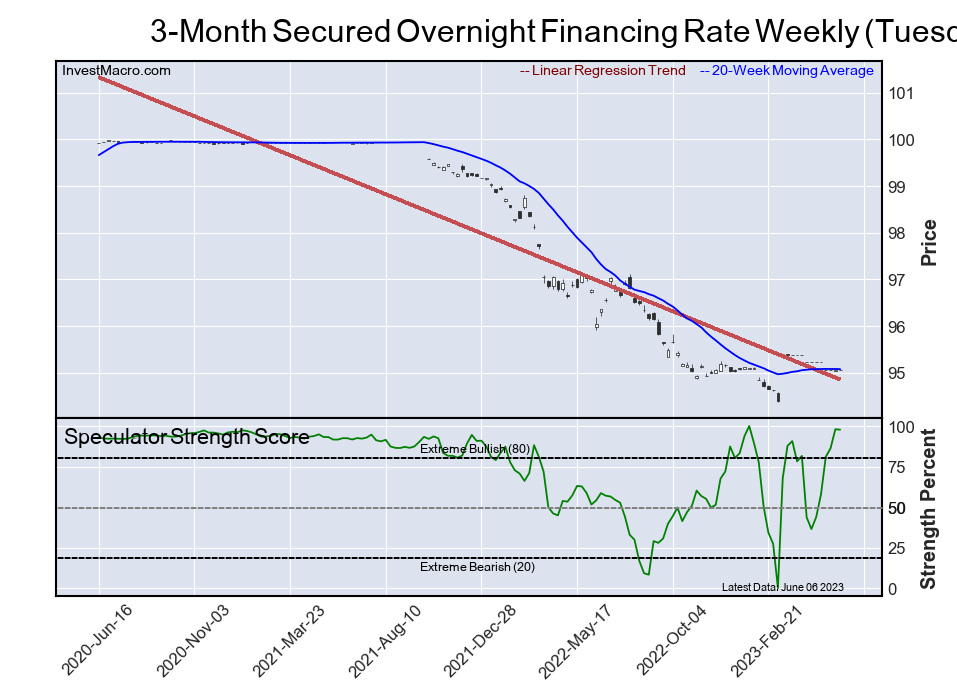
Secured Overnight Financing Rate (3-Month) Futures:

SOFR 3-Months Bonds Futures COT ChartThe Secured Overnight Financing Rate (3-Month) large speculator standing this week resulted in a net position of -452,828 contracts in the data reported through Tuesday. This was a weekly advance of 172,071 contracts from the previous week which had a total of -624,899 net contracts.

This week’s current strength score (the trader positioning range over the past three years, measured from 0 to 100) shows the speculators are currently Bullish with a score of 57.8 percent. The commercials are Bearish with a score of 42.5 percent and the small traders (not shown in chart) are Bullish-Extreme with a score of 85.3 percent.

SOFR 3-Months StatisticsSPECULATORSCOMMERCIALSSMALL TRADERS
– Percent of Open Interest Longs:14.362.70.4
– Percent of Open Interest Shorts:18.958.10.5
– Net Position:-452,828457,566-4,738
– Gross Longs:1,408,6336,178,97642,103
– Gross Shorts:1,861,4615,721,41046,841
– Long to Short Ratio:0.8 to 11.1 to 10.9 to 1
NET POSITION TREND:
– Strength Index Score (3 Year Range Pct):57.842.585.3
– Strength Index Reading (3 Year Range):BullishBearishBullish-Extreme
NET POSITION MOVEMENT INDEX:
– 6-Week Change in Strength Index:-32.932.80.3


30-Day Federal Funds Futures:

Federal Funds 30-Day Bonds Futures COT ChartThe 30-Day Federal Funds large speculator standing this week resulted in a net position of -75,317 contracts in the data reported through Tuesday. This was a weekly fall of -35,180 contracts from the previous week which had a total of -40,137 net contracts.

This week’s current strength score (the trader positioning range over the past three years, measured from 0 to 100) shows the speculators are currently Bearish with a score of 30.3 percent. The commercials are Bullish with a score of 72.5 percent and the small traders (not shown in chart) are Bearish with a score of 34.6 percent.

30-Day Federal Funds StatisticsSPECULATORSCOMMERCIALSSMALL TRADERS
– Percent of Open Interest Longs:4.078.42.3
– Percent of Open Interest Shorts:9.071.54.2
– Net Position:-75,317104,070-28,753
– Gross Longs:59,3671,178,44734,793
– Gross Shorts:134,6841,074,37763,546
– Long to Short Ratio:0.4 to 11.1 to 10.5 to 1
NET POSITION TREND:
– Strength Index Score (3 Year Range Pct):30.372.534.6
– Strength Index Reading (3 Year Range):BearishBullishBearish
NET POSITION MOVEMENT INDEX:
– 6-Week Change in Strength Index:11.5-8.5-45.8


2-Year Treasury Note Futures:

2-Year Treasury Bonds Futures COT ChartThe 2-Year Treasury Note large speculator standing this week resulted in a net position of -749,885 contracts in the data reported through Tuesday. This was a weekly lowering of -116,409 contracts from the previous week which had a total of -633,476 net contracts.

This week’s current strength score (the trader positioning range over the past three years, measured from 0 to 100) shows the speculators are currently Bearish-Extreme with a score of 0.0 percent. The commercials are Bullish-Extreme with a score of 100.0 percent and the small traders (not shown in chart) are Bullish-Extreme with a score of 88.7 percent.

2-Year Treasury Note StatisticsSPECULATORSCOMMERCIALSSMALL TRADERS
– Percent of Open Interest Longs:8.882.87.4
– Percent of Open Interest Shorts:33.860.25.1
– Net Position:-749,885681,29168,594
– Gross Longs:266,0702,490,414221,650
– Gross Shorts:1,015,9551,809,123153,056
– Long to Short Ratio:0.3 to 11.4 to 11.4 to 1
NET POSITION TREND:
– Strength Index Score (3 Year Range Pct):0.0100.088.7
– Strength Index Reading (3 Year Range):Bearish-ExtremeBullish-ExtremeBullish-Extreme
NET POSITION MOVEMENT INDEX:
– 6-Week Change in Strength Index:-26.824.322.7


5-Year Treasury Note Futures:

5-Year Treasury Bonds Futures COT ChartThe 5-Year Treasury Note large speculator standing this week resulted in a net position of -910,642 contracts in the data reported through Tuesday. This was a weekly reduction of -412 contracts from the previous week which had a total of -910,230 net contracts.

This week’s current strength score (the trader positioning range over the past three years, measured from 0 to 100) shows the speculators are currently Bearish-Extreme with a score of 0.0 percent. The commercials are Bullish-Extreme with a score of 99.1 percent and the small traders (not shown in chart) are Bullish-Extreme with a score of 91.5 percent.

5-Year Treasury Note StatisticsSPECULATORSCOMMERCIALSSMALL TRADERS
– Percent of Open Interest Longs:9.481.57.1
– Percent of Open Interest Shorts:27.364.46.3
– Net Position:-910,642872,30238,340
– Gross Longs:477,7674,146,935361,166
– Gross Shorts:1,388,4093,274,633322,826
– Long to Short Ratio:0.3 to 11.3 to 11.1 to 1
NET POSITION TREND:
– Strength Index Score (3 Year Range Pct):0.099.191.5
– Strength Index Reading (3 Year Range):Bearish-ExtremeBullish-ExtremeBullish-Extreme
NET POSITION MOVEMENT INDEX:
– 6-Week Change in Strength Index:-22.725.4-4.3


10-Year Treasury Note Futures:

10-Year Treasury Notes Bonds Futures COT ChartThe 10-Year Treasury Note large speculator standing this week resulted in a net position of -731,698 contracts in the data reported through Tuesday. This was a weekly rise of 17,449 contracts from the previous week which had a total of -749,147 net contracts.

This week’s current strength score (the trader positioning range over the past three years, measured from 0 to 100) shows the speculators are currently Bearish-Extreme with a score of 1.9 percent. The commercials are Bullish-Extreme with a score of 90.4 percent and the small traders (not shown in chart) are Bullish-Extreme with a score of 100.0 percent.

10-Year Treasury Note StatisticsSPECULATORSCOMMERCIALSSMALL TRADERS
– Percent of Open Interest Longs:10.078.19.4
– Percent of Open Interest Shorts:26.363.97.4
– Net Position:-731,698641,59590,103
– Gross Longs:453,0773,522,275425,427
– Gross Shorts:1,184,7752,880,680335,324
– Long to Short Ratio:0.4 to 11.2 to 11.3 to 1
NET POSITION TREND:
– Strength Index Score (3 Year Range Pct):1.990.4100.0
– Strength Index Reading (3 Year Range):Bearish-ExtremeBullish-ExtremeBullish-Extreme
NET POSITION MOVEMENT INDEX:
– 6-Week Change in Strength Index:-28.022.512.9


Ultra 10-Year Notes Futures:

Ultra 10-Year Treasury Notes Bonds Futures COT ChartThe Ultra 10-Year Notes large speculator standing this week resulted in a net position of -211,598 contracts in the data reported through Tuesday. This was a weekly advance of 6,690 contracts from the previous week which had a total of -218,288 net contracts.

This week’s current strength score (the trader positioning range over the past three years, measured from 0 to 100) shows the speculators are currently Bearish-Extreme with a score of 1.4 percent. The commercials are Bullish-Extreme with a score of 95.0 percent and the small traders (not shown in chart) are Bullish with a score of 71.1 percent.

Ultra 10-Year Notes StatisticsSPECULATORSCOMMERCIALSSMALL TRADERS
– Percent of Open Interest Longs:9.279.210.1
– Percent of Open Interest Shorts:21.962.214.4
– Net Position:-211,598283,856-72,258
– Gross Longs:154,3581,326,293169,295
– Gross Shorts:365,9561,042,437241,553
– Long to Short Ratio:0.4 to 11.3 to 10.7 to 1
NET POSITION TREND:
– Strength Index Score (3 Year Range Pct):1.495.071.1
– Strength Index Reading (3 Year Range):Bearish-ExtremeBullish-ExtremeBullish
NET POSITION MOVEMENT INDEX:
– 6-Week Change in Strength Index:-12.211.14.9


US Treasury Bonds Futures:

US Year Treasury Notes Long Bonds Futures COT ChartThe US Treasury Bonds large speculator standing this week resulted in a net position of -73,129 contracts in the data reported through Tuesday. This was a weekly increase of 16,285 contracts from the previous week which had a total of -89,414 net contracts.

This week’s current strength score (the trader positioning range over the past three years, measured from 0 to 100) shows the speculators are currently Bullish with a score of 60.8 percent. The commercials are Bearish-Extreme with a score of 11.4 percent and the small traders (not shown in chart) are Bullish-Extreme with a score of 100.0 percent.

US Treasury Bonds StatisticsSPECULATORSCOMMERCIALSSMALL TRADERS
– Percent of Open Interest Longs:6.576.815.4
– Percent of Open Interest Shorts:12.676.69.4
– Net Position:-73,1292,35570,774
– Gross Longs:76,938913,035182,961
– Gross Shorts:150,067910,680112,187
– Long to Short Ratio:0.5 to 11.0 to 11.6 to 1
NET POSITION TREND:
– Strength Index Score (3 Year Range Pct):60.811.4100.0
– Strength Index Reading (3 Year Range):BullishBearish-ExtremeBullish-Extreme
NET POSITION MOVEMENT INDEX:
– 6-Week Change in Strength Index:5.9-6.90.8


Ultra US Treasury Bonds Futures:

Ultra US Year Treasury Notes Long Bonds Futures COT ChartThe Ultra US Treasury Bonds large speculator standing this week resulted in a net position of -400,519 contracts in the data reported through Tuesday. This was a weekly decrease of -1,713 contracts from the previous week which had a total of -398,806 net contracts.

This week’s current strength score (the trader positioning range over the past three years, measured from 0 to 100) shows the speculators are currently Bearish-Extreme with a score of 18.5 percent. The commercials are Bullish with a score of 71.9 percent and the small traders (not shown in chart) are Bullish-Extreme with a score of 99.4 percent.

Ultra US Treasury Bonds StatisticsSPECULATORSCOMMERCIALSSMALL TRADERS
– Percent of Open Interest Longs:6.181.312.2
– Percent of Open Interest Shorts:33.558.08.1
– Net Position:-400,519340,88159,638
– Gross Longs:89,7061,188,568178,139
– Gross Shorts:490,225847,687118,501
– Long to Short Ratio:0.2 to 11.4 to 11.5 to 1
NET POSITION TREND:
– Strength Index Score (3 Year Range Pct):18.571.999.4
– Strength Index Reading (3 Year Range):Bearish-ExtremeBullishBullish-Extreme
NET POSITION MOVEMENT INDEX:
– 6-Week Change in Strength Index:9.0-11.71.6


Article By InvestMacroReceive our weekly COT Newsletter

*COT Report: The COT data, released weekly to the public each Friday, is updated through the most recent Tuesday (data is 3 days old) and shows a quick view of how large speculators or non-commercials (for-profit traders) were positioned in the futures markets.

The CFTC categorizes trader positions according to commercial hedgers (traders who use futures contracts for hedging as part of the business), non-commercials (large traders who speculate to realize trading profits) and nonreportable traders (usually small traders/speculators) as well as their open interest (contracts open in the market at time of reporting). See CFTC criteria here.

Week Ahead: 3 Reasons To Watch USDJPY

By ForexTime 

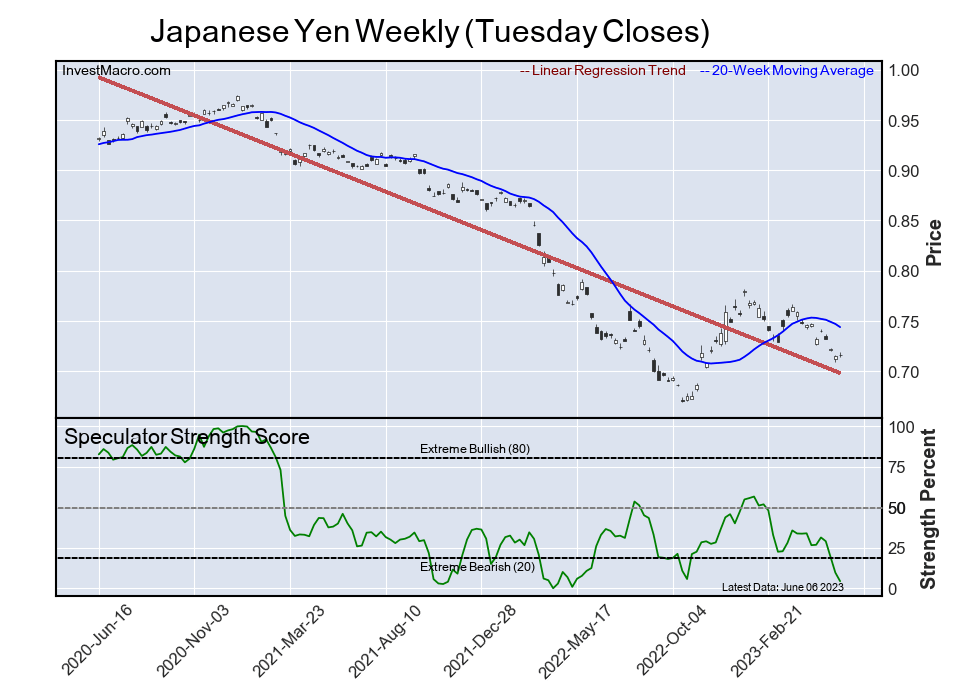
The Japanese Yen has appreciated against every single G10 currency since the start of May, with the USDJPY dropping over 1% month-to-date.

But before we take a deep dive into what forces may boost or weaken the yen, let’s have a glance at the list of key economic reports and events that could influence currency markets next week:

Monday, May 15

  • EUR: Eurozone industrial production
  • JPY: Japan April PPI
  • USD: Empire Manufacturing, Atlanta Fed President Raphael Bostic speech
  • GBP: Bank of England chief economist Huw Pill speech

Tuesday, May 16

  • CAD: Canada April CPI
  • CNY: China retail sales, industrial production
  • EUR: Eurozone Q1 GDP, Germany ZEW survey expectations
  • GBP: UK jobless claims, unemployment
  • USD: US April retail sales, industrial production, Fed speech

Wednesday, May 17

  • EUR: Eurozone April CPI
  • JPY: Japan Q1 GDP, Industrial production
  • GBP: BoE Governor Andrew Bailey speech

Thursday, May 18  

  • AUD: Unemployment change
  • USD: Initial jobless claims, existing home sales

Friday, May 19  

  • CAD: Canada March retail sales
  • JPY: Japan April CPI
  • EUR: ECB President Christine Lagarde speech
  • USD: New York Fed President John Williams speech
  • G7 leaders meet in Hiroshima

Now, here are 3 reasons why we’re keeping a close eye on the USDJPY:

  1. Top tier Japan data

The new Bank of Japan (BoJ) Governor Kazuo Ueda recently mentioned that the BoJ would start unwinding its monetary easing once the 2% inflation target can be achieved in a sustainable and stable manner.

This could add more flavour to the incoming data, with any whiff or hint of a potential policy pivot in the future rocking FX markets. It may be wise to keep a close eye on:

  • Japan Q1 2023 GDP report due on Wednesday, 17th May.

Markets are forecasting GDP to expand 0.8% quarter on quarter in annualized terms, up from a 0.1% expansion in the final quarter of 2022. A report that meets or exceeds expectations could boost confidence in Japan’s economic recovery, providing an argument for the BoJ to evaluate and potentially tweak its current stimulus policy. However, a disappointing GDP print could provide more evidence that the current recovery remains weak, keeping BoJ doves in power.

  • Japan April CPI report due on Friday, May 19th

The annual inflation is expected to expand to 3.5% in April from the 3.2% witnessed in the previous month. Regarding the core CPI excluding fresh food, this is expected to jump 3.4% year-on-year, up from the 3.1% rise in March.  Looking at the core CPI excluding both fresh food and energy, markets are forecasting this to rise 4.2%, a noticeable rise from the 3.8% in the prior month.

Ultimately, more signs of rising inflationary pressures could fuel speculation around the BoJ unwinding its ultra-loose monetary policy. Traders are currently pricing in a 72% probability of a 10-basis point hike by the December BoJ meeting, it will be interesting to see how the incoming data influences expectations.

  1. More clues about the Fed’s next move

Investors will be keeping an eye on fresh clues on the Fed’s next move, especially after the annual increase in US inflation slowed to below 5% in April for the first time in two years.

  • Fed speeches

A chorus of Fed speakers will be under the spotlight ranging from Rachael Bostic, to Loretta Mester and John Williams among others. With annual US inflation cooling, it will be interesting to hear what policymakers have to say. Any dovish remarks and more hints of the Fed pausing hikes could weaken the dollar, dragging the USDJPY lower.

  • US data cocktail

Much attention will be directed towards the latest US retail sales, industrial production and US weekly initial jobless claims, especially after the Fed stressed that incoming data would influence monetary policy decisions. A disappointing set of reports may further dampen confidence over the US economy and support expectations around the Fed cutting rates down the road. If the figures print above market forecasts, it may rekindle speculation around the Fed keeping rates higher for longer.

  1. Major USDJPY breakout on the horizon

The USDJPY remains trapped within a 200-pip range on the daily charts.

Although prices seem to be respecting a bullish channel, a fresh fundamental spark is needed before the trend resumes or reverses. A strong breakout and daily close above 135.50 could open a path toward major resistance around the 137.80/138.00 regions. Should prices slip below the 133.50 support, the USDJPY could tumble towards 132.90 and 131.20, respectively.

At the time of writing Bloomberg’s FX model forecasts a 73% chance that USDJPY will trade within the 132.84 – 136.40 range over the upcoming week.

Zooming out to the monthly timeframe, strong resistance can be found at 138.00 and support at 130.00. A move back below 133.50 could signal a decline toward 130.00 and 127.20, respectively. Should 138.00 prove to be unreliable resistance, this could signal an incline back toward 149.00 in the medium to longer term.


Forex-Time-LogoArticle by ForexTime
ForexTime Ltd (FXTM) is an award winning international online forex broker regulated by CySEC 185/12 www.forextime.com

US CPI: Brace! Brace! Markets set to get turbulent this summer: deVere CEO

By George Prior

Markets are going to get volatile this summer as investors ramp up speculation about the US Federal Reserve’s interest rate policy as fresh inflation data is released, warns the CEO of one of the world’s largest independent financial advisory, asset management and fintech organizations.

The warning from deVere Group’s Nigel Green comes as the US government releases the consumer price index for April on Wednesday, showing that US CPI fell to 4.9%.

He says: “The US CPI data is out and, at 4.9%, came in lower than expectations.

“Investors will be asking ‘Where do we go from here?’

“Many senior analysts will now insist that this will be enough for the Federal Reserve to pivot at their meeting in June and pause the hiking agenda.

“Some will go further and argue that the central banks will cut rates as early as July.

“Others, however, believe that the Fed will remain cautious about inflation flaring up again and that officials will ultimately insist upon at least another interest rate hike. This could cause jitters in the markets as some investors, concerned about short-term profits, will move into panic-selling mode.”

He continues: “What we do know for certain are two things.

“First, speculation is going to increase and that this triggers market volatility. Investors should brace for a turbulent summer fuelled by uncertainty.

“Second, the US economy is cooling quicker than had been anticipated.  We put this down to the Fed being too aggressive with their rate hikes.

“As I said last week, the failing Fed made another mistake with the latest interest rate hike, which could push the world’s largest economy not only into a short-term but a longer-term recession. Clearly, this would not only be a huge issue for the US, but the global economy too.”

The deVere CEO goes on to add: “The reality is investors must be vigilant and not become complacent due to the potential of no more imminent hikes and/or the possibility of rate cuts.

“Plus, we have the Republicans and Democrats failing to agree on to how to deal with the major issue of the US debt crisis. Last time this happened we had a 20% drop in the market.

“It’s essential for investors to take good advice and realise that in a fast-changing world the underlying importance of being in the right sectors at the right time still applies, in fact more now than ever.”

He concludes: “We expect markets to be in for a wild ride this summer. But, as ever, where there’s volatility, there is also considerable opportunity.”

About:

deVere Group is one of the world’s largest independent advisors of specialist global financial solutions to international, local mass affluent, and high-net-worth clients.  It has a network of more than 70 offices across the world, over 80,000 clients and $12bn under advisement.

Mid-Week Technical Outlook: Breakouts

By ForexTime 

Today’s big event and potential market shaker will be the latest US inflation data which could offer fresh insight into the Federal Reserve’s next move.

As the countdown to the April CPI report enters its final hours, here are a selection of technical setups to keep an eye on.

Dollar Index trapped within range

After swinging within a range over the past few weeks, could the Dollar Index be gearing up for a breakout? Support can be found at 100.72 and resistance at 102.34. A bullish break above 102.34 could inspire an incline towards 103.00. If prices slip back under 100.72, bears may take prices towards 100.00.

EURUSD edges towards support level

It is the same old story for the EURUSD with prices trapped within a range. Support can be found around 1.0912 and resistance at 1.1075. Bears seem to be making a move, dragging prices closer toward the support. However, the pending US inflation report could heavily influence the currency pair’s short-term outlook. A bearish breakout under 1.0912 could open the doors toward 1.0845 – where the 50-day SMA resides.

GBPUSD steady above 1.2600

Prices remain firmly bullish on the daily charts as there have been consistently higher highs and higher lows. The recent breakout above 1.2580 has opened the doors to higher levels with 1.2730 and 1.2870 acting as key points of interest. Should prices slip back under 1.2580, bears may target 1.2530 and 1.2380, respectively.

USDJPY lingers above 135.00

Despite breaking above the 135.00 resistance level, the USDJPY looks pressured on the daily charts. More resistance can be found around 137.00, where the 200-day SMA resides, and 137.77. If prices end up slipping back under 135.00, the USDJPY could test 133.70, 132.90, and 131.20.

SPX500_m remains rangebound

The SPX500_m needs a potent fundamental spark to trigger a bullish or bearish breakout. Support can be found at 4050 and resistance at 4180. A break below 4050 may open the doors towards 4000. If bulls push prices beyond 4180, the index may target levels not seen since August 2022 around 4280.

NQ100_m bounces within a range

It feels like most markets are on standby, waiting for the next big catalyst to trigger a big move. The NQ100_m remains in a range with support found at 12800 and resistance at 13300. A breakout could be on the horizon.

Gold remains a choppy affair

The precious metal is likely to be heavily influenced by the pending US CPI report. A move back above $2047 may open the doors toward the 2023 high at $2063. If prices slip back under $2015, this could signal a selloff towards $2000.


Forex-Time-LogoArticle by ForexTime
ForexTime Ltd (FXTM) is an award winning international online forex broker regulated by CySEC 185/12 www.forextime.com

US banking crisis in a new stage of contagion

By Dan Steinbock

In view of the Fed, American banking crisis is over. Yet, US and European banks face the most acute stress since 2008 and 2011, respectively. Global economy is exposed to new headwinds.

Last week, as the Federal Reserve pushed ahead with its 10th rate hike since last March, its chairman Jerome Powell declared that the period of U.S. bank failures had come to an end. That’s why Powell assured Americans, “There were three large banks, really from the very beginning, that were at the heart of the stress that we saw in early March — the severe period of stress. Those have now all been resolved, and all the depositors have been protected.”

In other words, the failures of Silicon Valley Bank, Signature Bank and First Republic Bank mark the end, not the spread of the banking crisis. As Powell added, the most recent failure of First Republic, and its subsequent sale to JPMorgan Chase, “kind of draws a line under that period.”

Obviously, such ideas are plain silly. U.S. banking crisis is not over; it has entered a new stage. And it continues to spread.

As dominoes fall

Nearly half (48%) of Americans are concerned about the safety of their bank deposits, according to a Gallup poll last week. Distressingly, the survey results resemble the aftermath of the Lehman Brothers’ collapse.

Recently, Lawrence McDonald, former vice-president at Lehman Brothers, projected that the banking crisis could derail another 50 regional lenders in America if the US fiscal and monetary authorities fail to take steps to resolve structural challenges.

In the U.S. and European banking sector, the rollercoaster ride began in early March, with three weeks of substantial volatility. First, two major US regional banks (Silicon Valley Bank [SVB] and Signature Bank) failed. Then, one of the 30 global systemically important banks, the Switzerland-based Credit Suisse, lost its autonomy after a government-facilitated takeover by UBS.

In the process, market and depositor confidence dissipated in key parts of the sector, with adverse repercussions in investor and consumer confidence.

To prevent the situation from affecting more banks, global industry regulators – including the Federal Reserve, the Bank of Canada, Bank of England, Bank of Japan, European Central Bank, and Swiss National Bank – were compelled to intervene and provide extraordinary liquidity.

How could it all happen – again?

Bank analysts would say that the lead-up period saw many banks invest their reserves in US Treasury securities. So, when the Fed sharply tightened financial conditions last year to rein in surging inflation, companies found it challenging to raise cash, which triggered deposit outflows.

To meet those outflows, SVB sold its long-term Treasuries at great loss. As a capital raise to cover the losses fell apart, a huge run on deposits ensued leading to the largest bank failure since the 2008 financial crisis. What compounded challenges was several banks’ exposure to the bursting cryptocurrency bubble. These events sparked a broad migration of deposits from the banking sector to money market funds while migrating to global systemically important banks, thus forcing some banks to source liquidity from the Fed – the mistakes of which had compounded the challenges in the first place.

After mid-year 2021, when inflation started to climb rapidly, the Fed shunned a timely response. Instead, its chairman downplayed the threat of soaring prices calling them “transitionary.” The stunning complacency proved costly. By mid-2022, US inflation peaked at 9.1%; a four-decade high. And it remains around 5%, more than twice the 2% target. That’s too why the Fed raised the fed funds rate by 25bps to a range of 5%-5.25% in its May meeting.
If the Fed’s monetary pain wasn’t enough, the White House’s foreign policy has contributed to runaway inflation and elevated uncertainty. After years of trade protectionism, the global pandemic and depression, the net effect of the high-cost US/NATO-led proxy war against Russia in Ukraine has been a lethal mix of a global energy crisis and the meltdown of the global food system.

The spread effects

The elusive calm until the demise of First Republic Bank did not reflect the end of the crisis, but its steady progress. As Mohamed El-Erian, chief economic advisor at Allianz, put it last week. “Now we have stage two, where banks that are not particularly badly managed they have issues but they’re not particularly badly managed – are suddenly vulnerable.” In other words, “the cancer within [these banks] is starting to spread.”

As credit conditions are tightening, the risks of further contraction rise with banking contagion. Structural vulnerabilities remain huge. In parallel with the demise of SVB in March, one consequential study indicated that almost 200 more banks may be vulnerable to the type of risk that caused the collapse of SVB. These banks across the US could fail if half of their depositors quickly withdraw their funds. Even insured depositors — those with $250,000 or less in the bank — could have problems getting their cash if these institutions face the kind of run that SVB experienced.

According to the co-author of the study, a banking expert at Stanford University, half of US lenders are underwater: “Let’s not pretend that this is just about Silicon Valley Bank and First Republic,” he said recently. “A lot of the US banking system is potentially insolvent.” Presumably, some 2,315 banks across the US are currently sitting on assets worth less than their liabilities.

Still worse, the lingering banking crisis occurs at a time, when the White House is engaged in the largest war funding in decades and the Congress has wasted half a year failing to agree on a debt limit.

U.S. default risk as an “economic and financial catastrophe”

A week ago, US Treasury Secretary Janet Yellen warned that the US will run out of cash by June 1 if Congress fails to raise or suspend the debt ceiling. She urged Congress to act “as soon as possible” to address the $31.4 trillion limit. President Biden has called a meeting of congressional leaders on the matter on May 9.
The US hit the statutory limit already last December. Since then, Yellen has repeatedly warned that “failure to raise U.S. debt ceiling would lead to “economic and financial catastrophe.” Unsurprisingly, the Biden administration is under mounting pressure to reconcile the conflicting demands.

Historically, the debt ceiling has been raised, extended or revised 78 times since 1960. If this time is different, it will have significant and adverse global repercussions. If, however, a new debt limit arrangement will be achieved, it can only happen by taking more debt. In this case, Washington will delay its default by buying time, which will make the eventual US debt crisis worse.

The economic fundamentals and safety nets that prevailed in 2008 have been largely exhausted. The West is navigating in perilous waters with leaking lifeboats.

About the Author:

Dr. Dan Steinbock is an internationally recognized strategist of the multipolar world and the founder of Difference Group. He has served at the India, China and America Institute (USA), Shanghai Institutes for International Studies (China) and the EU Center (Singapore). For more, see https://www.differencegroup.net 

Cloud seeding can increase rain and snow, and new techniques may make it a lot more effective – podcast

By Daniel Merino, The Conversation and Nehal El-Hadi, The Conversation 

When an unexpected rainstorm leaves you soaking wet, it is an annoyance. When a drought leads to fires, crop failures and water shortages, the significance of weather becomes vitally important.

If you could control the weather, would you?

Small amounts of rain can mean the difference between struggle and success. For nearly 80 years, an approach called cloud seeding has, in theory, given people the ability to get more rain and snow from storms and make hailstorms less severe. But only recently have scientists been able to peer into clouds and begin to understand how effective cloud seeding really is.

In this episode of “The Conversation Weekly,” we speak with three researchers about the simple yet murky science of cloud seeding, the economic effects it can have on agriculture, and research that may allow governments to use cloud seeding in more places.

Katja Friedrich, a professor of atmospheric and oceanic sciences at the University of Colorado, Boulder in the U.S., is a leading researcher on cloud seeding. “When we do cloud seeding, we are looking for clouds that have tiny super-cooled liquid droplets,” she explains. Silver iodide is very similar in structure to an ice crystal. When the droplets touch a particle of silver iodide, “they freeze, then they can start merging with other ice crystals, become snowflakes and fall out of the cloud.”

While the process is fairly straightforward, measuring how effective it is in the real world is not, according to Friedrich. “The problem is that once we modify a cloud, it’s really difficult to say what would’ve happened if you hadn’t cloud-seeded.” It’s hard enough to predict weather without messing with it artificially.

A plane wing with a cylindrical device attached.
Cloud seeding is usually done by planes equipped with devices – like the one attached to the wing of this plane – that spray silver iodide into the atmosphere.
Zuckerle/Wikimedia Commons, CC BY-SA

In 2017, Friedrich’s research group had a breakthrough in measuring the effect of cloud seeding. “We flew some aircraft, released silver iodide and generated these clouds that were like these six exact lines that were downstream of where the aircraft were seeding,” she says. They then had a second aircraft fly through the clouds. “We could actually quantify how much snow we could produce by two hours of cloud seeding.” That effect, according to research on cloud seeding, is an increase in precipitation of somewhere around 5% to 20% or 30%, depending on conditions.

Measuring the effect on precipitation – whether rain or snow – directly may have taken complex science and a bit of luck, but in places that have been using cloud seeding for long periods of time, the economic benefits are shockingly clear.

Dean Bangsund is a researcher at the University of North Dakota who studies the economics of agriculture. “We have a high amount of hail damage in North Dakota,” said Bangsund. For decades, the state government has been using cloud seeding to reduce hail damage, as cloud seeding leads to the formation of more pieces of smaller hail compared to fewer pieces of larger hail. “It doesn’t 100% eliminate hail; it’s designed to soften the impact.”

Every 10 years, the state of North Dakota does an analysis on the economic impacts of the cloud seeding program, measuring both reduction in hail damage and benefits from increased rain. Bangsund led the last report and says that for every dollar spent on the cloud seeding program, “we are looking at something that is anywhere from $8 or $9 in benefit on the really lowest scale, up to probably $20 of impact per acre.” With millions of acres of agricultural fields in the cloud seeding area, that is a massive economic benefit.

Both Freidrich and Bangsund emphasized that cloud seeding, while effective in some cases, cannot be used everywhere. There is also a lot of uncertainty in how much of an effect it has. One way to improve the effectiveness and applicability of cloud seeding is by improving the seed. Linda Zou is a professor of civil infrastructure and environmental engineering at Khalifa University in the United Arab Emirates.

Her work has focused on developing a replacement for silver iodide, and her lab has developed what she calls a nanopowder. “I start with table salt, which is sodium chloride,” says Zou. “This desirable-sized crystal is then coated with a thin nanomaterial layer of titanium dioxide.” When salt gets wet, it melts and forms a droplet that can efficiently merge with other droplets and fall from a cloud. Titanium dioxide attracts water. Put the two together and you get a very effective cloud-seeding material.

From indoor experiments, Zou found that “with the nanopowders, there are 2.9 times the formation of larger-size water droplets.” These nanopowders can also form ice crystals at warmer temperatures and less humidity than silver iodide.

As Zou says, “if the material you are releasing is more reactive and can work in a much wider range of conditions, that means no matter when you decide to use it, the chance of success will be greater.”


This episode was written and produced by Katie Flood. Mend Mariwany is the executive producer of The Conversation Weekly. Eloise Stevens does our sound design, and our theme music is by Neeta Sarl.

You can find us on Twitter @TC_Audio, on Instagram at theconversationdotcom or via email. You can also subscribe to The Conversation’s free daily email here.

Listen to “The Conversation Weekly” via any of the apps listed above, download it directly via our RSS feed or find out how else to listen here.The Conversation


Daniel Merino, Associate Science Editor & Co-Host of The Conversation Weekly Podcast, The Conversation and Nehal El-Hadi, Science + Technology Editor & Co-Host of The Conversation Weekly Podcast, The Conversation

This article is republished from The Conversation under a Creative Commons license. Read the original article.

What is insider trading? Two finance experts explain why it matters to everyone

By Alexander Kurov, West Virginia University and Marketa Wolfe, Skidmore College 

Insider trading is the term used to describe the illegal act in which someone relies on market-moving, nonpublic information to decide whether to buy or sell a financial asset.

For example, say you work as an executive at a company that plans to make an acquisition. If it’s not public, that would count as inside information. It becomes a crime if you either tell a friend about it – and that person then buys or sells a financial asset using that information – or if you make a trade yourself.

Punishment, if you’re convicted for insider trading, can range from a few months to over a decade behind bars.

Insider trading became illegal in the U.S. in 1934 after Congress passed the Securities Exchange Act in the wake of the worst sustained decline in stocks in history.

From Black Monday 1929 through the summer of 1932, the stock market lost 89% of its value. The act was meant to prevent a whole litany of abuses from recurring, including insider trading.

While insider trading typically involves trading stocks of individual companies based on information about them, it can involve any kind of information about the economy, a commodity or anything else that moves markets.

Insider trading was dramatized in Oliver Stone’s 1987 classic movie “Wall Street.” Here, ruthless financier Gordon Gekko explains why information is so valuable.

Why insider trading matters

Insider trading is not a victimless crime. People trading on inside information benefit at the expense of others.

A key characteristic of well-functioning financial markets is high liquidity, which means it is easy to make large trades at low transaction costs. But when traders fear losing money to counterparts with inside information, they charge higher transaction costs, which leads to less liquidity and lower investor returns. And since a lot of people have a stake in financial markets – about half of U.S. families own stocks either directly or indirectly – this behavior hurts most Americans.

Insider trading also makes it more expensive for companies to issue stocks and bonds. If investors think that insiders might be trading bonds of a company, they will demand a higher return on the bonds to compensate for their disadvantage – increasing the cost to the company. As a result, the company has less money to hire more workers or invest in a new factory.

There are also broader impacts of insider trading. It undermines public confidence in financial markets and feeds the common view that the odds are stacked in favor of the elite and against everyone else.

Furthermore, since inside traders profit from privileged access to information rather than work, this makes people believe that the system is rigged.

Hard to prove

Research shows that insider trading is common and profitable yet notoriously hard to prove and prevent.

A recent study estimated that overall only about 15% of insider trading in the U.S. is detected and prosecuted but suggested more of it is coming to light in recent years because of increased enforcement.

One of the more famous – and few – examples of insider trading being prosecuted was the 2004 conviction of businesswoman and media personality Martha Stewart for selling shares based on an illegal tip from a broker.

The sudden collapse of several banks in 2023 has also caught the attention of authorities. The Securities and Exchange Commission is reportedly investigating executives at both Silicon Valley Bank and First Republic Bank, which was seized and sold on May 1, for potential insider trading.

And, so, the cat-and-mouse game between regulators and those who want to game the system continues.

This is an updated and shortened version of an article that was originally published on Feb. 18, 2022.The Conversation

About the Author:

Alexander Kurov, Professor of Finance and Fred T. Tattersall Research Chair in Finance, West Virginia University and Marketa Wolfe, Associate Professor of Economics, Skidmore College

This article is republished from The Conversation under a Creative Commons license. Read the original article.


Warren Buffett vs Big Tech: Does AI have a place in your investment portfolio?

By George Prior 

Artificial Intelligence (AI) stocks should now be part of most investors’ portfolios as Big Tech prepare for an AI boom, suggests the CEO and founder of one of the world’s largest independent financial advisory, asset management and fintech organizations.

The comments from deVere Group’s Nigel Green follow last week’s earnings reports from tech titans including Microsoft, Alphabet (parent company of Google) Meta (parent company of Facebook, Instagram and Whatsapp) and Amazon.

It also comes after legendary investors Warren Buffett and Charlie Munger, the Chairman and CEO and Vice chairman respectively of Berkshire Hathaway, spent hours this weekend at a shareholders’ meeting in which they expressed skepticism about AI.

“I am personally skeptical of some of the hype that is going into artificial intelligence. I think old-fashioned intelligence works pretty well,” Munger noted.

However, Nigel Green says: “Despite Buffett and Munger’s scepticism, Big Tech last week posted robust financial performance reports for first-quarter earnings. The pace of growth has picked up noticeably.

“But the real story was the tech giants’ seemingly relentless mania for AI. Most of corporate America clearly think that this is the future.

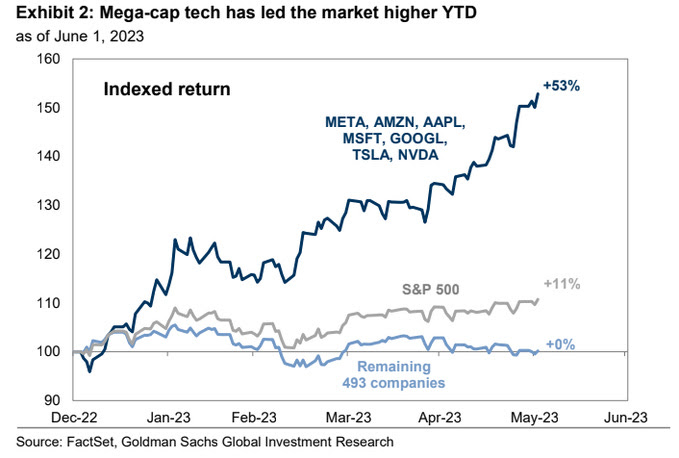
“The importance of this cannot be overstated considering that just five tech companies have made up two-thirds of the S&P 500’s gains so far this year.

“Besides guidance, which suggests how companies are positioned to manage an economic downturn, and data on how effective cost-cutting measures have been, the Big Tech earnings season was dominated by AI detail.

“The tech titans are fully aware of the enormous returns that could be secured when AI starts to radically change the way businesses work and consumers live their lives.

“We fully expect that the volume of chat around AI will ramp up in future earnings seasons.”

His belief is backed up by recent events. The AI chatbot ChatGPT became wildly popular in just a matter of weeks – and took off faster than social media platforms like TikTok or Instagram. Only two months after its launch in late November, it had 100 million monthly active users in January, according to reports.

It is because of the potential way that AI is expected to impact society and global business that Nigel Green now says that “AI stocks should have a place in most investors’ portfolios.”

Including AI exposure into an investment portfolio offers several possible benefits for investors, such as “potential strong returns, risk management, diversification possibilities, and future-proofing advantages because as the use of AI continues to grow and become more pervasive, those companies that fail to adopt this tech may be at a competitive disadvantage.”

The deVere CEO concludes: “We expect that companies that have substantial AI interests are likely to benefit from the growth of the industry and this could have potentially significant rewards for early investors.

“But, of course, like any investment strategy, including AI in a portfolio carries risks and requires careful consideration. Investors should seek professional advice before making any investment decisions.

“We believe that AI is the future, and we know from the past that early investors in innovative technologies often reap enormous rewards.”

About:

deVere Group is one of the world’s largest independent advisors of specialist global financial solutions to international, local mass affluent, and high-net-worth clients.  It has a network of more than 70 offices across the world, over 80,000 clients and $12bn under advisement.