Archive for Financial News – Page 200

The Bank of Japan is taking the first small step towards normalizing monetary policy. ECB is not sure about further rate hikes

By JustMarkets

At yesterday’s stock market close, the Dow Jones Index (US30) closed down by 0.67%, while the S&P 500 Index (US500) fell by 0.64%. The NASDAQ Technology Index (US100) closed negative by 0.55% on Thursday.

The latest US GDP data showed that the economy grew by 2.4% for the second quarter after growing 2.0% in the first quarter. Analysts had expected growth of 1.8%. Gross Domestic Product increased due to solid consumer spending and robust business investment. Combined with other data showing stronger than expected durable goods orders and a decline in unemployment claims, boosted confidence that the Federal Reserve can curb inflation and avoid a recession.

Meta Platforms (META) rose more than 4% after the social media giant reported second-quarter guidance and results that beat Wall Street estimates, driven by strong advertising growth. UBS raised its target on META shares to $400 from $335. Shares of eBay (EBAY), meanwhile, fell by 10% after its earnings forecast for the current quarter missed analysts’ estimates and overshadowed better-than-expected second-quarter results.

Equity markets in Europe were mostly up yesterday. Germany’s DAX (DE40) rose by 1.70%, France’s CAC 40 (FR40) gained 2.05%, Spain’s IBEX 35 (ES35) added 1.08%, and the UK’s FTSE 100 (UK100) closed positive by 0.21%.

The European Central Bank raised interest rates by 25 basis points to 4.25% in line with expectations while emphasizing that inflation is expected to remain high for a longer period despite the recent decline. During the press conference, Lagarde emphasized the weaker economic outlook for the euro area economy in the near term but remained optimistic about a recovery in growth in the medium term. Lagarde remained evasive when asked about the possibility of a rate hike in September. This is a dovish sign, given that the ECB president has previously been quite hawkish when pushing for future rate hikes.

On Thursday, gold posted its sharpest one-day drop since late June, reacting to the US Federal Reserve getting back on the path of monetary tightening by announcing a 25 basis point rate hike in July and again pledging to stick to a hawkish policy to bring inflation to its long-term 2% target. Also influential was the European Central Bank’s quarter-point rate hike and a signal that the ECB may pause in September, a potentially dovish development that pushed the dollar higher against the euro, exacerbating gold’s decline.

Asian markets were predominantly rising yesterday. Japan’s Nikkei 225 (JP225) rose by 0.68%, China’s FTSE China A50 (CHA50) gained 0.20%, Hong Kong’s Hang Seng (HK50) ended the day up by 1.41%, and Australia’s S&P/ASX 200 (AU200) ended Thursday positive by 0.73%. At the open on Friday, Japan’s Nikkei 225 index (JP225) suffered sharp losses after somewhat aggressive statements from the Bank of Japan, while Chinese stocks posted gains on hopes of additional stimulus measures.

Japanese government bond yields rose sharply on Friday, hitting the top end of the Bank of Japan’s benchmark range. The BOJ kept interest rates ultra-low on Friday and said that while it will continue yield curve control (YCC) operations, it will manage the yield curve with “greater flexibility.” The statement said it is appropriate to enhance the sustainability of monetary policy easing under the current framework by conducting more flexible yield curve control and responding promptly to both upside and downside risks to economic activity and prices in Japan. The move marks a step toward potentially ending the ultra-soft monetary conditions that Japanese equities have enjoyed for nearly a decade.

Australian retail sales unexpectedly fell in June, suggesting that consumers are easing off in response to 12 interest rate hikes by the Reserve Bank of Australia (RBA). Sales fell by 0.8% from the previous month.

China’s top housing official has increased pressure on financial regulators and lenders to step up efforts to revive the country’s struggling real estate sector.

S&P 500 (F)(US500) 4,537.41 −29.34  (−0.64%)

Dow Jones (US30) 35,282.72 −237.40 (−0.67%)

DAX (DE40)  16,406.03 +274.57 (+1.70%)

FTSE 100 (UK100) 7,692.76 +15.87 (+0.21%)

USD Index  101.81 +0.93 (+0.92%)

Important events for today:
  • – Japan Tokyo Core CPI (m/m) at 02:30 (GMT+3);
  • – Japan BoJ Interest Rate Decision at 06:00 (GMT+3);
  • – Japan BoJ Monetary Policy Statement at 06:00 (GMT+3);
  • – Japan BoJ Outlook Report at 06:00 (GMT+3);
  • – Japan BoJ Press Conference at 09:00 (GMT+3);
  • – Germany Consumer Price Index (m/m) at 15:00 (GMT+3);
  • – Canada GDP (m/m) at 15:30 (GMT+3);
  • – US PCE Price index (m/m) at 15:30 (GMT+3);
  • – US Michigan Consumer Sentiment (m/m) at 17:00 (GMT+3).

By JustMarkets


This article reflects a personal opinion and should not be interpreted as an investment advice, and/or offer, and/or a persistent request for carrying out financial transactions, and/or a guarantee, and/or a forecast of future events.
Pay Attention to This Group of Investors (They Know More)

The stock market actions of corporate insiders is revealing

By Elliott Wave International

It stands to reason that executives of a corporation know more about the goings-on of their business than outsiders.

So, it’s wise to pay attention to their stock market actions regarding their own shares.

Yes, the stock market has been rising. As I write, the Dow Industrials is up for the eighth day in a row.

However, trends can turn on a dime, and if the action of insiders is a clue, that turn may be arriving sooner than many stock market participants anticipate.

Here are just a few Yahoo! Finance headlines from the past few weeks:

  • American Express Insiders Sold US$9.9m Of Shares Suggesting Hesitancy (July 17)
  • Possible Bearish Signals with Lockheed Martin Insiders Disposing Stock (July 12)
  • International Business Machines Insiders Sell US$5.6m Of Stock, Possibly Signaling Caution (July 4)

These are by no means all the corporations where insiders have been selling company shares. I just picked out three well-known names as examples.

The July Elliott Wave Financial Forecast, a monthly publication which covers major U.S. financial markets, discussed corporate insider selling and said:

Insiders may sell for various reasons, but one of them isn’t that they believe their firm’s share price is going higher.

That doesn’t mean that insiders are always right or that their market timing is perfect, but as the July Elliott Wave Financial Forecast also notes, it’s best not to ignore the actions of insiders. The publication also showed this chart and added:

There is one group of investors that is selling shares: insiders. … When insider block sales surged in the early months of [a big down wave], the August 2000 Elliott Wave Financial Forecast noted, “Insiders want out.” As the bear market of 2000-2009 illustrated, when insiders sell, it’s best not to pooh-pooh their stance.

In addition to the Insider Transaction Ratio, also pay close attention to the stock market’s Elliott wave structure.

If you’re unfamiliar with Elliott wave analysis, or simply need a refresher, here’s a quote from the Wall Street classic book, Elliott Wave Principle: Key to Market Behavior, by Frost & Prechter:

The primary value of the Wave Principle is that it provides a context for market analysis. This context provides both a basis for disciplined thinking and a perspective on the market’s general position and outlook. At times, its accuracy in identifying, and even anticipating, changes in direction is almost unbelievable.

Enjoy free access to the online version of Elliott Wave Principle: Key to Market Behavior by becoming a member of Club EWI, the world’s largest Elliott wave educational community. Club EWI is free to join and allows you complimentary access to a wealth of Elliott wave resources on investing and trading.

Just follow this link to get started: Elliott Wave Principle: Key to Market Behavior — get free and unlimited access.

This article was syndicated by Elliott Wave International and was originally published under the headline Pay Attention to This Group of Investors (They Know More). EWI is the world’s largest market forecasting firm. Its staff of full-time analysts led by Chartered Market Technician Robert Prechter provides 24-hour-a-day market analysis to institutional and private investors around the world.

Green Tech Co. Signs Letter of Intent to Sell First Solar Tower

Source: Streetwise Reports  (7/25/23)

For this green tech company looking to save space on solar power installations, the agreement is proof that its technology is commercially legitimate.

Green tech company Three Sixty Solar (VSOL:NEO;VSOLF:OTC) announced it had signed a non-binding letter of intent for the sale and installation of its first solar tower.

The agreement with Cattail Crossing Golf and Winter Club in Sturgeon County, Alberta, indicates the club’s intent to install a Three Sixty Solar tower to generate power for the golf course and the clubhouse.

Three Sixty’s solar towers build up instead of out to save space, rising vertically instead of covering acres of ground horizontally, leaving up to 80% to 90% more room for other economic or preservation purposes.

“They have substantial power needs and don’t want to give up their land because, obviously, that takes up space they need for the course,” Three Sixty Solar Chief Executive Officer Brian Roth told Streetwise Reports.

For Three Sixty, it’s an important step and a proof of concept for the technology, he said.

Three Sixty’s technology is a “big deal” because most solar farms are in rural areas, leading to energy leakage getting the electricity across distances and to market, Technical Analyst Clive Maund wrote.

“The biggest thing is just as we work through the commercialization process, it’s proof that it’s commercially legitimate and that people are willing to pay and move forward on projects that are not just demonstrations or R&D funded,” Roth said.

Three Sixty’s technology is a “big deal” because most solar farms are in rural areas, leading to energy leakage getting the electricity across distances and to market, Technical Analyst Clive Maund wrote.

In addition, the vast areas of land consumed by these solar arrays generally mean that it can’t be used for anything else, so there is a serious opportunity cost loss as well, he said.

The company’s vertical tower arrays can be built virtually anywhere, including in cities, and they take up little space.

“Three Sixty Solar’s towers will eventually render all these vast acreages of solar panels all over the place obsolete,” Maund wrote. “This being so, its stock has the potential to appreciate by many thousands of percent.”

‘Ideal Solution’ Does Not Sacrifice Land

According to the letter of intent, the parties plan to begin a feasibility study on the site as quickly as possible with the goal of reaching a binding purchase order by Aug. 31.

According to a Stratistics MRC report, the global market for solar energy accounted for US$76 billion in 2020 and is forecasted to reach US$296 billion by 2028, growing at a compound annual growth rate (CAGR) of 18.5%.

Cattail Crossing owner Mark Beck said the club had been looking for ways to add renewable energy to the operation, but he couldn’t find anything suitable for the land.

“The solar towers offered by Three Sixty are such a unique approach that we can easily make it fit and generate power for our irrigation systems, cart charging, and more,” Beck said. “We are looking forward to working with Three Sixty and becoming an advocate for the solar tower solution to our friends in the golf community.”

Three Sixty’s solar technology is an “ideal solution” for the club “to provide power for operations without sacrificing the land they need for the course and clubhouse,” Roth said.

The Catalyst: Targeting Net Zero Emissions

Driving the growth is an increase in pollution, a surge in rooftop applications, and increased adoption in agriculture, the report said.

Solar power uses photovoltaic cells and other technologies to capture the sun’s radiant energy, which is efficient and renewable and mitigates environmental risks coming from options creating greenhouse gas emissions.

According to the Solar Energy Industries Association, the cost to install the equipment has dropped by 50% over the last decade, leading to the deployment of thousands of new systems in new markets.

Governments are giving big incentives, as well. Canada is targeting net zero emissions by 2050 and has launched a CA$964 million program, Three Sixty Solar said. The United States Inflation Reduction Act commits US$370 billion to fund green energy, and the European Union has an energy target of at least 32% from solar by 2030. The European Green New Deal envisions a climate-neutral continent by 2050.

Countries have been “throwing record amounts of money at these types of technologies and trying to green our electricity grid,” Roth said. “There’s just a huge opportunity to clean up our electricity production while . . .  being very cost competitive with the older technologies.”

According to a Stratistics MRC report, the global market for solar energy accounted for US$76 billion in 2020 and is forecasted to reach US$296 billion by 2028, growing at a compound annual growth rate (CAGR) of 18.5%.

Demonstration Tower Declared a Success

There are three models of towers, which soar from 40 feet to 120 feet tall and produce as much as 250 kilowatts per tower, the company said. They are manufactured in Canada and the U.S., approved by a U.S.-licensed engineer, and support many solar panel brands.

A demonstration tower in Kelowna, British Columbia that was in operation for 16 months was declared a success after it survived a major windstorm with gusts as high as 84 mph, intense rain and hail, and a snowstorm with no structural or panel damage.

The vertical positioning of the panels on the tower also prevented snow from covering the panels, which often inhibits power production in flatter, ground-mounted installations, the company said.

The Cattail Crossing tower will be proof that the solar towers are commercially viable, Roth said.

“And it will be an opportunity for us to go through the delivery process and continue to refine that,” he said.

The tower’s design enables it to be built with different materials to survive threats in different environments, such as surviving earthquakes in California or surviving hurricanes in Florida.

Power production and add-ons like telecommunications arrays and EV charging stations are opportunities to create more recurring revenue from the towers, Roth said.

Three Sixty Solar has applied for patents with the World Patent Office and others in North America, the European Union, and Africa.

Ownership and Share Structure

According to the company, about 21% of Three Sixty Solar is held by management and insiders. The CEO Roth owns 3.43%, founder and Director Peter Sherba owns about 30%, and Director Scott McLeod owns about 0.21%, Reuters said.

About 28% is held by strategic investors, and the rest, about 51%, is retail.

Three Sixty Solar’s market cap is CA$20.23 million, with about 43.5 million shares outstanding. It trades in a 52-week range of CA$1.29 and CA$0.51.


Important Disclosures:

  1. Three Sixty Solar Ltd. has a consulting relationship with an affiliate of Streetwise Reports, and pays a monthly consulting fee between US$8,000 and US$20,000.
  2. As of the date of this article, officers and/or employees of Streetwise Reports LLC (including members of their household) own securities of Three Sixty Solar Ltd.
  3. Steve Sobek wrote this article for Streetwise Reports LLC and provides services to Streetwise Reports as an employee.
  4. The article does not constitute investment advice. Each reader is encouraged to consult with his or her individual financial professional. By opening this page, each reader accepts and agrees to Streetwise Reports’ terms of use and full legal disclaimer. This article is not a solicitation for investment. Streetwise Reports does not render general or specific investment advice and the information on Streetwise Reports should not be considered a recommendation to buy or sell any security. Streetwise Reports does not endorse or recommend the business, products, services or securities of any company mentioned on Streetwise Reports.

For additional disclosures, please click here.

Japanese Candlesticks Analysis 27.07.2023 (XAUUSD, NZDUSD, GBPUSD)

By RoboForex.com

XAUUSD, “Gold vs US Dollar”

Gold has formed a Shooting Star reversal pattern near the resistance level. Currently, the instrument could go by the reversal signal in a descending wave. The correction target might be 1965.50. Upon testing the support, the price might rebound and continue the uptrend. However, the quotes could rise to 1990.00 without a correction.

GOLD
Risk Warning: the result of previous trading operations do not guarantee the same results in the future

NZDUSD, “New Zealand Dollar vs US Dollar”

NZDUSD has formed a Hammer reversal pattern on H4. Currently, the instrument is going by the reversal signal in an ascending wave. The growth target might be 0.6300. Upon breaking the resistance, the quotes might have a chance to continue the uptrend. However, a correction to 0.6190 might develop and an uptrend might follow the pullback.

NZDUSD
Risk Warning: the result of previous trading operations do not guarantee the same results in the future

GBPUSD, “Great Britain Pound vs US Dollar”

GBPUSD has formed a Hammer reversal pattern near the support level on H4. Currently, the instrument is going by the reversal signal in an ascending wave. The growth target might be 1.3055. However, the price might correct to 1.2895 and continue the uptrend following the pullback.

GBPUSD
Risk Warning: the result of previous trading operations do not guarantee the same results in the future

Article By RoboForex.com

Attention!
Forecasts presented in this section only reflect the author’s private opinion and should not be considered as guidance for trading. RoboForex LP bears no responsibility for trading results based on trading recommendations described in these analytical reviews.

The Fed raises rates by 25 bps, keeping the bias toward further action. The ECB intends to raise rates until the fall

By JustMarkets

At yesterday’s stock market close, the Dow Jones Index (US30) increased by 0.23%, while the S&P 500 Index (US500) was down by 0.02%. The NASDAQ Technology Index (US100) closed positive by 0.12% on Wednesday.

The US Central Bank raised rates by 25 bps to 5.50%, the highest in 22 years. But the market was fully ready for such a decision, so there were no surprises here. The main focus of investors was directed to the FOMC press conference.

The main theses of the Fed Chairman Jerome Powell’s speech:

  • Core inflation remains high (current Core CPI 4.8%);
  • The FOMC is committed to returning inflation to the 2.0% target to achieve price stability (current CPI 3.0%);
  • Inflation is not projected to reach the 2.0% target until 2025;
  • Another rate hike at the next meeting is possible, but it will depend on incoming economic data;
  • A rate cut this year is not the baseline scenario;
  • The FOMC is no longer forecasting a recession in the US;
  • Asset reduction (quantitative tightening – QT) will continue.

According to the FedWatch Tool, there is only a 22% chance that the US Fed will raise interest rates in September. For investors, this is a green flag for further growth of stock indices.

Equity markets in Europe were mostly down yesterday. Germany’s DAX (DE40) fell by 0.49%, France’s CAC 40 (FR40) lost 1.35%, Spain’s IBEX 35 (ES35) rose by 0.85%, and the UK’s FTSE 100 (UK100) closed negative yesterday by 0.19%.

Another drop in Germany’s leading indicator, the IFO index, confirms that the economy has returned to a downtrend. According to economists, the German economy is stuck in the zone between stagnation and recession (so-called “slow recession”) and is in dire need of a new reform program. China’s weaker-than-expected opening, the looming recession in the US and Europe, and the continued tightening of monetary policy seem to be taking their toll on German company sentiment. Germany is likely to face a longer period of subdued growth – the current valuation component is as low as it was at the end of 2020, with both the current indicators and the expectations component down.

The ECB will hold a monetary policy meeting today. Analysts expect the ECB to raise rates by 0.25%. However, the focus will be on the Central Bank’s plans for September, and markets are divided on whether there will be another rate hike or whether the ECB will hit the pause button. ECB President Christine Lagarde is likely to reiterate that future decisions will be based on incoming economic data. Last time the ECB said that inflation is projected to stay too high for too long, so given the strong labor market, there is room for the ECB to raise rates further.

The Energy Information Administration (EIA) reported yesterday a 600,000 barrel drop in US crude oil inventories. Oil prices rose in Asian trading on Thursday, recovering most of the previous session’s losses. Analysts believe that there are concerns in the oil market about the reliability of oil supplies in sufficient volume. Oil prices are therefore expected to rise in the coming months, following tensions in global markets after supply cuts by the world’s largest producers.

Asian markets were mostly down yesterday. Japan’s Nikkei 225 (JP225) was down by 0.04%, China’s FTSE China A50 (CHA50) decreased by 0.04%, Hong Kong’s Hang Seng (HK50) lost 0.36% on the day, while Australia’s S&P/ASX  00 (AU200) was positive by 0.85% on Wednesday. But most Asian stocks returned to the upside on Thursday as interest in risk-oriented markets was boosted by the Federal Reserve downplaying the likelihood of a US recession this year.

While aggressive interest rate hikes in the US appear to be nearing an end, Japan’s central bank faces a tough decision tomorrow on whether to take another step towards phasing out its controversial yield control program. Although inflation has been holding above its 2% target for more than a year, BOJ Governor Kazuo Ueda has vowed to keep monetary policy soft until he is confident the economy can withstand global headwinds and allow companies to continue raising wages next year. The BOJ is expected to keep the policy rate at minus 0.1% and maintain its yield curve control (YCC) targets at the two-day meeting that ends on Friday. However, the board may discuss making minor policy changes, such as widening the range of premiums around the 10-year yield target, if it feels the costs of YCC are starting to outweigh the benefits.

S&P 500 (F)(US500) 4,566.75 −0.71  (−0.016%)

Dow Jones (US30) 35,520.12 +82.05 (+0.23%)

DAX (DE40)  16,131.46 −80.13 (−0.49%)

FTSE 100 (UK100) 7,676.89 −14.91 (−0.19%)

USD Index  101.01 −0.34 (−0.33%)

Important events for today:
  • – Eurozone ECB Interest Rate Decision at 15:15 (GMT+3);
  • – Eurozone ECB Monetary Policy Statement at 15:15 (GMT+3);
  • – US Core Durable Goods Orders (m/m) at 15:30 (GMT+3);
  • – US Initial Jobless Claims (w/w) at 15:30 (GMT+3);
  • – US GDP (q/q) at 15:30 (GMT+3);
  • – Eurozone ECB Press Conference at 15:45 (GMT+3);
  • – US Pending Home Sales (m/m) at 17:00 (GMT+3);
  • – US Natural Gas Storage (w/w) at 17:30 (GMT+3).

By JustMarkets


This article reflects a personal opinion and should not be interpreted as an investment advice, and/or offer, and/or a persistent request for carrying out financial transactions, and/or a guarantee, and/or a forecast of future events.
AUD remains highly volatile. Overview for 26.07.2023

By RoboForex.com

The Australian dollar, paired with the US dollar, is once again facing pressure. The current AUDUSD quote is 0.6759.

The Aussie’s volatility is drawing attention. On one hand, a strong US dollar exerts pressure on the AUD. On the other hand, China is sending quite positive signals.

Today’s statistics revealed that inflation in Australia for the second quarter declined to 5.4% year-over-year. On a quarterly basis, the indicator rose by 0.8% following a 1.4% increase from January to March this year. The easing of inflationary pressure is a positive signal. The Reserve Bank of Australia is likely to acknowledge this at its next meeting and keep the interest rate unchanged. The Australian dollar is reacting precisely to this development.

China’s readiness to stimulate its economy is favourable for Australia. As Australia’s primary trading and economic partner, all positive news coming from China is also encouraging for the AUD.

Article By RoboForex.com

Attention!
Forecasts presented in this section only reflect the author’s private opinion and should not be considered as guidance for trading. RoboForex LP bears no responsibility for trading results based on trading recommendations described in these analytical reviews.

Technology giants continue to bet on artificial intelligence. The IMF provided new economic forecasts

By JustMarkets

At yesterday’s stock market close, the Dow Jones Index (US30) increased by 0.07%, while the S&P 500 Index (US500) added 0.28%. The NASDAQ Technology Index (US100) closed positive by 0.61% on Tuesday.

The US consumer confidence rose to a two-year high in July on the back of a continued robust labor market and lower inflation, improving the economy’s near-term outlook. The Consumer Confidence Index jumped to 117 in July from 110.1 in June. That’s the highest level in two years. But consumers still fear a recession next year after the Federal Reserve sharply raised interest rates.

Microsoft (MSFT), beating Wall Street forecasts for fiscal quarter revenue and profit Tuesday, laid out an aggressive spending plan to meet the demand for new artificial intelligence services. The company’s spending surged as it built new data centers to support artificial intelligence, while its capital expenditures will continue to rise. The company’s stock fell about 4% on the report. Alphabet (GOOG) for the second quarter exceeded Wall Street’s expectations. Alphabet’s results were driven by robust demand for cloud services and an uptick in advertising. The company’s shares jumped by 8% in after-hours trading. Snap (SNAP) yesterday reported weaker-than-analysts-expected third-quarter guidance as it has to compete with tech giants in advertising, sending shares down -18%. The Snapchat app attracts hundreds of millions of users thanks to its simple photo filters and a new chatbot with artificial intelligence. However, the company has struggled to consistently grow revenue and catch up with competitors.

The International Monetary Fund on Tuesday slightly raised its global growth estimates for 2023, given robust economic activity in the first quarter, but warned that persistent challenges were worsening the medium-term outlook. The IMF now forecasts global real GDP growth at 3.0% in 2023, up 0.2% from its April forecast, but left its 2024 forecast unchanged, also at plus 3.0%.

Equity markets in Europe traded flat yesterday. Germany’s DAX (DE40) rose by 0.13%, France’s CAC 40 (FR40) fell by 0.16%, Spain’s IBEX 35 (ES35) declined by 0.38%, and the UK’s FTSE 100 (UK100) closed up by 0.17%.

Goldman Sachs (GS) lowered its 2023 eurozone growth forecast following weaker economic activity data.

The Bank of England on Tuesday forecast the Bank’s net loss will be just over 150 billion pounds ($193 billion) over the next ten years as it winds down its quantitative easing (QE) program, up from the 100 billion pounds forecast in April. These losses will have to be financed by the government at a time when public finances are already under pressure from rising interest rates and inflation.

Asian markets were predominantly up yesterday. Japan’s Nikkei 225 (JP225) lost 0.06%, China’s FTSE China A50 (CHA50) jumped by 3.41%, Hong Kong’s Hang Seng (HK50) jumped by 4.10% on the day, and Australia’s S&P/ASX 200 (AU200) was positive by 0.46% on Tuesday. Senior Chinese officials said yesterday they would take additional measures to support the economy, which in turn sparked a sharp rally in local stocks.

Australia’s inflation rate continues to decline. For the last month, the annual consumer price index decreased from 5.6% to 5.4% (forecast 5.4%). Analysts believe that this decline should be enough to keep the Reserve Bank of Australia (RBA) from another rate hike in August. But according to economists, it will be much more difficult to reduce inflation further, and it is very likely that the RBA will make another rate hike in September.

The IMF forecasts growth in Japan’s economy but warns of inflationary pressures. Japan’s economy is expected to grow by 1.4% in 2023, faster than the 1.0% growth last year, as the lifting of pandemic restrictions stimulates consumption. IMF economists believe Japan’s ultra-soft monetary policy will remain accommodative in the near term, but the Bank of Japan should be ready to start raising interest rates given inflation risks.

S&P 500 (F)(US500) 4,567.46 +12.82 (+0.28%)

Dow Jones (US30) 35,438.07 +26.83 (+0.076%)

DAX (DE40)  16,211.59 +20.64 (+0.13%)

FTSE 100 (UK100) 7,691.80 +13.21 (+0.17%)

USD Index  101.29 -0.06 (-0.06%)

Important events for today:
  • – German Ifo Business Climate (m/m) at 11:00 (GMT+3);
  • – US CB Consumer Confidence (m/m) at 17:00 (GMT+3).
  • – German Ifo Business Climate (m/m) at 11:00 (GMT+3);
  • – US CB Consumer Confidence (m/m) at 17:00 (GMT+3).
  • – German Ifo Business Climate (m/m) at 11:00 (GMT+3);
  • – US CB Consumer Confidence (m/m) at 17:00 (GMT+3).

By JustMarkets


This article reflects a personal opinion and should not be interpreted as an investment advice, and/or offer, and/or a persistent request for carrying out financial transactions, and/or a guarantee, and/or a forecast of future events.

The ECB will face tough choices at its next meeting. The People’s Bank of China conducted currency intervention to support the yuan

By JustMarkets

At Monday’s close of the stock market, the Dow Jones Index (US30) closed up by 0.52%, while the S&P 500 Index (US500) added 0.40%. The NASDAQ Technology Index (US100) closed positive by 0.19% on Monday. The Dow Jones Index (US30) extended its daily winning streak to its eleventh consecutive gain, helped by a rally in energy. Energy stocks were supported by a rise in oil prices to an April high amid bets that OPEC supply cuts will tighten market conditions.

The Federal Reserve begins its two-day meeting on Tuesday. A 0.25% rate hike is expected as early as tomorrow, which is already fully factored into the price. Morgan Stanley analysts believe Wednesday’s expected rate hike could likely be the final rate hike, predicting a peak federal funds rate of 5.375% this year.

Equity markets in Europe traded flat yesterday. Germany’s DAX (DE40) increased by 0.08%, France’s CAC 40 (FR40) fell by 0.07%, Spain’s IBEX 35 (ES35) declined by 0.29%, and the UK’s FTSE 100 (UK100) closed 0.19% higher.

The fall in economic indicators across Europe poses a difficult task for the European Central Bank: to make another rate hike in September or to switch to full data dependence. For the ECB, there are now three main options:

  • The ECB continues to signal that if the core level of inflation is maintained, further tightening is likely. Such signaling is likely to trigger a hawkish market reaction with interest rate expectations rising.
  • The ECB maintains a fully data-dependent regime, with a willingness to hike but no clear bias towards tightening. In this scenario, the market reaction could be moderately dovish.
  • The Central Bank assumes that clear progress has been made toward the inflation target, and it is unclear whether further rate hikes are needed. In this scenario, market reaction is likely to be very dovish.

The middle scenario is the closest considered by analysts, which could put pressure on the euro against the dollar in the near term.

Gold’s rally appears to be weakening ahead of this week’s policy meetings between the US Federal Reserve, the European Central Bank, and the Bank of Japan. Gold is highly sensitive to US government bond yields and the dollar index. Hawkish comments from the US Fed will give temporary support to the dollar, which will be negative for precious metals. But in the medium and long term, banks expect the dollar and government bond yields to fall, so gold still has good growth prospects in the higher time frames.

Asian markets were mostly down yesterday. Japan’s Nikkei 225 (JP225) increased by 1.23%, China’s FTSE China A50 (CHA50) fell by 0.54%, Hong Kong’s Hang Seng (HK50) lost 2.13% on the day, and Australia’s S&P/ASX 200 (AU200) was negative by 0.10% on Monday.

Chinese state-owned banks unexpectedly conducted currency intervention to support the yuan against the dollar. The People’s Bank of China (PBoC) set the yuan (CNY) discount rate at 7.1406. It is allowed to trade plus-minus 2% of this rate. This applies to CNY, which is traded on China’s exchanges. There is also an offshore yuan (CNH). Its trading range is unlimited, so significant fluctuations in the exchange rate compared to CNY tend to trigger a reaction from the PBoC.

S&P 500 (F)(US500) 4,554.64 +18.30 (+0.40%)

Dow Jones (US30) 35,411.24 +183.55 (+0.52%)

DAX (DE40)  16,190.95 +13.73 (+0.085%)

FTSE 100 (UK100) 7,678.59 +14.86 (+0.19%)

USD Index  101.40 +0.33 (+0.32%)

Important events for today:
  • – German Ifo Business Climate (m/m) at 11:00 (GMT+3);
  • – US CB Consumer Confidence (m/m) at 17:00 (GMT+3).

By JustMarkets


This article reflects a personal opinion and should not be interpreted as an investment advice, and/or offer, and/or a persistent request for carrying out financial transactions, and/or a guarantee, and/or a forecast of future events.

China’s new economic measures will excite global investors

By George Prior 

China’s raft of new measures to bolster its economy strengthens the case for global investors’ continued attraction to the country, says the CEO of one of the world’s largest independent financial advisory, asset management and fintech organizations.

The bullish analysis from Nigel Green of deVere Group comes as China’s economic planning agency announced Monday a series of measures to encourage investment.

Beijing’s series of policies is ahead of a key Politburo meeting this week which will review China’s first half economic performance.

In the 17-point statement, the National Development and Reform Commission vowed to lure more private capital to become involved in the construction of important national projects and major industrial supply chain ventures.

The moves come after last Thursday’s announcement from the People’s Bank of China and the State Administration of Foreign Exchange to confirm that they have modified their cross-border financing rules to allow companies to borrow more from international investors.

Nigel Green says: “Will these measures work? Yes, because they strengthen the case for global investors’ recently renewed enthusiasm for China – which is robust, despite the economic red flags.

“Weaker international demand, which has triggered the drop in exports, comes at a time when the economy is under pressure from a weak property sector and a disappointingly slow Covid rebound after controls were dropped at the start of the year. In addition, youth unemployment is at its highest level on record.

“But despite these challenges, it remains an appealing destination for investors.”

One of the most compelling reasons why investors are attracted to China is its massive market potential.

“With a population of over 1.4 billion people and a growing middle class, China offers a vast consumer base for businesses to tap into. The rising incomes and increasing urbanization have fuelled demand for various products and services, providing ample opportunities for investors across sectors such as technology, healthcare, and consumer goods,” says the deVere CEO.

The People’s Republic also has a proven ability to navigate and adapt to economic challenges. “Despite recent headwinds, including trade tensions and the pandemic, China has shown remarkable resilience.”

The country’s emphasis on research and development, coupled with significant investments in emerging technologies like artificial intelligence, 5G, and biotechnology, has propelled China to the forefront of technological advancements, affirms Nigel Green.

He notes: “Investors recognise this immense potential in these sectors and are eager to capitalise on the nation’s technological prowess, which offers unique opportunities for high returns on investment.”

Investors are also fully aware of China’s economic model which is gradually shifting from export-driven growth to one fuelled by domestic consumption. This transition presents investors with a new set of opportunities as the Chinese population becomes increasingly affluent and consumption-oriented.

Companies that cater to the evolving tastes and preferences of Chinese consumers stand to benefit immensely from this paradigm shift, prompting investors to focus on sectors such as e-commerce, entertainment, and luxury goods.

Nigel Green concludes: “Beijing’s proactive policies, such as stimulus measures and targeted reforms, have effectively supported economic growth and stabilized market conditions in the past and we expect the new measures will do the same. This track record instils confidence in global investors, as they believe that China can effectively address and overcome future obstacles.

“The new policies will further help investors see beyond the short-term and look for the long-term potential in China.”

About:

deVere Group is one of the world’s largest independent advisors of specialist global financial solutions to international, local mass affluent, and high-net-worth clients.  It has a network of more than 70 offices across the world, over 80,000 clients and $12bn under advisement.

The Crude Oil Market Relies on Demand

By RoboForex Analytical Department

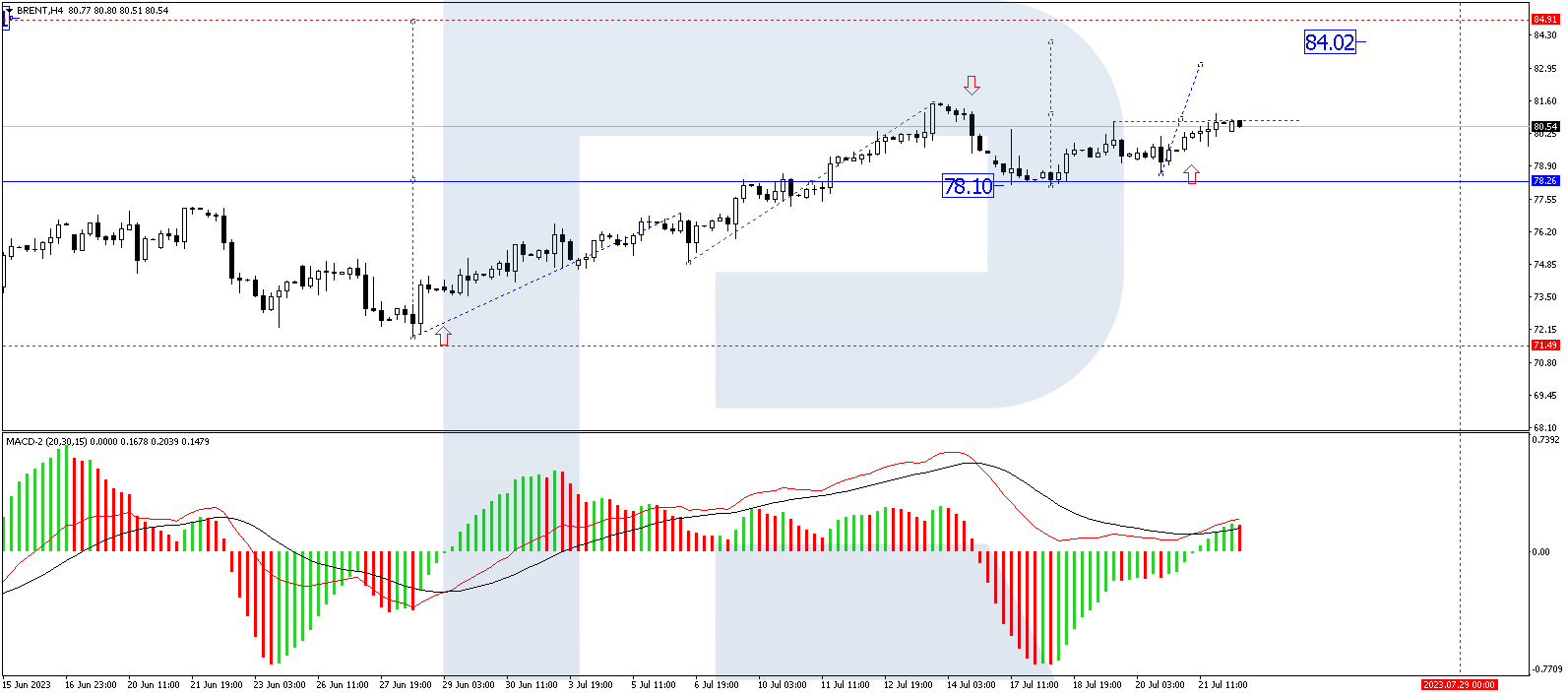
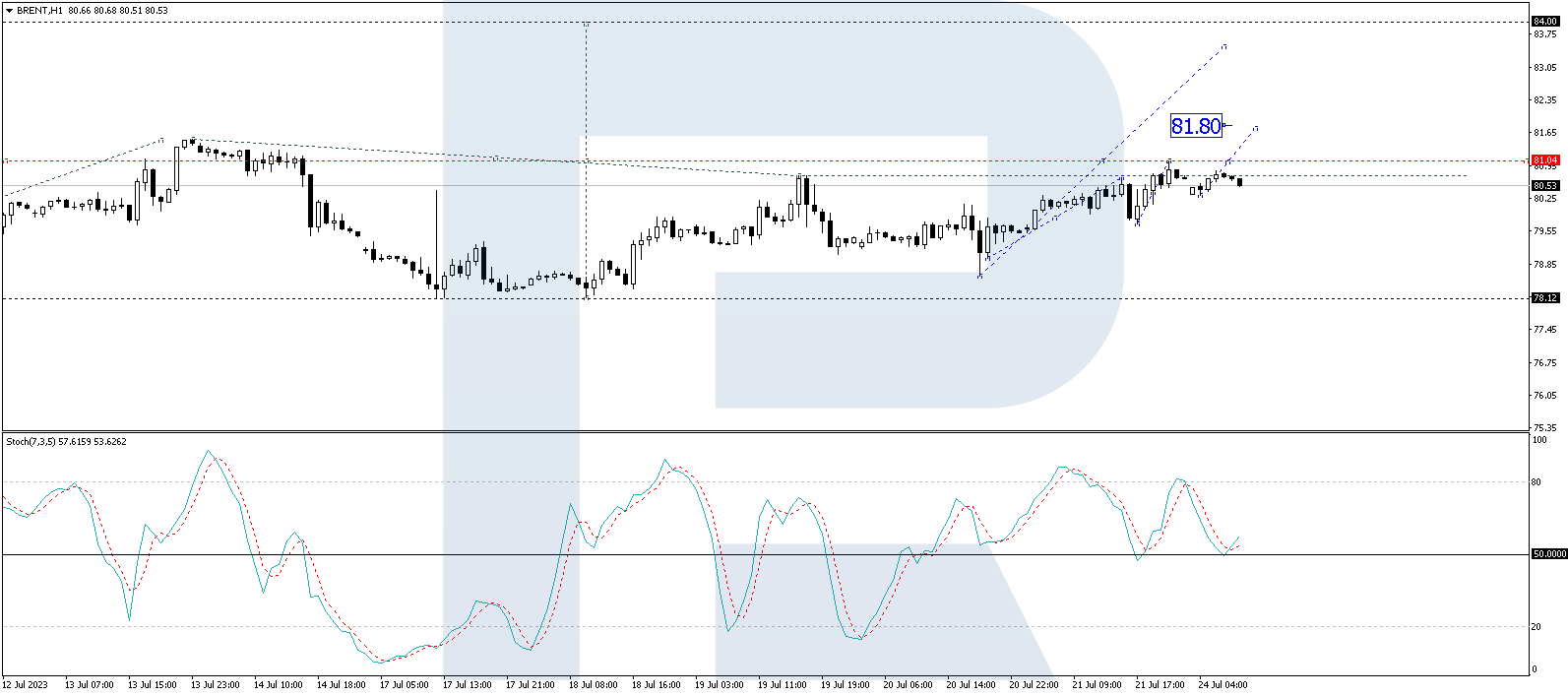
As the new week in July kicks off, the commodities market is in high spirits. The price of Brent crude oil has surged to 81.00 USD per barrel. The oil sector is responding to rising global tensions, which may have adverse effects on the supply of energy resources. However, demand expectations are stable, and are driving prices upward.

There are growing concerns about the potential displacement of a portion of biofuels by oil and its derivatives, particularly amidst complications with the extension of the “grain deal.” This further supports the upward trend in commodity prices.

According to Baker Hughes data, drilling activity in the US has decreased. The number of oil rigs fell by 7 units to 530, and the number of gas rigs decreased by 2 units to 131.

Technical Analysis of the Brent oil price chart:

On the H4 chart, Brent is currently developing a third wave of growth. Having reached 81.40 USD, a consolidation range is expected to form just below this level. A breakout above this range would likely lead to the continuation of the upward wave, targeting 81.81 USD. Surpassing this level could open the potential for further growth towards 84.00 USD, with the possibility of continuing the upward trend to 85.00 USD. Technically, the MACD indicator confirms this scenario; with its signal line above the zero mark, it is showing a clear upward direction, indicating potential new highs.

On the H1 chart, Brent completed an upward wave to 81.04 USD, followed by a correction to 80.30 USD. After the correction, an upward wave is anticipated to begin targeting 81.80 USD. This target is local. Technically, the Stochastic oscillator also supports this outlook, with its signal line above the 50 mark, indicating a readiness to continue rising towards the 80 mark.

Disclaimer

Any forecasts contained herein are based on the author’s particular opinion. This analysis may not be treated as trading advice. RoboForex bears no responsibility for trading results based on trading recommendations and reviews contained herein.