COT Bonds Charts: Speculator Bets led by SOFR 3-Months & 10-Year Bonds

By InvestMacro

Bonds Market Open Interest Comparison
Here are the latest charts and statistics for the Commitment of Traders (COT) reports data published by the Commodities Futures Trading Commission (CFTC).

The latest COT data is updated through Tuesday June 24th and shows a quick view of how large traders (for-profit speculators and commercial hedgers) were positioned in the futures markets.

Weekly Speculator Changes led by SOFR 3-Months & 10-Year Bonds

Bonds Market Net Speculators Positions
The COT bond market speculator bets were overall lower this week as just two out of the nine bond markets we cover had higher positioning while the other seven markets had lower speculator contracts.

Leading the gains for the bond markets was the SOFR 3-Months (98,926 contracts) with the 10-Year Bonds (72,768 contracts) also showing a positive week.

The bond markets with declines in speculator bets for the week were the 2-Year Bonds (-63,807 contracts), the Fed Funds (-42,736 contracts), the US Treasury Bonds (-27,610 contracts), the 5-Year Bonds (-20,348 contracts), the Ultra Treasury Bonds (-19,812 contracts), the Ultra 10-Year Bonds (-19,423 contracts) and with the SOFR 1-Month (-1,812 contracts) also seeing lower bets on the week.


Bonds Data:

Bonds Market Speculators Data Table
Legend: Open Interest | Speculators Current Net Position | Weekly Specs Change | Specs Strength Score compared to last 3-Years (0-100 range)


Strength Scores led by Ultra Treasury Bonds & US Treasury Bonds

Bonds Market Strength Index Comparison
COT Strength Scores (a normalized measure of Speculator positions over a 3-Year range, from 0 to 100 where above 80 is Extreme-Bullish and below 20 is Extreme-Bearish) showed that the Ultra Treasury Bonds (93 percent) and the US Treasury Bonds (48 percent) lead the bond markets this week. The Fed Funds (45 percent) comes in as the next highest in the weekly strength scores.

On the downside, the Ultra 10-Year Bonds (1 percent) and the 2-Year Bonds (18 percent) come in at the lowest strength level currently and are in Extreme-Bearish territory (below 20 percent). The next lowest strength scores were the SOFR 3-Months (31 percent) and the SOFR 1-Month (33 percent).

Strength Statistics:
Fed Funds (44.9 percent) vs Fed Funds previous week (52.8 percent)
2-Year Bond (18.0 percent) vs 2-Year Bond previous week (22.5 percent)
5-Year Bond (0.3 percent) vs 5-Year Bond previous week (1.2 percent)
10-Year Bond (44.8 percent) vs 10-Year Bond previous week (37.8 percent)
Ultra 10-Year Bond (1.2 percent) vs Ultra 10-Year Bond previous week (6.6 percent)
US Treasury Bond (48.0 percent) vs US Treasury Bond previous week (57.6 percent)
Ultra US Treasury Bond (92.6 percent) vs Ultra US Treasury Bond previous week (100.0 percent)
SOFR 1-Month (33.0 percent) vs SOFR 1-Month previous week (33.5 percent)
SOFR 3-Months (31.1 percent) vs SOFR 3-Months previous week (26.0 percent)


10-Year Bonds & Ultra Treasury Bonds top the 6-Week Strength Trends

Bonds Market Trend Index Comparison
COT Strength Score Trends (or move index, calculates the 6-week changes in strength scores) showed that the 10-Year Bonds (20 percent) and the Ultra Treasury Bonds (19 percent) lead the past six weeks trends for bonds. The SOFR 3-Months (9 percent) are the next highest positive movers in the latest trends data.

The SOFR 1-Month (-34 percent) leads the downside trend scores currently with the Ultra 10-Year Bond (-13 percent) following next with lower trend scores.

Strength Trend Statistics:
Fed Funds (4.9 percent) vs Fed Funds previous week (19.6 percent)
2-Year Bond (-0.6 percent) vs 2-Year Bond previous week (3.8 percent)
5-Year Bond (-12.8 percent) vs 5-Year Bond previous week (-6.6 percent)
10-Year Bond (20.3 percent) vs 10-Year Bond previous week (19.3 percent)
Ultra 10-Year Bond (-13.0 percent) vs Ultra 10-Year Bond previous week (-17.5 percent)
US Treasury Bond (-8.4 percent) vs US Treasury Bond previous week (7.5 percent)
Ultra US Treasury Bond (19.4 percent) vs Ultra US Treasury Bond previous week (28.1 percent)
SOFR 1-Month (-34.2 percent) vs SOFR 1-Month previous week (-33.0 percent)
SOFR 3-Months (9.4 percent) vs SOFR 3-Months previous week (3.9 percent)


30-Day Federal Funds Futures:

Federal Funds 30-Day Bonds Futures COT ChartThe 30-Day Federal Funds large speculator standing this week totaled a net position of -52,710 contracts in the data reported through Tuesday. This was a weekly lowering of -42,736 contracts from the previous week which had a total of -9,974 net contracts.

This week’s current strength score (the trader positioning range over the past three years, measured from 0 to 100) shows the speculators are currently Bearish with a score of 44.9 percent. The commercials are Bearish with a score of 48.7 percent and the small traders (not shown in chart) are Bullish-Extreme with a score of 83.4 percent.

Price Trend-Following Model: Downtrend

Our weekly trend-following model classifies the current market price position as: Downtrend.

30-Day Federal Funds StatisticsSPECULATORSCOMMERCIALSSMALL TRADERS
– Percent of Open Interest Longs:15.463.52.2
– Percent of Open Interest Shorts:17.961.81.5
– Net Position:-52,71036,52116,189
– Gross Longs:333,3681,371,36247,669
– Gross Shorts:386,0781,334,84131,480
– Long to Short Ratio:0.9 to 11.0 to 11.5 to 1
NET POSITION TREND:
– Strength Index Score (3 Year Range Pct):44.948.783.4
– Strength Index Reading (3 Year Range):BearishBearishBullish-Extreme
NET POSITION MOVEMENT INDEX:
– 6-Week Change in Strength Index:4.9-7.015.4


Secured Overnight Financing Rate (3-Month) Futures:

SOFR 3-Months Bonds Futures COT ChartThe Secured Overnight Financing Rate (3-Month) large speculator standing this week totaled a net position of -563,811 contracts in the data reported through Tuesday. This was a weekly gain of 98,926 contracts from the previous week which had a total of -662,737 net contracts.

This week’s current strength score (the trader positioning range over the past three years, measured from 0 to 100) shows the speculators are currently Bearish with a score of 31.1 percent. The commercials are Bullish with a score of 69.5 percent and the small traders (not shown in chart) are Bullish with a score of 75.9 percent.

Price Trend-Following Model: Weak Uptrend

Our weekly trend-following model classifies the current market price position as: Weak Uptrend.

SOFR 3-Months StatisticsSPECULATORSCOMMERCIALSSMALL TRADERS
– Percent of Open Interest Longs:11.661.10.5
– Percent of Open Interest Shorts:16.755.90.6
– Net Position:-563,811578,846-15,035
– Gross Longs:1,274,7966,730,01555,134
– Gross Shorts:1,838,6076,151,16970,169
– Long to Short Ratio:0.7 to 11.1 to 10.8 to 1
NET POSITION TREND:
– Strength Index Score (3 Year Range Pct):31.169.575.9
– Strength Index Reading (3 Year Range):BearishBullishBullish
NET POSITION MOVEMENT INDEX:
– 6-Week Change in Strength Index:9.4-8.8-5.6


Individual Bond Markets:

Secured Overnight Financing Rate (1-Month) Futures:

SOFR 1-Month Bonds Futures COT ChartThe Secured Overnight Financing Rate (1-Month) large speculator standing this week totaled a net position of -144,015 contracts in the data reported through Tuesday. This was a weekly fall of -1,812 contracts from the previous week which had a total of -142,203 net contracts.

This week’s current strength score (the trader positioning range over the past three years, measured from 0 to 100) shows the speculators are currently Bearish with a score of 33.0 percent. The commercials are Bullish with a score of 65.8 percent and the small traders (not shown in chart) are Bullish with a score of 76.2 percent.

Price Trend-Following Model: Uptrend

Our weekly trend-following model classifies the current market price position as: Uptrend.

SOFR 1-Month StatisticsSPECULATORSCOMMERCIALSSMALL TRADERS
– Percent of Open Interest Longs:14.664.20.4
– Percent of Open Interest Shorts:24.854.30.1
– Net Position:-144,015139,5034,512
– Gross Longs:206,962908,6305,408
– Gross Shorts:350,977769,127896
– Long to Short Ratio:0.6 to 11.2 to 16.0 to 1
NET POSITION TREND:
– Strength Index Score (3 Year Range Pct):33.065.876.2
– Strength Index Reading (3 Year Range):BearishBullishBullish
NET POSITION MOVEMENT INDEX:
– 6-Week Change in Strength Index:-34.237.0-23.8


2-Year Treasury Note Futures:

2-Year Treasury Bonds Futures COT ChartThe 2-Year Treasury Note large speculator standing this week totaled a net position of -1,230,204 contracts in the data reported through Tuesday. This was a weekly decline of -63,807 contracts from the previous week which had a total of -1,166,397 net contracts.

This week’s current strength score (the trader positioning range over the past three years, measured from 0 to 100) shows the speculators are currently Bearish-Extreme with a score of 18.0 percent. The commercials are Bullish-Extreme with a score of 80.8 percent and the small traders (not shown in chart) are Bullish with a score of 68.8 percent.

Price Trend-Following Model: Strong Uptrend

Our weekly trend-following model classifies the current market price position as: Strong Uptrend.

2-Year Treasury Note StatisticsSPECULATORSCOMMERCIALSSMALL TRADERS
– Percent of Open Interest Longs:14.977.46.0
– Percent of Open Interest Shorts:44.550.83.0
– Net Position:-1,230,2041,105,559124,645
– Gross Longs:621,3783,219,037248,595
– Gross Shorts:1,851,5822,113,478123,950
– Long to Short Ratio:0.3 to 11.5 to 12.0 to 1
NET POSITION TREND:
– Strength Index Score (3 Year Range Pct):18.080.868.8
– Strength Index Reading (3 Year Range):Bearish-ExtremeBullish-ExtremeBullish
NET POSITION MOVEMENT INDEX:
– 6-Week Change in Strength Index:-0.6-0.74.7


5-Year Treasury Note Futures:

5-Year Treasury Bonds Futures COT ChartThe 5-Year Treasury Note large speculator standing this week totaled a net position of -2,463,629 contracts in the data reported through Tuesday. This was a weekly decrease of -20,348 contracts from the previous week which had a total of -2,443,281 net contracts.

This week’s current strength score (the trader positioning range over the past three years, measured from 0 to 100) shows the speculators are currently Bearish-Extreme with a score of 0.3 percent. The commercials are Bullish-Extreme with a score of 96.3 percent and the small traders (not shown in chart) are Bullish-Extreme with a score of 95.2 percent.

Price Trend-Following Model: Strong Uptrend

Our weekly trend-following model classifies the current market price position as: Strong Uptrend.

5-Year Treasury Note StatisticsSPECULATORSCOMMERCIALSSMALL TRADERS
– Percent of Open Interest Longs:7.683.46.7
– Percent of Open Interest Shorts:42.451.83.4
– Net Position:-2,463,6292,232,475231,154
– Gross Longs:535,4795,899,749472,709
– Gross Shorts:2,999,1083,667,274241,555
– Long to Short Ratio:0.2 to 11.6 to 12.0 to 1
NET POSITION TREND:
– Strength Index Score (3 Year Range Pct):0.396.395.2
– Strength Index Reading (3 Year Range):Bearish-ExtremeBullish-ExtremeBullish-Extreme
NET POSITION MOVEMENT INDEX:
– 6-Week Change in Strength Index:-12.810.022.8


10-Year Treasury Note Futures:

10-Year Treasury Notes Bonds Futures COT ChartThe 10-Year Treasury Note large speculator standing this week totaled a net position of -680,131 contracts in the data reported through Tuesday. This was a weekly rise of 72,768 contracts from the previous week which had a total of -752,899 net contracts.

This week’s current strength score (the trader positioning range over the past three years, measured from 0 to 100) shows the speculators are currently Bearish with a score of 44.8 percent. The commercials are Bullish with a score of 50.2 percent and the small traders (not shown in chart) are Bullish with a score of 73.6 percent.

Price Trend-Following Model: Strong Uptrend

Our weekly trend-following model classifies the current market price position as: Strong Uptrend.

10-Year Treasury Note StatisticsSPECULATORSCOMMERCIALSSMALL TRADERS
– Percent of Open Interest Longs:13.076.09.0
– Percent of Open Interest Shorts:26.964.17.1
– Net Position:-680,131583,28496,847
– Gross Longs:640,5243,736,423444,200
– Gross Shorts:1,320,6553,153,139347,353
– Long to Short Ratio:0.5 to 11.2 to 11.3 to 1
NET POSITION TREND:
– Strength Index Score (3 Year Range Pct):44.850.273.6
– Strength Index Reading (3 Year Range):BearishBullishBullish
NET POSITION MOVEMENT INDEX:
– 6-Week Change in Strength Index:20.3-27.13.7


Ultra 10-Year Notes Futures:

Ultra 10-Year Treasury Notes Bonds Futures COT ChartThe Ultra 10-Year Notes large speculator standing this week totaled a net position of -367,108 contracts in the data reported through Tuesday. This was a weekly decrease of -19,423 contracts from the previous week which had a total of -347,685 net contracts.

This week’s current strength score (the trader positioning range over the past three years, measured from 0 to 100) shows the speculators are currently Bearish-Extreme with a score of 1.2 percent. The commercials are Bullish-Extreme with a score of 92.2 percent and the small traders (not shown in chart) are Bullish with a score of 65.7 percent.

Price Trend-Following Model: Weak Uptrend

Our weekly trend-following model classifies the current market price position as: Weak Uptrend.

Ultra 10-Year Notes StatisticsSPECULATORSCOMMERCIALSSMALL TRADERS
– Percent of Open Interest Longs:10.779.19.1
– Percent of Open Interest Shorts:26.261.611.2
– Net Position:-367,108417,015-49,907
– Gross Longs:255,1431,881,625216,455
– Gross Shorts:622,2511,464,610266,362
– Long to Short Ratio:0.4 to 11.3 to 10.8 to 1
NET POSITION TREND:
– Strength Index Score (3 Year Range Pct):1.292.265.7
– Strength Index Reading (3 Year Range):Bearish-ExtremeBullish-ExtremeBullish
NET POSITION MOVEMENT INDEX:
– 6-Week Change in Strength Index:-13.022.8-26.7


US Treasury Bonds Futures:

US Year Treasury Notes Long Bonds Futures COT ChartThe US Treasury Bonds large speculator standing this week totaled a net position of -101,785 contracts in the data reported through Tuesday. This was a weekly fall of -27,610 contracts from the previous week which had a total of -74,175 net contracts.

This week’s current strength score (the trader positioning range over the past three years, measured from 0 to 100) shows the speculators are currently Bearish with a score of 48.0 percent. The commercials are Bearish with a score of 42.9 percent and the small traders (not shown in chart) are Bullish with a score of 73.1 percent.

Price Trend-Following Model: Downtrend

Our weekly trend-following model classifies the current market price position as: Downtrend.

US Treasury Bonds StatisticsSPECULATORSCOMMERCIALSSMALL TRADERS
– Percent of Open Interest Longs:8.876.613.3
– Percent of Open Interest Shorts:14.575.98.4
– Net Position:-101,78513,61888,167
– Gross Longs:155,3611,358,300236,647
– Gross Shorts:257,1461,344,682148,480
– Long to Short Ratio:0.6 to 11.0 to 11.6 to 1
NET POSITION TREND:
– Strength Index Score (3 Year Range Pct):48.042.973.1
– Strength Index Reading (3 Year Range):BearishBearishBullish
NET POSITION MOVEMENT INDEX:
– 6-Week Change in Strength Index:-8.49.9-8.9


Ultra US Treasury Bonds Futures:

Ultra US Year Treasury Notes Long Bonds Futures COT ChartThe Ultra US Treasury Bonds large speculator standing this week totaled a net position of -209,526 contracts in the data reported through Tuesday. This was a weekly reduction of -19,812 contracts from the previous week which had a total of -189,714 net contracts.

This week’s current strength score (the trader positioning range over the past three years, measured from 0 to 100) shows the speculators are currently Bullish-Extreme with a score of 92.6 percent. The commercials are Bearish-Extreme with a score of 15.9 percent and the small traders (not shown in chart) are Bearish with a score of 29.3 percent.

Price Trend-Following Model: Downtrend

Our weekly trend-following model classifies the current market price position as: Downtrend.

Ultra US Treasury Bonds StatisticsSPECULATORSCOMMERCIALSSMALL TRADERS
– Percent of Open Interest Longs:7.381.69.4
– Percent of Open Interest Shorts:18.471.48.5
– Net Position:-209,526192,46317,063
– Gross Longs:138,9961,544,513178,019
– Gross Shorts:348,5221,352,050160,956
– Long to Short Ratio:0.4 to 11.1 to 11.1 to 1
NET POSITION TREND:
– Strength Index Score (3 Year Range Pct):92.615.929.3
– Strength Index Reading (3 Year Range):Bullish-ExtremeBearish-ExtremeBearish
NET POSITION MOVEMENT INDEX:
– 6-Week Change in Strength Index:19.4-16.0-10.7


Article By InvestMacroReceive our weekly COT Newsletter

*COT Report: The COT data, released weekly to the public each Friday, is updated through the most recent Tuesday (data is 3 days old) and shows a quick view of how large speculators or non-commercials (for-profit traders) were positioned in the futures markets.

The CFTC categorizes trader positions according to commercial hedgers (traders who use futures contracts for hedging as part of the business), non-commercials (large traders who speculate to realize trading profits) and nonreportable traders (usually small traders/speculators) as well as their open interest (contracts open in the market at time of reporting). See CFTC criteria here.

COT Soft Commodities Charts: Speculator Changes led by Wheat & Cotton

By InvestMacro

Speculators OI Softs
Here are the latest charts and statistics for the Commitment of Traders (COT) reports data published by the Commodities Futures Trading Commission (CFTC).

The latest COT data is updated through Tuesday June 24th and shows a quick view of how large traders (for-profit speculators and commercial entities) were positioned in the futures markets.

Weekly Speculator Changes led by Wheat & Cotton

Speculators Nets Softs
The COT soft commodities markets speculator bets were overall lower this week as just three out of the eleven softs markets we cover had higher positioning while the other eight markets had lower speculator contracts.

Leading the gains for the softs markets was Wheat (13,390 contracts) with Cotton (5,439 contracts) and Soybean Oil (157 contracts) also having positive weeks.

The markets with the declines in speculator bets this week were Soybeans (-29,353 contracts), Corn (-23,326 contracts), Soybean Meal (-16,876 contracts), Coffee (-4,750 contracts), Cocoa (-4,110 contracts), Live Cattle (-2,477 contracts), Lean Hogs (-1,312 contracts) and with Sugar (-79 contracts) also registering lower bets on the week.


Soft Commodities Data:

Speculators Table Softs
Legend: Weekly Speculators Change | Speculators Current Net Position | Speculators Strength Score compared to last 3-Years (0-100 range)


Strength Scores led by Lean Hogs & Live Cattle

Speculators Strength Softs
COT Strength Scores (a normalized measure of Speculator positions over a 3-Year range, from 0 to 100 where above 80 is Extreme-Bullish and below 20 is Extreme-Bearish) showed that Lean Hogs (99 percent) and Live Cattle (83 percent) lead the softs markets this week. Soybean Oil (77 percent), Soybeans (65 percent) and Coffee (56 percent) come in as the next highest in the weekly strength scores.

On the downside, Soybean Meal (0 percent), Sugar (0 percent), Corn (18 percent) and the Cotton (19 percent) come in at the lowest strength levels currently and are in Extreme-Bearish territory (below 20 percent).

Strength Statistics:
Corn (18.4 percent) vs Corn previous week (21.6 percent)
Sugar (0.0 percent) vs Sugar previous week (0.0 percent)
Coffee (56.1 percent) vs Coffee previous week (60.7 percent)
Soybeans (64.8 percent) vs Soybeans previous week (72.3 percent)
Soybean Oil (76.9 percent) vs Soybean Oil previous week (76.8 percent)
Soybean Meal (0.0 percent) vs Soybean Meal previous week (6.7 percent)
Live Cattle (83.1 percent) vs Live Cattle previous week (85.5 percent)
Lean Hogs (99.0 percent) vs Lean Hogs previous week (100.0 percent)
Cotton (18.9 percent) vs Cotton previous week (15.6 percent)
Cocoa (23.1 percent) vs Cocoa previous week (27.3 percent)
Wheat (37.1 percent) vs Wheat previous week (26.5 percent)


Wheat & Lean Hogs top the 6-Week Strength Trends

Speculators Trend Softs
COT Strength Score Trends (or move index, calculates the 6-week changes in strength scores) showed that Wheat (37 percent) and Lean Hogs (36 percent) lead the past six weeks trends for soft commodities.

Sugar (-23 percent) leads the downside trend scores currently with Corn (-20 percent), Coffee (-14 percent) and Soybean Meal (-10 percent) following next with lower trend scores.

Strength Trend Statistics:
Corn (-20.2 percent) vs Corn previous week (-30.4 percent)
Sugar (-23.3 percent) vs Sugar previous week (-21.3 percent)
Coffee (-14.4 percent) vs Coffee previous week (-13.0 percent)
Soybeans (-2.4 percent) vs Soybeans previous week (9.2 percent)
Soybean Oil (-5.9 percent) vs Soybean Oil previous week (-2.0 percent)
Soybean Meal (-9.9 percent) vs Soybean Meal previous week (-2.1 percent)
Live Cattle (-4.3 percent) vs Live Cattle previous week (0.0 percent)
Lean Hogs (36.4 percent) vs Lean Hogs previous week (44.4 percent)
Cotton (-8.2 percent) vs Cotton previous week (-16.1 percent)
Cocoa (-8.1 percent) vs Cocoa previous week (0.1 percent)
Wheat (37.1 percent) vs Wheat previous week (18.1 percent)


Individual Soft Commodities Markets:

CORN Futures:

CORN Futures COT ChartThe CORN large speculator standing this week totaled a net position of -130,570 contracts in the data reported through Tuesday. This was a weekly lowering of -23,326 contracts from the previous week which had a total of -107,244 net contracts.

This week’s current strength score (the trader positioning range over the past three years, measured from 0 to 100) shows the speculators are currently Bearish-Extreme with a score of 18.4 percent. The commercials are Bullish with a score of 78.9 percent and the small traders (not shown in chart) are Bullish-Extreme with a score of 91.5 percent.

Price Trend-Following Model: Strong Downtrend

Our weekly trend-following model classifies the current market price position as: Strong Downtrend.

CORN Futures StatisticsSPECULATORSCOMMERCIALSSMALL TRADERS
– Percent of Open Interest Longs:18.846.310.3
– Percent of Open Interest Shorts:27.436.911.2
– Net Position:-130,570143,528-12,958
– Gross Longs:289,305710,288158,516
– Gross Shorts:419,875566,760171,474
– Long to Short Ratio:0.7 to 11.3 to 10.9 to 1
NET POSITION TREND:
– Strength Index Score (3 Year Range Pct):18.478.991.5
– Strength Index Reading (3 Year Range):Bearish-ExtremeBullishBullish-Extreme
NET POSITION MOVEMENT INDEX:
– 6-Week Change in Strength Index:-20.219.821.3


SUGAR Futures:

SUGAR Futures COT ChartThe SUGAR large speculator standing this week totaled a net position of -47,220 contracts in the data reported through Tuesday. This was a weekly decrease of -79 contracts from the previous week which had a total of -47,141 net contracts.

This week’s current strength score (the trader positioning range over the past three years, measured from 0 to 100) shows the speculators are currently Bearish-Extreme with a score of 0.0 percent. The commercials are Bullish-Extreme with a score of 100.0 percent and the small traders (not shown in chart) are Bearish-Extreme with a score of 15.0 percent.

Price Trend-Following Model: Downtrend

Our weekly trend-following model classifies the current market price position as: Downtrend.

SUGAR Futures StatisticsSPECULATORSCOMMERCIALSSMALL TRADERS
– Percent of Open Interest Longs:23.453.38.5
– Percent of Open Interest Shorts:28.947.39.0
– Net Position:-47,22051,407-4,187
– Gross Longs:201,571458,22072,992
– Gross Shorts:248,791406,81377,179
– Long to Short Ratio:0.8 to 11.1 to 10.9 to 1
NET POSITION TREND:
– Strength Index Score (3 Year Range Pct):0.0100.015.0
– Strength Index Reading (3 Year Range):Bearish-ExtremeBullish-ExtremeBearish-Extreme
NET POSITION MOVEMENT INDEX:
– 6-Week Change in Strength Index:-23.321.4-9.0


COFFEE Futures:

COFFEE Futures COT ChartThe COFFEE large speculator standing this week totaled a net position of 31,154 contracts in the data reported through Tuesday. This was a weekly decrease of -4,750 contracts from the previous week which had a total of 35,904 net contracts.

This week’s current strength score (the trader positioning range over the past three years, measured from 0 to 100) shows the speculators are currently Bullish with a score of 56.1 percent. The commercials are Bearish with a score of 45.7 percent and the small traders (not shown in chart) are Bearish with a score of 45.3 percent.

Price Trend-Following Model: Strong Downtrend

Our weekly trend-following model classifies the current market price position as: Strong Downtrend.

COFFEE Futures StatisticsSPECULATORSCOMMERCIALSSMALL TRADERS
– Percent of Open Interest Longs:30.842.55.4
– Percent of Open Interest Shorts:9.764.74.3
– Net Position:31,154-32,7791,625
– Gross Longs:45,46762,5847,984
– Gross Shorts:14,31395,3636,359
– Long to Short Ratio:3.2 to 10.7 to 11.3 to 1
NET POSITION TREND:
– Strength Index Score (3 Year Range Pct):56.145.745.3
– Strength Index Reading (3 Year Range):BullishBearishBearish
NET POSITION MOVEMENT INDEX:
– 6-Week Change in Strength Index:-14.414.9-11.8


SOYBEANS Futures:

SOYBEANS Futures COT ChartThe SOYBEANS large speculator standing this week totaled a net position of 55,870 contracts in the data reported through Tuesday. This was a weekly fall of -29,353 contracts from the previous week which had a total of 85,223 net contracts.

This week’s current strength score (the trader positioning range over the past three years, measured from 0 to 100) shows the speculators are currently Bullish with a score of 64.8 percent. The commercials are Bearish with a score of 32.6 percent and the small traders (not shown in chart) are Bullish with a score of 77.7 percent.

Price Trend-Following Model: Weak Uptrend

Our weekly trend-following model classifies the current market price position as: Weak Uptrend.

SOYBEANS Futures StatisticsSPECULATORSCOMMERCIALSSMALL TRADERS
– Percent of Open Interest Longs:22.749.85.8
– Percent of Open Interest Shorts:16.054.97.4
– Net Position:55,870-42,557-13,313
– Gross Longs:190,265417,62148,705
– Gross Shorts:134,395460,17862,018
– Long to Short Ratio:1.4 to 10.9 to 10.8 to 1
NET POSITION TREND:
– Strength Index Score (3 Year Range Pct):64.832.677.7
– Strength Index Reading (3 Year Range):BullishBearishBullish
NET POSITION MOVEMENT INDEX:
– 6-Week Change in Strength Index:-2.42.5-0.3


SOYBEAN OIL Futures:

SOYBEAN OIL Futures COT ChartThe SOYBEAN OIL large speculator standing this week totaled a net position of 63,489 contracts in the data reported through Tuesday. This was a weekly advance of 157 contracts from the previous week which had a total of 63,332 net contracts.

This week’s current strength score (the trader positioning range over the past three years, measured from 0 to 100) shows the speculators are currently Bullish with a score of 76.9 percent. The commercials are Bearish with a score of 24.1 percent and the small traders (not shown in chart) are Bullish with a score of 71.4 percent.

Price Trend-Following Model: Strong Uptrend

Our weekly trend-following model classifies the current market price position as: Strong Uptrend.

SOYBEAN OIL Futures StatisticsSPECULATORSCOMMERCIALSSMALL TRADERS
– Percent of Open Interest Longs:22.647.36.3
– Percent of Open Interest Shorts:11.959.74.7
– Net Position:63,489-73,52210,033
– Gross Longs:134,185281,05237,716
– Gross Shorts:70,696354,57427,683
– Long to Short Ratio:1.9 to 10.8 to 11.4 to 1
NET POSITION TREND:
– Strength Index Score (3 Year Range Pct):76.924.171.4
– Strength Index Reading (3 Year Range):BullishBearishBullish
NET POSITION MOVEMENT INDEX:
– 6-Week Change in Strength Index:-5.95.32.2


SOYBEAN MEAL Futures:

SOYBEAN MEAL Futures COT ChartThe SOYBEAN MEAL large speculator standing this week totaled a net position of -76,064 contracts in the data reported through Tuesday. This was a weekly decline of -16,876 contracts from the previous week which had a total of -59,188 net contracts.

This week’s current strength score (the trader positioning range over the past three years, measured from 0 to 100) shows the speculators are currently Bearish-Extreme with a score of 0.0 percent. The commercials are Bullish-Extreme with a score of 98.3 percent and the small traders (not shown in chart) are Bullish with a score of 78.8 percent.

Price Trend-Following Model: Downtrend

Our weekly trend-following model classifies the current market price position as: Downtrend.

SOYBEAN MEAL Futures StatisticsSPECULATORSCOMMERCIALSSMALL TRADERS
– Percent of Open Interest Longs:17.251.29.5
– Percent of Open Interest Shorts:29.243.05.7
– Net Position:-76,06451,92724,137
– Gross Longs:109,147324,32560,487
– Gross Shorts:185,211272,39836,350
– Long to Short Ratio:0.6 to 11.2 to 11.7 to 1
NET POSITION TREND:
– Strength Index Score (3 Year Range Pct):0.098.378.8
– Strength Index Reading (3 Year Range):Bearish-ExtremeBullish-ExtremeBullish
NET POSITION MOVEMENT INDEX:
– 6-Week Change in Strength Index:-9.97.632.7


LIVE CATTLE Futures:

LIVE CATTLE Futures COT ChartThe LIVE CATTLE large speculator standing this week totaled a net position of 106,183 contracts in the data reported through Tuesday. This was a weekly decline of -2,477 contracts from the previous week which had a total of 108,660 net contracts.

This week’s current strength score (the trader positioning range over the past three years, measured from 0 to 100) shows the speculators are currently Bullish-Extreme with a score of 83.1 percent. The commercials are Bearish-Extreme with a score of 16.4 percent and the small traders (not shown in chart) are Bearish with a score of 29.2 percent.

Price Trend-Following Model: Uptrend

Our weekly trend-following model classifies the current market price position as: Uptrend.

LIVE CATTLE Futures StatisticsSPECULATORSCOMMERCIALSSMALL TRADERS
– Percent of Open Interest Longs:49.328.48.2
– Percent of Open Interest Shorts:21.950.913.2
– Net Position:106,183-86,980-19,203
– Gross Longs:190,895110,01531,781
– Gross Shorts:84,712196,99550,984
– Long to Short Ratio:2.3 to 10.6 to 10.6 to 1
NET POSITION TREND:
– Strength Index Score (3 Year Range Pct):83.116.429.2
– Strength Index Reading (3 Year Range):Bullish-ExtremeBearish-ExtremeBearish
NET POSITION MOVEMENT INDEX:
– 6-Week Change in Strength Index:-4.31.012.2


LEAN HOGS Futures:

LEAN HOGS Futures COT ChartThe LEAN HOGS large speculator standing this week totaled a net position of 94,956 contracts in the data reported through Tuesday. This was a weekly decline of -1,312 contracts from the previous week which had a total of 96,268 net contracts.

This week’s current strength score (the trader positioning range over the past three years, measured from 0 to 100) shows the speculators are currently Bullish-Extreme with a score of 99.0 percent. The commercials are Bearish-Extreme with a score of 1.4 percent and the small traders (not shown in chart) are Bearish with a score of 33.0 percent.

Price Trend-Following Model: Strong Uptrend

Our weekly trend-following model classifies the current market price position as: Strong Uptrend.

LEAN HOGS Futures StatisticsSPECULATORSCOMMERCIALSSMALL TRADERS
– Percent of Open Interest Longs:45.426.06.4
– Percent of Open Interest Shorts:20.149.38.4
– Net Position:94,956-87,562-7,394
– Gross Longs:170,37097,65424,195
– Gross Shorts:75,414185,21631,589
– Long to Short Ratio:2.3 to 10.5 to 10.8 to 1
NET POSITION TREND:
– Strength Index Score (3 Year Range Pct):99.01.433.0
– Strength Index Reading (3 Year Range):Bullish-ExtremeBearish-ExtremeBearish
NET POSITION MOVEMENT INDEX:
– 6-Week Change in Strength Index:36.4-35.1-28.7


COTTON Futures:

COTTON Futures COT ChartThe COTTON large speculator standing this week totaled a net position of -31,047 contracts in the data reported through Tuesday. This was a weekly lift of 5,439 contracts from the previous week which had a total of -36,486 net contracts.

This week’s current strength score (the trader positioning range over the past three years, measured from 0 to 100) shows the speculators are currently Bearish-Extreme with a score of 18.9 percent. The commercials are Bullish-Extreme with a score of 83.1 percent and the small traders (not shown in chart) are Bearish-Extreme with a score of 15.0 percent.

Price Trend-Following Model: Weak Downtrend

Our weekly trend-following model classifies the current market price position as: Weak Downtrend.

COTTON Futures StatisticsSPECULATORSCOMMERCIALSSMALL TRADERS
– Percent of Open Interest Longs:32.846.55.6
– Percent of Open Interest Shorts:48.030.86.1
– Net Position:-31,04732,063-1,016
– Gross Longs:67,27795,21111,433
– Gross Shorts:98,32463,14812,449
– Long to Short Ratio:0.7 to 11.5 to 10.9 to 1
NET POSITION TREND:
– Strength Index Score (3 Year Range Pct):18.983.115.0
– Strength Index Reading (3 Year Range):Bearish-ExtremeBullish-ExtremeBearish-Extreme
NET POSITION MOVEMENT INDEX:
– 6-Week Change in Strength Index:-8.27.18.6


COCOA Futures:

COCOA Futures COT ChartThe COCOA large speculator standing this week totaled a net position of 12,905 contracts in the data reported through Tuesday. This was a weekly decline of -4,110 contracts from the previous week which had a total of 17,015 net contracts.

This week’s current strength score (the trader positioning range over the past three years, measured from 0 to 100) shows the speculators are currently Bearish with a score of 23.1 percent. The commercials are Bullish with a score of 76.2 percent and the small traders (not shown in chart) are Bullish with a score of 64.6 percent.

Price Trend-Following Model: Weak Downtrend

Our weekly trend-following model classifies the current market price position as: Weak Downtrend.

COCOA Futures StatisticsSPECULATORSCOMMERCIALSSMALL TRADERS
– Percent of Open Interest Longs:31.238.312.0
– Percent of Open Interest Shorts:16.658.07.0
– Net Position:12,905-17,3304,425
– Gross Longs:27,51033,81510,574
– Gross Shorts:14,60551,1456,149
– Long to Short Ratio:1.9 to 10.7 to 11.7 to 1
NET POSITION TREND:
– Strength Index Score (3 Year Range Pct):23.176.264.6
– Strength Index Reading (3 Year Range):BearishBullishBullish
NET POSITION MOVEMENT INDEX:
– 6-Week Change in Strength Index:-8.19.9-19.0


WHEAT Futures:

WHEAT Futures COT ChartThe WHEAT large speculator standing this week totaled a net position of -71,192 contracts in the data reported through Tuesday. This was a weekly rise of 13,390 contracts from the previous week which had a total of -84,582 net contracts.

This week’s current strength score (the trader positioning range over the past three years, measured from 0 to 100) shows the speculators are currently Bearish with a score of 37.1 percent. The commercials are Bullish with a score of 67.2 percent and the small traders (not shown in chart) are Bearish with a score of 30.7 percent.

Price Trend-Following Model: Downtrend

Our weekly trend-following model classifies the current market price position as: Downtrend.

WHEAT Futures StatisticsSPECULATORSCOMMERCIALSSMALL TRADERS
– Percent of Open Interest Longs:26.040.68.2
– Percent of Open Interest Shorts:45.020.29.4
– Net Position:-71,19275,830-4,638
– Gross Longs:96,882151,40330,543
– Gross Shorts:168,07475,57335,181
– Long to Short Ratio:0.6 to 12.0 to 10.9 to 1
NET POSITION TREND:
– Strength Index Score (3 Year Range Pct):37.167.230.7
– Strength Index Reading (3 Year Range):BearishBullishBearish
NET POSITION MOVEMENT INDEX:
– 6-Week Change in Strength Index:37.1-32.8-57.1


Article By InvestMacroReceive our weekly COT Newsletter

*COT Report: The COT data, released weekly to the public each Friday, is updated through the most recent Tuesday (data is 3 days old) and shows a quick view of how large speculators or non-commercials (for-profit traders) were positioned in the futures markets.

The CFTC categorizes trader positions according to commercial hedgers (traders who use futures contracts for hedging as part of the business), non-commercials (large traders who speculate to realize trading profits) and nonreportable traders (usually small traders/speculators) as well as their open interest (contracts open in the market at time of reporting). See CFTC criteria here.

Week Ahead: EURUSD set to rally towards key 1.20 level?

By ForexTime 

  • EURUSD ↑ 3% MTD, trading near 4-year highs
  • ECB forum in Sintra + key EU/US data = fresh volatility?  
  • EURUSD forecasted to move ↑ 0.3% or ↓ 0.7% post NFP
  • Bloomberg FX model: EURUSD has 75% of trading within 1.1557 – 1.1880 over 1-week period
  • Technical level: 1.1700

The world’s most-traded FX pair is on a tear, hitting levels not seen since September 2021!

At the time of writing, EURUSD has gained over 3% this month with prices knocking on key resistance at 1.17.


Why is the EURUSD rallying?


A broadly weaker dollar:

  • The greenback has been hit by growing bets on a more dovish-leaning Fed amid reports that Trump will announce Powell’s replacement sooner than expected.


  • Easing geopolitical tensions in the Middle East also reduced appetite for safe-haven assets, enforcing more pressure on the dollar.

We have seen the dollar not only weaken against the euro but against every single G10 currency month-to-date. 

Imagen
usdJDD


With the dollar under pressure, could this mean more upside for the EURUSD ahead of another event-heavy week?

Monday, 30th June 

  • CN50: China PMI’s
  • GER40: Germany CPI
  • JP225: Japan industrial production
  • UK100: UK GDP
  • US500: Atlanta Fed President Raphael Bostic speech
  • ECB Forum on Central Banking in Sintra

Tuesday, 1st July 

  • CN50: China Caixin manufacturing PMI
  • EUR: Germany Manufacturing PMI, Eurozone CPI, ECB President Lagarde speech
  • JPY: Japan S&P Global Manufacturing PMI, BOJ Governor Ueda speech
  • GBP: UK S&P Global Manufacturing PMI, BOE Governor Bailey speech
  • USDInd: US ISM Manufacturing, S&P Global PMI, Fed Chair Powell speech

Wednesday, 2nd July

  • AUD: Australia retail sales, building approvals
  • CAD: Canada S&P Global Manufacturing PMI
  • EUR: Eurozone unemployment
  • US400: US ADP employment
  • Tesla: Second-quarter vehicle sales figures

Thursday, 3rd July 

  • AUD: Australia trade
  • CN50: China Caixin services PMI
  • EUR: Eurozone HCOB Services PMI, ECB meeting minutes
  • JPY: Japan S&P Global Services PMI
  • USDInd: US June nonfarm payrolls, initial jobless claims

Friday, 4th July 

  • SG20: Singapore retail sales
  • EUR: Eurozone PPI, Germany factory orders
  • Senate vote for signing a Republican-backed tax and spending bill.
  • US markets closed: Independence Day holiday

Here are 4 key events that could rattle the EURUSD:


1) ECB’s annual forum in Sintra

European Central Bank President Christine Lagarde will kick off the ECB forum with a keynote speech on Monday, 30th June. 

Lagarde will be under the spotlight again on Tuesday, with Fed Chair Jerome Powell and other central bank heads discussing “macroeconomic shifts and policy responses”. Should Lagarde or Powell offer any fresh clues about future monetary policy, this could result in heightened volatility on the EURUSD.


2) Eurozone June CPI + data dump

Inflation data from Europe on Tuesday, 1st July could influence expectations around when the ECB will cut interest rates. 

Markets are forecasting: 

  • CPI year-on-year (June 2024 vs. June 2025) is expected to rise 1.9%
  • Core CPI year-on-year to remain unchanged at 2.3%
  • CPI month-on-month (June 2025 vs May 2025) to rise 0.2% from 0.0%.

EURUSD is forecasted to move as much as 0.4% or decline 0.3% in a 6-hour window post release.

  • A softer inflation may fuel speculation around lower rates in Europe, dragging the EURUSD lower.
  • A hotter-than-expected inflation report could shave ECB cut bets, resulting in a stronger Euro.

Traders are currently pricing a 55% probability of a 25-basis point ECB cut by September. 

Note: Beyond the Eurozone CPI data, it will be wise to keep an eye on the German CPI report, Manufacturing PMI’s, Eurozone unemployment and PPI which may influence the euro.


3) US June nonfarm payrolls (NFP)

Here is what markets predict for the key US jobs report on Thursday 3rd July: 

June headline NFP number: 120,000

If so, that would be lower than the 139k new jobs created in May. 

June unemployment rate: 4.3%

This would represent a 0.1% increase from the 4.2% in May. 

  • A weaker-than-expected US jobs report may weaken the dollar, pushing the EURUSD higher as a result.
  • Should the US jobs report print stronger than expected, the EURUSD may sink as the Dollar strengthens. 

EURUSD is forecasted to move 0.30% up or 0.73% down in the 6 hours after this US NFP release


4) Technical forces

The EURUSD is firmly bullish on the daily timeframe with prices trading above the 50, 100 and 200-day SMA. However, the Relative Strength Index signals that prices are heavily overbought. 

  • A solid daily close above 1.1700 may signal a move toward 1.1800 and 1.1880 – the upper limit of the Bloomberg FX model.


  • Should 1.1700 prove to be a tough resistance, this could trigger a decline back toward 1.1620 and 1.1557 – the lower limit of the Bloomberg FX model.
Imagen
eurusd2

Bloomberg’s FX model forecasts a 75% chance that EURUSD will trade within the 1.1557 – 1.1880 range, using current levels as a base, over the next one-week period.


Forex-Time-LogoArticle by ForexTime

ForexTime Ltd (FXTM) is an award winning international online forex broker regulated by CySEC 185/12 www.forextime.com

Natural gas prices fell to a five-week low. The Mexican peso is trading at a ten-month high

By JustMarkets 

At the end of Thursday, the Dow Jones Index (US30) rose by 0.94%. The S&P 500 Index (US500) rose by 0.01% and reached a new all-time high. The Nasdaq (US100) Technology Index closed higher by 0.97%. The US stocks rose on Thursday thanks to easing geopolitical tensions, strong performance by tech giants, and growing expectations of interest rate cuts. Meanwhile, fresh economic data showed that the US economy contracted more than expected in the first quarter, by 0.5% on an annualized basis, while the trade deficit unexpectedly widened due to a decline in exports.

The Mexican peso strengthened to 18.86 per dollar, reaching a ten-month high, despite the Bank of Mexico cutting its rate by 50 basis points to 8%. Global investors are shifting to high-yielding emerging market assets after the Fed’s signals of patience pushed the Dollar Index to two-year lows, while Mexico’s real interest rate outlook remains one of the most attractive in the G20, given core inflation of 4.5% year-on-year and core CPI of 4.2%.

European stock markets were mostly higher on Thursday. Germany’s DAX (DE40) rose by 0.64%, France’s CAC 40 (FR40) closed down 0.01%, the Spanish IBEX35 (ES35) added 0.03%, and the British FTSE 100 (UK100) closed positive 0.19%. On Thursday, European stocks showed mixed dynamics, holding on to the losses of the previous session, as markets continued to assess the prospects for fiscal and monetary policy in the EU’s largest economies. Defense companies continued yesterday’s growth as investors continued to assess their earnings growth after NATO countries agreed to increase defense spending to 5% of GDP by 2035.

The US natural gas prices (XNG/USD) fell to $3.42/MMBtu, a five-week low, under pressure from rising production and a larger-than-expected increase in storage inventories. According to the EIA, US utilities added 96 billion cubic feet of gas to storage for the week ending June 20, marking the 10th consecutive week of above-average injections.

Asian markets were mostly lower yesterday. Japan’s Nikkei 225 (JP225) rose by 1.65%, China’s FTSE China A50 (CHA50) fell by 0.34%, Hong Kong’s Hang Seng (HK50) lost 0.61%, and Australia’s ASX 200 (AU200) showed a negative result of 0.10%.

Core consumer prices in Tokyo in June 2025 were 3.1% year-on-year, down from May’s 3.6% growth and below market expectations of 3.3%. This is the first slowdown in core inflation since February, although the figure still significantly exceeds the Bank of Japan’s 2% target, supporting expectations of further interest rate hikes. Bank of Japan Governor Kazuo Ueda recently signaled that the Central Bank may continue to raise rates if sustained wage growth supports consumer spending.

On Thursday, the New Zealand dollar rose to $0.606, continuing its rally for the fifth consecutive day and reaching its highest level since October 2024, helped by the general weakening of the US dollar and the recovery of global risk appetite. New Zealand’s Consumer Confidence Index rose in June, although some of its components remain weak and the index is still in pessimistic territory.

S&P 500 (US500) 6,141.02 +48.86 (+0.80%)

Dow Jones (US30) 43,386.84 +404.41 (+0.94%)

DAX (DE40) 23,649.30 +150.97 (+0.64%)

FTSE 100 (UK100) 8,735.60 +16.85 (+0.19%)

USD Index 97.33 −0.35 (−0.36%)

News feed for: 2025.06.27

  • Japan Tokyo Core CPI (m/m) at 02:30 (GMT+3);
  • Japan Unemployment Rate (m/m) at 02:30 (GMT+3);
  • Japan Retail Sales (m/m) at 02:50 (GMT+3);
  • UK GDP (m/m) at 09:00 (GMT+3);
  • Canada GDP (m/m) at 15:30 (GMT+3);
  • US PCE Price index (m/m) at 15:30 (GMT+3);
  • US Michigan Inflation Expectations (m/m) at 17:00 (GMT+3).

By JustMarkets


This article reflects a personal opinion and should not be interpreted as an investment advice, and/or offer, and/or a persistent request for carrying out financial transactions, and/or a guarantee, and/or a forecast of future events.

Gold Prices Decline as Risk Appetite Grows, Reducing Safe-Haven Demand

By RoboForex Analytical Department 

Gold has fallen to $3,296 per troy ounce, despite a weaker US dollar, as investors remain focused on the potential easing of Federal Reserve (Fed) policy.

Market expectations suggest that Donald Trump could announce his nominee for Fed chair as early as September or October, with the likely candidate favouring a more accommodative monetary stance.

Jerome Powell, the current Fed chair, has indicated that the absence of new trade duties is helping to curb inflation, potentially paving the way for multiple rate cuts, provided no aggressive tariffs are introduced after 9 July.

Recent Statdata revisions showed the US economy contracted by 0.5% in Q1 (final estimate), reinforcing expectations of a rate cut. However, this weak performance was partially offset by a drop in jobless claims, which fell to a five-week low, alongside an 11-year high in durable goods orders.

Investors are now awaiting the release of the PCE index, the Fed’s preferred inflation gauge.

Further pressure on gold stems from easing geopolitical tensions in the Middle East, reducing demand for safe-haven assets. Over the past five trading sessions, gold has remained on track for a second consecutive weekly decline.

Technical Analysis: XAU/USD

H4 Chart:

The market remains within a broad consolidation range around $3,344. Today’s downward extension reached $3,291, with the potential for a corrective rebound to retest $3,344 (from below) before a possible decline towards $3,237. This scenario is supported by the MACD indicator, with its signal line below zero but turning upward.

H1 Chart:

A downward wave structure has formed, reaching $3,290. A corrective upward move towards $3,344 is anticipated today, maintaining the consolidation range. A breakout below this range could open further downside potential, targeting at least $3,237. The Stochastic oscillator corroborates this outlook, with its signal line below 20 and rising sharply towards 80.

Conclusion

Gold remains under pressure amid shifting Fed expectations and reduced geopolitical risks, with technical indicators suggesting further volatility ahead.


Disclaimer

Any forecasts contained herein are based on the author’s particular opinion. This analysis may not be treated as trading advice. RoboForex bears no responsibility for trading results based on trading recommendations and reviews contained herein.

Pound Hits Multi-Year High as Bank of England Signals Rate Cut Readiness

By RoboForex Analytical Department 

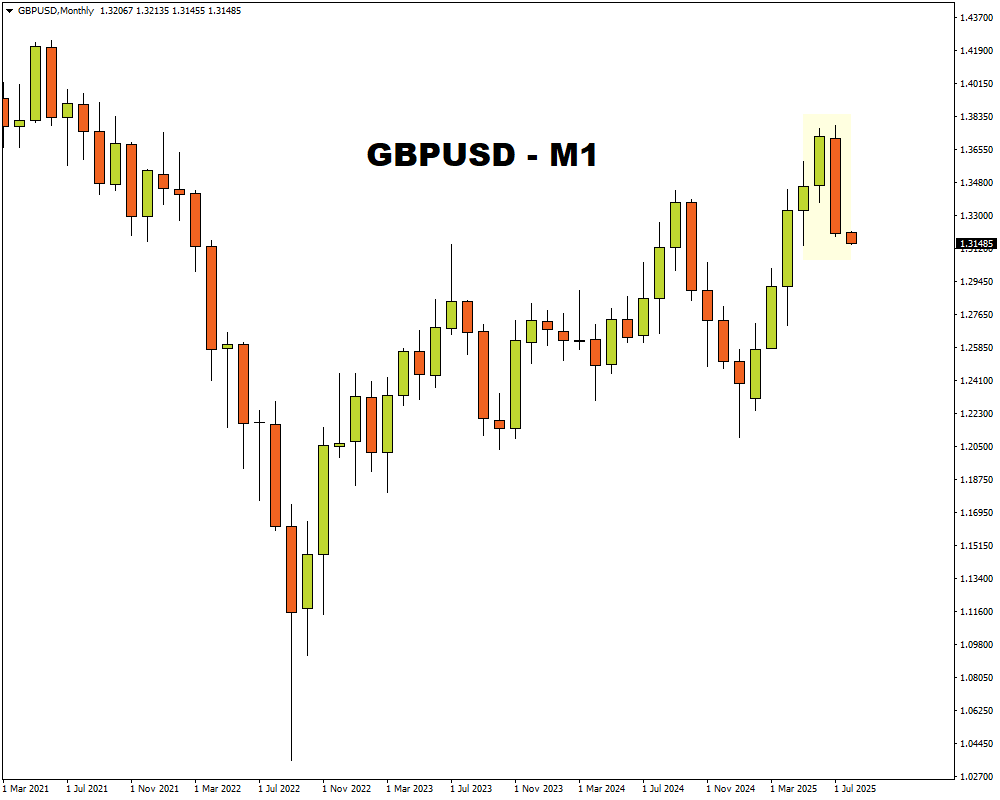
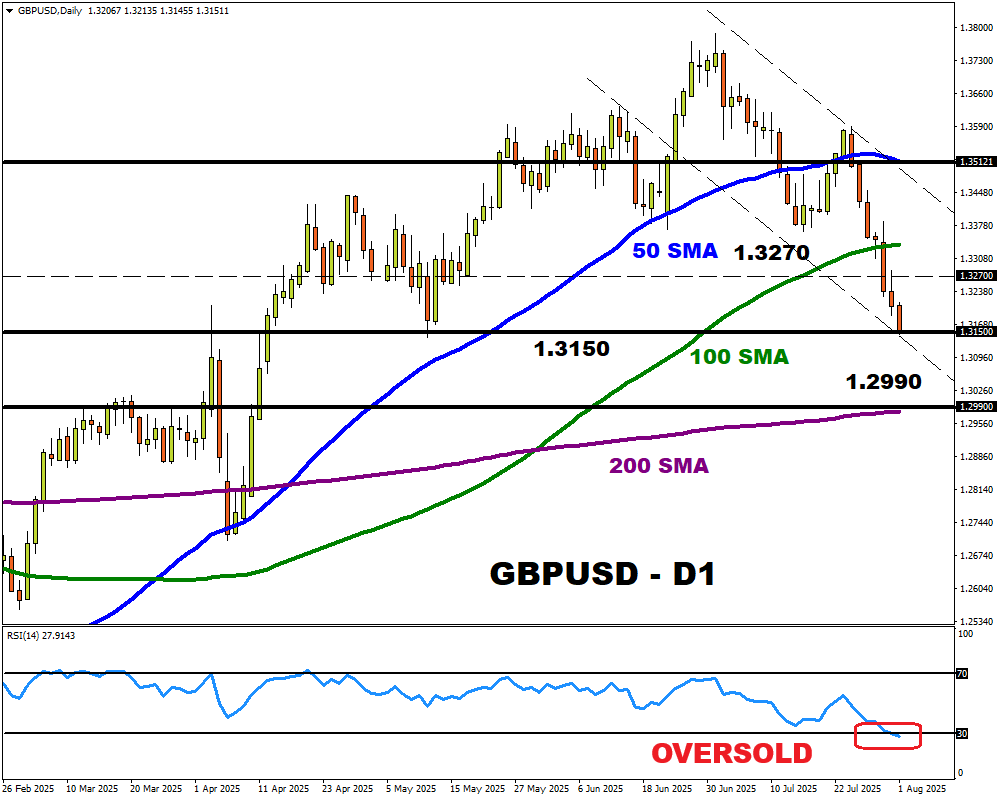
The GBP/USD pair surged to 1.3704, reaching its highest level since January 2022.

This rally was driven by a weakening US dollar, growing expectations of a Federal Reserve rate cut, and easing geopolitical tensions.

Market expectations for an imminent Fed rate reduction strengthened after Chair Jerome Powell suggested that weaker inflation or employment data could prompt faster action from the central bank.

In the UK, Bank of England (BoE) Governor Andrew Bailey and Deputy Governor Dave Ramsden signalled that interest rate cuts are on the horizon. They highlighted signs of a cooling labour market, including slowing wage growth and rising economic inactivity. However, Bailey cautioned about reliability issues in recent employment data.

Ramsden, who voted for a rate cut, cited the labour market slowdown as a key factor. He also warned of the risk of inflation falling below the BoE’s 2% target.

Meanwhile, markets are closely watching the truce between Israel and Iran, which has reduced fears of further escalation and potential inflationary shocks.

Technical Analysis: GBP/USD

H4 Chart:

On the H4 chart, GBP/USD formed a tight consolidation range around 1.3622 before breaking higher. The pair has now breached the upper boundary of a broader consolidation range, suggesting potential for further gains. The next upside target is 1.3880, supported by the MACD indicator, where the signal line remains above zero and trending upwards.

H1 Chart:

On the H1 chart, the pair completed an upward wave to 1.3723. A short-term pullback towards 1.3630 is possible before another potential rally towards 1.3810. This scenario is supported by the Stochastic oscillator, where the signal line is below 80 and descending towards 20.

Conclusion

The pound’s rally reflects dollar weakness and BoE rate cut expectations, while technical indicators suggest further upside potential after a possible brief correction.


Disclaimer

Any forecasts contained herein are based on the author’s particular opinion. This analysis may not be treated as trading advice. RoboForex bears no responsibility for trading results based on trading recommendations and reviews contained herein.

NATO countries agreed to increase defense spending. Oil prices stabilized at $65

By JustMarkets 

At the end of Wednesday, the Dow Jones (US30) Index fell by 0.25%. The S&P 500 (US500) Index fell by 0.01%. The Nasdaq (US100) Technology Index closed higher by 0.31%. Wall Street closed on a mixed note on Wednesday, as investors weighed steady developments related to the ceasefire in the Middle East and digested the second day of Fed Chairman Jerome Powell’s testimony to Congress. Fed Chairman Jerome Powell struck a cautious tone, signaling that while the Fed may manage potential inflation due to tariffs, it is not yet ready to cut rates despite growing pressure from President Trump and some lawmakers. Meanwhile, housing data showed that new home sales fell to their lowest level since October 2024 amid rising mortgage rates. Technology stocks led the market: Nvidia rose by 4.3%, Alphabet added 2.3%, and AMD increased by 3.6%. Tesla shares fell 3.8% due to weak European sales, and FedEx fell by 3.3% after publishing disappointing earnings expectations.

The Mexican peso strengthened to 18.9 per dollar, approaching the ten-month high of 18.886 reached on June 12, thanks to easing tensions in the Middle East and encouraging domestic inflation dynamics, which support the case for an earlier-than-expected rate cut by the Bank of Mexico.

European stock markets were mostly lower on Wednesday. The German DAX (DE40) fell by 0.61%, the French CAC 40 (FR40) closed down 0.76%, the Spanish IBEX35 (ES35) fell 1.59%, and the British FTSE 100 (UK100) closed down 0.46%. European stocks closed lower on Wednesday as markets continued to assess the impact of geopolitical tensions in the Middle East on energy prices and the outlook for European debt amid promises to increase defense spending. European NATO countries agreed to increase defense spending to 5% of GDP by 2030 during a summit in The Hague.

WTI oil prices rose more than 1% above $65 a barrel on Wednesday after falling nearly 13% in the previous two sessions, the sharpest two-day decline since 2022. Markets remain focused on events in the Middle East, where the US-brokered truce between Iran and Israel appears to be holding. As a step toward strengthening the truce, President Trump also signaled support for China, Iran’s largest oil buyer, to continue importing Iranian oil, which appears to undermine years of US sanctions against Tehran.

The US natural gas prices (XNG/USD) fell more than 1.5% to below $3.50/MMBtu, the lowest in two weeks, under pressure from rising production and significant injections into storage facilities. In June, average production in the lower 48 states was 105.5 billion cubic feet per day, slightly higher than in May but still below March’s record high due to spring maintenance work. Despite hotter-than-usual weather last week, analysts expect gas injections into storage to be above average, with inventories remaining about 6% above the five-year average.

Asian markets rose steadily yesterday. Japan’s Nikkei 225 (JP225) rose by 0.39%, China’s FTSE China A50 (CHA50) rose by 1.26%, Hong Kong’s Hang Seng (HK50) added 1.23%, and Australia’s ASX 200 (AU200) showed a positive result of 0.04%.

In China, Beijing presented new recommendations to stimulate consumption through financial instruments aimed at supporting jobs, increasing incomes, and strengthening the economy as a whole. Premier Li Keqiang also expressed confidence in maintaining relatively rapid growth and transitioning to a consumer-oriented economy. On Thursday, the offshore yuan strengthened to above 7.15 per dollar, reaching its highest level since early November 2024. The People’s Bank of China (PBoC) is establishing a new center in Shanghai to promote the digital yuan and is launching initiatives to encourage its use in global trade and finance.

On Thursday, the New Zealand dollar strengthened to 0.605 US dollars, showing its fourth consecutive day of growth. This was facilitated by improved risk sentiment amid the continuing truce between Israel and Iran. In the domestic market, the latest economic data, in particular better-than-expected GDP figures for the first quarter and an increase in the trade surplus, reinforced the view that the Reserve Bank of New Zealand is nearing the end of its current easing cycle.

S&P 500 (US500) 6,092.16 −0.02 (−0.01%)

Dow Jones (US30) 42,982.43 −106.59 (−0.25%)

DAX (DE40) 23,498.33 −143.25 (−0.61%)

FTSE 100 (UK100) 8,718.75 −40.24 (−0.46%)

USD Index 97.70 −0.16 (−0.16%)

News feed for: 2025.06.26

  • German GfK Consumer Climate (m/m) at 09:00 (GMT+3);
  • UK BOE Gov Bailey Speaks at 14:00 (GMT+3);
  • US GDP (q/q) at 15:30 (GMT+3);
  • US Initial Jobless Claims (w/w) at 15:30 (GMT+3);
  • US Durable Goods Orders (m/m) at 15:30 (GMT+3);
  • US Pending Home Sales (m/m) at 17:00 (GMT+3);
  • US Natural Gas Storage (w/w) at 17:30 (GMT+3).

By JustMarkets


This article reflects a personal opinion and should not be interpreted as an investment advice, and/or offer, and/or a persistent request for carrying out financial transactions, and/or a guarantee, and/or a forecast of future events.

Equiom Surpasses USD 3 Billion in Middle East Workplace Savings Plan Assets Under Administration

Equiom is pleased to announce a major milestone for its trustee services (through Equiom Fiduciary Services (Middle East) Limited and Equiom (Isle of Man) Limited) that it provides on Middle East Workplace Savings plans, with Assets Under Administration (AuA) reaching USD 3 billion in June 2025, up from USD 2.3 billion the previous year.

This achievement reflects significant growth in Equiom’s employee retirement and reward services, underpinned by its strong local commitment to delivering high-quality, scalable solutions tailored to the needs of global employers. Over the past 12 months alone, Equiom has overseen USD 627 million in annual contributions, and is currently implementing six new workplace savings plans for major international clients operating in the Middle East region.

Chris Cain, Client Services Director – Middle East, commented:

“This is a proud moment for our team and an important milestone in the development of our business in the Middle East region and globally. It reflects the trust that our clients place in us to deliver robust, compliant, and efficient workplace savings solutions. We remain committed to delivering exceptional service at a local level to both employers and their employees, while continuing to enhance and evolve our offering to meet the needs of an increasingly global and mobile workforce.”

Nina Johnston, Managing Director of Equiom (Isle of Man) also added:

“This marks a significant milestone for our team. Reaching USD 3 billion in AuA is not just a reflection of recent growth, it’s a testament to the reputation we’ve earned through over two decades of dedicated trustee services to our international pension plan clients in the Middle East. Our globally connected teams remain deeply committed to delivering solutions that stand the test of time and we’re proud to be a trusted partner to so many leading global organisations.”

Equiom’s Middle East Workplace Savings and End of Service Benefits Plans Success in Numbers

Equiom supports a diverse international client base, providing services across a range of employee structures including:

  • International Pension Plans
  • End of Service Benefit Plans / Employee Money Purchase schemes
  • Employee Incentives, Equity Plans and Employee Benefit Trusts
  • Carried Interest and Co-Investment Structures

With a growing global team of subject matter experts operating from key jurisdictions including the United Arab Emirates, Isle of Man, Jersey, Guernsey, Hong Kong, and beyond, Equiom combines local insight with international reach to support clients wherever they operate.

This milestone follows the recent senior appointments of Mark Lindsay as Head of Employee Retirement & Reward Services and Natalie McGinness as Director at Equiom in Jersey. These developments highlight Equiom’s strategic commitment to strengthening this service line and the Group’s ambition to lead in the delivery of innovative employee reward and retirement solutions.

Whether you are looking to implement a new international pension or equity plan, or enhance your existing end-of-service benefits, Equiom’s specialist teams provide trusted, tailored scalable solutions that help global organisations attract, retain, and reward key talent.

For more information on Equiom’s Employee Retirement & Reward Services, visit: www.equiomgroup.com/employee-retirement.


About Equiom

For more than 45 years Equiom has offered fiduciary services to private wealth, institutional and corporate sectors, providing sophisticated clients with professional expertise in delivering international investment, asset protection solutions and corporate services.

With offices in the leading international finance centres, Equiom operate as a truly global entity and take pride in using their global knowledge and insight to create innovative and tailored solutions that drive corporate and private clients towards their objectives.


For media enquiries, please contact:

Dana Al Aawar

Marketing Manager


Equiom Fiduciary Services (Middle East) Limited is regulated by the DFSA. Any information contained herein is intended only for Professional Clients or Market Counterparties as defined by the DFSA, and no other Person should act upon it. Equiom Fiduciary Services (Middle East) Limited only deals with Professional and Market Counterparty Clients and does not hold a Retail endorsement. However, all employers and employees participating in the DEWS plan will be treated as Retail Clients under the DFSA requirements. Any underlying investment options made available within an EOS arrangement could potentially carry investment and market risk, whereby the value of the underlying investments can go down as well as up. The underlying assets within some investment options may be illiquid and or subject to restrictions on their resale. Participants in any solution should undertake their own due diligence and where necessary seek independent professional advice on the available investment options.


Equiom (Isle of Man) Limited is regulated by the Isle of Man Financial Services Authority. For further information on the regulatory status of our companies, please visit www.equiomgroup.com/regulatory  


Mid-week review: Mideast Truce, Powell & PCE

By ForexTime

  • Risk-on mood returns on fragile Israel-Iran truce 
  • Oil prices tank almost 15% as supply fears ease, gold dims, dollar sinks 
  • Equities stage sharp rebound, Bitcoin closes above $105,000
  • Fed Chair Powell says Fed in no rush to cut rates during testimony 
  • US PCE report on Friday could spark fresh market volatility 

Global stocks surged on Tuesday after a ceasefire between Iran and Israel appeared to hold despite initially faltering.

President Donald Trump rebuked both sides for early breaches, which appeared to keep everyone back in line. 

Equities across the globe may extend gains after Wall Street ended sharply higher, with the Nasdaq 100 hitting a fresh all-time high.

This extraordinary development comes after two weeks of constant conflict and uncertainty in the region. While the truce is a welcome relief to investors, financial markets will remain highly sensitive to headlines surrounding this development.


Oil nosedives on Mideast truce

Oil prices have displayed monstrous levels of volatility over the past two days. After initially jumping almost 6% on Sunday’s open amid fears about supply disruptions, prices have crashed amid reports of the ceasefire.

One of the major drivers initially powering oil prices was potential disruptions through the vital Strait of Hormuz channel. Oil benchmarks have shed almost 15% this week with Brent eyeing support at $65.00. 

Imagen
brent67

In the FX markets, the dollar has tumbled across the board this week amid the risk-on.

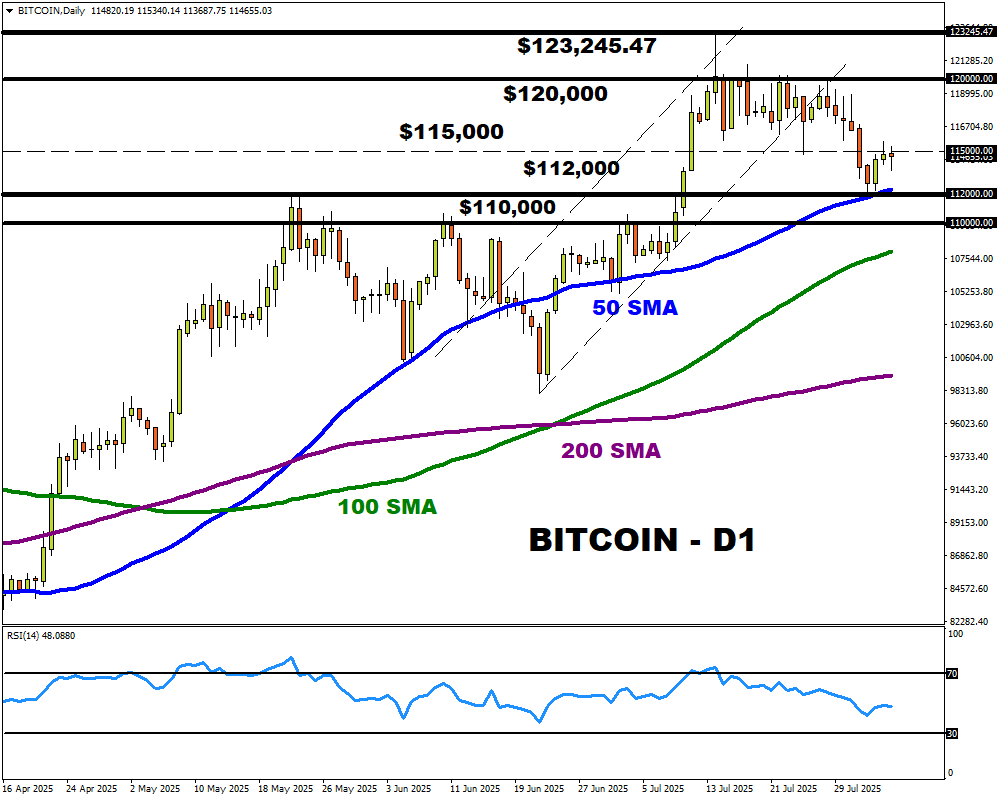
A return in risk appetite has sent investors rushing back toward Bitcoin, currently trading above $105,000.

Imagen
bitcoin25


Powell says Fed is no rush to act…

Beyond the geopolitical drama, Federal Reserve Chair Jerome Powell reiterated that the Fed was in no rush to cut interest rates during his testimony. A counter to recent statements from other policymakers signaled that they would be open to lowering interest rates as soon as July.


US PCE report could trigger fresh volatility

On the data front, all eyes will be on the US PCE report on Friday.

The Fed’s preferred inflation gauge – the Core PCE could influence expectations about when the central bank will cut rates in the second half of 2025. Ultimately, more signs of rising price pressure may shave bets around lower US interest rates. The same can be said vice versa.

Traders are currently pricing in a 19% probability of a Fed rate cut by July, with a move essentially priced in by September. Any major shifts to these bets may impact the dollar, US equities, and gold. 


Commodity spotlight – Gold

Speaking of gold, it shed as much as 2.2% on Tuesday – its biggest intraday loss since mid-May. This brings the precious metal’s weekly losses to over 1%.

  • Further signs of easing geopolitical tensions could spell more pain for gold, opening the doors back toward $3300 and $3280.
  • Should the fragile Israel-Iran ceasefire fall apart, gold could rebound back toward $3360 and $3400.
Imagen
gold355

Forex-Time-LogoArticle by ForexTime

ForexTime Ltd (FXTM) is an award winning international online forex broker regulated by CySEC 185/12 www.forextime.com

EUR/USD Extends Rally as Risk Sentiment Improves

By RoboForex Analytical Department 

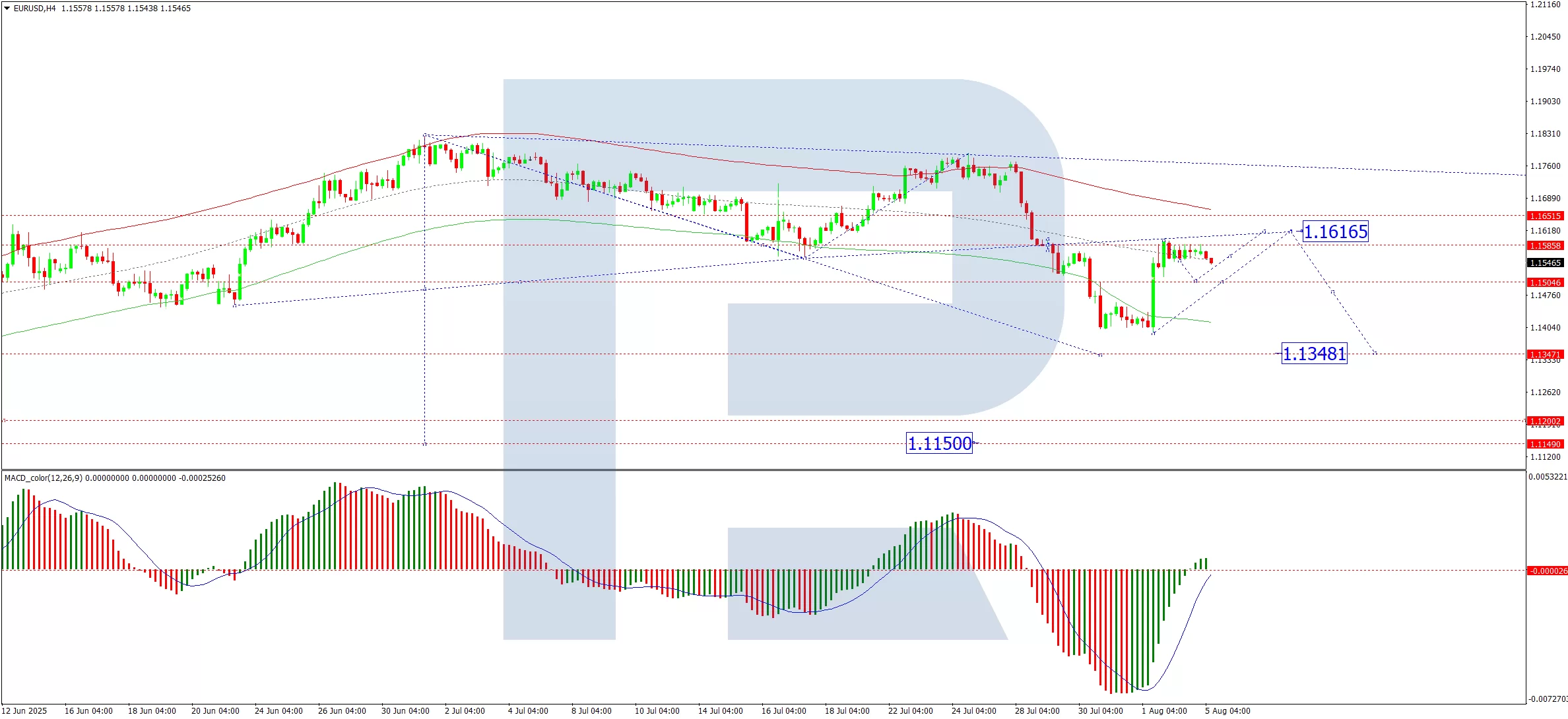
On Wednesday, EUR/USD climbed to 1.1621, marking its fifth consecutive session of gains with little interruption. The upward momentum reflects easing geopolitical tensions, which in turn have reduced the demand for traditional safe-haven assets.

The US-brokered ceasefire between Israel and Iran remains largely intact despite isolated incidents, while oil prices have retreated significantly from recent peaks. However, lingering uncertainties persist – reports suggest recent US missile strikes only partially damaged Iran’s critical nuclear facilities, merely delaying rather than halting its nuclear program.

Market attention remains fixed on Federal Reserve Chair Jerome Powell’s latest remarks. Reaffirming his commitment to curbing inflation, Powell signalled that interest rates are likely to stay on hold until the impact of trade tariffs on prices becomes clearer. Nevertheless, markets still price in a 20% probability of a rate cut as early as July.

Traders now await Powell’s upcoming Senate testimony and the latest US new home sales data for further direction.

Technical Analysis: EUR/USD

H4 Chart:

The EUR/USD breakout above 1.1540 propelled the pair towards 1.1640. Today, we anticipate consolidation below this level. A downside exit could trigger a retracement towards 1.1540, while an upward breakout may extend gains to 1.1670. Beyond this, we expect a potential downward wave targeting 1.1414, supported by the MACD indicator. The signal line, currently above zero and exiting the histogram zone, suggests a likely decline towards the baseline.

H1 Chart:

After finding support at 1.1518, the pair rallied to 1.1640, where a tight consolidation range is forming. A downward breakout appears probable – should 1.1580 give way, a decline towards 1.1518 may follow. This scenario is corroborated by the Stochastic oscillator, with its signal line below 80 and trending sharply downward towards 20.


Conclusion

The EUR/USD uptrend persists amid improving risk sentiment, though technical indicators suggest a potential pullback. Traders should monitor Powell’s testimony and US housing data for near-term catalysts.


Disclaimer

Any forecasts contained herein are based on the author’s particular opinion. This analysis may not be treated as trading advice. RoboForex bears no responsibility for trading results based on trading recommendations and reviews contained herein.