The Analytical Overview of the Main Currency Pairs on 2022.07.12

By JustForex

The EUR/USD currency pair

Technical indicators of the currency pair:
  • Prev Open: 1.0176
  • Prev Close: 1.0040
  • % chg. over the last day: -1.35%

The euro fell to $1.0005 against the US dollar, its lowest level since December 2002. The dollar index rose on expectations that the Fed will continue to aggressively raise rates, fighting rising inflation, while the energy crisis leads the Eurozone into recession. The euro could fall to $0.90 against the dollar if Russia stops supplying oil to Europe, a Bloomberg portfolio manager said last week. Today, traders’ attention will be focused on July’s ZEW economic sentiment index, which is one of the leading indicators of Europe’s economic outlook. Analysts expect Germany’s ZEW index to fall to -39 from -28. If the data is worse than expected, it might be positive for the euro as, in this case, the ECB will need to raise interest rates more decisively, which might give some impulse to the euro’s growth.

Trading recommendations
  • Support levels: 1.0000
  • Resistance levels: 1.0185, 1.0221, 1.0284, 1.0365, 1.0415, 1.050

From the technical point of view, the trend on the EUR/USD currency pair on the hourly time frame is bearish. At the moment, the price is trading below the moving averages. The MACD indicator is in the negative zone, but the divergence is already observed in several timeframes. Under such market conditions, sell deals can be considered from the resistance level of 1.0185, but only after the additional confirmation. Buy trades are best to look for on intraday time frames from the support level of 1.0000, but only with confirmation and short targets.

Alternative scenario: if the price breaks out through the 1.0364 resistance level and fixes above, the uptrend will likely resume.

EUR/USD
News feed for 2022.07.12:
  • – German ZEW Economic Sentiment (m/m) at 12:00 (GMT+3);
  • – Eurozone ZEW Economic Sentiment (m/m) at 12:00 (GMT+3);
  • – Eurozone EU Economic Forecasts, tentative.

The GBP/USD currency pair

Technical indicators of the currency pair:
  • Prev Open: 1.2004
  • Prev Close: 1.1890
  • % chg. over the last day: -0.95%

On Monday, Bank of England Governor Andrew Bailey said he still believes inflation is likely to fall sharply next year. This situation is broadly in line with forecasts the British central bank presented in early May. However, Bailey said that a possible further increase in gas prices following Russia’s invasion of Ukraine or more sustained pressure on domestic costs could change the situation. The Bank of England had previously forecast that inflation would peak at just over 11% this October. Last month, the Bank of England said it was prepared to act decisively if necessary to prevent high inflation from taking root in the economy. Policymakers are assessing how much of a shock to income from high energy prices will cool inflation at the expense of lower spending on other goods and services.

Trading recommendations
  • Support levels: 1.1877, 1.1801
  • Resistance levels: 1.2002, 1.2065, 1.2137

From the technical point of view, the trend on the GBP/USD currency pair on the hourly time frame is bearish. In contrast to the euro, the pound is showing more resilience, but it is also declining against the strengthening dollar. The MACD indicator has turned negative, but there are signs of divergence. Under such market conditions, sell deals can be considered from the resistance level of 1.2002, but only after the additional confirmation. Buy trades are best to look for on intraday time frames from the support level of 1.1877 or 1.1801, but only with confirmation and short targets.

Alternative scenario: if the price breaks out through the 1.2137 resistance level and fixes above, the uptrend will likely resume.v

GBP/USD
News feed for 2022.07.12:
  • – UK BoE Gov Bailey Speaks at 20:00 (GMT+3).

The USD/JPY currency pair

Technical indicators of the currency pair:
  • Prev Open: 136.01
  • Prev Close: 137.47
  • % chg. over the last day: +1.03%

Japan’s ruling coalition has expanded its majority in the upper house elections, and investors interpreted this result as a negative one for the Japanese Yen as people support the politicians who, in turn, are supporting soft monetary policy. Bank of Japan Governor Haruhiko Kuroda confirmed yesterday that he would not hesitate to add stimulus if necessary to stimulate the economy. Rising Treasury yields also provided an additional boost to the dollar, which rose against most of its major peers.

Trading recommendations
  • Support levels: 137.08, 136.48, 135.92, 135.40, 134.64, 134.11
  • Resistance levels: 137.48, 138.89

From the technical point of view, the medium-term trend on the USD/JPY currency pair is bullish. The MACD indicator is in the positive zone, and the price continues to trend upward. Under such market conditions, buy trades can be considered from the support level of 137.08 or 136.48, but with confirmation. A resistance level of 137.48 is good for sell deals, but only with additional confirmation and short targets.

Alternative scenario: If the price fixes below 135.93, the downtrend will likely resume.

USD/JPY
News feed for 2022.07.12:
  • – Japan Producer Price Index (m/m) at 02:50 (GMT+3).

The USD/CAD currency pair

Technical indicators of the currency pair:
  • Prev Open: 1.2947
  • Prev Close: 1.3003
  • % chg. over the last day: +0.43%

The Canadian dollar is a commodity currency, so it highly depends on on the dollar index and oil prices. Oil prices drifted yesterday while the dollar index rose, which caused the USD/CAD to grow. Traders should not forget that both the US Fed and the Bank of Canada are on the path of aggressive interest rate hikes, which creates a kind of parity between the currencies. Also, a lot depends on oil, where the situation is very uncertain. On the one hand, the supply shortage in the background of high demand in summer pushes oil prices up. On the other hand, the Fed is aggressively raising interest rates, which leads to the growth of the dollar index. Dollar-denominated commodities, including oil, are usually not in demand from overseas buyers when the US currency is rising.

Trading recommendations
  • Support levels: 1.2959, 1.2934, 1.2894
  • Resistance levels: 1.3018, 1.3050

In terms of technical analysis, the trend on the USD/CAD currency pair is bullish. The price is trading above the moving averages, and there is buying pressure. Under such market conditions, it is best to look for buy trades on the lower time frames from the support level of 1.2959 or 1.2934. For sell deals, it is best to consider the resistance level of 1.3018, but it is also better with confirmation and short targets.

Alternative scenario: if the price breaks through and consolidates below the 1.2894 support level, the downtrend will likely resume.

USD/CAD
There is no news feed for today.

By JustForex


This article reflects a personal opinion and should not be interpreted as an investment advice, and/or offer, and/or a persistent request for carrying out financial transactions, and/or a guarantee, and/or a forecast of future events.

Global stock markets are under pressure again. The euro reached parity with the dollar

By JustForex

The US Stock Indices fell on Monday as investors expected a weak reporting season and negative inflation data for June. Despite a strong labor market, investors are still wary of a recession and waiting to hear from company executives about costs, supply chains, and their views on business conditions over the next few months. “There’s nervousness about earnings season and the CPI report, but I think the market has a sense as to what CPI is going to bring this week,” said Robert Pavlik, senior portfolio manager at Dakota Wealth.

As the stock market closed on Monday, the Dow Jones Index (US30) was down 0.52% and the S&P 500 Index (US500) lost 1.15%. Yesterday the Technology Index NASDAQ (US100) decreased by 2.26%. At the end of the day all three indices were on the plus side.

US consumers see inflation continuing to rise in the coming year but expect a more moderate pace over the long term, indicating that inflation expectations remain reasonably resilient, a New York Fed survey showed on Monday. The Fed is expected to raise rates by 75 basis points at its July 26-27 meeting. Fed futures traders are predicting a prime rate hike to 3.50% by March.

Shares of Twitter Inc fell nearly 10% on Monday as the company prepared to sue Ilon Musk for his attempted rejection of a $44 billion private offering.

Stock markets in Europe mostly fell on Monday. Germany’s DAX (DE30) decreased by 1.40%, France’s CAC 40 (FR 40) lost 0.61%, Spain’s IBEX 35 (ES35) decreased by 0.43%, and only the British FTSE 100 (UK100) closed yesterday in the plus 0.01%.

The euro fell to a 20-year low and came close to parity with the dollar. One of the main problems the ECB is dealing with right now is the so-called “fragmentation” problem. It is when bonding yields of Europe’s northern countries are falling, and yields of peripheral countries are rising. The concern is that tighter monetary policy will increase this difference, leading to an unequal financial position in the general market. This split in views could lead to a stronger market reaction to the ECB’s actions. Most recently, Austrian MPC member Holtzman called for the ECB to raise the rate by 125 points over the next two meetings: 30 points in July and 75 points in September.

The largest pipeline, Nord Stream 1, which transports Russian gas to Germany, began its annual maintenance on Monday, and supplies are expected to be halted for ten days.

On the oil market, the situation remains uncertain. On the one hand, supply shortages on the back of high summer demand are pushing oil prices up. On the other hand, the Fed is aggressively raising interest rates, which leads to an increase in the dollar index. Dollar-denominated goods, including oil, are not usually in demand from foreign buyers when the US currency is rising. As a result, oil prices are very volatile right now.

Yesterday, Asian markets were mostly down. Japan’s Nikkei 225 (JP225) increased by 1.11%, Hong Kong’s Hang Seng (HK50) decreased by 2.77%, and Australia’s S&P/ASX 200 (AU200) ended the day down by 1.14%. Asian stocks are also under pressure on the prospect of further monetary tightening by central banks and the renewed outbreak of COVID-19 in China.

Sri Lanka’s parliament will elect a new president on July 20, its speaker said on Monday. During the meeting of party leaders, it is necessary to ensure the formation of a new all-party government according to the constitution.

S&P 500 (F) (US500) 3,854.47 −44.91 (−1.15%)

Dow Jones (US30) 31,175.52 −162.63 (−0.52%)

DAX (DE40) 12,832.44 −182.79 (−1.40%)

FTSE 100 (UK100) 7,196.59 +0.35 (+0.01%)

USD Index 108.25 +1.24 (+1.16%)

Important events for today:
  • – Japan Producer Price Index (m/m) at 02:50 (GMT+3);
  • – German ZEW Economic Sentiment (m/m) at 12:00 (GMT+3);
  • – Eurozone ZEW Economic Sentiment (m/m) at 12:00 (GMT+3);
  • – Eurozone EU Economic Forecasts, tentative;
  • – UK BoE Gov Bailey Speaks at 20:00 (GMT+3).

By JustForex


This article reflects a personal opinion and should not be interpreted as an investment advice, and/or offer, and/or a persistent request for carrying out financial transactions, and/or a guarantee, and/or a forecast of future events.

Markets gripped by recession fears, US CPI in focus

By ForexTime 

Asian shares were a sea of red on Tuesday as recession fears and China’s renewed Covid-19 outbreak smothered appetite for risk. Overnight, Wall Street’s main indices took a beating as investors sprinted to safety ahead of the US inflation data and earnings season. In Europe, stocks are expected to open lower due to Europe’s energy shortage and growing caution ahead of key economic data and bank earnings.

In the currency markets, the mighty dollar flexed its safe-haven muscles with the dollar index (DXY) hitting its highest levels since 2002. Meanwhile, the EURUSD parity dream came closer to reality this morning as prices touched 1.0004 for the first time since December 2002. Looking at commodities, gold remains depressed and unloved while oil prices were hit by demand concerns.

The negative vibe and sense of uncertainty across financial markets could fuel further dollar upside while dragging equities lower. Given how markets remain highly sensitive and reactive to anything regarding inflation, tomorrow’s pending US CPI report could spark fireworks. On the data front, Australian consumer sentiment tumbled for the eighth consecutive month in July. Business confidence also disappointed, dragged by global uncertainty, looming hikes, and soaring inflation. Germany’s ZEW economic confidence survey will be published later this morning. A disappointing report could compound the euro’s woes, weakening the single currency further.

It’s all about the US inflation report

Wednesday sees the release of the US inflation report with investors watching anxiously to see if prices are rising again or perhaps that we are finally peaking. According to a poll by Bloomberg, inflation is expected to rise 8.8% year-on-year in June compared with 8.6% in May. If expectations meet reality, this would mark the fastest increase in consumer prices since the 8.9% figure back in December 1981! Such a development will most likely reinforce market bets of more aggressive Fed rate hikes, ultimately injecting dollar bulls with fresh momentum.

Other than the US inflation data, it may be wise to keep an eye on the weekly jobless claims report on Thursday. At the end of the week, there will also be a barrage of key releases ranging from the latest retail sales, industrial production, and consumer sentiment which will provide insight into the health of the US economy.

Oil hit by demand concerns

Oil found itself under renewed selling pressure on Tuesday as fresh Covid-19 curbs in China and fears of a global economic slowdown weighed heavily on the demand outlook. 

The global commodity is down over 1.5% this morning with an appreciating dollar adding to the pressure and fueling the downside momentum. While fears of a global recession could keep bulls at bay, oil prices remain pulled and tugged by conflicting forces. On one side of the bearish equation, there are recession fears and Covid-19 restrictions in China. However, bulls could draw support from ongoing geopolitical risks and tightening market conditions. President Joe Biden is scheduled to visit Saudi Arabia this week during a tour to the Middle East.

Looking at the technicals, WTI has the potential to target the psychological $100 level if bears can charge through the $102 level. Brent seems to have created fresh resistance around $107.50 with a breakdown below $105 signaling a selloff towards $102.

Commodity spotlight – Gold

Gold is struggling to nurse deep wounds inflicted by last week’s brutal selloff. 

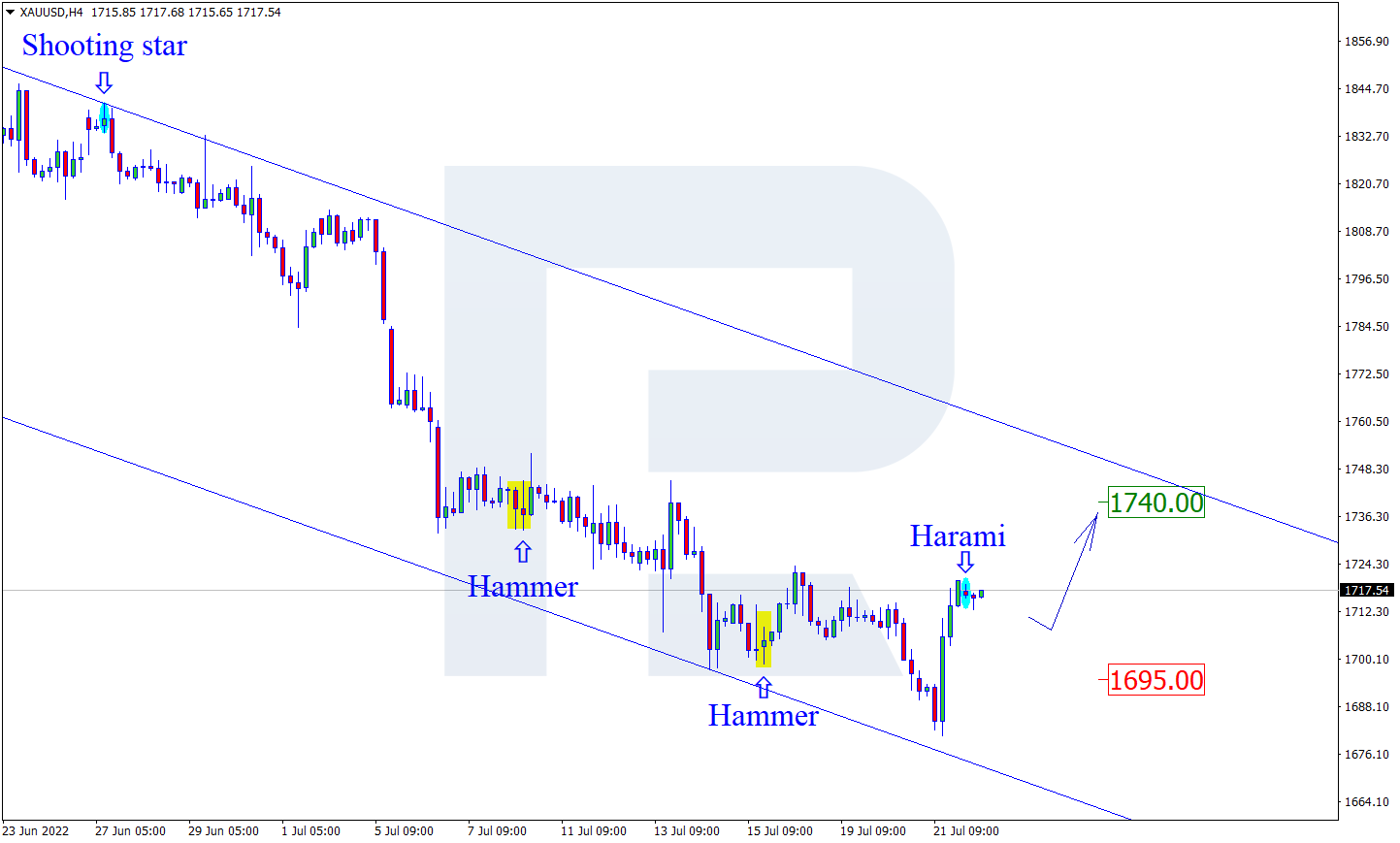
The precious metal has been smothered by an appreciating dollar and expectations over the Fed maintaining an aggressive stance towards higher interest rates. Prices are trading around $1730 as of writing, with the next key level of interest found at $1700. The precious metal looks depressed and could be instore for more pain if the pending US CPI report meets or exceeds market expectations. If prices are able to breach $1700, the next key level of interest can be found at $1680.


Forex-Time-LogoArticle by ForexTime

ForexTime Ltd (FXTM) is an award winning international online forex broker regulated by CySEC 185/12 www.forextime.com

D.B. Cooper, the changing nature of hijackings and the foundation for today’s airport security

By Janet Bednarek, University of Dayton 

Though many Americans may associate airport security with 9/11, it was a wave of hijackings in the late 1960s and early 1970s that laid the foundation for today’s airport security protocols.

During that period, a hijacking occurred, on average, once every five days globally. The U.S. dealt with its own spate of mile-high crimes, convincing reluctant government officials and airport executives to adopt the first important airport security protocols.

The subject of a new Netflix docuseries, hijacker D.B. Cooper emerged as something of a folk hero during this era. While other more violent hijackings might have played a bigger role in prompting early airport security measures, it was the saga of Cooper that captured the imagination of the American public – and helped transform the perception of the overall threat hijackings posed to U.S. air travel and national security.

Incidents become impossible to ignore

The first airplane hijacking happened in 1931 in Peru. Armed revolutionaries approached the grounded plane of pilot Byron Richards and demanded that he fly them over Lima so they could drop propaganda leaflets. Richards refused, and a 10-day standoff ensued before he was eventually released.

That remained a somewhat isolated incident until the late 1940s and 1950s, when several people hijacked airplanes to escape from Eastern Europe to the West. In the context of the Cold War, Western governments granted these hijackers political asylum. Importantly, none of the airplanes hijacked were flown by U.S. carriers.

Beginning in the early 1960s, however, hijackers began targeting U.S. airlines. Most of these individuals were Cubans living in the U.S. who, for one reason or another, wished to return to their native land and were otherwise blocked due to the U.S. embargo against Cuba.

U.S. officials responded by officially and specifically making hijacking a federal crime. Though the new law didn’t stop hijackings altogether, the crime remained relatively rare. When they did occur, they usually didn’t involve much violence.

Officials wanted to downplay hijackings as much as possible, and the best way to do this was to simply give the hijacker what they wanted to avert the loss of life. Above all, airline executives wanted to avoid deterring people from flying, so they resisted the implementation of anxiety-inducing security protocols.

That changed in 1968. On July 23 of that year, members of the Popular Front for the Liberation of Palestine hijacked an El Al flight from Rome to Tel Aviv. Though that 39-day ordeal ended without any loss of life, it ushered in a new era of more violent – often politically motivated – hijackings of international airlines.

From 1968 to 1974, U.S. airlines experienced 130 hijackings. Many fell into this new category of politically motivated hijackings, including what has become known as the Dawson’s Field hijackings. In September 1970, the Popular Front for the Liberation of Palestine hijacked four aircraft, including three belonging to U.S. carriers, and forced them to land at Dawson’s Field in Libya. No hostage lives were lost, but the hijackers used explosives to destroy all four aircraft.

Additionally, and more worrying to U.S. officials, two different groups of hijackers, one in 1971 and another in 1972, threatened to crash planes into nuclear power plants.

Cooper inspires copycats

Amid this dramatic rise in the number of hijackings, on Nov. 24, 1971, a man known to the American public as D.B. Cooper boarded a Northwest Orient 727 flight from Portland, Oregon, to Seattle. Shortly after takeoff, he showed a stewardess the contents of his briefcase, which he said was a bomb. He then instructed the stewardess to take a note to the cockpit. In it, he demanded US$200,000 in $20 bills and four parachutes.

Upon arrival in Seattle, Cooper allowed the other passengers to deplane in exchange for the money and the parachutes. Cooper then ordered the pilot to fly to Mexico but low and slowly – no higher than 10,000 feet (3,048 meters) and under 200 knots (230 mph, 370 kph). Somewhere between Seattle and a fuel stop in Reno, Nevada, Cooper and the loot disappeared out the back of the aircraft via the 727’s aft stairwell. No one knows for sure what happened to him, though some of the money was recovered in 1980.

Cooper wasn’t the first person to hijack an American airliner and demand money. That dubious honor belongs to Arthur Barkley. Frustrated with his inability to get government officials to take seriously his dispute with the IRS, on June 4, 1970, Barkley hijacked a TWA aircraft, demanding $100 million and a hearing before the U.S. Supreme Court. Barkley’s efforts failed, and he ended up confined to a mental institution.

The idea that Cooper might have succeeded, however, clearly inspired several imitators. While it remains uncertain whether Cooper lived to enjoy the fruits of his escapade, none of his imitators did. They included Richard McCoy, Jr., Martin J. McNally and Frederick Hahneman, all of whom successfully parachuted out of the aircraft once they received their ransom payments, only to be eventually caught and punished.

Tightening the screws

In response to the spate of more violent and costly hijackings, the U.S. government established the first anti-hijacking security protocols. Most of them aimed to prevent hijackers from getting on aircraft in the first place. The measures included a hijacker profile, metal detectors and X-ray machines. Specific to Cooper, airlines retrofitted aircraft with a devise known as a Cooper vane that made it impossible to open aft stairwells during flight.

The protocols put in place in the 1970s also laid the foundation for the expansive security measures taken after 9/11. A series of court cases upheld the constitutionality of these early measures. For example, United States v. Lopez, decided in 1971, upheld the use of the hijacker profile.

More importantly, in United States v. Epperson, a federal court ruled in 1972 that the government’s interest in preventing hijackings justified the requirement for passengers to pass through a magnetometer at the airport. And in 1973, the Ninth Circuit Court, in United States v. Davis, declared that the government’s need to protect passengers from hijackings rendered all searches of passengers for weapons and explosives as reasonable and legal.

These rulings upholding early anti-hijacking measures helped create the strong legal grounds for the rapid adoption of the more rigorous security protocols – including detailed identification checks, random pat-downs and full body scans – adopted after 9/11.

The mystery surrounding the fate of Cooper may have afforded him an outsized place in American popular culture, but his crime should also be remembered as one in a consequential wave of hijackings that finally forced the U.S. government, airline executives and airport officials to adopt the first versions of the security measures travelers take for granted today.The Conversation

About the Author:

Janet Bednarek, Professor of History, University of Dayton

This article is republished from The Conversation under a Creative Commons license. Read the original article.


Politics Might Support GBP

By RoboForex Analytical Department

GBP/USD is balancing at 1.1987 on Monday. The Pound Sterling remains under pressure despite a recent rebound caused by political news.

British Prime Minister Boris Johnson resignation drama seems to be gathering pace – it’s going to be a long story. First of all, the Conservative party has to find a new leader, and it will surely take some time. Until then, Johnson will continue to carry out his duties. Secondly, a reshuffle of the Cabinet is ahead –some of the ministers resigned due to disagreement with the current policy, while the others might be reassigned by the next Prime Minister. Market rumours have it that such global changes in British policy might solve some aspects of political uncertainty; for example, the Bank of England might finally raise its interest rates. If so, it’s nothing but positive for the Pound.

Currencies seldom respond to political changes in a positive way, but the Pound may get a lot of opportunities here.
As we can see in the H4 chart, after rebounding from 1.2042, GBP/USD is forming another descending wave towards 1.1837 and may consolidate there. Later, the market may correct test 1.2042 from below and then resume trading within the downtrend with the target at 1.1700. From the technical point of view, this scenario is confirmed by the MACD Oscillator: its signal line is moving below 0 and may continue falling to update the lows.

In the H1 chart, having completed the descending impulse at 1.1919 along with the correction up to 1.2020, GBP/USD is forming another descending structure towards 1.1944 and may later consolidate there. If the price breaks this range to the downside, the market may resume moving within the downtrend with the short-term target at 1.1856, and then start a new growth to test 1.1944 from below. After that, the pair may resume falling towards 1.1837. From the technical point of view, this scenario is confirmed by the Stochastic Oscillator: after breaking 50 and reaching 20, its signal line is expected to return to 50, rebound from it again, and resume falling to re-test 20.
Disclaimer

Any forecasts contained herein are based on the author’s particular opinion. This analysis may not be treated as trading advice. RoboForex bears no responsibility for trading results based on trading recommendations and reviews contained herein.


Trade Of The Week: More Pain Ahead For Gold?

By ForexTime 

– The past few weeks have been rough for gold.

After securing a solid weekly close below the $1825 level back in late June, bears have been on a tear with various fundamental forces fuelling the downside momentum. The precious metal is down almost 4% this month with prices trading at levels not seen since September 2021!

Last Friday’s blowout US jobs numbers compounded gold’s woes as expectations solidified over a 75-basis point rate hike at the Fed’s July meeting. The US economy added 372,000 jobs in June, an indicator of resilience in the labour force despite signs of slowing economic growth while the Unemployment rate held steady at 3.6%.

With the dollar hitting new multi-decade highs and Treasury yields rebounding amid expectations of more aggressive rate hikes by the Fed, gold could find itself depressed and unloved.

The week ahead could be volatile for gold thanks to key economic data and risk events. Looking at the technical picture, bears are clearly in a position of power on the H4 and daily timeframe with prices shaking above $1735 as of writing. With the fundamentals weighing heavily on the precious metal, bulls could find it difficult to fight back in the short to medium term.

Before we cover what to expect from gold in the week ahead, it is worth keeping in mind that the precious metal took a real beating last week, cutting through multiple levels of support like a hot knife through butter. Gold is down roughly 5% year-to-date and approaching key support at $1700.

Given how the 10-year Treasury yield is back on the rise amid aggressive rate hike bets, gold may struggle to shine. The precious metal offers no yield, making it less attractive for investors to own in an environment of rising Treasury yields.

All eyes on US Inflation data

The biggest risk event for gold this week will be the pending US CPI report.

Wednesday sees the release of the US inflation report with investors watching anxiously to see if prices are rising again or perhaps that we are finally peaking. According to a poll by Bloomberg, inflation is expected to rise 8.8% year-on-year in June compared with 8.6% in May. If expectations meet reality, this would mark the fastest increase in consumer prices since the 8.9% figure back in December 1981! Such a development will reinforce market bets of more aggressive Fed rate hikes – ultimately smothering investor appetite for gold as the dollar and treasury yields rise.

Other than the US inflation report, gold could be influenced by ongoing geopolitical risks and recession fears. However, the precious metal remains highly sensitive and reactive to the dollar and Treasury yields.

Gold ETFs favour bears

According to an automated report from Bloomberg, gold ETFs cut 98,220 troy ounces of gold from their holdings last Friday, bringing this year’s net purchase to 5.26 million ounces. This was the eighth straight day of declines and the longest losing streak since May 18.

The outflows could be based on the strong US jobs report which reinforced bets over the Fed raising rates aggressively. A gold ETF provides investors exposure to gold without owning it physically. In this instance, outflows from ETFs are seen as bearish for the underlying asset.

Is Gold in trouble?

Gold remains under pressure on the daily, weekly, and monthly charts with prices approaching critical support at $1700. Over the past few weeks, the precious metal has been battered by a stronger dollar, rising treasury yields, and Fed rate hike bets. Prices are heavily bearish with a strong breakdown below $1700 potentially opening doors to levels not seen since April 2020.

On the daily charts, key levels of interest can be found at $1724, $1680, and $1660.

Zooming out to the weekly, it’s all about $1770, $1700, and $1680.

Focusing on the monthly charts, prices remain in a wide range with support around $1700 and resistance at $2000. It may be wise to keep a close eye on how the $1700 support level fares.


Forex-Time-LogoArticle by ForexTime

ForexTime Ltd (FXTM) is an award winning international online forex broker regulated by CySEC 185/12 www.forextime.com

Forex Technical Analysis & Forecast 11.07.2022

Article By RoboForex.com

EURUSD, “Euro vs US Dollar”

After reaching the short-term downside target at 1.0072 and completing the ascending wave at 1.0180, EURUSD is falling towards 1.0120, thus forming a new consolidation range between the two latter levels. If later the price breaks this range to the downside, the market may resume falling towards 1.0057 or even extend this structure to reach the target at 1.0000; if to the upside, start another correction up to 1.0222 and then resume falling within the downtrend towards the above-mentioned target.

EURUSD
Risk Warning: the result of previous trading operations do not guarantee the same results in the future

GBPUSD, “Great Britain Pound vs US Dollar”

Having finished the descending impulse at 1.1919 along with the ascending structure towards 1.2040, GBPUSD has formed a new consolidation range between these two levels. If later the price breaks this range to the downside, the market may resume falling towards 1.1858, or even extend this structure to reach the target at 1.1838; if to the upside – start a new correction up to 1.2150, and then resume trading within the downtrend towards the above-mentioned target.

GBPUSD
Risk Warning: the result of previous trading operations do not guarantee the same results in the future

USDJPY, “US Dollar vs Japanese Yen”

USDJPY is still correcting. Possibly, today the pair may form a new consolidation range near the lows. If later the price breaks the range to the downside, the market may start another decline towards 135.55.

USDJPY
Risk Warning: the result of previous trading operations do not guarantee the same results in the future

USDCHF, “US Dollar vs Swiss Franc”

USDCHF is forming a new consolidation range below 0.9790. If later the price breaks this range to the downside, the market may start a ту correction down to .9672; if to the upside – resume growing with the target at 0.9850.

USDCHF
Risk Warning: the result of previous trading operations do not guarantee the same results in the future

AUDUSD, “Australian Dollar vs US Dollar”

AUDUSD continues consolidating around 0.6833. Possibly, the pair may break the range to the downside and fall to break 0.6790. After that, the instrument may continue trading downwards with the target at 0.6717.

AUDUSD
Risk Warning: the result of previous trading operations do not guarantee the same results in the future

BRENT

Brent is consolidating around 107.50. Today, the asset may break the range to the upside and form one more ascending wave towards 110.00. Later, the market may correct down to 105.50 and then resume trading upwards with the target at 114.50.

BRENT
Risk Warning: the result of previous trading operations do not guarantee the same results in the future

XAUUSD, “Gold vs US Dollar”

Gold continues to consolidate around 1744.40. Possibly, the metal may break the range to the downside and form a new descending wave with the short-term target at 1721.05. Later, the market may correct towards 1767.50, and then resume falling to reach 1700.00.

GOLD
Risk Warning: the result of previous trading operations do not guarantee the same results in the future

S&P 500

The S&P index has completed the ascending structure at 3920.0. Possibly, today the asset may correct to test 3841.3 from above and then resume growing to break 3948.4. After that, the instrument may continue trading upwards with the short-term target at 4040.0.

S&P 500

Article By RoboForex.com

Attention!
Forecasts presented in this section only reflect the author’s private opinion and should not be considered as guidance for trading. RoboForex LP bears no responsibility for trading results based on trading recommendations described in these analytical reviews.

The cryptocurrency market digest (BTC). Overview for 11.07.2022

Article By RoboForex.com

The BTC is smoothly declining. On Monday, the leading cryptocurrency is going down to $20,510. This is the third day of feeble sales in a row after on Friday, the crypto approached $22,300.

An important resistance level remains at $23,500. It needs to be surpassed so that the price secures above it if the market counts on any bull movements.

With the timid growth of the BTC last week, investors voiced first hopes for a crypto spring that would come if the BTC succeeded. However, we are not that optimistic because the corporate reports season is coming in the US, and it might bring us some surprises. The Nasdaq and S&P 500 indices correlate very noticeably with the BTC. If American markets go down, crypto will dive along.

The US decided upon regulations

The issue of imposing regulations on crypto has been one of the main problems in the sphere of finance in the US. Eventually there has occurred some activity. The US Ministry of Finance presented a document that set the framework for interaction between countries in the sphere of digital assets. The main goal of the document is bringing crypto activities in accordance with US democratic values. Moreover, there are plans to protect consumers in the US and the world by spreading out standards and technologies.

Compass Mining will cut down on the staff

A mining company Compass Mining announced its plans to cut down on the staff members. The company is going to fire about 15% of its employees and to start paying top management 50% less. Compass Mining is correcting its business due to the market situation.

Celsius will have to answer fraud accusations

The Celsius crypto platform was accused of a fraud for a million USD. The claimed is a former business partner who insists on following the agreement on distributing profits. The platform must answer the accusation within 20 days.

Article By RoboForex.com

Attention!
Forecasts presented in this section only reflect the author’s private opinion and should not be considered as guidance for trading. RoboForex LP bears no responsibility for trading results based on trading recommendations described in these analytical reviews.

The Analytical Overview of the Main Currency Pairs on 2022.07.11

By JustForex

The EUR/USD currency pair

Technical indicators of the currency pair:
  • Prev Open: 1.0161
  • Prev Close: 1.0185
  • % chg. over the last day: +0.23%

The euro fell to a new low for two decades against the US dollar on Friday amid fears the Eurozone economy is sliding into recession. Last week investors were focused on FOMC protocol and US nonfarm payrolls data. The FOMC meeting minutes showed that the Fed is likely to raise rates by 0.75% at the July meeting, and the strong jobs report only increased the prospects of a 75bp Fed rate hike. The interest rate differential between the US Fed and the ECB has already resulted in 1 dollar being almost equal to 1 euro.

Trading recommendations
  • Support levels: 1.0135
  • Resistance levels: 1.0221, 1.0284, 1.0365, 1.0415, 1.0504, 1.0564, 1.0611

From the technical point of view, the trend on the EUR/USD currency pair on the hourly time frame is bearish. Currently, the price is trading below the moving averages, and the MACD indicator has become inactive, but there is a strong divergence. Under such market conditions, sell deals can be considered from the resistance level of 1.0221 or 1.0284, but only after the additional confirmation. Buy trades are best to look for on intraday time frames from the support level of 1.0135, but only with confirmation and short targets.

Alternative scenario: if the price breaks out through the 1.0415 resistance level and fixes above, the uptrend will likely resume.

EUR/USD
News feed for 2022.07.11:
  • – US FOMC Member Williams Speaks at 21:00 (GMT+3).

The GBP/USD currency pair

Technical indicators of the currency pair:
  • Prev Open: 1.2021
  • Prev Close: 1.2026
  • % chg. over the last day: +0.04%

The fight for the Prime Minister’s seat in the UK begins. Boris Johnson will remain in power until a new leader is elected, which will take about six weeks. This week, investors are waiting for UK GDP data. It may add to the problematic fundamental background for the pound sterling. The Governor of the Bank of England will give a speech today and may clarify on the state of the UK economy and how the Bank of England will respond to the current market pricing.

Trading recommendations
  • Support levels: 1.1960, 1.1929
  • Resistance levels: 1.2065, 1.2095, 1.2137

From the technical point of view, the trend on the GBP/USD currency pair on the hourly time frame is bearish. In contrast to the euro, the pound is showing more stability. Currently, the price is trading between the moving averages, the MACD indicator is positive, and there is slight pressure from the buyers. Under such market conditions, sell deals can be considered from the resistance level of 1.2065, but only after the additional confirmation. Buy trades are best to look for on intraday time frames from the support level of 1.1960 or 1.1929, but only with confirmation and short targets.

Alternative scenario: if the price breaks out through the 1.2137 resistance level and fixes above, the uptrend will likely resume.

GBP/USD
News feed for 2022.07.11:
  • – UK BoE Gov Bailey Speaks at 17:15 (GMT+3).

The USD/JPY currency pair

Technical indicators of the currency pair:
  • Prev Open: 136.01
  • Prev Close: 136.03
  • % chg. over the last day: +0.01%

Bank of Japan Governor Kuroda said that Japan’s financial system is generally stable despite economic uncertainty. At the same time, the Bank of Japan will continue to stick to the ultra-soft monetary policy and is prepared to soften policy without hesitation further as necessary. And even though the core inflation rate has already consolidated above the Bank of Japan’s target of 2%. Against the backdrop of these statements, the Japanese Yen started to decline further, and USD/JPY quotes renewed its multi-year historical high.

Trading recommendations
  • Support levels: 136.48, 135.92, 135.40, 134.64, 134.11
  • Resistance levels: 137.48, 138.89

From the technical point of view, the medium-term trend on the USD/JPY currency pair is bullish. The MACD indicator became positive, and the price continued its upward trend. Under such market conditions, buy trades can be considered from the support level of 136.48, but with confirmation. A resistance level of 137.48 is good for sell deals, but only with additional confirmation and short targets.

Alternative scenario: If the price fixes below 134.64, the downtrend will likely resume.

USD/JPY
News feed for 2022.07.11:
  • – BoJ Gov Kuroda Speaks, tentative.

The USD/CAD currency pair

Technical indicators of the currency pair:
  • Prev Open: 1.2975
  • Prev Close: 1.2936
  • % chg. over the last day: -0.30%

Labor market data on Friday showed that the number of jobs in Canada fell by 43,200 last month. At the same time, the unemployment rate dropped from 5.1% to 4.9%. The country’s inflation rate is currently about four times the Bank of Canada’s 2% target, which points to a 0.75% interest rate hike this week rather than a 0.5% increase. The Bank of Canada is scheduled to meet on July 13.

Trading recommendations
  • Support levels: 1.2934, 1.2959, 1.2894
  • Resistance levels: 1.3021, 1.3052

In terms of technical analysis, the trend on the USD/CAD currency pair is bullish. The price has corrected to the average values, and the MACD indicator has become inactive. Under such market conditions, it is best to look for buy trades on the lower time frames from the support level of 1.2959 or 1.2934. For sell deals, it is best to consider the resistance level of 1.3021, but it is also better with confirmation and short targets.

Alternative scenario: if the price breaks through and consolidates below the 1.2894 support level, the downtrend will likely resume.

USD/CAD
There is no news feed for today.

By JustForex


This article reflects a personal opinion and should not be interpreted as an investment advice, and/or offer, and/or a persistent request for carrying out financial transactions, and/or a guarantee, and/or a forecast of future events.

The Sri Lankan president’s escape. Elon Musk wants to terminate his Twitter deal

By JustForex

The US Labor Department reported Friday that US employers added 372,000 jobs in June, about 100,000 more than economists had expected. Meanwhile, the unemployment rate remained at 3.6 percent for the third month. As the stock market closed Friday, the Dow Jones Index (US30) decreased by 0.15% (+1.95% for the week), and the S&P 500 Index (US500) lost 0.08% (+3.13% for the week). The Technology Index NASDAQ (US100) gained 0.12% on Friday (+5.71% for the week). All three indices ended the week in the black.

Economists believe the Fed has kept rates “too low” for too long, and its attempts to catch up now could derail the recovery from last year’s coronavirus pandemic.

The reporting season for the second quarter starts this week. Banks traditionally open the reporting season with their global view of economic activity. Analysts expect weaker reporting for the second quarter than for the first quarter. Also, strategists say the economic slowdown combined with weak corporate earnings could push the S&P 500 down at least another 10%, compounding the losses that have already sent the Benchmark Index down 18% since the beginning of the year. While the Fed has said it is confident of achieving a so-called “soft landing” by lowering inflation without disrupting the economy, some investors believe that the sharp drop in stocks this year indicates that some economic slowdown is already into asset prices.

Elon Musk filed a Form 13D/A announcing his intention to terminate his agreement to buy Twitter at $54.20 per share. The letter cites “material breach of several provisions” of the merger agreement and the potential for “material adverse effect”. Musk expressed concern that Twitter was underreporting the number of spam or bot accounts on the platform and Twitter’s decision to fire two members of management after the deal was completed.
Stock markets in Europe were mostly up on Friday. German DAX (DE30) gained 1.32% on Friday (+0.86% for the week), French CAC 40 (FR 40) gained 0.44% (+0.82% for the week), Spanish IBEX 35 (ES35) was 0.27% cheaper (-1.53% for the week), British FTSE 100 (UK100) was up by 0.10% (+0.38% for the week).

The weak euro and rising inflation are extremely worrisome before new data on consumer prices in European countries. Inflation in more than six Eurozone countries, including Spain, is already in double digits, and the core CPI is at its highest level in decades. Against high inflation, the region’s economic indicators have started to deteriorate rapidly, so the ECB needs to act more decisively, or else the EUR/USD exchange rate will fall below 1.

Russia continues to wage war with Ukraine with no sign of compromise or negotiation, leaving the possibility of a protracted conflict that could keep inflationary pressures alive. And the resignation of British Prime Minister Boris Johnson opens the door to more uncertainty in the UK as the battle for his replacement begins.
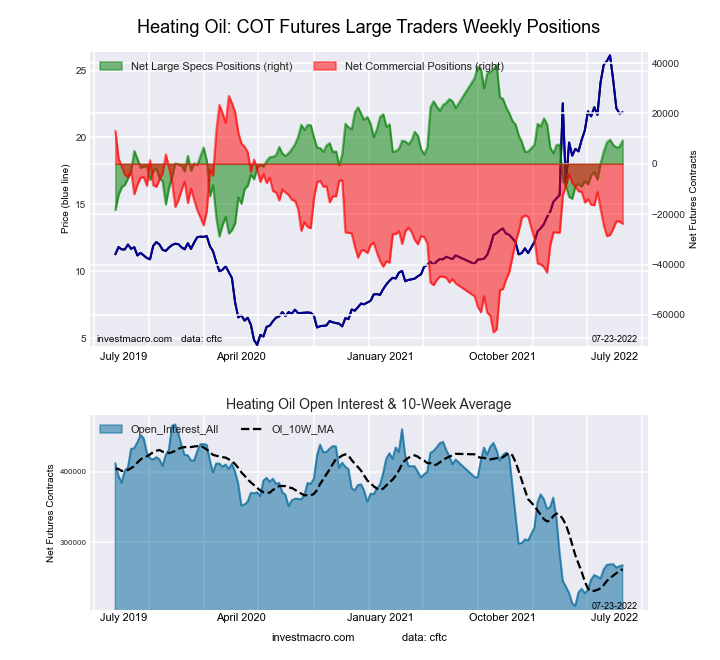
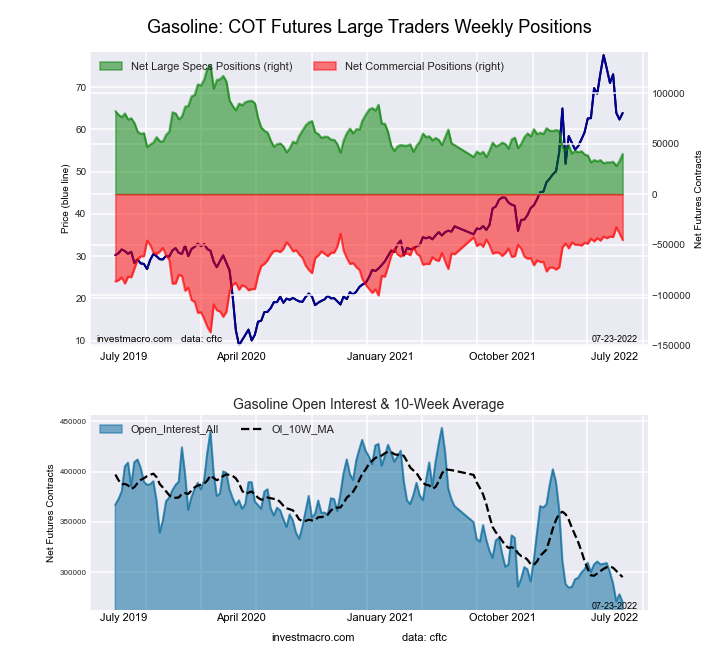
Oil closed last week in the negative, despite recovering on Thursday and Friday. But analysts note that futures have seen a decrease in short positions and an increase in long positions. Crude oil markets are still under pressure right now because of concerns about aggressive rate hikes by the Federal Reserve and the impact it could have on the US economy and its energy demand. But US gasoline prices are holding above $4.50 a gallon, with no sign of a drop in demand.

Asian markets traded higher last week. Japan’s Nikkei 225 (JP225) gained 1.65% over the week, Hong Kong’s Hang Seng (HK50) gained 0.16% over the week, and Australia’s S&P/ASX 200 (AU200) was up by 2.11% over the week.

Sri Lanka’s president fled the country after a crowd of protesters stormed the presidential palace in Colombo. Thousands of protesters stormed the president’s home and office, as well as the official residence of the prime minister, on Saturday, speaking out against their failure to address the devastating economic crisis. COVID-19 caused the first blow to the economy of Sri Lanka: tourism has plummeted, and economic indicators have begun to deteriorate rapidly. Rising national debt and high oil prices led to a ban on chemical fertilizer imports last year, damaging agriculture. Then the fuel crisis began, gasoline and gas became rationed, and people could not cook food, without mentioning of going to work, school, etc. The government asked people to work from home and closed schools to save fuel. Overall inflation in the country of 22 million people reached 54.6% last month, and the central bank warned that it could rise to 70% in the coming months. The parliament speaker said Sri Lanka’s president will formally resign on July 13. The prime minister has also said he will resign to allow an all-party interim government to take power.

The Chinese regulator fined Alibaba and Tencent for violating disclosure rules. Under antitrust law, the maximum possible fine in each case is 500,000 yuan ($74,688).

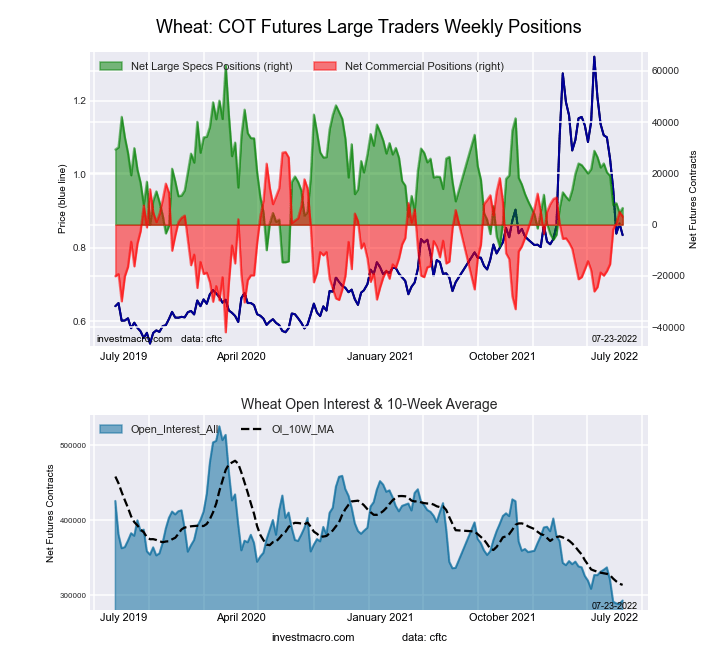
At the end of the week, futures on palladium (+11.86%), natural gas (+5.88%), wheat (+5.59%), sugar (+5.42%), lumber (+4.82%), and corn (+2.5%) showed the biggest gains on the commodities market. Gasoline futures (-6.47%), Brent oil (-4.01%), orange juice (-3.99%), gold (-3.36%), WTI oil (-3.35%) and copper (-2.33%) showed the biggest drop.

S&P 500 (F) (US500) 3,899.38 −3.24 (−0.08%)

Dow Jones (US30) 31,338.15 −46.40 (−0.15%)

DAX (DE40) 13,015.23 +172.01 (+1.34%)

FTSE 100 (UK100) 7,196.24 +7.16 (+0.10%)

USD Index 106.90 −0.24 (−0.22%)

Important events for today:
  • – Japan BoJ Gov Kuroda Speaks, tentative;
  • – UK BoE Gov Bailey Speaks at 17:15 (GMT+3);
  • – US FOMC Member Williams Speaks at 21:00 (GMT+3).

By JustForex


This article reflects a personal opinion and should not be interpreted as an investment advice, and/or offer, and/or a persistent request for carrying out financial transactions, and/or a guarantee, and/or a forecast of future events.