COT Bonds: January 31st data shows Speculators cut back on their bond bets

By InvestMacro

Here are the latest charts and statistics for the Commitment of Traders (COT) data published by the Commodities Futures Trading Commission (CFTC).

The latest COT data is updated through Tuesday January 31st and shows a quick view of how large traders (for-profit speculators and commercial entities) were positioned in the futures markets.

*** This data is almost a month old because the CFTC up-to-date data has been delayed due to a cybersecurity event that happened in early February to ION Cleared Derivatives (a subsidiary of ION Markets). This hack of ION has created a problem for the large trader positions to be reported and reconciled. The CFTC states that they will be back-filling the data over the next couple weeks and will get the data back up to date.

Weekly Speculator Changes led by Fed Funds

The COT bond market speculator bets were sharply lower for that week as just one out of the eight bond markets we cover had higher positioning while the other seven markets had lower speculator contracts.

Leading the gains for the bond markets was the Fed Funds with a gain of 15,702 contracts.

The bond markets with declines in speculator bets for the week were the 2-Year Bonds (-100,142 contracts), the 5-Year Bonds (-94,219 contracts), Ultra Treasury Bonds (-17,997 contracts), Ultra 10-Year Bonds (-7,222 contracts), US Treasury Bonds (-3,260 contracts), the Eurodollar (-12,402 contracts) and the 10-Year Bonds (-13,650 contracts) also registering lower bets through January 31st.


Data Snapshot of Bond Market Traders | Columns Legend
Jan-31-2023OIOI-IndexSpec-NetSpec-IndexCom-NetCOM-IndexSmalls-NetSmalls-Index
Eurodollar5,879,9180-1,026,275341,226,67963-200,40460
FedFunds1,889,65279-20,1283750,48766-30,3590
2-Year2,428,70329-577,1651552,8829424,28363
Long T-Bond1,226,43048-199,07620172,8357226,24173
10-Year4,151,85375-555,4710623,94396-68,47264
5-Year4,177,91961-732,9560722,9459410,01184


Strength Scores led by Fed Funds & Eurodollar

COT Strength Scores (a normalized measure of Speculator positions over a 3-Year range, from 0 to 100 where above 80 is Extreme-Bullish and below 20 is Extreme-Bearish) showed that the Fed Funds (37 percent) and the Eurodollar (34 percent) led the bond markets for that week. The US Treasury Bonds (20 percent) came in as the next highest in the weekly strength scores.

On the downside, the Ultra Treasury Bonds (0 percent), 5-Year Bonds (0 percent), Ultra 10-Year Bonds (0 percent), 10-Year Bond (0.0 percent), 2-Year Bond (1.4 percent) and the US Treasury Bond (19.8 percent) came in with the lowest strength levels and all were in Extreme-Bearish territory (below 20 percent).

Strength Statistics:
Fed Funds (37.1 percent) vs Fed Funds previous week (35.2 percent)
2-Year Bond (1.4 percent) vs 2-Year Bond previous week (16.2 percent)
5-Year Bond (0.0 percent) vs 5-Year Bond previous week (11.4 percent)
10-Year Bond (0.0 percent) vs 10-Year Bond previous week (1.9 percent)
Ultra 10-Year Bond (0.0 percent) vs Ultra 10-Year Bond previous week (1.8 percent)
US Treasury Bond (19.8 percent) vs US Treasury Bond previous week (20.9 percent)
Ultra US Treasury Bond (0.0 percent) vs Ultra US Treasury Bond previous week (8.0 percent)
Eurodollar (34.3 percent) vs Eurodollar previous week (34.5 percent)


Fed Funds & Eurodollar top the 6-Week Strength Trends

COT Strength Score Trends (or move index, calculates the 6-week changes in strength scores) showed that the Fed Funds (8 percent) and the Eurodollar (2 percent) led the past six weeks trends for bonds.

The Ultra Treasury Bonds (-32 percent) led the downside trend scores with the 10-Year Bonds (-32 percent) and the US Treasury Bonds (-19 percent) following next with lower trend scores.

Strength Trend Statistics:
Fed Funds (8.1 percent) vs Fed Funds previous week (4.7 percent)
2-Year Bond (-10.5 percent) vs 2-Year Bond previous week (6.6 percent)
5-Year Bond (-8.5 percent) vs 5-Year Bond previous week (6.4 percent)
10-Year Bond (-32.4 percent) vs 10-Year Bond previous week (-22.4 percent)
Ultra 10-Year Bond (-5.8 percent) vs Ultra 10-Year Bond previous week (-6.0 percent)
US Treasury Bond (-18.8 percent) vs US Treasury Bond previous week (-25.7 percent)
Ultra US Treasury Bond (-31.9 percent) vs Ultra US Treasury Bond previous week (-21.5 percent)
Eurodollar (1.6 percent) vs Eurodollar previous week (11.1 percent)


Individual Bond Markets:

3-Month Eurodollars Futures:

Eurodollar Bonds Futures COT ChartThe 3-Month Eurodollars large speculator standing for the week recorded a net position of -1,026,275 contracts in the data reported through Tuesday January 31st. This was a weekly fall of -12,402 contracts from the previous week which had a total of -1,013,873 net contracts.

This week’s current strength score (the trader positioning range over the past three years, measured from 0 to 100) shows the speculators are currently Bearish with a score of 34.3 percent. The commercials are Bullish with a score of 63.1 percent and the small traders (not shown in chart) are Bullish with a score of 60.4 percent.

3-Month Eurodollars StatisticsSPECULATORSCOMMERCIALSSMALL TRADERS
– Percent of Open Interest Longs:8.268.44.9
– Percent of Open Interest Shorts:25.647.68.3
– Net Position:-1,026,2751,226,679-200,404
– Gross Longs:480,3574,023,635289,015
– Gross Shorts:1,506,6322,796,956489,419
– Long to Short Ratio:0.3 to 11.4 to 10.6 to 1
NET POSITION TREND:
– Strength Index Score (3 Year Range Pct):34.363.160.4
– Strength Index Reading (3 Year Range):BearishBullishBullish
NET POSITION MOVEMENT INDEX:
– 6-Week Change in Strength Index:1.6-1.83.7


30-Day Federal Funds Futures:

Federal Funds 30-Day Bonds Futures COT ChartThe 30-Day Federal Funds large speculator standing for the week recorded a net position of -20,128 contracts in the data reported. This was a weekly advance of 15,702 contracts from the previous week which had a total of -35,830 net contracts.

This week’s current strength score (the trader positioning range over the past three years, measured from 0 to 100) shows the speculators are currently Bearish with a score of 37.1 percent. The commercials are Bullish with a score of 66.0 percent and the small traders (not shown in chart) are Bearish-Extreme with a score of 0.0 percent.

30-Day Federal Funds StatisticsSPECULATORSCOMMERCIALSSMALL TRADERS
– Percent of Open Interest Longs:9.875.91.8
– Percent of Open Interest Shorts:10.973.33.4
– Net Position:-20,12850,487-30,359
– Gross Longs:185,3581,435,04234,298
– Gross Shorts:205,4861,384,55564,657
– Long to Short Ratio:0.9 to 11.0 to 10.5 to 1
NET POSITION TREND:
– Strength Index Score (3 Year Range Pct):37.166.00.0
– Strength Index Reading (3 Year Range):BearishBullishBearish-Extreme
NET POSITION MOVEMENT INDEX:
– 6-Week Change in Strength Index:8.1-5.1-55.8


2-Year Treasury Note Futures:

2-Year Treasury Bonds Futures COT ChartThe 2-Year Treasury Note large speculator standing for the week recorded a net position of -577,165 contracts in the data reported. This was a weekly decline of -100,142 contracts from the previous week which had a total of -477,023 net contracts.

This week’s current strength score (the trader positioning range over the past three years, measured from 0 to 100) shows the speculators are currently Bearish-Extreme with a score of 1.4 percent. The commercials are Bullish-Extreme with a score of 94.3 percent and the small traders (not shown in chart) are Bullish with a score of 62.9 percent.

2-Year Treasury Note StatisticsSPECULATORSCOMMERCIALSSMALL TRADERS
– Percent of Open Interest Longs:6.783.58.2
– Percent of Open Interest Shorts:30.560.77.2
– Net Position:-577,165552,88224,283
– Gross Longs:163,8602,027,636198,658
– Gross Shorts:741,0251,474,754174,375
– Long to Short Ratio:0.2 to 11.4 to 11.1 to 1
NET POSITION TREND:
– Strength Index Score (3 Year Range Pct):1.494.362.9
– Strength Index Reading (3 Year Range):Bearish-ExtremeBullish-ExtremeBullish
NET POSITION MOVEMENT INDEX:
– 6-Week Change in Strength Index:-10.56.612.4


5-Year Treasury Note Futures:

5-Year Treasury Bonds Futures COT ChartThe 5-Year Treasury Note large speculator standing for the week recorded a net position of -732,956 contracts in the data reported. This was a weekly decrease of -94,219 contracts from the previous week which had a total of -638,737 net contracts.

This week’s current strength score (the trader positioning range over the past three years, measured from 0 to 100) shows the speculators are currently Bearish-Extreme with a score of 0.0 percent. The commercials are Bullish-Extreme with a score of 94.2 percent and the small traders (not shown in chart) are Bullish-Extreme with a score of 83.8 percent.

5-Year Treasury Note StatisticsSPECULATORSCOMMERCIALSSMALL TRADERS
– Percent of Open Interest Longs:5.484.78.1
– Percent of Open Interest Shorts:22.967.47.9
– Net Position:-732,956722,94510,011
– Gross Longs:224,9853,538,717340,298
– Gross Shorts:957,9412,815,772330,287
– Long to Short Ratio:0.2 to 11.3 to 11.0 to 1
NET POSITION TREND:
– Strength Index Score (3 Year Range Pct):0.094.283.8
– Strength Index Reading (3 Year Range):Bearish-ExtremeBullish-ExtremeBullish-Extreme
NET POSITION MOVEMENT INDEX:
– 6-Week Change in Strength Index:-8.50.617.9


10-Year Treasury Note Futures:

10-Year Treasury Notes Bonds Futures COT ChartThe 10-Year Treasury Note large speculator standing for the week recorded a net position of -555,471 contracts in the data reported. This was a weekly decrease of -13,650 contracts from the previous week which had a total of -541,821 net contracts.

This week’s current strength score (the trader positioning range over the past three years, measured from 0 to 100) shows the speculators are currently Bearish-Extreme with a score of 0.0 percent. The commercials are Bullish-Extreme with a score of 96.0 percent and the small traders (not shown in chart) are Bullish with a score of 63.8 percent.

10-Year Treasury Note StatisticsSPECULATORSCOMMERCIALSSMALL TRADERS
– Percent of Open Interest Longs:8.979.88.4
– Percent of Open Interest Shorts:22.264.810.1
– Net Position:-555,471623,943-68,472
– Gross Longs:367,7333,313,634349,227
– Gross Shorts:923,2042,689,691417,699
– Long to Short Ratio:0.4 to 11.2 to 10.8 to 1
NET POSITION TREND:
– Strength Index Score (3 Year Range Pct):0.096.063.8
– Strength Index Reading (3 Year Range):Bearish-ExtremeBullish-ExtremeBullish
NET POSITION MOVEMENT INDEX:
– 6-Week Change in Strength Index:-32.423.79.2


Ultra 10-Year Notes Futures:

Ultra 10-Year Treasury Notes Bonds Futures COT ChartThe Ultra 10-Year Notes large speculator standing for the week recorded a net position of -133,133 contracts in the data reported. This was a weekly fall of -7,222 contracts from the previous week which had a total of -125,911 net contracts.

This week’s current strength score (the trader positioning range over the past three years, measured from 0 to 100) shows the speculators are currently Bearish-Extreme with a score of 0.0 percent. The commercials are Bullish-Extreme with a score of 100.0 percent and the small traders (not shown in chart) are Bullish with a score of 60.5 percent.

Ultra 10-Year Notes StatisticsSPECULATORSCOMMERCIALSSMALL TRADERS
– Percent of Open Interest Longs:10.278.410.4
– Percent of Open Interest Shorts:19.362.417.3
– Net Position:-133,133233,431-100,298
– Gross Longs:148,7411,144,072152,412
– Gross Shorts:281,874910,641252,710
– Long to Short Ratio:0.5 to 11.3 to 10.6 to 1
NET POSITION TREND:
– Strength Index Score (3 Year Range Pct):0.0100.060.5
– Strength Index Reading (3 Year Range):Bearish-ExtremeBullish-ExtremeBullish
NET POSITION MOVEMENT INDEX:
– 6-Week Change in Strength Index:-5.89.8-9.9


US Treasury Bonds Futures:

US Year Treasury Notes Long Bonds Futures COT ChartThe US Treasury Bonds large speculator standing for the week recorded a net position of -199,076 contracts in the data reported. This was a weekly fall of -3,260 contracts from the previous week which had a total of -195,816 net contracts.

This week’s current strength score (the trader positioning range over the past three years, measured from 0 to 100) shows the speculators are currently Bearish-Extreme with a score of 19.8 percent. The commercials are Bullish with a score of 72.2 percent and the small traders (not shown in chart) are Bullish with a score of 73.4 percent.

US Treasury Bonds StatisticsSPECULATORSCOMMERCIALSSMALL TRADERS
– Percent of Open Interest Longs:4.880.314.1
– Percent of Open Interest Shorts:21.066.211.9
– Net Position:-199,076172,83526,241
– Gross Longs:58,575984,869172,662
– Gross Shorts:257,651812,034146,421
– Long to Short Ratio:0.2 to 11.2 to 11.2 to 1
NET POSITION TREND:
– Strength Index Score (3 Year Range Pct):19.872.273.4
– Strength Index Reading (3 Year Range):Bearish-ExtremeBullishBullish
NET POSITION MOVEMENT INDEX:
– 6-Week Change in Strength Index:-18.823.6-6.7


Ultra US Treasury Bonds Futures:

Ultra US Year Treasury Notes Long Bonds Futures COT ChartThe Ultra US Treasury Bonds large speculator standing for the week recorded a net position of -433,360 contracts in the data reported. This was a weekly fall of -17,997 contracts from the previous week which had a total of -415,363 net contracts.

This week’s current strength score (the trader positioning range over the past three years, measured from 0 to 100) shows the speculators are currently Bearish-Extreme with a score of 0.0 percent. The commercials are Bullish-Extreme with a score of 100.0 percent and the small traders (not shown in chart) are Bullish with a score of 66.0 percent.

Ultra US Treasury Bonds StatisticsSPECULATORSCOMMERCIALSSMALL TRADERS
– Percent of Open Interest Longs:3.485.211.2
– Percent of Open Interest Shorts:33.358.08.5
– Net Position:-433,360393,87839,482
– Gross Longs:48,9541,234,463162,321
– Gross Shorts:482,314840,585122,839
– Long to Short Ratio:0.1 to 11.5 to 11.3 to 1
NET POSITION TREND:
– Strength Index Score (3 Year Range Pct):0.0100.066.0
– Strength Index Reading (3 Year Range):Bearish-ExtremeBullish-ExtremeBullish
NET POSITION MOVEMENT INDEX:
– 6-Week Change in Strength Index:-31.939.8-8.5


Article By InvestMacroReceive our weekly COT Newsletter

*COT Report: The COT data, released weekly to the public each Friday, is updated through the most recent Tuesday (data is 3 days old) and shows a quick view of how large speculators or non-commercials (for-profit traders) were positioned in the futures markets.

The CFTC categorizes trader positions according to commercial hedgers (traders who use futures contracts for hedging as part of the business), non-commercials (large traders who speculate to realize trading profits) and nonreportable traders (usually small traders/speculators) as well as their open interest (contracts open in the market at time of reporting). See CFTC criteria here.

COT Soft Commodities: January 31st data shows Speculator Bets led by Sugar & Soybeans

By InvestMacro

Here are the latest charts and statistics for the Commitment of Traders (COT) data published by the Commodities Futures Trading Commission (CFTC).

The latest COT data is updated through Tuesday January 31st and shows a quick view of how large traders (for-profit speculators and commercial entities) were positioned in the futures markets.

*** This data is almost a month old because the CFTC up-to-date data has been delayed due to a cybersecurity event that happened in early February to ION Cleared Derivatives (a subsidiary of ION Markets). This hack of ION has created a problem for the large trader positions to be reported and reconciled. The CFTC states that they will be back-filling the data over the next couple weeks and will get the data back up to date.

Weekly Speculator Changes led by Sugar & Soybeans

The COT soft commodities markets speculator bets were higher for the week as eight out of the eleven softs markets we cover had higher positioning while the other three markets had lower speculator contracts.

Leading the gains for the softs markets was Sugar (61,988 contracts), Soybeans (23,176 contracts), Coffee (20,847 contracts), Corn (19,443 contracts), Live Cattle (10,995 contracts), Wheat (8,260 contracts), Soybean Meal (8,045 contracts) and Cocoa (218 contracts) also showing positive weeks.

The markets with the declines in speculator bets were Lean Hogs (-6,760 contracts) with Soybean Oil (-7,879 contracts) and Cotton (-928 contracts) also registering lower bets on the week.


Data Snapshot of Commodity Market Traders | Columns Legend
Jan-31-2023OIOI-IndexSpec-NetSpec-IndexCom-NetCOM-IndexSmalls-NetSmalls-Index
WTI Crude1,726,37829243,82010-266,6228922,80237
Gold471,64216160,28136-180,5206320,23931
Silver138,2631427,31644-40,4345713,11837
Copper224,8246117,21550-24,414487,19967
Palladium11,24534-4,27104,632100-36120
Platinum69,1214016,13733-22,213656,07649
Natural Gas1,146,70938-169,21424134,0137635,20163
Brent156,92916-43,4072639,572703,83561
Heating Oil265,4442221,74774-45,4282323,68180
Soybeans689,80625178,39867-137,15346-41,2451
Corn1,298,16414296,81268-225,62240-71,1902
Coffee221,89429-1,88125-926752,80739
Sugar995,39155247,07279-292,4481945,37664
Wheat350,87129-40,060741,56490-1,504100


Strength Scores led by Soybean Meal & Sugar

COT Strength Scores (a normalized measure of Speculator positions over a 3-Year range, from 0 to 100 where above 80 is Extreme-Bullish and below 20 is Extreme-Bearish) showed that Soybean Meal (96 percent) and Sugar (79 percent) led the softs markets for the week. Live Cattle (76 percent), Corn (68 percent) and Soybeans (67 percent) came in as the next highest in the weekly strength scores.

On the downside, Lean Hogs (0 percent) and Wheat (7 percent) come in at the lowest strength levels currently and were in Extreme-Bearish territory (below 20 percent). The next lowest strength scores were the Cotton (20 percent) and the Soybean Oil (24 percent).

Strength Statistics:
Corn (67.9 percent) vs Corn previous week (65.5 percent)
Sugar (78.9 percent) vs Sugar previous week (57.6 percent)
Coffee (25.5 percent) vs Coffee previous week (4.1 percent)
Soybeans (66.8 percent) vs Soybeans previous week (59.4 percent)
Soybean Oil (24.5 percent) vs Soybean Oil previous week (29.9 percent)
Soybean Meal (96.0 percent) vs Soybean Meal previous week (92.3 percent)
Live Cattle (76.2 percent) vs Live Cattle previous week (62.4 percent)
Lean Hogs (0.0 percent) vs Lean Hogs previous week (7.6 percent)
Cotton (20.2 percent) vs Cotton previous week (20.9 percent)
Cocoa (41.7 percent) vs Cocoa previous week (41.5 percent)
Wheat (7.5 percent) vs Wheat previous week (0.0 percent)


Live Cattle & Soybeans top the 6-Week Strength Trends

COT Strength Score Trends (or move index, calculates the 6-week changes in strength scores) showed that Live Cattle (26 percent) and Soybeans (17 percent) led the six weeks trends for soft commodities. Corn (12 percent), Soybean Meal (8 percent) and Cocoa (7 percent) were the next highest positive movers in the latest trends data.

Lean Hogs (-42 percent) led the downside trend scores with Soybean Oil (-23 percent), Wheat (-3 percent) and Cotton (0 percent) following next with lower trend scores.

Strength Trend Statistics:
Corn (12.4 percent) vs Corn previous week (8.3 percent)
Sugar (4.8 percent) vs Sugar previous week (-2.7 percent)
Coffee (2.5 percent) vs Coffee previous week (-13.6 percent)
Soybeans (17.2 percent) vs Soybeans previous week (13.5 percent)
Soybean Oil (-23.0 percent) vs Soybean Oil previous week (-11.3 percent)
Soybean Meal (8.2 percent) vs Soybean Meal previous week (7.5 percent)
Live Cattle (26.0 percent) vs Live Cattle previous week (9.3 percent)
Lean Hogs (-41.9 percent) vs Lean Hogs previous week (-34.2 percent)
Cotton (0.4 percent) vs Cotton previous week (2.6 percent)
Cocoa (7.3 percent) vs Cocoa previous week (1.6 percent)
Wheat (-2.8 percent) vs Wheat previous week (-7.6 percent)


Individual Soft Commodities Markets:

CORN Futures:

CORN Futures COT ChartThe CORN large speculator standing for the week was a net position of 296,812 contracts in the data reported through January 31st. This was a weekly boost of 19,443 contracts from the previous week which had a total of 277,369 net contracts.

This week’s current strength score (the trader positioning range over the past three years, measured from 0 to 100) shows the speculators are currently Bullish with a score of 67.9 percent. The commercials are Bearish with a score of 39.8 percent and the small traders (not shown in chart) are Bearish-Extreme with a score of 2.5 percent.

CORN Futures StatisticsSPECULATORSCOMMERCIALSSMALL TRADERS
– Percent of Open Interest Longs:31.442.08.9
– Percent of Open Interest Shorts:8.559.414.4
– Net Position:296,812-225,622-71,190
– Gross Longs:407,766545,068115,712
– Gross Shorts:110,954770,690186,902
– Long to Short Ratio:3.7 to 10.7 to 10.6 to 1
NET POSITION TREND:
– Strength Index Score (3 Year Range Pct):67.939.82.5
– Strength Index Reading (3 Year Range):BullishBearishBearish-Extreme
NET POSITION MOVEMENT INDEX:
– 6-Week Change in Strength Index:12.4-9.5-20.3


SUGAR Futures:

SUGAR Futures COT ChartThe SUGAR large speculator standing for the week was a net position of 247,072 contracts in the data reported. This was a weekly increase of 61,988 contracts from the previous week which had a total of 185,084 net contracts.

This week’s current strength score (the trader positioning range over the past three years, measured from 0 to 100) shows the speculators are currently Bullish with a score of 78.9 percent. The commercials are Bearish-Extreme with a score of 19.3 percent and the small traders (not shown in chart) are Bullish with a score of 64.0 percent.

SUGAR Futures StatisticsSPECULATORSCOMMERCIALSSMALL TRADERS
– Percent of Open Interest Longs:33.539.210.3
– Percent of Open Interest Shorts:8.768.55.7
– Net Position:247,072-292,44845,376
– Gross Longs:333,718389,834102,320
– Gross Shorts:86,646682,28256,944
– Long to Short Ratio:3.9 to 10.6 to 11.8 to 1
NET POSITION TREND:
– Strength Index Score (3 Year Range Pct):78.919.364.0
– Strength Index Reading (3 Year Range):BullishBearish-ExtremeBullish
NET POSITION MOVEMENT INDEX:
– 6-Week Change in Strength Index:4.8-2.7-5.6


COFFEE Futures:

COFFEE Futures COT ChartThe COFFEE large speculator standing for the week was a net position of -1,881 contracts in the data reported. This was a weekly increase of 20,847 contracts from the previous week which had a total of -22,728 net contracts.

This week’s current strength score (the trader positioning range over the past three years, measured from 0 to 100) shows the speculators are currently Bearish with a score of 25.5 percent. The commercials are Bullish with a score of 75.0 percent and the small traders (not shown in chart) are Bearish with a score of 38.5 percent.

COFFEE Futures StatisticsSPECULATORSCOMMERCIALSSMALL TRADERS
– Percent of Open Interest Longs:20.746.24.8
– Percent of Open Interest Shorts:21.546.63.5
– Net Position:-1,881-9262,807
– Gross Longs:45,937102,56510,630
– Gross Shorts:47,818103,4917,823
– Long to Short Ratio:1.0 to 11.0 to 11.4 to 1
NET POSITION TREND:
– Strength Index Score (3 Year Range Pct):25.575.038.5
– Strength Index Reading (3 Year Range):BearishBullishBearish
NET POSITION MOVEMENT INDEX:
– 6-Week Change in Strength Index:2.5-4.731.8


SOYBEANS Futures:

SOYBEANS Futures COT ChartThe SOYBEANS large speculator standing for the week was a net position of 178,398 contracts in the data reported. This was a weekly advance of 23,176 contracts from the previous week which had a total of 155,222 net contracts.

This week’s current strength score (the trader positioning range over the past three years, measured from 0 to 100) shows the speculators are currently Bullish with a score of 66.8 percent. The commercials are Bearish with a score of 46.3 percent and the small traders (not shown in chart) are Bearish-Extreme with a score of 1.3 percent.

SOYBEANS Futures StatisticsSPECULATORSCOMMERCIALSSMALL TRADERS
– Percent of Open Interest Longs:32.346.86.6
– Percent of Open Interest Shorts:6.466.712.6
– Net Position:178,398-137,153-41,245
– Gross Longs:222,823323,16645,644
– Gross Shorts:44,425460,31986,889
– Long to Short Ratio:5.0 to 10.7 to 10.5 to 1
NET POSITION TREND:
– Strength Index Score (3 Year Range Pct):66.846.31.3
– Strength Index Reading (3 Year Range):BullishBearishBearish-Extreme
NET POSITION MOVEMENT INDEX:
– 6-Week Change in Strength Index:17.2-14.8-14.0


SOYBEAN OIL Futures:

SOYBEAN OIL Futures COT ChartThe SOYBEAN OIL large speculator standing for the week was a net position of 31,371 contracts in the data reported. This was a weekly lowering of -7,879 contracts from the previous week which had a total of 39,250 net contracts.

This week’s current strength score (the trader positioning range over the past three years, measured from 0 to 100) shows the speculators are currently Bearish with a score of 24.5 percent. The commercials are Bullish with a score of 77.0 percent and the small traders (not shown in chart) are Bearish with a score of 33.7 percent.

SOYBEAN OIL Futures StatisticsSPECULATORSCOMMERCIALSSMALL TRADERS
– Percent of Open Interest Longs:18.252.58.3
– Percent of Open Interest Shorts:10.861.27.0
– Net Position:31,371-36,7975,426
– Gross Longs:77,553223,98635,438
– Gross Shorts:46,182260,78330,012
– Long to Short Ratio:1.7 to 10.9 to 11.2 to 1
NET POSITION TREND:
– Strength Index Score (3 Year Range Pct):24.577.033.7
– Strength Index Reading (3 Year Range):BearishBullishBearish
NET POSITION MOVEMENT INDEX:
– 6-Week Change in Strength Index:-23.024.7-22.0


SOYBEAN MEAL Futures:

SOYBEAN MEAL Futures COT ChartThe SOYBEAN MEAL large speculator standing for the week was a net position of 157,830 contracts in the data reported. This was a weekly advance of 8,045 contracts from the previous week which had a total of 149,785 net contracts.

This week’s current strength score (the trader positioning range over the past three years, measured from 0 to 100) shows the speculators are currently Bullish-Extreme with a score of 96.0 percent. The commercials are Bearish-Extreme with a score of 5.7 percent and the small traders (not shown in chart) are Bearish-Extreme with a score of 15.5 percent.

SOYBEAN MEAL Futures StatisticsSPECULATORSCOMMERCIALSSMALL TRADERS
– Percent of Open Interest Longs:41.033.111.1
– Percent of Open Interest Shorts:4.073.97.3
– Net Position:157,830-173,74115,911
– Gross Longs:174,746141,04547,162
– Gross Shorts:16,916314,78631,251
– Long to Short Ratio:10.3 to 10.4 to 11.5 to 1
NET POSITION TREND:
– Strength Index Score (3 Year Range Pct):96.05.715.5
– Strength Index Reading (3 Year Range):Bullish-ExtremeBearish-ExtremeBearish-Extreme
NET POSITION MOVEMENT INDEX:
– 6-Week Change in Strength Index:8.2-5.3-31.9


LIVE CATTLE Futures:

LIVE CATTLE Futures COT ChartThe LIVE CATTLE large speculator standing for the week was a net position of 77,223 contracts in the data reported. This was a weekly boost of 10,995 contracts from the previous week which had a total of 66,228 net contracts.

This week’s current strength score (the trader positioning range over the past three years, measured from 0 to 100) shows the speculators are currently Bullish with a score of 76.2 percent. The commercials are Bearish-Extreme with a score of 13.4 percent and the small traders (not shown in chart) are Bullish with a score of 65.6 percent.

LIVE CATTLE Futures StatisticsSPECULATORSCOMMERCIALSSMALL TRADERS
– Percent of Open Interest Longs:40.528.211.0
– Percent of Open Interest Shorts:15.951.512.4
– Net Position:77,223-72,958-4,265
– Gross Longs:126,87488,27434,568
– Gross Shorts:49,651161,23238,833
– Long to Short Ratio:2.6 to 10.5 to 10.9 to 1
NET POSITION TREND:
– Strength Index Score (3 Year Range Pct):76.213.465.6
– Strength Index Reading (3 Year Range):BullishBearish-ExtremeBullish
NET POSITION MOVEMENT INDEX:
– 6-Week Change in Strength Index:26.0-27.2-5.2


LEAN HOGS Futures:

LEAN HOGS Futures COT ChartThe LEAN HOGS large speculator standing for the week was a net position of -3,594 contracts in the data reported. This was a weekly lowering of -6,760 contracts from the previous week which had a total of 3,166 net contracts.

This week’s current strength score (the trader positioning range over the past three years, measured from 0 to 100) shows the speculators are currently Bearish-Extreme with a score of 0.0 percent. The commercials are Bullish-Extreme with a score of 100.0 percent and the small traders (not shown in chart) are Bullish-Extreme with a score of 100.0 percent.

LEAN HOGS Futures StatisticsSPECULATORSCOMMERCIALSSMALL TRADERS
– Percent of Open Interest Longs:31.236.611.9
– Percent of Open Interest Shorts:32.935.011.8
– Net Position:-3,5943,412182
– Gross Longs:67,14978,66825,530
– Gross Shorts:70,74375,25625,348
– Long to Short Ratio:0.9 to 11.0 to 11.0 to 1
NET POSITION TREND:
– Strength Index Score (3 Year Range Pct):0.0100.0100.0
– Strength Index Reading (3 Year Range):Bearish-ExtremeBullish-ExtremeBullish-Extreme
NET POSITION MOVEMENT INDEX:
– 6-Week Change in Strength Index:-41.931.660.1


COTTON Futures:

COTTON Futures COT ChartThe COTTON large speculator standing for the week was a net position of 16,905 contracts in the data reported. This was a weekly decline of -928 contracts from the previous week which had a total of 17,833 net contracts.

This week’s current strength score (the trader positioning range over the past three years, measured from 0 to 100) shows the speculators are currently Bearish with a score of 20.2 percent. The commercials are Bullish with a score of 78.7 percent and the small traders (not shown in chart) are Bearish with a score of 33.5 percent.

COTTON Futures StatisticsSPECULATORSCOMMERCIALSSMALL TRADERS
– Percent of Open Interest Longs:29.247.67.1
– Percent of Open Interest Shorts:21.257.35.4
– Net Position:16,905-20,4883,583
– Gross Longs:61,398100,10814,890
– Gross Shorts:44,493120,59611,307
– Long to Short Ratio:1.4 to 10.8 to 11.3 to 1
NET POSITION TREND:
– Strength Index Score (3 Year Range Pct):20.278.733.5
– Strength Index Reading (3 Year Range):BearishBullishBearish
NET POSITION MOVEMENT INDEX:
– 6-Week Change in Strength Index:0.4-1.27.0


COCOA Futures:

COCOA Futures COT ChartThe COCOA large speculator standing for the week was a net position of 25,159 contracts in the data reported. This was a weekly rise of 218 contracts from the previous week which had a total of 24,941 net contracts.

This week’s current strength score (the trader positioning range over the past three years, measured from 0 to 100) shows the speculators are currently Bearish with a score of 41.7 percent. The commercials are Bullish with a score of 59.9 percent and the small traders (not shown in chart) are Bearish with a score of 23.1 percent.

COCOA Futures StatisticsSPECULATORSCOMMERCIALSSMALL TRADERS
– Percent of Open Interest Longs:31.047.44.1
– Percent of Open Interest Shorts:22.756.63.2
– Net Position:25,159-27,8182,659
– Gross Longs:93,440142,79312,252
– Gross Shorts:68,281170,6119,593
– Long to Short Ratio:1.4 to 10.8 to 11.3 to 1
NET POSITION TREND:
– Strength Index Score (3 Year Range Pct):41.759.923.1
– Strength Index Reading (3 Year Range):BearishBullishBearish
NET POSITION MOVEMENT INDEX:
– 6-Week Change in Strength Index:7.3-5.9-14.2


WHEAT Futures:

WHEAT Futures COT ChartThe WHEAT large speculator standing for the week was a net position of -40,060 contracts in the data reported. This was a weekly lift of 8,260 contracts from the previous week which had a total of -48,320 net contracts.

This week’s current strength score (the trader positioning range over the past three years, measured from 0 to 100) shows the speculators are currently Bearish-Extreme with a score of 7.5 percent. The commercials are Bullish-Extreme with a score of 90.4 percent and the small traders (not shown in chart) are Bullish-Extreme with a score of 100.0 percent.

WHEAT Futures StatisticsSPECULATORSCOMMERCIALSSMALL TRADERS
– Percent of Open Interest Longs:25.638.310.2
– Percent of Open Interest Shorts:37.126.410.7
– Net Position:-40,06041,564-1,504
– Gross Longs:89,996134,23635,913
– Gross Shorts:130,05692,67237,417
– Long to Short Ratio:0.7 to 11.4 to 11.0 to 1
NET POSITION TREND:
– Strength Index Score (3 Year Range Pct):7.590.4100.0
– Strength Index Reading (3 Year Range):Bearish-ExtremeBullish-ExtremeBullish-Extreme
NET POSITION MOVEMENT INDEX:
– 6-Week Change in Strength Index:-2.80.513.2


Article By InvestMacroReceive our weekly COT Newsletter

*COT Report: The COT data, released weekly to the public each Friday, is updated through the most recent Tuesday (data is 3 days old) and shows a quick view of how large speculators or non-commercials (for-profit traders) were positioned in the futures markets.

The CFTC categorizes trader positions according to commercial hedgers (traders who use futures contracts for hedging as part of the business), non-commercials (large traders who speculate to realize trading profits) and nonreportable traders (usually small traders/speculators) as well as their open interest (contracts open in the market at time of reporting). See CFTC criteria here.

COT Stocks: January 31st data shows Nasdaq-Mini and Russell-Mini led Speculator bets

By InvestMacro

Here are the latest charts and statistics for the Commitment of Traders (COT) data published by the Commodities Futures Trading Commission (CFTC).

The latest COT data is updated through Tuesday January 31st and shows a quick view of how large traders (for-profit speculators and commercial entities) were positioned in the futures markets.

*** This data is almost a month old because the CFTC up-to-date data has been delayed due to a cybersecurity event that happened in early February to ION Cleared Derivatives (a subsidiary of ION Markets). This hack of ION has created a problem for the large trader positions to be reported and reconciled. The CFTC states that they will be back-filling the data over the next couple weeks and will get the data back up to date.

Weekly Speculator Changes led by Nasdaq-Mini

The COT stock markets speculator bets were mixed as four out of the eight stock markets we cover had higher positioning while the other four markets had lower speculator contracts.

Leading the gains for the stock markets was the Nasdaq-Mini (9,403 contracts) with the Russell-Mini (4,377 contracts), Nikkei 225 Yen (2,632 contracts) and DowJones-Mini (538 contracts) also showing positive weeks.

The markets with the declines in speculator bets for the week were the S&P500-Mini (-13,266 contracts) and VIX (-13,769 contracts) with the MSCI EAFE-Mini (-638 contracts) and the Nikkei 225 (-360 contracts) also registering lower bets on the week.


Data Snapshot of Stock Market Traders | Columns Legend
Jan-31-2023OIOI-IndexSpec-NetSpec-IndexCom-NetCOM-IndexSmalls-NetSmalls-Index
S&P500-Mini2,061,4194-222,25715234,78682-12,52924
Nikkei 22514,33010-5,072535,45257-38024
Nasdaq-Mini278,44959-15,8586632,05346-16,19521
DowJones-Mini80,38643-9,4283312,07771-2,64927
VIX310,47542-66,9186669,70732-2,78978
Nikkei 225 Yen36,496139,11262-4,2010-4,91170


Strength Scores led by Nasdaq-Mini & VIX

COT Strength Scores (a normalized measure of Speculator positions over a 3-Year range, from 0 to 100 where above 80 is Extreme-Bullish and below 20 is Extreme-Bearish) showed that the Nasdaq-Mini (66 percent) and the VIX (66 percent) led the stock markets. The Nikkei 225 Yen (62 percent) and Nikkei 225 (53 percent) come in as the next highest in the weekly strength scores.

On the downside, the MSCI EAFE-Mini (2 percent) and the S&P500-Mini (15 percent) come in at the lowest strength level currently and were in Extreme-Bearish territory (below 20 percent).

Strength Statistics:
VIX (66.5 percent) vs VIX previous week (76.0 percent)
S&P500-Mini (15.0 percent) vs S&P500-Mini previous week (17.5 percent)
DowJones-Mini (33.4 percent) vs DowJones-Mini previous week (32.4 percent)
Nasdaq-Mini (66.2 percent) vs Nasdaq-Mini previous week (60.9 percent)
Russell2000-Mini (33.9 percent) vs Russell2000-Mini previous week (31.3 percent)
Nikkei USD (53.4 percent) vs Nikkei USD previous week (55.1 percent)
EAFE-Mini (1.6 percent) vs EAFE-Mini previous week (2.4 percent)


VIX led the 6-Week Strength Trends

COT Strength Score Trends (or move index, calculates the 6-week changes in strength scores) showed that just about all the markets had lower trend scores. The VIX was the only market with a score above 0 at a 0.2 percent trend score. The EAFE-Mini (-36.5 percent) had the lowest or most negative score that week followed by the S&P500-Mini (-11.6 percent).

Strength Trend Statistics:
VIX (0.2 percent) vs VIX previous week (20.6 percent)
S&P500-Mini (-11.6 percent) vs S&P500-Mini previous week (3.9 percent)
DowJones-Mini (-5.2 percent) vs DowJones-Mini previous week (4.4 percent)
Nasdaq-Mini (-11.4 percent) vs Nasdaq-Mini previous week (-24.8 percent)
Russell2000-Mini (-2.4 percent) vs Russell2000-Mini previous week (-2.2 percent)
Nikkei USD (-10.0 percent) vs Nikkei USD previous week (-10.0 percent)
EAFE-Mini (-36.5 percent) vs EAFE-Mini previous week (-23.7 percent)


Individual Stock Market Charts:

VIX Volatility Futures:

VIX Volatility Futures COT ChartThe VIX Volatility large speculator standing for the week totaled a net position of -66,918 contracts in the data reported through January 31st. This was a weekly lowering of -13,769 contracts from the previous week which had a total of -53,149 net contracts.

This week’s current strength score (the trader positioning range over the past three years, measured from 0 to 100) shows the speculators are currently Bullish with a score of 66.5 percent. The commercials are Bearish with a score of 31.5 percent and the small traders (not shown in chart) are Bullish with a score of 77.7 percent.

VIX Volatility Futures StatisticsSPECULATORSCOMMERCIALSSMALL TRADERS
– Percent of Open Interest Longs:17.057.77.9
– Percent of Open Interest Shorts:38.635.28.8
– Net Position:-66,91869,707-2,789
– Gross Longs:52,935178,99824,430
– Gross Shorts:119,853109,29127,219
– Long to Short Ratio:0.4 to 11.6 to 10.9 to 1
NET POSITION TREND:
– Strength Index Score (3 Year Range Pct):66.531.577.7
– Strength Index Reading (3 Year Range):BullishBearishBullish
NET POSITION MOVEMENT INDEX:
– 6-Week Change in Strength Index:0.2-6.546.0


S&P500 Mini Futures:

SP500 Mini Futures COT ChartThe S&P500 Mini large speculator standing for the week totaled a net position of -222,257 contracts in the data reported through January 31st. This was a weekly fall of -13,266 contracts from the previous week which had a total of -208,991 net contracts.

This week’s current strength score (the trader positioning range over the past three years, measured from 0 to 100) shows the speculators are currently Bearish-Extreme with a score of 15.0 percent. The commercials are Bullish-Extreme with a score of 81.6 percent and the small traders (not shown in chart) are Bearish with a score of 23.7 percent.

S&P500 Mini Futures StatisticsSPECULATORSCOMMERCIALSSMALL TRADERS
– Percent of Open Interest Longs:12.373.711.9
– Percent of Open Interest Shorts:23.162.312.5
– Net Position:-222,257234,786-12,529
– Gross Longs:253,4391,519,069245,628
– Gross Shorts:475,6961,284,283258,157
– Long to Short Ratio:0.5 to 11.2 to 11.0 to 1
NET POSITION TREND:
– Strength Index Score (3 Year Range Pct):15.081.623.7
– Strength Index Reading (3 Year Range):Bearish-ExtremeBullish-ExtremeBearish
NET POSITION MOVEMENT INDEX:
– 6-Week Change in Strength Index:-11.610.0-2.4


Dow Jones Mini Futures:

Dow Jones Mini Futures COT ChartThe Dow Jones Mini large speculator standing for the week totaled a net position of -9,428 contracts in the data reported through January 31st. This was a weekly advance of 538 contracts from the previous week which had a total of -9,966 net contracts.

This week’s current strength score (the trader positioning range over the past three years, measured from 0 to 100) shows the speculators are currently Bearish with a score of 33.4 percent. The commercials are Bullish with a score of 71.1 percent and the small traders (not shown in chart) are Bearish with a score of 27.2 percent.

Dow Jones Mini Futures StatisticsSPECULATORSCOMMERCIALSSMALL TRADERS
– Percent of Open Interest Longs:26.552.116.9
– Percent of Open Interest Shorts:38.337.120.1
– Net Position:-9,42812,077-2,649
– Gross Longs:21,33941,87413,546
– Gross Shorts:30,76729,79716,195
– Long to Short Ratio:0.7 to 11.4 to 10.8 to 1
NET POSITION TREND:
– Strength Index Score (3 Year Range Pct):33.471.127.2
– Strength Index Reading (3 Year Range):BearishBullishBearish
NET POSITION MOVEMENT INDEX:
– 6-Week Change in Strength Index:-5.22.76.6


Nasdaq Mini Futures:

Nasdaq Mini Futures COT ChartThe Nasdaq Mini large speculator standing for the week totaled a net position of -15,858 contracts in the data reported through January 31st. This was a weekly boost of 9,403 contracts from the previous week which had a total of -25,261 net contracts.

This week’s current strength score (the trader positioning range over the past three years, measured from 0 to 100) shows the speculators are currently Bullish with a score of 66.2 percent. The commercials are Bearish with a score of 46.2 percent and the small traders (not shown in chart) are Bearish with a score of 21.3 percent.

Nasdaq Mini Futures StatisticsSPECULATORSCOMMERCIALSSMALL TRADERS
– Percent of Open Interest Longs:21.365.811.1
– Percent of Open Interest Shorts:27.054.216.9
– Net Position:-15,85832,053-16,195
– Gross Longs:59,439183,09830,935
– Gross Shorts:75,297151,04547,130
– Long to Short Ratio:0.8 to 11.2 to 10.7 to 1
NET POSITION TREND:
– Strength Index Score (3 Year Range Pct):66.246.221.3
– Strength Index Reading (3 Year Range):BullishBearishBearish
NET POSITION MOVEMENT INDEX:
– 6-Week Change in Strength Index:-11.420.5-24.8


Russell 2000 Mini Futures:

Russell 2000 Mini Futures COT ChartThe Russell 2000 Mini large speculator standing for the week totaled a net position of -63,024 contracts in the data reported through January 31st. This was a weekly gain of 4,377 contracts from the previous week which had a total of -67,401 net contracts.

This week’s current strength score (the trader positioning range over the past three years, measured from 0 to 100) shows the speculators are currently Bearish with a score of 33.9 percent. The commercials are Bullish with a score of 62.7 percent and the small traders (not shown in chart) are Bearish with a score of 44.8 percent.

Russell 2000 Mini Futures StatisticsSPECULATORSCOMMERCIALSSMALL TRADERS
– Percent of Open Interest Longs:9.982.75.9
– Percent of Open Interest Shorts:24.569.44.6
– Net Position:-63,02457,1435,881
– Gross Longs:42,702356,14325,493
– Gross Shorts:105,726299,00019,612
– Long to Short Ratio:0.4 to 11.2 to 11.3 to 1
NET POSITION TREND:
– Strength Index Score (3 Year Range Pct):33.962.744.8
– Strength Index Reading (3 Year Range):BearishBullishBearish
NET POSITION MOVEMENT INDEX:
– 6-Week Change in Strength Index:-2.40.112.4


Nikkei Stock Average (USD) Futures:

Nikkei Stock Average (USD) Futures COT ChartThe Nikkei Stock Average (USD) large speculator standing for the week totaled a net position of -5,072 contracts in the data reported through January 31st. This was a weekly fall of -360 contracts from the previous week which had a total of -4,712 net contracts.

This week’s current strength score (the trader positioning range over the past three years, measured from 0 to 100) shows the speculators are currently Bullish with a score of 53.4 percent. The commercials are Bullish with a score of 57.0 percent and the small traders (not shown in chart) are Bearish with a score of 23.6 percent.

Nikkei Stock Average Futures StatisticsSPECULATORSCOMMERCIALSSMALL TRADERS
– Percent of Open Interest Longs:15.865.918.3
– Percent of Open Interest Shorts:51.227.820.9
– Net Position:-5,0725,452-380
– Gross Longs:2,2699,4402,621
– Gross Shorts:7,3413,9883,001
– Long to Short Ratio:0.3 to 12.4 to 10.9 to 1
NET POSITION TREND:
– Strength Index Score (3 Year Range Pct):53.457.023.6
– Strength Index Reading (3 Year Range):BullishBullishBearish
NET POSITION MOVEMENT INDEX:
– 6-Week Change in Strength Index:-10.020.2-24.2


MSCI EAFE Mini Futures:

MSCI EAFE Mini Futures COT ChartThe MSCI EAFE Mini large speculator standing for the week totaled a net position of -34,840 contracts in the data reported. This was a weekly lowering of -638 contracts from the previous week which had a total of -34,202 net contracts.

This week’s current strength score (the trader positioning range over the past three years, measured from 0 to 100) shows the speculators are currently Bearish-Extreme with a score of 1.6 percent. The commercials are Bullish-Extreme with a score of 84.1 percent and the small traders (not shown in chart) are Bullish-Extreme with a score of 100.0 percent.

MSCI EAFE Mini Futures StatisticsSPECULATORSCOMMERCIALSSMALL TRADERS
– Percent of Open Interest Longs:6.587.55.1
– Percent of Open Interest Shorts:15.882.01.3
– Net Position:-34,84020,73414,106
– Gross Longs:24,465327,87118,967
– Gross Shorts:59,305307,1374,861
– Long to Short Ratio:0.4 to 11.1 to 13.9 to 1
NET POSITION TREND:
– Strength Index Score (3 Year Range Pct):1.684.1100.0
– Strength Index Reading (3 Year Range):Bearish-ExtremeBullish-ExtremeBullish-Extreme
NET POSITION MOVEMENT INDEX:
– 6-Week Change in Strength Index:-36.527.938.4


Article By InvestMacroReceive our weekly COT Newsletter

*COT Report: The COT data, released weekly to the public each Friday, is updated through the most recent Tuesday (data is 3 days old) and shows a quick view of how large speculators or non-commercials (for-profit traders) were positioned in the futures markets.

The CFTC categorizes trader positions according to commercial hedgers (traders who use futures contracts for hedging as part of the business), non-commercials (large traders who speculate to realize trading profits) and nonreportable traders (usually small traders/speculators) as well as their open interest (contracts open in the market at time of reporting). See CFTC criteria here.

Week Ahead: 3 reasons why EURUSD may see a rebound

By ForexTime

As we close out the month and head into the first days of March, here are the scheduled economic data releases and events that could move markets over the coming week:


Monday, February 27

  • EUR: Eurozone February economic confidence; ECB Chief Economist Philip Lane speech
  • GBP: Bank of England Deputy Governor Ben Broadbent speech

Tuesday, February 28

  • JPY: Japan January industrial production, retail sales
  • AUD: Australia January retail sales
  • CAD: Canada December GDP
  • USD: US February consumer confidence; Chicago Fed President Austan Goolsbee speech

Wednesday, March 1

  • AUD: Australia 4Q GDP
  • CNH: China February PMIs
  • EUR: Eurozone February manufacturing PMI (final)
  • GBP: UK February manufacturing PMI (final); BOE Governor Andrew Bailey speech
  • USD: US February ISM manufacturing

Thursday, March 2

  • EUR: Eurozone February CPI, ECB minutes, January unemployment
  • GBP: BOE Chief Economist Huw Pill speech
  • USD: US weekly jobless claims

Friday, March 3

  • JPY: Japan January unemployment; February Tokyo CPI
  • CNH: China February services PMI
  • EUR: Eurozone January PPI, February services PMI (final)


With month-to-date declines of 2.4%, EURUSD is set to bring the curtains down on a winning run of four consecutive monthly gains (October – January).

Following February’s flop, here are three reasons why Euro bulls will be eager to start off March on the front foot:

  1. Still-elevated Eurozone inflation could strengthen EUR

Recall that central banks around the world have been aggressively raising their respective interest rates to try and cool down inflation.

Since July 2022, the European Central Bank (ECB) has lifted its benchmark rates by a cumulative 300 basis points.

Yet the Eurozone’s January inflation number (as measured by the CPI – consumer price index) came in at 8.6%, which is more than four times the ECB’s 2% target.

The Eurozone’s core CPI (inflation figure that excludes more volatile items such as energy, food, alcohol, and tobacco) still printed at a record high of 5.3% in January!

In other words, the ECB is likely to keep hiking its benchmark rates higher and longer, in order to drag inflation meaningfully lower towards 2%.

And the prospects of higher interest rates tends to translate into currency strength.

Hence, if we are presented with fresh evidence on March 2nd of stubborn Eurozone inflation (say, a number that isn’t noticeably lower than January’s 8.6%), that could help the euro unwind its near-1% of year-to-date declines against the resurgent US dollar.

READ MORE: (September 2022) Why FX markets react to central banks?


  1. Bloomberg model: EURUSD slightly likelier to touch 1.070 than 1.050

From current levels of 1.060 flat at the time of writing, Bloomberg’s FX forecast model points to a 40% chance that we’ll see the world’s most popular FX pair touch 1.070.

Compare that with the slightly lower 36% chance of EURUSD touching 1.05 over the next one-week period.

While both price levels are accorded less-than-even odds, it remains to be seen whether the CPI print or other fundamental factors could trigger such a massive move.


  1. EURUSD may see technical rebound if “oversold” levels reached

This FX pair’s 14-day relative strength index has been careening closer towards the 30 mark, which is the threshold that denotes oversold conditions.

Note how in previous episodes, once the RSI drops below the 30 line, EURUSD then duly bounces back up.

Of course, that means that EURUSD has to fall further in order for its RSI to actually hit the 30 threshold at least, before it can even get a chance of seeing a technical rebound.

And that EURUSD decline may even happen later today (Friday, February 24t ), if the US PCE deflator (the Federal Reserve’s preferred metric for measuring inflation) comes in higher than the market forecasts for a 5% year-on-year advance.

Such an event (higher-than-expected US PCE deflator) later today should translate into more US Dollar strength (i.e. lower EURUSD), and could just pave the way for EURUSD’s technical rebound next week.

Key levels for EURUSD in the week ahead:

SUPPORT

  • 1.050 region: psychologically-important area
  • 1.04832: January 2023 cycle low
  • 1.040 region: psychologically-important line


RESISTANCE

  • 50-day simple moving average (SMA)
  • 1.07365: mid-December cycle high
  • 1.08045: mid-February high


At the time of writing, Bloomberg’s FX model forecasts a 74% chance that EURUSD will trade within the 1.0476 – 1.0729 range, using current levels as a base, over the next one week.


Forex-Time-LogoArticle by ForexTime

ForexTime Ltd (FXTM) is an award winning international online forex broker regulated by CySEC 185/12 www.forextime.com

How the west is finally hitting back against China’s dominance of cleantech

By Michael Jacobs, University of Sheffield 

Climate change policy has entered a new era. The growing row between the United States and the European Union over the impacts of the new American green subsidy regime makes that all too clear. Yet in many ways, this story is ultimately about China.

For the last 20 years, developed countries have used three main types of policy to cut their greenhouse gas emissions. Renewable energy mandates have required electricity generators to invest in solar, wind, hydro and geothermal power. Emissions trading schemes for energy and industrial businesses put a price on carbon. And energy efficiency standards have been progressively improved on a whole range of products from vehicles and white goods to homes.

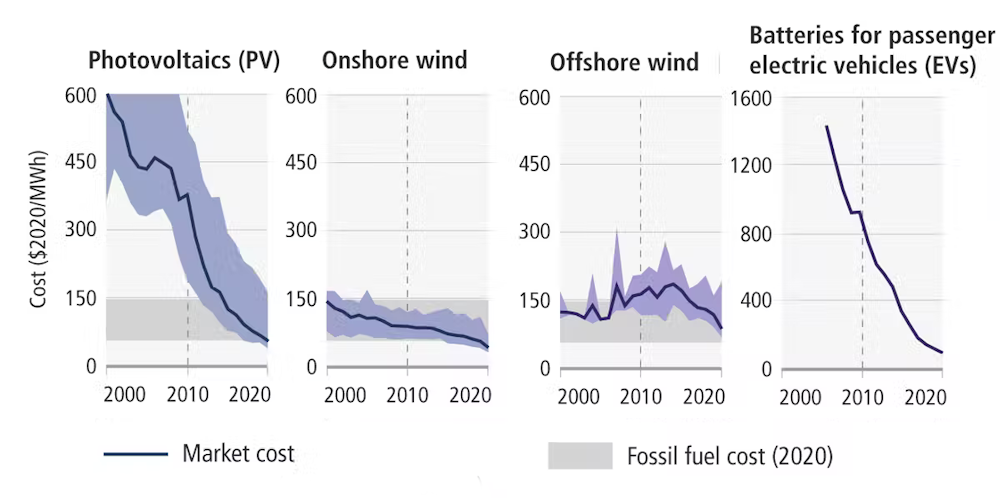
Applied across Europe and North America, this policy toolkit brought notable success. Developed countries’ emissions fell sharply, even with economic growth. Green technologies – from wind and solar to electric vehicles – fell in cost and improved in performance as demand for them rose.

A virtuous circle followed: climate policy increased demand for green technologies, which reduced costs, which allowed policy to be tightened, which stimulated demand and innovation further.

The rub

There were two problems, however. First, much of the economic benefit went to China. From 2010 onwards China rapidly became the world’s primary supplier of wind and solar technology, along with underpinning minerals like lithium, cobalt and rare earths.

China’s dominance reduced everyone’s costs. But it also meant that, as industrial jobs were lost in developed countries, they were not replaced by equivalents in the new energy sectors.

Second, climate policy began to create political opposition. As emissions targets tightened, countries started to see the costs reflected in consumer prices.

The most dramatic response emerged in France in 2018, when a relatively small increase in fuel duty led the so-called gilets jaunes (yellow jacket) protestors to block roads across the country for over a year, even after President Emmanuel Macron withdrew the tax. In the US, congressional opposition stymied President Barack Obama’s plans for a climate bill – including a modest carbon pricing scheme – for the whole of his presidency.

Joe Biden has learned the lesson. His Inflation Reduction Act (IRA), passed in 2022, offers climate carrots instead of sticks – and lots of them.

The act – which despite its name is almost entirely about climate change – offers a mammoth US$369 billion (£306 billion) of tax credits and other subsidies to companies making low-carbon investments and to consumers buying green products. Critically, to take advantage of subsidies, a significant proportion of materials and equipment used must be produced in North America.

The EU position

Orthodox economists deplore the IRA. Subsidies are much less efficient than taxes (not to say more expensive), and protectionism raises costs to consumers.

Yet to any politician, Biden’s approach looks like a no-brainer. Don’t penalise businesses with carbon levies: reward them with tax credits. Don’t allow the employment benefits of climate policy to leak overseas to China: ensure they stay at home. Nearly three-quarters of Americans backed the act, including over half of Republicans.

The EU is alarmed at the likely effects. There are al ready reports of European cleantech companies planning to transfer production to the US, while others may be kept out of US markets. The European Commission has threatened the US with legal action at the World Trade Organization for breaking free trade rules, and has already secured US concessions, including extending tax credits to foreign-made electric vehicles.

Even more significantly, the commission president Ursula von der Leyen has announced a “green deal industrial plan” for the EU. The core will be a Net Zero Industry Act relaxing rules on state aid and providing subsidies for cleantech investment. Meanwhile, a Critical Raw Materials Act will build partnerships with like-minded suppliers to reduce dependence on Chinese imports, mirroring what the recent EU and US chips acts do with semiconductors.

The broader context

Both the EU and US are therefore turning climate policy into industrial and trade strategy. One might ask what took them so long. China’s twelfth five year plan in 2010 first identified seven environmental “strategic industries” on which to focus economic development. It is not a coincidence that China rapidly came to dominate the new low carbon sectors: it was literally the plan.

The EU and US moves are a desperate attempt to catch up, with Japan and South Korea not far behind. And the strategy extends beyond their own continents. The new kids on this block are multi-billion dollar just energy transition partnerships which the EU, US and other western powers have recently negotiated with South Africa, Indonesia and Vietnam.

These “JET-Ps” aim to stimulate investment, not just in the renewables transition but also in domestic industrial capacity. Loans and guarantees provided by western governments aim to leverage much larger flows of private finance. The goal is for these countries to manufacture and export their own green technologies, charting a new path for economic development.

More such partnerships will likely be announced over the coming year. This is not altruism on western countries’ part, but an attempt to offer an alternative to China’s huge investments in the developing world.

What about the UK? These developments leave the British economy in a badly weakened position. The EU was the obvious partner in green industrial policy. On its own the UK is not nearly large enough to compete.

It creates a compelling case for a future UK government to do a green trade deal with the EU. In return for a financial contribution to the EU’s green innovation funds, the UK could rejoin the single market for environment goods and services.

Just a few years ago, climate change was a subset of environmental policy. Today it is a key dimension of both economic strategy and geopolitics. Given the extent of the economic transformation it demands, no-one should be surprised.The Conversation

About the Author:

Michael Jacobs, Professor of Political Economy, University of Sheffield

This article is republished from The Conversation under a Creative Commons license. Read the original article.

Gold: What “Colossal” Central Bank Buying May Mean

“Central banks are so confident that gold prices will continue rising that they are…”

By Elliott Wave International

Central banks have been scooping up gold with a vengeance.

Here’s a Jan. 31 Financial Times headline:

‘Colossal’ central bank buying drives gold demand to decade high

Interestingly, just a few days later on Feb. 3, the precious metal dropped by more than 2%. But setting aside near-term price moves in gold, what you need to know is that government is nearly always the last to act on a financial trend. In other words, when government acts, a financial trend is either nearly or already over.

In the case of gold, consider that central banks were furiously buying it in mid-2011. As you may recall, gold had been strongly rallying. Well, just three months later in September of that year, gold hit a top and fell 46% during the next four years.

Going back in history a little further to around 1999 and 2000, there was the gold selling episode which amusingly came to be known as “Brown’s Bottom” — referring to Britain’s Chancellor of the Exchequer at the time, Gordon Brown.

Brown was fervently selling from Britain’s gold reserves after gold had been in a multi-year downtrend.

You no doubt know the rest of the story: After Brown’s gold selling, the precious metal then entered a multi-year uptrend.

But let’s get back to the present, namely, an instructive chart and commentary from our recently published February 2023 Elliott Wave Financial Forecast:

Central banks are so confident that gold prices will continue rising that they are committing generational amounts to its purchase. Central bank behavior is not a short-term timing tool, but it does provide key input for judging sentiment, which appears strongly bullish.

If you would like to get near-term analysis of gold, as well as more of this broader perspective, you can find it in Elliott Wave International’s flagship Financial Forecast Service.

Or you can apply Elliott wave analysis to gold’s price chart yourself — as well as other financial markets.

If you’re unfamiliar with the Elliott wave model, read Frost & Prechter’s book, Elliott Wave Principle: Key to Market Behavior. Here’s a quote:

The practical goal of any analytical method is to identify market lows suitable for buying (or covering shorts) and market highs suitable for selling (or selling short). When developing a system of trading or investing, you should adopt certain patterns of thought that will help you remain both flexible and decisive, both defensive and aggressive, depending upon the demands of the situation. The Elliott Wave Principle is not such a system, but is unparalleled as a basis for creating one.

Learn more by reading the entire online version of the book for free. That’s right — you can access Elliott Wave Principle: Key to Market Behavior for free once you become a member of Club EWI — the world’s largest Elliott wave educational community.

A Club EWI membership is also free and members get complimentary access to a wealth of Elliott wave resources on financial markets, investing and trading.

Join Club EWI now (no obligations as a member) by following this link: Elliott Wave Principle: Key to Market Behaviorget free and instant access.

This article was syndicated by Elliott Wave International and was originally published under the headline Gold: What “Colossal” Central Bank Buying May Mean. EWI is the world’s largest market forecasting firm. Its staff of full-time analysts led by Chartered Market Technician Robert Prechter provides 24-hour-a-day market analysis to institutional and private investors around the world.

In rural America, right-to-repair laws are the leading edge of a pushback against growing corporate power

By Leland Glenna, Penn State 

As tractors became more sophisticated over the past two decades, the big manufacturers allowed farmers fewer options for repairs. Rather than hiring independent repair shops, farmers have increasingly had to wait for company-authorized dealers to arrive. Getting repairs could take days, often leading to lost time and high costs.

A new memorandum of understanding between the country’s largest farm equipment maker, John Deere Corp., and the American Farm Bureau Federation is now raising hopes that U.S. farmers will finally regain the right to repair more of their own equipment.

However, supporters of right-to-repair laws suspect a more sinister purpose: to slow the momentum of efforts to secure right-to-repair laws around the country.

Under the agreement, John Deere promises to give farmers and independent repair shops access to manuals, diagnostics and parts. But there’s a catch – the agreement isn’t legally binding, and, as part of the deal, the influential Farm Bureau promised not to support any federal or state right-to-repair legislation.


You can listen to more articles from The Conversation narrated by Noa.


The right-to-repair movement has become the leading edge of a pushback against growing corporate power. Intellectual property protections, whether patents on farm equipment, crops, computers or cellphones, have become more intense in recent decades and cover more territory, giving companies more control over what farmers and other consumers can do with the products they buy.

For farmers, few examples of those corporate constraints are more frustrating than repair restrictions and patent rights that prevent them from saving seeds from their own crops for future planting.

How a few companies became so powerful

The United States’ market economy requires competition to function properly, which is why U.S. antitrust policies were strictly enforced in the post-World War II era.

During the 1970s and 1980s, however, political leaders began following the advice of a group of economists at the University of Chicago and relaxed enforcement of federal antitrust policies. That led to a concentration of economic power in many sectors.

This concentration has become especially pronounced in agriculture, with a few companies consolidating market share in numerous areas, including seeds, pesticides and machinery, as well as commodity processing and meatpacking. One study in 2014 estimated that Monsanto, now owned by Bayer, was responsible for approximately 80% of the corn and 90% of the soybeans grown in the U.S. In farm machinery, John Deere and Kubota account for about a third of the market.

Market power often translates into political power, which means that those large companies can influence regulatory oversight, legal decisions, and legislation that furthers their economic interests – including securing more expansive and stricter intellectual property policies.

The right-to-repair movement

At its most basic level, right-to-repair legislation seeks to protect the end users of a product from anti-competitive activities by large companies. New York passed the first broad right-to-repair law, in 2022, and nearly two dozen states have active legislation – about half of them targeting farm equipment.

Whether the product is an automobile, smartphone or seed, companies can extract more profits if they can force consumers to purchase the company’s replacement parts or use the company’s exclusive dealership to repair the product.

One of the first cases that challenged the right to repair equipment was in 1939, when a company that was reselling refurbished spark plugs was sued by the Champion Spark Plug Co. for violating its patent rights. The Supreme Court agreed that Champion’s trademark had been violated, but it allowed resale of the refurbished spark plugs if “used” or “repaired” was stamped on the product.

Although courts have often sided with the end users in right-to-repair cases, large companies have vast legal and lobbying resources to argue for stricter patent protections. Consumer advocates contend that these protections prevent people from repairing and modifying the products they rightfully purchased.

The ostensible justification for patents, whether for equipment or seeds, is that they provide an incentive for companies to invest time and money in developing products because they know that they will have exclusive rights to sell their inventions once patented.

However, some scholars claim that recent legal and legislative changes to patents are instead limiting innovation and social benefits.

The problem with seed patents

The extension of utility patents to agricultural seeds illustrates how intellectual property policies have expanded and become more restrictive.

Patents have been around since the founding of the U.S., but agricultural crops were initially considered natural processes that couldn’t be patented. That changed in 1980 with the U.S. Supreme Court decision Diamond v. Chakrabarty. The case involved genetically engineered bacteria that could break down crude oil. The court’s ruling allowed inventors to secure patents on living organisms.

Half a decade later, the U.S. Patent Office extended patents to agricultural crops generated through transgenic breeding techniques, which inserts a gene from one species into the genome of another. One prominent example is the insertion of a gene into corn and cotton that enables the plant to produce its own pesticide. In 2001, the Supreme Court included conventionally bred crops in the category eligible for patenting.

Historically, farmers would save seeds that their crops generated and replant them the following season. They could also sell those seeds to other farmers. They lost the right to sell their seeds in 1970, when Congress passed the Plant Variety Protection Act. Utility patents, which grant an inventor exclusive right to produce a new or improved product, are even more restrictive.

Under a utility patent, farmers can no longer save seed for replanting on their own farms. University scientists even face restrictions on the kind of research they can perform on patented crops.

Because of the clear changes in intellectual property protections on agricultural crops over the years, researchers are able to evaluate whether those changes correlate with crop innovations – the primary justification used for patents. The short answer is that they do not.

One study revealed that companies have used intellectual property to enhance their market power more than to enhance innovations. In fact, some vegetable crops with few patent protections had more varietal innovations than crops with more patent protections.

How much does this cost farmers?

It can be difficult to estimate how much patented crops cost farmers. For example, farmers might pay more for the seeds but save money on pesticides or labor, and they might have higher yields. If market prices for the crop are high one year, the farmer might come out ahead, but if prices are low, the farmer might lose money. Crop breeders, meanwhile, envision substantial profits.

Similarly, it is difficult to calculate the costs farmers face from not having a right to repair their machinery. A machine breakdown that takes weeks to repair during harvest time could be catastrophic.

The nonprofit U.S. Public Interest Research Group calculated that U.S. consumers could save US$40 billion per year if they could repair electronics and appliances – about $330 per family.

The memorandum of understanding between John Deere and the Farm Bureau may be a step in the right direction, but it is not a substitute for right-to-repair legislation or the enforcement of antitrust policies.The Conversation

About the Author:

Leland Glenna, Professor of Rural Sociology and Science, Technology, and Society, Penn State

This article is republished from The Conversation under a Creative Commons license. Read the original article.

EU poised to copy US subsidies for green technology – new evidence from China shows how it could backfire

By Jun Du, Aston University and Holger Görg, Kiel Institute for the World Economy 

The EU is preparing to abandon its longstanding restrictions on state aid to take on US and Chinese subsidies over green technologies. European Commission president Ursula von der Leyen is spearheading a new commitment from EU leaders to “act decisively to ensure its long-term competitiveness, prosperity and role on the global stage”.

She has talked about the need to counter hidden subsidies from the Chinese, both in green tech and in other sectors, though the trigger for the EU’s new approach is really President Joe Biden’s Inflation Reduction Act (IRA). This has committed the US to a record US$369 billion (£305 billion) to green its economy, including using tax breaks and subsidies.

It effectively tears up the international consensus around not using state aid, embracing what the US has railed against for years. The Economist has said that globalisation is no longer about racing, but racing and tripping others.

The EU is now proposing to introduce its own tax credits and subsidies for cleantech companies, as well as fast-tracking regulation in this area.

Meanwhile, the UK has been coming under pressure from the likes of car manufacturers to respond. So far, it has been trying to find exemptions to the US’s general approach of only offering incentives to products made in America, while also claiming the UK has no need to subsidise these kinds of areas because it is already ahead.

The economics of this drift to protectionism are worrying. Our recent research on the effects of state subsidies in China suggest that such policies could do the US and EU economies more harm than good overall.

There’s a reason why the west has long avoided state aid.
Shaun Dakin/Unsplash

What the research says

Since the dawn of the industrial revolution, states have played a significant role in developing their economies. China is the recent prime example, where the use of subsidies to develop particular industries such as electric cars or solar panels has been highly visible.

India seems to be moving in the same direction. The government is paying half of the cost of making computer chips, among a variety of incentives to encourage investment in different sectors.

Equally, in the developed world, government procurement has driven many world-changing innovations. Whole sectors such as biotech and information technology relied on government procurement to get started. America’s Silicon Valley originally grew on the back of military contracts, for instance.

Research in this area does acknowledge a case for subsidising infant industries in which a country wants to specialise. China’s state subsidies in the steel and solar panel industries would be a good example.

Yet there is a price to be paid: the money a government spends means that less will be available for helping its citizens in other ways. For example Brazil’s wheat-industry subsidies in the 1980s were estimated to have produced a net loss of 15% to welfare spending.

Around the same time, it was estimated that if the EU removed the common agricultural policy, the extra money available for government spending could increase real incomes by between 0.3% and 3.5% as a proportion of GDP. Findings like these probably explain why the World Trade Organization has discouraged state aid for decades.

Consequences

The new green subsidies will create winners and losers at different levels. Within the EU, for example, it will un-level the playing field between member states. Those that can afford to spend more on their green tech industries will potentially crowd out those with less.

Even within a country, there’s unlikely to be a win-win. Our research team has recently published a paper about China’s subsidies, using a new approach that makes it possible to estimate the direct and indirect effects on subsidised and non-subsidised firms at the same time.

This is the first time anyone has looked at subsidies in this way. Our project looked at 1998-2007, since those were the years where the necessary data was available.

We found that subsidised firms become relatively more productive, thus making them more competitive. Yet firms that are not subsidised can see their productivity growth reduced.

The determining factor is whether they operate in a geographical cluster alongside subsidised firms. When more than a quarter of firms in a cluster in China were being subsidised, the remainder suffered.

Those losing out were typically foreign-owned firms and those owned by the Chinese state, while private Chinese firms were the beneficiaries.

When we aggregated all the data, it showed that this negative indirect effect tends to dominate. In other words, subsidies produce unintended losers and make the market less competitive and more inefficient as a whole.

The bottom line is, subsidies are not without problems, even for China. In the last decade we have seen what “losers” can do to an economy, or a society – think of movements towards populism and autocracy in many places.

Therefore, there needs to be a more thorough debate about the benefits and costs of subsidies before states apply them, and some carefully designed policies to prepare for the potential losers.The Conversation

About the Authors:

Jun Du, Professor of Economics, Centre Director of Centre for Business Prosperity (CBP), Aston University and Holger Görg, Acting President, Kiel Institute for the World Economy

This article is republished from The Conversation under a Creative Commons license. Read the original article.
 

Technical Analysis & Forecast 23.02.2023

By RoboForex.com

EURUSD, “Euro vs US Dollar”

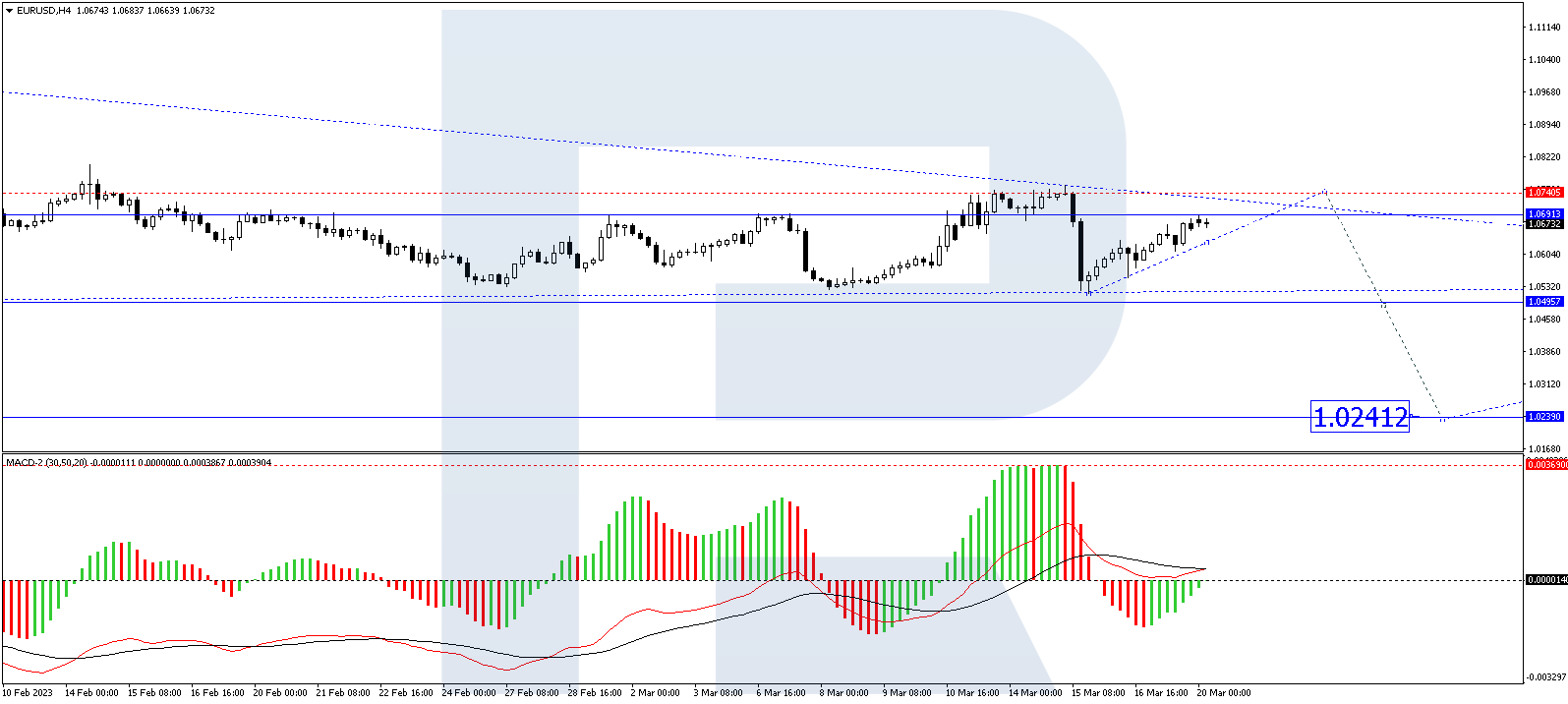
The currency pair has completed a wave of decline to 1.0600. Today the market might demonstrate a link of correction to 1.0640. Then a decline to 1.0584 should follow. And with a breakaway of this level as well, a pathway for the wave down to 1.0579 should open.

EURUSD
Risk Warning: the result of previous trading operations do not guarantee the same results in the future

GBPUSD, “Great Britain Pound vs US Dollar”

The currency pair continues developing a structure of decline to 1.2000. After this level is reached, a consolidation range should form around it. With an escape downwards, a pathway to 1.1900 should open. And with a breakaway of this one, a pathway for the wave down to 1.1866 should open.

GBPUSD
Risk Warning: the result of previous trading operations do not guarantee the same results in the future

USDJPY, “US Dollar vs Japanese Yen”

The currency pair has completed a wave of correction to 134.36. Today a link of growth to 135.25 is expected. And with a breakaway of this level upwards as well, a pathway for a wave to 136.00 should open. Then a link of decline to 135.24 and growth to 136.55 are not excluded.

USDJPY
Risk Warning: the result of previous trading operations do not guarantee the same results in the future

USDCHF, “US Dollar vs Swiss Franc”

The currency pair continues developing a consolidation range around 0.9300. Today a link of decline to 0.9282 looks possible. Then the quotes might grow to 0.9330, from where the wave should continue to 0.9380.

USDCHF
Risk Warning: the result of previous trading operations do not guarantee the same results in the future

AUDUSD, “Australian Dollar vs US Dollar”

The currency pair has completed a structure of a wave of decline to 0.6793. Today the market is forming a link of correction to 0.6848. After the correction is over, a link of decline to 0.6780 should begin.

AUDUSD
Risk Warning: the result of previous trading operations do not guarantee the same results in the future

BRENT

Brent has completed a wave of decline to 80.30. Today a consolidation range should develop above this level. With an escape upwards, a wave of growth to 83.33 should start. The goal is first.

BRENT
Risk Warning: the result of previous trading operations do not guarantee the same results in the future

XAUUSD, “Gold vs US Dollar”

Gold has broken through 1831.15 down, extending the consolidation range to 1823.15. A test of 1831.18 from below is not excluded today. Then a decline to 1818.00 should follow, so that the wave should continue to 1815.00.

GOLD
Risk Warning: the result of previous trading operations do not guarantee the same results in the future

S&P 500

The stock index has completed a wave of decline to 3977.7. Today a consolidation range is forming above this level. With an escape upwards, a pathway for a wave to 4028.0 should open. Then a consolidation range might develop, and with an escape upwards the pair might grow to 4081.0.

S&P 500

Article By RoboForex.com

Attention!
Forecasts presented in this section only reflect the author’s private opinion and should not be considered as guidance for trading. RoboForex LP bears no responsibility for trading results based on trading recommendations described in these analytical reviews.

Inflation data in the Eurozone is in the spotlight today. Geopolitical tensions in the world are rising again

By JustMarkets

The minutes of the Federal Reserve’s February meeting contained no new hawkish statements but added to expectations that further interest rate hikes are necessary to control inflation. 10-year Treasury yields closed near their daily highs after the minutes were released, sending the dollar index higher and stock indices lower. The Dow Jones Index (US30) decreased by 0.26%, and the S&P 500 Index (US500) fell by 0.16% on Wednesday at the close of the stock market. The NASDAQ Technology Index (US100) gained 0.13%. A stronger-than-expected earnings outlook from Nvidia helped tech stocks, especially chipmakers.

Federal Reserve Bank of St. Louis President James Bullard said the US economy has been more resilient than expected and reiterated his call to keep raising interest rates. The main goal is to raise the rate above 5%. For monetary policy, this means that the final rate could be set at around 5.375% this summer and remain at that level for some time until there is sufficient evidence that inflationary forces are weakening on a sustained basis.

According to analysts, the outlook for technology stocks is limited, especially as US interest rates are set to rise even further. Chipmakers will face a potential slowdown in demand this year as global companies cut back on spending because of recession fears. Today, investors will focus their attention on a revision of US fourth-quarter GDP data. A strong US economy will give the Fed more room to raise interest rates further.

According to JPMorgan strategists, it is too early to talk about a recession after the Federal Reserve’s aggressive campaign, especially since the impact of monetary policy on the economy may have a lag of one to two years.

Equity markets in Europe were mostly down yesterday. German DAX (DE30) gained 0.02%, French CAC 40 (FR40) was 0.13% lower, Spanish IBEX 35 (ES35) decreased by 0.91%, and British FTSE 100 (UK100) was 0.59% lower.

Eurozone’s inflation data will be released today. Consumer prices are expected to remain flat, but surprises are possible. Lower inflation may temper the ECB’s aggressive tone at the May meeting (in March, a 0.5% increase is already priced in). A rise in inflation, on the other hand, will only strengthen the ECB’s hawkish bias in the coming months, which may give support to the euro.

Moscow plans to cut oil exports from its Western ports by 25% in March compared to the previous month in order to boost oil prices. The move is expected to result in a deeper supply cut than 500,000 barrels. According to strategists, rising US inventories combined with the planned sale of 26 million barrels from the US Strategic Petroleum Reserve point to a potential supply glut, which is expected to limit any potential rise in crude oil prices.

Geopolitical tensions around the world are rising again. Russia has withdrawn from an important nuclear agreement that limited nuclear capabilities. North Korea plans to test intercontinental ballistic missiles in response to planned military exercises by the United States and South Korea. China and the United States are blaming each other over the “ballooning” saga.

Asian markets mostly fell yesterday. Japan’s Nikkei 225 (JP225) decreased by 1.34%, China’s FTSE China A50 (CHA50) lost 1.11% yesterday, Hong Kong’s Hang Seng (HK50) ended the day down by 0.51%, India’s NIFTY 50 (IND50) fell by 1.53%, and Australia’s S&P/ASX 200 (AU200) ended the day slightly negative by 0.30%.

Singapore’s annualized inflation rate rose from 6.5% to 6.6%. Core consumer prices, which exclude energy and food, rose from 5.1% to 5.5%. Price pressures remain elevated, largely due to Singapore’s heavy reliance on food and fuel imports. The Monetary Authority of Singapore (MAS) predicts that inflation will remain high in the coming months amid high import costs, labor market shortages, and strong local demand.

S&P 500 (F) (US500) 3,991.05 −6.29 (−0.16%)

Dow Jones (US30)33,045.09 −84.50 (−0.26%)

DAX (DE40) 15,399.89 +2.27 (+0.015%)

FTSE 100 (UK100) 7,930.63 −47.12 (−0.59%)

USD Index 104.53 +0.36 (+0.34%)

Important events for today:
  • – US FOMC Member Williams Speaks at 01:30 (GMT+2);
  • – Singapore Consumer Price Index (m/m) at 07:00 (GMT+2);
  • – Eurozone Consumer Price Index (m/m) at 12:00 (GMT+2);
  • – US Initial Jobless Claims (w/w) at 15:30 (GMT+2);
  • – US GDP (q/q) at 15:30 (GMT+2);
  • – US Natural Gas Reserves (w/w) at 17:30 (GMT+2).
  • – US FOMC Member Bostic Speaks at 17:50 (GMT+2);
  • – US Crude Oil Reserves (w/w) at 18:00 (GMT+2).

By JustMarkets


This article reflects a personal opinion and should not be interpreted as an investment advice, and/or offer, and/or a persistent request for carrying out financial transactions, and/or a guarantee, and/or a forecast of future events.