Speculator Extremes: Palladium, CAD, Sugar & Cocoa lead Bullish & Bearish Positions

By InvestMacro

The latest update for the weekly Commitment of Traders (COT) report was released by the Commodity Futures Trading Commission (CFTC) on Friday for data ending on February 3rd.

This weekly Extreme Positions report highlights the Most Bullish and Most Bearish Positions for the speculator category. Extreme positioning in these markets can foreshadow strong moves in the underlying market.

To signify an extreme position, we use the Strength Index (also known as the COT Index) of each instrument, a common method of measuring COT data. The Strength Index is simply a comparison of current trader positions against the range of positions over the previous 3 years. We use over 80 percent as extremely bullish and under 20 percent as extremely bearish. (Compare Strength Index scores across all markets in the data table or cot leaders table)


Extreme Bullish Speculator Table


Here Are This Week’s Most Bullish Speculator Positions:

Palladium

Extreme Bullish Leader
The Palladium speculator position comes in as the most bullish extreme standing this week as the Palladium speculator level is currently at a 99 percent score of its 3-year range.

The six-week trend for the percent strength score totaled a gain of 7 percentage points this week. The overall net speculator position was a total of 1,133 net contracts this week with an increase of 449 contract in the weekly speculator bets.


Speculators or Non-Commercials Notes:

Speculators, classified as non-commercial traders by the CFTC, are made up of large commodity funds, hedge funds and other significant for-profit participants. The Specs are generally regarded as trend-followers in their behavior towards price action – net speculator bets and prices tend to go in the same directions. These traders often look to buy when prices are rising and sell when prices are falling. To illustrate this point, many times speculator contracts can be found at their most extremes (bullish or bearish) when prices are also close to their highest or lowest levels.

These extreme levels can be dangerous for the large speculators as the trade is most crowded, there is less trading ammunition still sitting on the sidelines to push the trend further and prices have moved a significant distance. When the trend becomes exhausted, some speculators take profits while others look to also exit positions when prices fail to continue in the same direction. This process usually plays out over many months to years and can ultimately create a reverse effect where prices start to fall and speculators start a process of selling when prices are falling.


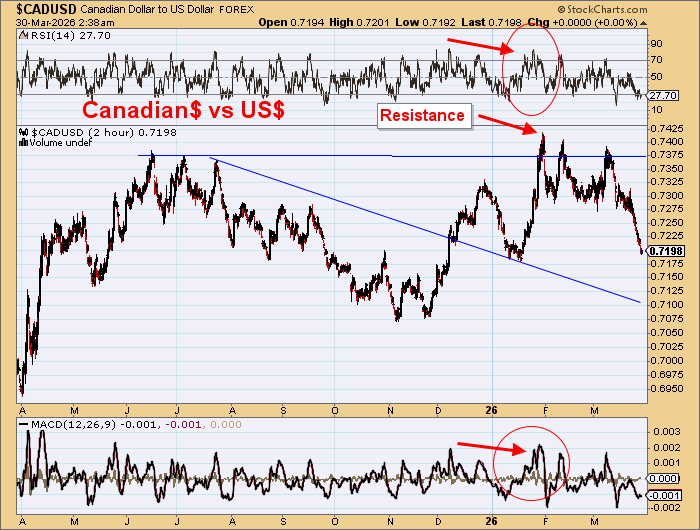
Canadian Dollar

Extreme Bullish Leader
The Canadian Dollar speculator position comes next in the extreme standings this week with the CAD speculator level now at a 98 percent score of its 3-year range.

The six-week trend for the percent strength score was a jump by 29 percentage points this week. The speculator position registered 2,130 net contracts this week with a weekly boost of 18,176 contracts in speculator bets.


Steel

Extreme Bullish Leader
The Steel speculator position comes in third this week in the extreme standings. The Steel speculator level resides at a 96 percent score of its 3-year range.

The six-week trend for the strength score came in at an increase by 8 percentage points this week. The overall speculator position was 11,487 net contracts this week with a dip of -853 contracts in the weekly speculator bets.


MSCI EAFE MINI

Extreme Bullish Leader
The MSCI EAFE MINI speculator position comes up number four in the extreme standings this week. The MSCI EAFE-Mini speculator level is at a 96 percent score of its 3-year range.

The six-week trend for the speculator strength score totaled a rise of 6 percentage points this week. The overall speculator position was 25,855 net contracts this week with a rise of 1,965 contracts in the speculator bets.


Australian Dollar

Extreme Bullish Leader
The Australian Dollar speculator position rounds out the top five in this week’s bullish extreme standings. The AUD speculator level sits at a 95 percent score of its 3-year range while the six-week trend for the speculator strength score was a jump of 34 percentage points this week.

The speculator position was 26,118 net contracts this week with a strong gain of 18,972 contracts in the weekly speculator bets.


The Most Bearish Speculator Positions of the Week:

Extreme Bearish Speculator Table


Sugar

Extreme Bearish Leader
The Sugar speculator position comes in as the most bearish extreme standing this week with the Sugar speculator level is at a minimum 0 percent score of its 3-year range.

The six-week trend for the speculator strength score was a drop by -12 percentage points this week. The overall speculator position was -210,289 net contracts this week with a fall of -42,536 contracts in the speculator bets.


Cocoa Futures

Extreme Bearish Leader
The Cocoa Futures speculator position comes in next for the most bearish extreme standing on the week as the Cocoa speculator level is at a 3 percent score of its 3-year range.

The six-week trend for the speculator strength score was a decline of -16 percentage points this week. The speculator position was -14,508 net contracts this week with a rise of 994 contracts in the weekly speculator bets.


Cotton

Extreme Bearish Leader
The Cotton speculator position comes in as third most bearish extreme standing of the week. The Cotton speculator level resides at a 14 percent score of its 3-year range.

The six-week trend for the speculator strength score was a decline of -7 percentage points this week while the overall speculator position was -42,744 net contracts this week with a decrease of -3,777 contracts in the speculator bets.


2-Year Bond

Extreme Bearish Leader
The 2-Year Bond speculator position comes in as this week’s fourth most bearish extreme standing. The 2-Year speculator level is at a 14 percent score of its 3-year range.

The six-week trend for the speculator strength score was an edge higher by 1 percentage point this week. The speculator position was -1,347,602 net contracts this week with a decline of -128,603 contracts in the weekly speculator bets.


Natural Gas

Extreme Bearish Leader
Next, the Natural Gas speculator position comes in as the fifth most bearish extreme standing for this week with the Natural Gas speculator level at a 15 percent score of its 3-year range.

The six-week trend for the speculator strength score was a fall by -11 percentage points this week while the speculator position was -172,310 net contracts this week with a decrease by -8,704 contracts in the weekly speculator bets.


Article By InvestMacroReceive our weekly COT Newsletter

*COT Report: The COT data, released weekly to the public each Friday, is updated through the most recent Tuesday (data is 3 days old) and shows a quick view of how large speculators or non-commercials (for-profit traders) were positioned in the futures markets.

The CFTC categorizes trader positions according to commercial hedgers (traders who use futures contracts for hedging as part of the business), non-commercials (large traders who speculate to realize trading profits) and nonreportable traders (usually small traders/speculators) as well as their open interest (contracts open in the market at time of reporting). See CFTC criteria here.

COT Metals Charts: Speculators drop Gold Bets for 5th time in 6 Weeks

By InvestMacro

Metals Open Interest COT Chart
Here are the latest charts and statistics for the Commitment of Traders (COT) data published by the Commodities Futures Trading Commission (CFTC).

The latest COT data is updated through Tuesday February 3rd and shows a quick view of how large traders (for-profit speculators and commercial entities) were positioned in the futures markets.

Weekly Speculator Changes led lower by Gold

Metals Net Positions COT Chart
The COT metals markets speculator bets were overall lower this week as two out of the six metals markets we cover had higher positioning while the other four markets had lower speculator contracts.

Leading the gains for the metals was Silver (2,174 contracts) with Palladium (449 contracts) also having a small positive week.

The markets with declines in speculator bets for the week were Gold (-39,792 contracts), Steel (-853 contracts), Platinum (-816 contracts) and with Copper (-576 contracts) also registering lower bets on the week.

Speculator drop Gold Bets for 5th time in 6 Weeks to 37-Week Low

Highlighting the metals data this week was sharp reduction in the Gold speculator positions. The large speculative traders sharply reduced their bullish bets again this week, which is a decline for the third consecutive week and for the fifth time out of the past six weeks. The reduction in the bullish position now totals -85,634 contracts over just the past three weeks brings the overall Gold speculator bullish position down to a total of 165,604 contracts. This marks the lowest level for the Gold position since last May, which is a span of 37 weeks.

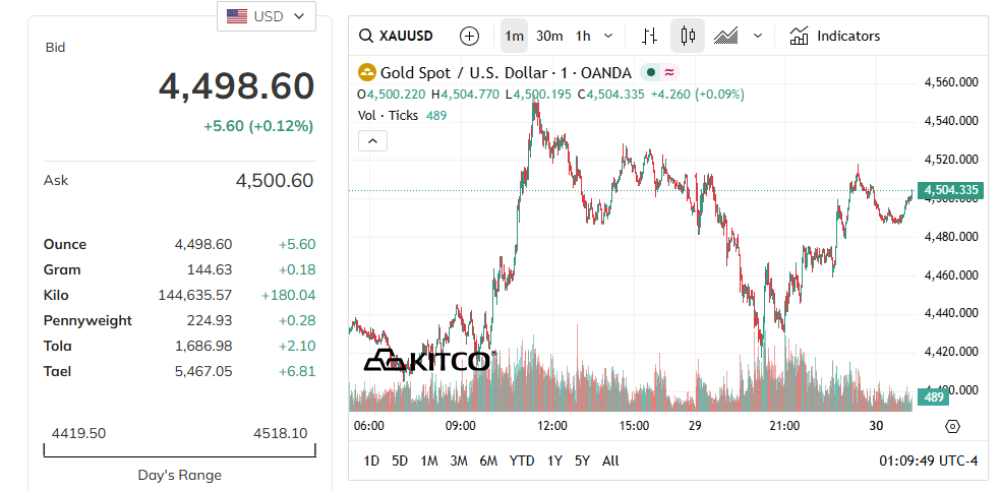
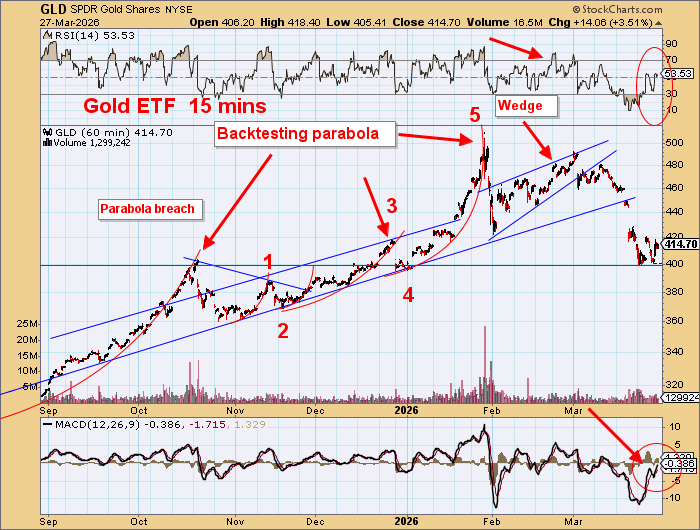
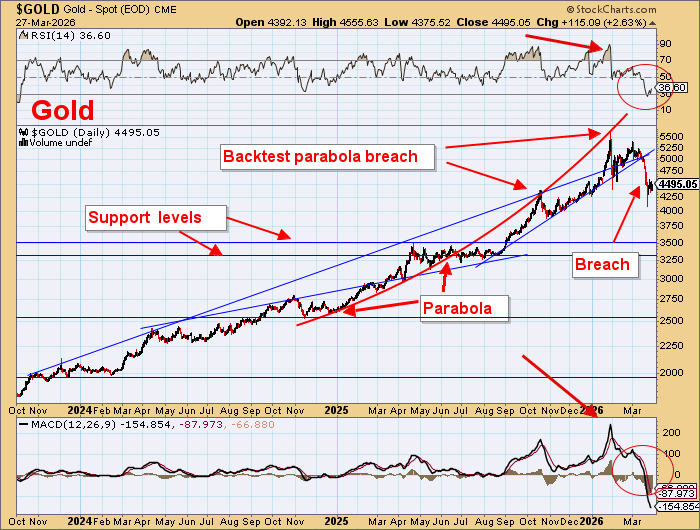
The Gold futures price has settled in to end the week at approximately $4,980 and rebounded this week after a hugely volatile past couple weeks. The Gold price shot all the way to $5,625 on January 29th before turning around and then falling all the way back down to a low at approximately $4,430 before rebounding. Gold is still in a parabolic uptrend overall and from the beginning of 2024 to now, the price has jumped by over 144% and has continually hit new all-time highs.

Gold leads Metals Price Performance this week

Precious metals markets were mixed on the week in their price performance. Gold was the highest mover over the past five days with a 2.3% increase. Palladium was next this week with a 1.78% rise while Steel also advanced by 0.51%.

Copper dropped by -0.52% on the week while Palladium was lower by -2.99% and Silver came out the biggest loser on the week with a -6.9% loss.


Metals Data:

Metals Table COT Chart
Legend: Weekly Speculators Change | Speculators Current Net Position | Speculators Strength Score compared to last 3-Years (0-100 range)


Strength Scores led by Palladium & Steel

Metals Strength Scores COT Chart
COT Strength Scores (a normalized measure of Speculator positions over a 3-Year range, from 0 to 100 where above 80 is Extreme-Bullish and below 20 is Extreme-Bearish) showed that Palladium (99 percent) and Steel (96 percent) lead the metals markets this week. Copper (78 percent) comes in as the next highest in the weekly strength scores.

On the downside, Gold (39 percent), Platinum (44 percent) and Silver (45 percent) come in at the lowest strength level currently.

Strength Statistics:
Gold (38.6 percent) vs Gold previous week (54.9 percent)
Silver (44.9 percent) vs Silver previous week (42.0 percent)
Copper (77.8 percent) vs Copper previous week (78.3 percent)
Platinum (43.8 percent) vs Platinum previous week (45.8 percent)
Palladium (99.4 percent) vs Palladium previous week (96.4 percent)
Steel (95.6 percent) vs Steel previous week (100.0 percent)


Steel & Palladium top the 6-Week Strength Trends

Metals Trends COT Chart
COT Strength Score Trends (or move index, calculates the 6-week changes in strength scores) showed that Steel (8 percent) and Palladium (7 percent) lead the past six weeks trends for metals.

Gold (-31 percent) leads the downside trend scores currently with Copper (-18 percent) and Platinum (-16 percent) as the next market with lower trend scores.

Move Statistics:
Gold (-30.8 percent) vs Gold previous week (-11.7 percent)
Silver (-13.4 percent) vs Silver previous week (-16.9 percent)
Copper (-17.9 percent) vs Copper previous week (-15.3 percent)
Platinum (-15.6 percent) vs Platinum previous week (-23.5 percent)
Palladium (6.7 percent) vs Palladium previous week (-1.9 percent)
Steel (8.0 percent) vs Steel previous week (17.8 percent)


Individual Markets:

Gold Comex Futures:

Gold Futures COT ChartThe Gold Comex Futures large speculator standing this week resulted in a net position of 165,604 contracts in the data reported through Tuesday. This was a weekly decline of -39,792 contracts from the previous week which had a total of 205,396 net contracts.

This week’s current strength score (the trader positioning range over the past three years, measured from 0 to 100) shows the speculators are currently Bearish with a score of 38.6 percent. The commercials are Bullish with a score of 52.9 percent and the small traders (not shown in chart) are Bullish-Extreme with a score of 89.2 percent.

Price Trend-Following Model: Strong Uptrend

Our weekly trend-following model classifies the current market price position as: Strong Uptrend.

Gold Futures StatisticsSPECULATORSCOMMERCIALSSMALL TRADERS
– Percent of Open Interest Longs:52.421.513.8
– Percent of Open Interest Shorts:11.972.23.5
– Net Position:165,604-207,77842,174
– Gross Longs:214,50887,96456,610
– Gross Shorts:48,904295,74214,436
– Long to Short Ratio:4.4 to 10.3 to 13.9 to 1
NET POSITION TREND:
– Strength Index Score (3 Year Range Pct):38.652.989.2
– Strength Index Reading (3 Year Range):BearishBullishBullish-Extreme
NET POSITION MOVEMENT INDEX:
– 6-Week Change in Strength Index:-30.830.4-1.9


Silver Comex Futures:

Silver Futures COT ChartThe Silver Comex Futures large speculator standing this week resulted in a net position of 25,877 contracts in the data reported through Tuesday. This was a weekly boost of 2,174 contracts from the previous week which had a total of 23,703 net contracts.

This week’s current strength score (the trader positioning range over the past three years, measured from 0 to 100) shows the speculators are currently Bearish with a score of 44.9 percent. The commercials are Bullish with a score of 50.1 percent and the small traders (not shown in chart) are Bullish with a score of 62.3 percent.

Price Trend-Following Model: Uptrend

Our weekly trend-following model classifies the current market price position as: Uptrend.

Silver Futures StatisticsSPECULATORSCOMMERCIALSSMALL TRADERS
– Percent of Open Interest Longs:27.224.622.7
– Percent of Open Interest Shorts:9.156.68.8
– Net Position:25,877-45,72519,848
– Gross Longs:38,88335,24832,469
– Gross Shorts:13,00680,97312,621
– Long to Short Ratio:3.0 to 10.4 to 12.6 to 1
NET POSITION TREND:
– Strength Index Score (3 Year Range Pct):44.950.162.3
– Strength Index Reading (3 Year Range):BearishBullishBullish
NET POSITION MOVEMENT INDEX:
– 6-Week Change in Strength Index:-13.410.68.1


Copper Grade #1 Futures:

Copper Futures COT ChartThe Copper Grade #1 Futures large speculator standing this week resulted in a net position of 47,814 contracts in the data reported through Tuesday. This was a weekly reduction of -576 contracts from the previous week which had a total of 48,390 net contracts.

This week’s current strength score (the trader positioning range over the past three years, measured from 0 to 100) shows the speculators are currently Bullish with a score of 77.8 percent. The commercials are Bearish-Extreme with a score of 16.5 percent and the small traders (not shown in chart) are Bullish-Extreme with a score of 90.4 percent.

Price Trend-Following Model: Uptrend

Our weekly trend-following model classifies the current market price position as: Uptrend.

Copper Futures StatisticsSPECULATORSCOMMERCIALSSMALL TRADERS
– Percent of Open Interest Longs:34.931.38.4
– Percent of Open Interest Shorts:17.853.73.1
– Net Position:47,814-62,55114,737
– Gross Longs:97,40787,24023,314
– Gross Shorts:49,593149,7918,577
– Long to Short Ratio:2.0 to 10.6 to 12.7 to 1
NET POSITION TREND:
– Strength Index Score (3 Year Range Pct):77.816.590.4
– Strength Index Reading (3 Year Range):BullishBearish-ExtremeBullish-Extreme
NET POSITION MOVEMENT INDEX:
– 6-Week Change in Strength Index:-17.915.47.1


Platinum Futures:

Platinum Futures COT ChartThe Platinum Futures large speculator standing this week resulted in a net position of 13,106 contracts in the data reported through Tuesday. This was a weekly lowering of -816 contracts from the previous week which had a total of 13,922 net contracts.

This week’s current strength score (the trader positioning range over the past three years, measured from 0 to 100) shows the speculators are currently Bearish with a score of 43.8 percent. The commercials are Bullish with a score of 54.4 percent and the small traders (not shown in chart) are Bullish-Extreme with a score of 80.4 percent.

Price Trend-Following Model: Uptrend

Our weekly trend-following model classifies the current market price position as: Uptrend.

Platinum Futures StatisticsSPECULATORSCOMMERCIALSSMALL TRADERS
– Percent of Open Interest Longs:42.826.813.4
– Percent of Open Interest Shorts:25.054.33.7
– Net Position:13,106-20,2077,101
– Gross Longs:31,46819,7429,851
– Gross Shorts:18,36239,9492,750
– Long to Short Ratio:1.7 to 10.5 to 13.6 to 1
NET POSITION TREND:
– Strength Index Score (3 Year Range Pct):43.854.480.4
– Strength Index Reading (3 Year Range):BearishBullishBullish-Extreme
NET POSITION MOVEMENT INDEX:
– 6-Week Change in Strength Index:-15.613.312.0


Palladium Futures:

Palladium Futures COT ChartThe Palladium Futures large speculator standing this week resulted in a net position of 1,133 contracts in the data reported through Tuesday. This was a weekly advance of 449 contracts from the previous week which had a total of 684 net contracts.

This week’s current strength score (the trader positioning range over the past three years, measured from 0 to 100) shows the speculators are currently Bullish-Extreme with a score of 99.4 percent. The commercials are Bearish-Extreme with a score of 3.6 percent and the small traders (not shown in chart) are Bullish with a score of 60.7 percent.

Price Trend-Following Model: Uptrend

Our weekly trend-following model classifies the current market price position as: Uptrend.

Palladium Futures StatisticsSPECULATORSCOMMERCIALSSMALL TRADERS
– Percent of Open Interest Longs:49.231.514.8
– Percent of Open Interest Shorts:42.744.88.0
– Net Position:1,133-2,3071,174
– Gross Longs:8,5185,4532,557
– Gross Shorts:7,3857,7601,383
– Long to Short Ratio:1.2 to 10.7 to 11.8 to 1
NET POSITION TREND:
– Strength Index Score (3 Year Range Pct):99.43.660.7
– Strength Index Reading (3 Year Range):Bullish-ExtremeBearish-ExtremeBullish
NET POSITION MOVEMENT INDEX:
– 6-Week Change in Strength Index:6.7-4.1-11.5


Steel Futures Futures:

Steel Futures COT ChartThe Steel Futures large speculator standing this week resulted in a net position of 11,487 contracts in the data reported through Tuesday. This was a weekly decline of -853 contracts from the previous week which had a total of 12,340 net contracts.

This week’s current strength score (the trader positioning range over the past three years, measured from 0 to 100) shows the speculators are currently Bullish-Extreme with a score of 95.6 percent. The commercials are Bearish-Extreme with a score of 4.0 percent and the small traders (not shown in chart) are Bullish-Extreme with a score of 97.9 percent.

Price Trend-Following Model: Uptrend

Our weekly trend-following model classifies the current market price position as: Uptrend.

Steel Futures StatisticsSPECULATORSCOMMERCIALSSMALL TRADERS
– Percent of Open Interest Longs:40.954.92.0
– Percent of Open Interest Shorts:7.090.30.5
– Net Position:11,487-11,980493
– Gross Longs:13,84918,584679
– Gross Shorts:2,36230,564186
– Long to Short Ratio:5.9 to 10.6 to 13.7 to 1
NET POSITION TREND:
– Strength Index Score (3 Year Range Pct):95.64.097.9
– Strength Index Reading (3 Year Range):Bullish-ExtremeBearish-ExtremeBullish-Extreme
NET POSITION MOVEMENT INDEX:
– 6-Week Change in Strength Index:8.0-9.335.1


Article By InvestMacroReceive our weekly COT Newsletter

*COT Report: The COT data, released weekly to the public each Friday, is updated through the most recent Tuesday (data is 3 days old) and shows a quick view of how large speculators or non-commercials (for-profit traders) were positioned in the futures markets.

The CFTC categorizes trader positions according to commercial hedgers (traders who use futures contracts for hedging as part of the business), non-commercials (large traders who speculate to realize trading profits) and nonreportable traders (usually small traders/speculators) as well as their open interest (contracts open in the market at time of reporting). See CFTC criteria here.

COT Bonds Charts: Speculator Bets led by SOFR 1-Months, SOFR 3-Months & Ultra 10-Year Bonds

By InvestMacro

Bonds Market Open Interest Comparison
Here are the latest charts and statistics for the Commitment of Traders (COT) reports data published by the Commodities Futures Trading Commission (CFTC).

The latest COT data is updated through Tuesday February 3rd and shows a quick view of how large traders (for-profit speculators and commercial hedgers) were positioned in the futures markets.

Weekly Speculator Changes led by SOFR 1-Months, SOFR 3-Months & Ultra 10-Year Bonds

Bonds Market Net Speculators Positions
The COT bond market speculator bets were overall lower this week as four out of the nine bond markets we cover had higher positioning while the other five markets had lower speculator contracts.

Leading the gains for the bond markets was the SOFR 1-Month (104,956 contracts) with the SOFR 3-Months (47,235 contracts), the Ultra 10-Year Bonds (44,056 contracts) and the Ultra Treasury Bonds (4,382 contracts) also having positive weeks.

The bond markets with declines in speculator bets for the week were the 2-Year Bonds (-128,603 contracts), the 5-Year Bonds (-67,934 contracts), the Fed Funds (-78,674 contracts), the US Treasury Bonds (-5,437 contracts) and with the 10-Year Bonds (-3,263 contracts) also registering lower bets on the week.

Overall in the bond market standings, speculator net positions continue to be bearish for all the bond markets we cover ranging from a small bearish position in the long US Treasury Bond (-13,604 contracts) to large bearish levels in the 2-Year Bonds (-1,347,602 contracts) and even larger bearish levels for the 5-Year Bonds (-2,158,980 contracts).

Bond Market Price Performances were led by the long US Treasury Bond

The bond market prices were mixed this week and were led by the US Treasury bond which was the highest mover on the week with a 0.47% increase. The 10-Year Note was also marginally higher by 0.14% while the 1-Month SOFR was up by 0.03% and followed by the 3-Month SOFR which saw an uptick of 0.02%.

On the downside, the 5-Year Bond fell by -0.03% while the Fed Funds was down by -0.04% and the 2-Year Bond was marginally lower by -0.16%.


Bonds Data:

Bonds Market Speculators Data Table
Legend: Open Interest | Speculators Current Net Position | Weekly Specs Change | Specs Strength Score compared to last 3-Years (0-100 range)


Strength Scores led by US Treasury Bonds & Ultra Treasury Bonds

Bonds Market Strength Index Comparison
COT Strength Scores (a normalized measure of Speculator positions over a 3-Year range, from 0 to 100 where above 80 is Extreme-Bullish and below 20 is Extreme-Bearish) showed that the US Treasury Bonds (79 percent) and the Ultra Treasury Bonds (70 percent) lead the bond markets this week. The Ultra 10-Year Bonds (60 percent) comes in as the next highest in the weekly strength scores.

On the downside, the 2-Year Bond (14 percent) come in at the lowest strength level currently and is in Extreme-Bearish territory (below 20 percent). The next lowest strength scores were the 5-Year Bonds (25 percent) and the Fed Funds (28 percent).

Strength Statistics:
Fed Funds (28.3 percent) vs Fed Funds previous week (39.4 percent)
2-Year Bond (13.6 percent) vs 2-Year Bond previous week (26.2 percent)
5-Year Bond (24.6 percent) vs 5-Year Bond previous week (27.8 percent)
10-Year Bond (49.6 percent) vs 10-Year Bond previous week (50.0 percent)
Ultra 10-Year Bond (60.0 percent) vs Ultra 10-Year Bond previous week (48.1 percent)
US Treasury Bond (78.6 percent) vs US Treasury Bond previous week (80.5 percent)
Ultra US Treasury Bond (70.2 percent) vs Ultra US Treasury Bond previous week (68.6 percent)
SOFR 1-Month (59.7 percent) vs SOFR 1-Month previous week (41.4 percent)
SOFR 3-Months (32.0 percent) vs SOFR 3-Months previous week (29.6 percent)


SOFR 1-Month & Ultra 10-Year Bonds top the 6-Week Strength Trends

Bonds Market Trend Index Comparison
COT Strength Score Trends (or move index, calculates the 6-week changes in strength scores) showed that the SOFR 1-Month (58 percent) and the Ultra 10-Year Bonds (28 percent) lead the past six weeks trends for bonds. The 5-Year Bonds (9 percent) are the next highest positive movers in the latest trends data.

The Fed Funds (-64 percent) leads the downside trend scores currently with the the SOFR 3-Months (-26 percent) following next with lower trend scores.

Strength Trend Statistics:
Fed Funds (-63.8 percent) vs Fed Funds previous week (-55.1 percent)
2-Year Bond (1.5 percent) vs 2-Year Bond previous week (12.9 percent)
5-Year Bond (8.5 percent) vs 5-Year Bond previous week (9.7 percent)
10-Year Bond (1.5 percent) vs 10-Year Bond previous week (-6.7 percent)
Ultra 10-Year Bond (27.8 percent) vs Ultra 10-Year Bond previous week (17.0 percent)
US Treasury Bond (-1.7 percent) vs US Treasury Bond previous week (13.4 percent)
Ultra US Treasury Bond (-13.9 percent) vs Ultra US Treasury Bond previous week (-8.7 percent)
SOFR 1-Month (57.5 percent) vs SOFR 1-Month previous week (41.4 percent)
SOFR 3-Months (-25.5 percent) vs SOFR 3-Months previous week (-21.7 percent)


30-Day Federal Funds Futures:

Federal Funds 30-Day Bonds Futures COT ChartThe 30-Day Federal Funds large speculator standing this week came in at a net position of -194,703 contracts in the data reported through Tuesday. This was a weekly fall of -78,674 contracts from the previous week which had a total of -116,029 net contracts.

This week’s current strength score (the trader positioning range over the past three years, measured from 0 to 100) shows the speculators are currently Bearish with a score of 28.3 percent. The commercials are Bullish with a score of 69.5 percent and the small traders (not shown in chart) are Bullish-Extreme with a score of 90.4 percent.

Price Trend-Following Model: Uptrend

Our weekly trend-following model classifies the current market price position as: Uptrend.

30-Day Federal Funds StatisticsSPECULATORSCOMMERCIALSSMALL TRADERS
– Percent of Open Interest Longs:10.365.82.7
– Percent of Open Interest Shorts:21.356.01.5
– Net Position:-194,703173,30321,400
– Gross Longs:181,6351,162,28247,582
– Gross Shorts:376,338988,97926,182
– Long to Short Ratio:0.5 to 11.2 to 11.8 to 1
NET POSITION TREND:
– Strength Index Score (3 Year Range Pct):28.369.590.4
– Strength Index Reading (3 Year Range):BearishBullishBullish-Extreme
NET POSITION MOVEMENT INDEX:
– 6-Week Change in Strength Index:-63.864.1-1.4


Secured Overnight Financing Rate (3-Month) Futures:

SOFR 3-Months Bonds Futures COT ChartThe Secured Overnight Financing Rate (3-Month) large speculator standing this week came in at a net position of -546,807 contracts in the data reported through Tuesday. This was a weekly gain of 47,235 contracts from the previous week which had a total of -594,042 net contracts.

This week’s current strength score (the trader positioning range over the past three years, measured from 0 to 100) shows the speculators are currently Bearish with a score of 32.0 percent. The commercials are Bullish with a score of 67.9 percent and the small traders (not shown in chart) are Bullish with a score of 78.4 percent.

Price Trend-Following Model: Weak Uptrend

Our weekly trend-following model classifies the current market price position as: Weak Uptrend.

SOFR 3-Months StatisticsSPECULATORSCOMMERCIALSSMALL TRADERS
– Percent of Open Interest Longs:11.758.20.3
– Percent of Open Interest Shorts:15.754.20.3
– Net Position:-546,807546,500307
– Gross Longs:1,616,5858,021,10940,586
– Gross Shorts:2,163,3927,474,60940,279
– Long to Short Ratio:0.7 to 11.1 to 11.0 to 1
NET POSITION TREND:
– Strength Index Score (3 Year Range Pct):32.067.978.4
– Strength Index Reading (3 Year Range):BearishBullishBullish
NET POSITION MOVEMENT INDEX:
– 6-Week Change in Strength Index:-25.525.6-0.2


Individual Bond Markets:

Secured Overnight Financing Rate (1-Month) Futures:

SOFR 1-Month Bonds Futures COT ChartThe Secured Overnight Financing Rate (1-Month) large speculator standing this week came in at a net position of -103,083 contracts in the data reported through Tuesday. This was a weekly gain of 104,956 contracts from the previous week which had a total of -208,039 net contracts.

This week’s current strength score (the trader positioning range over the past three years, measured from 0 to 100) shows the speculators are currently Bullish with a score of 59.7 percent. The commercials are Bearish with a score of 40.3 percent and the small traders (not shown in chart) are Bullish with a score of 66.6 percent.

Price Trend-Following Model: Uptrend

Our weekly trend-following model classifies the current market price position as: Uptrend.

SOFR 1-Month StatisticsSPECULATORSCOMMERCIALSSMALL TRADERS
– Percent of Open Interest Longs:18.664.00.0
– Percent of Open Interest Shorts:27.155.50.0
– Net Position:-103,083103,205-122
– Gross Longs:226,426778,656120
– Gross Shorts:329,509675,451242
– Long to Short Ratio:0.7 to 11.2 to 10.5 to 1
NET POSITION TREND:
– Strength Index Score (3 Year Range Pct):59.740.366.6
– Strength Index Reading (3 Year Range):BullishBearishBullish
NET POSITION MOVEMENT INDEX:
– 6-Week Change in Strength Index:57.5-57.96.9


2-Year Treasury Note Futures:

2-Year Treasury Bonds Futures COT ChartThe 2-Year Treasury Note large speculator standing this week came in at a net position of -1,347,602 contracts in the data reported through Tuesday. This was a weekly lowering of -128,603 contracts from the previous week which had a total of -1,218,999 net contracts.

This week’s current strength score (the trader positioning range over the past three years, measured from 0 to 100) shows the speculators are currently Bearish-Extreme with a score of 13.6 percent. The commercials are Bullish-Extreme with a score of 90.2 percent and the small traders (not shown in chart) are Bearish with a score of 39.4 percent.

Price Trend-Following Model: Downtrend

Our weekly trend-following model classifies the current market price position as: Downtrend.

2-Year Treasury Note StatisticsSPECULATORSCOMMERCIALSSMALL TRADERS
– Percent of Open Interest Longs:16.375.35.1
– Percent of Open Interest Shorts:45.348.42.9
– Net Position:-1,347,6021,247,78099,822
– Gross Longs:755,9873,495,535234,959
– Gross Shorts:2,103,5892,247,755135,137
– Long to Short Ratio:0.4 to 11.6 to 11.7 to 1
NET POSITION TREND:
– Strength Index Score (3 Year Range Pct):13.690.239.4
– Strength Index Reading (3 Year Range):Bearish-ExtremeBullish-ExtremeBearish
NET POSITION MOVEMENT INDEX:
– 6-Week Change in Strength Index:1.51.2-12.0


5-Year Treasury Note Futures:

5-Year Treasury Bonds Futures COT ChartThe 5-Year Treasury Note large speculator standing this week came in at a net position of -2,158,980 contracts in the data reported through Tuesday. This was a weekly decrease of -67,934 contracts from the previous week which had a total of -2,091,046 net contracts.

This week’s current strength score (the trader positioning range over the past three years, measured from 0 to 100) shows the speculators are currently Bearish with a score of 24.6 percent. The commercials are Bullish with a score of 75.9 percent and the small traders (not shown in chart) are Bullish with a score of 62.6 percent.

Price Trend-Following Model: Downtrend

Our weekly trend-following model classifies the current market price position as: Downtrend.

5-Year Treasury Note StatisticsSPECULATORSCOMMERCIALSSMALL TRADERS
– Percent of Open Interest Longs:7.982.66.4
– Percent of Open Interest Shorts:39.253.14.5
– Net Position:-2,158,9802,030,958128,022
– Gross Longs:543,5005,693,498440,462
– Gross Shorts:2,702,4803,662,540312,440
– Long to Short Ratio:0.2 to 11.6 to 11.4 to 1
NET POSITION TREND:
– Strength Index Score (3 Year Range Pct):24.675.962.6
– Strength Index Reading (3 Year Range):BearishBullishBullish
NET POSITION MOVEMENT INDEX:
– 6-Week Change in Strength Index:8.5-8.3-7.0


10-Year Treasury Note Futures:

10-Year Treasury Notes Bonds Futures COT ChartThe 10-Year Treasury Note large speculator standing this week came in at a net position of -729,414 contracts in the data reported through Tuesday. This was a weekly lowering of -3,263 contracts from the previous week which had a total of -726,151 net contracts.

This week’s current strength score (the trader positioning range over the past three years, measured from 0 to 100) shows the speculators are currently Bearish with a score of 49.6 percent. The commercials are Bullish with a score of 54.2 percent and the small traders (not shown in chart) are Bullish with a score of 61.6 percent.

Price Trend-Following Model: Strong Downtrend

Our weekly trend-following model classifies the current market price position as: Strong Downtrend.

10-Year Treasury Note StatisticsSPECULATORSCOMMERCIALSSMALL TRADERS
– Percent of Open Interest Longs:12.775.77.7
– Percent of Open Interest Shorts:26.063.66.5
– Net Position:-729,414664,99064,424
– Gross Longs:698,0684,160,322423,256
– Gross Shorts:1,427,4823,495,332358,832
– Long to Short Ratio:0.5 to 11.2 to 11.2 to 1
NET POSITION TREND:
– Strength Index Score (3 Year Range Pct):49.654.261.6
– Strength Index Reading (3 Year Range):BearishBullishBullish
NET POSITION MOVEMENT INDEX:
– 6-Week Change in Strength Index:1.50.9-6.5


Ultra 10-Year Notes Futures:

Ultra 10-Year Treasury Notes Bonds Futures COT ChartThe Ultra 10-Year Notes large speculator standing this week came in at a net position of -185,818 contracts in the data reported through Tuesday. This was a weekly rise of 44,056 contracts from the previous week which had a total of -229,874 net contracts.

This week’s current strength score (the trader positioning range over the past three years, measured from 0 to 100) shows the speculators are currently Bullish with a score of 60.0 percent. The commercials are Bullish with a score of 56.3 percent and the small traders (not shown in chart) are Bearish-Extreme with a score of 0.0 percent.

Price Trend-Following Model: Strong Downtrend

Our weekly trend-following model classifies the current market price position as: Strong Downtrend.


Ultra 10-Year Notes StatisticsSPECULATORSCOMMERCIALSSMALL TRADERS
– Percent of Open Interest Longs:11.178.97.9
– Percent of Open Interest Shorts:18.267.212.5
– Net Position:-185,818306,416-120,598
– Gross Longs:291,0362,065,570207,872
– Gross Shorts:476,8541,759,154328,470
– Long to Short Ratio:0.6 to 11.2 to 10.6 to 1
NET POSITION TREND:
– Strength Index Score (3 Year Range Pct):60.056.30.0
– Strength Index Reading (3 Year Range):BullishBullishBearish-Extreme
NET POSITION MOVEMENT INDEX:
– 6-Week Change in Strength Index:27.8-8.7-63.0


US Treasury Bonds Futures:

US Year Treasury Notes Long Bonds Futures COT ChartThe US Treasury Bonds large speculator standing this week came in at a net position of -13,604 contracts in the data reported through Tuesday. This was a weekly decline of -5,437 contracts from the previous week which had a total of -8,167 net contracts.

This week’s current strength score (the trader positioning range over the past three years, measured from 0 to 100) shows the speculators are currently Bullish with a score of 78.6 percent. The commercials are Bearish-Extreme with a score of 19.1 percent and the small traders (not shown in chart) are Bullish with a score of 53.7 percent.

Price Trend-Following Model: Downtrend

Our weekly trend-following model classifies the current market price position as: Downtrend.

US Treasury Bonds StatisticsSPECULATORSCOMMERCIALSSMALL TRADERS
– Percent of Open Interest Longs:10.074.413.8
– Percent of Open Interest Shorts:10.879.28.1
– Net Position:-13,604-83,62297,226
– Gross Longs:173,1941,285,239237,672
– Gross Shorts:186,7981,368,861140,446
– Long to Short Ratio:0.9 to 10.9 to 11.7 to 1
NET POSITION TREND:
– Strength Index Score (3 Year Range Pct):78.619.153.7
– Strength Index Reading (3 Year Range):BullishBearish-ExtremeBullish
NET POSITION MOVEMENT INDEX:
– 6-Week Change in Strength Index:-1.711.1-23.1


Ultra US Treasury Bonds Futures:

Ultra US Year Treasury Notes Long Bonds Futures COT ChartThe Ultra US Treasury Bonds large speculator standing this week came in at a net position of -269,089 contracts in the data reported through Tuesday. This was a weekly boost of 4,382 contracts from the previous week which had a total of -273,471 net contracts.

This week’s current strength score (the trader positioning range over the past three years, measured from 0 to 100) shows the speculators are currently Bullish with a score of 70.2 percent. The commercials are Bearish with a score of 44.8 percent and the small traders (not shown in chart) are Bearish-Extreme with a score of 16.2 percent.

Price Trend-Following Model: Downtrend

Our weekly trend-following model classifies the current market price position as: Downtrend.

Ultra US Treasury Bonds StatisticsSPECULATORSCOMMERCIALSSMALL TRADERS
– Percent of Open Interest Longs:6.883.68.7
– Percent of Open Interest Shorts:19.171.38.7
– Net Position:-269,089268,0151,074
– Gross Longs:149,3891,828,456191,098
– Gross Shorts:418,4781,560,441190,024
– Long to Short Ratio:0.4 to 11.2 to 11.0 to 1
NET POSITION TREND:
– Strength Index Score (3 Year Range Pct):70.244.816.2
– Strength Index Reading (3 Year Range):BullishBearishBearish-Extreme
NET POSITION MOVEMENT INDEX:
– 6-Week Change in Strength Index:-13.918.3-11.1


Article By InvestMacroReceive our weekly COT Newsletter

*COT Report: The COT data, released weekly to the public each Friday, is updated through the most recent Tuesday (data is 3 days old) and shows a quick view of how large speculators or non-commercials (for-profit traders) were positioned in the futures markets.

The CFTC categorizes trader positions according to commercial hedgers (traders who use futures contracts for hedging as part of the business), non-commercials (large traders who speculate to realize trading profits) and nonreportable traders (usually small traders/speculators) as well as their open interest (contracts open in the market at time of reporting). See CFTC criteria here.

COT Energy Charts: Weekly Speculator Bets led by WTI Crude & Brent Oil

By InvestMacro

Speculators OI Energy Futures COT Chart
Here are the latest charts and statistics for the Commitment of Traders (COT) data published by the Commodities Futures Trading Commission (CFTC).

The latest COT data is updated through Tuesday February 3rd and shows a quick view of how large traders (for-profit speculators and commercial entities) were positioned in the futures markets.

Weekly Speculator Changes led by WTI Crude & Brent Oil

Speculators Nets Energy Futures COT Chart
The COT energy market speculator bets were mixed this week as three out of the six energy markets we cover had higher positioning while the other three markets had lower speculator contracts.

Leading the gains for the energy markets was WTI Crude (27,583 contracts) with Brent Oil (7,638 contracts) and Heating Oil (1,444 contracts) also having a positive week.

The markets with declines in speculator bets for the week were Natural Gas (-8,704 contracts), Gasoline (-2,782 contracts) and with the Bloomberg Index (-1,171 contracts) also seeing lower bets on the week.

The Energy Markets Prices were mostly lower on the week.

Gasoline was the only energy market that rose over the past five days with a small 0.09% uptick.

On the downside, Brent Oil fell by -2.82%, followed by WTI Crude Oil which fell by -3.18% and the Bloomberg Commodity Index which dipped by -3.28%. Heating oil saw a shortfall of -5.05% while Natural Gas saw a sharpest decline at -21.48%.

Over the past 30 days, all the energy markets have seen higher levels with Heating Oil up by 12.8% followed by Brent Oil which is higher by 11.2% in that time-frame. Also, over the past 90 days, all the energy markets have seen higher levels with the Bloomberg Commodity Index showing the largest gain of 15.69%.


Energy Data:

Speculators Table Energy Futures COT Chart
Legend: Weekly Speculators Change | Speculators Current Net Position | Speculators Strength Score compared to last 3-Years (0-100 range)


Strength Scores led by Heating Oil & Bloomberg Index

Speculators Strength Energy Futures COT Chart
COT Strength Scores (a normalized measure of Speculator positions over a 3-Year range, from 0 to 100 where above 80 is Extreme-Bullish and below 20 is Extreme-Bearish) showed that Heating Oil (76.8 percent) and the Bloomberg Index (72.8 percent) lead the energy markets this week.

On the downside, Natural Gas (14.8 percent) comes in at the lowest strength level currently and is in Extreme-Bearish territory (below 20 percent). The next lowest strength score was the WTI Crude (27.3 percent).

Strength Statistics:
WTI Crude Oil (27.3 percent) vs WTI Crude Oil previous week (18.4 percent)
Brent Crude Oil (32.5 percent) vs Brent Crude Oil previous week (21.6 percent)
Natural Gas (14.8 percent) vs Natural Gas previous week (20.9 percent)
Gasoline (71.5 percent) vs Gasoline previous week (74.6 percent)
Heating Oil (76.8 percent) vs Heating Oil previous week (74.9 percent)
Bloomberg Commodity Index (72.8 percent) vs Bloomberg Commodity Index previous week (78.3 percent)


Bloomberg Index & WTI Crude top the 6-Week Strength Trends

Speculators Trend Energy Futures COT Chart
COT Strength Score Trends (or move index, calculates the 6-week changes in strength scores) showed that the Bloomberg Index (45.2 percent) and WTI Crude (19.2 percent) lead the past six weeks trends for the energy markets.

Natural Gas (-11.2 percent) leads the downside trend scores currently with Brent Oil (-5.4 percent) as the next market with lower trend scores.

Move Statistics:
WTI Crude Oil (19.2 percent) vs WTI Crude Oil previous week (13.6 percent)
Brent Crude Oil (-5.4 percent) vs Brent Crude Oil previous week (-14.9 percent)
Natural Gas (-11.2 percent) vs Natural Gas previous week (-24.9 percent)
Gasoline (6.2 percent) vs Gasoline previous week (3.1 percent)
Heating Oil (15.8 percent) vs Heating Oil previous week (11.2 percent)
Bloomberg Commodity Index (45.2 percent) vs Bloomberg Commodity Index previous week (72.1 percent)


Individual COT Market Charts:

WTI Crude Oil Futures:

WTI Crude Oil Futures COT ChartThe WTI Crude Oil Futures large speculator standing this week resulted in a net position of 124,565 contracts in the data reported through Tuesday. This was a weekly increase of 27,583 contracts from the previous week which had a total of 96,982 net contracts.

This week’s current strength score (the trader positioning range over the past three years, measured from 0 to 100) shows the speculators are currently Bearish with a score of 27.3 percent. The commercials are Bullish with a score of 70.2 percent and the small traders (not shown in chart) are Bullish with a score of 58.7 percent.

Price Trend-Following Model: Strong Uptrend

Our weekly trend-following model classifies the current market price position as: Strong Uptrend.

WTI Crude Oil Futures StatisticsSPECULATORSCOMMERCIALSSMALL TRADERS
– Percent of Open Interest Longs:15.142.13.4
– Percent of Open Interest Shorts:9.149.42.0
– Net Position:124,565-152,49927,934
– Gross Longs:315,529879,93270,726
– Gross Shorts:190,9641,032,43142,792
– Long to Short Ratio:1.7 to 10.9 to 11.7 to 1
NET POSITION TREND:
– Strength Index Score (3 Year Range Pct):27.370.258.7
– Strength Index Reading (3 Year Range):BearishBullishBullish
NET POSITION MOVEMENT INDEX:
– 6-Week Change in Strength Index:19.2-25.850.9


Brent Crude Oil Futures:

Brent Last Day Crude Oil Futures COT ChartThe Brent Crude Oil Futures large speculator standing this week resulted in a net position of -34,110 contracts in the data reported through Tuesday. This was a weekly boost of 7,638 contracts from the previous week which had a total of -41,748 net contracts.

This week’s current strength score (the trader positioning range over the past three years, measured from 0 to 100) shows the speculators are currently Bearish with a score of 32.5 percent. The commercials are Bullish with a score of 70.4 percent and the small traders (not shown in chart) are Bearish with a score of 42.8 percent.

Price Trend-Following Model: Strong Uptrend

Our weekly trend-following model classifies the current market price position as: Strong Uptrend.

Brent Crude Oil Futures StatisticsSPECULATORSCOMMERCIALSSMALL TRADERS
– Percent of Open Interest Longs:24.137.72.3
– Percent of Open Interest Shorts:38.323.82.0
– Net Position:-34,11033,458652
– Gross Longs:57,80490,4565,467
– Gross Shorts:91,91456,9984,815
– Long to Short Ratio:0.6 to 11.6 to 11.1 to 1
NET POSITION TREND:
– Strength Index Score (3 Year Range Pct):32.570.442.8
– Strength Index Reading (3 Year Range):BearishBullishBearish
NET POSITION MOVEMENT INDEX:
– 6-Week Change in Strength Index:-5.48.7-22.1


Natural Gas Futures:

Natural Gas Futures COT ChartThe Natural Gas Futures large speculator standing this week resulted in a net position of -172,310 contracts in the data reported through Tuesday. This was a weekly lowering of -8,704 contracts from the previous week which had a total of -163,606 net contracts.

This week’s current strength score (the trader positioning range over the past three years, measured from 0 to 100) shows the speculators are currently Bearish-Extreme with a score of 14.8 percent. The commercials are Bullish-Extreme with a score of 87.5 percent and the small traders (not shown in chart) are Bearish with a score of 25.5 percent.

Price Trend-Following Model: Uptrend

Our weekly trend-following model classifies the current market price position as: Uptrend.

Natural Gas Futures StatisticsSPECULATORSCOMMERCIALSSMALL TRADERS
– Percent of Open Interest Longs:13.037.52.9
– Percent of Open Interest Shorts:23.427.62.4
– Net Position:-172,310163,4568,854
– Gross Longs:215,099620,51348,080
– Gross Shorts:387,409457,05739,226
– Long to Short Ratio:0.6 to 11.4 to 11.2 to 1
NET POSITION TREND:
– Strength Index Score (3 Year Range Pct):14.887.525.5
– Strength Index Reading (3 Year Range):Bearish-ExtremeBullish-ExtremeBearish
NET POSITION MOVEMENT INDEX:
– 6-Week Change in Strength Index:-11.210.70.3


Gasoline Blendstock Futures:

RBOB Gasoline Energy Futures COT ChartThe Gasoline Blendstock Futures large speculator standing this week resulted in a net position of 76,431 contracts in the data reported through Tuesday. This was a weekly decline of -2,782 contracts from the previous week which had a total of 79,213 net contracts.

This week’s current strength score (the trader positioning range over the past three years, measured from 0 to 100) shows the speculators are currently Bullish with a score of 71.5 percent. The commercials are Bearish with a score of 23.0 percent and the small traders (not shown in chart) are Bullish-Extreme with a score of 93.2 percent.

Price Trend-Following Model: Strong Uptrend

Our weekly trend-following model classifies the current market price position as: Strong Uptrend.

Nasdaq Mini Futures StatisticsSPECULATORSCOMMERCIALSSMALL TRADERS
– Percent of Open Interest Longs:24.846.25.9
– Percent of Open Interest Shorts:8.565.13.2
– Net Position:76,431-88,85712,426
– Gross Longs:116,257216,55327,515
– Gross Shorts:39,826305,41015,089
– Long to Short Ratio:2.9 to 10.7 to 11.8 to 1
NET POSITION TREND:
– Strength Index Score (3 Year Range Pct):71.523.093.2
– Strength Index Reading (3 Year Range):BullishBearishBullish-Extreme
NET POSITION MOVEMENT INDEX:
– 6-Week Change in Strength Index:6.2-12.539.4


#2 Heating Oil NY-Harbor Futures:

NY Harbor Heating Oil Energy Futures COT ChartThe #2 Heating Oil NY-Harbor Futures large speculator standing this week resulted in a net position of 25,279 contracts in the data reported through Tuesday. This was a weekly boost of 1,444 contracts from the previous week which had a total of 23,835 net contracts.

This week’s current strength score (the trader positioning range over the past three years, measured from 0 to 100) shows the speculators are currently Bullish with a score of 76.8 percent. The commercials are Bearish with a score of 24.6 percent and the small traders (not shown in chart) are Bullish with a score of 69.4 percent.

Price Trend-Following Model: Strong Uptrend

Our weekly trend-following model classifies the current market price position as: Strong Uptrend.

Heating Oil Futures StatisticsSPECULATORSCOMMERCIALSSMALL TRADERS
– Percent of Open Interest Longs:17.146.512.9
– Percent of Open Interest Shorts:10.258.67.8
– Net Position:25,279-44,05118,772
– Gross Longs:62,759170,82947,433
– Gross Shorts:37,480214,88028,661
– Long to Short Ratio:1.7 to 10.8 to 11.7 to 1
NET POSITION TREND:
– Strength Index Score (3 Year Range Pct):76.824.669.4
– Strength Index Reading (3 Year Range):BullishBearishBullish
NET POSITION MOVEMENT INDEX:
– 6-Week Change in Strength Index:15.8-13.14.9


Bloomberg Commodity Index Futures:

Bloomberg Commodity Index Futures COT ChartThe Bloomberg Commodity Index Futures large speculator standing this week resulted in a net position of -7,246 contracts in the data reported through Tuesday. This was a weekly reduction of -1,171 contracts from the previous week which had a total of -6,075 net contracts.

This week’s current strength score (the trader positioning range over the past three years, measured from 0 to 100) shows the speculators are currently Bullish with a score of 72.8 percent. The commercials are Bearish with a score of 25.5 percent and the small traders (not shown in chart) are Bullish with a score of 50.7 percent.

Price Trend-Following Model: Strong Uptrend

Our weekly trend-following model classifies the current market price position as: Strong Uptrend.

Bloomberg Index Futures StatisticsSPECULATORSCOMMERCIALSSMALL TRADERS
– Percent of Open Interest Longs:24.472.60.4
– Percent of Open Interest Shorts:28.369.10.0
– Net Position:-7,2466,537709
– Gross Longs:44,675133,218732
– Gross Shorts:51,921126,68123
– Long to Short Ratio:0.9 to 11.1 to 131.8 to 1
NET POSITION TREND:
– Strength Index Score (3 Year Range Pct):72.825.550.7
– Strength Index Reading (3 Year Range):BullishBearishBullish
NET POSITION MOVEMENT INDEX:
– 6-Week Change in Strength Index:45.2-46.34.5


Article By InvestMacroReceive our weekly COT Newsletter

*COT Report: The COT data, released weekly to the public each Friday, is updated through the most recent Tuesday (data is 3 days old) and shows a quick view of how large speculators or non-commercials (for-profit traders) were positioned in the futures markets.

The CFTC categorizes trader positions according to commercial hedgers (traders who use futures contracts for hedging as part of the business), non-commercials (large traders who speculate to realize trading profits) and nonreportable traders (usually small traders/speculators) as well as their open interest (contracts open in the market at time of reporting). See CFTC criteria here.

COT Soft Commodities Charts: Sugar Speculator Bets hit All-Time Record Low

By InvestMacro

Speculators OI Softs
Here are the latest charts and statistics for the Commitment of Traders (COT) reports data published by the Commodities Futures Trading Commission (CFTC).

The latest COT data is updated through Tuesday February 3rd and shows a quick view of how large traders (for-profit speculators and commercial entities) were positioned in the futures markets.

Weekly Speculator Changes led by Wheat & Lean Hogs

Speculators Nets Softs
The COT soft commodities markets speculator bets were slightly higher this week as six out of the eleven softs markets we cover had higher positioning while the other five markets had lower speculator contracts.

Leading the gains for the softs markets was Lean Hogs (13,433 contracts) with Wheat (13,894 contracts), Soybean Meal (11,118 contracts), Soybeans (6,736 contracts), Live Cattle (2,871 contracts) and Cocoa (994 contracts) also showing positive weeks.

The markets with the declines in speculator bets this week were Sugar (-42,536 contracts), Coffee (-14,370 contracts), Soybean Oil (-5,369 contracts), Cotton (-3,777 contracts) and with Corn (-3,027 contracts) also registering lower bets on the week.

Soft commodities price performance was led by Lean Hogs, Soybean Oil, and Soybeans

The top movers this week in price performance for the soft commodities markets were Lean Hogs with a gain of 3.74%, followed by Soybean Oil which rose by 3.17%, and Soybeans which rose by 3.46% over the past five days. Corn was virtually unchanged with a small rise of 0.11%, while Live Cattle was unchanged on the week.

On the downside, Sugar fell by -0.76%, while Cocoa was lower by -1.10% and wheat was down by -1.29%. Cotton dropped by over two percent with a -2.30% decline, while Soybean Meal fell by -3.76%. Coffee was the biggest decliner on the week with a sharp drop of -10.05%.

Sugar Speculator Bets hit all-time low

Highlighting the soft commodities changes this week was an all-time record low hit in the Sugar speculator positions. The large speculator bets for Sugar fell for the fifth consecutive week, and have now fallen by over -72,000 contracts in just these past five weeks. This week’s decline by over -42,000 contracts marked the largest shortfall in spec bets since September, a span of 21 weeks.

Sugar bets for speculators were positive as recently as May of last year, but turned negative on June 3rd, and have now been in an overall bearish position for 36 consecutive weeks. The speculator bets have pushed their bearish positions greater than -100,000 net contracts for 22 consecutive weeks. This weak sentiment culminated in an all-time record low standing for speculators at a total position of -210,289 contracts through Tuesday.

The Sugar price in the futures market has been on a deep, strong downtrend and has fallen approximately 34% in the past 52 weeks. The Sugar price had been on a strong uptrend starting from April of 2020 all the way through November of 2023, where prices rose by over 200%. Since that 2022 high, however, prices have gone the other way and have declined by over 50% and are currently hovering near five-year lows.


Soft Commodities Data:

Speculators Table Softs
Legend: Weekly Speculators Change | Speculators Current Net Position | Speculators Strength Score compared to last 3-Years (0-100 range)


Strength Scores led by Lean Hogs & Live Cattle

Speculators Strength Softs
COT Strength Scores (a normalized measure of Speculator positions over a 3-Year range, from 0 to 100 where above 80 is Extreme-Bullish and below 20 is Extreme-Bearish) showed that Lean Hogs (83 percent) and Live Cattle (68 percent) lead the softs markets this week. Soybean Oil (65 percent) and Soybeans (58 percent) come in as the next highest in the weekly strength scores.

On the downside, Sugar (0 percent), Cocoa (3 percent) and Cotton (14 percent) come in at the lowest strength levels currently and are in Extreme-Bearish territory (below 20 percent).

Strength Statistics:
Corn (31.5 percent) vs Corn previous week (31.9 percent)
Sugar (0.0 percent) vs Sugar previous week (8.7 percent)
Coffee (41.6 percent) vs Coffee previous week (56.0 percent)
Soybeans (57.9 percent) vs Soybeans previous week (56.4 percent)
Soybean Oil (64.5 percent) vs Soybean Oil previous week (67.7 percent)
Soybean Meal (34.0 percent) vs Soybean Meal previous week (29.8 percent)
Live Cattle (68.5 percent) vs Live Cattle previous week (65.6 percent)
Lean Hogs (82.8 percent) vs Lean Hogs previous week (73.2 percent)
Cotton (13.6 percent) vs Cotton previous week (15.9 percent)
Cocoa (3.2 percent) vs Cocoa previous week (2.2 percent)
Wheat (46.7 percent) vs Wheat previous week (34.4 percent)


Soybean Oil & Lean Hogs top the 6-Week Strength Trends

Speculators Trend Softs
COT Strength Score Trends (or move index, calculates the 6-week changes in strength scores) showed that Soybean Oil (54 percent) and Lean Hogs (30 percent) lead the past six weeks trends for soft commodities. Live Cattle (13 percent) and Wheat (6 percent) are the next highest positive movers in the latest trends data.

Soybeans (-21 percent) leads the downside trend scores currently with Cocoa (-16 percent), Corn (-14 percent) and Sugar (-12 percent) following next with lower trend scores.

Strength Trend Statistics:
Corn (-13.6 percent) vs Corn previous week (-6.3 percent)
Sugar (-12.4 percent) vs Sugar previous week (-2.1 percent)
Coffee (-5.3 percent) vs Coffee previous week (2.8 percent)
Soybeans (-20.7 percent) vs Soybeans previous week (-30.0 percent)
Soybean Oil (54.2 percent) vs Soybean Oil previous week (42.7 percent)
Soybean Meal (-0.3 percent) vs Soybean Meal previous week (-8.5 percent)
Live Cattle (12.9 percent) vs Live Cattle previous week (12.9 percent)
Lean Hogs (29.9 percent) vs Lean Hogs previous week (24.1 percent)
Cotton (-6.6 percent) vs Cotton previous week (-0.2 percent)
Cocoa (-15.6 percent) vs Cocoa previous week (-16.5 percent)
Wheat (5.6 percent) vs Wheat previous week (-25.9 percent)


Individual Soft Commodities Markets:

CORN Futures:

CORN Futures COT ChartThe CORN large speculator standing this week recorded a net position of -34,698 contracts in the data reported through Tuesday. This was a weekly lowering of -3,027 contracts from the previous week which had a total of -31,671 net contracts.

This week’s current strength score (the trader positioning range over the past three years, measured from 0 to 100) shows the speculators are currently Bearish with a score of 31.5 percent. The commercials are Bullish with a score of 65.2 percent and the small traders (not shown in chart) are Bullish-Extreme with a score of 85.4 percent.

Price Trend-Following Model: Strong Downtrend

Our weekly trend-following model classifies the current market price position as: Strong Downtrend.

CORN Futures StatisticsSPECULATORSCOMMERCIALSSMALL TRADERS
– Percent of Open Interest Longs:19.844.78.2
– Percent of Open Interest Shorts:21.841.69.2
– Net Position:-34,69852,916-18,218
– Gross Longs:344,781777,607142,658
– Gross Shorts:379,479724,691160,876
– Long to Short Ratio:0.9 to 11.1 to 10.9 to 1
NET POSITION TREND:
– Strength Index Score (3 Year Range Pct):31.565.285.4
– Strength Index Reading (3 Year Range):BearishBullishBullish-Extreme
NET POSITION MOVEMENT INDEX:
– 6-Week Change in Strength Index:-13.614.26.6


SUGAR Futures:

SUGAR Futures COT ChartThe SUGAR large speculator standing this week recorded a net position of -210,289 contracts in the data reported through Tuesday. This was a weekly lowering of -42,536 contracts from the previous week which had a total of -167,753 net contracts.

This week’s current strength score (the trader positioning range over the past three years, measured from 0 to 100) shows the speculators are currently Bearish-Extreme with a score of 0.0 percent. The commercials are Bullish-Extreme with a score of 100.0 percent and the small traders (not shown in chart) are Bearish-Extreme with a score of 0.0 percent.

Price Trend-Following Model: Strong Downtrend

Our weekly trend-following model classifies the current market price position as: Strong Downtrend.

SUGAR Futures StatisticsSPECULATORSCOMMERCIALSSMALL TRADERS
– Percent of Open Interest Longs:14.657.27.4
– Percent of Open Interest Shorts:34.435.09.9
– Net Position:-210,289236,034-25,745
– Gross Longs:154,357606,37478,697
– Gross Shorts:364,646370,340104,442
– Long to Short Ratio:0.4 to 11.6 to 10.8 to 1
NET POSITION TREND:
– Strength Index Score (3 Year Range Pct):0.0100.00.0
– Strength Index Reading (3 Year Range):Bearish-ExtremeBullish-ExtremeBearish-Extreme
NET POSITION MOVEMENT INDEX:
– 6-Week Change in Strength Index:-12.414.4-25.6


COFFEE Futures:

COFFEE Futures COT ChartThe COFFEE large speculator standing this week recorded a net position of 18,364 contracts in the data reported through Tuesday. This was a weekly lowering of -14,370 contracts from the previous week which had a total of 32,734 net contracts.

This week’s current strength score (the trader positioning range over the past three years, measured from 0 to 100) shows the speculators are currently Bearish with a score of 41.6 percent. The commercials are Bullish with a score of 60.0 percent and the small traders (not shown in chart) are Bearish with a score of 25.7 percent.

Price Trend-Following Model: Strong Downtrend

Our weekly trend-following model classifies the current market price position as: Strong Downtrend.

COFFEE Futures StatisticsSPECULATORSCOMMERCIALSSMALL TRADERS
– Percent of Open Interest Longs:27.544.24.9
– Percent of Open Interest Shorts:17.354.74.6
– Net Position:18,364-18,837473
– Gross Longs:49,34279,4058,768
– Gross Shorts:30,97898,2428,295
– Long to Short Ratio:1.6 to 10.8 to 11.1 to 1
NET POSITION TREND:
– Strength Index Score (3 Year Range Pct):41.660.025.7
– Strength Index Reading (3 Year Range):BearishBullishBearish
NET POSITION MOVEMENT INDEX:
– 6-Week Change in Strength Index:-5.36.0-14.5


SOYBEANS Futures:

SOYBEANS Futures COT ChartThe SOYBEANS large speculator standing this week recorded a net position of 64,167 contracts in the data reported through Tuesday. This was a weekly advance of 6,736 contracts from the previous week which had a total of 57,431 net contracts.

This week’s current strength score (the trader positioning range over the past three years, measured from 0 to 100) shows the speculators are currently Bullish with a score of 57.9 percent. The commercials are Bearish with a score of 42.7 percent and the small traders (not shown in chart) are Bullish with a score of 57.9 percent.

Price Trend-Following Model: Strong Uptrend

Our weekly trend-following model classifies the current market price position as: Strong Uptrend.

SOYBEANS Futures StatisticsSPECULATORSCOMMERCIALSSMALL TRADERS
– Percent of Open Interest Longs:20.251.45.8
– Percent of Open Interest Shorts:12.956.38.2
– Net Position:64,167-43,272-20,895
– Gross Longs:177,970454,01751,496
– Gross Shorts:113,803497,28972,391
– Long to Short Ratio:1.6 to 10.9 to 10.7 to 1
NET POSITION TREND:
– Strength Index Score (3 Year Range Pct):57.942.757.9
– Strength Index Reading (3 Year Range):BullishBearishBullish
NET POSITION MOVEMENT INDEX:
– 6-Week Change in Strength Index:-20.724.5-35.0


SOYBEAN OIL Futures:

SOYBEAN OIL Futures COT ChartThe SOYBEAN OIL large speculator standing this week recorded a net position of 35,907 contracts in the data reported through Tuesday. This was a weekly lowering of -5,369 contracts from the previous week which had a total of 41,276 net contracts.

This week’s current strength score (the trader positioning range over the past three years, measured from 0 to 100) shows the speculators are currently Bullish with a score of 64.5 percent. The commercials are Bearish with a score of 38.1 percent and the small traders (not shown in chart) are Bearish with a score of 38.5 percent.

Price Trend-Following Model: Strong Uptrend

Our weekly trend-following model classifies the current market price position as: Strong Uptrend.

SOYBEAN OIL Futures StatisticsSPECULATORSCOMMERCIALSSMALL TRADERS
– Percent of Open Interest Longs:20.847.64.9
– Percent of Open Interest Shorts:15.453.54.3
– Net Position:35,907-39,9534,046
– Gross Longs:138,652317,65432,766
– Gross Shorts:102,745357,60728,720
– Long to Short Ratio:1.3 to 10.9 to 11.1 to 1
NET POSITION TREND:
– Strength Index Score (3 Year Range Pct):64.538.138.5
– Strength Index Reading (3 Year Range):BullishBearishBearish
NET POSITION MOVEMENT INDEX:
– 6-Week Change in Strength Index:54.2-54.235.0


SOYBEAN MEAL Futures:

SOYBEAN MEAL Futures COT ChartThe SOYBEAN MEAL large speculator standing this week recorded a net position of 2,824 contracts in the data reported through Tuesday. This was a weekly boost of 11,118 contracts from the previous week which had a total of -8,294 net contracts.

This week’s current strength score (the trader positioning range over the past three years, measured from 0 to 100) shows the speculators are currently Bearish with a score of 34.0 percent. The commercials are Bullish with a score of 69.3 percent and the small traders (not shown in chart) are Bearish-Extreme with a score of 16.1 percent.

Price Trend-Following Model: Weak Uptrend

Our weekly trend-following model classifies the current market price position as: Weak Uptrend.

SOYBEAN MEAL Futures StatisticsSPECULATORSCOMMERCIALSSMALL TRADERS
– Percent of Open Interest Longs:20.852.28.3
– Percent of Open Interest Shorts:20.255.06.0
– Net Position:2,824-15,61612,792
– Gross Longs:113,333284,65345,555
– Gross Shorts:110,509300,26932,763
– Long to Short Ratio:1.0 to 10.9 to 11.4 to 1
NET POSITION TREND:
– Strength Index Score (3 Year Range Pct):34.069.316.1
– Strength Index Reading (3 Year Range):BearishBullishBearish-Extreme
NET POSITION MOVEMENT INDEX:
– 6-Week Change in Strength Index:-0.30.12.1


LIVE CATTLE Futures:

LIVE CATTLE Futures COT ChartThe LIVE CATTLE large speculator standing this week recorded a net position of 91,849 contracts in the data reported through Tuesday. This was a weekly lift of 2,871 contracts from the previous week which had a total of 88,978 net contracts.

This week’s current strength score (the trader positioning range over the past three years, measured from 0 to 100) shows the speculators are currently Bullish with a score of 68.5 percent. The commercials are Bearish with a score of 25.2 percent and the small traders (not shown in chart) are Bullish with a score of 55.5 percent.

Price Trend-Following Model: Strong Uptrend

Our weekly trend-following model classifies the current market price position as: Strong Uptrend.

LIVE CATTLE Futures StatisticsSPECULATORSCOMMERCIALSSMALL TRADERS
– Percent of Open Interest Longs:45.132.28.3
– Percent of Open Interest Shorts:17.855.911.9
– Net Position:91,849-79,657-12,192
– Gross Longs:151,701108,31927,757
– Gross Shorts:59,852187,97639,949
– Long to Short Ratio:2.5 to 10.6 to 10.7 to 1
NET POSITION TREND:
– Strength Index Score (3 Year Range Pct):68.525.255.5
– Strength Index Reading (3 Year Range):BullishBearishBullish
NET POSITION MOVEMENT INDEX:
– 6-Week Change in Strength Index:12.9-17.03.3


LEAN HOGS Futures:

LEAN HOGS Futures COT ChartThe LEAN HOGS large speculator standing this week recorded a net position of 79,369 contracts in the data reported through Tuesday. This was a weekly advance of 13,433 contracts from the previous week which had a total of 65,936 net contracts.

This week’s current strength score (the trader positioning range over the past three years, measured from 0 to 100) shows the speculators are currently Bullish-Extreme with a score of 82.8 percent. The commercials are Bearish with a score of 20.0 percent and the small traders (not shown in chart) are Bearish with a score of 24.5 percent.

Price Trend-Following Model: Strong Uptrend

Our weekly trend-following model classifies the current market price position as: Strong Uptrend.

LEAN HOGS Futures StatisticsSPECULATORSCOMMERCIALSSMALL TRADERS
– Percent of Open Interest Longs:43.130.26.2
– Percent of Open Interest Shorts:21.949.08.6
– Net Position:79,369-70,574-8,795
– Gross Longs:161,832113,50823,472
– Gross Shorts:82,463184,08232,267
– Long to Short Ratio:2.0 to 10.6 to 10.7 to 1
NET POSITION TREND:
– Strength Index Score (3 Year Range Pct):82.820.024.5
– Strength Index Reading (3 Year Range):Bullish-ExtremeBearishBearish
NET POSITION MOVEMENT INDEX:
– 6-Week Change in Strength Index:29.9-29.5-18.2


COTTON Futures:

COTTON Futures COT ChartThe COTTON large speculator standing this week recorded a net position of -42,744 contracts in the data reported through Tuesday. This was a weekly decline of -3,777 contracts from the previous week which had a total of -38,967 net contracts.

This week’s current strength score (the trader positioning range over the past three years, measured from 0 to 100) shows the speculators are currently Bearish-Extreme with a score of 13.6 percent. The commercials are Bullish-Extreme with a score of 85.7 percent and the small traders (not shown in chart) are Bearish with a score of 25.0 percent.

Price Trend-Following Model: Strong Downtrend

Our weekly trend-following model classifies the current market price position as: Strong Downtrend.

COTTON Futures StatisticsSPECULATORSCOMMERCIALSSMALL TRADERS
– Percent of Open Interest Longs:26.849.13.8
– Percent of Open Interest Shorts:38.038.03.7
– Net Position:-42,74442,398346
– Gross Longs:101,788186,65414,382
– Gross Shorts:144,532144,25614,036
– Long to Short Ratio:0.7 to 11.3 to 11.0 to 1
NET POSITION TREND:
– Strength Index Score (3 Year Range Pct):13.685.725.0
– Strength Index Reading (3 Year Range):Bearish-ExtremeBullish-ExtremeBearish
NET POSITION MOVEMENT INDEX:
– 6-Week Change in Strength Index:-6.66.10.5


COCOA Futures:

COCOA Futures COT ChartThe COCOA large speculator standing this week recorded a net position of -14,508 contracts in the data reported through Tuesday. This was a weekly boost of 994 contracts from the previous week which had a total of -15,502 net contracts.

This week’s current strength score (the trader positioning range over the past three years, measured from 0 to 100) shows the speculators are currently Bearish-Extreme with a score of 3.2 percent. The commercials are Bullish-Extreme with a score of 95.7 percent and the small traders (not shown in chart) are Bearish with a score of 32.4 percent.

Price Trend-Following Model: Strong Downtrend

Our weekly trend-following model classifies the current market price position as: Strong Downtrend.

COCOA Futures StatisticsSPECULATORSCOMMERCIALSSMALL TRADERS
– Percent of Open Interest Longs:19.447.76.3
– Percent of Open Interest Shorts:28.439.06.0
– Net Position:-14,50813,961547
– Gross Longs:31,04276,46610,089
– Gross Shorts:45,55062,5059,542
– Long to Short Ratio:0.7 to 11.2 to 11.1 to 1
NET POSITION TREND:
– Strength Index Score (3 Year Range Pct):3.295.732.4
– Strength Index Reading (3 Year Range):Bearish-ExtremeBullish-ExtremeBearish
NET POSITION MOVEMENT INDEX:
– 6-Week Change in Strength Index:-15.612.823.6


WHEAT Futures:

WHEAT Futures COT ChartThe WHEAT large speculator standing this week recorded a net position of -65,496 contracts in the data reported through Tuesday. This was a weekly advance of 13,894 contracts from the previous week which had a total of -79,390 net contracts.

This week’s current strength score (the trader positioning range over the past three years, measured from 0 to 100) shows the speculators are currently Bearish with a score of 46.7 percent. The commercials are Bullish with a score of 54.8 percent and the small traders (not shown in chart) are Bearish with a score of 44.9 percent.

Price Trend-Following Model: Weak Downtrend

Our weekly trend-following model classifies the current market price position as: Weak Downtrend.

WHEAT Futures StatisticsSPECULATORSCOMMERCIALSSMALL TRADERS
– Percent of Open Interest Longs:22.336.55.9
– Percent of Open Interest Shorts:34.424.26.1
– Net Position:-65,49667,064-1,568
– Gross Longs:121,319198,55031,828
– Gross Shorts:186,815131,48633,396
– Long to Short Ratio:0.6 to 11.5 to 11.0 to 1
NET POSITION TREND:
– Strength Index Score (3 Year Range Pct):46.754.844.9
– Strength Index Reading (3 Year Range):BearishBullishBearish
NET POSITION MOVEMENT INDEX:
– 6-Week Change in Strength Index:5.6-5.3-5.9


Article By InvestMacroReceive our weekly COT Newsletter

*COT Report: The COT data, released weekly to the public each Friday, is updated through the most recent Tuesday (data is 3 days old) and shows a quick view of how large speculators or non-commercials (for-profit traders) were positioned in the futures markets.

The CFTC categorizes trader positions according to commercial hedgers (traders who use futures contracts for hedging as part of the business), non-commercials (large traders who speculate to realize trading profits) and nonreportable traders (usually small traders/speculators) as well as their open interest (contracts open in the market at time of reporting). See CFTC criteria here.

Data centers told to pitch in as storms and cold weather boost power demand

By Nikki Luke, University of Tennessee and Conor Harrison, University of South Carolina 

As Winter Storm Fern swept across the United States in late January 2026, bringing ice, snow and freezing temperatures, it left more than a million people without power, mostly in the Southeast.

Scrambling to meet higher than average demand, PJM, the nonprofit company that operates the grid serving much of the mid-Atlantic U.S., asked for federal permission to generate more power, even if it caused high levels of air pollution from burning relatively dirty fuels.

Energy Secretary Chris Wright agreed and took another step, too. He authorized PJM and ERCOT – the company that manages the Texas power grid – as well as Duke Energy, a major electricity supplier in the Southeast, to tell data centers and other large power-consuming businesses to turn on their backup generators.

The goal was to make sure there was enough power available to serve customers as the storm hit. Generally, these facilities power themselves and do not send power back to the grid. But Wright explained that their “industrial diesel generators” could “generate 35 gigawatts of power, or enough electricity to power many millions of homes.”

We are scholars of the electricity industry who live and work in the Southeast. In the wake of Winter Storm Fern, we see opportunities to power data centers with less pollution while helping communities prepare for, get through and recover from winter storms.

Data centers use enormous quantities of energy

Before Wright’s order, it was hard to say whether data centers would reduce the amount of electricity they take from the grid during storms or other emergencies.

This is a pressing question, because data centers’ power demands to support generative artificial intelligence are already driving up electricity prices in congested grids like PJM’s.

And data centers are expected to need only more power. Estimates vary widely, but the Lawrence Berkeley National Lab anticipates that the share of electricity production in the U.S. used by data centers could spike from 4.4% in 2023 to between 6.7% and 12% by 2028. PJM expects a peak load growth of 32 gigawatts by 2030 – enough power to supply 30 million new homes, but nearly all going to new data centers. PJM’s job is to coordinate that energy – and figure out how much the public, or others, should pay to supply it.

The race to build new data centers and find the electricity to power them has sparked enormous public backlash about how data centers will inflate household energy costs. Other concerns are that power-hungry data centers fed by natural gas generators can hurt air quality, consume water and intensify climate damage. Many data centers are located, or proposed, in communities already burdened by high levels of pollution.

Local ordinances, regulations created by state utility commissions and proposed federal laws have tried to protect ratepayers from price hikes and require data centers to pay for the transmission and generation infrastructure they need.

Always-on connections?

In addition to placing an increasing burden on the grid, many data centers have asked utility companies for power connections that are active 99.999% of the time.

But since the 1970s, utilities have encouraged “demand response” programs, in which large power users agree to reduce their demand during peak times like Winter Storm Fern. In return, utilities offer financial incentives such as bill credits for participation.

Over the years, demand response programs have helped utility companies and power grid managers lower electricity demand at peak times in summer and winter. The proliferation of smart meters allows residential customers and smaller businesses to participate in these efforts as well. When aggregated with rooftop solar, batteries and electric vehicles, these distributed energy resources can be dispatched as “virtual power plants.”

A different approach

The terms of data center agreements with local governments and utilities often aren’t available to the public. That makes it hard to determine whether data centers could or would temporarily reduce their power use.

In some cases, uninterrupted access to power is necessary to maintain critical data systems, such as medical records, bank accounts and airline reservation systems.

Yet, data center demand has spiked with the AI boom, and developers have increasingly been willing to consider demand response. In August 2025, Google announced new agreements with Indiana Michigan Power and the Tennessee Valley Authority to provide “data center demand response by targeting machine learning workloads,” shifting “non-urgent compute tasks” away from times when the grid is strained. Several new companies have also been founded specifically to help AI data centers shift workloads and even use in-house battery storage to temporarily move data centers’ power use off the grid during power shortages.

Flexibility for the future

One study has found that if data centers would commit to using power flexibly, an additional 100 gigawatts of capacity – the amount that would power around 70 million households – could be added to the grid without adding new generation and transmission.

In another instance, researchers demonstrated how data centers could invest in offsite generation through virtual power plants to meet their generation needs. Installing solar panels with battery storage at businesses and homes can boost available electricity more quickly and cheaply than building a new full-size power plant. Virtual power plants also provide flexibility as grid operators can tap into batteries, shift thermostats or shut down appliances in periods of peak demand. These projects can also benefit the buildings where they are hosted.

Distributed energy generation and storage, alongside winterizing power lines and using renewables, are key ways to help keep the lights on during and after winter storms.

Those efforts can make a big difference in places like Nashville, Tennessee, where more than 230,000 customers were without power at the peak of outages during Fern, not because there wasn’t enough electricity for their homes but because their power lines were down.

The future of AI is uncertain. Analysts caution that the AI industry may prove to be a speculative bubble: If demand flatlines, they say, electricity customers may end up paying for grid improvements and new generation built to meet needs that would not actually exist.

Onsite diesel generators are an emergency solution for large users such as data centers to reduce strain on the grid. Yet, this is not a long-term solution to winter storms. Instead, if data centers, utilities, regulators and grid operators are willing to also consider offsite distributed energy to meet electricity demand, then their investments could help keep energy prices down, reduce air pollution and harm to the climate, and help everyone stay powered up during summer heat and winter cold.The Conversation

About the Author:

Nikki Luke, Assistant Professor of Human Geography, University of Tennessee and Conor Harrison, Associate Professor of Economic Geography, University of South Carolina

This article is republished from The Conversation under a Creative Commons license. Read the original article.

 

Bitcoin has dropped below $70,000. The Bank of Mexico held its rate at 7%

By JustMarkets 

On Thursday, trading on the US stock market ended in a decline. By the end of the day, the Dow Jones (US30) fell by 1.20%, the S&P 500 (US500) decreased by 1.23%, and the tech-heavy Nasdaq (US100) closed lower by 1.59%. Pressure intensified in the consumer discretionary and communication services segments, where investors trimmed positions in overcrowded mega-cap stocks. Alphabet contributed to the negative trend, as its plans to sharply increase AI investments raised fresh questions about the monetization timeline for massive capital expenditures. Weakness also spread through the semiconductor sector following cautious guidance from Qualcomm, which pointed to cooling demand and inventory issues, dragging down the entire chip segment. Risk-off sentiment was reinforced by macro statistics: a rise in initial jobless claims and a sharp spike in corporate layoff announcements strengthened signals of a labor market slowdown and increased pressure on equities.

The Mexican peso (MXN) weakened after the Bank of Mexico decided to maintain its key interest rate at 7.00% and adopted a more cautious stance regarding future easing. The regulator pointed to intensifying inflationary risks, raised its long-term price growth prognoses, and emphasized a gradual approach for further steps, which cooled interest in carry trades and lowered expectations for sustained high real yields.

Bitcoin (BTC) dropped below $70,000 for the first time since October 2024, losing about a quarter of its value since the start of the year amid a massive reduction in speculative positions across the risk asset spectrum. The sharp decline was accompanied by deteriorating sentiment toward digital assets, undermining their reputation as a hedge against inflation and geopolitical uncertainty, especially given the simultaneous drop in gold prices. Bitcoin’s vulnerability was further exacerbated by its higher share in institutional portfolios, making it sensitive to broad risk-reduction regimes following spikes in volatility and tightening margin requirements.

European equity markets declined on Thursday. The German DAX (DE40) fell by 0.46%, the French CAC 40 (FR40) closed down 0.29%, the Spanish IBEX 35 (ES35) dropped by 1.97%, and the British FTSE 100 (UK100) ended at 0.90%. The European Central Bank (ECB), as expected, kept rates unchanged. However, Christine Lagarde’s comments cooled easing expectations, as the regulator took a restrained stance regarding slowing inflation and the strength of the euro.

Silver prices (XAG) fell sharply, dropping to $64.1 per ounce on Friday before recovering to levels above $70 per ounce, highlighting a surge in precious metals volatility. The decline occurred amid a broad reduction in risk appetite and the deleveraging of positions, which caused silver to look weaker than other safe-haven assets. Pressure was compounded by signals of a cooling US labor market, including rising unemployment claims and significant corporate layoffs, which bolstered expectations for a Fed policy easing toward the end of the year. However, the initial investor reaction was risk-off, triggering margin selling following last week’s sharp rise. Additional uncertainty stems from the discussion of Kevin Warsh’s candidacy for Fed Chair, while easing geopolitical tensions surrounding Iran temporarily reduced safe-haven demand.

WTI crude oil prices reversed sharply downward on Thursday, losing more than 3% and falling toward the $63 per barrel area, erasing the gains of the previous two sessions. Pressure on quotes was driven by easing geopolitical tensions following confirmation of upcoming talks between Iran and the US, which reduced fears of supply disruptions from a key OPEC producer and diminished the Middle East risk premium.

Asian markets mostly declined yesterday. The Japanese Nikkei 225 (JP225) fell by 0.88%, the FTSE China A50 (CHA50) dropped 0.08%, Hong Kong’s Hang Seng (HK50) rose by 0.14%, and the Australian ASX 200 (AU200) posted a negative result of 0.43%.

On Friday, the Indonesian Rupiah (IDR) weakened to 16,880 per dollar, nearing its recent record low amid a sharp deterioration in investor sentiment. Pressure intensified after Moody’s downgraded Indonesia’s sovereign rating outlook to “negative,” citing decreased predictability of economic policy. This move followed an MSCI warning regarding transparency issues, which previously triggered a massive capital outflow from the local market and fueled doubts about governance quality. The domestic backdrop also remained weak: 2025 economic growth fell below the government target, strengthening expectations for additional policy easing by Bank Indonesia.

S&P 500 (US500) 6,798.40 −84.32 (−1.23%)

Dow Jones (US30) 48,908.72 −592.58 (−1.20%)

DAX (DE40) 24,491.06 −111.98 (−0.46%)

FTSE 100 (UK100) 10,309.22 −93.12 (−0.90%)

USD Index 97.93 +0.32% (+0.32%)

News feed for: 2026.02.06

  • German Trade Balance (m/m) at 09:00 (GMT+2); – EUR (LOW)
  • Sweden Inflation Rate (m/m) at 09:00 (GMT+2); – SEK (MED)
  • Switzerland Unemployment Rate (m/m) at 10:00 (GMT+2); – CHF (MED)
  • Canada Unemployment Rate (m/m) at 15:30 (GMT+2); – CAD (HIGH)
  • US Michigan Inflation Expectations (m/m) at 17:00 (GMT+2); – USD (MED)
  • Canada Ivey PMI (m/m) at 17:00 (GMT+2). – CAD (MED)

By JustMarkets


This article reflects a personal opinion and should not be interpreted as an investment advice, and/or offer, and/or a persistent request for carrying out financial transactions, and/or a guarantee, and/or a forecast of future events.

Gold Closes with a Decline for the Second Week in a Row: Fewer Risks

By RoboForex Analytical Department

Gold on Friday was at 4800 USD per troy ounce. It remains in a vulnerable position after declining 3.8% the day before and is moving towards its second consecutive weekly drawdown. This comes amid high selling pressure.

The correction follows a series of updates to historic highs in January. The rise in prices was initially driven by heightened geopolitical risks, concerns about the Fed’s independence, and speculative demand from China. The tension has since decreased, while the protective attractiveness of gold has diminished. Representatives of Iran and the US confirmed that negotiations are taking place in Oman, and the market is closely following their progress.

An additional factor was weak data on the US labour market. In January, the number of layoffs rose to 108.4 thousand, the maximum for this month since 2009. Initial claims for unemployment benefits rose to 231 thousand, and the ADP report on private-sector employment was weaker than expected. A series of these data has increased expectations of a Fed rate cut later this year. At the same time, the market still considers June as a possible time for the first step.

Technical Analysis

The H4 chart shows completed pulse growth with a peak above 5500, followed by an aggressive correction. The decline went to the 4450–4500 zone. From there, the rebound began. The price moved up to the 5000–5050 area but remains below the key 5100–5150 resistance and the Bollinger median line. The structure indicates a phase of high volatility and redistribution after an overheated uptrend.

After a sharp collapse, gold on the H1 chart formed a local bottom in the 4650–4700 range and began to recover. The price is back within the Bollinger Bands and is consolidating near the median line at around 4820–4850. The movement looks corrective, volatility is declining, and the balance of power is still neutral.

Conclusion

In summary, gold’s decline reflects a market reassessment, where receding geopolitical fears and a shift towards anticipating Fed easing have removed key pillars of its recent speculative rally. Technically, the sell-off appears to be a volatile but natural correction following an overheated uptrend. While a short-term stabilisation is underway, the price remains vulnerable below critical higher-timeframe resistance. The near-term direction will likely depend on the tone of upcoming US economic data, which will either reinforce or undermine the market’s dovish Fed expectations, and further developments in Middle East diplomacy.


Disclaimer

Any forecasts contained herein are based on the author’s particular opinion. This analysis may not be treated as trading advice. RoboForex bears no responsibility for trading results based on trading recommendations and reviews contained herein.

Your brain can be trained, much like your muscles – a neurologist explains how to boost your brain health

By Joanna Fong-Isariyawongse, University of Pittsburgh 

If you have ever lifted a weight, you know the routine: challenge the muscle, give it rest, feed it and repeat. Over time, it grows stronger.

Of course, muscles only grow when the challenge increases over time. Continually lifting the same weight the same way stops working.

It might come as a surprise to learn that the brain responds to training in much the same way as our muscles, even though most of us never think about it that way. Clear thinking, focus, creativity and good judgment are built through challenge, when the brain is asked to stretch beyond routine rather than run on autopilot. That slight mental discomfort is often the sign that the brain is actually being trained, a lot like that good workout burn in your muscles.

Think about walking the same loop through a local park every day. At first, your senses are alert. You notice the hills, the trees, the changing light. But after a few loops, your brain checks out. You start planning dinner, replaying emails or running through your to-do list. The walk still feels good, but your brain is no longer being challenged.

Routine feels comfortable, but comfort and familiarity alone do not build new brain connections.

As a neurologist who studies brain activity, I use electroencephalograms, or EEGs, to record the brain’s electrical patterns.

Research in humans shows that these rhythms are remarkably dynamic. When someone learns a new skill, EEG rhythms often become more organized and coordinated. This reflects the brain’s attempt to strengthen pathways needed for that skill.

Your brain trains in zones too

For decades, scientists believed that the brain’s ability to grow and reorganize, called neuroplasticity, was largely limited to childhood. Once the brain matured, its wiring was thought to be largely fixed.

But that idea has been overturned. Decades of research show that adult brains can form new connections and reorganize existing networks, under the right conditions, throughout life.

Some of the most influential work in this field comes from enriched environment studies in animals. Rats housed in stimulating environments filled with toys, running wheels and social interaction developed larger, more complex brains than rats kept in standard cages. Their brains adapted because they were regularly exposed to novelty and challenge.

Human studies find similar results. Adults who take on genuinely new challenges, such as learning a language, dancing or practicing a musical instrument, show measurable increases in brain volume and connectivity on MRI scans.

The takeaway is simple: Repetition keeps the brain running, but novelty pushes the brain to adapt, forcing it to pay attention, learn and problem-solve in new ways. Neuroplasticity thrives when the brain is nudged just beyond its comfort zone.

The reality of neural fatigue

Just like muscles, the brain has limits. It does not get stronger from endless strain. Real growth comes from the right balance of challenge and recovery.

When the brain is pushed for too long without a break – whether that means long work hours, staying locked onto the same task or making nonstop decisions under pressure – performance starts to slip. Focus fades. Mistakes increase. To keep you going, the brain shifts how different regions work together, asking some areas to carry more of the load. But that extra effort can still make the whole network run less smoothly.

Neural fatigue is more than feeling tired. Brain imaging studies show that during prolonged mental work, the networks responsible for attention and decision-making begin to slow down, while regions that promote rest and reward-seeking take over. This shift helps explain why mental exhaustion often comes with stronger cravings for quick rewards, like sugary snacks, comfort foods or mindless scrolling. The result is familiar: slower thinking, more mistakes, irritability and mental fog.

This is where the muscle analogy becomes especially useful. You wouldn’t do squats for six hours straight, because your leg muscles would eventually give out. As they work, they build up byproducts that make each contraction a little less effective until you finally have to stop. Your brain behaves in a similar way.

Likewise, in the brain, when the same cognitive circuits are overused, chemical signals build up, communication slows and learning stalls.

But rest allows those strained circuits to reset and function more smoothly over time. And taking breaks from a taxing activity does not interrupt learning. In fact, breaks are critical for efficient learning.

The crucial importance of rest

Among all forms of rest, sleep is the most powerful.

Sleep is the brain’s night shift. While you rest, the brain takes out the trash through a special cleanup system called the glymphatic system that clears away waste and harmful proteins. Sleep also restores glycogen, a critical fuel source for brain cells.

And importantly, sleep is when essential repair work happens. Growth hormone surges during deep sleep, supporting tissue repair. Immune cells regroup and strengthen their activity.

During REM sleep, the stage of sleep linked to dreaming, the brain replays patterns from the day to consolidate memories. This process is critical not only for cognitive skills like learning an instrument but also for physical skills like mastering a move in sports.

On the other hand, chronic sleep deprivation impairs attention, disrupts decision-making and alters the hormones that regulate appetite and metabolism. This is why fatigue drives sugar cravings and late-night snacking.

Sleep is not an optional wellness practice. It is a biological requirement for brain performance.

Exercise feeds the brain too

Exercise strengthens the brain as well as the body.

Physical activity increases levels of brain-derived neurotrophic factor, or BDNF, a protein that acts like fertilizer for neurons. It promotes the growth of new connections, increases blood flow, reduces inflammation and helps the brain remain adaptable across one’s lifespan.

This is why exercise is one of the strongest lifestyle tools for protecting cognitive health.

Train, recover, repeat

The most important lesson from this science is simple. Your brain is not passively wearing down with age. It is constantly remodeling itself in response to how you use it. Every new challenge and skill you try, every real break, every good night of sleep sends a signal that growth is still expected.

You do not need expensive brain training programs or radical lifestyle changes. Small, consistent habits matter more. Try something unfamiliar. Vary your routines. Take breaks before exhaustion sets in. Move your body. Treat sleep as nonnegotiable.

So the next time you lace up your shoes for a familiar walk, consider taking a different path. The scenery may change only slightly, but your brain will notice. That small detour is often all it takes to turn routine into training.

The brain stays adaptable throughout life. Cognitive resilience is not fixed at birth or locked in early adulthood. It is something you can shape.

If you want a sharper, more creative, more resilient brain, you do not need to wait for a breakthrough drug or a perfect moment. You can start now, with choices that tell your brain that growth is still the plan.The Conversation

About the Author: 

Joanna Fong-Isariyawongse, Associate Professor of Neurology, University of Pittsburgh

This article is republished from The Conversation under a Creative Commons license. Read the original article.
The British Index has hit a new all-time high. Silver has plummeted by 16%

By JustMarkets

On Wednesday, trading on the US stock market ended with mixed results. By the end of the day, the Dow Jones (US30) rose by 0.53%, the S&P 500 (US500) shed 0.51%, and the tech-heavy Nasdaq (US100) closed lower by 1.51%. The technology sector took the hardest hit, primarily within semiconductors. A sharp plunge in AMD shares (-17%) following a weak prognosis triggered a sell-off across the entire chip sector. Against this backdrop, investors shifted toward more defensive and value assets. The healthcare sector outperformed the market thanks to strong earnings from Amgen, which supported the Dow Jones in finishing the day in positive territory. Meanwhile, macroeconomic signals failed to spark a reversal: ADP data indicated a sharp slowdown in private-sector employment growth, reinforcing the sense of a cooling labor market.

The US government shutdown was officially ended by President Trump signing the 2-week spending package yesterday.

Bitcoin (BTC/USD) dropped below the $73,000 mark, hitting its lowest levels since November 2024, following stern statements from the US Treasury. Treasury Secretary Scott Bessent explicitly stated that the department has no authority to purchase Bitcoin or support the digital assets market as a whole, fueling investor fears regarding the lack of a government “safety net.” The digital assets have lost more than 40% from their autumn peak, and market sentiment remains fragile. Michael Burry warned of the risk of an intensifying sell-off, noting the vulnerability of companies that aggressively accumulated Bitcoin last year.
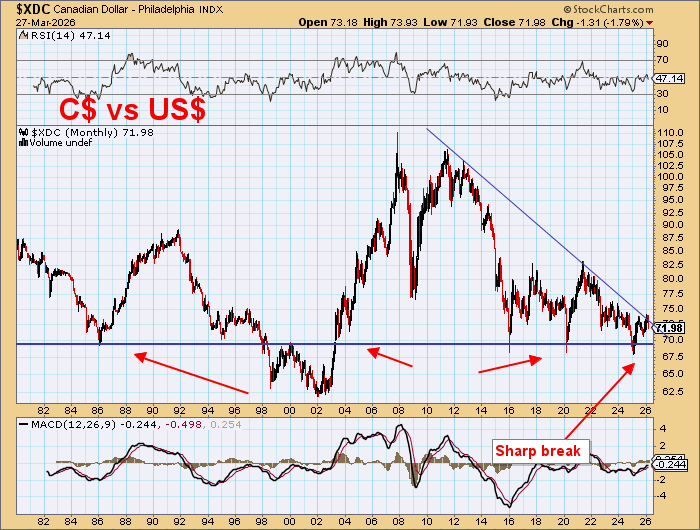
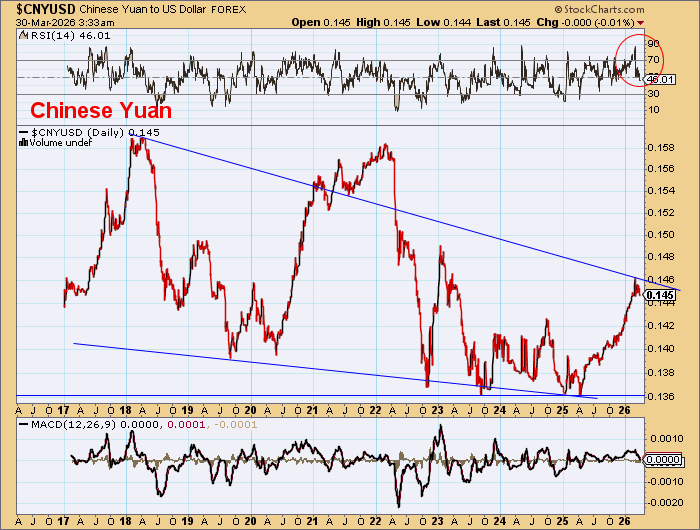
European equity markets traded without a unified trend on Wednesday. The German DAX (DE40) fell by 0.72%, the French CAC 40 (FR40) closed up by 1.01%, and the Spanish IBEX 35 (ES35) edged down by 0.09%. The British FTSE 100 (UK100) closed up 0.85%, hitting a new all-time high. The standout performer was the British pharmaceutical giant GSK, whose shares surged following strong quarterly results and the reaffirmation of long-term guidance that exceeded market expectations. The UK100 was further supported by oil giants Shell and BP amid continuing oil price gains, while mining companies faced pressure due to falling quotes for precious and industrial metals.

On Thursday, silver prices (XAG/USD) collapsed, losing 16.5% and dropping to around $73.5 per ounce, ending its recent short-term correction. Volatility in the precious metals market has surged once again, and the failed recovery attempt has heightened expectations for further declines, despite hopes for demand at lower levels. Additional pressure came from a strengthening dollar amid hawkish signals from the Fed and a revision of expectations regarding the pace of US rate cuts.

WTI crude oil prices rose toward $65 per barrel on Wednesday, approaching late-January highs as geopolitical risks spiked. Escalating tensions between the US and Iran brought the risk premium back to the market: prospects for nuclear program negotiations are deteriorating, and a recent incident involving the interception of Iranian drones has raised fears of escalation in the Middle East. Possible tightening of sanctions against Iran and risks to shipping in the Strait of Hormuz are adding to supply anxieties. The supply side also supported quotes: US crude inventories fell by 3.5 million barrels, confirming a downward trend, albeit slightly weaker than expected.

The US natural gas prices (XNG/USD) jumped nearly 5% on Wednesday to $3.46 per MMBtu, driven by increased fuel deliveries to export LNG terminals. In February, average daily gas flows to the eight largest liquefaction facilities rose to 18.3 billion cubic feet, nearing the December record and exceeding January figures. This surge in export demand highlights the structural role of the US in the global gas market: following the energy crisis of 2022, the country has solidified its status as the world’s largest LNG exporter.

Asian markets mostly rose yesterday. The Japanese Nikkei 225 (JP225) declined by 0.78%, the FTSE China A50 (CHA50) rose by 1.32%, Hong Kong’s Hang Seng (HK50) gained 0.05%, and the Australian ASX 200 (AU200) posted a positive result of 0.80%.

The Australian dollar held near $0.70 on Thursday, remaining close to its three-year highs thanks to a combination of hawkish rhetoric from the Reserve Bank and strong foreign trade statistics. The trade surplus in December rose to AUD 3.37 billion, exceeding market expectations as commodity exports recovered while imports fell to multi-month lows. The currency found further support from the RBA’s February rate hike to 3.85%, accompanied by signals of potential further policy tightening.

S&P 500 (US500) 6,882.72 −35.09 (−0.51%)

Dow Jones (US30) 49,501.30 +260.31 (+0.53%)

DAX (DE40) 24,603.04 −177.75 (−0.72%)

FTSE 100 (UK100) 10,402.34 +87.75 (+0.85%)

USD Index 97.67 +0.23% (+0.23%)

News feed for: 2026.02.05

  • Australia Trade Balance (m/m) at 02:30 (GMT+2); – AUD (MED)
  • UK BoE Interest Rate Decision at 14:00 (GMT+2); – GBP (HIGH)
  • UK BoE Monetary Policy Report at 14:00 (GMT+2); – GBP (HIGH)
  • Eurozone ECB Interest Rate Decision at 15:15 (GMT+2); – EUR (HIGH)
  • Eurozone ECB Deposit Facility Rate at 15:15 (GMT+2); – EUR (HIGH)
  • US Initial Jobless Claims (w/w) at 15:30 (GMT+2); – USD (MED)
  • Eurozone ECB Press Conference at 15:45 (GMT+2); – EUR (MED)
  • US Natural Gas Reserves (w/w) at 17:30 (GMT+2). – XNG (HIGH)
  • Mexico Banxico Interest Rate Decision at 21:00 (GMT+2). – MXN (HIGH)

By JustMarkets

This article reflects a personal opinion and should not be interpreted as an investment advice, and/or offer, and/or a persistent request for carrying out financial transactions, and/or a guarantee, and/or a forecast of future events.