GBP/USD Under Local Pressure: Focus on Bank of England Signals

By RoboForex Analytical Department

GBP/USD fell to 1.3627 on Thursday. Investors are awaiting the outcome of today’s Bank of England meeting.

UK interest rates are expected to decline throughout the year. However, the regulator is unlikely to provide clear signals about the timing and scale of easing, as it needs to wait for a clearer picture of inflation.

Additional pressure on the US dollar stems from the delay in the publication of key US labour market data due to the partial government shutdown. This increases uncertainty about the Fed’s future policy.

By the end of the year, global markets are pricing in around 35 basis points of Bank of England easing – one 25 bp cut and a second cut priced with a probability of around 40%.

Political risks remain in the UK. Investor attention is focused on the by-elections in Gorton and Denton County on 26 February, alongside the May local elections. Pollsters show a rise in support for the Reform UK party. It is ahead of both Prime Minister Keir Starmer’s Labour Party and Kemi Badenoch’s Conservatives, despite the general election not being scheduled until 2029.

Technical Analysis

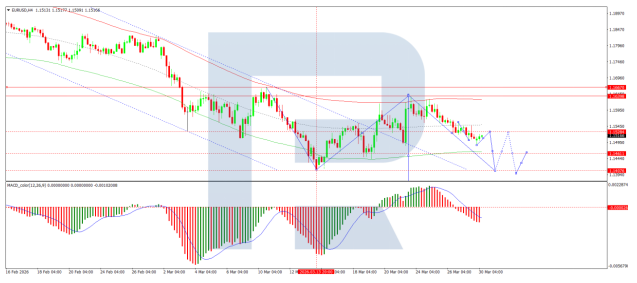
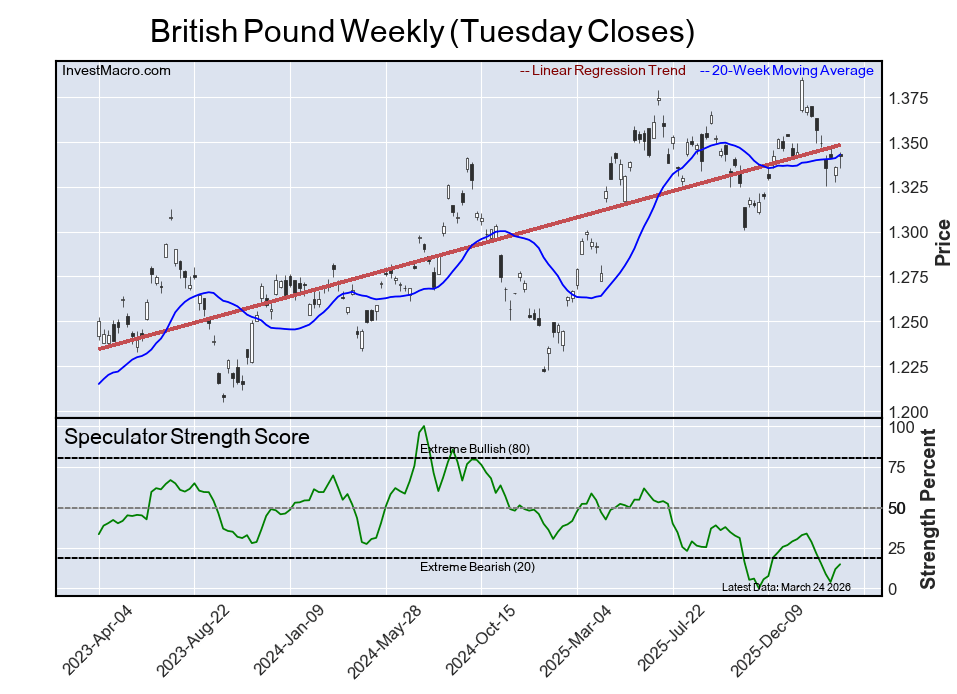
On the H4 chart, after a sharp rally in the second half of January and a fresh high in the 1.3850–1.3880 zone, GBP/USD entered a correction phase. The price has turned down from the upper end of the Bollinger Bands and is now testing the 1.3620–1.3650 support area. Upward momentum has weakened, leaving the structure short-term neutral-to-bearish. At the same time, the broader upward context has not yet been breached.

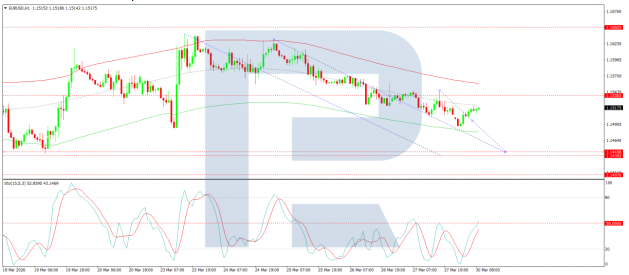
On the lower H1 chart, a descending corrective channel has formed. The price is consistently posting lower lows and remains near the lower Bollinger Bands. Selling pressure persists, with the nearest support at 1.3520–1.3550. To stabilise, the market would need a return above the 1.3660–1.3700 zone.

Conclusion

In summary, GBP/USD is experiencing a tactical pullback driven by pre-BoE caution and delayed US data, which is creating a temporary dollar squeeze. The technical correction appears orderly and is testing key support within a larger bullish structure. The near-term trajectory hinges almost entirely on the Bank of England’s tone today: any dovish hints could extend the correction towards 1.3520, while a neutral or hawkish hold could trigger a recovery attempt. Political uncertainty in the UK adds a layer of medium-term risk, but for now, the primary focus remains on monetary policy signals and the defence of the 1.3620 support zone.


Disclaimer

Any forecasts contained herein are based on the author’s particular opinion. This analysis may not be treated as trading advice. RoboForex bears no responsibility for trading results based on trading recommendations and reviews contained herein.

Bitcoin has plummeted to a 14-month low. Silver jumped by more than 10%

By JustMarkets 

On Tuesday, trading on the US stock market concluded with a decline. By the end of the day, the Dow Jones (US30) fell by 0.34%, the S&P 500 (US500) decreased by 0.84%, and the tech-heavy Nasdaq (US100) closed lower by 1.43%. The primary pressure fell on companies related to artificial intelligence and semiconductors: Nvidia dropped 2.8%, Broadcom lost 3.3%, and Micron fell by 4.2%. The negative sentiment was amplified by rising US Treasury yields; the increase in long-term rates raised discount rates for growth stocks, making them less attractive.

The US Bureau of Labor Statistics (BLS) has officially announced a delay in the publication of the January Non-farm Payrolls report due to the partial government shutdown. The absence of this key data is heightening uncertainty among market participants.

In early February, Bitcoin declined to $72,800, reaching its lowest level since November 2024 amid an increase in forced liquidations of leveraged positions and accelerating capital outflows. Industry data showed that over $730 million was liquidated during the sell-off. Bitwise CIO Matt Hougan stated that Bitcoin is in a multi-month bearish phase, noting that active institutional adoption and increased regulatory clarity may have led to investor overconfidence.

European equity markets traded without a single trend on Tuesday. The German DAX (DE40) fell by 0.07%, the French CAC 40 (FR40) closed down 0.02%, the Spanish IBEX 35 (ES35) rose by 0.02%, and the British FTSE 100 (UK100) ended at a negative 0.26%. On Wednesday, European markets opened lower, influenced by a global sell-off in tech stocks amid growing fears of potential disruptions in key industries due to AI developments. Investors in Europe are also awaiting the release of January Eurozone inflation data to gauge future monetary policy steps. The ECB and the Bank of England will announce their decisions on Thursday, with the market consensus expecting rates to remain unchanged.

On Tuesday, the silver market recorded a price surge of more than 10%, bringing quotes to $87.5 per ounce. Despite the volatility, the geopolitical risk premium remains high. Markets are closely monitoring preparations for talks between the US and Iran scheduled for Friday. Simultaneously, tensions persist on the Eastern European front: Ukraine has stated its readiness to resume peace talks amid another escalation of missile strikes by the Russian Federation.

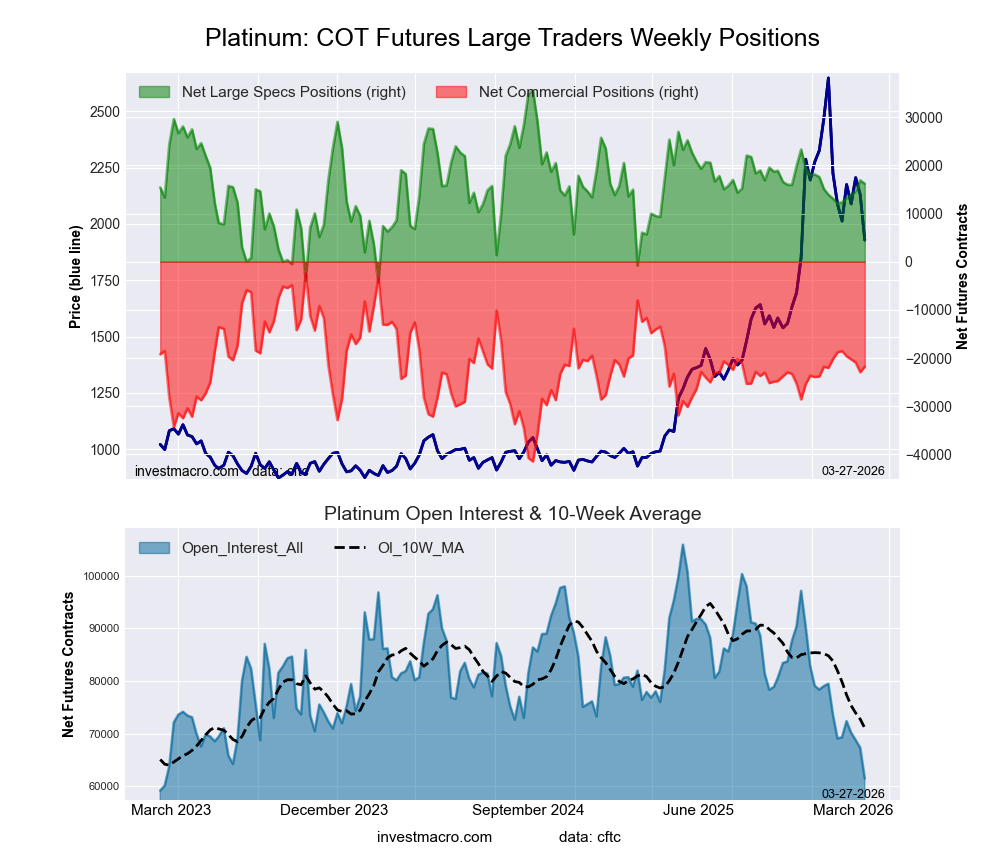
Platinum (XPT) has once again consolidated above $2,200 per ounce, as investors actively bought the metal following a recent sell-off where quotes dipped below $2,000 for the first time since December. The sharp volatility resulted from profit-taking after last week’s record rally and was intensified by Donald Trump’s nomination of Kevin Warsh as the next Fed Chair, whom the market views as a more hawkish candidate. However, downside potential remains limited by fundamental supply factors – the platinum market remains in a structural deficit, and mining in South Africa (accounting for about 70% of global production) is constrained by chronic underinvestment and operational issues.

Asian markets mostly rose yesterday. The Japanese Nikkei 225 (JP225) jumped 3.92%, the FTSE China A50 (CHA50) fell by 1.26%, Hong Kong’s Hang Seng (HK50) increased by 0.22%, and the Australian ASX 200 (AU200) showed a positive result of 0.89%.

On Wednesday, the New Zealand dollar (NZD) declined to 0.603 USD, retreating from a nearly seven-month high following mixed labor market data that strengthened expectations for the RBNZ to hold interest rates steady. The Q4 unemployment rate rose to 5.4%, the highest since 2015 and slightly above both the previous figure and market expectations of 5.3%. Money markets indicate that the cash rate will likely remain at 2.25% until at least September, with the probability of a 25-basis-point hike by that time estimated at approximately 78%.

The offshore yuan (CNH) held near 6.93 per dollar, remaining close to its highest level since May 2023, amid improved outlooks for the currency and strengthening market sentiment. Major international investment banks have become more optimistic about the yuan’s potential after it firmly consolidated below the key 7.00 level at the end of last year. Throughout 2025, the yuan strengthened by approximately 4.5% against the US dollar, supported by a weakening Greenback and growing confidence in China’s macroeconomic stabilization.

S&P 500 (US500) 6,917.81 −58.63 (−0.84%)

Dow Jones (US30) 49,240.99 −166.67 (−0.34%)

DAX (DE40) 24,780.79 −16.73 (−0.07%)

FTSE 100 (UK100) 10,314.59 −26.97 (−0.26%)

USD Index 97.36 −0.27% (−0.28%)

News feed for: 2026.02.04

  • Australia Services PMI (m/m) at 00:00 (GMT+2); – AUD (MED)
  • Japan Services PMI (m/m) at 02:30 (GMT+2); – JPY (MED)
  • China RatingDog Services PMI (m/m) at 03:45 (GMT+2); – CHA50, HK50 (MED)
  • Eurozone Services PMI (m/m) at 11:00 (GMT+2); – EUR (MED)
  • UK Services PMI (m/m) at 11:30 (GMT+2); – GBP (MED)
  • Eurozone Inflation Rate (m/m) at 12:00 (GMT+2); – EUR (MED)
  • US ADP Non-Farm Employment Change (m/m) at 15:15 (GMT+2); – USD (MED)
  • US ISM Services PMI (m/m) at 17:00 (GMT+2); – USD (MED)
  • US Crude Oil Reserves (w/w) at 17:30 (GMT+2). – WTI (HIGH)

By JustMarkets


This article reflects a personal opinion and should not be interpreted as an investment advice, and/or offer, and/or a persistent request for carrying out financial transactions, and/or a guarantee, and/or a forecast of future events.

Gold is Back in the Black: Geopolitics Dictates Conditions Again

By RoboForex Analytical Department

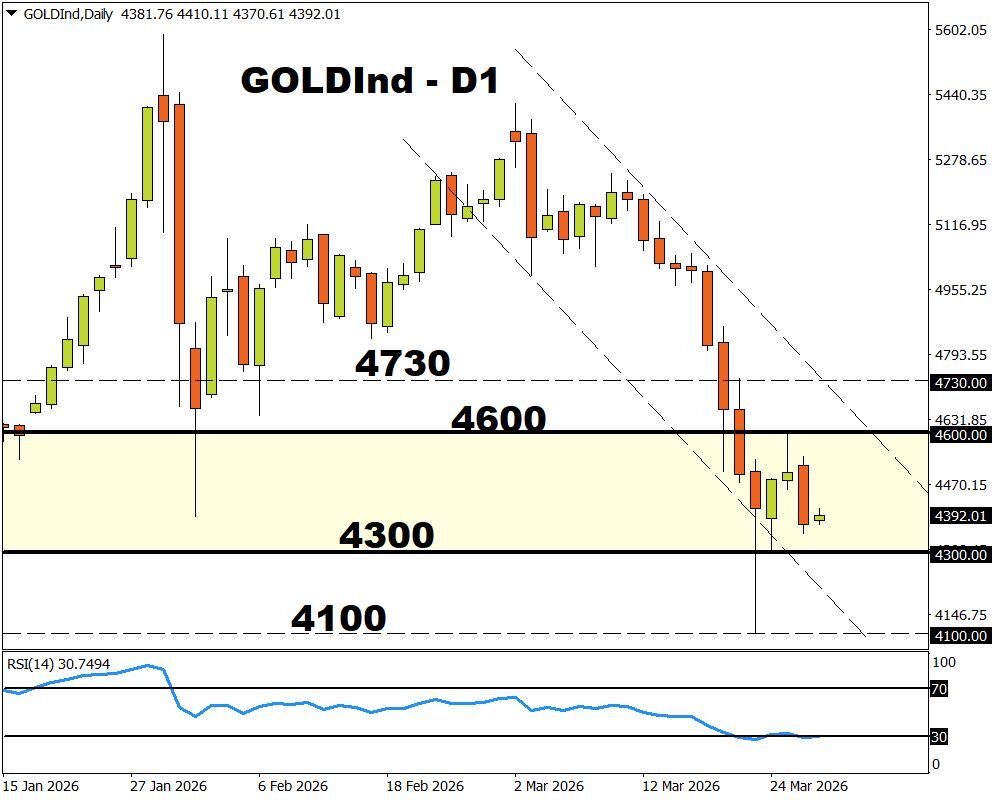
Gold, on Wednesday, returned above the key level of 5000 USD per ounce and has already approached 5067 USD. The precious metal continues to grow after jumping more than 6% in the previous session, marking the strongest daily increase since 2008. The quotes were supported by purchases following a decline after a sharp correction at the beginning of the week.

Geopolitical risks gave an additional impetus to the precious metal. After US forces shot down an Iranian drone near an aircraft carrier in the Arabian Sea, demand for defensive assets intensified. At the same time, President Donald Trump stated that diplomatic contacts continue, and the White House confirmed the US-Iran talks scheduled for Friday.

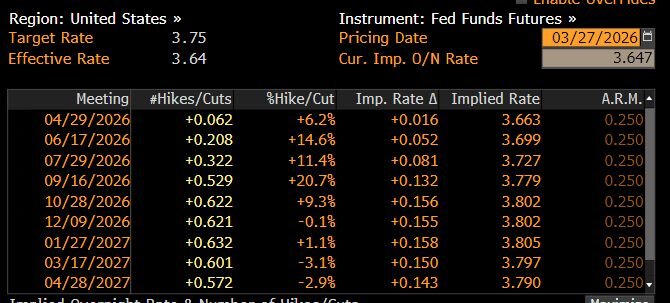
Expectations of rapid Fed rate cuts have eased somewhat since the nomination of Kevin Warsh to head the Fed. Nevertheless, the markets are still pricing in two rate cuts – probably in the middle of the year and later in 2026.

Separately, it is noted that the publication of key US labour market statistics, including JOLTS data and the monthly employment report, will be postponed due to the partial government shutdown. The House voted on Tuesday on the Senate-approved stopgap budget.

Technical Analysis

On the H4 chart for gold, after completing a powerful uptrend and reaching a peak around 5600, the market entered a sharp correction. The decline was impulsive, as evidenced by the expansion of Bollinger Bands – a sign of panic selling. The minimum was noted in the 4440–4450 zone, from where the technical rebound began. Current prices are recovering but remain below the Bollinger median line. The structure is still corrective, with increased volatility and a predominance of downside risks.

On the H1 chart, after a landslide downward movement, a base and a sequence of higher minima have formed – local stabilisation. The price is trading in a narrow upward channel and gradually moving towards the 5050-5100 resistance zone. However, the recovery looks technical. As long as the quotes are below key resistance and the median line of the higher timeframe, the rebound remains vulnerable to a resumption of selling.

Conclusion

In summary, gold’s sharp recovery is primarily a technical rebound from oversold conditions, supercharged by a sudden flare-up in geopolitical tensions. While the move is significant, the technical structure across timeframes suggests it remains a corrective bounce within a larger downtrend, not a confirmed reversal. The rally is vulnerable as long as prices trade below key higher-timeframe resistance. The fundamental landscape remains mixed, with delayed US data creating uncertainty and revised, but still present, Fed easing expectations providing a floor. Near-term direction will hinge on the evolution of Middle East diplomacy and gold’s ability to breach critical technical ceilings.


By RoboForex Analytical Department


Disclaimer

Any forecasts contained herein are based on the author’s particular opinion. This analysis may not be treated as trading advice. RoboForex bears no responsibility for trading results based on trading recommendations and reviews contained herein.

The world is in water bankruptcy, UN scientists report – here’s what that means

By Kaveh Madani, United Nations University 

The world is now using so much fresh water amid the consequences of climate change that it has entered an era of water bankruptcy, with many regions no longer able to bounce back from frequent water shortages.

About 4 billion people – nearly half the global population – live with severe water scarcity for at least one month a year, without access to sufficient water to meet all of their needs. Many more people are seeing the consequences of water deficit: dry reservoirs, sinking cities, crop failures, water rationing and more frequent wildfires and dust storms in drying regions.

Water bankruptcy signs are everywhere, from Tehran, where droughts and unsustainable water use have depleted reservoirs the Iranian capital relies on, adding fuel to political tensions, to the U.S., where water demand has outstripped the supply in the Colorado River, a crucial source of drinking water and irrigation for seven states.

A woman fills containers with water from a well. cows are behind her on a dry landscape.
Droughts have made finding water for cattle more difficult and have led to widespread malnutrition in parts of Ethiopia in recent years. In 2022, UNICEF estimated that as many as 600,000 children would require treatment for severe malnutrition.
Demissew Bizuwerk/UNICEF Ethiopia, CC BY

Water bankruptcy is not just a metaphor for water deficit. It is a chronic condition that develops when a place uses more water than nature can reliably replace, and when the damage to the natural assets that store and filter that water, such as aquifers and wetlands, becomes hard to reverse.

A new study I led with the United Nations University Institute for Water, Environment and Health concludes that the world has now gone beyond temporary water crises. Many natural water systems are no longer able to return to their historical conditions. These systems are in a state of failure – water bankruptcy.

Kaveh Madani, director of the United Nations University Institute for Water, Environment and Health, explains the concept of “water bankruptcy.” TVRI World.

What water bankruptcy looks like in real life

In financial bankruptcy, the first warning signs often feel manageable: late payments, borrowed money and selling things you hoped to keep. Then the spiral tightens.

Water bankruptcy has similar stages.

At first, we pull a little more groundwater during dry years. We use bigger pumps and deeper wells. We transfer water from one basin to another. We drain wetlands and straighten rivers to make space for farms and cities.

Then the hidden costs show up. Lakes shrink year after year. Wells need to go deeper. Rivers that once flowed year-round turn seasonal. Salty water creeps into aquifers near the coast. The ground itself starts to sink.

How the Aral Sea shrank from 2000 to 2011. It was once closer to oval, covering the light-colored areas as recently as the 1980s, but overuse for agriculture by multiple countries drew it down.
NASA

That last one, subsidence, often surprises people. But it’s a signature of water bankruptcy. When groundwater is overpumped, the underground structure, which holds water almost like a sponge, can collapse. In Mexico City, land is sinking by about 10 inches (25 centimeters) per year. Once the pores become compacted, they can’t simply be refilled.

The Global Water Bankruptcy report, published on Jan. 20, 2026, documents how widespread this is becoming. Groundwater extraction has contributed to significant land subsidence over more than 2.3 million square miles (6 million square kilometers), including urban areas where close to 2 billion people live. Jakarta, Bangkok and Ho Chi Minh City are among the well-known examples in Asia.

A large sinkhole near farm fields.
A sinkhole in Turkey’s agricultural heartland shows how the landscape can collapse when more groundwater is extracted than nature can replenish.
Ekrem07, 2023, Wikimedia Commons, CC BY

Agriculture is the world’s biggest water user, responsible for about 70% of the global freshwater withdrawals. When a region goes water bankrupt, farming becomes more difficult and more expensive. Farmers lose jobs, tensions rise and national security can be threatened.

About 3 billion people and more than half of global food production are concentrated in areas where water storage is already declining or unstable. More than 650,000 square miles (1.7 million square kilometers) of irrigated cropland are under high or very high water stress. That threatens the stability of food supplies around the world.

Droughts are also increasing in duration, frequency and intensity as global temperatures rise. Over 1.8 billion people – nearly 1 in 4 humans – dealt with drought conditions at various times from 2022 to 2023.

These numbers translate into real problems: higher food prices, hydroelectricity shortages, health risks, unemployment, migration pressures, unrest and conflicts.

Is the world ready to cope with water-related national security risks? CNN.

How did we get here?

Every year, nature gives each region a water income, depositing rain and snow. Think of this like a checking account. This is how much water we receive each year to spend and share with nature.

When demand rises, we might borrow from our savings account. We take out more groundwater than will be replaced. We steal the share of water needed by nature and drain wetlands in the process. That can work for a while, just as debt can finance a wasteful lifestyle for a while.

Those long-term water sources are now disappearing. The world has lost more than 1.5 million square miles (4.1 million square kilometers) of natural wetlands over five decades. Wetlands don’t just hold water. They also clean it, buffer floods and support plants and wildlife.

Water quality is also declining. Pollution, saltwater intrusion and soil salinization can result in water that is too dirty and too salty to use, contributing to water bankruptcy.

A map shows most of Africa, South Asia and large parts of the Western U.S. have high levels of water-related risks.
Overall water-risk scores reflect the aggregate value of water quantity, water quality and regulatory and reputational risks to water supplies. Higher values indicate greater water-related risks.
United Nations University Institute for Water, Environment and Health, based on Aqueduct 4.0, CC BY

Climate change is exacerbating the situation by reducing precipitation in many areas of the world. Warming increases the water demand of crops and the need for electricity to pump more water. It also melts glaciers that store fresh water.

Despite these problems, nations continue to increase water withdrawals to support the expansion of cities, farmland, industries and now data centers.

Not all water basins and nations are water bankrupt, but basins are interconnected through trade, migration, climate and other key elements of nature. Water bankruptcy in one area will put more pressure on others and can increase local and international tensions.

What can be done?

Financial bankruptcy ends by transforming spending. Water bankruptcy needs the same approach:

  • Stop the bleeding: The first step is admitting the balance sheet is broken. That means setting water use limits that reflect how much water is actually available, rather than just drilling deeper and shifting the burden to the future.
  • Protect natural capital – not just the water: Protecting wetlands, restoring rivers, rebuilding soil health and managing groundwater recharge are not just nice-to-haves. They are essential to maintaining healthy water supplies, as is a stable climate.
A woman pushes a wheelbarrow with a contain filled with freshwater. The ocean is behind her in the view.
In small island states like the Maldives, sea-level rise threatens water supplies when salt water gets into underground aquifers, ruining wells.
UNDP Maldives 2021, CC BY
  • Use less, but do it fairly: Managing water demand has become unavoidable in many places, but water bankruptcy plans that cut supplies to the poor while protecting the powerful will fail. Serious approaches include social protections, support for farmers to transition to less water-intensive crops and systems, and investment in water efficiency.
  • Measure what matters: Many countries still manage water with partial information. Satellite remote sensing can monitor water supplies and trends, and provide early warnings about groundwater depletion, land subsidence, wetland loss, glacier retreat and water quality decline.
  • Plan for less water: The hardest part of bankruptcy is psychological. It forces us to let go of old baselines. Water bankruptcy requires redesigning cities, food systems and economies to live within new limits before those limits tighten further.

With water, as with finance, bankruptcy can be a turning point. Humanity can keep spending as if nature offers unlimited credit, or it can learn to live within its hydrological means.The Conversation

About the Author: 

Kaveh Madani, Director of the Institute for Water, Environment and Health, United Nations University

This article is republished from The Conversation under a Creative Commons license. Read the original article.


3 things to know about Kevin Warsh, Trump’s nod for Fed chair

By D. Brian Blank, Mississippi State University and Brandy Hadley, Appalachian State University 

After months of speculation, President Donald Trump nominated Kevin Warsh on Jan. 30, 2026, to be the next chair of the Federal Reserve.

If confirmed by Congress, Warsh will inherit leadership of the U.S. central bank at a delicate time. For months, current Fed Chair Jerome Powell has come under attack from the Trump administration for failing to heed the president’s call for lower interest rates. The fight has put into question the central bank’s independence and its role in stewarding the economy.

Powell’s term as chair will end in mid-May, leaving his successor to navigate an economy that has improved on some fronts but remains uneven and uncertain.

But what should America expect from the next Fed chair? Here are three things to note about Trump’s nominee.

1. He is a familiar face …

Warsh brings deep experience with monetary policymaking to the role.

A graduate of Stanford University and Harvard Law School, he served as special assistant to the president for economic policy and executive secretary of the White House National Economic Council under President George W. Bush before becoming one of the youngest members of the Federal Reserve Board of Governors.

Warsh is no newcomer to discussions about Federal Reserve leadership. He was a finalist for the job in 2017, when Trump instead appointed Powell. Trump has since stated that he made a mistake by not selecting Warsh then – though clashes between Trump and Powell may have influenced that view.

Warsh’s credentials are unquestionable. As a governor of the Federal Reserve Board from 2006 to 2011, he worked closely with other policymakers and with Wall Street during the global financial crisis of 2008. Since departing the Fed, he has returned to Stanford as a visiting fellow at the Hoover Institution and a lecturer at the Graduate School of Business, as well as a member of the Panel of Economic Advisers of the Congressional Budget Office.

He also has ties to the finance industry. He began his career in mergers and acquisitions at Morgan Stanley and, since leaving the Fed, has worked as a partner at Duquesne Family Office, an investment firm that manages the personal wealth of hedge fund manager Stanley Druckenmiller and other investors.

In 2016, Trump included Warsh in an economic advisory group assembled during his transition. Critics of Warsh’s nomination point toward his father-in-law, Ronald Lauder, a college friend and donor of the president, as evidence of politicization.

2. … with evolving monetary views

The big question people have is what a Warsh Fed would mean for monetary policy – that is, is it likely to play tight or loose with rates.

When the economy is growing quickly, like in 2021, the Federal Reserve tightens policy by raising interest rates to avoid the kind of economic growth that may not be sustainable long term and can lead to bubbles. However, during downturns, like in 2008 or 2020, the economic policy that can provide a backstop for the economy is looser. The Fed tends to lower rates in these situations, which supports growth.

Warsh’s views on monetary policy have long been considered hawkish, meaning he is inclined toward tighter policy and generally higher interest rates to keep inflation in check, even at the expense of slower economic growth. During his previous tenure at the Fed, he signaled concern about expansive monetary tools such as quantitative easing, in which the central bank buys Treasurys and other securities to stimulate the economy. This resulted in what Warsh called a “bloated” Fed balance sheet that held almost US$9 trillion of debt at its peak in 2022.

In recent public remarks leading up to his nomination, however, he has increasingly aligned in part with Trump’s push for lower interest rates and discussed establishing a new Treasury-Fed Accord, like in 1951, when Fed independence from fiscal authorities such as the Treasury Department was established.

3. His nod highlights fight over Fed independence

A central question surrounding this nomination is whether it promotes the politicization of the Federal Reserve.

The Fed’s independence from day-to-day political pressure has long been viewed as a cornerstone of U.S. economic policymaking. Decisions about interest rates, inflation control and financial stability are insulated from electoral politics for that reason. A truly independent Fed can resist making decisions that provide a short-term economic bump – something incumbent governments tend to like – but may lead to longer-term economic pain down the road.

The Fed tends to use its monetary policy tools carefully. Yet politicians tend to want looser monetary policy so the economy grows fast and they get credit for it.

And Warsh’s nomination can be seen in the context of a broader push from the executive branch to exert greater influence over monetary policy. Given Trump’s public criticism of Powell and vocal calls for his early departure, the president almost certainly intended to nominate someone who would lower interest rates according to preferences stated by the administration.

Critics of the nomination have argued that Warsh has a tendency to be more opportunistic with his policy views than Powell and other economists, who try to ignore political preferences.

As such, Warsh’s nomination encapsulates more than just a leadership transition. It highlights the ongoing tensions between political priorities and the traditional economic playbook, between short-term growth pressures and long-term stability, and between institutional independence and democratic accountability.

Time will tell whether he turns out to be hawkish or politically motivated as chair, if he is confirmed.The Conversation

About the Author:

D. Brian Blank, Associate Professor of Finance, Mississippi State University and Brandy Hadley, Associate Professor of Finance and Distinguished Scholar of Applied Investments, Appalachian State University

This article is republished from The Conversation under a Creative Commons license. Read the original article.


US natural gas prices collapsed by 21%. The RBA raised its interest rate by 0.25%

By JustMarkets 

On Monday, trading on the US stock market concluded with solid gains. By the end of the day, the Dow Jones (US30) rose by 1.05%, the S&P 500 (US500) gained 0.54%, and the tech-heavy Nasdaq (US100) closed higher by 0.56%. The growth was primarily driven by tech and growth stocks: Apple shares jumped over 3%, AMD rose nearly 5%, and Micron added over 5%. Alphabet and Amazon also traded firmly ahead of their earnings reports later this week. Oracle saw a slight correction following its recent rally linked to a $50 billion capital-raising plan, while Nvidia declined by approximately 2% amid ongoing uncertainty regarding its frozen $100 billion investment in OpenAI.

European equity markets mostly rose on Monday. The German DAX (DE40) climbed 1.05%, the French CAC 40 (FR40) closed up 0.67%, the Spanish IBEX 35 (ES35) increased by 1.31%, and the British FTSE 100 (UK100) closed up 1.15%. In the first half of the day, European stocks were under pressure due to a sharp crash in precious metals prices, which led to increased margin calls on key derivative exchanges. However, fears of systemic liquidity issues did not materialize, and the market reversed upward, showing growth across all sectors. Banking stocks were among the leaders, with Santander, UniCredit, ING, and Nordea gaining between 2-3%.

During Monday’s Asian session, silver quotes (XAG) dropped to $77 per ounce following Friday’s 30% collapse – the largest one-day decline in history, which almost entirely wiped out the year-to-date gains. Just last Thursday, silver had hit an all-time high exceeding $120 per ounce. The sharp market reversal followed reports of President Donald Trump’s intention to nominate Kevin Warsh as the next Federal Reserve Chairman, a move market participants viewed as a signal for a more hawkish monetary policy. Despite the current decline, silver continues to find some support from a structural supply deficit and the “debasement trade,” where investors reallocate capital from currencies and bonds into physical assets amid concerns over rising government debt, geopolitical uncertainty, and doubts about Fed independence.

WTI crude oil prices fell by more than 4.5% on Monday, dropping to $62.2 per barrel, marking the sharpest one-day decline in over six months. Pressure intensified after President Trump stated that Washington is in talks with Iran, easing fears of supply disruptions in the Middle East. Iranian officials also signaled a readiness for dialogue, further calming investors who had priced in conflict risks. The price drop was exacerbated by a broader sell-off in commodity markets, particularly in metals.

The US natural gas prices (XNG) plummeted by 21% to $3.42 per MMBtu, completely erasing Friday’s 11% gain. This came after short-term weather prognoses shifted toward milder conditions, reducing expected demand. The market has been highly volatile; the February contract hit a three-year high last week due to storm-related production disruptions and heating demand. However, updated expectations from NOAA indicate above-normal temperatures across much of the US through mid-month, likely curbing demand for heating and power generation.

Asian markets mostly declined yesterday. The Japanese Nikkei 225 (JP225) fell by 1.25%, the FTSE China A50 (CHA50) dropped 1.44%, Hong Kong’s Hang Seng (HK50) decreased by 2.23%, and Australia’s ASX 200 (AU200) showed a negative result of 1.02%.

The Australian dollar rose to around $0.70 on Tuesday, the Reserve Bank of Australia (RBA), at its first monetary policy meeting of 2026, unanimously raised the cash rate by 25 basis points to 3.85%, fully meeting market expectations. This marked the first hike since November 2023 and highlighted a resurgence in inflationary pressures that intensified in late 2025 due to rising service sector costs and a tight labor market. The RBA noted that inflation is likely to remain above the 2-3% target range for some time, reflecting resilient economic dynamics.

S&P 500 (US500) 6,976.44 +37.41 (+0.54%)

Dow Jones (US30) 49,407.66 +515.19 (+1.05%)

DAX (DE40) 24,797.52 +258.71 (+1.05%)

FTSE 100 (UK100) 10,341.56 +118.02 (+1.15%)

USD Index 97.58 +0.59% (+0.60%)

News feed for: 2026.02.03

  • Australia RBA Interest Rate Decision at 05:30 (GMT+2); – AUD (HIGH)
  • Australia RBA Monetary Policy Statement at 05:30 (GMT+2); – AUD (HIGH)
  • Australia RBA Press Conference at 06:30 (GMT+2); – AUD (MED)
  • US JOLTs Job Openings (m/m) at 17:00 (GMT+2); – USD (MED)
  • New Zealand Unemployment Rate (q/q) at 23:45 (GMT+2). – NZD (HIGH)

By JustMarkets


This article reflects a personal opinion and should not be interpreted as an investment advice, and/or offer, and/or a persistent request for carrying out financial transactions, and/or a guarantee, and/or a forecast of future events.

What goes up must come down…

By ForexTime 

  • $15 trillion erased from silver/gold prices on Friday
  • Central banks and geopolitics back in focus
  • Bitcoin falls below $75,000 for first time in 10 months
  • NFP report on Friday may rock global markets

More than $15 trillion was erased from the value of gold and silver last Friday.

This monstrous amount was equivalent to half the size of the entire US economy.

  • Silver nosedived almost 40%
  • Gold tumbled nearly 15%

Precious metals have kicked off the new week under renewed pressure already flashing red this morning:

  • XAUUSD: ↓ 5%
  • XAGUSD: ↓7%

The selloff was triggered by Donald Trump’s nomination of Kevin Warsh for Fed Chair.

Opinions remain divided over whether Warsh will align with Trump’s view on how the Fed should be run, given his past status as an “inflation hawk’.

Traders are still pricing a less than 40% chance that the Fed cuts rates by April.

WHAT COULD MOVE SILVER/GOLD THIS WEEK:

  • US Partial government shutdown

Over the weekend, the US government entered a partial shutdown adding another layer of uncertainty to current developments.

This negative development may toss the Fed back into the wilderness as the absence of clear data complicates monetary policy planning.

So, another round of extended delays may force the Fed to adopt a “wait-and-see” approach on rates as it “drives in the fog”.

  • Geopolitical flashpoints

Last week, Trump threatened to attack Iran while saying he would impose tariffs on countries that supply oil to Cuba. Should tensions escalate, this may offer much-needed support to precious metals facing a bout of profit-taking and dollar strength.

  • US January NFP report –

The incoming NFP report could shape the metals outlook for February as discussed in the week ahead report.

Bitcoin slips to fresh 10-month low

Bitcoin tumbled to a fresh 10-month low in Asia trading on Monday, dipping below $75,000.

The “OG” crypto shed fell 11% in January, marking its fourth straight monthly decline — the longest losing streak since 2018…

The overall unrest across global markets and the absence of buyers have contributed to the recent declines.

US-listed spot Bitcoin ETFs have recorded three consecutive months of outflows while technical indicators signal the rise of bearish pressures.


POTENTIAL SCENARIOS:

BULLISH: A move back above the 50-day SMA at $87,500 could signal an incline toward $90,000, $95,000 and $100,000.

BEARISH: Sustained weakness below $77,500 could send prices toward $70,000 and lower.


Forex-Time-LogoArticle by ForexTime


ForexTime Ltd (FXTM) is an award winning international online forex broker regulated by CySEC 185/12 www.forextime.com

Donald Trump appoints a new successor for the Fed chair. Precious metals hit by sell-off

By JustMarkets 

On Friday, trading on the US stock market ended with a decline. By the close of Friday, the Dow Jones (US30) Index fell by 0.36% (-0.50% for the week). The S&P 500 (US500) decreased by 0.43% (+0.23% for the week). The tech-heavy Nasdaq (US100) closed lower by 1.28% (-0.31% for the week). Market pressure was driven by rising Treasury yields and a strengthening dollar after President Donald Trump appointed Kevin Warsh as the successor to Fed Chair Jerome Powell. Investors viewed this move as a signal toward a more hawkish and cautious monetary easing trajectory, triggering a rise in long-term bond yields and profit-taking in rate-sensitive assets following a strong January rally.

The Canadian dollar (CAD) retreated to 1.355 per US dollar. The weakness was linked to softer domestic economic growth signals and a rebounding US dollar, which partially offset January’s gains. Data showed that Canada’s real GDP remained unchanged in November, while the manufacturing sector recorded its third contraction in four months, indicating instability in underlying economic dynamics despite limited contributions from the service sector. This reinforced expectations that the Bank of Canada (BoC) will maintain a cautious approach and refrain from tightening policy.

The Mexican peso (MXN) weakened to above 17.4 per US dollar, correcting after a strong monthly gain. Pressure on the currency intensified amid US dollar strengthening and a revision of interest rate expectations, which reduced the attractiveness of carry trade operations. The key trigger was the dollar’s recovery following Kevin Warsh’s appointment as the next Fed Chair. The market interpreted this as a signal for a more predictable and disciplined monetary policy, leading to higher US yields and increasing the opportunity cost of holding peso positions.

Equity markets in Europe mostly rose on Friday. The German DAX (DE40) climbed 0.94% (-1.41% for the week), the French CAC 40 (FR40) closed up 0.68% (-0.05% for the week), the Spanish IBEX 35 (ES35) rose by 1.66% (+1.79% for the week), and the British FTSE 100 (UK100) closed at positive 0.51% (+0.79% for the week). The indices were supported by fresh economic data and corporate reports. Preliminary figures showed the German economy grew by +0.3% quarter-on-quarter in Q4 2025, exceeding expectations after stagnation in Q3 and a -0.2% contraction in Q2. Germany’s inflation rate rose to 2.1% in January 2026 from a December low of 1.8%, slightly exceeding market expectations of 2.0%.

On Friday, silver prices (XAG) plummeted by more than 25%, dropping to $84 per ounce following aggressive profit-taking that triggered a broad pullback in precious metal prices. Geopolitical tensions remained high after President Trump signed an executive order on tariffs for goods from countries supplying oil to Cuba, increasing pressure on Mexico, and called for Iran to enter nuclear negotiations, while Tehran promised a swift response. On the monetary front, market attention focused on Kevin Warsh’s appointment as the new Fed Chair, ending months of speculation regarding future US policy.

The US natural gas prices (XNG) surged 7%, reaching $4.10 per MMBtu, driven by increased flows to LNG export plants, including the likely restart of a train at the Freeport LNG plant in Texas. Deliveries for LNG production grew for the fourth consecutive day, reaching 17.9 billion cubic feet per day (bcf/d) after recently falling to an annual low of 11.5 bcf/d due to winter storms. The price increase occurred despite expectations for milder weather and lower heating demand, as well as the recovery of production from previously frozen wells. Weather is expected to remain colder than normal until February 14, and futures showed a nearly 14% gain in January after a 23% drop the previous month.

Asian markets traded with mixed dynamics last week. The Japanese Nikkei 225 (JP225) rose by 0.56% for the trading week, the FTSE China A50 (CHA50) increased 0.49%, the Hong Kong Hang Seng (HK50) gained 2.02%, and the Australian ASX 200 (AU200) showed a positive 5-day result of 0.27%.

China’s official Manufacturing PMI fell to 49.3 points in January 2026, compared to 50.1 in December, missing market expectations of 50. The data indicate a loss of momentum at the start of the year: weak domestic and foreign demand, along with cautious business sentiment, continue to hinder recovery amid persistent structural economic issues.

Australian 10-year government bond yields rose toward 4.81%, remaining near a more than two-year high as markets increasingly priced in rate hikes ahead of the RBA meeting. The probability of a rate hike on February 3 is currently estimated at 75%, with market participants expecting another tightening by August. This was supported by a series of strong macro data points: December inflation was higher than expectations and remains far from the 2–3% target range, unemployment fell unexpectedly, job vacancies grew at the fastest pace since February 2022, and house price growth accelerated in January, highlighting economic resilience. Against this backdrop, analysts do not rule out that 10-year yields could briefly exceed 5% in the short term.

S&P 500 (US500) 6,939.03 −29.98 (−0.43%)

Dow Jones (US30) 48,892.47 −179.09 (−0.36%)

DAX (DE40) 24,538.81 +229.35 (+0.94%)

FTSE 100 (UK100) 10,223.54 +51.78 (+0.51%)

USD Index 97.15 −0.86% (−0.90%)

News feed for: 2026.02.02

  • Australia Manufacturing PMI (m/m) at 00:00 (GMT+2); – AUD (MED)
  • Japan Manufacturing PMI (m/m) at 02:30 (GMT+2); – JPY (MED)
  • China RatingDog Manufacturing PMI (m/m) at 03:45 (GMT+2); – CHA50, HK50 (MED)
  • German Retail Sales (m/m) at 09:00 (GMT+2); – EUR (LOW)
  • Switzerland Manufacturing PMI (m/m) at 10:30 (GMT+2); – CHF (MED)
  • Eurozone Manufacturing PMI (m/m) at 11:00 (GMT+2); – EUR (MED)
  • UK Manufacturing PMI (m/m) at 11:00 (GMT+2); – GBP (MED)
  • Canada Manufacturing PMI (m/m) at 16:30 (GMT+2); – CAD (MED)

By JustMarkets


This article reflects a personal opinion and should not be interpreted as an investment advice, and/or offer, and/or a persistent request for carrying out financial transactions, and/or a guarantee, and/or a forecast of future events.

USDJPY Realises Correction: BOJ Policy Weighs on Yen

By RoboForex Analytical Department

USDJPY rose to 154.98 on Monday, with the yen continuing to fall. Pressure on the currency increased after statements by Japanese Prime Minister Sanae Takaichi. Over the weekend, the politician noted that a weak yen could be a significant advantage for export industries, indicating that Takaichi continues to favour a softer exchange rate. She later clarified that her comments concerned the need to build an economy resistant to currency fluctuations.

On Friday, the yen lost about 1% against the dollar after US President Donald Trump nominated Kevin Warsh as the next Fed chairman. The market regarded this choice as more “hawkish”, supporting the dollar and adding to the pressure on the yen.

An additional factor of uncertainty remains the upcoming extraordinary vote in the lower house of parliament on 8 February. Takaichi’s ruling party is expected to strengthen its position and advance expansive fiscal policies, increasing the risk of higher borrowing. Against this background, both Japanese government bonds and the yen were under pressure last month.

Expectations of fiscal stimulus and discussion of tax breaks increase the burden on public finances and restrain demand for the national currency.

Technical Analysis

On the H4 chart, a corrective rebound follows after a sharp drop from the 158.50–159.00 area. The price recovered from a low in the 152.00 zone and is testing the 155.50 area, but remains below medium-term resistance. The structure still looks corrective inside the broader downward phase until the quotes settle above 156.50–157.00.

The H1 chart shows that after a sharp decline, the pair entered a recovery phase and has been sequentially updating local maxima. The price climbed above the 153.26–153.88 zone and is trading along the upper end of the Bollinger Bands, indicating continued near-term momentum. A slowdown is observed near the 155.50–155.60 level, with a possible pause or pullback within the ongoing correction.

Conclusion

In summary, the USDJPY rebound is primarily a technical correction within a broader bearish context for the yen. The move is exacerbated by political commentary favouring a weaker currency and reinforced by a hawkish Fed appointment. While near-term momentum persists, the pair faces significant resistance ahead. The fundamental backdrop of anticipated expansive fiscal policy in Japan continues to apply structural pressure on the yen, suggesting the current recovery may be limited in scope before the larger downtrend potentially resumes.


Disclaimer

Any forecasts contained herein are based on the author’s particular opinion. This analysis may not be treated as trading advice. RoboForex bears no responsibility for trading results based on trading recommendations and reviews contained herein.

Australian Dollar Speculator bets go bullish for 1st time in 59 Weeks

By InvestMacro

Speculators OI FX Futures COT Chart

Here are the latest charts and statistics for the Commitment of Traders (COT) data published by the Commodities Futures Trading Commission (CFTC).

The latest COT data is updated through Tuesday January 27th and shows a quick view of how large market participants (for-profit speculators and commercial traders) were positioned in the futures markets. All currency positions are in direct relation to the US dollar where, for example, a bet for the euro is a bet that the euro will rise versus the dollar while a bet against the euro will be a bet that the euro will decline versus the dollar.

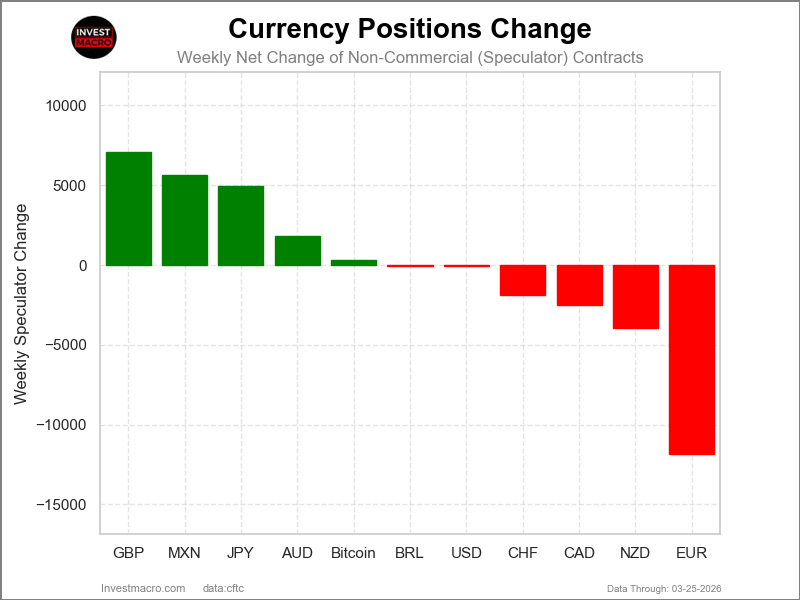
Weekly Speculator Changes led by Canadian Dollar, Australian Dollar & Euro

Speculators Nets FX Futures COT Chart
The COT currency market speculator bets were overall decisively higher this week as ten out of the eleven currency markets we cover had higher positioning while the other one markets had lower speculator contracts.

Leading the gains for the currency markets was the Canadian Dollar (25,739 contracts) with the Australian Dollar (21,157 contracts), the EuroFX (20,439 contracts), the Japanese Yen (10,896 contracts), the British Pound (5,818 contracts), the US Dollar Index (2,013 contracts), the New Zealand Dollar (1,865 contracts), the Brazilian Real (1,204 contracts), Bitcoin (392 contracts),  and with the Swiss Franc (314 contracts) also showing positive weeks.

The only currency seeing a decline in speculator bets on the week was the Mexican Peso with a decrease of -4,039 contracts.

NZD leads Price Performance Returns for FX this week

In the currency markets this week, the New Zealand Dollar saw the biggest rise on the week with a 1.25% gain in the past five days. The Swiss Franc was higher by 1.12%, followed by the Australian Dollar which rose by 1.01%. The Japanese Yen came in next with a 0.67% rise, followed by the Canadian Dollar which increased by 0.60% on the week, while the Brazilian Real was up by 0.59%. The British Pound also saw a small gain this week with a 0.34% rise, and the Euro rounds out the gainers with a 0.27% increase.

On the downside, the US Dollar Index was virtually unchanged with a small decline of -0.22%, followed by the Mexican Peso which fell by -0.59%. Bitcoin was the biggest loser on the week with a -6.27% drop.

FX COT Data Roundup: Australian Dollar Speculator bets go bullish for 1st time in 59 Weeks

Highlighting this week’s currency speculated data was strong rises in speculative bets for the Canadian Dollar, the Australian Dollar and the Euro.

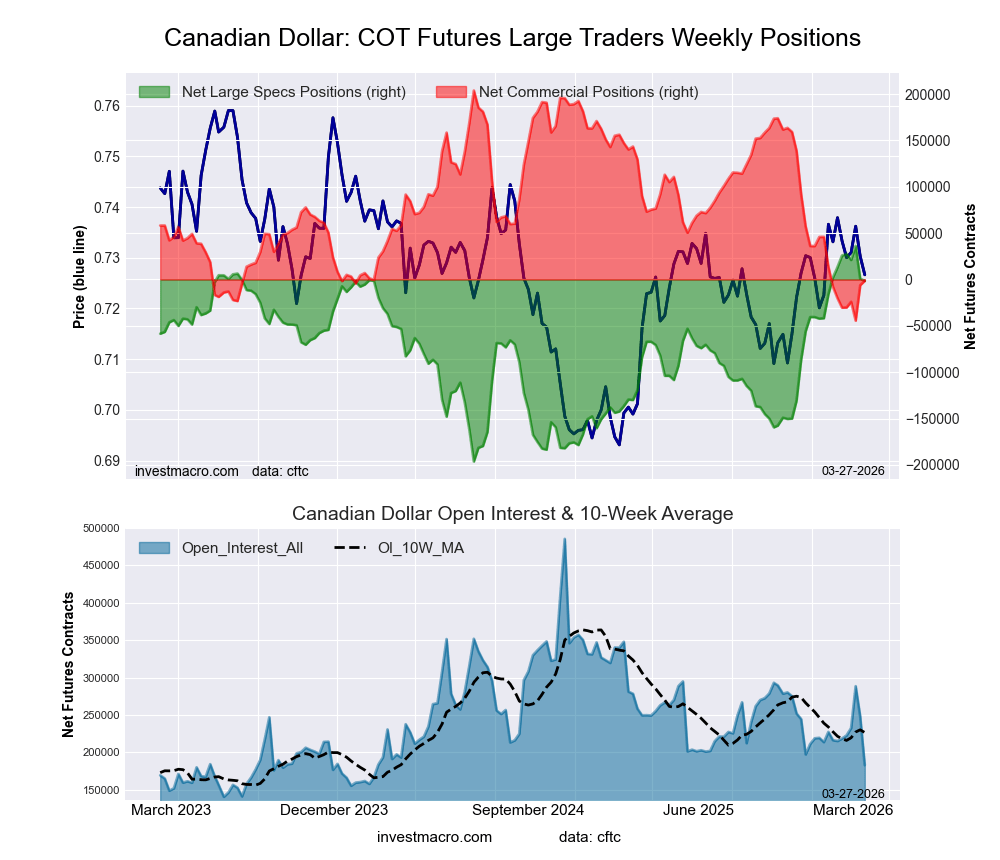
– The Canadian Dollar speculative bets surged the most this week by over 25,000 contracts. This is the second straight week of increases, as well as the seventh time out of the last nine weeks that bets have improved. Overall, the CAD speculator data have been highly negative, with bets being in bearish territory for the past 130 consecutive weeks, dating back to August 1st of 2023. But there has been a sharp turnaround since the end of 2025 as the bearish bets have fallen from a -130,600 on December 9th to this week’s speculative standing at just -16,046 contracts. This is the least bearish position for the Canadian Dollar speculators since February of 2024. In the exchange rate markets, the CAD trades right around the exchange rate of 0.7373 to close out this week. This roughly coincides with the 200-weekly moving average and a close above the 200-weekly moving average would be the first time the Canadian Dollar has been above this measure since August of 2022.

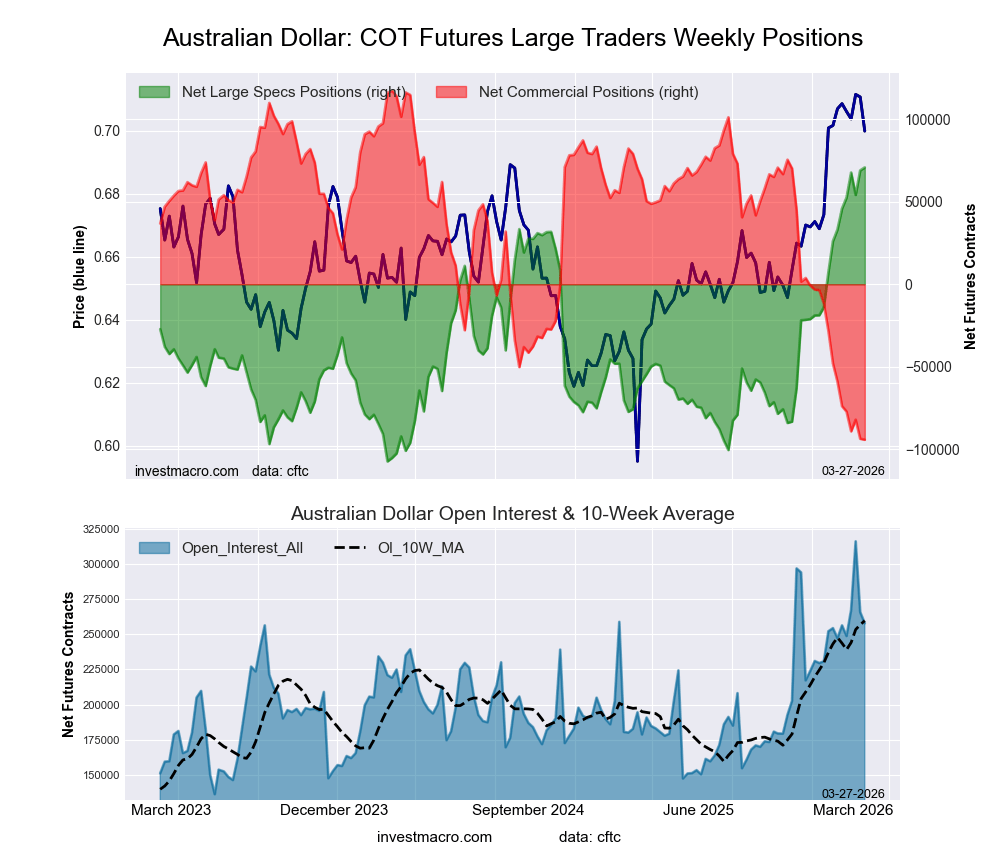
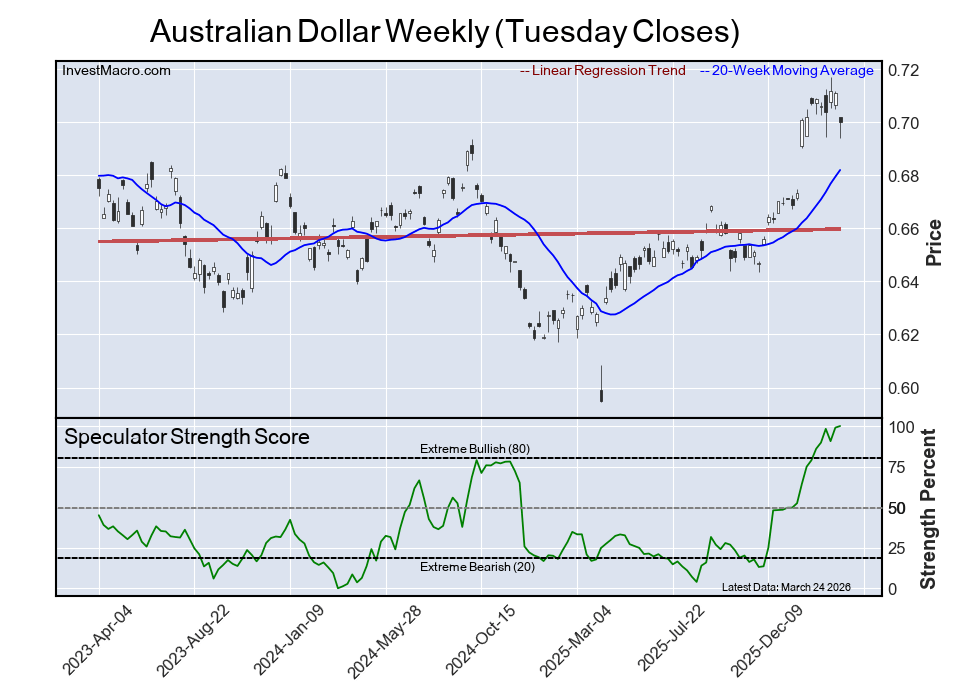
– The Australian Dollar speculative bets jumped by over 21,000 contracts this week and rose for the ninth consecutive week. In these past nine weeks, the speculator bets have increased by a total of 91,322 net contracts. The positive trend in speculator bets has now pushed the Australian Dollar net standing into a bullish position at 7,146 net contracts which marks the first bullish level for the Australian Dollar in the past 59 weeks, dating back to December 10th of 2024. In the exchange rate markets, the Australian Dollar has had two strong consecutive weekly gains, and this week the AUD touched its highest level (vs the USD) since January of 2023. Overall, the Australian Dollar exchange rate versus the USD has now been above its 200-weekly moving average for the past six weeks, which is the first time it has been multiple weeks over the 200-moving average since 2022.

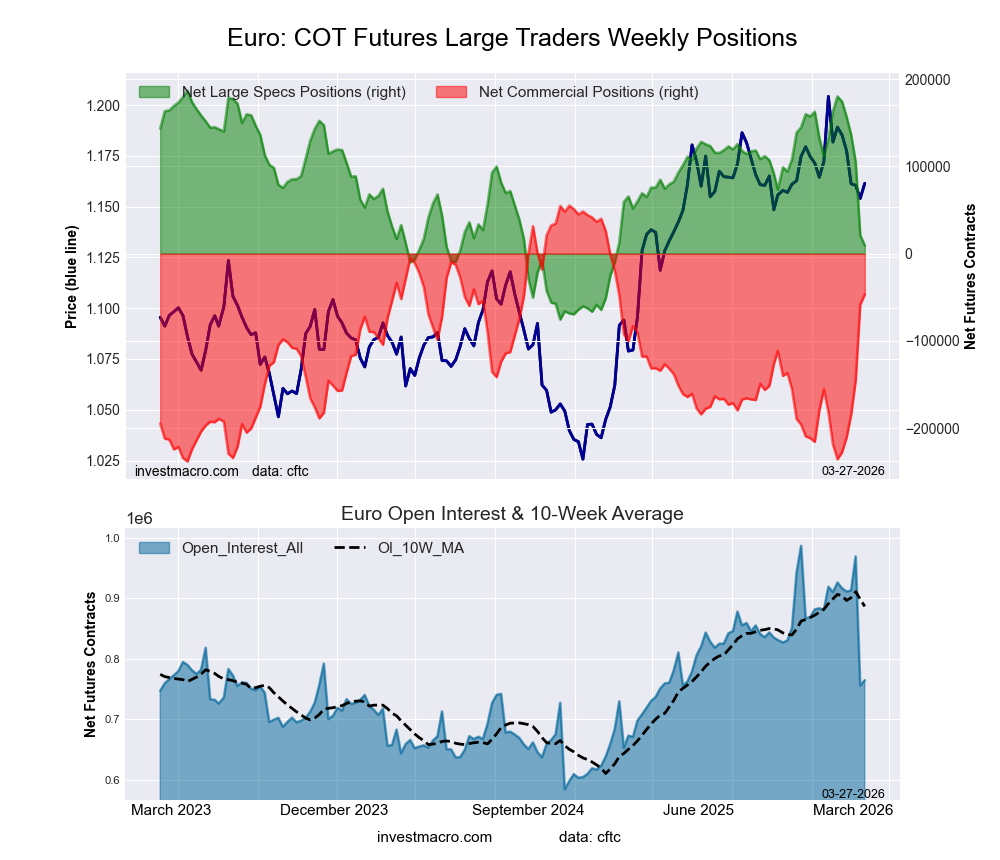
– The Euro currency speculator position saw a rebound by over 20,000 net contracts this week after falling sharply in the previous two weeks. This week’s gain brings the overall net position level back to 132,134 net contracts, which is right around the average of the past 10 weeks. Overall, this is a strong, bullish position for speculators looking for the euro currency to continue to rise higher. Euro bets have now been in a consecutive net bullish position for 47 straight weeks, dating back to March 11th of 2025. And to illustrate the strength of the speculator sentiment, the Euro position has now been over the +100,000 net contract level for 29 out of the last 33 weeks. In the foreign exchange markets this week, the Euro briefly touched its highest level since June of 2021 at over the 1.2100 exchange rate. However, the Euro faltered to end the week with a few down days in a row and closed out trading at the 1.1893 exchange rate versus the US Dollar. Since the beginning of 2025, the Euro was now higher by approximately 16.5% and is up by just about 1% this month, ending January 31st.

– The US Dollar Index speculative bets rose this week after a decline last week, and have actually been higher in eight out of the last nine weeks. Overall, the US Dollar Index speculative positions have now been in a negative net standing for 33 consecutive weeks, dating back to June of 2025. In the exchange rate markets, the Dollar fell by a modest amount this week. And despite touching its lowest level since 2022 around the 95.36 exchange rate, the Dollar Index rallied at the end of the week to close out around the 96.86 price level. Likely helping the US Dollar strength on Friday was a steep sell-off in the precious metals markets to close out the week while also affecting the USD (and going forward) was the announcement of a nomination of a new Federal Reserve Chairman in Kevin Warsh.


Currencies Data:

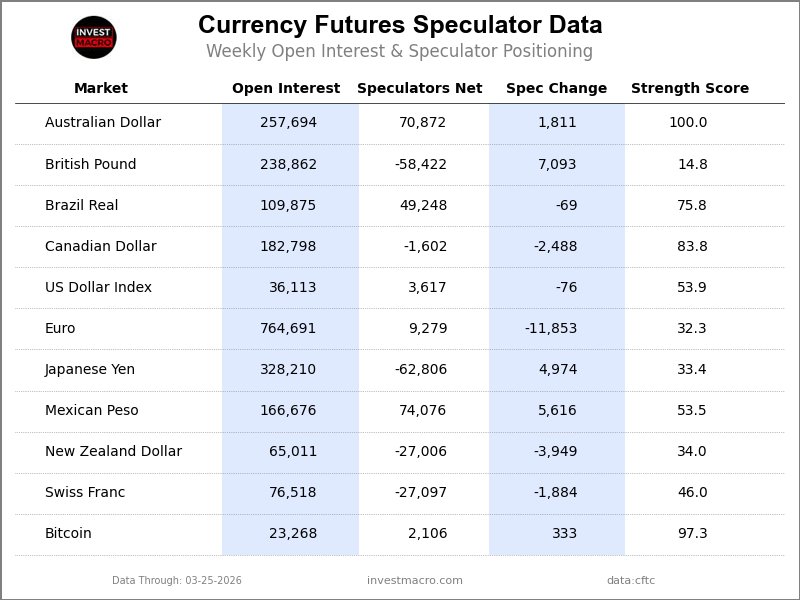
Speculators FX Futures COT Data Table
Legend: Open Interest | Speculators Current Net Position | Weekly Specs Change | Specs Strength Score compared to last 3-Years (0-100 range)


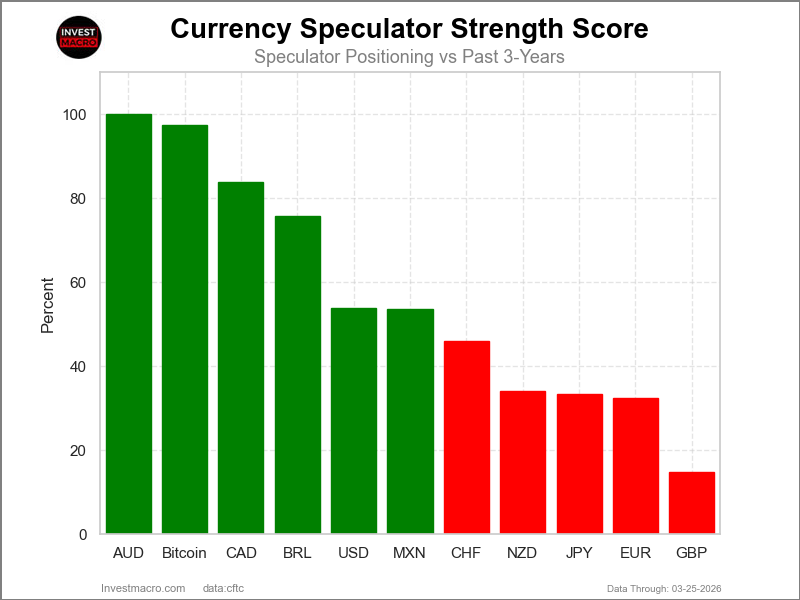
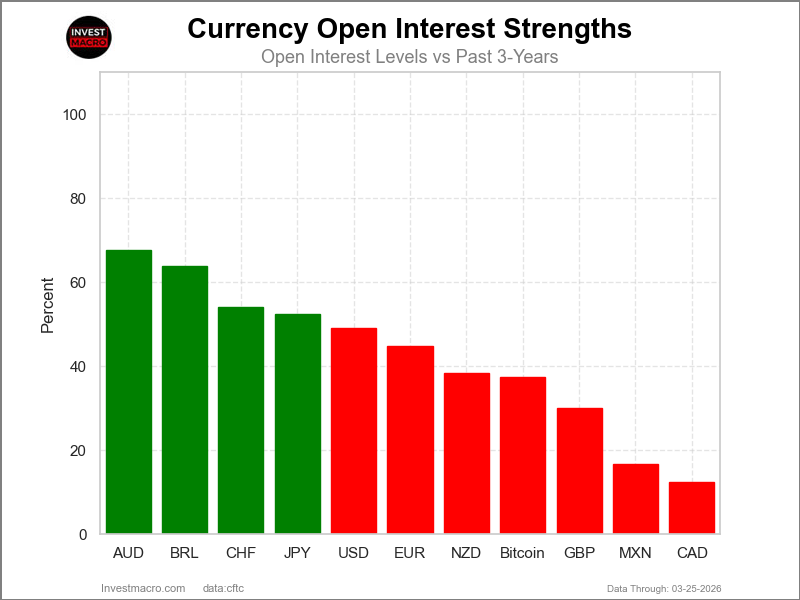
Strength Scores led by Canadian Dollar & Australian Dollar

Speculators Strength Scores FX Futures COT Chart
COT Strength Scores (a normalized measure of Speculator positions over a 3-Year range, from 0 to 100 where above 80 is Extreme-Bullish and below 20 is Extreme-Bearish) showed that the Canadian Dollar (89 percent) and the Australian Dollar (81 percent) lead the currency markets this week. The Mexican Peso (80 percent), EuroFX (79 percent) and Bitcoin (67 percent) come in as the next highest in the weekly strength scores.

On the downside, the New Zealand Dollar (10 percent) and the Swiss Franc (14 percent) come in at the lowest strength levels currently and are in Extreme-Bearish territory (below 20 percent). The next lowest strength scores are the US Dollar Index (32 percent) and the British Pound (33 percent).

3-Year Strength Statistics:
US Dollar Index (32.2 percent) vs US Dollar Index previous week (26.8 percent)
EuroFX (79.1 percent) vs EuroFX previous week (71.3 percent)
British Pound Sterling (32.7 percent) vs British Pound Sterling previous week (30.3 percent)
Japanese Yen (41.4 percent) vs Japanese Yen previous week (38.4 percent)
Swiss Franc (14.0 percent) vs Swiss Franc previous week (13.3 percent)
Canadian Dollar (88.9 percent) vs Canadian Dollar previous week (76.2 percent)
Australian Dollar (81.4 percent) vs Australian Dollar previous week (66.4 percent)
New Zealand Dollar (10.3 percent) vs New Zealand Dollar previous week (8.2 percent)
Mexican Peso (80.1 percent) vs Mexican Peso previous week (82.3 percent)
Brazilian Real (53.6 percent) vs Brazilian Real previous week (52.8 percent)
Bitcoin (67.3 percent) vs Bitcoin previous week (59.0 percent)


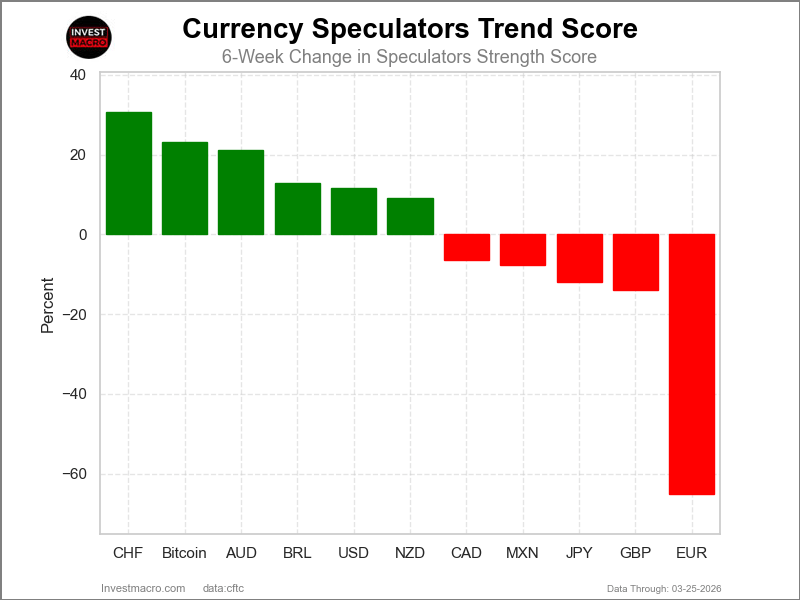
Canadian Dollar & Australian Dollar top the 6-Week Strength Trends

Speculators Trends FX Futures COT Chart
COT Strength Score Trends (or move index, calculates the 6-week changes in strength scores) showed that the Canadian Dollar (35 percent) and the Australian Dollar (21 percent) lead the past six weeks trends for the currencies. The British Pound (14 percent), Bitcoin (12 percent) and the Mexican Peso (9 percent) are the next highest positive movers in the 3-Year trends data.

The Brazilian Real (-21 percent) leads the downside trend scores currently with the Japanese Yen (-9 percent), Swiss Franc (-8 percent) and the EuroFX (-5 percent) following next with lower trend scores.

3-Year Strength Trends:
US Dollar Index (0.5 percent) vs US Dollar Index previous week (20.1 percent)
EuroFX (-4.9 percent) vs EuroFX previous week (-10.3 percent)
British Pound Sterling (13.7 percent) vs British Pound Sterling previous week (22.7 percent)
Japanese Yen (-8.5 percent) vs Japanese Yen previous week (-17.1 percent)
Swiss Franc (-8.1 percent) vs Swiss Franc previous week (-9.3 percent)
Canadian Dollar (34.8 percent) vs Canadian Dollar previous week (43.8 percent)
Australian Dollar (20.6 percent) vs Australian Dollar previous week (34.7 percent)
New Zealand Dollar (0.3 percent) vs New Zealand Dollar previous week (8.2 percent)
Mexican Peso (8.7 percent) vs Mexican Peso previous week (0.1 percent)
Brazilian Real (-21.2 percent) vs Brazilian Real previous week (-29.0 percent)
Bitcoin (12.4 percent) vs Bitcoin previous week (0.7 percent)


Individual COT Forex Markets:

US Dollar Index Futures:
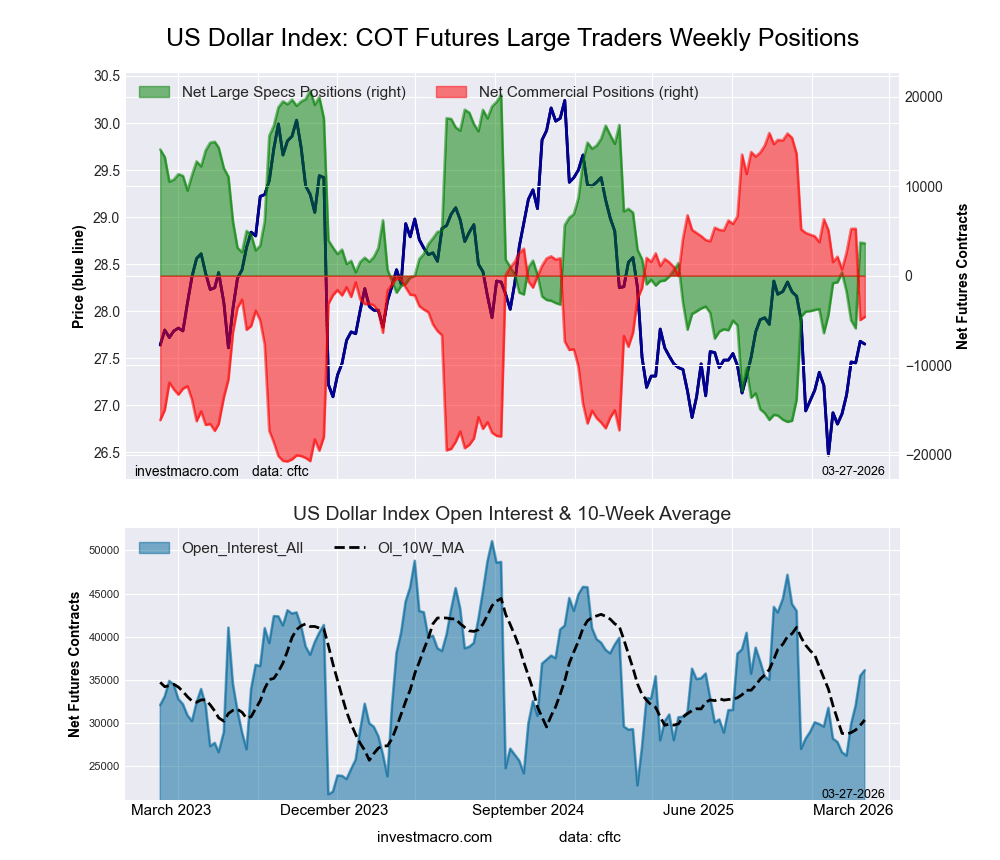
US Dollar Index Forex Futures COT ChartThe US Dollar Index large speculator standing this week equaled a net position of -4,405 contracts in the data reported through Tuesday. This was a weekly lift of 2,013 contracts from the previous week which had a total of -6,418 net contracts.

This week’s current strength score (the trader positioning range over the past three years, measured from 0 to 100) shows the speculators are currently Bearish with a score of 32.2 percent. The commercials are Bullish with a score of 70.4 percent and the small traders (not shown in chart) are Bearish with a score of 23.2 percent.

Price Trend-Following Model: Strong Downtrend

Our weekly trend-following model classifies the current market price position as: Strong Downtrend.

US DOLLAR INDEX StatisticsSPECULATORSCOMMERCIALSSMALL TRADERS
– Percent of Open Interest Longs:56.528.98.9
– Percent of Open Interest Shorts:70.412.811.1
– Net Position:-4,4055,087-682
– Gross Longs:17,9459,1632,838
– Gross Shorts:22,3504,0763,520
– Long to Short Ratio:0.8 to 12.2 to 10.8 to 1
NET POSITION TREND:
– Strength Index Score (3 Year Range Pct):32.270.423.2
– Strength Index Reading (3 Year Range):BearishBullishBearish
NET POSITION MOVEMENT INDEX:
– 6-Week Change in Strength Index:0.5-0.3-1.3


Euro Currency Futures:

Euro Currency Futures COT ChartThe Euro Currency large speculator standing this week equaled a net position of 132,134 contracts in the data reported through Tuesday. This was a weekly gain of 20,439 contracts from the previous week which had a total of 111,695 net contracts.

This week’s current strength score (the trader positioning range over the past three years, measured from 0 to 100) shows the speculators are currently Bullish with a score of 79.1 percent. The commercials are Bearish-Extreme with a score of 19.3 percent and the small traders (not shown in chart) are Bullish with a score of 78.9 percent.

Price Trend-Following Model: Strong Uptrend

Our weekly trend-following model classifies the current market price position as: Strong Uptrend.

EURO Currency StatisticsSPECULATORSCOMMERCIALSSMALL TRADERS
– Percent of Open Interest Longs:31.654.410.2
– Percent of Open Interest Shorts:17.274.14.9
– Net Position:132,134-181,60449,470
– Gross Longs:290,336499,73294,116
– Gross Shorts:158,202681,33644,646
– Long to Short Ratio:1.8 to 10.7 to 12.1 to 1
NET POSITION TREND:
– Strength Index Score (3 Year Range Pct):79.119.378.9
– Strength Index Reading (3 Year Range):BullishBearish-ExtremeBullish
NET POSITION MOVEMENT INDEX:
– 6-Week Change in Strength Index:-4.94.9-3.6


British Pound Sterling Futures:

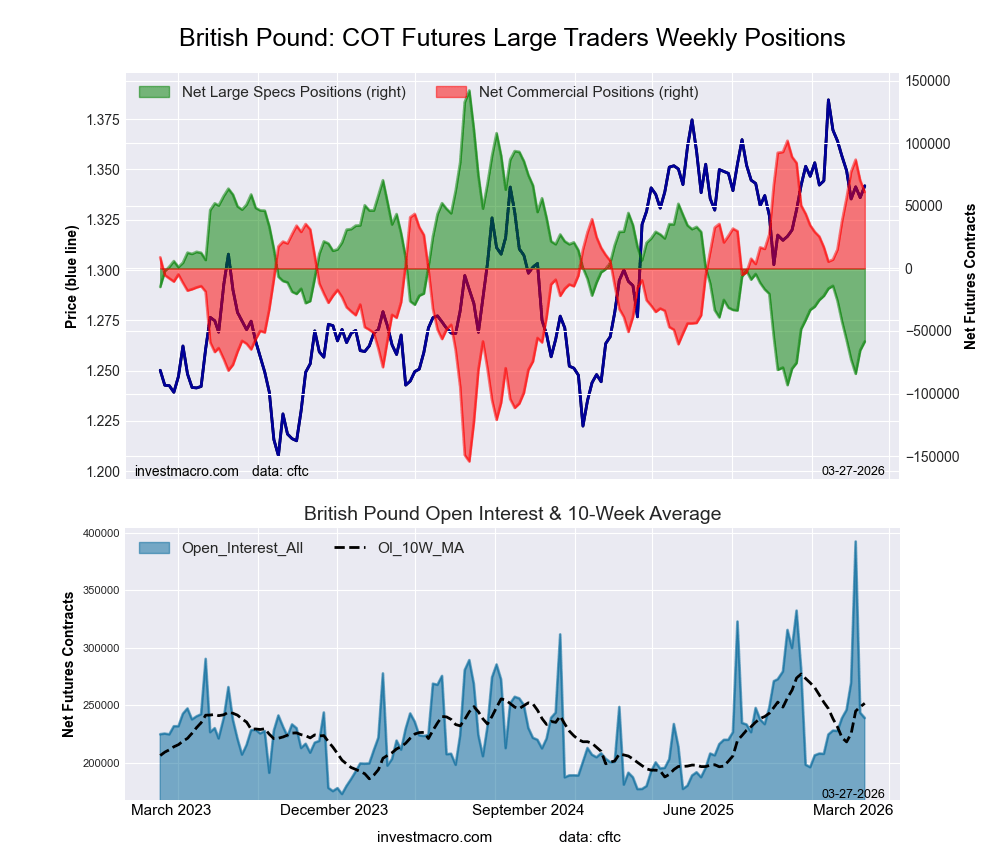
British Pound Sterling Futures COT ChartThe British Pound Sterling large speculator standing this week equaled a net position of -16,162 contracts in the data reported through Tuesday. This was a weekly rise of 5,818 contracts from the previous week which had a total of -21,980 net contracts.

This week’s current strength score (the trader positioning range over the past three years, measured from 0 to 100) shows the speculators are currently Bearish with a score of 32.7 percent. The commercials are Bullish with a score of 62.3 percent and the small traders (not shown in chart) are Bullish-Extreme with a score of 81.1 percent.

Price Trend-Following Model: Strong Uptrend

Our weekly trend-following model classifies the current market price position as: Strong Uptrend.

BRITISH POUND StatisticsSPECULATORSCOMMERCIALSSMALL TRADERS
– Percent of Open Interest Longs:39.143.316.3
– Percent of Open Interest Shorts:46.340.911.5
– Net Position:-16,1625,46410,698
– Gross Longs:87,78697,21636,620
– Gross Shorts:103,94891,75225,922
– Long to Short Ratio:0.8 to 11.1 to 11.4 to 1
NET POSITION TREND:
– Strength Index Score (3 Year Range Pct):32.762.381.1
– Strength Index Reading (3 Year Range):BearishBullishBullish-Extreme
NET POSITION MOVEMENT INDEX:
– 6-Week Change in Strength Index:13.7-17.532.8


Japanese Yen Futures:

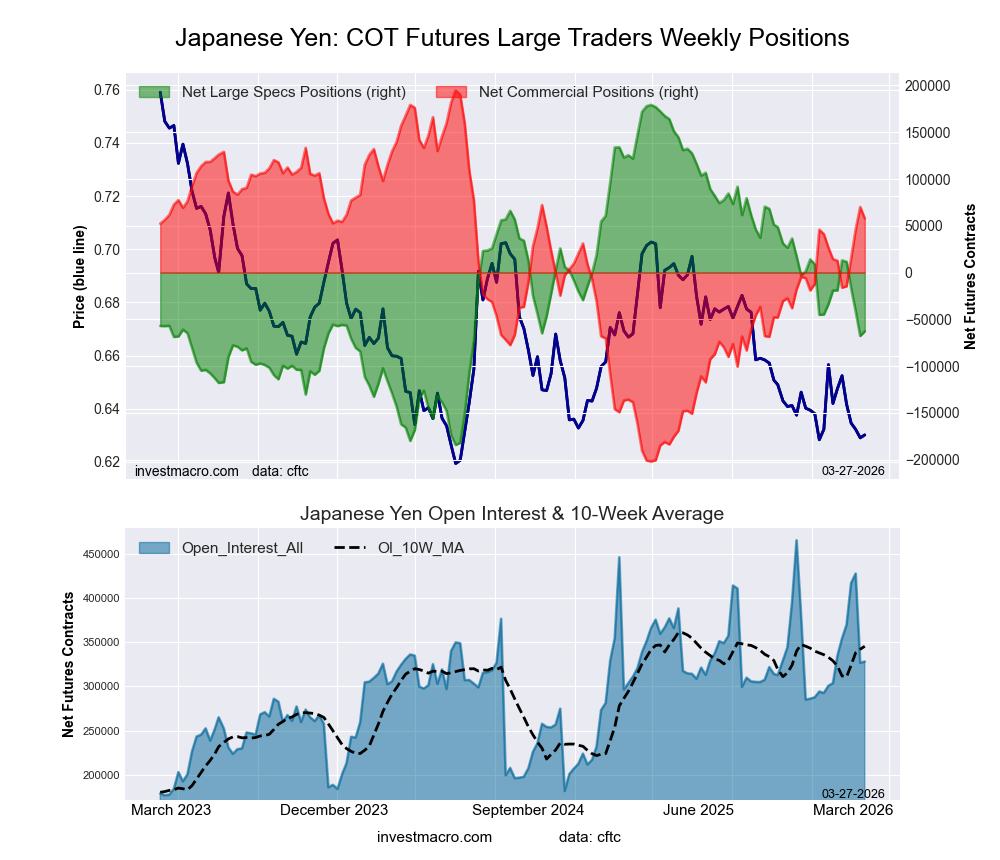
Japanese Yen Forex Futures COT ChartThe Japanese Yen large speculator standing this week equaled a net position of -33,933 contracts in the data reported through Tuesday. This was a weekly boost of 10,896 contracts from the previous week which had a total of -44,829 net contracts.

This week’s current strength score (the trader positioning range over the past three years, measured from 0 to 100) shows the speculators are currently Bearish with a score of 41.4 percent. The commercials are Bullish with a score of 57.7 percent and the small traders (not shown in chart) are Bullish with a score of 55.5 percent.

Price Trend-Following Model: Downtrend

Our weekly trend-following model classifies the current market price position as: Downtrend.

JAPANESE YEN StatisticsSPECULATORSCOMMERCIALSSMALL TRADERS
– Percent of Open Interest Longs:34.741.614.2
– Percent of Open Interest Shorts:46.032.711.8
– Net Position:-33,93326,7097,224
– Gross Longs:104,460125,15742,786
– Gross Shorts:138,39398,44835,562
– Long to Short Ratio:0.8 to 11.3 to 11.2 to 1
NET POSITION TREND:
– Strength Index Score (3 Year Range Pct):41.457.755.5
– Strength Index Reading (3 Year Range):BearishBullishBullish
NET POSITION MOVEMENT INDEX:
– 6-Week Change in Strength Index:-8.57.9-1.2


Swiss Franc Futures:

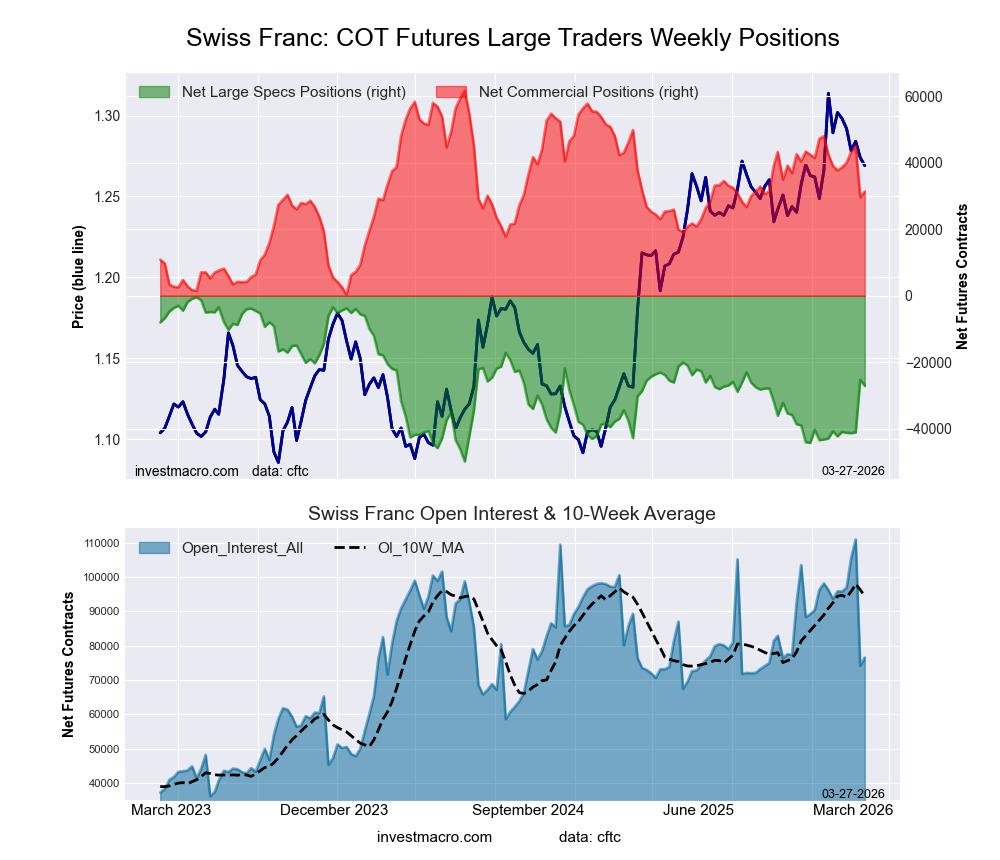
Swiss Franc Forex Futures COT ChartThe Swiss Franc large speculator standing this week equaled a net position of -42,893 contracts in the data reported through Tuesday. This was a weekly lift of 314 contracts from the previous week which had a total of -43,207 net contracts.

This week’s current strength score (the trader positioning range over the past three years, measured from 0 to 100) shows the speculators are currently Bearish-Extreme with a score of 14.0 percent. The commercials are Bullish with a score of 68.6 percent and the small traders (not shown in chart) are Bullish-Extreme with a score of 80.8 percent.

Price Trend-Following Model: Strong Uptrend

Our weekly trend-following model classifies the current market price position as: Strong Uptrend.

SWISS FRANC StatisticsSPECULATORSCOMMERCIALSSMALL TRADERS
– Percent of Open Interest Longs:10.170.519.3
– Percent of Open Interest Shorts:54.726.418.8
– Net Position:-42,89342,406487
– Gross Longs:9,72467,80518,510
– Gross Shorts:52,61725,39918,023
– Long to Short Ratio:0.2 to 12.7 to 11.0 to 1
NET POSITION TREND:
– Strength Index Score (3 Year Range Pct):14.068.680.8
– Strength Index Reading (3 Year Range):Bearish-ExtremeBullishBullish-Extreme
NET POSITION MOVEMENT INDEX:
– 6-Week Change in Strength Index:-8.13.38.3


Canadian Dollar Futures:

Canadian Dollar Forex Futures COT ChartThe Canadian Dollar large speculator standing this week equaled a net position of -16,046 contracts in the data reported through Tuesday. This was a weekly advance of 25,739 contracts from the previous week which had a total of -41,785 net contracts.

This week’s current strength score (the trader positioning range over the past three years, measured from 0 to 100) shows the speculators are currently Bullish-Extreme with a score of 88.9 percent. The commercials are Bearish-Extreme with a score of 16.3 percent and the small traders (not shown in chart) are Bullish with a score of 51.8 percent.

Price Trend-Following Model: Strong Uptrend

Our weekly trend-following model classifies the current market price position as: Strong Uptrend.

CANADIAN DOLLAR StatisticsSPECULATORSCOMMERCIALSSMALL TRADERS
– Percent of Open Interest Longs:34.052.212.6
– Percent of Open Interest Shorts:41.046.111.5
– Net Position:-16,04613,7342,312
– Gross Longs:77,169118,53928,551
– Gross Shorts:93,215104,80526,239
– Long to Short Ratio:0.8 to 11.1 to 11.1 to 1
NET POSITION TREND:
– Strength Index Score (3 Year Range Pct):88.916.351.8
– Strength Index Reading (3 Year Range):Bullish-ExtremeBearish-ExtremeBullish
NET POSITION MOVEMENT INDEX:
– 6-Week Change in Strength Index:34.8-34.622.1


Australian Dollar Futures:

Australian Dollar Forex Futures COT ChartThe Australian Dollar large speculator standing this week equaled a net position of 7,146 contracts in the data reported through Tuesday. This was a weekly boost of 21,157 contracts from the previous week which had a total of -14,011 net contracts.

This week’s current strength score (the trader positioning range over the past three years, measured from 0 to 100) shows the speculators are currently Bullish-Extreme with a score of 81.4 percent. The commercials are Bearish-Extreme with a score of 13.1 percent and the small traders (not shown in chart) are Bullish-Extreme with a score of 89.6 percent.

Price Trend-Following Model: Strong Uptrend

Our weekly trend-following model classifies the current market price position as: Strong Uptrend.

AUSTRALIAN DOLLAR StatisticsSPECULATORSCOMMERCIALSSMALL TRADERS
– Percent of Open Interest Longs:43.639.716.1
– Percent of Open Interest Shorts:40.750.97.7
– Net Position:7,146-28,30921,163
– Gross Longs:109,806100,02640,630
– Gross Shorts:102,660128,33519,467
– Long to Short Ratio:1.1 to 10.8 to 12.1 to 1
NET POSITION TREND:
– Strength Index Score (3 Year Range Pct):81.413.189.6
– Strength Index Reading (3 Year Range):Bullish-ExtremeBearish-ExtremeBullish-Extreme
NET POSITION MOVEMENT INDEX:
– 6-Week Change in Strength Index:20.6-17.81.9


New Zealand Dollar Futures:

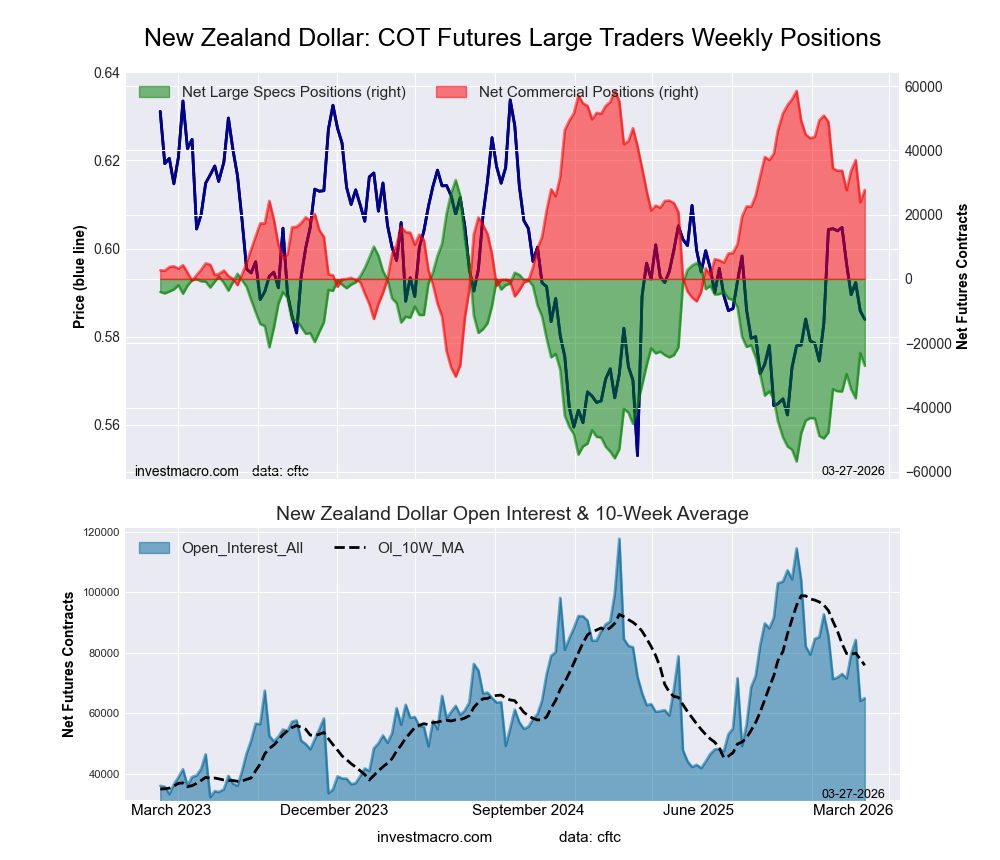
New Zealand Dollar Forex Futures COT ChartThe New Zealand Dollar large speculator standing this week equaled a net position of -47,745 contracts in the data reported through Tuesday. This was a weekly increase of 1,865 contracts from the previous week which had a total of -49,610 net contracts.

This week’s current strength score (the trader positioning range over the past three years, measured from 0 to 100) shows the speculators are currently Bearish-Extreme with a score of 10.3 percent. The commercials are Bullish-Extreme with a score of 89.1 percent and the small traders (not shown in chart) are Bearish with a score of 37.7 percent.

Price Trend-Following Model: Strong Uptrend

Our weekly trend-following model classifies the current market price position as: Strong Uptrend.

NEW ZEALAND DOLLAR StatisticsSPECULATORSCOMMERCIALSSMALL TRADERS
– Percent of Open Interest Longs:14.180.84.3
– Percent of Open Interest Shorts:69.923.65.6
– Net Position:-47,74548,868-1,123
– Gross Longs:12,07469,0853,655
– Gross Shorts:59,81920,2174,778
– Long to Short Ratio:0.2 to 13.4 to 10.8 to 1
NET POSITION TREND:
– Strength Index Score (3 Year Range Pct):10.389.137.7
– Strength Index Reading (3 Year Range):Bearish-ExtremeBullish-ExtremeBearish
NET POSITION MOVEMENT INDEX:
– 6-Week Change in Strength Index:0.3-0.41.2


Mexican Peso Futures:

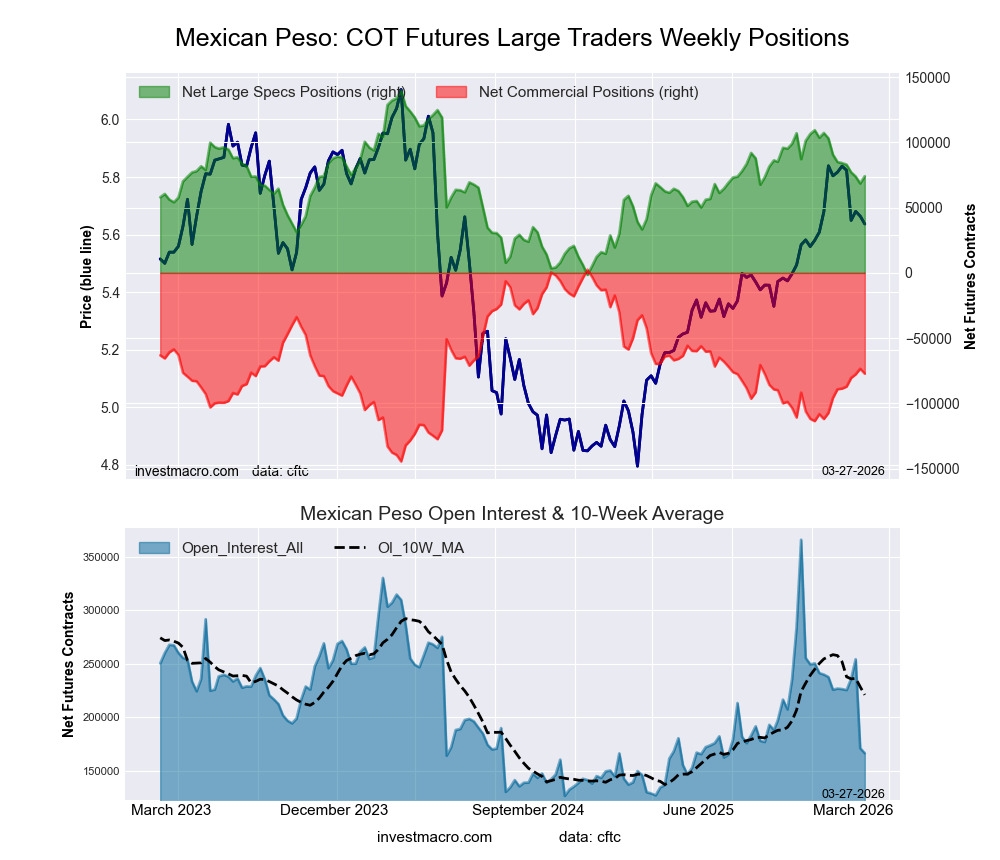
Mexican Peso Futures COT ChartThe Mexican Peso large speculator standing this week equaled a net position of 103,114 contracts in the data reported through Tuesday. This was a weekly fall of -4,039 contracts from the previous week which had a total of 107,153 net contracts.

This week’s current strength score (the trader positioning range over the past three years, measured from 0 to 100) shows the speculators are currently Bullish-Extreme with a score of 80.1 percent. The commercials are Bearish with a score of 20.1 percent and the small traders (not shown in chart) are Bearish with a score of 46.2 percent.

Price Trend-Following Model: Strong Uptrend

Our weekly trend-following model classifies the current market price position as: Strong Uptrend.

MEXICAN PESO StatisticsSPECULATORSCOMMERCIALSSMALL TRADERS
– Percent of Open Interest Longs:62.733.63.1
– Percent of Open Interest Shorts:19.378.71.3
– Net Position:103,114-107,3494,235
– Gross Longs:149,09479,8277,389
– Gross Shorts:45,980187,1763,154
– Long to Short Ratio:3.2 to 10.4 to 12.3 to 1
NET POSITION TREND:
– Strength Index Score (3 Year Range Pct):80.120.146.2
– Strength Index Reading (3 Year Range):Bullish-ExtremeBearishBearish
NET POSITION MOVEMENT INDEX:
– 6-Week Change in Strength Index:8.7-8.5-2.2


Brazilian Real Futures:

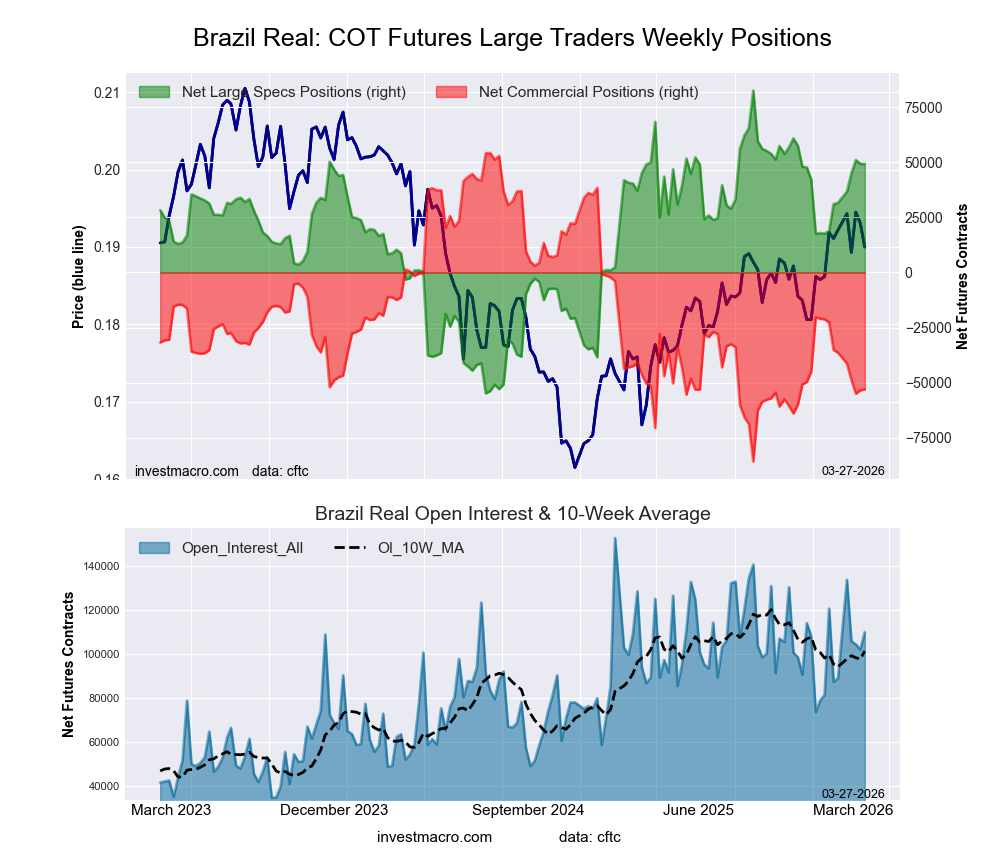
Brazil Real Futures COT ChartThe Brazilian Real large speculator standing this week equaled a net position of 18,845 contracts in the data reported through Tuesday. This was a weekly advance of 1,204 contracts from the previous week which had a total of 17,641 net contracts.

This week’s current strength score (the trader positioning range over the past three years, measured from 0 to 100) shows the speculators are currently Bullish with a score of 53.6 percent. The commercials are Bearish with a score of 45.0 percent and the small traders (not shown in chart) are Bearish with a score of 42.7 percent.

Price Trend-Following Model: Weak Downtrend

Our weekly trend-following model classifies the current market price position as: Weak Downtrend.

BRAZIL REAL StatisticsSPECULATORSCOMMERCIALSSMALL TRADERS
– Percent of Open Interest Longs:46.541.94.1
– Percent of Open Interest Shorts:30.960.70.9
– Net Position:18,845-22,7263,881
– Gross Longs:56,02750,4354,917
– Gross Shorts:37,18273,1611,036
– Long to Short Ratio:1.5 to 10.7 to 14.7 to 1
NET POSITION TREND:
– Strength Index Score (3 Year Range Pct):53.645.042.7
– Strength Index Reading (3 Year Range):BullishBearishBearish
NET POSITION MOVEMENT INDEX:
– 6-Week Change in Strength Index:-21.220.15.9


Bitcoin Futures:

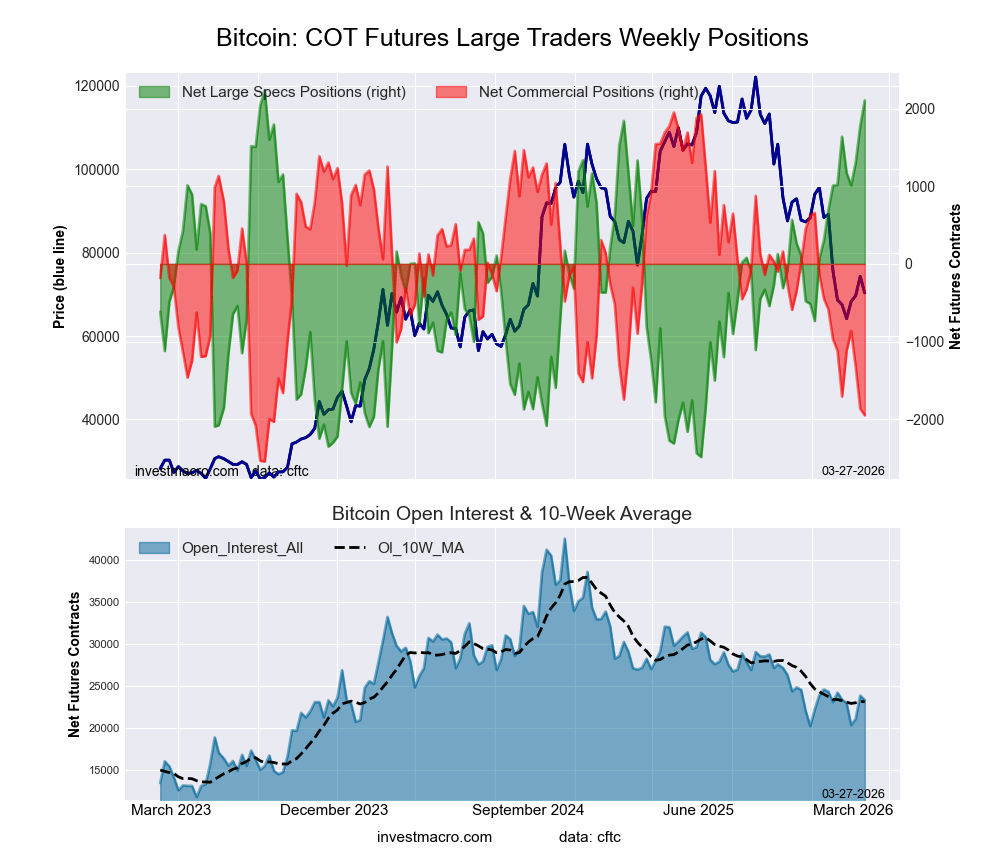
Bitcoin Crypto Futures COT ChartThe Bitcoin large speculator standing this week equaled a net position of 690 contracts in the data reported through Tuesday. This was a weekly lift of 392 contracts from the previous week which had a total of 298 net contracts.

This week’s current strength score (the trader positioning range over the past three years, measured from 0 to 100) shows the speculators are currently Bullish with a score of 67.3 percent. The commercials are Bearish with a score of 43.6 percent and the small traders (not shown in chart) are Bearish with a score of 31.9 percent.

Price Trend-Following Model: Downtrend

Our weekly trend-following model classifies the current market price position as: Downtrend.

BITCOIN StatisticsSPECULATORSCOMMERCIALSSMALL TRADERS
– Percent of Open Interest Longs:74.43.65.0
– Percent of Open Interest Shorts:71.56.05.4
– Net Position:690-585-105
– Gross Longs:18,0548751,206
– Gross Shorts:17,3641,4601,311
– Long to Short Ratio:1.0 to 10.6 to 10.9 to 1
NET POSITION TREND:
– Strength Index Score (3 Year Range Pct):67.343.631.9
– Strength Index Reading (3 Year Range):BullishBearishBearish
NET POSITION MOVEMENT INDEX:
– 6-Week Change in Strength Index:12.4-13.41.0


Article By InvestMacroReceive our weekly COT Newsletter

*COT Report: The COT data, released weekly to the public each Friday, is updated through the most recent Tuesday (data is 3 days old) and shows a quick view of how large speculators or non-commercials (for-profit traders) were positioned in the futures markets.

The CFTC categorizes trader positions according to commercial hedgers (traders who use futures contracts for hedging as part of the business), non-commercials (large traders who speculate to realize trading profits) and nonreportable traders (usually small traders/speculators) as well as their open interest (contracts open in the market at time of reporting). See CFTC criteria here.