COT Bonds Charts: Speculator Bets led lower by 5-Year & 10-Year Bonds

By InvestMacro

Here are the latest charts and statistics for the Commitment of Traders (COT) reports data published by the Commodities Futures Trading Commission (CFTC).

The latest COT data is updated through Tuesday November 19th and shows a quick view of how large traders (for-profit speculators and commercial hedgers) were positioned in the futures markets.

Weekly Speculator Changes led lower by 5-Year & 10-Year Bonds

The COT bond market speculator bets were overall lower this week as just three out of the nine bond markets we cover had higher positioning while the other six markets had lower speculator contracts.

Leading the gains for the bond markets was the Ultra Treasury Bonds (15,980 contracts) with the US Treasury Bonds (6,123 contracts) and the SOFR 1-Month (4,701 contracts) also seeing small positive weeks.

The bond markets with declines in speculator bets for the week were the 5-Year Bonds (-113,816 contracts), the 10-Year Bonds (-91,701 contracts), the SOFR 3-Months (-61,073 contracts), the Fed Funds (-57,577 contracts), the 2-Year Bonds (-23,473 contracts) and with the Ultra 10-Year Bonds (-14,477 contracts) also recording lower bets on the week.


Bonds Net Speculators Leaderboard

Legend: Weekly Speculators Change | Speculators Current Net Position | Speculators Strength Score compared to last 3-Years (0-100 range)


Strength Scores led by Ultra Treasury Bonds & US Treasury Bonds

COT Strength Scores (a normalized measure of Speculator positions over a 3-Year range, from 0 to 100 where above 80 is Extreme-Bullish and below 20 is Extreme-Bearish) showed that the Ultra Treasury Bonds (100 percent) and the US Treasury Bonds (71 percent) lead the bond markets this week.

On the downside, the 5-Year Bonds (0 percent) and the 2-Year Bonds (2 percent) come in at the lowest strength level currently and are in Extreme-Bearish territory (below 20 percent). The next lowest strength scores were the 10-Year Bonds (22 percent), the Ultra 10-Year Bonds (27 percent) and the SOFR 1-Month (36 percent).

Strength Statistics:
Fed Funds (44.4 percent) vs Fed Funds previous week (55.1 percent)
2-Year Bond (2.5 percent) vs 2-Year Bond previous week (4.0 percent)
5-Year Bond (0.0 percent) vs 5-Year Bond previous week (6.1 percent)
10-Year Bond (22.3 percent) vs 10-Year Bond previous week (31.0 percent)
Ultra 10-Year Bond (27.2 percent) vs Ultra 10-Year Bond previous week (30.9 percent)
US Treasury Bond (71.1 percent) vs US Treasury Bond previous week (68.9 percent)
Ultra US Treasury Bond (100.0 percent) vs Ultra US Treasury Bond previous week (93.1 percent)
SOFR 1-Month (36.2 percent) vs SOFR 1-Month previous week (35.1 percent)
SOFR 3-Months (44.7 percent) vs SOFR 3-Months previous week (47.9 percent)


Ultra Treasury Bonds & SOFR 1-Month top the 6-Week Strength Trends

COT Strength Score Trends (or move index, calculates the 6-week changes in strength scores) showed that the Ultra Treasury Bonds (25 percent) and the SOFR 1-Month (23 percent) lead the past six weeks trends for bonds. The US Treasury Bonds (14 percent) and the  are the next highest positive movers in the latest trends data.

The SOFR 3-Months (-35 percent), the Ultra 10-Year Bonds (-23 percent) and the 5-Year Bonds (-20 percent) lead the downside trend scores currently.

Strength Trend Statistics:
Fed Funds (-45.6 percent) vs Fed Funds previous week (-44.9 percent)
2-Year Bond (-14.1 percent) vs 2-Year Bond previous week (-15.6 percent)
5-Year Bond (-20.4 percent) vs 5-Year Bond previous week (-16.9 percent)
10-Year Bond (5.0 percent) vs 10-Year Bond previous week (31.0 percent)
Ultra 10-Year Bond (-22.7 percent) vs Ultra 10-Year Bond previous week (-19.5 percent)
US Treasury Bond (14.1 percent) vs US Treasury Bond previous week (19.1 percent)
Ultra US Treasury Bond (24.6 percent) vs Ultra US Treasury Bond previous week (9.5 percent)
SOFR 1-Month (22.5 percent) vs SOFR 1-Month previous week (14.5 percent)
SOFR 3-Months (-34.6 percent) vs SOFR 3-Months previous week (-43.1 percent)


30-Day Federal Funds Futures:

Federal Funds 30-Day Bonds Futures COT ChartThe 30-Day Federal Funds large speculator standing this week reached a net position of -55,140 contracts in the data reported through Tuesday. This was a weekly decline of -57,577 contracts from the previous week which had a total of 2,437 net contracts.

This week’s current strength score (the trader positioning range over the past three years, measured from 0 to 100) shows the speculators are currently Bearish with a score of 44.4 percent. The commercials are Bullish with a score of 52.4 percent and the small traders (not shown in chart) are Bullish-Extreme with a score of 81.5 percent.

Price Trend-Following Model: Downtrend

Our weekly trend-following model classifies the current market price position as: Downtrend. The current action for the model is considered to be: Hold – Maintain Short Position.

30-Day Federal Funds StatisticsSPECULATORSCOMMERCIALSSMALL TRADERS
– Percent of Open Interest Longs:8.566.31.9
– Percent of Open Interest Shorts:11.863.02.1
– Net Position:-55,14057,093-1,953
– Gross Longs:144,4251,126,40232,994
– Gross Shorts:199,5651,069,30934,947
– Long to Short Ratio:0.7 to 11.1 to 10.9 to 1
NET POSITION TREND:
– Strength Index Score (3 Year Range Pct):44.452.481.5
– Strength Index Reading (3 Year Range):BearishBullishBullish-Extreme
NET POSITION MOVEMENT INDEX:
– 6-Week Change in Strength Index:-45.643.019.1


Secured Overnight Financing Rate (3-Month) Futures:

SOFR 3-Months Bonds Futures COT ChartThe Secured Overnight Financing Rate (3-Month) large speculator standing this week reached a net position of -300,954 contracts in the data reported through Tuesday. This was a weekly fall of -61,073 contracts from the previous week which had a total of -239,881 net contracts.

This week’s current strength score (the trader positioning range over the past three years, measured from 0 to 100) shows the speculators are currently Bearish with a score of 44.7 percent. The commercials are Bullish with a score of 56.1 percent and the small traders (not shown in chart) are Bullish with a score of 77.9 percent.

Price Trend-Following Model: Weak Uptrend

Our weekly trend-following model classifies the current market price position as: Weak Uptrend. The current action for the model is considered to be: Hold – Maintain Long Position.

SOFR 3-Months StatisticsSPECULATORSCOMMERCIALSSMALL TRADERS
– Percent of Open Interest Longs:13.358.30.3
– Percent of Open Interest Shorts:16.055.40.5
– Net Position:-300,954319,102-18,148
– Gross Longs:1,462,5836,428,18235,198
– Gross Shorts:1,763,5376,109,08053,346
– Long to Short Ratio:0.8 to 11.1 to 10.7 to 1
NET POSITION TREND:
– Strength Index Score (3 Year Range Pct):44.756.177.9
– Strength Index Reading (3 Year Range):BearishBullishBullish
NET POSITION MOVEMENT INDEX:
– 6-Week Change in Strength Index:-34.635.8-12.5


Individual Bond Markets:

Secured Overnight Financing Rate (1-Month) Futures:

SOFR 1-Month Bonds Futures COT ChartThe Secured Overnight Financing Rate (1-Month) large speculator standing this week reached a net position of -130,957 contracts in the data reported through Tuesday. This was a weekly rise of 4,701 contracts from the previous week which had a total of -135,658 net contracts.

This week’s current strength score (the trader positioning range over the past three years, measured from 0 to 100) shows the speculators are currently Bearish with a score of 36.2 percent. The commercials are Bullish with a score of 63.8 percent and the small traders (not shown in chart) are Bullish with a score of 54.3 percent.

Price Trend-Following Model: Uptrend

Our weekly trend-following model classifies the current market price position as: Uptrend.

SOFR 1-Month StatisticsSPECULATORSCOMMERCIALSSMALL TRADERS
– Percent of Open Interest Longs:13.764.30.0
– Percent of Open Interest Shorts:24.553.60.0
– Net Position:-130,957131,159-202
– Gross Longs:167,017782,983230
– Gross Shorts:297,974651,824432
– Long to Short Ratio:0.6 to 11.2 to 10.5 to 1
NET POSITION TREND:
– Strength Index Score (3 Year Range Pct):36.263.854.3
– Strength Index Reading (3 Year Range):BearishBullishBullish
NET POSITION MOVEMENT INDEX:
– 6-Week Change in Strength Index:22.5-22.63.3


2-Year Treasury Note Futures:

2-Year Treasury Bonds Futures COT ChartThe 2-Year Treasury Note large speculator standing this week reached a net position of -1,447,344 contracts in the data reported through Tuesday. This was a weekly reduction of -23,473 contracts from the previous week which had a total of -1,423,871 net contracts.

This week’s current strength score (the trader positioning range over the past three years, measured from 0 to 100) shows the speculators are currently Bearish-Extreme with a score of 2.5 percent. The commercials are Bullish-Extreme with a score of 96.6 percent and the small traders (not shown in chart) are Bullish-Extreme with a score of 86.1 percent.

Price Trend-Following Model: Weak Uptrend

Our weekly trend-following model classifies the current market price position as: Weak Uptrend.

2-Year Treasury Note StatisticsSPECULATORSCOMMERCIALSSMALL TRADERS
– Percent of Open Interest Longs:11.078.56.0
– Percent of Open Interest Shorts:42.350.62.6
– Net Position:-1,447,3441,288,654158,690
– Gross Longs:508,8053,626,185276,844
– Gross Shorts:1,956,1492,337,531118,154
– Long to Short Ratio:0.3 to 11.6 to 12.3 to 1
NET POSITION TREND:
– Strength Index Score (3 Year Range Pct):2.596.686.1
– Strength Index Reading (3 Year Range):Bearish-ExtremeBullish-ExtremeBullish-Extreme
NET POSITION MOVEMENT INDEX:
– 6-Week Change in Strength Index:-14.118.7-9.8


5-Year Treasury Note Futures:

5-Year Treasury Bonds Futures COT ChartThe 5-Year Treasury Note large speculator standing this week reached a net position of -1,983,026 contracts in the data reported through Tuesday. This was a weekly fall of -113,816 contracts from the previous week which had a total of -1,869,210 net contracts.

This week’s current strength score (the trader positioning range over the past three years, measured from 0 to 100) shows the speculators are currently Bearish-Extreme with a score of 0.0 percent. The commercials are Bullish-Extreme with a score of 100.0 percent and the small traders (not shown in chart) are Bullish with a score of 75.9 percent.

Price Trend-Following Model: Strong Downtrend

Our weekly trend-following model classifies the current market price position as: Strong Downtrend.

5-Year Treasury Note StatisticsSPECULATORSCOMMERCIALSSMALL TRADERS
– Percent of Open Interest Longs:6.082.76.3
– Percent of Open Interest Shorts:35.255.34.5
– Net Position:-1,983,0261,861,574121,452
– Gross Longs:407,6695,621,654429,703
– Gross Shorts:2,390,6953,760,080308,251
– Long to Short Ratio:0.2 to 11.5 to 11.4 to 1
NET POSITION TREND:
– Strength Index Score (3 Year Range Pct):0.0100.075.9
– Strength Index Reading (3 Year Range):Bearish-ExtremeBullish-ExtremeBullish
NET POSITION MOVEMENT INDEX:
– 6-Week Change in Strength Index:-20.429.1-13.8


10-Year Treasury Note Futures:

10-Year Treasury Notes Bonds Futures COT ChartThe 10-Year Treasury Note large speculator standing this week reached a net position of -907,502 contracts in the data reported through Tuesday. This was a weekly fall of -91,701 contracts from the previous week which had a total of -815,801 net contracts.

This week’s current strength score (the trader positioning range over the past three years, measured from 0 to 100) shows the speculators are currently Bearish with a score of 22.3 percent. The commercials are Bullish-Extreme with a score of 83.6 percent and the small traders (not shown in chart) are Bullish with a score of 75.9 percent.

Price Trend-Following Model: Strong Downtrend

Our weekly trend-following model classifies the current market price position as: Strong Downtrend.

10-Year Treasury Note StatisticsSPECULATORSCOMMERCIALSSMALL TRADERS
– Percent of Open Interest Longs:8.978.19.3
– Percent of Open Interest Shorts:28.060.18.2
– Net Position:-907,502856,30351,199
– Gross Longs:424,5093,710,545442,533
– Gross Shorts:1,332,0112,854,242391,334
– Long to Short Ratio:0.3 to 11.3 to 11.1 to 1
NET POSITION TREND:
– Strength Index Score (3 Year Range Pct):22.383.675.9
– Strength Index Reading (3 Year Range):BearishBullish-ExtremeBullish
NET POSITION MOVEMENT INDEX:
– 6-Week Change in Strength Index:5.06.2-23.1


Ultra 10-Year Notes Futures:

Ultra 10-Year Treasury Notes Bonds Futures COT ChartThe Ultra 10-Year Notes large speculator standing this week reached a net position of -171,268 contracts in the data reported through Tuesday. This was a weekly decrease of -14,477 contracts from the previous week which had a total of -156,791 net contracts.

This week’s current strength score (the trader positioning range over the past three years, measured from 0 to 100) shows the speculators are currently Bearish with a score of 27.2 percent. The commercials are Bullish with a score of 68.0 percent and the small traders (not shown in chart) are Bullish with a score of 65.4 percent.

Price Trend-Following Model: Weak Uptrend

Our weekly trend-following model classifies the current market price position as: Weak Uptrend. The current action for the model is considered to be: Hold – Maintain Long Position.

Ultra 10-Year Notes StatisticsSPECULATORSCOMMERCIALSSMALL TRADERS
– Percent of Open Interest Longs:13.874.49.7
– Percent of Open Interest Shorts:21.463.313.2
– Net Position:-171,268249,454-78,186
– Gross Longs:312,4131,678,313219,354
– Gross Shorts:483,6811,428,859297,540
– Long to Short Ratio:0.6 to 11.2 to 10.7 to 1
NET POSITION TREND:
– Strength Index Score (3 Year Range Pct):27.268.065.4
– Strength Index Reading (3 Year Range):BearishBullishBullish
NET POSITION MOVEMENT INDEX:
– 6-Week Change in Strength Index:-22.730.1-3.1


US Treasury Bonds Futures:

US Year Treasury Notes Long Bonds Futures COT ChartThe US Treasury Bonds large speculator standing this week reached a net position of -35,645 contracts in the data reported through Tuesday. This was a weekly increase of 6,123 contracts from the previous week which had a total of -41,768 net contracts.

This week’s current strength score (the trader positioning range over the past three years, measured from 0 to 100) shows the speculators are currently Bullish with a score of 71.1 percent. The commercials are Bearish-Extreme with a score of 16.7 percent and the small traders (not shown in chart) are Bullish with a score of 68.2 percent.

Price Trend-Following Model: Strong Downtrend

Our weekly trend-following model classifies the current market price position as: Strong Downtrend.

US Treasury Bonds StatisticsSPECULATORSCOMMERCIALSSMALL TRADERS
– Percent of Open Interest Longs:20.959.510.2
– Percent of Open Interest Shorts:22.661.36.7
– Net Position:-35,645-36,09371,738
– Gross Longs:430,7521,226,901209,744
– Gross Shorts:466,3971,262,994138,006
– Long to Short Ratio:0.9 to 11.0 to 11.5 to 1
NET POSITION TREND:
– Strength Index Score (3 Year Range Pct):71.116.768.2
– Strength Index Reading (3 Year Range):BullishBearish-ExtremeBullish
NET POSITION MOVEMENT INDEX:
– 6-Week Change in Strength Index:14.1-3.6-20.3


Ultra US Treasury Bonds Futures:

Ultra US Year Treasury Notes Long Bonds Futures COT ChartThe Ultra US Treasury Bonds large speculator standing this week reached a net position of -225,304 contracts in the data reported through Tuesday. This was a weekly lift of 15,980 contracts from the previous week which had a total of -241,284 net contracts.

This week’s current strength score (the trader positioning range over the past three years, measured from 0 to 100) shows the speculators are currently Bullish-Extreme with a score of 100.0 percent. The commercials are Bearish-Extreme with a score of 0.0 percent and the small traders (not shown in chart) are Bearish with a score of 26.8 percent.

Price Trend-Following Model: Strong Downtrend

Our weekly trend-following model classifies the current market price position as: Strong Downtrend.

Ultra US Treasury Bonds StatisticsSPECULATORSCOMMERCIALSSMALL TRADERS
– Percent of Open Interest Longs:9.177.210.0
– Percent of Open Interest Shorts:21.465.79.2
– Net Position:-225,304210,50714,797
– Gross Longs:166,4671,410,459183,468
– Gross Shorts:391,7711,199,952168,671
– Long to Short Ratio:0.4 to 11.2 to 11.1 to 1
NET POSITION TREND:
– Strength Index Score (3 Year Range Pct):100.00.026.8
– Strength Index Reading (3 Year Range):Bullish-ExtremeBearish-ExtremeBearish
NET POSITION MOVEMENT INDEX:
– 6-Week Change in Strength Index:24.6-27.4-2.2


Article By InvestMacroReceive our weekly COT Newsletter

*COT Report: The COT data, released weekly to the public each Friday, is updated through the most recent Tuesday (data is 3 days old) and shows a quick view of how large speculators or non-commercials (for-profit traders) were positioned in the futures markets.

The CFTC categorizes trader positions according to commercial hedgers (traders who use futures contracts for hedging as part of the business), non-commercials (large traders who speculate to realize trading profits) and nonreportable traders (usually small traders/speculators) as well as their open interest (contracts open in the market at time of reporting). See CFTC criteria here.

COT Soft Commodities Charts: Speculator Bets led lower by Soybean Oil, Soybean Meal & Cotton

By InvestMacro

Here are the latest charts and statistics for the Commitment of Traders (COT) reports data published by the Commodities Futures Trading Commission (CFTC).

The latest COT data is updated through Tuesday November 19th and shows a quick view of how large traders (for-profit speculators and commercial entities) were positioned in the futures markets.

Weekly Speculator Changes led lower by Soybean Oil, Soybean Meal & Cotton

The COT soft commodities markets speculator bets were overall lower this week as just three out of the eleven softs markets we cover had higher positioning while the other eight markets had lower speculator contracts.

Leading the gains for the softs markets was Sugar (3,616 contracts) with Coffee (450 contracts) and Live Cattle (408 contracts) also seeing positive weeks.

The markets with the declines in speculator bets this week were Soybean Oil (-29,061 contracts), Soybean Meal (-28,762 contracts), Cotton (-19,649 contracts), Corn (-14,345 contracts), Soybeans (-9,218 contracts), Wheat (-7,510 contracts), Lean Hogs (-4,000 contracts) and with Cocoa (-1,668 contracts) also registering lower bets on the week.


Soft Commodities Net Speculators Leaderboard

Legend: Weekly Speculators Change | Speculators Current Net Position | Speculators Strength Score compared to last 3-Years (0-100 range)


Strength Scores led by Lean Hogs & Coffee

COT Strength Scores (a normalized measure of Speculator positions over a 3-Year range, from 0 to 100 where above 80 is Extreme-Bullish and below 20 is Extreme-Bearish) showed that Lean Hogs (96 percent) and Coffee (93 percent) lead the softs markets this week. Soybean Oil (79 percent), Live Cattle (71 percent) and Corn (55 percent) come in as the next highest in the weekly strength scores.

On the downside, Cotton (10 percent) comes in at the lowest strength levels currently and is in Extreme-Bearish territory (below 20 percent). The next lowest strength scores are Soybean Meal (21 percent), Soybeans (26 percent) and the Sugar (27 percent).

Strength Statistics:
Corn (54.7 percent) vs Corn previous week (56.5 percent)
Sugar (26.7 percent) vs Sugar previous week (25.4 percent)
Coffee (93.0 percent) vs Coffee previous week (92.6 percent)
Soybeans (26.2 percent) vs Soybeans previous week (28.4 percent)
Soybean Oil (78.8 percent) vs Soybean Oil previous week (94.7 percent)
Soybean Meal (20.7 percent) vs Soybean Meal previous week (32.5 percent)
Live Cattle (70.8 percent) vs Live Cattle previous week (70.4 percent)
Lean Hogs (96.4 percent) vs Lean Hogs previous week (100.0 percent)
Cotton (10.1 percent) vs Cotton previous week (23.3 percent)
Cocoa (47.3 percent) vs Cocoa previous week (49.0 percent)
Wheat (40.6 percent) vs Wheat previous week (46.6 percent)


Lean Hogs & Live Cattle top the 6-Week Strength Trends

COT Strength Score Trends (or move index, calculates the 6-week changes in strength scores) showed that Lean Hogs (35 percent) and Live Cattle (22 percent) lead the past six weeks trends for soft commodities. Corn (16 percent), Coffee (6 percent) and Soybean Oil (4 percent) are the next highest positive movers in the latest trends data.

Soybean Meal (-48 percent) leads the downside trend scores currently with Wheat (-26 percent), Cotton (-13 percent) and Sugar (-11 percent) following next with lower trend scores.

Strength Trend Statistics:
Corn (16.2 percent) vs Corn previous week (23.5 percent)
Sugar (-11.1 percent) vs Sugar previous week (-21.6 percent)
Coffee (6.0 percent) vs Coffee previous week (0.6 percent)
Soybeans (-8.3 percent) vs Soybeans previous week (-0.8 percent)
Soybean Oil (4.3 percent) vs Soybean Oil previous week (25.7 percent)
Soybean Meal (-47.6 percent) vs Soybean Meal previous week (-37.5 percent)
Live Cattle (22.0 percent) vs Live Cattle previous week (34.4 percent)
Lean Hogs (34.5 percent) vs Lean Hogs previous week (50.7 percent)
Cotton (-13.1 percent) vs Cotton previous week (-0.9 percent)
Cocoa (-3.4 percent) vs Cocoa previous week (-1.1 percent)
Wheat (-25.8 percent) vs Wheat previous week (-25.7 percent)


Individual Soft Commodities Markets:

CORN Futures:

CORN Futures COT ChartThe CORN large speculator standing this week recorded a net position of 163,301 contracts in the data reported through Tuesday. This was a weekly reduction of -14,345 contracts from the previous week which had a total of 177,646 net contracts.

This week’s current strength score (the trader positioning range over the past three years, measured from 0 to 100) shows the speculators are currently Bullish with a score of 54.7 percent. The commercials are Bearish with a score of 47.5 percent and the small traders (not shown in chart) are Bearish with a score of 41.0 percent.

Price Trend-Following Model: Uptrend

Our weekly trend-following model classifies the current market price position as: Uptrend.

CORN Futures StatisticsSPECULATORSCOMMERCIALSSMALL TRADERS
– Percent of Open Interest Longs:25.147.37.8
– Percent of Open Interest Shorts:15.354.110.8
– Net Position:163,301-113,151-50,150
– Gross Longs:418,990787,938129,840
– Gross Shorts:255,689901,089179,990
– Long to Short Ratio:1.6 to 10.9 to 10.7 to 1
NET POSITION TREND:
– Strength Index Score (3 Year Range Pct):54.747.541.0
– Strength Index Reading (3 Year Range):BullishBearishBearish
NET POSITION MOVEMENT INDEX:
– 6-Week Change in Strength Index:16.2-17.78.2


SUGAR Futures:

SUGAR Futures COT ChartThe SUGAR large speculator standing this week recorded a net position of 71,738 contracts in the data reported through Tuesday. This was a weekly lift of 3,616 contracts from the previous week which had a total of 68,122 net contracts.

This week’s current strength score (the trader positioning range over the past three years, measured from 0 to 100) shows the speculators are currently Bearish with a score of 26.7 percent. The commercials are Bullish with a score of 67.4 percent and the small traders (not shown in chart) are Bullish with a score of 57.9 percent.

Price Trend-Following Model: Uptrend

Our weekly trend-following model classifies the current market price position as: Uptrend.

SUGAR Futures StatisticsSPECULATORSCOMMERCIALSSMALL TRADERS
– Percent of Open Interest Longs:25.050.68.8
– Percent of Open Interest Shorts:16.962.15.5
– Net Position:71,738-101,15429,416
– Gross Longs:220,130445,18977,757
– Gross Shorts:148,392546,34348,341
– Long to Short Ratio:1.5 to 10.8 to 11.6 to 1
NET POSITION TREND:
– Strength Index Score (3 Year Range Pct):26.767.457.9
– Strength Index Reading (3 Year Range):BearishBullishBullish
NET POSITION MOVEMENT INDEX:
– 6-Week Change in Strength Index:-11.111.1-9.3


COFFEE Futures:

COFFEE Futures COT ChartThe COFFEE large speculator standing this week recorded a net position of 68,918 contracts in the data reported through Tuesday. This was a weekly rise of 450 contracts from the previous week which had a total of 68,468 net contracts.

This week’s current strength score (the trader positioning range over the past three years, measured from 0 to 100) shows the speculators are currently Bullish-Extreme with a score of 93.0 percent. The commercials are Bearish-Extreme with a score of 5.6 percent and the small traders (not shown in chart) are Bullish with a score of 79.9 percent.

Price Trend-Following Model: Strong Uptrend

Our weekly trend-following model classifies the current market price position as: Strong Uptrend.

COFFEE Futures StatisticsSPECULATORSCOMMERCIALSSMALL TRADERS
– Percent of Open Interest Longs:39.636.04.8
– Percent of Open Interest Shorts:5.172.72.8
– Net Position:68,918-73,0154,097
– Gross Longs:79,03171,8929,610
– Gross Shorts:10,113144,9075,513
– Long to Short Ratio:7.8 to 10.5 to 11.7 to 1
NET POSITION TREND:
– Strength Index Score (3 Year Range Pct):93.05.679.9
– Strength Index Reading (3 Year Range):Bullish-ExtremeBearish-ExtremeBullish
NET POSITION MOVEMENT INDEX:
– 6-Week Change in Strength Index:6.0-6.68.7


SOYBEANS Futures:

SOYBEANS Futures COT ChartThe SOYBEANS large speculator standing this week recorded a net position of -86,331 contracts in the data reported through Tuesday. This was a weekly decline of -9,218 contracts from the previous week which had a total of -77,113 net contracts.

This week’s current strength score (the trader positioning range over the past three years, measured from 0 to 100) shows the speculators are currently Bearish with a score of 26.2 percent. The commercials are Bullish with a score of 75.7 percent and the small traders (not shown in chart) are Bullish with a score of 53.1 percent.

Price Trend-Following Model: Strong Downtrend

Our weekly trend-following model classifies the current market price position as: Strong Downtrend.

SOYBEANS Futures StatisticsSPECULATORSCOMMERCIALSSMALL TRADERS
– Percent of Open Interest Longs:18.658.15.3
– Percent of Open Interest Shorts:28.246.07.8
– Net Position:-86,331109,077-22,746
– Gross Longs:168,134524,55848,087
– Gross Shorts:254,465415,48170,833
– Long to Short Ratio:0.7 to 11.3 to 10.7 to 1
NET POSITION TREND:
– Strength Index Score (3 Year Range Pct):26.275.753.1
– Strength Index Reading (3 Year Range):BearishBullishBullish
NET POSITION MOVEMENT INDEX:
– 6-Week Change in Strength Index:-8.36.226.0


SOYBEAN OIL Futures:

SOYBEAN OIL Futures COT ChartThe SOYBEAN OIL large speculator standing this week recorded a net position of 68,164 contracts in the data reported through Tuesday. This was a weekly reduction of -29,061 contracts from the previous week which had a total of 97,225 net contracts.

This week’s current strength score (the trader positioning range over the past three years, measured from 0 to 100) shows the speculators are currently Bullish with a score of 78.8 percent. The commercials are Bearish with a score of 22.9 percent and the small traders (not shown in chart) are Bullish with a score of 64.1 percent.

Price Trend-Following Model: Strong Downtrend

Our weekly trend-following model classifies the current market price position as: Strong Downtrend.

SOYBEAN OIL Futures StatisticsSPECULATORSCOMMERCIALSSMALL TRADERS
– Percent of Open Interest Longs:27.849.36.4
– Percent of Open Interest Shorts:16.063.44.2
– Net Position:68,164-81,07112,907
– Gross Longs:161,005285,53437,163
– Gross Shorts:92,841366,60524,256
– Long to Short Ratio:1.7 to 10.8 to 11.5 to 1
NET POSITION TREND:
– Strength Index Score (3 Year Range Pct):78.822.964.1
– Strength Index Reading (3 Year Range):BullishBearishBullish
NET POSITION MOVEMENT INDEX:
– 6-Week Change in Strength Index:4.3-9.443.1


SOYBEAN MEAL Futures:

SOYBEAN MEAL Futures COT ChartThe SOYBEAN MEAL large speculator standing this week recorded a net position of -16,256 contracts in the data reported through Tuesday. This was a weekly fall of -28,762 contracts from the previous week which had a total of 12,506 net contracts.

This week’s current strength score (the trader positioning range over the past three years, measured from 0 to 100) shows the speculators are currently Bearish with a score of 20.7 percent. The commercials are Bullish with a score of 74.0 percent and the small traders (not shown in chart) are Bullish with a score of 71.1 percent.

Price Trend-Following Model: Strong Downtrend

Our weekly trend-following model classifies the current market price position as: Strong Downtrend.

SOYBEAN MEAL Futures StatisticsSPECULATORSCOMMERCIALSSMALL TRADERS
– Percent of Open Interest Longs:23.446.19.6
– Percent of Open Interest Shorts:26.047.65.5
– Net Position:-16,256-9,39225,648
– Gross Longs:145,560286,61159,727
– Gross Shorts:161,816296,00334,079
– Long to Short Ratio:0.9 to 11.0 to 11.8 to 1
NET POSITION TREND:
– Strength Index Score (3 Year Range Pct):20.774.071.1
– Strength Index Reading (3 Year Range):BearishBullishBullish
NET POSITION MOVEMENT INDEX:
– 6-Week Change in Strength Index:-47.646.9-10.4


LIVE CATTLE Futures:

LIVE CATTLE Futures COT ChartThe LIVE CATTLE large speculator standing this week recorded a net position of 85,187 contracts in the data reported through Tuesday. This was a weekly gain of 408 contracts from the previous week which had a total of 84,779 net contracts.

This week’s current strength score (the trader positioning range over the past three years, measured from 0 to 100) shows the speculators are currently Bullish with a score of 70.8 percent. The commercials are Bearish with a score of 45.3 percent and the small traders (not shown in chart) are Bearish-Extreme with a score of 7.8 percent.

Price Trend-Following Model: Strong Uptrend

Our weekly trend-following model classifies the current market price position as: Strong Uptrend.

LIVE CATTLE Futures StatisticsSPECULATORSCOMMERCIALSSMALL TRADERS
– Percent of Open Interest Longs:44.133.17.3
– Percent of Open Interest Shorts:19.551.313.7
– Net Position:85,187-63,090-22,097
– Gross Longs:152,864114,60325,343
– Gross Shorts:67,677177,69347,440
– Long to Short Ratio:2.3 to 10.6 to 10.5 to 1
NET POSITION TREND:
– Strength Index Score (3 Year Range Pct):70.845.37.8
– Strength Index Reading (3 Year Range):BullishBearishBearish-Extreme
NET POSITION MOVEMENT INDEX:
– 6-Week Change in Strength Index:22.0-21.0-12.0


LEAN HOGS Futures:

LEAN HOGS Futures COT ChartThe LEAN HOGS large speculator standing this week recorded a net position of 71,982 contracts in the data reported through Tuesday. This was a weekly decline of -4,000 contracts from the previous week which had a total of 75,982 net contracts.

This week’s current strength score (the trader positioning range over the past three years, measured from 0 to 100) shows the speculators are currently Bullish-Extreme with a score of 96.4 percent. The commercials are Bearish-Extreme with a score of 5.4 percent and the small traders (not shown in chart) are Bearish with a score of 39.9 percent.

Price Trend-Following Model: Downtrend

Our weekly trend-following model classifies the current market price position as: Downtrend.

LEAN HOGS Futures StatisticsSPECULATORSCOMMERCIALSSMALL TRADERS
– Percent of Open Interest Longs:45.929.86.2
– Percent of Open Interest Shorts:24.947.99.0
– Net Position:71,982-62,301-9,681
– Gross Longs:157,401102,20421,302
– Gross Shorts:85,419164,50530,983
– Long to Short Ratio:1.8 to 10.6 to 10.7 to 1
NET POSITION TREND:
– Strength Index Score (3 Year Range Pct):96.45.439.9
– Strength Index Reading (3 Year Range):Bullish-ExtremeBearish-ExtremeBearish
NET POSITION MOVEMENT INDEX:
– 6-Week Change in Strength Index:34.5-33.5-19.8


COTTON Futures:

COTTON Futures COT ChartThe COTTON large speculator standing this week recorded a net position of -31,135 contracts in the data reported through Tuesday. This was a weekly reduction of -19,649 contracts from the previous week which had a total of -11,486 net contracts.

This week’s current strength score (the trader positioning range over the past three years, measured from 0 to 100) shows the speculators are currently Bearish-Extreme with a score of 10.1 percent. The commercials are Bullish-Extreme with a score of 88.9 percent and the small traders (not shown in chart) are Bearish-Extreme with a score of 18.4 percent.

Price Trend-Following Model: Weak Uptrend

Our weekly trend-following model classifies the current market price position as: Weak Uptrend.

COTTON Futures StatisticsSPECULATORSCOMMERCIALSSMALL TRADERS
– Percent of Open Interest Longs:24.250.55.7
– Percent of Open Interest Shorts:37.237.65.5
– Net Position:-31,13530,832303
– Gross Longs:58,166121,09313,578
– Gross Shorts:89,30190,26113,275
– Long to Short Ratio:0.7 to 11.3 to 11.0 to 1
NET POSITION TREND:
– Strength Index Score (3 Year Range Pct):10.188.918.4
– Strength Index Reading (3 Year Range):Bearish-ExtremeBullish-ExtremeBearish-Extreme
NET POSITION MOVEMENT INDEX:
– 6-Week Change in Strength Index:-13.112.6-5.7


COCOA Futures:

COCOA Futures COT ChartThe COCOA large speculator standing this week recorded a net position of 36,594 contracts in the data reported through Tuesday. This was a weekly lowering of -1,668 contracts from the previous week which had a total of 38,262 net contracts.

This week’s current strength score (the trader positioning range over the past three years, measured from 0 to 100) shows the speculators are currently Bearish with a score of 47.3 percent. The commercials are Bearish with a score of 48.1 percent and the small traders (not shown in chart) are Bullish with a score of 73.4 percent.

Price Trend-Following Model: Weak Downtrend

Our weekly trend-following model classifies the current market price position as: Weak Downtrend.

COCOA Futures StatisticsSPECULATORSCOMMERCIALSSMALL TRADERS
– Percent of Open Interest Longs:43.237.49.5
– Percent of Open Interest Shorts:14.971.24.0
– Net Position:36,594-43,7847,190
– Gross Longs:55,93248,44012,337
– Gross Shorts:19,33892,2245,147
– Long to Short Ratio:2.9 to 10.5 to 12.4 to 1
NET POSITION TREND:
– Strength Index Score (3 Year Range Pct):47.348.173.4
– Strength Index Reading (3 Year Range):BearishBearishBullish
NET POSITION MOVEMENT INDEX:
– 6-Week Change in Strength Index:-3.43.21.8


WHEAT Futures:

WHEAT Futures COT ChartThe WHEAT large speculator standing this week recorded a net position of -46,039 contracts in the data reported through Tuesday. This was a weekly reduction of -7,510 contracts from the previous week which had a total of -38,529 net contracts.

This week’s current strength score (the trader positioning range over the past three years, measured from 0 to 100) shows the speculators are currently Bearish with a score of 40.6 percent. The commercials are Bullish with a score of 64.0 percent and the small traders (not shown in chart) are Bearish-Extreme with a score of 16.0 percent.

Price Trend-Following Model: Weak Uptrend

Our weekly trend-following model classifies the current market price position as: Weak Uptrend.

WHEAT Futures StatisticsSPECULATORSCOMMERCIALSSMALL TRADERS
– Percent of Open Interest Longs:26.038.86.9
– Percent of Open Interest Shorts:36.326.88.6
– Net Position:-46,03953,723-7,684
– Gross Longs:116,397173,88430,822
– Gross Shorts:162,436120,16138,506
– Long to Short Ratio:0.7 to 11.4 to 10.8 to 1
NET POSITION TREND:
– Strength Index Score (3 Year Range Pct):40.664.016.0
– Strength Index Reading (3 Year Range):BearishBullishBearish-Extreme
NET POSITION MOVEMENT INDEX:
– 6-Week Change in Strength Index:-25.827.3-7.8


Article By InvestMacroReceive our weekly COT Newsletter

*COT Report: The COT data, released weekly to the public each Friday, is updated through the most recent Tuesday (data is 3 days old) and shows a quick view of how large speculators or non-commercials (for-profit traders) were positioned in the futures markets.

The CFTC categorizes trader positions according to commercial hedgers (traders who use futures contracts for hedging as part of the business), non-commercials (large traders who speculate to realize trading profits) and nonreportable traders (usually small traders/speculators) as well as their open interest (contracts open in the market at time of reporting). See CFTC criteria here.

COT Stock Market Charts: Speculator Changes led by S&P500 & Nasdaq Minis

By InvestMacro

Here are the latest charts and statistics for the Commitment of Traders (COT) data published by the Commodities Futures Trading Commission (CFTC).

The latest COT data is updated through Tuesday November 19th and shows a quick view of how large traders (for-profit speculators and commercial entities) were positioned in the futures markets.

Weekly Speculator Changes led by S&P500-Mini & Nasdaq-Mini

The COT stock markets speculator bets were lower this week as two out of the seven stock markets we cover had higher positioning while the other five markets had lower speculator contracts.

Leading the gains for the stock markets was the S&P500-Mini (9,910 contracts) with the Nasdaq-Mini (3,423 contracts) also showing a gaining week.

The markets with the declines in speculator bets this week were the DowJones-Mini (-5,401 contracts), the Russell-Mini (-5,249 contracts), the VIX (-4,386 contracts), the MSCI EAFE-Mini (-547 contracts) and with the Nikkei 225 (-498 contracts) also having lower bets on the week.


Stock Market Net Speculators Leaderboard

Legend: Weekly Speculators Change | Speculators Current Net Position | Speculators Strength Score compared to last 3-Years (0-100 range)


Strength Scores led by VIX & Russell-Mini

COT Strength Scores (a normalized measure of Speculator positions over a 3-Year range, from 0 to 100 where above 80 is Extreme-Bullish and below 20 is Extreme-Bearish) showed that the VIX (88 percent) and the Russell-Mini (84 percent) lead the stock markets this week. The DowJones-Mini (74 percent) and the S&P500-Mini (70 percent) come in as the next highest in the weekly strength scores.

On the downside, the MSCI EAFE-Mini (34 percent) comes in at the lowest strength level currently.

Strength Statistics:
VIX (88.4 percent) vs VIX previous week (92.3 percent)
S&P500-Mini (69.9 percent) vs S&P500-Mini previous week (68.5 percent)
DowJones-Mini (73.7 percent) vs DowJones-Mini previous week (82.5 percent)
Nasdaq-Mini (69.9 percent) vs Nasdaq-Mini previous week (64.5 percent)
Russell2000-Mini (84.1 percent) vs Russell2000-Mini previous week (87.7 percent)
Nikkei USD (59.2 percent) vs Nikkei USD previous week (63.4 percent)
EAFE-Mini (34.4 percent) vs EAFE-Mini previous week (35.0 percent)


Nasdaq-Mini tops the 6-Week Strength Trends

COT Strength Score Trends (or move index, calculates the 6-week changes in strength scores) showed that the Nasdaq-Mini (10 percent) leads the past six weeks trends for the stock markets. The  S&P500-Mini (6 percent) is the next highest positive mover in the latest trends data.

The DowJones-Mini (-10 percent) leads the downside trend scores currently with the Nikkei 225 (-6 percent) coming in as the next market with lower trend scores.

Strength Trend Statistics:
VIX (-5.3 percent) vs VIX previous week (10.4 percent)
S&P500-Mini (6.0 percent) vs S&P500-Mini previous week (2.6 percent)
DowJones-Mini (-9.8 percent) vs DowJones-Mini previous week (-5.5 percent)
Nasdaq-Mini (10.1 percent) vs Nasdaq-Mini previous week (0.5 percent)
Russell2000-Mini (-1.3 percent) vs Russell2000-Mini previous week (-8.2 percent)
Nikkei USD (-6.3 percent) vs Nikkei USD previous week (16.2 percent)
EAFE-Mini (-4.0 percent) vs EAFE-Mini previous week (-2.7 percent)


Individual Stock Market Charts:

VIX Volatility Futures:

VIX Volatility Futures COT ChartThe VIX Volatility large speculator standing this week recorded a net position of -8,809 contracts in the data reported through Tuesday. This was a weekly fall of -4,386 contracts from the previous week which had a total of -4,423 net contracts.

This week’s current strength score (the trader positioning range over the past three years, measured from 0 to 100) shows the speculators are currently Bullish-Extreme with a score of 88.4 percent. The commercials are Bearish-Extreme with a score of 15.2 percent and the small traders (not shown in chart) are Bullish with a score of 79.4 percent.

Price Trend-Following Model: Weak Uptrend

Our weekly trend-following model classifies the current market price position as: Weak Uptrend.

VIX Volatility Futures StatisticsSPECULATORSCOMMERCIALSSMALL TRADERS
– Percent of Open Interest Longs:22.141.37.5
– Percent of Open Interest Shorts:24.638.97.4
– Net Position:-8,8098,476333
– Gross Longs:78,339146,06826,481
– Gross Shorts:87,148137,59226,148
– Long to Short Ratio:0.9 to 11.1 to 11.0 to 1
NET POSITION TREND:
– Strength Index Score (3 Year Range Pct):88.415.279.4
– Strength Index Reading (3 Year Range):Bullish-ExtremeBearish-ExtremeBullish
NET POSITION MOVEMENT INDEX:
– 6-Week Change in Strength Index:-5.33.47.4


S&P500 Mini Futures:

SP500 Mini Futures COT ChartThe S&P500 Mini large speculator standing this week recorded a net position of 34,911 contracts in the data reported through Tuesday. This was a weekly increase of 9,910 contracts from the previous week which had a total of 25,001 net contracts.

This week’s current strength score (the trader positioning range over the past three years, measured from 0 to 100) shows the speculators are currently Bullish with a score of 69.9 percent. The commercials are Bearish-Extreme with a score of 14.7 percent and the small traders (not shown in chart) are Bullish-Extreme with a score of 100.0 percent.

Price Trend-Following Model: Strong Uptrend

Our weekly trend-following model classifies the current market price position as: Strong Uptrend.

S&P500 Mini Futures StatisticsSPECULATORSCOMMERCIALSSMALL TRADERS
– Percent of Open Interest Longs:15.468.912.9
– Percent of Open Interest Shorts:13.977.06.4
– Net Position:34,911-182,867147,956
– Gross Longs:348,3391,556,553291,954
– Gross Shorts:313,4281,739,420143,998
– Long to Short Ratio:1.1 to 10.9 to 12.0 to 1
NET POSITION TREND:
– Strength Index Score (3 Year Range Pct):69.914.7100.0
– Strength Index Reading (3 Year Range):BullishBearish-ExtremeBullish-Extreme
NET POSITION MOVEMENT INDEX:
– 6-Week Change in Strength Index:6.0-13.122.6


Dow Jones Mini Futures:

Dow Jones Mini Futures COT ChartThe Dow Jones Mini large speculator standing this week recorded a net position of 8,265 contracts in the data reported through Tuesday. This was a weekly decrease of -5,401 contracts from the previous week which had a total of 13,666 net contracts.

This week’s current strength score (the trader positioning range over the past three years, measured from 0 to 100) shows the speculators are currently Bullish with a score of 73.7 percent. The commercials are Bearish-Extreme with a score of 16.8 percent and the small traders (not shown in chart) are Bullish-Extreme with a score of 100.0 percent.

Price Trend-Following Model: Strong Uptrend

Our weekly trend-following model classifies the current market price position as: Strong Uptrend.

Dow Jones Mini Futures StatisticsSPECULATORSCOMMERCIALSSMALL TRADERS
– Percent of Open Interest Longs:23.652.819.5
– Percent of Open Interest Shorts:13.970.211.8
– Net Position:8,265-14,7576,492
– Gross Longs:19,99244,69116,466
– Gross Shorts:11,72759,4489,974
– Long to Short Ratio:1.7 to 10.8 to 11.7 to 1
NET POSITION TREND:
– Strength Index Score (3 Year Range Pct):73.716.8100.0
– Strength Index Reading (3 Year Range):BullishBearish-ExtremeBullish-Extreme
NET POSITION MOVEMENT INDEX:
– 6-Week Change in Strength Index:-9.81.631.9


Nasdaq Mini Futures:

Nasdaq Mini Futures COT ChartThe Nasdaq Mini large speculator standing this week recorded a net position of 19,803 contracts in the data reported through Tuesday. This was a weekly gain of 3,423 contracts from the previous week which had a total of 16,380 net contracts.

This week’s current strength score (the trader positioning range over the past three years, measured from 0 to 100) shows the speculators are currently Bullish with a score of 69.9 percent. The commercials are Bearish-Extreme with a score of 17.2 percent and the small traders (not shown in chart) are Bullish with a score of 78.1 percent.

Price Trend-Following Model: Strong Uptrend

Our weekly trend-following model classifies the current market price position as: Strong Uptrend.

Nasdaq Mini Futures StatisticsSPECULATORSCOMMERCIALSSMALL TRADERS
– Percent of Open Interest Longs:24.257.614.3
– Percent of Open Interest Shorts:17.069.39.8
– Net Position:19,803-32,16212,359
– Gross Longs:66,681158,51339,446
– Gross Shorts:46,878190,67527,087
– Long to Short Ratio:1.4 to 10.8 to 11.5 to 1
NET POSITION TREND:
– Strength Index Score (3 Year Range Pct):69.917.278.1
– Strength Index Reading (3 Year Range):BullishBearish-ExtremeBullish
NET POSITION MOVEMENT INDEX:
– 6-Week Change in Strength Index:10.1-8.11.7


Russell 2000 Mini Futures:

Russell 2000 Mini Futures COT ChartThe Russell 2000 Mini large speculator standing this week recorded a net position of 3,145 contracts in the data reported through Tuesday. This was a weekly reduction of -5,249 contracts from the previous week which had a total of 8,394 net contracts.

This week’s current strength score (the trader positioning range over the past three years, measured from 0 to 100) shows the speculators are currently Bullish-Extreme with a score of 84.1 percent. The commercials are Bearish-Extreme with a score of 7.2 percent and the small traders (not shown in chart) are Bullish-Extreme with a score of 100.0 percent.

Price Trend-Following Model: Strong Uptrend

Our weekly trend-following model classifies the current market price position as: Strong Uptrend.

Russell 2000 Mini Futures StatisticsSPECULATORSCOMMERCIALSSMALL TRADERS
– Percent of Open Interest Longs:15.872.58.5
– Percent of Open Interest Shorts:15.178.13.5
– Net Position:3,145-27,35624,211
– Gross Longs:77,154354,41141,366
– Gross Shorts:74,009381,76717,155
– Long to Short Ratio:1.0 to 10.9 to 12.4 to 1
NET POSITION TREND:
– Strength Index Score (3 Year Range Pct):84.17.2100.0
– Strength Index Reading (3 Year Range):Bullish-ExtremeBearish-ExtremeBullish-Extreme
NET POSITION MOVEMENT INDEX:
– 6-Week Change in Strength Index:-1.3-5.432.7


Nikkei Stock Average (USD) Futures:

Nikkei Stock Average (USD) Futures COT ChartThe Nikkei Stock Average (USD) large speculator standing this week recorded a net position of -2,464 contracts in the data reported through Tuesday. This was a weekly reduction of -498 contracts from the previous week which had a total of -1,966 net contracts.

This week’s current strength score (the trader positioning range over the past three years, measured from 0 to 100) shows the speculators are currently Bullish with a score of 59.2 percent. The commercials are Bearish with a score of 37.5 percent and the small traders (not shown in chart) are Bullish with a score of 60.1 percent.

Price Trend-Following Model: Strong Downtrend

Our weekly trend-following model classifies the current market price position as: Strong Downtrend.

Nikkei Stock Average Futures StatisticsSPECULATORSCOMMERCIALSSMALL TRADERS
– Percent of Open Interest Longs:2.070.227.7
– Percent of Open Interest Shorts:24.755.719.5
– Net Position:-2,4641,576888
– Gross Longs:2217,6203,008
– Gross Shorts:2,6856,0442,120
– Long to Short Ratio:0.1 to 11.3 to 11.4 to 1
NET POSITION TREND:
– Strength Index Score (3 Year Range Pct):59.237.560.1
– Strength Index Reading (3 Year Range):BullishBearishBullish
NET POSITION MOVEMENT INDEX:
– 6-Week Change in Strength Index:-6.34.81.0


MSCI EAFE Mini Futures:

MSCI EAFE Mini Futures COT ChartThe MSCI EAFE Mini large speculator standing this week recorded a net position of -32,018 contracts in the data reported through Tuesday. This was a weekly decline of -547 contracts from the previous week which had a total of -31,471 net contracts.

This week’s current strength score (the trader positioning range over the past three years, measured from 0 to 100) shows the speculators are currently Bearish with a score of 34.4 percent. The commercials are Bullish with a score of 65.6 percent and the small traders (not shown in chart) are Bearish with a score of 35.1 percent.

Price Trend-Following Model: Strong Downtrend

Our weekly trend-following model classifies the current market price position as: Strong Downtrend.

MSCI EAFE Mini Futures StatisticsSPECULATORSCOMMERCIALSSMALL TRADERS
– Percent of Open Interest Longs:8.388.72.6
– Percent of Open Interest Shorts:15.682.31.8
– Net Position:-32,01828,4053,613
– Gross Longs:36,620390,91011,462
– Gross Shorts:68,638362,5057,849
– Long to Short Ratio:0.5 to 11.1 to 11.5 to 1
NET POSITION TREND:
– Strength Index Score (3 Year Range Pct):34.465.635.1
– Strength Index Reading (3 Year Range):BearishBullishBearish
NET POSITION MOVEMENT INDEX:
– 6-Week Change in Strength Index:-4.06.4-11.8


Article By InvestMacroReceive our weekly COT Newsletter

*COT Report: The COT data, released weekly to the public each Friday, is updated through the most recent Tuesday (data is 3 days old) and shows a quick view of how large speculators or non-commercials (for-profit traders) were positioned in the futures markets.

The CFTC categorizes trader positions according to commercial hedgers (traders who use futures contracts for hedging as part of the business), non-commercials (large traders who speculate to realize trading profits) and nonreportable traders (usually small traders/speculators) as well as their open interest (contracts open in the market at time of reporting). See CFTC criteria here.

Bitcoin price is approaching 100,000. Natural gas prices rise due to declining inventories and cold weather

By JustMarkets

At Thursday’s close, the Dow Jones Industrial Average (US30) was up 1.06%. The S&P 500 Index (US500) closed positive 0.53%. The Nasdaq Technology Index (US100) was up 0.36%.

The Dollar Index remained above 107, holding near two-year highs, as investors assessed the Federal Reserve’s monetary policy outlook. Data released on Thursday showed that weekly US jobless claims unexpectedly fell to a seven-month low, further evidence of a strong labor market. Investors await business activity data today and inflation data next week for more economic information.

Alphabet (GOOG) fell more than 6% after antitrust regulators said in court Wednesday that Google must get rid of Chrome, citing that the browser “reinforced” the company’s dominant position. Salesforce (CRM) is up more than 4% and tops the leaderboard in the Dow Jones Industrials after Stifel raised its price target on the company’s shares to $390 from $350. PDD Holdings (PDD) is down more than 9% and tops the Nasdaq 100 losers list after reporting third-quarter revenue of ¥99.35 billion, weaker than the consensus estimate of ¥102.83 billion.

The price of Bitcoin (BTC/USD) rose more than 2%, hitting a new record high above $99,000 on optimism that President-elect Trump’s support for digital assets will boost the industry as the US moves toward friendly regulation of digital assets. Trump’s team has begun discussing creating a position in the White House dedicated to digital asset policy.

Inflationary pressures intensified in Canada, with producer prices rising 1.2% month-on-month in October, the strongest increase since April. Earlier data showed consumer inflation exceeded estimates on key indicators, with the average core inflation rate rising to 2.6% in October from a three-year low of 2.4% in September.

Equity markets in Europe ended trading yesterday on a strong note. Germany’s DAX (DE40) rose by 0.74%, France’s CAC 40 (FR40) closed 0.21% higher, Spain’s IBEX 35 (ES35) added 0.19%, and the UK’s FTSE 100 (UK100) closed up 0.79%. The Eurozone Consumer Confidence Index for November unexpectedly fell by 1.2 to a 5-month low of 13.7, weaker than expectations for a rise to 12.4.

The US natural gas prices rose by 7% to 4.3 million barrels per ton, extending yesterday’s 6% gain to the highest level in a year, as estimates of colder weather boosted heating demand and accelerated expectations for the start of the storage withdrawal season. EIA data showed that gas inventories in storage fell by 3 billion cubic feet in the week ending November 15 instead of the 5 billion cubic feet expected. This was the first accelerated decline this season, as relatively low prices in the previous week forced producers to cut production.

Asian markets traded flat yesterday. Japan’s Nikkei 225 (JP225) fell by 0.85%, China’s FTSE China A50 (CHA50) rose 0.11%, Hong Kong’s Hang Seng (HK50) lost 0.53% and Australia’s ASX 200 (AU200) was negative 0.04%.

Malaysia’s annualized inflation rate for October 2024 was 1.9%, slightly above market estimates, and September’s 1.8%, the lowest in five months. Core consumer prices, excluding volatile fresh food and administrative costs, rose to 1.8% y/y, holding steady for the second month and remaining at the lowest level in six months.

Australian manufacturing activity continued to contract for the 10th consecutive month in November, although the rate of decline slowed to its lowest level in six months. At the same time, service sector activity moved into contraction for the first time in ten months.

Japan’s core Consumer Price Index, which excludes fresh food but includes fuel costs, rose to an annualized rate of 2.3% in October 2024. However, the increase was slightly above the market projections of 2.2%. Despite this, Japan’s core inflation has remained at or above the Bank of Japan’s 2% target for more than two years, which has contributed to the Central Bank’s more hawkish stance.

S&P 500 (US500) 5,948.71 +31.60 (+0.53%)

Dow Jones (US30) 43,870.35 +461.88 (+1.06%)

DAX (DE40) 19,146.17 +141.39 (+0.74%)

FTSE 100 (UK100) 8,149.27 +64.20 (+0.79%)

USD Index 106.99 +0.31 (+0.29%)

News feed for: 2024.11.22

  • Australia Manufacturing PMI (m/m) at 00:00 (GMT+2);
  • Australia Services PMI (m/m) at 00:00 (GMT+2);
  • Japan National Core CPI at 01:30 (GMT+2);
  • Japan Manufacturing PMI (m/m) at 02:30 (GMT+2);
  • Japan Services PMI (m/m) at 02:30 (GMT+2);
  • German GDP (m/m) at 09:00 (GMT+2);
  • UK Retail Sales (m/m) at 09:00 (GMT+2);
  • Eurozone ECB President Lagarde Speaks at 10:30 (GMT+2);
  • Eurozone Manufacturing PMI (m/m) at 11:00 (GMT+2);
  • Eurozone Services PMI (m/m) at 11:00 (GMT+2);
  • UK Manufacturing PMI (m/m) at 11:30 (GMT+2);
  • UK Services PMI (m/m) at 11:30 (GMT+2);
  • Switzerland SNB Chairman Schlegel Speaks at 14:40 (GMT+2);
  • Canada Retail Sales (m/m) at 15:30 (GMT+2);
  • US Manufacturing PMI (m/m) at 16:45 (GMT+2);
  • US Services PMI (m/m) at 16:45 (GMT+2).

By JustMarkets


This article reflects a personal opinion and should not be interpreted as an investment advice, and/or offer, and/or a persistent request for carrying out financial transactions, and/or a guarantee, and/or a forecast of future events.

USD/JPY Awaits Potential Stimulus Impact

By RoboForex Analytical Department

The USD/JPY pair remains stable at approximately 154.30 amid global economic fluctuations and expectations of potential Japanese stimulus measures.

Japan’s latest inflation data for October revealed a decline to 2.3%, marking the lowest level in nine months and potentially easing pressure on the Bank of Japan (BoJ) for immediate rate hikes. However, BoJ Governor Kazuo Ueda has hinted at a possible rate increase in December due to the yen’s prolonged weakness.

Japan’s manufacturing sector contracted more than anticipated in November, while the service sector showed expansion, highlighting a mixed economic outlook.

Reports suggest the Japanese government may introduce a significant stimulus package worth 90 billion USD to mitigate the impact of inflation on households. While details remain undisclosed, the possibility of such measures has generated some optimism around the yen.

Technical analysis of USD/JPY

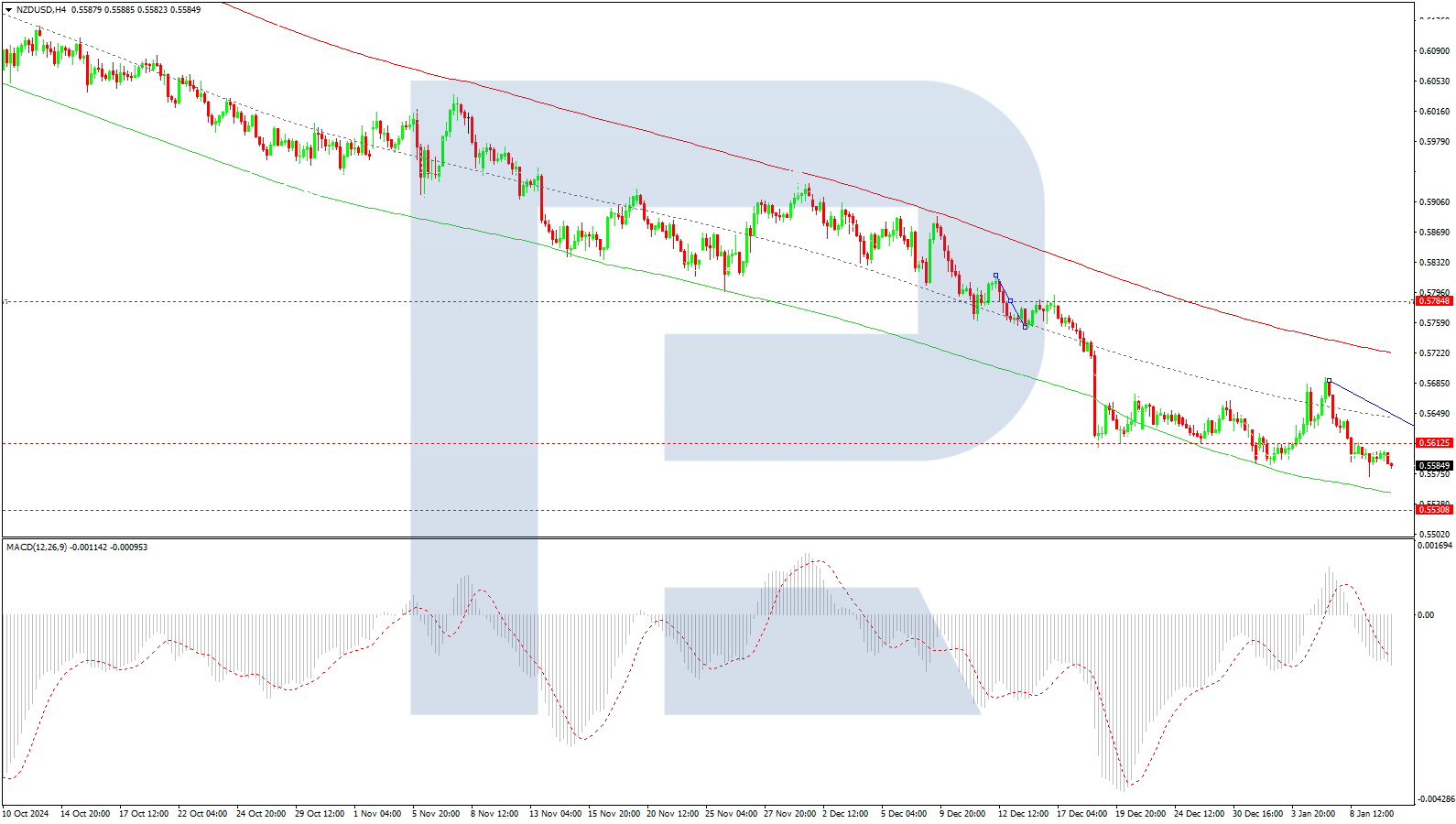
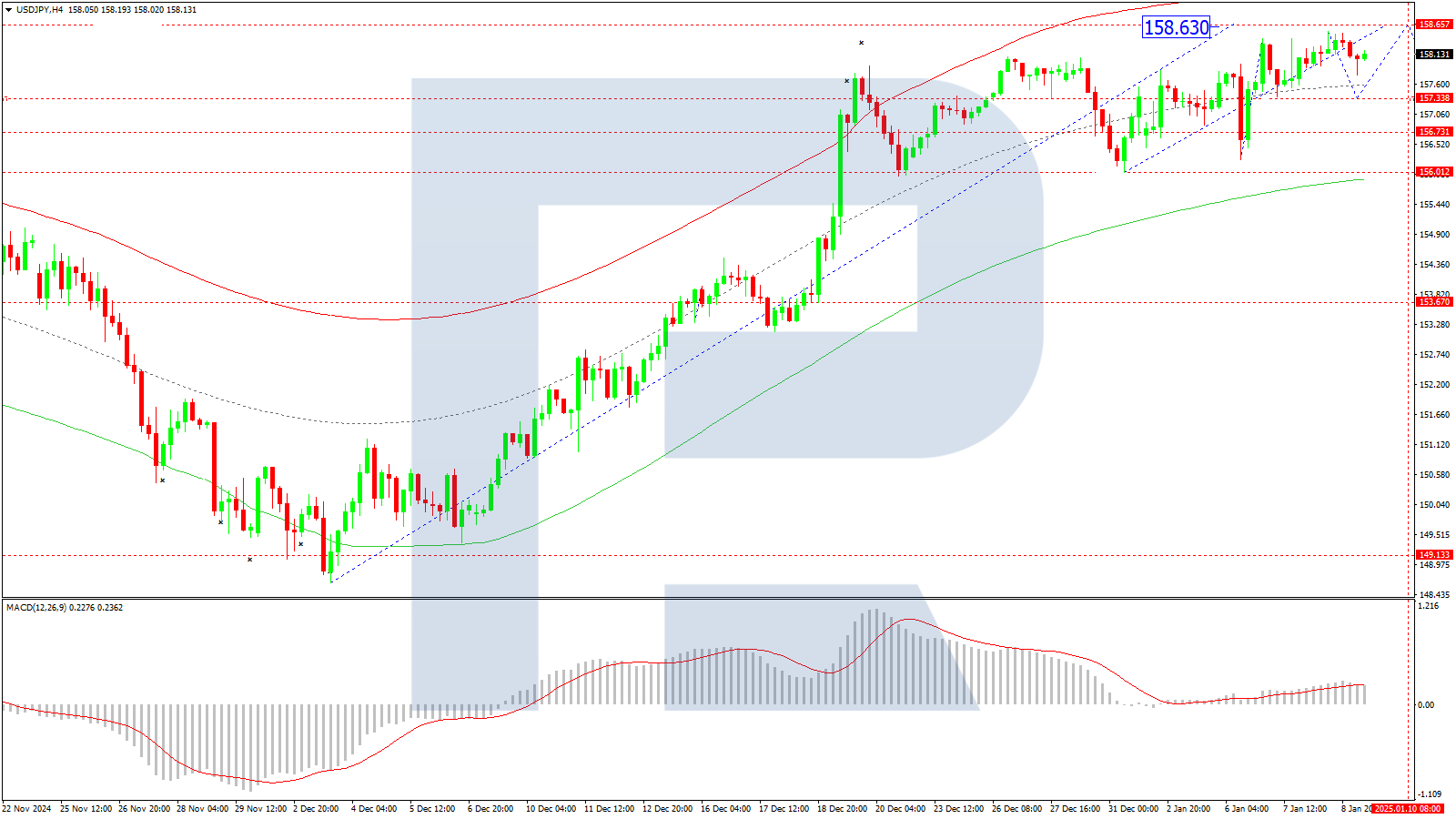
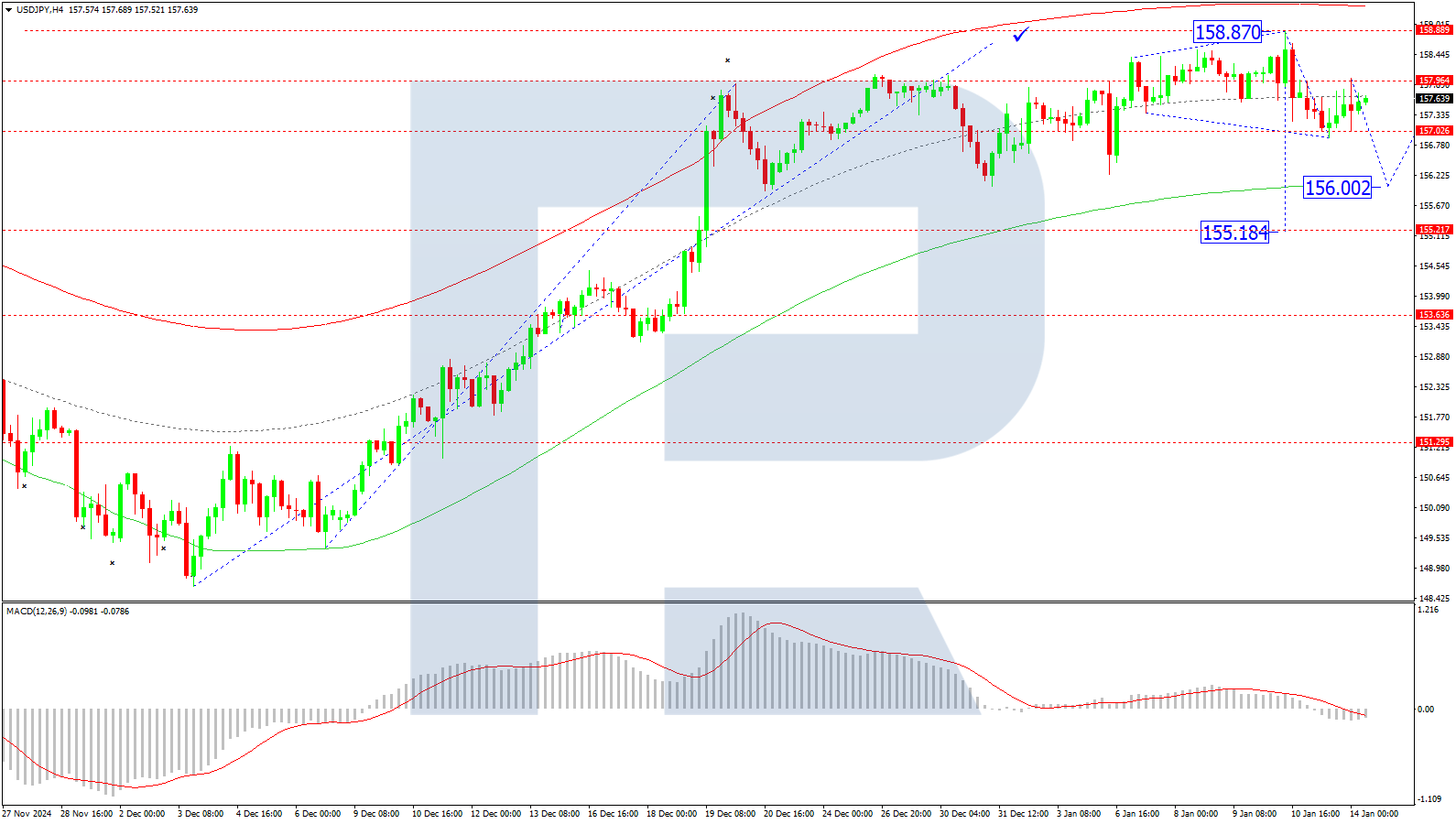
H4 Chart: the USD/JPY is forming a consolidation pattern around 154.45. A downward breakout could lead to further movement towards 153.00, while an upward breakout might pave the way to 156.20, potentially extending to 157.60. The MACD indicator supports this USD/JPY outlook, with its signal line positioned above zero but trending downwards, suggesting the pair is approaching a critical decision point.

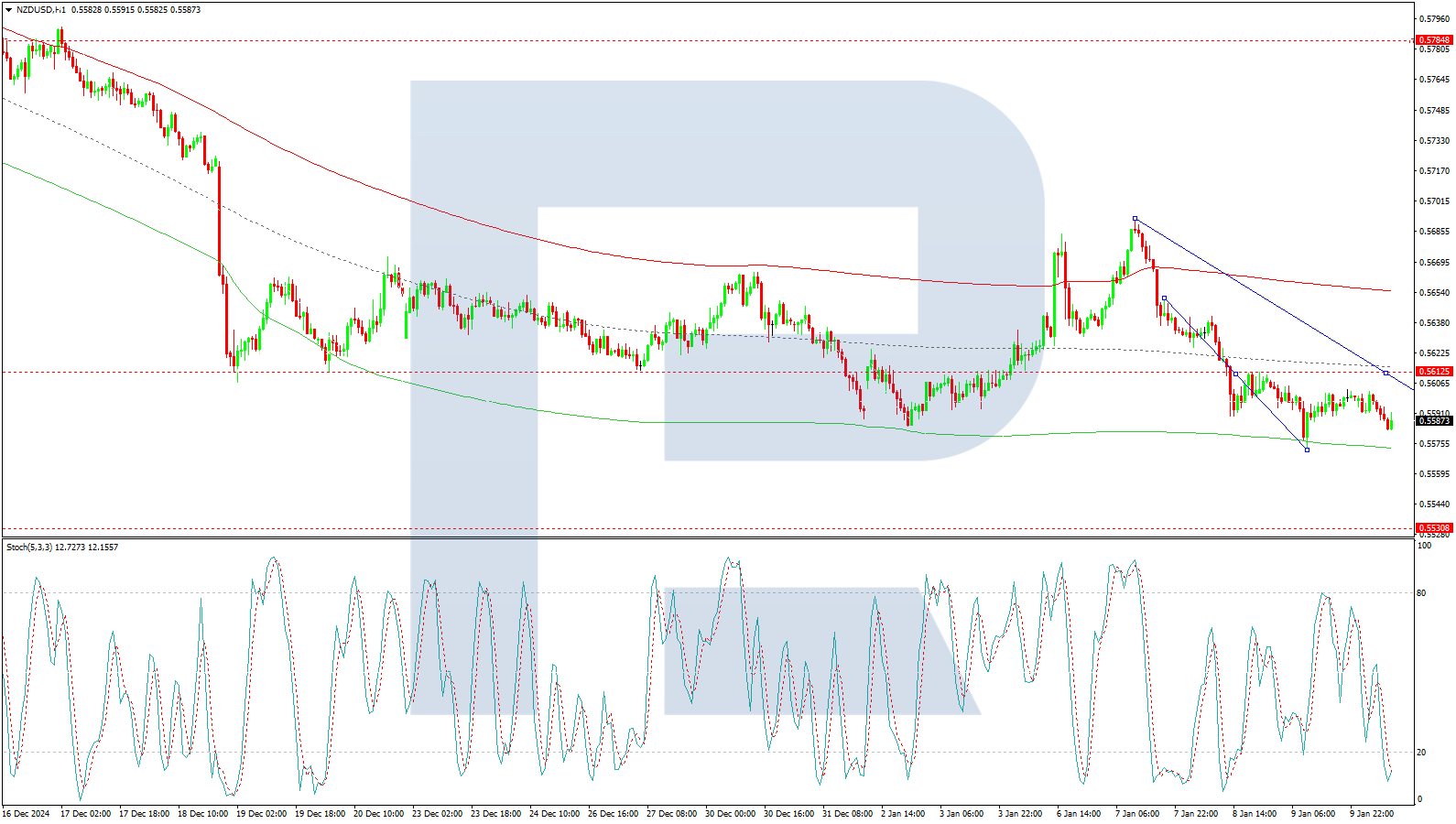
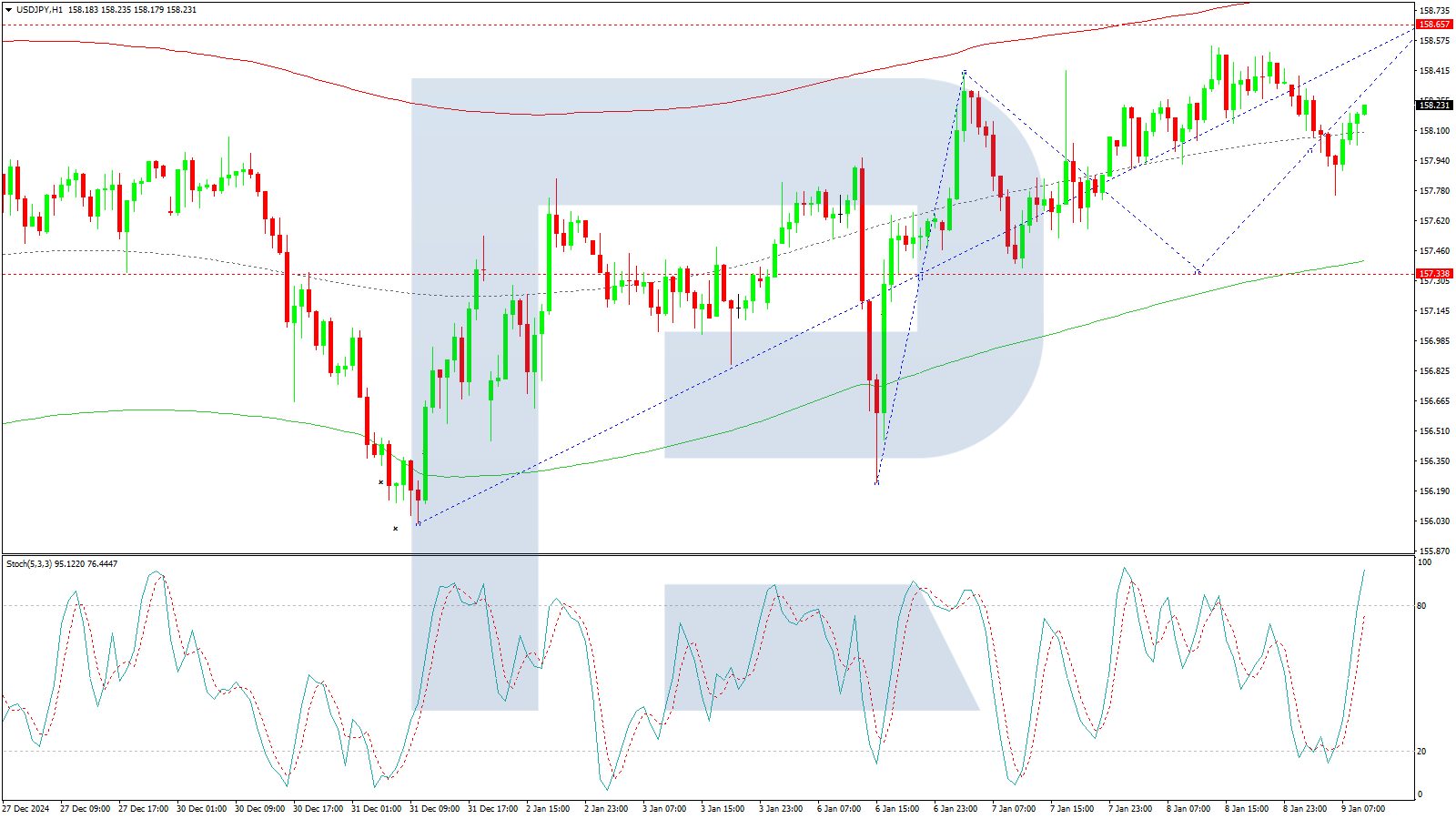
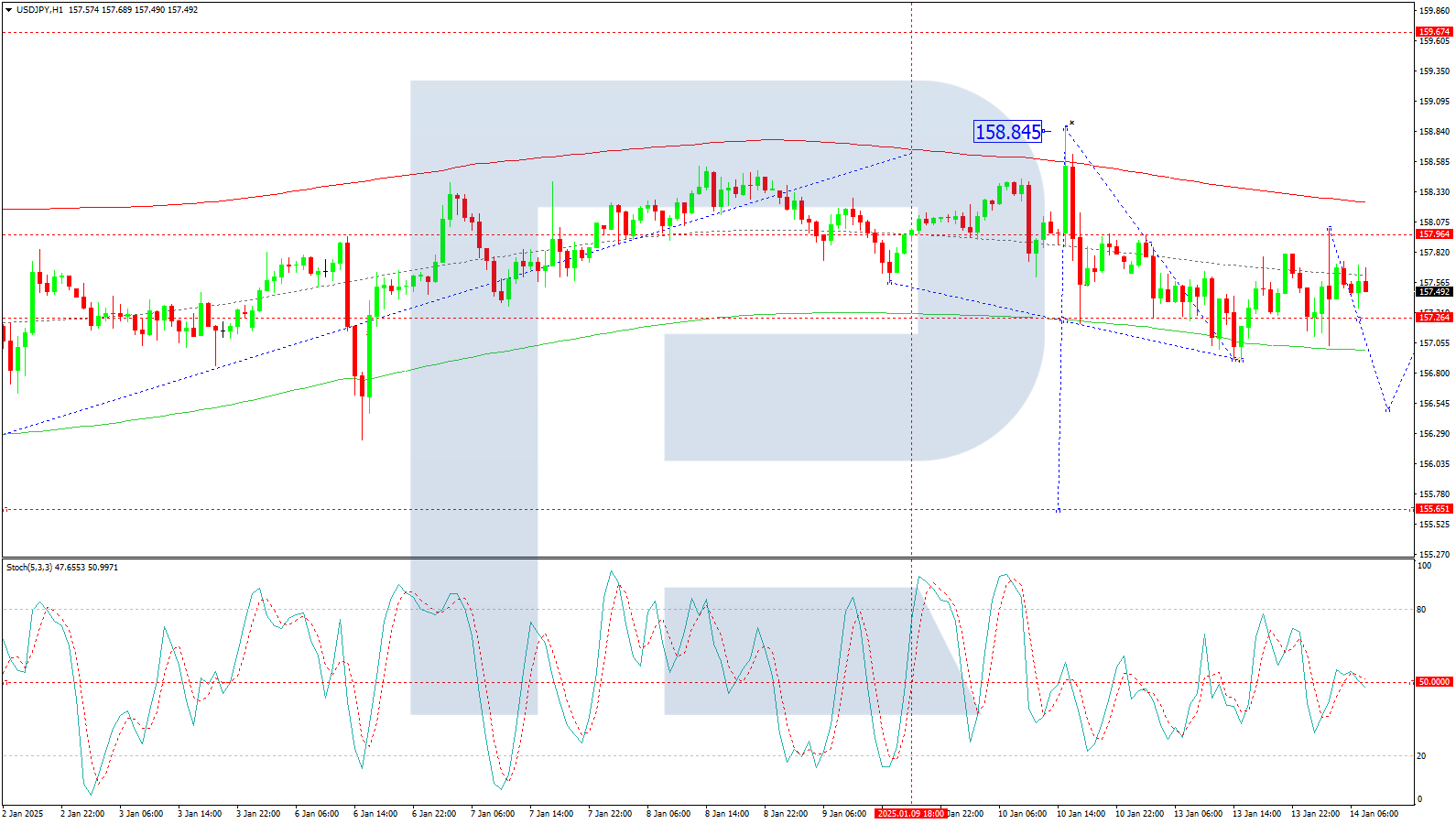
H1 Chart: a consolidation around 154.45, potentially extending to 154.88, sets the stage for possible corrective movements towards 153.00. A subsequent recovery could push the pair to 156.20, marking a new growth phase. The Stochastic oscillator, currently above 80, indicates overbought conditions, signalling a likely retraction to lower levels, aligning with the potential for a near-term correction.


Disclaimer

Any forecasts contained herein are based on the author’s particular opinion. This analysis may not be treated as trading advice. RoboForex bears no responsibility for trading results based on trading recommendations and reviews contained herein.

Companies are still committing to net-zero emissions, even if it’s a bumpy road – here’s what the data show

By L. Beril Toktay, Georgia Institute of Technology; Abhinav Shubham, Georgia Institute of Technology; Donghyun (Daniel) Choi, Georgia Institute of Technology, and Manpreet S. Hora, Georgia Institute of Technology

Companies around the world are increasingly committed to cutting their greenhouse gas emissions to slow and ultimately reverse climate change.

One indicator is the number of companies that have set emissions targets as part of the Science Based Targets initiative, or SBTi, a global nonprofit organization. That number grew from 164 companies in late 2018 to over 6,600 by November 2024. And thousands more have committed to lower their emissions.

It’s not always a smooth road, however. Some of those companies – including big names like Microsoft and Walmart – have had to pull back on some of their SBTi commitments.

We study the history of SBTi pledges to understand these commitments and what can undermine them. We believe there is more to the story of these pullbacks than meets the eye.

What is net zero?

To understand corporate climate commitments, let’s start with the concept of “net zero.”

The Paris Agreement, an international treaty on climate change, aims to limit global warming to well below 2 degrees Celsius (3.6 Fahrenheit) and ideally to 1.5 C (2.7 F). Meeting the more ambitious target of 1.5 C will require reaching net-zero greenhouse gas emissions by around 2050.

Net zero is the point at which the amount of greenhouse gases released into the atmosphere is balanced by greenhouse gases removed, either through natural sources like forests or technologies such as carbon capture and storage.

The Science Based Targets initiative, developed alongside the Paris Agreement in 2015, provides a framework to help companies align their efforts with the 1.5 C goal.

SBTi commitments have grown quickly

To join the initiative, companies begin by signing a letter of commitment to set near-term (2030) and long-term (2050) targets for reducing their emissions. Companies have 24 months to develop targets that adhere to SBTi guidelines. If the targets are validated and approved by SBTi, the company announces its targets publicly. The targets must be revalidated every five years, or they expire.

The number of global companies committing to and setting targets with SBTi has grown rapidly in recent years.

By the end of 2023, 7,929 companies representing 39% of global market capitalization had committed to set targets, and 4,205 had targets already validated by SBTi. By November 2024, that number had grown to 6,614.

This impressive participation is particularly significant given SBTi’s high expectations. SBTi requires near-term targets to be set so companies reduce emissions by at least 42% by 2030 from 2020 levels.

Why some companies have pulled back

So, why are companies like, Walmart, Microsoft and Amazon scaling back their commitments with SBTi?

While some people attribute these moves to political pressure from fossil fuel supporters, a closer look at data since 2013 reveals a more complex set of factors that may better explain their actions.

We found that, over the past decade, 695 companies either withdrew near- or long-term commitments or had a commitment that expired and was terminated by SBTi. These actions were concentrated in two distinct periods.

The first period followed SBTi’s decision in April 2019 to update its criteria, including tightening the minimum target from under 2 C to either “well below 2 C” or 1.5 C. We believe several companies were unprepared to meet the new requirements. Among the 500 companies that had either committed to or set a target by the end of 2018, 94 (18.8%) terminated their initial commitments after the criteria changed.

The second period was after January 2023, when SBTi introduced a new compliance policy and began removing commitments that had expired. In this period, 531 commitments were terminated – 497 of them because the commitment expired, and 16 because the company withdrew.

It’s important to recognize that SBTi strategically raised the bar to encourage companies to accelerate their progress in addressing climate change.

Reasons some companies have struggled

In a report in March 2024, SBTi provided a candid look at companies’ climate commitments from 2019 to 2021 and, importantly, where they struggled.

Approximately half of the companies that responded to its survey identified the complexity of addressing Scope 3 emissions – emissions from a company’s supply chain and use of its products – as a primary obstacle to setting net-zero targets. The supply chain is often considered a blind spot for measuring environmental impact and is difficult for companies to control.

On the day the report was released, SBTi removed the long-term commitments of 239 companies. About 60% of those companies had near-term targets that remained.

This helps explain the news around companies such as Walmart, Microsoft and Amazon.

Walmart’s and Microsoft’s long-term net-zero commitments were terminated, though both companies still have valid near-term targets with SBTi.

Moreover, both reaffirm their environmental commitments in their annual reports. Walmart is currently finalizing its Scope 3 emissions analysis to inform future strategy development, and Microsoft is investing in carbon removal technologies to become carbon-negative by 2030.

Amazon presents a more challenging case. The company may have faced difficulty meeting SBTi’s stringent mandate, particularly around supply chain emissions. Amazon has said it is still committed to reaching net-zero emissions and plans to explore setting targets with other organizations.

Many companies are on track

Our analysis of SBTi’s progress data, which includes all companies that had set a target by 2022 for which SBTi has emissions data, reveals that companies are cutting their emissions by a median annual rate of 5.4%.

Looking just at direct emissions from companies’ operations (Scope 1) and their purchased electricity (Scope 2), companies did even better. The median annual emissions decrease was 7.25% for companies with both Scope 1 and Scope 2 targets.

Scope 2 emissions are the low-hanging fruit and frequently align with cost-saving measures like improving energy efficiency.

Scope 3 emissions, those generated by companies’ suppliers and by consumer use of their products, are the biggest challenge. Companies with a separate Scope 3 target only reduced those emissions by a median annual rate of about 3%.

In 2024, SBTi announced plans to revise its Net-Zero Standard and allow companies to use carbon offsets to meet their Scope 3 emissions targets, drawing intense criticism. Carbon offsets allow companies to pay projects to reduce emissions on their behalf, such as by planting trees or managing forests.

SBTi’s challenge lies in finding a balance that maintains the integrity of its standards while encouraging broader participation, especially from high-impact industries.

Other ways companies are reducing emissions

While setting and achieving SBTi targets signals a strong commitment to combating climate change, many companies are setting emissions goals and working toward them without joining SBTi.

An example is the Drawdown Georgia Business Compact. It was created to accelerate the adoption of 20 technology- and market-ready solutions and includes nearly 70 companies, from multinationals headquartered in Georgia like Delta and UPS to small- and medium-size enterprises operating in the state.

Through the compact, companies are advancing initiatives with local economic benefits. For example, they are exploring ways to maximize Georgia forests’ ability to remove carbon and discussing effective ways to deploy sustainable aviation fuels.

The road to net-zero emissions will be bumpy. Yet the rapid growth of global corporate commitments, as well as action by a wider range of companies at the regional level, suggests corporate efforts are nevertheless moving forward.The Conversation

About the Authors:

L. Beril Toktay, Professor of Operations Management, Georgia Institute of Technology; Abhinav Shubham, Ph.D. Candidate in Operations Management, Georgia Institute of Technology; Donghyun (Daniel) Choi, Ph.D. Candidate in Operations Management, Georgia Institute of Technology, and Manpreet S. Hora, Professor of Operations Management, Georgia Institute of Technology

This article is republished from The Conversation under a Creative Commons license. Read the original article.

 

Asking ChatGPT vs Googling: Can AI chatbots boost human creativity?

By Jaeyeon Chung, Rice University 

Think back to a time when you needed a quick answer, maybe for a recipe or a DIY project. A few years ago, most people’s first instinct was to “Google it.” Today, however, many people are more likely to reach for ChatGPT, OpenAI’s conversational AI, which is changing the way people look for information.

Rather than simply providing lists of websites, ChatGPT gives more direct, conversational responses. But can ChatGPT do more than just answer straightforward questions? Can it actually help people be more creative?

I study new technologies and consumer interaction with social media. My colleague Byung Lee and I set out to explore this question: Can ChatGPT genuinely assist people in creatively solving problems, and does it perform better at this than traditional search engines like Google?

Across a series of experiments in a study published in the journal Nature Human Behavour, we found that ChatGPT does boost creativity, especially in everyday, practical tasks. Here’s what we learned about how this technology is changing the way people solve problems, brainstorm ideas and think creatively.

ChatGPT and creative tasks

Imagine you’re searching for a creative gift idea for a teenage niece. Previously, you might have googled “creative gifts for teens” and then browsed articles until something clicked. Now, if you ask ChatGPT, it generates a direct response based on its analysis of patterns across the web. It might suggest a custom DIY project or a unique experience, crafting the idea in real time.

To explore whether ChatGPT surpasses Google in creative thinking tasks, we conducted five experiments where participants tackled various creative tasks. For example, we randomly assigned participants to either use ChatGPT for assistance, use Google search, or generate ideas on their own. Once the ideas were collected, external judges, unaware of the participants’ assigned conditions, rated each idea for creativity. We averaged the judges’ scores to provide an overall creativity rating.

One task involved brainstorming ways to repurpose everyday items, such as turning an old tennis racket and a garden hose into something new. Another asked participants to design an innovative dining table. The goal was to test whether ChatGPT could help people come up with more creative solutions compared with using a web search engine or just their own imagination.

The results were clear: Judges rated ideas generated with ChatGPT’s assistance as more creative than those generated with Google searches or without any assistance. Interestingly, ideas generated with ChatGPT – even without any human modification – scored higher in creativity than those generated with Google.

One notable finding was ChatGPT’s ability to generate incrementally creative ideas: those that improve or build on what already exists. While truly radical ideas might still be challenging for AI, ChatGPT excelled at suggesting practical yet innovative approaches. In the toy-design experiment, for example, participants using ChatGPT came up with imaginative designs, such as turning a leftover fan and a paper bag into a wind-powered craft.

Limits of AI creativity

ChatGPT’s strength lies in its ability to combine unrelated concepts into a cohesive response. Unlike Google, which requires users to sift through links and piece together information, ChatGPT offers an integrated answer that helps users articulate and refine ideas in a polished format. This makes ChatGPT promising as a creativity tool, especially for tasks that connect disparate ideas or generate new concepts.

It’s important to note, however, that ChatGPT doesn’t generate truly novel ideas. It recognizes and combines linguistic patterns from its training data, subsequently generating outputs with the most probable sequences based on its training. If you’re looking for a way to make an existing idea better or adapt it in a new way, ChatGPT can be a helpful resource. For something groundbreaking, though, human ingenuity and imagination are still essential.

Additionally, while ChatGPT can generate creative suggestions, these aren’t always practical or scalable without expert input. Steps such as screening, feasibility checks, fact-checking and market validation require human expertise. Given that ChatGPT’s responses may reflect biases in its training data, people should exercise caution in sensitive contexts such as those involving race or gender.

We also tested whether ChatGPT could assist with tasks often seen as requiring empathy, such as repurposing items cherished by a loved one. Surprisingly, ChatGPT enhanced creativity even in these scenarios, generating ideas that users found relevant and thoughtful. This result challenges the belief that AI cannot assist with emotionally driven tasks.

Future of AI and creativity

As ChatGPT and similar AI tools become more accessible, they open up new possibilities for creative tasks. Whether in the workplace or at home, AI could assist in brainstorming, problem-solving and enhancing creative projects. However, our research also points to the need for caution: While ChatGPT can augment human creativity, it doesn’t replace the unique human capacity for truly radical, out-of-the-box thinking.

This shift from Googling to asking ChatGPT represents more than just a new way to access information. It marks a transformation in how people collaborate with technology to think, create and innovate.The Conversation

About the Author:

Jaeyeon Chung, Assistant Professor of Business, Rice University

This article is republished from The Conversation under a Creative Commons license. Read the original article.
 

Americans face an insurability crisis as climate change worsens disasters – a look at how insurance companies set rates and coverage

By Andrew J. Hoffman, University of Michigan 

Home insurance rates are rising in the United States, not only in Florida, which saw tens of billions of dollars in losses from hurricanes Helene and Milton, but across the country.

According to S&P Global Market Intelligence, homeowners insurance increased an average of 11.3% nationwide in 2023, with some states, including Texas, Arizona and Utah, seeing nearly double that increase. Some analysts predict an average increase of about 6% in 2024.

These increases are driven by a potent mix of rising insurance payouts coupled with rising costs of construction as people build increasingly expensive homes and other assets in harm’s way.

When home insurance averages $2,377 a year nationally, and $11,000 per year in Florida, this is a blow to many people. Despite these rising rates, Jacques de Vaucleroy, chairman of the board of reinsurance giant Swiss Re, believes U.S. insurance is still priced too low to fully cover the risks.

It isn’t just that premiums are changing. Insurers now often reduce coverage limits, cap payouts, increase deductibles and impose new conditions or even exclusions on some common perils, such as protection for wind, hail or water damage. Some require certain preventive measures or apply risk-based pricing – charging more for homes in flood plains, wildfire-prone zones, or coastal areas at risk of hurricanes.

Homeowners watching their prices rise faster than inflation might think something sinister is at play. Insurance companies are facing rapidly evolving risks, however, and trying to price their policies low enough to remain competitive but high enough to cover future payouts and remain solvent in a stormier climate. This is not an easy task. In 2021 and 2022, seven property insurers filed for bankruptcy in Florida alone. In 2023, insurers lost money on homeowners coverage in 18 states.

But these changes are raising alarm bells. Some industry insiders worry that insurance may be losing its relevance and value – real or perceived – for policyholders as coverage shrinks, premiums rise and exclusions increase.

How insurers assess risk

Insurance companies use complex models to estimate the likelihood of current risks based on past events. They aggregate historical data – such as event frequency, scale, losses and contributing factors – to calculate price and coverage.

However, the increase in disasters makes the past an unreliable measure. What was once considered a 100-year event may now be better understood as a 30- or 50-year event in some locations.

What many people do not realize is that the rise of so-called “secondary perils” – an insurance industry term for floods, hailstorms, strong winds, lightning strikes, tornadoes and wildfires that generate small to mid-size damage – is becoming the main driver of the insurability challenge, particularly as these events become more intense, frequent and cumulative, eroding insurers’ profitability over time.

Climate change plays a role in these rising risks. As the climate warms, air can hold more moisture – about 7% more with every degree Celsius of warming. That leads to stronger downpours, more thunderstorms, larger hail events and a higher risk of flooding in some regions. The U.S. was on average 1.5 degrees Celsius (2.6 degrees Fahrenheit) warmer in 2022 than in 1970.

Insurance companies are revising their models to keep up with these changes, much as they did when smoking-related illnesses became a significant cost burden in life and health insurance. Some companies use climate modeling to augment their standard actuarial risk modeling. But some states have been hesitant to allow climate modeling, which can leave companies systematically underrepresenting the risks they face.

Each company develops its own assessment and geographic strategy to reach a different conclusion. For example, Progressive Insurance has raised its homeowner rates by 55% between 2018 and 2023, while State Farm has raised them only 13.7%.

While a homeowner who chooses to make home improvements, such as installing a luxury kitchen, can expect an increase in premiums to account for the added replacement value, this effect is typically small and predictable. Generally, the more substantial premium hikes are due to the ever-increasing risk of severe weather and natural disasters.

Insurance for insurers

When risks become too unpredictable or volatile, insurers can turn to reinsurance for help.

Reinsurance companies are essentially insurance companies that insure insurance companies. But in recent years, reinsurers have recognized that their risk models are also no longer accurate and have raised their rates accordingly. Property reinsurance alone increased by 35% in 2023.

Reinsurance is also not very well suited to covering secondary perils. The traditional reinsurance model is focused on large, rare catastrophes, such as devastating hurricanes and earthquakes.

Two maps show highest costs on the coasts and in the West and Northeast.
Maps illustrate the average loss from flooding alone and expected increases by mid-century. About 90% of catastrophes in the U.S. involve flooding, but just 6% of U.S. homeowners have flood insurance.
Fifth National Climate Assessment

As an alternative, some insurers are moving toward parametric insurance, which provides a predefined payment if an event meets or exceeds a predefined intensity threshold. These policies are less expensive for consumers because the payouts are capped and cover events such as a magnitude 7 earthquake, excessive rain within a 24-hour period or a Category 3 hurricane in a defined geographical area. The limits allow insurers to provide a less expensive form of insurance that is less likely to severely disrupt their finances.

Protecting the consumer

Of course, insurers don’t operate in an entirely free market. State insurance regulators evaluate insurance companies’ proposals to raise rates and either approve or deny them.

The insurance industry in North Carolina, for example, where Hurricane Helene caused catastrophic damage, is arguing for a homeowner premium increase of more than 42% on average, ranging from 4% in parts of the mountains to 99% in some waterfront areas.

If a rate increase is denied, it could force an insurer to simply withdraw from certain market sectors, cancel existing policies or refuse to write new ones when their “loss ratio” – the ratio of claims paid to premiums collected – becomes too high for too long.

Since 2022, seven of the top 12 insurance carriers have either cut existing homeowners policies or stopped selling new ones in the wildfire-prone California homeowner market, and an equal number have pulled back from the Florida market due to the increasing cost of hurricanes.

To stem this tide, California is reforming its regulations to speed up the rate increase approval process and allow insurers to make their case using climate models to judge wildfire risk more accurately.

Florida has instituted regulatory reforms that have reduced litigation and associated costs and has removed 400,000 policies from the state-run insurance program. As a result, eight insurance carriers have entered the market there since 2022.

Looking ahead

Solutions to the mounting insurance crisis also involve how and where people build. Building codes can require more resilient homes, akin to how fire safety standards increased the effectiveness of insurance many decades ago.

By one estimate, investing $3.5 billion in making the two-thirds of U.S. homes not currently up to code more resilient to storms could save insurers as much as $37 billion by 2030.

In the end, if affordability and relevance of insurance continue to degrade, real estate prices will start to decline in exposed locations. This will be the most tangible sign that climate change is driving an insurability crisis that disrupts wider financial stability.

About the Authors:

Justin D’Atri, Climate Coach at the education platform Adaptify U and Sustainability Transformation Lead at Zurich Insurance Group, contributed to this article.The Conversation

Andrew J. Hoffman, Holcim (US) Professor of Sustainable Enterprise, Ross School of Business, School for Environment & Sustainability, University of Michigan

This article is republished from The Conversation under a Creative Commons license. Read the original article.

 

RBNZ may cut the rate by 0.75% next week. NVDA report did not meet investors’ expectations

By JustMarkets

At Wednesday’s end, the Dow Jones Index (US30) rose by 0.32%. The S&P 500 Index (US500) closed at the opening price. The Nasdaq Technology Index (US100) declined 0.08%.

Nvidia (NVDA) reported fiscal third-quarter results that beat Wall Street estimates, but its plans for the current quarter fell short of investors’ inflated expectations amid hot demand for artificial intelligence. NVIDIA Corporation shares fell more than 2% in after-hours trading following the report. Qualcomm (QCOM) closed down more than 6%, leading to a decline in chip stocks after Susquehanna Financial cut its price target on the company’s shares to $210 from $230. Additionally, shares of Advanced Micro Devices (AMD) and Texas Instruments (TXN) were down more than 1%.

Of the 90% of S&P 500 companies that posted Q3 earnings, 75% beat estimates, slightly below the 3-year average. According to Bloomberg Intelligence, S&P 500 companies reported an average 8.5% year-over-year increase in Q3 quarterly earnings, more than double estimates.

Equity markets in Europe ended trading yesterday on a weak note. The German DAX (DE40) fell by 0.29%, the French CAC 40 (FR40) closed down 0.43%, the Spanish IBEX 35 (ES35) rose by 0.01%, the British FTSE 100 (UK100) closed down 0.17%. Investors sold risk assets following reports that Ukraine fired UK-made Storm Shadow missiles at Russian territory for the first time since the war began in 2022. This followed the firing of US-made ATACMS missiles the same morning Russia expanded the scenario, justifying the use of nuclear weapons and raising fears of a wider conflict with possible NATO involvement. However, by the end of the day, geopolitical tensions in Europe had eased after Reuters reported that Russian President Putin was willing to discuss a ceasefire agreement in Ukraine with US President-elect Trump, which could roughly freeze the war on current front lines.

The US crude inventories rose by 545,000 barrels last week, exceeding market projections. Oil markets have come under pressure in recent months amid concerns about a possible oil glut next year due to slowing demand growth in China and record-high production levels, even as OPEC+ maintains current production levels.

The US natural gas (XNG/USD) prices rose more than 6% to nearly $3.2/MMBtu, the highest since June 11, as colder weather in late November is expected to boost heating demand.

Asian markets were flat yesterday. Japan’s Nikkei 225 (JP225) fell by 0.16%, China’s FTSE China A50 (CHA50) rose by 0.13%, Hong Kong’s Hang Seng (HK50) gained 0.21%, and Australia’s ASX 200 (AU200) was negative 0.57%.

On Thursday, the New Zealand Treasury said it is likely to revise its economic and fiscal estimates downward due to a prolonged slowdown in labor productivity growth. This has prompted investors to increasingly consider the possibility that the Reserve Bank of New Zealand (RBNZ) will cut its 4.75% cash rate by 75bps more aggressively at its meeting next week, with a 50bps cut already fully priced in.

China’s Central Bank left key lending rates unchanged this week as expected, but investors remain hopeful that Beijing will introduce additional stimulus measures to support economic growth. Meanwhile, the prospect of higher tariffs on Chinese goods under the upcoming Trump administration adds to concerns about the country’s economic outlook.

S&P 500 (US500) 5,917.11 +0.13 (+0.0022%)

Dow Jones (US30) 43,408.47 +139.53 (+0.32%)

DAX (DE40) 19,004.78 −55.53 (−0.29%)

FTSE 100 (UK100) 8,085.07 −13.95 (−0.17%)

USD Index 106.67 −0.47 (−0.44%)

News feed for: 2024.11.21

  • Japan BOJ Gov Ueda Speaks at 07:10 (GMT+2);
  • Australia RBA Bullock Speech at 10:00 (GMT+2);
  • US Initial Jobless Claims (w/w) at 15:30 (GMT+2);
  • US Existing Home Sales (m/m) at 17:00 (GMT+2);
  • US Natural Gas Storage (w/w) at 17:30 (GMT+2).

By JustMarkets


This article reflects a personal opinion and should not be interpreted as an investment advice, and/or offer, and/or a persistent request for carrying out financial transactions, and/or a guarantee, and/or a forecast of future events.

NZD/USD Under Pressure Amidst USD Strength

By RoboForex Analytical Department

The NZD/USD pair is trading near 0.5879, experiencing volatility as the market awaits the upcoming Reserve Bank of New Zealand (RBNZ) meeting. Expectations are leaning towards a significant rate cut, with a 50-basis-point reduction considered the baseline scenario and a 25% probability of a more aggressive 75-basis-point cut.

Adding to the uncertainty are pessimistic projections from the New Zealand Treasury, suggesting potential delays in economic recovery, further weighing on sentiment around the NZD.

Internally, the US dollar’s strength, fuelled by mixed expectations regarding the Federal Reserve’s policy decisions in December, continues to exert substantial pressure on the NZD. Since the US election, the dollar has emerged as a dominant force, benefiting from robust domestic factors, and overshadowing other currencies that lack similar support, leading to their devaluation. As a result, the NZD, particularly vulnerable, reflects this broader depreciation trend against the USD.

Technical analysis of NZD/USD

On the H4 chart of NZD/USD, the market corrected to the 0.5921 level. Today, a decline wave structure is forming at the 0.5858 level, marking the boundaries of the consolidation range. A downward exit from this range could indicate the potential for the wave to extend towards 0.5777. Alternatively, an upward exit may result in another corrective move towards 0.5944 before the price resumes its decline to 0.5777.  From a technical standpoint, this bearish outlook for NZD/USD is supported by the MACD indicator, with its signal line below zero and sloping downward.

On the H1 chart of NZD/USD, the market has formed a consolidation range around 0.5875. Today, another decline wave towards 0.5777 is likely to develop. At this level, the wave is expected to exhaust its downside potential. This scenario is technically confirmed by the Stochastic oscillator, with its signal line below 50 and trending downward.


Disclaimer

Any forecasts contained herein are based on the author’s particular opinion. This analysis may not be treated as trading advice. RoboForex bears no responsibility for trading results based on trading recommendations and reviews contained herein.