Archive for Opinions – Page 103

3 potential winners in 2023

By ForexTime 

The outlook for the new year is dominated by this one fear: recession.

Major economies such as the UK and Eurozone are believed to be already going through an economic contraction. The US – the world’s largest economy – expected to experience a downturn later this year.

Yet amidst all these recession fears at the onset of 2023, the financial markets still do present opportunities for investors and traders.


Here are 3 assets that may see a stellar year:


1) Gold to hit $2000?

Gold has long been seen as a safe haven asset: a way for investors to protect their money in times of heightened fear and uncertainty.

As proof, here’s a list of how gold performed during the US recessions (as listed by the NBER) that have occurred since 1990:

  • Gulf War Recession (July 1990 – March 1991) = gold soared by as much as 17.5% at its peak on 21 August 1990.
  • Dot Com Recession (March 2001 – Nov 2001) = gold up by as much as 10.4% at its peak on 26 Septembe 2001.
  • The Great Recession (Dec 2007 – June 2009) = gold rose by as much as 28% by March 2008 when it traded over $1000 per ounce for the first time ever in the US futures market.
  • Covid-19 Recession (Feb 2020 – April 2020) = gold hit a record high at $2075.47 in August 2020

Using such past performances as a guide, the prospects of gold’s prospects of climbing by another 9% from today’s prices ($1848 at the time of writing) to reach $2000 doesn’t seem too farfetched.

Fundamental perspective: What needs to happen?

Besides a US recession, the key component for gold’s ability to climb higher rests on this key factor:

  • The US dollar has to weaken further as markets brace for the Fed eventually cutting interest rates to help support the US economy.

As bullion’s “enemy” becomes less potent in the face of a looming recession, that could encourage gold bulls to push the precious metal even higher in 2023.

At the time of writing, markets are predicting a 71% chance that we could see $2000 gold once more in 2023.

What could go wrong?

  • If gold’s enemy #1 from 2022 makes a return: US inflation remains stubbornly higher, forcing the Fed to continue hiking interest rates aggressively, which in turn restores demand for the US dollar.

    That may force a major rethink among gold bulls, perhaps accompanied by the unwinding of some of bullion’s gains of late.


2) Japanese Yen: USDJPY back down to 125?

Last year, the Yen fell by 12.2% against the US dollar, making JPY the second-worst performing G10 currency against the greenback in 2022.

That’s all about to change, with the Yen ready to catch up.

Fundamental perspective: What needs to happen?

It all depends on what the central banks in the US and Japan do in relation to one another.

  • Fed pivot: If the Federal Reserve “pivots” and is forced to lower US interest rates later in 2023 in order to offset a US recession, that should spell more weakness for the dollar.
  • BoJ pivot: If the Bank of Japan also does its own “pivot” but instead of cutting, it actually raises its own interest rates, that should spell more gains for JPY.

Such expectations will come into sharper focus once the new central bank governor takes over when current BoJ Governor Haruhiko Kuroda’s term expires in April.

Keep in mind that the BoJ’s policy balance rate now still rests at negative 0.10%, making it a clear laggard across major central bankers that had been busy hiking their own rates throughout 2022.

In short, if the BoJ hikes rates at a time when the Fed is cutting its own rates (or perhaps even just thinking about making such a move), that should help pave the way for the Yen’s speedy recovery.

For now, markets predict a 53% that USDJPY would eventually trade below 125 sometime over the next 12 months.


What could go wrong?

  • Still-dovish BoJ: the incoming BoJ Governor keeps Japan’s benchmark rate mired in negative territory on signs that inflation is not as sticky as hoped.

This scenario would be made worse if the Fed stays hawkish and keeps sending US interest rates much higher than the currently forecasted peak of around 5%.

A still-dovish BoJ + a still-hawkish Fed = USDJPY’s downside severely capped.


3) FTSE China A50 Index back above 14,000?

There is much hope surrounding the reopening of the Chinese economy this year, with the government essentially having abandoned its Covid Zero campaign.

And such optimism has already been playing out in Chinese stocks in recent months.

Here’s a comparison between the FTSE China A50 Index against its global peers since end-October through the present day:

  • FTSE China A50 Index: +15.9%
  • Europe’s STOXX 50: +7.3%
  • MSCI ACWI Index (stocks across developed and emerging markets): +3.26%
  • S&P 500: -1.24%


Fundamental perspective: What needs to happen?

  • The world’s second largest economy needs to finally break off the Covid shackles that have hampered it over the past 3 years.

Once the economy can overcome the recent snags of skyrocketing Covid cases and hospitalizations, consumers need to eventually feel confident once more about going out their economic activities, be it returning to the office, spending money at physical stores, and even going on vacations.

Assuming that China can find a steady footing and follow in the rest-of-the-world’s footsteps in terms of the post-pandemic recovery, that promises to help restore the earnings of China’s public-listed companies, which in turn should entice more investors into pushing these stock prices higher.

  • Additionally, policymakers on both the fiscal (government) and monetary (central bank) sides must continue adopting a supportive stance to shore up China’s economic momentum.

All of the above should position China as an attractive investment destination for foreign investors, especially within the context of a looming global recession.


What could go wrong?

  • If China continues to struggle with the Covid menace, that would only worsen the expected global recession and deal a massive blow to hopes for a sustained recovery in Chinese stock markets.
  • Also, if China’s inflation starts to run too hot a la the rest of the world, that may force policymakers into a restrictive stance to curb inflation at the expense of economic growth.
  • If 2023 also sees a return of heightened geopolitical tensions between the West and China, that could also sour sentiment surrounding Chinese assets.


Forex-Time-LogoArticle by ForexTime

ForexTime Ltd (FXTM) is an award winning international online forex broker regulated by CySEC 185/12 www.forextime.com

Inflation, unemployment, the housing crisis and a possible recession: Two economists forecast what’s ahead in 2023

By D. Brian Blank, Mississippi State University and Rodney Ramcharan, University of Southern California 

With the current U.S. inflation rate at 7.1%, interest rates rising and housing costs up, many Americans are wondering if a recession is looming.

Two economists discussed that and more in a recent wide-ranging and exclusive interview for The Conversation.
Brian Blank is a finance professor at Mississippi State University who specializes in the study of corporations and how they respond to economic downturns. Rodney Ramcharan is an economist at the University of Southern California who previously held posts with the Federal Reserve and the International Monetary Fund.

Both were interviewed by Bryan Keogh, deputy managing editor and senior editor of economy and business for The Conversation.

Below are some highlights from the discussion. Answers have been edited for brevity and clarity.

Brian Blank and Rodney Ramcharan talk about the economic outlook for 2023.

Are we headed for a recession in 2023?

Brian Blank: The consensus view among most forecasters is that there is a recession coming at some point, maybe in the middle of next year. I’m a little bit more optimistic than that consensus.

People have been calling for a recession for months now, and this seems to be the most anticipated recession on record. I think that it could still be a ways off. Consumer balance sheets are still relatively strong, stronger than we’ve seen them for most periods.

I think that the labor market is going to remain hotter than people have expected. Right now, over the last eight months, the labor market has added more jobs than anticipated, which is one of the strongest streaks on record. And I think that until consumer balance sheets weaken considerably, we can expect consumer spending, which is the largest part of the economy, to continue to grow quickly.

[But this] doesn’t mean that a recession is not coming. There’s always a recession somewhere down the road.

Rodney Ramcharan: Indeed, yes, there’s a likelihood that the economy is going to contract in the next nine months. The president of the New York Fed expects the unemployment rate to go up from 3.5% currently to somewhere between 4% to 5% in the next year. And I think that will be consistent with a recession.

In terms of how much worse it can be beyond that, it’s going to depend on a number of things. It could depend on whether the Fed is going to accept a higher inflation rate over the medium term or whether it’s really committed to getting the inflation rate down to the 2% rate. So I think that’s the trade-off.

Will unemployment go up?

Blank: [Unemployment] hasn’t risen much, and maybe it’ll pick up to somewhere close to 4%. Many are expecting something like four and a half percent. And I think that’s certainly possible. And I think that we can see small upticks in the coming months.

But I don’t think it’s going to rise as quickly as some people are expecting, in part because what we’ve seen so far is a lack of labor force participation. Until more people enter the labor market, I think there are going to be plenty of jobs to go around.

What is your outlook on interest rates?

Ramcharan: As people find it more and more difficult to find jobs, or to get jobs as they begin to lose jobs, I think that’s going to dampen spending. And we’re seeing that now as the cost of borrowing has gone up sharply, and the Fed is expecting that.

The expectation is the federal funds rate will go up to 5% by next year. If you tack on another couple of points, because of the risk involved, then the cost to borrow to buy a home could potentially get up to 8% for some people. And that could be very expensive.

And the flip side of this for businesses is there’s potentially going to be a slowdown in cash flow. If consumers are not spending, then the revenues that businesses depend on to make investments might not be there.

The additional piece in this puzzle is what the banks will then do. I think banks are going to begin to curtail the extension of credit. So not only will interest rates go up for the typical consumer and the typical business, it’s also likely that they are more likely to experience denial of credit, and so that should together begin to slow spending quite a bit.

After massive increases in housing prices, what caused them to suddenly drop?

Ramcharan: As the Fed lowered interest rates, there was a massive shift among the population for various reasons. They decided that housing was the right investment or the right thing. And so when 50 million people all collectively decide to buy homes, the supply of homes is reasonably constrained in the short run. And so that led to this massive increase in house prices and in rents.

In the last three months, the housing market has cooled sharply. We’re now seeing house prices beginning to fall. I would imagine, going forward, the housing market cooling is going to be a major driver behind the slowdown in the inflation rate and in real estate investment trusts. So that’s positive.

Our recent election just changed the composition of Congress. How will that affect the economy?

Blank: Certainly, when we have a divided Congress, we’re less likely to see decisions made that involve passing legislation that might support the economy. And I think it’s likely the Republican House is going to become a little bit more conservative with spending.

And so if we do start to see a downturn, I think you’re less likely to see legislation that might help support an economy that could be in need of it. That is going to make the job of the Federal Reserve more important.

How certain are these predictions?

Ramcharan: I just want to be careful here and let your viewers know that we’re making these statements based on theory, because the inflation that we’re experiencing now comes about from a pandemic, and there really is no evidence, there’s no data available, that people can look to to say, “What happens to an economy after a pandemic?” That data does not exist.

So we’re trying to piece together the data we do have with the theories we do have, but there’s a huge band of uncertainty about what’s going to happen.

Watch the full interview here.The Conversation

About the Author:

D. Brian Blank, Assistant Professor of Finance, Mississippi State University and Rodney Ramcharan, Professor of Finance and Business Economics, University of Southern California

This article is republished from The Conversation under a Creative Commons license. Read the original article.


2023 Outlook: Is the worst behind us?

By ForexTime

As we emerge out of a rough year dominated by soaring inflation, slowing global growth, heightened geopolitical risks and Covid-19, the early part of 2023 looks like it could be more of the same story.

Financial markets were hit by negative market themes in 2022, with the S&P 500 shedding almost 20%. We also witnessed the dollar experience a sharp change of fortune during the fourth quarter after dominating the FX space for most of the year. Even cryptocurrencies were treated without mercy, including Bitcoin which depreciated by 64%!

The harsh reality is that markets and investors across the world have accepted the idea of a global recession in 2023. Financial heavyweights like the IMF and World Bank have all lowered their world growth forecasts amid the uncertain outlook. The United States is expected to sink into a recession while things remain gloomy for China due to surging Covid-19 cases. On top of this, Britain may already be in a recession along with the Eurozone as they pay the expensive price of taming inflation.

Beware of China Covid threat…

2023 may kick of on a cautious note as countries across the globe express unease over China’s growing Covid-19 threat. The Covid menace has torn through the world’s second largest economy after the government’s decision to relax its zero covid policy back in early December. With cases exploding in China, countries such as the United States, Italy and Japan among others have announced mandatory tests for Chinese travellers. Regardless, the threat of infections spreading across the world and resulting in disruptions may weigh heavily on sentiment as painful memories of 2020 & 2021 resurface.

Inflation beast tamed?

Has inflation truly peaked? This is the 20 trillion-dollar question and a central theme that will influence global financial markets in the new year. It is worth keeping in mind that US inflation slowed for a fifth straight month to 7.1% in November, the lowest level since December 2021. We saw a similar pattern in the United Kingdom, Europe, and China among other countries across the globe. Should consumer prices continue to cool well into 2023, this may set the stage for a series of major developments that impact currency, commodity, and equity markets.

Will Central Banks be forced to pivot?

Persistent signs of cooling inflation could encourage central banks to slow down their pace of hikes, pause, and then eventually start cutting interest rates by the end of 2023 to promote growth. Despite concluding the year on a hawkish note, the Federal Reserve has already shifted into lower gear on rates, hiking by only 50bps in December. We saw the same development with the Bank of England who concluded their last policy meeting of 2022 by slowing the pace of rate hikes. It may be wise to keep a close eye on the Bank of Japan (BoJ) which sent shockwaves across markets in December by tweaking its monetary policy. This fuelled speculation around a hawkish policy pivot down the road – ultimately boosting the Yen. Should the BoJ pivot from ultra-dovish in 2023, Yen bulls could dominate the scene.

USD: Even the mighty fall

King dollar could be in store for further pain in the New Year as fundamental forces work against the world’s reserve currency. During the final quarter of 2022, the dollar weakened against every single G10 currency as cooling inflation reduced the pressure for the Fed to remain aggressive on rates. Concerns over the US economy along with falling Treasury yields left the currency unloved and depressed. Dollar weakness has the potential to become a key theme in 2023 as rate hikes slow and eventually become rate cuts in the face of cooling inflation.

A vulnerable dollar should provide an opportunity for G10 and emerging market currencies to fight back after many months of oppression. Although each currency will have its domestic trials to overcome, a depreciating dollar could provide a breath of fresh air, creating potential reversals across currency and commodity markets.

The Euro’s great rebound

Since we are talking FX, how can we leave out the most popular and liquid currency pair? After dipping below parity in 2022, EURUSD has staged an impressive rebound. Upside momentum remains powered by a weaker dollar which has taken prices back above 1.0600 after sinking as low as 0.9535 in late September. However, with both the ECB and Fed shifting into different gears on rate hikes, things could get choppy in the medium term. Should geopolitical risk and the energy crisis in Europe remain a major theme, this could cap EURUSD’s bullish momentum. However, further dollar weakness could propel the pair to levels not seen since 2021.

S&P 500 to experience major reversal?

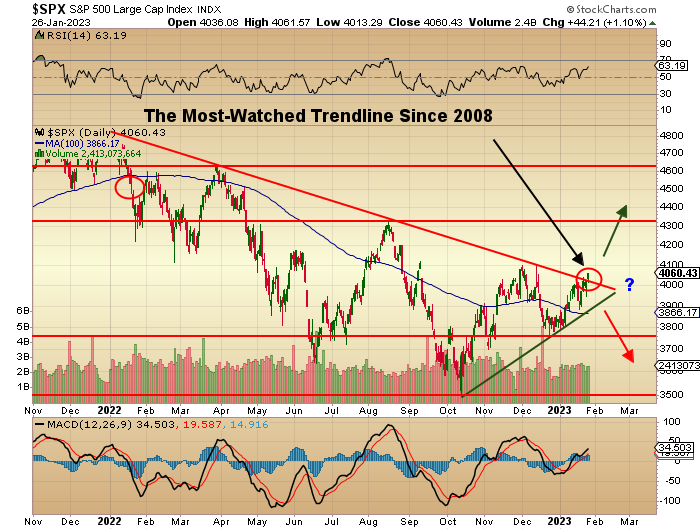
Things could become even more interesting for global equity markets as shifting fundamental themes influence sentiment. In 2022, stock markets were a battleground with the S&P 500 concluding almost 20% lower thanks to rising interest rates and growth concerns. Equity bulls could fight back with a vengeance in the second half of 2023 as slowing inflation encourages central banks to pivot. Any signs of rates being cut down the road could sweeten appetite for stocks, with the S&P500 and Nasdaq among others experiencing bullish reversals. Falling interest rates would offer consumers some relief, by encouraging spending and investment, and ultimately stimulating economic activity. Looking at the technicals, the S&P 500 remains in a bearish channel on the monthly charts. A solid breakout above 4,300 could open a path back to towards the all-time high at 4,819.5.

Watch out for 2024 presidential buzz

We expect some buzz around the 2024 US presidential elections, especially after Donald Trump announced his presidential bid, “In order to make America great and glorious again”. The news flow around the US elections may intensify with every passing quarter, translating into bursts of volatility across global financial markets. With Elon Musk reinstating Trump’s account on Twitter in November, the former President’s tweets have the potential to influence markets. In the past, price action has displayed high sensitivity to Trump’s tweets and history could repeat itself as the focus slowly turns to the 2024 elections.

Oil markets battleground for bulls & bears

Looking at commodities, it could be a volatile year for oil if the supply and demand dynamics clash. OPEC expect to see robust global oil demand growth in 2023 with potential economic upside coming from a relaxation of China’s zero Covid policies. Indeed, back in December, the world’s largest energy consumer issued new guidelines lifting its most severe Covid policies. To global investors, these guidelines represented a fresh of breath air and offered hope for strong future China demand. On the supply side, the European Union has capped Russian crude oil in an attempt to limit its earnings, ultimately impacting Moscow’s budget. Given how this could have uncertain effects on the price of oil as concerns over lost supply through the price cap clash with lingering fears over gloomy demand outlook, volatility may become a major theme. Interestingly, both brent and crude concluded 2022 higher, will the story be different in the New Year?

Watch out for gold!

Gold could be one of the biggest winners in 2023 as cooling rate hike bets hit the dollar along with Treasury yields. Possible geopolitical flare-ups and concerns over world growth could stimulate appetite for the zero-yielding metal. If Chinese economic growth improves, this could also boost consumer demand, adding to the growing list of positive themes supporting gold bugs. After ending 2022 practically flat, gold has the potential to shine with the fundamentals potential elevating prices towards the psychological $2000 level.

In a nutshell…

The overall outlook for 2023 may heavily depend on the interaction between inflation and central bank intervention.  While other fundamental forces and themes are expected to influence global sentiment, if central banks successfully tame the inflation beast, the worst could be behind us.


Forex-Time-LogoArticle by ForexTime

ForexTime Ltd (FXTM) is an award winning international online forex broker regulated by CySEC 185/12 www.forextime.com

Which Precious Metal Has Chen Excited for 2023?

Source: Streetwise Reports  (12/28/22)

It’s valued the world over as a precious metal, and now it’s in demand for the green economy. Which element has asset manager Chen Lin looking forward to the New Year?

What is Chen buying? Right now, silver. Lots of silver.

The asset manager and author of the What is Chen Buying? What is Chen Selling? newsletter said he is bullish on the precious metal because the push for greener energy will lead to the adoption of more solar energy, a technology that requires large amounts of it.

“The rising silver loading factor times explosive growth of solar panel demand will create a silver tsunami,” Chen wrote.

“The rising silver loading factor times explosive growth of solar panel demand will create a silver tsunami,” Chen wrote in his newsletter in December.

“Silver mine production, mostly as a by-product, has been very stable for the past decade. As we know, it takes years to explore, then years to permit and build a new mine. So, it will likely take a decade to bring up the production even as the demand explodes.”

The Silver Institute has predicted that global silver demand will reach a new high of 1.21 billion ounces in 2022, up 16% from last year. Industrial demand is on course to grow to 539 million ounces (Moz). And it won’t be just for solar panels.

Chen also suggests that those who wish to have a happy new year invest in companies specializing in rare metals, biotech, and/or energy stocks.

“Developments such as ongoing vehicle electrification (despite sluggish vehicle sales), growing adoption of 5G technologies, and government commitments to green infrastructure will have industrial demand overcome macro-economic headwinds and weaker consumer electronics demand,” the report said.

The global silver market is forecasted to record a second consecutive deficit between supply and demand this year, the Institute said. At 194 Moz, it will be a multi-decade high and four times 2021’s level.

Chen also suggests that those who wish to have a happy new year invest in companies specializing in rare metals, biotech, and/or energy stocks.

SilverCrest

Chen says he has a collection of silver companies, large and small, in his portfolio, but he is especially interested in SilverCrest Metals Inc. (SIL:TSX.V; SILV:NYSE.American).

SilverCrest is developing a 1,250-tonne-per-day processing plant at its Las Chispas Mine located in Sonora, Mexico, with initial proven and probable reserves of 94.7 million ounces (94.7 Moz silver equivalent (AgEq), placing it among the highest-grade primary silver projects in the world.

“I think 2023 could be the year for SILV as it advances the mine production,” Chen said.

The mine would have an initial life of 8.5 years. Analyst Phil Ker of PI Financial Inc. wrote on Dec. 8 that Las Chispas was expected to produce 9.9 Moz AgEq in 2023. Ker rated the stock Buy with a CA$14 target price.

“We believe a premium valuation is warranted and suggest investors continue to accumulate shares ahead of achieving positive cash flow from Las Chispas,” he wrote.

Sprott Asset Management LP owns 5.75% of the company, Gilder Gagnon Howe & Co. LLC owns 5%, Van Eck Associates Corp. owns 4.38%, ETF Managers Group LLC owns 3.46%, and Sprott Asset Management USA Inc. owns 2.94%, according to Reuters.

It has a market cap of US$934.66 million with 146.5 million shares outstanding, 140.6 million of them free-floating. It trades in a 52-week range of US$10.13 and US$4.58.

Chen says he also has other silver producers in Mexico, including MAG Silver Corp. (MAG:TSX; MAG:NYSE American) and GoGold Resources Inc. (GGD:TSX).

First Tellurium Corp.

Another element critical to solar panels is tellurium, one of the planet’s rarest elements. First Tellurium Corp. (FTEL:CSE) has two important tellurium resources at its Deer Horn project in British Columbia and its Klondike Tellurium project in Colorado.

“Governments are just starting to understand the importance of tellurium,” said First Tellurium President and Chief Executive Officer Tyrone Docherty. “It has flown largely under the radar, even though it’s essential for cadmium-telluride solar panels and new lithium-tellurium (Li-Te) batteries that could revolutionize energy storage.”

Chen said that North America is too dependent on foreign sources for the element.

“This metal can be in demand, this is a pure-play, and management just a lot of (its) own money in the stock,” Chen said.

Reuters has Docherty as the top shareholder in the company with 10.46%, Josef Anthony Steve Fogarassy has 1.38%, and Lyle Allen Schwabe owns 0.85%.

Its market cap is CA$9.44 million, with 72.7 million shares outstanding, 63.4 million of them free-floating. It trades in a 52-week range of CA$0.71 and CA$0.085.

Amyris Inc.

A returning favorite of Chen’s is Amyris, Inc. (AMRS:NASDAQ), a synthetic biotech company that “programs” cells to create sustainable ingredients.

The company has begun production at its new precision sugar fermentation plant in Brazil. The plant comprises five precision fermentation “mini-factories” that can produce 13 of Amyris’ molecules, which are used in everything from health and beauty products to flavors and fragrances.

Amyris is a frontrunner for the US$1 billion the U.S. Department of Defense will be investing in the bioindustrial domestic manufacturing infrastructure over the next five years. It’s part of the US$2 billion the U.S. government plans to spend to boost biomanufacturing under an executive order announced last month.
Amyris on Tuesday announced a US$500 million contract to supply two of its ingredients.

“If the stock is over US$5, I wouldn’t buy it,” Chen told Streetwise Reports. “But if it’s two and change . . .  it’s very good risk-reward.”

Amyris’ top shareholders include Foris Ventures LLC at 22.39%, The Vanguard Group Inc. at 5.98%, Koninklijke DSM NV at 5.06%, BlackRock Institutional Trust Co. N.A. at 3.57%, and Vivo Capital LLC at 2.35%, according to Reuters.

Its market cap is US$564.57 million, and it has 330.2 million shares outstanding, 234.2 million of them free-floating. It trades in a 52-week range of US$6.37 and US$1.44.

Viking Therapeutics Inc.

Viking Therapeutics Inc (VKTX:NASD) saw its stock price rise nearly 75% earlier this month when another company, Madrigal Pharmaceuticals Inc. (MDGL:NASDAQ), reported positive results from its Phase 3 clinical trial of its nonalcoholic steatohepatitis (NASH) treatment.

Viking is working on its own NASH drug and is holding a Phase 2b clinical trial. Shareholders are hoping for similar success.

The “situation is very good,” Chen said. “Most fund managers are on vacation. So, if you can get in before the end of the year when they come back . . .  they will start buying, and you can sell.”

The company is also running a Phase 1 clinical trial to develop a drug that could treat various metabolic disorders.

Ligand Pharmaceuticals Inc. owns 8.76% of Viking, the Vanguard Group Inc. owns 4.34%, Millennium Management LLC owns 4.05%, Balyasny Asset Management LP owns 3.49%, and Two Sigma Investments LP owns 2.47%, Reuters said.

Its market cap is US$651.47 million. It has 76.7 million shares outstanding, with 67.8 million free-floating. It trades in a 52-week range of US$8.63 and US$2.02.

TAG Oil Ltd.

In the energy world, Chen likes TAG Oil Ltd. (TAO:TSX) if you can take the risk that its projects are in the volatile Middle East and North Africa.

The company is initiating Phase 1 of a fracking program in Egypt in Q1 2023. It anticipates providing results as early as March.

“This seems to be a relatively low-risk fracking play,” Chen said. “The market value could increase at least tenfold.”

Askar Alshinbayev owns 10.99% of TAG Oil, YF Finance Ltd. owns 8.42%, Abdel Fattah Z. Badwi owns 2.06%, Shawn Reynolds owns 1.54%, and Suneel Gupta owns 1.03%, according to Reuters.

It has a market cap of CA$83.71 million with 154.6 million shares outstanding and 113.2 million free-floating. It trades in a 52-week range of CA$0.70 and CA$0.195.

Canacol Energy Ltd.

Another company returning to Chen’s list is Calgary-based Canacol Energy Ltd. (CNE:TSX; CNNEF:OTCQX), which is a major player in natural gas production and exploration in Colombia. Its stock dipped earlier this year when the country elected its first leftist leader, Gustavo Petro.

While Petro is against new oil and gas exploration, favoring elements needed for the green economy like copper and silver, the company has natural gas contracts that give it a dependable income.

BTG Pactual Affiliate Research analyst Daniel Guardiola rated the stock a Buy with a CA$5.50 target in November.

Canacol said it’s the largest independent onshore conventional natural gas exploration and production company in Colombia and that it supplies about 20% of the country’s natural gas.

Fourth Sail Capital LP owns 20.49% of Canacol, Cavengas Holdings S.R.L. owns 19.12%, Cobas Asset Management SGIIC SA owns 3.12%, Dimensional Fund Advisors LP owns 0.96%, and Abaco Capital Investments owns 0.27%, according to Reuters.

Canacol has a market cap of CA$353 million and 170.6 million outstanding shares, including 137.7 million free-floating. It trades in a 52-week range of CA$3.62 and CA$1.75.

Sign up for our FREE newsletter

Disclosures

1) Steve Sobek wrote this article for Streetwise Reports LLC and provides services to Streetwise Reports. He or members of his household own securities of the following companies mentioned in the article: None. He or members of his household are paid by the following companies mentioned in this article: None.

2) The following companies mentioned in this article are billboard sponsors of Streetwise Reports: MAG Silver Corp. Click here for important disclosures about sponsor fees. As of the date of this article, an affiliate of Streetwise Reports has a consulting relationship with First Tellurium Inc. Please click here for more information.

3) The article does not constitute investment advice. Each reader is encouraged to consult with his or her individual financial professional and any action a reader takes as a result of information presented here is his or her own responsibility. By opening this page, each reader accepts and agrees to Streetwise Reports’ terms of use and full legal disclaimer. This article is not a solicitation for investment. Streetwise Reports does not render general or specific investment advice and the information on Streetwise Reports should not be considered a recommendation to buy or sell any security. Streetwise Reports does not endorse or recommend the business, products, services or securities of any company mentioned on Streetwise Reports.

4) From time to time, Streetwise Reports LLC and its directors, officers, employees or members of their families, as well as persons interviewed for articles and interviews on the site, may have a long or short position in securities mentioned. Directors, officers, employees or members of their immediate families are prohibited from making purchases and/or sales of those securities in the open market or otherwise from the time of the decision to publish an article until three business days after the publication of the article. The foregoing prohibition does not apply to articles that in substance only restate previously published company releases. As of the date of this article, officers and/or employees of Streetwise Reports LLC (including members of their household) own securities of First Tellurium Corp., a company mentioned in this article.

5) This article does not constitute medical advice. Officers, employees and contributors to Streetwise Reports are not licensed medical professionals. Readers should always contact their healthcare professionals for medical advice.


How Putin’s war and small islands are accelerating the global shift to clean energy, and what to watch for in 2023

By Rachel Kyte, Tufts University 

The year 2022 was a tough one for the growing number of people living in food insecurity and energy poverty around the world, and the beginning of 2023 is looking bleak.

Russia’s war on Ukraine, one of the world’s largest grain and fertilizer feedstock suppliers, tightened global food and energy supplies, which in turn helped spur inflation.

Drought, exacerbated in some places by warring groups blocking food aid, pushed parts of the Horn of Africa toward famine. Extreme weather disasters have left trails of destruction with mounting costs on nearly every continent. More countries found themselves in debt distress.

But below the surface of almost weekly bad news, significant changes are underway that have the potential to create a more sustainable world – one in which humanity can tackle climate change, species extinction and food and energy insecurity.

I’ve been involved in international sustainable development for most of my career and now teach climate diplomacy. Here’s how two key systems that drive the world’s economy – energy and finance – are starting to shift toward sustainability and what to watch for in 2023.

Ramping up renewable energy growth

Russian President Vladimir Putin’s war on Ukraine has reverberated through Europe and spread to other countries that have long been dependent on the region for natural gas. But while oil-producing countries and gas lobbyists are arguing for more drilling, global energy investments reflect a quickening transition to cleaner energy.

Call it the Putin effect – Russia’s war is speeding up the global shift away from fossil fuels.

In December, the International Energy Agency published two important reports that point to the future of renewable energy.

First, the IEA revised its projection of renewable energy growth upward by 30%. It now expects the world to install as much solar and wind power in the next five years as it installed in the past 50 years.

The second report showed that energy use is becoming more efficient globally, with efficiency increasing by about 2% per year. As energy analyst Kingsmill Bond at the energy research group RMI noted, the two reports together suggest that fossil fuel demand may have peaked. While some low-income countries have been eager for deals to tap their fossil fuel resources, the IEA warns that new fossil fuel production risks becoming stranded, or uneconomic, in the next 20 years.

The main obstacles to the exponential growth in renewable energy, IEA points out, are antiquated energy policy frameworks, regulations and subsidies written at a time when energy systems, pricing and utilities were all geared toward fossil fuels.

Look in 2023 for reforms, including countries wrestling with how to permit smart grids and new transmission lines and finding ways to reward consumers for efficiency and clean energy generation.

The year 2023 will also see more focus on developing talent for the clean energy infrastructure build-out. In the U.S., the recently passed Inflation Reduction Act and the Bipartisan Infrastructure Law will pour hundreds of billions of dollars into clean energy and technology. Europe’s REPowerEU commitments will also boost investment. However, concerns about “buy American” rules within the new U.S. climate laws and an EU plan to launch a carbon border adjustment tax are raising fears that nationalism in trade policy could harm the speed of green growth.

Fixing international climate finance

The second system to watch for reform in 2023 is international finance. It’s also crucial to how low-income countries develop their energy systems, build resilience and recover from climate disasters.

Wealthy nations haven’t moved the energy transition forward quickly enough or provided enough support for emerging markets and developing countries to leapfrog inefficient fossil-fueled energy systems. Debt is ballooning in low-income countries, and climate change and disasters like the devastating flooding in Pakistan wipe out growth and add costs.

Barbados Prime Minister Mia Mottley has brought together international financial institutions with think tanks and philanthropists to push for changes.

Countries like Mottley’s have been frustrated that the current international financial system – primarily the International Monetary Fund and the multilateral development banks, including the World Bank – haven’t adapted to the growing climate challenges.

Mottley’s Bridgetown Initiative proposes a new approach. It calls for countries’ vulnerability to be measured by climate impact, and for funds to be made available on that basis, rather than income. It also urges more risk-taking by the development banks to leverage private investment in vulnerable countries, including climate debt swaps.

The Bridgetown Initiative also calls for countries to reflow their IMF Special Drawing Rights – a reserve available to IMF members – into a proposed fund that vulnerable countries could then use to build resilience to climate change. A working group established by the G-20 points out that the “easiest” trillion dollars to access for urgent climate response is that already in the system.

In early 2023, Mottley and French President Emmanuel Macron, with others, will drive a process to examine the possible measures to improve the current system before the annual meetings of the World Bank and the IMF in April, and then at a June summit called by France.

Watch in 2023 to see if this is the year the G-7 and the G-20 rekindle their global economic leadership roles. Their members are the largest owners of the international financial institutions, and also the largest emitters of carbon dioxide on the planet. India will lead the G-20 in 2023, followed by Brazil in 2024. Their leadership will be critical.

Watch small nations’ leadership in 2023

In 2023, expect to see small nations increasingly push for global transformation, led by the V-20 – the finance ministers of the countries most vulnerable to climate change.

In addition to the Bridgetown Initiative, Barbados has suggested a way to pool new funds working off the model of an oil spill damage fund at the International Maritime Organization. In the IMO fund, big oil importers pay in, and the fund pays out in the event of a spill. Barbados supports creating a similar fund to help countries when a climate event costs more than 5% of a country’s GDP.

This model is potentially a way to pool funds from a levy on the windfall profits of energy companies that saw their profits soar in 2022 while billions of people around the world suffered from energy price inflation.

Finally, the breakthrough agreement on biodiversity reached in December 2022 provides more promise for 2023. Countries agreed to conserve 30% of the world’s biodiversity and restore 30% of the world’s degraded lands. The funding – a $30 billion fund by 2030 – remains to be found, but the plan clarifies the task ahead and nature’s place in it. And we can hope 2023 is a year when signs of peace in our war against nature break out.The Conversation

About the Author:

Rachel Kyte, Dean of the Fletcher School, Tufts University

This article is republished from The Conversation under a Creative Commons license. Read the original article.

Three ‘F’ words to sum up 2022

By ForexTime 

This year has been fraught with market volatility, to say the least.

As we bid goodbye to 2022, let’s recap 3 major themes, each being an F-word, that rocked major assets over the past 12 months:


  1. Fed

The primary driver of global markets in 2022 has been the most aggressive Federal Reserve – the US central bank – that we’ve seen since the 1980s.

Recall that a central bank’s primary weapon in cooling down inflation is to move interest rates higher. After all, the US was experiencing its fastest inflation in 40 years!

To be more specific, markets were caught off guard particularly by the speed at which the Fed raised interest rates this year (to be fair, many Fed officials themselves didn’t think they’d have to hike rates so much so soon either).

  • This time last year, markets only forecasted that US interest rates would be hiked by a maximum of 75 basis points for all of 2022.
  • Fast forward 12 months later, we have seen US interest rates skyrocket by 425 basis points, bringing the benchmark rate from near-zero now up to 4.5% – its highest level since 2007!


Gold’s enemy #1 for 2022 proved to be US interest rates climbing at that speed, and the US dollar soaring in tandem.


The market’s fixation on soaring US interest rates, coupled with the fact that gold is a zero-yielding asset (does not pay interest/generate income for investors who hold on to this asset) to drag down prices, despite the precious metal’s traditional roles as:

  • Inflation hedge: a way to protect investors’ wealth against the corrosive effects of skyrocketing inflation
  • Safe haven: a way to protect investors’ wealth in times of great uncertainty.

Hence, bullion was dragged down by as much as 22% from its post-Russian invasion peak to its lowest levels since 2020.

Though to be fair, spot gold has embarked on a remarkable recovery since early November on hopes that the “worst” of the Fed rate hikes are over.

READ MORE:


Now, here’s the second F-word …

  1. Fear

From the Russia-Ukraine war that’s still raging on, to the UK’s worst cost-of-living crisis in a generation, and even crypto’s collapse – there were many notable events that frightened investors and traders worldwide.

Such events hastened those in the markets to scrambling for ways to protect their money.

Amid all the FUD (fear, uncertainty, doubt), one particular asset reigned supreme = King Dollar.

Note how the benchmark Dollar index, DXY (used to measure the US dollar’s overall performance, though specifically the US dollar’s performance against 6 other major currencies) soared by as much as 20% this year.

READ MORE:


Though since late-September, the DXY has halved its year-to-date gains, on the hopes that the Fed is closer to being done with its interest rate hikes.

Still, to prove the US dollar’s dominance as the safe haven of choice for 2022, here’s a comparison of how the DXY fared against other traditional safe haven assets, as measured by their respective year-to-date performances on this penultimate day of the year:

  • DXY = +9%
  • Gold = -1%
  • Swiss Franc = -1.4%
  • US bonds = -13% (as measured by the Bloomberg USAgg Index)
  • Japanese Yen = -14%


And now, for the final F-word of this year-in-review article …


  1. Fundamentals

Remember the days when central banks were printing money out of thin air and just dishing it out?

Well, a lot of that money also made it into stock markets, which sent prices to record highs.

Recall how the S&P 500 set a record high on January 3rd, 2022?

Well, those days are now long gone.

Central banks sought to suck some of that money back out of the financial markets, either by hiking interest rates or by halting the purchase of bonds (quantitative tightening).

This year, companies had to wave bye-bye to easy money, with interest rates no longer at record lows.

Hence, investors demanded that these companies return to the fundamentals: show that it can continue churning out profits in the future.

Companies with weak fundamentals, whose future profitability or growth were in severe doubt, were roundly punished by the stock market:

  • Coinbase (crypto platform) = -87%
  • Snap (social media) = -82%
  • Tesla (EV maker) = -68%

(NOTE: It was a particularly brutal year for EV makers, with the likes of Lucid Group, Rivian and Nio each suffering even bigger annual losses than Tesla’s)


Even Big Tech giants such as, from Amazon to Meta, had to let go tens of thousands of employees this year.

Such layoffs were carried out in the name of making sure these companies remain financially sound amid these turbulent times.


Furthermore, with the Fed rate hikes threatening to send the US economy into a recession, such a contraction in the world’s largest economy is expected to negatively impact the earnings of these publicly-listed companies.

Amid all these woes, and the end of the easy-money era, no surprise that the S&P 500 may well end the year in a ‘bear market’ (a 20% drop from its recent high).


READ MORE:


So, there you have it.

3 ‘F’ words that encapsulated a year to remember.


But before we wrap up, here’s a “bonus” F-word for you to consider … “Future”.

After all, investors and traders are forward-looking creatures, with today’s prices reflecting what markets think/believe/hope will happen down the line.

With that in mind, do look out for our 2023 Preview that’ll be posted here on this “Market Analysis” section soon.

Thank you for reading our Daily Market Analysis throughout 2022.

We hope to continue keeping you up-to-date on all the major happenings happening across FX, commodities, precious metals, and stocks in the year ahead.


Have a happy new year, and may 2023 be a rewarding time in the markets for us all.


Forex-Time-LogoArticle by ForexTime

ForexTime Ltd (FXTM) is an award winning international online forex broker regulated by CySEC 185/12 www.forextime.com

The New Investor’s Guide To Investing in Metal Stocks

Source: Streetwise Reports  (12/22/22)

For new investors, mining stocks can be an excellent gateway to learning about investing in general. Explore how and where you can buy gold stocks and more.

Are you one of the many people who go through life with a vague curiosity about investing?

Perhaps you think you’ll get to it when you’re older or when you have more disposable income. Maybe you see it as gambling and, although interested, you don’t really know where to begin. If that sounds like you, then this guide will serve as a pathway to your investing future. We’ll help you explore the major types of metals people buy and show you some places to buy them.

Explore the most popular types of metal stocks people invest in, including what they are, where you can research them, and how you can begin investing the moment you finish this article.
Which Metals Do People Invest In? 

While the most common mining stocks people invest in are gold and silver stocks, most others are viable investments as well. When you buy the stock of a particular metal, like gold stocks, you’re actually investing in one of the companies that mines that particular mineral. It’s these types of metal stocks that are covered in this article, not purchasing physical metals.

Nevertheless, it helps as an investor to understand what makes these metals so highly valued in the first place. From the beginning of time and throughout every culture, gold, silver, nickel, and other metals have been used as currency.

When America issued its first paper money in 1690, these metals remained valuable. From jewelry to circuitry, building to computing, these metals are deeply ingrained into our society.

Unique for their hardness, beauty, and rarity, precious metals are known as one of the safest and most traditionally stable assets you can invest in.

Precious Metals

The main type of metals people invest in is also the rarest and most valuable. Precious metal stocks are primarily used as a hedge against inflation, and gold, silver, and platinum are the most popular.

Each metal has its own traits, tendencies in the market, and uses in society. Learn more about precious metals and consider which might be worth adding to your portfolio.

Gold

Ancient civilizations placed a lot of value on gold; thousands of years later, it’s still one of the most highly-coveted substances on Earth. Most frequently used as jewelry and a form of currency, gold has special traits that add to its mystique. These include

Unique Facts About Gold

– Gold is special in that it doesn’t rust or corrode and can conduct heat and electricity.

– The United States has the largest reserve of gold in the world, with 8,867 tons.

– Investors love gold and gold stocks for their tendency to hold value in volatile markets.

Where Can You Learn More About Investing in Gold?

As the most widely-invested metal, there are numerous sources of information on gold stocks and other gold-related investments.  Some reputable sources you may want to explore include The Gold Report, Barron’s, and USAGOLD.

Silver

Also a staple in jewelry, in addition to numerous other things, silver is less precious but far more useful than gold. From scrap to batteries, smartphones to car parts, silver is highly-versatile and constantly in demand.

Unique Facts About Silver

– Silver is one of the easiest investments to liquidate; jewelers will pay the market price for silver.

– Unlike stocks, silver is never likely to crash because it holds real-world, inherent value.

– One of the oldest elements, silver has been traded as a currency since 700 BC.

Whether you choose to invest in silver or silver stocks, consider it a viable and popular investment to add to your portfolio.

Platinum

Rounding out the top three precious metals, platinum is just as highly-coveted as gold and silver. As the only material suitable for the electrodes in pacemakers, platinum is extremely valuable to humanity as well as savvy investors.

Unique Facts About Platinum

– The price of platinum typically fluctuates with manufacturing and industrial industries.

– Platinum is even rarer than gold; all the platinum ever found would fill a pool up to your ankles.

– Platinum is among the heaviest metals: a 6-inch cube weighs as much as an average person.

Palladium and Other Precious Metals

The list of precious metals goes far beyond the three most popular options. From palladium to rhodium, there are numerous metals available, each with its own value as an investment.

If you’re curious about some of the other precious metals you can invest in, here’s a list of some that are worth exploring:

  • Palladium
  • Rhodium
  • Ruthenium
  • Osmium
  • Iridium

Whichever precious metal appeals most to you, it’s worth taking some time to research how they’re known to perform as an investment.

Brief Note on Base Metals

In addition to precious metals, you can also choose to invest in base metals. Base metals are used in manufacturing and are typically more vulnerable to corrosion than precious metals.

Common examples of base metals include iron, steel, copper, nickel, aluminum, lead, zinc, tin, and tungsten. While they lack the rarity of precious metals, base metals are in high demand nonetheless, so consider investing in them to balance your portfolio.

How to Start Investing in Mining Stocks

Whenever you’re ready to buy stocks from a company that mines a particular metal, there are many safe places to do it online.

The first thing you’ll need to begin trading stocks online is your credit card, bank account info, or another account, like PayPal for example. This information will be required when making an account so you can buy stocks and metals online.

Making purchases is easy, regardless of the site you’re using. I recommend a few you may want to look into below.

When reviewing investments, there are numbers and symbols that can get confusing until you know what they mean. Remember that it’s critical to understand the measurements of the metals you’re buying and to stay within your budget while investing.

Once you’ve bought metal stocks, you can monitor their progress over time. If you need to liquidate your money by selling the stocks, every stock site will have slightly different guidelines for doing so.

Important Notes on Mining Stocks

If you plan on buying precious metals stocks, it’s worth having a formidable understanding of mining stocks. Here are some useful things to know before purchasing silver stocks or any other mining stock.

The Two Types of Mining Stocks: Juniors and Majors

Juniors are typically related to mining commodities like oil and natural gas. It’s important to know that they’re a risky investment compared to majors.

Junior mining companies are involved in exploring, preparing, and attaining permits for various metals.

Majors are widely considered a safer and much more mature investment. Majors are typically much larger companies that have been successfully mining and producing metals for many years.

What Factors Affect Mining Stocks?

Every type of stock is impacted by different factors, and the same is true for mining stocks.

Factors like fluctuating cost of the metal their mining and external problems at the physical mine, including geopolitical conflict and weather, all affect mining stock prices.

Where are the Best Places to Invest Online?

It’s worthwhile to check out multiple options before choosing which site to purchase mining stocks from. Each site will have unique pricing plans, features, and rules for liquidating your money and making trades.

Investing online is completely normal now with numerous options, and many precautions are in place to keep it as safe as possible.

If you’re interested in purchasing metal mining stocks such as gold stocks, check out these popular sites: 

Fine-Tuning Your Investment Strategy

Depending on how deep you want to take your investment knowledge, you may opt to do additional research online. Many stock experts eagerly offer guidance and advice on maximizing your portfolio.

While you’ll find experts on every side of an investment argument, it’s critical to remember that it’s your money being invested.

Expert opinions may be valuable, but it’s ultimately you who will be celebrating the gains or suffering the losses in your portfolio. For that reason, it’s typically best to look at a variety of sources before making an investment decision.

How To Use Stock Advice From Experts

As a new investor, seeing detailed stock reports may initially seem overwhelming. When first starting, if you can focus on one or two key takeaways and truly understand them, you’ll become increasingly familiar with the terms and concepts.

Over time, some investment experts or websites may resonate with you, becoming a critical part of your research process.

Examples of Popular Sources of Investment Information

Consider these popular sources of stock news and updates, along with a key takeaway from each of them.

  • Stockhead: “Gold to Shine in 2023, says Bloomberg”

This article is immensely useful for metal investors, as it provides updates on iron ore, gold, and lithium.

Among the many details is this key takeaway: Bloomberg senior strategist, Mike McGlome, explains how gold is already trending more positively and that it’s poised to go up in value in 2023.

  • The Gold Report: “Expert Says Silver May Have a ‘Stellar Performance in 2023’”

Always a valuable source due to many knowledgeable contributors, The Gold Report covers all metal mining stocks, including gold. This highly-detailed article focuses on comments by expert Michael Ballanger.

One key takeaway is that Ballanger explained the parallel between the performance of silver and that of copper and stated that silver is in a position for a “stellar performance in 2023.”

Ultimately, understanding how to interpret investment news and advice will get easier with practice and will likely help you become a smarter, more savvy investor.

Trust Streetwise Reports for the Latest News on Metals

Streetwise Reports is a one-stop hub for anyone whose curious about investing. Featuring articles and valuable information you won’t find anywhere else, you can count on Streetwise Reports to provide detailed and updated investment news daily.

Those interested in mining stocks will want to check out the Gold Report. There you’ll find new, in-depth articles on the events affecting stock prices worldwide.

Our team at Streetwise Reports works around the clock to compile meaningful stock information from a wide range of sources. We hope you’ll make Streetwise Reports the main source for investment news that matters.

Want more insight before your next stock purchase? Sign up for one of our FREE newsletters to get information that can help you make better investment decisions

Disclosures:
1) Nicholas Napier wrote this article for Streetwise Reports LLC and provides services to Streetwise Reports as an independent contractor. They members of their household own securities of the following companies mentioned in the article: None. They or members of their household are paid by the following companies mentioned in this article: None.

2) Comments and opinions expressed are those of the specific experts and not of Streetwise Reports or its officers. The information provided above is for informational purposes only and is not a recommendation to buy or sell any security.

3) The article does not constitute investment advice. Each reader is encouraged to consult with his or her individual financial professional and any action a reader takes as a result of information presented here is his or her own responsibility. By opening this page, each reader accepts and agrees to Streetwise Reports’ terms of use and full legal disclaimer. This article is not a solicitation for investment. Streetwise Reports does not render general or specific investment advice and the information on Streetwise Reports should not be considered a recommendation to buy or sell any security. Streetwise Reports does not endorse or recommend the business, products, services or securities of any company mentioned on Streetwise Reports.

4) From time to time, Streetwise Reports LLC and its directors, officers, employees or members of their families, as well as persons interviewed for articles and interviews on the site, may have a long or short position in securities mentioned. Directors, officers, employees or members of their immediate families are prohibited from making purchases and/or sales of those securities in the open market or otherwise from the time of the decision to publish an article until three business days after the publication of the article. The foregoing prohibition does not apply to articles that in substance only restate previously published company releases.


FTX’s collapse mirrors an infamous 18th century British financial scandal

By Amy Froide, University of Maryland, Baltimore County 

Enron. Bernie Madoff. FTX.

In modern capitalism, it seems as if stories of companies and managers who engage in fraud and swindle their investors occur like the changing of the seasons.

In fact, these scandals can be traced back to the origins of publicly traded companies, when the first stockbrokers bought and sold company shares and government securities in the coffee houses of London’s Exchange Alley during the 1700s.

As a historian of 18th century finance, I am struck by the similarities between what’s known as the Charitable Corporation Scandal and the recent collapse of FTX.

A noble cause

The Charitable Corporation was established in London in 1707 with the noble mission of providing “relief of the industrious poor by assisting them with small sums at legal interest.”

Essentially, it sought to provide low-interest loans to poor tradesmen, shielding them from predatory pawnbrokers who charged as much as 30% interest. The corporation made loans available at the rate of 5% in return for a pledge of property for security.

The Charitable Corporation was modeled on Monti di Pietà, a charitable institution of credit established in Catholic countries during the Renaissance era to combat usury, or high rates of interest.

Unlike the Monti di Pietà, however, the British version – despite its name – wasn’t a nonprofit. Instead, it was a business venture. The enterprise was funded by offering shares to investors who, in return, would make money while doing good. Under its original mission, it was like an 18th century version of today’s socially responsible investing, or “sustainable investment funds.”

Raiding the fund

In 1725, the Charitable Corporation diverted from its original mission when a new board of directors took over.

These men turned the corporation into their own piggy bank, taking money from it to buy shares and prop up their other companies. At the same time, the company’s employees began to engage in fraud: Safety checks ceased, books were kept irregularly and pledges went unrecorded.

Investigators would ultimately find that £400,000 or more in capital was missing – roughly $108 million in today’s U.S. dollars.

In the autumn of 1731, rumors began to circulate about the solvency of the Charitable Corporation. The warehouse keeper at the time, John Thomson, who was in charge of all loans and pledges but also in league with the five fraudulent directors, hid the company’s books and fled the country.

At the shareholders’ quarterly meeting, they found that money, pledges and accounts had all gone missing. At this point, the proprietors of the Charitable Corporation stock appealed to the British Parliament for redress. One-third of those who petitioned were women, a proportion that equaled the percentage of women who held shares in the Charitable Corporation.

Many women were drawn to the corporation because of its public mission in providing small loans to working people. It’s also possible that they had been intentionally targeted for fraud.

The parliamentary investigation led to various charges being leveled against both managers and employees of the Charitable Corporation. Many of them were forced to appear before Parliament and were arrested if they did not. The managers and employees deemed most responsible for the 1732 fraud, such as William Burroughs, had their assets seized and inventoried in order to help pay back the shareholder losses.

Bankruptcy proceedings were started against the banker and broker, George Robinson, and the warehouse keeper, Thomson. Both Sir Robert Sutton and Sir Archibald Grant were expelled as members of the House of Commons, with Grant being prevented from leaving the country and Sutton ultimately prosecuted in several courts.

In the end, the shareholders received a partial government bailout – Parliament authorized a lottery that reimbursed only 40% of what the corporation’s creditors had lost.

The risks of concentrated power

There are several key characteristics that stand out in the collapses of both the Charitable Corporation and FTX. Both companies were offering something new or venturing into a new sector. In the former’s case, it was microloans. In FTX’s case, it was cryptocurrency.

Meanwhile, the management of both ventures was centralized in the hands of just a few people. The Charitable Corporation got into trouble when it reduced its directors from 12 to five and when it consolidated most of its loan business in the hands of one employee – namely, Thomson. FTX’s example is even more extreme, with founder Sam Bankman-Fried calling all the shots.

In both cases, the key fraud was using the assets of one company to prop up another company managed by the same people. For example, in 1732, the corporation’s directors bought stock in the York Buildings Company, in which many of them were also involved. They hoped to juice stock prices. When that didn’t happen, they realized they couldn’t cover what they had taken out of the Charitable Corporation’s funds.

Fast forward nearly 300 years, and a similar story seems to have played out. Bankman-Fried allegedly took money out his customer accounts in FTX to cover his cryptocurrency trading firm, Alameda Research.

News of both frauds also came as a surprise, with little advance warning. Part of this is due to the ways in which managers were well respected and well connected to both politicians and the financial world. Few public figures mistrusted them, and this proved to be a useful screen for deceit.

I would also argue that in both cases the company’s connection to philanthropy lent it another level of cover. The Charitable Corporation’s very name announced its altruism. And even after the scandal subsided, commentators pointed out that the original business of microlending was useful. FTX’s founder Bankman-Fried is an advocate of effective altruism and has argued that it was useful for him and his companies to make lots of money so he could give it away to what he deemed effective causes.

After the Charitable Corporation’s collapse in 1732, Parliament didn’t institute any regulation that would prevent such a fraud from happening again.

A tradition of loose oversight and regulations has been the hallmark of Anglo-American capitalism. If the response to the 2008 financial crash is any indication of what will come in the wake of FTX’s collapse, it’s possible that some bad actors, like Bankman-Fried, will be punished. But any regulation will be undone at the first opportunity – or never put in place to begin with.The Conversation

About the Author:

Amy Froide, Professor of History, University of Maryland, Baltimore County

This article is republished from The Conversation under a Creative Commons license. Read the original article.


What Will Happen to PM Stocks During a Market Crash?

Source: Clive Maund  (12/20/22) 

Expert Clive Maund reviews three charts to explain to you what he believes will happen to precious metals if the stock market crashes.

The U.S. stock market is in a position to crash and has been for some time, but so far, it has held up, and a reason for this is that risk has moderated somewhat. An important signal that a crash may be imminent will be if we suddenly see the 10-year yield starting to trend higher again, which could be due to a “black swan” event.

The current story is that the Fed’s trend of rising rates is slowing, but that could change abruptly if inflation gathers pace again. There are plenty of black swans not least of which is the growing risk of Russia launching a nuke or nukes. Russia is under attack from cruise missiles launched from Ukraine deep into its territory, which is obviously the handiwork of the U.S. and faces an existential crisis that may result in it playing its big card.

While we can expect the PM sector to drop hard if the market crashes, it can also be expected to come back strongly way ahead of the broad market hitting bottom.

If this happens, markets could crater.

On the 6-month chart for the 10-year Treasury Yield, we can see that the debt market is still relatively tranquil, with the yield down at 3.48%, having peaked above 4.2% in mid-late October.

However, this chart also suggests that yields could start higher again rather than they did early in August, as the drop from October looks like a reaction back towards a rising 200-day moving average within a larger uptrend, with it now being considerably oversold on its MACD indicator.

If they do start rising again, and especially if they should rise sharply, it would probably rip the rug out from under the stock market which remains very vulnerable to such a development.

The chief purpose of this update is to consider what will happen to the PM sector in the event that the stock market does crash soon. Market crashes generally involve “pan selloffs” because the financial stresses created cause investors to “dump everything over the side” in many instances because they are forced to due to margin calls.

This is why during the initial crash phase we can expect the PM sector to drop too. To illustrate this point and see what is likely to happen to the PM sector, we are now going to go back and see what happened during the 2008 crash.

The chart below, which is for a 15-month timeframe, shows what happened to GDX during the 2008 market crash. One of the most important points to note is that the PM sector suffered a severe decline from July through September 2008 before the stock market had even begun to crash. and this decline may correspond to the heavy drop we saw in the sector from April through September this year.

That drop in 2008 was followed by a sharp relief rally in September before the stock market crashed and took the PM sector down with it, so it is interesting to observe that we have just seen a sharp relief rally in November back into an area of heavy resistance where the sector appears to be rolling over again.

Clearly, if we see a repeat of what happened in 2008 — and so far, the broad market has had an uncanny resemblance to what happened then — then the stock market will crash soon and take the PM sector with it down to a final low.

Now compare the chart above to the 15-month chart, for now, keeping in mind that there is no crash on this chart because it hasn’t started yet, but might be about to.

A very important point to note that is a big reason why we are looking at the chart for 2008 is that during the 2008 crash, the PM sector bottomed way ahead of the broad market and a powerful rally ensued that recouped almost all of the losses occasioned by the crash.

What this means is that while we can expect the PM sector to drop hard if the market crashes, it can also be expected to come back strongly way ahead of the broad market hitting bottom.

We will shortly consider the most effective ways to position for a severe sector selloff provoked by a market crash.

CliveMaund.com Disclosures

The above represents the opinion and analysis of Mr. Maund, based on data available to him, at the time of writing. Mr. Maund’s opinions are his own, and are not a recommendation or an offer to buy or sell securities. Mr. Maund is an independent analyst who receives no compensation of any kind from any groups, individuals or corporations mentioned in his reports. As trading and investing in any financial markets may involve serious risk of loss, Mr. Maund recommends that you consult with a qualified investment advisor, one licensed by appropriate regulatory agencies in your legal jurisdiction and do your own due diligence and research when making any kind of a transaction with financial ramifications. Although a qualified and experienced stock market analyst, Clive Maund is not a Registered Securities Advisor. Therefore Mr. Maund’s opinions on the market and stocks can only be construed as a solicitation to buy and sell securities when they are subject to the prior approval and endorsement of a Registered Securities Advisor operating in accordance with the appropriate regulations in your area of jurisdiction.

Disclosures:
1) Statements and opinions expressed are the opinions of Clive Maund and not of Streetwise Reports or its officers. The author is wholly responsible for the validity of the statements. Streetwise Reports was not involved in any aspect of the article preparation. The author was not paid by Streetwise Reports LLC for this article. Streetwise Reports was not paid by the author to publish or syndicate this article.
2) This article does not constitute investment advice. Each reader is encouraged to consult with his or her individual financial professional and any action a reader takes as a result of information presented here is his or her own responsibility. By opening this page, each reader accepts and agrees to Streetwise Reports’ terms of use and full legal disclaimer. This article is not a solicitation for investment. Streetwise Reports does not render general or specific investment advice and the information on Streetwise Reports should not be considered a recommendation to buy or sell any security. Streetwise Reports does not endorse or recommend the business, products, services or securities of any company mentioned on Streetwise Reports.

3) From time to time, Streetwise Reports LLC and its directors, officers, employees or members of their families, as well as persons interviewed for articles and interviews on the site, may have a long or short position in securities mentioned. Directors, officers, employees or members of their immediate families are prohibited from making purchases and/or sales of those securities in the open market or otherwise from the time of the decision to publish an article until three business days after the publication of the article. The foregoing prohibition does not apply to articles that in substance only restate previously published company releases.

Did Jerome Powell Just Steal Christmas?

Source: Michael Ballanger  (12/19/22) 

 Expert Michael Ballanger looks at the S&P 500, the current state of gold and silver, and some resource companies, including Getchell Gold. Ballanger also touches on Powell’s anti-inflation campaign and tells you his 2023 outlook.

Last Tuesday afternoon, there was an attempted theft of untold magnitude and unimaginable loss; the chairman of the U.S. Federal Reserve Board attempted to make off with what was shaping up to be a powerful year-end rally, commonly referred to as “The Santa Claus Rally” (SCR).

S&P 500

Citing easing financial conditions as represented by the 17.5% rally of the October 13th lows in the S&P 500, the Fed jacked rates up by another 50 basis points to 4.4%. Still, it was the hawkish rhetoric spewed out during the 2:30 presser that aged like a toxic brew overnight, with the following three sessions shaving roughly 6% from the move.

As this is being written (Friday pre-opening), futures are called another 1% lower. Investors have been snapped to attention by a particularly Grinch-like central banker that would rather see a million lost jobs over a 7% inflation rate, especially when his “legacy before charity” is the seasonal policy of choice.

Wall Street cheerleaders are still calling for a face-ripping rally to 4,500 before the next real onslaught of selling but after the events of last Tuesday, their optimism is being put to a test of immense proportion.

What Mr. Powell surely realizes is the madness behind his intention to impersonate Paul Volcker, given that the size of the U.S. national debt is trillions greater in 2022 than in 1980 and that the cost of servicing that debt has grown commensurately.

With demographics clearly, worlds apart in 2022 from the impact of Babyboomers in the 1980s, if these Fed rate hikes continue to choke off growth (and jobs), the tax receipts normally collected due to increased employment and surging stock markets will quickly and fatally reverse exerting even greater pressure on debt serviceability and financial stability.

The outlook for financial conditions is, at best uncertain as we approach 2023, and markets abhor uncertainty the same way the Grinch abhorred Christmas . . .

From a technical perspective, the advance stopped right where it should have, punctuated by a downtrend line connecting peaks in late 2021, April, and August of 2022, and now the December peak at 4,100.

Wall Street cheerleaders are still calling for a face-ripping rally to 4,500 before the next real onslaught of selling but after the events of last Tuesday, their optimism is being put to a test of immense proportion.

I took profits on the UPRO:US position in two tranches, the first at a predetermined US$40 and then on a protective stop at US$38.95. I currently have a small call option position on the UPRO:US on the assumption that the Santa Claus Rally, scheduled to commence on Monday, will actually materialize as seasonality wins out over Fed jawboning.

Since the first half of December typically includes selling pressure brought about by year-end distributions from the funds, I expect to see diminished selling pressure next week with the possibility of a more pronounced uptick into New Year’s Day.

Gold and Silver

Gold for February delivery clawed its way back above US$1,800/ounce after getting bombed back to US$1,785 on Thursday. I am long a small trading position in the GLD January US$165 calls looking for US$175 by expiry, which translates into a test of the upper resistance band for February gold at US$1,875.

Silver is also acting well, coming off an overbought condition (RSI at 78.49) and a price peak at US$24.39 on Tuesday morning just prior to the FOMC shenanigans.

The gold mining stocks represented by the HUI have been in a downtrend since August 2020, peaking at around 373 and troughing out last summer at around 173 and currently residing at around 221. That is a big correction in any market, and to think that it has been inconsequential for the junior developers and explorers verges on the inane.

The VanEck Junior Gold Miner ETF (GDXJ:US) topped in August 2020 just shy of US$64.00 and today resides at US$35.18. The TSX Venture Exchange topped in August 2020 at a tad above 1,100 and today sits at 576.26.

Many of the high-flying juniors from the first half of the year with new, exciting discoveries have had their wings clipped, and no better example than MAX Resource Corp. (MAX:TSX.V; MXROF:OTCBB) whose Cesar project in Columbia drove its price to CA$0.90 before lethargy set in during the fourth quarter sending the stock to less than a third of that today.

Every gold bull has their personal and very private “penny dreadful” tucked away beside or beneath their physical gold and silver and Newmont and Barrick positions if for no other reason than to sprinkle some comic relief on the task of managing their precious metals portfolios.

I, too, have the bulk of my holdings in physical gold and silver held on my property (right next to my 30-odd-six and 357 Magnum), but I have an equal number of “dreadfuls” where the leverage to a rising gold price is immense (as long as you pick the right ones).

Alas, here is where the opportunity-cost “rubber” meets the risk-management “road” and where “glass-half-full” optimists like me get into trouble. The more I keep chirping about “market cap per ounce,” the more the eyes of the Millennial and Gen-X portfolio managers glaze over.

Valuation is irrelevant in a world governed by pattern-recognition technology, and if they buy shares in a junior and news is released that should carry it higher but doesn’t, “to hell with the Babyboomer metric that says Nevada in-ground ounces should be booked at US$75 or US$100 per ounce; it trades at US$18.42 per ounce and looks lower . . . ” and down she goes.

I went through a similar exercise in late 2015 with gold at the US$1,050 level and sentiment scraping the basement and as I was telling the world that gold was officially “on-sale,” most investment firm “analysts” were reciting the bullion bank party line chapter-and-verse and trying to engineer a sub-US$1,000 gold price in the same manner in which the kiddies over at TD Bank recently opened up a “tactical short” on silver in the US$18-plus range only to get stopped out for a 14% “tactical loss” on the trade.

What we really want to know is the number of TD hedge book clients that covered short silver positions into sell-side volume created by that very public display of bearishness. The same thing happened in 2015 as every bank in existence was negative on gold until mid-December when the COT report showed that the Commercial traders (bullion banks) had actually gone net long gold futures for the first time in decades after being net short for the better part of the 21st Century.

You have all read my plagiarism of my newsletter hero, Richard Russell (“Dow Theory Letters”), over the years but the one thing he left me with as he departed this world in 2015 was “Follow the Money.”

You have all read my plagiarism of my newsletter hero, Richard Russell (“Dow Theory Letters”), over the years but the one thing he left me with as he departed this world in 2015 was “Follow the Money.”

Back in the day, the bucket shops that pumped juniors had their “trading desks” backed by partners’ capital that would make sure that their underwritings would go out “oversubscribed,” and how they did that was make sure that the issue was “premium bid” as the deal was being marketed to clients. It was “standard operating procedure” for Foo-Foo Mines Inc. to be a US$0.50 bid as their US$0.40 private placement was being pitched to customers and that was all thanks to “the desk.”

In today’s world, such obvious stock price manipulation would never be tolerated, but I can tell you that a lot of exploration funding was successfully closed back then thanks to the efforts of “the desk.” You see, rules designed by the “WOKE” generation may have virtue at heart but most of the time, it is simply make-work programs for rules-based, anal-retentive Millennials that need justification for their own private versions of corporate correctness.

The plight of junior gold developers is one that grates on my nerves and that is entirely understandable because the biggest passes I have had in my nigh-on seven decades on the planet have come at the helm of resource discoveries. Having lost millions of dollars due to blind optimism and misplaced loyalties, I have made an even greater amount than that due to the blessings of Mother Nature and Lady Luck, the two Devine Deities of the World of Mineral Exploration.

Getchell Gold Corp.

To wit, knowing the extreme difficulties in identifying a sound project worthy of my speculative dollars, I do not tread lightly in the catacombs of due diligence, nor do I take anything for granted. No better example of that resides in my undying faith in Getchell Gold Corp. (GTCH:CSE; GGLDF:OTCQB), whose Maiden Resource Estimate was announced Friday with a global resource of 2,059,900 ounces of gold located in arguably the best mining jurisdiction in the world.

Having invested my first centablo in 2017, Getchell’s Fondaway Canyon Property has metamorphosed into a beast of a project due in no small degree to the intuitive work of geologist and President Mike Sieb and Vice-President of Exploration Scott Frostad.

Prior to the acquisition of Fondaway Canyon by Getchell in 2019, it was seen as a “marginal project” with low-grade ore at depths prohibitive to open-pit mining and grades prohibitive to underground mining.

That narrative was exacerbated and enforced by the vendors (Canarc Resource Corp. (CCM:TSX; CRCUF:OTC) et al.) and considered the “insider’s view” by many of the newsletter writers that love to pick scabs from projects outside of their personal portfolios which explains the lack of coverage by the newsletters which affects the investment bankers because their institutional clients need to know that retail interest will provide them with adequate liquidity when they elect to sell the shares and ride the warrants usually attached to these until financings.

That was a convenient excuse to blow off inquiries into Getchell and the Fondaway asset but once Sieb and Frosted began to chip away at that flawed narrative through skillful interpretation of the myriad of data that had to be digitized (during the pandemic shutdown in 2020), the resultant drill results began to arrive with impressive widths and grades that blew away any need for the word “marginal” in referring to Fondaway.

Intercepts such as 25 meters of 10.4 g/t Au in brand new zones such as North Fork and Colorado SW started to seriously redefine the Fondaway asset. As this is being written, they are now 43101-compliant on their first Maiden Resource Estimate, which incorporates all data not included in the 2017 43101 report and doubles the resource while at the same time awaiting the results of five holes drilled after the cut-off point for the engineers’ assessment of the data.

With Fondaway now open along strike and to depth, I see this eventually morphing into a “Tier One Asset” (5 million ounces or greater), and if I am correct in my forecast of US$2,250/ounce gold in the first half of 2023, valuation per ounce could be quite easily pegged in the US$200-300 per ounce levels for in-ground ounces in favorable jurisdictions such as Nevada.

In case you are wondering if I have a “hidden agenda” in devoting so much of this week’s missive on one junior name, the answer is “Yes, I do,” but once divulged, it moves from “hidden” to “admitted” (something Kevin O’Leary might wish to practice). My “agenda” is two-fold: a) to introduce this undervalued asset to some prospective new investors and b) to attract new subscribers to my service.

As to disclosure, I also own a ton of shares, so coupled with the other reasons given, call it a “shameless book pump” if you wish, but it does not alter the opportunity that I believe resides in this name.

Powell’s Anti-Inflation Campaign

Next week is the last week before Christmas, and as it usually takes me a solid two weeks to finalize the GGMA 2023 Forecast Issue, there will be no more missives until the end of the first week of January. This is going to be a very daunting exercise in attempting to lay out a course of investment actions to be taken in 2023.

It was a veritable “walk in the park” last year because we were coming out of two years of monetary and fiscal madness and long overdue for a comeuppance of sorts, which we got in spades and continue to get as the inflation monster dominates central bank policies around the globe.

I leave you all today with the notion that if there is one glaring difference between the anti-inflation campaign of Paul Volcker in 1980-82 and the one being orchestrated by Jay Powell, it lies in the differences in the sizes of the national debt.

My suspicion is that 2023 will be a better year — how could it be any worse? — and that a resurgence in global demand will create sharp price movements in the electrification metals such as copper, lead, cobalt, and nickel while sovereign debt worries keep the precious metals “bid” well into the decade.

I leave you all today with the notion that if there is one glaring difference between the anti-inflation campaign of Paul Volcker in 1980-82 and the one being orchestrated by Jay Powell, it lies in the differences in the sizes of the national debt. In 1980, the Federal debt in the U.S. was around US$900 billion, with the U.S. the world’s largest creditor nation, while in 2022, the national debt is US$31.28 trillion, with the U.S. the world’s largest debtor nation.

Since the U.S. military is a policeman to the Western World, you cannot send the nation with the global reserve currency into fits of insolvency with escalating debt service costs crippling the economy and, with it, the war machine.

There was a superb exchange back in the election campaign of 1988 during the vice-presidential debate when Senator Lloyd Bentsen took exception to Dan Quayle’s attempt to frame himself as being “more experienced than Jack Kennedy” by saying, “Senator, I served with Jack Kennedy; I knew Jack Kennedy; Jack Kennedy was a friend of mine. YOU, Sir, are NO JACK KENNEDY.” Well, here in 2022, soon-to-be 2023, I would say to Jerome Powell: “I survived the Volcker Recession of 1981-1982 with interest rates at 16.5%. YOU, SIR, are NO PAUL VOLCKER.”

With debt levels off the charts, it is either grow or die. Powell knows this all too well . . .


Michael Ballanger Disclaimer:

This letter makes no guarantee or warranty on the accuracy or completeness of the data provided. Nothing contained herein is intended or shall be deemed to be investment advice, implied or otherwise. This letter represents my views and replicates trades that I am making but nothing more than that. Always consult your registered advisor to assist you with your investments. I accept no liability for any loss arising from the use of the data contained on this letter. Options and junior mining stocks contain a high level of risk that may result in the loss of part or all invested capital and therefore are suitable for experienced and professional investors and traders only. One should be familiar with the risks involved in junior mining and options trading and we recommend consulting a financial adviser if you feel you do not understand the risks involved.

Disclosures:

1) Michael J. Ballanger: I, or members of my immediate household or family, own securities of the following companies mentioned in this article: All. I personally am, or members of my immediate household or family are, paid by the following companies mentioned in this article: My company, Bonaventure Explorations Ltd., has a consulting relationship with: None.

2) The following companies mentioned in this article are billboard sponsors of Streetwise Reports: None. Click here for important disclosures about sponsor fees. As of the date of this article, an affiliate of Streetwise Reports has a consulting relationship with Western Uranium & Vanadium Corp. Please click here for more information.

3) Statements and opinions expressed are the opinions of the author and not of Streetwise Reports or its officers. The author is wholly responsible for the validity of the statements. The author was not paid by Streetwise Reports for this article. Streetwise Reports was not paid by the author to publish or syndicate this article. Streetwise Reports requires contributing authors to disclose any shareholdings in, or economic relationships with, companies that they write about. Streetwise Reports relies upon the authors to accurately provide this information and Streetwise Reports has no means of verifying its accuracy.

4) This article does not constitute investment advice. Each reader is encouraged to consult with his or her individual financial professional and any action a reader takes as a result of information presented here is his or her own responsibility. By opening this page, each reader accepts and agrees to Streetwise Reports’ terms of use and full legal disclaimer. This article is not a solicitation for investment. Streetwise Reports does not render general or specific investment advice and the information on Streetwise Reports should not be considered a recommendation to buy or sell any security. Streetwise Reports does not endorse or recommend the business, products, services or securities of any company mentioned on Streetwise Reports.

5) From time to time, Streetwise Reports LLC and its directors, officers, employees or members of their families, as well as persons interviewed for articles and interviews on the site, may have a long or short position in securities mentioned. Directors, officers, employees or members of their immediate families are prohibited from making purchases and/or sales of those securities in the open market or otherwise from the time of the decision to publish an article until three business days after the publication of the article. The foregoing prohibition does not apply to articles that in substance only restate previously published company releases.
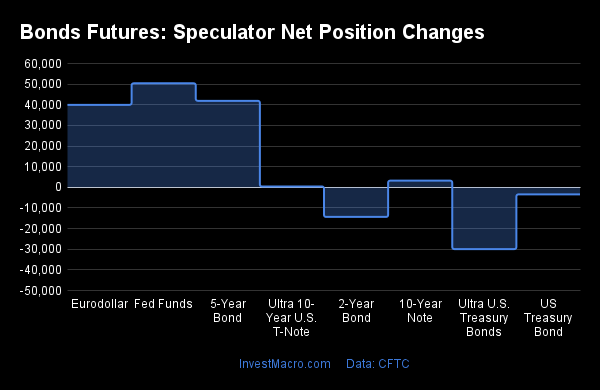
As of the date of this article, officers and/or employees of Streetwise Reports LLC (including members of their household) own securities of Getchell Gold Corp., a company mentioned in this article.