Archive for Financial News – Page 9

Oil remains volatile. Iran rejected the US plan to resolve the conflict and put forward its own conditions

By JustMarkets

On Wednesday, the US stock indices rose. By the end of the day, the Dow Jones Index (US30) increased by 0.66%. The S&P 500 Index (US500) rose by 0.54%. The Technology Index NASDAQ (US100) closed higher by 0.77%. The main catalyst for optimism was reports that Washington had sent Tehran a 15‑point peace proposal, sharply increasing the chances of a diplomatic exit from the Middle Eastern crisis. Against this backdrop, WTI oil prices and US Treasury yields declined, easing inflationary pressure and bringing investors back into risk assets, especially the technology sector. Semiconductor producers led the gains: AMD and Intel shares jumped more than 7%, and Nvidia added 2%, as investors once again began prioritizing growth stories amid easing inflation expectations. At the same time, the energy sector came under pressure due to the correction in oil prices, which led to declines in Exxon Mobil and Chevron shares.

European indices mostly rose. Germany’s DAX (DE40) jumped by 1.41%, France’s CAC 40 (FR40) closed down 0.36%, Spain’s IBEX 35 (ES35) gained 1.54%, while the UK’s FTSE 100 (UK100) closed up 1.42%. Investors reacted positively to signals from Washington indicating a desire for de‑escalation in the Middle East, interpreting this as the White House prioritizing the protection of the global economy from an inflationary shock. Despite Tehran’s formal rejection of the proposed ceasefire terms, the very fact that a diplomatic process had begun triggered a rally in risk assets and supported European government bonds.

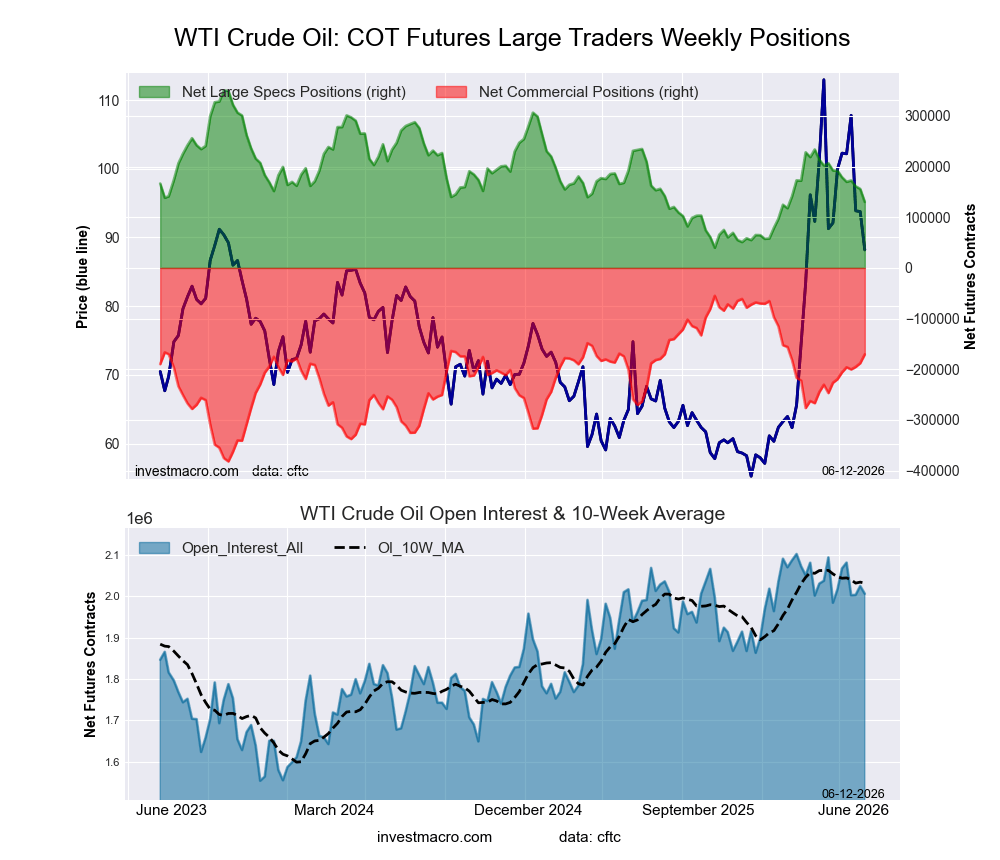
WTI oil prices rose above 91.4 dollars per barrel, recovering after the sharp drop the day before. The market is being shaken by contradictory signals: while the Trump administration claims that “positive negotiations” are continuing through Pakistani intermediaries, Tehran officially rejected the American “15‑point plan.” Instead, Iran issued a counter‑ultimatum consisting of five conditions, including full recognition of its sovereignty over the Strait of Hormuz and payment of war reparations. This diplomatic stalemate, combined with new Iranian missile strikes on infrastructure in Kuwait and Saudi Arabia, brought the risk premium back into the market, overriding the temporary optimism from news of a possible ceasefire. Although Iran selectively allows passage for ships from “friendly” countries, US allies in the Asia‑Pacific region are already facing real shortages. The Philippines declared an energy emergency, and Australia and South Korea have reported hundreds of cases of fuel shortages at gas stations.

Asian markets also rose mostly yesterday. Japan’s Nikkei 225 (JP225) increased by 2.87%, China’s FTSE China A50 (CHA50) rose by 1.17%, Hong Kong’s Hang Seng (HK50) gained 1.09%, and Australia’s ASX 200 (AU200) posted a positive result of 1.85%.

The AUD remained at a seven‑week low below 0.695 US dollars, reflecting growing investor pessimism regarding a peaceful resolution of the Middle Eastern crisis. Statements from the RBA added fuel to the fire: Deputy Governor Chris Kent warned that the global oil shock puts the regulator in a difficult position. Since the war with Iran is simultaneously accelerating inflation and suppressing economic growth, the RBA intends to focus on preventing inflation expectations from becoming “entrenched,” which implies tighter monetary policy.

S&P 500 (US500) 6,591.90 +35.53 (+0.54%)

Dow Jones (US30) 46,429.49 +305.43 (+0.66%)

DAX (DE40) 22,957.08 +320.17 (+1.41%)

FTSE 100 (UK100) 10,106.84 +141.68 (+1.42%)

USD Index 99.62 +0.18% (+0.19%)

News feed for: 2026.03.26

  • Germany GfK Consumer Confidence (m/m) at 09:00 (GMT+2) – EUR (MED)
  • Norway Norges Bank Interest Rate Decision at 11:00 (GMT+2) – NOK (HIGH)
  • US Initial Jobless Claims (w/w) at 14:30 (GMT+2) – USD (MED)
  • US Natural Gas Storage (w/w) at 16:30 (GMT+2) – XNG (HIGH)
  • Mexico Interest Rate Decision (m/m) at 21:00 (GMT+2) – MXN (HIGH)

By JustMarkets


This article reflects a personal opinion and should not be interpreted as an investment advice, and/or offer, and/or a persistent request for carrying out financial transactions, and/or a guarantee, and/or a forecast of future events.

GBP/USD Eyes Middle East: Details Matter to the Market

By Analytical Department RoboForex

GBP/USD traded at 1.3364 on Thursday. The pair declined over the previous two sessions and is now showing signs of a tentative recovery amid expectations of a possible de-escalation in the Middle East conflict.

The US has reportedly presented Iran with a 15-point settlement plan following discussions about a potential month-long truce. However, Iran has rejected participation in negotiations, stating that US diplomacy cannot be trusted.

In the UK, February inflation figures matched expectations. Headline CPI held steady at 3%, while core inflation edged up slightly to 3.2% against a forecast of 3.1%. However, the data had limited impact on the market, as it reflected conditions prior to the latest escalation in the Middle East.

Against the backdrop of lower oil prices, investors are revising their expectations for Bank of England policy. The market is now pricing in fewer than two rate hikes before year-end, with total expected tightening estimated at approximately 68 basis points, down from nearly 75 basis points previously.

Technical Analysis

On the H4 GBP/USD chart, the market is forming a broad consolidation range around 1.3354, currently extending up to 1.3434. A decline to 1.3255 is expected in the near term, followed by the formation of a new consolidation range. An upside breakout would pave the way for a continuation wave to 1.3494, while a downside breakout would suggest further movement to 1.3119. Technically, this scenario is confirmed by the MACD indicator, whose signal line is above zero and pointing firmly downwards.

On the H1 chart, the market has formed a compact consolidation range around 1.3355. A downside breakout has initiated a wave structure extending to 1.3255. Should this level be breached, further downside towards 1.3125 is likely. Conversely, an upside breakout from the range could trigger a growth wave to 1.3494. Technically, this scenario is confirmed by the Stochastic oscillator, with its signal line below 20 and pointing firmly downwards.

Conclusion

GBP/USD is navigating competing forces amid short-term volatility driven by geopolitical headlines. While tentative signs of a potential US–Iran truce have offered some relief to markets, Iran’s rejection of negotiations underscores the fragility of hopes for de-escalation. Meanwhile, UK inflation data – though in line with forecasts – has been largely overlooked given its pre-escalation timeframe. Lower oil prices have prompted markets to scale back expectations for Bank of England tightening, offering modest support for sterling. With technical indicators pointing to continued consolidation and the Middle East situation remaining fluid, the pair’s near-term direction will likely hinge on further geopolitical developments.


Disclaimer

Any forecasts contained herein are based on the author’s particular opinion. This analysis may not be treated as trading advice. RoboForex bears no responsibility for trading results based on trading recommendations and reviews contained herein.
CPI pressure is slowing in Australia. The RBNZ intends to ignore temporary inflation spikes

By JustMarkets 

On Tuesday, US stock indices lost yesterday’s optimism. By the end of the day, the Dow Jones Index (US30) fell by 0.18%. The S&P 500 Index (US500) declined by 0.37%. The Technology Index NASDAQ (US100) closed lower by 0.77%. The main drag on the market was the renewed rise in energy prices after Tehran officially denied Donald Trump’s statements about “productive negotiations.” Investor skepticism instantly pushed Brent crude back above 104 dollars per barrel, triggering a two‑percent jump in the energy sector – the only group within the S&P 500 that maintains positive returns for March. The high‑tech segment came under double pressure: geopolitical uncertainty overlapped with profit‑taking in leading artificial‑intelligence stocks. Oracle shares plunged 4.7%, despite analysts reaffirming positive predictions, and Microsoft shares also faced selling pressure.

It is also another day of disappointment for the CAD: the currency weakened to 1.375 per US dollar, updating from a two‑month low. Despite Canada being a major oil exporter, the loonie is not benefiting from rising energy prices. The reason lies in the strong demand for the safe‑haven US dollar. Investors are concerned that ongoing attacks on US bases in the Persian Gulf will keep oil prices at a high “war premium,” making inflation unmanageable.

The Mexican peso lost momentum in its recent recovery and fell below 17.8 per US dollar. The situation for the Bank of Mexico is complicated by fresh inflation data. The mid‑March reading came in at 4.63%, above analysts’ expectations. This puts the regulator in a “stalemate”: on one hand, the economy needs support due to a sharp production downturn; on the other, accelerating inflation and a weakening currency prevent monetary easing. In conditions where Mexico’s key trading partners are preparing for a prolonged period of high rates, the peso remains under crossfire from domestic stagnation and a global inflation shock.

European markets mostly rose. Germany’s DAX (DE40) fell by 0.08%, France’s CAC 40 (FR40) closed up 0.23%, Spain’s IBEX 35 (ES35) gained 0.13%, while the UK’s FTSE 100 (UK100) closed up by 0.72%. The main driver of growth was the technology sector, where ASML shares became the true star of the session. The Dutch giant’s stock jumped after news of a colossal order from South Korea’s SK Hynix for lithography equipment worth 8 billion dollars, confirming sustained demand for memory‑chip production capacity despite global instability. However, the overall picture remains troubling due to the continued rise in oil prices. The first official confirmation of these concerns came from preliminary March business‑activity data: Eurozone private‑sector growth slowed, clearly showing that high energy costs have already begun to erode industrial output.

The oil market showed a partial recovery after Monday’s collapse. WTI crude futures jumped 5%, reaching 92.4 dollars per barrel. This rise compensated for only half of Monday’s catastrophic 10.3% drop, as investors remain in extreme uncertainty regarding the true intentions of Washington and Tehran. Saudi Arabia and the UAE, whose territories were attacked, made it clear that their patience is running out. Reports emerged that Riyadh is seriously considering direct military strikes on Iranian facilities if its critical energy infrastructure is targeted again. The market is essentially frozen, awaiting the end of the five‑day period, after which it will become clear whether the conflict will escalate into a global energy collapse.

Asian markets also rose mostly yesterday. Japan’s Nikkei 225 (JP225) partially recovered by 1.43% higher, China’s FTSE China A50 (CHA50) fell by 2.15%, Hong Kong’s Hang Seng (HK50) rose by 2.79%, and Australia’s ASX 200 (AU200) posted a positive result of 0.16%. The Hang Seng Index rose by 0.9% on Wednesday, marking its second consecutive session of gains. The positive dynamics were driven by temporary stabilization in oil prices and a diplomatic pause in the Iran‑related conflict, allowing investors to ease fears of an immediate energy collapse. This optimism helped slow the massive outflow of foreign capital from Asian assets caused by the recent surge in global bond yields and stagflation fears.

On Wednesday, the Australian dollar fell to 0.70 US dollars, approaching a two‑week low. Pressure on the currency came from fresh inflation data in Australia: in February, consumer prices were unchanged month‑over‑month, while the annual figure slowed to 3.7% (down from 3.8%). Although inflation still exceeds the Reserve Bank of Australia’s target range (2-3%), weaker‑than‑expected numbers made markets doubt the need for an aggressive rate hike in May, the probability of which is now seen as 50/50.

The NZD fell to 0.582 US dollars as investors sharply revised their expectations regarding the RBNZ policy stance. The trigger was statements from Governor Anna Breman and Chief Economist Paul Conway, who made it clear that the regulator intends to “ignore” temporary inflation spikes caused by the war with Iran and rising oil prices. While earlier the market priced in a 68% probability of a rate hike in May, expectations collapsed to 44% after these comments, as the bank still sees signs of an economic slowdown and fears that excessive tightening could suppress domestic demand.

S&P 500 (US500) 6,556.37 −24.63 (−0.37%)

Dow Jones (US30) 46,124.06 −84.41 (−0.18%)

DAX (DE40) 22,636.91 −16.95 (−0.08%)

FTSE 100 (UK100) 9,965.16 +71.01 (+0.72%)

USD Index 99.24 +0.29% (+0.29%)

News feed for: 2026.03.25

  • Japan Monetary Policy Meeting Minutes at 01:50 (GMT+2) – JPY (MED)
  • Australia Inflation Rate (m/m) at 02:30 (GMT+2) – AUD (HIGH)
  • UK Inflation Rate (m/m) at 09:00 (GMT+2) – GBP (HIGH)
  • Eurozone ECB President Lagarde Speaks at 10:45 (GMT+2) – EUR (LOW)
  • German Ifo Business Climate (m/m) at 11:00 (GMT+2) – EUR (MED)
  • US Crude Oil Reserves (w/w) at 16:30 (GMT+2) – WTI (HIGH)

By JustMarkets


This article reflects a personal opinion and should not be interpreted as an investment advice, and/or offer, and/or a persistent request for carrying out financial transactions, and/or a guarantee, and/or a forecast of future events.

USD/JPY Maintains Growth Mood: Market Sympathies on the US Dollar Side

By Analytical Department RoboForex

USD/JPY continues its upward trajectory on Wednesday, rising to 158.78 following a volatile start to the week. Pressure on the yen has eased amid a pullback in oil prices and expectations of a potential resolution to the Middle East conflict-a development of particular significance for Japan’s energy-importing economy.

The move comes amid reports of US diplomatic efforts aimed at resolving the conflict with Iran. However, scepticism persists in the market, as Tehran had previously denied the existence of any negotiations with Washington.

Additional support for the yen stems from expectations of possible government intervention. Japanese officials have signalled their readiness to take necessary measures to stabilise the currency.

It has also been reported that Japan’s Ministry of Finance is in contact with market participants regarding potential intervention in the oil futures market, given its impact on the yen.

Technical Analysis

On the H4 chart, USD/JPY is forming a consolidation range around the 158.60 level. A decline to 157.40 is expected today, followed by an increase to 158.50. Should the market break upwards from this range, a correction towards 160.10 would be relevant to consider. Subsequently, a new downward impulse to 157.40 is anticipated, with the potential for the correction to extend to 156.00.

Technically, this scenario is confirmed by the MACD indicator-its signal line is below zero and pointing strictly downwards, reflecting the potential for continued correction.

On the H1 chart, the market is shaping a downward wave pattern towards 157.40. Reaching this target level will be considered today. Following the completion of this wave, the development of the next growth wave to 160.10 (test from below) is expected.

The scenario is confirmed by the Stochastic oscillator-its signal line is below the 50 level and pointing strictly downwards towards 20, indicating that short-term downside potential remains.

Conclusion

USD/JPY remains in a growth-oriented mood as easing oil prices and tentative hopes for diplomatic progress in the Middle East offer some relief to the yen. While reports of US-led negotiations with Iran have contributed to a pullback in energy markets, market scepticism persists given Tehran’s earlier denial of talks. Japanese authorities stand ready to intervene should volatility spike, adding an element of caution for traders. Technical indicators point to a short-term correction lower before the broader upward trend potentially resumes towards 160.10. The yen’s trajectory remains closely tied to developments in both energy markets and geopolitical tensions, which continue to shape the Bank of Japan’s policy landscape.


Disclaimer

Any forecasts contained herein are based on the author’s particular opinion. This analysis may not be treated as trading advice. RoboForex bears no responsibility for trading results based on trading recommendations and reviews contained herein.
The Era of “Dumb” Storage is Over: Valutico Launches the World’s First Self-Auditing Virtual Data Room

Valuation leader moves into deal management with AI that spots issues early, helps protect deal value, and speeds up closing.

VIENNA, 24/3/2026 – Valutico, a leading provider of valuation and deal management technology, today announced the launch of the Valutico Active VDR. This marks a fundamental shift in the Virtual Data Room category, moving from passive document storage to active deal assurance.

In the current M&A climate, the cost of errors is higher than ever. According to industry data, due diligence timelines have lengthened significantly over the last 24 months, with “information asymmetry” and “documentation gaps” cited as primary causes for deal delays and post-LOI price reductions (retrading).

Legacy VDRs have traditionally functioned as secure “parking lots” for data – charging sellers to store documents without analyzing their contents. This passive approach leaves sellers vulnerable, as discrepancies are often discovered by the buyer’s legal team weeks into exclusivity, damaging trust and leverage.

The “Active VDR” Difference

Valutico’s new platform is the first to integrate Automated Gap Analysis and Red Flag Detection directly into the hosting environment.

“The industry doesn’t need another secure hard drive in the cloud; it needs a way to close deals faster,” said Paul Resch, CEO at Valutico. “We built a VDR that acts as a ‘Pre-Diligence’ auditor. It automatically organises itself, tells you what’s missing and identifies red flags. All of that with Enterprise grade security to protect your data.”

Solving the “Unforced Errors” in M&A

The Valutico Active VDR introduces three proprietary technologies designed to compress the timeline between LOI and Closing:

  1. Intelligent Red Flag Detection: Bypass the need for extensive manual investigation. The system proactively scans the data room to identify missing information and documentation gaps. By highlighting these “blind spots” early—such as absent contracts or incomplete records—sellers can ensure deal readiness before the buyer ever logs in.

  2. Automated Room Architecting: The system eliminates the manual burden of setting up a data room index. The Deal Agent ingests unstructured bulk uploads and automatically builds a professional, buyer-ready folder structure in seconds, transforming raw files into a logical deal hierarchy.

  3. Smart-Redaction Protocols: To reduce risk, the system proactively identifies PII (Personally Identifiable Information) and sensitive data patterns, suggesting redactions before files are published to the ‘Live’ room.

  4. Instant CIM & Pitch Deck Generation: The system can generate a polished CIM and buyer-ready slide deck directly from the data room, turning underlying documents, financials, and supporting materials into structured deal materials in a fraction of the usual time.

Investors: “The Difference Between a Warehouse and a Library”

Early buy-side users report that the platform significantly alters the initial trust dynamic of a deal.

“As an investor, the quality of the Data Room is a direct proxy for the quality of the management team,” said Markus Jandrinitsch, Managing Director at aws Gründungsfonds. “When we enter a Valutico room, the ‘low-hanging fruit’ errors – missing contracts, unsigned minutes, messy folders – are already gone. It saves us weeks of basic file hunting and allows us to get to conviction much faster. It is the difference between searching through a messy warehouse and walking into a curated library.”

From Valuation to Validation

“Valutico has established itself as the standard for determining what a company is worth,” continued Resch. “With the Active VDR, we are providing the infrastructure to defend that worth. In a market where buyers are looking for any reason to hesitate, a flawless, pre-audited Data Room is the strongest signal of quality a seller can offer.”

Building the “Critical” AI

“We built the Deal Agent to act like the world’s most critical buyer,” said Max Arrich, VP of AI at Valutico. “When you upload a file, the AI doesn’t just catalogue it; it interrogates it. It asks: ‘Is this contract signed? Does this date match the cap table? Is this folder empty?’ By catching these 1,000 tiny friction points instantly, we save the seller weeks of email back-and-forth and let the deal momentum flow uninterrupted.

Investors froze in anticipation of the expiration of President Trump’s ultimatum to immediately unblock the Strait of Hormuz

By JustMarkets

On Friday, trading on the US stock market ended with a decline. The Dow Jones Index (US30) fell by 0.96% (down -2.42% for the week). The S&P 500 Index (US500) dropped by 1.51% (down -2.52% for the week). The tech-heavy NASDAQ (US100) closed lower by 1.88% (down -3.04% for the week). The main trigger for the sell-off was news from Iraq, where force majeure was declared at all oil fields, which, combined with the Pentagon’s preparations to deploy additional Marine forces to the Persian Gulf, created an explosive mix of geopolitical and energy shock. WTI crude continued its ascent, ignoring stabilization attempts made by the US administration earlier in the week. Against this backdrop, investors reacted even more sharply to the Fed’s decision to keep rates in the 3.50-3.75% range, realizing that policy easing amid “wartime” inflation should not be expected.

Bitcoin (BTC/USD) stabilized around 68,000 dollars, holding near two‑week lows. The digital assets market came under heavy pressure from a global risk‑off move triggered by a critical escalation in the Middle East. Direct threats from President Trump to destroy Iran’s energy infrastructure in response to the blockade of the Strait of Hormuz, along with Tehran’s counter‑warnings of strikes on US and Israeli facilities, created an atmosphere of extreme uncertainty in which investors prefer to exit volatile digital assets. Since the start of the active phase of the war, Bitcoin has lost more than 20% of its value, continuing its downward trend. The status of “digital gold” has not worked in current conditions: the digital asset is showing high correlation with falling stock indices and other risk assets.

European stock markets ended trading with a deep decline, as the specter of stagflation became a frightening reality for investors. Germany’s DAX (DE40) fell by 2.01% (down -4.69% for the week), France’s CAC 40 (FR40) closed down 1.82% (down -3.22% for the week), Spain’s IBEX 35 (ES35) dropped by 1.14% (down -1.92% for the week), and the UK’s FTSE 100 (UK100) closed down by 1.44% (down -3.34% for the week). The main driver of pessimism was the uncontrolled rise in energy prices, which, combined with slowing economic growth, puts Europe’s industrial sector in an extremely vulnerable position. Europe’s tech sector came under heavy pressure from global sell‑offs: shares of semiconductor giant ASML and software developer SAP plunged more than 3.5% lower each. Investors are dumping growth stocks, fearing that high borrowing costs and energy shortages will undermine the long‑term profitability of the tech sector. At the same time, a large‑scale exit from sovereign bonds continues, pushing yields higher and directly hitting the capital of major banks. Against this backdrop, UniCredit shares fell nearly 4%, while BNP Paribas, Intesa Sanpaolo, and Nordea lost more than 2% of their market value.

On Monday, the oil market entered a state of extreme volatility: WTI crude futures traded above 98 dollars per barrel, having touched the psychological mark of 101.5 dollars at the start of the session. Investors around the world froze in anticipation of the expiration of President Donald Trump’s ultimatum demanding that Tehran immediately unblock the Strait of Hormuz. The White House’s direct threat to “destroy” key Iranian power plants by the end of Monday pushed the conflict into a phase of a possible full‑scale energy war. Tehran’s response only added fuel to the fire: Iranian leadership promised massive strikes on US and Israeli facilities in the region, targeting not only energy infrastructure but also critical desalination and IT nodes.

On Friday, silver prices (XAG/USD) fell another 5% down, reaching 69.5 dollars per ounce. Thus, the asset lost 14% of its value over the week, marking its worst performance in recent months. The main reason for the sell‑off was the market’s realization that the conflict in the Middle East would not lead to a quick rate cut. On the contrary, the sharp surge in oil and gas prices intensified inflation fears, forcing investors to shift their strategies toward the dollar and US treasuries. Pressure on prices increased after news of the expanded US military presence in the conflict zone. This development radically changed traders’ expectations: the probability of a Fed rate hike by October is now estimated at 50%. In Europe and the UK, the situation looks even more tense – the market is already pricing in at least three rate hikes by the ECB and the Bank of England by the end of 2026.

Asian markets also mostly declined last week. Japan’s Nikkei 225 (JP225) fell by 0.55% over the trading week, China’s FTSE China A50 (CHA50) rose by 0.63%, Hong Kong’s Hang Seng (HK50) dropped by 0.45%, and Australia’s ASX 200 (AU200) posted a five‑day decline of 1.72%.
On Monday, Hong Kong’s Hang Seng Index experienced one of its toughest trading days, plunging more than 3% down. This drop pushed the indicator back to the August 2025 lows, completely erasing its yearly gains amid a global flight from risk assets. The main pressure factor was fear of prolonged stagflation. The surge in oil prices due to the blockade of key maritime routes not only hits production costs in the region but also forces global central banks to prepare for a new cycle of rate hikes to contain inflation. For Hong Kong, whose monetary policy is tightly pegged to the US dollar, this means an inevitable rise in borrowing costs, which investors view extremely negatively amid the economic downturn.

The NZD came under heavy pressure, falling to 0.581 per US dollar. The currency approached a two‑month low amid extremely negative news flow. The main blow to the kiwi was Fitch Ratings’ decision to downgrade New Zealand’s credit rating outlook to “negative,” reflecting experts’ skepticism about the government’s ability to reduce public debt after a prolonged budget pause.

S&P 500 (US500) 6,506.48 −100.01 (−1.51%)

Dow Jones (US30) 45,577.47 −443.96 (−0.96%)

DAX (DE40) 22,380.19 −459.37 (−2.01%)

FTSE 100 (UK100) 9,918.33 −145.17 (−1.44%)

USD Index 99.50 +0.27% (+0.27%)

News feed for: 2026.03.23

  • Singapore Inflation Rate (m/m) at 07:00 (GMT+2) – SGD (MED)
  • New Zealand Gov Breman Speaks (m/m) at 22:00 (GMT+2) – NZD (LOW)

By JustMarkets


This article reflects a personal opinion and should not be interpreted as an investment advice, and/or offer, and/or a persistent request for carrying out financial transactions, and/or a guarantee, and/or a forecast of future events.

EUR/USD Declines: All Market Risks Remain Valid

By Analytical Department RoboForex

EUR/USD fell to 1.1549 on Monday, with the US dollar extending gains from the previous session amid heightened demand for safe-haven assets as the Middle East conflict escalates.

The confrontation between the US and Israel against Iran has entered its fourth week with no signs of de-escalation. Donald Trump has threatened to strike Iran’s energy infrastructure if the Strait of Hormuz is not reopened. Tehran has announced it is prepared to attack key US and Israeli targets in the region in response.

Elevated oil prices continue to fuel inflationary concerns and reduce the likelihood of an imminent Federal Reserve rate cut. Some market participants are even beginning to consider the possibility of a rate hike later this year.

Last week, the Fed held rates steady as expected. Jerome Powell noted that it remains too early to assess the full economic impact of the Iran conflict.

The European Central Bank, the Bank of England, and the Bank of Japan also left rates unchanged but signalled their readiness to tighten policy further should inflationary pressures persist.

Technical Analysis

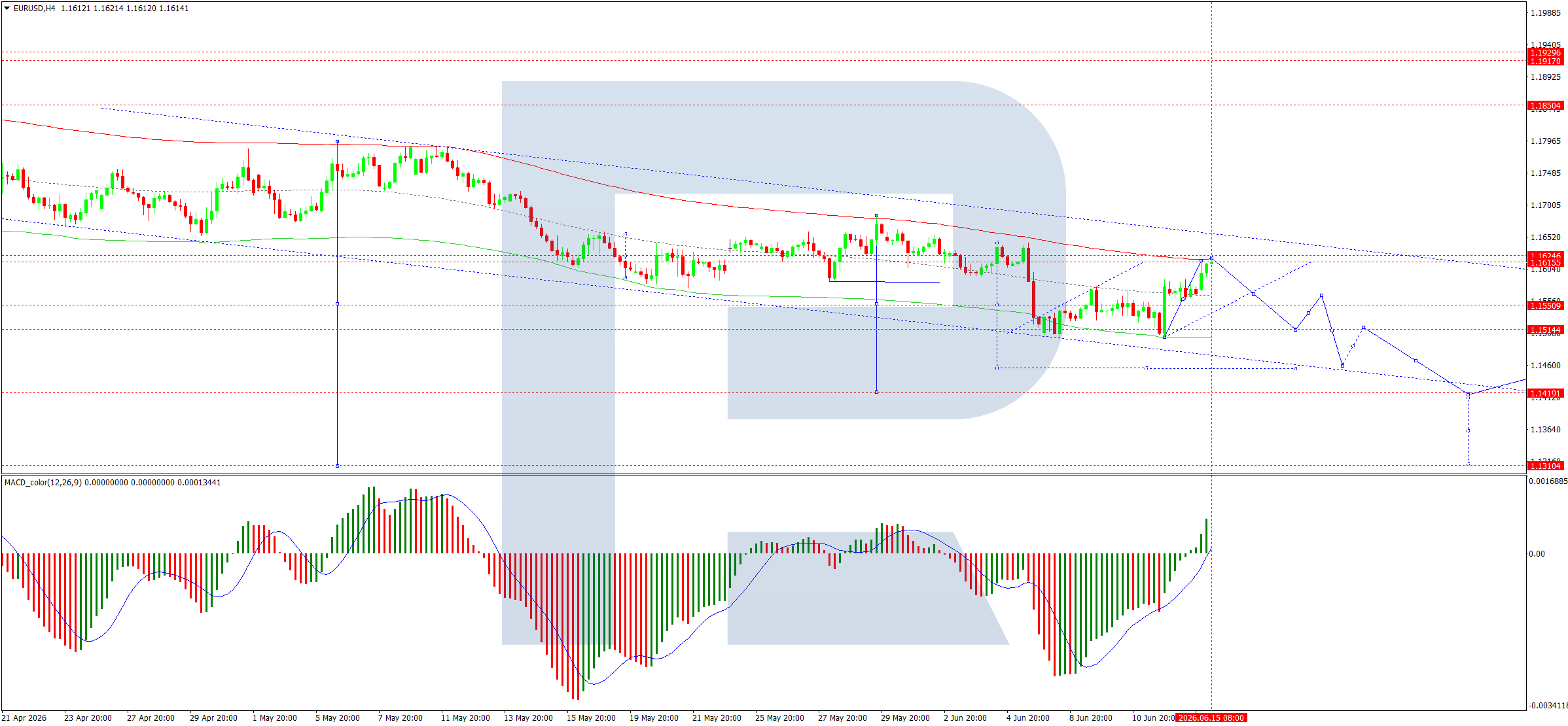
On the H4 chart, EUR/USD is forming a consolidation range around 1.1526. An upside breakout is expected, with a continuation wave towards 1.1647 as a near-term target. Subsequently, a new downward wave is anticipated to 1.1529. Technically, this scenario is confirmed by the MACD indicator – its signal line is above zero and pointing firmly upwards, reflecting ongoing bullish momentum and the potential for the uptrend to continue.

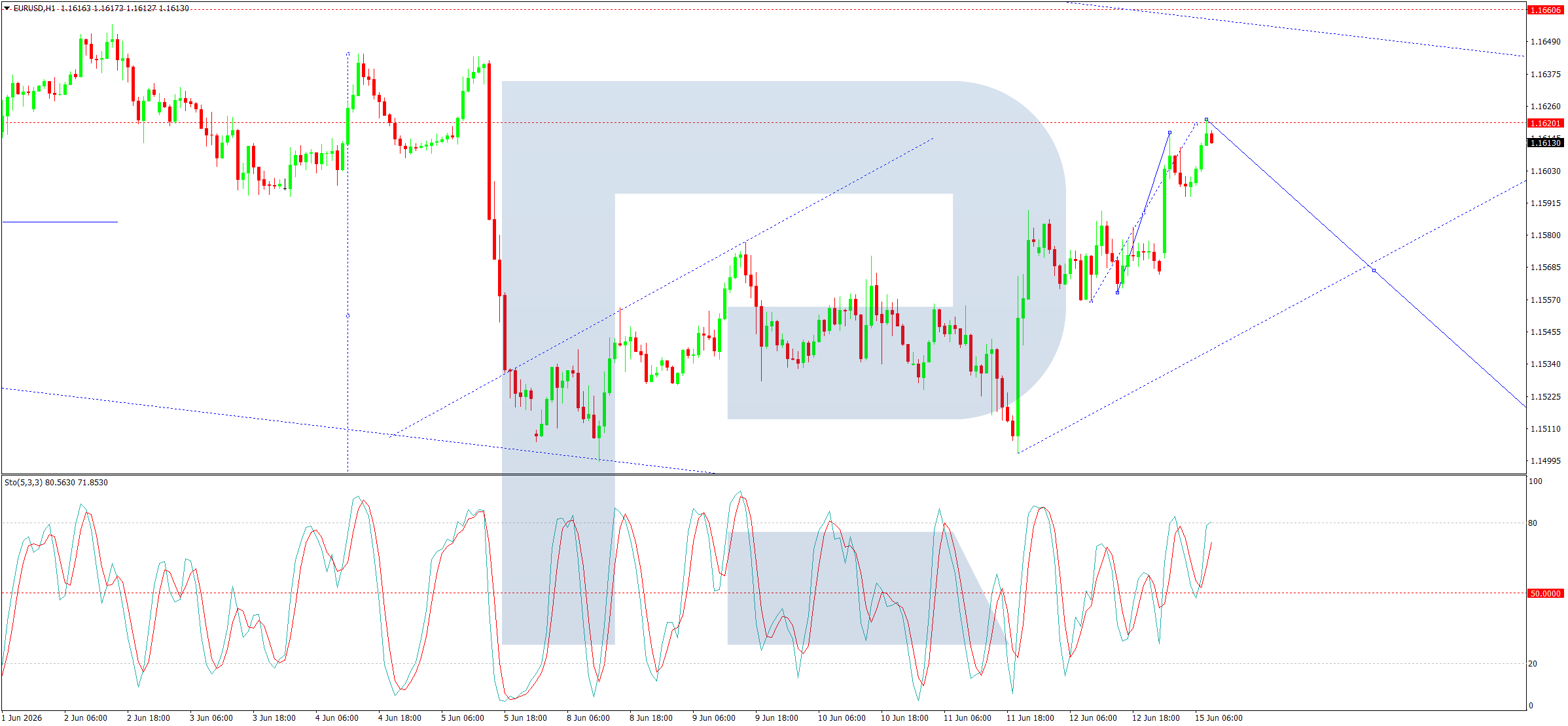
On the H1 chart, the market is forming the structure of the next downward wave towards 1.1499. After reaching this level, a rebound to 1.1556 is expected, with potential for the subsequent growth wave to extend to 1.1647. Technically, this scenario is confirmed by the Stochastic oscillator – its signal line is below 50 and pointing firmly downwards towards 20.

Conclusion

EUR/USD remains under pressure as geopolitical risks in the Middle East continue to drive safe-haven demand for the US dollar. With the conflict entering its fourth week and oil prices remaining elevated, inflationary concerns persist, delaying expectations for Fed rate cuts. Central banks across major economies remain alert, keeping tightening on the table. While technical indicators suggest potential short-term rebound, the broader outlook for the euro remains fragile as market risks show no signs of abating.


Disclaimer

Any forecasts contained herein are based on the author’s particular opinion. This analysis may not be treated as trading advice. RoboForex bears no responsibility for trading results based on trading recommendations and reviews contained herein.
GBP/USD Appreciates BoE Pause: Now Focus Shifts to Geopolitics

By Analytical Department RoboForex

GBP/USD rose during the previous session and is now correcting to 1.3403. The pound responded positively to the Bank of England’s decision to keep interest rates unchanged, with market attention focused on the regulator’s guidance on how the Iran conflict might influence future policy.

The Monetary Policy Committee voted unanimously for a pause (9-0), a notable shift from February’s more divided 5-4 alignment. Some members have acknowledged the possibility of future rate hikes. The BoE has adopted a wait-and-see approach amid significant uncertainty.

While the rate pause was widely anticipated, market expectations have shifted markedly. Until recently, rate cuts were priced in, but rising oil prices amid the Iran conflict have increased inflationary risks and tilted sentiment towards a more hawkish policy stance.

The BoE estimates that inflation could accelerate to 3.5% in the coming quarters and highlighted the risk that inflation expectations could become entrenched in the economy. At the same time, signs of an economic slowdown persist, which could restrain price increases, though the primary risk now centres on inflation.

Additional labour market data revealed a slowdown in wage growth to its lowest rate since late 2020. Unemployment remains at 5.2%, with employment showing signs of stabilisation. Under normal circumstances, such data might support softer rhetoric; however, the current geopolitical environment and elevated energy prices have pushed inflation risks to the forefront.

Overall, the BoE’s stance remains cautious. While the rate pause continues, the scope for policy easing is diminishing, limiting the pound’s upside potential.

Technical Analysis

On the H4 GBP/USD chart, the market is forming a broad consolidation range around 1.3354, currently extending up to 1.3467. A decline to 1.3333 is expected in the near term, with a new consolidation range likely to form following this correction. An upside breakout would pave the way for a continuation wave towards 1.3494, while a downside breakout would suggest further movement towards 1.3133. Technically, this scenario is confirmed by the MACD indicator, whose signal line is above zero and pointing firmly upwards.

On the H1 chart, the market has formed a compact consolidation range around 1.3424. A downside breakout has initiated a wave structure extending to 1.3333. Should this level be breached, further downside towards 1.3125 is possible. Conversely, an upside breakout from the range could trigger a growth wave towards 1.3494. Technically, this scenario is confirmed by the Stochastic oscillator, with its signal line below 80 and pointing firmly downwards towards 20.

Conclusion

GBP/USD’s positive reaction to the BoE’s unanimous hold reflects market recognition that rising inflation risks – driven by geopolitical tensions and higher energy prices – are narrowing the path to policy easing. While the Bank’s cautious stance and the unanimous vote provide some support for sterling, the shift from rate-cut expectations to potential rate hikes has recalibrated market sentiment. With geopolitical developments now taking centre stage and technical indicators pointing to further consolidation, sterling’s near-term direction will likely hinge on whether inflation concerns continue to outweigh signs of domestic economic slowdown.


Disclaimer

Any forecasts contained herein are based on the author’s particular opinion. This analysis may not be treated as trading advice. RoboForex bears no responsibility for trading results based on trading recommendations and reviews contained herein.
Hopes for de-escalation emerge in the Middle East. Central banks raise inflation expectations

By JustMarkets

On Thursday, US stock indices showed an impressive intraday reversal, recovering most of the earlier decline. By the end of the day, the Dow Jones Index (US30) fell by 0.44%. The S&P 500 Index (US500) decreased by 0.27%. The Technology Index NASDAQ (US100) closed down by 0.28%. Optimism was fueled by Benjamin Netanyahu’s statement about joint efforts with the United States to unblock the Strait of Hormuz, which immediately cooled oil prices to 94 dollars per barrel. Diplomatic initiatives by the Trump administration and Treasury Secretary Scott Bessent aimed at restoring supply chains eased fears of stagflation, bringing buyers back to the bond and stock markets.
European markets were swept by a wave of sell-offs. Germany’s DAX (DE40) fell by 2.82%, France’s CAC 40 (FR40) closed down by 2.03%, Spain’s IBEX 35 (ES35) declined by 2.29%, and the UK’s FTSE 100 (UK100) decreased by 2.35%. The catalyst for panic was reports of Iranian strikes on energy facilities in Qatar and Saudi Arabia, which triggered a vertical surge in gas and electricity prices. US retaliatory threats against Iranian gas fields only added fuel to the fire, forcing investors to price in a scenario of a full-scale energy paralysis in Europe. The geopolitical shock radically changed expectations for central banks: the ECB, the Bank of England, and the SNB not only kept rates unchanged but sharply raised their inflation predictions. A month ago, the market hoped for policy easing, but now traders are pricing in two rate hikes by the end of the year. This “hawkish” shift amid stagflation risks hit the banking sector hard (UniCredit, ING, Santander, and Intesa Sanpaolo fell by more than 4%).

The SNB, at its March meeting, kept the base rate at 0% for the third consecutive time. Despite extremely low current inflation, which stood at just 0.1% in February, the bank’s leadership sharply raised its future prognosis. The regulator expects the energy shock to accelerate price growth to 0.5% in 2026-2027, prompting the SNB to remain vigilant and ready to adjust its monetary tools. Markets paid particular attention to statements from SNB officials about their readiness for active interventions. The regulator is seriously concerned that excessive strengthening of the franc could choke Switzerland’s export-oriented economy.

On Friday, silver prices (XAG) showed a local rebound, rising above 74 dollars per ounce after yesterday’s drop to 65 dollars. Despite this increase, the asset is ending the week with a negative result for the third consecutive time. The main restraining factor remains the “hawkish” shift in interest rate expectations: investors increasingly prefer the US dollar and US Treasury bonds, whose yields are rising amid expectations of a prolonged fight against inflation. Although the Fed, ECB, and Bank of England kept rates unchanged this week, their rhetoric became extremely strict. The market has effectively capitulated to the reality of “higher-for-longer” rates: expectations for the first Fed rate cut have now officially shifted to 2027, while in Europe and the UK, traders are preparing for two hikes this year.

On Thursday, US WTI oil prices fell by 2% to 94 dollars per barrel, breaking a prolonged rally. The market cooled after a series of statements from Washington: President Donald Trump ruled out the possibility of sending ground troops to the Middle East. Additional skepticism among the “bulls” was introduced by intelligence chief Tulsi Gabbard, who pointed to divergences in the strategic goals of the US and Israel. These comments were interpreted by traders as a signal of de-escalation and the White House’s reluctance to get involved in a full-scale regional war. Despite the current decline, oil remains 50% more expensive than before the conflict due to the effective blockade of the Strait of Hormuz and sharp production cuts by major OPEC+ exporters. The market is shifting from a phase of panic buying to a phase of assessing long-term consequences.

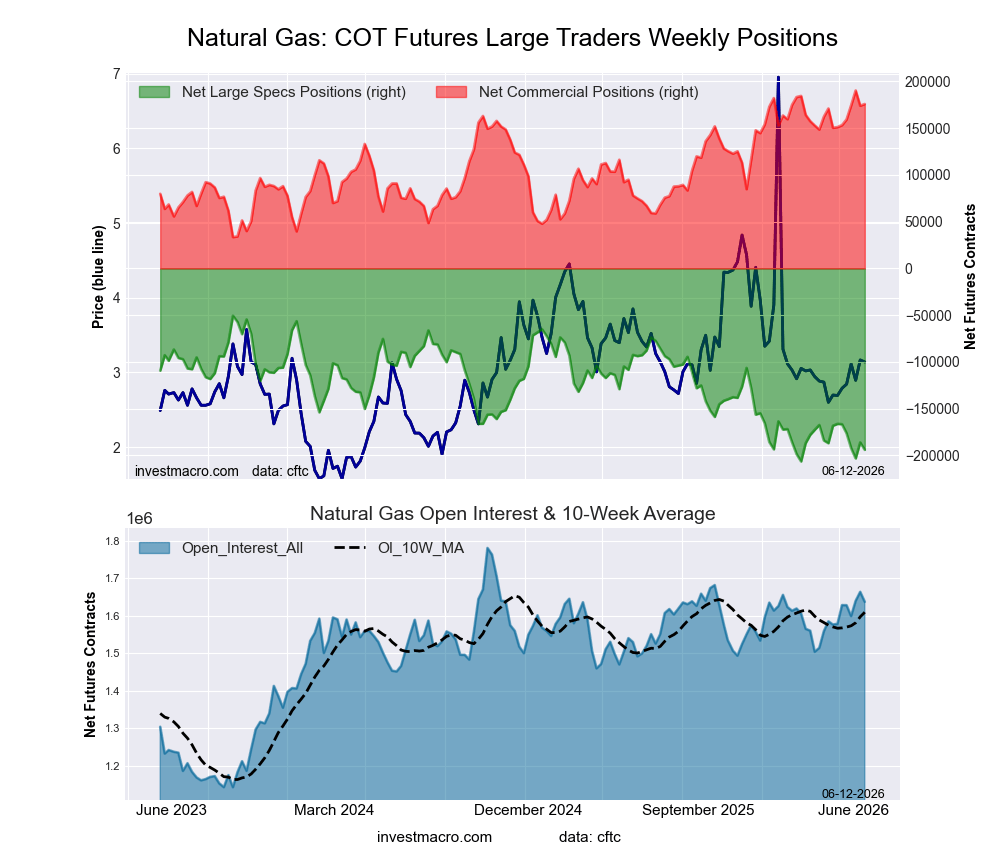
The US natural gas prices jumped more than 2.5% to 3.144 dollars per MMBtu, instantly recovering early-week losses amid an unprecedented attack on the Persian Gulf’s gas infrastructure. Iran’s missile strikes on Qatar’s industrial city of Ras Laffan, a critical hub of global LNG exports, became a direct realization of Tehran’s threats following Israel’s attack on the South Pars field. Chaos in the region was compounded by the shutdown of facilities in Abu Dhabi (Habshan) due to falling missile debris and reports of massive shelling of LNG terminals in Bahrain, threatening global energy security. Despite the alarming external backdrop, US domestic data from the EIA showed a moderate inventory increase of 35 billion cubic feet, which typically pressures prices at the end of the winter season. However, under current conditions, the oversupply in US storage is completely offset by fears of a global market deficit.

Asian markets fell yesterday. Japan’s Nikkei 225 (JP225) dropped by 3.38%, China’s FTSE China A50 (CHA50) decreased by 0.92%, Hong Kong’s Hang Seng (HK50) fell by 2.02%, and Australia’s ASX 200 (AU200) posted a negative result of 1.65% on Wednesday.

In March 2026, the PBOC maintained the status quo, leaving key rates unchanged for the tenth consecutive month: the one-year LPR remained at 3%, and the five-year LPR at 3.5%. This caution is driven not only by uncertainty due to the war in Iran but also by the revision of the government’s GDP growth target to a more realistic 4.5-5%. With lowered expectations for economic growth, Beijing sees no urgent need for additional monetary stimulus, preferring to maintain financial system stability. Paradoxically, the sharp rise in oil prices may benefit China in its fight against prolonged deflation by pushing the Producer Price Index upward.

S&P 500 (US500) 6,606.49 −18.21 (−0.27%)

Dow Jones (US30) 46,021.43 −203.72 (−0.44%)

DAX (DE40) 22,839.56 −662.69 (−2.82%)

FTSE 100 (UK100) 10,063.50 −241.79 (−2.35%)

USD Index 99.21 −0.88% (−0.88%)

News feed for: 2026.03.20

  • China PBoC Prime Rate at 03:15 (GMT+2); – CHA50, HK50 (MED)
  • Hong Kong Inflation Rate at 10:30 (GMT+2); – HK50 (MED)
  • Canada Retail Sales (m/m) at 14:30 (GMT+2). – CAD (MED)

By JustMarkets


This article reflects a personal opinion and should not be interpreted as an investment advice, and/or offer, and/or a persistent request for carrying out financial transactions, and/or a guarantee, and/or a forecast of future events.

The Bank of Canada and the FOMC kept interest rates unchanged

By JustMarkets

On Wednesday, the US stock indices closed in the red. By the end of the day, the Dow Jones Index (US30) fell by 1.63%. The S&P 500 Index (US500) declined by 1.36%. The Technology Index NASDAQ (US100) closed lower by 1.46%. The FOMC’s decision to keep interest rates in the 3.5-3.75% range was accompanied by a “hawkish” comment about serious pro‑inflationary risks caused by the war in Iran and the threat of new tariffs. The regulator’s concerns were confirmed by the aggressively high industrial inflation (PPI) figure published earlier the same day, which led most committee members to rule out the possibility of rate cuts this year. Investors reacted by pushing Treasury yields higher, which put pressure on all market sectors. The worst performance came from the financial sector and consumer staples: payment system giants Visa and Mastercard plunged 3.1% and 3.7%, respectively, while retailers Walmart and B&G lost more than 2.5% amid fears of declining consumer purchasing power due to high energy costs.

The Canadian dollar (CAD) fell to 1.37 per US dollar, reaching its lowest level in the past two months. In March, the BoC predictably kept its key rate unchanged, synchronizing its actions with the US Fed’s “hawkish pause.” The regulator emphasized that the war with Iran creates two‑sided risks: on one hand, it triggers an inflationary shock through fuel prices; on the other, it threatens to slow global economic growth. With the Strait of Hormuz paralyzed, the Canadian dollar remains in a unique “safe haven” position among commodity currencies, but its further recovery toward 1.35 will depend directly on whether the commodity factor outweighs Washington’s tight monetary policy in the coming weeks.

European markets showed a decline. Germany’s DAX (DE40) fell by 0.96%, France’s CAC 40 (FR40) closed slightly higher at 0.06%, Spain’s IBEX 35 (ES35) rose by 0.29%, and the UK’s FTSE 100 (UK100) closed down 0.94%. The main pressure factor was another spike in natural gas prices caused by the escalation in the Persian Gulf. Given that the Fed has already confirmed its “hawkish” stance, tomorrow’s meetings of European regulators will be a moment of truth: will they acknowledge the inevitability of a prolonged period of high rates due to the energy crisis, or will they attempt to soften their rhetoric to support fading economic growth?

Silver prices (XAG) fell to $76.9 per ounce, pressured by the Fed’s updated expectations. The FOMC’s decision to keep rates unchanged and project only one rate cut this year sharply increased the alternative cost of holding the metal. Investors were particularly alarmed by the upward revision of the core PCE inflation prediction: the regulator made it clear that it is prepared to stick to a “higher for longer” policy to contain the consequences of the structural energy shock caused by the blockade of the Strait of Hormuz and strikes on Iranian oil fields.

WTI crude oil showed a sharp intraday reversal, rising above $97.3 per barrel amid a critical escalation in the Persian Gulf. Reports of strikes on Iran’s gas giant South Pars and the death of Iran’s intelligence minister Esmail Khatib outweighed all attempts by Washington to stabilize the market, including the temporary suspension of the Jones Act and a 6.2‑million‑barrel increase in US commercial crude inventories. Even the Fed’s “hawkish” decision to keep rates in the 3.5-3.75% range only briefly cooled the bulls, as the effective blockade of the Strait of Hormuz created a structural deficit that cannot be quickly offset by strategic reserves or increased domestic refining.

Asian markets mostly rose yesterday. Japan’s Nikkei 225 (JP225) gained 2.87%, China’s FTSE China A50 (CHA50) jumped 0.14%, Hong Kong’s Hang Seng (HK50) rose by 0.61%, and Australia’s ASX 200 (AU200) posted a positive result of 0.31%.

On Thursday, the Australian dollar (AUD) showed a corrective rise to 0.704 per US dollar, recovering part of its losses after yesterday’s decline. The fresh labor market report presented investors with a mixed but generally constructive picture: an explosive increase in employment by 48,900 (vs. the prognosis of 20,000) confirmed the economy’s strong resilience, but an unexpected rise in the unemployment rate to 4.3% slightly cooled the hawks’ enthusiasm. Nevertheless, the RBA still considers the labor market historically strong, leaving the door open for further policy tightening.

The New Zealand dollar (NZD) exhibited volatility. Investors faced conflicting signals: extremely weak GDP data for the December quarter (growth of only 0.2% vs. the expected 0.4%) point to economic fragility, while inflationary risks due to the war in Iran are forcing the market to revise rate anticipation. Although annual GDP growth reached 1.3%, it fell short of the target 1.7%, confirming that domestic consumption in New Zealand remains subdued.

S&P 500 (US500) 6,624.70 −91.39 (−1.36%)

Dow Jones (US30) 46,225.15 −768.11 (−1.63%)

DAX (DE40) 23,502.25 −228.67 (−0.96%)

FTSE 100 (UK100) 10,305.29 −98.31 (−0.94%)

USD Index 100.26 +0.68% (+0.68%)

News feed for: 2026.03.19

  • Australia Unemployment Rate (m/m) at 02:30 (GMT+2); – AUD (MED)
  • Japan BoJ Policy Rate at 05:00 (GMT+2); – JPY (HIGH)
  • Japan BoJ Press Conference at 06:30 (GMT+2); – JPY (HIGH)
  • Switzerland Trade Balance (m/m) at 09:00 (GMT+2); – CHF (LOW)
  • UK Claimant Count Change (m/m) at 09:00 (GMT+2); – GBP (MED)
  • UK Average Earnings Index (m/m) at 09:00 (GMT+2); – GBP (MED)
  • UK Unemployment Rate (m/m) at 09:00 (GMT+2); – GBP (MED)
  • Sweden Riksbank Rate Decision at 10:30 (GMT+2); – SEK (HIGH)
  • Switzerland SNB Policy Rate at 10:30 (GMT+2); – CHF (HIGH)
  • Switzerland SNB Press Conference at 11:00 (GMT+2); – CHF (HIGH)
  • UK BoE Official Bank Rate at 14:00 (GMT+2); – GBP (HIGH)
  • UK BoE Press Conference at 14:30 (GMT+2); – GBP (HIGH)
  • US Initial Jobless Claims (w/w) at 14:30 (GMT+2); – USD (MED)
  • Eurozone ECB Interest Rate Decision at 15:15 (GMT+2); – EUR (HIGH)
  • Eurozone ECB Press Conference at 15:45 (GMT+2); – EUR (HIGH)
  • US New Home Sales (m/m) at 16:00 (GMT+2); – USD (MED)
  • US Natural Gas Reserves (w/w) at 16:30 (GMT+2); – XNG (HIGH)
  • New Zealand Trade Balance (q/q) at 23:45 (GMT+2). – NZD (MED)

By JustMarkets


This article reflects a personal opinion and should not be interpreted as an investment advice, and/or offer, and/or a persistent request for carrying out financial transactions, and/or a guarantee, and/or a forecast of future events.