Archive for Financial News – Page 10

RoboForex Expands CFD Offering with Cryptocurrency Instruments

Belize City, Belize, April 29, 2026 – Financial broker RoboForex has expanded its CFD offering with the introduction of cryptocurrency instruments, enabling clients to trade leading digital assets alongside Forex, metals, indices, and other asset classes within the Company’s existing trading environment.

The new instruments allow RoboForex clients to trade cryptocurrency CFDs without opening accounts on crypto exchanges or holding digital tokens directly. Traders can open both Long and Short positions from a single interface, making it possible to respond to both rising and falling markets and  incorporate crypto CFDs into broader cross-market strategies.

As interest in digital assets continues to grow, many traders are seeking flexible ways to access cryptocurrency markets without having to switch between separate platforms, wallets, or exchange accounts. With this update, RoboForex adds cryptocurrencies to its multi-asset trading environment, enabling clients to manage different market opportunities within a familiar brokerage framework.

Cryptocurrencies have become an important part of the modern trading landscape, and many clients want to access them alongside Forex, metals, indices, and other markets,” said Douglas Abreu, Regional Operations Manager at RoboForex. “By adding crypto CFDs to our trading environment, we are providing clients with a familiar way to trade digital-asset price movements, including both Long and Short positions, without the need to manage digital wallets or exchange accounts.

Trading Conditions and Specifications

Assets
The cryptocurrency CFD offering includes Bitcoin (BTCUSD), Ethereum (ETHUSD), XRP (XRPUSD), Solana (SOLUSD), Dogecoin (DOGEUSD), and Cardano (ADAUSD).

Account types
The new cryptocurrency instruments are available on Pro, ProCent, and ECN accounts.

Leveraged trading
Leverage of up to 1:500 is available for Bitcoin and Ethereum CFDs, while XRP, Solana, Dogecoin, and Cardano CFDs are available with leverage of up to 1:50. Leverage conditions may vary depending on the account type, instrument, and applicable trading rules.

Seven-day trading
Crypto CFD trading is available seven days a week, including weekends, subject to the applicable trading schedule and platform maintenance periods. This enables RoboForex clients to extend their trading week and respond to cryptocurrency market movements outside standard weekday trading hours.

Negative Balance Protection
RoboForex provides Negative Balance Protection, helping to ensure that clients do not lose more than the funds available in their trading account, subject to the Company’s applicable terms and conditions.

About RoboForex
RoboForex is a company that provides brokerage services, giving traders access to financial markets through its proprietary trading terminals and industry-leading trading platforms. RoboForex Ltd operates under brokerage license number FSC 9759600. More detailed information about the Company’s products and activities is available on the official website roboforex.com.


WTI oil prices have consolidated at 100 dollars per barrel. Australia is experiencing a sharp inflation spike

By JustMarkets 

On Tuesday, the US stock market declined. By the end of the day, the Dow Jones Index (US30) fell by 0.05%. The S&P 500 Index (US500) dropped by 0.49%. The Tech Index Nasdaq (US100) closed lower by 1.01%. The main blow to the artificial‑intelligence sector came from The Wall Street Journal’s reports about slowing growth at OpenAI. The company’s revenue and user inflows came in below expectations, raising doubts about the payback of massive spending on computing power. This news triggered a sell‑off in the semiconductor sector: Broadcom plunged more than 4%, AMD lost 3%, and market leader Nvidia fell by 1.5%. Oracle and Intel also closed in the red, losing 3% and 1% respectively. Tech giants Meta, Microsoft, and Alphabet traded in negative territory amid nervousness ahead of their earnings releases.

Tuesday marked the seventh consecutive day of decline for European markets. By the end of the day, Germany’s DAX (DE40) fell by 0.27%, France’s CAC 40 (FR40) closed down 0.46%, Spain’s IBEX 35 (ES35) rose by 0.46%, and the UK’s FTSE 100 (UK100) closed up 0.11%. The main fear for investors remains the threat of stagflation: a combination of a stalling economy and sky‑high prices for imported energy, which continue to rise despite the sensational exit of the UAE from OPEC and OPEC+.

WTI oil prices have consolidated at 100 dollars per barrel, rising for the seventh consecutive session. The market reached April highs despite the headline event – the UAE’s withdrawal from OPEC and OPEC+. This move by Abu Dhabi, aimed at gaining production freedom, has not cooled prices because any additional oil volumes cannot be delivered to consumers due to paralyzed logistics. The ninth week of the conflict has turned the Strait of Hormuz into a “dead zone”: whereas it previously carried 20% of global oil traffic, vessel movement is now nearly zero. The mutual naval blockade by the US and Iran has created an unprecedented supply deficit that outweighs any news about OPEC disunity. As Washington and Tehran exchange ultimatums, the global economy continues to balance on the edge of a stagflationary shock.

Silver prices (XAG) collapsed by more than 3%, falling to 73 dollars per ounce – the lowest level in a month. The sharp drop was triggered by the failure of another diplomatic attempt: US officials confirmed that Donald Trump rejected Iran’s “Pakistan proposal.” This decision shattered hopes for a quick reopening of the Strait of Hormuz and stabilization of the energy market. The situation creates a paradox for precious metals. On one hand, 100‑dollar oil fuels inflation, which investors traditionally hedge with silver and gold. On the other hand, the same inflation forces central banks to prepare for a new tightening cycle. Since silver does not generate interest income, the prospect of “high rates for longer” makes it less attractive compared to government bonds.

In Asia, Japan’s Nikkei 225 (JP225) fell by 1.02%, China’s FTSE China A50 (CHA50) slipped by 0.01%, Hong Kong’s Hang Seng (HK50) closed down 0.95%, and Australia’s ASX 200 (AU200) declined by 0.64%.

The Australian dollar (AUD) corrected below 0.72 USD but remains near four‑year highs. The main support factor is record inflation, which reached 4.6% in March due to a sharp rise in fuel prices amid the Strait of Hormuz blockade. Markets have almost fully priced in a 25‑basis‑point rate hike by the Reserve Bank of Australia next week. The slight decline in the currency was caused by inflation data coming in slightly below the most pessimistic projections, as well as general risk aversion among investors. While major G7 central banks prepare to pause, the Australian regulator is forced to act aggressively to contain the price shock.

The New Zealand dollar (NZD) lost recent gains on Tuesday, falling to 0.588 USD. After the release of high Q1 inflation data, the probability of a rate hike by the Reserve Bank of New Zealand (RBNZ) at the May meeting is estimated by the market at more than 60%. Inflationary pressure is expected to intensify further in Q2, as current extremely high fuel costs begin to be fully reflected in the statistics.

S&P 500 (US500) 7,138.80 −35.11 (−0.49%)

Dow Jones (US30) 49,141.93 −25.86 (−0.05%)

DAX (DE40) 24,018.26 −65.27 (−0.27%)

FTSE 100 (UK100) 10,332.79 +11.70 (+0.11%)

USD Index 98.64 −0.14 (−0.15%)

News feed for: 2026.04.29

  • New Zealand RBNZ Gov Breman Speaks at 03:30 (GMT+3) – NZD (LOW)
  • Australia Consumer Price Index (m/m) at 04:30 (GMT+3) – AUD (HIGH)
  • Eurozone Economic Sentiment (m/m) at 12:00 (GMT+3) – EUR (LOW)
  • German Consumer Price Index (m/m) at 15:00 (GMT+3) – EUR (MED)
  • US Building Permits (m/m) at 15:30 (GMT+3) – USD (MED)
  • US Durable Goods Orders (m/m) at 15:30 (GMT+3) – USD (MED)
  • Canada BoC Interest Rate Decision at 16:45 (GMT+3) – CAD (HIGH)
  • Canada BoC Monetary Policy Report at 16:45 (GMT+3) – CAD (HIGH)
  • Canada BoC Press Conference at 17:30 (GMT+3) – CAD (HIGH)
  • US Crude Oil Reserves (w/w) at 17:30 (GMT+3) – WTI (HIGH)
  • US Fed Interest Rate Decision at 21:00 (GMT+3) – USD, XAU (HIGH)
  • US FOMC Statement at 21:00 (GMT+3) – USD, XAU (HIGH)
  • US Fed Press Conference at 21:30 (GMT+3) – USD, XAU (HIGH)

By JustMarkets


This article reflects a personal opinion and should not be interpreted as an investment advice, and/or offer, and/or a persistent request for carrying out financial transactions, and/or a guarantee, and/or a forecast of future events.

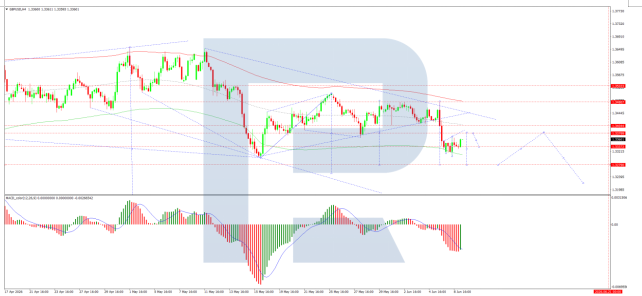
EUR/USD Holds Steady Ahead of Fed Meeting, Focus on Middle East Outlook

By Analytical Department RoboForex

EUR/USD is slightly lower on Wednesday, trading with minimal movement around 1.1708. The market is preparing for a Federal Reserve meeting, which could be Jerome Powell’s last before his term ends in May.

The regulator is expected to keep rates unchanged. However, investors will closely monitor its assessment of how the Middle East conflict is affecting the economy.

Other major central banks, including the ECB, the Bank of England, and the Bank of Canada, will also announce policy decisions this week. The Bank of Japan has already delivered a more hawkish signal by keeping rates unchanged.

Geopolitics continues to support the US dollar. US-Iran talks have stalled, the Strait of Hormuz remains closed, and inflation risks are rising.

According to media reports, Donald Trump was dissatisfied with Iran’s latest proposal and insisted that the nuclear issue must be included in negotiations from the outset.

Technical Analysis

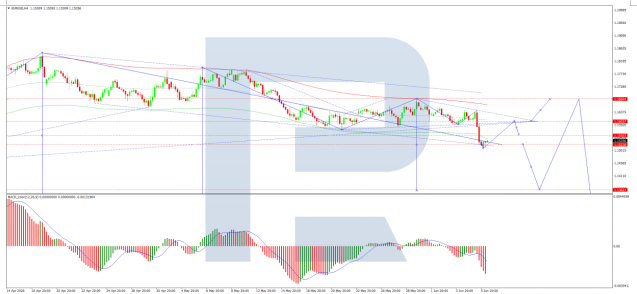
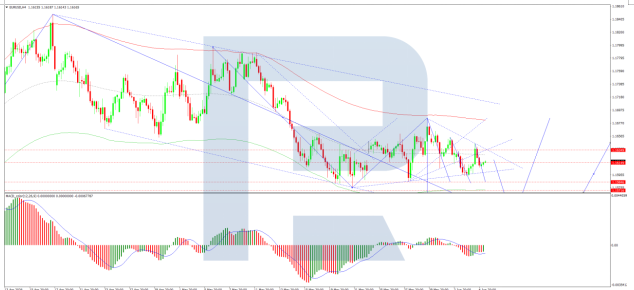
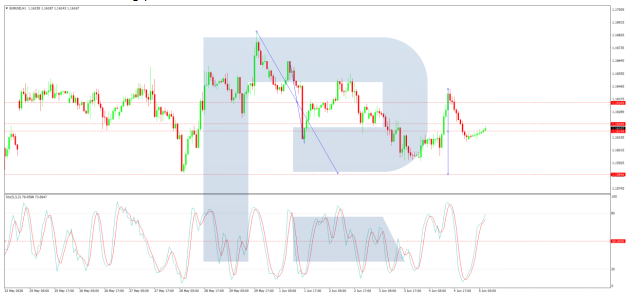
On the H4 chart of EUR/USD, the pair is trading within a consolidation range around 1.1688, currently extending down to 1.1675. A move lower below this level is likely, with potential downside towards 1.1656 and possibly 1.1616. Technically, this scenario is confirmed by the MACD indicator, with its signal line below zero and pointing firmly downwards, reflecting continued bearish momentum.

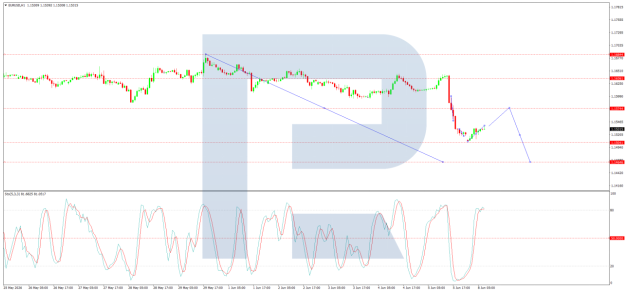
On the H1 chart, EUR/USD is developing a move lower towards 1.1685. A corrective rebound to 1.1705 may follow, before a further decline towards 1.1650 and potentially 1.1616. Technically, this scenario is confirmed by the Stochastic oscillator, with its signal line below 80 and pointing firmly downwards towards 20.

Conclusion

EUR/USD is trading sideways ahead of the Federal Reserve meeting, with markets focused on how policymakers assess the economic impact of the Middle East conflict. While the Fed is widely expected to hold rates steady, this meeting is particularly significant as it may be Jerome Powell’s last before his term ends in May. Geopolitical pressures remain firmly in place: US-Iran talks have stalled, the Strait of Hormuz is closed, and inflation risks are rising, all of which continue to support the US dollar. Additional central bank decisions from the ECB, BoE, and BoC this week add to the cautious market tone. Technically, the euro appears vulnerable, with indicators pointing to further downside towards 1.1650–1.1616 in the near term. The direction will likely hinge on the Fed’s tone regarding both rates and geopolitical risks.


Disclaimer

Any forecasts contained herein are based on the author’s particular opinion. This analysis may not be treated as trading advice. RoboForex bears no responsibility for trading results based on trading recommendations and reviews contained herein.

European stock markets continue a prolonged decline. Oil prices continue to rise slowly

By JustMarkets 

On Monday, the US stock market showed mixed dynamics. By the end of the day, the Dow Jones Index (US30) fell by 0.13%. The S&P 500 Index (US500) rose by 0.12%. The Tech Index NASDAQ (US100) closed higher on Friday by 0.20%. Investors are balancing between expectations for tech‑giant earnings and worrying signals from the energy market, where oil prices added another 2% despite diplomatic maneuvering around the Strait of Hormuz. The high‑tech sector became the main engine of growth, fueled by the AI and microchip frenzy: Nvidia jumped 4%, reinforcing its status as the favorite in the AI race ahead of key earnings this week. Investors are preparing for a “super‑week” that will set the trend for the entire next month. The main events will be central‑bank meetings led by the US Federal Reserve, as well as financial results from Microsoft, Amazon, and Meta. While the tech sector and financial companies show resilience, allowing indices to remain near record highs, inflation risks linked to the ninth week of the oil shock remain the main barrier to broad market growth.

The Mexican peso (MXN) retreated from its six‑month highs, stabilizing at 17.4 per US dollar. The main driver of the currency’s weakness was fresh inflation data that came in below expectations, giving the Bank of Mexico room for further monetary easing. Annual inflation in Mexico in the first half of April slowed to 4.53%. Even more notable was the decline in core inflation to a five‑month low of 4.27%. These figures confirm that the regulator’s recent unexpected decision to cut rates to 6.75% (a four‑year low) was justified and aimed at supporting domestic growth.

European stock markets continue a prolonged decline: Monday marked the sixth consecutive session of losses. By the end of the day, Germany’s DAX (DE40) fell by 0.19%, France’s CAC 40 (FR40) closed down 0.19%, Spain’s IBEX 35 (ES35) rose by 0.01%, and the UK’s FTSE 100 (UK100) ended the session down 0.56%. Although news of a new diplomatic proposal from Iran via Pakistani intermediaries brought a glimmer of hope, the actual situation in the Strait of Hormuz remains deadlocked. Oil and gas shipments remain paralyzed, keeping fuel prices at levels that threaten Eurozone price stability. Under these conditions, traders are almost certain that the ECB will keep rates unchanged this week, and a significant part of the market is pricing in further rate hikes this quarter to contain inflationary risks.

On Monday, the oil market was hit by a new wave of volatility: WTI prices jumped more than 2%, reaching 96.5 dollars per barrel. The dramatic rise in prices is driven by the effective paralysis of the Strait of Hormuz – a key global energy artery. Despite the formal ceasefire in place since early April, mutual naval blockades have nearly halted tanker traffic in the region. The situation is worsened by the diplomatic deadlock between Washington and Tehran. The IEA describes the current events as the most unprecedented supply shock in the history of observations. The ninth week of the conflict has led not only to raw‑material shortages in key markets but also to rising risks of a global recession.

In Asia, Japan’s Nikkei 225 (JP225) rose by 1.38%, China’s FTSE China A50 (CHA50) fell by 0.43%, Hong Kong’s Hang Seng (HK50) closed down 0.20%, and Australia’s ASX 200 (AU200) declined by 0.23%. The labor‑market situation in New Zealand in March 2026 showed temporary resilience: employment rose by 0.3%, reaching a 14‑month high of 2.35 million people. This increase was the result of the delayed effect of low interest rates that previously supported businesses, but the overall picture remains troubling. Despite recovering 14,600 jobs since last summer, current employment levels are still 39,000 below those of two years ago. But the positive March dynamics are already facing severe macroeconomic challenges. The sharp rise in fuel prices caused by the ninth week of the Strait of Hormuz conflict has begun to undermine economic activity at the end of Q1. Business confidence in the country has collapsed to mid‑2024 lows, as rising costs erode company profits and force them to begin cutting staff.

S&P 500 (US500) 7,173.91 +8.83 (+0.12%)

Dow Jones (US30) 49,167.79 −62.92 (−0.13%)

DAX (DE40) 24,083.53 −45.45 (−0.19%)

FTSE 100 (UK100) 10,321.09 −57.99 (−0.56%)

USD Index 98.48 −0.06 (−0.06%)

News feed for: 2026.04.28

  • Japan Unemployment Rate (m/m) at 02:30 (GMT+3) – JPY (MED)
  • Japan BoJ Interest Rate Decision at 06:00 (GMT+3) – JPY (HIGH)
  • Japan BoJ Quarterly Outlook Report at 06:00 (GMT+3) – JPY (HIGH)
  • US ADP Employment Change (m/m) at 15:15 (GMT+3) – USD (MED)
  • US CB Consumer Confidence (m/m) at 17:00 (GMT+3) – USD (MED)

By JustMarkets


This article reflects a personal opinion and should not be interpreted as an investment advice, and/or offer, and/or a persistent request for carrying out financial transactions, and/or a guarantee, and/or a forecast of future events.
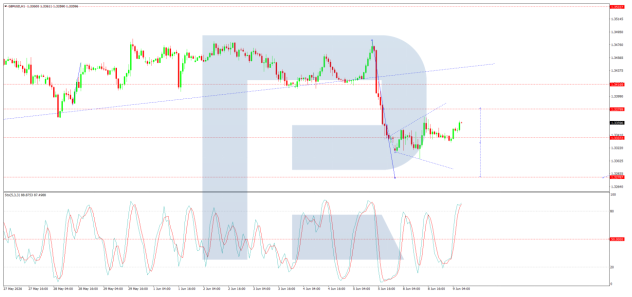
Yen Gains Support Following Bank of Japan Decision

By Analytical Department RoboForex

USD/JPY edged lower on Tuesday, touching 159.26.

The Bank of Japan left its interest rate unchanged at 0.75% per annum, as widely expected. At the same time, it raised its inflation forecast for 2026 to 2.8%, up from 1.9% previously, while downgrading its GDP growth outlook to 0.5% from 1.0%. These revisions reflect the likely economic consequences of the ongoing Middle East conflict.

Investors are also monitoring developments surrounding Iran. Tehran has sent a new proposal to the US, but disagreements over the nuclear programme remain a key obstacle.

An additional factor is the stance of Japanese authorities. Finance Minister Satsuki Katayama reiterated her readiness to intervene in the foreign exchange market if necessary and emphasised increased coordination with the US on foreign exchange policy.

Technical Analysis

On the H4 chart, USD/JPY is trading within a consolidation range around the 159.36 level and is moving lower towards 158.90. A test of this level is likely, followed by a possible rebound towards 159.88 and potentially 160.77. Technically, this scenario is confirmed by the MACD indicator, with its signal line above zero but pointing firmly downwards, indicating the potential for further short-term downside before a recovery.

On the H1 chart, USD/JPY is developing a move lower towards 158.90. A rebound towards 159.88 may follow, with a possible extension to 160.77. The scenario is confirmed by the Stochastic oscillator, with its signal line below 50 and pointing firmly downwards towards 20, indicating that short-term downside pressure remains.

Conclusion

The yen has found some support following the Bank of Japan’s policy decision, despite the BoJ leaving rates unchanged. The key takeaway for markets was the upward revision to inflation forecasts – from 1.9% to 2.8% –driven by the Middle East conflict, alongside a downgrade to GDP growth expectations. This suggests the BoJ is acknowledging persistent price pressures while balancing weaker economic activity. Additionally, Finance Minister Katayama’s renewed commitment to currency intervention and US-Japan policy coordination has helped support the yen. Technically, USD/JPY may see further short-term downside towards 158.90 before a potential rebound. The overall direction will depend on geopolitical developments and any further signals from Japanese authorities regarding intervention.


Disclaimer

Any forecasts contained herein are based on the author’s particular opinion. This analysis may not be treated as trading advice. RoboForex bears no responsibility for trading results based on trading recommendations and reviews contained herein.

Brent and WTI remain at extremely high levels, fueling global inflation

By JustMarkets 

By the end of the day, the Dow Jones Index (US30) fell by 0.16% (weekly result -0.39%). The S&P 500 Index (US500) rose by 0.80% (weekly result +0.67%). The Tech Index NASDAQ (US100) closed higher on Friday by 1.95% (weekly result +2.41%). This week, the Federal Reserve is expected to keep the federal funds rate in the 3.50-3.75% range while the regulator analyzes new inflation risks caused by the surge in oil prices. This meeting will be symbolic, as it will likely be Jerome Powell’s last as Fed Chair before his term ends on May 15. Analysts expect cautious rhetoric and a signal that the rate‑cutting cycle will be paused until the new Chair officially takes office.

The US economic calendar will also include key data, most notably the preliminary estimate of Q1 GDP. Growth is expected to accelerate sharply to 2.1% compared to the modest 0.5% at the end of last year, though experts warn this may be temporary due to one‑off increases in government spending. Investors will also closely watch the PCE Index – the Fed’s preferred inflation gauge. Core prices in March are expected to rise by 0.3%, slightly below February’s reading, while personal spending is projected to increase by 0.9%.

In Canada, the Bank of Canada is expected to keep its rate at 2.25% this week, closely monitoring the impact of the Strait of Hormuz conflict on the national economy.

On Friday, Germany’s DAX (DE40) fell by 0.11% (weekly -1.05%), France’s CAC 40 (FR40) closed down 0.84% (weekly -1.88%), Spain’s IBEX 35 (ES35) dropped by 1.09% (weekly -3.11%), and the UK’s FTSE 100 (UK100) ended the session down 0.75% (weekly -2.71%). Europe faces a busy week with major central‑bank decisions and key GDP and inflation releases. The focus will be on the ECB meeting, where analysts expect rates to remain unchanged. However, the hawkish tone from Christine Lagarde and Isabel Schnabel suggests the pause may be temporary. The main source of concern will be the Eurozone inflation report. April inflation is expected to reach 2.9% – the highest in two and a half years. The primary driver is energy prices, which may show double‑digit growth due to the blockade of the Strait of Hormuz and the conflict in Iran. Against this backdrop, Q1 2026 GDP data is expected to confirm a very fragile recovery. The projected 0.2% growth for the Eurozone looks weak. In the UK, analysts expect the BoE to keep rates at 3.75%, though internal disagreement within the Monetary Policy Committee is possible.

Iran has expressed readiness to extend the temporary ceasefire and resume shipping in the Strait of Hormuz. In exchange, Tehran demands the lifting of the US naval blockade of its ports, offering to move nuclear‑program discussions into a separate negotiation track. This led to a decline in WTI prices to 95 dollars per barrel after a brief spike to 96.7 dollars. Despite Monday’s local pullback, Brent and WTI remain at extremely high levels, fueling global inflation and forcing central banks to reconsider their strategies in favor of further tightening.

The US natural‑gas prices (XNG) continued to fall, dropping by 3.6% to 2.52 dollars per MMBtu, hitting new lows not seen since October 2024. The main pressure factor remains the unusually mild spring, which has nearly eliminated heating demand while cooling demand has not yet begun. As a result, storage injections have accelerated significantly: as of April 24, inventories exceeded the seasonal norm by 8%, one percentage point higher than the previous week. The market shows a persistent bearish trend despite producers’ attempts to stabilize the situation. Over the past 18 days, US gas production has fallen by 4.1 billion cubic feet per day, reaching an 11‑year low of 108.1 billion cubic feet.

In Asia, Japan’s Nikkei 225 (JP225) rose by 1.52% for the week, China’s FTSE China A50 (CHA50) gained 0.50%, Hong Kong’s Hang Seng (HK50) closed the week down 0.86%, and Australia’s ASX 200 (AU200) slipped by 0.08%.

The Asia‑Pacific region enters a week of high volatility, with inflationary pressure and industrial‑sector resilience as key themes. In China, investors await PMI data, which is expected to show slowing factory‑activity growth. Meanwhile, from April 27 to 30, the Standing Committee of the National People’s Congress will meet to set legislative priorities amid global instability. These political signals, combined with corporate earnings reports, will shape the dynamics of the yuan and mainland Chinese stock markets.

Australia is preparing for troubling inflation news. Analysts prognose a sharp jump in annual inflation to 4.7% (from 3.7% the previous month), significantly increasing pressure on the RBA. Producer‑price data and commodity‑cost dynamics will reveal how deeply the energy shock has penetrated the country’s economic structure and whether another round of monetary tightening should be expected.

S&P 500 (US500) 7,165.08 +56.68 (+0.80%)

Dow Jones (US30) 49,230.71 −79.61 (−0.16%)

DAX (DE40) 24,128.98 −26.47 (−0.11%)

FTSE 100 (UK100) 10,379.08 −77.93 (−0.75%)

USD Index 98.51 −0.26 (−0.26%)

News feed for: 2026.04.27

  • German GfK Consumer Confidence (m/m) at 09:00 (GMT+3) – EUR (MED)

By JustMarkets


This article reflects a personal opinion and should not be interpreted as an investment advice, and/or offer, and/or a persistent request for carrying out financial transactions, and/or a guarantee, and/or a forecast of future events.

Gold Declines Amid Geopolitics, with Optimism Limited

By Analytical Department RoboForex

Gold fell below 4,700 USD per troy ounce on Monday, extending last week’s losses. Pressure on the precious metal has intensified following the breakdown of attempts to resume negotiations between the US and Iran, as well as the continued closure of the Strait of Hormuz, supporting inflationary risks.

Donald Trump cancelled the US delegation’s trip to Islamabad for negotiations, while Tehran stated that it would not participate in dialogue under pressure or while under blockade.

Meanwhile, oil prices are rising. The Middle East conflict has now entered its ninth week. According to the IEA, it has triggered the largest supply shock in the energy market in recent history.

High inflationary risks are increasing expectations that central banks will keep interest rates elevated for longer, or even tighten policy further, putting pressure on gold as a non-yielding asset.

The Federal Reserve, for its part, remains cautious. The market still anticipates a gradual rate cut, but not in the near term.

Technical Analysis

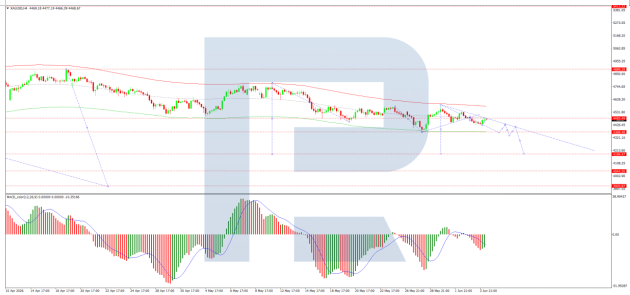
On the H4 XAU/USD chart, gold is trading within a consolidation range around the 4,690 USD level. An upside breakout could push prices towards 4,751 USD, while a downside break could lead to a move lower towards 4,616 USD. The MACD indicator confirms the current downside momentum, with its signal line below the centre line and pointing firmly downwards.

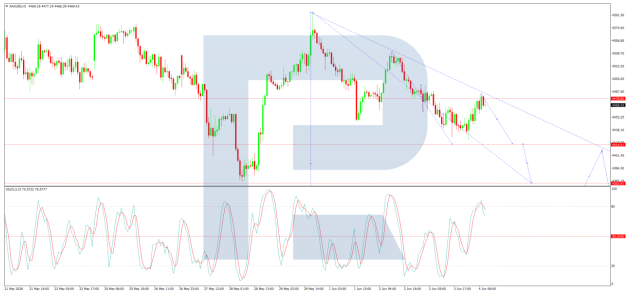
On the H1 chart, gold has broken below the 4,710 USD level and continues to move lower towards 4,680 USD. A corrective rebound towards 4,750 USD (testing from below) is likely, followed by a possible decline to 4,610 USD. The Stochastic oscillator supports this scenario, with its signal line below 80 and pointing firmly downwards towards 20.

Conclusion

Gold continues to decline as geopolitical tensions show no signs of easing. The breakdown of US-Iran negotiations, combined with the ongoing blockade of the Strait of Hormuz, has pushed oil prices higher and heightened inflationary risks. With the conflict now in its ninth week and the IEA describing it as the largest supply shock in energy markets, central banks are expected to maintain or even tighten policy rates for longer. This environment remains unfavourable for non-yielding gold. The Fed’s cautious stance offers little immediate relief. Technical indicators point firmly lower, with further downside towards 4,616–4,610 USD likely in the near term.


Disclaimer

Any forecasts contained herein are based on the author’s particular opinion. This analysis may not be treated as trading advice. RoboForex bears no responsibility for trading results based on trading recommendations and reviews contained herein.

COT Metals Charts: Copper leads Metals Speculator Bets Higher

By InvestMacro

Here are the latest charts and statistics for the Commitment of Traders (COT) data published by the Commodities Futures Trading Commission (CFTC).

The latest COT data is updated through Tuesday April 21st and shows a quick view of how large traders (for-profit speculators and commercial entities) were positioned in the futures markets.

Weekly Speculator Changes led by Copper & Gold


The COT metals markets speculator bets were overall higher this week as five out of the six metals markets we cover had higher positioning while the other one markets had lower speculator contracts.

Leading the gains for the metals was Copper (4,095 contracts) with Gold (1,480 contracts), Steel (430 contracts), Silver (158 contracts) and Palladium (68 contracts) also showing positive weeks.

The only market with a decline in speculator bets for the week was Platinum with a decrease by -67 contracts.

Metals Markets were overall lower in price performance this week.

The Precious Metals market’s price performances were mostly lower across the board this week. Steel was the only gainer and saw just a small edge higher by 0.16%.

On the downside, Copper dipped by -0.78% and was followed by Gold which fell by -1.83%. Platinum was lower by -3.77% followed by Palladium, which dropped by -3.92% on the week.

Silver was the biggest negative returner on the week with a -5.39% decline.


Metals Data:

Metals Table COT Chart
Legend: Weekly Speculators Change | Speculators Current Net Position | Speculators Strength Score compared to last 3-Years (0-100 range)


Strength Scores led by Copper & Steel


COT Strength Scores (a normalized measure of Speculator positions over a 3-Year range, from 0 to 100 where above 80 is Extreme-Bullish and below 20 is Extreme-Bearish) showed that Copper (88 percent) and Steel (88 percent) lead the metals markets this week. Palladium (85 percent) comes in as the next highest in the weekly strength scores.

On the downside, Silver (27 percent) and Gold (38 percent) come in at the lowest strength level currently.

Strength Statistics:
Gold (37.9 percent) vs Gold previous week (37.3 percent)
Silver (26.7 percent) vs Silver previous week (26.5 percent)
Copper (88.4 percent) vs Copper previous week (84.6 percent)
Platinum (62.4 percent) vs Platinum previous week (62.6 percent)
Palladium (85.4 percent) vs Palladium previous week (85.0 percent)
Steel (88.3 percent) vs Steel previous week (86.3 percent)


Platinum & Copper top the 6-Week Strength Trends


COT Strength Score Trends (or move index, calculates the 6-week changes in strength scores) showed that Platinum (15 percent) and Copper (7 percent) lead the past six weeks trends for metals.

Palladium (-5 percent) leads the downside trend scores currently with Steel (-4 percent) as the next market with lower trend scores.

Move Statistics:
Gold (0.4 percent) vs Gold previous week (1.0 percent)
Silver (-1.4 percent) vs Silver previous week (0.4 percent)
Copper (7.0 percent) vs Copper previous week (-2.4 percent)
Platinum (14.6 percent) vs Platinum previous week (17.0 percent)
Palladium (-5.5 percent) vs Palladium previous week (-8.0 percent)
Steel (-4.3 percent) vs Steel previous week (1.2 percent)


Individual Markets:

Gold Comex Futures Futures:

Gold Futures COT ChartPositioning Notes:

  • Gold Comex Futures large speculator standing this week reached a net position of 164,006 contracts in the data reported through Tuesday.
  • Weekly Speculator position increase of 1,480 contracts from the previous week which had a total of 162,526 net contracts.
  • This week’s current strength score (range over the past 3 years, measured from 0 to 100) shows the speculators are currently Bearish with a score of 37.9 percent.
  • The Commercials are Bullish with a score of 54.9 percent.
  • The Small Traders (not shown in chart) are Bullish with a score of 79.7 percent.

Price Trend-Following Model: Weak Uptrend

Our weekly trend-following model classifies the current market price position as: Weak Uptrend.

Gold Futures StatisticsSPECULATORSCOMMERCIALSSMALL TRADERS
– Percent of Open Interest Longs:58.215.414.3
– Percent of Open Interest Shorts:13.470.93.6
– Net Position:164,006-202,94038,934
– Gross Longs:212,89356,26152,223
– Gross Shorts:48,887259,20113,289
– Long to Short Ratio:4.4 to 10.2 to 13.9 to 1
NET POSITION TREND:
– Strength Index Score (3 Year Range Pct):37.954.979.7
– Strength Index Reading (3 Year Range):BearishBullishBullish
NET POSITION MOVEMENT INDEX:
– 6-Week Change in Strength Index:0.40.0-2.7


Silver Comex Futures Futures:

Silver Futures COT ChartPositioning Notes:

  • Silver Comex Futures large speculator standing this week reached a net position of 23,720 contracts in the data reported through Tuesday.
  • Weekly Speculator position advance of 158 contracts from the previous week which had a total of 23,562 net contracts.
  • This week’s current strength score (range over the past 3 years, measured from 0 to 100) shows the speculators are currently Bearish with a score of 26.7 percent.
  • The Commercials are Bullish with a score of 71.7 percent.
  • The Small Traders (not shown in chart) are Bearish with a score of 47.7 percent.

Price Trend-Following Model: Weak Uptrend

Our weekly trend-following model classifies the current market price position as: Weak Uptrend.

Silver Futures StatisticsSPECULATORSCOMMERCIALSSMALL TRADERS
– Percent of Open Interest Longs:28.828.022.7
– Percent of Open Interest Shorts:8.263.57.8
– Net Position:23,720-40,98517,265
– Gross Longs:33,23332,35726,253
– Gross Shorts:9,51373,3428,988
– Long to Short Ratio:3.5 to 10.4 to 12.9 to 1
NET POSITION TREND:
– Strength Index Score (3 Year Range Pct):26.771.747.7
– Strength Index Reading (3 Year Range):BearishBullishBearish
NET POSITION MOVEMENT INDEX:
– 6-Week Change in Strength Index:-1.40.91.5


Copper Grade #1 Futures Futures:

Copper Futures COT ChartPositioning Notes:

  • Copper Grade #1 Futures large speculator standing this week reached a net position of 59,204 contracts in the data reported through Tuesday.
  • Weekly Speculator position boost of 4,095 contracts from the previous week which had a total of 55,109 net contracts.
  • This week’s current strength score (range over the past 3 years, measured from 0 to 100) shows the speculators are currently Bullish-Extreme with a score of 88.4 percent.
  • The Commercials are Bearish-Extreme with a score of 10.7 percent.
  • The Small Traders (not shown in chart) are Bullish with a score of 66.6 percent.

Price Trend-Following Model: Strong Uptrend

Our weekly trend-following model classifies the current market price position as: Strong Uptrend.

Copper Futures StatisticsSPECULATORSCOMMERCIALSSMALL TRADERS
– Percent of Open Interest Longs:36.035.18.2
– Percent of Open Interest Shorts:12.462.74.1
– Net Position:59,204-69,33510,131
– Gross Longs:90,14287,85520,417
– Gross Shorts:30,938157,19010,286
– Long to Short Ratio:2.9 to 10.6 to 12.0 to 1
NET POSITION TREND:
– Strength Index Score (3 Year Range Pct):88.410.766.6
– Strength Index Reading (3 Year Range):Bullish-ExtremeBearish-ExtremeBullish
NET POSITION MOVEMENT INDEX:
– 6-Week Change in Strength Index:7.0-5.8-4.3


Platinum Futures Futures:

Platinum Futures COT ChartPositioning Notes:

  • Platinum Futures large speculator standing this week reached a net position of 20,536 contracts in the data reported through Tuesday.
  • Weekly Speculator position decline of -67 contracts from the previous week which had a total of 20,603 net contracts.
  • This week’s current strength score (range over the past 3 years, measured from 0 to 100) shows the speculators are currently Bullish with a score of 62.4 percent.
  • The Commercials are Bearish with a score of 41.1 percent.
  • The Small Traders (not shown in chart) are Bullish with a score of 54.5 percent.

Price Trend-Following Model: Strong Downtrend

Our weekly trend-following model classifies the current market price position as: Strong Downtrend.

Platinum Futures StatisticsSPECULATORSCOMMERCIALSSMALL TRADERS
– Percent of Open Interest Longs:46.727.612.7
– Percent of Open Interest Shorts:13.668.64.9
– Net Position:20,536-25,3874,851
– Gross Longs:28,94017,1337,859
– Gross Shorts:8,40442,5203,008
– Long to Short Ratio:3.4 to 10.4 to 12.6 to 1
NET POSITION TREND:
– Strength Index Score (3 Year Range Pct):62.441.154.5
– Strength Index Reading (3 Year Range):BullishBearishBullish
NET POSITION MOVEMENT INDEX:
– 6-Week Change in Strength Index:14.6-11.4-15.8


Palladium Futures Futures:

Palladium Futures COT ChartPositioning Notes:

  • Palladium Futures large speculator standing this week reached a net position of -985 contracts in the data reported through Tuesday.
  • Weekly Speculator position boost of 68 contracts from the previous week which had a total of -1,053 net contracts.
  • This week’s current strength score (range over the past 3 years, measured from 0 to 100) shows the speculators are currently Bullish-Extreme with a score of 85.4 percent.
  • The Commercials are Bearish-Extreme with a score of 17.9 percent.
  • The Small Traders (not shown in chart) are Bullish with a score of 53.1 percent.

Price Trend-Following Model: Strong Downtrend

Our weekly trend-following model classifies the current market price position as: Strong Downtrend.

Palladium Futures StatisticsSPECULATORSCOMMERCIALSSMALL TRADERS
– Percent of Open Interest Longs:46.135.515.4
– Percent of Open Interest Shorts:52.735.39.0
– Net Position:-98530955
– Gross Longs:6,8845,3002,297
– Gross Shorts:7,8695,2701,342
– Long to Short Ratio:0.9 to 11.0 to 11.7 to 1
NET POSITION TREND:
– Strength Index Score (3 Year Range Pct):85.417.953.1
– Strength Index Reading (3 Year Range):Bullish-ExtremeBearish-ExtremeBullish
NET POSITION MOVEMENT INDEX:
– 6-Week Change in Strength Index:-5.58.8-20.9


Steel Futures Futures:

Steel Futures COT ChartPositioning Notes:

  • Steel Futures large speculator standing this week reached a net position of 11,980 contracts in the data reported through Tuesday.
  • Weekly Speculator position increase of 430 contracts from the previous week which had a total of 11,550 net contracts.
  • This week’s current strength score (range over the past 3 years, measured from 0 to 100) shows the speculators are currently Bullish-Extreme with a score of 88.3 percent.
  • The Commercials are Bearish-Extreme with a score of 11.6 percent.
  • The Small Traders (not shown in chart) are Bullish-Extreme with a score of 92.5 percent.

Price Trend-Following Model: Uptrend

Our weekly trend-following model classifies the current market price position as: Uptrend.

Steel Futures StatisticsSPECULATORSCOMMERCIALSSMALL TRADERS
– Percent of Open Interest Longs:30.965.71.4
– Percent of Open Interest Shorts:1.796.00.4
– Net Position:11,980-12,415435
– Gross Longs:12,66526,882590
– Gross Shorts:68539,297155
– Long to Short Ratio:18.5 to 10.7 to 13.8 to 1
NET POSITION TREND:
– Strength Index Score (3 Year Range Pct):88.311.692.5
– Strength Index Reading (3 Year Range):Bullish-ExtremeBearish-ExtremeBullish-Extreme
NET POSITION MOVEMENT INDEX:
– 6-Week Change in Strength Index:-4.33.98.4


Article By InvestMacroReceive our weekly COT Newsletter

*COT Report: The COT data, released weekly to the public each Friday, is updated through the most recent Tuesday (data is 3 days old) and shows a quick view of how large speculators or non-commercials (for-profit traders) were positioned in the futures markets.

The CFTC categorizes trader positions according to commercial hedgers (traders who use futures contracts for hedging as part of the business), non-commercials (large traders who speculate to realize trading profits) and nonreportable traders (usually small traders/speculators) as well as their open interest (contracts open in the market at time of reporting). See CFTC criteria here.

COT Bonds Charts: Speculator Bets led by 5-Year Bonds & Ultra 10-Year Bonds

By InvestMacro

Here are the latest charts and statistics for the Commitment of Traders (COT) reports data published by the Commodities Futures Trading Commission (CFTC).

The latest COT data is updated through Tuesday April 21st and shows a quick view of how large traders (for-profit speculators and commercial hedgers) were positioned in the futures markets.

Weekly Speculator Changes led by 5-Year Bonds & 10-Year Bonds


The COT bond market speculator bets were slightly higher overall this week as five out of the nine bond markets we cover had higher positioning while the other four markets had lower speculator contracts.

Leading the gains for the bond markets was the 5-Year Bonds (92,995 contracts) with the Ultra 10-Year Bonds (59,678 contracts), the Fed Funds (23,202 contracts), the 10-Year Bonds (9,394 contracts) and the Ultra Treasury Bonds (536 contracts) also showing positive weeks.

The bond markets with declines in speculator bets for the week were the SOFR 3-Months (-87,650 contracts), the 2-Year Bonds (-39,547 contracts), the SOFR 1-Month (-24,657 contracts) and with the US Treasury Bonds (-9,670 contracts) also having lower bets on the week.

Major Bond Markets were mostly lower in price performance this week.

In the Major Bond Markets, the Fed Funds with a small edge higher by 0.01% was the only market that saw a positive return on the week.

The three-month SOFR and the one-month SOFR were virtually unchanged on the week – each with a -0.01% change, followed by the 2-year bond, which was lower by -0.08%. The 5-year bond declined by -0.22%, while the 10-year note saw a reduction by -0.28%, and the long US Treasury Bond was down by -0.30%.


Bonds Data:

Bonds Market Speculators Data Table
Legend: Open Interest | Speculators Current Net Position | Weekly Specs Change | Specs Strength Score compared to last 3-Years (0-100 range)


Strength Scores led by Ultra 10-Year Bonds & 5-Year Bonds


COT Strength Scores (a normalized measure of Speculator positions over a 3-Year range, from 0 to 100 where above 80 is Extreme-Bullish and below 20 is Extreme-Bearish) showed that the Ultra 10-Year Bonds (90 percent), the 5-Year Bonds (65 percent) and the SOFR 1-Month (65 percent) lead the bond markets this week.

On the downside, the 2-Year Bond (0.0 percent) comes in at the lowest strength level currently and is in Bearish-Extreme territory. The next lowest strength scores were the SOFR 3-Months (22 percent) and the 10-Year Bonds (42 percent).

Strength Statistics:
Fed Funds (55.2 percent) vs Fed Funds previous week (51.9 percent)
2-Year Bond (0.0 percent) vs 2-Year Bond previous week (3.6 percent)
5-Year Bond (64.9 percent) vs 5-Year Bond previous week (59.6 percent)
10-Year Bond (42.2 percent) vs 10-Year Bond previous week (41.1 percent)
Ultra 10-Year Bond (90.4 percent) vs Ultra 10-Year Bond previous week (74.3 percent)
US Treasury Bond (54.2 percent) vs US Treasury Bond previous week (57.6 percent)
Ultra US Treasury Bond (58.5 percent) vs Ultra US Treasury Bond previous week (58.3 percent)
SOFR 1-Month (65.4 percent) vs SOFR 1-Month previous week (69.7 percent)
SOFR 3-Months (22.4 percent) vs SOFR 3-Months previous week (27.0 percent)


Ultra 10-Year Bonds & 5-Year Bonds top the 6-Week Strength Trends

COT Strength Score Trends (or move index, calculates the 6-week changes in strength scores) showed that the Ultra 10-Year Bonds (34 percent) and the 5-Year Bonds (22 percent) lead the past six weeks trends for bonds. The SOFR 1-Month (19 percent) are the next highest positive movers in the latest trends data.

The US Treasury Bond (-43.8 percent) leads the downside trend scores currently with the 10-Year Bonds (-31 percent) and the 2-Year Bonds (-37 percent) following next with lower trend scores.

Strength Trend Statistics:
Fed Funds (10.2 percent) vs Fed Funds previous week (18.8 percent)
2-Year Bond (-36.5 percent) vs 2-Year Bond previous week (-32.9 percent)
5-Year Bond (21.7 percent) vs 5-Year Bond previous week (26.2 percent)
10-Year Bond (-30.6 percent) vs 10-Year Bond previous week (-17.4 percent)
Ultra 10-Year Bond (33.6 percent) vs Ultra 10-Year Bond previous week (3.3 percent)
US Treasury Bond (-43.8 percent) vs US Treasury Bond previous week (-32.8 percent)
Ultra US Treasury Bond (-3.8 percent) vs Ultra US Treasury Bond previous week (-16.9 percent)
SOFR 1-Month (18.9 percent) vs SOFR 1-Month previous week (22.9 percent)
SOFR 3-Months (-9.9 percent) vs SOFR 3-Months previous week (8.4 percent)


30-Day Federal Funds Futures:

Federal Funds 30-Day Bonds Futures COT ChartPositioning Notes:

  • 30-Day Federal Funds large speculator standing this week equaled a net position of -4,559 contracts in the data reported through Tuesday.
  • Weekly Speculator position rise of 23,202 contracts from the previous week which had a total of -27,761 net contracts.
  • This week’s current strength score (range over the past 3 years, measured from 0 to 100) shows the speculators are currently Bullish with a score of 55.2 percent.
  • The Commercials are Bearish with a score of 43.4 percent.
  • The Small Traders (not shown in chart) are Bullish with a score of 76.0 percent.

Price Trend-Following Model: Weak Uptrend

Our weekly trend-following model classifies the current market price position as: Weak Uptrend.

30-Day Federal Funds StatisticsSPECULATORSCOMMERCIALSSMALL TRADERS
– Percent of Open Interest Longs:19.063.02.7
– Percent of Open Interest Shorts:19.263.61.9
– Net Position:-4,559-10,32514,884
– Gross Longs:353,2741,174,14849,750
– Gross Shorts:357,8331,184,47334,866
– Long to Short Ratio:1.0 to 11.0 to 11.4 to 1
NET POSITION TREND:
– Strength Index Score (3 Year Range Pct):55.243.476.0
– Strength Index Reading (3 Year Range):BullishBearishBullish
NET POSITION MOVEMENT INDEX:
– 6-Week Change in Strength Index:10.2-9.1-14.5


Secured Overnight Financing Rate (3-Month) Futures:

SOFR 3-Months Bonds Futures COT ChartPositioning Notes:

  • Secured Overnight Financing Rate (3-Month) large speculator standing this week equaled a net position of -705,746 contracts in the data reported through Tuesday.
  • Weekly Speculator position lowering of -87,650 contracts from the previous week which had a total of -618,096 net contracts.
  • This week’s current strength score (range over the past 3 years, measured from 0 to 100) shows the speculators are currently Bearish with a score of 22.4 percent.
  • The Commercials are Bullish with a score of 78.0 percent.
  • The Small Traders (not shown in chart) are Bearish with a score of 41.9 percent.

Price Trend-Following Model: Weak Uptrend

Our weekly trend-following model classifies the current market price position as: Weak Uptrend.

SOFR 3-Months StatisticsSPECULATORSCOMMERCIALSSMALL TRADERS
– Percent of Open Interest Longs:15.359.01.2
– Percent of Open Interest Shorts:21.153.21.1
– Net Position:-705,746704,5661,180
– Gross Longs:1,839,7207,114,389139,054
– Gross Shorts:2,545,4666,409,823137,874
– Long to Short Ratio:0.7 to 11.1 to 11.0 to 1
NET POSITION TREND:
– Strength Index Score (3 Year Range Pct):22.478.041.9
– Strength Index Reading (3 Year Range):BearishBullishBearish
NET POSITION MOVEMENT INDEX:
– 6-Week Change in Strength Index:-9.99.93.3


Secured Overnight Financing Rate (1-Month) Futures:

SOFR 1-Month Bonds Futures COT ChartPositioning Notes:

  • Secured Overnight Financing Rate (1-Month) large speculator standing this week equaled a net position of -70,379 contracts in the data reported through Tuesday.
  • Weekly Speculator position lowering of -24,657 contracts from the previous week which had a total of -45,722 net contracts.
  • This week’s current strength score (range over the past 3 years, measured from 0 to 100) shows the speculators are currently Bullish with a score of 65.4 percent.
  • The Commercials are Bearish with a score of 34.6 percent.
  • The Small Traders (not shown in chart) are Bullish with a score of 66.9 percent.

Price Trend-Following Model: Uptrend

Our weekly trend-following model classifies the current market price position as: Uptrend.

SOFR 1-Month StatisticsSPECULATORSCOMMERCIALSSMALL TRADERS
– Percent of Open Interest Longs:22.958.82.8
– Percent of Open Interest Shorts:28.153.62.8
– Net Position:-70,37970,34237
– Gross Longs:308,764794,60537,285
– Gross Shorts:379,143724,26337,248
– Long to Short Ratio:0.8 to 11.1 to 11.0 to 1
NET POSITION TREND:
– Strength Index Score (3 Year Range Pct):65.434.666.9
– Strength Index Reading (3 Year Range):BullishBearishBullish
NET POSITION MOVEMENT INDEX:
– 6-Week Change in Strength Index:18.9-18.90.1


2-Year Treasury Note Futures:

2-Year Treasury Bonds Futures COT ChartPositioning Notes:

  • 2-Year Treasury Note large speculator standing this week equaled a net position of -1,743,353 contracts in the data reported through Tuesday.
  • Weekly Speculator position decline of -39,547 contracts from the previous week which had a total of -1,703,806 net contracts.
  • This week’s current strength score (range over the past 3 years, measured from 0 to 100) shows the speculators are currently Bearish-Extreme with a score of 0.0 percent.
  • The Commercials are Bullish-Extreme with a score of 100.0 percent.
  • The Small Traders (not shown in chart) are Bearish-Extreme with a score of 13.6 percent.

Price Trend-Following Model: Downtrend

Our weekly trend-following model classifies the current market price position as: Downtrend.

2-Year Treasury Note StatisticsSPECULATORSCOMMERCIALSSMALL TRADERS
– Percent of Open Interest Longs:10.581.25.2
– Percent of Open Interest Shorts:47.645.83.4
– Net Position:-1,743,3531,660,12683,227
– Gross Longs:493,3503,811,446242,922
– Gross Shorts:2,236,7032,151,320159,695
– Long to Short Ratio:0.2 to 11.8 to 11.5 to 1
NET POSITION TREND:
– Strength Index Score (3 Year Range Pct):0.0100.013.6
– Strength Index Reading (3 Year Range):Bearish-ExtremeBullish-ExtremeBearish-Extreme
NET POSITION MOVEMENT INDEX:
– 6-Week Change in Strength Index:-36.539.5-14.1


5-Year Treasury Note Futures:

5-Year Treasury Bonds Futures COT ChartPositioning Notes:

  • 5-Year Treasury Note large speculator standing this week equaled a net position of -1,532,750 contracts in the data reported through Tuesday.
  • Weekly Speculator position advance of 92,995 contracts from the previous week which had a total of -1,625,745 net contracts.
  • This week’s current strength score (range over the past 3 years, measured from 0 to 100) shows the speculators are currently Bullish with a score of 64.9 percent.
  • The Commercials are Bearish with a score of 35.6 percent.
  • The Small Traders (not shown in chart) are Bearish with a score of 32.7 percent.

Price Trend-Following Model: Downtrend

Our weekly trend-following model classifies the current market price position as: Downtrend.

5-Year Treasury Note StatisticsSPECULATORSCOMMERCIALSSMALL TRADERS
– Percent of Open Interest Longs:10.779.96.2
– Percent of Open Interest Shorts:34.257.64.9
– Net Position:-1,532,7501,448,72884,022
– Gross Longs:692,3305,191,123405,515
– Gross Shorts:2,225,0803,742,395321,493
– Long to Short Ratio:0.3 to 11.4 to 11.3 to 1
NET POSITION TREND:
– Strength Index Score (3 Year Range Pct):64.935.632.7
– Strength Index Reading (3 Year Range):BullishBearishBearish
NET POSITION MOVEMENT INDEX:
– 6-Week Change in Strength Index:21.7-20.6-20.9


10-Year Treasury Note Futures:

10-Year Treasury Notes Bonds Futures COT ChartPositioning Notes:

  • 10-Year Treasury Note large speculator standing this week equaled a net position of -790,971 contracts in the data reported through Tuesday.
  • Weekly Speculator position lift of 9,394 contracts from the previous week which had a total of -800,365 net contracts.
  • This week’s current strength score (range over the past 3 years, measured from 0 to 100) shows the speculators are currently Bearish with a score of 42.2 percent.
  • The Commercials are Bullish with a score of 62.9 percent.
  • The Small Traders (not shown in chart) are Bearish with a score of 43.4 percent.

Price Trend-Following Model: Downtrend

Our weekly trend-following model classifies the current market price position as: Downtrend.

10-Year Treasury Note StatisticsSPECULATORSCOMMERCIALSSMALL TRADERS
– Percent of Open Interest Longs:11.377.98.0
– Percent of Open Interest Shorts:26.563.96.8
– Net Position:-790,971726,88964,082
– Gross Longs:591,1034,060,023416,177
– Gross Shorts:1,382,0743,333,134352,095
– Long to Short Ratio:0.4 to 11.2 to 11.2 to 1
NET POSITION TREND:
– Strength Index Score (3 Year Range Pct):42.262.943.4
– Strength Index Reading (3 Year Range):BearishBullishBearish
NET POSITION MOVEMENT INDEX:
– 6-Week Change in Strength Index:-30.632.313.0


Ultra 10-Year Notes Futures:

Ultra 10-Year Treasury Notes Bonds Futures COT ChartPositioning Notes:

  • Ultra 10-Year Notes large speculator standing this week equaled a net position of -73,195 contracts in the data reported through Tuesday.
  • Weekly Speculator position increase of 59,678 contracts from the previous week which had a total of -132,873 net contracts.
  • This week’s current strength score (range over the past 3 years, measured from 0 to 100) shows the speculators are currently Bullish-Extreme with a score of 90.4 percent.
  • The Commercials are Bearish with a score of 28.2 percent.
  • The Small Traders (not shown in chart) are Bearish-Extreme with a score of 6.6 percent.

Price Trend-Following Model: Weak Uptrend

Our weekly trend-following model classifies the current market price position as: Weak Uptrend. The current action for the model is considered to be: Hold – Maintain Long Position.

Ultra 10-Year Notes StatisticsSPECULATORSCOMMERCIALSSMALL TRADERS
– Percent of Open Interest Longs:10.280.68.2
– Percent of Open Interest Shorts:13.272.313.5
– Net Position:-73,195201,369-128,174
– Gross Longs:247,8851,960,151200,473
– Gross Shorts:321,0801,758,782328,647
– Long to Short Ratio:0.8 to 11.1 to 10.6 to 1
NET POSITION TREND:
– Strength Index Score (3 Year Range Pct):90.428.26.6
– Strength Index Reading (3 Year Range):Bullish-ExtremeBearishBearish-Extreme
NET POSITION MOVEMENT INDEX:
– 6-Week Change in Strength Index:33.6-27.7-16.1


US Treasury Bonds Futures:

US Year Treasury Notes Long Bonds Futures COT ChartPositioning Notes:

  • US Treasury Bonds large speculator standing this week equaled a net position of -83,786 contracts in the data reported through Tuesday.
  • Weekly Speculator position decline of -9,670 contracts from the previous week which had a total of -74,116 net contracts.
  • This week’s current strength score (range over the past 3 years, measured from 0 to 100) shows the speculators are currently Bullish with a score of 54.2 percent.
  • The Commercials are Bearish with a score of 41.4 percent.
  • The Small Traders (not shown in chart) are Bullish with a score of 51.7 percent.

Price Trend-Following Model: Strong Downtrend

Our weekly trend-following model classifies the current market price position as: Strong Downtrend.

US Treasury Bonds StatisticsSPECULATORSCOMMERCIALSSMALL TRADERS
– Percent of Open Interest Longs:10.375.113.1
– Percent of Open Interest Shorts:14.976.17.5
– Net Position:-83,786-18,086101,872
– Gross Longs:185,7321,354,174236,593
– Gross Shorts:269,5181,372,260134,721
– Long to Short Ratio:0.7 to 11.0 to 11.8 to 1
NET POSITION TREND:
– Strength Index Score (3 Year Range Pct):54.241.451.7
– Strength Index Reading (3 Year Range):BullishBearishBullish
NET POSITION MOVEMENT INDEX:
– 6-Week Change in Strength Index:-43.841.4-25.0


Ultra US Treasury Bonds Futures:

Ultra US Year Treasury Notes Long Bonds Futures COT ChartPositioning Notes:

  • Ultra US Treasury Bonds large speculator standing this week equaled a net position of -300,287 contracts in the data reported through Tuesday.
  • Weekly Speculator position advance of 536 contracts from the previous week which had a total of -300,823 net contracts.
  • This week’s current strength score (range over the past 3 years, measured from 0 to 100) shows the speculators are currently Bullish with a score of 58.5 percent.
  • The Commercials are Bullish with a score of 55.9 percent.
  • The Small Traders (not shown in chart) are Bearish-Extreme with a score of 18.2 percent.

Price Trend-Following Model: Strong Downtrend

Our weekly trend-following model classifies the current market price position as: Strong Downtrend.

Ultra US Treasury Bonds StatisticsSPECULATORSCOMMERCIALSSMALL TRADERS
– Percent of Open Interest Longs:5.885.78.0
– Percent of Open Interest Shorts:19.072.77.8
– Net Position:-300,287297,2493,038
– Gross Longs:132,1911,950,217181,384
– Gross Shorts:432,4781,652,968178,346
– Long to Short Ratio:0.3 to 11.2 to 11.0 to 1
NET POSITION TREND:
– Strength Index Score (3 Year Range Pct):58.555.918.2
– Strength Index Reading (3 Year Range):BullishBullishBearish-Extreme
NET POSITION MOVEMENT INDEX:
– 6-Week Change in Strength Index:-3.89.2-14.3


Article By InvestMacroReceive our weekly COT Newsletter

*COT Report: The COT data, released weekly to the public each Friday, is updated through the most recent Tuesday (data is 3 days old) and shows a quick view of how large speculators or non-commercials (for-profit traders) were positioned in the futures markets.

The CFTC categorizes trader positions according to commercial hedgers (traders who use futures contracts for hedging as part of the business), non-commercials (large traders who speculate to realize trading profits) and nonreportable traders (usually small traders/speculators) as well as their open interest (contracts open in the market at time of reporting). See CFTC criteria here.

COT Energy Charts: Weekly Speculator Bets led by Natural Gas

By InvestMacro


Here are the latest charts and statistics for the Commitment of Traders (COT) data published by the Commodities Futures Trading Commission (CFTC).

The latest COT data is updated through Tuesday April 21st and shows a quick view of how large traders (for-profit speculators and commercial entities) were positioned in the futures markets.

Weekly Speculator Bets led by Natural Gas

Speculators Nets Energy Futures COT Chart
The COT energy market speculator bets were mixed this week as three out of the six energy markets we cover had higher positioning while the other three markets had lower speculator contracts.

Leading the gains for the energy markets was Natural Gas (18,573 contracts) with Gasoline (3,350 contracts) and Brent Oil (322 contracts) also having positive weeks.

The markets with declines in speculator bets for the week were WTI Crude (-14,239 contracts), Heating Oil (-2,152 contracts) and Bloomberg Index (-35 contracts) also seeing lower bets on the week.

Gasoline and Brent Oil lead Energy market price performance.

Energy Markets were mostly higher across the board this week with Gasoline being the leader in price performance with a 13.42% gain on the week. Brent Oil came in next with an 11.40% upswing, while Heating Oil saw a strong weekly gain of 8.87%. WTI Crude Oil was also higher and rose by 8.79% for the week while the Bloomberg Commodity Index advanced by 4.03% over the past 5 days.

On the downside, Natural Gas was the only market to see a negative price performance on the week with a modest -0.96% decline.


Energy Data:

Speculators Table Energy Futures COT Chart
Legend: Weekly Speculators Change | Speculators Current Net Position | Speculators Strength Score compared to last 3-Years (0-100 range)


Strength Scores led by Heating Oil & Gasoline

Speculators Strength Energy Futures COT Chart
COT Strength Scores (a normalized measure of Speculator positions over a 3-Year range, from 0 to 100 where above 80 is Extreme-Bullish and below 20 is Extreme-Bearish) showed that Heating Oil (50.6 percent) and Gasoline (50.2 percent) lead the energy markets this week. WTI Crude Oil (49.2 percent) and Brent Crude Oil (47.9 percent) come in as the next highest in the weekly strength scores.

On the downside, the Bloomberg Index (0.5 percent) comes in at the lowest strength level currently and is in Extreme-Bearish territory (below 20 percent). The next lowest strength score was Natural Gas (24.5 percent).

Strength Statistics:
WTI Crude Oil (49.2 percent) vs WTI Crude Oil previous week (53.7 percent)
Brent Crude Oil (47.9 percent) vs Brent Crude Oil previous week (47.4 percent)
Natural Gas (24.5 percent) vs Natural Gas previous week (12.5 percent)
Gasoline (50.2 percent) vs Gasoline previous week (46.5 percent)
Heating Oil (50.6 percent) vs Heating Oil previous week (53.5 percent)
Bloomberg Commodity Index (0.5 percent) vs Bloomberg Commodity Index previous week (0.6 percent)


Natural Gas top the 6-Week Strength Trends

Speculators Trend Energy Futures COT Chart
COT Strength Score Trends (or move index, calculates the 6-week changes in strength scores) showed that Natural Gas (11.9 percent) leads the past six weeks trends for the energy markets.

Bloomberg Index (-62.7 percent) leads the downside trend scores currently with Gasoline (-17.5 percent) as the next market with lower trend scores.

Move Statistics:
WTI Crude Oil (-11.5 percent) vs WTI Crude Oil previous week (11.1 percent)
Brent Crude Oil (-14.5 percent) vs Brent Crude Oil previous week (5.4 percent)
Natural Gas (11.9 percent) vs Natural Gas previous week (12.5 percent)
Gasoline (-17.5 percent) vs Gasoline previous week (-42.0 percent)
Heating Oil (-10.0 percent) vs Heating Oil previous week (-13.2 percent)
Bloomberg Commodity Index (-62.7 percent) vs Bloomberg Commodity Index previous week (-61.6 percent)


Individual COT Market Charts:

WTI Crude Oil Futures Futures:

WTI Crude Oil Futures COT ChartPositioning Notes:

  • WTI Crude Oil Futures large speculator standing this week totaled a net position of 192,302 contracts in the data reported through Tuesday.
  • Weekly Speculator position decrease of -14,239 contracts from the previous week which had a total of 206,541 net contracts.
  • This week’s current strength score (range over the past 3 years, measured from 0 to 100) shows the speculators are currently Bearish with a score of 49.2 percent.
  • The Commercials are Bearish with a score of 47.5 percent.
  • The Small Traders (not shown in chart) are Bullish with a score of 68.9 percent.

Price Trend-Following Model: Uptrend

Our weekly trend-following model classifies the current market price position as: Uptrend.

WTI Crude Oil Futures StatisticsSPECULATORSCOMMERCIALSSMALL TRADERS
– Percent of Open Interest Longs:19.144.03.8
– Percent of Open Interest Shorts:9.555.42.1
– Net Position:192,302-226,71134,409
– Gross Longs:380,020873,31676,070
– Gross Shorts:187,7181,100,02741,661
– Long to Short Ratio:2.0 to 10.8 to 11.8 to 1
NET POSITION TREND:
– Strength Index Score (3 Year Range Pct):49.247.568.9
– Strength Index Reading (3 Year Range):BearishBearishBullish
NET POSITION MOVEMENT INDEX:
– 6-Week Change in Strength Index:-11.515.2-27.7


Brent Crude Oil Futures Futures:

Brent Last Day Crude Oil Futures COT ChartPositioning Notes:

  • Brent Crude Oil Futures large speculator standing this week totaled a net position of -23,334 contracts in the data reported through Tuesday.
  • Weekly Speculator position boost of 322 contracts from the previous week which had a total of -23,656 net contracts.
  • This week’s current strength score (range over the past 3 years, measured from 0 to 100) shows the speculators are currently Bearish with a score of 47.9 percent.
  • The Commercials are Bullish with a score of 51.2 percent.
  • The Small Traders (not shown in chart) are Bullish with a score of 69.2 percent.

Price Trend-Following Model: Uptrend

Our weekly trend-following model classifies the current market price position as: Uptrend.

Brent Crude Oil Futures StatisticsSPECULATORSCOMMERCIALSSMALL TRADERS
– Percent of Open Interest Longs:24.736.54.2
– Percent of Open Interest Shorts:33.828.33.3
– Net Position:-23,33420,9502,384
– Gross Longs:63,01893,28610,766
– Gross Shorts:86,35272,3368,382
– Long to Short Ratio:0.7 to 11.3 to 11.3 to 1
NET POSITION TREND:
– Strength Index Score (3 Year Range Pct):47.951.269.2
– Strength Index Reading (3 Year Range):BearishBullishBullish
NET POSITION MOVEMENT INDEX:
– 6-Week Change in Strength Index:-14.514.59.2


Natural Gas Futures Futures:

Natural Gas Futures COT ChartPositioning Notes:

  • Natural Gas Futures large speculator standing this week totaled a net position of -168,315 contracts in the data reported through Tuesday.
  • Weekly Speculator position increase of 18,573 contracts from the previous week which had a total of -186,888 net contracts.
  • This week’s current strength score (range over the past 3 years, measured from 0 to 100) shows the speculators are currently Bearish with a score of 24.5 percent.
  • The Commercials are Bullish with a score of 77.4 percent.
  • The Small Traders (not shown in chart) are Bearish with a score of 48.6 percent.

Price Trend-Following Model: Downtrend

Our weekly trend-following model classifies the current market price position as: Downtrend.

Natural Gas Futures StatisticsSPECULATORSCOMMERCIALSSMALL TRADERS
– Percent of Open Interest Longs:15.435.33.7
– Percent of Open Interest Shorts:26.025.82.5
– Net Position:-168,315150,31617,999
– Gross Longs:242,027556,42658,043
– Gross Shorts:410,342406,11040,044
– Long to Short Ratio:0.6 to 11.4 to 11.4 to 1
NET POSITION TREND:
– Strength Index Score (3 Year Range Pct):24.577.448.6
– Strength Index Reading (3 Year Range):BearishBullishBearish
NET POSITION MOVEMENT INDEX:
– 6-Week Change in Strength Index:11.9-9.2-11.8


Gasoline Blendstock Futures Futures:

RBOB Gasoline Energy Futures COT ChartPositioning Notes:

  • Gasoline Blendstock Futures large speculator standing this week totaled a net position of 57,115 contracts in the data reported through Tuesday.
  • Weekly Speculator position increase of 3,350 contracts from the previous week which had a total of 53,765 net contracts.
  • This week’s current strength score (range over the past 3 years, measured from 0 to 100) shows the speculators are currently Bullish with a score of 50.2 percent.
  • The Commercials are Bearish with a score of 40.3 percent.
  • The Small Traders (not shown in chart) are Bullish-Extreme with a score of 83.4 percent.

Price Trend-Following Model: Strong Uptrend

Our weekly trend-following model classifies the current market price position as: Strong Uptrend.

Nasdaq Mini Futures StatisticsSPECULATORSCOMMERCIALSSMALL TRADERS
– Percent of Open Interest Longs:24.150.68.4
– Percent of Open Interest Shorts:6.872.34.0
– Net Position:57,115-71,57214,457
– Gross Longs:79,546167,08127,799
– Gross Shorts:22,431238,65313,342
– Long to Short Ratio:3.5 to 10.7 to 12.1 to 1
NET POSITION TREND:
– Strength Index Score (3 Year Range Pct):50.240.383.4
– Strength Index Reading (3 Year Range):BullishBearishBullish-Extreme
NET POSITION MOVEMENT INDEX:
– 6-Week Change in Strength Index:-17.517.5-7.3


#2 Heating Oil NY-Harbor Futures Futures:

NY Harbor Heating Oil Energy Futures COT ChartPositioning Notes:

  • #2 Heating Oil NY-Harbor Futures large speculator standing this week totaled a net position of 5,454 contracts in the data reported through Tuesday.
  • Weekly Speculator position lowering of -2,152 contracts from the previous week which had a total of 7,606 net contracts.
  • This week’s current strength score (range over the past 3 years, measured from 0 to 100) shows the speculators are currently Bullish with a score of 50.6 percent.
  • The Commercials are Bearish with a score of 39.8 percent.
  • The Small Traders (not shown in chart) are Bullish-Extreme with a score of 80.0 percent.

Price Trend-Following Model: Uptrend

Our weekly trend-following model classifies the current market price position as: Uptrend.

Heating Oil Futures StatisticsSPECULATORSCOMMERCIALSSMALL TRADERS
– Percent of Open Interest Longs:15.049.018.7
– Percent of Open Interest Shorts:12.860.49.6
– Net Position:5,454-28,10022,646
– Gross Longs:37,085121,17546,321
– Gross Shorts:31,631149,27523,675
– Long to Short Ratio:1.2 to 10.8 to 12.0 to 1
NET POSITION TREND:
– Strength Index Score (3 Year Range Pct):50.639.880.0
– Strength Index Reading (3 Year Range):BullishBearishBullish-Extreme
NET POSITION MOVEMENT INDEX:
– 6-Week Change in Strength Index:-10.08.5-3.6


Bloomberg Commodity Index Futures Futures:

Bloomberg Commodity Index Futures COT ChartPositioning Notes:

  • Bloomberg Commodity Index Futures large speculator standing this week totaled a net position of -74,831 contracts in the data reported through Tuesday.
  • Weekly Speculator position reduction of -35 contracts from the previous week which had a total of -74,796 net contracts.
  • This week’s current strength score (range over the past 3 years, measured from 0 to 100) shows the speculators are currently Bearish-Extreme with a score of 0.5 percent.
  • The Commercials are Bullish-Extreme with a score of 99.6 percent.
  • The Small Traders (not shown in chart) are Bullish with a score of 63.7 percent.

Price Trend-Following Model: Uptrend

Our weekly trend-following model classifies the current market price position as: Uptrend.

Bloomberg Index Futures StatisticsSPECULATORSCOMMERCIALSSMALL TRADERS
– Percent of Open Interest Longs:44.554.70.2
– Percent of Open Interest Shorts:75.024.40.0
– Net Position:-74,83174,349482
– Gross Longs:109,438134,349521
– Gross Shorts:184,26960,00039
– Long to Short Ratio:0.6 to 12.2 to 113.4 to 1
NET POSITION TREND:
– Strength Index Score (3 Year Range Pct):0.599.663.7
– Strength Index Reading (3 Year Range):Bearish-ExtremeBullish-ExtremeBullish
NET POSITION MOVEMENT INDEX:
– 6-Week Change in Strength Index:-62.762.7-1.0


Article By InvestMacroReceive our weekly COT Newsletter

*COT Report: The COT data, released weekly to the public each Friday, is updated through the most recent Tuesday (data is 3 days old) and shows a quick view of how large speculators or non-commercials (for-profit traders) were positioned in the futures markets.

The CFTC categorizes trader positions according to commercial hedgers (traders who use futures contracts for hedging as part of the business), non-commercials (large traders who speculate to realize trading profits) and nonreportable traders (usually small traders/speculators) as well as their open interest (contracts open in the market at time of reporting). See CFTC criteria here.