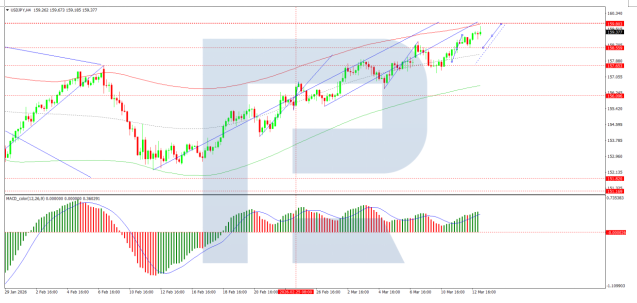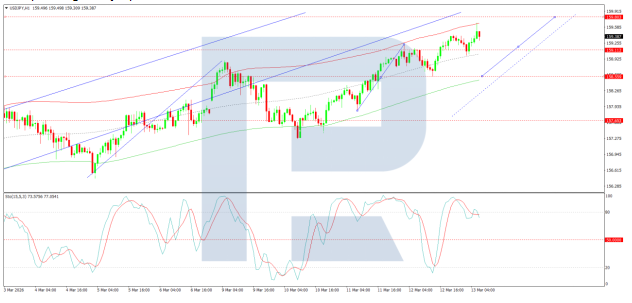
Archive for Financial News – Page 25

Brent Crude Slides on Peace Talk Optimism and Demand Concerns

By RoboForex Analytical Department

Brent crude oil fell to 60.00 USD per barrel on Tuesday, marking its lowest price since early 2021. The sell-off was driven by two primary factors: renewed speculation about progress in Russia-Ukraine peace talks and mounting fears of a global supply glut.

The prospect of a peace agreement has raised the possibility that the US will lift sanctions on Russian oil exports, potentially releasing a significant volume of crude into an already well-supplied market.

Bearish sentiment was further amplified by weaker-than-expected economic data from China on Monday, intensifying concerns about slowing energy demand in the world’s largest crude importer.

These downward pressures effectively overshadowed lingering geopolitical risks, including escalating tensions between the US and Venezuela, which could otherwise have supported prices through fears of supply disruption.

Technical Analysis: Brent Crude

H4 Chart:

On the H4 chart, Brent crude broke downwards from a consolidation range around 61.61 USD, confirming the resumption of the bearish trend. This breakdown activated a downward wave with an initial target at 59.30 USD. We anticipate a near-term continuation of the decline to approximately 59.59 USD, likely to be followed by a minor technical rebound towards 60.45 USD.

Following this corrective bounce, we expect the downtrend to reassert itself, driving prices towards the primary target of 59.30 USD, where the current bearish impulse is likely to be exhausted. This outlook is supported by the MACD indicator, whose signal line remains firmly below zero, indicating sustained selling momentum.

H1 Chart:

On the H1 chart, the market continues to develop a clear downward wave structure following its rejection from the 61.60 USD resistance. The immediate path points towards a decline to at least 59.59 USD. A brief rebound from this level towards 60.45 USD is plausible, representing a short-term correction before the next leg down targets the 59.30 USD support.

The Stochastic oscillator corroborates this near-term bearish bias. Its signal line is at the 50 midpoint and is turning downward, suggesting that selling pressure is re-emerging.

Conclusion

Brent crude is under significant pressure, caught between the bearish implications of potential peace-driven supply increases and concerns over Chinese demand. Technically, the break below 61.61 USD has solidified a negative outlook, with a clear path towards the 59.30 USD target. Any near-term rebounds are likely to be corrective within this broader downtrend. Traders should monitor the 59.30 USD level closely; a decisive break below may trigger an acceleration of the sell-off, while a strong rebound from this support would suggest a period of consolidation.


Disclaimer:

Any forecasts contained herein are based on the author’s particular opinion. This analysis may not be treated as trading advice. RoboForex bears no responsibility for trading results based on trading recommendations and reviews contained herein.

Bitcoin fell below $90,000 again. US stock indices came under a sell-off on Friday

By JustMarkets 

On Friday, the Dow Jones Index (US30) fell by 0.51% (for the week, +1.01%). The S&P 500 Index (US500) was cheaper by 1.07% (for the week, -0.70%). The tech-heavy Nasdaq Index (US100) closed lower by 1.69% (-1.87%). The US stock markets sharply declined on Friday amid a massive sell-off in the technology sector following a 11.4% drop in Broadcom shares, triggered by a warning about margin pressure. This prompted a rotation of capital from high-valuation stocks related to AI and semiconductors into more cyclical and defensive sectors. Significant losses were also incurred by Nvidia, Oracle, Palantir, AMD, and Micron, reflecting growing investor caution regarding the margin potential of AI companies, despite the Fed’s recent interest rate cuts. An additional factor was the comments from the Cleveland Fed President, who expressed a preference for a tougher policy to control inflation.

Bitcoin dropped below $90,000, hitting a two-week low amid the global sell-off in tech stocks and reduced risk appetite. Pressure intensified due to fears of inflated valuations and massive spending in the AI sector, as well as uncertainty surrounding the Fed’s policy trajectory for the next year. An additional negative factor was the warning from MicroStrategy CEO Michael Saylor about potential market consequences from MSCI’s initiative to exclude companies with over 50% digital asset holdings from its indices. Analysts estimate this could trigger significant capital outflow and increase the volatility of Bitcoin and related assets.

European stocks mostly went down on Friday. Germany’s DAX (DE40) fell by 0.45% (for the week, +0.71%), France’s CAC 40 (FR 40) closed lower by 0.21% (for the week, -0.37%), Spain’s IBEX 35 (ES35) fell by 0.28% (for the week, +1.46%), and the UK’s FTSE 100 (UK100) closed negative 0.56% (for the week, -0.19%).

WTI oil prices rose to $57.7 per barrel on Monday, partially recovering from last week’s over 4% drop, as geopolitical risks temporarily outweighed concerns about a global supply surplus. Prices were supported by increased US pressure on Venezuela, including the seizure of a tanker, the imposition of new sanctions, and a military buildup in the region, as well as supply disruption risks amid ongoing Ukrainian drone attacks on Russian oil infrastructure. The detention of a foreign tanker by Iran in the Gulf of Oman added another factor of uncertainty.

The price of silver (XAG/USD) pulled back below $62 per ounce on Friday after hitting record levels earlier in the session, as investors took profits and the market entered a short-term consolidation phase before the weekend. However, the overall bullish backdrop remains: the Fed’s recent rate cut and a less hawkish expectation support medium-term expectations, and Powell gave no signal of a return to tightening, pointing instead to further rate cuts in the following years. Strong ETF inflows and sustained retail demand are also fueling expectations of a silver deficit next year.

Asian markets traded without a single dynamic last week. Japan’s Nikkei 225 (JP225) rose by 0.38%, China’s FTSE China A50 (CHA50) declined by 0.40%, Hong Kong’s Hang Seng (HK50) was down 0.35%, and Australia’s ASX 200 (AU200) showed a positive result of 1.18% over the five days.

The offshore yuan strengthened to around 7.05 per dollar, hitting a high since late September, despite weak economic data from China. November statistics pointed to a slowdown in growth: retail sales sharply missed projections, industrial production declined more than expected, and fixed-asset investment showed the deepest slump since the pandemic, with the ongoing real estate crisis intensifying pressure on the economy. The deteriorating macroeconomic environment heightened expectations for new fiscal and monetary support measures early next year, which partially offset the negative sentiment.

The New Zealand dollar weakened to around $0.578, retreating from a two-month high after the Reserve Bank of New Zealand signaled its intention to keep the Official Cash Rate unchanged for an extended period. RBNZ Governor Breman noted that the economy is largely evolving in line with the regulator’s prognoses, and inflation is moving towards the 2% target by mid-2026. Market participants’ attention is now focused on upcoming macro statistics, including the third-quarter GDP report, though pressure on the currency is partially restrained by the continuing weakening of the US dollar amid a softer-than-expected stance from the Federal Reserve.

S&P 500 (US500) 6,827.41 −73.59 (−1.07%)

Dow Jones (US30) 48,458.05 −245.96 (−0.51%)

DAX (DE40) 24,186.49 −108.12 (−0.45%)

FTSE 100 (UK100) 9,649.03 −54.13 (−0.56%)

USD Index 99.39 +0.05% (+0.05%)

News feed for: 2025.12.15

  • Japan Tankan Large Manufacturers (m/m) at 01:50 (GMT+2); – JPY (LOW)
  • China Industrial Production (m/m) at 04:00 (GMT+2); – CHA50, HK50 (MED)
  • China Retail Sales (m/m) at 04:00 (GMT+2); – CHA50, HK50 (MED)
  • China Unemployment Rate (m/m) at 04:00 (GMT+2); – CHA50, HK50 (MED)
  • Eurozone Industrial Production (m/m) at 12:00 (GMT+2); – EUR (LOW)
  • Canada Consumer Price Index (m/m) at 15:30 (GMT+2). – CAD (HIGH)

By JustMarkets


This article reflects a personal opinion and should not be interpreted as an investment advice, and/or offer, and/or a persistent request for carrying out financial transactions, and/or a guarantee, and/or a forecast of future events.


Yen Gains Strength Ahead of Crucial Bank of Japan Meeting

By RoboForex Analytical Department

The Japanese yen strengthened on Monday, approaching 155 per dollar to reach its highest level in over a week. This appreciation reflects heightened investor anticipation ahead of the Bank of Japan’s (BoJ) pivotal monetary policy meeting on Friday.

Markets widely expect the central bank to raise its benchmark interest rate by 25 basis points, bringing it to 0.75%. However, the primary focus will be on the forward guidance provided by Governor Kazuo Ueda in his post-meeting commentary. His remarks will be scrutinized for signals regarding the pace and extent of monetary tightening expected throughout 2025.

Analysts now project the BoJ’s policy rate could reach 1.0% by July 2026. This hawkish outlook is underpinned by resilient domestic economic data, particularly consumer inflation, which remains stubbornly above the BoJ’s historical targets.

Notably, political resistance to tightening appears to be fading. Prime Minister Sanae Takaichi’s administration is unlikely to oppose a rate hike, as the prolonged weakness of the yen – partly a consequence of delayed policy normalization – has exacerbated import costs and contributed to inflationary pressures.

Technical Analysis: USD/JPY

H4 Chart:

On the H4 chart, USD/JPY has completed the first leg of a decline to 154.34, followed by a corrective rebound to 156.93. We now anticipate the development of a new wave of decline targeting 154.73. Following this, the pair is likely to form a consolidation range around this level. A subsequent downward breakout from this range would signal a continuation of the broader downtrend, opening the path towards 152.58. This bearish view is supported by the MACD indicator, whose signal line is positioned below zero and pointing decisively downward.

H1 Chart:

On the H1 chart, the pair is forming a declining wave with an immediate target at 154.82. Upon reaching this level, a corrective upward move towards 155.45 is anticipated. A further extension of this correction to 155.91 cannot be ruled out. However, following this relief rally, we expect the primary downtrend to resume, driving the pair lower towards 153.52. The Stochastic Oscillator aligns with this near-term corrective view, as its signal line has turned up from the 20 level and is rising towards 50, indicating that a temporary bounce is likely before selling pressure reasserts itself.

Conclusion

The yen is firming as markets position for a landmark BoJ rate hike and a shift away from its long-held ultra-loose policy stance. Technically, USD/JPY is exhibiting a clear bearish structure across multiple timeframes. While a short-term corrective bounce is possible, the overall trajectory points towards further weakness, with key downside targets at 154.73 on H4 and 153.52 on H1. Governor Ueda’s guidance on Friday will be the ultimate determinant of whether this technical correction evolves into a sustained trend reversal.


Disclaimer:

Any forecasts contained herein are based on the author’s particular opinion. This analysis may not be treated as trading advice. RoboForex bears no responsibility for trading results based on trading recommendations and reviews contained herein.

SNB keeps the rate at 0%. WTI crude oil prices drop to a seven-week low

By JustMarkets 

At the close of trading, the Dow Jones Index (US30) rose by 0.21%. The S&P 500 Index (US500) gained 1.34%. The technology-heavy Nasdaq Index (US100) closed lower by 0.25%. Investors rotated out of overheated technology companies into cyclical and value stocks following the Fed’s 25 basis point rate cut and a soft signal on future policy. The largest gains were seen in the financial sector and payment systems: Visa added 6.2% after a BofA rating upgrade.

Mastercard and American Express rose by 4.6% and 2.5%, respectively. Major financial companies, including JPMorgan, UnitedHealth, Goldman Sachs, Wells Fargo, and Progressive, also showed solid growth. The technology sector, conversely, dragged the market down: Oracle shares fell by 10.8% due to weak revenue and worsened cloud expectations, raising doubts about the return on AI investments.

The Mexican peso (MXN) strengthened to 18 per dollar, returning to its July 2024 highs amid the dollar’s weakness following the Fed rate cut and its softer tone. Simultaneously, investors revised expectations for further Banxico policy easing: November inflation accelerated to 3.8% y/y, and core inflation to 4.43% y/y, which complicates rapid future rate cuts. Although the Fed cut the rate by 25 basis points and began purchasing $40 billion in short-term bonds, tightening monetary conditions, Mexico remains attractive due to its high real interest rates.

European stock markets rose steadily yesterday. Germany’s DAX (DE40) rose by 0.68%, France’s CAC 40 (FR 40) closed up 0.57%, the Spanish IBEX 35 (ES35) added 1.11%, and the British FTSE 100 (UK100) closed 0.52% higher.

The Swiss franc strengthened to 0.79 per dollar, approaching its 2011 highs amid the dollar’s weakness and the SNB’s decision to keep the rate unchanged at 0% for the second consecutive time. The regulator noted a slight improvement in economic prospects, partly due to a recently concluded tariff agreement with the US, and recorded lower-than-expected inflation, which led to a reduction in short-term expectations without serious changes to medium-term ones. SNB Chairman Martin Schlegel confirmed expectations of gradual inflation growth in the coming quarters, reinforcing the prognoses for stable monetary policy.

Palladium prices (XPD) held around $1,490 per ounce. Production of platinum group metals in South Africa grew by 3.9% y/y in October, the second consecutive month, indicating a stabilization of supply. Demand prospects are improving due to a 3.4% y/y increase in car sales in China in November, an 11-month high. An additional impact on the auto sector may come from the upcoming EU decision on emissions rules on December 16: the initial ban on ICE vehicles by 2035 is likely to be softened and shifted to 2040 due to industry pressure and a slower pace of transition, which could support demand for palladium in the medium term.

WTI crude oil prices fell by approximately 2% on Thursday to $57.3 per barrel, dropping to a seven-week low amid concerns about a growing global supply surplus driven by increased production from OPEC+ and producers in North and South America. Although the International Energy Agency (IEA) slightly reduced its projections for a record surplus for the first time since May, it still anticipates a significant oil surplus in the market.

The US natural gas (XNG) prices fell by 7% on Thursday, below $4.3/MMBtu, reaching a five-week low amid warm weather expectations, weak demand, and near-record production levels. Above-normal temperatures are expected until December 26, reducing heating demand. Production in the continental states rose to 109.7 billion cubic feet per day, surpassing the November high and raising inventories approximately 3% above the seasonal level. Despite a large withdrawal of gas from storage last week (177 billion cubic feet) due to a short period of intense cold, high supply, and accumulated inventories continue to pressure the market.

Asian markets traded mixed yesterday. The Japanese Nikkei 225 (JP225) fell by 0.10%, the Chinese FTSE China A50 (CHA50) dropped by 0.61%, the Hong Kong Hang Seng (HK50) rose by 0.42%, and the Australian ASX 200 (AU200) showed a positive result of 0.72% for the day. Stocks in Hong Kong opened strongly higher on Friday: the Hang Seng Index rose by 1.1% after a decline the day before. At the Central Economic Work Conference, Chairman Xi Jinping stated that 2025 would be a “truly outstanding year” and noted confidence in achieving key goals. Fiscal policy remains stimulative, and monetary policy remains soft, with an emphasis on supporting domestic demand.

S&P 500 (US500) 6,901.00 +14.32 (+0.21%)

Dow Jones (US30) 48,704.01 +646.26 (+1.34%)

DAX (DE40) 24,294.61 +164.47 (+0.68%)

FTSE 100 (UK100) 9,703.16 +47.63 (+0.49%)

USD Index 98.32 -0.47% (-0.47%)

News feed for: 2025.12.12

  • UK GDP (m/m) at 09:00 (GMT+2); – GBP (HIGH)
  • UK Industrial Production (m/m) at 09:00 (GMT+2). – GBP (MED)

By JustMarkets


This article reflects a personal opinion and should not be interpreted as an investment advice, and/or offer, and/or a persistent request for carrying out financial transactions, and/or a guarantee, and/or a forecast of future events.
EUR/USD Surges on Dovish Fed Signals and Shifting Expectations

By RoboForex Analytical Department

The EUR/USD pair rallied sharply to 1.1735 on Friday, propelled by a sustained sell-off in the US dollar. The move followed a widely anticipated Federal Reserve rate cut, which was accompanied by guidance that proved more accommodative than markets had expected.

Chair Jerome Powell explicitly ruled out further rate hikes, and the Fed’s updated “dot plot” projections now indicate only one additional cut for 2026 – a more measured path of easing than previously anticipated.

Adding to dollar weakness, the Fed announced it would begin purchasing short-term Treasury bills to bolster banking system liquidity – a measure that pushed Treasury yields lower. This was compounded by economic data showing initial jobless claims rose last week at their fastest pace in nearly four and a half years, reinforcing the case for a more supportive policy stance.

The broader external environment is turning increasingly unfavourable for the greenback. While the Fed signals a slower pace of easing, markets are concurrently pricing in a relatively tighter policy trajectory for central banks in Australia, Canada, and the Eurozone. This divergence has driven the dollar lower against most major currencies this week, with its most pronounced decline coming against the euro.

Technical Analysis: EUR/USD

H4 Chart:

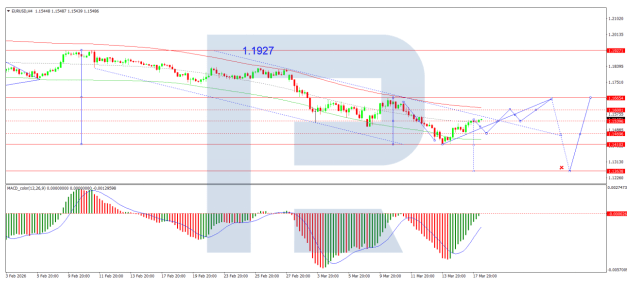
On the H4 chart, EUR/USD exhibits a robust bullish trend, trading near a key resistance zone at 1.1760–1.1780. The pair is holding firmly above the middle Bollinger Band, confirming buyer dominance. The upward slope and gradual widening of the upper band signal rising volatility and sustained momentum following a breakout to new highs.

Provided the price remains above the 1.1709 support, the market retains strong potential to challenge the 1.1780 ceiling. A decisive breakout and close above this zone would open a clear path towards 1.1850. Should a pullback materialise, the nearest significant support lies at 1.1650, the previous breakout point. A break below 1.1547 would be required to signal a deeper correction towards the lower Bollinger Band.

H1 Chart:

On the H1 chart, the pair is consolidating after a powerful impulse wave that targeted the 1.1760–1.1780 resistance area. The current correction is finding initial support at 1.1709, a level from which the latest acceleration originated.

The Stochastic oscillator is declining from overbought territory, increasing the probability of a near-term pause or shallow pullback. Nevertheless, the underlying structure remains bullish, with the price trading above the middle Bollinger Band, which now serves as dynamic support.

A confirmed breakout above 1.1780 would signal a continuation of the uptrend, with subsequent targets at 1.1820 and 1.1850. Conversely, a sustained move below 1.1709 would provide the first technical indication of fading bullish momentum, potentially triggering a correction towards the next demand zone in the 1.1650–1.1620 range.

Conclusion

EUR/USD has broken out decisively on the back of a dovish Fed pivot and a shifting global rate differential. The technical picture is firmly bullish, with the pair now testing a major resistance cluster near 1.1780. A successful breakout above this level would likely accelerate gains towards 1.1850. In the near term, the 1.1709 support is critical; holding above it keeps the immediate upward bias intact, while a break below would suggest a period of consolidation is needed before the next directional move.


Disclaimer:

Any forecasts contained herein are based on the author’s particular opinion. This analysis may not be treated as trading advice. RoboForex bears no responsibility for trading results based on trading recommendations and reviews contained herein.

As expected, FOMC cut interest rate. The Bank of Canada keeps the rate unchanged at 2.25%

By JustMarkets 

The US stock indices rose on Wednesday in reaction to the FOMC decision and Powell’s comments. The Dow Jones Index (US30) rose by 1.05%. The S&P 500 Index (US500) gained 0.67%. The technology-heavy Nasdaq Index (US100) closed higher by 0.33%. The Fed cut the rate by 25 basis points and maintained its expectations for one more cut next year. However, Powell’s remarks on whether to end the cycle or cut rates “a little” or “more than a little” bolstered expectations for further easing: the market prices the probability of two or more cuts in 2025 at approximately 68%. Industrial companies performed the best. In corporate news, Amazon stock stood out, rising 1.7% after announcing a $35 billion investment in India, and JPMorgan, which added 3.2%. Microsoft, conversely, fell by 2.8% amid reports of plans to invest $17.5 billion in India over the next four years.

The Canadian dollar strengthened above $1.38 per US dollar, reaching a twelve-week high, driven by a combination of softer Fed rate expectations and the Bank of Canada’s (BoC) hawkish stance, underpinned by strong domestic data. The BoC kept its rate unchanged at 2.25% and signaled that it views the current policy as adequate, citing unexpectedly strong Q3 GDP growth (2.6% y/y) and a tight labor market with unemployment around 6.5%. All of this reduces the likelihood of imminent policy easing and supports the Canadian currency.

European stock markets traded mixed on Wednesday. The German DAX (DE40) fell by 0.13%, the French CAC 40 (FR40) closed lower by 0.37%, the Spanish IBEX 35 (ES35) gained 0.17%, and the British FTSE 100 (UK100) closed up by 0.14%. In France, the approval of the social budget reduced short-term political uncertainty, giving the euro additional support, although key risks remain during the discussion of the overall state budget. In Switzerland, the rate is expected to remain unchanged at 0%, and market attention shifts to next week’s ECB meeting, where the regulator is expected to keep the rate at 2% until at least 2026, given that inflation and growth align with current prognoses.

WTI crude oil prices dropped to $58 per barrel on Thursday, partially reversing the gains of the previous session: the market is balancing geopolitical risks against persistently bearish fundamental expectations. The US interception of a sanctioned tanker off Venezuela and a Ukrainian attack on a vessel from the “shadow fleet” linked to Russian oil trade increased fears of supply disruptions and added to the risk premium. However, these factors are offset by prognoses of a supply glut: growth in production by OPEC+ and allies is expected to exceed weak global demand. Investors await fresh reports from OPEC and the IEA, which may clarify market balance expectations. Meanwhile, US government data showed a reduction in commercial crude oil inventories by 1.8 million barrels.
The price of silver climbed above $61.8 per ounce, continuing its record rally following the Fed’s 25 basis point rate cut and Powell’s comments, which were perceived as dovish by the markets. This weakened the dollar and reduced the opportunity cost of holding the metal. Additional support was provided by severe physical market constraints: inflows into ETFs and spot demand have increased this year, Asian and Indian demand remains high, and the shortage of available metal has led to rising lease rates and borrowing costs for silver.

Asian markets traded mixed yesterday. The Japanese Nikkei 225 (JP225) fell by 0.10%, the Chinese FTSE China A50 (CHA50) dropped by 0.61%, the Hong Kong Hang Seng (HK50) rose by 0.42%, and the Australian ASX 200 (AU200) showed a positive result of 0.72%.

The Australian dollar retreated on Thursday after the release of weak labor market data: the economy unexpectedly lost 21.3 thousand jobs in November, the largest drop in nine months, with the decline concentrated in full-time employment, and labor force participation weakened, which kept unemployment at 4.3%. This data reinforced signs of a gradual cooling in the labor market and shifted expectations for an RBA rate hike to the second half of 2026 instead of May. However, the regulator still assesses the labor market as tight, pointing to a high level of vacancies and rising labor costs.

S&P 500 (US500) 6,886.68 +46.17 (+0.67%)

Dow Jones (US30) 48,057.75 +497.46 (+1.05%)

DAX (DE40 24,130.14 −32.51 (−0.13%)

FTSE 100 (UK100) 9,655.53 +13.52 (+0.14%)

USD Index 98.64 -0.58% (-0.59%)

News feed for: 2025.12.11

  • Australia Unemployment Rate (m/m) at 02:30 (GMT+2); – AUD (MED)
  • Sweden Inflation Rate (m/m) at 09:00 (GMT+2); – SEK (MED)
  • Switzerland SNB Interest Rate Decision at 10:30 (GMT+2); – CHF (HIGH)
  • Switzerland SNB Monetary Policy Assessment at 10:30 (GMT+2); – CHF (HIGH
  • Switzerland SNB Press Conference at 11:00 (GMT+2); – CHF (MED)
  • UK BOE Gov Bailey Speaks at 12:00 (GMT+2); – GBP (LOW)
  • Canada Trade Balance (m/m) at 15:30 (GMT+2); – CAD (MED)
  • US Trade Balance (m/m) at 15:30 (GMT+2); – USD (MED)
  • US Initial Jobless Claims (w/w) at 15:30 (GMT+2); – USD (MED)
  • US Natural Gas Storage (w/w) at 17:30 (GMT+2). – XNG (HIGH)

By JustMarkets


This article reflects a personal opinion and should not be interpreted as an investment advice, and/or offer, and/or a persistent request for carrying out financial transactions, and/or a guarantee, and/or a forecast of future events.
GBP/USD Approaches Local High, Bolstered by BoE Stance

By RoboForex Analytical Department

The GBP/USD pair advanced to 1.3367 on Thursday, stabilising near its highest level since 22 October. Sterling is drawing support from a confluence of factors: a broadly weaker US dollar and a market reassessment that has scaled back expectations for additional Bank of England (BoE) monetary easing in 2026.

This follows yesterday’s Federal Reserve meeting, where the US central bank delivered a widely anticipated 25-basis-point rate cut. Crucially, the Fed signalled a potential pause in its easing cycle as early as January, emphasising the need for more economic data before determining the next steps.

Expectations for the BoE’s meeting next week remain firmly anchored. The market continues to price in an 84% probability of a 25-basis-point cut, largely overlooking recent data showing accelerating wage growth and persistent inflationary pressures. Furthermore, investors are almost fully pricing in a second rate cut by June, with a 75% chance assigned to an initial move as soon as April.

Market focus now shifts to the UK’s monthly GDP report, due on Friday, which could prompt a final adjustment to monetary policy expectations ahead of the BoE decision.

Technical Analysis: GBP/USD

H4 Chart:

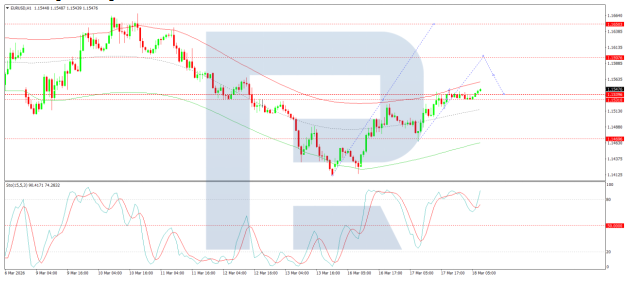
On the H4 chart, GBP/USD exhibits a strong upward bias, trading just below the key technical resistance at 1.3392. The pair’s position firmly above the middle Bollinger Band confirms the dominance of buyers. The expansion of the upper band signals rising volatility and suggests the market is building momentum for another attempt to breach this barrier.

A decisive breakout and close above 1.3392 would be a significant bullish development, opening the path towards the next resistance zone of 1.3420–1.3452. Should a reversal occur, the nearest notable support is at 1.3280. A breach of this level would indicate a deeper corrective phase, likely targeting the lower Bollinger Band.

H1 Chart:

On the H1 chart, the pair is undergoing a near-term correction following its impulsive rise to the 1.3390–1.3392 resistance zone. It is currently finding support above 1.3360, a level from which a prior recovery originated.

The upper Bollinger Band has flattened after a period of sharp expansion, indicating short-term overbought conditions and increasing the likelihood of a consolidation or shallow pullback. Despite this, the overall H1 structure remains bullish, with the price above the middle band and the lower band providing dynamic support.

A sustained break above 1.3392 would signal a resumption of the uptrend, targeting 1.3420 and potentially 1.3450. Conversely, a loss of the 1.3360 support would be the first technical sign of weakening bullish momentum, potentially triggering a correction towards the next demand zone in the 1.3300–1.3280 range.

Conclusion

GBP/USD is trading with conviction, supported by shifting central-bank dynamics that have turned modestly in sterling’s favour. The technical setup is bullish but faces a critical test at the 1.3392 resistance level. A successful breakout would validate the strength of the current move, while a rejection could see the pair retreat to consolidate recent gains. The upcoming UK GDP data will provide the final fundamental cue before the highly anticipated BoE meeting next week.


Disclaimer:

Any forecasts contained herein are based on the author’s particular opinion. This analysis may not be treated as trading advice. RoboForex bears no responsibility for trading results based on trading recommendations and reviews contained herein.

Silver rises above $60/ounce. Australian dollar holds near three-month high

By JustMarkets 

On Tuesday’s close, the Dow Jones Index (US30) fell by 0.38%. The S&P500 Index (US500) decreased by 0.09%. The technology-heavy Nasdaq Index (US100) closed higher by 0.13%. A fresh estimate of US job openings (a rise to 7.67 million) maintained investor focus on labor market signals amid expectations of a likely 25 basis point Fed rate cut this week. Among other movements: Nvidia dropped by 0.3% on reports of potential restrictions on H200 chip purchases in China, and Home Depot declined by 1.3% following more cautious profit expectations for 2026.

The Mexican peso weakened to 18.3 per dollar, pulling back from a one-and-a-half-year high. The currency was pressured by rising US yields and a narrowing yield premium in Mexico, as markets anticipate further Banxico policy easing in 2026. Weaker economic prognoses and expectations of lower real interest rates create additional pressure, limiting capital inflows and increasing the peso’s vulnerability.

European stock markets traded directionally mixed on Tuesday. The German DAX (DE40) rose by 0.49%, the French CAC 40 (FR 40) closed down by 0.69%, the Spanish IBEX 35 (ES35) gained 0.13%, and the British FTSE 100 (UK100) closed down by 0.03%.

Silver climbed above $60 per ounce on Tuesday amid expectations of a Fed rate cut and a persistent physical metal deficit. The rally is supported by increased industrial demand from solar energy, electric vehicles, and electronics against limited mining output, leading to outflows from exchange warehouses and inflows into ETFs. However, tougher signals from the Fed or an increase in supply could cap further gains.

WTI continued its decline on Tuesday. Pressure on quotes intensified due to signs of increasing supply: China boosted purchases of Saudi oil after reduced selling prices, and Iraq resumed production at the West Qurna-2 field, adding volume to the market amidst rising US inventories. Additional negative sentiment was generated by estimates from the IEA and OPEC+, indicating a possible supply surplus in 2026. Geopolitical risks continue to support the market, but traders’ attention is also focused on the Fed meeting: the expected rate cut could strengthen demand expectations for oil next year.

Asian markets traded mixed yesterday. The Japanese Nikkei 225 (JP225) rose by 0.14%, the Chinese FTSE China A50 (CHA50) fell by 0.02%, the Hong Kong Hang Seng (HK50) dropped by 1.29%, and the Australian ASX 200 (AU200) showed a negative result of 0.45%.

The Australian dollar is holding near a three-month high thanks to a hawkish signal from the RBA on monetary policy. Despite a pause in rate changes at the December meeting, RBA Governor Bullock suggested the possibility of a rate hike as early as February if there is no progress in reducing inflation, which sharply strengthened tightening expectations: the market prices the probability of a February hike at approximately 30%, and nearly 100% by May. Rising Australian bond yields boosted capital inflow through the carry trade and supported the Australian currency.

On Wednesday, the offshore yuan held around 7.06 per dollar, as increased consumer inflation softened expectations of further monetary policy support. China’s consumer prices rose by 0.7% year-on-year in November 2025, the highest reading since February 2024. Earlier this week, the Politburo promised to expand domestic demand and support the overall economy in 2026, though it demonstrated a cautious approach to stimulus. Meanwhile, factory gate deflation unexpectedly worsened to 2.2% in November, marking the 38th consecutive month of producer price declines.

S&P 500 (US500) 6,840.51 −6.00 (−0.09%)

Dow Jones (US30) 47,560.29 −179.03 (−0.38%)

DAX (DE40) 24,162.65 +116.64 (+0.49%)

FTSE 100 (UK100) 9,642.01 −3.08 (−0.03%)

USD Index 99.23 +0.14% (+0.14%)

News feed for: 2025.12.10

  • China Consumer Price Index (m/m) at 03:30 (GMT+2); – CHA50, HK50 (HIGH)
  • China Producer Price Index (m/m) at 03:30 (GMT+2); – CHA50, HK50 (MED)
  • Norway Inflation Rate (m/m) at 09:00 (GMT+2); – NOK (MED)
  • Eurozone ECB President Lagarde Speaks at 12:55 (GMT+2); – EUR (LOW)
  • Canada BoC Interest Rate Decision at 16:45 (GMT+2); – CAD (HIGH)
  • Canada BoC Monetary Policy Statement at 16:45 (GMT+2); – CAD (HIGH)
  • Canada BoC Press Conference at 17:30 (GMT+2); – CAD (MED)
  • US Crude Oil Reserves (w/w) at 17:30 (GMT+2); – WTI (HIGH)
  • US FOMC Economic Projections at 21:00 (GMT+2); – USD, XAU (HIGH)
  • US FOMC Statement at 21:00 (GMT+2); – USD, XAU (HIGH)
  • US Fed Interest Rate Decision at 21:00 (GMT+2); – USD, XAU (HIGH)
  • US FOMC Press Conference at 21:30 (GMT+2). – USD, XAU (HIGH)

By JustMarkets


This article reflects a personal opinion and should not be interpreted as an investment advice, and/or offer, and/or a persistent request for carrying out financial transactions, and/or a guarantee, and/or a forecast of future events.

USD/JPY Pauses as Yen Resists Downward Pressure

By RoboForex Analytical Department

The USD/JPY pair is consolidating near 156.57 on Wednesday, pausing after three consecutive days of gains. This stability comes despite a notable shift in rhetoric from Bank of Japan (BoJ) Governor Kazuo Ueda, who stated the central bank is drawing closer to sustainably achieving its 2% inflation target – a strong signal that a policy tightening move could be imminent.

The market is now actively pricing in the possibility of a rate hike as early as next week’s BoJ meeting. Investors’ primary focus will be on Governor Ueda’s post-meeting comments, which are expected to shape the policy outlook for 2025.

The yen’s broader weakness is being fuelled by growing concerns over Japan’s public finances, exacerbated by expanded fiscal spending under Prime Minister Sanae Takaichi’s administration. Furthermore, the yawning interest rate differential between Japan and other major economies continues to incentivise short positions against the yen, which remains one of the world’s lowest-yielding currencies.

Technical Analysis: USD/JPY

H4 Chart:

On the H4 chart, USD/JPY maintains its bullish structure following a strong impulse that propelled the price from 154.30 to the key resistance zone of 157.20–157.90. The pair is currently consolidating just below the 157.20 level, where selling pressure has previously emerged.

The price holding above the middle Bollinger Band confirms buyers retain overall control. The expansion of the upper band indicates elevated volatility and suggests the market is gathering strength for another attempt to breach resistance.

A decisive breakout and consolidation above 157.20 would open the path towards the 157.90–158.00 area. Should a correction unfold, the nearest significant support sits at 155.60. A break below this level would signal a deeper pullback, potentially targeting the major demand zone and the lower Bollinger Band near 154.30.

H1 Chart:

On the H1 chart, USD/JPY is undergoing a pullback after its recent surge to 157.20. The decline has found tentative support near the middle Bollinger Band, with the pair attempting to stabilise around 156.50.

The near-term structure remains bullish, supported by the price’s position above the middle Bollinger Band. Dynamic support is forming in the 156.00–156.10 zone, aligned with the indicator’s lower band. The Stochastic oscillator has turned down from overbought territory, confirming the current short-term corrective phase.

For the uptrend to resume, buyers must reclaim the 157.20 level, which would pave the way for a test of 157.90. Conversely, a sustained break below 156.00 would be the first clear sign of bullish exhaustion, increasing the probability of a deeper decline towards 155.60.

Conclusion

USD/JPY is at a critical juncture, caught between bullish technical momentum and a shifting fundamental backdrop for the yen. While the pair’s uptrend remains technically intact, the impending BoJ decision introduces significant event risk. A hawkish shift from the central bank could catalyse a sharp correction. In the near term, the 157.20 resistance and 156.00 support levels are pivotal; a breakout from this range will determine the next directional move.


Disclaimer:

Any forecasts contained herein are based on the author’s particular opinion. This analysis may not be treated as trading advice. RoboForex bears no responsibility for trading results based on trading recommendations and reviews contained herein.

The Reserve Bank of Australia kept its interest rate unchanged as expected. Natural gas prices fell by 7% on Monday

By JustMarkets 

By the end of Monday, the Dow Jones (US30) declined by 0.45%, the S&P500 (US500) fell by 0.35%, and the Nasdaq (US100) closed lower by 0.14%. Investors remain cautious ahead of the Fed’s decision on Wednesday: the probability of a 25 bp rate cut is estimated at around 90%, but inflation concerns make markets more restrained about the trajectory of rates in 2026. On the corporate front, deals and rating changes stood out. Warner Bros. Discovery shares rose by 4.4% after a competing offer from Paramount Skydance, while Netflix fell by 3.4%. Tesla dropped 3.4% after a downgrade. Attention also shifted to upcoming reports from Broadcom and Oracle, with Broadcom shares already hitting a record high on news of talks with Microsoft about chip production.

European stock markets traded mixed on Monday. Germany’s DAX (DE40) rose by 0.07%, France’s CAC 40 (FR40) closed down 0.08%, Spain’s IBEX 35 (ES35) gained 0.14%, and the UK’s FTSE 100 (UK100) closed negative 0.23%. In Europe, ECB’s Isabel Schnabel stated that she agrees with market expectations that the central bank’s next step could be a rate hike.

WTI crude prices fell more than 2% and traded below $59 per barrel, approaching a monthly low. Prices were pressured by a stronger dollar and weaker global fuel demand expectations amid weakness in the transport and industrial sectors. An additional downside came from EIA data showing US crude inventories rose by 0.57 million barrels, reinforcing signals of oversupply.

The US natural gas prices fell nearly 7% on Monday to $4.9 per MMBtu after strong gains last week, as prognoses of milder weather weakened seasonal demand expectations. Record production of about 109.7 bcf per day and comfortable inventory levels added pressure, indicating no short‑term supply risks.
Asian markets traded mixed yesterday. Japan’s Nikkei 225 (JP225) rose by 0.18%, China’s FTSE China A50 (CHA50) gained 0.87%, Hong Kong’s Hang Seng (HK50) fell by 1.23%, and Australia’s ASX 200 (AU200) closed down 0.12%.

The Hang Seng Index fell by 1.2% to 25,765 points, ending a two‑day rally, pressured by the financial, real estate, and consumer sectors. The market remained cautious amid persistent deflation risks in China and anticipation of key policy signals from the upcoming Politburo meeting and annual economic conference.
The Australian dollar strengthened after the Reserve Bank of Australia (RBA) kept the refinancing rate at 3.60% for the third consecutive time. The regulator noted persistent inflationary pressures and a tight labor market, emphasizing that future steps depend on data. Markets now estimate the probability of a rate hike by May 2026 at about 50/50, while most economists believe the easing cycle has ended.

The New Zealand dollar consolidated near a five‑week high, supported by expectations that the Reserve Bank of New Zealand (RBNZ) has ended its easing cycle. Although the regulator recently cut the rate by 25 bp, its projections suggest only a 20% chance of another cut in 2026, given easing inflation and improved economic prospects. New RBNZ Governor Anna Breman emphasized the priority of controlling inflation while supporting growth and employment. Markets now expect the next move to be a rate hike, not before late 2026. Additional support for the currency comes from US dollar weakness ahead of the anticipated Fed rate cut.

S&P 500 (US500) 6,846.51 −23.89 (−0.35%)

Dow Jones (US30) 47,739.32 −215.67 (−0.45%)

DAX (DE40) 24,046.01 +17.87 (+0.07%)

FTSE 100 (UK100) 9,645.09 −21.92 (−0.23%)

USD Index 99.10 +0.11% (+0.11%)

News feed for: 2025.12.09

  • Australia RBA Interest Rate Decision at 05:30 (GMT+2); – AUD, AU200 (HIGH)
  • Australia RBA Monetary Policy Statement at 05:30 (GMT+2); – AUD, AU200 (HIGH)
  • Australia RBA Press Conference at 06:30 (GMT+2); – AUD, AU200 (MED)
  • Japan BOJ Gov Ueda Speaks at 11:00 (GMT+2); – JPY (LOW)
  • Mexican Inflation Rate (m/m) at 14:00 (GMT+2); – MXN (MED)
  • US ADP Employment Change (m/m) at 15:15 (GMT+2); – USD, XAU (MED)
  • UK Monetary Policy Report Hearings at 16:15 (GMT+2); – GBP (LOW)
  • US JOLTS Job Openings (m/m) at 17:00 (GMT+2); – USD, XAU (HIGH)
  • New Zealand RBNZ Gov Breman Speaks at 23:10 (GMT+2). – NZD (LOW)

By JustMarkets


This article reflects a personal opinion and should not be interpreted as an investment advice, and/or offer, and/or a persistent request for carrying out financial transactions, and/or a guarantee, and/or a forecast of future events.