Archive for Financial News – Page 24

USDJPY Bank of Japan Hike Boosts Yen

By RoboForex Analytical Department

The Bank of Japan’s decision to raise its policy rate to 0.75% (from 0.50%), while in line with market forecasts, marks a clear step towards monetary tightening and has pushed yields higher on Japanese assets. For the USD/JPY pair, this typically exerts downward pressure – supporting the yen’s appreciation and weighing on the exchange rate.

The underlying mechanism is straightforward: a higher interest rate in Japan boosts the relative appeal of yen-denominated investments and narrows the yield differential with the US. This, in turn, reduces the incentive for the classic carry trade – borrowing in low-yielding yen to purchase higher-yielding assets abroad – thereby increasing structural demand for the yen.

As the decision was widely anticipated, the immediate market reaction may be relatively contained. However, beyond the rate itself, the tone of the BoJ’s forward guidance will be critical. Should the central bank signal that further hikes are on the table, sustained pressure on USD/JPY is likely. Conversely, an emphasis on caution and the gradual pace of policy normalisation could limit the move to a more short-term correction.

Technical Analysis: USD/JPY

H4 Chart:

On the H4 chart, the market reached a local bullish target at 157.72 before correcting to 155.55. We expect this corrective phase to conclude around the 155.50 level, with the potential for a consolidation range to form thereafter. A break below this range would open the path towards 155.12, while an upward exit could see a renewed advance towards 157.92.

This outlook is supported by the MACD indicator, whose signal line is currently above zero but pointing firmly lower, suggesting a loss of bullish momentum in the near term.

H1 Chart:

On the H1 chart, the pair is trading within a consolidation range around 156.06. A downside break would target a decline towards 155.12, whereas an upside resolution could initiate a move towards 157.92.

This view is further validated by the Stochastic oscillator, whose signal line is below 50 and trending downward towards the 20 level, indicating continued near-term selling pressure.

Conclusion

The BoJ’s rate hike has shifted the fundamental backdrop towards yen strength, though the extent of the move will hinge on the central bank’s future signalling. Technically, USD/JPY is entering a critical consolidation phase, with a break below 155.50 likely to accelerate the correction, while a hold above could see the pair attempt to retest recent highs.


Disclaimer:

Any forecasts contained herein are based on the author’s particular opinion. This analysis may not be treated as trading advice. RoboForex bears no responsibility for trading results based on trading recommendations and reviews contained herein.


GBP/USD: UK GDP Growth Matches Forecasts

By RoboForex Analytical Department

The latest UK GDP data showed annualised growth of 1.3%, in line with market expectations and slightly below the previous reading of 1.4%. The report had a broadly neutral impact on sterling, as it confirms the UK economy continues to expand, albeit at a moderate pace, without signs of acceleration.

For the GBP/USD pair, the lack of surprise is the key takeaway. With the data matching consensus forecasts, investors have little reason to reassess their current macroeconomic outlook. In such cases, the pound tends not to attract fresh buying momentum but also avoids sharp selling pressure.

Nevertheless, the slight deceleration in growth from the prior period creates a modestly cautious backdrop for sterling. The softer figure may signal that the economy remains sensitive to elevated interest rates and subdued domestic demand. This interpretation could temper expectations of further monetary tightening from the Bank of England and limit the scope for more hawkish communication.

In the near term, the direct market impact of this GDP release is assessed as largely neutral, albeit with a mild downside bias for the pound. Subsequent direction will likely depend on upcoming UK inflation and labour market reports, alongside evolving US rate expectations and broader global risk sentiment.

Technical Analysis: GBP/USD

H4 Chart:

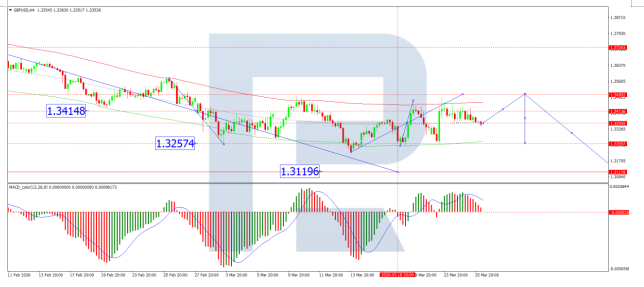
On the H4 chart, the pair has entered a broad consolidation zone around 1.3418. We anticipate a possible extension of the range towards 1.3500 in the near term, followed by a corrective pullback to 1.3418. Upon completion of this retracement, the broader upward trend is expected to resume, targeting 1.3520, with potential for further extension towards 1.3550.

This outlook is supported by the MACD indicator, with its signal line positioned above zero and pointing firmly upward.

H1 Chart:

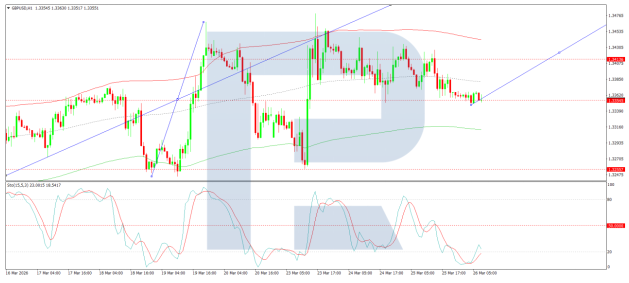
On the H1 chart, price action formed a tight consolidation around 1.3424 before breaking higher and advancing to 1.3492 (a local target). We now expect a corrective decline to retest the 1.3424 level from above. Once this correction concludes, the focus will shift to the potential for a subsequent growth wave toward 1.3533.

This scenario is validated by the Stochastic oscillator, whose signal line is above 80 and has begun to turn lower towards the 20 level, indicating near-term corrective momentum.

Conclusion

The GBP/USD pair is likely to remain range-bound in the wake of in-line GDP data, which neither strengthens nor weakens the sterling narrative decisively. While the technical structure favours further upside in the medium term, near-term price action suggests a period of consolidation or mild correction may precede any renewed bullish impulse.


Disclaimer:

Any forecasts contained herein are based on the author’s particular opinion. This analysis may not be treated as trading advice. RoboForex bears no responsibility for trading results based on trading recommendations and reviews contained herein.

Precious metals are hitting new all-time highs. The People’s Bank of China kept its lending rates unchanged

By JustMarkets 

On Friday, the Dow Jones (US30) rose by 0.38% (for the week -0.95%), while the S&P 500 (US500) gained 0.88% (for the week -0.37%). The Nasdaq Technology Index (US100) closed 1.31% higher (for the week -0.03%). The US stock markets ended Friday with solid gains amid a triple-witching derivatives expiration. AI-related stocks showed signs of recovery, with Oracle shares jumping over 7% following reports that TikTok agreed to sell its US business to a new joint venture involving Oracle and Silver Lake. Micron Technology gained 7%, building on a 10% gain from the previous day, while Nvidia rose more than 3% amid reports that the Trump administration is considering allowing the company to sell advanced AI chips to China. Meanwhile, Nike shares plummeted 11% following a report of declining revenue in China and the negative impact of higher tariffs on the company’s gross margins.

European equity markets mostly rose. The German DAX (DE40) increased by 0.37% (weekly -0.04)%, the French CAC 40 (FR40) finished up 0.01% (weekly +0.80%), the Spanish IBEX 35 (ES35) rose by 0.22% (weekly +1.40%), and the British FTSE 100 (UK100) closed 0.61% higher (weekly +2.57%). The ECB’s decision to keep interest rates unchanged starting from June 2025 confirms the bank’s current neutral stance, meaning the central bank sees no need to ease or tighten monetary policy without a significant shift in inflation or economic growth. ECB staff expectations point to moderate growth and inflation in the medium term.

Precious metal prices climbed, with silver showing particularly strong momentum. Gold continues to receive structural support from central banks. The People’s Bank of China (PBoC) increased its gold reserves by 30,000 ounces in November to a total of 74.1 million troy ounces, marking the thirteenth consecutive month of accumulation. Additionally, the World Gold Council reported that central banks purchased 220 tons of gold in the third quarter, a 28% increase compared to the second quarter.

Silver is further supported by concerns over a physical metal deficit in China. As of November 21, silver inventories in warehouses linked to the Shanghai Futures Exchange fell to 519,000 kg, the lowest level in the last 10 years. Although the market faced pressure from profit-taking and ETF outflows after reaching record highs in mid-October, demand from funds has begun to recover, with long positions in silver ETFs reaching a nearly 3.5-year high on Tuesday.

Asian markets traded with mixed results last week. The Japanese Nikkei 225 (JP225) rose by 0.38%, the Chinese FTSE China A50 (CHA50) fell by 0.40%, the Hong Kong Hang Seng (HK50) dropped by 0.35%, and the Australian ASX 200 (AU200) showed a positive five-day result of 1.18%.

As expected, the People’s Bank of China maintained its key lending rates at historic lows, leaving the one-year LPR at 3.0% and the five-year rate at 3.5%. This decision, representing the seventh consecutive period of no change, confirms the regulator’s stance that there is no urgent need for additional stimulus to reach annual GDP growth targets, despite November statistics showing a slowdown in retail sales and industrial production growth.

The New Zealand dollar is showing a steady recovery, rising toward 0.577 USD and nearly fully reversing its drop to two-week lows amid a revision of market expectations regarding Reserve Bank policy. The currency was supported by third-quarter GDP data confirming the national economy’s exit from a long period of stagnation, which significantly reduced the likelihood of monetary easing. Since the existing economic downturn prevents inflation from rising in the near term, market expectations for rate hikes have become more modest, with the probability of such a move by July falling from 50% to 40%.

S&P 500 (US500) 6,834.50 +59.74 (+0.88%)

Dow Jones (US30) 48,134.89 +183.04 (+0.38%)

DAX (DE40) 24,288.40 +88.90 (+0.37%)

FTSE 100 (UK100) 9,897.42 +59.65 (+0.61%)

USD Index 98.72 +0.09% (+0.30%)

News feed for: 2025.12.22

  • China Loan Prime Rate at 03:15 (GMT+2); – CHA50, HK50 (MED)
  • UK GDP (q/q) at 09:00 (GMT+2); – GBP (MED)
  • Hong Kong Inflation Rate (m/m) at 10:30 (GMT+2). – HK50 (LOW)

By JustMarkets


This article reflects a personal opinion and should not be interpreted as an investment advice, and/or offer, and/or a persistent request for carrying out financial transactions, and/or a guarantee, and/or a forecast of future events.

EUR/USD: ECB Policy Stance Fails to Surprise Markets

By RoboForex Analytical Department

At its meeting on 18 December, the European Central Bank (ECB) left all key interest rates unchanged, maintaining the deposit facility rate at 2.0%. The decision was widely anticipated, offering no fresh catalyst for meaningful euro movement. While headline inflation for the eurozone remained close to target at 2.15% in November, the ECB’s updated projections saw a slight upward revision for the coming years, primarily driven by persistent price growth in the services sector.

Concurrently, the ECB improved its GDP growth forecast for 2025–2027. However, with the decision fully priced in, it provided neither additional support nor pressure to the single currency.

The primary driver for EUR/USD now stems from US monetary policy. The recent Federal Reserve rate cut from 4.00% to 3.75% has narrowed the yield differential between the dollar and the euro. This reduces the dollar’s interest rate advantage and makes euro-denominated assets relatively more attractive, providing a moderate tailwind for the euro.

Looking ahead, medium-term dynamics will hinge on relative expectations for central bank policy. Should markets continue to price in a more aggressive easing cycle from the Fed compared to the ECB, the euro is likely to find further support. Conversely, any signs that the ECB is preparing to proactively ease policy in response to eurozone economic weakness would limit the euro’s upside potential.

Technical Analysis: EUR/USD

H4 Chart:

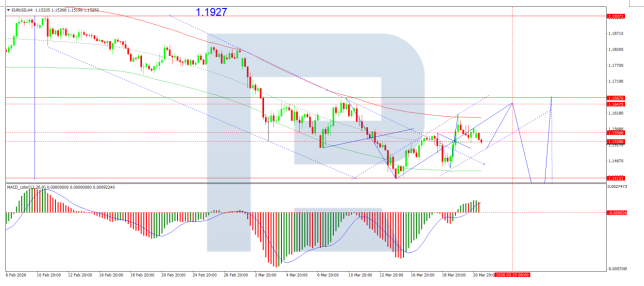
On the H4 chart, the pair is consolidating near the breakdown level of the previous growth channel’s lower boundary. We anticipate a downside breakout from this range and a resumption of the third decline wave, with an initial target at 1.1650.

The MACD indicator technically confirms this bearish outlook. Its signal line is below zero and pointing decisively downward, reflecting sustained bearish momentum and potential for further downside.

H1 Chart:

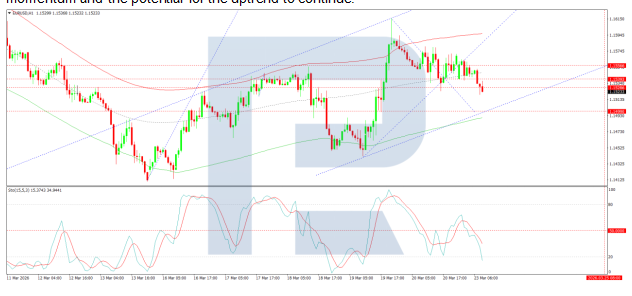
On the H1 chart, the market completed another decline wave to 1.1702, followed by a correction to 1.1737. A new downward impulse towards 1.1650 is currently forming. A sustained break below this level would signal the potential for an extended third wave, targeting the 1.1645 area as a local objective.

This scenario is supported by the Stochastic oscillator, with its signal line below the 50 level and trending firmly downwards.

Conclusion

The euro’s trajectory remains more sensitive to shifting US policy expectations than to the ECB’s predictable stance. While the narrowed interest rate differential offers near-term support, the technical structure appears bearish. A decisive break below the current consolidation range could trigger a renewed move towards the 1.1650–1.1645 support zone.


Disclaimer:

Any forecasts contained herein are based on the author’s particular opinion. This analysis may not be treated as trading advice. RoboForex bears no responsibility for trading results based on trading recommendations and reviews contained herein.
ECB, Riksbank, and Norges Bank kept rates unchanged. BoE proceeded with a rate cut.

By JustMarkets 

At the close of Thursday, the Dow Jones Index (US30) rose by 0.14%. The S&P 500 Index (US500) gained 0.79%, and the tech-heavy Nasdaq Index (US100) closed higher by 1.38%. The US stock markets grew steadily on Thursday amid unexpectedly soft US inflation data. Annual inflation in November slowed to 2.7%, below market expectations, while the core figure fell to 2.6% – the lowest level since spring 2021 – fueling expectations of further Fed rate cuts next year. The consumer and technology sectors were the main drivers of growth, with Micron Technology shares soaring approximately 10% following strong quarterly earnings and a positive outlook.

The Mexican Peso (MXN) strengthened to around 18 per US dollar, its highest level since July 2024, after the Bank of Mexico, as expected, lowered its key interest rate by 25 basis points to 7%. This move, part of an ongoing monetary easing cycle that began about a year ago, reflects the regulator’s confidence that inflation will gradually return to the 3% target, despite core inflation remaining above 4% and weak domestic economic dynamics.

European stock markets grew confidently yesterday. Germany’s DAX (DE40) rose by 1.00%, France’s CAC 40 (FR40) closed up 0.80%, Spain’s IBEX 35 (ES35) gained 1.15%, and the UK’s FTSE 100 (UK100) finished 0.65% on Thursday. The ECB, as expected, left interest rates unchanged and reaffirmed its commitment to a data-dependent, meeting-by-meeting approach, as updated growth and inflation forecasts for 2026 provided no reason to revise the current policy course. At the press conference, ECB President Christine Lagarde noted that inflation is in a “narrow range,” and core inflation has not changed significantly, remaining near the 2% target. In the region, the Norwegian and Swedish central banks also kept rates unchanged, while the Bank of England, as expected, cut them by 25 basis points.

The US natural gas prices (XNG) fell approximately 3% to $3.9 per MMBtu, nearing a seven-week low. Price pressure is stemming from record-high production volumes and comfortable inventory levels: December production in the Lower 48 states is estimated at 109.7 billion cubic feet (bcf) per day, comparable to November’s record levels. According to EIA data, 167 bcf of gas was withdrawn from storage for the week, slightly lower than market expectations, indicating that inventories still exceed the five-year average by about 0.9%.

Palladium prices (XPD) rose to $1,720 per ounce, reaching their highest level since January 2023, amid expectations of rising demand and shrinking supply. The market was supported by regulatory changes in Europe: the European Commission proposed softening the ban on internal combustion engines to 2035, lowering the emission-reduction target from 100% to 90%, and allowing the sale of some non-electric vehicles after 2035. This decision potentially supports palladium demand, as gasoline and hybrid vehicles still require catalytic converters.

Asian markets mostly rose on Wednesday. Japan’s Nikkei 225 (JP225) fell by 1.03%, China’s FTSE China A50 (CHA50) declined by 0.32%, Hong Kong’s Hang Seng (HK50) rose by 0.12%, and Australia’s ASX 200 (AU200) showed a positive result of 0.04%.

S&P 500 (US500) 6,774.76 +53.33 (+0.79%)

Dow Jones (US30) 47,951.85 +65.88 (+0.14%)

DAX (DE40) 24,199.50 +238.91 (+1.00%)

FTSE 100 (UK100) 9,837.77 +63.45 (+0.65%)

USD Index 98.44 +0.07% (+0.07%)

News feed for: 2025.12.19

  • Japan National Core CPI (m/m) at 01:30 (GMT+2); – JPY (HIGH)
  • Japan BoJ Interest Rate Decision at 05:00 (GMT+2); – JPY, JP225 (HIGH)
  • Japan BoJ Monetary Policy Statement at 05:00 (GMT+2); – JPY, JP225 (HIGH)
  • Japan BoJ Press Conference at 06:30 (GMT+2); – JPY (MED)
  • UK Retail Sales (m/m) at 09:00 (GMT+2); – GBP (MED)
  • Canada Retail Sales (m/m) at 15:30 (GMT+2); – CAD (MED)
  • US Existing Home Sales (m/m) at 17:00 (GMT+2). – USD (MED)

By JustMarkets


This article reflects a personal opinion and should not be interpreted as an investment advice, and/or offer, and/or a persistent request for carrying out financial transactions, and/or a guarantee, and/or a forecast of future events.

Euro Holds Near 1.1700 Following ECB Policy Stance

By RoboForex Analytical Department

The EUR/USD pair declined to around 1.1700 after the European Central Bank (ECB) left key interest rates unchanged, a widely anticipated decision that provided little fresh directional impetus for the single currency.

As expected, the main refinancing rate was held at 2.15%, with the deposit facility rate unchanged at 2.0%. ECB officials reiterated their commitment to a meeting-by-meeting, data-dependent approach.

During the subsequent press conference, President Christine Lagarde stated that policymakers did not discuss either a rate hike or a cut at this juncture. She emphasised that the ECB does not have a pre-set path for interest rates and, given the prevailing high uncertainty, cannot provide forward guidance on future policy moves.

In parallel, the central bank released its latest quarterly economic projections. Growth forecasts were revised upwards to 1.4% for 2025, 1.2% for 2026, and 1.4% for 2027. The inflation outlook for 2026 was also adjusted higher, primarily driven by persistent price pressures in the services sector.

Technical Analysis: EUR/USD

H4 Chart:

On the H4 chart, the pair completed a corrective rebound to 1.1760 and is now forming a downward impulse targeting 1.1706. A break below this level is anticipated, which would set the next local bearish target at 1.1640.

This scenario is technically confirmed by the MACD indicator. Its signal line is positioned above zero but is pointing sharply downwards, reflecting sustained bearish momentum and the potential for a further extension of the downtrend.

H1 Chart:

On the H1 chart, the market has finished a first decline to 1.1705, followed by a correction to 1.1755. A second downward impulse towards 1.1705 is currently developing. A clear break below this support would signal the potential for a third wave of decline, targeting the 1.1645 level as a local objective.

This outlook is supported by the Stochastic oscillator, whose signal line is below the 50 level and trending firmly downwards.

Conclusion

The euro remains range-bound following a largely uneventful ECB meeting, with the central bank’s cautious, data-dependent stance offering little support. The technical structure points to further downside risk, with a break below immediate support at 1.1705 likely to trigger a move towards the 1.1640 area.


Disclaimer:

Any forecasts contained herein are based on the author’s particular opinion. This analysis may not be treated as trading advice. RoboForex bears no responsibility for trading results based on trading recommendations and reviews contained herein.

The US tech sector is under sell-off. Platinum hits a 17-year high

By JustMarkets 

At the close of Wednesday, the Dow Jones Index (US30) fell by 0.47%. The S&P 500 Index (US500) declined by 1.16%, and the tech-heavy Nasdaq Index (US100) closed lower by 1.81%. The US stock markets finished significantly down on Wednesday, extending their losing streak to a fourth consecutive session. The main pressure came from the technology sector amid persistent concerns over high valuations and massive investments in AI-related projects. Oracle shares tumbled 5.4% following reports that its key data center partner, Blue Owl, declined to support a $10 billion data center construction project. Nvidia shares fell by 3.8%, Broadcom by 4.5%, and AMD by 5.3%. Against this backdrop, the energy sector outperformed the market, receiving support from rising oil prices following President Trump’s order for a “full and comprehensive” blockade of oil tankers associated with Venezuela.

European stock markets traded without a uniform dynamic yesterday. Germany’s DAX (DE40) fell by 0.48%, France’s CAC 40 (FR40) closed down 0.25%, Spain’s IBEX 35 (ES35) rose by 0.10%, and the UK’s FTSE 100 (UK100) closed up 0.92%. The European Central Bank, the Swedish Riksbank, and the Norges Bank are expected to keep interest rates unchanged and will likely maintain current policy levels through 2026. Even with the Bank of England’s expected rate cut on Thursday, markets are still pricing in only one additional cut next year, despite softer inflation data.

WTI crude oil prices rose by more than 2% on Wednesday, exceeding $56 per barrel, rebounding from a nearly five-year low reached in the previous session. The market was supported by US President Donald Trump’s decision to impose a “full and comprehensive” blockade on sanctioned oil tankers linked to Venezuela, following the recent detention of blacklisted vessels and an increased US military presence in the region. An additional growth factor was reports of a new round of US sanctions being prepared against Russia’s energy sector to increase pressure on Moscow in the context of negotiations over Ukraine.

Platinum (XPT) rose above $1,930 per ounce, reaching its highest level since 2008, amid growing economic and political uncertainty in the US, which bolstered demand for alternative assets for diversification. Growth was also driven by supply risks, as production in South Africa, the world’s largest platinum producer, came in weaker than expected. The World Platinum Investment Council (WPIC) prognoses a market deficit of 69,000 ounces in 2025, the third consecutive year of deficit, before a move toward a balanced market with a small surplus is expected in 2026.

On Wednesday, silver appreciated by more than 4%, exceeding $66 per ounce and setting a new all-time high. The market received an extra boost following statements by Fed Governor Christopher Waller, who allowed for the possibility of a 1% point rate cut in the US, citing nearly zero job growth and the need for moderate policy easing to support the labor market. In a broader perspective, silver’s price increase of nearly 130% since the start of the year is supported by structural factors: shrinking inventories and steady demand from industrial and retail investors, primarily in the solar energy, electric vehicle, and data center sectors.

Asian markets were mostly up on Wednesday. Japan’s Nikkei 225 (JP225) rose by 0.26%, China’s FTSE China A50 (CHA50) gained 0.40%, Hong Kong’s Hang Seng (HK50) climbed 0.92%, while Australia’s ASX 200 (AU200) showed a negative result of 0.16%.

The Bank of Indonesia (BI), at its December 2025 monetary policy meeting, kept its benchmark interest rate unchanged at 4.75% for the third consecutive time. This decision aligns with expectations and is aimed at supporting the Rupiah despite signs of slowing economic growth. The move follows a cumulative reduction of 150 basis points since September of last year, bringing the rate to its lowest level since October 2022. This stance reflects the central bank’s view that inflation in 2025–2026 will remain within the target range of 2.5% ± 1% due to a stable Rupiah and ongoing measures to sustain economic growth.

S&P 500 (US500) 6,721.43 −78.83 (−1.16%)

Dow Jones (US30 47,885.97 −228.29 (−0.47%)

DAX (DE40) 23,960.59 −116.28 (−0.48%)

FTSE 100 (UK100) 9,774.32 +89.53 (+0.92%)

USD Index 98.41 +0.26% (+0.26%)

News feed for: 2025.12.18

  • Sweden Riksbank Rate Decision at 10:30 (GMT+2); – SEK (MED)
  • Norway Norges Bank Rate Decision at 11:00 (GMT+2); – NOK (MED)
  • UK BoE Interest Rate Decision at 14:00 (GMT+2); – GBP, UK100 (HIGH)
  • UK BoE Monetary Policy Statement at 14:00 (GMT+2); – GBP, UK100 (HIGH)
  • Eurozone ECB Interest Rate Decision at 15:15 (GMT+2); – EUR, DE40 (HIGH)
  • Eurozone ECB Monetary Policy Statement at 15:15 (GMT+2); – EUR, DE40 (HIGH)
  • US Consumer Price Index (m/m) at 15:30 (GMT+2); – USD, XAU, US Indices (HIGH)
  • US Initial Jobless Claims (w/w) at 15:30 (GMT+2); – USD (MED)
  • Eurozone ECB Press Conference at 15:45 (GMT+2); – EUR, DE40 (MED)
  • US Natural Gas Storage (w/w) at 17:30 (GMT+2); – (HIGH)
  • Mexico Banxico Interest Rate Decision at 21:00 (GMT+2); – MXN (HIGH)
  • New Zealand Trade Balance (m/m) at 23:45 (GMT+2). – NZD (MED)

By JustMarkets


This article reflects a personal opinion and should not be interpreted as an investment advice, and/or offer, and/or a persistent request for carrying out financial transactions, and/or a guarantee, and/or a forecast of future events.

Pound Holds Its Breath Ahead of Bank of England Decision

By RoboForex Analytical Department

The British pound declined to around $1.3300 against the US dollar on Wednesday, as UK inflation undershot expectations and reinforced market convictions that the Bank of England (BoE) will cut interest rates on Thursday.

The annual Consumer Prices Index (CPI) inflation rate slowed to 3.2% in November, missing forecasts of 3.5% and falling below the central bank’s projection of 3.4%. This followed labour market data earlier in the week, which revealed unemployment rose to its highest level since 2021, while wage growth eased – albeit less sharply than anticipated.

The economic backdrop has weakened further following last week’s Gross Domestic Product (GDP) data, which confirmed the UK economy contracted for a second consecutive month in October. Given this deteriorating picture, the BoE is now widely expected to resume its monetary easing cycle, cutting the Bank Rate by 25 basis points to 3.75% – its lowest level since 2022. The central bank has held rates steady at its last two meetings in September and November.

Money markets have adjusted their expectations in response, now pricing in approximately 66 basis points of total easing by the end of 2026, up from around 58 basis points before the latest inflation report.

Technical Analysis: GBP/USD

H4 Chart:

On the H4 chart, the pair is developing a downward wave structure with a target at 1.3300. We expect this level to be tested today. Subsequently, a corrective rebound towards 1.3370 is likely. Once this correction is complete, the primary downtrend is anticipated to resume, targeting 1.3240, with potential for an extension towards 1.3175.

This bearish scenario is technically confirmed by the MACD indicator. Its signal line has exited the histogram zone and is near the zero mark, suggesting it will decline to new lows.

H1 Chart:

On the H1 chart, the market is forming a downward impulse targeting 1.3290 as its initial objective. Following this, a correction towards 1.3370 is likely. Upon completion of this corrective phase, the focus will shift to the potential continuation of the downtrend.

This outlook is supported by the Stochastic oscillator. Its signal line is below the 50 level and is pointing firmly downwards towards 20.

Conclusion

The pound remains under clear pressure ahead of Thursday’s pivotal BoE meeting, with soft inflation and growth data significantly raising the odds of a rate cut. The technical posture is bearish across timeframes, suggesting any near-term corrective bounce is likely to be sold into, paving the way for a test of lower support levels.


Disclaimer:

Any forecasts contained herein are based on the author’s particular opinion. This analysis may not be treated as trading advice. RoboForex bears no responsibility for trading results based on trading recommendations and reviews contained herein.

Weak labor market data fueled expectations of additional Fed policy easing in 2026

By JustMarkets 

On Tuesday, the Dow Jones Index (US30) fell by 0.62%. The S&P 500 Index (US500) declined by 0.24%. The tech-heavy Nasdaq Index (US100) closed higher by 0.23%. The November labor market report indicated a moderate cooling of the economy: employment growth was only 64K, accompanied by a sharp downward revision of October data and an increase in the unemployment rate to 4.6% – the highest level since 2021. Weaker US labor market and consumption data strengthened expectations for further Fed easing in 2026. Stagnant retail sales served as an additional signal of weakening demand. The energy sector pressured the indices due to oil prices falling below $55 per barrel, while tech giants traded mixed; gains in Nvidia, Meta, and Tesla, along with a recovery in Broadcom and Oracle, supported the Nasdaq.

The Mexican peso (MXN) strengthened above 18 per US dollar, hitting its highest level since July 2024, amid dollar weakness and the maintenance of a relatively tight monetary policy in Mexico. At the same time, Mexico’s November inflation came in above expectations at approximately 3.8%, and the core indicator accelerated to the mid-4% range, confirming Banxico’s cautious stance. Consequently, attractive real rates and a stable yield differential continue to support capital inflows and demand for the peso.

European stock markets mostly declined yesterday. Germany’s DAX (DE40) fell by 0.63%, France’s CAC 40 (FR 40) closed lower by 0.23%, Spain’s IBEX 35 (ES35) dropped by 0.70%, and the UK’s FTSE 100 (UK100) closed negative 0.68%. Preliminary PMI indices indicated mixed dynamics in the Eurozone economy: overall private sector activity slowed due to weakness in the services sector and a continuing slump in manufacturing. Germany was the key factor in the deterioration, where the decline in manufacturing activity intensified, while in France, the slowdown in the services sector was more pronounced than the market expected, heightening concerns regarding the region’s growth rate.

Silver (XAG) hit an all-time high on Wednesday, rising toward $66 per ounce, driven by increased demand for alternative assets following the mixed US labor market report. Silver is further supported by fundamental factors: since the beginning of the year, the metal has appreciated by nearly 130% amid declining inventories and steady demand from industry and retail, particularly from the solar energy, electric vehicle, and data center sectors.

On Tuesday, WTI oil prices fell by more than 2%, trading around $55.5 per barrel, the lowest level since early 2021. This brought year-to-date losses to approximately 22%, the worst annual performance since 2018. Expectations that the war in Ukraine might be nearing an end increased the likelihood of easing restrictions on Russian oil supplies, which would limit potential supply disruptions in an already well-supplied market. Simultaneously, economic data from China points to ongoing weakness in the world’s second-largest economy, clouding the demand outlook. However, downside risks were partially offset by the possibility of US military action in Venezuela following the Trump administration’s seizure of a supertanker last week.

Asian markets traded lower on Tuesday. Japan’s Nikkei 225 (JP225) fell by 1.56%, China’s FTSE China A50 (CHA50) declined by 1.11%, Hong Kong’s Hang Seng (HK50) was down 1.54%, and Australia’s ASX 200 (AU200) showed a negative result of 0.42%.

The Australian dollar remained virtually unchanged, holding around $0.662, breaking its recent decline as latest government budget adjustments had no notable impact on central bank policy expectations. The budget deficit for the 2025/26 financial year is expected to be slightly lower at AUD 36.8 billion due to higher-than-projected tax revenues, while bond issuance plans remained unchanged. Amid steady spending, investors increased expectations that the Reserve Bank of Australia (RBA) might need to raise the cash rate from the current 3.6% as early as June to curb inflation: analysts at CBA and NAB now allow for a rate hike in February, while Westpac considers such a move premature.

S&P 500 (US500) 6,800.26 −16.25 (−0.24%)

Dow Jones (US30) 48,114.26 −302.30 (−0.62%)

DAX (DE40) 24,076.87 −153.04 (−0.63%)

FTSE 100 (UK100) 9,684.79 −66.52 (−0.68%)

USD Index 98.22 −0.09% (−0.09%)

News feed for: 2025.12.17

  • Japan Trade Balance (m/m) at 01:50 (GMT+2); – JPY (MED)
  • UK Consumer Price Index (m/m) at 09:00 (GMT+2); – GBP, UK100 (HIGH)
  • Germany Ifo Business Climate (m/m) at 11:00 (GMT+2); – EUR, DE40 (MED)
  • Eurozone Consumer Price Index (m/m) at 12:00 (GMT+2); – EUR, DE40 (MED)
  • US Crude Oil Reserves (w/w) at 17:30 (GMT+2); – WTI (HIGH)
  • New Zealand GDP (q/q) at 23:45 (GMT+2). – NZD (MED)

By JustMarkets


This article reflects a personal opinion and should not be interpreted as an investment advice, and/or offer, and/or a persistent request for carrying out financial transactions, and/or a guarantee, and/or a forecast of future events.

Oil dropped to a 2021 low. The Canadian dollar hit a three-month high

By JustMarkets 

On Monday, the Dow Jones Index (US30) fell by 0.09%. The S&P 500 Index (US500) was cheaper by 0.16%. The tech-heavy Nasdaq Index (US100) closed lower by 0.51%. Concerns surrounding debt-funded investments in artificial intelligence intensified the sell-off in technology, energy, and communication services sectors: Broadcom lost over 4%, continuing its sharp decline from late last week, Oracle and Salesforce notably decreased, and ServiceNow plunged by more than 10% on rumors of a major acquisition and a rating downgrade. Most tech giants also traded in the red, although Nvidia and Tesla managed to post gains. Overall, the market adopted a wait-and-see stance ahead of a busy week featuring the release of key US employment and inflation data, which could determine the further direction of momentum.

Today, the US will release the Non-Farm employment report. The report is coming out on an unusual day due to delays caused by the prolonged US government shutdown and combines data for October and November 2025, making it particularly important for assessing the state of the labor market and the trajectory of economic growth. According to the latest economic calendar and analysts’ expectations, markets anticipate a moderate increase in employment of around 50K, reflecting a continued slowdown in job growth after September (+119K). This could negatively impact investor sentiment and put pressure on both the Dollar Index and US stock indices. However, gold might gain momentum. Higher-than-expected employment and wage data would strengthen the dollar and could delay further Fed rate cuts in 2026.

The Canadian dollar strengthened above the 1.38 mark against the US dollar, reaching a three-month high, as markets assessed the Bank of Canada’s (BoC) firm stance and softer expectations regarding Fed policy. The Headline Consumer Price Index remained at 2.2%, and core measures fell to a ten-month low of 2.8%, increasing confidence that inflationary pressure is gradually moving towards the target level without the need for an abrupt policy change. In this environment, the Bank of Canada’s decision to keep the rate at 2.25% and its signal that the current policy is “roughly at the right level” curbed expectations of swift aggressive easing, stabilized interest rate differentials, and supported demand for the Canadian currency.

European stock markets were mostly up yesterday. Germany’s DAX (DE40) rose by 0.18%, France’s CAC 40 (FR 40) closed higher by 0.70%, Spain’s IBEX 35 (ES35) gained 1.11%, and the UK’s FTSE 100 (UK100) closed positive 1.06%. Investor attention in Europe is focused on the ECB meeting, where markets expect rates to remain unchanged, but possibly an upward revision of GDP growth expectations following recent statements by Christine Lagarde. The Riksbank and Norges Bank are also likely to keep their policy parameters unchanged. The geopolitical background remains in focus due to negotiations between the US and Ukraine, especially after signals from Volodymyr Zelenskyy about readiness to postpone the issue of NATO membership.

WTI oil prices fell to around $56.3 per barrel, the lowest level since early 2021, as persistent pressure from oversupply outweighed the influence of geopolitical risks. The global market remains well-supplied with oil: high inventories, coupled with production growth in the US, Brazil, and Guyana, reinforce expectations that production growth rates will outpace demand growth until at least 2026, maintaining a physical supply surplus. On the demand side, weak signals from China, including a slowdown in industrial activity and the growing role of renewable energy in power generation, are adding pressure, fueling concerns about insufficient oil consumption growth.

Asian markets traded lower on Monday. Japan’s Nikkei 225 (JP225) fell by 1.31%, China’s FTSE China A50 (CHA50) declined by 0.34%, Hong Kong’s Hang Seng (HK50) was down 1.34%, and Australia’s ASX 200 (AU200) showed a negative result of 0.72%. Market pressure came from weak November macroeconomic data from China: industrial production growth slowed to a 15-month low, and retail sales showed the weakest increase in nearly three years, dampening expectations for domestic demand. Against this backdrop, the technology sector fell by 2.5%, consumer staples by 2.1%, and real estate stocks declined by 1.6% after China Vanke bondholders refused to approve a payment extension, which again heightened default fears and underscored the continued stress in the Chinese construction sector.

S&P 500 (US500) 6,816.51 −10.90 (−0.16%)

Dow Jones (US30) 48,416.56 −41.49 (−0.09%)

DAX (DE40) 24,229.91 +43.42 (+0.18%)

FTSE 100 (UK100) 9,751.31 +102.28 (+1.06%)

USD Index 98.31 −0.09% (−0.09%)

News feed for: 2025.12.16

  • Australia Manufacturing and Services PMI (m/m) at 00:00 (GMT+2); – AUD (MED)
  • Japan Manufacturing and Services PMI (m/m) at 02:30 (GMT+2); – JPY (MED)
  • UK Unemployment Rate (m/m) at 09:00 (GMT+2); – GBP (HIGH)
  • Eurozone Manufacturing and Services PMI (m/m) at 11:00 (GMT+2); – EUR (MED)
  • UK Manufacturing and Services PMI (m/m) at 11:30 (GMT+2); – GBP (MED)
  • Eurozone ZEW Economic Sentiment (m/m) at 12:00 (GMT+2); – EUR (LOW)
  • US Non-Farm Payrolls (m/m) at 15:30 (GMT+2); – USD, XAU, US Indices (HIGH)
  • US Unemployment Rate (m/m) at 15:30 (GMT+2); – USD, XAU, US Indices (HIGH)
  • US Manufacturing and Services PMI (m/m) at 16:45 (GMT+2). – USD (MED)

By JustMarkets


This article reflects a personal opinion and should not be interpreted as an investment advice, and/or offer, and/or a persistent request for carrying out financial transactions, and/or a guarantee, and/or a forecast of future events.