Archive for Financial News – Page 22

Natural Gas prices plunge over 10%. Profit-taking observed in precious metals.

By JustMarkets

At the close of Wednesday, the Dow Jones Index (US30) declined by -0.09%. The S&P 500 (US500) shed -0.53%. The technology-heavy Nasdaq (US100) closed lower by -1.00%. The US stock markets continued their decline on Wednesday, retreating from recent record highs amid mixed corporate reports, conflicting macro data, and rising geopolitical tensions. The technology sector faced the most significant pressure: semiconductor stocks faced a sell-off following reports of restrictions from China, which notably soured overall market sentiment. Macroeconomic statistics failed to pivot the market: moderate inflation and stable consumption only confirmed expectations that the Fed’s current policy will remain unchanged, failing to offset the impact of corporate and political factors. Wells Fargo shares fell by -3.9% after the company missed profit and revenue forecasts. Bank of America shares declined -3.6% despite beating expectations, while Citigroup dropped -0.3% after posting stronger-than-expected earnings and revenue figures. JPMorgan shares fell -0.3%, extending a -4.1% slide from the previous session following disappointing quarterly results.

European equity markets traded without a unified trend on Wednesday. The German DAX (DE40) fell -0.53%, the French CAC 40 (FR40) closed down -0.19%, the Spanish IBEX 35 (ES35) rose by +0.05%, and the British FTSE 100 (UK100) finished Wednesday up +0.46%.

On Thursday, silver prices (XAG) dropped sharply by approximately -6%, falling below $88 per ounce and retreating from recently reached all-time highs. Pressure on prices emerged after US President Donald Trump delayed the introduction of new import duties on critical minerals, reducing short-term geopolitical and trade risks. An additional factor in the decline was the weakened appeal of precious metals as safe-haven assets. Demand waned following Trump’s statements that he had received assurances regarding the cessation of executions of protesters in Iran, which eased fears of potential US military intervention and regional escalation.

WTI crude oil prices declined by approximately -3% on Thursday to around $60 per barrel, snapping a five-session winning streak. The correction was triggered by easing geopolitical tensions following comments from US President Donald Trump, which lowered expectations of an imminent military strike on Iran. Additional pressure came from EIA data showing a rise in US crude oil and gasoline inventories last week, although distillate stocks decreased. Together, these factors intensified profit-taking and accelerated the reversal of quotes after a prolonged rally.

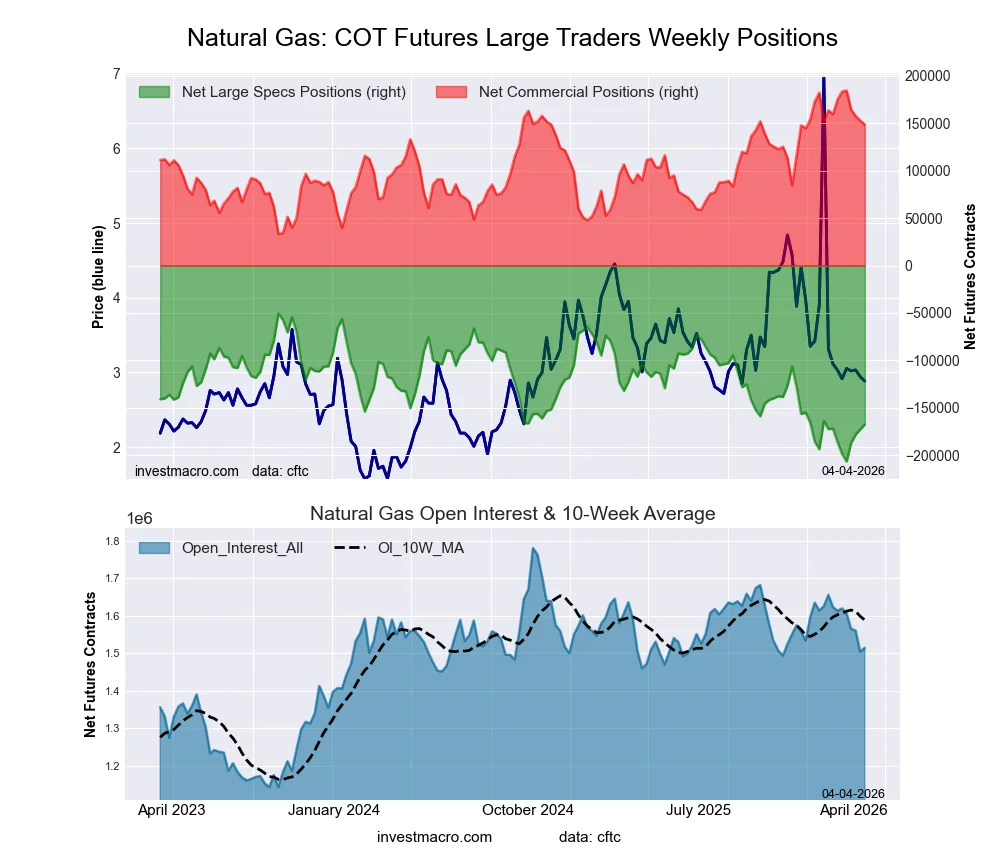
US natural gas prices (XNG) plunged by -10%, approaching their lowest levels since October 17, due to a reduction in gas flows to LNG export facilities. Gas deliveries to LNG plants on Wednesday dropped to a two-month low of 17.4 billion cubic feet per day (bcfd) due to reduced supplies to Cheniere Energy’s Corpus Christi plant and the Freeport LNG plant.

Asian markets mostly rose yesterday. The Japanese Nikkei 225 (JP225) gained +1.48%, the Chinese FTSE China A50 (CHA50) fell by -1.04%, Hong Kong’s Hang Seng (HK50) climbed +0.56%, and the Australian ASX 200 (AU200) posted a positive result of +0.14% yesterday. On Wednesday, PRC regulators raised minimum margin requirements for stock transactions from 80% to 100%, effectively restricting leverage and highlighting Beijing’s commitment to curbing excessive speculation and systemic risks in capital markets.

On Thursday, the Australian dollar (AUD) traded virtually unchanged near $0.668, holding close to a two-week low. Australian consumer inflation expectations remained at a high level of 4.6% in January, virtually unchanged from December, indicating persistent concerns over rising prices. Nevertheless, markets remain skeptical of imminent policy tightening: the probability of a Reserve Bank of Australia rate hike in February is estimated at approximately 27%, while it rises to about 76% by May.

S&P 500 (US500) 6,926.60 −37.14 (−0.53%)

Dow Jones (US30) 49,149.63 −42.36 (−0.09%)

DAX (DE40) 25,286.24 −134.42 (−0.53%)

FTSE 100 10,184.35 +47.00 (+0.46%)

USD Index 99.10 (−0.04%)

News feed for: 2026.01.15

  • Japan Producer Price Index (m/m) at 01:50 (GMT+2); – JPY (MED)
  • UK GDP (m/m) at 09:00 (GMT+2); – GBP (HIGH)
  • UK Industrial Production (m/m) at 09:00 (GMT+2); – GBP (MED)
  • UK Trade Balance (m/m) at 09:00 (GMT+2); – GBP (MED)
  • Eurozone Industrial Production (m/m) at 12:00 (GMT+2); – EUR (LOW)
  • Eurozone Trade Balance (m/m) at 12:00 (GMT+2); – EUR (MED)
  • US Initial Jobless Claims (w/w) at 15:30 (GMT+2); – USD (MED)
  • US Natural Gas Storage (w/w) at 17:30 (GMT+2). – XNG (HIGH)

By JustMarkets


This article reflects a personal opinion and should not be interpreted as an investment advice, and/or offer, and/or a persistent request for carrying out financial transactions, and/or a guarantee, and/or a forecast of future events.

Markets gripped by geopolitics, uncertainty & Trump

By ForexTime 

  • Risk-heavy week leaves investors on edge
  • Yen is the worst-performing G10 currency week-to-date
  • US Supreme Court scheduled to rule on Trump’s tariffs
  • Gold & Silver rally to fresh all-time highs
  • Bitcoin hits highest level in two-months above $96,000

It’s been a tense week defined by geopolitics, concerns over the Fed’s independence, and anticipation ahead of a US Supreme Court ruling on Trump’s tariffs.

This messy mashup of high-risk events has created a smog of uncertainty, with investors adopting a defensive approach toward risk.

Nevertheless, European shares clawed back some losses this morning after a modest dip in the previous session, but US equity futures are pointing to a shaky open.

Geopolitical flashpoints across the globe, concerning Iran and Ukraine, have dominated headlines, boosting the appetite for safe-haven assets. On top of this, Trump recently threatened 25% tariffs on countries trading with Iran, and as expected, China has threatened to retaliate.

On the trade front, the US Supreme Court is scheduled to rule on the legality of Trump’s tariffs. Prediction markets are giving the administration only a 30% chance of prevailing.

(Source Polymarkets)

Equity markets may experience a relief rally if the court strikes down the tariffs, but gains may be capped by trade policy uncertainty.

In the FX space, the Yen is the worst-performing G10 currency this week amid rising political uncertainty in Japan. The USDJPY is slowly approaching the danger zone, with speculation growing over a potential intervention. With the Fed expected to cut rates twice in 2026 and the BoJ seen hiking twice, this divergence in monetary policy could signal a selloff down the road.

Looking at earnings, JPMorgan’s fourth-quarter results topped consensus on most measures. However, investment-banking fees dropped by 5%, missing the bank’s own guidance. In result, JPMorgan shares tanked over 4% – taking 2026 gains to negative 3.5%. This rocky start to earnings dragged the us equities lower, with the Dow Jones ending almost 1% lower.

Commodities have been a bright spot this week, with both gold and silver hitting fresh all-time highs. Silver has gained over 25% since the start of 2026, adding to the whopping 148% rally seen last year. Gold is lagging, rising 7% this month thanks to heightened geopolitical risk, fears over the Fed’s independence, and bets around lower US rates.

With silver hitting $91.55 this morning, could $100 be on the cards by the end of the month? Prices are trading less than 10% away from this level as of writing.

Oil prices slipped on Wednesday after seeing their biggest four-day rally in more than six months. The negative developments in Iran and possible intervention by the United States have fuelled concerns over supply disruptions impacting around 3.3 million bpd of the country’s output. While oil benchmarks are pushing higher, concerns over ongoing oversupply may limit upside gains.

In the crypto space, Bitcoin jumped to a two-month high as prices punched above $96,000. The “OG” crypto drew strength from the latest US inflation report, which rose less than expected, while concerns over the Fed’s independence offered further support. Bitcoin is up over 8% year-to-date, with the next bullish level of interest at $100,000.

Trump


Forex-Time-LogoArticle by ForexTime


ForexTime Ltd (FXTM) is an award winning international online forex broker regulated by CySEC 185/12 www.forextime.com

Gold Sets New Highs, With Further Gains Ahead

By RoboForex Analytical Department

Gold prices rose above 4,622 USD per ounce on Wednesday, challenging previous record levels. The rally is underpinned by growing expectations of US interest rate cuts this year and heightened demand for defensive assets.

December data pointed to a moderation in core US inflation, confirming a gradual easing of price pressures and clarifying the economic picture following earlier disruptions.

In this environment, interest rate futures reflect a divergence in expectations: investors are pricing in two to three rate cuts from the Federal Reserve in 2025, exceeding the median forecast from policymakers themselves, which signals only one reduction.

Safe-haven demand has also been reinforced by concerns over the Fed’s independence following the launch of a criminal investigation related to Chair Jerome Powell’s congressional testimony in June.

Geopolitical tensions remain elevated, with markets closely monitoring the risk of US involvement in political instability in Iran amid recurring warnings of potential military action.

Technical Analysis: XAU/USD

H4 Chart:

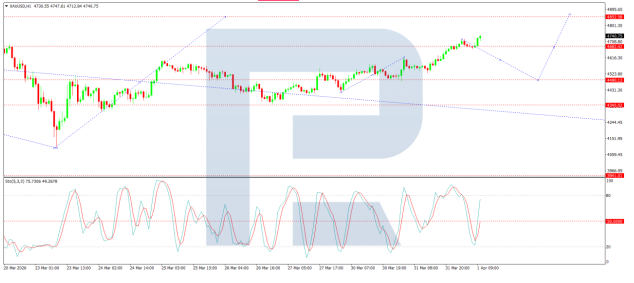
On the H4 chart, XAU/USD is consolidating around 4,623 USD. An upward expansion of this range towards 4,770 USD is anticipated, likely to be followed by a corrective pullback towards 4,620 USD. A break below this level would open the door to a deeper correction towards 4,520 USD.

The MACD indicator supports the bullish outlook, with its signal line turning upward and pressing towards new highs, indicating sustained upward momentum.

H1 Chart:

On the H1 chart, the market has formed a consolidation range around 4,629 USD and is now building the next leg higher, targeting at least 4,770 USD. This structure reinforces the broader uptrend.

The Stochastic oscillator aligns with this view, as its signal line is positioned at 80 and continues to point upward, signalling strong near-term bullish momentum.

Conclusion

Gold continues to draw strength from shifting rate expectations, political uncertainty, and persistent geopolitical risks. While the near-term technical structure suggests potential for further gains towards 4,770 USD, traders should remain mindful of overextended conditions and the likelihood of a corrective pullback thereafter. A sustained move above current levels would reinforce the longer-term bullish narrative, while a break below 4,620 USD could signal a deeper retracement before the next leg higher.


Disclaimer:

Any forecasts contained herein are based on the author’s particular opinion. This analysis may not be treated as trading advice. RoboForex bears no responsibility for trading results based on trading recommendations and reviews contained herein.

EUR/USD Awaiting US Inflation Data for Direction

By RoboForex Analytical Department

The EUR/USD pair stabilised around 1.1658 on Tuesday, following a period of volatility over the preceding two sessions.

Market focus remains firmly on the forthcoming US inflation data, which is expected to provide crucial clarity on the future path of Federal Reserve policy. Currently, the market is pricing in two rate cuts this year, with the first anticipated in June. However, any upside surprise in inflation could significantly temper expectations for policy easing.

Supporting a more dovish outlook was last week’s disappointing Non-Farm Payrolls (NFP) report for December, which revealed weaker-than-expected job growth.

Investors are also monitoring developments in the US Supreme Court, which is expected to rule on the legality of President Donald Trump’s tariff policy as early as Wednesday.

Earlier this week, the US dollar faced additional headwinds following reports that Fed Chair Jerome Powell could face scrutiny over his congressional testimony related to a building renovation project. This has raised concerns, albeit limited, regarding the perceived independence of the Federal Reserve.

Technical Analysis: EUR/USD

H4 Chart:

On the H4 chart, the pair is forming a corrective retracement within the context of the second downward impulse. The immediate corrective target stands at 1.1700. Once this correction concludes, we anticipate the resumption of the downtrend, with the next bearish target at 1.1555. This scenario is supported by the MACD indicator, whose signal line is below zero and pointing decisively downward, reinforcing the ongoing bearish momentum and potential for further downside.

H1 Chart:

On the H1 chart, the market has completed a decline to 1.1655 and is now forming an upward corrective impulse towards 1.1700. Upon reaching this level, we expect a renewed wave of selling pressure to emerge. The Stochastic oscillator aligns with this view, as its signal line is currently below 20 but is turning upward towards 80, indicating room for a short-term rebound before the next potential decline.

Conclusion

The EUR/USD pair is in a holding pattern ahead of key US inflation data, which will likely dictate the near-term direction of the pair. While the technical structure remains bearish, a corrective bounce towards 1.1700 appears likely before sellers potentially regain control. A stronger-than-expected inflation print could reinforce the dollar’s strength and accelerate the move towards 1.1555.


Disclaimer:

Any forecasts contained herein are based on the author’s particular opinion. This analysis may not be treated as trading advice. RoboForex bears no responsibility for trading results based on trading recommendations and reviews contained herein.

Trump announces 25% tariffs on countries trading with Iran

By JustMarkets 

The US stock indices managed to recover from an early-morning sell-off on Monday, ending the session higher and setting new records. By the end of Monday, the Dow Jones Index (US30) rose by 0.17%, the S&P 500 (US500) gained 0.16%, and the Nasdaq Technology Index (US100) closed up 0.08%. Initial pressure on the market was linked to reports of a criminal investigation launched against Fed Chair Jerome Powell, which heightened concerns regarding political pressure on the regulator. The banking sector was most notably affected, with shares of major players declining amid discussions of an initiative to cap credit card interest rates. Nevertheless, overall investor sentiment remained positive due to expectations of strong Q4 corporate earnings, primarily from major banks, and hopes for relatively soft inflation data, which supported risk appetite.

On Monday evening, Trump announced the imposition of 25% tariffs on countries trading with Iran, following repeated warnings of potential military action amid mass protests in the country.

The Mexican peso strengthened to 17.91 per dollar, reaching its highest level since July 2024, driven by a combination of external and internal factors. Support for the peso was provided by the Bank of Mexico’s balanced stance. Following the December rate cut, the regulator emphasized that future decisions depend on macroeconomic data, noting that underlying inflationary pressures persist and require caution. The absence of signals regarding rapid policy easing helped stabilize market expectations and maintain the appeal of the Mexican currency.

European equity markets mostly rose on Monday. The German DAX (DE40) climbed 0.57%, the French CAC 40 (FR40) closed down 0.04%, the Spanish IBEX 35 (ES35) rose by 0.14%, and the British FTSE 100 (UK100) finished the day up 0.16%. Large companies in the industrial and financial services sectors continued their positive momentum: Siemens, Airbus, and Deutsche Bank gained between 1% and 4%. Technology stocks also largely rose, despite ongoing skepticism regarding the fundamental profitability of artificial intelligence amid rising capital expenditures.

The Swiss franc (CHF) is holding near highs seen in the early 2010s due to increased demand for safe-haven currencies. The franc was supported by escalating geopolitical tensions, including harsh mutual warnings between the US and Iran, as well as growing uncertainty surrounding international security following discussions of a potential increase in NATO’s military presence in Greenland. On the domestic front, Switzerland’s macroeconomic situation remains stable: recent inflation data reinforced expectations that the SNB will keep rates at zero in the near term, which did not prevent the franc from maintaining its status as one of the key defensive assets.

WTI crude oil prices recovered intraday losses on Monday to close higher. Prices were supported by escalating tensions in Iran, where large-scale protests increased the risk of disruptions in oil production and exports, despite government claims of a stabilizing situation. Potential strikes and threats to energy infrastructure maintain high market volatility. Supply concerns partially offset expectations of increased production in Venezuela following political changes and preparations for the resumption of exports.

US natural gas prices (XNG) rose by more than 5%, climbing above $3.35 per MMBtu and recovering from a drop to multi-week lows. The recovery was triggered by updated weather prognoses indicating the approach of colder temperatures. Market balance factors also provided support. Gas exports remain near record levels, while domestic production edged down from its December peak. An additional positive signal was a deeper-than-seasonal-norm reduction in inventories, which strengthened investor confidence in the improving fundamental market picture.

Asian markets traded higher yesterday. The Japanese Nikkei 225 (JP225) rose by 1.61%, the Chinese FTSE China A50 (CHA50) gained 0.11%, Hong Kong’s Hang Seng (HK50) climbed 1.44%, and the Australian ASX 200 (AU200) posted a positive result of 0.48%.

In Australia, the Westpac–Melbourne Institute Consumer Sentiment Index fell by 1.7% month-on-month in January 2026 to a three-month low of 92.9 points, amid persistent concerns over interest rate hikes. Commodity-related stocks led the gains, as prices surged due to tensions surrounding Iran and concerns over the Federal Reserve’s independence.

S&P 500 (US500) 6,977.27 +10.99 (+0.16%)

Dow Jones (US30) 49,590.20 +86.13 (+0.17%)

DAX (DE40) 25,405.34 +143.70 (+0.57%)

FTSE 100 (UK100) 10,140.70 +16.10 (+0.16%)

USD Index 98.90 -0.24% (-0.24%)

News feed for: 2026.01.13

  • Australia Westpac Consumer Confidence (m/m) at 01:30 (GMT+2); – AUD (MED)
  • US Consumer Price Index (m/m) at 15:30 (GMT+2); – USD, XAU (HIGH)
  • US Home Sales (m/m) at 17:00 (GMT+2). – USD (MED)

By JustMarkets


This article reflects a personal opinion and should not be interpreted as an investment advice, and/or offer, and/or a persistent request for carrying out financial transactions, and/or a guarantee, and/or a forecast of future events.

USD/JPY Stalls Near One-Year High

By RoboForex Analytical Department

The USD/JPY pair paused on Monday after a sharp rally to around 157.95, with the yen holding near its lowest levels of the year. Trading activity was subdued as Japanese markets were closed for a public holiday.

Political uncertainty increased after Prime Minister Sanae Takaichi, a key coalition partner, raised the possibility of early elections on 8 or 15 February, adding another layer of caution to the market.

The yen also faced pressure from recent mixed macroeconomic data, which have clouded the outlook for the Bank of Japan’s future rate-hike trajectory.

Last week, BoJ Governor Kazuo Ueda reiterated that the central bank would continue to raise interest rates if economic momentum and inflation align with forecasts, while also emphasising a flexible approach to policy adjustments.

Over the coming week, traders will focus on a series of key Japanese economic indicators, including current account figures, machine tool orders, manufacturing PMI, and business sentiment data. Any surprises could prompt a shift in the yen’s direction.

Technical Analysis: USD/JPY

H4 Chart:

On the H4 chart, the pair has completed a local advance to 157.77 and is likely to enter a period of consolidation around this level. A break below this range could trigger a corrective move towards 156.60. Conversely, an upward break would open the potential for the rally to extend towards 159.33. This outlook is supported by the MACD indicator, with its signal line positioned above zero and pointing firmly upward, indicating ongoing bullish momentum.

H1 Chart:

On the H1 chart, the market is forming a consolidation range centred around 157.77, with interim boundaries at 158.18 to the upside and 157.50 to the downside. A downward exit from this range could see a decline towards 156.60, while an upward resolution would signal potential for a further move towards 159.33. The Stochastic oscillator aligns with this view, as its signal line is above 50 and rising towards 80, suggesting continued near-term upward momentum.

Conclusion

USD/JPY has entered a period of consolidation near annual highs, with direction likely to be determined by upcoming Japanese data and political developments. While the broader technical bias remains bullish, a break below 157.50 could signal the start of a short-term correction.


Disclaimer:

Any forecasts contained herein are based on the author’s particular opinion. This analysis may not be treated as trading advice. RoboForex bears no responsibility for trading results based on trading recommendations and reviews contained herein.

Stock indices and precious metals continue to rise

By JustMarkets 

The US stock market ended Friday at historic highs as investors reacted to December labor market data and anticipated signals from the Fed. By Friday’s close, the Dow Jones Index (US30) rose by 0.48% (+2.12% for the week). The S&P 500 (US500) gained 0.65% (+1.07% for the week). The technology-heavy Nasdaq (US100) closed higher by 1.02% (+1.16% for the week). Major indices posted steady gains as employment statistics pointed to a slowdown in job creation, while the unemployment rate simultaneously fell to 4.4%, which was perceived as a sign of a resilient but not overheated labor market. Technology companies, primarily semiconductor manufacturers, made the largest contribution to the rally, boosted by optimism surrounding the development of artificial intelligence.

The Canadian dollar (CAD) weakened to the 1.39 level against the US dollar, hitting a one-month low amid a deteriorating labor market, which lowered expectations for further policy tightening by the Bank of Canada. December statistics showed a sharp rise in unemployment to 6.8%, driven by an increase in labor force participation, while moderate employment growth and slowing wage growth indicated a cooling of domestic inflationary pressure and confirmed the sufficient restrictiveness of current rates. Additional pressure on the currency came from the commodities market. Combined, these factors narrowed interest rate differential expectations and strengthened the currency’s downward trend.

The Mexican peso (MXN) traded near the 18 per dollar level, remaining under pressure from a strong US dollar that offset domestic support factors. The published Banxico minutes confirmed a balanced and cautious approach to monetary policy: following the expected rate cut to 7.0%, the regulator emphasized its reliance on incoming data and a lack of intention to accelerate the easing cycle, which served to stabilize market expectations.
European equity markets mostly rose on Friday. The German DAX (DE40) climbed 0.53% (+2.35% for the week), the French CAC 40 (FR40) closed up 1.44% (+1.39% for the week), the Spanish IBEX 35 (ES35) edged down 0.03% (+0.46% for the week), and the British FTSE 100 (UK100) finished up 0.80% (+1.74% for the week).

On Friday, silver (XAG) surged nearly 4% to $80 per ounce, as the slowdown in US job growth bolstered expectations for Fed rate cuts, triggering renewed demand for precious metals after the easing of pressure from indices. This shift reduced pressure on real yields and stimulated the opening of new long positions and the closing of short positions in silver futures.

Platinum prices (XPT) jumped by more than 3%, approaching the $2370 per ounce mark, amid a general rise in precious metal prices and investors’ desire to return to recent record levels. The market was supported by increased demand for safe-haven assets due to intensifying geopolitical tensions. Platinum continued its move toward the December high, maintaining support from both defensive demand and an increased willingness among investors to use precious metals as a risk hedge.

WTI crude oil rose 2.3% on Friday, continuing its recovery from recent declines and ending the week with a 1.5% gain. Prices were supported by escalating geopolitical tensions, primarily due to intensifying protests in Iran, accompanied by reports of casualties and internet shutdowns, raising concerns over potential supply disruptions from a key producer. An additional factor was the ongoing uncertainty surrounding Venezuelan oil exports following tightened US oversight. The geopolitical premium in prices increased, which was also reflected in heightened demand for bullish options, although rising global inventories and threats of oversupply continued to limit further upside potential.

US natural gas (XNG) prices fell sharply by over 5%, dropping below $3.25 per MMBtu, the lowest level since mid-October. The primary downward pressure came from updated weather prognoses indicating a warmer-than-usual winter across much of the country, weakening heating demand expectations for the coming weeks. The weather factor outweighed positive signals from the market balance. LNG exports remain at record levels, and gas deliveries to export terminals in January stayed near historic highs despite a moderate decline in production following the December peak.

Asian markets traded with mixed results last week. The Japanese Nikkei 225 (JP225) rose by 1.82%, the Chinese FTSE China A50 (CHA50) gained 0.58%, Hong Kong’s Hang Seng (HK50) fell by 0.49%, and the Australian ASX 200 (AU200) showed a negative 5-day result of 0.09%.

The offshore yuan strengthened to 6.97 per dollar, hitting a nearly three-year high amid growing confidence in the currency and a notable decrease in hedging costs. Forward contracts allow for locking in rates below the current spot, reflecting the lowest implicit costs since 2022 and stimulating demand for currency risk management instruments. The yuan’s appreciation, exceeding 5% over the past year, is fueled by a combination of external and internal factors, including a weakening dollar, China’s sustained trade surplus, an improving macroeconomic backdrop, and capital inflows ahead of the Lunar New Year. Stronger daily fixings by the People’s Bank of China (PBoC) have also reinforced market expectations that the regulator is not hindering further appreciation of the national currency.

S&P 500 (US500) 6,966.28 +44.82 (+0.65%)

Dow Jones (US30) 49,504.07 +237.96 (+0.48%)

DAX (DE40) 25,261.64 +134.18 (+0.53%)

FTSE 100 (UK100) 10,124.60 +79.91 (+0.80%)

USD Index 99.14 +0.20% (+0.21%)

By JustMarkets


This article reflects a personal opinion and should not be interpreted as an investment advice, and/or offer, and/or a persistent request for carrying out financial transactions, and/or a guarantee, and/or a forecast of future events.

Week Ahead: Will US30 hit 50,000 milestone?

By ForexTime 

  • US30 ↑ almost 3% year-to-date
  •  Trading less than 2% away from 50,000 milestone
  • Big bank earnings + US CPI = fresh volatility
  • JPMorgan & Goldman Sachs = nearly 16% of US30 weight
  • Technical levels: 50,000, 48,800 & 48400

Even as the clock ticks down to the key NFP report and Supreme Court ruling on Trump’s tariffs this afternoon, investors are bracing for more volatility in the week ahead.

All eyes will be on Wall Street bank earnings to US inflation data, speeches by Fed officials and geopolitical developments:

Monday, Jan 12

  • USD: Fed Barkin, Fed Williams and Fed Bostic speeches
  • AUD: Australia Westpac Consumer Confidence Change (Jan)


Tuesday, Jan 13

  • GBP: UK BRC Retail Sales Monitor (Dec)
  • US30: US Inflation Rate (Dec); ADP Employment Change Weekly; Fed Musalem & Barkin Speeches, JPMorgan Chase earnings
  • WTI: US API Crude Oil Stock Change (w/e Jan 9)


Wednesday, Jan 14

  • CNY: China Balance of Trade (Dec)
  • USD: US PPI (Oct & Nov); Retail Sales (Nov); Existing Home Sales (Dec); Fed Paulson & Williams Speeches, Beige book
  • US500: Bank of America, Wells Fargo, Citigroup earnings.
  • WTI: US EIA Crude Oil Stocks Change (w/e Jan 9)


Thursday, Jan 15

  • GBP: UK GDP (Nov); Industrial and Manufacturing Production (Nov)
  • EUR: Eurozone Industrial Production (Nov)
  • USD: US Initial Jobless Claims (w/e Jan 10)
  • US30: Goldman Sachs earnings
  • TWN: TSMC earnings


Friday, Jan 16

  • GER40: Germany CPI
  • USD: US Industrial Production
  • NZD: New Zealand food prices, BusinessNZ manufacturing PMI


Our focus is on FXTM’s US30 which tracks the benchmark Dow Jones Industrial Average index.

This index ended last year gaining 13% and has kicked off 2026 on a positive note – recently hitting an all-time high above 49,600.

Given how prices are trading near records, the question is whether bulls can keep up the momentum – especially with the 50,000 milestone in sight.

Here are 3 themes to keep a close eye on:

1) US bank earnings

Fourth-quarter earnings season unofficially kicks off on Tuesday 13th January, led by the largest US banks.

JPMorgan Chase, the country’s biggest lender, leads the pack, followed by Citigroup, Bank of America and Goldman Sachs among others.

US banks are expected to report solid earnings thanks to investment banking activity and elevated trading activity across commodities, fixed income and equity markets.

It is worth noting that financials make up almost 29% of the US30’s weight with JPMorgan and Goldman Sachs accounting for nearly 16%!

So, the upcoming earnings from US banks could spell fresh volatility.

  • Markets are forecasting a 3.3% move, either Up or Down, for JPMorgan Chase stocks post-earnings
  • Markets are forecasting a 4.0% move, either Up or Down, for Goldman Sachs stocks post-earnings.


2) US December CPI – Tuesday 13th January

The incoming US Consumer Price Index (CPI) may impact bets around Fed cuts in the first few months of 2026.

Markets are forecasting:

  • CPI year-on-year (December 2025 vs. December 2024) unchanged at 2.7%.
  • Core CPI year-on-year to rise 2.7% from 2.6%.
  • CPI month-on-month – 0.3%
  • Core CPI month-on-month – 0.3%

Signs of rising inflation pressures may reduce bets around the Fed cutting interest rates.

US30 is forecast to move 0.9% up or 0.8% down in a 6-hour window after the US CPI report.

Note: The US retail sales reports, PPI, Biege book and speeches by Fed officials may impact the US30.


3) Technical forces

The US30 remains bullish on the daily charts with prices trading above the 50, 100 and 200-day SMA.

  • A solid breakout above 49,500 could inspire a move toward the psychological 50,000 milestone and higher.
  • Should prices slip below 48,800, this could trigger a selloff toward 48,400.


Forex-Time-LogoArticle by ForexTime


ForexTime Ltd (FXTM) is an award winning international online forex broker regulated by CySEC 185/12 www.forextime.com

WTI oil prices rose by more than 4%. Silver dropped by 5%

By JustMarkets 

By the end of Thursday, the Dow Jones Index (US30) rose by 0.55%. The S&P 500 Index (US500) gained 0.01%. The Technology Index Nasdaq (US100) closed lower by 0.44%. Investors shifted their focus from technology stocks toward cyclical and defense companies amid ongoing uncertainty regarding the scale and timing of Federal Reserve policy easing, as well as increased attention to the efficiency of capital expenditures in the field of artificial intelligence. The market was pressured by shares of large technology companies focused on AI infrastructure: Nvidia lost 2.2%, Broadcom 3.2%, Micron 3.7%, and Oracle 1.7%. At the same time, the defense sector demonstrated steady growth following President Donald Trump’s statements regarding plans to increase the US military budget to 1.5 trillion dollars in 2027.

According to a consumer expectations survey by the Federal Reserve Bank of New York, median one-year-ahead inflation expectations in the US rose to 3.4% in December 2025, compared to 3.2% in each of the two previous months. In contrast, inflation expectations for three and five years remained unchanged at 3.0%, indicating stable long-term inflation projections. Uncertainty regarding inflation increased across all horizons, pointing to a growing divergence in expectations regarding future prices.

The German DAX (DE40) rose by 0.02%, the French CAC 40 (FR40) closed with an increase of 0.12%, the Spanish Index IBEX 35 (ES35) gained 0.33%, and the British FTSE 100 (UK100) closed lower at 0.04%. European stock markets declined moderately on Thursday, taking a pause after hitting record levels earlier in the week. Sentiment was pressured by uncertainty surrounding the future course of ECB policy and persistent geopolitical risks.

On Thursday, WTI crude oil prices rose by more than 4% and exceeded the 58 dollars per barrel mark, recovering losses from the two previous sessions as the market reassessed short-term supply risks amid a more resilient physical balance in the US. Prices were supported by data showing a 3.8 million barrel reduction in US oil inventories, which significantly exceeded expectations and refuted prognoses of inventory growth, easing concerns about a global supply glut. The rise in quotes was partially limited by an increase in inventories at Cushing, as well as a sharp rise in gasoline and distillate inventories; however, weaker US labor market data supported demand expectations by strengthening the outlook for a more dovish Fed policy.

On Thursday, silver dropped by 5% to 74 dollars per ounce, marking its second consecutive session of decline as investors took a wait-and-see approach ahead of the annual rebalancing of key commodity indices. This is expected to lead to the sale of billions of dollars worth of futures contracts in the coming days. Additional pressure on quotes was exerted by mechanical selling from passive funds adjusting their portfolios to new index weights following silver’s exceptional rally last year. These technical factors intensified the short-term decline despite persistent fundamental demand drivers.

Natural gas prices in the US decreased by approximately 3% to 3.42 dollars/MMBtu amid a moderate increase in daily production and expectations of mild weather for the next two weeks, which is anticipated to limit heating demand below seasonal norms. Although prognosists allow for a brief cold snap and a temporary increase in consumption at the end of January, overall temperatures across the country are predicted to remain above normal values until January 23. Meanwhile, EIA data showed higher actual demand: for the week ending January 2, 114 billion cubic feet of gas were withdrawn from storage, which significantly exceeds both last year’s figure and the five-year average.

Asian markets mostly declined yesterday. The Japanese Nikkei 225 (JP225) fell by 1.63%, the Chinese FTSE China A50 (CHA50) dropped by 1.45%, the Hong Kong Hang Seng (HK50) decreased by 1.17%, and the Australian ASX 200 (AU200) showed a positive result of 0.29% yesterday. On Friday, Chinese stock markets resumed their growth. In December, consumer price inflation accelerated to its highest level in nearly three years, primarily due to rising food prices, which partially masked persistent underlying deflationary pressure in the economy. At the same time, producer prices declined for the 39th consecutive month, although the rate of decline was the smallest since August 2024, which was perceived by the market as a sign of stabilization.

The unemployment rate in Malaysia in November 2025 decreased to 2.9% compared to 3.2% a year earlier, reaching its lowest level since November 2014. The number of unemployed persons decreased by 4.3% in annual terms to 518.4 thousand, marking a nearly six-year low, while employment rose by 3.1% and reached a record 17.09 million people.

S&P 500 (US500) 6,921.46 +0.53 (+0.01%)

Dow Jones (US30) 49,266.11 +270.03 (+0.55%)

DAX (DE40) 25,127.46 +5.20 (+0.021%)

FTSE 100 (UK100) 10,044.69 −3.52 (−0.04%)

USD Index 98.88 +0.19% (+0.19%)

News feed for: 2026.01.09

  • China Consumer Price Index (m/m) at 03:30 (GMT+2); – CHA50, HK50 (MED)
  • China Producer Price Index (m/m) at 03:30 (GMT+2); – CHA50, HK50 (MED)
  • Norway Inflation Rate (m/m) at 09:00 (GMT+2); – NOK (MED)
  • Eurozone Retail Sales (m/m) at 12:00 (GMT+2); – EUR (MED)
  • Canada Unemployment Rate (m/m) at 15:30 (GMT+2); – CAD (HIGH)
  • US Non-Farm Payrolls (m/m) at 15:30 (GMT+2); – USD, XAU (HIGH)
  • US Average Hourly Earnings (m/m) at 15:30 (GMT+2); – USD, XAU (HIGH)
  • US Unemployment Rate (m/m) at 15:30 (GMT+2); – USD, XAU (HIGH)
  • US Michigan Consumer Sentiment (m/m) at 17:00 (GMT+2). – USD (MED)

By JustMarkets


This article reflects a personal opinion and should not be interpreted as an investment advice, and/or offer, and/or a persistent request for carrying out financial transactions, and/or a guarantee, and/or a forecast of future events.

Why Is This the Perfect Silver Trade To Invest In?

Source: Michael Ballanger (1/7/26) 

Michael Ballanger of GGM Advisory Inc. explains why he thinks Silver North Resources Ltd. (SNAG:TSX.V; TARSF:OTCQB) might be the perfect silver trade to invest in.

Subscribers purchased Silver North Resources Ltd. (SNAG:TSX.V; TARSF:OTCQB) by way of two private placements in 2025 at prices of CA$0.10 and CA$0.15 per share. This is a junior silver explorer with projects in Canada’s Yukon Territories, with one being proximitous to the legendary Keno Hill Silver District where historical mining operations yielded over 200 million ounces of silver.

The two main projects are the Haldane Project, located 25 km. west of the main Keno Hill silver deposits and Tim Project, located 72 km west of Watson Lake, Yukon, and 19 km northeast of Coeur Mining’s Silvertip deposit.

Coeur Mining Inc. (CDE:NYSE) is funding exploration under an option agreement to earn a 51% interest in Tim from Silver North by completing $3.55 million in exploration over 5 years and making staged cash payments totalling $575,000. Coeur can increase its interest to 80% by funding a positive feasibility study at Tim by the eighth anniversary of the agreement.

To date, Coeur has funded approximately $1.6 million in exploration, which has included SkyTEM, magnetics, radiometrics, and mobile MT geophysical surveys, property-wide geochemical sampling and mapping, re-examination of historical trenches, and drilling. Coeur is the project operator, applying the expertise of its geological team at Silvertip to the Tim exploration.

In November, the company reported the following from the Haldane Property: Silver North Intersects 13.15 meters Averaging 818 g/t Silver and 1.39 g/t Gold From 249.9 m Depth at the Haldane Silver Property, Keno District, Yukon. Elevated gold values really got my attention, as well as the rest of the market, as the stock moved sharply higher in combination with robust silver prices.

I like almost everything about this name, including a crackerjack management group and a great land package in the vicinity of one of the truly legendary silver camps: Keno Hill.

Of course, I am biased as I was one of those lucky souls who owned shares in the mighty United Keno Hill Silver Mines in the 1970s as it soared from $0.60 to $60 in less than a year. The only possible negative is seasonality, as it is not so much the sub-zero temperatures that force companies to shut down in the Canadian winter, but the lack of sunlight, which creates safety issues.

Nonetheless, as a proxy for the silver trade, it is a perfect place to invest, and at a US$22m market cap, it is worthy of a target price in the US$100m range driven by further exploration and development at Haldane and Tim. No one knows for sure where silver prices will top out, but if the raving bulls are correct, this could be another United Keno HillAccordingly, an initial target price of CA$1.00 per share is where I will reassess.


Important Disclosures:

  1. Silver North Resources. is a billboard sponsor of Streetwise Reports and pays SWR a monthly sponsorship fee between US$3,000 and US$6,000.
  2. As of the date of this article, officers, contractors, shareholders, and/or employees of Streetwise Reports LLC (including members of their household) own securities of Silver North Resources.
  3. Michael Ballanger: I, or members of my immediate household or family, own securities of: Silver North Resources. My company has a financial relationship with: None. My company has purchased stocks mentioned in this article for my management clients: None. I determined which companies would be included in this article based on my research and understanding of the sector.
  4. Statements and opinions expressed are the opinions of the author and not of Streetwise Reports, Street Smart, or their officers. The author is wholly responsible for the accuracy of the statements. Streetwise Reports was not paid by the author to publish or syndicate this article. Streetwise Reports requires contributing authors to disclose any shareholdings in, or economic relationships with, companies that they write about. Any disclosures from the author can be found  below. Streetwise Reports relies upon the authors to accurately provide this information and Streetwise Reports has no means of verifying its accuracy.
  5. This article does not constitute investment advice and is not a solicitation for any investment. Streetwise Reports does not render general or specific investment advice and the information on Streetwise Reports should not be considered a recommendation to buy or sell any security. Each reader is encouraged to consult with his or her personal financial adviser and perform their own comprehensive investment research. By opening this page, each reader accepts and agrees to Streetwise Reports’ terms of use and full legal disclaimer. Streetwise Reports does not endorse or recommend the business, products, services or securities of any company.

For additional disclosures, please click here.

Michael Ballanger Disclosures

This letter makes no guarantee or warranty on the accuracy or completeness of the data provided. Nothing contained herein is intended or shall be deemed to be investment advice, implied or otherwise. This letter represents my views and replicates trades that I am making but nothing more than that. Always consult your registered advisor to assist you with your investments. I accept no liability for any loss arising from the use of the data contained on this letter. Options and junior mining stocks contain a high level of risk that may result in the loss of part or all invested capital and therefore are suitable for experienced and professional investors and traders only. One should be familiar with the risks involved in junior mining and options trading and we recommend consulting a financial adviser if you feel you do not understand the risks involved.