Archive for Financial News – Page 156

COT Stock Market Charts: Speculator Bets led higher by S&P500 & Russell

By InvestMacro

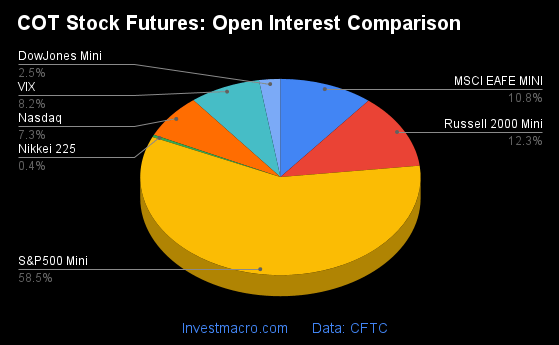
Here are the latest charts and statistics for the Commitment of Traders (COT) data published by the Commodities Futures Trading Commission (CFTC).

The latest COT data is updated through Tuesday January 9th and shows a quick view of how large traders (for-profit speculators and commercial entities) were positioned in the futures markets.

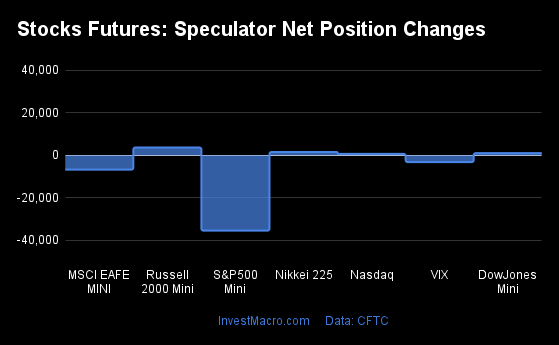
Weekly Speculator Changes led by S&P500-Mini & Russell-Mini

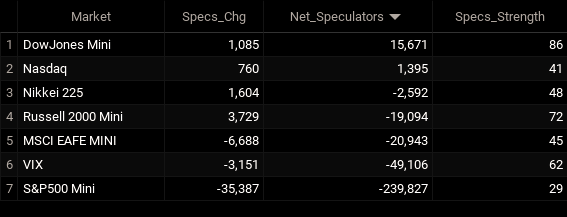
The COT stock markets speculator bets were higher this week as six out of the seven stock markets we cover had higher positioning while the other one markets had lower speculator contracts.

Leading the gains for the stock markets was the S&P500-Mini with a strong weekly gain by 97,039 contracts. Coming in next was the Russell-Mini (21,933 contracts) with the MSCI EAFE-Mini (7,603 contracts), the DowJones-Mini (4,537 contracts), the VIX (823 contracts) and the Nikkei 225 (762 contracts) also recording positive weekly gains.

The only market with a drop in speculator bets was the Nasdaq-Mini with a decline by -2,291 contracts on the week.


Stock Markets – Speculators Leaderboard

Legend: Weekly Speculators Change | Speculators Current Net Position | Speculators Strength Score compared to last 3-Years (0-100 range)


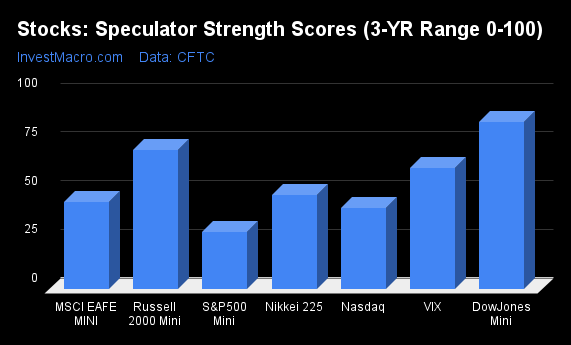
Strength Scores led by DowJones-Mini & Russell-Mini

COT Strength Scores (a normalized measure of Speculator positions over a 3-Year range, from 0 to 100 where above 80 is Extreme-Bullish and below 20 is Extreme-Bearish) showed that the DowJones-Mini (100 percent) and the Russell-Mini (100 percent) lead the stock markets this week at their top levels of the past three years. The Nasdaq-Mini (96 percent) and VIX (80 percent) come in as the next highest in the weekly strength scores.

On the downside, the MSCI EAFE-Mini (36 percent) comes in at the lowest strength level currently with the next lowest strength score being the S&P500-Mini (47 percent).

Strength Statistics:
VIX (79.8 percent) vs VIX previous week (79.2 percent)
S&P500-Mini (47.3 percent) vs S&P500-Mini previous week (32.8 percent)
DowJones-Mini (100.0 percent) vs DowJones-Mini previous week (92.6 percent)
Nasdaq-Mini (95.6 percent) vs Nasdaq-Mini previous week (99.1 percent)
Russell2000-Mini (100.0 percent) vs Russell2000-Mini previous week (84.4 percent)
Nikkei USD (47.7 percent) vs Nikkei USD previous week (42.3 percent)
EAFE-Mini (36.3 percent) vs EAFE-Mini previous week (28.4 percent)


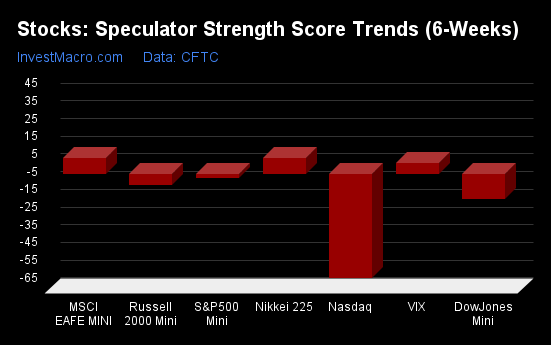
DowJones-Mini & Russell-Mini top the 6-Week Strength Trends

COT Strength Score Trends (or move index, calculates the 6-week changes in strength scores) showed that the DowJones-Mini (80 percent) leads the past six weeks trends for the stock markets. The Russell-Mini (54 percent), the Nasdaq-Mini (45 percent) and the MSCI EAFE-Mini (34 percent) are the next highest positive movers in the latest trends data.

The S&P500-Mini (-8 percent) leads the downside trend scores currently with the Nikkei USD (-2 percent) coming in as the next market with a lower trend score.

Strength Trend Statistics:
VIX (2.3 percent) vs VIX previous week (1.6 percent)
S&P500-Mini (-7.8 percent) vs S&P500-Mini previous week (-20.0 percent)
DowJones-Mini (79.6 percent) vs DowJones-Mini previous week (88.1 percent)
Nasdaq-Mini (45.4 percent) vs Nasdaq-Mini previous week (52.4 percent)
Russell2000-Mini (54.3 percent) vs Russell2000-Mini previous week (40.0 percent)
Nikkei USD (-2.1 percent) vs Nikkei USD previous week (-8.4 percent)
EAFE-Mini (34.1 percent) vs EAFE-Mini previous week (22.3 percent)


Individual Stock Market Charts:

VIX Volatility Futures:

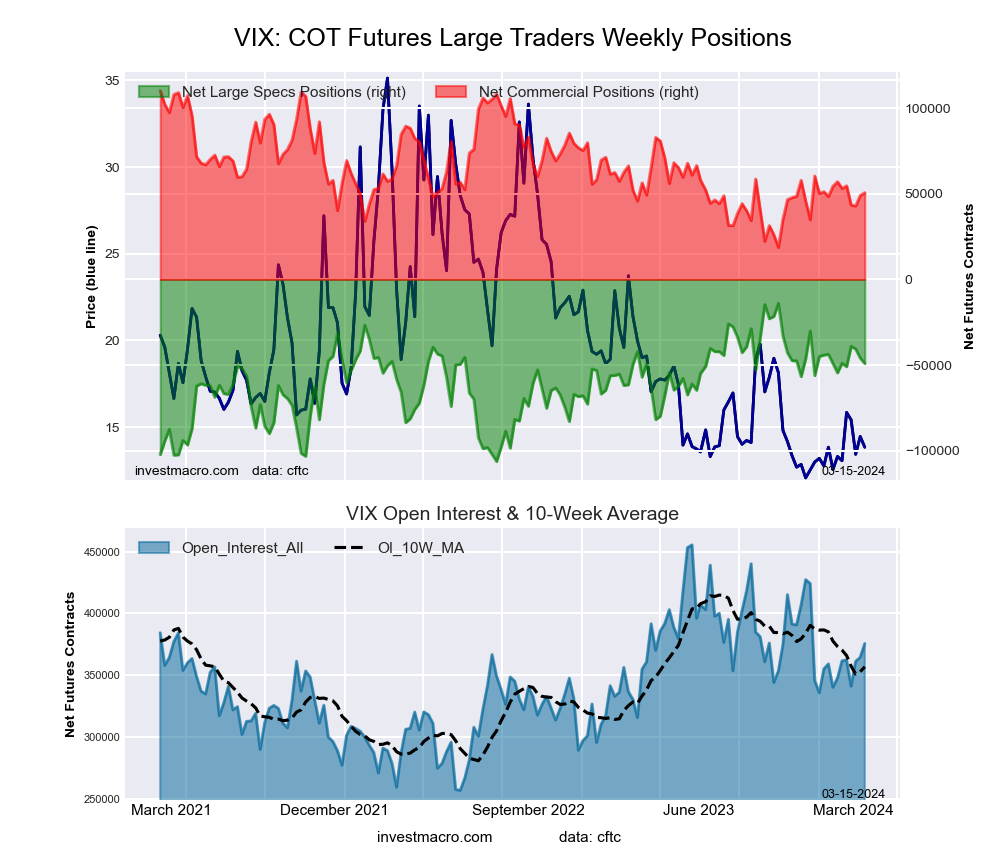
VIX Volatility Futures COT ChartThe VIX Volatility large speculator standing this week was a net position of -44,169 contracts in the data reported through Tuesday. This was a weekly gain of 823 contracts from the previous week which had a total of -44,992 net contracts.

This week’s current strength score (the trader positioning range over the past three years, measured from 0 to 100) shows the speculators are currently Bullish with a score of 79.8 percent. The commercials are Bearish with a score of 21.2 percent and the small traders (not shown in chart) are Bullish with a score of 60.3 percent.

Price Trend-Following Model: Strong Downtrend

Our weekly trend-following model classifies the current market price position as: Strong Downtrend. The current action for the model is considered to be: Hold – Maintain Short Position.

VIX Volatility Futures StatisticsSPECULATORSCOMMERCIALSSMALL TRADERS
– Percent of Open Interest Longs:19.648.37.3
– Percent of Open Interest Shorts:32.133.99.3
– Net Position:-44,16951,245-7,076
– Gross Longs:69,775171,52625,924
– Gross Shorts:113,944120,28133,000
– Long to Short Ratio:0.6 to 11.4 to 10.8 to 1
NET POSITION TREND:
– Strength Index Score (3 Year Range Pct):79.821.260.3
– Strength Index Reading (3 Year Range):BullishBearishBullish
NET POSITION MOVEMENT INDEX:
– 6-Week Change in Strength Index:2.31.7-30.8


S&P500 Mini Futures:

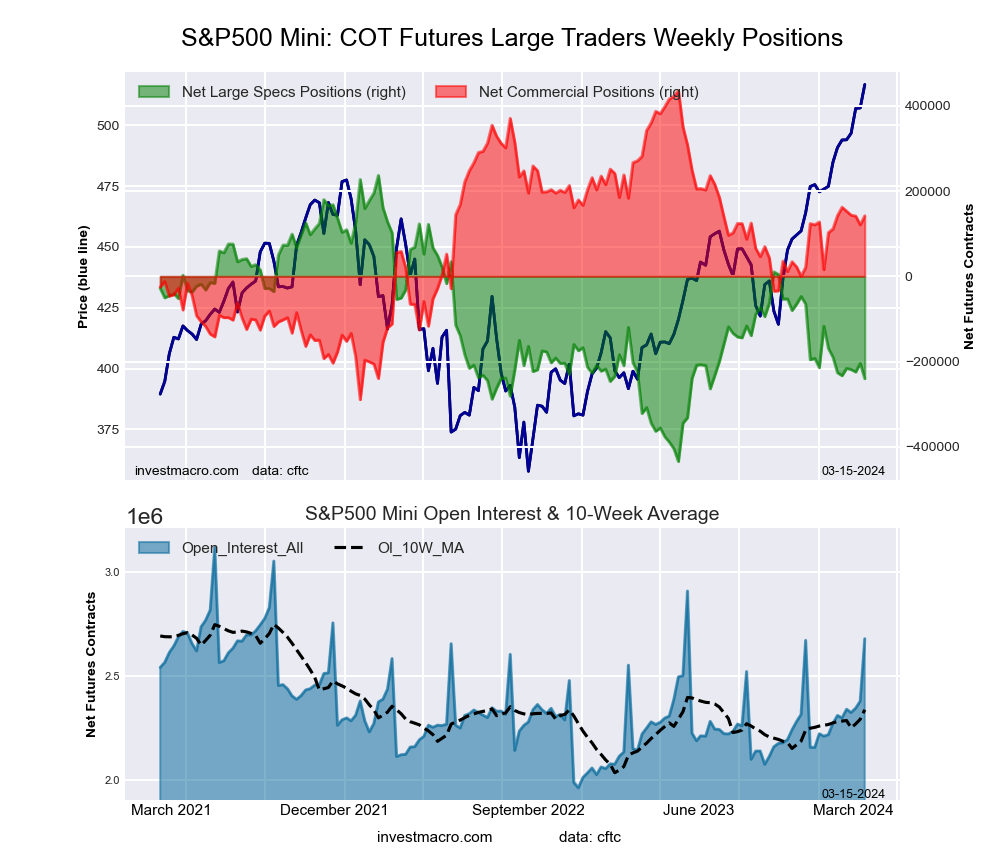
SP500 Mini Futures COT ChartThe S&P500 Mini large speculator standing this week was a net position of -117,049 contracts in the data reported through Tuesday. This was a weekly rise of 97,039 contracts from the previous week which had a total of -214,088 net contracts.

This week’s current strength score (the trader positioning range over the past three years, measured from 0 to 100) shows the speculators are currently Bearish with a score of 47.3 percent. The commercials are Bearish with a score of 42.0 percent and the small traders (not shown in chart) are Bullish with a score of 77.4 percent.

Price Trend-Following Model: Strong Uptrend

Our weekly trend-following model classifies the current market price position as: Strong Uptrend. The current action for the model is considered to be: Hold – Maintain Long Position.

S&P500 Mini Futures StatisticsSPECULATORSCOMMERCIALSSMALL TRADERS
– Percent of Open Interest Longs:12.372.512.6
– Percent of Open Interest Shorts:17.671.88.0
– Net Position:-117,04915,495101,554
– Gross Longs:272,2471,602,234278,896
– Gross Shorts:389,2961,586,739177,342
– Long to Short Ratio:0.7 to 11.0 to 11.6 to 1
NET POSITION TREND:
– Strength Index Score (3 Year Range Pct):47.342.077.4
– Strength Index Reading (3 Year Range):BearishBearishBullish
NET POSITION MOVEMENT INDEX:
– 6-Week Change in Strength Index:-7.8-0.923.1


Dow Jones Mini Futures:

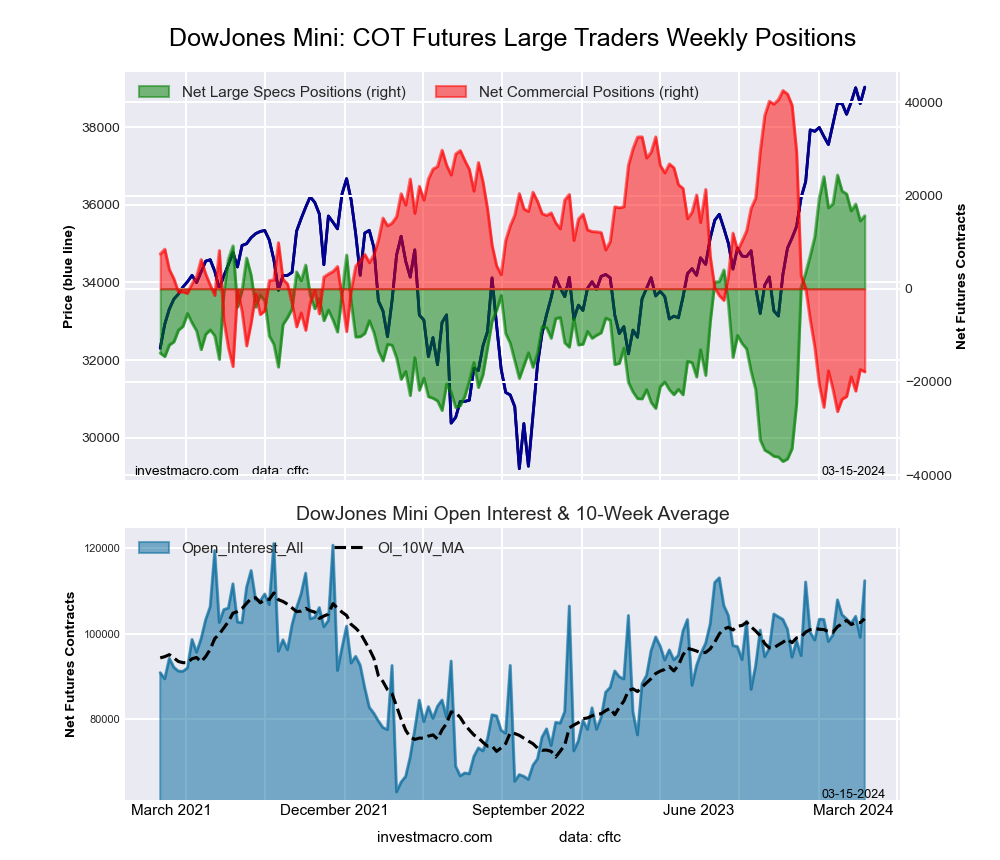
Dow Jones Mini Futures COT ChartThe Dow Jones Mini large speculator standing this week was a net position of 24,079 contracts in the data reported through Tuesday. This was a weekly rise of 4,537 contracts from the previous week which had a total of 19,542 net contracts.

This week’s current strength score (the trader positioning range over the past three years, measured from 0 to 100) shows the speculators are currently Bullish-Extreme with a score of 100.0 percent. The commercials are Bearish-Extreme with a score of 0.0 percent and the small traders (not shown in chart) are Bullish with a score of 50.5 percent.

Price Trend-Following Model: Strong Uptrend

Our weekly trend-following model classifies the current market price position as: Strong Uptrend. The current action for the model is considered to be: Hold – Maintain Long Position.

Dow Jones Mini Futures StatisticsSPECULATORSCOMMERCIALSSMALL TRADERS
– Percent of Open Interest Longs:35.847.813.8
– Percent of Open Interest Shorts:12.572.412.5
– Net Position:24,079-25,4331,354
– Gross Longs:36,98749,41914,256
– Gross Shorts:12,90874,85212,902
– Long to Short Ratio:2.9 to 10.7 to 11.1 to 1
NET POSITION TREND:
– Strength Index Score (3 Year Range Pct):100.00.050.5
– Strength Index Reading (3 Year Range):Bullish-ExtremeBearish-ExtremeBullish
NET POSITION MOVEMENT INDEX:
– 6-Week Change in Strength Index:79.6-80.730.1


Nasdaq Mini Futures:

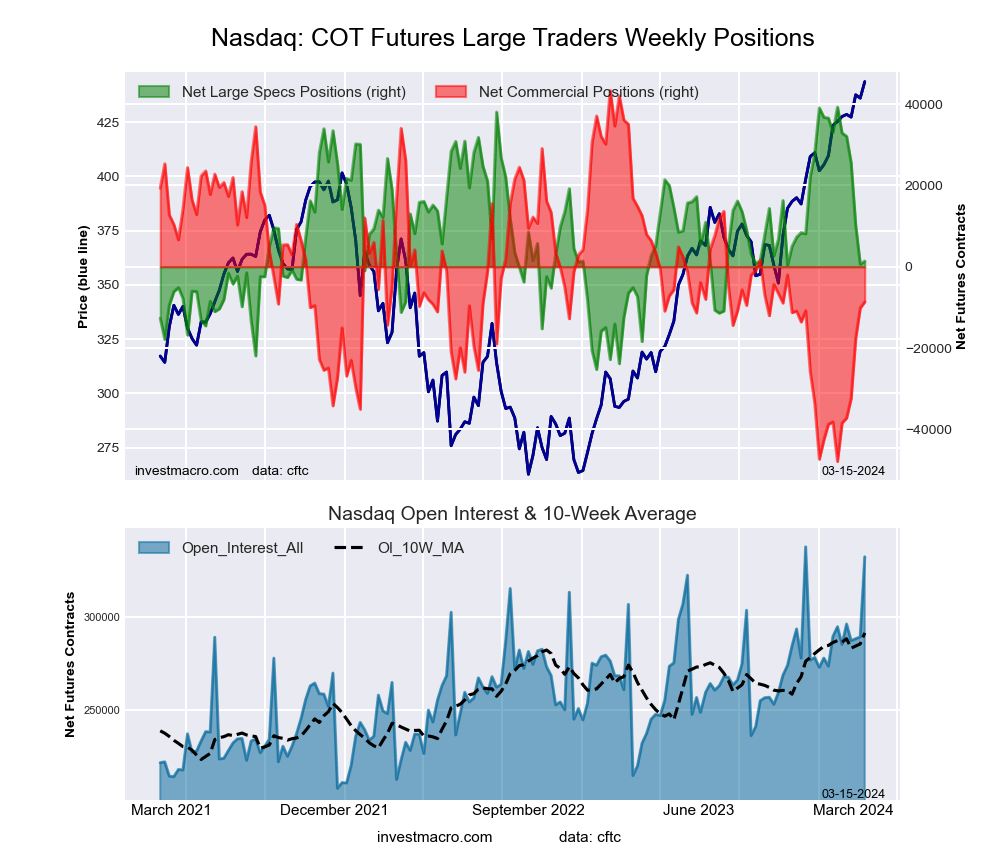
Nasdaq Mini Futures COT ChartThe Nasdaq Mini large speculator standing this week was a net position of 36,776 contracts in the data reported through Tuesday. This was a weekly reduction of -2,291 contracts from the previous week which had a total of 39,067 net contracts.

This week’s current strength score (the trader positioning range over the past three years, measured from 0 to 100) shows the speculators are currently Bullish-Extreme with a score of 95.6 percent. The commercials are Bearish-Extreme with a score of 5.2 percent and the small traders (not shown in chart) are Bullish-Extreme with a score of 93.4 percent.

Price Trend-Following Model: Strong Uptrend

Our weekly trend-following model classifies the current market price position as: Strong Uptrend. The current action for the model is considered to be: Hold – Maintain Long Position.

Nasdaq Mini Futures StatisticsSPECULATORSCOMMERCIALSSMALL TRADERS
– Percent of Open Interest Longs:29.954.215.1
– Percent of Open Interest Shorts:16.769.613.0
– Net Position:36,776-42,6015,825
– Gross Longs:83,021150,59142,040
– Gross Shorts:46,245193,19236,215
– Long to Short Ratio:1.8 to 10.8 to 11.2 to 1
NET POSITION TREND:
– Strength Index Score (3 Year Range Pct):95.65.293.4
– Strength Index Reading (3 Year Range):Bullish-ExtremeBearish-ExtremeBullish-Extreme
NET POSITION MOVEMENT INDEX:
– 6-Week Change in Strength Index:45.4-35.06.0


Russell 2000 Mini Futures:

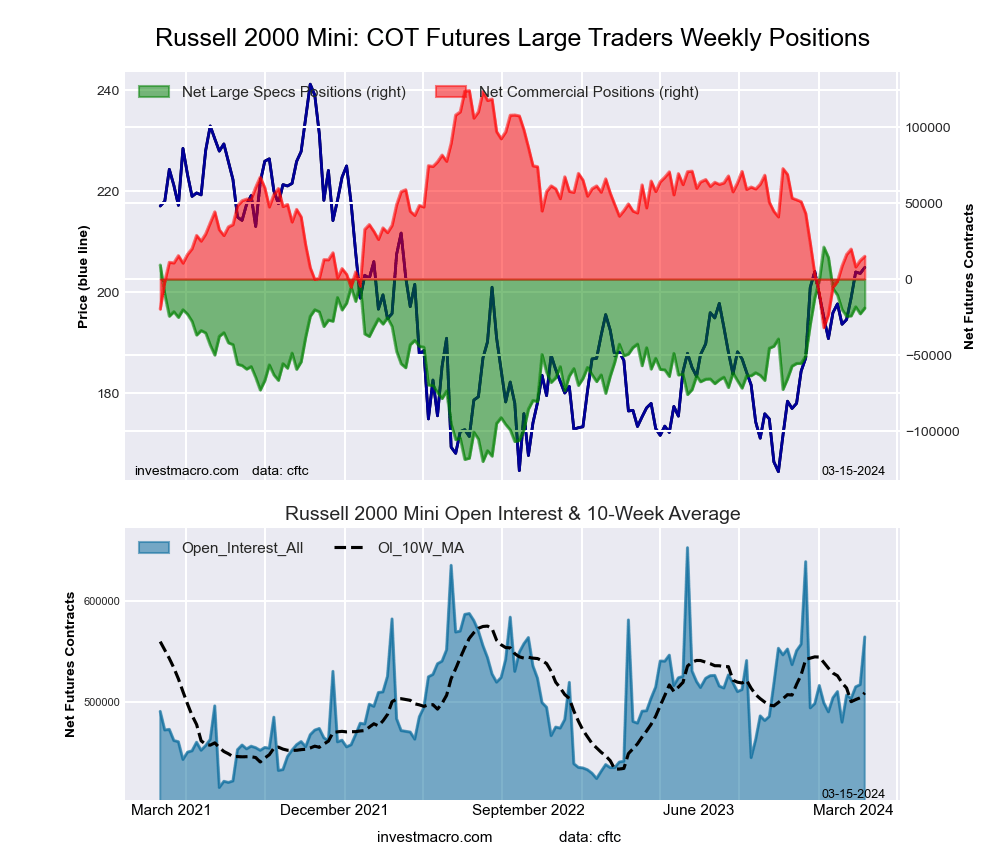
Russell 2000 Mini Futures COT ChartThe Russell 2000 Mini large speculator standing this week was a net position of 21,012 contracts in the data reported through Tuesday. This was a weekly gain of 21,933 contracts from the previous week which had a total of -921 net contracts.

This week’s current strength score (the trader positioning range over the past three years, measured from 0 to 100) shows the speculators are currently Bullish-Extreme with a score of 100.0 percent. The commercials are Bearish-Extreme with a score of 0.0 percent and the small traders (not shown in chart) are Bullish with a score of 65.9 percent.

Price Trend-Following Model: Strong Uptrend

Our weekly trend-following model classifies the current market price position as: Strong Uptrend. The current action for the model is considered to be: Hold – Maintain Long Position.

Russell 2000 Mini Futures StatisticsSPECULATORSCOMMERCIALSSMALL TRADERS
– Percent of Open Interest Longs:19.074.36.0
– Percent of Open Interest Shorts:14.880.73.8
– Net Position:21,012-31,97610,964
– Gross Longs:94,710370,64230,111
– Gross Shorts:73,698402,61819,147
– Long to Short Ratio:1.3 to 10.9 to 11.6 to 1
NET POSITION TREND:
– Strength Index Score (3 Year Range Pct):100.00.065.9
– Strength Index Reading (3 Year Range):Bullish-ExtremeBearish-ExtremeBullish
NET POSITION MOVEMENT INDEX:
– 6-Week Change in Strength Index:54.3-53.925.7


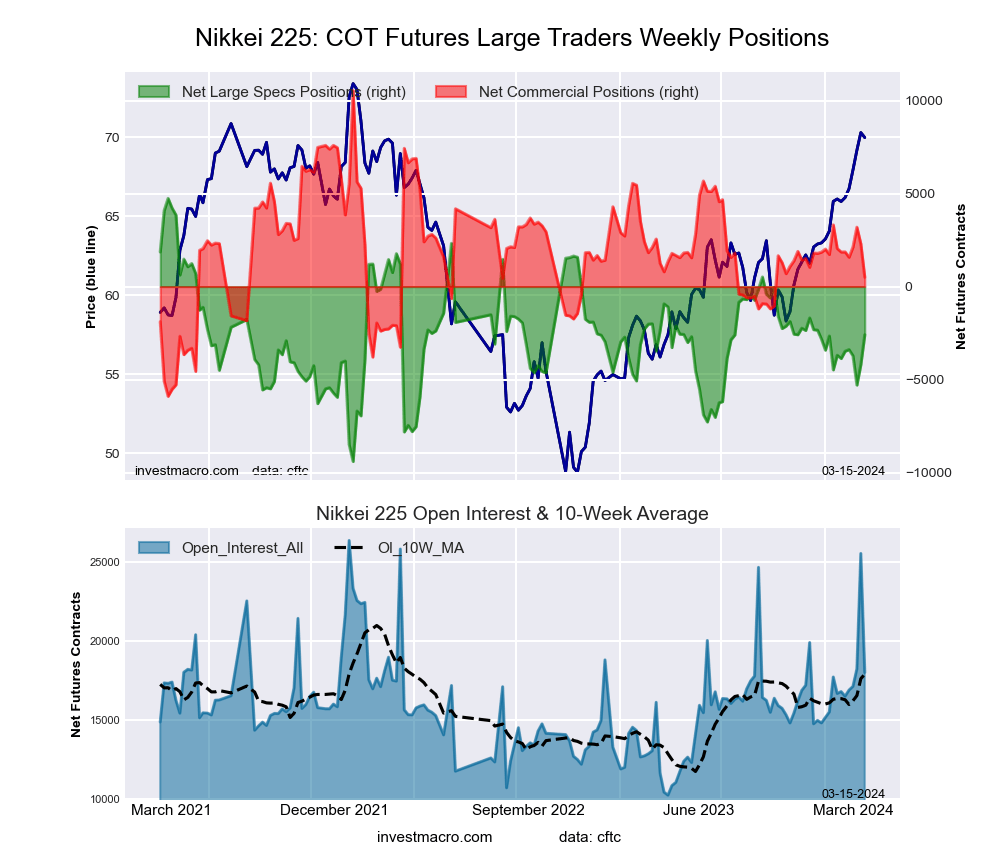
Nikkei Stock Average (USD) Futures:

Nikkei Stock Average (USD) Futures COT ChartThe Nikkei Stock Average (USD) large speculator standing this week was a net position of -2,658 contracts in the data reported through Tuesday. This was a weekly lift of 762 contracts from the previous week which had a total of -3,420 net contracts.

This week’s current strength score (the trader positioning range over the past three years, measured from 0 to 100) shows the speculators are currently Bearish with a score of 47.7 percent. The commercials are Bearish with a score of 46.4 percent and the small traders (not shown in chart) are Bullish with a score of 52.2 percent.

Price Trend-Following Model: Strong Uptrend

Our weekly trend-following model classifies the current market price position as: Strong Uptrend. The current action for the model is considered to be: Hold – Maintain Long Position.

Nikkei Stock Average Futures StatisticsSPECULATORSCOMMERCIALSSMALL TRADERS
– Percent of Open Interest Longs:11.764.423.9
– Percent of Open Interest Shorts:28.853.317.9
– Net Position:-2,6581,724934
– Gross Longs:1,8119,9913,702
– Gross Shorts:4,4698,2672,768
– Long to Short Ratio:0.4 to 11.2 to 11.3 to 1
NET POSITION TREND:
– Strength Index Score (3 Year Range Pct):47.746.452.2
– Strength Index Reading (3 Year Range):BearishBearishBullish
NET POSITION MOVEMENT INDEX:
– 6-Week Change in Strength Index:-2.11.31.3


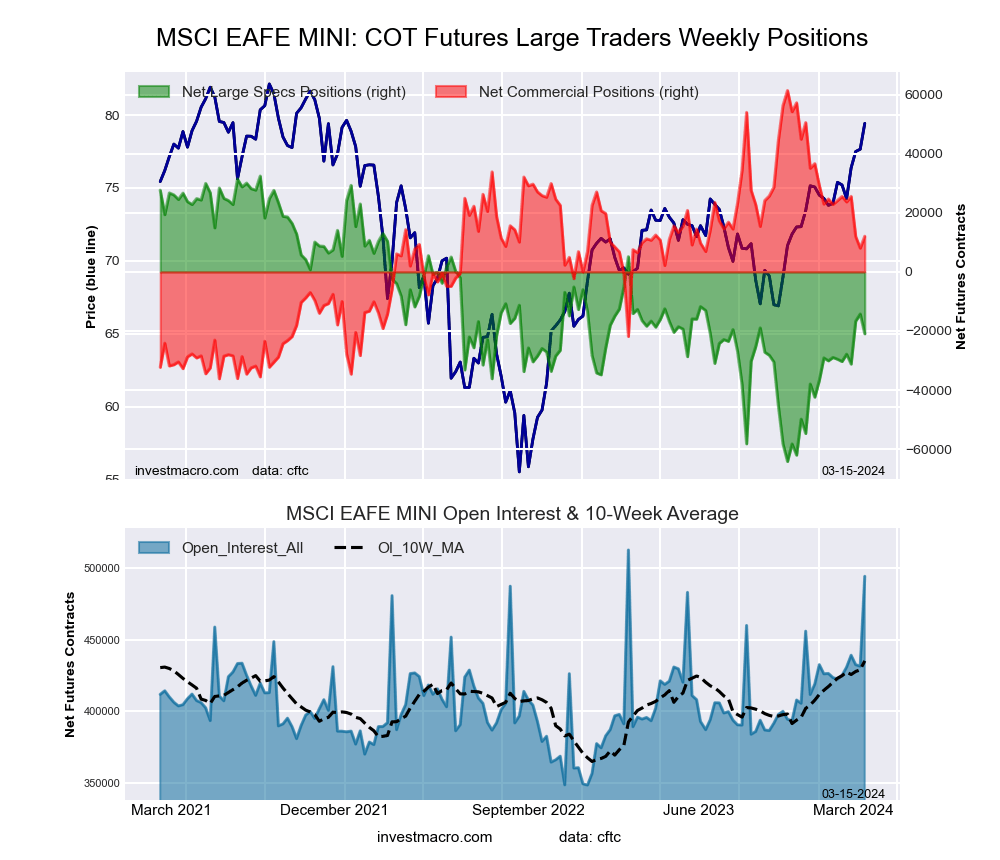
MSCI EAFE Mini Futures:

MSCI EAFE Mini Futures COT ChartThe MSCI EAFE Mini large speculator standing this week was a net position of -29,126 contracts in the data reported through Tuesday. This was a weekly gain of 7,603 contracts from the previous week which had a total of -36,729 net contracts.

This week’s current strength score (the trader positioning range over the past three years, measured from 0 to 100) shows the speculators are currently Bearish with a score of 36.3 percent. The commercials are Bullish with a score of 60.6 percent and the small traders (not shown in chart) are Bearish with a score of 47.7 percent.

Price Trend-Following Model: Strong Uptrend

Our weekly trend-following model classifies the current market price position as: Strong Uptrend. The current action for the model is considered to be: Hold – Maintain Long Position.

MSCI EAFE Mini Futures StatisticsSPECULATORSCOMMERCIALSSMALL TRADERS
– Percent of Open Interest Longs:7.189.03.6
– Percent of Open Interest Shorts:13.983.62.2
– Net Position:-29,12622,9776,149
– Gross Longs:30,146379,37315,395
– Gross Shorts:59,272356,3969,246
– Long to Short Ratio:0.5 to 11.1 to 11.7 to 1
NET POSITION TREND:
– Strength Index Score (3 Year Range Pct):36.360.647.7
– Strength Index Reading (3 Year Range):BearishBullishBearish
NET POSITION MOVEMENT INDEX:
– 6-Week Change in Strength Index:34.1-35.16.8


Article By InvestMacroReceive our weekly COT Newsletter

*COT Report: The COT data, released weekly to the public each Friday, is updated through the most recent Tuesday (data is 3 days old) and shows a quick view of how large speculators or non-commercials (for-profit traders) were positioned in the futures markets.

The CFTC categorizes trader positions according to commercial hedgers (traders who use futures contracts for hedging as part of the business), non-commercials (large traders who speculate to realize trading profits) and nonreportable traders (usually small traders/speculators) as well as their open interest (contracts open in the market at time of reporting). See CFTC criteria here.

COT Soft Commodities Charts: Speculator Bets led lower by Soybean Meal & Corn

By InvestMacro

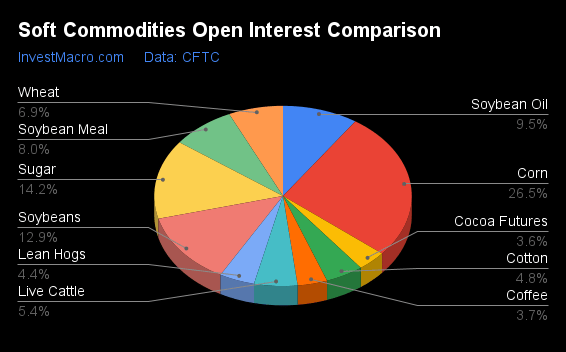
Here are the latest charts and statistics for the Commitment of Traders (COT) reports data published by the Commodities Futures Trading Commission (CFTC).

The latest COT data is updated through Tuesday January 9th and shows a quick view of how large traders (for-profit speculators and commercial entities) were positioned in the futures markets.

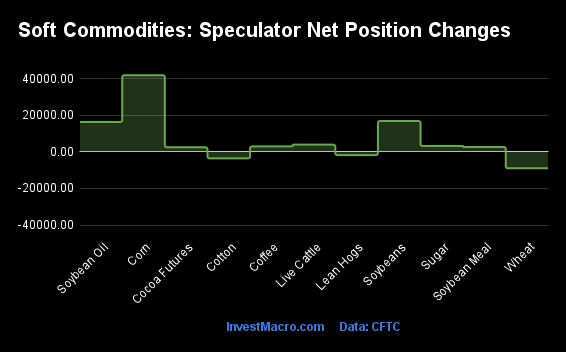
Weekly Speculator Changes led lower by Soybean Meal & Corn

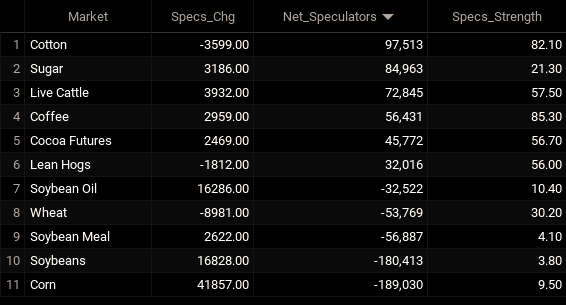
The COT soft commodities markets speculator bets were lower this week as five out of the eleven softs markets we cover had higher positioning while the other six markets had lower speculator contracts.

Leading the gains for the softs markets was Lean Hogs (3,950 contracts) with Soybean Oil (3,279 contracts), Coffee (2,160 contracts), Cotton (261 contracts) and Wheat (227 contracts) also showing positive weeks.

The markets with the declines in speculator bets this week were Soybean Meal (-29,428 contracts), Corn (-26,305 contracts), Soybeans (-16,121 contracts) Sugar (-5,867 contracts), Live Cattle (-7,286 contracts) and Cocoa (-73 contracts) also registering lower bets on the week.


Soft Commodities – Speculators Leaderboard

Legend: Weekly Speculators Change | Speculators Current Net Position | Speculators Strength Score compared to last 3-Years (0-100 range)


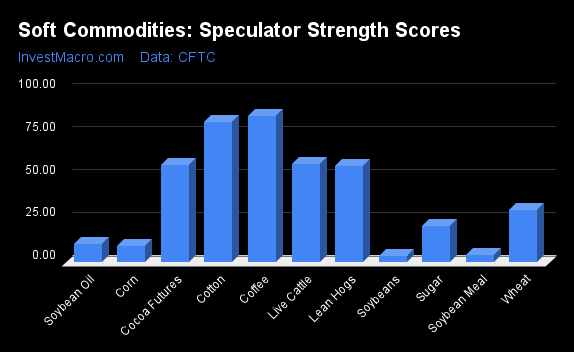
Strength Scores led by Cocoa & Coffee

COT Strength Scores (a normalized measure of Speculator positions over a 3-Year range, from 0 to 100 where above 80 is Extreme-Bullish and below 20 is Extreme-Bearish) showed that Cocoa (80 percent) and Coffee (74 percent) lead the softs markets this week.

On the downside there are a number of markets at extreme lows. Soybean Meal (0 percent), Corn (0 percent), Soybeans (0 percent), Soybean Oil (3 percent), Live Cattle (4 percent), Lean Hogs (10 percent), Sugar (16 percent) and Cotton (13 percent) all come in at the lowest strength levels currently and are in Extreme-Bearish territory (below 20 percent).

Strength Statistics:
Corn (0.0 percent) vs Corn previous week (3.6 percent)
Sugar (15.5 percent) vs Sugar previous week (17.7 percent)
Coffee (74.2 percent) vs Coffee previous week (72.0 percent)
Soybeans (0.0 percent) vs Soybeans previous week (5.6 percent)
Soybean Oil (2.8 percent) vs Soybean Oil previous week (0.8 percent)
Soybean Meal (0.1 percent) vs Soybean Meal previous week (16.4 percent)
Live Cattle (4.1 percent) vs Live Cattle previous week (12.0 percent)
Lean Hogs (9.5 percent) vs Lean Hogs previous week (6.3 percent)
Cotton (13.2 percent) vs Cotton previous week (13.0 percent)
Cocoa (80.2 percent) vs Cocoa previous week (80.3 percent)
Wheat (44.3 percent) vs Wheat previous week (44.2 percent)


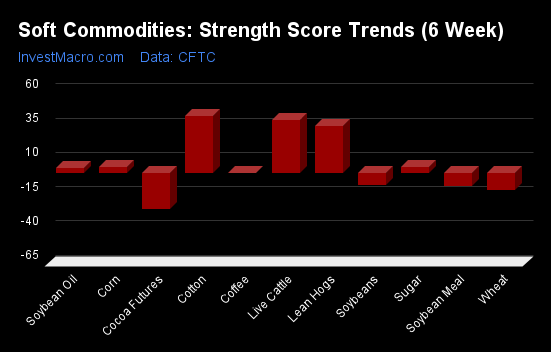
Wheat & Coffee top the 6-Week Strength Trends

COT Strength Score Trends (or move index, calculates the 6-week changes in strength scores) showed that Wheat (44 percent) and Coffee (15 percent) lead the past six weeks trends for soft commodities. Lean Hogs (1 percent) is the next highest positive mover in the latest trends data.

Soybean Meal (-74 percent) leads the downside trend scores currently with Sugar (-49 percent), Soybeans (-31 percent) and Soybean Oil (-27 percent) following next with lower trend scores.

Strength Trend Statistics:
Corn (-2.2 percent) vs Corn previous week (-3.2 percent)
Sugar (-49.3 percent) vs Sugar previous week (-53.3 percent)
Coffee (15.4 percent) vs Coffee previous week (13.4 percent)
Soybeans (-30.7 percent) vs Soybeans previous week (-33.2 percent)
Soybean Oil (-26.5 percent) vs Soybean Oil previous week (-33.0 percent)
Soybean Meal (-74.1 percent) vs Soybean Meal previous week (-62.2 percent)
Live Cattle (-17.8 percent) vs Live Cattle previous week (-8.6 percent)
Lean Hogs (0.6 percent) vs Lean Hogs previous week (-9.5 percent)
Cotton (-0.2 percent) vs Cotton previous week (-0.2 percent)
Cocoa (-2.8 percent) vs Cocoa previous week (-4.0 percent)
Wheat (44.3 percent) vs Wheat previous week (30.5 percent)


Individual Soft Commodities Markets:

CORN Futures:

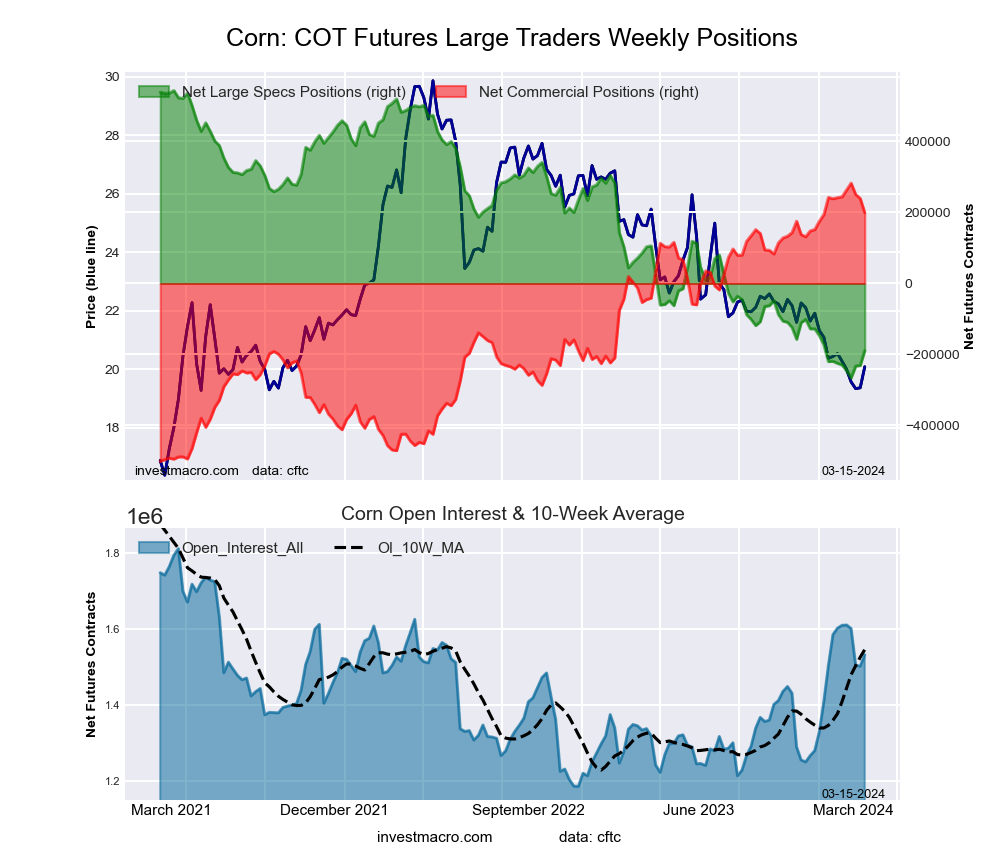
CORN Futures COT ChartThe CORN large speculator standing this week resulted in a net position of -173,033 contracts in the data reported through Tuesday. This was a weekly decline of -26,305 contracts from the previous week which had a total of -146,728 net contracts.

This week’s current strength score (the trader positioning range over the past three years, measured from 0 to 100) shows the speculators are currently Bearish-Extreme with a score of 0.0 percent. The commercials are Bullish-Extreme with a score of 100.0 percent and the small traders (not shown in chart) are Bullish-Extreme with a score of 95.3 percent.

Price Trend-Following Model: Strong Downtrend

Our weekly trend-following model classifies the current market price position as: Strong Downtrend. The current action for the model is considered to be: Hold – Maintain Short Position.

CORN Futures StatisticsSPECULATORSCOMMERCIALSSMALL TRADERS
– Percent of Open Interest Longs:18.746.410.4
– Percent of Open Interest Shorts:30.932.711.9
– Net Position:-173,033194,021-20,988
– Gross Longs:263,111654,962146,167
– Gross Shorts:436,144460,941167,155
– Long to Short Ratio:0.6 to 11.4 to 10.9 to 1
NET POSITION TREND:
– Strength Index Score (3 Year Range Pct):0.0100.095.3
– Strength Index Reading (3 Year Range):Bearish-ExtremeBullish-ExtremeBullish-Extreme
NET POSITION MOVEMENT INDEX:
– 6-Week Change in Strength Index:-2.22.7-4.7


SUGAR Futures:

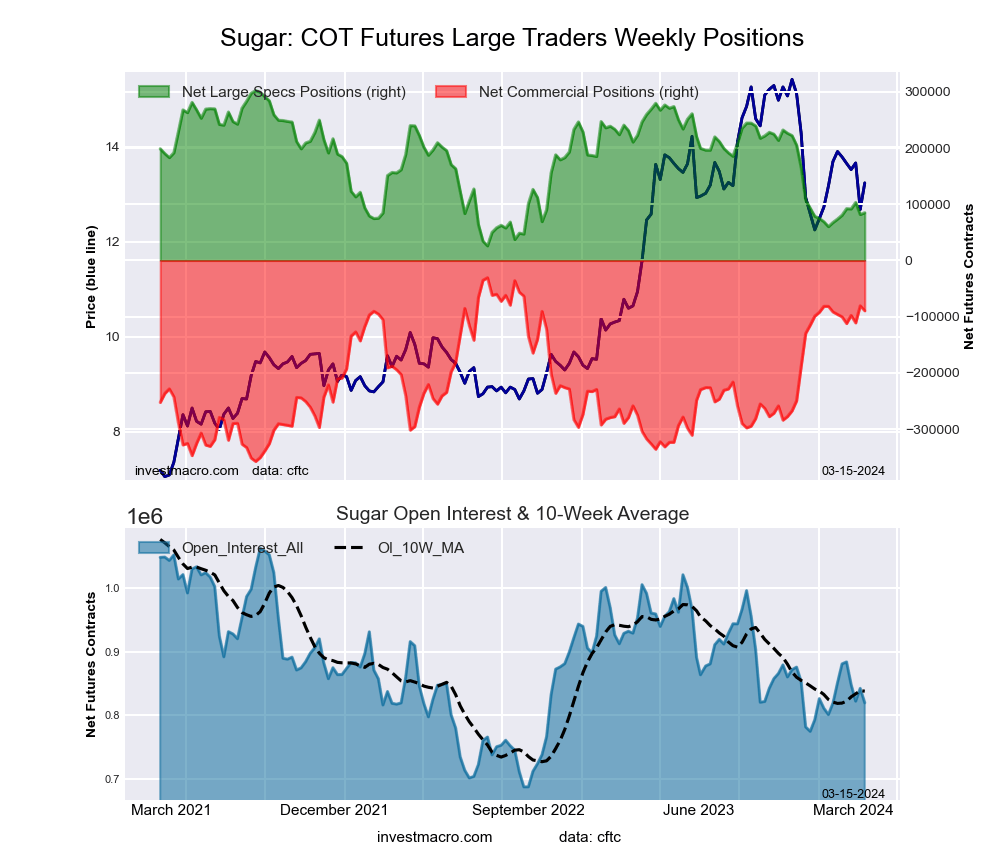
SUGAR Futures COT ChartThe SUGAR large speculator standing this week resulted in a net position of 68,958 contracts in the data reported through Tuesday. This was a weekly fall of -5,867 contracts from the previous week which had a total of 74,825 net contracts.

This week’s current strength score (the trader positioning range over the past three years, measured from 0 to 100) shows the speculators are currently Bearish-Extreme with a score of 15.5 percent. The commercials are Bullish-Extreme with a score of 84.4 percent and the small traders (not shown in chart) are Bearish-Extreme with a score of 18.6 percent.

Price Trend-Following Model: Strong Downtrend

Our weekly trend-following model classifies the current market price position as: Strong Downtrend. The current action for the model is considered to be: Hold – Maintain Short Position.

SUGAR Futures StatisticsSPECULATORSCOMMERCIALSSMALL TRADERS
– Percent of Open Interest Longs:21.457.19.1
– Percent of Open Interest Shorts:12.967.17.5
– Net Position:68,958-81,59312,635
– Gross Longs:173,488463,07173,874
– Gross Shorts:104,530544,66461,239
– Long to Short Ratio:1.7 to 10.9 to 11.2 to 1
NET POSITION TREND:
– Strength Index Score (3 Year Range Pct):15.584.418.6
– Strength Index Reading (3 Year Range):Bearish-ExtremeBullish-ExtremeBearish-Extreme
NET POSITION MOVEMENT INDEX:
– 6-Week Change in Strength Index:-49.351.4-42.0


COFFEE Futures:

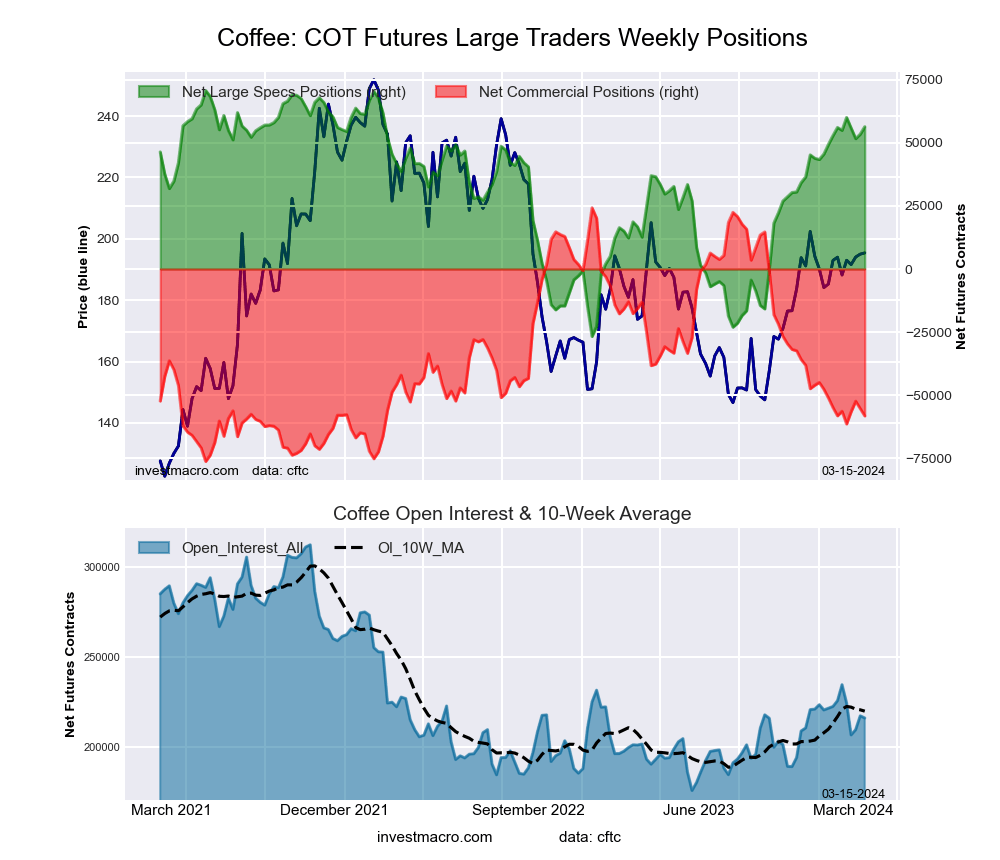
COFFEE Futures COT ChartThe COFFEE large speculator standing this week resulted in a net position of 45,588 contracts in the data reported through Tuesday. This was a weekly increase of 2,160 contracts from the previous week which had a total of 43,428 net contracts.

This week’s current strength score (the trader positioning range over the past three years, measured from 0 to 100) shows the speculators are currently Bullish with a score of 74.2 percent. The commercials are Bearish with a score of 28.4 percent and the small traders (not shown in chart) are Bearish with a score of 41.0 percent.

Price Trend-Following Model: Uptrend

Our weekly trend-following model classifies the current market price position as: Uptrend. The current action for the model is considered to be: Hold – Maintain Long Position.

COFFEE Futures StatisticsSPECULATORSCOMMERCIALSSMALL TRADERS
– Percent of Open Interest Longs:33.236.44.6
– Percent of Open Interest Shorts:12.558.13.6
– Net Position:45,588-47,7082,120
– Gross Longs:73,16380,27610,075
– Gross Shorts:27,575127,9847,955
– Long to Short Ratio:2.7 to 10.6 to 11.3 to 1
NET POSITION TREND:
– Strength Index Score (3 Year Range Pct):74.228.441.0
– Strength Index Reading (3 Year Range):BullishBearishBearish
NET POSITION MOVEMENT INDEX:
– 6-Week Change in Strength Index:15.4-15.23.5


SOYBEANS Futures:

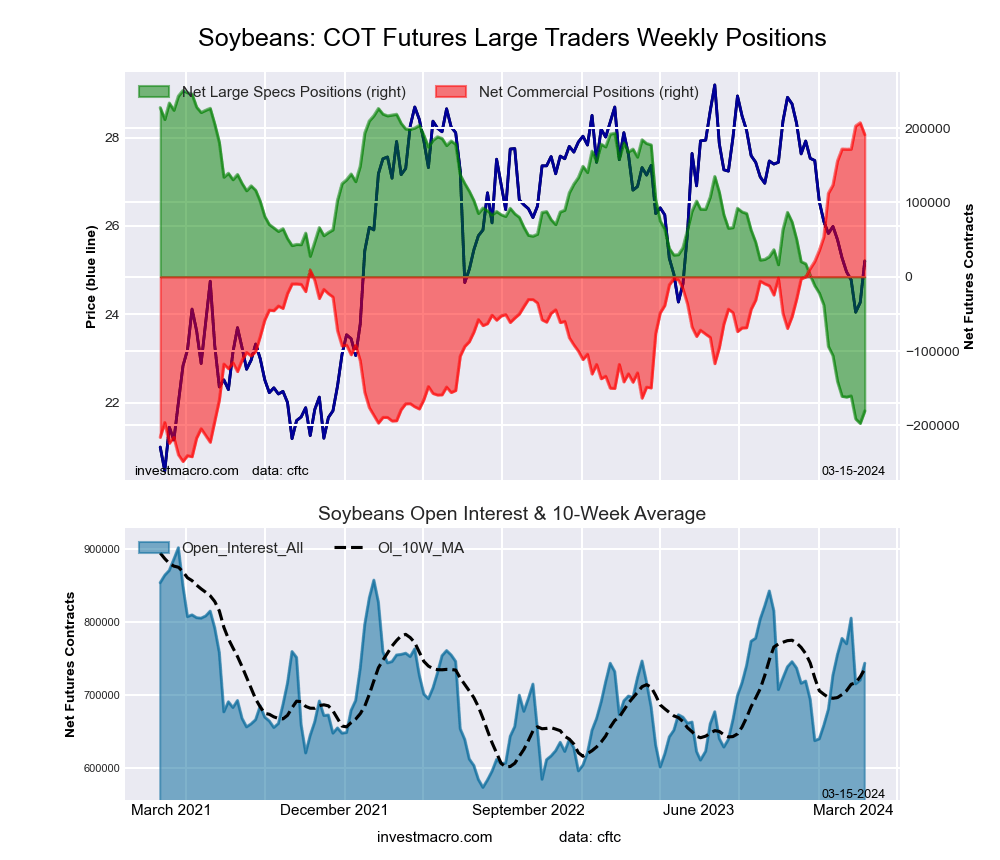
SOYBEANS Futures COT ChartThe SOYBEANS large speculator standing this week resulted in a net position of -38,049 contracts in the data reported through Tuesday. This was a weekly reduction of -16,121 contracts from the previous week which had a total of -21,928 net contracts.

This week’s current strength score (the trader positioning range over the past three years, measured from 0 to 100) shows the speculators are currently Bearish-Extreme with a score of 0.0 percent. The commercials are Bullish-Extreme with a score of 100.0 percent and the small traders (not shown in chart) are Bullish with a score of 66.6 percent.

Price Trend-Following Model: Strong Downtrend

Our weekly trend-following model classifies the current market price position as: Strong Downtrend. The current action for the model is considered to be: Hold – Maintain Short Position.

SOYBEANS Futures StatisticsSPECULATORSCOMMERCIALSSMALL TRADERS
– Percent of Open Interest Longs:15.157.57.6
– Percent of Open Interest Shorts:20.949.310.0
– Net Position:-38,04953,620-15,571
– Gross Longs:99,237378,40950,048
– Gross Shorts:137,286324,78965,619
– Long to Short Ratio:0.7 to 11.2 to 10.8 to 1
NET POSITION TREND:
– Strength Index Score (3 Year Range Pct):0.0100.066.6
– Strength Index Reading (3 Year Range):Bearish-ExtremeBullish-ExtremeBullish
NET POSITION MOVEMENT INDEX:
– 6-Week Change in Strength Index:-30.727.811.4


SOYBEAN OIL Futures:

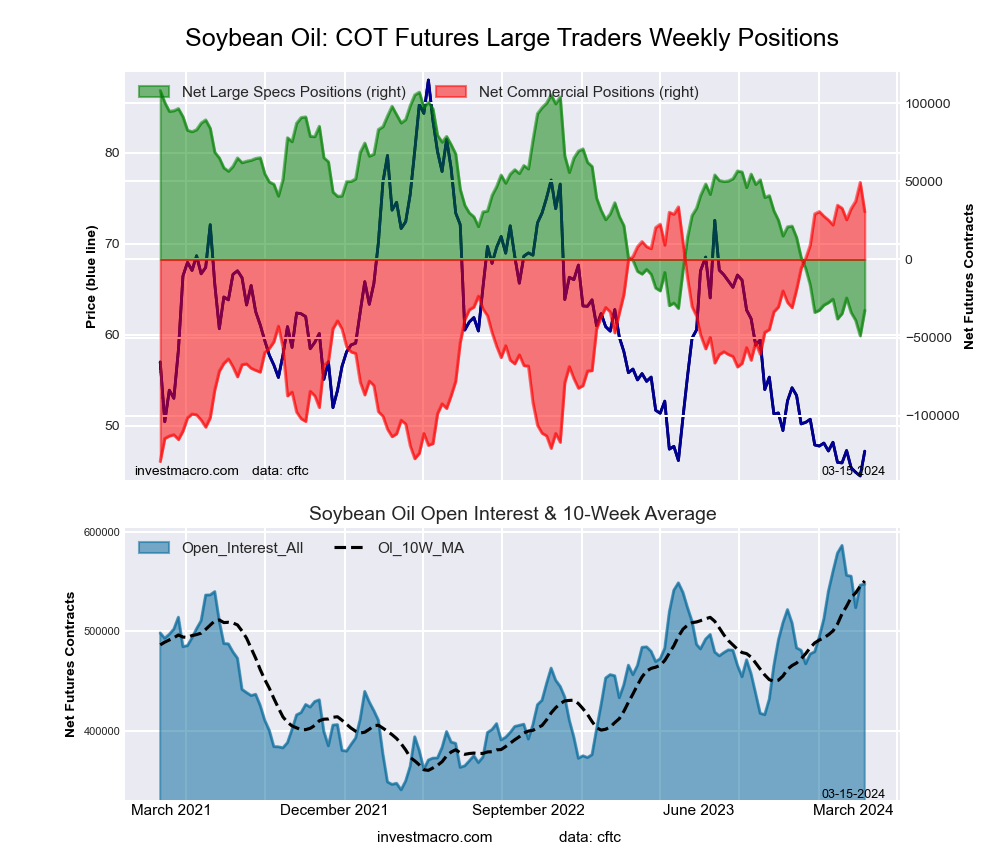
SOYBEAN OIL Futures COT ChartThe SOYBEAN OIL large speculator standing this week resulted in a net position of -29,208 contracts in the data reported through Tuesday. This was a weekly advance of 3,279 contracts from the previous week which had a total of -32,487 net contracts.

This week’s current strength score (the trader positioning range over the past three years, measured from 0 to 100) shows the speculators are currently Bearish-Extreme with a score of 2.8 percent. The commercials are Bullish-Extreme with a score of 96.7 percent and the small traders (not shown in chart) are Bearish-Extreme with a score of 19.4 percent.

Price Trend-Following Model: Downtrend

Our weekly trend-following model classifies the current market price position as: Downtrend. The current action for the model is considered to be: Hold – Maintain Short Position.

SOYBEAN OIL Futures StatisticsSPECULATORSCOMMERCIALSSMALL TRADERS
– Percent of Open Interest Longs:18.650.55.8
– Percent of Open Interest Shorts:24.345.15.5
– Net Position:-29,20827,6541,554
– Gross Longs:95,344258,64629,768
– Gross Shorts:124,552230,99228,214
– Long to Short Ratio:0.8 to 11.1 to 11.1 to 1
NET POSITION TREND:
– Strength Index Score (3 Year Range Pct):2.896.719.4
– Strength Index Reading (3 Year Range):Bearish-ExtremeBullish-ExtremeBearish-Extreme
NET POSITION MOVEMENT INDEX:
– 6-Week Change in Strength Index:-26.525.6-13.8


SOYBEAN MEAL Futures:

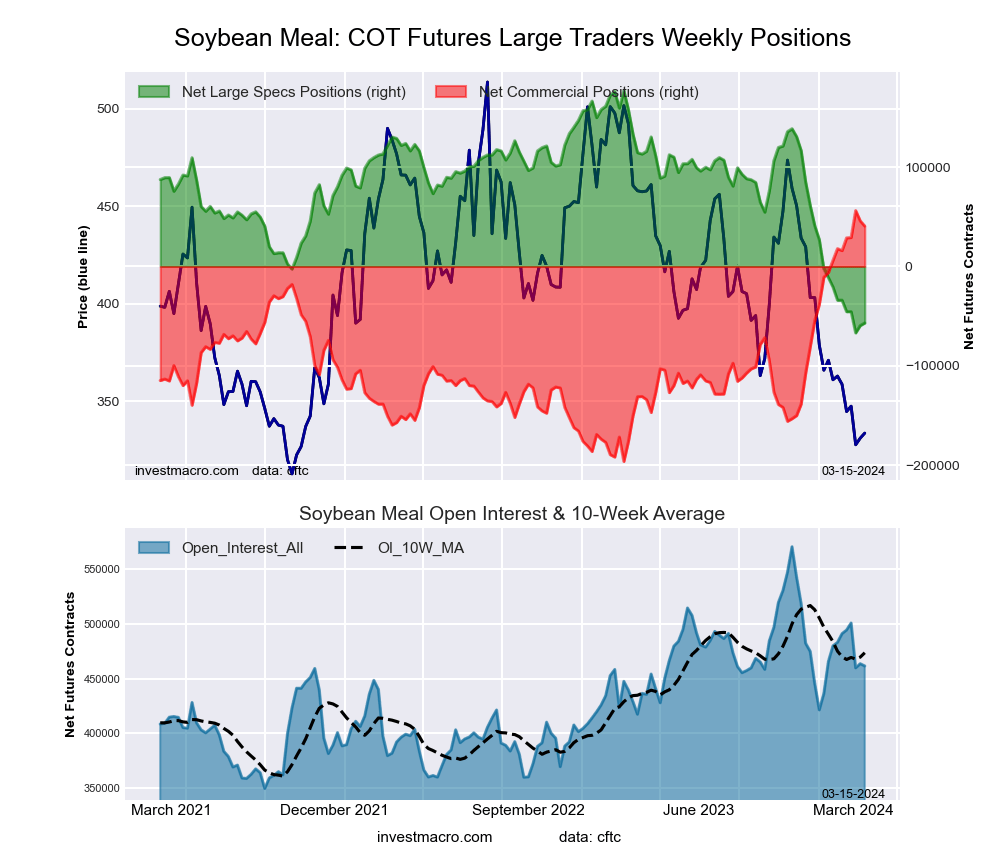
SOYBEAN MEAL Futures COT ChartThe SOYBEAN MEAL large speculator standing this week resulted in a net position of -2,490 contracts in the data reported through Tuesday. This was a weekly reduction of -29,428 contracts from the previous week which had a total of 26,938 net contracts.

This week’s current strength score (the trader positioning range over the past three years, measured from 0 to 100) shows the speculators are currently Bearish-Extreme with a score of 0.1 percent. The commercials are Bullish-Extreme with a score of 100.0 percent and the small traders (not shown in chart) are Bearish-Extreme with a score of 15.4 percent.

Price Trend-Following Model: Strong Downtrend

Our weekly trend-following model classifies the current market price position as: Strong Downtrend. The current action for the model is considered to be: New Sell – Short Position.

SOYBEAN MEAL Futures StatisticsSPECULATORSCOMMERCIALSSMALL TRADERS
– Percent of Open Interest Longs:20.848.210.3
– Percent of Open Interest Shorts:21.450.77.2
– Net Position:-2,490-10,83413,324
– Gross Longs:90,725210,31144,758
– Gross Shorts:93,215221,14531,434
– Long to Short Ratio:1.0 to 11.0 to 11.4 to 1
NET POSITION TREND:
– Strength Index Score (3 Year Range Pct):0.1100.015.4
– Strength Index Reading (3 Year Range):Bearish-ExtremeBullish-ExtremeBearish-Extreme
NET POSITION MOVEMENT INDEX:
– 6-Week Change in Strength Index:-74.175.1-27.1


LIVE CATTLE Futures:

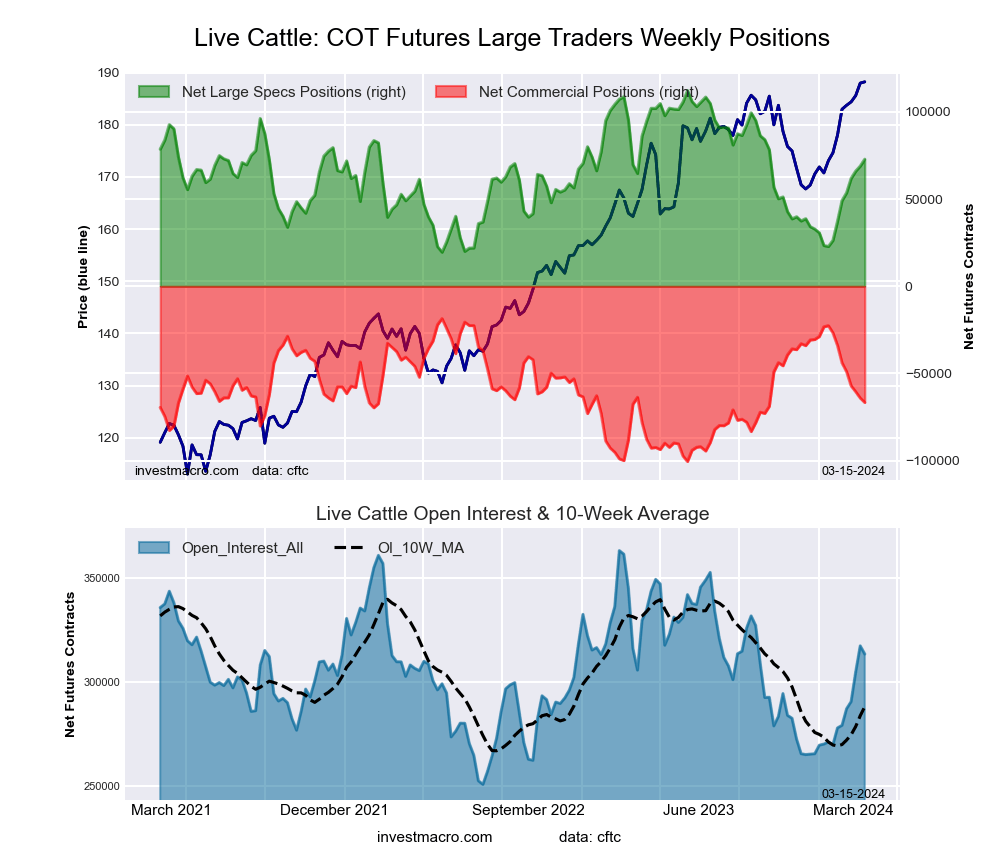
LIVE CATTLE Futures COT ChartThe LIVE CATTLE large speculator standing this week resulted in a net position of 23,367 contracts in the data reported through Tuesday. This was a weekly decline of -7,286 contracts from the previous week which had a total of 30,653 net contracts.

This week’s current strength score (the trader positioning range over the past three years, measured from 0 to 100) shows the speculators are currently Bearish-Extreme with a score of 4.1 percent. The commercials are Bullish-Extreme with a score of 94.3 percent and the small traders (not shown in chart) are Bullish-Extreme with a score of 89.2 percent.

Price Trend-Following Model: Downtrend

Our weekly trend-following model classifies the current market price position as: Downtrend. The current action for the model is considered to be: Hold – Maintain Short Position.

LIVE CATTLE Futures StatisticsSPECULATORSCOMMERCIALSSMALL TRADERS
– Percent of Open Interest Longs:26.240.712.3
– Percent of Open Interest Shorts:17.549.312.3
– Net Position:23,367-23,263-104
– Gross Longs:70,653109,80333,163
– Gross Shorts:47,286133,06633,267
– Long to Short Ratio:1.5 to 10.8 to 11.0 to 1
NET POSITION TREND:
– Strength Index Score (3 Year Range Pct):4.194.389.2
– Strength Index Reading (3 Year Range):Bearish-ExtremeBullish-ExtremeBullish-Extreme
NET POSITION MOVEMENT INDEX:
– 6-Week Change in Strength Index:-17.815.918.3


LEAN HOGS Futures:

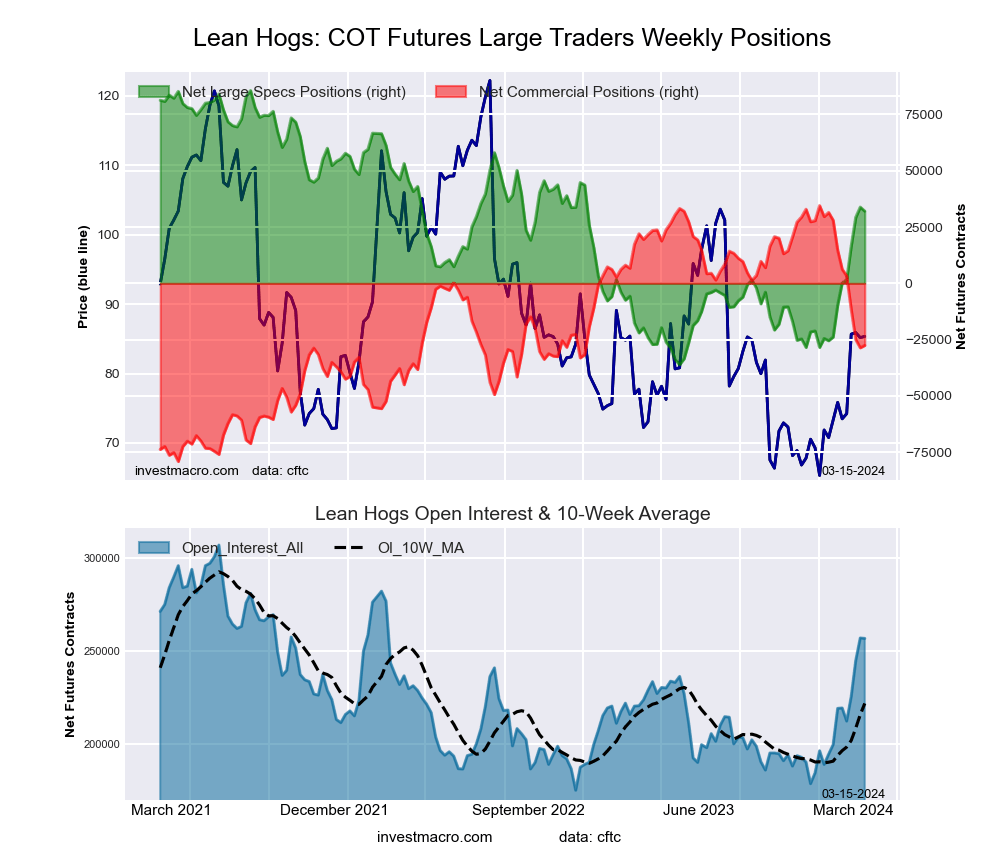
LEAN HOGS Futures COT ChartThe LEAN HOGS large speculator standing this week resulted in a net position of -24,496 contracts in the data reported through Tuesday. This was a weekly lift of 3,950 contracts from the previous week which had a total of -28,446 net contracts.

This week’s current strength score (the trader positioning range over the past three years, measured from 0 to 100) shows the speculators are currently Bearish-Extreme with a score of 9.5 percent. The commercials are Bullish-Extreme with a score of 95.7 percent and the small traders (not shown in chart) are Bullish with a score of 60.3 percent.

Price Trend-Following Model: Downtrend

Our weekly trend-following model classifies the current market price position as: Downtrend. The current action for the model is considered to be: Hold – Maintain Short Position.

LEAN HOGS Futures StatisticsSPECULATORSCOMMERCIALSSMALL TRADERS
– Percent of Open Interest Longs:29.638.28.7
– Percent of Open Interest Shorts:42.622.511.4
– Net Position:-24,49629,637-5,141
– Gross Longs:55,97972,17716,359
– Gross Shorts:80,47542,54021,500
– Long to Short Ratio:0.7 to 11.7 to 10.8 to 1
NET POSITION TREND:
– Strength Index Score (3 Year Range Pct):9.595.760.3
– Strength Index Reading (3 Year Range):Bearish-ExtremeBullish-ExtremeBullish
NET POSITION MOVEMENT INDEX:
– 6-Week Change in Strength Index:0.62.2-14.5


COTTON Futures:

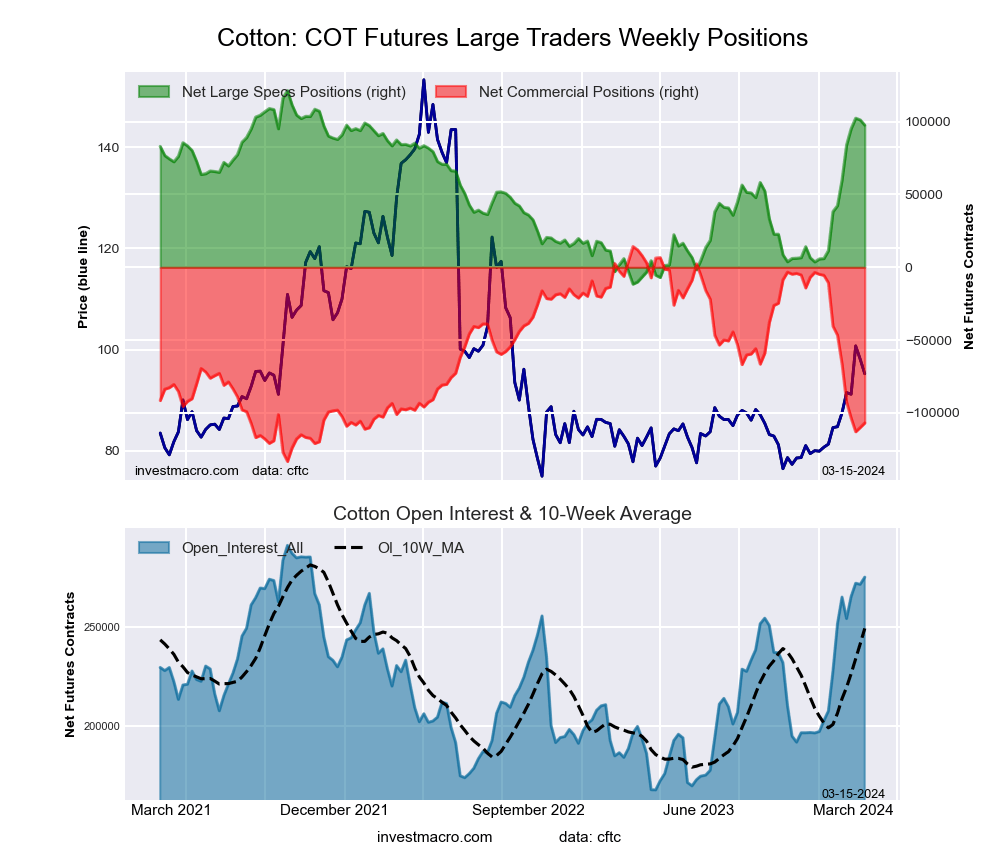
COTTON Futures COT ChartThe COTTON large speculator standing this week resulted in a net position of 5,950 contracts in the data reported through Tuesday. This was a weekly gain of 261 contracts from the previous week which had a total of 5,689 net contracts.

This week’s current strength score (the trader positioning range over the past three years, measured from 0 to 100) shows the speculators are currently Bearish-Extreme with a score of 13.2 percent. The commercials are Bullish-Extreme with a score of 86.6 percent and the small traders (not shown in chart) are Bearish-Extreme with a score of 13.4 percent.

Price Trend-Following Model: Downtrend

Our weekly trend-following model classifies the current market price position as: Downtrend. The current action for the model is considered to be: Hold – Maintain Short Position.

COTTON Futures StatisticsSPECULATORSCOMMERCIALSSMALL TRADERS
– Percent of Open Interest Longs:28.445.86.2
– Percent of Open Interest Shorts:25.548.56.4
– Net Position:5,950-5,513-437
– Gross Longs:57,61792,97912,617
– Gross Shorts:51,66798,49213,054
– Long to Short Ratio:1.1 to 10.9 to 11.0 to 1
NET POSITION TREND:
– Strength Index Score (3 Year Range Pct):13.286.613.4
– Strength Index Reading (3 Year Range):Bearish-ExtremeBullish-ExtremeBearish-Extreme
NET POSITION MOVEMENT INDEX:
– 6-Week Change in Strength Index:-0.2-0.99.2


COCOA Futures:

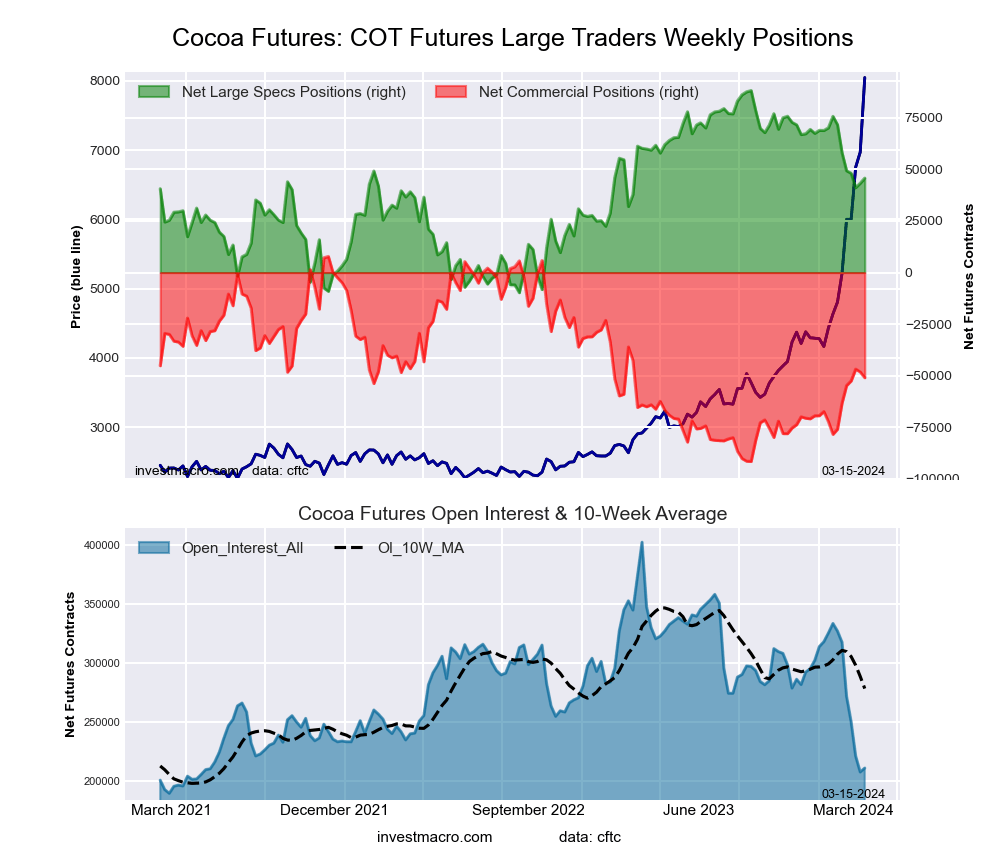
COCOA Futures COT ChartThe COCOA large speculator standing this week resulted in a net position of 68,881 contracts in the data reported through Tuesday. This was a weekly lowering of -73 contracts from the previous week which had a total of 68,954 net contracts.

This week’s current strength score (the trader positioning range over the past three years, measured from 0 to 100) shows the speculators are currently Bullish-Extreme with a score of 80.2 percent. The commercials are Bearish with a score of 24.3 percent and the small traders (not shown in chart) are Bearish-Extreme with a score of 0.0 percent.

Price Trend-Following Model: Uptrend

Our weekly trend-following model classifies the current market price position as: Uptrend. The current action for the model is considered to be: Hold – Maintain Long Position.

COCOA Futures StatisticsSPECULATORSCOMMERCIALSSMALL TRADERS
– Percent of Open Interest Longs:37.626.65.0
– Percent of Open Interest Shorts:15.947.85.4
– Net Position:68,881-67,423-1,458
– Gross Longs:119,53684,76115,778
– Gross Shorts:50,655152,18417,236
– Long to Short Ratio:2.4 to 10.6 to 10.9 to 1
NET POSITION TREND:
– Strength Index Score (3 Year Range Pct):80.224.30.0
– Strength Index Reading (3 Year Range):Bullish-ExtremeBearishBearish-Extreme
NET POSITION MOVEMENT INDEX:
– 6-Week Change in Strength Index:-2.86.4-30.5


WHEAT Futures:

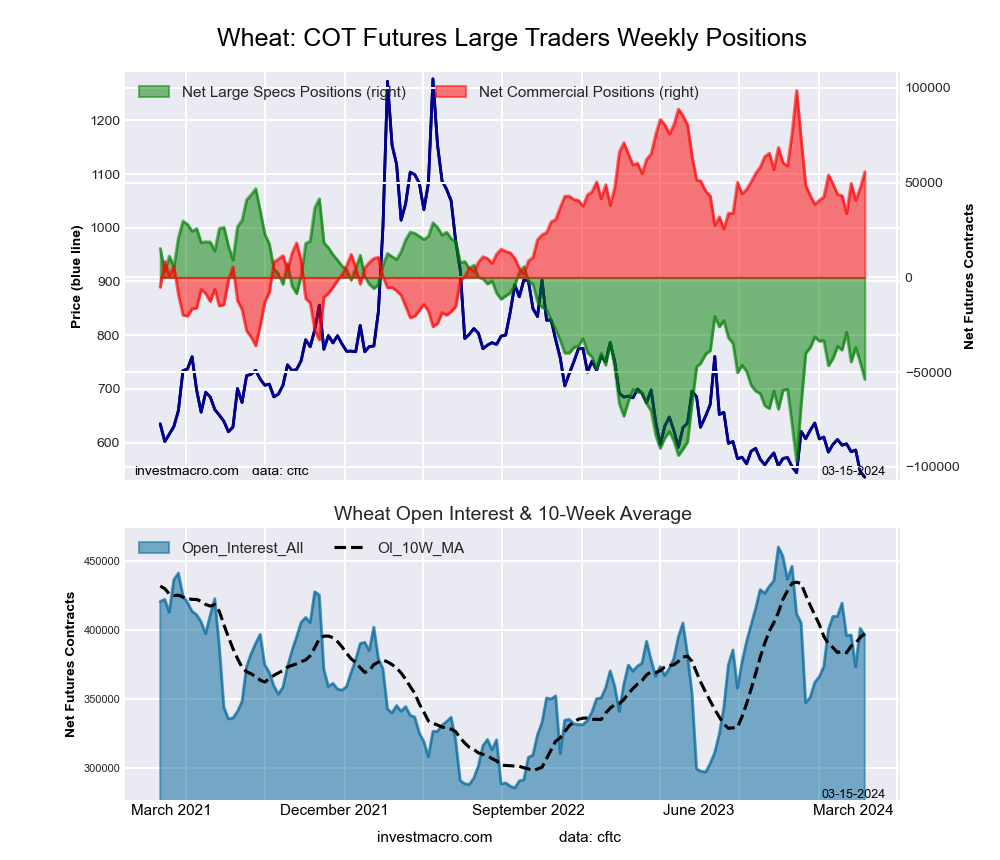
WHEAT Futures COT ChartThe WHEAT large speculator standing this week resulted in a net position of -33,390 contracts in the data reported through Tuesday. This was a weekly gain of 227 contracts from the previous week which had a total of -33,617 net contracts.

This week’s current strength score (the trader positioning range over the past three years, measured from 0 to 100) shows the speculators are currently Bearish with a score of 44.3 percent. The commercials are Bullish with a score of 58.3 percent and the small traders (not shown in chart) are Bearish with a score of 26.8 percent.

Price Trend-Following Model: Uptrend

Our weekly trend-following model classifies the current market price position as: Uptrend. The current action for the model is considered to be: Hold – Maintain Long Position.

WHEAT Futures StatisticsSPECULATORSCOMMERCIALSSMALL TRADERS
– Percent of Open Interest Longs:28.837.17.8
– Percent of Open Interest Shorts:37.825.710.2
– Net Position:-33,39042,432-9,042
– Gross Longs:107,680138,56029,116
– Gross Shorts:141,07096,12838,158
– Long to Short Ratio:0.8 to 11.4 to 10.8 to 1
NET POSITION TREND:
– Strength Index Score (3 Year Range Pct):44.358.326.8
– Strength Index Reading (3 Year Range):BearishBullishBearish
NET POSITION MOVEMENT INDEX:
– 6-Week Change in Strength Index:44.3-41.7-33.0


Article By InvestMacroReceive our weekly COT Newsletter

*COT Report: The COT data, released weekly to the public each Friday, is updated through the most recent Tuesday (data is 3 days old) and shows a quick view of how large speculators or non-commercials (for-profit traders) were positioned in the futures markets.

The CFTC categorizes trader positions according to commercial hedgers (traders who use futures contracts for hedging as part of the business), non-commercials (large traders who speculate to realize trading profits) and nonreportable traders (usually small traders/speculators) as well as their open interest (contracts open in the market at time of reporting). See CFTC criteria here.
When can we stop worrying about rising prices? The latest inflation report offers no easy answers

By D. Brian Blank, Mississippi State University and Brandy Hadley, Appalachian State University 

Tired of thinking about inflation’s impact on your wallet? You’re not alone. But like it or not, higher prices continue to be an economic and – with the presidential race – a political issue as we enter the early months of 2024.

The Conversation asked two financial economists, D. Brian Blank at Mississippi State University and Appalachian State University’s Brandy Hadley, what they make of the inflation report that dropped on Jan. 11, 2024, and whether there might be a time before too long when we can all stop worrying about increasing costs.

Was inflation higher or lower in December 2023?

Both, unfortunately.

Economists have many ways of measuring how prices change over time. Two key measures are overall, or “headline,” inflation, which tracks the prices for a basket of goods and services, and “core” inflation, which tracks many of the same items but excludes those with unusually jumpy prices, such as gasoline.

In the Bureau of Labor Statistics’ Jan. 11 report, which measured how much prices changed in December 2023, these indicators moved in different directions. In other words, the higher one, core CPI – short for consumer price index – declined from an annual rate of 4% in November to 3.9% in December. And the lower one, headline inflation, rose from 3.1% to 3.4%.

While previously falling prices for clothing, alcohol, new vehicles and gas reversed course in December, core inflation finally fell below 4.0%.

But what does all this inflation confusion mean?

What everyone wants to know is when will inflation go back to normal, or at least closer to the Federal Reserve’s target of 2%. And while no one knows the answer, there are reasons to believe it may happen soon.

At this point, people should be less worried about inflation than they were in December 2022, when the headline figure was 6.4%. While inflation is still higher than we have gotten used to over the past decade, it’s much lower than it has been over the past couple of years.

Hopefully, that indicates the Federal Reserve is approaching the end of its battle with inflation and may be able to finally lower interest rates later this year. Over the past two years, the central bank has raised rates 11 times to tame consumer demand and prices.

But concerns remain about inflation persisting. One risk factor is the impact that conflicts in Ukraine and now the Middle East will have on trade routes, such as those in the Red Sea. Another area of concern may be home prices, which builder KB Homes reports may be rising more this year.

Those worries could lead the Fed to wait just a bit longer to make any big decisions on whether to ease off the brakes any time soon.

So why did headline inflation tick higher?

Overall inflation came in higher than forecasts largely due to the rising price of housing.

Rent accounts for a huge part of inflation, since it’s one of many people’s largest expenses. However, CPI is calculated using rental data over the past year, which means the data lags behind real-time rent changes. What’s more, real estate marketplace Zillow’s estimates of rent are falling – a trend that’s expected to continue as more apartments are built this year.

What matters to people: Prices or inflation?

Even though inflation is slowing, costs are 18% higher than four years ago and aren’t falling, which makes many people less optimistic about the economy than before the pandemic.

Some Wall Street forecasters and economists struggle to understand people’s concerns when labor markets are strong and the stock market is rising. Still, consumer prices are near all-time highs, which is neither exciting for most people nor surprising to economists given that prices typically rise over time.

Despite high expenses, people still have a degree of disposable income. The cost to eat out continues to increase three times as fast as the cost to eat at home, which is both one of the largest differences on record and evidence that people still have income to spend eating out.

That shows the mismatch between consumer behavior and “vibes”: Americans have the money to travel and go to restaurants, but still complain about airfare and menu prices.

When can we stop talking about inflation?

We may have to wait until people stop feeling the inflation impacts before they stop wanting to complain about it – and focus on it – each month. Could the Fed stop the inflation preoccupation by lowering rates? Or does the Fed need to hold rates higher for longer? Only time will tell.The Conversation

About the Author:

D. Brian Blank, Associate Professor of Finance, Mississippi State University and Brandy Hadley, Associate Professor of Finance and the David A. Thompson Distinguished Scholar of Applied Investments, Appalachian State University

This article is republished from The Conversation under a Creative Commons license. Read the original article.

The United States and Britain are striking back at the Houthis. Oil rises amid escalating conflict in the Middle East

By JustMarkets

At the close of the stock market yesterday, the Dow Jones Index (US30) was up by 0.04%, while the S&P 500 Index (US500) was down by 0.07% on Thursday. The NASDAQ Technology Index (US100) closed around its opening price.

The US Consumer Price Index for December rose to 3.4% y/y from 3.1% y/y in November, beating expectations of 3.2% y/y. The core CPI for December declined to 3.9% y/y from 4.0% y/y in November, the lowest reading in 2 years, but above expectations of 3.8% y/y. US weekly initial jobless claims unexpectedly fell by 1,000 to a 2.5-month low of 202,000, indicating a stronger labor market than expectations of a rise to 210,000. Markets are discounting the odds of a 25 bps rate cut to 3% at the next FOMC meeting on January 30-31 and 70% for the same 25 bps rate cut at the March 19-20 meeting.

Today is the start of the Q4 2023 reporting season in the US. The banking sector will start reporting traditionally.

Equity markets in Europe were mostly declining yesterday. Germany’s DAX (DE40) fell by 0.86%, France’s CAC 40 (FR40) lost 0.52% on Thursday, Spain’s IBEX 35 (ES35) was down by 0.62%, and the UK’s FTSE 100 (UK100) closed negative by 0.98%.

ECB Governing Council representative Vujcic said yesterday that December Eurozone inflation was within expectations, and he favors a quarter-point cut in interest rates.

The UK economy grew slightly stronger than expected in November. UK Gross Domestic Product rose by 0.3% in November after falling 0.3% a month earlier. However, weakness in previous months leaves a high risk of sliding into recession, which could be a blow for Prime Minister Rishi Sunak ahead of elections expected in 2024.

Heightened geopolitical risks in the Middle East sent crude oil (WTI) prices up more than 3% after Iran seized an oil tanker off the coast of Oman. The increase in hostile incidents in the Red Sea against commercial shipping is a favorable factor for oil prices. Today, the United States and Britain launched air and sea strikes against Houthi military installations in Yemen in response to the movement’s attacks on ships in the Red Sea.

Natural gas (XNG) prices rose moderately on Thursday after weekly natural gas inventories fell more than expected, according to the EIA. EIA said natural gas inventories fell by 140 billion cubic feet last week, more than the 121 billion cubic feet expected

Asian markets were mostly up yesterday. Japan’s Nikkei 225 (JP225) gained 1.77% for the day, China’s FTSE China A50 (CHA50) rose by 0.27%, Hong Kong’s Hang Seng (HK50) ended the day up by 1.27%, and Australia’s ASX 200 (AU200) ended the trading day positive by 0.80%. Japan’s Nikkei index extended its impressive gains this year, jumping 1.5% to another 34-year high on Friday.

China’s inflation data showed that the country’s economic recovery remained weak in December, with the consumer price index falling by 0.3% y/y. However, separate trade data showed exports grew faster than expected last month, and imports returned to growth.

S&P 500 (US500) 4,780.24 −3.21 (−0.07%)

Dow Jones (US30) 37,711.02 +15.29 (+0.04%)

DAX (DE40) 16,547.03 −142.78 (−0.86%)

FTSE 100 (UK100) 7,576.59 −75.17 (−0.98%)

USD Index 102.25 −0.04 (−0.04%)

News feed for 2024.01.12:
  • – China Consumer Price Index (m/m) at 03:30 (GMT+2);
  • – China Producer Price Index (m/m) at 03:30 (GMT+2);
  • – China Trade Balance (m/m) at 05:00 (GMT+2);
  • – UK GDP (m/m) at 09:00 (GMT+2);
  • – UK Industrial Production (m/m) at 09:00 (GMT+2);
  • – UK Manufacturing Production (m/m) at 09:00 (GMT+2);
  • – UK Trade Balance (m/m) at 09:00 (GMT+2);
  • – US Producer Price Index (m/m) at 15:30 (GMT+2).

By JustMarkets


This article reflects a personal opinion and should not be interpreted as an investment advice, and/or offer, and/or a persistent request for carrying out financial transactions, and/or a guarantee, and/or a forecast of future events.

The Nikkei 225 has hit a 34-year high. Rising inflation in the US may push back the US Fed’s plans to cut rates in the spring

By JustMarkets

At yesterday’s stock market close, the Dow Jones Index (US30) was up by 0.45%, while the S&P 500 (US500) added 0.57% on Wednesday. The NASDAQ Technology Index (US100) closed positive by 0.75%.

Today, the US will release its monthly consumer price index (CPI) report. The overall CPI is expected to rise from 3.1% to 3.2% year-over-year. At the same time, core CPI, which excludes volatile food and energy prices, will decline from 4% y/y to 3.8% y/y. Lower inflation will increase the likelihood that the Fed will cut interest rates as early as March. In such a scenario, the US dollar will be under pressure, which will give confidence to risky assets (EUR, GBP) as well as indices.

On the contrary, rising inflation will reduce the probability of a rate cut this spring and reduce the number of basis points of rate cuts throughout the year. In such a scenario, the US dollar would gain support, while risk assets, gold, and stock indices would come under pressure. If the data turns out to be mixed (overall inflation rises and core inflation falls), it will only lead to a spike in volatility and will not bring more specificity to the US Fed’s plans. But given that the probability of a rate cut in March fell from 99% to 70% in one week and the fact that the latest US jobs report showed a resilient labor market, a mixed inflation report would be more likely to benefit the US dollar.
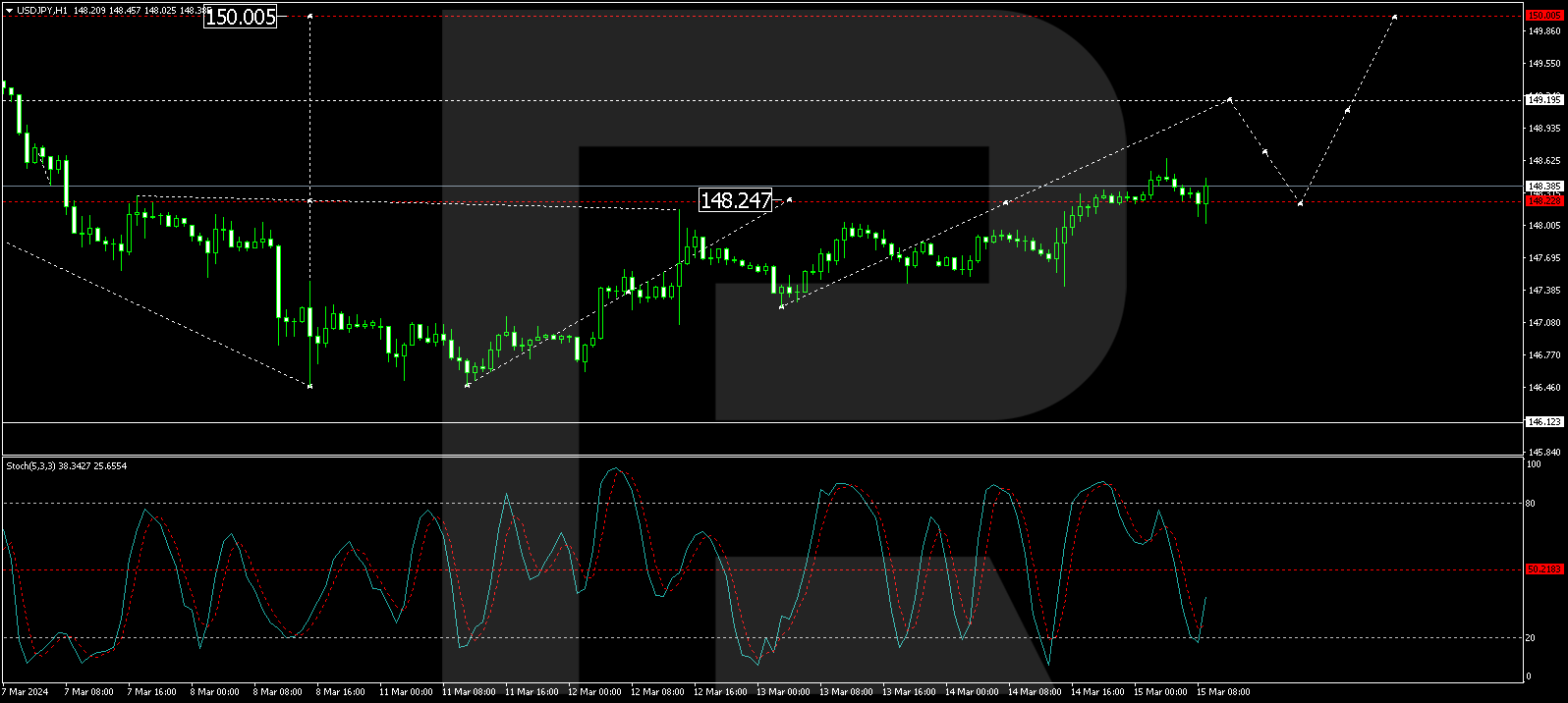
The Canadian dollar has been falling steadily against the US dollar over the past few weeks on the back of hawkish statements from Fed Chairman Jerome Powell, as well as a significant drop in global crude oil prices. With oil now finding some support and OPEC+ potentially announcing an extension of voluntary production cuts into next year, the Canadian dollar could strengthen against the US dollar in the short term. However, upcoming US CPI data will be crucial for Fed guidance and could prompt Fed officials to be more hawkish if inflation exceeds expectations.

Equity markets in Europe traded flat yesterday. Germany’s DAX (DE40) added 0.01%, France’s CAC 40 (FR40) fell by 0.01% on Wednesday, Spain’s IBEX 35 (ES35) rose by 0.07%, and the UK’s FTSE 100 (UK100) closed negative by 0.42%.

ECB Executive Board spokesman Schnabel said yesterday that it is too early to discuss rate cuts, and the ECB will keep key rates at restrictive levels until it is confident that inflation will steadily return to the 2% target. For this, additional data confirming the disinflationary process is needed. For his part, ECB Vice President Gindos said that the eurozone may have been in a recession late last year, and incoming data suggest that the future remains uncertain and the outlook is tilted to the downside. Swaps estimate the odds of a 25 bps ECB rate cut at 3% at the next meeting on January 25 and 37% at the March 7 meeting.


Crude oil prices initially jumped on Wednesday after Houthi rebels carried out one of the largest missile and drone attacks on commercial shipping lanes in the Red Sea, potentially disrupting global crude supplies. But crude prices fell in the afternoon after the EIA’s weekly crude stockpile data unexpectedly rose, and gasoline and distillate inventories rose more than expected, pointing to weak energy demand.

Asian markets traded mostly lower yesterday. Japan’s Nikkei 225 (JP225) gained 2.01% for the day, China’s FTSE China A50 (CHA50) fell by 0.30%, Hong Kong’s Hang Seng (HK50) ended the day down by 0.57%, and Australia’s ASX 200 (AU200) ended the trading day negative by 0.69%.

Japan’s Nikkei 225 (JP225) continues to rally after hitting a 34-year-high yesterday. The index rallied on broad-based gains, although technology and auto stocks were the most active. The recent rally in Japanese stocks has been driven mainly by expectations that the Bank of Japan will maintain its ultra-low policy in the near term, especially amid efforts to stimulate the economy following the devastating earthquake in central Japan. Thanks to the Bank of Japan’s soft policy, the Nikkei has become one of the best-performing global equity indices in 2023, jumping 30% year-on-year.

S&P 500 (US500) 4,783.45 +26.95 (+0.57%)

Dow Jones (US30) 37,695.73 +170.57 (+0.45%)

DAX (DE40)  16,689.81 +1.45 (+0.01%)

FTSE 100 (UK100) 7,651.76 −32.20 (−0.42%)

USD Index  102.39 −0.18 (−0.18%)

News feed for 2024.01.11:
  • – Australia Trade Balance (m/m) at 02:30 (GMT+2);
  • – US Initial Jobless Claims (w/w) at 15:30 (GMT+2);
  • – US Consumer Price Index (m/m) at 15:30 (GMT+2);
  • – US Natural Gas Storage (w/w) at 17:30 (GMT+2).

By JustMarkets


This article reflects a personal opinion and should not be interpreted as an investment advice, and/or offer, and/or a persistent request for carrying out financial transactions, and/or a guarantee, and/or a forecast of future events.

Gold on standby mode as US CPI looms

By ForexTime 

  • Gold in a correction wave of W1 uptrend
  • Possible bullish momentum building on D1/H4 timeframe
  • 4 potential bullish targets if 2042.09 breached
  • Bullish scenario invalidated below 2020.31 ​​​​​​​
  • Incoming US CPI report could trigger volatility

Gold prices were steady on Thursday ahead of a key US inflation report that may influence market expectations around when the Federal Reserve will cut interest rates this year.

The precious metal is busy with a correction wave in an uptrend on the weekly timeframe which could act as a possible area of trendline support. Looking at the daily charts, a downtrend is advancing but the price is getting closer to a weekly support level and a higher bottom might already be in progress.

A significant move could be around the corner with the incoming US CPI report acting as a fundamental catalyst. More evidence of cooling price pressures may boost bets around the Fed cutting interest rates, supporting gold prices as a result. However, a hot reading could dampen hopes around the Fed taking action early this year – potentially dealing a blow to zero-yielding gold.  

Redirecting our attention back to the technical…

A look at the 4-hour time frame will yield more insight.

The 4-hour chart is still in negative territory with the price dipped below the 50 Exponential Moving Average. The market structure has given a warning though by making a higher bottom and traders will be watching closely to see how the market reacts to the upcoming CPI news event.  If buying pressure increases and the price goes above 2042.09, a long opportunity will be on the books.

Attaching a modified Fibonacci tool to the trigger level at 2042.09 and dragging it to the higher bottom at 2020.31, four possible targets can be determined:

  • The first target is at 2050.80 (Target 1).

  • The second price target is likely to be 2055.16 (Target 2).

  • The third price target is possible at 2063.87 (Target 3.

  • The fourth and last price target is viable at 2074.76 (Target 4) if the buy pressure can continue for long enough.

If the price at 2020.31 is broken, this scenario is no longer valid.


Forex-Time-LogoArticle by ForexTime

ForexTime Ltd (FXTM) is an award winning international online forex broker regulated by CySEC 185/12 www.forextime.com

Inflation in Australia continues to decline. The World Bank forecasts a contraction in growth

By JustMarkets

At the close of the stock market yesterday, the Dow Jones Index (US30) decreased by 0.42%, while the S&P 500 Index (US500) was down by 0.15% on Tuesday. The NASDAQ Technology Index (US100) closed positive by 0.09%.

Lower expectations for a Fed interest rate cut in March weighed on equities as swap markets show that the probability of a 25 bps Fed rate cut at the March 19-20 FOMC meeting fell to 67% from the 100% probability last month.

The US trade deficit unexpectedly narrowed to negative $63.2 billion in November from $64.5 billion in October, which was better than expectations of an increase to negative $64.9 billion and a positive for Q4 GDP. The reduction of the deficit is a positive factor for the strengthening of the national currency.

In November 2023, Canada recorded a trade surplus of CAD 1.6 billion, down significantly from a surplus of CAD 3.2 billion in the previous month and below market expectations of CAD 2 billion. The surplus was driven by a 1.9% increase in imports to CAD 64.2 billion.

Equity markets in Europe were mostly down yesterday. Germany’s DAX (DE40) was down by 0.17%, France’s CAC 40 (FR 40) fell by 0.32% on Tuesday, Spain’s IBEX 35 (ES35) lost 1.46%, and the UK’s FTSE 100 (UK100) closed negative by 0.13%.

The Eurozone unemployment rate for November unexpectedly fell to a record low of 6.4%, indicating a stronger labor market. German industrial production for November unexpectedly declined by 0.7% m/m, weaker than expectations of 0.3% m/m. Industrial production declined for the sixth consecutive month. ECB Governing Council representative Centeno said yesterday that good news on Eurozone inflation allows the ECB to cut interest rates sooner than expected.

According to the World Bank, the global economy is experiencing its worst growth rate in 30 years. Global economic growth is projected to slow for the third consecutive year in 2024, falling to 2.4% from 2.6% in 2023, according to the latest World Economic Outlook report released on Tuesday. It also points out that escalating conflicts (Russian invasion of Ukraine, conflict in the Middle East) could have significant implications for energy prices, which could affect both inflation and economic growth.

Asian markets traded yesterday without any unified dynamics. Japan’s Nikkei 225 (JP225) was up by 1.16% for the day, China’s FTSE China A50 (CHA50) was down by 0.46%, Hong Kong’s Hang Seng (HK50) decreased by 0.21%, and Australia’s ASX 200 (AU200) was positive by 0.93%. Japan’s Nikkei 225 (JP225) jumped to a 34-year high on Wednesday amid growing expectations of a delay in the Bank of Japan’s policy tightening plans.

Japanese household spending fell by 2.9% y/y in November, weaker than expectations of 2.3% y/y and marking the ninth consecutive month of spending declines. Tokyo’s Consumer Price Index for the decade fell to 2.4% y/y from 2.7% y/y in November, better than expectations of 2.5% y/y and the slowest rate of increase in 1.5 years, dovish for BOJ policy.

In Australia, the monthly consumer price index (CPI) came in at 4.3% y/y in November, the slowest pace since January 2022. This is down from October’s 4.9% reading and below market forecasts of 4.4%. If the fourth quarter inflation report due out at the end of January paints a similar picture for consumer prices, markets may move expectations for the first-rate cut by the Reserve Bank of Australia (RBA) in June since August this year.

S&P 500 (US500) 4,756.50 −7.04 (−0.15%)

Dow Jones (US30) 37,525.16 −157.85 (−0.42%)

DAX (DE40)  16,688.36 −28.11 (−0.17%)

FTSE 100 (UK100) 7,683.96 −10.23 (−0.13%)

USD Index  102.53 +0.32 (+0.31%)

News feed for 2024.01.10:
  • – Australia Consumer Price Index (m/m) at 02:30 (GMT+2);
  • – UK BoE Gov Bailey Speaks at 16:15 (GMT+2);
  • – US Crude Oil Reserves (w/w) at 17:30 (GMT+2);
  • – US FOMC Member Williams Speaks (m/m) at 22:15 (GMT+2).

By JustMarkets


This article reflects a personal opinion and should not be interpreted as an investment advice, and/or offer, and/or a persistent request for carrying out financial transactions, and/or a guarantee, and/or a forecast of future events.

NVDA shares have reached an all-time high. China plans to create favorable financial conditions for the country’s economic growth

By JustMarkets

At the stock market close yesterday, the Dow Jones Index (US30) was up by 0.58%, while the S&P 500 Index (US500) added 1.41% on Monday. The NASDAQ Technology Index (US100) closed positive by 2.20% yesterday. Nvidia stock’s (NVDA) rise to a record high led to gains in technology stocks, which also had a positive impact on the overall market. On Monday, stocks also received support from lower bond yields amid comments from Federal Reserve President of Dallas, Logan, who said that the Fed may slow the pace of its asset portfolio reductions to maintain sufficient liquidity in financial markets.

Atlanta Fed President Bostic said yesterday he is comfortable with the US Fed’s restrictive stance. Bostic wants to see the economy continue to grow and inflation reach our 2% level. He added that he expects the Fed’s first-rate cut in the third quarter of this year.

Nvidia (NVDA) closed at a record high (+6%) after it unveiled new graphics chips at CES with additional components that will allow users to better utilize artificial intelligence on their personal machines without having to rely on remote services available over the internet. Quotes of Advanced Micro Devices (AMD) are up more than 5% after Melius Research LLC upgraded the stock to “buy” from “hold” with a $188 price target. Boeing (BA) stock price fell more than 8%, topping the S&P 500 and Dow Jones Industrials losers list, after the company took its 737 Max 9 jet out of service for inspections after a section of the fuselage of a new Alaska Airlines plane burst during flight. United Airlines said Monday that during inspections, it found loose bolts and other parts on the 737 Max 9’s plug doors.

Equity markets in Europe were mostly up yesterday. Germany’s DAX (DE40) rose by 0.74%, France’s CAC 40 (FR40) gained 0.40% on Monday, Spain’s IBEX 35 (ES35) jumped by 0.44%, and the UK’s FTSE 100 (UK100) closed positive by 0.06%.

ECB Governing Council spokesman Vujcic said yesterday that he expects inflation to slow gradually and that the ECB is not talking about cutting interest rates now and probably won’t do so until the summer.

Eurozone Dec economic confidence indicator rose by 2.4 to an 8-month high of 96.4, exceeding expectations of 94.2. German trade news was better than expected: November exports rose by 3.7% m/m, stronger than expectations of 0.5% m/m and the biggest increase in 2 years. In addition, November imports rose by 1.9% m/m, stronger than expectations of 0.4% m/m and the largest increase in 9 months.

Silver prices came under pressure yesterday after German factory orders rose less than expected, indicating weak demand for industrial metals. Silver is highly correlated to gold, and gold is now under pressure as the US Federal Reserve and ECB do not seem to be planning to cut rates this spring as economists expect.

Crude oil and gasoline prices fell sharply on Monday, with gasoline prices falling to their lowest in 3 weeks. Concerns about worsening global oil demand drove crude prices lower after Saudi Arabia cut the official selling prices of its crude to all buyers. Oil prices also fell on a ShippingWatch report that some shipping companies have struck a deal with Houthi rebels to allow their ships to pass safely through the Red Sea, which could reduce supply disruptions.

Asian markets were mostly down on Monday. Japan’s Nikkei 225 (JP225) gained 0.27% for the day, China’s FTSE China A50 (CHA50) fell by 1.14%, Hong Kong’s Hang Seng (HK50) ended the day down by 1.88%, and Australia’s ASX 200 (AU200) ended the trading day negative by 0.50%.

Chinese authorities said they plan to reduce the amount of money banks must set aside in reserves to stimulate lending. The Central Bank will also strengthen counter-cyclical and inter-cyclical policy adjustments to create a favorable financial environment for the country’s economic growth. Traders are raising bets on further monetary easing this year as a weak economic recovery forces authorities to cut interest rates and provide ample liquidity.

The Bank of Japan (BoJ) said it will cut its monthly purchases of ultra-long government bonds, a reminder that it may still go for a reduction in stimulus to the economy this year. Market bets indicate traders still expect the Bank of Japan to end its negative interest rate policy later this year, although speculation that it will do so this month has largely subsided. Data released on Tuesday showed that consumer price growth in Tokyo slowed for a second month in December, which also eased pressure on the BOJ. Currently, overnight index swaps indicate that the Central Bank will end its negative rate policy in July this year, although as recently as two weeks ago, it was supposed to happen in April.

S&P 500 (US500) 4,763.54 +66.30 (+1.41%)

Dow Jones (US30) 37,683.01 +216.90 (+0.58%)

DAX (DE40)  16,716.47 +122.26 (+0.74%)

FTSE 100 (UK100) 7,694.19 +4.58 (+0.060%)

USD Index  102.24 −0.17 (−0.16%)

News feed for 2024.01.09:
  • – Japan Tokyo Core CPI (m/m) at 01:30 (GMT+2);
  • – Australia Retail Sales (m/m) at 02:30 (GMT+2);
  • – Switzerland Unemployment Rate (m/m) at 08:45 (GMT+2);
  • – German Industrial Production (m/m) at 09:00 (GMT+2);
  • – Eurozone Unemployment Rate (m/m) at 12:00 (GMT+2);
  • – US Trade Balance (m/m) at 15:30 (GMT+2);
  • – Canada Trade Balance (m/m) at 15:30 (GMT+2).

By JustMarkets


This article reflects a personal opinion and should not be interpreted as an investment advice, and/or offer, and/or a persistent request for carrying out financial transactions, and/or a guarantee, and/or a forecast of future events.

USDJPY: Bulls eye potential 250-pip move

By ForexTime 

  • USDJPY bounces off neckline of double bottom
  • Upside presents a potential 250-pip move
  • US inflation data on Thursday in focus
  • Support at 200-EMA & resistance at 50-EMA

USDJPY bounced off the neckline of a daily double-bottom pattern after data showed inflation in Tokyo cooled for a second month in December.

Consumer prices slowed to 2.4% in December from 2.6% in the previous month. The core which excludes fresh food and energy prices cooled to 3.5% – its fourth consecutive month of decline. This data is likely to encourage the BoJ to retain its negative rates this month.

According to Thomas Bulkowski, in his book “Encyclopaedia of Chart Patterns”, this kind of double bottom pattern, (Adam and Adam) has

·       A 16% breakeven failure rate.

·       A 73% chance of meeting its target.

Worthy of note is the neckline crosses across a confluence of significant support levels which include.

· 143.674: The 200-day Exponential Moving Average (EMA)

· 143.170: The 61.8 golden Fibonacci ratio (with Fibonacci retracement levels drawn from December 19th’s high to December 28th’s low).

At the time of writing USDJPY is bouncing off the 200-day EMA

The next key fundamental driver that may influence the currency pair will be the US Consumer Price Inflation data (CPI) due on Thursday. Headline inflation is expected to have ticked higher in December, while the annual core inflation is seen cooling to 3.8%. More signs of cooling inflationary pressures may stimulate Fed cut bets, weakening the USD as a result. USDJPY may remain range-bound as it waits for an injection of fresh volatility.

Redirecting our attention back to the technical…

If the neckline is not broken, USDJPY may rally for about 280 pips and contend with the following key resistance levels ahead.

· 144.853: A significant level close to the 100 Fibonacci retracement

· 145.477; its 50-day EMA.

However, if the Yen’s strength continues after the latest inflation data from Japan, we may see the confluence of key support levels give way.

The following levels may provide a temporary pause as it aims for new lows below the December 28th low of 140.29.

· 142.618: the 50.0 Fibonacci level

· 142.066 the 38.2 Fibonacci level

· 141.383: the 23.6 Fibonacci level


Forex-Time-LogoArticle by ForexTime

ForexTime Ltd (FXTM) is an award winning international online forex broker regulated by CySEC 185/12 www.forextime.com

Brent is stressed again

By RoboForex Analytical Department

For the last month and a half, the crude oil market has been under a constant stress. Sentiment changes mostly because of the supply and demand forecasts. A Brent barrel price dropped to 75.65 USD yesterday.

The decline was triggered by the decision of Saudi Arabia to decrease prices for its buyers starting February, regardless of the region. The discount will amount to 2 USD, which is quite a lot.

The market thinks that the Saudis have either noticed a demand slump and are now trying to run ahead of it, or they have decided to shove away the competitors, such as the US crude oil producers.

Brent technical analysis

On the H4 Brent chart, the quotes have corrected to 74.74. A consolidation range is now forming around the 78.15 level. An escape from the range upwards might open the potential for a growth wave to 81.50. This is a local target. With an escape from the range downwards, the correction could continue to 70.00. Technically, this scenario is confirmed by the MACD, whose signal line is under zero, preparing to start growing.

On the H1 Brent chart, the quotes have completed a growth wave to 79.45 and a correction to 75.25. Today a growth link to 80.00 is expected to develop. If this level breaks, the wave could continue to 81.50. Technically, this scenario is confirmed by the Stochastic oscillator: its signal line is under 50, aimed strictly upwards to 80.

Disclaimer

Any forecasts contained herein are based on the author’s particular opinion. This analysis may not be treated as trading advice. RoboForex bears no responsibility for trading results based on trading recommendations and reviews contained herein.