Archive for Financial News – Page 129

XAGUSD: Hits fresh 11-year high above $32

By ForexTime 

  • Silver ↑ 33% year-to-date
  • One of the best-performing major commodities
  • Relatively “cheap” compared to gold
  • Bullish on D1 but RSI overbought

Gold is not the only metal delivering glittering returns this year…

Silver has also been on a tear, soaring to its highest level in more than a decade.

The precious metal punched above $32 this week, and is currently up 33% since the start of 2024. 

When compared with year-to-date gains of:

  • Tin: 35%

  • Copper: 31%

  • Nickel: 30%

  • Gold: 17%

  • Zinc: 17%

  • Platinum: 6%

Silver is the second-best performer in the metal space and one of the top gainers in the wider commodity arena.

Why is silver soaring?

Various forces have propelled the precious metal higher – ranging from growing investor interest to macroeconomic forces and supply-side factors, among other themes.

But gold’s bullish momentum has also provided silver ample support.

Gold hit fresh all-time highs this week due to geopolitical risks with central bank buying and prospects of lower US interest rates keeping bulls in power.

Silver often follows gold’s lead, with interest rate expectations impacting appetite for non-yielding assets like precious metals.

To put things into perspective, silver and gold have moved in tandem over 80% of the time in any given 10-day period over the past 20 years.

What other forces are in play?

Beyond the macroeconomic forces, silver is also influenced by industrial demand.

Given how it’s a key component for clean energy technologies, the usage of the metal is expected to reach records in 2024 amid robust growth in the industry.

Interestingly, copper which is also a crucial element in the creation of solar panels, wind turbines and hydro systems has also reached all-time highs.

It does not end here…

Silver markets are heading for their fourth consecutive year of shortages.

According to the Silver Institute, the precious metal is expected to experience its second-highest deficit on record in 2024. As demand continues to outpace supply of silver, the deficit is forecast to increase by 17% this year amid robust industrial consumption.

Can silver push higher?

When considering all the bullish fundamentals at play, further upside could be on the cards.

But most importantly, silver is still considered relatively cheap compared to gold.

Looking at the gold-silver ratio, it takes around 76 ounces of silver to buy 1 ounce of gold.

Given how the 20-year average is 68, silver has scope to extend gains if the ratio rebalances down the road.

Technical outlook:

Silver is firmly bullish on the daily timeframe as there have been consistently higher highs and higher lows.

Prices are trading above the 50, 100 and 200-day SMA while the MACD above zero. However, the Relative Strength Index (RSI) is above 70 – indicating that prices are heavily overbought.

  • A solid breakout above $32.50 will open doors to fresh all-time highs with the next level of interest rate $33.00.
  • Sustained weakness below $32.50 may encourage a decline toward $29.33.
  • Should prices slip below $29.33 this could open the doors towards the 50-day SMA.


Forex-Time-LogoArticle by ForexTime

ForexTime Ltd (FXTM) is an award winning international online forex broker regulated by CySEC 185/12 www.forextime.com

Trade Of The Week: Nvidia headed for $1000 milestone?

By ForexTime 

  • Nvidia almost ↑ 90% year-to-date
  • Will chipmaker see new all-time high?
  • Pay close attention to Nvidia’s datacenter revenue forecasts
  • Shares could move 8.6% ↑ or ↓ post earnings on Thursday!    
  • Nvidia last earnings saw S&P 500’s biggest 1-day jump in over 12 months

In case you missed the memo, Nvidia is set to announce its latest earnings this week!

This is a major event for markets considering how the chipmaker is at the heart of the AI buzz. Investors will be looking for another round of stellar results to justify its whooping $2.3 trillion valuation.

Since the last earnings release in February, Nvidia shares have climbed about 37%, taking year-to-date gains to almost 90%!

  • When will earnings be published?

Nvidia will report its earnings for the first quarter of its 2025 fiscal year (3 months ending April 30th) after US markets close on Wednesday 22nd May.

  • Market expectations:

The darling of AI and tech investors is expected to post earnings of $5.53 compared to $1.09 a year ago.

Quarterly revenues are seen rising to $24.6 billion from $7.2 billion in the prior year – equating to a 242% increase!

Beyond the backward-looking numbers, markets will also be obsessed about what Nvidia conveys about its potential earnings in the future.

Markets are particularly focused on its revenue from data centers, which now account for over 80% of Nvidia’s total revenue.

Datacenters have now overtaken the gaming sector as the leading contributor to Nvidia’s total revenue.

Revenue from datacenters are expected to reach US$ 30 billion by 2026, which is a massive jump from the US$ 4.3 billion posted in the first quarter of its 2024 fiscal year.

Markets may need to see such projections revised higher in order to justify an even-higher price for this stock, based on its future earnings.

Otherwise, if markets can’t reconcile Nvidia’s 90% year-to-date gains with less-than-expected future earnings, markets may have zero qualms about triggering a massive selloff for this stock.

After all, markets are forward-looking in nature: today’s price reflects tomorrow’s hopes (or disappointments).

  • What is the big deal?

The company’s earnings and forward guidance may serve as a key gauge for the AI hype.

After delivering knockout results last quarter, Nvidia was able to satisfy investor expectations. However, this earnings season is showing that investors are becoming harder to impress.

Still, this could be one of the biggest moving events for the S&P 500 in 2024.

Looking at the charts, the S&P 500 saw its biggest 1-day percentage move in over 12 months back on February 22nd.

This was one day after Nvidia released its Q4 earnings with the S&P 500 soaring over 2%.

To be clear, we are not stating that history will repeat itself but simply highlighting how much muscle Nvidia has to move US markets and even other stock indexes globally.

  • Potential challenges…

Growing competition from other chipmakers and even its biggest customers – Amazon, Meta, Microsoft, and Alphabet.

Threat of disruptions from its major chip supplier Taiwan Semiconductor, after the deadly earthquake in Taiwan last month.

US-China Chip war: Can Nvidia’s earnings take such geopolitical risks in stride?

  • How will Nvidia react to earnings?

Markets are forecasting an 8.6% move, either Up or Down, for Nvidia stocks on Thursday post earnings. 

  • What does this mean for prices?

An 8.6% move up from $923 will take Nvidia’s shares to fresh all-time highs beyond the $1000 level.  

While an 8.6% move down will send prices back below $850.

  • How about wider markets?

Instruments that have a strong correlation with Nvidia could see some action.

Nvidia has shown a 70% correlation with the Nasdaq 100 and over 60% correlation with Taiwan Semiconductor (US listed) in the past 12 months.

But digger deeper, over a rolling 5-day period from the past 20 years:

  • S&P500: +0.94
  • Texas Instruments:  +0.84
  • Broadcom:  +0.84
  • QUALCOMM: +0.75
  • Advanced Micro Devices: +0.40
  • Analog Devices: +0.70
  • Micron Technology: +0.60


  • The bigger picture…

With a $2.3 trillion valuation, an 8.6% move in the price of its stock is almost $200 billion!

This is bigger than the entire market caps of many large companies in the S&P 500 and Nasdaq 100!

Heck, it’s even bigger than some of its competitors like Texas Instrument, Analog Devices, and Micron among others.

  • Ultimately a solid set of earnings along with a forward guidance that excites investors could push prices to all-time highs beyond 973.75.
  • If the chipmaker disappoints, the stocks could find itself on a slippery decline with the 50 SMA acting as the first point of interest.


Forex-Time-LogoArticle by ForexTime

ForexTime Ltd (FXTM) is an award winning international online forex broker regulated by CySEC 185/12 www.forextime.com

Precious and industrial metals show strong growth. Oil grows amid the news about the death of Iran’s leader

By JustMarkets

On Friday, the Dow Jones Index (US30) gained 0.34% (+1.04% for the week), while the S&P 500 Index (US500) rose by 0.12% (+1.34% for the week). The NASDAQ Technology Index (US100) closed negative 0.07% (for the week +1.74%). The US stock indices were mixed on Friday, consolidating just below the week’s highs. Stocks received some support thanks to dovish comments from Atlanta Fed President Bostic, who said that if the outlook develops as he expects, citing a slow downshift in inflation and continued economic momentum, “then it would be appropriate for us to cut rates by the end of the year.”

Reddit (RDDT) surged over 13% after it partnered with OpenAI to bring its content to chatbot ChatGPT. According to analysts, the deal will boost Reddit’s data licensing business. Advanced Micro Devices (AMD) shares rose more than 2% on Friday after Wolfe Research added it to its alpha list, replacing Nvidia (NVDA).

Equity markets in Europe were mostly down on Friday. Germany’s DAX (DE40) fell by 0.18% (for the week -0.37%), France’s CAC 40 (FR40) closed down 0.26% (for the week -0.53%), Spain’s IBEX 35 (ES35) added 0.25% (for the week +2.01%), and the UK’s FTSE 100 (UK100) closed negative 0.22% (for the week -0.16%).

Comments from Fed officials suggesting a prolonged continuation of high interest rates and ECB member Schnabel’s cautious stance on rate cuts after June contributed to the prevailing caution in European markets. The FTSE 100 Index declined on Friday as global markets also showed weakness, fueled by concerns about a prolonged continuation of high interest rates. UK money markets expect a potential 60 bps cut in interest rates by the Bank of England in 2024, with the first cut expected in August.

Gold rose to a record $2,430 an ounce on Monday after recent US economic data reinforced speculation that the Federal Reserve may go for at least two rate cuts this year. Silver surpassed $30 an ounce, hitting its highest level since January 2013, thanks to higher gold prices and robust investment and industrial demand. While ETF funds have shown little interest in silver, physical buying has increased.

WTI crude oil prices rose above $80 a barrel on Monday, extending gains from last week after Iran’s state media reported the death of a leader at the crash site of a helicopter carrying President Ebrahim Raisi, adding to political uncertainty in one of the largest oil-producing countries. The foreign minister was in the helicopter with him.

Asian markets were mostly rising last week. Japan’s Nikkei 225 (JP225) gained 1.51%, China’s FTSE China A50 (CHA50) added 1.29%, Hong Kong’s Hang Seng (HK50) gained 4.74%, and Australia’s ASX 200 (AU200) was positive 0.84%.

The People’s Bank of China (PBoC) left key lending rates unchanged during its May meeting, matching market expectations. The 1-year prime rate (LPR), the benchmark for most corporate and household loans, was kept at 3.45%. Meanwhile, the 5-year rate, the benchmark for real estate mortgages, was maintained at 3.95% after a record 25 bps decline in February. Both rates are at record lows amid Beijing’s attempts to stimulate economic recovery after mixed activity data in April, marked by solid industrial production growth, the lowest unemployment rate in five months, and weak retail sales.

The Australian dollar climbed above $0.67, hitting four-month highs. New stimulus measures in China and bets on lower interest rates in the US boosted commodity prices, boosting sentiment in Australian markets. Later last week, China announced a broad package of measures to support the struggling real estate market, including easing mortgage lending rules and urging local governments to buy unsold homes. Domestically, investors are eagerly awaiting the minutes of the Reserve Bank of Australia’s latest meeting for clues on the future path of rates.

Investors in New Zealand look forward to Wednesday’s Reserve Bank of New Zealand (RBNZ) meeting. The Central Bank is expected to leave the official money rate at 5.5% for the 7th consecutive meeting, with policymakers likely to reiterate the need to maintain restrictive policies for an extended period to bring inflation back into the 1–3% target range.

S&P 500 (US500) 5,303.27 +6.17 (+0.12%)

Dow Jones (US30) 40,003.59 +134.21 (+0.34%)

DAX (DE40) 18,704.42 −34.39 (−0.18%)

FTSE 100 (UK100) 8,420.26 −18.39 (−0.22%)

USD Index 104.50 +0.05 (+0.05%)

Important events today:
  • – China PBoC Loan Prime Rate at 04:15 (GMT+3);
  • – US FOMC Member Bostic Speaks at 15:45 (GMT+3);
  • – US FOMC Member Barr Speaks at 16:00 (GMT+3);
  • – US FOMC Member Jefferson Speaks at 17:30 (GMT+3);
  • – US FOMC Member Mester Speaks at 21:00 (GMT+3).

By JustMarkets


This article reflects a personal opinion and should not be interpreted as an investment advice, and/or offer, and/or a persistent request for carrying out financial transactions, and/or a guarantee, and/or a forecast of future events.

Gold hits new record high

By RoboForex Analytical Department

On Monday, a troy ounce of gold set a new price peak of 3438.00 USD. This surge was fuelled by renewed speculation about potential interest rate cuts by the US Federal Reserve, vigorous gold purchases by banks globally, and strong investor demand for safe-haven assets.

Recent statistics indicating a slowdown in consumer inflation in the US and a decline in retail sales have given the Fed more flexibility for potential ease of monetary policy this year. Although the Fed’s official stance has not changed, investors are already speculating on a rate cut. A lower interest rate would enhance the appeal of non-interest-bearing assets such as gold.

Additionally, escalating geopolitical tensions in the Middle East contribute to the rise in gold prices. Furthermore, global central banks, including China, continue to buy gold to diversify their reserves and reduce dependency on the US dollar.

XAU/USD technical analysis

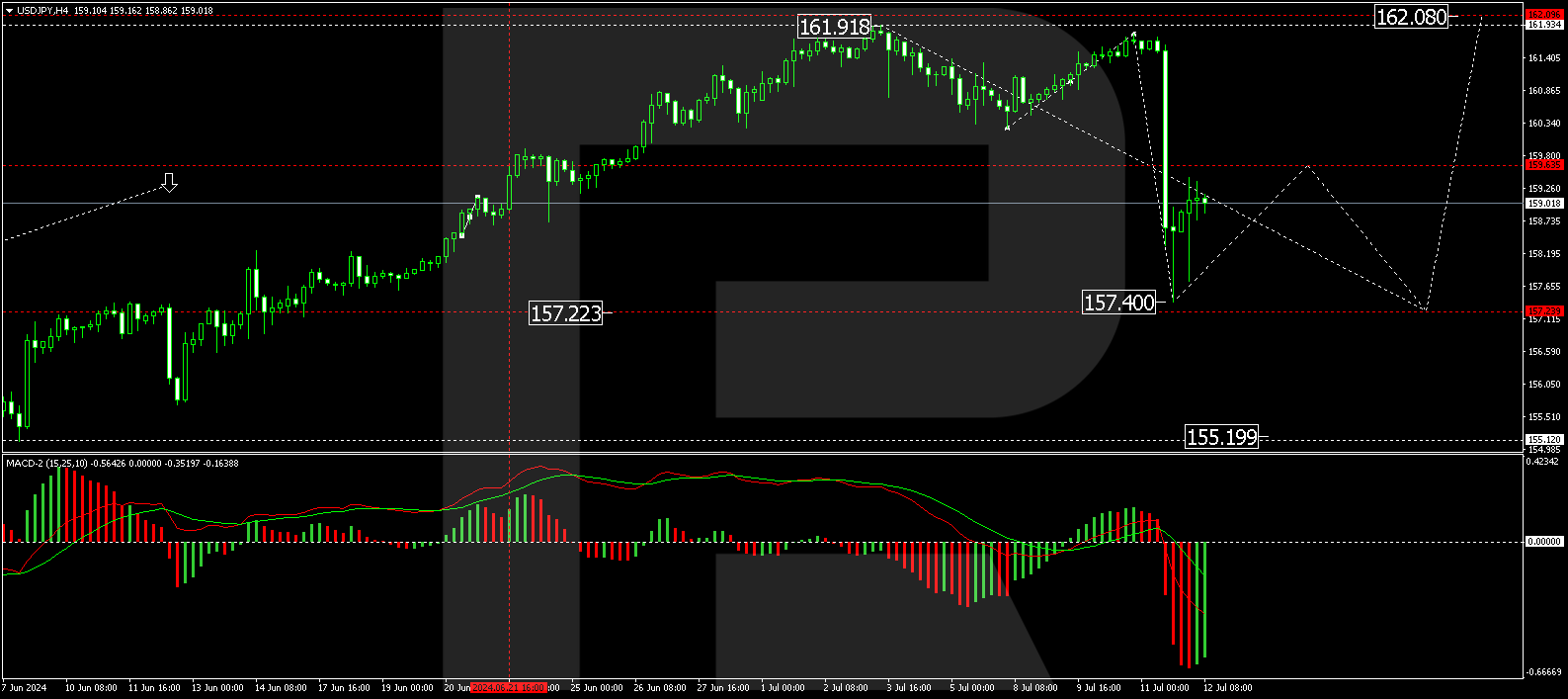
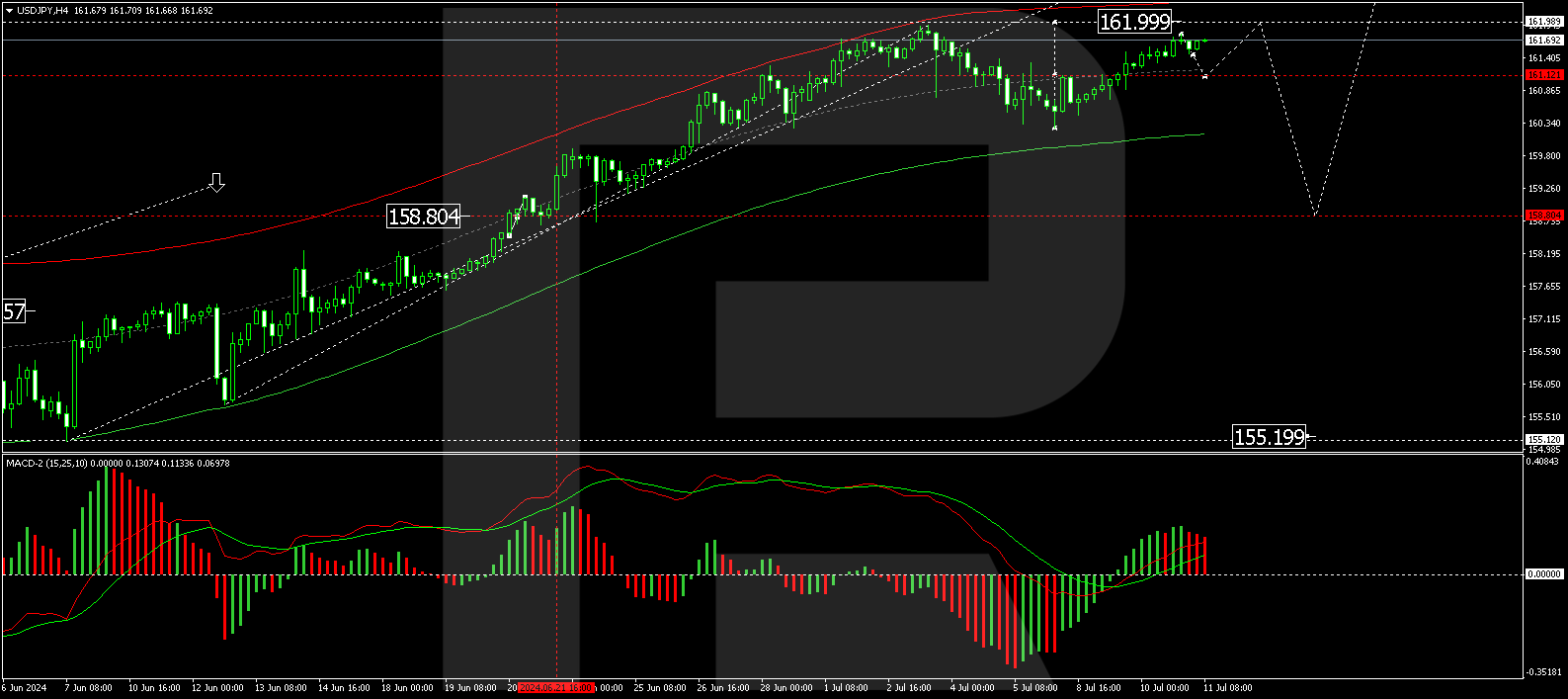
On the H4 chart of XAU/USD, a consolidation range has formed above the level of 2374.00, with the growth wave continuing towards 2550.00. The local target of 2450.00 has been achieved. Today, a corrective move to at least 2410.00 is expected. If this level breaks, the correction could extend to 2374.00. Following this correction, growth towards 2550.00 is anticipated. This bullish scenario is supported by the MACD indicator, with its signal line above zero and pointing upwards towards new highs.

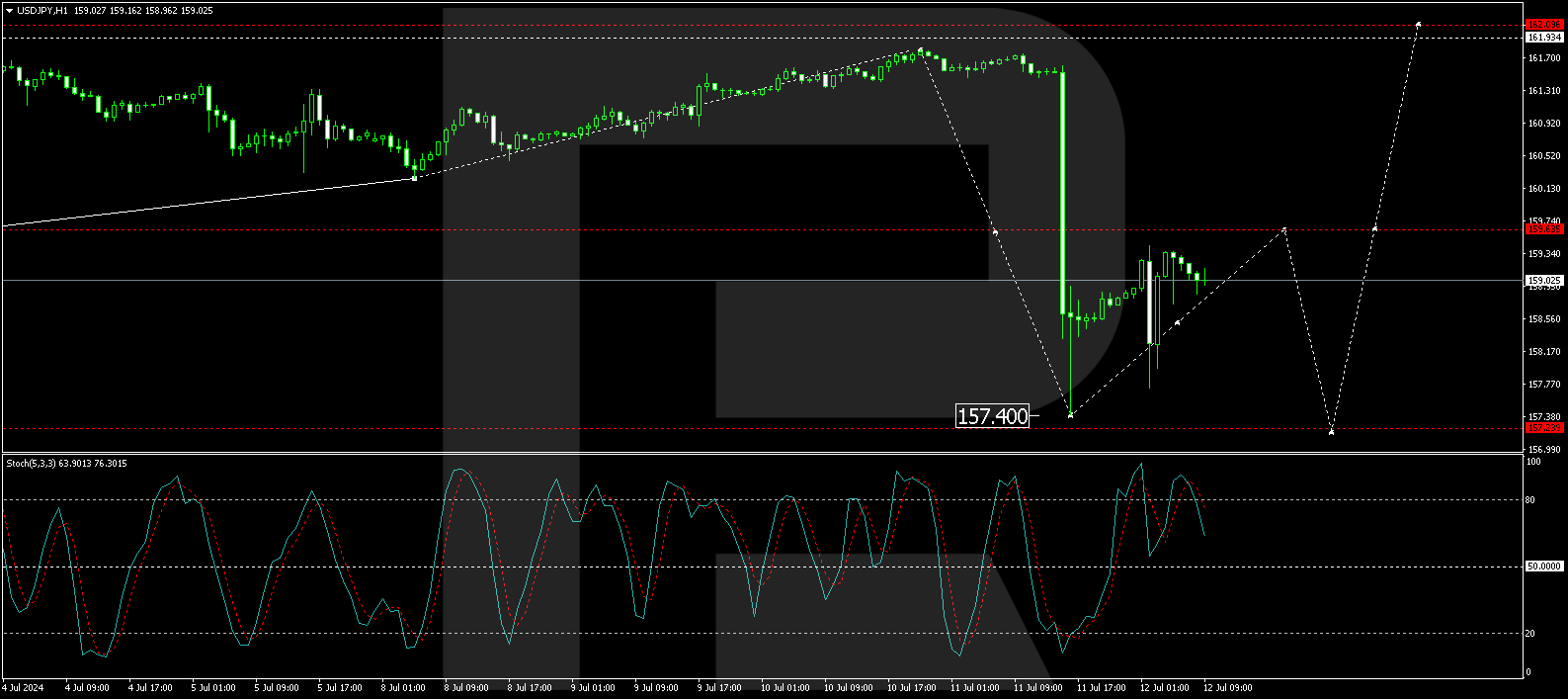
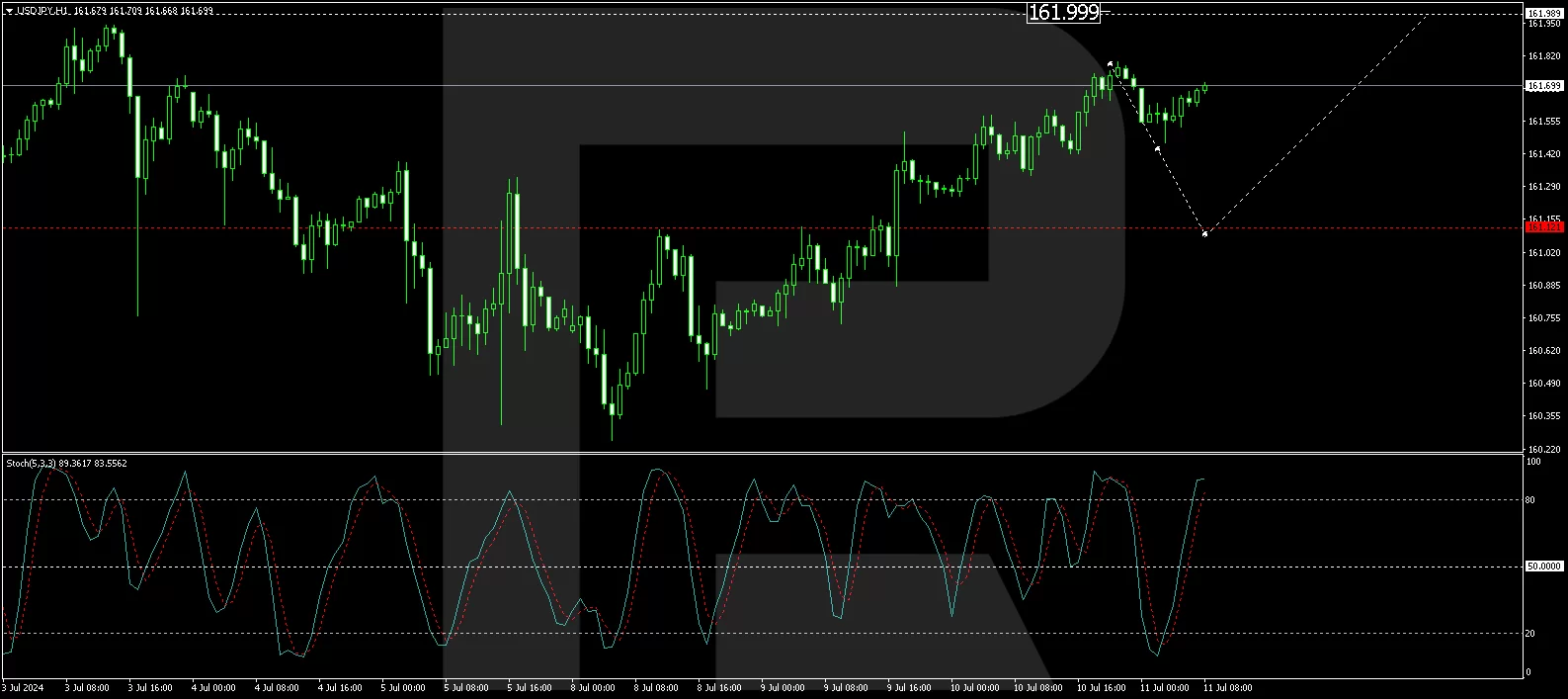
On the H1 chart, a growth wave to 2450.00 was completed. Today, a correction to 2410.00 (testing from above) is anticipated. After this correction, another growth wave to 2450.00 is expected, potentially extending to 2550.00. This scenario is technically supported by the Stochastic oscillator, with its signal line currently above 80 and expected to decline to 20 before resuming its upward trend.

Summary

Gold hits a new record high, driven by speculation about potential US interest rate cuts by the US Federal Reserve, strong demand from central banks, and increased geopolitical tensions in the Middle East. Technical analysis indicates short-term correction before continuing the upward trend towards higher targets. Investors should monitor these developments closely, as the market remains highly responsive to economic and geopolitical signals.

Disclaimer

Any forecasts contained herein are based on the author’s particular opinion. This analysis may not be treated as trading advice. RoboForex bears no responsibility for trading results based on trading recommendations and reviews contained herein.

COT Metals Charts: Speculator bets led by Platinum & Silver

By InvestMacro

Here are the latest charts and statistics for the Commitment of Traders (COT) data published by the Commodities Futures Trading Commission (CFTC).

The latest COT data is updated through Tuesday May 14th and shows a quick view of how large traders (for-profit speculators and commercial entities) were positioned in the futures markets.

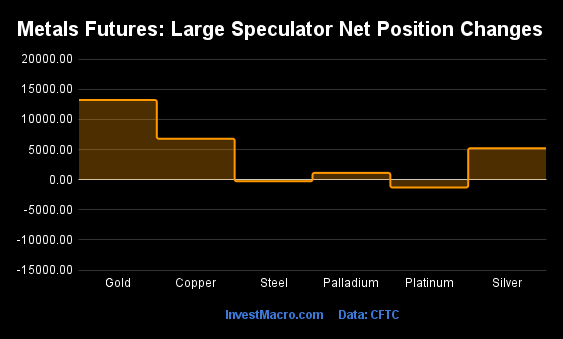
Weekly Speculator Changes led by Platinum & Silver

The COT metals markets speculator bets were higher this week as four out of the six metals markets we cover had higher positioning while the other two markets had lower speculator contracts.

Leading the gains for the metals was Platinum (10,787 contracts) with Silver (5,809 contracts), Gold (4,929 contracts) and Palladium (188 contracts) also showing positive weeks.

The markets with declines in speculator bets for the week were Copper (-868 contracts) with Steel (-865 contracts) also registering lower bets on the week.


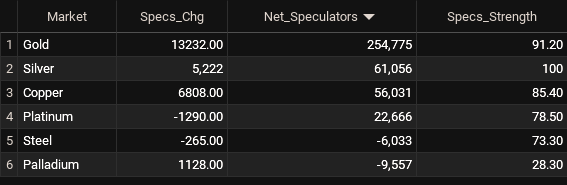
Metals Net Speculators Leaderboard

Legend: Weekly Speculators Change | Speculators Current Net Position | Speculators Strength Score compared to last 3-Years (0-100 range)


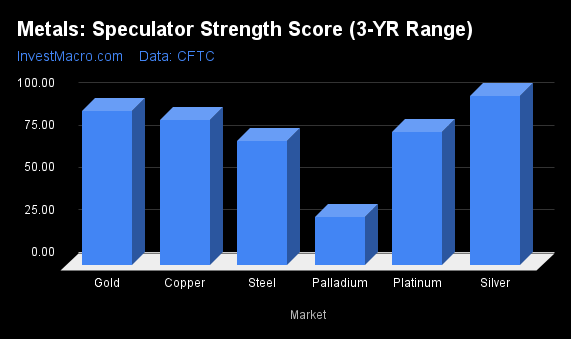
Strength Scores led by Silver & Copper

COT Strength Scores (a normalized measure of Speculator positions over a 3-Year range, from 0 to 100 where above 80 is Extreme-Bullish and below 20 is Extreme-Bearish) showed that Silver (100 percent) and Copper (99 percent) lead the metals markets this week. Gold (69 percent) comes in as the next highest in the weekly strength scores.

On the downside, Palladium (16 percent) comes in at the lowest strength level currently and is in Extreme-Bearish territory (below 20 percent).

Strength Statistics:
Gold (68.6 percent) vs Gold previous week (66.3 percent)
Silver (100.0 percent) vs Silver previous week (92.0 percent)
Copper (99.1 percent) vs Copper previous week (100.0 percent)
Platinum (83.3 percent) vs Platinum previous week (54.5 percent)
Palladium (16.3 percent) vs Palladium previous week (15.2 percent)
Steel (80.1 percent) vs Palladium previous week (83.4 percent)


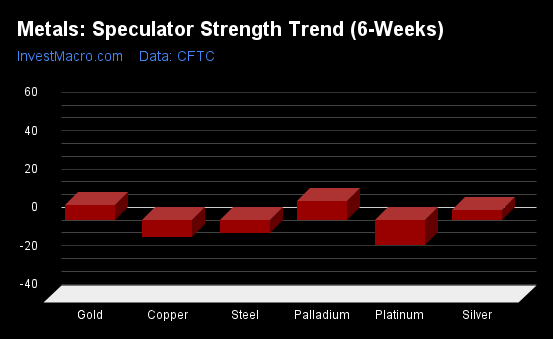
Copper & Platinum top the 6-Week Strength Trends

COT Strength Score Trends (or move index, calculates the 6-week changes in strength scores) showed that Copper (42 percent) and Platinum (42 percent) lead the past six weeks trends for metals.

Steel (-13 percent) and Palladium (-4 percent) lead the downside trend scores currently.

Move Statistics:
Gold (-1.2 percent) vs Gold previous week (0.1 percent)
Silver (8.7 percent) vs Silver previous week (3.9 percent)
Copper (42.2 percent) vs Copper previous week (40.2 percent)
Platinum (42.3 percent) vs Platinum previous week (17.3 percent)
Palladium (-4.4 percent) vs Palladium previous week (-7.4 percent)
Steel (-13.5 percent) vs Steel previous week (-6.1 percent)


Individual Markets:

Gold Comex Futures:
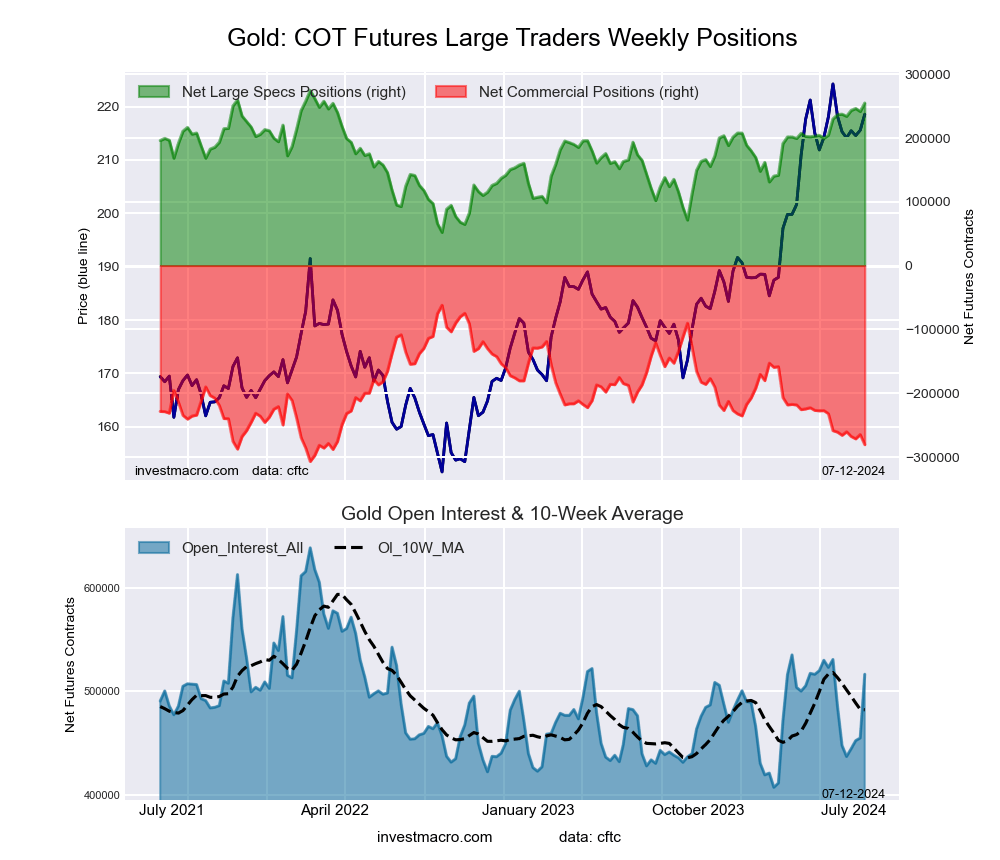
Gold Futures COT ChartThe Gold Comex Futures large speculator standing this week was a net position of 204,496 contracts in the data reported through Tuesday. This was a weekly rise of 4,929 contracts from the previous week which had a total of 199,567 net contracts.

This week’s current strength score (the trader positioning range over the past three years, measured from 0 to 100) shows the speculators are currently Bullish with a score of 68.6 percent. The commercials are Bearish with a score of 30.6 percent and the small traders (not shown in chart) are Bullish with a score of 62.8 percent.

Price Trend-Following Model: Strong Uptrend

Our weekly trend-following model classifies the current market price position as: Strong Uptrend. The current action for the model is considered to be: Hold – Maintain Long Position.

Gold Futures StatisticsSPECULATORSCOMMERCIALSSMALL TRADERS
– Percent of Open Interest Longs:53.125.510.1
– Percent of Open Interest Shorts:14.069.94.8
– Net Position:204,496-232,11027,614
– Gross Longs:277,642133,58352,633
– Gross Shorts:73,146365,69325,019
– Long to Short Ratio:3.8 to 10.4 to 12.1 to 1
NET POSITION TREND:
– Strength Index Score (3 Year Range Pct):68.630.662.8
– Strength Index Reading (3 Year Range):BullishBearishBullish
NET POSITION MOVEMENT INDEX:
– 6-Week Change in Strength Index:-1.2-2.629.4


Silver Comex Futures:

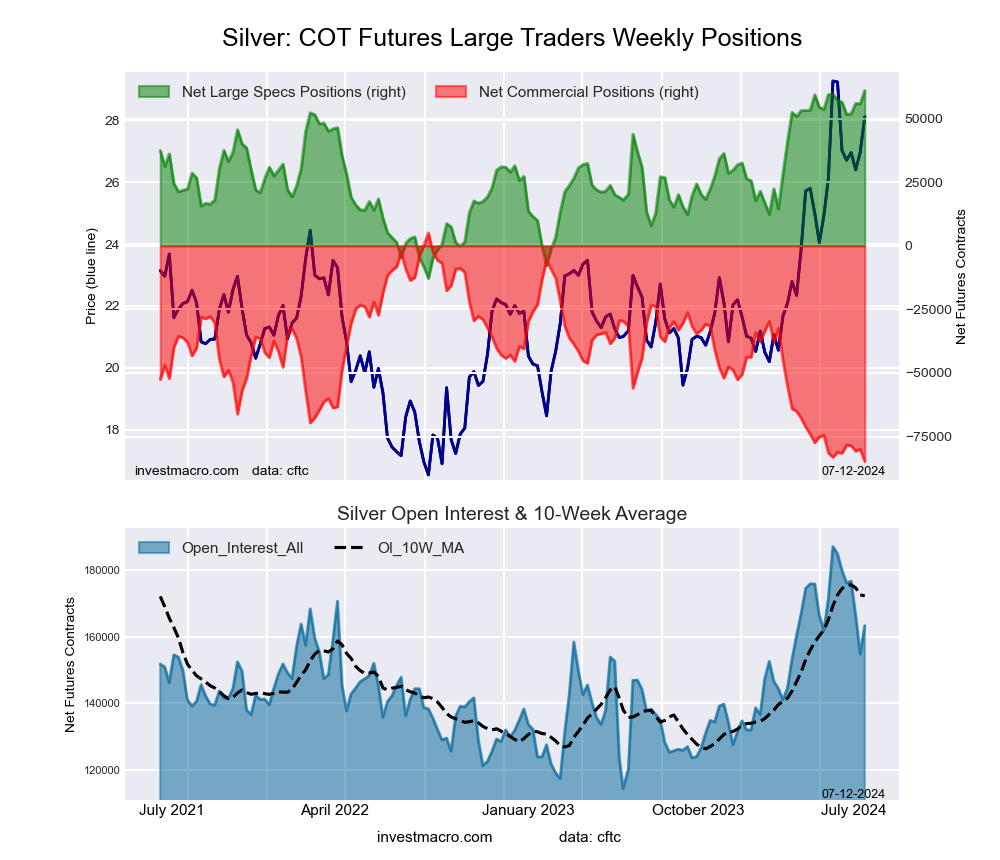
Silver Futures COT ChartThe Silver Comex Futures large speculator standing this week was a net position of 59,461 contracts in the data reported through Tuesday. This was a weekly boost of 5,809 contracts from the previous week which had a total of 53,652 net contracts.

This week’s current strength score (the trader positioning range over the past three years, measured from 0 to 100) shows the speculators are currently Bullish-Extreme with a score of 100.0 percent. The commercials are Bearish-Extreme with a score of 0.0 percent and the small traders (not shown in chart) are Bullish-Extreme with a score of 88.8 percent.

Price Trend-Following Model: Strong Uptrend

Our weekly trend-following model classifies the current market price position as: Strong Uptrend. The current action for the model is considered to be: Hold – Maintain Long Position.

Silver Futures StatisticsSPECULATORSCOMMERCIALSSMALL TRADERS
– Percent of Open Interest Longs:51.324.219.1
– Percent of Open Interest Shorts:16.671.76.3
– Net Position:59,461-81,42221,961
– Gross Longs:87,93641,53232,735
– Gross Shorts:28,475122,95410,774
– Long to Short Ratio:3.1 to 10.3 to 13.0 to 1
NET POSITION TREND:
– Strength Index Score (3 Year Range Pct):100.00.088.8
– Strength Index Reading (3 Year Range):Bullish-ExtremeBearish-ExtremeBullish-Extreme
NET POSITION MOVEMENT INDEX:
– 6-Week Change in Strength Index:8.7-15.941.4


Copper Grade #1 Futures:

Copper Futures COT ChartThe Copper Grade #1 Futures large speculator standing this week was a net position of 61,780 contracts in the data reported through Tuesday. This was a weekly decrease of -868 contracts from the previous week which had a total of 62,648 net contracts.

This week’s current strength score (the trader positioning range over the past three years, measured from 0 to 100) shows the speculators are currently Bullish-Extreme with a score of 99.1 percent. The commercials are Bearish-Extreme with a score of 0.3 percent and the small traders (not shown in chart) are Bullish with a score of 68.2 percent.

Price Trend-Following Model: Strong Uptrend

Our weekly trend-following model classifies the current market price position as: Strong Uptrend. The current action for the model is considered to be: Hold – Maintain Long Position.

Copper Futures StatisticsSPECULATORSCOMMERCIALSSMALL TRADERS
– Percent of Open Interest Longs:51.822.58.0
– Percent of Open Interest Shorts:32.244.55.5
– Net Position:61,780-69,6567,876
– Gross Longs:163,66271,02625,246
– Gross Shorts:101,882140,68217,370
– Long to Short Ratio:1.6 to 10.5 to 11.5 to 1
NET POSITION TREND:
– Strength Index Score (3 Year Range Pct):99.10.368.2
– Strength Index Reading (3 Year Range):Bullish-ExtremeBearish-ExtremeBullish
NET POSITION MOVEMENT INDEX:
– 6-Week Change in Strength Index:42.2-39.0-4.9


Platinum Futures:

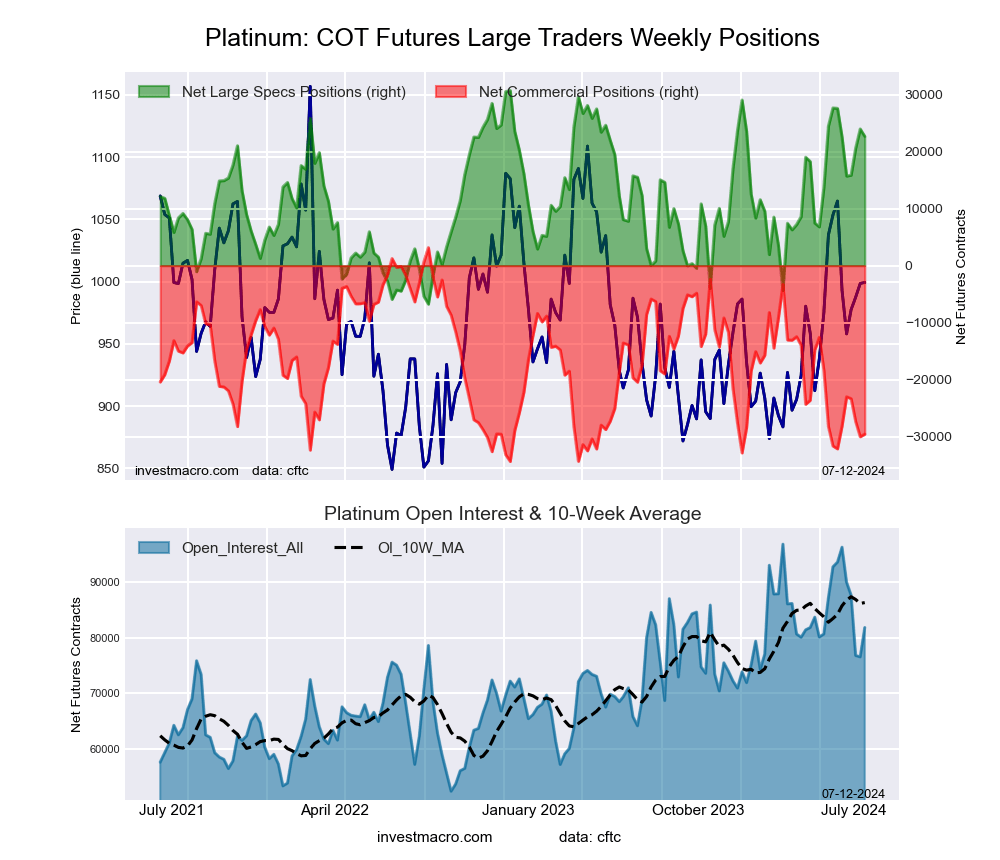
Platinum Futures COT ChartThe Platinum Futures large speculator standing this week was a net position of 24,447 contracts in the data reported through Tuesday. This was a weekly advance of 10,787 contracts from the previous week which had a total of 13,660 net contracts.

This week’s current strength score (the trader positioning range over the past three years, measured from 0 to 100) shows the speculators are currently Bullish-Extreme with a score of 83.3 percent. The commercials are Bearish-Extreme with a score of 16.4 percent and the small traders (not shown in chart) are Bearish-Extreme with a score of 18.7 percent.

Price Trend-Following Model: Strong Uptrend

Our weekly trend-following model classifies the current market price position as: Strong Uptrend. The current action for the model is considered to be: Hold – Maintain Long Position.

Platinum Futures StatisticsSPECULATORSCOMMERCIALSSMALL TRADERS
– Percent of Open Interest Longs:61.219.710.5
– Percent of Open Interest Shorts:33.152.16.2
– Net Position:24,447-28,1943,747
– Gross Longs:53,31417,1819,115
– Gross Shorts:28,86745,3755,368
– Long to Short Ratio:1.8 to 10.4 to 11.7 to 1
NET POSITION TREND:
– Strength Index Score (3 Year Range Pct):83.316.418.7
– Strength Index Reading (3 Year Range):Bullish-ExtremeBearish-ExtremeBearish-Extreme
NET POSITION MOVEMENT INDEX:
– 6-Week Change in Strength Index:42.3-37.9-22.2


Palladium Futures:

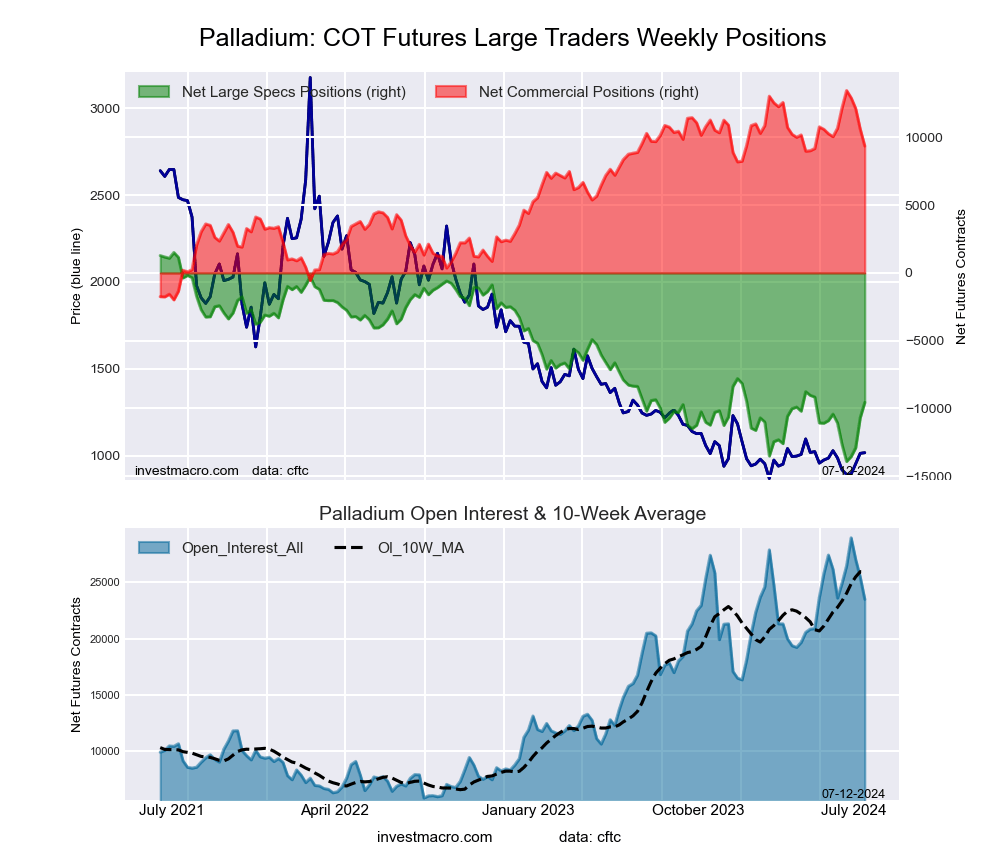
Palladium Futures COT ChartThe Palladium Futures large speculator standing this week was a net position of -10,900 contracts in the data reported through Tuesday. This was a weekly gain of 188 contracts from the previous week which had a total of -11,088 net contracts.

This week’s current strength score (the trader positioning range over the past three years, measured from 0 to 100) shows the speculators are currently Bearish-Extreme with a score of 16.3 percent. The commercials are Bullish-Extreme with a score of 83.1 percent and the small traders (not shown in chart) are Bullish with a score of 79.2 percent.

Price Trend-Following Model: Uptrend

Our weekly trend-following model classifies the current market price position as: Uptrend. The current action for the model is considered to be: New Buy – Long Position.

Palladium Futures StatisticsSPECULATORSCOMMERCIALSSMALL TRADERS
– Percent of Open Interest Longs:22.347.68.3
– Percent of Open Interest Shorts:62.110.16.0
– Net Position:-10,90010,276624
– Gross Longs:6,11013,0342,271
– Gross Shorts:17,0102,7581,647
– Long to Short Ratio:0.4 to 14.7 to 11.4 to 1
NET POSITION TREND:
– Strength Index Score (3 Year Range Pct):16.383.179.2
– Strength Index Reading (3 Year Range):Bearish-ExtremeBullish-ExtremeBullish
NET POSITION MOVEMENT INDEX:
– 6-Week Change in Strength Index:-4.40.636.4


Steel Futures Futures:

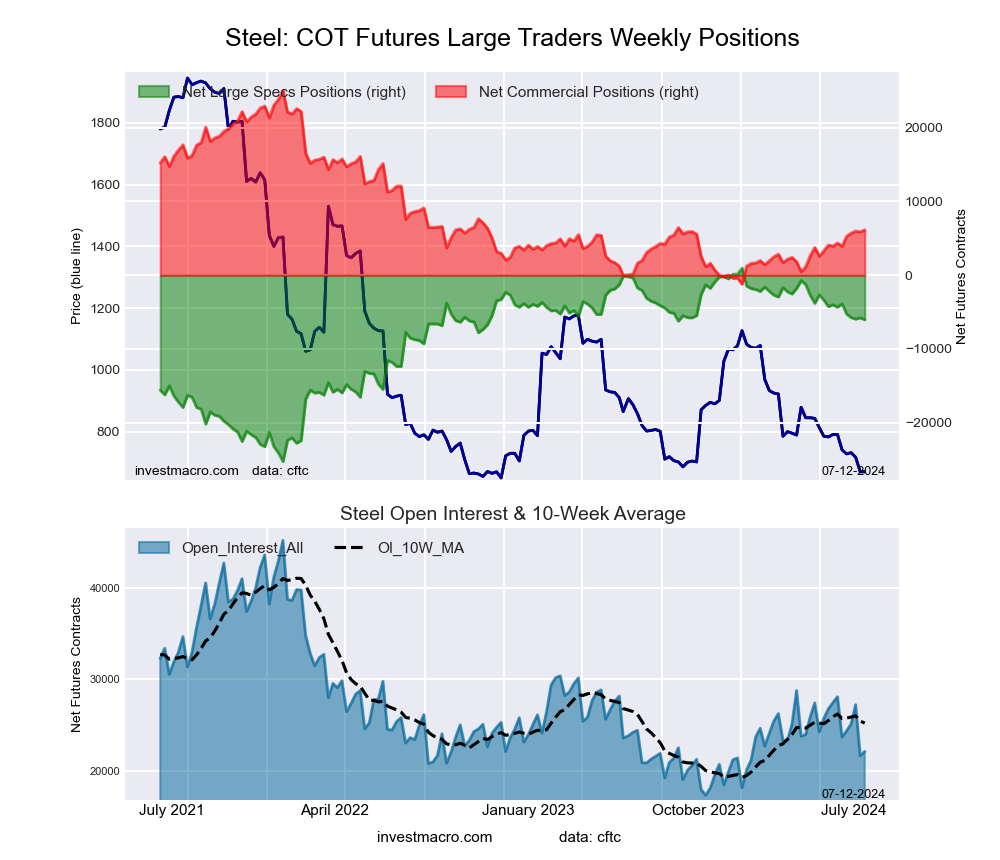
Steel Futures COT ChartThe Steel Futures large speculator standing this week was a net position of -4,248 contracts in the data reported through Tuesday. This was a weekly reduction of -865 contracts from the previous week which had a total of -3,383 net contracts.

This week’s current strength score (the trader positioning range over the past three years, measured from 0 to 100) shows the speculators are currently Bullish-Extreme with a score of 80.1 percent. The commercials are Bearish with a score of 20.2 percent and the small traders (not shown in chart) are Bearish with a score of 49.6 percent.

Price Trend-Following Model: Downtrend

Our weekly trend-following model classifies the current market price position as: Downtrend. The current action for the model is considered to be: Hold – Maintain Short Position.

Steel Futures StatisticsSPECULATORSCOMMERCIALSSMALL TRADERS
– Percent of Open Interest Longs:13.380.41.6
– Percent of Open Interest Shorts:29.265.11.0
– Net Position:-4,2484,091157
– Gross Longs:3,57321,523437
– Gross Shorts:7,82117,432280
– Long to Short Ratio:0.5 to 11.2 to 11.6 to 1
NET POSITION TREND:
– Strength Index Score (3 Year Range Pct):80.120.249.6
– Strength Index Reading (3 Year Range):Bullish-ExtremeBearishBearish
NET POSITION MOVEMENT INDEX:
– 6-Week Change in Strength Index:-13.513.8-8.4


Article By InvestMacroReceive our weekly COT Newsletter

*COT Report: The COT data, released weekly to the public each Friday, is updated through the most recent Tuesday (data is 3 days old) and shows a quick view of how large speculators or non-commercials (for-profit traders) were positioned in the futures markets.

The CFTC categorizes trader positions according to commercial hedgers (traders who use futures contracts for hedging as part of the business), non-commercials (large traders who speculate to realize trading profits) and nonreportable traders (usually small traders/speculators) as well as their open interest (contracts open in the market at time of reporting). See CFTC criteria here.

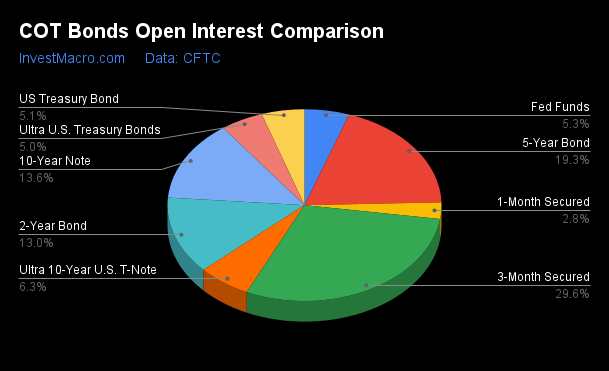
COT Bonds Charts: Speculator bets led by the 10-Year & 2-Year Bonds

By InvestMacro

Here are the latest charts and statistics for the Commitment of Traders (COT) reports data published by the Commodities Futures Trading Commission (CFTC).

The latest COT data is updated through Tuesday May 14th and shows a quick view of how large traders (for-profit speculators and commercial hedgers) were positioned in the futures markets.

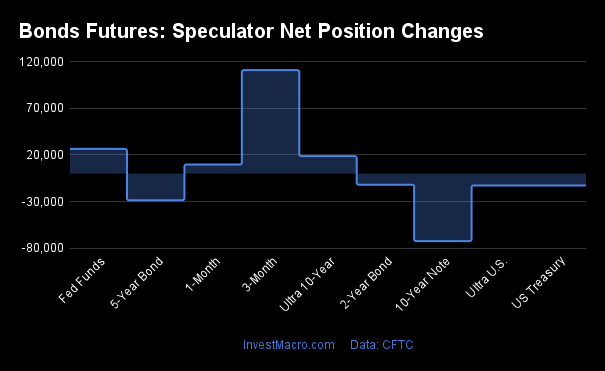
Weekly Speculator Changes led by the 10-Year & 2-Year Bonds

The COT bond market speculator bets were lower this week as three out of the eight bond markets we cover had higher positioning while the other five markets had lower speculator contracts.

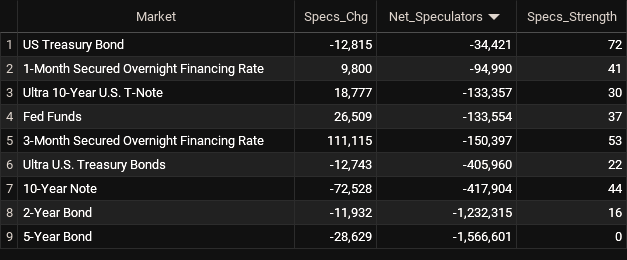
Leading the gains for the bond markets was the 10-Year Bonds (133,809 contracts) with the 2-Year Bonds (57,247 contracts) and the US Treasury Bonds (28,956 contracts) also having positive weeks.

The bond markets with declines in speculator bets for the week were the 5-Year Bonds (-162,256 contracts), the SOFR 3-Months (-65,115 contracts), the Ultra 10-Year Bonds (-62,155 contracts), the Fed Funds (-41,041 contracts) and with the Ultra Treasury Bonds (-15,038 contracts) also recording lower bets on the week.


Bonds Net Speculators Leaderboard

Legend: Weekly Speculators Change | Speculators Current Net Position | Speculators Strength Score compared to last 3-Years (0-100 range)


Strength Scores led by Fed Funds & US Treasury Bonds

COT Strength Scores (a normalized measure of Speculator positions over a 3-Year range, from 0 to 100 where above 80 is Extreme-Bullish and below 20 is Extreme-Bearish) showed that the Fed Funds (89 percent) and the US Treasury Bonds (85 percent) lead the bond markets this week. The Ultra Treasury Bonds (52 percent) comes in as the next highest in the weekly strength scores.

On the downside, the Ultra 10-Year Bonds (0 percent) and the 5-Year Bonds (9 percent) come in at the lowest strength level currently and are in Extreme-Bearish territory (below 20 percent). The next lowest strength scores were the 2-Year Bonds (33 percent) and the SOFR 3-Months (39 percent).

Strength Statistics:
Fed Funds (89.1 percent) vs Fed Funds previous week (97.8 percent)
2-Year Bond (32.7 percent) vs 2-Year Bond previous week (29.0 percent)
5-Year Bond (9.1 percent) vs 5-Year Bond previous week (19.5 percent)
10-Year Bond (50.6 percent) vs 10-Year Bond previous week (38.1 percent)
Ultra 10-Year Bond (0.3 percent) vs Ultra 10-Year Bond previous week (12.9 percent)
US Treasury Bond (85.0 percent) vs US Treasury Bond previous week (74.9 percent)
Ultra US Treasury Bond (52.2 percent) vs Ultra US Treasury Bond previous week (58.5 percent)
SOFR 3-Months (39.4 percent) vs SOFR 3-Months previous week (42.7 percent)


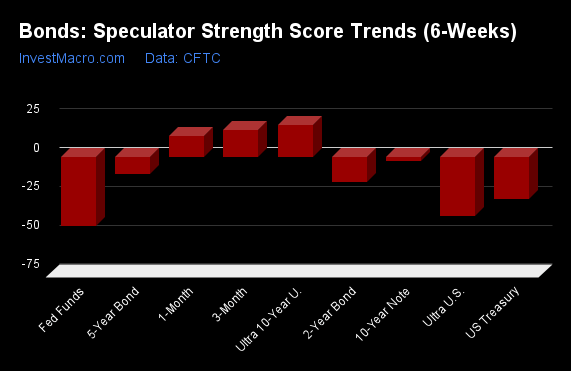
Fed Funds & US Treasury Bonds top the 6-Week Strength Trends

COT Strength Score Trends (or move index, calculates the 6-week changes in strength scores) showed that the Fed Funds (36 percent) and the US Treasury Bonds (21 percent) lead the past six weeks trends for bonds. The 10-Year Bonds (21 percent) are the next highest positive movers in the latest trends data.

The SOFR 3-Months (-39 percent) and the Ultra 10-Year Bonds (-27 percent) lead the downside trend scores currently with the Ultra Treasury Bonds (-7 percent) and the 5-Year Bonds (-3 percent) following next with lower trend scores.

Strength Trend Statistics:
Fed Funds (36.1 percent) vs Fed Funds previous week (67.7 percent)
2-Year Bond (-1.9 percent) vs 2-Year Bond previous week (-6.9 percent)
5-Year Bond (-2.7 percent) vs 5-Year Bond previous week (-0.9 percent)
10-Year Bond (20.7 percent) vs 10-Year Bond previous week (9.0 percent)
Ultra 10-Year Bond (-27.1 percent) vs Ultra 10-Year Bond previous week (-15.5 percent)
US Treasury Bond (20.9 percent) vs US Treasury Bond previous week (-1.4 percent)
Ultra US Treasury Bond (-7.4 percent) vs Ultra US Treasury Bond previous week (-7.3 percent)
SOFR 3-Months (-39.1 percent) vs SOFR 3-Months previous week (-34.5 percent)


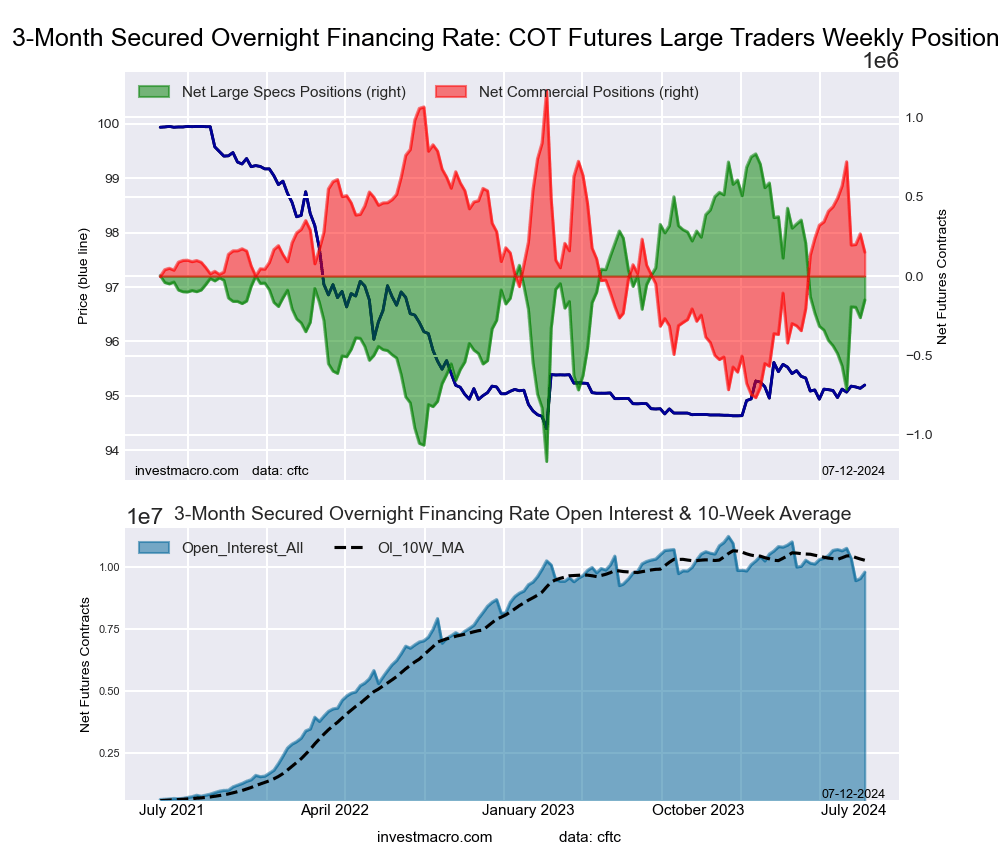
Secured Overnight Financing Rate (3-Month) Futures:

SOFR 3-Months Bonds Futures COT ChartThe Secured Overnight Financing Rate (3-Month) large speculator standing this week reached a net position of -404,677 contracts in the data reported through Tuesday. This was a weekly decline of -65,115 contracts from the previous week which had a total of -339,562 net contracts.

This week’s current strength score (the trader positioning range over the past three years, measured from 0 to 100) shows the speculators are currently Bearish with a score of 39.4 percent. The commercials are Bullish with a score of 60.7 percent and the small traders (not shown in chart) are Bullish-Extreme with a score of 85.8 percent.

Price Trend-Following Model: Weak Uptrend

Our weekly trend-following model classifies the current market price position as: Weak Uptrend. The current action for the model is considered to be: Hold – Maintain Long Position.

SOFR 3-Months StatisticsSPECULATORSCOMMERCIALSSMALL TRADERS
– Percent of Open Interest Longs:13.359.40.5
– Percent of Open Interest Shorts:17.255.50.5
– Net Position:-404,677408,357-3,680
– Gross Longs:1,389,5816,209,31849,269
– Gross Shorts:1,794,2585,800,96152,949
– Long to Short Ratio:0.8 to 11.1 to 10.9 to 1
NET POSITION TREND:
– Strength Index Score (3 Year Range Pct):39.460.785.8
– Strength Index Reading (3 Year Range):BearishBullishBullish-Extreme
NET POSITION MOVEMENT INDEX:
– 6-Week Change in Strength Index:-39.138.93.2


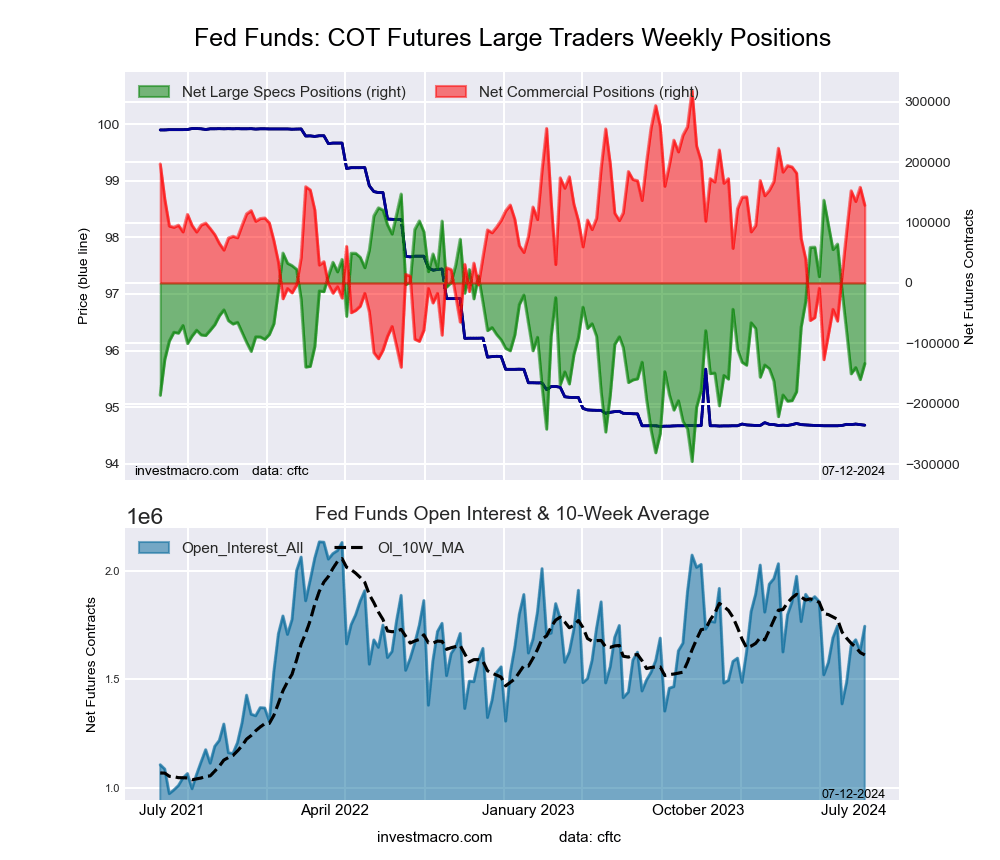
30-Day Federal Funds Futures:

Federal Funds 30-Day Bonds Futures COT ChartThe 30-Day Federal Funds large speculator standing this week reached a net position of 95,924 contracts in the data reported through Tuesday. This was a weekly lowering of -41,041 contracts from the previous week which had a total of 136,965 net contracts.

This week’s current strength score (the trader positioning range over the past three years, measured from 0 to 100) shows the speculators are currently Bullish-Extreme with a score of 89.1 percent. The commercials are Bearish-Extreme with a score of 11.6 percent and the small traders (not shown in chart) are Bullish with a score of 70.0 percent.

Price Trend-Following Model: Downtrend

Our weekly trend-following model classifies the current market price position as: Downtrend. The current action for the model is considered to be: Hold – Maintain Short Position.

30-Day Federal Funds StatisticsSPECULATORSCOMMERCIALSSMALL TRADERS
– Percent of Open Interest Longs:20.956.71.9
– Percent of Open Interest Shorts:14.862.12.6
– Net Position:95,924-85,206-10,718
– Gross Longs:329,136894,23229,503
– Gross Shorts:233,212979,43840,221
– Long to Short Ratio:1.4 to 10.9 to 10.7 to 1
NET POSITION TREND:
– Strength Index Score (3 Year Range Pct):89.111.670.0
– Strength Index Reading (3 Year Range):Bullish-ExtremeBearish-ExtremeBullish
NET POSITION MOVEMENT INDEX:
– 6-Week Change in Strength Index:36.1-33.8-19.8


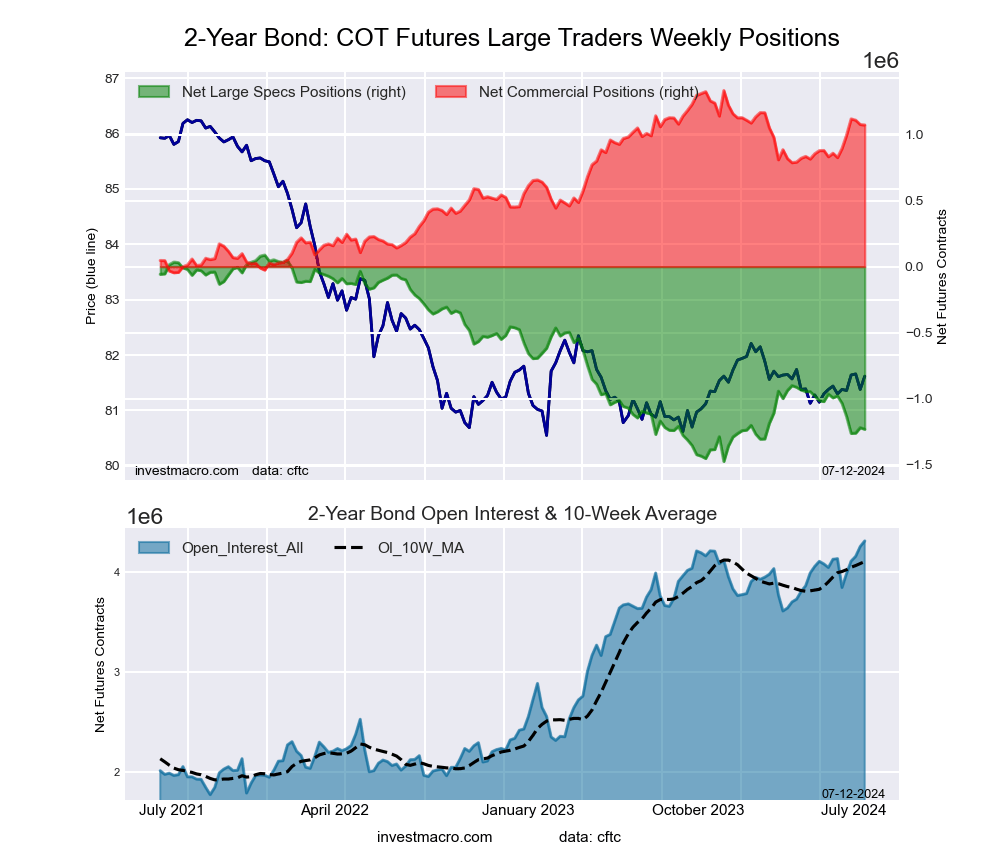
2-Year Treasury Note Futures:

2-Year Treasury Bonds Futures COT ChartThe 2-Year Treasury Note large speculator standing this week reached a net position of -964,986 contracts in the data reported through Tuesday. This was a weekly increase of 57,247 contracts from the previous week which had a total of -1,022,233 net contracts.

This week’s current strength score (the trader positioning range over the past three years, measured from 0 to 100) shows the speculators are currently Bearish with a score of 32.7 percent. The commercials are Bullish with a score of 63.6 percent and the small traders (not shown in chart) are Bullish-Extreme with a score of 94.4 percent.

Price Trend-Following Model: Downtrend

Our weekly trend-following model classifies the current market price position as: Downtrend. The current action for the model is considered to be: Hold – Maintain Short Position.

2-Year Treasury Note StatisticsSPECULATORSCOMMERCIALSSMALL TRADERS
– Percent of Open Interest Longs:13.478.66.5
– Percent of Open Interest Shorts:37.358.03.3
– Net Position:-964,986832,486132,500
– Gross Longs:541,4113,178,396264,452
– Gross Shorts:1,506,3972,345,910131,952
– Long to Short Ratio:0.4 to 11.4 to 12.0 to 1
NET POSITION TREND:
– Strength Index Score (3 Year Range Pct):32.763.694.4
– Strength Index Reading (3 Year Range):BearishBullishBullish-Extreme
NET POSITION MOVEMENT INDEX:
– 6-Week Change in Strength Index:-1.90.87.3


5-Year Treasury Note Futures:

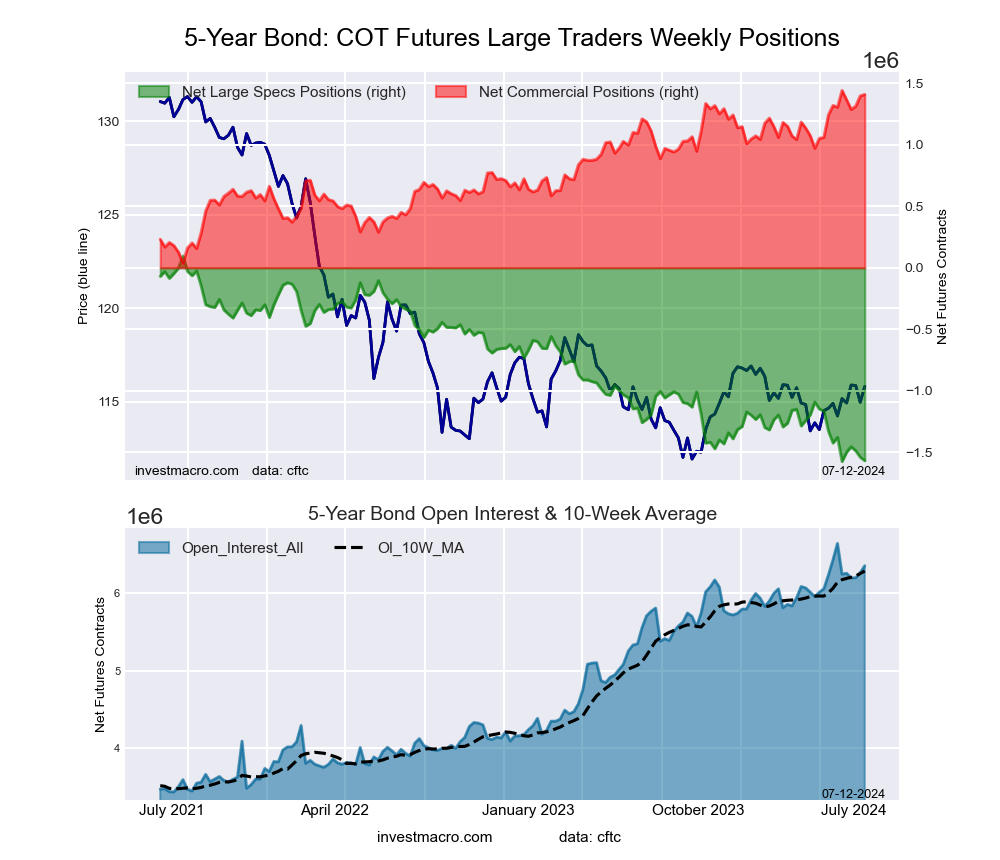
5-Year Treasury Bonds Futures COT ChartThe 5-Year Treasury Note large speculator standing this week reached a net position of -1,326,105 contracts in the data reported through Tuesday. This was a weekly lowering of -162,256 contracts from the previous week which had a total of -1,163,849 net contracts.

This week’s current strength score (the trader positioning range over the past three years, measured from 0 to 100) shows the speculators are currently Bearish-Extreme with a score of 9.1 percent. The commercials are Bullish-Extreme with a score of 92.9 percent and the small traders (not shown in chart) are Bullish-Extreme with a score of 80.6 percent.

Price Trend-Following Model: Downtrend

Our weekly trend-following model classifies the current market price position as: Downtrend. The current action for the model is considered to be: Hold – Maintain Short Position.

5-Year Treasury Note StatisticsSPECULATORSCOMMERCIALSSMALL TRADERS
– Percent of Open Interest Longs:7.584.76.6
– Percent of Open Interest Shorts:28.864.85.3
– Net Position:-1,326,1051,242,37183,734
– Gross Longs:469,3335,284,344412,489
– Gross Shorts:1,795,4384,041,973328,755
– Long to Short Ratio:0.3 to 11.3 to 11.3 to 1
NET POSITION TREND:
– Strength Index Score (3 Year Range Pct):9.192.980.6
– Strength Index Reading (3 Year Range):Bearish-ExtremeBullish-ExtremeBullish-Extreme
NET POSITION MOVEMENT INDEX:
– 6-Week Change in Strength Index:-2.74.5-3.6


10-Year Treasury Note Futures:

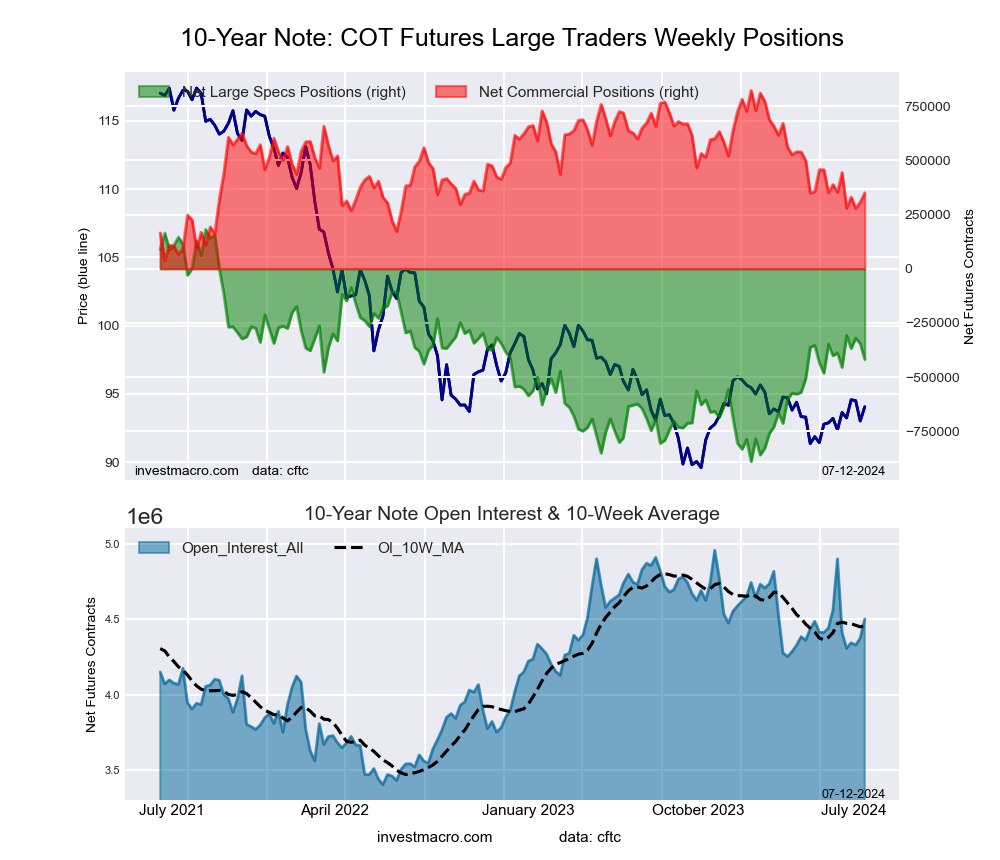
10-Year Treasury Notes Bonds Futures COT ChartThe 10-Year Treasury Note large speculator standing this week reached a net position of -347,811 contracts in the data reported through Tuesday. This was a weekly boost of 133,809 contracts from the previous week which had a total of -481,620 net contracts.

This week’s current strength score (the trader positioning range over the past three years, measured from 0 to 100) shows the speculators are currently Bullish with a score of 50.6 percent. The commercials are Bearish with a score of 40.0 percent and the small traders (not shown in chart) are Bullish with a score of 72.7 percent.

Price Trend-Following Model: Downtrend

Our weekly trend-following model classifies the current market price position as: Downtrend. The current action for the model is considered to be: Hold – Maintain Short Position.

10-Year Treasury Note StatisticsSPECULATORSCOMMERCIALSSMALL TRADERS
– Percent of Open Interest Longs:11.876.19.2
– Percent of Open Interest Shorts:19.668.19.3
– Net Position:-347,811351,641-3,830
– Gross Longs:522,3513,378,701409,062
– Gross Shorts:870,1623,027,060412,892
– Long to Short Ratio:0.6 to 11.1 to 11.0 to 1
NET POSITION TREND:
– Strength Index Score (3 Year Range Pct):50.640.072.7
– Strength Index Reading (3 Year Range):BullishBearishBullish
NET POSITION MOVEMENT INDEX:
– 6-Week Change in Strength Index:20.7-23.8-7.6


Ultra 10-Year Notes Futures:

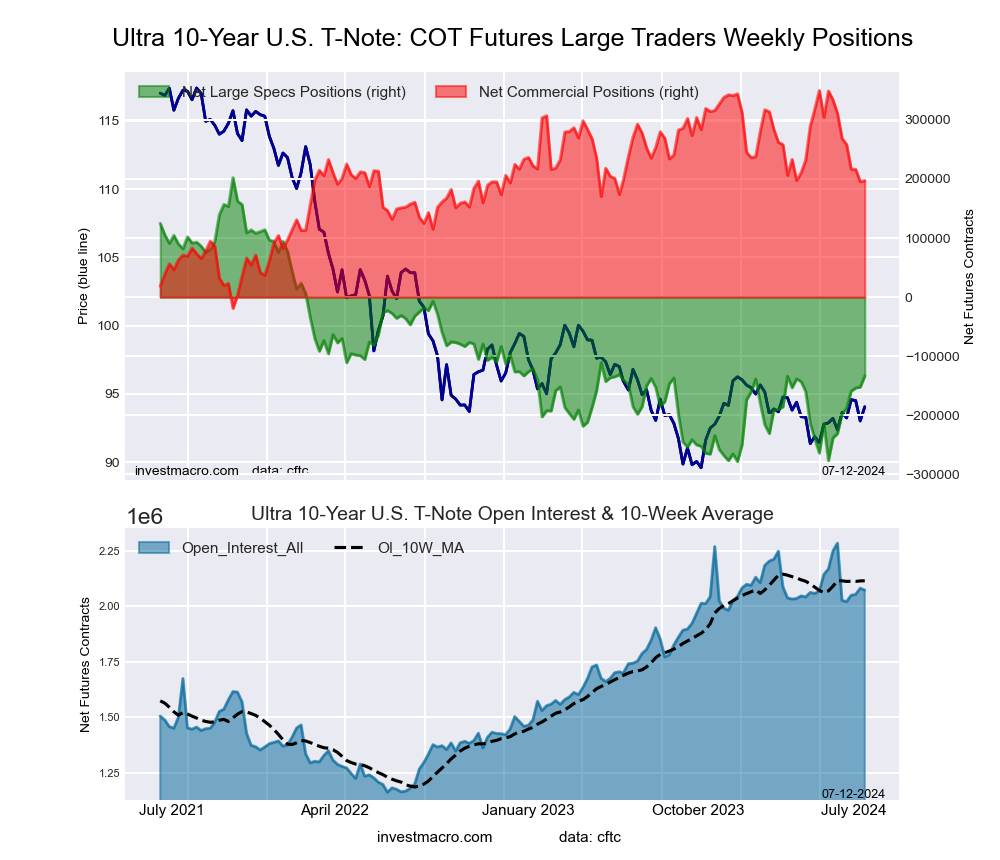
Ultra 10-Year Treasury Notes Bonds Futures COT ChartThe Ultra 10-Year Notes large speculator standing this week reached a net position of -276,454 contracts in the data reported through Tuesday. This was a weekly lowering of -62,155 contracts from the previous week which had a total of -214,299 net contracts.

This week’s current strength score (the trader positioning range over the past three years, measured from 0 to 100) shows the speculators are currently Bearish-Extreme with a score of 0.3 percent. The commercials are Bullish-Extreme with a score of 99.8 percent and the small traders (not shown in chart) are Bullish with a score of 71.1 percent.

Price Trend-Following Model: Weak Uptrend

Our weekly trend-following model classifies the current market price position as: Weak Uptrend. The current action for the model is considered to be: Hold – Maintain Long Position.

Ultra 10-Year Notes StatisticsSPECULATORSCOMMERCIALSSMALL TRADERS
– Percent of Open Interest Longs:11.776.49.8
– Percent of Open Interest Shorts:24.460.313.2
– Net Position:-276,454348,749-72,295
– Gross Longs:253,0581,655,031212,855
– Gross Shorts:529,5121,306,282285,150
– Long to Short Ratio:0.5 to 11.3 to 10.7 to 1
NET POSITION TREND:
– Strength Index Score (3 Year Range Pct):0.399.871.1
– Strength Index Reading (3 Year Range):Bearish-ExtremeBullish-ExtremeBullish
NET POSITION MOVEMENT INDEX:
– 6-Week Change in Strength Index:-27.133.7-2.7


US Treasury Bonds Futures:

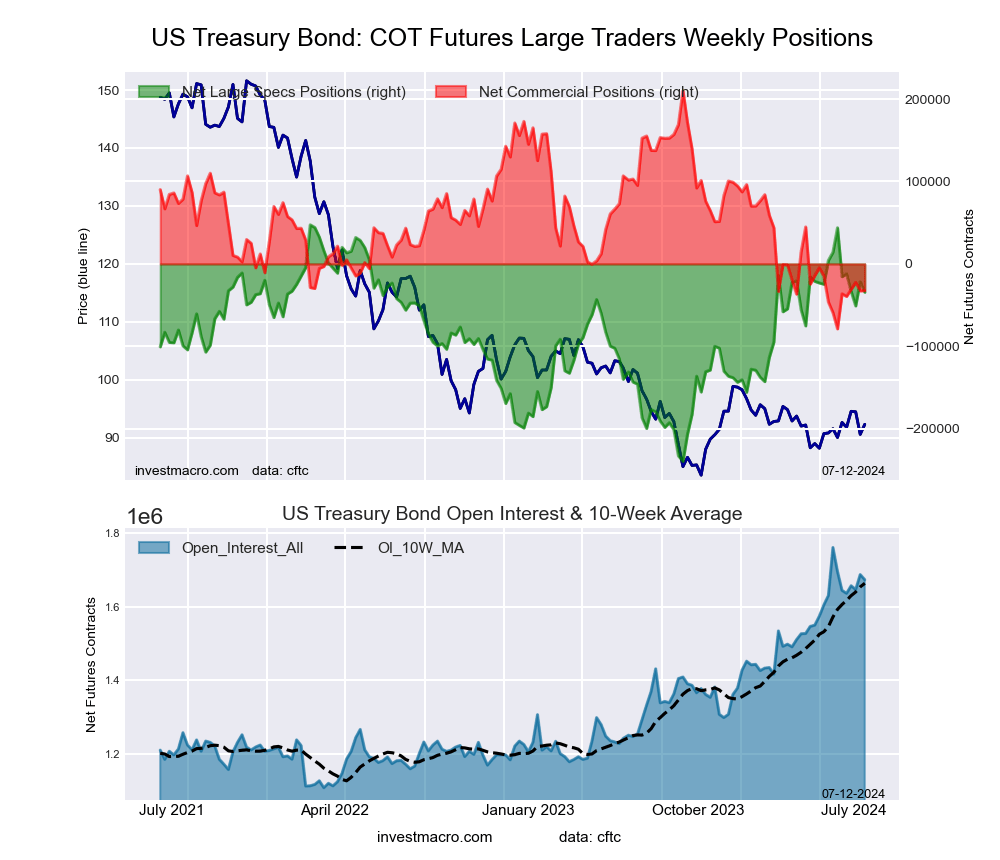
US Year Treasury Notes Long Bonds Futures COT ChartThe US Treasury Bonds large speculator standing this week reached a net position of 4,287 contracts in the data reported through Tuesday. This was a weekly advance of 28,956 contracts from the previous week which had a total of -24,669 net contracts.

This week’s current strength score (the trader positioning range over the past three years, measured from 0 to 100) shows the speculators are currently Bullish-Extreme with a score of 85.0 percent. The commercials are Bearish-Extreme with a score of 0.0 percent and the small traders (not shown in chart) are Bullish with a score of 77.5 percent.

Price Trend-Following Model: Downtrend

Our weekly trend-following model classifies the current market price position as: Downtrend. The current action for the model is considered to be: Hold – Maintain Short Position.

US Treasury Bonds StatisticsSPECULATORSCOMMERCIALSSMALL TRADERS
– Percent of Open Interest Longs:16.768.512.5
– Percent of Open Interest Shorts:16.471.310.0
– Net Position:4,287-46,30442,017
– Gross Longs:271,9191,116,694204,299
– Gross Shorts:267,6321,162,998162,282
– Long to Short Ratio:1.0 to 11.0 to 11.3 to 1
NET POSITION TREND:
– Strength Index Score (3 Year Range Pct):85.00.077.5
– Strength Index Reading (3 Year Range):Bullish-ExtremeBearish-ExtremeBullish
NET POSITION MOVEMENT INDEX:
– 6-Week Change in Strength Index:20.9-23.91.0


Ultra US Treasury Bonds Futures:

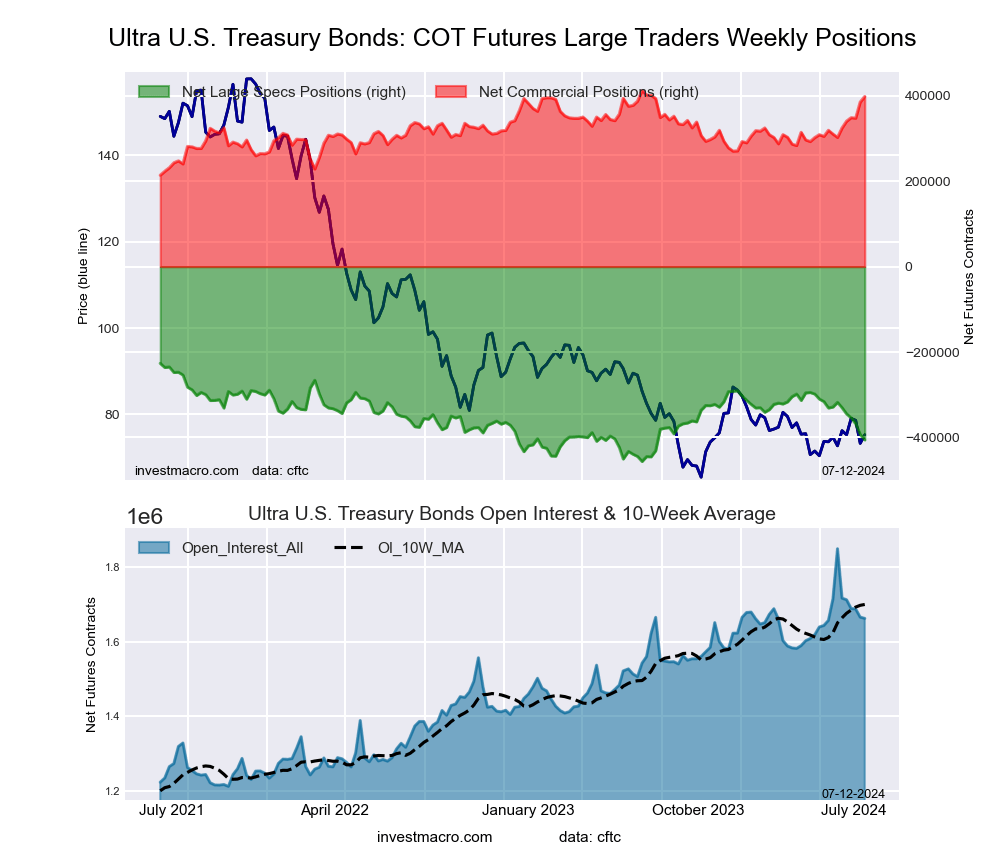
Ultra US Year Treasury Notes Long Bonds Futures COT ChartThe Ultra US Treasury Bonds large speculator standing this week reached a net position of -331,153 contracts in the data reported through Tuesday. This was a weekly fall of -15,038 contracts from the previous week which had a total of -316,115 net contracts.

This week’s current strength score (the trader positioning range over the past three years, measured from 0 to 100) shows the speculators are currently Bullish with a score of 52.2 percent. The commercials are Bullish with a score of 53.0 percent and the small traders (not shown in chart) are Bearish with a score of 47.6 percent.

Price Trend-Following Model: Downtrend

Our weekly trend-following model classifies the current market price position as: Downtrend. The current action for the model is considered to be: Hold – Maintain Short Position.

Ultra US Treasury Bonds StatisticsSPECULATORSCOMMERCIALSSMALL TRADERS
– Percent of Open Interest Longs:8.980.410.4
– Percent of Open Interest Shorts:28.961.19.7
– Net Position:-331,153319,43011,723
– Gross Longs:147,4541,332,490171,656
– Gross Shorts:478,6071,013,060159,933
– Long to Short Ratio:0.3 to 11.3 to 11.1 to 1
NET POSITION TREND:
– Strength Index Score (3 Year Range Pct):52.253.047.6
– Strength Index Reading (3 Year Range):BullishBullishBearish
NET POSITION MOVEMENT INDEX:
– 6-Week Change in Strength Index:-7.42.412.4


Article By InvestMacroReceive our weekly COT Newsletter

*COT Report: The COT data, released weekly to the public each Friday, is updated through the most recent Tuesday (data is 3 days old) and shows a quick view of how large speculators or non-commercials (for-profit traders) were positioned in the futures markets.

The CFTC categorizes trader positions according to commercial hedgers (traders who use futures contracts for hedging as part of the business), non-commercials (large traders who speculate to realize trading profits) and nonreportable traders (usually small traders/speculators) as well as their open interest (contracts open in the market at time of reporting). See CFTC criteria here.
COT Stock Market Charts: Speculator bets led by DowJones-Mini & Russell-Mini

By InvestMacro

Here are the latest charts and statistics for the Commitment of Traders (COT) data published by the Commodities Futures Trading Commission (CFTC).

The latest COT data is updated through Tuesday May 14th and shows a quick view of how large traders (for-profit speculators and commercial entities) were positioned in the futures markets.

Weekly Speculator Changes led by DowJones-Mini & Russell-Mini

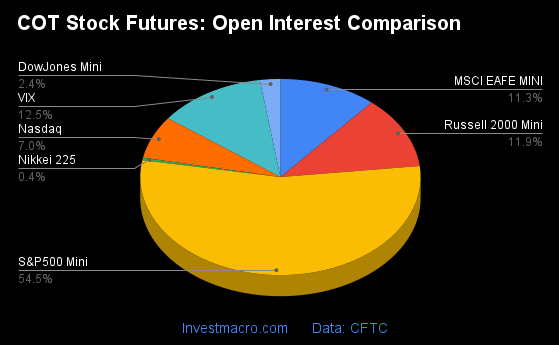
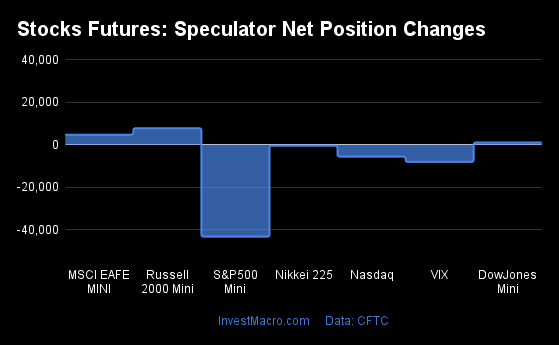
The COT stock markets speculator bets were slightly lower this week as three out of the seven stock markets we cover had higher positioning while the other four markets had lower speculator contracts.

Leading the gains for the stock markets was the DowJones-Mini (7,109 contracts) with the Russell-Mini (5,933 contracts) and the Nikkei 225 (651 contracts) also showing positive weeks.

The markets with the declines in speculator bets this week were the S&P500-Mini (-15,589 contracts), the MSCI EAFE-Mini (-13,427 contracts), the VIX (-9,182 contracts) and with the Nasdaq-Mini (-1,235 contracts) also registering lower bets on the week.


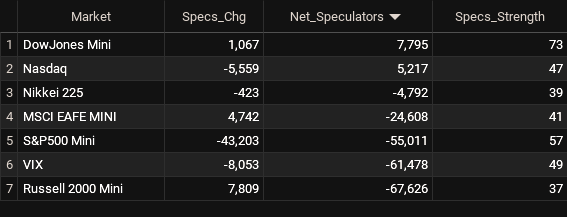
Stock Market Net Speculators Leaderboard

Legend: Weekly Speculators Change | Speculators Current Net Position | Speculators Strength Score compared to last 3-Years (0-100 range)


Strength Scores led by DowJones-Mini

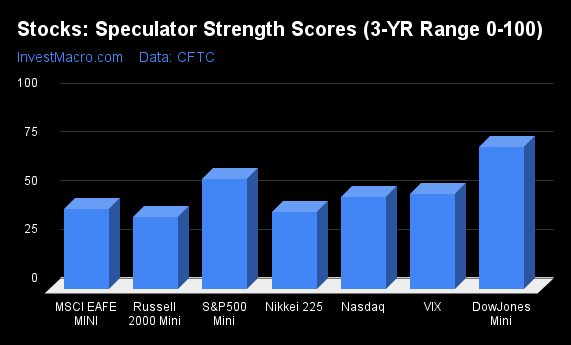
COT Strength Scores (a normalized measure of Speculator positions over a 3-Year range, from 0 to 100 where above 80 is Extreme-Bullish and below 20 is Extreme-Bearish) showed that the DowJones-Mini (86 percent) leads the stock markets this week. The VIX (63 percent) and Russell-Mini (62 percent) come in as the next highest in the weekly strength scores.

On the downside, the MSCI EAFE-Mini (38 percent) comes in at the lowest strength level currently.

Strength Statistics:
VIX (63.1 percent) vs VIX previous week (73.0 percent)
S&P500-Mini (61.0 percent) vs S&P500-Mini previous week (63.3 percent)
DowJones-Mini (86.0 percent) vs DowJones-Mini previous week (74.4 percent)
Nasdaq-Mini (44.1 percent) vs Nasdaq-Mini previous week (46.0 percent)
Russell2000-Mini (62.3 percent) vs Russell2000-Mini previous week (58.1 percent)
Nikkei USD (56.7 percent) vs Nikkei USD previous week (51.1 percent)
EAFE-Mini (38.0 percent) vs EAFE-Mini previous week (51.9 percent)


Nasdaq-Mini tops the 6-Week Strength Trends

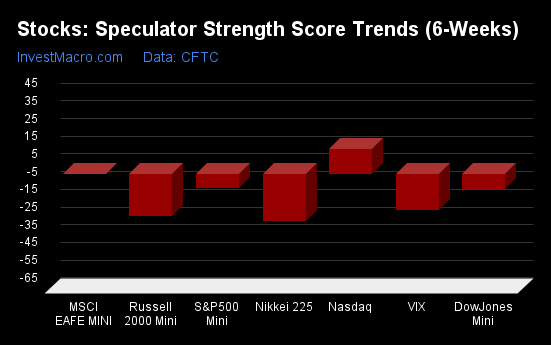
COT Strength Score Trends (or move index, calculates the 6-week changes in strength scores) showed that the Nasdaq-Mini (13 percent) and the S&P500-Mini (8 percent) lead the past six weeks trends for the stock markets.

The MSCI EAFE-Mini (-20 percent) leads the downside trend scores currently with the Russell-Mini (-7 percent) coming in as the next market with lower trend scores.

Strength Trend Statistics:
VIX (2.5 percent) vs VIX previous week (5.4 percent)
S&P500-Mini (7.9 percent) vs S&P500-Mini previous week (23.8 percent)
DowJones-Mini (-1.3 percent) vs DowJones-Mini previous week (-18.5 percent)
Nasdaq-Mini (13.0 percent) vs Nasdaq-Mini previous week (17.9 percent)
Russell2000-Mini (-7.0 percent) vs Russell2000-Mini previous week (-11.7 percent)
Nikkei USD (-2.1 percent) vs Nikkei USD previous week (-7.0 percent)
EAFE-Mini (-19.7 percent) vs EAFE-Mini previous week (-6.3 percent)


Individual Stock Market Charts:

VIX Volatility Futures:

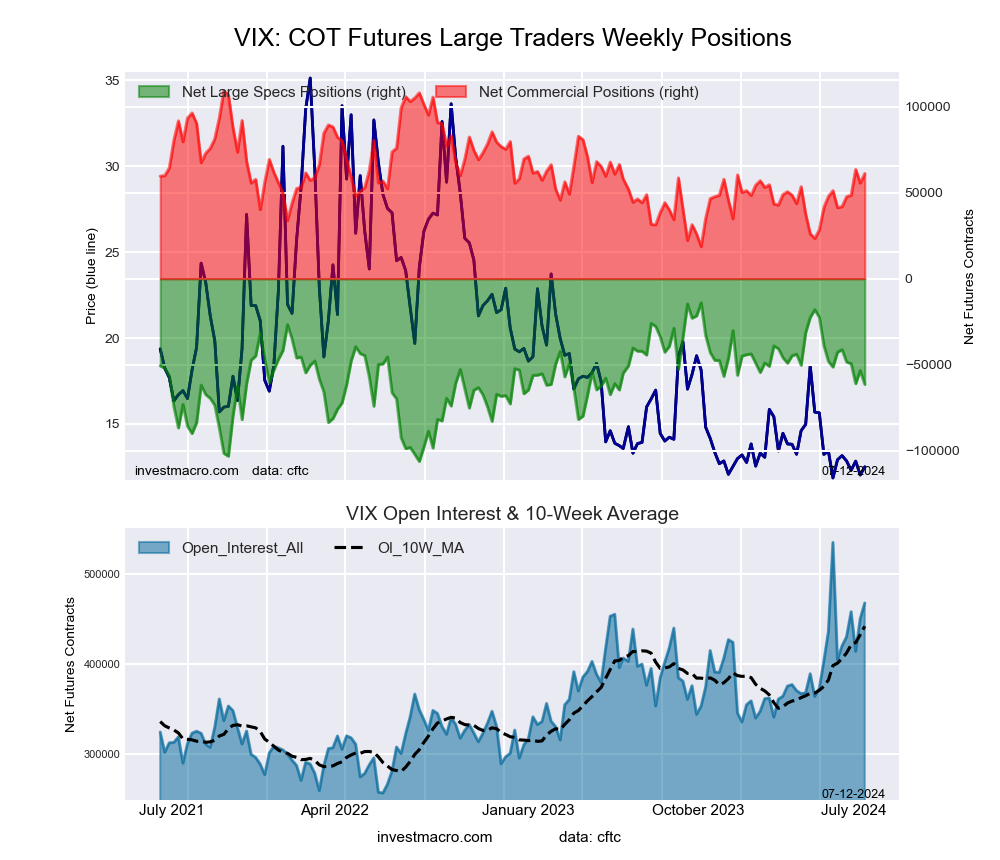
VIX Volatility Futures COT ChartThe VIX Volatility large speculator standing this week equaled a net position of -48,061 contracts in the data reported through Tuesday. This was a weekly fall of -9,182 contracts from the previous week which had a total of -38,879 net contracts.

This week’s current strength score (the trader positioning range over the past three years, measured from 0 to 100) shows the speculators are currently Bullish with a score of 63.1 percent. The commercials are Bearish with a score of 32.1 percent and the small traders (not shown in chart) are Bullish-Extreme with a score of 97.3 percent.

Price Trend-Following Model: Weak Uptrend

Our weekly trend-following model classifies the current market price position as: Weak Uptrend. The current action for the model is considered to be: Hold – Maintain Long Position.

VIX Volatility Futures StatisticsSPECULATORSCOMMERCIALSSMALL TRADERS
– Percent of Open Interest Longs:22.241.56.9
– Percent of Open Interest Shorts:33.230.56.9
– Net Position:-48,06147,902159
– Gross Longs:96,769180,77530,036
– Gross Shorts:144,830132,87329,877
– Long to Short Ratio:0.7 to 11.4 to 11.0 to 1
NET POSITION TREND:
– Strength Index Score (3 Year Range Pct):63.132.197.3
– Strength Index Reading (3 Year Range):BullishBearishBullish-Extreme
NET POSITION MOVEMENT INDEX:
– 6-Week Change in Strength Index:2.5-6.217.3


S&P500 Mini Futures:

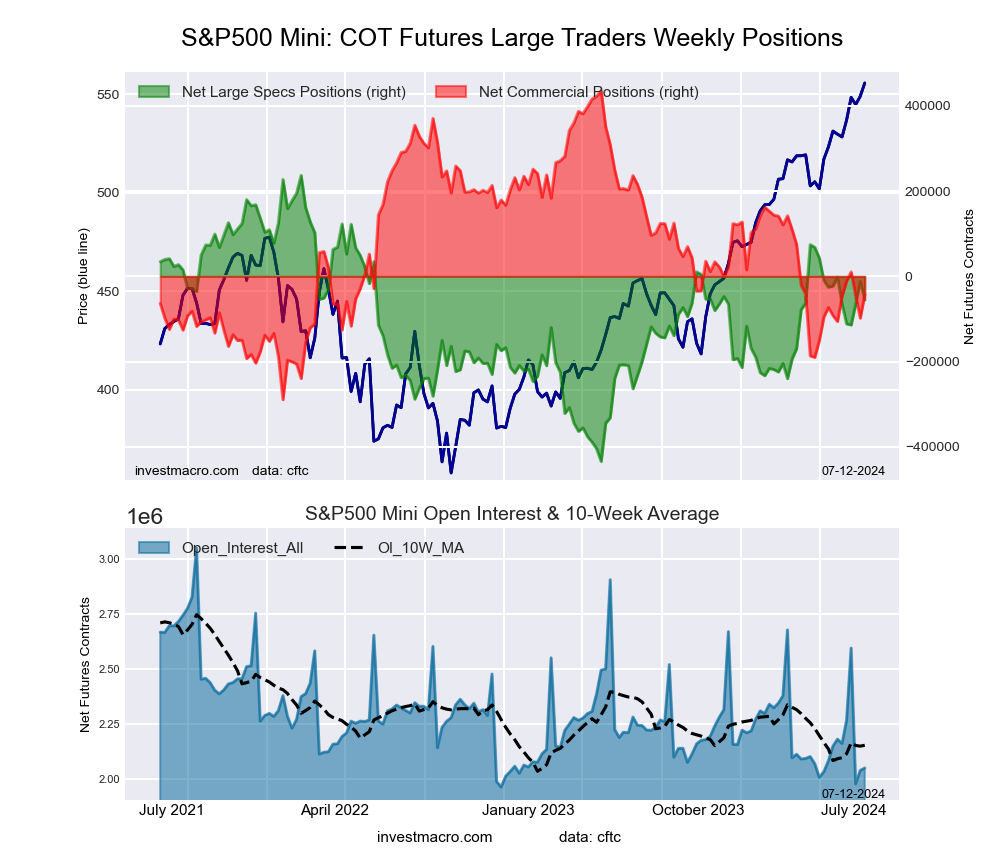
SP500 Mini Futures COT ChartThe S&P500 Mini large speculator standing this week equaled a net position of -25,284 contracts in the data reported through Tuesday. This was a weekly fall of -15,589 contracts from the previous week which had a total of -9,695 net contracts.

This week’s current strength score (the trader positioning range over the past three years, measured from 0 to 100) shows the speculators are currently Bullish with a score of 61.0 percent. The commercials are Bearish with a score of 29.8 percent and the small traders (not shown in chart) are Bullish with a score of 76.2 percent.

Price Trend-Following Model: Strong Uptrend

Our weekly trend-following model classifies the current market price position as: Strong Uptrend. The current action for the model is considered to be: Hold – Maintain Long Position.

S&P500 Mini Futures StatisticsSPECULATORSCOMMERCIALSSMALL TRADERS
– Percent of Open Interest Longs:13.171.013.4
– Percent of Open Interest Shorts:14.474.58.6
– Net Position:-25,284-73,04798,331
– Gross Longs:273,3981,477,881278,004
– Gross Shorts:298,6821,550,928179,673
– Long to Short Ratio:0.9 to 11.0 to 11.5 to 1
NET POSITION TREND:
– Strength Index Score (3 Year Range Pct):61.029.876.2
– Strength Index Reading (3 Year Range):BullishBearishBullish
NET POSITION MOVEMENT INDEX:
– 6-Week Change in Strength Index:7.9-7.2-0.2


Dow Jones Mini Futures:

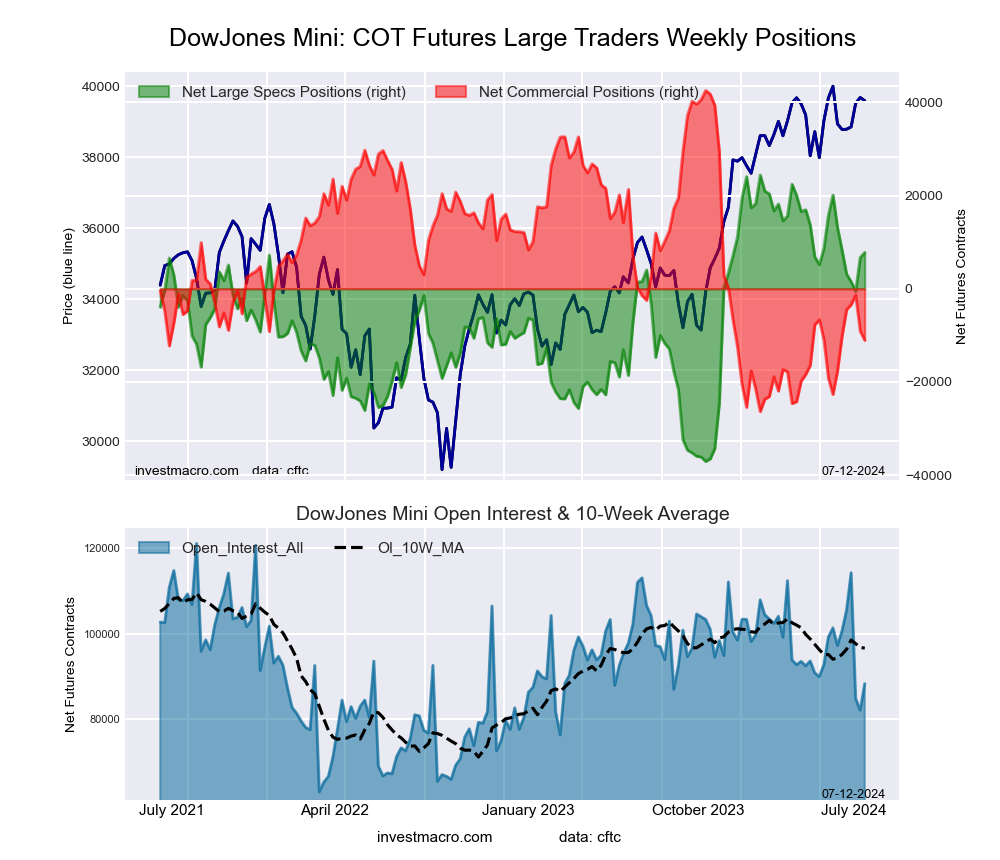
Dow Jones Mini Futures COT ChartThe Dow Jones Mini large speculator standing this week equaled a net position of 15,773 contracts in the data reported through Tuesday. This was a weekly rise of 7,109 contracts from the previous week which had a total of 8,664 net contracts.

This week’s current strength score (the trader positioning range over the past three years, measured from 0 to 100) shows the speculators are currently Bullish-Extreme with a score of 86.0 percent. The commercials are Bearish-Extreme with a score of 10.4 percent and the small traders (not shown in chart) are Bullish with a score of 60.5 percent.

Price Trend-Following Model: Strong Uptrend

Our weekly trend-following model classifies the current market price position as: Strong Uptrend. The current action for the model is considered to be: Hold – Maintain Long Position.

Dow Jones Mini Futures StatisticsSPECULATORSCOMMERCIALSSMALL TRADERS
– Percent of Open Interest Longs:24.957.514.9
– Percent of Open Interest Shorts:9.076.811.5
– Net Position:15,773-19,1773,404
– Gross Longs:24,73957,00614,802
– Gross Shorts:8,96676,18311,398
– Long to Short Ratio:2.8 to 10.7 to 11.3 to 1
NET POSITION TREND:
– Strength Index Score (3 Year Range Pct):86.010.460.5
– Strength Index Reading (3 Year Range):Bullish-ExtremeBearish-ExtremeBullish
NET POSITION MOVEMENT INDEX:
– 6-Week Change in Strength Index:-1.30.90.9


Nasdaq Mini Futures:

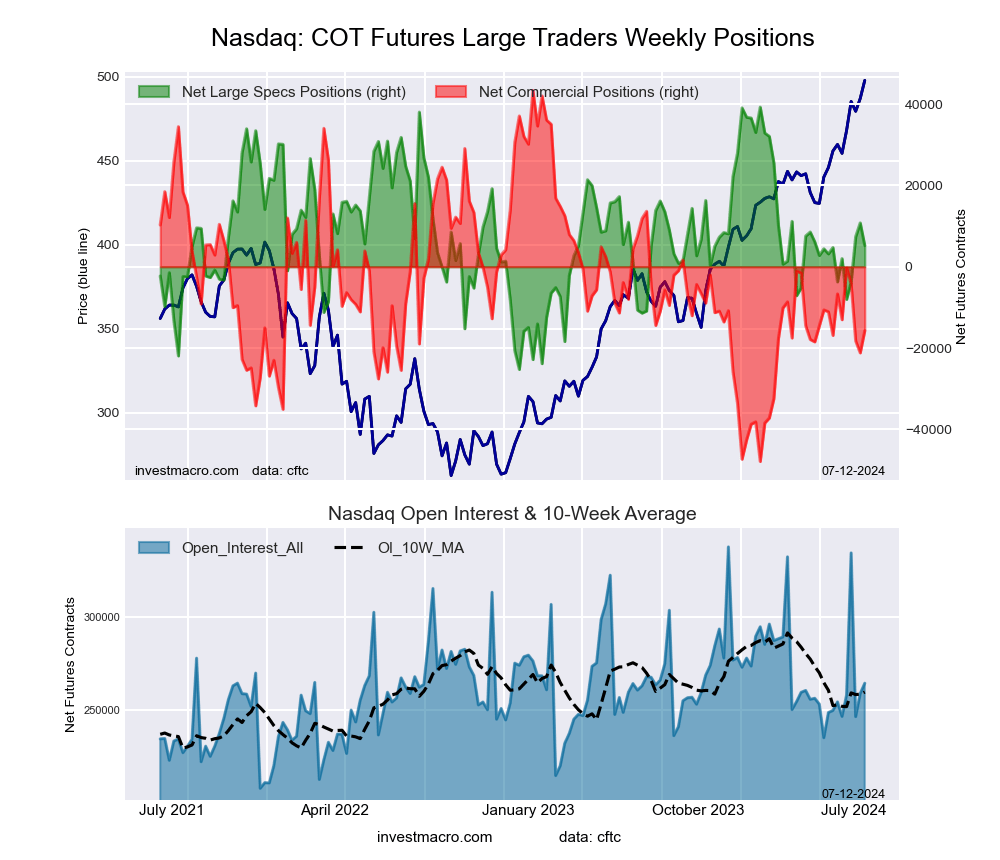
Nasdaq Mini Futures COT ChartThe Nasdaq Mini large speculator standing this week equaled a net position of 3,170 contracts in the data reported through Tuesday. This was a weekly lowering of -1,235 contracts from the previous week which had a total of 4,405 net contracts.

This week’s current strength score (the trader positioning range over the past three years, measured from 0 to 100) shows the speculators are currently Bearish with a score of 44.1 percent. The commercials are Bearish with a score of 40.4 percent and the small traders (not shown in chart) are Bullish-Extreme with a score of 89.1 percent.

Price Trend-Following Model: Strong Uptrend

Our weekly trend-following model classifies the current market price position as: Strong Uptrend. The current action for the model is considered to be: Hold – Maintain Long Position.

Nasdaq Mini Futures StatisticsSPECULATORSCOMMERCIALSSMALL TRADERS
– Percent of Open Interest Longs:27.753.716.5
– Percent of Open Interest Shorts:26.458.213.3
– Net Position:3,170-11,0687,898
– Gross Longs:68,869133,54341,056
– Gross Shorts:65,699144,61133,158
– Long to Short Ratio:1.0 to 10.9 to 11.2 to 1
NET POSITION TREND:
– Strength Index Score (3 Year Range Pct):44.140.489.1
– Strength Index Reading (3 Year Range):BearishBearishBullish-Extreme
NET POSITION MOVEMENT INDEX:
– 6-Week Change in Strength Index:13.0-10.42.8


Russell 2000 Mini Futures:

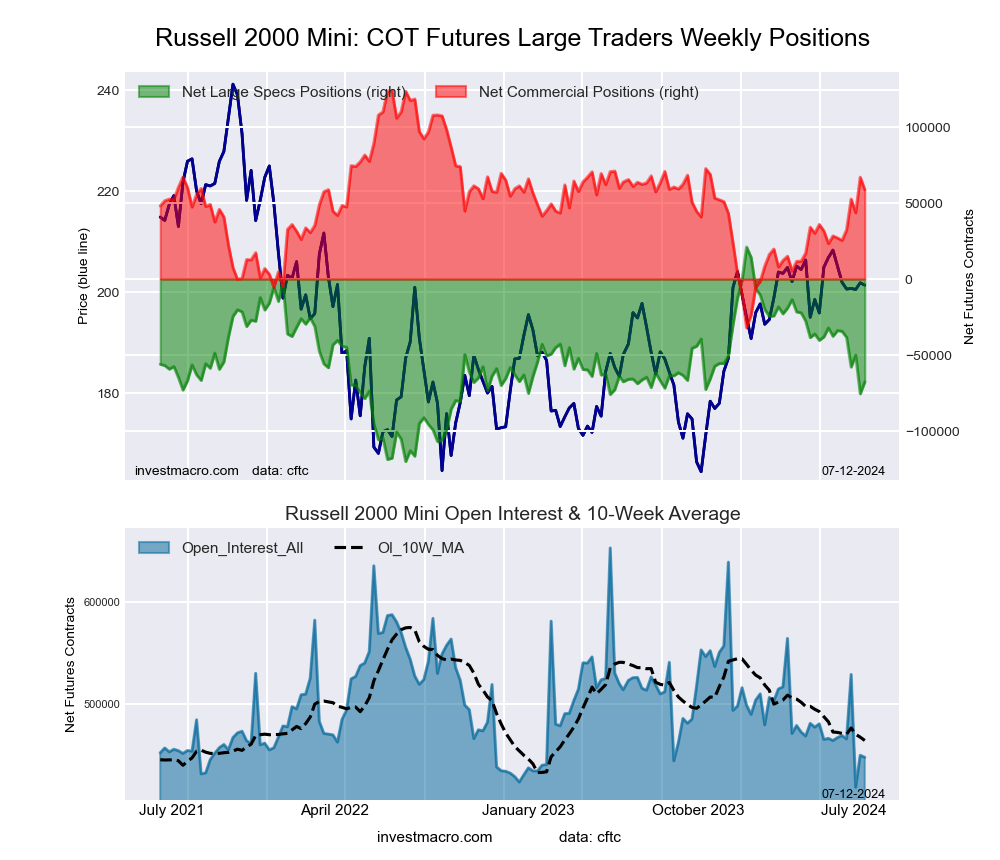
Russell 2000 Mini Futures COT ChartThe Russell 2000 Mini large speculator standing this week equaled a net position of -32,067 contracts in the data reported through Tuesday. This was a weekly advance of 5,933 contracts from the previous week which had a total of -38,000 net contracts.

This week’s current strength score (the trader positioning range over the past three years, measured from 0 to 100) shows the speculators are currently Bullish with a score of 62.3 percent. The commercials are Bearish with a score of 35.5 percent and the small traders (not shown in chart) are Bullish with a score of 58.4 percent.

Price Trend-Following Model: Strong Uptrend

Our weekly trend-following model classifies the current market price position as: Strong Uptrend. The current action for the model is considered to be: Hold – Maintain Long Position.

Russell 2000 Mini Futures StatisticsSPECULATORSCOMMERCIALSSMALL TRADERS
– Percent of Open Interest Longs:17.673.76.3
– Percent of Open Interest Shorts:24.568.74.4
– Net Position:-32,06723,3328,735
– Gross Longs:82,124343,68729,283
– Gross Shorts:114,191320,35520,548
– Long to Short Ratio:0.7 to 11.1 to 11.4 to 1
NET POSITION TREND:
– Strength Index Score (3 Year Range Pct):62.335.558.4
– Strength Index Reading (3 Year Range):BullishBearishBullish
NET POSITION MOVEMENT INDEX:
– 6-Week Change in Strength Index:-7.07.4-5.7


Nikkei Stock Average (USD) Futures:

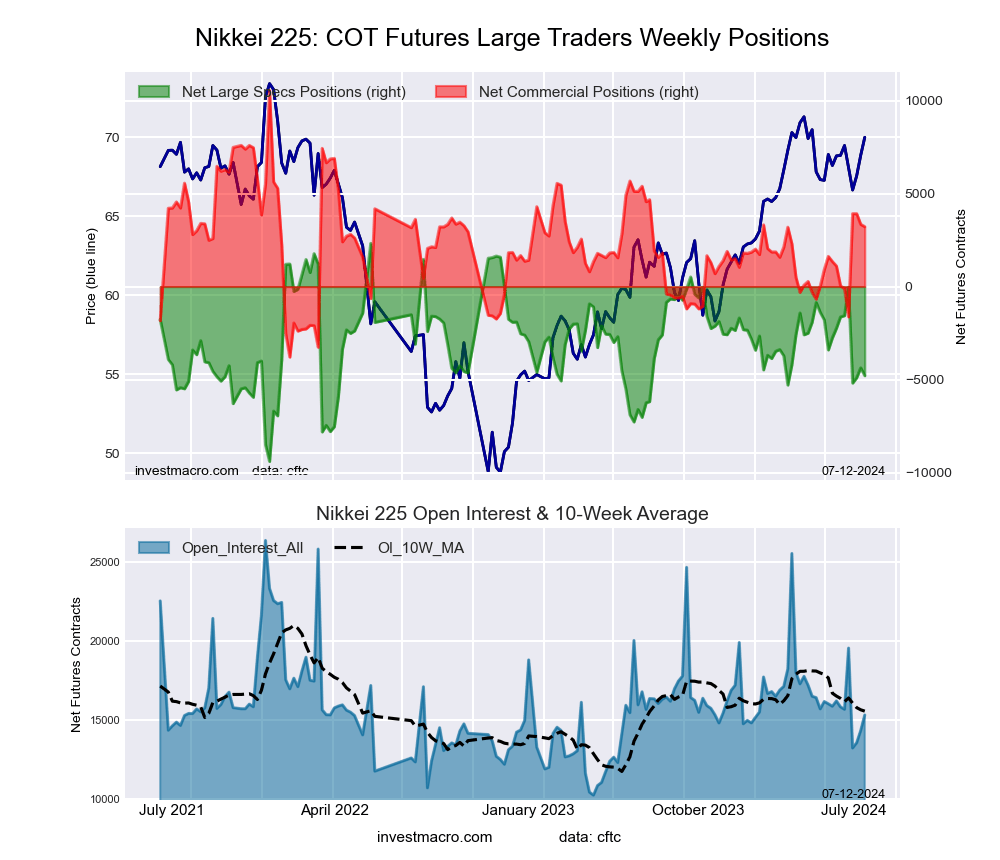
Nikkei Stock Average (USD) Futures COT ChartThe Nikkei Stock Average (USD) large speculator standing this week equaled a net position of -2,756 contracts in the data reported through Tuesday. This was a weekly gain of 651 contracts from the previous week which had a total of -3,407 net contracts.

This week’s current strength score (the trader positioning range over the past three years, measured from 0 to 100) shows the speculators are currently Bullish with a score of 56.7 percent. The commercials are Bearish with a score of 39.1 percent and the small traders (not shown in chart) are Bullish with a score of 60.0 percent.

Price Trend-Following Model: Uptrend

Our weekly trend-following model classifies the current market price position as: Uptrend. The current action for the model is considered to be: Hold – Maintain Long Position.

Nikkei Stock Average Futures StatisticsSPECULATORSCOMMERCIALSSMALL TRADERS
– Percent of Open Interest Longs:11.365.523.2
– Percent of Open Interest Shorts:28.757.014.3
– Net Position:-2,7561,3461,410
– Gross Longs:1,79810,3973,674
– Gross Shorts:4,5549,0512,264
– Long to Short Ratio:0.4 to 11.1 to 11.6 to 1
NET POSITION TREND:
– Strength Index Score (3 Year Range Pct):56.739.160.0
– Strength Index Reading (3 Year Range):BullishBearishBullish
NET POSITION MOVEMENT INDEX:
– 6-Week Change in Strength Index:-2.17.1-13.4


MSCI EAFE Mini Futures:

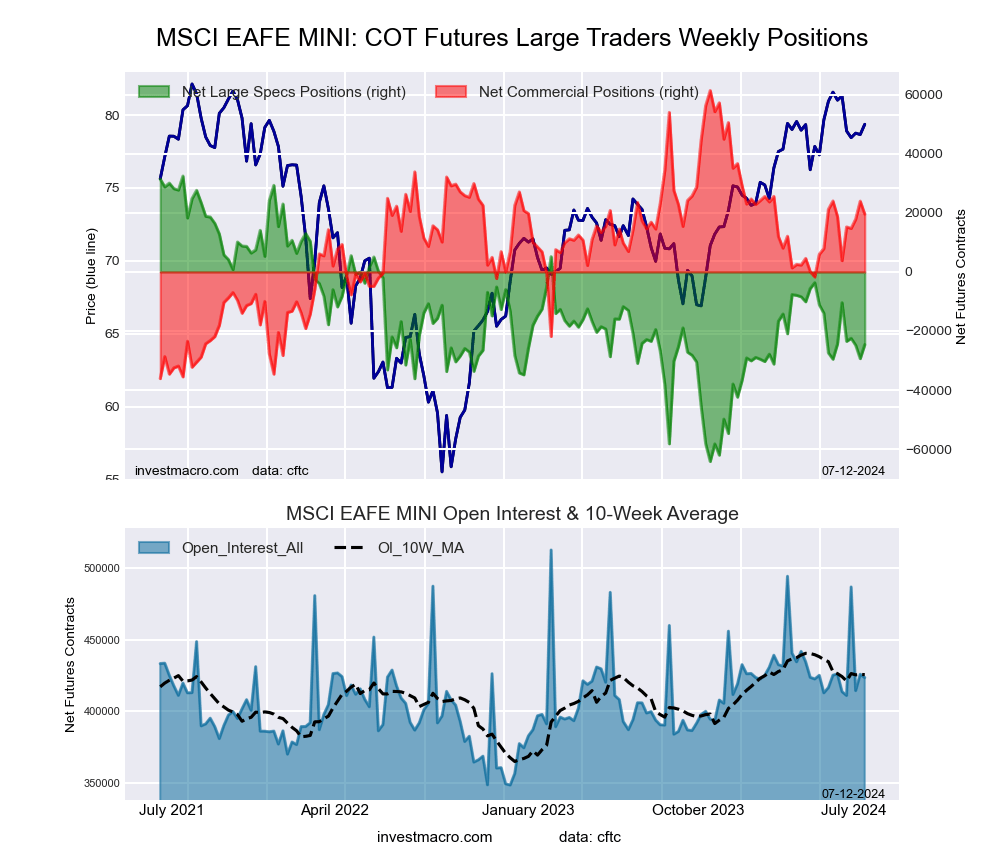
MSCI EAFE Mini Futures COT ChartThe MSCI EAFE Mini large speculator standing this week equaled a net position of -27,423 contracts in the data reported through Tuesday. This was a weekly lowering of -13,427 contracts from the previous week which had a total of -13,996 net contracts.

This week’s current strength score (the trader positioning range over the past three years, measured from 0 to 100) shows the speculators are currently Bearish with a score of 38.0 percent. The commercials are Bullish with a score of 58.8 percent and the small traders (not shown in chart) are Bearish with a score of 48.0 percent.

Price Trend-Following Model: Strong Uptrend

Our weekly trend-following model classifies the current market price position as: Strong Uptrend. The current action for the model is considered to be: Hold – Maintain Long Position.

MSCI EAFE Mini Futures StatisticsSPECULATORSCOMMERCIALSSMALL TRADERS
– Percent of Open Interest Longs:5.990.82.9
– Percent of Open Interest Shorts:12.585.81.4
– Net Position:-27,42321,2016,222
– Gross Longs:24,475378,43812,043
– Gross Shorts:51,898357,2375,821
– Long to Short Ratio:0.5 to 11.1 to 12.1 to 1
NET POSITION TREND:
– Strength Index Score (3 Year Range Pct):38.058.848.0
– Strength Index Reading (3 Year Range):BearishBullishBearish
NET POSITION MOVEMENT INDEX:
– 6-Week Change in Strength Index:-19.719.30.7


Article By InvestMacroReceive our weekly COT Newsletter

*COT Report: The COT data, released weekly to the public each Friday, is updated through the most recent Tuesday (data is 3 days old) and shows a quick view of how large speculators or non-commercials (for-profit traders) were positioned in the futures markets.

The CFTC categorizes trader positions according to commercial hedgers (traders who use futures contracts for hedging as part of the business), non-commercials (large traders who speculate to realize trading profits) and nonreportable traders (usually small traders/speculators) as well as their open interest (contracts open in the market at time of reporting). See CFTC criteria here.
COT Soft Commodities Charts: Speculator bets led higher by Corn & Wheat

By InvestMacro

Here are the latest charts and statistics for the Commitment of Traders (COT) reports data published by the Commodities Futures Trading Commission (CFTC).

The latest COT data is updated through Tuesday May 14th and shows a quick view of how large traders (for-profit speculators and commercial entities) were positioned in the futures markets.

Weekly Speculator Changes led by Corn & Wheat

The COT soft commodities markets speculator bets were higher this week as six out of the eleven softs markets we cover had higher positioning while the other five markets had lower speculator contracts.

Leading the gains for the softs markets was Corn (31,578 contracts) with Wheat (12,370 contracts), Soybean Meal (8,815 contracts), Cocoa (1,396 contracts), Live Cattle (1,184 contracts) and Soybean Oil (1,021 contracts) also showing positive weeks.

The markets with the declines in speculator bets this week were Lean Hogs (-6,315 contracts), Soybeans (-5,927 contracts), Coffee (-5,666 contracts), Sugar (-2,670 contracts) and with Cotton (-1,737 contracts) also registering lower bets on the week.


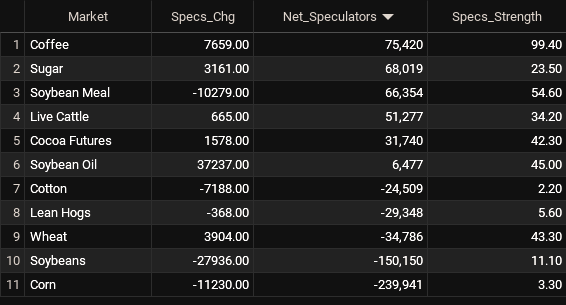
Soft Commodities Net Speculators Leaderboard

Legend: Weekly Speculators Change | Speculators Current Net Position | Speculators Strength Score compared to last 3-Years (0-100 range)


Strength Scores led by Coffee & Wheat

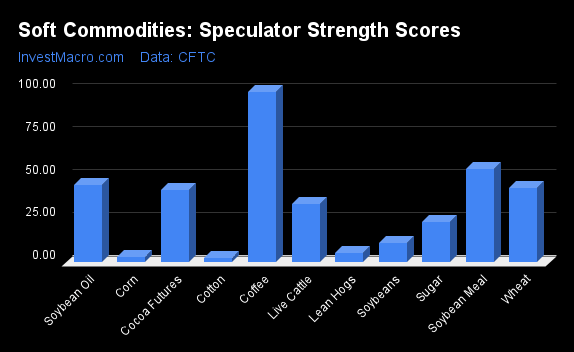
COT Strength Scores (a normalized measure of Speculator positions over a 3-Year range, from 0 to 100 where above 80 is Extreme-Bullish and below 20 is Extreme-Bearish) showed that Coffee (82 percent) and Wheat (64 percent) lead the softs markets this week. Soybean Meal (61 percent) and Lean Hogs (56 percent) come in as the next highest in the weekly strength scores.

On the downside, Sugar (0 percent), Soybean Oil (4 percent) and Cotton (14 percent) come in at the lowest strength levels currently and are in Extreme-Bearish territory (below 20 percent).

Strength Statistics:
Corn (33.9 percent) vs Corn previous week (29.9 percent)
Sugar (0.0 percent) vs Sugar previous week (1.0 percent)
Coffee (81.7 percent) vs Coffee previous week (87.2 percent)
Soybeans (31.0 percent) vs Soybeans previous week (32.4 percent)
Soybean Oil (3.6 percent) vs Soybean Oil previous week (3.0 percent)
Soybean Meal (61.4 percent) vs Soybean Meal previous week (57.7 percent)
Live Cattle (27.1 percent) vs Live Cattle previous week (25.8 percent)
Lean Hogs (56.0 percent) vs Lean Hogs previous week (61.2 percent)
Cotton (13.5 percent) vs Cotton previous week (14.8 percent)
Cocoa (38.5 percent) vs Cocoa previous week (37.1 percent)
Wheat (63.7 percent) vs Wheat previous week (55.2 percent)


Soybean Meal & Wheat top the 6-Week Strength Trends

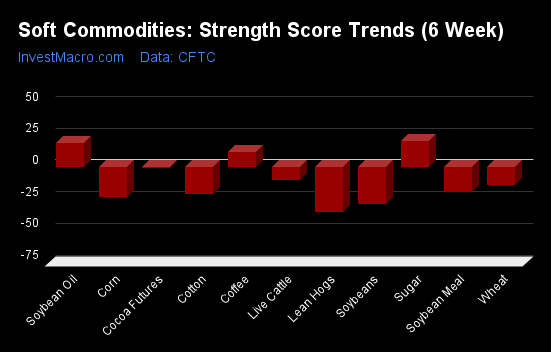
COT Strength Score Trends (or move index, calculates the 6-week changes in strength scores) showed that Soybean Meal (50 percent) and Wheat (38 percent) lead the past six weeks trends for soft commodities. Corn (23 percent) and Soybeans (22 percent) are the next highest positive movers in the latest trends data.

Cotton (-62 percent) leads the downside trend scores currently with Sugar (-33 percent), Soybean Oil (-29 percent) and Live Cattle (-17 percent) following next with lower trend scores.

Strength Trend Statistics:
Corn (23.1 percent) vs Corn previous week (18.7 percent)
Sugar (-33.1 percent) vs Sugar previous week (-26.0 percent)
Coffee (-10.0 percent) vs Coffee previous week (6.7 percent)
Soybeans (21.7 percent) vs Soybeans previous week (22.1 percent)
Soybean Oil (-28.6 percent) vs Soybean Oil previous week (-26.1 percent)
Soybean Meal (49.7 percent) vs Soybean Meal previous week (42.5 percent)
Live Cattle (-16.6 percent) vs Live Cattle previous week (-25.3 percent)
Lean Hogs (-9.1 percent) vs Lean Hogs previous week (3.0 percent)
Cotton (-62.0 percent) vs Cotton previous week (-60.6 percent)
Cocoa (-5.8 percent) vs Cocoa previous week (-10.0 percent)
Wheat (38.1 percent) vs Wheat previous week (30.5 percent)


Individual Soft Commodities Markets:

CORN Futures:

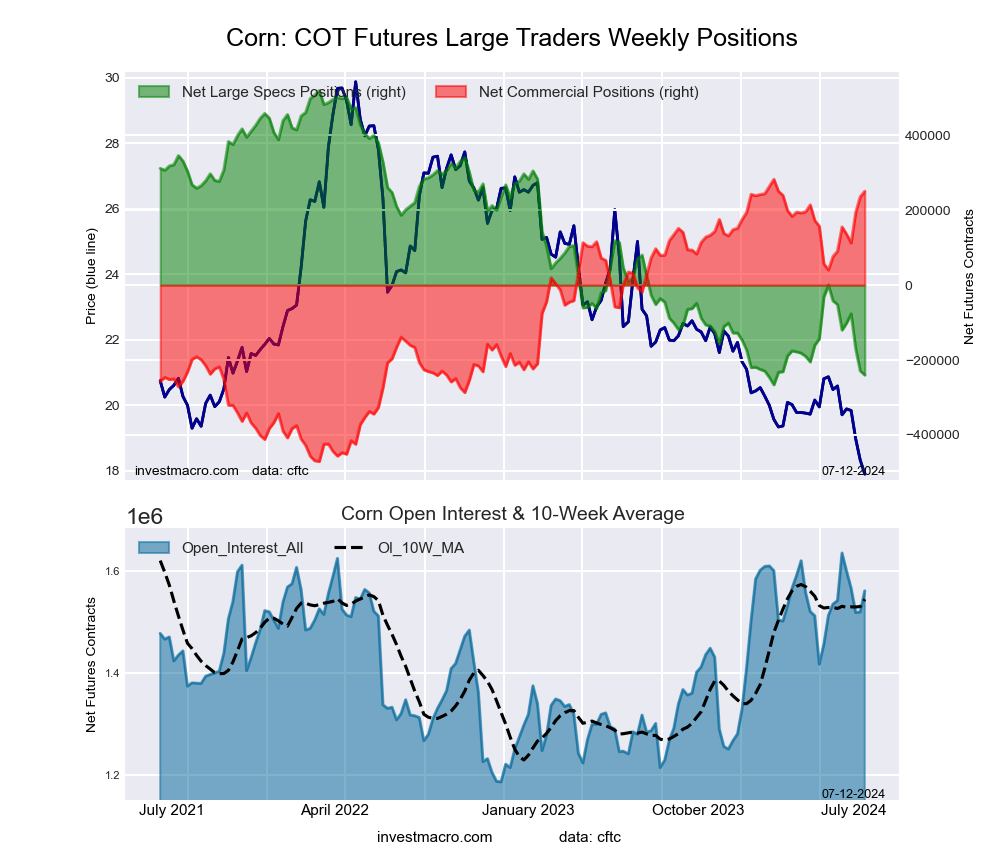
CORN Futures COT ChartThe CORN large speculator standing this week resulted in a net position of 224 contracts in the data reported through Tuesday. This was a weekly lift of 31,578 contracts from the previous week which had a total of -31,354 net contracts.

This week’s current strength score (the trader positioning range over the past three years, measured from 0 to 100) shows the speculators are currently Bearish with a score of 33.9 percent. The commercials are Bullish with a score of 67.9 percent and the small traders (not shown in chart) are Bullish with a score of 53.7 percent.

Price Trend-Following Model: Weak Downtrend

Our weekly trend-following model classifies the current market price position as: Weak Downtrend. The current action for the model is considered to be: Hold – Maintain Short Position.

CORN Futures StatisticsSPECULATORSCOMMERCIALSSMALL TRADERS
– Percent of Open Interest Longs:22.341.89.1
– Percent of Open Interest Shorts:22.339.111.8
– Net Position:22440,405-40,629
– Gross Longs:337,217632,478138,445
– Gross Shorts:336,993592,073179,074
– Long to Short Ratio:1.0 to 11.1 to 10.8 to 1
NET POSITION TREND:
– Strength Index Score (3 Year Range Pct):33.967.953.7
– Strength Index Reading (3 Year Range):BearishBullishBullish
NET POSITION MOVEMENT INDEX:
– 6-Week Change in Strength Index:23.1-20.2-38.9


SUGAR Futures:

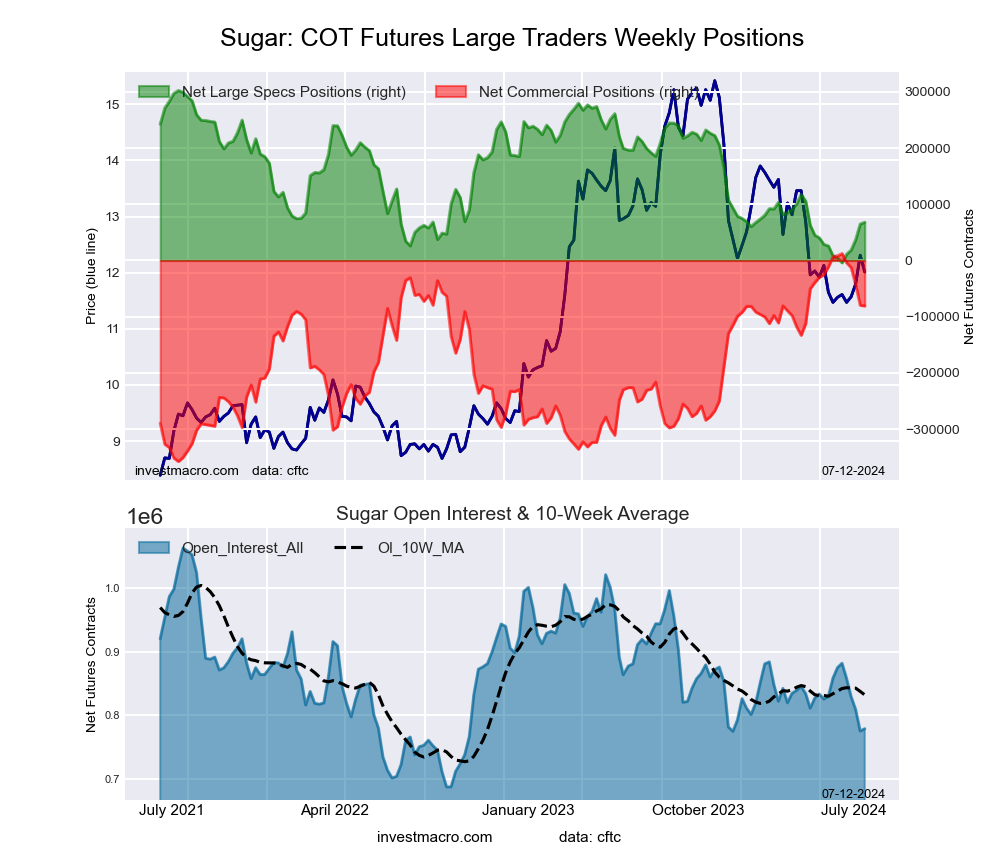
SUGAR Futures COT ChartThe SUGAR large speculator standing this week resulted in a net position of 25,891 contracts in the data reported through Tuesday. This was a weekly reduction of -2,670 contracts from the previous week which had a total of 28,561 net contracts.

This week’s current strength score (the trader positioning range over the past three years, measured from 0 to 100) shows the speculators are currently Bearish-Extreme with a score of 0.0 percent. The commercials are Bullish-Extreme with a score of 100.0 percent and the small traders (not shown in chart) are Bearish-Extreme with a score of 0.0 percent.

Price Trend-Following Model: Strong Downtrend

Our weekly trend-following model classifies the current market price position as: Strong Downtrend. The current action for the model is considered to be: Hold – Maintain Short Position.

SUGAR Futures StatisticsSPECULATORSCOMMERCIALSSMALL TRADERS
– Percent of Open Interest Longs:25.353.07.3
– Percent of Open Interest Shorts:22.254.49.0
– Net Position:25,891-11,459-14,432
– Gross Longs:209,791439,62360,523
– Gross Shorts:183,900451,08274,955
– Long to Short Ratio:1.1 to 11.0 to 10.8 to 1
NET POSITION TREND:
– Strength Index Score (3 Year Range Pct):0.0100.00.0
– Strength Index Reading (3 Year Range):Bearish-ExtremeBullish-ExtremeBearish-Extreme
NET POSITION MOVEMENT INDEX:
– 6-Week Change in Strength Index:-33.135.1-39.4


COFFEE Futures:

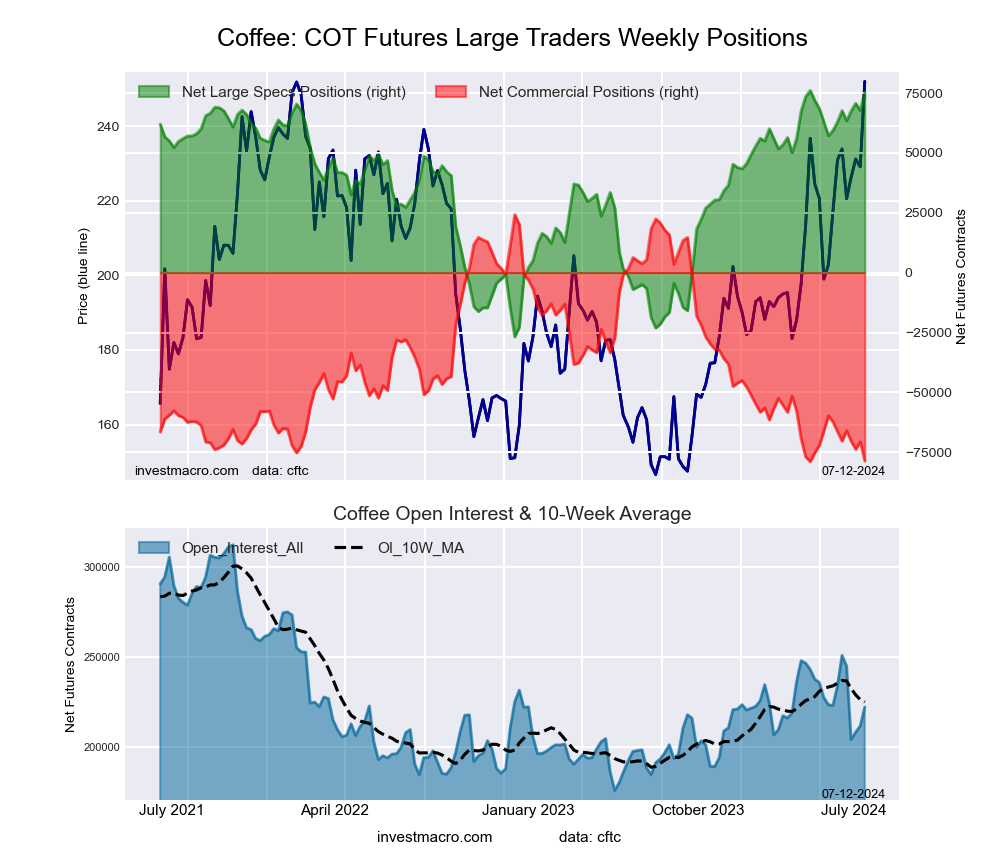
COFFEE Futures COT ChartThe COFFEE large speculator standing this week resulted in a net position of 57,211 contracts in the data reported through Tuesday. This was a weekly lowering of -5,666 contracts from the previous week which had a total of 62,877 net contracts.

This week’s current strength score (the trader positioning range over the past three years, measured from 0 to 100) shows the speculators are currently Bullish-Extreme with a score of 81.7 percent. The commercials are Bearish-Extreme with a score of 18.6 percent and the small traders (not shown in chart) are Bullish with a score of 51.5 percent.

Price Trend-Following Model: Uptrend

Our weekly trend-following model classifies the current market price position as: Uptrend. The current action for the model is considered to be: Hold – Maintain Long Position.

COFFEE Futures StatisticsSPECULATORSCOMMERCIALSSMALL TRADERS
– Percent of Open Interest Longs:34.636.34.1
– Percent of Open Interest Shorts:9.063.03.0
– Net Position:57,211-59,6942,483
– Gross Longs:77,22881,0229,092
– Gross Shorts:20,017140,7166,609
– Long to Short Ratio:3.9 to 10.6 to 11.4 to 1
NET POSITION TREND:
– Strength Index Score (3 Year Range Pct):81.718.651.5
– Strength Index Reading (3 Year Range):Bullish-ExtremeBearish-ExtremeBullish
NET POSITION MOVEMENT INDEX:
– 6-Week Change in Strength Index:-10.09.48.3


SOYBEANS Futures:

SOYBEANS Futures COT ChartThe SOYBEANS large speculator standing this week resulted in a net position of -65,975 contracts in the data reported through Tuesday. This was a weekly reduction of -5,927 contracts from the previous week which had a total of -60,048 net contracts.

This week’s current strength score (the trader positioning range over the past three years, measured from 0 to 100) shows the speculators are currently Bearish with a score of 31.0 percent. The commercials are Bullish with a score of 70.8 percent and the small traders (not shown in chart) are Bullish with a score of 70.4 percent.

Price Trend-Following Model: Weak Downtrend

Our weekly trend-following model classifies the current market price position as: Weak Downtrend. The current action for the model is considered to be: Hold – Maintain Short Position.

SOYBEANS Futures StatisticsSPECULATORSCOMMERCIALSSMALL TRADERS
– Percent of Open Interest Longs:14.959.37.3
– Percent of Open Interest Shorts:23.748.59.3
– Net Position:-65,97581,604-15,629
– Gross Longs:112,139446,69654,657
– Gross Shorts:178,114365,09270,286
– Long to Short Ratio:0.6 to 11.2 to 10.8 to 1
NET POSITION TREND:
– Strength Index Score (3 Year Range Pct):31.070.870.4
– Strength Index Reading (3 Year Range):BearishBullishBullish
NET POSITION MOVEMENT INDEX:
– 6-Week Change in Strength Index:21.7-20.4-11.6


SOYBEAN OIL Futures:

SOYBEAN OIL Futures COT ChartThe SOYBEAN OIL large speculator standing this week resulted in a net position of -50,532 contracts in the data reported through Tuesday. This was a weekly gain of 1,021 contracts from the previous week which had a total of -51,553 net contracts.

This week’s current strength score (the trader positioning range over the past three years, measured from 0 to 100) shows the speculators are currently Bearish-Extreme with a score of 3.6 percent. The commercials are Bullish-Extreme with a score of 95.5 percent and the small traders (not shown in chart) are Bearish with a score of 27.1 percent.

Price Trend-Following Model: Strong Downtrend

Our weekly trend-following model classifies the current market price position as: Strong Downtrend. The current action for the model is considered to be: Hold – Maintain Short Position.

SOYBEAN OIL Futures StatisticsSPECULATORSCOMMERCIALSSMALL TRADERS
– Percent of Open Interest Longs:20.153.25.9
– Percent of Open Interest Shorts:29.544.55.2
– Net Position:-50,53247,1813,351
– Gross Longs:109,303288,45031,814
– Gross Shorts:159,835241,26928,463
– Long to Short Ratio:0.7 to 11.2 to 11.1 to 1
NET POSITION TREND:
– Strength Index Score (3 Year Range Pct):3.695.527.1
– Strength Index Reading (3 Year Range):Bearish-ExtremeBullish-ExtremeBearish
NET POSITION MOVEMENT INDEX:
– 6-Week Change in Strength Index:-28.626.5-6.8


SOYBEAN MEAL Futures:

SOYBEAN MEAL Futures COT ChartThe SOYBEAN MEAL large speculator standing this week resulted in a net position of 82,785 contracts in the data reported through Tuesday. This was a weekly increase of 8,815 contracts from the previous week which had a total of 73,970 net contracts.

This week’s current strength score (the trader positioning range over the past three years, measured from 0 to 100) shows the speculators are currently Bullish with a score of 61.4 percent. The commercials are Bearish with a score of 34.4 percent and the small traders (not shown in chart) are Bullish with a score of 75.4 percent.

Price Trend-Following Model: Weak Downtrend

Our weekly trend-following model classifies the current market price position as: Weak Downtrend. The current action for the model is considered to be: Hold – Maintain Short Position.

SOYBEAN MEAL Futures StatisticsSPECULATORSCOMMERCIALSSMALL TRADERS
– Percent of Open Interest Longs:32.738.411.1
– Percent of Open Interest Shorts:14.762.15.3
– Net Position:82,785-109,37026,585
– Gross Longs:150,611176,88550,993
– Gross Shorts:67,826286,25524,408
– Long to Short Ratio:2.2 to 10.6 to 12.1 to 1
NET POSITION TREND:
– Strength Index Score (3 Year Range Pct):61.434.475.4
– Strength Index Reading (3 Year Range):BullishBearishBullish
NET POSITION MOVEMENT INDEX:
– 6-Week Change in Strength Index:49.7-52.854.6


LIVE CATTLE Futures:

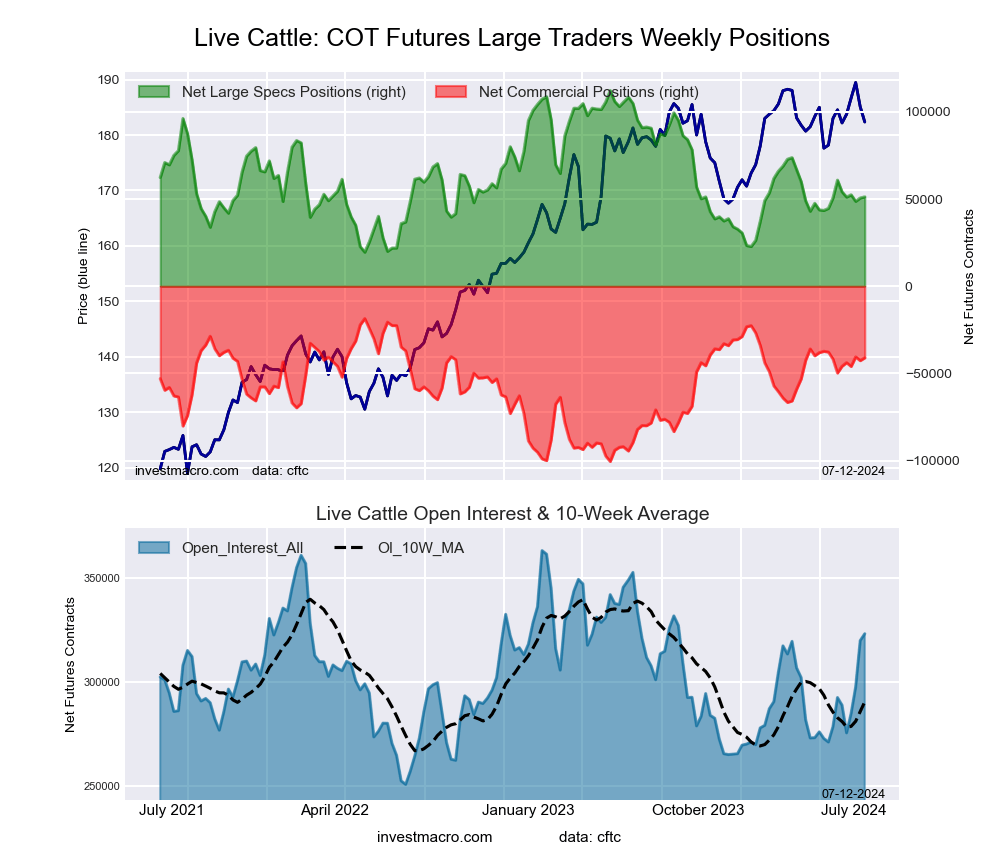
LIVE CATTLE Futures COT ChartThe LIVE CATTLE large speculator standing this week resulted in a net position of 44,659 contracts in the data reported through Tuesday. This was a weekly advance of 1,184 contracts from the previous week which had a total of 43,475 net contracts.

This week’s current strength score (the trader positioning range over the past three years, measured from 0 to 100) shows the speculators are currently Bearish with a score of 27.1 percent. The commercials are Bullish with a score of 76.6 percent and the small traders (not shown in chart) are Bullish with a score of 52.9 percent.

Price Trend-Following Model: Weak Uptrend

Our weekly trend-following model classifies the current market price position as: Weak Uptrend. The current action for the model is considered to be: Hold – Maintain Long Position.

LIVE CATTLE Futures StatisticsSPECULATORSCOMMERCIALSSMALL TRADERS
– Percent of Open Interest Longs:36.935.010.1
– Percent of Open Interest Shorts:20.448.912.6
– Net Position:44,659-37,742-6,917
– Gross Longs:100,00294,85727,263
– Gross Shorts:55,343132,59934,180
– Long to Short Ratio:1.8 to 10.7 to 10.8 to 1
NET POSITION TREND:
– Strength Index Score (3 Year Range Pct):27.176.652.9
– Strength Index Reading (3 Year Range):BearishBullishBullish
NET POSITION MOVEMENT INDEX:
– 6-Week Change in Strength Index:-16.618.9-0.4


LEAN HOGS Futures:

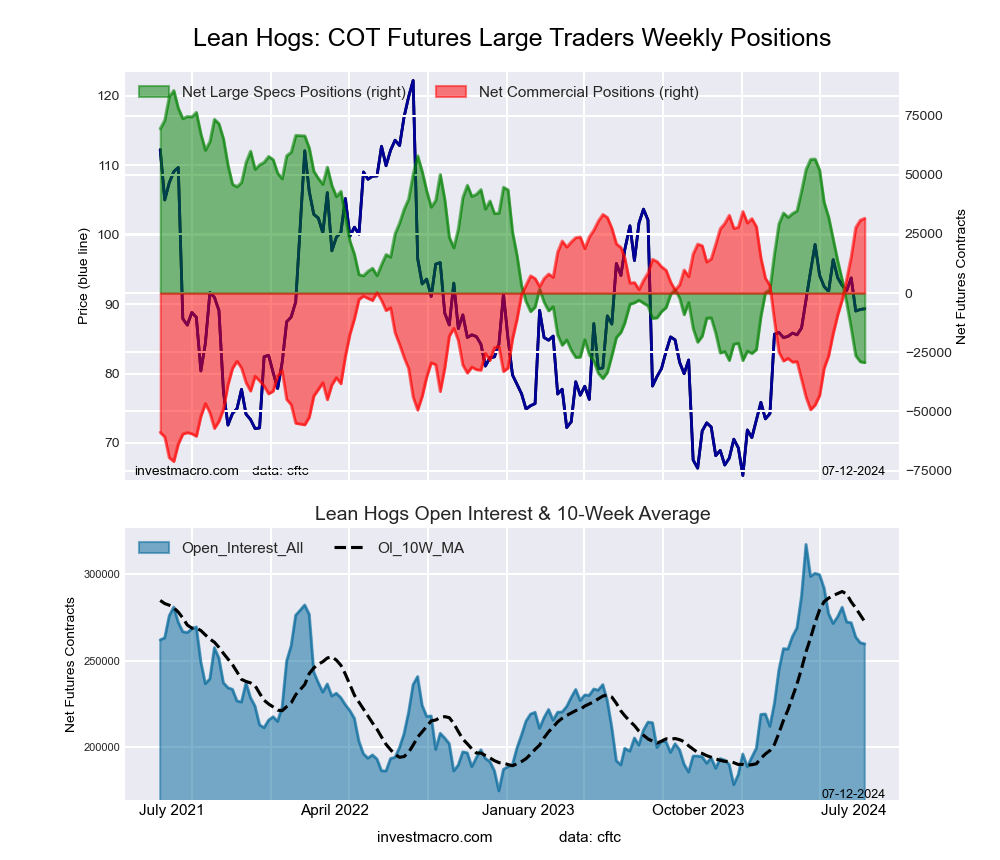
LEAN HOGS Futures COT ChartThe LEAN HOGS large speculator standing this week resulted in a net position of 32,041 contracts in the data reported through Tuesday. This was a weekly reduction of -6,315 contracts from the previous week which had a total of 38,356 net contracts.

This week’s current strength score (the trader positioning range over the past three years, measured from 0 to 100) shows the speculators are currently Bullish with a score of 56.0 percent. The commercials are Bearish with a score of 44.8 percent and the small traders (not shown in chart) are Bullish with a score of 58.3 percent.

Price Trend-Following Model: Strong Uptrend

Our weekly trend-following model classifies the current market price position as: Strong Uptrend. The current action for the model is considered to be: Hold – Maintain Long Position.

LEAN HOGS Futures StatisticsSPECULATORSCOMMERCIALSSMALL TRADERS
– Percent of Open Interest Longs:33.736.57.8
– Percent of Open Interest Shorts:22.146.09.8
– Net Position:32,041-26,444-5,597
– Gross Longs:93,393101,19121,492
– Gross Shorts:61,352127,63527,089
– Long to Short Ratio:1.5 to 10.8 to 10.8 to 1
NET POSITION TREND:
– Strength Index Score (3 Year Range Pct):56.044.858.3
– Strength Index Reading (3 Year Range):BullishBearishBullish
NET POSITION MOVEMENT INDEX:
– 6-Week Change in Strength Index:-9.19.05.3


COTTON Futures:

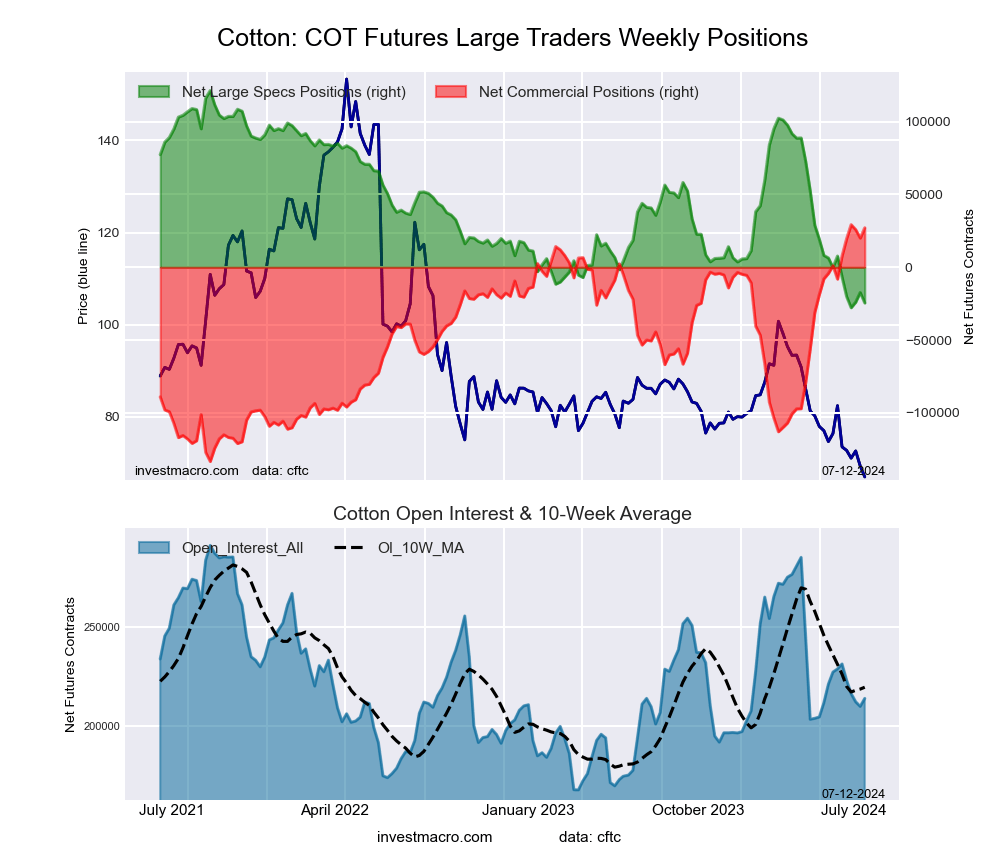
COTTON Futures COT ChartThe COTTON large speculator standing this week resulted in a net position of 6,399 contracts in the data reported through Tuesday. This was a weekly reduction of -1,737 contracts from the previous week which had a total of 8,136 net contracts.

This week’s current strength score (the trader positioning range over the past three years, measured from 0 to 100) shows the speculators are currently Bearish-Extreme with a score of 13.5 percent. The commercials are Bullish-Extreme with a score of 87.5 percent and the small traders (not shown in chart) are Bearish-Extreme with a score of 3.0 percent.

Price Trend-Following Model: Strong Downtrend

Our weekly trend-following model classifies the current market price position as: Strong Downtrend. The current action for the model is considered to be: Hold – Maintain Short Position.

COTTON Futures StatisticsSPECULATORSCOMMERCIALSSMALL TRADERS
– Percent of Open Interest Longs:30.844.05.7
– Percent of Open Interest Shorts:27.945.96.7
– Net Position:6,399-4,249-2,150
– Gross Longs:68,15997,25912,682
– Gross Shorts:61,760101,50814,832
– Long to Short Ratio:1.1 to 11.0 to 10.9 to 1
NET POSITION TREND:
– Strength Index Score (3 Year Range Pct):13.587.53.0
– Strength Index Reading (3 Year Range):Bearish-ExtremeBullish-ExtremeBearish-Extreme
NET POSITION MOVEMENT INDEX:
– 6-Week Change in Strength Index:-62.062.9-63.3


COCOA Futures:

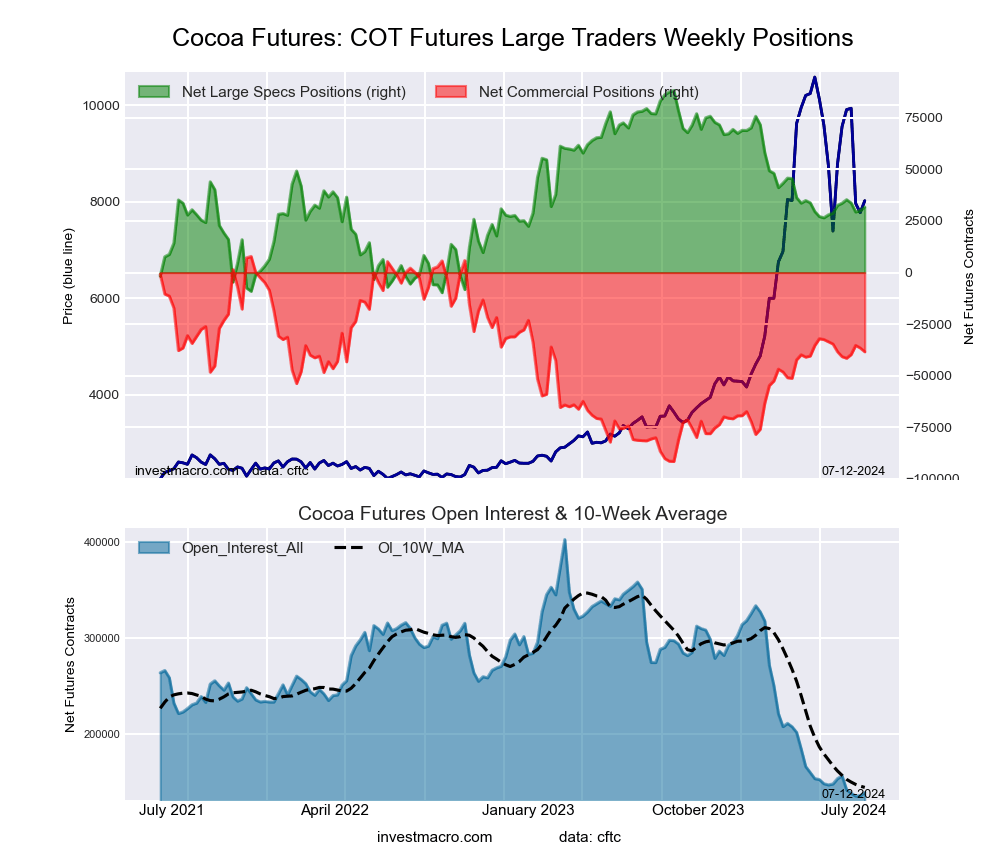
COCOA Futures COT ChartThe COCOA large speculator standing this week resulted in a net position of 27,958 contracts in the data reported through Tuesday. This was a weekly advance of 1,396 contracts from the previous week which had a total of 26,562 net contracts.

This week’s current strength score (the trader positioning range over the past three years, measured from 0 to 100) shows the speculators are currently Bearish with a score of 38.5 percent. The commercials are Bullish with a score of 58.4 percent and the small traders (not shown in chart) are Bullish with a score of 60.0 percent.

Price Trend-Following Model: Weak Uptrend

Our weekly trend-following model classifies the current market price position as: Weak Uptrend. The current action for the model is considered to be: Hold – Maintain Long Position.

COCOA Futures StatisticsSPECULATORSCOMMERCIALSSMALL TRADERS
– Percent of Open Interest Longs:31.035.77.5
– Percent of Open Interest Shorts:11.958.63.6
– Net Position:27,958-33,5685,610
– Gross Longs:45,31652,23110,914
– Gross Shorts:17,35885,7995,304
– Long to Short Ratio:2.6 to 10.6 to 12.1 to 1
NET POSITION TREND:
– Strength Index Score (3 Year Range Pct):38.558.460.0
– Strength Index Reading (3 Year Range):BearishBullishBullish
NET POSITION MOVEMENT INDEX:
– 6-Week Change in Strength Index:-5.86.4-5.3


WHEAT Futures:

WHEAT Futures COT ChartThe WHEAT large speculator standing this week resulted in a net position of -5,415 contracts in the data reported through Tuesday. This was a weekly advance of 12,370 contracts from the previous week which had a total of -17,785 net contracts.

This week’s current strength score (the trader positioning range over the past three years, measured from 0 to 100) shows the speculators are currently Bullish with a score of 63.7 percent. The commercials are Bearish with a score of 37.3 percent and the small traders (not shown in chart) are Bearish with a score of 28.1 percent.

Price Trend-Following Model: Strong Uptrend

Our weekly trend-following model classifies the current market price position as: Strong Uptrend. The current action for the model is considered to be: New Buy – Long Position.

WHEAT Futures StatisticsSPECULATORSCOMMERCIALSSMALL TRADERS
– Percent of Open Interest Longs:33.635.87.1
– Percent of Open Interest Shorts:34.932.29.3
– Net Position:-5,41514,159-8,744
– Gross Longs:132,484141,47528,160
– Gross Shorts:137,899127,31636,904
– Long to Short Ratio:1.0 to 11.1 to 10.8 to 1
NET POSITION TREND:
– Strength Index Score (3 Year Range Pct):63.737.328.1
– Strength Index Reading (3 Year Range):BullishBearishBearish
NET POSITION MOVEMENT INDEX:
– 6-Week Change in Strength Index:38.1-33.8-40.1


Article By InvestMacroReceive our weekly COT Newsletter

*COT Report: The COT data, released weekly to the public each Friday, is updated through the most recent Tuesday (data is 3 days old) and shows a quick view of how large speculators or non-commercials (for-profit traders) were positioned in the futures markets.

The CFTC categorizes trader positions according to commercial hedgers (traders who use futures contracts for hedging as part of the business), non-commercials (large traders who speculate to realize trading profits) and nonreportable traders (usually small traders/speculators) as well as their open interest (contracts open in the market at time of reporting). See CFTC criteria here.
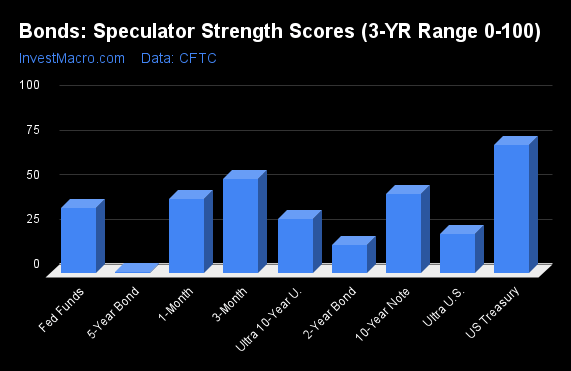
Stoxx Europe 600: What Signs of Investor Exuberance Keep Telling Us

By Elliott Wave International

Every day, you read news stories about the state of the economy and the stock market affecting consumer and investor behavior. The story goes something like this: When the economy and financial markets show signs of improvement, consumers start to spend more, and investors buy stocks.

But if you’re a student of Elliott waves, you understand that this type of thinking is precisely backwards. It’s consumer optimism and the resulting consumer spending that elevates the economic markets; and it’s the investors’ bullish mood that translates into a rising stock market as investors buy stocks.

Social mood, in other words, comes first. Consumer and investor behavior — bullish or bearish — follows.

That’s why social trends can give you clues as to where the financial markets are likely heading next. For example, exuberant investor optimism often appears near major stock market tops, while deep pessimism accompanies major lows.

Let’s look at a key European market as an example. Back in March, the pan-European Stoxx Europe 600 index extended its rally to seven consecutive weeks. Most investors probably saw the strength as a reason to load up on European stocks. Readers of our European Financial Forecast, on the other hand, saw warning signs of exuberance flashing throughout society.

First, Lamborghini’s 2023 sales results showed an all-time record 10,112 cars sold last year. Lamborghini’s electric V12 Revuelto is sold out until late 2026 — a three-year wait! Luxury goods tend to be popular at extremes in positive social mood, as the stock market and economic prosperity approach major peaks. They tend to go out of favor when these trends reverse.

Second, a March 10 Bloomberg headline said, “One of the Most Infamous Trades on Wall Street Is Roaring Back.” The trade in question was the so-called short volatility trade, where traders sell products that track stock volatility. “Investors are sinking vast sums into strategies whose performance hinges on enduring equity calm.” According to data from Global X ETFs, short volatility bets nearly quadrupled in two years.

“Enduring equity calm” attitude among investors rang a bell. We had been here before. An earlier iteration of the same trade famously blew up on February 5, 2018, when the CBOE Volatility Index (VIX) suddenly spiked 20 points and destroyed vast numbers of professional and retail portfolios. The spike coincided with a global stock market sell-off and a two-and-a-half-year period of volatility that left the S&P 500 where it started. In Europe, the Stoxx 600 had peaked three years before the S&P, so the stretch of zero returns lasted nearly six years. This chart of Europe’s VIX equivalent, the VStoxx Implied Volatility Index, illustrates a few of the infamous volatility spikes over the past quarter century.
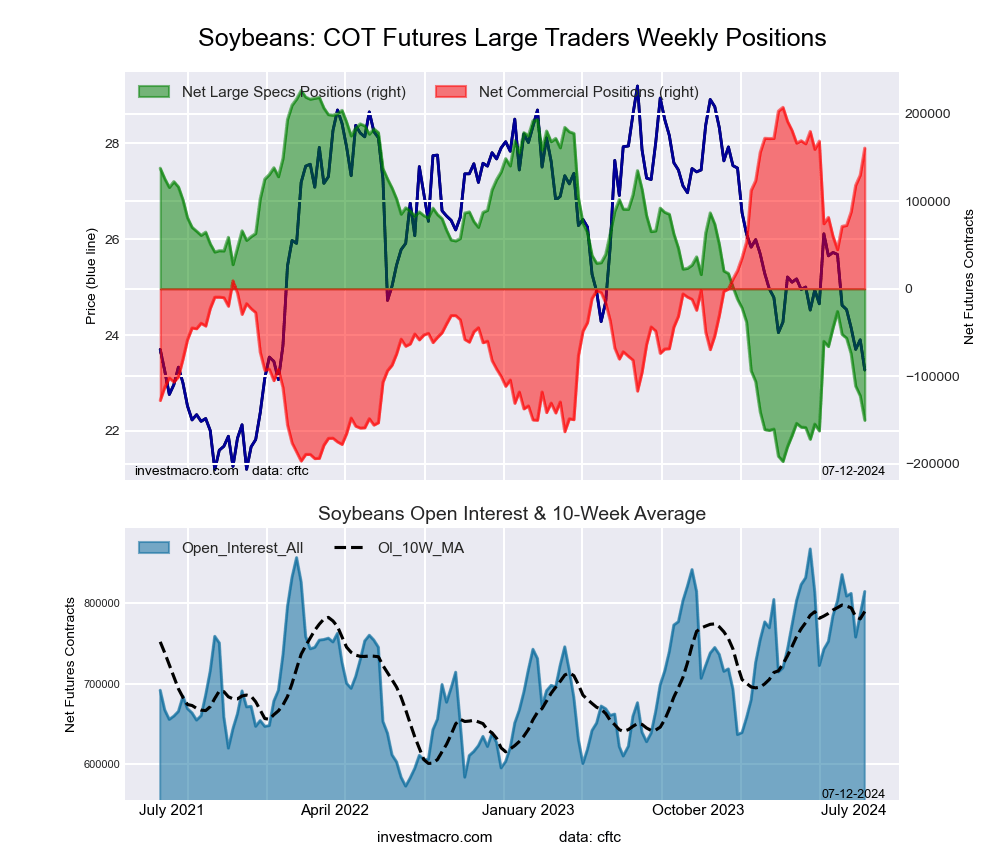
Vstoxx Implied Volatility Index

In our view, the re-emergence of the short-volatility casino is a much larger version of 2018. Five years ago, traders were gambling with a little more than $2 billion within a small handful of funds. Today, a mind-blowing $64 billion is being bet using “ETFs that sell options on stocks or indexes in order to juice returns” (Bloomberg, 3/10/24). Whether they know it or not, these traders are relying on smoothly functioning markets that behave the same way today and tomorrow as they did yesterday or the day before.
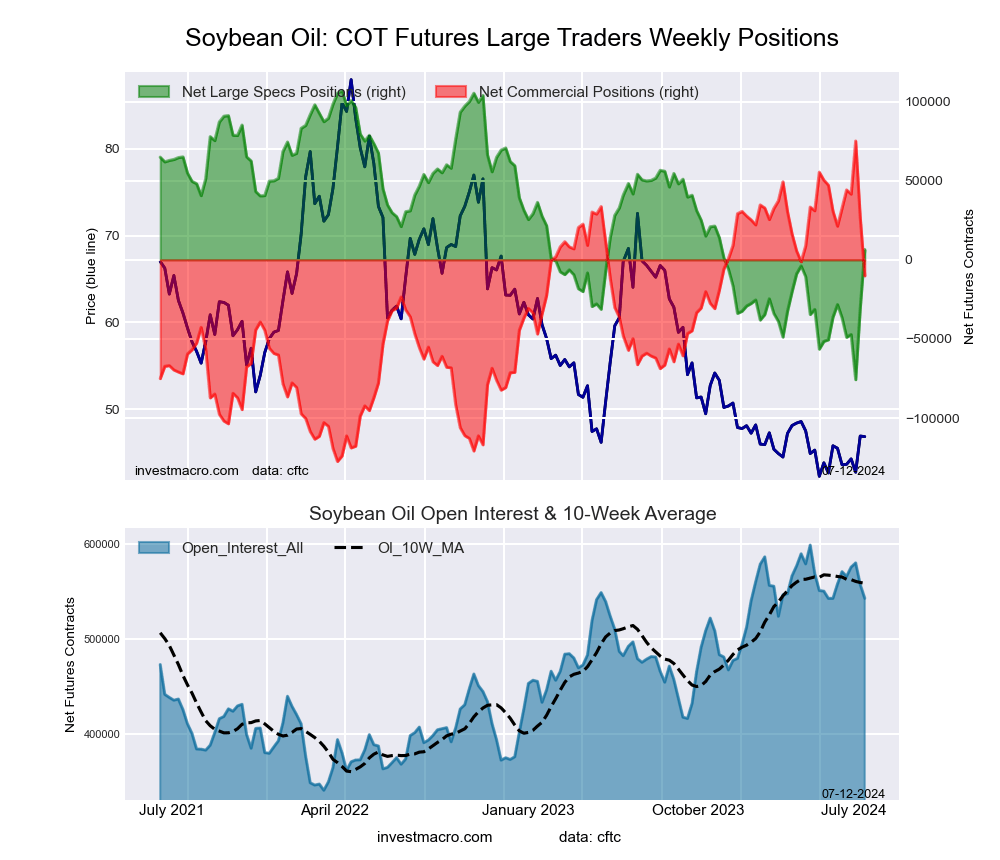
The warning signs we see in investor and consumer behavior are worth heeding.
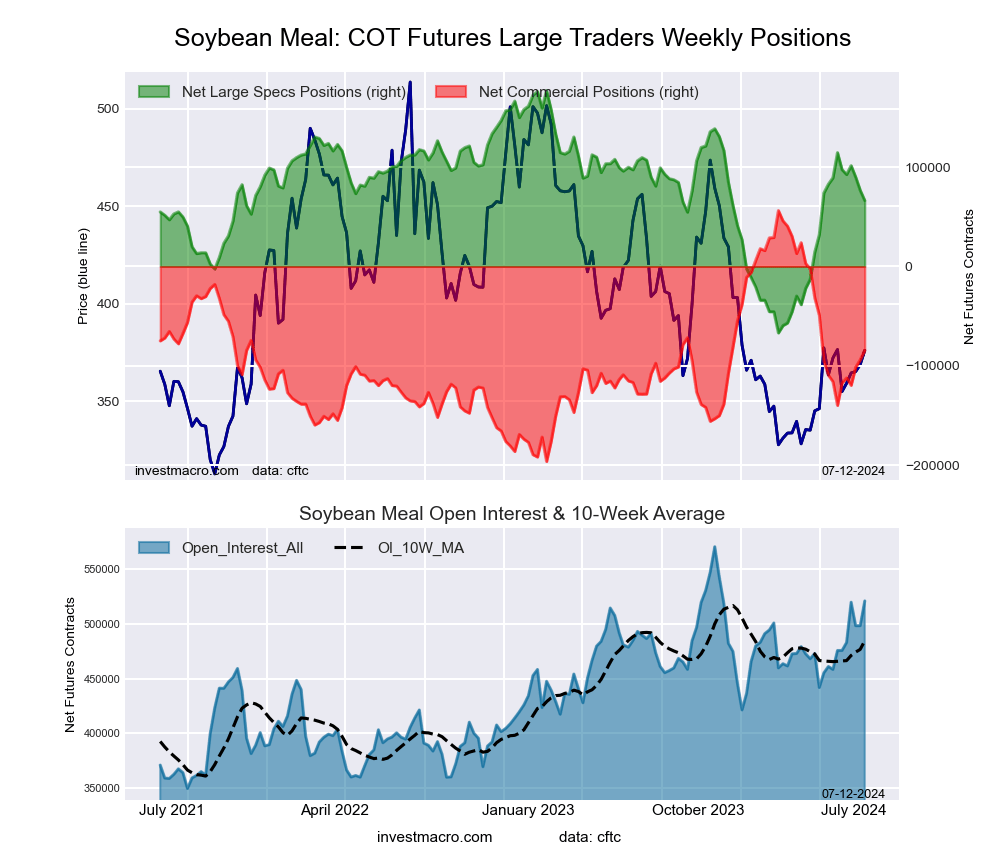
To predict the next move in European markets, I’ll continue to monitor social trends for clues. But more importantly, I’ll compare the Elliott wave price structures in stock market indexes to previous major junctures in those indexes. Tune in to The European Financial Forecast for my ongoing analysis, or sign up for our free newsletter, and I’ll send you occasional updates like this.

This article was syndicated by Elliott Wave International and was originally published under the headline Stoxx Europe 600: What Signs of Investor Exuberance Keep Telling Us. EWI is the world’s largest market forecasting firm. Its staff of full-time analysts led by Chartered Market Technician Robert Prechter provides 24-hour-a-day market analysis to institutional and private investors around the world.

Week Ahead: GBPNZD braces for double risk cocktail

By ForexTime 

  • RBNZ decision & UK CPI in focus
  • NZD best performing G10 currency MTD
  • GBPNZD trapped in 1500 pip range
  • Prices bearish on D1 charts
  • Bloomberg FX model: 76% GBPNZD – (2.0510 – 2.0924)

High impact events ranging from central bank decisions, key inflation data and speeches by policymakers may present fresh trading opportunities in the week ahead:

Sunday, 19th May

  • USDInd: Fed Chair Jerome Powell speech

Monday, 20th May

  • CN50: China loan prime rates
  • HK50: Hong Kong jobless rates
  • JPY: Japan tertiary industry index
  • TWN: Taiwan export orders
  • SEK: Riksbank Governor Erik Thedeen speech
  • US500: Fed speeches

Tuesday, 21st May

  • AU200: Australia consumer confidence, RBA minutes
  • CAD: Canada CPI
  • NGN: Nigeria rate decision
  • US30: Fed speeches

Wednesday, 22nd May

  • JP225: Japan core machinery orders, trade
  • NZD: RBNZ rate decision
  • ZAR: South Africa CPI
  • TWN: Taiwan jobless rate
  • GBP: UK April CPI
  • USDInd: FOMC minutes
  • NAS100: Nvidia earnings

Thursday, 23rd May

  • EU50: Eurozone PMI’s, consumer confidence
  • GER40: Germany manufacturing PMI
  • HK50: Hong Kong CPI
  • SG20: Singapore CPI, GDP
  • TWN: Taiwan industrial production
  • UK100: UK Manufacturing PMI

Friday, 24th May

  • CAD: Canada retail sales
  • GER40: Germany GDP
  • JP225: Japan CPI
  • NGN: Nigeria GDP
  • CHF: SNB President Thomas Jordan speech
  • SG20: Singapore industrial production
  • USDInd: US University of Michigan consumer sentiment

Our attention falls on the GBPNZD which has been trapped within a 1500-pip monthly range since August 2023.

Note: GBPNZD is a minor currency pair – one that does not include the USD but has at least one of the world’s majors.

However, prices have trended lower over the past few weeks. This could be based on shifting expectations over the Bank of England (BoE) and Reserve Bank of New Zealand’s (RBNZ) next policy move.

Interestingly, Sterling is down against most G10 currencies month-to-date.

But the New Zealand dollar is flexing its muscles across the board.

Keep all the above in mind, here are 3 factors that could rock the GBPNZD.

    1) New Zealand rate decision

The Reserve Bank of New Zealand (RBNZ) is expected to leave rates unchanged at 5.5% next week.

So, investors will direct their attention toward the policy statement and media conference for clues on future policy moves. It is noteworthy that first-quarter inflation printed hotter than expected, injecting RBNZ hawks with fresh inspiration. Any more hawkish hints during the meeting may further push back bets around when the central bank will start cutting rates.

Traders currently see a 50% probability of a 25-basis point RBNZ cut by August with this jumping to roughly 95% by October.  

  • The GBPNZD could sink lower if the RBNZ strikes a hawkish note and suggests that rates will remain higher for longer.
  • If the central bank signals lower rates down the road, this could push the GBPNZD higher.


    2) UK April CPI report

The incoming UK April inflation report will likely impact bets around when the Bank of England will start cutting interest rates.

Markets are forecasting:

  • CPI year-on-year (April 2023 vs. April 2024) to cool 2.1% from 3.2% in the prior month.
  • Core CPI year-on-year to cool to 3.6% to 4.2%.
  • CPI month-on-month (April 2024 vs March 2024) to cool 0.2% from 0.6%.

Headline inflation is expected to cool significantly with core inflation figures tagging along. A drop in household energy prices over the past year is expected to be the main driver behind this. Should the CPI report match or even print lower than these expectations, it may encourage the BoE to cut rates sooner than expected.

Traders see a 62% probability of a 25-basis point BoE cut by June with a move in August fully priced in.

  • A soft UK inflation report could send the GBPNZD lower as sterling weakens.
  • Should the CPI report print above market forecasts, the GBPNZD may push higher.


    3) Technical forces 

Prices are under pressure on the weekly charts, currently testing the 50-week SMA and bullish channel. A solid breakdown below the 2.0700 could signal further downside.

Zooming into the daily, there have been consistently lower lows and lower highs. Prices are trading below the 50, 100 and 200-day SMA while the MACD trades below zero.

  • Sustained weakness below 2.0775 may open a path back towards 2.0500.
  • Should prices push back above the 200-day SMA, this could open a path back to 2.0900.

Bloomberg FX model now forecasts a 76% chance that GBPNZD will trade within the 2.0510 – 2.0924 range through next week.


Forex-Time-LogoArticle by ForexTime

ForexTime Ltd (FXTM) is an award winning international online forex broker regulated by CySEC 185/12 www.forextime.com