Archive for Financial News – Page 128

Oil rises moderately ahead of OPEC+ meeting. ECB plans to cut interest rates next week

By JustMarkets

US stock indices were not traded yesterday due to the Memorial Day holiday.

Equity markets in Europe mostly went up yesterday. The German DAX (DE40) rose by 0.44%, the French CAC 40 (FR40) closed with a 0.46% gain, the Spanish IBEX 35 (ES35) added 0.71%, the British FTSE 100 (UK100) was not traded.

On Monday, European stocks closed with solid gains, cutting the previous week’s losses as expectations of monetary easing in the Eurozone gained momentum. Traders are awaiting German and Eurozone inflation data this week, which could bolster expectations that the European Central Bank will start cutting rates next week. The ECB is expected to cut interest rates next week, and disinflation confidence from the Governing Council has raised equity investors’ hopes that the ECB will continue to cut interest rates in the third quarter. Also in favor of the dovish outlook was Ifo’s German Business Climate Indicator, which came in below expectations and halted three months of growth.

WTI crude oil prices rose to $79 a barrel on Tuesday, pushing back from three-month lows amid expectations that OPEC+ will extend a voluntary production cut of 2.2 million barrels daily in the year’s second half at a June 2 meeting. On the demand side, markets await the release of the key US inflation data this week to gauge the Fed’s future monetary policy actions. A lower-than-expected PCE Price Index reading in the US could lead to higher bets on lower interest rates, supporting the outlook for economic growth and energy demand.

Asian markets were mostly up on Monday. Japan’s Nikkei 225 (JP225) was up 0.66%, China’s FTSE China A50 (CHA50) decreased by 0.50%, Hong Kong’s Hang Seng (HK50) was up 1.17%, and Australia’s ASX 200 (AU200) was positive 0.79%. Beijing’s bold move to launch US $47.5 billion worth of chip investment funds continued to support sentiment as China seeks to cement its position as a technology country.

Australian retail sales rose by 0.1% month-on-month in April 2024 versus the market consensus of 0.2%. This was a bounce-back from a 0.4% drop in March amid earlier Easter celebrations and different school vacation timings across the country.

S&P 500 (US500) 5,304.72 0 (0%)

Dow Jones (US30) 39,069.59 0 (0%)

DAX (DE40) 18,774.71 +81.34 (+0.44%)

FTSE 100 (UK100) 8,317.59 0 (0%)

USD Index 104.59 −0.13 (−0.13%)

Important events today:
  • – Australia Retail Sales (m/m) at 04:30 (GMT+3);
  • – US FOMC Member Bowman Speaks at 07:55 (GMT+3);
  • – US FOMC Member Mester Speaks at 07:55 (GMT+3);
  • – Switzerland SNB Board Jordan Speaks at 07:55 (GMT+3);
  • – US CB Consumer Confidence (m/m) at 17:00 (GMT+3).

By JustMarkets


This article reflects a personal opinion and should not be interpreted as an investment advice, and/or offer, and/or a persistent request for carrying out financial transactions, and/or a guarantee, and/or a forecast of future events.

Strong economic reports fuel the dollar and harm indices

By JustMarkets

The US stock indices closed lower on Thursday. At the end of the day, the Dow Jones Index (US30) was down 1.53% (the worst day in a year), while the S&P 500 Index (US500) lost 0.74%. The NASDAQ Technology Index (US100) closed negative 0.39%. Stock indices initially increased, with the S&P 500 (US500) and NASDAQ (US100) setting new record highs. But then the market began to sell off, sending the S&P 500 (US500) to a 1-week low and the Dow Jones (US30) to a 2-week low. The fall in the indices was mainly due to an acceleration in business activity, which reinforced the view of US officials that the Fed will conduct only one rate cut this year instead of the planned three. Markets are pricing in a 25 bps chance of a rate cut at 0% at the June 12 FOMC meeting and 10% at the next meeting on July 31.

The US weekly initial jobless claims fell by 800 to 215,000, indicating a strengthening labor market compared to expectations of 220,000. The S&P Manufacturing PMI for May unexpectedly rose by 0.9 to 50.9, stronger than expectations for a decline to 49.9.

Boeing (BA) closed down more than 7%, topping the Dow Jones Industrials’ list of losers, after CFO West said the company’s second-quarter cash burn would be the same or worse than the first quarter when the company spent nearly $4 billion to rebuild operations. Shares of Dell Technologies (DELL) are up more than 4% after Evercore ISI added it to its list of tactical outperformers with a $165 price target.

Equity markets in Europe were mostly flat yesterday. Germany’s DAX (DE40) rose by 0.06%, France’s CAC 40 (FR40) closed higher by 0.13%, Spain’s IBEX 35 (ES35) fell by 0.16%, and the UK’s FTSE 100 (UK100) closed negative 0.37%.

Yesterday, the ECB reported that Eurozone wages rose to 4.7% y/y in Q1 compared to 4.5% y/y in Q4, a record. The May S&P Eurozone Manufacturing PMI rose by 1.7 to a 15-month high of 47.4, beating expectations of 46.1. The May Services PMI rose by 0.6 to 52.3, beating expectations of 52.0 and the fastest pace of growth in a year. The latest data points to a recovery in the Eurozone economy.

GfK’s UK Consumer Confidence Indicator rose to 17 in May 2024 from 19 in April, the highest reading since December 2021 and better than prognoses of 18. Four of the survey’s five components measuring the state of the economy and personal finances improved in May, with only the index of large purchases showing a decline.

WTI crude oil prices stabilized near $77 per barrel on Friday, but this week’s losses are roughly 3% as stronger-than-expected US PMI data lowered bets on a Federal Reserve interest rate cut this year, dampening the outlook for the US economy and energy demand.

The US natural gas (XNG) prices fell more than 5% to below $2.7 on Thursday, slipping from a six-month peak due to higher daily production and rising storage inventories reported by the EIA. The US utilities added 78 billion cubic feet (bcf) of gas to storage last week, while the market had expected an increase of 84 bcf. The report also showed that gas inventories are 28.8% above the 5-year average.

Asian markets were mostly down on Thursday. Japan’s Nikkei 225 (JP225) was up 1.26%, China’s FTSE China A50 (CHA50) decreased by 0.78%, Hong Kong’s Hang Seng (HK50) lost 1.70% and Australia’s ASX 200 (AU200) was negative 0.46%.

A wave of negative sentiment hit China this week as the trade war with the US escalated. The People’s Liberation Army was also seen conducting military exercises near Taiwan, indicating heightened regional tensions. Hong Kong’s Hang Seng Index suffered huge losses due to a prolonged slump in heavy technology stocks. The index fell by 1.5% on Friday, adding to a 1.7% drop on Thursday. Shares of Alibaba Group (BABA) fell another 1% after falling 5.2% in the previous session after the company said it was issuing $5 billion in convertible bonds to spur growth. The tech giant’s losses drove down quotes of its peers Baidu Inc (BIDU) and Tencent Holdings Ltd, while investors booked profits in real estate stocks as they awaited more details on Beijing’s stimulus measures.

Japanese inflation fell for a second month but remained above the Bank of Japan’s (BoJ) target level. The yen’s recent depreciation raises concerns that cost-driven inflationary pressures could persist. Consumer prices excluding fresh food totaled 2.2% in April, down from a year ago. Despite the decline in inflation, economists note the risk of a rate hike soon as the yen remains near a 34-year low.

S&P 500 (US500) 5,267.84 −39.17 (−0.74%)

Dow Jones (US30) 39,065.26 −605.78 (−1.53%)

DAX (DE40) 18,691.32 +11.12 (+0.06%)

FTSE 100 (UK100) 8,339.23 −31.10 (−0.37%)

USD Index 105.04 +0.11 (+0.10%)

Important events today:
  • – New Zealand Trade Balance (q/q) at 01:45 (GMT+3);
  • – Japan National Core CPI (m/m) at 02:30 (GMT+3);
  • – UK Retail Sales (m/m) at 09:00 (GMT+3);
  • – German GDP (m/m) at 09:00 (GMT+3);
  • – Switzerland Unemployment Rate (m/m) at 09:30 (GMT+3);
  • – Switzerland SNB Chairman Thomas Jordan speaks at 10:45 (GMT+3);
  • – US Core Durable Goods Orders (m/m) at 15:30 (GMT+3);
  • – Canada Retail Sales (m/m) at 15:30 (GMT+3);
  • – US Michigan Consumer Sentiment (m/m) at 17:00 (GMT+3).

By JustMarkets


This article reflects a personal opinion and should not be interpreted as an investment advice, and/or offer, and/or a persistent request for carrying out financial transactions, and/or a guarantee, and/or a forecast of future events.

The Australian Dollar rapidly depreciates

By RoboForex Analytical Department

The AUD/USD pair has fallen rapidly in the final week, reaching 0.6592. This decline is primarily driven by the US dollar’s robust performance, following stronger-than-expected US economic data. Investors now speculate that the Federal Reserve may postpone any interest rate cuts.

The minutes from the Fed’s recent meeting have revealed concerns among policymakers about the possibility of high and persistent inflation. This has led some monetary committee members to express a readiness to tighten policy further if inflation continues to rise.

Similarly, the minutes from the Reserve Bank of Australia’s (RBA) recent meeting revealed doubts among local policymakers. Although the RBA considered raising interest rates in May, it ultimately decided to maintain the current policy stance. Meanwhile, domestic statistics showed that inflation expectations in Australia fell to 4.1% in May, the lowest level since October 2021.

Technical Analysis of AUD/USD

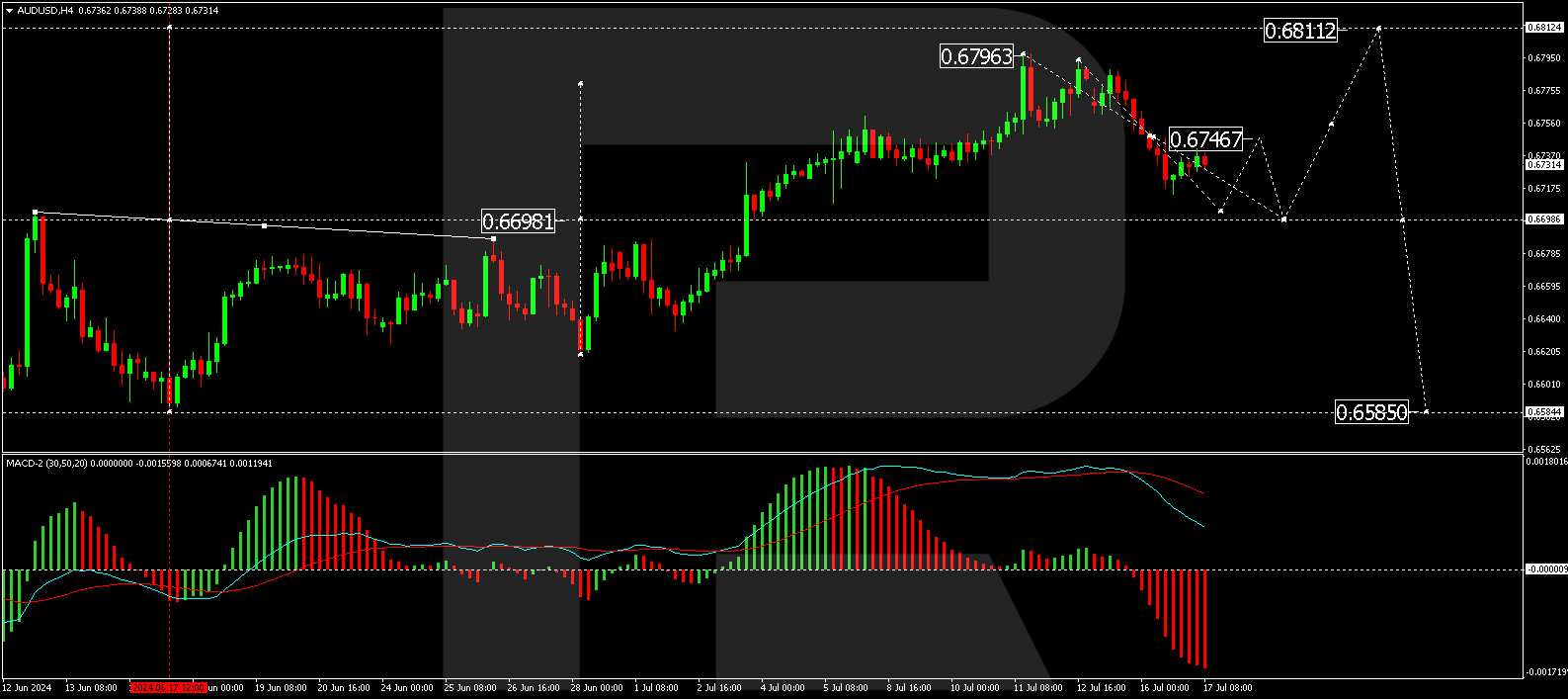
On the H4 chart of AUD/USD, a decline to 0.6663 was followed by a correction to 0.6780. Subsequently, a new wave of decline to 0.6580 has formed, serving as the local target. Upon reaching this target, a correction to 0.6630 (testing from below) is possible, followed by another decline to 0.6548. This target represents the initial objective of the downward trend wave. Technically, this scenario is confirmed by the MACD indicator, with its signal line above zero and pointing strictly downwards.

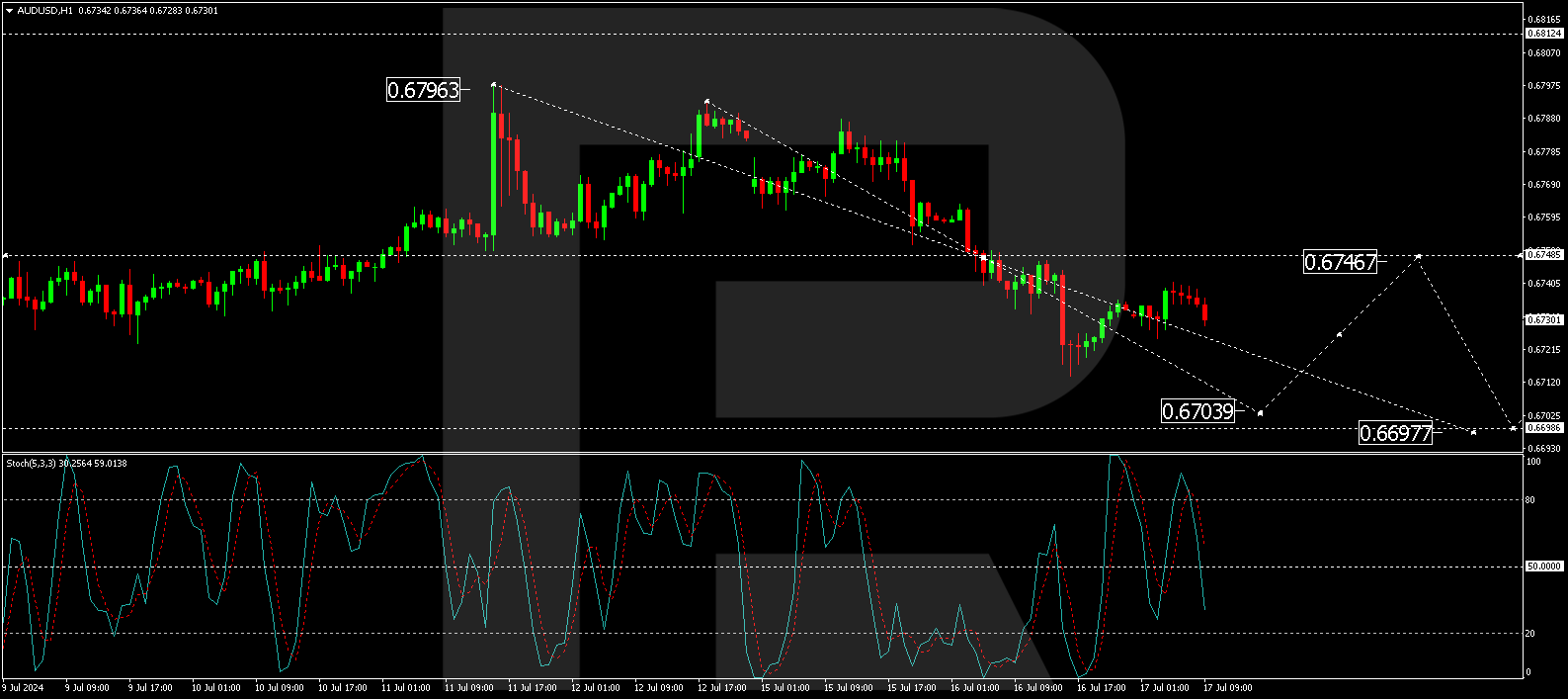
On the H1 chart, a consolidation range has formed around 0.6645. The downward exit from this range achieved the local target of 0.6607. The market has since corrected to 0.6646 (testing from below). Today, the decline wave to 0.6580 continues. After reaching this level, a consolidation range is expected to form around it. An upward exit from this range could lead to a correction to 0.6630. Conversely, a downward exit would open the potential for a further decline to 0.6540. This scenario is technically confirmed by the Stochastic oscillator, with its signal line below 20, indicating a potential beginning of a growth link to 50.

Summary

The Australian dollar’s depreciation is largely influenced by the strong US dollar and the cautious outlook of the Federal Reserve and the Reserve Bank of Australia. Technical indicators suggest further potential declines with possible corrective rebounds. Market participants should closely monitor these levels as economic conditions and policy expectations evolve.


Disclaimer

Any forecasts contained herein are based on the author’s particular opinion. This analysis may not be treated as trading advice. RoboForex bears no responsibility for trading results based on trading recommendations and reviews contained herein.

Strong NVDA report helped indices stay afloat after hawkish FOMC minutes

By JustMarkets

The US stock indices closed moderately lower on Wednesday, with the Dow Jones Industrials Index falling to a 1-week low. At Wednesday’s close, the Dow Jones Industrial Average (US30) decreased by 0.51%, while the S&P 500 Index (US500) was down 0.27%. The NASDAQ Technology Index (US100) closed negative 0.18%. “Hawkish” minutes from the May 1 FOMC meeting showed that “many” officials doubted that Fed policy was tight enough to bring inflation down to target levels. As a result, officials suggested that the disinflation process is likely to take longer than previously thought, and some expressed a willingness to tighten policy further if risks to inflation materialize. But after the market closed, the S&P 500 (US500) and NASDAQ (US100) Indexes rose sharply on the strong NVDA report.

Nvidia (NVDA) beat Wall Street prognoses on Wednesday. Its surging earnings due to its chip manufacturing dominance made the company an icon of the artificial intelligence boom. NVDA shares rose by 6% in after-hours trading to $1,006.89. The company’s stock has gained over 200% over the past year. Based in Santa Clara, California, the company has taken a leadership position in the hardware and software needed to adapt the technology to artificial intelligence applications.

Equity markets in Europe were mostly down yesterday. Germany’s DAX (DE40) fell by 0.25%, France’s CAC 40 (FR40) closed down 0.61%, Spain’s IBEX 35 (ES35) lost 0.05%, and the UK’s FTSE 100 (UK100) closed negative 0.55%.

The UK and German 10-year bond yields rose to 2-week highs after UK consumer prices slowed less than expected last month, raising questions about when the Bank of England (BoE) might start cutting interest rates. In addition, first-quarter wages in Germany rose more than expected, prompting the Bundesbank to warn of continued price pressures in the services sector.

ECB President Lagarde noted yesterday that there is a strong possibility of such a move on June 6 if the data reinforces confidence that inflation will fall to 2% in the medium term. The Eurozone’s inflation rate currently stands at 2.4%, close to the ECB’s 2% target and well below the 7% a year earlier. In addition, fresh Eurozone GDP estimates confirmed that the economy came out of recession in the first quarter. The European Commission’s new prognoses still point to a soft landing scenario.

WTI crude oil prices fell below $77 a barrel on Thursday, declining for the fourth consecutive session, as the latest minutes from the US Federal Reserve indicated its members’ willingness to further tighten policy if inflation rises, which could hurt energy demand in the world’s top oil consumer. EIA data also showed that US crude inventories rose by 1.825 million barrels last week, contradicting market expectations of a 2.55 million barrel decline. On Wednesday, Russia said it exceeded its OPEC+ oil production quota in April for “technical reasons” and will propose a plan to compensate for the mistake. All eyes are now on the upcoming OPEC+ meeting scheduled for June 1.

Asian markets were mostly down on Wednesday. Japan’s Nikkei 225 (JP225) was down 0.85%, China’s FTSE China A50 (CHA50) decreased by 0.02%, Hong Kong’s Hang Seng (HK50) lost 0.13%, and Australia’s ASX 200 (AU200) was negative 0.05%. The Hang Seng Index (HK50) approached its lowest level in two weeks amid growing skepticism that China’s major moves to stabilize the property slump will lead to a sustained turnaround in demand and confidence. Comforting earnings results from technology giant Nvidia failed to lift sentiment, especially after the US said some of its steep tariff hikes on Chinese goods, including electric cars, chips, and medical products, would take effect on August 1.

The Bank of Korea kept the policy rate at 3.5% for the 11th consecutive meeting, with markets expecting a possible rate cut in the 4th quarter. The country’s inflation fell to 2.9% y/y, which, despite the decline, is above the Bank’s 2% target. Notably, the economy grew by 3.4% in the first quarter of 2024, the fastest growth since the fourth quarter of 2021, leading to an upward revision of growth forecasts to 2.5% from previous estimates of 2.1%.

In his latest interview, RBNZ Governor Adrian Orr downplayed the chances of another interest rate hike, saying the bank would only tighten policy if it needed to rein in inflation expectations. Meanwhile, an unexpected rise in the country’s retail sales has reduced the odds of a rate cut this year following the RBNZ’s rate decision and its hawkish prognosis on Wednesday.

Singapore’s annual inflation rate stood at 2.7% in April 2024, holding steady for the second consecutive month and slightly above market estimates of 2.6%. The rate remains the lowest since September 2021.

S&P 500 (US500) 5,307.01 −14.40 (−0.27%)

Dow Jones (US30) 39,671.04 −201.95 (−0.51%)

DAX (DE40) 18,680.20 −46.56 (−0.25%)

FTSE 100 (UK100) 8,370.33 −46.12 (−0.55%)

USD Index 104.94 +0.28 (+0.27%)

Important events today:
  • – New Zealand Retail Sales (m/m) at 01:45 (GMT+3).
  • – Australia Manufacturing PMI (m/m) at 02:00 (GMT+3);
  • – Australia Services PMI (m/m) at 02:00 (GMT+3);
  • – Japan Manufacturing PMI (m/m) at 03:30 (GMT+3);
  • – Japan Services PMI (m/m) at 03:30 (GMT+3);
  • – Singapore Consumer Price Index (m/m) at 08:00 (GMT+3);
  • – Eurozone German Manufacturing PMI (m/m) at 10:30 (GMT+3);
  • – Eurozone German Services PMI (m/m) at 10:30 (GMT+3);
  • – Eurozone Manufacturing PMI (m/m) at 11:00 (GMT+3);
  • – Eurozone Services PMI (m/m) at 11:00 (GMT+3);
  • – Hong Kong Consumer Price Index (m/m) at 11:30 (GMT+3);
  • – UK Manufacturing PMI (m/m) at 11:30 (GMT+3);
  • – UK Services PMI (m/m) at 11:30 (GMT+3);
  • – US Initial Jobless Claims  (w/w) at 15:30 (GMT+3);
  • – US Manufacturing PMI (m/m) at 16:45 (GMT+3);
  • – US Services PMI (m/m) at 16:45 (GMT+3);
  • – US New Home Sales (m/m) at 17:00 (GMT+3);
  • – US Natural Gas Storage  (w/w) at 17:30 (GMT+3);
  • – US FOMC Member Bostic Speaks at 22:00 (GMT+3).

By JustMarkets


This article reflects a personal opinion and should not be interpreted as an investment advice, and/or offer, and/or a persistent request for carrying out financial transactions, and/or a guarantee, and/or a forecast of future events.
Gold falls from highs

By RoboForex Analytical Department

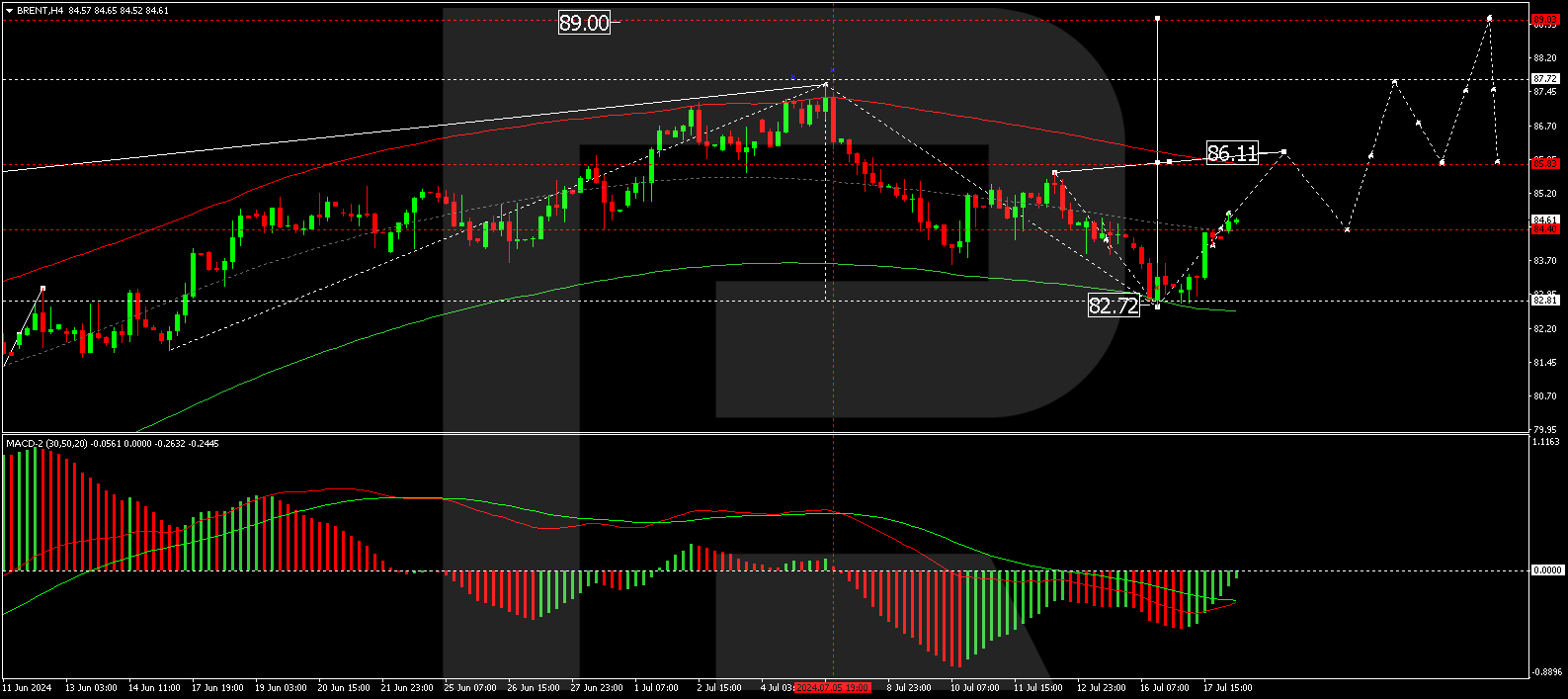
The price of gold fell to $2370.00 per troy ounce by Thursday following the release of the minutes from the latest US Federal Reserve meeting. The general tone of the Fed’s policymakers was notably cautious, aligning with previous calls for a restrained approach to monetary policy.

The Fed indicated that more time is needed to be confident that US inflation is declining towards the 2% target. This cautious sentiment has tempered market expectations of imminent interest rate cuts. Previously, the market anticipated two rate cuts (in September and December); now, it expects no more than one. Consequently, the US interest rate is likely to remain at 5.5% per annum for an extended period before the Fed considers revising it.

Higher interest rates reduce the attractiveness of gold, which does not yield interest. This dynamic has contributed to the recent decline in gold prices.

Technical analysis of XAU/USD

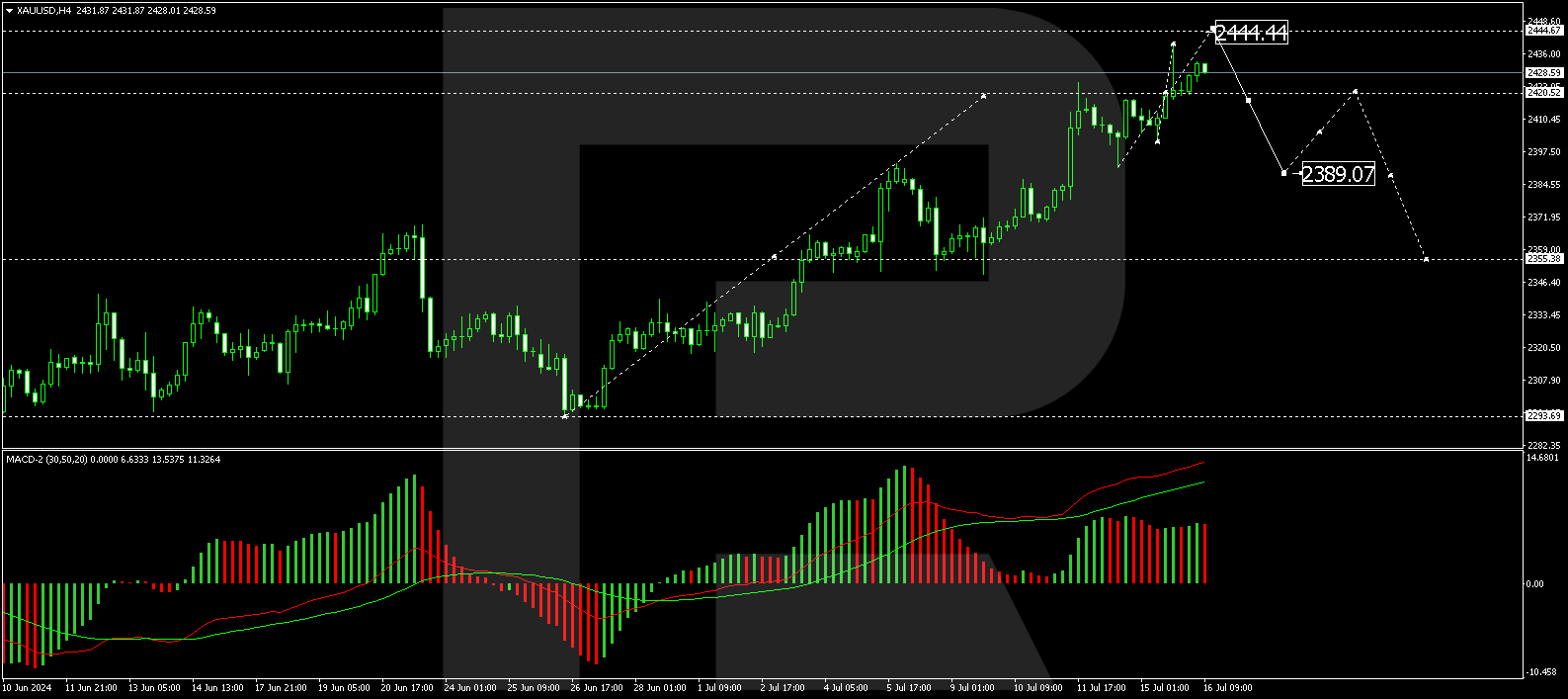
On the H4 chart, XAU/USD has formed a downward impulse to the level of 2404.40, followed by a correction to 2433.90. The limits of the consolidation range are now well-defined, and the market has recently broken out downwards. This breakout opens the potential for a further decline to 2322.00. After reaching this level, a rebound to 2385.35 is expected. This scenario is technically supported by the MACD indicator, with its signal line above zero but directed strictly downwards towards new lows.

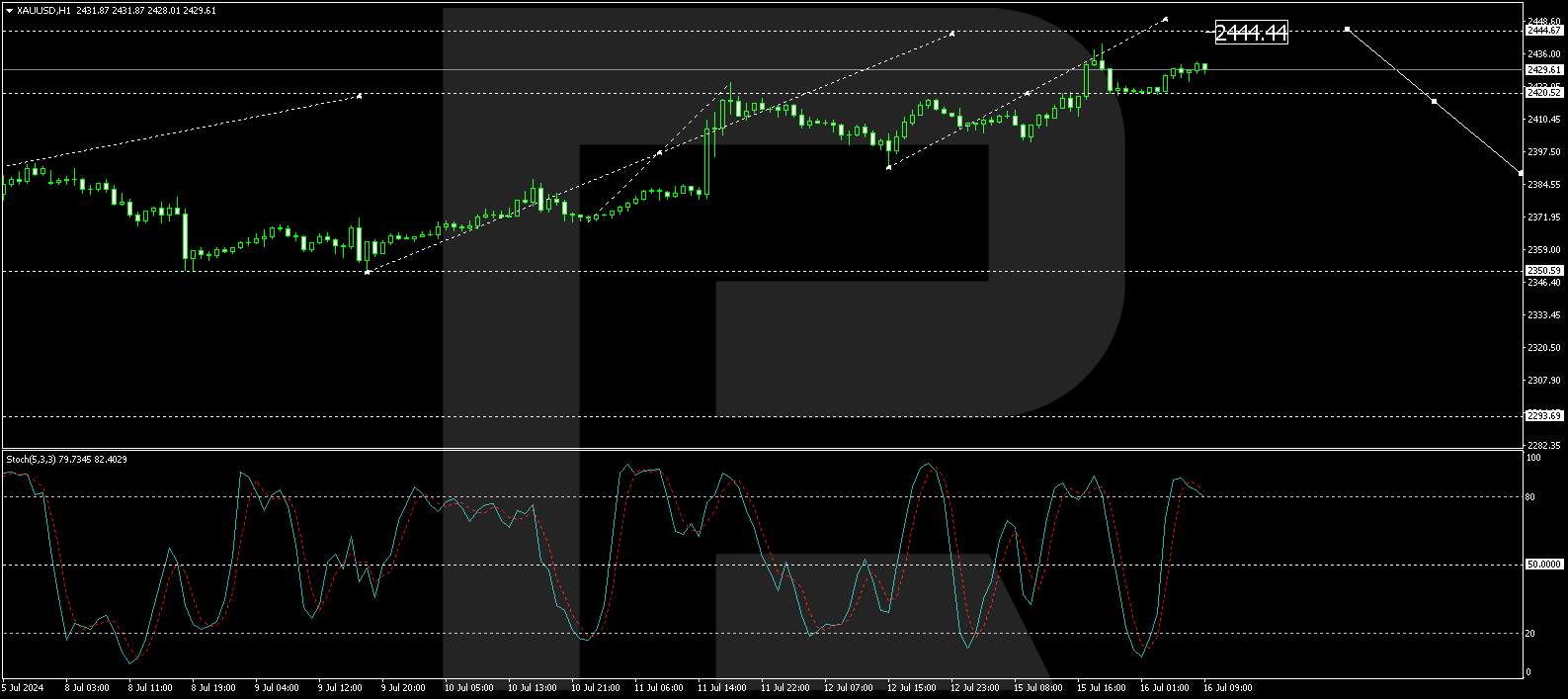
On the H1 chart, a decline to 2385.00 has been executed, followed by the formation of a consolidation range around this level. The market has recently broken out downwards from this range, opening the potential for a further decline to 2337.35, which is the local target. Following this, a correction back to 2385.00 (testing from below) is possible. Further decline towards 2321.45 may follow. This scenario is technically confirmed by the Stochastic oscillator, with its signal line above 20 and poised to rise to 50 before another potential decline to 20.

Summary

Gold prices have declined due to the Fed’s cautious stance on monetary policy and the expectation of prolonged high interest rates. Technical indicators suggest further potential declines, with possible corrective rebounds along the way. Investors should monitor these levels closely as market conditions evolve.


Disclaimer

Any forecasts contained herein are based on the author’s particular opinion. This analysis may not be treated as trading advice. RoboForex bears no responsibility for trading results based on trading recommendations and reviews contained herein.

Is Oil Back in Buying Territory?

Source: Clive Maund (5/21/24)

Technical Analyst Clive Maund reviews charts in the oil sector to explain why he believes oil might be in buying back territory.

With the main fundamental drivers for a higher oil price remaining in play, namely continuing strife in the Mid-East with the ongoing risk of flare ups and the growing risk of a dollar collapse, this looks like a good point to buy oil and oil related investments after the corrective phase of the past five weeks or so.

On the 8-month chart for Light Crude we can see how oil ran up in late March and early April following a breakout from a Head-and-Shoulders bottom. Then we saw what looks like a normal post-breakout reaction back to test the support at the top of the pattern with an intermediate base pattern forming in this support this month, within which are a couple of “bull hammers,” which are long-tailed bullish candles, which are more easily seen on shorter-term charts. This correction has more than fully unwound the earlier overbought condition and has put oil in a position to advance anew soon.

Turning now to oil stocks, we see on the 8-month chart for the Amex Oil Index (XOI:INDEXNYSEGIS)  that they had quite a strong runup on the back of the rise in the oil price in March and April, but from early April, we see that this index has reacted back in what looks like a classic bull Flag / Pennant that will lead to renewed advance.

We can see that the duration of this corrective pattern has allowed time for the earlier heavily overbought condition shown by the MACD indicator to fully unwind, thus restoring upside potential, and for its bullishly aligned moving averages to partially catch up, thus creating the conditions for renewed advance. This, therefore, is believed to be a good time to buy selected oil stocks.

A good vehicle for playing renewed advance by the energy sector is the Energy Select Sector SPDR Fund (XLE:NYSEARC), and on its 8-month chart, we see that it has corrected back over the past five weeks or so in sympathy with the sector to arrive at the lower rail of a powerful uptrend channel, which has allowed time for its earlier heavily overbought condition to fully unwind.

This correction is believed to be a bull Flag that will lead soon to another strong upleg, an interpretation that is given added weight by the fact that the Accumulation line has held up very well on the correction and is even on the point of making new highs even though the price has not yet broken out of the Flag. This is very bullish, so XLE is rated as a Strong Buy here.

Whilst XLE is not viewed as especially speculative in this environment, buyers here may want to place a stop some way beneath the lower rail of the channel or to reduce the risk of being shaken out before a big rally, it’s perhaps better to place a stop beneath the support level at approximately $90 – $91.50.


Important Disclosures:

  1. Statements and opinions expressed are the opinions of the author and not of Streetwise Reports, Street Smart, or their officers. The author is wholly responsible for the accuracy of the statements. Streetwise Reports was not paid by the author to publish or syndicate this article. Streetwise Reports requires contributing authors to disclose any shareholdings in, or economic relationships with, companies that they write about. Any disclosures from the author can be found  below. Streetwise Reports relies upon the authors to accurately provide this information and Streetwise Reports has no means of verifying its accuracy.
  2. This article does not constitute investment advice and is not a solicitation for any investment. Streetwise Reports does not render general or specific investment advice and the information on Streetwise Reports should not be considered a recommendation to buy or sell any security. Each reader is encouraged to consult with his or her personal financial adviser and perform their own comprehensive investment research. By opening this page, each reader accepts and agrees to Streetwise Reports’ terms of use and full legal disclaimer. Streetwise Reports does not endorse or recommend the business, products, services or securities of any company.

For additional disclosures, please click here.

Clivemaund.com Disclosures

The above represents the opinion and analysis of Mr. Maund, based on data available to him, at the time of writing. Mr. Maund’s opinions are his own, and are not a recommendation or an offer to buy or sell securities. As trading and investing in any financial markets may involve serious risk of loss, Mr. Maund recommends that you consult with a qualified investment advisor, one licensed by appropriate regulatory agencies in your legal jurisdiction and do your own due diligence and research when making any kind of a transaction with financial ramifications. Although a qualified and experienced stock market analyst, Clive Maund is not a Registered Securities Advisor. Therefore Mr. Maund’s opinions on the market and stocks cannot be  only be construed as a recommendation or solicitation to buy and sell securities.

The RBNZ maintained its hawkish bias, leaving the interest rate at 5.5%. Inflationary pressures are easing in Canada

By JustMarkets

At the end of Tuesday, the Dow Jones Index (US30) was up 0.17%, while the S&P 500 Index (US500) added 0.25%. The NASDAQ Technology Index (US100) closed positive 0.22%. The US stock indices closed moderately higher, consolidating just below last week’s all-time highs. The rise in stocks was limited by comments from Fed Representative Waller and FRB Atlanta President Bostic, who said they favored waiting for inflation to fall before cutting interest rates.

FRB Atlanta President Bostic reiterated his view that inflation will continue to decline slowly and that the Fed could likely begin cutting interest rates in the 4th quarter. Today, markets await Wednesday’s release of the minutes from the May 1 FOMC meeting to see how close the Fed is to cutting interest rates.

Tesla (TSLA) stock price rose more than 6%, leading the Nasdaq 100 higher as a coalition of Tesla shareholders urges peers to reject CEO Musk’s $56 billion compensation package. AstraZeneca Plc (AZN) closed higher by more than 2% after the company said it expects to generate $80 billion in cumulative revenue by 2030 from “significant growth” in its portfolio of existing oncology, biopharmaceuticals, and rare diseases.

The Canadian dollar weakened to 1.36 per dollar, moving away from the five-week highs reached earlier this month, as the latest inflation data raised bets that the Bank of Canada could start cutting interest rates as early as next month. As expected, core inflation slowed to 2.7% y/y in April, hitting the lowest level in three years, while the core rate fell for the 5th straight month to 1.6% y/y, also the lowest since 2021. The Bank of Canada kept its key rate at 5% in April. Still, policymakers recently said they needed to see further and sustained weakening in core inflation before moving to a looser policy. Odds of a rate cut in June rose to 50% from 40% before the report was published.

Equity markets in Europe were mostly down yesterday. Germany’s DAX (DE40) fell by 0.22%, France’s CAC 40 (FR40) closed down by 0.66%, Spain’s IBEX 35 (ES35) lost 0.04%, and the UK’s FTSE 100 (UK100) closed negative 0.09%.

Asian markets were mostly down on Tuesday. Japan’s Nikkei 225 (JP225) declined 0.31%, China’s FTSE China A50 (CHA50) fell 0.19% for the day, Hong Kong’s Hang Seng (HK50) fell 2.12% on Monday, and Australia’s ASX 200 (AU200) closed negative 0.15%.

The Reserve Bank of New Zealand kept the official cash rate (OCR) at 5.5% during its May 2024 policy meeting, extending the rate pause for the 7th straight time and confirming market expectations. Policymakers noted that restrictive monetary policy has eased pressure on manufacturing capacity and lowered consumer price inflation. Although the country’s core inflation fell to a nearly three-year low of 4% in the first quarter of 2024, it remained above the target range of 1% to 3%. At the same time, the Central Bank raised its rate prognosis maximum and delayed the timing of rate cuts until the third quarter of 2025, later than its previous estimate for the second quarter.

Japan’s trade deficit widened to JPY 462.50 billion in April 2024 from JPY 429.79 billion in the same month a year earlier, exceeding market prognoses. Exports rose by 8.3% y/y, marking the fifth consecutive month of growth, mainly due to continued shipments to major trading partners, notably the US and China. Imports also rose by 8.3%, the strongest growth in 14 months, to a four-month high, driven by increased purchases of mineral fuels.

S&P 500 (US500) 5,321.41 +13.28 (+0.25%)

Dow Jones (US30) 39,872.99 +66.22 (+0.17%)

DAX (DE40) 18,726.76 −42.20 (−0.22%)

FTSE 100 (UK100) 8,416.45 −7.75 (−0.09%)

USD Index 104.65 +0.09 (+0.08%)

Important events today:
  • – US FOMC Member Collins Speaks at 02:00 (GMT+3);
  • – US FOMC Member Mester Speaks at 02:00 (GMT+3);
  • – Japan Trade Balance at 02:50 (GMT+3);
  • – New Zealand RBNZ Interest Rate Decision at 05:00 (GMT+3);
  • – New Zealand RBNZ Monetary Policy Statement at 05:00 (GMT+3);
  • – New Zealand RBNZ Press Conference at 06:00 (GMT+3);
  • – UK Consumer Price Index (m/m) at 09:00 (GMT+3);
  • – UK Producer Price Index (m/m) at 09:00 (GMT+3);
  • – US Existing Home Sales (m/m) at 17:00 (GMT+3);
  • – US Crude Oil Reserves (w/w) at 17:30 (GMT+3);
  • – US FOMC Meeting Minutes at 21:00 (GMT+3);
  • – New Zealand RBNZ Gov Orr Speaks at 23:10 (GMT+3).

By JustMarkets


This article reflects a personal opinion and should not be interpreted as an investment advice, and/or offer, and/or a persistent request for carrying out financial transactions, and/or a guarantee, and/or a forecast of future events.
The New Zealand Dollar shows a steady rise

By RoboForex Analytical Department

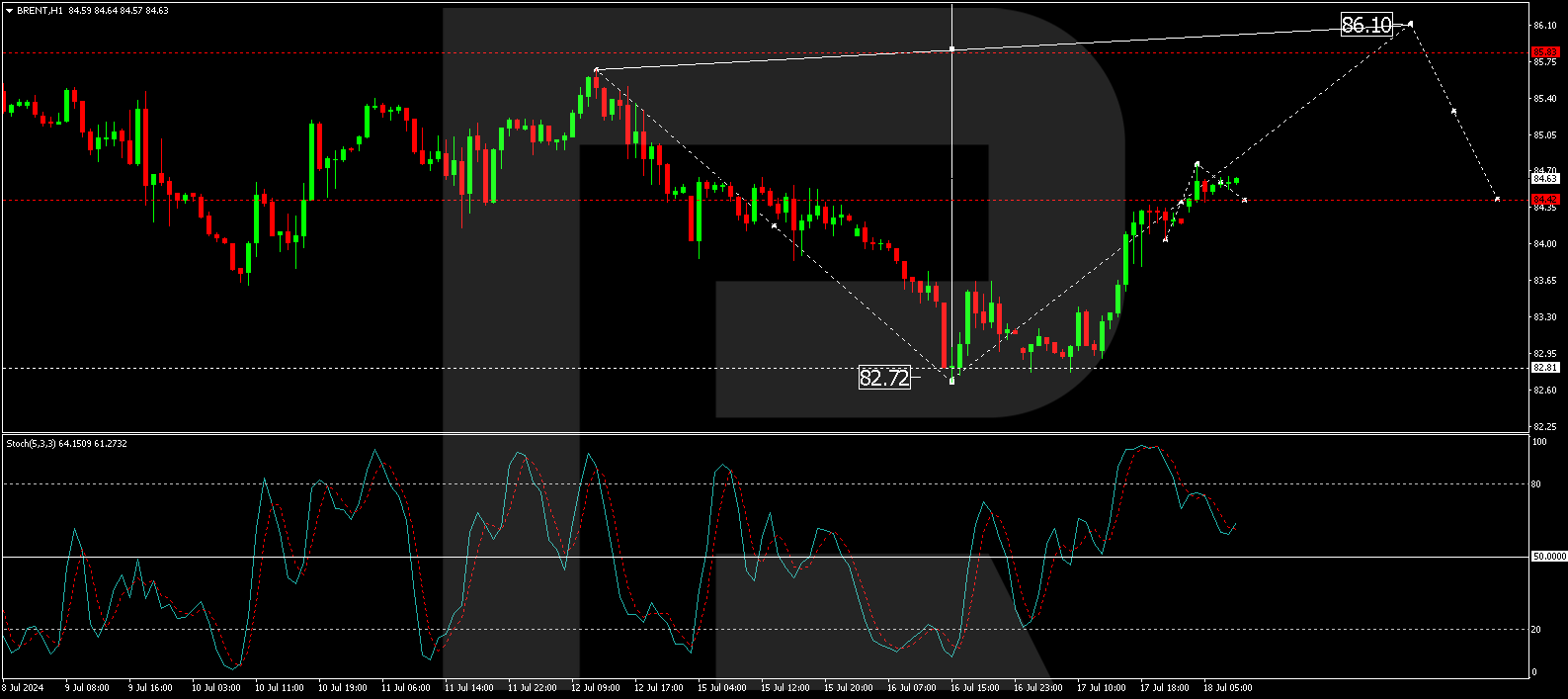
The NZD/USD pair is preparing for a mid-week rally, approaching the 0.6116 level. These current values mark the highest point for the Kiwi in two months, following the Reserve Bank of New Zealand’s decision to maintain its monetary policy structure unchanged during the May meeting.

The interest rate remains at 5.5% per annum, as anticipated.

The RBNZ has determined that maintaining a restrictive monetary policy is necessary to ensure inflation returns to target within the planned timeframe. The central bank has noted a cooling labour market and rising unemployment as potential risks. Support factors include higher housing rents, insurance costs, and increasing utility rates.

According to the official forecast, the consumer price index in New Zealand is expected to return to the 1-3% range by the end of 2024.

Overall, the NZD exchange rate is poised to increase. The RBNZ’s policy is viewed as balanced and consistent, which helps mitigate the risks of excessive volatility for the Kiwi.

On a broader scale, investors are awaiting the minutes from the latest US Federal Reserve meeting, which will provide further insights into the Fed’s upcoming steps.

NZD/USD technical analysis

On the H4 chart of NZD/USD, a consolidation range has formed around the 0.6000 level. Following an upward breakout, a growth wave to 0.6151 has been achieved. A consolidation range is currently emerging around 0.6114. A downward breakout from this range could open the potential for a decline to 0.6000, the first target. After reaching this level, a correction wave to 0.6075 (testing from below) is possible, followed by a further decline along the trend to 0.5853. This scenario is technically supported by the MACD indicator, with its signal line above zero but directed strictly downwards.

On the H1 chart, an impulse of decline to 0.6114 has formed. Today, the market might perform a correction to 0.6132. After this correction, the continuation of the growth wave to 0.6075 is expected, with the prospect of further trend development.

Summary

The NZD/USD pair is steadily rising, bolstered by the Reserve Bank of New Zealand’s consistent monetary policy. Technical indicators suggest potential corrections and further growth, with close attention to the upcoming US Federal Reserve minutes for additional market direction.


Disclaimer

Any forecasts contained herein are based on the author’s particular opinion. This analysis may not be treated as trading advice. RoboForex bears no responsibility for trading results based on trading recommendations and reviews contained herein.

Today, traders are focused on Canadian inflation data and waiting for the RBNZ interest rate decision

By JustMarkets

At Monday’s close, the Dow Jones Index (US30) was down 0.49%, while the S&P 500 Index (US500) was up 0.09%. The NASDAQ Technology Index (US100) closed positive 0.65% and set a new all-time high. A negative factor for the indices was the strengthening of the US dollar amid hawkish comments from FOMC representatives. San Francisco Fed President Daly, Atlanta Fed President Bostic, Cleveland Fed President Mester, and Fed Vice Chairman Jefferson said they favor maintaining the Fed’s current restrictive policy until inflation falls to 2%.

On Wednesday, markets will wait for the minutes from the May 1 FOMC meeting to see how close the Fed is to cutting interest rates. Also, on this day, earnings results from Nvidia and Analog Devices will be examined to gauge demand for semiconductor chips.

Canada’s April inflation data will be released today. Overall, price pressures in Canada are easing. The downward trend in various CPI measures has stabilized in the second half of 2023. The core measures — core, median, and overall CPI — declined for the third consecutive month in March. The headline rate rose slightly to 2.8%, but this is not a concern, as wage growth has also slowed since the beginning of the year. The Bank of Canada meets on June 5, and there is a 40% chance of a 25 basis point rate cut. A softer-than-expected Consumer Price Index report for April could bring that probability closer to 50-60%. However, even if there is significant downward progress in inflation, a rate cut is more likely in July.

Equity markets in Europe mostly went up yesterday. Germany’s DAX (DE40) rose by 0.35%, France’s CAC 40 (FR40) closed 0.35% higher, Spain’s IBEX 35 (ES35) added 0.10%, and the UK’s FTSE 100 (UK100) closed positive 0.05%.

It is almost 100% likely that the ECB will reduce borrowing costs as early as June, but even after that, there is uncertainty, and many policymakers favor a cautious approach. After the June meeting, ECB Governing Council spokesman Kazaks cautioned against a rush to cut ECB interest rates.

WTI crude oil prices fell to $79 a barrel on Tuesday, extending losses from the previous session, as investors continued to assess developments in the Middle East following the death of Iran’s president in a helicopter crash and emerging health concerns for Saudi Arabia’s king. However, markets are not too worried about oil supplies from the region as there are no signs of oil supply disruptions. Investors are also cautiously anticipating the upcoming OPEC meeting on June 1 for a possible postponement of production cuts. Meanwhile, recent events such as Ukraine’s attack on Russian refineries and a Houthi missile attack on a China-bound oil tanker in the Red Sea continued to pose risks to global supply.

Asian markets were mostly up last week. Japan’s Nikkei 225 (JP225) rose by 0.73%, China’s FTSE China A50 (CHA50) gained 0.42%, Hong Kong’s Hang Seng (HK50) gained 0.42%, and Australia’s ASX 200 (AU200) was positive 0.63%.

Australia’s inflation is declining at a slower-than-expected pace, with recent data suggesting that risks to inflation have risen slightly, minutes from the Reserve Bank’s May meeting showed. The situation prompted the Central Bank to reopen discussions on raising the interest rate, but it ultimately decided that the case for holding the rate was stronger. Policymakers reiterated that bringing inflation back to the target range of 2–3% remains their top priority. They added that the target could be reached in the second half of 2025 and the median in 2026. At the same time, the unemployment rate is expected to be at a level consistent with the Committee’s full employment mandate by mid-2025.

The New Zealand dollar has weakened slightly recently as traders await Wednesday’s Reserve Bank of New Zealand’s (RBNZ) interest rate decision. The Central Bank is expected to leave the official money rate at 5.5% for the 7th consecutive meeting. Market attention will thus be focused on whether it will signal that interest rate cuts could begin sooner than the mid-2025 cut indicated in February’s prognoses. Last week, data showed that the country’s two-year inflation expectations fell to the lowest level in almost three years in the second quarter, fueling speculation that the RBNZ may consider cutting rates later this year.

S&P 500 (US500) 5,308.13 +4.86 (+0.09%)

Dow Jones (US30) 39,806.77 −196.82 (−0.49%)

DAX (DE40) 18,768.96 +64.54 (+0.35%)

FTSE 100 (UK100) 8,424.20 +3.94 (+0.05%)

USD Index 104.50 +0.05 (+0.05%)

Important events today:
  • – Australia RBA Meeting Minutes at 04:30 (GMT+3);
  • – Eurozone ECB President Lagarde Speaks at 11:00 (GMT+3);
  • – Eurozone Trade Balance at 12:00 (GMT+3);
  • – Canada Consumer Price Index (m/m) at 15:30 (GMT+3);
  • – US FOMC Member Barkin Speaks at 16:00 (GMT+3);
  • – US FOMC Member Williams Speaks at 16:05 (GMT+3);
  • – US FOMC Member Bostic Speaks at 16:10 (GMT+3);
  • – US FOMC Member Barr Speaks at 18:45 (GMT+3);
  • – UK BoE Gov Bailey Speaks at 20:00 (GMT+3).

By JustMarkets


This article reflects a personal opinion and should not be interpreted as an investment advice, and/or offer, and/or a persistent request for carrying out financial transactions, and/or a guarantee, and/or a forecast of future events.

Euro/Dollar in consolidation

By RoboForex Analytical Department

The EUR/USD pair is gently declining towards 1.0858 on Tuesday but remains within a medium-term range.

This week sees few significant US statistics releases, which could provide investors with insights into future interest rate movements. However, numerous speeches from US Federal Reserve members are expected. Investors will be keenly listening for any indications about the Fed’s monetary policy.

On Monday, several Fed officials advocated for maintaining a cautious monetary policy strategy, despite last week’s data showing a reduction in inflationary pressures in April.

It is likely that all forthcoming comments from Fed officials will echo a similar sentiment—that the Fed remains patient and consistent. The Fed requires time to gather more data on easing price pressures. While there are indications of such easing, they are not yet systemic. This cautious approach has done little to alter investor expectations significantly. The market now anticipates that the Fed will lower rates twice before the end of the year, with the first cut expected in September.

EUR/USD technical analysis

On the H4 chart, EUR/USD has formed a consolidation range below the level of 1.0890. A downward exit from this range could lead to a continuation of the downward wave to 1.0784. Breaking this level might further extend the trend to 1.0683, which is the first target of the decline wave. This scenario is technically supported by the MACD indicator, with its signal line at the maximums while the histograms are below the zero mark and continue to decline.

On the H1 chart, the correction to 1.0883 has been completed. Currently, the structure of a downside wave to 1.0833 is forming. After reaching this level, a narrow consolidation range around it is expected. A downward exit from this range could open the potential for a further decline to 1.0785, which is the local target of the downward wave. This scenario is technically confirmed by the Stochastic oscillator, with its signal line below 80 and expected to decline to 20.

Summary

The EUR/USD pair remains in a consolidation phase with a gentle downward movement. Technical indicators suggest potential for further declines, but market participants will be closely watching Fed communications for any hints on future monetary policy, which could influence the pair’s direction.


Disclaimer

Any forecasts contained herein are based on the author’s particular opinion. This analysis may not be treated as trading advice. RoboForex bears no responsibility for trading results based on trading recommendations and reviews contained herein.