Archive for Financial News – Page 12

Investors run to safe-haven assets amid Middle East escalation

By JustMarkets 

The US stock market concluded Thursday’s session in the red as the escalating Middle East conflict pushed WTI oil prices above $80 per barrel. By the end of the day, the Dow Jones (US30) fell by 1.61%. The S&P 500 (US500) shed 0.56%, and the tech-heavy Nasdaq (US100) closed down 0.29%. Fearing stagflation and new logistical disruptions in the Strait of Hormuz, investors actively offloaded industrial sector holdings. Simultaneously, the financial sector faced massive sell-offs; banking giants Goldman Sachs and Morgan Stanley lost between 3% and 3.7% in value amid volatile bond yields. The current dynamics reflect growing market pessimism regarding global economic growth prospects during a prolonged confrontation. The combination of inflationary pressure and the threat of energy shortages is forcing traders to reassess their portfolios.

European markets demonstrated a broad decline on Thursday. The German DAX (DE40) dropped 1.61%, the French CAC 40 (FR40) closed down 1.49%, the Spanish IBEX 35 (ES35) lost 1.38%, and the British FTSE 100 (UK100) finished down 1.45%. Ongoing strikes between Iran and Israel on infrastructure targets in the Persian Gulf are provoking an uncontrolled surge in resource prices. The spike in natural gas prices was particularly painful for European equities, pushing bond yields higher and triggering a new wave of sell-offs in the banking sector, where shares of giants like Santander and Deutsche Bank fell nearly 3%. Investors seriously fear that a protracted conflict and energy shock will lead to industrial stagnation in Europe, forcing them to rotate capital from cyclical stocks into defensive instruments.

Benchmark oil prices made a powerful leap, gaining over 8% and consolidating above $80 per barrel – a level not seen since the summer of 2024. The rally was driven by a critical breakdown in global supply chains following the near-total halt of tanker traffic through the Strait of Hormuz after an Iranian missile attack on a commercial vessel. The situation was further exacerbated by Beijing’s decision to ban its largest refineries from exporting diesel and gasoline, intensifying the fuel product deficit and neutralizing international efforts to calm investors via insurance measures and military escorts. Despite the panic, a counterweight emerged from fresh US Energy Information Administration (EIA) data, which recorded an unexpected 3.5-million-barrel increase in commercial crude inventories. Total reserves of 439.3 million barrels provide a safety cushion capable of partially absorbing supply shocks in a prolonged conflict.

The US natural gas prices (XNG) corrected to $2.98 per MMBtu, partially offsetting previous gains after Washington announced upcoming measures to stabilize the energy market. Despite this local pullback, quotes maintain a positive weekly trend of approximately 4%, reacting to the unprecedented operational halt at Qatar’s Ras Laffan hub and the blockade of the Strait of Hormuz. Investors are deeply concerned about a global LNG shortage, as the force majeure in Qatar, one of the world’s largest exporters, creates systemic risks for supplies to Europe and Asia.

Asian markets traded lower yesterday, though with mixed results. The Japanese Nikkei 225 (JP225) rose by 1.90% during the session, while the FTSE China A50 (CHA50) declined 0.65%. The Hang Seng (HK50) edged up 0.28%, and the Australian ASX 200 (AU200) posted a positive result of 0.44%.

The New Zealand dollar (NZD) recovered to $0.590, yet it is ending the week in the red due to the flight to safe-haven assets. As an economy heavily dependent on energy imports, New Zealand has proven highly vulnerable to fuel price spikes, increasing pressure on the “kiwi.” Domestically, a serious dissonance is emerging between market expectations and official rhetoric; traders now price in an 80% probability of an RBNZ rate hike in September, expecting a total tightening of 40 basis points by year-end.

S&P 500 (US500) 6,830.71 −38.79 (−0.56%)

Dow Jones (US30) 47,954.74 −784.67 (−1.61%)

DAX (DE40) 23,815.75 −389.61 (−1.61%)

FTSE 100 10,413.94 −153.71 (−1.45%)

USD Index 99.06 +0.29% (+0.30%)

News feed for: 2026.03.06

  • Eurozone ECB President Lagarde Speaks at 12:00 (GMT+2); – EUR (LOW)
  • US Retail Sales (m/m) at 15:30 (GMT+2); – USD (MED)
  • US Nonfarm Payrolls (m/m) at 15:30 (GMT+2); – USD (HIGH)
  • US Unemployment Rate (m/m) at 15:30 (GMT+2); – USD (HIGH)
  • Canada Ivey PMI (m/m) at 17:00 (GMT+2). – CAD (MED)

By JustMarkets


This article reflects a personal opinion and should not be interpreted as an investment advice, and/or offer, and/or a persistent request for carrying out financial transactions, and/or a guarantee, and/or a forecast of future events.

EUR/USD Under Pressure: Middle East Risks Outweigh All Else

By Analytical Department RoboForex

EUR/USD is holding near 1.1620 on Friday, with the US dollar on track to gain approximately 1% by the end of the week. The dollar is benefiting from safe-haven demand amid the escalating conflict in the Middle East and rising crude oil prices.

The joint US-Israel military operation against Iran continues into its seventh day. Tehran has responded with a fresh wave of missile and drone strikes targeting Gulf countries.

US President Donald Trump also stated that he would like to be involved in selecting Iran’s next leader. At the same time, he described the appointment of Mojtaba Khamenei – son of the late Supreme Leader – as unlikely.

Rising oil prices have heightened concerns over a new wave of global inflation, reinforcing expectations that the Federal Reserve may delay interest rate cuts. Markets now anticipate the first Fed rate cut no earlier than September or October, revised down from the previous July forecast.

This week, the dollar strengthened most notably against the euro, reflecting the European economy’s heavy reliance on oil imports from the Middle East.

Technical Analysis

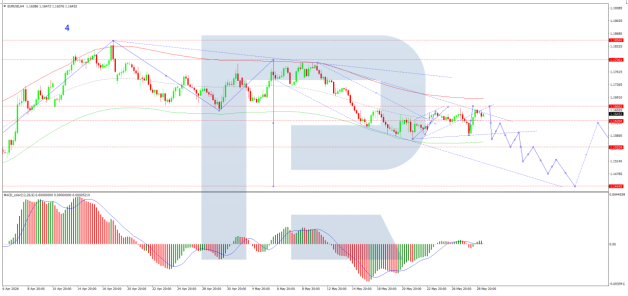
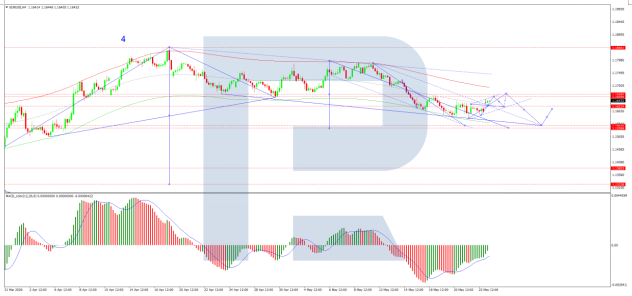
On the H4 chart, EUR/USD is forming a compact consolidation range around the 1.1600 level. The current structure suggests a high probability of a wave developing towards 1.1533, with scope to extend further to 1.1500.

A downside breakout from this range would open the door for the second half of the momentum to unfold, with targets at least around 1.1400. Technically, this scenario is confirmed by the MACD indicator, whose signal line is below zero and pointing strictly downwards, reflecting sustained bearish momentum.

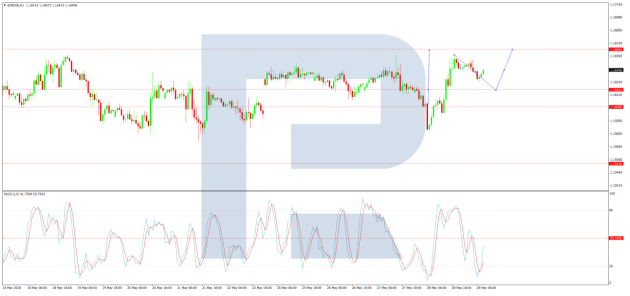
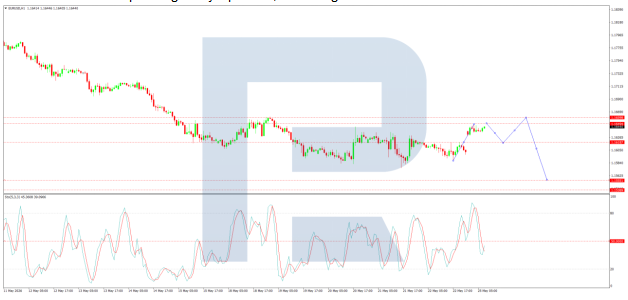
On the H1 chart, the market has completed a growth wave targeting 1.1620, followed by a decline to form a consolidation range around 1.1600. An upside breakout from this range could trigger another growth leg to 1.1660, potentially extending to 1.1675, after which the broader downward trend is likely to resume towards 1.1500.

A downside breakout from the range would activate a continuation wave towards 1.1500, which could mark the completion of the third wave in the broader downward trend. This scenario is confirmed by the Stochastic oscillator, whose signal line has turned away from 80, indicating a short-term downward swing towards the 20 level.

Conclusion

EUR/USD remains under significant pressure as geopolitical tensions in the Middle East drive safe-haven flows into the US dollar, while pushing oil prices higher and stoking inflation concerns. The combination of delayed Fed rate cut expectations and Europe’s particular vulnerability to energy disruptions has exacerbated the euro’s weakness. With technical indicators pointing firmly lower, further downside appears likely, though short-term consolidation around key levels may precede the next leg of the downtrend.


Disclaimer

Any forecasts contained herein are based on the author’s particular opinion. This analysis may not be treated as trading advice. RoboForex bears no responsibility for trading results based on trading recommendations and reviews contained herein.

Bitcoin shows resilience to Middle East events. Oil market stabilizes

By JustMarkets

The US stock market rose on Wednesday. By the end of the day, the Dow Jones (US30) increased by 0.49%. The S&P 500 (US500) gained 0.79%. The tech-heavy NASDAQ (US100) closed higher by 1.51%. The US stock market displayed a confident “bullish” sentiment, largely ignoring geopolitical tensions. The primary driver of optimism was a decline in WTI oil prices: the market reacted with relief to Treasury Secretary Scott Bessent’s plan to protect oil traffic in the Persian Gulf. Even the official confirmation of the 15% global tariffs taking effect this week failed to dampen risk appetite, as strong US macro data outweighed trade concerns. The February ADP report showed private sector employment growth of 185k (above the 145k prediction), while wage growth slowed. This created an ideal “soft landing” picture – a strong economy with cooling inflation in the services sector. The semiconductor sector led the rally: Micron and AMD shares jumped more than 5.5%, while Amazon rose 3.9%. Investors are betting that tech giants will remain resilient even under inflationary pressure.

The market was also stirred by a New York Times report stating that Iranian intelligence, through intermediaries, reached out to the CIA to discuss ceasefire terms. Despite this rare signal toward de-escalation, investor reaction remained cautious. US officials expressed doubt regarding Iran’s sincerity, viewing it as an attempt to buy time. Following the deaths of Iran’s top leadership, it remains unclear who possesses the authority to negotiate, which intensifies political chaos and sustains demand for safe-haven assets.

Bitcoin has consolidated above the psychological threshold of $72,000, holding near monthly highs as markets gradually stabilize following the escalation in the Middle East. Despite disruptions in global logistics through the Strait of Hormuz and the initial flight to safety, the digital coin demonstrated exceptional resilience. Notably, in recent days, the flagship of the digital assets market outperformed traditional gold in recovery pace: while the precious metal dipped by 2%, Bitcoin gained about 12%, effectively seizing the status of a priority haven amid geopolitical turbulence.

European markets showed a strong bullish reversal, almost completely recouping the losses of “Black Tuesday.” The German DAX (DE40) rose by 1.74%, the French CAC 40 (FR40) closed up 0.79%, the Spanish IBEX 35 (ES35) gained 2.49%, and the British FTSE 100 (UK100) closed up 0.80%. Despite the ongoing conflict in the Middle East, diplomatic signals from Washington and the stabilization of the energy market provided Europe with a necessary breathing spell.

The Swiss franc (CHF) held its position near 0.78 against the US dollar, remaining at historic highs amid a complex interplay of geopolitics and domestic economics. Investors continue to view the franc as a “safe harbor,” though further growth potential is limited by the hawkish rhetoric of the SNB. Internal conditions are complicated by fresh inflation data: in February, the CPI rose 0.6% for the month, but annual inflation stalled at 0.1%. This is a critically low figure, sitting at the very edge of the SNB’s target range (0-2%). SNB Vice Chairman Antoine Martin confirmed that the bank is ready for aggressive currency interventions, fearing that an overly strong franc will cheapen imports and push the economy into a deflationary spiral.

The oil market moved toward a fragile stabilization, with WTI crude futures declining to $74 per barrel. This marked the first drop in prices since the start of direct military confrontation between the US and Iran. The primary factor for the price decline was the decisive economic measures taken by the Donald Trump administration aimed at preventing a global energy collapse. Specifically, the President directed the International Development Finance Corporation (DFC) to implement a political risk insurance mechanism with affordable rates for vessels operating in the conflict zone. Despite verbal interventions by Scott Bessent and US promises of military escort for tankers, the physical situation in the Persian Gulf remains paralyzed. Commercial shipping through the Strait of Hormuz has effectively ceased following IRGC threats to attack any vessels. Most large tankers remain at anchor.

The US natural gas prices (XNG) broke a three-day rally on Wednesday, falling below $3 per MMBtu. The market reacted to the first signals of possible de-escalation in the Middle East: reports of Iran’s readiness for negotiations reduced fears of a global fuel shortage, leading to a price correction, following oil. Despite positive news regarding possible contacts between Tehran and Washington, the physical blockage of supplies from the Persian Gulf remains a reality. The Strait of Hormuz remains closed to most commercial traffic, and Qatar’s largest LNG plant has yet to resume operations.

Asian markets traded lower yesterday. The Japanese Nikkei 225 (JP225) fell by 3.61% during the session, the FTSE China A50 (CHA50) dropped 1.60%, the Hong Kong Hang Seng (HK50) fell 2.01%, and the Australian ASX 200 (AU200) showed a negative result of 1.91%. On Thursday, however, Chinese stock indices showed a confident rebound. The recovery was driven by improved global sentiment and the stabilization of inflation expectations, despite ongoing tensions between Washington and Tehran. Beijing intends to counter deflationary risks and external tariff pressure through aggressive subsidies for the high-tech sector, R&D, and support for domestic consumer demand.

S&P 500 (US500) 6,869.50 +52.87 (+0.78%)

Dow Jones (US30) 48,739.41 +238.14 +(0.49%)

DAX (DE40) 24,205.36 +414.71 (+1.74%)

FTSE 100 (UK100) 10,567.65 +83.52 (+0.80%)

USD Index 98.76 -0.28% (-0.29%)

News feed for: 2026.03.05

  • Australia Trade Balance (m/m) at 02:30 (GMT+2); – AUD (MED)
  • Switzerland Unemployment Rate (m/m) at 08:45 (GMT+2); – CHF (MED)
  • Eurozone Retail Sales (m/m) at 12:00 (GMT+2); – EUR (MED)
  • Eurozone ECB Monetary Policy Meeting Accounts at 14:30 (GMT+2); – EUR (LOW)
  • US Initial Jobless Claims (w/w) at 15:30 (GMT+2); – USD (MED)
  • US Natural Gas Storage (w/w) at 17:30 (GMT+2). – XNG (HIGH)

By JustMarkets


This article reflects a personal opinion and should not be interpreted as an investment advice, and/or offer, and/or a persistent request for carrying out financial transactions, and/or a guarantee, and/or a forecast of future events.

GBP/USD: Market Not Expecting BoE Rate Cut in March

By Analytical Department RoboForex

GBP/USD contracted to 1.3350 on Thursday, with the pound remaining under pressure and trading near three-month lows.

Pressure on the dollar has eased over the past 24 hours following reports that Iran has offered to discuss terms for a potential end to the conflict. According to The New York Times, representatives of the Iranian Ministry of Intelligence made contact with the CIA through intermediaries, just one day after the commencement of joint US-Israel attacks. However, Israeli authorities have advised Washington not to respond to this proposal just yet.

Investors are also weighing the impact of rising energy prices on the Bank of England’s (BoE) future policy. With inflationary risks rising, expectations of an imminent rate cut have diminished significantly.

The market now assigns only a 20% probability of a BoE rate cut this month, a sharp decline from around 75% just a week ago.

Meanwhile, the UK’s Office for Budget Responsibility (OBR) has downgraded its economic growth forecast for 2026 to 1.1%, down from the previously anticipated 1.4%. However, the outlook for 2027 and 2028 remains more optimistic, with annual growth projected at around 1.6%. A gradual decline in government borrowing and inflation is also expected.

Technical Analysis

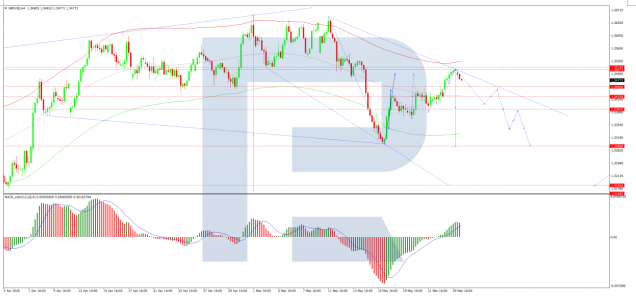
On the H4 GBP/USD chart, the market is forming a wide consolidation range around the 1.3326 level, currently extending up to 1.3393. A decline to 1.3131 is expected in the near term. Following this correction, a new consolidation phase is likely. An upside breakout would pave the way for the wave to extend to 1.3410, while a downside breakout would suggest further movement towards 1.2971. This scenario is confirmed by the MACD indicator, which shows its signal line below the zero line and pointing firmly downwards.

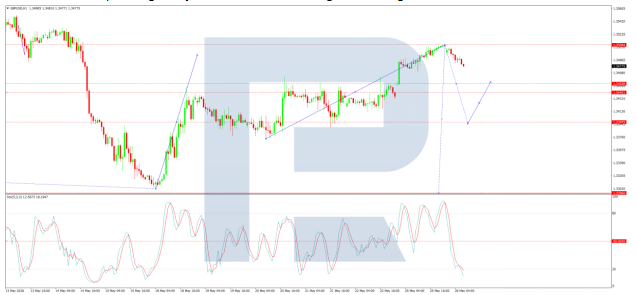
On the H1 chart, the market has formed a compact consolidation range around the 1.3333 level. A downside breakout has initiated a wave structure extending to 1.3266. If this level is breached, further downside potential towards 1.3125 is possible. This scenario is supported by the Stochastic oscillator, whose signal line is below the 50 level and pointing firmly downwards.

Conclusion

GBP/USD remains under pressure, with shifting central bank expectations and geopolitical developments driving price action. The dramatic reversal in BoE rate-cut probabilities – from 75% to just 20% in a week – reflects growing concerns about inflation driven by rising energy prices. While tentative diplomatic signals from Iran have temporarily eased dollar strength, the technical outlook for the pair remains decidedly bearish, with further downside anticipated in the near term.


Disclaimer

Any forecasts contained herein are based on the author’s particular opinion. This analysis may not be treated as trading advice. RoboForex bears no responsibility for trading results based on trading recommendations and reviews contained herein.

Brent headed for $100?

By ForexTime 

  • Oil benchmarks surge over 15% since Monday on supply fears
  • Spiking energy prices have fueled inflation fears
  • Cooling Fed cut bets could hit equity markets
  • Brent firmly bullish with $90and $100 acting as key levels of interest

Brent oil has rallied as much as 17% since Monday, pushing 2026 gains to 35%.

Why:

  •  Iran conflict: Global oil markets have been thrown into turmoil by the US and Israeli war against Iran. This has halted trade, driven producers to lock output and forced the closure of a major refinery part.


  • Closure of the Strait of Hormuz: This is a narrow waterway that connects the Persian Gulf to the Indian Ocean where around 20% of the world’s oil passes through. Iran has effectively closed this passage – warning that any vessel that passes would be set “ablaze”.

What does this mean?

  • Consumer pain: A sustained rise in oil prices could be bad news for consumers as the cost of petrol and domestic energy bills increases.
  • Inflation fears: Aggressively rising energy prices may raise inflationary fears, forcing markets to push back against rate-cut expectations.
  • Return of equity bears: This domino effect may hit global stocks which have been benefiting from the prospect of lower rates in 2026.

Potential scenarios

Bullish Scenario: The direct military escalation in the Middle East has led to the closure of the Strait of Hormuz. Any supply shock could drive Brent toward $90 and $100.

Bearish Scenario: Easing tensions or the re-opening of the Strait of Hormuz may cool supple-side fears. A break below the $78 support could trigger a sell-off toward $75 for Brent.


Forex-Time-LogoArticle by ForexTime


ForexTime Ltd (FXTM) is an award winning international online forex broker regulated by CySEC 185/12 www.forextime.com

Global stock indices continue sell-off due to Middle East conflict

By JustMarkets 

The US stock market declined sharply on Tuesday. By the end of the day, the Dow Jones (US30) fell by 0.83%. The S&P 500 (US500) dropped by 0.94%. The tech-heavy NASDAQ (US100) closed lower by 1.09%. A turning point came with President Trump’s announcement that the US Navy would provide military escort for tankers through the Strait of Hormuz. This promise not only checked the speculative peak in Brent crude prices but also calmed the bond market, allowing Treasury yields to stabilize and providing a breather for the technology sector. Nevertheless, previous growth leaders such as Nvidia and Tesla ended the day in the red, down 1.3% and 2.7% respectively, remaining under pressure from high borrowing costs.

The Mexican peso (MXN) weakened to 17.7 per dollar, hitting a six-week low amid catastrophic foreign trade data and intensifying geopolitical risks. In January, Mexico recorded a historic trade deficit of $6.48 billion, driven by a 33.5% collapse in oil exports and a 9% reduction in vehicle shipments to the US. The situation is exacerbated by a new 10% global US import tax introduced on February 24, which threatens Mexico’s key export chains and offsets the positive impact of the Q4 GDP revision to 0.9%.

Stock markets in Europe continued their plunge on Tuesday. The German DAX (DE40) fell by 3.44%, the French CAC 40 (FR40) closed down 3.46%, the Spanish IBEX 35 (ES35) dropped 4.55%, and the British FTSE 100 (UK100) closed down 2.75%. The primary driver of the sell-off was the fear of a massive energy shock: due to the blockade of the Strait of Hormuz and the suspension of production at Qatari plants, natural gas prices in Europe soared by more than 40%, exceeding €60/MWh. This jeopardizes the region’s energy-intensive industrial sector. Additional pressure came from fresh Eurozone inflation data for February, which unexpectedly accelerated to 1.9% (against an anticipation of 1.7%), while core inflation jumped to 2.4%. This spike, amplified by the Milan Winter Olympics and rising service prices, forced traders to revise ECB rate expectations – the probability of rate cuts in 2026 has practically vanished, giving way to prognosis of potential policy tightening.

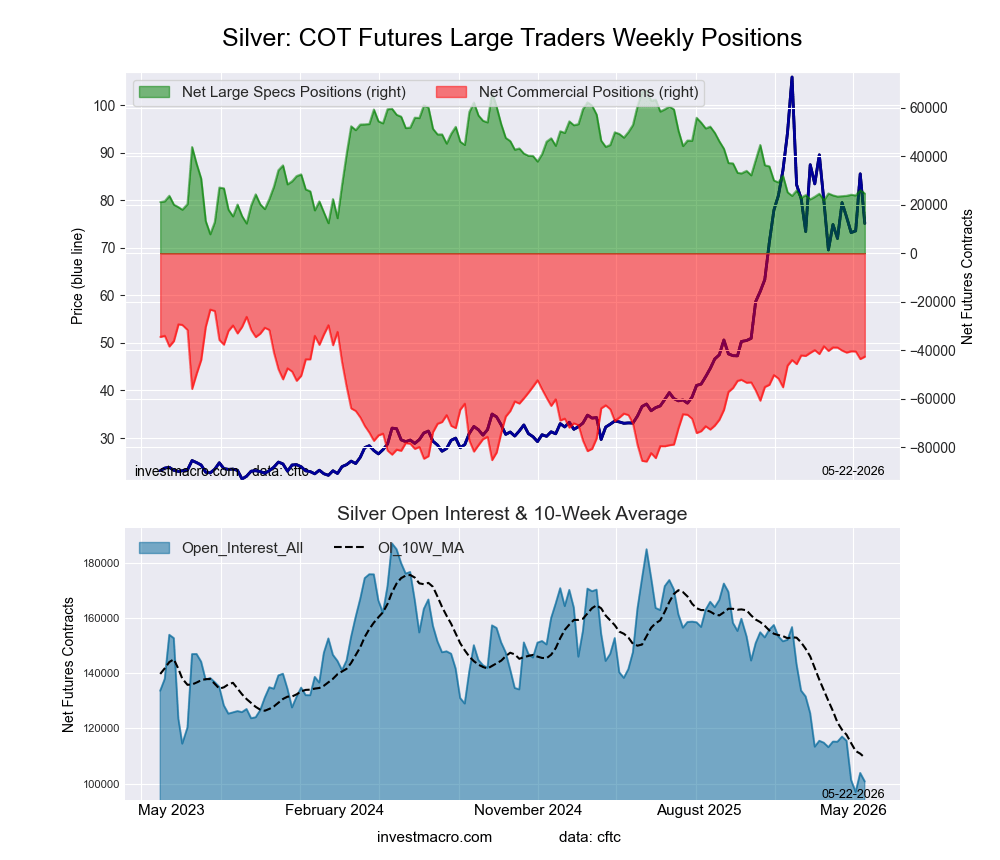
Silver prices (XAG) suffered a crushing collapse on March 3, plummeting by more than 10% and falling below the psychological mark of $80 per ounce. Much like gold, silver fell victim to the phenomenal strengthening of the US dollar, which has displaced all other safe-haven assets amid the full-scale military conflict with Iran. Investors preferred the liquidity of the US currency, while silver, possessing a significant industrial component, faced double pressure: as a precious metal, it suffered from rising bond yields, and as an industrial metal, it was hit by global recession risks due to expensive energy.

WTI oil prices demonstrated extreme volatility decreasing to $73.8 per barrel after an initial morning surge of over 8%. The initial panic jump was caused by massive drone attacks on strategic sites: the Ras Tanura refinery in Saudi Arabia and the oil hub near the port of Fujairah (UAE). However, the market reversed sharply following President Trump’s emergency statement regarding US Navy escorts in the Strait of Hormuz. Despite the correction from daily highs, quotes remain at their peak levels since June of last year due to ongoing logistical paralysis. Even with US Navy support, shipping in the Persian Gulf is effectively paralyzed as leading insurers (Lloyd’s of London, etc.) continue to refuse war risk coverage or set prohibitive rates. Investor attention is now fixed on the effectiveness of air defense systems in the Emirates: any successful breach by Iranian missiles targeting export terminals could instantly return prices to levels above $80.

Asian markets traded lower yesterday. The Japanese Nikkei 225 (JP225) fell by 3.06%, the FTSE China A50 (CHA50) dropped 0.14%, the Hong Kong Hang Seng (HK50) lost 1.12%, and the Australian ASX 200 (AU200) showed a negative result of 1.34%. On Wednesday morning, the Hang Seng plunged to 25,098 (-2.6%), its third consecutive decline, nearing an 11-week low. Investors fear the blockade will trigger a prolonged energy shock that will accelerate global inflation.
The Australian dollar (“aussie”) dropped to the $0.700 level, hitting a four-week low. Paradoxically, even brilliant Q4 2025 GDP data (Australia’s economy grew by 0.8% against a 0.7% prediction, with the annual rate accelerating to a three-year high of 2.6%) could not stop the fall. The currency became a hostage to the global flight to safety as investors ignored domestic economic success in the face of a looming full-scale war in the Middle East.

The New Zealand dollar (“kiwi”) made a weak attempt to rise to $0.589 but remained near a six-week low. As a “risk” currency, the kiwi is highly sensitive to the escalation in the Persian Gulf. The main pressure factor is New Zealand’s critical dependence on imported refined fuel: the blockade of the Strait of Hormuz and the halt of exports from Qatar threaten the country with a sharp spike in gasoline prices. Amid the external chaos, the RBNZ maintains a surprisingly calm stance. New Governor Anna Breman confirmed a soft monetary policy path, stating the economy is capable of recovering without creating excessive inflationary pressure.

S&P 500 (US500) 6,816.63 −64.99 (−0.94%)

Dow Jones (US30) 48,501.27 −403.51 (−0.83%)

DAX (DE40) 23,790.65 −847.35 (−3.44%)

FTSE 100 (UK100) 10,484.13 −295.98 (−2.75%)

USD Index 99.03 +0.64% (+0.65%)

News feed for: 2026.03.04

  • Australia Services PMI (m/m) at 00:00 (GMT+2); – AUD (MED)
  • Australia GDP (q/q) at 02:30 (GMT+2); – AUD (MED)
  • Japan Services PMI (m/m) at 02:30 (GMT+2); – JPY (MED)
  • China Manufacturing PMI (m/m) at 03:45 (GMT+2); – CHA50, HK50 (MED)
  • China Services PMI (m/m) at 03:45 (GMT+2); – CHA50, HK50 (MED)
  • Switzerland Consumer Price Index (m/m) at 09:30 (GMT+2); – CHF (HIGH)
  • Eurozone Services PMI (m/m) at 11:00 (GMT+2); – EUR (MED)
  • UK Services PMI (m/m) at 11:30 (GMT+2); – GBP (MED)
  • Eurozone Producer Price Index (m/m) at 12:00 (GMT+2); – EUR (MED)
  • Eurozone Unemployment Rate (m/m) at 12:00 (GMT+2); – EUR (MED)
  • US ADP Non-Farm Employment Change (m/m) at 15:15 (GMT+2); – USD (MED)
  • US ISM Services PMI (m/m) at 17:00 (GMT+2); – USD (MED)
  • US Crude Oil Reserves (w/w) at 17:30 (GMT+2); – WTI (HIGH)
  • Canada BOC Gov Macklem Speaks at 17:30 (GMT+2). – CAD (LOW)

By JustMarkets


This article reflects a personal opinion and should not be interpreted as an investment advice, and/or offer, and/or a persistent request for carrying out financial transactions, and/or a guarantee, and/or a forecast of future events.

USD/JPY to Quickly Return to Growth: Momentum Favours the US Dollar

By Analytical Department RoboForex

USD/JPY paused briefly midweek after a series of solid gains, currently trading at 157.59. The Japanese currency remains under pressure from a strengthening US dollar amid concerns that a prolonged conflict in the Middle East could keep energy prices elevated and heighten inflation risks.

The market has also revised its expectations for Federal Reserve rate cuts, shifting the likelihood of a reduction from July to September. Amid escalating geopolitical tensions, the dollar has emerged as a primary safe-haven asset, particularly as the US-Israel military operation against Iran enters its fifth phase.

US President Donald Trump suggested that the strikes could lead to a change of power in Iran. However, any new regime might prove equally problematic, underscoring the uncertainty surrounding the conflict’s outcome.

Japanese Finance Minister Satsuki Katayama reiterated that currency interventions remain a potential tool to support the yen. According to her, authorities are monitoring exchange rate dynamics with heightened urgency and are coordinating their actions with the US.

Technical Analysis

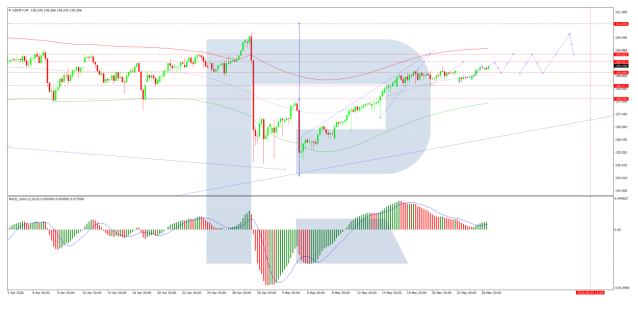
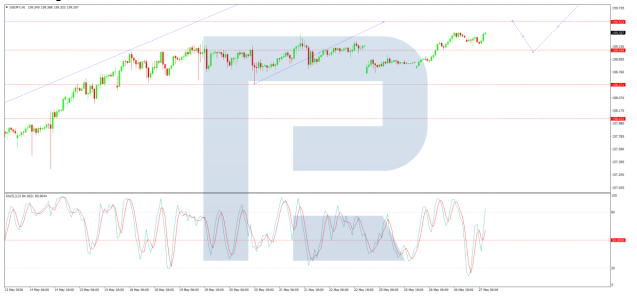
On the H4 USD/JPY chart, the market is forming a consolidation range around 157.00, which is currently extending to 157.92. A decline to test the 157.00 level from above is expected today. Following this, a potential growth leg towards 158.06 is likely. Technically, this scenario is supported by the MACD indicator, whose signal line is well above the zero line and pointing firmly downward.

On the H1 chart, USD/JPY is forming a downward wave pattern, targeting the 157.00 level, with a possible extension to 156.66, and further growth towards 158.38 anticipated thereafter. Technically, this scenario is confirmed by the Stochastic oscillator, with its signal line above the 20 level and pointing firmly downward.

Conclusion

USD/JPY’s brief consolidation appears temporary, with the broader trend favouring further upside for the dollar. Geopolitical tensions in the Middle East have reinforced the dollar’s safe-haven status, pushing back expectations for Fed rate cuts and creating a supportive backdrop for the pair. Despite verbal intervention warnings from Japanese officials, the technical outlook suggests USD/JPY is poised to resume its upward trajectory once the current correction runs its course.


Disclaimer

Any forecasts contained herein are based on the author’s particular opinion. This analysis may not be treated as trading advice. RoboForex bears no responsibility for trading results based on trading recommendations and reviews contained herein.

European equities plunge amid Persian Gulf military conflict

By JustMarkets 

The US stock market demonstrated impressive resilience on Monday: after a morning plunge, the indices almost completely recouped their losses. By the end of the day, the Dow Jones (US30) decreased by 0.15%. The S&P 500 (US500) gained 0.04%. The tech-heavy NASDAQ (US100) closed higher by 0.13%. The recovery was driven by a powerful wave of “buy-the-dip” activity focused on tech giants with massive liquidity reserves – Nvidia and Microsoft rose by 2.9% and 1.5%, respectively. Investors view “Big Tech” as a kind of “safe haven” within the technology sector, capable of weathering periods of high geopolitical turbulence.

Additional support came from the defense and energy sectors, which were direct beneficiaries of the escalation in the Middle East. Northrop Grumman shares soared 6% in response to the launch of Operation “Epic Fury,” while Exxon Mobil added 1.1% amid the oil rally caused by the blockade of the Strait of Hormuz.
The Canadian dollar (CAD) fell to 1.37 against the US dollar, testing a monthly low. The uniqueness of the situation lies in the fact that the “loonie” failed to benefit from the 8% spike in oil prices triggered by the blockade of the Strait of Hormuz and the death of Ayatollah Khamenei. Normally, the Canadian currency rises alongside energy prices, but the current dominance of the US dollar as the world’s primary haven and Canada’s internal economic issues have completely neutralized the “oil factor.” Fundamental pressure on the currency intensified following the release of Q4 GDP data, which confirmed a 0.6% contraction of the Canadian economy – the worst performance since the 2020 pandemic. Even the fact that the manufacturing PMI reached a 13-month high in February (51 points) failed to encourage investors.

Stock markets in Europe fell sharply. The German DAX (DE40) dropped 2.56%, the French CAC 40 (FR40) closed down 2.17%, the Spanish IBEX 35 (ES35) fell 2.64%, and the British FTSE 100 (UK100) closed down 1.20%. The German DAX 40 showed the worst performance among major European floors, crashing to 24,672 – the lowest closing level since early February. The decline affected almost all sectors of the German economy, as investors fear that the escalation of war in the Middle East and the blockade of the Strait of Hormuz will lead to a new round of inflation and indefinitely delay ECB interest rate cuts.

The most devastating blow hit the tourism and aviation sectors. Lufthansa shares plummeted 4.6% (with the drop exceeding 6% at one point) due to mass flight cancellations to the region and a sharp increase in jet fuel costs. The situation is even worse for the travel giant TUI, whose stock crashed nearly 9%. Investors are pricing in not only operational losses from tour disruptions but also the risk of a global decline in demand for long-haul travel under “wartime” uncertainty.
The silver (XAG) market saw a dramatic reversal: after a 3% rising morning surge, quotes collapsed by more than 6%, ending trade near $28. This “bearish” maneuver was caused by a sharp shift in market priorities. While gold maintained its safe-haven status, silver suffered due to its industrial nature. The blockade of the Strait of Hormuz and the death of Ayatollah Khamenei created a real threat of a global energy crisis. An additional blow came from US macroeconomic statistics: the jump in the ISM Manufacturing Prices Index to 70.5 (an 11.5-point increase) shocked markets, signaling a new wave of inflation. This triggered a spike in 10-year Treasury yields and pushed the US dollar Index to a five-week high.

WTI oil prices demonstrated explosive growth, soaring by more than 12% at one point to a high since June of last year. Although quotes stabilized around $71-$72 by the close of the session, the market remains in a state of unprecedented shock. The main trigger was the de facto halt of shipping through the Strait of Hormuz. Insurance companies began mass-canceling policies or raising premiums to prohibitive levels (up to 0.4% of the vessel’s value), forcing more than 150 tankers to anchor and wait for safety.

The situation was exacerbated by a direct attack on Saudi Arabia’s energy infrastructure. Drones struck the kingdom’s largest refinery in Ras Tanura (capacity 550,000 barrels per day). Although the fire was quickly localized, Saudi Aramco was forced to temporarily shut down the facility for safety reasons. This incident confirmed analysts’ worst fears: that Iranian retaliatory strikes would target not only US military logistics but also critical nodes of the world’s energy supply. With 20% of global oil passing through the closed strait, analysts at JPMorgan and Goldman Sachs warn: if the blockade lasts more than three weeks, oil prices will inevitably break the $100 per barrel level, creating an “inflationary tsunami” for the global economy.

Asian markets traded with mixed dynamics yesterday. The Japanese Nikkei 225 (JP225) decreased by 1.35% during the session, the FTSE China A50 (CHA50) rose by 0.30%, the Hong Kong Hang Seng (HK50) dropped 2.14%, and the Australian ASX 200 (AU200) showed a positive result of 0.03%.

The Australian dollar (AUD) recovered to $0.71, partially offsetting Monday’s sharp fall. The driver of this growth was the hawkish rhetoric of RBA Governor Michele Bullock, who, against the backdrop of the Middle East crisis, shifted from a policy of patience to a readiness for action. Bullock explicitly warned that the surge in oil prices due to the conflict surrounding Iran carries serious inflationary risks for Australia and confirmed that the regulator would consider a rate hike at the March meeting. This triggered a revision of market expectations: the probability of a 25-basis-point hike in March is now estimated at 28%, with full policy tightening expected by May.

S&P 500 (US500) 6,881.62 +2.74 (+0.04%)

Dow Jones (US30) 48,904.78 −73.14 (−0.15%)

DAX (DE40) 24,638.00 −646.26 (−2.56%)

FTSE 100 (UK100) 10,780.11 −130.44 (−1.20%)

USD Index 98.54 +0.93% (+0.95%)

News feed for: 2026.03.03

  • Japan Unemployment Rate (m/m) at 01:30 (GMT+2); – JPY (MED)
  • Japan BOJ Gov Ueda Speaks at 06:00 (GMT+2); – JPY (LOW)
  • Eurozone Consumer Price Index (m/m) at 12:00 (GMT+2); – EUR (MED)
  • UK Annual Budget Release at 14:30 (GMT+2). – GBP (MED)

By JustMarkets


This article reflects a personal opinion and should not be interpreted as an investment advice, and/or offer, and/or a persistent request for carrying out financial transactions, and/or a guarantee, and/or a forecast of future events.

Gold Rallies for Fifth Day, With External Risks Mounting

By Analytical Department RoboForex

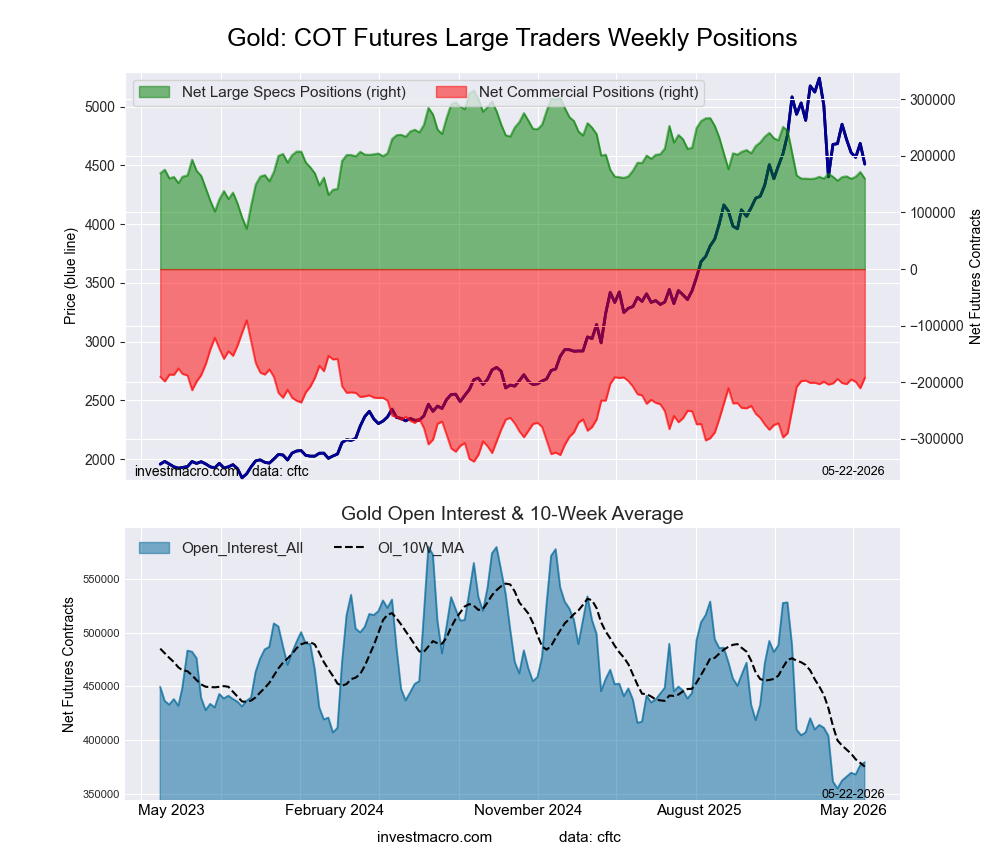
Gold rose to 5,350 USD per ounce on Tuesday, marking its fifth consecutive session of gains. Demand for safe-haven assets continues to grow amid the escalating conflict in the Middle East.

President Donald Trump stated that the United States will continue its strikes on Iran until the country loses its ability to pose a threat. According to him, the conflict could last a month or “much longer.” In response, Iran has announced the closure of the Strait of Hormuz and threatened attacks on ships passing through this strategically vital energy corridor.

The worsening conflict has triggered a sharp rise in oil prices and intensified fears of accelerating US inflation. This has led to selling in US government bonds and a reassessment of expectations for further Federal Reserve rate cuts.

The market is now shifting its forecast for the next Fed rate cut to September, later than previously anticipated.

Technical Analysis

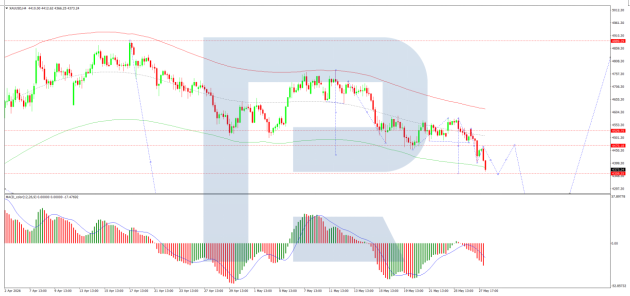
On the H4 XAU/USD chart, the market is forming a consolidation range around the 5,353 USD level. A downside breakout would open the way for a continuation of the correction towards 5,130 USD. Conversely, an upside breakout would open up potential for a wave towards the 5,599 USD level. The MACD indicator confirms the current momentum, with its signal line at highs and pointing strictly upwards.

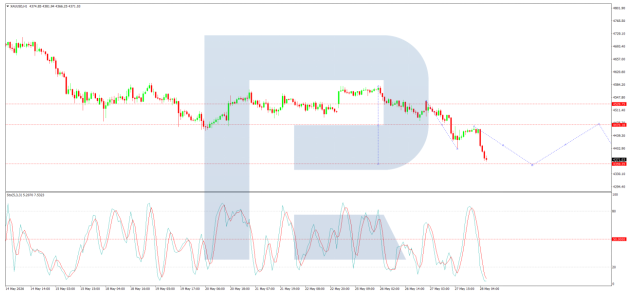
On the H1 chart, the market has broken below the 5,333 USD level, suggesting a continuation of the trend towards 5,166 USD, with the potential for the wave to extend further to 5,130 USD. The stochastic oscillator supports this scenario, with its signal line remaining above the 80 level and under pressure to turn lower towards the 20 level.

Conclusion

Gold’s rally to record highs reflects escalating demand for safe-haven assets amid intensifying geopolitical risks in the Middle East. The conflict has not only boosted bullion but also lifted oil prices and stoked concerns about inflation, prompting markets to push back expectations for Fed rate cuts. While the short-term technical outlook remains bullish, traders are watching for potential corrections following such a strong upward move.


Disclaimer

Any forecasts contained herein are based on the author’s particular opinion. This analysis may not be treated as trading advice. RoboForex bears no responsibility for trading results based on trading recommendations and reviews contained herein.

Iran Crisis: A Dangerous Turning Point

By ForexTime 

  • US-Israel strikes kill Iran’s supreme leader
  • Oil benchmarks surge over 10% on Sunday open
  • Safe-haven assets Gold/Silver also gap higher
  • Risk-off may be name of game ahead of packed week
  • Cheat sheet of potential winners and losers

Over the weekend, US–Israel strikes killed Iran’s Supreme Leader, Ayatollah Ali Khamenei – a dangerous turning point in an already distressed region.

Tehran fired back at Israel and hit US bases across the Gulf.

This explosive development came as a surprise, given there was an agreement to hold further talks over the coming weeks.

With missiles still flying, the risk of a full-blown regional escalation is growing by the minute.

And this was reflected on Sunday when markets opened with sharp gaps from Friday’s close amid the chaos.

  • BRENT: ↑ 8%
  • WTI: ↑7%
  • XAUUSD: ↑2%
  • XAGUSD: ↑1%

Note: Prices shown represent the gap from Friday’s close.

Here’s a cheat sheet of assets that could win/lose:


POTENTIAL WINNERS:

  • VIX (Volatility Index)

The primary beneficiary as market fear spikes; prices may surge as investors hedge against a wider regional conflict.

  • Safe-haven assets – (XAUUSD, XAGUSD, JPY, CHF, USD)

As risk aversion intensifies, investors may rush to safe-haven destinations.

  • Oil benchmarks – (WTI, Brent)

The US-Israeli war against Iran has plunged the global crude market into turmoil, with the effective closure of the critical Strait of Hormuz fuelling supply side fears.


POTENTIAL LOSERS:

  • Global equities – (CN50, EU50, UK100, US500, NAS100, US30)

As investors scramble for safety amid the chaos, global equities may face fresh selling pressure.

  • Bitcoin, Ethereum, Altcoins

Overall uncertainty and caution may repel investors from cryptos in favour of precious metals or safe-haven FX currencies.

There have been reports that Trump intends to engage in new talks with Iran’s new leadership.

Nevertheless, the Iran crisis has entered a new phase which could mean heightened levels of volatility over the next few days to weeks.

And with volatility comes opportunity.

Don’t miss out.


Forex-Time-LogoArticle by ForexTime


ForexTime Ltd (FXTM) is an award winning international online forex broker regulated by CySEC 185/12 www.forextime.com