Murrey Math Lines 03.11.2022 (USDCHF, XAUUSD)

Article By RoboForex.com

USDCHF, “US Dollar vs Swiss Franc”

On H4, the quotes are above the 200-day Moving Average, which means the prevalence of an uptrend. The RSI has bounced off the support line and is going up gradually. Here we expect growth of the quotes to the nearest resistance level of 3/8 (1.0131). The scenario can be cancelled by a breakaway of the support level of 2/8 (1.0009) downwards. In this case, the pair may drop to 1/8 (0.9887).

USDCHFH4
Risk Warning: the result of previous trading operations do not guarantee the same results in the future

On M15, the upper line of the VoltyChannel is broken away. This increases the probability of price growth to 3/8 (1.0131) on H4.

USDCHF_M15
Risk Warning: the result of previous trading operations do not guarantee the same results in the future

XAUUSD, “Gold vs US Dollar”

On H4, the quotes are under the 200-day Moving Average, which means a downtrend. The RSI has bounced off the resistance line. Now we expect a test of 0/8 (1625.00), a breakaway, and falling to the support level of -1/8 (1609.38). The scenario can be cancelled by a breakaway of 2/8 (1656.25) upwards. This can make the quotes grow to 3/8 (1671.88).

Gold_H4
Risk Warning: the result of previous trading operations do not guarantee the same results in the future

On M15, the lower line of VoltyChannel is broken away, increasing the probability of further price falling.

Gold_M15

Article By RoboForex.com

Attention!
Forecasts presented in this section only reflect the author’s private opinion and should not be considered as guidance for trading. RoboForex LP bears no responsibility for trading results based on trading recommendations described in these analytical reviews.

Nestle Continues To Execute as Profits Grow

Source: Adrian Day  (10/31/22)

Today expert Adrian Day discusses results from two core holdings, both doing well, according to him, despite cost inflation. Day believes you can use current weakness to accumulate a portfolio of blue chips. Nestle SA (NESN:VX; NSRGY:OTC) reported a strong quarter, with organic growth of 8.5%, broad-based across most geographies and categories, and off sales increase of 9.2%. Pricing rose 7.5%, reflecting cost inflation.

The company is looking for full-year growth of around 8%, with an operating profit expected at around 17%. These numbers are all near the top end of the company’s goals.

Net acquisitions had a positive impact of 1.2% on earnings. The company continued to build the Health Science division, buying two small companies in Brazil and New Zealand. Acquisitions also included The Bountiful Company and Orgain, two well-known niche brands.

Nestlé also announced plans to acquire Seattle’s Best Coffee brand from Starbucks.

Spending on Pets Grows Rapidly

As has been the case recently, pet care continued to be the largest contributor to organic growth, particularly the premium brands and veterinary products. It seems people are still prepared to spend increasing amounts on their pets.

Nestlé, the world’s largest food and beverage group, has a strong balance sheet, reflected in Moody’s Aa3 rating. It has increased revenue (and its dividend) in virtually all of the past 60 years and never cut the payout over that period.

It bought back over Euro 6 billion of stock last year and continues with the program. With a consistently high return on capital and equity–its return on invested capital is more than twice virtually every peer–it is trading near the low end of its valuations (with a p/e of 18.3, its lowest since 2015), though the yield (at 2.6%) is lower than its historical average.

Nestlé is a core holding and is a Buy here.

Consistency Is a Virtue, as Agnico Beats Expectations Again

Agnico Eagle Mines Ltd. (AEM:TSX; AEM:NYSE) beat market expectations modestly, with a solid quarter that saw most projects advance on track. Costs were relatively under control, though synergies with Kirkland after the merger are still helping, as is the low Canadian dollar keeping USD costs down at its Canadian mines. Management noted that mitigating cost increases is a major focus.

One mine, the new Amaruq, in Nunavit, completed on time and on budget, is experiencing a successful ramp-up, more than doubling production since the first quarter of the year and helping the company’s increase in production.

President Ammar AlJoundi called it “a world-class mine by any standards.” Management, in fact, emphasized the continued progress on all the expansion projects, with some excellent drill results, validating Agnico’s theme of leveraging existing mines and infrastructure.

Cash Flow Used To Pay Down Debt and Buy Back Shares

Agnico has earned an operating margin of US$2.4 billion year-to-date. It used this to reduce debt, repaying US$100 million notes to end the quarter with net debt of US$520 million.

And it repurchased around one million shares, almost twice as many as it had purchased in the previous two quarters.

Agnico, as we have discussed before, is a solid, conservative company with a strong culture, with mines in five mining-friendly jurisdictions, with top management, and a strong balance sheet.

The stock price has bounced in the last 10 days to the top of its four-month range, so we will look for a pull-back to add to positions. But the valuations are quite low, trading at less than 1.3 times book and nine times cash flow.

If you do not own one, this is one to Buy and put away.

BEST BUYS this week, in addition to the above, include Midland Exploration Inc. (MD:TSX.V); Franco-Nevada Corp. (FNV:TSX; FNV:NYSE); Lara Exploration Ltd. (LRA:TSX.V); and Barrick Gold Corp. (ABX:TSX; GOLD:NYSE).

Adrian Day Disclosures:

Adrian Day’s Global Analyst is distributed for $990 per year by Investment Consultants International, Ltd., P.O. Box 6644, Annapolis, MD 21401. (410) 224-8885. www.AdrianDayGlobalAnalyst.com. Publisher: Adrian Day. Owner: Investment Consultants International, Ltd. Staff may have positions in securities discussed herein. Adrian Day is also President of Global Strategic Management (GSM), a registered investment advisor, and a separate company from this service. In his capacity as GSM president, Adrian Day may be buying or selling for clients securities recommended herein concurrently, before or after recommendations herein, and may be acting for clients in a manner contrary to recommendations herein. This is not a solicitation for GSM. Views herein are the editor’s opinion and not fact. All information is believed to be correct, but its accuracy cannot be guaranteed. The owner and editor are not responsible for errors and omissions. © 2022. Adrian Day’s Global Analyst. Information and advice herein are intended purely for the subscriber’s own account. Under no circumstances may any part of a Global Analyst e-mail be copied or distributed without prior written permission of the editor. Given the nature of this service, we will pursue any violations aggressively.

Disclosures:

1) Adrian Day: I, or members of my immediate household or family, own securities of the following companies mentioned in this article: All. I personally am, or members of my immediate household or family are, paid by the following companies mentioned in this article: None. My company has a financial relationship with the following companies mentioned in this article: None. Funds controlled by Adrian Day Asset Management, which is unaffiliated with Adrian Day’s newsletter, hold shares of the following companies mentioned in this article: All. I determined which companies would be included in this article based on my research and understanding of the sector.

2) The following companies mentioned in this article are billboard sponsors of Streetwise Reports: None. Click here for important disclosures about sponsor fees. The information provided above is for informational purposes only and is not a recommendation to buy or sell any security.

3) Statements and opinions expressed are the opinions of the author and not of Streetwise Reports or its officers. The author is wholly responsible for the validity of the statements. The author was not paid by Streetwise Reports for this article. Streetwise Reports was not paid by the author to publish or syndicate this article. Streetwise Reports requires contributing authors to disclose any shareholdings in, or economic relationships with, companies that they write about. Streetwise Reports relies upon the authors to accurately provide this information and Streetwise Reports has no means of verifying its accuracy.

4) This article does not constitute investment advice. Each reader is encouraged to consult with his or her individual financial professional and any action a reader takes as a result of information presented here is his or her own responsibility. By opening this page, each reader accepts and agrees to Streetwise Reports’ terms of use and full legal disclaimer. This article is not a solicitation for investment. Streetwise Reports does not render general or specific investment advice and the information on Streetwise Reports should not be considered a recommendation to buy or sell any security. Streetwise Reports does not endorse or recommend the business, products, services, or securities of any company mentioned on Streetwise Reports.

5) From time to time, Streetwise Reports LLC and its directors, officers, employees, or members of their families, as well as persons interviewed for articles and interviews on the site, may have a long or short position in the securities mentioned. Directors, officers, employees, or members of their immediate families are prohibited from making purchases and/or sales of those securities in the open market or otherwise from the time of the decision to publish an article until three business days after the publication of the article. The foregoing prohibition does not apply to articles that in substance only restate previously published company release. As of the date of this article, officers and/or employees of Streetwise Reports LLC (including members of their household) own securities of  Agnico Eagle Corp., a company mentioned in this article.


The Analytical Overview of the Main Currency Pairs on 2022.11.03

By JustMarkets

The EUR/USD currency pair

Technical indicators of the currency pair:
  • Prev Open: 0.9876
  • Prev Close: 0.9816
  • % chg. over the last day: -0.61 %

The dollar Index sharply strengthened yesterday after the speech of Federal Reserve Chairman Jerome Powell. The US Federal Reserve expectedly raised interest rates by 0.75%. Still, at the press conference, the Fed chief indicated that it was premature to discuss a pause in interest rate hikes and added that the Central Bank was firmly committed to a restraining monetary policy to achieve price stability.

Trading recommendations
  • Support levels: 0.9816, 0.9755, 0.9601.
  • Resistance levels: 0.9971, 0.9928, 1.0055, 1.0111, 1.0162, 1.0230

From the technical point of view, the trend on the EUR/USD currency pair on the hourly time frame is still bullish. The price is trading below the moving levels but above the change in priority. The MACD indicator is in the negative zone, but sellers’ pressure is weak due to divergence. Under such market conditions, buy trades should be considered from the support level of 0.9816 or 0.9755, but with additional confirmation. Sell deals can be considered from the resistance level of 0.9871, but also with confirmation.

Alternative scenario: if the price breaks down through the support level of 0.9755 and fixes below it, the downtrend will likely resume.

EUR/USD
News feed for 2022.11.03:
  • – Eurozone ECB President Lagarde Speaks at 10:05 (GMT+2);
  • – Eurozone Unemployment Rate (m/m) at 12:00 (GMT+2);
  • – US Initial Jobless Claims (w/w) at 14:30 (GMT+2);
  • – US ISM Services PMI (m/m) at 16:00 (GMT+2);
  • – US Natural Gas Storage (w/w) at 16:30 (GMT+2).

The GBP/USD currency pair

Technical indicators of the currency pair:
  • Prev Open: 1.1485
  • Prev Close: 1.1389
  • % chg. over the last day: -0.84 %

The British pound declined yesterday amid hawkish comments from Powell. The Bank of England will hold its monetary policy and interest rate meeting today. The rate is expected to rise by 0.75%. But analysts believe that such a move will not be enough to stop the rise in inflation. On the other hand, the UK economy is already on the way to recession. And the sharp rise in borrowing costs has already begun to cool some sectors of the economy, such as real estate.

Trading recommendations
  • Support levels: 1.1337, 1.1172, 1.1093, 1.0915, 1.0817
  • Resistance levels: 1.1450, 1.1578, 1.1698, 1.1816, 1.1901

From the technical point of view, the trend on the GBP/USD currency pair on the hourly time frame is bullish. The price is trading below the moving averages. The MACD indicator is negative, but there is a divergence, and the sellers’ pressure is weak. Under such market conditions, buy trades can be considered from the support level of 1.1337, but better after confirmation. Sell trades are best to look for on intraday time frames, the nearest resistance level is 1.1450, but also better with confirmation in the form of a reverse initiative.

Alternative scenario: if the price breaks down of the 1.1172 support level and fixes below it, the downtrend will likely resume.

GBP/USD
News feed for 2022.11.03:
  • – UK Services PMI (m/m) at 11:30 (GMT+2);
  • – UK BoE Interest Rate Decision (m/m) at 14:00 (GMT+2);
  • – UK BoE Monetary Policy Statement (m/m) at 14:00 (GMT+2);
  • – UK BoE Gov Bailey Speaks at 14:30 (GMT+2).

The USD/JPY currency pair

Technical indicators of the currency pair:
  • Prev Open: 148.19
  • Prev Close: 147.79
  • % chg. over the last day: -0.28 %

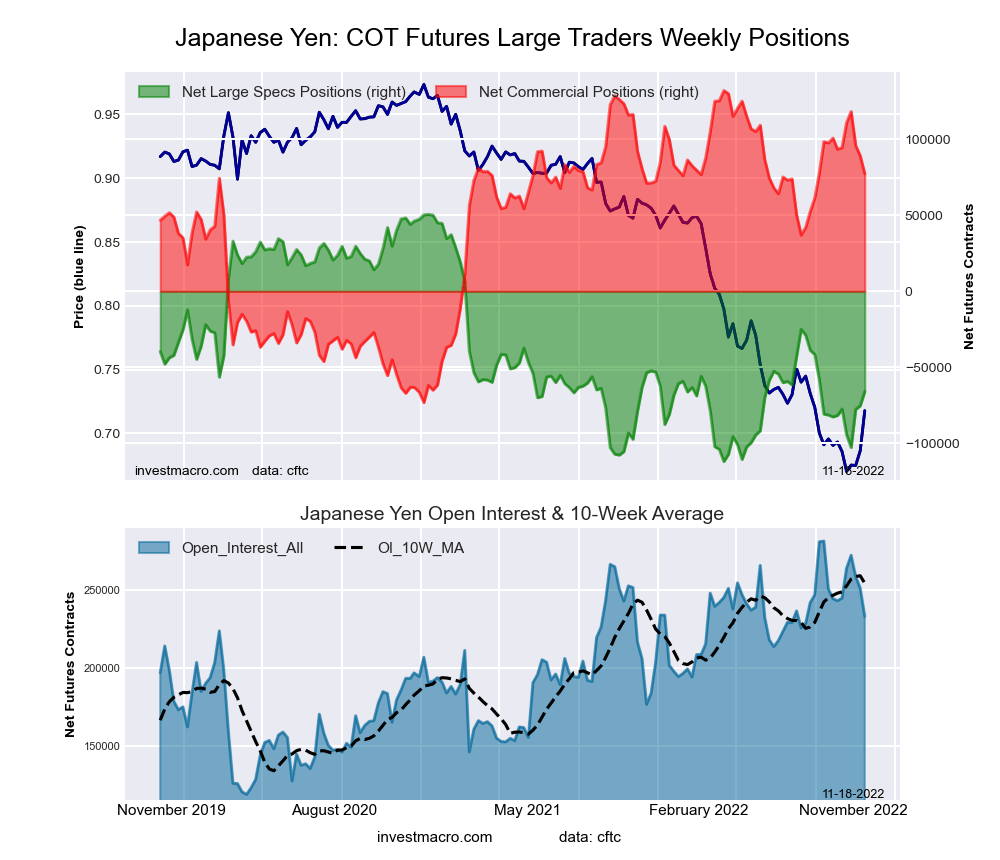
The situation on the USD/JPY currency pair has not changed. After yesterday’s Fed meeting, it became clear that the US Federal Reserve will not pause and will continue to actively raise rates and trim the balance sheet. The interest rate differential between the Bank of Japan and the US Fed continues to widen. Such a situation will have a negative effect on the Japanese currency.

Trading recommendations
  • Support levels: 146.37, 145.50, 144.91, 144.19, 143.00
  • Resistance levels: 148.09, 148.82, 147.75, 148.64, 148.64, 150.00, 151.05

From the technical point of view, the medium-term trend on the currency pair USD/JPY is bearish. The price is traded on the level of moving averages. The MACD indicator has become negative again, but the buyers’ pressure is still there. Under such market conditions, buy trades can be sought on the intraday time frames from the support level of 146.37, but only after the confirmation. Sell deals can be searched from the resistance level of 148.09 or 148.82, but only with additional confirmation, as the level has already been tested.

Alternative scenario: If the price fixes above 150.00, the uptrend will likely resume.

USD/JPY
There is no news feed for today. It’s a bank holiday.

The USD/CAD currency pair

Technical indicators of the currency pair:
  • Prev Open: 1.3628
  • Prev Close: 1.3706
  • % chg. over the last day: +0.57 %

Today, many economists will be watching for Canadian Finance Minister Chrystia Freeland to speak on how the government is dealing with the heightened risks of a recession. The statement will provide information on the state of the Canadian economy in a challenging global environment and outline the government’s plan to continue to build the economy.

Trading recommendations
  • Support levels: 1.3586, 1.3515, 1.3454
  • Resistance levels: 1.3721, 1.3855, 1.3968

From the point of view of technical analysis, the trend on the USD/CAD currency pair is bearish, but the price has approached the priority change level. The MACD indicator has become positive, and the buyers` pressure is increasing. The best way to sell is to consider the resistance level of 1.3721, but only after the additional confirmation. Buy trades should be considered on the lower time frames from the support level of 1.3586 or after the price fixation above 1.3721.

Alternative scenario: if the price breaks out and consolidates above the resistance level of 1.3721, the uptrend will likely resume.

USD/CAD
News feed for 2022.11.03:
  • – Canada Building Permits (m/m) at 14:30 (GMT+2).

By JustMarkets


This article reflects a personal opinion and should not be interpreted as an investment advice, and/or offer, and/or a persistent request for carrying out financial transactions, and/or a guarantee, and/or a forecast of future events.

Stock indices are falling after a hawkish speech by Jerome Powell

By JustMarkets

The US indices continued to fall yesterday after hawkish comments from Jerome Powell. At the stock market’s close, the Dow Jones indexм(US30) decreased by 1.55%, and the S&P500 index (US500) lost 2.50%. The NASDAQ Technology Index (US100) fell by 3.36% on Wednesday.

The US Federal Reserve raised interest rates by 0.75% to a new 14-year high. The Bank believes higher borrowing costs will cool the economy and lower price inflation.

The main points of Mr. J. Powell’s speech:

  • The Bank is determined to pursue a restraining monetary policy to achieve price stability.
  • Monetary policy always has a time lag, so the Bank is not ready to say what rate will be sufficient to meet the 2% inflation target.
  • Looking back at the actions of other central banks, the US Fed believes it is moving at the right pace, not too fast and not too slow.
  • If the Fed over-tightens, there are tools to stimulate the economy.
  • If the Bank doesn’t tighten enough, inflation could take hold.
  • The Fed will continue to reduce assets in Treasury securities.
  • The unemployment rate remains low, and pay is strong, so there is no reason to ease policy now, and it is too early to say it is time to pause.

Mr. Powell also talked about his favorite yield curve indicator, the 3-month/18-month forward spread, noting that the Fed is watching it closely. The indicator is on the verge of an inversion. This means a 31% chance of a recession in the next 12 months.

Experts are divided on how high the US Federal Reserve will raise rates at its next meeting on December 13-14. CME Group’s FedWatch tool showed a 56.8% chance of a 50 basis point increase and a 43.2% chance of a 75 basis point increase.

Famous companies that report today are ConocoPhillips (COP), Amgen (AMGN), Starbucks (SBUX), and PayPal Holdings Inc (PYPL).

Equity markets in Europe were mostly down yesterday. German DAX (DE30) decreased by 0.61%, French CAC 40 (F 40) lost 0.81%, Spanish IBEX 35 (ES35) fell by 0.38%, and British FTSE 100 (UK100) closed on Wednesday down 0.58%.

ECB spokesman De Kos said yesterday that he sees a higher recession probability in the Eurozone. Therefore, the ECB’s desire to curb inflation will require further interest rate hikes.

AP Moller-Maersk A/S, which controls one-sixth of global container shipping, predicts a 2-4% slowdown in global trade, a serious warning not only to the container industry but to the entire oil and gas industry. Recession, according to Moller-Maersk, is almost inevitable in Europe because of the Russian invasion of Ukraine and the looming energy crisis.

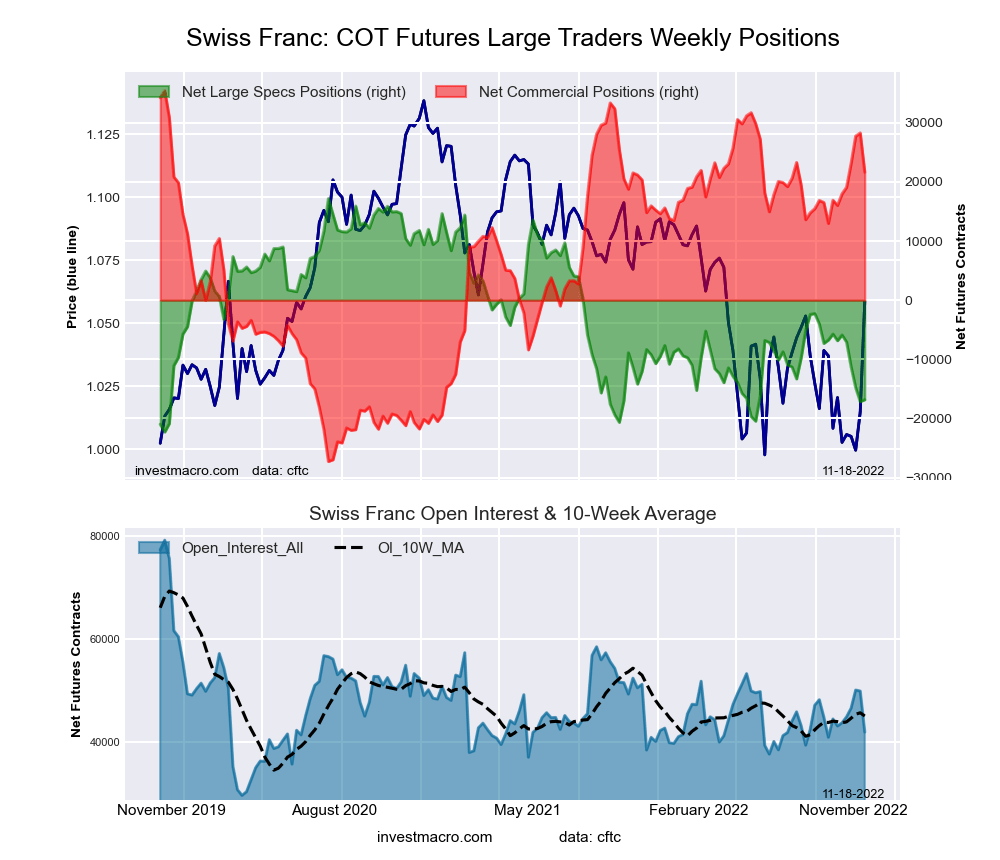
The head of the Swiss Central Bank said yesterday that the bank has not ruled out further rate hikes to ensure price stability.

Asian markets traded flat yesterday. Japan’s Nikkei 225 (JP225) decreased by 0.06%, Hong Kong’s Hang Seng (HK50) ended the day up 2.41%, and Australia’s S&P/ASX 200 (AU200) increased by 0.14%.

On Thursday, the Hong Kong Monetary Authority (HKMA) raised its benchmark rate by 75 basis points to 4.25%. It said households should prepare for a period of higher commercial rates and carefully manage financial risks. The HKMA decision also prompted HSBC, the city’s largest commercial bank, to raise its best lending rate by 25 basis points to 5.375 % since November 4. The city’s de facto Central Bank said that interbank rates in the Hong Kong dollar would rise even more if the US Federal Reserve continued to raise interest rates.

S&P 500 (F) (US500) 3,759.69 −96.41 (−2.50%)

Dow Jones (US30) 32,147.76 −505.44 (−1.55%)

DAX (DE40) 13,256.74 −82.00 (−0.61%)

FTSE 100 (UK100) 7,144.14 −42.02 (−0.58%)

USD Index 112.14 +0.66 (+0.59%)

Important events for today:
  • – Switzerland Consumer Price Index (m/m) at 09:30 (GMT+2);
  • – Eurozone ECB President Lagarde Speaks at 10:05 (GMT+2);
  • – Norwegian Interest Rate Decision (m/m) at 11:00 (GMT+2);
  • – UK Services PMI (m/m) at 11:30 (GMT+2);
  • – Eurozone Unemployment Rate (m/m) at 12:00 (GMT+2);
  • – UK BoE Interest Rate Decision (m/m) at 14:00 (GMT+2);
  • – UK BoE Monetary Policy Statement (m/m) at 14:00 (GMT+2);
  • – UK BoE Gov Bailey Speaks at 14:30 (GMT+2);
  • – US Initial Jobless Claims (w/w) at 14:30 (GMT+2);
  • – Canada Building Permits (m/m) at 14:30 (GMT+2);
  • – US ISM Services PMI (m/m) at 16:00 (GMT+2);
  • – US Natural Gas Storage (w/w) at 16:30 (GMT+2).

By JustMarkets


This article reflects a personal opinion and should not be interpreted as an investment advice, and/or offer, and/or a persistent request for carrying out financial transactions, and/or a guarantee, and/or a forecast of future events.

The ‘Bear Killer’ Does it Again

Source: Michael Ballanger  (11/1/22) 

 Expert Michael Ballanger reviews recent updates in the stock market to tell you where he believes it is headed and why he thinks October was “The Bear Killer,” with countless bear markets ending and bull markets possibly beginning today, November 1, 2022.

People familiar with my missives over the past couple of decades know me well enough to expect sudden and hard-to-explain shifts in positioning at the drop of a hat and with little or no advanced notice.

You also have grown to appreciate that technical analysis, an analytical tool increasingly use (and abused) by generations of relative novices to the world of securities analysis, today dominates everything.

How many times have I written about the dangers of “false breakouts” with the even more insidious “false breakdowns” as mortal traps to avoid?

On September 25 of last month, I penned Email Alert 2022-87, where I highlighted massive trend breakdowns in every major index in North America.

I was fully prepared to call a major sell signal until three days later when the Bank of England reversed their embarkation into QT and decided instead to return to QE to save their pension funds from certain implosion.

That was “the most important headline of 2022” because it confirmed the vulnerability of not just U.K. pension funds but literally every pension fund on the planet striving to meet their minimum 7.5% return needed to meet pensioner obligations. Why I deemed that as a significant event goes back to 1977 while in training with the venerable brokerage firm McLeod, Young & Weir Ltd.

Barring any surprises on Monday, the S&P 500 will clock in at its second-best or best performance month of the year, once again proving that, as I have been writing about all through September, October is known as “The Bear Killer” with countless bear markets ending and bull markets beginning by November 1, 2022.

I was working in the “quant” section, which was headed up by an English gentleman by the name of Peter Williams.

This was long before personal computers or cellular phones or the internet, so all pricing data had to be inputted manually, and while I was updating the prices for all major North American exchanges, I came across the chart of the “FTSE” (Financial Times Stock Index) which, I was soon to learn, was the British version of the Dow Jones Industrials.

I asked Peter why it was necessary to use a foreign stock market when all of our clients were North American. He proceeded to tell me that what happens to stock market trends in the U.K. always shows up in North America in due course.

Over the lunch hour, I drew an overlay of the FTSE onto the S&P chart and what materialized was a lead indicator for North American stocks in the form of the FTSE. Now, since the central banks hijacked the equity markets under Greenspan starting in the late 1980s, it is no longer as pronounced, but the significance lies in the event as opposed to the response.

Pension fund stress brought about by excessive leverage in the 10-year gilts market will unquestionably show up across the pond in North America, and it will include the insurance companies as well striving to meet their actuarial benchmarks.

Most importantly, do not think for a New York minute that Jerome Powell is unaware of this.

Needless to say, when the headline hit the tape about the Band of England’s sudden reversal from gilt seller to gilt buyer, I executed my own personal “pivot” and went from black bearish to pound-the-table bullish with my shift out of the volatility trade (UVXY:US) and into the double-leverage S&P 500 ETF known as UPRO:US (double leverage SPY:US).

The S&P 500 has since put on an 8.8% advance for the month of October, with only Halloween left on Monday.

To put this in perspective, the July rally was +9.11%, and that was before the FANGS (ex-Apple) decided to crater.

The Big Boys

All through October, I have had to answer a torrent of questions as to “Why are stocks rallying?” followed by a minimum of ten reasons they should actually be crashing.

The answer lies in three simple words — The Big Boys.

Who remembers the U.S. elections in November 2016 when the markets were in full “meltdown mode” due to a surprise victory by Republican Donald Trump?

The sheer panic of the post-results hours had stock investors in absolute terror as the S&P was down 8% by midnight. That was until Carl Icahn, and his billionaire buddies stepped up and took the futures straight north and just kept up the buying pressure until the early morning hours when stocks finally opened with wall-to-wall bids and CNBC in ecstasy.

All during the following post-election trading session, the financial news commentators, who were lambasting Trump the night before with stocks in freefall, suddenly changed their narrative such that the Trump victory went from bearish to bullish in less than twenty-four hours.

You really do not want any stock that is found in any of the heavily-leveraged S&P or NASDAQ ETFs because as leverage gets rinsed from the system, the names that dominate will be “on offer” for many more months.

Ever since J.P. Morgan stepped up and rescued Wall Street during the Panic of 1907, it has always been The Big Boys with their bottomless wallets and the ears of every desk trader on the planet that determine where stocks are going.

The secondary clue for me came in the form of a story leaked out of Blackrock that the Fed has already decided to pause, so despite what will still probably be a 75-beep rise in the FFR on Wednesday, the forward guidance will probably be construed as dovish.

Barring any surprises on Monday, the S&P 500 will clock in at its second-best or best performance month of the year, once again proving that, as I have been writing about all through September, October is known as “The Bear Killer” with countless bear markets ending and bull markets beginning by November 1, 2022.

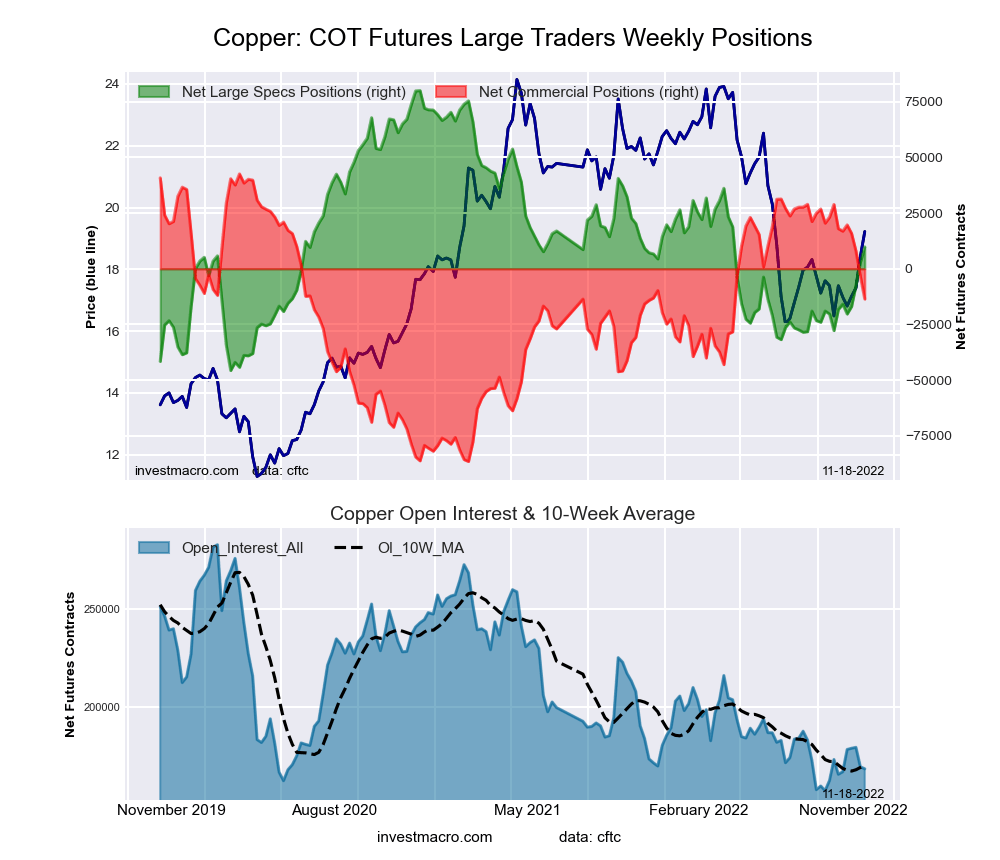
Make no mistake; the beautiful move in the UPRO call options and impending profits are pale when compared to the paper losses in the metals arena. Gold is down 13.43% YTD, with silver down 18.1% and copper off 22.98%.

Every single bullish narrative from 2020/2021 has been summarily vanquished by the 2022 bear market. In tightening cycles, that is what happens. You are repeating the mantra that “copper demand will rocket with the electrification movement,” and it matters not whether or not you turn out to be right on the money in 2023 because this is 2022 and the “electrification trade” is yesterday’s news.

Ditto the precious metals sector, where the senior producers are sporting pristine balance sheets and robust income statements, but no one cares about that because prices are in the tank.

Twenty years ago, Wall Street had thousands of stock analysts, usually C.P.A.’s, and usually C.F.A., that pored through thousands of annual reports and income statements in an attempt to discover an unknown gem commonly described as “undervalued.”

Today, there a perhaps a few dozen left. People that bought shares in companies like these were considered “value investors” as opposed to “growth investors,” and it is no secret that growth has outperformed value ever since the Fed hijacked markets.

Up until Jerome Powell told us all that he was no longer using the term “transitory” to describe the sharp rise in the cost of living, there was really no reason to own value stocks because they are typically lower risk, lower growth issues and with the Fed juicing the market every time it hiccupped, there was simply no need to own value because you were leaving a great portion of alpha (performance of an investment against a market index or benchmark that is considered to represent the market’s movement as a whole) on the table.

Markets that fail to go down into bad news are markets that should be bought.

The good news is that without the “Fed put” rescuing stocks at the faintest hint of corrective action, Wall Street is going to be forced to return to what the pundits like to call a “stock picker’s market,” which means that extraordinary value plays like the gold miners are going to come back onto the radar screens of the big funds.

That means that you really do not want any stock that is found in any of the heavily-leveraged S&P or NASDAQ ETFs because as leverage gets rinsed from the system, the names that dominate will be “on offer” for many more months.

What will avoid leverage purging are the value stocks that live and breathe on their own merits and without the artificial perpetual bids that arrive at the beginning of every month from these passive funds. The supply of stock that will need to be sold in the passive funds will be in stark contrast to the companies that never made it to the dance (inclusion in the ETF baskets).


The Junior Resource Sector


So where, pray tell, does that leave the junior resource sector?

Firstly, the junior gold stocks (producers, developers, and explorers) could not be expected to enter any kind of a mania resembling crypto or cannabis, or tech, with a gold price down 21.1% since August 2020.

In the period since that peak, we have seen massive fiscal and monetary stimulus, geopolitical turmoil, and bond market blow-ups, the nature of which in past eras would have money gushing into the metals.

However, the only place on the planet where that failed to occur was North America, where the dominance of the U.S. dollar neutralized any need for safe haven positioning because owning dollars (or living in a country that creates them) is the safe haven.

People in Turkey, Argentina, and Latin America have all seen their currencies decline against the greenback, so they have been buying vast quantities of gold and silver and benefitting greatly, in addition to moving huge amounts of domestic savings into the dollar.

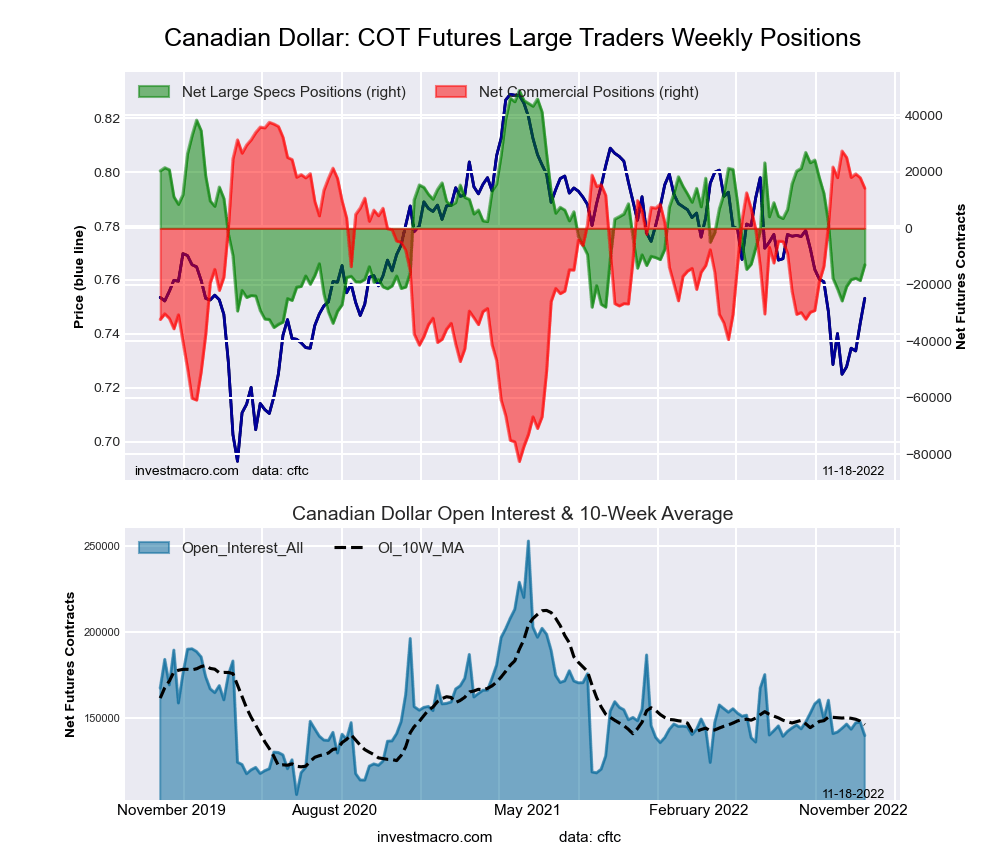
Canadian investors have seen their currency hold up incredibly well versus the USD, and for the life of me, I do not know why. Household debt-to-income levels are magnitudes higher than American levels pre-GFC in 2008.

The national debt-to-GDP numbers have Canada ahead of the U.S., Japan, the U.K., and China amidst the largest real estate bubble in the history of modern record-keeping.

One would think that of all the countries in the world in need of safe havens, Canada would be at the forefront.

The problem is that, unlike the U.S., Canada does not hold a reserve currency status, so no one is stockpiling Canadian dollars as an insurance policy against sovereign default.

The Canadian banks operate like miniature versions of the big U.S. banks, so currency traders focus on what the banks are doing rather than on what the government is doing, and therein lies the opportunity.

If anyone making investment decisions were watching the fiscal train wreck lying on the horizon, the CAD would be in the low CA$0.60’s versus the USD.

Canadian and American speculators once used the TSX Venture Exchange as their preferred non-casino location for gambling — owning those Canadian resource companies famous the world over for a) delivering phenomenal mineral discoveries resulting in enormous capital gains and b) fulfilling Mark Twain’s definition of a gold mine: “A hole in the ground with a liar at the top.

Canadian exploration companies have indeed delivered some amazing returns but what must be recognized is the role of the promoter — the jockey — in advancing the project.

By default, the expectation levels are inflated because the only way to raise risk capital is to “sell the dream,” and while statistically, the odds of making a major discovery are long, that dream of owning an early-stage position in Hemlo or Eskay Creek or Voisey’s Bay remains firmly in place.

What the TSX Venture exchange needs desperately is for a series of new developments:

  • S. dollar top
  • New discovery with the attendant share price explosion
  • Major market stability
  • Commodity price reversal

All of the above conditions will occur at the point where financial system instability leaps ahead of price stability in the minds and actions of the U.S. Fed, along with the rest of the global central bank cabal. It is really that simple.

Since the first share of stock ever traded with owners back in Amsterdam in the 1600s, there have been speculators.

In fact, in the 70s, the old-time brokers would lecture me on the importance of being an investor where all one owned was high-quality bonds.

Stocks were for speculators, and bonds were for investors, but the fact remains that in the Canadian resource sector, new discoveries are 100%-funded by speculators.

In a world that has been devoid of any new discoveries and a huge drop-off in CAPEX related to exploration for and development of new deposits, there is going to be an enormous need for new discoveries, which means out of absolute necessity, exploration activity will increase dramatically.

Junior developers with growing resources — Getchell Gold Corp. (GTCH:CSE; GGLDF:OTCQB), Western Uranium & Vanadium Corp. (WUC:CSE; WSTRF:OTCQX). (WUC:CSE; WSTRF:OTCQX), Northisle Copper and Gold Inc. (NCX:TSX; NTCPF:OTCPK)  — will be the first to catch a bid, followed by explorers that have large, district-scale land positions — MAX Resource Corp. (MAX:TSX.V; MXROF:OTCBB), Norseman Silver Ltd. (NOC:TSX.V; NOCSF:OTCQB), Goldcliff Resource Corp. (GCN:TSX.V; GCFFF:OTCBB).

The ones I own are all funded, eliminating the need for any panicking.

Have We Entered a New Bull Market?

Do I think we have entered a new bull market?

Was the low on October 13, 20222, “the low”?

I have no clue, but I will say this: Markets that fail to go down into bad news (earnings disappointments from AMZN, META, MSFT, and NFLX) are markets that should be bought.

The larger question is: “Can I buy stocks here for a seasonal trade into Q1/2023 that works?” I think so.

Maybe we wait until markets pull back after the big institutional money flows are finished allocating Tuesday-Thursday next week. With the corporate buyback blackout period ending at month-end, some US$5 billion in new buyback bids are going to get posted, giving more ammo to a market still dominated by put buyers and short sellers.

In fact, the Twitter feeds I get are rife with gnashing and gnarling of teeth over rising stock prices and an absolute bombardment of outrage that people would be so stupid as to actually think that the Fed will pivot. In other words, they missed the rally.

And there is nothing sourer than a FOMO/YOLO trader left out of the second-best move of the year. That tells me that sentiment is perfectly positioned for a Q3 rally into January, assuming, of course, that the Fed does nothing silly like ramp up the hawkish rhetoric.

The history books tell me that we are just about to exit the month known as “The Bear Killer,” and here in 2022, it lived up to expectations. Scrub from your minds the notion of all-time highs of US$200 silver or US$10 copper.

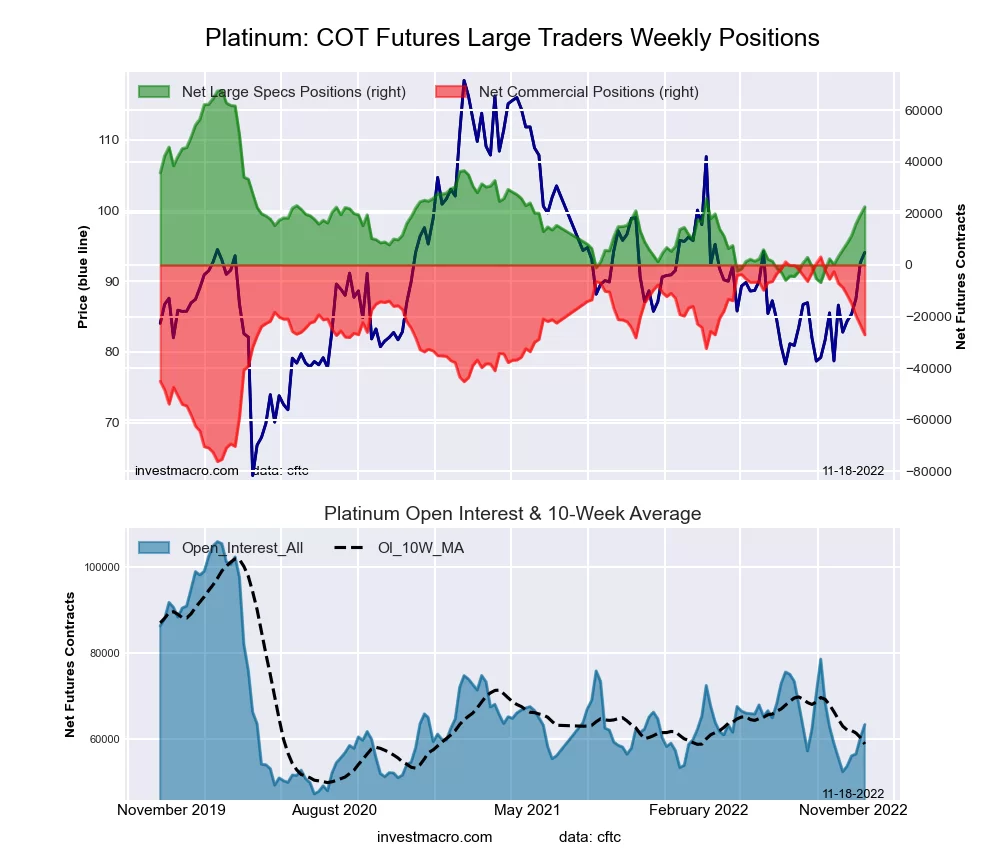
Instead, I will be focusing on companies that I see as undervalued in commodity sectors experiencing near-shortage conditions. As the markets heal, the bullish narratives for copper and uranium will return, with gold and silver still the two most mispriced metals on the planet.

Michael Ballanger Disclaimer:

This letter makes no guarantee or warranty on the accuracy or completeness of the data provided. Nothing contained herein is intended or shall be deemed to be investment advice, implied or otherwise. This letter represents my views and replicates trades that I am making but nothing more than that. Always consult your registered advisor to assist you with your investments. I accept no liability for any loss arising from the use of the data contained on this letter. Options and junior mining stocks contain a high level of risk that may result in the loss of part or all invested capital and therefore are suitable for experienced and professional investors and traders only. One should be familiar with the risks involved in junior mining and options trading and we recommend consulting a financial adviser if you feel you do not understand the risks involved.

Disclosures:

1) Michael J. Ballanger: I, or members of my immediate household or family, own securities of the following companies mentioned in this article: All. I personally am, or members of my immediate household or family are, paid by the following companies mentioned in this article: My company, Bonaventure Explorations Ltd., has a consulting relationship with Norseman Silver.

2) The following companies mentioned in this article are billboard sponsors of Streetwise Reports: None. Click here for important disclosures about sponsor fees. As of the date of this article, an affiliate of Streetwise Reports has a consulting relationship with Western Uranium & Vanadium Corp. Please click here for more information.

3) Statements and opinions expressed are the opinions of the author and not of Streetwise Reports or its officers. The author is wholly responsible for the validity of the statements. The author was not paid by Streetwise Reports for this article. Streetwise Reports was not paid by the author to publish or syndicate this article. Streetwise Reports requires contributing authors to disclose any shareholdings in, or economic relationships with, companies that they write about. Streetwise Reports relies upon the authors to accurately provide this information and Streetwise Reports has no means of verifying its accuracy.

4) This article does not constitute investment advice. Each reader is encouraged to consult with his or her individual financial professional and any action a reader takes as a result of information presented here is his or her own responsibility. By opening this page, each reader accepts and agrees to Streetwise Reports’ terms of use and full legal disclaimer. This article is not a solicitation for investment. Streetwise Reports does not render general or specific investment advice and the information on Streetwise Reports should not be considered a recommendation to buy or sell any security. Streetwise Reports does not endorse or recommend the business, products, services or securities of any company mentioned on Streetwise Reports.

5) From time to time, Streetwise Reports LLC and its directors, officers, employees or members of their families, as well as persons interviewed for articles and interviews on the site, may have a long or short position in securities mentioned. Directors, officers, employees or members of their immediate families are prohibited from making purchases and/or sales of those securities in the open market or otherwise from the time of the decision to publish an article until three business days after the publication of the article. The foregoing prohibition does not apply to articles that in substance only restate previously published company releases.

As of the date of this article, officers and/or employees of Streetwise Reports LLC (including members of their household) own securities of Getchell Gold Corp., Norseman Silver Ltd., and Western Uranium & Vanadium Corp., companies mentioned in this article.

Precious Metals Sector Believed To Be Close to Major Uptrend

Source: Clive Maund  (10/31/22)

With the possibility of a Fed pivot looming, expert Clive Maund touches on his views of the precious metals sector and why he believes you should invest in it sooner rather than later.

On the 1-year chart for gold shown below, we can see precisely why it has been in a quite severe downtrend from its peak last March. It is because the dollar and interest rates, shown at the top and bottom of the chart, have been in strong uptrends during this period.

A very important point to note is that while gold has dropped about $400 from its March peak, in real terms, this decline is much more serious because of the robust inflation during this period.

So if the Fed does pivot soon, that is to say, it stops raising rates and starts lowering them, or other Central Banks start raising rates, thus reducing the dollar’s appeal.

It will mean a reversal to the downside in the dollar and to the upside in gold and commodities and risk-on assets generally, and as we saw on Friday 21st, even talk of a pivot is enough to generate a recovery.

Gold

A very important point to note is that while gold has dropped about $400 from its March peak, in real terms, this decline is much more serious because of the robust inflation during this period.

So when you talk about $1600 gold now, it means that in, say, 2019 prices, it’s probably about $1200. This gives us more of an idea about how undervalued gold and especially silver are now. Before leaving this chart, observe that gold may be making a Double Bottom here with its September lows.

The next chart, the 1-year chart for PM sector proxy GDX, is most interesting as it makes plain that, even on a log chart as this is, the downtrend in the sector from its April highs has been decelerating steadily to the point that the MACD indicator has recovered back almost to the zero line.

If this interpretation is correct, then we are at a point of huge opportunity to buy the sector before it breaks out.

This is the sort of behavior that usually precedes a reversal to the upside, so it is not surprising to see that a small Head-and-Shoulders appears to be completed within the downtrend channel, whose validity is endorsed by the bullish volume pattern that has accompanied it, with strong volume on the rise to form the right side of the Head of the pattern and again on the rise late last week as it completes what is believed to be the Right Shoulder of the pattern.

If this interpretation is correct, then we are at a point of huge opportunity to buy the sector before it breaks out.

In the context of the foregoing, it’s useful for us to consider the extent to which the PM sector has markedly underperformed even the frail stock market in recent months.

Silver is regarded as probably the most undervalued asset in the world.

On the 1-year chart for GDX over the S&P500 index, we can see that it has seriously underperformed due, of course, to the strong rise in the dollar and interest rates.

This is important because it means that the PM sector is even better value here compared to the broad market.

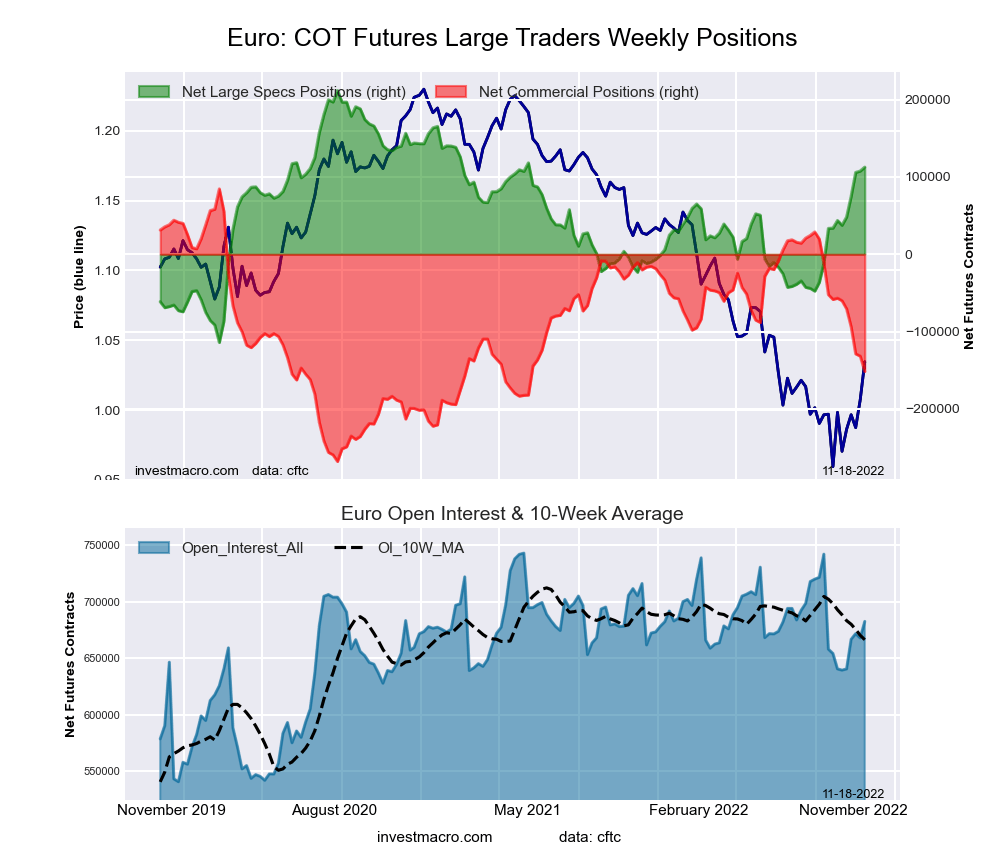
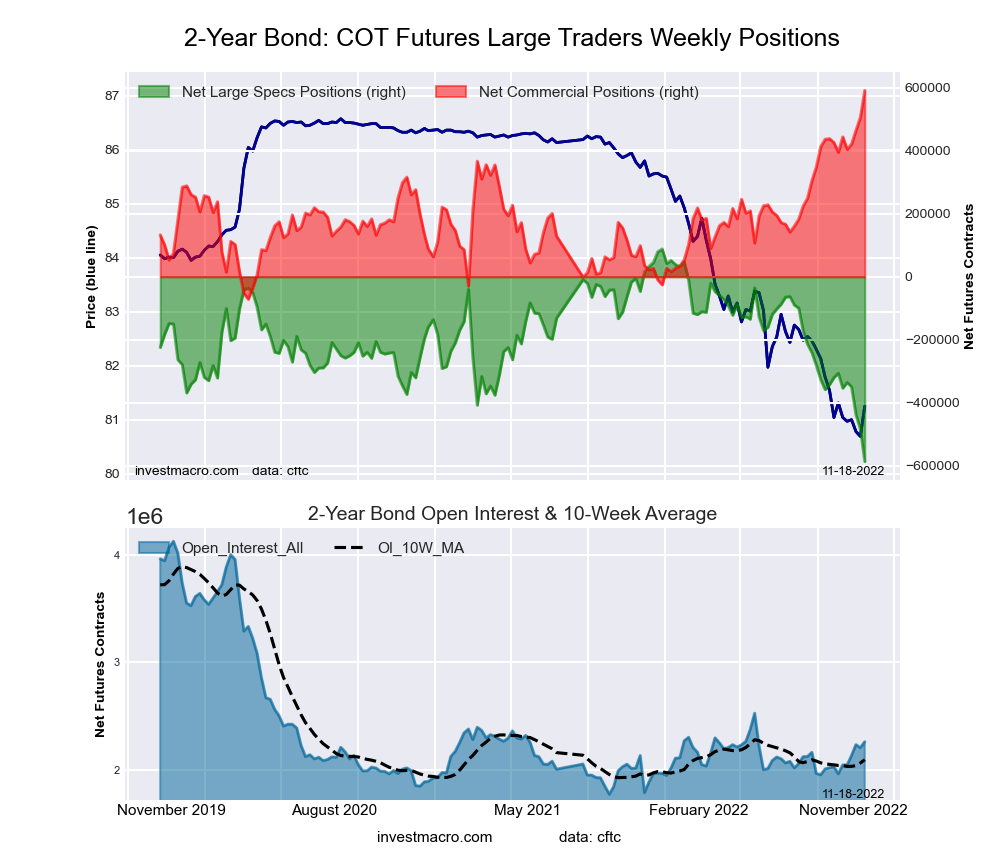
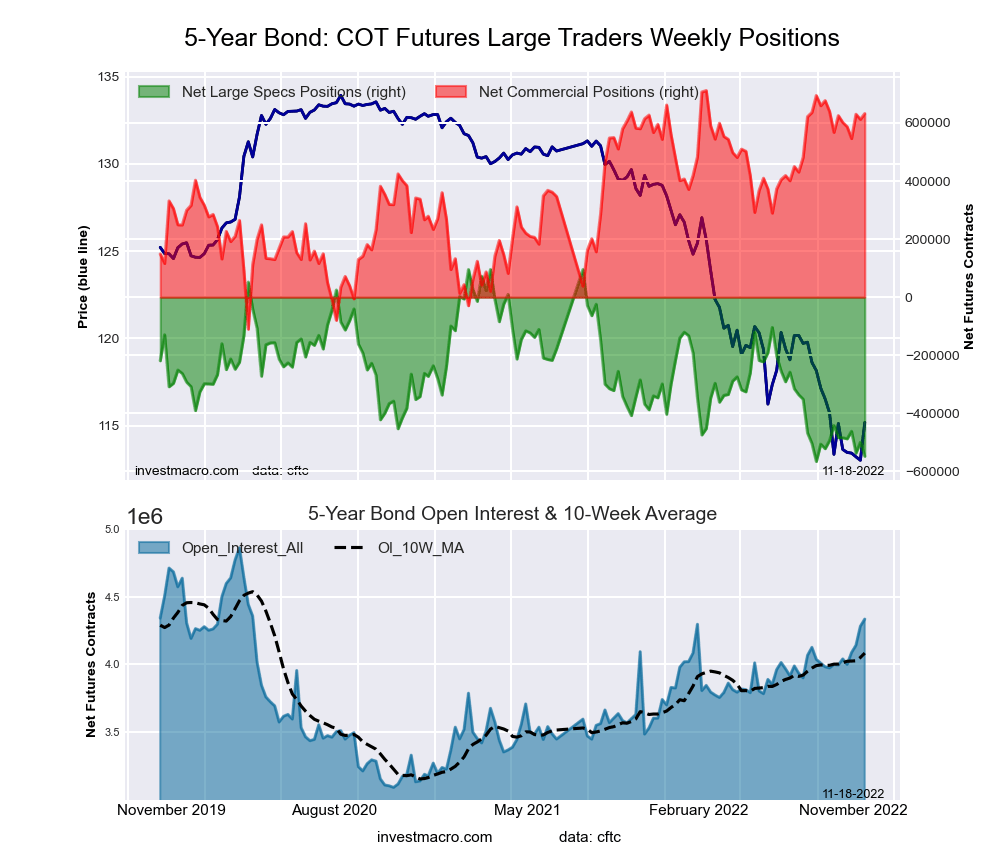
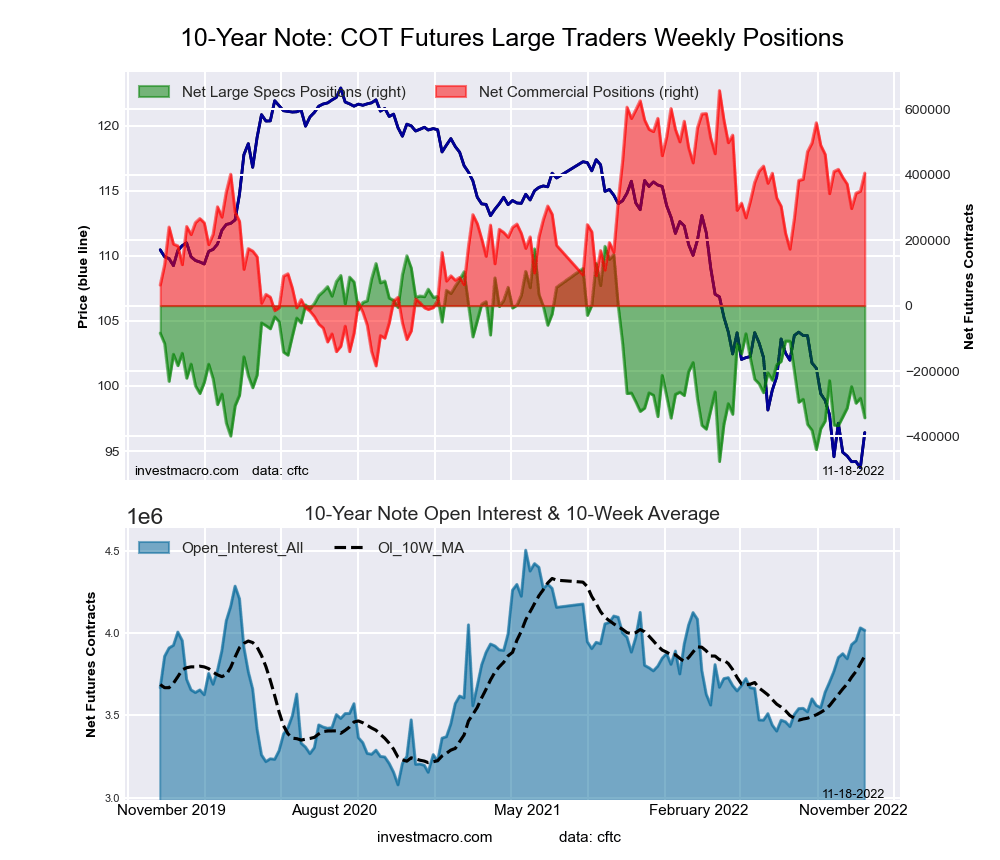
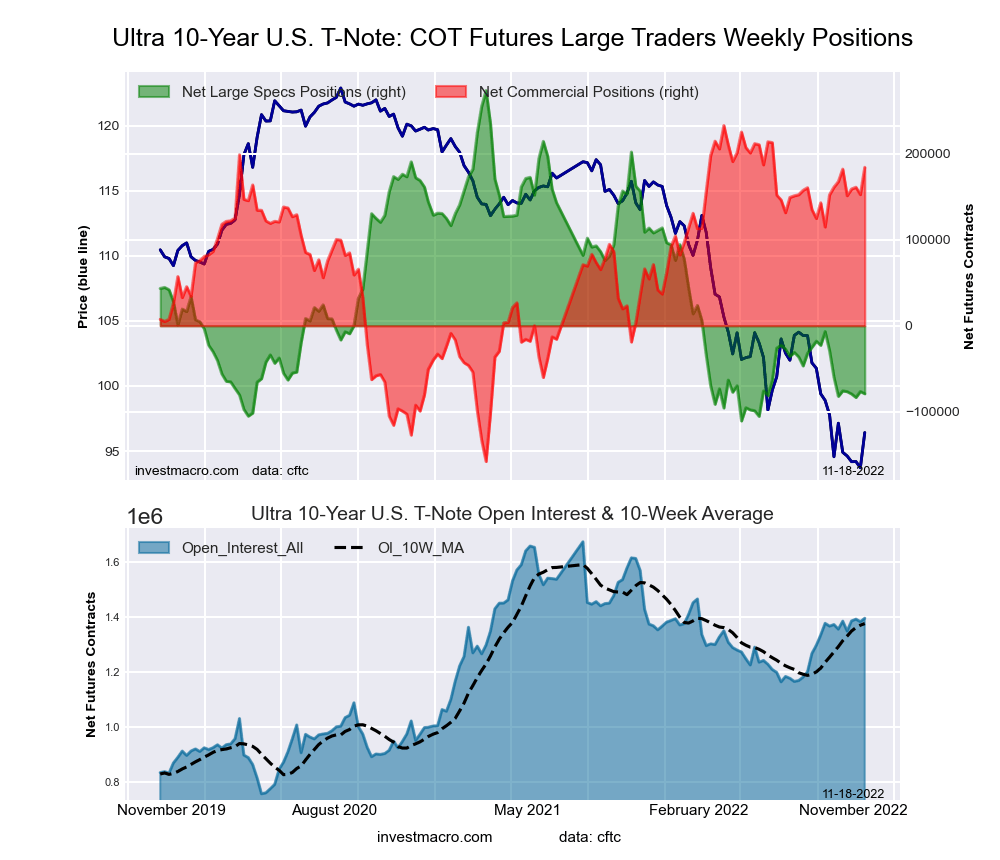
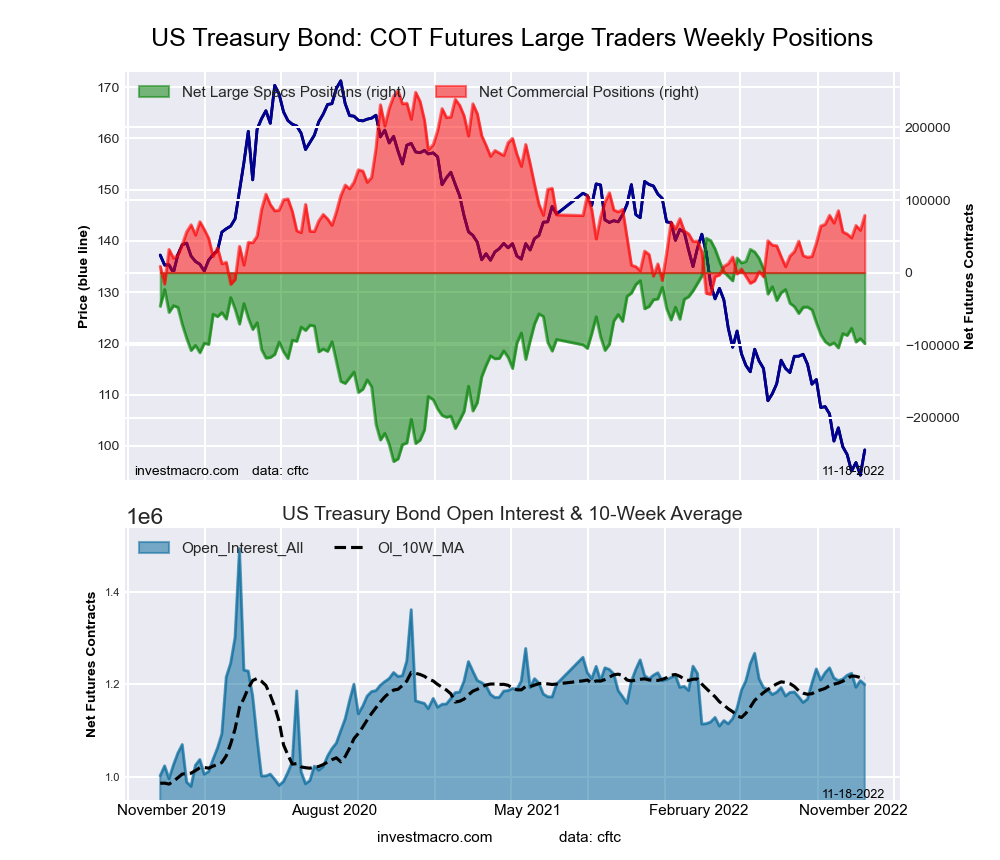
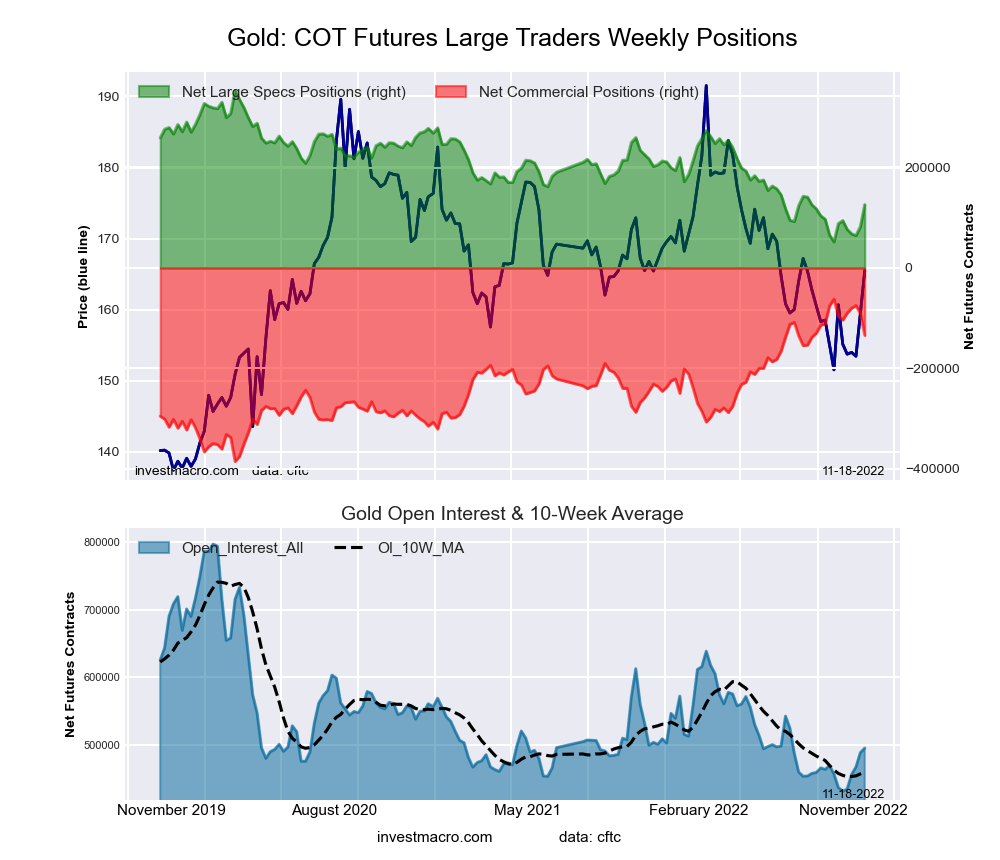
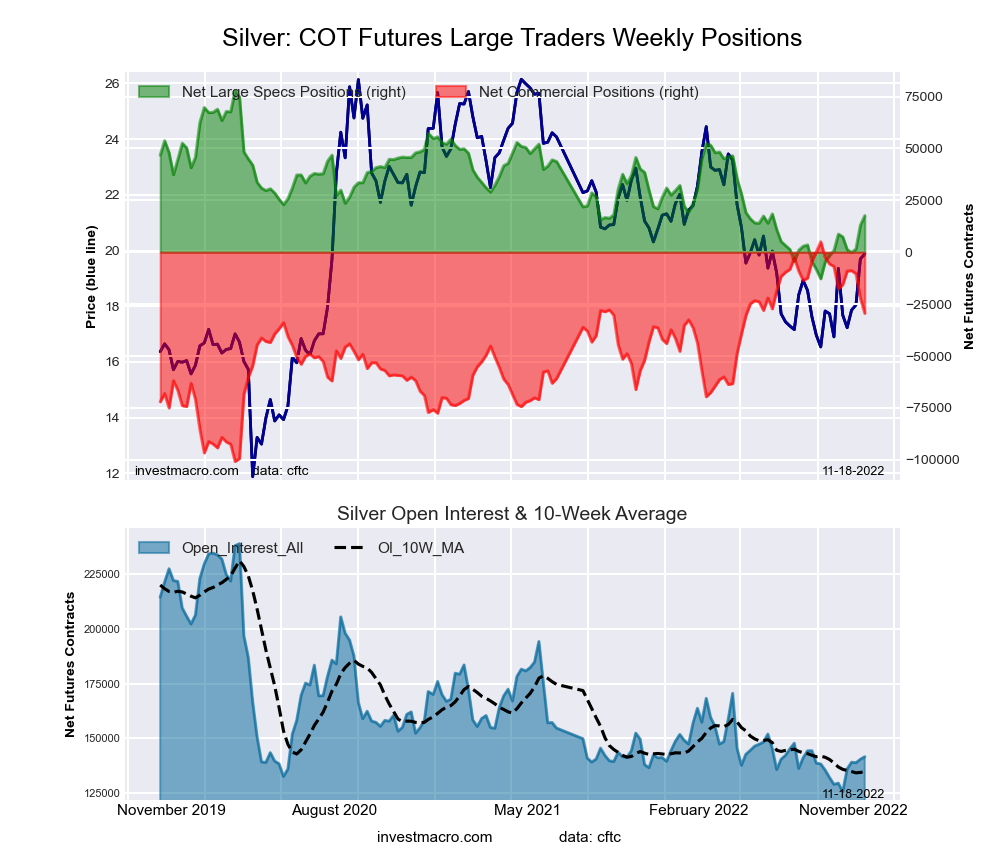
Alright, so if we are at or close to a bottom in gold and the PM sector, then we would expect to see the normally wrong Large Specs having Little interest in gold, and that is exactly what we see on the latest COT chart for gold, which shows that they have pretty much given up on it.

This COT chart alone augurs well for a new bull market phase in gold . . .

Silver

What about silver?

On its 1-year chart, we can see that it has dropped back from its March highs for the same reasons that gold has, the strong uptrends in the dollar, and interest rates.

This is looking like a great place to load up on the better gold and silver stocks.

However, since July, a potential base pattern has been building out that is now starting to look like a completing Triple Bottom, and with the steadily uptrending momentum (MACD) now about to swing positive, the outlook is brightening and the strong volume on the rally out of the low in the middle of the month, better seen on a 6-month chart, looks like the beginnings of a rally up towards the resistance at the upper boundary of the pattern.

Silver is regarded as probably the most undervalued asset in the world, and in the dark times that we are headed towards, physical silver is probably the best asset to have in your possession, along with some firearms to make sure that it stays in your possession.

If silver is close to an optimum point to buy, then we would expect to see the dumb Large Specs having no interest in it all, and that is exactly what we see on silver’s latest COT chart, which shows the Large Specs net long positions to be virtually non-existent . . .

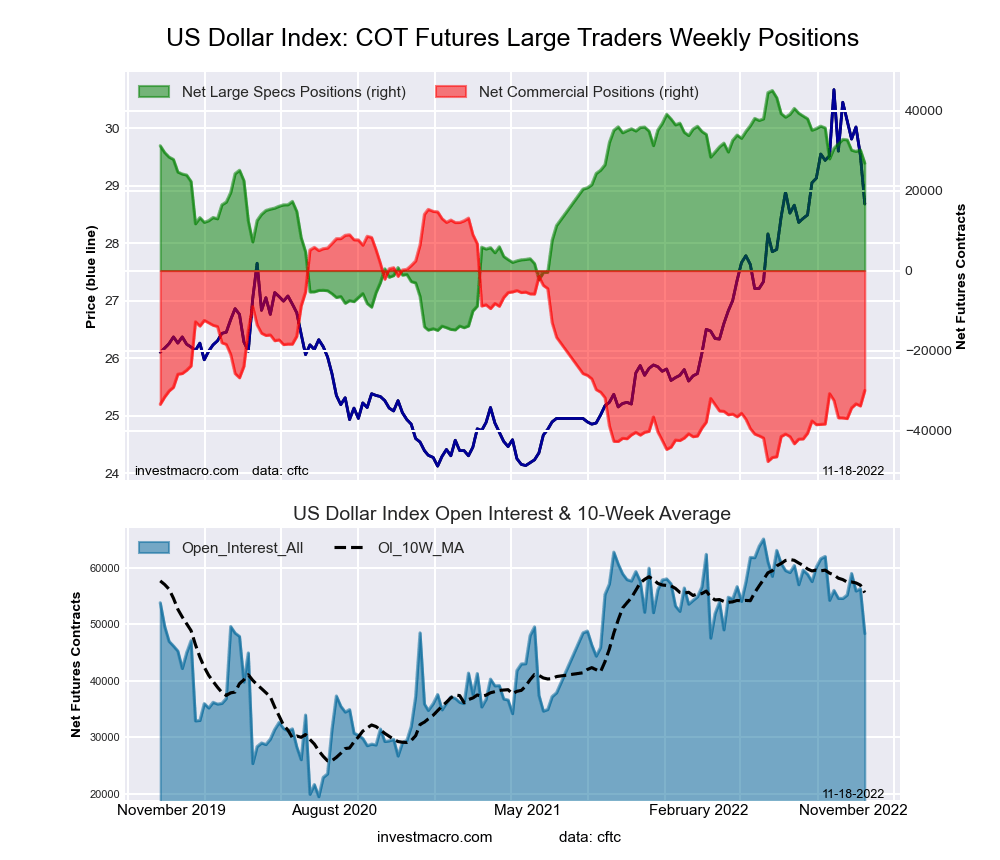
It’s useful here to take a quick look at the 5-year chart for the dollar index because, on this chart, we see that it has gone parabolic in recent months, and it’s possible that it just topped out.

Two possible reasons for it to turn and break down that have already been mentioned are a “Fed pivot” and other countries or trading blocs, such as the European Union, following the Fed’s lead and raising rates too.

The U.S. Dollar and British Pound

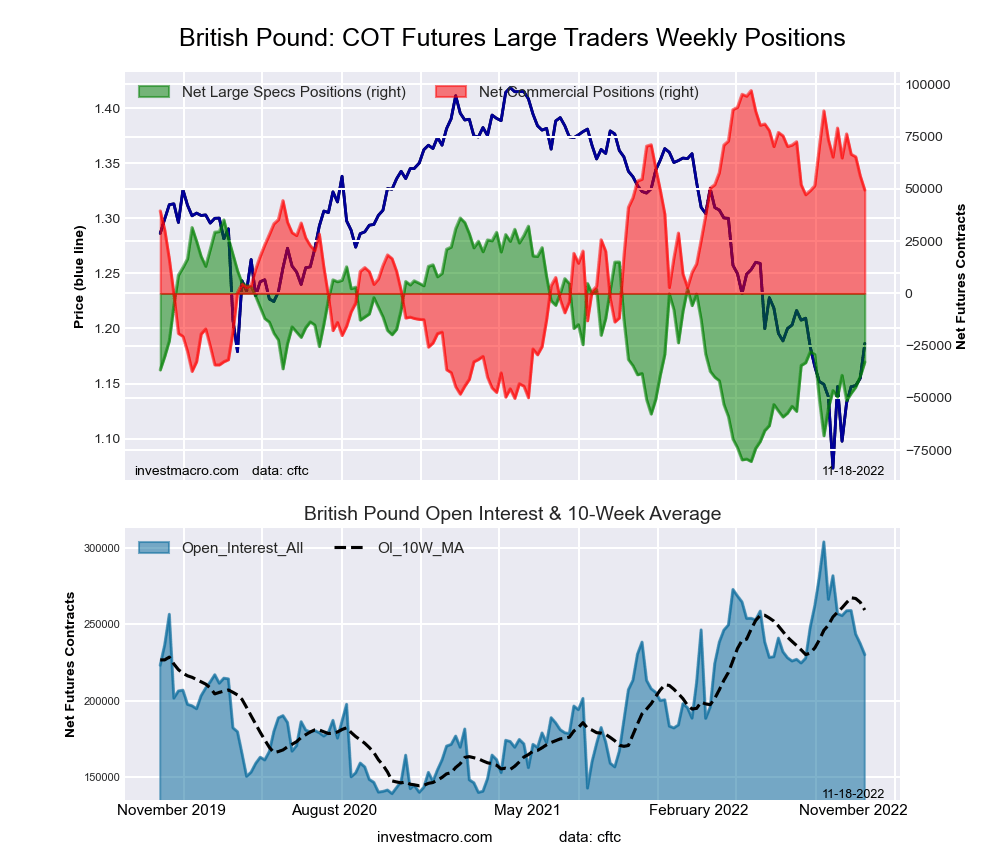
Just for laughs, let’s take a quick look at the 5-year chart for the British Pound.

It shows that it has been terribly weak, dropping an incredible 40% in less than 18 months . . .

For U.S. readers who’ve always wanted to see the sights in Britain, and have the time and money, now is a good time to vacation there while the exchange rate is good before the Winter.

If you want ideas on what to visit, I can give you a list as long as your arm.

The Risk of a Market Crash

Finally, what about the ongoing risk of an all-out market crash? Would that not drag gold and silver, and PM stocks down even further?

Well, it could, although it may not because, this time, there will be no hiding place for investors in the Treasury market, which is already on the rocks.

So with this option closed off, funk money will probably flee into gold and silver instead. This time round is very different in that the powers that be fully intend to destroy the world economy kill off most of the population, and turn the survivors into cyborg-like slaves, and have made their intentions very clear to anyone with more than a few functioning brain cells.

This would best be achieved by a state of hyperinflation, Venezuela style, that would render the population destitute and totally at the mercy of the State (except for some preppers, who will probably be identified and rounded up anyway).

Following this logic, they will continue to create money to defer the debt market collapse for as long as possible, and the hyperinflation that will result, which we are already close to, must mean an exponential rise in the price of hard assets like gold and silver, with physical being very highly prized and hard to obtain.

The charts that we have reviewed in this update strongly suggest that, whatever the broad market does from here, the PM sector has bottomed out and is going to rally soon. An important article posted by Adam Hamilton a couple of days ago, Gold Stocks’ Winter Rally 7, strongly supports this contention.

Although long, this common sense article presents reasoned arguments based on his many years of experience with this sector and should thus be taken seriously.

Conclusion — This is looking like a great place to load up on the better gold and silver stocks.

CliveMaund.com Disclosures

The above represents the opinion and analysis of Mr. Maund, based on data available to him, at the time of writing. Mr. Maund’s opinions are his own, and are not a recommendation or an offer to buy or sell securities. Mr. Maund is an independent analyst who receives no compensation of any kind from any groups, individuals or corporations mentioned in his reports. As trading and investing in any financial markets may involve serious risk of loss, Mr. Maund recommends that you consult with a qualified investment advisor, one licensed by appropriate regulatory agencies in your legal jurisdiction and do your own due diligence and research when making any kind of a transaction with financial ramifications. Although a qualified and experienced stock market analyst, Clive Maund is not a Registered Securities Advisor. Therefore Mr. Maund’s opinions on the market and stocks can only be construed as a solicitation to buy and sell securities when they are subject to the prior approval and endorsement of a Registered Securities Advisor operating in accordance with the appropriate regulations in your area of jurisdiction.

Disclosures:
1) Statements and opinions expressed are the opinions of Clive Maund and not of Streetwise Reports or its officers. The author is wholly responsible for the validity of the statements. Streetwise Reports was not involved in any aspect of the article preparation. The author was not paid by Streetwise Reports LLC for this article. Streetwise Reports was not paid by the author to publish or syndicate this article.

2) This article does not constitute investment advice. Each reader is encouraged to consult with his or her individual financial professional and any action a reader takes as a result of information presented here is his or her own responsibility. By opening this page, each reader accepts and agrees to Streetwise Reports’ terms of use and full legal disclaimer. This article is not a solicitation for investment. Streetwise Reports does not render general or specific investment advice and the information on Streetwise Reports should not be considered a recommendation to buy or sell any security. Streetwise Reports does not endorse or recommend the business, products, services or securities of any company mentioned on Streetwise Reports.

3) From time to time, Streetwise Reports LLC and its directors, officers, employees or members of their families, as well as persons interviewed for articles and interviews on the site, may have a long or short position in securities mentioned. Directors, officers, employees or members of their immediate families are prohibited from making purchases and/or sales of those securities in the open market or otherwise from the time of the decision to publish an article until three business days after the publication of the article. The foregoing prohibition does not apply to articles that in substance only restate previously published company releases.

Mid-Week Technical Outlook: Major Indices

By ForexTime 

An uneasy calm settled across financial markets ahead of the Federal Reserve’s policy meeting this evening. Equities struggled for direction; the dollar index remained static while gold prices were little changed.

Sentiment in general remains shaky and fragile thanks to concerns over slowing global growth with investors adopting a guarded approach ahead of what could be a volatile event. Markets widely expect the Federal Reserve to raise interest rates by 75bp in November but much attention will be directed towards the press conference which could offer fresh clues into monetary policy.

Our focus this afternoon will be directed toward the global equity arena, especially US indices which remain highly reactive to Fed rate hike expectations.

S&P 500 tangled between MA’s

After failing to secure a daily close above the 100-day SMA, the S&P 500 has the potential to trade lower if the 50-day SMA is breached. A strong breakdown below 3810 could trigger a selloff towards 3760 and 3700, respectively. Should 3810 prove to be reliable support, prices could rebound towards 3945 and 4000. It is worth keeping in mind that the short-term outlook will be influenced by the Fed meeting this evening and the US jobs report on Friday.

Nasdaq trapped below 11650?

It looks like the Nasdaq could gearing up for a selloff. After failing to break above the 11650 resistances, prices have tumbled with bears eyeing the 11037 supports. The Fed rate decision and press conference may influence the Nasdaq’s short-term outlook. Technical levels to watch out for are 11037 and 10716. Given how prices are trading below the 50, 100, and 200 Simple Moving Average – bears still have some power. A strong break under 10716 could signal a selloff towards 10436.

FTSE100 lingers below resistance

Since punching above the 7200-resistance level, prices have struggled to push higher as the 100-day Simple Moving Average offered another line of resistance. Although the FTSE100 has staged a rebound from the 6705 regions, prices still remain in a bearish channel. Should 7200 prove to be a tough nut to crack for bulls, prices could sink back towards 7000. Alternatively, a strong breakout above 7200 may open the doors towards 7340 – a level where the 200-day SMA resides.

EURO STOXX 50 breakout or fakeout?

This index remains in an uptrend on the daily charts as there have been consistently higher highs and higher lows. Prices are trading above the 50 and 100-day SMA but below the 200-day which could offer strong resistance. If bulls lose momentum and secure a solid daily close below 3650, this may trigger a selloff back towards 3550 – a level just above the 100-day SMA. Alternatively, a strong daily close above the 3685 regions could inject bulls with enough confidence to push above the 200-day SMA. Such a development may result in an incline towards 3700, 3770, and 3820, respectively.


Forex-Time-LogoArticle by ForexTime

ForexTime Ltd (FXTM) is an award winning international online forex broker regulated by CySEC 185/12 www.forextime.com

Japanese Candlesticks Analysis 02.11.2022 (EURUSD, USDJPY, EURGBP)

Article By RoboForex.com

EURUSD, “Euro vs US Dollar”

On H4, at the pullback near the support level, the pair has formed a Doji reversal pattern. Currently, the pair may go by the signal in the form of an ascending wave. The goal of growth will be 1.0010. However, the price may pull back to 0.9845, bounce off this level, and continue the uptrend after correction.

EURUSD
Risk Warning: the result of previous trading operations do not guarantee the same results in the future

USDJPY, “US Dollar vs Japanese Yen”

On H4 at a pullback the pair has formed a reversal pattern Hammer. Currently, the pair may go by the signal in the form of an ascending wave. The goal of growth will be 149.00. However, the pair may pull back to 146.55 and continue the uptrend after a correction to the support level.

USDJPY
Risk Warning: the result of previous trading operations do not guarantee the same results in the future

EURGBP, “Euro vs Great Britain Pound”

On H4, the pair has formed a Doji reversal pattern. Currently, the pair may go by the signal in the form of an ascending wave. The goal of growth may be the resistance level of 0.8660. Upon testing and bouncing off it, the pair has the chance for continuing the downtrend. However, the quotes may decline to 0.8500 without pulling back to the resistance level.

EURGBP

Article By RoboForex.com

Attention!
Forecasts presented in this section only reflect the author’s private opinion and should not be considered as guidance for trading. RoboForex LP bears no responsibility for trading results based on trading recommendations described in these analytical reviews.

The cryptocurrency market digest (BTC, TON). Overview for 02.11.2022

Article By RoboForex.com

The BTC paused again. On Wednesday, it mainly fluctuates near 20,507 USD.

Investors are saving powers before the Federal Reserve System decides anything about the interest rate. The main forecast implies an increase by 75 base points to 4% annual. According to the CME, the probability of such a scenario is 86%.
However, the main attention will be focused on the press conference of the Fed’s head Jerome Powell where he will make forecasts and comments about future steps of the regulator.

We will see how capital markets will behave. Fundamentally, nothing changes for them positively: the price of crediting keeps growing, increasing the load on business. Hence, there are few reasons for optimism. However, this pessimism is predictable and habitual.

To be able to attack 21,500 USD efficiently, the BTC needs to step over 21,150-21,350 USD today. This will open a pathway to 22,500 USD.

Capitalisation of the crypto market today is 1,010 trillion USD; the BTC takes up 38.8% of the market, the ETH – 19%.

Americans want transparent regulations

According to The Harris Poll, at least 79% of questioned Americans think that the crypto industry needs more transparent regulations. This implies clear rules for investors in digital assets. The same poll showed that people still consider traditional money more reliable.

TON sky-rocketed

The TON crypto sprouted, growing by 11% overnight without any obvious reasons. Trade volumes amounted to 20.62 million USD.
Article By RoboForex.com

Attention!
Forecasts presented in this section only reflect the author’s private opinion and should not be considered as guidance for trading. RoboForex LP bears no responsibility for trading results based on trading recommendations described in these analytical reviews.

The Analytical Overview of the Main Currency Pairs on 2022.11.02

By JustMarkets

The EUR/USD currency pair

Technical indicators of the currency pair:
  • Prev Open: 0.9882
  • Prev Close: 0.9873
  • % chg. over the last day: -0.09 %

The US Fed is likely to raise the rate by 0.75% today. This scenario is already in the price movement, so the speech of the US Federal Reserve Chairman Jerome Powell will be of most interest. If Mr. Powell hints that the Central Bank needs to take a slower rate hike, it could lead to a sharp drop in the dollar Index and a rise in the European currency. Conversely, hawkish statements that the US Fed will stay on its current course could further strengthen the dollar Index.
Trading recommendations
  • Support levels: 0.9873, 0.9835, 0.9755, 0.9601.
  • Resistance levels: 0.9928, 1.0055, 1.0111, 1.0162, 1.0230

From the technical point of view, the trend on the EUR/USD currency pair on the hourly time frame is bullish. The price is trading at the level of the moving averages. The MACD indicator is in the negative zone, but sellers’ pressure is weak due to the presence of divergence. Under such market conditions, buy trades should be considered from the support level of 0.9873, but with additional confirmation, since the level has already been tested. Sell deals can be considered from the resistance level of 0.9928, but also with confirmation.

Alternative scenario: if the price breaks down through the support level of 0.9834 and fixes below it, the downtrend will likely resume.

EUR/USD
News feed for 2022.11.02:
  • – Spanish Manufacturing PMI (m/m) at 10:15 (GMT+2);
  • – Italian Manufacturing PMI (m/m) at 10:45 (GMT+2);
  • – French Manufacturing PMI (m/m) at 10:50 (GMT+2);
  • – German Manufacturing PMI (m/m) at 10:55 (GMT+2);
  • – German Unemployment Rate (m/m) at 10:55 (GMT+2);
  • – Eurozone Manufacturing PMI (m/m) at 11:00 (GMT+2);
  • – US ADP Nonfarm Employment Change (m/m) at 14:15 (GMT+2);
  • – US FOMC Statement at 20:00 (GMT+2);
  • – US Fed Interest Rate Decision at 20:00 (GMT+2);
  • – US FOMC Press Conference at 20:30 (GMT+2).

The GBP/USD currency pair

Technical indicators of the currency pair:
  • Prev Open: 1.1465
  • Prev Close: 1.1482
  • % chg. over the last day: +0.15 %

The UK manufacturing sector started the last quarter of the year weakly. Production declined for the fourth consecutive month due to a sharp drop in new orders, weak export demand, and supply chain disruptions. The seasonally adjusted purchasing managers’ Index (PMI) fell to a 29-month low of 46.2 in October, down from 48.4 in September. Weakening global economic conditions, lower demand in China, the war in Ukraine, and ongoing Brexit-related problems that are holding back export performance were cited as reasons.

Trading recommendations
  • Support levels: 1.1466, 1.1337, 1.1172, 1.1093, 1.0915, 1.0817
  • Resistance levels: 1.1578, 1.1698, 1.1816, 1.1901

From the technical point of view, the GBP/USD currency pair trend on the hourly time frame is bullish. The price is trading at the level of the moving averages. The MACD indicator is negative, there is a divergence, and buyers’ pressure is still present. Under such market conditions, buy trades can be considered from the support level of 1.1466 or 1.1337, but better after confirmation. Sell trades are best to look for on intraday time frames, the nearest resistance level is 1.1578, but also better with confirmation in the form of a reverse initiative.

Alternative scenario: if the price breaks down of the 1.1172 support level and fixes below it, the downtrend will likely resume.

GBP/USD
News feed for 2022.11.02:
  • – US FOMC Statement at 20:00 (GMT+2);
  • – US Fed Interest Rate Decision at 20:00 (GMT+2).

The USD/JPY currency pair

Technical indicators of the currency pair:
  • Prev Open: 148.74
  • Prev Close: 148.23
  • % chg. over the last day: +0.34 %

Japanese Finance Minister Shun’ichi Suzuki said Tuesday that the country’s currency interventions were a covert operation to maximize the impact. But analysts think Mr. Suzuki is being disingenuous, as there had been talking of intervention long before the intervention itself. In any case, the aim was achieved – the Japanese yen has strengthened against the dollar and now is resisting falling. Experts think that a lot will depend on the US Federal Reserve policy, and if there are hints for a slower rate of increase today, the dollar Index might lose its strength, which would lead to a wide sideways movement or a slow strengthening of the yen. But let’s not forget that the interest rate differential still points to the USD/JPY rising.

Trading recommendations
  • Support levels: 146.64, 145.50, 144.91, 144.19, 143.00
  • Resistance levels: 148.09, 148.82, 147.75, 148.64, 148.64, 150.00, 151.05

From the technical point of view, the medium-term trend on the currency pair USD/JPY is bearish. The price is traded on the moving averages. The MACD indicator has become negative again, but the buyers’ pressure remains. Under such market conditions, buy trades can be sought on the intraday time frames from the support level of 146.64, but only after the confirmation. Sell deals can be searched from the resistance level of 148.09 or 148.82, but only with additional confirmation, as the level has already been tested.

Alternative scenario: If the price fixes above 150.00, the uptrend will likely resume.

USD/JPY
News feed for 2022.11.02:
  • – Japan Monetary Policy Meeting Minutes at 01:50 (GMT+2);
  • – US FOMC Statement at 20:00 (GMT+2);
  • – US Fed Interest Rate Decision at 20:00 (GMT+2).

The USD/CAD currency pair

Technical indicators of the currency pair:
  • Prev Open: 1.3619
  • Prev Close: 1.3629
  • % chg. over the last day: +0.07 %

Bank of Canada (BoC) Governor Tiff Macklem indicated that the Central Bank expects further rate hikes, but the further pace of increase has not yet been determined. According to Macklem, how much further rates rise will depend on how monetary policy works, how supply-side problems are handled and how inflation responds to this tightening cycle. But it was also said that the tightening phase is coming to an end.

Trading recommendations
  • Support levels: 1.3569, 1.3515, 1.3454
  • Resistance levels: 1.3721, 1.3855, 1.3968

From the point of view of technical analysis, the trend on the USD/CAD currency pair is bearish. The price is trading at the level of moving averages, wide-volatility balance is formed. The MACD indicator has become inactive, there is a slight buying pressure. The best way to sell is to consider the resistance level of 1.3721, but only after the additional confirmation. Buy trades should be considered on the lower time frames from the support level of 1.3569 or 1.3542, but also better after confirmation.

Alternative scenario: if the price breaks out and consolidates above the resistance level of 1.3721, the uptrend will likely resume.

USD/CAD
News feed for 2022.11.02:
  • – Canada BOC Macklem Speaks at 00:30 (GMT+2);
  • – US Crude Oil Reserves (w/w) at 16:30 (GMT+2);
  • – US FOMC Statement at 20:00 (GMT+2);
  • – US Fed Interest Rate Decision at 20:00 (GMT+2).

By JustMarkets


This article reflects a personal opinion and should not be interpreted as an investment advice, and/or offer, and/or a persistent request for carrying out financial transactions, and/or a guarantee, and/or a forecast of future events.