COT Bonds Speculators drop their 2-Year Bond bets to record low level

By InvestMacro

Here are the latest charts and statistics for the Commitment of Traders (COT) reports data published by the Commodities Futures Trading Commission (CFTC).

The latest COT data is updated through Tuesday November 1st and shows a quick view of how large traders (for-profit speculators and commercial hedgers) were positioned in the futures markets.

Weekly Speculator Changes led lower by Fed Funds, 2-Year & 5-Year

The COT bond market speculator bets were lower across the board this week as all eight of the bond markets we cover had lower positioning this week.

The bond markets leading the weekly declines in speculator bets this week were the Fed Funds (-89,356 contracts), the 2-Year Bond (-88,189 contracts) and the 5-Year Bond (-75,242 contracts) with the Eurodollar (-54,038 contracts), the 10-Year Bond (-50,568 contracts), the Ultra US Bond (-37,144 contracts), the Long US Bond (-18,746 contracts) and the Ultra 10-Year (-4,085 contracts) also registering lower bets on the week.

Highlighting the COT bonds data this week is the historic weakness of the 2-Year Bond speculators positioning. Large speculators dropped their bets this week for a second straight week and by the largest weekly amount since May with this week’s decline numbering -88,189 contracts. The sentiment drop has now brought the overall 2-Year Bond speculator standing to its lowest level on record at a total of -437,785 contracts, eclipsing the previous record low of -417,237 contracts registered on December 11th of 2018.

The bond markets overall were on the defensive this week as the US Federal Reserve raised their benchmark interest rate by 75 basis points for the fourth straight meeting. The 2-Year Bond, being near the short end of the yield curve, is especially sensitive to the rate change. The 2-Year front month futures price decreased to the lowest level since 2007 this week while the yield for the 2-Year hit above 5 percent (yields rise as prices fall), the highest threshold since 2007 as well.


Data Snapshot of Bond Market Traders | Columns Legend
Nov-01-2022OIOI-IndexSpec-NetSpec-IndexCom-NetCOM-IndexSmalls-NetSmalls-Index
Eurodollar7,921,8650-1,950,696172,217,45781-266,76146
FedFunds1,364,70332-17,0053830,79664-13,79125
2-Year2,234,14820-437,7850464,387100-26,60240
Long T-Bond1,193,68742-95,3055464,9063430,39977
10-Year3,952,20561-298,31627343,55463-45,23869
5-Year4,140,76059-536,9874629,89790-92,91056


Strength Scores led by US Treasury Bond

Strength Scores (a normalized measure of Speculator positions over a 3-Year range, from 0 to 100 where above 80 is extreme bullish and below 20 is extreme bearish) show that the US Treasury Bond (53.6 percent) leads the bonds category this week. The Fed Funds (37.5 percent) comes in as the next highest bonds market in strength scores but is down from 48.6 percent from last week.

On the downside, the 2-Year Bond (0.0 percent) comes in at the lowest strength level currently and is followed by the 5-Year Bond (4.3 percent), the Ultra 10-Year Bond (7.1 percent) and the Eurodollar (17.2 percent). All four of these markets currently are in bearish extreme positioning compared to the past three years of speculator positions with scores below 20 percent.

Strength Statistics:
Fed Funds (37.5 percent) vs Fed Funds previous week (48.6 percent)
2-Year Bond (0.0 percent) vs 2-Year Bond previous week (16.8 percent)
5-Year Bond (4.3 percent) vs 5-Year Bond previous week (15.7 percent)
10-Year Bond (27.1 percent) vs 10-Year Bond previous week (34.8 percent)
Ultra 10-Year Bond (7.1 percent) vs Ultra 10-Year Bond previous week (8.2 percent)
US Treasury Bond (53.6 percent) vs US Treasury Bond previous week (59.7 percent)
Ultra US Treasury Bond (26.9 percent) vs Ultra US Treasury Bond previous week (42.0 percent)
Eurodollar (17.2 percent) vs Eurodollar previous week (18.2 percent)

Eurodollar & US Treasury Bond show positive Strength Trends

Strength Score Trends (or move index, calculates the 6-week changes in strength scores) show that the Eurodollar (5.0 percent) leads the past six weeks trends for bonds this week. The US Treasury Bond (1.4 percent) is the only other positive mover in the latest trends data.

The 2-Year Bond (-18.1 percent) leads the downside trend scores currently followed by the Ultra 10-Year Bond (-14.2 percent), 10-Year Bond (-10.4 percent), the Ultra US Treasury Bond (-9.1 percent) and the 5-Year Bond (-6.5 percent).

Strength Trend Statistics:
Fed Funds (-5.1 percent) vs Fed Funds previous week (3.0 percent)
2-Year Bond (-18.1 percent) vs 2-Year Bond previous week (1.6 percent)
5-Year Bond (-6.5 percent) vs 5-Year Bond previous week (9.0 percent)
10-Year Bond (-10.4 percent) vs 10-Year Bond previous week (16.0 percent)
Ultra 10-Year Bond (-14.2 percent) vs Ultra 10-Year Bond previous week (-18.9 percent)
US Treasury Bond (1.4 percent) vs US Treasury Bond previous week (6.0 percent)
Ultra US Treasury Bond (-9.1 percent) vs Ultra US Treasury Bond previous week (-1.8 percent)
Eurodollar (5.0 percent) vs Eurodollar previous week (18.1 percent)


Individual Bond Markets:

3-Month Eurodollars Futures:

Eurodollar Bonds Futures COT ChartThe 3-Month Eurodollars large speculator standing this week reached a net position of -1,950,696 contracts in the data reported through Tuesday. This was a weekly reduction of -54,038 contracts from the previous week which had a total of -1,896,658 net contracts.

This week’s current strength score (the trader positioning range over the past three years, measured from 0 to 100) shows the speculators are currently Bearish-Extreme with a score of 17.2 percent. The commercials are Bullish-Extreme with a score of 80.7 percent and the small traders (not shown in chart) are Bearish with a score of 45.7 percent.

3-Month Eurodollars StatisticsSPECULATORSCOMMERCIALSSMALL TRADERS
– Percent of Open Interest Longs:7.467.74.7
– Percent of Open Interest Shorts:32.139.78.1
– Net Position:-1,950,6962,217,457-266,761
– Gross Longs:589,4715,361,762371,189
– Gross Shorts:2,540,1673,144,305637,950
– Long to Short Ratio:0.2 to 11.7 to 10.6 to 1
NET POSITION TREND:
– Strength Index Score (3 Year Range Pct):17.280.745.7
– Strength Index Reading (3 Year Range):Bearish-ExtremeBullish-ExtremeBearish
NET POSITION MOVEMENT INDEX:
– 6-Week Change in Strength Index:5.0-5.24.3


30-Day Federal Funds Futures:

Federal Funds 30-Day Bonds Futures COT ChartThe 30-Day Federal Funds large speculator standing this week reached a net position of -17,005 contracts in the data reported through Tuesday. This was a weekly decline of -89,356 contracts from the previous week which had a total of 72,351 net contracts.

This week’s current strength score (the trader positioning range over the past three years, measured from 0 to 100) shows the speculators are currently Bearish with a score of 37.5 percent. The commercials are Bullish with a score of 63.6 percent and the small traders (not shown in chart) are Bearish with a score of 24.5 percent.

30-Day Federal Funds StatisticsSPECULATORSCOMMERCIALSSMALL TRADERS
– Percent of Open Interest Longs:10.373.51.8
– Percent of Open Interest Shorts:11.671.22.8
– Net Position:-17,00530,796-13,791
– Gross Longs:140,9201,002,68925,091
– Gross Shorts:157,925971,89338,882
– Long to Short Ratio:0.9 to 11.0 to 10.6 to 1
NET POSITION TREND:
– Strength Index Score (3 Year Range Pct):37.563.624.5
– Strength Index Reading (3 Year Range):BearishBullishBearish
NET POSITION MOVEMENT INDEX:
– 6-Week Change in Strength Index:-5.15.8-17.6


2-Year Treasury Note Futures:

2-Year Treasury Bonds Futures COT ChartThe 2-Year Treasury Note large speculator standing this week reached a net position of -437,785 contracts in the data reported through Tuesday. This was a weekly decline of -88,189 contracts from the previous week which had a total of -349,596 net contracts.

This week’s current strength score (the trader positioning range over the past three years, measured from 0 to 100) shows the speculators are currently Bearish-Extreme with a score of 0.0 percent. The commercials are Bullish-Extreme with a score of 100.0 percent and the small traders (not shown in chart) are Bearish with a score of 40.2 percent.

2-Year Treasury Note StatisticsSPECULATORSCOMMERCIALSSMALL TRADERS
– Percent of Open Interest Longs:7.482.07.6
– Percent of Open Interest Shorts:27.061.28.8
– Net Position:-437,785464,387-26,602
– Gross Longs:164,9821,831,669169,031
– Gross Shorts:602,7671,367,282195,633
– Long to Short Ratio:0.3 to 11.3 to 10.9 to 1
NET POSITION TREND:
– Strength Index Score (3 Year Range Pct):0.0100.040.2
– Strength Index Reading (3 Year Range):Bearish-ExtremeBullish-ExtremeBearish
NET POSITION MOVEMENT INDEX:
– 6-Week Change in Strength Index:-18.14.930.9


5-Year Treasury Note Futures:

5-Year Treasury Bonds Futures COT ChartThe 5-Year Treasury Note large speculator standing this week reached a net position of -536,987 contracts in the data reported through Tuesday. This was a weekly decrease of -75,242 contracts from the previous week which had a total of -461,745 net contracts.

This week’s current strength score (the trader positioning range over the past three years, measured from 0 to 100) shows the speculators are currently Bearish-Extreme with a score of 4.3 percent. The commercials are Bullish-Extreme with a score of 90.1 percent and the small traders (not shown in chart) are Bullish with a score of 55.5 percent.

5-Year Treasury Note StatisticsSPECULATORSCOMMERCIALSSMALL TRADERS
– Percent of Open Interest Longs:5.186.07.6
– Percent of Open Interest Shorts:18.170.89.8
– Net Position:-536,987629,897-92,910
– Gross Longs:213,1793,559,701313,942
– Gross Shorts:750,1662,929,804406,852
– Long to Short Ratio:0.3 to 11.2 to 10.8 to 1
NET POSITION TREND:
– Strength Index Score (3 Year Range Pct):4.390.155.5
– Strength Index Reading (3 Year Range):Bearish-ExtremeBullish-ExtremeBullish
NET POSITION MOVEMENT INDEX:
– 6-Week Change in Strength Index:-6.5-1.214.5


10-Year Treasury Note Futures:

10-Year Treasury Notes Bonds Futures COT ChartThe 10-Year Treasury Note large speculator standing this week reached a net position of -298,316 contracts in the data reported through Tuesday. This was a weekly fall of -50,568 contracts from the previous week which had a total of -247,748 net contracts.

This week’s current strength score (the trader positioning range over the past three years, measured from 0 to 100) shows the speculators are currently Bearish with a score of 27.1 percent. The commercials are Bullish with a score of 62.7 percent and the small traders (not shown in chart) are Bullish with a score of 69.3 percent.

10-Year Treasury Note StatisticsSPECULATORSCOMMERCIALSSMALL TRADERS
– Percent of Open Interest Longs:11.976.59.1
– Percent of Open Interest Shorts:19.567.810.2
– Net Position:-298,316343,554-45,238
– Gross Longs:471,1663,021,952357,967
– Gross Shorts:769,4822,678,398403,205
– Long to Short Ratio:0.6 to 11.1 to 10.9 to 1
NET POSITION TREND:
– Strength Index Score (3 Year Range Pct):27.162.769.3
– Strength Index Reading (3 Year Range):BearishBullishBullish
NET POSITION MOVEMENT INDEX:
– 6-Week Change in Strength Index:-10.40.116.0


Ultra 10-Year Notes Futures:

Ultra 10-Year Treasury Notes Bonds Futures COT ChartThe Ultra 10-Year Notes large speculator standing this week reached a net position of -83,431 contracts in the data reported through Tuesday. This was a weekly decline of -4,085 contracts from the previous week which had a total of -79,346 net contracts.

This week’s current strength score (the trader positioning range over the past three years, measured from 0 to 100) shows the speculators are currently Bearish-Extreme with a score of 7.1 percent. The commercials are Bullish-Extreme with a score of 81.6 percent and the small traders (not shown in chart) are Bullish with a score of 75.4 percent.

Ultra 10-Year Notes StatisticsSPECULATORSCOMMERCIALSSMALL TRADERS
– Percent of Open Interest Longs:7.980.411.0
– Percent of Open Interest Shorts:13.968.816.6
– Net Position:-83,431161,124-77,693
– Gross Longs:109,5131,118,917153,574
– Gross Shorts:192,944957,793231,267
– Long to Short Ratio:0.6 to 11.2 to 10.7 to 1
NET POSITION TREND:
– Strength Index Score (3 Year Range Pct):7.181.675.4
– Strength Index Reading (3 Year Range):Bearish-ExtremeBullish-ExtremeBullish
NET POSITION MOVEMENT INDEX:
– 6-Week Change in Strength Index:-14.22.330.2


US Treasury Bonds Futures:

US Year Treasury Notes Long Bonds Futures COT ChartThe US Treasury Bonds large speculator standing this week reached a net position of -95,305 contracts in the data reported through Tuesday. This was a weekly lowering of -18,746 contracts from the previous week which had a total of -76,559 net contracts.

This week’s current strength score (the trader positioning range over the past three years, measured from 0 to 100) shows the speculators are currently Bullish with a score of 53.6 percent. The commercials are Bearish with a score of 33.8 percent and the small traders (not shown in chart) are Bullish with a score of 76.7 percent.

US Treasury Bonds StatisticsSPECULATORSCOMMERCIALSSMALL TRADERS
– Percent of Open Interest Longs:5.679.214.3
– Percent of Open Interest Shorts:13.673.711.7
– Net Position:-95,30564,90630,399
– Gross Longs:67,408945,230170,536
– Gross Shorts:162,713880,324140,137
– Long to Short Ratio:0.4 to 11.1 to 11.2 to 1
NET POSITION TREND:
– Strength Index Score (3 Year Range Pct):53.633.876.7
– Strength Index Reading (3 Year Range):BullishBearishBullish
NET POSITION MOVEMENT INDEX:
– 6-Week Change in Strength Index:1.4-5.07.8


Ultra US Treasury Bonds Futures:

Ultra US Year Treasury Notes Long Bonds Futures COT ChartThe Ultra US Treasury Bonds large speculator standing this week reached a net position of -388,166 contracts in the data reported through Tuesday. This was a weekly lowering of -37,144 contracts from the previous week which had a total of -351,022 net contracts.

This week’s current strength score (the trader positioning range over the past three years, measured from 0 to 100) shows the speculators are currently Bearish with a score of 26.9 percent. The commercials are Bullish with a score of 77.8 percent and the small traders (not shown in chart) are Bullish with a score of 74.7 percent.

Ultra US Treasury Bonds StatisticsSPECULATORSCOMMERCIALSSMALL TRADERS
– Percent of Open Interest Longs:5.982.611.4
– Percent of Open Interest Shorts:32.759.47.8
– Net Position:-388,166335,89252,274
– Gross Longs:85,6811,198,023165,861
– Gross Shorts:473,847862,131113,587
– Long to Short Ratio:0.2 to 11.4 to 11.5 to 1
NET POSITION TREND:
– Strength Index Score (3 Year Range Pct):26.977.874.7
– Strength Index Reading (3 Year Range):BearishBullishBullish
NET POSITION MOVEMENT INDEX:
– 6-Week Change in Strength Index:-9.13.013.5


Article By InvestMacroReceive our weekly COT Newsletter

*COT Report: The COT data, released weekly to the public each Friday, is updated through the most recent Tuesday (data is 3 days old) and shows a quick view of how large speculators or non-commercials (for-profit traders) were positioned in the futures markets.

The CFTC categorizes trader positions according to commercial hedgers (traders who use futures contracts for hedging as part of the business), non-commercials (large traders who speculate to realize trading profits) and nonreportable traders (usually small traders/speculators) as well as their open interest (contracts open in the market at time of reporting). See CFTC criteria here.

Fed faces twin threats of recession and financial crisis as its inflation fight raises risks of both

By D. Brian Blank, Mississippi State University 

There is wide agreement among economists and market observers that the Federal Reserve’s aggressive interest rate hikes will cause economic growth to grind to a halt, leading to a recession. Less talked about is the risk of a financial crisis as the U.S. central bank simultaneously tries to shrink its massive balance sheet.

As expected, the Fed on Nov. 2, 2022, lifted borrowing costs by 0.75 percentage pointits fourth straight hike of that size, which brings its benchmark rate to as high as 4%.

At the same time as it’s been raising rates, the Fed has been quietly trimming down its balance sheet, which swelled after the COVID-19 pandemic began in 2020. It reached a high of US$9 trillion in April 2022 and has since declined by about $240 billion as the Fed reduces its holdings of Treasury securities and other debt that it bought to avoid an economic meltdown early in the pandemic.

As a finance expert, I have been studying financial decisions and markets for over a decade. I’m already seeing signs of distress that could snowball into a financial crisis, compounding the Fed’s woes as it struggles to contain soaring inflation.

Fed balance sheet basics

As part of its mandate, the Federal Reserve maintains a balance sheet, which includes securities, such as bonds, as well as other instruments it uses to pump money into the economy and support financial institutions.

The balance sheet has grown substantially over the last two decades as the Fed began experimenting in 2008 with a policy known as quantitative easing – in essence, printing money – to buy debt to help support financial markets that were in turmoil. The Fed again expanded its balance sheet drastically in 2020 to provide support, or liquidity, to banks and other financial institutions so the financial system didn’t run short on cash. Liquidity refers to the efficiency with which a security can be converted into cash without affecting the price.

But in March 2022, the Fed switched gears. It stopped purchasing new securities and began reducing its holdings of debt in a policy known as quantitative tightening. The current balance is $8.7 trillion, two-thirds of which are Treasury securities issued by the U.S. government.

The result is that there is one less buyer in the $24 trillion treasury market, one of the largest and most important markets in the world. And that means less liquidity.

Loss of liquidity

Markets work best when there’s plenty of liquidity. But when it dries up, that’s when financial crises happen, with investors having trouble selling securities or other assets. This can lead to a fire sale of financial assets and plunging prices.

Treasury markets have been unusually volatile this year – resulting in the biggest
losses in decades – as prices drop and yields shoot up. This is partly due to the Fed rate hikes, but another factor is the sharp loss of liquidity as the central bank pares its balance sheet. A drop in liquidity increases risks for investors, who then demand higher returns for financial assets. This leads to lower prices.

The loss of liquidity not only adds additional uncertainty into markets but could also destabilize financial markets. For example, the most recent quantitative tightening cycle, in 2019, led to a crisis in overnight lending markets, which are used by banks and other financial institutions to lend each other money for very short periods.

Given the sheer size of the Treasury market, problems there are likely to leak into virtually every other market in the world. This could start with money market funds, which are held as low-risk investments for individuals. Since these investments are considered risk-free, any possible risk has substantial consequences – as happened in 2008 and 2020.

Other markets are also directly affected since the Fed holds more than just Treasuries. It also holds mortgages, which means its balance sheet reduction could hurt liquidity in that market too. Quantitative tightening also decreases bank reserves in the financial system, which is another manner in which financial stability could be threatened and increase the risk of a crisis.

The last time the Fed tried to reduce its balance sheet, it caused what was known as a “taper tantrum” as debt investors reacted by selling bonds, causing bond yields to rise sharply, and forced the central bank to reverse course. The long and short of it is that if the Fed continues to reduce its holdings, it could stack a financial crisis on top of a recession, which could lead to unforeseen problems for the U.S. economy – and economies around the globe.

A two-front war

For the moment, Fed Chair Jerome Powell has said he believes markets are handling its balance sheet rundown effectively. And on Nov. 2, the Fed said it would continue reducing its balance sheet – to the tune of about $1.1 trillion a year.

Obviously, not everyone agrees, including the U.S. Treasury, which said that the lower liquidity is raising government borrowing costs.

The risks of a major crisis will only grow as the U.S. economy continues to slow as a result of the rate hikes. While the fight against inflation is hard enough, the Fed may soon have a two-front war on its hands.The Conversation

About the Author:

D. Brian Blank, Assistant Professor of Finance, Mississippi State University

This article is republished from The Conversation under a Creative Commons license. Read the original article.

The Fed Has Lots of Room To Move Rates Higher

Source: Ron Struthers  (11/4/22)

 The Fed’s mandate is 2% inflation and maximum employment. Expert Ron Struthers believes they have lots of room to soften the job market. Struthers also sees promise with three stocks. Gilat Satellite is growing sales, Callon Petroleum is undervalued, and Zonte Metals has a unique situation.

The Fed raised 75 points yesterday, and the markets first rallied, but then Powell blew the ‘pivot’ narrative out of the water, and stock markets tanked and are down further today.

Will Rates Be Higher?

Powell “We may ultimately move to higher levels than we thought at the time of the September meeting. The incoming data since our last meeting suggests the ultimate level of interest rates will be higher than previously expected. The risks are asymmetric. If the Fed does too much, it can cut. If it doesn’t tighten enough, then you’re in real trouble . . . It is very premature to be thinking about pausing . . . We think we have a ways to go.”

The Fed’s goals are inflation of 2% and maximum employment. They have lots of room to soften the job market, so I believe the Fed is actually planning a recession with the hope it will be a mild one.

This chart was in NY Times today.

The Job Market

It is very easy to see that the job market is very strong. The most important point the NY Times made is they weren’t quitting to sit on the couch but were taking other, usually better-paying, jobs.

And since people typically don’t jump employers without a bump in pay, job-switching contributes to wage growth. And that, my friends, is inflationary wage growth.

The Fed will remain aggressive in its fight to tame inflation. If job growth stalls and unemployment rises, the Fed could pause sooner to avoid causing a recession. From what Powell said, the Fed will likely go at a slower pace and probably do 50-point increases in the next two or three increases.

BofE predicts the economy will shrink for two years as it raises interest rates by 0.75% to 3% — the biggest increase in three decades — the increase, which followed a similar announcement by the US Fed last night, is the largest daily move since Black Wednesday in 1992 and the largest single increase since 1989.

At this time, The UK and Europe will be hit much harder than the U.S. with their energy crisis on top of it.

Fortunately, Russia changed course and is allowing Ukraine grain shipments again. I think they were making a statement that if you want grain shipments, don’t attack our naval forces in the area that is allowing it.

Canadian Economy 

Canada looks to fair somewhere in between Europe and the US. I am most concerned about the Liberal government’s economic statement before year-end. If they say or promise to do the wrong things, the dollar and financial markets could get whacked. If you are planning a winter vacation, you may want to convert your Canadian lonnies now to U.S. dollars.

Prices, on average, have declined 9%, so we are not halfway yet to BOM’s prediction. They note satellite cities to the major cities will see far larger drops.

Today the Bank of Montreal issued an analysis of the five things you need to know about real estate. I was surprised by how sobering it is, as they admit to a ‘Housing Bubble.’

“ A housing bubble occurred in Toronto in 1989. After its peak, house prices decreased by more than 20%. Fast forward to today, and we anticipate a 20% correction nationwide, though this should only take prices back to levels in the spring of 2021. “

Prices, on average, have declined 9%, so we are not halfway yet to BOM’s prediction. They note satellite cities to the major cities will see far larger drops.

How are Canadians coping?

Not very well. Yesterday The Post reported that Equifax Canada’s consumer survey released last Tuesday found that Canadians’ average credit card balance was at a record high of CA$2,121 by the end of September.

Equifax said the average non-mortgage debt was CA$21,188, returning to levels not seen since the first quarter of 2020. Canadians are feeling less secure in their financial outlook than last year, and more than half are worried about paying bills like rent, utilities, or insurance — especially seniors.

More than half of Canadians surveyed said they have a lot of anxiety about their personal debt levels. Equifax’s Julie Kuzmic said the previous average credit card balance high was during the fourth quarter of 2019, at CA$2,118. She said average credit card debt fell during the pandemic, but credit card utilization has now increased for six consecutive quarters.

“Credit card usage is reaching historic highs,” said Ms. Kuzmic in a statement. She said that increased credit card usage will be a “slippery slope” for some. Also of importance is that the Comex Gold price bounced off the CA$1620 area for the third time.

Will this level hold? I am afraid not, but we will soon see.

As negative as the sentiment is, it can still get worse. A washout on a huge volume would be a good sign of a bottom or a strong bounce higher off this third test of the CA$1620 area.

Perhaps some consolation is we are able to buy Newmont Corp. (NEM:NYSE) cheaper.

I will use the average of yesterday’s close of $39.53 and the current price of $37.48 to give an entry price of $38.50.

Twitter

I was skeptical Musk would get Twitter Inc. (TWTR34:BVMF;TWTR:NYSE;TWTR:NASDAQ), but it looks like he has. Still, hold just one minute.

The Biden administration is considering a national security review and could axe the deal. Their so-called concern is the investment backers of Musk, some being in Saudi Arabia.

Musk is not too popular on Twitter, and he will turn the whole thing upside down. Who knows, maybe I will sign up again. Let’s see what happens. In a bid to drive down costs, Elon Musk plans to eliminate 50% of Twitter’s workforce this week, which would result in nearly 3,700 layoffs, according to Bloomberg.

The platform’s work-from-anywhere policy would also be rescinded, with most remaining employees required to report to the office. In one scenario being considered, laid-off workers will be offered 60 days’ worth of severance pay as Musk looks to gut a business for which he says he overpaid (the transaction valued Twitter at $44 billion).

This is going to be a new trend in big tech. Gone are the days they could raise billions and spend it recklessly on expansion. The opposite will soon be the norm. In October, Meta Platforms announced that it was eliminating 15% of its staff, or approximately 12,000 employees, at Facebook.

Gilat Satellite Networks

Today, Antamina, one of the world’s largest copper/zinc mines, announces it selected Gilat Satellite Networks (GILT:NASDAQ) for a multimillion-dollar e-learning project in the Municipality of San Marcos, a rural area near the Antamina mine in Peru.

Gilat will deploy terrestrial and VSAT backhauling for connectivity and provide services to schools in San Marcos. Through the four-year project, thousands of students and teachers will gain access to training and educational resources, as well as laptop computers and other connected devices.

I would look to buy on weakness around $5.30.

“Gilat’s technology and expertise will be used to enable connectivity and e-learning for the benefit of 265 teachers and directors of the 33 primary and secondary educational institutions, as well as more than 3,000 students in the district of San Marcos,” said Manuel Ruiz-Herrera, Senior Health, and Education Supervisor at Antamina Mining Company. “Our goal, through articulated work between Antamina, the District Municipality of San Marcos, and the Huari Local Educational Management Unit, is to transform the educational methodology by contributing to the improvement of digital skills of the next generation.”

On October 24, 2022, they announced $10 million in orders for transceivers to power the IFC applications of a Tier-1 global aerospace system Integrator.

The company is doing well, but the stock has been struggling in a bad market. It just had a decent rally, and that is why I have a buy on weakness. The stock just bounced off long-term support but is still within the downtrend channel.

I would look to buy on weakness around $5.30.

Callon Petroleum

Callon Petroleum (CPE:NYSE) today reported the results of operations for the three and nine months that ended September 30, 2022.4

Like many oil and gas companies, Callon’s stock is undervalued and cheap.

Presentation slides accompanying this earnings release are available on the company’s website at www.callon.com, located on the “Presentations” page within the Investors section of the site.

Third Quarter 2022 and Recent Highlights:

  • Delivered 8% sequential growth in daily oil production volumes and 7% sequential growth in total daily production volumes (66.4 MBbls/d and 107.3 MBoe/d, respectively).
  • Achieved Midland Basin well productivity gains in 2022 of over 25% compared to the 2019 – 2021 average.
  • Generated net cash provided by operating activities of $475.3 million and adjusted free cash flow of $148.4 million for the third quarter
  • For the first nine months of the year, generated net cash provided by operating activities of $1.1 billion and adjusted free cash flow of $457.3 million.
  • For the third quarter, Callon reported a net income of $549.6 million ($8.88 per diluted share), adjusted EBITDA of $458.5 million, and adjusted income of $249.8 million ($4.04 per diluted share).
  • For the first nine months of the year, Callon reported a net income of $937.3 million ($15.14 per diluted share), adjusted EBITDA of $1.3 billion, and adjusted income of $690.3 million ($11.15 per diluted share).
  • During the quarter, reduced total debt-to-adjusted EBITDA ratio to under 1.5x and total debt by approximately $150 million.
  • Extended the maturity of the revolving credit facility to October 2027 with a borrowing base of $2.0 billion and an elected commitment of $1.5 billion.
  • Issued the Company’s third annual sustainability report, which provides a comprehensive overview of the continued progress on sustainability initiatives.

Like many oil and gas companies, the stock is undervalued and cheap.

They should hit $1.5 billion in operating cash flow this year, and with a current market cap of $2.66 billion, it is only trading at 1.8 times CFFO.

For the year, they should at least earn $18 per share for a P/E of just 2.6. Marketwatch lists their trailing P/E at 2.34.

The stock is cheap, cheap, cheap, but it just can’t seem to break resistance around $46.75. A close at $48 or higher would be a clear breakout, and the stock would probably run much higher.

Zonte Metals

I had a number of questions as news broke yesterday that B2Gold will try to sell the Gramalote project. It was deep down in their financial MD&A and was also mentioned in early August financials.

The story broke by an article at mining.com. The article claims Gramalote is a $925 million project, I am not sure they spent that much. I think the key things in the article are:

  • “Gramalote was B2Gold’s first project when it was an exploration company starting out. In 2015, it received the first environmental license awarded in Colombia in 35 years.
  • The permit gave it three years to work through social aspects related to the open pit project, including relocating artisanal miners and some nearby residents.
  • During that time, Gramalote became the center of a mining rights dispute with Canada’s Zonte Metals, which remains active.”

B2Gold tried to work out these social issues over six years with no success. At one point, they allocated $35 million to resolve what they called key properties. Their real issue was they could not resolve Zonte Metals Inc. (ZON:TSX.V) claim dispute despite going to court numerous times and failing.

Finally, the judge said enough was enough, and it is now going to trial. We are awaiting the trial date.

Like most juniors, it is down and out and currently trading at 5-year lows. Investors could make huge gains from these prices with a bit of patience.

Remember that Zonte’s partners on the claims are Colombians, and perhaps a court would be reluctant to rule against them unless it was cut and dry that they have no title. Mining.com reported on this back in 2017, and it was noted that mining claims are processed on a first in first out basis.

Zonte applied for the claims in July 2013, while the AngloGold-B2Gold venture (Gramalote Colombia) submitted it in August 2015. It is also worth noting that Zonte’s legal council is the former Minister of Mines and was instrumental in writing the current mining code.

It really does not matter to Zonte if B2Gold can sell Gramalote, and I highly doubt it in this market, especially with the cloud over it of the claim dispute. Gramalote is significant, with 5.06 million ounces indicated and 1.1 million ounces inferred, according to B2Gold.

Some of the disputed claims that Zonte is in court about going down the middle of the proposed open pit, so they are valuable, and there cannot be a mine without them.

For a back-of-the-napkin calculation, the disputed claims represent about 6% to 7% of the project (not all shown above), and if Gramalote is worth $925 million, 6% is US$55.5 million.

Zonte’s market cap is just US$5.3 million. It could be quite some time before Zonte could get a cash settlement, assuming the court rules in their favor, never the less the stock would pop on a favorable court ruling, and that date could come anytime.

Perhaps a potential buyer teams up with Zonte?

Near term, there are better prospects the stock could move on, such as positive drill results at their Cross Hills IOCG copper system in NFLD. This could actually be a whole new copper district. Their MJ project next to Victoria Gold in the Yukon has already made a drill discovery, and just lately, it was revealed by Victoria Gold that they are exploring (soil grid and drilling) right up to Zonte’s border, the far right boundary.

Over 90% of junior explorers have done 5, 10, or 20 to-1 share rollbacks in the past 10 years, while Zonte is one of the few that did not. In fact, they did a 2-for-1 forward split and currently have just 60 million shares out.

However, like most juniors, it is down and out and currently trading at 5-year lows. Investors could make huge gains from these prices with a bit of patience.


Struthers Stock Report Disclaimers:

All forecasts and recommendations are based on opinion. Markets change direction with consensus beliefs, which may change at any time and without notice. The author/publisher of this publication has taken every precaution to provide the most accurate information possible. The information & data were obtained from sources believed to be reliable, but because the information & data source are beyond the author’s control, no representation or guarantee is made that it is complete or accurate.

The reader accepts information on the condition that errors or omissions shall not be made the basis for any claim, demand or cause for action. Because of the ever-changing nature of information & statistics the author/publisher strongly encourages the reader to communicate directly with the company and/or with their personal investment adviser to obtain up to date information.

Past results are not necessarily indicative of future results. Any statements non-factual in nature constitute only current opinions, which are subject to change. The author/publisher may or may not have a position in the securities and/or options relating thereto, & may make purchases and/or sales of these securities relating thereto from time to time in the open market or otherwise.

Neither the information, nor opinions expressed, shall be construed as a solicitation to buy or sell any stock, futures or options contract mentioned herein. The author/publisher of this letter is not a qualified financial adviser & is not acting as such in this publication.

Disclosures:

Charts provided by the author.

1) Ron Struthers: I, or members of my immediate household or family, own shares of the following companies mentioned in this article: None. I personally am, or members of my immediate household or family are, paid by the following companies mentioned in this article: None. My company currently has a financial relationship with the following companies mentioned in this article: None. I determined which companies would be included in this article based on my research and understanding of the sector.

2) The following companies mentioned in this article are billboard sponsors of Streetwise Reports: None. Click here for important disclosures about sponsor fees. The information provided above is for informational purposes only and is not a recommendation to buy or sell any security.

3) Statements and opinions expressed are the opinions of the author and not of Streetwise Reports or its officers. The author is wholly responsible for the validity of the statements. The author was not paid by Streetwise Reports for this article. Streetwise Reports was not paid by the author to publish or syndicate this article. Streetwise Reports requires contributing authors to disclose any shareholdings in, or economic relationships with, companies that they write about. Streetwise Reports relies upon the authors to accurately provide this information and Streetwise Reports has no means of verifying its accuracy.

4) This article does not constitute investment advice. Each reader is encouraged to consult with his or her individual financial professional and any action a reader takes as a result of information presented here is his or her own responsibility. By opening this page, each reader accepts and agrees to Streetwise Reports’ terms of use and full legal disclaimer. This article is not a solicitation for investment. Streetwise Reports does not render general or specific investment advice and the information on Streetwise Reports should not be considered a recommendation to buy or sell any security. Streetwise Reports does not endorse or recommend the business, products, services, or securities of any company mentioned on Streetwise Reports.

5) From time to time, Streetwise Reports LLC and its directors, officers, employees, or members of their families, as well as persons interviewed for articles and interviews on the site, may have a long or short position in the securities mentioned. Directors, officers, employees, or members of their immediate families are prohibited from making purchases and/or sales of those securities in the open market or otherwise from the time of the decision to publish an article until three business days after the publication of the article. The foregoing prohibition does not apply to articles that in substance only restate previously published company releases.

Why Investors in U.S. Treasuries Face Major Risk

Rising rates will be “disastrous” for governments, other debtors and creditors

By Elliott Wave International

The market for U.S. Treasuries is the biggest bond market in the world, and it appears that potentially big trouble may be afoot.

Earlier this month, none other than the U.S. Treasury Secretary herself (Janet Yellen) acknowledged …

… “a loss of adequate liquidity in the [U.S. government debt] market.”

Then, in a statement last week, Bank of America strategists expressed concerns about …

… “large scale forced selling [of U.S. Treasuries].”

No wonder other analysts and traders have voiced worries about U.S. Treasuries being a potential key factor in the next financial crisis.

It may interest you to know that Elliott Wave International has been ahead of this developing story.

In April of this year, The Elliott Wave Theorist, a monthly publication which provides analysis of financial markets and major cultural trends, showed this amazing chart and said:

Because of the 39-year symmetry in this picture and the unprecedented arrival of negative interest rates, we have been adamant that interest rates bottomed in 2020. Sure enough, they have been rising since. … Rising interest rates will be disastrous for governments and other debtors as well as for creditors who hold long term bonds.

Fast forward to the Oct. 21, 2022 U.S. Short Term Update, a thrice weekly Elliott Wave International publication which provides near-term analysis of major U.S. financial markets, which noted:

[U.S. Treasury long bond futures] are collapsing, as rates shoot higher. The yield on … 10-year treasury paper pushed to 4.34%, its highest level in 15 years. Bond investors are being absolutely crushed.

Of course, when bond yields rise, prices fall.

The question now is: Is the rise in yields almost over or do they have a lot further to go?

Well, an Oct. 21 Reuters article said:

Some investors believe Treasury yields are close to peaking. …

All financial markets have countertrend moves and it’s certainly possible that one is ahead for U.S. Treasuries.

Yet, what’s important to know is the main trend.

You can get a handle on the main trend of U.S. Treasuries by employing the Elliott wave model.

If you’re unfamiliar with Elliott wave analysis, or need a refresher, a great resource is Frost & Prechter’s Wall Street classic, Elliott Wave Principle: Key to Market Behavior. Here’s a quote from the book:

In markets, progress ultimately takes the form of five waves of a specific structure. Three of these waves, which are labeled 1, 3 and 5, actually effect the directional movement. They are separated by two countertrend interruptions, which are labeled 2 and 4. The two interruptions are apparently a requisite for overall directional movement to occur.

[R.N.] Elliott noted three consistent aspects of the five-wave form. They are: Wave 2 never moves beyond the start of wave 1; wave 3 is never the shortest wave; wave 4 never enters the price territory of wave 1.

If you’d like to read more about the Elliott wave model, here’s some good news: You can access the online version of Elliott Wave Principle: Key to Market Behavior for free once you become a member of Club EWI, the world’s largest Elliott wave educational community.

Club EWI is free to join and members enjoy complimentary access to a wealth of Elliott wave resources on financial markets, investing and trading, including videos and articles from Elliott Wave International analysts.

Just follow this link to get started: Elliott Wave Principle: Key to Market Behaviorget free and instant access.

This article was syndicated by Elliott Wave International and was originally published under the headline Why Investors in U.S. Treasuries Face Major Risk. EWI is the world’s largest market forecasting firm. Its staff of full-time analysts led by Chartered Market Technician Robert Prechter provides 24-hour-a-day market analysis to institutional and private investors around the world.

Solar Co.’s Equipment Sales Rise 74% YOY

Source: Streetwise Reports  (11/3/22)

Shares of turnkey residential solar firm Sunrun Inc. traded 19% higher after the company reported Q3/22 financial results that included a 44% YoY increase in revenue and a 21% gain in its installed customer base.

After U.S. markets closed yesterday, residential solar, battery storage, and energy services company Sunrun Inc. (RUN:NASDAQ), announced financial results for the third quarter of 2022, which ended September 30, 2022.

The company’s CEO, Mary Powell, commented, “Sunrun continues to become faster, better, and stronger, delivering a quarter that demonstrates the financial value we can create for our customers and shareholders, leading the market and now serving over 760,000 customers . . . Sunrun’s energy subscription model, which can deliver clean energy technology and innovation that is more affordable and reliable for customers, is particularly well suited for this economic environment.”

Sunrun’s CFO Danny Abajian remarked, “The Sunrun team executed well in Q3, delivering volumes above the midpoint of our prior guidance range, despite pressures on sales and installation activities at the end of the quarter from the devastating hurricanes in Puerto Rico and Florida. The actions we took throughout the year to respond to higher interest rates and material costs have resulted in strong improvements in our Net Subscriber Value, which exceeded our prior guidance.”

The company explained that the growth opportunity for the solar industry is massive and remains intact. The firm noted that the U.S. residential electricity market is estimated at greater than US$194 billion and that presently only about 4% of the 77 million addressable homes in the U.S. are equipped with solar power.

Sunrun advised that for FY/22, it estimates that the Total Value Generated will exceed US$1 billion.

The company added that solar-enable households that own electric vehicles (EVs) typically use two-time the amount of electricity, which significantly increases the firm’s value proposition.

The company believes that as it adds new customers and grows its network storage capacity, it will also improve its position to meet the needs of the US$125 billion yearly utility capex market for distributive power.

The company discussed several recent operating highlights and noted that as of the end of Q3/22, it had a total of 47,000 installed solar and battery systems in the U.S.

The firm advised that the Inflation Reduction Act (IRA) that was enacted into law in August 2022 will serve to “enhance and extend the investment tax credit (ITC) available to Sunrun.” Specifically, the IRA will allow for a 10-year extension of the 30% solar ITC. In addition, the IRA offers tax credits of US$7,500 for new EVs and US$4,000 for used EVs.

The company stated that during Q3/22, it reported the launch of its Level 2 EV charger as a complement to its home solar energy systems. The firm said about 80% of EV charging is done at home, and the integration of home EV charging is critical.

Sunrun listed that in Q3/22, it added a total of 35,760 new customers, including 25,468 subscriber additions, representing a 21% increase over Q3/21. The firm indicated that as of the end of Q3/22, it had an installed base of 759,937 customers, including 639,748 subscribers.

The company stated that as of September 30, 2022, annual recurring revenue generated by subscriptions was US$969 million and added that the average contract life remaining on these subscriptions is 17.6 years.

The company advised that the total value generated in Q3/22 from subscriptions was US$337.7 million. The firm said that net subscriber value increased to US$13,259, compared to US$7,910 in Q2/22.

Sunrun indicated that in Q3/22, it had 255.8 Megawatts of installed solar energy capacity and that subscribers represented about 181.6 Megawatts of the total. The firm added that as of September 30, 2022, “its Networked Solar Energy Capacity was 5,392 Megawatts, and its Networked Solar Energy Capacity for Subscribers was 4,567 Megawatts.”

The company offered some forward guidance and stated that for FY/22, it expects that it will grow its installed solar energy capacity by about 25%. The firm indicated that during Q4/22, it anticipates that net subscriber value will rise sequentially compared to Q3/22.

Sunrun advised that for FY/22, it estimates that the Total Value Generated will exceed US$1 billion.

The company reported that during Q3/22, total revenue increased by 44% year-over-year to US$631.9 million, compared to US$193.1 million in Q3/21.

The firm stated that for Q3/22, revenues from customer agreements and incentives increased by 17% y-o-y to US$271.2 million, and revenues from solar energy systems and product sales rose by 74% y-o-y to US$360.7 million.

The company advised that for Q3/22, it recorded a GAAP net income of US$210.6 million, or US$0.96 per diluted share, versus a GAAP net income of US$24.1 million, or US$0.11 per diluted share in Q3/21.

Sunrun Inc. is a home solar, battery storage, and energy services firm based in San Francisco, Calif. The company offers affordable and reliable energy to residential users. The firm also manages customer premises and shared stored solar energy from the batteries across the electric grid, which benefits households, utility companies, and the environment.

Sunrun started the day with a market cap of around US$4.6 billion, with approximately 212.1 million shares outstanding and a short interest of about 14%. RUN shares opened nearly 6% higher today at US$22.90 (+US$1.24, +5.72%) over yesterday’s US$21.66 closing price. The stock traded today between US$22.88 and US$26.47 per share and closed for trading at US$25.71 (+US$4.05, +18.70%).

Disclosures:

1) Stephen Hytha wrote this article for Streetwise Reports LLC and provides services to Streetwise Reports as an independent contractor. He or members of his household own securities of the following companies mentioned in the article: None. He or members of his household are paid by the following companies mentioned in this article: None.

2) The following companies mentioned in this article are billboard sponsors of Streetwise Reports: None. Click here for important disclosures about sponsor fees.

3) Comments and opinions expressed are those of the specific experts and not of Streetwise Reports or its officers. The information provided above is for informational purposes only and is not a recommendation to buy or sell any security.

4) The article does not constitute investment advice. Each reader is encouraged to consult with his or her individual financial professional and any action a reader takes as a result of information presented here is his or her own responsibility. By opening this page, each reader accepts and agrees to Streetwise Reports’ terms of use and full legal disclaimer. This article is not a solicitation for investment. Streetwise Reports does not render general or specific investment advice and the information on Streetwise Reports should not be considered a recommendation to buy or sell any security. Streetwise Reports does not endorse or recommend the business, products, services or securities of any company mentioned on Streetwise Reports.

5) From time to time, Streetwise Reports LLC and its directors, officers, employees or members of their families, as well as persons interviewed for articles and interviews on the site, may have a long or short position in securities mentioned. Directors, officers, employees or members of their immediate families are prohibited from making purchases and/or sales of those securities in the open market or otherwise from the time of the decision to publish an article until three business days after the publication of the article. The foregoing prohibition does not apply to articles that in substance only restate previously published company releases.

The Analytical Overview of the Main Currency Pairs on 2022.11.04

By JustMarkets

The EUR/USD currency pair

Technical indicators of the currency pair:
  • Prev Open: 0.9813
  • Prev Close: 0.9748
  • % chg. over the last day: -0.67 %

The seasonally adjusted unemployment rate in the Eurozone was 6.6% in September 2022, down from 6.7% in August. Europe’s labor market thus remains resilient, allowing the ECB to be more flexible in its interest rate hike cycle. Typically, when the labor market starts to decline and unemployment rises, the ECB immediately changes its monetary policy to a less hawkish one. But as long as the labor market is strong, the ECB has free hands.

Trading recommendations
  • Support levels: 0.9755, 0.9702, 0.9601
  • Resistance levels: 0.9823, 0.9871, 1.0055, 1.0111, 1.0162, 1.0230

From the technical point of view, the trend on the EUR/USD currency pair on the hourly time frame is still bullish. The price is trading below the moving levels but above the priority change level of 0.9755. The MACD indicator is in the negative zone, but sellers’ pressure is weak due to divergence. Under such market conditions, buy trades should be considered from the support level of 0.9755, but with additional confirmation, as the level has already been tested. Sell deals can be considered from the resistance level of 0.9823 or 0.9871, but with confirmation.

Alternative scenario: if the price breaks down through the support level of 0.9755 and fixes below it, the downtrend will likely resume.

EUR/USD
News feed for 2022.11.04:
  • – Eurozone Services PMI (m/m) at 11:00 (GMT+2);
  • – Eurozone ECB President Lagarde Speaks at 11:30 (GMT+2);
  • – US Nonfarm Payrolls (m/m) at 14:30 (GMT+2);
  • – US Unemployment Rate (m/m) at 14:30 (GMT+2).

The GBP/USD currency pair

Technical indicators of the currency pair:
  • Prev Open: 1.1387
  • Prev Close: 1.1158
  • % chg. over the last day: -2.05 %

The Bank of England expectedly raised its rate by 75 BPS to 3.00%. This is the seventh rate hike this year and the highest cost of borrowing since November 2008. The Bank of England continues to struggle with critically high inflation (CPI 10.1% YoY). Due to the difference in rates between USD (4.00%) and GBP (3.00%), dollar assets remain more attractive to investors, and therefore we should not expect a global GBP/USD reversal upwards just yet. The British pound fell sharply against the US dollar after the UK Central Bank said it expects the recession to last through 2023 and the first half of 2024.

Trading recommendations
  • Support levels: 1.1172, 1.1093, 1.0915, 1.0817
  • Resistance levels: 1.1336, 1.1450, 1.1578, 1.1698, 1.1816, 1.1901

From the technical point of view, the trend on the GBP/USD currency pair on the hourly time frame is bullish. The price is trading below the moving averages but above the priority change level. The MACD indicator is negative, but sellers’ pressure is weak. Under such market conditions, buy trades can be considered from the support level of 1.1172, but it is better after confirmation because the level has already been tested. Sell trades are best to look for on intraday time frames, the nearest resistance level is 1.1336, but also better with confirmation in the form of a reverse initiative.

Alternative scenario: if the price breaks down of the 1.1172 support level and fixes below it, the downtrend will likely resume.

GBP/USD
News feed for 2022.11.04:
  • – UK Construction PMI (m/m) at 11:30 (GMT+2).

The USD/JPY currency pair

Technical indicators of the currency pair:
  • Prev Open: 147.78
  • Prev Close: 148.18
  • % chg. over the last day: +0.27 %

Yesterday, Japan’s Finance Minister Suzuki said that in the near future, the government does not plan to intervene in the currency market. Thus, the situation on the USD/JPY currency pair remains the same. The difference between the interest rates of the Bank of Japan and the US Federal Reserve System keeps increasing. This situation will have a negative effect on the Japanese currency.

Trading recommendations
  • Support levels: 147.41, 146.37, 145.50, 144.91, 144.19, 143.00
  • Resistance levels: 148.82, 150.00, 151.05

From the technical point of view, the medium-term trend on the currency pair USD/JPY is bearish. The price is trading at the level of the moving averages, the balance is forming. The MACD indicator has become inactive again, but buyer pressure remains. Under such market conditions, buy trades can be looked for on intraday time frames from the support level of 147.41 or 146.37. Sell deals can be looked for from the resistance level of 148.82, but only with additional confirmation since the level has already been tested.

Alternative scenario: If the price fixes above 150.00, the uptrend will likely resume.

USD/JPY
News feed for 2022.11.04:
  • – Japan Services PMI (m/m) at 02:30 (GMT+2).

The USD/CAD currency pair

Technical indicators of the currency pair:
  • Prev Open: 1.3707
  • Prev Close: 1.3747
  • % chg. over the last day: +0.29 %

Canada’s total number of construction permits fell by 17.5% in September, the largest recorded monthly decline. For the first time since September 2019, all survey components showed a monthly decline, with both the residential and non-residential sectors. This is a sign that the real estate market is heading for a recession. If today’s unemployment data also points to problems, the Bank of Canada will revise its monetary policy toward a more dovish tone.

Trading recommendations
  • Support levels: 1.3657, 1.3586, 1.3515, 1.3454
  • Resistance levels: 1.3776, 1.3855, 1.3968

From the point of view of technical analysis, the trend on the USD/CAD currency pair has changed to bullish. The price confidently broke through and consolidated above the moving averages and the priority change level. The MACD indicator is negative now, there is seller’s pressure on the lower time frames. Buy trades should be considered on the lower time frames from the support level of 1.3657 or 1.3586. For sell deals, it is best to consider the resistance level of 1.3776, but only after the additional confirmation.

Alternative scenario: if the price breaks down and consolidates below the support level of 1.3586, the downtrend will likely resume.

USD/CAD
News feed for 2022.11.04:
  • – Canada Unemployment Rate (m/m) at 14:30 (GMT+2);
  • – Canada Ivey PMI (m/m) at 16:00 (GMT+2).

By JustMarkets


This article reflects a personal opinion and should not be interpreted as an investment advice, and/or offer, and/or a persistent request for carrying out financial transactions, and/or a guarantee, and/or a forecast of future events.

Stock indices may return to growth if today’s US labor market data are weak

By JustMarkets

The US indices continued to decline yesterday. At the stock market’s close, the Dow Jones Index (US30) decreased by 0.46%, and the S&P500 Index (US500) fell by 1.06%. The NASDAQ Technology Index (US100) was down 1.73% on Thursday.

Apple led the fall of major technology companies, falling more than 3%. Google (GOOGL), Microsoft (MSFT), and Amazon (AMZN) also fell yesterday. When these tech giants are down, it will be very difficult for the S&P 500 (US500) to rise because they make up a large market share.

PayPal Holdings Inc (PYPL) lowered its forecast for annual revenue growth in anticipation of a broader economic downturn, causing the company’s shares down by 11% in extended trading Thursday. That forecast contrasts with big payments giants like Visa Inc (V) and American Express (AXP), which reported earnings growth and signaled an increase in US consumer spending despite high inflation and rising interest rates.

The US will release its monthly labor market data today. Analysts expect non-farm payrolls to come in at 197,000, down from 263,000 last month. Meanwhile, the unemployment rate will rise from 5.2% to 5.3%. If the data comes out worse than that forecast, the dollar index may fall sharply on the back of the fact that the US Federal Reserve will have to revise the pace of rate hikes downward. Conversely, strong labor market data will leave room for the US Fed to raise the dollar further.

Equity markets in Europe were mostly down yesterday. German DAX (DE30) decreased by 0.95%, French CAC 40 (FR40) lost 0.54%, Spanish IBEX 35 (ES35) fell by 1.25%, and British FTSE 100 (UK100) closed by 0.62% on Thursday.

The British pound fell sharply against the US dollar on Thursday after the UK Central Bank said it expects the country’s recession to last through 2023 and the first half of 2024. The Bank of England expectedly raised its rate by 75 BPS to 3.00%. This is the seventh rate hike this year and the highest cost of borrowing since November 2008. Most Committee members believe that if the economy continues to develop in line with the latest monetary policy report projections, further bank rate hikes may be needed to bring inflation back to the target level on a sustainable basis.

Germany is moving closer to recession as new data showed that factory orders in the key manufacturing sector fell by 4.0% over the last month. This is the sixth decline in seven months and the largest since March. A survey released earlier this week by the German Chamber of Commerce and Industry (DIHK) of 24,000 companies showed that 52% expect their situation to worsen over the next 12 months, and only 8% expect it to improve.

The Foreign Affairs Committee of the Czech Parliament declared the Russian regime terrorist. It is already the third country (after Estonia and Poland) to pass a corresponding resolution. It also became known yesterday that not a single UN country voted to admit Russia to the organization after the collapse of the USSR. This shows that Russia has been illegally represented in the UN since 1991.

West Texas Intermediate and Brent Crude Oil wiped out the success of the previous session. The Federal Reserve’s promise to raise rates for longer is a negative sign for oil traders.

Asian markets were mostly down yesterday. Japan’s Nikkei 225 didn’t trade yesterday, Hong Kong’s Hang Seng (HK50) ended the day down 3.08%, and Australia’s S&P/ASX 200 (AU200) fell by 1.84%.

The Chinese government is forming a special committee to consider cutting its zero COVID policy. Chinese authorities have denied it, but rumors spread earlier on Friday that the policy will soon undergo significant changes.

S&P 500 (F) (US500) 3,719.68 −40.01 (−1.06%)

Dow Jones (US30) 31,999.34 −148.42 (−0.46%)

DAX (DE40) 13,130.19 −126.55 (−0.95%)

FTSE 100 (UK100) 7,188.63 +44.49 (+0.62%)

USD Index 112.93 +1.58 (+1.42%)

Important events for today:
  • – Australia RBA Monetary Policy Statement (m/m) at 02:30 (GMT+2);
  • – Japan Services PMI (m/m) at 02:30 (GMT+2);
  • – Eurozone Services PMI (m/m) at 11:00 (GMT+2);
  • – UK Construction PMI (m/m) at 11:30 (GMT+2);
  • – Eurozone ECB President Lagarde Speaks at 11:30 (GMT+2);
  • – US Nonfarm Payrolls (m/m) at 14:30 (GMT+2);
  • – US Unemployment Rate (m/m) at 14:30 (GMT+2);
  • – Canada Unemployment Rate (m/m) at 14:30 (GMT+2);
  • – Canada Ivey PMI (m/m) at 16:00 (GMT+2).

By JustMarkets


This article reflects a personal opinion and should not be interpreted as an investment advice, and/or offer, and/or a persistent request for carrying out financial transactions, and/or a guarantee, and/or a forecast of future events.

Week Ahead: Will gold hit new 2-year low?

By ForexTime 

If markets had learnt anything this week, it’s that the Fed has got more rate hikes in store as the US central bank battles against inflation that’s at a 40-year high.

And we’re about to get the next chapter in that lesson: the incoming US consumer price index (CPI) is set to be the central focus for markets over the coming week.

Here are the scheduled economic data releases and potentially market-moving events for the week ahead:

Monday, November 7

  • CNH: China October external trade
  • EUR: ECB President Christine Lagarde speech, Germany September industrial production
  • USD: Fed Speak – speeches by Boston Fed President Susan Collins, Cleveland Fed President Loretta Mester, Richmond Fed President Tom Barkin

Tuesday, November 8

  • AUD: Australia October household spending, November consumer confidence
  • EUR: Eurozone September retail sales
  • GBP: Speeches by BOE MPC member Catherine Mann, BOE Chief Economist Huw Pill
  • USD: US midterm elections
  • Disney 4Q earnings
  • Twitter shares to delist

Wednesday, November 9

  • CNH: China October CPI and PPI
  • GBP: Speech by BOE MPC member Jonathan Haskel
  • USD: Fed Speak – speeches by New York Fed President John Williams, Richmond Fed President Tom Barkin
  • US crude: EIA weekly oil inventory report

Thursday, November 10

  • AUD: Australia November consumer inflation expectations
  • Gold: US October inflation
  • USD: US weekly initial jobless claims, speeches by Dallas Fed President Lorie Logan, Kansas City Fed President Esther George, Cleveland Fed President Loretta Mester

Friday, November 11

  • EUR: Germany October CPI (final)
  • GBP: UK 3Q GDP, September industrial and manufacturing production, external trade
  • USD: US November consumer sentiment


Here are the forecasts by economists for Thursday’s (NOvember 10th) crucial inflation data release:

  • Headline CPI is set to moderate from September’s 8.2% year-on-year growth down to 8% for October. That’s still four times higher than the Fed’s 2% target.
  • Core CPI (excluding food and energy prices) is expected to remain stubbornly elevated at a 40-year high of 6.6%.

Until the inflation data points to a sustained slowdown, the Fed would be unrelenting in sending US interest rates upwards.

And as we know, this ongoing policy-tightening has already been this year’s enemy #1 for risk assets.


In addition to the hard data, the scheduled speeches by Fed officials in the days ahead may offer further nuance to the US rates outlook, even as Fed Chair Powell’s hawkish signals are still ringing in our ears.

READ MORE: What did the Fed say (Nov. 3) and how it could impact EURUSD, gold going into 2023

If the other Fed officials suggest that at least some of them are considering when to hit pause on the rate hikes, that may spell some measure of relief for the likes of gold.

Note how since September, spot gold has been able to rebound every time its reaches down into the $1614-$1617 region.

Still, the precious metal remains firmly in its longer-term downtrend, having been guided lower by various simple moving averages (SMA).

Another major dose of unrelenting US inflation, especially in the case of higher-than-expected CPI figures in the week ahead, may result in this key support region giving way below spot gold.

On the other hand, spot gold could resurface above its 21-day SMA if the inflation data eases meaningfully, or if next week’s Fed speak do not echo Chair Powell’s hawkish rhetoric.

Of course, the projected price action above assumes that such levels haven’t been reached before the weekend, depending on how bullion reacts to the pivotal US jobs data due to be released later today (Friday, Nov. 4th).


Forex-Time-LogoArticle by ForexTime

ForexTime Ltd (FXTM) is an award winning international online forex broker regulated by CySEC 185/12 www.forextime.com

Forex Technical Analysis & Forecast 03.11.2022

Article By RoboForex.com

EURUSD, “Euro vs US Dollar”

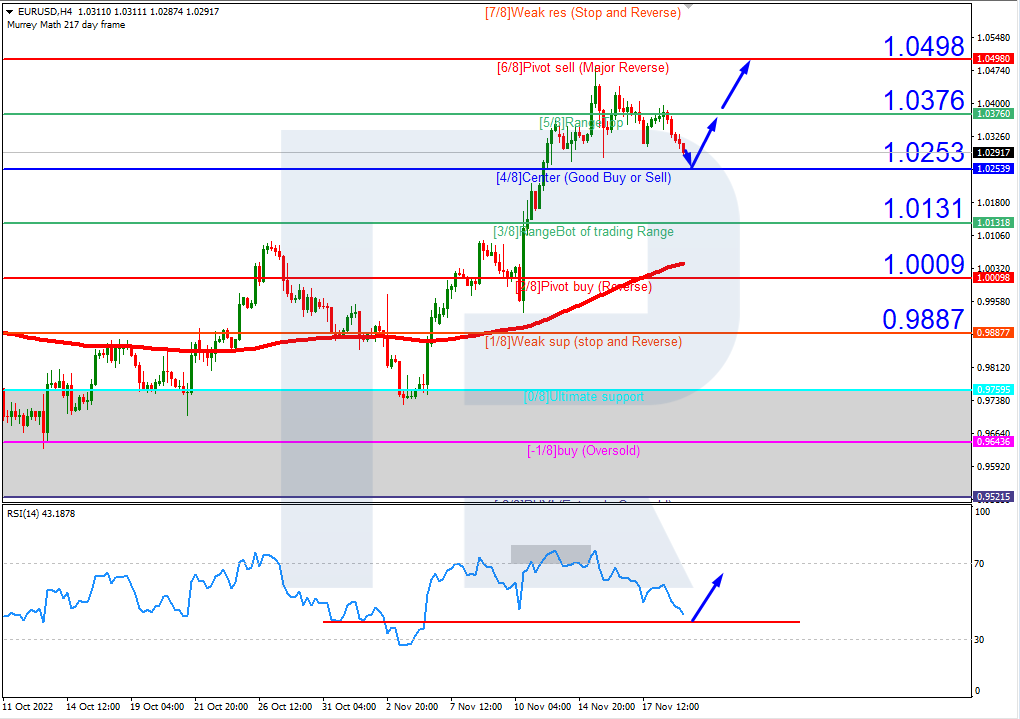
The pair has bounced off 0.9970 downwards. This practically opens a pathway down to 0.9684. After this level is reached, a link of correction to 0.9820 (a test from below) is not excluded. Next, a decline to 0.9565 should follow.

EURUSD
Risk Warning: the result of previous trading operations do not guarantee the same results in the future

GBPUSD, “Great Britain Pound vs US Dollar”

The pair has completed a wave of correction to 1.1555. Today the market is forming a structure of an impulse of decline to 1.1330. If it is broken away, a pathway to 1.1100 will open.

GBPUSD
Risk Warning: the result of previous trading operations do not guarantee the same results in the future

USDJPY, “US Dollar vs Japanese Yen”

The pair completed a wave of decline to 145.70. Today the market has performed an impulse of growth to 147.77. At the moment, it is forming a consolidation range under this level. With an escape upwards, a pathway to 149.00 will open. With an escape downwards, the pair may drop to 143.40.

USDJPY
Risk Warning: the result of previous trading operations do not guarantee the same results in the future

USDCHF, “US Dollar vs Swiss Franc”

The pair continues forming a consolidation range around 0.9937. Today the market is trying to break this level away upwards. Growth to 1.0144 is expected. After this level is reached, a link of correction to 1.0030 is not excluded.

USDCHF
Risk Warning: the result of previous trading operations do not guarantee the same results in the future

AUDUSD, “Australian Dollar vs US Dollar”

The pair has completed a structure of decline to 0.6344. Today the market is forming a consolidation range around this level. The wave of growth is likely to continue to 0.6210.

AUDUSD
Risk Warning: the result of previous trading operations do not guarantee the same results in the future

BRENT

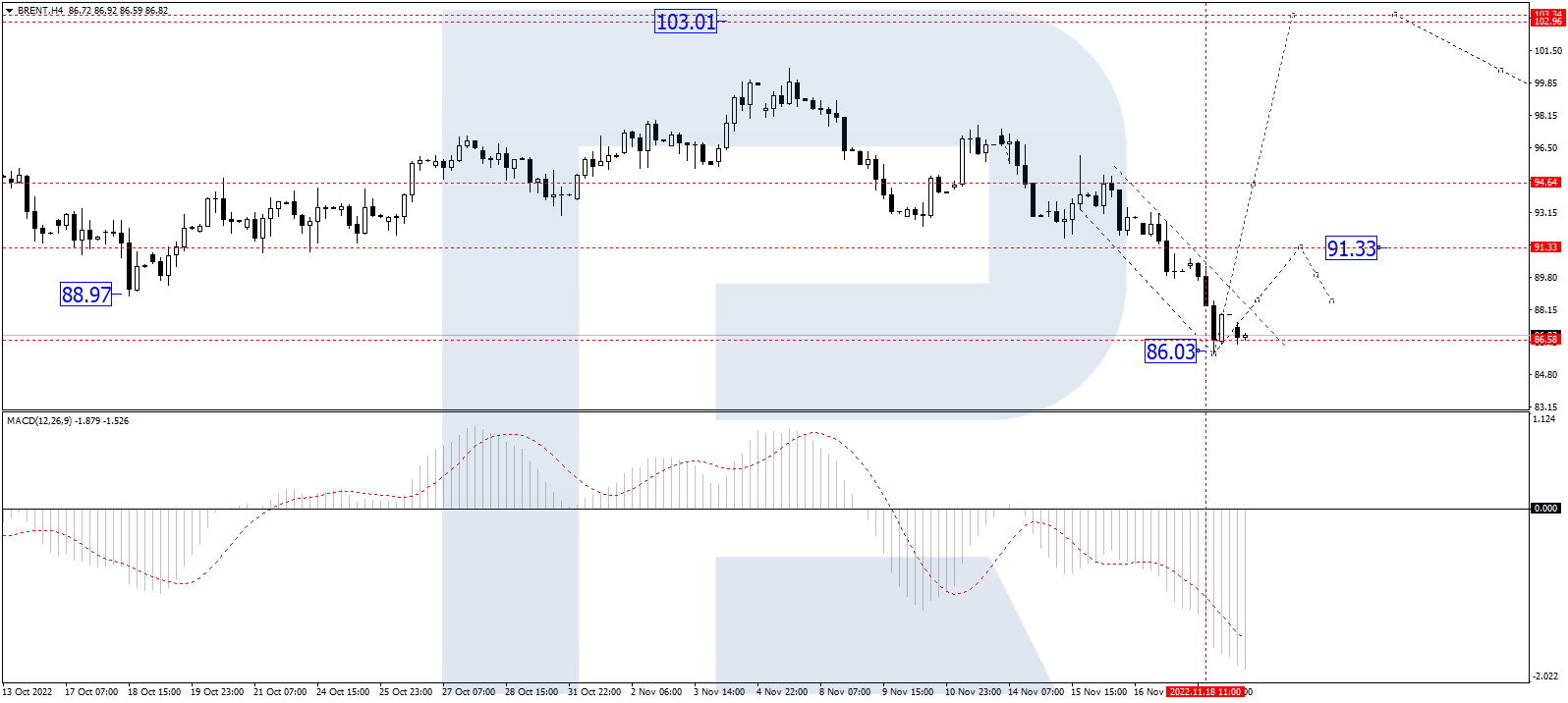
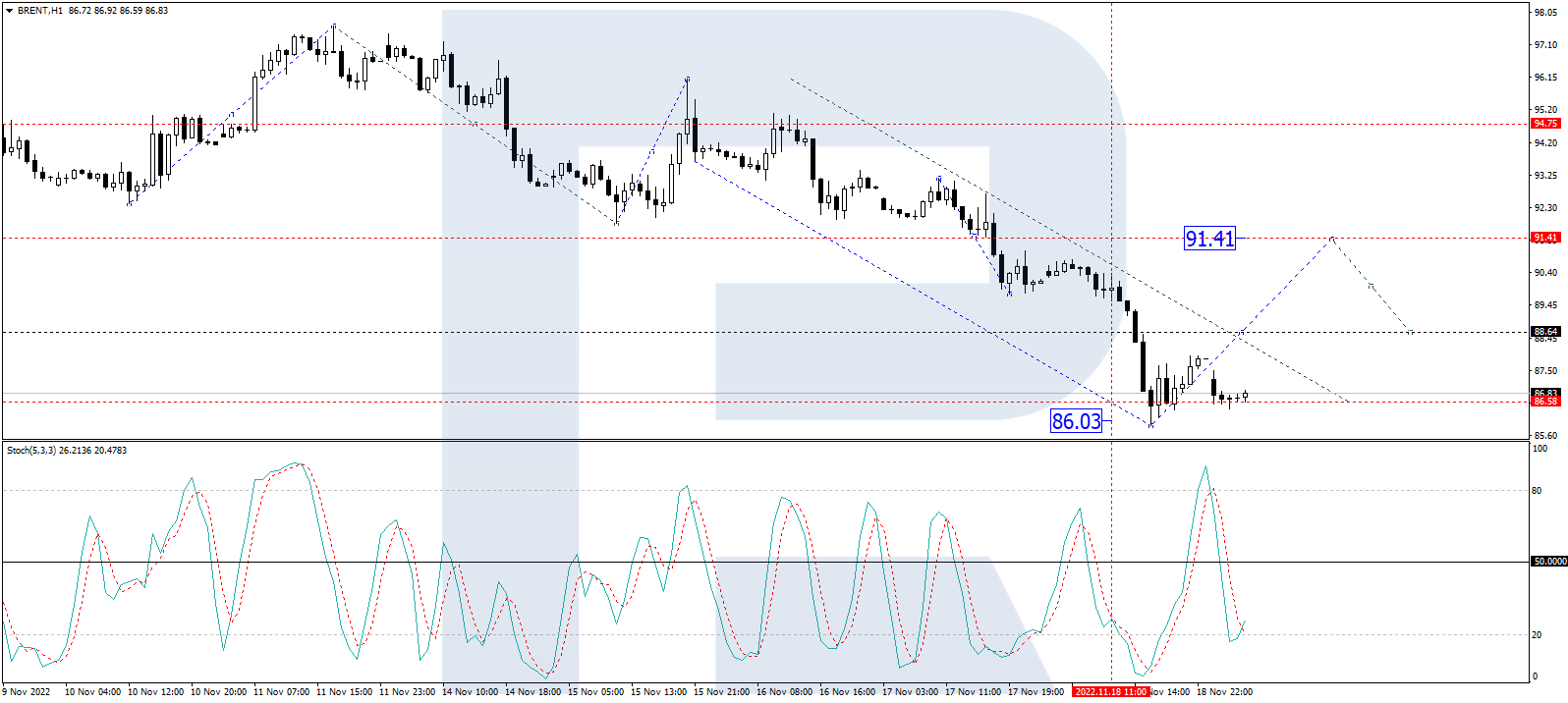
Crude oil continues forming a consolidation range around 97.30 without any expressed trend. Practically, a wave of growth is going to stretch to 99.10. After this level is reached, a link of correction to 96.00 is not excluded, followed by growth to 100.00.

BRENT
Risk Warning: the result of previous trading operations do not guarantee the same results in the future

XAUUSD, “Gold vs US Dollar”

Gold is forming a consolidation range around 1636.60. An escape downwards to 1604.22 is expected. After this level is reached, a wave of growth to 1628.88 should begin, followed by a decline to 1600.00.

GOLD
Risk Warning: the result of previous trading operations do not guarantee the same results in the future

S&P 500

The stock index continues developing a wave of decline to 3676.6. After this level is reached, a wave of growth to 3790.0 should begin.

S&P 500

Article By RoboForex.com

Attention!
Forecasts presented in this section only reflect the author’s private opinion and should not be considered as guidance for trading. RoboForex LP bears no responsibility for trading results based on trading recommendations described in these analytical reviews.

What did the Fed say?

By ForexTime 

In our Daily Market Analysis, we often allude to the US Federal Reserve being the most influential central bank in the world.

And if we ever needed a reminder, just consider the wild price action across asset classes surrounding the Fed’s latest policy clues delivered overnight.

To illustrate, the following chart shows the wild gyrations recently in the DXY (the benchmark index used to measure the US dollar’s performance versus a select few major G10 currencies = EUR, JPY, GBP, CAD, SEK, and CHF):


Markets were clearly whipsawed as they reacted to the latest FOMC policy statement as well as Fed Chair Jerome Powell’s commentary.

What did the Fed do and say on Wednesday (Nov 2)?

As widely expected, the FOMC decided with yet another 75-basis point (bps) hike, marking its fourth-consecutive move of such a jumbo-sized hike.

NOTE: The FOMC is the 12-person group within the Fed that actually votes on monetary policy (i.e. what moves to make in order to help the central bank achieve its economic goals pertaining to inflation and the jobs market).

BUT, the FOMC’s latest policy statement also included this new sentence …

In determining the pace of future increases in the target range, the Committee will take into account the cumulative tightening of monetary policy, the lags with which monetary policy affects economic activity and inflation, and economic and financial developments.”

In simpler words, markets interpreted this to mean that the Fed is entering into the final phase of its rate hikes that have been ongoing since March.

As markets initially took this to be a relatively “dovish” statement:

  • The USD weakened …
  • Gold bounced higher …
  • The S&P 500 (benchmark index measuring overall performance of US stocks) also climbed

Then … Ka-Pow(ell).

Half an hour after the FOMC statement was released, Fed Chair Jerome Powell began addressing the media and the rest of the watching world (including yours truly) during his scheduled press conference.

Powell quickly quashed any notion that the Fed is ready for the so-called “pivot”.

What is the “Fed pivot”?

This is the idea that the Fed is close to being done with its rate hikes and could make a u-turn and start lowering interest rates in 2023.

3 takeaways from Powell

Powell pushed back against this “pivot” narrative by emphasizing these 3 key points:

  1. The Fed still has “a ways to go” and still has “some ground to cover” before the rate hikes are over.
  2. “It is very premature to be thinking about pausing” (although Powell did leave the door open for smaller-than-75bps hikes for the December meeting and beyond).
  3. The risk of not raising interest rates high enough to combat inflation is far greater than doing too many rate hikes.

    With the latter, should the Fed send the US economy into a deep recession, the Fed has proven its ability to help restore the economy as the US central bank did during the pandemic.

Markets then duly ramped up their expected peak for US interest rates to 5.17% by May 2023, higher than the prior forecasts at the start of this week for a 4.8% peak by March.

As a result, spot gold and the S&P 500 swiftly unwound its knee-jerk gains and stumbled substantially lower.


Going into 2023, what does all this mean for:

  • EURUSD: The US dollar is set to remain at these elevated levels going into next year. On the other side of the world’s most-popular FX pair, the euro currency is beset by the economic woes for the Eurozone.

    In other words, the USD should have an easier path climbing higher then falling lower, and should at least be maintained at current levels. That should make it harder for other major currencies to embark on a significant recovery versus the greenback anytime soon.

    According to models, from current levels:

  • EURUSD has a 68% chance of touching 0.95 by Q1 2023
  • EURUSD has a mere 10.6% chance of touching 1.10 by Q1 2023
  • Gold: The precious metal is expected to remain suppressed.

    ​​After all, spot gold’s 11.5% year-to-date drop (at the time of writing) has been primarily due to its year-long nemesis of rising US interest rates.

    According to models, from current levels:

  • XAUUSD has a 48% chance of touching $1550 before 31 December 2022.
  • XAUUSD has a relatively lower chance of 25.5% of touching $1750 by year-end.

To be clear, the Fed’s ongoing rate hikes are having a major impact across other major asset classes as well.

US stocks are unlikely to stage a sustained recovery until markets know for certain when the Fed is done (or close to being done) with its rate hikes. Even Chair Powell himself confessed that he himself doesn’t know where or when US rates will reach its peak.

Key things to look out for in deciphering the path forward for US interest rates:

  • November 4 (tomorrow): October nonfarm payrolls (NFP a.k.a jobs report)
  • November 10: October consumer price index (CPI a.k.a. inflation)
  • December 2: November NFP
  • December 13: November CPI
  • December 14: next FOMC meeting

Recall that the Fed’s two main goals pertain to inflation and the US jobs market.

Hence, the Fed wants to see US inflation come down, perhaps by way of a softer (or weaker) hiring in the world’s largest economy.

If the US economic data does reveal signs that the Fed rate hikes are indeed having the intended effect (slower hiring, slowing inflation) that could herald much rejoicing in battered asset classes (think stocks, gold, and even cryptos).

Until then, the guessing game continues for investors, traders, and even Fed officials, as to where the peak for US interest rates lies, with potentially a lot more volatility in the interim.


Forex-Time-LogoArticle by ForexTime

ForexTime Ltd (FXTM) is an award winning international online forex broker regulated by CySEC 185/12 www.forextime.com