Gold: Mind the gap…

By ForexTime

  • Gold gaps higher on geopolitical tension
  • Market caution may keep metal buoyed
  • Watch out for US CPI report on Thursday
  • Failure to close gap may see prices test 21-EMA
  • Keep eye on $1885 level

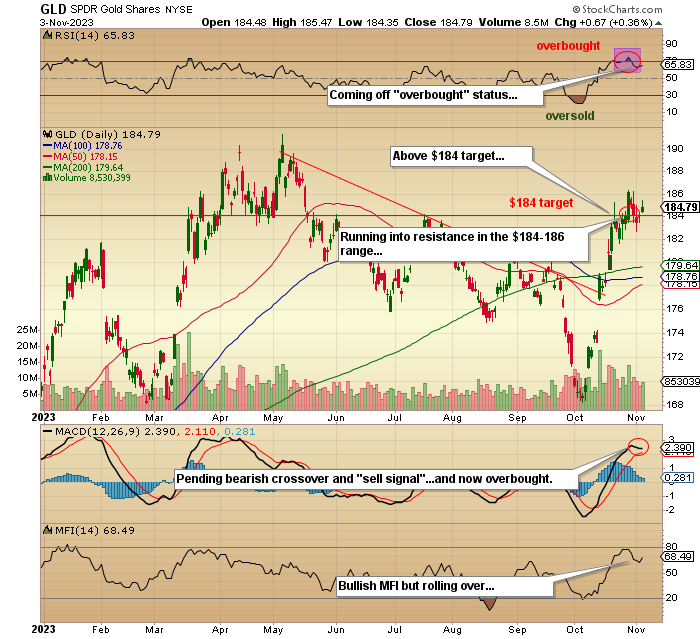
Friday’s post-NFP price action saw gold bounce off levels not seen since March 2023 at $1810, to post its first bullish candlestick since September 19th.

Escalating tensions in the Middle East over the weekend triggered risk aversion, sending investors rushing toward safe-haven assets with gold prices gapping over $20 at market open.

The failure to close the gap following yesterday, October 9th’s price action could present an opportunity for both bulls and bears.

At the time of writing, XAUUSD D1 is below its open for the day at $1861.15 and looks to be in a decline to close the gap at $1831.50.

Geopolitical tensions may continue supporting gold prices and this has been evident over the past 48 hours since the escalations in the Middle East began. However, the US CPI report on Thursday 12th could heavily influence gold’s near-term outlook than the ongoing crisis would.

A higher CPI is likely to bolster Fed hike expectations and the USD, weakening gold as a result. A weaker CPI may cool Fed hike bets and weaken the dollar, providing room for gold prices to push higher.

  • A failure to close the gap today may see the shiny metal rally into its 21-day EMA at $1873.00 with $1885 as the next near-term resistance.

  • Applying the Fibonacci retracement tool on the daily timeframe, from September 20th’s high at $1947.37 to October 6th’s low at $1810.40 we see the 38.2 retracement level at $1862.82 acting as the current resistance zone.

Bulls and bears alike could use markets close above or below this level as a pointer to the next direction for XAUUSD.


Forex-Time-LogoArticle by ForexTime

ForexTime Ltd (FXTM) is an award winning international online forex broker regulated by CySEC 185/12 www.forextime.com

EUR/USD Faces Downward Pressure Amid Rising Geopolitical Tensions

By RoboForex Analytical Department

The principal currency pair, EUR/USD, is experiencing a decline as the week commences, predominantly driven by heightened risk aversion in the market. As of Monday morning, the currency pair’s quotations are closely aligned with the 1.0552 mark.

A major contributor to the current sentiment is the escalating conflict between Arabian and Israeli forces. This geopolitical uncertainty has prompted investors to adopt a cautious stance, aiming to sidestep potential complications arising from the conflict.

Economic statistics unveiled in the US on Friday presented a mixed picture. The nation’s unemployment rate steadfastly remained at 3.8%. Contrarily, non-farm payrolls demonstrated a robust uptick, registering an increase of 336,000, substantially surpassing the anticipated 171,000. The average hourly earnings metric retained its prior growth trajectory, with a month-on-month rise of 0.2%.

The employment sector’s performance seemingly provides the US Federal Reserve with sufficient justification to proceed with interest rate hikes. However, consumer spending appears to be decelerating. Contrary to projections of an 11.7 billion USD increase, the US consumer lending volume dwindled by 15.6 billion USD.

EUR/USD technical analysis

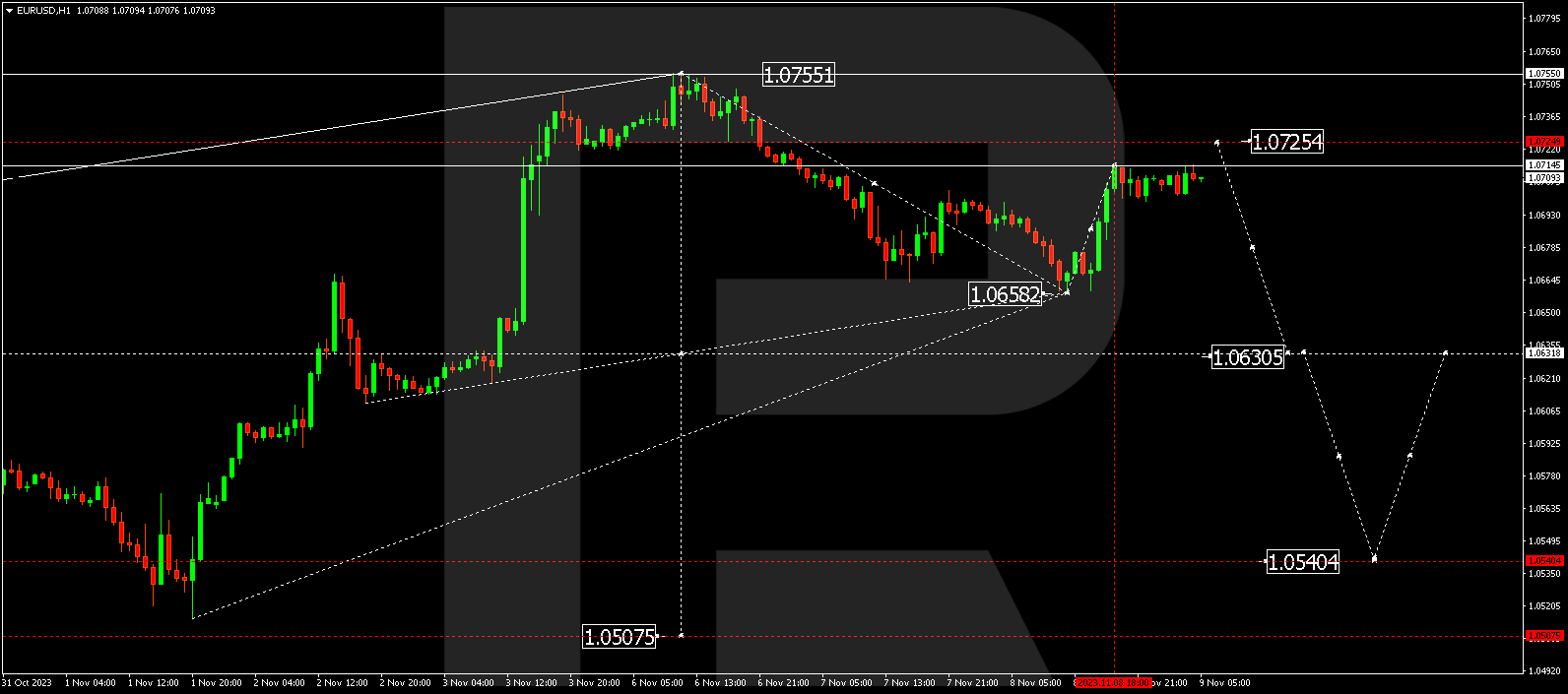
On the H4 timeframe of the EUR/USD currency pair, the market achieved the local target of the bearish wave at the 1.0450 juncture. As of the present moment, a corrective wave culminating at 1.0599 has been realized. The currency pair is now poised for a dip to the 1.0520 level, with indications suggesting the formation of a consolidation range around this point. A breach of this range to the upside could potentially propel the currency pair to the 1.0700 mark. Once this level is attained, a subsequent bearish wave targeting 1.0140 may ensue. The Moving Average Convergence Divergence (MACD) offers technical corroboration for this outlook, with its signal line entrenched below the zero mark, exhibiting a sharp upward trajectory, and poised for fresh peaks.

On the H1 timeframe for EUR/USD, an ascent towards 1.0599 has been charted. The market is currently undergoing a correctional phase targeting the 1.0520 mark. Upon completion of this correction, the potential for a bullish wave reaching 1.0700 emerges. This scenario gains validation from the Stochastic oscillator, which currently trades below the zero level but anticipates a climb to the 50-mark. A successful breach of this level could potentially drive the oscillator to the 80-mark.

Conclusion

Amid heightened geopolitical tensions, the EUR/USD pair exhibits bearish tendencies, albeit with potential recovery. While economic statistics from the US paint a varied picture, technical indicators suggest potential upside movements post corrections. Investors and traders should remain vigilant, weighing both the geopolitical landscape and economic indicators when formulating their strategies.

Disclaimer

Any forecasts contained herein are based on the author’s particular opinion. This analysis may not be treated as trading advice. RoboForex bears no responsibility for trading results based on trading recommendations and reviews contained herein.

Europe Races to Ramp up Lithium Supply for Electric Cars

Source: Streetwise Reports  (10/6/23)

As demand for electric cars grows, Europe tries to boost lithium production and reduce reliance on China. But is it too late to catch up? Read to see what three public companies are doing to bridge the gap.

As electric vehicles rapidly gain popularity across Europe, the region is racing to ramp up lithium production, a key component in EV batteries.

For years, Europe has relied heavily on imported refined lithium, mainly from China. But this dependency could now pose an existential threat to European automakers.

China’s Dominance in Lithium

China gained its dominance in lithium by heavily investing in mining and refining capacity decades ago. For example, Chinese battery and EV manufacturer BYD got into lithium mining as far back as 1995.

Whereas in the 1980s, Europe and other developed regions moved away from mining critical minerals like lithium due to high costs and perceived environmental impacts. This effectively handed control of the global lithium supply chain to China.

Now, Chinese firms account for 90% of LFP cell manufacturing worldwide.

This gives China immense economic leverage and battery cost advantages.

Can Europe Catch Up?

With at least a 10-year head start in EV battery technology and production capacity, Chinese manufacturers have already begun exporting electric cars to Europe at very competitive prices.

Last year, China surpassed Turkey as the top exporter of vehicles of all engine types into the European Union. Some industry analysts have concerns that European car manufacturers may struggle to match China’s quick expansion in reasonably priced electric cars.

However, supporters argue Europe can still gain ground in the transition to EVs by incentivizing consumers, securing access to raw materials, and adjusting trade policies.

For example, the EU plans to relax state aid rules and raise extraction targets for critical minerals under their new Critical Raw Materials Act. The legislation aims to help European companies compete with subsidies in the U.S. Inflation Reduction Act.

The EU is also launching an anti-subsidy investigation into Chinese auto imports over unfair competition concerns.

Ultimately, boosting EV adoption in Europe will require making electric cars more affordable through purchase incentives, tax benefits, and charging infrastructure buildout.

On the supply side, Europe will need to accelerate lithium production significantly. However, constructing an entire battery supply chain on home soil will be hugely expensive and time-consuming.

Europe’s Rise In Home-Grown Lithium

To reduce reliance on imported lithium and build a domestic supply, European companies have started constructing the first large-scale lithium refineries on the continent.

For example, in Germany, AMG Lithium of AMG Critical Materials NV (AMVMF:OTCMKTS;AMG:AMS) is nearing completion on a massive lithium hydroxide plant in Bitterfeld-Wolfen. The facility is set to begin operating later this year, with the aim to produce 100,000 tonnes of battery-grade lithium hydroxide annually. This amount would be enough for over 2.5 million electric vehicles.

AMG Lithium already has purchase orders lined up through 2026.

Beyond Germany, several other projects are underway across Europe to extract lithium from domestic resources and build processing plants. For instance, in Portugal, Britain’s Savannah Resources Plc (SAV:LON) is developing a lithium mine to produce spodumene concentrate, a key lithium-containing mineral.

The company notes, “The project is now well established as Western Europe’s most significant spodumene lithium project.”

Another company working to boost the West’s lithium supply is Global Battery Metals Ltd. (GBML:TSX; REZZF:OTCMKTS). At its Leinster Lithium project in Ireland, Global Battery Metals is currently drilling after grab samples of up to 3.75% Li2O. IberAmerican Lithium Corp. (IBER:NEO)

Its claims cover over 525 sq km south of Dublin and are situated next to ILC and Ganfeng’s Blackstairs project. The combined projects could turn into a major lithium district supporting Europe.

Lastly, Spanish company IberAmerican Lithium Corp. (IBER:NEO) is one of the players trying to develop new lithium projects domestically. IberAmerican Lithium has identified significant lithium mineralization at its Alberta II concession in the Galicia region of Spain, with over 25 drill intercepts above 1% lithium oxide.

In September 2023, IberAmerican Lithium revealed it had acquired full ownership of its lithium projects located in the Galicia region of Spain. By acquiring the remaining stake in these concessions, IberAmerican Lithium has complete authority over operations and stands to reap all financial benefits from future production. This complete control provides IberAmerican Lithium with the flexibility to advance the deposits toward lithium production independently.

Streetwise Ownership Overview*

IberAmerican Lithium Corp. (IBER:NEO)

Retail: 39%
Insiders & Management: 36%
Institutional: 25%
39%
36%
25%
*Share Structure as of 9/12/2023


IberAmerican aims to delineate an initial resource of 10 million tonnes grading 1-1.1% lithium oxide through planned exploration drilling in late 2023 and 2024. Success by IberAmerican Lithium could help provide the domestic lithium supplies that European automakers desperately need. Ramping up production at deposits like IberAmerican’s Alberta project will be key for Europe achieving greater self-sufficiency in EV battery metals and reducing reliance on imports from China.

As for the company itself, the company had a starting market of CA$27,375,122, with 109,500,488 shares outstanding, 9,450,000 options, and 18,225,244 warrants expiring September 1, 2026.

About 36% of the company is held by insiders, including CEO Becher, Director and Chairman Eugene McBurney, and Director Miguel del Campa.

About 25% of the company is in institutions, including Delbrook Resource Opportunities Master Fund LP (Grandy Cayman Islands), Jayvee & Co., CI Resource Opportunities Class, and Delbrook Resources Opportunities Fund (Vancouver).

The rest is retail.

The company is currently trading, at the time of writing, at a market cap of ~CA$22 million, with about 110 million shares outstanding.

Conclusion

While China may have a head start, companies like IberAmerican Lithium show Europe still has a fighting chance at establishing its own EV battery supply chain. With major lithium deposits and processing plants now under development, Europe is making strides towards greater self-sufficiency. IberAmerican Lithium’s Alberta II project could be a game-changer, providing a major new source of domestic lithium in Spain’s Galicia region.

If IberAmerican can successfully ramp up production, it would mark a huge step forward in Europe’s pursuit of lithium independence. Other firms are also racing to unlock European lithium resources.

Though it may take a while to get new mines operational, the rapid progress demonstrates Europe’s commitment to securing its EV future. With continued investment and policy support, companies like IberAmerican Lithium can help Europe catch up and become a world leader in the booming electric mobility revolution.


Important Disclosures:

  1. IberAmerican Lithium Corp. has a consulting relationship with an affiliate of Streetwise Reports, and pays a monthly consulting fee between US$8,000 and US$20,000.
  2. As of the date of this article, officers and/or employees of Streetwise Reports LLC (including members of their household) own securities of IberAmerican Lithium Corp. and Global Battery Metals Ltd.
  3. The article does not constitute investment advice. Each reader is encouraged to consult with his or her individual financial professional. By opening this page, each reader accepts and agrees to Streetwise Reports’ terms of use and full legal disclaimer. This article is not a solicitation for investment. Streetwise Reports does not render general or specific investment advice and the information on Streetwise Reports should not be considered a recommendation to buy or sell any security. Streetwise Reports does not endorse or recommend the business, products, services or securities of any company mentioned on Streetwise Reports.

For additional disclosures, please click here.

Israel-Hamas war spooks markets as investors urged to avoid knee-jerk

By George Prior

Oil prices surged by 5% following Hamas’ unexpected attack on Israel over the weekend, but investors need to avoid knee-jerk reactions, warns the CEO of one of the world’s largest independent financial advisory, asset management and fintech organizations.

The warning from Nigel Green of deVere Group comes as global investors digest the news that the Palestinian Islamist group Hamas on Saturday launched the largest military assault on Israel in decades, killing hundreds of Israelis and triggering a wave of retaliatory Israeli air strikes on the Gaza Strip.

Heading into the third day, the death toll was 1,100, while the US said it was sending warships to the region.

The deVere CEO says: “The events in this region are now directly impacting financial markets worldwide, which, as ever in times of increased volatility, is immediately prompting some investors into selling off riskier parts of their portfolios, such as stocks and some currencies.

“Oil has a disproportionate impact on global financial markets due to its pivotal role in the world economy, its interconnectedness with various sectors, and its potential to influence broader economic conditions and investor sentiment.

“I would urge investors to avoid knee-jerk reactions to the oil price surge and geopolitical tensions that are creating the market turbulence.

“Investors are likely to profit by sitting still and not selling and then having to buy back at higher prices.”

He continues: “Indeed, savvy investors, including the likes of Warren Buffett, will likely use the volatility and lower entry points to top-up their portfolios for the long-term with high quality stocks that have robust fundamentals.”

Ensure your investment portfolio is diversified across various asset classes, such as stocks, bonds, and commodities. “Diversification is your best weapon to mitigate the risks associated with geopolitical events,” observes Nigel Green.

He also recommends that you keep a close eye on energy-related stocks and companies, as they are likely to be directly impacted by the fluctuating oil prices. Companies involved in oil production and exploration may benefit from higher prices, while industries that rely heavily on energy consumption may face challenges.

“While short-term market fluctuations can be unsettling, it’s essential to maintain a long-term perspective when making investment decisions. Historically, markets have rebounded from geopolitical crises, and a well-constructed portfolio can weather such storms,” he concludes.

About:

deVere Group is one of the world’s largest independent advisors of specialist global financial solutions to international, local mass affluent, and high-net-worth clients.  It has a network of offices across the world, over 80,000 clients and $12bn under advisement.

Geopolitical risk returns with renewed vigor

By JustMarkets

As of Friday’s stock market close, the Dow Jones Index (US30) increased by 0.87% (week-to-date -0.14%), while the S&P 500 Index (US500) added 1.18% (week-to-date +0.56%). The NASDAQ Technology Index (US100) closed positive 1.60% (week-to-date +1.61%) on Friday. Stock indexes rose sharply on Friday despite a strong Nonfarm Payrolls report. Stocks retreated initially Friday morning, with the Dow Jones Industrials Index falling to a 4-month low after bond yields jumped on the back of a 336,000 increase in US employment numbers. Additionally, August employment data was revised upward by 40,000 to 227,000 from the originally announced 187,000. The unemployment rate for September was unchanged at 3.8%. But a short time later, stocks returned to the upside amid a falling dollar. The US consumer credit for August unexpectedly contracted by $15.62 billion, the largest decline in 3 years and weaker than expectations for a $11.70 billion increase.

Canada’s labor market beat expectations for the third consecutive month, and wage growth accelerated. The country added 63,800 jobs in September, and the unemployment rate was 5.5%, where it has been since July. The data beat expectations for a modest gain of 20,000 jobs and an unemployment rate of 5.6%. Workers’ compensation growth rose to 5.3%, also beating expectations of 5.1% and up from 5.2% a month earlier. This is the third consecutive month of accelerating growth. The data suggests that even in the face of rising interest rates, the economy continues to expand jobs and wage growth strongly. Overnight swap traders raised bets on further policy tightening by the Bank of Canada, with another 25 basis point rate hike expected by March 2024.

Equity markets in Europe were mostly up on Friday. The German DAX (DE40) rose by 1.06% (-1.36% for the week), the French CAC 40 (FR40) gained 0.88% (-1.45% for the week), the Spanish IBEX 35 (ES35) added 0.78% (-2.31% for the week), the British FTSE 100 (UK100) closed up by 0.58% (-1.49% for the week).

ECB Executive Board spokesperson Schnabel said on Friday, “I still see upside risks to inflation, and if they materialize, further interest rate hikes may be necessary.” European Central Bank President Christine Lagarde said in an interview published Sunday that she was confident the ECB would meet its inflation target of 2% and was relatively confident about Europe’s gas reserves situation.

On Saturday, militants from the Palestinian group Hamas launched an unprecedented attack on Israel. The number of Israelis killed since the attack began totaled more than 700, and another 750 were reported missing. In response, Israel imposed a state of war for the first time since 1973. The country’s leadership enacted a special clause, “40 alef,” which means a formal declaration of war and that the army is given full freedom of action. The Hamas attack was openly welcomed by Iran and the Lebanese group Hezbollah, an ally of Iran. Western countries, led by the US, condemned the attack and declared their support for Israel. The aftermath of the outbreak of the war between Israel and Hamas was reflected in the stock markets of Middle Eastern countries on Sunday. Israel’s TA-35 stock index, calculated in Tel Aviv, ended the session down about 7%, mainly due to a drop in bank stocks. It was the sharpest market decline in three years. Analysts say the impact on the Gulf and Middle East markets depends on whether the conflict spreads. If so, it will increase uncertainty in the markets, inflation, and economic growth will take a back seat to geopolitical risk. Analysts say rising geopolitical risk could lead to the buying of assets such as gold and the US dollar and potentially boost demand for US Treasuries. The dollar, considered a safe haven in tough times, rose against the euro and pound sterling in early trading. Gold also showed the gap up.

Over the past week, Brent Crude fell about 11%, and WTI crude fell more than 8% amid concerns that continued high interest rates will lead to a slowdown in global economic growth, which in turn will affect fuel demand. On Sunday, Bahrain, Iraq, Kuwait, Oman, Oman, Saudi Arabia, and the United Arab Emirates reaffirmed their commitment to “collective and individual voluntary adjustments” in oil production levels. In other words, OPEC+ countries may resort to further supply cuts if oil prices continue to decline.

Asian markets were mostly down last week. Japan’s Nikkei 225 (JP225) fell by 3.45% for the week, China’s FTSE China A50 (CHA50) did not trade all week due to holidays, Hong Kong’s Hang Seng (HK50) ended the week up by 0.01%, and Australia’s ASX 200 (AU200) ended the week negative by 1.34%.

US-listed Chinese stocks rose on Friday after it was reported that spending on Chinese internet platforms during the Golden Week holiday exceeded pre-pandemic levels. As a result, shares of PDD Holdings (PDD) rose more than 7% and led the Nasdaq 100 stock price gains. JD.com (JD) and Baidu (BIDU) also rose more than 3%. In addition, shares of Alibaba Group Holding (BABA) rose more than 2%.

S&P 500 (F)(US500) 4,308.50 +50.31 (+1.18%)

Dow Jones (US30) 33,407.58 +288.01 (+0.87%)

DAX (DE40)  15,229.77 +159.55 (+1.06%)

FTSE 100 (UK100) 7,494.58 +43.04 (+0.58%)

USD Index  106.10 −0.23 (−0.22%)

News feed for 2023.10.09:
  • – German Industrial Production (m/m) at 09:00 (GMT+3).

By JustMarkets


This article reflects a personal opinion and should not be interpreted as an investment advice, and/or offer, and/or a persistent request for carrying out financial transactions, and/or a guarantee, and/or a forecast of future events.

Trade Of The Week: Oil surges on Middle East tensions

By ForexTime

  • Oil surges over 5% on geopolitical uncertainty
  • Middle East tensions fuel concerns over crude supplies
  • Keep eye on OPEC/EIA monthly report
  • Brent gaps higher but still under pressure on D1 chart
  • Keep eye on $89.70 dynamic resistance level

Oil prices were in sharp focus on Monday after surging on geopolitical tensions following the weekend attack on Israel.

Brent initially soared more than 5%, recovering a chunk of last week’s hefty losses on fears that Hama’s surprise attack on Israel may deepen tensions across the Middle East. Given how this negative development is likely to fuel concerns over crude supplies, oil bulls could jump back into the game.

Looking at the technical picture, Brent remains under pressure on the weekly charts. However, a strong weekly close back above the $89.70 level may provide an opportunity for bulls to re-challenge $95.00.

This promises to be a wild week for oil and here are 3 reasons why:

     1. Middle East tensions

The developments over the weekend have sparked geopolitical uncertainty and escalated tensions in the Middle East, home to almost a third of global supply.

While neither Israel nor Palestine are major oil producers, there are concerns that the conflict could spread through the region – resulting in major supply disruptions. The risk of the conflict evolving into a proxy war, involving the US and Iran has also raised the risks of more supply shocks amid tightening of sanctions. It is worth keeping in mind that Iran is not only a supporter of Hamas but one of the world’s largest oil producers.

  • Should tension continue to escalate between Israel and Palestine, this could support oil prices as geopolitical uncertainty fuels fears around oil supply.
  • Any signs of easing geopolitical tensions may offer an opportunity for oil prices to close the gap created over the weekend.

     2. OPEC/EIA oil monthly report

Investors will be keeping a close eye on the monthly oil market reports from both the International Energy Agency (EIA) and the Organization of Petroleum Exporting Countries (OPEC) on Thursday.

It is worth noting that oil prices had tumbled aggressively this month, shedding over 8% before the attack on Israel. The global commodity was pressured by concerns over higher interest rates and slowing growth dampening the demand outlook. The monthly reports will be scrutinized for fresh insight into the outlook for crude oil as the final quarter of 2023 gets underway.

  • While the oil market reports have the potential to influence prices, crude is likely to remain heavily influenced by geopolitical risk this week.

     3.Technical forces

After concluding last week on an aggressively bearish note, Brent has gapped up with prices smashing into the 50-day SMA. Despite the sharp move to the upside, bears remain in a position of power below the 89.70 dynamic resistance level.

  • Sustained weakness below $89.70 could encourage a decline back towards $85.20 and the 100-day SMA at $83.00.
  • Should prices experience a strong breakout above $89.70, this may open the doors towards $92.80 and $96.10, respectively.


Forex-Time-LogoArticle by ForexTime

ForexTime Ltd (FXTM) is an award winning international online forex broker regulated by CySEC 185/12 www.forextime.com

Currency Speculators continue to pare Euro Bullish Bets to 49-Week Low

By InvestMacro

Here are the latest charts and statistics for the Commitment of Traders (COT) data published by the Commodities Futures Trading Commission (CFTC).

The latest COT data is updated through Tuesday October 3rd and shows a quick view of how large market participants (for-profit speculators and commercial traders) were positioned in the futures markets. All currency positions are in direct relation to the US dollar where, for example, a bet for the euro is a bet that the euro will rise versus the dollar while a bet against the euro will be a bet that the euro will decline versus the dollar.

Weekly Speculator Changes led by New Zealand Dollar & Australian Dollar

The COT currency market speculator bets were lower this week as five out of the eleven currency markets we cover had higher positioning while the other six markets had lower speculator contracts.

Leading the gains for the currency markets was the New Zealand Dollar (7,531 contracts) with the Australian Dollar (4,828 contracts), Mexican Peso (3,881 contracts), US Dollar Index (2,057 contracts) and the Brazilian Real (1,079 contracts) also showing positive weeks.

The currencies seeing declines in speculator bets on the week were the British Pound (-22,349 contracts) with the EuroFX (-19,456 contracts), the Swiss Franc (-7,627 contracts), the Canadian Dollar (-7,455 contracts), the Japanese Yen (-4,476 contracts) and Bitcoin (-738 contracts) also registering lower bets on the week.

Spotlight: Large Currency Traders continue to pare Euro Bullish Bets to 49-Week Low

Highlighting the COT currency’s data this week is the continued weakness in the Euro Currency speculator positioning. Large speculative Euro positions fell sharply this week by over -19,000 contracts and dropped for a seventh consecutive week. Euro weekly positions have now declined in ten out of the past eleven weeks with a total decline of -99,889 contracts over these past eleven weeks.

This rapid cooling of the speculator bets has now taken the net position from a total of +178,832 contracts on July 18th to a total of +78,943 contracts through Tuesday. This brings the current level to the lowest standing in the past 49-weeks, dating back to October 25th of 2022.

Helping put a dampener on the Euro speculative position has been the likely end of the European Central Bank’s (ECB) rate hiking activity. The ECB recently raised their interest rate in September for a 10th straight meeting to 4 percent. However, the market expectation is that the rate hiking campaign is over for now which combined with subdued growth in the Eurozone puts a limited expectation for strength in the currency.

The Euro currency (EURUSD) spot price (vesus the US Dollar), however, did manage to eke out a small gain this week after falling for eleven straight weeks and touching the lowest level of the year under 1.0500. The EURUSD rebounded off the psychological level of 1.0500 this week and saw gains on Wednesday, Thursday and Friday to close the week right near the 1.0625 exchange rate.


Data Snapshot of Forex Market Traders | Columns Legend
Oct-03-2023OIOI-IndexSpec-NetSpec-IndexCom-NetCOM-IndexSmalls-NetSmalls-Index
USD Index42,3404118,81556-20,166441,35122
EUR702,4333978,94354-104,7525025,80920
GBP241,04562-6,6805117,54556-10,86537
JPY282,68298-113,9882117,86993-3,88146
CHF58,673100-16,7421127,36889-10,62623
CAD189,44353-40,1511738,581821,57026
AUD207,78264-81,9871497,26690-15,27915
NZD52,29162-7,6503510,71769-3,06713
MXN212,5394264,51479-67,248212,73429
RUB20,93047,54331-7,15069-39324
BRL41,0332716,63757-17,643431,00644
Bitcoin14,447651,05682-1,475041922


Strength Scores led by Bitcoin & Mexican Peso

COT Strength Scores (a normalized measure of Speculator positions over a 3-Year range, from 0 to 100 where above 80 is Extreme-Bullish and below 20 is Extreme-Bearish) showed that the Bitcoin (82 percent) and the Mexican Peso (79 percent) currently lead the currency markets this week. The Brazilian Real (57 percent), the US Dollar Index (56 percent) and the EuroFX (54 percent) come in as the next highest in the weekly strength scores.

On the downside, the Japanese Yen (2 percent), the Swiss Franc (11 percent), the Australian Dollar (14 percent) and the Canadian Dollar (17 percent) come in at the lowest strength levels and are in Extreme-Bearish territory (below 20 percent).

Strength Statistics:
US Dollar Index (56.3 percent) vs US Dollar Index previous week (52.9 percent)
EuroFX (53.9 percent) vs EuroFX previous week (62.2 percent)
British Pound Sterling (51.1 percent) vs British Pound Sterling previous week (66.6 percent)
Japanese Yen (2.3 percent) vs Japanese Yen previous week (5.0 percent)
Swiss Franc (10.7 percent) vs Swiss Franc previous week (31.6 percent)
Canadian Dollar (17.1 percent) vs Canadian Dollar previous week (24.1 percent)
Australian Dollar (13.7 percent) vs Australian Dollar previous week (9.3 percent)
New Zealand Dollar (35.5 percent) vs New Zealand Dollar previous week (15.9 percent)
Mexican Peso (78.5 percent) vs Mexican Peso previous week (76.1 percent)
Brazilian Real (57.0 percent) vs Brazilian Real previous week (55.6 percent)
Bitcoin (82.3 percent) vs Bitcoin previous week (93.4 percent)


US Dollar Index & Brazilian Real top the 6-Week Strength Trends

COT Strength Score Trends (or move index, calculates the 6-week changes in strength scores) showed that the US Dollar Index (24 percent) leads the past six weeks trends for the currencies and is the only currency with a positive 6-week trend.

The British Pound (-46 percent) leads the downside trend scores with the Swiss Franc (-35 percent), EuroFX (-34 percent) and the Canadian Dollar (-26 percent) following.

Strength Trend Statistics:
US Dollar Index (23.7 percent) vs US Dollar Index previous week (19.6 percent)
EuroFX (-34.0 percent) vs EuroFX previous week (-26.2 percent)
British Pound Sterling (-45.7 percent) vs British Pound Sterling previous week (-24.5 percent)
Japanese Yen (-11.1 percent) vs Japanese Yen previous week (-17.0 percent)
Swiss Franc (-35.3 percent) vs Swiss Franc previous week (-14.0 percent)
Canadian Dollar (-26.2 percent) vs Canadian Dollar previous week (-19.8 percent)
Australian Dollar (-16.7 percent) vs Australian Dollar previous week (-30.6 percent)
New Zealand Dollar (-3.0 percent) vs New Zealand Dollar previous week (-33.2 percent)
Mexican Peso (-5.6 percent) vs Mexican Peso previous week (-13.1 percent)
Brazilian Real (-2.0 percent) vs Brazilian Real previous week (-10.1 percent)
Bitcoin (-6.9 percent) vs Bitcoin previous week (37.7 percent)


Individual COT Forex Markets:

US Dollar Index Futures:

US Dollar Index Forex Futures COT ChartThe US Dollar Index large speculator standing this week recorded a net position of 18,815 contracts in the data reported through Tuesday. This was a weekly advance of 2,057 contracts from the previous week which had a total of 16,758 net contracts.

This week’s current strength score (the trader positioning range over the past three years, measured from 0 to 100) shows the speculators are currently Bullish with a score of 56.3 percent. The commercials are Bearish with a score of 43.7 percent and the small traders (not shown in chart) are Bearish with a score of 22.0 percent.

Price Trend-Following Model: Strong Uptrend

Our weekly trend-following model classifies the current market price position as: Strong Uptrend. The current action for the model is considered to be: Hold – Maintain Long Position.

US DOLLAR INDEX StatisticsSPECULATORSCOMMERCIALSSMALL TRADERS
– Percent of Open Interest Longs:66.319.610.7
– Percent of Open Interest Shorts:21.867.37.5
– Net Position:18,815-20,1661,351
– Gross Longs:28,0578,3134,530
– Gross Shorts:9,24228,4793,179
– Long to Short Ratio:3.0 to 10.3 to 11.4 to 1
NET POSITION TREND:
– Strength Index Score (3 Year Range Pct):56.343.722.0
– Strength Index Reading (3 Year Range):BullishBearishBearish
NET POSITION MOVEMENT INDEX:
– 6-Week Change in Strength Index:23.7-23.14.0


Euro Currency Futures:

Euro Currency Futures COT ChartThe Euro Currency large speculator standing this week recorded a net position of 78,943 contracts in the data reported through Tuesday. This was a weekly fall of -19,456 contracts from the previous week which had a total of 98,399 net contracts.

This week’s current strength score (the trader positioning range over the past three years, measured from 0 to 100) shows the speculators are currently Bullish with a score of 53.9 percent. The commercials are Bearish with a score of 50.0 percent and the small traders (not shown in chart) are Bearish with a score of 20.2 percent.

Price Trend-Following Model: Strong Downtrend

Our weekly trend-following model classifies the current market price position as: Strong Downtrend. The current action for the model is considered to be: Hold – Maintain Short Position.

EURO Currency StatisticsSPECULATORSCOMMERCIALSSMALL TRADERS
– Percent of Open Interest Longs:30.155.311.7
– Percent of Open Interest Shorts:18.970.28.1
– Net Position:78,943-104,75225,809
– Gross Longs:211,783388,47382,432
– Gross Shorts:132,840493,22556,623
– Long to Short Ratio:1.6 to 10.8 to 11.5 to 1
NET POSITION TREND:
– Strength Index Score (3 Year Range Pct):53.950.020.2
– Strength Index Reading (3 Year Range):BullishBearishBearish
NET POSITION MOVEMENT INDEX:
– 6-Week Change in Strength Index:-34.035.8-25.2


British Pound Sterling Futures:

British Pound Sterling Futures COT ChartThe British Pound Sterling large speculator standing this week recorded a net position of -6,680 contracts in the data reported through Tuesday. This was a weekly reduction of -22,349 contracts from the previous week which had a total of 15,669 net contracts.

This week’s current strength score (the trader positioning range over the past three years, measured from 0 to 100) shows the speculators are currently Bullish with a score of 51.1 percent. The commercials are Bullish with a score of 55.5 percent and the small traders (not shown in chart) are Bearish with a score of 36.7 percent.

Price Trend-Following Model: Strong Downtrend

Our weekly trend-following model classifies the current market price position as: Strong Downtrend. The current action for the model is considered to be: Hold – Maintain Short Position.

BRITISH POUND StatisticsSPECULATORSCOMMERCIALSSMALL TRADERS
– Percent of Open Interest Longs:30.756.310.2
– Percent of Open Interest Shorts:33.449.014.7
– Net Position:-6,68017,545-10,865
– Gross Longs:73,911135,63724,678
– Gross Shorts:80,591118,09235,543
– Long to Short Ratio:0.9 to 11.1 to 10.7 to 1
NET POSITION TREND:
– Strength Index Score (3 Year Range Pct):51.155.536.7
– Strength Index Reading (3 Year Range):BullishBullishBearish
NET POSITION MOVEMENT INDEX:
– 6-Week Change in Strength Index:-45.746.1-32.3


Japanese Yen Futures:

Japanese Yen Forex Futures COT ChartThe Japanese Yen large speculator standing this week recorded a net position of -113,988 contracts in the data reported through Tuesday. This was a weekly fall of -4,476 contracts from the previous week which had a total of -109,512 net contracts.

This week’s current strength score (the trader positioning range over the past three years, measured from 0 to 100) shows the speculators are currently Bearish-Extreme with a score of 2.3 percent. The commercials are Bullish-Extreme with a score of 93.2 percent and the small traders (not shown in chart) are Bearish with a score of 45.6 percent.

Price Trend-Following Model: Strong Downtrend

Our weekly trend-following model classifies the current market price position as: Strong Downtrend. The current action for the model is considered to be: Hold – Maintain Short Position.

JAPANESE YEN StatisticsSPECULATORSCOMMERCIALSSMALL TRADERS
– Percent of Open Interest Longs:16.868.713.4
– Percent of Open Interest Shorts:57.127.014.7
– Net Position:-113,988117,869-3,881
– Gross Longs:47,544194,19337,744
– Gross Shorts:161,53276,32441,625
– Long to Short Ratio:0.3 to 12.5 to 10.9 to 1
NET POSITION TREND:
– Strength Index Score (3 Year Range Pct):2.393.245.6
– Strength Index Reading (3 Year Range):Bearish-ExtremeBullish-ExtremeBearish
NET POSITION MOVEMENT INDEX:
– 6-Week Change in Strength Index:-11.16.511.0


Swiss Franc Futures:

Swiss Franc Forex Futures COT ChartThe Swiss Franc large speculator standing this week recorded a net position of -16,742 contracts in the data reported through Tuesday. This was a weekly fall of -7,627 contracts from the previous week which had a total of -9,115 net contracts.

This week’s current strength score (the trader positioning range over the past three years, measured from 0 to 100) shows the speculators are currently Bearish-Extreme with a score of 10.7 percent. The commercials are Bullish-Extreme with a score of 89.1 percent and the small traders (not shown in chart) are Bearish with a score of 22.9 percent.

Price Trend-Following Model: Strong Downtrend

Our weekly trend-following model classifies the current market price position as: Strong Downtrend. The current action for the model is considered to be: New Sell – Short Position.

SWISS FRANC StatisticsSPECULATORSCOMMERCIALSSMALL TRADERS
– Percent of Open Interest Longs:19.065.615.4
– Percent of Open Interest Shorts:47.518.933.5
– Net Position:-16,74227,368-10,626
– Gross Longs:11,14338,4689,030
– Gross Shorts:27,88511,10019,656
– Long to Short Ratio:0.4 to 13.5 to 10.5 to 1
NET POSITION TREND:
– Strength Index Score (3 Year Range Pct):10.789.122.9
– Strength Index Reading (3 Year Range):Bearish-ExtremeBullish-ExtremeBearish
NET POSITION MOVEMENT INDEX:
– 6-Week Change in Strength Index:-35.339.4-32.0


Canadian Dollar Futures:

Canadian Dollar Forex Futures COT ChartThe Canadian Dollar large speculator standing this week recorded a net position of -40,151 contracts in the data reported through Tuesday. This was a weekly decline of -7,455 contracts from the previous week which had a total of -32,696 net contracts.

This week’s current strength score (the trader positioning range over the past three years, measured from 0 to 100) shows the speculators are currently Bearish-Extreme with a score of 17.1 percent. The commercials are Bullish-Extreme with a score of 82.4 percent and the small traders (not shown in chart) are Bearish with a score of 26.3 percent.

Price Trend-Following Model: Strong Downtrend

Our weekly trend-following model classifies the current market price position as: Strong Downtrend. The current action for the model is considered to be: Hold – Maintain Short Position.

CANADIAN DOLLAR StatisticsSPECULATORSCOMMERCIALSSMALL TRADERS
– Percent of Open Interest Longs:11.467.319.5
– Percent of Open Interest Shorts:32.646.918.6
– Net Position:-40,15138,5811,570
– Gross Longs:21,674127,50236,889
– Gross Shorts:61,82588,92135,319
– Long to Short Ratio:0.4 to 11.4 to 11.0 to 1
NET POSITION TREND:
– Strength Index Score (3 Year Range Pct):17.182.426.3
– Strength Index Reading (3 Year Range):Bearish-ExtremeBullish-ExtremeBearish
NET POSITION MOVEMENT INDEX:
– 6-Week Change in Strength Index:-26.215.312.5


Australian Dollar Futures:

Australian Dollar Forex Futures COT ChartThe Australian Dollar large speculator standing this week recorded a net position of -81,987 contracts in the data reported through Tuesday. This was a weekly lift of 4,828 contracts from the previous week which had a total of -86,815 net contracts.

This week’s current strength score (the trader positioning range over the past three years, measured from 0 to 100) shows the speculators are currently Bearish-Extreme with a score of 13.7 percent. The commercials are Bullish-Extreme with a score of 90.4 percent and the small traders (not shown in chart) are Bearish-Extreme with a score of 15.2 percent.

Price Trend-Following Model: Strong Downtrend

Our weekly trend-following model classifies the current market price position as: Strong Downtrend. The current action for the model is considered to be: Hold – Maintain Short Position.

AUSTRALIAN DOLLAR StatisticsSPECULATORSCOMMERCIALSSMALL TRADERS
– Percent of Open Interest Longs:19.068.610.0
– Percent of Open Interest Shorts:58.521.817.3
– Net Position:-81,98797,266-15,279
– Gross Longs:39,465142,57220,690
– Gross Shorts:121,45245,30635,969
– Long to Short Ratio:0.3 to 13.1 to 10.6 to 1
NET POSITION TREND:
– Strength Index Score (3 Year Range Pct):13.790.415.2
– Strength Index Reading (3 Year Range):Bearish-ExtremeBullish-ExtremeBearish-Extreme
NET POSITION MOVEMENT INDEX:
– 6-Week Change in Strength Index:-16.715.4-5.3


New Zealand Dollar Futures:

New Zealand Dollar Forex Futures COT ChartThe New Zealand Dollar large speculator standing this week recorded a net position of -7,650 contracts in the data reported through Tuesday. This was a weekly increase of 7,531 contracts from the previous week which had a total of -15,181 net contracts.

This week’s current strength score (the trader positioning range over the past three years, measured from 0 to 100) shows the speculators are currently Bearish with a score of 35.5 percent. The commercials are Bullish with a score of 69.1 percent and the small traders (not shown in chart) are Bearish-Extreme with a score of 13.5 percent.

Price Trend-Following Model: Downtrend

Our weekly trend-following model classifies the current market price position as: Downtrend. The current action for the model is considered to be: Hold – Maintain Short Position.

NEW ZEALAND DOLLAR StatisticsSPECULATORSCOMMERCIALSSMALL TRADERS
– Percent of Open Interest Longs:30.464.44.8
– Percent of Open Interest Shorts:45.043.910.6
– Net Position:-7,65010,717-3,067
– Gross Longs:15,89533,6512,497
– Gross Shorts:23,54522,9345,564
– Long to Short Ratio:0.7 to 11.5 to 10.4 to 1
NET POSITION TREND:
– Strength Index Score (3 Year Range Pct):35.569.113.5
– Strength Index Reading (3 Year Range):BearishBullishBearish-Extreme
NET POSITION MOVEMENT INDEX:
– 6-Week Change in Strength Index:-3.03.4-4.3


Mexican Peso Futures:

Mexican Peso Futures COT ChartThe Mexican Peso large speculator standing this week recorded a net position of 64,514 contracts in the data reported through Tuesday. This was a weekly advance of 3,881 contracts from the previous week which had a total of 60,633 net contracts.

This week’s current strength score (the trader positioning range over the past three years, measured from 0 to 100) shows the speculators are currently Bullish with a score of 78.5 percent. The commercials are Bearish with a score of 21.3 percent and the small traders (not shown in chart) are Bearish with a score of 28.6 percent.

Price Trend-Following Model: Strong Downtrend

Our weekly trend-following model classifies the current market price position as: Strong Downtrend. The current action for the model is considered to be: New Sell – Short Position.

MEXICAN PESO StatisticsSPECULATORSCOMMERCIALSSMALL TRADERS
– Percent of Open Interest Longs:42.753.72.8
– Percent of Open Interest Shorts:12.485.41.5
– Net Position:64,514-67,2482,734
– Gross Longs:90,848114,1855,986
– Gross Shorts:26,334181,4333,252
– Long to Short Ratio:3.4 to 10.6 to 11.8 to 1
NET POSITION TREND:
– Strength Index Score (3 Year Range Pct):78.521.328.6
– Strength Index Reading (3 Year Range):BullishBearishBearish
NET POSITION MOVEMENT INDEX:
– 6-Week Change in Strength Index:-5.65.4-0.2


Brazilian Real Futures:

Brazil Real Futures COT ChartThe Brazilian Real large speculator standing this week recorded a net position of 16,637 contracts in the data reported through Tuesday. This was a weekly boost of 1,079 contracts from the previous week which had a total of 15,558 net contracts.

This week’s current strength score (the trader positioning range over the past three years, measured from 0 to 100) shows the speculators are currently Bullish with a score of 57.0 percent. The commercials are Bearish with a score of 43.0 percent and the small traders (not shown in chart) are Bearish with a score of 43.8 percent.

Price Trend-Following Model: Strong Downtrend

Our weekly trend-following model classifies the current market price position as: Strong Downtrend. The current action for the model is considered to be: Hold – Maintain Short Position.

BRAZIL REAL StatisticsSPECULATORSCOMMERCIALSSMALL TRADERS
– Percent of Open Interest Longs:61.031.97.0
– Percent of Open Interest Shorts:20.574.94.6
– Net Position:16,637-17,6431,006
– Gross Longs:25,02913,0862,888
– Gross Shorts:8,39230,7291,882
– Long to Short Ratio:3.0 to 10.4 to 11.5 to 1
NET POSITION TREND:
– Strength Index Score (3 Year Range Pct):57.043.043.8
– Strength Index Reading (3 Year Range):BullishBearishBearish
NET POSITION MOVEMENT INDEX:
– 6-Week Change in Strength Index:-2.06.0-31.0


Bitcoin Futures:

Bitcoin Crypto Futures COT ChartThe Bitcoin large speculator standing this week recorded a net position of 1,056 contracts in the data reported through Tuesday. This was a weekly reduction of -738 contracts from the previous week which had a total of 1,794 net contracts.

This week’s current strength score (the trader positioning range over the past three years, measured from 0 to 100) shows the speculators are currently Bullish-Extreme with a score of 82.3 percent. The commercials are Bearish with a score of 29.1 percent and the small traders (not shown in chart) are Bearish with a score of 22.5 percent.

Price Trend-Following Model: Weak Downtrend

Our weekly trend-following model classifies the current market price position as: Weak Downtrend. The current action for the model is considered to be: Hold – Maintain Short Position.

BITCOIN StatisticsSPECULATORSCOMMERCIALSSMALL TRADERS
– Percent of Open Interest Longs:82.81.18.3
– Percent of Open Interest Shorts:75.511.35.4
– Net Position:1,056-1,475419
– Gross Longs:11,9641611,195
– Gross Shorts:10,9081,636776
– Long to Short Ratio:1.1 to 10.1 to 11.5 to 1
NET POSITION TREND:
– Strength Index Score (3 Year Range Pct):82.329.122.5
– Strength Index Reading (3 Year Range):Bullish-ExtremeBearishBearish
NET POSITION MOVEMENT INDEX:
– 6-Week Change in Strength Index:-6.912.40.1


Article By InvestMacroReceive our weekly COT Newsletter

*COT Report: The COT data, released weekly to the public each Friday, is updated through the most recent Tuesday (data is 3 days old) and shows a quick view of how large speculators or non-commercials (for-profit traders) were positioned in the futures markets.

The CFTC categorizes trader positions according to commercial hedgers (traders who use futures contracts for hedging as part of the business), non-commercials (large traders who speculate to realize trading profits) and nonreportable traders (usually small traders/speculators) as well as their open interest (contracts open in the market at time of reporting). See CFTC criteria here.

COT Metals Charts: Speculator Bets led by Copper & Steel

By InvestMacro

Here are the latest charts and statistics for the Commitment of Traders (COT) data published by the Commodities Futures Trading Commission (CFTC).

The latest COT data is updated through Tuesday October 3rd and shows a quick view of how large traders (for-profit speculators and commercial entities) were positioned in the futures markets.

Weekly Speculator Changes led by Copper & Steel

The COT metals markets speculator bets were mixed this week as three out of the six metals markets we cover had higher positioning while the other three markets had lower speculator contracts.

Leading the gains for the metals was Copper (6,867 contracts) with Steel (732 contracts) and Palladium (584 contracts) also showing positive weeks.

The markets with declines in speculator bets for the week were Gold (-24,589 contracts) with Silver (-4,761 contracts) and Platinum (-4,710 contracts) also having lower bets on the week.


Data Snapshot of Commodity Market Traders | Columns Legend
Oct-03-2023OIOI-IndexSpec-NetSpec-IndexCom-NetCOM-IndexSmalls-NetSmalls-Index
Gold431,226491,22617-111,9828120,75632
Silver125,8471415,34440-30,3585715,01450
Copper208,79549-21,9121219,952881,96031
Palladium18,42186-9,71899,86193-14333
Platinum81,529852,61622-7,514784,89834


Strength Scores led by Steel & Silver

COT Strength Scores (a normalized measure of Speculator positions over a 3-Year range, from 0 to 100 where above 80 is Extreme-Bullish and below 20 is Extreme-Bearish) showed that Steel (65 percent) and Silver (40 percent) lead the metals markets this week.

On the downside, Palladium (9 percent), Copper (12 percent) and Gold (17 percent) come in at the lowest strength levels currently and are all in Extreme-Bearish territory (below 20 percent).

Strength Statistics:
Gold (17.2 percent) vs Gold previous week (28.0 percent)
Silver (40.1 percent) vs Silver previous week (46.9 percent)
Copper (11.9 percent) vs Copper previous week (6.0 percent)
Platinum (21.6 percent) vs Platinum previous week (32.5 percent)
Palladium (8.8 percent) vs Palladium previous week (4.9 percent)
Steel (65.4 percent) vs Palladium previous week (62.9 percent)


Silver & Platinum top the 6-Week Strength Trends

COT Strength Score Trends (or move index, calculates the 6-week changes in strength scores) showed that Silver (4 percent) and Platinum (4 percent) lead the past six weeks trends for metals.

Steel (-6 percent), Gold (-5 percent) and Palladium (-2 percent) lead the downside trend scores currently.

Move Statistics:
Gold (-4.7 percent) vs Gold previous week (-2.3 percent)
Silver (3.5 percent) vs Silver previous week (17.5 percent)
Copper (2.3 percent) vs Copper previous week (-2.7 percent)
Platinum (4.1 percent) vs Platinum previous week (16.9 percent)
Palladium (-2.4 percent) vs Palladium previous week (-6.0 percent)
Steel (-5.8 percent) vs Steel previous week (-8.9 percent)


Individual Markets:

Gold Comex Futures:

Gold Futures COT ChartThe Gold Comex Futures large speculator standing this week came in at a net position of 91,226 contracts in the data reported through Tuesday. This was a weekly reduction of -24,589 contracts from the previous week which had a total of 115,815 net contracts.

This week’s current strength score (the trader positioning range over the past three years, measured from 0 to 100) shows the speculators are currently Bearish-Extreme with a score of 17.2 percent. The commercials are Bullish-Extreme with a score of 80.7 percent and the small traders (not shown in chart) are Bearish with a score of 32.0 percent.

Price Trend-Following Model: Strong Downtrend

Our weekly trend-following model classifies the current market price position as: Strong Downtrend. The current action for the model is considered to be: Hold – Maintain Short Position.

Gold Futures StatisticsSPECULATORSCOMMERCIALSSMALL TRADERS
– Percent of Open Interest Longs:53.025.710.5
– Percent of Open Interest Shorts:31.851.65.7
– Net Position:91,226-111,98220,756
– Gross Longs:228,406110,66645,256
– Gross Shorts:137,180222,64824,500
– Long to Short Ratio:1.7 to 10.5 to 11.8 to 1
NET POSITION TREND:
– Strength Index Score (3 Year Range Pct):17.280.732.0
– Strength Index Reading (3 Year Range):Bearish-ExtremeBullish-ExtremeBearish
NET POSITION MOVEMENT INDEX:
– 6-Week Change in Strength Index:-4.73.54.2


Silver Comex Futures:

Silver Futures COT ChartThe Silver Comex Futures large speculator standing this week came in at a net position of 15,344 contracts in the data reported through Tuesday. This was a weekly decrease of -4,761 contracts from the previous week which had a total of 20,105 net contracts.

This week’s current strength score (the trader positioning range over the past three years, measured from 0 to 100) shows the speculators are currently Bearish with a score of 40.1 percent. The commercials are Bullish with a score of 57.1 percent and the small traders (not shown in chart) are Bearish with a score of 49.9 percent.

Price Trend-Following Model: Strong Downtrend

Our weekly trend-following model classifies the current market price position as: Strong Downtrend. The current action for the model is considered to be: Hold – Maintain Short Position.

Silver Futures StatisticsSPECULATORSCOMMERCIALSSMALL TRADERS
– Percent of Open Interest Longs:40.830.022.6
– Percent of Open Interest Shorts:28.754.110.6
– Net Position:15,344-30,35815,014
– Gross Longs:51,40537,76928,386
– Gross Shorts:36,06168,12713,372
– Long to Short Ratio:1.4 to 10.6 to 12.1 to 1
NET POSITION TREND:
– Strength Index Score (3 Year Range Pct):40.157.149.9
– Strength Index Reading (3 Year Range):BearishBullishBearish
NET POSITION MOVEMENT INDEX:
– 6-Week Change in Strength Index:3.5-7.922.9


Copper Grade #1 Futures:

Copper Futures COT ChartThe Copper Grade #1 Futures large speculator standing this week came in at a net position of -21,912 contracts in the data reported through Tuesday. This was a weekly lift of 6,867 contracts from the previous week which had a total of -28,779 net contracts.

This week’s current strength score (the trader positioning range over the past three years, measured from 0 to 100) shows the speculators are currently Bearish-Extreme with a score of 11.9 percent. The commercials are Bullish-Extreme with a score of 88.2 percent and the small traders (not shown in chart) are Bearish with a score of 30.8 percent.

Price Trend-Following Model: Strong Downtrend

Our weekly trend-following model classifies the current market price position as: Strong Downtrend. The current action for the model is considered to be: Hold – Maintain Short Position.

Copper Futures StatisticsSPECULATORSCOMMERCIALSSMALL TRADERS
– Percent of Open Interest Longs:33.241.17.6
– Percent of Open Interest Shorts:43.731.56.7
– Net Position:-21,91219,9521,960
– Gross Longs:69,27385,78515,950
– Gross Shorts:91,18565,83313,990
– Long to Short Ratio:0.8 to 11.3 to 11.1 to 1
NET POSITION TREND:
– Strength Index Score (3 Year Range Pct):11.988.230.8
– Strength Index Reading (3 Year Range):Bearish-ExtremeBullish-ExtremeBearish
NET POSITION MOVEMENT INDEX:
– 6-Week Change in Strength Index:2.3-2.1-1.0


Platinum Futures:

Platinum Futures COT ChartThe Platinum Futures large speculator standing this week came in at a net position of 2,616 contracts in the data reported through Tuesday. This was a weekly lowering of -4,710 contracts from the previous week which had a total of 7,326 net contracts.

This week’s current strength score (the trader positioning range over the past three years, measured from 0 to 100) shows the speculators are currently Bearish with a score of 21.6 percent. The commercials are Bullish with a score of 77.9 percent and the small traders (not shown in chart) are Bearish with a score of 33.7 percent.

Price Trend-Following Model: Strong Downtrend

Our weekly trend-following model classifies the current market price position as: Strong Downtrend. The current action for the model is considered to be: Hold – Maintain Short Position.

Platinum Futures StatisticsSPECULATORSCOMMERCIALSSMALL TRADERS
– Percent of Open Interest Longs:55.827.510.8
– Percent of Open Interest Shorts:52.636.84.8
– Net Position:2,616-7,5144,898
– Gross Longs:45,49622,4528,772
– Gross Shorts:42,88029,9663,874
– Long to Short Ratio:1.1 to 10.7 to 12.3 to 1
NET POSITION TREND:
– Strength Index Score (3 Year Range Pct):21.677.933.7
– Strength Index Reading (3 Year Range):BearishBullishBearish
NET POSITION MOVEMENT INDEX:
– 6-Week Change in Strength Index:4.1-2.5-7.7


Palladium Futures:

Palladium Futures COT ChartThe Palladium Futures large speculator standing this week came in at a net position of -9,718 contracts in the data reported through Tuesday. This was a weekly increase of 584 contracts from the previous week which had a total of -10,302 net contracts.

This week’s current strength score (the trader positioning range over the past three years, measured from 0 to 100) shows the speculators are currently Bearish-Extreme with a score of 8.8 percent. The commercials are Bullish-Extreme with a score of 93.3 percent and the small traders (not shown in chart) are Bearish with a score of 33.1 percent.

Price Trend-Following Model: Strong Downtrend

Our weekly trend-following model classifies the current market price position as: Strong Downtrend. The current action for the model is considered to be: Hold – Maintain Short Position.

Palladium Futures StatisticsSPECULATORSCOMMERCIALSSMALL TRADERS
– Percent of Open Interest Longs:21.859.98.6
– Percent of Open Interest Shorts:74.56.49.4
– Net Position:-9,7189,861-143
– Gross Longs:4,00711,0381,588
– Gross Shorts:13,7251,1771,731
– Long to Short Ratio:0.3 to 19.4 to 10.9 to 1
NET POSITION TREND:
– Strength Index Score (3 Year Range Pct):8.893.333.1
– Strength Index Reading (3 Year Range):Bearish-ExtremeBullish-ExtremeBearish
NET POSITION MOVEMENT INDEX:
– 6-Week Change in Strength Index:-2.41.111.5


Steel Futures Futures:

Steel Futures COT ChartThe Steel Futures large speculator standing this week came in at a net position of -5,487 contracts in the data reported through Tuesday. This was a weekly increase of 732 contracts from the previous week which had a total of -6,219 net contracts.

This week’s current strength score (the trader positioning range over the past three years, measured from 0 to 100) shows the speculators are currently Bullish with a score of 65.4 percent. The commercials are Bearish with a score of 35.4 percent and the small traders (not shown in chart) are Bearish-Extreme with a score of 19.4 percent.

Price Trend-Following Model: Downtrend

Our weekly trend-following model classifies the current market price position as: Downtrend. The current action for the model is considered to be: Hold – Maintain Short Position.

Steel Futures StatisticsSPECULATORSCOMMERCIALSSMALL TRADERS
– Percent of Open Interest Longs:8.285.91.1
– Percent of Open Interest Shorts:37.056.41.7
– Net Position:-5,4875,606-119
– Gross Longs:1,56016,354214
– Gross Shorts:7,04710,748333
– Long to Short Ratio:0.2 to 11.5 to 10.6 to 1
NET POSITION TREND:
– Strength Index Score (3 Year Range Pct):65.435.419.4
– Strength Index Reading (3 Year Range):BullishBearishBearish-Extreme
NET POSITION MOVEMENT INDEX:
– 6-Week Change in Strength Index:-5.85.73.2


Article By InvestMacroReceive our weekly COT Newsletter

*COT Report: The COT data, released weekly to the public each Friday, is updated through the most recent Tuesday (data is 3 days old) and shows a quick view of how large speculators or non-commercials (for-profit traders) were positioned in the futures markets.

The CFTC categorizes trader positions according to commercial hedgers (traders who use futures contracts for hedging as part of the business), non-commercials (large traders who speculate to realize trading profits) and nonreportable traders (usually small traders/speculators) as well as their open interest (contracts open in the market at time of reporting). See CFTC criteria here.

COT Bonds Charts: Speculator Bets led lower by 2-Year & 5-Year Notes

By InvestMacro

Here are the latest charts and statistics for the Commitment of Traders (COT) reports data published by the Commodities Futures Trading Commission (CFTC).

The latest COT data is updated through Tuesday October 3rd and shows a quick view of how large traders (for-profit speculators and commercial hedgers) were positioned in the futures markets.

Weekly Speculator Changes led lower by the 2-Year & 5-Year Bonds

The COT bond market speculator bets were lower this week as one out of the eight bond markets we cover had higher positioning while the other seven markets had lower speculator contracts.

Leading the gains for the bond markets was the Ultra Treasury Bonds with an increase by 5,305 contracts also showing positive on the week.

The bond markets with declines in speculator bets for the week were the 2-Year Bonds (-68,001 contracts), the 5-Year Bonds (-67,690 contracts), the Ultra 10-Year Bonds (-46,781 contracts), the Fed Funds (-34,081 contracts), the SOFR 3-Months (-24,840 contracts), the US Treasury Bonds (-6,835 contracts) and the 10-Year Bonds (-1,883 contracts) also seeing lower bets on the week.


Data Snapshot of Bond Market Traders | Columns Legend
Oct-03-2023OIOI-IndexSpec-NetSpec-IndexCom-NetCOM-IndexSmalls-NetSmalls-Index
SOFR-3-Months9,830,94992292,30688-291,83512-47188
FedFunds1,665,59960-229,15917244,66384-15,50461
2-Year3,959,24799-1,278,30101,141,551100136,750100
Long T-Bond1,409,34793-239,6467210,3038629,34370
10-Year4,782,72593-733,88111668,4818865,40088
5-Year5,630,74493-1,093,472121,027,2448566,22888


Strength Scores led by SOFR 3-Months & Ultra Treasury Bonds

COT Strength Scores (a normalized measure of Speculator positions over a 3-Year range, from 0 to 100 where above 80 is Extreme-Bullish and below 20 is Extreme-Bearish) showed that the SOFR 3-Months (88 percent) leads the bond markets this week.

On the downside, the Ultra 10-Year Bonds (0 percent), the 2-Year Bonds (0 percent), the US Treasury Bonds (7 percent), the 10-Year Bonds (11 percent), the 5-Year Bond (12 percent) and the Fed Funds (17 percent) come in at the lowest strength levels currently and all are in Extreme-Bearish territory (below 20 percent).

Strength Statistics:
Fed Funds (16.8 percent) vs Fed Funds previous week (23.1 percent)
2-Year Bond (0.0 percent) vs 2-Year Bond previous week (5.0 percent)
5-Year Bond (12.1 percent) vs 5-Year Bond previous week (17.1 percent)
10-Year Bond (11.3 percent) vs 10-Year Bond previous week (11.5 percent)
Ultra 10-Year Bond (0.0 percent) vs Ultra 10-Year Bond previous week (9.0 percent)
US Treasury Bond (6.6 percent) vs US Treasury Bond previous week (8.8 percent)
Ultra US Treasury Bond (35.7 percent) vs Ultra US Treasury Bond previous week (33.5 percent)
SOFR 3-Months (87.6 percent) vs SOFR 3-Months previous week (89.1 percent)


Ultra Treasury Bonds & SOFR 3-Months top the 6-Week Strength Trends

COT Strength Score Trends (or move index, calculates the 6-week changes in strength scores) showed that the Ultra Treasury Bonds (25 percent) and the SOFR 3-Months (14 percent) lead the past six weeks trends for bonds. The Fed Funds (10 percent) are the next highest positive movers in the latest data.

The US Treasury Bonds (-20 percent) and the Ultra 10-Year Bonds (-18 percent) lead the downside trend scores currently with the 5-Year Bonds (-4 percent) and the 10-Year Bonds (-4 percent) following next with lower trend scores.

Strength Trend Statistics:
Fed Funds (9.6 percent) vs Fed Funds previous week (9.0 percent)
2-Year Bond (-0.5 percent) vs 2-Year Bond previous week (-6.8 percent)
5-Year Bond (-3.7 percent) vs 5-Year Bond previous week (12.2 percent)
10-Year Bond (-3.8 percent) vs 10-Year Bond previous week (1.4 percent)
Ultra 10-Year Bond (-17.8 percent) vs Ultra 10-Year Bond previous week (-11.7 percent)
US Treasury Bond (-19.6 percent) vs US Treasury Bond previous week (-18.2 percent)
Ultra US Treasury Bond (25.5 percent) vs Ultra US Treasury Bond previous week (29.1 percent)
SOFR 3-Months (14.4 percent) vs SOFR 3-Months previous week (18.8 percent)


Secured Overnight Financing Rate (3-Month) Futures:

SOFR 3-Months Bonds Futures COT ChartThe Secured Overnight Financing Rate (3-Month) large speculator standing this week reached a net position of 292,306 contracts in the data reported through Tuesday. This was a weekly decrease of -24,840 contracts from the previous week which had a total of 317,146 net contracts.

This week’s current strength score (the trader positioning range over the past three years, measured from 0 to 100) shows the speculators are currently Bullish-Extreme with a score of 87.6 percent. The commercials are Bearish-Extreme with a score of 12.1 percent and the small traders (not shown in chart) are Bullish-Extreme with a score of 87.6 percent.

Price Trend-Following Model: Weak Uptrend

Our weekly trend-following model classifies the current market price position as: Weak Uptrend. The current action for the model is considered to be: Hold – Maintain Long Position.

SOFR 3-Months StatisticsSPECULATORSCOMMERCIALSSMALL TRADERS
– Percent of Open Interest Longs:21.354.70.4
– Percent of Open Interest Shorts:18.357.70.5
– Net Position:292,306-291,835-471
– Gross Longs:2,090,8515,381,52643,842
– Gross Shorts:1,798,5455,673,36144,313
– Long to Short Ratio:1.2 to 10.9 to 11.0 to 1
NET POSITION TREND:
– Strength Index Score (3 Year Range Pct):87.612.187.6
– Strength Index Reading (3 Year Range):Bullish-ExtremeBearish-ExtremeBullish-Extreme
NET POSITION MOVEMENT INDEX:
– 6-Week Change in Strength Index:14.4-14.61.6


30-Day Federal Funds Futures:

Federal Funds 30-Day Bonds Futures COT ChartThe 30-Day Federal Funds large speculator standing this week reached a net position of -229,159 contracts in the data reported through Tuesday. This was a weekly decline of -34,081 contracts from the previous week which had a total of -195,078 net contracts.

This week’s current strength score (the trader positioning range over the past three years, measured from 0 to 100) shows the speculators are currently Bearish-Extreme with a score of 16.8 percent. The commercials are Bullish-Extreme with a score of 84.4 percent and the small traders (not shown in chart) are Bullish with a score of 60.6 percent.

Price Trend-Following Model: Downtrend

Our weekly trend-following model classifies the current market price position as: Downtrend. The current action for the model is considered to be: Hold – Maintain Short Position.

30-Day Federal Funds StatisticsSPECULATORSCOMMERCIALSSMALL TRADERS
– Percent of Open Interest Longs:7.675.52.0
– Percent of Open Interest Shorts:21.460.82.9
– Net Position:-229,159244,663-15,504
– Gross Longs:127,1971,258,15033,455
– Gross Shorts:356,3561,013,48748,959
– Long to Short Ratio:0.4 to 11.2 to 10.7 to 1
NET POSITION TREND:
– Strength Index Score (3 Year Range Pct):16.884.460.6
– Strength Index Reading (3 Year Range):Bearish-ExtremeBullish-ExtremeBullish
NET POSITION MOVEMENT INDEX:
– 6-Week Change in Strength Index:9.6-8.9-6.2


2-Year Treasury Note Futures:

2-Year Treasury Bonds Futures COT ChartThe 2-Year Treasury Note large speculator standing this week reached a net position of -1,278,301 contracts in the data reported through Tuesday. This was a weekly lowering of -68,001 contracts from the previous week which had a total of -1,210,300 net contracts.

This week’s current strength score (the trader positioning range over the past three years, measured from 0 to 100) shows the speculators are currently Bearish-Extreme with a score of 0.0 percent. The commercials are Bullish-Extreme with a score of 99.9 percent and the small traders (not shown in chart) are Bullish-Extreme with a score of 100.0 percent.

Price Trend-Following Model: Downtrend

Our weekly trend-following model classifies the current market price position as: Downtrend. The current action for the model is considered to be: Hold – Maintain Short Position.

2-Year Treasury Note StatisticsSPECULATORSCOMMERCIALSSMALL TRADERS
– Percent of Open Interest Longs:10.880.67.1
– Percent of Open Interest Shorts:43.151.83.6
– Net Position:-1,278,3011,141,551136,750
– Gross Longs:426,4323,192,262280,084
– Gross Shorts:1,704,7332,050,711143,334
– Long to Short Ratio:0.3 to 11.6 to 12.0 to 1
NET POSITION TREND:
– Strength Index Score (3 Year Range Pct):0.099.9100.0
– Strength Index Reading (3 Year Range):Bearish-ExtremeBullish-ExtremeBullish-Extreme
NET POSITION MOVEMENT INDEX:
– 6-Week Change in Strength Index:-0.5-0.13.5


5-Year Treasury Note Futures:

5-Year Treasury Bonds Futures COT ChartThe 5-Year Treasury Note large speculator standing this week reached a net position of -1,093,472 contracts in the data reported through Tuesday. This was a weekly lowering of -67,690 contracts from the previous week which had a total of -1,025,782 net contracts.

This week’s current strength score (the trader positioning range over the past three years, measured from 0 to 100) shows the speculators are currently Bearish-Extreme with a score of 12.1 percent. The commercials are Bullish-Extreme with a score of 85.3 percent and the small traders (not shown in chart) are Bullish-Extreme with a score of 87.5 percent.

Price Trend-Following Model: Strong Downtrend

Our weekly trend-following model classifies the current market price position as: Strong Downtrend. The current action for the model is considered to be: Hold – Maintain Short Position.

5-Year Treasury Note StatisticsSPECULATORSCOMMERCIALSSMALL TRADERS
– Percent of Open Interest Longs:9.082.77.2
– Percent of Open Interest Shorts:28.464.56.0
– Net Position:-1,093,4721,027,24466,228
– Gross Longs:505,5664,657,206403,076
– Gross Shorts:1,599,0383,629,962336,848
– Long to Short Ratio:0.3 to 11.3 to 11.2 to 1
NET POSITION TREND:
– Strength Index Score (3 Year Range Pct):12.185.387.5
– Strength Index Reading (3 Year Range):Bearish-ExtremeBullish-ExtremeBullish-Extreme
NET POSITION MOVEMENT INDEX:
– 6-Week Change in Strength Index:-3.73.32.2


10-Year Treasury Note Futures:

10-Year Treasury Notes Bonds Futures COT ChartThe 10-Year Treasury Note large speculator standing this week reached a net position of -733,881 contracts in the data reported through Tuesday. This was a weekly decline of -1,883 contracts from the previous week which had a total of -731,998 net contracts.

This week’s current strength score (the trader positioning range over the past three years, measured from 0 to 100) shows the speculators are currently Bearish-Extreme with a score of 11.3 percent. The commercials are Bullish-Extreme with a score of 88.3 percent and the small traders (not shown in chart) are Bullish-Extreme with a score of 87.7 percent.

Price Trend-Following Model: Strong Downtrend

Our weekly trend-following model classifies the current market price position as: Strong Downtrend. The current action for the model is considered to be: Hold – Maintain Short Position.

10-Year Treasury Note StatisticsSPECULATORSCOMMERCIALSSMALL TRADERS
– Percent of Open Interest Longs:10.378.09.2
– Percent of Open Interest Shorts:25.664.07.8
– Net Position:-733,881668,48165,400
– Gross Longs:492,0603,728,771440,265
– Gross Shorts:1,225,9413,060,290374,865
– Long to Short Ratio:0.4 to 11.2 to 11.2 to 1
NET POSITION TREND:
– Strength Index Score (3 Year Range Pct):11.388.387.7
– Strength Index Reading (3 Year Range):Bearish-ExtremeBullish-ExtremeBullish-Extreme
NET POSITION MOVEMENT INDEX:
– 6-Week Change in Strength Index:-3.81.26.2


Ultra 10-Year Notes Futures:

Ultra 10-Year Treasury Notes Bonds Futures COT ChartThe Ultra 10-Year Notes large speculator standing this week reached a net position of -244,907 contracts in the data reported through Tuesday. This was a weekly lowering of -46,781 contracts from the previous week which had a total of -198,126 net contracts.

This week’s current strength score (the trader positioning range over the past three years, measured from 0 to 100) shows the speculators are currently Bearish-Extreme with a score of 0.0 percent. The commercials are Bullish-Extreme with a score of 95.4 percent and the small traders (not shown in chart) are Bullish-Extreme with a score of 89.7 percent.

Price Trend-Following Model: Weak Uptrend

Our weekly trend-following model classifies the current market price position as: Weak Uptrend. The current action for the model is considered to be: Hold – Maintain Long Position.

Ultra 10-Year Notes StatisticsSPECULATORSCOMMERCIALSSMALL TRADERS
– Percent of Open Interest Longs:8.777.311.6
– Percent of Open Interest Shorts:21.762.213.8
– Net Position:-244,907285,820-40,913
– Gross Longs:165,4411,462,117220,058
– Gross Shorts:410,3481,176,297260,971
– Long to Short Ratio:0.4 to 11.2 to 10.8 to 1
NET POSITION TREND:
– Strength Index Score (3 Year Range Pct):0.095.489.7
– Strength Index Reading (3 Year Range):Bearish-ExtremeBullish-ExtremeBullish-Extreme
NET POSITION MOVEMENT INDEX:
– 6-Week Change in Strength Index:-17.87.035.5


US Treasury Bonds Futures:

US Year Treasury Notes Long Bonds Futures COT ChartThe US Treasury Bonds large speculator standing this week reached a net position of -239,646 contracts in the data reported through Tuesday. This was a weekly fall of -6,835 contracts from the previous week which had a total of -232,811 net contracts.

This week’s current strength score (the trader positioning range over the past three years, measured from 0 to 100) shows the speculators are currently Bearish-Extreme with a score of 6.6 percent. The commercials are Bullish-Extreme with a score of 85.6 percent and the small traders (not shown in chart) are Bullish with a score of 69.8 percent.

Price Trend-Following Model: Strong Downtrend

Our weekly trend-following model classifies the current market price position as: Strong Downtrend. The current action for the model is considered to be: Hold – Maintain Short Position.

US Treasury Bonds StatisticsSPECULATORSCOMMERCIALSSMALL TRADERS
– Percent of Open Interest Longs:5.780.213.2
– Percent of Open Interest Shorts:22.765.311.1
– Net Position:-239,646210,30329,343
– Gross Longs:79,9981,130,603186,481
– Gross Shorts:319,644920,300157,138
– Long to Short Ratio:0.3 to 11.2 to 11.2 to 1
NET POSITION TREND:
– Strength Index Score (3 Year Range Pct):6.685.669.8
– Strength Index Reading (3 Year Range):Bearish-ExtremeBullish-ExtremeBullish
NET POSITION MOVEMENT INDEX:
– 6-Week Change in Strength Index:-19.626.0-9.2


Ultra US Treasury Bonds Futures:

Ultra US Year Treasury Notes Long Bonds Futures COT ChartThe Ultra US Treasury Bonds large speculator standing this week reached a net position of -368,142 contracts in the data reported through Tuesday. This was a weekly rise of 5,305 contracts from the previous week which had a total of -373,447 net contracts.

This week’s current strength score (the trader positioning range over the past three years, measured from 0 to 100) shows the speculators are currently Bearish with a score of 35.7 percent. The commercials are Bullish with a score of 61.4 percent and the small traders (not shown in chart) are Bullish with a score of 70.4 percent.

Price Trend-Following Model: Strong Downtrend

Our weekly trend-following model classifies the current market price position as: Strong Downtrend. The current action for the model is considered to be: Hold – Maintain Short Position.

Ultra US Treasury Bonds StatisticsSPECULATORSCOMMERCIALSSMALL TRADERS
– Percent of Open Interest Longs:6.281.811.8
– Percent of Open Interest Shorts:29.760.59.6
– Net Position:-368,142333,00035,142
– Gross Longs:96,1901,278,994184,419
– Gross Shorts:464,332945,994149,277
– Long to Short Ratio:0.2 to 11.4 to 11.2 to 1
NET POSITION TREND:
– Strength Index Score (3 Year Range Pct):35.761.470.4
– Strength Index Reading (3 Year Range):BearishBullishBullish
NET POSITION MOVEMENT INDEX:
– 6-Week Change in Strength Index:25.5-29.5-2.2


Article By InvestMacroReceive our weekly COT Newsletter

*COT Report: The COT data, released weekly to the public each Friday, is updated through the most recent Tuesday (data is 3 days old) and shows a quick view of how large speculators or non-commercials (for-profit traders) were positioned in the futures markets.

The CFTC categorizes trader positions according to commercial hedgers (traders who use futures contracts for hedging as part of the business), non-commercials (large traders who speculate to realize trading profits) and nonreportable traders (usually small traders/speculators) as well as their open interest (contracts open in the market at time of reporting). See CFTC criteria here.

Speculator Extremes: VIX, Heating Oil, Dow-Mini & 2-Year lead COT Bullish & Bearish Positions

By InvestMacro 

The latest update for the weekly Commitment of Traders (COT) report was released by the Commodity Futures Trading Commission (CFTC) on Friday for data ending on October 3rd.

This weekly Extreme Positions report highlights the Most Bullish and Most Bearish Positions for the speculator category. Extreme positioning in these markets can foreshadow strong moves in the underlying market.

To signify an extreme position, we use the Strength Index (also known as the COT Index) of each instrument, a common method of measuring COT data. The Strength Index is simply a comparison of current trader positions against the range of positions over the previous 3 years. We use over 80 percent as extremely bullish and under 20 percent as extremely bearish. (Compare Strength Index scores across all markets in the data table or cot leaders table)


Here Are This Week’s Most Bullish Speculator Positions:

VIX


The VIX speculator position comes in as the most bullish extreme standing this week. The VIX speculator level is currently at a 94.0 percent score of its 3-year range.

The six-week trend for the percent strength score totaled -4.7 this week. The overall net speculator position was a total of -34,193 net contracts this week with a change of 18,642 contract in the weekly speculator bets.


Speculators or Non-Commercials Notes:

Speculators, classified as non-commercial traders by the CFTC, are made up of large commodity funds, hedge funds and other significant for-profit participants. The Specs are generally regarded as trend-followers in their behavior towards price action – net speculator bets and prices tend to go in the same directions. These traders often look to buy when prices are rising and sell when prices are falling. To illustrate this point, many times speculator contracts can be found at their most extremes (bullish or bearish) when prices are also close to their highest or lowest levels.

These extreme levels can be dangerous for the large speculators as the trade is most crowded, there is less trading ammunition still sitting on the sidelines to push the trend further and prices have moved a significant distance. When the trend becomes exhausted, some speculators take profits while others look to also exit positions when prices fail to continue in the same direction. This process usually plays out over many months to years and can ultimately create a reverse effect where prices start to fall and speculators start a process of selling when prices are falling.


Heating Oil


The Heating Oil speculator position comes next in the extreme standings this week. The Heating Oil speculator level is now at a 93.0 percent score of its 3-year range.

The six-week trend for the percent strength score was -3.9 this week. The speculator position registered 38,946 net contracts this week with a weekly change of -3,181 contracts in speculator bets.


3-Month Secured Overnight Financing Rate


The 3-Month Secured Overnight Financing Rate speculator position comes in third this week in the extreme standings. The 3-Month Secured Overnight Financing Rate speculator level resides at a 87.6 percent score of its 3-year range.

The six-week trend for the speculator strength score came in at 14.4 this week. The overall speculator position was 292,306 net contracts this week with a change of -24,840 contracts in the weekly speculator bets.


Bloomberg Commodity Index


The Bloomberg Commodity Index speculator position comes up number four in the extreme standings this week. The Bloomberg Commodity Index speculator level is at a 86.2 percent score of its 3-year range.

The six-week trend for the speculator strength score totaled a change of 5.7 this week. The overall speculator position was -5,136 net contracts this week with a change of 1 contracts in the speculator bets.


Bitcoin


The Bitcoin speculator position rounds out the top five in this week’s bullish extreme standings. The Bitcoin speculator level sits at a 82.3 percent score of its 3-year range. The six-week trend for the speculator strength score was -6.9 this week.

The speculator position was 1,056 net contracts this week with a change of -738 contracts in the weekly speculator bets.


This Week’s Most Bearish Speculator Positions:

DowJones Mini


The DowJones Mini speculator position comes in as the most bearish extreme standing this week. The DowJones Mini speculator level is at a 0.0 percent score of its 3-year range.

The six-week trend for the speculator strength score was -42.6 this week. The overall speculator position was -32,447 net contracts this week with a change of -10,829 contracts in the speculator bets.


2-Year Bond


The 2-Year Bond speculator position comes in next for the most bearish extreme standing on the week. The 2-Year Bond speculator level is at a 0.0 percent score of its 3-year range.

The six-week trend for the speculator strength score was -0.5 this week. The speculator position was -1,278,301 net contracts this week with a change of -68,001 contracts in the weekly speculator bets.


Ultra 10-Year U.S. T-Note


The Ultra 10-Year U.S. T-Note speculator position comes in as third most bearish extreme standing of the week. The Ultra 10-Year U.S. T-Note speculator level resides at a 0.0 percent score of its 3-year range.

The six-week trend for the speculator strength score was -17.8 this week. The overall speculator position was -244,907 net contracts this week with a change of -46,781 contracts in the speculator bets.


Soybeans


The Soybeans speculator position comes in as this week’s fourth most bearish extreme standing. The Soybeans speculator level is at a 0.0 percent score of its 3-year range.

The six-week trend for the speculator strength score was -16.8 this week. The speculator position was 22,503 net contracts this week with a change of -23,985 contracts in the weekly speculator bets.


Corn


Finally, the Corn speculator position comes in as the fifth most bearish extreme standing for this week. The Corn speculator level is at a 1.7 percent score of its 3-year range.

The six-week trend for the speculator strength score was -8.4 this week. The speculator position was -107,544 net contracts this week with a change of 10,996 contracts in the weekly speculator bets.


Article By InvestMacroReceive our weekly COT Newsletter

*COT Report: The COT data, released weekly to the public each Friday, is updated through the most recent Tuesday (data is 3 days old) and shows a quick view of how large speculators or non-commercials (for-profit traders) were positioned in the futures markets.

The CFTC categorizes trader positions according to commercial hedgers (traders who use futures contracts for hedging as part of the business), non-commercials (large traders who speculate to realize trading profits) and nonreportable traders (usually small traders/speculators) as well as their open interest (contracts open in the market at time of reporting). See CFTC criteria here.