Gold Retreats as Trump Victory Bolsters USD

By RoboForex Analytical Department 

Gold prices tumbled over 3% to 2650 USD per troy ounce amid a surging US dollar, influenced by Donald Trump’s definitive win in the US presidential election. As of Thursday, gold prices are holding steady near three-week lows, reflecting ongoing pressure from a robust dollar.

Market anticipation has shifted, with investors expecting a more conservative approach from the Federal Reserve to interest rate cuts. Trump’s victory, perceived as pro-inflation due to his protectionist policies, could prompt the Fed to maintain higher lending rates to counter potential inflation spikes, diminishing the appeal of non-yielding assets like Gold.

Today’s focus is squarely on the Fed’s interest rate decision, which is anticipated to bring a 25-basis-point cut. This has been priced into the market, influencing the current Gold prices.

Gold’s future movements will hinge heavily on the Fed’s commentary and subsequent rate decisions. While rates are projected to decrease, the pace and extent of these cuts will be critical for Gold’s appeal.

Technical analysis of XAUUSD

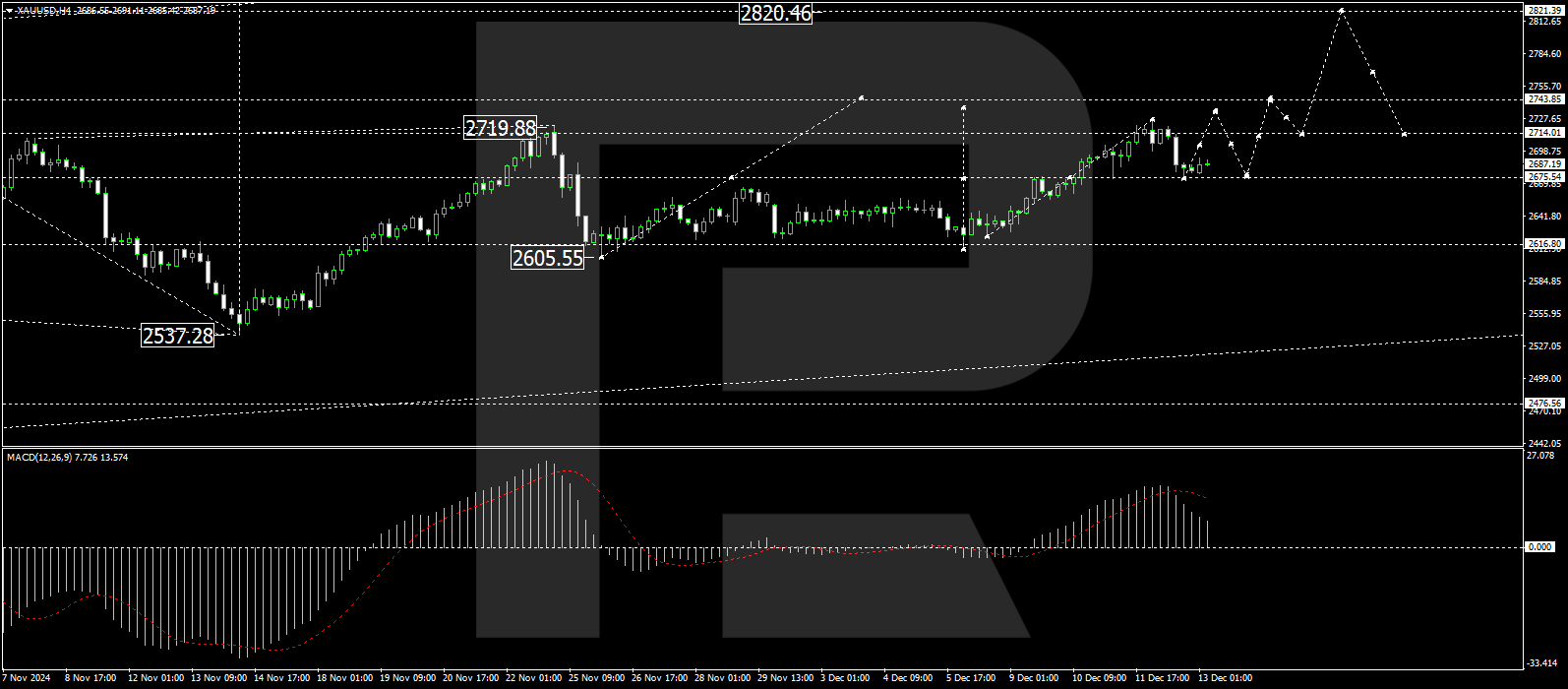
Gold’s market dynamics recently peaked at 2790.00, after which a consolidation range formed below this level. Exiting this range downward opened the pathway for a significant correction, with Gold forming its initial corrective wave. The immediate downside target is 2617.40, potentially extending to 2575.75 if the downward trajectory persists. The MACD indicator supports this bearish outlook, with its signal line trending sharply downward below zero, suggesting further declines.

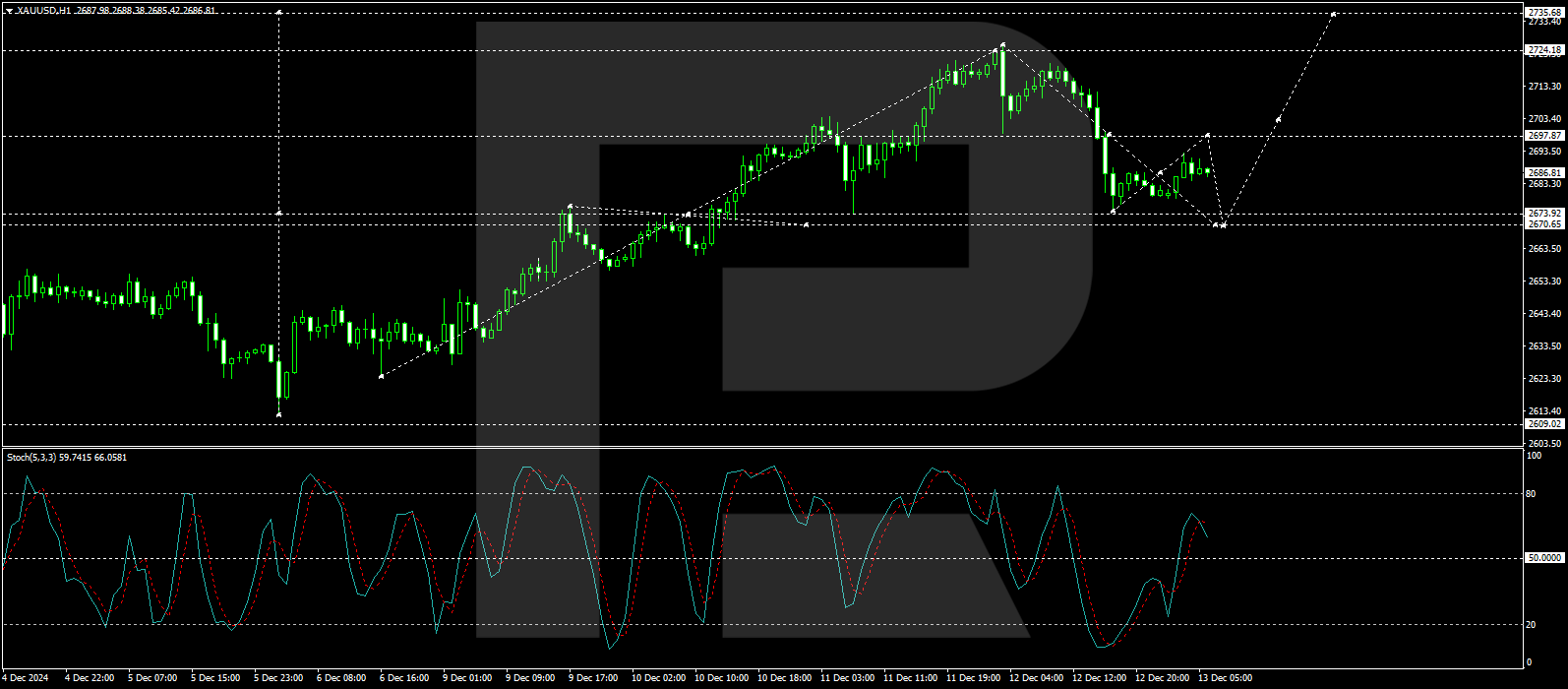
The hourly chart outlines a developing downward wave aiming for 2635.65. Should this target be met, a corrective rally to 2683.11 could occur before further declines resume towards 2617.17, marking the primary target in this bearish phase. The Stochastic oscillator indicates potential for short-term upside, with its signal line approaching the 80 level, suggesting a brief corrective uptick before continuing its descent.


Disclaimer

Any forecasts contained herein are based on the author’s particular opinion. This analysis may not be treated as trading advice. RoboForex bears no responsibility for trading results based on trading recommendations and reviews contained herein.

USDJPY Hits 14-Week High Amid US Election Dynamics

By RoboForex Analytical Department 

The USDJPY pair has surged to a 14-week peak, touching 153.83 as demand for the US dollar strengthens with the unfolding US presidential election. This rally aligns with increasing support for Donald Trump, whose lead in critical states has fuelled investor optimism.

This week, US political developments are poised to dominate market attention, with the outcome still pending in several swing states.

In Japan, the recent Bank of Japan (BoJ) meeting minutes indicate a consensus among board members to persist with interest rate hikes, aligning with their inflation and economic objectives. Despite this, there is no immediate expectation for a rate increase until at least January 2025, reflecting the prevailing global economic uncertainties and market volatility.

Currently, the Japanese yen is not favoured as a safe-haven asset, with the market focus sharply pivoting towards the US dollar.

Technical analysis of USDJPY

The USDJPY pair has completed a corrective phase to 151.28 and initiated the fifth wave of growth towards 155.38. A consolidation phase around 153.33 suggests the potential for an upward breakout, continuing the ascent towards 155.38. This bullish scenario is supported by the MACD indicator, which shows a solid upward momentum from below the zero level.

Following a full correction to 151.28, the pair found strong support and advanced to 153.33. The market is now consolidating at this level, and a continuation of the upward trend to 155.38 is anticipated. This view is corroborated by the Stochastic oscillator, positioned near 80, indicating sustained upward pressure.


Disclaimer

Any forecasts contained herein are based on the author’s particular opinion. This analysis may not be treated as trading advice. RoboForex bears no responsibility for trading results based on trading recommendations and reviews contained herein.

EURUSD Stabilises as US Presidential Election Unfolds

By RoboForex Analytical Department

EURUSD remains poised around 1.0878 as markets brace for the outcome of the highly anticipated US presidential election. With the world watching, the direction of the major currency pair will hinge significantly on the election results, where a victory for Donald Trump is likely to bolster the USD, potentially leading to a notable increase. Conversely, a win for Kamala Harris could see the USD decline by an average of 1-2%.

The impending volatility is not solely due to the election but amplified by the upcoming Federal Reserve meeting scheduled for Wednesday. The Fed is anticipated to cut interest rates slightly by 25 basis points. Market participants are keenly awaiting any forward guidance from the Fed, particularly with expectations leaning towards another rate reduction in December.

While significant economic data releases are also expected, these pivotal events may overshadow their impact.

Technical analysis of EURUSD

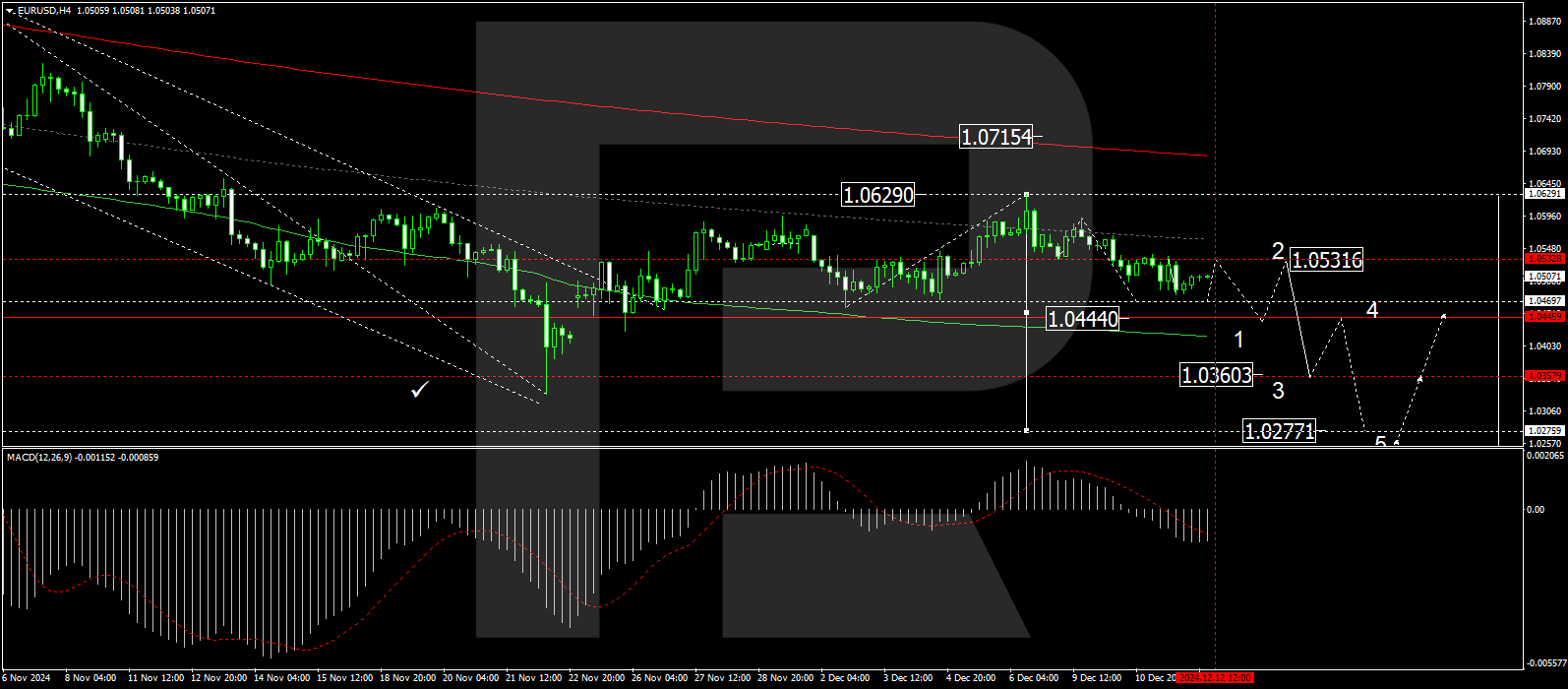
The EURUSD market has completed a growth structure reaching 1.0913, considered part of a third growth wave targeting 1.0950. After this target is achieved, a retraction to 1.0860 is anticipated, potentially forming a broad consolidation range around this level. Technical indicators, such as the MACD, suggest an upward trajectory, reinforcing the possibility of reaching 1.0960 before a corrective pullback to 1.0860.

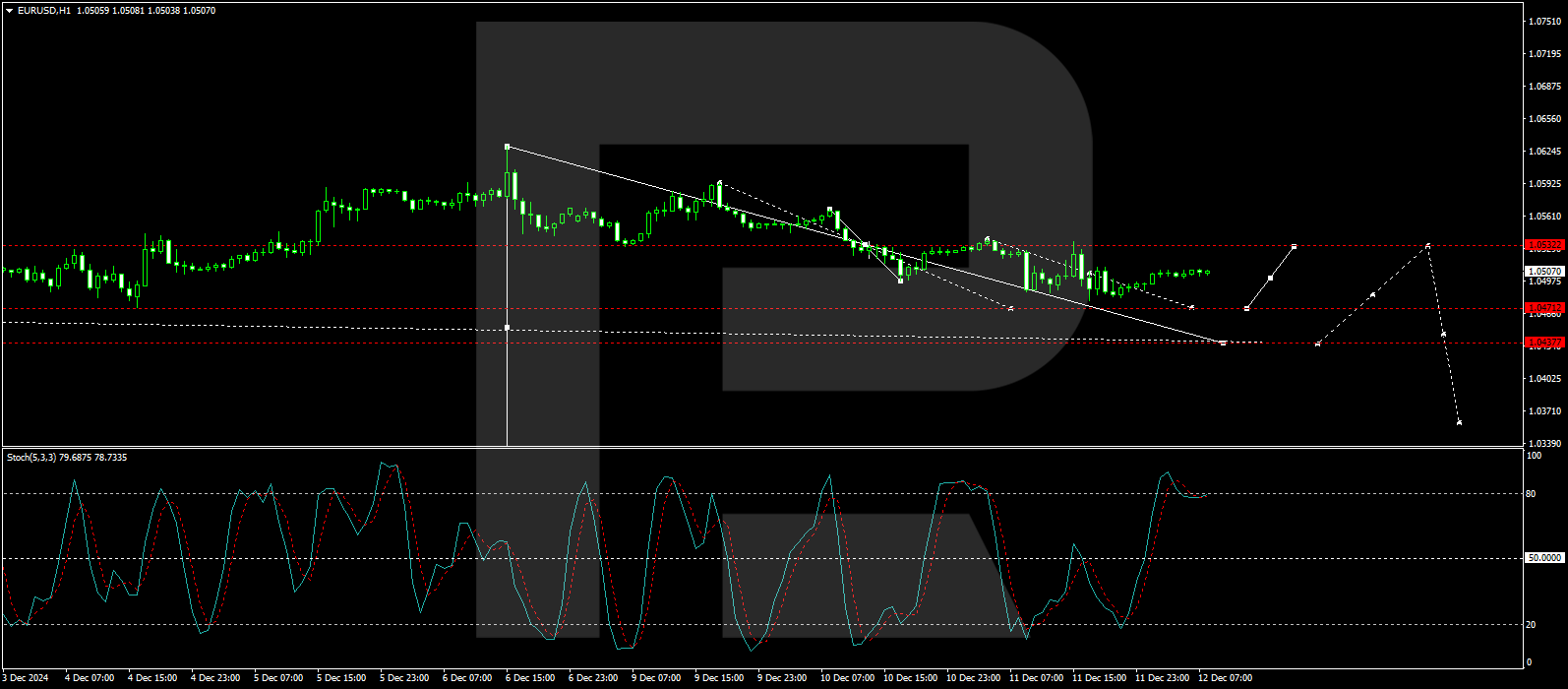
Support at 1.0872 has spurred the development of a growth impulse towards 1.0900, which is expected to be tested soon. Breaching this level could extend the growth wave towards 1.0950. The Stochastic oscillator supports this short-term forecast, indicating upward momentum with its signal line targeting the upper echelons around 80.

Disclaimer

Any forecasts contained herein are based on the author’s particular opinion. This analysis may not be treated as trading advice. RoboForex bears no responsibility for trading results based on trading recommendations and reviews contained herein.

Stock indices rise on weak US labor market report. In Switzerland, there is a further decline in inflation

By JustMarkets

On Friday, the Dow Jones (US30) rose 0.69% (for the week -0.50%). The S&P 500 Index (US500) gained 0.41% (for the week -1.80%). The NASDAQ Technology Index (US100) closed positive 0.72% (for the week -2.06%). Stocks in the US closed sharply higher on Friday, starting November with gains as strong earnings from Amazon (AMZN) and Intel (INTC) bolstered market sentiment, allowing traders to skip a disappointing jobs report. The US jobs report showed that only 12,000 jobs were created in October, well below expectations. Analysts attributed the weak data to the devastating effects of the hurricane and the Boeing strike.

On Wall Street, there is still near-unanimous expectation that the Federal Reserve will cut its key interest rate by a quarter percentage point on Thursday this week.

Nvidia (NVDA) will replace Intel (INTC) in the Dow Jones Industrial Average rankings, ending the semiconductor pioneer’s 25-year history of falling behind rivals. S&P Dow Jones Indices said Friday that the changes, effective November 7, were initiated to provide more representative exposure to the semiconductor and materials sectors, respectively. Intel’s share price has fallen more than 50% this year. Nvidia shares, in contrast, are up more than 173% this year.

Equity markets in Europe rose steadily on Friday. Germany’s DAX (DE40) gained 0.93% (for the week -1.40%), France’s CAC 40 (FR40) closed up 0.80% (for the week -1.76%), Spain’s IBEX 35 (ES35) gained 1.46% (for the week -0.23%), and the UK’s FTSE 100 (UK100) closed up 0.83% (for the week -0.87%).

Switzerland’s annual inflation rate fell to 0.6% in October 2024, the lowest since June 2021, down from 0.8% in September and below estimates of 0.8%. Markets currently give a 72% probability that the Central Bank will cut rates from 1% at its next meeting on December 12 to 0.75% and a 68% probability that it will cut again next March to 0.5%.

WTI crude oil prices rose to $71 a barrel on Monday, extending gains for a fourth straight session as OPEC+ decided to postpone December production plans for a second time. The decision is aimed at stabilizing prices amid ongoing economic concerns and averting a potential oversupply in the market, given uncertainty over demand growth.

Asian markets were mostly down last week. Japan’s Nikkei 225 (JP225) gained 0.78%, China’s FTSE China A50 (CHA50) fell by 1.54%, Hong Kong’s Hang Seng (HK50) lost 0.42%, and Australia’s ASX 200 (AU200) was negative 1.13%.

Beijing’s latest stimulus measures have started to have a positive impact ahead of next week’s session of the National People’s Congress, where new initiatives may be unveiled. Chinese authorities are expected to provide more details on debt and fiscal initiatives aimed at reviving economic growth. They are likely to consider a stimulus package in excess of ¥10 trillion to revitalize the economy.

Japan’s opposition party chief Yuichiro Tamaki, whom the ruling LDP is seeking support from after losing its majority in the lower house of parliament, said the Bank of Japan should wait at least six months before raising interest rates. Kiuchi believes the ruling party will have to accept the opposition party’s position that ultra-soft monetary policy should be maintained until wage growth is consistently above inflation.

S&P 500 (US500) 5,728.80 +23.35 (+0.41%)

Dow Jones (US30) 42,052.19 +288.73 (+0.69%)

DAX (DE40) 19,254.97 +177.43 (+0.93%)

FTSE 100 (UK100) 8,177.15 +67.05 (+0.83%)

USD Index 104.32 +0.34 (+0.33%)

News feed for: 2024.11.04

  • German Manufacturing PMI (m/m) at 10:55 (GMT+2);
  • Eurozone Manufacturing PMI (m/m) at 11:00 (GMT+2);
  • New Zealand RBNZ Financial Stability Report at 22:00 (GMT+2).

By JustMarkets


This article reflects a personal opinion and should not be interpreted as an investment advice, and/or offer, and/or a persistent request for carrying out financial transactions, and/or a guarantee, and/or a forecast of future events.

US Elections: How might markets react to Harris or Trump win?

By ForexTime

  • Markets predict Trump win; polls say race too close to call
  • Trump win: further boost USD, Bitcoin, RUS2000, US stocks (oil, banks, cryptos)
  • Harris win: likely positive for EUR, CNH, MXN, Chinese and European indexes, green energy stocks
  • Split Congress: USD may soften; US stock indexes advance
  • Contested outcome: risk assets (stocks, cryptos) falter; safe havens (gold, USD) rise?


The US Presidential Elections are almost here!

This high-stakes event is bound to shape financial markets worldwide not just over the coming days, but likely for years to come, given the contrasting policies offered by Kamala Harris versus Donald Trump.

But given the forward-looking nature of financial markets, traders and investors haven’t been sitting idly by, merely waiting for the final results before reacting.

In fact, various assets have already begun pricing in expectations over the past few months – long before the Nov. 5th polling day.


This article offers a guide through key guideposts, potential scenarios, and market opportunities in the days ahead.

What to look out for?

Remember, it takes at least 270 electoral votes to win.

After polls close on Tuesday, November 5th …

Early results are set to start trickling in around midnight (GMT) on Wednesday, November 6th.

The watching world will be paying especially close attention to the exit polls and results out of 7 battleground states starting November 6th:

  1. Georgia – polls close at 00:00AM GMT
  2. North Carolina – polls close at 00:30AM GMT
  3. Pennsylvania – polls close at 01:00AM GMT
  4. Arizona – polls close at 02:00AM GMT
  5. Michigan – polls close at 02:00AM GMT
  6. Wisconsin – – polls close at 02:00AM GMT
  7. Nevada – polls close at 03:00AM GMT


When will the official winner be announced?

It could be days, if not weeks, after November 5th before we discover who will officially become the next President of the United States.

Past elections have shown the world that we could be in for an angsty waiting period:

  • 2020 elections: 4 days
    After polls closed on that Tuesday, President Joe Biden wasn’t declared the winner until the following Saturday.
  • 2000 elections: 5 weeks
    The US Supreme Court only awarded the presidency to George W. Bush on December 12th.

If the polls are right this time around, 2024’s neck-and-neck race may well require more time before the next President of the United States is officially declared.


What are markets already predicting?

Markets are currently anticipating a win for Donald Trump, although the margin has narrowed in recent days.

Note how the likes of the US dollar (as measured by the benchmark dollar index, DXY), as well as Bitcoin has risen as part of the so-called “Trump trade”.

Trump trade tracks Polymarket bets

SOURCE: Bloomberg, Polymarkets

The “Trump trade” is where investors and traders buy up assets they believe will climb higher under Trump 2.0.


Here’s where the “Trump trade” has been evident:

  • USDInd (US dollar index) +3.17% in October
    – largest monthly gain since April 2022.
  • Bitcoin: +9.65% in October
    – biggest monthly gain since May 2024
  • Financials (banking stocks) and Energy (oil stocks): 2 of the 3 the best-performing sectors on the S&P 500 last month.

Banking and oil stocks rise amid Trump trade

The share prices of JPMorgan, Exxon Mobil, and Microstrategy have also reached their respective record highs in October 2024.

Why? More on that later.

  • RUS2000 index: +8.9% in Q3 2024
    The RUS2000 represents many of the smaller listed US-companies.

    Although this small-cap index fell 1.5% in October 2024, its prior gains were the envy of other major US stock indices.

    Here’s how FXTM’s US stock indexes performed respectively last quarter (Q3 2024):

    RUS2000: +8.9%

    US30: +8.2%

    US400: +6.5%

    US500: +5.5%

    NAS100: +1.9%


The above-listed “Trump trades” have largely tracked the bets of a Trump win from Polymarket.


What is Polymarket?

Polymarket is a controversial, crypto-based predictions market, which describes itself as the “world’s largest prediction market”.

Polymarket’s data is even featured by the likes of Bloomberg, Standard Chartered, and JPMorgan.

As seen in the chart above, at the time of writing on Monday, 4th November 2024:

Polymarket’s data show a 56.2% chance of a Trump win, versus a 43.9% chance of a Harris win.


Is a Trump win guaranteed?

Not in the slightest.

Financial markets’ bets are in stark contrast to many pollsters which show that Harris and Trump are in a tightly fought race.

In short, it’s still too close to call.

Polls show Trump and Harris in neck and neck race

SOURCE: RealClearPolitics (RCP), Bloomberg


Which markets could soar if Trump wins?

And by a “Trump win”, we also include a “red sweep” scenario: Republicans (Trump’s party) also take control of both chambers of Congress (House and Senate).

  • US Dollar

Markets believe that, under Trump 2.0, his policies may reinvigorate US inflation, which prevents the Fed from cutting interest rates as quickly as previously anticipated.

Slower rate cuts, relative to other major economies, tends to strengthen that economy’s currency.

This expected US dollar strength could especially be manifested against the currencies of major US trading partners, including the EUR (euro), CNH (Chinese Yuan) and MXN (Mexican Peso), which are likely to see knee-jerk declines.

  • Bitcoin

Trump has touted the US as becoming the crypto capital of the world.

That’s widely perceived to be more bullish for cryptos, in contrast to Kamala Harris’s stance which favours a regulatory framework for the industry.

  • Banking, oil, and crypto-related US stocks

Trump 2.0 is expected to benefit various industries with its bias towards de-regulation (loosening rules).

This could help companies operating in various sectors, including oil (e.g. Exxon), banking (e.g. JPMorgan), and cryptocurrencies (e.g. Microstrategy – the largest publicly-listed holder of Bitcoin).

  • RUS2000 index

The RUS2000’s gains in Q3 reflected hopes that America’s small businesses would benefit from Trump 2.0 policies, including corporate tax cuts and more government spending.


Which markets could soar if Harris wins?

And by a “Harris win”, we also include a “blue sweep” scenario: Democrats (Harris’s party) also take control of both chambers of Congress (House and Senate) – although a “blue sweep” appears less likely in light of even the latest results from traditional pollsters.

A widely-held notion: Harris offers a continuation of the policies from her predecessor, President Biden.

A President Harris is likely to amplify the green agenda while reducing the risk of a rapid escalation in global trade tensions.

Given such an anticipated policy stance, a Harris win should trigger knee-jerk gains for the likes of:

  • Chinese stock indices: CN50, CHINAH, HK50
  • European stock indices: EU50, GER40, FRA40, SPN35, NETH25
  • Currencies of major US trading partners: Euro (EUR), Chinese Yuan (CNH), Mexican Peso (MXN)
  • Green Energy US stocks: Tesla, Rivian Auto, Lucid Group, ChargePoint Holdings, Blink Charging, First Solar, Enphase Energy, etc.

Also, the instinctive reaction to a Harris win would be a swift unwinding of the so-called “Trump trade”.

This unwinding of “Trump trades” should result in declines for the US dollar, Bitcoin, RUS2000, etc.


Split Congress: How might markets react?

If no single party can lay claim to the White House and the 2 chambers in Congress (House and Senate), this suggests that US laws and fiscal plans may not be massive changes over the next 4 years.

Markets tend to take delight in “business as usual” settings.

A split Congress should help push up US stock markets while the USD declines as the Fed resumes its rate cuts.


Contested outcome: How might markets react?

It’s tough to say, and it also depends on how long the dispute lasts.

  • One could assume that risk assets, from global stock indexes to cryptos, may tumble amid the political uncertainty.
  • Meanwhile, safe havens such as gold and the US dollar may rise amid heightened market fears.

However, history offers little guide.

Going back to the two contested elections (2020 and 2000) highlighted earlier in this article:

  • In those 4 days in 2020 between polling day and Biden’s official win (Nov. 3 – 7, 2020):

    – S&P 500 still climbed 6%, despite the political uncertainty

    – Dollar index fell 2%

    Gold rose 3%

  • In those 5 weeks in 2000 between polling day and the Supreme Court’s decision (Nov. 7 – Dec. 12, 2000):

    – S&P 500 fell 4.3% amidst the political drama, which also occurred during the infamous bursting of the dot-com bubble.

    – Dollar index fell 1.1%

    – Gold rose 2.2%


Some segments of the markets are also fearing a violent aftermath from the 2024 US presidential elections.

While not our base case scenario, safe havens could soar in such an event.


Safer to say, market opportunities surrounding the US presidential elections only come round once every 4 years.

All in all, traders and investors must stand ready to react to any incoming volatility, to seize the chance at potential profits.

Amid the possible chaos and uncertainty, comes opportunity.


Forex-Time-LogoArticle by ForexTime

ForexTime Ltd (FXTM) is an award winning international online forex broker regulated by CySEC 185/12 www.forextime.com

Brent Crude Rises as OPEC+ Delays Production Increase

By RoboForex Analytical Department 

Brent crude oil prices climbed above 74 USD per barrel following OPEC+’s announcement to delay its production increase originally scheduled for December. This decision marks the second postponement by OPEC+ amid persistent global economic challenges and aims to avoid potential market oversupply.

Demand prospects remain subdued with Europe’s slow economic recovery and Asia’s lacklustre performance, particularly in China despite recent stimulus efforts. Additionally, tensions in the Middle East, particularly Iran’s continued threats against Israel, are providing strong support to oil prices, with potential escalations anticipated post-US presidential elections on 5 November.

Concerns that regional oil production facilities might be targeted in these attacks contribute to fears of disrupted supply, further buoying oil prices. Meanwhile, temporary weakness in the US dollar also increases oil prices.

Technical analysis of Brent

Brent crude oil prices have rebounded from a recent low of 70.55 and are upward towards 76.16. The market is consolidating around 73.22, with a potential breakout that could lead to the 76.16 level. Once this target is achieved, a pullback to 73.22 could occur before further gains towards 79.20 are pursued. This bullish scenario is supported by MACD indicators suggesting upward momentum.

Following a correction to 73.22, Brent is poised to ascend to 74.90. A successful breach of this level could pave the way to 76.16. The stochastic oscillator’s position above 50, pointing upwards towards 80, corroborates this potential upward movement.


Disclaimer

Any forecasts contained herein are based on the author’s particular opinion. This analysis may not be treated as trading advice. RoboForex bears no responsibility for trading results based on trading recommendations and reviews contained herein.

Currency Speculators continue to shed Euro bets for 5th week

By InvestMacro

Here are the latest charts and statistics for the Commitment of Traders (COT) data published by the Commodities Futures Trading Commission (CFTC).

The latest COT data is updated through Tuesday October 29th and shows a quick view of how large market participants (for-profit speculators and commercial traders) were positioned in the futures markets. All currency positions are in direct relation to the US dollar where, for example, a bet for the euro is a bet that the euro will rise versus the dollar while a bet against the euro will be a bet that the euro will decline versus the dollar.

Weekly Speculator Changes led by US Dollar Index & Mexican Peso

The COT currency market speculator bets were overall lower this week as just two out of the eleven currency markets we cover had higher positioning while the other nine markets had lower speculator contracts.

Leading the gains for the currency markets was the Mexican Peso (11,148 contracts) with the US Dollar Index (773 contracts) also coming through with a positive week.

The currencies seeing declines in speculator bets on the week were the Japanese Yen (-37,588 contracts), the EuroFX (-21,780 contracts), the Canadian Dollar (-26,868 contracts), the British Pound (-8,220 contracts), the New Zealand Dollar (-1,844 contracts), the Brazilian Real (-1,464 contracts), the Swiss Franc (-1,344 contracts), Bitcoin (-224 contracts) and with the Australian Dollar (-163 contracts) also registering lower bets on the week.

Currency Speculators continue to shed Euro bets for 5th week

Highlighting the COT currency’s data this week is sharp decrease in bets for the Euro currency speculators. Large speculators have dropped their Euro positions for a fifth consecutive week and for the seventh time in the past eight weeks through Tuesday.

The Euro spec positions have fallen by -122,002 net contracts in just these last five weeks. This weakness has brought the overall positioning from +71,698 contracts on September 24th to this week’s standing of -50,304 contracts and the lowest level for Euro bets since March 3rd of 2020, a span of 243 weeks.

Helping to dampen the Euro’s appeal is the recent rate reduction by the European Central Bank (ECB). Citing a decline in inflation, the ECB trimmed the benchmark interest rate by 25 basis points from 3.50 percent to 3.26 percent on October 17th and believes the “disinflationary process is well on track“.

The Euro exchange rate versus the US Dollar had touched a yearly high in September at the 1.1249 exchange level. Since then, however, the Euro declined for four straight weeks and fell through the major support/resistance level of 1.10 and then through the 1.09 threshold as well. Currently, the Euro currency is trading right around the 1.0857 level with historical support sitting below at 1.08.

More Speculator positions:

Elsewhere, the US Dollar Index speculator positions perked up a bit this week by +773 contracts and rose for a second straight week. The USD standing is in a small bullish position after falling into a bearish level on October 8th and 15th.

The Japanese yen speculator bets dropped sharply for a second straight week and have now fallen for five straight weeks overall. This has brought the yen positioning back into a bearish level after bets had been in a bullish standing for eleven consecutive weeks.

Canadian dollar speculator positions also continued to drop and fell for the fifth consecutive week. The CAD speculator bets have decreased by a total of -101,910 contracts in just these last five weeks and brings the current position (at a total of -167,499 contracts) to the fourth most bearish standing on record.


Currencies Net Speculators Leaderboard

Legend: Weekly Speculators Change | Speculators Current Net Position | Speculators Strength Score compared to last 3-Years (0-100 range)


Strength Scores led by Australian Dollar

COT Strength Scores (a normalized measure of Speculator positions over a 3-Year range, from 0 to 100 where above 80 is Extreme-Bullish and below 20 is Extreme-Bearish) showed that the Australian Dollar (96 percent) and the  leads the currency markets this week. The British Pound (66 percent) and the Japanese Yen (64 percent) come in as the next highest in the weekly strength scores.

On the downside, the EuroFX (0 percent), the US Dollar Index (8 percent), Bitcoin (11 percent) and the Canadian Dollar (13 percent) come in at the lowest strength levels currently and are in Extreme-Bearish territory (below 20 percent). The next lowest strength scores are .

3-Year Strength Statistics:
US Dollar Index (8.0 percent) vs US Dollar Index previous week (6.4 percent)
EuroFX (0.0 percent) vs EuroFX previous week (9.2 percent)
British Pound Sterling (65.9 percent) vs British Pound Sterling previous week (69.6 percent)
Japanese Yen (63.7 percent) vs Japanese Yen previous week (78.7 percent)
Swiss Franc (32.0 percent) vs Swiss Franc previous week (34.7 percent)
Canadian Dollar (12.9 percent) vs Canadian Dollar previous week (24.9 percent)
Australian Dollar (95.8 percent) vs Australian Dollar previous week (95.9 percent)
New Zealand Dollar (36.7 percent) vs New Zealand Dollar previous week (40.3 percent)
Mexican Peso (48.7 percent) vs Mexican Peso previous week (43.2 percent)
Brazilian Real (48.0 percent) vs Brazilian Real previous week (49.4 percent)
Bitcoin (10.5 percent) vs Bitcoin previous week (15.4 percent)


Australian Dollar & Brazilian Real top the 6-Week Strength Trends

COT Strength Score Trends (or move index, calculates the 6-week changes in strength scores) showed that the Australian Dollar (48 percent) and the Brazilian Real (27 percent) lead the past six weeks trends for the currencies. The Mexican Peso (13 percent) and the British Pound (2 percent) are the next highest positive movers in the 3-Year trends data.

The EuroFX (-51 percent) leads the downside trend scores currently with the Canadian Dollar (-42 percent), Swiss Franc (-34 percent) and the Japanese Yen (-33 percent) following next with lower trend scores.

3-Year Strength Trends:
US Dollar Index (-0.2 percent) vs US Dollar Index previous week (-41.0 percent)
EuroFX (-50.5 percent) vs EuroFX previous week (-46.3 percent)
British Pound Sterling (1.5 percent) vs British Pound Sterling previous week (-7.1 percent)
Japanese Yen (-32.6 percent) vs Japanese Yen previous week (-17.2 percent)
Swiss Franc (-34.2 percent) vs Swiss Franc previous week (-23.0 percent)
Canadian Dollar (-42.3 percent) vs Canadian Dollar previous week (-32.1 percent)
Australian Dollar (48.0 percent) vs Australian Dollar previous week (29.6 percent)
New Zealand Dollar (-0.5 percent) vs New Zealand Dollar previous week (5.8 percent)
Mexican Peso (13.4 percent) vs Mexican Peso previous week (-1.5 percent)
Brazilian Real (26.6 percent) vs Brazilian Real previous week (26.2 percent)
Bitcoin (-19.6 percent) vs Bitcoin previous week (-28.2 percent)


Individual COT Forex Markets:

US Dollar Index Futures:

US Dollar Index Forex Futures COT ChartThe US Dollar Index large speculator standing this week recorded a net position of 1,684 contracts in the data reported through Tuesday. This was a weekly lift of 773 contracts from the previous week which had a total of 911 net contracts.

This week’s current strength score (the trader positioning range over the past three years, measured from 0 to 100) shows the speculators are currently Bearish-Extreme with a score of 8.0 percent. The commercials are Bullish-Extreme with a score of 91.4 percent and the small traders (not shown in chart) are Bearish-Extreme with a score of 19.7 percent.

Price Trend-Following Model: Weak Downtrend

Our weekly trend-following model classifies the current market price position as: Weak Downtrend.

US DOLLAR INDEX StatisticsSPECULATORSCOMMERCIALSSMALL TRADERS
– Percent of Open Interest Longs:67.118.89.5
– Percent of Open Interest Shorts:61.922.910.6
– Net Position:1,684-1,329-355
– Gross Longs:21,8256,1263,093
– Gross Shorts:20,1417,4553,448
– Long to Short Ratio:1.1 to 10.8 to 10.9 to 1
NET POSITION TREND:
– Strength Index Score (3 Year Range Pct):8.091.419.7
– Strength Index Reading (3 Year Range):Bearish-ExtremeBullish-ExtremeBearish-Extreme
NET POSITION MOVEMENT INDEX:
– 6-Week Change in Strength Index:-0.2-2.816.0


Euro Currency Futures:

Euro Currency Futures COT ChartThe Euro Currency large speculator standing this week recorded a net position of -50,304 contracts in the data reported through Tuesday. This was a weekly fall of -21,780 contracts from the previous week which had a total of -28,524 net contracts.

This week’s current strength score (the trader positioning range over the past three years, measured from 0 to 100) shows the speculators are currently Bearish-Extreme with a score of 0.0 percent. The commercials are Bullish-Extreme with a score of 100.0 percent and the small traders (not shown in chart) are Bearish-Extreme with a score of 13.0 percent.

Price Trend-Following Model: Weak Uptrend

Our weekly trend-following model classifies the current market price position as: Weak Uptrend.

EURO Currency StatisticsSPECULATORSCOMMERCIALSSMALL TRADERS
– Percent of Open Interest Longs:24.160.711.2
– Percent of Open Interest Shorts:31.756.08.3
– Net Position:-50,30431,44818,856
– Gross Longs:159,313401,67173,780
– Gross Shorts:209,617370,22354,924
– Long to Short Ratio:0.8 to 11.1 to 11.3 to 1
NET POSITION TREND:
– Strength Index Score (3 Year Range Pct):0.0100.013.0
– Strength Index Reading (3 Year Range):Bearish-ExtremeBullish-ExtremeBearish-Extreme
NET POSITION MOVEMENT INDEX:
– 6-Week Change in Strength Index:-50.554.1-59.0


British Pound Sterling Futures:

British Pound Sterling Futures COT ChartThe British Pound Sterling large speculator standing this week recorded a net position of 66,356 contracts in the data reported through Tuesday. This was a weekly fall of -8,220 contracts from the previous week which had a total of 74,576 net contracts.

This week’s current strength score (the trader positioning range over the past three years, measured from 0 to 100) shows the speculators are currently Bullish with a score of 65.9 percent. The commercials are Bearish with a score of 31.8 percent and the small traders (not shown in chart) are Bullish with a score of 78.9 percent.

Price Trend-Following Model: Weak Uptrend

Our weekly trend-following model classifies the current market price position as: Weak Uptrend.

BRITISH POUND StatisticsSPECULATORSCOMMERCIALSSMALL TRADERS
– Percent of Open Interest Longs:59.921.914.7
– Percent of Open Interest Shorts:29.955.511.1
– Net Position:66,356-74,3017,945
– Gross Longs:132,63648,59632,508
– Gross Shorts:66,280122,89724,563
– Long to Short Ratio:2.0 to 10.4 to 11.3 to 1
NET POSITION TREND:
– Strength Index Score (3 Year Range Pct):65.931.878.9
– Strength Index Reading (3 Year Range):BullishBearishBullish
NET POSITION MOVEMENT INDEX:
– 6-Week Change in Strength Index:1.52.2-18.6


Japanese Yen Futures:

Japanese Yen Forex Futures COT ChartThe Japanese Yen large speculator standing this week recorded a net position of -24,817 contracts in the data reported through Tuesday. This was a weekly lowering of -37,588 contracts from the previous week which had a total of 12,771 net contracts.

This week’s current strength score (the trader positioning range over the past three years, measured from 0 to 100) shows the speculators are currently Bullish with a score of 63.7 percent. The commercials are Bearish with a score of 38.8 percent and the small traders (not shown in chart) are Bullish with a score of 55.8 percent.

Price Trend-Following Model: Weak Uptrend

Our weekly trend-following model classifies the current market price position as: Weak Uptrend.

JAPANESE YEN StatisticsSPECULATORSCOMMERCIALSSMALL TRADERS
– Percent of Open Interest Longs:28.753.616.1
– Percent of Open Interest Shorts:39.741.217.5
– Net Position:-24,81728,082-3,265
– Gross Longs:64,925121,13636,292
– Gross Shorts:89,74293,05439,557
– Long to Short Ratio:0.7 to 11.3 to 10.9 to 1
NET POSITION TREND:
– Strength Index Score (3 Year Range Pct):63.738.855.8
– Strength Index Reading (3 Year Range):BullishBearishBullish
NET POSITION MOVEMENT INDEX:
– 6-Week Change in Strength Index:-32.636.7-44.2


Swiss Franc Futures:

Swiss Franc Forex Futures COT ChartThe Swiss Franc large speculator standing this week recorded a net position of -33,998 contracts in the data reported through Tuesday. This was a weekly reduction of -1,344 contracts from the previous week which had a total of -32,654 net contracts.

This week’s current strength score (the trader positioning range over the past three years, measured from 0 to 100) shows the speculators are currently Bearish with a score of 32.0 percent. The commercials are Bullish with a score of 67.4 percent and the small traders (not shown in chart) are Bearish with a score of 41.7 percent.

Price Trend-Following Model: Weak Uptrend

Our weekly trend-following model classifies the current market price position as: Weak Uptrend.

SWISS FRANC StatisticsSPECULATORSCOMMERCIALSSMALL TRADERS
– Percent of Open Interest Longs:9.077.213.7
– Percent of Open Interest Shorts:52.024.423.5
– Net Position:-33,99841,676-7,678
– Gross Longs:7,09260,94210,855
– Gross Shorts:41,09019,26618,533
– Long to Short Ratio:0.2 to 13.2 to 10.6 to 1
NET POSITION TREND:
– Strength Index Score (3 Year Range Pct):32.067.441.7
– Strength Index Reading (3 Year Range):BearishBullishBearish
NET POSITION MOVEMENT INDEX:
– 6-Week Change in Strength Index:-34.239.0-32.4


Canadian Dollar Futures:

Canadian Dollar Forex Futures COT ChartThe Canadian Dollar large speculator standing this week recorded a net position of -167,499 contracts in the data reported through Tuesday. This was a weekly reduction of -26,868 contracts from the previous week which had a total of -140,631 net contracts.

This week’s current strength score (the trader positioning range over the past three years, measured from 0 to 100) shows the speculators are currently Bearish-Extreme with a score of 12.9 percent. The commercials are Bullish-Extreme with a score of 87.9 percent and the small traders (not shown in chart) are Bearish-Extreme with a score of 10.8 percent.

Price Trend-Following Model: Strong Downtrend

Our weekly trend-following model classifies the current market price position as: Strong Downtrend.

CANADIAN DOLLAR StatisticsSPECULATORSCOMMERCIALSSMALL TRADERS
– Percent of Open Interest Longs:8.380.78.5
– Percent of Open Interest Shorts:59.127.910.6
– Net Position:-167,499174,266-6,767
– Gross Longs:27,399266,31128,068
– Gross Shorts:194,89892,04534,835
– Long to Short Ratio:0.1 to 12.9 to 10.8 to 1
NET POSITION TREND:
– Strength Index Score (3 Year Range Pct):12.987.910.8
– Strength Index Reading (3 Year Range):Bearish-ExtremeBullish-ExtremeBearish-Extreme
NET POSITION MOVEMENT INDEX:
– 6-Week Change in Strength Index:-42.343.7-34.9


Australian Dollar Futures:

Australian Dollar Forex Futures COT ChartThe Australian Dollar large speculator standing this week recorded a net position of 27,516 contracts in the data reported through Tuesday. This was a weekly lowering of -163 contracts from the previous week which had a total of 27,679 net contracts.

This week’s current strength score (the trader positioning range over the past three years, measured from 0 to 100) shows the speculators are currently Bullish-Extreme with a score of 95.8 percent. The commercials are Bearish-Extreme with a score of 7.4 percent and the small traders (not shown in chart) are Bullish with a score of 76.9 percent.

Price Trend-Following Model: Downtrend

Our weekly trend-following model classifies the current market price position as: Downtrend.

AUSTRALIAN DOLLAR StatisticsSPECULATORSCOMMERCIALSSMALL TRADERS
– Percent of Open Interest Longs:50.931.416.7
– Percent of Open Interest Shorts:36.052.011.0
– Net Position:27,516-37,85810,342
– Gross Longs:93,67757,80730,644
– Gross Shorts:66,16195,66520,302
– Long to Short Ratio:1.4 to 10.6 to 11.5 to 1
NET POSITION TREND:
– Strength Index Score (3 Year Range Pct):95.87.476.9
– Strength Index Reading (3 Year Range):Bullish-ExtremeBearish-ExtremeBullish
NET POSITION MOVEMENT INDEX:
– 6-Week Change in Strength Index:48.0-41.65.7


New Zealand Dollar Futures:

New Zealand Dollar Forex Futures COT ChartThe New Zealand Dollar large speculator standing this week recorded a net position of -2,167 contracts in the data reported through Tuesday. This was a weekly decline of -1,844 contracts from the previous week which had a total of -323 net contracts.

This week’s current strength score (the trader positioning range over the past three years, measured from 0 to 100) shows the speculators are currently Bearish with a score of 36.7 percent. The commercials are Bullish with a score of 62.2 percent and the small traders (not shown in chart) are Bearish with a score of 35.1 percent.

Price Trend-Following Model: Downtrend

Our weekly trend-following model classifies the current market price position as: Downtrend.

NEW ZEALAND DOLLAR StatisticsSPECULATORSCOMMERCIALSSMALL TRADERS
– Percent of Open Interest Longs:44.948.06.3
– Percent of Open Interest Shorts:48.741.88.8
– Net Position:-2,1673,607-1,440
– Gross Longs:26,07727,8503,672
– Gross Shorts:28,24424,2435,112
– Long to Short Ratio:0.9 to 11.1 to 10.7 to 1
NET POSITION TREND:
– Strength Index Score (3 Year Range Pct):36.762.235.1
– Strength Index Reading (3 Year Range):BearishBullishBearish
NET POSITION MOVEMENT INDEX:
– 6-Week Change in Strength Index:-0.57.1-45.7


Mexican Peso Futures:

Mexican Peso Futures COT ChartThe Mexican Peso large speculator standing this week recorded a net position of 35,045 contracts in the data reported through Tuesday. This was a weekly boost of 11,148 contracts from the previous week which had a total of 23,897 net contracts.

This week’s current strength score (the trader positioning range over the past three years, measured from 0 to 100) shows the speculators are currently Bearish with a score of 48.7 percent. The commercials are Bullish with a score of 53.8 percent and the small traders (not shown in chart) are Bearish-Extreme with a score of 0.0 percent.

Price Trend-Following Model: Strong Downtrend

Our weekly trend-following model classifies the current market price position as: Strong Downtrend.

MEXICAN PESO StatisticsSPECULATORSCOMMERCIALSSMALL TRADERS
– Percent of Open Interest Longs:48.246.32.4
– Percent of Open Interest Shorts:24.567.74.7
– Net Position:35,045-31,575-3,470
– Gross Longs:71,12768,2463,511
– Gross Shorts:36,08299,8216,981
– Long to Short Ratio:2.0 to 10.7 to 10.5 to 1
NET POSITION TREND:
– Strength Index Score (3 Year Range Pct):48.753.80.0
– Strength Index Reading (3 Year Range):BearishBullishBearish-Extreme
NET POSITION MOVEMENT INDEX:
– 6-Week Change in Strength Index:13.4-12.0-12.1


Brazilian Real Futures:

Brazil Real Futures COT ChartThe Brazilian Real large speculator standing this week recorded a net position of -4,269 contracts in the data reported through Tuesday. This was a weekly fall of -1,464 contracts from the previous week which had a total of -2,805 net contracts.

This week’s current strength score (the trader positioning range over the past three years, measured from 0 to 100) shows the speculators are currently Bearish with a score of 48.0 percent. The commercials are Bullish with a score of 53.3 percent and the small traders (not shown in chart) are Bearish with a score of 20.2 percent.

Price Trend-Following Model: Strong Downtrend

Our weekly trend-following model classifies the current market price position as: Strong Downtrend.

BRAZIL REAL StatisticsSPECULATORSCOMMERCIALSSMALL TRADERS
– Percent of Open Interest Longs:42.248.35.5
– Percent of Open Interest Shorts:49.540.85.7
– Net Position:-4,2694,392-123
– Gross Longs:24,78428,3613,205
– Gross Shorts:29,05323,9693,328
– Long to Short Ratio:0.9 to 11.2 to 11.0 to 1
NET POSITION TREND:
– Strength Index Score (3 Year Range Pct):48.053.320.2
– Strength Index Reading (3 Year Range):BearishBullishBearish
NET POSITION MOVEMENT INDEX:
– 6-Week Change in Strength Index:26.6-26.2-0.6


Bitcoin Futures:

Bitcoin Crypto Futures COT ChartThe Bitcoin large speculator standing this week recorded a net position of -1,869 contracts in the data reported through Tuesday. This was a weekly fall of -224 contracts from the previous week which had a total of -1,645 net contracts.

This week’s current strength score (the trader positioning range over the past three years, measured from 0 to 100) shows the speculators are currently Bearish-Extreme with a score of 10.5 percent. The commercials are Bullish-Extreme with a score of 94.4 percent and the small traders (not shown in chart) are Bullish with a score of 66.0 percent.

Price Trend-Following Model: Strong Uptrend

Our weekly trend-following model classifies the current market price position as: Strong Uptrend.

BITCOIN StatisticsSPECULATORSCOMMERCIALSSMALL TRADERS
– Percent of Open Interest Longs:83.36.04.3
– Percent of Open Interest Shorts:88.92.32.4
– Net Position:-1,8691,242627
– Gross Longs:28,1562,0191,441
– Gross Shorts:30,025777814
– Long to Short Ratio:0.9 to 12.6 to 11.8 to 1
NET POSITION TREND:
– Strength Index Score (3 Year Range Pct):10.594.466.0
– Strength Index Reading (3 Year Range):Bearish-ExtremeBullish-ExtremeBullish
NET POSITION MOVEMENT INDEX:
– 6-Week Change in Strength Index:-19.616.113.8


Article By InvestMacroReceive our weekly COT Newsletter

*COT Report: The COT data, released weekly to the public each Friday, is updated through the most recent Tuesday (data is 3 days old) and shows a quick view of how large speculators or non-commercials (for-profit traders) were positioned in the futures markets.

The CFTC categorizes trader positions according to commercial hedgers (traders who use futures contracts for hedging as part of the business), non-commercials (large traders who speculate to realize trading profits) and nonreportable traders (usually small traders/speculators) as well as their open interest (contracts open in the market at time of reporting). See CFTC criteria here.

Speculator Extremes: Platinum, Australian Dollar & Steel lead Bullish Bets

By InvestMacro

The latest update for the weekly Commitment of Traders (COT) report was released by the Commodity Futures Trading Commission (CFTC) on Friday for data ending on October 29th.

This weekly Extreme Positions report highlights the Most Bullish and Most Bearish Positions for the speculator category. Extreme positioning in these markets can foreshadow strong moves in the underlying market.

To signify an extreme position, we use the Strength Index (also known as the COT Index) of each instrument, a common method of measuring COT data. The Strength Index is simply a comparison of current trader positions against the range of positions over the previous 3 years. We use over 80 percent as extremely bullish and under 20 percent as extremely bearish. (Compare Strength Index scores across all markets in the data table or cot leaders table)


Here Are This Week’s Most Bullish Speculator Positions:

Platinum


The Platinum speculator position comes in as the most bullish extreme standing this week. The Platinum speculator level is currently at a 100.0 percent score of its 3-year range.

The six-week trend for the percent strength score totaled 32.1 this week. The overall net speculator position was a total of 35,543 net contracts this week with an increase by 667 contract in the weekly speculator bets.


Speculators or Non-Commercials Notes:

Speculators, classified as non-commercial traders by the CFTC, are made up of large commodity funds, hedge funds and other significant for-profit participants. The Specs are generally regarded as trend-followers in their behavior towards price action – net speculator bets and prices tend to go in the same directions. These traders often look to buy when prices are rising and sell when prices are falling. To illustrate this point, many times speculator contracts can be found at their most extremes (bullish or bearish) when prices are also close to their highest or lowest levels.

These extreme levels can be dangerous for the large speculators as the trade is most crowded, there is less trading ammunition still sitting on the sidelines to push the trend further and prices have moved a significant distance. When the trend becomes exhausted, some speculators take profits while others look to also exit positions when prices fail to continue in the same direction. This process usually plays out over many months to years and can ultimately create a reverse effect where prices start to fall and speculators start a process of selling when prices are falling.


Australian Dollar


The Australian Dollar speculator position comes next in the extreme standings this week. The Australian Dollar speculator level is now at a 95.8 percent score of its 3-year range.

The six-week trend for the percent strength score was 48.0 this week. The speculator position registered 27,516 net contracts this week with a weekly dip by -163 contracts in speculator bets.


Steel


The Steel speculator position comes in third this week in the extreme standings. The Steel speculator level resides at a 95.7 percent score of its 3-year range.

The six-week trend for the speculator strength score came in at 14.4 this week. The overall speculator position was -153 net contracts this week with a rise by 925 contracts in the weekly speculator bets.


VIX


The VIX speculator position comes up number four in the extreme standings this week. The VIX speculator level is at a 94.9 percent score of its 3-year range.

The six-week trend for the speculator strength score totaled a change of 4.5 this week. The overall speculator position was -1,572 net contracts this week with a decline of -5,597 contracts in the speculator bets.


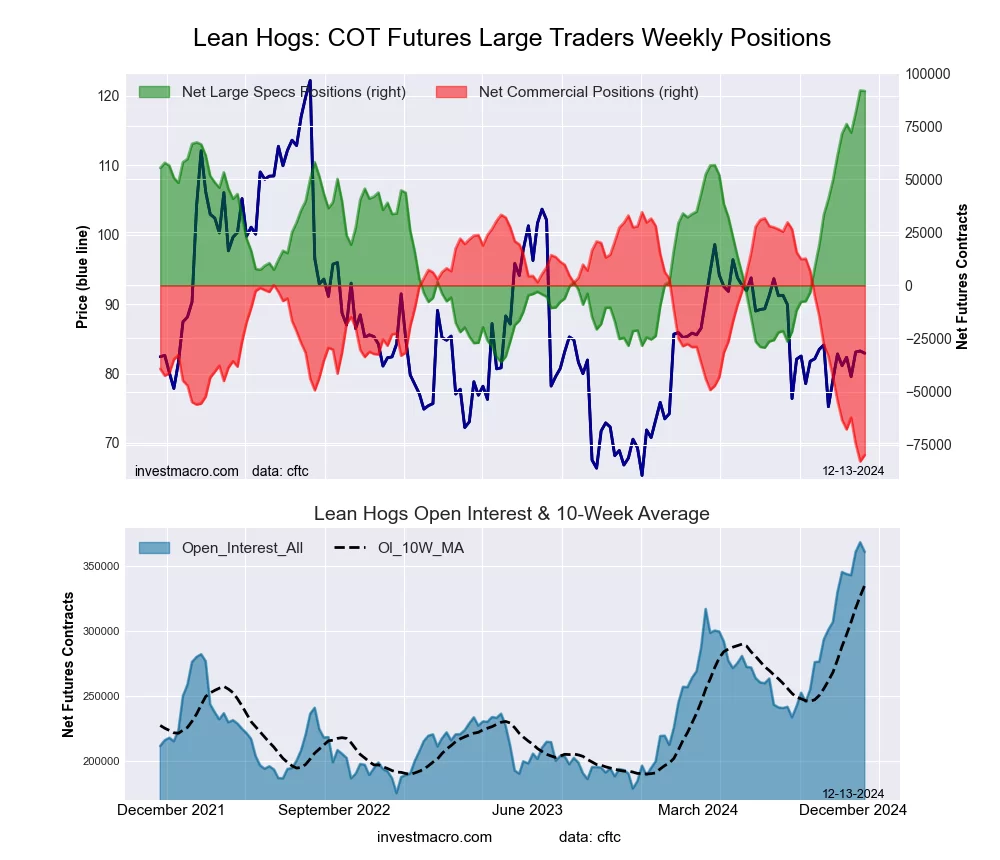
Lean Hogs


The Lean Hogs speculator position rounds out the top five in this week’s bullish extreme standings. The Lean Hogs speculator level sits at a 94.0 percent score of its 3-year range. The six-week trend for the speculator strength score was 62.2 this week.

The speculator position was 61,078 net contracts this week after a boost of 11,584 contracts in the weekly speculator bets.


This Week’s Most Bearish Speculator Positions:

1-Month Secured Overnight Financing Rate


The 1-Month Secured Overnight Financing Rate speculator position comes in as the most bearish extreme standing this week. The 1-Month Secured Overnight Financing Rate speculator level is at a 0.0 percent score of its 3-year range.

The six-week trend for the speculator strength score was -24.0 this week. The overall speculator position was -278,023 net contracts this week following a drop by -28,806 contracts in the speculator bets.


Heating Oil


The Heating Oil speculator position comes in next for the most bearish extreme standing on the week. The Heating Oil speculator level is at a 0.0 percent score of its 3-year range.

The six-week trend for the speculator strength score was -5.2 this week. The speculator position was -16,458 net contracts this week with a decline of -4,636 contracts in the weekly speculator bets.


2-Year Bond


The 2-Year Bond speculator position comes in as third most bearish extreme standing of the week. The 2-Year Bond speculator level resides at a 0.0 percent score of its 3-year range.

The six-week trend for the speculator strength score was -28.9 this week. The overall speculator position was -1,479,361 net contracts this week after a decrease by -98,451 contracts in the speculator bets.


Euro


The Euro speculator position comes in as this week’s fourth most bearish extreme standing. The Euro speculator level is at a 0.0 percent score of its 3-year range.

The six-week trend for the speculator strength score was -50.5 this week. The speculator position was -50,304 net contracts this week following a drop by -21,780 contracts in the weekly speculator bets.


5-Year Bond


Finally, the 5-Year Bond speculator position comes in as the fifth most bearish extreme standing for this week. The 5-Year Bond speculator level is at a 3.5 percent score of its 3-year range.

The six-week trend for the speculator strength score was -5.3 this week. The speculator position was -1,680,471 net contracts this week with a change of -39,484 contracts in the weekly speculator bets.


Article By InvestMacroReceive our weekly COT Newsletter

*COT Report: The COT data, released weekly to the public each Friday, is updated through the most recent Tuesday (data is 3 days old) and shows a quick view of how large speculators or non-commercials (for-profit traders) were positioned in the futures markets.

The CFTC categorizes trader positions according to commercial hedgers (traders who use futures contracts for hedging as part of the business), non-commercials (large traders who speculate to realize trading profits) and nonreportable traders (usually small traders/speculators) as well as their open interest (contracts open in the market at time of reporting). See CFTC criteria here.

COT Metals Charts: Speculator bets led by Palladium & Steel

By InvestMacro

Here are the latest charts and statistics for the Commitment of Traders (COT) data published by the Commodities Futures Trading Commission (CFTC).

The latest COT data is updated through Tuesday October 29th and shows a quick view of how large traders (for-profit speculators and commercial entities) were positioned in the futures markets.

Weekly Speculator Changes led by Palladium & Steel

The COT metals markets speculator bets were mixed this week as three out of the six metals markets we cover had higher positioning while the other three markets had lower speculator contracts.

Leading the gains for the metals was Palladium (2,627 contracts) with Steel (925 contracts) and Platinum (667 contracts) also recording positive weeks.

The markets with declines in speculator bets for the week were Gold (-17,551 contracts), Copper (-8,716 contracts) and with Silver (-5,924 contracts) also seeing lower bets on the week.


Metals Net Speculators Leaderboard

Legend: Weekly Speculators Change | Speculators Current Net Position | Speculators Strength Score compared to last 3-Years (0-100 range)


Strength Scores led by Platinum & Steel

COT Strength Scores (a normalized measure of Speculator positions over a 3-Year range, from 0 to 100 where above 80 is Extreme-Bullish and below 20 is Extreme-Bearish) showed that Platinum (100 percent) and Steel (96 percent) lead the metals markets this week. Gold (86 percent) and Palladium (84 percent) come in as the next highest in the weekly strength scores.

Strength Statistics:
Gold (86.0 percent) vs Gold previous week (92.7 percent)
Silver (92.5 percent) vs Silver previous week (100.0 percent)
Copper (55.3 percent) vs Copper previous week (63.5 percent)
Platinum (100.0 percent) vs Platinum previous week (98.4 percent)
Palladium (84.0 percent) vs Palladium previous week (64.8 percent)
Steel (95.7 percent) vs Palladium previous week (92.2 percent)


Palladium & Platinum top the 6-Week Strength Trends

COT Strength Score Trends (or move index, calculates the 6-week changes in strength scores) showed that Palladium (33 percent) and Platinum (32 percent) lead the past six weeks trends for metals. Silver (3 percent) is the next highest positive mover in the latest trends data.

Gold (-12 percent) leads the downside trend scores and is currently the only market with a lower trend score.

Move Statistics:
Gold (-11.9 percent) vs Gold previous week (5.2 percent)
Silver (2.7 percent) vs Silver previous week (27.3 percent)
Copper (3.8 percent) vs Copper previous week (18.3 percent)
Platinum (32.1 percent) vs Platinum previous week (58.8 percent)
Palladium (33.3 percent) vs Palladium previous week (43.3 percent)
Steel (14.4 percent) vs Steel previous week (9.5 percent)


Individual Markets:

Gold Comex Futures:

Gold Futures COT ChartThe Gold Comex Futures large speculator standing this week was a net position of 278,653 contracts in the data reported through Tuesday. This was a weekly decrease of -17,551 contracts from the previous week which had a total of 296,204 net contracts.

This week’s current strength score (the trader positioning range over the past three years, measured from 0 to 100) shows the speculators are currently Bullish-Extreme with a score of 86.0 percent. The commercials are Bearish-Extreme with a score of 13.0 percent and the small traders (not shown in chart) are Bullish with a score of 61.2 percent.

Price Trend-Following Model: Uptrend

Our weekly trend-following model classifies the current market price position as: Uptrend.

Gold Futures StatisticsSPECULATORSCOMMERCIALSSMALL TRADERS
– Percent of Open Interest Longs:63.311.99.2
– Percent of Open Interest Shorts:15.264.34.9
– Net Position:278,653-303,67125,018
– Gross Longs:366,63668,93553,432
– Gross Shorts:87,983372,60628,414
– Long to Short Ratio:4.2 to 10.2 to 11.9 to 1
NET POSITION TREND:
– Strength Index Score (3 Year Range Pct):86.013.061.2
– Strength Index Reading (3 Year Range):Bullish-ExtremeBearish-ExtremeBullish
NET POSITION MOVEMENT INDEX:
– 6-Week Change in Strength Index:-11.911.3-0.2


Silver Comex Futures:

Silver Futures COT ChartThe Silver Comex Futures large speculator standing this week was a net position of 60,431 contracts in the data reported through Tuesday. This was a weekly reduction of -5,924 contracts from the previous week which had a total of 66,355 net contracts.

This week’s current strength score (the trader positioning range over the past three years, measured from 0 to 100) shows the speculators are currently Bullish-Extreme with a score of 92.5 percent. The commercials are Bearish-Extreme with a score of 3.5 percent and the small traders (not shown in chart) are Bullish with a score of 76.1 percent.

Price Trend-Following Model: Strong Uptrend

Our weekly trend-following model classifies the current market price position as: Strong Uptrend.

Silver Futures StatisticsSPECULATORSCOMMERCIALSSMALL TRADERS
– Percent of Open Interest Longs:51.019.320.6
– Percent of Open Interest Shorts:12.371.96.6
– Net Position:60,431-82,21221,781
– Gross Longs:79,64930,22432,166
– Gross Shorts:19,218112,43610,385
– Long to Short Ratio:4.1 to 10.3 to 13.1 to 1
NET POSITION TREND:
– Strength Index Score (3 Year Range Pct):92.53.576.1
– Strength Index Reading (3 Year Range):Bullish-ExtremeBearish-ExtremeBullish
NET POSITION MOVEMENT INDEX:
– 6-Week Change in Strength Index:2.7-5.413.5


Copper Grade #1 Futures:

Copper Futures COT ChartThe Copper Grade #1 Futures large speculator standing this week was a net position of 23,739 contracts in the data reported through Tuesday. This was a weekly decrease of -8,716 contracts from the previous week which had a total of 32,455 net contracts.

This week’s current strength score (the trader positioning range over the past three years, measured from 0 to 100) shows the speculators are currently Bullish with a score of 55.3 percent. The commercials are Bearish with a score of 40.9 percent and the small traders (not shown in chart) are Bullish-Extreme with a score of 81.3 percent.

Price Trend-Following Model: Weak Downtrend

Our weekly trend-following model classifies the current market price position as: Weak Downtrend.

Copper Futures StatisticsSPECULATORSCOMMERCIALSSMALL TRADERS
– Percent of Open Interest Longs:39.134.48.2
– Percent of Open Interest Shorts:29.548.34.0
– Net Position:23,739-34,23910,500
– Gross Longs:96,84485,29020,362
– Gross Shorts:73,105119,5299,862
– Long to Short Ratio:1.3 to 10.7 to 12.1 to 1
NET POSITION TREND:
– Strength Index Score (3 Year Range Pct):55.340.981.3
– Strength Index Reading (3 Year Range):BullishBearishBullish-Extreme
NET POSITION MOVEMENT INDEX:
– 6-Week Change in Strength Index:3.8-7.427.7


Platinum Futures:

Platinum Futures COT ChartThe Platinum Futures large speculator standing this week was a net position of 35,543 contracts in the data reported through Tuesday. This was a weekly rise of 667 contracts from the previous week which had a total of 34,876 net contracts.

This week’s current strength score (the trader positioning range over the past three years, measured from 0 to 100) shows the speculators are currently Bullish-Extreme with a score of 100.0 percent. The commercials are Bearish-Extreme with a score of 0.0 percent and the small traders (not shown in chart) are Bullish with a score of 55.5 percent.

Price Trend-Following Model: Strong Uptrend

Our weekly trend-following model classifies the current market price position as: Strong Uptrend.

Platinum Futures StatisticsSPECULATORSCOMMERCIALSSMALL TRADERS
– Percent of Open Interest Longs:66.615.410.9
– Percent of Open Interest Shorts:25.463.44.1
– Net Position:35,543-41,4515,908
– Gross Longs:57,50013,3269,413
– Gross Shorts:21,95754,7773,505
– Long to Short Ratio:2.6 to 10.2 to 12.7 to 1
NET POSITION TREND:
– Strength Index Score (3 Year Range Pct):100.00.055.5
– Strength Index Reading (3 Year Range):Bullish-ExtremeBearish-ExtremeBullish
NET POSITION MOVEMENT INDEX:
– 6-Week Change in Strength Index:32.1-32.313.4


Palladium Futures:

Palladium Futures COT ChartThe Palladium Futures large speculator standing this week was a net position of -2,453 contracts in the data reported through Tuesday. This was a weekly advance of 2,627 contracts from the previous week which had a total of -5,080 net contracts.

This week’s current strength score (the trader positioning range over the past three years, measured from 0 to 100) shows the speculators are currently Bullish-Extreme with a score of 84.0 percent. The commercials are Bearish-Extreme with a score of 15.7 percent and the small traders (not shown in chart) are Bullish with a score of 72.9 percent.

Price Trend-Following Model: Strong Uptrend

Our weekly trend-following model classifies the current market price position as: Strong Uptrend.

Palladium Futures StatisticsSPECULATORSCOMMERCIALSSMALL TRADERS
– Percent of Open Interest Longs:36.944.313.5
– Percent of Open Interest Shorts:50.735.18.9
– Net Position:-2,4531,636817
– Gross Longs:6,5787,8932,397
– Gross Shorts:9,0316,2571,580
– Long to Short Ratio:0.7 to 11.3 to 11.5 to 1
NET POSITION TREND:
– Strength Index Score (3 Year Range Pct):84.015.772.9
– Strength Index Reading (3 Year Range):Bullish-ExtremeBearish-ExtremeBullish
NET POSITION MOVEMENT INDEX:
– 6-Week Change in Strength Index:33.3-39.950.3


Steel Futures Futures:

Steel Futures COT ChartThe Steel Futures large speculator standing this week was a net position of -153 contracts in the data reported through Tuesday. This was a weekly increase of 925 contracts from the previous week which had a total of -1,078 net contracts.

This week’s current strength score (the trader positioning range over the past three years, measured from 0 to 100) shows the speculators are currently Bullish-Extreme with a score of 95.7 percent. The commercials are Bearish-Extreme with a score of 4.6 percent and the small traders (not shown in chart) are Bearish with a score of 48.6 percent.

Price Trend-Following Model: Strong Uptrend

Our weekly trend-following model classifies the current market price position as: Strong Uptrend.

Steel Futures StatisticsSPECULATORSCOMMERCIALSSMALL TRADERS
– Percent of Open Interest Longs:26.867.61.1
– Percent of Open Interest Shorts:27.367.60.6
– Net Position:-1535148
– Gross Longs:7,52118,979310
– Gross Shorts:7,67418,974162
– Long to Short Ratio:1.0 to 11.0 to 11.9 to 1
NET POSITION TREND:
– Strength Index Score (3 Year Range Pct):95.74.648.6
– Strength Index Reading (3 Year Range):Bullish-ExtremeBearish-ExtremeBearish
NET POSITION MOVEMENT INDEX:
– 6-Week Change in Strength Index:14.4-14.42.2


Article By InvestMacroReceive our weekly COT Newsletter

*COT Report: The COT data, released weekly to the public each Friday, is updated through the most recent Tuesday (data is 3 days old) and shows a quick view of how large speculators or non-commercials (for-profit traders) were positioned in the futures markets.

The CFTC categorizes trader positions according to commercial hedgers (traders who use futures contracts for hedging as part of the business), non-commercials (large traders who speculate to realize trading profits) and nonreportable traders (usually small traders/speculators) as well as their open interest (contracts open in the market at time of reporting). See CFTC criteria here.

COT Bonds Charts: Speculator Bets led by Ultra Treasury Bonds & US Treasury Bonds

By InvestMacro

Here are the latest charts and statistics for the Commitment of Traders (COT) reports data published by the Commodities Futures Trading Commission (CFTC).

The latest COT data is updated through Tuesday October 29th and shows a quick view of how large traders (for-profit speculators and commercial hedgers) were positioned in the futures markets.

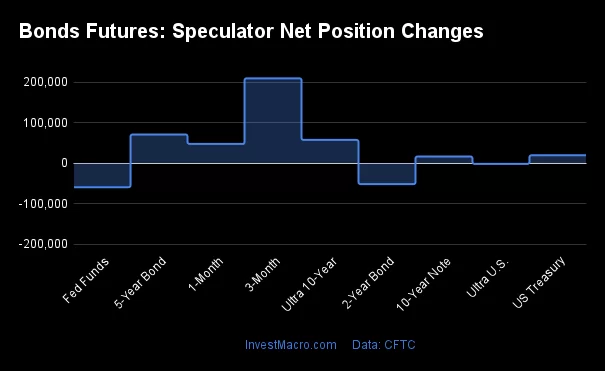
Weekly Speculator Changes led by Ultra Treasury Bonds & US Treasury Bonds

The COT bond market speculator bets were lower this week as three out of the nine bond markets we cover had higher positioning while the other six markets had lower speculator contracts.

Leading the gains for the bond markets was the Ultra Treasury Bonds (32,269 contracts) with the US Treasury Bonds (19,020 contracts) and the Fed Funds (17,490 contracts) also recording positive weeks.

The bond markets with declines in speculator bets for the week were the 2-Year Bonds (-98,451 contracts), the 10-Year Bonds (-52,992 contracts), the Ultra 10-Year Bonds (-39,312 contracts), the 5-Year Bonds (-39,484 contracts), the SOFR 1-Month (-28,806 contracts) and with the SOFR 3-Months (-86 contracts) also registering lower bets on the week.


Bonds Net Speculators Leaderboard

Legend: Weekly Speculators Change | Speculators Current Net Position | Speculators Strength Score compared to last 3-Years (0-100 range)


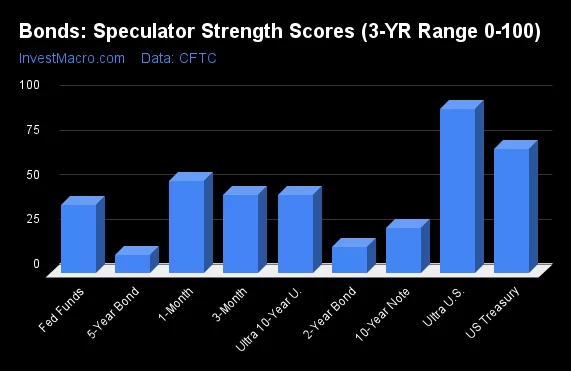
Strength Scores led by Fed Funds & Ultra Treasury Bonds

COT Strength Scores (a normalized measure of Speculator positions over a 3-Year range, from 0 to 100 where above 80 is Extreme-Bullish and below 20 is Extreme-Bearish) showed that the Fed Funds (83 percent) and the Ultra Treasury Bonds (68 percent) lead the bond markets this week. The US Treasury Bonds (64 percent) comes in as the next highest in the weekly strength scores.

On the downside, the 2-Year Bonds (0 percent), the SOFR 1-Month (0 percent) and the 5-Year Bonds (3 percent) come in at the lowest strength level currently and are in Extreme-Bearish territory (below 20 percent).

Strength Statistics:
Fed Funds (83.0 percent) vs Fed Funds previous week (79.8 percent)
2-Year Bond (0.0 percent) vs 2-Year Bond previous week (6.3 percent)
5-Year Bond (3.5 percent) vs 5-Year Bond previous week (5.9 percent)
10-Year Bond (22.9 percent) vs 10-Year Bond previous week (28.0 percent)
Ultra 10-Year Bond (36.5 percent) vs Ultra 10-Year Bond previous week (44.6 percent)
US Treasury Bond (64.4 percent) vs US Treasury Bond previous week (57.8 percent)
Ultra US Treasury Bond (67.7 percent) vs Ultra US Treasury Bond previous week (52.8 percent)
SOFR 1-Month (0.0 percent) vs SOFR 1-Month previous week (7.1 percent)
SOFR 3-Months (57.6 percent) vs SOFR 3-Months previous week (57.6 percent)


US Treasury Bonds & 10-Year Bonds top the 6-Week Strength Trends

COT Strength Score Trends (or move index, calculates the 6-week changes in strength scores) showed that the US Treasury Bonds (19 percent) and the 10-Year Bonds (18 percent) lead the past six weeks trends for bonds.

The SOFR 3-Months (-37 percent), the 2-Year Bonds (-29 percent) and the SOFR 1-Month (-24 percent) lead the downside trend scores currently.

Strength Trend Statistics:
Fed Funds (-4.6 percent) vs Fed Funds previous week (35.6 percent)
2-Year Bond (-28.9 percent) vs 2-Year Bond previous week (-23.9 percent)
5-Year Bond (-5.3 percent) vs 5-Year Bond previous week (4.8 percent)
10-Year Bond (18.2 percent) vs 10-Year Bond previous week (16.4 percent)
Ultra 10-Year Bond (-12.0 percent) vs Ultra 10-Year Bond previous week (-1.6 percent)
US Treasury Bond (19.1 percent) vs US Treasury Bond previous week (-3.3 percent)
Ultra US Treasury Bond (-16.5 percent) vs Ultra US Treasury Bond previous week (-38.5 percent)
SOFR 1-Month (-24.0 percent) vs SOFR 1-Month previous week (-27.9 percent)
SOFR 3-Months (-37.1 percent) vs SOFR 3-Months previous week (-41.1 percent)


30-Day Federal Funds Futures:
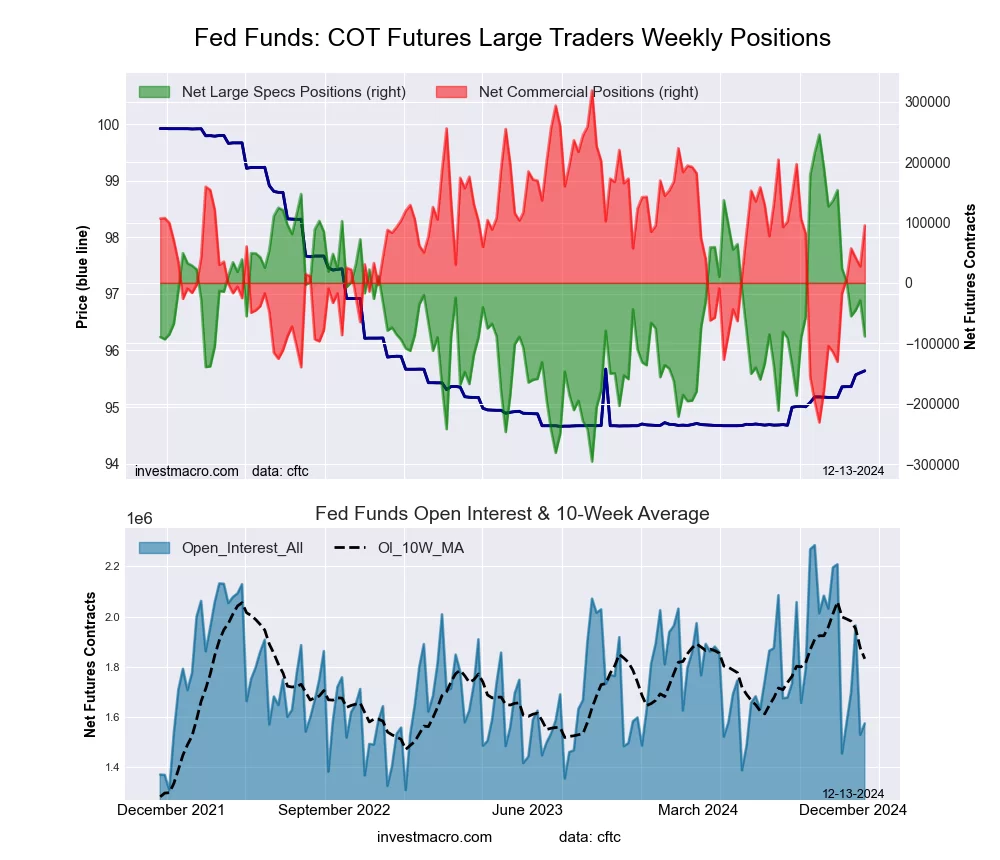
Federal Funds 30-Day Bonds Futures COT ChartThe 30-Day Federal Funds large speculator standing this week equaled a net position of 153,705 contracts in the data reported through Tuesday. This was a weekly increase of 17,490 contracts from the previous week which had a total of 136,215 net contracts.

This week’s current strength score (the trader positioning range over the past three years, measured from 0 to 100) shows the speculators are currently Bullish-Extreme with a score of 83.0 percent. The commercials are Bearish-Extreme with a score of 18.3 percent and the small traders (not shown in chart) are Bearish with a score of 42.5 percent.

Price Trend-Following Model: Downtrend

Our weekly trend-following model classifies the current market price position as: Downtrend. The current action for the model is considered to be: Hold – Maintain Short Position.

30-Day Federal Funds StatisticsSPECULATORSCOMMERCIALSSMALL TRADERS
– Percent of Open Interest Longs:21.357.21.7
– Percent of Open Interest Shorts:14.363.12.7
– Net Position:153,705-130,471-23,234
– Gross Longs:469,5421,263,93537,401
– Gross Shorts:315,8371,394,40660,635
– Long to Short Ratio:1.5 to 10.9 to 10.6 to 1
NET POSITION TREND:
– Strength Index Score (3 Year Range Pct):83.018.342.5
– Strength Index Reading (3 Year Range):Bullish-ExtremeBearish-ExtremeBearish
NET POSITION MOVEMENT INDEX:
– 6-Week Change in Strength Index:-4.64.6-0.5


Secured Overnight Financing Rate (3-Month) Futures:
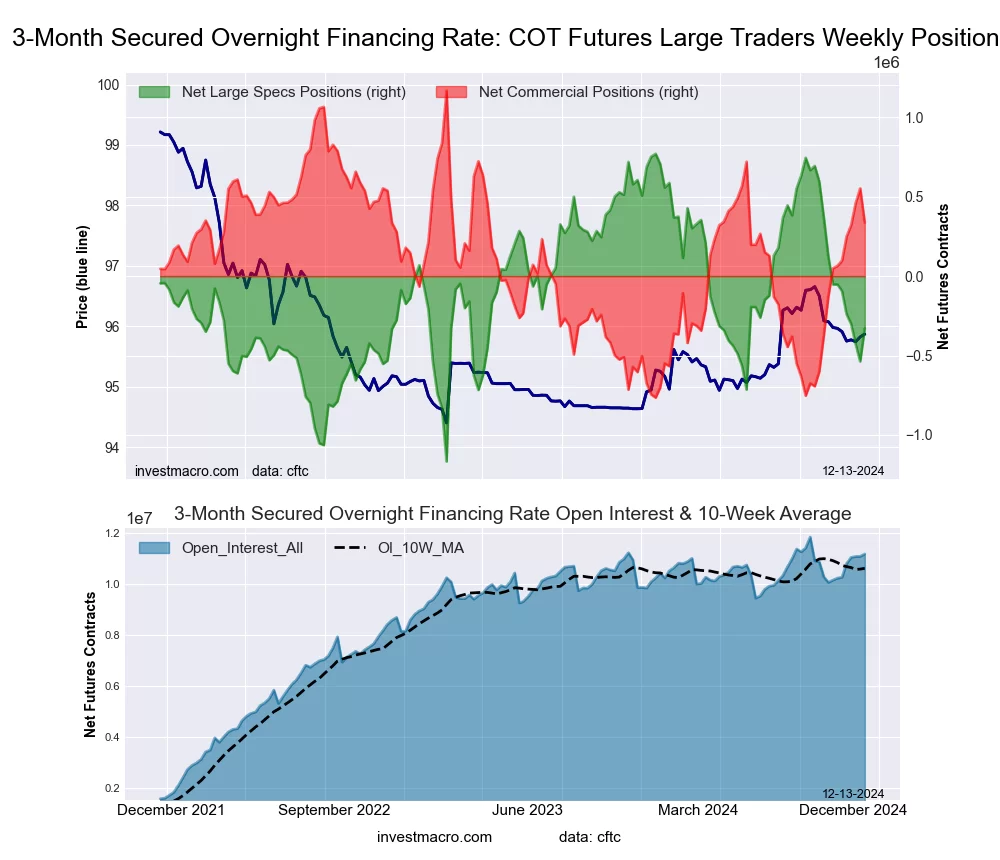
SOFR 3-Months Bonds Futures COT ChartThe Secured Overnight Financing Rate (3-Month) large speculator standing this week equaled a net position of -52,149 contracts in the data reported through Tuesday. This was a weekly lowering of -86 contracts from the previous week which had a total of -52,063 net contracts.

This week’s current strength score (the trader positioning range over the past three years, measured from 0 to 100) shows the speculators are currently Bullish with a score of 57.6 percent. The commercials are Bearish with a score of 42.9 percent and the small traders (not shown in chart) are Bullish-Extreme with a score of 81.3 percent.

Price Trend-Following Model: Weak Uptrend

Our weekly trend-following model classifies the current market price position as: Weak Uptrend. The current action for the model is considered to be: Hold – Maintain Long Position.

SOFR 3-Months StatisticsSPECULATORSCOMMERCIALSSMALL TRADERS
– Percent of Open Interest Longs:14.557.90.4
– Percent of Open Interest Shorts:15.057.30.5
– Net Position:-52,14964,149-12,000
– Gross Longs:1,476,9905,917,93040,674
– Gross Shorts:1,529,1395,853,78152,674
– Long to Short Ratio:1.0 to 11.0 to 10.8 to 1
NET POSITION TREND:
– Strength Index Score (3 Year Range Pct):57.642.981.3
– Strength Index Reading (3 Year Range):BullishBearishBullish-Extreme
NET POSITION MOVEMENT INDEX:
– 6-Week Change in Strength Index:-37.138.3-11.5


Individual Bond Markets:

Secured Overnight Financing Rate (1-Month) Futures:
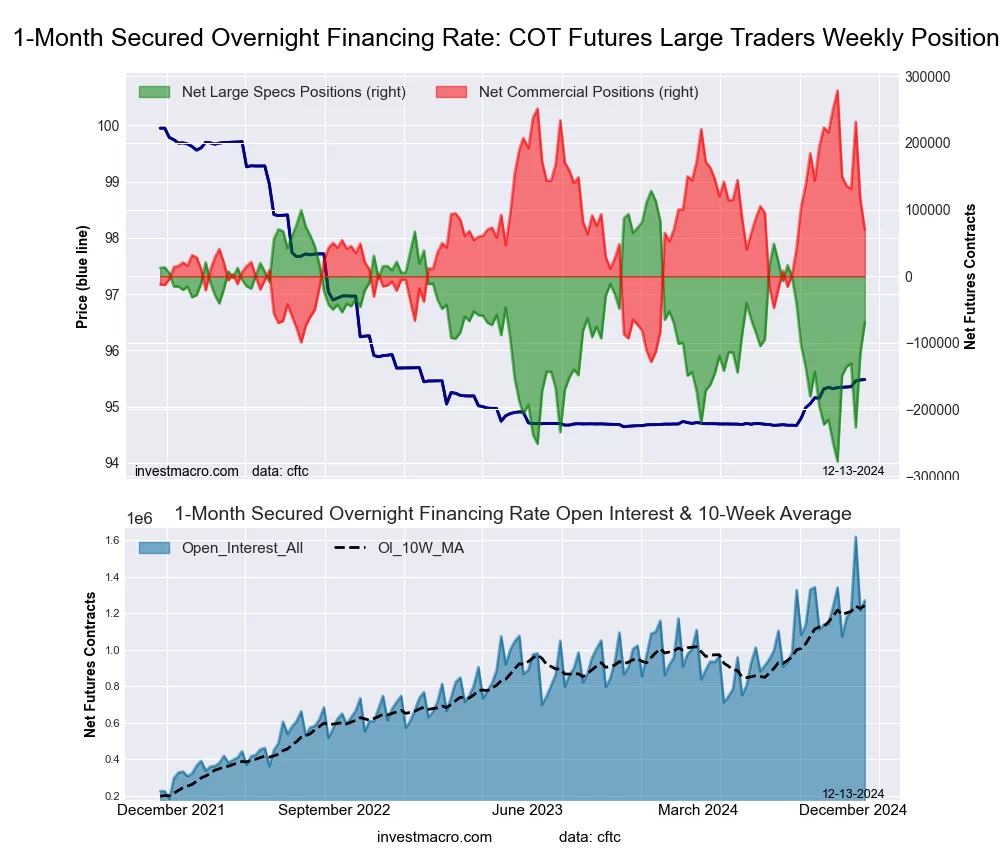
SOFR 1-Month Bonds Futures COT ChartThe Secured Overnight Financing Rate (1-Month) large speculator standing this week equaled a net position of -278,023 contracts in the data reported through Tuesday. This was a weekly decrease of -28,806 contracts from the previous week which had a total of -249,217 net contracts.

This week’s current strength score (the trader positioning range over the past three years, measured from 0 to 100) shows the speculators are currently Bearish-Extreme with a score of 0.0 percent. The commercials are Bullish-Extreme with a score of 100.0 percent and the small traders (not shown in chart) are Bullish with a score of 50.9 percent.

Price Trend-Following Model: Strong Uptrend

Our weekly trend-following model classifies the current market price position as: Strong Uptrend.

SOFR 1-Month StatisticsSPECULATORSCOMMERCIALSSMALL TRADERS
– Percent of Open Interest Longs:9.969.40.0
– Percent of Open Interest Shorts:30.648.60.1
– Net Position:-278,023278,649-626
– Gross Longs:132,190930,913413
– Gross Shorts:410,213652,2641,039
– Long to Short Ratio:0.3 to 11.4 to 10.4 to 1
NET POSITION TREND:
– Strength Index Score (3 Year Range Pct):0.0100.050.9
– Strength Index Reading (3 Year Range):Bearish-ExtremeBullish-ExtremeBullish
NET POSITION MOVEMENT INDEX:
– 6-Week Change in Strength Index:-24.023.127.1


2-Year Treasury Note Futures:

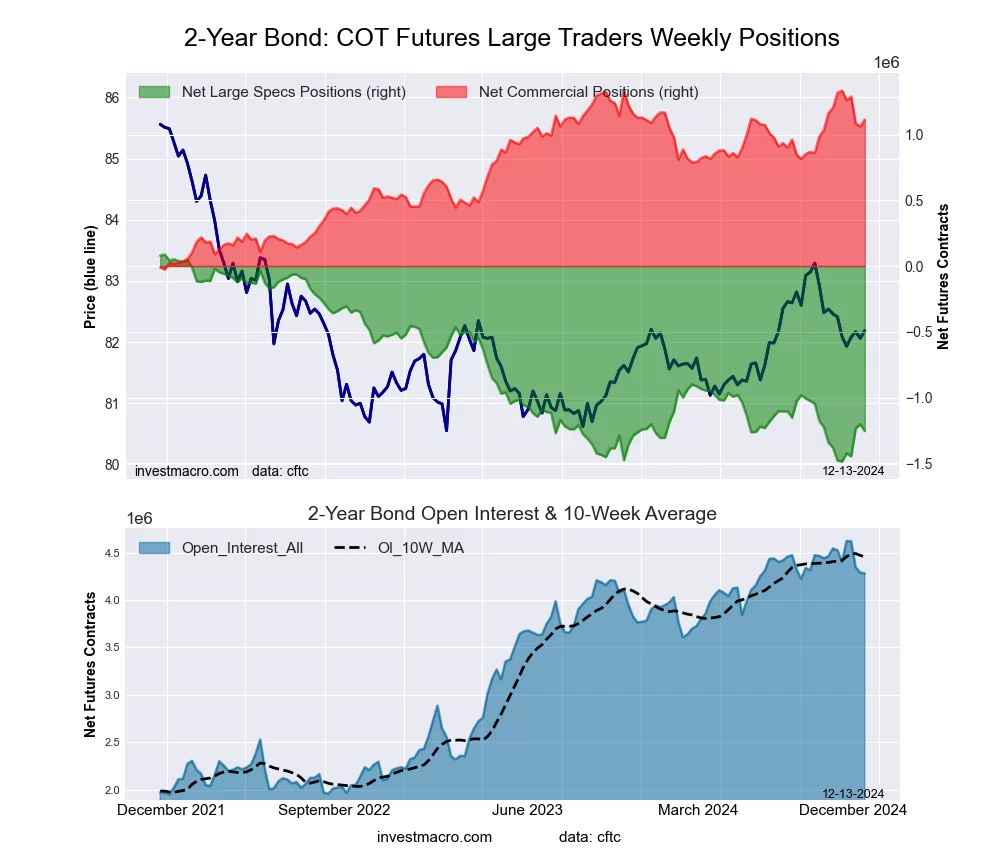
2-Year Treasury Bonds Futures COT ChartThe 2-Year Treasury Note large speculator standing this week equaled a net position of -1,479,361 contracts in the data reported through Tuesday. This was a weekly decline of -98,451 contracts from the previous week which had a total of -1,380,910 net contracts.

This week’s current strength score (the trader positioning range over the past three years, measured from 0 to 100) shows the speculators are currently Bearish-Extreme with a score of 0.0 percent. The commercials are Bullish-Extreme with a score of 98.8 percent and the small traders (not shown in chart) are Bullish-Extreme with a score of 86.9 percent.

Price Trend-Following Model: Weak Uptrend

Our weekly trend-following model classifies the current market price position as: Weak Uptrend.

2-Year Treasury Note StatisticsSPECULATORSCOMMERCIALSSMALL TRADERS
– Percent of Open Interest Longs:12.180.05.9
– Percent of Open Interest Shorts:44.750.92.4
– Net Position:-1,479,3611,318,151161,210
– Gross Longs:545,6773,620,929268,615
– Gross Shorts:2,025,0382,302,778107,405
– Long to Short Ratio:0.3 to 11.6 to 12.5 to 1
NET POSITION TREND:
– Strength Index Score (3 Year Range Pct):0.098.886.9
– Strength Index Reading (3 Year Range):Bearish-ExtremeBullish-ExtremeBullish-Extreme
NET POSITION MOVEMENT INDEX:
– 6-Week Change in Strength Index:-28.933.10.8


5-Year Treasury Note Futures:

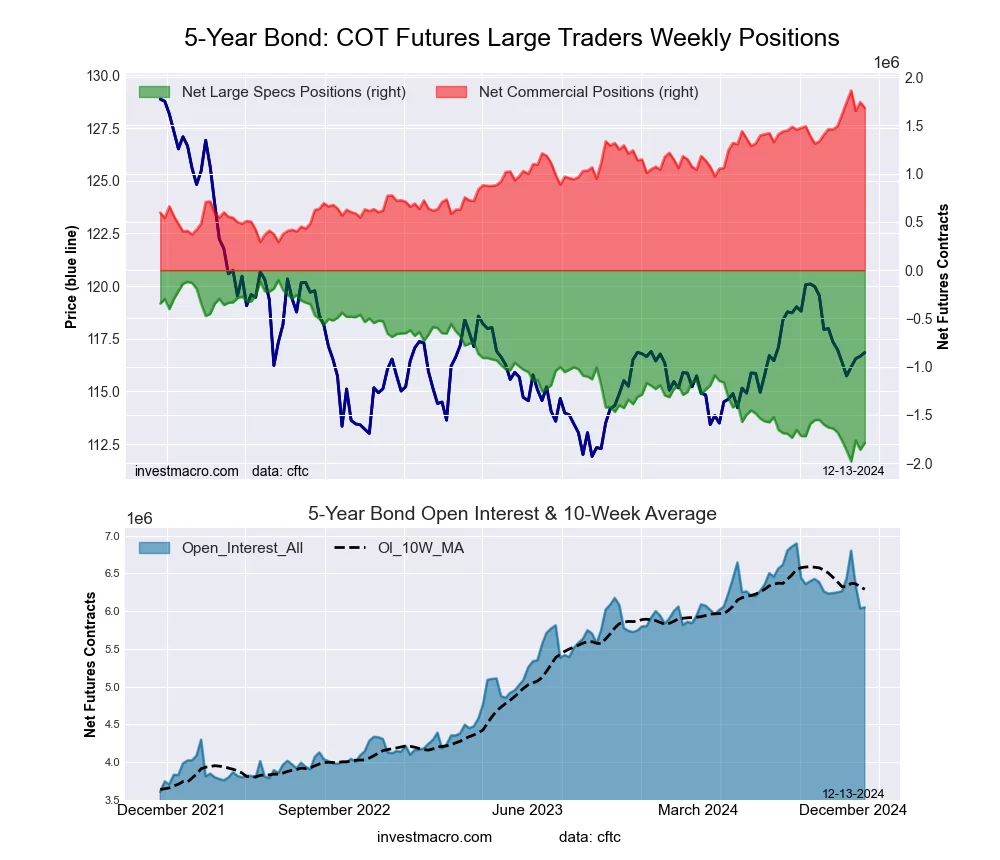
5-Year Treasury Bonds Futures COT ChartThe 5-Year Treasury Note large speculator standing this week equaled a net position of -1,680,471 contracts in the data reported through Tuesday. This was a weekly lowering of -39,484 contracts from the previous week which had a total of -1,640,987 net contracts.

This week’s current strength score (the trader positioning range over the past three years, measured from 0 to 100) shows the speculators are currently Bearish-Extreme with a score of 3.5 percent. The commercials are Bullish-Extreme with a score of 100.0 percent and the small traders (not shown in chart) are Bullish-Extreme with a score of 88.3 percent.

Price Trend-Following Model: Weak Uptrend

Our weekly trend-following model classifies the current market price position as: Weak Uptrend.

5-Year Treasury Note StatisticsSPECULATORSCOMMERCIALSSMALL TRADERS
– Percent of Open Interest Longs:7.384.17.1
– Percent of Open Interest Shorts:34.260.24.1
– Net Position:-1,680,4711,493,749186,722
– Gross Longs:458,6885,255,655441,574
– Gross Shorts:2,139,1593,761,906254,852
– Long to Short Ratio:0.2 to 11.4 to 11.7 to 1
NET POSITION TREND:
– Strength Index Score (3 Year Range Pct):3.5100.088.3
– Strength Index Reading (3 Year Range):Bearish-ExtremeBullish-ExtremeBullish-Extreme
NET POSITION MOVEMENT INDEX:
– 6-Week Change in Strength Index:-5.38.5-2.9


10-Year Treasury Note Futures:

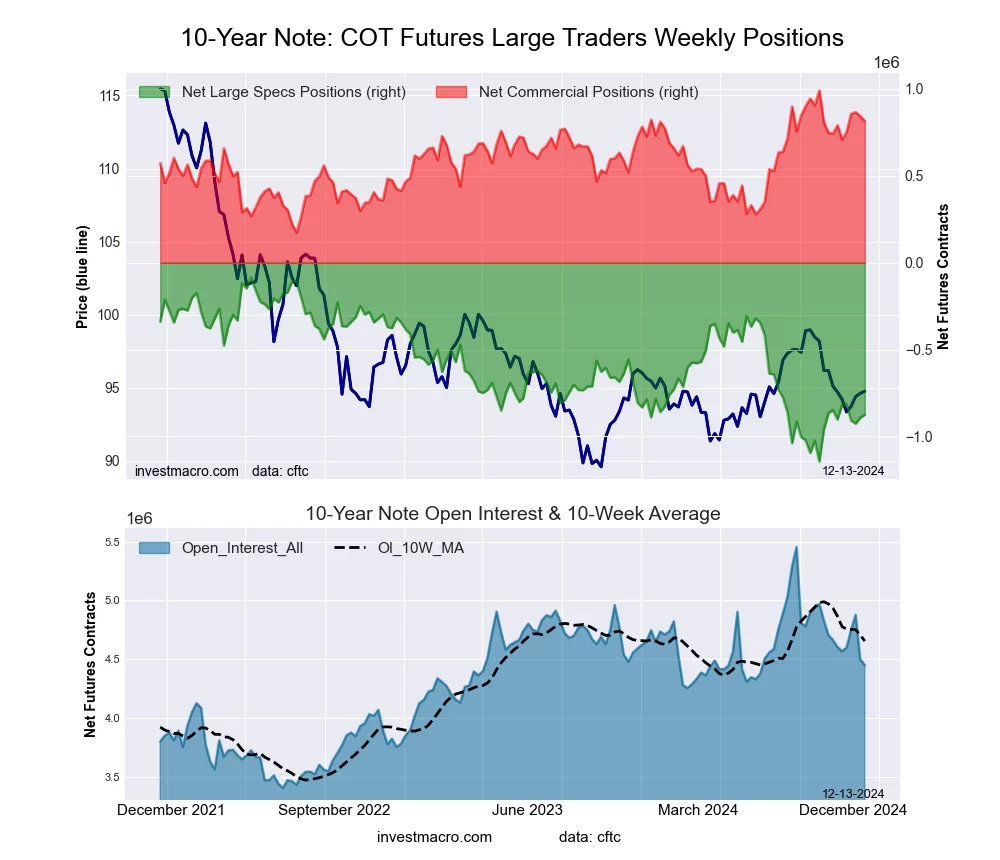
10-Year Treasury Notes Bonds Futures COT ChartThe 10-Year Treasury Note large speculator standing this week equaled a net position of -901,183 contracts in the data reported through Tuesday. This was a weekly reduction of -52,992 contracts from the previous week which had a total of -848,191 net contracts.

This week’s current strength score (the trader positioning range over the past three years, measured from 0 to 100) shows the speculators are currently Bearish with a score of 22.9 percent. The commercials are Bullish with a score of 75.5 percent and the small traders (not shown in chart) are Bullish-Extreme with a score of 89.6 percent.

Price Trend-Following Model: Weak Uptrend

Our weekly trend-following model classifies the current market price position as: Weak Uptrend.

10-Year Treasury Note StatisticsSPECULATORSCOMMERCIALSSMALL TRADERS
– Percent of Open Interest Longs:9.377.910.4
– Percent of Open Interest Shorts:28.960.78.0
– Net Position:-901,183790,410110,773
– Gross Longs:429,0783,583,452478,912
– Gross Shorts:1,330,2612,793,042368,139
– Long to Short Ratio:0.3 to 11.3 to 11.3 to 1
NET POSITION TREND:
– Strength Index Score (3 Year Range Pct):22.975.589.6
– Strength Index Reading (3 Year Range):BearishBullishBullish-Extreme
NET POSITION MOVEMENT INDEX:
– 6-Week Change in Strength Index:18.2-18.8-8.5


Ultra 10-Year Notes Futures:

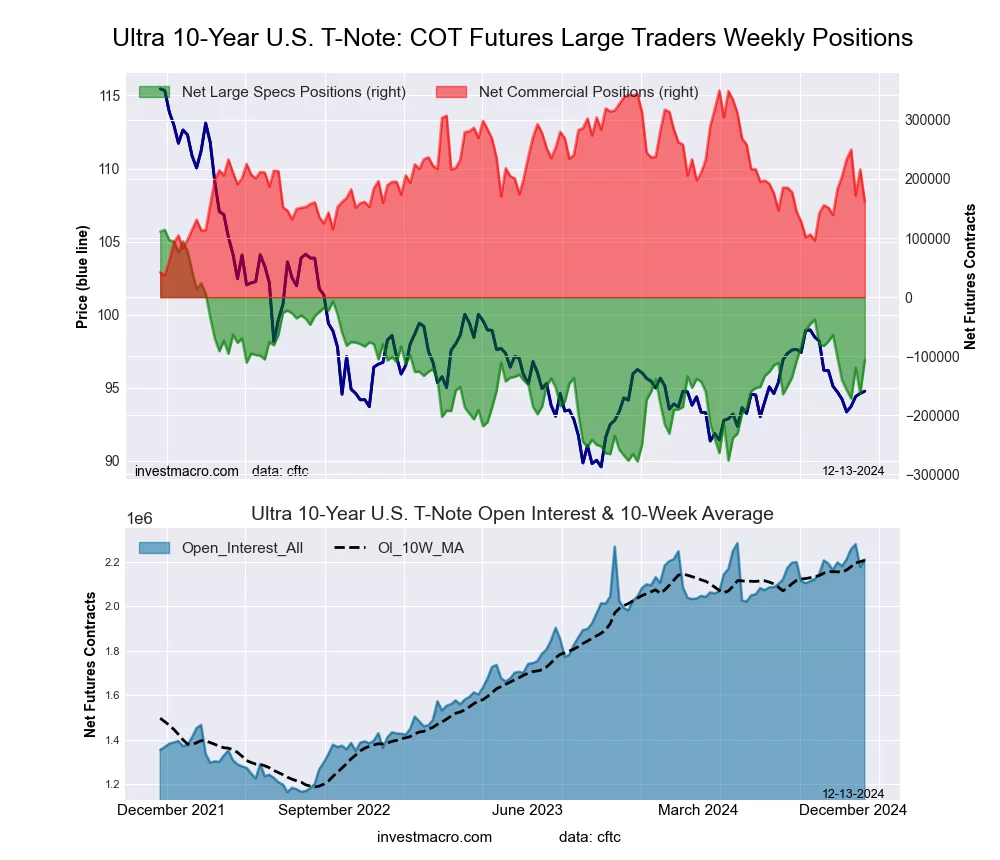
Ultra 10-Year Treasury Notes Bonds Futures COT ChartThe Ultra 10-Year Notes large speculator standing this week equaled a net position of -103,034 contracts in the data reported through Tuesday. This was a weekly fall of -39,312 contracts from the previous week which had a total of -63,722 net contracts.

This week’s current strength score (the trader positioning range over the past three years, measured from 0 to 100) shows the speculators are currently Bearish with a score of 36.5 percent. The commercials are Bullish with a score of 54.8 percent and the small traders (not shown in chart) are Bullish with a score of 65.4 percent.

Price Trend-Following Model: Weak Uptrend

Our weekly trend-following model classifies the current market price position as: Weak Uptrend. The current action for the model is considered to be: Hold – Maintain Long Position.

Ultra 10-Year Notes StatisticsSPECULATORSCOMMERCIALSSMALL TRADERS
– Percent of Open Interest Longs:16.173.59.8
– Percent of Open Interest Shorts:20.865.113.4
– Net Position:-103,034183,187-80,153
– Gross Longs:353,2101,614,142214,437
– Gross Shorts:456,2441,430,955294,590
– Long to Short Ratio:0.8 to 11.1 to 10.7 to 1
NET POSITION TREND:
– Strength Index Score (3 Year Range Pct):36.554.865.4
– Strength Index Reading (3 Year Range):BearishBullishBullish
NET POSITION MOVEMENT INDEX:
– 6-Week Change in Strength Index:-12.020.9-11.6


US Treasury Bonds Futures:

US Year Treasury Notes Long Bonds Futures COT ChartThe US Treasury Bonds large speculator standing this week equaled a net position of -54,817 contracts in the data reported through Tuesday. This was a weekly gain of 19,020 contracts from the previous week which had a total of -73,837 net contracts.

This week’s current strength score (the trader positioning range over the past three years, measured from 0 to 100) shows the speculators are currently Bullish with a score of 64.4 percent. The commercials are Bearish-Extreme with a score of 17.7 percent and the small traders (not shown in chart) are Bullish with a score of 79.1 percent.

Price Trend-Following Model: Weak Uptrend

Our weekly trend-following model classifies the current market price position as: Weak Uptrend.

US Treasury Bonds StatisticsSPECULATORSCOMMERCIALSSMALL TRADERS
– Percent of Open Interest Longs:22.863.412.0
– Percent of Open Interest Shorts:25.865.37.2
– Net Position:-54,817-33,07987,896
– Gross Longs:417,1931,159,696219,436
– Gross Shorts:472,0101,192,775131,540
– Long to Short Ratio:0.9 to 11.0 to 11.7 to 1
NET POSITION TREND:
– Strength Index Score (3 Year Range Pct):64.417.779.1
– Strength Index Reading (3 Year Range):BullishBearish-ExtremeBullish
NET POSITION MOVEMENT INDEX:
– 6-Week Change in Strength Index:19.1-10.2-16.8


Ultra US Treasury Bonds Futures:

Ultra US Year Treasury Notes Long Bonds Futures COT ChartThe Ultra US Treasury Bonds large speculator standing this week equaled a net position of -310,034 contracts in the data reported through Tuesday. This was a weekly rise of 32,269 contracts from the previous week which had a total of -342,303 net contracts.

This week’s current strength score (the trader positioning range over the past three years, measured from 0 to 100) shows the speculators are currently Bullish with a score of 67.7 percent. The commercials are Bearish with a score of 47.5 percent and the small traders (not shown in chart) are Bearish-Extreme with a score of 9.0 percent.

Price Trend-Following Model: Weak Uptrend

Our weekly trend-following model classifies the current market price position as: Weak Uptrend.

Ultra US Treasury Bonds StatisticsSPECULATORSCOMMERCIALSSMALL TRADERS
– Percent of Open Interest Longs:9.078.410.6
– Percent of Open Interest Shorts:26.561.210.5
– Net Position:-310,034307,6592,375
– Gross Longs:160,8921,396,250188,474
– Gross Shorts:470,9261,088,591186,099
– Long to Short Ratio:0.3 to 11.3 to 11.0 to 1
NET POSITION TREND:
– Strength Index Score (3 Year Range Pct):67.747.59.0
– Strength Index Reading (3 Year Range):BullishBearishBearish-Extreme
NET POSITION MOVEMENT INDEX:
– 6-Week Change in Strength Index:-16.539.5-61.3


Article By InvestMacroReceive our weekly COT Newsletter

*COT Report: The COT data, released weekly to the public each Friday, is updated through the most recent Tuesday (data is 3 days old) and shows a quick view of how large speculators or non-commercials (for-profit traders) were positioned in the futures markets.

The CFTC categorizes trader positions according to commercial hedgers (traders who use futures contracts for hedging as part of the business), non-commercials (large traders who speculate to realize trading profits) and nonreportable traders (usually small traders/speculators) as well as their open interest (contracts open in the market at time of reporting). See CFTC criteria here.