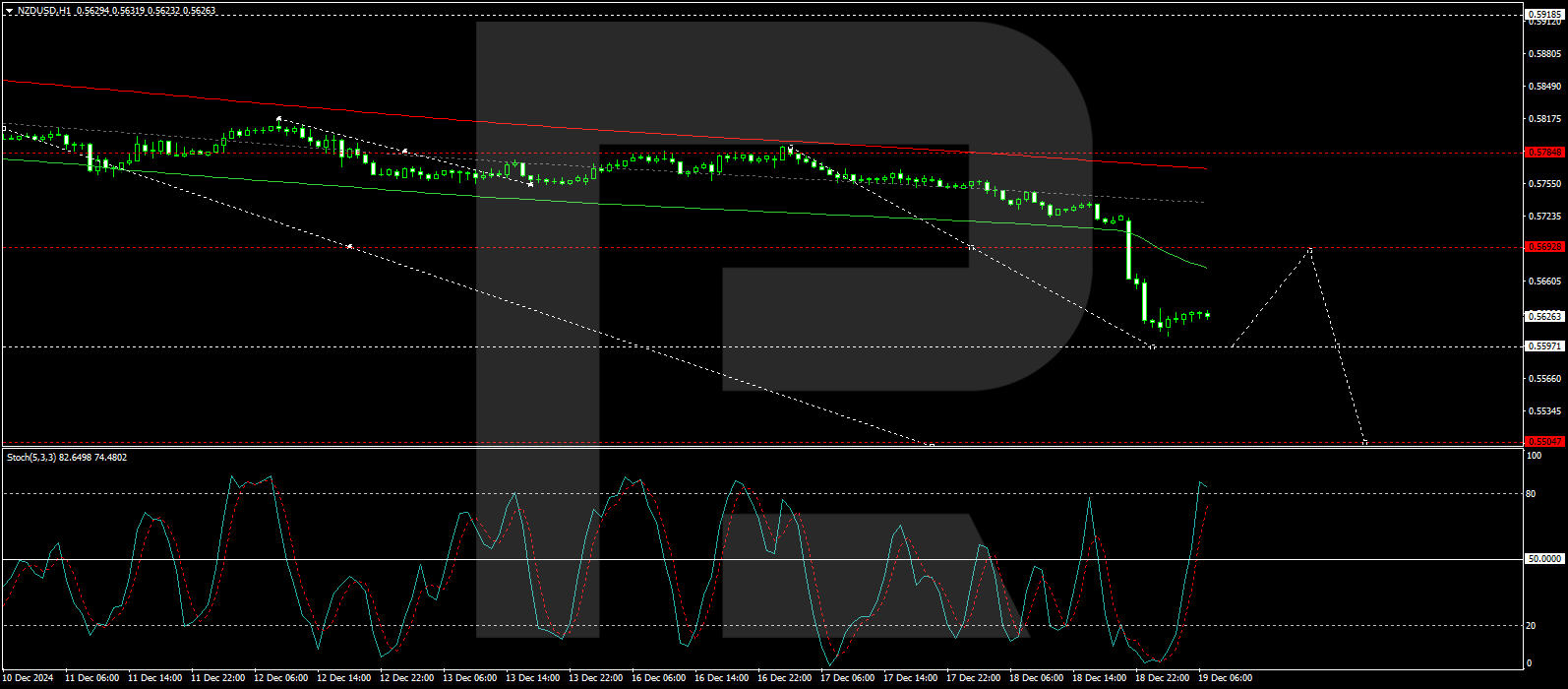
Profit-taking is observed on stock indices. The data on wages in Australia haven’t met expectations

By JustMarkets

At the end of Tuesday, the Dow Jones Index (US30) fell by 0.29%. The S&P 500 Index (US500) was down 0.29%. The NASDAQ Technology Index (US100) closed negative 0.17%. Higher bond yields on Tuesday contributed to some profit-taking in equities after five consecutive sessions of gains. In addition, the liquidation of long positions in equities ahead of Wednesday’s release of the US consumer price report had a negative impact on the overall market.

Shares of Nvidia (NVDA) closed higher by more than 2% after Redburn initiated a “buy” recommendation with a $178 price target. Airbnb (ABNB) shares closed down more than 2% after Phillip Securities downgraded the stock to a downgrade from neutral with a $120 price target.

Today, the US will release its monthly consumer inflation report. Economists expect annualized core inflation, which excludes food and fuel costs, to remain at 3.3%. Overall inflation is estimated at 2.5% y/y, up from 2.4% y/y last month. The October CPI may not have a strong impact on the market, as the US Fed will have both October and November inflation reports in hand before the December meeting, and the decision will be based more on the latest report. Also, the Trump factor should not be ruled out, as many believe that his proposals, in particular tariff hikes, may lead to higher consumer prices. Therefore, if the inflation data remains stable or shows a slight increase, it will be more positive for the US dollar as it will increase the probability that the US Fed may pause in December. If, however, the inflation data is better than expected and shows a reduction in inflationary pressures, this will hurt the US dollar but will be positive for indices and precious metals.

Equity markets in Europe decreased yesterday. Germany’s DAX (DE40) fell by 2.13%, France’s CAC 40 (FR40) closed down 2.69%, Spain’s IBEX 35 (ES35) lost 1.85%, and the UK’s FTSE 100 (UK100) closed down 1.22%. Expectations for German economic growth in the November ZEW survey unexpectedly fell by 3.7 to 7.4 versus expectations of an increase to 13.2. ECB Governing Council spokesman Rehn said yesterday that disinflation in the Eurozone is “well underway” and “this strengthens the case for an ECB rate cut in December.” Swaps discount the odds of a 25bp ECB rate cut at the December 12 meeting at 100% and a 50bp rate cut at the same meeting at 23%.

WTI crude oil prices rose above $68 a barrel on Wednesday, rebounding slightly from two-week lows, helped by a short-term supply shortage in the physical market. Investors also continued to assess OPEC’s latest downwardly revised demand growth estimates for 2024 and 2025, driven in part by China’s slowing economy. While OPEC’s estimates remain higher than those of other agencies, the lower demand outlook and China’s weakness continue to weigh on market sentiment.

Asian markets were predominantly down yesterday. Japan’s Nikkei 225 (JP225) fell by 0.40%, China’s FTSE China A50 (CHA50) lost 1.06%, Hong Kong’s Hang Seng (HK50) decreased by 2.84% and Australia’s ASX 200 (AU200) was negative 0.13%.

Australian wage growth slowed to a near two-year low of 3.5% in the third quarter, missing estimates of 3.6%. On a more positive note, consumer confidence rose to a two-and-a-half-year high in November, driven by easing fears of interest rate hikes. Currently, markets do not expect a rate cut by the Reserve Bank of Australia (RBA) shortly, with the first possible rate cut expected in mid-2025.

The New Zealand dollar traded near its lowest level since early August as the US dollar strengthened further on speculation that Treasury yields will rise due to President-elect Trump’s pro-tariff policies, which could lead to higher inflation. Additional pressure on the kiwi came from China’s recent stimulus measures, which failed to meet investor expectations and dampened demand prospects from New Zealand’s largest trading partner. Domestically, markets are expecting another 50 basis point rate cut by the Reserve Bank of New Zealand (RBNZ) later this month, with the possibility of a further 75 basis point cut being considered.

S&P 500 (US500) 5,983.99 −17.36 (−0.29%)

Dow Jones (US30) 43,910.98 −382.15 (−0.86%)

DAX (DE40) 19,033.64 −414.96 (−2.13%)

FTSE 100 (UK100) 8,025.77 −99.42 (−1.22%)

USD Index 105.94 +0.39 (+0.37%)

News feed for: 2024.11.13

  • US FOMC Member Harker Speaks at 00:00 (GMT+2);
  • US FOMC Member Barkin Speaks at 00:30 (GMT+2);
  • Japan Producer Price Index (m/m) at 01:50 (GMT+2);
  • Australia Wage Price Index (q/q) at 02:30 (GMT+2);
  • US Consumer Price Index (m/m) at 15:30 (GMT+2);
  • US FOMC Member Logan Speaks at 16:45 (GMT+2);
  • US FOMC Member Musalem Speaks at 20:00 (GMT+2);
  • US FOMC Member Schmid Speaks at 20:30 (GMT+2).

By JustMarkets


This article reflects a personal opinion and should not be interpreted as an investment advice, and/or offer, and/or a persistent request for carrying out financial transactions, and/or a guarantee, and/or a forecast of future events.

USD/JPY at a Three-Month Peak: No One Opposes the US Dollar

By RoboForex Analytical Department 

The USD/JPY currency pair has climbed to a three-month high of 154.87, driven by the strengthening US dollar following Donald Trump’s election victory. Markets anticipate that Trump’s protectionist policies, which are expected to bolster the US economy, might also fuel inflation, prompting the Federal Reserve to maintain higher interest rates than previously anticipated.

In Japan, producer prices rose at their fastest pace in 14 months in October, signalling persistent inflation pressures. Attention is shifting towards Japan’s GDP data for Q3 2024, set to be released on Friday, which will provide further insight into the economic trends affecting the yen.

The Bank of Japan is under scrutiny as it contemplates an interest rate increase to 1% per annum during the first half of fiscal 2025. However, Japanese monetary authorities remain cautious, considering the external economic factors and the challenges posed by persistent inflation.

Technical analysis of USD/JPY

On the H4 USD/JPY chart, the market continues developing the third wave of growth to the level of 156.15. After reaching this level, we will consider the probability of the start of correction to the level of 154.15. Further, we expect the beginning of a new wave of growth to the level of 157.00. Technically, this scenario is confirmed by the MACD indicator. Its signal line is above the zero level and is directed upwards.

On the H1 USD/JPY chart, the market has formed a consolidation range around the 154.15 level and continues developing the wave to 156.15 with an upward exit. After reaching this level, we expect a correction towards 154.15, initially targeting 155.20. Technically, this scenario is confirmed by the Stochastic oscillator. Its signal line is above the level of 50 and is directed upwards.


Disclaimer

Any forecasts contained herein are based on the author’s particular opinion. This analysis may not be treated as trading advice. RoboForex bears no responsibility for trading results based on trading recommendations and reviews contained herein.

Can Chinese Tech earnings offer relief for Chinese stock indexes?

By ForexTime 

  • CHINAH, CN50, HK50 falling on fears of heightened US-China trade tensions
  • US president-elect Trump reportedly set to appoint China “hawks” to cabinet
  • CHINAH, CN50, HK50 testing key moving averages as immediate support
  • Relief to arrive from this week’s earnings by Tencent, JD.com, NetEase, Geely, and Alibaba?
  • Markets still predict double-digit % gains for CHINAH and HK50 over next 12 months, for now

Chinese stock indexes are still reeling from the fallout from the just-concluded US presidential elections.

At the time of writing, here’s how major Chinese stock indices within FXTM’s universe have fared since Asian markets closed on November 5th – US elections day:


  • CN50: -2.75%

At the time of writing, the CN50 is now testing its 21-day simple moving average for immediate support.

CN50 falling after US elections
FXTM’s CN50 stock index tracks the FTSE China A50 Index.
  • HK50: down 5.6%

At the time of writing, the HK50 is now testing its 50-day simple moving average for immediate support.

HK50 index falling since US presidential elections

FXTM’s HK50 stock index tracks the Hang Seng Index.
  • CHINAH: down 5.8%

At the time of writing, the CHINAH is headed towards its 50-day simple moving average, potentially for immediate support, which also currently lies around the psychologically-important 7,000 number.

CHINAH falling since US presidential elections

FXTM’s CHINAH stock index tracks the Hang Seng China Enterprises Index.

Besides Chinese stock indices, even China’s currency, the Yuan (CNH) has also fallen almost 2% since November 5th.


Why are Chinese assets falling?

Chinese markets have been falling on fears of heightened US-China trade tensions under Trump 2.0.

The US president-elect has campaigned on threats of imposing 60% tariffs on Chinese products imported into the United States.

Such tariffs, if rolled out, are expected to put further downward pressure on the Chinese economy that’s already struggling to sustain its post-pandemic recovery.


Timeline: Chinese stock indexes post-US election reaction

Here’s a quick recap of key events that have sent the CHINAH, CN50, and HK50 indexes on a topsy-turvy ride over the past week:

  • Tuesday, Nov. 5: US election day
  • Wednesday, Nov. 6: Knee-jerk declines for Chinese markets as US election results pointed to a resounding win for Trump.
  • Thursday, Nov. 7: Chinese stocks rose on hopes of more economic support from Beijing
  • Friday, Nov. 8: Beijing disappointed markets with less-than-expected fiscal stimulus
  • Tuesday, Nov. 12: Markets react to overnight reports of president-elect Trump could appoint Marco Rubio and Mike Waltz to his cabinet – both are known to have aggressive stances against China.


Can Chinese stock indices see some relief soon?

In the days ahead, big Chinese tech companies are due to report their respective quarterly earnings, all before US markets open:


  • Wednesday, Nov. 13: Tencent

Tencent’s stocks are expected to move by 4.2% either up or down after this earnings release.

Though Tencent’s video game segment should offset weakness in its fintech and advertising businesses, this stock is unlikely to be immune from the potentially darkening clouds over the Chinese economy.


  • Thursday, Nov. 14: JD.com, NetEase, Geely

These 3 stocks have a combined market cap of about US$132 billion. All are members of the CHINAH stock index.

When US markets open on November 14th, after their respective results, these stocks are forecasted to move anywhere between 5% – 9%, either up or down.

From e-commerce, to automotives, and even gaming, their respective results are likely to serve as a barometer of the health of the world’s second largest economy.


  • Friday, Nov. 15: Alibaba

Alibaba’s stocks, listed in Hong Kong and the US, are expected to move by 5.3% either up or down after this earnings release.

Though it’s hoped that government measures to boost this past Singles Day sales (on Nov. 11th) could help Alibaba’s fortunes, this e-commerce giant is still expected to post lacklustre Q3 figures amid slowing consumption.


Potential scenarios for CN50, HK50, and CHINAH:

  • If the upcoming financial results can punch past the gloom, that could help these indexes stay above their respective critical support levels (21-day / 50-day SMAs), at least temporarily.

    Bulls will also be hoping that the November 11th Singles Day sales can give these companies a boost to start off the week, helping the indices rise in tandem.

  • However, if these big Chinese tech companies post lacklustre financial results, while also citing growing headwinds for Chinese consumers that erode their respective earnings outlooks, that could spell further declines for Chinese stock indices.
    ​​​​​​​​​​​​​​


What’s the longer-term outlook for CHINAH and HK50?

As things stand, markets still expected double-digit % gains for these Chinese stock indices over the next 12 months:

  • CHINAH: +22.4% over next 12 months
  • HK50: +23% over next 12 months
SOURCE: Bloomberg; data unavailable for FTSE China A50 Index (CN50 index)

However, with key details yet to be determined about what, when, and how Trump 2.0’s upcoming policies could impact China …

The forecasted double-digit, 12-month potential profits for Chinese stock indices may well be drastically reduced, especially if the market’s worst fears are realized under the incoming Trump administration.


Forex-Time-LogoArticle by ForexTime

ForexTime Ltd (FXTM) is an award winning international online forex broker regulated by CySEC 185/12 www.forextime.com

Companies are buying up cheap carbon offsets − data suggest it’s more about greenwashing than helping the climate

By Sehoon Kim, University of Florida 

Carbon offsets have become big business as more companies make promises to protect the climate but can’t meet the goals on their own.

When a company buys carbon offsets, it pays a project elsewhere to reduce greenhouse gas emissions on its behalf – by planting trees, for example, or generating renewable energy. The idea is that reducing greenhouse gas emissions anywhere pays off for the global climate.

But not all offsets have the same value. There is growing skepticism about many of the offsets sold on voluntary carbon markets. In contrast to compliance markets, where companies buy and sell a limited number of allowances that are issued by regulators, these voluntary carbon markets have few rules that can be enforced consistently. Investigations have found that many voluntary offset projects, forest management projects in particular, have done little to benefit the climate despite their claims.

I specialize in sustainable finance and corporate governance. My colleagues and I recently conducted the first systematic, evidence-based look at the global landscape of voluntary carbon offsets used by hundreds of large, publicly listed firms around the world.

The results raise questions about how some companies use these offsets and cast doubt on how effective voluntary carbon markets – at least in their current state – are in assisting a global transition to net-zero-emissions.

Which companies use low-quality offsets might surprise you

Our analysis shows that the global carbon-offset market has grown to comprise a rich variety of offset projects. Some generate renewable energy, contribute to energy-efficient housing and appliances, or capture and store carbon. Others preserve forests and grassland. The majority are based in Asia, Africa and the Americas, but they exist in other regions too.

Companies use these projects to boost their environmental claims in order to help attract investors, customers and support from various groups. That practice has skyrocketed, from virtually nothing in 2005 to roughly 30 million metric tons of carbon offset per year in 2022. Investment banking firm Morgan Stanley in 2023 forecast that the voluntary offset market would grow to about US$100 billion by 2030 and to around $250 billion by 2050.

For our analysis, we examined 866 publicly traded companies that used offsets between 2005 and 2021.

We found that large firms with a high percentage of big institutional investors and commitments to reach net-zero emissions are particularly active in voluntary carbon markets.

Our results also reveal a peculiar pattern: Industries with relatively low emissions, such as services and financial industries, are much more intensive in their use of offsets. Some used offsets for almost all of the emissions cuts they claimed.

In contrast, high-emissions industries, such as oil and gas, utilities or transportation, used negligible amounts of offsets compared to their heavy carbon footprints.

These facts cast a cloud of doubt on how effective voluntary carbon markets could really be at cutting global greenhouse gas emissions. They also raise questions about companies’ motives for using offsets.

Why companies rely on offsets: 2 explanations

One explanation for these patterns is that offsetting is a means to “outsource” efforts to transition away from greenhouse gas emissions. Companies with smaller carbon footprints find it cheaper to buy offsets than to make expensive investments in reducing their own emissions.

At the same time, we found that emissions-heavy companies were more likely to reduce their own emissions in-house, because offsetting massive amounts of emissions every year for an indefinite future would be more costly.

A more pernicious explanation for the growth in voluntary offsets is that offsets enable “greenwashing.” In this view, companies use offsets to cheaply refurbish their image to naive stakeholders who are not well informed about the quality of offsets. Agencies rate offset projects on how likely they are to meet their climate claims, among other indicators of the trustworthiness of offsets. Our reviews of pricing data and ratings found that projects rated as low quality have substantially lower prices.

We found that relatively few of the 1,413 offset projects used by companies in our sample had been verified as high quality by an external carbon rating agency. Most offset credits used by companies were strikingly cheap. More than 70% of retired offsets were priced below $4 per ton.

These explanations are not mutually exclusive. We found that low-emissions companies could easily alter their peer rankings for ESG performance – how well they do on environmental, social and governance issues – by offsetting a small quantity of emissions.

Fixing the voluntary market for the future

Our findings have important implications as policymakers and regulators debate rules for the voluntary carbon markets.

The data suggests that voluntary carbon markets are currently flooded with cheap, low-quality offsets, likely due to a lack of integrity guidelines and regulations for voluntary carbon markets to ensure the transparency and authenticity of offset projects. This lack of guidelines may also encourage the use of low-quality offsets.

Ever since Article 6 of the Paris climate agreement created principles for carbon markets and ways countries could cooperate to reach climate targets, agreeing on how to implement those principles has been a challenge. For the principles to be successful, negotiators must agree on project eligibility and information disclosure standards, among other issues.

In April 2024, SBTi, the world’s leading science-based arbiter of corporate climate targets, added urgency to that process when it announced that it would allow companies to meet their carbon goals with carbon offsets to cover emissions in their supply chains.

The following month, the U.S. Treasury, Energy and Agriculture departments jointly released a policy statement laying out their own template for rules to govern voluntary carbon markets. “Voluntary carbon markets can help unlock the power of private markets to reduce emissions, but that can only happen if we address significant existing challenges,” U.S. Treasury Secretary Janet Yellen said at the time.

Article 6 and standards for carbon offsets are on the agenda for the 2024 United Nations climate conference, COP29, Nov. 11-22 in Baku, Azerbaijan.

With many segments of voluntary carbon markets faltering, the COP29 summit may be a make-or-break moment for voluntary carbon offsets to become a viable contributor to decarbonization going forward.The Conversation

About the Author:

Sehoon Kim, Assistant Professor of Finance, University of Florida

This article is republished from The Conversation under a Creative Commons license. Read the original article.


 

Bitcoin hits an all-time high above $88,000. Oil remains under pressure

By JustMarkets

At the end of Monday, the Dow Jones Index (US30) rose by 0.69%. The S&P 500 Index (US500) gained 0.10%. The NASDAQ Technology Index (US100) was down 0.05%. Stocks traded mixed on Monday, with the S&P 500 and Dow Jones Industrials setting new all-time highs. The broad market continued last week’s post-election gains on speculation that President-elect Trump will boost corporate profits by cutting taxes and reducing regulation. Additionally, Tesla’s stock is up more than 8%, which is complementing last week’s 26% gain on speculation that the company will benefit from a Trump presidency. Additionally, digital-assets-related stocks soared on speculation that digital assets will benefit from the Trump administration’s pro-digital-assets policies.

Bitcoin remained above the $88,000 mark on Tuesday, holding steady after rising more than 10% to new all-time highs in the previous session. The rally was driven by expectations of a digital-assets-friendly US government under Donald Trump and a Republican-led Congress. Trump, an ardent supporter of digital assets, has promised to make the US the “planet’s capital of digital assets” and create national Bitcoin reserves, further bolstering investor optimism. Meanwhile, Onramp Bitcoin co-founder Jesse Myers noted on Air X that the post-halving supply shock could be the main catalyst for this rally.

Minneapolis Fed chief Kashkari said a strong US economy and rising productivity could force policymakers to cut interest rates less than expected in the coming months. Swaps discount the odds of a 25bp ECB rate cut at the December 12 meeting at 100% and a 50bp rate cut at the same meeting at 18%.

The Mexican peso (MXN) fell to 20.5 per US dollar in November, the lowest since July 2022, as the threat of protectionist policies from Mexico’s main trading partner, the US, weighed on the outlook for Mexican exports and foreign exchange inflows. Speculation that former Trade Representative Robert Lighthizer, known for his protectionist stance, could be reappointed by President-elect Donald Trump has heightened fears of tighter trade policies toward Mexico.

Equity markets in Europe rallied yesterday. Germany’s DAX (DE40) rose by 1.21%, France’s CAC 40 (FR40) closed 1.20% higher, Spain’s IBEX 35 (ES35) added 0.40%, and the UK’s FTSE 100 (UK100) closed up 0.65%. Investors are closely watching the possible effects of Donald Trump’s policies on Europe and political developments in Germany, including Chancellor Olaf Scholz’s willingness to postpone a vote of confidence, which could lead to early elections before Christmas.

ECB Governing Council member Stournaras said yesterday, “Now that inflation is coming down, we’ve started to lower interest rates, which looks like we’re going to continue lower and could end up close to 2% around next September.”

WTI crude oil prices fell below $68 a barrel on Tuesday, extending losses after a two-day slump, as a bearish demand outlook continues to weigh on the market. China’s recent stimulus efforts have proven insufficient to intervene directly and weak inflation persists, adding to demand concerns from the world’s largest oil importer. In addition, the rise in the US dollar, driven by the re-election of President Trump, has put further pressure on oil prices.

Asian markets were predominantly falling yesterday. Japan’s Nikkei 225 (JP225) rose by 0.08%, China’s FTSE China A50 (CHA50) fell by 0.57%, Hong Kong’s Hang Seng (HK50) lost 1.45% and Australia’s ASX 200 (AU200) was negative 0.35%.

The offshore yuan slid to 7.24 per dollar, hitting a three-month low, pressured by a strong US dollar as Trump’s “Trump deals” continued to boost financial markets. The yuan’s decline was exacerbated by weak Chinese economic data and an insufficient stimulus package. On Monday, Chinese banks issued only 500 billion yuan in new loans for October, down sharply from September’s figures and well below market expectations. The Australian dollar is often seen as a liquid proxy for the Chinese yuan, and its fall reflects lingering concerns about China’s economic outlook.

S&P 500 (US500) 6,001.35 +5.81 (+0.10%)

Dow Jones (US30) 44,293.13 +304.14 (+0.69%)

DAX (DE40) 19,448.60 +233.12 (+1.21%)

FTSE 100 (UK100) 8,125.19 +52.80 (+0.65%)

USD Index 105.50 +0.50 (+0.48%)

News feed for: 2024.11.12

  • Australia NAB Business Confidence (m/m) at 02:30 (GMT+2);
  • UK Average Earnings Index (m/m) at 09:00 (GMT+2);
  • UK Claimant Count Change (m/m) at 09:00 (GMT+2);
  • UK Unemployment Rate (m/m) at 09:00 (GMT+2);
  • German Consumer Price Index (m/m) at 09:00 (GMT+2);
  • German ZEW Economic Sentiment (m/m) at 12:00 (GMT+2);
  • Eurozone ZEW Economic Sentiment (m/m) at 12:00 (GMT+2);
  • US FOMC Member Barkin Speaks at 17:15 (GMT+2);
  • US FOMC Member Kashkari Speaks at 21:00 (GMT+2).

By JustMarkets


This article reflects a personal opinion and should not be interpreted as an investment advice, and/or offer, and/or a persistent request for carrying out financial transactions, and/or a guarantee, and/or a forecast of future events.

Brent Crude Stumbles as Market Sentiments Turn Cautious

By RoboForex Analytical Department 

Brent crude oil prices have continued to slip, touching 71.74 USD a barrel on Tuesday. This marks a downturn influenced by China’s underwhelming stimulus measures. The market’s lack of confidence in China’s rejuvenation efforts, coupled with persistently weak inflation and subdued energy demand within the country, has led to this downturn.

Compounding the downward pressure on oil prices, the US dollar’s strength makes commodity investments less attractive, as a robust USD typically dampens demand for dollar-priced assets like oil. However, the geopolitical landscape, which often serves as a driver for oil price volatility, appears stable for now. With reduced tensions in the Middle East, some risk premiums previously embedded in Brent prices have been alleviated.

Investors eagerly anticipate the monthly OPEC report expected later today, which is set to provide deeper insights into the supply-demand dynamics. This report has the potential to influence market sentiments significantly and is a key focus for investors as they consider global oil demand forecasts for 2025.

Brent technical analysis

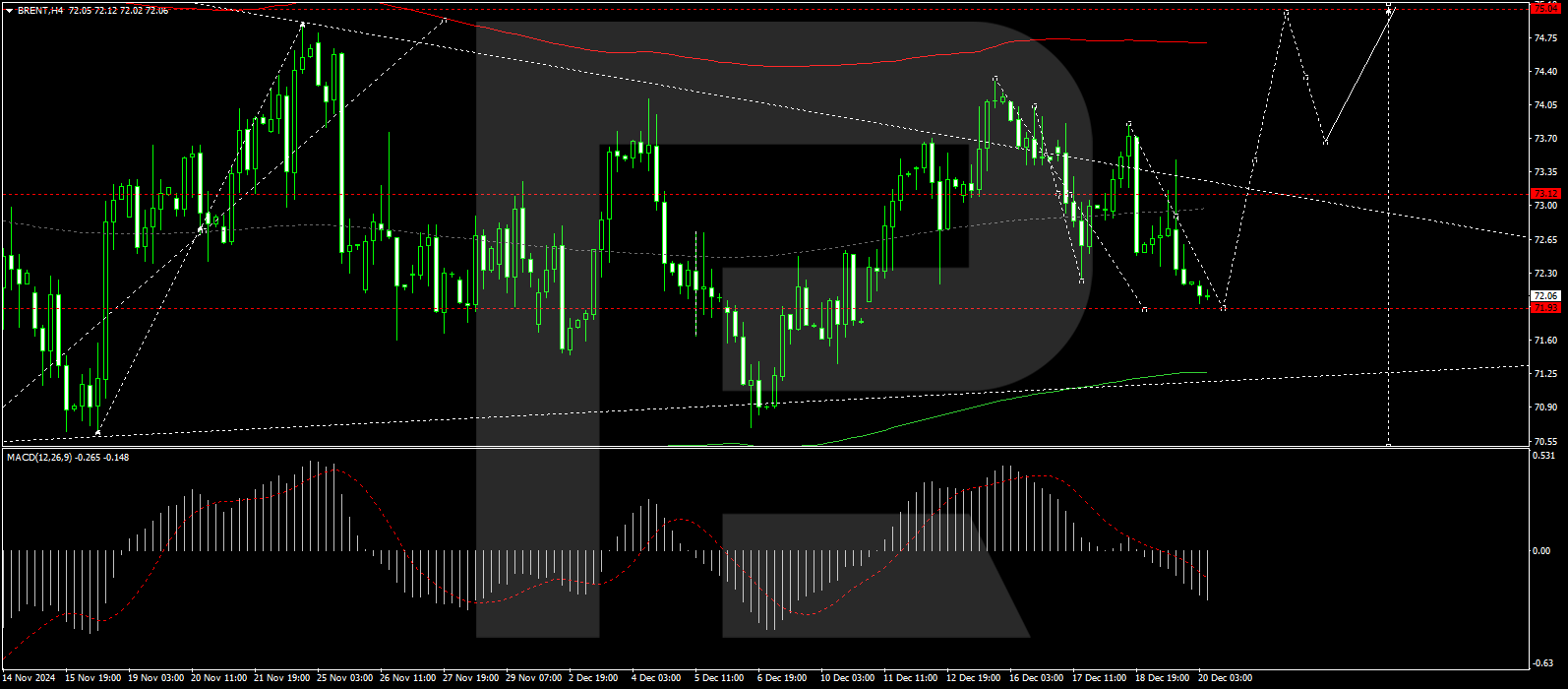
On the H4 chart of Brent, the market continues to develop a broad consolidation range around the level of 73.66, extending to the level of 71.33. Today, we expect a growth link to the level of 73.66. After reaching this level, developing another downside structure to 71.22 is possible. Further, we will consider the probability of the beginning of the growth wave development to 76.00, with the prospect of the trend’s continuation to 80.80, the local target. Technically, this scenario is confirmed by the MACD indicator. Its signal line is under the zero level and is directed downwards.

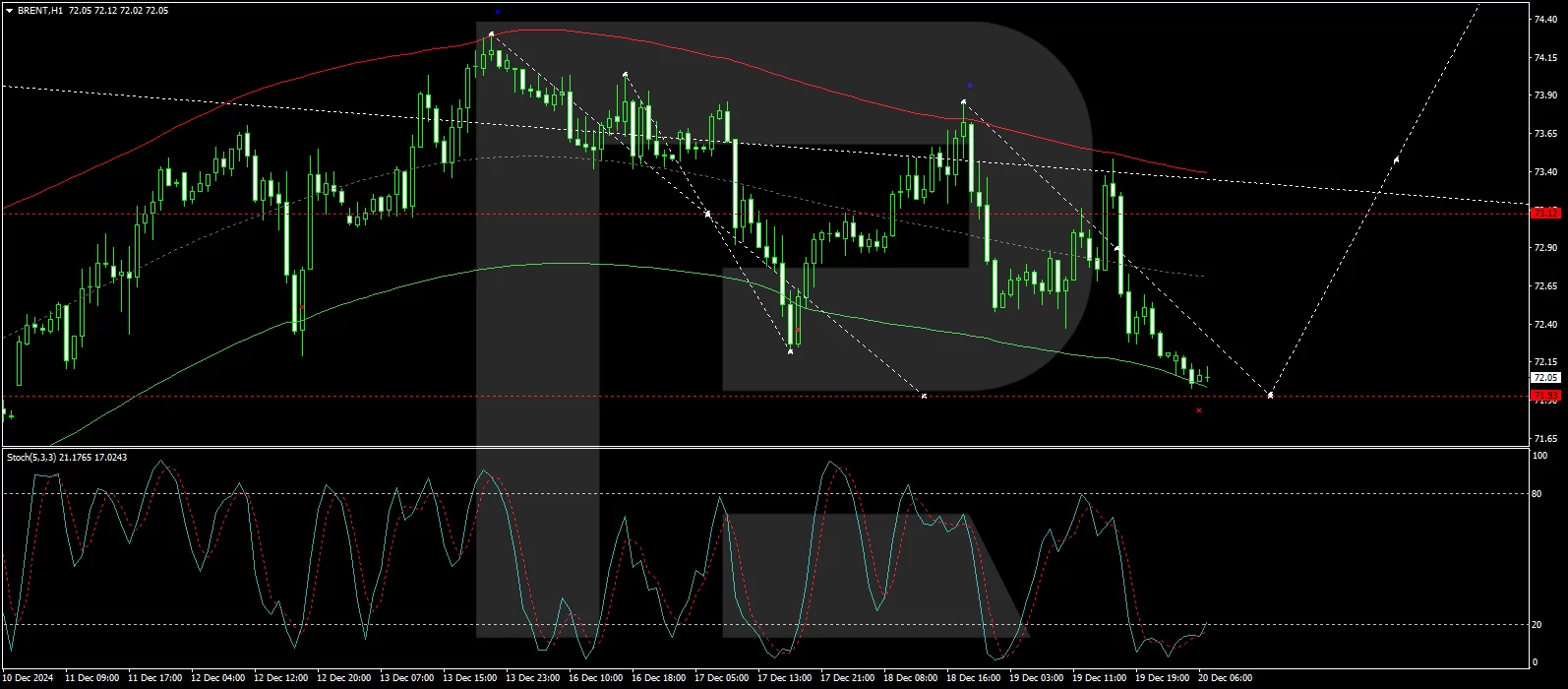
On the H1 Brent chart, the market has formed a consolidation range around 73.66 and worked out a downward wave to 71.33, the local target. Today, a correction link for this downward wave is likely with a target at 73.66, followed by another wave of decline to 71.22. At this point, the potential of the downward wave can be considered exhausted. Technically, this scenario is confirmed by the Stochastic oscillator. Its signal line is under 50 and is directed strictly downwards to 20.


Disclaimer

Any forecasts contained herein are based on the author’s particular opinion. This analysis may not be treated as trading advice. RoboForex bears no responsibility for trading results based on trading recommendations and reviews contained herein.

Bitcoin hits new record high just shy of $82,000!

By ForexTime

  • Bitcoin has surged over 17% since Nov. 5th US elections day
  • The world’s oldest crypto up 90.8% so far in 2024
  • Bitcoin outperformed other “Trump trade” assets since Nov. 5th
  • Cardano (+72%) is FXTM’s best-performing crypto since Nov. 5th
  • Bitcoin may see technical pullback soon


Bitcoin has skyrocketed since the US presidential elections last week.

At the time of writing today (Monday, November 11th), the world’s oldest cryptocurrency came to within a whisker of the big, round number of $82,000.

Bitcoin hits new record high close to $82,000


Here’s how Bitcoin has fared of late:

  • +17.3% since November 5th polling day
  • +90.8% so far in 2024 (year to date)


Why is Bitcoin hitting new record highs?

President-elect Donald Trump has expressed his desire to make the US the “crypto capital of the world”.

Whatever the “crypto capital” entails, perhaps industry-friendly regulations or even the touted strategic Bitcoin stockpile, markets hope that the incoming Trump administration will foster further innovation in the industry that boosts greater adoption of the asset.

What’s clearer is that crypto investors and traders are not willing to sit around to find out the finer details. They’re already flooding back in to send prices soaring.

This latest wave of crypto fever is evidenced by:

  • $1.12 billion of net inflows on Thursday, November 7th, into the world’s largest Bitcoin ETF, BlackRock’s iShares Bitcoin Trust – the largest 1-day net inflow in its history.
  • This ETF’s trading volume also rose to an all-time peak on November 7th.


Bitcoin outperforms other “Trump trades”, but lags other cryptos

And Bitcoin’s 17% ascent since Nov. 5th is certainly superior to other “Trump trade” assets for the same period:

  • USDInd (US dollar index): +1.7%
  • RUS2000 (Russell 2000 index): +6.1%
  • JPMorgan shares: +7%
  • Goldman Sachs: +11.8%

However, smaller cryptos have outperformed the more illustrious Bitcoin’s 17% since polling day

Here’s a list of cryptos within the FXTM universe that have posted larger gains compared to Bitcoin since November 5th:

  • Solana: +24.9%
  • Bitcoin Cash: +26%
  • Chainlink: +28.4%
  • Ethereum: +30.1%
  • Avalanch: 31.1%
  • Polygon: +34.6%
  • Dogecoin: +68.4%
  • Cardano: +72.2%

Within the FXTM universe, only Litecoin (15%) and Ripple (+12.8%) has lagged behind Bitcoin’s 17% gain since November 5th.


Bitcoin: ripe for technical pullback?

From a technical perspective, Bitcoin’s 14-day relative strength index is now far higher than the 70 threshold – the textbook level which denotes “overbought” conditions.

At 76.5 at the time of writing, this is the highest reading for the 14-day RSI since mid-March.

The last Bitcoin’s RSI was at this level, it preceded a 23.4% drop for Bitcoin.

The selloff commenced from the March 14th intraday high of $73850 – then a new record high – through to the May 1st  intraday low of $56,457.70 when the RSI moved close to the 30 mark which denotes “oversold” conditions.

Even so, Bitcoin’s downtrend – a series of lower highs and lower low – persisted for nearly 6 months, from mid-March through to early-September.

Of course, the macro environment is far different this time around compared to that March-September downtrend.

Although back then, there was the euphoria surrounding the first-ever Bitcoin ETF and its mid-April halving, crypto bulls did not enjoy the massive boost stemming from “Trump trades”.

Even if Bitcoin were to see a healthy technical pullback over the near-term, once the froth from its recent surge has been cleared, Bitcoin prices may yet recover to seek fresh record highs, provided there’s still more momentum to the ongoing Trump-phoria.


Forex-Time-LogoArticle by ForexTime

ForexTime Ltd (FXTM) is an award winning international online forex broker regulated by CySEC 185/12 www.forextime.com

The Dow Jones broke the 44 000 mark, and the S&P 500 topped 6 000 for the first time. The deflationary scenario continues in China

By JustMarkets

On Friday, the Dow Jones (US30) rose by 0.59% to reach 44,000 points for the first time (up +4.72% for the week). The S&P 500 Index (US500) gained 0.38% and surpassed the 6,000-point mark for the first time (for the week +4.72%). The NASDAQ Technology Index (US100) closed positive 0.07% (for the week +5.52%). The US stocks continued to rise and closed at record highs on Friday, helped by the optimism associated with Donald Trump’s victory and the Federal Reserve’s interest rate cut. The best-performing sectors were utilities, real estate, and consumer staples, while commodities lagged. Tesla (TSLA) shares jumped 8.2% to $321 as the company reached a trillion-dollar valuation for the first time in two years.

Bitcoin hit the $80,000 mark for the first time, fueled by expectations that Trump would introduce more digital-assets-friendly regulations. During his campaign, Trump vowed to make the US the “capital of digital assets” by creating a strategic Bitcoin reserve and appointing friendlier regulators. Musk, one of Trump’s prominent supporters in this election, has echoed that sentiment, warning that the US risks falling behind if it doesn’t lead innovation in the digital assets’ space.

Equity markets in Europe were declining on Friday. Germany’s DAX (DE40) fell by 0.76% (-0.09% for the week), France’s CAC 40 (FR40) closed down 1.17% (-0.65% for the week), Spain’s IBEX 35 (ES35) lost 0.16% (-2.28% for the week), and the UK’s FTSE 100 (UK100) decreased by 0.84% (-1.28% for the week).

WTI crude oil prices fell as low as $70 per barrel on Monday, extending a decline of nearly 3% from the previous session, as a subdued outlook for major importer China continued to weigh on the market. Data released over the weekend showed weak consumer inflation in China in October and another decline in factory prices, pointing to the risk of deflation despite Beijing’s stimulus measures in late September.

Asian markets were mostly up last week. Japan’s Nikkei 225 (JP225) rose by 2.59%, China’s FTSE China A50 (CHA50) gained 1.20%, Hong Kong’s Hang Seng (HK50) added 0.70%, and Australia’s ASX 200 (AU200) posted a positive 1.54%.

The Australian dollar stabilized near $0.659 on Monday after falling sharply by 1.4% in the previous session as China’s latest stimulus announcements failed to meet market expectations. On Friday, China announced a 10 trillion yuan debt package aimed at easing local government financing and supporting weak economic growth but did not announce any direct economic stimulus.

China’s annual inflation rate in October 2024 was 0.3%, compared with market estimates and September’s 0.4%. It was the ninth consecutive month but the lowest since June, underscoring the growing risks of deflation despite Beijing’s stimulus measures in late September to support the slowing economy. Core consumer prices, excluding food and energy, rose by 0.2% y/y after the lowest gain since February 2021 at 0.1% in September. China’s producer prices fell to 2.9% y/y in October 2024 after declining 2.8% in the previous month and exceeding market expectations for a 2.5% decline. This marked the 25th consecutive month of producer price deflation and the sharpest decline since November 2023, indicating continued weak domestic demand.

S&P 500 (US500) 5,995.54 +22.44 (+0.38%)

Dow Jones (US30) 43,988.99 +259.65 (+0.59%)

DAX (DE40) 19,215.48 −147.04 (−0.76%)

FTSE 100 (UK100) 8,072.39 −68.35 (−0.84%)

USD Index 105.04 +0.04 (+0.04%)

News feed for: 2024.11.11

  • New Zealand Inflation Expectations (q/q) at 04:00 (GMT+2).

By JustMarkets


This article reflects a personal opinion and should not be interpreted as an investment advice, and/or offer, and/or a persistent request for carrying out financial transactions, and/or a guarantee, and/or a forecast of future events.

AUD/USD Stabilises as Traders Await Economic Signals

By RoboForex Analytical Department 

The AUD/USD pair is navigating the week starting with a steady tone, trading around 0.6590. After a significant drop last Friday, triggered by disappointment over China’s economic stimulus measures, the pair finds a momentary respite as it consolidates recent movements.

China’s announcement of a significant debt reduction and support for local governments and economic growth fell short of full transparency, leaving investors wanting more details. Given China’s crucial role as Australia’s top trading partner, any economic shifts there have a pronounced impact on the AUD’s performance.

The ongoing uncertainties surrounding the implications of Donald Trump’s U.S. presidential win also continue to influence market sentiment, particularly regarding U.S.-China relations.

This week is pivotal for Australian data with the release of Q3 payroll statistics and overall employment data, which are essential for assessing the Reserve Bank of Australia’s (RBA) future monetary policy decisions. Additionally, RBA Governor Michele Bullock’s participation in a regulatory panel might offer fresh insights into the central bank’s views on inflation and economic demand.

AUD/USD Technical Analysis

Currently, AUD/USD is hovering around 0.6589 within a tight consolidation range. Anticipations lean towards a downward breakout towards 0.6544, potentially extending to 0.6494 before reversing. Upon reaching these levels, a reversal towards 0.6715 may be considered, with an interim target at 0.6600. The MACD indicator supports a bearish outlook in the short term, as it points downwards from above the zero line.

On the hourly chart, after completing a decline to 0.6557 and a subsequent correction to 0.6600, expectations are for a further dip to 0.6544. Success in reaching this level may prompt a rebound to 0.6600, testing from below before possibly resuming the downward trend towards 0.6494. The stochastic oscillator, currently below the 50 mark, underscores the potential for further declines.


Disclaimer

Any forecasts contained herein are based on the author’s particular opinion. This analysis may not be treated as trading advice. RoboForex bears no responsibility for trading results based on trading recommendations and reviews contained herein.

Currency Speculators boosted Euro bets, cut GBP & Yen bets on Election Day

By InvestMacro

Here are the latest charts and statistics for the Commitment of Traders (COT) data published by the Commodities Futures Trading Commission (CFTC).

The latest COT data is updated through Tuesday November 5th and shows a quick view of how large market participants (for-profit speculators and commercial traders) were positioned in the futures markets. All currency positions are in direct relation to the US dollar where, for example, a bet for the euro is a bet that the euro will rise versus the dollar while a bet against the euro will be a bet that the euro will decline versus the dollar.

Weekly Speculator Changes led by Euro & Swiss Franc

The COT currency market speculator bets were lower this week as four out of the eleven currency markets we cover had higher positioning while the other seven markets had lower speculator contracts.

Leading the gains for the currency markets was the EuroFX (28,651 contracts) with the Swiss Franc (4,017 contracts), Australian Dollar (3,460 contracts) and Bitcoin (412 contracts) also having positive weeks.

The currencies seeing declines in speculator bets on the week were the British Pound (-21,272 contracts), the Japanese Yen (-19,350 contracts), the Brazilian Real (-8,256 contracts), the Canadian Dollar (-7,730 contracts), the New Zealand Dollar (-6,032 contracts), the Mexican Peso (-3,950 contracts) and with the US Dollar Index (-1,589 contracts) also seeing decreased bets on the week.

Currency Speculators boosted Euro bets, cut GBP & Yen bets on Election Day

Highlighting the COT currency’s data for the week was the sharp changes in positioning on the US Presidential election.

The Euro currency positions jumped by over +28,000 net contracts on the election day of Tuesday November 5th. The Euro positions had been falling sharply recently as speculators cut their bets for five straight weeks and for seven out of the previous eight weeks prior to Tuesday. This was an 8-week drop by -150,322 contracts for the Euro and had dropped the overall standing to -50,304 contracts on October 29th before this week’s turnaround.

Despite this week’s boost in bets, the Euro exchange rate had a tough week and fell by over 1 percent against the US Dollar. The Euro has declined in five out of the past six weeks and has now slid from trading at 1.12 in late September to a 1.0729 close this week.

The British pound speculator bets this week dropped by over -21,000 contracts and decreased for the fifth consecutive week. The GBP speculator positions have fallen by a total of -48,681 contracts over these last five weeks and this weakness has brought the overall speculator standing down to a 19-week low, dating back to June 25th. The overall speculator position does remain bullish at a total of 45,084 contracts and has been in a continuous bullish level since May 21st, 2024.

The GBP exchange also has been on the weaker side lately and has now fallen from near 1.3400 in late September to this week’s closing price of approximately 1.2912.

The Japanese yen bets saw a big slide this week and the yen bets have been lower in each of the past six weeks. The total decline of spec bets in the past six weeks has reached -110,178 contracts and has taken the overall speculator standing down from a total of +66,011 contracts on September 17th to this week’s level of -44,167 contracts.

The yen exchange versus the USD has declined for six out of the past eight weeks with the US Dollar (USDJPY currency pair) going from around the 140.75 exchange rate in late September to this week’s close at approximately 152.60.


Currencies Net Speculators Leaderboard

Legend: Weekly Speculators Change | Speculators Current Net Position | Speculators Strength Score compared to last 3-Years (0-100 range)


Strength Scores led by Australian Dollar

COT Strength Scores (a normalized measure of Speculator positions over a 3-Year range, from 0 to 100 where above 80 is Extreme-Bullish and below 20 is Extreme-Bearish) showed that the Australian Dollar (98 percent) leads the currency markets this week. The British Pound (56 percent) and the Japanese Yen (56 percent) come in as the next highest in the weekly strength scores.

On the downside, the US Dollar Index (5 percent), the Canadian Dollar (9 percent), the EuroFX (12 percent) and Bitcoin (19.5 percent) come in at the lowest strength levels currently and are in Extreme-Bearish territory (below 20 percent).

3-Year Strength Statistics:
US Dollar Index (4.7 percent) vs US Dollar Index previous week (8.0 percent)
EuroFX (12.1 percent) vs EuroFX previous week (0.0 percent)
British Pound Sterling (56.4 percent) vs British Pound Sterling previous week (65.9 percent)
Japanese Yen (56.0 percent) vs Japanese Yen previous week (63.7 percent)
Swiss Franc (40.1 percent) vs Swiss Franc previous week (32.0 percent)
Canadian Dollar (9.4 percent) vs Canadian Dollar previous week (12.9 percent)
Australian Dollar (98.3 percent) vs Australian Dollar previous week (95.8 percent)
New Zealand Dollar (25.1 percent) vs New Zealand Dollar previous week (36.7 percent)
Mexican Peso (46.7 percent) vs Mexican Peso previous week (48.7 percent)
Brazilian Real (40.2 percent) vs Brazilian Real previous week (48.0 percent)
Bitcoin (19.5 percent) vs Bitcoin previous week (10.5 percent)


Australian Dollar & Brazilian Real top the 6-Week Strength Trends

COT Strength Score Trends (or move index, calculates the 6-week changes in strength scores) showed that the Australian Dollar (30 percent) and the Brazilian Real (23 percent) lead the past six weeks trends for the currencies. The Mexican Peso (9 percent) and Bitcoin (2 percent) are the next highest positive movers in the 3-Year trends data.

The Canadian Dollar (-49 percent) leads the downside trend scores currently with the Japanese Yen (-44 percent), EuroFX (-39 percent) and the Swiss Franc (-22 percent) following next with lower trend scores.

3-Year Strength Trends:
US Dollar Index (-1.8 percent) vs US Dollar Index previous week (-0.2 percent)
EuroFX (-39.3 percent) vs EuroFX previous week (-50.5 percent)
British Pound Sterling (-18.8 percent) vs British Pound Sterling previous week (1.5 percent)
Japanese Yen (-44.0 percent) vs Japanese Yen previous week (-32.6 percent)
Swiss Franc (-21.7 percent) vs Swiss Franc previous week (-34.2 percent)
Canadian Dollar (-49.1 percent) vs Canadian Dollar previous week (-42.3 percent)
Australian Dollar (30.0 percent) vs Australian Dollar previous week (48.0 percent)
New Zealand Dollar (-13.0 percent) vs New Zealand Dollar previous week (-0.5 percent)
Mexican Peso (9.2 percent) vs Mexican Peso previous week (13.4 percent)
Brazilian Real (23.5 percent) vs Brazilian Real previous week (26.6 percent)
Bitcoin (1.9 percent) vs Bitcoin previous week (-19.6 percent)


Individual COT Forex Markets:

US Dollar Index Futures:

US Dollar Index Forex Futures COT ChartThe US Dollar Index large speculator standing this week came in at a net position of 95 contracts in the data reported through Tuesday. This was a weekly lowering of -1,589 contracts from the previous week which had a total of 1,684 net contracts.

This week’s current strength score (the trader positioning range over the past three years, measured from 0 to 100) shows the speculators are currently Bearish-Extreme with a score of 4.7 percent. The commercials are Bullish-Extreme with a score of 94.0 percent and the small traders (not shown in chart) are Bearish with a score of 22.9 percent.

Price Trend-Following Model: Strong Uptrend

Our weekly trend-following model classifies the current market price position as: Strong Uptrend.

US DOLLAR INDEX StatisticsSPECULATORSCOMMERCIALSSMALL TRADERS
– Percent of Open Interest Longs:66.019.59.9
– Percent of Open Interest Shorts:65.719.610.1
– Net Position:95-46-49
– Gross Longs:20,3326,0043,049
– Gross Shorts:20,2376,0503,098
– Long to Short Ratio:1.0 to 11.0 to 11.0 to 1
NET POSITION TREND:
– Strength Index Score (3 Year Range Pct):4.794.022.9
– Strength Index Reading (3 Year Range):Bearish-ExtremeBullish-ExtremeBearish
NET POSITION MOVEMENT INDEX:
– 6-Week Change in Strength Index:-1.8-1.919.0


Euro Currency Futures:

Euro Currency Futures COT ChartThe Euro Currency large speculator standing this week came in at a net position of -21,653 contracts in the data reported through Tuesday. This was a weekly gain of 28,651 contracts from the previous week which had a total of -50,304 net contracts.

This week’s current strength score (the trader positioning range over the past three years, measured from 0 to 100) shows the speculators are currently Bearish-Extreme with a score of 12.1 percent. The commercials are Bullish-Extreme with a score of 88.6 percent and the small traders (not shown in chart) are Bearish-Extreme with a score of 17.9 percent.

Price Trend-Following Model: Weak Uptrend

Our weekly trend-following model classifies the current market price position as: Weak Uptrend.

EURO Currency StatisticsSPECULATORSCOMMERCIALSSMALL TRADERS
– Percent of Open Interest Longs:24.859.111.8
– Percent of Open Interest Shorts:28.159.08.5
– Net Position:-21,65361721,036
– Gross Longs:159,900381,70475,889
– Gross Shorts:181,553381,08754,853
– Long to Short Ratio:0.9 to 11.0 to 11.4 to 1
NET POSITION TREND:
– Strength Index Score (3 Year Range Pct):12.188.617.9
– Strength Index Reading (3 Year Range):Bearish-ExtremeBullish-ExtremeBearish-Extreme
NET POSITION MOVEMENT INDEX:
– 6-Week Change in Strength Index:-39.342.1-45.8


British Pound Sterling Futures:

British Pound Sterling Futures COT ChartThe British Pound Sterling large speculator standing this week came in at a net position of 45,084 contracts in the data reported through Tuesday. This was a weekly fall of -21,272 contracts from the previous week which had a total of 66,356 net contracts.

This week’s current strength score (the trader positioning range over the past three years, measured from 0 to 100) shows the speculators are currently Bullish with a score of 56.4 percent. The commercials are Bearish with a score of 39.3 percent and the small traders (not shown in chart) are Bullish-Extreme with a score of 84.2 percent.

Price Trend-Following Model: Weak Uptrend

Our weekly trend-following model classifies the current market price position as: Weak Uptrend.

BRITISH POUND StatisticsSPECULATORSCOMMERCIALSSMALL TRADERS
– Percent of Open Interest Longs:54.925.716.2
– Percent of Open Interest Shorts:34.451.011.4
– Net Position:45,084-55,56010,476
– Gross Longs:120,73756,45935,517
– Gross Shorts:75,653112,01925,041
– Long to Short Ratio:1.6 to 10.5 to 11.4 to 1
NET POSITION TREND:
– Strength Index Score (3 Year Range Pct):56.439.384.2
– Strength Index Reading (3 Year Range):BullishBearishBullish-Extreme
NET POSITION MOVEMENT INDEX:
– 6-Week Change in Strength Index:-18.819.4-14.5


Japanese Yen Futures:

Japanese Yen Forex Futures COT ChartThe Japanese Yen large speculator standing this week came in at a net position of -44,167 contracts in the data reported through Tuesday. This was a weekly lowering of -19,350 contracts from the previous week which had a total of -24,817 net contracts.

This week’s current strength score (the trader positioning range over the past three years, measured from 0 to 100) shows the speculators are currently Bullish with a score of 56.0 percent. The commercials are Bearish with a score of 45.9 percent and the small traders (not shown in chart) are Bullish with a score of 56.1 percent.

Price Trend-Following Model: Weak Uptrend

Our weekly trend-following model classifies the current market price position as: Weak Uptrend.

JAPANESE YEN StatisticsSPECULATORSCOMMERCIALSSMALL TRADERS
– Percent of Open Interest Longs:25.657.715.2
– Percent of Open Interest Shorts:44.337.616.6
– Net Position:-44,16747,295-3,128
– Gross Longs:60,334135,94635,953
– Gross Shorts:104,50188,65139,081
– Long to Short Ratio:0.6 to 11.5 to 10.9 to 1
NET POSITION TREND:
– Strength Index Score (3 Year Range Pct):56.045.956.1
– Strength Index Reading (3 Year Range):BullishBearishBullish
NET POSITION MOVEMENT INDEX:
– 6-Week Change in Strength Index:-44.045.9-35.4


Swiss Franc Futures:

Swiss Franc Forex Futures COT ChartThe Swiss Franc large speculator standing this week came in at a net position of -29,981 contracts in the data reported through Tuesday. This was a weekly gain of 4,017 contracts from the previous week which had a total of -33,998 net contracts.

This week’s current strength score (the trader positioning range over the past three years, measured from 0 to 100) shows the speculators are currently Bearish with a score of 40.1 percent. The commercials are Bullish with a score of 63.9 percent and the small traders (not shown in chart) are Bearish with a score of 33.1 percent.

Price Trend-Following Model: Weak Uptrend

Our weekly trend-following model classifies the current market price position as: Weak Uptrend.

SWISS FRANC StatisticsSPECULATORSCOMMERCIALSSMALL TRADERS
– Percent of Open Interest Longs:10.776.512.7
– Percent of Open Interest Shorts:50.224.425.3
– Net Position:-29,98139,519-9,538
– Gross Longs:8,10758,0579,674
– Gross Shorts:38,08818,53819,212
– Long to Short Ratio:0.2 to 13.1 to 10.5 to 1
NET POSITION TREND:
– Strength Index Score (3 Year Range Pct):40.163.933.1
– Strength Index Reading (3 Year Range):BearishBullishBearish
NET POSITION MOVEMENT INDEX:
– 6-Week Change in Strength Index:-21.729.5-34.2


Canadian Dollar Futures:

Canadian Dollar Forex Futures COT ChartThe Canadian Dollar large speculator standing this week came in at a net position of -175,229 contracts in the data reported through Tuesday. This was a weekly decrease of -7,730 contracts from the previous week which had a total of -167,499 net contracts.

This week’s current strength score (the trader positioning range over the past three years, measured from 0 to 100) shows the speculators are currently Bearish-Extreme with a score of 9.4 percent. The commercials are Bullish-Extreme with a score of 90.6 percent and the small traders (not shown in chart) are Bearish-Extreme with a score of 14.0 percent.

Price Trend-Following Model: Strong Downtrend

Our weekly trend-following model classifies the current market price position as: Strong Downtrend.

CANADIAN DOLLAR StatisticsSPECULATORSCOMMERCIALSSMALL TRADERS
– Percent of Open Interest Longs:8.081.18.4
– Percent of Open Interest Shorts:60.027.310.1
– Net Position:-175,229180,918-5,689
– Gross Longs:26,816272,93828,368
– Gross Shorts:202,04592,02034,057
– Long to Short Ratio:0.1 to 13.0 to 10.8 to 1
NET POSITION TREND:
– Strength Index Score (3 Year Range Pct):9.490.614.0
– Strength Index Reading (3 Year Range):Bearish-ExtremeBullish-ExtremeBearish-Extreme
NET POSITION MOVEMENT INDEX:
– 6-Week Change in Strength Index:-49.149.8-34.0


Australian Dollar Futures:

Australian Dollar Forex Futures COT ChartThe Australian Dollar large speculator standing this week came in at a net position of 30,976 contracts in the data reported through Tuesday. This was a weekly gain of 3,460 contracts from the previous week which had a total of 27,516 net contracts.

This week’s current strength score (the trader positioning range over the past three years, measured from 0 to 100) shows the speculators are currently Bullish-Extreme with a score of 98.3 percent. The commercials are Bearish-Extreme with a score of 11.0 percent and the small traders (not shown in chart) are Bullish with a score of 52.3 percent.

Price Trend-Following Model: Weak Uptrend

Our weekly trend-following model classifies the current market price position as: Weak Uptrend.

AUSTRALIAN DOLLAR StatisticsSPECULATORSCOMMERCIALSSMALL TRADERS
– Percent of Open Interest Longs:51.633.314.4
– Percent of Open Interest Shorts:34.151.213.9
– Net Position:30,976-31,759783
– Gross Longs:91,48859,10825,478
– Gross Shorts:60,51290,86724,695
– Long to Short Ratio:1.5 to 10.7 to 11.0 to 1
NET POSITION TREND:
– Strength Index Score (3 Year Range Pct):98.311.052.3
– Strength Index Reading (3 Year Range):Bullish-ExtremeBearish-ExtremeBullish
NET POSITION MOVEMENT INDEX:
– 6-Week Change in Strength Index:30.0-16.2-38.9


New Zealand Dollar Futures:

New Zealand Dollar Forex Futures COT ChartThe New Zealand Dollar large speculator standing this week came in at a net position of -8,199 contracts in the data reported through Tuesday. This was a weekly fall of -6,032 contracts from the previous week which had a total of -2,167 net contracts.

This week’s current strength score (the trader positioning range over the past three years, measured from 0 to 100) shows the speculators are currently Bearish with a score of 25.1 percent. The commercials are Bullish with a score of 73.2 percent and the small traders (not shown in chart) are Bearish with a score of 35.4 percent.

Price Trend-Following Model: Weak Uptrend

Our weekly trend-following model classifies the current market price position as: Weak Uptrend.

NEW ZEALAND DOLLAR StatisticsSPECULATORSCOMMERCIALSSMALL TRADERS
– Percent of Open Interest Longs:36.557.55.9
– Percent of Open Interest Shorts:50.341.48.2
– Net Position:-8,1999,620-1,421
– Gross Longs:21,85534,3683,501
– Gross Shorts:30,05424,7484,922
– Long to Short Ratio:0.7 to 11.4 to 10.7 to 1
NET POSITION TREND:
– Strength Index Score (3 Year Range Pct):25.173.235.4
– Strength Index Reading (3 Year Range):BearishBullishBearish
NET POSITION MOVEMENT INDEX:
– 6-Week Change in Strength Index:-13.019.3-48.4


Mexican Peso Futures:

Mexican Peso Futures COT ChartThe Mexican Peso large speculator standing this week came in at a net position of 31,095 contracts in the data reported through Tuesday. This was a weekly decline of -3,950 contracts from the previous week which had a total of 35,045 net contracts.

This week’s current strength score (the trader positioning range over the past three years, measured from 0 to 100) shows the speculators are currently Bearish with a score of 46.7 percent. The commercials are Bullish with a score of 56.0 percent and the small traders (not shown in chart) are Bearish-Extreme with a score of 0.0 percent.

Price Trend-Following Model: Downtrend

Our weekly trend-following model classifies the current market price position as: Downtrend.

MEXICAN PESO StatisticsSPECULATORSCOMMERCIALSSMALL TRADERS
– Percent of Open Interest Longs:45.648.62.5
– Percent of Open Interest Shorts:23.967.45.3
– Net Position:31,095-27,000-4,095
– Gross Longs:65,50169,9053,587
– Gross Shorts:34,40696,9057,682
– Long to Short Ratio:1.9 to 10.7 to 10.5 to 1
NET POSITION TREND:
– Strength Index Score (3 Year Range Pct):46.756.00.0
– Strength Index Reading (3 Year Range):BearishBullishBearish-Extreme
NET POSITION MOVEMENT INDEX:
– 6-Week Change in Strength Index:9.2-7.7-14.0


Brazilian Real Futures:

Brazil Real Futures COT ChartThe Brazilian Real large speculator standing this week came in at a net position of -12,525 contracts in the data reported through Tuesday. This was a weekly fall of -8,256 contracts from the previous week which had a total of -4,269 net contracts.

This week’s current strength score (the trader positioning range over the past three years, measured from 0 to 100) shows the speculators are currently Bearish with a score of 40.2 percent. The commercials are Bullish with a score of 61.7 percent and the small traders (not shown in chart) are Bearish-Extreme with a score of 16.1 percent.

Price Trend-Following Model: Strong Downtrend

Our weekly trend-following model classifies the current market price position as: Strong Downtrend.

BRAZIL REAL StatisticsSPECULATORSCOMMERCIALSSMALL TRADERS
– Percent of Open Interest Longs:46.743.03.4
– Percent of Open Interest Shorts:66.022.44.7
– Net Position:-12,52513,371-846
– Gross Longs:30,31827,9292,214
– Gross Shorts:42,84314,5583,060
– Long to Short Ratio:0.7 to 11.9 to 10.7 to 1
NET POSITION TREND:
– Strength Index Score (3 Year Range Pct):40.261.716.1
– Strength Index Reading (3 Year Range):BearishBullishBearish-Extreme
NET POSITION MOVEMENT INDEX:
– 6-Week Change in Strength Index:23.5-21.9-7.5


Bitcoin Futures:

Bitcoin Crypto Futures COT ChartThe Bitcoin large speculator standing this week came in at a net position of -1,457 contracts in the data reported through Tuesday. This was a weekly boost of 412 contracts from the previous week which had a total of -1,869 net contracts.

This week’s current strength score (the trader positioning range over the past three years, measured from 0 to 100) shows the speculators are currently Bearish-Extreme with a score of 19.5 percent. The commercials are Bullish-Extreme with a score of 86.6 percent and the small traders (not shown in chart) are Bullish with a score of 61.8 percent.

Price Trend-Following Model: Strong Uptrend

Our weekly trend-following model classifies the current market price position as: Strong Uptrend.

BITCOIN StatisticsSPECULATORSCOMMERCIALSSMALL TRADERS
– Percent of Open Interest Longs:82.26.04.5
– Percent of Open Interest Shorts:86.73.12.9
– Net Position:-1,457927530
– Gross Longs:26,3031,9071,443
– Gross Shorts:27,760980913
– Long to Short Ratio:0.9 to 11.9 to 11.6 to 1
NET POSITION TREND:
– Strength Index Score (3 Year Range Pct):19.586.661.8
– Strength Index Reading (3 Year Range):Bearish-ExtremeBullish-ExtremeBullish
NET POSITION MOVEMENT INDEX:
– 6-Week Change in Strength Index:1.9-4.14.3


Article By InvestMacroReceive our weekly COT Newsletter

*COT Report: The COT data, released weekly to the public each Friday, is updated through the most recent Tuesday (data is 3 days old) and shows a quick view of how large speculators or non-commercials (for-profit traders) were positioned in the futures markets.

The CFTC categorizes trader positions according to commercial hedgers (traders who use futures contracts for hedging as part of the business), non-commercials (large traders who speculate to realize trading profits) and nonreportable traders (usually small traders/speculators) as well as their open interest (contracts open in the market at time of reporting). See CFTC criteria here.