HCI – HCI Group, Inc. has been added to our data-driven Watchlist.


🚹 HCI – HCI Group, Inc. has been added to our data-driven Watchlist.

Here are the details:

📈 HCI – HCI Group, Inc.
🏭 Sector: Financial Services (Insurance)
📊 Market Cap: Small / Micro Cap
⚡ Beta: 1.21 (High Risk)
📈 52W Performance: +11.09%
📊 Quant Score: 59/100 (Watchlist)

HCI Group has beaten its earnings-per-share estimates for four consecutive quarters. Currently, it has a dividend slightly above 1.00 percent, with a payout ratio of approximately just 7%. The current TTM P/E ratio is slightly above 6.50 with a 5-year average P/E around 12.33. The HCI earnings yield measures approximately 14.74 percent at time of writing

The price trend for HCI has been moving higher over the long-term with a sustained uptrend since a low of $27.65 in October of 2022. However, the stock has been retreating since a recent high in October 2025 at $210.50. Currently, the stock is hovering around the $153.85 per share level. The weekly Relative Strength Index (RSI) is currently at around 44.1 level and our trend-following model labels the current situation as bearish.

Full Disclosure: I do not currently own this stock. Disclaimer: Content is educational purposes and not intended as investment advice.

These stock selections are data-driven based on a number of financial metrics and ratios every quarter when earnings are released. These selections are intended to be a step one idea (not a buy signal) but to spur further research into the stock, its competitors and its industry.

BBY – Best Buy has been added to our data-driven Watchlist.


BBY – Best Buy has been added to our data-driven Watchlist.

Here are the details:

📈 BBY – Best Buy Co., Inc.
🏭 Sector: Consumer Cyclical
📊 Market Cap: Medium Cap
⚡ Beta: 1.44 (High Risk)
📉 52W Performance: -18.2%
👍 Quant Score: 69/100 (Fair)

Best Buy Co. has beaten its earnings-per-share estimates for four consecutive quarters. Currently, it has a high dividend above 6.00 percent, with a payout ratio of approximately 76%. The current TTM P/E ratio is slightly above 12 with a 5-year average P/E around 14.03. The BBY earnings yield measures 8.35 percent at time of writing

The price trend for BBY has been moving lower since a recent high in October, and currently, the stock is hovering around the $60 per share support level. The weekly Relative Strength Index (RSI) is currently at around 40.0 level and our trend-following model considers the current situation as bearish.

Full Disclosure: I do not currently own this stock. Disclaimer: Content is educational purposes and not intended as investment advice.

CPI pressure is slowing in Australia. The RBNZ intends to ignore temporary inflation spikes

By JustMarkets 

On Tuesday, US stock indices lost yesterday’s optimism. By the end of the day, the Dow Jones Index (US30) fell by 0.18%. The S&P 500 Index (US500) declined by 0.37%. The Technology Index NASDAQ (US100) closed lower by 0.77%. The main drag on the market was the renewed rise in energy prices after Tehran officially denied Donald Trump’s statements about “productive negotiations.” Investor skepticism instantly pushed Brent crude back above 104 dollars per barrel, triggering a two‑percent jump in the energy sector – the only group within the S&P 500 that maintains positive returns for March. The high‑tech segment came under double pressure: geopolitical uncertainty overlapped with profit‑taking in leading artificial‑intelligence stocks. Oracle shares plunged 4.7%, despite analysts reaffirming positive predictions, and Microsoft shares also faced selling pressure.

It is also another day of disappointment for the CAD: the currency weakened to 1.375 per US dollar, updating from a two‑month low. Despite Canada being a major oil exporter, the loonie is not benefiting from rising energy prices. The reason lies in the strong demand for the safe‑haven US dollar. Investors are concerned that ongoing attacks on US bases in the Persian Gulf will keep oil prices at a high “war premium,” making inflation unmanageable.

The Mexican peso lost momentum in its recent recovery and fell below 17.8 per US dollar. The situation for the Bank of Mexico is complicated by fresh inflation data. The mid‑March reading came in at 4.63%, above analysts’ expectations. This puts the regulator in a “stalemate”: on one hand, the economy needs support due to a sharp production downturn; on the other, accelerating inflation and a weakening currency prevent monetary easing. In conditions where Mexico’s key trading partners are preparing for a prolonged period of high rates, the peso remains under crossfire from domestic stagnation and a global inflation shock.

European markets mostly rose. Germany’s DAX (DE40) fell by 0.08%, France’s CAC 40 (FR40) closed up 0.23%, Spain’s IBEX 35 (ES35) gained 0.13%, while the UK’s FTSE 100 (UK100) closed up by 0.72%. The main driver of growth was the technology sector, where ASML shares became the true star of the session. The Dutch giant’s stock jumped after news of a colossal order from South Korea’s SK Hynix for lithography equipment worth 8 billion dollars, confirming sustained demand for memory‑chip production capacity despite global instability. However, the overall picture remains troubling due to the continued rise in oil prices. The first official confirmation of these concerns came from preliminary March business‑activity data: Eurozone private‑sector growth slowed, clearly showing that high energy costs have already begun to erode industrial output.

The oil market showed a partial recovery after Monday’s collapse. WTI crude futures jumped 5%, reaching 92.4 dollars per barrel. This rise compensated for only half of Monday’s catastrophic 10.3% drop, as investors remain in extreme uncertainty regarding the true intentions of Washington and Tehran. Saudi Arabia and the UAE, whose territories were attacked, made it clear that their patience is running out. Reports emerged that Riyadh is seriously considering direct military strikes on Iranian facilities if its critical energy infrastructure is targeted again. The market is essentially frozen, awaiting the end of the five‑day period, after which it will become clear whether the conflict will escalate into a global energy collapse.

Asian markets also rose mostly yesterday. Japan’s Nikkei 225 (JP225) partially recovered by 1.43% higher, China’s FTSE China A50 (CHA50) fell by 2.15%, Hong Kong’s Hang Seng (HK50) rose by 2.79%, and Australia’s ASX 200 (AU200) posted a positive result of 0.16%. The Hang Seng Index rose by 0.9% on Wednesday, marking its second consecutive session of gains. The positive dynamics were driven by temporary stabilization in oil prices and a diplomatic pause in the Iran‑related conflict, allowing investors to ease fears of an immediate energy collapse. This optimism helped slow the massive outflow of foreign capital from Asian assets caused by the recent surge in global bond yields and stagflation fears.

On Wednesday, the Australian dollar fell to 0.70 US dollars, approaching a two‑week low. Pressure on the currency came from fresh inflation data in Australia: in February, consumer prices were unchanged month‑over‑month, while the annual figure slowed to 3.7% (down from 3.8%). Although inflation still exceeds the Reserve Bank of Australia’s target range (2-3%), weaker‑than‑expected numbers made markets doubt the need for an aggressive rate hike in May, the probability of which is now seen as 50/50.

The NZD fell to 0.582 US dollars as investors sharply revised their expectations regarding the RBNZ policy stance. The trigger was statements from Governor Anna Breman and Chief Economist Paul Conway, who made it clear that the regulator intends to “ignore” temporary inflation spikes caused by the war with Iran and rising oil prices. While earlier the market priced in a 68% probability of a rate hike in May, expectations collapsed to 44% after these comments, as the bank still sees signs of an economic slowdown and fears that excessive tightening could suppress domestic demand.

S&P 500 (US500) 6,556.37 −24.63 (−0.37%)

Dow Jones (US30) 46,124.06 −84.41 (−0.18%)

DAX (DE40) 22,636.91 −16.95 (−0.08%)

FTSE 100 (UK100) 9,965.16 +71.01 (+0.72%)

USD Index 99.24 +0.29% (+0.29%)

News feed for: 2026.03.25

  • Japan Monetary Policy Meeting Minutes at 01:50 (GMT+2) – JPY (MED)
  • Australia Inflation Rate (m/m) at 02:30 (GMT+2) – AUD (HIGH)
  • UK Inflation Rate (m/m) at 09:00 (GMT+2) – GBP (HIGH)
  • Eurozone ECB President Lagarde Speaks at 10:45 (GMT+2) – EUR (LOW)
  • German Ifo Business Climate (m/m) at 11:00 (GMT+2) – EUR (MED)
  • US Crude Oil Reserves (w/w) at 16:30 (GMT+2) – WTI (HIGH)

By JustMarkets


This article reflects a personal opinion and should not be interpreted as an investment advice, and/or offer, and/or a persistent request for carrying out financial transactions, and/or a guarantee, and/or a forecast of future events.

Why shadow tankers are the only ships still moving through the Strait of Hormuz

By Charles Edward Gehrke, US Naval War College 

The Strait of Hormuz is effectively closed. Since the beginning of the conflict involving the United States, Israel and Iran on Feb. 28, 2026, oil tanker traffic through the world’s most critical oil shipping choke point has collapsed, dropping by more than 90%.

Iran has threatened to destroy any ships, including oil tankers, that pass through the strait from the oil depots of the Persian Gulf to the Arabian Sea and the rest of the world. Companies that insure ships against the risks of traveling in war zones are deciding whether to issue coverage on an individual-ship basis. The international body that sets many shipping regulations has told ships’ crews that they have the right to refuse to sail into the area.

As of March 6, more than 400 tankers were stranded in the Persian Gulf, without permission from their owners to move.

But some vessels are still transiting the strait. Most of the ships still moving are those that operate outside the rules.

In maritime circles, these vessels are called the “shadow fleet.” They are vessels that ignore international restrictions on trade with certain countries, violate anti-pollution regulations, smuggle unauthorized goods or don’t want their cargo or activities too closely monitored.

They exist, even in a world filled with electronic tracking, because the world’s oceans aren’t governed the same way the land is. On land, armed personnel closely monitor carefully delineated borders, seeking to force everyone to follow clear rules. But at sea, regulation is almost the opposite. The system that governs international shipping is, at its foundation, voluntary.

The oceans run on trust

The tracking of ships is voluntary. The International Convention for the Safety of Life at Sea – signed by 167 countries – requires almost every commercial vessel to carry a radio transponder that broadcasts the ship’s identity, position, speed and heading to port authorities, coast guards and commercial tracking networks.

That international agreement, which is enforced by individual countries, requires ships to leave the transponders on and active. But there is no physical mechanism preventing a crew from switching it off or broadcasting a false position.

When a vessel turns off its transponder and goes dark, it doesn’t trigger an alarm at some global maritime headquarters. There is no such headquarters. The ship simply disappears from the map. Every map.

National jurisdiction is a matter of preference, not law. Every vessel sails under the flag of a nation, and that nation is theoretically responsible for regulating and inspecting it. But in practice, a ship’s registration in a particular country is a commercial transaction. Many law-abiding shipping companies make this business decision, but this system leaves an opening for those who seek to skirt the rules.

A ship owned by a shell company in the United Arab Emirates can register under the flag of Cameroon, Palau or Liberia, or any country that may lack the resources or the incentive to conduct real inspections. Even landlocked Mongolia has a registry of oceangoing ships flying its flag.

When a vessel comes under scrutiny from port inspectors or coast guards, it can simply reregister under a different flag. Some registries even offer online registration. If the new registration is fraudulent or the registry doesn’t actually exist, the vessel effectively becomes stateless.

Then there is insurance, which is the closest thing the maritime system has to a real enforcement mechanism. Mainstream insurers, mostly based in London, require vessels to meet safety standards, carry proper documentation and comply with international trade sanctions. A ship without insurance coverage cannot easily enter major ports or secure cargo contracts with reputable firms.
Those restrictions are precisely what froze so many law-abiding ships in the Persian Gulf when war broke out.

But companies can avoid those rules, too. Two-thirds of ships carrying Russian oil – the trade of which is restricted by the U.S. and other countries – reportedly have “unknown” insurance providers, meaning nobody knows whom to call to cover the cleanup costs after a spill or collision. The enforcement mechanism works until ship owners realize they can just opt out of it entirely, using less reputable ports or transferring oil from ship to ship out at sea.

What opting out looks like

The results of this voluntary system can be surreal. In December 2025, the United States seized a sanctioned tanker called the Skipper, which was flying the flag of Guyana – even though that country had never registered it. The vessel was, in legal terms, stateless, sailing under the authority of no nation on Earth.

Another vessel, the Arcusat, went further. Investigative reporting found that it had changed its International Maritime Organization identification number, a unique seven-digit code assigned permanently to every ship. It is the maritime equivalent of scraping the VIN off a car.

Now layer these techniques together. An entity purchases an aging tanker that would otherwise be scrapped. It registers the ship through a shell company, pays for a flag of convenience, carries opaque insurance and switches off its transponder when approaching sensitive waters.

It loads sanctioned oil through a ship-to-ship transfer on the open ocean and delivers its cargo to a buyer who asks no questions. If the vessel attracts attention, it changes its name, reregisters under a different flag and starts over.

According to maritime intelligence firm Windward, approximately 1,100 dark fleet vessels have been identified globally, representing roughly 17% to 18% of all tankers carrying liquid cargo, which is primarily oil.

Why it matters now

The dark fleet did not emerge because the maritime system is broken. It emerged because the system is built on voluntary participation, all theoretically ensured by market forces.

For decades, the system worked not because it forced compliance but rather because opting out was more costly than opting in.

What changed is that international sanctions made compliance ruinously expensive and politically disastrous for some countries. A system built on voluntary participation, it turned out, could be voluntarily left.

If your national economy depends on oil exports, and the compliance system is preventing those exports, you build a parallel system. Iran began doing so in 2018, after sanctions were reimposed as part of negotiations over its nuclear development. Russia dramatically expanded that system in 2022 as restrictions hit in the wake of its invasion of Ukraine.

Now, with the Strait of Hormuz effectively closed to aboveboard maritime trade, the only vessels still moving are the ones that ignore the rules.

But the existence of the dark fleet doesn’t mean that the rules of the sea have failed. Rather, it reveals what kind of rules they always were. Illegal oil is the only oil moving in a crisis. In my view, that sends a message to those still playing by the rules: Opting out might be a viable option.

The opinions and views expressed are those of the author alone and do not necessarily represent those of the Department of the Navy or the U.S. Naval War College.The Conversation

About the Author:

Charles Edward Gehrke, Deputy Division Director of Wargame Design and Adjudication, US Naval War College

This article is republished from The Conversation under a Creative Commons license. Read the original article.

USD/JPY Maintains Growth Mood: Market Sympathies on the US Dollar Side

By Analytical Department RoboForex

USD/JPY continues its upward trajectory on Wednesday, rising to 158.78 following a volatile start to the week. Pressure on the yen has eased amid a pullback in oil prices and expectations of a potential resolution to the Middle East conflict-a development of particular significance for Japan’s energy-importing economy.

The move comes amid reports of US diplomatic efforts aimed at resolving the conflict with Iran. However, scepticism persists in the market, as Tehran had previously denied the existence of any negotiations with Washington.

Additional support for the yen stems from expectations of possible government intervention. Japanese officials have signalled their readiness to take necessary measures to stabilise the currency.

It has also been reported that Japan’s Ministry of Finance is in contact with market participants regarding potential intervention in the oil futures market, given its impact on the yen.

Technical Analysis

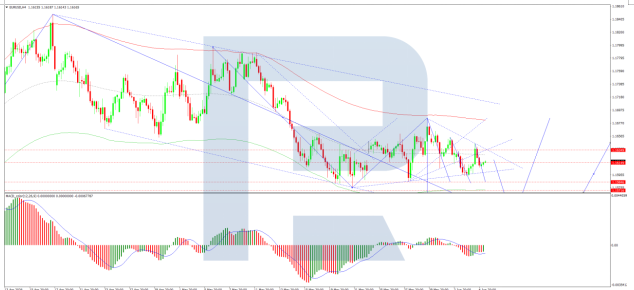
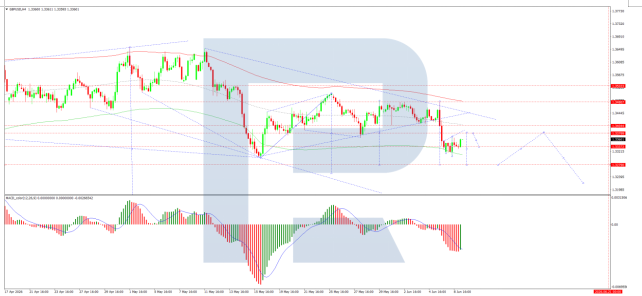
On the H4 chart, USD/JPY is forming a consolidation range around the 158.60 level. A decline to 157.40 is expected today, followed by an increase to 158.50. Should the market break upwards from this range, a correction towards 160.10 would be relevant to consider. Subsequently, a new downward impulse to 157.40 is anticipated, with the potential for the correction to extend to 156.00.

Technically, this scenario is confirmed by the MACD indicator-its signal line is below zero and pointing strictly downwards, reflecting the potential for continued correction.

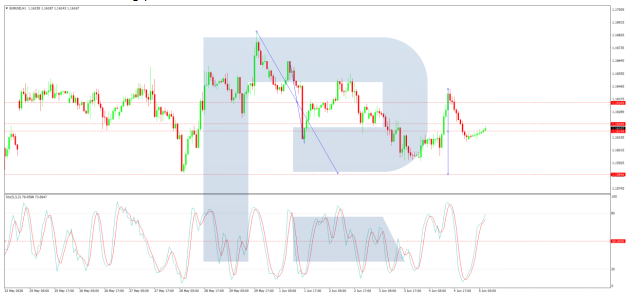
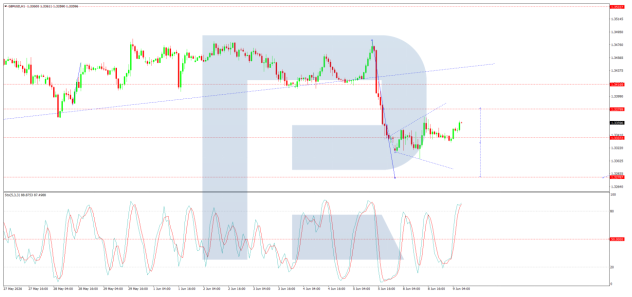
On the H1 chart, the market is shaping a downward wave pattern towards 157.40. Reaching this target level will be considered today. Following the completion of this wave, the development of the next growth wave to 160.10 (test from below) is expected.

The scenario is confirmed by the Stochastic oscillator-its signal line is below the 50 level and pointing strictly downwards towards 20, indicating that short-term downside potential remains.

Conclusion

USD/JPY remains in a growth-oriented mood as easing oil prices and tentative hopes for diplomatic progress in the Middle East offer some relief to the yen. While reports of US-led negotiations with Iran have contributed to a pullback in energy markets, market scepticism persists given Tehran’s earlier denial of talks. Japanese authorities stand ready to intervene should volatility spike, adding an element of caution for traders. Technical indicators point to a short-term correction lower before the broader upward trend potentially resumes towards 160.10. The yen’s trajectory remains closely tied to developments in both energy markets and geopolitical tensions, which continue to shape the Bank of Japan’s policy landscape.


Disclaimer

Any forecasts contained herein are based on the author’s particular opinion. This analysis may not be treated as trading advice. RoboForex bears no responsibility for trading results based on trading recommendations and reviews contained herein.

The Era of “Dumb” Storage is Over: Valutico Launches the World’s First Self-Auditing Virtual Data Room

Valuation leader moves into deal management with AI that spots issues early, helps protect deal value, and speeds up closing.

VIENNA, 24/3/2026 – Valutico, a leading provider of valuation and deal management technology, today announced the launch of the Valutico Active VDR. This marks a fundamental shift in the Virtual Data Room category, moving from passive document storage to active deal assurance.

In the current M&A climate, the cost of errors is higher than ever. According to industry data, due diligence timelines have lengthened significantly over the last 24 months, with “information asymmetry” and “documentation gaps” cited as primary causes for deal delays and post-LOI price reductions (retrading).

Legacy VDRs have traditionally functioned as secure “parking lots” for data – charging sellers to store documents without analyzing their contents. This passive approach leaves sellers vulnerable, as discrepancies are often discovered by the buyer’s legal team weeks into exclusivity, damaging trust and leverage.

The “Active VDR” Difference

Valutico’s new platform is the first to integrate Automated Gap Analysis and Red Flag Detection directly into the hosting environment.

“The industry doesn’t need another secure hard drive in the cloud; it needs a way to close deals faster,” said Paul Resch, CEO at Valutico. “We built a VDR that acts as a ‘Pre-Diligence’ auditor. It automatically organises itself, tells you what’s missing and identifies red flags. All of that with Enterprise grade security to protect your data.”

Solving the “Unforced Errors” in M&A

The Valutico Active VDR introduces three proprietary technologies designed to compress the timeline between LOI and Closing:

  1. Intelligent Red Flag Detection: Bypass the need for extensive manual investigation. The system proactively scans the data room to identify missing information and documentation gaps. By highlighting these “blind spots” early—such as absent contracts or incomplete records—sellers can ensure deal readiness before the buyer ever logs in.

  2. Automated Room Architecting: The system eliminates the manual burden of setting up a data room index. The Deal Agent ingests unstructured bulk uploads and automatically builds a professional, buyer-ready folder structure in seconds, transforming raw files into a logical deal hierarchy.

  3. Smart-Redaction Protocols: To reduce risk, the system proactively identifies PII (Personally Identifiable Information) and sensitive data patterns, suggesting redactions before files are published to the ‘Live’ room.

  4. Instant CIM & Pitch Deck Generation: The system can generate a polished CIM and buyer-ready slide deck directly from the data room, turning underlying documents, financials, and supporting materials into structured deal materials in a fraction of the usual time.

Investors: “The Difference Between a Warehouse and a Library”

Early buy-side users report that the platform significantly alters the initial trust dynamic of a deal.

“As an investor, the quality of the Data Room is a direct proxy for the quality of the management team,” said Markus Jandrinitsch, Managing Director at aws GrĂŒndungsfonds. “When we enter a Valutico room, the ‘low-hanging fruit’ errors – missing contracts, unsigned minutes, messy folders – are already gone. It saves us weeks of basic file hunting and allows us to get to conviction much faster. It is the difference between searching through a messy warehouse and walking into a curated library.”

From Valuation to Validation

“Valutico has established itself as the standard for determining what a company is worth,” continued Resch. “With the Active VDR, we are providing the infrastructure to defend that worth. In a market where buyers are looking for any reason to hesitate, a flawless, pre-audited Data Room is the strongest signal of quality a seller can offer.”

Building the “Critical” AI

“We built the Deal Agent to act like the world’s most critical buyer,” said Max Arrich, VP of AI at Valutico. “When you upload a file, the AI doesn’t just catalogue it; it interrogates it. It asks: ‘Is this contract signed? Does this date match the cap table? Is this folder empty?’ By catching these 1,000 tiny friction points instantly, we save the seller weeks of email back-and-forth and let the deal momentum flow uninterrupted.

Investors froze in anticipation of the expiration of President Trump’s ultimatum to immediately unblock the Strait of Hormuz

By JustMarkets

On Friday, trading on the US stock market ended with a decline. The Dow Jones Index (US30) fell by 0.96% (down -2.42% for the week). The S&P 500 Index (US500) dropped by 1.51% (down -2.52% for the week). The tech-heavy NASDAQ (US100) closed lower by 1.88% (down -3.04% for the week). The main trigger for the sell-off was news from Iraq, where force majeure was declared at all oil fields, which, combined with the Pentagon’s preparations to deploy additional Marine forces to the Persian Gulf, created an explosive mix of geopolitical and energy shock. WTI crude continued its ascent, ignoring stabilization attempts made by the US administration earlier in the week. Against this backdrop, investors reacted even more sharply to the Fed’s decision to keep rates in the 3.50-3.75% range, realizing that policy easing amid “wartime” inflation should not be expected.

Bitcoin (BTC/USD) stabilized around 68,000 dollars, holding near two‑week lows. The digital assets market came under heavy pressure from a global risk‑off move triggered by a critical escalation in the Middle East. Direct threats from President Trump to destroy Iran’s energy infrastructure in response to the blockade of the Strait of Hormuz, along with Tehran’s counter‑warnings of strikes on US and Israeli facilities, created an atmosphere of extreme uncertainty in which investors prefer to exit volatile digital assets. Since the start of the active phase of the war, Bitcoin has lost more than 20% of its value, continuing its downward trend. The status of “digital gold” has not worked in current conditions: the digital asset is showing high correlation with falling stock indices and other risk assets.

European stock markets ended trading with a deep decline, as the specter of stagflation became a frightening reality for investors. Germany’s DAX (DE40) fell by 2.01% (down -4.69% for the week), France’s CAC 40 (FR40) closed down 1.82% (down -3.22% for the week), Spain’s IBEX 35 (ES35) dropped by 1.14% (down -1.92% for the week), and the UK’s FTSE 100 (UK100) closed down by 1.44% (down -3.34% for the week). The main driver of pessimism was the uncontrolled rise in energy prices, which, combined with slowing economic growth, puts Europe’s industrial sector in an extremely vulnerable position. Europe’s tech sector came under heavy pressure from global sell‑offs: shares of semiconductor giant ASML and software developer SAP plunged more than 3.5% lower each. Investors are dumping growth stocks, fearing that high borrowing costs and energy shortages will undermine the long‑term profitability of the tech sector. At the same time, a large‑scale exit from sovereign bonds continues, pushing yields higher and directly hitting the capital of major banks. Against this backdrop, UniCredit shares fell nearly 4%, while BNP Paribas, Intesa Sanpaolo, and Nordea lost more than 2% of their market value.

On Monday, the oil market entered a state of extreme volatility: WTI crude futures traded above 98 dollars per barrel, having touched the psychological mark of 101.5 dollars at the start of the session. Investors around the world froze in anticipation of the expiration of President Donald Trump’s ultimatum demanding that Tehran immediately unblock the Strait of Hormuz. The White House’s direct threat to “destroy” key Iranian power plants by the end of Monday pushed the conflict into a phase of a possible full‑scale energy war. Tehran’s response only added fuel to the fire: Iranian leadership promised massive strikes on US and Israeli facilities in the region, targeting not only energy infrastructure but also critical desalination and IT nodes.

On Friday, silver prices (XAG/USD) fell another 5% down, reaching 69.5 dollars per ounce. Thus, the asset lost 14% of its value over the week, marking its worst performance in recent months. The main reason for the sell‑off was the market’s realization that the conflict in the Middle East would not lead to a quick rate cut. On the contrary, the sharp surge in oil and gas prices intensified inflation fears, forcing investors to shift their strategies toward the dollar and US treasuries. Pressure on prices increased after news of the expanded US military presence in the conflict zone. This development radically changed traders’ expectations: the probability of a Fed rate hike by October is now estimated at 50%. In Europe and the UK, the situation looks even more tense – the market is already pricing in at least three rate hikes by the ECB and the Bank of England by the end of 2026.

Asian markets also mostly declined last week. Japan’s Nikkei 225 (JP225) fell by 0.55% over the trading week, China’s FTSE China A50 (CHA50) rose by 0.63%, Hong Kong’s Hang Seng (HK50) dropped by 0.45%, and Australia’s ASX 200 (AU200) posted a five‑day decline of 1.72%.
On Monday, Hong Kong’s Hang Seng Index experienced one of its toughest trading days, plunging more than 3% down. This drop pushed the indicator back to the August 2025 lows, completely erasing its yearly gains amid a global flight from risk assets. The main pressure factor was fear of prolonged stagflation. The surge in oil prices due to the blockade of key maritime routes not only hits production costs in the region but also forces global central banks to prepare for a new cycle of rate hikes to contain inflation. For Hong Kong, whose monetary policy is tightly pegged to the US dollar, this means an inevitable rise in borrowing costs, which investors view extremely negatively amid the economic downturn.

The NZD came under heavy pressure, falling to 0.581 per US dollar. The currency approached a two‑month low amid extremely negative news flow. The main blow to the kiwi was Fitch Ratings’ decision to downgrade New Zealand’s credit rating outlook to “negative,” reflecting experts’ skepticism about the government’s ability to reduce public debt after a prolonged budget pause.

S&P 500 (US500) 6,506.48 −100.01 (−1.51%)

Dow Jones (US30) 45,577.47 −443.96 (−0.96%)

DAX (DE40) 22,380.19 −459.37 (−2.01%)

FTSE 100 (UK100) 9,918.33 −145.17 (−1.44%)

USD Index 99.50 +0.27% (+0.27%)

News feed for: 2026.03.23

  • Singapore Inflation Rate (m/m) at 07:00 (GMT+2) – SGD (MED)
  • New Zealand Gov Breman Speaks (m/m) at 22:00 (GMT+2) – NZD (LOW)

By JustMarkets


This article reflects a personal opinion and should not be interpreted as an investment advice, and/or offer, and/or a persistent request for carrying out financial transactions, and/or a guarantee, and/or a forecast of future events.
EUR/USD Declines: All Market Risks Remain Valid

By Analytical Department RoboForex

EUR/USD fell to 1.1549 on Monday, with the US dollar extending gains from the previous session amid heightened demand for safe-haven assets as the Middle East conflict escalates.

The confrontation between the US and Israel against Iran has entered its fourth week with no signs of de-escalation. Donald Trump has threatened to strike Iran’s energy infrastructure if the Strait of Hormuz is not reopened. Tehran has announced it is prepared to attack key US and Israeli targets in the region in response.

Elevated oil prices continue to fuel inflationary concerns and reduce the likelihood of an imminent Federal Reserve rate cut. Some market participants are even beginning to consider the possibility of a rate hike later this year.

Last week, the Fed held rates steady as expected. Jerome Powell noted that it remains too early to assess the full economic impact of the Iran conflict.

The European Central Bank, the Bank of England, and the Bank of Japan also left rates unchanged but signalled their readiness to tighten policy further should inflationary pressures persist.

Technical Analysis

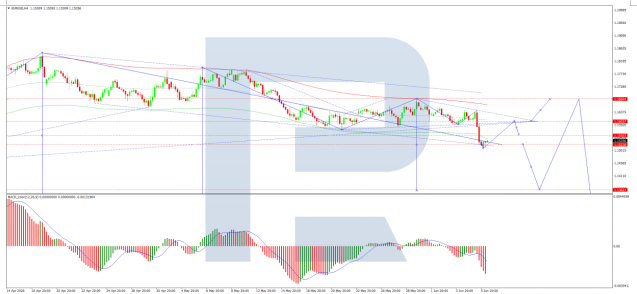
On the H4 chart, EUR/USD is forming a consolidation range around 1.1526. An upside breakout is expected, with a continuation wave towards 1.1647 as a near-term target. Subsequently, a new downward wave is anticipated to 1.1529. Technically, this scenario is confirmed by the MACD indicator – its signal line is above zero and pointing firmly upwards, reflecting ongoing bullish momentum and the potential for the uptrend to continue.

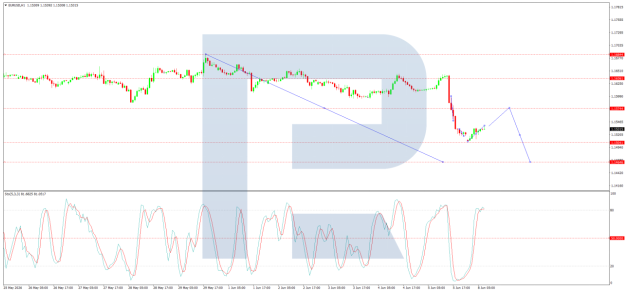
On the H1 chart, the market is forming the structure of the next downward wave towards 1.1499. After reaching this level, a rebound to 1.1556 is expected, with potential for the subsequent growth wave to extend to 1.1647. Technically, this scenario is confirmed by the Stochastic oscillator – its signal line is below 50 and pointing firmly downwards towards 20.

Conclusion

EUR/USD remains under pressure as geopolitical risks in the Middle East continue to drive safe-haven demand for the US dollar. With the conflict entering its fourth week and oil prices remaining elevated, inflationary concerns persist, delaying expectations for Fed rate cuts. Central banks across major economies remain alert, keeping tightening on the table. While technical indicators suggest potential short-term rebound, the broader outlook for the euro remains fragile as market risks show no signs of abating.


Disclaimer

Any forecasts contained herein are based on the author’s particular opinion. This analysis may not be treated as trading advice. RoboForex bears no responsibility for trading results based on trading recommendations and reviews contained herein.

Currency Speculators sharply drop Euro, CAD bets while boosting GBP, CHF & AUD

By InvestMacro | COT | Data Tables | COT Leaders | Downloads | COT Newsletter

Speculators OI FX Futures COT Chart

Here are the latest charts and statistics for the Commitment of Traders (COT) data published by the Commodities Futures Trading Commission (CFTC).

The latest COT data is updated through Tuesday March 17th and shows a quick view of how large market participants (for-profit speculators and commercial traders) were positioned in the futures markets. All currency positions are in direct relation to the US dollar where, for example, a bet for the euro is a bet that the euro will rise versus the dollar while a bet against the euro will be a bet that the euro will decline versus the dollar.

Weekly Speculator Changes led by GBP, Swiss Franc, Australian & New Zealand Dollars

Speculators Nets FX Futures COT Chart
The COT currency market speculator bets were overall slightly higher this week as six out of the eleven currency markets we cover had higher positioning while the other five markets had lower speculator contracts.

Leading the gains for the currency markets was British Pound (18,682 contracts) with the Swiss Franc (15,879 contracts), the Australian Dollar (14,864 contracts), the New Zealand Dollar (14,054 contracts), the US Dollar Index (9,575 contracts) and Bitcoin (471 contracts) also showing a small positive week.

The currencies seeing declines in speculator bets on the week were the EuroFX (-84,012 contracts), the Canadian Dollar (-35,273 contracts), the Japanese Yen (-26,393 contracts), the Mexican Peso (-5,351 contracts) and with the Brazilian Real (-1,711 contracts) also registering lower bets on the week.

Currency Speculators sharply drop Euro, CAD bets while boosting GBP, CHF & AUD

The COT market data for Currencies this week saw a bunch of extremely significant changes in the speculator positioning through Tuesday.

First off, the biggest mover on the week was the Euro, which saw a gigantic drawback in speculative bullish bets by -84,012 contracts. This marks the biggest drawdown for one week in Euro futures history. The Euro position has now fallen for five consecutive weeks, and that has taken off roughly -160,000 contracts from the bullish position, which has now fallen to a paltry +21,132 net contracts this week. This breaks a streak of fifteen consecutive weeks where the net contract position was over 100,000 contracts. In the currency exchange market, the Euro managed to have a gaining week after a couple of strong down weeks and trades right below the psychological 1.1600 resistance level, with support below at the 1.1475 to 1.1500 exchange levels.

Next up, the Canadian Dollar contracts saw a similar shortfall on the week with a -35,273 net contract decline this week. Unlike the Euro, the Canadian Dollar contracts had been ascending over the past weeks – as speculator contracts had risen in seven out of the previous eight weeks and had pushed the net contract position up to a +36,159 net contract position on March 10th. After this week’s sharp decline, the net position is virtually unchanged at a small +886 net speculator position. The CAD price in the currency markets has been treading water without much direction recently with the CAD ranging between 0.7200 and 0.7400 over the past eight weeks.

On the plus side, the British Pound Sterling saw a strong rise this week after declining in the previous five consecutive weeks. This week’s gain by over +18,000 net contracts was the highest weekly gain out of the past three months dating back to December 16th, 2025. However, the British Pound Sterling net position remains bearish. Overall, this currency speculator position has now been in a continuous bearish position for the past 34 weeks, dating back to July 22nd of 2025. In the Foreign Exchange Markets, the British Pound Sterling against the US Dollar saw a modest rise this week for the first time out of the past four weeks and now trades right around the 1.3300 exchange level. The Pound Sterling has recently been retreating after reaching a high in January around the 1.3870 level.

The Swiss Franc saw strong speculator demand this week with a gain of over +15,000 contracts. The Swiss Franc speculator position is usually a safe haven bid, and you would typically think the speculator position would be super strong. But there has been quite a lot of hedging in the Swiss Franc futures markets, so many of the moves are counterintuitive. However, this week obviously saw some safe haven speculator bids. While the Franchas been super strong in the Exchange Markets against the US Dollar, with the price of the Franc up around 17% higher since the beginning of January 2025. Currently, the Franc against the US Dollar trades at the 1.2797 exchange rate and has been as high as 1.3219 in late January.

The Australian Dollar, on the other hand, has been traditionally the anti-safe haven or high beta and usually plummets along with weakened speculator sentiment in uncertain times. However, the Australian Dollar continues to see strong speculator inflows. Speculator positions have gained in 15 out of the past 16 weeks, with an inflow of +153,237 net contracts over that time. This has brought the overall speculator position to a bullish level of +69,061 net contracts. This is the highest level for a standing speculator position since 2017, or a difference of about 441 weeks. The Australian Dollar against the US Dollar in the forex market dipped this week but remains trading right at the important psychological support and resistance level of 0.7000.

The New Zealand Dollar speculator position also saw strong inflows this week with a weekly gain of 14,054 net contracts. The New Zealand Dollar has been somewhat on a different path than the Australian Dollar, as the overall net position has been bearish for the past 35 weeks, dating back to July 15th, 2025. Over that time, we have seen a few record-breaking bearish positions, with December 9th reaching the highest bearish level on record at -56,781 net contracts. Since that all-time bearish position, the New Zealand Dollar speculator position has shed almost 30,000 contracts, and this week leveled the position at -23,057 net contracts. In the Forex Markets, the New Zealand Dollar against the US Dollar has been in a multi-year downtrend, with prices in January hitting the 200-weekly moving average and fading lower and with the NZD trading currently at 0.5840 exchange levels.

Leading the Currencies market price performances was the Euro and British Pound

Seeing the highest weekly price changes this week was the Euro with a 1.35% increase over the last five days. The British Pound Sterling came in second with a 0.90% change, while the New Zealand Dollar saw a 0.89% gain on the week. Next up, the Mexican Peso was higher by 0.62%, followed by the Australian Dollar which rose by 0.56%. The Swiss Franc was also higher by 0.42% on the week. The Japanese Yen managed to see an uptick by 0.28%, while the Canadian Dollar was virtually unchanged but edged up by 0.04% on the week.

The Brazilian Real dipped by -0.03%, while the US Dollar Index was lower by -0.79%. Bitcoin saw the biggest shortfall in the week with a -1.80% decline.


Currencies Data:

Speculators FX Futures COT Data Table
Legend: Open Interest | Speculators Current Net Position | Weekly Specs Change | Specs Strength Score compared to last 3-Years (0-100 range)


Strength Scores led by Australian Dollar & Bitcoin

Speculators Strength Scores FX Futures COT Chart
COT Strength Scores (a normalized measure of Speculator positions over a 3-Year range, from 0 to 100 where above 80 is Extreme-Bullish and below 20 is Extreme-Bearish) showed that the Australian Dollar (100 percent) and the Bitcoin (90 percent) lead the currency markets this week. The Canadian Dollar (85 percent), Brazilian Real (76 percent) and the US Dollar Index (54 percent) come in as the next highest in the weekly strength scores.

On the downside, the British Pound (12 percent) comes in at the lowest strength levels currently and are in Extreme-Bearish territory (below 20 percent). The next lowest strength scores are the Japanese Yen (32 percent), the EuroFX (37 percent) and the New Zealand Dollar (39 percent).

3-Year Strength Statistics:
US Dollar Index (54.1 percent) vs US Dollar Index previous week (28.3 percent)
EuroFX (36.8 percent) vs EuroFX previous week (68.8 percent)
British Pound Sterling (11.8 percent) vs British Pound Sterling previous week (3.8 percent)
Japanese Yen (32.0 percent) vs Japanese Yen previous week (39.3 percent)
Swiss Franc (49.8 percent) vs Swiss Franc previous week (17.6 percent)
Canadian Dollar (84.8 percent) vs Canadian Dollar previous week (100.0 percent)
Australian Dollar (100.0 percent) vs Australian Dollar previous week (91.6 percent)
New Zealand Dollar (38.5 percent) vs New Zealand Dollar previous week (22.5 percent)
Mexican Peso (49.6 percent) vs Mexican Peso previous week (53.4 percent)
Brazilian Real (75.8 percent) vs Brazilian Real previous week (77.1 percent)
Bitcoin (90.3 percent) vs Bitcoin previous week (80.3 percent)


Swiss Franc & Australian Dollar top the 6-Week Strength Trends

Speculators Trends FX Futures COT Chart
COT Strength Score Trends (or move index, calculates the 6-week changes in strength scores) showed that the Swiss Franc (31 percent) and the Australian Dollar (24 percent) lead the past six weeks trends for the currencies. Bitcoin (16 percent), the New Zealand Dollar (13 percent) and the Brazilian Real (13 percent) are the next highest positive movers in the 3-Year trends data.

The EuroFX (-54 percent) leads the downside trend scores currently with the British Pound (-22 percent), Mexican Peso (-16 percent) and the Japanese Yen (-13 percent) following next with lower trend scores.

3-Year Strength Trends:
US Dollar Index (12.3 percent) vs US Dollar Index previous week (-4.0 percent)
EuroFX (-54.1 percent) vs EuroFX previous week (-10.3 percent)
British Pound Sterling (-21.9 percent) vs British Pound Sterling previous week (-28.9 percent)
Japanese Yen (-13.4 percent) vs Japanese Yen previous week (-2.1 percent)
Swiss Franc (31.4 percent) vs Swiss Franc previous week (3.6 percent)
Canadian Dollar (-0.5 percent) vs Canadian Dollar previous week (22.5 percent)
Australian Dollar (24.3 percent) vs Australian Dollar previous week (26.6 percent)
New Zealand Dollar (12.8 percent) vs New Zealand Dollar previous week (12.1 percent)
Mexican Peso (-15.7 percent) vs Mexican Peso previous week (-20.7 percent)
Brazilian Real (13.4 percent) vs Brazilian Real previous week (23.4 percent)
Bitcoin (16.2 percent) vs Bitcoin previous week (13.0 percent)


Individual COT Forex Markets:

US Dollar Index Futures:

US Dollar Index Forex Futures COT ChartThe US Dollar Index large speculator standing this week resulted in a net position of 3,693 contracts in the data reported through Tuesday. This was a weekly increase of 9,575 contracts from the previous week which had a total of -5,882 net contracts.

This week’s current strength score (the trader positioning range over the past three years, measured from 0 to 100) shows the speculators are currently Bullish with a score of 54.1 percent. The commercials are Bearish with a score of 43.1 percent and the small traders (not shown in chart) are Bullish with a score of 61.1 percent.

Price Trend-Following Model: Weak Downtrend

Our weekly trend-following model classifies the current market price position as: Weak Downtrend.

US DOLLAR INDEX StatisticsSPECULATORSCOMMERCIALSSMALL TRADERS
– Percent of Open Interest Longs:60.425.28.8
– Percent of Open Interest Shorts:50.039.25.3
– Net Position:3,693-4,9571,264
– Gross Longs:21,4268,9323,132
– Gross Shorts:17,73313,8891,868
– Long to Short Ratio:1.2 to 10.6 to 11.7 to 1
NET POSITION TREND:
– Strength Index Score (3 Year Range Pct):54.143.161.1
– Strength Index Reading (3 Year Range):BullishBearishBullish
NET POSITION MOVEMENT INDEX:
– 6-Week Change in Strength Index:12.3-17.733.9


Euro Currency Futures:

Euro Currency Futures COT ChartThe Euro Currency large speculator standing this week resulted in a net position of 21,132 contracts in the data reported through Tuesday. This was a weekly decline of -84,012 contracts from the previous week which had a total of 105,144 net contracts.

This week’s current strength score (the trader positioning range over the past three years, measured from 0 to 100) shows the speculators are currently Bearish with a score of 36.8 percent. The commercials are Bullish with a score of 61.3 percent and the small traders (not shown in chart) are Bullish with a score of 53.2 percent.

Price Trend-Following Model: Weak Uptrend

Our weekly trend-following model classifies the current market price position as: Weak Uptrend.

EURO Currency StatisticsSPECULATORSCOMMERCIALSSMALL TRADERS
– Percent of Open Interest Longs:28.257.611.3
– Percent of Open Interest Shorts:25.465.36.4
– Net Position:21,132-58,43337,301
– Gross Longs:212,886435,13085,722
– Gross Shorts:191,754493,56348,421
– Long to Short Ratio:1.1 to 10.9 to 11.8 to 1
NET POSITION TREND:
– Strength Index Score (3 Year Range Pct):36.861.353.2
– Strength Index Reading (3 Year Range):BearishBullishBullish
NET POSITION MOVEMENT INDEX:
– 6-Week Change in Strength Index:-54.154.6-37.7


British Pound Sterling Futures:

British Pound Sterling Futures COT ChartThe British Pound Sterling large speculator standing this week resulted in a net position of -65,515 contracts in the data reported through Tuesday. This was a weekly rise of 18,682 contracts from the previous week which had a total of -84,197 net contracts.

This week’s current strength score (the trader positioning range over the past three years, measured from 0 to 100) shows the speculators are currently Bearish-Extreme with a score of 11.8 percent. The commercials are Bullish-Extreme with a score of 87.6 percent and the small traders (not shown in chart) are Bearish with a score of 40.7 percent.

Price Trend-Following Model: Weak Uptrend

Our weekly trend-following model classifies the current market price position as: Weak Uptrend.

BRITISH POUND StatisticsSPECULATORSCOMMERCIALSSMALL TRADERS
– Percent of Open Interest Longs:18.270.010.0
– Percent of Open Interest Shorts:45.141.212.0
– Net Position:-65,51570,330-4,815
– Gross Longs:44,293170,50924,456
– Gross Shorts:109,808100,17929,271
– Long to Short Ratio:0.4 to 11.7 to 10.8 to 1
NET POSITION TREND:
– Strength Index Score (3 Year Range Pct):11.887.640.7
– Strength Index Reading (3 Year Range):Bearish-ExtremeBullish-ExtremeBearish
NET POSITION MOVEMENT INDEX:
– 6-Week Change in Strength Index:-21.924.7-30.3


Japanese Yen Futures:

Japanese Yen Forex Futures COT ChartThe Japanese Yen large speculator standing this week resulted in a net position of -67,780 contracts in the data reported through Tuesday. This was a weekly decrease of -26,393 contracts from the previous week which had a total of -41,387 net contracts.

This week’s current strength score (the trader positioning range over the past three years, measured from 0 to 100) shows the speculators are currently Bearish with a score of 32.0 percent. The commercials are Bullish with a score of 68.6 percent and the small traders (not shown in chart) are Bearish with a score of 31.0 percent.

Price Trend-Following Model: Strong Downtrend

Our weekly trend-following model classifies the current market price position as: Strong Downtrend.

JAPANESE YEN StatisticsSPECULATORSCOMMERCIALSSMALL TRADERS
– Percent of Open Interest Longs:32.750.212.1
– Percent of Open Interest Shorts:53.428.812.8
– Net Position:-67,78070,002-2,222
– Gross Longs:106,819163,97539,497
– Gross Shorts:174,59993,97341,719
– Long to Short Ratio:0.6 to 11.7 to 10.9 to 1
NET POSITION TREND:
– Strength Index Score (3 Year Range Pct):32.068.631.0
– Strength Index Reading (3 Year Range):BearishBullishBearish
NET POSITION MOVEMENT INDEX:
– 6-Week Change in Strength Index:-13.414.0-18.2


Swiss Franc Futures:

Swiss Franc Forex Futures COT ChartThe Swiss Franc large speculator standing this week resulted in a net position of -25,213 contracts in the data reported through Tuesday. This was a weekly boost of 15,879 contracts from the previous week which had a total of -41,092 net contracts.

This week’s current strength score (the trader positioning range over the past three years, measured from 0 to 100) shows the speculators are currently Bearish with a score of 49.8 percent. The commercials are Bearish with a score of 47.8 percent and the small traders (not shown in chart) are Bullish with a score of 60.2 percent.

Price Trend-Following Model: Uptrend

Our weekly trend-following model classifies the current market price position as: Uptrend.

SWISS FRANC StatisticsSPECULATORSCOMMERCIALSSMALL TRADERS
– Percent of Open Interest Longs:11.071.816.8
– Percent of Open Interest Shorts:45.131.922.8
– Net Position:-25,21329,602-4,389
– Gross Longs:8,17553,23612,475
– Gross Shorts:33,38823,63416,864
– Long to Short Ratio:0.2 to 12.3 to 10.7 to 1
NET POSITION TREND:
– Strength Index Score (3 Year Range Pct):49.847.860.2
– Strength Index Reading (3 Year Range):BearishBearishBullish
NET POSITION MOVEMENT INDEX:
– 6-Week Change in Strength Index:31.4-15.3-25.8


Canadian Dollar Futures:

Canadian Dollar Forex Futures COT ChartThe Canadian Dollar large speculator standing this week resulted in a net position of 886 contracts in the data reported through Tuesday. This was a weekly fall of -35,273 contracts from the previous week which had a total of 36,159 net contracts.

This week’s current strength score (the trader positioning range over the past three years, measured from 0 to 100) shows the speculators are currently Bullish-Extreme with a score of 84.8 percent. The commercials are Bearish-Extreme with a score of 15.4 percent and the small traders (not shown in chart) are Bullish with a score of 60.2 percent.

Price Trend-Following Model: Uptrend

Our weekly trend-following model classifies the current market price position as: Uptrend.

CANADIAN DOLLAR StatisticsSPECULATORSCOMMERCIALSSMALL TRADERS
– Percent of Open Interest Longs:26.858.212.1
– Percent of Open Interest Shorts:26.560.89.9
– Net Position:886-6,2065,320
– Gross Longs:66,507144,31429,911
– Gross Shorts:65,621150,52024,591
– Long to Short Ratio:1.0 to 11.0 to 11.2 to 1
NET POSITION TREND:
– Strength Index Score (3 Year Range Pct):84.815.460.2
– Strength Index Reading (3 Year Range):Bullish-ExtremeBearish-ExtremeBullish
NET POSITION MOVEMENT INDEX:
– 6-Week Change in Strength Index:-0.50.7-1.3


Australian Dollar Futures:

Australian Dollar Forex Futures COT ChartThe Australian Dollar large speculator standing this week resulted in a net position of 69,061 contracts in the data reported through Tuesday. This was a weekly boost of 14,864 contracts from the previous week which had a total of 54,197 net contracts.

This week’s current strength score (the trader positioning range over the past three years, measured from 0 to 100) shows the speculators are currently Bullish-Extreme with a score of 100.0 percent. The commercials are Bearish-Extreme with a score of 0.0 percent and the small traders (not shown in chart) are Bullish-Extreme with a score of 92.8 percent.

Price Trend-Following Model: Uptrend

Our weekly trend-following model classifies the current market price position as: Uptrend.

AUSTRALIAN DOLLAR StatisticsSPECULATORSCOMMERCIALSSMALL TRADERS
– Percent of Open Interest Longs:51.231.515.4
– Percent of Open Interest Shorts:25.266.86.1
– Net Position:69,061-93,77224,711
– Gross Longs:136,07483,76940,933
– Gross Shorts:67,013177,54116,222
– Long to Short Ratio:2.0 to 10.5 to 12.5 to 1
NET POSITION TREND:
– Strength Index Score (3 Year Range Pct):100.00.092.8
– Strength Index Reading (3 Year Range):Bullish-ExtremeBearish-ExtremeBullish-Extreme
NET POSITION MOVEMENT INDEX:
– 6-Week Change in Strength Index:24.3-21.65.9


New Zealand Dollar Futures:

New Zealand Dollar Forex Futures COT ChartThe New Zealand Dollar large speculator standing this week resulted in a net position of -23,057 contracts in the data reported through Tuesday. This was a weekly gain of 14,054 contracts from the previous week which had a total of -37,111 net contracts.

This week’s current strength score (the trader positioning range over the past three years, measured from 0 to 100) shows the speculators are currently Bearish with a score of 38.5 percent. The commercials are Bullish with a score of 61.0 percent and the small traders (not shown in chart) are Bearish with a score of 41.9 percent.

Price Trend-Following Model: Weak Uptrend

Our weekly trend-following model classifies the current market price position as: Weak Uptrend.

NEW ZEALAND DOLLAR StatisticsSPECULATORSCOMMERCIALSSMALL TRADERS
– Percent of Open Interest Longs:17.277.04.8
– Percent of Open Interest Shorts:53.139.76.1
– Net Position:-23,05723,860-803
– Gross Longs:10,99849,3173,090
– Gross Shorts:34,05525,4573,893
– Long to Short Ratio:0.3 to 11.9 to 10.8 to 1
NET POSITION TREND:
– Strength Index Score (3 Year Range Pct):38.561.041.9
– Strength Index Reading (3 Year Range):BearishBullishBearish
NET POSITION MOVEMENT INDEX:
– 6-Week Change in Strength Index:12.8-11.8-9.4


Mexican Peso Futures:

Mexican Peso Futures COT ChartThe Mexican Peso large speculator standing this week resulted in a net position of 68,460 contracts in the data reported through Tuesday. This was a weekly decline of -5,351 contracts from the previous week which had a total of 73,811 net contracts.

This week’s current strength score (the trader positioning range over the past three years, measured from 0 to 100) shows the speculators are currently Bearish with a score of 49.6 percent. The commercials are Bearish with a score of 48.3 percent and the small traders (not shown in chart) are Bullish with a score of 50.4 percent.

Price Trend-Following Model: Weak Uptrend

Our weekly trend-following model classifies the current market price position as: Weak Uptrend.

MEXICAN PESO StatisticsSPECULATORSCOMMERCIALSSMALL TRADERS
– Percent of Open Interest Longs:53.142.53.5
– Percent of Open Interest Shorts:13.285.40.6
– Net Position:68,460-73,4404,980
– Gross Longs:90,99772,8215,994
– Gross Shorts:22,537146,2611,014
– Long to Short Ratio:4.0 to 10.5 to 15.9 to 1
NET POSITION TREND:
– Strength Index Score (3 Year Range Pct):49.648.350.4
– Strength Index Reading (3 Year Range):BearishBearishBullish
NET POSITION MOVEMENT INDEX:
– 6-Week Change in Strength Index:-15.715.2-1.3


Brazilian Real Futures:

Brazil Real Futures COT ChartThe Brazilian Real large speculator standing this week resulted in a net position of 49,317 contracts in the data reported through Tuesday. This was a weekly fall of -1,711 contracts from the previous week which had a total of 51,028 net contracts.

This week’s current strength score (the trader positioning range over the past three years, measured from 0 to 100) shows the speculators are currently Bullish with a score of 75.8 percent. The commercials are Bearish with a score of 23.1 percent and the small traders (not shown in chart) are Bearish with a score of 44.5 percent.

Price Trend-Following Model: Uptrend

Our weekly trend-following model classifies the current market price position as: Uptrend.

BRAZIL REAL StatisticsSPECULATORSCOMMERCIALSSMALL TRADERS
– Percent of Open Interest Longs:69.924.55.0
– Percent of Open Interest Shorts:21.577.00.9
– Net Position:49,317-53,5174,200
– Gross Longs:71,25525,0065,124
– Gross Shorts:21,93878,523924
– Long to Short Ratio:3.2 to 10.3 to 15.5 to 1
NET POSITION TREND:
– Strength Index Score (3 Year Range Pct):75.823.144.5
– Strength Index Reading (3 Year Range):BullishBearishBearish
NET POSITION MOVEMENT INDEX:
– 6-Week Change in Strength Index:13.4-13.10.2


Bitcoin Futures:

Bitcoin Crypto Futures COT ChartThe Bitcoin large speculator standing this week resulted in a net position of 1,773 contracts in the data reported through Tuesday. This was a weekly rise of 471 contracts from the previous week which had a total of 1,302 net contracts.

This week’s current strength score (the trader positioning range over the past three years, measured from 0 to 100) shows the speculators are currently Bullish-Extreme with a score of 90.3 percent. The commercials are Bearish-Extreme with a score of 15.2 percent and the small traders (not shown in chart) are Bearish with a score of 41.9 percent.

Price Trend-Following Model: Downtrend

Our weekly trend-following model classifies the current market price position as: Downtrend.

BITCOIN StatisticsSPECULATORSCOMMERCIALSSMALL TRADERS
– Percent of Open Interest Longs:70.31.65.2
– Percent of Open Interest Shorts:62.99.44.9
– Net Position:1,773-1,86289
– Gross Longs:16,7413791,246
– Gross Shorts:14,9682,2411,157
– Long to Short Ratio:1.1 to 10.2 to 11.1 to 1
NET POSITION TREND:
– Strength Index Score (3 Year Range Pct):90.315.241.9
– Strength Index Reading (3 Year Range):Bullish-ExtremeBearish-ExtremeBearish
NET POSITION MOVEMENT INDEX:
– 6-Week Change in Strength Index:16.2-19.96.7


Article By InvestMacroReceive our weekly COT Reports by Email

*COT Report: The COT data, released weekly to the public each Friday, is updated through the most recent Tuesday (data is 3 days old) and shows a quick view of how large speculators or non-commercials (for-profit traders) were positioned in the futures markets.

The CFTC categorizes trader positions according to commercial hedgers (traders who use futures contracts for hedging as part of the business), non-commercials (large traders who speculate to realize trading profits) and nonreportable traders (usually small traders/speculators) as well as their open interest (contracts open in the market at time of reporting).See CFTC criteria here.

All information and opinions on this website and contained in this article are for general informational purposes only and do not constitute investment advice.

Speculator Extremes: Australian Dollar, Steel & Soybean Oil lead Bullish Positions

By InvestMacro

The latest update for the weekly Commitment of Traders (COT) report was released by the Commodity Futures Trading Commission (CFTC) on Friday for data ending on Tuesday March 17th.

This weekly Extreme Positions report highlights the Most Bullish and Most Bearish Positions for the speculator category and is a current snapshot of how speculators were positioned as of Tuesday. Extreme positioning in these markets can foreshadow strong moves in the underlying market.

To signify an extreme position, we use the Strength Index (also known as the COT Index) of each instrument, a common method of measuring COT data. The Strength Index is simply a comparison of current trader positions against the range of positions over the previous 3 years. We use over 80 percent as extremely bullish and under 20 percent as extremely bearish (Compare Strength Index scores across all markets in the data table or cot leaders table).

The 6-WK Trend score is the change in the Strength Index over the past 6 weeks and signals how strong and which way the Strength Index is going.


Extreme Bullish Speculator Table


Here Are This Week’s Most Bullish Speculator Positions:

Australian Dollar

The Australian Dollar speculator position comes in tied this week at the top in the extreme standings as the AUD speculator level resides at a 100 percent score of its 3-year range.

The six-week trend for the speculator strength score came in at a gain of 24 percentage points this week. The overall speculator position was 69,061 net contracts this week with a boost of 14,864 contracts in the weekly speculator bets.


Steel

Extreme Bullish Leader
The Steel speculator position comes in tied as the most bullish extreme standing this week. The Steel speculator level is currently at a 100 percent score of its 3-year range.

The six-week trend for the percent strength score totaled a rise of 11 percentage points this week. The overall net speculator position was a total of 13,867 net contracts this week with an increase of 974 contract in the weekly speculator bets.


Speculators or Non-Commercials Notes:

Speculators, classified as non-commercial traders by the CFTC, are made up of large commodity funds, hedge funds and other significant for-profit participants. The Specs are generally regarded as trend-followers in their behavior towards price action – net speculator bets and prices tend to go in the same directions. These traders often look to buy when prices are rising and sell when prices are falling. To illustrate this point, many times speculator contracts can be found at their most extremes (bullish or bearish) when prices are also close to their highest or lowest levels.

These extreme levels can be dangerous for the large speculators as the trade is most crowded, there is less trading ammunition still sitting on the sidelines to push the trend further and prices have moved a significant distance. When the trend becomes exhausted, some speculators take profits while others look to also exit positions when prices fail to continue in the same direction. This process usually plays out over many months to years and can ultimately create a reverse effect where prices start to fall and speculators start a process of selling when prices are falling.


Soybean Oil

Extreme Bullish Leader
The Soybean Oil speculator position comes in also tied at the top of the extreme standings this week. The Soybean Oil speculator level is at a 100 percent score of its 3-year range.

The six-week trend for the percent strength score was a jump by 43 percentage points this week as the speculator position registered 120,097 net contracts this week with a weekly increase of 18,346 contracts in speculator bets.


Soybeans

Extreme Bullish Leader
The Soybeans speculator position comes up number four in the extreme standings this week with the Soybeans speculator level at a 93 percent score of its 3-year range.

The six-week trend for the speculator strength score totaled an increase of 35 percentage points this week. The overall speculator position was 221,066 net contracts this week with a drop of -9,202 contracts in the speculator bets.


Palladium

Extreme Bullish Leader
The Palladium speculator position rounds out the top five in this week’s bullish extreme standings. The Palladium speculator level sits at a 91 percent score of its 3-year range while the six-week trend for the speculator strength score was a decline by -9 percentage points this week.

The speculator position was -185 net contracts this week with a small change of -29 contracts in the weekly speculator bets.


The Most Bearish Speculator Positions of the Week:

Extreme Bearish Speculator Table


2-Year Bond

Extreme Bearish Leader
The 2-Year Bond speculator position comes in as the most bearish extreme standing this week as the 2-Year speculator level resides at a minimum 0 percent score of its 3-year range.

The six-week trend for the speculator strength score was a decline by -14 percentage points this week. The overall speculator position was -1,482,667 net contracts this week with a drop of -144,431 contracts in the speculator bets.


Cocoa Futures

Extreme Bearish Leader
The Cocoa Futures speculator position comes in next for the most bearish extreme standing on the week as the Cocoa speculator level sits at a 3 percent score of its 3-year range.

The six-week trend for the speculator strength score was a dip by -3 percentage points this week. The speculator position was -17,859 net contracts this week with a small gain by 2,991 contracts in the weekly speculator bets.


Sugar

Extreme Bearish Leader
The Sugar speculator position comes in as third most bearish extreme standing of the week as the Sugar speculator level resides at a 9 percent score of its 3-year range.

The six-week trend for the speculator strength score showed almost no change this week while the overall speculator position was -207,755 net contracts this week with a small rise of 1,000 contracts in the speculator bets.


British Pound

Extreme Bearish Leader
The British Pound speculator position comes in as this week’s fourth most bearish extreme standing. The GBP speculator level is at a 12 percent score of its 3-year range.

The six-week trend for the speculator strength score was a dip of -22 percentage points this week and the speculator position was -65,515 net contracts this week with a strong gain of 18,682 contracts in the weekly speculator bets.


Natural Gas

Extreme Bearish Leader
Next, the Natural Gas speculator position comes in as the fifth most bearish extreme standing for this week as the Natural Gas speculator level is at a 18 percent score of its 3-year range.

The six-week trend for the speculator strength score had a change by -4 percentage points this week while the speculator position was -178,029 net contracts this week with a rise of 8,827 contracts in the weekly speculator bets.


Article By InvestMacroReceive our weekly COT Reports by Email

*COT Report: The COT data, released weekly to the public each Friday, is updated through the most recent Tuesday (data is 3 days old) and shows a quick view of how large speculators or non-commercials (for-profit traders) were positioned in the futures markets.

The CFTC categorizes trader positions according to commercial hedgers (traders who use futures contracts for hedging as part of the business), non-commercials (large traders who speculate to realize trading profits) and nonreportable traders (usually small traders/speculators) as well as their open interest (contracts open in the market at time of reporting).See CFTC criteria here.

All information and opinions on this website and contained in this article are for general informational purposes only and do not constitute investment advice.