Archive for Opinions – Page 47

Trade of the Week: USDInd set for rollercoaster ride?

By ForexTime 

  • USDInd ↑ 0.9% MTD
  • US Presidential debate & PCE deflators in focus
  • Over past year PCE deflators triggered moves of 0.3% ↑ or ↓
  • Technical levels – 106.50, 105.60 & 105.20

Watch this space because FXTM’s USDInd could be jolted by economic and political forces!

It’s all about the Biden vs. Trump faceoff and US PCE deflators which may translate to heightened dollar volatility this week.

After securing a weekly close above the 105.60 resistance, prices are turning increasingly bullish. However, the next major level for bulls to crack can be found at 106.50.

Note: FXTM’s USDInd tracks the US Dollar Index.  This measures how the dollar performs against a basket of six different G10 currencies, including the Euro, British Pound, Japanese Yen, and Canadian dollar.

The lowdown…

Dollar bulls have made a return this month thanks to stronger-than-expected US data including the solid US May jobs report. Last Friday, reports revealed that both U.S manufacturing and services sectors expanded in June – further trimming rate cut bets.

The USDInd could end H1 with a bang, here are 3 reasons why:

    1) Biden vs. Trump: US Presidential debate

The spotlight shines on the first US presidential debate on Thursday, June 27th.

Investors will most likely focus on every little detail, starting from mental states, messaging, overall accuracy of information, and policies among other things. There are just over four months till the US presidential election with national polls suggesting that Biden and Trump are neck-and-neck! This could add more flavour to the upcoming debate which may shape the overall election result.

  • Whatever the outcome of this big political event, it could trigger fresh volatility for the dollar and across financial markets.


    2) US May PCE deflators

On the data front, the Fed’s preferred inflation gauge – the Core PCE could influence expectations about when the central bank will cut rates in 2024.

Markets are forecasting PCE deflators to cool in May with the core figure falling to 2.6% year-on-year compared with the 2.8% seen in the previous month. Ultimately, more signs of cooling price pressures could boost bets around lower US interest rates.

Traders are currently pricing in a 73% probability of a 25-basis point cut in September with a move fully priced in by November.

It will be wise to keep an eye on speeches by numerous Fed officials and other US data that could also move the USDInd.

Golden nugget: Over the past year, the US PCE deflators have triggered upside moves of as much as 0.3% or declines of 0.3% in a 6-hour window post-release.


  • The USDInd may slip on more signs of cooling price pressures in the United States, with dovish comments by Fed officials fuelling the downside.
  • Should the PCE deflators print higher than expected, this may support USDInd bulls as markets further push back Fed cut expectations.


    3) Technical forces

Prices are trending higher on the daily charts with support levels at 105.60 and 105.20.

There have been consistently higher highs and lows, while the candlesticks are trading above the 50, 100 and 200-day SMA.

  • Should 105.60 prove to be reliable support, this could encourage an incline towards 106.50.
  • A daily close below 105.60 could see prices re-test 105.20.
  • Weakness below 105.20 may open the doors towards the 100-day SMA at 104.70.


Forex-Time-LogoArticle by ForexTime

ForexTime Ltd (FXTM) is an award winning international online forex broker regulated by CySEC 185/12 www.forextime.com

Why Broadcom’s (AVGO) 10-for-1 Stock Split Could Attract a New Wave of Investors

By The Ino.com Team

Broadcom Inc. (AVGO), a prominent player in the semiconductor industry, announced a 10-for-1 forward stock split set to take effect on July 15, 2024, taking advantage of a rally in its shares this year. This decision comes on the heels of an outstanding second-quarter performance, underscoring Broadcom’s strategic positioning amid the burgeoning artificial intelligence (AI) revolution.

Understanding Stock Split Mechanics and Strategic Implications for Broadcom

A stock split involves dividing each existing share into multiple shares, effectively lowering the share price proportionally while maintaining the company’s total market capitalization. In AVGO’s case, each shareholder will receive nine additional shares for every one share held, resulting in a tenfold increase in the number of outstanding shares.

The primary objective of a stock split is to make shares more affordable and accessible to a wide range of retail investors by reducing the nominal share price. Given Broadcom’s share price surpassing $1,800 recently, the split aims to address perceived affordability barriers that may have deterred investors.

The increased accessibility can broaden AVGO’s investor base, potentially stimulating demand for its shares. Consequently, a higher number of outstanding shares resulting from the stock split typically leads to higher trading volumes. This enhanced liquidity can benefit both existing and new investors, allowing for easier entry and exit from positions.

Comparison with NVIDIA’s Recent Similar Move

Broadcom’s stock split mirrors a similar move by NVIDIA Corporation (NVDA), its rival in the AI hardware market. With more individual investors gaining access to Nvidia’s shares post-split, which came into effect at the close of trading on June 7, increased trading activity and demand were observed, potentially driving share prices higher.

NVIDIA’s stock is trading above its 50-day and 200-day moving averages of $99.28 and $68.61, respectively. NVDA’s successful split this month was preceded by significant market gains, highlighting the strategic timing of Broadcom’s decision to capitalize on investor sentiment surrounding the AI and semiconductor sectors.

Historically, stock splits are viewed as a bullish signal. According to data from BofA research, total returns for companies announcing stock splits are about 25% in the 12 months after a stock split compared to 12% gains for the S&P 500 index.

Broadcom’s Unprecedented Growth Amid the AI Boom

With a $839.05 billion market cap, AVGO is a technology leader that develops and supplies semiconductor and infrastructure software solutions. The company manufactures sophisticated networking chips for handling vast amounts of data used by AI applications such as OpenAI’s ChatGPT, positioning it as one of the beneficiaries of increased enterprise investments in the boom.

According to Grand View Research, the global AI market is projected to reach $1.81 trillion by 2030, growing at a CAGR of 36.6% during the forecast period (2024-2030). As AI continues to revolutionize industry verticals, including automotive, healthcare, retail, finance, and manufacturing, chipmakers like Broadcom are at the forefront, providing the essential chips that power AI applications.

Broadcom’s second-quarter results were primarily driven by AI demand and VMware. For the quarter that ended May 5, 2024, AVGO’s net revenue increased 43% year-over-year to $12.49 billion. Its revenue surpassed the consensus estimate of $12.01 billion. Revenue from its AI products was a record $3.10 billion during the quarter. Broadcom reported triple-digit revenue growth in the Infrastructure Software segment to $5.29 billion as enterprises increasingly adopted the VMware software stack to build their private clouds.

AVGO’s gross margin grew 27.2% from the year-ago value to $7.78 billion. Its non-GAAP operating income rose 32% year-over-year to $7.15 billion. Furthermore, the company’s non-GAAP net income came in at $5.39 billion or $10.96 per share, up 20.2% and 6.2% year-over-year, respectively. Its EPS exceeded the analysts’ expectations of $10.84.

Also, the company’s adjusted EBITDA grew 30.6% from the prior year’s quarter to $7.43 billion. It reported a free cash flow, excluding restructuring and integration, of $4.45 billion, up 18% year-over-year. As of May 5, 2024, AVGO’s cash and cash equivalents were $9.81 billion.

After an outstanding financial performance, Broadcom raised its fiscal year 2024 guidance. The company expects full-year revenue of nearly $51 billion. Its adjusted EBITDA is expected to be approximately 61% of projected revenue.

Favorable Analyst Estimates

Analysts expect AVGO’s revenue for the third quarter (ending July 2024) to grow 45.6% year-over-year to $12.92 billion. The consensus EPS estimate of $12.11 for the current quarter indicates a 14.9% year-over-year increase. Moreover, the company has surpassed the consensus revenue and EPS estimates in each of the trailing four quarters, which is impressive.

For the fiscal year ending October 2024, Street expects Broadcom’s revenue and EPS to grow 43.4% and 13% year-over-year to $43.37 billion and $47.74, respectively. In addition, the company’s revenue and EPS for the fiscal year 2025 are expected to increase 15.3% and 25.6% from the previous year to $59.22 billion and $59.95, respectively.

Bottom Line

As AI continues to revolutionize several sectors, chipmakers such as Broadcom are at the forefront, offering essential semiconductor and infrastructure software solutions powering this technology. Driven by robust AI demand and VMware, AVGO reported solid second-quarter performance, exceeding analysts’ estimates for revenue and earnings.

The management expressed confidence in the company’s growth prospects by raising the company’s fiscal year 2024 guidance for revenue to $51 billion and adjusted EBITDA to 61% of revenue. Moreover, AVGO’s strong financial health enabled it to approve a quarterly dividend of $5.25 per share, payable on June 28, 2024.

The company pays an annual dividend of $21 per share, which translates to a yield of 1.17% on the current share price, while its four-year average dividend yield is 2.69%. Its dividend payouts have grown at CAGRs of 12.9% and 17.5% over the past three and five years, respectively. Broadcom also raised its dividend payouts for 13 consecutive years.

In the last quarterly earnings release, AVGO announced a ten-for-one forward stock split of its common stock, making ownership of Broadcom stock more accessible to investors. The company’s decision to execute a stock split represents a strategic move to enhance shareholder value and broaden investor participation.

By making its shares more accessible and increasing liquidity, Broadcom positions itself to attract a diverse array of investors keen on capitalizing on the AI-driven semiconductor boom. The stock split is a pivotal catalyst that could propel AVGO’s growth trajectory forward, cementing its status as a critical player in the evolving tech industry.

In a report released on June 16, William Stein from Truist Financial maintained a Buy rating on AVGO, with a price target of $2,045. Further, Oppenheimer’s Rick Schafer increased the price target on Broadcom from $1,500 to $2,000 while maintaining a Buy rating on the stock.

In addition to Oppenheimer’s rating update, other analysts adjusted their price targets for AVGO. Goldman Sachs’ Toshiya Hari raised the price target from $1,550 to $1,850 and maintained a Strong Buy rating. Also, JP Morgan’s Harlan Sur raised the price target from $1,700 to $2,000 and maintained a Strong Buy rating on the stock.

In conclusion, for investors eyeing opportunities in the dynamic intersection of AI and semiconductor sectors, Broadcom’s ten-for-one stock split presents a compelling avenue to consider, backed by sound fundamentals and strategic foresight.


By Ino.com – See our Trader Blog, INO TV Free & Market Analysis Alerts

Source: Why Broadcom’s (AVGO) 10-for-1 Stock Split Could Attract a New Wave of Investors

FX, Stocks, Commodities, Cryptos… Learn How to Know When This Key Price Pattern is Over (Video)

By Elliott Wave International

“12345-ABC.” That’s a basic Elliott wave pattern in a nutshell. That “12345” is a so-called impulse, and it’s a key price pattern to know, because impulses point in the direction of the larger trend. In this clip from a recent Trader’s Classroom lesson, host Favio Poci shows you step-by-step how to spot an impulse and know when it’s likely over. (Market in focus: EUR/CHF, but you can apply this to any liquid market.)

Continue Your Education on Impulse Waves with this FREE Online Course!

For a very limited time, you can get free access to our online course, “How to Spot and Capitalize on Impulse Waves.” ($99 value)

In about 1 hour, you’ll learn:

  1. “What do I look for?” — just what, exactly, should you look for on a price chart? See an easy way to spot an impulse wave.
  2. “What does it tell me?” — Impulse waves are great at showing you the direction of the larger trend (which, as you know, is “your friend”!)
  3. “Are there variations?” — Most impulse waves are simple, but some are… well, different. You’ll see how to quickly distinguish one from another.

Start Watching Now

This article was syndicated by Elliott Wave International and was originally published under the headline FX, Stocks, Commodities, Cryptos… Learn How to Know When This Key Price Pattern is Over (Video). EWI is the world’s largest market forecasting firm. Its staff of full-time analysts led by Chartered Market Technician Robert Prechter provides 24-hour-a-day market analysis to institutional and private investors around the world.

Week Ahead: Yen headed for intervention “danger zone”?

By ForexTime

  • JPY is worst-performing G10 currency vs. USD in 1H24
  • USDJPY’s 160 price area triggered largest-ever JPY intervention in late-April
  • Besides intervention risk, traders watching Friday’s US/Japan inflation data
  • Bloomberg model: 77% chance of 156.69-160.58 trading range next week


The Yen is returning closer towards its 34-year low against the US dollar.

This widely-traded FX pair posted its 6th straight day of gains, with the Yen set for its longest losing streak against the US dollar since March.

Already the Yen is set to wrap up the first half of 2024 with the title of worst-performing G10 currency against the US dollar, by a mile.


Why is the Yen so weak?

USDJPY’s stunning ascent has been primarily driven by the surprise reluctance by both the US and Japanese central banks to change their policy stances:

  • The Bank of Japan has not been as quick to HIKE interest rates so far this year
  • The US Federal Reserve has not been as quick to CUT interest rates so far this year
Recall that a currency tends to weaken when its country’s interest rates are lower than its peers, and vice versa.

This persistent policy divergence has resulted in a still-wide spread between US Treasury yields and their Japanese counterparts, which greatly favours USD demand over JPY.

In other words …

With Japan’s interest rates staying lower-for-longer, while the Fed’s benchmark rates remain higher for longer, that has resulted in a resilient US Dollar and a weaker Japanese Yen, i.e. soaring USDJPY.


What should traders look out for?

Traders, especially Yen bears, are entering the final trading week of 1H24 with memories from end-April, which was the last time USDJPY was seen around these current levels.

Starting April 26th, the Japanese government had spent a record US$62.2 billion to defend its currency.

That record intervention contributed to USDJPY’s largest one-day price swing since 2022, as the FX pair breached 160, only to plummet to as low as 154.52.

That was a painful lesson for Yen bears (those hoping that USDJPY can move higher), although another showdown appears to be shaping up.

Hence, if we do see another round of intervention on the Yen, that could translate into massive profits for Yen bulls (those hoping for lower USDJPY).


Beyond the threat of another round of government intervention, the coming week also features scheduled events that could rock USDJPY:

Monday, June 24

  • NZD: New Zealand May trade balance
  • JPY: BoJ Summary of Opinions
  • SG20 index: Singapore May CPI
  • TWN index: Taiwan May unemployment, industrial production
  • GER40 index: Germany June IFO business climate
  • US30 index: Speech by San Francisco Fed President Mary Daly

Tuesday, June 25

  • AU200 index: Australia June consumer confidence
  • CAD: Canada CPI
  • USD index: US June consumer confidence; speeches by Fed Governors Lisa Cook and Michelle Bowman

Wednesday, June 26

  • AUD: Australia May CPI
  • GER40 index: Germany July consumer confidence

Thursday, June 27

  • JP225 index: Japan May retail sales
  • CNH: China May industrial profits
  • TRY: Turkey rate decision
  • SEK: Sweden rate decision
  • EU50 index: Eurozone June economic confidence
  • USD: US weekly initial jobless claims; 1Q GDP (final)
  • Nike earnings
  • Biden vs. Trump: US Presidential election debate

Friday, June 28

  • JPY: Tokyo June CPI; May jobless rate and industrial production
  • EUR: Germany June unemployment; France June CPI
  • GBP: UK 1Q GDP (final)
  • USD index: US May PCE deflators, personal income and spending; June consumer sentiment (final)


USDJPY set for freaky Friday?

Two events out of either side of the Pacific may hold greater potential to rock USDJPY on the final trading day of 1H24:


1) Tokyo June consumer price index (CPI)

Here’s what economists expect:

  • CPI year-on-year (June 2024 vs. June 2023): 2.3%
    If so, that would be slightly higher than May’s 2.2% year-on-year figure.
  • CPI year-on-year (excluding fresh food): 2.0%
    If so, that would be slightly higher than May’s 1.9% year-on-year figure.
  • CPI year-on-year (excluding fresh food and energy): 1.6%
    If so, that would be slightly higher than May’s 1.7% year-on-year figure.

Over the past 12 months, the 6 hours after these Tokyo CPI releases had seen upwards moves for USDJPY as much as 0.38%, or declines as much as 0.3%.


2) US May PCE Deflators

(this is the Fed’s preferred measure of inflation)

Here’s what economists expect:

  • PCE Deflator month-on-month (June 2024 vs. May 2024): 0.0%
    If so, that would be a notable drop from May’s 0.3% month-on-month figure.
  • PCE Deflator year-on-year (June 2024 vs. June 2023): 2.6%
    If so, that would be slightly lower than May’s 2.7% year-on-year figure.
  • PCE Core Deflator month-on-month (excluding food and energy prices): 0.1%
    If so, that would be slightly lower from May’s 0.2% month-on-month figure.
  • PCE Core Deflator year-on-year (excluding food and energy): 2.6%
    If so, that would be lower than May’s 2.8% year-on-year figure.

Over the past 12 months, the 6 hours after these US PCE Deflators had seen upwards moves for USDJPY as much as 1%, or declines as much as 0.35%.


POTENTIAL SCENARIOS:

  • USDJPY may fall if we see higher-than-expected Tokyo inflation (which is a frontrunner to the National CPI due later) which could allow the Bank of Japan to hike rates – a thought which should prompt a stronger Yen.On the US dollar side of the USDJPY equation, lower-than-expected US inflation might pave the way for the Fed to lower interest rates this year – potentially prompting the US dollar to weaken.


  • USDJPY may rise if we see lower-than-expected Tokyo inflation, which could further deter the Bank of Japan to hike rates – a thought which should prompt an even weaker Yen.On the US dollar side of the USDJPY equation, higher-than-expected US inflation might further delay the expected Fed rate cuts for later this year – potentially prompting a stronger US dollar.


Key levels

POTENTIAL RESISTANCE

  • 160.00
    The closer USDJPY moves towards this psychologically-important number, the louder the echoes of April’s intervention may haunt traders.Though to be clear, Japanese government officials have often warned that it’s the magnitude of the move, rather than a specific number, that invokes intervention.

Hence, an only gradual break above 160 may well prolong this battle between Yen bears and the Japanese government.


POTENTIAL SUPPORT

  • 158.427 – 157.80 region
    If traders grow wary of the intervention threat, that may prompt some profit-taking and push USDJPY back towards recent peaks-turned-support
  • 21-day SMA
  • 156.787: mid-May cycle high


According to the Bloomberg FX forecast model, there’s a 77% chance that USDJPY will trade between 156.69 – 160.58 before we enter July.


Forex-Time-LogoArticle by ForexTime

ForexTime Ltd (FXTM) is an award winning international online forex broker regulated by CySEC 185/12 www.forextime.com

Quantum computers are like kaleidoscopes – why unusual metaphors help illustrate science and technology

By Sorin Adam Matei, Purdue University 

Quantum computing is like Forrest Gump’s box of chocolates: You never know what you’re gonna get. Quantum phenomena – the behavior of matter and energy at the atomic and subatomic levels – are not definite, one thing or another. They are opaque clouds of possibility or, more precisely, probabilities. When someone observes a quantum system, it loses its quantum-ness and “collapses” into a definite state.

Quantum phenomena are mysterious and often counterintuitive. This makes quantum computing difficult to understand. People naturally reach for the familiar to attempt to explain the unfamiliar, and for quantum computing this usually means using traditional binary computing as a metaphor. But explaining quantum computing this way leads to major conceptual confusion, because at a base level the two are entirely different animals.

This problem highlights the often mistaken belief that common metaphors are more useful than exotic ones when explaining new technologies. Sometimes the opposite approach is more useful. The freshness of the metaphor should match the novelty of the discovery.

The uniqueness of quantum computers calls for an unusual metaphor. As a communications researcher who studies technology, I believe that quantum computers can be better understood as kaleidoscopes.

This image could give you a better grasp of how quantum computers work.
Crystal A Murray/Flickr, CC BY-NC-SA

Digital certainty vs. quantum probabilities

The gap between understanding classical and quantum computers is a wide chasm. Classical computers store and process information via transistors, which are electronic devices that take binary, deterministic states: one or zero, yes or no. Quantum computers, in contrast, handle information probabilistically at the atomic and subatomic levels.

Classical computers use the flow of electricity to sequentially open and close gates to record or manipulate information. Information flows through circuits, triggering actions through a series of switches that record information as ones and zeros. Using binary math, bits are the foundation of all things digital, from the apps on your phone to the account records at your bank and the Wi-Fi signals bouncing around your home.

In contrast, quantum computers use changes in the quantum states of atoms, ions, electrons or photons. Quantum computers link, or entangle, multiple quantum particles so that changes to one affect all the others. They then introduce interference patterns, like multiple stones tossed into a pond at the same time. Some waves combine to create higher peaks, while some waves and troughs combine to cancel each other out. Carefully calibrated interference patterns guide the quantum computer toward the solution of a problem.

Physicist Katie Mack explains quantum probability.

Achieving a quantum leap, conceptually

The term “bit” is a metaphor. The word suggests that during calculations, a computer can break up large values into tiny ones – bits of information – which electronic devices such as transistors can more easily process.

Using metaphors like this has a cost, though. They are not perfect. Metaphors are incomplete comparisons that transfer knowledge from something people know well to something they are working to understand. The bit metaphor ignores that the binary method does not deal with many types of different bits at once, as common sense might suggest. Instead, all bits are the same.

The smallest unit of a quantum computer is called the quantum bit, or qubit. But transferring the bit metaphor to quantum computing is even less adequate than using it for classical computing. Transferring a metaphor from one use to another blunts its effect.

The prevalent explanation of quantum computing is that while classical computers can store or process only a zero or one in a transistor or other computational unit, quantum computers supposedly store and handle both zero and one and other values in between at the same time through the process of superposition.

Superposition, however, does not store one or zero or any other number simultaneously. There is only an expectation that the values might be zero or one at the end of the computation. This quantum probability is the polar opposite of the binary method of storing information.

Driven by quantum science’s uncertainty principle, the probability that a qubit stores a one or zero is like Schroedinger’s cat, which can be either dead or alive, depending on when you observe it. But the two different values do not exist simultaneously during superposition. They exist only as probabilities, and an observer cannot determine when or how frequently those values existed before the observation ended the superposition.

Leaving behind these challenges to using traditional binary computing metaphors means embracing new metaphors to explain quantum computing.

Peering into kaleidoscopes

The kaleidoscope metaphor is particularly apt to explain quantum processes. Kaleidoscopes can create infinitely diverse yet orderly patterns using a limited number of colored glass beads, mirror-dividing walls and light. Rotating the kaleidoscope enhances the effect, generating an infinitely variable spectacle of fleeting colors and shapes.

The shapes not only change but can’t be reversed. If you turn the kaleidoscope in the opposite direction, the imagery will generally remain the same, but the exact composition of each shape or even their structures will vary as the beads randomly mingle with each other. In other words, while the beads, light and mirrors could replicate some patterns shown before, these are never absolutely the same.

If you don’t have a kaleidoscope handy, this video is a good substitute.

Using the kaleidoscope metaphor, the solution a quantum computer provides – the final pattern – depends on when you stop the computing process. Quantum computing isn’t about guessing the state of any given particle but using mathematical models of how the interaction among many particles in various states creates patterns, called quantum correlations.

Each final pattern is the answer to a problem posed to the quantum computer, and what you get in a quantum computing operation is a probability that a certain configuration will result.

New metaphors for new worlds

Metaphors make the unknown manageable, approachable and discoverable. Approximating the meaning of a surprising object or phenomenon by extending an existing metaphor is a method that is as old as calling the edge of an ax its “bit” and its flat end its “butt.” The two metaphors take something we understand from everyday life very well, applying it to a technology that needs a specialized explanation of what it does. Calling the cutting edge of an ax a “bit” suggestively indicates what it does, adding the nuance that it changes the object it is applied to. When an ax shapes or splits a piece of wood, it takes a “bite” from it.

Metaphors, however, do much more than provide convenient labels and explanations of new processes. The words people use to describe new concepts change over time, expanding and taking on a life of their own.

When encountering dramatically different ideas, technologies or scientific phenomena, it’s important to use fresh and striking terms as windows to open the mind and increase understanding. Scientists and engineers seeking to explain new concepts would do well to seek out originality and master metaphors – in other words, to think about words the way poets do.The Conversation

About the Author:

Sorin Adam Matei, Associate Dean for Research, Purdue University

This article is republished from The Conversation under a Creative Commons license. Read the original article.

Central banks face threats to their independence – and that isn’t good news for sound economic stewardship (or battling inflation)

By Cristina Bodea, Michigan State University and Ana Carolina Garriga, University of Essex 

Nearly every country in the world has a central bank – a public institution that manages a country’s currency and its monetary policy. And these banks have an extraordinary amount of power. By controlling the flow of money and credit in a country, they can affect economic growth, inflation, employment and financial stability – all things that can, if played right, provide politicians with economic boosts around election time, only to saddle the economy with problems further down the line.

That is why, recently, central banks across the globe received significant leeway to set interest rates independently and free from the electoral wishes of politicians.

In fact, monetary policymaking that is data-driven and technocratic – rather than politically motivated – has since the early 1990s been seen as the gold standard of governance of national finances. By and large, this arrangement – in which central bankers keep politicians at arm’s length – has achieved its main purpose: Inflation has been relatively low and stable in countries with independent central banks, such as Switzerland or Sweden – certainly until the pandemic and war in Europe began pushing up prices globally.

In comparison, countries such as Lebanon or Egypt, where independence was never extended, or Argentina and Turkey, where it has been curtailed, have experienced more bouts of high inflation.

But despite independence being seen to work, central banks over the past decade have come under increased pressure from politicians. They hope to keep interest rates low and reap voter gratitude for a humming economy and cheap loans.

Donald Trump is one recent example. While president, Trump criticized his own choice to head the U.S. Federal Reserve and demanded lower interest rates. Now, should Trump return to the White House, some of his allies have drawn up plans that would see a reelected Trump sitting in the Fed’s interest rate-setting meetings or, at the very least, replace current Fed Chair Jerome Powell.

Similarly, the Bank of England’s independence has been formally put under review. The British government has also publicly pressured the Bank of England to cut interest rates, presumably to bolster the economy in advance of July’s general election.

As political economists, we are not surprised to see politicians try to exert influence on central banks. Monetary policy, even with independence, has always been political. For one thing, central banks remain part of the government bureaucracy, and independence granted to them can always be reversed – either by changing laws or backtracking on established practices.

Moreover, the reason politicians – especially those facing an election – may want to interfere in monetary policy is that low interest rates remain a potent, quick method to boost an economy. And while politicians know that there are costs to besieging an independent central bank – financial markets may react negatively, or inflation may flare up – short-term control of a powerful policy tool can prove irresistible.

Legislating independence

If monetary policy is such a coveted policy tool, how have central banks held off politicians and stayed independent? And is this independence being eroded?

Broadly, central banks are protected by laws that offer long tenures to their leadership, allow them to focus policy primarily on inflation, and severely limit lending to the rest of the government.

Of course, such legislation cannot anticipate all future contingencies, which may open the door for political interference or for practices that break the law. And sometimes central bankers are unceremoniously fired.

However, laws do keep politicians in line. For example, even in authoritarian countries, laws protecting central banks from political interference have helped reduce inflation and restricted central bank lending to the government.

In our own research, we have detailed the ways that laws have insulated central banks from the rest of the government, but also the recent trend of eroding this legal independence.

Politicizing appointees

Around the world, appointments to central bank leadership are political – elected politicians select candidates based on career credentials, political affiliation and, importantly, their dislike or tolerance of inflation.

But lawmakers in different countries exercise different degrees of political control.

A 2023 study shows that the large majority of central bank leaders – about 70% – are appointed by the head of government alone or with the intervention of other members of the executive branch. This ensures that the preferences of the central bank are closer to the government’s, which can boost the central bank’s legitimacy in democratic countries, but at the risk of permeability to political influence.

Alternatively, appointments can involve the legislative power or even the central bank’s own board. In the U.S., while the president nominates members of the Federal Reserve Board, the Senate can and has rejected unconventional or incompetent candidates.

Moreover, even if appointments are political, many central bankers stay in office long after the people who appointed them have been voted out. By the end of 2023, the most common length of the governors’ appointment is five years, and in 41 countries the legal mandate was six years or longer.

In the 2000s, several countries shortened the tenure of their central banks’ governors to four or five years. Sometimes, this was part of broader restrictions in central bank independence, as was the case in Iceland in 2001, Ghana in 2002 and Romania in 2004.

The low inflation objective

As of 2023, all but six central banks globally had low inflation as their main goal. Yet many central banks are required by law to try to achieve additional and sometimes conflicting goals, such as financial stability, full employment or support for the government’s policies.

This is the case for 38 central banks that either have the explicit dual mandate of price stability and employment or more complex goals. In Argentina, for example, the central bank’s mandate is to provide “employment and economic development with social equity.”

Conflicting objectives can open central banks to politicization. In the U.S., the Federal Reserve has a dual mandate of stable prices and maximum sustainable employment. These goals are often complementary, and economists have argued that low inflation is a prerequisite for sustainable high levels of employment.

But in times of overlapping high inflation and high unemployment, like in the late 1970s or when the COVID-19 crisis was winding down in 2022, the Fed’s dual mandate has become active territory for political wrangling.

Since 2000, at least 23 countries have expanded the focus of their central banks beyond just inflation.

Limits on government lending

The first central banks were created to help secure finance for governments fighting wars. But today, limiting lending to governments is at the core of protecting price stability from unsustainable fiscal spending.

History is dotted with the consequences of not doing so. For example, in the 1960s and 1970s, central banks in Latin America printed money to support their governments’ spending goals. But it resulted in massive inflation while not securing growth or political stability.

Today, limits on lending are strongly associated with lower inflation in the developing world. And central banks with high levels of independence can reject a government’s financing requests or dictate the terms of loans.

Yet over the past two decades, almost 40 countries have made their central banks less able to limit central government funding. In the more extreme examples – such as in Belarus, Ecuador or even New Zealand – they have turned the central bank into a potential financier for the government.

Scapegoating central bankers

In recent years, governments have tried to influence central banks by pushing for lower interest rates, making statements criticizing bank policy or calling for meetings with central bank leadership.

At the same time, politicians have blamed the same central bankers for a number of perceived failings: not anticipating economic shocks such as the 2007-09 financial crisis; exceeding their authority with quantitative easing; and creating massive inequality or instability while trying to save the financial sector.

And since mid-2021, major central banks have struggled to keep inflation low, raising questions from populist and antidemocratic politicians about the merits of an arm’s-length relationship.

But chipping away at central bank independence is a historically sure way to high inflation.The Conversation

About the Author:

Cristina Bodea, Professor of Political Science, Michigan State University and Ana Carolina Garriga, Professor of Political Science, University of Essex

This article is republished from The Conversation under a Creative Commons license. Read the original article.


Trade of the Week: UK100 index set for 1,000 pip move?

By ForexTime 

  • This week set to be UK100’s 2nd most-volatile period so far in 2024
  • UK100 may even see a 1000-pip intraday move
  • Traders brace for BOE decision, UK economic data
  • UK100 still holding on to QTD gains, but 3.8% lower from ATH
  • Wall Street predicts 15% future gains over next 12 months


This week could see big price swings for the UK100 stock index.

Markets currently predict this week to be the 2nd most-volatile period so far this year for this benchmark stock index.

The year-to-date peak was back in April, when Iran launched its unprecedented attacks on Israel, which stoked risk-off sentiment across global financial markets.

NOTE: FXTM’s UK100 stock index tracks the benchmark FTSE 100 index.


What could move the UK100 this week?

Traders will be highly tuned in to these 3 major economic events in the UK:

1) Wednesday, June 19th: UK May consumer price index (CPI)

The consumer price index, which measures headline inflation, is a key piece of economic data which tells investors and traders when the UK central bank can start cutting interest rates.

Here’s what economists predict for this week’s CPI releases:

  • CPI May 2024 vs. April 2024 (month-on-month): 0.4%
    If so, that would be an uptick from April’s 0.3% month-on-month figure.
  • CPI May 2024 vs. May 2023 (year-on-year): 2.0%
    If so, that would be considerably lower than April’s 2.3% year-on-year figure.
  • CPI core (excluding prices of energy, food, alcohol, and tobacco) year-on-year: 3.5%
    If so, that would be considerably lower than April’s 3.9% year-on-year figure.

As the CPI trends lower to the central bank’s 2% target, that increases the likelihood of a BOE rate cut.

In addition to the above, markets will also be shown the latest inflation rates on services, housing costs, retail prices, and producer prices.


POTENTIAL SCENARIOS:

  • UK100 index may push higher: if UK inflation does moderate lower towards the BOE’s 2% target, perhaps paving the way for a UK rate cut.
  • UK100 index may be dragged lower: if UK inflation proves higher-than-expected, taking its own sweet time in moderating towards the BOE’s 2% target, in turn delaying UK rate cuts.

Over the past 12 months, the UK CPI have triggered upside moves as much as 1.3%, or as much as 0.56% declines, in the 6 hours after the data release.


2) Thursday, June 20th: Bank of England (BOE) rate decision

To be clear, the BOE is not expected to lower its bank rate this week from its current 5.25% level.

If it does, that could be a major shocker for the UK100 index!

  • The odds for a rate cut on August 1st is down to a coin toss (47% chance).
  • Meanwhile, there’s an 84% chance currently given for a mid-September rate cut.


With those expectations in mind, investors and traders worldwide will be scouring for clues as to what the BOE might say about the timing of its eventual rate cut.

POTENTIAL SCENARIOS:

  • UK100 index may push higher: if the BOE signals that its rate cut might happen sooner (August?) rather than later (September?)
  • UK100 index may be dragged lower: if the BOE pushes back on the idea of imminent rate cuts, saying that its bank rate has to stay at the 5.25% peak for longer to convincingly subdue UK inflation.

Over the past 12 months, BOE rate decisions have triggered upside moves as much as 1.1%, or as much as 0.5% declines, in the 6 hours after the data release.


3) Friday, June 21st: UK May retail sales, June purchasing managers indexes (PMIs)

Overall, these data points are expected to show that the UK economy is on a steadier footing:

  • UK retail sales fared better in May, both on a month-on-month as well as year-on-year basis, compared to April 2024.
  • The manufacturing, services, and composite PMIs are expected to hold above the 50 line, which denotes expanding conditions (as opposed to a sub-50 reading which points to contracting conditions for that sector).

POTENTIAL SCENARIOS:

  • UK100 index may push higher: if the UK retail sales and PMI data come in below market expectations, forcing the BOE to proceed with rate cuts sooner rather than later.
  • UK100 index may be dragged lower: if the UK economic data exceeds market expectations and forces the BOE to delay its rate cuts.

Over the past 12 months, the UK retail sales data releases have triggered upside moves as much as 1.4%, or as much as 1.2% declines, in the 6 hours after the data release.


Political turmoil to inject more UK100 volatility?

As the French political turmoil has amplified investor angst surrounding European stock indexes (EU50, FRA40, etc.), the UK100 index has been able to hold on to its quarter-to-date (QTD) gains so far:

  • NETH25: +4.4%
  • UK100: +2.3%
  • GER40: -2.6%
  • EU50: -4.5%
  • FRA40: -8.5%

The above performance has enabled the UK stock market to reclaim the title as Europe’s largest stock market from France.

However, fundamental investors also note that the UK elections are set for merely two weeks away, on July 4th.

The closer we get to polling day, the more influence UK politics could hold over this benchmark stock index.


How might UK100 fare over the long term?

Wall Street analysts predict another 15% potential upside (12,000 pips / 1,200 index points) from the UK100’s current levels over the next 12 months.

But first, the above-mentioned near-term events must first be overcome before potentially crossing above the 9,300 level by this time in 2025, assuming Wall Street’s forecasts prove true.


From a technical perspective …

At the time of writing, the UK100 is trading about 3.8% below its all-time high (ATH), using intraday prices, of 8486.4 set on May 15th.

However, the 8120 level has provided support in recent sessions, with prices not straying far from its 50-day simple moving average (SMA) over the past week.


POTENTIAL RESISTANCE

  • 50-day SMA:  immediate resistance
  • 8250: upper downtrend line
  • 21-day SMA

POTENTIAL SUPPORT:

  • 8120 area: crucial support from recent sessions.
  • 8100: downward lower trendline
  • 8020 area: support in late-April 2024

However, such a drastic decline (to 8020) would have to come by way of an aggressively hawkish BOE or a serious bout of risk-off sentiment across global financial markets.


Forex-Time-LogoArticle by ForexTime

ForexTime Ltd (FXTM) is an award winning international online forex broker regulated by CySEC 185/12 www.forextime.com

Speculator Extremes: New Zealand Dollar, Palladium lead Bullish & Bearish Positions

By InvestMacro

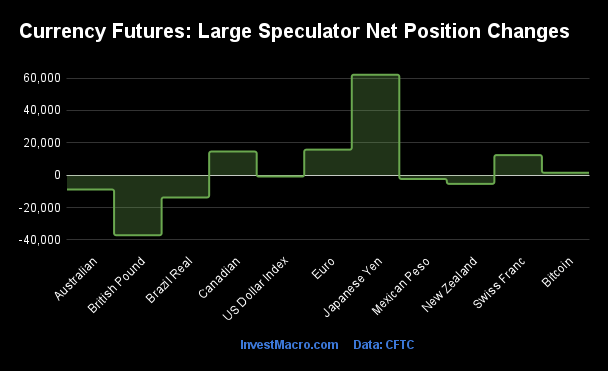
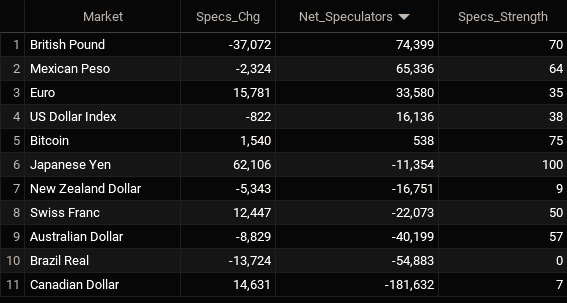
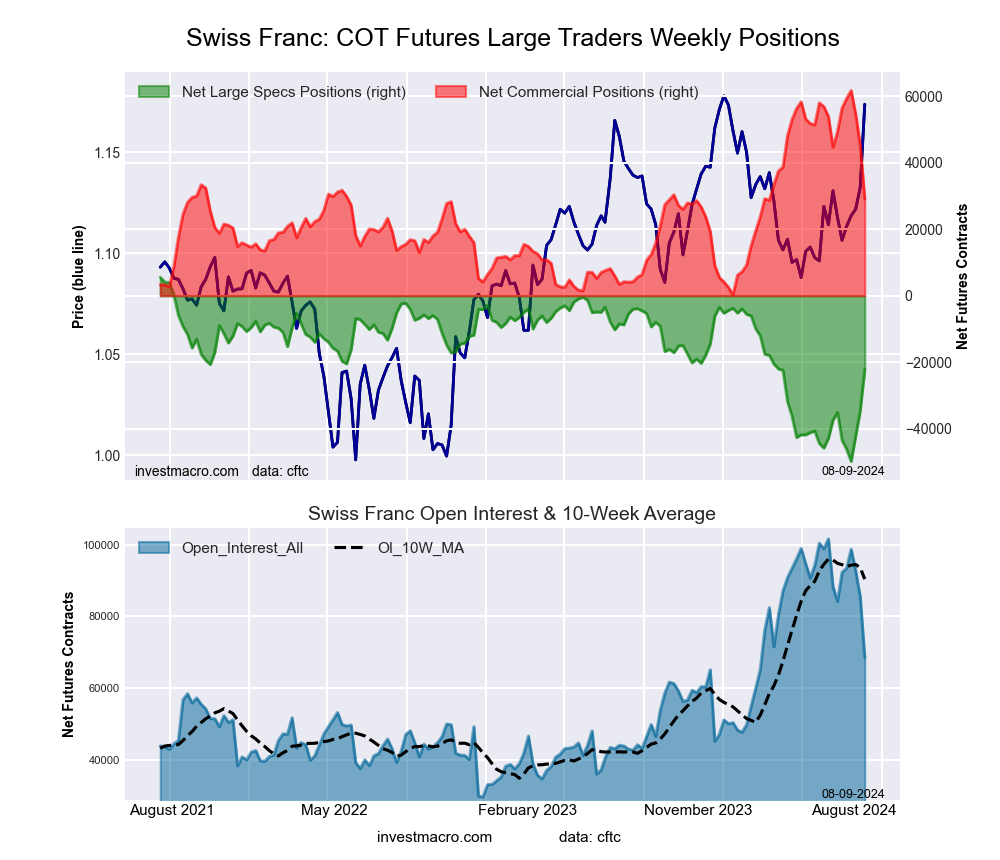
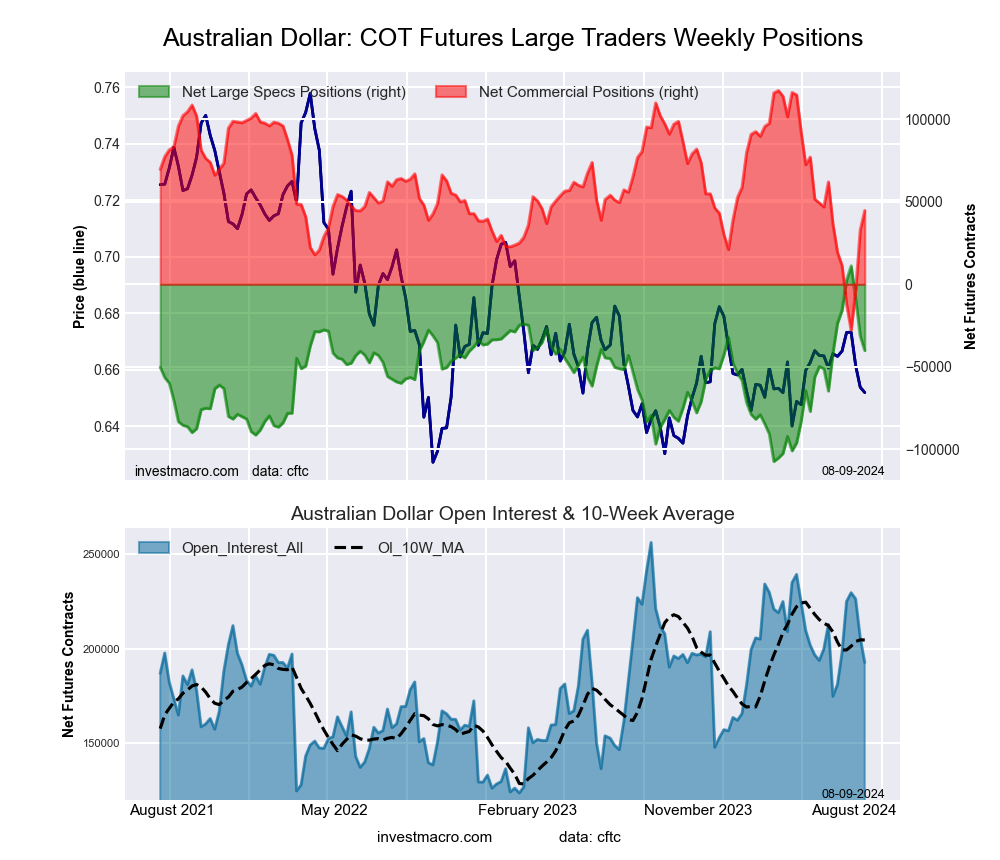
The latest update for the weekly Commitment of Traders (COT) report was released by the Commodity Futures Trading Commission (CFTC) on Friday for data ending on June 11th.

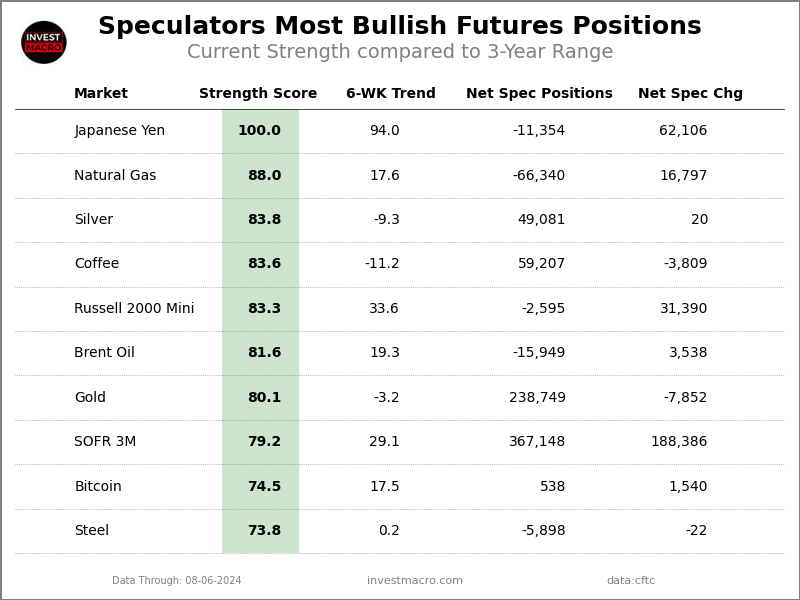
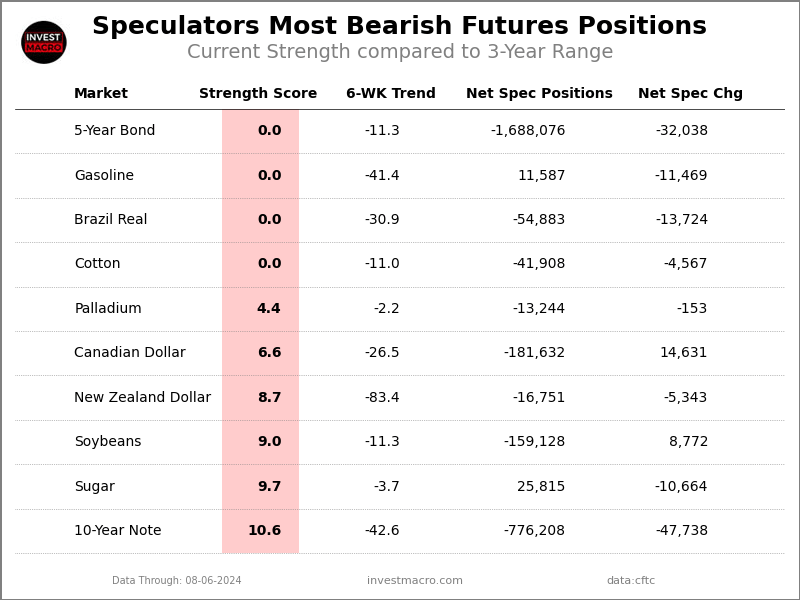
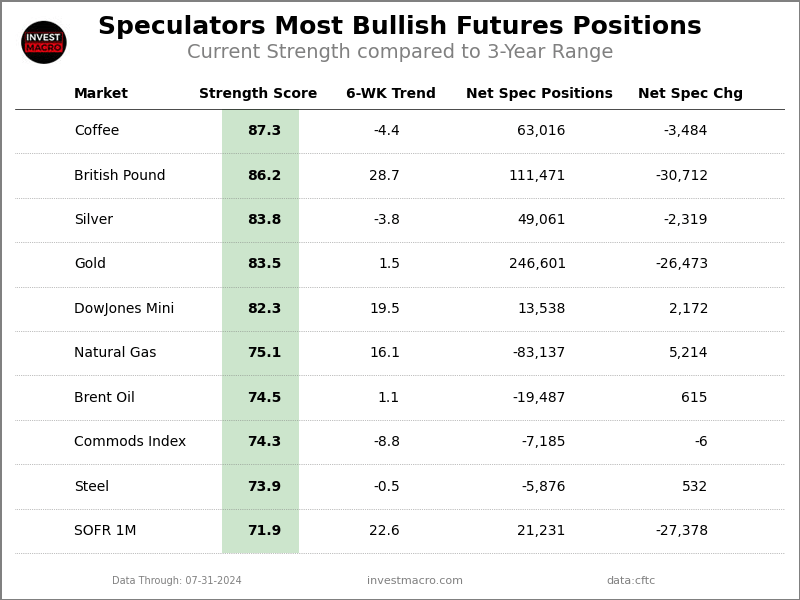
This weekly Extreme Positions report highlights the Most Bullish and Most Bearish Positions for the speculator category. Extreme positioning in these markets can foreshadow strong moves in the underlying market.

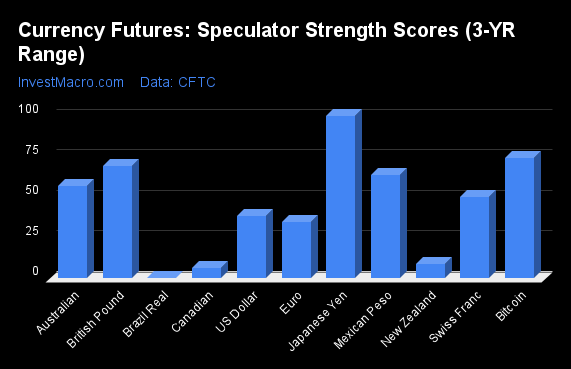
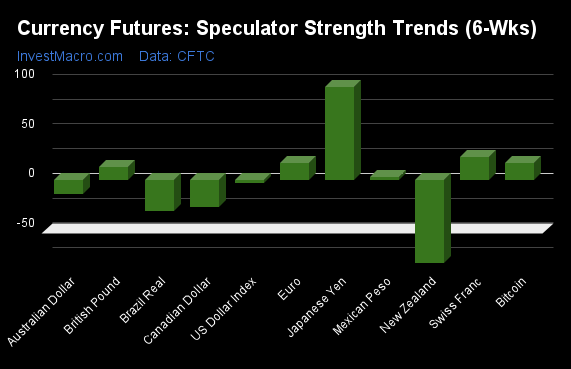
To signify an extreme position, we use the Strength Index (also known as the COT Index) of each instrument, a common method of measuring COT data. The Strength Index is simply a comparison of current trader positions against the range of positions over the previous 3 years. We use over 80 percent as extremely bullish and under 20 percent as extremely bearish. (Compare Strength Index scores across all markets in the data table or cot leaders table)


Here Are This Week’s Most Bullish Speculator Positions:

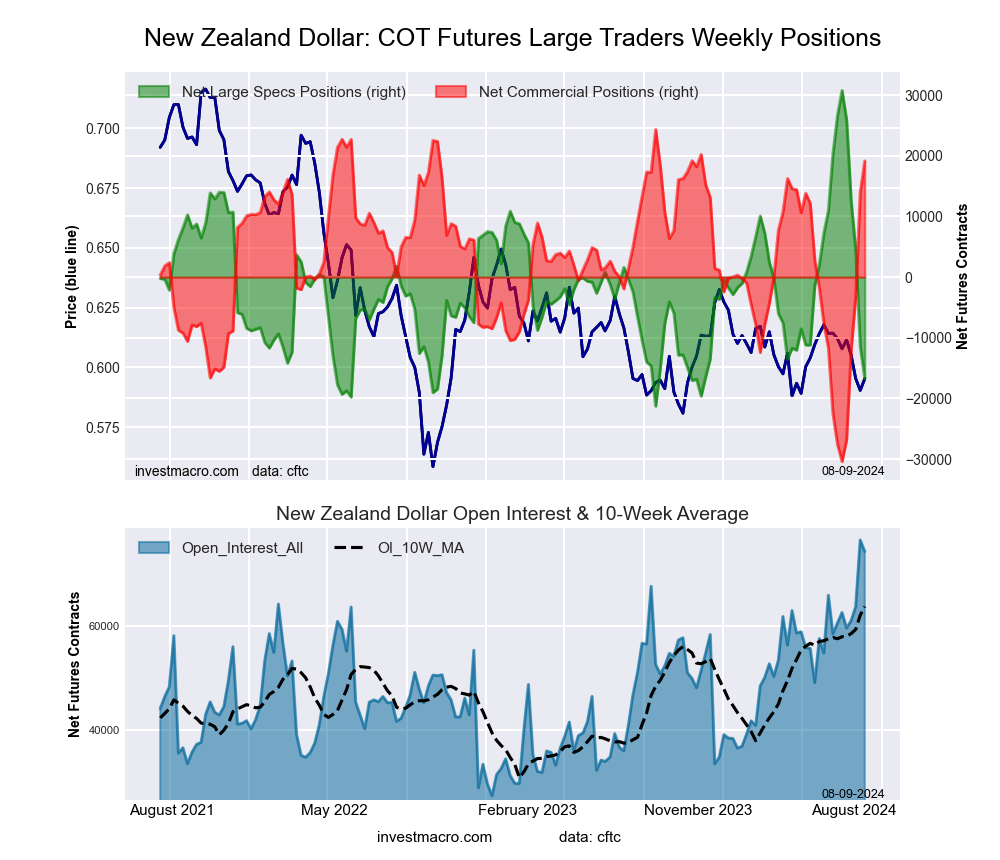
New Zealand Dollar


The New Zealand Dollar speculator position comes in as the most bullish extreme standing this week. The New Zealand Dollar speculator level is currently at a 91.5 percent score of its 3-year range.

The six-week trend for the percent strength score totaled 55.4 this week. The overall net speculator position was a total of 10,978 net contracts this week with a boost of 3,773 contract in the weekly speculator bets.


Speculators or Non-Commercials Notes:

Speculators, classified as non-commercial traders by the CFTC, are made up of large commodity funds, hedge funds and other significant for-profit participants. The Specs are generally regarded as trend-followers in their behavior towards price action – net speculator bets and prices tend to go in the same directions. These traders often look to buy when prices are rising and sell when prices are falling. To illustrate this point, many times speculator contracts can be found at their most extremes (bullish or bearish) when prices are also close to their highest or lowest levels.

These extreme levels can be dangerous for the large speculators as the trade is most crowded, there is less trading ammunition still sitting on the sidelines to push the trend further and prices have moved a significant distance. When the trend becomes exhausted, some speculators take profits while others look to also exit positions when prices fail to continue in the same direction. This process usually plays out over many months to years and can ultimately create a reverse effect where prices start to fall and speculators start a process of selling when prices are falling.


Copper


The Copper speculator position comes next in the extreme standings this week. The Copper speculator level is now at a 90.3 percent score of its 3-year range.

The six-week trend for the percent strength score was 3.0 this week. The speculator position registered 61,288 net contracts this week with a weekly edge higher by 161 contracts in speculator bets.


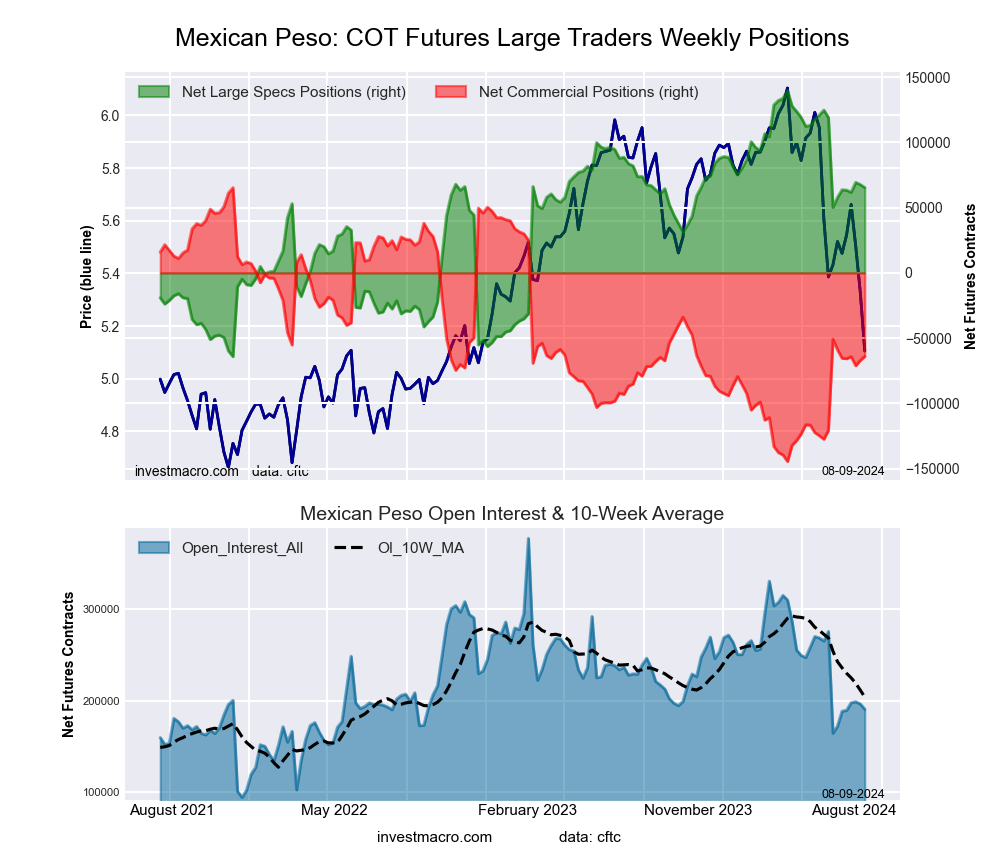
Mexican Peso


The Mexican Peso speculator position comes in third this week in the extreme standings. The Mexican Peso speculator level resides at a 89.8 percent score of its 3-year range.

The six-week trend for the speculator strength score came in at -0.0 this week. The overall speculator position was 118,993 net contracts this week with a decline of -5,678 contracts in the weekly speculator bets.


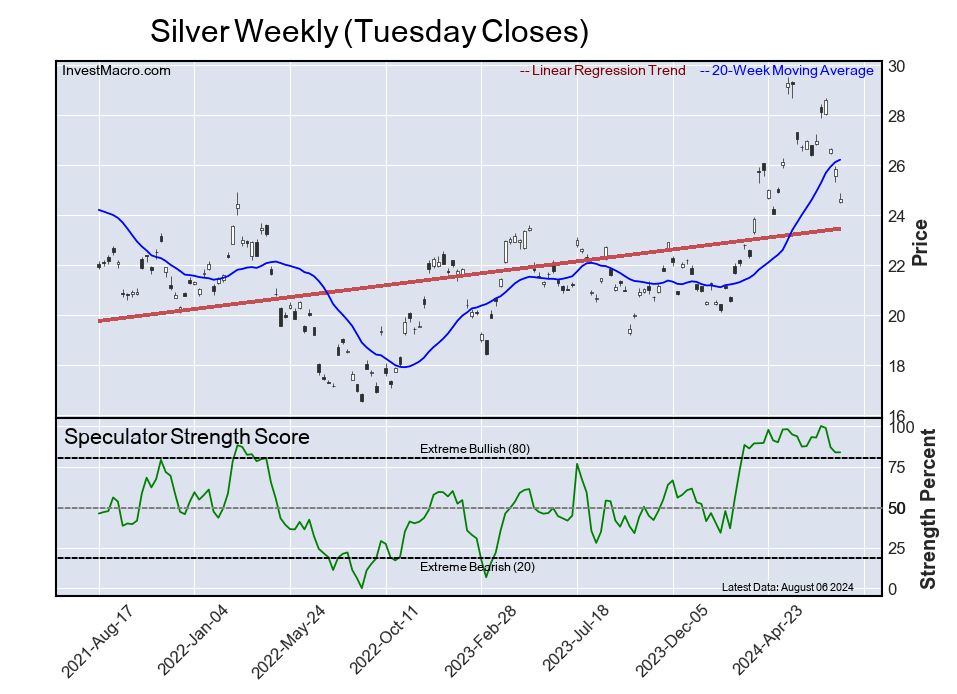
Silver


The Silver speculator position comes up number four in the extreme standings this week. The Silver speculator level is at a 89.0 percent score of its 3-year range.

The six-week trend for the speculator strength score totaled a change of -3.9 this week. The overall speculator position was 51,692 net contracts this week with a drop of -4,711 contracts in the speculator bets.


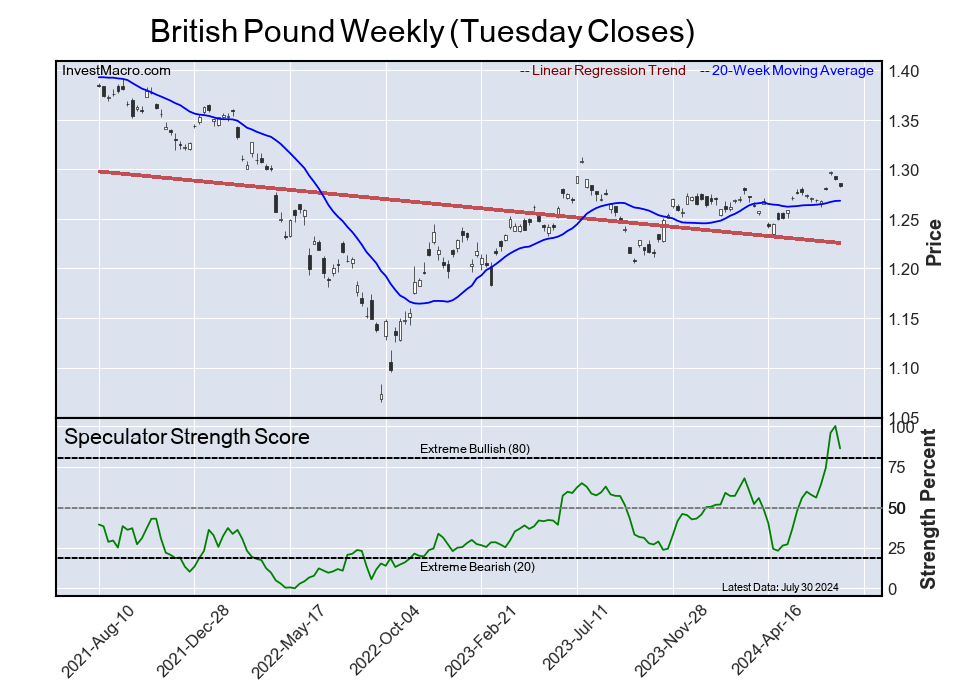
British Pound


The British Pound speculator position rounds out the top five in this week’s bullish extreme standings. The British Pound speculator level sits at a 87.8 percent score of its 3-year range. The six-week trend for the speculator strength score was 53.8 this week.

The speculator position was 52,121 net contracts this week with a boost of 8,911 contracts in the weekly speculator bets.


This Week’s Most Bearish Speculator Positions:

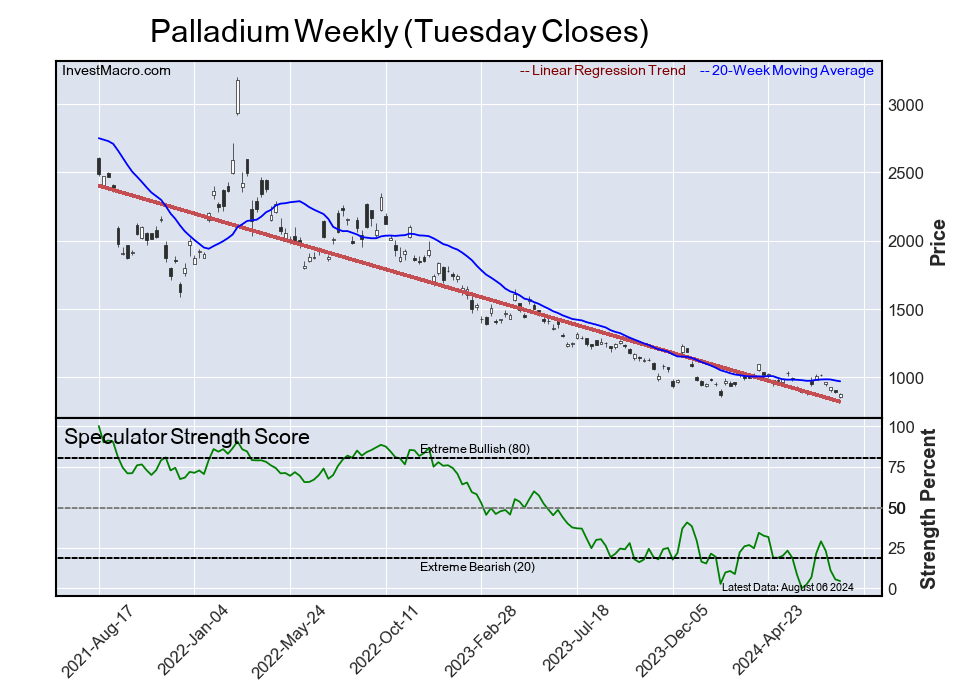
Palladium


The Palladium speculator position comes in as the most bearish extreme standing this week. The Palladium speculator level is at a 0.0 percent score of its 3-year range.

The six-week trend for the speculator strength score was -17.5 this week. The overall speculator position was -13,914 net contracts this week with a decline of -1,242 contracts in the speculator bets.


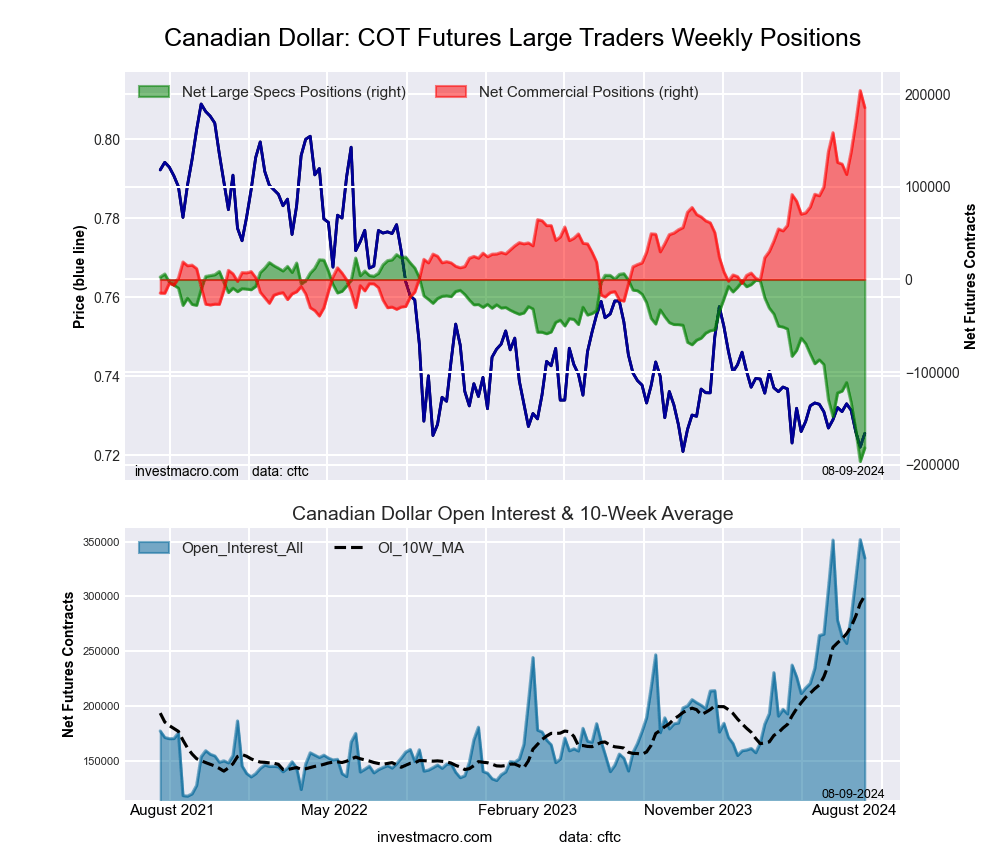
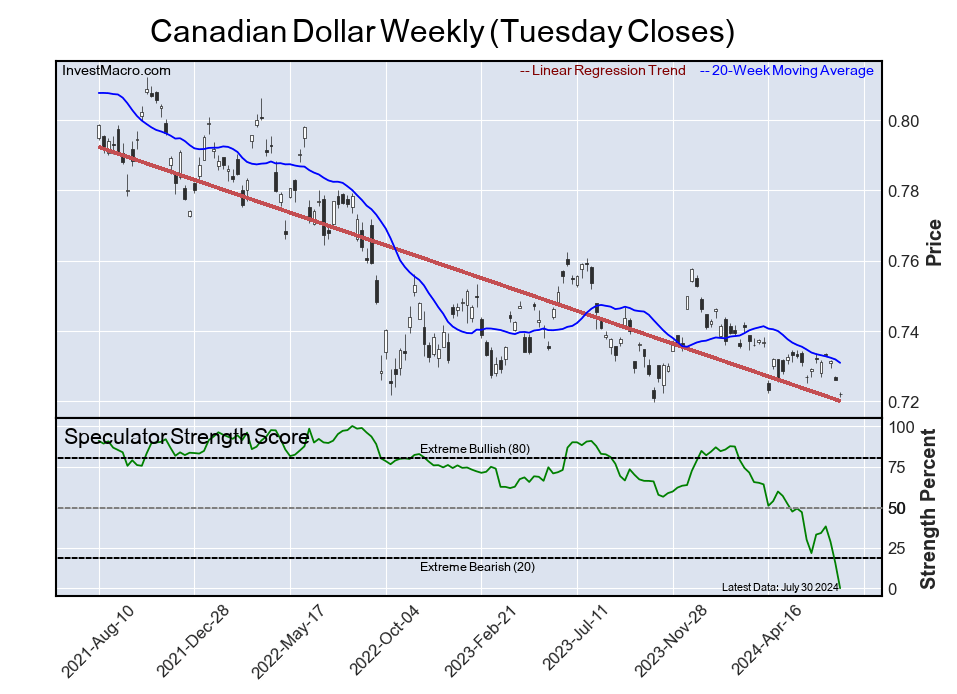
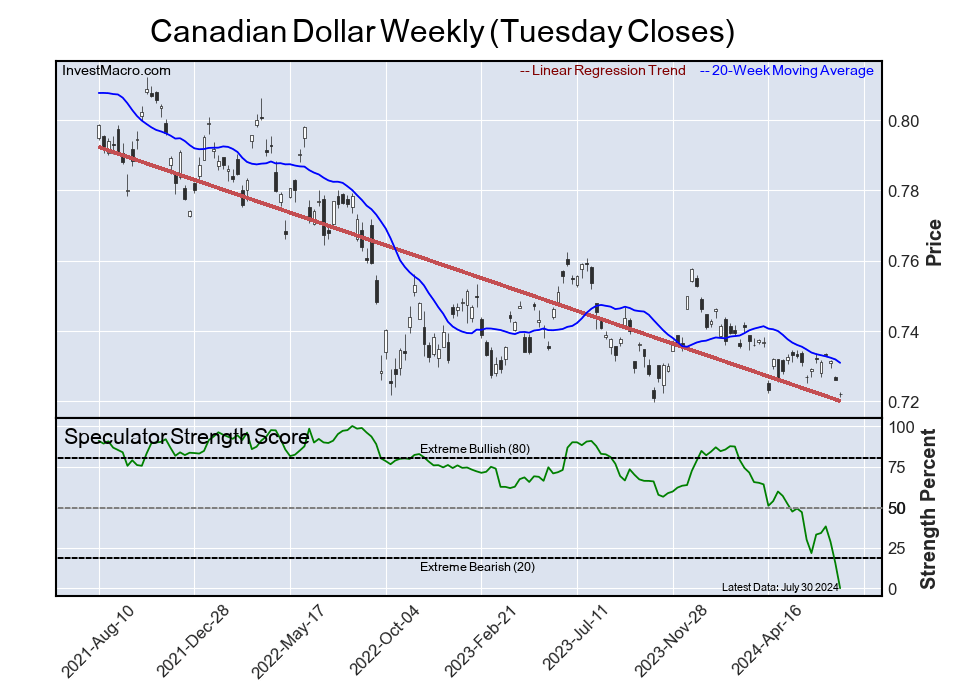
Canadian Dollar


The Canadian Dollar speculator position comes in next for the most bearish extreme standing on the week. The Canadian Dollar speculator level is at a 0.0 percent score of its 3-year range.

The six-week trend for the speculator strength score was -37.8 this week. The speculator position was -129,493 net contracts this week with a sharp decrease of -37,854 contracts in the weekly speculator bets.


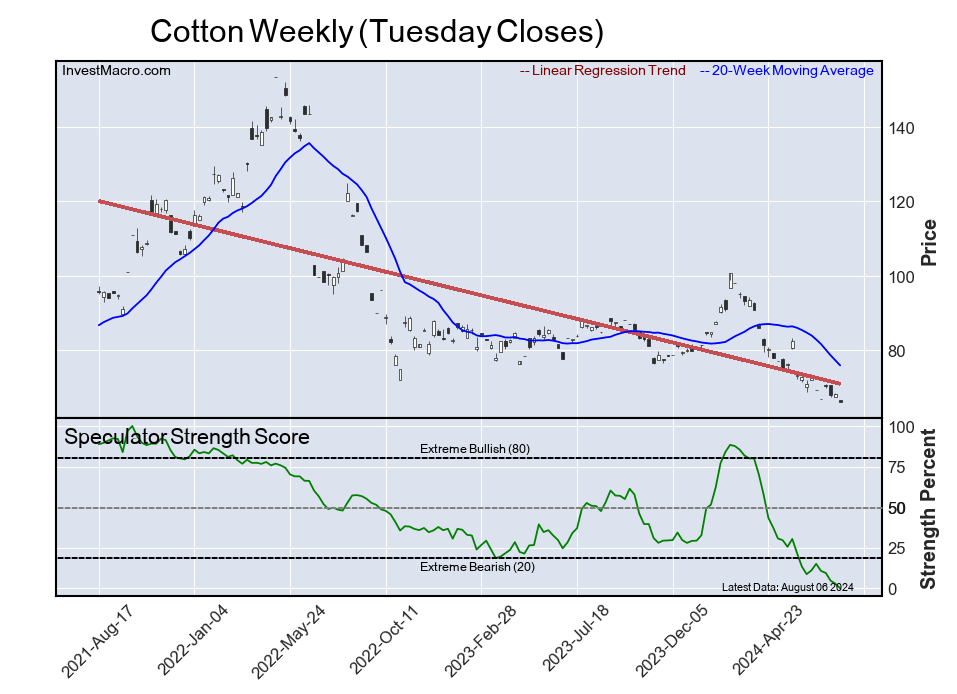
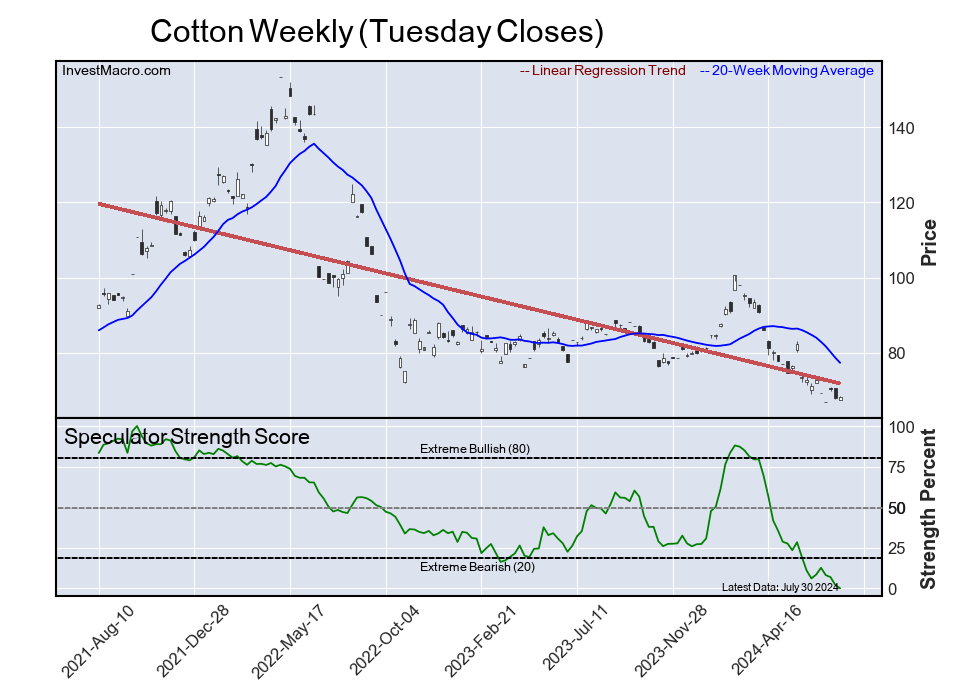
Cotton


The Cotton speculator position comes in as third most bearish extreme standing of the week. The Cotton speculator level resides at a 0.0 percent score of its 3-year range.

The six-week trend for the speculator strength score was -27.8 this week. The overall speculator position was -20,056 net contracts this week with a reduction by -13,365 contracts in the speculator bets.


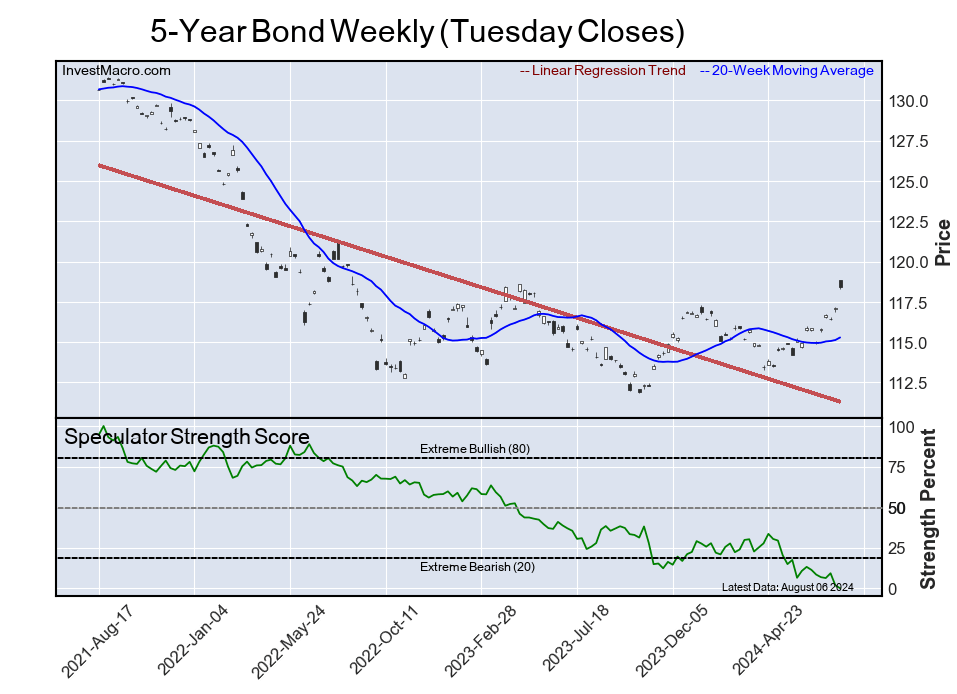
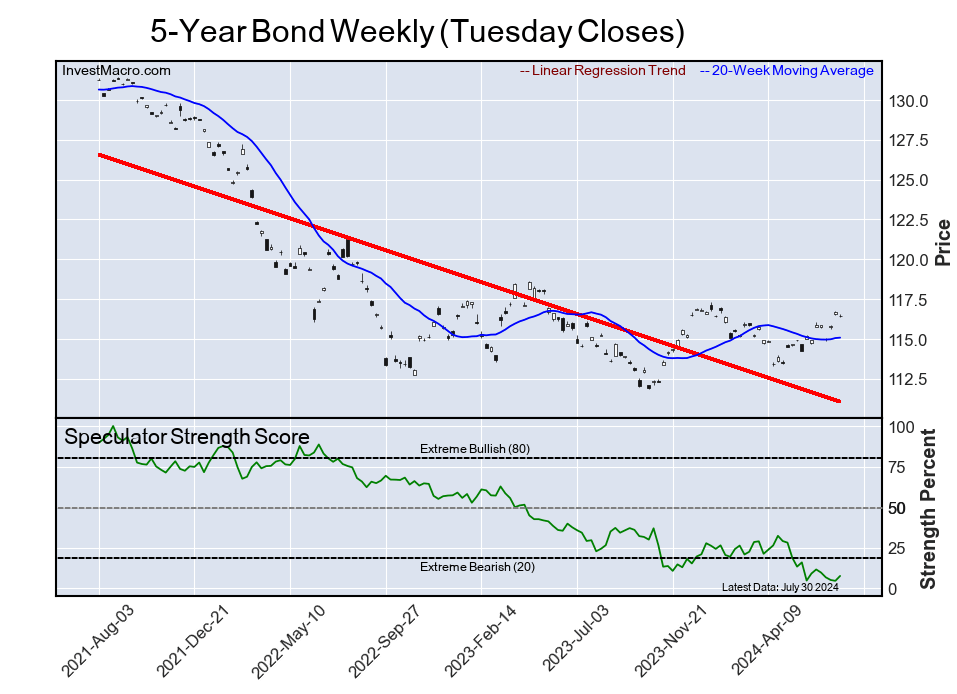
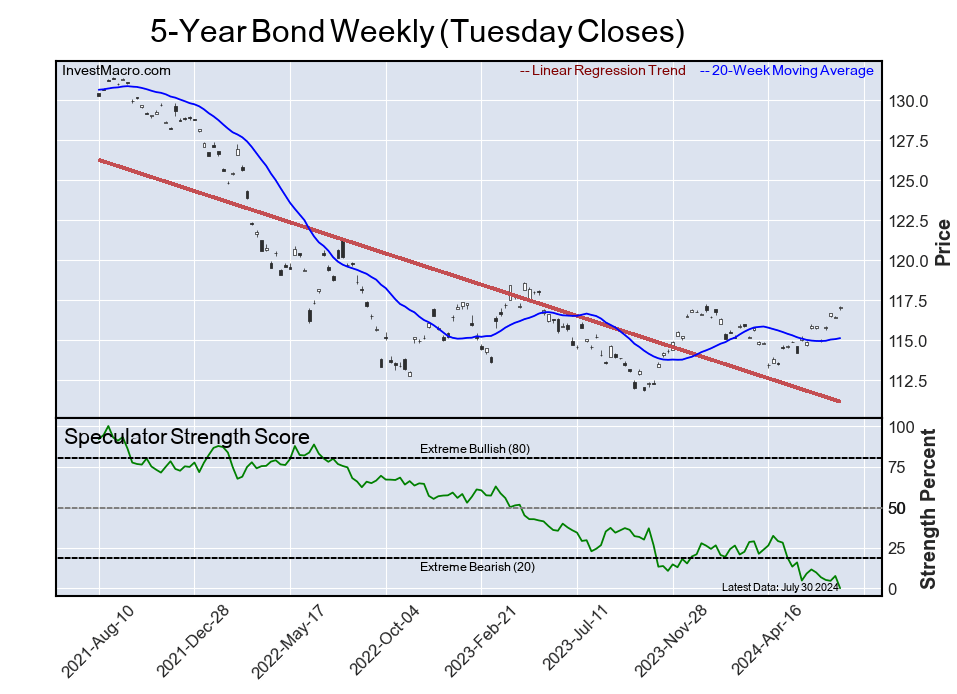
5-Year Bond


The 5-Year Bond speculator position comes in as this week’s fourth most bearish extreme standing. The 5-Year Bond speculator level is at a 4.5 percent score of its 3-year range.

The six-week trend for the speculator strength score was -21.0 this week. The speculator position was -1,497,424 net contracts this week with a gain of 75,613 contracts in the weekly speculator bets.


Soybean Oil


Finally, the Soybean Oil speculator position comes in as the fifth most bearish extreme standing for this week. The Soybean Oil speculator level is at a 4.6 percent score of its 3-year range.

The six-week trend for the speculator strength score was 4.6 this week. The speculator position was -48,951 net contracts this week with a drop of -12,366 contracts in the weekly speculator bets.


Article By InvestMacroReceive our weekly COT Newsletter

*COT Report: The COT data, released weekly to the public each Friday, is updated through the most recent Tuesday (data is 3 days old) and shows a quick view of how large speculators or non-commercials (for-profit traders) were positioned in the futures markets.

The CFTC categorizes trader positions according to commercial hedgers (traders who use futures contracts for hedging as part of the business), non-commercials (large traders who speculate to realize trading profits) and nonreportable traders (usually small traders/speculators) as well as their open interest (contracts open in the market at time of reporting). See CFTC criteria here.

Inflation is cooling, but not fast enough for the Fed: Policymakers now expect only one rate cut in 2024

By Christopher Decker, University of Nebraska Omaha 

It was a double-whammy Wednesday for economic-data enthusiasts.

During the morning of June 12, 2024, the Bureau of Labor Statistics published its latest inflation figures. The news was relatively good, showing that inflation rose 3.3% in the year to May 2024 – less than some analysts had expected.

A few hours later, the Federal Reserve concluded its June meeting by holding interest rates steady – as forecasters expected – and releasing an updated set of economic projections.

What does it all mean? The Conversation U.S asked economist Christopher Decker to explain.

What are your major takeaways from the latest inflation report?

The May inflation rate – as measured by the Consumer Price Index for All Urban Consumers, or CPI-U – was down a bit from April, but not by much. Basically, this implies that not much changed on the inflation front, and it’s been like this for a while now.

This isn’t a bad thing, though. I like to take the long view: U.S. inflation has really stabilized around 3.3%. In fact, we’ve been around 3% to 3.7% for 12 months now. So we have stable price growth – even if it’s higher than the Fed’s target rate of 2%as well as wage and job growth. This economy is still quite strong.

In terms of the details, energy prices are down compared with last month – but energy prices tend to be volatile, so that might be a blip in the data, not a real trend. Labor markets are still tight. Average hourly earnings rose 4.1% this May compared to last year, indicating that employers need to pay higher wages to attract new workers and retain existing ones.

In May, inflation-adjusted earnings increased 0.5% from April to May of this year. So with wages outpacing inflation, consumer spending – which amounts to two-thirds of American gross domestic product – will likely increase. Payrolls increased by 272,000 in May, up from 165,000 and 310,000 in April and March, respectively.

In short, this report, along with other recent data reports, continues to show a fairly robust and stable economy.

Why has inflation stayed above the Federal Reserve’s 2% target for so long?

Housing and rents are major reasons inflation has stayed above 2%. Rental prices are up due to higher construction and maintenance costs, as well as strong demand from people priced out of homeownership. Home prices and mortgage rates remain high, making home purchases difficult, particularly for first-time homebuyers.

The Fed held interest rates steady today, and indicated it would likely cut rates one time in 2024. But just three months ago, policymakers were mulling three rate cuts this year. What changed?

The Fed is very data-driven, and when the data changes, the Fed changes course.

It’s important to remember that the Fed has hiked rates more than 10 times since March 2022. This was done in an effort to slow economic growth and thereby rein in inflation. I think a lot of policymakers thought that would push the inflation rate down more rapidly than it did. Instead, job growth remained stronger than expected.

In many ways, the labor market is still working through COVID-related disruptions. Many workers gradually reentered the workforce. Therefore, production could increase to meet demand for goods and services. This meant that there was room for the economy to grow even with slightly higher inflation.

The U.S. also saw supply-chain disruptions unlike anything in recent memory. We’re likely still dealing with a few residual effects here, as well. As a result, higher rates worked to slow inflation down – just not to 2%.

Now, time will tell if we are at a new normal. The Fed clearly doesn’t think so. It’s still holding fast to 2% inflation. If the labor market does seem to settle where it currently is, then we may see some elevated wage increases compared to pre-COVID rates. That could lead to slightly higher inflation rates, as firms seek to keep profit margins while covering higher labor costs.

If inflation is stable and wages have been showing some growth, why do so many Americans feel bad about the economy?

I think part of it is that people tend to compare today’s prices to prices they paid years ago – they’re not focusing so much on month-to-month inflation. For example, the average price of a dozen eggs is about $US2.70 today, whereas before COVID it was $1.46 or so. People remember that and feel ripped off – forgetting that eggs were $4.82 in early 2023 and those prices have generally fallen since.

What do you think will happen the rest of this year?

Even if we set aside the Fed’s 2% inflation target, from a macroeconomic perspective the data right now simply doesn’t suggest we need to change interest rates. Economic growth isn’t slowing dramatically, so cutting rates isn’t necessary. And inflation isn’t accelerating, so increasing rates isn’t justified.

Holding rates constant – as hard as that is for some potential homebuyers to hear – is just the most sound policy right now.

What do you think will happen in the long term?

I was looking at the Fed’s most recent “dot plot,” which shows where each of the Fed’s voting officers expect benchmark interest rates will settle in 2024, 2025 and 2026.

The majority of officials think the federal funds rate, currently at 5.3%, will stay at about this level for the rest of this year, then fall to a bit above 4% in 2025. Most then think it will reach 3.25% or so by 2026. So they are betting on the need for rate cuts in 2025 and 2026.

This makes sense to me – certainly for 2025. There are signs of a slowing economy and slowing job market. Expect any moves toward rate cuts to be gradual, though. The Fed is being very cautious, and so long as there are no dramatic spikes in the key job and inflation data, a gradual lowering is a fair bet.The Conversation

About the Author:

Christopher Decker, Professor of Economics, University of Nebraska Omaha

This article is republished from The Conversation under a Creative Commons license. Read the original article.


New database features 250 AI tools that can enhance social science research

By Megan Stubbs-Richardson, Mississippi State University; Devon Brenner, Mississippi State University; Lauren Etheredge, Mississippi State University, and MacKenzie Paul, Baylor University 

AI – or artificial intelligence – is often used as a way to summarize data and improve writing. But AI tools also represent a powerful and efficient way to analyze large amounts of text to search for patterns. In addition, AI tools can assist with developing research products that can be shared widely.

It’s with that in mind that we, as researchers in social science, developed a new database of AI tools for the field. In the database, we compiled information about each tool and documented whether it was useful for literature reviews, data collection and analyses, or research dissemination. We also provided information on the costs, logins and plug-in extensions available for each tool.

When asked about their perceptions of AI, many social scientists express caution or apprehension. In a sample of faculty and students from over 600 institutions, only 22% of university faculty reported that they regularly used AI tools.

From combing through lengthy transcripts or text-based data to writing literature reviews and sharing results, we believe AI can help social science researchers – such as those in psychology, sociology and communication – as well as others get the most out of their data and present it to a wider audience.

Analyze text using AI

Qualitative research often involves poring over transcripts or written language to identify themes and patterns. While this kind of research is powerful, it is also labor-intensive. The power of AI platforms to sift through large datasets not only saves researchers time, but it can also help them analyze data that couldn’t have been analyzed previously because of the size of the dataset.

Specifically, AI can assist social scientists by identifying potential themes or common topics in large, text-based data that scientists can interrogate using qualitative research methods. For example, AI can analyze 15 million social media posts to identify themes in how people coped with COVID-19. These themes can then give researchers insight into larger trends in the data, allowing us to refine criteria for a more in-depth, qualitative analysis.

AI tools can also be used to adapt language and scientists’ word choice in research designs. In particular, AI can reduce bias by improving the wording of questions in surveys or refining keywords used in social media data collection.

Identify gaps in knowledge

Another key task in research is to scan the field for previous work to identify gaps in knowledge. AI applications are built on systems that can synthesize text. This makes literature reviews – the section of a research paper that summarizes other research on the same topic – and writing processes more efficient.

Research shows that human feedback to AI, such as providing examples of simple logic, can significantly improve the tools’ ability to perform complex reasoning. With this in mind, we can continually revise our instructions to AI and refine its ability to pull relevant literature.

However, social scientists must be wary of fake sources – a big concern with generative AI. It is essential to verify any sources AI tools provide to ensure they come from peer-reviewed journals.

Share research findings

AI tools can quickly summarize research findings in a reader-friendly way by assisting with writing blogs, creating infographics and producing presentation slides and even images.

Our database contains AI tools that can also help scientists present their findings on social media. One tool worth highlighting is BlogTweet. This free AI tool allows users to copy and paste text from an article like this one to generate tweet threads and start conversations.

Be aware of the cost of AI tools

Two-thirds of the tools in the database cost money. While our primary objective was to identify the most useful tools for social scientists, we also sought to identify open-source tools and curated a list of 85 free tools that can support literature reviews, writing, data collection, analysis and visualization efforts.

12 best free AI tools for academic research and researchers.

In our analysis of the cost of AI tools, we also found that many offer “freemium” access to tools. This means you can explore a free version of the product. More advanced versions of the tool are available through the purchase of tokens or subscription plans.

For some tools, costs can be somewhat hidden or unexpected. For instance, a tool that seems open source on the surface may actually have rate limits, and users may find that they’ve run out of free questions to ask the AI.

The future of the database

Since the release of the Artificial Intelligence Applications for Social Science Research Database on Oct. 5, 2023, it has been downloaded over 400 times across 49 countries. In the database, we found 131 AI tools useful for literature reviews, summaries or writing. As many as 146 AI tools are useful for data collection or analysis, and 108 are useful for research dissemination.

We continue to update the database and hope that it can aid academic communities in their exploration of AI and generate new conversations. The more that social scientists use the database, the more they can work toward consensus of adopting ethical approaches to using AI in research and analysis.The Conversation

About the Authors:

Megan Stubbs-Richardson, Assistant Research Professor at the Social Science Research Center, Mississippi State University; Devon Brenner, Professor of education, Mississippi State University; Lauren Etheredge, Research associate in sociology, Mississippi State University, and MacKenzie Paul, Doctoral student in psychology, Baylor University

This article is republished from The Conversation under a Creative Commons license. Read the original article.