Archive for Financial News – Page 16

FXTM’s RUS2000 set for fresh records?

By ForexTime 

  • RUS2000 up roughly 8% YTD, less than 1% away from records
  • Small caps leaving large caps in the dust thus far in 2026
  • US NFP + CPI could trigger market volatility
  • Key levels at 2735, 2700 and 2650

FXTM’s RUS2000 is trading 1% from its all-time high!

AND

One of the best-performing US indices in the FXTM universe….

  • US400: ↑ 8.5% YTD
  • RUS2000: ↑ 8% YTD
  • US30: ↑ 4.4% YTD
  • US500: ↑ 1.5% YTD
  • NA100: 0.5% YTD

WHY?

  • Small caps have hit the new year sprinting, outpacing their large-cap counterparts thanks to compelling valuations and growth prospects.
  • Unlike the US500/NAS100 which has a greater exposure to China risk, the RUS2000/US400 is heavily focused on the US economy.
  • Small caps are drawing strength from the rollout of significant tax refunds, manufacturing subsidies and high sensitivity to US interest rates.

WHAT COULD MOVE THE RUS2000 THIS WEEK?

·      January NFP report – Wednesday 11th February

Markets expect the US economy to have created 68,000 jobs in January with the unemployment rate to hold at 4.4%.

The RUS2000 is forecasted to move ↑ 0.9% or ↓ 1.3% in a 6-hour window after the January NFP report.

·      US CPI report – Friday 13thh February

This report will be a key test of whether inflation is continuing to cool at a gradual pace.

The RUS2000 is forecasted to move ↑ 1.2% or ↓ 1.3% in a 6-hour window after the CPI report.

Traders are currently pricing at a 23% chance of a Fed cut by March with this jumping to 47% by April.

POTENTIAL SCENARIOS:

BULLISH: A solid breakout and daily close above 2700 may open a path toward the all-time high at 2735 and 2750.

BEARISH: Weakness below 2700 could trigger a selloff toward 2650 and the 50-day SMA at 2595.


Forex-Time-LogoArticle by ForexTime


ForexTime Ltd (FXTM) is an award winning international online forex broker regulated by CySEC 185/12 www.forextime.com

Chinese stocks show growth ahead of the holiday week

By JustMarkets 

On Tuesday, trading on the US stock market closed with mixed performance. The Dow Jones Index (US30) gained 0.10%. The S&P 500 (US500) declined by 0.33%. The tech-heavy Nasdaq (US100) closed lower by 0.59%. The market was pressured by weak US retail sales data for December (0% against projections of +0.4%), which intensified concerns regarding consumer demand and supported expectations of more than two Fed rate cuts this year. Bond yields decreased across the curve. A positive outlier was Spotify, whose shares soared 14.8% due to strong earnings and audience growth.

Stock markets in Europe mostly declined yesterday. The German DAX (DE40) fell by 0.11%, the French CAC 40 (FR40) closed up 0.06%, the Spanish IBEX 35 (ES35) dropped 0.40%, and the British FTSE 100 (UK100) closed down 0.31%. Investors remained cautious ahead of key US employment and inflation data, which may clarify the Fed’s next steps. The focus also remained on the corporate earnings season.

On Wednesday, silver (XAG) rose nearly 2% to $82 per ounce, recovering previous session losses amid weak US data and declining confidence in American assets. Retail sales in December unexpectedly slowed, fueling fears for consumer demand. Attention is now focused on the jobs report; weak data could further support precious metals. Markets are already pricing in about 60 bps of Fed rate cuts by the end of the year. Additional demand for safe-haven assets is linked to outflows from dollar instruments amid political uncertainty in the US. However, market participants remain cautious due to recent high volatility and sharp fluctuations in metal prices.

The US natural gas prices (XNG) rose to $3.17 per MMBtu, snapping a two-day decline amid near-record LNG exports. Deliveries to the eight largest terminals in February reached 18.5 billion cubic feet per day, limiting domestic supply. Previously, Arctic cold led to a record reduction in inventories, which are currently about 1% below normal.

Asian markets grew confidently on Tuesday. The Japanese Nikkei 225 (JP225) jumped 2.28%, the FTSE China A50 (CHA50) rose by 0.02%, the Hong Kong Hang Seng (HK50) gained 0.58%, while the Australian ASX 200 (AU200) showed a negative result of 0.03%.

Chinese stocks ended the session higher amid expectations of high consumer demand during the Lunar New Year period. Additional optimism was sparked by reports of a possible meeting between Donald Trump and Xi Jinping in April. On Wednesday, the offshore yuan held around 6.91 per dollar, near highs since April 2023, amid steady daily fixing by the PBoC. The Central Bank set the midpoint rate at 6.9438, signaling a desire for stable and moderate currency appreciation despite softer policy rhetoric. However, the yuan’s rise is capped by the confirmation of a “moderately easy” monetary policy stance. January inflation slowed to 0.2% YoY from 0.8%, while producer price deflation narrowed to 1.4% thanks to stabilizing commodity prices and measures to limit excessive competition.

The Reserve Bank of Australia (RBA) stated its readiness for further measures to curb inflation, which, according to RBA Deputy Governor Andrew Hauser, remains “too high.” The regulator intends to “do whatever is necessary” to return inflation to the 2-3% target range. Last week, the RBA raised the rate by 25 bps, reversing a previous cut after inflation again exceeded projections. Both headline and core inflation remain above the target, and a return to the target level is not expected until mid-2027.

S&P 500 (US500) 6,941.81 −23.01 (−0.33%)

Dow Jones (US30) 50,188.14 +52.27 (+0.10%)

DAX (DE40) 24,987.85 −27.02 (−0.11%)

FTSE 100 (UK100) 10,353.84 −32.39 (−0.31%)

USD Index 96.85 +0.04% (+0.04%)

News feed for: 2026.02.11

  • China Inflation Rate (m/m) at 03:30 (GMT+2); – CHA50, HK50 (MED)
  • US Non Farm Payrolls (m/m) at 15:30 (GMT+2); – USD, XAU (HIGH)
  • US Unemployment Rate (m/m) at 15:30 (GMT+2); – USD, XAU (HIGH)
  • US Crude Oil Reserves (w/w) at 17:30 (GMT+2). – WTI (HIGH)

By JustMarkets


This article reflects a personal opinion and should not be interpreted as an investment advice, and/or offer, and/or a persistent request for carrying out financial transactions, and/or a guarantee, and/or a forecast of future events.

Gold Climbs to a Two-Week High: Markets Await a Softer Fed Policy

By RoboForex Analytical Department

Gold on Wednesday held above 5045 USD per ounce and traded near a two-week high. The quotes are supported by expectations of a softer Fed policy.

Growth intensified after weak US economic data. Retail sales came in below forecasts in December, pointing to a slowdown in consumer activity and fuelling fears of a cooling economy.

The market is now pricing in a higher probability of three Fed rate cuts this year than two weeks ago.

Investors are now awaiting the publication of US data on employment and inflation, which may provide additional signals about the state of the economy and the regulator’s next steps.

Demand from central banks remains robust. The People’s Bank of China increased gold reserves in January

Technical Analysis

The H4 XAU/USD chart shows that after a sharp collapse in early February from the 5550–5600 area to lows around 4400, gold has entered a recovery phase. The price has stabilised around 5000–5050 and is trading near the middle line of the Bollinger Bands. The bands are gradually narrowing, indicating declining volatility and the formation of consolidation following strong price swings.

On the H1 chart, the structure is more neutral. Quotes are moving within a narrow 5000–5080 range. The upper boundary acts as local resistance, while the lower acts as support. The market looks balanced, with attempts at a steady advance, but no pronounced momentum.

Conclusion

In summary, gold’s rally to a two-week high primarily reflects shifting market expectations towards a more dovish Fed, amplified by recent soft US retail data. While technical indicators show stabilisation and consolidation within a recovery phase, price action remains range-bound and lacks decisive momentum. The near-term trajectory will be critically dependent on incoming US inflation and employment data, which will either validate the current dovish repricing or challenge it. Sustained central bank buying and unresolved geopolitical tensions provide a structural floor, but for a breakout above the current consolidation, gold requires a clear catalyst from upcoming macroeconomic releases.


Disclaimer

Any forecasts contained herein are based on the author’s particular opinion. This analysis may not be treated as trading advice. RoboForex bears no responsibility for trading results based on trading recommendations and reviews contained herein.


The Swiss franc is trading near a 15-year high against the dollar. The Chinese yuan strengthened to 6.9 per dollar

By JustMarkets 

On Monday, trading on the US stock market closed higher. The Dow Jones Index (US30) gained 0.04%. The S&P 500 Index (US500) rose by 0.47%. The Nasdaq Technology Index (US100) closed higher by 0.90%. The market was primarily supported by shares of large technology companies and AI-related issuers, which offset investor caution ahead of the publication of key US macroeconomic data. The growth leaders were Nvidia (+2.5%), Broadcom (+3.4%), and Oracle (+9.6%) following analyst upgrades amid steady demand for AI infrastructure. At the same time, software developers lagged, reflecting concerns regarding generative AI’s pressure on margins and the outlook for the cloud business. Market focus is shifting to the delayed employment report and upcoming US inflation data.

The Canadian dollar (CAD) strengthened to 1.356 per USD, approaching a 16-month high, amid strong labor market data and rising commodity prices. In January, unemployment fell to 6.5%, the lowest since September 2024, while growth in full-time employment and wages weakened expectations for an early policy easing by the Bank of Canada and supported foreign capital inflows. The CAD received additional support from the general weakening of the US dollar following weak US labor data and rising oil prices, which improved Canada’s terms of trade.

The Mexican peso (MXN) strengthened to 17.20 per dollar, hitting a new high since mid-2024 amid USD weakening and the market’s reaction to January inflation data. Banxico’s decision to maintain the rate at 7% and its emphasis on inflationary risks reduced expectations of rapid policy easing, supporting the peso’s real yield. Inflation in January accelerated to 3.79% y/y, slightly missing projections, with moderate monthly price growth, allowing the regulator to maintain a cautious approach.

Equity markets in Europe mostly rose yesterday. The German DAX (DE40) rose by 1.19%, the French CAC 40 (FR40) closed up 0.60%, the Spanish IBEX 35 (ES35) gained 1.40%, and the British FTSE 100 (UK100) closed positive 0.16%. European stock indices closed with sharp gains on Monday, supported by banks, industrial giants, and the technology sector amid a series of positive corporate news and a steady view of relatively favorable macroeconomic conditions for equities this year.

The Swiss franc (CHF) strengthened to 0.770 per dollar, approaching its highest levels since 2011 amid demand for safe-haven assets and USD weakness. Investors remain cautious due to risks surrounding AI and recommendations from Chinese regulators to reduce holdings in US Treasuries, which is intensifying capital outflows from the dollar. The market focus this week is on Swiss inflation data for January (February 13), where prices are expected to rise by only 0.1% y/y. SNB Chairman Martin Schlegel noted the challenges of low inflation with a 0% rate, emphasizing the bank’s readiness to intervene in the currency market if necessary, rather than rushing to cut rates, maintaining a course toward price stability.

On Tuesday, WTI oil prices declined toward $64.2 per barrel but retained most of the gains recorded on Monday amid ongoing geopolitical tensions between the US and Iran. Prices were supported by Washington’s warning to US-flagged vessels to avoid Iranian waters when passing through the Strait of Hormuz, despite reports of progress in negotiations held in Oman. At the same time, uncertainty surrounding a possible agreement persists as Iran continues to insist on uranium enrichment. An additional risk factor for the market remains the situation with Indian imports of Russian oil: a possible freeze on purchases as part of a new trade agreement with the US could significantly support oil quotes.

Asian markets rose confidently on Monday. The Japanese Nikkei 225 (JP225) jumped 3.89% after the weekend elections, the Chinese FTSE China A50 (CHA50) rose by 1.24%, the Hong Kong Hang Seng (HK50) gained 1.76%, and the Australian ASX 200 (AU200) showed a positive result of 1.85%. Sentiment in Asia improved after Japan’s ruling party won a convincing election victory, but investors are still grappling with an uncertain economic outlook and concerns over the impact of artificial intelligence on various sectors.
On Tuesday, the offshore yuan (CNH) strengthened to 6.9 per dollar, approaching a 34-month high following reports that Chinese regulators recommended banks reduce excessive exposure to US Treasuries. The measure is aimed at reducing concentration risks amid uncertain US economic policy and has strengthened expectations of a broader global shift away from dollar assets, as well as a gradual structural shift in China’s currency strategy. The yuan received additional support from increased corporate demand ahead of the Lunar New Year, when companies traditionally convert dollars for payroll, supplier settlements, and bonuses.

S&P 500 (US500) 6,964.82 +32.52 (+0.47%)

Dow Jones (US30) 50,135.87 +20.20 (+0.04%)

DAX (DE40) 25,014.87 +293.41 (+1.19%)

FTSE 100 (UK100) 10,386.23 +16.48 (+0.16%)

USD Index 96.86 −0.77% (−0.79%)

News feed for: 2026.02.10

  • Australia NAB Business Confidence (m/m) at 02:30 (GMT+2); – AUD (MED)
  • Norway Inflation Rate (m/m) at 09:00 (GMT+2); – NOK (MED)
  • US Retail Sales (m/m) at 15:30 (GMT+2). – USD (MED)

By JustMarkets


This article reflects a personal opinion and should not be interpreted as an investment advice, and/or offer, and/or a persistent request for carrying out financial transactions, and/or a guarantee, and/or a forecast of future events.

EUR/USD Set for Growth: Dollar Fears Demand Slump

By RoboForex Analytical Department

EUR/USD rose to 1.1911 on Tuesday. Pressure on the USD increased amid concerns that external demand for dollar-denominated assets could decline significantly.

The reason behind this shift was reports suggesting that Chinese regulators have advised financial institutions to reduce their holdings of US government bonds. This move could help diversify risks and mitigate the impact of uncertain US economic policies.

Investors are awaiting delayed reports on the US labour market and inflation this week. These figures could adjust expectations regarding the Federal Reserve’s future policy direction.

White House economic adviser Kevin Hassett noted that the pace of US employment growth may slow in the coming months due to weaker labour and productivity growth.

The Fed is expected to leave interest rates unchanged in March, with markets still pricing in two rate cuts for the remainder of the year.

Technical Analysis

On the H4 chart for EUR/USD, after a momentum rally in late January, the pair entered a phase of correction and consolidation. The price has recovered above the 1.1760 support level and is now testing the 1.1920-1.1950 area. The Bollinger Bands are narrowing, indicating stabilisation and preparation for the next move. The medium-term structure remains moderately bullish as long as prices stay above 1.1760.

On the shorter-term H1 time frame, upward momentum remains confined to the short term. The price is moving along the upper Bollinger band after a sharp upward acceleration. It is now consolidating just below resistance at 1.1920-1.1950. Oscillators are in the overbought zone, raising the risk of a pause or shallow pullback, although the overall structure remains intact.

Conclusion

EUR/USD is poised for gains, driven by concerns about USD demand and a cautious outlook for US economic growth. While short-term fluctuations are expected, the medium-term trend remains bullish as long as key support levels hold. Investors will be closely watching upcoming data on inflation and employment, which could influence future Federal Reserve policy decisions.


Disclaimer

Any forecasts contained herein are based on the author’s particular opinion. This analysis may not be treated as trading advice. RoboForex bears no responsibility for trading results based on trading recommendations and reviews contained herein.
USD/JPY Reacts to Political News: Budget Line Will Be Soft

By RoboForex Analytical Department

USD/JPY is down to 156.73 on Monday. The Japanese yen had earlier dropped to its lowest levels in almost two weeks after a landslide victory for Japan’s ruling Liberal Democratic Party in early elections to the lower house of parliament. The coalition is led by Prime Minister Sanae Takaichi. However, demand for the yen returned shortly after.

Takaichi’s coalition won 352 of 465 seats in the House of Representatives, according to NHK. At the same time, the Liberal Democratic Party of Japan itself secured a majority of 316 seats. The vote’s outcome provided the prime minister with a clear mandate to implement an expansive fiscal policy.

Markets regarded the result as a signal in favour of a softer budget line and possible tax breaks. This increased pressure on the yen and Japanese government bonds amid fears of a rise in the debt burden. At the same time, the results supported expectations of more favourable dynamics for the stock market.

A more conservative domestic agenda is now expected to advance, including stricter immigration policies and land ownership rules. All this adds uncertainty to the assessment of medium-term consequences for the economy and financial markets.

Technical Analysis

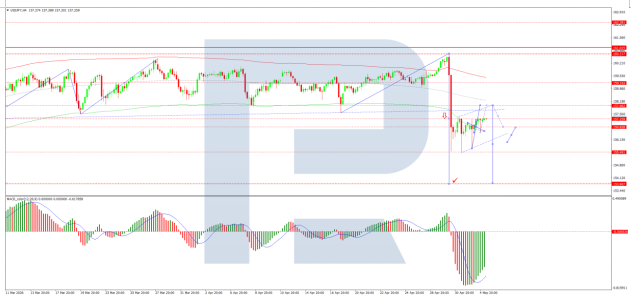
On the H4 chart for USD/JPY, following a sharp decline at the end of January, a local bottom formed in the 152.00-152.20 zone, from which the pair began to recover. This impulsive growth was accompanied by movement along the upper border of the Bollinger Bands. The price is now trading below recent highs and consolidating in the 155.80-157.70 range. Volatility has decreased, and the structure remains corrective. However, momentum weakened, and the market has entered a pause phase under resistance.

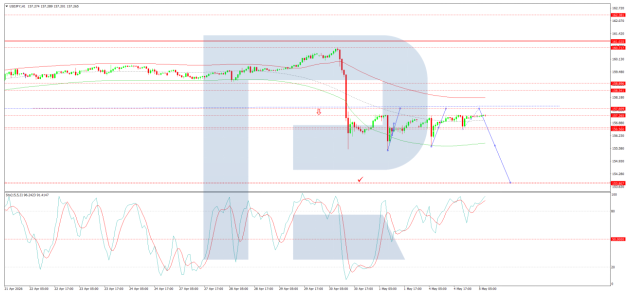
The H1 chart shows the development of lateral dynamics after growth, with the price hovering around the Bollinger Bands’ midline, and no new momentum forming. Selling pressure quickly cancelled attempts to move higher to 157.40-157.70, while support holds in the 155.50-155.80 region. The near-term trajectory appears neutral, with a balance between correction and attempts to continue the recovery.

Conclusion

In summary, USD/JPY is undergoing a corrective pullback as the market digests the political implications of Japan’s election outcome. While the landslide victory initially weakened the yen on expectations of expansive fiscal policy, a technical pause has followed. The pair is now consolidating, caught between the fundamental pressure from anticipated higher Japanese debt (bearish for JPY) and technical resistance. The near-term trajectory will depend on whether this consolidation leads to a continuation of the recovery or a deeper correction, with clarity on the new government’s fiscal measures serving as the next major catalyst.


Disclaimer

Any forecasts contained herein are based on the author’s particular opinion. This analysis may not be treated as trading advice. RoboForex bears no responsibility for trading results based on trading recommendations and reviews contained herein.
Buyer interest has returned to stock indices. Bitcoin has returned to the $70,000 mark

By JustMarkets 

On Friday, trading on the US stock market ended with a sharp rally. By the end of Friday, the Dow Jones (US30) surged by 2.47% (+2.74% for the week), hitting a new all-time high amid a broad recovery following the sharp correction earlier in the week. The S&P 500 (US500) gained 1.97% (+0.23% for the week), while the tech-heavy Nasdaq (US100) closed higher by 2.15% (-1.63% for the week). Diminishing concerns over short-term risks in the AI sector and easing pressure from forced deleveraging brought buyers back to the market, as many actively used the dip as an entry point. The S&P 500 and Nasdaq also rose firmly, bolstered by a sharp reversal in the semiconductor segment and a recovery among key industry leaders.

On Monday, Bitcoin (BTC) held above the $70,000 mark, stabilizing after sharp fluctuations late last week. Market sentiment moderately improved following significant inflows into US spot Bitcoin ETFs, indicating renewed interest from institutional and tactical investors who took advantage of the recent dip. Nevertheless, market participants remain cautious. Analysts note that it is not yet certain if the correction is fully over, and the current recovery could be technical in nature. Last week, Bitcoin lost all gains accumulated since the election of US President Donald Trump, dropping to $60,000 – its lowest level since October 2024.

European equity markets mostly rose on Friday. The German DAX (DE40) climbed 0.94% (+1.35% for the week), the French CAC 40 (FR40) closed up 0.43% (+2.34% for the week), the Spanish IBEX 35 (ES35) rose by 1.11% (+0.75% for the week), and the British FTSE 100 (UK100) closed up 0.59% (+1.43% for the week). The British Index continued its steady climb, recording its second consecutive positive weekly result. The main contributors were the banking sector and oil and gas giants, which benefited from a general lift in commodity markets, from oil to industrial and precious metals. Additional support for sentiment came from the Bank of England’s “dovish” hold: although rates remained unchanged, an unexpectedly narrow vote split intensified expectations for an earlier start to the easing cycle, with the market now pricing in a nearly 70% probability of a rate cut in March.

On Monday, silver (XAG) rose by approximately 5% to $82 per ounce, continuing a strong recovery following a nearly 10% jump on Friday. Traders have been actively buying the metal after a historic collapse in which prices lost nearly half their value. Simultaneously, market focus is shifting to key US employment and inflation data to be released this week, which could set the direction for Fed policy expectations.

WTI crude oil price saw volatile trading on Friday: prices initially declined due to easing geopolitical risks in the Middle East, but later recovered to rise over 0.5%, reaching the $63.7 per barrel area. Pressure on the quotes came from positive signals from US-Iran nuclear program talks in Oman, which the Iranian side described as a “good start” with intentions to continue dialogue. This reduced fears of supply disruptions from a region accounting for about a third of global oil production. A negative factor was Saudi Arabia’s decision to cut official selling prices for its flagship crude to Asia to the lowest level since late 2020, highlighting a comfortable supply situation. However, the less aggressive-than-expected price cut indicates ongoing confidence in demand resilience.

On Monday, US natural gas (XNG) prices plummeted by 6.2% to approximately $3.20 per MMBtu, extending the previous session’s sell-off and hitting a more than three-week low. The primary downward factor was updated weather prognoses indicating sustained warming across much of the US. Milder temperatures are expected to reduce demand for heating and electricity generation, directly lowering natural gas consumption.

Asian markets traded without a single trend last week. The Japanese Nikkei 225 (JP225) rose by 1.27% over the trading week, the FTSE China A50 (CHA50) increased by 0.18%, Hong Kong’s Hang Seng (HK50) fell by 1.98%, and the Australian ASX 200 (AU200) posted a negative 5-day result of 1.27%.

The Australian dollar (AUD) strengthened to 0.70 USD on Monday, continuing last week’s gains amid cautiously hawkish rhetoric from the Reserve Bank of Australia. Speaking before the House of Representatives Standing Committee on Economics, RBA Governor Michele Bullock emphasized that interest rates must remain high to curb persistent inflation. She also pointed to labor market resilience, which complicates the timing for any potential policy easing.

S&P 500 (US500) 6,932.30 +133.90 (+1.97%)

Dow Jones (US30) 50,115.67 +1,206.95 (+2.47%)

DAX (DE40) 24,721.46 +230.40 (+0.94%)

FTSE 100 (UK100) 10,369.75 +60.53 (+0.59%)

USD Index 97.15 −0.86% (−0.90%)

News feed for: 2026.02.09

  • Japan Average Cash Earnings (m/m) at 01:30 (GMT+2); – JPY (MED)
  • Mexico Inflation Rate (m/m) at 14:00 (GMT+2); – MXN (MED)
  • Eurozone ECB President Lagarde Speech at 18:00 (GMT+2). – EUR (LOW)

By JustMarkets


This article reflects a personal opinion and should not be interpreted as an investment advice, and/or offer, and/or a persistent request for carrying out financial transactions, and/or a guarantee, and/or a forecast of future events.

COT Metals Charts: Speculators drop Gold Bets for 5th time in 6 Weeks

By InvestMacro

Metals Open Interest COT Chart
Here are the latest charts and statistics for the Commitment of Traders (COT) data published by the Commodities Futures Trading Commission (CFTC).

The latest COT data is updated through Tuesday February 3rd and shows a quick view of how large traders (for-profit speculators and commercial entities) were positioned in the futures markets.

Weekly Speculator Changes led lower by Gold

Metals Net Positions COT Chart
The COT metals markets speculator bets were overall lower this week as two out of the six metals markets we cover had higher positioning while the other four markets had lower speculator contracts.

Leading the gains for the metals was Silver (2,174 contracts) with Palladium (449 contracts) also having a small positive week.

The markets with declines in speculator bets for the week were Gold (-39,792 contracts), Steel (-853 contracts), Platinum (-816 contracts) and with Copper (-576 contracts) also registering lower bets on the week.

Speculator drop Gold Bets for 5th time in 6 Weeks to 37-Week Low

Highlighting the metals data this week was sharp reduction in the Gold speculator positions. The large speculative traders sharply reduced their bullish bets again this week, which is a decline for the third consecutive week and for the fifth time out of the past six weeks. The reduction in the bullish position now totals -85,634 contracts over just the past three weeks brings the overall Gold speculator bullish position down to a total of 165,604 contracts. This marks the lowest level for the Gold position since last May, which is a span of 37 weeks.

The Gold futures price has settled in to end the week at approximately $4,980 and rebounded this week after a hugely volatile past couple weeks. The Gold price shot all the way to $5,625 on January 29th before turning around and then falling all the way back down to a low at approximately $4,430 before rebounding. Gold is still in a parabolic uptrend overall and from the beginning of 2024 to now, the price has jumped by over 144% and has continually hit new all-time highs.

Gold leads Metals Price Performance this week

Precious metals markets were mixed on the week in their price performance. Gold was the highest mover over the past five days with a 2.3% increase. Palladium was next this week with a 1.78% rise while Steel also advanced by 0.51%.

Copper dropped by -0.52% on the week while Palladium was lower by -2.99% and Silver came out the biggest loser on the week with a -6.9% loss.


Metals Data:

Metals Table COT Chart
Legend: Weekly Speculators Change | Speculators Current Net Position | Speculators Strength Score compared to last 3-Years (0-100 range)


Strength Scores led by Palladium & Steel

Metals Strength Scores COT Chart
COT Strength Scores (a normalized measure of Speculator positions over a 3-Year range, from 0 to 100 where above 80 is Extreme-Bullish and below 20 is Extreme-Bearish) showed that Palladium (99 percent) and Steel (96 percent) lead the metals markets this week. Copper (78 percent) comes in as the next highest in the weekly strength scores.

On the downside, Gold (39 percent), Platinum (44 percent) and Silver (45 percent) come in at the lowest strength level currently.

Strength Statistics:
Gold (38.6 percent) vs Gold previous week (54.9 percent)
Silver (44.9 percent) vs Silver previous week (42.0 percent)
Copper (77.8 percent) vs Copper previous week (78.3 percent)
Platinum (43.8 percent) vs Platinum previous week (45.8 percent)
Palladium (99.4 percent) vs Palladium previous week (96.4 percent)
Steel (95.6 percent) vs Steel previous week (100.0 percent)


Steel & Palladium top the 6-Week Strength Trends

Metals Trends COT Chart
COT Strength Score Trends (or move index, calculates the 6-week changes in strength scores) showed that Steel (8 percent) and Palladium (7 percent) lead the past six weeks trends for metals.

Gold (-31 percent) leads the downside trend scores currently with Copper (-18 percent) and Platinum (-16 percent) as the next market with lower trend scores.

Move Statistics:
Gold (-30.8 percent) vs Gold previous week (-11.7 percent)
Silver (-13.4 percent) vs Silver previous week (-16.9 percent)
Copper (-17.9 percent) vs Copper previous week (-15.3 percent)
Platinum (-15.6 percent) vs Platinum previous week (-23.5 percent)
Palladium (6.7 percent) vs Palladium previous week (-1.9 percent)
Steel (8.0 percent) vs Steel previous week (17.8 percent)


Individual Markets:

Gold Comex Futures:

Gold Futures COT ChartThe Gold Comex Futures large speculator standing this week resulted in a net position of 165,604 contracts in the data reported through Tuesday. This was a weekly decline of -39,792 contracts from the previous week which had a total of 205,396 net contracts.

This week’s current strength score (the trader positioning range over the past three years, measured from 0 to 100) shows the speculators are currently Bearish with a score of 38.6 percent. The commercials are Bullish with a score of 52.9 percent and the small traders (not shown in chart) are Bullish-Extreme with a score of 89.2 percent.

Price Trend-Following Model: Strong Uptrend

Our weekly trend-following model classifies the current market price position as: Strong Uptrend.

Gold Futures StatisticsSPECULATORSCOMMERCIALSSMALL TRADERS
– Percent of Open Interest Longs:52.421.513.8
– Percent of Open Interest Shorts:11.972.23.5
– Net Position:165,604-207,77842,174
– Gross Longs:214,50887,96456,610
– Gross Shorts:48,904295,74214,436
– Long to Short Ratio:4.4 to 10.3 to 13.9 to 1
NET POSITION TREND:
– Strength Index Score (3 Year Range Pct):38.652.989.2
– Strength Index Reading (3 Year Range):BearishBullishBullish-Extreme
NET POSITION MOVEMENT INDEX:
– 6-Week Change in Strength Index:-30.830.4-1.9


Silver Comex Futures:

Silver Futures COT ChartThe Silver Comex Futures large speculator standing this week resulted in a net position of 25,877 contracts in the data reported through Tuesday. This was a weekly boost of 2,174 contracts from the previous week which had a total of 23,703 net contracts.

This week’s current strength score (the trader positioning range over the past three years, measured from 0 to 100) shows the speculators are currently Bearish with a score of 44.9 percent. The commercials are Bullish with a score of 50.1 percent and the small traders (not shown in chart) are Bullish with a score of 62.3 percent.

Price Trend-Following Model: Uptrend

Our weekly trend-following model classifies the current market price position as: Uptrend.

Silver Futures StatisticsSPECULATORSCOMMERCIALSSMALL TRADERS
– Percent of Open Interest Longs:27.224.622.7
– Percent of Open Interest Shorts:9.156.68.8
– Net Position:25,877-45,72519,848
– Gross Longs:38,88335,24832,469
– Gross Shorts:13,00680,97312,621
– Long to Short Ratio:3.0 to 10.4 to 12.6 to 1
NET POSITION TREND:
– Strength Index Score (3 Year Range Pct):44.950.162.3
– Strength Index Reading (3 Year Range):BearishBullishBullish
NET POSITION MOVEMENT INDEX:
– 6-Week Change in Strength Index:-13.410.68.1


Copper Grade #1 Futures:

Copper Futures COT ChartThe Copper Grade #1 Futures large speculator standing this week resulted in a net position of 47,814 contracts in the data reported through Tuesday. This was a weekly reduction of -576 contracts from the previous week which had a total of 48,390 net contracts.

This week’s current strength score (the trader positioning range over the past three years, measured from 0 to 100) shows the speculators are currently Bullish with a score of 77.8 percent. The commercials are Bearish-Extreme with a score of 16.5 percent and the small traders (not shown in chart) are Bullish-Extreme with a score of 90.4 percent.

Price Trend-Following Model: Uptrend

Our weekly trend-following model classifies the current market price position as: Uptrend.

Copper Futures StatisticsSPECULATORSCOMMERCIALSSMALL TRADERS
– Percent of Open Interest Longs:34.931.38.4
– Percent of Open Interest Shorts:17.853.73.1
– Net Position:47,814-62,55114,737
– Gross Longs:97,40787,24023,314
– Gross Shorts:49,593149,7918,577
– Long to Short Ratio:2.0 to 10.6 to 12.7 to 1
NET POSITION TREND:
– Strength Index Score (3 Year Range Pct):77.816.590.4
– Strength Index Reading (3 Year Range):BullishBearish-ExtremeBullish-Extreme
NET POSITION MOVEMENT INDEX:
– 6-Week Change in Strength Index:-17.915.47.1


Platinum Futures:

Platinum Futures COT ChartThe Platinum Futures large speculator standing this week resulted in a net position of 13,106 contracts in the data reported through Tuesday. This was a weekly lowering of -816 contracts from the previous week which had a total of 13,922 net contracts.

This week’s current strength score (the trader positioning range over the past three years, measured from 0 to 100) shows the speculators are currently Bearish with a score of 43.8 percent. The commercials are Bullish with a score of 54.4 percent and the small traders (not shown in chart) are Bullish-Extreme with a score of 80.4 percent.

Price Trend-Following Model: Uptrend

Our weekly trend-following model classifies the current market price position as: Uptrend.

Platinum Futures StatisticsSPECULATORSCOMMERCIALSSMALL TRADERS
– Percent of Open Interest Longs:42.826.813.4
– Percent of Open Interest Shorts:25.054.33.7
– Net Position:13,106-20,2077,101
– Gross Longs:31,46819,7429,851
– Gross Shorts:18,36239,9492,750
– Long to Short Ratio:1.7 to 10.5 to 13.6 to 1
NET POSITION TREND:
– Strength Index Score (3 Year Range Pct):43.854.480.4
– Strength Index Reading (3 Year Range):BearishBullishBullish-Extreme
NET POSITION MOVEMENT INDEX:
– 6-Week Change in Strength Index:-15.613.312.0


Palladium Futures:

Palladium Futures COT ChartThe Palladium Futures large speculator standing this week resulted in a net position of 1,133 contracts in the data reported through Tuesday. This was a weekly advance of 449 contracts from the previous week which had a total of 684 net contracts.

This week’s current strength score (the trader positioning range over the past three years, measured from 0 to 100) shows the speculators are currently Bullish-Extreme with a score of 99.4 percent. The commercials are Bearish-Extreme with a score of 3.6 percent and the small traders (not shown in chart) are Bullish with a score of 60.7 percent.

Price Trend-Following Model: Uptrend

Our weekly trend-following model classifies the current market price position as: Uptrend.

Palladium Futures StatisticsSPECULATORSCOMMERCIALSSMALL TRADERS
– Percent of Open Interest Longs:49.231.514.8
– Percent of Open Interest Shorts:42.744.88.0
– Net Position:1,133-2,3071,174
– Gross Longs:8,5185,4532,557
– Gross Shorts:7,3857,7601,383
– Long to Short Ratio:1.2 to 10.7 to 11.8 to 1
NET POSITION TREND:
– Strength Index Score (3 Year Range Pct):99.43.660.7
– Strength Index Reading (3 Year Range):Bullish-ExtremeBearish-ExtremeBullish
NET POSITION MOVEMENT INDEX:
– 6-Week Change in Strength Index:6.7-4.1-11.5


Steel Futures Futures:

Steel Futures COT ChartThe Steel Futures large speculator standing this week resulted in a net position of 11,487 contracts in the data reported through Tuesday. This was a weekly decline of -853 contracts from the previous week which had a total of 12,340 net contracts.

This week’s current strength score (the trader positioning range over the past three years, measured from 0 to 100) shows the speculators are currently Bullish-Extreme with a score of 95.6 percent. The commercials are Bearish-Extreme with a score of 4.0 percent and the small traders (not shown in chart) are Bullish-Extreme with a score of 97.9 percent.

Price Trend-Following Model: Uptrend

Our weekly trend-following model classifies the current market price position as: Uptrend.

Steel Futures StatisticsSPECULATORSCOMMERCIALSSMALL TRADERS
– Percent of Open Interest Longs:40.954.92.0
– Percent of Open Interest Shorts:7.090.30.5
– Net Position:11,487-11,980493
– Gross Longs:13,84918,584679
– Gross Shorts:2,36230,564186
– Long to Short Ratio:5.9 to 10.6 to 13.7 to 1
NET POSITION TREND:
– Strength Index Score (3 Year Range Pct):95.64.097.9
– Strength Index Reading (3 Year Range):Bullish-ExtremeBearish-ExtremeBullish-Extreme
NET POSITION MOVEMENT INDEX:
– 6-Week Change in Strength Index:8.0-9.335.1


Article By InvestMacroReceive our weekly COT Newsletter

*COT Report: The COT data, released weekly to the public each Friday, is updated through the most recent Tuesday (data is 3 days old) and shows a quick view of how large speculators or non-commercials (for-profit traders) were positioned in the futures markets.

The CFTC categorizes trader positions according to commercial hedgers (traders who use futures contracts for hedging as part of the business), non-commercials (large traders who speculate to realize trading profits) and nonreportable traders (usually small traders/speculators) as well as their open interest (contracts open in the market at time of reporting). See CFTC criteria here.

COT Bonds Charts: Speculator Bets led by SOFR 1-Months, SOFR 3-Months & Ultra 10-Year Bonds

By InvestMacro

Bonds Market Open Interest Comparison
Here are the latest charts and statistics for the Commitment of Traders (COT) reports data published by the Commodities Futures Trading Commission (CFTC).

The latest COT data is updated through Tuesday February 3rd and shows a quick view of how large traders (for-profit speculators and commercial hedgers) were positioned in the futures markets.

Weekly Speculator Changes led by SOFR 1-Months, SOFR 3-Months & Ultra 10-Year Bonds

Bonds Market Net Speculators Positions
The COT bond market speculator bets were overall lower this week as four out of the nine bond markets we cover had higher positioning while the other five markets had lower speculator contracts.

Leading the gains for the bond markets was the SOFR 1-Month (104,956 contracts) with the SOFR 3-Months (47,235 contracts), the Ultra 10-Year Bonds (44,056 contracts) and the Ultra Treasury Bonds (4,382 contracts) also having positive weeks.

The bond markets with declines in speculator bets for the week were the 2-Year Bonds (-128,603 contracts), the 5-Year Bonds (-67,934 contracts), the Fed Funds (-78,674 contracts), the US Treasury Bonds (-5,437 contracts) and with the 10-Year Bonds (-3,263 contracts) also registering lower bets on the week.

Overall in the bond market standings, speculator net positions continue to be bearish for all the bond markets we cover ranging from a small bearish position in the long US Treasury Bond (-13,604 contracts) to large bearish levels in the 2-Year Bonds (-1,347,602 contracts) and even larger bearish levels for the 5-Year Bonds (-2,158,980 contracts).

Bond Market Price Performances were led by the long US Treasury Bond

The bond market prices were mixed this week and were led by the US Treasury bond which was the highest mover on the week with a 0.47% increase. The 10-Year Note was also marginally higher by 0.14% while the 1-Month SOFR was up by 0.03% and followed by the 3-Month SOFR which saw an uptick of 0.02%.

On the downside, the 5-Year Bond fell by -0.03% while the Fed Funds was down by -0.04% and the 2-Year Bond was marginally lower by -0.16%.


Bonds Data:

Bonds Market Speculators Data Table
Legend: Open Interest | Speculators Current Net Position | Weekly Specs Change | Specs Strength Score compared to last 3-Years (0-100 range)


Strength Scores led by US Treasury Bonds & Ultra Treasury Bonds

Bonds Market Strength Index Comparison
COT Strength Scores (a normalized measure of Speculator positions over a 3-Year range, from 0 to 100 where above 80 is Extreme-Bullish and below 20 is Extreme-Bearish) showed that the US Treasury Bonds (79 percent) and the Ultra Treasury Bonds (70 percent) lead the bond markets this week. The Ultra 10-Year Bonds (60 percent) comes in as the next highest in the weekly strength scores.

On the downside, the 2-Year Bond (14 percent) come in at the lowest strength level currently and is in Extreme-Bearish territory (below 20 percent). The next lowest strength scores were the 5-Year Bonds (25 percent) and the Fed Funds (28 percent).

Strength Statistics:
Fed Funds (28.3 percent) vs Fed Funds previous week (39.4 percent)
2-Year Bond (13.6 percent) vs 2-Year Bond previous week (26.2 percent)
5-Year Bond (24.6 percent) vs 5-Year Bond previous week (27.8 percent)
10-Year Bond (49.6 percent) vs 10-Year Bond previous week (50.0 percent)
Ultra 10-Year Bond (60.0 percent) vs Ultra 10-Year Bond previous week (48.1 percent)
US Treasury Bond (78.6 percent) vs US Treasury Bond previous week (80.5 percent)
Ultra US Treasury Bond (70.2 percent) vs Ultra US Treasury Bond previous week (68.6 percent)
SOFR 1-Month (59.7 percent) vs SOFR 1-Month previous week (41.4 percent)
SOFR 3-Months (32.0 percent) vs SOFR 3-Months previous week (29.6 percent)


SOFR 1-Month & Ultra 10-Year Bonds top the 6-Week Strength Trends

Bonds Market Trend Index Comparison
COT Strength Score Trends (or move index, calculates the 6-week changes in strength scores) showed that the SOFR 1-Month (58 percent) and the Ultra 10-Year Bonds (28 percent) lead the past six weeks trends for bonds. The 5-Year Bonds (9 percent) are the next highest positive movers in the latest trends data.

The Fed Funds (-64 percent) leads the downside trend scores currently with the the SOFR 3-Months (-26 percent) following next with lower trend scores.

Strength Trend Statistics:
Fed Funds (-63.8 percent) vs Fed Funds previous week (-55.1 percent)
2-Year Bond (1.5 percent) vs 2-Year Bond previous week (12.9 percent)
5-Year Bond (8.5 percent) vs 5-Year Bond previous week (9.7 percent)
10-Year Bond (1.5 percent) vs 10-Year Bond previous week (-6.7 percent)
Ultra 10-Year Bond (27.8 percent) vs Ultra 10-Year Bond previous week (17.0 percent)
US Treasury Bond (-1.7 percent) vs US Treasury Bond previous week (13.4 percent)
Ultra US Treasury Bond (-13.9 percent) vs Ultra US Treasury Bond previous week (-8.7 percent)
SOFR 1-Month (57.5 percent) vs SOFR 1-Month previous week (41.4 percent)
SOFR 3-Months (-25.5 percent) vs SOFR 3-Months previous week (-21.7 percent)


30-Day Federal Funds Futures:

Federal Funds 30-Day Bonds Futures COT ChartThe 30-Day Federal Funds large speculator standing this week came in at a net position of -194,703 contracts in the data reported through Tuesday. This was a weekly fall of -78,674 contracts from the previous week which had a total of -116,029 net contracts.

This week’s current strength score (the trader positioning range over the past three years, measured from 0 to 100) shows the speculators are currently Bearish with a score of 28.3 percent. The commercials are Bullish with a score of 69.5 percent and the small traders (not shown in chart) are Bullish-Extreme with a score of 90.4 percent.

Price Trend-Following Model: Uptrend

Our weekly trend-following model classifies the current market price position as: Uptrend.

30-Day Federal Funds StatisticsSPECULATORSCOMMERCIALSSMALL TRADERS
– Percent of Open Interest Longs:10.365.82.7
– Percent of Open Interest Shorts:21.356.01.5
– Net Position:-194,703173,30321,400
– Gross Longs:181,6351,162,28247,582
– Gross Shorts:376,338988,97926,182
– Long to Short Ratio:0.5 to 11.2 to 11.8 to 1
NET POSITION TREND:
– Strength Index Score (3 Year Range Pct):28.369.590.4
– Strength Index Reading (3 Year Range):BearishBullishBullish-Extreme
NET POSITION MOVEMENT INDEX:
– 6-Week Change in Strength Index:-63.864.1-1.4


Secured Overnight Financing Rate (3-Month) Futures:

SOFR 3-Months Bonds Futures COT ChartThe Secured Overnight Financing Rate (3-Month) large speculator standing this week came in at a net position of -546,807 contracts in the data reported through Tuesday. This was a weekly gain of 47,235 contracts from the previous week which had a total of -594,042 net contracts.

This week’s current strength score (the trader positioning range over the past three years, measured from 0 to 100) shows the speculators are currently Bearish with a score of 32.0 percent. The commercials are Bullish with a score of 67.9 percent and the small traders (not shown in chart) are Bullish with a score of 78.4 percent.

Price Trend-Following Model: Weak Uptrend

Our weekly trend-following model classifies the current market price position as: Weak Uptrend.

SOFR 3-Months StatisticsSPECULATORSCOMMERCIALSSMALL TRADERS
– Percent of Open Interest Longs:11.758.20.3
– Percent of Open Interest Shorts:15.754.20.3
– Net Position:-546,807546,500307
– Gross Longs:1,616,5858,021,10940,586
– Gross Shorts:2,163,3927,474,60940,279
– Long to Short Ratio:0.7 to 11.1 to 11.0 to 1
NET POSITION TREND:
– Strength Index Score (3 Year Range Pct):32.067.978.4
– Strength Index Reading (3 Year Range):BearishBullishBullish
NET POSITION MOVEMENT INDEX:
– 6-Week Change in Strength Index:-25.525.6-0.2


Individual Bond Markets:

Secured Overnight Financing Rate (1-Month) Futures:

SOFR 1-Month Bonds Futures COT ChartThe Secured Overnight Financing Rate (1-Month) large speculator standing this week came in at a net position of -103,083 contracts in the data reported through Tuesday. This was a weekly gain of 104,956 contracts from the previous week which had a total of -208,039 net contracts.

This week’s current strength score (the trader positioning range over the past three years, measured from 0 to 100) shows the speculators are currently Bullish with a score of 59.7 percent. The commercials are Bearish with a score of 40.3 percent and the small traders (not shown in chart) are Bullish with a score of 66.6 percent.

Price Trend-Following Model: Uptrend

Our weekly trend-following model classifies the current market price position as: Uptrend.

SOFR 1-Month StatisticsSPECULATORSCOMMERCIALSSMALL TRADERS
– Percent of Open Interest Longs:18.664.00.0
– Percent of Open Interest Shorts:27.155.50.0
– Net Position:-103,083103,205-122
– Gross Longs:226,426778,656120
– Gross Shorts:329,509675,451242
– Long to Short Ratio:0.7 to 11.2 to 10.5 to 1
NET POSITION TREND:
– Strength Index Score (3 Year Range Pct):59.740.366.6
– Strength Index Reading (3 Year Range):BullishBearishBullish
NET POSITION MOVEMENT INDEX:
– 6-Week Change in Strength Index:57.5-57.96.9


2-Year Treasury Note Futures:

2-Year Treasury Bonds Futures COT ChartThe 2-Year Treasury Note large speculator standing this week came in at a net position of -1,347,602 contracts in the data reported through Tuesday. This was a weekly lowering of -128,603 contracts from the previous week which had a total of -1,218,999 net contracts.

This week’s current strength score (the trader positioning range over the past three years, measured from 0 to 100) shows the speculators are currently Bearish-Extreme with a score of 13.6 percent. The commercials are Bullish-Extreme with a score of 90.2 percent and the small traders (not shown in chart) are Bearish with a score of 39.4 percent.

Price Trend-Following Model: Downtrend

Our weekly trend-following model classifies the current market price position as: Downtrend.

2-Year Treasury Note StatisticsSPECULATORSCOMMERCIALSSMALL TRADERS
– Percent of Open Interest Longs:16.375.35.1
– Percent of Open Interest Shorts:45.348.42.9
– Net Position:-1,347,6021,247,78099,822
– Gross Longs:755,9873,495,535234,959
– Gross Shorts:2,103,5892,247,755135,137
– Long to Short Ratio:0.4 to 11.6 to 11.7 to 1
NET POSITION TREND:
– Strength Index Score (3 Year Range Pct):13.690.239.4
– Strength Index Reading (3 Year Range):Bearish-ExtremeBullish-ExtremeBearish
NET POSITION MOVEMENT INDEX:
– 6-Week Change in Strength Index:1.51.2-12.0


5-Year Treasury Note Futures:

5-Year Treasury Bonds Futures COT ChartThe 5-Year Treasury Note large speculator standing this week came in at a net position of -2,158,980 contracts in the data reported through Tuesday. This was a weekly decrease of -67,934 contracts from the previous week which had a total of -2,091,046 net contracts.

This week’s current strength score (the trader positioning range over the past three years, measured from 0 to 100) shows the speculators are currently Bearish with a score of 24.6 percent. The commercials are Bullish with a score of 75.9 percent and the small traders (not shown in chart) are Bullish with a score of 62.6 percent.

Price Trend-Following Model: Downtrend

Our weekly trend-following model classifies the current market price position as: Downtrend.

5-Year Treasury Note StatisticsSPECULATORSCOMMERCIALSSMALL TRADERS
– Percent of Open Interest Longs:7.982.66.4
– Percent of Open Interest Shorts:39.253.14.5
– Net Position:-2,158,9802,030,958128,022
– Gross Longs:543,5005,693,498440,462
– Gross Shorts:2,702,4803,662,540312,440
– Long to Short Ratio:0.2 to 11.6 to 11.4 to 1
NET POSITION TREND:
– Strength Index Score (3 Year Range Pct):24.675.962.6
– Strength Index Reading (3 Year Range):BearishBullishBullish
NET POSITION MOVEMENT INDEX:
– 6-Week Change in Strength Index:8.5-8.3-7.0


10-Year Treasury Note Futures:

10-Year Treasury Notes Bonds Futures COT ChartThe 10-Year Treasury Note large speculator standing this week came in at a net position of -729,414 contracts in the data reported through Tuesday. This was a weekly lowering of -3,263 contracts from the previous week which had a total of -726,151 net contracts.

This week’s current strength score (the trader positioning range over the past three years, measured from 0 to 100) shows the speculators are currently Bearish with a score of 49.6 percent. The commercials are Bullish with a score of 54.2 percent and the small traders (not shown in chart) are Bullish with a score of 61.6 percent.

Price Trend-Following Model: Strong Downtrend

Our weekly trend-following model classifies the current market price position as: Strong Downtrend.

10-Year Treasury Note StatisticsSPECULATORSCOMMERCIALSSMALL TRADERS
– Percent of Open Interest Longs:12.775.77.7
– Percent of Open Interest Shorts:26.063.66.5
– Net Position:-729,414664,99064,424
– Gross Longs:698,0684,160,322423,256
– Gross Shorts:1,427,4823,495,332358,832
– Long to Short Ratio:0.5 to 11.2 to 11.2 to 1
NET POSITION TREND:
– Strength Index Score (3 Year Range Pct):49.654.261.6
– Strength Index Reading (3 Year Range):BearishBullishBullish
NET POSITION MOVEMENT INDEX:
– 6-Week Change in Strength Index:1.50.9-6.5


Ultra 10-Year Notes Futures:

Ultra 10-Year Treasury Notes Bonds Futures COT ChartThe Ultra 10-Year Notes large speculator standing this week came in at a net position of -185,818 contracts in the data reported through Tuesday. This was a weekly rise of 44,056 contracts from the previous week which had a total of -229,874 net contracts.

This week’s current strength score (the trader positioning range over the past three years, measured from 0 to 100) shows the speculators are currently Bullish with a score of 60.0 percent. The commercials are Bullish with a score of 56.3 percent and the small traders (not shown in chart) are Bearish-Extreme with a score of 0.0 percent.

Price Trend-Following Model: Strong Downtrend

Our weekly trend-following model classifies the current market price position as: Strong Downtrend.


Ultra 10-Year Notes StatisticsSPECULATORSCOMMERCIALSSMALL TRADERS
– Percent of Open Interest Longs:11.178.97.9
– Percent of Open Interest Shorts:18.267.212.5
– Net Position:-185,818306,416-120,598
– Gross Longs:291,0362,065,570207,872
– Gross Shorts:476,8541,759,154328,470
– Long to Short Ratio:0.6 to 11.2 to 10.6 to 1
NET POSITION TREND:
– Strength Index Score (3 Year Range Pct):60.056.30.0
– Strength Index Reading (3 Year Range):BullishBullishBearish-Extreme
NET POSITION MOVEMENT INDEX:
– 6-Week Change in Strength Index:27.8-8.7-63.0


US Treasury Bonds Futures:

US Year Treasury Notes Long Bonds Futures COT ChartThe US Treasury Bonds large speculator standing this week came in at a net position of -13,604 contracts in the data reported through Tuesday. This was a weekly decline of -5,437 contracts from the previous week which had a total of -8,167 net contracts.

This week’s current strength score (the trader positioning range over the past three years, measured from 0 to 100) shows the speculators are currently Bullish with a score of 78.6 percent. The commercials are Bearish-Extreme with a score of 19.1 percent and the small traders (not shown in chart) are Bullish with a score of 53.7 percent.

Price Trend-Following Model: Downtrend

Our weekly trend-following model classifies the current market price position as: Downtrend.

US Treasury Bonds StatisticsSPECULATORSCOMMERCIALSSMALL TRADERS
– Percent of Open Interest Longs:10.074.413.8
– Percent of Open Interest Shorts:10.879.28.1
– Net Position:-13,604-83,62297,226
– Gross Longs:173,1941,285,239237,672
– Gross Shorts:186,7981,368,861140,446
– Long to Short Ratio:0.9 to 10.9 to 11.7 to 1
NET POSITION TREND:
– Strength Index Score (3 Year Range Pct):78.619.153.7
– Strength Index Reading (3 Year Range):BullishBearish-ExtremeBullish
NET POSITION MOVEMENT INDEX:
– 6-Week Change in Strength Index:-1.711.1-23.1


Ultra US Treasury Bonds Futures:

Ultra US Year Treasury Notes Long Bonds Futures COT ChartThe Ultra US Treasury Bonds large speculator standing this week came in at a net position of -269,089 contracts in the data reported through Tuesday. This was a weekly boost of 4,382 contracts from the previous week which had a total of -273,471 net contracts.

This week’s current strength score (the trader positioning range over the past three years, measured from 0 to 100) shows the speculators are currently Bullish with a score of 70.2 percent. The commercials are Bearish with a score of 44.8 percent and the small traders (not shown in chart) are Bearish-Extreme with a score of 16.2 percent.

Price Trend-Following Model: Downtrend

Our weekly trend-following model classifies the current market price position as: Downtrend.

Ultra US Treasury Bonds StatisticsSPECULATORSCOMMERCIALSSMALL TRADERS
– Percent of Open Interest Longs:6.883.68.7
– Percent of Open Interest Shorts:19.171.38.7
– Net Position:-269,089268,0151,074
– Gross Longs:149,3891,828,456191,098
– Gross Shorts:418,4781,560,441190,024
– Long to Short Ratio:0.4 to 11.2 to 11.0 to 1
NET POSITION TREND:
– Strength Index Score (3 Year Range Pct):70.244.816.2
– Strength Index Reading (3 Year Range):BullishBearishBearish-Extreme
NET POSITION MOVEMENT INDEX:
– 6-Week Change in Strength Index:-13.918.3-11.1


Article By InvestMacroReceive our weekly COT Newsletter

*COT Report: The COT data, released weekly to the public each Friday, is updated through the most recent Tuesday (data is 3 days old) and shows a quick view of how large speculators or non-commercials (for-profit traders) were positioned in the futures markets.

The CFTC categorizes trader positions according to commercial hedgers (traders who use futures contracts for hedging as part of the business), non-commercials (large traders who speculate to realize trading profits) and nonreportable traders (usually small traders/speculators) as well as their open interest (contracts open in the market at time of reporting). See CFTC criteria here.

COT Energy Charts: Weekly Speculator Bets led by WTI Crude & Brent Oil

By InvestMacro

Speculators OI Energy Futures COT Chart
Here are the latest charts and statistics for the Commitment of Traders (COT) data published by the Commodities Futures Trading Commission (CFTC).

The latest COT data is updated through Tuesday February 3rd and shows a quick view of how large traders (for-profit speculators and commercial entities) were positioned in the futures markets.

Weekly Speculator Changes led by WTI Crude & Brent Oil

Speculators Nets Energy Futures COT Chart
The COT energy market speculator bets were mixed this week as three out of the six energy markets we cover had higher positioning while the other three markets had lower speculator contracts.

Leading the gains for the energy markets was WTI Crude (27,583 contracts) with Brent Oil (7,638 contracts) and Heating Oil (1,444 contracts) also having a positive week.

The markets with declines in speculator bets for the week were Natural Gas (-8,704 contracts), Gasoline (-2,782 contracts) and with the Bloomberg Index (-1,171 contracts) also seeing lower bets on the week.

The Energy Markets Prices were mostly lower on the week.

Gasoline was the only energy market that rose over the past five days with a small 0.09% uptick.

On the downside, Brent Oil fell by -2.82%, followed by WTI Crude Oil which fell by -3.18% and the Bloomberg Commodity Index which dipped by -3.28%. Heating oil saw a shortfall of -5.05% while Natural Gas saw a sharpest decline at -21.48%.

Over the past 30 days, all the energy markets have seen higher levels with Heating Oil up by 12.8% followed by Brent Oil which is higher by 11.2% in that time-frame. Also, over the past 90 days, all the energy markets have seen higher levels with the Bloomberg Commodity Index showing the largest gain of 15.69%.


Energy Data:

Speculators Table Energy Futures COT Chart
Legend: Weekly Speculators Change | Speculators Current Net Position | Speculators Strength Score compared to last 3-Years (0-100 range)


Strength Scores led by Heating Oil & Bloomberg Index

Speculators Strength Energy Futures COT Chart
COT Strength Scores (a normalized measure of Speculator positions over a 3-Year range, from 0 to 100 where above 80 is Extreme-Bullish and below 20 is Extreme-Bearish) showed that Heating Oil (76.8 percent) and the Bloomberg Index (72.8 percent) lead the energy markets this week.

On the downside, Natural Gas (14.8 percent) comes in at the lowest strength level currently and is in Extreme-Bearish territory (below 20 percent). The next lowest strength score was the WTI Crude (27.3 percent).

Strength Statistics:
WTI Crude Oil (27.3 percent) vs WTI Crude Oil previous week (18.4 percent)
Brent Crude Oil (32.5 percent) vs Brent Crude Oil previous week (21.6 percent)
Natural Gas (14.8 percent) vs Natural Gas previous week (20.9 percent)
Gasoline (71.5 percent) vs Gasoline previous week (74.6 percent)
Heating Oil (76.8 percent) vs Heating Oil previous week (74.9 percent)
Bloomberg Commodity Index (72.8 percent) vs Bloomberg Commodity Index previous week (78.3 percent)


Bloomberg Index & WTI Crude top the 6-Week Strength Trends

Speculators Trend Energy Futures COT Chart
COT Strength Score Trends (or move index, calculates the 6-week changes in strength scores) showed that the Bloomberg Index (45.2 percent) and WTI Crude (19.2 percent) lead the past six weeks trends for the energy markets.

Natural Gas (-11.2 percent) leads the downside trend scores currently with Brent Oil (-5.4 percent) as the next market with lower trend scores.

Move Statistics:
WTI Crude Oil (19.2 percent) vs WTI Crude Oil previous week (13.6 percent)
Brent Crude Oil (-5.4 percent) vs Brent Crude Oil previous week (-14.9 percent)
Natural Gas (-11.2 percent) vs Natural Gas previous week (-24.9 percent)
Gasoline (6.2 percent) vs Gasoline previous week (3.1 percent)
Heating Oil (15.8 percent) vs Heating Oil previous week (11.2 percent)
Bloomberg Commodity Index (45.2 percent) vs Bloomberg Commodity Index previous week (72.1 percent)


Individual COT Market Charts:

WTI Crude Oil Futures:

WTI Crude Oil Futures COT ChartThe WTI Crude Oil Futures large speculator standing this week resulted in a net position of 124,565 contracts in the data reported through Tuesday. This was a weekly increase of 27,583 contracts from the previous week which had a total of 96,982 net contracts.

This week’s current strength score (the trader positioning range over the past three years, measured from 0 to 100) shows the speculators are currently Bearish with a score of 27.3 percent. The commercials are Bullish with a score of 70.2 percent and the small traders (not shown in chart) are Bullish with a score of 58.7 percent.

Price Trend-Following Model: Strong Uptrend

Our weekly trend-following model classifies the current market price position as: Strong Uptrend.

WTI Crude Oil Futures StatisticsSPECULATORSCOMMERCIALSSMALL TRADERS
– Percent of Open Interest Longs:15.142.13.4
– Percent of Open Interest Shorts:9.149.42.0
– Net Position:124,565-152,49927,934
– Gross Longs:315,529879,93270,726
– Gross Shorts:190,9641,032,43142,792
– Long to Short Ratio:1.7 to 10.9 to 11.7 to 1
NET POSITION TREND:
– Strength Index Score (3 Year Range Pct):27.370.258.7
– Strength Index Reading (3 Year Range):BearishBullishBullish
NET POSITION MOVEMENT INDEX:
– 6-Week Change in Strength Index:19.2-25.850.9


Brent Crude Oil Futures:

Brent Last Day Crude Oil Futures COT ChartThe Brent Crude Oil Futures large speculator standing this week resulted in a net position of -34,110 contracts in the data reported through Tuesday. This was a weekly boost of 7,638 contracts from the previous week which had a total of -41,748 net contracts.

This week’s current strength score (the trader positioning range over the past three years, measured from 0 to 100) shows the speculators are currently Bearish with a score of 32.5 percent. The commercials are Bullish with a score of 70.4 percent and the small traders (not shown in chart) are Bearish with a score of 42.8 percent.

Price Trend-Following Model: Strong Uptrend

Our weekly trend-following model classifies the current market price position as: Strong Uptrend.

Brent Crude Oil Futures StatisticsSPECULATORSCOMMERCIALSSMALL TRADERS
– Percent of Open Interest Longs:24.137.72.3
– Percent of Open Interest Shorts:38.323.82.0
– Net Position:-34,11033,458652
– Gross Longs:57,80490,4565,467
– Gross Shorts:91,91456,9984,815
– Long to Short Ratio:0.6 to 11.6 to 11.1 to 1
NET POSITION TREND:
– Strength Index Score (3 Year Range Pct):32.570.442.8
– Strength Index Reading (3 Year Range):BearishBullishBearish
NET POSITION MOVEMENT INDEX:
– 6-Week Change in Strength Index:-5.48.7-22.1


Natural Gas Futures:

Natural Gas Futures COT ChartThe Natural Gas Futures large speculator standing this week resulted in a net position of -172,310 contracts in the data reported through Tuesday. This was a weekly lowering of -8,704 contracts from the previous week which had a total of -163,606 net contracts.

This week’s current strength score (the trader positioning range over the past three years, measured from 0 to 100) shows the speculators are currently Bearish-Extreme with a score of 14.8 percent. The commercials are Bullish-Extreme with a score of 87.5 percent and the small traders (not shown in chart) are Bearish with a score of 25.5 percent.

Price Trend-Following Model: Uptrend

Our weekly trend-following model classifies the current market price position as: Uptrend.

Natural Gas Futures StatisticsSPECULATORSCOMMERCIALSSMALL TRADERS
– Percent of Open Interest Longs:13.037.52.9
– Percent of Open Interest Shorts:23.427.62.4
– Net Position:-172,310163,4568,854
– Gross Longs:215,099620,51348,080
– Gross Shorts:387,409457,05739,226
– Long to Short Ratio:0.6 to 11.4 to 11.2 to 1
NET POSITION TREND:
– Strength Index Score (3 Year Range Pct):14.887.525.5
– Strength Index Reading (3 Year Range):Bearish-ExtremeBullish-ExtremeBearish
NET POSITION MOVEMENT INDEX:
– 6-Week Change in Strength Index:-11.210.70.3


Gasoline Blendstock Futures:

RBOB Gasoline Energy Futures COT ChartThe Gasoline Blendstock Futures large speculator standing this week resulted in a net position of 76,431 contracts in the data reported through Tuesday. This was a weekly decline of -2,782 contracts from the previous week which had a total of 79,213 net contracts.

This week’s current strength score (the trader positioning range over the past three years, measured from 0 to 100) shows the speculators are currently Bullish with a score of 71.5 percent. The commercials are Bearish with a score of 23.0 percent and the small traders (not shown in chart) are Bullish-Extreme with a score of 93.2 percent.

Price Trend-Following Model: Strong Uptrend

Our weekly trend-following model classifies the current market price position as: Strong Uptrend.

Nasdaq Mini Futures StatisticsSPECULATORSCOMMERCIALSSMALL TRADERS
– Percent of Open Interest Longs:24.846.25.9
– Percent of Open Interest Shorts:8.565.13.2
– Net Position:76,431-88,85712,426
– Gross Longs:116,257216,55327,515
– Gross Shorts:39,826305,41015,089
– Long to Short Ratio:2.9 to 10.7 to 11.8 to 1
NET POSITION TREND:
– Strength Index Score (3 Year Range Pct):71.523.093.2
– Strength Index Reading (3 Year Range):BullishBearishBullish-Extreme
NET POSITION MOVEMENT INDEX:
– 6-Week Change in Strength Index:6.2-12.539.4


#2 Heating Oil NY-Harbor Futures:

NY Harbor Heating Oil Energy Futures COT ChartThe #2 Heating Oil NY-Harbor Futures large speculator standing this week resulted in a net position of 25,279 contracts in the data reported through Tuesday. This was a weekly boost of 1,444 contracts from the previous week which had a total of 23,835 net contracts.

This week’s current strength score (the trader positioning range over the past three years, measured from 0 to 100) shows the speculators are currently Bullish with a score of 76.8 percent. The commercials are Bearish with a score of 24.6 percent and the small traders (not shown in chart) are Bullish with a score of 69.4 percent.

Price Trend-Following Model: Strong Uptrend

Our weekly trend-following model classifies the current market price position as: Strong Uptrend.

Heating Oil Futures StatisticsSPECULATORSCOMMERCIALSSMALL TRADERS
– Percent of Open Interest Longs:17.146.512.9
– Percent of Open Interest Shorts:10.258.67.8
– Net Position:25,279-44,05118,772
– Gross Longs:62,759170,82947,433
– Gross Shorts:37,480214,88028,661
– Long to Short Ratio:1.7 to 10.8 to 11.7 to 1
NET POSITION TREND:
– Strength Index Score (3 Year Range Pct):76.824.669.4
– Strength Index Reading (3 Year Range):BullishBearishBullish
NET POSITION MOVEMENT INDEX:
– 6-Week Change in Strength Index:15.8-13.14.9


Bloomberg Commodity Index Futures:

Bloomberg Commodity Index Futures COT ChartThe Bloomberg Commodity Index Futures large speculator standing this week resulted in a net position of -7,246 contracts in the data reported through Tuesday. This was a weekly reduction of -1,171 contracts from the previous week which had a total of -6,075 net contracts.

This week’s current strength score (the trader positioning range over the past three years, measured from 0 to 100) shows the speculators are currently Bullish with a score of 72.8 percent. The commercials are Bearish with a score of 25.5 percent and the small traders (not shown in chart) are Bullish with a score of 50.7 percent.

Price Trend-Following Model: Strong Uptrend

Our weekly trend-following model classifies the current market price position as: Strong Uptrend.

Bloomberg Index Futures StatisticsSPECULATORSCOMMERCIALSSMALL TRADERS
– Percent of Open Interest Longs:24.472.60.4
– Percent of Open Interest Shorts:28.369.10.0
– Net Position:-7,2466,537709
– Gross Longs:44,675133,218732
– Gross Shorts:51,921126,68123
– Long to Short Ratio:0.9 to 11.1 to 131.8 to 1
NET POSITION TREND:
– Strength Index Score (3 Year Range Pct):72.825.550.7
– Strength Index Reading (3 Year Range):BullishBearishBullish
NET POSITION MOVEMENT INDEX:
– 6-Week Change in Strength Index:45.2-46.34.5


Article By InvestMacroReceive our weekly COT Newsletter

*COT Report: The COT data, released weekly to the public each Friday, is updated through the most recent Tuesday (data is 3 days old) and shows a quick view of how large speculators or non-commercials (for-profit traders) were positioned in the futures markets.

The CFTC categorizes trader positions according to commercial hedgers (traders who use futures contracts for hedging as part of the business), non-commercials (large traders who speculate to realize trading profits) and nonreportable traders (usually small traders/speculators) as well as their open interest (contracts open in the market at time of reporting). See CFTC criteria here.