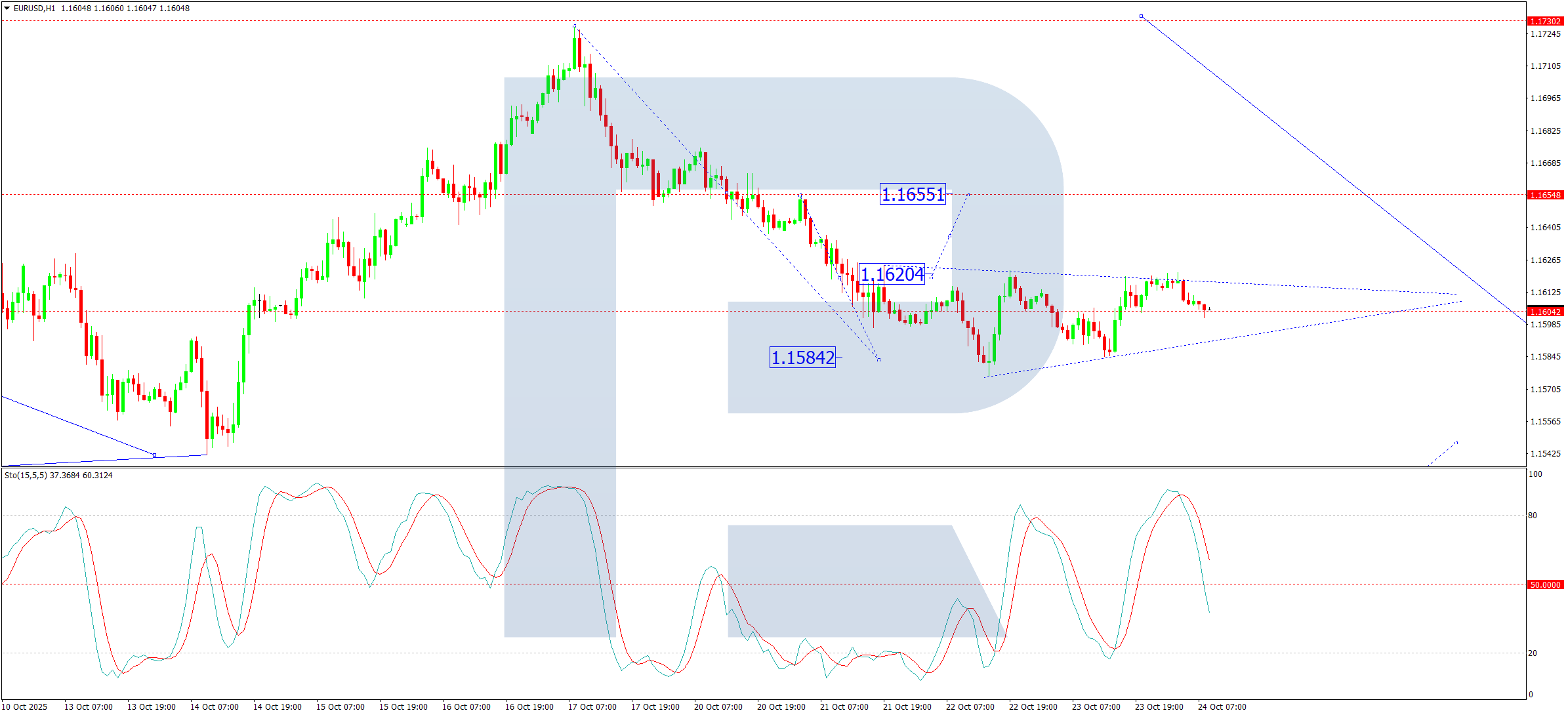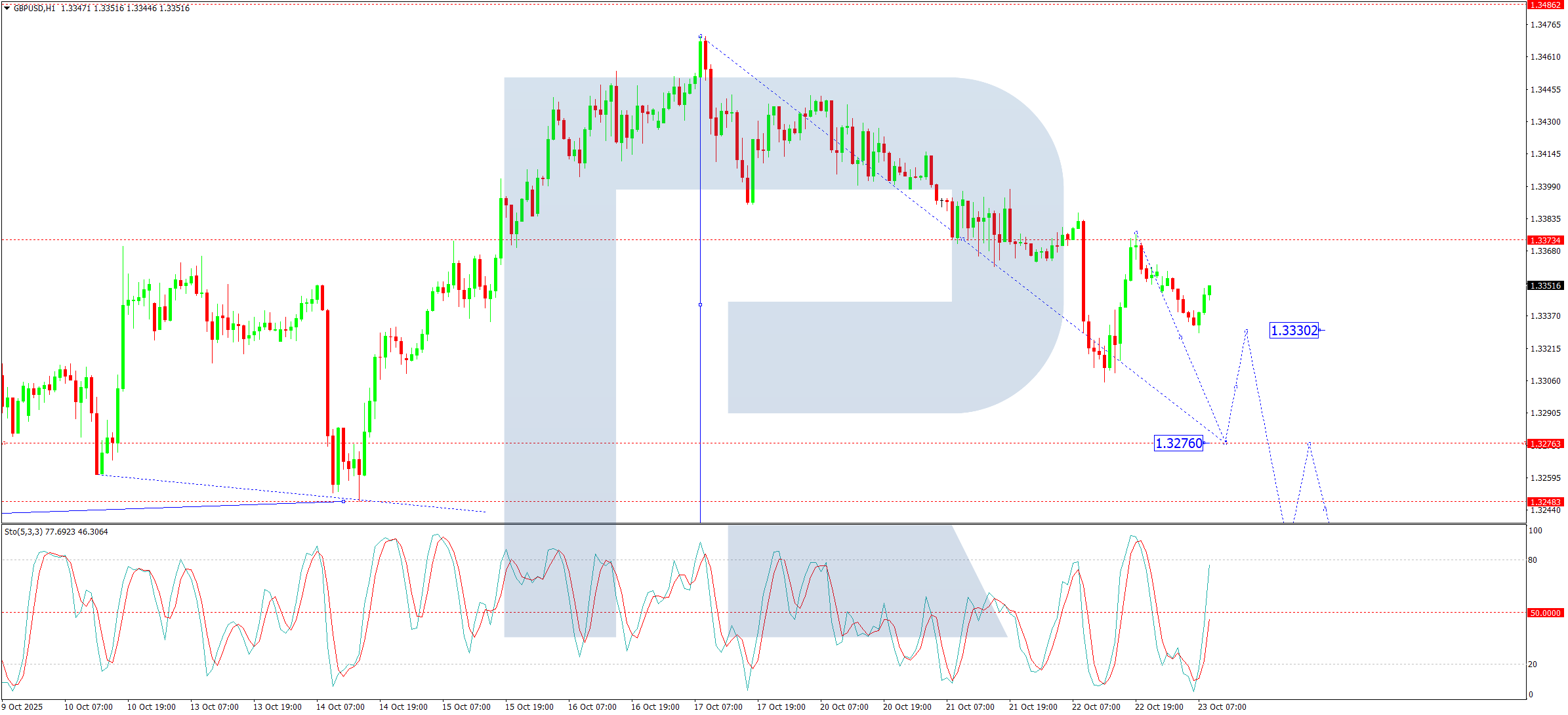
The French Parliament has passed a vote of no-confidence in the Prime Minister. Russia is attacking Poland, and Israel is attacking Hamas in the capital of Qatar

By JustMarkets

The Dow Jones Industrial Average (US30) rose by 0.43% on Tuesday. The S&P 500 (US500) gained 0.27%, and the tech-heavy Nasdaq (US100) finished 0.33% higher. All three major indices hit record highs despite signs of a slowing economy. Investors digested revised employment data showing that the US added 911,000 fewer jobs than previously estimated in the year ending in March, the most significant downward revision since 2002. This weaker job outlook increased expectations of a Federal Reserve rate cut next week, with debate centered mainly on the size of the reduction. Attention will now turn to the Producer Price Index (PPI) and Consumer Price Index (CPI) reports, which will be closely watched for clues about the direction of the Fed’s policy.

The Mexican peso strengthened to 18.6 per US dollar. In August, headline inflation slowed to 3.57%, while core inflation held steady at 4.23%, reinforcing expectations that the Bank of Mexico’s cautious easing cycle will continue at a moderate pace. The minutes from Banxico’s August meeting confirmed that the board approved a 25 basis point (bps) rate cut to 7.75%, with the majority favoring a slower pace of cuts and a potential additional quarter-point reduction later this year.

The Canadian dollar is under new selling pressure and is currently the second-worst performing major currency of 2025, behind only the US dollar. A combination of a deteriorating domestic economy and ongoing tariff uncertainty continues to weigh on the loonie, making traders skeptical about its near-term growth prospects. Canada’s latest GDP release confirmed sluggish growth, highlighting the impact of weak domestic activity. In response, the Bank of Canada may continue to cut rates.

European stock markets were mostly higher on Tuesday. The German DAX (DE40) fell by 0.37%, the French CAC 40 (FR40) rose by 0.19%, Spain’s IBEX35 (ES35) gained 0.14%, and the UK’s FTSE 100 (UK100) closed 0.23% higher. European equities ended slightly up on Tuesday, continuing their gains from the previous session. The French Parliament passed a vote of no-confidence in Prime Minister Bayrou as parties failed to agree on budget cuts, forcing President Macron to appoint the country’s fifth prime minister in less than two years. At the same time, bond yields traded quietly despite the turmoil, providing support for stocks ahead of the European Central Bank’s likely rate hold this week.

Russian strike drones have invaded Polish airspace, threatening cities approximately 40-50 miles from the Ukrainian border. Airports in Warsaw, Lublin, and Rzeszow were closed due to the attack. Poland has put its air defense systems on high alert and, according to preliminary reports, has shot down all the drones. On Wednesday morning local time, Polish armed forces stated that all necessary procedures were enacted to ensure the security of national airspace as Russia conducted large-scale overnight strikes on Ukraine. This is not the first time Russian drones have violated Polish airspace, forcing fighter jets to scramble, but this time, the number of drones crossing NATO’s borders was around 8-10, which does not appear to be accidental.

WTI crude oil prices rose more than 1% on Tuesday, surpassing $63 a barrel. The increase followed reports of explosions in Doha, Qatar, where Israel reportedly struck high-ranking Hamas leaders. According to eyewitnesses, Qatar, a key mediator in the Israel-Hamas conflict and a host of Hamas officials, was rattled by smoke rising over the area. This geopolitical shock added to existing bullish factors for oil. Prices were already supported by a smaller-than-expected OPEC+ output increase. Markets also anticipate that China will continue to build up its oil reserves, further tightening supply. Meanwhile, fears of new Western sanctions against Russia have heightened following its largest aerial attack on Ukraine in months.

Asian markets were mostly lower yesterday. Japan’s Nikkei 225 (JP225) fell by 0.42%, China’s FTSE China A50 (CHA50) dropped 0.35%, Hong Kong’s Hang Seng (HK50) rose by 1.19%, and Australia’s ASX 200 (AU200) had a negative result of 0.63%.

The New Zealand dollar rose to $0.594 USD on Wednesday as the US dollar strengthened ahead of key inflation reports. Traders are awaiting the release of the US PPI and CPI data this week, which could provide more clues about the Federal Reserve’s path for interest rates. Meanwhile, in China, New Zealand’s largest trading partner, data released today showed that consumer prices fell in August and factory gate deflation eased, pointing to continued deflationary pressures in an economy facing slowing growth.

S&P 500 (US500) 6,512.61 +17.46 (+0.27%)

Dow Jones (US30) 45,711.34 +196.39 (+0.43%)

DAX (DE40) 23,718.45 −88.68 (−0.37%)

FTSE 100 (UK100) 9,242.53 +21.09 (+0.23%)

USD Index 97.76 +0.30 (+0.31%)

News feed for: 2025.09.10

  • China Consumer Price Index (m/m) at 04:30 (GMT+3);
  • China Producer Price Index (m/m) at 04:30 (GMT+3);
  • Norway Inflation Rate (m/m) at 09:00 (GMT+3);
  • Switzerland SNB Chairman Schlegel Speaks at 14:45 (GMT+3);
  • US Producer Price Index (m/m) at 15:30 (GMT+3);
  • US Crude Oil Reserves (w/w) at 17:30 (GMT+3).

By JustMarkets


This article reflects a personal opinion and should not be interpreted as an investment advice, and/or offer, and/or a persistent request for carrying out financial transactions, and/or a guarantee, and/or a forecast of future events.

How Europe’s deforestation law could change the global coffee trade

By Paul Mwebaze, University of Illinois at Urbana-Champaign 

If your morning can’t begin without coffee, you’re in good company. The world drinks about 2 billion cups of coffee a day. However, a European Union law might soon affect your favorite coffee beans – and the farmers who grow them.

Starting in 2026, companies selling coffee on the European Union market will have to prove that their product is “deforestation-free.” That means every bag of beans, every jar of ground coffee and every espresso capsule must trace back to coffee plants on land that hasn’t been cleared of forest since Dec. 31, 2020.

The new rules, found in what’s known as the EU Deforestation Regulation, are part of a wider effort to ensure European consumption doesn’t drive global deforestation.

However, on the ground – from the coffee hills of Ethiopia to the plantations of Brazil – the rule change could transform how coffee is grown, traded and sold.

Why the EU is targeting deforestation

Deforestation is a major driver of biodiversity loss and accounts for about 10% of global greenhouse gas emissions. And coffee plantations, along with cocoa, soy and palm oil production, which are also covered by the new regulations, are known sources of forest loss in some countries.

Under the new EU Deforestation Regulation, companies will be required to trace their coffee to its exact origin – down to the farm plot where the beans were grown – and provide geolocation data and documentation of supply chain custody to EU authorities.

They will also have to show proof, often through satellite imagery, that any open land where coffee is grown was forest-free before the 2020 cutoff date.

The rules were initially set to go into effect in early 2025 but were pushed back after complaints from many countries. Governments and industry groups in Latin America, Africa and Southeast Asia warned of trade friction for small farms, and the World Trade Organization has received complaints about the regulations.

Most companies must now comply by Dec. 30, 2025. Small enterprises get until June 30, 2026.

Potential winners and losers

The coffee supply chain is complex. Beans are grown by millions of farmers, sold to collectors, then move through processors, exporters, importers and roasters before reaching grocery shelves. Adding the EU rules means more checkpoints, more paperwork and possibly new strategies for sourcing coffee beans.

Small farms in particular could be vulnerable to losing business when the new rules go into effect. They could lose contracts or market access if they can’t provide the plot-level GPS coordinates and nondeforestation documentation buyers will require. That could prompt buyers to shift toward larger estates or organized co-ops that can provide the documentation.

If a farm can’t provide precise plot coordinates or pay for mapping services, it could end up being excluded from the world’s largest coffee market.

Larger coffee growers already using systems that can trace beans back to specific farm plots could gain a competitive edge.

Map showing tropical forests mostly in Africa, South America, Southeast Asia and Indonesia, and boreal and temperate forests across Canada, Russia and parts of Europe.
Global forest area by type and distribution in 2020, according to a U.N. Food and Agriculture Organization assessment.
FAO

The new regulations also include stricter oversight for countries considered most likely to allow deforestation, which could slow trade from those regions. As a result, buyers may shift to regions with lower deforestation risk.

Even outside Europe, big buyers are likely to prioritize beans they can trace to nondeforested plots, potentially dropping small farms that can’t provide plot-level proof. That could reduce availability and raise the price of some coffee types and put farms out of business. In some cases, the EU regulations could reroute undocumented coffee beans into markets such as the U.S.

Helping small farms succeed

For small farms, succeeding under the new EU rules will depend on access to technical support and low-cost tools for tracing their crop’s origin. Some countries are developing national systems to track deforestation, and they are pushing the EU to invest more in helping them.

Those small farms that can comply with the rules, often through co-ops, could become attractive low-risk suppliers for large buyers seeking compliant crops.

The change could also boost demand for sustainability certifications, such as Rainforest Alliance, 4C Common Code or Fairtrade, which certify only products that don’t contribute to deforestation. But even certified farms will still need to provide precise location data.

Agroforestry’s potential

Arabica coffee, the most common variety sold globally, naturally evolved as an understory shrub, performing best in cooler tropical uplands with good drainage and often partial shade. That points to a way farmers can reduce deforestation risk while still growing coffee: agroforestry.

Two women examine beans on a coffee plant.
Farmers check on coffee beans at a small agroforestry operation in Kenya. The coffee bushes were planted among trees that provide shade.
World Agroforestry Centre/Joseph Gachoka via Flickr, CC BY-NC-SA

Agroforestry involves planting or conserving shade trees in and around coffee plots to maintain the tree canopy.

In agroforestry systems, shade trees can buffer heat and drought, often reducing evaporation from soil and moderating plants’ water stress. Several field studies show lower evaporative losses and complementary water use between coffee and shade trees. In some contexts, this can lower irrigation needs and reduce fertilizer demand. Practical tools such as World Coffee Research’s Shade Catalog help farmers choose the right tree species for their location and goals.

Agroforestry is common in Ethiopia, where Arabica originated, and in parts of Central America, thanks to long traditions of growing coffee in shade and specialty demand for the products.

Under the new EU rules, however, even these farms must prove that no forest was cleared after 2020.

Why this matters to coffee drinkers

For European coffee drinkers, the new EU rules promise more sustainable coffee. But they may also mean higher prices if compliance costs are passed down the supply chain to consumers.

For coffee lovers elsewhere, changes in global trade flows could shift where beans are sold and at what price. As EU buyers bid up beans that can be traced to nondeforested plots, more of those “fully verified” coffees will flow to Europe. U.S. roasters may then face higher prices or tighter supply for traceable lots, while unverified beans are discounted or simply avoided by brands that choose to follow EU standards.The Conversation

About the Author:

Paul Mwebaze, Research Economist at the Institute for Sustainability, Energy and Environment, University of Illinois at Urbana-Champaign

This article is republished from The Conversation under a Creative Commons license. Read the original article.


Hong Kong stocks rose to a 4-year high. The announced production hike from OPEC+ was smaller than analysts had projected

By JustMarkets 

By the end of Monday, the Dow Jones Index (US30) had risen by 0.25%. The S&P 500 (US500) gained 0.21%, and the Nasdaq (US100) Technology Index closed up 0.46%. Wall Street started the week with gains on Monday as investors positioned themselves ahead of a data-heavy week, which includes two key inflation reports that are likely to influence the Federal Reserve’s policy expectations. A weak August jobs report, combined with softer labor market data last week, fueled hopes that the Fed will cut rates at its September meeting, with traders increasingly pricing in the possibility of a more significant 50 basis point (bps) rate cut. This week, investors will monitor the PPI and CPI for new signals on the economy’s direction.

Stock markets in Europe were mostly up on Monday. Germany’s DAX (DE40) rose by 0.89%, France’s CAC 40 (FR40) closed up 0.78%, Spain’s IBEX35 (ES35) gained 1.02%, and the UK’s FTSE 100 (UK100) closed up 0.14%. European stocks closed with solid gains, as markets continued to assess the outlook for European rates and the latest corporate news. Banks closed sharply higher as Eurozone yield spreads narrowed, easing fragmentation concerns that had emerged in recent weeks before the expected dissolution of the French parliament. Prime Minister François Bayrou is expected to lose a confidence vote as the government rejects the current budget proposal, creating political risk and likely increasing the country’s budget deficit.

WTI crude oil prices rose 2% on Monday, climbing above the $63 per barrel mark and recovering from a three-day slide. The gains came as OPEC+ announced a smaller-than-expected production increase and concerns over potential new US sanctions on Russian oil intensified. The group agreed to raise production by 137,000 barrels per day from October, which is far below the increases of 555,000 bpd in August and September and 411,000 bpd in June and July. Analysts noted that some members are already overproducing, meaning the real impact on the market may be limited.

Silver prices (XAG/USD) climbed back above the $41 per ounce mark, reaching their highest level since August 2011, as signs of a cooling US labor market boosted expectations for a Federal Reserve rate cut this year. Markets are fully pricing in a 25 bps rate cut later this month, with some betting on a more significant half-point shift. On the industrial side, strong demand from solar panels, electric vehicles, and electronics has tightened the physical silver market amid limited supply.

Asian markets were mostly down yesterday. Japan’s Nikkei 225 (JP225) rose by 1.45%, China’s FTSE China A50 (CHA50) fell by 0.10%, Hong Kong’s Hang Seng (HK50) gained 0.85%, and Australia’s ASX 200 (AU200) ended the day with a 0.24% loss. In early Tuesday trading, Hong Kong stocks jumped 1.4%, rising for the third consecutive day to their highest level since October 2021, as all sectors saw gains. Optimism on Wall Street on Monday lifted the mood ahead of an expected Fed rate cut later this month. Hong Kong real estate company stocks were among the top gainers, rising by about 2% after the city of Shenzhen eased home purchase restrictions last week. Technology, financial, and consumer stocks also rose, supported by a third consecutive day of gains in mainland markets as Beijing moves toward a record trade surplus despite August exports hitting a six-month low. However, gains were capped by caution ahead of the release of China’s CPI and PPI data on Wednesday, as concerns about deflation persist.

The Westpac-Melbourne Institute Index of Consumer Sentiment in Australia fell by 3.1% month-over-month to 95.4 in September 2025, offsetting the 5.7% increase in August. This decline reflects renewed anxiety about the interest rate outlook, despite some easing of the cost-of-living crisis and support from monetary policy easing. Assessments of the economy worsened, with the 12-month outlook falling 8.9% to 92.2 and the 5-year outlook declining 5.9% to 92.7. The Head of Australian Macro Expectations said the survey shows that the recovery in consumer demand since mid-2024 remains sluggish and further policy easing will likely be needed. He expects the RBA to cut rates by 25 basis points in November and two more times in 2026.


S&P 500 (US500) 6,495.15 +13.65 (+0.21%)

Dow Jones (US30) 45,514.95 +114.09 (+0.25%)

DAX (DE40) 23,807.13 +210.15 (+0.89%)

FTSE 100 (UK100) 9,221.44 +13.23 (+0.14%)

USD Index 97.44 −0.33 (−0.33%)

News feed for: 2025.09.09

  • Australia NAB Business Confidence (m/m) at 04:30 (GMT+3);
  • Mexico Inflation Rate (m/m) at 15:00 (GMT+3).

By JustMarkets


This article reflects a personal opinion and should not be interpreted as an investment advice, and/or offer, and/or a persistent request for carrying out financial transactions, and/or a guarantee, and/or a forecast of future events.

EUR/USD Holds Firm as Upcoming Data Threatens the Dollar

By RoboForex Analytical Department

The EUR/USD pair advanced for a third consecutive session on Tuesday, climbing towards 1.1772 USD. Growing concerns about a cooling US labour market are reinforcing expectations of a Federal Reserve rate cut, weighing on the dollar.

Investors are particularly focused on the upcoming revised employment data for the period from April 2024 to March 2025. Estimates suggest a possible downward revision of up to 800,000 jobs, which could indicate that the Fed is falling short of its full employment mandate – a key factor in its policy decisions.

Market attention is also turning to two key inflation releases this week: the Producer Price Index (PPI) on Wednesday and the Consumer Price Index (CPI) on Thursday.

Interest rate futures currently price in an 89% probability of a 25-basis-point cut at next week’s Fed meeting. Some participants are even pricing in the possibility of a more aggressive 50-basis-point reduction.

Technical Analysis: EUR/USD

H4 Chart:

On the H4 chart, EUR/USD has extended its upward move towards 1.1810 USD. A decisive break above this resistance could signal a continuation of the uptrend. Alternatively, a rejection at this level may lead to a corrective pullback, retesting the former resistance – now acting as support around 1.1720–1.1740 USD. The MACD indicator supports this outlook: both the histogram and signal line remain above zero and are rising, suggesting bullish momentum. The primary scenario favours further gains toward 1.1810 USD, followed by 1.1870 USD, though minor corrections may occur along the way.

H1 Chart:

On the H1 chart, the pair is testing resistance and showing signs of short-term consolidation. A break above 1.1772 USD would likely confirm a continuation of the upward move. The Stochastic oscillator is testing the 50 level, indicating potential for a brief correction before the next leg higher. The near-term upside target remains 1.1810 USD.

Conclusion

The euro remains well-supported against the dollar as markets anticipate softer US labour data and key inflation prints this week. A confirmation of weaker employment figures or subdued inflation could further solidify expectations for Fed easing, likely propelling EUR/USD toward higher resistance levels. Technically, the pair retains bullish momentum, though a near-term correction remains possible.

Disclaimer:

Any forecasts contained herein are based on the author’s particular opinion. This analysis may not be treated as trading advice. RoboForex bears no responsibility for trading results based on trading recommendations and reviews contained herein.


China’s electric vehicle influence expands nearly everywhere – except the US and Canada

By Jack Barkenbus, Vanderbilt University 

In 2025, 1 in 4 new automotive vehicle sales globally are expected to be an electric vehicle – either fully electric or a plug-in hybrid.

That is a significant rise from just five years ago, when EV sales amounted to fewer than 1 in 20 new car sales, according to the International Energy Agency, an intergovernmental organization examining energy use around the world.

In the U.S., however, EV sales have lagged, only reaching 1 in 10 in 2024. By contrast, in China, the world’s largest car market, more than half of all new vehicle sales are electric.

The International Energy Agency has reported that two-thirds of fully electric cars in China are now cheaper to buy than their gasoline equivalents. With operating and maintenance costs already cheaper than gasoline models, EVs are attractive purchases.

Most EVs purchased in China are made there as well, by a range of different companies. NIO, Xpeng, Xiaomi, Zeekr, Geely, Chery, Great Wall Motor, Leapmotor and especially BYD are household names in China. As someone who has followed and published on the topic of EVs for over 15 years, I expect they will soon become as widely known in the rest of the world.

What kinds of EVs is China producing?

China’s automakers are producing a full range of electric vehicles, from the subcompact, like the BYD Seagull, to full-size SUVs, like the Xpeng G9, and luxury cars, like the Zeekr 009.

Recent European crash-test evaluations have given top safety ratings to Chinese EVs, and many of them cost less than similar models made by other companies in other countries.

A Wall Street Journal video explores a Chinese ‘dark factory’ – one so automated that it doesn’t need lights inside.

What’s behind Chinese EV success?

There are several factors behind Chinese companies’ success in producing and selling EVs. To be sure, relatively low labor costs are part of the explanation. So are generous government subsidies, as EVs were one of several advanced technologies selected by the Chinese government to propel the nation’s global technological profile.

But Chinese EV makers are also making other advances. They make significant use of industrial robotics, even to the point of building so-called “dark factories” that can operate with minimal human intervention. For passengers, they have reimagined vehicles’ interiors, with large touchscreens for information and entertainment, and even added a refrigerator, bed or karaoke system.

Competition among Chinese EV makers is fierce, which drives additional innovation. BYD is the largest seller of EVs, both domestically and globally. Yet the company says it employs over 100,000 scientists and engineers seeking continual improvement.

From initial concept models to actual rollout of factory-made cars, BYD takes 18 months – half as long as U.S. and other global automakers take for their product development processes, Reuters reported.

BYD is also the world’s second-largest EV battery seller and has developed a new battery that can recharge in just five minutes, roughly the same time it takes to fill a gas-powered car’s tank.

Exports

The real test of how well Chinese vehicles appeal to consumers will come from export sales. Chinese EV manufacturers are eager to sell abroad because their factories can produce far more than the 25 million vehicles they can sell within China each year – perhaps twice as much.

China already exports more cars than any other nation, though primarily gas-powered ones at the moment. Export markets for Chinese EVs are developing in Western Europe, Southeast Asia, Latin America, Australia and elsewhere.

The largest market where Chinese vehicles, whether gasoline or electric, are not being sold is North America. Both the U.S. and Canadian governments have created what some have called a “tariff fortress” protecting their domestic automakers, by imposing tariffs of 100% on the import of Chinese EVs – literally doubling their cost to consumers.

Customers’ budgets matter too. The average price of a new electric vehicle in the U.S. is approximately $55,000. Less expensive vehicles make up part of this average, but without tax credits, which the Trump administration is eliminating after September 2025, nothing gets close to $25,000. By contrast, Chinese companies produce several sub-$25,000 EVs, including the Xpeng M03, the BYD Dolphin and the MG4 without tax credits. If sold in America, however, the 100% tariffs would remove the price advantage.

Tesla, Ford and General Motors all claim they are working on inexpensive EVs. More expensive vehicles, however, generate higher profits, and with the protection of the “tariff fortress,” their incentive to develop cheaper EVs is not as high as it might be.

In the 1970s and 1980s, there was considerable U.S. opposition to importing Japanese vehicles. But ultimately, a combination of consumer sentiment and the willingness of Japanese companies to open factories in the U.S. overcame that opposition, and Japanese brands like Toyota, Honda and Nissan are common on North American roads. The same process may play out for Chinese automakers, though it’s not clear how long that might take.The Conversation

About the Author:

Jack Barkenbus, Visiting Scholar, Vanderbilt University

This article is republished from The Conversation under a Creative Commons license. Read the original article.

Global markets end the week on a mixed note

By JustMarkets

The US stocks finished Friday with mixed results. The Dow Jones (US30) Index fell by 0.48% for the day and 0.42% for the week. The S&P 500 (US500) dropped by 0.32% on Friday and 0.12% for the week. The tech-heavy Nasdaq (US100) closed up by 0.08% for the day and 0.19% for the week. The US economy added just 22,000 jobs, falling short of the 75,000 prognoses, and the unemployment rate rose to 4.3%, signaling a cooling labor market. Traders quickly priced in the likelihood of an interest rate cut, with bets on a potential 50-basis-point (bps) reduction this month increasing. BofA Global Research expects the US Federal Reserve will cut rates twice by 25 bps in September and December, and predicts an additional 75 bps of easing in 2026.

Economically sensitive sectors led the decline, with banks, energy, and industrials falling, while real estate rose on optimism about rate cuts. Broadcom shares surged 9% after expecting significant AI-driven revenue growth, while Nvidia and AMD shares dropped 4% and 6.5%, respectively, following a warning from President Trump about substantial semiconductor tariffs. Lululemon fell 18.3% after a second profit warning, and major banks, including JPMorgan and Wells Fargo, were down more than 2.5%.

The Canadian dollar traded around 1.38 to the US dollar as US dollar weakness was offset by growing expectations for a more “dovish” stance from the Bank of Canada following an unexpected rise in unemployment. Bets on dovish action from the Bank of Canada increased after unemployment in August 2025 rose to its highest level since the pandemic at 7.1%, exceeding expectations of 7% and the 6.9% rate in July. This aligned with the Bank of Canada’s view that a labor supply surplus and growing risks from US tariffs and policy uncertainty could further worsen the country’s employment situation.

European stock markets were mostly lower on Friday. Germany’s DAX (DE40) fell by 0.73% (down -1.73% for the week), France’s CAC 40 (FR40) closed down 0.31% (down -0.65% for the week), Spain’s IBEX35 (ES35) dropped 0.45% (down -0.70% for the week), and the UK’s FTSE 100 (UK100) closed down 0.09% (up +0.23% for the week). Eurozone GDP grew by 1.5% year-over-year in the second quarter of 2025, higher than the initial estimate of 1.4%. Among the bloc’s largest economies, GDP increased by 0.2% in Germany, 0.8% in France, 0.4% in Italy, and 2.8% in Spain. Eurozone employment rose by 0.1% quarter-over-quarter, marking the 17th consecutive period of job growth and extending a slow but consistent trend of job creation in the European labor market. Among the largest economies, Spain saw the highest employment growth (0.7%), while Germany experienced a fourth consecutive month of stagnation, France saw a new stagnation, and Italy’s employment contracted (-0.1%).

WTI crude oil prices continued their third straight day of declines on Friday, falling 2.5% to $61.9 per barrel and marking their first weekly drop in three weeks. The decline followed a 2.4 million barrel build in US crude inventories, contrary to expectations, and came ahead of a Sunday OPEC+ meeting to consider an additional output increase. Reports suggest Saudi Arabia favors a production increase to regain market share, which could reverse some of the existing 1.65 million barrels per day in cuts. Geopolitical tensions are also affecting the market, with the US pressuring buyers of Russian oil and imposing new duties on imports from India. Expectations for new fields coming online in Guyana and Brazil are adding to the bearish sentiment.

The US natural gas prices (XNG/USD) fell to $3.05 per MMBtu on Friday, tracking declines in other energy commodities as pessimistic US labor market data capped demand prospects. Liquefied natural gas (LNG) exports from US ports rose to a record high of 9.33 tons amid elevated European demand and increased capacity at LNG plants following the end of maintenance at the Plaquemines facility. At the same time, the EIA noted that the US is expected to reach a new production peak of 91.4 billion cubic feet per day in 2025.

Asian markets were mostly down last week. Japan’s Nikkei 225 (JP225) rose by 1.55%, while China’s FTSE China A50 (CHA50) fell by 0.46%, Hong Kong’s Hang Seng (HK50) dropped 0.35%, and Australia’s ASX 200 (AU200) ended the week down 0.87%.

Japanese Prime Minister Shigeru Ishiba announced he would resign after less than a year in office following two major electoral defeats. The announcement came a day before the Liberal Democratic Party (LDP) was set to vote on a leadership ballot that could have forced his departure. The LDP has governed Japan for most of the last seven decades, but under Ishiba, it lost its majority in the lower house of parliament for the first time in 15 years, and then lost its majority in the upper house in July. Japan, the world’s fourth-largest economy and a key US ally, is now entering a period of political uncertainty amid rising tensions with China and heightened regional instability.

Vietnam’s annual inflation rate rose to 3.24% in August 2025, up from a three-month low of 3.19% in July. Meanwhile, core inflation, which excludes volatile items, declined to a four-month low of 3.25% in August from 3.30% in July. Monthly, consumer prices increased by 0.05%, down from the 0.11% gain in the previous month and marking the lowest increase in five months.

S&P 500 (US500) 6,481.50 −20.58 (−0.32%)

Dow Jones (US30) 45,400.86 −220.43 (−0.48%)

DAX (DE40) 23,596.98 −173.35 (−0.73%)

FTSE 100 (UK100) 9,208.21 −8.66 (−0.09%)

USD Index 97.74 −0.61 (−0.62%)

News feed for: 2025.09.08

  • Japan GDP (q/q) at 02:50 (GMT+3);
  • China Trade Balance (m/m) at 06:00 (GMT+3);
  • Germany Trade Balance (m/m) at 09:00 (GMT+3);
  • Germany Industrial Production (m/m) at 09:00 (GMT+3).

By JustMarkets


This article reflects a personal opinion and should not be interpreted as an investment advice, and/or offer, and/or a persistent request for carrying out financial transactions, and/or a guarantee, and/or a forecast of future events.

Gold Poised to Test Fresh Highs

By RoboForex Analytical Department

Gold held near historic levels on Monday, trading around 3,590 USD per ounce, bolstered by a softer-than-expected US labour market report for August. Employment growth fell short of forecasts, while the unemployment rate climbed to its highest level since 2021. This has reinforced market expectations of an imminent Federal Reserve rate cut as early as September, with investors pricing in a 92% probability of such a move.

Further supporting the bullish sentiment are growing doubts over the Fed’s independence, as former President Donald Trump continues to criticise the central bank – driving increased safe-haven demand for gold.

Demand was also reinforced by the People’s Bank of China, which added to its gold reserves for the tenth consecutive month in August as part of a broader strategy to diversify its holdings away from the US dollar.

Additionally, the metal gained support from trade policy developments, with the Trump administration exempting gold and certain other metals from its latest tariff list.

In summary, gold remains near all-time highs due to a combination of dovish Fed expectations, political uncertainty, and sustained central bank demand.

Technical Analysis: XAU/USD

H4 Chart:

On the H4 chart, XAU/USD has completed another leg higher, reaching 3,600.07 USD. A corrective pullback toward the former resistance, which has now turned into support at around 3,550 USD, appears likely. Given the current fundamental backdrop, any test of this support may be followed by another upward wave, with initial targets at 3,600 USD and then 3,650 USD. The MACD indicator provides technical support for this scenario. Although the histogram and signal line remain above zero, both are declining – suggesting a near-term correction before the broader uptrend resumes.

H1 Chart:

On the H1 chart, the pair tested 3,600.07 USD and is now forming a corrective decline. The initial support target is 3,550 USD. Holding this level could prompt renewed buying, supporting a continuation of the upward trend. The Stochastic oscillator aligns with this view, with its signal line testing the 50.0 level, indicating potential for further near-term consolidation or a mild retracement.

Conclusion

Gold remains well-supported by a confluence of fundamental factors, including expectations of Fed easing, geopolitical tensions, and robust institutional demand. While a short-term technical correction is likely, the broader bullish trend remains intact, with scope for further gains towards 3,650 USD.

Disclaimer:

Any forecasts contained herein are based on the author’s particular opinion. This analysis may not be treated as trading advice. RoboForex bears no responsibility for trading results based on trading recommendations and reviews contained herein.

Australian Dollar Speculator Bets rebound after dropping to over 1-Year Low

By InvestMacro

Speculators OI FX Futures COT Chart

Here are the latest charts and statistics for the Commitment of Traders (COT) data published by the Commodities Futures Trading Commission (CFTC).

The latest COT data is updated through Tuesday September 2nd and shows a quick view of how large market participants (for-profit speculators and commercial traders) were positioned in the futures markets. All currency positions are in direct relation to the US dollar where, for example, a bet for the euro is a bet that the euro will rise versus the dollar while a bet against the euro will be a bet that the euro will decline versus the dollar.

Weekly Speculator Changes led by Australian Dollar & Brazilian Real

Speculators Nets FX Futures COT Chart
The COT currency market speculator bets were slightly lower overall this week as five out of the eleven currency markets we cover had higher positioning while the other six markets had lower speculator contracts.

Leading the gains for the currency markets was the Australian Dollar (17,907 contracts) with the Brazilian Real (4,253 contracts), the Mexican Peso (4,015 contracts), the Swiss Franc (1,090 contracts) and the US Dollar Index (1,084 contracts) also having positive weeks.

The currencies seeing declines in speculator bets on the week were the Japanese Yen (-11,226 contracts), the EuroFX (-3,447 contracts), Canadian Dollar (-3,961 contracts), the British Pound (-1,787 contracts), Bitcoin (-530 contracts) and with the New Zealand Dollar (-369 contracts) also registering lower bets on the week.

Currency Round Up: Australian Dollar Bets rebound after dropping to over 1-Year Low

Highlighting this week’s currency speculative data with the Australian Dollar, which saw a strong gain this week by over 17,000 contracts. This was the first increase in the last five weeks for the Australian Dollar positions and brings the overall speculative sentiment level to -82,683 contracts. The Aussie positioning last week dropped to over -100,000 contracts which was the lowest level of the past 71 weeks, dating back to April 16th of 2024. Overall, the Australian Dollar speculative position continues to remain in an extreme weak speculator position and the Aussie speculative bets have now been in a negative position for 38 consecutive weeks, dating back to December of 2024.

  • The US Dollar Index speculator position rose this week by over 1,000 contracts, and has now edged higher for three out of the last four weeks. Despite the little bump up in sentiment, the US Dollar Index contracts remain in bearish territory with a standing of over -5,000 net contracts. The US Dollar Index has now been in a bearish position for 12 consecutive weeks.
  • The Euro currency contracts fell this week by almost -3,500 contracts, but the Euro position continues to be in a strongly bullish level. This week’s Euro speculator standing is at +119,592 contracts, and this week is the 12th consecutive week that the speculative position has been over +100,000 contracts. Overall, the Euro has been in a bullish position for 26 consecutive weeks.
  • The Japanese Yen contracts fell by over -11,000 net positions this week and the positive speculator position has been slowly but steadily eroding week to week. Since ascending to a new all-time record high bullish position in April at a total of +179,212 net contracts, the bullish position has now shed -105,954 contracts over the past 18 weeks to bring the current position this week to +73,258 contracts. Overall, the Japanese Yen position has now been continuously bullish since February 4th for 31 consecutive weekly bullish positions.
  • The Canadian Dollar continued to see bearish sentiment and the speculator position declined this week by almost -4,000 contracts. The Canadian Dollar spec position has now fallen in 9 out of the last 10 weeks for a 10-week total of – 55,809 contracts. The overall net position has now dropped to its most bearish level since April (a span of 21 straight weeks) with the Canadian Dollar net position at -108,976 contracts.
  • Mexican peso positions this week rose for a third consecutive week and for the sixth time out of the last seven weeks. Over the last 7-week period, Peso positions have now advanced by approximately 23,000 contracts. This recent bullish sentiment has brought the Peso positions to the highest level in the past 64 weeks, dating back to June 11th of 2024. The current bullish net position for the Peso is at +73,013 contracts.

Bitcoin Leads Price Performance over last 5 days

Leading the currency market returns this week was Bitcoin, which saw a gain of 3.22%. Over the last 30 days, Bitcoin has been down by -4.35%, but over the last 90 days, Bitcoin has been up by 15%.

Next up, the Brazilian Real was higher by 0.52%. The Real is up by over 5% in the last 90 days. The Swiss Franc comes in next with a 0.23% gain on the week. The Swiss Franc is higher by 3.50 percent over the last 90 days. Similarly, the Euro was up by 0.17% this week and is up by 3.62% over the last 90 days.

The Australian Dollar was higher by a minuscule 0.12% this week and has seen a 1.63% gain over the last 90 days. The U.S. Dollar Index was virtually unchanged (+0.04%) on the week.

The British Pound Sterling was lower by -0.09% on the week. The New Zealand Dollar was down by -0.17% on the week. The Mexican Peso fell by -0.26% this week and is higher by 4.73% over the last 90 days. The Japanese Yen fell by -0.34% on the week, while the Canadian Dollar saw the biggest decline with a -0.85% shortfall in trading this week.


Currencies Data:

Speculators FX Futures COT Data Table
Legend: Open Interest | Speculators Current Net Position | Weekly Specs Change | Specs Strength Score compared to last 3-Years (0-100 range)


Strength Scores led by EuroFX, Brazilian Real & Japanese Yen

Speculators Strength Scores FX Futures COT Chart
COT Strength Scores (a normalized measure of Speculator positions over a 3-Year range, from 0 to 100 where above 80 is Extreme-Bullish and below 20 is Extreme-Bearish) showed that the EuroFX (74 percent), the Brazilian Real (71 percent) and the Japanese Yen (71 percent) lead the currency markets this week. The Mexican Peso (66 percent) and the New Zealand Dollar (57 percent) come in as the next highest in the weekly strength scores.

On the downside, the US Dollar Index (5 percent) and the British Pound (17 percent) come in at the lowest strength levels currently and are in Extreme-Bearish territory (below 20 percent). The next lowest strength scores are the Australian Dollar (18 percent) and the Bitcoin (34 percent).

3-Year Strength Statistics:
US Dollar Index (4.7 percent) vs US Dollar Index previous week (2.2 percent)
EuroFX (74.3 percent) vs EuroFX previous week (75.6 percent)
British Pound Sterling (16.6 percent) vs British Pound Sterling previous week (17.5 percent)
Japanese Yen (70.8 percent) vs Japanese Yen previous week (73.9 percent)
Swiss Franc (48.4 percent) vs Swiss Franc previous week (46.2 percent)
Canadian Dollar (41.8 percent) vs Canadian Dollar previous week (43.7 percent)
Australian Dollar (17.6 percent) vs Australian Dollar previous week (4.9 percent)
New Zealand Dollar (57.0 percent) vs New Zealand Dollar previous week (57.4 percent)
Mexican Peso (66.0 percent) vs Mexican Peso previous week (63.9 percent)
Brazilian Real (71.5 percent) vs Brazilian Real previous week (68.0 percent)
Bitcoin (33.6 percent) vs Bitcoin previous week (44.8 percent)


Bitcoin & Mexican Peso top the 6-Week Strength Trends

Speculators Trends FX Futures COT Chart
COT Strength Score Trends (or move index, calculates the 6-week changes in strength scores to show where speculator bets are trending towards) showed that Bitcoin (20 percent) and the Mexican Peso (9 percent) lead the past six weeks trends for the currencies. The Brazilian Real (6 percent) is the next highest positive movers in the 3-Year trends data.

The Canadian Dollar (-19 percent) leads the downside trend scores currently with the British Pound (-16 percent), Japanese Yen (-9 percent) and the New Zealand Dollar (-4 percent) following next with lower trend scores.

3-Year Strength Trends:
US Dollar Index (-3.7 percent) vs US Dollar Index previous week (-5.7 percent)
EuroFX (-2.3 percent) vs EuroFX previous week (-2.0 percent)
British Pound Sterling (-16.0 percent) vs British Pound Sterling previous week (-28.8 percent)
Japanese Yen (-9.2 percent) vs Japanese Yen previous week (-5.3 percent)
Swiss Franc (0.4 percent) vs Swiss Franc previous week (-8.8 percent)
Canadian Dollar (-18.5 percent) vs Canadian Dollar previous week (-14.8 percent)
Australian Dollar (-1.0 percent) vs Australian Dollar previous week (-18.2 percent)
New Zealand Dollar (-3.8 percent) vs New Zealand Dollar previous week (-11.3 percent)
Mexican Peso (8.6 percent) vs Mexican Peso previous week (9.6 percent)
Brazilian Real (5.9 percent) vs Brazilian Real previous week (3.8 percent)
Bitcoin (20.1 percent) vs Bitcoin previous week (44.8 percent)


Individual COT Forex Markets:

US Dollar Index Futures:

US Dollar Index Forex Futures COT ChartThe US Dollar Index large speculator standing this week came in at a net position of -5,021 contracts in the data reported through Tuesday. This was a weekly gain of 1,084 contracts from the previous week which had a total of -6,105 net contracts.

This week’s current strength score (the trader positioning range over the past three years, measured from 0 to 100) shows the speculators are currently Bearish-Extreme with a score of 4.7 percent. The commercials are Bullish-Extreme with a score of 97.9 percent and the small traders (not shown in chart) are Bearish-Extreme with a score of 19.9 percent.

Price Trend-Following Model: Weak Downtrend

Our weekly trend-following model classifies the current market price position as: Weak Downtrend.

US DOLLAR INDEX StatisticsSPECULATORSCOMMERCIALSSMALL TRADERS
– Percent of Open Interest Longs:43.338.48.9
– Percent of Open Interest Shorts:59.320.111.3
– Net Position:-5,0215,790-769
– Gross Longs:13,64512,1092,799
– Gross Shorts:18,6666,3193,568
– Long to Short Ratio:0.7 to 11.9 to 10.8 to 1
NET POSITION TREND:
– Strength Index Score (3 Year Range Pct):4.797.919.9
– Strength Index Reading (3 Year Range):Bearish-ExtremeBullish-ExtremeBearish-Extreme
NET POSITION MOVEMENT INDEX:
– 6-Week Change in Strength Index:-3.74.0-3.2


Euro Currency Futures:

Euro Currency Futures COT ChartThe Euro Currency large speculator standing this week came in at a net position of 119,592 contracts in the data reported through Tuesday. This was a weekly decline of -3,447 contracts from the previous week which had a total of 123,039 net contracts.

This week’s current strength score (the trader positioning range over the past three years, measured from 0 to 100) shows the speculators are currently Bullish with a score of 74.3 percent. The commercials are Bearish with a score of 22.9 percent and the small traders (not shown in chart) are Bullish-Extreme with a score of 83.6 percent.

Price Trend-Following Model: Uptrend

Our weekly trend-following model classifies the current market price position as: Uptrend.

EURO Currency StatisticsSPECULATORSCOMMERCIALSSMALL TRADERS
– Percent of Open Interest Longs:30.253.911.3
– Percent of Open Interest Shorts:16.174.15.2
– Net Position:119,592-171,26951,677
– Gross Longs:255,660455,69695,363
– Gross Shorts:136,068626,96543,686
– Long to Short Ratio:1.9 to 10.7 to 12.2 to 1
NET POSITION TREND:
– Strength Index Score (3 Year Range Pct):74.322.983.6
– Strength Index Reading (3 Year Range):BullishBearishBullish-Extreme
NET POSITION MOVEMENT INDEX:
– 6-Week Change in Strength Index:-2.32.2-1.1


British Pound Sterling Futures:

British Pound Sterling Futures COT ChartThe British Pound Sterling large speculator standing this week came in at a net position of -33,140 contracts in the data reported through Tuesday. This was a weekly decrease of -1,787 contracts from the previous week which had a total of -31,353 net contracts.

This week’s current strength score (the trader positioning range over the past three years, measured from 0 to 100) shows the speculators are currently Bearish-Extreme with a score of 16.6 percent. The commercials are Bullish with a score of 77.0 percent and the small traders (not shown in chart) are Bullish with a score of 65.0 percent.

Price Trend-Following Model: Uptrend

Our weekly trend-following model classifies the current market price position as: Uptrend.

BRITISH POUND StatisticsSPECULATORSCOMMERCIALSSMALL TRADERS
– Percent of Open Interest Longs:33.651.913.9
– Percent of Open Interest Shorts:48.237.813.3
– Net Position:-33,14031,8041,336
– Gross Longs:76,062117,50731,465
– Gross Shorts:109,20285,70330,129
– Long to Short Ratio:0.7 to 11.4 to 11.0 to 1
NET POSITION TREND:
– Strength Index Score (3 Year Range Pct):16.677.065.0
– Strength Index Reading (3 Year Range):Bearish-ExtremeBullishBullish
NET POSITION MOVEMENT INDEX:
– 6-Week Change in Strength Index:-16.015.5-8.1


Japanese Yen Futures:

Japanese Yen Forex Futures COT ChartThe Japanese Yen large speculator standing this week came in at a net position of 73,258 contracts in the data reported through Tuesday. This was a weekly decrease of -11,226 contracts from the previous week which had a total of 84,484 net contracts.

This week’s current strength score (the trader positioning range over the past three years, measured from 0 to 100) shows the speculators are currently Bullish with a score of 70.8 percent. The commercials are Bearish with a score of 31.7 percent and the small traders (not shown in chart) are Bearish with a score of 49.6 percent.

Price Trend-Following Model: Downtrend

Our weekly trend-following model classifies the current market price position as: Downtrend.

JAPANESE YEN StatisticsSPECULATORSCOMMERCIALSSMALL TRADERS
– Percent of Open Interest Longs:42.236.99.9
– Percent of Open Interest Shorts:24.555.39.1
– Net Position:73,258-76,2562,998
– Gross Longs:174,774152,76340,872
– Gross Shorts:101,516229,01937,874
– Long to Short Ratio:1.7 to 10.7 to 11.1 to 1
NET POSITION TREND:
– Strength Index Score (3 Year Range Pct):70.831.749.6
– Strength Index Reading (3 Year Range):BullishBearishBearish
NET POSITION MOVEMENT INDEX:
– 6-Week Change in Strength Index:-9.210.4-18.1


Swiss Franc Futures:

Swiss Franc Forex Futures COT ChartThe Swiss Franc large speculator standing this week came in at a net position of -25,888 contracts in the data reported through Tuesday. This was a weekly gain of 1,090 contracts from the previous week which had a total of -26,978 net contracts.

This week’s current strength score (the trader positioning range over the past three years, measured from 0 to 100) shows the speculators are currently Bearish with a score of 48.4 percent. The commercials are Bullish with a score of 52.4 percent and the small traders (not shown in chart) are Bullish with a score of 50.9 percent.

Price Trend-Following Model: Uptrend

Our weekly trend-following model classifies the current market price position as: Uptrend.

SWISS FRANC StatisticsSPECULATORSCOMMERCIALSSMALL TRADERS
– Percent of Open Interest Longs:10.472.916.6
– Percent of Open Interest Shorts:42.432.724.7
– Net Position:-25,88832,459-6,571
– Gross Longs:8,40158,94913,448
– Gross Shorts:34,28926,49020,019
– Long to Short Ratio:0.2 to 12.2 to 10.7 to 1
NET POSITION TREND:
– Strength Index Score (3 Year Range Pct):48.452.450.9
– Strength Index Reading (3 Year Range):BearishBullishBullish
NET POSITION MOVEMENT INDEX:
– 6-Week Change in Strength Index:0.49.8-26.3


Canadian Dollar Futures:

Canadian Dollar Forex Futures COT ChartThe Canadian Dollar large speculator standing this week came in at a net position of -108,976 contracts in the data reported through Tuesday. This was a weekly reduction of -3,961 contracts from the previous week which had a total of -105,015 net contracts.

This week’s current strength score (the trader positioning range over the past three years, measured from 0 to 100) shows the speculators are currently Bearish with a score of 41.8 percent. The commercials are Bullish with a score of 61.1 percent and the small traders (not shown in chart) are Bearish with a score of 25.7 percent.

Price Trend-Following Model: Weak Uptrend

Our weekly trend-following model classifies the current market price position as: Weak Uptrend.

CANADIAN DOLLAR StatisticsSPECULATORSCOMMERCIALSSMALL TRADERS
– Percent of Open Interest Longs:7.476.910.0
– Percent of Open Interest Shorts:55.725.712.8
– Net Position:-108,976115,358-6,382
– Gross Longs:16,584173,23722,486
– Gross Shorts:125,56057,87928,868
– Long to Short Ratio:0.1 to 13.0 to 10.8 to 1
NET POSITION TREND:
– Strength Index Score (3 Year Range Pct):41.861.125.7
– Strength Index Reading (3 Year Range):BearishBullishBearish
NET POSITION MOVEMENT INDEX:
– 6-Week Change in Strength Index:-18.519.3-14.9


Australian Dollar Futures:

Australian Dollar Forex Futures COT ChartThe Australian Dollar large speculator standing this week came in at a net position of -82,683 contracts in the data reported through Tuesday. This was a weekly gain of 17,907 contracts from the previous week which had a total of -100,590 net contracts.

This week’s current strength score (the trader positioning range over the past three years, measured from 0 to 100) shows the speculators are currently Bearish-Extreme with a score of 17.6 percent. The commercials are Bullish with a score of 77.1 percent and the small traders (not shown in chart) are Bullish with a score of 58.5 percent.

Price Trend-Following Model: Uptrend

Our weekly trend-following model classifies the current market price position as: Uptrend.

AUSTRALIAN DOLLAR StatisticsSPECULATORSCOMMERCIALSSMALL TRADERS
– Percent of Open Interest Longs:16.067.513.1
– Percent of Open Interest Shorts:60.724.811.2
– Net Position:-82,68379,1143,569
– Gross Longs:29,677124,98724,268
– Gross Shorts:112,36045,87320,699
– Long to Short Ratio:0.3 to 12.7 to 11.2 to 1
NET POSITION TREND:
– Strength Index Score (3 Year Range Pct):17.677.158.5
– Strength Index Reading (3 Year Range):Bearish-ExtremeBullishBullish
NET POSITION MOVEMENT INDEX:
– 6-Week Change in Strength Index:-1.01.1-0.9


New Zealand Dollar Futures:

New Zealand Dollar Forex Futures COT ChartThe New Zealand Dollar large speculator standing this week came in at a net position of -6,474 contracts in the data reported through Tuesday. This was a weekly decrease of -369 contracts from the previous week which had a total of -6,105 net contracts.

This week’s current strength score (the trader positioning range over the past three years, measured from 0 to 100) shows the speculators are currently Bullish with a score of 57.0 percent. The commercials are Bearish with a score of 43.2 percent and the small traders (not shown in chart) are Bearish with a score of 32.8 percent.

Price Trend-Following Model: Strong Downtrend

Our weekly trend-following model classifies the current market price position as: Strong Downtrend.

NEW ZEALAND DOLLAR StatisticsSPECULATORSCOMMERCIALSSMALL TRADERS
– Percent of Open Interest Longs:31.753.86.8
– Percent of Open Interest Shorts:43.539.09.7
– Net Position:-6,4748,096-1,622
– Gross Longs:17,46229,5853,726
– Gross Shorts:23,93621,4895,348
– Long to Short Ratio:0.7 to 11.4 to 10.7 to 1
NET POSITION TREND:
– Strength Index Score (3 Year Range Pct):57.043.232.8
– Strength Index Reading (3 Year Range):BullishBearishBearish
NET POSITION MOVEMENT INDEX:
– 6-Week Change in Strength Index:-3.85.4-19.0


Mexican Peso Futures:

Mexican Peso Futures COT ChartThe Mexican Peso large speculator standing this week came in at a net position of 73,013 contracts in the data reported through Tuesday. This was a weekly gain of 4,015 contracts from the previous week which had a total of 68,998 net contracts.

This week’s current strength score (the trader positioning range over the past three years, measured from 0 to 100) shows the speculators are currently Bullish with a score of 66.0 percent. The commercials are Bearish with a score of 35.1 percent and the small traders (not shown in chart) are Bearish with a score of 39.4 percent.

Price Trend-Following Model: Uptrend

Our weekly trend-following model classifies the current market price position as: Uptrend.

MEXICAN PESO StatisticsSPECULATORSCOMMERCIALSSMALL TRADERS
– Percent of Open Interest Longs:56.636.93.6
– Percent of Open Interest Shorts:15.979.31.9
– Net Position:73,013-76,0183,005
– Gross Longs:101,52066,2786,414
– Gross Shorts:28,507142,2963,409
– Long to Short Ratio:3.6 to 10.5 to 11.9 to 1
NET POSITION TREND:
– Strength Index Score (3 Year Range Pct):66.035.139.4
– Strength Index Reading (3 Year Range):BullishBearishBearish
NET POSITION MOVEMENT INDEX:
– 6-Week Change in Strength Index:8.6-8.1-7.1


Brazilian Real Futures:

Brazil Real Futures COT ChartThe Brazilian Real large speculator standing this week came in at a net position of 33,169 contracts in the data reported through Tuesday. This was a weekly increase of 4,253 contracts from the previous week which had a total of 28,916 net contracts.

This week’s current strength score (the trader positioning range over the past three years, measured from 0 to 100) shows the speculators are currently Bullish with a score of 71.5 percent. The commercials are Bearish with a score of 29.4 percent and the small traders (not shown in chart) are Bearish with a score of 24.6 percent.

Price Trend-Following Model: Uptrend

Our weekly trend-following model classifies the current market price position as: Uptrend.

BRAZIL REAL StatisticsSPECULATORSCOMMERCIALSSMALL TRADERS
– Percent of Open Interest Longs:50.745.33.9
– Percent of Open Interest Shorts:25.770.83.4
– Net Position:33,169-33,825656
– Gross Longs:67,24460,0885,168
– Gross Shorts:34,07593,9134,512
– Long to Short Ratio:2.0 to 10.6 to 11.1 to 1
NET POSITION TREND:
– Strength Index Score (3 Year Range Pct):71.529.424.6
– Strength Index Reading (3 Year Range):BullishBearishBearish
NET POSITION MOVEMENT INDEX:
– 6-Week Change in Strength Index:5.9-3.6-16.2


Bitcoin Futures:

Bitcoin Crypto Futures COT ChartThe Bitcoin large speculator standing this week came in at a net position of -902 contracts in the data reported through Tuesday. This was a weekly reduction of -530 contracts from the previous week which had a total of -372 net contracts.

This week’s current strength score (the trader positioning range over the past three years, measured from 0 to 100) shows the speculators are currently Bearish with a score of 33.6 percent. The commercials are Bullish with a score of 71.1 percent and the small traders (not shown in chart) are Bullish with a score of 50.4 percent.

Price Trend-Following Model: Uptrend

Our weekly trend-following model classifies the current market price position as: Uptrend.

BITCOIN StatisticsSPECULATORSCOMMERCIALSSMALL TRADERS
– Percent of Open Interest Longs:84.15.04.5
– Percent of Open Interest Shorts:87.52.63.5
– Net Position:-902649253
– Gross Longs:22,4521,3431,189
– Gross Shorts:23,354694936
– Long to Short Ratio:1.0 to 11.9 to 11.3 to 1
NET POSITION TREND:
– Strength Index Score (3 Year Range Pct):33.671.150.4
– Strength Index Reading (3 Year Range):BearishBullishBullish
NET POSITION MOVEMENT INDEX:
– 6-Week Change in Strength Index:20.1-13.3-18.2


Article By InvestMacroReceive our weekly COT Newsletter

*COT Report: The COT data, released weekly to the public each Friday, is updated through the most recent Tuesday (data is 3 days old) and shows a quick view of how large speculators or non-commercials (for-profit traders) were positioned in the futures markets.

The CFTC categorizes trader positions according to commercial hedgers (traders who use futures contracts for hedging as part of the business), non-commercials (large traders who speculate to realize trading profits) and nonreportable traders (usually small traders/speculators) as well as their open interest (contracts open in the market at time of reporting). See CFTC criteria here.

COT Metals Charts: Weekly Speculator Bets boosted led by Gold & Silver

By InvestMacro

Metals Open Interest COT Chart
Here are the latest charts and statistics for the Commitment of Traders (COT) data published by the Commodities Futures Trading Commission (CFTC).

The latest COT data is updated through Tuesday September 2nd and shows a quick view of how large traders (for-profit speculators and commercial entities) were positioned in the futures markets.

Weekly Speculator Changes led by Gold & Silver

Metals Net Positions COT Chart
The COT metals markets speculator bets were overall higher this week as five out of the six metals markets we cover had higher positioning while the other one markets had lower speculator contracts.

Leading the gains for the metals was Gold (35,219 contracts) with Silver (9,457 contracts), Platinum (1,212 contracts), Steel (244 contracts) and Palladium (93 contracts) also showing positive weeks.

The market with a decline in speculator bets was Copper with a dip by -572 contracts on the week.

Gold and Silver lead Weekly Price Performance

Metals markets performance this week was led by both Gold and Silver. Gold showed a weekly gain of 5.09% while over the past 30 days, Gold is up by 6.7%, and over the last 90 days, Gold is higher by 7.11%.

Next up, Silver almost matched Gold with a 4.74% gain, while over the last 30 days, Silver is up by 4.83%, and over the last 90 days, Silver is higher by over 23%.

Steel was a little higher this week with a 0.75% advance. Over the last 30 days, Steel has been up by over -7% but over the last 90 days, Steel is up by approximately 19%.

Palladium saw a small gain of 0.38% this week. Palladium has been down by over -9% in the last 30 days, but has been higher by 17.38% in the last 90 days.

Platinum edged up by 0.33% this week. Platinum has been down by -1.79% over the last 30 days, but has been surging higher over the last 90 days by 42.96%. Copper saw a minuscule 0.04% gain this week while over the last 30 days, Copper has tumbled by -22.75% and over the last 90 days, Copper is down by -8.21%.


Metals Data:

Metals Table COT Chart
Legend: Weekly Speculators Change | Speculators Current Net Position | Speculators Strength Score compared to last 3-Years (0-100 range)


Strength Scores led by Silver & Gold

Metals Strength Scores COT Chart
COT Strength Scores (a normalized measure of Speculator positions over a 3-Year range, from 0 to 100 where above 80 is Extreme-Bullish and below 20 is Extreme-Bearish) showed that Silver (85 percent) and Gold (75 percent) lead the metals markets this week. Palladium (74 percent) comes in as the next highest in the weekly strength scores.

Strength Statistics:
Gold (75.0 percent) vs Gold previous week (61.6 percent)
Silver (85.0 percent) vs Silver previous week (72.4 percent)
Copper (57.1 percent) vs Copper previous week (57.7 percent)
Platinum (53.5 percent) vs Platinum previous week (50.5 percent)
Palladium (74.1 percent) vs Palladium previous week (73.4 percent)
Steel (63.0 percent) vs Steel previous week (61.1 percent)


Gold & Steel have least negative 6-Week Strength Trends

Metals Trends COT Chart
COT Strength Score Trends (or move index, calculates the 6-week changes in strength scores) showed that Gold (-1 percent) and Steel (-2 percent) lead the past six weeks trends for metals with the least negative trend scores. The overall negative trend scores show that despite high speculator strength levels, the sentiment has cooled off somewhat over that past 6 weeks.

Copper (-13 percent), Palladium (-13 percent) and Platinum (-9 percent) lead the downside with the most negative trend scores currently.

Move Statistics:
Gold (-1.3 percent) vs Gold previous week (0.5 percent)
Silver (-6.3 percent) vs Silver previous week (-17.3 percent)
Copper (-13.2 percent) vs Copper previous week (-13.5 percent)
Platinum (-9.2 percent) vs Platinum previous week (-8.8 percent)
Palladium (-13.1 percent) vs Palladium previous week (-4.2 percent)
Steel (-1.7 percent) vs Steel previous week (-2.8 percent)


Individual Markets:

Gold Comex Futures:

Gold Futures COT ChartThe Gold Comex Futures large speculator standing this week recorded a net position of 249,530 contracts in the data reported through Tuesday. This was a weekly lift of 35,219 contracts from the previous week which had a total of 214,311 net contracts.

This week’s current strength score (the trader positioning range over the past three years, measured from 0 to 100) shows the speculators are currently Bullish with a score of 75.0 percent. The commercials are Bearish with a score of 23.7 percent and the small traders (not shown in chart) are Bullish with a score of 55.3 percent.

Price Trend-Following Model: Strong Uptrend

Our weekly trend-following model classifies the current market price position as: Strong Uptrend.

Gold Futures StatisticsSPECULATORSCOMMERCIALSSMALL TRADERS
– Percent of Open Interest Longs:64.115.011.5
– Percent of Open Interest Shorts:13.470.66.5
– Net Position:249,530-273,89824,368
– Gross Longs:315,79673,91956,635
– Gross Shorts:66,266347,81732,267
– Long to Short Ratio:4.8 to 10.2 to 11.8 to 1
NET POSITION TREND:
– Strength Index Score (3 Year Range Pct):75.023.755.3
– Strength Index Reading (3 Year Range):BullishBearishBullish
NET POSITION MOVEMENT INDEX:
– 6-Week Change in Strength Index:-1.33.0-16.7


Silver Comex Futures:

Silver Futures COT ChartThe Silver Comex Futures large speculator standing this week recorded a net position of 55,923 contracts in the data reported through Tuesday. This was a weekly advance of 9,457 contracts from the previous week which had a total of 46,466 net contracts.

This week’s current strength score (the trader positioning range over the past three years, measured from 0 to 100) shows the speculators are currently Bullish-Extreme with a score of 85.0 percent. The commercials are Bearish-Extreme with a score of 14.1 percent and the small traders (not shown in chart) are Bullish with a score of 59.1 percent.

Price Trend-Following Model: Strong Uptrend

Our weekly trend-following model classifies the current market price position as: Strong Uptrend.

Silver Futures StatisticsSPECULATORSCOMMERCIALSSMALL TRADERS
– Percent of Open Interest Longs:47.025.320.8
– Percent of Open Interest Shorts:11.772.29.3
– Net Position:55,923-74,19718,274
– Gross Longs:74,46640,12133,008
– Gross Shorts:18,543114,31814,734
– Long to Short Ratio:4.0 to 10.4 to 12.2 to 1
NET POSITION TREND:
– Strength Index Score (3 Year Range Pct):85.014.159.1
– Strength Index Reading (3 Year Range):Bullish-ExtremeBearish-ExtremeBullish
NET POSITION MOVEMENT INDEX:
– 6-Week Change in Strength Index:-6.36.0-1.6


Copper Grade #1 Futures:

Copper Futures COT ChartThe Copper Grade #1 Futures large speculator standing this week recorded a net position of 25,658 contracts in the data reported through Tuesday. This was a weekly decline of -572 contracts from the previous week which had a total of 26,230 net contracts.

This week’s current strength score (the trader positioning range over the past three years, measured from 0 to 100) shows the speculators are currently Bullish with a score of 57.1 percent. The commercials are Bearish with a score of 41.2 percent and the small traders (not shown in chart) are Bullish with a score of 67.9 percent.

Price Trend-Following Model: Strong Downtrend

Our weekly trend-following model classifies the current market price position as: Strong Downtrend.

Copper Futures StatisticsSPECULATORSCOMMERCIALSSMALL TRADERS
– Percent of Open Interest Longs:31.232.39.1
– Percent of Open Interest Shorts:18.149.64.8
– Net Position:25,658-33,9508,292
– Gross Longs:61,04463,12017,732
– Gross Shorts:35,38697,0709,440
– Long to Short Ratio:1.7 to 10.7 to 11.9 to 1
NET POSITION TREND:
– Strength Index Score (3 Year Range Pct):57.141.267.9
– Strength Index Reading (3 Year Range):BullishBearishBullish
NET POSITION MOVEMENT INDEX:
– 6-Week Change in Strength Index:-13.25.745.4


Platinum Futures:

Platinum Futures COT ChartThe Platinum Futures large speculator standing this week recorded a net position of 16,998 contracts in the data reported through Tuesday. This was a weekly rise of 1,212 contracts from the previous week which had a total of 15,786 net contracts.

This week’s current strength score (the trader positioning range over the past three years, measured from 0 to 100) shows the speculators are currently Bullish with a score of 53.5 percent. The commercials are Bearish with a score of 48.3 percent and the small traders (not shown in chart) are Bullish with a score of 61.2 percent.

Price Trend-Following Model: Uptrend

Our weekly trend-following model classifies the current market price position as: Uptrend.

Platinum Futures StatisticsSPECULATORSCOMMERCIALSSMALL TRADERS
– Percent of Open Interest Longs:58.719.811.7
– Percent of Open Interest Shorts:39.645.05.6
– Net Position:16,998-22,4305,432
– Gross Longs:52,15617,57510,365
– Gross Shorts:35,15840,0054,933
– Long to Short Ratio:1.5 to 10.4 to 12.1 to 1
NET POSITION TREND:
– Strength Index Score (3 Year Range Pct):53.548.361.2
– Strength Index Reading (3 Year Range):BullishBearishBullish
NET POSITION MOVEMENT INDEX:
– 6-Week Change in Strength Index:-9.24.024.0


Palladium Futures:

Palladium Futures COT ChartThe Palladium Futures large speculator standing this week recorded a net position of -4,048 contracts in the data reported through Tuesday. This was a weekly increase of 93 contracts from the previous week which had a total of -4,141 net contracts.

This week’s current strength score (the trader positioning range over the past three years, measured from 0 to 100) shows the speculators are currently Bullish with a score of 74.1 percent. The commercials are Bearish-Extreme with a score of 13.3 percent and the small traders (not shown in chart) are Bullish-Extreme with a score of 87.1 percent.

Price Trend-Following Model: Uptrend

Our weekly trend-following model classifies the current market price position as: Uptrend.

Palladium Futures StatisticsSPECULATORSCOMMERCIALSSMALL TRADERS
– Percent of Open Interest Longs:41.437.016.4
– Percent of Open Interest Shorts:63.225.65.9
– Net Position:-4,0482,1061,942
– Gross Longs:7,7146,8823,050
– Gross Shorts:11,7624,7761,108
– Long to Short Ratio:0.7 to 11.4 to 12.8 to 1
NET POSITION TREND:
– Strength Index Score (3 Year Range Pct):74.113.387.1
– Strength Index Reading (3 Year Range):BullishBearish-ExtremeBullish-Extreme
NET POSITION MOVEMENT INDEX:
– 6-Week Change in Strength Index:-13.18.820.4


Steel Futures Futures:

Steel Futures COT ChartThe Steel Futures large speculator standing this week recorded a net position of 327 contracts in the data reported through Tuesday. This was a weekly increase of 244 contracts from the previous week which had a total of 83 net contracts.

This week’s current strength score (the trader positioning range over the past three years, measured from 0 to 100) shows the speculators are currently Bullish with a score of 63.0 percent. The commercials are Bearish with a score of 37.2 percent and the small traders (not shown in chart) are Bullish with a score of 57.2 percent.

Price Trend-Following Model: Strong Downtrend

Our weekly trend-following model classifies the current market price position as: Strong Downtrend.

Steel Futures StatisticsSPECULATORSCOMMERCIALSSMALL TRADERS
– Percent of Open Interest Longs:20.974.12.1
– Percent of Open Interest Shorts:19.376.51.3
– Net Position:327-492165
– Gross Longs:4,28415,205430
– Gross Shorts:3,95715,697265
– Long to Short Ratio:1.1 to 11.0 to 11.6 to 1
NET POSITION TREND:
– Strength Index Score (3 Year Range Pct):63.037.257.2
– Strength Index Reading (3 Year Range):BullishBearishBullish
NET POSITION MOVEMENT INDEX:
– 6-Week Change in Strength Index:-1.72.3-9.1


Article By InvestMacroReceive our weekly COT Newsletter

*COT Report: The COT data, released weekly to the public each Friday, is updated through the most recent Tuesday (data is 3 days old) and shows a quick view of how large speculators or non-commercials (for-profit traders) were positioned in the futures markets.

The CFTC categorizes trader positions according to commercial hedgers (traders who use futures contracts for hedging as part of the business), non-commercials (large traders who speculate to realize trading profits) and nonreportable traders (usually small traders/speculators) as well as their open interest (contracts open in the market at time of reporting). See CFTC criteria here.

COT Bonds Charts: Speculator Bets led by Fed Funds & 10-Year Bonds

By InvestMacro

Bonds Market Open Interest Comparison
Here are the latest charts and statistics for the Commitment of Traders (COT) reports data published by the Commodities Futures Trading Commission (CFTC).

The latest COT data is updated through Tuesday September 2nd and shows a quick view of how large traders (for-profit speculators and commercial hedgers) were positioned in the futures markets.

Weekly Speculator Changes led by Fed Funds & 10-Year Bonds

Bonds Market Net Speculators Positions
The COT bond market speculator bets were overall lower this week as just two out of the nine bond markets we cover had higher positioning while the other seven markets had lower speculator contracts.

Leading the gains for the bond markets was the Fed Funds (177,949 contracts) with the 10-Year Bonds (15,471 contracts) also showing a positive week.

The bond markets with declines in speculator bets for the week were the 5-Year Bonds (-218,016 contracts), the SOFR 1-Month (-113,143 contracts), the US Treasury Bonds (-41,255 contracts), the SOFR 3-Months (-40,153 contracts), the 2-Year Bonds (-33,001 contracts), the Ultra Treasury Bonds (-14,274 contracts) and with the Ultra 10-Year Bonds (-6,205 contracts) also registering lower bets on the week.

U.S. Treasury Bond leads Bond Price Performance this week

Leading the bond market’s price changes this week were the longer bonds, as the long U.S. Treasury Bond rose by 1.54% on the week. This bond has seen a 3.11% gain over the last 30 days.

Next, the 10-Year Note was higher by 0.5% on the week. The 10-Year Note has also been up by 2.39% over the last 30 days and is higher by 1.24% over the last 90 days.

The 5-Year Bond was up by 0.25% over the last five days, has been up by 1.51% over the last 30 days, and is up by almost 1% over the last 90 days.

The Fed Funds Futures price was up by 0.24% this week, followed by the 1-Month Secured Overnight Financing Rate, which was up by 0.21% while the 3-Month Secured Overnight Financing Rate was up by just 0.12%.

The 2-Year Bond was virtually unchanged this week. The 2-Year Bond has been up by 0.51% over the last 30 days and is virtually unchanged over the last 90 days.


Bonds Data:

Bonds Market Speculators Data Table
Legend: Open Interest | Speculators Current Net Position | Weekly Specs Change | Specs Strength Score compared to last 3-Years (0-100 range)


Strength Scores led by Ultra Treasury Bonds & US Treasury Bonds

Bonds Market Strength Index Comparison
COT Strength Scores (a normalized measure of Speculator positions over a 3-Year range, from 0 to 100 where above 80 is Extreme-Bullish and below 20 is Extreme-Bearish) showed that the Ultra Treasury Bonds (72 percent) and the US Treasury Bonds (56 percent) lead the bond markets this week.

On the downside, the 5-Year Bond (0 percent), the 2-Year Bonds (16 percent) and the Ultra 10-Year Bonds (18 percent) come in at the lowest strength level currently and are in Extreme-Bearish territory (below 20 percent).

Strength Statistics:
Fed Funds (27.8 percent) vs Fed Funds previous week (0.0 percent)
2-Year Bond (16.1 percent) vs 2-Year Bond previous week (18.9 percent)
5-Year Bond (0.0 percent) vs 5-Year Bond previous week (9.7 percent)
10-Year Bond (30.1 percent) vs 10-Year Bond previous week (28.4 percent)
Ultra 10-Year Bond (18.3 percent) vs Ultra 10-Year Bond previous week (19.8 percent)
US Treasury Bond (56.5 percent) vs US Treasury Bond previous week (70.8 percent)
Ultra US Treasury Bond (72.4 percent) vs Ultra US Treasury Bond previous week (77.8 percent)
SOFR 1-Month (34.6 percent) vs SOFR 1-Month previous week (62.5 percent)
SOFR 3-Months (43.5 percent) vs SOFR 3-Months previous week (45.6 percent)


Ultra 10-Year Bonds & SOFR 3-Months top the 6-Week Strength Trends

Bonds Market Trend Index Comparison
COT Strength Score Trends (or move index, calculates the 6-week changes in strength scores) showed that the Ultra 10-Year Bonds (15 percent) and the SOFR 3-Months (8 percent) lead the past six weeks trends for bonds. The SOFR 1-Month (6 percent) is the next highest positive movers in the latest trends data.

The Fed Funds (-42 percent), the 10-Year Bonds (-13 percent) and the Ultra Treasury Bonds (-12 percent) lead the downside trend scores currently.

Strength Trend Statistics:
Fed Funds (-42.3 percent) vs Fed Funds previous week (-70.1 percent)
2-Year Bond (-4.0 percent) vs 2-Year Bond previous week (3.1 percent)
5-Year Bond (-9.5 percent) vs 5-Year Bond previous week (1.9 percent)
10-Year Bond (-13.0 percent) vs 10-Year Bond previous week (-12.2 percent)
Ultra 10-Year Bond (14.6 percent) vs Ultra 10-Year Bond previous week (12.6 percent)
US Treasury Bond (2.0 percent) vs US Treasury Bond previous week (32.7 percent)
Ultra US Treasury Bond (-11.6 percent) vs Ultra US Treasury Bond previous week (-7.6 percent)
SOFR 1-Month (6.4 percent) vs SOFR 1-Month previous week (30.7 percent)
SOFR 3-Months (8.0 percent) vs SOFR 3-Months previous week (10.4 percent)


30-Day Federal Funds Futures:

Federal Funds 30-Day Bonds Futures COT ChartThe 30-Day Federal Funds large speculator standing this week was a net position of -215,874 contracts in the data reported through Tuesday. This was a weekly gain of 177,949 contracts from the previous week which had a total of -393,823 net contracts.

This week’s current strength score (the trader positioning range over the past three years, measured from 0 to 100) shows the speculators are currently Bearish with a score of 27.8 percent. The commercials are Bullish with a score of 72.1 percent and the small traders (not shown in chart) are Bullish with a score of 62.6 percent.

Price Trend-Following Model: Weak Uptrend

Our weekly trend-following model classifies the current market price position as: Weak Uptrend.

30-Day Federal Funds StatisticsSPECULATORSCOMMERCIALSSMALL TRADERS
– Percent of Open Interest Longs:10.868.72.0
– Percent of Open Interest Shorts:21.757.81.9
– Net Position:-215,874215,322552
– Gross Longs:213,4361,361,06439,020
– Gross Shorts:429,3101,145,74238,468
– Long to Short Ratio:0.5 to 11.2 to 11.0 to 1
NET POSITION TREND:
– Strength Index Score (3 Year Range Pct):27.872.162.6
– Strength Index Reading (3 Year Range):BearishBullishBullish
NET POSITION MOVEMENT INDEX:
– 6-Week Change in Strength Index:-42.347.2-29.3


Secured Overnight Financing Rate (3-Month) Futures:

SOFR 3-Months Bonds Futures COT ChartThe Secured Overnight Financing Rate (3-Month) large speculator standing this week was a net position of -325,015 contracts in the data reported through Tuesday. This was a weekly fall of -40,153 contracts from the previous week which had a total of -284,862 net contracts.

This week’s current strength score (the trader positioning range over the past three years, measured from 0 to 100) shows the speculators are currently Bearish with a score of 43.5 percent. The commercials are Bullish with a score of 56.2 percent and the small traders (not shown in chart) are Bullish with a score of 79.7 percent.

Price Trend-Following Model: Weak Uptrend

Our weekly trend-following model classifies the current market price position as: Weak Uptrend.

SOFR 3-Months StatisticsSPECULATORSCOMMERCIALSSMALL TRADERS
– Percent of Open Interest Longs:14.456.20.3
– Percent of Open Interest Shorts:16.953.80.3
– Net Position:-325,015322,1012,914
– Gross Longs:1,865,2367,310,67438,455
– Gross Shorts:2,190,2516,988,57335,541
– Long to Short Ratio:0.9 to 11.0 to 11.1 to 1
NET POSITION TREND:
– Strength Index Score (3 Year Range Pct):43.556.279.7
– Strength Index Reading (3 Year Range):BearishBullishBullish
NET POSITION MOVEMENT INDEX:
– 6-Week Change in Strength Index:8.0-9.09.3


Individual Bond Markets:

Secured Overnight Financing Rate (1-Month) Futures:

SOFR 1-Month Bonds Futures COT ChartThe Secured Overnight Financing Rate (1-Month) large speculator standing this week was a net position of -137,641 contracts in the data reported through Tuesday. This was a weekly reduction of -113,143 contracts from the previous week which had a total of -24,498 net contracts.

This week’s current strength score (the trader positioning range over the past three years, measured from 0 to 100) shows the speculators are currently Bearish with a score of 34.6 percent. The commercials are Bullish with a score of 65.1 percent and the small traders (not shown in chart) are Bullish with a score of 69.3 percent.

Price Trend-Following Model: Strong Uptrend

Our weekly trend-following model classifies the current market price position as: Strong Uptrend.

SOFR 1-Month StatisticsSPECULATORSCOMMERCIALSSMALL TRADERS
– Percent of Open Interest Longs:16.563.30.1
– Percent of Open Interest Shorts:26.153.80.0
– Net Position:-137,641136,4411,200
– Gross Longs:238,504913,0691,444
– Gross Shorts:376,145776,628244
– Long to Short Ratio:0.6 to 11.2 to 15.9 to 1
NET POSITION TREND:
– Strength Index Score (3 Year Range Pct):34.665.169.3
– Strength Index Reading (3 Year Range):BearishBullishBullish
NET POSITION MOVEMENT INDEX:
– 6-Week Change in Strength Index:6.4-5.6-6.6


2-Year Treasury Note Futures:

2-Year Treasury Bonds Futures COT ChartThe 2-Year Treasury Note large speculator standing this week was a net position of -1,296,083 contracts in the data reported through Tuesday. This was a weekly fall of -33,001 contracts from the previous week which had a total of -1,263,082 net contracts.

This week’s current strength score (the trader positioning range over the past three years, measured from 0 to 100) shows the speculators are currently Bearish-Extreme with a score of 16.1 percent. The commercials are Bullish-Extreme with a score of 81.7 percent and the small traders (not shown in chart) are Bullish with a score of 71.4 percent.

Price Trend-Following Model: Strong Uptrend

Our weekly trend-following model classifies the current market price position as: Strong Uptrend.

2-Year Treasury Note StatisticsSPECULATORSCOMMERCIALSSMALL TRADERS
– Percent of Open Interest Longs:11.778.85.4
– Percent of Open Interest Shorts:41.152.42.4
– Net Position:-1,296,0831,162,858133,225
– Gross Longs:516,7043,474,513239,624
– Gross Shorts:1,812,7872,311,655106,399
– Long to Short Ratio:0.3 to 11.5 to 12.3 to 1
NET POSITION TREND:
– Strength Index Score (3 Year Range Pct):16.181.771.4
– Strength Index Reading (3 Year Range):Bearish-ExtremeBullish-ExtremeBullish
NET POSITION MOVEMENT INDEX:
– 6-Week Change in Strength Index:-4.05.00.1


5-Year Treasury Note Futures:

5-Year Treasury Bonds Futures COT ChartThe 5-Year Treasury Note large speculator standing this week was a net position of -2,681,987 contracts in the data reported through Tuesday. This was a weekly reduction of -218,016 contracts from the previous week which had a total of -2,463,971 net contracts.

This week’s current strength score (the trader positioning range over the past three years, measured from 0 to 100) shows the speculators are currently Bearish-Extreme with a score of 0.0 percent. The commercials are Bullish-Extreme with a score of 100.0 percent and the small traders (not shown in chart) are Bullish-Extreme with a score of 85.5 percent.

Price Trend-Following Model: Strong Uptrend

Our weekly trend-following model classifies the current market price position as: Strong Uptrend.

5-Year Treasury Note StatisticsSPECULATORSCOMMERCIALSSMALL TRADERS
– Percent of Open Interest Longs:6.384.76.6
– Percent of Open Interest Shorts:45.048.83.9
– Net Position:-2,681,9872,490,236191,751
– Gross Longs:438,4975,874,650459,219
– Gross Shorts:3,120,4843,384,414267,468
– Long to Short Ratio:0.1 to 11.7 to 11.7 to 1
NET POSITION TREND:
– Strength Index Score (3 Year Range Pct):0.0100.085.5
– Strength Index Reading (3 Year Range):Bearish-ExtremeBullish-ExtremeBullish-Extreme
NET POSITION MOVEMENT INDEX:
– 6-Week Change in Strength Index:-9.510.32.9


10-Year Treasury Note Futures:

10-Year Treasury Notes Bonds Futures COT ChartThe 10-Year Treasury Note large speculator standing this week was a net position of -868,358 contracts in the data reported through Tuesday. This was a weekly lift of 15,471 contracts from the previous week which had a total of -883,829 net contracts.

This week’s current strength score (the trader positioning range over the past three years, measured from 0 to 100) shows the speculators are currently Bearish with a score of 30.1 percent. The commercials are Bullish with a score of 65.1 percent and the small traders (not shown in chart) are Bullish-Extreme with a score of 82.2 percent.

Price Trend-Following Model: Strong Uptrend

Our weekly trend-following model classifies the current market price position as: Strong Uptrend.

10-Year Treasury Note StatisticsSPECULATORSCOMMERCIALSSMALL TRADERS
– Percent of Open Interest Longs:11.678.08.6
– Percent of Open Interest Shorts:28.363.76.1
– Net Position:-868,358742,101126,257
– Gross Longs:603,4084,061,677445,942
– Gross Shorts:1,471,7663,319,576319,685
– Long to Short Ratio:0.4 to 11.2 to 11.4 to 1
NET POSITION TREND:
– Strength Index Score (3 Year Range Pct):30.165.182.2
– Strength Index Reading (3 Year Range):BearishBullishBullish-Extreme
NET POSITION MOVEMENT INDEX:
– 6-Week Change in Strength Index:-13.011.512.3


Ultra 10-Year Notes Futures:

Ultra 10-Year Treasury Notes Bonds Futures COT ChartThe Ultra 10-Year Notes large speculator standing this week was a net position of -334,876 contracts in the data reported through Tuesday. This was a weekly fall of -6,205 contracts from the previous week which had a total of -328,671 net contracts.

This week’s current strength score (the trader positioning range over the past three years, measured from 0 to 100) shows the speculators are currently Bearish-Extreme with a score of 18.3 percent. The commercials are Bullish with a score of 78.4 percent and the small traders (not shown in chart) are Bullish with a score of 60.6 percent.

Price Trend-Following Model: Strong Uptrend

Our weekly trend-following model classifies the current market price position as: Strong Uptrend.

Ultra 10-Year Notes StatisticsSPECULATORSCOMMERCIALSSMALL TRADERS
– Percent of Open Interest Longs:13.276.29.8
– Percent of Open Interest Shorts:27.559.612.1
– Net Position:-334,876388,934-54,058
– Gross Longs:310,1761,785,627229,949
– Gross Shorts:645,0521,396,693284,007
– Long to Short Ratio:0.5 to 11.3 to 10.8 to 1
NET POSITION TREND:
– Strength Index Score (3 Year Range Pct):18.378.460.6
– Strength Index Reading (3 Year Range):Bearish-ExtremeBullishBullish
NET POSITION MOVEMENT INDEX:
– 6-Week Change in Strength Index:14.6-19.914.1


US Treasury Bonds Futures:

US Year Treasury Notes Long Bonds Futures COT ChartThe US Treasury Bonds large speculator standing this week was a net position of -77,268 contracts in the data reported through Tuesday. This was a weekly lowering of -41,255 contracts from the previous week which had a total of -36,013 net contracts.

This week’s current strength score (the trader positioning range over the past three years, measured from 0 to 100) shows the speculators are currently Bullish with a score of 56.5 percent. The commercials are Bearish with a score of 33.1 percent and the small traders (not shown in chart) are Bullish with a score of 79.6 percent.

Price Trend-Following Model: Weak Downtrend

Our weekly trend-following model classifies the current market price position as: Weak Downtrend.

US Treasury Bonds StatisticsSPECULATORSCOMMERCIALSSMALL TRADERS
– Percent of Open Interest Longs:8.177.713.1
– Percent of Open Interest Shorts:12.378.87.7
– Net Position:-77,268-20,25097,518
– Gross Longs:145,6681,403,628237,421
– Gross Shorts:222,9361,423,878139,903
– Long to Short Ratio:0.7 to 11.0 to 11.7 to 1
NET POSITION TREND:
– Strength Index Score (3 Year Range Pct):56.533.179.6
– Strength Index Reading (3 Year Range):BullishBearishBullish
NET POSITION MOVEMENT INDEX:
– 6-Week Change in Strength Index:2.0-4.18.1


Ultra US Treasury Bonds Futures:

Ultra US Year Treasury Notes Long Bonds Futures COT ChartThe Ultra US Treasury Bonds large speculator standing this week was a net position of -263,219 contracts in the data reported through Tuesday. This was a weekly fall of -14,274 contracts from the previous week which had a total of -248,945 net contracts.

This week’s current strength score (the trader positioning range over the past three years, measured from 0 to 100) shows the speculators are currently Bullish with a score of 72.4 percent. The commercials are Bearish with a score of 42.7 percent and the small traders (not shown in chart) are Bearish-Extreme with a score of 15.8 percent.

Price Trend-Following Model: Weak Downtrend

Our weekly trend-following model classifies the current market price position as: Weak Downtrend.

Ultra US Treasury Bonds StatisticsSPECULATORSCOMMERCIALSSMALL TRADERS
– Percent of Open Interest Longs:6.882.39.2
– Percent of Open Interest Shorts:20.069.29.2
– Net Position:-263,219262,589630
– Gross Longs:135,4681,645,379183,916
– Gross Shorts:398,6871,382,790183,286
– Long to Short Ratio:0.3 to 11.2 to 11.0 to 1
NET POSITION TREND:
– Strength Index Score (3 Year Range Pct):72.442.715.8
– Strength Index Reading (3 Year Range):BullishBearishBearish-Extreme
NET POSITION MOVEMENT INDEX:
– 6-Week Change in Strength Index:-11.611.21.5


Article By InvestMacroReceive our weekly COT Newsletter

*COT Report: The COT data, released weekly to the public each Friday, is updated through the most recent Tuesday (data is 3 days old) and shows a quick view of how large speculators or non-commercials (for-profit traders) were positioned in the futures markets.

The CFTC categorizes trader positions according to commercial hedgers (traders who use futures contracts for hedging as part of the business), non-commercials (large traders who speculate to realize trading profits) and nonreportable traders (usually small traders/speculators) as well as their open interest (contracts open in the market at time of reporting). See CFTC criteria here.