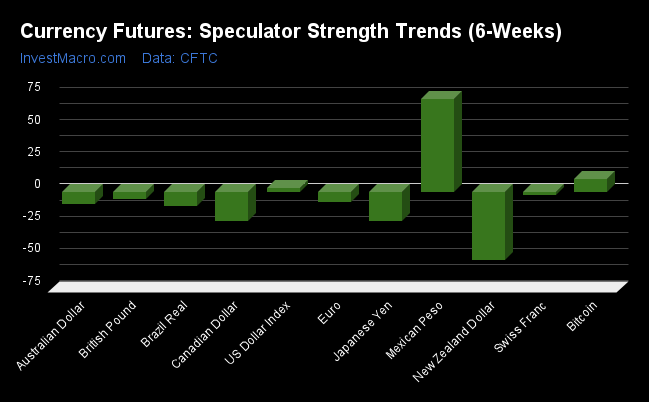
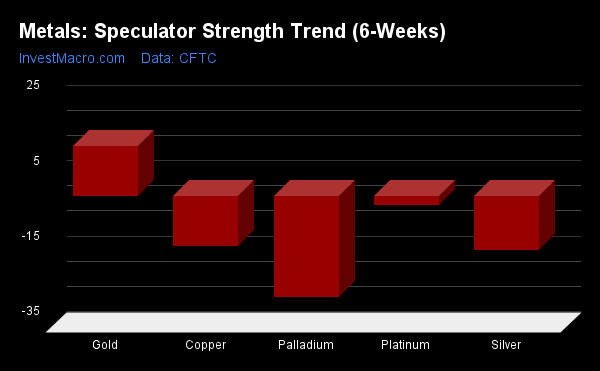
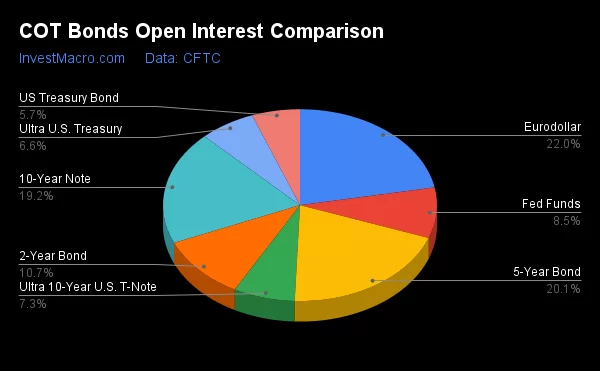
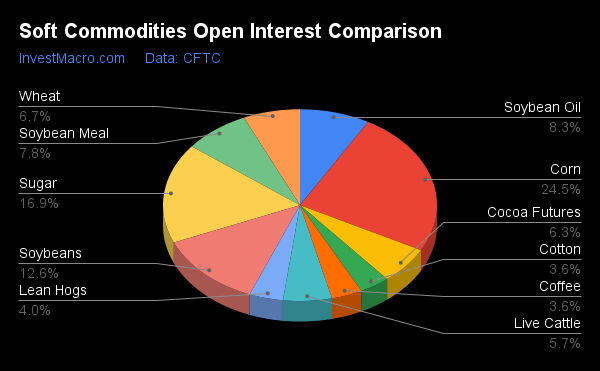
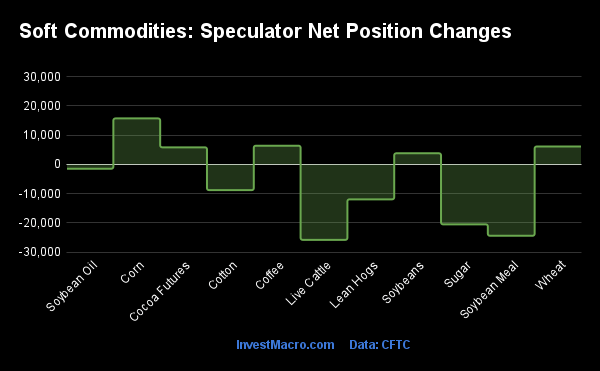
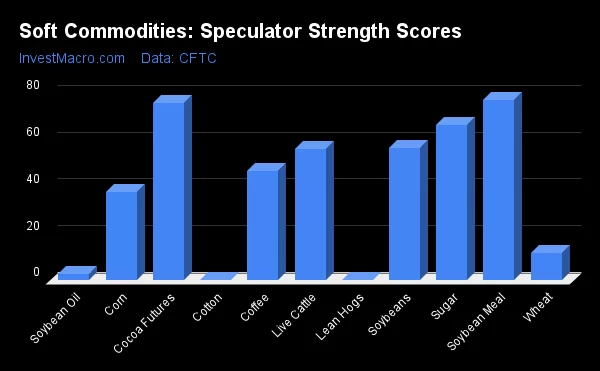
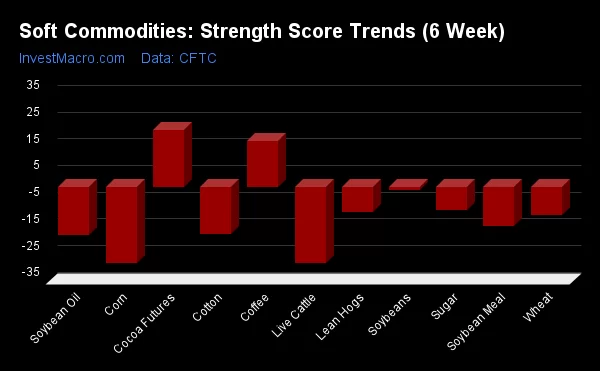
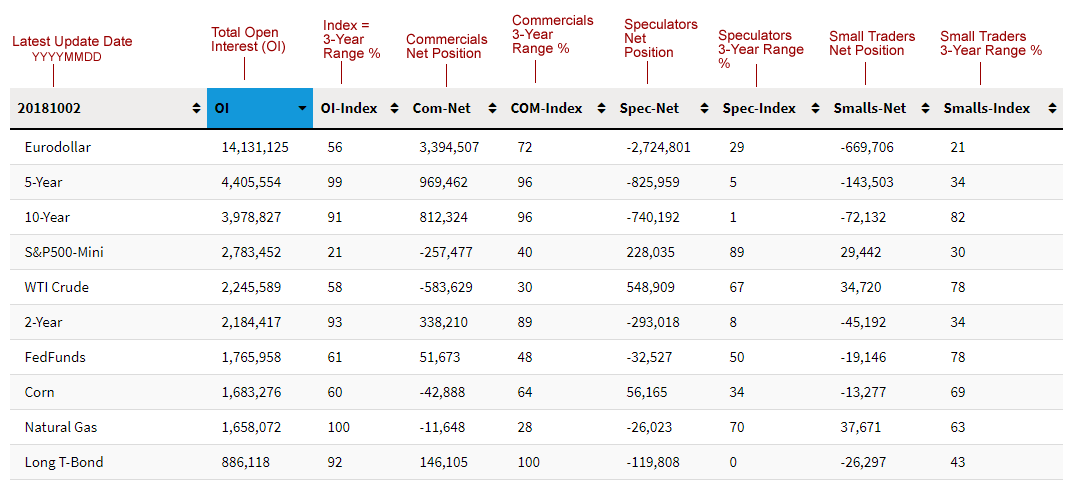
The Commitment of Traders (COT) data that is published by the Commodities Futures Trading Commission (CFTC) each week has been delayed once again for the third straight week. The delay is due to a recent cybersecurity event that happened in early February. The hack affected ION Cleared Derivatives (a subsidiary of ION Markets) and has created a problem for the large trader positions to be reported.
“Following the ION cyber-related incident, reporting firms are continuing to experience some issues submitting timely and accurate data to the CFTC. As a result, the weekly Commitments of Traders (CoT) report that normally would have been published on Friday, February 17, will be postponed.
“CFTC staff intends to resume publishing the CoT report as early as Friday, February 24, 2023. Staff will begin with the CoT report that was originally scheduled to be published on Friday, February 3, 2023. Thereafter, staff intends to sequentially issue the missed CoT reports in an expedited manner, subject to reporting firms submitting accurate and complete data.”
Through a year of war in Ukraine, the U.S. and most European nations have worked to help counter Russia, in supporting Ukraine both with armaments and in world energy markets. Russia was Europe’s main energy supplier when it invaded Ukraine, and President Vladimir Putin threatened to leave Europeans to freeze “like a wolf’s tail” – a reference to a famous Russian fairy tale – if they imposed sanctions on his country.
But thanks to a combination of preparation and luck, Europe has avoided blackouts and power cutoffs. Instead, less wealthy nations like Pakistan and India have contended with electricity outages on the back of unaffordably high global natural gas prices. As a global energy policy analyst, I see this as the latest evidence that less wealthy nations often suffer the most from globalized oil and gas crises.
I believe more volatility is possible. Russia has said that it will cut its crude oil production starting on March 1, 2023, by 500,000 barrels per day in response to Western energy sanctions. This amount is about 5% of its current crude oil production, or 0.5% of world oil supply. Many analysts expected the move, but it raises concerns about whether more reductions could come in the future.
Europe has avoided an energy crisis in the winter of 2022-2023, but the coming year could be more challenging.
How Europe has kept the lights on
As Russia’s intent toward Ukraine became clear in late 2021 and early 2022, many governments and energy experts feared one result would be an energy crisis in Europe. But one factor that Putin couldn’t control was the weather. Mild temperatures in Europe in recent months, along with proactive conservation policies, have reduced natural gas consumption in key European markets such as Germany, the Netherlands and Belgium by 25%.
With less need for electricity and natural gas, European governments were able to delay drawing on natural gas inventories that they built up over the summer and autumn of 2022. At this point, a continental energy crisis is much less likely than many forecasts predicted.
European natural gas stockpiles are around 67% full, and they will probably still be 50% full at the end of this winter. This will help the continent position itself for next winter as well.
The situation is similar for coal. European utilities stockpiled coal and reactivated 26 coal-fired power plants in 2022, anticipating a possible winter energy crisis. But so far, the continent’s coal use has risen only 7%, and the reactivated coal plants are averaging just 18% of their operating capacity
The U.S. role
Record-high U.S. energy exports in the summer and fall of 2022 also buoyed European energy security. The U.S. exported close to 10 million cubic meters per month of liquefied natural gas in 2022, up 137% from 2021, providing roughly half of all of Europe’s imported LNG.
Although domestic U.S. natural gas production surged to record levels, some producers had the opportunity to export into high-priced global markets. As a result, surpluses of summer natural gas didn’t emerge inside the U.S. market, as might otherwise have happened. Combined with unusually hot summer temperatures, which drove up energy demand for cooling, the export surge socked U.S. consumers with the highest natural gas prices they had experienced since 2008.
Prices also soared at U.S. gas pumps, reaching or exceeding US$5 per gallon in the early summer of 2022 – the highest average ever recorded by the American Automobile Association. The U.S. exported close to 1 million barrels per day of gasoline, mainly to Mexico and Central America, plus some to France, and consolidated its position as a net oil exporter – that is, it exports more oil than it imports.
Much like Europeans, U.S. consumers had to pay high prices to outbid other global consumers for oil and natural gas amid global supply disruptions and competition for available cargoes. High gasoline prices were a political headache for the Biden administration through the spring and summer of 2022.
However, these high prices belied the fact that U.S. domestic gasoline use has stopped growing. Forecasts suggest that it will decline further in 2023 and beyond as the fuel economy of U.S. cars continues to improve and the number of electric vehicles on the road expands.
While energy prices were a burden, especially to lower-income households, European and American consumers have been able to ride out price surges driven by the war in Ukraine and have so far avoided actual outages and the worst recessionary fears. And their governments are offering big economic incentives to switch to clean energy technologies intended to reduce their nations’ need for fossil fuels.
Developing nations priced out
The same can’t be said for consumers in developing nations like Pakistan, Bangladesh and India, who have experienced the energy cutoffs that were feared but didn’t occur in Europe. Notably, Europe’s intensive energy stockpiling in the summer of 2022 caused a huge jump in global prices for liquefied natural gas. In response, many utilities in less developed nations cut their natural gas purchases, creating price-related electricity outages in some regions.
The energy challenge that the Russia-Ukraine crisis has bred in developing countries has intensified global discussions about climate justice. One less examined impact of giant clean tech stimulus plans enacted in wealthy nations, such as the United States’ Inflation Reduction Act, is that they keep much of the available funding for climate finance at home. As a result, some developing country leaders worry that a clean energy technology knowledge gap will widen, not shrink, as the energy transition gains momentum.
Worsening the problem, members of the G-7 forum of wealthy nations have tightened their monetary policies to control war-driven inflation. This drives up the cost of debt and makes it harder for developing countries to borrow money to invest in clean energy.
The U.S. is supporting a new approach called Just Energy Transition Partnerships, in which wealthy nations provide funding to help developing countries shift away from coal-fired power plants, retain workers and recruit private-sector investors to help finance decarbonization projects. But these solutions are negotiated bilaterally between individual countries, and the pace is slow.
When nations gather in the United Arab Emirates in late 2023 for the next round of global climate talks, wealthy nations – including Middle East oil producers – will face demands for new ways of financing energy security improvements in less wealthy countries. The world’s rich nations pledged in 2009 to direct $100 billion yearly to less wealthy nations by 2020 to help them adapt to climate change and decarbonize their economies, but are far behind on fulfilling this promise.
U.N. Secretary-General Antonio Guterres has called on developed nations to tax fossil fuel companies, which reported record profits in 2022, and use the money to fund climate adaptation in low-income countries. New solutions are needed, because without some kind of major progress, wealthy nations will continue outbidding developing nations for the energy resources that the world’s most vulnerable people desperately need.
The New Zealand dollar (NZD) is the second worst-performing G10 currency against the US dollar so far this month, with NZDUSD having fallen by about 3.4% month-to-date.
But before we get into the reasons that could either worsen or offer relief to NZDUSD’s woes, let’s first look at the list of key economic data releases and events that could move FX markets next week:
Monday, February 20
CNH: China loan prime rates
EUR: Eurozone February consumer confidence
US markets closed
Tuesday, February 21
AUD: Reserve Bank of Australia policy meeting minutes
EUR: Eurozone February ZEW survey, PMIs
GBP: UK February PMIs
CAD: Canada January inflation, December retail sales
USD: US February PMIs
Wednesday, February 22
NZD: RBNZ rate decision, January external trade
EUR: Germany January CPI (final)
USD: FOMC minutes
Thursday, February 23
EUR: Eurozone January CPI (final)
USD: US weekly jobless claims, Q4 GDP (second), Atlanta Fed President Raphael Bostic speech
Friday, February 24
JPY: Japan January CPI; BOJ Governor-nominee Ueda to appear before Japan’s lower house
EUR: Germany Q4 GDP (final), March consumer confidence
USD: US January PCE deflator, personal income and spending, February consumer sentiment
1-year anniversary of Russia’s invasion of Ukraine
Now, here are 3 reasons why we’re watching NZDUSD:
#1: Reserve Bank of New Zealand (RBNZ) rate decision
New Zealand’s central bank is expected to hike by another 50 basis points next week to bring its Official Cash Rate up to 4.75%.
But the RBNZ may be faced with a dilemma:
On one hand, policymakers may be forced to keep hiking to offset any near-term inflationary pressures stemming from supply chains that have been disrupted by Cyclone Gabrielle (think of destroyed fruit and vegetable farms, which in turn drive up prices of harder-to-find food supplies).
On the other hand, the RBNZ may opt for the relatively smaller 25-bps hike instead because of the deadly cyclone’s negative impact on New Zealand’s economy. (Note that interest rate hikes are intended to “destroy” demand to subdue inflation. But if some of that demand has already been destroyed by Cyclone Gabrielle, more rate hikes risks sending New Zealand into a recession!)
Hence, amid this dilemma, NZDUSD could be rocked by:
the size the RBNZ’s incoming rate hike
and what the central bank says about its future plans for the official cash rate.
As a rule of thumb, the central bank that can continue sending its benchmark rates higher than its peers, should see its currency strengthen.
And as things stand, markets are now forecasting that the RBNZ’s official cash rate will peak around 5.2% in May this year.
If the RBNZ has to ease up on its rate hikes and stop short of that 5.2% forecasted peak, that may spell more near-term declines for NZDUSD, and vice versa.
But just as markets digest the results of Wednesday morning’s RBNZ meeting, attentions will quickly shift to the US Dollar side of the NZDUSD equation for the rest of the week.
And that brings us to our second reason …
#2: More clues about incoming Fed rate hikes
Arguably, the single biggest driver across FX markets has been the shifting expectations surrounding the Fed rate hikes.
The US dollar could extend its February recovery if any (or a combo) of the scenarios below materialize:
Minutes from the FOMC’s Jan 31-Feb 1 meeting suggest US policymakers are still wary about the inflation outlook, despite opting to hike by “only” 25 basis points (bps) earlier this month. (25bps is much smaller than the 75bps hikes triggered multiple times around mid-2022)
US weekly initial jobless claims remain around historically-low levels around 200k, which underscores the strength of the US jobs market.
Atlanta Fed President Raphael Bostic’s speech heralds even more Fed rate hikes (though Bostic is a non-voting member of the FOMC this year)
The US PCE Deflator, the Fed’s preferred way for measuring inflation, comes in higher than the 4.9% advance expected for January. That’s only slightly lower than December’s 5% year-on-year rise, suggesting that inflation still isn’t abating fast enough despite the Fed’s rate hikes totalling 450 bps already since Q1 2022.
Overall, if US hiring and inflation remain resilient while reinforcing the Fed’s hawkish chorus, that could strengthen the US dollar while heaping more downward pressure on NZDUSD.
And that brings us our final stated reason for this article …
#3: NZD is forecasted to be second-most volatile G10 currency next week
Noting the uncertainty surrounding the RBNZ and Fed’s respective rate-hiking plans, no surprise that NZDUSD is expected to rather volatile over the coming week.
(The G10 currency that’s expected to be most volatile – the Norwegian Krone – is highly sensitive to commodity prices and broader risk sentiment).
While it remains to be seen whether the implied volatility actually becomes reality, make no mistake: NZD traders are ready to pounce on fresh signals emanating out of the RBNZ or surrounding the Fed next week.
Key levels for NZDUSD in the week ahead:
SUPPORT
0.620 region: this psychologically-important area has supported NZDUSD on several occasions since May/June 2022, and most recently in January 2023. This is also around where this FX pair’s 200-day simple moving average currently lies
100-day simple moving average (SMA)
0.61462: 61.8% Fibonacci level from NZDUSD’s October 2022-February 2023 ascent.
RESISTANCE
0.62702: February 6th cycle low
0.63186: 78.6% Fibonacci level from NZDUSD’s October 2022-February 2023 ascent.
50-day SMA
At the time of writing, Bloomberg’s FX model forecasts a 71% chance that NZDUSD will trade within the 0.6085 – 0.6344 range, using current levels as a base, over the next one week.
Inflation is cooling gradually but remains stubbornly high in most major developed economies, including the UK and U.S., despite the efforts of central banks.
This week, official data shows that U.S. Consumer Price Inflation – CPI – is 6.4%, slightly higher than was expected, but down from a 40-year high of 9.1% in June 2022. On Wednesday, the UK inflation rate was revealed to have fallen for the third month in a row in January to hit 10.1%, below economists’ expectations, but still five times higher than the Bank of England’s target.
Markets are now betting on a longer period of higher interest rates as they begin to take heed of the message from central bank officials, including those from the U.S. Federal Reserve, Bank of England and European Central Bank, that there’s still a way to go to cool inflation in the face of robust labour markets and wage growth.
Continuing hot inflation, agree experts, can impact an individual’s investments, leaving investors asking: where do I invest in an ongoing high inflation environment?
“Stubborn inflation affects stock markets because central banks, including the Fed, BoE and ECB, will have to continue to step in and raise interest rates. This means people adjust and rein-in their spending, it cools the economy and companies can struggle to make profits,” says Nigel Green, CEO of deVere Group, one of the world’s largest independent financial advisory, asset management and fintech organisations.
He continues: “Stock markets are correlated to the profits of the companies within that particular index.
“In this environment of higher rates for longer than had previously been anticipated, some companies are going to find it difficult to maintain margin and, as we’re now seeing, are failing to report earnings as had been expected.
“In other words, if costs are going up firms can’t maintain margin, so that company is unlikely to be a good investment until things change.”
The deVere Group CEO identifies four key sectors that he expects to be “resilient in this current environment.”
He explains: “We’re looking at sectors that can maintain margin, despite inflation and interest rate hikes.
“These include healthcare, luxury goods, energy and agriculture.
“Healthcare is a robust sector as people will always need to stay healthy – this has come into focus more than ever since the pandemic. Also, despite wider market volatility, there’s strong earnings potential due to ageing populations and other demographic changes. Plus, healthcare is becoming increasingly tech-driven, which offers fresh opportunities.”
He goes on to say: “Luxury goods can maintain margin due to the inherent aspirational ‘elite and exclusive’ aspect of the sector.
“We’ll look at energy because there’s a shortage of energy in the world right now.
“Agriculture is another one as populations in emerging markets around the world are eating more meat. As they eat more meat, there needs to be more grain produced.”
In this, and all environments, there remains one clear way for investors to maximise returns relative to risk: the time-honoured practice of portfolio diversification. A considered mix of asset classes, sectors, regions and currencies offers you protection from shocks.
A good fund manager will help you sidestep potential risks and benefit from key opportunities.
“Inflation is going to be an issue for investors for a while yet,” concludes Nigel Green.
“However, these can also be times of opportunity if you stay fully and wisely invested.”
About:
deVere Group is one of the world’s largest independent advisors of specialist global financial solutions to international, local mass affluent, and high-net-worth clients. It has a network of more than 70 offices across the world, over 80,000 clients and $12bn under advisement
The 50 Americans who gave or pledged the most to charity in 2022 committed to giving US$14.1 billion to foundations, universities, hospitals and more – a total that was 60% below an inflation-adjusted $35.6 billion in 2021, according to the Chronicle of Philanthropy’s latest annual tally of these donations.
The Conversation U.S. asked David Campbell, Elizabeth Dale and Michael Moody, three scholars of philanthropy, to assess the significance of these gifts and to consider what this data indicates about the state of charitable giving in the United States.
What trends stand out overall?
Elizabeth Dale: After two years of giving that was close to record levels, the nation’s biggest donors seem to have resumed giving at pre-pandemic levels, with support largely directed to the causes they have historically favored: higher education, hospitals and medical research. They also put a lot of money into foundations, for the most part those bearing the names of these extremely wealthy donors or their relatives.
David Campbell: Despite giving from these very rich Americans being so much lower than in 2021 and 2020, the total for 2022 was still higher than more than half of the years since 2000. Nonetheless, nearly half of the total came from two donors, Microsoft co-founder Bill Gates and former New York City mayor and financial media entrepreneur Mike Bloomberg, both of whom have led this list three of the past four years. Some $8 billion – more than half of these gifts – went to foundations in 2022, with $5 billion injected into the Bill & Melinda Gates Foundation alone.
This means that the benefit of these donations will not be experienced immediately but rather over many years. U.S. foundations are required to spend only 5% of their assets annually, and most foundations try to preserve their holdings so that they may continue operating well into the future.
Michael Moody: The gifts from Bill Gates and Warren Buffett both point to how the Bill & Melinda Gates Foundation has been evolving in the past couple years, following the founders’ divorce in 2021.
Campbell: One thing that stands out to me is not only that some donors appear on this list year after year but also that they have a clear vision for their philanthropy and consistently use it to focus on a few core passions: John and Laura Arnold on a specific set of public policy concerns, including reproductive rights and civil rights; Gates on global health; and Bloomberg on higher education access, public health and gun safety.
Dale: I’d like to point out that only 19 of this year’s top 50 donors are on the Forbes list of the 400 wealthiest Americans. It’s worth paying attention to who isn’t giving on a big scale, especially in an era of such extreme wealth inequality and an effective 8.2% tax rate on the wealthiest Americans. It can be easier to pay a lot of attention to the perennial donors on this list like Bill Gates, Bloomberg, the Arnolds, Sergey Brin and a few others who have consistently been among the country’s top charitable donors for years.
Moody: I find it noteworthy that none of the top 50 donors in 2022 was under 40 and that only five of them were under 50. That the top donors skew older should not be too surprising given that Baby Boomers have nine times as much wealth as millennials. But some members of Generation X and millennials are starting to enter the echelon of the world’s wealthiest, so I’d expected to see more of them crack this list.
Dale: I’m struck by how little money in 2022 was clearly identified as being directed to the environment and climate change, especially given the climate-related disasters of Hurricane Ian in Florida, heat waves in Europe and flooding in Pakistan and India.
While several of these top donors did announce that they had made gifts totaling $186.8 million to environmental-related causes, only $27.6 million was directly given to an environmental organization and $50 million to address climate change. Other large gifts went to the Schmidt Ocean Institute and the ocean program at the University of California, Santa Barbara.
Campbell: I think it is important to note that giving by MacKenzie Scott is not included on this list because she did not respond to the Chronicle of Philanthropy’s survey. She has given at least $14 billion to some 1,600 nonprofits since 2019.
Scott’s approach to philanthropy stands out because of its unusual scale, as well as her focus on equity and marginalized groups and her no-strings-attached grants. Her gifts to organizations to use for their immediate needs provide a stark contrast to other top givers who place their donations in foundations, where much of the public benefit is deferred.
What do you expect to see in 2023 and beyond?
Campbell: I have more questions than answers.
How will the devastating earthquake in Turkey and Syria affect giving? Will the scale of the disaster, which had left 36,000 people dead by mid-February 2023, be a motivator, considering that many of the largest U.S. donors focus their giving on causes operating in the United States? Will declining inflation spur more giving by the wealthiest Americans next year and a return to the levels seen in recent years?
I imagine we will see Melinda French Gates on this list next year. Will her giving look more like Scott’s, making donations to organizations that address equity issues a priority? Or will it look more traditional and long-term, emphasize foundation giving and be shaped by the input of in-house experts?
Dale: While the composition of the data obscures much about the end recipients of this elite giving, I believe it’s clear that more philanthropy, in addition to large-scale public funding, is needed to address major diseases, climate change and social and racial inequality. I’d like to see more of these donors make efforts to work together and a speedier disbursement of grants from foundations.
The Bill & Melinda Gates Foundation has provided funding for The Conversation U.S. and provides funding for The Conversation internationally. Arnold Ventures provides funding for The Conversation U.S.
Companies have been buying back their own stock at record levels – something President Joe Biden doesn’t care for. In his state of the union address, Biden said “corporations ought to do the right thing” and invest more of their profits in producing more goods and less in stock buybacks. To encourage them to do so, he proposed quadrupling the new tax on buybacks to 4%.
But what are stock buybacks, and why do some people consider them to be a bad thing? We tapped D. Brian Blank, who studies company financial decision-making at Mississippi State University, to fill us in.
1. What are stock buybacks?
Before we can answer that question, first we need to understand the basics of how stock works.
Most stockholders, however, obtain stock by buying it on a secondary market, like the New York Stock Exchange. In this case, one person chooses to sell their ownership in the company, while another person buys it.
As partial owners, shareholders see the value of their stock rise when the company does well.
One way investors can benefit from holding the stock is that some corporations pay dividends, which are payments made directly to shareholders. Another way that stockholders can benefit is by selling the stock for more than they paid for it. Together, this creates a return on investment.
When companies have extra capital, they might go into the secondary market and buy back stock from investors. This is often referred to as a stock repurchase or buyback program. Companies that are older and less focused on rapid growth tend to do them more often.
Shareholders like buybacks because companies often pay a premium over market price. And when companies buy their own stock, this removes it from the market, which has the effect of lifting share prices as supply goes down, benefiting existing stockholders.
Critics like Biden contend that share buybacks represent short-term thinking that doesn’t actually create any real value. They argue instead that companies should use more of their profits to invest in more productive activities like business operations, innovation or employees.
But the decision whether to invest to increase domestic production is a complicated one. For example, the reason companies aren’t investing in new wells right now is not simply because they are buying back stock. The reason has more to do with how oil companies, and their shareholders, don’t think it is profitable to invest in more supply for a whole host of reasons, including the global push for greener energy by both policymakers and consumers, which is bound to reduce demand for fossil fuels in the future.
It’s also worth noting that while share repurchases are becoming increasingly common and controversial, they remain very similar to dividends, which don’t prompt the same concerns among politicians.
4. Would increasing the tax result in fewer buybacks?
The 1% tax on buybacks is actually brand new.
Congress passed the tax in 2022 as part of the Inflation Reduction Act. It took effect at the beginning of 2023 and only affects buyback programs of $1 million or more.
Usually when an activity is taxed, it happens less frequently. So, I expect the tax to nudge companies to spend less on buybacks and more elsewhere. While politicians intend more of the money to be used to invest in their productive capacity, companies may simply spend more on paying shareholders dividends.
Since the tax is new, it’s hard to evaluate its actual impact. Companies reportedly accelerated their repurchase programs in 2022 to avoid paying the tax.
But early data from 2023 suggest the 1% tax isn’t significantly deterring buybacks. Companies announced $132 billion in buybacks in January, three times as much as a year earlier and the most for the month on record.
Biden’s proposal to boost the tax to 4% may alter corporate behavior more. But again, it may just lead to greater dividend payments, not the other types of investments he and others hope for.
In addition, given that Republicans control the House, and Democrats have only a narrow majority in the Senate, this proposal has little chance of becoming law anytime soon.
The reasons why large corporations make the decisions they do about where to allocate capital – whether to build a factory, hire more workers or buy back stock – are complicated and, in my view, never taken lightly. These decisions have many facets and implications, and are not necessarily bad. I believe this is something worth remembering the next time you hear politicianssaying “corporations should do the right thing.”
But shiny ads are not all these companies do to protect their commercial interests in the face of a rapidly heating world. Most also provide financial support to industry groups that are spending hundreds of millions of dollars on political activities, often to thwart polices designed to slow climate change.
For example, The New York Times recently reported on the Propane Education and Research Council’s attempts to derail efforts to electrify homes and buildings in New York, in part by committing nearly US$900,000 to the New York Propane Gas Association, which flooded social media with misleading information about energy-efficient heat pumps.
The American Fuel and Petrochemical Manufacturers, which represents oil refiners and petrochemical firms, has spent millions on public relations campaigns, such as promoting a rollback of federal fuel efficiency standards.
These practices have been going on for decades, and evidence shows that industry groups have played key roles in blocking state and federal climate policies. This matters not just because of the enormous sums the groups are spending, but also because they often act as a command center for political campaigns to kill pro-climate policies.
We study the political activities of industry groups. In a recent research paper, we dug through U.S. tax filings to follow the money trail of trade associations engaged on climate change issues and track the billions they have spent to shape federal policy.
What we found
After NASA scientist James Hansen sounded the alarm on climate change in 1988, three trade associations – the National Association of Manufacturers, the Edison Electric Institute and the American Petroleum Institute – banded together with a couple of electrical utilities to form the Global Climate Coalition, or GCC.
The GCC systematically opposed any international regulation of climate-warming emissions, and successfully prevented the U.S. from ratifying the Kyoto Protocol, a 1997 international agreement to reduce greenhouse gas emissions.
This was the first example of trade associations working together to stall government action on climate change. Similar efforts continue today.
So, how much do trade associations spend on political activities, such as public relations? As not-for-profit organizations under the Internal Revenue Code, trade associations have to report their revenue and spending.
We found that trade associations historically opposed to climate policies spent $2 billion in the decade from 2008 to 2018 on political activities, such as advertising, lobbying and political contributions. Together, they outspent climate-supporting industry groups 27 to 1.
The oil and gas sector was the largest, spending $1.3 billion. Across the 89 trade associations we examined in nine different sectors of the U.S. economy between 2008 and 2018, no other group of trade associations came close.
No. 1 expense: Advertising and promotion
What came as more of a surprise as we were tallying up the data was how much trade associations are spending on advertising and promotion. This can include everything from mainstream media ads promoting the industry to hiring public relations firms to target particular issues before Congress.
For example, until they parted ways last year, Edelman, the world’s largest public relations firm, received close to $30 million from American Fuel and Petrochemical Manufacturers to promote fossil fuels, reporters at the online news site Heated found.
Our study found that trade associations engaged on climate change issues spent a total of $2.2 billion on advertising and promotion between 2008 and 2018, compared with $729 million on lobbying. As 2022 lobbying data shows, their spending continues. While not all of this spending is directly targeting climate policy, climate change is one of the top political issues for many industries in the energy sector.
Media buys are expensive, but these numbers also reflect the specific role trade associations play in protecting the reputation of the firms they represent.
Trade groups run promotional ads for their industries, as well as negative ads.
One reason that groups like the American Petroleum Institute have historically taken the lead running negative public relations campaigns is so that their members, such as BP and Shell, are not tarred with the same brush, as our interviews with industry insiders confirmed.
However, many firms are now coming under pressure to leave trade associations that oppose climate policies. In one example, the oil giant Total quit API in 2021, citing disagreements over climate positions.
Spending on social media in the weeks ahead of the U.S. midterm elections and during the U.N. Climate Conference in November 2022 offers another window into these groups’ operations.
A review by the advocacy group Climate Action Against Disinformation found that 87 fossil-fuel-linked groups spent roughly $3 million to $4 million on more than 3,700 ads through Facebook’s parent company alone in the 12 weeks before and during the conference.
Facebook received millions of dollars to run ads promoting natural gas.
The largest share came from a public relations group representing the American Petroleum Institute and focused heavily on advocating for natural gas and oil and discussing energy security. America’s Plastic Makers spent about $1.1 million on climate-related advertising during the two weeks of the U.N. conference.
Funneling money to think tanks and local groups
Trade associations also spent $394 million on grants to other organizations during the decade we reviewed. For example, they gave money to think tanks, universities, charitable foundations and political organizations like associations of mayors and governors.
While some of these grants may be philanthropic in nature, among the trade associations we spoke to, most have a political purpose in mind. Grants channeled to local community groups, as one example, can help boost an industry’s reputation among key constituent groups, and as a result their social license to operate.
What this means for climate policy
Fossil fuel companies, which reported record profits in 2022, still spend more on political activities than their trade associations do.
But industry groups historically opposed to climate policies are also big spenders, as our research shows. They outspent those that support actions to slow climate change, such as the solar and wind industries, by a whopping $2 billion to $74.5 million over the 10 years we reviewed.
This likely helps to explain why it took Congress almost 35 years after Hansen first warned representatives about the dangers of climate change to pass a major climate bill, the 2022 Inflation Reduction Act.
Since late November 2022, prices have been trapped within a very wide range with support at 1.1850 and resistance at 1.2450.
There has been a combination of fundamental and technical forces empowering both bulls and bears. However, until there is a noticeable shift in power or major technical breakout, prices are likely to remain rangebound in the short term. It is worth keeping in mind that the Pound has weakened against every single G10 currency since the start of February thanks to a dovish Bank of England.
Interestingly, the dollar straightened up – boosted by January’s robust jobs figures which revived market expectations around the Fed raising interest rates over a longer period.
The combination of dollar strength and pound weakness has resulted in the GBPUSD shedding roughly 2% month-to-date. Nevertheless, it is clear that a fresh directional catalyst may be required to shift the balance of power in favour of bulls or bears.
Will GBPUSD get some love this week?
Keep an eye on a couple of key risk events that could inject the GBPUSD with fresh volatility this week.
The UK inflation release will be under the spotlight on Wednesday 15th February. Markets are forecasting CPI to cool 10.3% in January 2023 versus 10.5% in December 2022. Given how inflation is expected to have already peaked in the United Kingdom, a report that meets or prints below expectations may boost sentiment and fuel speculation around the BoE pausing on rate hikes down the road. Ultimately, is seen dragging the GBPUSD lower. Alternatively, a hotter-than-expected CPI report may force the central bank to re-adopt a hawkish stance – boosting Sterling in the process.
It’s all about the retail sales report on Friday which is expected to dip in January compared to December. A disappointing figure is likely to strengthen the argument around the BoE pausing hikes down the road.
Outside of the UK, investors will be paying very close attention to the US inflation report on Tuesday. Inflation is expected to have cooled further to 6.2% in January compared to the 6.5% witnessed in December. A report that meets or prints below market projections is likely to not only pour cold water on the renewed Fed hike bets but also weaken the dollar. A weaker dollar could trigger a bounce on the GBPUSD.
Breakout on the horizon?
On the daily timeframe, the GBPUSD remains wedged between the 50-day and 200-day SMA. Prices are choppy and almost directionless with minor support found around 1.1950. As identified earlier, the currency pair remains within a very wide range with a fresh fundamental spark needed to trigger a major breakout/down. In the meantime, sustained weakness below 1.2177 could open the doors towards 1.1960 and 1.1850, respectively. According to Bloomberg’s probability calculator, there is a 29% chance from current levels that the GBPUSD ends Q1 below 1.1850. Should prices experience a rebound from the 1.1950/1.1850 regions, the next key level of interest can be found back at 1.2450. Interestingly, there is a 40% chance from current levels that the GBPUSD touches 1.2450 by the end of Q1.
The Commitment of Traders (COT) data that is published by the Commodities Futures Trading Commission (CFTC) each week has been delayed for a second straight week.
This is due to a cybersecurity event that affected ION Cleared Derivatives (a subsidiary of ION Markets).
Here’s the latest CFTC comments:
“Although the impact of the cyber-related incident at ION has been mitigated, firms that are responsible for reporting are continuing to experience some issues with respect to the submission of timely and accurate data to the CFTC. As a result, the weekly Commitments of Traders report, that is produced by CFTC staff, will continue to be delayed until all trades can be reported. A report will be published upon receipt and validation of data from those firms.
“Further, CFTC staff recognizes there remain impacts to some reporting firms due to the incident at ION. Each affected reporting firm should continue their best efforts to expedite compliance obligations in preparing the daily large trader reports required under Part 17 of the Commission’s regulations, working with CFTC staff, to ensure timely compliance. A reporting firm should also file revised reports once the reporting firm’s systems are operational. CFTC staff will consider any necessary further action as appropriate.”
Australia’s cash rate has hit 3.35%, after the Reserve Bank raised interest rates for the ninth time in a row – and signalled more interest rate pain ahead. The 0.25 percentage point rise adds A$90 a month to a $600,000 variable mortgage.
Ahead of Tuesday’s statement from the Reserve Bank board, there was talk of just one more 0.25 point rate hike this year.
That was the view of traders in the money market, who had priced loans on the basis that the bank’s cash rate would climb just 0.35 points further after being lifted to 3.35% on Tuesday, before plateauing and then falling.
No longer. The statement released after Tuesday’s board meeting included this carefully-considered plural:
The Board expects that further increases in interest rates will be needed over the months ahead to ensure that inflation returns to target and that this period of high inflation is only temporary.
The reference was to “increases”, not an “increase”, and to those increases in the months ahead, implying (at least) two more increases within months.
Within minutes, traders adjusted their prices to a peak in the cash rate of 3.9%, rather than 3.7% – which coincidentally was around the average forecast of participants in The Conversation’s economic survey at the start of the week.
The bank is lifting rates even though it thinks inflation is heading down.
In a preview of its full set of forecasts to be released on Friday, it said it expected inflation to slide from its present 7.8% to 4.74% by the end of this year, and to around 3% by mid-2025, which is also in line with the forecasts of the Conversation’s panel.
The steam is coming out of inflation partly because of interest rate hikes here and overseas, and partly because the global effects of Russia’s invasion of Ukraine are fading.
US Federal Reserve Chair Jerome Powell. EPA
Last Wednesday, the head of the US Federal Reserve Jerome Powell (the equivalent of Australia’s Reserve Bank Governor Philip Lowe) began talking about “disinflation”.
“We can now say, I think for the first time, that the disinflationary process has started,” he told a press conference, and to underline the point he used the word “disinflation” ten more times in 44 minutes.
US inflation has been falling since the middle of last year, from a peak of 9.1% in June to 6.5% in December.
Powell says inflation is falling mainly because the global shortages of goods and commodities caused by Russia’s invasion of Ukraine have been “fixed”.
But inflation is also falling because of the work Powell has done. In the US, the Federal Funds rate (similar to our Reserve Bank cash rate) has climbed from something near zero to 4.5% in the space of a year, denting consumer spending.
Disinflation abroad, weak wage pressure at home
In Australia, figures released by the Bureau of Statistics on Monday show spending fell in the three months to December – not in absolute dollar terms, because December is always a big month, but compared to what would have been expected given the end of the year.
Continuing to hold up inflation in the US and in the UK – but not in Australia – has been very high wages growth. Higher prices have become baked into higher wages, which have been fed into higher prices, which have in turn fed back into higher wages.
Not here. Whereas in the US and the UK wage growth has topped 6%, here it is officially 3.1% – way below what would be needed to hold up inflation.
In part, we’ve a former Labor government to thank for the absence of a wage-price spiral.
Prime Minister Paul Keating steered Australia toward enterprise bargaining at the start of the 1990s, locking many of us into wage agreements that are only struck once every three or so years, and are unable to respond quickly to prices.
So why is the Reserve Bank determined to whack inflation further, rather than watch it slowly die?
Perhaps to send a message that it is really, really serious, and that it is not a good idea to get relaxed about spending, thinking the worst will soon be over.
Bleak times ahead
Between the lines though, the bank is hinting it’s likely to soon ease off.
Its statement says rate increases affect the economy “with a lag” and that Australians on fixed-rate mortgages have yet to feel the full effect of the cumulative increases since May.
The bank’s assessment of the economy after the increases are over is bleak.
It says it expects GDP growth to slow to only 1.5% during 2023 and 2024, which is an even more dismal forecast than the International Monetary Fund’s, which has economic growth of just 1.6% this year, climbing to a historically-low 2.2% by 2026. The Conversation’s forecasters expect 1.7%, climbing to 2.5%.
The RBA’s forecast would mean income per person barely increases for years to come (although the unemployment rate would stay below 5%), a condition that before COVID was known as secular stagnation.
This would mean the economic resources Australian governments needs to provide the services we’re likely to need (such as to get to net zero emissions, and to deal with climate change) are going to be harder to come by.
It’s what Treasurer Jim Chalmers intends to spend much of 2023 readying us for.
Later this month Chalmers will release a revamped tax expenditures statement, setting out the scope to wind back tax breaks, including those for profits made selling high-end family homes. That’s something Chalmers says he isn’t considering, but which the IMF has recommended.
And then later in the year, he will release the first intergenerational report to properly spell out the financial costs of climate change – right through to 2063.