By Nehal El-Hadi, The Conversation and Daniel Merino, The Conversation
Our dependence on fossil fuels is one of the biggest challenges to overcome in the fight against climate change. But production and consumption of fossil fuels is on the rise, and expected to peak within the next decade.
In this episode of The Conversation Weekly, we speak to two researchers who examine the political challenges of transitioning to a world after oil, and what it means for those states who rely on oil for resources.
Oil is not only used as a fuel, but is integral to everyday life through its applications in plastics, manufacturing processes, fabrics, paints and chemicals. In order to consider alternatives to oil, we need to be aware of the scale of its integration into our lives.
Free Reports:
 Get our Weekly Commitment of Traders Reports - See where the biggest traders (Hedge Funds and Commercial Hedgers) are positioned in the futures markets on a weekly basis.
 Sign Up for Our Stock Market Newsletter – Get updated on News, Charts & Rankings of Public Companies when you join our Stocks Newsletter
Caleb Wellum is an assistant professor of U.S. history at the University of Toronto Mississauga, Canada.
“I almost hesitate to say this, because this kind of depiction of deep dependence on oil has actually been a strategy of oil companies themselves to say, look, you can’t have a modern world, a modern way of life without oil,” Wellum points out. “So this is not to say it’s inescapable, but it’s to say that the challenges are significant to transitioning to some kind of after-oil.”
Defining that transition can be tricky, because it carries different stakes depending on how it is interpreted: does it mean continuing to extract oil “until the last drop,” or finding alternatives right now?
Wellum notes that the 1970s oil crisis was a significant moment in human history that helped shape our current consumption patterns. There was a debate between environmentalists and economists that signalled a moment at the crossroads for our current relationship with oil.
“I noticed there was a need to transition away from oil. And there was also a free market argument that argued the energy crisis was a sign of bad government policy of governments intervening in markets and making it inefficient,” he said. “Eventually, this market argument won out and there was no energy transition.”
There was a growing awareness of the environmental impact of the extraction and consumption of fossil fuels, and the urgent need to combat climate change to reduce global warming. And recently, governments around the world — including in countries dependent on oil revenues — are committing to finding energy alternatives.
Natalie Koch is a professor of human geography at the Geography Institute at the University of Heidelberg, Germany. Her research looks at how petrostates have presented spectacular alternative energy projects to distract from the need to move away from oil.
“There’s a focus on spectacular sustainability projects, and by that you see the scale and the size is just enormous. And that’s what spectacle does — it’s supposed to attract a lot of attention because the size range of the project is really quite impressive,” Koch said.
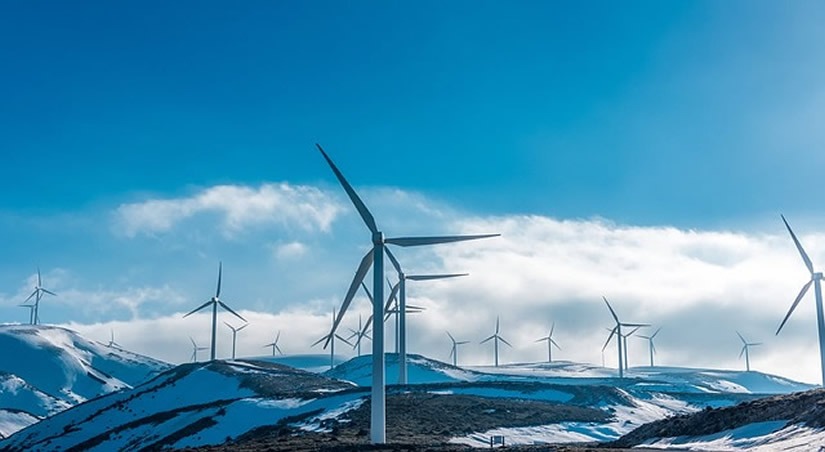
But these ambitious alternative energy projects aren’t all as they seem, she cautions. Koch describes how a solar farm in the desert in Morocco — one of the largest such projects in the world — is facing challenges because of the amount of water required.
To transition to a world post-oil, whatever that may look like, requires more than successful and sustainable alternative technologies.
“There are a lot of factors that go into why it is that we’re dependent on oil, but they’re not just about the convenience of the source of energy,” Wellum points out. “It’s about political decisions.”
Listen to the full episode of The Conversation Weekly to find out more.
This episode of The Conversation Weekly was produced and written by Mend Mariwany, who is also the show’s executive producer. Sound design is by Eloise Stevens, and our theme music is by Neeta Sarl.
You can find us on Twitter @TC_Audio, on Instagram at @theconversationdotcom or via email. You can also sign up to The Conversation’s free emails here. A transcript of this episode will be available soon.
Listen to The Conversation Weekly via any of the apps listed above, download it directly via our RSS feed, or find out how else to listen here.
About the Author:
Nehal El-Hadi, Science + Technology Editor & Co-Host of The Conversation Weekly Podcast, The Conversation and Daniel Merino, Associate Science Editor & Co-Host of The Conversation Weekly Podcast, The Conversation
This article is republished from The Conversation under a Creative Commons license. Read the original article.

- Geopolitical and macroeconomic conditions continue to pressure market sentiment Jul 20, 2026
- USD/JPY Poised to Continue Gains as Expensive Oil and Lack of Support Weigh on Yen Jul 20, 2026
- COT Metals Charts: Weekly Speculator Bets led by Copper & Steel Jul 18, 2026
- COT Bonds Charts: Weekly Speculator Bets led by 2-Year, SOFR 3M & 5-Year Bonds Jul 18, 2026
- COT Energy Charts: Weekly Speculator Bets led by Brent Oil & Heating Oil Jul 18, 2026
- COT Soft Commodities Charts: Weekly Speculator Bets led by Wheat, Corn & Soybean Meal Jul 18, 2026
- The Bank of Canada kept its interest rate unchanged. Platinum prices reached a three‑week high Jul 16, 2026
- Stock indices rose after the release of US inflation data. China’s GDP slowed sharply Jul 15, 2026
- GBP/USD Awaits Political News: What Will Happen Next Jul 15, 2026
- USD/JPY Holds at Highs: Pressure Lingers on Yen Jul 14, 2026
