Archive for Financial News – Page 90

Gold Prices Rise Amid Weakening US Dollar and Geopolitical Tensions

By RoboForex Analytical Department 

Gold prices have risen for four consecutive days, reaching 2,660 USD per troy ounce by Friday. The upward movement in Gold prices is primarily driven by the weakening of the US dollar and heightened geopolitical tensions. The current state of the currency market, characterised by low liquidity due to the extended US holiday weekend starting with Thanksgiving, also contributes to Gold’s price behaviour.

Despite this recent appreciation, Gold faces potential headwinds and could experience a 2% decline by the week’s end as investors await further data from the US. The upcoming statistics are anticipated to provide additional insights into the Federal Reserve’s monetary direction on monetary policy. While the Core PCE data suggests a rate cut in December is plausible, other economic indicators point to the continued robustness of the US economy. This may lead the Fed to maintain its cautious approach to interest rates in 2025.

The relationship between the US dollar and Gold is crucial, as they typically move inversely. Gold, which does not generate its yield, tends to perform well when the dollar and US Treasury bond yields are lower.

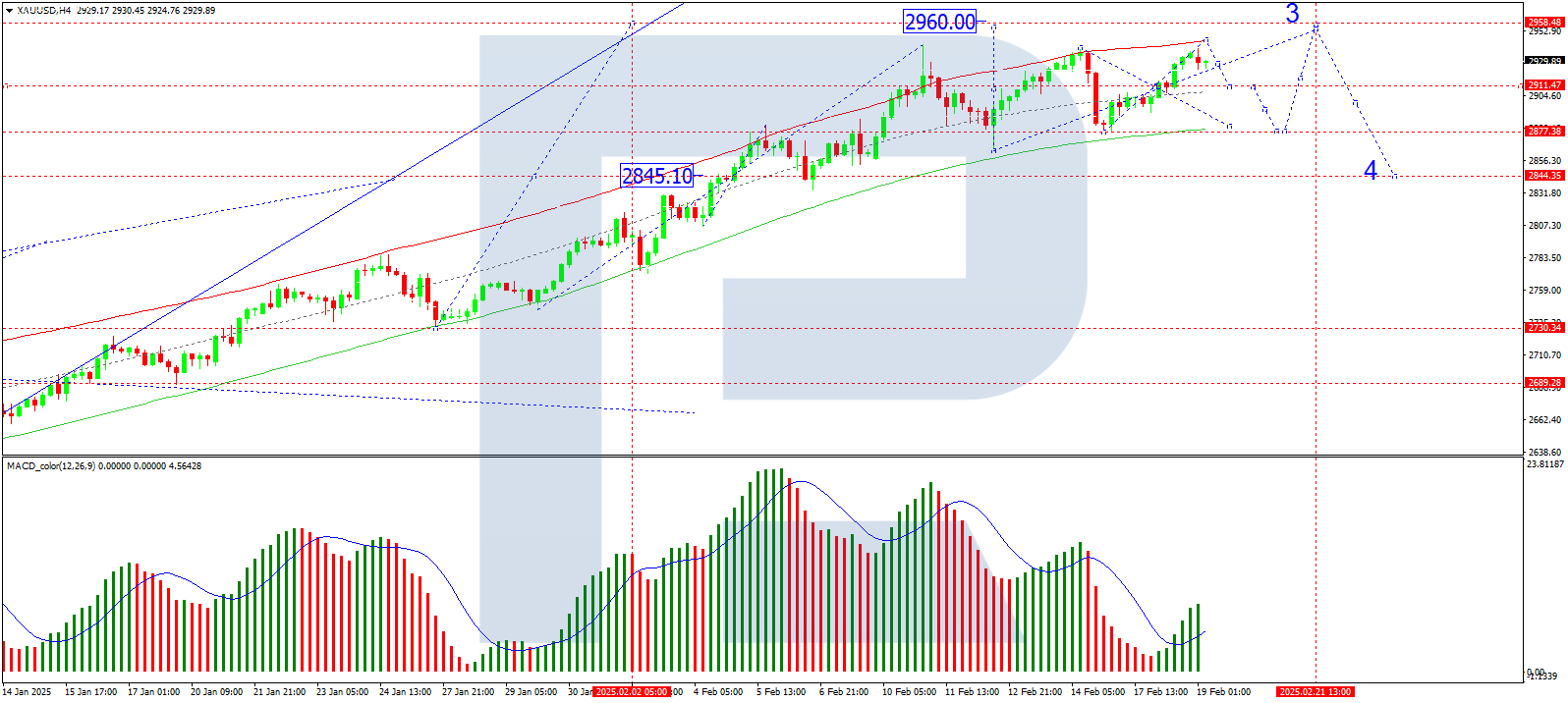
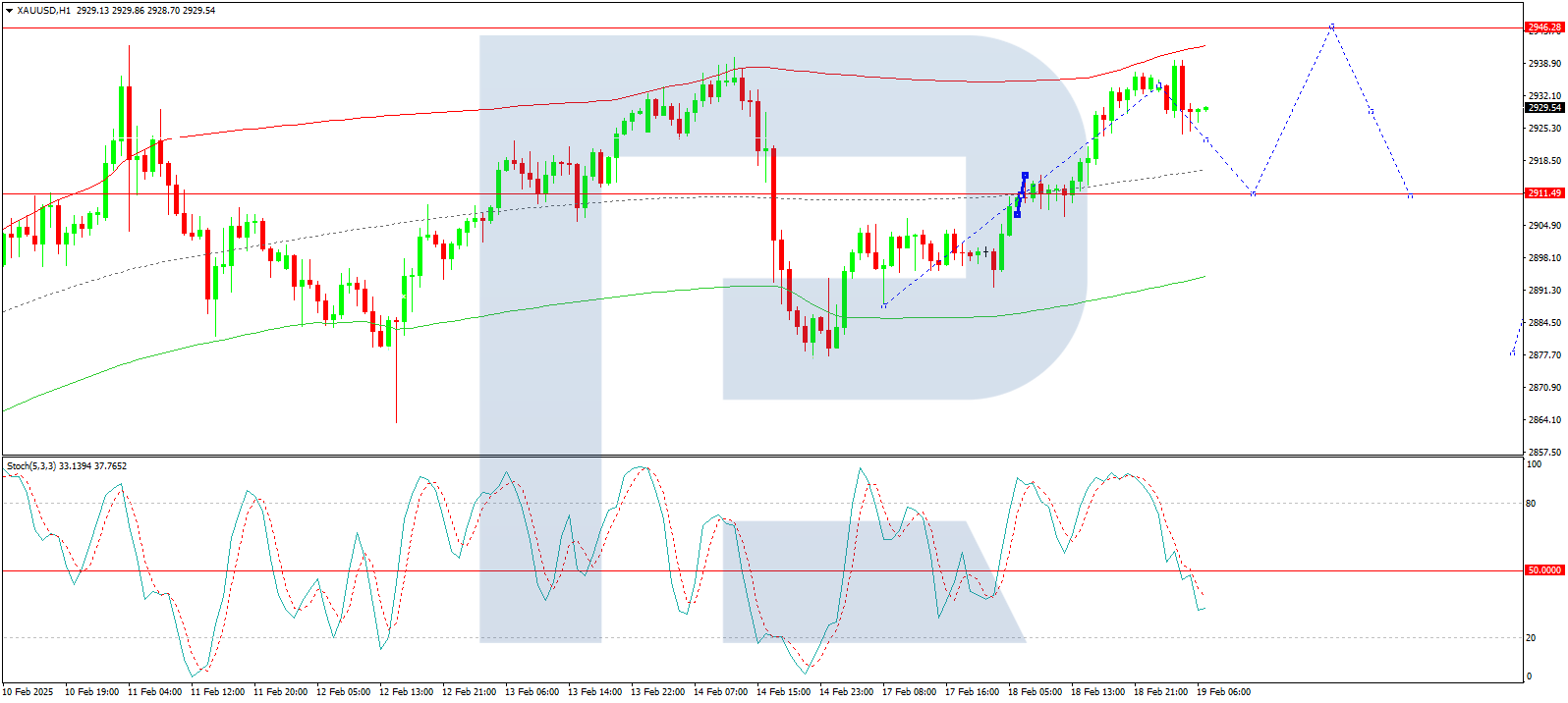
Technical analysis of XAU/USD

On the H4 chart, XAU/USD has completed a corrective wave at 2,605.55 and is now poised for further growth towards 2,715.00. When this level is reached, a consolidation phase around 2,715.00 may occur, potentially leading to a continued upward trajectory towards 2,818.55. The MACD indicator supports this bullish XAU/USD outlook, with its signal line below zero but rising sharply.

The H1 chart shows that Gold has completed an initial growth structure to 2,658.88 and a subsequent correction to 2,622.00. Currently, a new growth phase targeting 2,698.00 is underway. Upon reaching this target, a pullback to 2,658.88 may occur before the market attempts to achieve a higher level of 2,715.00. This outlook is corroborated by the Stochastic oscillator, whose signal line is above 50 and climbing towards 80, indicating the potential for further upward movement.


Disclaimer

Any forecasts contained herein are based on the author’s particular opinion. This analysis may not be treated as trading advice. RoboForex bears no responsibility for trading results based on trading recommendations and reviews contained herein.

As expected, the RBNZ cut the rate by 0.5%. Australia’s inflation rate remained at its lowest level since the summer of 2021

By JustMarkets

At the end of Tuesday, the Dow Jones Index (US30) added 0.28%. The S&P 500 Index (US500) was up 0.57%. The Nasdaq Technology Index (US100) increased by 0.57%.

Federal Reserve officials expressed optimism that inflation is falling and the labor market remains robust, supporting the possibility of further interest rate cuts, albeit at a moderate pace, minutes from the November 6–7 meeting showed. Officials noted that monetary policy decisions depend on economic trends and cautioned against premature rate cuts. The volatility of recent data and uncertainty about the impact of a neutral interest rate on economic activity make the policymaking process particularly challenging. Markets rate the odds of a 25 bps rate cut at the December 17–18 FOMC meeting at 67%.

Intel (INTC) shares are down more than 3% after Bloomberg reported that Qualcomm’s interest in acquiring Intel has waned. General Motors (GM) stock is down more than 8%, and Ford Motor (F) is down more than 2% after President-elect Trump promised to impose additional 10% tariffs on goods from China and 25% tariffs on all products from Mexico and Canada. Both automakers import cars from China into the US and have plants in Canada and Mexico.

The Mexican peso fell more than 2% to above 20.7 per US dollar on Tuesday, the weakest since March 2022, after Donald Trump doubled down on his threats to raise tariffs. In his Truth social media posts, Trump said he would impose 25% tariffs on imports from Mexico and Canada. Mexico is the US’s largest trading partner, and the auto sector would be one of the hardest hit. In response, Mexican President Claudia Sheinbaum suggested that Mexico could respond by imposing its own tariffs. The peso has weakened about 20% this year.

Equity markets in Europe were declining yesterday. Germany’s DAX (DE40) fell by 0.56%, France’s CAC 40 (FR40) closed down 0.87%, Spain’s IBEX 35 (ES35) lost 0.80%, and the UK’s FTSE 100 (UK100) closed down 0.40%.

WTI crude oil prices held below $69 per barrel on Wednesday as traders weighed signs of another OPEC+ production delay and easing geopolitical risks following a ceasefire between Israel and Hezbollah. Markets are anticipating the December 1 OPEC+ meeting. It is reported that the group will postpone its planned January production increase by several months due to signs of oversupply. Meanwhile, tensions in the Middle East eased after Israel and Hezbollah reached a 60-day ceasefire agreement in US-brokered talks. However, shortly after President Biden’s announcement, both sides resumed attacks, underscoring the difficulty in reaching a long-term agreement.

The US natural gas (XNG) prices rose to $3.48/MMBtu, the highest level in more than a year, as estimates of colder weather and lower production prompted utilities to accelerate the start of the season for drawing gas from storage. EIA data showed that gas inventories in storage fell by 3 billion cubic feet in the week ending November 15 instead of the expected 5 billion cubic feet. It was the first accelerated decline this season, as relatively low prices in the previous week prompted producers to cut production.

Asian markets traded flat on Tuesday. Japan’s Nikkei 225 (JP225) fell 0.87%, China’s FTSE China A50 (CHA50) gained 0.28%, Hong Kong’s Hang Seng (HK50) rose 0.04%, and Australia’s ASX 200 (AU200) was negative 0.69%.

The Reserve Bank of New Zealand cut the discount rate by 50bps to 4.25%, which is in line with market expectations. The RBNZ said the rate cut strikes a balance between supporting growth and employment while keeping inflation under control and ensuring market stability. This is the third rate cut by the Central Bank this year, bringing the total easing to 125bps this cycle. In addition, Governor Adrian Orr has suggested that another significant interest rate cut will occur early next year if economic conditions develop as expected. In the external market, the kiwi remains under pressure from recent tariff threats by US President-elect Donald Trump, particularly those targeting China, New Zealand’s largest trading partner.

In Australia, the annual CPI reading came in at 2.1%, which is in line with the growth seen in September but below analysts’ estimate of 2.3%. This is the lowest inflation rate since July 2021. The Reserve Bank of Australia (RBA) believes that monetary policy should remain restrictive until there is confidence that inflation is moving steadily towards target.

S&P 500 (US500) 6,021.63 +34.26 (+0.57%)

Dow Jones (US30) 44,860.31 +123.74 (+0.28%)

DAX (DE40) 19,295.98 −109.22 (−0.56%)

FTSE 100 (UK100) 8,258.61 −33.07 (−0.40%)

USD Index 106.87 +0.06 (+0.06%)

News feed for: 2024.11.27

  • Australia Consumer Price Index (m/m) at 02:30 (GMT+2);
  • New Zealand RBNZ Interest Rate Decision at 03:00 (GMT+2);
  • New Zealand RBNZ Monetary Policy Statement at 03:00 (GMT+2);
  • RBNZ Press Conference at 04:00 (GMT+2);
  • German GfK German Consumer Climate (m/m) at 11:30 (GMT+2);
  • US PCE Price Index (m/m) at 15:30 (GMT+2);
  • US GDP (q/q) at 15:30 (GMT+2);
  • US Durable Goods Orders (m/m) at 15:30 (GMT+2);
  • US Initial Jobless Claims (w/w) at 15:30 (GMT+2);
  • US Chicago PMI (m/m) at 16:45 (GMT+2);
  • US Pending Home Sales (m/m) at 17:00 (GMT+2);
  • US Crude Oil Reserves (w/w) at 17:30 (GMT+2);
  • US Natural Gas Storage (w/w) at 19:00 (GMT+2).

By JustMarkets


This article reflects a personal opinion and should not be interpreted as an investment advice, and/or offer, and/or a persistent request for carrying out financial transactions, and/or a guarantee, and/or a forecast of future events.

EUR/USD Steady Ahead of Major US Data Releases

By RoboForex Analytical Department

EUR/USD remains stable at around 1.0483 as markets digest the implications of the latest FOMC minutes. The Federal Reserve signalled a potential pause in rate cuts if inflation reaccelerates but also indicated readiness to continue easing if economic indicators weaken.

Today promises heightened activity for EUR/USD due to a slew of US economic data releases. It is a significant day as the US will release its initial Q3 GDP estimate. After recording a 2.8% growth in Q2, market participants are keen to see if this momentum carried into the third quarter. Expectations suggest a robust period, potentially boosting the US dollar if the data exceeds forecasts.

Additionally, the US will unveil October’s figures for personal income and expenses, durable goods orders, and the core PCE price index. These data points could significantly influence the dollar’s trajectory, adding to today’s trading volatility.

Technical analysis of EUR/USD

H4 chart: The EUR/USD appears to be challenging the upper boundary of its recent downward trend. Current technical analysis suggest a potential upward move towards 1.0580. After reaching this level, a corrective pullback to 1.0460 may occur before another upward wave targets 1.0700. This bullish EUR/USD forecast is supported by the MACD, which shows a positive divergence as it approaches the zero line from below.

H1 chart: The shorter-term H1 chart indicates that EUR/USD is on an upward trajectory towards 1.0580, with the currency consolidating above 1.0460. A breakout above this consolidation could validate the move towards 1.0580. Subsequently, a retracement to 1.0460 may set the stage for further advances. The Stochastic oscillator signals potential upward momentum, suggesting an increase in buying pressure.


Disclaimer

Any forecasts contained herein are based on the author’s particular opinion. This analysis may not be treated as trading advice. RoboForex bears no responsibility for trading results based on trading recommendations and reviews contained herein.

NZD/USD Hits Yearly Low Amid US Dollar Strength

By RoboForex Analytical Department

The NZD/USD pair has experienced a significant decline, touching a low of 0.5841 and reaching a yearly trough of 0.5796. The primary pressure comes from a robust US dollar, bolstered by anticipations of a more stringent tariff regime under US President-elect Donald Trump. Speculations about Trump imposing an additional 10% tariff on all Chinese goods have particularly impacted the Kiwi, given China’s role as New Zealand’s largest trading partner.

The market pre-emptively reacts to potential US policy shifts, recalling Trump’s previous term characterised by aggressive trade policies. This has cast a long shadow over the NZD, influencing investor sentiment.

The upcoming Reserve Bank of New Zealand (RBNZ) meeting on Wednesday is crucial, with expectations leaning towards a 50-basis-point rate cut to 4.25% per annum. This expected move aligns with the RBNZ’s dovish stance from October and could sustain the downward pressure on the NZD.

Technical analysis of NZD/USD

H4 chart: the NZD/USD has completed a decline wave, reaching 0.5797, with a subsequent recovery phase targeting 0.5922 underway. After reaching this level, a potential pullback to 0.5860 could establish a consolidation zone around this marker. A break below this range might extend the decline to 0.5777, while an upward breach could pave the way to 0.5977.

H1 chart: the pair is forming an initial growth wave towards 0.5860. Following this target, a retraction to 0.5828 is likely. The Stochastic oscillator supports this currency forecast, indicating a possible downturn from elevated levels and enhancing the likelihood of continuing the downward trajectory.


Disclaimer

Any forecasts contained herein are based on the author’s particular opinion. This analysis may not be treated as trading advice. RoboForex bears no responsibility for trading results based on trading recommendations and reviews contained herein.

Trump plans to raise tariffs by 10% on goods from China and 25% on goods from Mexico and Canada

By JustMarkets

At Monday’s close, the Dow Jones Index (US30) increased by 0.99%. The S&P 500 Index (US500) was up 0.30%. The Nasdaq Technology Index (US100) was up 0.14%. The Dow Jones Industrials set a new all-time high, and the Nasdaq 100 set a weekly high. Stocks rose on Monday amid optimism that President-elect Trump has picked Scott Bessent, a former hedge fund manager, to be US Treasury Secretary to bring a Wall Street mentality to the role and ease concerns about Trump’s inflationary agenda of tax cuts and tariff hikes. Bessent said he would support Trump’s policies, but his experience as a fiscal hawk indicates he will prioritize economic and market stability and deficit reduction.

Nvidia (NVDA) fell more than 4% and topped the list of losers in the Dow Jones Industrials and Nasdaq 100 markets after Amazon.com said it was developing its own artificial intelligence chips. Moderna (MRNA) closed up more than 6% after Jefferies said Robert F. Kennedy’s appointment to the Department of Health and Human Services is unlikely to mean an end to vaccines.

The Dollar Index climbed back above 107 on Tuesday as President-elect Donald Trump stepped up his threats to raise tariffs on China, Mexico and Canada, among others, sparking renewed demand for the dollar. Trump said he would impose additional 10% tariffs on all Chinese goods entering the US, as well as 25% tariffs on imports from Mexico and Canada.

Equity markets in Europe rallied yesterday. Germany’s DAX (DE40) rose by 0.43%, France’s CAC 40 (FR40) closed 0.03% higher, Spain’s IBEX 35 (ES35) added 0.47%, and the UK’s FTSE 100 (UK100) closed up 0.36%. The German IFO Business Climate Index for November fell by 0.8 to 85.7, weaker than expectations of 86.0. ECB Governing Council spokesman Kazaks said yesterday that given the European economy at the moment, another interest rate cut in December should follow. Swaps discount the odds of a 25 bp ECB rate cut at the December 12 meeting by 100% and a 50 bp rate cut at the same meeting by 35%.

Platinum (XPTUSD) prices fell to $950 per ounce, not far from the two-month low of $930 reached on November 13, and followed a general decline in precious metals-related assets as markets reduced their demand for safe-haven assets.

WTI crude oil prices fell by 3% on Monday to settle at $68.90 a barrel following reports that Israel and Hezbollah are close to reaching a ceasefire agreement. Iran announced plans to expand nuclear fuel production after criticism from the UN atomic watchdog, preparing for potential sanctions under a possible second Trump administration. Meanwhile, Azerbaijan’s Energy Minister said OPEC+ may maintain its current oil production cuts from January 1 as the group continues to delay planned production increases due to demand concerns. The next OPEC+ meeting is scheduled for December 1 and will be held online.

Asian markets traded flat on Monday. Japan’s Nikkei 225 (JP225) was up 1.30%, China’s FTSE China A50 (CHA50) was down 0.50%, Hong Kong’s Hang Seng (HK50) was down 0.41%, and Australia’s ASX 200 (AU200) was positive 0.28%.

Trump confirmed his plans to impose an additional 10% tariffs on all Chinese goods, adding to fears of global trade tensions. Against this backdrop, the offshore yuan fell to around 7.26 per dollar, nearing its lowest level since late July. Earlier this week, the PBoC kept the MLF rate at 2.0%, injecting 900 billion yuan and withdrawing 550 billion yuan. Last week, the Central Bank also kept the one-year lending rate at 3.1% and the five-year lending rate at 3.6%, indicating a cautious stance on supporting economic growth.

S&P 500 (US500) 5,987.37 +18.03 (+0.30%)

Dow Jones (US30) 44,736.57 +440.06 (+0.99%)

DAX (DE40) 19,405.20 +82.61 (+0.43%)

FTSE 100 (UK100) 8,291.68 +29.60 (+0.36%)

USD Index 106.90 –0.65 (–0.61%)

News feed for: 2024.11.26

  • US Building Permits (m/m) at 15:00 (GMT+2);
  • US CB Consumer Confidence (m/m) at 17:00 (GMT+2);
  • US New Home Sales (m/m) at 17:00 (GMT+2).

By JustMarkets


This article reflects a personal opinion and should not be interpreted as an investment advice, and/or offer, and/or a persistent request for carrying out financial transactions, and/or a guarantee, and/or a forecast of future events.

Fast fashion may seem cheap, but it’s taking a costly toll on the planet − and on millions of young customers

By Paula M. Carbone, University of Southern California 

Fast fashion is everywhere – in just about every mall, in the feeds of influencers on social media promoting overconsumption, and in ads constantly popping up online.

Its focus on the continual production of new clothing is marked by speedy fashion cycles that give it its name. Fast fashion is intended to quickly copy high-end designs, but with low-quality materials, resulting in poorly made clothing intended to be worn once or twice before being thrown away.

One of fast fashion’s leading companies, Zara, has a mission to put clothes in stores 15 days after the initial design. Another, Shein, adds up to 2,000 new items to its website daily.

While others in the fashion industry are working toward more sustainable clothing, fast fashion is focused on profit. The market’s value was estimated at about US$100 billion in 2022 and growing quickly. It’s a large part of the reason global clothing production doubled from 2000 to 2014.

The big winners in this game are the corporations. The industry has a reputation for exploiting workers and for excessive pollution and extraordinary waste. Consumers are pulled into an unhealthy, spiraling pressure to buy more as cheap clothes fall apart fast.

Fast fashion also has a growing impact on the global climate. It is responsible for an estimated 8% to 10% of global greenhouse gas emissions, and its emissions are projected to grow quickly as the industry expands.

I teach courses that explore fast fashion and sustainability. The industry’s growth seems unstoppable – but a combination of legislation and willpower might just rein it in.

Understanding the harm

About 60% of fast-fashion items are made from synthetic textiles derived from plastics and chemicals that start their life as fossil fuels. When this synthetic clothing is laundered or thrown in landfills to decompose, it can release microplastics into the environment. Microplastics contain chemicals including phthalates and bisphenol A that can affect the health of humans and animals.

Natural fibers have their own impacts on the environment. Growing cotton requires large quantities of water, and pesticides can run off from farmlands into streams, rivers and bays. Water is also used in chemically treating and dyeing textiles. A 2005 United Nations-led report on cotton’s water use estimated that, on average, a single cotton T-shirt requires about 700 gallons (2,650 liters) of water from crop to clothing rack, with about 300 gallons (1,135 liters) of that water used for irrigation.

The chemicals used to process textiles for clothing for the fashion industry also contaminate wastewater with heavy metals, such as cadmium and lead, and toxic dyes. And that wastewater ends up in waterways in many countries, affecting the environment and wildlife.

Fast fashion’s high output also creates literally mountains of waste. More than 90 million tons of textile waste ends up in landfills globally each year, by one estimate, adding to greenhouse gases as it slowly decomposes. Only a small percentage of discarded clothing is recycled.

From fashionista to environmental guardian

In many cultures, people’s self-perception is intimately connected to fashion choices, reflecting culture and alliances.

The allure of buying new items comes from many sources. Influencers on social media play into FOMO – the fear of missing out. Cheap items can also lead to impulse buys.

Research shows that shopping can also create a euphoric sense of happiness. However, fast fashion’s speed and marketing can also train consumers into “psychological obsolescence,” causing them to dislike purchases they previously enjoyed, so they quickly replace them with new purchases.

Famous personalities may be helping to push back on this trend. Social media explodes when a first lady or Kate Middleton, the Princess of Wales, wears an outfit more than once. The movement #30wearschallenge is starting with small steps, by urging consumers to plan to wear every piece of clothing they buy at least 30 times.

Upcycling – turning old clothing into new clothing items – and buying sustainable and high-quality clothes that can last for years is being promoted by the United Nations and other organizations, including alliances in the fashion industry.

Some influencers are also promoting more sustainable fashion brands. Research has shown that peer influence can be a powerful driver for making more sustainable choices. The largest market for fast fashion is Gen Z, ages 12 to 27, many of whom are also concerned about climate change and might reconsider their fast-fashion buys if they recognized the connections between fast fashion and environmental harm.

Some governments are also taking steps to reduce waste from fashion and other consumer products. The European Union is developing requirements for clothing to last longer and prohibiting companies from throwing out unsold textiles and footwear. France has pending legislation that, if passed, would ban publicity for fast-fashion companies and their products, require them to post the environmental impact of their products, and levy fines for violations.

Changes in consumer habits, new technologies and legislation can each help reduce demand for unsustainable fashion. The cost of cheap clothes worn a few times also adds up. Next time you buy clothing, think about the long-term value to you and the planet.

This article, originally published Nov. 21, has been updated to correct the title of Kate, Princess of Wales.The Conversation

About the Author:

Paula M. Carbone, Professor of Clinical Education, University of Southern California

This article is republished from The Conversation under a Creative Commons license. Read the original article.

“Trump trades” and geopolitics are the key factors driving market activity

By JustMarkets

At Friday’s close, the Dow Jones Index (US30) was up 0.97% (week-to-date +1.99%). The S&P 500 Index (US500) gained 0.35% (week-to-date +1.62%). The Nasdaq Technology Index (US100) was up 0.17% (week-to-date +1.59%). Investor rotation from technology sectors to economically sensitive sectors such as financials, industrials, and consumer discretionary contributed to the broader market’s gains. On the economic front, S&P’s US PMI for November rose to 55.3, showing the fastest private sector growth since April 2022.

Mexico’s Q3 2024 GDP grew by 1.1% quarter-on-quarter, the fastest pace since Q1 2022, beating estimates of 1%. Mexico’s annual inflation rate fell to 4.56% in mid-November, an eight-month low, down from 4.69% in October and below projections. Despite strong growth supporting gradual rate cuts by the Bank of Mexico, the peso (MXN) is under pressure from the US dollar rally driven by a strong labor market, sustained Fed policy expectations, and speculation about President-elect Trump’s inflationary policies. Reports of the appointment of trade hawk Robert Lighthizer as US Trade Representative and the potential appointment of Marco Rubio as Secretary of State with his hardline stance on Latin America further add to concerns.

Investors who bet on “buying a digital asset and the dollar” after Trump’s victory are still in profit. Bitcoin is approaching the $100,000 mark and is up about 50% since early October, when markets were leaning toward Trump’s election victory. The Dollar Index is up 3.6%. The Mexican peso has lost over 4%, and European stocks are down about 3%. However, resistance to Trump-related trades could increase if equity valuation concerns intensify or geopolitical risks challenge the rally in risk assets.

Equity markets in Europe were rising on Friday. Germany’s DAX (DE40) rose by 0.92% (week-to-date +0.38%), France’s CAC 40 (FR40) closed up 0.58% (week-to-date -0.27%), Spain’s IBEX 35 (ES35) gained 0.39% (week-to-date +0.16%), and the UK’s FTSE 100 (UK100) closed down 1.38% (week-to-date +2.46%). According to the ECB representatives, the European Central Bank’s policy will evolve regardless of what happens in the Federal Reserve. Bloomberg estimates that the Fed will cut rates in December, but policymakers will keep borrowing costs unchanged in January. Meanwhile, the ECB has cut rates three times since June and is expected to continue at its next four meetings.

Swiss National Bank (SNB) Chairman Martin Schlegel said on Friday he would reintroduce negative interest rates if necessary, which has weakened the Swiss franc against the dollar and euro. Schlegel said the Central Bank doesn’t like negative rates but could use them if necessary to reduce investor appetite for the safe-haven franc. The SNB has cut the benchmark rate to 1% three times during 2024 and expects further cuts. There is currently a 72% chance of a 25 basis point rate cut and a 28% chance of a 50 basis point cut at the Central Bank’s next meeting in December.

WTI crude oil prices rose by 1.6% to $71.2 a barrel on Friday, ending the week up more than 5%, helped by the escalating conflict in Ukraine, which added a geopolitical risk premium to oil prices. China unveiled new policies aimed at boosting trade, including support for energy imports, amid concerns over Trump’s potential tariffs.

The US natural gas prices fell to $3.1 per mmbbl after hitting a one-year high of $3.35 in November 21 amid expectations of higher production next year. The EIA noted that US drillers are expected to increase production next year for the first time since the pandemic amid increased export capacity and global demand for US LNG. Nevertheless, prices rose nearly 20% in November as estimates of the colder weather accelerated expectations for the start of the storage withdrawal season.

Asian markets were flat last week. Japan’s Nikkei 225 (JP225) rose by 0.06%, China’s FTSE China A50 (CHA50) fell by 1.83%, Hong Kong’s Hang Seng (HK50) lost 1.87%, and Australia’s ASX 200 (AU200) was positive 1.31%.

Japan’s Coincident Economic Index, which includes data such as output, employment, and retail sales, came in at 115.3 for September 2024, slightly below the prognoses of 115.7. Nevertheless, this result has improved compared to the six-month low of 114.0 recorded in August, reflecting a moderate economic recovery.

S&P 500 (US500) 5,969.34 +20.63 (+0.35%)

Dow Jones (US30) 44,296.51 +426.16 (+0.97%)

DAX (DE40) 19,322.59 +176.42 (+0.92%)

FTSE 100 (UK100) 8,262.08 +112.81 (+1.38%)

USD Index 107.49 +0.52 (+0.48%)

News feed for: 2024.11.25

  • Singapore Consumer Price Index (m/m) at 07:00 (GMT+2);
  • Switzerland Unemployment Level (m/m) at 09:30 (GMT+2);
  • German Ifo Business Climate (m/m) at 11:00 (GMT+2);
  • New Zealand Retail Sales (q/q) at 23:45 (GMT+2).

By JustMarkets


This article reflects a personal opinion and should not be interpreted as an investment advice, and/or offer, and/or a persistent request for carrying out financial transactions, and/or a guarantee, and/or a forecast of future events.

EUR/USD Amid Slowing European Economy

By RoboForex Analytical Department 

EUR/USD encountered significant pressure, testing a low of 1.0331 before rebounding to 1.0476, as market concerns mount over the potential economic slowdown in Europe and aggressive rate cuts by the European Central Bank (ECB).

Recent business surveys indicating an accelerated economic contraction in Germany and France have starkly dampened the euro’s outlook. Additionally, under the newly elected President Donald Trump’s administration, potential new trade duties from the US threaten to exacerbate Germany’s already fragile economic state. Trump’s protectionist stance could notably impact German industries, intensifying existing internal challenges.

Investors are bracing for a scenario where the ECB might implement rate reductions more swiftly than anticipated. At the same time, the Federal Reserve may hold steady, expanding the interest rate differential unfavourably against the euro.

This backdrop has led to heightened investor nervousness about the euro’s future, with further potential declines in EUR/USD not ruled out amidst ongoing uncertainties regarding the full pricing-in of these expectations.

Technical analysis of EUR/USD

H4 chart: the EUR/USD has hit its projected low at 1.0331, subsequently initiating a rebound towards 1.0500. Upon reaching this level, a pullback to 1.0414 may occur. The market may form a consolidation range around 1.0414, with potential upward movements targeting 1.0570 and possibly extending to 1.0655. This EUR/USD outlook is supported by the MACD indicator, which suggests an impending rise from below the zero level.

H1 chart: the pair is forming a rise to 1.0500, which is anticipated as an initial target. After this level, a corrective phase towards 1.0414 is expected, suggesting a test from above. The stochastic oscillator corroborates this view, indicating a readiness to descend from a mid-range position towards lower thresholds.


Disclaimer

Any forecasts contained herein are based on the author’s particular opinion. This analysis may not be treated as trading advice. RoboForex bears no responsibility for trading results based on trading recommendations and reviews contained herein.

COT Metals Charts: Weekly Speculator Changes led by Platinum

By InvestMacro

Here are the latest charts and statistics for the Commitment of Traders (COT) data published by the Commodities Futures Trading Commission (CFTC).

The latest COT data is updated through Tuesday November 19th and shows a quick view of how large traders (for-profit speculators and commercial entities) were positioned in the futures markets.

Weekly Speculator Changes led by Platinum

The COT metals markets speculator bets were overall lower this week as just two out of the six metals markets we cover had higher positioning while the other four markets had lower speculator contracts.

Leading the gains for the metals was Platinum (2,443 contracts) with Palladium (19 contracts) also showing a small positive week.

The markets with declines in speculator bets for the week were Copper (-5,403 contracts), Gold (-2,084 contracts), Silver (-1,319 contracts) and with Steel (-489 contracts) also having lower bets on the week.


Metals Net Speculators Leaderboard

Legend: Weekly Speculators Change | Speculators Current Net Position | Speculators Strength Score compared to last 3-Years (0-100 range)


Strength Scores led by Steel & Silver

COT Strength Scores (a normalized measure of Speculator positions over a 3-Year range, from 0 to 100 where above 80 is Extreme-Bullish and below 20 is Extreme-Bearish) showed that Steel (91 percent) and Silver (75 percent) lead the metals markets this week. Platinum (70 percent) and Gold (69 percent) come in as the next highest in the weekly strength scores.

On the downside, Copper (48 percent) comes in at the lowest strength level currently.

Strength Statistics:
Gold (69.2 percent) vs Gold previous week (70.0 percent)
Silver (74.7 percent) vs Silver previous week (76.4 percent)
Copper (47.6 percent) vs Copper previous week (52.7 percent)
Platinum (69.6 percent) vs Platinum previous week (63.8 percent)
Palladium (55.9 percent) vs Palladium previous week (55.7 percent)
Steel (91.4 percent) vs Palladium previous week (93.2 percent)


Palladium & Steel top the 6-Week Strength Trends


COT Strength Score Trends (or move index, calculates the 6-week changes in strength scores) showed that Palladium (7 percent) and Steel (2 percent) lead the past six weeks trends for metals.  is the next highest positive mover in the latest trends data.

Copper (-26 percent), Gold (-17 percent) and Silver (-11 percent) lead the downside trend scores currently.

Move Statistics:
Gold (-16.6 percent) vs Gold previous week (-24.1 percent)
Silver (-10.6 percent) vs Silver previous week (-11.7 percent)
Copper (-25.7 percent) vs Copper previous week (-20.8 percent)
Platinum (-2.3 percent) vs Platinum previous week (-18.7 percent)
Palladium (7.5 percent) vs Palladium previous week (11.4 percent)
Steel (1.9 percent) vs Steel previous week (7.0 percent)


Individual Markets:

Gold Comex Futures:

Gold Futures COT ChartThe Gold Comex Futures large speculator standing this week recorded a net position of 234,367 contracts in the data reported through Tuesday. This was a weekly fall of -2,084 contracts from the previous week which had a total of 236,451 net contracts.

This week’s current strength score (the trader positioning range over the past three years, measured from 0 to 100) shows the speculators are currently Bullish with a score of 69.2 percent. The commercials are Bearish with a score of 27.9 percent and the small traders (not shown in chart) are Bullish with a score of 71.8 percent.

Price Trend-Following Model: Uptrend

Our weekly trend-following model classifies the current market price position as: Uptrend.

Gold Futures StatisticsSPECULATORSCOMMERCIALSSMALL TRADERS
– Percent of Open Interest Longs:61.514.610.4
– Percent of Open Interest Shorts:14.966.84.9
– Net Position:234,367-262,32227,955
– Gross Longs:309,35473,45952,421
– Gross Shorts:74,987335,78124,466
– Long to Short Ratio:4.1 to 10.2 to 12.1 to 1
NET POSITION TREND:
– Strength Index Score (3 Year Range Pct):69.227.971.8
– Strength Index Reading (3 Year Range):BullishBearishBullish
NET POSITION MOVEMENT INDEX:
– 6-Week Change in Strength Index:-16.615.07.8


Silver Comex Futures:

Silver Futures COT ChartThe Silver Comex Futures large speculator standing this week recorded a net position of 46,323 contracts in the data reported through Tuesday. This was a weekly decrease of -1,319 contracts from the previous week which had a total of 47,642 net contracts.

This week’s current strength score (the trader positioning range over the past three years, measured from 0 to 100) shows the speculators are currently Bullish with a score of 74.7 percent. The commercials are Bearish with a score of 22.4 percent and the small traders (not shown in chart) are Bullish with a score of 61.4 percent.

Price Trend-Following Model: Uptrend

Our weekly trend-following model classifies the current market price position as: Uptrend.

Silver Futures StatisticsSPECULATORSCOMMERCIALSSMALL TRADERS
– Percent of Open Interest Longs:46.724.421.3
– Percent of Open Interest Shorts:13.970.58.0
– Net Position:46,323-65,08118,758
– Gross Longs:65,93934,46630,090
– Gross Shorts:19,61699,54711,332
– Long to Short Ratio:3.4 to 10.3 to 12.7 to 1
NET POSITION TREND:
– Strength Index Score (3 Year Range Pct):74.722.461.4
– Strength Index Reading (3 Year Range):BullishBearishBullish
NET POSITION MOVEMENT INDEX:
– 6-Week Change in Strength Index:-10.612.9-15.7


Copper Grade #1 Futures:

Copper Futures COT ChartThe Copper Grade #1 Futures large speculator standing this week recorded a net position of 15,442 contracts in the data reported through Tuesday. This was a weekly decrease of -5,403 contracts from the previous week which had a total of 20,845 net contracts.

This week’s current strength score (the trader positioning range over the past three years, measured from 0 to 100) shows the speculators are currently Bearish with a score of 47.6 percent. The commercials are Bullish with a score of 51.6 percent and the small traders (not shown in chart) are Bullish with a score of 56.5 percent.

Price Trend-Following Model: Weak Uptrend

Our weekly trend-following model classifies the current market price position as: Weak Uptrend.

Copper Futures StatisticsSPECULATORSCOMMERCIALSSMALL TRADERS
– Percent of Open Interest Longs:39.335.98.1
– Percent of Open Interest Shorts:32.445.75.2
– Net Position:15,442-21,8426,400
– Gross Longs:87,84280,19818,115
– Gross Shorts:72,400102,04011,715
– Long to Short Ratio:1.2 to 10.8 to 11.5 to 1
NET POSITION TREND:
– Strength Index Score (3 Year Range Pct):47.651.656.5
– Strength Index Reading (3 Year Range):BearishBullishBullish
NET POSITION MOVEMENT INDEX:
– 6-Week Change in Strength Index:-25.726.3-17.0


Platinum Futures:

Platinum Futures COT ChartThe Platinum Futures large speculator standing this week recorded a net position of 22,676 contracts in the data reported through Tuesday. This was a weekly lift of 2,443 contracts from the previous week which had a total of 20,233 net contracts.

This week’s current strength score (the trader positioning range over the past three years, measured from 0 to 100) shows the speculators are currently Bullish with a score of 69.6 percent. The commercials are Bearish with a score of 26.2 percent and the small traders (not shown in chart) are Bullish with a score of 73.9 percent.

Price Trend-Following Model: Weak Uptrend

Our weekly trend-following model classifies the current market price position as: Weak Uptrend.

Platinum Futures StatisticsSPECULATORSCOMMERCIALSSMALL TRADERS
– Percent of Open Interest Longs:62.318.111.6
– Percent of Open Interest Shorts:36.851.63.6
– Net Position:22,676-29,7597,083
– Gross Longs:55,43716,10210,307
– Gross Shorts:32,76145,8613,224
– Long to Short Ratio:1.7 to 10.4 to 13.2 to 1
NET POSITION TREND:
– Strength Index Score (3 Year Range Pct):69.626.273.9
– Strength Index Reading (3 Year Range):BullishBearishBullish
NET POSITION MOVEMENT INDEX:
– 6-Week Change in Strength Index:-2.32.8-4.2


Palladium Futures:

Palladium Futures COT ChartThe Palladium Futures large speculator standing this week recorded a net position of -6,294 contracts in the data reported through Tuesday. This was a weekly boost of 19 contracts from the previous week which had a total of -6,313 net contracts.

This week’s current strength score (the trader positioning range over the past three years, measured from 0 to 100) shows the speculators are currently Bullish with a score of 55.9 percent. The commercials are Bearish with a score of 44.6 percent and the small traders (not shown in chart) are Bullish with a score of 62.4 percent.

Price Trend-Following Model: Weak Uptrend

Our weekly trend-following model classifies the current market price position as: Weak Uptrend.

Palladium Futures StatisticsSPECULATORSCOMMERCIALSSMALL TRADERS
– Percent of Open Interest Longs:26.147.812.4
– Percent of Open Interest Shorts:60.816.49.1
– Net Position:-6,2945,696598
– Gross Longs:4,7268,6732,256
– Gross Shorts:11,0202,9771,658
– Long to Short Ratio:0.4 to 12.9 to 11.4 to 1
NET POSITION TREND:
– Strength Index Score (3 Year Range Pct):55.944.662.4
– Strength Index Reading (3 Year Range):BullishBearishBullish
NET POSITION MOVEMENT INDEX:
– 6-Week Change in Strength Index:7.5-8.15.3


Steel Futures Futures:

Steel Futures COT ChartThe Steel Futures large speculator standing this week recorded a net position of -1,297 contracts in the data reported through Tuesday. This was a weekly reduction of -489 contracts from the previous week which had a total of -808 net contracts.

This week’s current strength score (the trader positioning range over the past three years, measured from 0 to 100) shows the speculators are currently Bullish-Extreme with a score of 91.4 percent. The commercials are Bearish-Extreme with a score of 9.3 percent and the small traders (not shown in chart) are Bearish with a score of 38.9 percent.

Price Trend-Following Model: Weak Uptrend

Our weekly trend-following model classifies the current market price position as: Weak Uptrend.

Steel Futures StatisticsSPECULATORSCOMMERCIALSSMALL TRADERS
– Percent of Open Interest Longs:21.972.40.9
– Percent of Open Interest Shorts:26.568.00.7
– Net Position:-1,2971,23760
– Gross Longs:6,08820,174261
– Gross Shorts:7,38518,937201
– Long to Short Ratio:0.8 to 11.1 to 11.3 to 1
NET POSITION TREND:
– Strength Index Score (3 Year Range Pct):91.49.338.9
– Strength Index Reading (3 Year Range):Bullish-ExtremeBearish-ExtremeBearish
NET POSITION MOVEMENT INDEX:
– 6-Week Change in Strength Index:1.9-0.9-28.7


Article By InvestMacroReceive our weekly COT Newsletter

*COT Report: The COT data, released weekly to the public each Friday, is updated through the most recent Tuesday (data is 3 days old) and shows a quick view of how large speculators or non-commercials (for-profit traders) were positioned in the futures markets.

The CFTC categorizes trader positions according to commercial hedgers (traders who use futures contracts for hedging as part of the business), non-commercials (large traders who speculate to realize trading profits) and nonreportable traders (usually small traders/speculators) as well as their open interest (contracts open in the market at time of reporting). See CFTC criteria here.

COT Bonds Charts: Speculator Bets led lower by 5-Year & 10-Year Bonds

By InvestMacro

Here are the latest charts and statistics for the Commitment of Traders (COT) reports data published by the Commodities Futures Trading Commission (CFTC).

The latest COT data is updated through Tuesday November 19th and shows a quick view of how large traders (for-profit speculators and commercial hedgers) were positioned in the futures markets.

Weekly Speculator Changes led lower by 5-Year & 10-Year Bonds

The COT bond market speculator bets were overall lower this week as just three out of the nine bond markets we cover had higher positioning while the other six markets had lower speculator contracts.

Leading the gains for the bond markets was the Ultra Treasury Bonds (15,980 contracts) with the US Treasury Bonds (6,123 contracts) and the SOFR 1-Month (4,701 contracts) also seeing small positive weeks.

The bond markets with declines in speculator bets for the week were the 5-Year Bonds (-113,816 contracts), the 10-Year Bonds (-91,701 contracts), the SOFR 3-Months (-61,073 contracts), the Fed Funds (-57,577 contracts), the 2-Year Bonds (-23,473 contracts) and with the Ultra 10-Year Bonds (-14,477 contracts) also recording lower bets on the week.


Bonds Net Speculators Leaderboard

Legend: Weekly Speculators Change | Speculators Current Net Position | Speculators Strength Score compared to last 3-Years (0-100 range)


Strength Scores led by Ultra Treasury Bonds & US Treasury Bonds

COT Strength Scores (a normalized measure of Speculator positions over a 3-Year range, from 0 to 100 where above 80 is Extreme-Bullish and below 20 is Extreme-Bearish) showed that the Ultra Treasury Bonds (100 percent) and the US Treasury Bonds (71 percent) lead the bond markets this week.

On the downside, the 5-Year Bonds (0 percent) and the 2-Year Bonds (2 percent) come in at the lowest strength level currently and are in Extreme-Bearish territory (below 20 percent). The next lowest strength scores were the 10-Year Bonds (22 percent), the Ultra 10-Year Bonds (27 percent) and the SOFR 1-Month (36 percent).

Strength Statistics:
Fed Funds (44.4 percent) vs Fed Funds previous week (55.1 percent)
2-Year Bond (2.5 percent) vs 2-Year Bond previous week (4.0 percent)
5-Year Bond (0.0 percent) vs 5-Year Bond previous week (6.1 percent)
10-Year Bond (22.3 percent) vs 10-Year Bond previous week (31.0 percent)
Ultra 10-Year Bond (27.2 percent) vs Ultra 10-Year Bond previous week (30.9 percent)
US Treasury Bond (71.1 percent) vs US Treasury Bond previous week (68.9 percent)
Ultra US Treasury Bond (100.0 percent) vs Ultra US Treasury Bond previous week (93.1 percent)
SOFR 1-Month (36.2 percent) vs SOFR 1-Month previous week (35.1 percent)
SOFR 3-Months (44.7 percent) vs SOFR 3-Months previous week (47.9 percent)


Ultra Treasury Bonds & SOFR 1-Month top the 6-Week Strength Trends

COT Strength Score Trends (or move index, calculates the 6-week changes in strength scores) showed that the Ultra Treasury Bonds (25 percent) and the SOFR 1-Month (23 percent) lead the past six weeks trends for bonds. The US Treasury Bonds (14 percent) and the  are the next highest positive movers in the latest trends data.

The SOFR 3-Months (-35 percent), the Ultra 10-Year Bonds (-23 percent) and the 5-Year Bonds (-20 percent) lead the downside trend scores currently.

Strength Trend Statistics:
Fed Funds (-45.6 percent) vs Fed Funds previous week (-44.9 percent)
2-Year Bond (-14.1 percent) vs 2-Year Bond previous week (-15.6 percent)
5-Year Bond (-20.4 percent) vs 5-Year Bond previous week (-16.9 percent)
10-Year Bond (5.0 percent) vs 10-Year Bond previous week (31.0 percent)
Ultra 10-Year Bond (-22.7 percent) vs Ultra 10-Year Bond previous week (-19.5 percent)
US Treasury Bond (14.1 percent) vs US Treasury Bond previous week (19.1 percent)
Ultra US Treasury Bond (24.6 percent) vs Ultra US Treasury Bond previous week (9.5 percent)
SOFR 1-Month (22.5 percent) vs SOFR 1-Month previous week (14.5 percent)
SOFR 3-Months (-34.6 percent) vs SOFR 3-Months previous week (-43.1 percent)


30-Day Federal Funds Futures:

Federal Funds 30-Day Bonds Futures COT ChartThe 30-Day Federal Funds large speculator standing this week reached a net position of -55,140 contracts in the data reported through Tuesday. This was a weekly decline of -57,577 contracts from the previous week which had a total of 2,437 net contracts.

This week’s current strength score (the trader positioning range over the past three years, measured from 0 to 100) shows the speculators are currently Bearish with a score of 44.4 percent. The commercials are Bullish with a score of 52.4 percent and the small traders (not shown in chart) are Bullish-Extreme with a score of 81.5 percent.

Price Trend-Following Model: Downtrend

Our weekly trend-following model classifies the current market price position as: Downtrend. The current action for the model is considered to be: Hold – Maintain Short Position.

30-Day Federal Funds StatisticsSPECULATORSCOMMERCIALSSMALL TRADERS
– Percent of Open Interest Longs:8.566.31.9
– Percent of Open Interest Shorts:11.863.02.1
– Net Position:-55,14057,093-1,953
– Gross Longs:144,4251,126,40232,994
– Gross Shorts:199,5651,069,30934,947
– Long to Short Ratio:0.7 to 11.1 to 10.9 to 1
NET POSITION TREND:
– Strength Index Score (3 Year Range Pct):44.452.481.5
– Strength Index Reading (3 Year Range):BearishBullishBullish-Extreme
NET POSITION MOVEMENT INDEX:
– 6-Week Change in Strength Index:-45.643.019.1


Secured Overnight Financing Rate (3-Month) Futures:

SOFR 3-Months Bonds Futures COT ChartThe Secured Overnight Financing Rate (3-Month) large speculator standing this week reached a net position of -300,954 contracts in the data reported through Tuesday. This was a weekly fall of -61,073 contracts from the previous week which had a total of -239,881 net contracts.

This week’s current strength score (the trader positioning range over the past three years, measured from 0 to 100) shows the speculators are currently Bearish with a score of 44.7 percent. The commercials are Bullish with a score of 56.1 percent and the small traders (not shown in chart) are Bullish with a score of 77.9 percent.

Price Trend-Following Model: Weak Uptrend

Our weekly trend-following model classifies the current market price position as: Weak Uptrend. The current action for the model is considered to be: Hold – Maintain Long Position.

SOFR 3-Months StatisticsSPECULATORSCOMMERCIALSSMALL TRADERS
– Percent of Open Interest Longs:13.358.30.3
– Percent of Open Interest Shorts:16.055.40.5
– Net Position:-300,954319,102-18,148
– Gross Longs:1,462,5836,428,18235,198
– Gross Shorts:1,763,5376,109,08053,346
– Long to Short Ratio:0.8 to 11.1 to 10.7 to 1
NET POSITION TREND:
– Strength Index Score (3 Year Range Pct):44.756.177.9
– Strength Index Reading (3 Year Range):BearishBullishBullish
NET POSITION MOVEMENT INDEX:
– 6-Week Change in Strength Index:-34.635.8-12.5


Individual Bond Markets:

Secured Overnight Financing Rate (1-Month) Futures:

SOFR 1-Month Bonds Futures COT ChartThe Secured Overnight Financing Rate (1-Month) large speculator standing this week reached a net position of -130,957 contracts in the data reported through Tuesday. This was a weekly rise of 4,701 contracts from the previous week which had a total of -135,658 net contracts.

This week’s current strength score (the trader positioning range over the past three years, measured from 0 to 100) shows the speculators are currently Bearish with a score of 36.2 percent. The commercials are Bullish with a score of 63.8 percent and the small traders (not shown in chart) are Bullish with a score of 54.3 percent.

Price Trend-Following Model: Uptrend

Our weekly trend-following model classifies the current market price position as: Uptrend.

SOFR 1-Month StatisticsSPECULATORSCOMMERCIALSSMALL TRADERS
– Percent of Open Interest Longs:13.764.30.0
– Percent of Open Interest Shorts:24.553.60.0
– Net Position:-130,957131,159-202
– Gross Longs:167,017782,983230
– Gross Shorts:297,974651,824432
– Long to Short Ratio:0.6 to 11.2 to 10.5 to 1
NET POSITION TREND:
– Strength Index Score (3 Year Range Pct):36.263.854.3
– Strength Index Reading (3 Year Range):BearishBullishBullish
NET POSITION MOVEMENT INDEX:
– 6-Week Change in Strength Index:22.5-22.63.3


2-Year Treasury Note Futures:

2-Year Treasury Bonds Futures COT ChartThe 2-Year Treasury Note large speculator standing this week reached a net position of -1,447,344 contracts in the data reported through Tuesday. This was a weekly reduction of -23,473 contracts from the previous week which had a total of -1,423,871 net contracts.

This week’s current strength score (the trader positioning range over the past three years, measured from 0 to 100) shows the speculators are currently Bearish-Extreme with a score of 2.5 percent. The commercials are Bullish-Extreme with a score of 96.6 percent and the small traders (not shown in chart) are Bullish-Extreme with a score of 86.1 percent.

Price Trend-Following Model: Weak Uptrend

Our weekly trend-following model classifies the current market price position as: Weak Uptrend.

2-Year Treasury Note StatisticsSPECULATORSCOMMERCIALSSMALL TRADERS
– Percent of Open Interest Longs:11.078.56.0
– Percent of Open Interest Shorts:42.350.62.6
– Net Position:-1,447,3441,288,654158,690
– Gross Longs:508,8053,626,185276,844
– Gross Shorts:1,956,1492,337,531118,154
– Long to Short Ratio:0.3 to 11.6 to 12.3 to 1
NET POSITION TREND:
– Strength Index Score (3 Year Range Pct):2.596.686.1
– Strength Index Reading (3 Year Range):Bearish-ExtremeBullish-ExtremeBullish-Extreme
NET POSITION MOVEMENT INDEX:
– 6-Week Change in Strength Index:-14.118.7-9.8


5-Year Treasury Note Futures:

5-Year Treasury Bonds Futures COT ChartThe 5-Year Treasury Note large speculator standing this week reached a net position of -1,983,026 contracts in the data reported through Tuesday. This was a weekly fall of -113,816 contracts from the previous week which had a total of -1,869,210 net contracts.

This week’s current strength score (the trader positioning range over the past three years, measured from 0 to 100) shows the speculators are currently Bearish-Extreme with a score of 0.0 percent. The commercials are Bullish-Extreme with a score of 100.0 percent and the small traders (not shown in chart) are Bullish with a score of 75.9 percent.

Price Trend-Following Model: Strong Downtrend

Our weekly trend-following model classifies the current market price position as: Strong Downtrend.

5-Year Treasury Note StatisticsSPECULATORSCOMMERCIALSSMALL TRADERS
– Percent of Open Interest Longs:6.082.76.3
– Percent of Open Interest Shorts:35.255.34.5
– Net Position:-1,983,0261,861,574121,452
– Gross Longs:407,6695,621,654429,703
– Gross Shorts:2,390,6953,760,080308,251
– Long to Short Ratio:0.2 to 11.5 to 11.4 to 1
NET POSITION TREND:
– Strength Index Score (3 Year Range Pct):0.0100.075.9
– Strength Index Reading (3 Year Range):Bearish-ExtremeBullish-ExtremeBullish
NET POSITION MOVEMENT INDEX:
– 6-Week Change in Strength Index:-20.429.1-13.8


10-Year Treasury Note Futures:

10-Year Treasury Notes Bonds Futures COT ChartThe 10-Year Treasury Note large speculator standing this week reached a net position of -907,502 contracts in the data reported through Tuesday. This was a weekly fall of -91,701 contracts from the previous week which had a total of -815,801 net contracts.

This week’s current strength score (the trader positioning range over the past three years, measured from 0 to 100) shows the speculators are currently Bearish with a score of 22.3 percent. The commercials are Bullish-Extreme with a score of 83.6 percent and the small traders (not shown in chart) are Bullish with a score of 75.9 percent.

Price Trend-Following Model: Strong Downtrend

Our weekly trend-following model classifies the current market price position as: Strong Downtrend.

10-Year Treasury Note StatisticsSPECULATORSCOMMERCIALSSMALL TRADERS
– Percent of Open Interest Longs:8.978.19.3
– Percent of Open Interest Shorts:28.060.18.2
– Net Position:-907,502856,30351,199
– Gross Longs:424,5093,710,545442,533
– Gross Shorts:1,332,0112,854,242391,334
– Long to Short Ratio:0.3 to 11.3 to 11.1 to 1
NET POSITION TREND:
– Strength Index Score (3 Year Range Pct):22.383.675.9
– Strength Index Reading (3 Year Range):BearishBullish-ExtremeBullish
NET POSITION MOVEMENT INDEX:
– 6-Week Change in Strength Index:5.06.2-23.1


Ultra 10-Year Notes Futures:

Ultra 10-Year Treasury Notes Bonds Futures COT ChartThe Ultra 10-Year Notes large speculator standing this week reached a net position of -171,268 contracts in the data reported through Tuesday. This was a weekly decrease of -14,477 contracts from the previous week which had a total of -156,791 net contracts.

This week’s current strength score (the trader positioning range over the past three years, measured from 0 to 100) shows the speculators are currently Bearish with a score of 27.2 percent. The commercials are Bullish with a score of 68.0 percent and the small traders (not shown in chart) are Bullish with a score of 65.4 percent.

Price Trend-Following Model: Weak Uptrend

Our weekly trend-following model classifies the current market price position as: Weak Uptrend. The current action for the model is considered to be: Hold – Maintain Long Position.

Ultra 10-Year Notes StatisticsSPECULATORSCOMMERCIALSSMALL TRADERS
– Percent of Open Interest Longs:13.874.49.7
– Percent of Open Interest Shorts:21.463.313.2
– Net Position:-171,268249,454-78,186
– Gross Longs:312,4131,678,313219,354
– Gross Shorts:483,6811,428,859297,540
– Long to Short Ratio:0.6 to 11.2 to 10.7 to 1
NET POSITION TREND:
– Strength Index Score (3 Year Range Pct):27.268.065.4
– Strength Index Reading (3 Year Range):BearishBullishBullish
NET POSITION MOVEMENT INDEX:
– 6-Week Change in Strength Index:-22.730.1-3.1


US Treasury Bonds Futures:

US Year Treasury Notes Long Bonds Futures COT ChartThe US Treasury Bonds large speculator standing this week reached a net position of -35,645 contracts in the data reported through Tuesday. This was a weekly increase of 6,123 contracts from the previous week which had a total of -41,768 net contracts.

This week’s current strength score (the trader positioning range over the past three years, measured from 0 to 100) shows the speculators are currently Bullish with a score of 71.1 percent. The commercials are Bearish-Extreme with a score of 16.7 percent and the small traders (not shown in chart) are Bullish with a score of 68.2 percent.

Price Trend-Following Model: Strong Downtrend

Our weekly trend-following model classifies the current market price position as: Strong Downtrend.

US Treasury Bonds StatisticsSPECULATORSCOMMERCIALSSMALL TRADERS
– Percent of Open Interest Longs:20.959.510.2
– Percent of Open Interest Shorts:22.661.36.7
– Net Position:-35,645-36,09371,738
– Gross Longs:430,7521,226,901209,744
– Gross Shorts:466,3971,262,994138,006
– Long to Short Ratio:0.9 to 11.0 to 11.5 to 1
NET POSITION TREND:
– Strength Index Score (3 Year Range Pct):71.116.768.2
– Strength Index Reading (3 Year Range):BullishBearish-ExtremeBullish
NET POSITION MOVEMENT INDEX:
– 6-Week Change in Strength Index:14.1-3.6-20.3


Ultra US Treasury Bonds Futures:

Ultra US Year Treasury Notes Long Bonds Futures COT ChartThe Ultra US Treasury Bonds large speculator standing this week reached a net position of -225,304 contracts in the data reported through Tuesday. This was a weekly lift of 15,980 contracts from the previous week which had a total of -241,284 net contracts.

This week’s current strength score (the trader positioning range over the past three years, measured from 0 to 100) shows the speculators are currently Bullish-Extreme with a score of 100.0 percent. The commercials are Bearish-Extreme with a score of 0.0 percent and the small traders (not shown in chart) are Bearish with a score of 26.8 percent.

Price Trend-Following Model: Strong Downtrend

Our weekly trend-following model classifies the current market price position as: Strong Downtrend.

Ultra US Treasury Bonds StatisticsSPECULATORSCOMMERCIALSSMALL TRADERS
– Percent of Open Interest Longs:9.177.210.0
– Percent of Open Interest Shorts:21.465.79.2
– Net Position:-225,304210,50714,797
– Gross Longs:166,4671,410,459183,468
– Gross Shorts:391,7711,199,952168,671
– Long to Short Ratio:0.4 to 11.2 to 11.1 to 1
NET POSITION TREND:
– Strength Index Score (3 Year Range Pct):100.00.026.8
– Strength Index Reading (3 Year Range):Bullish-ExtremeBearish-ExtremeBearish
NET POSITION MOVEMENT INDEX:
– 6-Week Change in Strength Index:24.6-27.4-2.2


Article By InvestMacroReceive our weekly COT Newsletter

*COT Report: The COT data, released weekly to the public each Friday, is updated through the most recent Tuesday (data is 3 days old) and shows a quick view of how large speculators or non-commercials (for-profit traders) were positioned in the futures markets.

The CFTC categorizes trader positions according to commercial hedgers (traders who use futures contracts for hedging as part of the business), non-commercials (large traders who speculate to realize trading profits) and nonreportable traders (usually small traders/speculators) as well as their open interest (contracts open in the market at time of reporting). See CFTC criteria here.