Archive for Opinions – Page 28

Speculator Extremes: Brent, VIX, 5-Year & Ultra 10-Year lead Bullish & Bearish Positions

By InvestMacro

The latest update for the weekly Commitment of Traders (COT) report was released by the Commodity Futures Trading Commission (CFTC) on Friday for data ending on May 6th.

This weekly Extreme Positions report highlights the Most Bullish and Most Bearish Positions for the speculator category. Extreme positioning in these markets can foreshadow strong moves in the underlying market.

To signify an extreme position, we use the Strength Index (also known as the COT Index) of each instrument, a common method of measuring COT data. The Strength Index is simply a comparison of current trader positions against the range of positions over the previous 3 years. We use over 80 percent as extremely bullish and under 20 percent as extremely bearish. (Compare Strength Index scores across all markets in the data table or cot leaders table)


Extreme Bullish Speculator Table


Here Are This Week’s Most Bullish Speculator Positions:

Brent Oil

Extreme Bullish Leader
The Brent Oil speculator position comes in as the most bullish extreme standing this week as the Brent speculator level is currently at a 100 percent score of its 3-year range.

The six-week trend for the percent strength score totaled a rise by 15.0 this week. The overall net speculator position was a total of 2,495 net contracts this week with a gain of 17,584 contract in the weekly speculator bets.


Speculators or Non-Commercials Notes:

Speculators, classified as non-commercial traders by the CFTC, are made up of large commodity funds, hedge funds and other significant for-profit participants. The Specs are generally regarded as trend-followers in their behavior towards price action – net speculator bets and prices tend to go in the same directions. These traders often look to buy when prices are rising and sell when prices are falling. To illustrate this point, many times speculator contracts can be found at their most extremes (bullish or bearish) when prices are also close to their highest or lowest levels.

These extreme levels can be dangerous for the large speculators as the trade is most crowded, there is less trading ammunition still sitting on the sidelines to push the trend further and prices have moved a significant distance. When the trend becomes exhausted, some speculators take profits while others look to also exit positions when prices fail to continue in the same direction. This process usually plays out over many months to years and can ultimately create a reverse effect where prices start to fall and speculators start a process of selling when prices are falling.


VIX

Extreme Bullish Leader
The VIX speculator position comes in tied at the top of the extreme standings this week. The VIX speculator level is also now at a 100 percent score of its 3-year range.

The six-week trend for the percent strength score was an increase by 17.0 this week. The speculator position registered 10,943 net contracts this week with a weekly rise by 6,703 contracts in speculator bets.


Japanese Yen

Extreme Bullish Leader
The Japanese Yen speculator position comes in third this week in the extreme standings. The JPY speculator level resides at a 99 percent score of its 3-year range.

The six-week trend for the speculator strength score came in at an increase of 14.0 this week. The overall speculator position was 176,859 net contracts this week with a dip by -2,353 contracts in the weekly speculator bets.


Nikkei 225

Extreme Bullish Leader
The Nikkei 225 speculator position comes up number four in the extreme standings this week as the Nikkei 225 speculator level is now at a 96 percent score of its 3-year range.

The six-week trend for the speculator strength score totaled a rise of 35.0 this week. The overall speculator position was 1,904 net contracts this week with an advance by 2,025 contracts in the speculator bets.


Nasdaq

Extreme Bullish Leader
The Nasdaq speculator position rounds out the top five in this week’s bullish extreme standings. The Nasdaq-Mini speculator level sits at a 90 percent score of its 3-year range. The six-week trend for the speculator strength score was an increase by 37.0 this week.

The speculator position was 32,847 net contracts this week with a change of 1,984 contracts in the weekly speculator bets.


Extreme Bearish Speculator Table


This Week’s Most Bearish Speculator Positions:

5-Year Bond

Extreme Bearish Leader
The 5-Year Bond speculator position comes in as the most bearish extreme standing this week as the 5-Year speculator level is at a 0 percent score of its 3-year range.

The six-week trend for the speculator strength score was a drop by -18.0 this week. The overall speculator position was -2,296,496 net contracts this week with a reduction by -3,952 contracts in the speculator bets.


Heating Oil

Extreme Bearish Leader
The Heating Oil speculator position comes in next for the most bearish extreme standing on the week. The Heating Oil speculator level is at a 2 percent score of its 3-year range.

The six-week trend for the speculator strength score is -30.0 this week. The speculator position was -31,610 net contracts this week with a decline of -11,576 contracts in the weekly speculator bets.


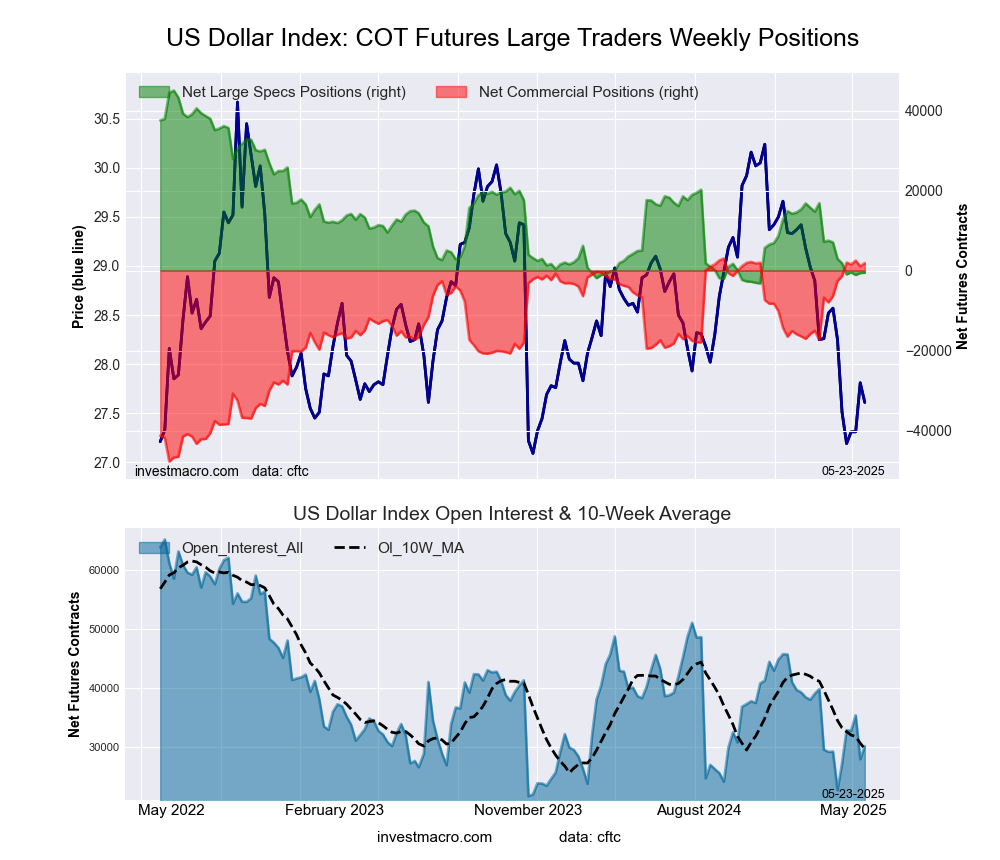
US Dollar Index

Extreme Bearish Leader
The US Dollar Index speculator position comes in as third most bearish extreme standing of the week. The USD Index speculator level resides at a 4 percent score of its 3-year range.

The six-week trend for the speculator strength score is -18.0 this week. The overall speculator position was -1,108 net contracts this week with a decrease of -659 contracts in the speculator bets.


Wheat

Extreme Bearish Leader
The Wheat speculator position comes in as this week’s fourth most bearish extreme standing. The Wheat speculator level is at a 6 percent score of its 3-year range.

The six-week trend for the speculator strength score was -17.0 this week. The speculator position was -107,537 net contracts this week with a gain of 9,271 contracts in the weekly speculator bets.


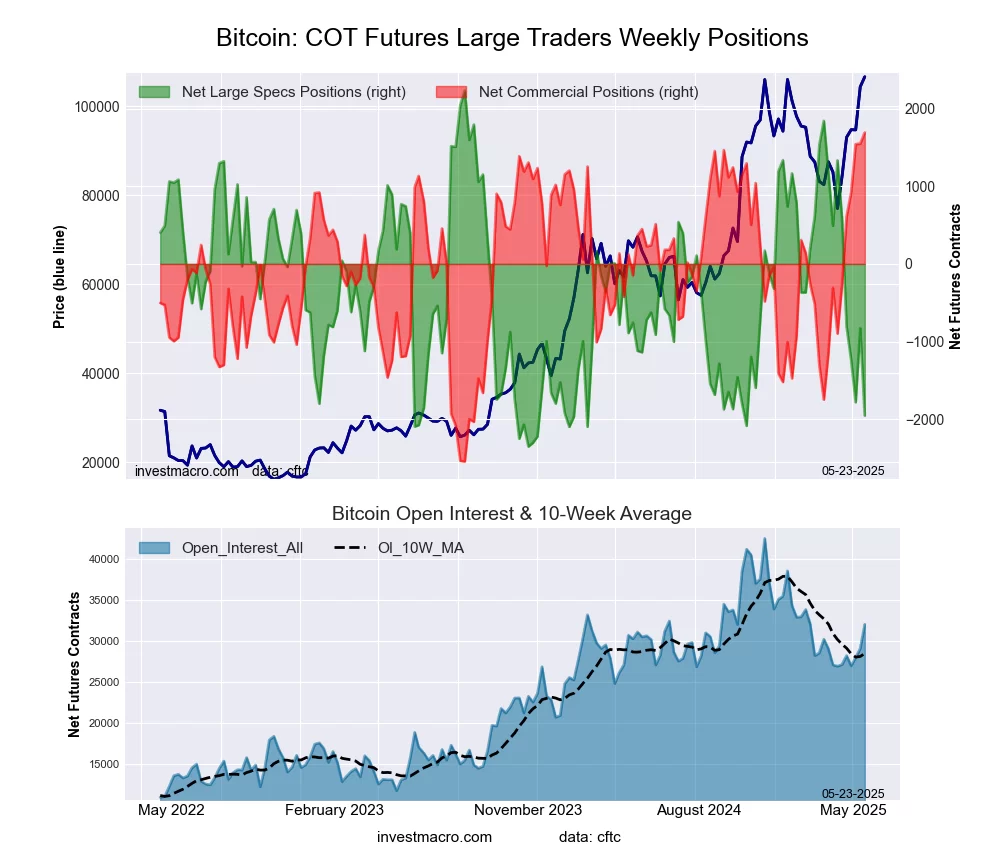
Bitcoin

Extreme Bearish Leader
Finally, the Bitcoin speculator position comes in as the fifth most bearish extreme standing for this week. The Bitcoin speculator level is at a 12 percent score of its 3-year range.

The six-week trend for the speculator strength score was -65.0 this week. The speculator position was -1,781 net contracts this week with a dip lower by -550 contracts in the weekly speculator bets.


Article By InvestMacroReceive our weekly COT Newsletter

*COT Report: The COT data, released weekly to the public each Friday, is updated through the most recent Tuesday (data is 3 days old) and shows a quick view of how large speculators or non-commercials (for-profit traders) were positioned in the futures markets.

The CFTC categorizes trader positions according to commercial hedgers (traders who use futures contracts for hedging as part of the business), non-commercials (large traders who speculate to realize trading profits) and nonreportable traders (usually small traders/speculators) as well as their open interest (contracts open in the market at time of reporting). See CFTC criteria here.

Week Ahead: Dollar ready to flex its muscles?

By ForexTime 

  • FXTM’s USDInd ↑ 2.5% from 2025 low
  • US-China trade talks over weekend could rock USD
  • US CPI + data dump + Powell Speech = more USD volatility?
  • US CPI sparked moves of ↑ 0.4% & ↓ 1.0% over past year
  • Technical levels: 102.20, 100.00 & 99.20

The United States has struck a “breakthrough” deal with the United Kingdom, marking the first trade agreement since Trump announced sweeping tariffs last month.

And this has left markets buzzing with anticipation ahead of US-China trade talks in Geneva this weekend. 

Beyond global trade developments, high-impact data, including the latest US CPI, corporate earnings and speeches by policymakers will be in focus:

Saturday, 10th May 

  • CN50: China PPI, CPI
  • USDInd: US-China trade talks in Switzerland

Monday, 12th May 

  • JP225: Japan current account
  • MXN: Mexico industrial production
  • EUR: EU finance ministers meet in Brussels

Tuesday, 13th May 

  • CHINAH: JD.com earnings
  • AUD: Australia consumer, business confidence
  • GER40: Germany ZEW survey
  • ZAR: South Africa unemployment
  • GBP: UK jobless claims, unemployment
  • USDInd: US April CPI, Trump visits Saudi Arabia, Qatar and United Arab Emirates

Wednesday, 14th May

  • CHINAH: Tencent earnings
  • GER40: Germany CPI
  • JPY: Japan PPI
  • US500: Fed Vice Chair Philip Jefferson, San Francisco Fed President Mary Daly speech

Thursday, 15th May

  • CHINAH: Alibaba earnings
  • AUD: Australia unemployment
  • CAD: Canada existing home sales, housing starts
  • EU50: Eurozone GDP, industrial production
  • NZD: New Zealand food prices
  • UK100: UK GDP, industrial production
  • US30: Walmart earnings.
  • USDInd: US retail sales, PPI, Empire manufacturing, industrial production, jobless claims, Fed Chair Jerome Powell speech

Friday, 16th May

  • JP225: Japan GDP, industrial production
  • NZD: New Zealand Business, NZ manufacturing PMI
  • US500: US housing starts, University of Michigan consumer sentiment, import prices

FXTM’s USDInd is under the spotlight after securing a solid daily close above the psychological 100.00 level.  

Imagen
USDInd

The USDInd tracks the dollar’s performance against a basket of six different G10 currencies, including the Euro, British Pound, Japanese Yen, and Canadian dollar.

The dollar has appreciated against most currencies this week thanks to Powell’s hawkish tone and easing trade tensions.  

Imagen
USD performance


Another major move could be brewing for the USDInd and here are 4 reasons why:


1) US-China trade talks in Switzerland

Over the weekend, US and Chinese officials will engage in talks to de-escalate trade tensions between the world’s two largest economies.

According to reports, the Trump administration is considering a significant tariff reduction to temper economic pain and soothe tensions. However, China has adopted a more defensive approach toward trade talks, reiterating its call for the US to cancel unilateral tariffs. 

  • Should the talks end on a positive note and open doors to further negotiations, the dollar could rally as US recession fears cool.
  • If the talks end on a sour note and result in fresh trade uncertainty, the dollar may weaken as US recession fears mount.


2) US April CPI report

The April Consumer Price Index (CPI) published on Tuesday 13th May could influence Fed cut bets.

Markets are forecasting: 

  • CPI year-on-year (April 2024 vs. April 2025) to remain unchanged at 2.4%
  • Core CPI year-on-year to remain unchanged at 2.8%
  • CPI month-on-month (April 2025 vs March 2025) to rise 0.3% from -0.1% in the prior month
  • Core CPI month-on-month to rise 0.3% from 0.1% in the prior month

Over the past 12 months, the US CPI has triggered upside moves of as much as 0.4% or declines of 1.0% in a 6-hour window post-release.

  • A hotter-than-expected US CPI print could push the USDInd higher as Fed cut bets cool.
  • Should the inflation report print below forecast, this may drag the USDInd lower.


3) US data dump + Powell speech

A string of key US economic data and speeches by numerous Fed officials could inject the dollar with more volatility.

Investors will direct their attention towards the latest US retail sales report, Producer Prices Index (PPI), and industrial production among other data releases, to gauge the health of the US economy. Speeches by various Fed officials, including Fed Chair Jerome Powell may provide fresh clues on the Fed’s next move. 

  • Should overall US economic data print above forecasts and Fed speakers strike a hawkish note, this could boost the USDInd. 
  • Soft US economic data and dovish-sounding Fed officials may weigh on the USDInd.


4) Technical forces

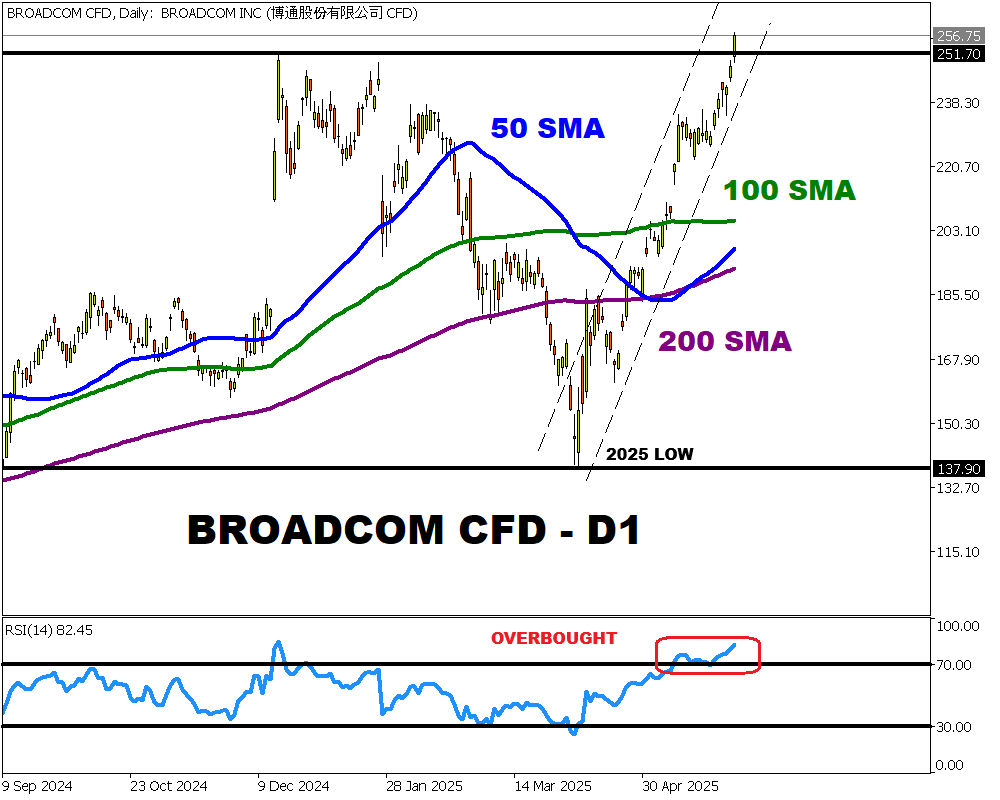
The USDInd could be gearing up for further upside but this will depend on whether the 100.00 level proves to be reliable support. Prices are trading above the 50, 100 and 200-day SMA and respecting a bullish channel.

  • Should 100.00 prove reliable support, prices may venture toward the 50-day SMA at 102.20 and 103.60. 
  • Weakness below 100.00 may encourage a decline back towards 99.20 and 98.00. 
Imagen
USD4

Forex-Time-LogoArticle by ForexTime

ForexTime Ltd (FXTM) is an award winning international online forex broker regulated by CySEC 185/12 www.forextime.com

Can Fed rate decision extend US stocks’ rebound?

By ForexTime 

  • Fed widely expected to leave US rates unchanged
  • Markets fully anticipate next Fed rate cut in July; 1-in-3 chance of June cut
  • Hints of earlier-than-expected rate cut could send US stock indices soaring
  • Risk assets may pare recent gains if Chair Powell pushes back on rate cuts
  • See below for past and projected post-Fed reactions for US500, NAS100, US30


The Fed is set to dominate the market’s attention overnight.

To be clear, the FOMC (Federal Open Market Committee) is widely expected to keep its benchmark rates unchanged at 4.25 – 4.50%.

Given its forward-looking nature, markets are already trying to anticipate the outcomes of FOMC meetings in the months ahead.

Here’s what markets currently predict:

  • June: 1-in-3 chance (33.7%)
  • July: 25-basis point rate cut fully priced in!

Of course, those odds could drastically change in the days, weeks, and months ahead, not just depending on what the Fed tells us this week.

The chances of a Fed rate cut may also depend heavily on whether US President Donald Trump’s tariffs further weaken US economic growth, forcing the Fed into a sooner-than-expected rate cut.

NOTE: The FOMC lowers interest rates in order to shore up economic growth.


What to look out for today (Wednesday, May 7th)?

Markets will be combing through the:

  • FOMC policy statement released at 6:00PM GMT on Wednesday, May 7th, along with …
  • Fed Chair Jerome Powell’s press conference (due 30 minutes after the FOMC statement).

Both the FOMC statement and Powell’s spoken words will be scrutinized for clues about the timing of the next Fed rate cut.

Judging by recent commentary, Fed officials appear to be adopting a wait-and-see approach, in assessing the tariffs’ impact on inflation and growth in the world’s largest economy.

After all, recent weeks have shown that tariffs can be announced, and then retracted, seemingly at POTUS’s whims and fancy.

The ongoing narrative is that …

If US tariffs are kept at elevated levels for longer, the greater the potential damage on the US economy.

And given that this week’s FOMC meeting also comes amid the 90-day pause on some of the harshest tariffs, the Fed may be inclined to maintain this wait-and-see approach, without jolting markets in the interim.

Also note that, at this week’s meeting, the Fed will not be releasing a new dot plot (forecasts by each FOMC member on US interest rate levels in the future), nor fresh economic projections.

Hence, any incoming policy signals, if any, are set to stem from the FOMC policy statement and Powell’s press conference.

How might US stock indices react to today’s Fed meeting?

  • BULLISH: Should Chair Powell and his FOMC colleagues sound “dovish” and start paving the way for rate cuts, that should cheer on risk assets that sends US stock indices higher.
  • BEARISH: If Chair Powell and his FOMC colleagues instead strike a “hawkish” tone, suggesting that US interest rates could stay higher for longer to quell any tariff-induced spikes to US inflation, that could force US stock indices to pare its stunning rebound since early April.

Here’s what markets predict these major US stock indices could react in the 6 hours after today’s FOMC decision:

S&P 500 (tracked by FXTM’s US500) could:

  • rise by as much as 1.4%
  • fall by as much as 1.6

Nasdaq 100 (tracked by FXTM’s NAS100) could:

  • rise/fall by as much as 1.9%

Dow Jones Industrial Average (tracked by FXTM’s US30) could:

  • rise as much as 1.1%
  • fall by as much as 1.7%


How have US stock indices reacted to recent Fed meetings?

These Fed rate decisions of course hold tremendous sway over markets.

Here’s a sample of the “biggest” reactions by major US stock indices within 6 hours of Fed decisions from the past 12 months:

S&P 500 (US500)

  • rose as much as 1.7% (Sept 2024)
  • fell as much as 3% (Dec 2024)

Nasdaq 100 (NAS100)

  • rose as much as 2.35% (Sept 2024)
  • fell as much as 3.5% (Dec 2024)

Dow Jones Industrial Average (US30)

  • rose as much as 1.2% (Sept 2024)
  • fell as much as 2.7% (Dec 2024)


Over the next 12 months …

Wall Street still predicts double-digit potential gains for US stock indices by this time next year.

Here are the projections for 12-month potential upside for 3 major US stock indices:

  • S&P 500 (tracked by FXTM’s US500 index): 16%
    (S&P 500 to cross above 6500 by this time next year)
  • Nasdaq 100 (tracked by FXTM’s NAS100 index): 18%
    (Nasdaq 100 to cross above 23,300 by this time next year)
  • Dow Jones Industrial Average (tracked by FXTM’s US30 index): 14%
    (Dow to cross above 46,700 by this time next year)


Looking at the price charts …

Widely-followed simple moving averages (SMA) stand in the way of bulls (those hoping prices will go higher) of these stock indexes, and could act as immediate resistance levels post-FOMC meeting:


  • 200-day SMA potential immediate resistance for the US500
Imagen
Markets await Fed rate decision

US500: Potential Scenarios

BULLISH: Greater prospects of a mid-year Fed rate cut could send the US500 towards its 200-day SMA / 5700 psychological level. Further north lies its 100-day SMA and 5800 target.

BEARISH: A break below its 50-day SMA could test initial support at the 5,500 round number, with its 21-day SMA and 5400 price region potentially offering stronger support.


  • 200-day SMA potential immediate resistance for the NAS100
    Imagen
    Markets await Fed rate decision

NAS100: Potential Scenarios

BULLISH: A break above the 200-day SMA could see the NAS100 striving for its upside target of 20,800.

BEARISH: The NAS100 may look to find support at its 50-day SMA around the 19,400 region. Further support could arrive around the 21-day SMA.


  • 50-day SMA immediate resistance for the US30
Imagen
Markets await Fed rate decision

US30: Potential Scenarios

BULLISH: A break above the 50-day SMA could see the US30 striving for its immediate upside target of 41,800. Further north, the price region around its 200-day SMA / 42,500 level / 100-day SMA could lend stronger resistance to bulls.

BEARISH: A second consecutive daily close below the 41k mark for the US30 could see prices faltering to the big, round 40,000 number, where its 21-day SMA also currently lies.


Forex-Time-LogoArticle by ForexTime

ForexTime Ltd (FXTM) is an award winning international online forex broker regulated by CySEC 185/12 www.forextime.com

Week Ahead: Crude caught in crosswinds ahead of OPEC+ showdown

By ForexTime 

  • Crude ends April ↓ 18.6%
  • OPEC+ expected to sign off another supply hike
  • Positive US-China trade may support oil bulls
  • Fed decision sparked moves of ↑ 0.4% & ↓ 0.9% over past year
  • Technical levels: $65, $60 & $55

As the countdown draws closer to the key US jobs report this afternoon (Friday, 2nd May), markets are bracing for more volatility in the week ahead.

An influx of high-impact data, risk events and key central bank decisions could present fresh trading opportunities:

Saturday, 3rd May 

  • AUD: Australia general election

Sunday, 4th May 

  • Asian Development Bank annual meeting

Monday, 5th May 

  • UK markets closed for Bank holiday
  • OIL: OPEC+ meeting on production levels
  • USDInd: US ISM services

Tuesday, 6th May 

  • AUD: Australia building approvals
  • CN50: China Caixin services PMI
  • EUR: Eurozone HCOB services PMI, PPI
  • US500: US Treasury Secretary Scott Bessent testimony

Wednesday, 7th May

  • CNY: China forex reserves
  • EUR: Eurozone retail sales
  • GER40: Germany factory orders
  • TWN: Taiwan CPI
  • US500: US Fed rate decision

Thursday, 8th May

  • GER40: Germany industrial production
  • ZAR: South Africa manufacturing production
  • UK100: BOE rate decision
  • SEK: Sweden rate decision
  • RUS200: US jobless claims

Friday, 9th May

  • CN50: China trade
  • JP225: Japan household spending, cash earnings
  • CAD: Canada employment
  • USDInd: Fed governors Lisa Cook, Christopher Waller, St. Louis Fed President Alberto Musalem, Cleveland Fed President Beth Hammack, Chicago Fed President Austan Goolsbee speech

Our focus lands on oil benchmarks which have shed over 17% year-to-date amid global recession fears and oversupply worries.

Imagen
Crude oil

Crude prices have recently rebounded on easing trade tensions and new sanctions on Iran. However, the global commodity is still headed for a weekly loss of more than 6%.

And things could spice up further in the week ahead. Here are 4 reasons why:


1) OPEC+ meeting on production levels

On Monday 5th May, OPEC+ will meet to decide the supply policy for June. 

Earlier in April, Saudi Arabia shocked markets by pushing OPEC+ for faster output increases in May after Kazakhstan and Iraq produced well above quotas.

Markets expect the cartel to sign off on another supply surge to punish over-producing members.

But most importantly, infighting within the cartel and overproduction could be a recipe for disaster for oil, especially if it leads to a “free-for-all” where members pump at will.

  • Oil prices may tumble if OPEC+ pushes for faster production hikes with any signs of internal instability fuelling downside pressures.
  • Should OPEC+ surprise by slowing down or pausing output hikes, this could boost oil prices as oversupply fears cool.


2) US-China trade talks

Market sentiment has received a boost after China said it’s evaluating trade talks with the United States. This comes after weeks of conflicting reports and uncertainty around US-China trade talks.

If this soothes tensions and opens the doors to concrete negotiations, this could cool concerns about a global recession. 

  • More positive progress with US-China trade talks may support oil prices as investors become more hopeful about the demand outlook.
  • Should the talks lead to more uncertainty or result in renewed tensions, oil prices may take a hit.


3) Fed rate decision

The Fed is widely expected to leave interest rates unchanged at its May meeting, but all eyes will be on Fed Chair Jerome Powell’s press conference.

Friday’s incoming US jobs report along with developments on the trade front, may influence what tone Powell strikes on Wednesday 7th May. 

Traders are currently pricing in 3 rate cuts in 2025 with the probability of a 4th one by December at 67%. Any major shifts to these expectations may influence oil prices. 

  1. Lower interest rates could stimulate economic growth, which fuels oil demand.
  2. Lower interest rates may also lead to a weaker dollar, boosting oil which is priced in dollars.

The same can be said vice versa.

  • If Powell strikes a hawkish note and the dollar appreciates, oil prices may slip. 
  • If Powell sounds more dovish and signals faster rate cuts, oil prices may jump. 


Over the past 12 months, the Fed rate decision has triggered upside moves on CRUDE of as much as 0.4% or declines of 0.9% in a 6-hour window post-release.


4) Technical forces

Crude is under pressure on the daily charts with prices trading below the 50, 100 and 200-day SMA. However, the Relative Strength Index (RSI) is close to 30, signalling that prices are oversold.

  • A solid breakout and daily close above $60 may pave a path toward the 50-day SMA near $65.00 and potentially the 100-day SMA $68.80 in the medium to longer term.
  •  Should $60 prove to be a tough resistance, prices may slip back towards $55 and levels not seen since January 2021 at $51.50. 


Imagen
crude d3

Note: This chart was created before the release of the US NFP report on Friday 2nd May. 


Forex-Time-LogoArticle by ForexTime

ForexTime Ltd (FXTM) is an award winning international online forex broker regulated by CySEC 185/12 www.forextime.com

Whether GDP swings up or down, there are limits to what it says about the economy and your place in it

By Sophie Mitra, Fordham University 

The Bureau of Economic Analysis released the latest U.S. gross domestic product data on April 30. In the first three months of 2025, it said, GDP contracted by 0.3%. The GDP growth rate captures the pace at which the total value of goods and services grows or shrinks. Together with unemployment and inflation, it usually receives a lot of attention as an indicator of economic performance.

Some economists and analysts said the economy might not be as bad as this rate’s decline might suggest. While this is the first time in three years that GDP has shrunk instead of growing, it is a relatively small decline.

This raises a critical question: Does a relatively small GDP contraction mean the economy is in trouble? I have spent much of my working life studying economic well-being at the level of individuals or families.

What I’ve learned can offer a different lens on the economy than you’d get from just focusing on the most popular indicators, such as the GDP growth rate.

GDP problems

The GDP growth rate has many limitations as an economic indicator. It captures only a very narrow slice of economic activity: goods and services. It pays no attention to what is produced, how it is produced or how people assess their economic lives.

GDP gets a lot of attention, in part, because of the misconception that economics only has to do with market transactions, money and wealth. But economics is also about people and their livelihoods.

Many economists would agree that economics treats wealth or the production of goods and services as means to improve human lives.

Since the 1990s, a number of international commissions and research projects have come up with ways to go beyond GDP. In 2008, the French government asked two Nobel Prize winners, Joseph Stiglitz and Amartya Sen, as well as the late economist Jean-Paul Fitoussi, to put together an international commission of experts to come up with new ways to measure economic performance and progress. In their 2010 report, they argued that there is a need to “shift emphasis from measuring economic production to measuring people’s well-being.”

Considering complementary metrics

One approach is to use a composite index that combines data on a variety of aspects of a country’s well-being into a single statistic. That one number could unfold into a detailed picture of the situation of a country if you zoom into each underlying indicator, by demographic group or region.

The production of such composite indices has flourished. For example, the Human Development Index of the United Nations, started in 1990, covers income per capita, life expectancy at birth and education. This index shows how focusing on GDP alone can mislead the public about a country’s economic performance.

In 2024, the U.S. ranked fifth in the world in terms of GDP per capita, but was in 20th place on the Human Development Index due to relatively lower life expectancy and years of schooling compared to other countries at the top of the list, like Switzerland and Norway.

Monitoring other indicators

Another approach is to rely on a larger number of indicators that are frequently updated. These other data points reflect a variety of perspectives about the economy, including subjective ones that convey personal perceptions and experiences.

For instance, in addition to inflation rates, there is data on stress due to inflation as well as inflation expectations. Both offer insights into people’s perceptions, perspectives and experiences about inflation.

During the COVID-19 pandemic, the annual U.S. inflation rate increased from 1% in July 2020 to 8.5% in July 2022. My research partners and I found, using U.S. Census data, that more than 3 in 4 adults in the U.S. were experiencing moderate or high levels of stress due to inflation at that time and continued to do so even after inflation went down in 2023.

More recently, the Trump administration’s sporadic tariff changes have made future prices more uncertain, which exposes people to risks. That, in turn, makes people adjust their expectations and feel worse off.

The share of consumers expecting higher inflation rates has climbed sharply in 2025, while consumer confidence has declined abruptly. About 1 in 3 consumers expect that there will be fewer jobs created in the next six months, which is almost as low as during the Great Recession of 2007-2009.

Consumers also have negative expectations about their own future income and worry about their own economic status.

At this moment, the U.S. economy has not officially entered a recession – which requires a longer period of GDP contraction than just one quarter. Although unemployment and inflation rates remain relatively low, the broad picture of the economy that takes into account people’s expectations and perceptions is troubling. To be clear, I’m not saying that just because of what the GDP data may indicate.

This article includes material from an article originally published on Aug. 7, 2018.The Conversation

About the Author:

Sophie Mitra, Professor of Economics, Fordham University

This article is republished from The Conversation under a Creative Commons license. Read the original article.

GBP/USD Hits New High: The Pound Defies Market Pressures

By RoboForex Analytical Department 

The British pound has reached another three-year peak against the US dollar, stabilising around 1.3400.

Key factors driving GBP/USD strength

Sterling is closing April with its strongest monthly performance since November 2023, gaining over 3% against the US dollar.

Two key factors support the pound’s resilience:

  1. Monetary policy divergence – Markets expect the Bank of England (BoE) to slow the pace of interest rate cuts compared to other central banks. Current projections suggest the BoE will reduce rates by 85 basis points in 2025, roughly in line with expectations for the US Federal Reserve.
  2. Dollar alternatives in demand – Investors seek alternatives to the US dollar, and the UK appears less vulnerable to US tariff risks. A 90-day moratorium on increased US tariffs expires in late July, renewing global economic uncertainties.

Against this backdrop, the UK and its currency appear more stable than many peers.

Technical analysis: GBP/USD

H4 chart

  • GBP/USD continues to consolidate around 1.3344, with the range now extending to 1.3440.
  • A downside retest of 1.3344 is expected, followed by potential upward momentum towards 1.3455, defining the range boundaries.
  • A break below consolidation could trigger a downward wave targeting 1.3080 as the initial objective.
  • The MACD indicator supports this outlook, with its signal line above zero but poised for a decline.

H1 chart

  • The pair has broken above 1.3344, achieving a local target at 1.3440
  • A corrective decline towards 1.3344 is anticipated before potential renewed growth towards 1.3455
  • The Stochastic oscillator aligns with this scenario, with its signal line below 20 and primed for an upward move towards 80


Conclusion

The pound remains defensive yet strong, buoyed by relative monetary policy stability and its appeal as a dollar alternative. Technically, the pair is testing key levels, with further direction contingent on consolidation breaks.


Disclaimer

Any forecasts contained herein are based on the author’s particular opinion. This analysis may not be treated as trading advice. RoboForex bears no responsibility for trading results based on trading recommendations and reviews contained herein.

Why predicting battery performance is like forecasting traffic − and how researchers are making progress

By Emmanuel Olugbade, Missouri University of Science and Technology 

Lithium-ion batteries are quietly powering large parts of the world, including electric vehicles and smartphones. They have revolutionized how people store and use energy. But as these batteries become more central to daily life, they bring more attention to the challenges of managing them and the energy they store safely, efficiently and intelligently.

I’m a mechanical engineer who studies these nearly ubiquitous batteries. They have been around for decades, yet researchers like me are still trying to fully understand how these batteries behave – especially when they are working hard.

Batteries may seem simple, but they are as complicated as the real-world uses people devise for them.

The big picture

At their core, lithium-ion batteries rely on the movement of charged particles, called ions, of the element lithium between two electric poles, or electrodes. The lithium ions move from the positive electrode to the negative one through a conductive substance called an electrolyte, which can be a solid or a liquid.

The basics of how a lithium-ion battery works.

How much energy these batteries store and how well they work depends on a tangle of factors, including the temperature, physical structure of the battery and how the materials age over time.

Around the world, researchers are trying to answer questions about each of these factors individually and in concert with each other. Some research focuses on improving lifespan and calculating how batteries degrade over time. Other projects are tackling safety under extreme conditions, such as fast-charging use in extreme climates – either hot or cold. Many are exploring entirely new materials that could make batteries cheaper, longer-lasting or safer. And a significant group – including me – are working with computer simulations to improve real-time battery monitoring.

Real‑time monitoring in your electric vehicle’s battery system functions like a health check: It tracks voltage, current and temperature to estimate how much energy remains so you won’t be stranded with a dead battery.

But it’s difficult to precisely measure how well each of the energy cells within the battery is performing as they age or as the weather changes from cold in winter to hotter in summer. So the battery management system uses a computer simulation to estimate those factors. When combined with real-time monitoring, the system can prevent overusing the battery, balance charging speed with long-term health, avoid power failures and keep performance high. But there are a lot of variables.

The traffic analogy

One of the best ways to understand this challenge is to think about city traffic.

Let’s say you want to drive across town and need to determine whether your car has enough charge to travel the best route. If your navigation simulator accounted for every stoplight, every construction zone and every vehicle on the road, it would give you a very accurate answer. But it might take an hour to run, by which time the circumstances would have changed and the answer would likely be wrong. That’s not helpful if you’re trying to make a decision right now.

A simpler model might assume that every road is clear and every car is moving at the speed limit. That simulation delivers a result instantly – but its results are very inaccurate when traffic is heavy or a road is closed. It doesn’t capture the reality of rush hour.

While you’re driving, the battery management system would do a similar set of calculations to see how much charge is available for the rest of the trip. It would look at the battery’s temperature, how old it is and how much energy the car is asking for, like when going up a steep hill or accelerating quickly to keep up with other cars. But like the navigation simulations, it has to strike a balance between being extremely accurate and giving you useful information before your battery runs out in the middle of your trip.

The most accurate models, which simulate every chemical reaction inside the battery, are too slow for real-time use. The faster models simplify things so much that they miss key behaviors – especially under stress, such as fast charging or sudden bursts of energy use.

How researchers are bridging the gap

This trade-off between speed and accuracy is at the heart of battery modeling research today. Scientists and engineers are exploring many ways to solve it.

Some are rewriting modeling software to make the physics calculations more efficient, reducing complexity without losing the key details. Others, like me, are turning to machine learning – training computers to recognize patterns in data and make fast, accurate predictions without having to solve every underlying equation.

In my recent work, I used a high-accuracy battery simulator – one of the ones that’s really accurate but very slow – to generate a massive amount of data about how a battery functions when charging and discharging. I used that data to train a machine learning algorithm called XGBoost, which is particularly good at finding patterns in data.

Then I used software to pair the XGBoost system with a simple, fast-running battery model that captures the basic physics but can miss finer details. The simpler model puts out an initial set of results, and the XGBoost element fine-tunes those to make corrections on the fly, especially when the battery is under strain.

The result is a hybrid model that is able to respond both quickly and accurately to changes in driving conditions. A driver who floors the accelerator with just the simple model wouldn’t get enough energy; a more detailed model would give the right amount of energy only after it finished all its calculations. My hybrid model delivers a rapid boost of energy without delays.

Other teams are working on similar hybrid approaches, blending physics and artificial intelligence in creative ways. Some are even building digital twinsreal-time virtual replicas of physical batteries – to offer sophisticated simulations that update constantly as conditions change.

What’s next

Battery research is moving quickly, and the field is already seeing signs of change. Models are becoming more reliable across a wider range of conditions. Engineers are using real-time monitoring to extend battery life, prevent overheating and improve energy efficiency. Machine learning lets researchers train battery management systems to optimize performance for specific applications, such as high power demands in electric vehicles, daily cycles of home electricity use, short power bursts for drones, or long-duration requirements for building-scale battery systems.

And there’s more to come: Researchers are working to include other important factors into their battery models, such as heat generation and mechanical stress.

Some teams are taking hybrid models and compiling their software into lightweight code that runs on microcontrollers inside battery hardware. In practice, that means each battery pack carries its own brain on-board, calculating state-of-charge, estimating aging and tracking thermal or mechanical stress in near-real time. By embedding the model in the device’s electronics, the pack can autonomously adjust its charging and discharging strategy on the fly, making every battery smarter, safer and more efficient.

As the energy landscape evolves – with more electric vehicles on the road, more renewable energy sources feeding into the grid, and more people relying on batteries in daily life – the ability to understand what a battery is doing in real time becomes more critical than ever.The Conversation

About the Author:

Emmanuel Olugbade, Ph.D. Candidate in Mechanical Engineering, Missouri University of Science and Technology

This article is republished from The Conversation under a Creative Commons license. Read the original article.


Tourists are cancelling trips to the US – here’s how this could affect its economy

By Ross Bennett-Cook, Leeds Beckett University 

The United States is one of the top three most visited countries in the world. The big draw cards – cities such as San Francisco, New York and Chicago and national parks such as Yosemite – have attracted international tourists for decades. This combined with its role as a global business powerhouse meant it had 66.5 million visitors in 2023 – and the 2024 figure is expected to be higher still.

But a lot has changed in recent months, and 2025’s figures may not be as strong. The 2024 reelection of Donald Trump as the president of the United States and the consequential changes in foreign diplomacy and relations, alongside internal cultural shifts, are starting to change global attitudes towards the US – attitudes that appear to be affecting tourists’ desire to visit the US.

In a recent report by research firm Tourism Economics, inbound travel to the US is now projected to decline by 5.5% this year, instead of growing by nearly 9% as had previously been forecast. A further escalation in tariff and trade wars could result in further reductions in international tourism, which could amount to a US$18 billion (£13.8 billion) annual reduction in tourist spending in 2025.

There is already some evidence of travel cancellations. Since Trump announced 25% tariffs on many Canadian goods, the number of Canadians driving across the border at some crossings has fallen by up to 45%, on some days, when compared to last year. Canada is the biggest source of international tourists to the US. Air Canada has announced it is reducing flights to some US holiday destinations, including Las Vegas, from March, as demand reduces.

According to a March poll by Canadian market researcher Leger, 36% of Canadians who had planned trips to the United States had already cancelled them. According to data from the aviation analytics company OAG, passenger bookings on Canada to US routes are down by over 70% compared to the same period last year. This comes after the U.S. Travel Association warned that even a 10% reduction in Canadian inbound travel could result in a US$2.1 billion (£1.6 billion) loss in spending, putting 140,000 hospitality jobs at risk.

An unwelcoming environment?

Some would-be visitors have cited an unwelcoming political climate as part of a concern about visiting the US – including angry rhetoric about foreigners, migrants and the LGBTQ+ community. The Tourism Economics report also cited “polarizing Trump Administration policies and rhetoric” as a factor in travel cancellations.

There are other factors that may influence travellers from, for instance, western Europe, which represented 37% of overseas travel to the US last year. These include US tariffs pushing prices up at home and the US administration’s perceived alignment with Russia in the war in Ukraine.

Canadian trips to the US are going down.

Research by YouGov in March found that western European attitudes towards the US have become more negative since Trump’s reelection last November. More than half of people in Britain (53%), Germany (56%), Sweden (63%) and Denmark (74%) now have an unfavourable opinion of the US. In five of the seven countries polled, figures for US favourability are at the lowest since polling began in November 2016.

Border issues

Some high-profile cases at the US border could also be putting off tourists. In March, a British woman was handcuffed and detained for more than ten days by US Customs Enforcement after a visa problem. In the same month, a Canadian tourist was detained after attempting to renew her visa at the US-Mexico border. During the 12-day detention, she was held in crowded jail cells and even put in chains.

Mexico is the US’s second largest inbound travel market. Tourism Economics suggests that issues around new border enforcement rules will raise concerns with potential Mexican tourists. During Trump’s first term in office, Mexican visits to the US fell by 3%. In February this year, air travel from Mexico had already fallen 6% when compared to 2024.

Many countries including Canada have been updating their travel advice for the US. For instance, on March 15 the UK Foreign and Commonwealth Office updated its advice for the US, warning visitors that “you may be liable to arrest or detention if you break the rules”. The previous version of advice, from February, had no mention of arrest or detention. Germany has made similar updates to its travel advisory, after several Germans were recently detained for weeks by US border officials.

Multiple European countries, including France, Germany, Denmark and Norway have also issued specific travel warnings to transgender and non-binary citizens, as US authorities demand tourists declare their biological sex at birth on visa applications. This comes as the US has stopped issuing of passports with a X marker – commonly used by those identifying as non-binary – for its own citizens.

Alternative destinations

As thousands of travellers cancel their trips to the US, other destinations are seeing a spike in interest. Hotels in Bermuda have reported a surge in enquiries as Canadians relocate business and leisure trips away from the US, with some predicting a 20% increase in revenue from Canadian visits.

Europe too has reported increased bookings from Canada, with rental properties experiencing a 32% jump in summer reservations when compared to last year, according to some reports.

There are already growing concerns that visa and entry restrictions will disrupt fans and athletes from enjoying 2026 men’s Fifa World Cup, held on sites in the US, Canada and Mexico. Visitors from some countries, such as Brazil, Turkey and Colombia, could wait up to 700 days to obtain visas. The International Olympic Committee has also raised concerns over the 2028 Olympics Games in Los Angeles, although US officials have insisted that “America will be open”.

With mounting visa delays, stricter border enforcement and growing concerns over human rights and anti-minority rhetoric, the United States risks losing its appeal as a top holiday destination. The long-term impact on its tourism industry may prove difficult to reverse.The Conversation

About the Author:

Ross Bennett-Cook, PhD Researcher, Carnegie School of Sport, Leeds Beckett University

This article is republished from The Conversation under a Creative Commons license. Read the original article.


IMF World Economic Outlook: economic uncertainty is now higher than it ever was during COVID

By Sergi Basco, Universitat de Barcelona 

The International Monetary Fund (IMF) has just published its World Economic Outlook, and it does not take an expert to deduce that, even among some of the world’s top economic minds, confident predictions are currently hard to come by.

Every spring the IMF and World Bank hold their Spring Meetings in Washington DC: a week of seminars, briefings and press conferences focusing on the global economy, international development and world financial markets. At both the Spring Meetings and the Annual Meeting, held each autumn, the IMF publishes its global economic growth forecasts.

For its 2025 Spring Meeting the IMF has published a baseline forecast, as well as an addendum analysing the tariff events that took place between 9 and 14 April. According to the Fund’s report, world GDP will grow by 2.8% in 2025 and 3.0% in 2026. For the euro area, growth will be 0.8% and 1.2% for 2025 and 2026 respectively.

These forecasts represent a substantial downward revision from IMF figures published just three months ago. Globally, growth in 2025 is down by 0.5% compared to the Fund’s January update, with a reduction of 0.2% for the euro area.

One major shift is key to understanding the most recent IMF report and its pessimistic predictions: we live in a much more uncertain world than we did three months ago.

Trump, tariffs and uncertainty

If one had to sum up the new US tariff policy in a word, “unpredictable” would suffice, as the so-called “Liberation Day” of 2 April 2025 represented the largest tariff increase in modern history.

Just one week later, the US president then made two further announcements. First, a 90-day freeze on tariff hikes, apparently in search of bilateral agreements with the countries to which he had applied tariffs above 10%. Second, that China would be excluded from this exception, with tariffs on its products being raised to 145%.

This freeze means that until July EU goods being sold to the US will have a 10% tariff instead of the 20% that was announced on 2 April. However, the 10% applied by the new US administration is still much higher than the average tariff of 1.34% that was in force before 5 April.

But what will the tariff be after these 90 days? What about in December? What about in 2 years’ time? What goods will be exempted? How far will the trade war between China and the US go? The answer to all of these questions is: nobody knows. This uncertainty is evident in of the IMF’s spring forecast.

Uncertainty is off the charts

The IMF’s world trade uncertainty index is currently 7 times higher than it was in October 2024, much higher than in the pandemic.

As far as the economy is concerned, this uncertainty is far worse than a high but definitive tariff. With a tariff, companies can at least reorganise their production chain, and consumers can look for alternative products. There is a cost, but at least businesses and consumers can plan for it.

However, nobody can calculate these costs today because nobody knows how tariffs will evolve. An American company may decide today to buy a particular product from the EU thinking that the tariff will be 10%, but upon the product’s arrival in the US it turns out the tariff has risen to 100% because a presidential advisor said it would be good for the US economy to raise tariffs on that product.

Unbelievable though it may sound, this appears to be how the tariffs are being decided and enacted. According to one account, the US Treasury and Commerce Secretaries were only able to persuade Trump to freeze recent tariff hikes because Peter Navarro – the president’s economic advisor and tariff ideologue – was in another room at the time.

The end result of this unpredictability is that the best course of action, for consumers and businesses alike, is inaction.

Fear and volatility

It is no surprise that these constant changes of plans are causing great instability in financial markets. Although Trump may have triumphantly celebrated rising stock prices immediately after the tariff freeze was announced, financial markets are now subject to levels of uncertainty and fear similar to those seen during COVID-19.

Five years ago, volatility was associated with increased demand for US government debt due to the “flight to safety” effect: investors selling higher risk investments and buying safer assets, such as gold and government bonds, in times of uncertainty.

Now we are seeing the exact opposite. The price of US bonds has fallen since “Liberation Day”, and this means that investors are selling them. In other words, markets no longer believe that US government debt is a safe asset. Given the role of the dollar and US debt in international markets, this paradigm shift may generate even more financial instability down the line.

Supply chains are breaking (again)

COVID-19, the last major global economic crisis, has one thing in common with the current situation: disruption of global supply chains. During the pandemic it was confinement that forced production to stop. Today, it is the imposition of tariffs.

However, there is another major difference. During COVID people knew it was a matter of time before vaccines became available and normality returned. Today, instability in financial markets comes not from any virus, but from President Trump’s own advisors selling him all manner of plans to protect US economic interests.The Conversation

About the Author:

Sergi Basco, Profesor Agregado de Economia, Universitat de Barcelona

This article is republished from The Conversation under a Creative Commons license. Read the original article.


Can Alphabet’s Q1 earnings arrest its stock’s slump?

By ForexTime 

  • Alphabet’s stocks down 19.2% year-to-date; market cap now US$ 1.86 trillion
  • Company set to unveil Q1 earnings after US markets close Thursday, April 24th
  • Investors eager for updates on Cloud margins, AI capex plans, tariff impact
  • Alphabet’s share price forecasted to move 5.8% up/down when US markets reopen Friday
  • Wall Street lowers 12-month target price; still a strong buy with 33% potential upside


After US markets close this Thursday, April 24th, Alphabet is set to unveil its Q1 financial results.

Despite a rebound yesterday (Tuesday, April 22nd), Big Tech stocks have been languishing in the run up to this upcoming set of earnings reports.

The current record high of US$208.60 for Alphabet’s C-class shares (no voting rights) were from February 4ththe day of its last earnings announcement – when it announced slowing growth in its Cloud segment and lower-than-expected revenue in Q4 2024.

Since then, this stock has fallen:

  • Intraday prices: as much as 31.6% (Feb 4th intraday high through April 7th intraday low)
  • Closing prices: 26.2% lower (Feb 4th close through April 22nd close)
Imagen
Alphabet’s Q1 earnings due after US markets close April 24, 2025

Why are US tech stocks falling?

US President Donald Trump’s erratic policy rollout, especially surrounding trade tariffs, have dented the aura surrounding “US exceptionalism”.

US tech stocks certainly have been one of the primary victims from this major blow to risk-taking activities across global financial markets.

For comparison, the 19.2% year-to-date drop in Alphabet’s C-class shares:

  • are almost double the S&P 500’s 10.1% decline so far this year
  • exceeds the tech-heavy Nasdaq 100 index’s 13% year-to-date drop


Alphabet’s Q1 earnings: What to look out for?


1) Cloud compression?

Revenue from its Cloud segment is expected to breach US$12.3 billion for Q1 2025 – the segment’s highest ever top line number.

However, the operating income for the segment is expected to dip back below the US$ 2 billion figure:

  • Q4 2024: $2.09B down to …
  • Q1 2025: US$1.94B … marking the first contraction for this line item since Q3 2023.

Investors and analysts will be keen to find out how Alphabet can buttress its Cloud margins, even as rising AI-fueled demand also requires more infrastructure investments.

NOTE: According to Alphabet CEO Sundar Pichai, Google’s Cloud is still smaller in size relative to Amazon’s and Microsoft’s.


And that brings us to the second key area to look out for …

2) AI integration (Gemini, AI agents) and capital expenditure (capex) plans

The integration of Gemini appears to be central to the growth of Alphabet’s Search segment – which accounts for more than half (55 – 57%) of total revenue in recent quarters.

Also, Gemini and other AI use cases are expected to help grow its Cloud segment from its:

  • Q1 2024: 11.9% of total company revenue for the quarter
  • Q1 2025: 13.8% of total company revenue for the quarter

Looking ahead, recall that the company had already issued capex guidance for US$75 billion for this year’s capex.

And that’s despite the risks posed DeepSeek’s apparent showing that AI gains can be achieved using lower-cost models.

The slightest hint of a pullback in capex plans could send Alphabet’s stocks tumbling on fears that the fervor for all things AI is losing momentum still.


3) Tariff impact

Since the flurry of tariff-related announcements this month, the expected impact on Alphabet’s financial figures appears limited to its:

  • hardware sales (think Pixel phones) and also …
  • Cloud infrastructure (think of the chips required to build out Alphabet’s data centers).

Hence, Alphabet’s share price is bound to reflect the company’s guidance on the tariffs’ impact on future earnings.


Beyond the main themes listed above, here are some headline Q1 figures to look out for:

  • Revenue: forecasted at US$75.4 billion
  • Net income: forecasted at US$24.7 billion
  • Earnings per share (EPS): forecasted at US$ 2.04


Potential Post-Earnings Scenarios

Note that markets currently predict that Alphabet’s stocks could move 5.8% up or down when US markets reopen on Friday, April 25th – the day after Alphabet’s Q1 earnings announcement.

  • BULLISH: Should Alphabet’s past quarterly financials and forward guidance help restore sentiment surrounding this stock, that could help pare its year-to-date declines.

Using Tuesday’s closing price of $154.02 as a reference point, a 5.8% climb would see this stock breaking above its 21-day simple moving average (SMA) and reaching around $163 – closing in on its mid-April intraday high.

  • BEARISH: Should Alphabet announce lower-than-expected Q1 2025 financial results, while citing greater concern about its earnings outlook, a 5.8% move downwards from Tuesday’s closing price should see this stock opening around $145 this Friday.

Still, much may yet happen across US stock markets over the next 2 days (Wednesday’s and Thursday’s cash sessions) which could drastically alter the above-listed numbers.


Over the next 12 months …

Wall Street analysts are still bullish on this stock, with:

  • 20 “Buy” calls
  • 1 “Hold”
  • 0 “Sells”

By this time in 2026, this stock is forecasted to have an upside potential of 34%, eventually touching $205.33.

To be clear, so far this month, many research houses including Morgan Stanley, UBS, Citi, Mizuho, and Bank of America have lowered their respective 12-month target prices on this stock.

And there’s bound to be more revisions after what Alphabet conveys to the world this week.

In short, this upcoming earnings release is set to hold great influence over how Alphabet’s shares perform, both in the immediate aftermath, and for the longer-term.


Forex-Time-LogoArticle by ForexTime

ForexTime Ltd (FXTM) is an award winning international online forex broker regulated by CySEC 185/12 www.forextime.com