Archive for Forex and Currency News – Page 18

GBP/USD Hits Two-Week Low as Pressure Mounts

By RoboForex Analytical Department

The GBP/USD pair dropped to 1.3602 on Thursday, marking a two-week low amid a strengthening US dollar and growing concerns over the UK’s public finances.

The sell-off intensified after US President Donald Trump confirmed the imposition of 25% tariffs on goods from 14 countries, including Japan and South Korea, effective 1 August. So far, only the UK and Vietnam have secured exemptions from these new tariffs, which are in addition to existing duties on cars, steel, and aluminium.

London is now scrambling to negotiate a US deal to exclude British steel from the tariffs. Failure to do so could see the rate rise to 50%, posing a severe threat to the UK’s already struggling steel industry.

Further pressure on the pound came from a bleak forecast by the Office for Budget Responsibility (OBR), warning that public debt could exceed 270% of GDP by the early 2070s. Key drivers include an ageing population, rising healthcare and pension costs, and heightened geopolitical tensions, which may necessitate increased defence spending – adding further uncertainty to the UK’s long-term fiscal stability.

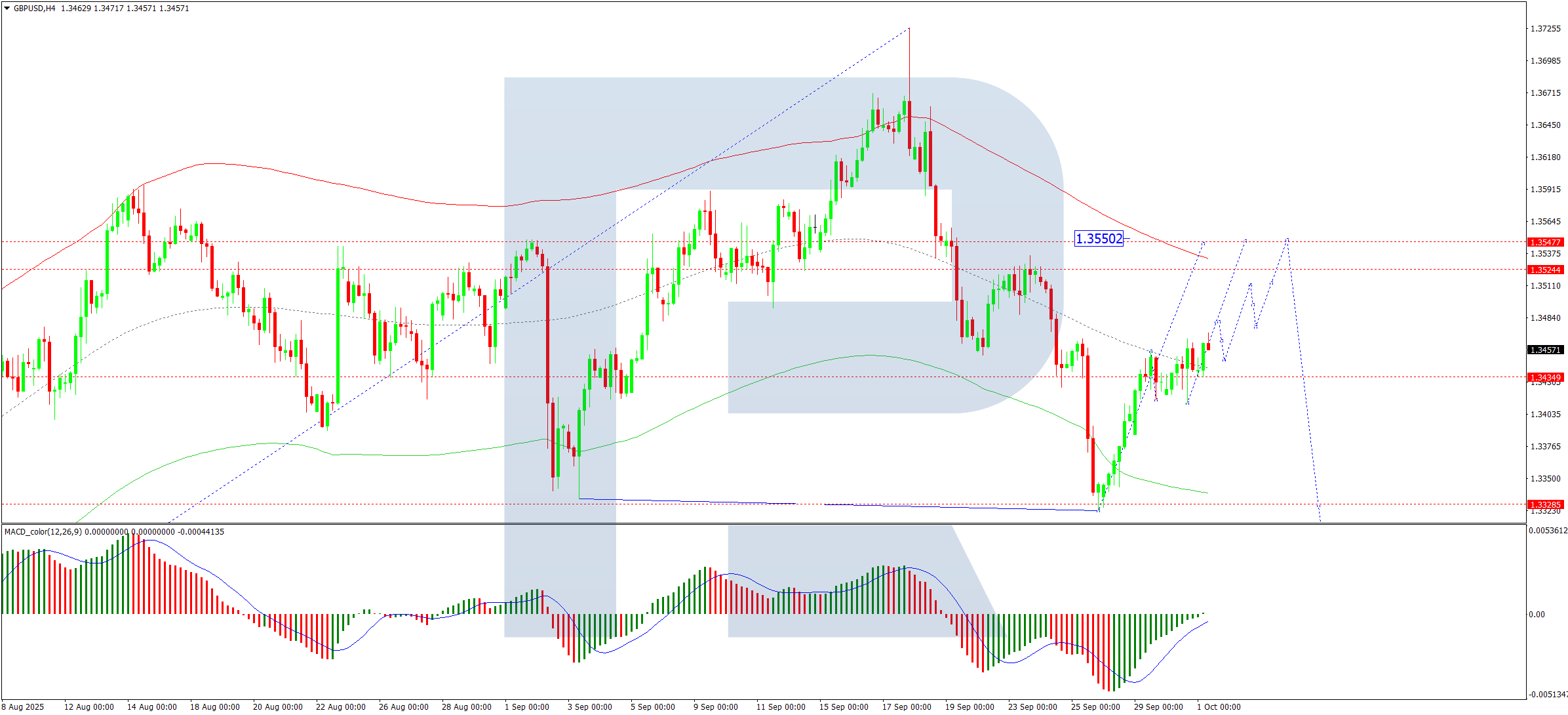
Technical Analysis: GBP/USD

H4 Chart:

  • The pair completed a downward wave to 1.3525, followed by a recovery to 1.3590
  • Today, we anticipate a narrow consolidation range near this level
  • A breakout upwards could extend the correction to 1.3657, after which a fresh decline towards 1.3520 is expected, with a longer-term target at 1.3465
  • MACD confirmation: The signal line remains below zero, indicating a firm downward trend

H1 Chart:

  • The market has finished a correction to 1.3590, with consolidation now forming
  • An upward breakout may push the pair towards 1.3656, but a subsequent drop to at least 1.3520 is likely
  • Stochastic confirmation: the signal line is below 80, trending downward towards 20.

Conclusion

The GBP/USD remains under downward pressure, with fundamental and technical factors aligning for further weakness. A short-term correction is possible, but the broader trend suggests additional declines ahead.


Disclaimer

Any forecasts contained herein are based on the author’s particular opinion. This analysis may not be treated as trading advice. RoboForex bears no responsibility for trading results based on trading recommendations and reviews contained herein.

EUR/USD Declines as Markets Await US Tariff Developments

By RoboForex Analytical Department 

The EUR/USD pair dropped to 1.1746 on Tuesday, with the US dollar holding a slight edge before correcting. The greenback faced pressure after Donald Trump announced new tariffs on 14 countries that have yet to secure trade agreements with the US.

Among the affected nations were major exporters such as Japan and South Korea, which will face a 25% duty on their goods starting 1 August.

Trump also signed an executive order delaying the deadline for reciprocal tariffs from 9 July to 1 August, granting more time for negotiations.

Additionally, he warned of a further 10% tariff on countries aligned with the anti-American BRICS policy, coinciding with the bloc’s summit in Brazil.

Earlier in the week, the US dollar had strengthened as trade tensions eased, and expectations of a Federal Reserve rate cut diminished. A robust June labour market report weakened the case for imminent monetary easing, with markets now all but dismissing the likelihood of a July rate reduction.

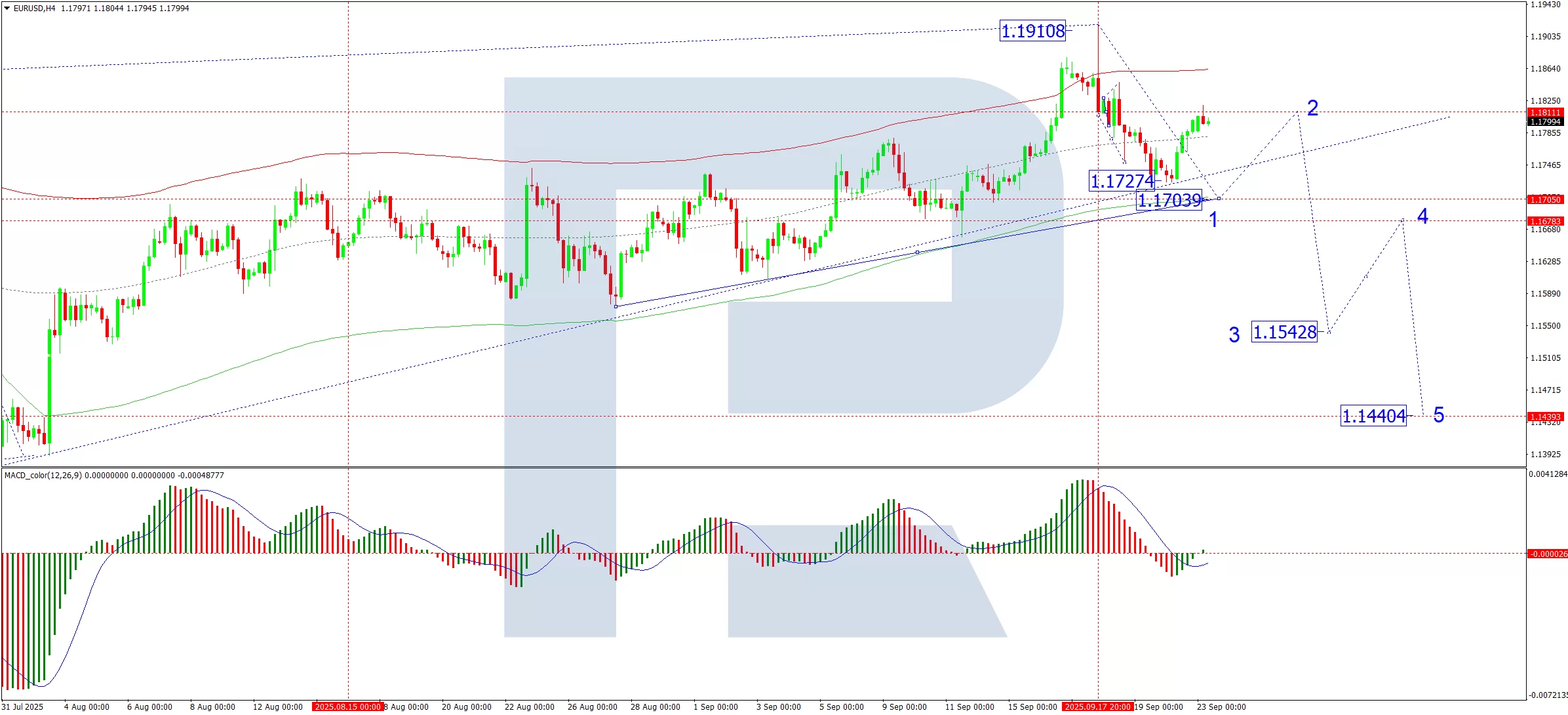
Technical Analysis: EUR/USD

H4 Chart:

On the H4 chart, EUR/USD saw an upward wave to 1.1747, with a consolidation range now forming around this level. A potential expansion to 1.1760 is possible, followed by a likely decline to 1.1650, which would set the boundaries of this range. If the pair breaks above the range, gains could extend towards 1.1885. Conversely, a downside break may trigger a fall to 1.1611, with further downside potential towards 1.1570. This outlook is supported by the MACD indicator, where the signal line remains below zero, indicating a sharp downward trend.

H1 Chart:

On the H1 chart, the pair continues consolidating around 1.1717, with an expected upward expansion to 1.1777. However, the bullish momentum appears exhausted, and a downward wave to 1.1700 could materialise at any moment, potentially extending to 1.1611. The Stochastic oscillator reinforces this view, with its signal line below 80 and trending downward towards 20.

Conclusion

The EUR/USD remains under pressure amid uncertainties over tariffs and shifting expectations for the Fed’s rate outlook. Technically, the pair shows limited upside potential, with key support levels at 1.1650 (H4) and 1.1611 (H1). A break lower could accelerate declines, while an upward breakout may signal a short-term recovery.


Disclaimer

Any forecasts contained herein are based on the author’s particular opinion. This analysis may not be treated as trading advice. RoboForex bears no responsibility for trading results based on trading recommendations and reviews contained herein.

Yen Weakens as Japanese Data Sends Mixed Signals

By RoboForex Analytical Department 

The USD/JPY pair edged higher on Monday, reaching 144.81, as the yen relinquished its earlier gains. The currency faced downward pressure following the release of disappointing wage figures, which dampened expectations for further monetary policy tightening by the Bank of Japan.

Japan’s nominal wages rose by just 1.0% year-on-year in May, falling well short of the 2.4% forecast and marking a third consecutive monthly slowdown. Meanwhile, real wages, which reflect actual purchasing power, declined by 2.9% – the sharpest drop in nearly two years and the fifth straight month of contraction.

Notably, the official data does not yet fully account for the impact of this spring’s record wage agreements, negotiated with trade unions. Several smaller and non-unionised firms have been slower to implement these changes, delaying their effect on broader wage trends.

Further weighing on the yen were remarks from Prime Minister Shigeru Ishiba, who stated on Sunday that Japan would not make “easy concessions” in trade talks with the US, despite the threat of 35% tariffs on Japanese exports. Negotiations are expected to resume this week.

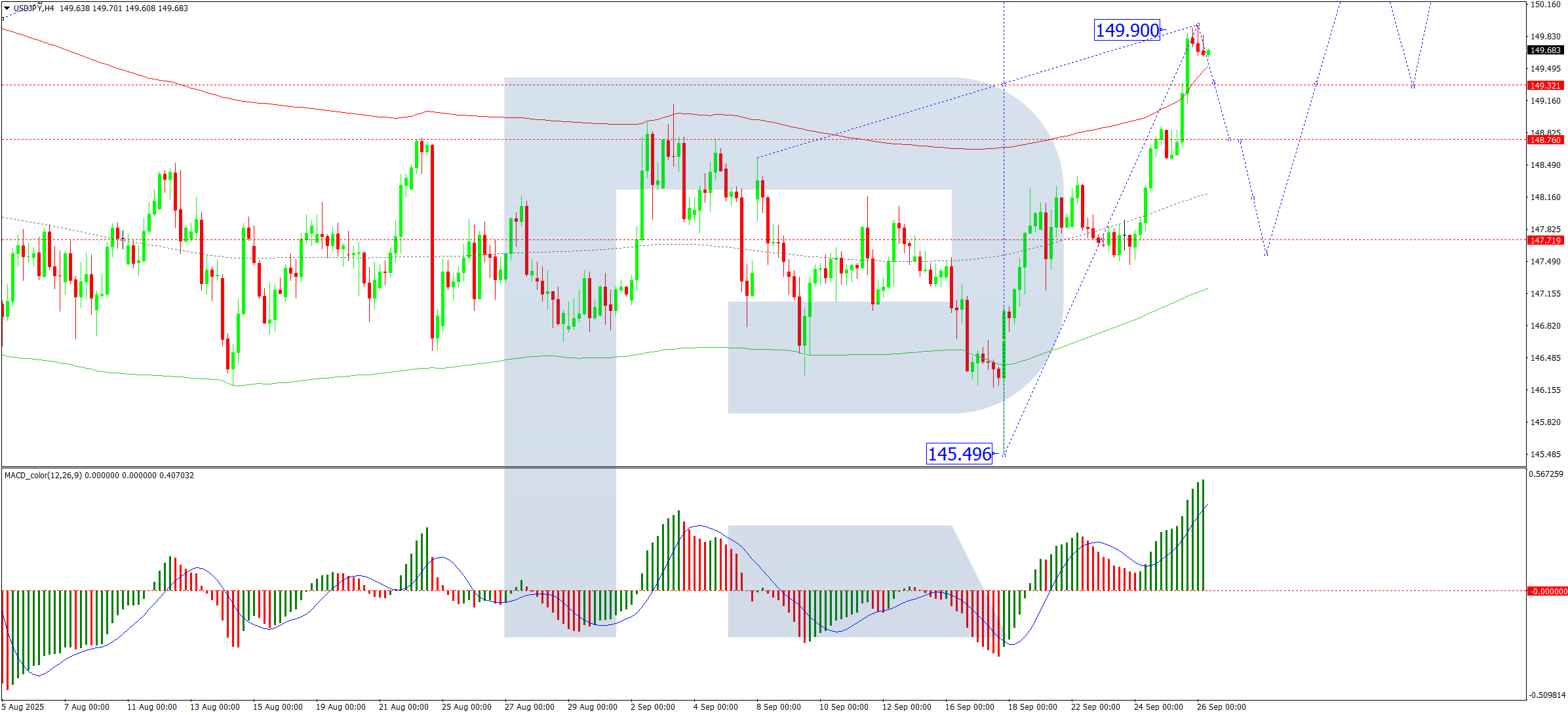
Technical Analysis: USD/JPY

H4 Chart:


On the H4 chart, USD/JPY has formed a consolidation range around 144.33 before pushing upward. The immediate target is 145.33, after which we anticipate a downward correction towards 142.45, with potential for further declines to 141.70. This scenario is supported by the MACD indicator, where the signal line remains above zero and points firmly upward.

H1 Chart:

On the H1 chart, the pair corrected to 144.11 before resuming its upward trajectory, targeting 146.26. Upon reaching this level, we expect a new decline towards 143.90. A break below this level could extend losses to 141.70. The Stochastic oscillator aligns with this view, with its signal line currently at 80 and turning downward.

Conclusion

The yen’s weakness reflects subdued wage growth and lingering trade uncertainties, while technical indicators suggest potential volatility ahead.


Disclaimer

Any forecasts contained herein are based on the author’s particular opinion. This analysis may not be treated as trading advice. RoboForex bears no responsibility for trading results based on trading recommendations and reviews contained herein.

EUR/USD extends rally for ninth consecutive day as dollar remains weak

By RoboForex Analytical Department 

The EUR/USD pair soared to 1.1801 on Wednesday, marking its ninth consecutive day of gains. The US dollar remains under heavy pressure due to expectations of a dovish shift in Federal Reserve policy and growing concerns over President Donald Trump’s fiscal strategy.

Fed maintains cautious stance while fiscal worries mount

On Tuesday, Fed Chair Jerome Powell reiterated that the central bank will maintain a wait-and-see approach, but he did not rule out a potential rate cut at the next meeting. Powell emphasised that future decisions would depend on economic data, adding that the Fed could have already cut rates were it not for inflationary pressures from Trump’s tariffs.

Meanwhile, the US Senate narrowly approved a massive tax and budget package expected to increase the national debt by 3.3 trillion USD. The bill now returns to the House of Representatives for final approval, fuelling further concerns over the US fiscal outlook.

Key data ahead to guide the market

Investors are now awaiting crucial US employment data:

  • Wednesday: ADP report on private sector employment
  • Thursday: June labour market statistics

These releases could provide further clarity on the Fed’s next policy steps.

Technical analysis of EUR/USD

On the H4 chart, EUR/USD has completed a growth wave to 1.1777, with a consolidation range forming around this level. Today, an upward expansion is expected to 1.1848, followed by a decline to 1.1750, marking the range boundaries. An upward breakout could extend the range to 1.1885, while a downward breakout would open the potential for a decline to 1.1430. The MACD indicator confirms this outlook, with its signal line above zero and exiting the histogram zone, suggesting an approaching correction as it nears the zero line.

On the H1 chart, EUR/USD continues forming a consolidation range around 1.1777. Today, an expansion upwards to 1.1848 is likely. However, it is essential to note that the growth potential is nearly exhausted, and the market may soon begin a downward trend towards 1.1660, with the potential to extend to 1.1616. The Stochastic oscillator confirms this scenario, with its signal line below 80 and pointing sharply downward towards 20, indicating the building of bearish momentum.

Conclusion

The EUR/USD maintains its strong rally amid dovish Fed expectations and US fiscal concerns, with resistance levels at 1.1848 and 1.1885. Support lies at 1.1750, 1.1660, and 1.1616. Upcoming employment data will be crucial in determining whether the pair sustains its upward trend or reverses into a corrective phase.


Disclaimer

Any forecasts contained herein are based on the author’s particular opinion. This analysis may not be treated as trading advice. RoboForex bears no responsibility for trading results based on trading recommendations and reviews contained herein.

US Dollar Index Speculators drop their bets to lowest level since 2021

By InvestMacro

Speculators OI FX Futures COT Chart

Here are the latest charts and statistics for the Commitment of Traders (COT) data published by the Commodities Futures Trading Commission (CFTC).

The latest COT data is updated through Tuesday June 24th and shows a quick view of how large market participants (for-profit speculators and commercial traders) were positioned in the futures markets. All currency positions are in direct relation to the US dollar where, for example, a bet for the euro is a bet that the euro will rise versus the dollar while a bet against the euro will be a bet that the euro will decline versus the dollar.

Weekly Speculator Changes led by Canadian Dollar & Euro

Speculators Nets FX Futures COT Chart
The COT currency market speculator bets were overall lower this week as four out of the eleven currency markets we cover had higher positioning while the other seven markets had lower speculator contracts.

Leading the gains for the currency markets was the Canadian Dollar (13,166 contracts) with the EuroFX (9,582 contracts), the New Zealand Dollar (4,043 contracts) and the Japanese Yen (1,400 contracts) also showing positive weeks.

The currencies seeing declines in speculator bets on the week were the British Pound (-8,462 contracts), the Brazilian Real (-6,962 contracts), the Mexican Peso (-6,716 contracts), the Australian Dollar (-3,172 contracts), the US Dollar Index (-3,066 contracts), the Swiss Franc (-888 contracts) and with Bitcoin (-377 contracts) also registering lower bets on the week.

US Dollar Index Speculators drop their bets to lowest level since 2021

The U.S. dollar index speculator position dropped this week for a second consecutive week and is now at the lowest level in the past 225 weeks. This is the lowest standing dating back to March 9th of 2021 when the speculator positions were negative by over -8,000 contracts.

The U.S. dollar index speculator position has fallen by -7,436 contracts in the last two weeks and by over -22,000 contracts in the last 15 weeks, going from +16,835 contracts on March 11th to -6,034 contracts this week.

Despite geopolitical turmoil over the last few weeks, the dollar index has not experienced safe haven flows and is now trading under the 98.00 exchange rate. This is the lowest level since 2022 when the index was on the rise up and culminated later that year at a high of nearly 115.00 in September 2022. The dollar index is now down about 12% since the beginning of the year after starting the year near the 110.00 exchange rate.

Quick Roundup:

Other Currencies:
– Non-US dollar contracts are improving week to week and month to month.
– Negative contracts at this point are the Swiss franc, the Australian dollar, the Canadian dollar, the US dollar index and Bitcoin.

Euro:
– Speculator positions have risen for five consecutive weeks and by over 36,000 contracts over that period.
– The Euro speculator position is now back over +100,000 contracts for the second consecutive week.
– The Euro positions are now at their highest level since January of 2024.

Japanese Yen:
– Speculator bets have cooled off somewhat after hitting record high in the last few months.
– The currency has been consolidating over the last two months, however it is up about 10% since beginning of the year.

Swiss Franc:
– Continues to have a negative large speculator position but has been steadily improving since the beginning of the year.
– It has halved its negative position to the current level of -20,000 contracts.
– Swiss franc has benefited from safe haven flows, rising approximately 15% against the U.S. dollar since January

Australian Dollar:
– The AUD exchange rate is up about 5% against the U.S. dollar in 2025.
– However, the speculator position is the most bearish out of all the major currencies as the Reserve Bank of Australia cut interest rate in May meeting.


Currencies Data:

Speculators FX Futures COT Data Table
Legend: Open Interest | Speculators Current Net Position | Weekly Specs Change | Specs Strength Score compared to last 3-Years (0-100 range)


Strength Scores led by Japanese Yen & Brazilian Real

Speculators Strength Scores FX Futures COT Chart
COT Strength Scores (a normalized measure of Speculator positions over a 3-Year range, from 0 to 100 where above 80 is Extreme-Bullish and below 20 is Extreme-Bearish) showed that the Japanese Yen (87 percent) and the Brazilian Real (81 percent) lead the currency markets this week. The EuroFX (71 percent), New Zealand Dollar (68 percent) and the Canadian Dollar (64 percent) come in as the next highest in the weekly strength scores.

On the downside, the US Dollar Index (0 percent) and Bitcoin (4 percent) come in at the lowest strength levels currently and are in Extreme-Bearish territory (below 20 percent).

3-Year Strength Statistics:
US Dollar Index (0.0 percent) vs US Dollar Index previous week (6.6 percent)
EuroFX (71.1 percent) vs EuroFX previous week (67.4 percent)
British Pound Sterling (48.7 percent) vs British Pound Sterling previous week (52.8 percent)
Japanese Yen (87.1 percent) vs Japanese Yen previous week (86.7 percent)
Swiss Franc (58.4 percent) vs Swiss Franc previous week (60.2 percent)
Canadian Dollar (64.1 percent) vs Canadian Dollar previous week (58.2 percent)
Australian Dollar (24.8 percent) vs Australian Dollar previous week (27.1 percent)
New Zealand Dollar (67.7 percent) vs New Zealand Dollar previous week (63.0 percent)
Mexican Peso (54.9 percent) vs Mexican Peso previous week (58.3 percent)
Brazilian Real (80.8 percent) vs Brazilian Real previous week (86.5 percent)
Bitcoin (4.1 percent) vs Bitcoin previous week (12.4 percent)


New Zealand Dollar & Canadian Dollar top the 6-Week Strength Trends

Speculators Trends FX Futures COT Chart
COT Strength Score Trends (or move index, calculates the 6-week changes in strength scores) showed that the New Zealand Dollar (29 percent) and the Canadian Dollar (13 percent) lead the past six weeks trends for the currencies. The EuroFX (10 percent), the Swiss Franc (4 percent) and the British Pound (3 percent) are the next highest positive movers in the 3-Year trends data.

Bitcoin (-29 percent) leads the downside trend scores currently with the Australian Dollar (-16 percent), the US Dollar Index (-12 percent) and the Japanese Yen (-11 percent) following next with lower trend scores.

3-Year Strength Trends:
US Dollar Index (-11.6 percent) vs US Dollar Index previous week (-4.0 percent)
EuroFX (10.0 percent) vs EuroFX previous week (9.8 percent)
British Pound Sterling (3.4 percent) vs British Pound Sterling previous week (6.5 percent)
Japanese Yen (-11.0 percent) vs Japanese Yen previous week (-12.7 percent)
Swiss Franc (4.3 percent) vs Swiss Franc previous week (7.1 percent)
Canadian Dollar (13.0 percent) vs Canadian Dollar previous week (1.9 percent)
Australian Dollar (-16.5 percent) vs Australian Dollar previous week (-14.9 percent)
New Zealand Dollar (29.3 percent) vs New Zealand Dollar previous week (25.3 percent)
Mexican Peso (-7.3 percent) vs Mexican Peso previous week (-5.4 percent)
Brazilian Real (1.0 percent) vs Brazilian Real previous week (21.7 percent)
Bitcoin (-29.1 percent) vs Bitcoin previous week (-0.1 percent)


Individual COT Forex Markets:

US Dollar Index Futures:

US Dollar Index Forex Futures COT ChartThe US Dollar Index large speculator standing this week recorded a net position of -6,034 contracts in the data reported through Tuesday. This was a weekly decline of -3,066 contracts from the previous week which had a total of -2,968 net contracts.

This week’s current strength score (the trader positioning range over the past three years, measured from 0 to 100) shows the speculators are currently Bearish-Extreme with a score of 0.0 percent. The commercials are Bullish-Extreme with a score of 100.0 percent and the small traders (not shown in chart) are Bearish with a score of 20.6 percent.

Price Trend-Following Model: Downtrend

Our weekly trend-following model classifies the current market price position as: Downtrend.

US DOLLAR INDEX StatisticsSPECULATORSCOMMERCIALSSMALL TRADERS
– Percent of Open Interest Longs:42.540.49.1
– Percent of Open Interest Shorts:61.918.811.4
– Net Position:-6,0346,748-714
– Gross Longs:13,28312,6172,840
– Gross Shorts:19,3175,8693,554
– Long to Short Ratio:0.7 to 12.1 to 10.8 to 1
NET POSITION TREND:
– Strength Index Score (3 Year Range Pct):0.0100.020.6
– Strength Index Reading (3 Year Range):Bearish-ExtremeBullish-ExtremeBearish
NET POSITION MOVEMENT INDEX:
– 6-Week Change in Strength Index:-11.611.3-3.6


Euro Currency Futures:

Euro Currency Futures COT ChartThe Euro Currency large speculator standing this week recorded a net position of 111,135 contracts in the data reported through Tuesday. This was a weekly lift of 9,582 contracts from the previous week which had a total of 101,553 net contracts.

This week’s current strength score (the trader positioning range over the past three years, measured from 0 to 100) shows the speculators are currently Bullish with a score of 71.1 percent. The commercials are Bearish with a score of 25.2 percent and the small traders (not shown in chart) are Bullish-Extreme with a score of 86.7 percent.

Price Trend-Following Model: Strong Uptrend

Our weekly trend-following model classifies the current market price position as: Strong Uptrend.

EURO Currency StatisticsSPECULATORSCOMMERCIALSSMALL TRADERS
– Percent of Open Interest Longs:29.354.712.4
– Percent of Open Interest Shorts:14.876.35.5
– Net Position:111,135-164,30153,166
– Gross Longs:223,791417,36394,870
– Gross Shorts:112,656581,66441,704
– Long to Short Ratio:2.0 to 10.7 to 12.3 to 1
NET POSITION TREND:
– Strength Index Score (3 Year Range Pct):71.125.286.7
– Strength Index Reading (3 Year Range):BullishBearishBullish-Extreme
NET POSITION MOVEMENT INDEX:
– 6-Week Change in Strength Index:10.0-10.27.7


British Pound Sterling Futures:

British Pound Sterling Futures COT ChartThe British Pound Sterling large speculator standing this week recorded a net position of 34,395 contracts in the data reported through Tuesday. This was a weekly decline of -8,462 contracts from the previous week which had a total of 42,857 net contracts.

This week’s current strength score (the trader positioning range over the past three years, measured from 0 to 100) shows the speculators are currently Bearish with a score of 48.7 percent. The commercials are Bearish with a score of 45.6 percent and the small traders (not shown in chart) are Bullish-Extreme with a score of 82.4 percent.

Price Trend-Following Model: Strong Uptrend

Our weekly trend-following model classifies the current market price position as: Strong Uptrend.

BRITISH POUND StatisticsSPECULATORSCOMMERCIALSSMALL TRADERS
– Percent of Open Interest Longs:55.524.020.0
– Percent of Open Interest Shorts:36.448.514.6
– Net Position:34,395-44,0359,640
– Gross Longs:99,84843,16635,906
– Gross Shorts:65,45387,20126,266
– Long to Short Ratio:1.5 to 10.5 to 11.4 to 1
NET POSITION TREND:
– Strength Index Score (3 Year Range Pct):48.745.682.4
– Strength Index Reading (3 Year Range):BearishBearishBullish-Extreme
NET POSITION MOVEMENT INDEX:
– 6-Week Change in Strength Index:3.4-5.010.1


Japanese Yen Futures:

Japanese Yen Forex Futures COT ChartThe Japanese Yen large speculator standing this week recorded a net position of 132,277 contracts in the data reported through Tuesday. This was a weekly lift of 1,400 contracts from the previous week which had a total of 130,877 net contracts.

This week’s current strength score (the trader positioning range over the past three years, measured from 0 to 100) shows the speculators are currently Bullish-Extreme with a score of 87.1 percent. The commercials are Bearish-Extreme with a score of 13.7 percent and the small traders (not shown in chart) are Bullish with a score of 79.5 percent.

Price Trend-Following Model: Uptrend

Our weekly trend-following model classifies the current market price position as: Uptrend.

JAPANESE YEN StatisticsSPECULATORSCOMMERCIALSSMALL TRADERS
– Percent of Open Interest Longs:56.729.212.9
– Percent of Open Interest Shorts:14.776.28.0
– Net Position:132,277-147,71015,433
– Gross Longs:178,40392,03440,462
– Gross Shorts:46,126239,74425,029
– Long to Short Ratio:3.9 to 10.4 to 11.6 to 1
NET POSITION TREND:
– Strength Index Score (3 Year Range Pct):87.113.779.5
– Strength Index Reading (3 Year Range):Bullish-ExtremeBearish-ExtremeBullish
NET POSITION MOVEMENT INDEX:
– 6-Week Change in Strength Index:-11.09.46.4


Swiss Franc Futures:

Swiss Franc Forex Futures COT ChartThe Swiss Franc large speculator standing this week recorded a net position of -20,944 contracts in the data reported through Tuesday. This was a weekly fall of -888 contracts from the previous week which had a total of -20,056 net contracts.

This week’s current strength score (the trader positioning range over the past three years, measured from 0 to 100) shows the speculators are currently Bullish with a score of 58.4 percent. The commercials are Bearish with a score of 33.4 percent and the small traders (not shown in chart) are Bullish with a score of 79.5 percent.

Price Trend-Following Model: Uptrend

Our weekly trend-following model classifies the current market price position as: Uptrend.

SWISS FRANC StatisticsSPECULATORSCOMMERCIALSSMALL TRADERS
– Percent of Open Interest Longs:11.865.822.2
– Percent of Open Interest Shorts:41.935.922.0
– Net Position:-20,94420,768176
– Gross Longs:8,18445,70215,449
– Gross Shorts:29,12824,93415,273
– Long to Short Ratio:0.3 to 11.8 to 11.0 to 1
NET POSITION TREND:
– Strength Index Score (3 Year Range Pct):58.433.479.5
– Strength Index Reading (3 Year Range):BullishBearishBullish
NET POSITION MOVEMENT INDEX:
– 6-Week Change in Strength Index:4.3-3.60.4


Canadian Dollar Futures:

Canadian Dollar Forex Futures COT ChartThe Canadian Dollar large speculator standing this week recorded a net position of -53,167 contracts in the data reported through Tuesday. This was a weekly boost of 13,166 contracts from the previous week which had a total of -66,333 net contracts.

This week’s current strength score (the trader positioning range over the past three years, measured from 0 to 100) shows the speculators are currently Bullish with a score of 64.1 percent. The commercials are Bearish with a score of 35.0 percent and the small traders (not shown in chart) are Bullish with a score of 51.8 percent.

Price Trend-Following Model: Uptrend

Our weekly trend-following model classifies the current market price position as: Uptrend.

CANADIAN DOLLAR StatisticsSPECULATORSCOMMERCIALSSMALL TRADERS
– Percent of Open Interest Longs:12.667.513.6
– Percent of Open Interest Shorts:39.042.412.3
– Net Position:-53,16750,4302,737
– Gross Longs:25,267135,77627,452
– Gross Shorts:78,43485,34624,715
– Long to Short Ratio:0.3 to 11.6 to 11.1 to 1
NET POSITION TREND:
– Strength Index Score (3 Year Range Pct):64.135.051.8
– Strength Index Reading (3 Year Range):BullishBearishBullish
NET POSITION MOVEMENT INDEX:
– 6-Week Change in Strength Index:13.0-17.635.7


Australian Dollar Futures:

Australian Dollar Forex Futures COT ChartThe Australian Dollar large speculator standing this week recorded a net position of -72,562 contracts in the data reported through Tuesday. This was a weekly decrease of -3,172 contracts from the previous week which had a total of -69,390 net contracts.

This week’s current strength score (the trader positioning range over the past three years, measured from 0 to 100) shows the speculators are currently Bearish with a score of 24.8 percent. The commercials are Bullish with a score of 72.0 percent and the small traders (not shown in chart) are Bullish with a score of 54.6 percent.

Price Trend-Following Model: Strong Uptrend

Our weekly trend-following model classifies the current market price position as: Strong Uptrend.

AUSTRALIAN DOLLAR StatisticsSPECULATORSCOMMERCIALSSMALL TRADERS
– Percent of Open Interest Longs:15.464.915.1
– Percent of Open Interest Shorts:63.418.213.7
– Net Position:-72,56270,4752,087
– Gross Longs:23,24997,99222,820
– Gross Shorts:95,81127,51720,733
– Long to Short Ratio:0.2 to 13.6 to 11.1 to 1
NET POSITION TREND:
– Strength Index Score (3 Year Range Pct):24.872.054.6
– Strength Index Reading (3 Year Range):BearishBullishBullish
NET POSITION MOVEMENT INDEX:
– 6-Week Change in Strength Index:-16.511.79.5


New Zealand Dollar Futures:

New Zealand Dollar Forex Futures COT ChartThe New Zealand Dollar large speculator standing this week recorded a net position of 2,770 contracts in the data reported through Tuesday. This was a weekly advance of 4,043 contracts from the previous week which had a total of -1,273 net contracts.

This week’s current strength score (the trader positioning range over the past three years, measured from 0 to 100) shows the speculators are currently Bullish with a score of 67.7 percent. The commercials are Bearish with a score of 29.8 percent and the small traders (not shown in chart) are Bullish with a score of 67.5 percent.

Price Trend-Following Model: Strong Uptrend

Our weekly trend-following model classifies the current market price position as: Strong Uptrend.

NEW ZEALAND DOLLAR StatisticsSPECULATORSCOMMERCIALSSMALL TRADERS
– Percent of Open Interest Longs:42.138.59.8
– Percent of Open Interest Shorts:35.847.27.3
– Net Position:2,770-3,8771,107
– Gross Longs:18,61917,0044,355
– Gross Shorts:15,84920,8813,248
– Long to Short Ratio:1.2 to 10.8 to 11.3 to 1
NET POSITION TREND:
– Strength Index Score (3 Year Range Pct):67.729.867.5
– Strength Index Reading (3 Year Range):BullishBearishBullish
NET POSITION MOVEMENT INDEX:
– 6-Week Change in Strength Index:29.3-29.27.8


Mexican Peso Futures:

Mexican Peso Futures COT ChartThe Mexican Peso large speculator standing this week recorded a net position of 51,311 contracts in the data reported through Tuesday. This was a weekly decline of -6,716 contracts from the previous week which had a total of 58,027 net contracts.

This week’s current strength score (the trader positioning range over the past three years, measured from 0 to 100) shows the speculators are currently Bullish with a score of 54.9 percent. The commercials are Bearish with a score of 45.5 percent and the small traders (not shown in chart) are Bearish with a score of 47.5 percent.

Price Trend-Following Model: Strong Uptrend

Our weekly trend-following model classifies the current market price position as: Strong Uptrend.

MEXICAN PESO StatisticsSPECULATORSCOMMERCIALSSMALL TRADERS
– Percent of Open Interest Longs:57.037.64.9
– Percent of Open Interest Shorts:22.175.51.8
– Net Position:51,311-55,7804,469
– Gross Longs:83,72955,1557,127
– Gross Shorts:32,418110,9352,658
– Long to Short Ratio:2.6 to 10.5 to 12.7 to 1
NET POSITION TREND:
– Strength Index Score (3 Year Range Pct):54.945.547.5
– Strength Index Reading (3 Year Range):BullishBearishBearish
NET POSITION MOVEMENT INDEX:
– 6-Week Change in Strength Index:-7.37.13.5


Brazilian Real Futures:

Brazil Real Futures COT ChartThe Brazilian Real large speculator standing this week recorded a net position of 44,730 contracts in the data reported through Tuesday. This was a weekly lowering of -6,962 contracts from the previous week which had a total of 51,692 net contracts.

This week’s current strength score (the trader positioning range over the past three years, measured from 0 to 100) shows the speculators are currently Bullish-Extreme with a score of 80.8 percent. The commercials are Bearish-Extreme with a score of 17.9 percent and the small traders (not shown in chart) are Bearish with a score of 40.3 percent.

Price Trend-Following Model: Strong Uptrend

Our weekly trend-following model classifies the current market price position as: Strong Uptrend.

BRAZIL REAL StatisticsSPECULATORSCOMMERCIALSSMALL TRADERS
– Percent of Open Interest Longs:50.133.93.6
– Percent of Open Interest Shorts:16.370.21.0
– Net Position:44,730-48,1823,452
– Gross Longs:66,37444,9524,804
– Gross Shorts:21,64493,1341,352
– Long to Short Ratio:3.1 to 10.5 to 13.6 to 1
NET POSITION TREND:
– Strength Index Score (3 Year Range Pct):80.817.940.3
– Strength Index Reading (3 Year Range):Bullish-ExtremeBearish-ExtremeBearish
NET POSITION MOVEMENT INDEX:
– 6-Week Change in Strength Index:1.0-0.9-0.6


Bitcoin Futures:

Bitcoin Crypto Futures COT ChartThe Bitcoin large speculator standing this week recorded a net position of -2,161 contracts in the data reported through Tuesday. This was a weekly decrease of -377 contracts from the previous week which had a total of -1,784 net contracts.

This week’s current strength score (the trader positioning range over the past three years, measured from 0 to 100) shows the speculators are currently Bearish-Extreme with a score of 4.1 percent. The commercials are Bullish-Extreme with a score of 94.3 percent and the small traders (not shown in chart) are Bullish with a score of 61.6 percent.

Price Trend-Following Model: Strong Uptrend

Our weekly trend-following model classifies the current market price position as: Strong Uptrend.

BITCOIN StatisticsSPECULATORSCOMMERCIALSSMALL TRADERS
– Percent of Open Interest Longs:77.36.94.8
– Percent of Open Interest Shorts:84.21.53.3
– Net Position:-2,1611,692469
– Gross Longs:24,2322,1521,497
– Gross Shorts:26,3934601,028
– Long to Short Ratio:0.9 to 14.7 to 11.5 to 1
NET POSITION TREND:
– Strength Index Score (3 Year Range Pct):4.194.361.6
– Strength Index Reading (3 Year Range):Bearish-ExtremeBullish-ExtremeBullish
NET POSITION MOVEMENT INDEX:
– 6-Week Change in Strength Index:-29.13.261.6


Article By InvestMacroReceive our weekly COT Newsletter

*COT Report: The COT data, released weekly to the public each Friday, is updated through the most recent Tuesday (data is 3 days old) and shows a quick view of how large speculators or non-commercials (for-profit traders) were positioned in the futures markets.

The CFTC categorizes trader positions according to commercial hedgers (traders who use futures contracts for hedging as part of the business), non-commercials (large traders who speculate to realize trading profits) and nonreportable traders (usually small traders/speculators) as well as their open interest (contracts open in the market at time of reporting). See CFTC criteria here.

Week Ahead: EURUSD set to rally towards key 1.20 level?

By ForexTime 

  • EURUSD ↑ 3% MTD, trading near 4-year highs
  • ECB forum in Sintra + key EU/US data = fresh volatility?  
  • EURUSD forecasted to move ↑ 0.3% or ↓ 0.7% post NFP
  • Bloomberg FX model: EURUSD has 75% of trading within 1.1557 – 1.1880 over 1-week period
  • Technical level: 1.1700

The world’s most-traded FX pair is on a tear, hitting levels not seen since September 2021!

At the time of writing, EURUSD has gained over 3% this month with prices knocking on key resistance at 1.17.


Why is the EURUSD rallying?


A broadly weaker dollar:

  • The greenback has been hit by growing bets on a more dovish-leaning Fed amid reports that Trump will announce Powell’s replacement sooner than expected.


  • Easing geopolitical tensions in the Middle East also reduced appetite for safe-haven assets, enforcing more pressure on the dollar.

We have seen the dollar not only weaken against the euro but against every single G10 currency month-to-date. 

Imagen
usdJDD


With the dollar under pressure, could this mean more upside for the EURUSD ahead of another event-heavy week?

Monday, 30th June 

  • CN50: China PMI’s
  • GER40: Germany CPI
  • JP225: Japan industrial production
  • UK100: UK GDP
  • US500: Atlanta Fed President Raphael Bostic speech
  • ECB Forum on Central Banking in Sintra

Tuesday, 1st July 

  • CN50: China Caixin manufacturing PMI
  • EUR: Germany Manufacturing PMI, Eurozone CPI, ECB President Lagarde speech
  • JPY: Japan S&P Global Manufacturing PMI, BOJ Governor Ueda speech
  • GBP: UK S&P Global Manufacturing PMI, BOE Governor Bailey speech
  • USDInd: US ISM Manufacturing, S&P Global PMI, Fed Chair Powell speech

Wednesday, 2nd July

  • AUD: Australia retail sales, building approvals
  • CAD: Canada S&P Global Manufacturing PMI
  • EUR: Eurozone unemployment
  • US400: US ADP employment
  • Tesla: Second-quarter vehicle sales figures

Thursday, 3rd July 

  • AUD: Australia trade
  • CN50: China Caixin services PMI
  • EUR: Eurozone HCOB Services PMI, ECB meeting minutes
  • JPY: Japan S&P Global Services PMI
  • USDInd: US June nonfarm payrolls, initial jobless claims

Friday, 4th July 

  • SG20: Singapore retail sales
  • EUR: Eurozone PPI, Germany factory orders
  • Senate vote for signing a Republican-backed tax and spending bill.
  • US markets closed: Independence Day holiday

Here are 4 key events that could rattle the EURUSD:


1) ECB’s annual forum in Sintra

European Central Bank President Christine Lagarde will kick off the ECB forum with a keynote speech on Monday, 30th June. 

Lagarde will be under the spotlight again on Tuesday, with Fed Chair Jerome Powell and other central bank heads discussing “macroeconomic shifts and policy responses”. Should Lagarde or Powell offer any fresh clues about future monetary policy, this could result in heightened volatility on the EURUSD.


2) Eurozone June CPI + data dump

Inflation data from Europe on Tuesday, 1st July could influence expectations around when the ECB will cut interest rates. 

Markets are forecasting: 

  • CPI year-on-year (June 2024 vs. June 2025) is expected to rise 1.9%
  • Core CPI year-on-year to remain unchanged at 2.3%
  • CPI month-on-month (June 2025 vs May 2025) to rise 0.2% from 0.0%.

EURUSD is forecasted to move as much as 0.4% or decline 0.3% in a 6-hour window post release.

  • A softer inflation may fuel speculation around lower rates in Europe, dragging the EURUSD lower.
  • A hotter-than-expected inflation report could shave ECB cut bets, resulting in a stronger Euro.

Traders are currently pricing a 55% probability of a 25-basis point ECB cut by September. 

Note: Beyond the Eurozone CPI data, it will be wise to keep an eye on the German CPI report, Manufacturing PMI’s, Eurozone unemployment and PPI which may influence the euro.


3) US June nonfarm payrolls (NFP)

Here is what markets predict for the key US jobs report on Thursday 3rd July: 

June headline NFP number: 120,000

If so, that would be lower than the 139k new jobs created in May. 

June unemployment rate: 4.3%

This would represent a 0.1% increase from the 4.2% in May. 

  • A weaker-than-expected US jobs report may weaken the dollar, pushing the EURUSD higher as a result.
  • Should the US jobs report print stronger than expected, the EURUSD may sink as the Dollar strengthens. 

EURUSD is forecasted to move 0.30% up or 0.73% down in the 6 hours after this US NFP release


4) Technical forces

The EURUSD is firmly bullish on the daily timeframe with prices trading above the 50, 100 and 200-day SMA. However, the Relative Strength Index signals that prices are heavily overbought. 

  • A solid daily close above 1.1700 may signal a move toward 1.1800 and 1.1880 – the upper limit of the Bloomberg FX model.


  • Should 1.1700 prove to be a tough resistance, this could trigger a decline back toward 1.1620 and 1.1557 – the lower limit of the Bloomberg FX model.
Imagen
eurusd2

Bloomberg’s FX model forecasts a 75% chance that EURUSD will trade within the 1.1557 – 1.1880 range, using current levels as a base, over the next one-week period.


Forex-Time-LogoArticle by ForexTime

ForexTime Ltd (FXTM) is an award winning international online forex broker regulated by CySEC 185/12 www.forextime.com

Pound Hits Multi-Year High as Bank of England Signals Rate Cut Readiness

By RoboForex Analytical Department 

The GBP/USD pair surged to 1.3704, reaching its highest level since January 2022.

This rally was driven by a weakening US dollar, growing expectations of a Federal Reserve rate cut, and easing geopolitical tensions.

Market expectations for an imminent Fed rate reduction strengthened after Chair Jerome Powell suggested that weaker inflation or employment data could prompt faster action from the central bank.

In the UK, Bank of England (BoE) Governor Andrew Bailey and Deputy Governor Dave Ramsden signalled that interest rate cuts are on the horizon. They highlighted signs of a cooling labour market, including slowing wage growth and rising economic inactivity. However, Bailey cautioned about reliability issues in recent employment data.

Ramsden, who voted for a rate cut, cited the labour market slowdown as a key factor. He also warned of the risk of inflation falling below the BoE’s 2% target.

Meanwhile, markets are closely watching the truce between Israel and Iran, which has reduced fears of further escalation and potential inflationary shocks.

Technical Analysis: GBP/USD

H4 Chart:

On the H4 chart, GBP/USD formed a tight consolidation range around 1.3622 before breaking higher. The pair has now breached the upper boundary of a broader consolidation range, suggesting potential for further gains. The next upside target is 1.3880, supported by the MACD indicator, where the signal line remains above zero and trending upwards.

H1 Chart:

On the H1 chart, the pair completed an upward wave to 1.3723. A short-term pullback towards 1.3630 is possible before another potential rally towards 1.3810. This scenario is supported by the Stochastic oscillator, where the signal line is below 80 and descending towards 20.

Conclusion

The pound’s rally reflects dollar weakness and BoE rate cut expectations, while technical indicators suggest further upside potential after a possible brief correction.


Disclaimer

Any forecasts contained herein are based on the author’s particular opinion. This analysis may not be treated as trading advice. RoboForex bears no responsibility for trading results based on trading recommendations and reviews contained herein.

EUR/USD Extends Rally as Risk Sentiment Improves

By RoboForex Analytical Department 

On Wednesday, EUR/USD climbed to 1.1621, marking its fifth consecutive session of gains with little interruption. The upward momentum reflects easing geopolitical tensions, which in turn have reduced the demand for traditional safe-haven assets.

The US-brokered ceasefire between Israel and Iran remains largely intact despite isolated incidents, while oil prices have retreated significantly from recent peaks. However, lingering uncertainties persist – reports suggest recent US missile strikes only partially damaged Iran’s critical nuclear facilities, merely delaying rather than halting its nuclear program.

Market attention remains fixed on Federal Reserve Chair Jerome Powell’s latest remarks. Reaffirming his commitment to curbing inflation, Powell signalled that interest rates are likely to stay on hold until the impact of trade tariffs on prices becomes clearer. Nevertheless, markets still price in a 20% probability of a rate cut as early as July.

Traders now await Powell’s upcoming Senate testimony and the latest US new home sales data for further direction.

Technical Analysis: EUR/USD

H4 Chart:

The EUR/USD breakout above 1.1540 propelled the pair towards 1.1640. Today, we anticipate consolidation below this level. A downside exit could trigger a retracement towards 1.1540, while an upward breakout may extend gains to 1.1670. Beyond this, we expect a potential downward wave targeting 1.1414, supported by the MACD indicator. The signal line, currently above zero and exiting the histogram zone, suggests a likely decline towards the baseline.

H1 Chart:

After finding support at 1.1518, the pair rallied to 1.1640, where a tight consolidation range is forming. A downward breakout appears probable – should 1.1580 give way, a decline towards 1.1518 may follow. This scenario is corroborated by the Stochastic oscillator, with its signal line below 80 and trending sharply downward towards 20.


Conclusion

The EUR/USD uptrend persists amid improving risk sentiment, though technical indicators suggest a potential pullback. Traders should monitor Powell’s testimony and US housing data for near-term catalysts.


Disclaimer

Any forecasts contained herein are based on the author’s particular opinion. This analysis may not be treated as trading advice. RoboForex bears no responsibility for trading results based on trading recommendations and reviews contained herein.

USD/JPY Reverses Downwards: External Factors Reduce Support for the US Dollar

By RoboForex Analytical Department 

The USD/JPY pair is falling sharply, dropping to 145.49 on Tuesday as the yen recovers some of its losses after weeks of decline.

The reversal follows a broad weakening of the US dollar, triggered by former President Donald Trump’s remarks on the ceasefire between Israel and Iran, which he referred to as a “12-day war.”

Markets largely dismissed Iran’s retaliatory strike on a US base in Qatar – which caused no casualties – while Tehran’s decision not to close the strategically vital Strait of Hormuz helped ease concerns over potential supply disruptions.

Domestically, investors continue to assess the Bank of Japan’s (BoJ) policy stance. At its June meeting, the central bank held the key rate at 0.5% but signalled readiness for further tightening, citing persistent core inflation driven by companies passing on higher wage costs to consumers.

Given the yen’s prolonged depreciation, a period of consolidation – if not a full recovery – now appears likely.

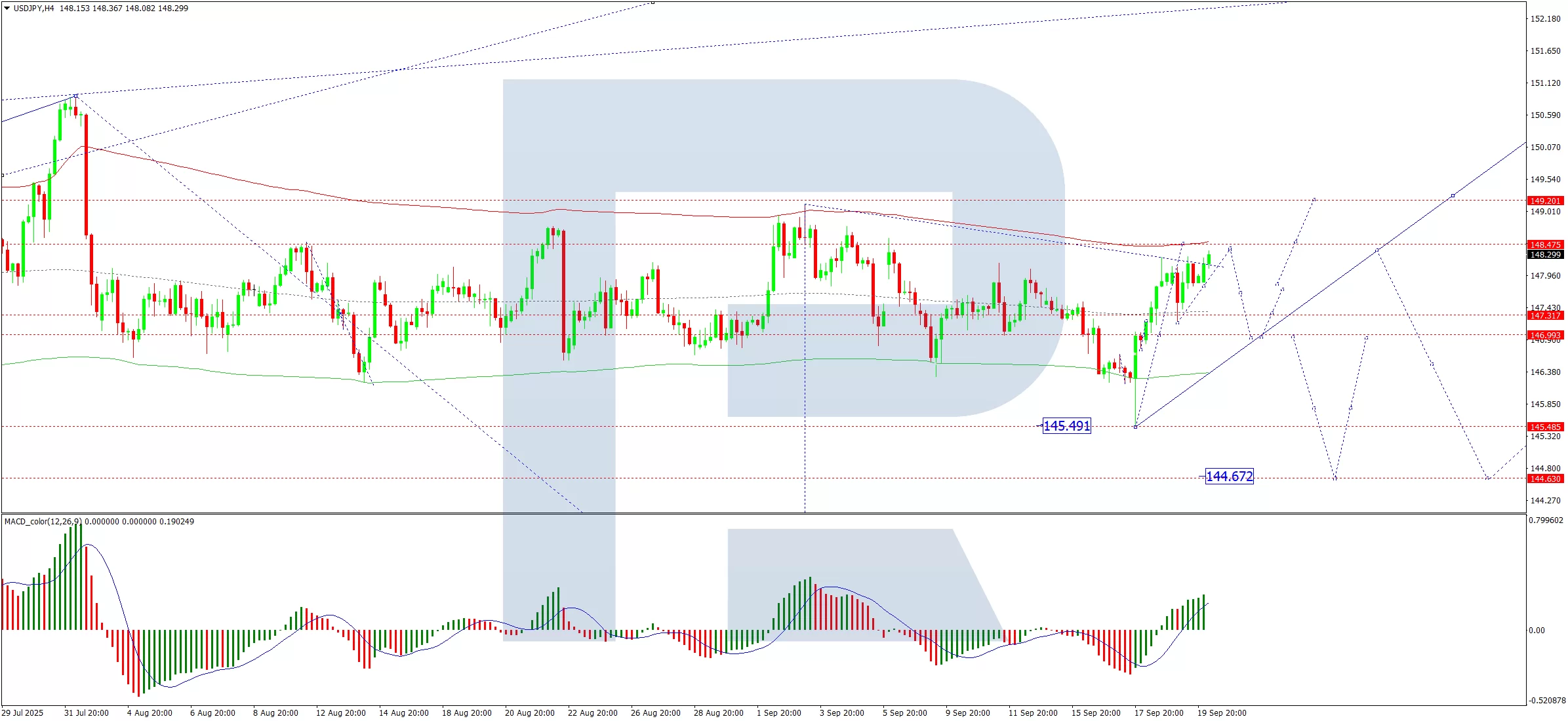
Technical Analysis: USD/JPY

H4 Chart:

On the H4 chart, USD/JPY broke above the 145.00 consolidation range, rallying to 148.00 before pulling back. We now see a corrective decline, with a potential retest of 145.00 (a technical pullback to the breakout level). Once this correction concludes, another upward wave toward 148.40 could develop, with a longer-term target at 149.00. This scenario is supported by the MACD indicator: its signal line remains above zero, having exited the histogram zone, suggesting a decline, at a minimum, back to the zero line.

H1 Chart:

On the H1 chart, USD/JPY completed an uptrend to 148.00 before forming a consolidation range near 146.50. A downside breakout could extend the decline toward 145.00, after which a new upward wave targeting 149.00 may emerge. The Stochastic oscillator aligns with this outlook, with its signal line below 20 and pointing firmly downward.

Conclusion

The yen’s rebound reflects both external dollar weakness and domestic policy shifts, with technicals suggesting near-term consolidation before potential renewed upside.


Disclaimer

Any forecasts contained herein are based on the author’s particular opinion. This analysis may not be treated as trading advice. RoboForex bears no responsibility for trading results based on trading recommendations and reviews contained herein.

GBP/USD Under Pressure: The Pound Rapidly Loses Strength

By RoboForex Analytical Department 

The GBP/USD pair continues its decline, touching 1.3403 on Thursday, as the pound hovers near a four-week low.

Political uncertainty in the UK and heightened demand for safe-haven assets amid the Israel-Iran conflict have weighed heavily on the sterling.

Today, the Bank of England (BoE) holds its monetary policy meeting, and markets widely expect rates to be kept on hold. Focus will be on the BoE’s forward guidance, particularly amid rising oil prices.

Meanwhile, markets are still pricing in two rate cuts in 2025. Combined with soft UK macroeconomic data and the Federal Reserve’s hawkish stance, this has weighed on the pound’s yield and diminished its relative appeal to investors.

Over the past 24 hours, the broad-based strengthening of the US dollar has further pressured the GBP exchange rate.

Earlier, the pound reacted to inflation figures, which came in line with forecasts. Annual inflation eased to 3.4% in May (from 3.5% in April), while core inflation dipped to 3.5% (from 3.8%). However, the reading remains well above the BoE’s 2% target, indicating that progress is still too limited to prompt a change in the Bank’s cautious stance on rate cuts.

Technical analysis of GBP/USD

H4 Chart:

  • GBP/USD continues its downward trajectory, targeting 1.3360
  • Once this level is reached, a correction towards 1.3496 may follow
  • After the correction, another decline towards 1.3240 could materialise
  • This scenario is supported by the MACD indicator, with its signal line below zero and pointing sharply downward


H1 Chart:

  • The pair is forming the third wave of decline, targeting 1.3373
  • A pullback towards 1.3494 is expected before a potential fifth wave lower to 1.3360
  • The Stochastic oscillator supports this scenario, with its signal line below 50 and trending down towards 20

Conclusion

The GBP/USD remains under downward pressure, with key levels to watch at 1.3360 and 1.3240. A short-term correction may precede further declines, supported by technical indicators.


Disclaimer

Any forecasts contained herein are based on the author’s particular opinion. This analysis may not be treated as trading advice. RoboForex bears no responsibility for trading results based on trading recommendations and reviews contained herein.