Archive for Financial News – Page 172

Mournful Bears

Source: Michael Ballanger  (11/13/23)

Michael Ballanger of GGM Advisory Inc. shares his thoughts on the current state of the market. 

As we head into the home stretch for calendar year 2023, it is no secret that the vast majority of stocks have been in a downtrend since January 2022. While the S&P 500 is calculated using an inordinate weighting in seven mega-cap stocks, the Unweighted S&P 500 (shown below) has been thrashing about for the better part of two years, leaving the majority of traders and investors feeling like they have been left behind.

No New Highs

Because stocks have not seen a new high in 22 months, an entire generation is in a complete quandary these days, completely unfamiliar with how to navigate a market that no longer has the support of the Federal Reserve. No more quantitative easing, no more zero interest rate policy, and no more Plunge Protection Team, all serving to deliver up juicy stock market profits resulting in handsome performance bonuses with amazing regularity every single year since March 2009. Not even a global pandemic and economic shutdown could derail the bull or the expansion, thanks to copious helicopter cash drops and banking system life jackets.

Despite a shockingly obvious attempt in 2023 by the Wall Street spin doctors to create a new “flaveur de jour” called “Artificial Intelligence,” the new narrative designed to lure the masses back into the excitement of stock market participation was successful in creating a brand new breed of worthless companies all claiming to be leaders in the field of “AI,” but it all ended in July and after a painful September and terrorist-ravaged October, these poor stock trading children are once again plunged back into the reality of what we old folks had to deal with before Hank Paulson and Ben Bernanke bailed out a gaggle of criminally-responsible banks and taught new “kiddie fleet” how to “live long and plunder” without having to read a balance sheet or income statement.

I have been astounded all through September and October how legion after legion of Millennials and Genexers that came into the world of stocks and bonds after the 2008 GFC have gone from the “Buy the Effing Dip” mentality to “Sell the Effing Rip” mentality while fully convinced that the “new normal” of a hostile Fed was going to bring on the Crash of ’23.

The S&P 500 is now a full 312 points off those October lows, and this new generation of doom-and-gloom bears is still working off the “hard landing” platform that calls for new lows that will take out the October 2022 nadir and suck the life out of the “everything bubble” once and for all.

Now, we are nine days into November, and they are exhibiting behavior that is completely typical of the early stages of a new bull market. They are mere shadows of the brash, confident, take-on-the-world “super-traders” that took GME from $0.70 to $120 in 2021. They are beaten, battered, self-professed victims of an unfair world where their “divine right” of stock market riches was ripped away from them by the evil Boomers that rule the world.

Unfortunately, they are also displaying behaviors quite normal after extended periods of stagnant or declining prices; they are infected with a recency bias that has imprisoned them in a blind fog of delusion. Whereas the phrase “The Fed has our backs” emboldened a cherubic group of fuzzy-face day-traders after 2009, the phrase “higher for longer” denotes the level of pain these kids are being forced to endure in the new normal of laisser-faire investing.

The S&P 500 is now a full 312 points off those October lows, and this new generation of doom-and-gloom bears is still working off the “hard landing” platform that calls for new lows that will take out the October 2022 nadir and suck the life out of the “everything bubble” once and for all.

Finally, if I am forced to watch one more Instagram video of a 20-something girl in designer clothes and a Coach bag daubing her eyes and sniffling into the camera because after paying her bills every month, “I have nothing left for a life — no clubs, no holidays in Cancun, no health club — NOTHING!”, I am going to fire my old ten-pound eight-ball pencil sharpener through the monitor. Every generation since Omar the Club Wielder picked up chicks by thumping them over the head has had to make sacrifices at one time or another. Get used to it.

Stocks

With the exception of a minor Powell-inflicted setback on Thursday, the SPDR S&P 500 ETF (SPY:NYSE) went out at $440.19, which is the highest since the October 17 close at $438.14 and is now threatening to test the September high at $449.49.

With the relative strength index (“RSI”) at 62.15, there is still more room, especially if it clears the downtrend line drawn off the July-September tops.

I am long in two equal tranches of calls, with the SPY Dec $ 445 costing $7.75 (bought pre-Israel-Hamas) and the Dec $425 calls costing $6.89 (bought end-of-month). They closed out the week at $5.41 and $20.15, respectively, and thus have turned a public flogging with cat-o-nine-tails into a six-band parade in a mere nine days.

As I have been chirping about since September, when the sky was falling all around us, the probability of a face-ripping year-end rally was high, and despite the events in the Middle East, performance-chasing portfolio managers had to buy stocks. And buying them, they are certainly doing with the panic phase not yet even begun. Add to that the massive short position in the long end of the bond market (specifically the iShares 20+ Year Treasury Bond ETF (TLT:US)), and you have a wonderful concoction of short-squeeze ingredients all simmering beautifully on the stock market stove.

While there are still possible speed bumps in the road ahead, I think those visions of bonus-driven sugar plums dancing in the heads of thousands of underweight and underperforming portfolio managers will drive stocks higher right up until the bonus cheques hit their bank accounts in early January. Then watch how fast the bullish narrative switches back to “hard landing” economics and “lag effect” lacerations halting the rally.

Gold and Silver

If I had to make a bet, the year 2023 is going to be considered the year that even the staunchest of bulls throw in the towel and pronounce gold to be “a barbarous relic.”

I can see from my Twitter feed that the youngsters are all feeling physically invaded by the abysmal performance of silver, which is certainly the most heavily promoted of all the metals. I would argue that copper has been just as dismal as silver, but just not on as many radar screens. You will never find the 500 tweets a day calling for a crash in the U.S. dollar that will take copper “to da moon” (followed by ten exclamation marks) like there was last August when the BRICS conference was being trotted out as the “seminal event” that would eliminate the U.S. dollar’s reserve currency status and take gold and silver to atmospheric levels.

I am on the record as having dumped my SPDR Gold Shares ETF (GLD:NYSE) trading positions above $184 as spot gold cranked out to $2,019 into the geopolitical maelstrom of early October, but all that represented was a trading decision and in no way altered my expectations for new highs, albeit the actions of the bullion banks late last month completely neutralized my call for “new all-time highs by New Year’s Day.”

They provided over 70,000 contracts representing over 7 million ounces of phony, notional gold, and under the weight of such oppressive supply, those “gold to da moon!” buyers were once again pistol-whipped into submission with the GLD:NYSE going out under $180 and spot gold below $1,940.

What people should recognize is that gold (and to a lesser degree silver) are considered “Enemies of the State,” and despite the U.S. being the (alleged) holder of 8,133 metric tonnes of the yellow metal, their two primary foes — Russia and China — are stockpiling it in record quantities and are soon quite likely to surpass the U.S. as the holders of the largest cache of real money on the planet. That allows for two speculative possibilities: the first is that the U.S. has already sold all of its gold and is actually short 286 million ounces and needs to keep a lid on prices until they figure out how to extricate itself from yet “another fine mess.”

The level on the GLD:NYSE (now $179.51) at which to start warming up the “BUY” button is where the 50-dma, the 100-dma, and the 200-dma are starting to converge, which is between $178.38 and $179.68.

The second speculative possibility is that the rocket scientists at the Pentagon and at Langley have decided to hit Russia and China where it hurts the most —  in their pocketbooks.

The easiest way to do that is to use the Crimex (futures exchange known as “the paper markets”) to massage the U.S. dollar-denominated gold price downward, which in turn should theoretically move the Russian ruble and Chinese yuan higher, thus making trade with those two dastardly enemies more expensive for everyone around the world settling major transaction in dollars. Such manipulation would discourage depositors from emptying bank accounts in favor of gold and silver held outside of the banking system, and as we all know, monetary and fiscal policy has only one intention — to protect and promote the banks.

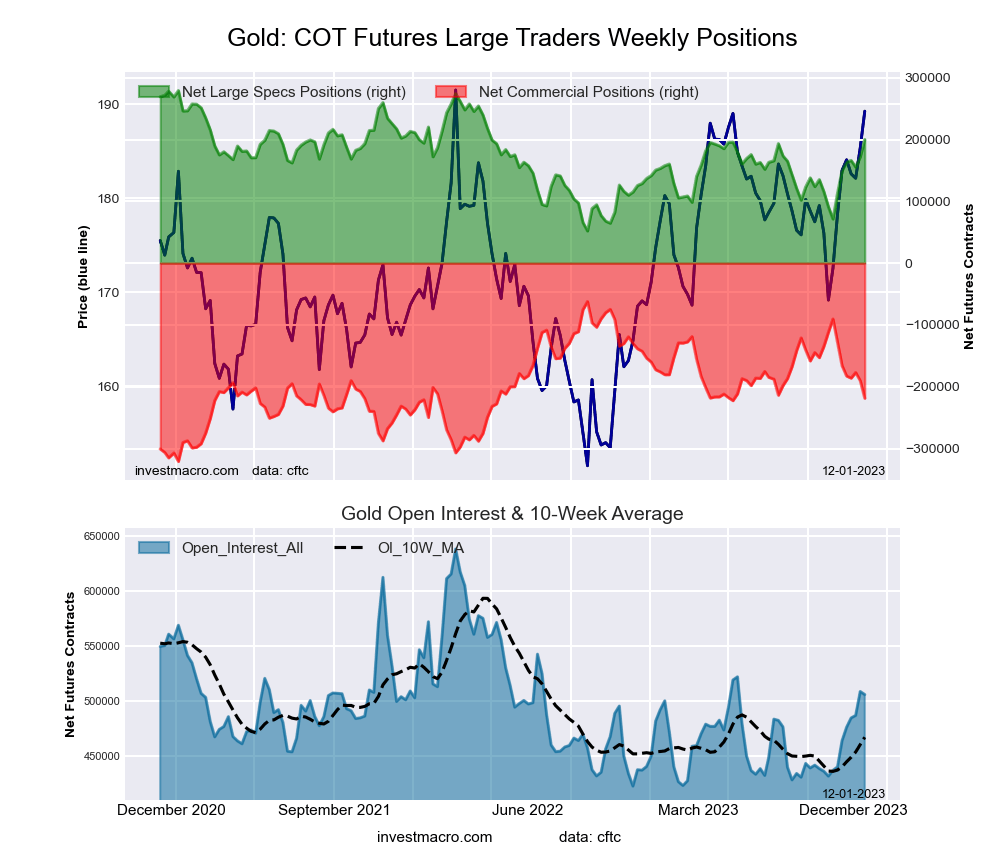
This could be nothing more than rank speculation and tinfoil hat conspiracy theorizing, but it is the reason that the scar tissue on my back arms and face has forced me to trade gold and silver rather than marry them. It just seems to make sense to me that if an entity that NEVER gets a margin call is shorting the $%$% out of gold, I had better stand aside. That is what the COT was telling us back in late October, and those who listened and are now hiding in the weeds, as am I, have cash in hand awaiting a chance to pounce at the point where the bullion bank behemoths have fallen back to sleep after gorging on a $560 million meal.

The level on the GLD:NYSE (now $179.51) at which to start warming up the “BUY” button is where the 50-dma, the 100-dma, and the 200-dma are starting to converge, which is between $178.38 and $179.68. Mind you, when I went long the GLD:NYSE back on October 4 with a price under $170.00, RSI had plunged to a massively oversold low of 20.16.

It went out at 45.43 on the week, which is not nearly as compelling as it was in early October. I might have to wait to see that big gap at $174-176 created by the events in the Middle East filled in before I take a stab, and the way to do that is to wait for a two-day-close above the $178.35-$179.68 convergence zone. If it fails, then I know the gap is in the crosshairs.

In spot gold terms, the gap is in the $1,890-1,910 zone, and if that also fails, the early October lows are to be expected, and that would not be good.

Juniors

The junior miners are going to have a particularly challenging tax-loss season as investors harvest capital losses and apply them against past gains or bank them in anticipation of future gains, but what it spells is selling pressure. There are those who think that the poor performance of the TSX Venture Exchange will result in fewer gains against which to apply losses, but within the TSXV, there are pockets of strength (like lithium earlier in the year) where enormous gains were realized. If I am holding shares in a junior silver deal, I am likely to book a loss and switch it to a junior gold and around the same price so that I have a protected window of tax-free capital gains going into 2024.

The exploration stocks have always thrived or struggled “on the margin” of either bullish or bearish sentiment for the metals. When the senior and intermediate gold and silver miners and developers catch a cold, the explorers catch pneumonia. The developers, however, are where one finds the greatest bargains because as they get kneecapped along with other junior resource stocks, their value per ounce or value per pound of whatever proven resource they hold gets taken down despite the outlook for that resource.

Getchell Gold Corp. (GTCH:CSE; GGLDF:OTCQB) is just such a developer whose 2,059,900 ounces of proven-and-probable gold ounces are being assigned a value per ounce of under $5.00. Admittedly, all junior gold developers are being assigned value per ounce numbers considered either impossible or highly unlikely prior to this recent downdraft, but I recall 500,000-ounce deposits being acquired for over $200 per ounce in Nevada back in the 2002-2011 boom.

I am sure that the junior gold developer space is littered with stories like Getchell which is typical of resource sector bear markets where “Undervalued gold deals” are like noses; everybody has one. (That phrase became popular in the smoky boardrooms of investment banking houses back in the 1980s and I must confess that in the interest of decency, I used the word “noses” in place of another anatomical appendage common to all humanity.)

There was a time when I was a younger, angry man that I refused to buy stocks unless they were in the resource category. They had to have a product that the world needed, and while they were volatile, it was infinitely more honorable to own a hard asset than some “story stock” where the CEO is a paid actor and reads off a script sheet every time a question is asked while signing stock buyback orders designed by activist fund managers just as a boatload of options vest.

Everyone over the age of 50 remembers the darling of the dotcom era, former GE Chairman and CEO Jack Welch, who ran the NYSE darling from 1981 to 2001, exiting with a record $487 million severance package. Back in the heyday of the technology boom pre-2001, Welch was a regular on CNBC, where hosts doted and fawned over him like a 60’s rock star.

You see, in the world of trading and investing and in the philosophy of free market capitalism, the only judge, jury, and executioner is one’s Statement of Profit and Loss, and if it says “profit,” you are headed to the clouds with a harp and white toga and if it says “loss,” you get out the asbestos footwear really quick.

He would lecture people on integrity and leadership, and American values and became the poster child for American exceptionalism. Then, when the dotcom bubble popped, and the rose-colored glasses were ground into tiny grains of sand, the world eventually discovered that, as Warren Buffett famously said about bear markets: “who was without swimming trunks when the tide went out.”

GE crashed and burned in the 2000s, and since the peak in 2001 at $198/share, GE has not exceeded the Welch-era highs in twenty years. Most importantly, the Welch legacy of exaltation has since been replaced with a reputation for underhanded financial reporting, risky deals, improper treatment of staff, and general corporate malfeasance of the highest order. Like Sam Bankman-Fried, the CNBC crowd reveres and worships these Oscar-winning corporate impersonators until they blow up, after which the spin involves simply never mentioning them again except in a cold, calculating, impersonal manner.

There are hundreds of Welches and SBF’s out there, all well-rehearsed in the art of subterfuge and shell-gaming. Like the magician that wants you to focus on the waving pink handkerchief, the MSM wants us all to focus on the narrative rather than the reality, which is precisely why I have learned that whether you own stocks or bonds or gold, there is no morality or immorality inherent in such ownership. This entire liberal-left notion of “ESG” being a prerequisite for responsible corporate behavior is a load of horsefeathers.

As I move into the twilight of senior citizenship, I have found immense joy in seeing through the thin veils of a bullish narrative or the odious linen of a bearish narrative, choosing instead to “rent” a position in either the SPY’s or the GLD’s or the QQQ’s without the tepid assumption of either guilt or innocence. You see, in the world of trading and investing and in the philosophy of free market capitalism, the only judge, jury, and executioner is one’s Statement of Profit and Loss, and if it says “profit,” you are headed to the clouds with a harp and white toga and if it says “loss,” you get out the asbestos footwear really quick.

Such are the rules of the back alley trader and pool-room preacher.


Important Disclosures:

  1. As of the date of this article, officers and/or employees of Streetwise Reports LLC (including members of their household) own securities of Getchell Gold Corp.
  2. Michael Ballanger I, or members of my immediate household or family, own securities of: Getchell Gold Corp. My company has a financial relationship with: Getchell Gold Corp. I determined which companies would be included in this article based on my research and understanding of the sector.
  3. Statements and opinions expressed are the opinions of the author and not of Streetwise Reports or its officers. The author is wholly responsible for the validity of the statements. The author was not paid by Streetwise Reports for this article. Streetwise Reports was not paid by the author to publish or syndicate this article. Streetwise Reports requires contributing authors to disclose any shareholdings in, or economic relationships with, companies that they write about. Streetwise Reports relies upon the authors to accurately provide this information and Streetwise Reports has no means of verifying its accuracy.
  4.  This article does not constitute investment advice. Each reader is encouraged to consult with his or her individual financial professional. By opening this page, each reader accepts and agrees to Streetwise Reports’ terms of use and full legal disclaimer. This article is not a solicitation for investment. Streetwise Reports does not render general or specific investment advice and the information on Streetwise Reports should not be considered a recommendation to buy or sell any security. Streetwise Reports does not endorse or recommend the business, products, services or securities of any company.

For additional disclosures, please click here.

Michael Ballanger Disclosures

This letter makes no guarantee or warranty on the accuracy or completeness of the data provided. Nothing contained herein is intended or shall be deemed to be investment advice, implied or otherwise. This letter represents my views and replicates trades that I am making but nothing more than that. Always consult your registered advisor to assist you with your investments. I accept no liability for any loss arising from the use of the data contained on this letter. Options and junior mining stocks contain a high level of risk that may result in the loss of part or all invested capital and therefore are suitable for experienced and professional investors and traders only. One should be familiar with the risks involved in junior mining and options trading and we recommend consulting a financial adviser if you feel you do not understand the risks involved.

Were Still in a Gold Bull Market

Source: Barry Dawes  (11/13/23)

Barry Dawes of Martin Place Securities explains why he believes we are still in a bear market when it comes to gold, despite public sentiment.

Yes, we are still in a bull market for gold, but you wouldn’t know it.

KEY POINTS

Gold

  • Breached support again
  • Major support not too far below
  • Gold in most currencies at or near all time highs

Gold Stocks

  • Volatility is this sector
  • Sentiment still very low
  • Back into support

ASX Gold Stocks

  • Still working through that RHS

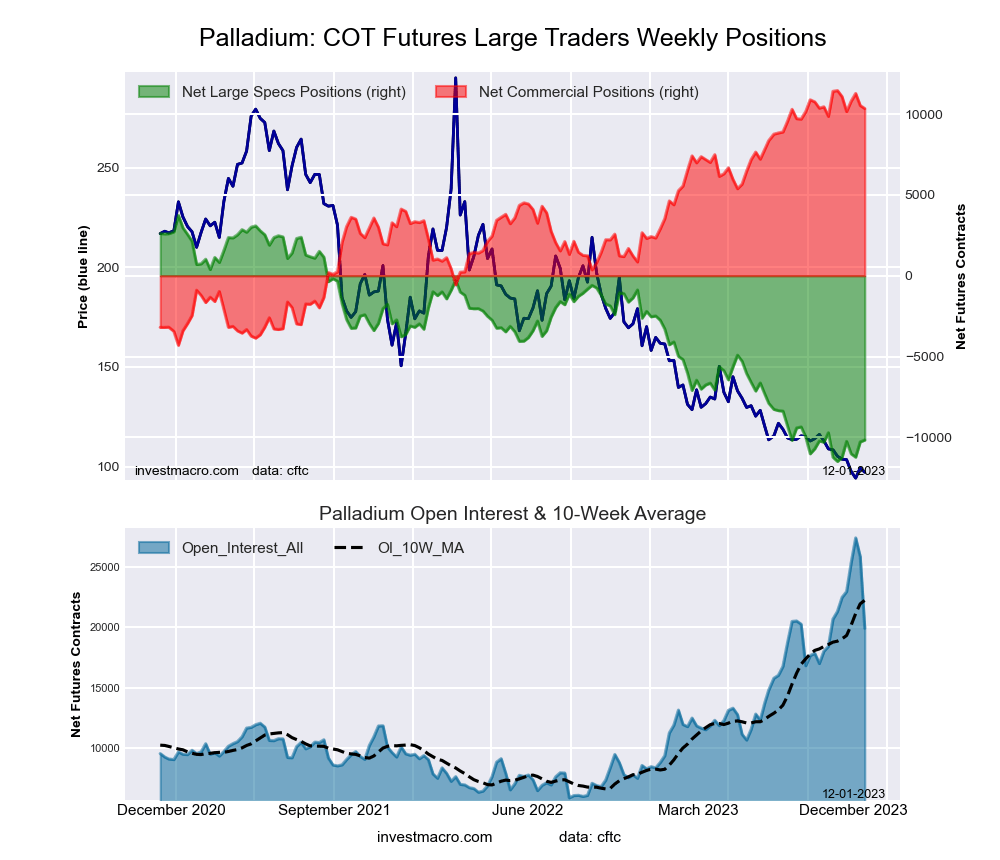
Palladium

  • Gets hammered
  • Back into long term support
  • Sentiment worse than 2015 before subsequent 500% rise!

Stock Markets and Currencies

  • S&P 500 about to surge
    • Bond rally to pickup steam?
    • US$ about to surge?
  • Yen teetering
    • Nikkei about to surge
    • Yen Gold at all time highs
  • EURO about to crack as well?
    • Gold in Euros about to surge
    • German DAX near all time highs
    • French CAC in strong uptrend
  • Yuan still weak
    • Shanghai about to surge?
      • 17 year downtrend meets 32 year uptrend
      • What a wedge!
    • Gold in Yuan near all time highs
      • back to key support
  • All Ords in support
    • About to run higher?
    • Gold in A$ near all time highs
    • A$ holding on downtrend
  • Pankind walkathon for Pancreatic Cancer on 19 November
    • Support Sonia Cottee in Canberra walkathon fundraiser

Gold continues to frustrate the bulls and continue to depress small-cap investors in a microcosm that is totally at odds with actions in other world markets.

Gold in most currencies has been making new all time highs and seems ready to run much higher.

That is what you would normally call a bull market!

But you are not feeling it. Sentiment is still so poor. The major currencies seem on the edge of another big decline. The Yen and Euro look very weak, and even small declines from here would suggest major breakdowns ahead.

Economic fundamentals ( whatever that means nowadays) are deteriorating, but stocks are heading higher and seem to want to run very hard to look over the valley and beyond the horizon.

The Israel/Hamas conflict gets stranger by the day, with journalists `embedded’ in the Hamas adventure and the roles being challenged everywhere.

What to believe?

Heed the markets indeed.

What are they telling us?

Apart from yet another US$20 slapdown.

I’m still thinking about this a-b-c pull back into support.

Signs of powerful internal character in gold.

It could come down another US$20.

A lot of long-term support here.

That May 2023 downtrend is there.

And horizontal support.

Another US$20 lower would backtest the breakout and support on that downtrend.

What can you say about this after that fabulous 6% gain on the previous Friday?

Newmont hit the bottom of this wedge.

This ratio goes back to the lower edge.

Really oversold.

Silver

  • Still building up pressure
  • Will break to the upside soon
  • Soonish

Palladium

  • Hammered!

  • Five waves down after an irregular `b’ wave
  • Sentiment as low as 2016 at US$500/oz
  • 2016-2022 gave 500% gain!

Keep in mind the bigger picture is still looking positive for the mining sector.

Currencies, gold, and stock markets.

Is there a pattern here?

US$ is universally expected to crash, but it hasn’t yet and just might not.

Still expecting 155.

  • Bonds are in the early stages of a big rally
  • Five waves down completed
  • And an island reversal

S&P 500 Breaks Downtrend

  • 4600 soon
  • 4800 by year end?

The other currencies tell a slightly different story.

Weak currencies, strong local gold prices, and stock markets that could really surge.

Japanese Yen

  • At very critical stage
  • Very ugly chart
  • Below the Devil’s Number

Gold in Yen

  • Small pull back from all time highs
  • Heading much higher

Japan stock market

  • About break 7-month downtrend
  • Set to surge much higher

Euro

The Euro broke a 50-year uptrend and provided a goodbye kiss backtest before falling away again.

Closing below 105 would crack the Euro.

Gold in Euros is heading higher in a strong uptrend.

Backtesting 2022 downtrend.

German DAX is just off all time highs.

French CAC is just off all time highs.

Chinese Yuan

  • Heading lower

Gold in Yuan

  • Has pulled back from all time high
  • Into major support

Shanghai Stock Market

  • Is this about to surge as well?
  • Same level as 2009
  • 17 year downtrend just about to meet:-
  • 32 Year uptrend
    • What a wedge!

Australia

AU$ is weak, but it is holding onto a 12-year downtrend.

AU$ gold is heading higher.

All Ords holding onto uptrend.

The 7700 resistance seems more important to watch than the 15-year uptrend.

Sonia Cottee

A dear friend in Canberra with Stage 4 Pancreatic Cancer.

Walking on November 19 for Pankind — supporting research for Pancreatic Cancer.

Would you like to support a very brave lady?

PYFD 2023 – Canberra | Walk with Soni (putyourfootdown.org.au)


Important Disclosures:

  1. Statements and opinions expressed are the opinions of the author and not of Streetwise Reports or its officers. The author is wholly responsible for the validity of the statements. The author was not paid by Streetwise Reports for this article. Streetwise Reports was not paid by the author to publish or syndicate this article. Streetwise Reports requires contributing authors to disclose any shareholdings in, or economic relationships with, companies that they write about. Streetwise Reports relies upon the authors to accurately provide this information and Streetwise Reports has no means of verifying its accuracy.
  2. This article does not constitute investment advice. Each reader is encouraged to consult with his or her individual financial professional and any action a reader takes as a result of information presented here is his or her own responsibility. By opening this page, each reader accepts and agrees to Streetwise Reports’ terms of use and full legal disclaimer. This article is not a solicitation for investment. Streetwise Reports does not render general or specific investment advice and the information on Streetwise Reports should not be considered a recommendation to buy or sell any security. Streetwise Reports does not endorse or recommend the business, products, services or securities of any company mentioned on Streetwise Reports.

For additional disclosures, please click here.

Japanese policymakers are ready to intervene to support the yen. In the US, inflationary pressures are expected to ease

By JustMarkets

At Monday’s stock market close, the Dow Jones Index (US30) was up by 0.16%, while the S&P 500 Index (US500) decreased by 0.08%. The Nasdaq Technology Index (US100) lost 0.22%. The broad market recovered from early losses on Monday after bond yields reversed to the downside, prompting coverage of short positions in equities. In addition, optimism that Tuesday’s US consumer price report for October would show an easing of price pressures gave stocks a boost.

On Friday, Moody’s Investors Service downgraded its outlook on the US credit rating from stable to negative, citing rising budget deficits and political polarization. The US lawmakers have until Friday evening this week to pass a temporary spending bill before funding runs out and the government shuts down.

Today, the US will release its CPI report. The Consumer Price Index is on the US Federal Reserve’s list of monitored indicators when regulating monetary policy. This report will measure the Fed’s progress in the fight to reduce inflation. Economists expect consumer inflation to show an increase of 0.1% on a monthly basis, while on an annualized basis, it is expected to decline from 3.7% to 3.3%. A sharper weakening in inflation could lead to renewed talk of a rate peak, fueled by the October jobs report, which pointed to weakening labor market conditions. But a cooling in demand is needed for Fed officials to have confidence that they are convincingly moving toward an inflation target. Demand is expressed in consumer spending, and that is usually retail sales and other related reports on how Americans spend money. Therefore, tomorrow’s retail sales data will give a better indication of the US Fed’s future trajectory.

Equity markets in Europe rallied solidly on Monday. Germany’s DAX (DE40) rose by 0.89%, France’s CAC 40 (FR40) gained 0.60% yesterday, Spain’s IBEX 35 (ES35) jumped by 0.96%, and the UK’s FTSE 100 (UK100) closed positive by 0.89%.

Inside the ECB, there is growing uncertainty over future plans. A representative of the ECB Governing Council, Kazaks, said yesterday that further ECB policy tightening seems to have become less necessary. His colleague, ECB Vice President Gindos, on the other hand, did not share this thought. Gindos said it was “premature” to discuss interest rate cuts because “we expect a temporary rebound in inflation in the coming months as the base effect of the sharp rise in energy and food prices in the fall of 2022 fades.”

Crude oil and gasoline prices rose moderately on Monday. A weaker dollar on Monday provided support for energy prices. In addition, expectations of increased fuel demand in the US during the Thanksgiving holiday are a favorable factor for crude oil prices.

Asian markets were predominantly rising yesterday. Japan’s Nikkei 225 (JP225) added 0.05% for the day, China’s FTSE China A50 (CHA50) decreased by 0.44%, Hong Kong’s Hang Seng (HK50) added 1.30% for the day, and Australia’s ASX 200 (AU200) was negative by 0.40% for Monday.

Japan’s Finance Minister Shunichi Suzuki said on Monday that policymakers will respond to sharp fluctuations in the yen as needed. The Bank of Japan is unhappy with the recent decline in the yen, which has fallen by 1.45% against the US dollar in the past week alone. According to analysts, if the yen breaks through the 152 mark, there is a high probability of currency intervention by the Japanese authorities.

Goldman Sachs Group Inc. expects inflation in Australia and New Zealand to fall to just below 3% by the end of 2024, which would be in line with both central banks’ targets and pave the way for lower interest rates. The cooling in prices will be driven by global commodity inflation, lower labor demand, and wage pressures. This would open the door for both central banks to begin easing monetary policy from late next year. Goldman’s view diverges sharply from forecasts by Australia’s central bank, which last week raised interest rates to a 12-year high of 4.35%, predicting CPI will exceed its 2-3% target until mid-2025. On Monday, acting Reserve Bank of Australia assistant governor Marion Kohler said the next phase of inflation’s return to target is likely to be more “protracted.”

S&P 500 (F)(US500) 4,411.55 −3.69 (−0.084%)

Dow Jones (US30) 34,337.87 +54.77 (+0.16%)

DAX (DE40)  15,345.00 +110.61 (+0.73%)

FTSE 100 (UK100) 7,425.83 +65.28 (+0.89%)

USD Index  105.68 −0.19 (−0.18%)

News feed for 2023.11.14:
  • – Australia NAB Business Confidence (m/m) at 02:30 (GMT+2);
  • – Sweden Inflation Rate (m/m) at 09:00 (GMT+2);
  • – UK Average Earnings Index (m/m) at 09:00 (GMT+2);
  • – UK Claimant Count Change (m/m) at 09:00 (GMT+2);
  • – UK Unemployment Rate (m/m) at 09:00 (GMT+2);
  • – Switzerland Producer Price Index (m/m) at 09:30 (GMT+2);
  • – Switzerland Chairman Jordan Speaks at 09:45 (GMT+2);
  • – Eurozone GDP (q/q) at 12:00 (GMT+2);
  • – German ZEW Economic Sentiment (m/m) at 12:00 (GMT+2);
  • – Eurozone ZEW Economic Sentiment (m/m) at 12:00 (GMT+2);
  • – US Consumer Price Index (m/m) at 15:30 (GMT+2);
  • – US FOMC Member Barr Speaks at 17:00 (GMT+2);
  • – US FOMC Member Mester Speaks at 18:00 (GMT+2);
  • – US FOMC Member Goolsbee Speaks at 19:45 (GMT+2).

By JustMarkets


This article reflects a personal opinion and should not be interpreted as an investment advice, and/or offer, and/or a persistent request for carrying out financial transactions, and/or a guarantee, and/or a forecast of future events.

NQ100_m: US CPI may spark 4000-point move

By ForexTime 

  • Tech-heavy index hovers around 15,530 ahead of pivotal US data
  • Stock bulls are hoping for new 2023 high on slowing inflation
  • Key moving averages may offer support on higher-than-expected CPI

The NQ100_m is holding around 15,500 awaiting the release of the latest US inflation data.

This tech-heavy index has “stalled” at the significant price level of 15530, after a 4000-point move in the index on Friday, November 10th.

The 15530 level has served as a key resistance in the past with recent tests in late August and mid-September failing to breach this level.

Today’s Consumer Price Inflation data (C.P.I) may inject some volatility into the markets

NOTE: CPI measures changes in the prices of goods and services purchased by consumers.


Today’s October CPI data out of the US is expected to show:

  • Headline CPI month-on-month (October 2023 vs. September 2023): 0.1%
    (lower than September’s 0.4% month-on-month CPI)
  • Headline CPI year-on-year (October 2023 vs. October 2022): 3.3%
    (lower than September’s 3.7% month-on-month CPI)
  • Core CPI month-on-month: 0.3%
    (matching September’s 0.3% month-on-month core CPI)
  • Core CPI year-on-year: 4.1%
    (matching September’s 4.1% year-on-year core CPI)


If US inflation surprises to the upside, this raises the probability of more Fed rate hikes.

With the tech index averse to US rate hikes, this could trigger a decline in NQ100_m to test support around:

  • 15300: a psychologically-important round number
  • 15135.4: former resistance of a downward sloping channel, which could act as support; the 100-day simple moving average (SMA) also resides close by
  • 50-day simple moving average

If November’s CPI data comes out lower-than expected, this should encourage NQ100_m bulls to charge on.

On the way upwards, they will have to contend with the following potential resistance levels as they aim for new highs:

  • 15768.8: the 161.8 golden fibonacci level
    (The Fibonacci level is drawn from August 14, 2022, high to October 9 2022 low on the weekly time frame)
  • 15947.7: the highest year-to-day price reached on August 19th.


In addition, the Average Directional Movement Indicator, (an indicator that shows trend strength) is above the 20-point mid-level, suggesting that the current rally in the NQ100_m is still strong.

This is further confirmed with the Relative Strength Index (RSI) staying above its mid-point level at 50.


Forex-Time-LogoArticle by ForexTime

ForexTime Ltd (FXTM) is an award winning international online forex broker regulated by CySEC 185/12 www.forextime.com

Brent Oil Price is Declining Again

By RoboForex Analytical Department

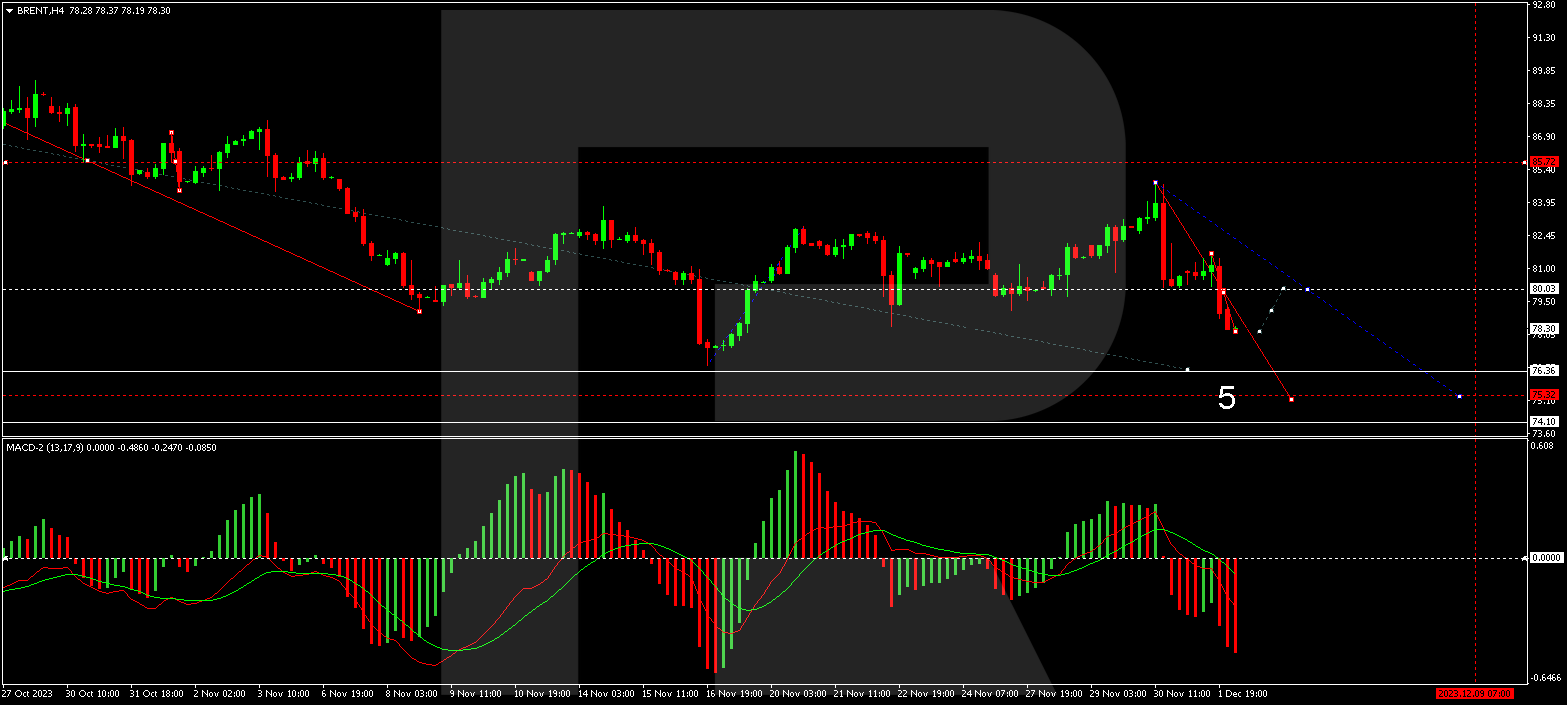
The commodity market started the week with a new wave of selloffs. The price of a barrel of Brent crude decreased to 80.65 USD.

Investors began reducing long positions on Friday amid uncertainty in the Middle East.

This week, the monthly reports from the International Energy Agency and OPEC are expected to be released. These documents will hold fresh assessments of the situation in the oil sector and, possibly, forecasted supply and demand parameters.

Also, the market eagerly awaits the latest inflation statistics from the US. This is one of the key indicators in shaping the Fed’s monetary policy, which is also significant for the oil market.

Brent technical analysis

On the H4 chart, Brent has completed an upward impulse reaching the level of 81.89. Today, the quotes might correct to 80.37. After the correction is completed, a new wave of growth to 84.00 could begin, from where the trend could continue to 87.87. Technically, this scenario is confirmed by the MACD indicator. Its signal line is below zero and strictly directed upwards.

On the H1 chart, Brent has completed an upward wave to 81.89. Today, a correction to 80.37 is forming. After the price reaches this level, a wave of growth to 81.89 could follow. A breakout of this level could open the potential for a rise to 84.09. This is a local target. Technically, this scenario is confirmed by the Stochastic oscillator: its signal line is below 20 and strictly directed upwards. The indicator is expected to renew the highs.

Disclaimer

Any forecasts contained herein are based on the author’s particular opinion. This analysis may not be treated as trading advice. RoboForex bears no responsibility for trading results based on trading recommendations and reviews contained herein.

US stock indices reached 2-month highs. The earning season met investors’ expectations

By JustMarkets

On Friday, gains in chip stocks and technology megamergers drove the overall market higher. As of Friday’s stock market close, the Dow Jones Index (US30) was up by 1.15% (+0.56% for the week), while the S&P 500 Index (US500) was up by 1.56% (+1.17% for the week). The NASDAQ Technology Index (US100) closed positive by 2.05% (+2.10% for the week). The S&P 500 (US500) and the Dow Jones Industrials (US300) reached 7-week highs and the NASDAQ (US100) tested a 2-month-high.

Friday’s Fed comments had a mixed impact on stocks. On the negative side, Atlanta Fed President Bostic spoke in favor of pausing Fed rate hikes, stating, “I think we will reach the 2% target level without having to do anything else.” On the other hand, San Francisco Fed President Daly said that if inflation continues to move sideways and the labor market and GDP growth remain steady or strong, it will probably be necessary to raise rates again. Currently, markets are betting on a 10% probability of a 25 bps rate hike at the next FOMC meeting on December 12-13 and a 24% probability of a 25 bps rate hike at the January 30-31, 2024 FOMC meeting.

In the US, the risk of a government shutdown is back on the table. If lawmakers in Washington fail to pass measures by Friday to at least temporarily fund the federal government’s operations, there is a threat of a shutdown. On Saturday, House Speaker Mike Johnson unveiled a Republican temporary funding measure aimed at averting a partial shutdown, but members of both parties quickly criticized the unorthodox plan. The new controversy could reignite concerns about the management of the world’s largest economy.

According to FactSet, the current earnings reporting season has been much better than analysts expected and is likely to show the first earnings-per-share growth in a year for companies in the S&P 500.

The University of Michigan’s US Consumer Sentiment Index for November fell by 3.4 to a 6-month low of 60.4, weaker than expectations of 63.7. The University of Michigan’s US Inflation Expectations Index for November unexpectedly rose to a 7-month high of 4.4% from 4.2% in October, versus expectations of a decline to 4.0%. In addition, 5-10-year inflation expectations rose to a 12-year high of 3.2%.

Equity markets in Europe were mostly down on Friday. Germany’s DAX (DE40) was down by 0.77% (+0.10% for the week), France’s CAC 40 (FR40) fell by 0.96% (-0.30% for the week), Spain’s IBEX 35 (ES35) lost 0.36% (+0.81% for the week), and the UK’s FTSE 100 (UK100) closed negative by 1.28% (-0.77% for the week).

Friday’s comments from ECB President Lagarde indicate that she favors a pause in ECB rate hikes. Lagarde stated that keeping the deposit rate at the current level of 4% should be sufficient to contain inflation. There is a growing possibility that the ECB has peaked on rates, just like the US Fed.

UK GDP unexpectedly beat forecasts on most indicators. Over the last month, the economy grew by 0.2% (forecast 0.0%). However, the overall picture shows the economy is still depressed, with the 3-month average hitting annual lows and near negative territory.

Oil prices rose about 2% on Friday as Iraq voiced support for OPEC+ oil production cuts ahead of a meeting in two weeks on November 26. Amid weak economic data from China, the US, and the UK last week, concerns about the outlook for global demand offset worries about possible production disruptions related to the Middle East conflict. Analysts believe OPEC+ could continue to cut supplies if prices continue to fall.

Asian markets were mostly up last week. Japan’s Nikkei 225 (JP225) was up by 0.36% for the week, China’s FTSE China A50 (CHA50) was down by 0.04% over five trading days, Hong Kong’s Hang Seng (HK50) fell by 3.97% for the week, and Australia’s ASX 200 (AU200) was negative by 0.02% for the week.

Joe Biden and Xi Jinping are due to meet this week on the sidelines of the Asia-Pacific Economic Cooperation summit amid hopes for improved relations between the two largest economies.

S&P 500 (F)(US500) 4,347.35 +67.89 (+1.56%)

Dow Jones (US30) 34,283.10 +391.16 (+1.15%)

DAX (DE40)  15,234.39 −118.15 (−0.77%)

FTSE 100 (UK100) 7,360.55 −95.12 (−1.28%)

USD Index  105.80 −0.11 (−0.10%)

News feed for 2023.11.13:
  • – Japan Producer Price Index (m/m) at 01:50 (GMT+2).

By JustMarkets


This article reflects a personal opinion and should not be interpreted as an investment advice, and/or offer, and/or a persistent request for carrying out financial transactions, and/or a guarantee, and/or a forecast of future events.

Recovery conditions are forming for oil. Powell’s hawkish comments pressured the broad market

By JustMarkets

As of Tuesday’s stock market close, the Dow Jones Industrial Average (US30) decreased by 0.65%, while the S&P 500 Index (US500) lost 0.81%. The NASDAQ Technology Index (US100) closed negative by 0.94% on Thursday.

US Fed Chairman Powell spoke at the IMF’s annual academic conference yesterday. In a prepared speech, Powell said that he and his colleagues are pleased that inflation is slowing but that they are not sure if they have done enough to support it and would not hesitate to tighten it if necessary. As a result, stocks came under pressure, and bond yields rose. Comments from some Fed officials indicate that they favor keeping interest rates at current levels. Atlanta FRB President Bostic said yesterday that the Fed will maintain restrictive measures until it is confident that inflation will fall to 2%.

US weekly jobless claims unexpectedly fell by 3,000 to 217,000, matching expectations of 218,000.

Tesla (TSLA) shares fell more than 3% yesterday, topping the list of losers on the Nasdaq 100 (US100) after HSBC initiated coverage of the company’s stock with a “downgrade” recommendation and a price target of $146. Walt Disney (DIS) is up more than 6%, leading the Dow Jones Industrials (US30) higher after the company reported 150.2 million Disney+ subscribers in Q4, above the consensus forecast of 147.07 million subscribers.

Equity markets in Europe were mostly up yesterday. Germany’s DAX (DE40) rose by 0.81%, France’s CAC 40 (FR40) gained 1.13%, Spain’s IBEX 35 (ES35) jumped by 1.31%, and the UK’s FTSE 100 (UK100) closed positive by 0.73%.

ECB Governing Council representative Villeroy de Gallo said that the inflation rate in the Eurozone has fallen three times over the year and, despite some volatility, the trend is clearly downward, so the ECB stops raising interest rates unless it has to face additional shocks. For his part, ECB Vice President Gindos said that talk of ECB interest rate cuts in the coming months is clearly premature, citing risks to the inflation outlook.

The likelihood that Saudi Arabia will extend its unilateral 1 million bpd production cut until the first quarter of 2024 is increasing by the day. Given renewed market concerns about Chinese demand and the broader macro outlook, oil prices are likely to recover in the coming trading sessions.

Asian markets traded flat yesterday. Japan’s Nikkei 225 (JP225) jumped by 1.49% on Thursday, China’s FTSE China A50 (CHA50) added 0.05%, Hong Kong’s Hang Seng (HK50) was down by 0.33% on the day and Australia’s ASX 200 (AU200) was positive 0.28%.

In its quarterly Monetary Policy Statement, the Reserve Bank of Australia (RBA) said that at its November meeting this week, the Board discussed keeping rates unchanged but decided that an increase was necessary to ensure inflation slowed. Earlier this week, the RBA ended a four-month pause by raising the money rate by a quarter point to a 12-year high of 4.35%. Whether further monetary tightening will be needed to ensure that the inflation target is achieved within a reasonable timeframe will depend on the data and the evolving risk assessment. Economists believe the RBA has peaked and will not raise rates again.

S&P 500 (F)(US500) 4,347.35 −35.43 (−0.81%)

Dow Jones (US30) 33,891.94 −220.33 (−0.65%)

DAX (DE40)  15,352.54 +122.94 (+0.81%)

FTSE 100 (UK100) 7,455.67 +53.95 (+0.73%)

USD Index  105.91 +0.32 (+0.30%)

News feed for 2023.11.10:
  • – Australia RBA Monetary Policy Statement at 02:30 (GMT+2);
  • – UK GDP (q/q) at 09:00 (GMT+2);
  • – UK Industrial Production (m/m) at 09:00 (GMT+2);
  • – UK Manufacturing Production (m/m) at 09:00 (GMT+2);
  • – UK Trade Balance (m/m) at 09:00 (GMT+2);
  • – US Michigan Consumer Sentiment (m/m) at 17:00 (GMT+2).

By JustMarkets


This article reflects a personal opinion and should not be interpreted as an investment advice, and/or offer, and/or a persistent request for carrying out financial transactions, and/or a guarantee, and/or a forecast of future events.

Newfound War Popularity Driving Disposable Drone Tech Boom

Source: Streetwise Reports  (11/7/23)

As modern conflicts grind on interminably, one thing is becoming remarkably clear: Drones and their rapid replacement with more drones represent a prevailing trend in depersonalizing the future of the warfighting experience.

After well over a year of ongoing conflict in Ukraine, a second major front of unleashed global conflict erupted in and around the Gaza Strip at the beginning of October. In addition to confirming age-old wisdom about war (e.g., that it is hell), these modern conflicts are teaching us new lessons about the cadence of futuristic battlefield wreck-and-replace rates, as well as the demoralizing effects such heightened operational tempos can exert on forces on both sides of the equation.

Reporting for The Daily Beast, David Axe wrote on October 28, “Look closely at photos of the Israeli army mobilizing for a possible incursion into Gaza. .  You might note strange, cage-like metal roofs welded or bolted onto the tops of Israeli Merkava tanks. Soldiers call this add-on armor a ‘cope cage,’ as it’s designed to cope with a new and devastating weapon: a toy drone.”

The ‘cope cage’ moniker is designed to be derisive and humorous, underscoring the deadly accuracy and brutal shift in power that the wide adoption of small drones by fledgling military forces has occasioned. These cages are notoriously ineffective against current drone tactics, providing little more than a psychological defense for the troops they “protect.”

According to Axe’s article, “A decade after Iraqi, Syrian and Yemeni militant groups first weaponized quadcopter-style drones — strapping explosives to them for one-way ‘kamikaze’ attacks or rigging them to drop grenades — cheap drones are now the standard aerial weapon for both the Russian and Ukrainian armies.”

“Likewise, Hamas deployed drones during its October 7 attack, damaging at least two Merkava tanks by aiming for the weak points in the tanks’ top armor — the same weak points the hastily produced cope cages are meant to protect. Earlier cope cages protected tanks from missiles that were designed to strike the vehicles on their roofs; armies assumed the cages would also work against drones.”

The Catalyst: Expendability

The wide array of simple-to-use drones currently available has led, according to Axe’s reporting, to two basic types of do-it-yourself attack drones. “There are quadcopters or octocopters that drop grenades and are guided by GPS or radio by an operator sitting behind a screen. There are also single-use first-person-view drones loaded up with explosives and steered via radio by an operator peering through a virtual-reality headset.”

This variety of vectors makes drones particularly difficult to harden against, as the threat model remains highly mutable and likely to rapidly evolve as successive attack waves are deployed and then analyzed to improve effectiveness. With no human operators’ lives at risk in any regular drone attack, a rapid operational tempo can be maintained, with losses measured only in dollars, and each loss offers valuable insights that can considerably improve future missions.

“A typical drone might weigh just a couple of pounds and fly no farther than 20 miles at a top speed of less than 30 miles per hour,” Axe explains. “Compared to a supersonic warplane weighing 20 tons and ranging hundreds of miles, a DIY attack drone is flimsy, slow, and short-ranged. But where a fighter jet might cost $50 million, the commonly-used DJI Mavic 3 FPV drone retails for just US$2,000. Military commanders think twice before sending a fighter and its expensively trained pilot into harm’s way. They don’t have to think at all before launching a drone or a whole swarm of drones.”

The numbers seen on the ground reflect this readiness to reiterate the drone strike process on an almost daily basis. According to Samuel Bendett, a senior non-resident associate with the Center for Strategic and International Studies’ Europe, Russia, and Eurasia Program, “We are seeing drone saturation on the battlefield like never before.”

Why This Sector? Combining the Oldest with the Newest

Axe reports that “Ukrainian drone operators tend to coordinate their attacks with artillery — the newest and oldest weapons on the battlefield, working together. The Ukrainians’ artillery fires first, and then the Russians have to take cover because of the artillery. While they’re waiting out the barrage, [the Ukrainian commander] is launching his attack drones for the killing blow. ‘It wins us time,’ [the commander] says of the artillery.”

“As it became clear last year how dangerous small drones could be,” Axe continues, “the Russians and Ukrainians began installing cope cages on their tanks and other armored vehicles; the Israelis scrambled to do the same following their initial tank losses during the Hamas infiltration.”

“Small drones have upended traditional warfare. Before, militaries engaged in a slow technological tit-for-tat. One military would deploy a new weapon, a rival military would develop a countermeasure, and then the first military would modify the original weapon to defeat the countermeasure. So on and so forth, year after year, decade after decade . . . Tiny drones have broken the cycle. They’re so cheap, and thus so easy to deploy in huge numbers, that armies are struggling to develop defenses fast enough to prevent devastating drone campaigns.”

As you might imagine, the past year’s wide international focus on the importance of both drones and drone suppression systems has fostered considerable growth for businesses operating in both those rapidly growing market spaces.

The hard truth is that the demand for anti-drone technology is growing, with a market size projected to reach US$3.8 billion by 2027 from a total of US$1.47 billion in 2023.

Projections from Allied Market Research value the same market at US$1.3 billion in 2021 and expect it to reach US$14.6 billion by 2031. Fortune Business Insights reports the global anti-drone market size as “US$1.34 billion in 2021” and “projected to grow from US$1.58 billion in 2022 to US$6.95 billion by 2029.”

DroneShield Ltd.

One company particularly well situated to capture this nascent market is Australian powerhouse startup DroneShield Ltd. (DRO:ASX; DRSHF:OTC), which develops technologies to protect people, vehicles, and installations from drones.

Its artificial intelligence-based platforms for protection against drone threats and other hostile autonomous systems are easily deployed across various terrestrial, maritime, and airborne platforms.

DroneShield provides custom counter-drone and electronic warfare solutions built to specification, as well as off-the-shelf products designed to meet a variety of operational requirements. The company’s wide array of products include the DroneGun TacticalDroneGun MK3DroneGun MK4DroneSentryDroneSentry-C2DroneSentry-X, and RfPatrol.

The company recently introduced the DroneSentry-X Mk2, a new detection and adaptive disruption system for tracking multi-domain unmanned systems. The DroneSentry-X Mk2 can be mounted to standard vehicle roof racks on military vehicles, surface vessels, and unmanned mobile platforms.

DroneShield CEO Oleg Vornik says the company has seen “explosive growth” this year as it has expanded its U.S. headquarters in Northern Virginia and added top talent to stabilize its production cycle in both continents on which it operates.

With over 90 employees spread across operations in Sydney and Virginia, DroneShield secured an AU$33 million government sale, an AU$9.9 million 2-year R&D contract, and an AU$40 million capital raise in the past few quarters. It has been working through an AU$ 62 million order backlog that’s part of an AU $200 million pipeline.

Streetwise Ownership Overview*

DroneShield Ltd. (DRO:ASX; DRSHF:OTC)

Retail: 84.61%
Institutions: 7.99%
Management and Insiders: 7.4%
84.6%
8.0%
7.4%
*Share Structure as of 10/26/2023


The company aims to expand to employ some 120 to 150 staff in the next five years, supporting revenue of AU$300 million to AU$500 million per year, with roughly half of that income generated via software as a service (SaaS) and software R&D channels that are being developed alongside its manufacturing base.

There are 586.9 million outstanding shares, with 496.03 million free-float traded shares. The company has a market cap of US$105.64 million. It trades in a 52-week range of US$0.10 and US$0.34.

Approximately 2.46% of DroneShield is held by management and insiders. Independent Non-Executive Chairman Peter James owns 1.09% of the company with 6.63 million shares, CEO Oleg Vornik owns 1.75% with 10.7 million shares,  and Director Jethro Marks owns 0.21% with 1.3 million shares, CFO Carla Balanco owns 1.38% of the company with 8.45 million shares, CTO Angus Bean owns 1.21% of the company with 7.39 million shares.

Institutions own 7.99% of the company. Charles Goode (through Beta Gamma Pty. Ltd. And Ravenscourt Pty. Ltd) owns 3.52% of the company with 21.50 million shares. S R Bennet Pty. Ltd. owns 0.88% of the company with 5.35 million shares, and P & B Shaw FT CB Pty. Ltd. owns 0.56% of the company with 3.43 million shares.

Red Cat Holdings Inc.

Of course, the Anti-Drone market isn’t being driven by nothing. Drones themselves are booming, and not just on the battlefield.

Red Cat Holdings Inc. (RCAT:NASDAQ) 

A recent market report from The Business Research Company explains that “The global military drones market size will grow from US$14.54 billion in 2022 to US$15.88 billion in 2023 at a compound annual growth rate (CAGR) of 9.2%. The Russia-Ukraine war disrupted the chances of global economic recovery from the COVID-19 pandemic, at least in the short term.”

The report goes on to say that “The war between these two countries has led to economic sanctions on multiple countries, a surge in commodity prices, and supply chain disruptions, causing inflation across goods and services and affecting many markets across the globe. The global military drones market size is expected to grow to US$20.64 billion in 2027 at a CAGR of 6.8%.”

Red Cat Holdings Inc. (RCAT:NASDAQ), which recently doubled its initial order with The U.S. Defense Logistics Agency to US$5.2 million, aims to fill that gaping maw of raw user demand with the type of top-tech drones that DroneShield’s best products are designed to ameliorate.

According to Red Cat Holdings CEO Jeff Thompson, “The Air Force needs to secure its airfields and bases 24/7, and our Teal 2 offers the highest-resolution night vision in its class.”

Streetwise Ownership Overview*

Red Cat Holdings Inc. (RCAT:NASDAQ)

Retail: 58.68%
Management and Insiders: 36.09%
Institutions: 5.23%
58.7%
36.1%
5.2%
*Share Structure as of 9/27/2023


The Teal 2, designed as the top unmanned platform for night operations, has been approved by the U.S. Department of Defense for use across the department and others, adhering to its evaluation standards for service. Puerto Rico-based Red Cat has also deployed 200 high-speed drones on behalf of Ukraine and is involved in a US$90 million deal to provide drones for the U.S. Customs and Border Patrol (CBP).

ThinkEquity analyst Ashok Kumar wrote in March, “Looking forward, ThinkEquity expects Red Cat’s revenue and operating income to increase. The investment bank estimates revenue will reach US$11.9 million in FY23 and then more than triple to US$37 million in FY24.

According to Technical Analyst Clive Maund, the stock “continues to have the prospect of winning some very big orders for its drones.”

He wrote on July 27 that he was staying long on the stock.”The company’s Teal 2 drone appears to be a ‘game changer,’ as it has unsurpassed nighttime capabilities.”

RedCat Holdings has a market cap of US$56.2 million, with 55.54 million shares outstanding, and trades in a 52-week range of US$1.69 and US$0.7676.

According to Red Cat, 37.27% of company stock is held by management and insiders. Reuters notes that CEO Thompson owns 22.13%. CEO of Fat Shark RC Vision Systems Gregory Ralph French has 8.67%. COO Allan Thomas Evans has 2.41%. Director Nicholas Liuzza has 1.76%. CFO Joseph Hernon has 0.47%, and CEO of Teal Drones George Matus has 0.58%.

Institutional investors have 9.01%. The Vanguard Group Inc. has 2.3%. Pelion Venture Partners has 1.62%. BlackRock Institutional Trust has 0.61%, and Geode Capital Management LLC has 0.49%.


Important Disclosures:

  1. As of the date of this article, officers and/or employees of Streetwise Reports LLC (including members of their household) own securities of DroneShield Ltd. and Red Cat Holdings Inc..
  2. Owen Ferguson wrote this article for Streetwise Reports LLC and provides services to Streetwise Reports as an independent contractor.
  3. The article does not constitute investment advice. Each reader is encouraged to consult with his or her individual financial professional and any action a reader takes as a result of information presented here is his or her own responsibility. By opening this page, each reader accepts and agrees to Streetwise Reports’ terms of use and full legal disclaimer. This article is not a solicitation for investment. Streetwise Reports does not render general or specific investment advice and the information on Streetwise Reports should not be considered a recommendation to buy or sell any security. Streetwise Reports does not endorse or recommend the business, products, services or securities of any company mentioned on Streetwise Reports.

For additional disclosures, please click here.


My Newest Electrification Play as Demand for Nuclear Surges

Source: Michael Ballanger  (11/6/23)

 As the demand for uranium grows, Michael Ballanger of GGM Advisory Inc. shares one stock he believes is worth looking into.

I have been bullish on uranium since 2017, which means I have seen two rallies, neither of which I traded.

At the start of the year, I came up with the concept of the “Electrification Trilogy,” calling for increases in demand for new sources of electricity (nuclear/uranium), transmission infrastructure (wiring/copper), and electrical storage (batteries/lithium) and while I maintained exposure to copper and lithium, I really only had a small position in one uranium developer forgetting all the while that the best proxy for uranium has to be Cameco Corp. (CCO:TSX; CCJ:NYSE).

While I find it difficult to own any stock after it has nearly doubled, I listened to the conference call this week after they reported blow-out earnings, and what grabbed me by the throat was the forward guidance in which they said: “We are seeing durable, full-cycle demand growth across the nuclear energy industry.”

That is really positive guidance, and with 57 new reactors currently under construction around the globe and with Germany reversing their decision to dismantle three of their power plants, the demand for uranium is going to kick in long before new supply can hit the market.

Accordingly, I decided to bite the bullet and take a punt on a few Cameco March US$40 calls in the US$5.00 range on the assumption that I will see all-time highs above US$46.41 by New Year’s Day and US$50 in Q1/2024.

I know I am late to the party, but with guidance so powerfully bullish and nuclear the only real solution to the global energy problem, I cannot see getting hurt despite the modest overbought conditions it moved into on Friday before backing off.

Important Disclosures:

  1. As of the date of this article, officers and/or employees of Streetwise Reports LLC (including members of their household) own securities of Cameco Corp.
  2. Michael Ballanger: I, or members of my immediate household or family, own securities of: Cameco Corp. My company has a financial relationship with: Cameco Corp. I determined which companies would be included in this article based on my research and understanding of the sector.
  3. Statements and opinions expressed are the opinions of the author and not of Streetwise Reports or its officers. The author is wholly responsible for the validity of the statements. The author was not paid by Streetwise Reports for this article. Streetwise Reports was not paid by the author to publish or syndicate this article. Streetwise Reports requires contributing authors to disclose any shareholdings in, or economic relationships with, companies that they write about. Streetwise Reports relies upon the authors to accurately provide this information and Streetwise Reports has no means of verifying its accuracy.
  4.  This article does not constitute investment advice. Each reader is encouraged to consult with his or her individual financial professional. By opening this page, each reader accepts and agrees to Streetwise Reports’ terms of use and full legal disclaimer. This article is not a solicitation for investment. Streetwise Reports does not render general or specific investment advice and the information on Streetwise Reports should not be considered a recommendation to buy or sell any security. Streetwise Reports does not endorse or recommend the business, products, services or securities of any company.

For additional disclosures, please click here.

Michael Ballanger Disclosures

This letter makes no guarantee or warranty on the accuracy or completeness of the data provided. Nothing contained herein is intended or shall be deemed to be investment advice, implied or otherwise. This letter represents my views and replicates trades that I am making but nothing more than that. Always consult your registered advisor to assist you with your investments. I accept no liability for any loss arising from the use of the data contained on this letter. Options and junior mining stocks contain a high level of risk that may result in the loss of part or all invested capital and therefore are suitable for experienced and professional investors and traders only. One should be familiar with the risks involved in junior mining and options trading and we recommend consulting a financial adviser if you feel you do not understand the risks involved.

Technical Analysis & Forecast 09.11.2023

By RoboForex.com

EURUSD, “Euro vs US Dollar”

EURUSD has completed a declining impulse to 1.0658, correcting to 1.0714 today. An extension of the correction to 1.0725 is not excluded. Next, the declining wave could continue to 1.0630. With a downward breakout of this level, the potential for a wave to 1.0540 might open. This is a local target.

EURUSD
Risk Warning: the result of previous trading operations do not guarantee the same results in the future

GBPUSD, “Great Britain Pound vs US Dollar”

GBPUSD has performed a declining impulse to 1.2245, correcting to 1.2300 today. A new link of growth to 1.2333 might develop later. Next, a new wave of decline to 1.2222 is expected to begin. If this level breaks downwards, the potential for a wave to 1.2073 could open. This is a local target.

GBPUSD
Risk Warning: the result of previous trading operations do not guarantee the same results in the future

USDJPY, “US Dollar vs Japanese Yen”

USDJPY has completed a wave of growth to 151.04. Today the quotes could correct to 150.05. Next, a new wave of growth to 151.44 might begin, opening the potential for 152.15 once the 151.44 level breaks upwards.

USDJPY
Risk Warning: the result of previous trading operations do not guarantee the same results in the future

USDCHF, “US Dollar vs Swiss Franc”

USDCHF has completed a wave of growth to 0.9030, and a link of decline to 0.8970 is expected today. Practically, a consolidation range is forming at these levels. With an escape from this range downwards, a decline to 0.8918 might follow. And with an escape upwards, the potential for a rising wave to 0.9133 might open.

USDCHF
Risk Warning: the result of previous trading operations do not guarantee the same results in the future

AUDUSD, “Australian Dollar vs US Dollar”

AUDUSD continues developing a wave of decline to 0.6383. Once this level is reached, a link of correction to 0.6450 is not excluded, followed by a decline to 0.6333. This is a local target.

AUDUSD
Risk Warning: the result of previous trading operations do not guarantee the same results in the future

BRENT

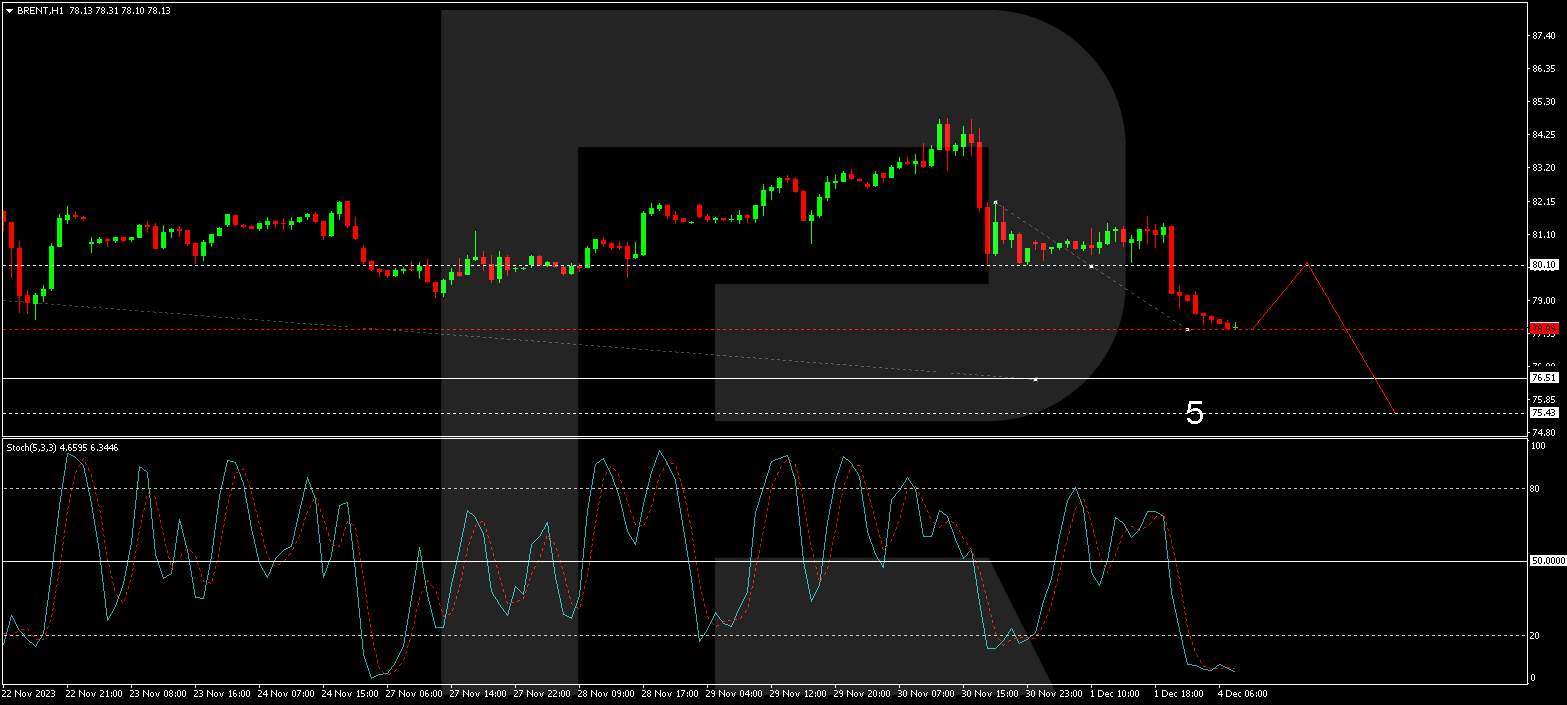
Brent has completed a declining wave to 79.11. Practically, the potential of the declining wave has expired. A consolidation range could form above the 79.11 level today. With an escape upwards, the potential for a wave of growth to 85.75 could open. This is the first target.

BRENT
Risk Warning: the result of previous trading operations do not guarantee the same results in the future

XAUUSD, “Gold vs US Dollar”

Gold continues developing a consolidation range around 1961.55. With an escape downwards, the potential for a declining wave to 1920.00 might open. Next, a link of correction to 1960.00 is expected (with a test from below), followed by a decline to 1913.50. This is the first target.

GOLD
Risk Warning: the result of previous trading operations do not guarantee the same results in the future

S&P 500

The stock index has completed a declining impulse to 4362.2, correcting to 4390.0 today. Next, a wave of decline to 4330.3 is expected, from where the trend could continue to 4242.0. This is the first target.

S&P 500
Risk Warning: the result of previous trading operations do not guarantee the same results in the future

Article By RoboForex.com

Attention!
Forecasts presented in this section only reflect the author s private opinion and should not be considered as guidance for trading. RoboForex LP bears no responsibility for trading results based on trading recommendations described in these analytical reviews.