Global bond rout: complacency could hit your wealth

By George Prior 

Investors need to pay attention to the dramatic global bond market rout to safeguard their wealth despite the sell-off stablising, warns the CEO and founder of one of the world’s largest independent financial advisory organizations.

The warning from deVere Group’s Nigel Green comes as the US, European, and Japanese bond rout deepens.

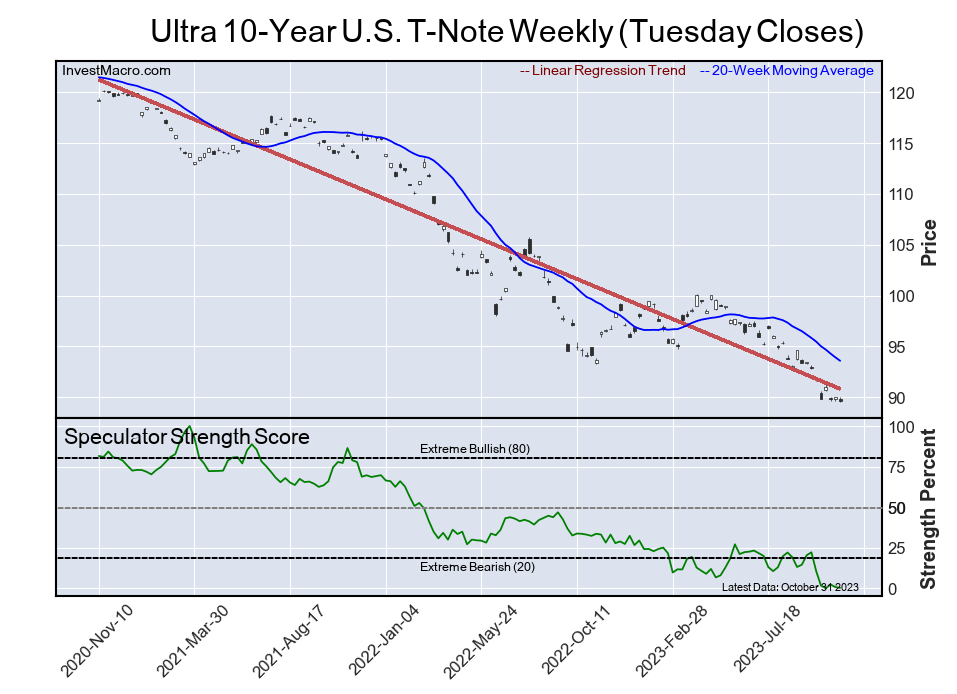
US bonds maturing in 10 years or more have fallen 46% since peaking in March 2020, according to Bloomberg.

European bonds are following in the footsteps of the US rout, with yields on Germany’s 10-year debt rising above 3% for the first time since 2011, earlier this week. Meanwhile, Japan’s 10-year yield, rose to a decade high, despite the Bank of Japan being prepared to buy $4.5 billion worth of bonds.

Also surging this week have been Australian, Canadian and British government bond yields.

Nigel Green says: “The sell-off began after the US Federal Reserve insisted that interest rates would be kept higher for longer.

“Investors need to be ‘on it’ when it comes to the global bond market rout as it could have far-reaching consequences, impacting various asset classes and investment portfolios, despite the situation having stabilised somewhat for the time being.”

He continues: “Diversification is a cornerstone of a sound investment strategy. However, bond market turbulence can challenge this diversification by affecting both the bond and equity parts of a portfolio.

“When bond prices fall and yields rise, investors can experience losses in their fixed-income holdings.

“At the same time, the shift in investor preferences towards higher-yielding bonds can influence stock markets, potentially leading to equity market declines.

“As such, the bond market’s trajectory may require investors to adjust their asset allocation to mitigate potential losses.”

Many investors turn to bonds for stability and income generation. However, during a bond market rout, even traditionally safe investments, such as government and corporate bonds, can face significant price declines.

“Investors who rely on these bonds for capital preservation and regular income should closely monitor their bond holdings with their financial advisor and perhaps consider diversifying into other assets, such as dividend-paying stocks or alternative investments,” observes the deVere CEO.

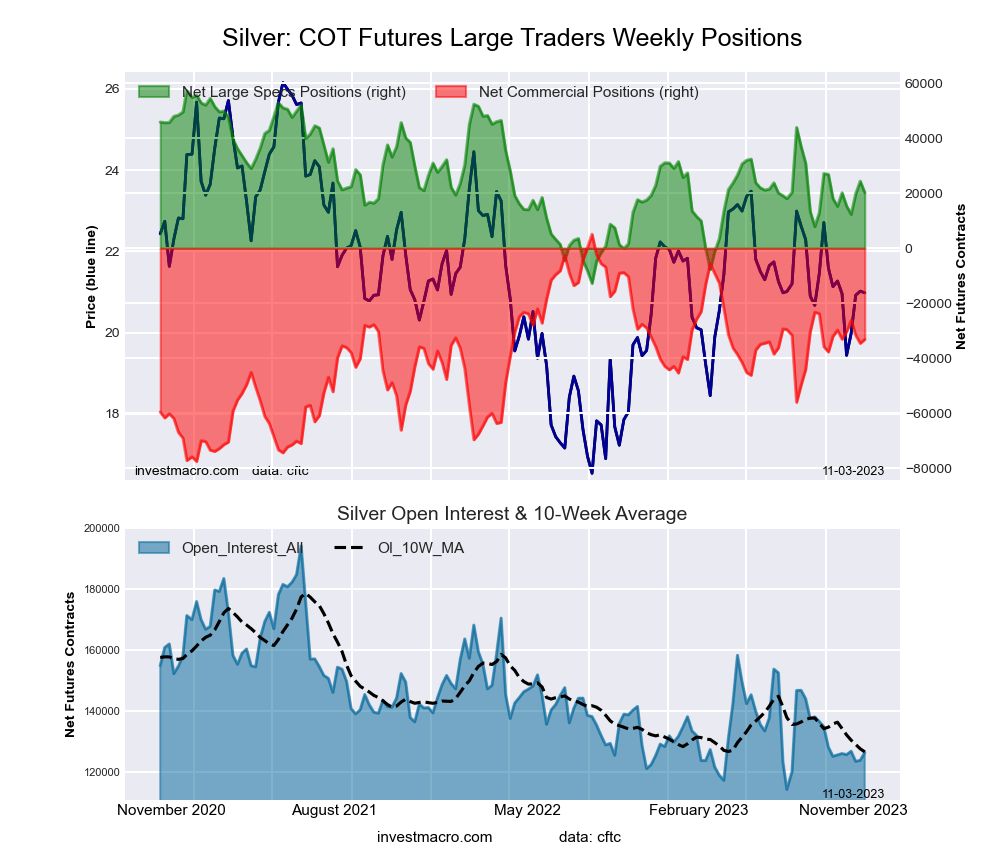
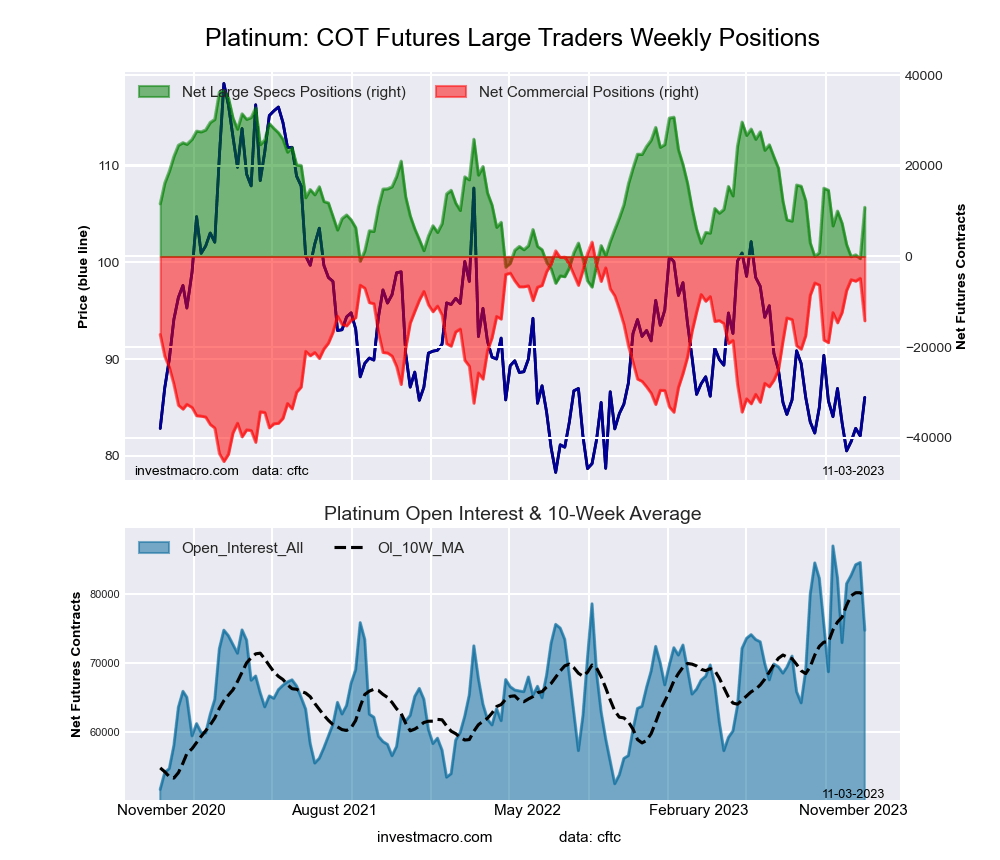
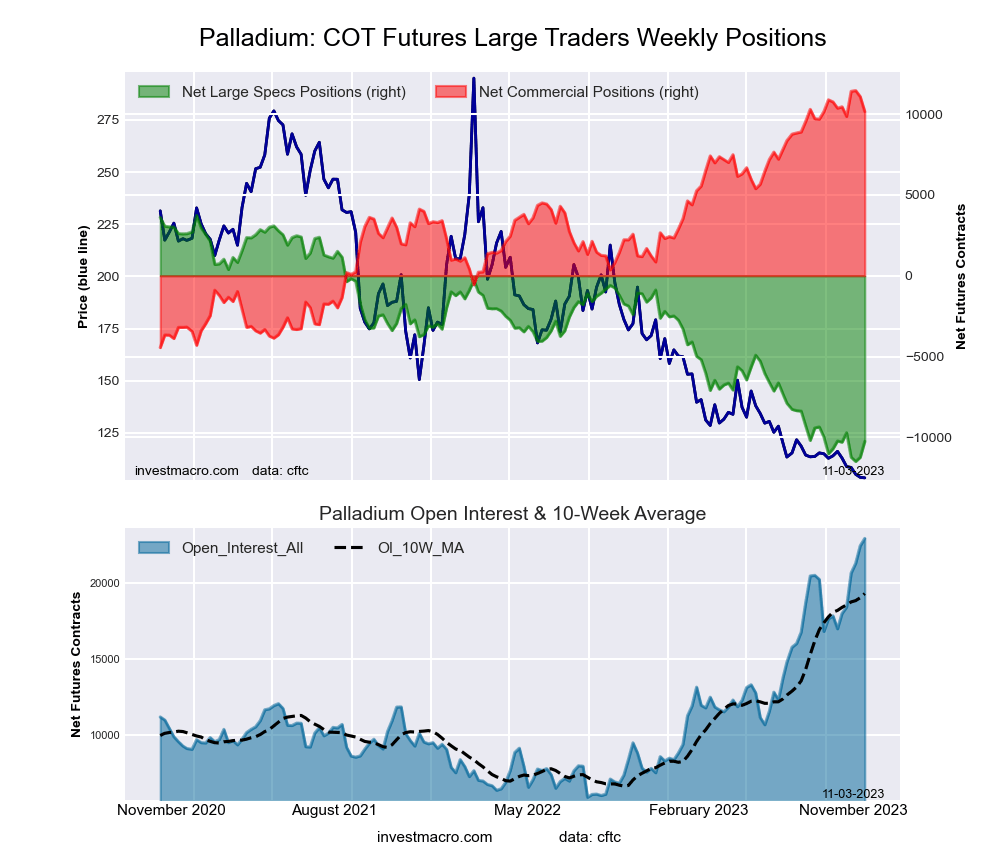
Some alternative investments to consider could include precious metal; real assets, such as real estate and infrastructure investments; commodities like oil, natural gas, or agricultural products, and Structured products, such as structured notes which can be customised to offer capital protection or enhanced returns based on specific market conditions.

“To grow and protect their money, I would urge investors to avoid complacency over the global bond rout as we doubt this is the end to the turbulence,” concludes the deVere Group CEO.

About:

deVere Group is one of the world’s largest independent advisors of specialist global financial solutions to international, local mass affluent, and high-net-worth clients.  It has a network of offices across the world, over 80,000 clients and $12bn under advisement.

Gold Has Fallen but Stocks Are Cheap

Source: Adrian Day  (10/4/23) 

Global Analyst Adrian Day looks at why gold has fallen and suggests it may have further to go. Meanwhile, he takes a look at some gold stocks, which are currently very inexpensive. 

The sharp drop in the gold price last week dragged the stocks down even further to where many are compelling value (as indicated by the length of the “best buys” list below). In last week’s Bulletin, I wrote that the widening gap between bullion and gold stocks could be closed by gold declining. “I would argue that in a global environment which has seen interest rates shoot up rapidly with continuing tightening in the outlook as well as a deteriorating economic environment, gold ‘should’ be lower.”

I hope I didn’t jinx it and provoke the one-week, $78 drop! The market finally seems to have given some credence to Jerome Powell and the Federal Reserve.

At the last meeting, though there was no rate hike, Powell reiterated his hawkish stance, while the Fed members (in the so-called “dot-plot”) are still projecting another rate hike this year, and they increased their estimates for rates next year.

This seems to have got the market’s attention, as the Fed Funds Futures are now more weighted to a hike this year. More importantly, perhaps, market rates have moved up, along with a stronger dollar.

Bond Yields Must Go Higher

Market rates are likely to move up further. The Treasury is still playing catch up in bond issuance after the debt ceiling agreement in June, with perhaps as much as half-a-trillion additional bonds to be issued this year. That will withdraw liquidity from the economy, hurting gold. This comes as traditional key buyers, including the Federal Reserve itself, and China, Japan, and Russia are not buying, requiring higher rates to attract new buyers. In addition, almost one-third oof all Treasuries outstanding will mature over the next 12 months, requiring the Treasury to issue new bonds at today’s higher rates.

The report Friday that Saudi Arabia was seeking a stronger military agreement with the U.S. led to suggestions that this could mean more cooperation on the oil price and, potentially, a stalling of the advance to de-dollarization of global trade. Both of these would be gold-negative.

If the Fed blinks even as the inflation numbers are moving back up, that would be very positive for gold.

There are certainly factors that could see gold even lower before the end of the year. Another Fed rate hike would likely hurt gold, despite the Fed Funds Futures. On the other hand, the Fed is unlikely to hike during a government shutdown, while the automobile strike might suggest caution. And, of course, if inflation numbers move down again, that would provide a reason to pause

What we can say, however, is that we are getting very close to the point where conditions will favor gold. The U.S. economy is moving towards a recession, while the recent jump in the oil price will flow through to most goods in the stores, boosting the CPI numbers in the months ahead. That combination — stagflation — is positive for gold.

A slowing economy ahead of the election, even as payments on the Federal debt rise sharply, will also suggest the end of hiking. If the Fed blinks even as the inflation numbers are moving back up, that would be very positive for gold.

Stocks Very Low Amid Weak Sentiment

Meanwhile, investor sentiment is extremely negative; gold ETFs continue to see larger outflows. From a contrarian point of view, that suggests that the eventual rally will be all the more strong. Retail interest is higher, as evidenced by Costco now selling one-ounce gold bars, which the company says typically sell out “within a few hours.”

The gold stocks remain very undervalued. We could look at many indicators of value. For one, the GDXJ fund is four standard deviations below the level implied by a 10-year regression model, a measure of price rather than value to be sure of a very unusual occurrence.

The seniors are at multi-decade low valuations as well. Of course, the stocks will fall further if the gold price does, but we are close, in terms of price and time, to the lows, and today’s prices will look very low a year or two from now.

More Trouble in Panama for Franco

Franco-Nevada Corp. (FNV:TSX; FNV:NYSE) sees more uncertainty over its largest asset, the stream on First Quantum’s Cobre Panama mine, less than a year after the mine was temporarily shut down amid rancorous renegotiations of its agreement with the government. That agreement was in the news again when the National Assembly suspended debate on its ratification amid demonstrations by a workers union protesting against the proposed agreement.

However, this may be a tempest in a teapot: the union does not represent any mine workers, while the Assembly’s objections to the new agreement do not appear to concern any central financial issues.

A resolution in the near term is likely. Meanwhile, the mine continues to operate.

We do not expect this new dispute to have a meaningful impact on Franco’s share price, which is at a good buying price in any event.

Nestlé Sells Troubled Asset, Buys Another

Nestle SA (NESN:VX; NSRGY:OTC) has sold Palforzia, its troubled peanut-allergy treatment, to a Swiss biopharmaceutical company specializing in the treatment of allergies. The price was not disclosed, though it is widely thought that Nestlé lost a significant amount of the $2.6 billion it paid to acquire the business in 2020 amid hopes of a blockbuster therapy.

Demand from both patients and doctors was disappointing. Earlier this year, Nestlé took a $2.1 billion impairment on the medication. Mitigating the loss, Nestlé will receive milestone payments and ongoing royalties. In other news, Nestlé has acquired the majority stake in Grupo CRM, a premium chocolate company in Brazil, which operates more than 1,000 chocolate boutiques, including under the Kopenhagen name, ubiquitous at the country’s large airports and malls.

As with the Palforzia sale, this transaction was with a private company, and financial terms were not disclosed. Separately, Nestlé ranked first in coffee sustainability in the new Coffee Brew Index, with the report recognizing the company’s comprehensive coffee sustainability strategy, which includes help in modern techniques for coffee growers.

Despite its large portfolio of businesses, Nestlé has shown itself to be flexible while achieving consistent returns. With a solid balance sheet and forward yield of almost 3%, it’s a long-term Buy.

BEST BUYS THIS WEEK include, in addition to above, Agnico Eagle Mines Ltd. (AEM:TSX; AEM:NYSE), Barrick Gold Corp. (ABX:TSX; GOLD:NYSE), Wheaton Precious Metals Corp. (WPM:TSX; WPM:NYSE), Pan American Silver Corp. (PAAS:TSX; PAAS:NASDAQ), Fortuna Silver Mines Inc. (FSM:NYSE; FVI:TSX; FVI:BVL; F4S:FSE), Lara Exploration Ltd. (LRA:TSX.V), Orogen Royalties Inc. (OGN:TSX.V), Midland Exploration Inc. (MD:TSX.V), and Nova Royalty Corp. (NOVR:TSX.V).

UPCOMING APPEARANCES November 1st to 4th is the annual New Orleans Investment Conference. Always educational, challenging, and fun, it is a must-event on my annual calendar. Speakers, too many to list, include Peter Boockvar, a walking almanac of all things economic; Robert Prechter, George Gammon, and the alwayscontroversial Prof. Dave Collum.

One recent addition to the line-up is Russian-born, U.K.-based satirist Konstantin Kisin, whose speech on cancel culture at the Oxford Union went viral. I am honored to say that I’ll be interviewing him. Details can be found here.
 

Important Disclosures:

  1. As of the date of this article, officers and/or employees of Streetwise Reports LLC (including members of their household) own securities of Franco-Nevada Corp., Agnico Eagle Mines Ltd., Barrick Gold Corp., Pan American Silver Corp., Fortuna Silver Mines Inc., Lara Exploration Ltd., Orogen Royalties Inc., Midland Exploration Inc., and Nova Royalty Corp.
  2. Adrian Day: I, or members of my immediate household or family, own securities of: All. My company has a financial relationship with: All. I determined which companies would be included in this article based on my research and understanding of the sector.
  3. Statements and opinions expressed are the opinions of the author and not of Streetwise Reports or its officers. The author is wholly responsible for the validity of the statements. The author was not paid by Streetwise Reports for this article. Streetwise Reports was not paid by the author to publish or syndicate this article. Streetwise Reports requires contributing authors to disclose any shareholdings in, or economic relationships with, companies that they write about. Streetwise Reports relies upon the authors to accurately provide this information and Streetwise Reports has no means of verifying its accuracy.
  4.  This article does not constitute investment advice. Each reader is encouraged to consult with his or her individual financial professional. By opening this page, each reader accepts and agrees to Streetwise Reports’ terms of use and full legal disclaimer. This article is not a solicitation for investment. Streetwise Reports does not render general or specific investment advice and the information on Streetwise Reports should not be considered a recommendation to buy or sell any security. Streetwise Reports does not endorse or recommend the business, products, services or securities of any company.

For additional disclosures, please click here.
Adrian Day Disclosures

Adrian Day’s Global Analyst is distributed for $990 per year by Investment Consultants International, Ltd., P.O. Box 6644, Annapolis, MD 21401. (410) 224-8885. www.AdrianDayGlobalAnalyst.com. Publisher: Adrian Day. Owner: Investment Consultants International, Ltd. Staff may have positions in securities discussed herein. Adrian Day is also President of Global Strategic Management (GSM), a registered investment advisor, and a separate company from this service. In his capacity as GSM president, Adrian Day may be buying or selling for clients securities recommended herein concurrently, before or after recommendations herein, and may be acting for clients in a manner contrary to recommendations herein. This is not a solicitation for GSM. Views herein are the editor’s opinion and not fact. All information is believed to be correct, but its accuracy cannot be guaranteed. The owner and editor are not responsible for errors and omissions. © 2023. Adrian Day’s Global Analyst. Information and advice herein are intended purely for the subscriber’s own account. Under no circumstances may any part of a Global Analyst e-mail be copied or distributed without prior written permission of the editor. Given the nature of this service, we will pursue any violations aggressively.

Investing: What You Can Learn from Mom and Pop

“The highest commitment to stocks since the record levels of early 2000”

By Elliott Wave International

We all love Mom and Pop and cherish the valuable lessons about life they’ve given us along the way.

Yet, when it comes to investing, Mom and Pop may need to learn some lessons of their own.

Keep in mind that the American Association of Individual Investors’ (AAII) weekly survey is said to be representative of “Mom and Pop” investors, well-known for being quite cautious.

The August 2021 Elliott Wave Financial Forecast, a publication which provides analysis of major U.S. financial markets, discussed their behavior as the stock market was staging a significant rally:

In July [2021], the five-month average AAII stock allocation increased to 70.6%, a high level for this normally skittish cohort of investors. … This is the highest commitment to stocks since the record levels of early 2000.

This sentiment indicator is not meant for precision market timing, and, indeed, it seemed like these normally cautious investors had made the right decision. The rally persisted for the remainder of 2021. But, by early January 2022, the Dow Industrials and S&P 500 hit their all-time highs and have traded lower since.

What does this have to do with today?

Here’s an interesting chart and commentary from the August 2023 Elliott Wave Financial Forecast:

This chart shows a jump in the AAII bullish percentage to 59.5% on July 21. … These mom-and-pop investors are traditionally cautious, so big moves and extreme readings generally reflect important capitulations.

Let me emphasize again that sentiment indicators are important yet you may not want to use them for market timing.

That said, when you combine time-tested sentiment indicators with Elliott wave analysis, you get a much clearer picture.

If you’re unfamiliar with Elliott wave analysis, read Frost & Prechter’s Wall Street classic, Elliott Wave Principle: Key to Market Behavior. Here’s a quote from the book:

When after a while the apparent jumble gels into a clear picture, the probability that a turning point is at hand can suddenly and excitingly rise to nearly 100%. It is a thrilling experience to pinpoint a turn, and the Wave Principle is the only approach that can occasionally provide the opportunity to do so.

Our friends at Elliott Wave International are sharing with you a special free report ($80 value).

Using 5 must-see charts, “Are Bulls Headed for a Rude Awakening? 5 Market Warning Signs — Revealed” focuses your readers’ attention on 5 key sentiment areas:

  1. Foreign stock buyers’ behavior: a red flag
  2. See what the crowd’s attitude towards tech stocks shows
  3. Tech stocks vs broad equities: What’s the message here?
  4. Corporate insiders — are they buying or selling?
  5. Artificial intelligence: See what previous technology fevers signaled

Read “5 Market Warning Signs — Revealed” now, FREE ($80 value) >>

P.S. From the inverted U.S. Treasury yield curve to the second-largest U.S. bank failure in history (care of the March Silicon Valley bank collapse) — 2023 has been a year of eerie callbacks to the 2008 financial crisis. See what the rest of the year is likely to bring via our special report >>

This article was syndicated by Elliott Wave International and was originally published under the headline Investing: What You Can Learn from Mom and Pop. EWI is the world’s largest market forecasting firm. Its staff of full-time analysts led by Chartered Market Technician Robert Prechter provides 24-hour-a-day market analysis to institutional and private investors around the world.

How To Invest Through the Next Crisis

Source: Michael Ballanger  (10/2/23) 

Michael Ballanger of GGM Advisory Inc. shares his experience surviving three major crashes and one mini crash to tell you how he survived. He also shares stocks he believes are worth looking into and explains why he believes you should invest in copper. 

As I pore through dozens of “Daily Market Commentaries” offered each morning by the major banks and brokerages around North America and Europe, there is one old horse chestnut that will never disappear: “Fear sells.”

The Three Major

One thing that has not yet failed in my septuagenarian memory center is my recollection of the three major and one mini-market crashes through which I survived amidst fear and loathing early in my career and greed and excitement later in my career. The reason for this metamorphosis is the financial scar tissue that was developed in the early years served to guide me in later years, acting as a psychological sedative during times of market unrest.

Back in October 1987, watching a $500,000 portfolio (carrying $250,000 of margin debt) go to a $16,000 equity value, thanks in large to the merciless pen of my firm’s margin clerk, it was a valuable lesson for a young man trying to succeed in the wild world of investing “other people’s money” (know unaffectionately as “OTM”) while managing the far more important (tongue-in-cheek) personal account (affectionately known as “my P.A.”). I recall the perverse levels of glee exhibited by brokerage house managers across the system at the extraordinary commissions being generated by the forced sellouts of under-margined accounts, thinking: “These people are never coming back. . .” and ruing the day that turned out to be true.

In response to the 22.6%, one-day plunge in the Dow Jones, Fed Chairman Alan Greenspan introduced the first emergency measure of the modern era by opening up the liquidity spigots, sending long-term bond yields plunging while injecting tens of billions into the financial system to shore up the banks and brokers. One year later, stocks hit new highs, thus setting the template for stock market bailouts for decades (although it took years to sink in for most investors).

By the time we got to 2007, we had survived all kinds of mini-corrections, including fears of massive computer malfunctions at the turn of the New Millennium and the 9/11 tragedy, so by 2008, I was enjoying the “China buys EVERYTHING” commodity boom and was completely oblivious to the mortgage fraud being perpetrated everywhere (setting a template for repeats in Canada, China, Australia, and New Zealand fifteen years later).

The next major one was eleven years later when a number of men then considered “the smartest in the room” decided to set up a highly-leveraged investment fund of systemic size (and potential impact) and named it Long Term Capital Management which was a misnomer as it was run by a gaggle of trigger-fingered ex-bond-traders whose idea of a “long-term trade” was the amount of time it took for the ink to dry on the confirmations slips.

Despite the PHD and MBA shingles hanging ceremoniously from every wall, their high-browed strategy assumed that markets would remain rational forever, and when the Rooskies decided to tell bondholders to pound sand in the summer of 1998, the ensuing liquidity crisis set off a domino effect of cash calls and down went LTCM with a crash that forced the banks (all except Lehman Bros.) to bail them out but not before stocks had suffered a 22% crash over the next sixty days. The career-risk panic by the end of September 1998 was palpable, with notable oxymorons of the day being “wealthy client” and “responsible broker.”

Once again, the Fed/Wall St. bailout team came to the rescue, and stocks recovered all losses by year-end, once again installing a Pavlovian imprint into the risk management psyches of the investing public.

By the time we got to 2007, we had survived all kinds of mini-corrections, including fears of massive computer malfunctions at the turn of the New Millennium and the 9/11 tragedy, so by 2008, I was enjoying the “China buys EVERYTHING” commodity boom and was completely oblivious to the mortgage fraud being perpetrated everywhere (setting a template for repeats in Canada, China, Australia, and New Zealand fifteen years later).

Arriving like a thief in the night, the third crash was in 2008 and was a classic example of a self-inflicted shotgun blast to the sternum of the financial system, the gun armed and aimed by the banking sector aided and abetted by both the rating agencies and the mortgage industry.

As long as the music kept playing,”  they said,  “they had to keep dancing,”  but what the public failed to grasp was that the bankers knew that if and when the music stopped, Congress and the Fed would provide an unlimited number of high-backed and very plush chairs for the bankers but cold, hard concrete for the masses.

Alas, as if scripted by a Hollywood team, stocks caught a foothold in March 2009 and screamed to all-time highs four years later, propelled by a veritable gusher of liquidity (DEBT) conjured up by the central bankers and their political henchmen.

The House of Fear

The rest of the decade of 2010-2020 was a pleasure ride of the highest order. It was a goldilocks dreamworld of low inflation and low borrowing costs, largely the result of the gutting of the Western labor unions and the expatriation of the American middle class. China and Latin America now had all of the manufacturing businesses that once employed the average American breadwinner, but this wonderful era of “globalization” was really a ploy to enrich and empower the banking sector because as long as managers of assembly plants in Beijing or Hermosillo did not need worry about picket lines, their profit margins were sacrosanct and bottom lines and top lines could be exceeded while stock option plans were making them richer than they had ever imagined.

That all stopped when a wayward, disease-infected bat worked his way out of a laboratory in Wuhan, China, and ended up on a dinner plate in the local “wet market.” Sensing an opportunity to seize votes, politicians the world over donned phony Dollar Store masks and stood arm-in-arm in front of the cameras, ordering common citizens to stay indoors, distance themselves from others, stay home from school, and not visit their ailing parents.

To rub salt in the wounds, they then ordered those citizens to get jabbed with a substance that failed to meet even the laxest of testing standards for new medicines. They fired people for refusing “medical treatment” where the right to refuse such is actually a law. The final straw was when these “science-following” fools shut down the global economy and then papered over the error by dropping trillions of dollars out of helicopters into the laps of all shut-in, masked, vaccinated, and unemployed citizens, failing to understand that everything they would be buying through Amazon would be in short supply because nobody was manufacturing it.

The abject stupidity of it was hard to fathom, but since the politicians were and are always right, they made sure that interest rates stayed “zero-bound,” all the while these trillions of dollars were desperately seeking out goods and services that were about to get a lot more expensive. Only after a 35% crash in March of 2020 did the Fed wake up along with Washington (and Ottawa and London and Paris, etc., etc. etc.) and begin to open up the floodgates of “emergency stimulus.”

This stimulus continued even after stocks had recovered all of their COVID crash losses until late in 2021 when inflation data confirmed that it was not exactly “transitory” as pronounced by Fed Chairman (and ex-stock salesman) Jerome Powell, but in fact was “sticky.”

Remember that since “Fear Sells,”  the specter of the explosion of the debt bomb is what the newsletters use to sell subscriptions. It is also what prompts customers to move assets from the conservative bond house to the “House of Fear,” where gold guns and cabins in the mountains are the topics of the “Daily Market Commentaries.” Somewhere in the middle is the desired destination for the rational investor.

Since stocks topped in January 2022, they have had a begrudging correction that has at its core total ambivalence over serious structural problems in the global supply chain and an unsurmountable amount of sovereign debt that today threatens to choke the life out of the bull market in everything including housing, stocks, and congressional bribery.

The only reason that stocks are sitting today within an earshot of all-time highs is that the gargantuan flow of money into stocks each and every month is being executed by those who only know the “bailout” kind of market environment.

In 1987, there was no such precedent for a stock market rescue because that would be a violation of the All-American philosophy of “free market capitalism” spouted out by the Larry Kudlow’s and Jim Cramer’s of the world until, of course, their portfolios have seen a 40% drawdown and a margin call threatened a total wipeout.

“They know nothing!” shouted Cramer back in 2008, thinking that we all thought he meant the central bankers. What he really meant was that what they did not know was how much money he had lost buying Bear Sterns at $50 days before it got a rescue bid at $10 by the Almighty and Powerful Jamie Dimon and J.P. Morgan. The world of “socialized losses” and “privatized profits” is alive and well in 2023, but I would hazard a guess that the one thing standing in its way is that the debt bomb has a soon-to-be lit fuse that is now out of reach of the water hoses of the central banks and politicians. They doused that fuse during every crash since 1987 and hid it behind a mountain of liquidity, but as the mountain begins to melt away under the heat of economic stagflation, the fuse is once again both dry and exposed with the combination of de-globalization and elevated inflation and interest rates representing a “clear-and-present blowtorch” to the unsuspecting fuse.

Debt liquidation is not an inflationary happenstance; it is the ultimate deflation. Imagine prices for goods and services around the world going “NO BID” in a total absence of liquidity (credit), which is the lifeblood of all commerce here in 2023. It was not that way fifty years ago. Economies prospered or went bus bust upon adherence to (or lack thereof) sound money principles and the Christian Work Ethic (“Western” Work Ethic” being more politically correct). It is not my wish that the debt bomb explodes, but it is certainly my greatest living fear, both as an investor and as a citizen. A debt explosion vaporizes the purchasing power of all domestic currencies that rely upon credit, with the only survivors being those who have stores of value in their operational incomes, like farming, medicine, and most of the basic trades. One can barter to treat an ailment or mend fencing or repair tractors, but the last thing “of value” is financial services and especially “advice.”

Remember that since “Fear Sells,”  the specter of the explosion of the debt bomb is what the newsletters use to sell subscriptions. It is also what prompts customers to move assets from the conservative bond house to the “House of Fear,” where gold guns and cabins in the mountains are the topics of the “Daily Market Commentaries.”

Somewhere in the middle is the desired destination for the rational investor.

Stocks

I have been a bear on stocks since the top in early August when the S&P 500 registered a bearish MACD crossover and started the first leg down in this corrective move — and that is just what it is — a corrective move. It is not the start of a market crash a secular bear market, or even a full-blown correction, although the NASDAQ is currently in that category.

I am now a cautious-about-to-turn-aggressive bull looking out to mid-October for a major rally that could quite possibly take stocks to all-time highs above SPX 4,818 by New Year’s. In this morning’s pre-opening email alert, I typed:  This morning, I am anticipating a mid-session pullback as the last of the institutional window dressing is completed. Then, look for a rally to $445.00 on the SPDR Gold Shares ETF (GLD:NYSE) to commence.”

The reason for this is that sudden crashes in stock prices do not appear when “others are fearful,” and right now, the big traders are just that — fearful.

Compared to July when artificial intelligence ruled the roost and traders were making bets on a “Fed Pivot by Labour Day,” they have now dismissed AI in favor of “higher for longer” and the abject certainty that “something will break” in October, triggering a crash.

Stocks are on the defensive as margin calls on everything but your pet chihuahua are being met with month-end selling but my money, FWIW, is on a face-ripping rally to commence in October leaving the bears cowering in fetal positions in their dens.

All of the major indicators are either in or are quickly approaching oversold status and while the monthly numbers look a tad scary, the GLD:NYSE could easily rally back to $445.00 at which point I will re-assess.

Conditions favoring a year-end rally are rounding into shape from perspectives of both technical and sentimental set-ups.

Gold and Silver

I have been flat gold and silver trading positions since early September for no other reason than they “just weren’t acting right,” and while that could be true for the past three years since the Fed and Treasury opened up the monetary fire hoses, during the summer pullback in the U.S, dollar (USD) neither metal could mount any kind of momentum.

Once the USD bottomed in late August, it began a meteoric ascent driven by rising U.S. bond yields that is still ongoing despite rising energy prices and slowing (ex-food and energy) CPI numbers.

With the USD now firmly in overbought territory (RSI 70.95) and the GLD:NYSE in oversold territory (RSI 25), conditions are ripe for a turn, and with the Gold Miners Bullish Percent Index at 10.71, sentiment for the gold and silver stocks is putrid.

Norseman Silver Ltd. (NOC:TSX.V; NOCSF:OTCQB)CQB)

In fact, colleagues of mine have been asking me what I think of the current state of the Canadian junior resource market, and my only response is “What market?” because outside of selected uranium and lithium stocks (and lithium came under huge pressure in September), there is little demand and relative to the junior gold and silver markets, there is patently NO demand, whatsoever.

If one is a contrarian, one has to be backing up the truck as one accumulates some very promising juniors like Norseman Silver Ltd. (NOC:TSX.V; NOCSF:OTCQB) whose seasoned and very competent management team is scouring the planet for an advanced project within the “Electrification Trilogy” of uranium, copper, and lithium.

I should add (very quietly) that NOC/NOCSF closed at the ridiculous price of CA$0.035 today, which is less than the cost of buying a Vancouver shell.

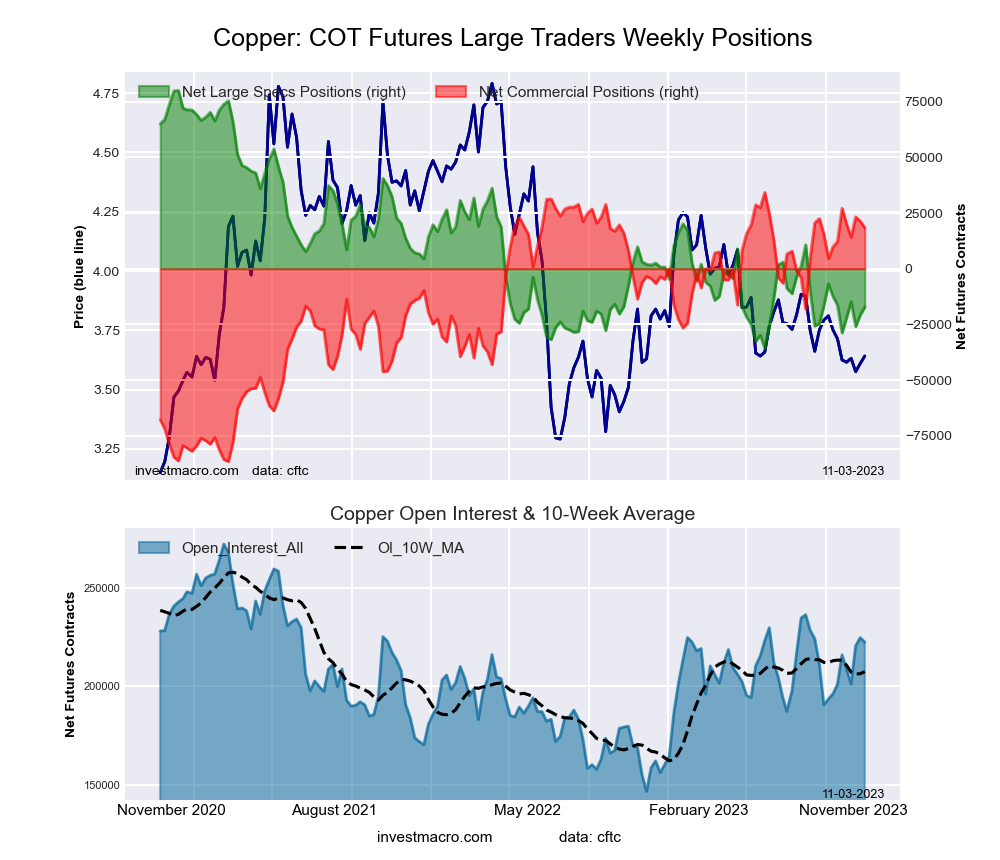
I confess to having exhibited strong masochistic tendencies since 2020 in the full and unwavering belief that a junior resource bull “to end all bulls” is lurking just around the corner. While I have enjoyed marginal success in the uranium and lithium space, the copper space has been largely ignored and unloved throughout the entire post-pandemic monetary print-fest. Therein lies my next serious hunt, as there can be no successful transition to electric vehicles unless there is a tenfold increase in the transmission grid, and critical to expanding that grid is copper.

Ivanhoe Mines Ltd. (IVN:TSX; IVPAF:OTCQX)

It was weak in September, falling over 7.3% before a modest bounce into month-end. Since the big money has found electrical storage in lithium and since they have more recently gone after clean energy in uranium, they have yet to anoint energy transmission and copper as the last member of that very special trilogy. As a warning, I will continue to beat the copper drum until Bob Friedland forces me to buy shares in his behemoth Ivanhoe Mines Ltd., the crown jewel of the Friedland Empire.

As a casual observer of the deal since 2005, I have watched the genius that is Robert Friedland over the years (after meeting him in 1993) amass a large fortune through mining, first leaving North America for Singapore, then managing Ivanhoe Mines Ltd. (IVN:TSX; IVPAF:OTCQX) through intricate deals in Mongolia and Africa with the result being the largest copper producer in the world at Kamoa-Kakula which is situated in the Democratic Republic of the Congo in partnership with the government and Chinmet, the Chinese National Mining Company.

Arguably the finest salesman on the planet, Friedland deserves every penny of accolade bestowed to him by the usually agnostic press, which seem to view him as the fast-and-furious penny stock promoter of the 1980s and 1990s (which he was), but every time I listen to him addressing the Saudi princes or the Chinese mandarins in conferences throughout the Middle East and Asia, I am reminded of the time in 2002 he addressed a bunch of salesmen with the former Yorkton Securities in Toronto shortly after the dotcom market had blown up.

He took off his Armani jacket and rolled up his $300 shirt sleeves, and scolded the demoralized and destitute brokers up one side and down the other with visceral derision for failing to understand that “Technology is effin’ DEAD, and you mutts will have no clients left if you do not get them OUT and into commodities!” His vitriol was beyond “frightening.”

Within six months, Friedland was bang on, and by 2003, the metals markets were screaming higher, and it lasted until 2011 as China was the top dog in the race, exactly as he had predicted during that meeting.

So, when I start spouting off and tripping the light fantastic over “old guys” that I totally admire, I try to look beyond their self-laudatory idiosyncrasies and focus on their accomplishments, many of which can be attributed to chaps like Bob Friedland.

The reasons that he likes copper are anchored in the reasons he has been successful. The reasons he has been successful are anchored in his understanding of the mining industry. The reasons he understands the mining industry are anchored in the failures that built up the scar tissue early in his career. With that scar tissue, he can withstand the slings and arrows that appear in the mirror every morning of his life in an industry filled with body bags. A remarkable talent at best. . .

Copper is a buy; Ivanhoe Mines is a buy. Bob Friedland is a buy. End of story.


Important Disclosures:

  1. Norseman Silver Ltd. is a billboard sponsor of Streetwise Reports and pays SWR a monthly sponsorship fee between US$4,000 and US$5,000.
  2. As of the date of this article, officers and/or employees of Streetwise Reports LLC (including members of their household) own securities of Norseman Silver Ltd.
  3. Michael Ballanger: I, or members of my immediate household or family, own securities of: All. I determined which companies would be included in this article based on my research and understanding of the sector.
  4. Statements and opinions expressed are the opinions of the author and not of Streetwise Reports or its officers. The author is wholly responsible for the validity of the statements. The author was not paid by Streetwise Reports for this article. Streetwise Reports was not paid by the author to publish or syndicate this article. Streetwise Reports requires contributing authors to disclose any shareholdings in, or economic relationships with, companies that they write about. Streetwise Reports relies upon the authors to accurately provide this information and Streetwise Reports has no means of verifying its accuracy.
  5.  This article does not constitute investment advice. Each reader is encouraged to consult with his or her individual financial professional. By opening this page, each reader accepts and agrees to Streetwise Reports’ terms of use and full legal disclaimer. This article is not a solicitation for investment. Streetwise Reports does not render general or specific investment advice and the information on Streetwise Reports should not be considered a recommendation to buy or sell any security. Streetwise Reports does not endorse or recommend the business, products, services or securities of any company.
  6.  This article does not constitute medical advice. Officers, employees and contributors to Streetwise Reports are not licensed medical professionals. Readers should always contact their healthcare professionals for medical advice.

For additional disclosures, please click here.
Ichimoku Cloud Analysis 04.10.2023 (GBPUSD, USDCHF, BRENT)

By RoboForex.com

GBPUSD, “Great Britain Pound vs US Dollar”

GBPUSD is correcting within a Triangle pattern. The instrument is going below the Ichimoku Cloud, which suggests a downtrend. A test of the Kijun-Sen line at 1.2080 is expected, followed by a decline to 1.1965. An additional signal confirming the decline will be a rebound from the upper boundary of the descending channel. The scenario can be cancelled by a breakout of the upper boundary of the Cloud with the price securing above 1.2175, which will mean further growth to 1.2265. Meanwhile, the decline could be confirmed by a breakout of the lower boundary of the Triangle pattern with the price securing under 1.2040.

GBPUSD
Risk Warning: the result of previous trading operations do not guarantee the same results in the future

USDCHF, “US Dollar vs Swiss Franc”

USDCHF is testing the resistance level. The instrument is going above the Ichimoku Cloud, which suggests an uptrend. A test of the upper boundary of the bullish channel at 0.9195 is expected, followed by a rise to 0.9285. An additional signal confirming the rise will be a rebound from the lower boundary of the bullish channel. The scenario can be cancelled by a breakout of the lower boundary of the Cloud with the price securing under 0.9125, which will mean a further decline to 0.9035.

USDCHF
Risk Warning: the result of previous trading operations do not guarantee the same results in the future

BRENT

Brent is declining within a bearish channel. The instrument is going below the Ichimoku Cloud, which suggests a downtrend. A test of the lower boundary of the Cloud at 90.95 is expected, followed by a decline to 87.95. An additional signal confirming the decline will be a rebound from the upper boundary of the bearish channel. The scenario can be cancelled by a breakout of the upper boundary of the Cloud with the price securing above 92.25, which will mean further growth to 94.65. Meanwhile, the decline could be confirmed by a breakout of the lower boundary of the bullish channel with the price securing under 89.65.

BRENT

Article By RoboForex.com

Attention!
Forecasts presented in this section only reflect the author s private opinion and should not be considered as guidance for trading. RoboForex LP bears no responsibility for trading results based on trading recommendations described in these analytical reviews.

The yields of government bonds continue to update the maximums. RBNZ left the rate unchanged

By JustMarkets

At yesterday’s stock market close, the Dow Jones Index (US30) was down by 1.29%, while the S&P 500 Index (US500) decreased by 1.37%. The NASDAQ Technology Index (US100) closed negative by 1.87% on Tuesday. The S&P 500 (US500) and Dow Jones Industrials (US30) indices fell to 4-month lows as the dollar index and government bond yields surged to 16-year highs. Hawkish comments from Fed Chair Cleveland Mester and Atlanta Fed Chair Bostic pushed 10-year T-note yields to a 16-year high as they voiced their support for keeping interest rates higher. Economic data on the labor market also supported the dollar. The US job openings rose by 690,000 from the previous month to 9.61 million in August, well above the market’s consensus forecast of 8.80 million and indicating a robust labor market. Investors fear that the Fed will raise the rate once again this year (the probability is already over 40%).

JPMorgan Asset Management warned that there is a risk of further stock market declines due to rising interest rates, “We didn’t expect this rate hike. This is something that will at least slow or even reverse the progress of stock markets.” Airbnb (ABNB) stock prices fell more than 6% and topped the list of losers on the Nasdaq 100 index after KeyBanc Capital Markets downgraded the company’s stock to sector Perform from Outperform. Goldman Sachs (GS) was down more than 3% and topped the list of losers in the Dow Jones Industrials after Morgan Stanley cut its target price on the stock to $329 from $347.

Prospects for a reduction in global fuel supplies are lending support to oil. Late last month, Russia announced a ban on gasoline and diesel exports in an attempt to stabilize domestic fuel prices. The ban will reduce fuel supplies by about 1 million BPD, about 3.4% of total global demand. The OPEC+ country will meet today. No surprises are expected – the countries are forecast to continue their previously planned cuts.

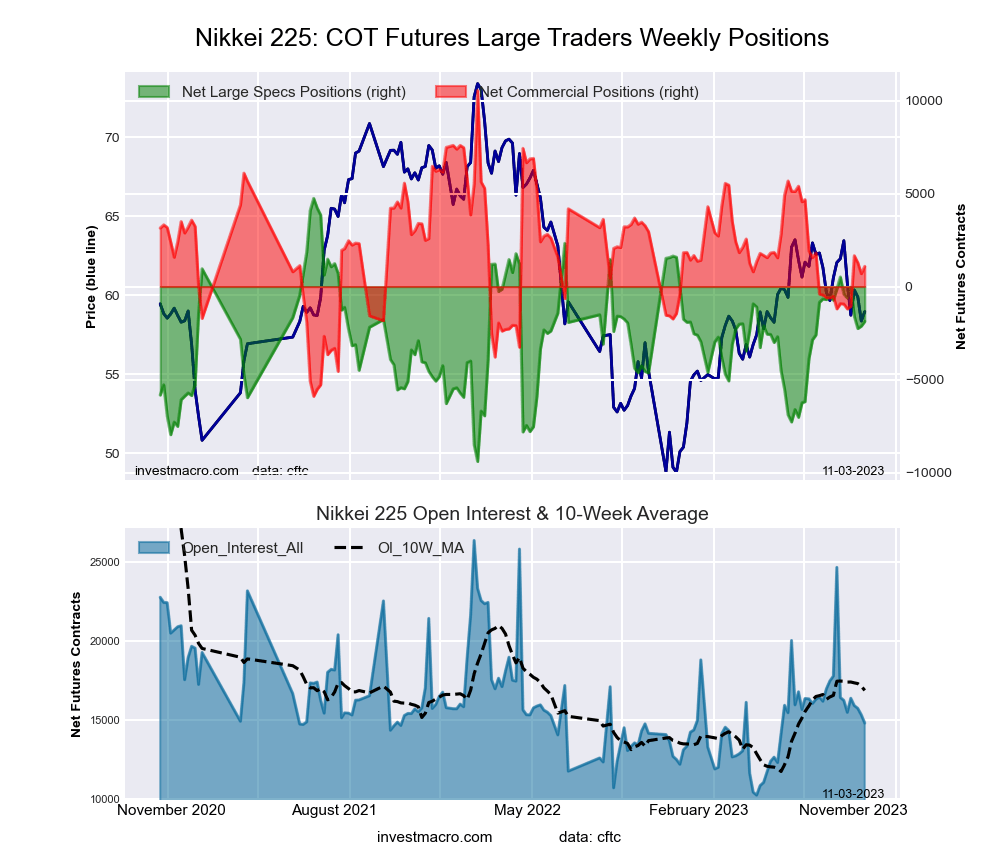
Asian markets were mostly declining yesterday. Japan’s Nikkei 225 (JP225) decreased by 1.64% on Tuesday, China’s FTSE China A50 (CHA50) will not trade for the rest of the week due to holidays, Hong Kong’s Hang Seng (HK50) was down by 2.69% on Tuesday, and Australia’s ASX 200 (AU200) was negative 1.28%.

The Reserve Bank of New Zealand (RBNZ) left the interest rate unchanged at 5.5% and expressed a relatively soft stance on the future trajectory of the OCR in an accompanying statement. Key factors determining the likelihood and size of a November tightening will be third-quarter inflation data due on October 17 and labor market data on November 1.

Japan’s finance ministry conducted another currency intervention yesterday to support the exchange rate, although there was no official statement from officials. A spokesman for Japan’s finance ministry was not available to comment on whether Japan had intervened against the yen. But analysts pointed to other explanations, such as standing orders to sell dollars at the 150 level because of the threat of official action. Others speculate that there may have been a check by Japanese authorities on exchange rates at banks, a move often seen as a prelude to further official action.

S&P 500 (F)(US500) 4,229.45 −58.94 (−1.37%)

Dow Jones (US30) 33,002.38 −430.97 (−1.29%)

DAX (DE40)  15,085.21 −162.00 (−1.06%)

FTSE 100 (UK100) 7,470.16 −40.56 (−0.54%)

USD Index  107.06 +0.16 (+0.15%)

News feed for 2023.10.03:
  • – Japan Services PMI (m/m) at 03:30 (GMT+3);
  • – New Zealand Interest Rate Decision at 04:00 (GMT+3);
  • – New Zealand RBNZ Rate Statement at 04:00 (GMT+3);
  • – Eurozone Services PMI (m/m) at 11:00 (GMT+3);
  • – Eurozone ECB President Lagarde Speaks (m/m) at 11:15 (GMT+3);
  • – UK Services PMI (m/m) at 11:30 (GMT+3);
  • – Eurozone Producer Price Index (m/m) at 12:00 (GMT+3);
  • – Eurozone Retail Sales (m/m) at 12:00 (GMT+3);
  • – OPEC+ meeting at 13:00 (GMT+3);
  • – US ADP Nonfarm Employment Change (m/m) at 15:15 (GMT+3);
  • – US ISM Services PMI (m/m) at 17:00 (GMT+3);
  • – US FOMC Member Bowman Speaks (m/m) at 17:25 (GMT+3);
  • – US Crude Oil Reserves (w/w) at 17:30 (GMT+3);
  • – Eurozone ECB President Lagarde Speaks (m/m) at 19:00 (GMT+3).

By JustMarkets


This article reflects a personal opinion and should not be interpreted as an investment advice, and/or offer, and/or a persistent request for carrying out financial transactions, and/or a guarantee, and/or a forecast of future events.

Explainer: What happened with USDJPY?

By ForexTime 

  • Strong US JOLTS data pushes USDJPY beyond 150.00
  • Currency pair later experiences aggressive selloff
  • Weak yen supporting speculation of government intervention
  • However, market still guessing what triggered spike in yen
  • USDJPY remains bullish with 150 key level of interest

Investors were in a frenzy on Tuesday after the USDJPY collapsed almost 300 pips in a matter of minutes.

This bombshell development ignited expectations that Japan’s government may have intervened to support the currency. However, the radio silence from Japanese officials left market watchers scratching their heads, guessing whether this was the case or not.

With the USDJPY clawing back most of its losses and cautiously moving back in the direction of 150.00, most are looking for answers and questioning what to expect next.

Here, we’ll explain what happened with the USDJPY, why it’s a big deal, and how it could impact your trading.

What exactly happened?

On Tuesday, the USDJPY pushed above 150.00 after US job openings (JOLTS) unexpectedly increased in August, raising questions around more rate hikes from the Fed. After peaking at 150.16 for the first time since October 2022, prices collapsed nearly 2% to 147.33!

The context

Last week, we discussed how the USDJPY was a ticking timebomb because it was trading at levels weaker than last year when Japan intervened. There was already chatter around 150 acting as a key level that could trigger government action.

Why did it happen?

The yen has depreciated roughly 12% against the dollar year-to-date. This puts pressure on Japan’s economy by making imports for many essentials more expensive, prolonging inflation which is above the Bank of Japan’s (BoJ) 2% target.

After USDJPY pushed beyond the 150 threshold, the aggressive selloff led to most speculating that Japan’s government intervened by purchasing large amounts of yen and selling dollars. This argument was supported by the fact that Yen was the sole G10 gainer vs USD yesterday.

Other possible triggers?

Markets are still guessing what exactly triggered the spike in the yen on Tuesday.

Other than possible government intervention, there is talk about a rate check by the BoJ or simply jittery markets in response to the USDJPY touching 150.00.

What is a rate check?

Rate checks are usually seen as a strong warning of potential currency intervention. This is when central bank officials call dealers and ask for buying and selling rates for the yen. The BoJ is said to have done this 8 days before intervening back in September 2022.

What could happen next?

Well, the good news is that investors will know whether Japan intervened and, if so, how much it spent at the end of this month when the Ministry of Finance releases monthly intervention data.

In the meantime, yen volatility is likely to remain a major theme – especially if prices push back towards the psychological 150.00 point.

Will the USDJPY keep pushing higher?

Focusing on the fundamental outlook, the threat of intervention around the 150.0 level could keep USDJPY bulls meek. Especially after the aggressive selloff witnessed in the previous session.

However, expectations around US interest rates staying higher for longer while the BoJ maintains its ultra-loose monetary policy could keep the USDJPY buoyed. This standoff between conflicting forces could place the currency pair on a rollercoaster ride.

Technical outlook

The USDJPY remains firmly bullish on the daily charts despite the aggressive selloff on Tuesday. Bulls remain in a position of power above the 147.50 level. A strong daily close above 150.00 could open a path towards 151.94. Should prices slip below 147.50, a decline towards 146.70 and 144.90 could be on the cards.


Forex-Time-LogoArticle by ForexTime

ForexTime Ltd (FXTM) is an award winning international online forex broker regulated by CySEC 185/12 www.forextime.com

FTX founder Sam Bankman-Fried trial is big test for crypto

By George Prior 

The highly anticipated trial of Sam Bankman-Fried, the founder of FTX, kicks off today.

This pivotal event represents a golden opportunity to bolster trust, boost adoption, and purge the sector of unscrupulous actors.

This is the analysis of high-profile cryptocurrency advocate Nigel Green, the CEO and founder of deVere Group, one of the world’s largest independent financial advisory, asset management and fintech organizations, ahead of the trial in Manhattan federal court. It is expected to last six weeks.

Sam Bankman-Fried, commonly known as SBF, stands accused of defrauding numerous prominent investors worldwide, in addition to millions of customers who placed their trust in his FTX cryptocurrency exchange.

Allegations of pilfering billions of dollars entrusted to his care have further compounded the gravity of the situation.

The aftermath of FTX’s staggering $40 billion bankruptcy in November 2022 has been characterised by US prosecutors as “one of the most significant financial frauds in the annals of American history.”

Nigel Green says: “The importance of this case cannot be underestimated. Not only for SBF, who faces 110 years of prison time, and the victims.

“But also for digital currencies themselves – which are widely regard as the future of money.”

One issue that makes Sam Bankman-Fried’s trial of utmost importance to the cryptocurrency ecosystem is its potential to pave the way for regulatory harmony.

“In the face of the burgeoning prominence of cryptocurrencies in the international financial system, governments and regulatory bodies worldwide find themselves grappling with the imperative need for consistent, all-encompassing regulations,” notes the deVere CEO.

“This trial should serve as a catalyst propelling regulators toward the formulation of a unified framework, harmonising cryptocurrency regulations with the established norms governing traditional financial systems.

“Critics have long decried the lack of oversight and susceptibility to manipulation within cryptocurrency markets.

“By subjecting Sam Bankman-Fried and FTX to the same regulations that traditional financial institutions abide by, this trial sends a resounding message on commitment to equitable and transparent practices.”

He continues: “The crypto market, like any other sector, is not immune to the presence of bad actors.
“The trial presents a unique opportunity to pinpoint and penalise individuals or entities which might have engaged in illicit pursuits. By holding alleged wrongdoers accountable, it underscores a dedication to expelling unscrupulous actors from this burgeoning sector, ultimately creating a safer environment for all participants, including retail and institutional investors.”

Investor confidence constitutes the linchpin for the mass adoption of cryptocurrencies. Nigel Green says: “A meticulously conducted trial resulting in appropriate repercussions will inevitably boost trust among investors in the asset class.

“This trust would further attract investors, especially institutional investors, who bring huge capital, expertise and influence, thereby contributing to crypto’s broader acceptance.”

He concludes: “This is the biggest legal battle in crypto history.

“But it also constitutes a formidable test, and its potential positive outcomes for the crypto market should not be wasted.”

About:

deVere Group is one of the world’s largest independent advisors of specialist global financial solutions to international, local mass affluent, and high-net-worth clients.  It has a network of offices across the world, over 80,000 clients and $12bn under advisement.

OPEC+ plans to maintain production cuts. The RBA left the rate unchanged

By JustMarkets

At yesterday’s stock market close, the Dow Jones Index (US30) decreased by 0.22%, while the S&P 500 Index (US500) added 0.08%. The NASDAQ Technology Index (US100) closed positive by 0.57% on Monday. Rising T-note yields lent support to the dollar after the 10-year bond yield rose to a 16-year high of 4.701% on Monday. The US economic news released on Monday was mostly better than expected and was bullish for the dollar. The ISM manufacturing index for September rose by 1.4 to 49.0, beating expectations of 47.9. In addition, construction spending for August rose by 0.5% m/m, matching expectations.

Fed Chair Bowman’s hawkish comments on Monday were favorable for the dollar when she stated: “I continue to expect that further interest rate increases are likely to be needed to bring inflation back to the 2% level in a timely manner, as high energy prices could reverse some of the gains we have seen in recent months.” For today, markets are factoring in a 31% probability that the FOMC will raise the lending rate by 25 bps at its next meeting on November 1 and a 51% probability that the rate will be raised by 25 bps at the meeting that ends on December 13.

Goldman Sachs said on Monday that US large-cap tech stocks are likely to perform well in the third quarter after the recent sell-off led to lower valuations, and “the divergence between lower valuations and improving fundamentals represents an opportunity for investors.”

Equity markets in Europe were mostly down on Monday. Germany’s DAX (DE40) fell by 0.91%, France’s CAC 40 (FR40) lost 0.94% yesterday, Spain’s IBEX 35 (ES35) declined by 1.16%, and the UK’s FTSE 100 (UK100) closed down by 1.28%. On Monday, ECB Vice President Gindos said that keeping interest rates at current levels will help bring inflation down to the ECB’s 2% target and that talk of a rate cut by the ECB is premature. This is a negative for the European currency as the ECB is likely to end its tightening cycle.
The rally of the dollar index to a 10-month high on Monday had a negative impact on energy prices. The likelihood of further interest rate hikes could slow economic growth and energy demand. But comments from the United Arab Emirates energy minister on Monday lent support to oil prices as he favored maintaining OPEC+ oil production cuts, saying the alliance was pursuing the “right policy.” Tensions in the oil market are expected to continue as OPEC+ production cuts are extended. Saudi Arabia recently said it would maintain its unilateral oil production cut of 1.0 million BPD through December. The move will keep Saudi oil production at around 9 million BPD, the lowest in three years.
Asian markets were mostly down yesterday. Japan’s Nikkei 225 (JP225) decreased by 0.31% on Monday, China’s FTSE China A50 (CHA50) will not trade for the rest of the week due to holidays, Hong Kong’s Hang Seng (HK50) was not trading yesterday, and Australia’s ASX 200 (AU200) was negative 0.22%.

Yesterday morning, minutes from the Bank of Japan’s meeting were released, discussing the move out of negative interest rates. One board representative expressed risk management concerns about a major policy shift, as the BoJ may have enough data to make a decision on negative rates in the first quarter of next year. The prospect of a move away from negative interest rates has led to another rise in yields on 10-year Japanese government bonds, requiring the bank to make unplanned bond purchases. Japanese officials have been warning markets against currency speculation for weeks now, with the Japanese yen reaching last year’s levels when the BoJ intervened.

China’s manufacturing PMI for September rose by 0.5 to a 6-month high of 50.2, exceeding expectations of 50.1. In addition, China’s non-manufacturing PMI for September rose by 0.7 to 51.7, exceeding expectations of 51.6.

The Reserve Bank of Australia kept its interest rate unchanged at 4.1%. At the same time, the central bank reiterated its warning that further tightening might be needed to contain inflation within a “reasonable time frame.”

S&P 500 (F)(US500) 4,288.39 +0.34 (+0.08%)

Dow Jones (US30) 33,433.35 −74.15 (−0.22%)

DAX (DE40)  15,247.21 −139.37 (−0.91%)

FTSE 100 (UK100) 7,510.72 −97.36 (−1.28%)

USD Index  107.02 +0.80 (+0.75%)

News feed for 2023.10.03:
  • – US FOMC Member Mester Speaks (m/m) at 02:30 (GMT+3);
  • – Australia RBA Interest Rate Decision (m/m) at 06:30 (GMT+3);
  • – Australia RBA Rate Statement (m/m) at 06:30 (GMT+3);
  • – Switzerland Consumer Price Index (m/m) at 09:30 (GMT+3);
  • – US FOMC Member Bostic Speaks (m/m) at 15:00 (GMT+3);
  • – US JOLTs Job Openings (m/m) at 17:00 (GMT+3).

By JustMarkets


This article reflects a personal opinion and should not be interpreted as an investment advice, and/or offer, and/or a persistent request for carrying out financial transactions, and/or a guarantee, and/or a forecast of future events.

Bitcoin: Technical analysis favours more gains

By ForexTime

  • Bitcoin pulls back after soaring to 6-week high
  • Prices broke beyond neckline of “inverse head-and-shoulders”
  • $30k handle could be attained if pattern plays out
  • ADX, RSI indicators also suggest more immediate headroom

Bitcoin on Monday (Oct 2nd) surged to its highest levels since Aug. 17th!

Cryptos climbed as Ether futures exchange-traded funds (ETF) were launched in the US at the start of this week.


Along the way, Bitcoin broke through the neckline of an inverse head-and-shoulder pattern, to a high of $28604.38.

Bulls delivered a strong close above its 50-day SMA but gave up close to 50% of its rally for the day.

This “area of surrender” for Bitcoin bulls coincides with the resistance line of the upward-sloping channel, drawn from the September 1st high of $26,137.37.


Inverse head-and-shoulder pattern has measured move objective of $2,633.38.

Note that Bitcoin has been able to retrace its steps from that $24,871.78 inverse head’s intraday low on September 11th, back towards its neckline.

This suggests that a similar-sized move ($2,633.38) could materialize to the upside

In fewer words, should this pattern play out, Bitcoin may get to within touching distance of the $30,000 handle.

According to Thomas Bulkowski, in his book “The Encyclopedia of Chart patterns” this reversal pattern has a 9% failure rate and meets its target 51% of the time.


Broken neckline: retested

At the time of writing, Bitcoin is paring yesterday’s surge to move back closer to the broken neckline.

Failure to close back below the broken neckline or the significant 78.6 Fibonacci level at $27446.25, could embolden Bitcoin bulls to test the 100 Fibonacci level at $28147.19 with eyes set on the upper line of the ascending channel mentioned above.

The Fibonacci levels are taken from August 29th’s high at 28147.19 to September 11th’s low of $24871.78.


Technical indicators suggest limited immediate gains

The Average Directional Movement Index (ADX) – an indicator that displays directional trend strength – is showing a strong bullish strength as it is above its 20 threshold and pointing upwards.

Furthermore, we see the 14-day relative strength index (RSI) tethering on the edge of being overbought, with room for a marginal move to the upside.


Overall, Bitcoin bulls will be hoping that seasonality will kick in once more, given that Q4 tends to see double-digit gains for the world’s oldest and largest crypto.


Forex-Time-LogoArticle by ForexTime

ForexTime Ltd (FXTM) is an award winning international online forex broker regulated by CySEC 185/12 www.forextime.com