Gold Reaches Unprecedented High Amid Economic Uncertainties

By RoboForex Analytical Department

Gold trading reached a significant milestone on Thursday, with prices hitting an all-time high of $2150.00 per Troy ounce. This remarkable surge was propelled by a confluence of factors. These include the decline in US government bond yields, the weakening US dollar, and speculation about a potential interest rate cut by the US Federal Reserve in response to emerging economic challenges.

The expectation of monetary policy easing stems from the Federal Reserve’s ongoing evaluation of the economy’s condition, highlighted by Federal Reserve Chair Jerome Powell’s hint at potential policy adjustments in 2024. The timing of such interventions is critical to achieving a balanced approach without precipitating or lagging behind the economy’s actual needs.

Recent labour market data, including ADP’s February employment growth figures, fell short of expectations, shifting focus to forthcoming reports on unemployment rates, Non-Farm Payroll (NFP) statistics, and average earnings. These reports are critical for assessing the employment market’s condition and will significantly influence the Fed’s decision-making process.

Gold’s rally is further supported by its inverse relationship with the US dollar, gaining momentum from the currency’s current weakness. Moreover, the surge in physical demand for gold from global central banks in January, which saw purchases double compared to December, underscores the metal’s appeal as a hedge against geopolitical risks and potential economic downturns.

Technical analysis of gold (XAU/USD)

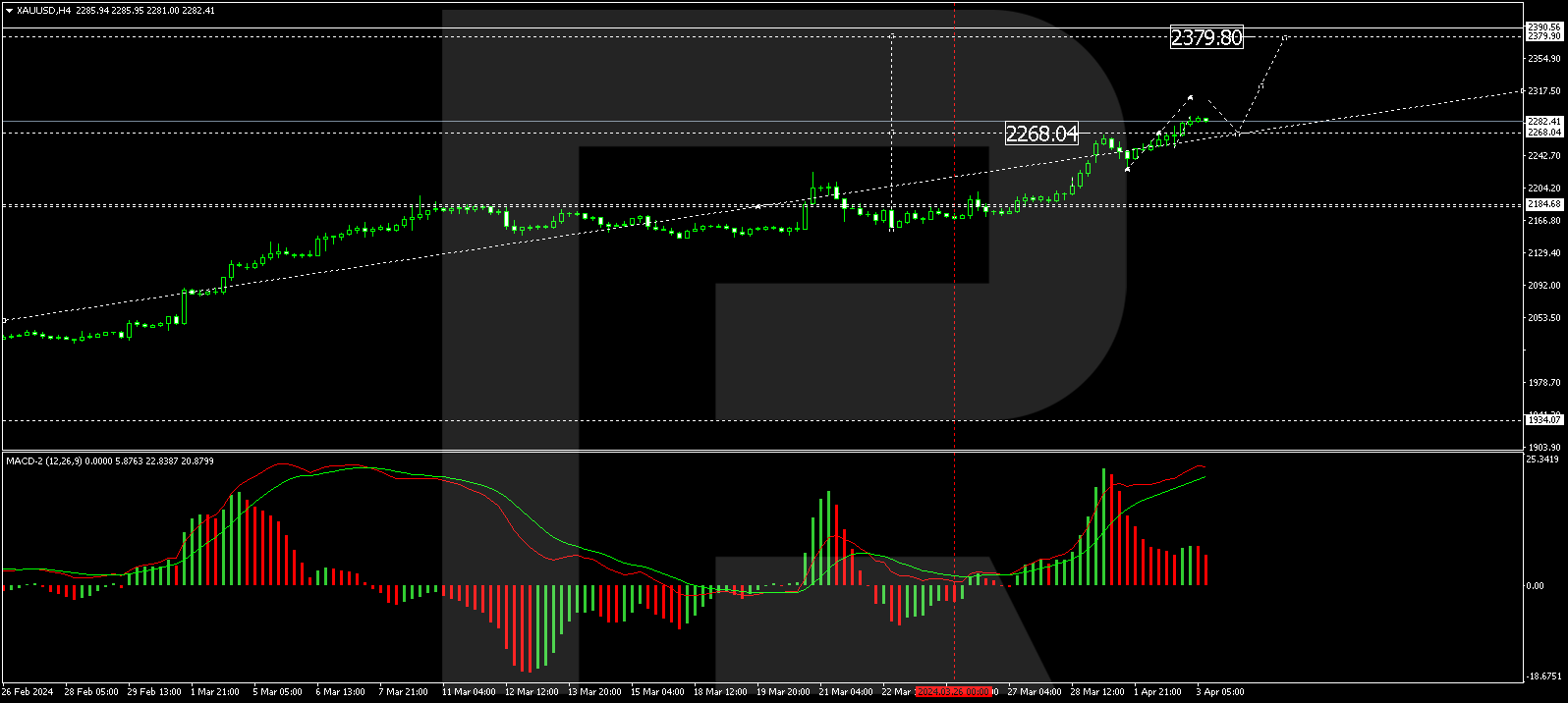
The H4 chart analysis of XAU/USD reveals the progression of the fifth growth wave, with a pivotal correction to 2124.00 following the achievement of a local target at 2141.90. Today’s trading has seen the market surpassing the peak of this wave, establishing a consolidation range above the 2153.00 level. A breakout above this consolidation could signal further growth towards 2180.80, which was identified as the initial target. This bullish scenario is supported by the MACD indicator, which remains above zero, indicating sustained upward momentum.

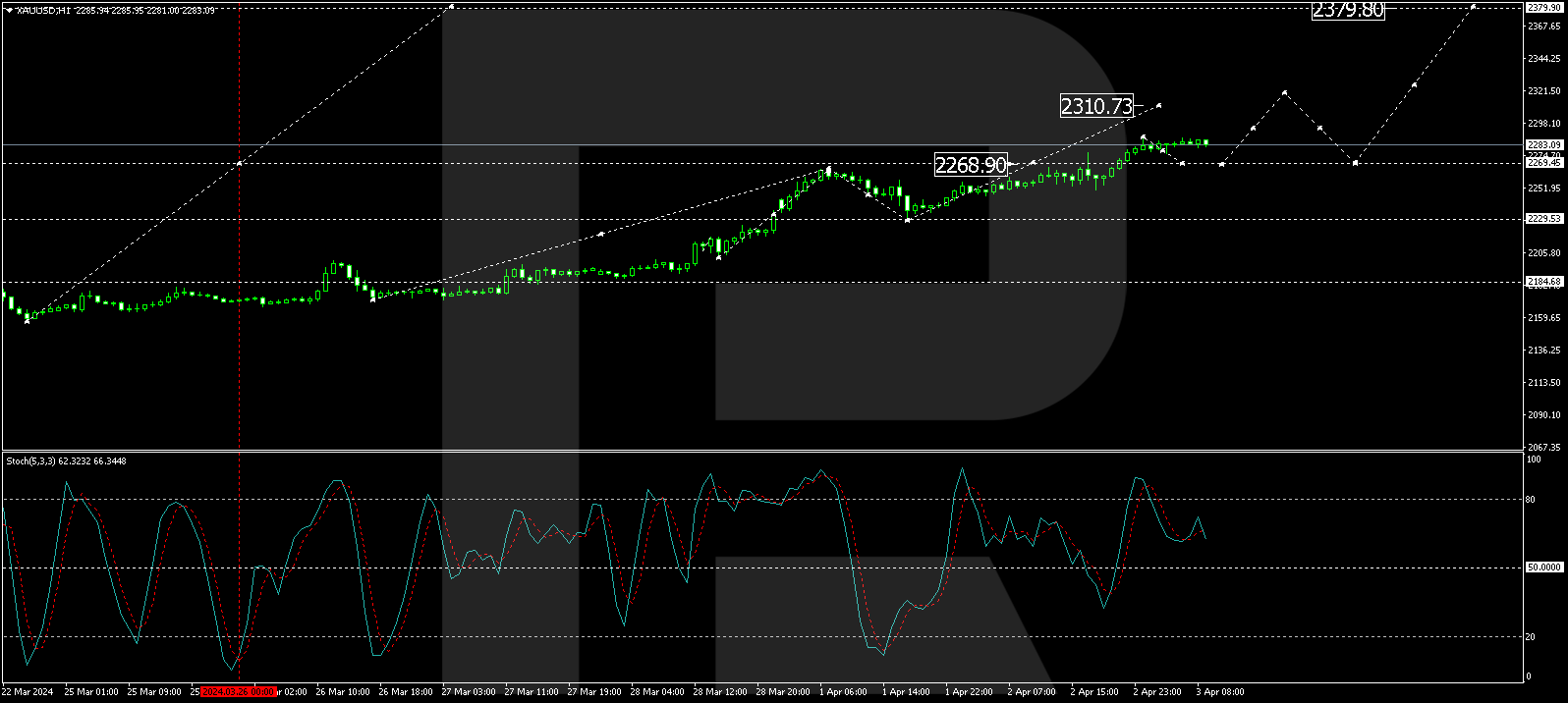
On the H1 chart, gold prices have consolidated around the 2152.00 mark. An upward move from this consolidation phase is expected to initiate a growth wave towards 2160.60. Subsequent correction to 2152.00 and a potential rise to 2180.00 are anticipated. The Stochastic oscillator supports this outlook, suggesting a brief retreat to 50 before rallying back to 80, reflecting continued bullish sentiment in the market.

Disclaimer

Any forecasts contained herein are based on the author’s particular opinion. This analysis may not be treated as trading advice. RoboForex bears no responsibility for trading results based on trading recommendations and reviews contained herein.

Palladium Is Good on Every Time Frame

Source: Barry Dawes  (3/6/24)

Barry Dawes of Martin Place Securities shares his thoughts on the current state of gold, silver, nickel, cobalt, and palladium and explains why he believes silver is breaking out and palladium is ready to skyrocket.

Gold makes another new closing high in US$, and much higher prices are coming.

Gold is surging in all major currencies.

Silver is breaking out, and palladium is readying to rocket higher

Key Points

Gold

  • Another new high
  • Strong in all currencies

Gold Stocks

  • More catch-up rally
  • Another few percent before pause
  • But heading much higher

Silver

  • Breaking out

Palladium

  • Ready to rocket higher
  • Strong on all time frames

Nickel

  • Downtrend broken

Gold

Volatility is returning after a very quiet period.

This is a very powerful move after the 4-year consolidation in the box.

The parabolic moves are very clear in gold in most currencies.

This is a vertical move.

In clear air to head higher.

Big break out here against rallying bond prices.

Silver

Silver is looking good here now.

And the big picture is for a very strong move out of this parabolic pattern.

XAU has moved nicely out of that wedge.

The first stop will be 117 with a breather and then to 130.

It will go much higher, but let’s wait and see.

ASX Gold Stocks

Rally to 7700 underway, then much higher.

Bonds

  • Yields still heading lower
  • Gapped lower

Palladium

Good on every time frame.

Nickel

Breaking out.

Head the markets, not the commentators.


Important Disclosures:

  1. Statements and opinions expressed are the opinions of the author and not of Streetwise Reports, Street Smart, or their officers. The author is wholly responsible for the accuracy of the statements. Streetwise Reports was not paid by the author to publish or syndicate this article. Streetwise Reports requires contributing authors to disclose any shareholdings in, or economic relationships with, companies that they write about. Any disclosures from the author can be found  below. Streetwise Reports relies upon the authors to accurately provide this information and Streetwise Reports has no means of verifying its accuracy.
  2. This article does not constitute investment advice and is not a solicitation for any investment. Streetwise Reports does not render general or specific investment advice and the information on Streetwise Reports should not be considered a recommendation to buy or sell any security. Each reader is encouraged to consult with his or her personal financial adviser and perform their own comprehensive investment research. By opening this page, each reader accepts and agrees to Streetwise Reports’ terms of use and full legal disclaimer. Streetwise Reports does not endorse or recommend the business, products, services or securities of any company.

For additional disclosures, please click here.

Solid Capital Returns Give This Texas Oil Co. a Buy Rating

Source: Leo Mariani  (3/6/24)

Solid returns of capital, including dividends and buybacks, higher production growth vs. peers, and discounted valuation vs. Permian peers, are the reasons Permian is rated a Buy, according to a Roth MKM research note. 

Roth MKM analyst Leo Mariani gave Permian Resources Corp. (PR:NYSE) a Buy rating in a March 6 research note.

Of this decision, Mariani stated, “We rate Permian Resource a Buy due to its solid returns of capital, including dividends and buybacks, higher production growth vs. peers, and discounted valuation vs. Permian peers.”

Mariani noted that, all in all, he anticipates that the company will have a more positive outlook than its peers do today. 

Part of this valuation came from the news that Permian said it would be redeeming US$356 million of its Senior Notes (of which it has 6.875%), due in 2027. The company reported that it would be redeeming this on April 5 of this year. 

Payment of the notes will be made by cash the Permian already has as well as borrowing from its credit. 

Mariani commented, “Redeeming the bonds will save PR around US$24.5 million in interest expense once any credit facility borrowings are paid back with free cash flow.”

The analyst also pointed out that Permian’s co-CEOs had previously given up some stock during the last equity deal. The co-CEOs had sold 4 million shares in the deal. However, the co-CEOs stated that they are both dedicated to keeping at least 12 million shares each. Mariani opined that this is close to current ownership levels.

With his Buy rating, Mariani also gave Permian a target price of US$17, stating, “Our US$17 price target for PR is based on a 4.8x multiple of our 2024 DACF estimate, which is based on US$77 WTI oil and US$2.75 HH gas. Impediments to our target include lower-than-expected commodity prices and failure to hit production targets.”


Important Disclosures:

  1. This article does not constitute investment advice and is not a solicitation for any investment. Streetwise Reports does not render general or specific investment advice and the information on Streetwise Reports should not be considered a recommendation to buy or sell any security. Each reader is encouraged to consult with his or her personal financial adviser and perform their own comprehensive investment research. By opening this page, each reader accepts and agrees to Streetwise Reports’ terms of use and full legal disclaimer. Streetwise Reports does not endorse or recommend the business, products, services or securities of any company.

For additional disclosures, please click here.

Disclosures for Roth MKM, Permian Resource Corp., March 6, 2024

Regulation Analyst Certification (“Reg AC”): The research analyst primarily responsible for the content of this report certifies the following under Reg AC: I hereby certify that all views expressed in this report accurately reflect my personal views about the subject company or companies and its or their securities. I also certify that no part of my compensation was, is or will be, directly or indirectly, related to the specific recommendations or views expressed in this report.

Disclosures: The price target and rating history for Permian Resources Corp. prior to February 1, 2023 reflect MKM’s published opinion prior to the acquisition of MKM Partners, LLC by Roth Capital Partners, LLC.

ROTH Capital Partners, LLC expects to receive or intends to seek compensation for investment banking or other business relationships with the covered companies mentioned in this report in the next three months. The material, information and facts discussed in this report other than the information regarding ROTH Capital Partners, LLC and its affiliates, are from sources believed to be reliable, but are in no way guaranteed to be complete or accurate. This report should not be used as a complete analysis of the company, industry or security discussed in the report. Additional information is available upon request. This is not, however, an offer or solicitation of the securities discussed. Any opinions or estimates in this report are subject to change without notice. An investment in the stock may involve risks and uncertainties that could cause actual results to differ materially from the forward-looking statements. Additionally, an investment in the stock may involve a high degree of risk and may not be suitable for all investors. No part of this report may be reproduced in any form without the express written permission of ROTH. Copyright 2024. Member: FINRA/SIPC.

The Bank of Canada kept rates unchanged and maintained its dovish bias. The ECB will also keep all policy settings unchanged today

By JustMarkets

As of Wednesday’s stock market close, the Dow Jones Index (US30) was up 0.20%, the S&P 500 Index (US500) added 0.51%, and the NASDAQ Technology Index (US100) closed positive 0.58%.

Fed Chairman Powell said in front of Congress that it would likely be appropriate to begin reducing borrowing costs at some point this year. Still, the committee does not expect it will be appropriate to reduce the target range for the federal funds rate until it has more confidence that inflation is moving steadily toward 2%.

The latest economic data showed that US job openings for January, according to JOLTS, fell by 26,000 to 8.863 million, indicating a slight cooling in the labor market. Investors now await the main Nonfarm Payrolls report tomorrow.

Palantir (PLTR) closed higher by more than 9% after receiving a $178.4 million contract from the US Army to develop and produce ten prototype ground stations that use artificial intelligence and machine learning to process target information from space, airborne and ground sensors. JD.com (JD) closed higher by more than 16% after reporting fourth-quarter sales of ¥306.1 billion ($42.6 billion), beating the consensus forecast of ¥300 billion, and initiating a $3 billion share repurchase program. Hewlett Packard Enterprise (HPE) closed higher by more than 3% amid strong demand for the company’s artificial intelligence-focused servers. Orders for these servers totaled $3 billion, up $500 million from the last quarter.

At its March meeting, the Bank of Canada (BoC) kept its overnight rate target at 5%. It pledged to continue normalizing the bank’s balance sheet as policymakers remain concerned about risks to the inflation outlook. The bank said it would maintain its quantitative tightening policy until a further weakening in core inflation. The latest data showed that CPI inflation eased to 2.9% in January, but on an annualized and three-month basis, core inflation was from 3% to 3.5%. Policymakers forecast inflation to remain near 3% in the first half of this year and then gradually decline. The bank also noted that GDP growth remains weak and below potential, and employment continues to grow more slowly amid signs that wage pressures may be easing. At the press conference, Bank Governor Macklem said it was too early to consider cutting rates as more time is needed to ensure inflation falls to the 2% target.

Equity markets in Europe rallied yesterday. Germany’s DAX (DE40) rose by 0.10%, France’s CAC 40 (FR40) gained 0.28%, Spain’s IBEX 35 (ES35) increased by 0.79% on Wednesday, and the UK’s FTSE 100 (UK100) closed positive 0.43%.

Eurozone retail sales for January rose by 0.1% m/m, weaker than expectations of 0.2% m/m. German trade data was better than expected: exports for January rose by 6.3% m/m, stronger than expectations of 1.5% m/m and the largest increase in 3-1.5 years. In addition, January imports rose by 3.6% m/m, stronger than expectations of 1.8% m/m and the largest increase in 11 months.

In his pre-election budget statement, Treasury Secretary Jeremy Hunt announced plans for permanent tax cuts in line with slowing inflation to stimulate economic growth and support public services. The Office for Budget Responsibility (OBR) predicts that inflation will fall below the Bank of England’s target in the coming months and will also revise growth forecasts upwards.

The ECB’s monetary policy meeting will take place today. The ECB is forecast to leave the interest rate at 4.5%. In recent weeks, almost all ECB officials have unanimously argued that a premature rate cut could set a dangerous precedent for anchoring inflation. As a result, money markets have pushed back the likelihood of a first-rate cut from April to June. ECB chief Lagarde will likely reiterate that data remains lacking and refrain from giving clearer guidance on policy easing. Such a stance would be a moderately negative scenario for the euro.

WTI crude futures fell slightly to $79.1 a barrel on Wednesday, retreating from a four-month high after EIA data showed a smaller-than-expected rise in weekly US crude inventories. The US crude inventories rose by 1.367 million barrels last week, less than market expectations for a 2.116 million increase. On Tuesday, the API reported a modest 423,000 barrel rise in nationwide inventories.

Asian markets traded flat yesterday. Japan’s Nikkei 225 (JP225) was down 0.02%, China’s FTSE China A50 (CHA50) lost 0.76%, Hong Kong’s Hang Seng (HK50) was up 1.70% on the day, and Australia’s ASX 200 (AU200) was positive 0.12% on Wednesday.

S&P 500 (US500) 5,104.76 +26.11 (+0.51%)

Dow Jones (US30) 38,661.05 +75.86 (+0.20%)

DAX (DE40)  17,716.71 +18.31 (+0.10%)

FTSE 100 (UK100) 7,679.31 +33.15 (+0.43%)

USD Index 103.37 −0.42 (−0.41%)

Important events today:
  • – Australia Trade Balance (m/m) at 02:30 (GMT+2);
  • – China Trade Balance (m/m) at 05:00 (GMT+2);
  • – Switzerland Unemployment Rate (m/m) at 08:45 (GMT+2);
  • – Eurozone ECB Interest Rate Decision at 15:15 (GMT+2);
  • – Eurozone ECB Monetary Policy Statement at 15:15 (GMT+2);
  • – US Initial Jobless Claims (w/w) at 15:30 (GMT+2);
  • – US Trade Balance (m/m) at 15:30 (GMT+2);
  • – Canada Trade Balance (m/m) at 15:30 (GMT+2);
  • – Eurozone ECB Press Conference at 15:45 (GMT+2);
  • – US Fed Chair Jerome Powell Testifies at 17:00 (GMT+2);
  • – Eurozone ECB President Lagarde Speaks at 17:00 (GMT+2);
  • – US Natural Gas Storage (w/w) at 17:30 (GMT+2);
  • – US FOMC Member Mester Speaks (m/m) at 18:30 (GMT+2).

By JustMarkets


This article reflects a personal opinion and should not be interpreted as an investment advice, and/or offer, and/or a persistent request for carrying out financial transactions, and/or a guarantee, and/or a forecast of future events.

Lithium-ion batteries don’t work well in the cold – a battery researcher explains the chemistry at low temperatures

By Wesley Chang, Drexel University 

Rechargeable batteries are great for storing energy and powering electronics from smartphones to electric vehicles. In cold environments, however, they can be more difficult to charge and may even catch on fire.

I’m a mechanical engineering professor who’s been interested in batteries since college. I now lead a battery research group at Drexel University.

In just this past decade, I have watched the price of lithium-ion batteries drop as the production market has grown much larger. Future projections predict the market could reach thousands of GWh per year by 2030, a significant increase.

But, lithium-ion batteries aren’t perfect – this rise comes with risks, such as their tendency to slow down during cold weather and even catch on fire.

Behind the Li-ion battery

The electrochemical energy storage within batteries works by storing electricity in the form of ions. Ions are atoms that have a nonzero charge because they have either too many or not enough electrons.

When you plug in your electric car or phone, the electricity provided by the outlet drives these ions from the battery’s positive electrode into its negative electrode. The electrodes are solid materials in a battery that can store ions, and all batteries have both a positive and a negative electrode.

Electrons pass through the battery as electricity. With each electron that passes to one electrode, a lithium ion also passes into the same electrode. This ensures the balance of charges in the battery. As you drive your car, the stored ions in the negative electrode move back to the positive electrode, and the resulting flow of electricity powers the motor.

A diagram showing three boxes, one labeled cathode, one labeled electrolyte, and one labeled anode. Small circles representing lithium ions move to the anode to charge and the cathode to discharge.
When a lithium-ion battery delivers energy to a device, lithium ions – atoms that carry an electrical charge – move from the negative electrode, the anode, to the positive electrode, the cathode. The ions move in reverse when recharging.
Argonne National Laboratory, CC BY-NC-SA

While AA or AAA batteries can power small electronics, they can be used only once and cannot be charged. Rechargeable Li-ion batteries can operate for thousands of cycles of full charge and discharge. For each cycle, they can also store a much higher amount of charge than an AA or AAA battery.

Since lithium is the lightest metal, it has a high specific capacity, meaning it can store a huge amount of charge per weight. This is why lithium-ion batteries are useful not just for portable electronics but for powering modes of transportation with limited weight or volume, such as electric cars.

Battery fires

However, lithium-ion batteries have risks that AA or AAA batteries don’t. For one, they’re more likely to catch on fire. For example, the number of electric bike battery fires reported in New York City has increased from 30 to nearly 300 in the past five years.

Lots of different issues can cause a battery fire. Poorly manufactured cells could contain defects, such as trace impurities or particles left behind from the manufacturing process, that increase the risk of an internal failure.

Climate can also affect battery operation. Electric vehicle sales have increased across the U.S., particularly in cold regions such as the Northeast and Midwest, where the frigid temperatures can hinder battery performance.

Batteries contain fluids called electrolytes, and cold temperatures cause fluids to flow more slowly. So, the electrolytes in batteries slow and thicken in the cold, causing the lithium ions inside to move slower. This slowdown can prevent the lithium ions from properly inserting into the electrodes. Instead, they may deposit on the electrode surface and form lithium metal.

The molecules in fluids move slower at colder temperatures – the same thing happens inside batteries.

If too much lithium deposits on the electrode’s surface during charging, it may cause an internal short circuit. This process can start a battery fire.

Making safer batteries

My research group, along with many others, is studying how to make batteries that operate more efficiently in the cold.

For example, researchers are exploring swapping out the usual battery electrolyte and replacing it with an alternative electrolyte that doesn’t thicken at cold temperatures. Another potential option is heating up the battery pack before charging so that the charging process occurs at a warmer temperature.

My group is also investigating new types of batteries beyond lithium ion. These could be battery types that are more stable at wider temperature ranges, types that don’t even use liquid electrolytes at all, or batteries that use sodium instead of lithium. Sodium-ion batteries could work well and cost less, as sodium is a very abundant resource.

Solid-state batteries use solid electrolytes that aren’t flammable, which reduces the risk of fire. But these batteries don’t work quite as well as Li-ion batteries, so it’ll take more research to tell whether these are a good option.

Lithium-ion batteries power technologies that people across the country use every day, and research in these areas aims to find solutions that will make this technology even safer for the consumer.The Conversation

About the Author:

Wesley Chang, Assistant Professor of Mechanical Engineering and Mechanics, Drexel University

This article is republished from The Conversation under a Creative Commons license. Read the original article.

Today, the focus of investors’ attention is directed to the Bank of Canada meeting, as well as Jerome Powell’s testifies before Congress

By JustMarkets

As of Tuesday’s stock market close, the Dow Jones Index (US30) decreased by 1.04%. The S&P 500 Index (US500) lost 1.02%. The NASDAQ Technology Index (US100) closed negative at 1.65%. All 3 indices fell off the lows of the week. Weakness in technology stocks impacted the overall market as negative corporate news hamstrung technology stocks. Apple (AAPL) fell more than 2% after Counterpoint Research data showed that iPhone sales in China fell by 24% in the first six weeks of this year. Tesla (TSLA) closed down more than 4%, adding to Monday’s 7% loss after car shipments in China fell. In addition, Advanced Micro Devices (AMD) quotes fell more than 1% after the US government blocked a plan to sell artificial intelligence chips to China.

Today, investors expect Federal Reserve Chairman Jerome Powell to address the US Congress, where he may give clues on the timing and extent of interest rate cuts this year.

The Bank of Canada (BoC) will meet today. The Bank of Canada is forecast to leave the interest rate unchanged at 5%. The highlight of the last Bank of Canada meeting in January was removing the phrase “The Bank remains prepared to raise the policy rate further if needed” from the accompanying statement. History is likely to repeat itself at the current meeting. Recent data showed that Canada’s Q4 GDP was stronger, retail sales were stronger, and the labor market was more robust than expected. The overall CPI fell to 2.9% from 3.4% in December (consensus was 3.3%), and core inflation slowed to 3.3% from 3.6% as expected. According to economists, with such data, the Bank of Canada will not launch its first rate cut until June. The probability of such a scenario is 70%. In the short term, the current meeting is unlikely to change the picture of CAD. Moreover, the decline in CPI may prompt the Bank of Canada to give a more optimistic forecast of disinflation and hint more clearly at the easing of monetary policy. Given the market’s rather conservative assessment of the Bank of Canada’s rate cut, the balance of risks is tilted in favor of a decline in the Canadian dollar.

After hitting an all-time high of $68,970 on Tuesday, bitcoin (BTC/USD) fell more than 7% amid profit-taking by funds. Bitcoin is up more than 63% this year and hit an all-time high on Tuesday thanks to steady inflows into 11 spot bitcoin ETFs that began trading in January and have attracted nearly $8 billion.

Equity markets in Europe were flat yesterday. Germany’s DAX (DE40) was down 0.10%, France’s CAC 40 (FR40) decreased by 0.30%, Spain’s IBEX 35 (ES35) was up 0.47% on Tuesday, and the UK’s FTSE 100 (UK100) closed positive 0.08%.

Silver prices pulled back from a 2-month high to close slightly lower after weaker-than-expected US economic reports on January factory orders. January ISM services were bearish for industrial metals demand.

WTI crude futures are holding near $78 a barrel on Wednesday after losing more than 2% over the past two sessions as weaker demand outweighed an extension of OPEC+ supply cuts. The latest data on factory orders and the US services sector showed signs of a slowdown in US economic activity, adding to fears of weaker energy demand from the world’s largest oil consumer. Analysts also noted a lack of strong stimulus signals from major oil importer China after the country set its growth target for this year at “around 5%”. Meanwhile, major oil producers, including Saudi Arabia, Russia, Iraq, and the UAE, extended voluntary oil production cuts for the second quarter.

Natural gas prices added to Monday’s gains on Tuesday and hit a 1-month high. Natural gas prices have risen since last week after EQT Corp, the largest US natural gas producer, said it would cut net production by 30-40 billion cubic feet through March in response to low prices.

Asian markets were mostly down yesterday. Japan’s Nikkei 225 (JP225) was down 0.55%, China’s FTSE China A50 (CHA50) was up 1.32%, Hong Kong’s Hang Seng (HK50) lost 1.01% for the day, and Australia’s ASX 200 (AU200) was negative 0.25% for Tuesday.

Hong Kong stocks jumped 1.3% in Wednesday morning trading, partially recovering from a sharp drop the previous day as investors awaited new supportive measures from Beijing following the announcement of China’s 2024 economic growth target of around 5.0% during the opening of the annual plenary session on Monday. The Chinese government also unveiled its annual military budget for this year, which will total 1.67 trillion yuan, up 7.2% from 2023. The Hang Seng Index attempted to break a two-week low, helped by widespread growth across all sectors, including basic materials, industrials, and technology.

The Australian economy grew 0.2% QoQ in 4Q 2023, below the upwardly revised 3Q figure and market estimates of 0.3%. This was the ninth consecutive period of quarterly growth but the slowest pace in the last 5 quarters.

S&P 500 (US500) 5,078.65 −52.30 (−1.02%)

Dow Jones (US30) 38,585.19 −404.64 (−1.04%)

DAX (DE40)  17,698.40 −17.77 (−0.10%)

FTSE 100 (UK100) 7,646.16 +5.83 (+0.08%)

USD Index 103.80 −0.03 (−0.03%)

Important events today:
  • – Australia GDP (q/q) at 02:30 (GMT+2);
  • – German Trade Balance (m/m) at 09:00 (GMT+2);
  • – German Retail Sales (m/m) at 09:00 (GMT+2);
  • – UK Construction PMI (m/m) at 11:30 (GMT+2);
  • – Eurozone Retail Sales (m/m) at 12:00 (GMT+2);
  • – UK Spring Forecast Statement at 14:30 (GMT+2);
  • – US ADP Nonfarm Employment Change (m/m) at 15:15 (GMT+2);
  • – Canada BoC Interest Rate Decision at 16:45 (GMT+2);
  • – Canada BoC Rate Statement at 16:45 (GMT+2);
  • – Canada Ivey PMI (m/m) at 17:00 (GMT+2);
  • – US JOLTs Job Openings (m/m) at 17:00 (GMT+2);
  • – US Fed Chair Jerome Powell Testifies at 17:00 (GMT+2);
  • – Canada BoC Press Conference at 17:30 (GMT+2);
  • – US Crude Oil Reserves (w/w) at 17:30 (GMT+2);
  • – US FOMC Member Daly Speaks (m/m) at 19:00 (GMT+2).

By JustMarkets


This article reflects a personal opinion and should not be interpreted as an investment advice, and/or offer, and/or a persistent request for carrying out financial transactions, and/or a guarantee, and/or a forecast of future events.

Is the United States overestimating China’s power?

By Dan Murphy, Harvard Kennedy School 

Which country is the greatest threat to the United States? The answer, according to a large proportion of Americans, is clear: China.

Half of all Americans responding to a mid-2023 survey from the Pew Research Center cited China as the biggest risk to the U.S., with Russia trailing in second with 17%. Other surveys, such as from the Chicago Council on Global Affairs, show similar findings.

Senior figures in recent U.S. administrations appear to agree with this assessment. In 2020, John Ratcliffe, director of national intelligence under President Donald Trump, wrote that Beijing “intends to dominate the U.S. and the rest of the planet economically, militarily and technologically.”

The White House’s current National Defense Strategy is not so alarmist, referring to China as the U.S.’s “pacing challenge” – a reference that, in the words of Secretary of Defense Lloyd Austin, apparently means China has “the intent to reshape the international order and, increasingly, the power to do so.”

As someone who has followed China for over a quarter century, I believe that many observers have overestimated the country’s apparent power. Recent challenges to China’s economy have led some people to reevaluate just how powerful China is. But hurdles to the growth of Chinese power extend far beyond the economic sector – and failing to acknowledge this reality may distort how policymakers and the public view the shift of geopolitical gravity in what was once called “the Chinese century.”

In overestimating China’s comprehensive power, the U.S. risks misallocating resources and attention, directing them toward a threat that is not as imminent as one might otherwise assume.

Let me be clear: I’m not suggesting that China is weak or about to collapse. Nor am I making an argument about China’s intentions. But rather, it is time to right-size the American understanding of the country’s comprehensive power. This process includes acknowledging both China’s tremendous accomplishments and its significant challenges. Doing so is, I believe, mission critical as the United States and China seek to put a floor underneath a badly damaged bilateral relationship.

Headline numbers

Why have so many people misjudged China’s power?

One key reason for this misconception is that from a distance, China does indeed appear to be an unstoppable juggernaut. The high-level numbers bedazzle observers: Beijing commands the world’s largest or second-largest economy depending on the type of measurement; it has a rapidly growing military budget and sky-high numbers of graduates in engineering and math; and oversees huge infrastructure projects – laying down nearly 20,000 miles of high-speed rail tracks in less than a dozen years and building bridges at record pace.

But these eye-catching metrics don’t tell a complete story. Look under the hood and you’ll see that China faces a raft of intractable difficulties.

The Chinese economy, which until recently was thought of as unstoppable, is beginning to falter due to deflation, a growing debt-to-gross domestic product ratio and the impact of a real estate crisis.

China’s other challenges

And it isn’t only China’s economy that has been overestimated.

While Beijing has put in considerable effort building its soft power and sending its leadership around the world, China enjoys fewer friends than one might expect, even with its willing trade partners. North Korea, Pakistan, Cambodia and Russia may count China as an important ally, but these relationships are not, I would argue, nearly as strong as those enjoyed by the United States globally. Even in the Asia-Pacific region there is a strong argument to say Washington enjoys greater sway, considering the especially close ties with allies Japan, South Korea and Australia.

Even though Chinese citizens report broad support for the Communist Party, Beijing’s capricious COVID-19 policies paired with an unwillingness to use foreign-made vaccines have dented perceptions of government effectiveness.

Further, China’s population is aging and unbalanced. In 2016, the country of 1.4 billion saw about 18 million births; in 2023, that number dropped to about 9 million. This alarming fall is not only in line with trends toward a shrinking working-age population, but also perhaps indicative of pessimism among Chinese citizens about the country’s future.

And at times, the actions of the Chinese government read like an implicit admission that the domestic situation is not all that rosy. For example, I take it as a sign of concern over systemic risk that China detained a million or more people, as has happened with the Muslim minority in Xinjiang province. Similarly, China’s policing of its internet suggests concerns over collective action by its citizens.

The sweeping anti-corruption campaign Beijing has embarked on, purges of the country’s military and the disappearance of leading business figures all hint at a government seeking to manage significant risk.

I hear many stories from contacts in China about people with money or influence hedging their bets by establishing a foothold outside the country. This aligns with research that has shown that in recent years, on average as much money leaves China via “irregular means” as for foreign direct investment.

A three-dimensional view

The perception of China’s inexorable rise is cultivated by the governing Communist Party, which obsessively seeks to manufacture and control narratives in state media and beyond that show it as all-knowing, farsighted and strategic. And perhaps this argument finds a receptive audience in segments of the United States concerned about its own decline.

It would help explain why a recent Chicago Council on Global Affairs survey found that about a third of American respondents see the Chinese and American economies as equal and another third see the Chinese economy as stronger. In reality, per capita GDP in the United States is six times that of China.

Of course, there is plenty of danger in predicting China’s collapse. Undoubtedly, the country has seen huge accomplishments since the People’s Republic of China’s founding in 1949: Hundreds of millions of people brought out of poverty, extraordinary economic development and impressive GDP growth over several decades, and growing diplomatic clout. These successes are especially noteworthy given that the People’s Republic of China is less than 75 years old and was in utter turmoil during the disastrous Cultural Revolution from 1966 to 1976, when intellectuals were sent to the countryside, schools stopped functioning and chaos reigned. In many cases, China’s successes merit emulation and include important lessons for developing and developed countries alike.

China may well be the “pacing challenge” that many in the U.S. believe. But it also faces significant internal challenges that often go under-recognized in evaluating the country’s comprehensive power.

And as the United States and China seek to steady a rocky relationship, it is imperative that the American public and Washington policymakers see China as fully three-dimensional – not some flat caricature that fits the needs of the moment. Otherwise, there is a risk of fanning the flames of xenophobia and neglecting opportunities for partnership that would benefit the United States.The Conversation

About the Author:

Dan Murphy, Executive Director of the Mossavar-Rahmani Center for Business and Government, Harvard Kennedy School

This article is republished from The Conversation under a Creative Commons license. Read the original article.

UK100: Waits on spring budget 2024

By ForexTime

  • UK100 trapped within range
  • UK Spring budget could impact index
  • Prices above 50, 100 and 200-day SMA
  • Double bottom on D1 chart
  • Key weekly resistance at 7689.2

After swinging within a range on the weekly charts, the UK100 which tracks the underlying FTSE100 index could be gearing up for a significant move.

Over the past few months, the index has been influenced by various fundamental forces ranging from the pound’s value to corporate earnings and monetary policy expectations.

Note: The FTSE100 has a strong international focus with 75% of revenues from FTSE100 companies coming from outside the UK.

Looking at the recent price action, a breakout could be on the horizon. This may be triggered by the UK Spring Budget this afternoon, presented by Chancellor of the Exchequer Jeremy Hunt.

  • The budget could provide fresh insight into the country’s economic outlook, finances, public spending, and government’s plan for tax.
  • Given how a UK general election is fast approaching, there is growing speculation around Hunt presenting tax cuts to shift the polls in favour of his own party.
  • Such a development may fuel inflation, which remained unchanged at 4% in January.
  • Ultimately, complicating the Bank of England’s ability to cut interest rates as much as markets expect.

Note: Traders are currently pricing in a 42% probability of a 25-basis point BoE cut by June, with a cut by August fully priced in.

How will this impact the UK100?

When the pound appreciates, it results to lower revenues for FTSE100 companies that acquire sales from overseas, pulling the UK100 lower as a result. The same is true vice versa.

So essentially,

  • The UK100 could see fresh downside pressure if the spring budget confirms tax cuts and strengthens the pound as investors push back BoE cut bets.
  • Should the spring budget omit anything about tax cuts and the pound weakens, this may push the UK100 higher.

Regarding the technical picture…

The FTSE 100 Index (UK100) on the daily time frame made a double bottom and this might signal the end of the current down trend. There is a strong weekly resistance level that will need to be broken though, and this remains to be seen.

On the 4-hour chart an uptrend is in progress with the above-mentioned weekly resistance level at 7689.2 lying right in ahead. Based on projected normal ebb and flow price structures, that means there are two scenarios.

  • Number 1 is that the price bounces off the resistance level and after a possible with a retest, a short opportunity might ensue.
  • Number 2 is that the price breaks through the resistance level, retests the resistance turned support level and then continues upward. In this case a long opportunity.

Both the 50 Exponential Moving Average and the Moving Average Convergence Divergence (MACD) Oscillators confirm that the above-stated scenarios are a possibility.


Forex-Time-LogoArticle by ForexTime

ForexTime Ltd (FXTM) is an award winning international online forex broker regulated by CySEC 185/12 www.forextime.com

Is Energy Transfer (ET) a Buy Opportunity Amidst Acquisition Momentum?

By Ino.com

As a merger frenzy sweeps across the U.S. oil industry, pipeline operators are seizing the opportunity to join the fray. Fueled by ambitions to enhance scale, optimize assets, and capitalize on lucrative export markets, they’re making their mark by jumping on the merger bandwagon.

Natural gas pipeline operator Energy Transfer LP’s (ET) recent merger and acquisition endeavors stand out as a shining example in this dynamic landscape. Commanding a market cap of approximately $49 billion, ET is a powerhouse in the energy industry, boasting one of the most extensive and diverse portfolios of assets in the U.S.

Owning and operating over 125,000 miles of pipelines and vital infrastructure, ET’s strategic footprint covers 44 states, tapping into every major U.S. production basin.

Despite its vast footprint, ET made significant moves last year, securing two major deals. It acquired Lotus Midstream for close to $1.50 billion and merged with Crestwood Equity Partners, a fellow Master Limited Partnership (MLP), in a deal worth $7.10 billion.

ET’s Co-CEO Tom Long, in the fourth-quarter conference call, conveyed the company’s steadfast belief in the rationale behind consolidation within the energy sector and indicated that the company will continue assessing potential opportunities for further consolidation.

That said, ET’s acquisition of Lotus Midstream’s Centurion Pipeline assets marks a pivotal expansion for the company, amplifying its presence in the thriving heart of the Permian Basin. This strategic move bolsters ET’s capacity for transporting and storing crude oil and elevates its connectivity across key markets.

The Centurion assets, located across some of the most active areas of the Permian Basin, boast substantial gathering volumes from prominent producers, fortifying ET’s access to crucial downstream markets characterized by consistent demand. These assets serve as direct conduits to major hubs such as Cushing, Midland, Colorado City, Wink, and Crane, unlocking a network of unparalleled opportunities for ET to thrive and flourish.

Meanwhile, last year November, ET successfully completed its merger with Crestwood Equity Partners LP, solidifying its dominant position in the midstream sector. The transaction boosts ET’s distributable cash flow per unit, bringing in substantial cash flows from long-term contracts and acreage dedications.

In its fourth-quarter earnings release, the company emphasized the transformative impact of its merger with Crestwood, projecting an impressive $80 million in annual cost synergies by 2026, with an anticipated $65 million to be realized by 2024 alone.

These synergies, however, are just the tip of the iceberg, with further benefits expected to emerge from enhanced financial and commercial alignments in the near future. Moreover, during the fourth quarter, ET’s assets surged to unprecedented heights with the addition of new growth projects and acquisitions.

Notably, Natural Gas Liquids (NGL) fractionation volumes soared by a remarkable 16%, establishing a new record for ET. Similarly, NGL transportation volumes witnessed a substantial uptick of 10%, also setting a new benchmark.

Meanwhile, NGL exports experienced an impressive surge of over 13%, reflecting the company’s expanding global reach. Additionally, both crude oil transportation and terminal volumes witnessed substantial increases, soaring by 39% and 16%, respectively.

For the fiscal year 2024, the company expects its growth capital expenditures to range from $2.40 billion to $2.60 billion and maintenance capital expenditures are expected to be between $835 million and $865 million. The forecasted adjusted EBITDA for the same period is expected to hover somewhere between $14.50 billion and $14.80 billion.

Apart from mergers and acquisition endeavors, ET is dedicated to returning its unitholders’ value through quarterly distributions. The company’s annual dividend of $1.26 translates to an 8.58% yield on the prevailing price level, while its four-year average dividend yield is 10.24%. Its dividend payouts have grown at a CAGR of 10.8% over the past three years.

With a surge of roughly 14% over the past year, analysts on Wall Street are forecasting a potential increase in the stock’s value, estimating it to reach $18.22 within the next 12 months. This suggests a potential upside of 25.4%. The price target varies, ranging from a low of $15 to a high of $22.

Bottom Line

ET emerges as a formidable player in the energy industry, driven by its aggressive growth strategy and slew of acquisitions.

The company’s major deals, including the merger with Crestwood and the acquisition of Lotus Midstream’s Centurion Pipeline assets, demonstrate its commitment to expanding its footprint and enhancing its capabilities. Additionally, ET’s strong operational performance in the fourth quarter underscores its remarkable ability to capitalize on growth projects and acquisitions.

Moreover, the company’s attractive dividend yield, the potential for further acquisitions this year, analyst’s bullish forecasts for ET’s stock value, and its robust growth prospects all point toward promising opportunities for investors.

With these factors in mind, investors could closely monitor ET’s shares for potential gains in the future.

By Ino.com – See our Trader Blog, INO TV Free & Market Analysis Alerts

Source: Is Energy Transfer (ET) a Buy Opportunity Amidst Acquisition Momentum?

EUR/USD Shows Strength Amid Anticipation of Key Events

By RoboForex Analytical Department

The EUR/USD pair is exhibiting resilience, navigating around the 1.0850 mark on Tuesday, following a sequence of rises in the previous two sessions. The current market atmosphere is one of cautious optimism, as participants brace for significant upcoming events, including a speech by Jerome Powell, the head of the US Federal Reserve, and the release of February’s employment sector statistics on Friday. Particularly, the focus will be on the wage growth components for February, which are speculated to have nearly tripled, potentially indicating a diminishing impact of pro-inflationary factors.

The consensus among market observers is leaning towards an expectation that the Federal Reserve may initiate the first interest rate cut of this monetary cycle in June, with possibilities of further reductions occurring up to three times by year-end.

EUR/USD Technical Analysis

On the H4 chart, the EUR/USD pair is currently carving out a consolidation pattern around the 1.0831 level, with a recent extension up to 1.0866. A downward correction to 1.0831, testing the level from above, could materialize today. An upward break from this consolidation could herald the start of a growth wave towards 1.0900, at which point the current growth phase is anticipated to conclude, potentially giving way to a new downtrend with an initial target at 1.0680. This outlook is supported by the MACD indicator, which shows the signal line above zero and a sharply rising histogram, indicating a continuation of the growth trend.

The H1 chart reveals a consolidation phase around the 1.0831 level, with a growth structure targeting 1.0870 currently unfolding. The local target of 1.0866 for this wave has been achieved, with a correction back to 1.0831 anticipated. Following this correction, the focus will shift towards the structure’s growth potential to 1.0870. The Stochastic oscillator, currently below the 50 mark and expected to drop to 20, validates this scenario, suggesting a potential for further fluctuations within this bullish trend.

Disclaimer

Any forecasts contained herein are based on the author’s particular opinion. This analysis may not be treated as trading advice. RoboForex bears no responsibility for trading results based on trading recommendations and reviews contained herein.