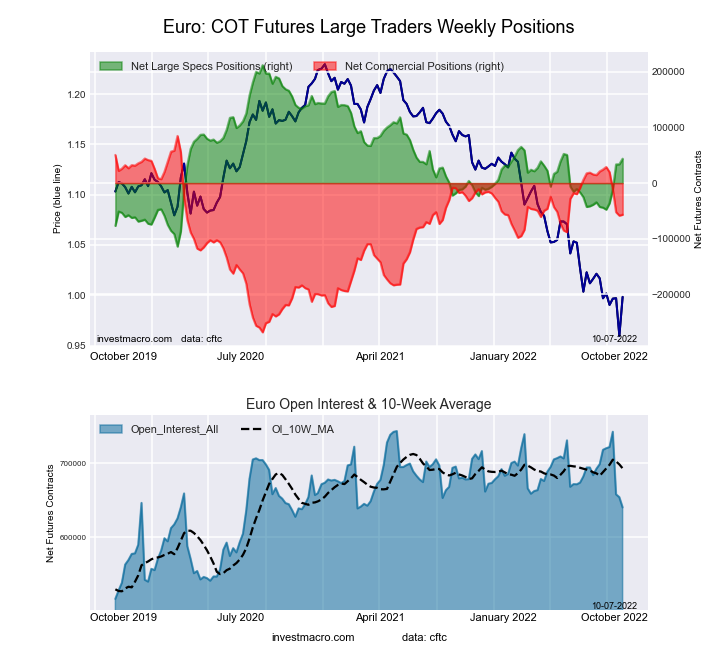
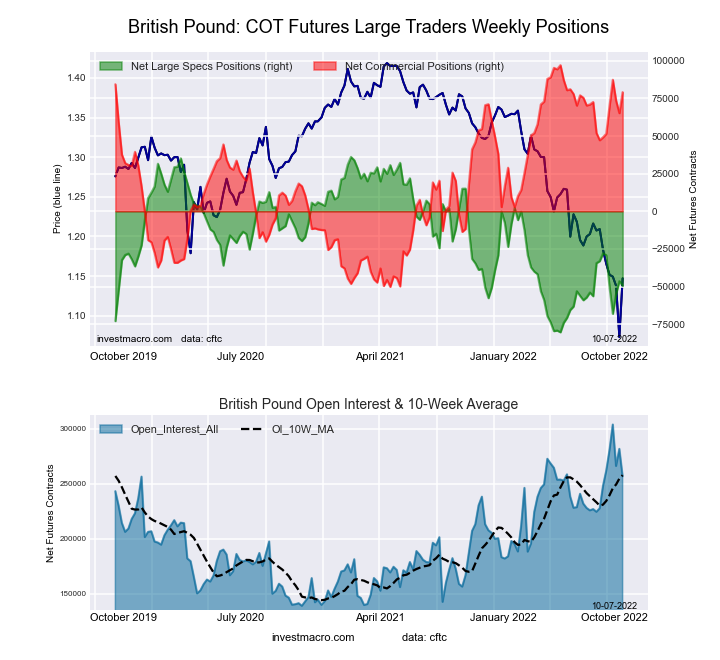
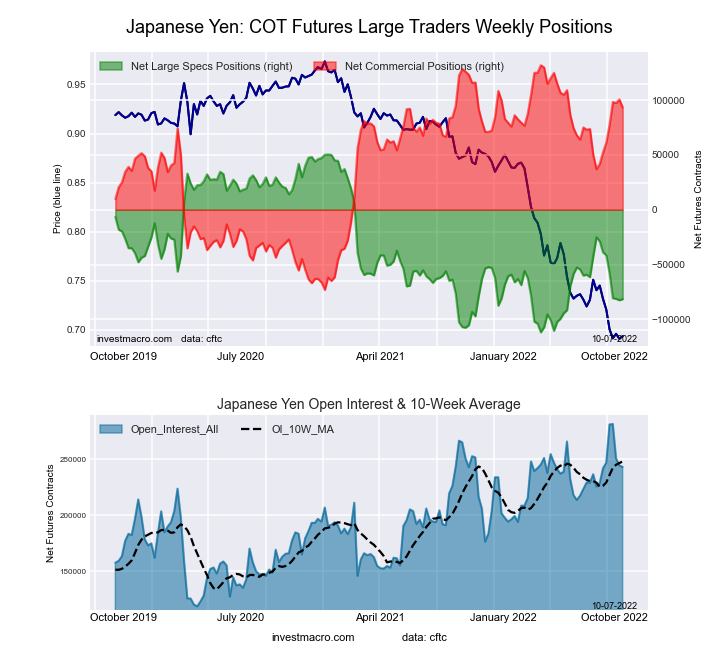
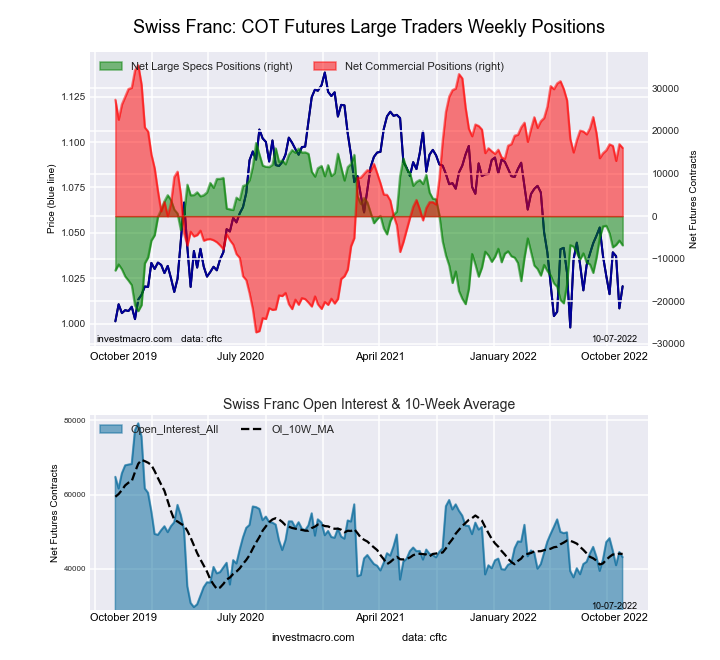
Archive for Opinions – Page 117

The Ethereum merge could kick off a transformation in crypto’s battered reputation

By Jean-Philippe Serbera, Sheffield Hallam University 

Cryptocurrencies might still be a very long way from their highs of 2021, but some of the major ones have staged some decent recoveries in the past couple of months. Notably ether (ETH), the second largest cryptocurrency after bitcoin, is trading at almost US$1,700 (£1,463) at the time of writing, having dropped as low as US$876 in mid-June.

Ether, which was created by Canadian/Russian programmer Vitalik Buterin, is the cryptocurrency used for transactions on Ethereum, the leading platform on which developers can applications using blockchain technology.

Blockchains are online ledgers that run without been controlled by any single company. Much of these applications revolve around smart contracts, which are automated contracts that remove the need for intermediaries such as lawyers and are seen as having huge potential for the future.

Ether price (US$)

Chart showing the ether price
TradingView

One of the main catalysts for ether’s rebound has been the Ethereum merge, a huge project to change the way the underlying blockchain operates. Where transactions on Ethereum are currently validated using an energy-intensive system known as proof-of-work (PoW), in which lots of very powerful computers compete to solve complex mathematical puzzles, from around September 15 it will shift to a new system known as proof of stake (PoS).

PoS basically means that transactions on the blockchain will be validated not by all these computations but by a network of investors whose commitment is demonstrated by the fact that they own at least 32 ether (yours for about US$54,000).

The idea is that this gives them an economic incentive to enhance the security of the network, and are therefore very unlikely to try and sabotage it. Whereas bitcoin transactions all depend on PoW, lots of newer cryptocurrencies use PoS, including Ethereum rivals such as Solana and Cardano.

Going green

When the Ethereum merge takes place, power consumption on the blockchain will be reduced by 99%. Since it is currently the most used blockchain in terms of transactions, this will save a huge amount of electricity each year, corresponding to Chile’s power consumption.

As a result of the merge, some analysts expect ether to overtake bitcoin as the leading crypto in terms of the total value of all the coins (in crypto circles this is referred to as the “flippening”). Ether is currently worth just over US$204 billion, while bitcoin is worth US$396 billion.

Bitcoin vs ether

Chart comparing market capitalisations of bitcoin and ether
Bitcoin = yellow, Ether = blue.
Trading View

Until now, cryptocurrencies and bitcoin in particular have suffered from a bad reputation. Bitcoin was initially conceived with the egalitarian goal of allowing investors access to a financial system with no need for banks and with money that isn’t controlled by countries. It has been championed for its ability to enable billions of people without bank accounts to transact online, and to facilitate things like microfinance and ultra-cheap cross-border trading.

Yet bitcoin has come to be associated with environmental degradation and criminal activities. The mainstream media has endlessly linked the leading cryptocurrency – and by extension the whole space – with money laundering, online drug dealing, Ponzi schemes and exchange hacking.

Netflix documentaries have further reinforced this negative public image. Recent scandals in the crypto world, such as the fall of Ethereum rival Luna and the bankruptcy of Celsius and other crypto lenders, have not helped either.

One major consequence has been that major financial institutions like investment banks and pension funds have been cautious of ploughing money into this space, despite the leap forward in technology that blockchains represent.

But if the most widely adopted crypto platform successfully shifts to PoW in the coming days, many believe that this will overcome the biggest institutional objection and see much more money flowing into the space (there are already early signs, such as Fidelity’s new crypto fund for retail investors). This is likely to accelerate the global regulatory framework that would minimise undesirable activities.

By closing down the environmental objections to crypto, other advantages to ether are likely to come to the fore. The merge will offer a return to investors in the form of rewards in exchange for locking up their money for a period of time (“staking”).

Although you need to stake 32 ether to become one of the network’s validators, numerous companies have set up systems to enable smaller investors to pool their money so that they can participate. For example, Binance, the world’s largest crypto exchange, offers investors 6% annual percentage yield for pooled staking on ether.

Staking will therefore create a win-win situation with guaranteed returns and a very liquid system that makes it easy for people to move their money in and out of ether. This will further enhance the appeal of ether and PoS cryptos in general.

This could help to accentuate other positives around crypto, another of which is humanitarian donations. When Russia invaded Ukraine, for instance, the Ukrainian government called for donations in bitcoin and ether to support its efforts against invaders. This quickly attracted substantial amounts of money.

Tonga was similarly successful with a campaign after its volcanic eruption earlier this year. By being able to cross borders easily and cheaply, cryptocurrencies are the ideal vehicle for international donations.

Lingering uncertainties

All that said, it is uncertain how the Ethereum blockchain will function after the merge in terms of transaction speeds and costs. One major problem with Ethereum in the past has been that transactions have been ludicrously expensive, sometimes running to thousands of US dollars at peak times in 2021.

The developers of the Ethereum Foundation do not expect the merge to make a big difference in these respects (currently “gas” fees are averaging between US$1 and US$4 per transaction depending on which platform you are using). Much more important is likely to be another shift in ethereum’s journey to “Ethereum 2.0” known as sharding, which is due to happen in 2023.

We will also have to wait and see how smooth the merge is. Synchronisation and update bugs could see problems such as validators disconnected from the blockchain. Negative stories like these could see investors staying away for fear of instability.

But on the whole, while the merge will not be a miraculous event, it could help improve the image of cryptocurrencies and attract institutional and retail investors. At a time when sustainable investing is increasingly high priority, the ether merge and its attractive returns have the potential to put ether at the top of the list.The Conversation

About the Author:

Jean-Philippe Serbera, Senior Lecturer in Banking And Financial Markets, Sheffield Hallam University

This article is republished from The Conversation under a Creative Commons license. Read the original article.


What is proof-of-stake? A computer scientist explains a new way to make cryptocurrencies, NFTs and metaverse transactions

By Scott Ruoti, University of Tennessee 

Proof-of-stake is a mechanism for achieving consensus on a blockchain. Blockchain is a technology that records transactions that can’t be deleted or altered. It’s a decentralized database, or ledger, that is under no one person or organization’s control. Since no one controls the database, consensus mechanisms, such as proof-of-stake, are needed to coordinate the operation of blockchain-based systems.

While Bitcoin popularized the technology, blockchain is now a part of many different systems, enabling interesting applications such as decentralized finance platforms and non-fungible tokens, or NFTs.

The first widely commercialized blockchain consensus mechanism was proof-of-work, which enables users to reach consensus by solving complex mathematical problems. For solving these problems, users are commonly provided stake in the system. This process, dubbed mining, requires large amounts of computing power. Proof-of-stake is an alternative that consumes far less energy.

At its core, blockchain technology provides three important properties:

  1. Decentralized governance and operation – the people using the system get to collectively decide how to govern and operate the system.
  2. Verifiable state – anyone using the system can validate the correctness of the system, with each user being able to ensure that the system is currently working as expected and has been since its inception.
  3. Resilience to data loss – even if some users lose their copy of system data, whether through negligence or cyberattack, that data can be recovered from other users in a verifiable manner.

The first property, decentralized governance and operation, is the property that controls how much energy is needed to run a blockchain system.

Voting in blockchain systems

Blockchain systems use voting to decentralize governance and operation. While the exact mechanisms for how voting and consensus are achieved differ in each blockchain system, at a high level, blockchain systems allow each user to vote on how the system should work, and whether any given operation – accepting a new block into the chain, for example – should be approved.

Traditionally, voting requires that the identity of the people casting ballots can be known and verified to ensure that only eligible people vote and do so only once. Some blockchain systems allow users to present a digital ID to prove their identity, enabling voting with negligible energy usage.

Proof-of-work and proof-of-stake compared.

However, in most blockchain systems, users are anonymous and have no digital ID that can prove their identity. What, then, stops an individual from pretending to be many individuals and casting many votes? There are several different approaches, but the most used is proof-of-work.

In proof-of-work, users get votes based on the amount of computational power they have in proportion to other users. They demonstrate their ownership of this computational power by solving difficult mathematical problems. If one user can solve twice as many problems as another user, they have twice the computational power as other users and get twice as many votes.

However, solving these mathematical problems is extremely energy intensive, leading to complaints that proof-of-work is not sustainable.

Proof-of-stake

To address the energy consumption of proof-of-work, another way to validate users is needed. Proof-of-stake is one such method. In proof-of-stake, users validate their identities by demonstrating ownership of some asset on the blockchain. For example, in Bitcoin, this would be ownership of bitcoins, and in Ethereum, it is ownership of Ether.

Though this does require users to temporarily lock their assets in the blockchain for a period of time, it is far more efficient because it requires negligible energy expenditure. By the company’s estimation, moving from proof-of-work to proof-of-stake will reduce Ethereum’s energy consumption by 99.95%.

Ethereum’s ‘Merge’

This improved energy efficiency is why many blockchain systems intend to transition away from proof-of-work to proof-of-stake. Ethereum plans to make this change during the week of Sept. 15, 2022. This is known as the Merge. During this merge, operations will shift from being voted on using proof-of-work to being voted on using proof-of-stake. At the completion of the merge, only proof-of-stake will be used to vote on transactions.

The hope is that this will set up Ethereum to be sustainable for the foreseeable future.The Conversation

The ‘Ethereum Merge’ is slated to shift one of the largest blockchains to energy-efficient, proof-of-stake technology.

About the Author:

Scott Ruoti, Assistant Professor of Computer Science, University of Tennessee

This article is republished from The Conversation under a Creative Commons license. Read the original article.


Trade Of The Week: Are USD Bulls Throwing In the Towel?

By ForexTime 

The mighty dollar has been an unstoppable force in 2022, flattening everything in its path.

But back in August, we questioned whether the king of the currency markets was losing its grip on the FX throne after the Dollar Index (DXY) punched above 109.14. Our argument was based on reduced bets over how aggressive the Fed will be on rate hikes and signs of easing inflationary pressures.

We were thoroughly humbled after USD bull’s stepped into higher gear, pushing the DXY to a fresh 20-year high beyond 110.00

There was also some action on the equally weighted dollar index which respected a bullish trend, pushing prices above the previous 2022 high of 1.21840.

Fast forward to today, king dollar looks shaky.

It is safe to say that it lost momentum last week and has stumbled into the new week under selling pressure. The greenback has weakened against most G10 currencies month-to-date and could extend losses despite the recent hawkish comments from Fed officials including Jerome Powell.

With inflation cooling in the US economy, this could encourage the Fed to drop its aggressive stance toward higher rates. If such becomes reality, dollar bears may receive the thumps up to enter the scene – dragging both the DXY and equally weighted USD index lower.

As we questioned roughly back in August, are dollar bulls throwing in the towel or just taking another break before ramping up the momentum in Q4? Some clues may be offered this week in the form of the US inflation figures among other key reports.

The low down…

Traders are predicting an 88% probability of a 75-basis point rate hike in September.

These expectations were reinforced by comments from Federal Reserve Chairman Jerome Powell who reaffirmed the need to fight soaring inflation. Hawkish comments by Fed officials last Friday also boosted Fed hike bet, making the jumbo rate hike this month almost a done deal.

Interestingly, the greenback has tumbled despite the Fed expected to hike rates by 75 basis points for the third time in a row. Fed hawks are clearly in the building while strong US economic data initially supported expectations that the US central bank would not be slowing the pace of hike anytime soon. However, US inflation likely slowed for a second month in August thanks to falling gas prices. While this may not be enough to derail the Fed from firing another monetary bazooka this month, it may impact the central bank’s decision in November and December.

The week ahead…

This could be another wild week for the dollar due to the pending US economic reports.

On Tuesday, the latest inflation figures will be published which are expected to show consumer prices cooling 8.1% year-on-year in August. This would be lower than July 8.5% print and would mark two straight months of easing in the headline annual print. Should the report match expectations, this could allow the Fed to drop its aggressive approach toward rate hikes – resulting in a weaker dollar. It will be wise to keep an eye on the core CPI annual print which is expected to rise 6.1% – which will be the highest level since April. The core inflation does not include food and energy prices in the calculation because of volatility.

Much attention will be directed towards the weekly initial jobless claims, August retail sales, and industrial production figures on Thursday which could provide further insight into the health of the US economy. A strong set of reports may reinforce rate hike bets which is dollar positive, while a negative set of reports could dampen aggressive rate hike expectations – dragging the dollar lower.

Friday offers the US consumer sentiment for September. Consumer sentiment was revised higher to 58.2 back in August and is expected to hit 60 this month. A positive figure could provide USD bulls a helping hand before the week comes to an end.

Time for dollar to tumble?

After failing to secure a weekly close above 1.2184, the equally weighted dollar index could be preparing to tumble lower.

Prices remain under pressure on the weekly charts with a solid breakdown below 1.1900 opening a path toward 1.1700 and 1.1600, respectively. Should 1.1700 prove to be reliable support, a rebound back towards 1.1900 could be a possibility.


Forex-Time-LogoArticle by ForexTime
ForexTime Ltd (FXTM) is an award winning international online forex broker regulated by CySEC 185/12 www.forextime.com

COT Currency Speculator Weekly Changes led higher by Brazilian Real & Euro bets

By InvestMacro

Currency Speculator Weekly Changes led higher by Brazilian Real & Euro bets

The latest charts and statistics for the Commitment of Traders (COT) data published by the Commodities Futures Trading Commission (CFTC) showed that large forex speculators raised their bets for most of the currency futures markets. The latest COT data for Week 36 is updated through Tuesday September 6th and shows a quick view of how large traders (for-profit speculators and commercial entities) were positioned in the futures markets.

All currency positions are in direct relation to the US dollar where, for example, a bet for the euro is a bet that the euro will rise versus the dollar while a bet against the euro will be a bet that the euro will decline versus the dollar.

Weekly Speculator Changes led higher by Brazilian Real & Euro bets

Currency Speculator Weekly Changes led higher by Brazilian Real & Euro bets

The COT currency market speculator bets were slightly higher this week as six out of the eleven currency markets we cover had higher positioning while the other five markets had lower speculator contracts.

Leading the gains for the currency markets was the Brazilian real (22,001 contracts) and the Euro (11,327 contracts) with the Australian dollar (893 contracts), US Dollar Index (592 contracts), New Zealand dollar (378 contracts) and the Bitcoin (26 contracts) having positive weeks.

The currencies leading the declines in speculator bets this week were the British pound sterling (-21,262 contracts) and the Japanese yen (-16,658 contracts) with the Canadian dollar (-6,269 contracts), Swiss franc (-1,775 contracts) and the Mexican peso (-430 contracts) also registering lower bets on the week.

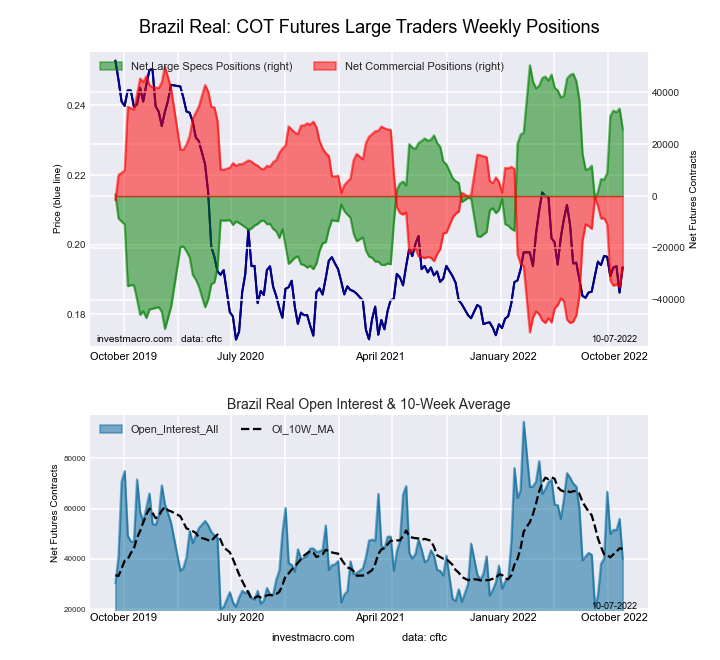
Highlighting the COT currency changes this week is the sharp gain in the Brazilian Real speculator positions this week. Speculators boosted the Brazilian currency bets by the largest weekly amount since March and have increased bullish bets in six out of the past eight weeks. The overall speculator standing now sits at the most bullish level in ten weeks, dating back to June 28th. The Real futures and spot prices have been range-bound in trading and are expected to stay that way as a presidential election comes up on October 2nd.

The Euro currency bets this week jumped by the most in fourteen weeks (+11,327 contracts) as the European Central Bank raised its benchmark interest rate by 75 basis points on Thursday. This week’s gain broke a streak of three weeks of speculator bet declines. The overall speculator positioning is relatively tame at a level of just -36,349 contracts despite the Euro currency’s exchange rate versus the US Dollar. The EURUSD is currently trading right near parity (1.0048) and not too far from 20-year lows. Comparatively, when the Euro speculator positions were last consistently near or below -100,000 net contracts in 2019, the EURUSD was trading above the 1.20 exchange rate. The outlook for the European economy is not looking great as a low growth environment could combine with a potential energy crisis shaping up for this winter (due to the Russia-Ukraine war) – so it will be interesting to see if speculator positioning follows the Euro lower or if the exchange rate is near a bottom.


Data Snapshot of Forex Market Traders | Columns Legend
Sep-06-2022OIOI-IndexSpec-NetSpec-IndexCom-NetCOM-IndexSmalls-NetSmalls-Index
USD Index61,6629236,10785-38,458152,35142
EUR721,67891-36,3492419,6108216,7392
GBP280,937100-50,4322969,95878-19,5266
JPY281,266100-58,1893377,66974-19,48014
CHF48,22637-4,0374616,86770-12,83014
CAD160,5673717,91059-18,916531,00632
AUD178,23266-56,5003263,78466-7,28435
NZD46,79637-2,746676,50040-3,7548
MXN199,16149-29,4601525,310834,15061
RUB20,93047,54331-7,15069-39324
BRL50,0054030,86081-32,482201,62284
Bitcoin15,337901,322100-1,3010-2112


Bitcoin, US Dollar Index & Brazilian Real at top of Strength Scores

Strength Scores (a normalized measure of Speculator positions over a 3-Year range, from 0 to 100 where above 80 is extreme bullish and below 20 is extreme bearish) showed that Bitcoin (100.0 percent), the US Dollar Index (85.2 percent) and the Brazilian Real (80.7 percent) lead the currency markets at the top of their respective ranges and are all in bullish extreme positions with scores above 80 percent. The New Zealand Dollar (66.7 percent) and Canadian Dollar (59.5 percent) come in as the next highest in the currency markets in strength scores.

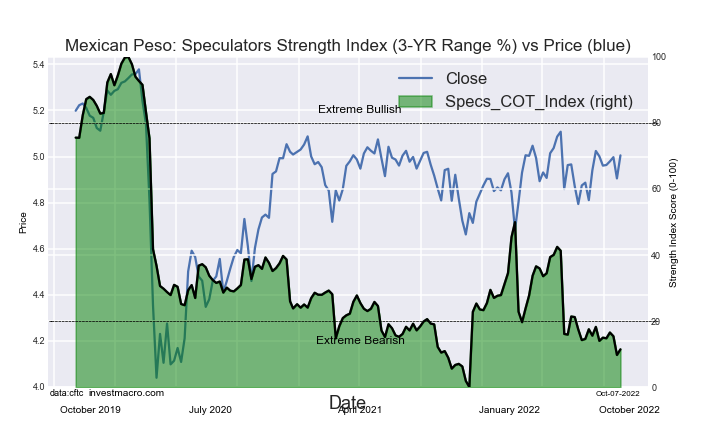
On the downside, the Mexican Peso (14.8 percent) comes in at the lowest strength level and is in a bearish extreme level below 20 percent. The next lowest strength scores are for the EuroFX (23.8 percent), the British Pound Sterling (29.2 percent) and the Australian Dollar (32.4 percent).

Currency Speculator Weekly Changes led higher by Brazilian Real & Euro bets

Strength Statistics:
US Dollar Index (85.2 percent) vs US Dollar Index previous week (84.2 percent)
EuroFX (23.8 percent) vs EuroFX previous week (20.4 percent)
British Pound Sterling (29.2 percent) vs British Pound Sterling previous week (46.6 percent)
Japanese Yen (33.0 percent) vs Japanese Yen previous week (43.3 percent)
Swiss Franc (46.3 percent) vs Swiss Franc previous week (50.8 percent)
Canadian Dollar (59.5 percent) vs Canadian Dollar previous week (66.5 percent)
Australian Dollar (32.4 percent) vs Australian Dollar previous week (31.6 percent)
New Zealand Dollar (66.7 percent) vs New Zealand Dollar previous week (66.0 percent)
Mexican Peso (14.8 percent) vs Mexican Peso previous week (15.0 percent)
Brazil Real (80.7 percent) vs Brazil Real previous week (59.1 percent)
Bitcoin (100.0 percent) vs Bitcoin previous week (99.5 percent)

Bitcoin, Real and Swiss Franc lead the Strength Trends

Strength Score Trends (or move index, calculates the 6-week changes in strength scores) show that Bitcoin (25.2 percent) leads the past six weeks trends for the currency markets this week. The Brazilian Real (18.8 percent) and the Swiss Franc (18.4 percent) fill out the next highest movers in the latest trends data.

The Australian Dollar (-8.5 percent) leads the downside trend scores currently while the only other market with a lower trend scores was the US Dollar Index (-7.4 percent).

Currency Speculator Weekly Changes led higher by Brazilian Real & Euro bets

Strength Trend Statistics:
US Dollar Index (-7.4 percent) vs US Dollar Index previous week (-5.9 percent)
EuroFX (1.6 percent) vs EuroFX previous week (-1.5 percent)
British Pound Sterling (2.9 percent) vs British Pound Sterling previous week (23.0 percent)
Japanese Yen (2.0 percent) vs Japanese Yen previous week (10.9 percent)
Swiss Franc (18.4 percent) vs Swiss Franc previous week (21.9 percent)
Canadian Dollar (2.4 percent) vs Canadian Dollar previous week (19.7 percent)
Australian Dollar (-8.5 percent) vs Australian Dollar previous week (-13.2 percent)
New Zealand Dollar (2.4 percent) vs New Zealand Dollar previous week (0.9 percent)
Mexican Peso (0.2 percent) vs Mexican Peso previous week (0.7 percent)
Brazil Real (18.8 percent) vs Brazil Real previous week (-1.6 percent)
Bitcoin (25.2 percent) vs Bitcoin previous week (31.4 percent)


Individual Markets:

US Dollar Index Futures:

US Dollar Index Forex Futures COT ChartThe US Dollar Index large speculator standing this week came in at a net position of 36,107 contracts in the data reported through Tuesday. This was a weekly boost of 592 contracts from the previous week which had a total of 35,515 net contracts.

This week’s current strength score (the trader positioning range over the past three years, measured from 0 to 100) shows the speculators are currently Bullish-Extreme with a score of 85.2 percent. The commercials are Bearish-Extreme with a score of 14.7 percent and the small traders (not shown in chart) are Bearish with a score of 42.2 percent.

US DOLLAR INDEX StatisticsSPECULATORSCOMMERCIALSSMALL TRADERS
– Percent of Open Interest Longs:85.33.18.9
– Percent of Open Interest Shorts:26.865.55.1
– Net Position:36,107-38,4582,351
– Gross Longs:52,6071,9125,476
– Gross Shorts:16,50040,3703,125
– Long to Short Ratio:3.2 to 10.0 to 11.8 to 1
NET POSITION TREND:
– Strength Index Score (3 Year Range Pct):85.214.742.2
– Strength Index Reading (3 Year Range):Bullish-ExtremeBearish-ExtremeBearish
NET POSITION MOVEMENT INDEX:
– 6-Week Change in Strength Index:-7.47.7-4.7


Euro Currency Futures:

Euro Currency Futures COT ChartThe Euro Currency large speculator standing this week came in at a net position of -36,349 contracts in the data reported through Tuesday. This was a weekly advance of 11,327 contracts from the previous week which had a total of -47,676 net contracts.

This week’s current strength score (the trader positioning range over the past three years, measured from 0 to 100) shows the speculators are currently Bearish with a score of 23.8 percent. The commercials are Bullish-Extreme with a score of 81.6 percent and the small traders (not shown in chart) are Bearish-Extreme with a score of 2.1 percent.

EURO Currency StatisticsSPECULATORSCOMMERCIALSSMALL TRADERS
– Percent of Open Interest Longs:28.456.711.6
– Percent of Open Interest Shorts:33.554.09.2
– Net Position:-36,34919,61016,739
– Gross Longs:205,277409,46083,493
– Gross Shorts:241,626389,85066,754
– Long to Short Ratio:0.8 to 11.1 to 11.3 to 1
NET POSITION TREND:
– Strength Index Score (3 Year Range Pct):23.881.62.1
– Strength Index Reading (3 Year Range):BearishBullish-ExtremeBearish-Extreme
NET POSITION MOVEMENT INDEX:
– 6-Week Change in Strength Index:1.60.3-10.2


British Pound Sterling Futures:

British Pound Sterling Futures COT ChartThe British Pound Sterling large speculator standing this week came in at a net position of -50,432 contracts in the data reported through Tuesday. This was a weekly fall of -21,262 contracts from the previous week which had a total of -29,170 net contracts.

This week’s current strength score (the trader positioning range over the past three years, measured from 0 to 100) shows the speculators are currently Bearish with a score of 29.2 percent. The commercials are Bullish with a score of 78.4 percent and the small traders (not shown in chart) are Bearish-Extreme with a score of 6.4 percent.

BRITISH POUND StatisticsSPECULATORSCOMMERCIALSSMALL TRADERS
– Percent of Open Interest Longs:18.867.58.0
– Percent of Open Interest Shorts:36.742.615.0
– Net Position:-50,43269,958-19,526
– Gross Longs:52,731189,61722,607
– Gross Shorts:103,163119,65942,133
– Long to Short Ratio:0.5 to 11.6 to 10.5 to 1
NET POSITION TREND:
– Strength Index Score (3 Year Range Pct):29.278.46.4
– Strength Index Reading (3 Year Range):BearishBullishBearish-Extreme
NET POSITION MOVEMENT INDEX:
– 6-Week Change in Strength Index:2.9-0.7-5.8


Japanese Yen Futures:

Japanese Yen Forex Futures COT ChartThe Japanese Yen large speculator standing this week came in at a net position of -58,189 contracts in the data reported through Tuesday. This was a weekly fall of -16,658 contracts from the previous week which had a total of -41,531 net contracts.

This week’s current strength score (the trader positioning range over the past three years, measured from 0 to 100) shows the speculators are currently Bearish with a score of 33.0 percent. The commercials are Bullish with a score of 73.5 percent and the small traders (not shown in chart) are Bearish-Extreme with a score of 13.9 percent.

JAPANESE YEN StatisticsSPECULATORSCOMMERCIALSSMALL TRADERS
– Percent of Open Interest Longs:19.968.08.6
– Percent of Open Interest Shorts:40.640.315.5
– Net Position:-58,18977,669-19,480
– Gross Longs:56,002191,13824,109
– Gross Shorts:114,191113,46943,589
– Long to Short Ratio:0.5 to 11.7 to 10.6 to 1
NET POSITION TREND:
– Strength Index Score (3 Year Range Pct):33.073.513.9
– Strength Index Reading (3 Year Range):BearishBullishBearish-Extreme
NET POSITION MOVEMENT INDEX:
– 6-Week Change in Strength Index:2.01.9-14.6


Swiss Franc Futures:

Swiss Franc Forex Futures COT ChartThe Swiss Franc large speculator standing this week came in at a net position of -4,037 contracts in the data reported through Tuesday. This was a weekly decrease of -1,775 contracts from the previous week which had a total of -2,262 net contracts.

This week’s current strength score (the trader positioning range over the past three years, measured from 0 to 100) shows the speculators are currently Bearish with a score of 46.3 percent. The commercials are Bullish with a score of 70.4 percent and the small traders (not shown in chart) are Bearish-Extreme with a score of 14.1 percent.

SWISS FRANC StatisticsSPECULATORSCOMMERCIALSSMALL TRADERS
– Percent of Open Interest Longs:22.655.119.9
– Percent of Open Interest Shorts:30.920.146.6
– Net Position:-4,03716,867-12,830
– Gross Longs:10,88226,5849,620
– Gross Shorts:14,9199,71722,450
– Long to Short Ratio:0.7 to 12.7 to 10.4 to 1
NET POSITION TREND:
– Strength Index Score (3 Year Range Pct):46.370.414.1
– Strength Index Reading (3 Year Range):BearishBullishBearish-Extreme
NET POSITION MOVEMENT INDEX:
– 6-Week Change in Strength Index:18.4-6.0-11.9


Canadian Dollar Futures:

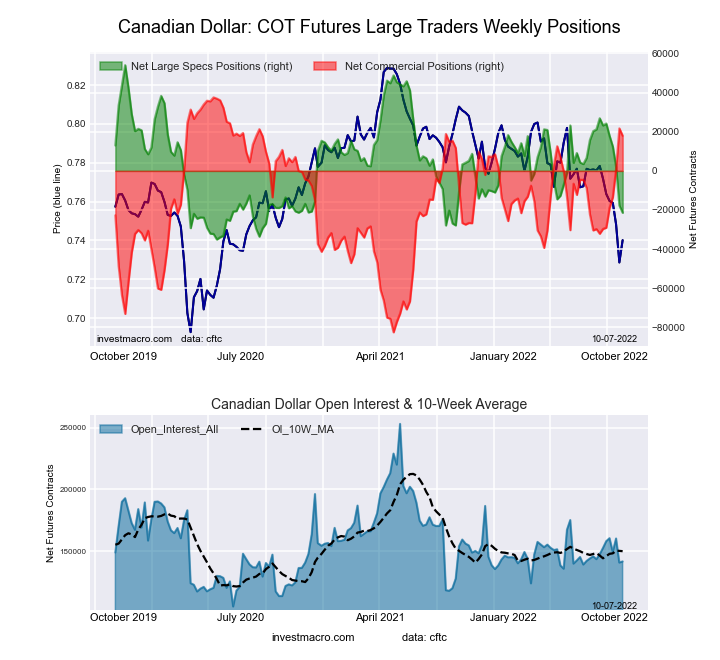
Canadian Dollar Forex Futures COT ChartThe Canadian Dollar large speculator standing this week came in at a net position of 17,910 contracts in the data reported through Tuesday. This was a weekly lowering of -6,269 contracts from the previous week which had a total of 24,179 net contracts.

This week’s current strength score (the trader positioning range over the past three years, measured from 0 to 100) shows the speculators are currently Bullish with a score of 59.5 percent. The commercials are Bullish with a score of 53.0 percent and the small traders (not shown in chart) are Bearish with a score of 32.1 percent.

CANADIAN DOLLAR StatisticsSPECULATORSCOMMERCIALSSMALL TRADERS
– Percent of Open Interest Longs:35.641.420.6
– Percent of Open Interest Shorts:24.553.219.9
– Net Position:17,910-18,9161,006
– Gross Longs:57,18566,48533,039
– Gross Shorts:39,27585,40132,033
– Long to Short Ratio:1.5 to 10.8 to 11.0 to 1
NET POSITION TREND:
– Strength Index Score (3 Year Range Pct):59.553.032.1
– Strength Index Reading (3 Year Range):BullishBullishBearish
NET POSITION MOVEMENT INDEX:
– 6-Week Change in Strength Index:2.42.7-10.9


Australian Dollar Futures:

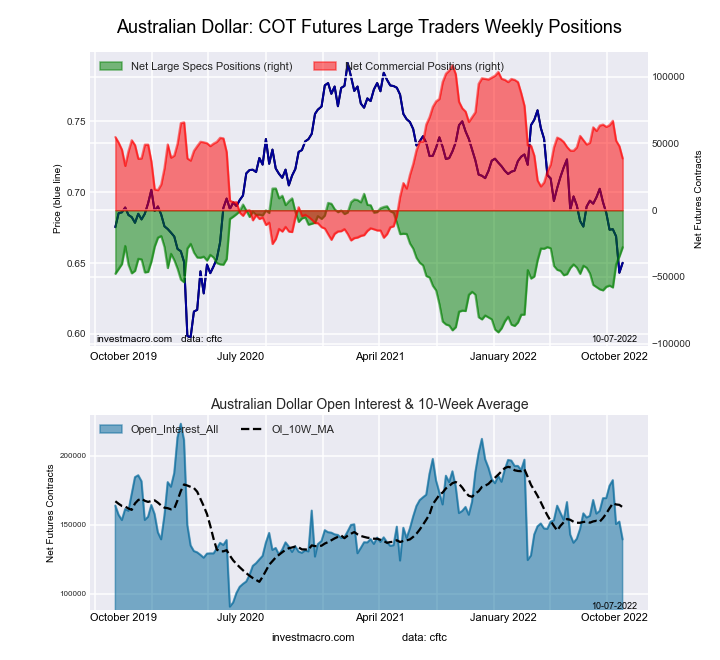
Australian Dollar Forex Futures COT ChartThe Australian Dollar large speculator standing this week came in at a net position of -56,500 contracts in the data reported through Tuesday. This was a weekly lift of 893 contracts from the previous week which had a total of -57,393 net contracts.

This week’s current strength score (the trader positioning range over the past three years, measured from 0 to 100) shows the speculators are currently Bearish with a score of 32.4 percent. The commercials are Bullish with a score of 66.5 percent and the small traders (not shown in chart) are Bearish with a score of 34.7 percent.

AUSTRALIAN DOLLAR StatisticsSPECULATORSCOMMERCIALSSMALL TRADERS
– Percent of Open Interest Longs:18.766.710.9
– Percent of Open Interest Shorts:50.430.915.0
– Net Position:-56,50063,784-7,284
– Gross Longs:33,305118,81719,403
– Gross Shorts:89,80555,03326,687
– Long to Short Ratio:0.4 to 12.2 to 10.7 to 1
NET POSITION TREND:
– Strength Index Score (3 Year Range Pct):32.466.534.7
– Strength Index Reading (3 Year Range):BearishBullishBearish
NET POSITION MOVEMENT INDEX:
– 6-Week Change in Strength Index:-8.59.8-9.9


New Zealand Dollar Futures:

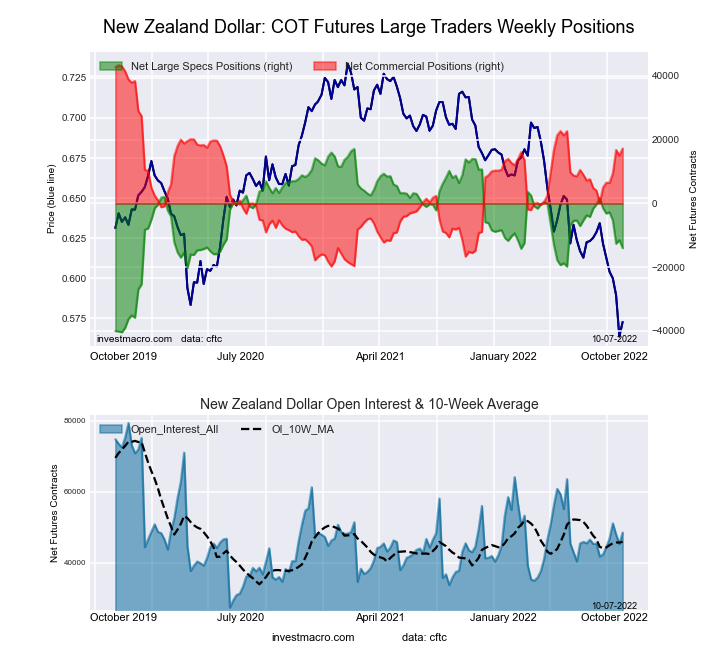
New Zealand Dollar Forex Futures COT ChartThe New Zealand Dollar large speculator standing this week came in at a net position of -2,746 contracts in the data reported through Tuesday. This was a weekly advance of 378 contracts from the previous week which had a total of -3,124 net contracts.

This week’s current strength score (the trader positioning range over the past three years, measured from 0 to 100) shows the speculators are currently Bullish with a score of 66.7 percent. The commercials are Bearish with a score of 40.4 percent and the small traders (not shown in chart) are Bearish-Extreme with a score of 8.5 percent.

NEW ZEALAND DOLLAR StatisticsSPECULATORSCOMMERCIALSSMALL TRADERS
– Percent of Open Interest Longs:36.755.35.4
– Percent of Open Interest Shorts:42.541.513.4
– Net Position:-2,7466,500-3,754
– Gross Longs:17,16525,9002,540
– Gross Shorts:19,91119,4006,294
– Long to Short Ratio:0.9 to 11.3 to 10.4 to 1
NET POSITION TREND:
– Strength Index Score (3 Year Range Pct):66.740.48.5
– Strength Index Reading (3 Year Range):BullishBearishBearish-Extreme
NET POSITION MOVEMENT INDEX:
– 6-Week Change in Strength Index:2.4-1.7-3.8


Mexican Peso Futures:

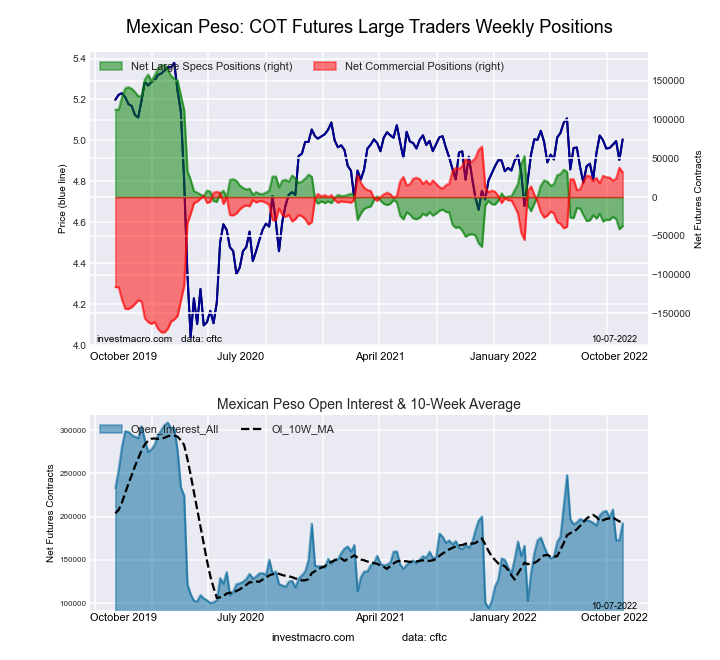
Mexican Peso Futures COT ChartThe Mexican Peso large speculator standing this week came in at a net position of -29,460 contracts in the data reported through Tuesday. This was a weekly decline of -430 contracts from the previous week which had a total of -29,030 net contracts.

This week’s current strength score (the trader positioning range over the past three years, measured from 0 to 100) shows the speculators are currently Bearish-Extreme with a score of 14.8 percent. The commercials are Bullish-Extreme with a score of 83.4 percent and the small traders (not shown in chart) are Bullish with a score of 60.6 percent.

MEXICAN PESO StatisticsSPECULATORSCOMMERCIALSSMALL TRADERS
– Percent of Open Interest Longs:48.845.63.6
– Percent of Open Interest Shorts:63.632.91.6
– Net Position:-29,46025,3104,150
– Gross Longs:97,11290,8827,269
– Gross Shorts:126,57265,5723,119
– Long to Short Ratio:0.8 to 11.4 to 12.3 to 1
NET POSITION TREND:
– Strength Index Score (3 Year Range Pct):14.883.460.6
– Strength Index Reading (3 Year Range):Bearish-ExtremeBullish-ExtremeBullish
NET POSITION MOVEMENT INDEX:
– 6-Week Change in Strength Index:0.2-0.64.7


Brazilian Real Futures:

Brazil Real Futures COT ChartThe Brazilian Real large speculator standing this week came in at a net position of 30,860 contracts in the data reported through Tuesday. This was a weekly gain of 22,001 contracts from the previous week which had a total of 8,859 net contracts.

This week’s current strength score (the trader positioning range over the past three years, measured from 0 to 100) shows the speculators are currently Bullish-Extreme with a score of 80.7 percent. The commercials are Bearish-Extreme with a score of 19.6 percent and the small traders (not shown in chart) are Bullish-Extreme with a score of 83.8 percent.

BRAZIL REAL StatisticsSPECULATORSCOMMERCIALSSMALL TRADERS
– Percent of Open Interest Longs:78.914.46.7
– Percent of Open Interest Shorts:17.279.33.5
– Net Position:30,860-32,4821,622
– Gross Longs:39,4517,1773,374
– Gross Shorts:8,59139,6591,752
– Long to Short Ratio:4.6 to 10.2 to 11.9 to 1
NET POSITION TREND:
– Strength Index Score (3 Year Range Pct):80.719.683.8
– Strength Index Reading (3 Year Range):Bullish-ExtremeBearish-ExtremeBullish-Extreme
NET POSITION MOVEMENT INDEX:
– 6-Week Change in Strength Index:18.8-19.48.5


Bitcoin Futures:

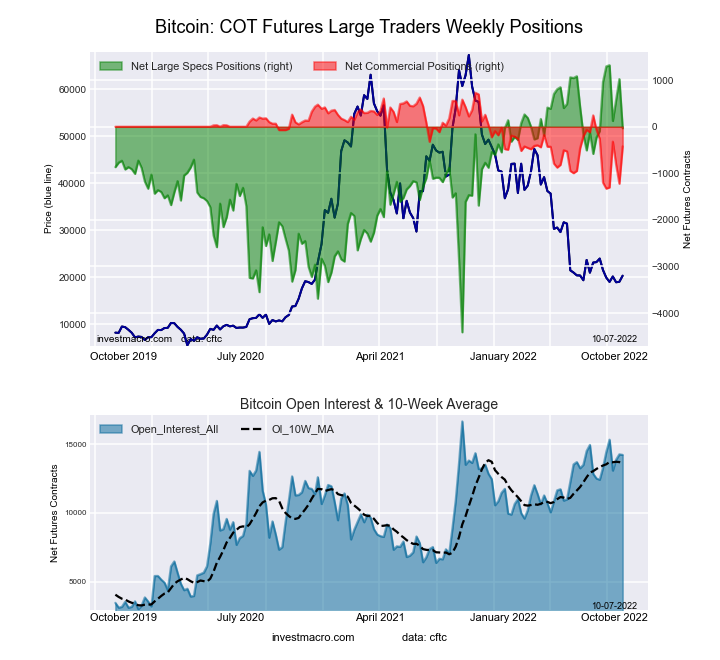
Bitcoin Crypto Futures COT ChartThe Bitcoin large speculator standing this week came in at a net position of 1,322 contracts in the data reported through Tuesday. This was a weekly gain of 26 contracts from the previous week which had a total of 1,296 net contracts.

This week’s current strength score (the trader positioning range over the past three years, measured from 0 to 100) shows the speculators are currently Bullish-Extreme with a score of 100.0 percent. The commercials are Bearish-Extreme with a score of 1.3 percent and the small traders (not shown in chart) are Bearish-Extreme with a score of 12.5 percent.

BITCOIN StatisticsSPECULATORSCOMMERCIALSSMALL TRADERS
– Percent of Open Interest Longs:83.10.46.2
– Percent of Open Interest Shorts:74.58.96.4
– Net Position:1,322-1,301-21
– Gross Longs:12,74363956
– Gross Shorts:11,4211,364977
– Long to Short Ratio:1.1 to 10.0 to 11.0 to 1
NET POSITION TREND:
– Strength Index Score (3 Year Range Pct):100.01.312.5
– Strength Index Reading (3 Year Range):Bullish-ExtremeBearish-ExtremeBearish-Extreme
NET POSITION MOVEMENT INDEX:
– 6-Week Change in Strength Index:25.2-57.5-5.9


Article By InvestMacroReceive our Weekly COT Newsletter by Email

*COT Report: The COT data, released weekly to the public each Friday, is updated through the most recent Tuesday (data is 3 days old) and shows a quick view of how large speculators or non-commercials (for-profit traders) were positioned in the futures markets.

The CFTC categorizes trader positions according to commercial hedgers (traders who use futures contracts for hedging as part of the business), non-commercials (large traders who speculate to realize trading profits) and nonreportable traders (usually small traders/speculators) as well as their open interest (contracts open in the market at time of reporting). See CFTC criteria here.


COT Metals Speculator bets fall this week led by Gold & Silver

By InvestMacro 

COT Metals Speculator bets fall this week led by Gold & Silver

The latest charts and statistics for the Commitment of Traders (COT) data published by the Commodities Futures Trading Commission (CFTC) showed that speculator positioning was lower across the board. The latest COT data for Week 36 is updated through Tuesday September 6th and shows a quick view of how large traders (for-profit speculators and commercial entities) were positioned in the futures markets.

Weekly Speculator Changes are lower led by Gold & Silver

COT Metals Speculator bets fall this week led by Gold & Silver

The COT precious metals speculator bets were lower this week as all five of the metals markets recorded lower contracts.

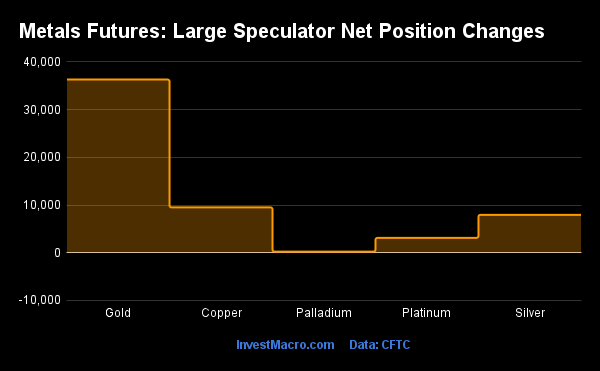
Leading the declines in speculator bets this week was Gold (-13,877 contracts) with Silver (-4,513 contracts), Platinum (-1,373 contracts), Copper (-735 contracts) and Palladium (-473 contracts) also registering lower bets on the week.

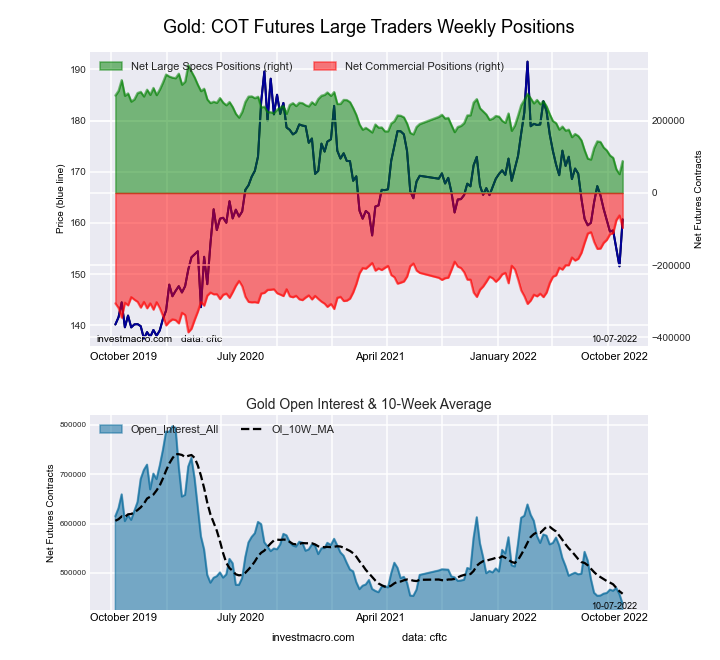
Highlighting the COT metals changes this week is the continued decline in the Gold speculator positions. Gold speculative bets have declined for four straight weeks and by a total of -38,994 contracts over that time-frame. This weakness has brought the overall Gold speculator standing (currently at +103,857 contracts) to the lowest level in six weeks, dating back to July 26th. The average speculator position over 2022 has been a total of +185,566 contracts and compared to this week’s position, illustrates the weakness in speculator sentiment for Gold. The futures price is currently in a downtrend after hitting a high over $2,078 in March of this year and closed this week at $1,728.

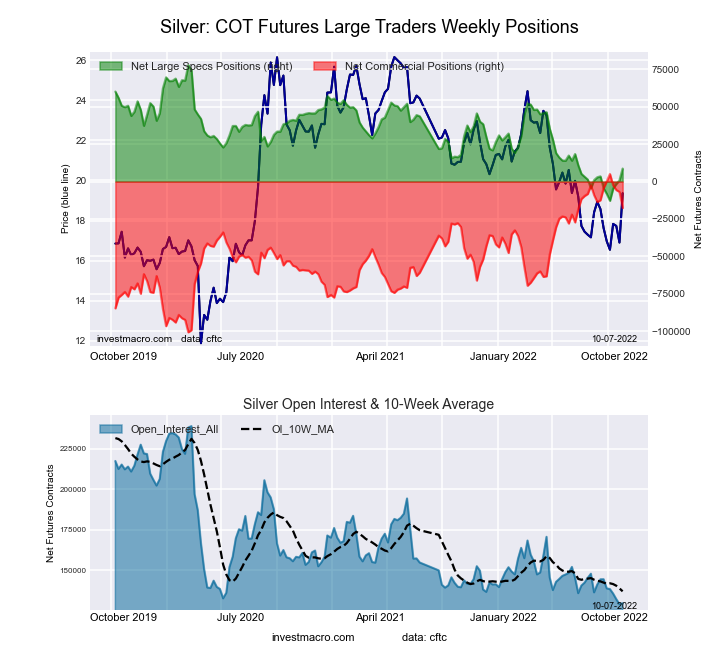
The Silver speculative positioning has continued to fall lower. The Silver speculator bets have declined for three straight weeks and have now been in a bearish position for three straight weeks as well. The overall speculator standing is currently at -12,784 contracts which is the lowest or most bearish level since May 28th of 2019, a span of 171 weeks. The Silver futures price has dipped below $18 in recent weeks but has found consistent support at that level. This week the Silver price closed higher for the week at $18.75 following three straight weeks of decline.


Data Snapshot of Commodity Market Traders | Columns Legend
Sep-06-2022OIOI-IndexSpec-NetSpec-IndexCom-NetCOM-IndexSmalls-NetSmalls-Index
WTI Crude1,480,3201214,4781-240,4179925,93943
Gold465,9084103,8574-114,0649810,2070
Silver138,3005-12,78405,0551007,7296
Copper160,2512-23,9901926,82084-2,8309
Palladium6,0651-1,602142,12987-52713
Platinum78,61053-6,75103,1521003,59912
Natural Gas984,6425-138,63837105,8026432,83658
Brent163,66611-36,3885032,508473,88062
Heating Oil280,2102717,86069-36,0893318,22962
Soybeans606,187781,25138-50,82671-30,42520
Corn1,280,0872286,54767-230,70239-55,84511
Coffee193,938747,16880-49,276252,10819
Sugar760,6011157,77149-61,944564,17313
Wheat289,3290-9,759613,67779-3,91890


Strength Scores

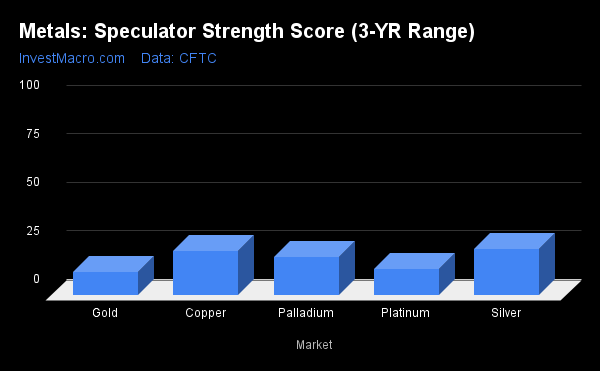
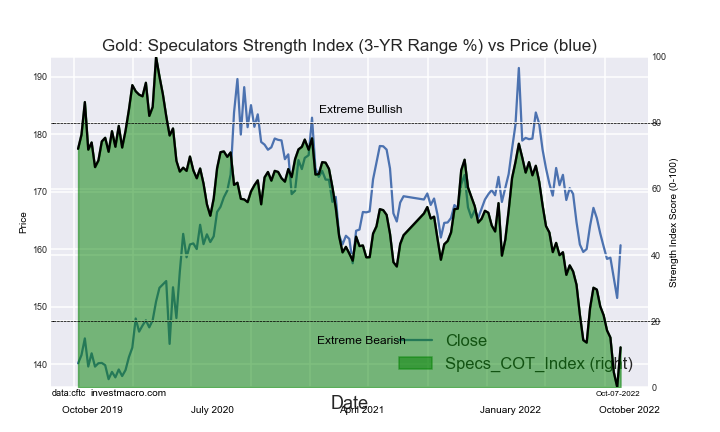
Strength scores (a measure of the 3-Year range of Speculator positions, from 0 to 100 where above 80 is extreme bullish and below 20 is extreme bearish) showed that all the metals markets are currently in bearish extreme scores under 20 percent. Copper (18.8 percent) is at the highest level of the metals currently followed by Palladium (13.8 percent) and Gold (4.3 percent). Silver (0.0 percent) and Platinum (0.0 percent) are currently at the bottom of their 3-year ranges of strength scores.

COT Metals Speculator bets fall this week led by Gold & Silver

Strength Statistics:
Gold (4.3 percent) vs Gold previous week (9.6 percent)
Silver (0.0 percent) vs Silver previous week (5.0 percent)
Copper (18.8 percent) vs Copper previous week (19.4 percent)
Platinum (0.0 percent) vs Platinum previous week (1.8 percent)
Palladium (13.8 percent) vs Palladium previous week (16.5 percent)

Strength Trends

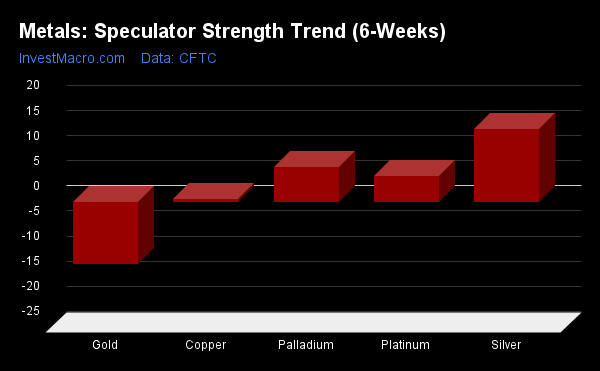
Strength Score Trends (or move index, calculates the 6-week changes in strength scores) showed that Palladium (10.2 percent) leads the past six weeks trends for metals this week. Gold (4.3 percent) and Copper (2.0 percent) fill out the other positive movers in the latest trends data.

Silver (-9.1 percent) leads the downside trend scores currently while the next market with lower trend scores was Platinum at -3.1 percent.

COT Metals Speculator bets fall this week led by Gold & Silver

Move Statistics:
Gold (4.3 percent) vs Gold previous week (8.7 percent)
Silver (-9.1 percent) vs Silver previous week (-10.6 percent)
Copper (2.0 percent) vs Copper previous week (0.5 percent)
Platinum (-3.1 percent) vs Platinum previous week (-1.5 percent)
Palladium (10.2 percent) vs Palladium previous week (14.8 percent)


Individual Markets:

Gold Comex Futures:

Gold Futures COT ChartThe Gold Comex Futures large speculator standing this week reached a net position of 103,857 contracts in the data reported through Tuesday. This was a weekly fall of -13,877 contracts from the previous week which had a total of 117,734 net contracts.

This week’s current strength score (the trader positioning range over the past three years, measured from 0 to 100) shows the speculators are currently Bearish-Extreme with a score of 4.3 percent. The commercials are Bullish-Extreme with a score of 98.0 percent and the small traders (not shown in chart) are Bearish-Extreme with a score of 0.0 percent.

Gold Futures StatisticsSPECULATORSCOMMERCIALSSMALL TRADERS
– Percent of Open Interest Longs:49.727.88.3
– Percent of Open Interest Shorts:27.452.36.1
– Net Position:103,857-114,06410,207
– Gross Longs:231,527129,68338,798
– Gross Shorts:127,670243,74728,591
– Long to Short Ratio:1.8 to 10.5 to 11.4 to 1
NET POSITION TREND:
– Strength Index Score (3 Year Range Pct):4.398.00.0
– Strength Index Reading (3 Year Range):Bearish-ExtremeBullish-ExtremeBearish-Extreme
NET POSITION MOVEMENT INDEX:
– 6-Week Change in Strength Index:4.3-2.0-14.7


Silver Comex Futures:

Silver Futures COT ChartThe Silver Comex Futures large speculator standing this week reached a net position of -12,784 contracts in the data reported through Tuesday. This was a weekly reduction of -4,513 contracts from the previous week which had a total of -8,271 net contracts.

This week’s current strength score (the trader positioning range over the past three years, measured from 0 to 100) shows the speculators are currently Bearish-Extreme with a score of 0.0 percent. The commercials are Bullish-Extreme with a score of 100.0 percent and the small traders (not shown in chart) are Bearish-Extreme with a score of 6.4 percent.

Silver Futures StatisticsSPECULATORSCOMMERCIALSSMALL TRADERS
– Percent of Open Interest Longs:37.440.416.4
– Percent of Open Interest Shorts:46.636.710.8
– Net Position:-12,7845,0557,729
– Gross Longs:51,71455,82322,687
– Gross Shorts:64,49850,76814,958
– Long to Short Ratio:0.8 to 11.1 to 11.5 to 1
NET POSITION TREND:
– Strength Index Score (3 Year Range Pct):0.0100.06.4
– Strength Index Reading (3 Year Range):Bearish-ExtremeBullish-ExtremeBearish-Extreme
NET POSITION MOVEMENT INDEX:
– 6-Week Change in Strength Index:-9.17.32.8


Copper Grade #1 Futures:

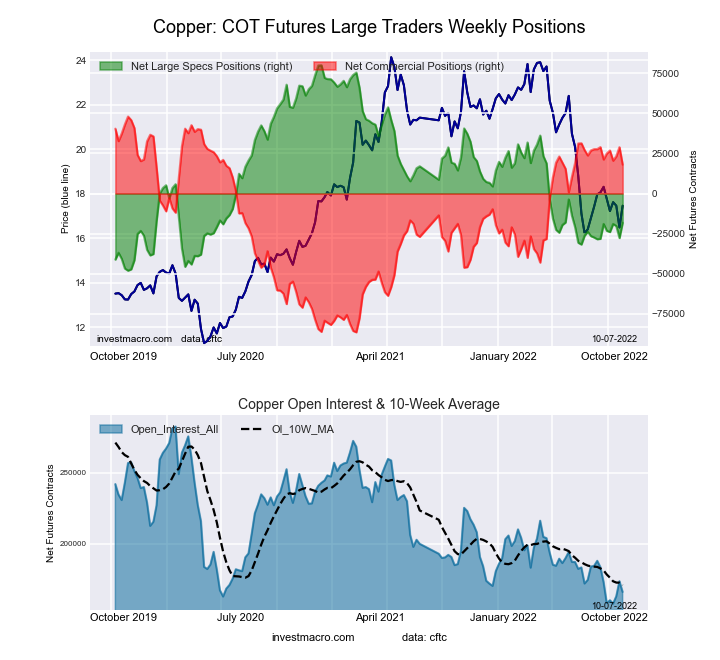
Copper Futures COT ChartThe Copper Grade #1 Futures large speculator standing this week reached a net position of -23,990 contracts in the data reported through Tuesday. This was a weekly decline of -735 contracts from the previous week which had a total of -23,255 net contracts.

This week’s current strength score (the trader positioning range over the past three years, measured from 0 to 100) shows the speculators are currently Bearish-Extreme with a score of 18.8 percent. The commercials are Bullish-Extreme with a score of 84.3 percent and the small traders (not shown in chart) are Bearish-Extreme with a score of 8.9 percent.

Copper Futures StatisticsSPECULATORSCOMMERCIALSSMALL TRADERS
– Percent of Open Interest Longs:29.151.27.8
– Percent of Open Interest Shorts:44.034.59.6
– Net Position:-23,99026,820-2,830
– Gross Longs:46,58182,03812,521
– Gross Shorts:70,57155,21815,351
– Long to Short Ratio:0.7 to 11.5 to 10.8 to 1
NET POSITION TREND:
– Strength Index Score (3 Year Range Pct):18.884.38.9
– Strength Index Reading (3 Year Range):Bearish-ExtremeBullish-ExtremeBearish-Extreme
NET POSITION MOVEMENT INDEX:
– 6-Week Change in Strength Index:2.0-0.0-14.8


Platinum Futures:

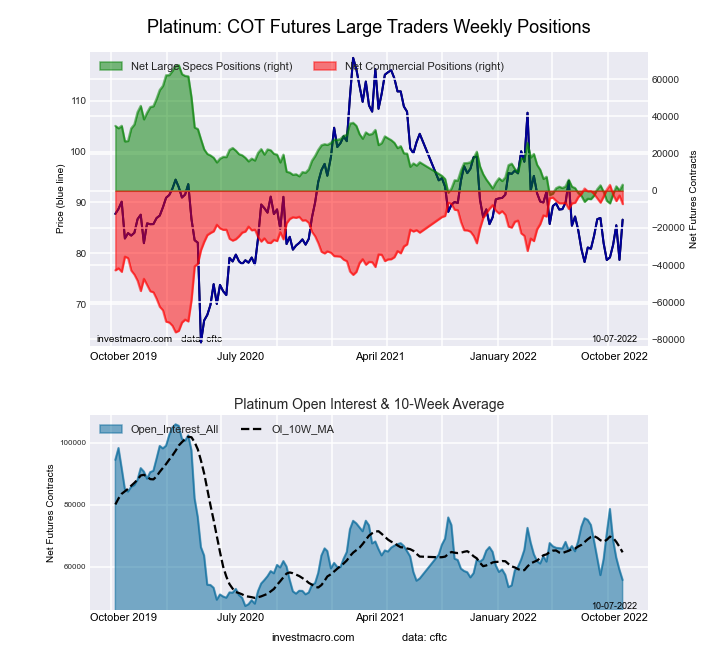
Platinum Futures COT ChartThe Platinum Futures large speculator standing this week reached a net position of -6,751 contracts in the data reported through Tuesday. This was a weekly decline of -1,373 contracts from the previous week which had a total of -5,378 net contracts.

This week’s current strength score (the trader positioning range over the past three years, measured from 0 to 100) shows the speculators are currently Bearish-Extreme with a score of 0.0 percent. The commercials are Bullish-Extreme with a score of 100.0 percent and the small traders (not shown in chart) are Bearish-Extreme with a score of 12.1 percent.

Platinum Futures StatisticsSPECULATORSCOMMERCIALSSMALL TRADERS
– Percent of Open Interest Longs:42.738.710.2
– Percent of Open Interest Shorts:51.334.75.6
– Net Position:-6,7513,1523,599
– Gross Longs:33,59830,4518,025
– Gross Shorts:40,34927,2994,426
– Long to Short Ratio:0.8 to 11.1 to 11.8 to 1
NET POSITION TREND:
– Strength Index Score (3 Year Range Pct):0.0100.012.1
– Strength Index Reading (3 Year Range):Bearish-ExtremeBullish-ExtremeBearish-Extreme
NET POSITION MOVEMENT INDEX:
– 6-Week Change in Strength Index:-3.14.2-14.5


Palladium Futures:

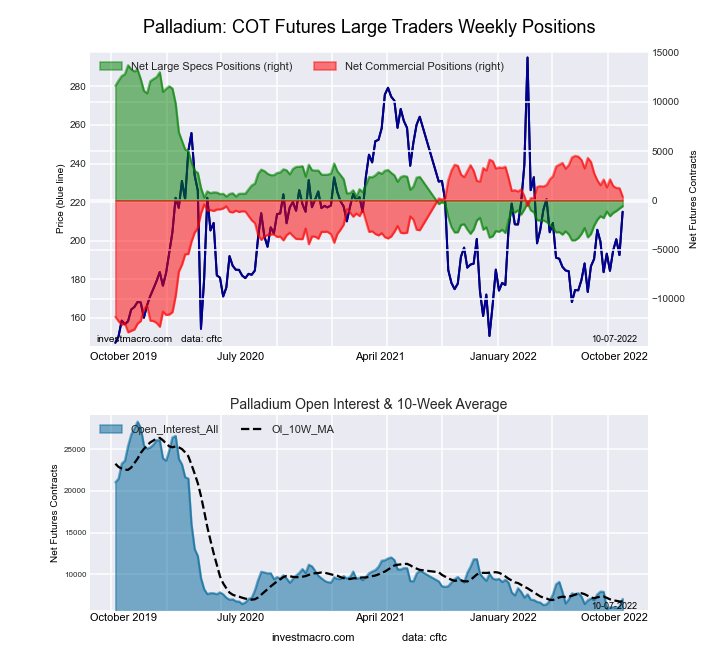
Palladium Futures COT ChartThe Palladium Futures large speculator standing this week reached a net position of -1,602 contracts in the data reported through Tuesday. This was a weekly lowering of -473 contracts from the previous week which had a total of -1,129 net contracts.

This week’s current strength score (the trader positioning range over the past three years, measured from 0 to 100) shows the speculators are currently Bearish-Extreme with a score of 13.8 percent. The commercials are Bullish-Extreme with a score of 86.7 percent and the small traders (not shown in chart) are Bearish-Extreme with a score of 13.4 percent.

Palladium Futures StatisticsSPECULATORSCOMMERCIALSSMALL TRADERS
– Percent of Open Interest Longs:22.262.914.2
– Percent of Open Interest Shorts:48.627.822.9
– Net Position:-1,6022,129-527
– Gross Longs:1,3443,814863
– Gross Shorts:2,9461,6851,390
– Long to Short Ratio:0.5 to 12.3 to 10.6 to 1
NET POSITION TREND:
– Strength Index Score (3 Year Range Pct):13.886.713.4
– Strength Index Reading (3 Year Range):Bearish-ExtremeBullish-ExtremeBearish-Extreme
NET POSITION MOVEMENT INDEX:
– 6-Week Change in Strength Index:10.2-9.9-2.4


Article By InvestMacroReceive our weekly COT Reports by Email

*COT Report: The COT data, released weekly to the public each Friday, is updated through the most recent Tuesday (data is 3 days old) and shows a quick view of how large speculators or non-commercials (for-profit traders) were positioned in the futures markets.

The CFTC categorizes trader positions according to commercial hedgers (traders who use futures contracts for hedging as part of the business), non-commercials (large traders who speculate to realize trading profits) and nonreportable traders (usually small traders/speculators) as well as their open interest (contracts open in the market at time of reporting). See CFTC criteria here.

Cost of living crisis: why plans to reform the Bank of England won’t help it stop spiralling inflation

By Shampa Roy-Mukherjee, University of East London and Michael Harrison, University of East London 

The UK cost of living crisis has been building since early 2021. At 10.1%, the current rate of consumer price inflation is the highest in 40 years and the Bank of England believes it could pass 13% in October.

The pressure of price inflation on UK household budgets has been compounded by the fact that wage growth has not kept up. A 2.8% drop in average real wages between March and May 2022 has left many people with little room in their budgets to afford rising prices. Add to this the highest tax burden in 70 years and it’s no wonder UK households are struggling.

The government created a £37 billion cost of living support deal earlier this year to support households. Since then, however, the country’s dire economic situation has been used as political football. Both candidates for the leadership of the Conservative Party spent the past few months suggesting economic policies designed to appeal to the 170,000 Conservative party members, a group that is predominantly white, British, male, Brexit-leaning, affluent and educated.

In addition to putting forward a low-tax strategy to boost economic growth, the eventual winner and new UK prime minister, Liz Truss, has also suggested reform of the UK’s central bank might be in order. But the kinds of changes she has suggested are unlikely to help the Bank of England tackle inflation and could actually threaten its independence from political control.

Tackling inflation

Some commentators have dubbed the Bank of England’s governor Andrew Bailey the “plank of England” in response to his claims that he could not have foreseen this economic crisis. In Bailey’s defence, the Bank of England has a toolkit full of fairly blunt instruments when it comes to managing severe inflation.

Its main function is to set monetary policy, which means influencing how much money is available in the economy and how much it costs people and businesses to borrow. Adjusting the Bank of England base rate is the main way to do this, but this involves a balancing act.

Increasing the base rate risks curtailing demand and investment, worsening the expected recession. On the other hand, reducing interest rates could exacerbate the already increasing levels of consumption of goods, potentially causing further inflation.

Rising UK inflation

The recent accusations over the Bank’s inability to keep inflation in line with its 2% target prompted Truss to suggest a review of the Bank’s remit during the Conservative party leadership contest. While Truss has since confirmed her belief in the independence of the bank from government control, she has backed a review into the targets it uses.

Truss has proposed shifting the emphasis away from the Bank’s current 2% target towards maintaining a nominal gross domestic product (GDP) growth target. This would see the bank make monetary policy decisions aimed at hitting a certain level of GDP growth, rather than trying to keep inflation at a specific level. This would see the Bank focus on attaining growth when managing the economy, rather than targeting price stability as it does now.

The blunt instruments currently at the Bank’s disposal have limited ability to affect demand-led growth, however. The UK economy is well on the path for a recession by the end of the year, so such a change would make no difference in the present crisis. As such, it’s unlikely this would really address the current inflation situation.

What such a change would do is increase the connection between the central bank and political representatives, however. The Bank of England has acted independently of political control since 1997. And while a mandate review would not necessarily erode this independence, any interest in guiding the central bank and holding its governor accountable to government could affect its ability to hold long-term policy ambitions free of political influence.

On the other hand, Truss could encourage a little more integration between the monetary policy set by the Bank of England and the fiscal policy set by the government’s spending and tax objectives. Since the bulk of inflation is caused by rising costs faced by firms who produce goods and services, government fiscal policy would be more effective in tackling it than the Bank’s monetary policy anyway.

Reforming financial regulation

The new prime minister also wants to shake up the UK’s financial regulators. While little detail has been provided by Truss about this plan, news reports say it could involve a merger of the Prudential Regulatory Authority (PRA) and the Financial Conduct Authority (FCA). This would take the PRA out of the control of the Bank of England, where it was placed after the 2007-2008 global financial crisis.

The Bank of England is tasked with maintaining the stability of the economy and ought to have a view beyond the short term. And since the PRA is tasked with looking at the stability of the financial system, it contributes greatly to the situational awareness of the central bank.

This kind of awareness was very much absent before the global financial crisis. Separating the PRA from the Bank could risk creating a similar blind spot in future.

A financial services and markets bill put before UK parliament in July 2022 also proposes adding promotion of growth to the remit of the existing regulators. This plan is worrying because it would expose the regulators to the government’s fiscal policy objectives.

Requiring financial regulators to focus on GDP growth targets would challenge the independence of the organisations tasked with maintaining stability and order in the UK financial system.The Conversation

About the Author:

Shampa Roy-Mukherjee, Associate Professor in Economics, University of East London and Michael Harrison, Lecturer in Finance and FinTech, University of East London

This article is republished from The Conversation under a Creative Commons license. Read the original article.


We need to anticipate and address potential fraud in the metaverse

By Nadia Smaili, Université du Québec à Montréal (UQAM) and Audrey de Rancourt-Raymond, Université du Québec à Montréal (UQAM) 

The metaverse is a virtual online world that people can access in a variety of ways, including through virtual and augmented reality. It offers people an interactive social experience where users are represented by avatars. Users can teleport through different virtual social worlds, participate in events and make transactions using cryptocurrencies.

By 2026, it is predicted that 25 per cent of people will spend at least one hour a day in the metaverse. There, they’ll be able to participate in activities such as working and shopping, and 30 per cent of firms will have their products and services ready for the metaverse.

The metaverse — which includes blockchains and cryptocurrencies — is still in its early stages. As its possibilities expand, it’s important to consider the potential threats and dangers as the metaverse introduces risks related to legislation, property, control, fraud, privacy threats, ethics and security.

As researchers interested in forensic accounting and digital fraud, we have attempted to identify the risks that are unique to the metaverse.

Opportunity or threat?

The metaverse appears to be a foray into developing new models of conducting business online. And as such, can we anticipate the related risks? Are current laws applicable to the metaverse? How are we protected from fraud in the metaverse?

While the metaverse offers new opportunities for firms and customers, as a nascent technology, it comes with multiple risks.

Breaches in ethics are possible. For example, do firms consider whether their code of ethics has been updated to account for expansion into the metaverse? How do customers and employees behave in the metaverse? Is sensitive information protected?

Legal issues will relate to intellectual property rights, the regulation of virtual assets, privacy and gambling. Firms considering using the metaverse should anticipate intellectual property rights, in particular those related to terms of service agreements and end-user license agreements.

Metaverse fraud risks

The metaverse can bring many fraud risks, such as market manipulation, cyber breaches and attacks, privacy breaches, money laundering, corporate espionage and identity theft.

Unlike traditional social media platforms, users have no guarantee that the data they share is only shared with those they choose to share it with in the metaverse. That means user identities can be tracked and revealed

As one researcher explains: “We cannot just turn off who can follow our avatars in the metaverse as we can do in the traditional social media.”

Personal information, such as biometric data, can be collected through the metaverse and in turn used for marketing purposes. Organizations using the metaverse need to ensure data is anonymized and users cannot be identifiable.

The rapid development of the metaverse has also brought risks related to cryptocurrencies, which are already subjected to very little official regulation. Scams could potentially flourish in the metaverse — and at worse, become normalized as a metaverse experience.

CNBC looks at how scammers are targeting metaverse investors.

Preventing fraud

Risks in the metaverse can be mitigated by corporations and governments implementing controls that ensure users and administrators are protected. These are steps that can be taken to deter, prevent and detect fraud in the metaverse.

In our research on identifying potential fraud in the metaverse, we identified two sets of actions: macro, which take place at the government level, and micro, which affect corporations.

At the government level:

  • Specific regulation is needed for the metaverse, possibly in the form of a new Metaverse Act that encompasses metaverse transactions and actions;
  • Increased oversight by government bodies, such as financial authorities;
  • Establishment of an international and global authority to oversee the metaverse;
  • Co-operation with businesses to share information that will reduce risks and prevent malicious use and unethical behaviour and misinformation in the metaverse;
  • Regulatory bodies should require or encourage organizations to disclose how they mitigate metaverse risks, what resources they have, and how they protect users from identity theft, misinformation, cyber threats and privacy breaches.

At the level of individual corporations or organizations active in the metaverse, here are some steps that can be taken:

  • Adopt a comprehensive internal approach within different departments (for example auditing, marketing and finance departments) to identify weaknesses when processes are implemented in the metaverse;
  • Implement measures that regulate avatar behaviour on different platforms to ensure users conform to community standards;
  • Employment of artificial intelligence to combat fraud and scams;
  • Update codes of ethics and whistleblowing programs to protect whistleblowers and facilitate whistleblowing channels;
  • Ensure that an adequate program is in place to mitigate and respond to metaverse threats.

Boards of directors, governance bodies and management should be trained and able to co-ordinate efforts to combat the emergence and the expansion of crime in the metaverse. Training and education are the first steps in establishing an efficient metaverse anti-fraud program.The Conversation

About the Author:

Nadia Smaili, Professor in Accounting (forensic accounting), Université du Québec à Montréal (UQAM) and Audrey de Rancourt-Raymond, Assistant researcher, Université du Québec à Montréal (UQAM)

This article is republished from The Conversation under a Creative Commons license. Read the original article.

Mid-Week Technical Outlook: EUR

By ForexTime 

– With less than 24 hours until the highly anticipated European Central Bank Meeting (ECB), our currency spotlight shines on the euro!

Earlier in the week, we questioned whether ECB hawks could rescue EUR bulls…only for prices to later sink to levels not seen in two decades. The euro remains heavily pressured by recession fears with the conflict on its borders and an energy shock haunting investor attraction towards the currency. While fundamentally, the outlook for the euro points south – it will be interesting to see whether ECB hawks could offer short-term support for bulls this week. Prices are trading below 0.9900 as of writing and could extend losses if the dollar continues to appreciate.

Our focus this afternoon will be Euro crosses and the tool of choice is none other than technical analysis.

EURUSD waits on ECB

After slipping to levels not seen in 20 years, the EURUSD remains shaky and vulnerable to further losses. A solid daily close below 0.9900 could inspire a selloff towards 0.9700 as highlighted in the “Trade of the week” report. Should 0.9900 prove to be reliable support, a rebound towards parity and higher could be on the cards.

EURJPY eyes 144.00

As the Yen continues to weaken, this has propelled the EURJPY to levels not seen since late June. Prices are heavily bullish on the daily timeframe as there have been consistently higher highs and higher lows. ECB hawks could turbocharge the move higher, sending prices towards the 144.00 resistance level. Above 144.00 bulls could challenge 145.30 – a level not seen since December 2014.

Time for EURGBP to breakout?

A classic breakout opportunity could be forming on the EURGBP as prices slowly approach the 0.8680 resistance level. A solid breakout and daily close above this point may encourage a move towards 0.8720 and 0.8800, respectively. Technical indicators such as the 50, 100, and 200-day SMA and MACD favour further upside. If the EURGBP dips back toward 0.8580, then the next key level of interest can be found at 0.8500.

EURAUD gearing to push higher?

Things are turning bullish for the EURAUD with 1.4750 acting as a barrier for bulls. Beyond this point, we have the 100 -day SMA and 1.4900 which are likely to become key points of interest down the road. Should the upside take prices beyond 1.4900, the EURAUD could venture towards the 200-day SMA. Alternatively, a move back towards 1.4580 could be on the cards if 1.4750 proves to be a tough nut to crack.

EURNZD choppy and untamed

The EURNZD remains choppy and volatile as ever with prices swinging between losses and gains. A potential breakout could be on the horizon for this volatile currency as prices push beyond the 50, 100, and 200-day Simple Moving Average. A strong breakout and daily close above 1.6500 could inspire a move towards 1.6600 and 1.6800, respectively. Should 1.6500 prove to be reliable resistance, we may see a decline back towards 1.6300.


Forex-Time-LogoArticle by ForexTime
ForexTime Ltd (FXTM) is an award winning international online forex broker regulated by CySEC 185/12 www.forextime.com

Trade Of The Week: Can ECB Hawks Rescue Euro Bulls?

By ForexTime 

– The fierce war against inflation is set to continue this week with more central banks heavily armed, locked, and loaded for battle.

Our focus falls on the European Central Bank (ECB) which is expected to unleash a monetary bazooka in the form of a 75-basis point rate increase! Such a move will place the ECB among the ranks of 40+ central banks that have increased rates by 75bp or more in one go this year in the face of soaring inflation.

Before we take a deep dive into what to expect from the ECB meeting on Thursday, it is worth keeping in mind that the Eurozone economy remains vulnerable and faces the growing risk of recession. The unsavoury combination of ongoing geopolitical tensions, untamed inflation, and energy crisis continues to darken the outlook for Europe with the latest development revolving around Russia’s Gazprom dumping salt into the wound.

Interestingly the euro was able to hold its ground versus most G10 currencies in August excluding the dollar. However, things are not looking too pretty quarter-to-date with the euro down roughly 5.6% against the king of the currency space.

Since the EURUSD secured a solid daily close below parity back in late August, prices have struggled to push higher thanks to technical and fundamental factors.

The outlook for the EURUSD remains bearish on the daily, weekly, and monthly timeframe with prices wobbling above 0.9900 as of writing. Given how the ECB is expected to join the jumbo hike club, could this be enough to cushion the downside and rescue euro bulls?

The low down…

Eurozone inflation hit a new record high in August at 9.1%.

This was higher than the 8.9% witnessed in July and above the 9% market forecast. With inflation hitting such lofty and uncomfortable levels, market expectations intensified over the ECB adopting an aggressive approach toward rates in an effort to cap inflation. According to Bloomberg, traders and predicting a 66% probability of a 75 bp rate hike in September. It does not end here.

Last Friday, Gazprom made a last-minute decision to suspend natural gas flows through the Nord Stream 1 pipeline – ultimately worsening the squeeze on Europe’s energy supplies. This move is likely to expose the economy to downside shocks and create more uncertainty and fuel inflationary pressures as gas prices soar.

What to expect from ECB?

Before thinking about what to expect from the ECB on Thursday, there are a couple of things to keep in mind before the big day. ECB hawks are certainly in the building but the question is how much resolve they have to tame inflation. It’s worth keeping in mind that the latest ECB economic forecasts could offer fresh insight into inflation expectations. It will be interesting to see what the central bank has to say about the energy crises and whether this will push the Eurozone into recession. Let’s not forget about the depreciating euro and how it could impact the central bank’s policy outlook.

Possible outcomes on Thursday

  • ECB hikes rates by 75 basis points and strikes hawkish tone opening doors to further jumbo hikes. This move may inject euro bulls with fresh inspiration, pushing the EURUSD back above parity towards 1.0100. However, upside gains may be capped by the gloomy outlook for the Eurozone.
  • ECB hikes rates by 75 bp but expresses concern over the economic outlook, reducing bets of more aggressive hikes down the road. Euro pops higher but bears seize control – limiting gains below parity
  • ECB surprises markets with a 50 bp hike and strikes dovish tone, this could excite euro bears – triggering a selloff that breaches the 0.9900 floor.

EURUSD: The path of least resistance south…

As the subtitle says, the path of least resistance for the EURUSD points south.

Earlier we identified how the currency pair was bearish on the daily, weekly and monthly timeframe. Looking at the weekly timeframe, prices are respecting a bearish channel and trading well below the 50-, 100- and 200-week Simple Moving Average. Sustained weakness below parity could trigger a selloff towards 0.9700 and 0.9600, respectively. A strong weekly move back above 1.1000 may suggest an incline towards 1.0200.

Zooming in on the daily, prices remain bearish but there could be a period of consolidation if 0.9900 proves to be reliable support. A solid daily close below this level could trigger a selloff towards 0.9700. Should 0.9900 prove to be reliable support, a rebound towards parity and potentially higher could be on the cards before bears re-enter the scene.


Forex-Time-LogoArticle by ForexTime
ForexTime Ltd (FXTM) is an award winning international online forex broker regulated by CySEC 185/12 www.forextime.com
Australian dollar, Brazilian Real lead Forex Speculators bets while Euro bets hit 130-week low

By InvestMacro | COT | Data Tables | COT Leaders | Downloads | COT Newsletter

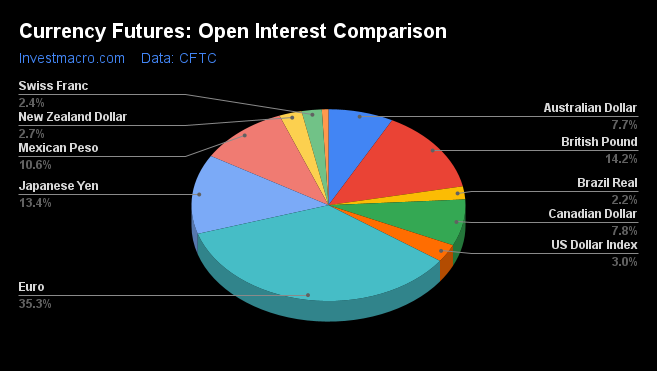
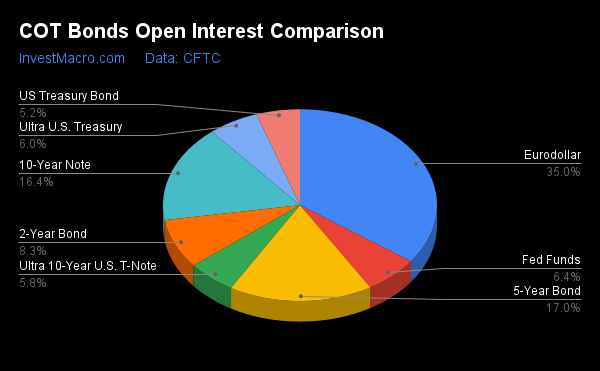
Currency Futures Open Interest Comparison

Here are the latest charts and statistics for the Commitment of Traders (COT) data published by the Commodities Futures Trading Commission (CFTC).
The latest COT Reports data is updated through Tuesday August 30th and shows a quick view of how large traders (for-profit speculators and commercial entities) were positioned in the futures markets. All currency positions are in direct relation to the US dollar where, for example, a bet for the euro is a bet that the euro will rise versus the dollar while a bet against the euro will be a bet that the euro will decline versus the dollar.
Australian dollar, Brazilian Real lead the Weekly Speculator Changes

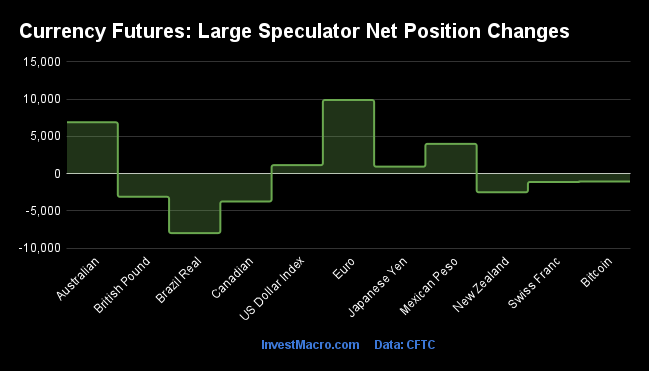
Currency Futures Large Speculator Net Position Changes

The COT currency market speculator bets were mostly higher this week as seven out of the eleven currency markets we cover had higher positioning while the other four markets had lower speculator contracts.

Leading the gains for the currency markets was the Australian dollar (2,635 contracts) with the Brazilian real (2,494 contracts), Mexican peso (2,286 contracts), Canadian dollar (952 contracts), US Dollar Index (416 contracts), Bitcoin (332 contracts) and the Swiss franc (143 contracts) also having higher bets on the week.

The currencies leading the declines in speculator bets this week were the Euro (-3,567 contracts) and the Japanese yen (-2,724 contracts) with the New Zealand dollar (-1,650 contracts) and the British pound sterling (-1,204 contracts) also registering lower bets on the week.

Currency Speculator Positioning Notes:

Highlighting the COT Reports (Week 35) changes this week was the Brazilian real’s gains in speculator bets. The Brazilian currency has now seen higher bullish bets in three out of the past four weeks and in five out of the past seven weeks as well. Speculators had previous strong sentiment for the real in February and March with bullish bets hitting an all-time record high in March above the +50,000 contracts level. However, the bullish strength only last a few months as sharp declines hit the real in July and resulted in a net bearish position of -1,130 contracts on August 2nd. Since then, speculators have started to build back their bullish positions and pushed the current standing to +8,859 contracts this week.

Australian dollar contracts rose this week but are looking like just a small rebound after a long bearish streak. The Aussie speculator bets had fallen for six straight weeks and pushed the overall net position to the most bearish level since March 8th, a span of twenty-four weeks. Overall, the Australian dollar’s speculative position has now been in a bearish standing for sixty-seven straight weeks, dating back to May 25th of 2021.

The Swiss franc speculator positions this week improved for a fourth consecutive week and are now at the least bearish level in just about a year. The overall net standing for the franc has been in a bearish position for fifty-one straight weeks, dating back to September 14th of last year.

Finally, the Euro net speculator position declined for a third consecutive week this week and has fallen by a total of -13,140 contracts over that time-frame. These declines have dropped the Euro’s net standing, currently at -47,676 contracts, to the most bearish level in the past one hundred and thirty weeks, dating back to March 10th of 2020. The EUR/USD exchange rate has fallen back to below parity after testing these levels in July. The currency pair currently trades near 20-year lows and closed the week at the 0.9956 exchange rate.


Data Snapshot of Forex Market Traders | Columns Legend
Aug-30-2022OIOI-IndexSpec-NetSpec-IndexCom-NetCOM-IndexSmalls-NetSmalls-Index
USD Index60,1848935,51584-38,538153,02350
EUR720,08190-47,6762028,8608418,8166
GBP262,00485-29,1704951,49863-22,3280
JPY247,03087-41,5314361,28766-19,75613
CHF47,16835-2,2625115,47168-13,20913
CAD158,1653624,17967-29,039454,86040
AUD169,26759-57,3933262,50366-5,11040
NZD44,37633-3,124666,53340-3,40912
MXN206,82352-29,0301525,765843,26557
RUB20,93047,54331-7,15069-39324
BRL66,706638,85959-10,922412,06389
Bitcoin14,440841,296100-1,32703114


Bitcoin and US Dollar Index lead the Strength Scores

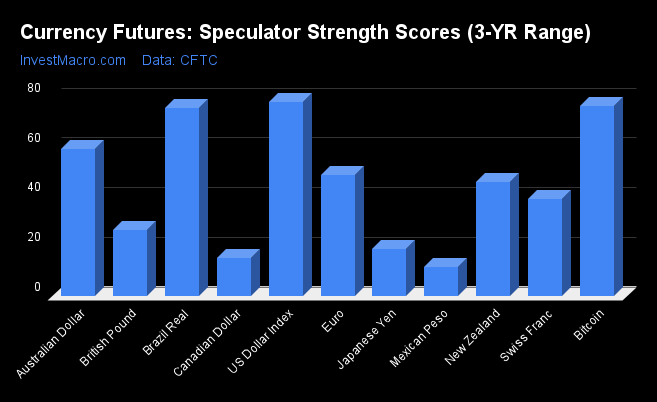
Strength Scores (a normalized measure of Speculator positions over a 3-Year range, from 0 to 100 where above 80 is extreme bullish and below 20 is extreme bearish) showed that Bitcoin Futures (100.0 percent) and the US Dollar Index (84.2 percent) lead the currency markets and are both in bullish extreme positions (above 80 percent). The Canadian Dollar (66.5 percent) and the New Zealand Dollar (66.0 percent) come in as the next highest in the currency markets in strength scores.

On the downside, the Mexican Peso (15.0 percent) comes in at the lowest strength level currently and is in a bearish extreme level (below 20 percent). The next lowest is the Euro (20.4 percent) followed by the Australian Dollar (31.6 percent) and the Japanese Yen (43.3 percent).

Strength Statistics:
US Dollar Index (84.2 percent) vs US Dollar Index previous week (83.5 percent)
EuroFX (20.4 percent) vs EuroFX previous week (21.5 percent)
British Pound Sterling (49.1 percent) vs British Pound Sterling previous week (50.1 percent)
Japanese Yen (43.3 percent) vs Japanese Yen previous week (45.0 percent)
Swiss Franc (50.8 percent) vs Swiss Franc previous week (50.4 percent)
Canadian Dollar (66.5 percent) vs Canadian Dollar previous week (65.4 percent)
Australian Dollar (31.6 percent) vs Australian Dollar previous week (29.2 percent)
New Zealand Dollar (66.0 percent) vs New Zealand Dollar previous week (68.8 percent)
Mexican Peso (15.0 percent) vs Mexican Peso previous week (14.0 percent)
Brazil Real (59.1 percent) vs Brazil Real previous week (56.6 percent)
Bitcoin (100.0 percent) vs Bitcoin previous week (94.2 percent)

Bitcoin, Swiss Franc and British Pound lead the 6-Week Strength Trends

Currency Futures Speculator Strength Trends (6-Weeks)

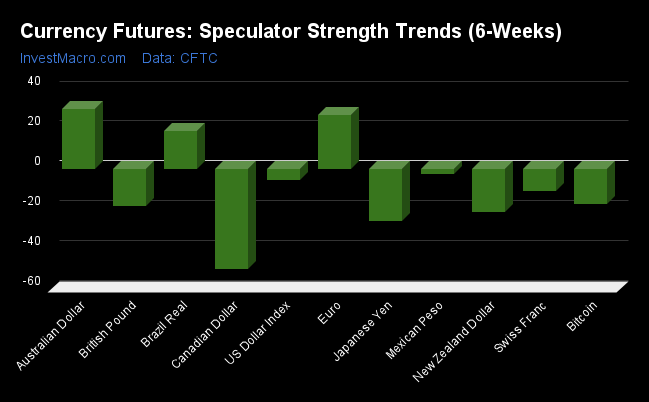
Strength Score Trends (or move index, calculates the 6-week changes in strength scores) show that Bitcoin (31.6 percent) leads the past six weeks trends for the currency markets this week. The Swiss Franc (21.9 percent), the British Pound Sterling (21.9 percent) and the Canadian Dollar (19.7 percent) fill out the other top movers in the latest trends data.

The Australian Dollar (-13.2 percent) leads the downside trend scores currently while the next market with lower trend scores were the US Dollar Index (-5.9 percent) followed by the Euro (-1.5 percent).

Strength Trend Statistics:
US Dollar Index (-5.9 percent) vs US Dollar Index previous week (-5.4 percent)
EuroFX (-1.5 percent) vs EuroFX previous week (-5.8 percent)
British Pound Sterling (21.9 percent) vs British Pound Sterling previous week (24.3 percent)
Japanese Yen (10.9 percent) vs Japanese Yen previous week (13.1 percent)
Swiss Franc (21.9 percent) vs Swiss Franc previous week (16.0 percent)
Canadian Dollar (19.7 percent) vs Canadian Dollar previous week (22.1 percent)
Australian Dollar (-13.2 percent) vs Australian Dollar previous week (-17.1 percent)
New Zealand Dollar (0.9 percent) vs New Zealand Dollar previous week (6.4 percent)
Mexican Peso (0.7 percent) vs Mexican Peso previous week (-3.4 percent)
Brazil Real (-1.6 percent) vs Brazil Real previous week (-3.8 percent)
Bitcoin (31.6 percent) vs Bitcoin previous week (19.9 percent)


Individual Markets:

US Dollar Index Futures:

US Dollar Index Forex Futures COT ChartThe US Dollar Index large speculator standing this week came in at a net position of 35,515 contracts in the data reported through Tuesday. This was a weekly lift of 416 contracts from the previous week which had a total of 35,099 net contracts.

This week’s current strength score (the trader positioning range over the past three years, measured from 0 to 100) shows the speculators are currently Bullish-Extreme with a score of 84.2 percent. The commercials are Bearish-Extreme with a score of 14.6 percent and the small traders (not shown in chart) are Bearish with a score of 49.6 percent.

US DOLLAR INDEX StatisticsSPECULATORSCOMMERCIALSSMALL TRADERS
– Percent of Open Interest Longs:85.93.09.0
– Percent of Open Interest Shorts:26.867.14.0
– Net Position:35,515-38,5383,023
– Gross Longs:51,6721,8225,431
– Gross Shorts:16,15740,3602,408
– Long to Short Ratio:3.2 to 10.0 to 12.3 to 1
NET POSITION TREND:
– Strength Index Score (3 Year Range Pct):84.214.649.6
– Strength Index Reading (3 Year Range):Bullish-ExtremeBearish-ExtremeBearish
NET POSITION MOVEMENT INDEX:
– 6-Week Change in Strength Index:-5.94.76.5


Euro Currency Futures:

Euro Currency Futures COT ChartThe Euro Currency large speculator standing this week came in at a net position of -47,676 contracts in the data reported through Tuesday. This was a weekly fall of -3,567 contracts from the previous week which had a total of -44,109 net contracts.

This week’s current strength score (the trader positioning range over the past three years, measured from 0 to 100) shows the speculators are currently Bearish with a score of 20.4 percent. The commercials are Bullish-Extreme with a score of 84.2 percent and the small traders (not shown in chart) are Bearish-Extreme with a score of 5.6 percent.

EURO Currency StatisticsSPECULATORSCOMMERCIALSSMALL TRADERS
– Percent of Open Interest Longs:28.157.211.2
– Percent of Open Interest Shorts:34.753.28.6
– Net Position:-47,67628,86018,816
– Gross Longs:202,258411,68480,871
– Gross Shorts:249,934382,82462,055
– Long to Short Ratio:0.8 to 11.1 to 11.3 to 1
NET POSITION TREND:
– Strength Index Score (3 Year Range Pct):20.484.25.6
– Strength Index Reading (3 Year Range):BearishBullish-ExtremeBearish-Extreme
NET POSITION MOVEMENT INDEX:
– 6-Week Change in Strength Index:-1.53.2-10.8


British Pound Sterling Futures:

British Pound Sterling Futures COT ChartThe British Pound Sterling large speculator standing this week came in at a net position of -29,170 contracts in the data reported through Tuesday. This was a weekly lowering of -1,204 contracts from the previous week which had a total of -27,966 net contracts.

This week’s current strength score (the trader positioning range over the past three years, measured from 0 to 100) shows the speculators are currently Bearish with a score of 49.1 percent. The commercials are Bullish with a score of 62.9 percent and the small traders (not shown in chart) are Bearish-Extreme with a score of 0.0 percent.

BRITISH POUND StatisticsSPECULATORSCOMMERCIALSSMALL TRADERS
– Percent of Open Interest Longs:22.366.07.1
– Percent of Open Interest Shorts:33.546.315.7
– Net Position:-29,17051,498-22,328
– Gross Longs:58,477172,79618,706
– Gross Shorts:87,647121,29841,034
– Long to Short Ratio:0.7 to 11.4 to 10.5 to 1
NET POSITION TREND:
– Strength Index Score (3 Year Range Pct):49.162.90.0
– Strength Index Reading (3 Year Range):BearishBullishBearish-Extreme
NET POSITION MOVEMENT INDEX:
– 6-Week Change in Strength Index:21.9-11.6-21.2


Japanese Yen Futures:

Japanese Yen Forex Futures COT ChartThe Japanese Yen large speculator standing this week came in at a net position of -41,531 contracts in the data reported through Tuesday. This was a weekly lowering of -2,724 contracts from the previous week which had a total of -38,807 net contracts.

This week’s current strength score (the trader positioning range over the past three years, measured from 0 to 100) shows the speculators are currently Bearish with a score of 43.3 percent. The commercials are Bullish with a score of 65.6 percent and the small traders (not shown in chart) are Bearish-Extreme with a score of 13.3 percent.

JAPANESE YEN StatisticsSPECULATORSCOMMERCIALSSMALL TRADERS
– Percent of Open Interest Longs:22.166.48.7
– Percent of Open Interest Shorts:38.941.616.7
– Net Position:-41,53161,287-19,756
– Gross Longs:54,513163,99121,436
– Gross Shorts:96,044102,70441,192
– Long to Short Ratio:0.6 to 11.6 to 10.5 to 1
NET POSITION TREND:
– Strength Index Score (3 Year Range Pct):43.365.613.3
– Strength Index Reading (3 Year Range):BearishBullishBearish-Extreme
NET POSITION MOVEMENT INDEX:
– 6-Week Change in Strength Index:10.9-5.8-12.0


Swiss Franc Futures:

Swiss Franc Forex Futures COT ChartThe Swiss Franc large speculator standing this week came in at a net position of -2,262 contracts in the data reported through Tuesday. This was a weekly lift of 143 contracts from the previous week which had a total of -2,405 net contracts.

This week’s current strength score (the trader positioning range over the past three years, measured from 0 to 100) shows the speculators are currently Bullish with a score of 50.8 percent. The commercials are Bullish with a score of 68.2 percent and the small traders (not shown in chart) are Bearish-Extreme with a score of 12.8 percent.

SWISS FRANC StatisticsSPECULATORSCOMMERCIALSSMALL TRADERS
– Percent of Open Interest Longs:25.357.516.8
– Percent of Open Interest Shorts:30.124.744.8
– Net Position:-2,26215,471-13,209
– Gross Longs:11,91527,1137,906
– Gross Shorts:14,17711,64221,115
– Long to Short Ratio:0.8 to 12.3 to 10.4 to 1
NET POSITION TREND:
– Strength Index Score (3 Year Range Pct):50.868.212.8
– Strength Index Reading (3 Year Range):BullishBullishBearish-Extreme
NET POSITION MOVEMENT INDEX:
– 6-Week Change in Strength Index:21.9-6.0-16.6


Canadian Dollar Futures:

Canadian Dollar Forex Futures COT ChartThe Canadian Dollar large speculator standing this week came in at a net position of 24,179 contracts in the data reported through Tuesday. This was a weekly gain of 952 contracts from the previous week which had a total of 23,227 net contracts.

This week’s current strength score (the trader positioning range over the past three years, measured from 0 to 100) shows the speculators are currently Bullish with a score of 66.5 percent. The commercials are Bearish with a score of 44.5 percent and the small traders (not shown in chart) are Bearish with a score of 39.9 percent.

CANADIAN DOLLAR StatisticsSPECULATORSCOMMERCIALSSMALL TRADERS
– Percent of Open Interest Longs:37.139.122.1
– Percent of Open Interest Shorts:21.857.419.1
– Net Position:24,179-29,0394,860
– Gross Longs:58,70461,82135,000
– Gross Shorts:34,52590,86030,140
– Long to Short Ratio:1.7 to 10.7 to 11.2 to 1
NET POSITION TREND:
– Strength Index Score (3 Year Range Pct):66.544.539.9
– Strength Index Reading (3 Year Range):BullishBearishBearish
NET POSITION MOVEMENT INDEX:
– 6-Week Change in Strength Index:19.7-16.95.6


Australian Dollar Futures:

Australian Dollar Forex Futures COT ChartThe Australian Dollar large speculator standing this week came in at a net position of -57,393 contracts in the data reported through Tuesday. This was a weekly rise of 2,635 contracts from the previous week which had a total of -60,028 net contracts.

This week’s current strength score (the trader positioning range over the past three years, measured from 0 to 100) shows the speculators are currently Bearish with a score of 31.6 percent. The commercials are Bullish with a score of 65.5 percent and the small traders (not shown in chart) are Bearish with a score of 40.0 percent.

AUSTRALIAN DOLLAR StatisticsSPECULATORSCOMMERCIALSSMALL TRADERS
– Percent of Open Interest Longs:18.567.911.1
– Percent of Open Interest Shorts:52.431.014.1
– Net Position:-57,39362,503-5,110
– Gross Longs:31,304114,95718,758
– Gross Shorts:88,69752,45423,868
– Long to Short Ratio:0.4 to 12.2 to 10.8 to 1
NET POSITION TREND:
– Strength Index Score (3 Year Range Pct):31.665.540.0
– Strength Index Reading (3 Year Range):BearishBullishBearish
NET POSITION MOVEMENT INDEX:
– 6-Week Change in Strength Index:-13.29.92.5


New Zealand Dollar Futures:

New Zealand Dollar Forex Futures COT ChartThe New Zealand Dollar large speculator standing this week came in at a net position of -3,124 contracts in the data reported through Tuesday. This was a weekly decline of -1,650 contracts from the previous week which had a total of -1,474 net contracts.

This week’s current strength score (the trader positioning range over the past three years, measured from 0 to 100) shows the speculators are currently Bullish with a score of 66.0 percent. The commercials are Bearish with a score of 40.5 percent and the small traders (not shown in chart) are Bearish-Extreme with a score of 12.5 percent.

NEW ZEALAND DOLLAR StatisticsSPECULATORSCOMMERCIALSSMALL TRADERS
– Percent of Open Interest Longs:37.056.05.1
– Percent of Open Interest Shorts:44.041.312.8
– Net Position:-3,1246,533-3,409
– Gross Longs:16,40724,8612,266
– Gross Shorts:19,53118,3285,675
– Long to Short Ratio:0.8 to 11.4 to 10.4 to 1
NET POSITION TREND:
– Strength Index Score (3 Year Range Pct):66.040.512.5
– Strength Index Reading (3 Year Range):BullishBearishBearish-Extreme
NET POSITION MOVEMENT INDEX:
– 6-Week Change in Strength Index:0.9-1.11.7


Mexican Peso Futures:

Mexican Peso Futures COT ChartThe Mexican Peso large speculator standing this week came in at a net position of -29,030 contracts in the data reported through Tuesday. This was a weekly increase of 2,286 contracts from the previous week which had a total of -31,316 net contracts.

This week’s current strength score (the trader positioning range over the past three years, measured from 0 to 100) shows the speculators are currently Bearish-Extreme with a score of 15.0 percent. The commercials are Bullish-Extreme with a score of 83.5 percent and the small traders (not shown in chart) are Bullish with a score of 56.9 percent.

MEXICAN PESO StatisticsSPECULATORSCOMMERCIALSSMALL TRADERS
– Percent of Open Interest Longs:50.146.03.1
– Percent of Open Interest Shorts:64.133.51.5
– Net Position:-29,03025,7653,265
– Gross Longs:103,62395,0986,441
– Gross Shorts:132,65369,3333,176
– Long to Short Ratio:0.8 to 11.4 to 12.0 to 1
NET POSITION TREND:
– Strength Index Score (3 Year Range Pct):15.083.556.9
– Strength Index Reading (3 Year Range):Bearish-ExtremeBullish-ExtremeBullish
NET POSITION MOVEMENT INDEX:
– 6-Week Change in Strength Index:0.7-0.91.7


Brazilian Real Futures:

Brazil Real Futures COT ChartThe Brazilian Real large speculator standing this week came in at a net position of 8,859 contracts in the data reported through Tuesday. This was a weekly advance of 2,494 contracts from the previous week which had a total of 6,365 net contracts.

This week’s current strength score (the trader positioning range over the past three years, measured from 0 to 100) shows the speculators are currently Bullish with a score of 59.1 percent. The commercials are Bearish with a score of 40.6 percent and the small traders (not shown in chart) are Bullish-Extreme with a score of 88.9 percent.

BRAZIL REAL StatisticsSPECULATORSCOMMERCIALSSMALL TRADERS
– Percent of Open Interest Longs:45.649.05.3
– Percent of Open Interest Shorts:32.465.42.2
– Net Position:8,859-10,9222,063
– Gross Longs:30,44332,7193,543
– Gross Shorts:21,58443,6411,480
– Long to Short Ratio:1.4 to 10.7 to 12.4 to 1
NET POSITION TREND:
– Strength Index Score (3 Year Range Pct):59.140.688.9
– Strength Index Reading (3 Year Range):BullishBearishBullish-Extreme
NET POSITION MOVEMENT INDEX:
– 6-Week Change in Strength Index:-1.60.611.2

Bitcoin Futures:

Bitcoin Crypto Futures COT ChartThe Bitcoin large speculator standing this week came in at a net position of 1,296 contracts in the data reported through Tuesday. This was a weekly gain of 332 contracts from the previous week which had a total of 964 net contracts.

This week’s current strength score (the trader positioning range over the past three years, measured from 0 to 100) shows the speculators are currently Bullish-Extreme with a score of 100.0 percent. The commercials are Bearish-Extreme with a score of 0.0 percent and the small traders (not shown in chart) are Bearish-Extreme with a score of 13.6 percent.

BITCOIN StatisticsSPECULATORSCOMMERCIALSSMALL TRADERS
– Percent of Open Interest Longs:81.60.56.9
– Percent of Open Interest Shorts:72.69.76.7
– Net Position:1,296-1,32731
– Gross Longs:11,77775996
– Gross Shorts:10,4811,402965
– Long to Short Ratio:1.1 to 10.1 to 11.0 to 1
NET POSITION TREND:
– Strength Index Score (3 Year Range Pct):100.00.013.6
– Strength Index Reading (3 Year Range):Bullish-ExtremeBearish-ExtremeBearish-Extreme
NET POSITION MOVEMENT INDEX:
– 6-Week Change in Strength Index:31.6-61.3-12.3


Article By InvestMacroReceive our weekly COT Reports by Email

*COT Report: The COT data, released weekly to the public each Friday, is updated through the most recent Tuesday (data is 3 days old) and shows a quick view of how large speculators or non-commercials (for-profit traders) were positioned in the futures markets.

The CFTC categorizes trader positions according to commercial hedgers (traders who use futures contracts for hedging as part of the business), non-commercials (large traders who speculate to realize trading profits) and nonreportable traders (usually small traders/speculators) as well as their open interest (contracts open in the market at time of reporting). See CFTC criteria here.