Japanese Yen Continues to Slide as Bank of Japan Disappoints Markets

By RoboForex Analytical Department 

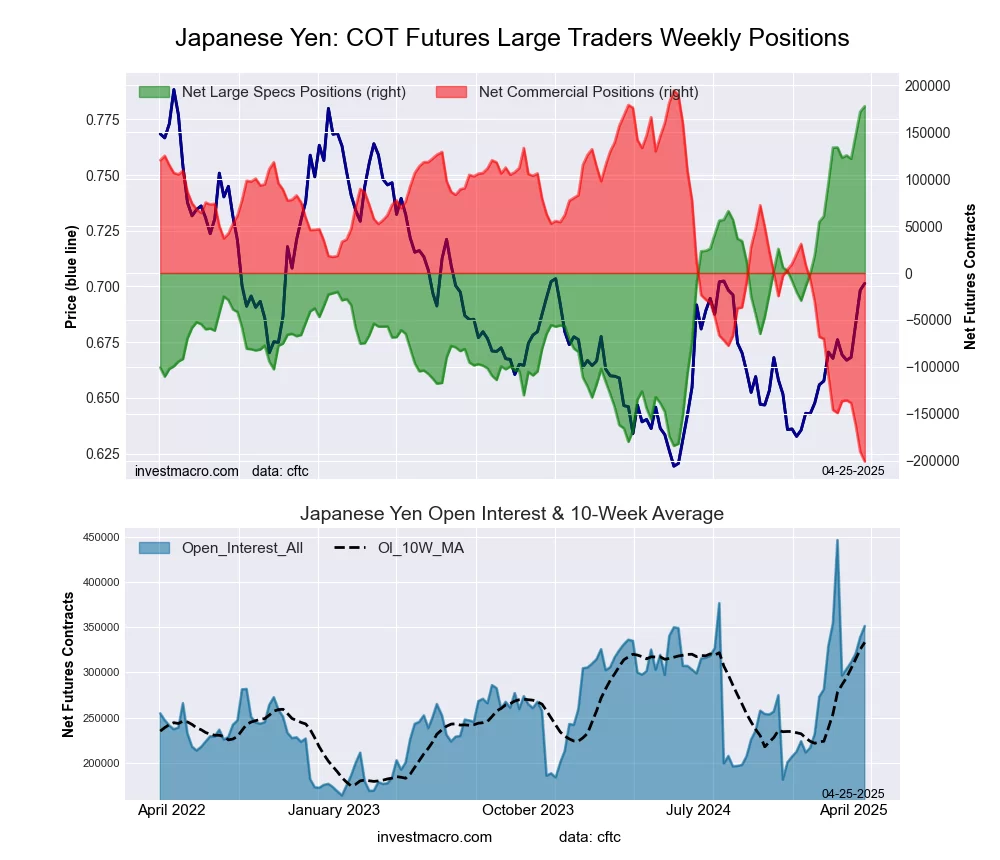
The USD/JPY pair surged to 149.58 on Wednesday, marking its fourth consecutive day of gains as the Japanese yen extended its decline. The Bank of Japan’s (BoJ) latest policy decision failed to inspire confidence, leaving investors underwhelmed and further weakening the yen.

Key factors driving USD/JPY movement

As expected, the Bank of Japan maintained its benchmark interest rate at 0.5% while reiterating its forecast that the Japanese economy will grow above its potential level. However, the central bank also acknowledged emerging signs of economic fragility, adopting a cautious tone in its outlook. Policymakers emphasised the need to gather and analyse more data before making significant moves, particularly in light of global economic risks.

A key concern is the potential impact of US tariff hikes, which could weigh heavily on Japan’s export-driven economy. Investors are now closely monitoring comments from BoJ Governor Kazuo Ueda for further insights into the central bank’s strategy and future policy direction.

Recent data has painted a mixed picture of Japan’s economic health. The monthly Reuters Tankan survey revealed growing pessimism among Japanese manufacturers in March, citing concerns over US trade policies and China’s slowing economy. On a brighter note, Japan’s trade balance shifted to a surplus in February, driven by robust export growth. However, this improvement has done little to strengthen the yen amid broader market concerns.

Technical analysis of USD/JPY

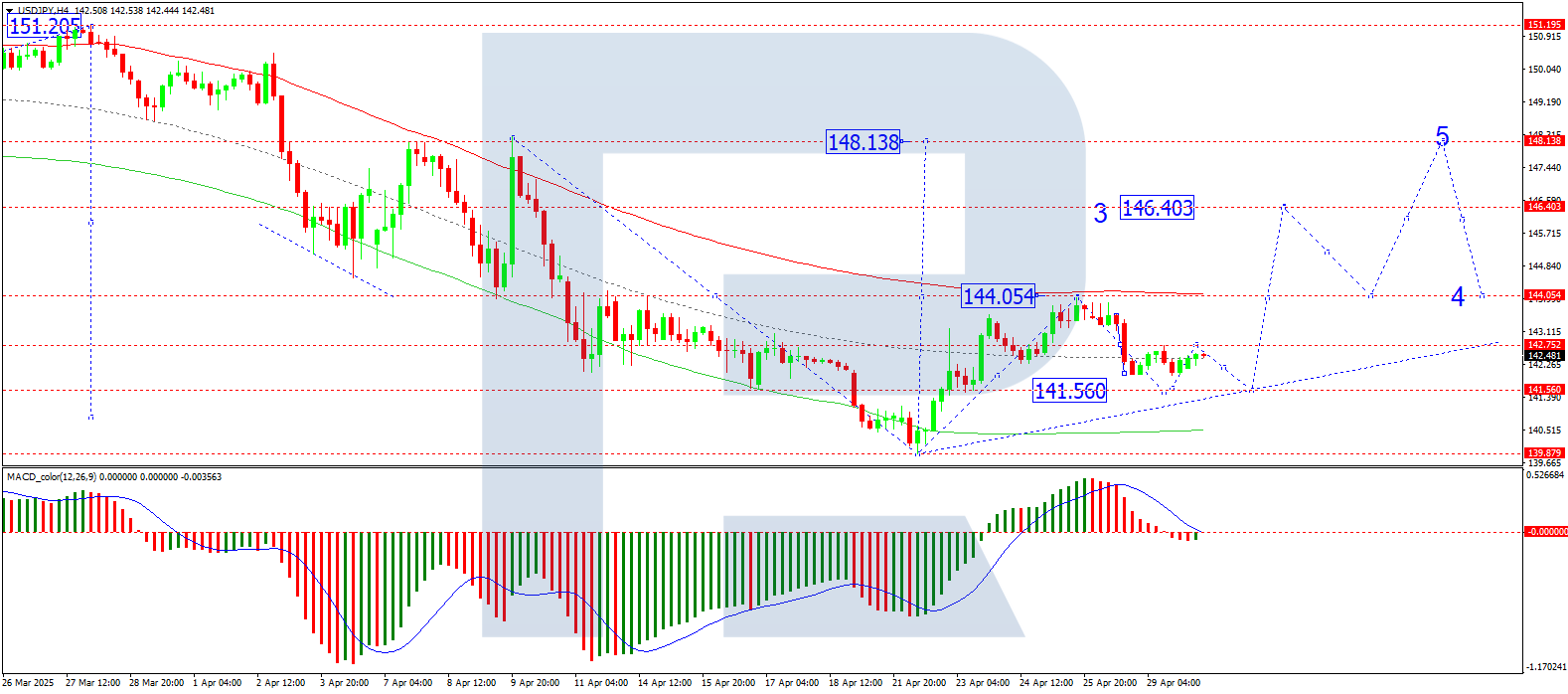
On the H4 chart, USD/JPY is forming a bullish wave structure, targeting 150.20. Upon reaching this level, a corrective pullback to 149.20 is possible, likely establishing a consolidation range near the current highs. A breakout above this range could signal further upward momentum, with the next target at 151.80. This scenario is supported by the MACD indicator, with its signal line remaining above zero and trending upwards.

The H1 chart shows USD/JPY developing a growth wave toward 150.20, representing the midpoint of the third wave in the current structure. A consolidation range is expected to form around 149.62, with an upward breakout potentially opening the path to 151.80. The Stochastic oscillator corroborates this outlook, with its signal line above 50 pointing upward.


Conclusion

The Japanese yen’s decline reflects market disappointment with the Bank of Japan’s cautious stance and lack of decisive action. While Japan’s trade balance has shown improvement, concerns over global economic risks and domestic manufacturing sentiment continue to weigh on the currency. From a technical perspective, USD/JPY remains in a bullish trend, with key resistance levels at 150.20 and 151.80. Traders should monitor BoJ Governor Ueda’s statements and upcoming economic data for further clues on the yen’s trajectory.


Disclaimer

Any forecasts contained herein are based on the author’s particular opinion. This analysis may not be treated as trading advice. RoboForex bears no responsibility for trading results based on trading recommendations and reviews contained herein.

Museums have tons of data, and AI could make it more accessible − but standardizing and organizing it across fields won’t be easy

By Bradley Wade Bishop, University of Tennessee 

Ice cores in freezers, dinosaurs on display, fish in jars, birds in boxes, human remains and ancient artifacts from long gone civilizations that few people ever see – museum collections are filled with all this and more.

These collections are treasure troves that recount the planet’s natural and human history, and they help scientists in a variety of different fields such as geology, paleontology, anthropology and more. What you see on a trip to a museum is only a sliver of the wonders held in their collection.

Museums generally want to make the contents of their collections available for teachers and researchers, either physically or digitally. However, each collection’s staff has its own way of organizing data, so navigating these collections can prove challenging.

Creating, organizing and distributing the digital copies of museum samples or the information about physical items in a collection requires incredible amounts of data. And this data can feed into machine learning models or other artificial intelligence to answer big questions.

Currently, even within a single research domain, finding the right data requires navigating different repositories. AI can help organize large amounts of data from different collections and pull out information to answer specific questions.

But using AI isn’t a perfect solution. A set of shared practices and systems for data management between museums could improve the data curation and sharing necessary for AI to do its job. These practices could help both humans and machines make new discoveries from these valuable collections.

As an information scientist who studies scientists’ approaches to and opinions on research data management, I’ve seen how the world’s physical collection infrastructure is a patchwork quilt of objects and their associated metadata.

AI tools can do amazing things, such as make 3D models of digitized versions of the items in museum collections, but only if there’s enough well-organized data about that item available. To see how AI can help museum collections, my team of researchers started by conducting focus groups with the people who managed museum collections. We asked what they are doing to get their collections used by both humans and AI.

Collection managers

When an item comes into a museum collection, the collection managers are the people who describe that item’s features and generate data about it. That data, called metadata, allows others to use it and might include things like the collector’s name, geographic location, the time it was collected, and in the case of geological samples, the epoch it’s from. For samples from an animal or plant, it might include its taxonomy, which is the set of Latin names that classify it.

All together, that information adds up to a mind-boggling amount of data.

But combining data across domains with different standards is really tricky. Fortunately, collection managers have been working to standardize their processes across disciplines and for many types of samples. Grants have helped science communities build tools for standardization.

In biological collections, the tool Specify allows managers to quickly classify specimens with drop-down menus prepopulated with standards for taxonomy and other parameters to consistently describe the incoming specimens.

A common metadata standard in biology is Darwin Core. Similar well-established metadata and tools exist across all the sciences to make the workflow of taking real items and putting them into a machine as easy as possible.

Special tools like these and metadata help collection managers make data from their objects reusable for research and educational purposes.

Many of the items in museum collections don’t have a lot of information describing their origins. AI tools can help fill in gaps.

All the small things

My team and I conducted 10 focus groups, with a total of 32 participants from several physical sample communities. These included collection managers across disciplines, including anthropology, archaeology, botany, geology, ichthyology, entomology, herpetology and paleontology.

Each participant answered questions about how they accessed, organized, stored and used data from their collections in an effort to make their materials ready for AI to use. While human subjects need to provide consent to be studied, most species do not. So, an AI can collect and analyze the data from nonhuman physical collections without privacy or consent concerns.

We found that collection managers from different fields and institutions have lots of different practices when it comes to getting their physical collections ready for AI. Our results suggest that standardizing the types of metadata managers record and the ways they store it across collections could make the items in these samples more accessible and usable.

Additional research projects like our study can help collection managers build up the infrastructure they’ll need to make their data machine-ready. Human expertise can help inform AI tools that make new discoveries based on the old treasures in museum collections.The Conversation

About the Author:

Bradley Wade Bishop, Professor of Information Sciences, University of Tennessee

This article is republished from The Conversation under a Creative Commons license. Read the original article.

The OECD downgraded its growth expectations for the G20 economies. Oil prices rose for the third consecutive session.

By JustMarkets 

Stocks on Wall Street started the week on an optimistic note. On Monday, the Dow Jones (US30) rose 0.85%. The S&P 500 Index (US500) gained 0.64%. The Nasdaq Technology Index (US100) was up 0.55%. Softer-than-expected retail sales data, which showed a modest 0.2% increase in February, fueled speculation that the Federal Reserve may lean toward cutting rates later this year. Despite the broad market rally, major technology stocks lagged, with Tesla down 4.8% and Nvidia down 1.7% as investors overestimated their high valuations amid ongoing economic uncertainty. Finance Minister Bessent attempted to calm markets by characterizing the correction as “healthy” while acknowledging that recession risks remain. Market participants are now turning their attention to the upcoming Fed meeting, awaiting signals on how Trump’s shifting trade policies may affect future economic decisions.

The Canadian dollar strengthened to 1.43 per US dollar — a three-week high — to ease trade tensions, a weaker US dollar, and an improved outlook for foreign exchange inflows. Senior Canadian officials reported tangible progress in US-Canada trade talks, with both sides reaching tentative agreements to phase out retaliatory tariffs designed to stabilize trade flows and address key concerns such as escalating tariffs on critical goods.

The OECD lowered its 2025 growth expectations for G20 economies to 3.1% from 3.3% and for 2026 to 2.9% from 3.2%, citing rising trade barriers and political uncertainty holding back investment and spending. The US economy is now expected to grow 2.2% in 2025 (vs. 2.4% projections in December) and 1.6% in 2026 (vs. 2.1%). Canada’s growth expectations have been sharply lowered to 0.7% in both years (from 2%) and Mexico is expected to contract by 1.3% in 2025 and 0.6% in 2026, reversing previous growth estimates. In Europe, the Eurozone is expected to grow by 1.0% in 2025 (down from 1.3%) and 1.2% in 2026 (up from 1.5%), with downgrades for Germany, France, and Italy partially offset by an upgrade for Spain. The UK growth projections have also been lowered to 1.4% in 2025 (vs. 1.7%) and 1.2% in 2026 (vs. 1.3%). Meanwhile, China’s economy is expected to grow at 4.8% this year (vs. 4.7%) before slowing to 4.4% in 2026.

Equity markets in Europe were mostly up yesterday. Germany’s DAX (DE40) rose by 0.73%, France’s CAC 40 (FR40) closed higher by 0.57%, Spain’s IBEX 35 (ES35) added 1.09%, and the UK’s FTSE 100 (UK100) closed positive 0.56%. In Germany, traders awaited a crucial vote on Germany’s spending plan set for tomorrow. The proposed reform aims to exempt defense spending from debt restrictions and create a €500 billion infrastructure investment fund. It requires a two-thirds majority in both legislative chambers to pass, but the CDU/CSU bloc, led by election winner Friedrich Merz, is expected to garner the necessary number of votes to amend the constitution.

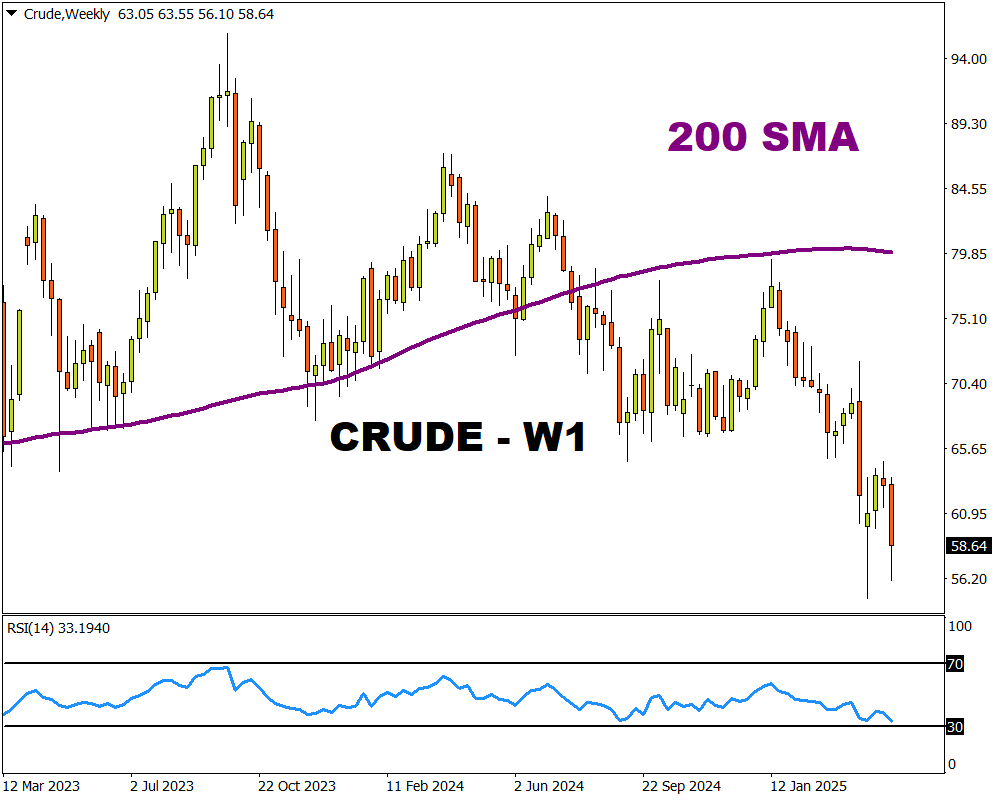
WTI crude oil prices rose to $67.8 a barrel on Tuesday, marking the third straight session of gains, amid concerns over supply disruptions caused by ongoing conflicts in the Middle East. Israel launched a large-scale offensive on the Gaza Strip today, the first major strike since a truce went into effect in January. In addition, US President Trump on Monday threatened to hold Iran responsible for any attacks by Yemen’s Houthis, stepping up his campaign of pressure on Tehran.

Asian markets traded higher yesterday. Japan’s Nikkei 225 (JP225) rose by 0.93%, China’s FTSE China A50 (CHA50) gained 0.06%, Hong Kong’s Hang Seng (HK50) added 0.77% and Australia’s ASX 200 (AU200) gained 0.90%.

On Monday, Chinese economic data sparked optimism with retail sales accelerating and industrial production exceeding expectations, but lower factory output and a two-year high in the urban unemployment rate tempered prognoses. Meanwhile, Trump announced that Xi Jinping will visit Washington amid escalating trade tensions, although no official dates for the visit were confirmed, adding to investor uncertainty.

The New Zealand dollar traded near US$0.581 on Tuesday, at its highest level since early December, driven by growing optimism about China’s economic outlook. This followed the release of favorable retail sales data and new Chinese initiatives aimed at boosting consumer spending, which boosted the China-focused kiwi. Further boosting the antipodean currency was the continued weakening of the US dollar amid economic uncertainty and heightened trade tensions.

S&P 500 (US500) 5,675.12 +36.18 (+0.64%)

Dow Jones (US30) 41,841.63 +353.44 (+0.85%)

DAX (DE40) 23,154.57 +167.75 (+0.73%)

FTSE 100 (UK100) 8,680.29 +47.96 (+0.56%)

USD Index 103.41 −0.31 (−0.30%)

News feed for: 2025.03.18

  • German ZEW Economic Sentiment (m/m) at 12:00 (GMT+2);
  • Eurozone ZEW Economic Sentiment (m/m) at 12:00 (GMT+2);
  • Eurozone Trade Balance (m/m) at 12:00 (GMT+2);
  • Canada Consumer Price Index (m/m) at 14:30 (GMT+2);
  • US Building Permits (m/m) at 14:30 (GMT+2);
  • US Industrial Production (m/m) at 15:15 (GMT+2).

By JustMarkets


This article reflects a personal opinion and should not be interpreted as an investment advice, and/or offer, and/or a persistent request for carrying out financial transactions, and/or a guarantee, and/or a forecast of future events.

Gold Prices Hit Record Highs: New Milestones Ahead

By RoboForex Analytical Department 

On Tuesday, the price of Gold surged to an unprecedented 3,013 USD per troy ounce, marking a new all-time high. This milestone follows a prolonged upward trend, driven by heightened investor demand for safe-haven assets ahead of the US Federal Reserve’s decision on interest rates.

Key Drivers Behind Gold’s Rally

The Federal Reserve’s two-day meeting, which began today and concludes Wednesday evening, is the focal point for investors. While the base scenario suggests the Fed will maintain current interest rates, market participants are closely watching for updated economic forecasts and insights from Chair Jerome Powell’s press conference. His remarks could explain future monetary policy, particularly amid ongoing trade tensions and tariff disputes.

Geopolitical uncertainties are also fuelling Gold’s ascent. On Monday, US President Donald Trump issued a stern warning to Iran, holding it directly accountable for any further attacks by Yemen’s Houthi rebels. The group has threatened to target foreign vessels in the Red Sea, including those of the US.

Additionally, Trump announced plans to hold talks with the Russian president on Tuesday morning to discuss a potential ceasefire, further adding to the global uncertainty driving investors toward Gold.

Technical Analysis of XAU/USD

On the H4 chart, XAU/USD has formed a tight consolidation range around the 2,945 level, signalling the continuation of an upward growth wave. Today, we anticipate the price to test the 3,010 level, which serves as a local target. Following this, a corrective pullback toward 2,945 (testing from above) is possible. Once this correction concludes, we expect a new growth wave targeting the 3,057 level. This scenario is technically supported by the MACD indicator. The signal line has exited the histogram zone and is pointing sharply downward, indicating potential for upward momentum after the correction.

On the H1 chart, XAU/USD has completed the structure of the growth wave, reaching the 3,015 level. We now expect the start of a corrective move toward 2,945. After this correction, the price will likely resume its upward trajectory, targeting the 3,057 level. Upon reaching this target, we will assess the possibility of a more significant correction towards the 2,900 level. This outlook is further confirmed by the Stochastic oscillator. Its signal line is currently below the 80 level and trending downwards towards 20, suggesting a high probability of a corrective phase.

Conclusion

Gold’s record-breaking rally reflects a combination of macroeconomic uncertainty, geopolitical tensions, and technical momentum. With the Federal Reserve’s decision and global developments in focus, the precious metal remains a key asset for investors seeking stability. As the market navigates these dynamics, further milestones for Gold prices appear increasingly likely.


Disclaimer

Any forecasts contained herein are based on the author’s particular opinion. This analysis may not be treated as trading advice. RoboForex bears no responsibility for trading results based on trading recommendations and reviews contained herein.

Golden Milestone

Source: Michael Ballanger (3/17/25)

Michael Ballanger of GGM Advisory Inc. takes a look at gold, silver, and copper amid political shifts in the U.S. and shares two of his favorite junior developers.

This is a week that shall go down in the annals of history, the week that a “barbarous relic” under the guise of a “pet rock” took its rightful seat on the throne of superior performance, bludgeoning the wailing anchors of CNBC into actually recognizing the ascendancy of gold and its little brother, silver. As the equity markets in the United States went into virtual freefall, the same bubbleheaded, narrative-spewing cast of characters were out in force, beseeching their global viewers to not panic and instead hold on because the Fed “has your backs.”

As gold soared Thursday evening and the wee hours of Friday morning above the magical $3k level, the CNBC Fear-Greed index slumped to a reading of 16, placing it squarely into <EXTREME FEAR>, a zone from which many market bottoms were born. The lowest reading for this index was in April 2020 during the COVID Crash, when it hit a reading of 1. At that point, there was literally nobody left to sell stocks as the world was convinced that the bubonic plague was descending upon us and that humanity, as we then knew it, was doomed.

That marked the bottom of the market in 2020, after which the combination of fiscal stimulus (“cheques to households”) and zero interest rates led to record liquidity levels for the Wall Street banks and a new S&P 500 high a mere five months later. I told subscribers mid-week that now was not the time to sell their holdings and load up on put options and/or volatility. It is also not the time to back the truck into the stock market loading dock and forklift copious amounts of the “MAG Seven” into the bed. March 2025 is not March 2020 because the U.S. government no longer enjoys the privilege of being able to print money. They cannot “save” the stock market by arbitrarily slashing interest rates to zero and engaging in the fiscal helicopter drop that Ben Bernanke boasted of in 2009.

By contrast, now is the time to carefully recalibrate one’s investment objectives and/or risk tolerance profile and above all else, get liquid. With an ample amount of cash, one can survive meltdowns but with leverage and/or no cash, one is completely indebted to and victim of the vagaries of the stock market. Now, if you own gold stocks and/or physical gold or silver, you are liquid; if you do not own them, you are enslaved. I want all subscribers to be free from worry so sell enough of your non-precious metals holdings to allow uninterrupted sleep to dominate the wee hours. Stocks closed the week with a 117-point S&P rally. Into any follow-through next week, increase your cash positions.

I expect that gold will take more than a one-off overnight spike in order to surpass the $3k level as a sustained move.

I expect that profit-taking will have it in a range of $2,975-$3,025 for several more days and perhaps weeks before it can achieve escape velocity above the magic number.

Politics, Economics, and Stocks

I wish I could have been embraced more gently as a youngster to my introduction to the field of politics, but ever since November 22, 1963, and the days and weeks thereafter, I have been totally jaundiced by the mere mention of the word “politics.” When the assassin’s bullet ended the life of a truly popular and indeed charismatic president in the form of John F. Kennedy in Dallas that day, it ended for me and an entire generation of baby boomer idealism that carried an engrained belief that the United States of America was indeed the “Promised Land.”

After Kennedy came LBJ and Viet Nam, Nixon and Watergate, Jimmy Carter and the Stagflation ’70s, and then the “Reagan Miracle” that rhymes beautifully with “Trump 2.0.” In 1981, Reagan had David Stockman; in 2025, Trump has Scott Bessent. In 1981, economic advisor to the President, David Stockman embraced the media with “supply-side economics”; in 2025, Elon Musk embraces the media with the “Department of Government Efficiency” (“DOGE“).

In 1981-1982, there was “The Laffer Curve,” a theoretical model in economics that suggests there’s an optimal tax rate that maximizes government revenue, with revenue falling at both very high and very low tax rates. Yet despite all of the brainpower assisting Reagan, after two years of soaring interest rates and falling polling numbers, the Reagan Team bailed on their anti-inflation mission and opened up the fiscal and monetary floodgates in order to salvage some respectability in the mid-term elections.

The bear market ended in 1982 a mere ten weeks before the 1982 mid-term elections with a rapid and aggressive wave of monetary easing as then Fed Chairman Paul Volcker slashed the Fed Funds rate sending the S&P 500 up 40% from the August lows to early November. Needless to say, the Republicans carried the mid-terms.

With the pullback in the DJIA, S&P 500, and the NASDAQ 100 in the past three weeks, it closely resembles the end of the Reagan “honeymoon period,” which stretched from election day 1980 until May of 1982. When the bloom came of the rose in May of 1982, it triggered a nasty bear market that lasted for fifteen long months, and while it wasn’t nearly as long or as arduous as the 1973-1974 bear, the interest rate crunch bankrupted many individuals and corporations that were carrying inordinate amounts of debt.

Here in 2025, it is the government of the U.S.A. and certain commercial real estate borrowers that are carrying inordinate amounts of debt while the average household and majority of corporate balance sheets are in relatively good shape. However, as happened in 1981-1982, the Reagan-esque “new morning in America” that Trump 2.0 promised in the form of “Make America Great Again” is threatening to be preceded by “The Nightmare on Wall Street” as the fiscal juice that kept the economy chugging along through most of 2024 has now ended leaving Scott Bessent with a very ugly balance sheet and some US$8 trillion of refinancing to pull off in an environment where the usual foreign buyers of U.S. Treasuries are being hit or threatened with tariffs.

Good luck with that, Scott. . .

I stick to my call that the current market outlook is a repeat of May 1982 and based upon the 117-point SPX reflex rally on Friday, this next 2-3 weeks could be the same bull trap that snared so much prey back in May 1982 before the ravenous bear started to feast in earnest. From a tactical viewpoint, last week I covered all shorts with put positions being sold as the SPY April $600 puts went from $8.00 to $38 in three short weeks.

As you have all heard many times before, “In a bull market, you are either flat or long or very long, but you are not short.” If SPX 6,147 was THE top, then the correct move is to wait for the rally to run out of gas and then short it. However, thus far, the SPX:US is only in correction mode, which does not rule out new all-time highs. Furthermore, because this decline has been triggered by the White House policy initiatives, any moderation in the bearish rhetoric could send stocks screaming back to their February highs in very short order. For now, stay pat, stay liquid, and focus on this emerging bull market in the metals.

Metals

As much as CNBC would like to ignore the chart posted on page one showing the superior performance of gold since the Turn of the Century, if my portfolio is any indication, owning the metals has been the best trade to begin a year since 2001.

Record highs on gold with copper close behind and silver threatening a break-out. Even the juniors are now starting to capture a little of the love that has been reserved for technology and “meme” stocks.

Surprisingly, when you surf around on “X” (Twitter) or YouTube, you find interview after interview and story after story on gold and silver, but outside of Robert Friedland, there is literally nothing on copper.

Then you look up at the 2025 year-to-date performance figure, and out in front leading the charge is good ol’ Dr. Copper, up 21.59% YTD versus 17.75% for silver, 13.63% for gold, and minus 4.13% for the S&P 500.

My two largest positions just happen to be in two junior developers (Getchell Gold Corp. (GTCH:CSE; GGLDF:OTCQB) and Fitzroy Minerals Inc. (FTZ:TSX.V; FTZFF:OTCQB)) and with one developing (and expanding) a 2.317 million-ounce gold deposit in Nevada while the other has multiple copper projects in Chile, the world’s largest producer of the red metal. I am scanning the landscape for a new silver name, and I think I have found one that is relatively unknown and under-owned, which means it has upside potential.

However, until silver can scale that mountain of resistance between here and US$35.07, I am sidelined silver but happily long the copper and gold combo that have served us so well in 2025.

Remember that old adage from the School of Successful Stock Promotion: “Hang on to your cat, your coat, and your girlfriend; there ain’t no fever like gold fever!”

Copper may wish to dissent. . .


Important Disclosures:

  1. As of the date of this article, officers and/or employees of Streetwise Reports LLC (including members of their household) own securities of Getchell Gold Corp. and Fitzroy Minerals Inc.
  2. Michael Ballanger: I, or members of my immediate household or family, own securities of: All. My company has a financial relationship with: All.  I determined which companies would be included in this article based on my research and understanding of the sector.
  3. Statements and opinions expressed are the opinions of the author and not of Streetwise Reports, Street Smart, or their officers. The author is wholly responsible for the accuracy of the statements. Streetwise Reports was not paid by the author to publish or syndicate this article. Streetwise Reports requires contributing authors to disclose any shareholdings in, or economic relationships with, companies that they write about. Any disclosures from the author can be found  below. Streetwise Reports relies upon the authors to accurately provide this information and Streetwise Reports has no means of verifying its accuracy.
  4.  This article does not constitute investment advice and is not a solicitation for any investment. Streetwise Reports does not render general or specific investment advice and the information on Streetwise Reports should not be considered a recommendation to buy or sell any security. Each reader is encouraged to consult with his or her personal financial adviser and perform their own comprehensive investment research. By opening this page, each reader accepts and agrees to Streetwise Reports’ terms of use and full legal disclaimer. Streetwise Reports does not endorse or recommend the business, products, services or securities of any company.

For additional disclosures, please click here.

Michael Ballanger Disclosures

This letter makes no guarantee or warranty on the accuracy or completeness of the data provided. Nothing contained herein is intended or shall be deemed to be investment advice, implied or otherwise. This letter represents my views and replicates trades that I am making but nothing more than that. Always consult your registered advisor to assist you with your investments. I accept no liability for any loss arising from the use of the data contained on this letter. Options and junior mining stocks contain a high level of risk that may result in the loss of part or all invested capital and therefore are suitable for experienced and professional investors and traders only. One should be familiar with the risks involved in junior mining and options trading and we recommend consulting a financial adviser if you feel you do not understand the risks involved.

Silver Tarnished No More

Source: John Newell

John Newell of John Newell & Associates answers the question: is silver poised for a dramatic move higher?

A Case for Silver’s Rise

Silver has long been a precious metal that plays a dual role: a store of value and an industrial commodity. With recent economic trends and historical patterns, the case for a significant price increase in silver is becoming more compelling.

Below, we outline key fundamental reasons why silver could be on the verge of a dramatic move higher, supported by two charts, one short-term and one long-term, illustrating its potential trajectory.

Technical: Silver Hits $35, Is $50 Next? And a March towards $70

The shorter-term chart shows that silver has recently achieved its $35 target and is building momentum toward higher levels.

Historically, when silver entered strong uptrends, it experienced parabolic moves. Looking at the past two major silver bull runs, if the metal were to repeat even an average of these moves (7x from its lows), silver could trade at $70 per ounce.

The long-term 50-year chart further strengthens this thesis. In previous major price surges, most notably in the late 1970s and 2010-2011, silver saw exponential growth over relatively short periods.

Given the similarities in today’s economic conditions to those times, there is reason to believe silver could be gearing up for another major bull cycle.

Fundamental Reasons for Silver’s Rise

  1. Hedge Against Inflation

Silver, like gold, is a well-known hedge against inflation. With rising inflation concerns and central banks continuing to lose monetary policies, silver provides a means to preserve purchasing power. Historically, when inflation accelerates, precious metals tend to perform well.

  1. Growing Industrial Demand

Unlike gold, silver is an essential industrial metal with applications in:

Electronics: Silver is used in high-performance electronic devices due to its superior conductivity.

Solar Panels: The renewable energy push is expected to drive increased demand for silver in solar technology.

Medical Uses: Silver’s antibacterial properties make it vital in the medical industry. As global industries expand and modernize, silver’s demand is expected to rise, creating upward pressure on prices.

  1. Affordability and Accessibility

Compared to gold, silver remains much more affordable. This makes it an attractive investment for a wider range of investors, particularly in emerging markets where gold prices may be out of reach for many. If gold continues to rise, silver could see increased inflows as an alternative store of value.

  1. Portfolio Diversification

Silver provides diversification benefits as it often moves independently from traditional asset classes such as stocks and bonds. In uncertain times, investors flock to safe-haven assets like silver, reducing overall portfolio risk.

  1. Market Volatility and Economic Uncertainty

Silver has historically performed well during periods of economic instability. If global markets experience turmoil—whether from geopolitical events, recession fears, or monetary instability, silver could benefit as a safe-haven asset.

Ways to Participate in Silver’s Potential Upside

While buying physical silver in the form of coins or bars is a traditional method of investing, there are other ways to gain exposure to silver’s expected price appreciation. Exchange-traded funds (ETFs) offer a convenient alternative:

SLV (iShares Silver Trust): The largest silver ETF, holding physical silver. It provides a direct investment in silver without needing to store it.

Sprott Physical Silver Trust (PSLV): Another option for direct silver exposure, backed by physical silver held in secure vaults.

SIL (Global X Silver Miners ETF): Holds shares in approximately 33 silver mining companies, allowing investors to gain exposure to the industry.

SILJ (Amplify Junior Silver Miners ETF): Tracks small-cap companies primarily engaged in silver mining, exploration, and development, providing leveraged exposure to silver price movements.

Additionally, several silver mining companies are currently trading at low price-to-earnings (P/E) ratios. As the silver price rises, these companies could experience a leveraged effect, potentially amplifying returns for investors.

A Modern ‘Hunt Brothers’ Scenario?

In the late 1970s, the Hunt brothers attempted to corner the silver market, causing prices to skyrocket. While modern regulations prevent such extreme market manipulation, a global shift in investor sentiment could replicate similar price movements.

Imagine a scenario where large populations, such as those in BRICS nations, turn to silver as an alternative to gold. If gold becomes prohibitively expensive for average investors, silver could become their precious metal of choice.

Potential Outcomes of a Global Silver Rush:

Surging Prices: Increased demand from millions of investors could push silver prices significantly higher.

Increased Market Volatility: Rapid price increases may lead to volatile market conditions.

Silver Mining Stocks Boom: Companies producing silver could see substantial gains.

Industrial Costs Rise: Industries reliant on silver (e.g., solar panels and electronics) could face higher production costs.

Regulatory Intervention: Governments and financial institutions may take action to stabilize the market.

Conclusion: Silver’s Future Looks Bright

Given silver’s role as an inflation hedge, its growing industrial demand, and its affordability compared to gold, there are strong fundamental reasons for its price to rise significantly.

Technically, the metal has reached its $35 target and appears to be building momentum toward higher levels. If history is any guide, a move toward $50, and even $70, is well within the realm of possibility.

For investors looking to position themselves in an asset with significant upside potential, silver presents a compelling opportunity in today’s economic landscape.

The link to a previous article on the fundamentals of silver can be found here.


Important Disclosures:

  1. Statements and opinions expressed are the opinions of the author and not of Streetwise Reports, Street Smart, or their officers. The author is wholly responsible for the accuracy of the statements. Streetwise Reports was not paid by the author to publish or syndicate this article. Streetwise Reports requires contributing authors to disclose any shareholdings in, or economic relationships with, companies that they write about. Any disclosures from the author can be found  below. Streetwise Reports relies upon the authors to accurately provide this information and Streetwise Reports has no means of verifying its accuracy.
  2. This article does not constitute investment advice and is not a solicitation for any investment. Streetwise Reports does not render general or specific investment advice and the information on Streetwise Reports should not be considered a recommendation to buy or sell any security. Each reader is encouraged to consult with his or her personal financial adviser and perform their own comprehensive investment research. By opening this page, each reader accepts and agrees to Streetwise Reports’ terms of use and full legal disclaimer. Streetwise Reports does not endorse or recommend the business, products, services or securities of any company.

For additional disclosures, please click here.

John Newell Disclaimer

As always it is important to note that investing in precious metals like silver carries risks, and market conditions can change violently with shock and awe tactics, that we have seen over the past 20 years. Before making any investment decisions, it’s advisable consult with a financial advisor if needed. Also the practice of conducting thorough research and to consider your investment goals and risk tolerance.

The push to restore semiconductor manufacturing faces a labor crisis − can the US train enough workers in time?

By Michael Moats, Missouri University of Science and Technology 

Semiconductors power nearly every aspect of modern life – cars, smartphones, medical devices and even national defense systems. These tiny but essential components make the information age possible, whether they’re supporting lifesaving hospital equipment or facilitating the latest advances in artificial intelligence.

It’s easy to take them for granted, until something goes wrong. That’s exactly what happened when the COVID-19 pandemic exposed major weaknesses in the global semiconductor supply chain. Suddenly, to name just one consequence, new vehicles couldn’t be finished because chips produced abroad weren’t being delivered. The semiconductor supply crunch disrupted entire industries and cost hundreds of billions of dollars.

The crisis underscored a hard reality: The U.S. depends heavily on foreign countries – including China, a geopolitical rival – to manufacture semiconductors. This isn’t just an economic concern; it’s widely recognized as a national security risk.

That’s why the U.S. government has taken steps to invest in semiconductor production through initiatives such as the CHIPS and Science Act, which aims to revitalize American manufacturing and was passed with bipartisan support in 2022. While President Donald Trump has criticized the CHIPS and Science Act recently, both he and his predecessor, Joe Biden, have touted their efforts to expand domestic chip manufacturing in recent years.

Yet, even with bipartisan support for new chip plants, a major challenge remains: Who will operate them?

Minding the workforce gap

The push to bring semiconductor manufacturing back to the U.S. faces a significant hurdle: a shortage of skilled workers. The semiconductor industry is expected to need 300,000 engineers by 2030 as new plants are built. Without a well-trained workforce, these efforts will fall short, and the U.S. will remain dependent on foreign suppliers.

This isn’t just a problem for the tech sector – it affects every industry that relies on semiconductors, from auto manufacturing to defense contractors. Virtually every military communication, monitoring and advanced weapon system relies on microchips. It’s not sustainable or safe for the U.S. to rely on foreign nations – especially adversaries – for the technology that powers its military.

For the U.S. to secure supply chains and maintain technological leadership, I believe it would be wise to invest in education and workforce development alongside manufacturing expansion.

Building the next generation of semiconductor engineers

Filling this labor gap will require a nationwide effort to train engineers and technicians in semiconductor research, design and fabrication. Engineering programs across the country are taking up this challenge by introducing specialized curricula that combine hands-on training with industry-focused coursework.

Future semiconductor workers will need expertise in chip design and microelectronics, materials science and process engineering, and advanced manufacturing and clean room operations. To meet this demand, it will be important for universities and colleges to work alongside industry leaders to ensure students graduate with the skills employers need. Offering hands-on experience in semiconductor fabrication, clean-room-based labs and advanced process design will be essential for preparing a workforce that’s ready to contribute from Day 1.

At Missouri University of Science of Technology, where I am the chair of the materials science and engineering department, we’re launching a multidisciplinary bachelor’s degree in semiconductor engineering this fall. Other universities across the U.S. are also expanding their semiconductor engineering options amid strong demand from both industry and students.

A historic opportunity for economic growth

Rebuilding domestic semiconductor manufacturing isn’t just about national security – it’s an economic opportunity that could benefit millions of Americans. By expanding training programs and workforce pipelines, the U.S. can create tens of thousands of high-paying jobs, strengthening the economy and reducing reliance on foreign supply chains.

And the race to secure semiconductor supply chains isn’t just about stability – it’s about innovation. The U.S. has long been a global leader in semiconductor research and development, but recent supply chain disruptions have shown the risks of allowing manufacturing to move overseas.

If the U.S. wants to remain at the forefront of technological advancement in artificial intelligence, quantum computing and next-generation communication systems, it seems clear to me it will need new workers – not just new factories – to gain control of its semiconductor production.The Conversation

About the Author:

Michael Moats, Professor of Metallurgical Engineering, Missouri University of Science and Technology

This article is republished from The Conversation under a Creative Commons license. Read the original article.


China launches a plan to boost domestic consumption. Global trade tensions remain.

By JustMarkets

Despite Friday’s good growth, US indices closed the week in negative territory. On Friday, the Dow Jones (US30) Index gained 1.65% (for the week -2.40%). The S&P 500 Index (US500) increased by 2.13% (for the week -1.16%). The Nasdaq Technology Index (US100) was up 2.49% (for the week -0.62%). Stocks were under pressure last week on concerns that US tariffs would dampen economic growth and corporate earnings. Last Tuesday, President Trump imposed 25% tariffs on Canadian and Mexican goods and doubled tariffs on Chinese goods to 20% from 10%. Trump also confirmed that he will impose retaliatory tariffs against foreign countries on April 2 as planned. Trade tensions escalated on Wednesday when the European Union imposed tariffs on up to $28.3 billion worth of US goods, including soybeans, beef, and poultry, in response to US tariffs on steel and aluminum imports. In addition, Canada announced 25% counter-tariffs on about $20.8 billion worth of US-made goods, such as computers and sporting goods, as well as US steel and aluminum products.

Last week, the US dollar hit new lows for the year against the Chinese yuan, Mexican peso, euro, sterling, Japanese yen, Swedish króna and Norwegian krona. The architects of the new US foreign economic policy expected the dollar’s strength to absorb some cost of US tariffs and expected some exporters to cut prices. Instead, the dollar has mostly fallen against major currencies.

The Mexican peso (MXN) strengthened to 19.9 per US dollar in March, hitting a four-month-high, thanks to a high interest rate differential and resilient external accounts. With Banxico’s benchmark rate at 10.50%, the currency is benefiting from an attractive trade amid easing US rate expectations. In addition, the government’s calm, negotiation-oriented approach to tariff disputes has resulted in favorable concessions and minimal retaliation in key sectors such as auto and electronics.

Equity markets in Europe were mostly up on Friday. The German DAX (DE40) gained 1.86% (week ended -0.76%), the French CAC 40 (FR 40) closed 1.13% higher (week ended -1.63%), the Spanish IBEX 35 (ES35) gained 1.43% (week ended -1.93%), and the British FTSE 100 (UK100) closed 1.05% higher (week ended -0.55%) on Friday. European markets saw gains, boosted by optimism over German Chancellor Friedrich Merz’s investment plan and hopes for a resolution to the situation in Ukraine. Meanwhile, the ongoing tariff war remains a serious concern.

WTI crude oil prices rose 0.9% to settle at $67.20 per barrel on Friday after a more than 1% decline in the previous session as investors continued to assess ongoing geopolitical uncertainty over the war in Ukraine. Despite Russian President Putin’s tentative support for a ceasefire, confidence in an early resolution of the situation declined. Meanwhile, geopolitical tensions, including Chinese and Russian support for Iran and the expiration of the US energy sanctions license, continue to weigh on market sentiment. Macroeconomic uncertainty is also weighing on oil, with the International Energy Agency warning of a growing supply glut as an escalating trade war reduces demand and OPEC+ increases production.

Asian markets traded flat last week. Japan’s Nikkei 225 (JP225) rose by 0.22%, China’s FTSE China A50 (CHA50) gained 0.56%, Hong Kong’s Hang Seng (HK50) fell by 0.65% and Australia’s ASX 200 (AU200) was negative 1.99%. Hong Kong shares rose 375 points in Monday morning trading, jumping for a second session amid growing optimism over China’s announced plan to stimulate domestic demand. Australian stocks also followed the Hang Seng’s rally.

On Sunday, China’s State Council launched a special action plan to boost domestic consumption, including raising household incomes and setting up a childcare subsidy scheme. The plan also includes measures to stabilize the stock market but does not give details on when and how this might happen. China will expand real estate income channels through stock market stabilization measures and develop more bond products suitable for individual investors. Meanwhile, traders digested good economic data, including a 4% year-on-year rise in retail sales for the first two months of 2025, the fastest pace since October, and a stronger-than-expected 5.9% increase in industrial production. However, the unemployment rate rose to a two-year high of 5.4% in February from 5.2%, exceeding market expectations of 5.1%.

S&P 500 (US500) 5,638.94 +117.42 (+2.13%)

Dow Jones (US30) 41,488.19 +674.62 (+1.65%)

DAX (DE40) 22,986.82 +419.68 (+1.86%)

FTSE 100 (UK100) 8,632.33 +89.77 (+1.05%)

USD Index 103.74 −0.09 (−0.09%)

News feed for: 2025.03.17

  • China Industrial Production (m/m) at 04:00 (GMT+2);
  • China Retail Sales (m/m) at 04:00 (GMT+2);
  • China Unemployment Rate (m/m) at 04:00 (GMT+2);
  • US Retail Sales (m/m) at 14:30 (GMT+2).

By JustMarkets


This article reflects a personal opinion and should not be interpreted as an investment advice, and/or offer, and/or a persistent request for carrying out financial transactions, and/or a guarantee, and/or a forecast of future events.

Escalating trade tensions triggered a risk reduction among investors

By JustMarkets 

At the end of Thursday, the Dow Jones Index (US30) fell by 1.30%. The S&P 500 Index (US500) was down 1.39%. The Nasdaq Technology Index (US100) lost 1.89%. Signs of escalating trade tensions triggered risk-off, sending stock prices tumbling. President Trump has threatened to impose 200% tariffs on European wine, champagne, and other spirits if the EU doesn’t slap a tax on US whiskey. Stocks’ losses accelerated Thursday after President Trump said he would not slap tariffs on steel and aluminum that took effect this week and would not back off plans to impose sweeping retaliatory tariffs that would begin on April 2.

Weekly US initial jobless claims unexpectedly fell by 2,000 to 220,000, indicating a strengthening labor market versus expectations of a rise to 225,000. The February PPI report excluding food and energy came in at negative 0.1% m/m and positive 3.4% y/y, weaker than expectations of positive 0.3% m/m and 3.5% y/y. The latest PPI and CPI data from the US suggest that price pressures eased in February, giving the Fed more room to cut rates.

Equity markets in Europe traded flat yesterday. Germany’s DAX (DE40) fell by 0.15%, France’s CAC 40 (FR40) closed down 0.64%, Spain’s IBEX 35 (ES35) gained 0.14%, and the UK’s FTSE 100 (UK100) closed up by 0.02%. President Trump threatened 200% tariffs on European spirits after the EU imposed a 50% tariff on US whiskey in response to previous US duties. Geopolitical concerns also weighed on sentiment amid continued uncertainty over a potential ceasefire. The Russian president did not support the temporary ceasefire.

Silver (XAG/USD) rose to $33.50 an ounce, the highest level since late October, as investors sought safe-haven assets amid heightened tariff tensions and rising bets on a Federal Reserve rate cut following weaker-than-expected US inflation data. Meanwhile, US Commerce Secretary Howard Lutnick said the recession will be “worth it” to implement Trump’s economic policies.

The US natural gas prices (XNG/USD) rose to $4.15/MMBtu on Thursday after falling 8.3% in the previous session as investors watched supply and demand dynamics. The US utilities withdrew 62 Bcf in the week ended March 7, above the expected 50-55 Bcf. As a result, storage levels are now 27% lower than the same period last year and 11.9% below the five-year average.

Asian markets traded flat yesterday. Japan’s Nikkei 225 (JP225) was down 0.08%, China’s FTSE China A50 (CHA50) was down 0.10%, Hong Kong’s Hang Seng (HK50) lost 0.58% and Australia’s ASX 200 (AU200) was positive 0.32%.

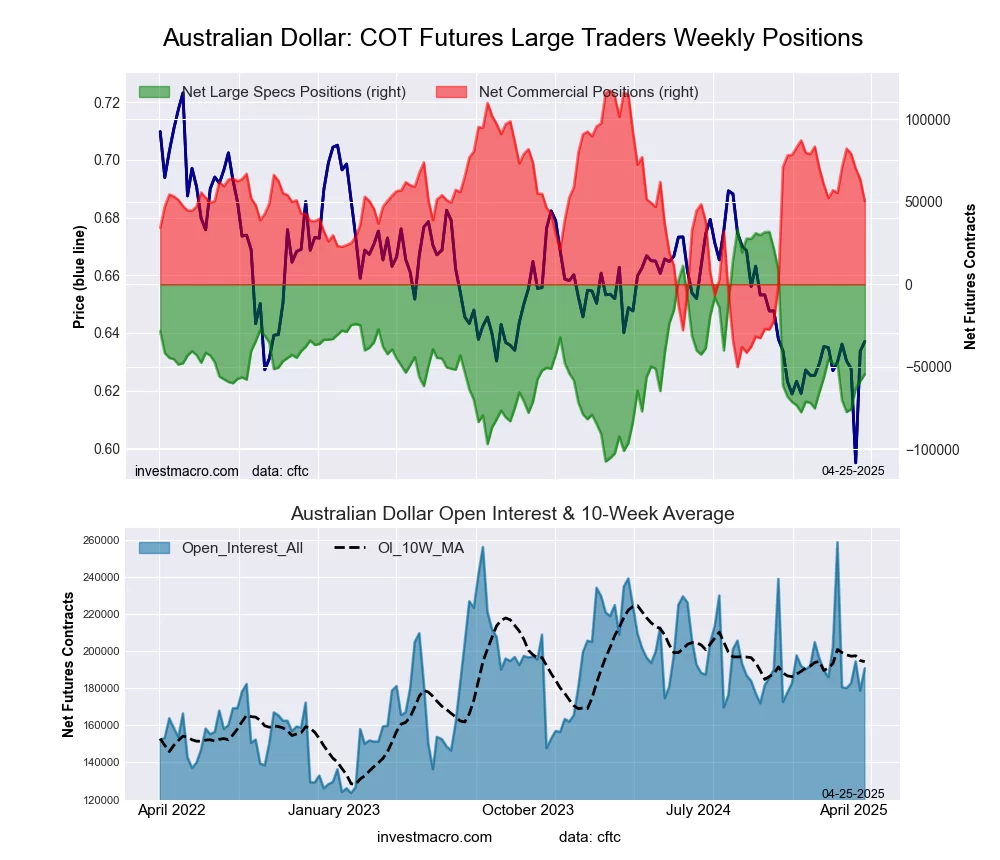
Australia’s consumer inflation expectations for the next 12 months fell to 3.6% in March from 4.6% in February, indicating that price pressures in the economy are easing. The Australian dollar came under pressure earlier this week after the US imposed 25% tariffs on steel and aluminum imports, affecting about $1 billion worth of Australian exports. Despite trade concerns, Australia’s Prime Minister has not imposed retaliatory tariffs against the US. Instead, the government will continue to seek an exemption, warning that retaliatory measures could increase consumer spending and lead to higher inflation.

The New Zealand dollar received support from strong manufacturing PMI data. New Zealand’s Manufacturing Business Activity Index rose in February to its highest level since August 2022, thanks to an increase in production and new orders. Meanwhile, the country’s annual food inflation rose to 2.4% in February from 2.3% in the previous month.

S&P 500 (US500) 5,521.52 −77.78 (−1.39%)

Dow Jones (US30) 40,813.57 −537.36 (−1.30%)

DAX (DE40) 22,567.14 −109.27 (−0.48%)

FTSE 100 (UK100) 8,542.56 +1.59 (+0.02%)

USD Index 103.83 +0.22 (+0.21%)

News feed for: 2025.03.14

  • UK GDP (q/q) at 09:00 (GMT+2);
  • UK Industrial Production (m/m) at 09:00 (GMT+2);
  • UK Manufacturing Production (m/m) at 09:00 (GMT+2);
  • UK Trade Balance (m/m) at 09:00 (GMT+2);
  • US Michigan Consumer Sentiment (m/m) at 16:00 (GMT+2).

By JustMarkets


This article reflects a personal opinion and should not be interpreted as an investment advice, and/or offer, and/or a persistent request for carrying out financial transactions, and/or a guarantee, and/or a forecast of future events.

Gold poised for record highs strong demand and stable outlook

By RoboForex Analytical Department 

On Friday, the price of Gold surged to 2,983 USD per troy ounce, marking a new record high. The precious metal closed the week with a gain of over 2%, driven by a decline in risk appetite and growing expectations of interest rate cuts by the Federal Reserve.

Key drivers behind Gold’s rally

The ongoing escalation of trade tensions has played a significant role in boosting Gold prices. US President Donald Trump recently threatened to impose a 200% tariff on European wines and other alcoholic beverages in retaliation for the EU’s 50% tax on US whiskey exports. This has further fuelled market uncertainty, driving investors toward safe-haven assets like Gold.

Additionally, recent US economic data, including the Producer Price Index (PPI) and Consumer Price Index (CPI), showed easing inflationary pressures in February. This has strengthened the case for potential rate cuts by the Federal Reserve, enhancing Gold’s appeal as a non-yielding asset.

Gold also benefits from robust demand for gold-backed exchange-traded funds (ETFs) and consistent purchases by global central banks. Notably, February’s data confirmed that China has increased its Gold reserves for the fourth consecutive month. These factors have overshadowed the influence of the US dollar on Gold prices, which currently plays a minimal role in the metal’s trajectory.

Technical Analysis of XAU/USD

On the H4 chart of XAUUSD, the market has confidently breached the 2,940 USD level and continues its upward momentum towards 3,000 USD, which is the immediate target anticipated to be reached today. Following this, a corrective pullback to 2,940 USD (testing the level from above) is possible. Once this correction concludes, there is potential for a new growth wave targeting 3,057 USD. This scenario is technically supported by the MACD indicator, whose signal line remains above zero and is trending sharply upward.

On the H1 chart, the market has completed the growth wave structure to the 2,940 USD level. A tight consolidation range has formed around this level, and the upward wave towards 3,000 is progressing with a strong breakout. Today, the local target of this wave at 2,990 USD is expected to be achieved, and a corrective move towards 2,957 USD is possible. Following this, further growth towards the 3,000 USD level is anticipated. Upon reaching this target, a corrective wave back to 2,940 is likely. This outlook is technically confirmed by the Stochastic oscillator, whose signal line is below the 50 level and is trending downward toward 20.

Conclusion

Gold’s rally is supported by a combination of macroeconomic factors, including trade tensions, easing inflation, and strong central bank demand. Technically, the metal is poised to test the 3,000 USD level, with potential corrections along the way. Investors should monitor key support and resistance levels and macroeconomic developments to gauge the next phase of Gold’s movement.


Disclaimer

Any forecasts contained herein are based on the author’s particular opinion. This analysis may not be treated as trading advice. RoboForex bears no responsibility for trading results based on trading recommendations and reviews contained herein.