What Are The Real Chances The BOE Raises Rates?

By Orbex

Analysts largely expect the BOE to be one of the first of the major central banks to raise rates. That said, there is a considerable debate among them about whether it will be at this meeting or at the next.

The decision comes fast on the heels of the Fed’s anticipated start of its taper. This suggests it would be an opportune moment for the BOE to move as well. However, less than auspicious data recently points to the BOE potentially wanting to wait just a little bit longer.

As for where the money markets are, there is a virtual tie in expectations. This means that regardless of what happens, the pound is likely to move.

Naturally, a hike of 25 basis points would imply a move higher, while keeping rates unchanged will likely cause the pound to weaken. What will probably determine this analysis is the breakdown of the votes.

Mixed signals

Part of the confusion can be due to the latest comments from the MPC members.

On the one hand, Governor Bayley has been insisting for a while now that rates need to rise. But, he hasn’t given a date, and this isn’t the first time. On the other hand, noted dove Tenreyro was the last to speak ahead of the meeting, suggesting that it’s too soon for a hike.

The consensus, then, is that either way, there will be a split in the votes.

Where that split lies could be determinant about what will happen in the coming meetings. There seems to be a minor coalescing around the idea that the BOE will vote to keep rates steady but it will be a narrow margin.

Overall, this could virtually guarantee a rate hike at the next meeting. This would be the outcome that would least affect the pound, presumably. But this could also generate some swings in the market in the immediate aftermath of the meeting. That’s because typically there is a few seconds to a few minutes delay between when we hear about the decision, and when we get the vote split.

What to consider

There is also a minor probability that the BOE will “split the difference” and just raise by 10 basis points. That is very unlikely, but it could confuse the market which is banking on either a hold or a 25 point raise.

The MPC is composed of two hawks and three doves, so the question is where are the four “centrists” going to turn.

If the centrists split evenly, which is the most likely scenario by a very small margin, then the vote would be 5:4 to hold rates. On the other hand, if the centrists vote with the doves, it would be 7:2. And this would likely be very dovish.

Essentially, that would mean that Bailey, for all of his talk of the need to raise rates, actually isn’t voting for it.

What if they pull the trigger?

It’s possible that three centrists vote to raise, in a 5:4 split in favor. This would be a “dovish hike”, and would shift market focus to when we can expect the next hike.

Generally, should the MPC vote to raise rates, the expectation is that Bailey will try to convey a dovish tone at the presser later, and emphasize that the next move will be in quite some time. This might somewhat dampen the initial move.

In the final days before the meeting, some analysts are cautioning that the market might be getting ahead of the bank on the issue. They point to some of the expectations of a rate hike being based on the RBNZ, which recently pulled the trigger.

Nonetheless, the UK is not facing the same housing situation the Kiwis are. Additionally, the BOE has a little more margin than many traders are giving it credit for.


Orbex-LogoArticle by Orbex

Orbex is a fully licensed broker that was established in 2011. Founded with a mission to serve its traders responsibly and provides traders with access to the world’s largest and most liquid financial markets. www.orbex.com

XAUUSD After A Slight Drop, Gold Prices May Rise

By Orbex

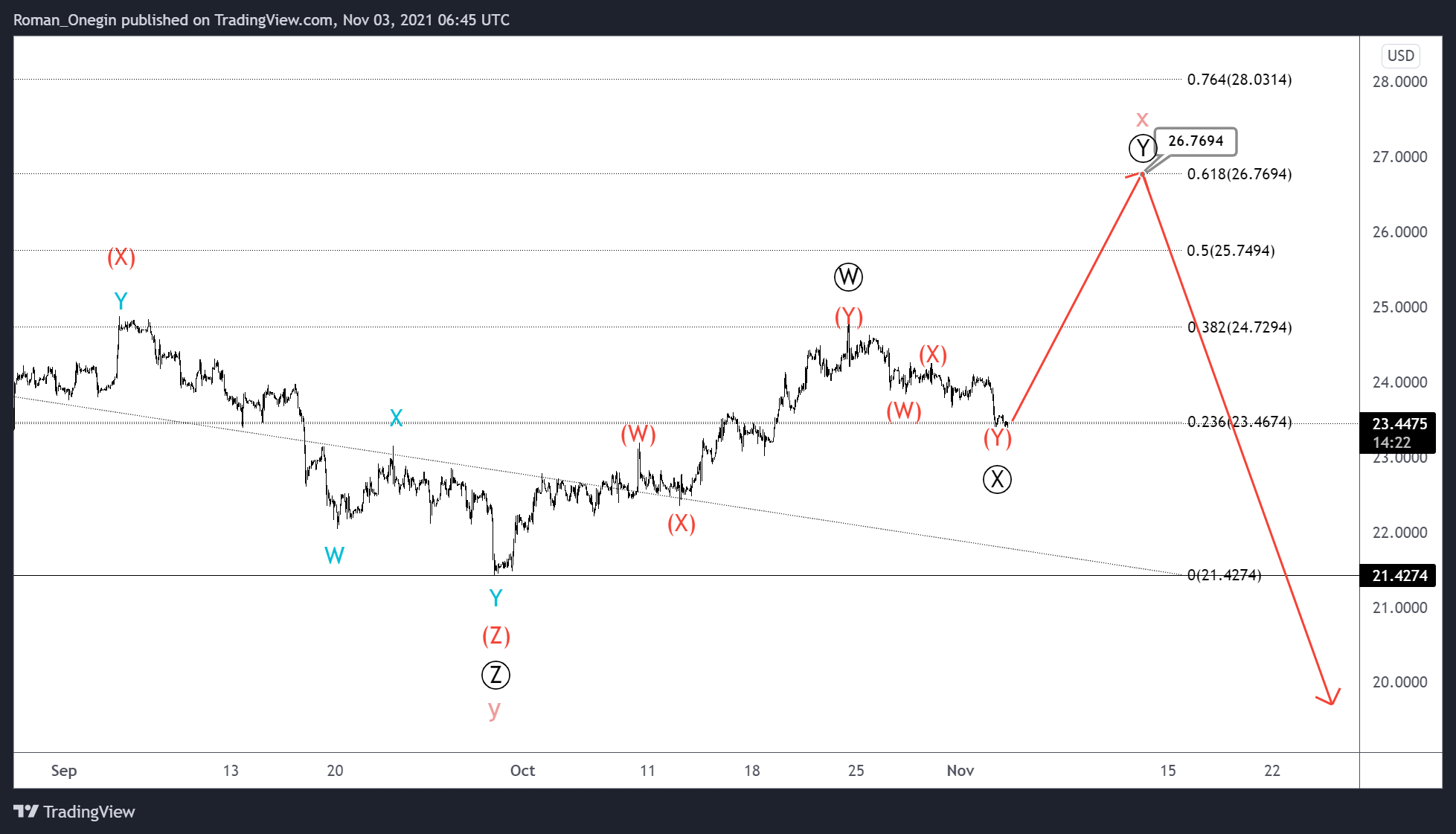
The current XAUUSD structure suggests the development of a correction, which takes the form of a cycle triple w-x-y-x-z zigzag.

At the moment, the actionary wave y is under development, which takes the form of a bearish triple zigzag of the intermediate degree. The chart shows the final part of the specified pattern. We see an intermediate wave (Z) consisting of minor sub-waves A-B-C.

It is possible that in the near future the price will move in a minute impulse, as shown on the chart, and will complete the minor wave C near 20.34. At that level, intermediate wave (Z) will be at the 76.4% Fibonacci extension of wave (Y).

XAUUSD

According to an alternative, the cycle wave y ended at the end of September, then the price began to rise within the bullish intervening wave x.

Judging by the internal structure, wave x takes the form of a primary double zigzag Ⓦ-Ⓧ-Ⓨ. It seems that the sub-waves Ⓦ-Ⓧ have already ended, taking the form of double zigzags.

Thus, it is currently possible for the price to rise in the primary wave Ⓨ towards the 26.76 area. At that level, wave x will be at 61.8% of wave y.

After reaching this price point, gold prices could fall below the level of 21.42.


Orbex-LogoArticle by Orbex

Orbex is a fully licensed broker that was established in 2011. Founded with a mission to serve its traders responsibly and provides traders with access to the world’s largest and most liquid financial markets. www.orbex.com

Murrey Math Lines 03.11.2021 (USDJPY, USDCAD)

Article By RoboForex.com

USDJPY, “US Dollar vs. Japanese Yen”

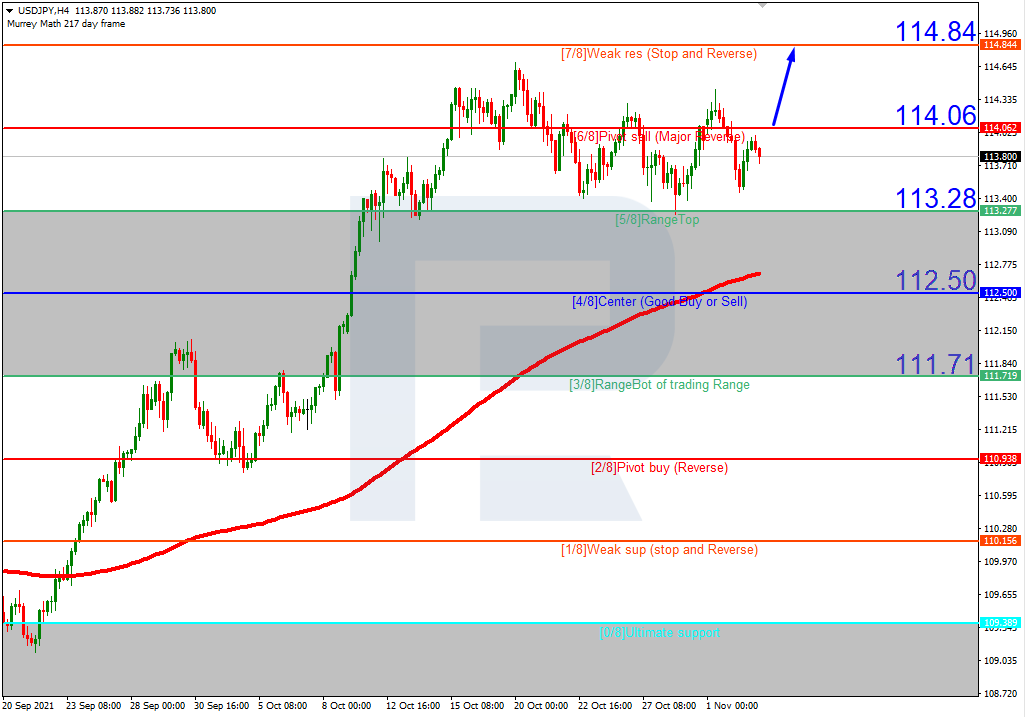
As we can see in the H4 chart, USDJPY is trading above the 200-day Moving Average, thus indicating an ascending tendency. In this case, the price is expected to test 6/8, break it, and then continue growing to reach the resistance at 7/8. However, this scenario may no longer be valid if the price breaks 5/8 to the downside. After that, the instrument may reverse and fall towards the support at 4/8.

USDJPYH4
Risk Warning: the result of previous trading operations do not guarantee the same results in the future

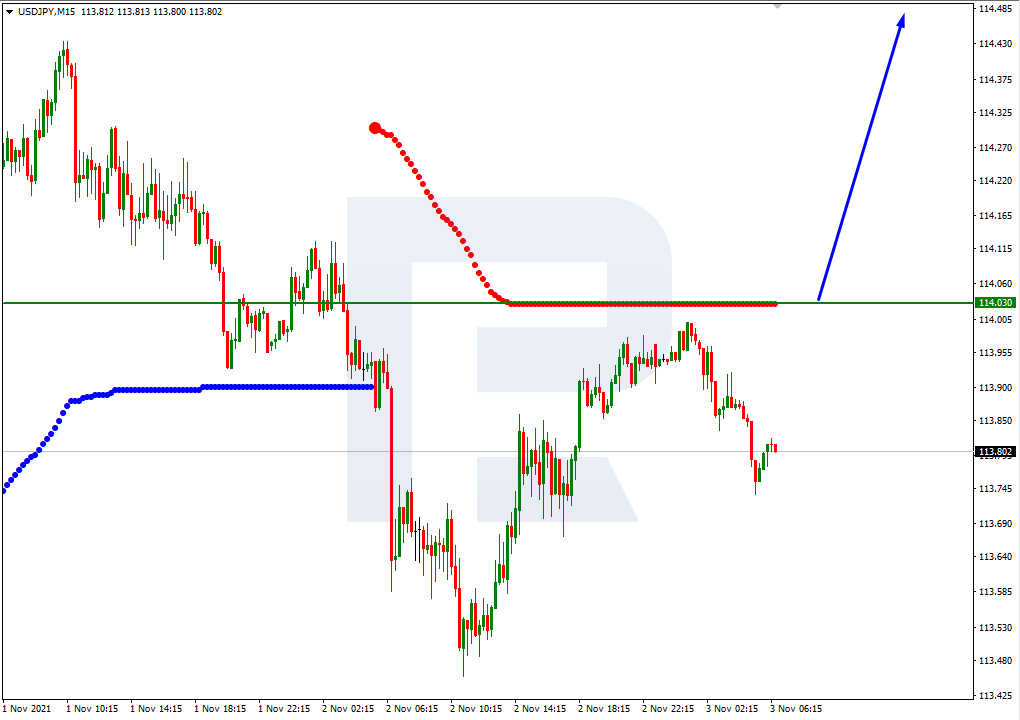
In the M15 chart, the pair may break the upside line of the VoltyChannel indicator and, as a result, continue its growth.

USDJPY_M15
Risk Warning: the result of previous trading operations do not guarantee the same results in the future

USDCAD, “US Dollar vs Canadian Dollar”

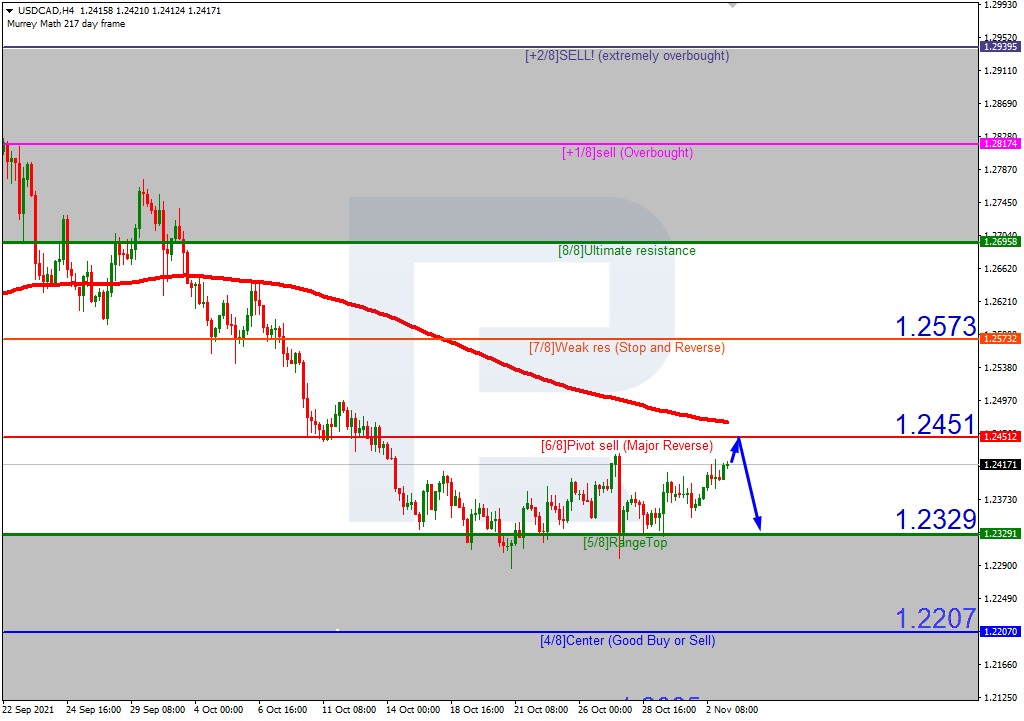
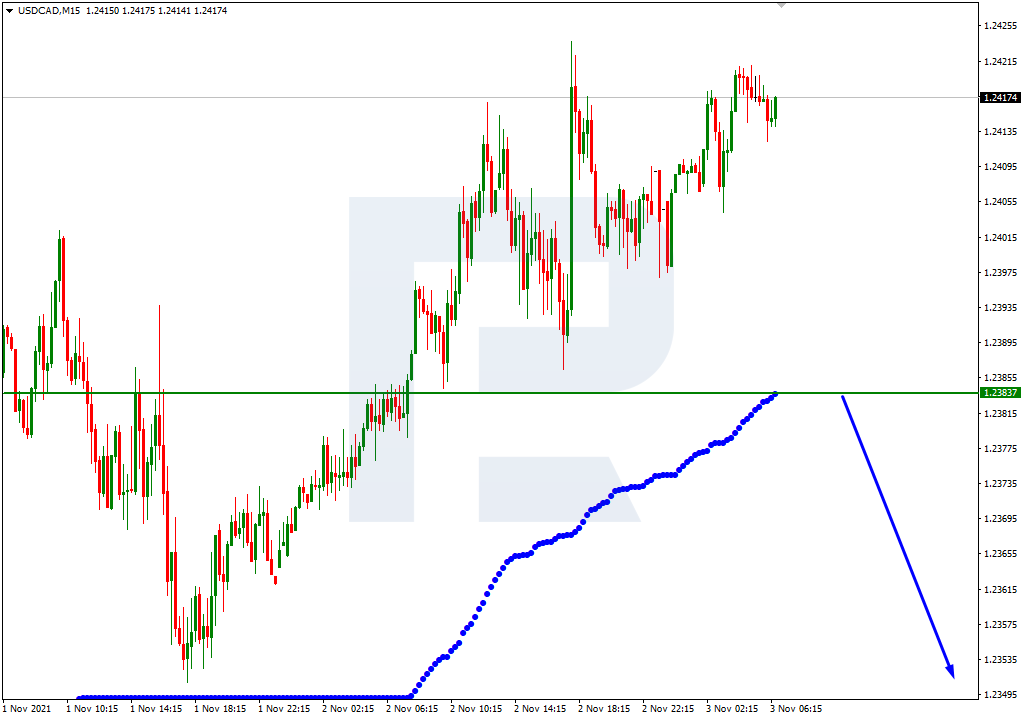
As we can see in the H4 chart, USDCAD is trading below the 200-day Moving Average, thus indicating a descending tendency. In this case, the price is expected to test 6/8, break it, and then continue falling towards the support at 5/8. Still, this scenario may no longer be valid if the price breaks 6/8 to the upside. After that, the instrument may correct to reach the resistance at 7/8.

USDCAD_H4
Risk Warning: the result of previous trading operations do not guarantee the same results in the future

In the M15 chart, the pair may break the downside line of the VoltyChannel indicator and, as a result, continue trading downwards to reach 5/8 from the H4 chart.

USDCAD_M15

Article By RoboForex.com

Attention!
Forecasts presented in this section only reflect the author’s private opinion and should not be considered as guidance for trading. RoboForex LP bears no responsibility for trading results based on trading recommendations described in these analytical reviews.

Intraday Market Analysis – AUD Seeks Support

By Orbex

AUDUSD breaks lower

AUDUSD

The Australian dollar softened after a dovish RBA stressed that inflation was still too low to hike soon.

The pair has met stiff selling pressure near last July’s high of 0.7550. While sentiment has turned positive from the daily chart’s perspective, an overbought RSI has made buyers cautious.

The drop below 0.7490 then 0.7450 has forced out leveraged positions, exacerbating the downward pressure. 0.7380 on the 30-day moving average would be the next support. An oversold RSI may attract bids in this congestion area.

NZDUSD retreats from double top

NZDUSD

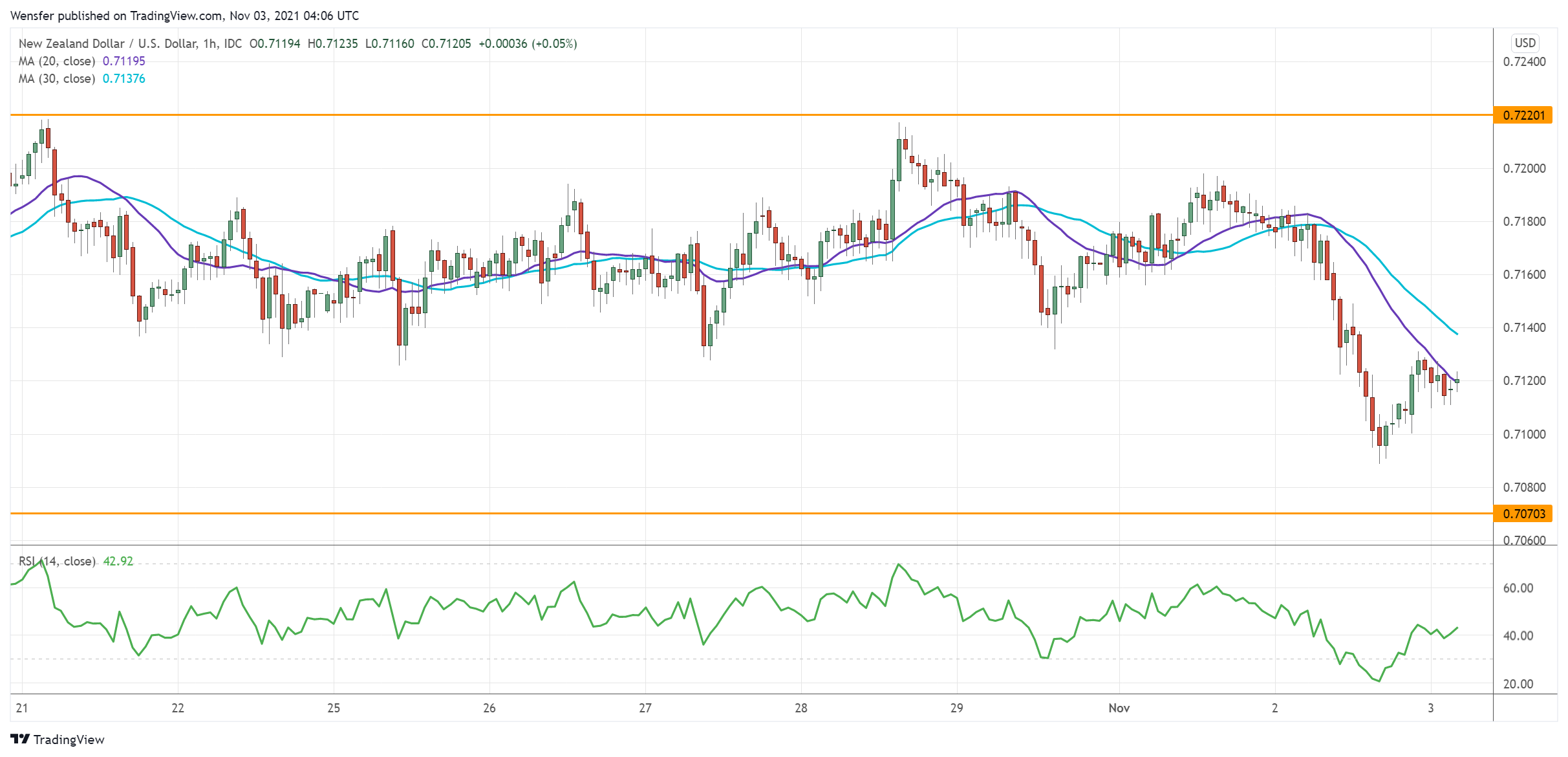
The New Zealand dollar bounced back after the Q3 unemployment rate fell to 3.4%.

A double top at 0.7220 suggests exhaustion in the kiwi’s ascent after the RSI repeatedly pointed to an overbought situation. A break below 0.7130 indicates that the bears have gained the upper hand, pushing the opposing side to close their bets.

The previous supply zone around 0.7070 has turned into a demand zone. This coincides with the 30-day moving average, and along with an oversold RSI, it may gain support from a buy-the-dips crowd.

UK 100 tests demand zone

UK100

The FTSE 100 consolidates gains as investors turn their attention to the US Federal Reserve meeting.

The bulls are looking to get a foothold after a close above the August peak at 7240. The RSI’s double top in the overbought zone is a sign of overextension in the short term.

Trend followers may look to stake in at the psychological level of 7200, a key demand zone on the 20-day moving average. A bearish breakout would deepen the pullback to 7140. On the upside, a rebound above 7310 would resume the rally.


Orbex-LogoArticle by Orbex

Orbex is a fully licensed broker that was established in 2011. Founded with a mission to serve its traders responsibly and provides traders with access to the world’s largest and most liquid financial markets. www.orbex.com

Japanese Candlesticks Analysis 03.11.2021 (EURUSD, USDJPY, EURGBP)

Article By RoboForex.com

EURUSD, “Euro vs US Dollar”

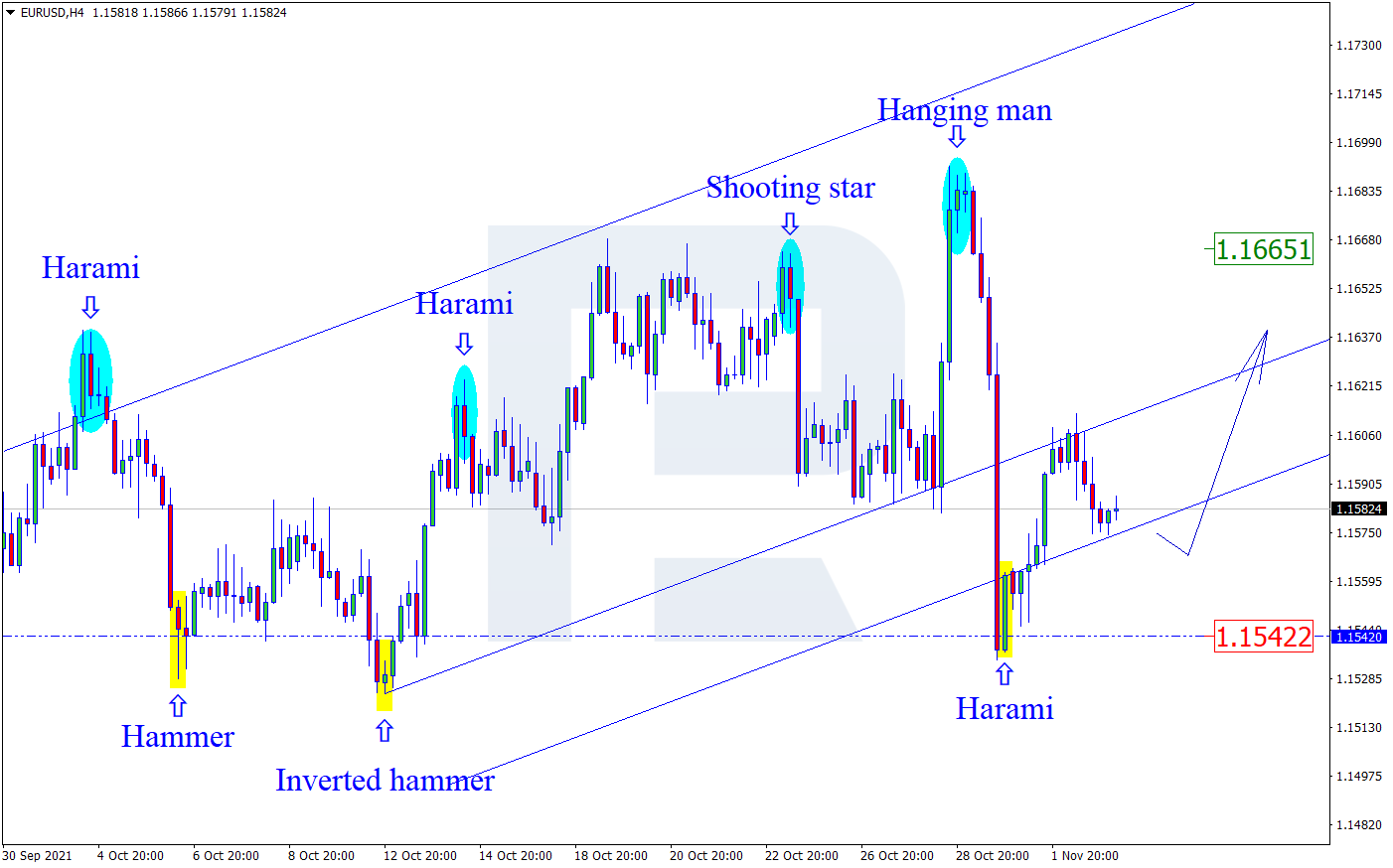
As we can see in the H4 chart, the asset has formed several reversal patterns, including Harami, close to the support level. At the moment, EURUSD may reverse and start a new ascending wave. In this case, the upside target may be at 1.1665. Later, the market may break the resistance area and continue the ascending tendency. However, an alternative scenario implies that the price may correct to reach 1.1542 first and then resume trading upwards.

EURUSD
Risk Warning: the result of previous trading operations do not guarantee the same results in the future

USDJPY, “US Dollar vs Japanese Yen”

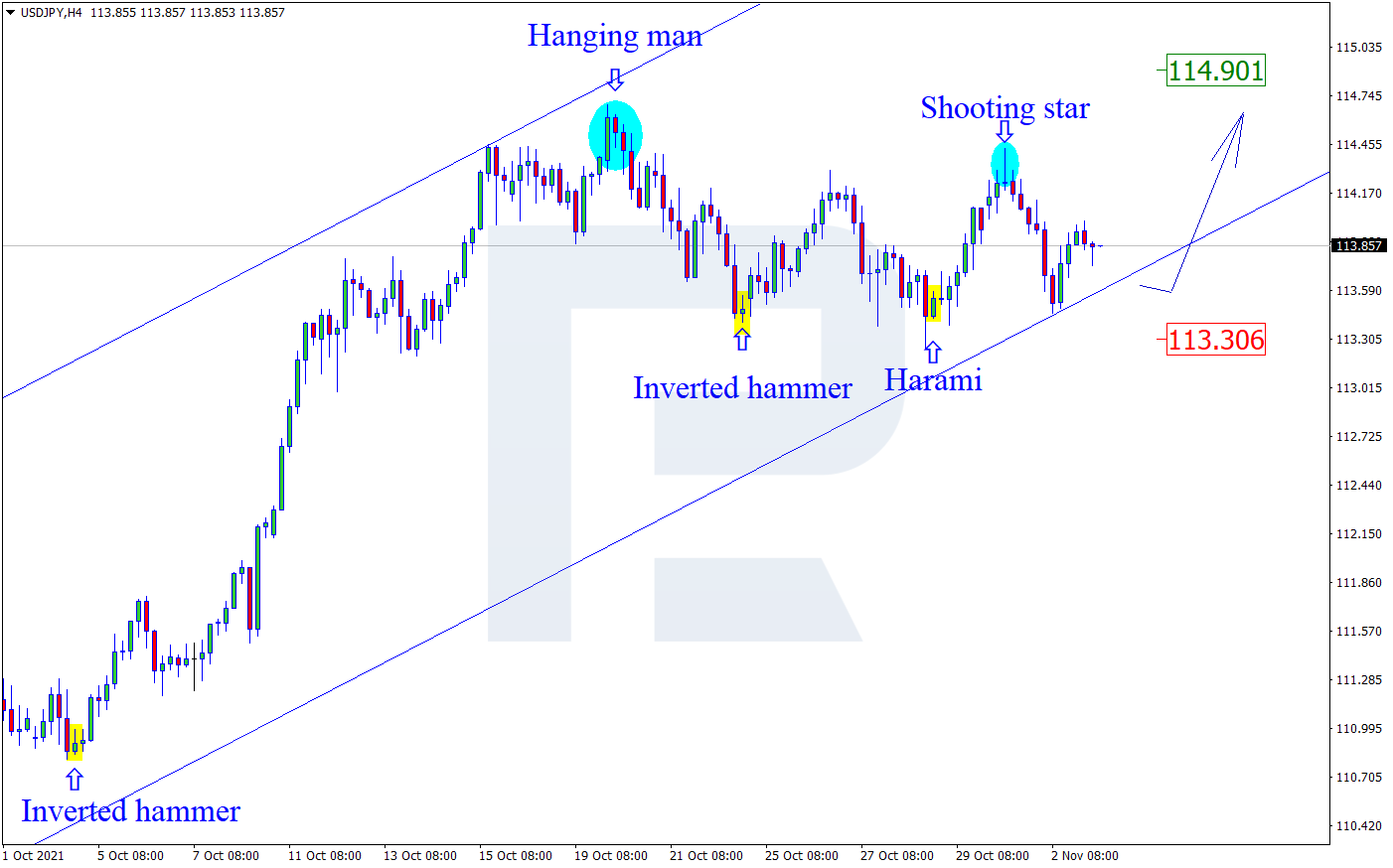
As we can see in the H4 chart, USDJPY has formed several reversal patterns, for example, Shooting Star, while testing the resistance area. At the moment, USDJPY may reverse and continue the pullback. In this case, the correctional target may be at 113.30. At the same time, an opposite scenario implies that the price may grow to reach 114.90 without testing the support level.

USDJPY
Risk Warning: the result of previous trading operations do not guarantee the same results in the future

EURGBP, “Euro vs Great Britain Pound”

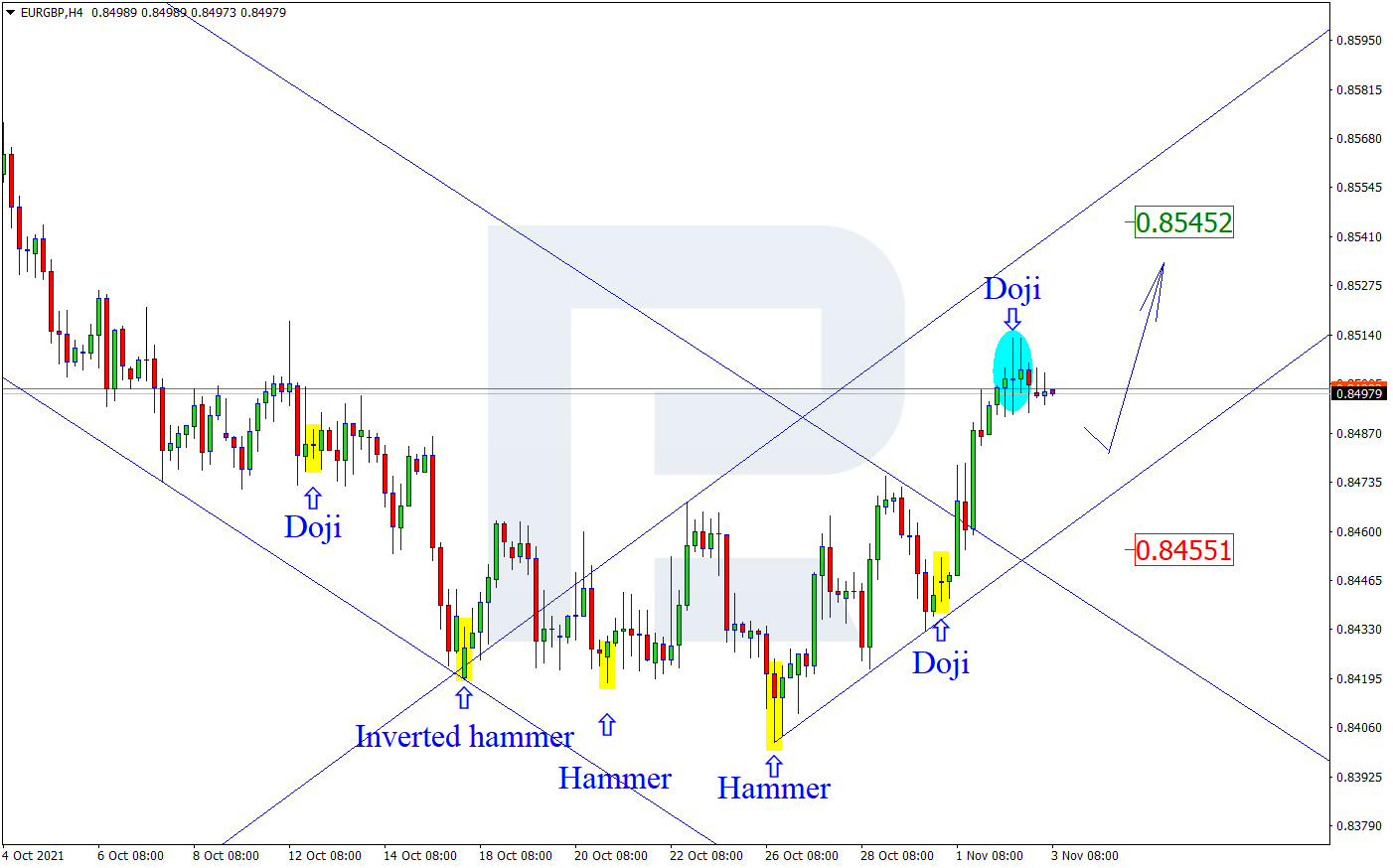
As we can see in the H4 chart, after forming several reversal patterns, such as Doji, near the resistance level, EURGBP may reverse and start another pullback. In this case, the correctional target may be at 0.8455. Later, the market may test the support area, rebound from it, and resume the ascending tendency. Still, there might be an alternative scenario, according to which the asset may continue growing to reach 0.8545 without correcting towards the support area.

EURGBP

Article By RoboForex.com

Attention!
Forecasts presented in this section only reflect the author’s private opinion and should not be considered as guidance for trading. RoboForex LP bears no responsibility for trading results based on trading recommendations described in these analytical reviews.

Investors should prepare for market correction: deVere CEO

By George Prior

– Investors should brace themselves for a 10% market correction over the next month as they grapple to get a sense of the Federal Reserve’s thinking on interest rates, says deVere Group CEO Nigel Green.

The forecast from chief executive and founder of one of the world’s largest independent financial advisory, asset management and fintech organizations comes as the Federal Reserve is widely expected to announce on Wednesday that it will start unwinding its $120 billion monthly bond purchases.

Mr Green says: “Whilst the Fed Chair Jay Powell will be talking about the tapering of the massive bond-buying program, the real story for the markets is how the Fed, the world’s de facto central bank, will talk about inflation.

“Inflation is running hotter and is becoming a bigger issue than most analysts previously expected.

“As such, investors will be trying to get a handle on how the Fed intends to fight the trend of higher prices by starting to raise interest rates.”

He continues: “It’s highly unlikely that the central bank will now use their previous phrase ‘transitory’ to describe the current price surges. Inflation appears to be stickier than they had expected.

“This means that they are likely to have to raise interest rates sooner and/or more aggressively.

“Therefore, markets are actively pricing in two or three hikes next year and this could lead to a 5 to 10% market adjustment over the next month.”

By their very nature, all markets are subject to bouts of volatility.  How to manage this? It’s almost universally recognized that a well-diversified portfolio and a good fund manager will help investors capitalize on the opportunities that volatility brings and sidestep potential risks as and when they arise.

The deVere CEO concludes: “Central banks that began enormous emergency support to tackle the pandemic last year are now planning a turn in the other direction.

“A market correction will be seen by savvy investors as the first major step towards the likely return to normal monetary policy and they will be seeking out the inherent opportunities that will be presented.”

About:

deVere Group is one of the world’s largest independent advisors of specialist global financial solutions to international, local mass affluent, and high-net-worth clients.  It has a network of more than 70 offices across the world, over 80,000 clients and $12bn under advisement.

Australia’s Reserve Bank signals the end of ultra-cheap money. Here’s what it will mean

By Isaac Gross, Monash University 

– The Reserve Bank of Australia had a Cup Day surprise in store for the country, announcing it was abandoning its policy of “yield curve control”, meaning it was no longer going to defend any particular interest rate for borrowing over any particular duration.

Until today it had a formal target for the three-year bond yield of 0.10%, enabling banks to provide three-year fixed mortgages very cheaply, and indicating the cash rate wouldn’t climb above 0.10% until the most recent three-year bond expires in April 2024.

But it has now abandoned the target, a full two years early.

Why control the yield curve in the first place?

When COVID hit last year, the bank announced it would buy enough government bonds to keep the yield on the three-year bond at 0.25%, as good as guaranteeing money would be cheap for years to come.

Later, it cut the target for three-year bond yields (and the target for its cash rate) to a near-zero 0.10%, further lowering the cost of borrowing

Responding to an improving economy, the bank decided at its July 2021 meeting not to extend the program bond target beyond April 2024.

The decision created a reasonable expectation the cash rate would remain close to zero until 2024.

What did yield curve control achieve?

Yield curve control achieved a lot. It took the bank just 11 days and A$27 billion dollars of bond purchases to achieve its first target, establishing ultra-low interest rates for years into the future.

After that, it didn’t need to spend much. The new three-year rate became the new norm. Markets believed it would do whatever was needed to defend it.

Over the next 18 months it intervened in the market only occasionally, and only in small amounts. That all changed last week.

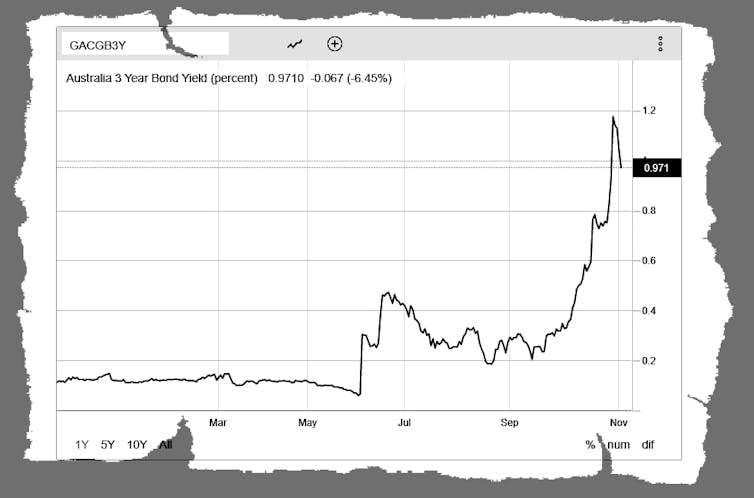
On October 15, the three-year bond rate started to climb above the bank’s target of 0.10%. It initially bought enough bonds to defend the rate and then, without warning, capitulated last Thursday, as good as withdrawing from the market and allowing the rate to climb to a high of 0.70%.

By Monday the rate had climbed to more than 1.00% — more than ten times the Reserve Bank’s target.

Trading Economics

Today’s announcement merely made formal what was apparent on Thursday: the bank is no longer going to spend public funds defending a line that might eventually be crossed.

Bond traders thought the improving economic outlook meant the bank would have to lift its record low cash rate sooner that it had said it would. It lost the will to disagree.

In a 4pm press conference Governor Philip Lowe said that to maintain the target would have been untenable. Eventually the bank would have owned all the three-year bonds on offer.

What will this do to the housing market?

Today’s decision is a sure sign interest rates are going to start to rise. Not today, or even for the rest of this year, but sooner was previously expected.

For what it is worth, Lowe said the latest data and forecasts did “not warrant an increase in interest rates in 2022”.

For now, sub-2% fixed-rate mortgages are a thing of the past. The last were withdrawn this week.

The decision means the booming housing market will start to crest. Low interest rates sparked the boom as renters flocked to become first-homebuyers and investors jumped in to catch rising prices.

The prospect of higher mortgage payments is going to dent this enthusiasm, perhaps quickly. Prices are set to stabilise, before edging, or sliding down .

We don’t yet know how quickly variable interest rates will start to rise, but given the Reserve Bank has walked away from a battle to defend yield curve control, we do know it’ll be a long time before it even considers doing it again.The Conversation

About the Author:

Isaac Gross, Lecturer in Economics, Monash University

This article is republished from The Conversation under a Creative Commons license. Read the original article.

The Analytical Overview of the Main Currency Pairs on 2021.11.03

by JustForex

The EUR/USD currency pair

Technical indicators of the currency pair:
  • Prev Open: 1.1605
  • Prev Close: 1.1578
  • % chg. over the last day: -0.23%

In addition to the Fed meeting, macroeconomic data on Europe will be released today, followed by ECB head Christine Lagarde’s speech. Any hints that ECB might start reducing its stimulus program soon might temporarily strengthen the Euro. However, it should be noted that a key indicator of long-term inflation expectations in the eurozone decreased below the 1.9% level for the first time in two weeks. Therefore taking into account the conservatism of the ECB, no hawkish statements should be expected.

Trading recommendations
  • Support levels: 1.1573, 1.1548, 1.1502, 1.1453
  • Resistance levels: 1.1618, 1.1645, 1.1667, 1.1717, 1.1772

From the technical point of view, the EUR/USD on the hour time frame is bearish. But the price managed to return above the breakdown level, which indicates a possible false break move. Under such market conditions, traders should consider sell positions from the resistance levels near the moving average. It is best to look for buy trades from the support levels of lower time frames, but only with short targets.

Alternative scenario: if the price breaks out through the 1.1667 resistance level and fixes above, the mid-term uptrend will likely resume.

EUR/USD
News feed for 2021.11.03:
  • – Eurozone Unemployment Rate (m/m) at 12:00 (GMT+2);
  • – Eurozone ECB President Lagarde Speaks at 12:15 (GMT+2);
  • – US ADP Non-Farm Employment Change (m/m) at 14:15 (GMT+2);
  • – US ISM Services PMI (m/m) at 16:00 (GMT+2);
  • – US FOMC Statement at 20:00 (GMT+2);
  • – US Fed Interest Rate Decision at 20:00 (GMT+2);
  • – US FOMC Press Conference at 20:30 (GMT+2).

The GBP/USD currency pair

Technical indicators of the currency pair:
  • Prev Open: 1.3660
  • Prev Close: 1.3613
  • % chg. over the last day: -0.34%

The Bank of England will hold its monetary policy meeting tomorrow. Representatives of the Central Bank of England have repeated many times that Britain should take a stricter policy regarding inflation suppression, up to raising the interest rate. Therefore, there is a high probability of tightening monetary policy shortly.

Trading recommendations
  • Support levels: 1.3617, 1.3532, 1.3457, 1.3360
  • Resistance levels: 1.3685, 1.3748, 1.3780, 1.3831, 1.3886

On the hourly time frame, the trend on GBP/USD has changed to bearish. The MACD indicator became negative, but there are signs of sellers’ weakness in the form of divergence. Buy trades should be considered only from the support levels of the higher time frame. It is best to look for sell deals from the resistance levels around the moving average.

Alternative scenario: if the price breaks out through the 1.3780 resistance level and consolidates above, the bullish scenario will likely resume.

GBP/USD
News feed for 2021.11.03:
  • – UK Services PMI (m/m) at 11:30 (GMT+2).

The USD/JPY currency pair

Technical indicators of the currency pair:
  • Prev Open: 113.97
  • Prev Close: 113.94
  • % chg. over the last day: -0.03%

Today, it’s a bank holiday in Japan, so the Japanese Yen will depend fully on the USD Index dynamics. If the head of Fed Jerome Powell officially confirms the beginning of “tapering,” the dollar index may sharply increase and lead to the growth of USD/JPY quotes.

Trading recommendations
  • Support levels: 113.42, 112.30, 111.53, 110.99, 110.65
  • Resistance levels: 114.48, 115.15

The main trend of the USD/JPY currency pair is bullish. The price is trading in a wide price corridor. The MACD indicator has become inactive. Under such market conditions, it’s better to look for buy positions from the buyers’ initiative zones on the lower time frames. Sell positions should be considered from the resistance levels of a higher time frame, given there is sellers’ initiative.

Alternative scenario: if the price falls below 112.30, the uptrend is likely to be broken.

USD/JPY
There is no news feed for today.

The USD/CAD currency pair

Technical indicators of the currency pair:
  • Prev Open: 1.2371
  • Prev Close: 1.2400
  • % chg. over the last day: +0.23%

The Canadian dollar is a commodity currency, so the USD/CAD currency pair is highly dependent on the dynamics of the dollar index and oil prices. The dollar index slightly increased yesterday, while oil prices decreased ahead of the OPEC+ meeting. As a result, the USD/CAD quotes increased due to the strengthening of the US currency.

Trading recommendations
  • Support levels: 1.2352, 1.2306, 1.2260
  • Resistance levels: 1.2428, 1.2518, 1.2565, 1.2628, 1.2729, 1.2774

From the technical point of view, the trend of the USD/CAD currency pair is bearish. But the pressure of buyers is increasing, and the price is approaching the priority change level. Under such market conditions, it is better to look for sell deals from the resistance levels of the higher time frame. Buy trades should be considered from the support levels, given there is the buyers’ initiative.

Alternative scenario: if the price breaks out through the 1.2428 resistance level and fixes above, the uptrend will likely resume.

USD/CAD
News feed for 2021.11.03:
  • – US Crude Oil Reserves (w/w) at 16:30 (GMT+2).

by JustForex


This article reflects a personal opinion and should not be interpreted as an investment advice, and/or offer, and/or a persistent request for carrying out financial transactions, and/or a guarantee, and/or a forecast of future events.

At today’s meeting, the FOMC will likely officially announce the reduction of the QE program

by JustForex

The main US indices closed in the green zone yesterday. By the end of the trading day Dow Jones index increased by 0.39%, S&P 500 gained 0.37%, NASDAQ added 0.34%. Dow Jones and S&P 500 indices renewed their highs. Tesla shares fell by 3% as the company recalled about 11.7 thousand Model S, Model 3, and Model X electric cars produced in 2017-2021 and Model Y (2020-2021) due to a software error. Pfizer’s stock price increased by 4.2%. The company increased net income 5.5 times in Q3 2021, revenue 8.5 times, and improved its full-year outlook.

Today, traders’ attention is focused on the Fed meeting. It is expected that the Federal Reserve will announce the cutting of its monthly bond purchase program. However, even if it happens, traders should not expect any significant shocks on the market because, firstly, it has been already priced in. Secondly, the “cut” will be gradual, most likely 10 billion a month. In other words, they will complete the tapering program and rest the interest rate by the summer fall next year. Also, a lot will depend on the dynamics of inflation. As many analysts expect, if inflation continues to rise rapidly, the Fed could raise interest rates sooner. If the central bank talks about a faster reduction (some Fed members favor a quicker cut), it could have a big impact on the market.

The head of the World Medical Association, Frank Ulrich Montgomery, wants to revaccinate the population every six months.

The US has approved the use of the Pfizer vaccine for children 5 to 11 years old. In New York, about 9,000 unvaccinated officials were placed on unpaid vacation. Canada suspended 3,300 unvaccinated doctors without pay. Air Canada suspended more than 800 employees due to refusing to vaccinate.

Last days Biden held a meeting with G-20 leaders that focused on supply chain issues. According to a White House report on the summit, the United States, the European Union, and 14 other countries agreed to promote the expansion of international cooperation in connection with short-term difficulties in the supply chain.

Another important international event attracting the attention of global markets is the climate summit in Glasgow, Scotland. The meeting is held under the auspices of the United Nations and is perceived as a crucial step for world leaders in taking action to reduce CO2 emissions. However, analysts do not expect countries to adopt highly ambitious targets at the end of the summit.

European stock indexes were trading yesterday without a single trend. The British FTSE 100 decreased by 0.19%, the German DAX gained 0.94%, and the French CAC 40 added 0.49%. Italy’s FTSE MIB and Spain’s IBEX 35 decreased by 0.06% and 0.84%, respectively. The Prime Minister of the Netherlands announced that the country is imposing new restrictions because of Covid-19. The government is asking people to work from home half the time.

Several oil traders said that the $100 oil price is fast approaching reality as the demand exceeds the proposal. Climate change has caused a slowdown in investment in new sources, which threatens the depletion of reserves. Futures quotes for oil rose sharply due to the worldwide spike in gas and coal prices caused by the global energy crisis. Iran plans to resume exporting oil products within two weeks.

Gas prices in Europe jumped over 2% on news of Gazprom’s refusal to book additional gas transit capacity via Ukraine and Poland.

The main Asian indices are trading in the red zone today. The only exception is the Australian index. Investors are cautious ahead of the Fed meeting today, and the main issue is not the reduction of the QE program but to make it clear when the Fed will start to raise interest rates.

China has unexpectedly increased its injection of short-term cash into the banking system fivefold because banks also need to postpone cash to buy bonds so that creditors can pay off the record 1 trillion yuan in medium-term loans.

Main market quotes:

S&P 500 (F) 4,630.65 +16.98 (+0.37%)

Dow Jones 36,052.63 +138.79 (+0.39%)

DAX 15,954.45 +148.16 (+0.94%)

FTSE 100 7,274.81 −13.81 (−0.19%)

USD Index 94.11 +0.23 (+0.25%)

Important events for today:
  • – UK Services PMI (m/m) at 11:30 (GMT+2);
  • – Eurozone Unemployment Rate (m/m) at 12:00 (GMT+2);
  • – Eurozone ECB President Lagarde Speaks at 12:15 (GMT+2);
  • – US ADP Non-Farm Employment Change (m/m) at 14:15 (GMT+2);
  • – US ISM Services PMI (m/m) at 16:00 (GMT+2);
  • – US Crude Oil Reserves (w/w) at 16:30 (GMT+2);
  • – US FOMC Statement at 20:00 (GMT+2);
  • – US Fed Interest Rate Decision at 20:00 (GMT+2);
  • – US FOMC Press Conference at 20:30 (GMT+2).

by JustForex


This article reflects a personal opinion and should not be interpreted as an investment advice, and/or offer, and/or a persistent request for carrying out financial transactions, and/or a guarantee, and/or a forecast of future events.

Australia holds rate but drops bond yield target

By CentralBankNews.info

Australia’s central bank left its key interest rate unchanged but dropped its policy of targeting the yield on a benchmark government bond and pulled forward the likely time for a rate hike to 2023 due to what it said was “the improvement in the economy and the earlier-than-expected progress towards the inflation target.”
The Reserve Bank of Australia (RBA) kept its cash target of 0.10 percent, unchanged since November 2020 when it was lowered for the third time last year during the first wave of the COVID-19 pandemic.
     And while RBA will no longer target a 0.10 percent yield on the benchmark April 2024 Australian government bond, it confirmed it will continue to buy government bonds at a rate of $4 billion a week until at least mid-February 2022.
     “The Australian economy is now growing again, after the recovery from the pandemic was interrupted by the Delta outbreak,” RBA Governor Philip  Lowe said, adding the economy is expected to record a solid gain in the fourth quarter after contracting in the third quarter.
     By the middle of next year, the RBA expects economic output to return to its pre-Delta path.
     But RBA also reiterated its guidance that will not raise the cash rate until inflation is sustainably within its target range of 2 to 3 percent.
     “The board is prepared to be patient,” Lowe said, seeking to dampen speculation in financial markets that RBA will soon follow the lead of 34 central banks in other countries that have raised rates this year in reaction to the recent rise in inflation.
      RBA expects underlying inflation to be no higher than 2.5 percent by the end of 2023, with wages growing 3 percent the same year. Previously it did not expect these conditions to be met before 2024.
      Lowe stressed the bank’s board would look through spikes in inflation and only expects inflation to reach the target once the labour market is tight enough to generate wage growth that is “materially higher than it is currently.”
      “While on the issue of timing, the latest data and forecasts do not arrange an increase in the cash rate in 2022,” Lowe said.
     Lowe said Australia is in a different situation than many other countries, with the labour force participation not falling and nor are supply disruptions showing up in consumer prices.
Although inflation has risen, the core or underlying rate, remains low and wages are only expected to pick up gradually as the labour market tightens.
      Australia’s headline inflation rate eased to 3.0 percent in the third quarter from 3.8 percent while core inflation rose to 2.1 percent from 1.6 percent.
      The rise in core inflation illustrates the general rise in global inflation and triggered expectations in financial markets that RBA would start to tighten its policy. The yield on the April 2024 government bond last week surged to 0.8 percent, significantly over RBA’s target of 0.1 percent.
      In addition to the three rate cuts last year, RBA also began targeting the yield on benchmark government bonds to anchor short-term interest rates and reinforce its guidance that its cash rate was unlikely to be raised until the bond matured.
     “Today, more than a year and a half on, the balance of probabilities is a little different,” Lowe said, adding he wants to make clear that dropping the yield target doesn’t mean the cash rate will be raised before 2024.
     Lowe said the yield target had been effective in supporting the economic recovery but its effectiveness as a monetary policy tool has declined as expectations about future interest rates shift due to the pace of the economic recovery and progress in reaching RBA’s goals.
     “There is genuine uncertainty as to the timing of future adjustments in the cash rate,” Lowe said, adding it is entirely possible it will remain at the current level until 2024.
     “But it is also possible that an earlier move will be appropriate,” Lowe said, adding: “But it is now also plausible that a lift in the cash rate could be appropriate in 2023.”
     RBA forecasts Australia’s economy will grow 3 percent this year, 5.5 percent in 2022 and 2.5 percent in 2023.
      Underlying inflation is seen around 2.25 percent this year and 2022, and 2.5 percent in 2023, while wages should grow 2.5 percent in 2022 and 3 percent in 2023.

–    The Reserve Bank of Australia issued the following two statements: A statement by its governor, Philip Lowe, regarding the board’s policy decision and a speech at a webinar:

“At its meeting today, the Board decided to:

  • maintain the cash rate target at 10 basis points and the interest rate on Exchange Settlement balances at zero per cent
  • continue to purchase government securities at the rate of $4 billion a week until at least mid February 2022
  • discontinue the target of 10 basis points for the April 2024 Australian Government bond.

The Australian economy is recovering after the interruption caused by the Delta outbreak. As vaccination rates increase even further and restrictions are eased, the economy is expected to bounce back relatively quickly. The central forecast is for GDP growth of 3 per cent over 2021 and 5½ per cent and 2½ per cent over the following two years. One important source of uncertainty continues to be the possibility of a further setback on the health front.

The Delta outbreak caused hours worked in Australia to fall sharply, but a bounce-back is now underway. The Bank’s business liaison and the data on job ads suggest that many firms are now hiring, which will boost employment over coming months. The central forecast is for the unemployment rate to trend lower over the next couple of years, reaching 4¼ per cent at the end of 2022 and 4 per cent at the end of 2023.

Inflation has picked up, but in underlying terms is still low, at 2.1 per cent. The headline CPI inflation rate is 3 per cent and is being affected by higher petrol prices, higher prices for newly constructed homes and the disruptions in global supply chains. A further, but only gradual, pick-up in underlying inflation is expected. The central forecast is for underlying inflation of around 2¼ per cent over 2021 and 2022 and 2½ per cent over 2023. Wages growth is expected to pick up gradually as the labour market tightens, with the Wage Price Index forecast to increase by 2½ per cent over 2022 and 3 per cent over 2023. The main uncertainties relate to the persistence of the current disruptions to global supply chains and the behaviour of wages at the lowest unemployment rate in decades.

Housing prices are continuing to rise in most markets and housing credit growth has picked up due to stronger demand for credit by both owner-occupiers and investors. The Bank welcomes APRA’s recent decision to increase the interest rate serviceability buffer on home loans. It is important that lending standards are maintained at a time of historically low interest rates.

Financial conditions in Australia remain highly accommodative, with most lending rates at record lows. Bond yields have increased recently and bond market volatility has also risen significantly. The exchange rate has appreciated a little, but remains within the range of the past year.

The decision to discontinue the yield target reflects the improvement in the economy and the earlier-than-expected progress towards the inflation target. Given that other market interest rates have moved in response to the increased likelihood of higher inflation and lower unemployment, the effectiveness of the yield target in holding down the general structure of interest rates in Australia has diminished.

The Board is committed to maintaining highly supportive monetary conditions to achieve a return to full employment in Australia and inflation consistent with the target. While inflation has picked up, it remains low in underlying terms. Inflation pressures are also less than they are in many other countries, not least because of the only modest wages growth in Australia.

The Board will not increase the cash rate until actual inflation is sustainably within the 2 to 3 per cent target range. This will require the labour market to be tight enough to generate wages growth that is materially higher than it is currently. This is likely to take some time. The Board is prepared to be patient, with the central forecast being for underlying inflation to be no higher than 2½ per cent at the end of 2023 and for only a gradual increase in wages growth.”

–    Speech by RBA Governor Philip Lowe:

“Good afternoon and thank you for joining this webinar.
The Reserve Bank Board met this morning. At our meeting we agreed to:

1. maintain the target for the cash rate at 10 basis points

2. continue to purchase government bonds at the rate of $4 billion per week until mid February 2022, with a further review to be undertaken then

3. discontinue the target for the yield on the April 2024 bond.

I would like to take this opportunity to explain these decisions – particularly the decision to discontinue the yield target – and to answer your questions.

I would like to start with some background and our updated forecasts.

The Australian economy is now growing again, after the recovery from the pandemic was interrupted by the Delta outbreak. GDP is expected to record a solid gain in the December quarter, following the sharp contraction in the September quarter. And by the middle of next year, GDP is expected to be back on its pre-Delta path. Our central scenario is for the economy to grow by around 51⁄2 per cent over 2022 and by around 21⁄2 per cent over 2023.

At the outset of the pandemic, economic policy, including monetary policy, set out to build a bridge to the other side. That other side is now clearly in sight. As restrictions are eased, spending is expected to pick up relatively quickly as people seek a return to a more normal way of life. The rapid increase in vaccination rates has been critical in getting us to this point. More broadly, the support provided by both monetary and fiscal policy means that the Australian economy is well placed to resume its expansion.

The resilience of the economy continues to be evident in the labour market. A strong bounce-back in hours worked is now under way, after a sharp fall during the lockdowns. The unemployment rate is expected to trend lower over the next couple of years. Our central scenario is for the unemployment rate to reach 41⁄4 per cent by the end of next year, and 4 per cent by the end of 2023. This would be a welcome development. Australia has not experienced a sustained period of unemployment at levels this low since the early 1970s.

Inflation, in underlying terms, remains low in Australia, at 2.1 per cent. Inflation is, however, a little higher than it has been over recent years. This increase largely reflects higher oil prices in global markets, higher prices for residential construction and strained global supply chains. Looking forward, we are expecting a further, but gradual, increase in underlying inflation. Our central forecast is for underlying inflation of 21⁄4 per cent in 2022 and 21⁄2 per cent in 2023.

While these forecasts for inflation are higher than our previous forecasts, we are not expecting the surge in inflation that has been experienced in some other countries. The situation in Australia is different. We have not seen the same fall in labour force participation as experienced elsewhere, and the impact of other supply disruptions, including in energy markets, is less evident in our CPI.

It is also relevant that the starting points for inflation and wages growth are lower in Australia than in many other countries. In addition, our business liaison suggests that wage growth remains modest, although there are some hotspots. Wages growth is expected to pick up as the labour market tightens, but this pick-up is expected to be gradual.

So that is the economic backdrop against which today’s decision was made. I will now turn to the yield target.

The yield target was introduced in the exceptional days of March 2020. It was part of a package of monetary policy measures designed to help build that bridge that I spoke about before. That package has been effective and it is one of the reasons that the Australian economy is now well placed to recover from the pandemic.

The yield target had two motivations.

The first was to directly anchor the short end of the yield curve so that funding costs were low across the economy. In the exceptional circumstances of the time, we judged that the most efficient way of anchoring the curve was to target a risk-free yield further out along the curve than the cash rate.

The second motivation was to reinforce the Board’s forward guidance that the cash rate was very unlikely to be increased for three years, which at the time ran until March 2023.

On both counts, the yield target has been effective and has supported the recovery of the Australian economy. But its effectiveness as a monetary policy tool declined as expectations about future interest rates shifted due to the run of data and the forecast progress towards our goals.

At the time the yield target was introduced, the Board assigned a very low probability to an increase in the cash rate over the three-year horizon of the target – which at the time aligned with the maturity date of the April 2023 bond. Indeed, the central scenario was that the cash rate would need to be held steady beyond that date and the likelihood of an earlier increase in the cash rate was considered to be very low.

Today, more than a year and a half on, the balance of probabilities is a little different. Given our forecasts, it is still entirely plausible that the first increase in the cash rate will not be before the maturity of the current target bond – that is, the bond with a maturity date of April 2024. But it is now also plausible that a lift in the cash rate could be appropriate in 2023.

In our central scenario, underlying inflation reaches the midpoint of the 2 to 3 per cent range only in late 2023. Having underlying inflation reach the midpoint of the target range for the first time in seven years does not, by itself, warrant an increase in the cash rate. It is also relevant that wages growth at the end of 2023 is expected to be running at 3 per cent. While this is higher than it is now, it is still below the average over the two decades to 2015. This expected configuration of inflation and wages growth allows the Board to be patient in considering a lift in interest rates.

It is also possible that the global inflation shock is more persistent than currently expected and that this is transmitted to Australia. There is also uncertainty as to how wages growth responds to the unemployment rate being near 4 per cent for an extended period. We have little historical experience to guide us and there is also the question of the impact on labour supply of the opening of the international border. Given this, it is possible that faster-than-expected progress continues to be made towards achieving the inflation target. The recovery of the economy and the recent inflation data have increased the probability of this. If this faster progress were to be sustained, there would be a case to lift the cash rate before 2024.

It is, of course, also possible that we experience yet another setback that throws the economy off course and delays progress towards our goals. One source of such a shock would be a new strain of the virus or a decline in vaccine effectiveness. In this case, the cash rate would need to remain at its current level for longer than otherwise.

At its meeting this morning, the Board considered these various possibilities and their implications for the yield target.

One option discussed was to continue with the target on the basis that it remained consistent with our central forecasts for the economy.

A second option considered was to lift the target yield or change the maturity of the target bond. However, this would not have been consistent with the Board’s view that the yield target was an appropriate tool during an exceptional period, but not one to be used on an ongoing basis.

The third option considered was to discontinue the target on the basis of the shift in the distribution of possible outcomes for the cash rate that I just spoke about.

The Board decided on this third option.

I want to make it clear that this decision does not reflect a view that the cash rate will be increased before 2024. As I have discussed, there is genuine uncertainty as to the timing of future adjustments in the cash rate. Given the information we currently have to hand, it is still entirely possible that the cash rate will remain at its current level until 2024. But it is also possible that an earlier move will be appropriate. Given this, the Board judged that there were more costs than benefits in seeking to anchor the yield on the April 2024 bond at 10 basis points.

Given the progress towards our goals and the revised outlook, the Board judged that it was no longer sustainable to maintain the target of 10 basis points. The Board took into account the fact that the shift in the distribution of possible outcomes was being reflected in other term interest rates in Australia. If we had sought to pin the yield on the April 2024 bond at 10 basis points in the face of these developments, we would have ended up holding all the freely tradable bonds in the bond line, so that trading in that bond would cease. This would have further diminished the usefulness of the target.

I recognise that the past few days have been turbulent ones in the bond market. Our decision to stand out of the market in the days between the release of the CPI and the Board meeting did result in uncertainty as to our policy and affected market pricing and liquidity. We faced a difficult choice over those days: stand out of the market until the Board had an opportunity to review the latest data and forecasts in a matter of a few days; or enter a thin market in an effort to defend a target that was losing credibility for the reasons I have spoken about. I thought the better approach was for the Board to review the situation and decide whether or not to confirm or discontinue the target.

I would now like to turn to a broader point and that is the nature of the RBA’s forward guidance. As I have stressed on previous occasions, our forward guidance is based on the state of the economy, not the calendar. Our focus has been on returning inflation sustainably to the 2 to 3 per cent range and doing what we reasonably can to reach full employment. These are our goals and it is progress on these fronts that will continue to determine decisions about the cash rate. These decisions are not driven by the calendar.

We have, though, supplemented this state-based guidance with a reference to our forecasts and the calendar. We have done this to provide the community with our expected time frame and the factors that will influence that time frame. This in no way has constituted a promise that the cash rate would remain unchanged to any particular date. Rather, at the time of each policy statement we provided our best expectation of the timing of when the cash rate might change, recognising that expected timing can change.

While on the issue of timing, the latest data and forecasts do not warrant an increase in the cash rate in 2022. I recognise that some other central banks are raising rates, but our situation is different. The Board will not increase the cash rate until inflation is sustainably in the target range. We are prepared to look through spikes in the inflation rate, as we have done with headline CPI inflation this year. For inflation to be sustainably in the target range, wages growth will have to be materially higher than it is now. This is likely to take time. The Board is prepared to be patient.

Finally, in terms of the bond purchase program, we will be including the April 2024 bond in our regular auctions from next week. We will also continue with the program at the current rate of purchases until February, when we will review it again. That review will be based on the same threeconsiderations as previous reviews: (i) the actions of other central banks; (ii) how our bond market is functioning; and (iii) most importantly, the actual and expected progress towards our goals for inflation and unemployment.

Thank you. I am here to answer your questions.”

www.CentralBankNews.info