EUR/USD Plummets as Investors Shun Risk

By RoboForex Analytical Department

The EUR/USD pair tumbled to 1.1569 on Friday, propelling the US dollar to a two-month high. The rally comes as investors retreat from both the euro and the yen, which have lost their appeal.

The yen has depreciated roughly 4.0% against the dollar since Sanae Takaichi won the race to become Japan’s next prime minister. Markets are anticipating an expansion of fiscal stimulus and a continuation of accommodative monetary policy under the new leadership.

Meanwhile, the euro has weakened by approximately 1.5%, pressured by political instability in France. President Emmanuel Macron is now seeking his sixth prime minister in just two years, creating significant uncertainty.

In the United States, the government shutdown has entered its ninth day. This has delayed the release of key macroeconomic data, leaving markets without crucial information to assess the Federal Reserve’s policy outlook.

Market pricing currently indicates a 95% probability of a 0.25 percentage point interest rate cut in October. However, the likelihood of a subsequent easing in December has fallen to 80%, down from 90% a week ago.

Technical Analysis: EUR/USD

H4 Chart:

The pair completed a downward wave to 1.1622 and subsequently formed a consolidation range around this level. Today’s downward breakout from this range has completed a further decline to 1.1542. A corrective pullback to 1.1584 is now possible. Following this, a decline towards 1.1520 is expected, with the potential to extend the downtrend to 1.1500. This bearish scenario is technically confirmed by the MACD indicator, whose signal line is below zero and pointing firmly downward.

H1 Chart:

A decline to 1.1640 was followed by the formation of a consolidation range below this level. The subsequent downward movement culminated in a wave reaching 1.1542. A short-term correction to 1.1580 is possible today. Upon its completion, a further decline to 1.1520 is anticipated, with the local target for the downward wave structure seen at 1.1500. Technically, this outlook is supported by the Stochastic oscillator, with its signal line below 80 and pointing sharply downward towards 20.

Conclusion

The EUR/USD is firmly on the back foot, driven by a stronger US dollar and distinct weaknesses in both the euro and yen. The technical structure is overwhelmingly bearish, pointing towards a continued decline with key targets at 1.1520 and 1.1500.


Disclaimer:

Any forecasts contained herein are based on the author’s particular opinion. This analysis may not be treated as trading advice. RoboForex bears no responsibility for trading results based on trading recommendations and reviews contained herein.

Today’s AI hype has echoes of a devastating technology boom and bust 100 years ago

By Cameron Shackell, Queensland University of Technology 

The electrification boom of the 1920s set the United States up for a century of industrial dominance and powered a global economic revolution.

But before electricity faded from a red-hot tech sector into invisible infrastructure, the world went through profound social change, a speculative bubble, a stock market crash, mass unemployment and a decade of global turmoil.

Understanding this history matters now. Artificial intelligence (AI) is a similar general purpose technology and looks set to reshape every aspect of the economy. But it’s already showing some of the hallmarks of electricity’s rise, peak and bust in the decade known as the Roaring Twenties.

The reckoning that followed could be about to repeat.

A crowd gathers outside the New York Stock Exchange following the ‘Great Crash’ of October 1929.
New York World-Telegram and the Sun Newspaper Photograph Collection, US Library of Congress

First came the electricity boom

A century ago, when people at the New York Stock Exchange talked about the latest “high tech” investments, they were talking about electricity.

Investors poured money into suppliers such as Electric Bond & Share and Commonwealth Edison, as well as companies using electricity in new ways, such as General Electric (for appliances), AT&T (telecommunications) and RCA (radio).

It wasn’t a hard sell. Electricity brought modern movies, new magazines from faster printing presses, and evenings by the radio.

It was also an obvious economic game changer, promising automation, higher productivity, and a future full of leisure and consumption. In 1920, even Soviet revolutionary leader Vladimir Lenin declared: “Communism is Soviet power plus the electrification of the whole country.”

Today, a similar global urgency grips both communist and capitalist countries about AI, not least because of military applications.

Then came the peak

Like AI stocks now, electricity stocks “became favorites in the boom even though their fundamentals were difficult to assess”.

Market power was concentrated. Big players used complex holding structures to dodge rules and sell shares in basically the same companies to the public under different names.

US finance professor Harold Bierman, who argued that attempts to regulate overpriced utility stocks were a direct trigger for the crash, estimated that utilities made up 18% of the New York Stock Exchange in September 1929. Within electricity supply, 80% of the market was owned by just a handful of holding firms.

But that’s just the utilities. As today with AI, there was a much larger ecosystem.

Almost every 1920s “megacap” (the largest companies at the time) owed something to electrification. General Motors, for example, had overtaken Ford using new electric production techniques.

Essentially, electricity became the backdrop to the market in the same way AI is doing, as businesses work to become “AI-enabled”.

No wonder that today tech giants command over a third of the S&P 500 index and nearly three-quarters of the NASDAQ. Transformative technology drives not only economic growth, but also extreme market concentration.

In 1929, to reflect the new sector’s importance, Dow Jones launched the last of its three great stock averages: the electricity-heavy Dow Jones Utilities Average.

But then came the bust

The Dow Jones Utilities Average went as high as 144 in 1929. But by 1934, it had collapsed to just 17.

No single cause explains the New York Stock Exchange’s unprecedented “Great Crash”, which began on October 24 1929 and preceded the worldwide Great Depression.

That crash triggered a banking crisis, credit collapse, business failures, and a drastic fall in production. Unemployment soared from just 3% to 25% of US workers by 1933 and stayed in double figures until the US entered the second world war in 1941.

Lithograph of Wall Street, New York City, with panicked crowd, lightning, people jumping out of buildings, buildings falling, at time of stock market crash in 1929.
Lithograph of Wall Street, New York City, after the 1929 stock market crash. Jame Rosenberg, Ben and Beatrice Goldstein Foundation collection, US Library of Congress

The ripple effects were global, with most countries seeing a rise in unemployment, especially in countries reliant on international trade, such as Chile, Australia and Canada, as well as Germany.

The promised age of shorter hours and electric leisure turned into soup kitchens and bread lines.

The collapse exposed fraud and excess. Electricity entrepreneur Samuel Insull, once Thomas Edison’s protégé and builder of Chicago’s Commonwealth Edison, was at one point worth US$150 million – an even more staggering amount at the time.

But after Insull’s empire went bankrupt in 1932, he was indicted for embezzlement and larceny. He fled overseas, was brought back, and eventually acquitted – but 600,000 shareholders and 500,000 bondholders lost everything.

However, to some Insull seemed less a criminal mastermind than a scapegoat for a system whose flaws ran far deeper.

Reforms unthinkable during the boom years followed.

The Public Utility Holding Company Act of 1935 broke up the huge holding company structures and imposed regional separation. Once exciting electricity darlings became boring regulated infrastructure: a fact reflected in the humble “Electric Company” square on the original 1935 Monopoly board.

Lessons from the 1920s for today

AI is rolling out faster than even those seeking to use it for business or government policy can sometimes manage properly.

Like electricity a century ago, a few interconnected firms are building today’s AI infrastructure.

And like a century ago, investors are piling in – though many don’t know the extent of their exposure through their superannuation funds or exchange traded funds (ETFs).

Just as in the late 1920s, today’s regulation of AI is still loose in many parts of the world – though the European Union is taking a tougher approach with its world-first AI law.

US President Donald Trump has taken the opposite approach, actively cutting “onerous regulation” of AI. Some US states have responded by taking action themselves. The courts, when consulted, are hamstrung by laws and definitions written for a different era.

Can we transition to AI being invisible infrastructure like electricity without a another bust, only then followed by reform?

If the parallels to the electrification boom remain unnoticed, the chances are slim.The Conversation

About the Author:

Cameron Shackell, Sessional Academic, School of Information Systems, Queensland University of Technology

This article is republished from The Conversation under a Creative Commons license. Read the original article.

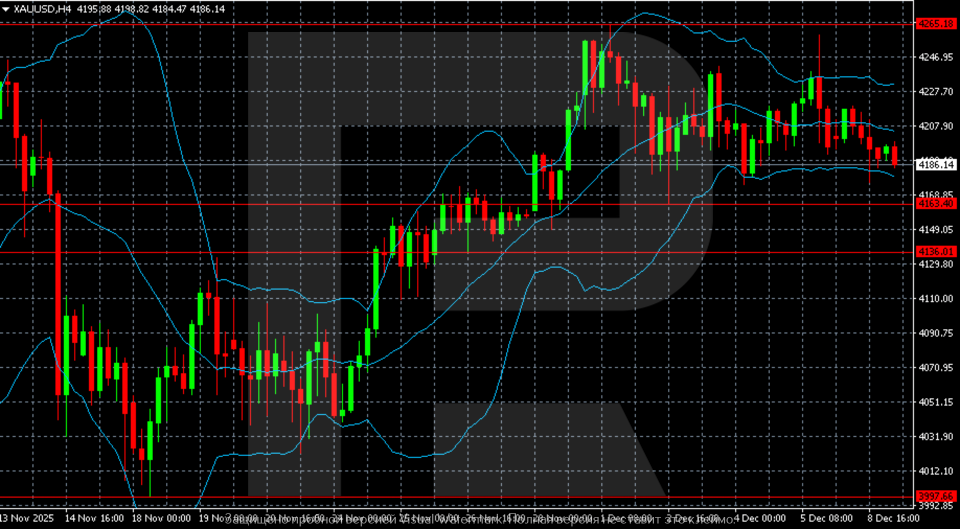
 

Silver nears $50 per ounce mark. Oil prices rise amid inventory drawdowns

By JustMarkets 

The Dow Jones (US30) Index fell by 0.01% at the close of Wednesday. The S&P 500 (US500) rose by 0.58%. The technological Nasdaq (US100) Index closed higher by 1.12%. The latest FOMC minutes showed that the majority of Federal Reserve officials noted the advisability of transitioning the federal funds rate to a more neutral level, as, in their view, the risks to employment had increased. However, according to the latest FOMC meeting minutes, the majority still emphasized that the risks to inflation remain tilted to the upside. Furthermore, a majority of participants deemed further policy easing likely for the remainder of the year, with about half of the officials expecting two more interest rate cuts by the end of 2025. Officials continued to state that they would weigh risks to both inflation and employment when considering their future actions.

AMD surged by 11.3% during the session and is up more than 40% since the start of the week as markets continued to price in the chipmaker’s deal with OpenAI, which marked over $1 trillion for the ChatGPT maker in a series of circular deals. Micron shares jumped 5.9%, while Nvidia, Oracle, and Amazon each rose by more than 2%. Cisco stock climbed 2% on the back of the release of a new artificial intelligence chip for data centers. Conversely, shares of defensive consumer companies and banks declined.

Stock markets in Europe rose yesterday. The German DAX (DE40) increased by 0.87%, the French CAC 40 (FR40) closed up by 1.07%, the Spanish IBEX35 (ES35) gained 0.97%, and the UK FTSE 100 (UK100) closed 0.69% higher. The Frankfurt DAX Index reached an all-time high on Wednesday. Market sentiment was lifted by new EU trade measures and plans to limit steel imports, although weak data from Germany and political uncertainty in France capped gains. Industrial production in Germany fell by 4.3% in August, the sharpest decline since March 2022, far exceeding the expected drop of 1%.

WTI oil prices rose by 1.5% to $62.65 per barrel after EIA data showed a sharp inventory drawdown at the key Cushing, Oklahoma hub. Inventories there shrank by 763,000 barrels last week, the largest drop since June, while nationwide crude inventories grew more than expected but remained close to seasonal lows. The report also showed a decline in refined product inventories, suggesting strengthening demand. Nevertheless, price gains were limited by expectations of abundant global supply. OPEC+ continues to ramp up production, and US oil output is expected to hit a record high this year.

Silver gained over 3% on Wednesday, nearing the $50 per ounce mark, an all-time high, as the protracted US government shutdown amid heightened geopolitical and economic uncertainty spurred demand for safe-haven assets. Markets are also anticipating the US Federal Reserve to cut its rate by a quarter point this month and likely one more in December. Concurrently, strong physical demand from the solar energy and electronics sectors continued to support prices, with the Silver Institute projecting a global supply deficit in 2025 for the fifth consecutive year.

Asian markets mostly fell yesterday. Japan’s Nikkei 225 (JP225) dropped by 0.45%, China’s FTSE China A50 (CHA50) did not trade yesterday, the Hang Seng (HK50) declined by 0.48%, and Australia’s ASX 200 (AU200) posted a negative result of 0.10%.

On Thursday, Chinese indices rose as mainland Chinese markets resumed trading after the long “Golden Week” holidays, during which a record 2.43 billion inter-regional passenger trips were recorded. Mining stocks led the gains after Beijing imposed export controls on rare-earth processing technology in a bid to solidify its dominance in the sector amid growing competition with the US.

The Australian dollar (AUD) climbed to around $0.660 on Thursday, extending gains from the previous session, as higher inflation expectations strengthened the Reserve Bank of Australia’s (RBA) hawkish stance. Consumer inflation expectations rose to 4.8% in October 2025 from 4.7% in September, the highest since June, on fears that third-quarter inflation could top prognoses. This reinforces the Central Bank’s cautious position, which is expected to keep its policy rate unchanged after setting it at 3.6% in September.

On Thursday, the New Zealand dollar (NZD) rose to $0.58, recovering from losses during the previous session when the Reserve Bank surprised markets with a larger-than-expected rate cut. On Wednesday, the Central Bank slashed the official cash rate (OCR) by 50 basis points to 2.50%, the lowest level since July 2022, citing concerns over the unsustainable state of the economy and leaving the door open for further easing. Markets are pricing in an 80% chance of a 25 bps rate cut at the RBNZ’s next meeting in November, and see roughly even odds that rates could fall to 2.0% by next year.

S&P 500 (US500) 6,753.72 +39.13 (+0.58%)

Dow Jones (US30) 46,601.78 −1.20 (−0.01%)

DAX (DE40) 24,597.13 +211.35 (+0.87%)

FTSE 100 (UK100) 9,548.87 +65.29 (+0.69%)

USD Index 98.85 +0.28 (+0.28%)

News feed for: 2025.10.09

  • German Trade Balance (m/m) at 09:00 (GMT+3);
  • Eurozone ECB Monetary Meeting Accounts at 14:30 (GMT+3);
  • Mexico Inflation Rate (m/m) at 15:00 (GMT+3);
  • US Initial Jobless Claims (w/w) at 15:30 (GMT+3) (Tentative);
  • US Fed Chair Powell Speaks at 15:30 (GMT+3);
  • US Natural Gas Storage (w/w) at 17:30 (GMT+3).

By JustMarkets


This article reflects a personal opinion and should not be interpreted as an investment advice, and/or offer, and/or a persistent request for carrying out financial transactions, and/or a guarantee, and/or a forecast of future events.

GBP/USD Halts Decline but Inflation Risks Linger

By RoboForex Analytical Department

The GBP/USD pair attempted to stabilise on Thursday, trading around 1.3413 USD. However, investor sentiment remains cautious amid a weak outlook for the UK economy and uncertainty surrounding the government’s November budget.

UK GDP growth is projected to remain moderate through year-end, while inflation is forecast to rise to 4% – double the Bank of England’s target. Recent data confirm the economy is losing momentum after a strong start to 2025.

The pound showed a muted reaction to this data. Nonetheless, markets are concerned that potential tax increases in the upcoming budget – aimed at ensuring compliance with fiscal rules – could exert further pressure on the currency.

This week, speeches from Bank of England officials Huw Pill and Catherine Mann are in focus. Both previously supported holding rates steady in September. Monetary policymakers have previously warned that global markets could face a shock if investors begin to doubt the prospects for the artificial intelligence sector or the independence of the US Federal Reserve.

Technical Analysis: GBP/USD

H4 Chart:

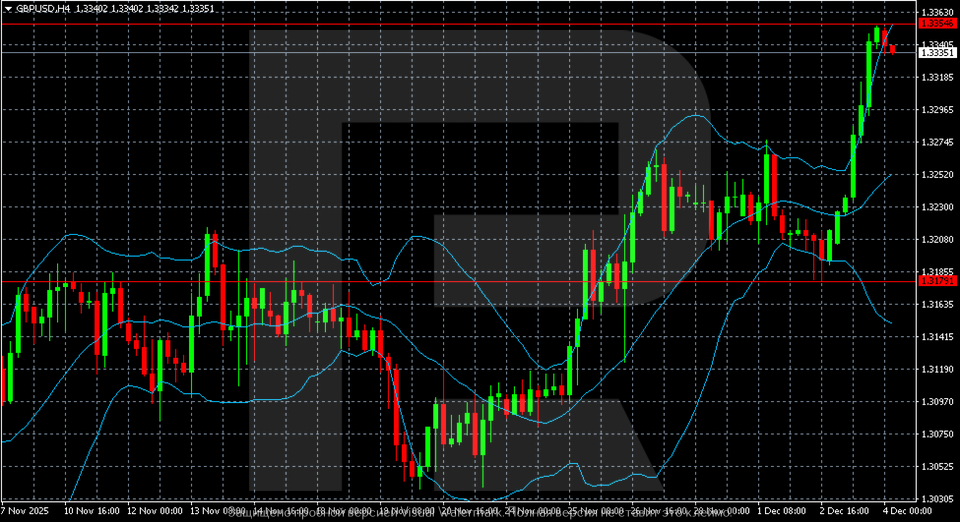
A narrow consolidation range has formed around 1.3420. Following a downward breakout, the pair is developing a decline towards 1.3300. This move represents only the first half of the third declining wave within the broader downtrend, with the primary target seen at 1.3130. This scenario is technically confirmed by the MACD indicator, whose signal line lies below zero and is pointing firmly downward.

H1 Chart:

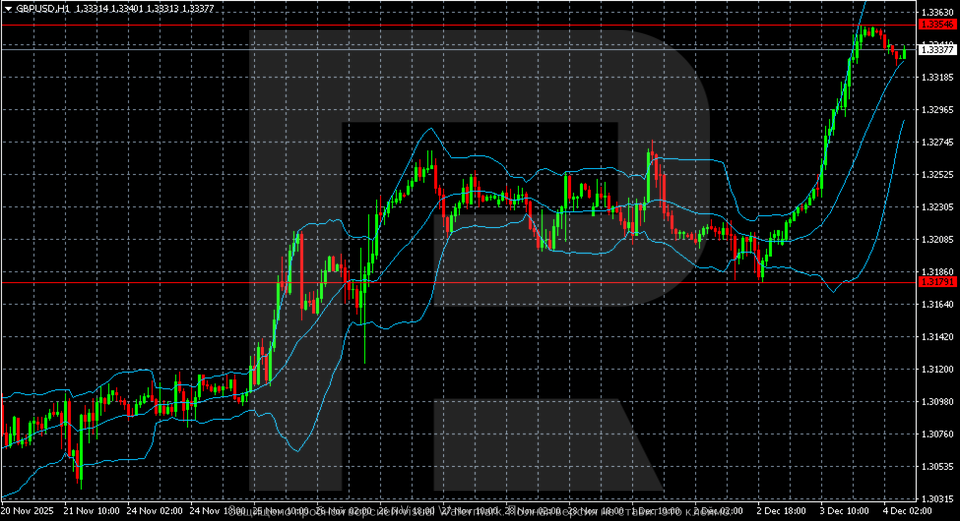
The pair has formed a consolidation range around 1.3415. The subsequent downward movement continues the bearish wave towards a local target of 1.3337. Upon reaching this level, a corrective pullback towards 1.3415 is anticipated. Following this, another decline towards at least 1.3300 is expected, with an extension of the downward structure to 1.3200 also possible. Technically, this outlook is supported by the Stochastic oscillator, whose signal line is below 80 and is turning sharply downward towards 20.

Conclusion

While the GBP/USD has paused its descent, significant downside risks remain due to domestic economic concerns and looming fiscal policy decisions. The technical structure continues to point to further declines, with key support levels at 1.3337 and 1.3300 in focus.


Disclaimer:

Any forecasts contained herein are based on the author’s particular opinion. This analysis may not be treated as trading advice. RoboForex bears no responsibility for trading results based on trading recommendations and reviews contained herein.

Winning a bidding war isn’t always a win, research on 14 million home sales shows

By Soon Hyeok Choi, Rochester Institute of Technology 

In today’s hot housing market, winning a bidding war can feel like a triumph. But my research shows it often comes with a catch: Homebuyers who win bidding wars tend to experience a “winner’s curse,” systematically overpaying for their new homes.

I’m a real estate economist, and my colleagues and I analyzed nearly 14 million home sales in 30 U.S. states over roughly two decades. We found that people who paid more than the asking price for their homes – a reliable sign of a bidding war – were more likely to default on their mortgages and saw significantly weaker returns.

How much weaker? On average, homebuyers who won bidding wars saw annual returns that were about 1.3 percentage points lower than those who didn’t, we found. We specifically looked at “unlevered” returns – basically, the returns you’d get if you bought the home outright with cash, without factoring in a mortgage.

Since the typical homeowner in our sample held a property for 6.3 years before selling it, this translates to about an 8.2% overpayment. Bidding-war winners were also 1.9 percentage points likelier to default.

Perhaps that loss would be worth it to someone who absolutely loves the property – but we found that homebuyers who purchase after a bidding war are also faster to resell. This suggests their overpayment is based less on enduring affection and more on bidding-war fever.

We also found that the effects of the winner’s curse – lower home appreciation and higher default rates – are stronger in places where bidding wars are more common. One example is my hometown of Rochester, New York, which has become a bidding-war hot spot in recent years.

Who bears the brunt? Lower-income, Black and Hispanic buyers are more likely to overpay in bidding wars, we found, making them more likely to suffer from the winner’s curse. This suggests that hot housing markets can worsen inequality.

Why it matters

While housing is the largest single form of wealth Americans own, past research on the winner’s curse mostly dealt with land auctions and company mergers – not the nation’s roughly 76 million owner-occupied, single-family homes. Our work is the first to show the direct evidence of the winner’s curse in residential housing markets.

This matters now because the housing market is cooling. Those who bought in the post-pandemic housing market and listed their homes in 2025 are already facing the risk of selling at a loss. Because this risk falls disproportionately on Black and Hispanic homebuyers, it could further widen the wealth gap.

By one measure, foreclosures are up 18% year over year. If the brunt of these losses falls on lower-income or otherwise vulnerable homeowners, the result could be an increase in housing insecurity and homelessness.

The good news is that the winner’s curse may be preventable. Better resources to prepare first-time homebuyers and comprehensive financial education related to mortgages and debt could help.

What still isn’t known

It’s possible more transparent bidding processes – or even formal auction systems for popular homes – could better inform prospective buyers and help them stave off the temptation of overpayment. Should the U.S. require real estate brokers or banks to caution their clients to think twice before going above the asking price? Or would that be unfair to sellers? Experimental research on these points would be useful.

Finally, our research focuses on the U.S. housing market. Whether the winner’s curse afflicts buyers in other countries remains an open question.

The Research Brief is a short take on interesting academic work.The Conversation

About the Author:

Soon Hyeok Choi, Assistant Professor of Real Estate Finance, Rochester Institute of Technology

This article is republished from The Conversation under a Creative Commons license. Read the original article.
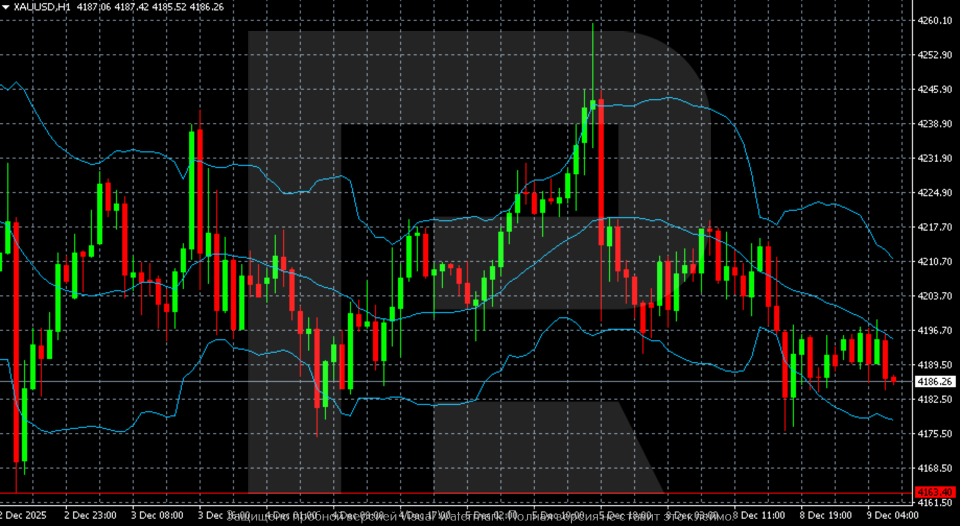
RBNZ unexpectedly cuts the rate by 0.5%. Natural gas prices jump amid drop in daily production

By JustMarkets 

The Dow Jones (US30) Index ended Tuesday down by 0.20%. The S&P 500 (US500) dropped 0.38%. The technology-heavy Nasdaq (US100) closed lower by 0.67%. The prolonged government shutdown continues to cloud the economic outlook, delaying the release of key data and putting pressure on policymakers to reach an agreement. Indices were also weighed down by a sharp sell-off in Oracle shares following weaker-than-expected reports on cloud segment margins. Tesla fell by 4.4% after presenting a lower-cost Model Y, Ford plunged 7.6% due to a supplier’s fire, and gold futures jumped above $4,000 per ounce as investors sought safe-haven assets. In the absence of new economic data, investors relied on secondary indicators and Federal Reserve statements, which pointed to a potential rate reduction amid the uncertainty.

The US consumer inflation expectations for the coming year rose to 3.4% in September 2025, the highest reading in five months, up from 3.2% in August. Meanwhile, five-year inflation expectations also increased from 2.9% to 3.0%, while three-year expectations remained at 3.0%. Unemployment expectations climbed 2.0 percentage points to 41.1%.

The Ivey Canadian Purchasing Managers’ Index (PMI) surged to 59.8 in September 2025 from 50.1 in August, hitting a 16-month high and beating market expectations of 51.2. The employment level also improved (50.2 vs. 46.0). Canada’s trade deficit widened to C$6.3 billion in August 2025, up from C$3.8 billion the previous month and significantly exceeding market expectations of C$5.6 billion, making it the second-largest trade deficit on record. Exports shrank by 3% month-over-month to C$60.6 billion, the first drop since April, extending a period of volatility that began after the US tariff threat and implementation. In turn, imports grew by 0.9% to C$66.9 billion, driven by a more than 500% surge in purchases of gold, silver, and platinum-group metals, which offset earlier declines this year due to tariff uncertainty.

Equity markets in Europe rose slightly yesterday. Germany’s DAX (DE40) edged up by 0.03%, France’s CAC 40 (FR40) closed higher by 0.04%, Spain’s IBEX35 (ES35) slipped 0.19%, and the UK’s FTSE 100 (UK100) closed up 0.05%.

The US natural gas prices jumped more than 2.5% on Tuesday to $3.45/MMBtu, nearing the 11-week high of $3.476 reached on October 1st, amid a drop in daily production. Output in the US 48 states averaged 106.5 billion cubic feet per day (bcfd) in October, down from September’s 107.4 bcfd and the record high of 108.0 bcfd in August.

Asian markets traded mixed yesterday. Japan’s Nikkei 225 (JP225) edged up by 0.01%, China’s FTSE China A50 (CHA50) and Hang Seng (HK50) did not trade yesterday, and Australia’s ASX 200 (AU200) posted a negative result of 0.27%.

The Reserve Bank of New Zealand (RBNZ) cut the Official Cash Rate (OCR) by 50 basis points to 2.5%, exceeding market expectations for a 25 basis point reduction, bringing the borrowing cost to its lowest level since mid-2022. Policymakers cited persistent spare capacity, subdued domestic activity, and downside risks from cautious household and business behavior that could slow the economic recovery, prompting them to implement a more significant easing. Inflation also remains near the upper bound of the 1-3% target band but is expected to return to the 2% midpoint by mid-2026 as tradable goods pressures ease. The committee remains prepared to ease policy further to anchor inflation near the 2% target.

S&P 500 (US500) 6,714.59 −25.69 (−0.38%)

Dow Jones (US30) 46,602.98 −91.99 (−0.20%)

DAX (DE40) 24,385.78 +7.49 (+0.03%)

FTSE 100 (UK100) 9,483.58 +4.44 (+0.05%)

USD Index 98.62 +0.51 (+0.52%)

News feed for: 2025.10.08

  • Japan Average Cash Earnings (m/m) at 02:30 (GMT+3);
  • RBNZ Interest Rate Decision at 04:00 (GMT+3);
  • RBNZ Rate Statement at 04:00 (GMT+3);
  • German Industrial Production (m/m) at 09:00 (GMT+3);
  • Sweden Inflation Rate (m/m) at 09:00 (GMT+3);
  • UK FPC Meeting Minutes at 12:30 (GMT+3);
  • US Crude Oil Reserves (w/w) at 17:30 (GMT+3);
  • Eurozone ECB President Lagarde Speaks at 19:00 (GMT+3);
  • US FOMC Meeting Minutes at 21:00 (GMT+3).

By JustMarkets


This article reflects a personal opinion and should not be interpreted as an investment advice, and/or offer, and/or a persistent request for carrying out financial transactions, and/or a guarantee, and/or a forecast of future events.

USD/JPY Hits February High as Dovish Policy Expectations Weigh on Yen

By RoboForex Analytical Department

The USD/JPY pair has rallied to its highest level since February, trading around 152.45. The Japanese yen has depreciated by over 3% this week, with selling pressure intensifying following the release of soft wage data. This has significantly dampened market expectations for further interest rate hikes from the Bank of Japan (BoJ).

The underlying driver is a persistent squeeze on household budgets: real incomes in Japan fell by 1.4% year-on-year in August, the eighth consecutive monthly decline. This confirms that price growth continues to outpace wage earnings.

While BoJ Governor Kazuo Ueda has previously signalled the regulator’s readiness to resume hiking rates should the economy and inflation align with forecasts, he has also highlighted risks from potential US trade tariffs.

On the political front, investors are assessing the implications of Sanae Takaichi’s victory in the leadership race. As a known supporter of the Abenomics stimulus programme, her election has bolstered expectations of large-scale budget injections and the continuation of an accommodative monetary policy stance.

Technical Analysis: USD/JPY

H4 Chart:

On the H4 chart, USD/JPY is advancing towards the 153.00 resistance level. Upon testing this level, a corrective pullback towards 151.28 is a plausible scenario. Following such a correction, the potential for a further upward move to 155.69 would be in view, with a longer-term trend objective at 156.90. This bullish outlook is technically supported by the MACD indicator, whose signal line is positioned above zero and pointing sharply higher.

H1 Chart:

On the H1 chart, the market has fulfilled its short-term growth target at 152.62. For the current session, we anticipate a minor decline to the 151.61 support level, which may be followed by another attempt to rise towards 153.00. This intraday view is corroborated by the Stochastic oscillator. Its signal line is currently below the 80 mark and is turning downwards towards 20, suggesting a brief consolidation before the next potential leg higher.

Conclusion

Fundamentally, the yen remains under pressure from weak domestic data and political signals that favour continued stimulus, reducing the likelihood of a near-term policy shift from the BoJ. Technically, the path of least resistance remains upwards, with key resistance at 153.00. A successful break above this level could open the door for a further significant advance, though short-term corrections should be expected within the broader bullish trend.


Disclaimer:

Any forecasts contained herein are based on the author’s particular opinion. This analysis may not be treated as trading advice. RoboForex bears no responsibility for trading results based on trading recommendations and reviews contained herein.

A billion-dollar drug was found in Easter Island soil – what scientists and companies owe the Indigenous people they studied

By Ted Powers, University of California, Davis 

An antibiotic discovered on Easter Island in 1964 sparked a billion-dollar pharmaceutical success story. Yet the history told about this “miracle drug” has completely left out the people and politics that made its discovery possible.

Named after the island’s Indigenous name, Rapa Nui, the drug rapamycin was initially developed as an immunosuppressant to prevent organ transplant rejection and to improve the efficacy of stents to treat coronary artery disease. Its use has since expanded to treat various types of cancer, and researchers are currently exploring its potential to
treat diabetes,
neurodegenerative diseases and
even aging. Indeed, studies raising rapamycin’s promise to extend lifespan or combat age-related diseases seem to be published almost daily. A PubMed search reveals over 59,000 journal articles that mention rapamycin, making it one of the most talked-about drugs in medicine.

Connected hexagonal structures
Chemical structure of rapamycin.
Fvasconcellos/Wikimedia Commons

At the heart of rapamycin’s power lies its ability to inhibit a protein called the target of rapamycin kinase, or TOR. This protein acts as a master regulator of cell growth and metabolism. Together with other partner proteins, TOR controls how cells respond to nutrients, stress and environmental signals, thereby influencing major processes such as protein synthesis and immune function. Given its central role in these fundamental cellular activities, it is not surprising that cancer, metabolic disorders and age-related diseases are linked to the malfunction of TOR.

Despite being so ubiquitous in science and medicine, how rapamycin was discovered has remained largely unknown to the public. Many in the field are aware that scientists from the pharmaceutical company Ayerst Research Laboratories isolated the molecule from a soil sample containing the bacterium Streptomyces hydroscopicus in the mid-1970s. What is less well known is that this soil sample was collected as part of a Canadian-led mission to Rapa Nui in 1964, called the Medical Expedition to Easter Island, or METEI.

As a scientist who built my career around the effects of rapamycin on cells, I felt compelled to understand and share the human story underlying its origin. Learning about historian Jacalyn Duffin’s work on METEI completely changed how I and many of my colleagues view our own field.

Unearthing rapamycin’s complex legacy raises important questions about systemic bias in biomedical research and what pharmaceutical companies owe to the Indigenous lands from which they mine their blockbuster discoveries.

History of METEI

The Medical Expedition to Easter Island was the brainchild of a Canadian team comprised of surgeon Stanley Skoryna and bacteriologist Georges Nogrady. Their goal was to study how an isolated population adapted to environmental stress, and they believed the planned construction of an international airport on Easter Island offered a unique opportunity. They presumed that the airport would result in increased outside contact with the island’s population, resulting in changes in their health and wellness.

With funding from the World Health Organization and logistical support from the Royal Canadian Navy, METEI arrived in Rapa Nui in December 1964. Over the course of three months, the team conducted medical examinations on nearly all 1,000 island inhabitants, collecting biological samples and systematically surveying the island’s flora and fauna.

It was as part of these efforts that Nogrady gathered over 200 soil samples, one of which ended up containing the rapamycin-producing Streptomyces strain of bacteria.

Poster of the word METEI written vertically between the back of two moai heads, with the inscription '1964-1965 RAPA NUI INA KA HOA (Don't give up the ship)'
METEI logo.
Georges Nogrady, CC BY-NC-ND

It’s important to realize that the expedition’s primary objective was to study the Rapa Nui people as a sort of living laboratory. They encouraged participation through bribery by offering gifts, food and supplies, and through coercion by enlisting a long-serving Franciscan priest on the island to aid in recruitment. While the researchers’ intentions may have been honorable, it is nevertheless an example of scientific colonialism, where a team of white investigators choose to study a group of predominantly nonwhite subjects without their input, resulting in a power imbalance.

There was an inherent bias in the inception of METEI. For one, the researchers assumed the Rapa Nui had been relatively isolated from the rest of the world when there was in fact a long history of interactions with countries outside the island, beginning with reports from the early 1700s through the late 1800s.

METEI also assumed that the Rapa Nui were genetically homogeneous, ignoring the island’s complex history of migration, slavery and disease. For example, the modern population of Rapa Nui are mixed race, from both Polynesian and South American ancestors. The population also included survivors of the African slave trade who were returned to the island and brought with them diseases, including smallpox.

This miscalculation undermined one of METEI’s key research goals: to assess how genetics affect disease risk. While the team published a number of studies describing the different fauna associated with the Rapa Nui, their inability to develop a baseline is likely one reason why there was no follow-up study following the completion of the airport on Easter Island in 1967.

Giving credit where it is due

Omissions in the origin stories of rapamycin reflect common ethical blind spots in how scientific discoveries are remembered.

Georges Nogrady carried soil samples back from Rapa Nui, one of which eventually reached Ayerst Research Laboratories. There, Surendra Sehgal and his team isolated what was named rapamycin, ultimately bringing it to market in the late 1990s as the immunosuppressant Rapamune. While Sehgal’s persistence was key in keeping the project alive through corporate upheavals – going as far as to stash a culture at home – neither Nogrady nor the METEI was ever credited in his landmark publications.

Although rapamycin has generated billions of dollars in revenue, the Rapa Nui people have received no financial benefit to date. This raises questions about Indigenous rights and biopiracy, which is the commercialization of Indigenous knowledge.

Agreements like the United Nations’s 1992 Convention on Biological Diversity and the 2007 Declaration on the Rights of Indigenous Peoples aim to protect Indigenous claims to biological resources by encouraging countries to obtain consent and input from Indigenous people and provide redress for potential harms before starting projects. However, these principles were not in place during METEI’s time.

Some argue that because the bacteria that produces rapamycin has since been found in other locations, Easter Island’s soil was not uniquely essential to the drug’s discovery. Moreover, because the islanders did not use rapamycin or even know about its presence on the island, some have countered that it is not a resource that can be “stolen.”

However, the discovery of rapamycin on Rapa Nui set the foundation for all subsequent research and commercialization around the molecule, and this only happened because the people were the subjects of study. Formally recognizing and educating the public about the essential role the Rapa Nui played in the eventual discovery of rapamycin is key to compensating them for their contributions.

In recent years, the broader pharmaceutical industry has begun to recognize the importance of fair compensation for Indigenous contributions. Some companies have pledged to reinvest in communities where valuable natural products are sourced. However, for the Rapa Nui, pharmaceutical companies that have directly profited from rapamycin have not yet made such an acknowledgment.

Ultimately, METEI is a story of both scientific triumph and social ambiguities. While the discovery of rapamycin has transformed medicine, the expedition’s impact on the Rapa Nui people is more complicated. I believe issues of biomedical consent, scientific colonialism and overlooked contributions highlight the need for a more critical examination and awareness of the legacy of breakthrough scientific discoveries.The Conversation

About the Author:

Ted Powers, Professor of Molecular and Cellular Biology, University of California, Davis

This article is republished from The Conversation under a Creative Commons license. Read the original article.

Political upheaval in France. Japanese indices hit new historical highs

By JustMarkets 

The Dow Jones (US30) Index ended Monday down by 0.14%. The S&P 500 (US500) gained 0.36%. The technology-heavy Nasdaq (US100) closed higher by 0.78%. Indices continue to rally amid the artificial intelligence boom, despite the US government being in a shutdown for the second consecutive week. AMD shares surged by 23.7% after the announcement of a multi-year deal to supply AI chips to OpenAI, with an option to acquire up to a 10% stake in AMD, fueling optimism for broader M&A activity.

US President Donald Trump stated on Monday that a 25% tariff will be imposed on all medium and heavy-duty trucks imported into the US starting November 1st. Last month, Trump announced that new tariffs would be placed on heavy-duty truck imports starting October 1st for national security reasons, saying the duties were intended to protect manufacturers from “unfair foreign competition.” Under trade agreements with Japan and the EU, the US agreed to a 15% tariff on passenger vehicles, but it remains unclear if this rate will apply to larger vehicles. The Trump administration also allowed manufacturers to deduct the value of US-made components when calculating tariffs on light vehicles assembled in Canada and Mexico.

Equity markets in Europe were mostly lower yesterday. Germany’s DAX (DE40) edged down by 0.01%, France’s CAC 40 (FR40) closed lower by 1.36%, Spain’s IBEX35 (ES35) dropped 0.18%, and the UK’s FTSE 100 (UK100) closed down 0.13%. European stock indices mostly closed lower on Monday as renewed political turmoil in France sparked fresh concerns over financial instability across major Eurozone economies. Markets were shaken by the resignation of Prime Minister Lecornu, as the French parliament remained opposed to spending cuts in the country’s budget, just weeks after he took office and the day after President Macron unveiled a new cabinet. French banks and insurance companies fell sharply as the drop in OATs (French government bonds) put pressure on their balance sheets and raised their liquidity metrics, with BNP Paribas falling 3.5% and AXA dropping 2.5%.

WTI crude oil prices rose by 1.3% to $61.7 per barrel on Monday after OPEC+ agreed to a smaller-than-expected production increase, easing concerns about a significant supply surge. The group announced it would only raise output by 137,000 barrels per day in November, matching the October increase, despite earlier reports of a much larger hike. This restrained decision came amid internal disagreements within the alliance, with Moscow advocating for a moderate increase to protect prices, while Riyadh pushed for a more aggressive expansion to regain market share. Prices were further supported by reports of a fire and a drone attack that led to the shutdown of the Russian Kirishi oil refinery, heightening fears of supply disruptions.

Asian markets traded mixed yesterday. Japan’s Nikkei 225 (JP225) surged 4.75%, China’s FTSE China A50 (CHA50) did not trade yesterday, Hong Kong’s Hang Seng (HK50) fell by 0.67%, and Australia’s ASX 200 (AU200) posted a negative result of 0.07%.

The Nikkei 225 (JP225) Index climbed above 48,200, and the broader Topix Index rose to 3,240 on Tuesday, with both indices hitting new record highs after Sanae Takaichi, a proponent of soft fiscal policy and economic stimulus, won the leadership of the ruling Liberal Democratic Party over the weekend, positioning her as Japan’s next prime minister. Takaichi is expected to press the Bank of Japan to maintain its ultra-easy monetary policy, which is leading to a sharp decline in the yen’s value.

The Australian dollar climbed to around $0.661 on Tuesday, marking its third consecutive session of gains, as markets scaled back expectations for a near-term policy easing by the Reserve Bank of Australia. RBA Governor Michele Bullock recently indicated that rates are likely to remain on hold as persistent consumer spending and inflation, particularly in housing and services, reduce the need for cuts. Investors are now pricing in only a 40% chance of a 25 basis point rate cut in November, down from near-certainty a month ago. On the economic front, the Westpac-Melbourne Institute Index of Consumer Sentiment fell 3.5% month-over-month to 92.1 in October, the steepest contraction since April, reflecting growing household concerns over sustained inflation.

The New Zealand dollar slipped to around $0.584 on Tuesday as investors anticipated looser monetary policy from the Reserve Bank. Markets have fully priced in a 25 basis point rate cut on Wednesday, with growing bets on a more significant 50 basis point reduction. Expectations for deeper easing were supported by weak business sentiment survey results, which suggest the economy may have contracted again in the third quarter, increasing the risk of a renewed recession.

S&P 500 (US500) 6,740.28 +24.49 (+0.36%)

Dow Jones (US30) 46,694.97 −63.31 (−0.14%)

DAX (DE40) 24,378.29 −0.51 (−0.01%)

FTSE 100 (UK100) 9,479.14 −12.11 (−0.13%)

USD Index 98.11 +0.39 (+0.39%)

News feed for: 2025.10.07

  • Australia Westpac Consumer Confidence (m/m) at 03:30 (GMT+3);
  • US Trade Balance (m/m) at 15:30 (GMT+3) (Tentative);
  • Canada Trade Balance (m/m) at 15:30 (GMT+3);
  • Canada Ivey PMI (m/m) at 15:30 (GMT+3);
  • Eurozone ECB President Lagarde Speaks at 19:10 (GMT+3).

By JustMarkets


This article reflects a personal opinion and should not be interpreted as an investment advice, and/or offer, and/or a persistent request for carrying out financial transactions, and/or a guarantee, and/or a forecast of future events.

EUR/USD Edges Lower Amid Heightened Political Uncertainty

By RoboForex Analytical Department

The EUR/USD pair declined to 1.1706 on Tuesday, weighed down by a confluence of adverse political developments. In the US, the federal government shutdown entered its seventh day, with the Senate once again failing to pass competing funding bills proposed by Democrats and Republicans.

The political stalemate deepened after Democratic leader Chuck Schumer rejected President Donald Trump’s claims that negotiations with Democrats were ongoing.

From a monetary policy perspective, recent economic data have reinforced market expectations for further easing by the Federal Reserve. Traders are now almost fully pricing in a 25-basis-point rate cut in October, with another expected in December.

Market participants are awaiting fresh guidance from central bank officials, including scheduled speeches by Governing Council member Stephen Miran on Wednesday and Chair Jerome Powell on Thursday.

The US dollar found additional support from the weakness of its major counterparts. The euro was pressured by political uncertainty in Europe, while the yen softened on the election of a new, moderate prime minister in Japan, who is known to advocate for further accommodative stimulus measures.

Technical Analysis: EUR/USD

H4 Chart:

On the H4 chart, the pair completed a downward impulse to 1.1652, followed by a corrective rebound to 1.1720. A subsequent decline towards 1.1685 is now forming. Later today, another rise towards 1.1723 is possible; however, the broader bearish structure suggests this will be followed by a further decline to 1.1650. A decisive break below this support level would open the potential for a move down to 1.1600, with a longer-term prospect of 1.1530. This bearish scenario is technically confirmed by the MACD indicator, whose signal line lies below zero and is pointing firmly downwards.

H1 Chart:

On the H1 chart, the market completed a corrective wave towards 1.1720. We anticipate a drop to 1.1680 today, followed by a potential rise to 1.1723. The overall trajectory, however, is expected to resume downwards, targeting 1.1650. A breach of this level would signal the potential for a downward wave to 1.1600, and if that level is breached, a third wave of decline towards 1.1530. This outlook is supported by the Stochastic oscillator, whose signal line is currently below 50 and is trending sharply downwards towards the 20 level.

Conclusion

The EUR/USD remains under pressure, caught between a resilient US dollar supported by Fed policy expectations and its own domestic political concerns. The technical structure remains predominantly bearish, suggesting further losses are likely if key support levels are breached.


Disclaimer:

Any forecasts contained herein are based on the author’s particular opinion. This analysis may not be treated as trading advice. RoboForex bears no responsibility for trading results based on trading recommendations and reviews contained herein.