The RBNZ lowered the interest rate to 2.25%. In Australia, inflationary pressures are increasing

By JustMarkets 

By the end of Tuesday, the Dow Jones Index (US30) rose by 1.43%. The S&P 500 Index (US500) gained 0.91%. The technology-focused Nasdaq Index (US100) closed higher by 0.67%. Traders assessed the prospects for artificial intelligence development and the possible imminent rate cut by the Fed. The growth was led by the communication services, healthcare, and materials sectors. The technology sector overall lagged, although some major companies showed notable gains: Alphabet rose by 1.6%, and Meta jumped by 3.8%, following reports that Meta is considering a multibillion-dollar deal to purchase Google’s AI chips. In contrast, Nvidia fell by 2.6% and has lost about 15% since the beginning of the month. If the trend continues, November could become the company’s worst month since September 2022. Oracle (-1.6%) and AMD (-4.2%) also declined.

European stocks mostly rose on Tuesday. Germany’s DAX (DE40) gained 0.97%, France’s CAC 40 (FR40) closed up 0.83%, Spain’s IBEX 35 (ES35) increased by 1.08%, and the UK’s FTSE 100 (UK100) closed positive 0.78%. Germany’s GDP in the third quarter remained unchanged, as falling exports and weakening private consumption heightened concerns about the outlook for Europe’s largest economy. Nevertheless, the data release had little impact on expectations regarding ECB policy: markets still assume that interest rates will remain unchanged until the end of 2026.

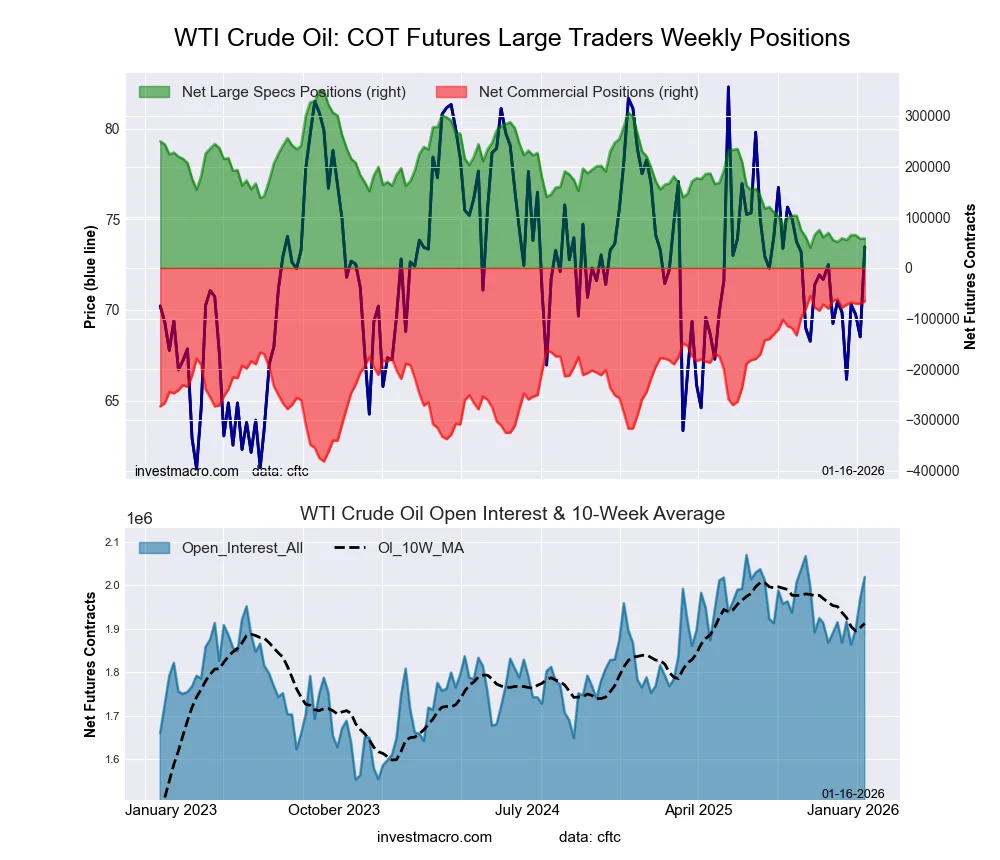
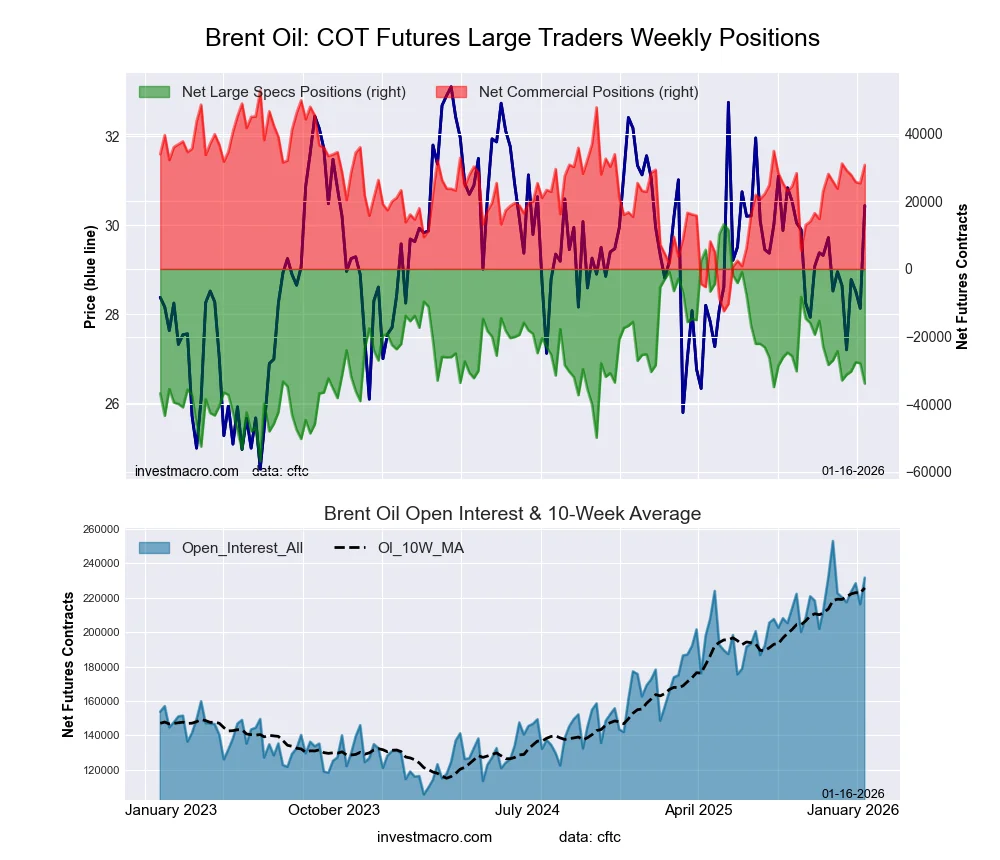
On Tuesday, WTI oil prices fell by about 2%, dropping to $57.7 per barrel, the lowest level in the past five weeks. Pressure on prices intensified after reports that Ukraine had agreed to the terms of a revised peace agreement aimed at ending the war with Russia. President Volodymyr Zelensky noted that negotiations with the US are ongoing, while Russia’s position remains uncertain. A potential end to the conflict could significantly affect oil markets. Any increase in Russian production in the event of eased restrictions could heighten the risk of oversupply.

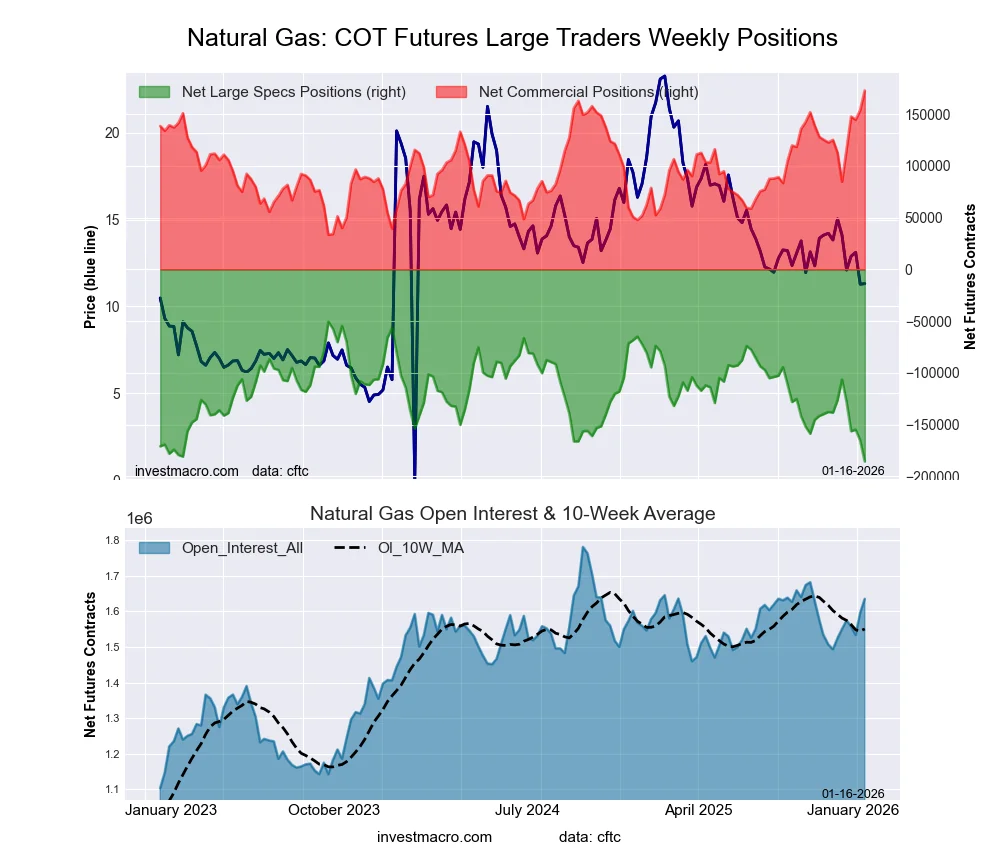
The US natural gas prices fell nearly 5%, dropping to around $4.4 per million MMBtu. Prices were pressured by record production volumes and high inventory levels, ensuring an abundant supply in the market. At the same time, LNG exports continue to grow: in November, shipments from the eight largest US terminals averaged 18 billion cubic feet per day, surpassing October’s record (16.6 billion cubic feet per day).

Asian markets also traded without a unified trend yesterday. Japan’s Nikkei 225 (JP225) rose by 0.07%, China’s FTSE China A50 (CHA50) gained 0.87%, Hong Kong’s Hang Seng (HK50) increased by 0.69%, and Australia’s ASX 200 (AU200) closed positively at 1.38%.

At its final meeting of the year, the Reserve Bank of New Zealand (RBNZ) lowered the official cash rate by 25 basis points to 2.25%, in line with market expectations, bringing borrowing costs to their lowest level since mid-2022. The regulator emphasized that the decision reflects significant unused capacity in the economy and easing inflationary pressures. The Monetary Policy Committee stressed that subsequent decisions will depend on updated data and the outlook for the economy and inflation.

The Australian dollar strengthened on Wednesday to 0.650 USD, reaching a weekly high, after higher-than-expected inflation data reinforced expectations of continued tight policy by the Reserve Bank of Australia (RBA). Headline inflation in October accelerated to 3.8%, the highest in seven months, exceeding projections. Markets now see minimal chances of policy easing before May next year, and some analysts believe the rate-cutting cycle may already be over.

S&P 500 (US500) 6,765.88 +60.76 (+0.91%)

Dow Jones (US30) 47,112.45 +664.18 (+1.43%)

DAX (DE40) 23,464.63 +225.45 (+0.97%)

FTSE 100 (UK100) 9,609.53 +74.62 (+0.78%)

USD Index 99.80 -0.34% (-0.34%)

News feed for: 2025.11.26

  • Australia Consumer Price Index (m/m) at 02:30 (GMT+2); – AUD (HIGH)
  • New Zealand RBNZ Interest Rate Decision at 03:00 (GMT+2); – NZD (HIGH)
  • New Zealand RBNZ Rate Statement at 03:00 (GMT+2); – NZD (HIGH)
  • New Zealand RBNZ Press Conference at 04:00 (GMT+2); – NZD (MED)
  • UK Autumn Prognosis Statement at 14:30 (GMT+2); – GBP (HIGH)
  • US Initial Jobless Claims (w/w) at 15:30 (GMT+2); – USD (MED)
  • US Durable Goods Orders (m/m) at 15:30 (GMT+2); – USD (MED)
  • US GDP (q/q) at 15:30 (GMT+2); – USD (MED)
  • US PCE Price index (m/m) at 15:30 (GMT+2); – USD (HIGH)
  • US Chicago PMI (m/m) at 16:45 (GMT+2); – USD (MED)
  • US Crude Oil Reserves (w/w) at 17:30 (GMT+2); – WTI (HIGH)
  • US Natural Gas Storage (w/w) at 19:00 (GMT+2); – XNG (HIGH)
  • New Zealand Retail Sales (m/m) at 23:45 (GMT+2). – NZD (MED)

By JustMarkets


This article reflects a personal opinion and should not be interpreted as an investment advice, and/or offer, and/or a persistent request for carrying out financial transactions, and/or a guarantee, and/or a forecast of future events.

EUR/USD Extends Losses as Dollar Strength Is Questioned

By RoboForex Analytical Department

The EUR/USD pair declined further on Tuesday, edging towards 1.1512. This downward movement persists despite a recent bout of US dollar weakness, which was triggered by a series of dovish comments from Federal Reserve officials that significantly increased the likelihood of an imminent rate cut.

The shift in sentiment was led by Governor Christopher Waller, who expressed support for a December cut, citing mounting risks to the labour market. Other officials, including Mary Daly and John Williams, echoed his stance. Waller also emphasised that policy decisions in 2026 will be contingent upon a large volume of delayed economic data, which agencies are now beginning to publish following the end of the government shutdown.

This coordinated messaging has caused a dramatic repricing in interest rate futures. The market-implied probability of a 25-basis-point cut in December has surged to 81%, a substantial increase from just 42% a week ago.

Despite this dovish tilt, the US dollar has demonstrated resilience. Investor focus is now shifting to a slew of upcoming data releases, including reports on retail sales, PPI, durable goods orders, and weekly jobless claims, which will provide a clearer picture of the US economy’s health.

Technical Analysis: EUR/USD

H4 Chart:

On the H4 chart, EUR/USD is forming a tight consolidation range above the key support at 1.1510. The current structure suggests a high probability of a technical correction towards 1.1588, with the potential to extend this rebound to 1.1616. However, a decisive downward breakout from this range would signal the resumption of the primary downtrend, activating the next bearish impulse with an initial target at 1.1488. The MACD indicator technically supports this scenario. Its signal line is below zero but is pointing upwards, indicating building momentum for a short-term correction within the broader bearish environment.

H1 Chart:

On the H1 chart, the pair completed a growth wave to 1.1549 before declining to 1.1510, forming a consolidation range around 1.1530. An upward breakout could initiate another leg higher towards 1.1568, potentially extending to 1.1616. It is crucial to view any such strength as a corrective rally before the larger downtrend resumes, targeting a move back towards 1.1500. Conversely, a downward breakout would directly activate the bearish potential for a decline to 1.1488, a level that could mark the completion of the first phase of the third wave within the broader downward trend. The Stochastic oscillator aligns with the near-term corrective view, as its signal line has turned up from the 20 level, suggesting room for a bounce towards 80.

Conclusion

While dovish Fed rhetoric has injected volatility and capped the dollar’s gains, the EUR/USD remains in a fragile technical position. The immediate outlook hinges on the pair’s ability to hold the 1.1510 support. A break higher would trigger a corrective rally towards 1.1616, offering a potential selling opportunity. However, a failure to hold this level would open the path for a more pronounced decline towards 1.1488 and possibly lower, reaffirming the underlying bearish trend.


Disclaimer:

Any forecasts contained herein are based on the author’s particular opinion. This analysis may not be treated as trading advice. RoboForex bears no responsibility for trading results based on trading recommendations and reviews contained herein.

Fed officials hint at a December rate cut. Hong Kong’s Hang Seng breaks six‑day losing streak

By JustMarkets

By Monday’s close, the Dow Jones Index (US30) rose by 0.44%. The S&P 500 Index (US500) gained 1.55%. The Nasdaq (US100) closed higher at 2.69%. Markets were supported by comments from Federal Reserve officials. New York Fed President John Williams pointed to the possibility of rate cuts in the near term, while Fed Governor Christopher Waller noted that recent labor market weakness increases the likelihood of a December cut. According to CME FedWatch, the probability of a 25 bps cut at the December 9-10 meeting is estimated at about 79%.

The technology sector led the rally. Broadcom surged 11.1% amid renewed interest in AI infrastructure. Alphabet gained more than 6% after news related to Gemini 3 lifted its market capitalization above Microsoft. Tesla rose by 6.8% following Elon Musk’s statements about progress in developing next‑generation AI chips.

European stocks recovered and ended Monday with modest gains, recouping part of last week’s losses. Germany’s DAX (DE40) rose by 0.64%, France’s CAC 40 (FR40) closed down 0.29%, Spain’s IBEX 35 (ES35) gained 0.92%, and the UK’s FTSE 100 (UK100) closed negative 0.05%. The technology sector was a clear leader, following the positive momentum from US markets. ASML shares rose by 3%, Infineon gained 3.5%, while Siemens and Schneider Electric also closed higher.

On Tuesday, silver climbed above $51 per ounce, reaching a weekly high amid heightened expectations of imminent US rate cuts. Dovish comments from Fed officials supported the metal’s rise: Governor Christopher Waller expressed readiness to back a December cut, citing growing labor market risks, echoing recent remarks from San Francisco Fed President Mary Daly and New York Fed President John Williams.

WTI crude oil prices rose Monday to $59 per barrel, partially recovering after last week’s 3.4% drop, as markets assessed the likelihood of a peace agreement between Russia and Ukraine. The US‑brokered talks reportedly made some progress, though key disagreements remain. A potential deal could have major implications for the oil market. If sanctions are eased, Russian oil could return to the global market, increasing the expected supply surplus in 2026.
The US natural gas prices fell to $4.53/MMBtu, as the market remains well supplied thanks to near‑record production and high inventories. Output growth has kept stocks about 4% above seasonal norms. However, recent cold weather triggered the first drawdown of the winter. Rising exports partly offset high production, but the market balance remains comfortable.

Asian markets traded mixed yesterday. Japan’s Nikkei 225 (JP225) fell by 2.40%, China’s FTSE China A50 (CHA50) dropped 2.57%, Hong Kong’s Hang Seng (HK50) gained 1.97%, and Australia’s ASX 200 (AU200) closed positive 1.29%. The Hang Seng broke a six‑day losing streak, supported by gains in US indices. Technology once again showed the strongest momentum: the Tech Index rose by 2.7% amid reports that the Trump administration may allow Nvidia to sell H200 chips to China. Additional support came from expectations of potential stimulus measures ahead of the Central Economic Work Conference in Beijing next month.

S&P 500 (US500) 6,705.12 +102.13 (+1.55%)

Dow Jones (US30) 46,448.27 +202.86 (+0.44%)

DAX (DE40) 23,239.18 +147.31 (+0.64%)

FTSE 100 (UK100) 9,534.91 −4.80 (−0.05%)

USD Index 100.18 +0.00% (+0.00%)

News feed for: 2025.11.25

  • US Producer Price Index (m/m) at 15:30 (GMT+2); – USD (HIGH)
  • US Retail Sales (m/m) at 15:30 (GMT+2); – USD (MED)
  • US Pending Home Sales (m/m) at 17:00 (GMT+2). – USD (MED)


By JustMarkets


This article reflects a personal opinion and should not be interpreted as an investment advice, and/or offer, and/or a persistent request for carrying out financial transactions, and/or a guarantee, and/or a forecast of future events.

Europe’s manufacturing sector continues to struggle. Oil prices fell below $58 per barrel

By JustMarkets

By Friday’s close, the Dow Jones Index (US30) rose by 1.08% (weekly -1.75%). The S&P 500 Index (US500) gained 0.98% (weekly -1.65%). The Nasdaq (US100) closed higher at 0.77% (weekly -2.61%). Despite Friday’s gains, all indices ended the week in negative territory. The technology sector weakened again: Nvidia (-1%), Microsoft (-1.3%), Broadcom (-1.9%), AMD (-1.1%), and Oracle (-5.7%) came under pressure as investors continued to reassess lofty valuations of AI‑related companies.

Meanwhile, the University of Michigan Consumer Sentiment Index for November rose to 51.0 from the preliminary 50.3 after the end of the federal shutdown. Despite the slight increase, the figure remains the second lowest on record, only slightly above the June 2022 low, as households continue to face high prices and declining real incomes. One‑year inflation expectations edged down from 4.6% to 4.5%, marking the third consecutive monthly decline, though still well above January’s 3.3%.

The Mexican peso (MXN) weakened to 18.45 per US dollar. Mexico’s economy contracted in Q3, with GDP down 0.3% q/q. Manufacturing activity weakened notably, pointing to slower growth and exports than expected, raising doubts about the sustainability of the high interest rate premium. In November, the Bank of Mexico began an easing cycle, cutting the key rate by 25 bps to 7.25%. Meeting minutes signaled a more cautious approach to further cuts, reducing the appeal of carry trades that had previously supported the peso.

European stock markets fell on Friday. Germany’s DAX (DE40) dropped 0.80% (weekly -3.34%), France’s CAC 40 (FR40) edged up 0.02% (weekly -2.12%), Spain’s IBEX 35 (ES35) fell by 1.04% (weekly -3.02%), and the UK’s FTSE 100 (UK100) closed positive 0.12% (weekly -1.64%). All indices ended the week in negative territory. Preliminary PMI data showed Europe’s manufacturing sector remains weak, while service sector growth slowed in November. The Eurozone manufacturing PMI fell to 49.7, below the prognoses of 50.2. A reading below 50 signals contraction. The decline reflects ongoing drops in new orders and employment, with manufacturing jobs shrinking monthly for two and a half years straight.

WTI crude oil prices fell more than 2% to $57.5 per barrel, hitting a one‑month low. Pressure increased after Ukraine’s President Volodymyr Zelensky expressed readiness to continue peace talks. A draft agreement developed by the US and Russia is expected to be discussed further at Zelensky’s upcoming meeting with President Donald Trump. Reports suggest proposals include territorial concessions by Ukraine and partial sanctions relief, potentially boosting Russian oil exports and raising oversupply concerns. European diplomats remain skeptical about the likelihood of an agreement.

Asian markets also traded under pressure last week. Japan’s Nikkei 225 (JP225) fell by 3.29%, China’s FTSE China A50 (CHA50) dropped 3.06%, Hong Kong’s Hang Seng (HK50) declined 4.62%, and Australia’s ASX 200 (AU200) posted a five‑day loss of 2.18%.

The New Zealand dollar is trading near a seven‑month low amid expectations of an imminent rate cut by the Reserve Bank of New Zealand. Markets have fully priced in a 25 bps cut, with a small chance of a more aggressive 50 bps move. Traders’ focus will be on RBNZ rhetoric after the decision: analysts believe this cut may be the last in the current cycle unless the global situation worsens significantly.

Annual inflation in Singapore accelerated to 1.2% in October 2025 from 0.7% the previous month, reaching the highest level since January. Core inflation also rose to 1.2% from 0.4% in September, the highest in ten months. In a joint statement, the Monetary Authority of Singapore (MAS) and the Ministry of Trade and Industry noted that import costs are likely to continue declining, though at a more moderate pace.

S&P 500 (US500) 6,602.99 +64.23 (+0.98%)

Dow Jones (US30) 46,245.41 +493.15 (+1.08%)

DAX (DE40) 23,091.87 −186.98 (−0.80%)

FTSE 100 (UK100) 9,539.71 +12.06 (+0.13%)

USD Index 100.20 +0.04% (+0.04%)

News feed for: 2025.11.24

  • German ifo Business Climate (m/m) at 11:00 (GMT+2); – EUR (MED)
  • Eurozone ECB President Lagarde Speaks at 16:50 (GMT+2). – EUR (LOW)

By JustMarkets


This article reflects a personal opinion and should not be interpreted as an investment advice, and/or offer, and/or a persistent request for carrying out financial transactions, and/or a guarantee, and/or a forecast of future events.

Yen Under Sustained Pressure, Igniting Intervention Fears

By RoboForex Analytical Department

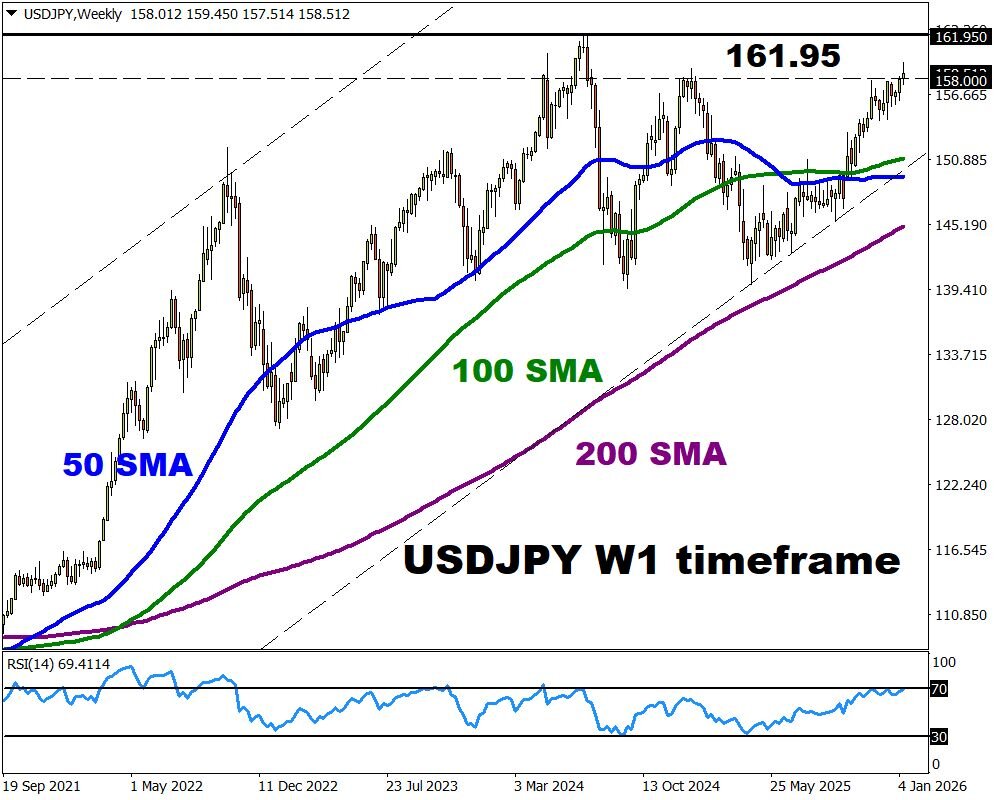
The USD/JPY pair is trading firmly around 156.56 on Monday, keeping the Japanese yen in a deeply weak position. Markets remain on high alert as they assess a chorus of verbal interventions from Japanese officials aimed at stemming the decline of the national currency.

The warnings intensified on Sunday when Takuji Aida, an adviser to Prime Minister Sanae Takaichi, stated that Tokyo is prepared to intervene directly in the currency market if the yen’s weakness begins to inflict significant harm on the economy.

This follows similar expressions of concern from Bank of Japan Governor Kazuo Ueda and Finance Minister Satsuki Katayama last week. Their comments have significantly heightened expectations of potential market intervention, with many analysts identifying the 160.00 level as a critical line in the sand, recalling that this zone prompted official action during previous episodes of yen weakness.

The yen’s sell-off, which drove it to a ten-month low last week, was initially triggered by the new cabinet’s substantial stimulus package. The plan raised alarms over Japan’s fiscal health, while the administration’s continued insistence on ultra-loose monetary policy has provided a fundamental backdrop for further currency depreciation.

Technical Analysis: USD/JPY

H4 Chart:

On the H4 chart, USD/JPY completed its first downward impulse to 156.19 and is now forming a consolidation range around 156.55. An upward breakout from this range is expected to trigger a corrective rally towards 157.15. Following this correction, we anticipate the resumption of the bearish move, initiating a new downward impulse with an initial target at 154.00. A break below this level would open the path for a deeper correction towards 153.30. This scenario is technically supported by the MACD indicator. Its signal line is above zero but is pointing decisively downward, suggesting that while the pair is correcting from overbought conditions, the underlying momentum is shifting bearish.

H1 Chart:

On the H1 chart, the pair completed a downward wave to 156.20. We are now observing a corrective phase for this move, with an initial target set at 157.13. Upon completion of this upward correction, we expect the next leg of the downtrend to develop, targeting 154.44. The Stochastic oscillator confirms this near-term view. Its signal line is above 50 and rising towards 80, indicating that short-term buying pressure is driving the correction before the larger bearish trend reasserts itself.

Conclusion

The yen remains caught between fundamental pressures from domestic policy and escalating verbal intervention from authorities. Technically, the USD/JPY pair is completing a corrective bounce within a newly established short-term downtrend. While a rise towards 157.15 is likely in the near term, this should be viewed as a corrective move within a broader bearish structure that targets a decline towards 154.00 and potentially 153.30. All eyes remain on the 160.00 level, widely viewed as the threshold for potential official intervention.

Disclaimer:

Any forecasts contained herein are based on the author’s particular opinion. This analysis may not be treated as trading advice. RoboForex bears no responsibility for trading results based on trading recommendations and reviews contained herein.

$2B Counter-Strike 2 crash exposes a legal black hole: Your digital investments aren’t really yours

By João Marinotti, Indiana University 

In late October 2025, as much as US$2 billion vanished from a digital marketplace. This wasn’t a hack or a bubble bursting. It happened because one company, Valve, changed the rules for its video game Counter-Strike 2, a popular first-person shooter with a global player base of nearly 30 million monthly users.

For years, its players have bought, sold and traded digital cosmetic items, known as “skins.” Some rare items, particularly knives and gloves, commanded high prices in real-world money – up to $1.5 million – leading some gamers to treat the market like an investment portfolio. As a result, many investment-style analytics websites charge monthly fees for financial insight, trends and transaction data from this digital marketplace.

In one fell swoop, Valve unilaterally changed the game. It expanded the “trade up contract,” allowing players to exchange – or “trade up” – a number of their common assets into knives or gloves.

By flipping this switch, Valve instantly upended digital scarcity. The market was flooded with new supply, and the value of existing high-end items collapsed. Prices plummeted, initially erasing half the market’s total value, which exceeded $6 billion before the recent crash. Although a partial recovery brought the net loss to roughly 25%, significant volatility continues, leaving investors unsure whether the bottom has truly fallen out.

Many of those who saw their digital fortunes evaporate immediately wondered whether there was anything they could do to get their money back. Speaking as a law professor and a gamer myself, the answer isn’t what they want to hear: no. In fact, the existing legal structure largely protects Valve’s ability to engage in this sort of digital market manipulation. Players and investors were simply out of luck.

The Counter-Strike 2 crash reveals a troubling reality that extends far beyond video games: Corporations have built exchange-scale investment markets governed primarily by private terms-of-service agreements, rather than the robust set of public regulations that oversee traditional financial and consumer markets. These digital economies occupy a legal blind spot, lacking the fundamental guardrails of property rights, meaningful consumer protection or even securities regulation.

Buyer’s guides like this one have cropped up on YouTube.

Your digital ‘property’ isn’t really yours

If you spend real money on a digital item, it may feel like you should own it. Legally, you don’t.

The digital economy is built on a crucial distinction between ownership and licensing. When users sign up for Steam, Valve’s platform, they agree to the Steam subscriber agreement. Buried in that contract is a critical piece of legalese stating that all digital assets and services provided by Valve, including the Counter-Strike 2 skins, are merely “licensed, not sold.” The license granted to users “confers no title or ownership” at all. This isn’t meaningless corporate jargon; it’s a legal standard routinely affirmed by U.S. courts.

The legal implication is clear: Because players only license their skins, they have no property rights over them. When Valve changed the game’s mechanics in a way that collapsed the items’ market value, it didn’t steal, damage or destroy anyone’s “property.” In the eyes of the law, Valve simply altered the conditions of a license, something that its terms-of-service agreement allows it to do unilaterally, at any time, for any reason.

Consumer protection laws don’t apply

While the Counter-Strike 2 crash may seem like a violation of consumer rights, current laws are ill-equipped to handle this type of corporate behavior.

Lawmakers have begun addressing concerns about digital goods, primarily focusing on instances where purchased movies or games disappear entirely from user libraries. For example, California recently enacted AB 2426. This law requires transparency, prohibiting terms like “buy” or “purchase” unless the consumer confirms that they understand they will receive only a revocable license.

As commendable as this law is, it protects only against confusion and loss of access, not loss of market value when platforms rebalance virtual economies. Valve can comply with consumer transparency laws and still adjust the supply of digital items, rendering them valueless overnight. Ultimately, current consumer protection laws are designed to ensure users know what they are licensing. They do not, however, create ownership interests or protect the speculative value of those digital items.

Game items are treated like unregulated stocks

Perhaps the most significant legal vacuum is the absence of financial regulation. The Counter-Strike 2 economy, a multibillion-dollar ecosystem with dedicated investors and third-party cash markets, looks and behaves like a traditional financial market. Yet, it remains outside the purview of any financial regulator, such as the U.S. Securities and Exchange Commission.

Under U.S. law, the primary standard for determining whether an asset should be governed as a security is the Howey test. According to this Supreme Court precedent, an asset is a security if it meets four criteria. Securities involve an “investment of money” in a “common enterprise” with a reasonable expectation of “profits” derived from the “efforts of others.”

Counter-Strike 2 skins arguably meet all of these criteria. Participants invest real money in a common enterprise – Valve’s platform – with an expectation of profit. Crucially, that profit depends on the “efforts of others.” The SEC notes this prong is met when a promoter provides “essential managerial efforts” that affect the enterprise’s success. Valve controls the game’s development, manages the platform and – as the recent update proves – dictates item supply and scarcity.

If a publicly traded company unilaterally changed its rules in a way that predictably tanked the price of its own shares, regulators would immediately investigate for market manipulation. So how can Valve get away with this? Three things cut against the skins’ status as securities.

First is their “consumptive intent” – skins are primarily game cosmetics. Second, there’s no way to convert the skins into dollars within Valve’s own ecosystem. In other words, third-party markets allow users to cash out, but these markets operate outside Valve’s own immediate control. And finally, the Howey test generally governs assets, such as stocks and bonds, that grant investors enforceable rights. Valve’s licensing scheme attempts to circumvent this by ensuring players hold nothing but a revocable license.

In my view, the $2 billion crash is a wake-up call. As digital economies grow in financial significance, society must decide: Will these markets continue to be governed solely by private corporate contracts? Or will they require integration into more robust legal frameworks, such as securities regulation, consumer protection and property law?The Conversation

About the Author:

João Marinotti, Associate Professor of Law, Indiana University

This article is republished from The Conversation under a Creative Commons license. Read the original article.


Concerns about the artificial intelligence sector triggered a global sell‑off of assets

By JustMarkets 

On Thursday, the US stocks came under heavy selling pressure. The Dow Jones Index (US30) fell by 0.84%. The S&P 500 Index (US500) dropped 1.56%. The Nasdaq (US100) closed down 2.38%. Market participants increased expectations that the Federal Reserve may maintain a hawkish stance on rates. The shift in sentiment was driven both by reassessment of risks around lofty valuations of AI‑related companies and by new data confirming labor market resilience. The delayed employment figures, the last before the December FOMC meeting, showed a larger‑than‑expected increase in jobs, reinforcing expectations that rates will remain unchanged next month.

The technology and AI sector was again in the spotlight. Nvidia shares fell by 3.2%, despite gaining about 5% at the open. The company reported results that beat expectations and highlighted steady demand for AI infrastructure. However, its comment that a $100 billion contract with OpenAI was not guaranteed heightened investor concerns that the data‑center market may be overheated. Against this backdrop, AMD, Micron, and Oracle shares dropped 6-11%. Walmart rose by 6% after posting strong quarterly results and raising its annual projections, supporting the retail sector.

The Canadian dollar weakened to 1.41 per US dollar. Gains sparked by budget approval quickly faded as fundamentals remained weak. Bank of Canada officials again stressed the need for broad structural measures to boost productivity, noting that tighter US trade barriers increase risks for Canada’s economy, which already shows signs of slowing. The commodity market also failed to support the loonie, as oil prices fell after industry data showed US crude inventories rose by about 4.4 million barrels and seaborne stocks climbed to record levels. This deprived the Canadian currency of a key external driver.

Bitcoin fell to $85,000, its lowest level since April, as the global sell‑off in tech stocks, driven by renewed concerns about the AI sector, spread to other risk assets, including digital assets. Correlation between Bitcoin and the tech sector rose to a six‑month high of 80%, highlighting the leading digital assets’ departure from their supposed role as a “safe haven” during market uncertainty.

European stocks recovered slightly on Thursday. Germany’s DAX (DE40) rose by 0.50%, France’s CAC 40 (FR40) closed up 0.34%, Spain’s IBEX 35 (ES35) gained 0.63%, and the UK’s FTSE 100 (UK100) rose 0.21%. European equities ended Thursday with sharp gains, following the rebound in global markets after Nvidia’s strong earnings eased concerns about excessively high valuations of tech companies. Against this backdrop, European firms linked to data‑center infrastructure led the rally: Siemens, Schneider Electric, and ASML all closed firmly higher.

WTI crude oil prices fell to $58 per barrel on Friday, declining for the third consecutive day. The US sanctions against Rosneft and Lukoil took effect. The new measures could force up to 48 million barrels of Russian oil to remain at sea due to restricted access to buyers and logistics channels. Indian refiners, which in recent years relied on discounted Russian oil supplies, are already beginning to seek alternative sources.

Asian markets mostly rose yesterday. Japan’s Nikkei 225 (JP225) gained 2.65%, China’s FTSE China A50 (CHA50) rose by 0.41%, Hong Kong’s Hang Seng (HK50) edged up 0.02%, while Australia’s ASX 200 (AU200) closed positive 1.24%.

S&P 500 (US500) 6,538.76 −103.40 (−1.56%)

Dow Jones (US30) 45,752.26 −386.51 (−0.84%)

DAX (DE40) 23,278.85 +115.93 (+0.50%)

FTSE 100 (UK100) 9,527.65 +20.24 (+0.21%)

USD Index 100.24 +0.01% (+0.01%)

News feed for: 2025.11.21

  • Australia Manufacturing PMI (m/m) at 00:00 (GMT+2); – AUD (LOW)
  • Australia Services PMI (m/m) at 00:00 (GMT+2); – AUD (LOW)
  • Japan National Core CPI at 01:30 (GMT+2); – JPY (HIGH)
  • Japan Manufacturing PMI (m/m) at 02:30 (GMT+2); – JPY (LOW)
  • Japan Services PMI (m/m) at 02:30 (GMT+2); – JPY (LOW)
  • UK Retail Sales (m/m) at 09:00 (GMT+2); – GBP (MED)
  • German Manufacturing PMI (m/m) at 10:30 (GMT+2); – EUR (LOW)
  • German Services PMI (m/m) at 10:30 (GMT+2); – EUR (LOW)
  • Eurozone Manufacturing PMI (m/m) at 11:00 (GMT+2); – EUR (LOW)
  • Eurozone Services PMI (m/m) at 11:00 (GMT+2); – EUR (LOW)
  • UK Manufacturing PMI (m/m) at 11:30 (GMT+2); – GBP (LOW)
  • UK Services PMI (m/m) at 11:30 (GMT+2); – GBP (LOW)
  • Mexico GDP (q/q) at 14:00 (GMT+2); – MXN (MED)
  • Canada Retail Sales (m/m) at 15:30 (GMT+2); – CAD (MED)
  • US Manufacturing PMI (m/m) at 16:45 (GMT+2); – US (MED)
  • US Services PMI (m/m) at 16:45 (GMT+2); – US (MED)
  • US UoM Inflation Expectations (m/m) at 17:00 (GMT+2). – US (MED)

By JustMarkets


This article reflects a personal opinion and should not be interpreted as an investment advice, and/or offer, and/or a persistent request for carrying out financial transactions, and/or a guarantee, and/or a forecast of future events.

Gold Treads Water Amid Mixed Signals

By RoboForex Analytical Department

Gold edged lower to 4,060 USD per ounce on Friday, positioning the metal for a modest weekly decline. The shift in sentiment follows a stronger-than-anticipated delayed US employment report, which has tempered expectations for a Federal Reserve rate cut in December.

The Labour Department’s data, delayed by the recent government shutdown, significantly exceeded forecasts: September non-farm payrolls rose by 119,000, well above the expected 50,000. Markets interpreted the report as confirming the Fed’s October assessment—that the labour market is cooling gradually but remains fundamentally stable. However, the unemployment rate climbed to 4.4%, its highest level since 2021, while wage growth came in slightly above expectations at 3.8%.

Notably, the October employment report will not be published separately; the Bureau of Labor Statistics will combine the data with November’s release.

Amid these mixed labour market signals and cautious commentary from Fed officials, markets now price the probability of a December rate cut at just 40%, maintaining downward pressure on gold.

Interestingly, despite a broad shift away from risk assets across global capital markets, gold has yet to see significant safe-haven inflows.

Technical Analysis: XAU/USD

H4 Chart:

On the H4 chart, XAU/USD is forming a consolidation range around 4,076 USD. The pair may first extend this range downward toward 4,019 USD before resuming an upward move to 4,141 USD. A decisive break above this level would open the path for a fifth wave of growth targeting 4,285 USD. The MACD indicator supports this view, with its signal line below zero, suggesting the current correction has further to run before the next leg higher.

H1 Chart:

On the H1 chart, the market has established a consolidation range around 4,075 USD. A downward wave is expected to develop toward at least 4,020 USD, which would complete the first phase of a larger pattern. This would be followed by a growth wave toward 4,131 USD, a correction back toward 4,020 USD, and then a final advance targeting 4,263 USD. The Stochastic oscillator aligns with this outlook, with its signal line at 20 and beginning to turn upward, suggesting potential for a near-term bounce.

Conclusion

Gold remains range-bound as conflicting labour market data and diminished rate cut expectations counterbalance its traditional safe-haven appeal. The technical picture suggests further consolidation is likely, with a potential dip toward 4,019–4,020 USD offering a buying opportunity for a subsequent move toward 4,141 USD and beyond. The metal’s inability to attract significant safe-haven flows despite equity market weakness remains a concern for bulls, leaving the near-term trajectory heavily dependent on upcoming US economic data and Fed communications.


Disclaimer:

Any forecasts contained herein are based on the author’s particular opinion. This analysis may not be treated as trading advice. RoboForex bears no responsibility for trading results based on trading recommendations and reviews contained herein.

A bold new investment fund aims to channel billions into tropical forest protection – one key change can make it better

By Jason Gray, University of California, Los Angeles 

The world is losing vast swaths of forests to agriculture, logging, mining and fires every year — more than 20 million acres in 2024 alone, roughly the size of South Carolina.

That’s bad news because tropical forests in particular regulate rainfall, shelter plant and animal species and act as a thermostat for the planet by storing carbon, keeping it out of the atmosphere where it would heat up the planet. The United Nations estimates that deforestation and forest degradation globally contribute about 11% of total greenhouse gas emissions.

Over the years, countries have committed to reverse that forest loss, and many organizations, governments, and Indigenous and local communities have worked hard to advance those goals. Many of their efforts have been at least partly successful.

For instance, Brazil credits stronger law enforcement and better monitoring at the state and national levels for helping reduce illegal land clearing and deforestation in the Amazon. The deforestation rate there fell by 31% from 2023 to 2024.

Funding from governments and the private sector is helping communities restore land that has already been cleared. Other programs protect forests through payments for ecosystem services, such as paying landowners to maintain existing forests and the benefits those forests provide. These programs provide money to a government, community or landowner based on verified results that the forest is being protected over time.

And yet, despite these and many other efforts, the world is falling short on its commitments to protect tropical forests. The planet lost 6.7 million hectares of tropical forest, nearly 26,000 square miles (67,000 square kilometers), in 2024 alone.

Law enforcement is not enough by itself. When enforcement is weakened, as happened in Brazil from 2019 to 2023, illegal land clearing and forest loss ramp back up. Programs that pay landowners to keep forests standing also have drawbacks. Research has shown they might only temporarily reduce deforestation if they don’t continue payments long term.

The problem is that deforestation is often driven by economic factors such as global demand for crops, cattle and minerals such as gold and copper. This demand provides significant incentives to farmers, companies and governments to continue clearing forests.

The amount of money committed to protecting forests globally is about US$5.7 billion per year – a fraction of the tens of billions of dollars banks and investors put into the companies that drive deforestation.

Simply put, the scale of the deforestation problem is massive, and new efforts are needed to truly reverse the economic drivers or causes of deforestation.

In order to increase the amount of funding to protect tropical forests, Brazil launched a global program on Nov. 6, 2025, ahead of the annual U.N. climate conference, called the Tropical Forest Forever Facility, or TFFF. It is an innovative approach that combines money from countries and private investors to compensate countries for preserving tropical forests.

As an environmental law scholar who works in climate policy development, including to protect tropical forests, I believe the design of the program has real promise. But I also see room to improve it by bringing in states and provinces to ensure money reaches programs closer to the ground that will pay off for the environment.

What makes the Tropical Forest Forever Facility different?

The Tropical Forest Forever Facility seeks to tackle the deforestation problem by focusing on the issue of scale – both geographic and economic.

First, it will measure results across entire countries rather than at the smaller landowner level. That can help reduce deforestation more broadly within countries and influence national policies that currently contribute to deforestation. It focuses on the amount of forest area protected rather than estimating the amount of carbon in the trees.

Second, it seeks to raise billions of dollars. This is important to counter the economic incentives for clearing forests for agriculture, livestock and timber.

The mechanics of raising these funds is intriguing – Brazil is seeking an initial $25 billion from national governments and foundations, and then another $100 billion from investors. These funds would be invested in securities – think the stock and bond markets – and returns on those investments, after a percentage is paid to investors, would be paid to countries that demonstrate successful forest protection.

These countries would be expected to invest their results-based payments into forest conservation initiatives, in particular to support communities doing the protection work on the ground, including ensuring that at least 20% directly supports local communities and Indigenous peoples whose territories often have the lowest rates of deforestation thanks to their efforts.

Most of the loss to commodities is in South America and Southeast Asia.
Where different types of deforestation are most prominent. Shifting agriculture, shown in yellow, reflects land temporarily cleared for agriculture and later allowed to regrow.
Project Drawdown, data from Curtis et al., 2018, CC BY-ND

Finally, the Tropical Forest Forever Facility recognizes that, like past efforts, it is not a silver bullet. It is being designed to complement other programs and policies, including carbon market approaches that raise money for forest protection by selling carbon credits to governments and companies that need to lower their emissions.

What has been the reaction so far?

The new forest investment fund is attracting interest because of its size, ambition and design.

Brazil and Indonesia were the first to contribute, committing $1 billion each. Norway added $3 billion on Nov. 7, and several other countries also committed to support it.

The Tropical Forest Forever Facility still has a long way to go toward its $125 billion goal, but it will likely draw additional commitments during the U.N. climate conference, COP30, being held Nov. 10-21, 2025, in Brazil. World leaders and negotiators are meeting in the Amazon for the first time.

How can the Tropical Forest Forever Facility be improved?

The Tropical Forest Forever Facility’s design has drawn some criticism, both for how the money is raised and for routing the money through national governments. While the fund’s design could draw more investors, if its investments don’t have strong returns in a given year, the fund might not receive any money, likely leaving a gap in expected payments for the programs and communities protecting forests.

Many existing international funding programs also provide money solely to national governments, as the Amazon Fund and the U.N.’s Global Environment Facility do. However, a lot of the actual work to reduce deforestation, from policy innovation to implementation and enforcement, takes place at the state and provincial levels.

One way to improve the Tropical Forest Forever Facility’s implementation would be to include state- and provincial-level governments in decisions about how payments will be used and ensure those funds make it to the people taking action in their territories.

The Governors’ Climate and Forests Task Force, a group of 45 states and provinces from 11 countries, has been giving feedback on how to incorporate that recommendation.

The task force developed a Blueprint for a New Forest Economy, which can help connect efforts such as the Tropical Forest Forever Facility to state- and community-level forest protection initiatives so funding reaches projects that can pay off for forest protection.

The Tropical Forest Forever Facility is an example of the type of innovative mechanism that could accelerate action globally. But to truly succeed, it will need to be coordinated with state and provincial governments, communities and others doing the work on the ground. The world’s forests – and people – depend on it.The Conversation

About the Author:

Jason Gray, Environmental Attorney, Emmett Institute on Climate Change and the Environment, University of California, Los Angeles

This article is republished from The Conversation under a Creative Commons license. Read the original article.

As AI leader Nvidia posts record results, Warren Buffett’s made a surprise bet on Google

By Cameron Shackell, The University of Queensland; Queensland University of Technology 

The world’s most valuable publicly listed company, US microchip maker Nvidia, has reported record $US57 billion revenue in the third quarter of 2025, beating Wall Street estimates. The chipmaker said revenue will rise again to $US65 billion in the last part of the year.

The better than expected results calmed global investors’ jitters following a tumultuous week for Nvidia and broader worries about the artificial intelligence (AI) bubble bursting.

Just weeks ago, Nvidia became the first company valued at more than $US5 trillion – surpassing others in the “magnificent seven” tech companies: Alphabet (owner of Google), Amazon, Apple, Tesla, Meta (owner of Facebook, Instagram and Whatsapp) and Microsoft.

Nvidia stocks were up more than 5% to $US196 in after-hours trading immediately following the results.

Over the past week, news broke that tech billionaire Peter Thiel’s hedge fund had sold its entire stake in Nvidia in the third quarter of 2025 – more than half a million shares, worth around $US100 million.

But in that same quarter, an even more famous billionaire’s firm made a surprise bet on Alphabet, signalling confidence in Google’s ability to profit from the AI era.

Fortune Live Media, CC BY-NC-ND

Buffett’s new stake in Google

Based in Omaha, Nebraska in the United States, Berkshire Hathaway is a global investing giant, led for decades by 95-year-old veteran Warren Buffett.

Berkshire Hathaway’s latest quarterly filing reveals the company accumulated a US$4.3 billion stake in Alphabet over the September quarter.

The size of the investment suggests a strategic decision – especially as the same filing showed Berkshire had significantly sold down its massive Apple position. (Apple remains Berkshire’s single largest stock holding, currently worth about US$64 billion.)

Buffett is about to step down as Berkshire’s chief executive. Analysts are speculating this investment may offer a pre-retirement clue about where durable profits in the digital economy could come from.

Buffett’s record of picking winners with ‘moats’

Buffett has picked many winners over the decades, from American Express to Coca Cola.

Yet he has long expressed scepticism toward technology businesses. He also has form in getting big tech bets wrong, most notably his underwhelming investment in IBM a decade ago.

With Peter Thiel and Japan’s richest man Masayoshi Son both recently exiting Nvidia, it may be tempting to think the “Oracle of Omaha” is turning up as the party is ending.

But that framing misunderstands Buffett’s investment philosophy and the nature of Google’s business.

Buffett is not late to AI. He is doing what he’s always done: betting on a company he believes has an “economic moat”: a built-in advantage that keeps competitors out.

His firm’s latest move signals they see Google’s moat as widening in the generative-AI era.

Two alligators in Google’s moat

Google won the search engine wars of the late 1990s because it excelled in two key areas: reducing search cost and navigating the law.

Over the years, those advantages have acted like alligators in Google’s moat, keeping competitors at bay.

Google understood earlier and better than anyone that reducing search cost – the time and effort to find reliable information – was the internet’s core economic opportunity.

Google founders Sergey Brin and Larry Page in 2008, ten years after launching the company.
Joi Ito/Wikimedia Commons, CC BY

Company founders Sergey Brin and Larry Page started with a revolutionary search algorithm. But the real innovation was the business model that followed: giving away search for free, then auctioning off highly targeted advertising beside the results.

Google Ads now brings in tens of billions of dollars a year for Alphabet.

But establishing that business model wasn’t easy. Google had to weave its way through pre-internet intellectual property law and global anxiety about change.

The search giant has fended off actions over copyright and trademarks and managed international regulatory attention, while protecting its brand from scandals.

These business superpowers will matter as generative AI mutates how we search and brings a new wave of scrutiny over intellectual property.

Berkshire Hathaway likely sees Google’s track record in these areas as an advantage rivals cannot easily copy.

What if the AI bubble bursts?

Perhaps the genius of Berkshire’s investment is recognising that if the AI bubble bursts, it could bring down some of the “magnificent seven” tech leaders – but perhaps not its most durable members.

Consumer-facing giants like Google and Apple would probably weather an AI crash well. Google’s core advertising business sailed through the global financial crisis of 2008, the COVID crash, and the inflationary bear market of 2022.

By contrast, newer “megacaps” like Nvidia may struggle in a downturn.

Plenty could still go wrong

There’s no guarantee Google will be able to capitalise on the new economics of AI, especially with so many ongoing intellectual property and regulatory risks.

Google’s brand, like Buffett, could just get old. Younger people are using search engines less, with more using AI or social media to get their answers.

New tech, such as “agentic shopping” or “recommender systems”, can increasingly bypass search altogether.

But with its rivers of online advertising gold, experience back to the dawn of the commercial internet, and capacity to use its platforms to nurture new habits among its vast user base, Alphabet is far from a bad bet.


Disclaimer: This article provides general information only and does not take into account your personal objectives, financial situation, or needs. It is not intended as financial advice. All investments carry risk.The Conversation

Cameron Shackell, Adjunct Fellow, Centre for Policy Futures, The University of Queensland; Queensland University of Technology

This article is republished from The Conversation under a Creative Commons license. Read the original article.