Yes, there is an AI investment bubble – here are three scenarios for how it could end

By Sergi Basco

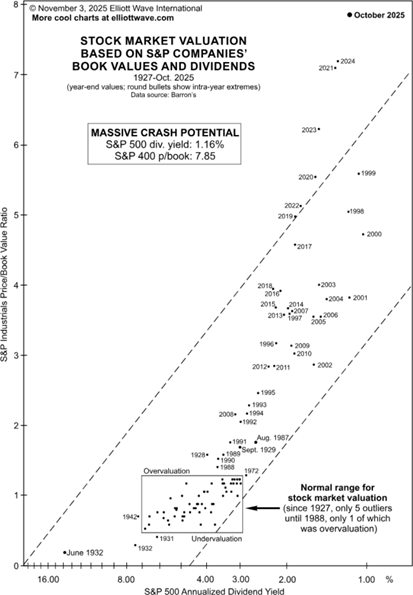
Booms and busts are a recurring feature of modern economics, but when an asset’s value becomes overinflated, a boom quickly becomes a bubble.

The two most recent major bubble episodes were the dot-com bubble in the United States (1996-2000) and the housing bubbles that emerged around 2006 in different countries. Both ended in recession – the former relatively mild, and the latter catastrophically bad. Recent, dizzying increases in the stock prices of AI-related companies have now got many investors asking “are we witnessing another asset price bubble?”

It is important to put the current AI boom in context. The stock price of Nvidia – which manufactures many of the computer chips that power the AI industry – has multiplied by 13 since the start of 2023. Stocks in other AI-related companies like Microsoft and Google’s parent company Alphabet have multiplied by 2.1 and 3.2, respectively. In comparison, the S&P 500, which tracks the stocks of the most important US firms, has multiplied by just 1.8 in the same period.

It is important to emphasise that these AI-related companies are included in the S&P 500, making the difference with non-AI companies even larger. Accordingly, it seems that there is an AI-bubble – but it won’t necessarily end in a repeat of 2008.

How a bubble forms

The price of any stock can be broken down into two components: its fundamental value, and the inflated bubble value. If the stock’s price is above its fundamental value, there is a bubble in its price.

The fundamental value of an asset is the discounted sum of its expected future dividends. The key word here is “expected”. Given that no one, not even ChatGPT, can predict the future, the fundamental value depends on the subjective expectations of each investor. They might be optimistic or pessimistic; in time, some will be proven right, and others wrong.

Optimistic investors expect that AI will change the world, and that the owners of this technology will make (almost) infinite profits. Not knowing which company will emerge victorious, they invest in all AI-related companies.

In contrast, pessimistic investors think that AI is just sophisticated software, as opposed to truly groundbreaking technology, and they will see bubbles everywhere.

A third possibility is the more sophisticated investors. These are people that think – or know – that there is a bubble, but keep investing in the hope of being able to ride the wave and get off before it is too late.

The last of these possibilities is reminiscent of the infamous quote from Citigroup CEO Chuck Prince before the 2008 housing bubble burst: “as long as the music is playing, you’ve got to get up and dance”.

As an economist, I can say safely that it is impossible for all AI-related companies to end up dominating the market. This means, beyond a doubt, that the value of at least some AI-related stocks have a large bubble component.

A shortage of assets

Asset price bubbles can be the market’s natural response to a shortage of assets. In a moment when the demand for assets exceeds the supply (especially for safe assets like government bonds), there is room for other, newer assets to emerge.

This pattern explains the emergence of, for example, the 1990s dot-com bubble and the subsequent 2000s housing bubble. In that context, the growing role of China in financial markets increased the demand for assets in the West – the money first went to dot-com companies in the 1990s and, when that bubble burst, to fund housing via mortgage-backed securities.

In today’s context, a combination of factors have paved the way for the AI bubble: excitement around new technology, low interest rates (another sign of shortage of assets) and huge amounts of of cash flowing into large corporations.

The bubble bursts: good, bad and ugly scenarios

At the very least, part of the soaring value of AI-related stocks is a bubble – and a bubble cannot stay inflated forever. It has to either burst on its own, or, ideally, be carefully deflated through targeted government or Central Bank measures. The current AI bubble could end in one of three scenarios: good, bad, or ugly.

Good: boom not bubble

During the dot-com bubble, many bad firms received too much money – the classic example was Pets.com. But the bubble also provided financing to companies like Google, which (arguably) contributed to making the internet a productivity-enhancing technology.

Something similar may happen with AI, as the current flurry of investment could, in the long run, create something good: technology that benefits humanity, and eventually yields return on investment. Without bubble-levels of cashflow, it would not be funded.

In this optimistic scenario I am assuming that AI, even though it may displace some jobs in the short term (as most technology does), will turn out to be good for workers. I am also assuming that it, obviously, won’t lead to the extinction of humanity. For this to be the case, governments need to introduce proper, robust regulations. It is also important to emphasise that there is no need for countries to invent or invest in new technologies – they must adapt them and provide applications to make them useful.

Bad: a gentle burst

All bubbles eventually burst. As things stand, we do not know when this will happen, nor the extent of the potential damage, but there will probably be a market correction when enough investors realise that multiple companies are overvalued. This decline in the stock market is bound to cause a recession.

Hopefully, it will be short-lived like the 2001 recession that followed the burst of the dot-com bubble. While no recession is painless, this one was relatively mild, and lasted less than one year in the US.

However, the burst of the AI bubble may be more painful because more households participate (either directly or indirectly via mutual funds) in the stock market than 20 years ago.

Even though the job of Central Banks is not to control asset prices, they may need to consider raising interest rates to deflate the bubble before it gets too large. The more sudden the crash, the deeper and costlier any ensuing recession will be.

Ugly: crash and burn

The burst of the AI-bubble would be ugly if it shares more features than we imagine with the 2000s housing bubble. On the positive side, AI stocks are not houses. This is good because when housing bubbles burst, the impacts on the economy are larger and longer-lasting than with other assets.

The housing bubble alone did not cause the 2008 financial crisis – it also caused the global financial system to collapse. Another reason to be optimistic is that the role of commercial banks in AI finance is much smaller than in housing – a vast amount of every bank’s money is perpetually tied up in mortgages.

However, one important caveat is that we do not how the financial system will react if these huge AI companies default on their debt. Alarmingly, this seems to be how they are currently financing new investments – a recent Bank of America analysis warned that large tech companies are relying heavily on debt to build new data centres, many of which are to cover demand that doesn’t actually exist yet.


A weekly e-mail in English featuring expertise from scholars and researchers. It provides an introduction to the diversity of research coming out of the continent and considers some of the key issues facing European countries. Get the newsletter!The Conversation


Sergi Basco, Profesor Agregado de Economia, Universitat de Barcelona

This article is republished from The Conversation under a Creative Commons license. Read the original article.

The PBOC kept interest rates unchanged as expected. Nvidia’s report beat projections and eased concerns about AI investments

By JustMarkets 

On Wednesday, the US stocks recovered slightly. The Dow Jones Index (US30) rose by 0.10%. The S&P 500 Index (US500) gained 0.38%. The Nasdaq (US100) closed higher at 0.59%. Markets digested the mixed Fed minutes. The minutes from the October FOMC meeting revealed divisions among officials over the appropriateness of further easing. Traders reduced expectations of another Fed rate cut in December. The probability of a 25 bps cut in the federal funds rate is now estimated at about 34%.

Chip giant Nvidia beat Wall Street expectations for revenue and guidance, easing some concerns about slowing AI investment that had fueled recent market volatility. According to Wednesday’s report, revenue for the three months to October rose 62% to $57 billion, reflecting persistently strong demand for its AI data‑center chips. Sales in the key data‑center segment increased 66%. Shares rose more than 5% after the close of the main session.

The Mexican peso strengthened to 18.35 per US dollar, near July 2024 highs, amid falling domestic inflation and cautious rhetoric from the Bank of Mexico. Headline CPI fell to 3.57% in October, while core inflation dropped just above 4%, strengthening arguments for continuing a mild easing cycle. Banxico cut rates by 25 bps to 7.25%, accompanying the decision with a restrained, data‑dependent tone. This confirmed expectations of gradual rather than aggressive easing and reduced risks of unexpected moves by the regulator.

In Europe, Germany’s DAX (DE40) continued to decline, closing 0.08% lower, France’s CAC 40 (FR40) fell by 0.18%, Spain’s IBEX 35 (ES35) rose 0.39%, and the UK’s FTSE 100 (UK100) dropped 0.47%. European stocks showed modest gains overall, breaking a four‑day losing streak, as investors continued to assess Fed monetary policy prospects and tried to determine fair value for highly speculative tech companies. Performance of European AI‑related firms was mixed: ASML rose by 2.5%, while Infineon slipped slightly. Nokia shares fell by 7% after announcing the spin‑off of its AI business into a separate unit – a move following Nvidia’s $1 billion investment.

WTI crude oil prices fell more than 2% to $59.3 per barrel on Wednesday after reports that the US is pressing for an end to the war between Russia and Ukraine. According to a Ukrainian official, Kyiv received signals of possible US proposals for conflict resolution, reviving hopes for renewed diplomatic talks. Meanwhile, Russia stated that sanctions against Rosneft and Lukoil had not affected production, which also influenced market sentiment. On the supply side, US Energy Information Administration (EIA) data showed crude inventories fell by more than 3.4 million barrels in the week ending November 14, to 424.2 million barrels.
Asian markets mostly declined yesterday. Japan’s Nikkei 225 (JP225) fell by 0.34%, China’s FTSE China A50 (CHA50) rose by 0.74%, Hong Kong’s Hang Seng (HK50) dropped 0.38%, and Australia’s ASX 200 (AU200) closed negative 0.25%.

On Thursday, the offshore yuan held around 7.11 per dollar, stabilizing after recent fluctuations, as China signaled that further monetary easing is not a priority amid ongoing domestic and external challenges. The one‑year Loan Prime Rate (LPR) remained at 3%, while the five‑year LPR, a key benchmark for mortgage lending, was kept at 3.5% after a 10 bps cut in May 2025. The decision followed the People’s Bank of China’s earlier move in November to leave the seven‑day reverse repo rate unchanged, reinforcing expectations of a cautious, “wait‑and‑see” approach to further stimulus.

S&P 500 (US500) 6,642.16 +24.84 (+0.38%)

Dow Jones (US30) 46,138.77 +47.03 (+0.10%)

DAX (DE40) 23,162.92 −17.61 (−0.08%)

FTSE 100 (UK100) 9,507.41 −44.89 (−0.47%)

USD Index 100.16 +0.61% (+0.61%)

News feed for: 2025.11.20

  • China PBoC Loan Prime Rate (m/m) at 03:15 (GMT+2); HK50, CHA50 (MED)
  • Switzerland Trade Balance (m/m) at 09:00 (GMT+2); – CHF (LOW)
  • Hong Kong Inflation Rate (m/m) at 10:30 (GMT+2); – HKD (LOW)
  • US Non-Farm Employment Change (m/m) at 15:30 (GMT+2); – USD, XAU (HIGH)
  • US Unemployment Rate (m/m) at 15:30 (GMT+2); – USD, XAU/USD (HIGH)
  • US Existing Home Sales (m/m) at 17:00 (GMT+2); – USD, (LOW)
  • US Natural Gas Storage (w/w) at 17:30 (GMT+2); – XNG (HIGH)
  • New Zealand Trade Balance at 23:45 (GMT+2). – NZD (LOW)

By JustMarkets


This article reflects a personal opinion and should not be interpreted as an investment advice, and/or offer, and/or a persistent request for carrying out financial transactions, and/or a guarantee, and/or a forecast of future events.

GBP/USD Weakens Rapidly Amid Dovish Data and External Pressures

By RoboForex Analytical Department

The GBP/USD pair fell sharply to 1.3048 on Thursday, pressured by a combination of soft domestic inflation data and a broadly stronger US dollar.

The pound’s decline was triggered by the latest UK Consumer Price Index (CPI) report, which showed inflation slowed to 3.6% year-on-year in October, matching forecasts. This bolstered market expectations that the Bank of England (BoE) could initiate interest rate cuts as early as December. The data fits a broader narrative of weakening domestic demand: the labour market is cooling, GDP growth is undershooting the central bank’s projections, and core inflation is tracking slightly below the BoE’s anticipated path. In light of this, institutions, including Deutsche Bank, suggest the Monetary Policy Committee (MPC) will gain the confidence needed to lower the Bank Rate from its current 4.00% level.

Additional headwinds for sterling stemmed from a resurgent US dollar, which found support ahead of key US macroeconomic data and the highly anticipated earnings report from the AI-chip giant, Nvidia.

Globally, investor attention is also captivated by the Japanese yen, which slumped to a 10-month low after the Ministry of Finance issued a statement expressing a “high degree of caution” over the currency’s movements. This phrase stopped short of threatening direct intervention.

Overall, market uncertainty is elevated. US statistical agencies are only just beginning to release the backlog of data delayed by the recent government shutdown, leaving traders to piece together the true state of the world’s largest economy.

Technical Analysis: GBP/USD

H4 Chart:

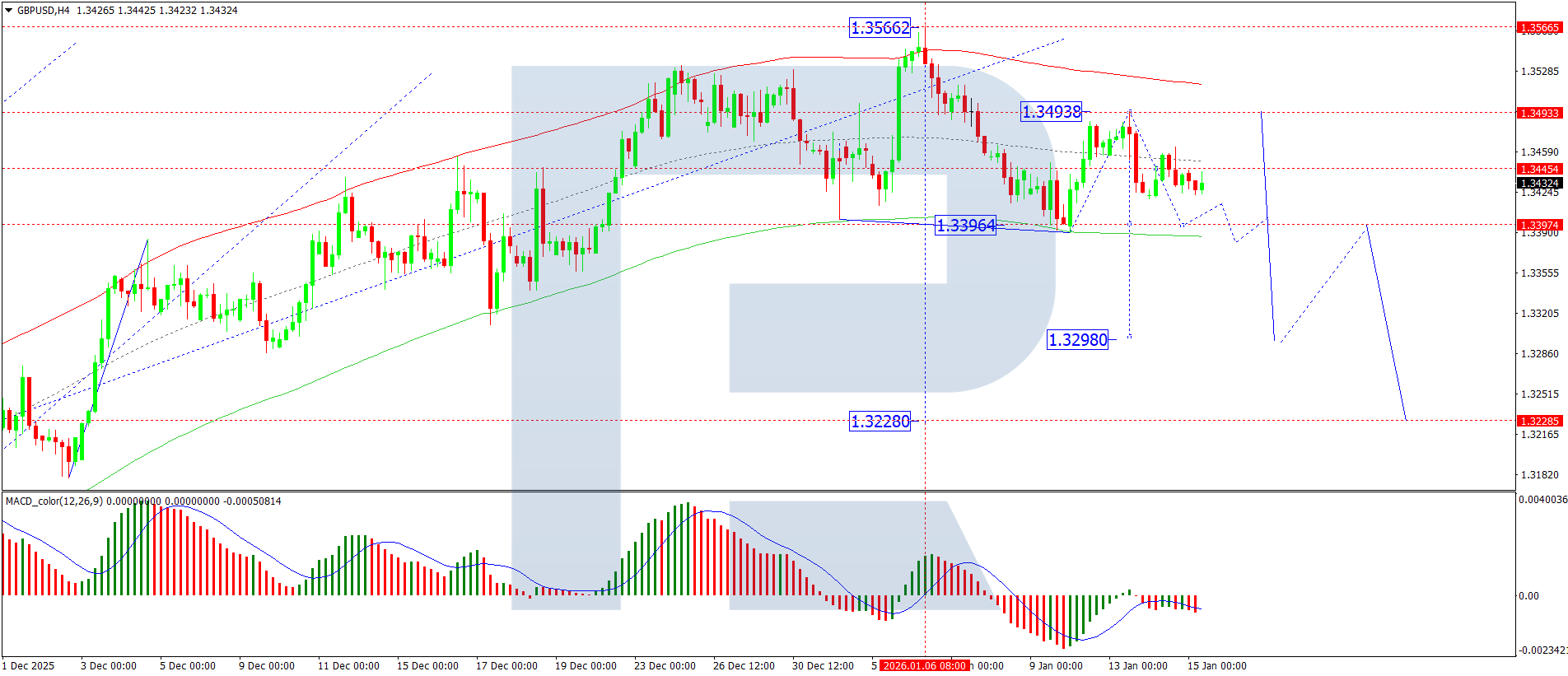
On the H4 chart, GBP/USD has completed a downward wave to 1.3037. We now anticipate a technical correction towards at least 1.3080. Following this pullback, the primary downtrend is expected to resume, driving the pair towards 1.2990, with a longer-term prospect of extending losses to 1.2915. This bearish scenario is confirmed by the MACD indicator. Its signal line is located below zero and pointing decisively downward, indicating that selling momentum remains firmly intact.

H1 Chart:

On the H1 chart, the pair broke downwards from a consolidation range around 1.3090, confirming the continuation of the bearish impulse. The immediate target for this leg is 1.3030. A corrective bounce to retest the 1.3090 level from below is likely before the next wave of selling takes the pair down to 1.2990 and potentially towards 1.2950. The Stochastic oscillator aligns with this view. Its signal line is above 50, indicating that a short-lived corrective bounce is underway before the dominant downtrend reasserts itself.

Conclusion

The GBP/USD is facing a perfect storm of domestic dovish shifts and external dollar strength. The softer inflation print has significantly increased the odds of a December BoE rate cut, eroding sterling’s yield appeal. Technically, the path of least resistance remains firmly to the downside. While a short-term correction towards 1.3080 is likely, this should be viewed as a potential selling opportunity within the broader bearish trend, which has clear targets at 1.2990 and 1.2915.


Disclaimer:

Any forecasts contained herein are based on the author’s particular opinion. This analysis may not be treated as trading advice. RoboForex bears no responsibility for trading results based on trading recommendations and reviews contained herein.

German DAX (DE40) fell to a 5‑month low. Investors remain cautious ahead of key economic releases

By JustMarkets 

On Tuesday, the US stocks closed sharply lower. The Dow Jones Index (US30) fell by 1.07%. The S&P 500 Index (US500) dropped 0.83%. The Nasdaq (US100) closed down 1.20%. Expensive valuations of technology companies came under renewed pressure after several weeks of active debt issuance tied to investment programs. The decline was led by mega‑caps: Nvidia lost 2.8%, Microsoft 2.7%, Amazon 4.4%, Tesla 1.9%. Home Depot plunged 6% after cutting its annual prognosis. Markets reduced the probability of a Fed rate cut in December to about 40%, compared with 90% a month ago. The trigger was hawkish comments from several Fed officials and anticipation of new US data, including Thursday’s employment report and the resumption of delayed statistics, which are expected to set the market’s next direction.

Bitcoin fell below $90,000 for the first time since April, then partially recovered to around $92,000. Market pressure intensified due to a broad and sharp investors’ retreat from risk amid concerns about asset overvaluation and reduced odds of further Fed rate cuts. Amid the sell‑off, Bitcoin is heading toward its first annual decline since 2023, trading about 25% below its all‑time high of $126,200 set in October.

European stocks fell to a one‑month low on Tuesday, extending their downward trend amid a global sell‑off driven by concerns over the overvaluation of the global tech sector. Germany’s DAX (DE40) dropped by 1.74% to a 5‑month low, France’s CAC 40 (FR40) closed down 1.86%, Spain’s IBEX 35 (ES35) fell by 2.14%, and the UK’s FTSE 100 (UK100) closed negative 1.27%. The banking sector was among the biggest losers – Santander, Intesa Sanpaolo, and ING each lost more than 3%. Pressure was also felt in cyclical consumer goods and technology segments.

On Wednesday, silver (XAG/USD) rose to $51 per ounce, rebounding from a weekly low, as the sell‑off in risk assets, including tech stocks and digital assets, boosted demand for precious metals as safe‑haven assets. Additional support came from signs of US labor market weakness, which strengthened expectations of further Fed easing.

Platinum (XPT/USD) fell below $1,545 per ounce. Physical demand from automakers declined due to optimization of metal use, while the accelerated shift to electric vehicles reduced the need for platinum catalysts in combustion engines. Clarification of inventory levels in China and early signs of recovery in South African production also weakened the deficit premium, leading to reduced speculative and ETF positions.

Asian markets also traded under pressure yesterday. Japan’s Nikkei 225 (JP225) fell by 3.22%, China’s FTSE China A50 (CHA50) dropped 0.29%, Hong Kong’s Hang Seng (HK50) declined 1.72%, while Australia’s ASX 200 (AU200) closed negative 1.94%.

Seasonally adjusted unemployment in Hong Kong fell to 3.8% for the three‑month period ending October 2025. The number of unemployed decreased by 6,000 to 149,600, while total employment fell by 1,500 to 3.67 million. Hong Kong’s labor market is likely to continue receiving support from steady economic growth, rising business confidence, and recovering consumer sentiment.

In Australia, steady wage growth in Q3, last week’s strong employment report, and persistent inflationary pressures strengthened expectations that the monetary easing cycle is nearing its end. Swap markets now estimate the probability of a final rate cut in May next year at only 50%.

The New Zealand dollar fell to $0.562, remaining near a seven‑month low amid expectations that the Reserve Bank of New Zealand will cut interest rates again next week. Financial markets have fully priced in a 25 basis point cut following a series of weak economic data that bolstered arguments for additional stimulus. Additional pressure on the currency came from newly released data showing producer prices in Q3 rose less than projections, pointing to further easing of inflationary pressures.

S&P 500 (US500) 6,617.32 −55.09 (−0.83%)

Dow Jones (US30) 46,091.74 −498.50 (−1.07%)

DAX (DE40) 23,180.53 −409.99 (−1.74%)

FTSE 100 (UK100) 9,552.30 −123.13 (−1.27%)

USD Index 99.60 +0.02% (+0.02%)

News feed for: 2025.11.19

  • Japan Trade Balance (m/m) at 01:50 (GMT+2);
  • Australia Wage Price Index (q/q) at 02:30 (GMT+2);
  • UK Consumer Price Index (m/m) at 09:00 (GMT+2); – GBP (HIGH)
  • UK Producer Price Index (m/m) at 09:00 (GMT+2); – GBP (LOW)
  • Eurozone Consumer Price Index (m/m) at 12:00 (GMT+2); – EUR (MED)
  • US Crude Oil Reserves (w/w) at 17:30 (GMT+2); – USD (HIGH)
  • US FOMC Meeting Minutes at 21:00 (GMT+2). – USD (HIGH)

By JustMarkets


This article reflects a personal opinion and should not be interpreted as an investment advice, and/or offer, and/or a persistent request for carrying out financial transactions, and/or a guarantee, and/or a forecast of future events.
Gold Dips in Healthy Correction

By RoboForex Analytical Department

Gold prices eased to 4,060 USD per ounce on Wednesday, marking a technical correction following the previous session’s gains. Investor caution prevails ahead of a series of high-impact macroeconomic releases, with particular focus on today’s FOMC meeting minutes and Thursday’s US employment report. These publications are expected to provide crucial insights into the Federal Reserve’s future interest rate path.

US agencies have resumed data publication following the government shutdown. Recent figures showed initial jobless claims climbed to a two-month high in mid-October, while continuing claims rose to 1.9 million. This softness in the labour market has modestly bolstered expectations for a December rate cut. However, markets remain wary that stronger subsequent reports could constrain the Fed’s ability to ease policy, particularly amid persistent hawkish rhetoric from officials.

A further factor supporting gold is the growing unease over stretched valuations in the technology sector. This is fuelling a mild risk-off sentiment and supporting demand for gold as a safe-haven asset, offsetting some of the metal’s recent weakness.

Technical Analysis: XAU/USD

H4 Chart:

On the H4 chart, XAU/USD is forming a consolidation range around 4,060 USD. An upward breakout is anticipated, targeting 4,140 USD as part of a fifth wave within a larger growth structure aiming for 4,284 USD. The MACD indicator supports this constructive view. Its signal line is below zero but has diverged from the histogram and is turning upward, suggesting building bullish momentum.

H1 Chart:

On the H1 chart, the market has established a consolidation range around 4,060 USD. With the upper boundary at 4,082 USD now breached, the path is open for the next leg higher. The initial target is 4,122 USD, potentially followed by a corrective pullback to retest 4,060 USD from above. A successful retest could catalyse a further advance towards 4,188 USD and ultimately 4,284 USD. The Stochastic oscillator confirms this near-term bullish bias, with its signal line positioned above 50 and pointing firmly upward.

Conclusion

Gold’s current pullback appears corrective within a broader uptrend, driven by cautious positioning ahead of key US data. The technical structure suggests underlying strength, with a clear setup for a potential rally towards 4,284 USD upon a sustained break above 4,082 USD. While the immediate direction hinges on the FOMC minutes and jobs data, the metal’s role as a portfolio hedge continues to provide underlying support amidst equity market jitters.


Disclaimer:

Any forecasts contained herein are based on the author’s particular opinion. This analysis may not be treated as trading advice. RoboForex bears no responsibility for trading results based on trading recommendations and reviews contained herein.

Oil prices remain under pressure. Canada’s inflation fell to the Bank of Canada’s target level

By JustMarkets 

By Monday’s close, the Dow Jones Index (US30) fell by 1.18%. The S&P 500 Index (US500) dropped 0.92%. The Nasdaq (US100) closed lower at 0.84%. The US stock market started the week with a sharp decline amid expectations of key economic data and tech company earnings. Leading the sell-off were major technology firms: Nvidia shares fell by 1.9% ahead of quarterly results, due after Wednesday’s market close, which will be an important indicator of the sustainability of AI-related valuations. At the same time, expectations for a rate cut increased. Federal funds futures now price in about a 40-45% chance of a 25 basis point cut in December, raising trader interest in employment data and other key economic releases this week.

The Canadian dollar stabilized around 1.40 per US dollar after the inflation data. The weighted core inflation measure, the Bank of Canada’s (BoC) main benchmark, fell to 3% in October but remained close to peak levels last seen in February 2024. These figures reinforced expectations that the Bank of Canada likely ended its rate-cutting cycle at the last meeting, provided the baseline scenario holds and the economy proves resilient to US tariffs, while core inflation stays above target.

Bitcoin (BTC/USD) fell nearly 2% to around $90,000, deepening a month-long sell-off that erased its yearly gains and pushed prices to their lowest in six months. The total digital assets market capitalization has shrunk by at least 30% since peaking on October 6, intensifying the decline that began earlier in the month and was accompanied by liquidations exceeding $19 billion. Reduced institutional activity and overall macroeconomic pressure, including fading expectations of a December Fed rate cut, added to the strain on Bitcoin and other high-beta assets.

European stock markets fell yesterday. Germany’s DAX (DE40) dropped 1.20%, France’s CAC 40 (FR40) closed down 0.63%, Spain’s IBEX 35 (ES35) fell by 1.06%, and the UK’s FTSE 100 (UK100) closed negative 0.24%.

In Q3, Switzerland’s GDP contracted by 0.5% after growing 0.1% in Q2. Lower tariffs partially reduced risks for the economy, while SNB officials maintained expectations of gradual inflation growth in the coming quarters. The central bank is in no hurry to cut rates below zero, fearing potential destabilization of the financial system. The Swiss franc weakened slightly to around 0.795 per US dollar but remained close to 2011 highs.

WTI crude oil prices fell to $59.4 per barrel on Tuesday, extending the previous session’s decline as oversupply concerns outweighed expectations of potential sanctions against Russian oil. The market outlook remains weak. A significant supply surplus is expected at the end of this year and into 2026, as producers inside and outside OPEC ramp up output amid slowing global demand growth.

Asian markets traded under pressure yesterday. Japan’s Nikkei 225 (JP225) fell by 0.10%, China’s FTSE China A50 (CHA50) dropped 0.83%, Hong Kong’s Hang Seng (HK50) declined 0.71%, while Australia’s ASX 200 (AU200) posted a slight gain of 0.02%.

On Tuesday, the Australian dollar moderately strengthened to $0.649, recovering part of the previous session’s losses after the Reserve Bank of Australia’s minutes emphasized caution and data dependency in future policy decisions. Earlier this month, the RBA kept rates at 3.60%. Concerns about labor market cooling proved exaggerated: October saw a sharp rise in employment and a drop in unemployment. This led to a significant reassessment of easing expectations – the probability of a rate cut in May next year is now estimated at just 40%.

S&P 500 (US500) 6,672.41 −61.70 (−0.92%)

Dow Jones (US30) 46,590.24 −557.24 (−1.18%)

DAX (DE40) 23,590.52 −286.03 (−1.20%)

FTSE 100 (UK100) 9,675.43 −22.94 (−0.24%)

USD Index 99.53 +0.23% (+0.24%)

News feed for: 2025.11.18

  • Australia RBA Meeting Minutes at 02:30 (GMT+2); AUD – (MED)
  • Hong Kong Unemployment Rate (m/m) at 10:30 (GMT+2); HKD – (LOW)
  • New Zealand Producer Price Index (q/q) at 23:45 (GMT+2). NZD – (LOW)

By JustMarkets


This article reflects a personal opinion and should not be interpreted as an investment advice, and/or offer, and/or a persistent request for carrying out financial transactions, and/or a guarantee, and/or a forecast of future events.

September NFP, Nvidia & Bitcoin in focus

By ForexTime

  • Risk-off sentiment hits global equities
  • Nvidia earnings & delayed September NFP = volatility
  • Traders see less than 45% chance of Fed cut in December
  • Bitcoin falls below $90,000 for the first time since April
  • Gold hit by cooling Fed cut bets and stabilizing USD


We could be in for a wild week as federal data flows back into markets after the end of the longest US government shutdown in history.

This may add more volatility to a week already packed with high-risk events, Fed speeches, and earnings from Nvidia – the most valuable company in the world.

In the equity space, a risk-off mood swept across the board amid unease about interest rates and tech earnings ahead of Nvidia’s report on Wednesday. Asian equities closed in the red; European shares are flashing red, while US futures point to a negative open.

(Source Bloomberg)

Nvidia earnings – Wednesday, 19th November.

For a company that remains at the heart of the A.I. hype, investors will be looking for another round of solid earnings that would justify its nearly 120% rebound from 2025 lows.

Any fresh updates on Blackwell deliveries, exposure to China, and guidance for Q4 will be in sharp focus. Given the growing chatter around an AI bubble amid circular business deals, Nvidia’s earnings may set the tone in the AI space for the rest of 2025.

September NFP report – Thursday, 20th November

On Thursday, the delayed September NFP report is set to be published. This data, originally scheduled for early October, could trigger sharp movements as it provides critical insights into U.S. labor market strength.

Additionally, a bunch of Fed officials are scheduled to speak this week, which may influence monetary policy expectations. Traders are currently pricing in a 43% chance of a Fed cut by December as of writing. Any major shifts to these expectations may rock equities, FX, commodities and cryptocurrency.

Bitcoin bears back in town?

Speaking of cryptos, Bitcoin has tumbled below $90,000 for the first time in seven months – extending a month-long slide that has erased 2025 gains.

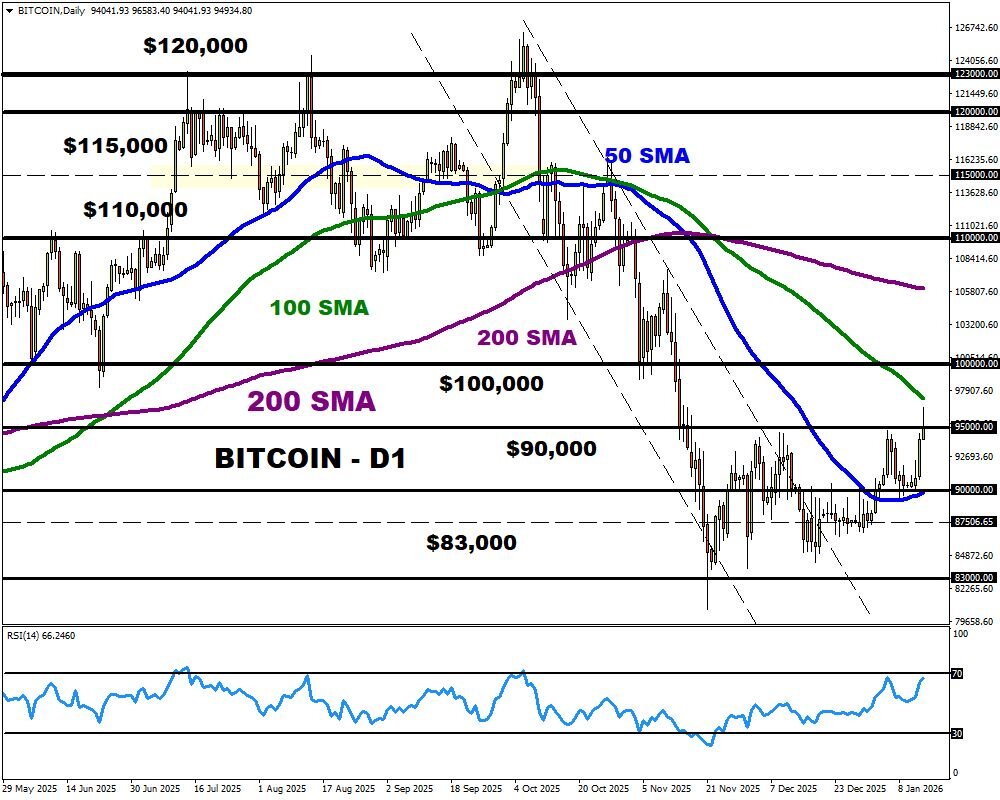
The “OG” crypto is down roughly 17% this month – dragging 2025 gains into negative territory. Renewed concerns about interest rates, ETF outflows, and overall risk aversion have haunted the attraction toward Bitcoin. With prices securing a solid daily close below $95,000, this could signal further downside with the next key level of interest around the 100-week SMA at $83,000.

Gold prices to extend losses?

In the commodity space, gold is also taking a hit despite the risk-off mood. The precious metal remains pressured by a stabilizing dollar and cooling expectations around a Fed cut in December. Should incoming US data and Fed officials prompt traders to further slash bets around lower rates, this could spell more pain for gold.

  • A solid breakdown below $4000 may open a path toward the 50-day SMA at $3955.
  • Should $4030 prove reliable support, prices may rebound toward $4100.


Forex-Time-LogoArticle by ForexTime


ForexTime Ltd (FXTM) is an award winning international online forex broker regulated by CySEC 185/12 www.forextime.com

EUR/USD Declines as Market Awaits Key US Employment Data

By RoboForex Analytical Department

The EUR/USD pair extended its losses for a third consecutive session, falling to 1.1591 on Tuesday. The downward pressure persists as investors await a backlog of delayed US economic data, expected to provide crucial signals on the Federal Reserve’s interest rate path. The market’s primary focus is the delayed September employment report, which traders will scrutinise for signs of a softening labour market.

The rhetoric from Federal Reserve officials remains mixed, contributing to the market’s indecision. Several officials have recently expressed scepticism about the need for a December rate cut, citing persistent inflationary pressures. However, this was counterbalanced by Governor Chris Waller, who confirmed his support for a cut, and Vice Chair Philip Jefferson, who advocated for a gradual approach due to rising labour market risks.

This conflicting guidance has led to a repricing of rate expectations. Futures markets now imply only a 43% probability of a 25-basis-point cut in December, a significant decline from the odds priced at the start of the month. The US dollar has found broad support, strengthening against commodity-linked currencies like the Australian and New Zealand dollars.

Technical Analysis: EUR/USD

H4 Chart:

On the H4 chart, EUR/USD has breached its growth wave channel at 1.1605, opening the path for a downward move. We anticipate an initial decline to 1.1564, followed by a technical pullback to retest the 1.1605 level from below. This retest is likely to present a fresh selling opportunity before the downtrend resumes towards the primary target of 1.1560. The MACD indicator confirms this bearish outlook. Its signal line, while above zero, is pointing decisively downward, indicating that selling momentum is overpowering any residual strength.

H1 Chart:

On the H1 chart, the pair has broken downwards from a consolidation range around 1.1600, confirming the second leg of a bearish impulse. The immediate target for this move is 1.1560. Upon reaching this level, a corrective bounce back towards 1.1600 is a distinct possibility. The Stochastic oscillator supports this corrective view. Its signal line is rising from the 20 level towards the 50 level, suggesting that short-term downward pressure may be exhausted, paving the way for a temporary rebound.

Conclusion

The EUR/USD remains under pressure amid a strengthening US dollar and uncertain Fed policy. While conflicting comments from officials have created volatility, the overall technical structure is bearish. The breach below 1.1605 suggests further losses are likely, with an initial target at 1.1560. Any near-term rebounds towards the 1.1600/05 resistance zone are expected to be temporary, offering potential opportunities to re-enter the prevailing downtrend.


Disclaimer:

Any forecasts contained herein are based on the author’s particular opinion. This analysis may not be treated as trading advice. RoboForex bears no responsibility for trading results based on trading recommendations and reviews contained herein.

Renewable energy is cheaper and healthier – so why isn’t it replacing fossil fuels faster?

By Jay Gulledge, University of Notre Dame; University of Tennessee 

You might not know it from the headlines, but there is some good news about the global fight against climate change.

A decade ago, the cheapest way to meet growing demand for electricity was to build more coal or natural gas power plants. Not anymore. Solar and wind power aren’t just better for the climate; they’re also less expensive today than fossil fuels at utility scale, and they’re less harmful to people’s health.

Yet renewable energy projects face headwinds, including in the world’s fast-growing developing countries. I study energy and climate solutions and their impact on society, and I see ways to overcome those challenges and expand renewable energy – but it will require international cooperation.

Falling clean energy prices

As their technologies have matured, solar power and wind power have become cheaper than coal and natural gas for utility-scale electricity generation in most areas, in large part because the fuel is free. The total global power generation from renewable sources saved US$467 billion in avoided fuel costs in 2024 alone.

As a result of falling prices, over 90% of all electricity-generating capacity added worldwide in 2024 came from clean energy sources, according to data from the International Renewable Energy Agency.

At the end of 2024, renewable energy accounted for 46% of global installed electric power capacity, with a record 585 gigawatts of renewable energy capacity added that year — about three times the total generating capacity in Texas.

Health benefits of leaving fossil fuels

Beyond affordability, replacing fossil fuels with renewable energy is healthier.

Burning coal, oil and natural gas releases tiny particles into the air along with toxic gases; these pollutants can make people sick. A recent study found air pollution from fossil fuels causes an estimated 5 million deaths worldwide a year, based on 2019 data.

For example, using natural gas to fuel stoves and other appliances releases benzene, a known carcinogen. The health risks of this exposure in some homes has been found to be comparable to secondhand tobacco smoke. Natural gas combustion has also been linked to childhood asthma, with an estimated 12.7% of U.S. childhood asthma cases attributable to gas stoves, according to one study.

Fossil fuels are also the leading sources of climate-warming greenhouse gases. When they’re burned to generate electricity or run factories, vehicles and appliances, they release carbon dioxide and other gases that accumulate in the atmosphere and trap heat near the Earth’s surface. That accumulation has been raising global temperatures and causing more heat stress, respiratory illnesses and the spread of disease.

Electrifying buildings, cars and appliances, and powering them with renewable energy, reduces these air pollutants while slowing climate change.

So what’s the problem?

In spite of the demonstrated economic and health benefits of transitioning to renewable energy, regulatory inertia, political gridlock and a lack of investment are holding back renewable energy deployment in much of the world.

In the United States, for example, major energy projects take an average of 4.5 years to permit, and approval of new transmission lines can take a decade or longer. A large majority of planned new power projects in the U.S. use solar power, and these delays are slowing the deployment of renewable energy.

The 2024 Energy Permitting Reform Act introduced by Sens. Joe Manchin, a Democrat from West Virginia, and John Barrasso, a Republican from Wyoming, to speed approvals failed to pass. Manchin called it “just another example of politics getting in the way of doing what’s best for the country.”

An even bigger challenge faces developing countries whose economies are growing fast.

These countries need to meet soaring energy demand. The International Energy Agency expects emerging economies to account for 85% of added electricity demand from 2025 through 2027. Yet renewable energy development lags in most of them. The main reason is the high price of financing renewable energy construction.

Chart showing wealthier countries have lower borrowing costs
Most of the cost of a renewable energy project is incurred up front in construction. Savings occur over its lifetime because it has no fuel costs. As a result, the levelized cost of energy (LCOE) for those projects varies depending on the cost of financing to build them. The chart shows what happens when borrowing costs are higher in developed countries. It illustrates the share of financing in each project’s levelized cost of energy in 2024 versus the weighted average cost of capital (WACC). The yellow dots are solar projects; black and gray are offshore and onshore wind.
Adapted from IRENA, 2025, CC BY

In many developing countries, wind and solar projects cost more to finance than coal or gas. Fossil projects have a longer history, and financial and policy mechanisms have been developed over decades to lower lender risk for those projects. These include government payment guarantees, stable fuel contracts and long-term revenue deals that help guarantee the lender will be repaid.

Both lenders and governments have less experience with renewable energy projects. As a result, these projects often come with weaker government guarantees. This raises the risk to lenders, so they charge higher interest rates, making renewable projects more expensive upfront, even if the projects have lower lifetime costs.

To lower borrowing costs, governments and international development banks can take steps to make renewable projects a safer bet for investors. For example, they can keep energy policies stable and use public funds or insurance to cover part of the lenders’ investment risk.

When investors trust they’ll get paid, interest rates drop dramatically and renewable energy becomes the cheaper option.

Without international cooperation to lower finance costs, developing economies could miss out on the renewable-energy revolution and lock in decades of growing greenhouse gas emissions from fossil fuels, making climate change worse.

The path ahead

To avoid the worst effects of climate change, countries have agreed to cut their greenhouse gas emissions over the next few decades.

Achieving this goal won’t be easy, but it is significantly less difficult now that renewable energy is more affordable over the long run than fossil fuels.

Switching the world’s power supply to renewable energy and electrifying buildings and local transportation would cut about half of today’s greenhouse-gas emissions. The other half comes from sectors where it is harder to cut emissions — steel, cement and chemical production, aviation and shipping, and agriculture and land use. Solutions are being developed but need time to mature. Good governance, political support and accessible finance will be critical for these sectors as well.

The transition to renewable energy offers big economic and health benefits alongside lower climate risks — if countries can overcome political obstacles at home and cooperate to expand financing for developing economies.The Conversation

About the Author:

Jay Gulledge, Visiting Professor of Practice in Global Affairs, University of Notre Dame; University of Tennessee

This article is republished from The Conversation under a Creative Commons license. Read the original article.

The Swiss franc is at its highest level since 2011. Bitcoin lost 5% on Friday

By JustMarkets 

By Friday’s close, the Dow Jones Index (US30) fell by 0.65% (weekly +0.11%). The S&P 500 Index (US500) slipped 0.05% (weekly -0.76%). The Nasdaq (US100) closed slightly higher at 0.06% (weekly -1.61%). The market managed to recover after a sharp drop at the start of trading, but the final move remained muted. Investors actively bought shares of major tech companies, partially offsetting the heavy sector losses from the previous day. The end of the longest government shutdown in US history removed one source of uncertainty but created another: delays in publishing microdata deprived investors of key guidance ahead of the next Fed decision, increasing volatility and forcing traders to reassess positions heading into year-end.

On Friday, Bitcoin (BTC/USD) fell nearly 5% to around $95,000, extending its decline for the fourth consecutive session amid worsening global risk sentiment. Bitcoin has now dropped more than 20% from the record high of $114,000 reached last month. The digital assets market continues to struggle to recover from October’s crash, which triggered record liquidations and widespread reduction of leveraged positions, highlighting growing risk aversion among investors. Additional pressure came from reports that Japan may introduce new rules targeting companies engaged in digital asset custody.

European stock markets declined on Friday. Germany’s DAX (DE40) fell by 0.69% (weekly -0.20%), France’s CAC 40 (FR40) closed down 0.76% (weekly +1.57%), Spain’s IBEX 35 (ES35) dropped 1.40% (weekly +1.69%), and the UK’s FTSE 100 (UK100) closed negative 1.11% (weekly +0.16%). Bayer shares were the day’s worst performer, losing 5.1%. Significant pressure was also seen in the banking and technology sectors.

The Swiss government confirmed reaching an agreement with Donald Trump’s administration on tariffs at 15%. This deal finally resolved the dispute that had dragged on since August, sparked by the unexpected US decision to raise tariffs on Swiss exports to 39%. Against this backdrop, the Swiss franc strengthened to 0.79 per dollar, its highest level since 2011. Additional support came from expectations of rising inflation in Switzerland. Representatives of the Swiss National Bank (SNB) expressed confidence that inflation will “accelerate somewhat” in the coming quarters.

The US natural gas prices fell more than 4% on Friday to $4.45 per MMBtu, retreating from highs last seen in December 2022 after the Energy Information Administration (EIA) reported larger-than-expected inventory builds. At the same time, gas production in the 48 US states reached a new record in November – 109 billion cubic feet per day, keeping inventories about 4% above seasonal norms and adding pressure on prices.

Asian markets traded under pressure last week. Japan’s Nikkei 225 (JP225) fell by 0.53%, China’s FTSE China A50 (CHA50) dropped 0.66%, Hong Kong’s Hang Seng (HK50) declined 1.85%, while Australia’s ASX 200 (AU200) posted a five-day loss of 1.79%.

In Q3 2025, Hong Kong’s economy grew 3.8% year-on-year, exceeding the previous quarter’s 3.1%. This was the strongest growth since Q4 2023, driven by robust export performance and stable domestic demand.

The New Zealand dollar fell to 0.565 USD, giving back part of last week’s gains. The main pressure came from heightened expectations of an imminent rate cut by the Reserve Bank of New Zealand. At the same time, President Donald Trump canceled tariffs on more than 200 categories of food products from New Zealand. While the tariff removal supports New Zealand’s export sector and improves fundamentals, the currency market remains fully focused on RBNZ policy.

S&P 500 (US500) 6,734.11 −3.38 (−0.06%)

Dow Jones (US30) 47,147.48 −309.74 (−0.65%)

DAX (DE40) 23,876.55 −165.07 (−0.69%)

FTSE 100 (UK100) 9,698.37 −109.31 (−1.11%)

USD Index 99.27 +0.12% (+0.12%)

News feed for: 2025.11.17

  • Japan GDP (q/q) at 01:50 (GMT+2);
  • Switzerland GDP (q/q) at 10:00 (GMT+2);
  • Canada Consumer Price Index (m/m) at 15:30 (GMT+2).

By JustMarkets


This article reflects a personal opinion and should not be interpreted as an investment advice, and/or offer, and/or a persistent request for carrying out financial transactions, and/or a guarantee, and/or a forecast of future events.