How do floating wind turbines work? With 5 companies winning the first US leases to build wind farms off California’s coast, let’s take a look

By Matthew Lackner, UMass Amherst 

Northern California has some of the strongest offshore winds in the U.S., with immense potential to produce clean energy. But it also has a problem. Its continental shelf drops off quickly, making building traditional wind turbines directly on the seafloor costly if not impossible.

Once water gets more than about 200 feet deep – roughly the height of an 18-story building – these “monopile” structures are pretty much out of the question.

A solution has emerged that’s being tested in several locations around the world: wind turbines that float.

In California, where drought has put pressure on the hydropower supply, the state is moving forward on a plan to develop the nation’s first floating offshore wind farms. On Dec. 7, 2022, the federal government auctioned off five lease areas about 20 miles off the California coast to companies with plans to develop floating wind farms. The bids were lower than recent leases off the Atlantic coast, where wind farms can be anchored to the seafloor, but still significant, together exceeding US$757 million.

So, how do floating wind farms work?

Three main ways to float a turbine

A floating wind turbine works just like other wind turbines – wind pushes on the blades, causing the rotor to turn, which drives a generator that creates electricity. But instead of having its tower embedded directly into the ground or the seafloor, a floating wind turbine sits on a platform with mooring lines, such as chains or ropes, that connect to anchors in the seabed below.

These mooring lines hold the turbine in place against the wind and keep it connected to the cable that sends its electricity back to shore.

Most of the stability is provided by the floating platform itself. The trick is to design the platform so the turbine doesn’t tip too far in strong winds or storms.
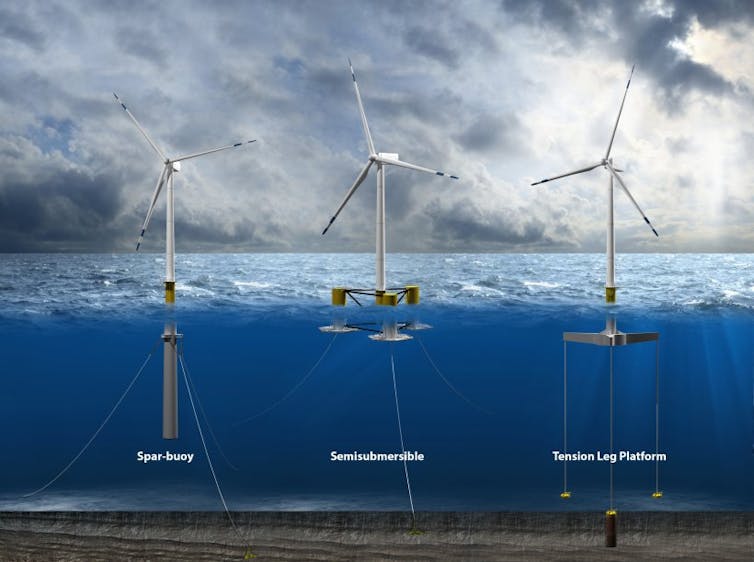
An illustration of each in an ocean, showing how lines anchor it to the seafloor.
Three of the common types of floating wind turbine platform.
Josh Bauer/NREL

There are three main types of platforms:

  • A spar buoy platform is a long hollow cylinder that extends downward from the turbine tower. It floats vertically in deep water, weighted with ballast in the bottom of the cylinder to lower its center of gravity. It’s then anchored in place, but with slack lines that allow it to move with the water to avoid damage. Spar buoys have been used by the oil and gas industry for years for offshore operations.
  • Semisubmersible platforms have large floating hulls that spread out from the tower, also anchored to prevent drifting. Designers have been experimenting with multiple turbines on some of these hulls.
  • Tension leg platforms have smaller platforms with taut lines running straight to the floor below. These are lighter but more vulnerable to earthquakes or tsunamis because they rely more on the mooring lines and anchors for stability.

Each platform must support the weight of the turbine and remain stable while the turbine operates. It can do this in part because the hollow platform, often made of large steel or concrete structures, provides buoyancy to support the turbine. Since some can be fully assembled in port and towed out for installation, they might be far cheaper than fixed-bottom structures, which require specialty vessels for installation on site.

Floating platforms can support wind turbines that can produce 10 megawatts or more of power – that’s similar in size to other offshore wind turbines and several times larger than the capacity of a typical onshore wind turbine you might see in a field.

Why do we need floating turbines?

Some of the strongest wind resources are away from shore in locations with hundreds of feet of water below, such as off the U.S. West Coast, the Great Lakes, the Mediterranean Sea and the coast of Japan.

Map showing offshore wind potential
Some of the strongest offshore wind power potential in the U.S. is in areas where the water is too deep for fixed turbines, including off the West Coast.
NREL

The U.S. lease areas auctioned off in early December cover about 583 square miles in two regions – one off central California’s Morro Bay and the other near the Oregon state line. The water off California gets deep quickly, so any wind farm that is even a few miles from shore will require floating turbines.

Once built, wind farms in those five areas could provide about 4.6 gigawatts of clean electricity, enough to power 1.5 million homes, according to government estimates. The winning companies suggested they could produce even more power.

But getting actual wind turbines on the water will take time. The winners of the lease auction will undergo a Justice Department anti-trust review and then a long planning, permitting and environmental review process that typically takes several years.
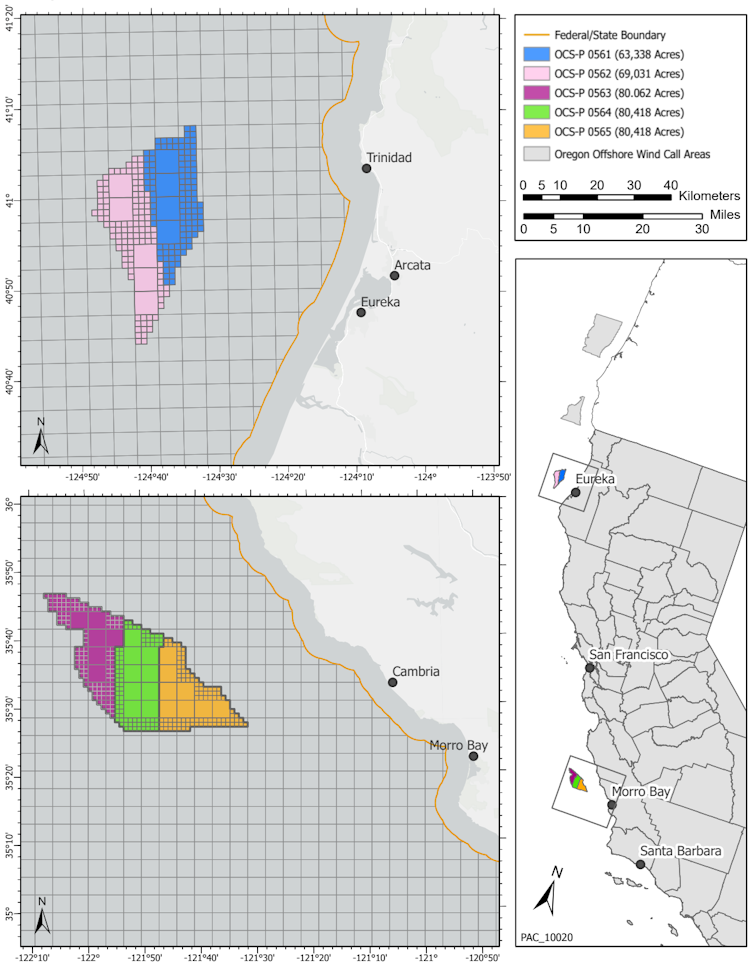
Maps showing the locations off Moro Bay, north of Santa Barbara, and Eureka, near the Oregon border.
The first five federal lease areas for Pacific coast offshore wind energy development.
Bureau of Ocean Energy Management

Globally, several full-scale demonstration projects with floating wind turbines are already operating in Europe and Asia. The Hywind Scotland project became the first commercial-scale offshore floating wind farm in 2017, with five 6-megawatt turbines supported by spar buoys designed by the Norwegian energy company Equinor.

Equinor Wind US had one of the winning bids off Central California. Another winning bidder was RWE Offshore Wind Holdings. RWE operates wind farms in Europe and has three floating wind turbine demonstration projects. The other companies involved – Copenhagen Infrastructure Partners, Invenergy and Ocean Winds – have Atlantic Coast leases or existing offshore wind farms.

While floating offshore wind farms are becoming a commercial technology, there are still technical challenges that need to be solved. The platform motion may cause higher forces on the blades and tower, and more complicated and unsteady aerodynamics. Also, as water depths get very deep, the cost of the mooring lines, anchors and electrical cabling may become very high, so cheaper but still reliable technologies will be needed.

But we can expect to see more offshore turbines supported by floating structures in the near future.

This article was updated with the first lease sale.The Conversation

About the Author:

Matthew Lackner, Professor of Mechanical Engineering, UMass Amherst

This article is republished from The Conversation under a Creative Commons license. Read the original article.
 

Resource Co. Completes 2022 Drilling and Receives US$895 Million

Source: Streetwise Reports  (12/7/22)

Canadian-based Skyharbour Resources has announced it plans to complete a 10,000m drill program at its Russell Lake property. It has also recently received US$895 million from the exercise of share purchase warrants. Read here to learn more about the project and where the company is headed for 2023.

Skyharbour Resources Ltd. (SYH:TSX.V; SYHBF:OTCQX; SC1P:FSE) is a Canadian-based exploration company. The company is focused on acquiring and advancing uranium exploration projects in Canada’s Athabasca Basin.

Why Uranium?

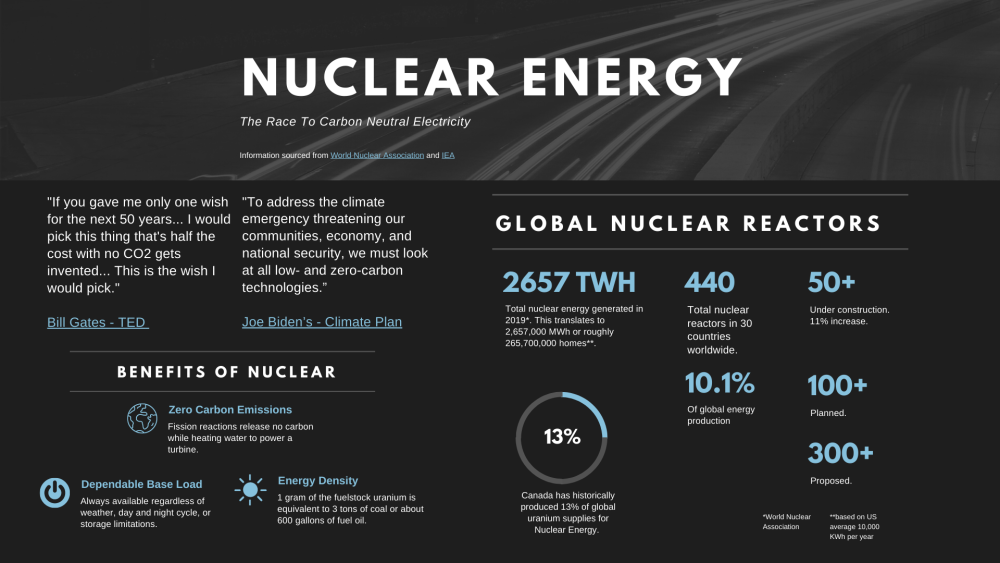
Uranium is an element that is mainly used to provide nuclear energy. Because of its radioactive properties, it can manufacture a tremendous amount of emissions-free energy. It is also considered more reliable than other emissions-free energy sources such as wind and solar. The outlook around the nuclear and uranium mining industries has changed significantly over the past several years and continues to improve.

While uranium has taken a dip in the past, recent news has led to its rise with the worldwide push to green energy, inflated energy costs, and the war in Ukraine. This August, Japan’s prime minister announced they would restart more idled nuclear plants and look at developing next-generation reactors. At this announcement, Forbes reported, “The Global X Uranium ETF surged 11.5%.”

Source: Skyharbour Resources.

The United States also has leaned into green energy. Currently, 20% of the electricity and 50% of the clean energy in the United States is nuclear, and this number seems to be on a path to only getting bigger.

On July 5, 2022, The New York Times reported that “the Biden administration has established a US$6 billion fund to help troubled nuclear plant operators keep their reactors running and make them more economically competitive against cheaper resources like solar and wind power.” The administration also is alluding US$2.5 million to fund two projects intended to showcase new nuclear technology.

Rajeev identified “the ongoing/planned exploration programs by Skyharbour and its partners” as major catalysts toward the company’s impending growth” and said that “as a result, Fundamental Research maintains its Buy recommendations for Skyharbour.”

This October 2022, the Biden administration also announced they would be providing US$150 million to improve nuclear research and development infrastructure at Idaho National Laboratory as a part of President Biden’s Inflation Reduction Act.

U.S. Secretary of Energy Jennifer M. Granholm commented that the Department of Energy “is taking critical steps to strengthen domestic nuclear development and deployment — helping ensure the United States is on track to reach a clean energy future.”

This, of course, leads to more uranium demand, or as Forbes said, “with many major nations rethinking their approach to clean, affordable energy, nuclear power plants are an obvious option. That’s good news for uranium investors, as more nuclear power means more demand for the radioactive metal.”

Skyharbour’s Plethora of Projects

Skyharbour Resources has been active in the Athabasca Basin since 2013 and has a myriad of projects, including Moore, Russell Lake, South Falcon Point, South Falcon East, Preston, East Preston, Hook Lake, Mann Lake, Yurchison, Riou River, Pluto Bay, Wallee, Usam Island, Foster River, West Dufferin, and South Dufferin.

Management noted that “Skyharbour holds an extensive portfolio of uranium exploration projects in Canada’s Athabasca basin and is well positioned to benefit from improving uranium market fundamentals with 15 projects, 10 of which are drill ready, covering over 450,000 hectares of land.”

Skyharbour estimates that over 30,000 meters of exploratory drilling will take place between all of its Athabasca Basin projects — including its two core assets and its multiple partner-funded projects — over the course of the next year. The company plans to dedicate a third of this work toward its flagship projects in Russell Lake and Moore Lake and is fully funded to conduct this work.

Catalyst: Plans to Break Ground at Russell Lake

Rio Tinto Plc. (RIO:NYSE; RIO:ASX; RIO:LSE; RTPPF:OTCPK), whose asset focus lies primarily in iron and copper, temporarily shelved the Russell Lake project. Rio has since optioned the project to Skyharbour, which plans to engage in advanced-stage exploration by drill testing “a number of the prospective targets [that] weren’t fully and systematically drill tested,” according to CEO Jordan Trimble. It wasn’t until a recent “resurgence in uranium and the nuclear industry” Trimble suggested that the industrial metals giant was willing to option the project to Skyharbour.

In resuming operations on the Russell Lake project, Skyharbour assumes the 40-person exploration camp previously used by Rio. Trimble believes that the inheritance and use of this asset for staging purposes “will bring [its]  drill costs down quite a bit, not just at Russell Lake, but also at the adjacent Moore Lake Project.”

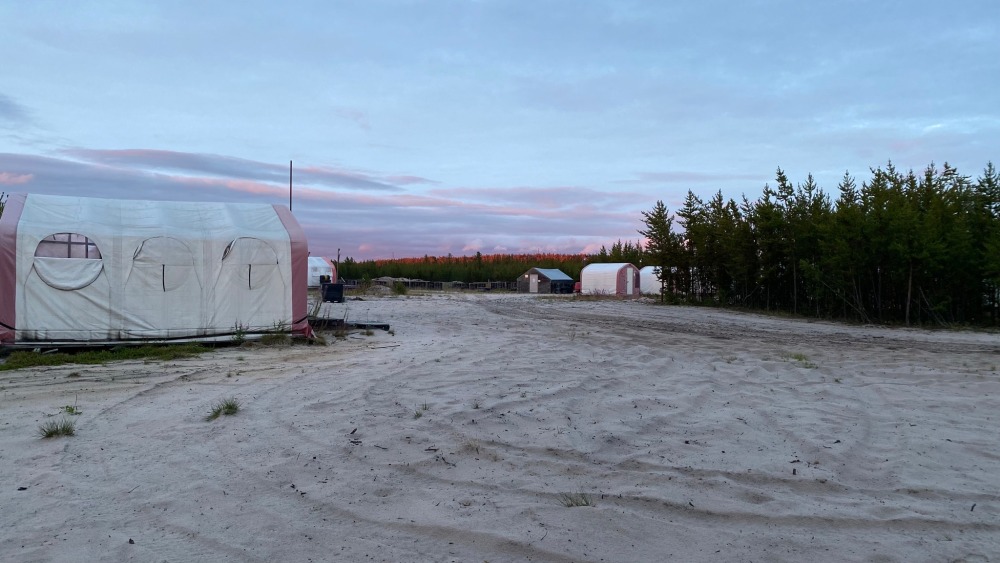
A summer’s night at Russell Lake’s camp in the Athabasca Basin. Source: Skyharbour Resources.

On November 23, the company announced it will carry out multiple phases of diamond drilling totaling 10,000 meters at Russell Lake. It plans on breaking ground sometime within the next month.

This minimum 10,000-meter exploration program will be carried out concurrently with Skyharbour’s multiple partner-funded uranium-drilling program at some of its other projects in the Athabasca Basin.

Analyst Sid Rajeev of Fundamental Research noted that Russell Lake “is strategically located between Cameco’s Key Lake mill and MacArthur uranium mine,” such that Skyharbour has a direct and rapid processing line between “the world’s largest uranium mill and the largest high-grade uranium mine.”

Catalyst: 2022 Drilling Complete at Mann Lake

At the end of last month, the company announced its partner company Basin Uranium Corp. had completed drilling at Mann Lake for 2022. 6,279 meters were drilled. Core samples have been submitted for analysis to the Saskatchewan Research Council (SRC).

As they hold steady for the assay results, Skyharbour’s partner company Basin Uranium plans to continue its exploration programs at it Mann Lake project in the Athabasca Basin in 2023.

Rajeev identified “the ongoing/planned exploration programs by Skyharbour and its partners” as major catalysts toward the company’s impending growth” and said that “as a result, Fundamental Research maintains its Buy recommendations for Skyharbour.”

Catalyst: Skyharbour Receives US$895 Million

Friday, Skyharbour announced it had received US$895,027.32 from the exercise of share purchase warrants with a strike price of US$0.22 since June 29, 2022. 4,068,306 of the warrants have been exercised, with this batch of warrants expiring on Nov. 29, 2022.

Furthermore, the company noted that “collectively, Skyharbour has now signed option agreements with partners that total over US$34 million in partner-financed exploration expenditures, over US$22 million in stock being issued and just under US$15 million in cash payments coming into Skyharbour, assuming that these partner companies earn in the full amounts at their respective projects.”

Ownership and Share Structure

Skyharbour’s management owns approx. 5% of the company’s 145 million marketable shares. CEO Trimble owns 2.514 million shares of Skyharbour, maintaining a 1.73% stake. Director David Cates’ 1.247 million shares constitute an additional 0.86% management stake. Mr. Cates is the President and CEO of Denison Mines, a larger uranium developer that is a strategic partner and shareholder of Skyharbour Resources.

Aside from the aforementioned Denison and Rio Tinto, notable strategic and institutional investors in the company’s growth include the Global X and Sprott Uranium ETFs, Extract Capital, L2, Sachem Cove, and Sprott Capital Partners.

It is also worth noting that Skyharbour maintains a minority equity stake in several of its other option and joint-venture partner companies. Skyharbour has signed option agreements over the last several years with partners that total approx. CA$22 million worth of shares being issued between Azincourt Energy, Valor Resources, Basin Uranium, Medaro Mining, Yellow Rocks Energy, and Tisdale Clean Energy — the companies behind Skyharbour’s partnerships in East Preston, Hook Lake, Mann Lake, Yurchison, Wallee/Usam, and South Falcon East respectively.

The company’s burn rate is US$110,000. It has over US$6M in the treasury, with another approximately US$2.5 million expected to come in from option partner payments and shares in the next 12 months.

Skyharbour has a market cap of US$39 million and 144.99 million outstanding shares. It has 138.45 million shares in the public float and trades in the 52-week range at between US$0.2223 and US$0.6558 per share.

Disclosures:
1) Katherine DeGilio and Thomas Griffin wrote this article for Streetwise Reports LLC, and Thomas Griffin provides services to Streetwise Reports as an independent contractor. They or members of their household own securities of the following companies mentioned in the article: None. They or members of their household are paid by the following companies mentioned in this article: None.

2) The following companies mentioned in this article are billboard sponsors of Streetwise Reports: Skyharbour Resources Ltd. Click here for important disclosures about sponsor fees. As of the date of this article, an affiliate of Streetwise Reports has a consulting relationship with: None. Please click here for more information.

3) Statements and opinions expressed are the opinions of the author and not of Streetwise Reports or its officers. The author is wholly responsible for the validity of the statements. The author was not paid by Streetwise Reports for this article. Streetwise Reports was not paid by the author to publish or syndicate this article. Streetwise Reports requires contributing authors to disclose any shareholdings in, or economic relationships with, companies that they write about. Streetwise Reports relies upon the authors to accurately provide this information and Streetwise Reports has no means of verifying its accuracy.

4) This article does not constitute investment advice. Each reader is encouraged to consult with his or her individual financial professional and any action a reader takes as a result of information presented here is his or her own responsibility. By opening this page, each reader accepts and agrees to Streetwise Reports’ terms of use and full legal disclaimer. This article is not a solicitation for investment. Streetwise Reports does not render general or specific investment advice and the information on Streetwise Reports should not be considered a recommendation to buy or sell any security. Streetwise Reports does not endorse or recommend the business, products, services or securities of any company mentioned on Streetwise Reports.

5) From time to time, Streetwise Reports LLC and its directors, officers, employees or members of their families, as well as persons interviewed for articles and interviews on the site, may have a long or short position in securities mentioned. Directors, officers, employees or members of their immediate families are prohibited from making purchases and/or sales of those securities in the open market or otherwise from the time of the decision to publish an article until three business days after the publication of the article. The foregoing prohibition does not apply to articles that in substance only restate previously published company releases.  As of the date of this article, officers and/or employees of Streetwise Reports LLC (including members of their household) own securities of Skyharbour Resources Ltd., a company mentioned in this article.

Analyst: Timing Perfect for Nevada Lithium Project

Source: Streetwise Reports  (12/7/22)

Rover Metals Corp. is making the jump from gold to lithium and critical elements. One analyst said the timing is perfect.

The timing of Rover Metals Corp. (ROVR:TSX.V; ROVMF:OTCQB; 4X0:FSE) move from gold to lithium and critical elements is perfect, an analyst said, as other projects near its new Let’s Go Lithium project in Nevada are “ripe for consolidation.”

Let’s Go Lithium is estimated to hold lithium-bearing clay mineralization similar to other advanced-stage deposits held in the state by Cypress Development Corp. (CYP:TSX.V; CYDVF:OTCQB; C1Z1:FSE), American Lithium Corp. (LIACF:US-OTC; LI:TSX.V; 5LA1:FSE), and Noram Lithium Corp. (NRM:TSX.V).

Economic studies on Cypress’ and Noram’s projects have returned “robust economics,” according to Sid Rajeev, head of research for Fundamental Research Corp.

“We believe miners/battery manufacturers are actively monitoring juniors for M&A, as they are constantly seeking long-term stable sources of lithium for EV (electric vehicle) batteries,” Rajeev wrote in a note on December 1, 2022.

Rover Chief Executive Officer and Director Judson Culter said the company was open to such transactions.

“The battery producers want mines being built ASAP,” Culter told Streetwise Reports. “The bigger the resource companies are, the easier it will be for them to capitalize and build refineries.”

The World Needs More Lithium

According to Benchmark Mineral Intelligence, the deficit between lithium demand and production and highly probable and probable lithium projects will be over 3.5 million tonnes (Mt) by 2040. The world needs lithium and other critical elements like copper to help fuel the move to green energy. Lithium — a soft, silvery metal with highly reactive and flammable properties — is a major component of EV batteries. It’s also used to strengthen alloys, as a high-temperature lubricant, and as a drug to treat bipolar disorder.

One out of five vehicles sold worldwide could be an EV in less than two years, and Ford and General Motors have set a goal of achieving 40–50% of their sales from EVs in the U.S. by 2030.

To qualify for tax credits under new U.S. laws, a significant percentage of batteries and minerals in batteries must come from the U.S. or Canada, a regional trade-treaty country.

China only has less than a quarter of the world’s lithium resources but controlled about two-thirds of the world’s lithium processing and refining capacity in 2021, Rystad Energy said.

The Catalyst: Lithium

Rover has signed a definitive agreement to option a 100% ownership interest in the Let’s Go Lithium project. It’s located in Nevada’s southwest lithium jurisdiction near Albemarle Corp.’s (ALB:NYSE) Silver Peak mine, which is the only lithium-producing mine in North America.

The company plans to convert the project into an NI 43-101-compliant resource within two years and plans to conduct a drill program. Rajeev said that “delineating a lithium resource is a faster and cheaper process vs. mainstream metals such as gold [and] copper.”

Unlike other metals, lithium is deposited in “a vast amount close to the surface,” Culter said. “In gold and copper, you typically have to chase shoots or veins of the high-grade (ore), which are narrow (and go) to great depths. These are very tricky to follow below the surface.”

The climate and energy package recently passed in the United States is bringing new urgency to the production of electric vehicle (EV) metals and minerals like lithium. Rover officials said they want to be positioned to take advantage of that.

Rover last summer announced it had also closed on a deal involving the Indian Mountain Lake copper and zinc project in the Northwest Territories. It had verified high-grade lithium surface samples at Let’s Go Lithium of 780 parts per million lithium (ppm Li), 910 ppm Li, and 710 ppm Li.

Further analysis of samples using handheld laser-induced breakdown spectroscopy found results of 1,218 ppm Li, 778 ppm Li, and 724 ppm Li.

Culter said the company is readying a US$200,000 reverse-circulation drill program to follow up on those high-grade samples. That exploration money will also be the company’s required earn-in to a 100% ownership of the project.

Rajeev said Fundamental was maintaining its Buy rating on Rover.

The later-stage greenfields lithium project includes hydro power lines, direct road access, and a nearby town with a readily available workforce, the company said.

There have been four historical water wells drilled on the project that logged the claystone orebody as being close to surface, with an average thickness of over 300 feet across the approximate 6,000 acres of the property. Because of that, the project is district-scale in nature, Culter said.

Cypress is producing a feasibility study looking at the commercial viability of producing lithium carbonate for EV batteries from Nevada claystone like at Let’s Go Lithium.

Albemarle Corp.’s Silver Peak mine in Nevada is the only lithium-producing mine in North America, but it uses a water-intensive process to get at lithium-bearing brine deposits in an area that’s seeing record droughts. The claystone method uses acids to process lithium-bearing clay.

Rajeev said Fundamental was maintaining its Buy rating on Rover but adjusting its fair value estimate for its share price from CA$1.14 down to CA$0.56. It was CA$0.10 per share on Tuesday afternoon.

Ownership and Share Structure

Culter and family members own about 2 million shares of Rover, and directors Keith Minty and Louis Covello own about 360,000 and about 50,000, respectively. There are no institutional shareholders, and the rest are retail.

Rover’s market cap is CA$2.63 million, and it has 26.3 million shares outstanding, 24.9 million of them free-floating. It trades in a 52-week range of CA$0.39 and CA$0.06.

Disclosures:

1) Steve Sobek wrote this article for Streetwise Reports LLC. He or members of his household own securities of the following companies mentioned in the article: None. He or members of his household are paid by the following companies mentioned in this article: None.

2) The following companies mentioned in this article are billboard sponsors of Streetwise Reports: Rover Metals Corp. Click here for important disclosures about sponsor fees. The information provided above is for informational purposes only and is not a recommendation to buy or sell any security.

3) The article does not constitute investment advice. Each reader is encouraged to consult with his or her individual financial professional and any action a reader takes as a result of information presented here is his or her own responsibility. By opening this page, each reader accepts and agrees to Streetwise Reports’ terms of use and full legal disclaimer. This article is not a solicitation for investment. Streetwise Reports does not render general or specific investment advice and the information on Streetwise Reports should not be considered a recommendation to buy or sell any security. Streetwise Reports does not endorse or recommend the business, products, services or securities of any company mentioned on Streetwise Reports.

4) From time to time, Streetwise Reports LLC and its directors, officers, employees or members of their families, as well as persons interviewed for articles and interviews on the site, may have a long or short position in securities mentioned. Directors, officers, employees or members of their immediate families are prohibited from making purchases and/or sales of those securities in the open market or otherwise from the time of the decision to publish an article until three business days after the publication of the article. The foregoing prohibition does not apply to articles that in substance only restate previously published company releases. As of the date of this article, officers and/or employees of Streetwise Reports LLC (including members of their household) own securities of Rover Metals Corp., a company mentioned in this article.

Japanese Candlesticks Analysis 08.12.2022 (XAUUSD, NZDUSD, GBPUSD)

By RoboForex.com

XAUUSD, “Gold vs US Dollar”

On H4, at the support level, gold has formed a Harami reversal pattern. Currently, the pair is going by the signal in an ascending wave. The goal of the growth may be 1810.00. Upon testing the resistance level, the pair will get the chance for breaking through it and continuing the uptrend. However, the price may pull back to 1775.00 before further growth.

XAUUSD
Risk Warning: the result of previous trading operations do not guarantee the same results in the future

NZDUSD, “New Zealand Dollar vs US Dollar”

On H4, at the support level, the pair has formed a Hammer reversal pattern. The pair is now going by the signal in an ascending wave. The goal of the growth may be 0.6450. Upon breaking through the resistance level, the quotes will get the chance to continue the uptrend. However, the price may pull back to 0.6305 before further growth.

NZDUSD
Risk Warning: the result of previous trading operations do not guarantee the same results in the future

GBPUSD, “Great Britain Pound vs US Dollar”

On H4, at the support level, the pair has formed a Doji reversal pattern. The pair may now go by the signal in an ascending wave. The goal of the growth may be the resistance level of 1.2380. However, the price may pull back to 1.2105 before continuing the uptrend.

GBPUSD
Risk Warning: the result of previous trading operations do not guarantee the same results in the future

Article By RoboForex.com

Attention!
Forecasts presented in this section only reflect the author’s private opinion and should not be considered as guidance for trading. RoboForex LP bears no responsibility for trading results based on trading recommendations described in these analytical reviews.

Ichimoku Cloud Analysis 08.12.2022 (GBPUSD, USDJPY, NZDUSD)

By RoboForex.com

GBPUSD, “Great Britain Pound vs US Dollar”

The currency pair is correcting by a Wedge reversal pattern. The instrument is going above the Ichimoku Cloud, which suggests an uptrend. A test of the upper border of the Cloud at 1.2155 is expected, followed by growth to 1.2545. An additional signal confirming the growth will be a bounce off the lower border of the bullish channel. The scenario can be cancelled by a breakaway of the lower border of the Cloud and securing under 1.9175, which will mean further falling to 1.1875. The growth will be confirmed by a breakaway of the upper border of the Wedge and securing above 1.2215.

GBPUSD
Risk Warning: the result of previous trading operations do not guarantee the same results in the future

USDJPY, “US Dollar vs Japanese Yen”

The currency pair is pushing off the resistance level. The instrument is going below the Ichimoku Cloud, which suggests a downtrend. A test of the upper border of the Cloud at 137.55 is expected, followed by falling to 131.25. An additional signal confirming the growth will be a bounce off the upper border of the descending channel. The scenario can be cancelled by a breakaway of the upper border of the Cloud and securing above 139.35, which will mean further growth to 140.25. The falling will be confirmed by a breakaway of the lower border of the bullish channel and securing under 135.85.

USDJPY
Risk Warning: the result of previous trading operations do not guarantee the same results in the future

NZDUSD, “New Zealand Dollar vs US Dollar”

The currency pair is testing the signal lines of the indicator. The instrument is going above the Ichimoku Cloud, which suggests an uptrend. A test of the upper border of the Cloud at 0.6325 is expected, followed by growth to 0.6625. An additional signal confirming the growth will be a bounce off the lower border of the bullish channel. The scenario can be cancelled by a breakaway of the lower border of the Cloud and securing under 0.6205, which will mean further falling to 0.6110.

NZDUSD

Article By RoboForex.com

Attention!
Forecasts presented in this section only reflect the author’s private opinion and should not be considered as guidance for trading. RoboForex LP bears no responsibility for trading results based on trading recommendations described in these analytical reviews.

The Analytical Overview of the Main Currency Pairs on 2022.12.08

By JustMarkets

The EUR/USD currency pair

Technical indicators of the currency pair:
  • Prev Open: 1.0461
  • Prev Close: 1.0505
  • % chg. over the last day: +0.42 %

European Central Bank spokesman Kazimir pointed out yesterday that the inflation figure alone is not enough to slow rates down, so the ECB has plenty of “reasons” to keep tightening. Kazimir is considered among the most hawkish spokespeople and favors a 75 bps rate hike. Also, Kazimir is not convinced that Eurozone inflation has peaked but believes that the Eurozone recession will be short.

Trading recommendations
  • Support levels: 1.0483, 1.0361, 1.0332, 1.0284, 1.0193
  • Resistance levels: 1.0562, 1.0610

The trend on the EUR/USD currency pair on the hourly time frame is bullish. The price is trading at the level of the moving averages, the MACD indicator is positive again, and buying pressure is coming back. Buy trades are best considered from support levels of 1.0483, but with additional confirmation. Sell deals can be considered from the resistance level of 1.0562, but better with confirmation in the form of reverse initiative, as the price may react to the border of the inclined descending channel.

Alternative scenario: if the price breaks down through the support level of 1.0332 and fixes below it, the downtrend will likely resume.

EUR/USD
News feed for 2022.12.08:
  • – Eurozone ECB President Lagarde Speaks at 14:00 (GMT+3);
  • – US Initial Jobless Claims (w/w) at 15:30 (GMT+3).

The GBP/USD currency pair

Technical indicators of the currency pair:
  • Prev Open: 1.2134
  • Prev Close: 1.2208
  • % chg. over the last day: +0.61 %

UK Chancellor of the Exchequer Jeremy Hunt is expected to unveil a series of reforms later this week that will help make London more competitive. The new chancellor wants to reduce cap rules for Britain’s biggest banks and adjust Solvency II rules to make the insurance sector more competitive. Next week, a host of major central banks will announce their latest monetary policy decisions ahead of the Christmas break. The Bank of England is expected to raise its interest rate by 0.5%.

Trading recommendations
  • Support levels: 1.2117, 1.2016, 1.1964, 1.1684, 1.1476, 1.1418
  • Resistance levels: 1.2254, 1.2381, 1.2431

From the technical point of view, the GBP/USD currency pair trend on the hourly time frame is bullish. The price is trading at the level of the moving averages. The MACD indicator has returned to the positive zone, and there is a slight buying pressure inside the day. Under such market conditions, it is better to look for buy deals from the support level of 1.2127 but with confirmation because the level has already been tested. Sell trades are best looked for on intraday time frames from resistance levels of 1.2254, but they are also better with confirmation in the form of a reverse initiative or a false breakout.

Alternative scenario: if the price breaks down of the 1.1965 support level and fixes below it, the downtrend will likely resume.

GBP/USD
There is no news feed for today.

The USD/JPY currency pair

Technical indicators of the currency pair:
  • Prev Open: 136.95
  • Prev Close: 136.58
  • % chg. over the last day: -0.27 %

Japan’s economy shrank at an annualized rate of 0.8% in real terms over the last quarter, down from 1.2% last quarter. Inflation-adjusted real gross domestic product declined by 0.2% on a quarterly basis. There was a sharp increase in imports in the July-September quarter due to higher energy prices and a sharp weakening of the yen, which inflated the value of imported goods. The increase in imports has a negative impact on GDP, which measures the total value of goods and services produced in a country.

Trading recommendations
  • Support levels: 135.34, 133.53
  • Resistance levels: 137.15, 139.09, 140.75, 143.17, 145.16

From the technical point of view, the medium-term trend on the currency pair USD/JPY is bearish. The MACD indicator has become inactive, and the price forms a flat structure. Under such market conditions, buy trades can be sought on intraday time frames from the support level of 135.34 or from the uptrend line, but only with confirmation. Sell deals can be sought from the resistance level of 137.15, provided there is a reverse reaction and a change in the structure on the intraday time frames.

Alternative scenario: If the price fixes above 139.08, the uptrend will likely resume.

USD/JPY
News feed for 2022.12.08:
  • – Japan GDP (q/q) at 01:50 (GMT+3).

The USD/CAD currency pair

Technical indicators of the currency pair:
  • Prev Open: 1.3648
  • Prev Close: 1.3652
  • % chg. over the last day: +0.03 %

The Bank of Canada went for a more aggressive rate hike of 50 bps, although analysts had expected a 25 bps increase. The Bank of Canada’s overnight rate is now 4.25%, the highest since 2008. The Bank of Canada and the Reserve Bank of New Zealand currently hold the highest rates of any major economy. The statement indicates that inflation growth has been more robust than expected, while Canada’s labor market remains “tight” and the economy continues to operate in excess demand. Nevertheless, there is growing evidence that monetary tightening is holding back domestic demand, citing slowing consumer spending growth and a weakening housing market.

Trading recommendations
  • Support levels: 1.3637, 1.3520, 1.3438, 1.3386, 1.3360, 1.3281, 1.3212
  • Resistance levels: 1.3682, 1.3682, 1.3776, 1.3855

From the point of view of technical analysis, the trend on the USD/CAD currency pair has changed to bullish. The price is trading above the moving averages. But the MACD indicator shows a strong divergence, and there is a change in the structure of the lower time frames. Buy trades should be considered after a slight pullback from the support level of 1.3637, but with additional confirmation. For sell deals, it is better to consider the resistance level of 1.3683 but with confirmation in the form of reverse initiative.

Alternative scenario: if the price breaks down and consolidates below the support level of 1.3386, the downtrend will likely resume.

USD/CAD
There is no news feed for today.

By JustMarkets


This article reflects a personal opinion and should not be interpreted as an investment advice, and/or offer, and/or a persistent request for carrying out financial transactions, and/or a guarantee, and/or a forecast of future events.

Biopharma Co.’s Shares Triple in Value on US$5B License Deal

Source: Streetwise Reports  (12/7/22)

Summit Therapeutics Inc. shares traded 194% higher yesterday after the company reported it entered into an in-license agreement with Akeso Inc. for its breakthrough bispecific antibody ivonescimab, which combines a blockade of PD-1 with an anti-VEGF into a single molecule designed to target cancer. Summit has agreed to pay Akeso an upfront payment of US$500 million, which it plans to finance via an equity rights issuance.

Biopharmaceutical companySummit Therapeutics Inc. (SMMT:NASDAQ; SUMM:LON), which is engaged in the discovery, development of, and commercialization of medicines for infectious diseases, cancer, and other unmet medical needs, yesterday announced that it entered into a definitive partnership agreement with Akeso Inc. (9926.HK) to in-license its breakthrough bispecific antibody, ivonescimab.

Summit Therapeutics explained that ivonescimab, known as AK112 in China and Australia and SMT112 in the U.S, Canada, Europe, and Japan, is “a novel, potential first-in-class bispecific antibody combining the power of immunotherapy via a blockade of PD-1 with the anti-angiogenesis benefits of an anti-VEGF into a single molecule.”

The report indicated that ivonescimab is believed to be the most advanced PD-1 / VEGF bispecific antibody advanced in clinical studies, though to date, neither the U.S Food and Drug Administration (FDA) nor the European Medicines Agency (EMA) have granted approval for any PD-1- based bispecific antibodies. Summit mentioned that ivonescimab has received Breakthrough Therapy Designation status in China from The National Medical Products Administration (NMPA) for three separate indications relating to non-small cell lung cancer (NSCLC).

The agreement will provide Summit with the rights to advance, market, and commercialize SMT112 (ivonescimab) in the U.S, Canada, Japan, and Europe, with Akeso retaining the rights to develop and sell ivonescimab in China, Australia, and all other areas except for those assigned to Summit. The report stated that Akeso is considered to be a pioneer and source originator in creating and developing novel antibodies and that the in-license arrangement with Summit will allow it to advance its goals of becoming a global biopharma firm.

For its part, Summit will make an upfront payment in the amount of US$500 million to Akeso. Akeso will be eligible to receive up to an additional US$4.5 billion if certain regulatory and commercial milestones are achieved, along with low double-digit royalties on net sales.

The offering is expected to provide the company with gross proceeds of up to US$500 million, which it plans to utilize to pay its upfront payment to Akeso, support clinical development and regulatory approval for SMT112, and expand its drug pipeline.

Summit Therapeutics’ Chairman and CEO Robert W. Duggan commented, “The partnership between Summit Therapeutics and Akeso is a strategically compelling opportunity . . . We are extremely encouraged by ivonescimab and the potential for improving the quality and duration of patients’ lives based on clinical data to support this point.”

Akeso’s Co-founder, Chairwoman, CEO, and President, Dr. Michelle Xia, stated, “Ivonescimab has demonstrated the potential to deliver superior clinical benefit for patients and tremendous value for investors . . . The Akeso team has been dedicated to the development of ivonescimab for the past eight years and proudly advanced the molecule to the clinical Phase 3 stage. The global value of ivonescimab awaits great work from a great team to realize.”

“We look forward to the swift execution of the clinical development and commercial plan in a global setting for ivonescimab,” Xia added.

Summit Therapeutics advised that in a Phase 2 NSCLC trial that included patients with failed EGFR-TKI’s, those treated with ivonescimab demonstrated “an overall response rate (ORR) of 68.4% and a median Progression-Free Survival (mPFS) time period of 8.2 months when combined with combination chemotherapy (pemetrexed and carboplatin) as compared to historical mPFS of 4.3 months in patients treated with combination chemotherapy (pemetrexed and platinum-based chemotherapy) alone.”

Ivonescimab is now being developed in China and Australia for use in treating multiple solid tumors and is currently being evaluated in a Phase 3 clinical trial in patients with NSCLC that is positive for an epidermal growth factor receptor (EGFR) mutation and whose disease has progressed after treatment with an EGFR tyrosine-kinase inhibitor (TKI).

Co-CEO, President, and Summit Board Member Maky Zanganeh remarked, “We have found the ideal partnership with the potential to change the paradigm for treating patients facing difficult odds with devastating diagnoses . . . 10 years ago, metastatic lung cancer patients rarely survived for more than ten to twelve months from diagnosis. Today, survival can be measured in years.”

Summit advised that it intends to finance its obligations under the agreement by the issuance of a rights offering that will allow its common shareholders of record to purchase non-transferable subscription rights to buy common shares at the lesser of US$1.05 per share or the five-day volume weighted-average price of its shares prior to the date of the transaction. The offering is expected to provide the company with gross proceeds of up to US$500 million, which it plans to utilize to pay its upfront payment to Akeso, support clinical development and regulatory approval for SMT112, and expand its drug pipeline.

Summit Therapeutics is a biopharmaceutical firm headquartered in Menlo Park, Calif. The company is engaged in discovering, developing, and commercializing medicines to treat cancer, infectious and other diseases with high unmet needs. The firm is highly focused on developing SMT112 (ivonescimab), which was engineered to combine two well-established oncology-targeted mechanisms of action. Initially, the company’s SMT112 development efforts at being directed at treating NSCLC. Summit plans to begin treating patients in clinical studies by Q2/23.

Akeso is a biopharma company engaged in the discovery, development, manufacturing, and marketing of medicines designed to address high unmet medical needs worldwide. The company’s pipeline includes more than 30 assets that are being developed to treat cancer, autoimmune disease, inflammation, metabolic disease, and other therapeutic areas. To date, 17 of these product candidates have been advanced into clinical trials. Akeso’s Kaitanni (cadonilimab) received approval from China’s NMPA in June 2022 for use in the treatment of relapsed or metastatic cervical cancer in patients who progressed on or after platinum-based chemotherapy making it the first commercialized PD-1-based bispecific drug globally.

Summit Therapeutics started off the day yesterday with a market cap of around US$158.0 million with approximately 201.3 million shares outstanding. SMMT shares opened 68% higher yesterday at US$1.32 (+US$0.535, +68.15%) over the previous day’s US$0.785 closing price. The stock traded yesterday between US$1.19 and US$1.59 per share and closed for trading at US$1.54 (+US$0.755, +96.18%).

Disclosures:

1) Stephen Hytha wrote this article for Streetwise Reports LLC and provides services to Streetwise Reports as an independent contractor. He or members of his household own securities of the following companies mentioned in the article: None. He or members of his household are paid by the following companies mentioned in this article: None.

2) The following companies mentioned in this article are billboard sponsors of Streetwise Reports: None. Click here for important disclosures about sponsor fees.

3) Comments and opinions expressed are those of the specific experts and not of Streetwise Reports or its officers. The information provided above is for informational purposes only and is not a recommendation to buy or sell any security.

4) The article does not constitute investment advice. Each reader is encouraged to consult with his or her individual financial professional and any action a reader takes as a result of information presented here is his or her own responsibility. By opening this page, each reader accepts and agrees to Streetwise Reports’ terms of use and full legal disclaimer. This article is not a solicitation for investment. Streetwise Reports does not render general or specific investment advice and the information on Streetwise Reports should not be considered a recommendation to buy or sell any security. Streetwise Reports does not endorse or recommend the business, products, services or securities of any company mentioned on Streetwise Reports.

5) From time to time, Streetwise Reports LLC and its directors, officers, employees or members of their families, as well as persons interviewed for articles and interviews on the site, may have a long or short position in securities mentioned. Directors, officers, employees or members of their immediate families are prohibited from making purchases and/or sales of those securities in the open market or otherwise from the time of the decision to publish an article until three business days after the publication of the article. The foregoing prohibition does not apply to articles that in substance only restate previously published company releases.

6) This article does not constitute medical advice. Officers, employees and contributors to Streetwise Reports are not licensed medical professionals. Readers should always contact their healthcare professionals for medical advice.

Oil continues to decline. The Bank of Canada has chosen a more aggressive rate hike

By JustMarkets

National Economic Council Director Brian Deese said yesterday that the US economy is resilient despite the Federal Reserve raising interest rates. Brian Deese also added that low credit card delinquencies and mortgage problems point to resilient household balance sheets, while the labor market and savings rates also point to more robust growth. Moreover, he pointed to slowing inflation as a positive sign of healthier economic growth. But at the moment, the Fed is expected to raise rates again at its meeting next week, and that is putting downward pressure on quotes. As the stock market closed Wednesday, the Dow Jones Index (US30) closed at opening levels, while the S&P 500 Index (US500) was down by 0.19%. Technology Index NASDAQ (US100) fell by 0.51% yesterday. All three indices closed negative.

The 2/10 Treasury bond yield curve flipped by 82 basis points, the biggest reversal in 40 years, signaling growing fears of a potential recession.

The Bank of Canada has chosen a more aggressive 50 bps rate hike, though analysts had expected a 25 bps increase. The Bank of Canada’s overnight rate now stands at 4.25%, the highest since 2008. The Bank of Canada and the Reserve Bank of New Zealand currently hold the highest rates of the major economies. The statement indicates that inflation growth has been more robust than expected, while Canada’s labor market remains “tight” and the economy continues to operate in excess demand. The Bank of Canada plans a final 25 basis point hike early next year and will take a long pause after that. The next meeting is scheduled for January 25.

Equity markets in Europe were mostly down yesterday. German DAX (DE30) decreased by 0.57%, French CAC 40 (FR40) fell by 0.41%, Spanish IBEX 35 (ES35) was down by 0.50%, British FTSE 100 (UK100) closed on Wednesday with minus 0.43%.

European Central Bank Governing Council spokesman Peter Kazimir expressed support for a third straight 75 basis point interest rate hike next week. While the slowdown to 10% in November is welcome, it is too early to declare that the worst of the unprecedented price spike is over, Kazimir said in an interview. According to him, any recession in the eurozone is likely to be short, and inflation will remain above the target level even in 2025. In addition to interest rates, officials will also discuss how to begin writing off about 5 trillion euros ($5.3 trillion) worth of bonds bought in recent years as part of stimulus measures, a process known as quantitative tightening (QT).

The UK and US are forming a new energy partnership aimed at improving energy security and lowering prices. The new partnership will stimulate work to reduce global dependence on energy exports from Russia, stabilize energy markets, and increase cooperation on energy efficiency, nuclear power, and renewable energy. As part of this, the US will export at least 9 to 10 billion cubic meters of LNG over the next year through British terminals, more than double the level exported in 2021.

China seems to have loosened its zero COVID policy considerably, but US crude reserves showed a huge increase in petroleum products, which outweighs the country’s weekly crude consumption. Crude oil inventories were down by 5.187 million barrels, compared to expectations of a 3.305 million barrel decline. That sent crude oil prices down for the fourth straight day, near a yearly low. January WTI crude oil fell by 3% to $72 a barrel. Brent crude oil fell by 2.8% to $77.11/bbl in London trading.

Asian markets were mostly down yesterday. Japan’s Nikkei 225 (JP225) decreased by 0.72%, Hong Kong’s Hang Seng (HK50) was 3.22% lower, and Australia’s S&P/ASX 200 (AU200) was 0.85% lower.

Asian markets were mostly down yesterday. Japan’s Nikkei 225 (JP225) gained 0.24%, Hong Kong’s Hang Seng (HK50) ended the day down by 0.40%, and Australia’s S&P/ASX 200 (AU200) fell by 0.47%.

China on Wednesday announced its biggest easing of COVID restrictions, lifting several travel restrictions and testing mandates. The move sparked some gains in Asian markets in the previous session. But with China still struggling with a record-high daily increase in COVID-19 cases, investors remain uncertain as to when Beijing will announce a full opening.

Japan’s economy shrank at an annualized rate of 0.8% in real terms in the last quarter, down from 1.2% last quarter. Inflation-adjusted real gross domestic product shrank by 0.2% on a quarterly basis. The country recorded an unexpected current account deficit in the third quarter on the back of lower exports and more expensive imports.

S&P 500 (F) (US500) 3,933.78 −7.48 (−0.19%)

Dow Jones (US30) 33,596.87 +0.53 (+0.02%)

DAX (DE40) 14,261.19 −82.00 (−0.57%)

FTSE 100 (UK100) 7,489.19 −32.20 (−0.43%)

USD Index 105.15 -0.43 (-0.41%)

Important events for today:
  • – Japan GDP (q/q) at 01:50 (GMT+3);
  • – Eurozone ECB President Lagarde Speaks at 14:00 (GMT+3);
  • – US Initial Jobless Claims (w/w) at 15:30 (GMT+3);
  • – US Natural Gas Storage (w/w) at 17:30 (GMT+3).

By JustMarkets


This article reflects a personal opinion and should not be interpreted as an investment advice, and/or offer, and/or a persistent request for carrying out financial transactions, and/or a guarantee, and/or a forecast of future events.

USDJPY bulls have not given up yet

By ForexTime

The USDJPY currency pair (nickname “the Yen”) on the H4 time frame was in a downtrend until 2 December, when a last lower bottom was recorded at 133.611.

After the bottom at 133.611, the market broke through the 15 and 34 Simple Moving Averages and the Momentum Oscillator broke the 100 baseline into bullish terrain. A possible shift in the market momentum from bearish to bullish was further confirmed with many strong bullish candles driving the price significantly higher to make a higher top.

A possible critical resistance level was formed at a higher top that was reached on 7 December at 137.847. The bears then tried their best to dominate the market again but failed when a higher bottom formed later in the same session at 136.261.

If the Yen manages to break through the critical resistance level at 137.847, then three possible price targets can be considered from there. Attaching the Fibonacci tool to the higher top at 137.847 and dragging it to the support level near the 34 Simple Moving Average at 136.261, the following targets can be calculated. The first target is estimated at 138.827 (161.8%). The second price target can be forecast at 140.413 (261.8%) and the third and final target might be anticipated at 142.979 (423.6%).

If the support level at 136.261 is broken, the above scenario is no longer valid.


Forex-Time-LogoArticle by ForexTime

ForexTime Ltd (FXTM) is an award winning international online forex broker regulated by CySEC 185/12 www.forextime.com

Russian troops’ poor performance and low morale may worsen during a winter of more discontent

By Liam Collins, United States Military Academy West Point 

With Russian troops digging trenches to prepare for an expected winter standoff, it would be easy to conclude that fighting will slow in Ukraine until after the ground thaws in the spring.

But evidence from the Ukrainian battlefields point to a different trajectory.

As a career U.S. special forces officer who conducted field research on the 2008 and 2014 wars in Georgia and Ukraine, it is my view that this war has demonstrated that only one side, the Ukrainians, can execute effective combat maneuvers. I believe that the Ukrainians will attempt to launch a large-scale counteroffensive in late winter when the ground is still frozen.

Winter’s impact on war

Historically, the pace of fighting does slow in the winter.

Weapons and other equipment can freeze up in extreme cold, and it’s much more difficult to shoot a weapon while wearing thick gloves.

Shorter days are a factor. Despite technological advances, most of the fighting during this war has occurred during the day.

But this winter may be different for the Ukrainian military.

First, Ukrainian winters are not nearly as cold and snowy as many believe.

Donetsk, for example, has an average temperature of nearly 25 degrees Fahrenheit (-4 degrees Celsius) in January and February.

Its snowiest month, January, averages only 4.9 inches of snow, or .12 meters. Both January and February average just as many rainy days as snowy days – roughly two days of each.

A brief history of Russian attack

Since the invasion began in February 2022, Russia made most of its gains in the first month of the war when it seized Kherson, surrounded Mariupol, and was on the doorsteps of Kyiv and Kharkiv.

But Russia soon gave up on Kyiv and withdrew all its forces from the north.

Failing to achieve quick victory, Russia instead settled on making incremental gains in the east and south. Over the next five months, Russia captured Mariupol, but little else of tactical or strategic value.

During this time, Ukraine built up its combat power with new weaponry from the West and planned a large counteroffensive, which it initiated on Aug. 28, 2022.

In the first week of the counteroffensive, Ukraine liberated more territory than Russia had captured in the previous five months.

The success of the counteroffensive showed that Ukraine’s military was superior to Russia’s in every category with the exception of size. It had better doctrine, leaders, strategy, culture and will – and it had just proved that it could effectively fight battles with a combination of artillery, tanks, soldiers and air attacks.

By Sept. 12, 2022, Ukraine had liberated much of Kharkiv Oblast as Russian troops routinely fled from their positions.

After liberating the entirety of Kharkiv Oblast in early October 2022, Ukraine turned its attention to Kherson in the south. This was a different fight, and in some ways Ukraine’s military followed Chinese military strategist Sun Tzu’s axiom of “winning without fighting.”

The Ukrainians were able to conquer much of the territory without using many troops on the ground.

Instead, Ukraine used long-range rockets supplied by the U.S. and NATO allies to bombard Russian bases and supply lines that were previously unreachable. These attacks left Russian forces west of the Dnipro River in an untenable position.

Realizing this, Russia shockingly announced on Nov. 9, 2022, that it was withdrawing from Kherson. Two days later, Russia had completed its withdrawal from the west bank of the river.

What to expect from Russia

Over the course of the war, Russia has demonstrated little ability to conduct effective combat operations. This is not something that Russia can change overnight or over the course of the winter.

Russia’s best forces have been decimated throughout the conflict, and it is now increasingly relying on untrained conscripts.

Likewise, Russia is exhausting much of its weaponry as international sanctions against them are limiting Russia’s wartime production. Aside from Iran, few nations are providing military aid to Russia.

Russia’s military is now less trained, has lower morale, and has significantly fewer weapons and less ammunition than it had at the beginning of the current war.

As a result, Russia lacks the ability to conduct large-scale attacks, and it is left with little option but to continue what it has been doing: conducting missile strikes against targets that are either defenseless or offer little strategic value.

Limiting Russia’s options further, these strikes have been less effective as the war has progressed.

Early in the war, most of Russia’s missiles made it through Ukraine’s limited air defenses. With the help of western air defense systems, Ukraine was shooting down 50% of Russian missiles in October and is now intercepting over 80% of them.

Winter should not affect these types of combat operations.

But snow will have an impact on Russia’s already stressed and underperforming logistical system, and the cold will further lower – if that is possible – the already low morale of Russia’s poorly outfitted and undertrained soldiers.

What to expect from Ukraine

As the smaller military, Ukraine cannot afford to take heavy losses.

Thus far, it has used a strategy of defending territory when it could, retreating when it should to preserve combat power, and attacking when the opportunities have presented themselves.

Ukraine effectively employed this strategy to defend Kyiv in the first month of the war and during the September 2022 counteroffensive to reclaim the Kharkiv and Kherson oblasts.

An important question must be asked. Why did it take six months for Ukraine to launch its counteroffensive?

One reason is that Ukraine had to wait several months for promised Western aid to arrive at its bases. In my view, a significant factor is the lengthy amount of time it takes to plan large counteroffensives and to position supplies, equipment and forces.

The fact that Ukraine conducted the counterattacks in succession suggests that Ukraine lacks the combat power to conduct two large-scale counterattacks at the same time.

Ukraine is going to need time to regroup, refit and plan for its next large-scale operation.

Thus, it seems reasonable that Ukraine will have to wait at least 30 to 45 days – maybe more – before it is ready to execute its next counteroffensive, which would be in the heart of winter.

While conducting an attack in winter may be difficult, off-road movement in the spring could become impossible, as the Russians discovered during their initial invasion in muddy and wet terrain.

It seems reasonable to conclude that Ukraine may wish to initiate its next counteroffensive while the ground is still frozen – and Russian troop morale is at its lowest point since the invasion.The Conversation

About the Author:

Liam Collins, Founding Director, Modern War Institute, United States Military Academy West Point

This article is republished from The Conversation under a Creative Commons license. Read the original article.